
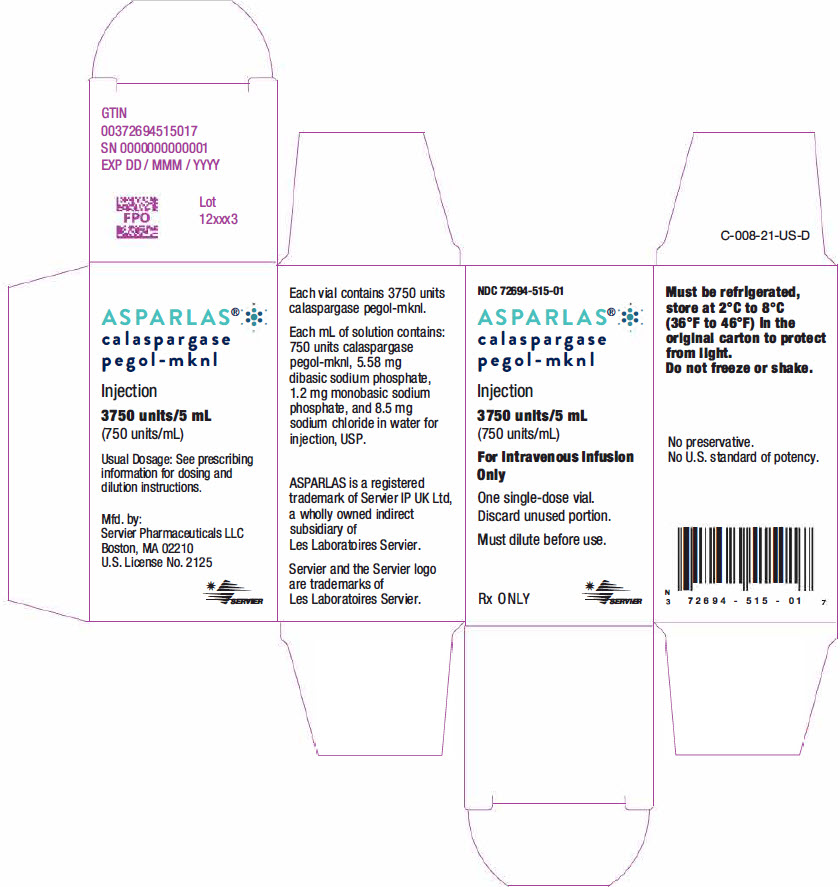
asparlas calaspargase pegol 750 U/mL Injection, Solution
🆔 Identity & classification
Where does this data come from?
🏷️ RxNorm drug class
This medicine belongs to the Asparagine-specific Enzyme class.
Where does this data come from?
🏭 Manufacturer & labeler
Where does this data come from?
🩺 Clinical
Calaspargase pegol-mknl is used with other chemotherapy drugs to treat acute lymphocytic leukemia (ALL; a type of cancer of the white blood cells) in infants, children, and young adults aged 1 month to 21 years old. Calaspargase pegol-mknl is an enzyme that interferes with natural substances necessary for cancer cell growth. It works by killing or stopping the growth of cancer cells.
Read the full MedlinePlus article ↗Patient education
Supplement & herbal interactions
Where does this data come from?
Ask a licensed pharmacist directly — free, answered by our team.
🧪 Inactive Ingredients / Excipients
Inactive ingredients, also called excipients, are components of the drug product other than the active ingredient. They may include fillers, dyes, coatings, preservatives, flavors, or other formulation ingredients.
💡 Tap an ingredient (hover on desktop) to see what it is and why it’s used.
-
UNII 451W47IQ8X
Sodium chloride is common table salt. It's used in medicines as a buffer to maintain proper pH, as a filler to add bulk, or to adjust the osmotic balance in liquid formulations.
-
UNII GR686LBA74
Sodium phosphate, dibasic is a salt derived from phosphoric acid. It acts as a buffer to help maintain the medicine's pH balance and may serve as a binder or filler in tablets and capsules.
-
UNII 5QWK665956
A salt derived from phosphoric acid and sodium, used primarily as a buffer to control the acidity or pH of a medication, helping keep it stable during storage and use.
-
UNII 059QF0KO0R
Water is a liquid solvent that dissolves and mixes ingredients together in liquid medicines, syrups, and injections. It helps distribute the active drug evenly throughout the product.
4 inactive ingredients listed in the exact product block matched to this NDC.
Where does this data come from?
ingredient classCode="IACT" elements from the exact product block matched by this NDC. Label-section narrative from DailyMed / the openFDA label index is shown separately when available.Inactive ingredient FAQ
Are inactive ingredients the same for every manufacturer?
Why might an inactive ingredient be missing?
Can inactive ingredients matter?
💲 Pricing
A drug doesn't have one price. Each row is a different public payment system, and none is what you'd pay at the counter — that depends on your insurance. The ⓘ on each row explains what it measures.
| Price system | Per mL | Per package |
|---|---|---|
| Retail pharmacies payNADAC · weekly | Not in the retail survey — common for institutional, discontinued, or low-volume packs. | |
| Medicaid paysCMS SDUD · 12 mo | $6,010.71 | $30,053.54 / 5 ml |
| Medicare drug plans payPart D · quarterly | No Part D plan price is available for this NDC in our data. | |
| Medicare Part B allowsASP · J9118 | $85.789 / J9118 unit | — |
Where does this data come from?
🧾 Billing & reimbursement
Where does this data come from?
🔁 Therapeutic equivalents
| Product | Labeler | Pack | NADAC/unit | TE | Status | Price vs. this |
|---|---|---|---|---|---|---|
| asparlas 750 U/mLthis 72694-0515-01 | Servier | 1 vial | — | — | FDA listed | — |
Where does this data come from?
⏳ Availability & biosimilar status
Biologics have no small-molecule generics; biosimilar competition is tracked in the FDA Purple Book.
Why the date isn’t exact: Biosimilar timing can change because patents may be challenged, settled, licensed, added or removed, and litigation can move the real date earlier or later.
🛈 What do these terms mean?
- Biologic patent
- A patent the reference product’s maker has publicly listed. A biosimilar generally can’t launch until these expire — unless they’re invalidated or resolved in a settlement.
- Reference-product exclusivity
- A flat 12 years of FDA market protection from the biologic’s first licensure (the BPCIA). No biosimilar can be licensed before it ends, regardless of patents.
- Interchangeable exclusivity
- The first interchangeable biosimilar can earn a period as the only interchangeable version (pharmacists can substitute it without the prescriber).
- Earliest biosimilar (LOE)
- The latest of all the dates above — the soonest a biosimilar can realistically reach the market. Litigation and settlements can move it earlier.
Biologics have no small-molecule “generics” — competition comes from FDA-licensed biosimilars, tracked in the FDA Purple Book.
| Code | What it grants | Expires |
|---|---|---|
| RefProduct | Reference-product exclusivity (12-year, BPCIA) — no biosimilar can be licensed before this date | Dec 20, 2030 |
Is there a biosimilar for ASPARLAS 3,750 UNIT/5 ML VIAL?
Why do different websites show different biosimilar dates?
Can a biosimilar launch before the last patent expires?
What does “current Purple Book estimate” mean?
What does “FDA listed” mean?
What does a patent or protection date mean here?
Where does this data come from?
🗺️ Medicaid utilization & spend
🔬 Reported adverse events (FAERS)
Top reported reactions
Age at onset
Reporter sex
Serious outcomes
Where does this data come from?
📦 Packaging — all sizes for this product
| Package NDC | Description | Marketing start | Status |
|---|---|---|---|
| 72694-0515-01 You're viewing this | 1 VIAL, SINGLE-USE in 1 CARTON (72694-515-01) / 5 mL in 1 VIAL, SINGLE-USE | 2019-09-27 | Active |
🧭 About this NDC listing & data coverage
What data is (and isn’t) available for this NDC — tap to expand
| NDC identity (package / product / labeler codes) | ✓ Available |
| Labeler | ✓ Available |
| Product & package description | ✓ Available |
| Marketing category & status | ✓ Available |
| Active ingredient / dosage form / route | ✓ Available |
| FDA label (SPL via DailyMed) | ✓ Available |
| Package photos | ✓ Available |
| Inactive ingredients (structured) | ✓ Available |
| NADAC pharmacy acquisition price (CMS) | — Not published for this NDC CMS publishes NADAC only for NDCs reported in its retail-pharmacy survey. |
| Orange Book / therapeutic-equivalence data | ✓ Available |
| HCPCS J-code billing crosswalk | ✓ Available |
| Medicaid utilization (CMS SDUD) | ✓ Available |
Questions about this listing
Why is there no price listed?
Is the NDC printed on the package the same as the 11-digit billing NDC?
What do the three segments of this NDC mean?
Is this package still being marketed?
Who lists this product with the FDA?
Do I need a prescription for this product?
Does this product have a billing J-code?
Where does this data come from?
📄 Full prescribing information FDA SPL
🎯 Indications and Usage ▾
1 INDICATIONS AND USAGE ASPARLAS is an asparagine specific enzyme indicated as a component of a multi-agent chemotherapeutic regimen for the treatment of acute lymphoblastic leukemia in pediatric and young adult patients age 1 month to 21 years. ( 1.1 )
1.1Acute Lymphoblastic Leukemia ASPARLAS is indicated as a component of a multi-agent chemotherapeutic regimen for the treatment of acute lymphoblastic leukemia in pediatric and young adult patients age 1 month to 21 years.
⏱️ Dosage and Administration ▾
2 DOSAGE AND ADMINISTRATION Recommended Dosage: 2,500 units/m 2 intravenously no more frequently than every 21 days. ( 2.1 ) See Full Prescribing Information for important details regarding dosing modifications and preparation and administration. ( 2.2 , 2.3 , 2.4 )
2.1Recommended Dosage The recommended dose of ASPARLAS is 2,500 units/m 2 given intravenously no more frequently than every 21 days.
2.2Recommended Premedication Premedicate patients with acetaminophen, an H-1 receptor blocker (such as diphenhydramine), and an H-2 receptor blocker (such as famotidine) 30-60 minutes prior to administration of ASPARLAS to decrease the risk and severity of both infusion and hypersensitivity reactions [see Warnings and Precautions (5.1) ] .
2.3Recommended Monitoring and Dosage Modifications for Adverse Reactions Monitor patients at least weekly with bilirubin, transaminases, glucose, and clinical examinations until recovery from the cycle of therapy. If an adverse reaction should occur, modify treatment according to Table 1. Table 1: Dosage Modifications Adverse Reaction Severity Grade 1 is mild, grade 2 is moderate, grade 3 is severe, and grade 4 is life-threatening.
Action Infusion Reaction/ Hypersensitivity Reaction [see Warnings and Precautions (5.1) ] Grade 1 Reduce the infusion rate by 50% Grade 2 Interrupt the infusion of ASPARLAS Treat the symptoms When symptoms resolve, resume the infusion and reduce the infusion rate by 50% Grade 3 to 4 Discontinue ASPARLAS permanently Pancreatitis [see Warnings and Precautions (5.2) ] Grades 3 to 4 Hold ASPARLAS for elevations in lipase or amylase >3 × upper limit of normal (ULN) until enzyme levels stabilize or are declining Discontinue ASPARLAS permanently if clinical pancreatitis is confirmed Thrombosis [see Warnings and Precautions (5.3) ] Uncomplicated deep vein thrombosis Hold ASPARLAS Treat with appropriate antithrombotic therapy Upon resolution of symptoms consider resuming ASPARLAS, while continuing antithrombotic therapy Severe or life-threatening thrombosis Discontinue ASPARLAS permanently Treat with appropriate antithrombotic therapy Hemorrhage [see Warnings and Precautions (5.4) ] Grade 3 to 4 Hold ASPARLAS Evaluate for coagulopathy and consider clotting factor replacement as needed Resume ASPARLAS with the next scheduled dose if bleeding is controlled Hepatotoxicity [see Warnings and Precautions (5.5) ] Total bilirubin more than 3 times to no more than 10 times the ULN Hold ASPARLAS until total bilirubin is ≤1.5 times the ULN Total bilirubin more than 10 times the ULN Discontinue ASPARLAS and do not make up for missed doses
2.4Preparation and Administration ASPARLAS is a clear and colorless solution. Visually inspect parenteral drug products for particulate matter, cloudiness, or discoloration prior to administration. If any of these are present, discard the vial.
Do not administer if ASPARLAS has been shaken or vigorously agitated, frozen, or stored at room temperature for more than 48 hours. Dilute ASPARLAS in 100 mL of 0.9% Sodium Chloride Injection, USP or 5% Dextrose Injection, USP using sterile/aseptic technique. Discard any unused portion left in a vial.
After dilution, administer immediately into a running infusion of either 0.9% sodium chloride or 5% dextrose, respectively. Administer the dose over a period of 1 hour. Do not infuse other drugs through the same intravenous line during administration of ASPARLAS.
The diluted solution may be stored for up to 4 hours at room temperature (15°C to 25°C [59°F to 77°F]) or refrigerated at 2°C to 8°C (36°F to 46°F) for up to 24 hours. Protect from light. Do not shake or freeze.
💊 Dosage Forms and Strengths ▾
3 DOSAGE FORMS AND STRENGTHS Injection: 3,750 units/5 mL (750 units/mL) clear, colorless solution in a single-dose vial. Injection: 3,750 units/5 mL (750 units/mL) in a single-dose vial. ( 3 )
⛔ Contraindications ▾
4 CONTRAINDICATIONS ASPARLAS is contraindicated in patients with: History of serious hypersensitivity reactions, including anaphylaxis, to pegylated L-asparaginase therapy [see Warnings and Precautions (5.1) ] History of serious pancreatitis during previous L-asparaginase therapy [see Warnings and Precautions (5.2) ] History of serious thrombosis during previous L-asparaginase therapy [see Warnings and Precautions (5.3) ] History of serious hemorrhagic events during previous L-asparaginase therapy [see Warnings and Precautions (5.4) ] Severe hepatic impairment [see Warnings and Precautions (5.5) ] History of serious hypersensitivity reactions to pegylated L-asparaginase.
( 4 ) History of serious thrombosis during L-asparaginase therapy. ( 4 ) History of serious pancreatitis related to previous L-asparaginase treatment. ( 4 ) History of serious hemorrhagic events during previous L-asparaginase therapy.
( 4 ) Severe hepatic impairment. ( 4 )
⚠️ Warnings and Cautions ▾
5 WARNINGS AND PRECAUTIONS Hypersensitivity : Observe patients for one hour after administration. Discontinue ASPARLAS in patients with serious hypersensitivity reactions. ( 5.1 ) Pancreatitis : Discontinue ASPARLAS in patients with pancreatitis.
Monitor blood glucose. ( 5.2 ) Thrombosis : Discontinue ASPARLAS for severe or life-threatening thrombosis. ( 5.3 ) Hemorrhage : Discontinue ASPARLAS for severe or life-threatening hemorrhage.
Evaluate for etiology and treat. ( 5.4 ) Hepatotoxicity, including hepatic veno-occlusive disease (VOD) : Monitor for toxicity through recovery from cycle. Discontinue ASPARLAS for severe liver toxicity.
( 5.5 )
5.1Hypersensitivity Grade 3 and 4 hypersensitivity reactions, including anaphylaxis, have been reported in clinical trials with ASPARLAS with an incidence between 7 and 21% [see Contraindications (4) , Adverse Reactions (6.1) ] . Hypersensitivity reactions observed with other asparaginases include angioedema, lip swelling, eye swelling, erythema, blood pressure decreased, bronchospasm, dyspnea, pruritus, and rash [see Adverse Reactions (6.1) ] . Premedicate patients 30-60 minutes prior to administration of ASPARLAS [see Dosage and Administration (2.2) ] .
Because of the risk of serious allergic reactions (e.g., life-threatening anaphylaxis), administer ASPARLAS in a clinical setting with resuscitation equipment and other agents necessary to treat anaphylaxis (e.g., epinephrine, oxygen, intravenous steroids, antihistamines) [see Dosage and Administration (2.4) ] and observe patients for 1 hour after administration. Discontinue ASPARLAS in patients with serious hypersensitivity reactions.
5.2Pancreatitis Cases of pancreatitis have been reported in clinical trials with ASPARLAS with an incidence between 12 and 16% [see Adverse Reactions (6.1) ] . Hemorrhagic or necrotizing pancreatitis have been reported with other asparaginases. Inform patients of the signs and symptoms of pancreatitis, which, if left untreated, could be fatal.
Assess serum amylase and/or lipase levels to identify early signs of pancreatic inflammation. Discontinue ASPARLAS if pancreatitis is suspected; if pancreatitis is confirmed, do not resume ASPARLAS [see Dosage and Administration (2.3) ] .
5.3Thrombosis Serious thrombotic events, including sagittal sinus thrombosis, have been reported in clinical trials with ASPARLAS with an incidence of 9 to 12%. Discontinue ASPARLAS in patients experiencing serious thrombotic events [see Dosage and Administration (2.3) , Adverse Reactions (6.1) ] .
5.4Hemorrhage Hemorrhage associated with increased prothrombin time (PT), increased partial thromboplastin time (PTT), and hypofibrinogenemia have been reported in patients receiving ASPARLAS [see Adverse Reactions (6.1) ] . Evaluate patients with signs and symptoms of hemorrhage with coagulation parameters including PT, PTT, fibrinogen. Consider appropriate replacement therapy in patients with severe or symptomatic coagulopathy [see Dosage and Administration (2.3) ] .
5.5Hepatotoxicity, Including Hepatic Veno-Occlusive Disease Hepatotoxicity, including severe, life-threatening, and potentially fatal cases of hepatic veno-occlusive disease (VOD), have been observed in patients treated with ASPARLAS in combination with standard chemotherapy, including during the induction phase of multiphase chemotherapy [see Adverse Reactions (6) ] . Do not administer ASPARLAS to patients with severe hepatic impairment [see Contraindications (4) ] . Evaluate bilirubin and transaminases prior to each dose of ASPARLAS and at least weekly, during cycles of treatment that include ASPARLAS, through 6 weeks after the last dose of ASPARLAS.
Monitor frequently for signs and symptoms of hepatic VOD, which may include rapid weight gain, fluid retention with ascites, hepatomegaly (which may be painful), and rapid increase of bilirubin. For patients who develop abnormal liver tests after ASPARLAS, more frequent monitoring for liver test abnormalities and clinic…
🤒 Adverse Reactions ▾
6 ADVERSE REACTIONS The following clinically significant adverse reactions are described elsewhere in the labeling: Hypersensitivity [see Warnings and Precautions (5.1) ] Pancreatitis [see Warnings and Precautions (5.2) ] Thrombosis [see Warnings and Precautions (5.3) ] Hemorrhage [see Warnings and Precautions (5.4) ] Hepatotoxicity, including VOD [see Warnings and Precautions (5.5) ] The most common (incidence ≥10%) grade ≥3 adverse reactions were elevated transaminase, bilirubin increased, pancreatitis, and abnormal clotting studies.
( 6.1 ) To report SUSPECTED ADVERSE REACTIONS, contact Servier Pharmaceuticals LLC at 1-800-807-6124 or FDA at 1-800-FDA-1088 or www.fda.gov/medwatch.
6.1Clinical Trials Experience Because clinical trials are conducted under widely varying conditions, adverse reaction rates observed in the clinical trials of a drug cannot be directly compared to rates in the clinical trials of another drug and may not reflect the rates observed in practice. Study DFCI 11-001 The safety of ASPARLAS was investigated in Study DFCI 11-001, an open-label, randomized, active-controlled multicenter clinical trial that treated 237 children and adolescents with newly diagnosed ALL or lymphoblastic lymphoma, with ASPARLAS 2,500 U/m 2 (n=118) or pegaspargase 2,500 U/m 2 (n=119) as part of a Dana-Farber Cancer Institute (DFCI) ALL Consortium backbone therapy.
The median age on enrollment was 5 years (range, 1-20 years). The majority of patients were male (62%) and white (70%). Most patients were considered standard risk (SR, 59%) and had B-cell lineage ALL (87%).
The median number of doses during the study was 11 doses for ASPARLAS (administered every three weeks) and 16 doses for pegaspargase (administered every two weeks). The median duration of exposure was 8 months for both ASPARLAS and pegaspargase. There was 1 fatal adverse reaction (multi-organ failure in the setting of chronic pancreatitis associated with a pancreatic pseudocyst).
Table 2 summarizes the incidence of selected grades ≥3 adverse reactions that occurred in 2 or more patients receiving ASPARLAS. Because not all grade 1 and 2 adverse reactions were collected prospectively, only grade 3 and 4 adverse events are presented in Table 2. Table 2: Selected Grades ≥3 Adverse Reactions in Patients Receiving ASPARLAS with Multi-Agent Chemotherapy (Study DFCI 11-001) ASPARLAS or pegaspargase were administered as a component of multi-agent chemotherapy regimens.
Adverse Reaction Grouped terms: Elevated transaminase : Alanine aminotransferase increased, Aspartate aminotransferase increased, Transaminases increased; Bilirubin increased : Bilirubin conjugated increased, Blood bilirubin increased; Pancreatitis : Amylase increased, Lipase increased, Pancreatic necrosis, Pancreatitis, Pancreatitis relapsing; Abnormal clotting studies : Activated partial thromboplastin time prolonged, Blood fibrinogen decreased; Diarrhea : Colitis, Diarrhea, Enterocolitis, Neutropenic colitis; Hypersensitivity : Anaphylactic reaction, Drug hypersensitivity, Hypersensitivity; Embolic and thrombotic events SMQ : Device related thrombosis, Disseminated intravascular coagulation, Embolism, Intracardiac thrombus, Intracranial venous sinus thrombosis, Pulmonary embolism, Superior sagittal sinus thrombosis, Thrombosis in device, Venous thrombosis, Venous thrombosis limb; Sepsis : Bacterial sepsis, Sepsis; Dyspnea : Hypoxia, Respiratory failure; Hemorrhages SMQ (excludes laboratory terms): Disseminated intravascular coagulation, Epistaxis, Hematoma, Hemorrhage intracranial, Melena, Esophageal ulcer hemorrhage, Small intestinal hemorrhage, Upper gastrointestinal hemorrhage; Fungal infection : Fungal infection, Hepatic infection fungal, Respiratory tract infection fungal, Splenic infection fungal, Systemic candida; Pneumonia : Lung infection, Pneumonia, Pneumonitis; Arrhythmia : Atrioventricular block complete, Sinus tachycardia, Ventricular arrhythmia; Cardiac failure : Ejection fraction decreased,…
👥 Use in Specific Populations ▾
8 USE IN SPECIFIC POPULATIONS Lactation : Advise not to breastfeed. ( 8.2 )
8.1Pregnancy Risk Summary Based on published literature studies with L-asparaginase in pregnant animals, ASPARLAS can cause fetal harm when administered to a pregnant woman. There are no available data on ASPARLAS use in pregnant women to evaluate for a drug-associated risk of major birth defects, miscarriage, or adverse maternal or fetal outcomes. In animal reproduction studies, intravenous administration of calaspargase pegol-mknl to pregnant rats during organogenesis at doses 0.2 to 1 times the maximum recommended human doses did not result in adverse developmental outcomes.
Published literature studies in pregnant rabbits, however, suggest asparagine depletion may cause harm to the animal offspring (see Data ) . Advise pregnant women of the potential risk to a fetus. In the U.S. general population, the estimated background risk of major birth defects and miscarriage in clinically recognized pregnancies are 2 to 4% and 15 to 20%, respectively.
Data Animal Data In an embryo-fetal development study, calaspargase pegol-mknl was administered intravenously at doses of 75, 150, and 300 U/kg (0.2, 0.6 and 1 times the maximum recommended human dose, respectively, based on AUC) to pregnant rats during the period of organogenesis. Maternal toxicity of decreased body weight and food consumption was seen at all dose levels resulting in reductions in gravid uterine and placental weights, and slight reductions in fetal body weights. No evidence of structural abnormalities or embryo-fetal mortality were observed in this study at any of the doses tested.
Published literature studies in which pregnant rabbits were administered L-asparaginase suggested harm to the animal offspring.
8.2Lactation Risk Summary There are no data on the presence of calaspargase pegol-mknl in human milk, the effects on the breastfed child, or the effects on milk production. Because of the potential for adverse reactions in the breastfed child, advise women not to breastfeed during treatment with ASPARLAS and for 3 months after the last dose.
8.3Females and Males of Reproductive Potential ASPARLAS can cause fetal harm when administered to a pregnant woman [see Use in Specific Populations (8.1) ] . Pregnancy Testing Pregnancy testing is recommended in females of reproductive potential prior to initiating ASPARLAS. Contraception Advise females of reproductive potential to use effective non-hormonal contraceptive methods during treatment with ASPARLAS and for at least 3 months after the last dose.
8.4Pediatric Use The safety and effectiveness of ASPARLAS in the treatment of ALL have been established in pediatric patients 1 month to <17 years (no data for the age group <1 month old). Use of ASPARLAS in these age groups is supported by evidence from an adequate and well-controlled trial with additional safety from a second trial. The trials included 208 children with ALL or lymphoblastic lymphoma treated with ASPARLAS; there were 19 infants (1 month to <2 years old), 128 children (2 years to <12 years old), and 61 adolescents (12 years to <17 years old).
There were no clinically meaningful differences in safety or nadir serum asparaginase activity across age groups [see Adverse Reactions (6.1) , Clinical Studies (14) ] .
🤰 Pregnancy ▾
8.1Pregnancy Risk Summary Based on published literature studies with L-asparaginase in pregnant animals, ASPARLAS can cause fetal harm when administered to a pregnant woman. There are no available data on ASPARLAS use in pregnant women to evaluate for a drug-associated risk of major birth defects, miscarriage, or adverse maternal or fetal outcomes. In animal reproduction studies, intravenous administration of calaspargase pegol-mknl to pregnant rats during organogenesis at doses 0.2 to 1 times the maximum recommended human doses did not result in adverse developmental outcomes.
Published literature studies in pregnant rabbits, however, suggest asparagine depletion may cause harm to the animal offspring (see Data ) . Advise pregnant women of the potential risk to a fetus. In the U.S. general population, the estimated background risk of major birth defects and miscarriage in clinically recognized pregnancies are 2 to 4% and 15 to 20%, respectively.
Data Animal Data In an embryo-fetal development study, calaspargase pegol-mknl was administered intravenously at doses of 75, 150, and 300 U/kg (0.2, 0.6 and 1 times the maximum recommended human dose, respectively, based on AUC) to pregnant rats during the period of organogenesis. Maternal toxicity of decreased body weight and food consumption was seen at all dose levels resulting in reductions in gravid uterine and placental weights, and slight reductions in fetal body weights. No evidence of structural abnormalities or embryo-fetal mortality were observed in this study at any of the doses tested.
Published literature studies in which pregnant rabbits were administered L-asparaginase suggested harm to the animal offspring.
🧒 Pediatric Use ▾
8.4Pediatric Use The safety and effectiveness of ASPARLAS in the treatment of ALL have been established in pediatric patients 1 month to <17 years (no data for the age group <1 month old). Use of ASPARLAS in these age groups is supported by evidence from an adequate and well-controlled trial with additional safety from a second trial. The trials included 208 children with ALL or lymphoblastic lymphoma treated with ASPARLAS; there were 19 infants (1 month to <2 years old), 128 children (2 years to <12 years old), and 61 adolescents (12 years to <17 years old).
There were no clinically meaningful differences in safety or nadir serum asparaginase activity across age groups [see Adverse Reactions (6.1) , Clinical Studies (14) ] .
🧬 Clinical Pharmacology ▾
12 CLINICAL PHARMACOLOGY
12.1Mechanism of Action L-asparaginase is an enzyme that catalyzes the conversion of the amino acid L-asparagine into aspartic acid and ammonia. The pharmacological effect of ASPARLAS is thought to be based on the killing of leukemic cells due to depletion of plasma asparagine. Leukemic cells with low expression of asparagine synthetase have a reduced ability to synthesize asparagine, and therefore depend on an exogenous source of asparagine for survival.
12.2Pharmacodynamics Calaspargase pegol-mknl pharmacodynamic (PD) response was assessed through measurement of plasma and cerebrospinal fluid (CSF) asparagine concentrations via an LC-MS/MS assay. Asparagine concentrations in plasma (N=41) were maintained below the assay limit of quantification for more than 18 days following a single dose of ASPARLAS 2,500 U/m 2 during the induction phase. Mean CSF asparagine concentrations decreased from a pretreatment concentration of 0.8 µg/mL (N=10) to 0.2 µg/mL on Day 4 (N=37) and remained decreased at 0.2 µg/mL (N=35) 25 days after the administration of a single dose of ASPARLAS 2,500 U/m 2 in the induction phase.
12.3Pharmacokinetics Calaspargase pegol-mknl pharmacokinetics (PK) were assessed through measurement of plasma asparaginase activity via a coupled enzymatic assay. The plasma asparaginase activity pharmacokinetics were characterized in 43 patients (1 to 26 years) with newly diagnosed high risk B-precursor ALL treated with a multidrug backbone therapy. Table 3 summarizes the plasma asparaginase activity pharmacokinetic parameters after a single dose of ASPARLAS 2,500 U/m 2 in the induction phase.
Table 3: Plasma Asparaginase Activity Pharmacokinetic Parameters After a Single Dose of ASPARLAS 2,500 U/m 2 in Patients with ALL in Study AALL07P4 Parameter Arithmetic Mean (%CV) N=43 General C max (U/mL) 1.62 (23.0) AUC 0-25day (day∙U/mL) 16.9 (23.2) N=42 evaluable subjects. AUC 0∞ (day∙U/mL) T max generally near end of a 1 hour calaspargase pegol-mknl intravenous (IV) infusion. 25.5 (30.4) Absorption T max (h) 1.17 (1.05, 5.47) Median (10 th , 90 th percentiles).
Distribution Vss (L) 2.96 (84.3) Elimination t 1/2 (day) Plasma asparaginase activity pharmacokinetics are nonlinear following ASPARLAS administration. 16.1 (51.9) Clearance (L/day) 0.147 (76.1)
12.6Immunogenicity As with all therapeutic proteins, there is a potential for immunogenicity. The detection of antibody formation is highly dependent on the sensitivity and specificity of the assay. Additionally, the observed incidence of antibody (including neutralizing antibody) positivity in an assay may be influenced by several factors, including assay methodology, sample handling, timing of sample collection, concomitant medications, and underlying disease.
For these reasons, comparison of the incidence of antibodies to ASPARLAS in the studies described below with the incidence of antibodies in other studies or to other asparaginase products may be misleading. Immunogenicity was assessed using enzyme linked immunosorbent assays (ELISA) in Study DFCI 11-001. Of 98 evaluable patients treated with ASPARLAS, 15 (15%) patients developed new or an increased titer of anti-drug antibodies (ADA) during treatment; 14 of these 15 patients were positive for anti-PEG antibodies.
The presence of ADA correlated with the occurrence of hypersensitivity reactions [see Adverse Reactions (6.1) ] . There is insufficient information to determine whether the development of antibodies is associated with altered pharmacokinetics (i.e., loss of asparaginase activity). Specific Populations The impact of renal and hepatic impairment on the PK of calaspargase pegol-mknl is unknown.
🧬 Mechanism of Action ▾
12.1Mechanism of Action L-asparaginase is an enzyme that catalyzes the conversion of the amino acid L-asparagine into aspartic acid and ammonia. The pharmacological effect of ASPARLAS is thought to be based on the killing of leukemic cells due to depletion of plasma asparagine. Leukemic cells with low expression of asparagine synthetase have a reduced ability to synthesize asparagine, and therefore depend on an exogenous source of asparagine for survival.
📦 How Supplied / Storage and Handling ▾
16 HOW SUPPLIED/STORAGE AND HANDLING ASPARLAS (calaspargase pegol-mknl) injection is supplied as a clear, colorless, preservative-free sterile solution in a single-dose vial containing 3,750 units of calaspargase pegol-mknl per 5 mL solution (NDC 72694-515-01). Store ASPARLAS refrigerated at 2°C to 8°C (36°F to 46°F) in the original carton to protect from light. Do not shake or freeze product.
Unopened vials may be stored at room temperature (15°C to 25°C [59°F to 77°F]) for no more than 48 hours.
📦 Storage and Handling ▾
Store ASPARLAS refrigerated at 2°C to 8°C (36°F to 46°F) in the original carton to protect from light. Do not shake or freeze product. Unopened vials may be stored at room temperature (15°C to 25°C [59°F to 77°F]) for no more than 48 hours.
📋 Description ▾
11 DESCRIPTION Calaspargase pegol-mknl contains an asparagine specific enzyme derived from Escherichia coli , as a conjugate of L-asparaginase (L-asparagine amidohydrolase) and monomethoxypolyethylene glycol (mPEG) with a succinimidyl carbonate (SC) linker. The SC linker is a chemically stable carbamate bond between the mPEG moiety and the lysine groups of L-asparaginase. L-asparaginase is a tetrameric enzyme that is produced endogenously by E. coli and consists of identical 34.5 kDa subunits.
Approximately 31 to 39 molecules of SC-PEG are linked to L-asparaginase; the molecular weight of each SC-PEG molecule is about 5 kDa. The activity of ASPARLAS is expressed in units (U). ASPARLAS injection is supplied as a clear, colorless, preservative-free, isotonic sterile solution in phosphate-buffered saline, pH 7.3 that requires dilution prior to intravenous infusion.
Each vial of ASPARLAS contains 3,750 units in 5 mL of solution. Each milliliter contains 750 units of calaspargase pegol-mknl; dibasic sodium phosphate, USP (5.58 mg); monobasic sodium phosphate, USP (1.20 mg); and sodium chloride, USP (8.50 mg) in water for injection, USP.
💬 Information for Patients ▾
17 PATIENT COUNSELING INFORMATION Hypersensitivity Inform patients on the possibility of serious allergic reactions, including anaphylaxis. Instruct the patient on the symptoms of allergic reactions and to seek medical advice immediately if they experience such symptoms [see Warnings and Precautions (5.1) ] . Pancreatitis Instruct patients on the signs and symptoms of pancreatitis and to seek immediate medical attention if they experience severe abdominal pain [see Warnings and Precautions (5.2) ] .
Instruct patients on the risk of hyperglycemia and glucose intolerance. Advise patients to seek medical advice if they experience excessive thirst or any increase in the volume or frequency of urination [see Dosage and Administration (2.3) ] . Thrombosis Instruct patients on the risk of thrombosis and to seek medical advice immediately if they experience severe headache, arm or leg swelling, shortness of breath, or chest pain [see Warnings and Precautions (5.3) ] .
Hemorrhage Advise patients to report any unusual bleeding or bruising to their healthcare provider [see Warnings and Precautions (5.4) ] . Hepatotoxicity , including Veno-Occlusive Liver Disease (VOD) Inform patients that liver problems, including severe, life-threatening, or fatal VOD and abnormalities in liver tests, may develop during ASPARLAS treatment. Advise patients to contact their healthcare provider immediately if they experience jaundice, rapid weight gain, abdominal swelling, or right upper abdominal pain or tenderness [see Warnings and Precautions (5.5) ] .
Pregnancy Advise pregnant women of the potential risk to a fetus. Advise females of reproductive potential to inform their healthcare provider of a known or suspected pregnancy [see Use in Specific Populations (8.1) ]. Advise females of reproductive potential to use effective non-hormonal contraception during treatment with ASPARLAS and for 3 months after the last dose [see Use in Specific Populations (8.3) ].
Lactation Advise women not to breastfeed during treatment with ASPARLAS and for at least 3 months after the last dose [see Use in Specific Populations (8.2) ] .