
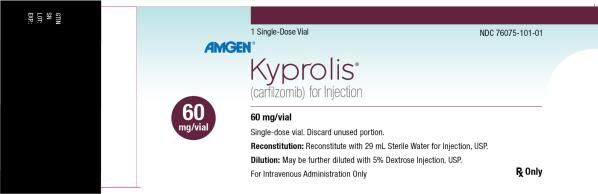
KYPROLIS carfilzomib 60 mg/30mL Injection, Powder, Lyophilized, For Solution — NDC 76075-101-21 (Billing 76075-0101-21)
This is a package of KYPROLIS carfilzomib 60 mg/30mL Injection, Powder, Lyophilized, For Solution from Onyx Pharmaceuticals, Inc., marketed since Jul 2012 and currently FDA-listed.
NDC database record
One package, one record: these facts belong to NDC 76075-101-21 alone.
- Record
- FDA NDC Directory package listing · Human prescription drug
- Code segments
- 76075 labeler · 101 product · 21 package
- Package marketed since
- Oct 1, 2025
- Sample package
- No — commercial package
- Listing certified through
- Dec 31, 2026
- Barcode (UPC-A, from the NDC)
- 3 7607510121 9
- FDA record last changed
- Jul 24, 2026
Identity & classification
Regulatory identifiers FDA, NLM and CMS codes for this package
Drug-database identifiers Medi-Span GPI and First Databank GCN / HICL / AHFS classification
- GSN (GCN sequence number): 069603
- GCN: 32722
- GPI-14 (Medi-Span): 21536025002120
- HICL (First Databank): 039338
- AHFS class code: 10:00.00.00
- RxCUI (RxNorm): 1806934
Where does this data come from?
- FDA openFDA NDC Directory · synced Oct 8, 2026
- FDA label on DailyMed · label index refreshed Oct 6, 2026
- RxNorm (NLM RxNav) · catalog refreshed Oct 1, 2026
- Medi-Span GPI (licensed)
- First Databank (licensed) · refreshed Oct 8, 2026
RxNorm drug class
This medicine belongs to the Proteasome Inhibitor class.
Where does this data come from?
- RxClass (NLM) · catalog refreshed Oct 1, 2026
Clinical
Carfilzomib injection is used alone and in combination with other medications to treat people with multiple myeloma (a type of cancer of the bone marrow) who have already been treated with other medications. Carfilzomib is in a class of medications called proteasome inhibitors. It works by stopping or slowing the growth of cancer cells in your body.
Read the full MedlinePlus article ↗- Kyprolis treats adults with multiple myeloma that has come back or stopped responding to earlier treatment. It may be used alone or with other medicines such as dexamethasone, lena...
- You get it as an IV infusion at a clinic or infusion center, over about 10 or 30 minutes. It is given on set days in 28-day cycles. You will usually get fluids and dexamethasone be...
- Tiredness, low red blood cells or platelets, nausea, diarrhea, fever, cough, shortness of breath, headache and high blood pressure are common. Tell your team about them, since they...
- Kyprolis can harm an unborn baby, so a pregnancy test comes first. Use effective contraception during treatment and for 6 months after the last dose, or 3 months for men with partn...
Patient education
Supplement & herbal interactions
Some supplements/herbs that may interact with Carfilzomib — tap one for details:
Where does this data come from?
- MedlinePlus (NLM) · refreshed Oct 1, 2026
- FDA label on DailyMed · label index refreshed Oct 6, 2026
Ask a licensed pharmacist directly — free, answered by our team.
Pricing
A drug doesn't have one price. Each row is a different public payment system, and none is what you'd pay at the counter — that depends on your insurance. The ⓘ on each row explains what it measures.
| Price system | Per mL | Per package |
|---|---|---|
| Retail pharmacies payNADAC · weekly | Not in the retail survey — common for institutional, discontinued, or low-volume packs. | |
| Medicaid paysCMS SDUD · 12 mo | No recent Medicaid claims on file for this NDC — rare and low-volume NDCs are suppressed in the public data. | |
| Medicare drug plans payPart D · quarterly | No Part D plan price is available for this NDC in our data. | |
| Medicare Part B allowsASP · J9047 | $60.291 / J9047 unit | — |
Where does this data come from?
- CMS NADAC weekly file
- CMS ASP pricing files · refreshed Sep 20, 2026
- CMS Medicaid State Drug Utilization Data · refreshed Oct 8, 2026
- CMS Part D plan pricing files · refreshed Sep 24, 2026
- VA National Acquisition Center price file
Billing & reimbursement
Where does this data come from?
- CMS ASP NDC-HCPCS crosswalk · refreshed Sep 22, 2026
- DMEPDAC NDC-HCPCS crosswalk
- openFDA NSDE billing units · refreshed Oct 7, 2026
Packaging — all sizes for this product
| Package NDC | Description | Marketing start | Marketing end | Status |
|---|---|---|---|---|
| 76075-0101-01 76075-101-01 Main listing | 1 VIAL, SINGLE-USE in 1 CARTON / 30 mL in 1 VIAL, SINGLE-USE | 2012-07-20 | — | Active |
| 76075-0101-21 You're viewing this | 1 VIAL, SINGLE-USE in 1 CARTON / 30 mL in 1 VIAL, SINGLE-USE | 2025-10-01 | — | Active |
This pack shows little to no recent Medicaid volume — a different pack size carries most fills. See all packs ↓
Pack size FAQ
What quantity is in this package?
What NDC number is used to bill for this package of KYPROLIS carfilzomib 60 mg/30mL Injection, Powder, Lyophilized, For Solution?
Therapeutic equivalents
| Product | Labeler | Pack | NADAC/unit | TE | Status | Price vs. this |
|---|---|---|---|---|---|---|
| Kyprolis 60 mg/30mLthis 76075-0101-21 | Onyx | 1 vial | — | AP | FDA listed | — |
Where does this data come from?
- FDA openFDA NDC Directory · synced Oct 8, 2026
- FDA Orange Book · refreshed Oct 3, 2026
- CMS NADAC weekly file
Availability & generic status
The FDA lists approved generic versions of this medicine, but that does not always mean a pharmacy can get one today. Patent rules, launch agreements, supply and pricing can affect when generics actually arrive.
Why the date isn’t exact: Generic timing can change because patents may be challenged, settled, licensed, added, removed, or worked around with a narrower label — and FDA approval does not always mean a pharmacy can get the generic today.
🛈 What do these terms mean?
- Patent
- Legal protection listed in the Orange Book that may delay generic approval or launch. Issued by the U.S. Patent & Trademark Office.
- Substance patent
- Covers the active drug molecule itself — the hardest to design around. A generic generally can’t launch until it expires.
- Formulation (product) patent
- Covers a specific formulation or dosage form. A generic can sometimes work around it with a different formulation.
- Method-of-use patent
- A patent covering one specific approved use of the drug — not necessarily the whole molecule. A generic can sometimes launch with a “skinny label” that carves out the protected use and keeps the others.
- Skinny label
- A generic label that omits a still-patented use when the FDA allows it — letting a generic reach the market for the unprotected uses.
- Exclusivity
- FDA-granted marketing protection, separate from patents — e.g. 5-yr new chemical entity, 7-yr orphan drug, or a +6-month pediatric extension.
- Paragraph IV
- A generic applicant’s formal challenge to a listed patent. It can potentially lead to earlier generic entry, but often involves litigation or a settlement.
- RLD / RS
- Reference Listed Drug — the brand product the FDA uses as the reference for generic applications. Reference Standard — the product the FDA expects generics to compare against in bioequivalence testing.
- TE / AB rating
- FDA therapeutic-equivalence rating. An AB rating generally means the FDA considers a generic therapeutically equivalent to — and substitutable for — the brand.
- LOE (loss of exclusivity)
- The latest patent or exclusivity currently listed — the loss-of-exclusivity / latest-listed-protection date shown on this page. Paragraph-IV challenges and settlements can move the real date earlier; FDA approval and a manufacturer’s decision to market can move it later.
Built from the FDA Orange Book. The bars above are scaled to each protection’s expiry; the red LOE marker is the last one to lapse.
| Patent | Type | Use code | Expires |
|---|---|---|---|
| US RE47954 ↗ | Method of use | U-3449 | Oct 21, 2029 |
| US RE47954 ↗ | Method of use | U-3449 | Oct 21, 2029 |
| US RE47954 ↗ | Method of use | U-3449 | Oct 21, 2029 |
| US 12636340 ↗ | Method of use | U-4551 | Apr 29, 2041 |
| US 12636340 ↗ | Method of use | U-4551 | Apr 29, 2041 |
| US 12636340 ↗ | Method of use | U-4551 | Apr 29, 2041 |
| US 7737112 ↗ | Drug product | — | Dec 7, 2027 |
| US 7417042 ↗ | Drug substance | — | Jul 20, 2026 |
| US 7737112 ↗ | Drug product | — | Dec 7, 2027 |
| US 7737112 ↗ | Drug product | — | Dec 7, 2027 |
| US 7417042 ↗ | Drug substance | — | Jul 20, 2026 |
| US 9493582 ↗ | Drug product | — | Feb 27, 2033 |
| US 9493582 ↗ | Drug product | — | Feb 27, 2033 |
| US 9493582 ↗ | Drug product | — | Feb 27, 2033 |
| US 7417042 ↗ | Drug substance | — | Jul 20, 2026 |
| US 7417042*PED ↗ | Drug product | — | Jan 20, 2027 |
| US 7737112*PED ↗ | Drug product | — | Jun 7, 2028 |
| US 7417042*PED ↗ | Drug product | — | Jan 20, 2027 |
| US 7737112*PED ↗ | Drug product | — | Jun 7, 2028 |
| US 9493582*PED ↗ | Drug product | — | Aug 27, 2033 |
| US 9493582*PED ↗ | Drug product | — | Aug 27, 2033 |
| US 9493582*PED ↗ | Drug product | — | Aug 27, 2033 |
| US 7737112*PED ↗ | Drug product | — | Jun 7, 2028 |
| US 7417042*PED ↗ | Drug product | — | Jan 20, 2027 |
| US RE47954*PED ↗ | Drug product | — | Apr 21, 2030 |
| US RE47954*PED ↗ | Drug product | — | Apr 21, 2030 |
| US RE47954*PED ↗ | Drug product | — | Apr 21, 2030 |
| US 12636340*PED ↗ | Drug product | — | Oct 29, 2041 |
| US 12636340*PED ↗ | Drug product | — | Oct 29, 2041 |
| US 12636340*PED ↗ | Drug product | — | Oct 29, 2041 |
| Code | What it grants | Expires |
|---|---|---|
| M-14 | New indication / labeling change (3-year) | May 22, 2028 |
| M-14 | New indication / labeling change (3-year) | May 22, 2028 |
| M-14 | New indication / labeling change (3-year) | May 22, 2028 |
| PED | Pediatric Exclusivity (+6 months) | Nov 22, 2028 |
| PED | Pediatric Exclusivity (+6 months) | Nov 22, 2028 |
| PED | Pediatric Exclusivity (+6 months) | Nov 22, 2028 |
Is there a generic version of KYPROLIS 60 MG VIAL?
The FDA approved a generic — why can’t I get it at my pharmacy yet?
Why do different websites show different generic release dates?
What does “FDA listed” mean?
What does a patent or protection date mean here?
What does “current Orange Book estimate” mean?
Can a generic come out before the last patent expires?
Can a generic come out after the listed dates?
What is the difference between patents and exclusivity?
Why are there multiple patent dates?
Where does this data come from?
- FDA Orange Book · refreshed Oct 3, 2026
Inactive Ingredients / Excipients
Inactive ingredients, also called excipients, are components of the drug product other than the active ingredient. They may include fillers, dyes, coatings, preservatives, flavors, or other formulation ingredients.
🧪 Avoiding an ingredient? See Carfilzomib Injection inactive ingredients by manufacturer: every current product's list side by side, so you can ask your pharmacy for the version that does not list it.
💡 Tap an ingredient (hover on desktop) to see what it is and why it’s used.
-
UNII XF417D3PSL
Anhydrous citric acid is a sour, crystalline powder derived from citric acid with water removed. In medicines, it acts as a buffer to control pH, adds tartness to improve taste, and helps tablets disintegrate.
-
UNII 2PP9364507
A modified form of beta-cyclodextrin, a natural sugar-like molecule. It helps dissolve and stabilize drugs in liquid medicines and improves how well the body absorbs certain medications.
-
UNII 55X04QC32I
A strong alkaline chemical used to adjust and maintain the pH balance of liquid medicines. It helps keep the medicine stable and ensures it stays effective during storage.
-
UNII 059QF0KO0R
Water is a liquid solvent that dissolves and mixes ingredients together in liquid medicines, syrups, and injections. It helps distribute the active drug evenly throughout the product.
4 inactive ingredients listed in the exact product block matched to this NDC.
Where does this data come from?
ingredient classCode="IACT" elements from the exact product block matched by this NDC. Label-section narrative from DailyMed / the openFDA label index is shown separately when available.- FDA label on DailyMed · label index refreshed Oct 6, 2026
- FDA openFDA NDC Directory · synced Oct 8, 2026
Inactive ingredient FAQ
Are inactive ingredients the same for every manufacturer?
Why might an inactive ingredient be missing?
Can inactive ingredients matter?
Manufacturer & labeler
More NDCs from Onyx Pharmaceuticals, Inc. labeler code 76075
Where does this data come from?
- FDA openFDA NDC Directory · synced Oct 8, 2026
- Drugs@FDA
Full prescribing information FDA SPL
🎯 Indications and Usage ▾
1 INDICATIONS AND USAGE Kyprolis is a proteasome inhibitor that is indicated: for the treatment of adult patients with relapsed or refractory multiple myeloma who have received one to three lines of therapy in combination with Lenalidomide and dexamethasone; or Dexamethasone; or Daratumumab and dexamethasone; or Daratumumab and hyaluronidase-fihj and dexamethasone; or Isatuximab and dexamethasone. ( 1 , 14 ) as a single agent for the treatment of patients with relapsed or refractory multiple myeloma who have received one or more lines of therapy.
( 1 , 14 )
1.1Relapsed or Refractory Multiple Myeloma Kyprolis is indicated for the treatment of adult patients with relapsed or refractory multiple myeloma who have received one to three lines of therapy in combination with: Lenalidomide and dexamethasone; or Dexamethasone; or Daratumumab and dexamethasone; or Daratumumab and hyaluronidase-fihj and dexamethasone; or Isatuximab and dexamethasone. Kyprolis is indicated as a single agent for the treatment of adult patients with relapsed or refractory multiple myeloma who have received one or more lines of therapy.
⏱️ Dosage and Administration ▾
2 DOSAGE AND ADMINISTRATION Hydrate prior to and following Kyprolis as needed. ( 2.1 ) Premedicate prior to all Cycle 1 doses and if infusion-related reactions develop or reappear. ( 2.1 ) The recommended dosing regimens are as follows.
See Full Prescribing Information for additional dosage information. ( 2.2 ) Regimen Dosage Infusion Time Kyprolis and Dexamethasone (Kd) or Kyprolis, Daratumumab and Dexamethasone (DKd) or Kyprolis, Daratumumab and hyaluronidase-fihj and Dexamethasone (DKd) 20/70 mg/m 2 once weekly 30 minutes Kyprolis and Dexamethasone (Kd) or Kyprolis, Daratumumab and Dexamethasone (DKd) or Kyprolis, Daratumumab and hyaluronidase-fihj and Dexamethasone (DKd) or Kyprolis, Isatuximab and Dexamethasone (Isa-Kd) or Kyprolis Monotherapy 20/56 mg/m 2 twice weekly 30 minutes Kyprolis, Lenalidomide and Dexamethasone (KRd) or Kyprolis Monotherapy 20/27 mg/m 2 twice weekly 10 minutes
2.1Administration Precautions Hydration Adequate hydration is required prior to dosing in Cycle 1, especially in patients at high-risk of tumor lysis syndrome (TLS) or renal toxicity. Consider hydration with both oral fluids (30 mL per kg at least 48 hours before Cycle 1, Day 1) and intravenous fluids (250 mL to 500 mL of appropriate intravenous fluid prior to each dose in Cycle 1). If needed, give an additional 250 mL to 500 mL of intravenous fluids following Kyprolis administration.
Continue oral and/or intravenous hydration, as needed, in subsequent cycles. Monitor patients for evidence of volume overload and adjust hydration to individual patient needs, especially in patients with or at risk for cardiac failure [see Warnings and Precautions (5.1 , 5.3) ] . Electrolyte Monitoring Monitor serum potassium levels regularly during treatment with Kyprolis [see Adverse Reactions (6.1) ] .
Premedications and Concomitant Medications Premedicate with the recommended dose of dexamethasone for monotherapy or dexamethasone administered as part of the combination therapy [see Dosage and Administration (2.2) ] . Administer dexamethasone orally or intravenously at least 30 minutes but no more than 4 hours prior to all doses of Kyprolis during Cycle 1 to reduce the incidence and severity of infusion-related reactions [see Warnings and Precautions (5.9) ] . Reinstate dexamethasone premedication if these symptoms occur during subsequent cycles.
Provide thromboprophylaxis for patients being treated with Kyprolis in combination with other therapies [see Warnings and Precautions (5.8) ] . Consider antiviral prophylaxis to decrease the risk of herpes zoster reactivation [see Adverse Reactions (6.1) ] . Dose Calculation For patients with body surface area (BSA) of 2.2 m 2 or less, calculate the Kyprolis dose using actual BSA.
Dose adjustments do not need to be made for weight changes of 20% or less. For patients with a BSA greater than 2.2 m 2 , calculate the Kyprolis dose using a BSA of 2.2 m 2 .
2.2Recommended Dosage Once Weekly 20/70 mg/m 2 (30-minute infusion) Kyprolis once weekly 20/70 mg/m 2 administered in combination with dexamethasone (Kd), daratumumab plus dexamethasone (DKd), or daratumumab and hyaluronidase-fihj plus dexamethasone (DKd). The recommended starting dosage of Kyprolis is 20 mg/m 2 on Cycle 1, Day 1. If tolerated, escalate the dose to 70 mg/m 2 on Cycle 1, Day 8.
Administer Kyprolis intravenously as a 30-minute infusion on Days 1, 8, and 15 of each 28-day cycle until disease progression or unacceptable toxicity as shown in Table 1 [see Clinical Studies (14.2) ] . Administer dexamethasone 30 minutes to 4 hours before Kyprolis and 1 to 3 hours before daratumumab or daratumumab and hyaluronidase-fihj. For dosage instructions of combination agents with Kyprolis, see Clinical Studies sections 14.2 (Kd) and 14.3 (DKd) .
Refer to the Prescribing Information for dexamethasone, intravenous daratumumab, and subcutaneous daratumumab and hyaluronidase-fihj for additional dosage information. Table 1: Kyprolis 20/70 mg/m 2 Once Weekly (30-Minute In… [Excerpted — this section continues on DailyMed.]
💊 Dosage Forms and Strengths ▾
3 DOSAGE FORMS AND STRENGTHS For injection: 10 mg, 30 mg and 60 mg as a white to off-white lyophilized cake or powder in single-dose vial for reconstitution. For injection: 10 mg, 30 mg or 60 mg lyophilized powder in single-dose vial for reconstitution. ( 3 )
⛔ Contraindications ▾
4 CONTRAINDICATIONS None. None. ( 4 )
⚠️ Warnings and Cautions ▾
5 WARNINGS AND PRECAUTIONS Cardiac Toxicities : Monitor for signs and symptoms of cardiac failure or ischemia. Withhold Kyprolis and evaluate promptly. ( 5.1 ) Acute Renal Failure : Monitor serum creatinine regularly.
( 5.2 ) Tumor Lysis Syndrome (TLS) : Administer pre-treatment hydration. (2.1 ) Monitor for TLS, including uric acid levels and treat promptly. ( 5.3 ) Pulmonary Toxicity, including Acute Respiratory Distress Syndrome, Acute Respiratory Failure, and Acute Diffuse Infiltrative Pulmonary Disease : Withhold Kyprolis and evaluate promptly.
( 5.4 ) Pulmonary Hypertension : Withhold Kyprolis and evaluate. ( 5.5 ) Dyspnea : For severe or life-threatening dyspnea, withhold Kyprolis and evaluate. ( 5.6 ) Hypertension, including Hypertensive Crisis : Monitor blood pressure regularly.
If hypertension cannot be controlled, interrupt treatment with Kyprolis. ( 5.7 ) Venous Thrombosis : Thromboprophylaxis is recommended. ( 5.8 ) Infusion-related Reactions : Premedicate with dexamethasone.
( 2.1 , 5.9 ) Hemorrhage : Fatal or serious cases of hemorrhage may occur, including gastrointestinal, pulmonary, and intracranial hemorrhage. Promptly evaluate signs and symptoms of blood loss. ( 5.10 ) Thrombocytopenia : Monitor platelet counts; interrupt or reduce Kyprolis dosing as clinically indicated.
( 2.3 , 5.11 ) Hepatic Toxicity and Hepatic Failure : Monitor liver enzymes regularly. Withhold Kyprolis if suspected. ( 5.12 ) Thrombotic Microangiopathy : Monitor for signs and symptoms.
Discontinue Kyprolis if suspected. ( 5.13 ) Posterior Reversible Encephalopathy Syndrome (PRES) : Consider neuro-radiological imaging (MRI) for onset of visual or neurological symptoms; discontinue Kyprolis if suspected. ( 5.14 ) Progressive Multifocal Leukoencephalopathy : Consider PML if new or worsening neurologic manifestations.
Discontinue Kyprolis in patients who develop PML. ( 5.15 ) Increased Fatal and Serious Toxicities in Combination with Melphalan and Prednisone in Newly Diagnosed Transplant-Ineligible Patients ( 5.16 ) Embryo-Fetal Toxicity : Kyprolis can cause fetal harm. Advise females of reproductive potential and males with female partners of reproductive potential of potential risk to a fetus and to use effective contraception.
( 5.17 , 8.1 )
5.1Cardiac Toxicities New onset or worsening of pre-existing cardiac failure (e.g., congestive heart failure, pulmonary edema, decreased ejection fraction), cardiomyopathy, myocardial ischemia, and myocardial infarction including fatalities have occurred following administration of Kyprolis. Some events occurred in patients with normal baseline ventricular function. In clinical studies with Kyprolis, these events occurred throughout the course of Kyprolis therapy.
Death due to cardiac arrest has occurred within one day of Kyprolis administration. In randomized, open-label, multicenter trials for combination therapies, the incidence of cardiac failure events was 8% and that of arrythmias was 8% (majority of which were atrial fibrillation and sinus tachycardia) [see Adverse Reactions (6.1) ]. Monitor patients for clinical signs or symptoms of cardiac failure or cardiac ischemia.
Evaluate promptly if cardiac toxicity is suspected. Withhold Kyprolis for Grade 3 or 4 cardiac adverse reactions until recovery and consider whether to restart Kyprolis at 1 dose level reduction based on a benefit/risk assessment [see Dosage and Administration (2.3) ] . While adequate hydration is required prior to each dose in Cycle 1, monitor all patients for evidence of volume overload, especially patients at risk for cardiac failure.
Adjust total fluid intake as clinically appropriate in patients with baseline cardiac failure or who are at risk for cardiac failure [see Dosage and Administration (2.1) ] . In patients ≥ 75 years of age, the risk of cardiac failure is increased compared to younger patients. Patients with New York Heart Association Class III and IV heart failure, recent myocardial infarction, conduction abnor… [Excerpted — this section continues on DailyMed.]
🤒 Adverse Reactions ▾
6 ADVERSE REACTIONS The following clinically significant adverse reactions are described elsewhere in the labeling: Cardiac Toxicities [see Warnings and Precautions (5.1) ] Acute Renal Failure [see Warnings and Precautions (5.2) ] Tumor Lysis Syndrome [see Warnings and Precautions (5.3) ] Pulmonary Toxicity [see Warnings and Precautions (5.4) ] Pulmonary Hypertension [see Warnings and Precautions (5.5) ] Dyspnea [see Warnings and Precautions (5.6) ] Hypertension [see Warnings and Precautions (5.7) ] Venous Thrombosis [see Warnings and Precautions (5.8) ] Infusion-Related Reactions [see Warnings and Precautions (5.9) ] Hemorrhage [see Warnings and Precautions (5.10) ] Thrombocytopenia [see Warnings and Precautions (5.11) ] Hepatic Toxicity and Hepatic Failure [see Warnings and Precautions (5.12) ] Thrombotic Microangiopathy [see Warnings and Precautions (5.13) ] Posterior Reversible Encephalopathy Syndrome [see Warnings and Precautions (5.14) ] Progressive Multifocal Leukoencephalopathy [see Warnings and Precautions (5.15) ] The most common adverse reactions occurring in at least 20% of patients treated with Kyprolis in monotherapy trials: anemia, fatigue, thrombocytopenia, nausea, pyrexia, dyspnea, diarrhea, headache, cough, edema peripheral.
( 6 ) The most common adverse reactions occurring in at least 20% of patients treated with Kyprolis in the combination therapy trials: anemia, diarrhea, hypertension, fatigue, upper respiratory tract infection, thrombocytopenia, pyrexia, cough, dyspnea, and insomnia. ( 6 ) To report SUSPECTED ADVERSE REACTIONS, contact Amgen Medical Information at 1-800-77-AMGEN (1-800-772-6436) or FDA at 1-800-FDA-1088 or www.fda.gov/medwatch.
6.1Clinical Trials Experience Because clinical trials are conducted under widely varying conditions, adverse reaction rates observed in the clinical trials of a drug cannot be directly compared with rates in the clinical trials of another drug and may not reflect the rates observed in practice. The pooled safety population described in the Warnings and Precautions reflect exposure to Kyprolis in 2,239 patients administered in combination with other drugs in ASPIRE, ENDEAVOR, A.R.R.O.W., CANDOR, IKEMA, EQUULEUS, and PLEIADES.
The most common adverse reactions occurring in at least 20% of patients who received Kyprolis in combination were anemia, diarrhea, hypertension, fatigue, upper respiratory tract infection, thrombocytopenia, pyrexia, cough, dyspnea, and insomnia. Kyprolis in Combination with Lenalidomide and Dexamethasone The safety of Kyprolis 20/27 mg/m 2 twice weekly in combination with lenalidomide and dexamethasone (KRd) was evaluated in ASPIRE [see Clinical Studies (14.1) ] . The median number of cycles initiated was 22 cycles for the KRd arm and 14 cycles for the Rd arm.
Deaths due to adverse reactions within 30 days of the last dose of any therapy in the KRd arm occurred in 45/392 (12%) patients compared with 42/389 (11%) patients who died due to adverse reactions within 30 days of the last dose of any Rd therapy. The most frequent cause of deaths occurring in patients (%) in the two arms (KRd versus Rd) included infection 12 (3%) versus 11 (3%), cardiac 10 (3%) versus 9 (2%), and other adverse reactions 23 (6%) versus 22 (6%). Serious adverse reactions were reported in 65% of the patients in the KRd arm and 57% of the patients in the Rd arm.
The most frequent serious adverse reactions reported in the KRd arm as compared with the Rd arm were pneumonia (17% versus 13%), respiratory tract infection (4% versus 2%), pyrexia (4% versus 3%), and pulmonary embolism (3% versus 2%). Discontinuation due to any adverse reaction occurred in 33% in the KRd arm versus 30% in the Rd arm. Adverse reactions leading to discontinuation of Kyprolis occurred in 12% of patients and the most common reactions included pneumonia (1%), myocardial infarction (0.8%), and upper respiratory tract infection (0.8%).
The incidence of cardiac failure events was 7% in the KRd arm versus… [Excerpted — this section continues on DailyMed.]
👥 Use in Specific Populations ▾
8 USE IN SPECIFIC POPULATIONS Geriatric Use : In the Kyprolis clinical trials, the incidence of adverse reactions was greater in patients ≥ 75 years of age. ( 8.5 ) Hepatic Impairment : Reduce the dose of Kyprolis by 25% in patients with mild or moderate hepatic impairment. ( 2.4 ) Patients on Hemodialysis : Administer Kyprolis after the hemodialysis procedure. ( 2.1 ) Lactation : Advise women not to breastfeed. ( 8.2 )
8.1Pregnancy Risk Summary Kyprolis can cause fetal harm based on findings from animal studies and its mechanism of action [see Clinical Pharmacology (12.1) ] . There are no available data on Kyprolis use in pregnant women to evaluate for drug-associated risks. Kyprolis caused embryo-fetal lethality in rabbits at doses lower than the clinical dose (see Data ) .
Advise pregnant women of the potential risk to the fetus. In the U.S. general population, the estimated background risk of major birth defects and miscarriage in clinically recognized pregnancies is 2%–4% and 15%–20%, respectively. Data Animal Data Carfilzomib administered intravenously to pregnant rats and rabbits during the period of organogenesis was not teratogenic at doses up to 2 mg/kg/day in rats and 0.8 mg/kg/day in rabbits.
In rabbits, there was an increase in pre-implantation loss at ≥ 0.4 mg/kg/day and an increase in early resorptions and post-implantation loss and a decrease in fetal weight at the maternally toxic dose of 0.8 mg/kg/day. The doses of 0.4 and 0.8 mg/kg/day in rabbits are approximately 20% and 40%, respectively, of the recommended dose in humans of 27 mg/m 2 based on BSA.
8.2Lactation Risk Summary There are no data on the presence of Kyprolis in human milk, the effects on the breastfed child, or the effects of the drug on milk production. Because of the potential for serious adverse reactions in the breastfed child, advise women not to breastfeed during treatment with Kyprolis and for 2 weeks after treatment.
8.3Females and Males of Reproductive Potential Based on its mechanism of action and findings in animals, Kyprolis can cause fetal harm when administered to a pregnant woman [see Use in Specific Populations (8.1) ] . Pregnancy Testing Conduct pregnancy testing on females of reproductive potential prior to initiating Kyprolis treatment. Contraception Females Advise females of reproductive potential to use effective contraception during treatment with Kyprolis and for 6 months following the last dose.
Males Advise males with female sexual partners of reproductive potential to use effective contraception during treatment with Kyprolis and for 3 months following the last dose. Infertility Based on the mechanism of action, Kyprolis may have an effect on either male or female fertility [see Clinical Pharmacology (12.1) , Nonclinical Toxicology (13.1) ] . There are no data on the effect of Kyprolis on human fertility.
8.4Pediatric Use The safety and effectiveness of Kyprolis in pediatric patients have not been established. The safety and effectiveness of Kyprolis in combination with chemotherapy was evaluated, but not established in an open label trial (Study 20140106; NCT02303821) in 124 patients aged 1 to younger than 17 years with relapsed or refractory B-cell acute lymphoblastic leukemia (ALL) who have received prior targeted B-cell immune therapy or relapsed or refractory T-cell ALL. No new safety signals were observed in these pediatric patients.
The systemic exposure of carfilzomib in these pediatric patients was within range of that observed in adults given the same dose based on body surface area.
8.5Geriatric Use Of the 2,837 patients with relapsed or refractory multiple myeloma exposed to Kyprolis in monotherapy and combination therapy studies [see Clinical Studies (14.1 , 14.2 , 14.3 , 14.4 , 14.5) ] , 50% were 65 years and older, while 13% were 75 years and older. The incidence of serious adverse reactions was 50% in patients < 65 years of age, 60% in patients 65 to 74 years of age, and 63% in patients ≥ 75 years o… [Excerpted — this section continues on DailyMed.]
🤰 Pregnancy ▾
8.1Pregnancy Risk Summary Kyprolis can cause fetal harm based on findings from animal studies and its mechanism of action [see Clinical Pharmacology (12.1) ] . There are no available data on Kyprolis use in pregnant women to evaluate for drug-associated risks. Kyprolis caused embryo-fetal lethality in rabbits at doses lower than the clinical dose (see Data ) .
Advise pregnant women of the potential risk to the fetus. In the U.S. general population, the estimated background risk of major birth defects and miscarriage in clinically recognized pregnancies is 2%–4% and 15%–20%, respectively. Data Animal Data Carfilzomib administered intravenously to pregnant rats and rabbits during the period of organogenesis was not teratogenic at doses up to 2 mg/kg/day in rats and 0.8 mg/kg/day in rabbits.
In rabbits, there was an increase in pre-implantation loss at ≥ 0.4 mg/kg/day and an increase in early resorptions and post-implantation loss and a decrease in fetal weight at the maternally toxic dose of 0.8 mg/kg/day. The doses of 0.4 and 0.8 mg/kg/day in rabbits are approximately 20% and 40%, respectively, of the recommended dose in humans of 27 mg/m 2 based on BSA.
🧒 Pediatric Use ▾
8.4Pediatric Use The safety and effectiveness of Kyprolis in pediatric patients have not been established. The safety and effectiveness of Kyprolis in combination with chemotherapy was evaluated, but not established in an open label trial (Study 20140106; NCT02303821) in 124 patients aged 1 to younger than 17 years with relapsed or refractory B-cell acute lymphoblastic leukemia (ALL) who have received prior targeted B-cell immune therapy or relapsed or refractory T-cell ALL. No new safety signals were observed in these pediatric patients.
The systemic exposure of carfilzomib in these pediatric patients was within range of that observed in adults given the same dose based on body surface area.
🧓 Geriatric Use ▾
8.5Geriatric Use Of the 2,837 patients with relapsed or refractory multiple myeloma exposed to Kyprolis in monotherapy and combination therapy studies [see Clinical Studies (14.1 , 14.2 , 14.3 , 14.4 , 14.5) ] , 50% were 65 years and older, while 13% were 75 years and older. The incidence of serious adverse reactions was 50% in patients < 65 years of age, 60% in patients 65 to 74 years of age, and 63% in patients ≥ 75 years of age. Of the 308 patients in CANDOR who received DKd, 47% of patients were 65 years and older, while 9% were 75 years and older.
Fatal adverse reactions in the DKd arm of CANDOR occurred in 6% of patients < 65 years of age, 14% of patients between 65 to 74 years of age, and 14% of patients ≥ 75 years of age [see Adverse Reactions (6.1) ] . No overall differences in effectiveness were observed between older and younger patients.
🆘 Overdosage ▾
10 OVERDOSAGE Acute onset of chills, hypotension, renal insufficiency, thrombocytopenia, and lymphopenia has been reported following a dose of 200 mg of Kyprolis administered in error. There is no known specific antidote for Kyprolis overdosage. In the event of overdose, monitor patients for adverse reactions and provide supportive care as appropriate.
🧬 Clinical Pharmacology ▾
12 CLINICAL PHARMACOLOGY
12.1Mechanism of Action Carfilzomib is a tetrapeptide epoxyketone proteasome inhibitor that irreversibly binds to the N-terminal threonine-containing active sites of the 20S proteasome, the proteolytic core particle within the 26S proteasome. Carfilzomib had antiproliferative and proapoptotic activities in vitro in solid and hematologic tumor cells. In animals, carfilzomib inhibited proteasome activity in blood and tissue and delayed tumor growth in models of multiple myeloma, hematologic, and solid tumors.
12.2Pharmacodynamics Intravenous carfilzomib administration resulted in suppression of proteasome chymotrypsin-like (CT-L) activity when measured in blood 1 hour after the first dose. Doses of carfilzomib ≥ 15 mg/m 2 with or without lenalidomide and dexamethasone induced a ≥ 80% inhibition of the CT-L activity of the proteasome. In addition, carfilzomib, 20 mg/m 2 intravenously as a single agent, resulted in a mean inhibition of the low molecular mass polypeptide 2 (LMP2) and multicatalytic endopeptidase complex-like 1 (MECL1) subunits of the proteasome ranging from 26% to 32% and 41% to 49%, respectively.
Proteasome inhibition was maintained for ≥ 48 hours following the first dose of carfilzomib for each week of dosing.
12.3Pharmacokinetics Carfilzomib at doses between 20 mg/m 2 and 70 mg/m 2 administered as a 30-minute infusion resulted in dose-dependent increases in maximum plasma concentrations (C max ) and area under the curve over time to infinity (AUC 0-INF ) in patients with multiple myeloma. A dose-dependent increase in C max and AUC 0-INF was also observed between carfilzomib 20 mg/m 2 and 56 mg/m 2 as a 2- to 10-minute infusion in patients with relapsed or refractory multiple myeloma. A 30-minute infusion resulted in a similar AUC 0-INF , but 2- to 3-fold lower C max than that observed with a 2- to 10-minute infusion at the same dose.
There was no evidence of carfilzomib accumulation following repeated administration of carfilzomib 70 mg/m 2 as a 30-minute once weekly infusion or 15 and 20 mg/m 2 as a 2- to 10-minute twice weekly infusion. Table 21 lists the estimated mean average daily area under the curve in the first cycle (AUC C1,avg ), average daily area under the curve at steady-state (AUC ss ) and C max at the highest dose in the first cycle (C max,C1 ) for the different dosing regimens. Table 21: Carfilzomib Exposure Parameters for Different Dosing Regimens Estimated Parameters (%CV) 20/27 mg/m 2 twice weekly with 2- to 10-minute infusion 20/56 mg/m 2 twice weekly with 30-minute infusion 20/70 mg/m 2 once weekly with 30-minute infusion CV = Coefficient of variation AUC C1,avg (ng∙hr/mL) 95 (40) 170 (35) 114 (36) AUC ss (ng∙hr/mL) 111 (34) 228 (28) 150 (35) C max,C1 (ng/mL) 1282 (17) 1166 (29) 1595 (36) Distribution The mean steady-state volume of distribution of a 20 mg/m 2 dose of carfilzomib was 28 L.
Carfilzomib is 97% bound to human plasma proteins over the concentration range of 0.4 to 4 micromolar in vitro. Elimination Carfilzomib has a half-life of ≤ 1 hour on Day 1 of Cycle 1 following intravenous doses ≥ 15 mg/m 2 . The half-life was similar when administered either as a 30-minute infusion or a 2- to 10-minute infusion.
The systemic clearance ranged from 151 to 263 L/hour. Metabolism Carfilzomib is rapidly metabolized. Peptidase cleavage and epoxide hydrolysis were the principal pathways of metabolism.
Cytochrome P450 (CYP)-mediated mechanisms contribute a minor role in overall carfilzomib metabolism. Excretion Approximately 25% of the administered dose of carfilzomib was excreted in urine as metabolites in 24 hours. Urinary and fecal excretion of the parent compound was negligible (0.3% of total dose).
Specific Populations Age (35-89 years), sex, race or ethnicity (80% White, 11% Black, 6% Asians, 3% Hispanics), and mild to severe renal impairment (creatinine clearance 15-89 mL/min) did not have clinically meaningful effects on the pharmacokinetics of carfilzomib. Pat… [Excerpted — this section continues on DailyMed.]
🧬 Mechanism of Action ▾
12.1Mechanism of Action Carfilzomib is a tetrapeptide epoxyketone proteasome inhibitor that irreversibly binds to the N-terminal threonine-containing active sites of the 20S proteasome, the proteolytic core particle within the 26S proteasome. Carfilzomib had antiproliferative and proapoptotic activities in vitro in solid and hematologic tumor cells. In animals, carfilzomib inhibited proteasome activity in blood and tissue and delayed tumor growth in models of multiple myeloma, hematologic, and solid tumors.
📦 How Supplied / Storage and Handling ▾
16 HOW SUPPLIED/STORAGE AND HANDLING How Supplied Kyprolis (carfilzomib) for Injection is supplied as: An individually packaged single-dose vial containing 10 mg of carfilzomib as a white to off-white lyophilized cake or powder: NDC 76075-103-01, NDC 76075-103-21. An individually packaged single-dose vial containing 30 mg of carfilzomib as a white to off-white lyophilized cake or powder: NDC 76075-102-01, NDC 76075-102-21. An individually packaged single-dose vial containing 60 mg of carfilzomib as a white to off-white lyophilized cake or powder: NDC 76075-101-01, NDC 76075-101-21.
Storage and Handling Unopened vials should be stored refrigerated 2°C to 8°C (36°F to 46°F). Retain in original package to protect from light.
📦 Storage and Handling ▾
Storage and Handling Unopened vials should be stored refrigerated 2°C to 8°C (36°F to 46°F). Retain in original package to protect from light.
📋 Description ▾
11 DESCRIPTION Carfilzomib is a proteasome inhibitor. The chemical name for carfilzomib is (2S)-N-((S)-1-((S)-4-methyl-1-((R)-2-methyloxiran-2-yl)-1-oxopentan-2-ylcarbamoyl)-2-phenylethyl)-2-((S)-2-(2-morpholinoacetamido)-4-phenylbutanamido)-4-methylpentanamide. Carfilzomib has the following structure: Carfilzomib is a crystalline substance with a molecular weight of 719.9.
The molecular formula is C 40 H 57 N 5 O 7 . Carfilzomib is practically insoluble in water and very slightly soluble in acidic conditions. Kyprolis for injection, for intravenous use is a sterile, white to off-white lyophilized powder in a single-dose vial.
Each 10 mg vial contains 10 mg of carfilzomib, 500 mg sulfobutylether beta-cyclodextrin, and 9.6 mg anhydrous citric acid and sodium hydroxide for pH adjustment (target pH 3.5). Each 30 mg vial contains 30 mg of carfilzomib, 1500 mg sulfobutylether beta-cyclodextrin, and 28.8 mg anhydrous citric acid and sodium hydroxide for pH adjustment (target pH 3.5). Each 60 mg vial contains 60 mg of carfilzomib, 3000 mg sulfobutylether beta-cyclodextrin, 57.7 mg citric acid, and sodium hydroxide for pH adjustment (target pH 3.5).
Chemical Structure
💬 Information for Patients ▾
17 PATIENT COUNSELING INFORMATION Discuss the following with patients prior to treatment with Kyprolis: Cardiac Toxicities: Advise patients of the risks and symptoms of cardiac failure and ischemia [see Warnings and Precautions (5.1) ] . Dehydration: Counsel patients to avoid dehydration, since patients receiving Kyprolis therapy may experience vomiting and/or diarrhea. Instruct patients to seek medical advice if they experience symptoms of dehydration [see Warnings and Precautions (5.3) ] .
Respiratory: Advise patients that they may experience cough or shortness of breath (dyspnea) during treatment with Kyprolis. This most commonly occurs within a day of dosing. Advise patients to contact their healthcare provider if they experience shortness of breath [see Warnings and Precautions (5.6) ] .
Venous Thrombosis: Inform patients of the risk of venous thromboembolism and discuss the options for prophylaxis. Advise patients to seek immediate medical attention for symptoms of venous thrombosis or embolism [see Warnings and Precautions (5.8) ] . Infusion-Related Reactions: Advise patients of the risk of infusion-related reactions and discuss the common signs and symptoms of infusion-related reactions with the patients [see Warnings and Precautions (5.9) ] .
Bleeding: Inform patients that they may bruise or bleed more easily or that it may take longer to stop bleeding and to report to their healthcare provider any prolonged, unusual or excessive bleeding. Instruct patients on the signs of occult bleeding [see Warnings and Precautions (5.10) ] . Hepatic: Inform patients of the risk of developing hepatic failure.
Advise patients to contact their healthcare provider for symptoms of hepatitis including worsening fatigue or yellow discoloration of skin or eyes [see Warnings and Precautions (5.12) ] . Other: Inform patients to contact their healthcare provider if they experience neurologic symptoms such as headaches, confusion, dizziness or loss of balance, difficulty talking or walking, decreased strength or weakness on one side of the body, seizures, or visual loss [see Warnings and Precautions (5) and Adverse Reactions (6) ] .
Driving/Operating Machines: Advise patients that Kyprolis may cause fatigue, dizziness, fainting, and/or drop in blood pressure. Advise patients not to drive or operate machinery if they experience any of these symptoms [see Adverse Reactions (6.1) ] . Embryo-Fetal Toxicity: Advise females of the potential risk to the fetus.
Advise females of reproductive potential to inform their healthcare provider immediately of a known or suspected pregnancy. Advise female patients to use effective contraceptive during treatment with Kyprolis and for 6 months following the last dose. Advise male patients with female sexual partners of reproductive potential to use effective contraception during treatment with Kyprolis and for 3 months following the last dose [see Warnings and Precautions (5.17) , Use in Specific Populations (8.1 , 8.3) ] .
Lactation: Advise patients to avoid breastfeeding while receiving Kyprolis and for 2 weeks after the last dose [see Use in Specific Populations (8.2) ] . Concomitant Medications: Advise patients to discuss with their healthcare provider any medication they are currently taking prior to starting treatment with Kyprolis, or prior to starting any new medication(s) during treatment with Kyprolis.
🧬 Pharmacokinetics ▾
12.3Pharmacokinetics Carfilzomib at doses between 20 mg/m 2 and 70 mg/m 2 administered as a 30-minute infusion resulted in dose-dependent increases in maximum plasma concentrations (C max ) and area under the curve over time to infinity (AUC 0-INF ) in patients with multiple myeloma. A dose-dependent increase in C max and AUC 0-INF was also observed between carfilzomib 20 mg/m 2 and 56 mg/m 2 as a 2- to 10-minute infusion in patients with relapsed or refractory multiple myeloma. A 30-minute infusion resulted in a similar AUC 0-INF , but 2- to 3-fold lower C max than that observed with a 2- to 10-minute infusion at the same dose.
There was no evidence of carfilzomib accumulation following repeated administration of carfilzomib 70 mg/m 2 as a 30-minute once weekly infusion or 15 and 20 mg/m 2 as a 2- to 10-minute twice weekly infusion. Table 21 lists the estimated mean average daily area under the curve in the first cycle (AUC C1,avg ), average daily area under the curve at steady-state (AUC ss ) and C max at the highest dose in the first cycle (C max,C1 ) for the different dosing regimens. Table 21: Carfilzomib Exposure Parameters for Different Dosing Regimens Estimated Parameters (%CV) 20/27 mg/m 2 twice weekly with 2- to 10-minute infusion 20/56 mg/m 2 twice weekly with 30-minute infusion 20/70 mg/m 2 once weekly with 30-minute infusion CV = Coefficient of variation AUC C1,avg (ng∙hr/mL) 95 (40) 170 (35) 114 (36) AUC ss (ng∙hr/mL) 111 (34) 228 (28) 150 (35) C max,C1 (ng/mL) 1282 (17) 1166 (29) 1595 (36) Distribution The mean steady-state volume of distribution of a 20 mg/m 2 dose of carfilzomib was 28 L.
Carfilzomib is 97% bound to human plasma proteins over the concentration range of 0.4 to 4 micromolar in vitro. Elimination Carfilzomib has a half-life of ≤ 1 hour on Day 1 of Cycle 1 following intravenous doses ≥ 15 mg/m 2 . The half-life was similar when administered either as a 30-minute infusion or a 2- to 10-minute infusion.
The systemic clearance ranged from 151 to 263 L/hour. Metabolism Carfilzomib is rapidly metabolized. Peptidase cleavage and epoxide hydrolysis were the principal pathways of metabolism.
Cytochrome P450 (CYP)-mediated mechanisms contribute a minor role in overall carfilzomib metabolism. Excretion Approximately 25% of the administered dose of carfilzomib was excreted in urine as metabolites in 24 hours. Urinary and fecal excretion of the parent compound was negligible (0.3% of total dose).
Specific Populations Age (35-89 years), sex, race or ethnicity (80% White, 11% Black, 6% Asians, 3% Hispanics), and mild to severe renal impairment (creatinine clearance 15-89 mL/min) did not have clinically meaningful effects on the pharmacokinetics of carfilzomib. Patients with Hepatic Impairment Compared to patients with normal hepatic function, patients with mild (total bilirubin 1 to 1.5 × ULN and any AST or total bilirubin ≤ ULN and AST > ULN) and moderate (total bilirubin > 1.5 to 3 × ULN and any AST) hepatic impairment had approximately 50% higher carfilzomib AUC.
The pharmacokinetics of carfilzomib has not been evaluated in patients with severe hepatic impairment (total bilirubin > 3 × ULN and any AST). Patients with Renal Impairment Relative to patients with normal renal function, ESRD patients on hemodialysis showed 33% higher carfilzomib AUC. Since hemodialysis clearance of Kyprolis concentrations has not been studied, the drug should be administered after the hemodialysis procedure.
Drug Interaction Studies Clinical Studies Effect of Carfilzomib on Sensitive CYP3A Substrate: Midazolam (a sensitive CYP3A substrate) pharmacokinetics was not affected by concomitant administration of carfilzomib. In Vitro Studies Effect of Carfilzomib on Cytochrome P450 (CYP) Enzymes: Carfilzomib showed direct and time-dependent inhibition of CYP3A but did not induce CYP1A2 and CYP3A4 in vitro. Effect of Transporters on Carfilzomib: Carfilzomib is a P-glycoprotein (P-gp) substrate in vitro.
Effect of Carfilzomib on Transpor… [Excerpted — this section continues on DailyMed.]
🧬 Pharmacodynamics ▾
12.2Pharmacodynamics Intravenous carfilzomib administration resulted in suppression of proteasome chymotrypsin-like (CT-L) activity when measured in blood 1 hour after the first dose. Doses of carfilzomib ≥ 15 mg/m 2 with or without lenalidomide and dexamethasone induced a ≥ 80% inhibition of the CT-L activity of the proteasome. In addition, carfilzomib, 20 mg/m 2 intravenously as a single agent, resulted in a mean inhibition of the low molecular mass polypeptide 2 (LMP2) and multicatalytic endopeptidase complex-like 1 (MECL1) subunits of the proteasome ranging from 26% to 32% and 41% to 49%, respectively.
Proteasome inhibition was maintained for ≥ 48 hours following the first dose of carfilzomib for each week of dosing.
🔬 Clinical Studies ▾
14 CLINICAL STUDIES
14.1In Combination with Lenalidomide and Dexamethasone for Relapsed or Refractory Multiple Myeloma ASPIRE (NCT01080391) ASPIRE was a randomized, open-label, multicenter trial which evaluated the combination of Kyprolis with lenalidomide and dexamethasone (KRd) versus lenalidomide and dexamethasone alone (Rd) in patients with relapsed or refractory multiple myeloma who had received 1 to 3 lines of therapy (A line of therapy is a planned course of treatment [including sequential induction, transplantation, consolidation, and/or maintenance] without an interruption for lack of efficacy, such as for relapse or progressive disease).
Patients who had the following were excluded from the trial: refractory to bortezomib in the most recent regimen, refractory to lenalidomide and dexamethasone in the most recent regimen, not responding to any prior regimen, creatinine clearance < 50 mL/min, ALT/AST > 3.5 × ULN and bilirubin > 2 × ULN, New York Heart Association Class III to IV congestive heart failure, or myocardial infarction within the last 4 months. In the KRd arm, Kyprolis was evaluated at a starting dose of 20 mg/m 2 , which was increased to 27 mg/m 2 on Cycle 1, Day 8 onward.
Kyprolis was administered as a 10-minute infusion on Days 1, 2, 8, 9, 15, and 16 of each 28-day cycle for Cycle 1 through 12. Kyprolis was dosed on Days 1, 2, 15, and 16 of each 28-day cycle from Cycle 13 through 18. Dexamethasone 40 mg was administered orally or intravenously on Days 1, 8, 15 and 22 of each cycle.
Lenalidomide was given 25 mg orally on Days 1 to 21 of each 28-day cycle. The Rd treatment arm had the same regimen for lenalidomide and dexamethasone as the KRd treatment arm. Kyprolis was administered for a maximum of 18 cycles unless discontinued early for disease progression or unacceptable toxicity.
Lenalidomide and dexamethasone administration could continue until progression or unacceptable toxicity. Concurrent use of thromboprophylaxis and a proton pump inhibitor were required for both arms and antiviral prophylaxis was required for the KRd arm. The 792 patients in ASPIRE were randomized 1:1 to the KRd or Rd arm.
The demographics and baseline characteristics were well-balanced between the two arms (see Table 22 ). Only 53% of the patients had testing for genetic mutations; a high-risk genetic mutation was identified for 12% of patients in the KRd arm and in 13% in the Rd arm. Table 22: Demographics and Baseline Characteristics in ASPIRE Characteristics KRd (N = 396) Rd (N = 396) ECOG = Eastern Cooperative Oncology Group; IgG = immunoglobulin G; ISS = International Staging System; KRd = Kyprolis, lenalidomide, and dexamethasone; Rd = lenalidomide and dexamethasone Age, Median, Years (min, max) 64 (38, 87) 65 (31, 91) Age ≥ 75 Years, n (%) 43 (11) 53 (13) Males, n (%) 215 (54) 232 (59) Race, n (%) White 377 (95) 377 (95) Black 12 (3) 11 (3) Other or Not Reported 7 (2) 8 (2) Number of Prior Regimens, n (%) 1 184 (46) 157 (40) 2 120 (30) 139 (35) 3 Including 2 patients with 4 prior regimens.
92 (23) 100 (25) Prior Transplantation, n (%) 217 (55) 229 (58) ECOG Performance Status, n (%) 0 165 (42) 175 (44) 1 191 (48) 186 (47) 2 40 (10) 35 (9) ISS Stage at Study Baseline, n (%) I 167 (42) 154 (39) II 148 (37) 153 (39) III 73 (18) 82 (21) Unknown 8 (2) 7 (2) Creatinine Clearance mL/min, Median (min, max) 79 (39, 212) 79 (30, 208) 30 to < 50, n (%) 19 (5) 32 (8) 50 to < 80, n (%) 185 (47) 170 (43) Refractory to Last Therapy, n (%) 110 (28) 119 (30) Refractory at Any Time to, n (%): Bortezomib 60 (15) 58 (15) Lenalidomide 29 (7) 28 (7) Bortezomib + immunomodulatory agent 24 (6) 27 (7) Patients in the KRd arm demonstrated improved PFS compared with those in the Rd arm (HR = 0.69, with 2-sided P-value = 0.0001) as determined using standard International Myeloma Working Group (IMWG)/European Blood and Marrow Transplantation (EBMT) response criteria by an Independent Review Committee (IRC).
The median PFS was 26.3 months in the KRd a… [Excerpted — this section continues on DailyMed.]
🧪 Nonclinical Toxicology ▾
13 NONCLINICAL TOXICOLOGY
13.1Carcinogenesis, Mutagenesis, Impairment of Fertility Carcinogenicity studies have not been conducted with carfilzomib. Carfilzomib was clastogenic in the in vitro chromosomal aberration test in peripheral blood lymphocytes. Carfilzomib was not mutagenic in the in vitro bacterial reverse mutation (Ames) test and was not clastogenic in the in vivo mouse bone marrow micronucleus assay.
Fertility studies with carfilzomib have not been conducted. No effects on reproductive tissues were noted during 28-day repeat-dose rat and monkey toxicity studies or in 6-month rat and 9-month monkey chronic toxicity studies.
13.2Animal Toxicology and/or Pharmacology Cardiovascular Toxicity Monkeys administered a single bolus intravenous dose of carfilzomib at 3 mg/kg (approximately 1.3 times recommended dose in humans of 27 mg/m 2 based on BSA) experienced hypotension, increased heart rate, and increased serum levels of troponin-T. Chronic Administration Repeated bolus intravenous administration of carfilzomib at ≥ 2 mg/kg/dose in rats and 2 mg/kg/dose in monkeys using dosing schedules similar to those used clinically resulted in mortalities that were due to toxicities occurring in the cardiovascular (cardiac failure, cardiac fibrosis, pericardial fluid accumulation, cardiac hemorrhage/degeneration), gastrointestinal (necrosis/hemorrhage), renal (glomerulonephropathy, tubular necrosis, dysfunction), and pulmonary (hemorrhage/inflammation) systems.
The dose of 2 mg/kg/dose in rats is approximately half the recommended dose in humans of 27 mg/m 2 based on BSA. The dose of 2 mg/kg/dose in monkeys is approximately equivalent to the recommended dose in humans based on BSA.
📄 Carcinogenesis, Mutagenesis, Impairment of Fertility ▾
13.1Carcinogenesis, Mutagenesis, Impairment of Fertility Carcinogenicity studies have not been conducted with carfilzomib. Carfilzomib was clastogenic in the in vitro chromosomal aberration test in peripheral blood lymphocytes. Carfilzomib was not mutagenic in the in vitro bacterial reverse mutation (Ames) test and was not clastogenic in the in vivo mouse bone marrow micronucleus assay.
Fertility studies with carfilzomib have not been conducted. No effects on reproductive tissues were noted during 28-day repeat-dose rat and monkey toxicity studies or in 6-month rat and 9-month monkey chronic toxicity studies.
📄 Package Label / Principal Display Panel ▾
PRINCIPAL DISPLAY PANEL 1 Single-Dose Vial NDC 76075-103-01 AMGEN ® Kyprolis ® (carfilzomib) for Injection 10 mg/vial 10 mg/vial Single-dose vial. Discard unused portion. Reconstitution: Reconstitute with 5 mL Sterile Water for Injection, USP.
Dilution: May be further diluted with 5% Dextrose Injection, USP. For Intravenous Administration Only Rx Only PRINCIPAL DISPLAY PANEL 1 Single-Dose Vial NDC 76075-103-01 AMGEN® Kyprolis® (carfilzomib) for Injection 10 mg/vial 10 mg/vial Single-dose vial. Discard unused portion.
Reconstitution: Reconstitute with 5 mL Sterile Water for Injection, USP. Dilution: May be further diluted with 5% Dextrose Injection, USP. For Intravenous Administration Only Rx Only
PRINCIPAL DISPLAY PANEL 1 Single-Dose Vial NDC 76075-102-01 AMGEN ® Kyprolis ® (carfilzomib) for Injection 30 mg/vial 30 mg/vial Single-dose vial. Discard unused portion. Reconstitution: Reconstitute with 15 mL Sterile Water for Injection, USP.
Dilution: May be further diluted with 5% Dextrose Injection, USP. For Intravenous Administration Only Rx Only PRINCIPAL DISPLAY PANEL 1 Single-Dose Vial NDC 76075-102-01 AMGEN® Kyprolis® (carfilzomib) for Injection 30 mg/vial 30 mg/vial Single-dose vial. Discard unused portion.
Reconstitution: Reconstitute with 15 mL Sterile Water for Injection, USP. Dilution: May be further diluted with 5% Dextrose Injection, USP. For Intravenous Administration Only Rx Only
PRINCIPAL DISPLAY PANEL 1 Single-Dose Vial NDC 76075-101-01 AMGEN ® Kyprolis ® (carfilzomib) for Injection 60 mg/vial 60 mg/vial Single-dose vial. Discard unused portion. Reconstitution: Reconstitute with 29 mL Sterile Water for Injection, USP.
Dilution: May be further diluted with 5% Dextrose Injection, USP. For Intravenous Administration Only Rx Only PRINCIPAL DISPLAY PANEL 1 Single-Dose Vial NDC 76075-101-01 AMGEN® Kyprolis® (carfilzomib) for Injection 60 mg/vial 60 mg/vial Single-dose vial. Discard unused portion.
Reconstitution: Reconstitute with 29 mL Sterile Water for Injection, USP. Dilution: May be further diluted with 5% Dextrose Injection, USP. For Intravenous Administration Only Rx Only
Medicaid utilization by pack size
Medicare Part D spend CMS · PART D · 2026 (Q1)
About this NDC listing & data coverage
What data is (and isn’t) available for this NDC — tap to expand
| NDC identity (package / product / labeler codes) | ✓ Available |
| Labeler | ✓ Available |
| Product & package description | ✓ Available |
| Marketing category & status | ✓ Available |
| Active ingredient / dosage form / route | ✓ Available |
| FDA label (SPL via DailyMed) | ✓ Available |
| Package photos | ✓ Available |
| Inactive ingredients (structured) | ✓ Available |
| NADAC pharmacy acquisition price (CMS) | — Not published for this NDC CMS publishes NADAC only for NDCs reported in its retail-pharmacy survey. |
| Orange Book / therapeutic-equivalence data | ✓ Available |
| HCPCS J-code billing crosswalk | ✓ Available |
| Medicaid utilization (CMS SDUD) | — Not published for this NDC CMS reports utilization only for NDCs with Medicaid claims above its privacy threshold. |