
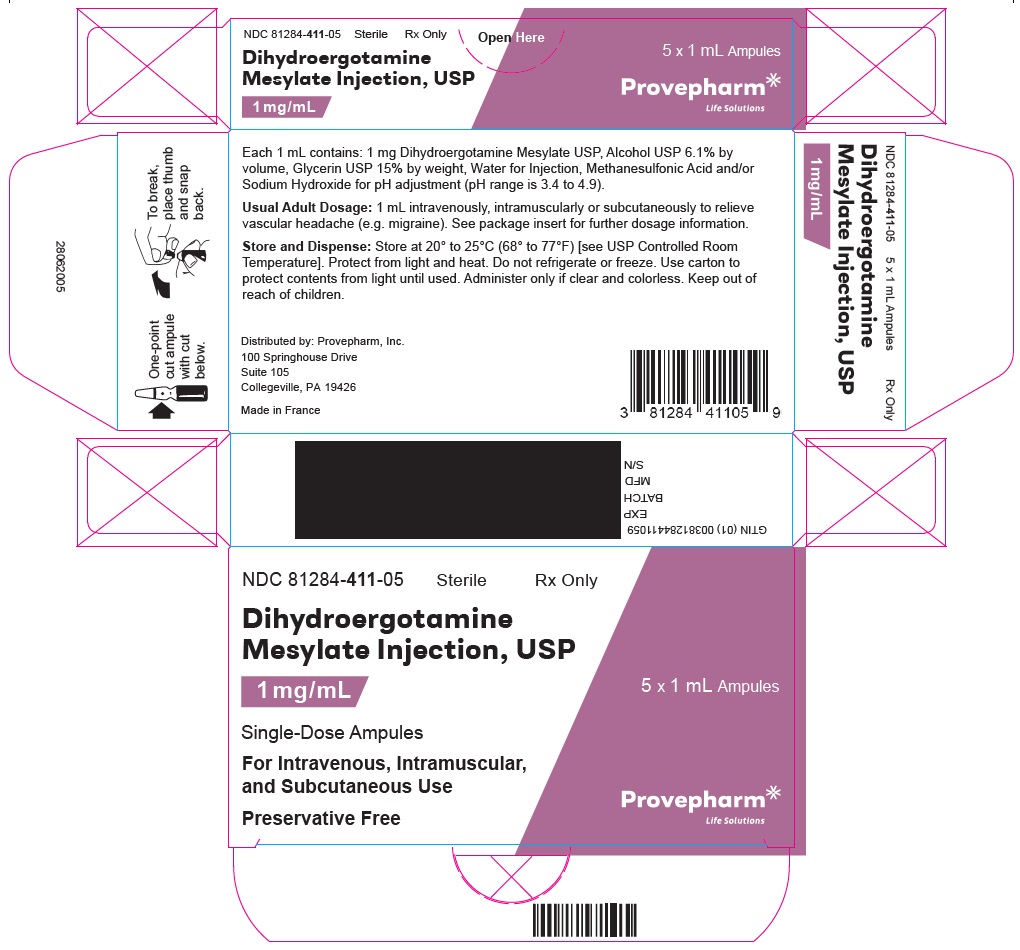
Dihydroergotamine Mesylate 1 mg/mL Injection, Solution, 5 ampules — NDC 81284-411-05 (Billing 81284-0411-05)
This is a package of 5 ampules of Dihydroergotamine Mesylate 1 mg/mL Injection, Solution from Provepharm Inc., marketed since Sep 2021 and currently FDA-listed.
NDC database record
One package, one record: these facts belong to NDC 81284-411-05 alone.
- Record
- FDA NDC Directory package listing · Human prescription drug
- Code segments
- 81284 labeler · 411 product · 05 package
- Package marketed since
- Sep 30, 2021
- Sample package
- No — commercial package
- Listing certified through
- Dec 31, 2026
- Barcode (UPC)
- 0381284411059
- Medicaid fills, this package
- 31 prescriptions in the last four reported quarters
- FDA record last changed
- Jul 24, 2026
Identity & classification
Regulatory identifiers FDA, NLM and CMS codes for this package
Drug-database identifiers Medi-Span GPI and First Databank GCN / HICL / AHFS classification
- GSN (GCN sequence number): 004504
- GCN: 01590
- GPI-14 (Medi-Span): 67000030102005
- HICL (First Databank): 000155
- AHFS class code: 12:16.04.04
- RxCUI (RxNorm): 861672
Where does this data come from?
- FDA openFDA NDC Directory · synced Oct 8, 2026
- FDA label on DailyMed · label index refreshed Oct 6, 2026
- RxNorm (NLM RxNav) · catalog refreshed Oct 1, 2026
- Medi-Span GPI (licensed)
- First Databank (licensed) · refreshed Oct 8, 2026
RxNorm drug class
This medicine belongs to the Ergotamine Derivative class.
Where does this data come from?
- RxClass (NLM) · catalog refreshed Oct 1, 2026
Clinical
- It stops migraine attacks and cluster headaches in adults once they start. It is not for preventing attacks. Brekiya also isn't for hemiplegic migraine or migraine with brainstem a...
- It is a prefilled autoinjector that goes under the skin of your middle thigh. Rotate sites and use it only if the liquid is clear and colorless. Stay within the daily and weekly li...
- Some people get dizziness, headache, flushing, diarrhea, rash, sweating, anxiety, or tingling. Call right away for chest pain, stroke symptoms, or cold, pale, or numb fingers or to...
- Strong CYP3A4 inhibitors are off limits. These include certain HIV medicines and antibiotics such as clarithromycin and erythromycin, and antifungals like ketoconazole. Also avoid...
Patient education
Supplement & herbal interactions
Some supplements/herbs that may interact with Dihydroergotamine Mesylate — tap one for details:
Where does this data come from?
- MedlinePlus (NLM) · refreshed Oct 1, 2026
- FDA label on DailyMed · label index refreshed Oct 6, 2026
Ask a licensed pharmacist directly — free, answered by our team.
Pricing
A drug doesn't have one price. Each row is a different public payment system, and none is what you'd pay at the counter — that depends on your insurance. The ⓘ on each row explains what it measures.
| Price system | Per mL | Per package |
|---|---|---|
| Retail pharmacies payNADAC · weekly | Not in the retail survey — common for institutional, discontinued, or low-volume packs. | |
| Medicaid paysCMS SDUD · 12 mo | $76.18 | $380.90 / 5 ml |
| Medicare drug plans payPart D · quarterly | No Part D plan price is available for this NDC in our data. | |
| Medicare Part B allowsASP · J1110 | $54.978 / J1110 unit | — |
Where does this data come from?
- CMS NADAC weekly file
- CMS ASP pricing files · refreshed Sep 20, 2026
- CMS Medicaid State Drug Utilization Data · through Q1 2026
- CMS Part D plan pricing files · refreshed Sep 24, 2026
- VA National Acquisition Center price file
Billing & reimbursement
Where does this data come from?
- CMS ASP NDC-HCPCS crosswalk · refreshed Sep 22, 2026
- DMEPDAC NDC-HCPCS crosswalk
- openFDA NSDE billing units · refreshed Oct 7, 2026
Packaging — all sizes for this product
| Package NDC | Description | Marketing start | Marketing end | Status |
|---|---|---|---|---|
| 81284-0411-05 You're viewing this | 5 AMPULE in 1 CARTON / 1 mL in 1 AMPULE | 2021-09-30 | — | Active |
| 81284-0411-10 81284-411-10 Main listing | 10 AMPULE in 1 CARTON / 1 mL in 1 AMPULE | 2021-09-30 | — | Active |
Pack size FAQ
What quantity is in this package?
How does this package differ from NDC 81284-0411-10?
What NDC number is used to bill for this package of Dihydroergotamine Mesylate 1 mg/mL Injection, Solution?
Therapeutic equivalents
| Product | Labeler | Pack | NADAC/unit | TE | Status | Price vs. this |
|---|---|---|---|---|---|---|
| Dihydroergotamine Mesylate 1 mg/mL 00143-9151-10 | Hikma | 10 vials | — | AP | FDA listed | — |
| Dihydroergotamine Mesylate 1 mg/mL 00143-9273-10 | Hikma | 10 ampules | — | AP | FDA listed | — |
| dihydroergotamine mesylate 1 mg/mL 36000-0300-10 | Baxter | 10 ampules | — | — | FDA listed | — |
| Dihydroergotamine Mesylate 1 mg/mL 68083-0466-10 | Gland | 10 ampules | — | AP | FDA listed | — |
| Dihydroergotamine Mesylate 1 mg/mL 71357-0013-05 | Milla | 5 ampules | — | AP | FDA listed | — |
| Dihydroergotamine Mesylate 1 mg/mLthis 81284-0411-05 | Provepharm | 5 ampules | — | AP | FDA listed | — |
Where does this data come from?
- FDA openFDA NDC Directory · synced Oct 8, 2026
- FDA Orange Book · refreshed Oct 3, 2026
- CMS NADAC weekly file
Availability & generic status
This product is an FDA-approved generic. Other versions of the same drug are listed under Therapeutic equivalents, least expensive first.
Where does this data come from?
- FDA Orange Book · refreshed Oct 3, 2026
Inactive Ingredients / Excipients
Inactive ingredients, also called excipients, are components of the drug product other than the active ingredient. They may include fillers, dyes, coatings, preservatives, flavors, or other formulation ingredients.
🧪 Avoiding an ingredient? See Dihydroergotamine Injection inactive ingredients by manufacturer: every current product's list side by side, so you can ask your pharmacy for the version that does not list it.
💡 Tap an ingredient (hover on desktop) to see what it is and why it’s used.
-
UNII 3K9958V90M
A liquid solvent derived from fermentation or chemical synthesis. In medicines, alcohol dissolves active ingredients, helps preserve the product, and improves how the body absorbs certain drugs.
-
UNII PDC6A3C0OX
Glycerin is a clear, thick liquid derived from plant oils or fats. It acts as a humectant to retain moisture, a sweetener, and a solvent in medications.
-
UNII 12EH9M7279
Methanesulfonic acid is a strong organic acid used in medicines as a pH buffer and stabilizer. It helps maintain the correct acidity level and keeps active ingredients stable during storage.
-
UNII 55X04QC32I
A strong alkaline chemical used to adjust and maintain the pH balance of liquid medicines. It helps keep the medicine stable and ensures it stays effective during storage.
-
UNII 059QF0KO0R
Water is a liquid solvent that dissolves and mixes ingredients together in liquid medicines, syrups, and injections. It helps distribute the active drug evenly throughout the product.
5 inactive ingredients listed in the exact product block matched to this NDC.
Where does this data come from?
ingredient classCode="IACT" elements from the exact product block matched by this NDC. Label-section narrative from DailyMed / the openFDA label index is shown separately when available.- FDA label on DailyMed · label index refreshed Oct 6, 2026
- FDA openFDA NDC Directory · synced Oct 8, 2026
Inactive ingredient FAQ
Are inactive ingredients the same for every manufacturer?
Why might an inactive ingredient be missing?
Can inactive ingredients matter?
Manufacturer & labeler
More NDCs from Provepharm Inc. labeler code 81284
- Piperacillin and Tazobactam 12 g/60mL; 1.5 g/60mL Injection, Powder, Lyophilized, For Solution NDC 81284-154-01
- Piperacillin and Tazobactam 36 g/180mL; 4.5 g/180mL Injection, Powder, Lyophilized, For Solution NDC 81284-155-01
- Phenylephrine hydrochloride 10 mg/mL Injection NDC 81284-211-25
- Phenylephrine hydrochloride 10 mg/mL Injection NDC 81284-212-10
- Phenylephrine hydrochloride 10 mg/mL Injection NDC 81284-213-01
- BLUDIGO indigotindisulfonate sodium 8 mg/mL Injection NDC 81284-315-05
- tranexamic acid 100 mg/mL Injection, Solution NDC 81284-611-10
- tranexamic acid 100 mg/mL Injection, Solution NDC 81284-612-10
- ANTICHOLIUM physostigmine salicylate .4 mg/mL Injection NDC 81284-831-05
Where does this data come from?
- FDA openFDA NDC Directory · synced Oct 8, 2026
- Drugs@FDA
Full prescribing information FDA SPL
🚨 Boxed Warning ▾
WARNING: PERIPHERAL ISCHEMIA FOLLOWING COADMINISTRATION WITH POTENT CYP3A4 INHIBITORS Serious and/or life-threatening peripheral ischemia has been associated with the coadministration of dihydroergotamine with potent CYP3A4 inhibitors including protease inhibitors and macrolide antibiotics. Because CYP3A4 inhibition elevates the serum levels of dihydroergotamine, the risk for vasospasm leading to cerebral ischemia and/or ischemia of the extremities is increased. Hence, concomitant use of these medications is contraindicated (see also CONTRAINDICATIONS and WARNINGS ).
🎯 Indications and Usage ▾
INDICATIONS AND USAGE Dihydroergotamine Mesylate Injection, USP is indicated for the acute treatment of migraine headaches with or without aura and the acute treatment of cluster headache episodes.
⏱️ Dosage and Administration ▾
DOSAGE AND ADMINISTRATION Dihydroergotamine Mesylate Injection, USP should be administered in a dose of 1 mL intravenously, intramuscularly or subcutaneously. The dose can be repeated, as needed, at 1-hour intervals to a total dose of 3 mL for intramuscular or subcutaneous delivery or 2 mL for intravenous delivery in a 24-hour period. The total weekly dosage should not exceed 6 mL.
Dihydroergotamine Mesylate Injection, USP should not be used for chronic daily administration.
⛔ Contraindications ▾
CONTRAINDICATIONS There have been a few reports of serious adverse events associated with the coadministration of dihydroergotamine and potent CYP3A4 inhibitors, such as protease inhibitors and macrolide antibiotics, resulting in vasospasm that led to cerebral ischemia and/or ischemia of the extremities. The use of potent CYP3A4 inhibitors (i.e., ritonavir, nelfinavir, indinavir, erythromycin, clarithromycin, troleandomycin, ketoconazole, itraconazole) with dihydroergotamine is, therefore, contraindicated (see WARNINGS, CYP3A4 Inhibitors ).
Dihydroergotamine Mesylate Injection, USP should not be given to patients with ischemic heart disease (e.g., angina pectoris, history of myocardial infarction, or documented silent ischemia) or to patients who have clinical symptoms or findings consistent with coronary artery vasospasm including Prinzmetal's variant angina (see WARNINGS ). Because Dihydroergotamine Mesylate Injection, USP may increase blood pressure, it should not be given to patients with uncontrolled hypertension. Dihydroergotamine Mesylate Injection, USP, 5-HT 1 agonists (e.g., sumatriptan), ergotamine-containing or ergot-type medications or methysergide should not be used within 24 hours of each other.
Dihydroergotamine Mesylate Injection, USP should not be administered to patients with hemiplegic or basilar migraine. In addition to those conditions mentioned above, Dihydroergotamine Mesylate Injection, USP is also contraindicated in patients with known peripheral arterial disease, sepsis, following vascular surgery and severely impaired hepatic or renal function. Dihydroergotamine Mesylate Injection, USP is contraindicated in patients who have previously shown hypersensitivity to ergot alkaloids.
Dihydroergotamine mesylate should not be used with peripheral and central vasoconstrictors because the combination may result in additive or synergistic elevation of blood pressure.
⚠️ Warnings ▾
WARNINGS Dihydroergotamine Mesylate Injection, USP should only be used where a clear diagnosis of migraine headache has been established. CYP3A4 Inhibitors (e.g., Macrolide Antibiotics and Protease Inhibitors) There have been rare reports of serious adverse events in connection with the coadministration of dihydroergotamine and potent CYPA4 inhibitors, such as protease inhibitors and macrolide antibiotics, resulting in vasospasm that led to cerebral ischemia and/or and ischemia of the extremities. The use of potent CYP3A4 inhibitors with dihydroergotamine should therefore be avoided (see CONTRAINDICATIONS ).
Examples of some of the more potent CYP3A4 inhibitors include: antifungals ketoconazole and itraconazole, the protease inhibitors ritonavir, nelfinavir, and indinavir, and macrolide antibiotics erythromycin, clarithromycin, and troleandomycin. Other less potent CYP3A4 inhibitors should be administered with caution. Less potent inhibitors include saquinavir, nefazodone, fluconazole, grapefruit juice, fluoxetine, fluvoxamine, zileuton, and clotrimazole.
These lists are not exhaustive, and the prescriber should consider the effects on CYP3A4 of other agents being considered for concomitant use with dihydroergotamine. Fibrotic Complications There have been reports of pleural and retroperitoneal fibrosis in patients following prolonged daily use of injectable dihydroergotamine mesylate. Rarely, prolonged daily use of other ergot alkaloid drugs has been associated with cardiac valvular fibrosis.
Rare cases have also been reported in association with the use of injectable dihydroergotamine mesylate; however, in those cases, patients also received drugs known to be associated with cardiac valvular fibrosis. Administration of Dihydroergotamine Mesylate Injection, USP, should not exceed the dosing guidelines and should not be used for chronic daily administration (see DOSAGE AND ADMINISTRATION ). Risk of Myocardial Ischemia and/or Infarction and Other Adverse Cardiac Events Dihydroergotamine Mesylate Injection, USP should not be used by patients with documented ischemic or vasospastic coronary artery disease (see CONTRAINDICATIONS ).
It is strongly recommended that Dihydroergotamine Mesylate Injection, USP not be given to patients in whom unrecognized coronary artery disease (CAD) is predicted by the presence of risk factors (e.g., hypertension, hypercholesterolemia, smoker, obesity, diabetes, strong family history of CAD, females who are surgically or physiologically postmenopausal, or males who are over 40 years of age) unless a cardiovascular evaluation provides satisfactory clinical evidence that the patient is reasonably free of coronary artery and ischemic myocardial disease or other significant underlying cardiovascular disease.
The sensitivity of cardiac diagnostic procedures to detect cardiovascular disease or predisposition to coronary artery vasospasm is modest, at best. If, during the cardiovascular evaluation, the patient's medical history or electrocardiographic investigations reveal findings indicative of or consistent with coronary artery vasospasm or myocardial ischemia, Dihydroergotamine Mesylate Injection, USP should not be administered (see CONTRAINDICATIONS ). For patients with risk factors predictive of CAD who are determined to have a satisfactory cardiovascular evaluation, it is strongly recommended that administration of the first dose of Dihydroergotamine Mesylate Injection, USP take place in the setting of a physician's office or similar medically staffed and equipped facility unless the patient has previously received dihydroergotamine mesylate.
Because cardiac ischemia can occur in the absence of clinical symptoms, consideration should be given to obtaining on the first occasion of use, an electrocardiogram (ECG) during the interval immediately following Dihydroergotamine Mesylate Injection, USP in those patients with risk factors. It is recommended that patients who are intermittent long-term users of D… [Excerpted — this section continues on DailyMed.]
🤒 Adverse Reactions ▾
ADVERSE REACTIONS Serious cardiac events, including some that have been fatal, have occurred following use of Dihydroergotamine Mesylate Injection, USP, but are extremely rare. Events reported have included coronary artery vasospasm, transient myocardial ischemia, myocardial infarction, ventricular tachycardia, and ventricular fibrillation (see CONTRAINDICATIONS , WARNINGS , and PRECAUTIONS ). Fibrotic complications have been reported in association with long term use of injectable dihydroergotamine mesylate (see WARNINGS, Fibrotic Complications ).
Post-introduction Reports The following events derived from postmarketing experience have been occasionally reported in patients receiving Dihydroergotamine Mesylate Injection, USP: vasospasm, paraesthesia, hypertension, dizziness, anxiety, dyspnea, headache, flushing, diarrhea, rash, increased sweating, and pleural and retroperitoneal fibrosis after long-term use of dihydroergotamine. Extremely rare cases of myocardial infarction and stroke have been reported. A causal relationship has not been established.
Dihydroergotamine Mesylate Injection, USP is not recommended for prolonged daily use (see DOSAGE AND ADMINISTRATION ). To report SUSPECTED ADVERSE REACTIONS, contact Provepharm Inc., at 1–833-727-6556 or [email protected] or FDA at 1-800-FDA-1088 or www.fda.gov/medwatch.
🔄 Drug Interactions ▾
Drug Interactions Vasoconstrictors Dihydroergotamine Mesylate Injection, USP should not be used with peripheral vasoconstrictors because the combination may cause synergistic elevation of blood pressure. Sumatriptan Sumatriptan has been reported to cause coronary artery vasospasm, and its effect could be additive with Dihydroergotamine Mesylate Injection, USP. Sumatriptan and Dihydroergotamine Mesylate Injection, USP should not be taken within 24 hours of each other (see CONTRAINDICATIONS ).
Beta Blockers Although the results of a clinical study did not indicate a safety problem associated with the administration of Dihydroergotamine Mesylate Injection, USP to subjects already receiving propranolol, there have been reports that propranolol may potentiate the vasoconstrictive action of ergotamine by blocking the vasodilating property of epinephrine. Nicotine Nicotine may provoke vasoconstriction in some patients, predisposing to a greater ischemic response to ergot therapy. CYP3A4 Inhibitors (e.g., Macrolide Antibiotics and Protease Inhibitors) (see CONTRAINDICATIONS and WARNINGS ) SSRI's Weakness, hyperreflexia, and incoordination have been reported rarely when 5-HT 1 agonists have been co-administered with SSRI's (e.g., fluoxetine, fluvoxamine, paroxetine, sertraline).
There have been no reported cases from spontaneous reports of drug interaction between SSRI's and Dihydroergotamine Mesylate Injection, USP. Oral Contraceptives The effect of oral contraceptives on the pharmacokinetics of Dihydroergotamine Mesylate Injection, USP has not been studied.
🤰 Pregnancy ▾
Pregnancy Risk Summary Available data from published literature indicated an increased risk of preterm delivery with Dihydroergotamine Mesylate Injection, USP use during pregnancy. Avoid use of Dihydroergotamine Mesylate Injection, USP during pregnancy (see WARNINGS ) . Data collected over decades have shown no increased risk of major birth defects or miscarriage with the use of dihydroergotamine mesylate during pregnancy.
In animal reproduction studies, adverse effects on development were observed following intranasal administration of dihydroergotamine mesylate during pregnancy (decreased fetal body weight and/or skeletal ossification) in rats and rabbits or during pregnancy and lactation in rats (decreased body weight and impaired reproductive function in the offspring) at doses that were not associated with maternal toxicity (see Data). The estimated rate of major birth defects (2.2% to 2.9%) and miscarriage (17%) among deliveries to women with migraine are similar to rates reported in women without migraine.
All pregnancies have a background risk of birth defect, loss, or other adverse outcomes. In the U.S. general population, the estimated background risk of major birth defects and miscarriages in clinically recognized pregnancies is 2% to 4% and 15% to 20%, respectively. Data Animal Data Intranasal administration of dihydroergotamine mesylate to pregnant rats throughout the period of organogenesis resulted in decreased fetal body weight and/or skeletal ossification at doses of 0.16 mg/day and greater.
A no-effect level for adverse effects on embryofetal development was not identified in rats. Intranasal administration of dihydroergotamine mesylate to pregnant rabbits throughout organogenesis resulted in decreased skeletal ossification of 3.6 mg/day. The no-effect dose for adverse effects on embryofetal development in rabbits was 1.2 mg/day.
Intranasal administration of dihydroergotamine mesylate to female rats throughout pregnancy and lactation resulted in decreased body weight and impaired reproductive function (decreased mating indices) in the offspring at doses of 0.16 mg/day or greater. A no-effect dose for adverse effects on pre- and postnatal development in rats was not established. Effects on offspring development occurred at doses below those that produced evidence of maternal toxicity in these studies.
Dihydroergotamine-induced intrauterine growth retardation has been attributed to reduced uteroplacental blood flow resulting from prolonged vasoconstriction of the uterine vessels and/or increased myometrial tone.
🧒 Pediatric Use ▾
Pediatric Use Safety and effectiveness in pediatric patients have not been established.
🆘 Overdosage ▾
OVERDOSAGE To date, there have been no reports of acute overdosage with this drug. Due to the risk of vascular spasm, exceeding the recommended dosages of Dihydroergotamine Mesylate Injection, USP is to be avoided. Excessive doses of dihydroergotamine may result in peripheral signs and symptoms of ergotism.
Treatment includes discontinuance of the drug, local application of warmth to the affected area, the administration of vasodilators, and nursing care to prevent tissue damage. In general, the symptoms of an acute Dihydroergotamine Mesylate Injection, USP overdose are similar to those of an ergotamine overdose, although there is less pronounced nausea and vomiting with Dihydroergotamine Mesylate Injection, USP. The symptoms of an ergotamine overdose include the following: numbness, tingling, pain, and cyanosis of the extremities associated with diminished or absent peripheral pulses; respiratory depression; an increase and/or decrease in blood pressure, usually in that order; confusion, delirium, convulsions, and coma; and/or some degree of nausea, vomiting, and abdominal pain.
In laboratory animals, significant lethality occurs when dihydroergotamine is given at I.V. doses of 44 mg/kg in mice, 130 mg/kg in rats, and 37 mg/kg in rabbits. Up-to-date information about the treatment of overdosage can often be obtained from a certified Regional Poison Control Center. Telephone numbers of certified Poison Control Centers are listed in the Physician's Desk Reference (PDR) * .
🧬 Clinical Pharmacology ▾
CLINICAL PHARMACOLOGY Mechanism of Action Dihydroergotamine binds with high affinity to 5-HT 1D α and 5-HT 1D β receptors. It also binds with high affinity to serotonin 5-HT 1A , 5-HT 2A , and 5-HT 2C receptors, noradrenaline α 2A , α 2B and α 1 receptors, and dopamine D 2L and D 3 receptors. The therapeutic activity of dihydroergotamine in migraine is generally attributed to the agonist effect at 5-HT 1D receptors.
Two current theories have been proposed to explain the efficacy of 5-HT 1D receptor agonists in migraine. One theory suggests that activation of 5-HT 1D receptors located on intracranial blood vessels, including those on arteriovenous anastomoses, leads to vasoconstriction, which correlates with the relief of migraine headache. The alternative hypothesis suggests that activation of 5-HT 1D receptors on sensory nerve endings of the trigeminal system results in the inhibition of pro-inflammatory neuropeptide release.
In addition, dihydroergotamine possesses oxytocic properties. Pharmacokinetics Absorption Absolute bioavailability for the subcutaneous and intramuscular route have not been determined; however, no difference was observed in dihydroergotamine bioavailability from intramuscular and subcutaneous doses. Dihydroergotamine mesylate is poorly bioavailable following oral administration.
Distribution Dihydroergotamine mesylate is 93% plasma protein bound. The apparent steady-state volume of distribution is approximately 800 liters. Metabolism Four dihydroergotamine mesylate metabolites have been identified in human plasma following oral administration.
The major metabolite, 8´-β-hydroxydihydroergotamine, exhibits affinity equivalent to its parent for adrenergic and 5-HT receptors and demonstrates equivalent potency in several venoconstrictor activity models, in vivo and in vitro. The other metabolites, (i.e., dihydrolysergic acid, dihydrolysergic amide) and a metabolite formed by oxidative opening of the proline ring are of minor importance. Following nasal administration, total metabolites represent only 20% to 30% of plasma AUC.
Quantitative pharmacokinetic characterization of the four metabolites has not been performed. Excretion The major excretory route of dihydroergotamine is via the bile in the feces. The total body clearance is
1.5L/min which reflects mainly hepatic clearance. Only 6% to 7% of unchanged dihydroergotamine is excreted in the urine after intramuscular injection. The renal clearance (0.1 L/min) is unaffected by the route of dihydroergotamine administration.
The decline of plasma dihydroergotamine after intramuscular or intravenous administration is multi-exponential with a terminal half-life of about 9 hours. Subpopulations No studies have been conducted on the effect of renal or hepatic impairment, gender, race, or ethnicity on dihydroergotamine pharmacokinetics. Dihydroergotamine Mesylate Injection, USP is contraindicated in patients with severely impaired hepatic or renal function (see CONTRAINDICATIONS ).
Interactions Pharmacokinetic interactions have been reported in patients treated orally with other ergot alkaloids (e.g., increased levels of ergotamine) and macrolide antibiotics, principally troleandomycin, presumably due to inhibition of cytochrome P4503A metabolism of the alkaloids by troleandomycin. Dihydroergotamine has also been shown to be an inhibitor of cytochrome P4503A catalyzed reactions and rare reports of ergotism have been obtained from patients treated with dihydroergotamine and macrolide antibiotics (e.g., troleandomycin, clarithromycin, erythromycin), and in patients treated with dihydroergotamine and protease inhibitors (e.g., ritonavir), presumably due to inhibition of cytochrome P4503A metabolism of ergotamine (see CONTRAINDICATIONS ).
No pharmacokinetic interactions involving other cytochrome P450 isoenzymes are known.
🧬 Mechanism of Action ▾
Mechanism of Action Dihydroergotamine binds with high affinity to 5-HT 1D α and 5-HT 1D β receptors. It also binds with high affinity to serotonin 5-HT 1A , 5-HT 2A , and 5-HT 2C receptors, noradrenaline α 2A , α 2B and α 1 receptors, and dopamine D 2L and D 3 receptors. The therapeutic activity of dihydroergotamine in migraine is generally attributed to the agonist effect at 5-HT 1D receptors.
Two current theories have been proposed to explain the efficacy of 5-HT 1D receptor agonists in migraine. One theory suggests that activation of 5-HT 1D receptors located on intracranial blood vessels, including those on arteriovenous anastomoses, leads to vasoconstriction, which correlates with the relief of migraine headache. The alternative hypothesis suggests that activation of 5-HT 1D receptors on sensory nerve endings of the trigeminal system results in the inhibition of pro-inflammatory neuropeptide release.
In addition, dihydroergotamine possesses oxytocic properties.
📦 How Supplied / Storage and Handling ▾
HOW SUPPLIED/STORAGE AND HANDLING Dihydroergotamine Mesylate Injection, USP Available as a clear, colorless, sterile solution in single 1 mL sterile ampules containing 1 mg of dihydroergotamine mesylate per mL, in packages of 5 (NDC 81284-411-05) and 10 (NDC 81284-411-10). Store at 20°C to 25°C (68°F to 77°F); excursions permitted between 15°C to 30°C (59°F to 86°F) [see USP Controlled Room Temperature]. Use carton to protect contents from light until used.
Do not refrigerate or freeze. To assure constant potency, protect the ampules from light and heat. Administer only if clear and colorless. *Trademark of PDR Network, LLC Manufactured for: Provepharm SAS Distributed by: Provepharm, Inc.
Collegeville, PA 19426 Made in France Revised: 11/2022
📦 Storage and Handling ▾
Store at 20°C to 25°C (68°F to 77°F); excursions permitted between 15°C to 30°C (59°F to 86°F) [see USP Controlled Room Temperature]. Use carton to protect contents from light until used. Do not refrigerate or freeze.
To assure constant potency, protect the ampules from light and heat. Administer only if clear and colorless. *Trademark of PDR Network, LLC Manufactured for: Provepharm SAS Distributed by: Provepharm, Inc. Collegeville, PA 19426 Made in France Revised: 11/2022
📋 Description ▾
DESCRIPTION Dihydroergotamine Mesylate Injection, USP is ergotamine hydrogenated in the 9, 10 position as the mesylate salt. Dihydroergotamine Mesylate Injection, USP is known chemically as ergotaman-3´,6´,18-trione,9,10-dihydro-12´-hydroxy-2´-methyl-5´-(phenylmethyl)-,(5´α)-, monomethanesulfonate. Its molecular weight is 679.80 and its empirical formula is C 33 H 37 N 5 O 5 •CH 4 O 3 S.
The chemical structure is: Dihydroergotamine mesylate C 33 H 37 N 5 O 5 •CH 4 O 3 S Mol. Wt. 679.80 Dihydroergotamine Mesylate Injection, USP is a clear, colorless solution supplied in sterile ampules for intravenous, intramuscular, or subcutaneous administration.
Each mL contains 1 mg Dihydroergotamine Mesylate, USP; Alcohol, USP 6.1% by volume; Glycerin, USP 15% by weight; Water for Injection, USP; Methanesulfonic Acid and/or Sodium Hydroxide for pH adjustment (pH range is 3.4 to 4.9). Chemical Structure
💬 Information for Patients ▾
Information for Patients The text of a patient information sheet is printed at the end of this insert. To assure safe and effective use of Dihydroergotamine Mesylate Injection, USP, the information and instructions provided in the patient information sheet should be discussed with patients. Patients should be advised to report to the physician immediately any of the following: numbness or tingling in the fingers and toes, muscle pain in the arms and legs, weakness in the legs, pain in the chest, temporary speeding or slowing of the heart rate, swelling, or itching.
Prior to the initial use of the product by a patient, the prescriber should take steps to ensure that the patient understands how to use the product as provided (see Patient Information Sheet and product packaging). Administration of Dihydroergotamine Mesylate Injection, USP should not exceed the dosing guidelines and should not be used for chronic daily administration (see DOSAGE AND ADMINISTRATION ).
⚠️ Precautions ▾
PRECAUTIONS General Dihydroergotamine Mesylate Injection, USP may cause coronary artery vasospasm; patients who experience signs or symptoms suggestive of angina following its administration should, therefore, be evaluated for the presence of CAD or a predisposition to variant angina before receiving additional doses. Similarly, patients who experience other symptoms or signs suggestive of decreased arterial flow, such as ischemic bowel syndrome or Raynaud's syndrome following the use of any 5-HT agonist are candidates for further evaluation (see WARNINGS ).
Information for Patients The text of a patient information sheet is printed at the end of this insert. To assure safe and effective use of Dihydroergotamine Mesylate Injection, USP, the information and instructions provided in the patient information sheet should be discussed with patients. Patients should be advised to report to the physician immediately any of the following: numbness or tingling in the fingers and toes, muscle pain in the arms and legs, weakness in the legs, pain in the chest, temporary speeding or slowing of the heart rate, swelling, or itching.
Prior to the initial use of the product by a patient, the prescriber should take steps to ensure that the patient understands how to use the product as provided (see Patient Information Sheet and product packaging). Administration of Dihydroergotamine Mesylate Injection, USP should not exceed the dosing guidelines and should not be used for chronic daily administration (see DOSAGE AND ADMINISTRATION ). Drug Interactions Vasoconstrictors Dihydroergotamine Mesylate Injection, USP should not be used with peripheral vasoconstrictors because the combination may cause synergistic elevation of blood pressure.
Sumatriptan Sumatriptan has been reported to cause coronary artery vasospasm, and its effect could be additive with Dihydroergotamine Mesylate Injection, USP. Sumatriptan and Dihydroergotamine Mesylate Injection, USP should not be taken within 24 hours of each other (see CONTRAINDICATIONS ). Beta Blockers Although the results of a clinical study did not indicate a safety problem associated with the administration of Dihydroergotamine Mesylate Injection, USP to subjects already receiving propranolol, there have been reports that propranolol may potentiate the vasoconstrictive action of ergotamine by blocking the vasodilating property of epinephrine.
Nicotine Nicotine may provoke vasoconstriction in some patients, predisposing to a greater ischemic response to ergot therapy. CYP3A4 Inhibitors (e.g., Macrolide Antibiotics and Protease Inhibitors) (see CONTRAINDICATIONS and WARNINGS ) SSRI's Weakness, hyperreflexia, and incoordination have been reported rarely when 5-HT 1 agonists have been co-administered with SSRI's (e.g., fluoxetine, fluvoxamine, paroxetine, sertraline). There have been no reported cases from spontaneous reports of drug interaction between SSRI's and Dihydroergotamine Mesylate Injection, USP.
Oral Contraceptives The effect of oral contraceptives on the pharmacokinetics of Dihydroergotamine Mesylate Injection, USP has not been studied. Carcinogenesis, Mutagenesis, Impairment of Fertility Carcinogenesis In a 2-year mouse carcinogenicity study, subcutaneous (SC) administration of dihydroergotamine mesylate (0, 0.5, 1.5 or 5 mg/kg/day) resulted in an increased incidence of fibrosarcoma at the injection sites in males and females at the high dose. The higher dose not associated with an increase in tumors (1.5 mg/kg/day) is approximately 2 times the recommended human dose (RHD) of 3 mg/day SC on a body surface area (mg/m 2 ) basis.
In a 2-year rat carcinogenicity study, intranasal administration of dihydroergotamine mesylate (0, 0.4, 0.8 or 1.6 mg/day for 13 weeks, followed by 0, 0.08, 0.24 or 0.8 mg/day for the remainder of the study) did not result in an increase in tumors. Mutagenesis Dihydroergotamine mesylate was clastogenic in two in vitro chromosomal aberration assays, the V79 Chinese hamster cell… [Excerpted — this section continues on DailyMed.]
🍼 Nursing Mothers ▾
Nursing Mothers Risk Summary There are no data on the presence of dihydroergotamine in human milk; however, ergotamine, a related drug, is present in human milk. There are reports of vomiting, diarrhea, weak pulse, and unstable blood pressure in breastfed infants exposed to ergotamine. Dihydroergotamine Mesylate Injection, USP may reduce milk supply because it may decrease prolactin levels.
Because of the potential for reduced milk supply and serious adverse events in the breastfed infant, including diarrhea, vomiting weak pulse, and unstable blood pressure, advise patients not to breastfeed during treatment with Dihydroergotamine Mesylate Injection, USP and for 3 days after the last dose. Breast milk supply during this time should be pumped and discarded.
🧬 Pharmacokinetics ▾
Pharmacokinetics Absorption Absolute bioavailability for the subcutaneous and intramuscular route have not been determined; however, no difference was observed in dihydroergotamine bioavailability from intramuscular and subcutaneous doses. Dihydroergotamine mesylate is poorly bioavailable following oral administration. Distribution Dihydroergotamine mesylate is 93% plasma protein bound.
The apparent steady-state volume of distribution is approximately 800 liters. Metabolism Four dihydroergotamine mesylate metabolites have been identified in human plasma following oral administration. The major metabolite, 8´-β-hydroxydihydroergotamine, exhibits affinity equivalent to its parent for adrenergic and 5-HT receptors and demonstrates equivalent potency in several venoconstrictor activity models, in vivo and in vitro.
The other metabolites, (i.e., dihydrolysergic acid, dihydrolysergic amide) and a metabolite formed by oxidative opening of the proline ring are of minor importance. Following nasal administration, total metabolites represent only 20% to 30% of plasma AUC. Quantitative pharmacokinetic characterization of the four metabolites has not been performed.
Excretion The major excretory route of dihydroergotamine is via the bile in the feces. The total body clearance is
1.5L/min which reflects mainly hepatic clearance. Only 6% to 7% of unchanged dihydroergotamine is excreted in the urine after intramuscular injection. The renal clearance (0.1 L/min) is unaffected by the route of dihydroergotamine administration.
The decline of plasma dihydroergotamine after intramuscular or intravenous administration is multi-exponential with a terminal half-life of about 9 hours. Subpopulations No studies have been conducted on the effect of renal or hepatic impairment, gender, race, or ethnicity on dihydroergotamine pharmacokinetics. Dihydroergotamine Mesylate Injection, USP is contraindicated in patients with severely impaired hepatic or renal function (see CONTRAINDICATIONS ).
Interactions Pharmacokinetic interactions have been reported in patients treated orally with other ergot alkaloids (e.g., increased levels of ergotamine) and macrolide antibiotics, principally troleandomycin, presumably due to inhibition of cytochrome P4503A metabolism of the alkaloids by troleandomycin. Dihydroergotamine has also been shown to be an inhibitor of cytochrome P4503A catalyzed reactions and rare reports of ergotism have been obtained from patients treated with dihydroergotamine and macrolide antibiotics (e.g., troleandomycin, clarithromycin, erythromycin), and in patients treated with dihydroergotamine and protease inhibitors (e.g., ritonavir), presumably due to inhibition of cytochrome P4503A metabolism of ergotamine (see CONTRAINDICATIONS ).
No pharmacokinetic interactions involving other cytochrome P450 isoenzymes are known.
🔒 Drug Abuse and Dependence ▾
DRUG ABUSE AND DEPENDENCE Currently available data have not demonstrated drug abuse or psychological dependence with dihydroergotamine. However, cases of drug abuse and psychological dependence in patients on other forms of ergot therapy have been reported. Thus, due to the chronicity of vascular headaches, it is imperative that patients be advised not to exceed recommended dosages.
📄 Carcinogenesis, Mutagenesis, Impairment of Fertility ▾
Carcinogenesis, Mutagenesis, Impairment of Fertility Carcinogenesis In a 2-year mouse carcinogenicity study, subcutaneous (SC) administration of dihydroergotamine mesylate (0, 0.5, 1.5 or 5 mg/kg/day) resulted in an increased incidence of fibrosarcoma at the injection sites in males and females at the high dose. The higher dose not associated with an increase in tumors (1.5 mg/kg/day) is approximately 2 times the recommended human dose (RHD) of 3 mg/day SC on a body surface area (mg/m 2 ) basis. In a 2-year rat carcinogenicity study, intranasal administration of dihydroergotamine mesylate (0, 0.4, 0.8 or 1.6 mg/day for 13 weeks, followed by 0, 0.08, 0.24 or 0.8 mg/day for the remainder of the study) did not result in an increase in tumors.
Mutagenesis Dihydroergotamine mesylate was clastogenic in two in vitro chromosomal aberration assays, the V79 Chinese hamster cell assay with metabolic activation and the cultured human peripheral blood lymphocyte assay. There was no evidence of mutagenic potential when dihydroergotamine mesylate was tested in the presence or absence of metabolic activation in two gene mutation assays (the Ames test and the in vitro mammalian Chinese hamster V79/HGPRT assay) and in an assay for DNA damage (the rat hepatocyte unscheduled DNA synthesis test).
Dihydroergotamine was not clastogenic in the in vivo mouse and hamster micronucleus tests. Impairment of Fertility Intranasal administration of dihydroergotamine to rats at doses up to 1.6 mg/day was not associated with adverse effects on fertility.
📄 Patient Package Insert ▾
INSTRUCTION FOR PATIENTS ON SUBCUTANEOUS SELF-INJECTION Information for the Patient Dihydroergotamine Mesylate Injection, USP Before self-injecting Dihydroergotamine Mesylate Injection, USP by subcutaneous administration, you will need to obtain professional instruction on how to properly administer your medication. Below are some of the steps you should follow carefully. Read this leaflet completely before using this medication.
This leaflet does not contain all of the information on Dihydroergotamine Mesylate Injection, USP . Your pharmacist and/or health care provider can provide more detailed information. Purpose of your medication Dihydroergotamine Mesylate Injection, USP is intended to treat an active migraine headache.
Do not try to use it to prevent a headache if you have no symptoms. Do not use it to treat common tension headache or a headache that is not at all typical of your usual migraine headache. Administration of Dihydroergotamine Mesylate Injection, USP should not exceed the dosing guidelines and should not be used for chronic daily administration.
There have been reports of fibrosis (stiffening) in the lung or kidney areas in patients following prolonged daily use of injectable dihydroergotamine mesylate. Rarely, prolonged daily use of other ergot alkaloid drugs (the class of drugs to which Dihydroergotamine Mesylate Injection, USP belongs) has been associated with heart valvular fibrosis. Rare cases have also been reported in association with the use of injectable dihydroergotamine mesylate; however, in those cases, patients also received drugs known to be associated with heart valvular fibrosis.
Do not use Dihydroergotamine Mesylate Injection, USP if you: • have any disease affecting your heart, arteries, or circulation. • are taking certain anti-HIV medications (protease inhibitors). • are taking a macrolide antibiotic such as troleandomycin, clarithromycin or erythromycin. Important questions to consider before using Dihydroergotamine Mesylate Injection, USP Please answer the following questions before you use your Dihydroergotamine Mesylate Injection, USP. If you answer YES to any of these questions or are unsure of the answer, you should talk to your doctor before using Dihydroergotamine Mesylate Injection, USP.
Do you have high blood pressure? Do you have chest pain, shortness of breath, heart disease, or have you had any surgery on your heart arteries? Do you have risk factors for heart disease (such as high blood pressure, high cholesterol, obesity, diabetes, smoking, strong family history of heart disease, or you are postmenopausal or a male over 40)?
Do you have any problems with blood circulation in your arms or legs, fingers, or toes? Are you pregnant? Do you think you might be pregnant?
Are you trying to become pregnant? Are you sexually active and not using birth control? Dihydroergotamine Mesylate Injection, USP may cause preterm labor.
Dihydroergotamine Mesylate Injection, USP should be avoided during pregnancy. Talk to your healthcare provider right away if you are pregnant or want to become pregnant. Are you breast feeding?
Dihydroergotamine Mesylate Injection, USP may reduce breast milk supply and pass into your breast milk. Dihydroergotamine Mesylate Injection, USP may be harmful to your baby. Do not breastfeed your baby while taking Dihydroergotamine Mesylate Injection, USP and for 3 days after you use Dihydroergotamine Mesylate Injection, USP.
Talk with your healthcare provider about the best way to feed your baby if you take Dihydroergotamine Mesylate Injection, USP. Have you ever had to stop taking this or any other medication because of an allergy or bad reaction? Are you taking any other migraine medications, erythromycin or other antibiotics, or medications for blood pressure prescribed by your doctor, or other medicines obtained from your drugstore without a doctor's prescription?
Do you smoke? Have you had, or do you have, any disease of the liver or kidney? Is this headache diff… [Excerpted — this section continues on DailyMed.]
📄 Package Label / Principal Display Panel ▾
PRINCIPAL DISPLAY PANEL - 1 mL Ampule Label NDC 81284- 411 -00 1 mL Ampule Rx only Dihydroergotamine Mesylate Injection, USP 1 mg/mL For IV, IM or SC Use Sterile Ampule-1ml.jpg
PRINCIPAL DISPLAY PANEL - 5 x 1 mL Ampules Carton Label NDC 81284- 411 -05 Sterile Rx only Dihydroergotamine Mesylate Injection, USP 1 mg/mL (1mL Ampule) For Intravenous, Intramuscular or Subcutaneous Use 5 AMPULES X 1 ML Single-Dose Ampules Preservative Free PROVEPHARM Carton 5 x 1mL Ampules
PRINCIPAL DISPLAY PANEL - 10 x 1 mL Ampules Carton Label NDC 81284- 411 -10 Sterile Rx only Dihydroergotamine Mesylate Injection, USP For Intravenous, Intramuscular or Subcutaneous Use 1 mg/mL (1mL Ampule) 10 AMPULES X 1 ML Single-Dose Ampules Preservative Free PROVEPHARM Carton 10 x 1mL Ampules
Medicaid utilization & spend
Medicaid utilization by pack size
Medicare Part D spend CMS · PART D · 2026 (Q1)
About this NDC listing & data coverage
What data is (and isn’t) available for this NDC — tap to expand
| NDC identity (package / product / labeler codes) | ✓ Available |
| Labeler | ✓ Available |
| Product & package description | ✓ Available |
| Marketing category & status | ✓ Available |
| Active ingredient / dosage form / route | ✓ Available |
| FDA label (SPL via DailyMed) | ✓ Available |
| Package photos | ✓ Available |
| Inactive ingredients (structured) | ✓ Available |
| NADAC pharmacy acquisition price (CMS) | — Not published for this NDC CMS publishes NADAC only for NDCs reported in its retail-pharmacy survey. |
| Orange Book / therapeutic-equivalence data | ✓ Available |
| HCPCS J-code billing crosswalk | ✓ Available |
| Medicaid utilization (CMS SDUD) | ✓ Available |