
NDC 81469-0210-10: timolol maleate 5 mg/mL Solution/ Drops
This is a package of timolol maleate 5 mg/mL Solution/ Drops from First Nation Group, LLC, first listed with the FDA May 2024 and currently FDA-listed.
NDC database record
One package, one record: these facts belong to NDC 81469-210-10 alone.
- Record
- FDA NDC Directory package listing · Human prescription drug
- Code segments
- 81469 labeler · 210 product · 10 package
- Package marketed since
- May 10, 2024
- Sample package
- No — commercial package
- Listing certified through
- Dec 31, 2027
- Barcode (UPC)
- 0381469210057, 0381469210101, 0381469209105, 0381469209051
- FDA record last changed
- Nov 1, 2026
Other active recalls for Timolol Maleate (different manufacturers) — 6 · tap to view
Identity & classification
Regulatory identifiers FDA, NLM and CMS codes for this package
Drug-database identifiers Medi-Span GPI and First Databank GCN / HICL / AHFS classification
- GSN (GCN sequence number): 007856
- GCN: 32821
- GPI-14 (Medi-Span): 86250030102010
- HICL (First Databank): 002105
- AHFS class code: 52:40.08.00
- RxCUI (RxNorm): 1923428
Where does this data come from?
- FDA openFDA NDC Directory · synced Nov 19, 2026
- FDA label on DailyMed · label index refreshed Nov 21, 2026
- RxNorm (NLM RxNav) · catalog refreshed Nov 19, 2026
- Medi-Span GPI (licensed)
- First Databank (licensed) · refreshed Nov 19, 2026
RxNorm drug class
This medicine belongs to the beta-Adrenergic Blocker class.
Where does this data come from?
- RxClass (NLM) · catalog refreshed Nov 19, 2026
Clinical
Ophthalmic timolol is used to treat glaucoma, a condition in which increased pressure in the eye can lead to gradual loss of vision. Timolol is in a class of medications called beta-blockers. It works by decreasing the pressure in the eye.
Read the full MedlinePlus article ↗- It depends on the form. The eye drops lower high pressure in the eye from ocular hypertension or open-angle glaucoma. The tablets treat high blood pressure, lower the risk of death...
- Don't stop the tablets on your own. Stopping suddenly can make chest pain worse and has been linked to heart attacks, so doctors lower the dose gradually over one to two weeks. Tal...
- Eye drops start lowering eye pressure in about half an hour, with a peak in one to two hours. Full control can take a few weeks, so your doctor may recheck your eye pressure after...
- The most common is burning or stinging when the drops go in. Some people also notice blurred vision, red or itchy eyes, or headache. Call your doctor if you have trouble breathing,...
Patient education
Drug interactions
Supplement & herbal interactions
Timolol may be associated with lower levels of 1 nutrient — worth a chat with your pharmacist, not a cause for alarm.
Where does this data come from?
- MedlinePlus (NLM) · refreshed Nov 19, 2026
- FDA label on DailyMed · label index refreshed Nov 21, 2026
Ask a licensed pharmacist directly — free, answered by our team.
Pricing
A drug doesn't have one price. Each row is a different public payment system, and none is what you'd pay at the counter — that depends on your insurance. The ⓘ on each row explains what it measures.
| Price system | Per mL | Per package |
|---|---|---|
| Retail pharmacies payNADAC · weekly | Not in the retail survey — common for institutional, discontinued, or low-volume packs. | |
| Medicaid paysCMS SDUD · 12 mo | No recent Medicaid claims on file for this NDC — rare and low-volume NDCs are suppressed in the public data. | |
| Medicare drug plans payPart D · Q2 2026 | $0.8743 | $8.74 / 10 ml |
Where does this data come from?
- CMS NADAC weekly file
- CMS ASP pricing files · refreshed Nov 20, 2026
- CMS Medicaid State Drug Utilization Data · refreshed Nov 19, 2026
- CMS Part D plan pricing files · refreshed Oct 24, 2026
- VA National Acquisition Center price file
Packaging — all sizes for this product
| Package NDC | Description | Marketing start | Marketing end | Status |
|---|---|---|---|---|
| 81469-0210-05 81469-210-05 Main listing | 1 BOTTLE, DROPPER in 1 CARTON / 5 mL in 1 BOTTLE, DROPPER | 2024-05-10 | — | Active |
| 81469-0210-10 You're viewing this | 1 BOTTLE, DROPPER in 1 CARTON / 10 mL in 1 BOTTLE, DROPPER | 2024-05-10 | — | Active |
Pack size FAQ
What quantity is in this package?
What NDC number is used to bill for this package of timolol maleate 5 mg/mL Solution/ Drops?
Therapeutic equivalents
| Product | Labeler | Pack | NADAC/unit | TE | Status | Price vs. this |
|---|---|---|---|---|---|---|
| Timolol Maleate 5 mg/mL 64980-0514-01 | Rising | 1 bottle | $0.741 | AT1 | Availability likely | — |
| Timolol Maleate 5 mg/mL 65145-0153-01 | Caplin | 1 bottle | $0.741 | AT1 | Availability likely | — |
| Timolol maleate 5 mg/mL 70069-0707-01 | Somerset | 1 bottle | $0.741 | AT1 | Availability likely | — |
| timolol maleate 5 mg/mL 70756-0657-30 | Lifestar | 1 bottle | $0.741 | AT1 | Availability likely | — |
| Timolol Maleate 5 mg/mL 65145-0154-01 | Caplin | 1 bottle | $0.822 | AT1 | Availability likely | — |
| Timolol maleate 5 mg/mL 70069-0708-01 | Somerset | 1 bottle | $0.822 | AT1 | Availability likely | — |
| Timolol Maleate 5 mg/mL 42571-0404-21 | Micro | 5 ml | $1.034 | AT1 | Availability likely | — |
| Timolol Maleate 5 mg/mL 60758-0801-05 | Pacific | 1 bottle | $1.034 | AT1 | Availability likely | — |
| Timolol Maleate 5 mg/mL 61314-0227-05 | Sandoz | 5 ml | $1.034 | AT1 | Availability likely | — |
| Timolol Maleate 5 mg/mL 65145-0152-01 | Caplin | 1 bottle | $1.034 | AT1 | Availability likely | — |
| Timolol Maleate 5 mg/mL 69315-0325-05 | Leading | 5 ml | $1.034 | AT1 | Availability likely | — |
| Timolol maleate 5 mg/mL 70069-0706-01 | Somerset | 1 bottle | $1.034 | AT1 | Availability likely | — |
| timolol maleate 5 mg/mL 70756-0656-15 | Lifestar | 1 bottle | $1.034 | AT1 | Availability likely | — |
| timolol maleate 5 mg/mL 72603-0540-01 | NorthStar | 1 bottle | $1.034 | AT1 | Availability likely | — |
| Timolol Maleate 5 mg/mL 82260-0813-05 | Bausch | 1 bottle | $1.034 | AT1 | Availability likely | — |
| Timoptic in Ocudose 5 mg/mL 69918-0601-60 | Nordic | 60 pouches | $1.240 | AT3 | Availability likely | — |
| Timolol Maleate 5 mg/mL 82260-0819-05 | Bausch | 1 bottle | $7.049 | AB | Availability likely | — |
| Timolol Maleate 5 mg/mL 25021-0009-05 | Sagent | 1 bottle | $7.049 | AB | Availability likely | — |
| Timolol GFS 5 mg/mL 61314-0225-05 | Sandoz | 5 ml | $7.049 | AB | Availability likely | — |
| Timolol Maleate 5 mg/mL 82260-0045-05 | Bausch | 1 bottle | $20.615 | AT2 | Availability likely | — |
| Timolol Maleate 5 mg/mL 68682-0045-25 | Oceanside | 1 bottle | $20.977 | AT2 | Discontinued | — |
| Istalol 5 mg/mL 24208-0004-01 | Bausch | 1 bottle | $79.763 | AT2 | Availability likely | — |
| Timoptic 5 mg/mL 24208-0813-05 | Bausch | 1 bottle | — | AT1 | FDA listed | — |
| Timolol Maleate 5 mg/mL 50090-3441-00 | A-S | 10 ml | — | AT1 | FDA listed | — |
| Timolol Maleate 5 mg/mL 50090-5769-00 | A-S | 1 bottle | — | AT1 | FDA listed | — |
| Timolol Maleate 5 mg/mL 50090-7837-00 | A-S | 1 bottle | — | AT1 | FDA listed | — |
| timolol maleate 5 mg/mLthis 81469-0210-10 | First | 1 bottle | — | AT1 | FDA listed | — |
| Timoptic-XE 5 mg/mL 24208-0816-05 | Bausch | 1 bottle | — | AB | FDA listed | — |
| Timolol Maleate 5 mg/mL 59651-0313-05 | Aurobindo | 1 bottle | — | AB | FDA listed | — |
| Timolol Maleate 5 mg/mL 70069-0251-01 | Somerset | 1 bottle | — | AB | FDA listed | — |
| Timolol Maleate 5 mg/mL 50090-1852-00 | A-S | 1 bottle | — | AT1 | FDA listed | — |
Where does this data come from?
- FDA openFDA NDC Directory · synced Nov 19, 2026
- FDA Orange Book · refreshed Nov 6, 2026
- CMS NADAC weekly file
Availability & generic status
This product is an FDA-approved generic. Other versions of the same drug are listed under Therapeutic equivalents, least expensive first.
Where does this data come from?
- FDA Orange Book · refreshed Nov 6, 2026
Inactive Ingredients / Excipients
Inactive ingredients, also called excipients, are components of the drug product other than the active ingredient. They may include fillers, dyes, coatings, preservatives, flavors, or other formulation ingredients.
🧪 Avoiding an ingredient? See Timolol inactive ingredients by manufacturer: every current product's list side by side, so you can ask your pharmacy for the version that does not list it.
💡 Tap an ingredient (hover on desktop) to see what it is and why it’s used.
-
UNII F5UM2KM3W7
Benzalkonium chloride is a chemical compound that works as a preservative and antimicrobial agent in medications. It prevents bacterial and fungal growth in liquid formulations to keep the product safe during storage and use.
-
UNII 451W47IQ8X
Sodium chloride is common table salt. It's used in medicines as a buffer to maintain proper pH, as a filler to add bulk, or to adjust the osmotic balance in liquid formulations.
-
UNII 55X04QC32I
A strong alkaline chemical used to adjust and maintain the pH balance of liquid medicines. It helps keep the medicine stable and ensures it stays effective during storage.
-
UNII GR686LBA74
Sodium phosphate, dibasic is a salt derived from phosphoric acid. It acts as a buffer to help maintain the medicine's pH balance and may serve as a binder or filler in tablets and capsules.
-
UNII 3980JIH2SW
A salt form of phosphoric acid that acts as a buffer and pH adjuster in medicines. It helps keep the product at the correct acidity level for stability and effectiveness.
-
UNII 059QF0KO0R
Water is a liquid solvent that dissolves and mixes ingredients together in liquid medicines, syrups, and injections. It helps distribute the active drug evenly throughout the product.
6 inactive ingredients listed in the exact product block matched to this NDC.
Where does this data come from?
ingredient classCode="IACT" elements from the exact product block matched by this NDC. Label-section narrative from DailyMed / the openFDA label index is shown separately when available.- FDA label on DailyMed · label index refreshed Nov 21, 2026
- FDA openFDA NDC Directory · synced Nov 19, 2026
Inactive ingredient FAQ
Are inactive ingredients the same for every manufacturer?
Why might an inactive ingredient be missing?
Can inactive ingredients matter?
Manufacturer & labeler
More NDCs from First Nation Group, LLC labeler code 81469
- Midodrine Hydrochloride 2.5 mg Tablet NDC 81469-139-90
- Midodrine Hydrochloride 5 mg Tablet NDC 81469-140-90
- Midodrine Hydrochloride 10 mg Tablet NDC 81469-141-90
- Phenylephrine Hydrochloride 25 mg/mL Solution/ Drops NDC 81469-168-02
- Phenylephrine Hydrochloride 100 mg/mL Solution/ Drops NDC 81469-169-05
- timolol maleate 2.5 mg/mL Solution/ Drops NDC 81469-209-05
- Bumetanide .5 mg Tablet NDC 81469-221-01
- Bumetanide 1 mg Tablet NDC 81469-222-01
- Bumetanide 2 mg Tablet NDC 81469-223-01
- Bimatoprost .1 mg/mL Solution/ Drops NDC 81469-291-05
- Cetirizine Hydrochloride 5 mg Tablet NDC 81469-352-01
- Cetirizine Hydrochloride 10 mg Tablet NDC 81469-353-01
Where does this data come from?
- FDA openFDA NDC Directory · synced Nov 19, 2026
- Drugs@FDA
Full prescribing information FDA SPL
🎯 Indications and Usage ▾
INDICATIONS AND USAGE Timolol maleate ophthalmic solution is indicated in the treatment of elevated intraocular pressure in patients with ocular hypertension or open-angle glaucoma.
⏱️ Dosage and Administration ▾
DOSAGE AND ADMINISTRATION Timolol maleate ophthalmic solution is available in concentrations of 0.25 and 0.5%. The usual starting dose is one drop of timolol maleate ophthalmic solution 0.25% in the affected eye(s) twice a day. If the clinical response is not adequate, the dosage may be changed to one drop of 0.5% solution in the affected eye(s) twice a day.
Since in some patients the pressure-lowering response to timolol maleate ophthalmic solution may require a few weeks to stabilize, evaluation should include a determination of intraocular pressure after approximately 4 weeks of treatment with timolol maleate ophthalmic solution. If the intraocular pressure is maintained at satisfactory levels, the dosage schedule may be changed to one drop once a day in the affected eye(s). Because of diurnal variations in intraocular pressure, satisfactory response to the once-a-day dose is best determined by measuring the intraocular pressure at different times during the day.
Dosages above one drop of timolol maleate ophthalmic solution 0.5% twice a day generally have not been shown to produce further reduction in intraocular pressure. If the patient's intraocular pressure is still not at a satisfactory level on this regimen, concomitant therapy with other agent(s) for lowering intraocular pressure can be instituted. The concomitant use of two topical beta-adrenergic blocking agents is not recommended [see PRECAUTIONS , Drug Interactions , Beta-adrenergic blocking agents ].
⛔ Contraindications ▾
CONTRAINDICATIONS Timolol maleate ophthalmic solution is contraindicated in patients with (1) bronchial asthma; (2) a history of bronchial asthma; (3) severe chronic obstructive pulmonary disease [see WARNINGS ]; (4) sinus bradycardia; (5) second or third degree atrioventricular block; (6) overt cardiac failure [see WARNINGS ]; (7) cardiogenic shock; or (8) hypersensitivity to any component of this product.
⚠️ Warnings ▾
WARNINGS As with many topically applied ophthalmic drugs, this drug is absorbed systemically. The same adverse reactions found with systemic administration of beta-adrenergic blocking agents may occur with topical administration. For example, severe respiratory reactions and cardiac reactions, including death due to bronchospasm in patients with asthma, and rarely death in association with cardiac failure, have been reported following systemic or ophthalmic administration of timolol maleate [see CONTRAINDICATIONS ].
Cardiac Failure Sympathetic stimulation may be essential for support of the circulation in individuals with diminished myocardial contractility, and its inhibition of beta-adrenergic receptor blockade may precipitate more severe failure. In Patients Without a History of Cardiac Failure continued depression of the myocardium with beta-blocking agents over a period of time can, in some cases, lead to cardiac failure. At the first sign or symptom of cardiac failure, timolol maleate ophthalmic solution should be discontinued.
Obstructive Pulmonary Disease Patients with chronic obstructive pulmonary disease (e.g., chronic bronchitis, emphysema) of mild or moderate severity, bronchospastic disease, or a history of bronchospastic disease (other than bronchial asthma or a history of bronchial asthma, in which timolol maleate ophthalmic solution is contraindicated [see CONTRAINDICATIONS ]) should, in general, not receive beta-blockers, including timolol maleate ophthalmic solution. Major Surgery The necessity or desirability of withdrawal of beta-adrenergic blocking agents prior to major surgery is controversial.
Beta-adrenergic receptor blockade impairs the ability of the heart to respond to beta-adrenergically mediated reflex stimuli. This may augment the risk of general anesthesia in surgical procedures. Some patients receiving beta-adrenergic receptor blocking agents have experienced protracted severe hypotension during anesthesia.
Difficulty in restarting and maintaining the heartbeat has also been reported. For these reasons, in patients undergoing elective surgery, some authorities recommend gradual withdrawal of beta-adrenergic receptor blocking agents. If necessary during surgery, the effects of beta-adrenergic blocking agents may be reversed by sufficient doses of adrenergic agonists.
Diabetes Mellitus Beta-adrenergic blocking agents should be administered with caution in patients subject to spontaneous hypoglycemia or to diabetic patients (especially those with labile diabetes) who are receiving insulin or oral hypoglycemic agents. Beta-adrenergic receptor blocking agents may mask the signs and symptoms of acute hypoglycemia. Thyrotoxicosis Beta-adrenergic blocking agents may mask certain clinical signs (e.g., tachycardia) of hyperthyroidism.
Patients suspected of developing thyrotoxicosis should be managed carefully to avoid abrupt withdrawal of beta-adrenergic blocking agents that might precipitate a thyroid storm.
🤒 Adverse Reactions ▾
ADVERSE REACTIONS The most frequently reported adverse experiences have been burning and stinging upon instillation (approximately one in eight patients). The following additional adverse experiences have been reported less frequently with ocular administration of this or other timolol maleate formulations: Body as a Whole Headache, asthenia/fatigue, and chest pain. Cardiovascular Bradycardia, arrhythmia, hypotension, hypertension, syncope, heart block, cerebral vascular accident, cerebral ischemia, cardiac failure, worsening of angina pectoris, palpitation, cardiac arrest, pulmonary edema, edema, claudication, Raynaud's phenomenon, and cold hands and feet.
Digestive Nausea, diarrhea, dyspepsia, anorexia, and dry mouth. Immunologic Systemic lupus erythematosus. Nervous System/Psychiatric Dizziness, increase in signs and symptoms of myasthenia gravis, paresthesia, somnolence, insomnia, nightmares, behavioral changes and psychic disturbances including depression, confusion, hallucinations, anxiety, disorientation, nervousness, and memory loss.
Skin Alopecia and psoriasiform rash or exacerbation of psoriasis. Hypersensitivity Signs and symptoms of systemic allergic reactions, including anaphylaxis, angioedema, urticaria, and localized and generalized rash. Respiratory Bronchospasm (predominantly in patients with preexisting bronchospastic disease), respiratory failure, dyspnea, nasal congestion, cough and upper respiratory infections.
Endocrine Masked symptoms of hypoglycemia in diabetic patients [see WARNINGS ] . Special Senses Signs and symptoms of ocular irritation including conjunctivitis, blepharitis, keratitis, ocular pain, discharge (e.g., crusting), foreign body sensation, itching and tearing, and dry eyes; ptosis; decreased corneal sensitivity; cystoid macular edema; visual disturbances including refractive changes and diplopia; pseudopemphigoid; choroidal detachment following filtration surgery [see PRECAUTIONS , General ]; and tinnitus.
Urogenital Retroperitoneal fibrosis, decreased libido, impotence, and Peyronie's disease. The following additional adverse effects have been reported in clinical experience with ORAL timolol maleate or other ORAL beta-blocking agents and may be considered potential effects of ophthalmic timolol maleate: Allergic: Erythematous rash, fever combined with aching and sore throat, laryngospasm with respiratory distress; Body as a Whole: Extremity pain, decreased exercise tolerance, weight loss; Cardiovascular: Worsening of arterial insufficiency, vasodilatation; Digestive: Gastrointestinal pain, hepatomegaly, vomiting, mesenteric arterial thrombosis, ischemic colitis; Hematologic: Nonthrombocytopenic purpura; thrombocytopenic purpura, agranulocytosis; Endocrine: Hyperglycemia, hypoglycemia; Skin: Pruritus, skin irritation, increased pigmentation, sweating; Musculoskeletal: Arthralgia; Nervous System/Psychiatric: Vertigo, local weakness, diminished concentration, reversible mental depression progressing to catatonia, an acute reversible syndrome characterized by disorientation for time and place, emotional lability, slightly clouded sensorium, and decreased performance on neuropsychometrics; Respiratory: Rales, bronchial obstruction; Urogenital: Urination difficulties.
To report SUSPECTED ADVERSE REACTIONS, contact First Nation Group, LLC at l-855-221-5332 or FDA at 1-800-FDA-1088 or www.fda.gov/medwatch.
🆘 Overdosage ▾
OVERDOSAGE There have been reports of inadvertent overdosage with timolol maleate ophthalmic solution resulting in systemic effects similar to those seen with systemic beta-adrenergic blocking agents such as dizziness, headache, shortness of breath, bradycardia, bronchospasm, and cardiac arrest [see ADVERSE REACTIONS ]. Overdosage has been reported with timolol maleate tablets. A 30-year-old female ingested 650 mg of timolol maleate tablets (maximum recommended oral daily dose is 60 mg) and experienced second and third degree heart block.
She recovered without treatment but approximately two months later developed irregular heartbeat, hypertension, dizziness, tinnitus, faintness, increased pulse rate, and borderline first degree heart block. An in vitro hemodialysis study, using 14C timolol added to human plasma or whole blood, showed that timolol was readily dialyzed from these fluids; however, a study of patients with renal failure showed that timolol did not dialyze readily.
🧬 Clinical Pharmacology ▾
CLINICAL PHARMACOLOGY Mechanism of Action Timolol maleate is a beta 1 and beta 2 (non-selective) adrenergic receptor blocking agent that does not have significant intrinsic sympathomimetic, direct myocardial depressant, or local anesthetic (membrane-stabilizing) activity. Beta-adrenergic receptor blockade reduces cardiac output in both healthy subjects and patients with heart disease. In patients with severe impairment of myocardial function, beta-adrenergic receptor blockade may inhibit the stimulatory effect of the sympathetic nervous system necessary to maintain adequate cardiac function.
Beta-adrenergic receptor blockade in the bronchi and bronchioles results in increased airway resistance from unopposed parasympathetic activity. Such an effect in patients with asthma or other bronchospastic conditions is potentially dangerous. Timolol maleate ophthalmic solution, when applied topically on the eye, has the action of reducing elevated as well as normal intraocular pressure, whether or not accompanied by glaucoma.
Elevated intraocular pressure is a major risk factor in the pathogenesis of glaucomatous visual field loss. The higher the level of intraocular pressure, the greater the likelihood of glaucomatous visual field loss and optic nerve damage. The onset of reduction in intraocular pressure following administration of timolol maleate ophthalmic solution can usually be detected within one-half hour after a single dose.
The maximum effect usually occurs in one to two hours and significant lowering of intraocular pressure can be maintained for periods as long as 24 hours with a single dose. Repeated observations over a period of one year indicate that the intraocular pressure-lowering effect of timolol maleate ophthalmic solution is well maintained. The precise mechanism of the ocular hypotensive action of timolol maleate ophthalmic solution is not clearly established at this time.
Tonography and fluorophotometry studies in man suggest that its predominant action may be related to reduced aqueous formation. However, in some studies a slight increase in outflow facility was also observed. Pharmacokinetics In a study of plasma drug concentration in six subjects, the systemic exposure to timolol was determined following twice daily administration of timolol maleate ophthalmic solution 0.5%.
The mean peak plasma concentration following morning dosing was 0.46 ng/mL and following afternoon dosing was 0.35 ng/mL. Clinical Studies In controlled multiclinic studies in patients with untreated intraocular pressures of 22 mmHg or greater, timolol maleate ophthalmic solution 0.25% or 0.5% administered twice a day produced a greater reduction in intraocular pressure than 1, 2, 3, or 4% pilocarpine solution administered four times a day or 0.5, 1, or 2% epinephrine hydrochloride solution administered twice a day.
In these studies, timolol maleate ophthalmic solution was generally well tolerated and produced fewer and less severe side effects than either pilocarpine or epinephrine. A slight reduction of resting heart rate in some patients receiving timolol maleate ophthalmic solution (mean reduction 2.9 beats/minute standard deviation 10.2) was observed.
📦 How Supplied / Storage and Handling ▾
HOW SUPPLIED Timolol maleate ophthalmic solution, USP is a clear, colorless solution. Timolol maleate ophthalmic solution 0.25% timolol equivalent is supplied in a Natural LDPE bottle with a Natural LDPE controlled drop tip and a Yellow HDPE cap as follows: NDC 81469-209-05 5 mL in a 5 mL capacity bottle NDC 81469-209-10 10 mL in a 10 mL capacity bottle Timolol maleate ophthalmic solution 0.5% timolol equivalent is supplied in a Natural LDPE bottle with a Natural LDPE controlled drop tip and a Yellow HDPE cap as follows: NDC 81469-210-05 5 mL in a 5 mL capacity bottle NDC 81469-210-10 10 mL in a 10 mL capacity bottle Storage Store at 20°C to 25°C (68°F to 77°F) [See USP Controlled Room Temperature].
Protect from freezing. Protect from light. After opening, timolol maleate ophthalmic solution can be used until the expiration date on the bottle.
Manufactured for: First Nation Group, LLC 4566 E Highway 20, Suite #208 Niceville, FL 32578-8839 Product of Germany Revised: January 2024, V-01
📋 Description ▾
DESCRIPTION Timolol maleate ophthalmic solution, USP is a non-selective beta-adrenergic receptor blocking agent. Its chemical name is (-)-1-( tert -butylamino)-3-[(4-morpholino-1,2,5-thiadiazol-3-yl)oxy]-2-propanol maleate (1:1) (salt). Timolol maleate, USP possesses an asymmetric carbon atom in its structure and is provided as the levo-isomer.
The optical rotation of timolol maleate is: 25° [α] in 1.0N HCl (C = 5%) = -12.2° (-11.7° to -12.5°) 405 nm Its molecular formula is C 13 H 24 N 4 O 3 S•C 4 H 4 O 4 and its structural formula is: Timolol maleate has a molecular weight of 432.50. It is a white to almost white crystalline powder which is soluble in water; sparingly soluble in ethanol; slightly soluble in chloroform; practically insoluble in ether. Timolol maleate ophthalmic solution is stable at room temperature.
Timolol maleate ophthalmic solution, USP is supplied as a sterile, isotonic, buffered, aqueous solution of timolol maleate in two dosage strengths. Each mL of timolol maleate ophthalmic solution 0.25% contains 2.5 mg of timolol (3.4 mg of timolol maleate). The pH of the solution is approximately 7.0, and the osmolality is 270-330 mOsm/kg.
Each mL of timolol maleate ophthalmic solution 0.5% contains 5 mg of timolol (6.8 mg of timolol maleate). Inactive ingredients: monobasic and dibasic sodium phosphate, sodium chloride, sodium hydroxide to adjust pH, and water for injection. Benzalkonium chloride 0.01% is added as preservative. structure
⚠️ Precautions ▾
PRECAUTIONS General Because of potential effects of beta-adrenergic blocking agents on blood pressure and pulse, these agents should be used with caution in patients with cerebrovascular insufficiency. If signs or symptoms suggesting reduced cerebral blood flow develop following initiation of therapy with timolol maleate ophthalmic solution, alternative therapy should be considered. There have been reports of bacterial keratitis associated with the use of multiple-dose containers of topical ophthalmic products.
These containers had been inadvertently contaminated by patients who, in most cases, had a concurrent corneal disease or a disruption of the ocular epithelial surface [see PRECAUTIONS , Information for Patients] . Choroidal detachment after filtration procedures has been reported with the administration of aqueous suppressant therapy (e.g., timolol). Angle-closure glaucoma: In patients with angle-closure glaucoma, the immediate objective of treatment is to reopen the angle.
This requires constricting the pupil. Timolol maleate has little or no effect on the pupil. Timolol maleate ophthalmic solution should not be used alone in the treatment of angle-closure glaucoma.
Anaphylaxis: While taking beta-blockers, patients with a history of atopy or a history of severe anaphylactic reactions to a variety of allergens may be more reactive to repeated accidental, diagnostic, or therapeutic challenge with such allergens. Such patients may be unresponsive to the usual doses of epinephrine used to treat anaphylactic reactions. Muscle Weakness: Beta-adrenergic blockade has been reported to potentiate muscle weakness consistent with certain myasthenic symptoms (e.g., diplopia, ptosis, and generalized weakness).
Timolol has been reported rarely to increase muscle weakness in some patients with myasthenia gravis or myasthenic symptoms. Information for Patients Patients should be instructed to avoid allowing the tip of the dispensing container to contact the eye or surrounding structures. Patients should also be instructed that ocular solutions, if handled improperly or if the tip of the dispensing container contacts the eye or surrounding structures, can become contaminated by common bacteria known to cause ocular infections.
Serious damage to the eye and subsequent loss of vision may result from using contaminated solutions [see PRECAUTIONS , General ]. Patients should also be advised that if they have ocular surgery or develop an intercurrent ocular condition (e.g., trauma or infection), they should immediately seek their physician's advice concerning the continued use of the present multidose container. Patients with bronchial asthma, a history of bronchial asthma, severe chronic obstructive pulmonary disease, sinus bradycardia, second or third degree atrioventricular block, or cardiac failure should be advised not to take this product [see CONTRAINDICATIONS ] .
Patients should be advised that timolol maleate ophthalmic solution contains benzalkonium chloride which may be absorbed by soft contact lenses. Contact lenses should be removed prior to administration of the solution. Lenses may be reinserted 15 minutes following timolol maleate ophthalmic solution administration.
Drug Interactions Although timolol maleate ophthalmic solution used alone has little or no effect on pupil size, mydriasis resulting from concomitant therapy with timolol maleate ophthalmic solution and epinephrine has been reported occasionally. Beta-adrenergic blocking agents: Patients who are receiving a beta-adrenergic blocking agent orally and timolol maleate ophthalmic solution should be observed for potential additive effects of beta-blockade, both systemic and on intraocular pressure. The concomitant use of two topical beta-adrenergic blocking agents is not recommended.
Calcium antagonists: Caution should be used in the coadministration of beta-adrenergic blocking agents, such as timolol maleate ophthalmic solution, and oral or intravenous calcium antagoni… [Excerpted — this section continues on DailyMed.]
📖 Instructions for Use ▾
Instructions for Use Timolol Maleate Ophthalmic Solution, USP 0.25% and 0.5% (tim oh lol mal ee ate) Read this Instructions for Use that comes with timolol maleate ophthalmic solution before you start using it and each time you get a refill. There may be new information. This information does not take the place of talking with your doctor about your medical condition or treatment.
Important information about timolol maleate ophthalmic solution: Use timolol maleate ophthalmic solution exactly as your doctor tells you to use it. Your doctor will tell you how much timolol maleate ophthalmic solution to use and when to use it. If you use other medicines in your eye, wait at least 10 minutes between using timolol maleate ophthalmic solution and your other eye medicines.
Do not touch your eye or areas around your eye with the tip of the timolol maleate ophthalmic solution bottle. You may get bacteria on the tip of the bottle that can cause you to get an eye infection that can lead to serious eye damage or vision loss. How should I use timolol maleate ophthalmic solution?
Step 1. Wash your hands. Step 2.
Turn your closed bottle of timolol maleate ophthalmic solution upside down (invert) and shake once. Step 3. Remove the timolol maleate ophthalmic solution cap by turning the cap in the direction of the arrows shown ( See Figure A ).
Put the cap in a clean and dry area. Do not let the tip of the bottle touch your fingers or other surfaces. Step 4.
Hold the bottle between your thumb and index finger with 1 hand. Use the index finger of the other hand to pull down the lower eyelid to form a pocket for the eye drop ( See Figure B ).Tilt your head backwards. Step 5.
Place the tip of the bottle close to your eye. Be careful not to touch your eye with the tip of the bottle . Gently squeeze the bottle and let 1 drop fall into the space between your lower eyelid and your eye ( See Figure C ).
If a drop misses your eye, follow the instructions in steps 4 and 5 again. Step 6. If your doctor has told you to use timolol maleate ophthalmic solution in both eyes, repeat steps 4 and 5 for your other eye.
Step 7. Put the cap back on the bottle and close. The timolol maleate ophthalmic solution bottle tip is made to give 1 drop at a time.
Do not try to make the hole in the tip of your bottle bigger. Do not wash the bottle tip. After you have used all of your timolol maleate ophthalmic solution doses, there will be some timolol maleate ophthalmic solution left in the bottle.
Do not try to remove the extra timolol maleate ophthalmic solution from the bottle. Throw it away. How should I store timolol maleate ophthalmic solution?
Store timolol maleate ophthalmic solution at room temperature between 20°C to 25°C (68°F to 77°F) in an upright position. Do not freeze timolol maleate ophthalmic solution. Keep timolol maleate ophthalmic solution out of light.
Keep timolol maleate ophthalmic solution and all medicines out of the reach of children. If you would like more information, talk with your doctor. You can ask your pharmacist or doctor for more information about timolol maleate ophthalmic solution that is written for health professionals.
This Instructions for Use has been approved by the U.S. Food and Drug Administration. Rx only Manufactured for: First Nation Group, LLC 4566 E Highway 20, Suite #208 Niceville, FL 32578-8839 Product of Germany Revised: January 2024, V-01 figure a figure b fugure c
📄 Package Label / Principal Display Panel ▾
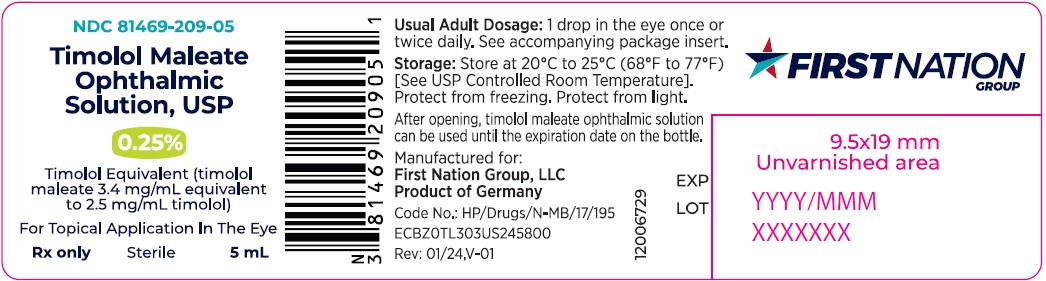
PACKAGE LABEL.PRINCIPAL DISPLAY PANEL NDC 81469-209-05 Timolol Maleate Ophthalmic Solution, USP 0.25% Timolol Equivalent (timolol maleate 3.4 mg/mL equivalent to 2.5 mg/mL timolol) For Topical Application In The Eye Sterile 5 mL Rx only NDC 81469-209-05 Timolol Maleate Ophthalmic Solution, USP 0.25% Timolol Equivalent (timolol maleate 3.4 mg/mL equivalent to 2.5 mg/mL timolol) For Topical Application In The Eye Sterile 5 mL Rx only NDC 81469-209-10 Timolol Maleate Ophthalmic Solution, USP 0.25% Timolol Equivalent (timolol maleate 3.4 mg/mL equivalent to 2.5 mg/mL timolol) For Topical Application In The Eye Sterile 10 mL Rx only NDC 81469-209-10 Timolol Maleate Ophthalmic Solution, USP 0.25% Timolol Equivalent (timolol maleate 3.4 mg/mL equivalent to 2.5 mg/mL timolol) For Topical Application In The Eye Sterile 10 mL Rx only NDC 81469-210-05 Timolol Maleate Ophthalmic Solution, USP 0.5% Timolol Equivalent (timolol maleate 6.8 mg/mL equivalent to 5 mg/mL timolol) For Topical Application In The Eye Sterile 5 mL Rx only NDC 81469-210-05 Timolol Maleate Ophthalmic Solution, USP 0.5% Timolol Equivalent (timolol maleate 6.8 mg/mL equivalent to 5 mg/mL timolol) For Topical Application In The Eye Sterile 5 mL Rx only NDC 81469-210-10 Timolol Maleate Ophthalmic Solution, USP 0.5% Timolol Equivalent (timolol maleate 6.8 mg/mL equivalent to 5 mg/mL timolol) For Topical Application In The Eye Sterile 10 mL Rx only NDC 81469-210-10 Timolol Maleate Ophthalmic Solution, USP 0.5% Timolol Equivalent (timolol maleate 6.8 mg/mL equivalent to 5 mg/mL timolol) For Topical Application In The Eye Sterile 10 mL Rx only 0.25per5mllabel 0.25per5mlcarton 0.25per10mllabel 0.25per10mlcarton 0.5per5mllabel 0.5per5mlcarton 0.5per10mllabel 0.5per10mlcarton
Medicare Part D spend CMS · PART D · 2026 (Q1)
Reported adverse events (FAERS)
Top reported reactions
Age at onset
Reporter sex
Serious outcomes
Where does this data come from?
About this NDC listing & data coverage
What data is (and isn’t) available for this NDC — tap to expand
| NDC identity (package / product / labeler codes) | ✓ Available |
| Labeler | ✓ Available |
| Product & package description | ✓ Available |
| Marketing category & status | ✓ Available |
| Active ingredient / dosage form / route | ✓ Available |
| FDA label (SPL via DailyMed) | ✓ Available |
| Package photos | ✓ Available |
| Inactive ingredients (structured) | ✓ Available |
| NADAC pharmacy acquisition price (CMS) | — Not published for this NDC CMS publishes NADAC only for NDCs reported in its retail-pharmacy survey. |
| Orange Book / therapeutic-equivalence data | ✓ Available |
| HCPCS J-code billing crosswalk | — Not published for this NDC Most self-administered / retail products have no J-code — that is normal. |
| Medicaid utilization (CMS SDUD) | — Not published for this NDC CMS reports utilization only for NDCs with Medicaid claims above its privacy threshold. |