
Aloe + Loteprednol Etabonate
Loteprednol Etabonate brand names: Inveltys, Lotemax SM, Eysuvis.
We found no known interaction between Aloe and Loteprednol Etabonate in our sources. Absence of a documented interaction is not the same as proven safety, and does not guarantee one does not exist. Do not start, stop, or change a medication or supplement based on this page; confirm with your pharmacist or doctor first. Additionally, although there is no interaction, the two are separately associated with some of the same side effects, which would make a new symptom harder to attribute to one or the other.
Aloe and Loteprednol Etabonate
We checked these two against our interaction database. Here is what we found.
No Known Interaction Found
We did not find a documented interaction between Loteprednol Etabonate and Aloe in our sources. This does not guarantee that the combination is completely free of risk — there is often limited research on supplements and herbal products, especially around drug interactions.
If you decide to take both, the practical routine is simple: add one new thing at a time and note the date you started it. If the combination is going to disagree with you, it usually shows in the first days to a couple of weeks — and a start date turns “I’ve been feeling off” into something a pharmacist can actually work with. Do not stop a prescribed medicine on your own.
Always talk with your pharmacist or doctor before making changes to your medications or supplements, particularly if you take several medications or have an ongoing health condition.
Aloe safety at a glance
Pregnancy & breastfeeding ratings are from Natural Medicines (Therapeutic Research Center) — the full detail is in the Special populations card below. Safety guidance is general; always confirm with your pharmacist or doctor for your situation.
Aloe Does Interact With Other Medications
Aloe has 1 major, 304 moderate, 156 minor known drug interactions in our database — Loteprednol Etabonate isn’t one of them. If you take anything else, check it against the full list below.
Check Another of Your Medications Against Aloe
We haven’t checked that one against Aloe yet — ask our pharmacists directly.
Covers the 2,830 medications we’ve checked against Aloe. Pick one to open its full report.
Aloe in Pregnancy & Breastfeeding
When used orally. Anthraquinones present in aloe latex and aloe whole leaf extracts have irritant, cathartic, and possible mutagenic effects. There are also anecdotal reports and evidence from animal research that anthraquinones or aloe whole leaf extracts might induce abortion and stimulate menstruation; avoid using.
When aloe preparations are used orally. Cathartic and mutagenic anthraquinones present in aloe latex and aloe whole leaf extracts might pass into milk; avoid using.
DISCLAIMER: This tool is intended for informational purposes only, and should not be interpreted as specific medical advice. Patients should consult with a qualified healthcare provider before making decisions about therapies and/or health conditions.© 2026 Therapeutic Research Center
Taking Aloe as Part of a Dietary Supplement Product? Check It for Interactions
We hold 1,978 real supplement products containing Aloe, each one broken down to its full ingredient list — and combination products often carry several ingredients besides Aloe. Even though Aloe itself has no known interaction with Loteprednol Etabonate, another ingredient on your label might. Find your product and we’ll check every ingredient on its label:
Where Aloe and Loteprednol Etabonate Sit Against Everything Else
Out of every supplement and medication people look up on HelloPharmacist, here is where these two land this week — and which way each has been moving.
#91 of 1,452 supplements looked up here in the last 7 days
#2,597 of 2,830 medications looked up here in the last 7 days
Position among everything looked up on this site, not a measure of how commonly either one is used or how important it is. A supplement can climb this list because of a news story. It counts every request to the page, automated ones included, and nothing here identifies anyone.
Where does our data come from?
- Source: the Natural Medicines (TRC Healthcare) clinical database — the evidence-graded professional reference for herb & supplement interactions.
- Citation library: 103,510 references behind our interaction content, 65,311 of them resolved to verified PubMed/DOI sources. See every Aloe reference on this page ↓
- Freshness: we automatically re-check this combination every week — this pair was last verified September 13, 2026. The Aloe and Loteprednol Etabonate records this page draws on were last updated July 11, 2026.
- What “no known interaction” means: no documented interaction in the sources above — not a guarantee of safety. Supplements are studied far less than prescription drugs, so we say exactly what the evidence supports, and nothing more.
About Aloe
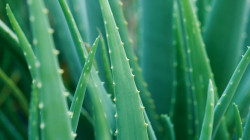
What is Aloe?
- Minor burns and skin irritation
- Wound healing
- Constipation
- Skin hydration and moisturizing
- Digestive complaints
- Hair and scalp care
Aloe vera gel is widely used on the skin for minor burns and irritation, and some research suggests it may help. Aloe latex (the yellow part) is a strong laxative that can cause cramping and is not considered safe for regular use. Talk to your pharmacist or doctor before taking aloe by mouth, and avoid oral aloe during pregnancy.
Aloe vera · Asphodelaceae · Leaves (gel from the inner leaf and latex from just under the skin) · Topical gels and creams, juice, capsules, tablets, and as an ingredient in cosmetics and skin care products
An interaction check asks whether these two react with each other — it does not ask whether Aloe is a good idea for someone in your situation. Here is what our Aloe record says about it on its own.
Aloe: dosing
There is no single standard dose of aloe. The right amount depends on the product, the form, and how it is used.For skin products, follow the directions on the label and apply to clean skin.
From our Aloe monograph — the full record covers uses, side effects and every documented interaction.
About Loteprednol Ophthalmic
What Is Loteprednol Ophthalmic Used For?
Brand names: Inveltys, Lotemax SM, Eysuvis
Loteprednol ophthalmic suspension is used to treat steroid-responsive inflammatory conditions of the eye, including allergic conjunctivitis, iritis (inflammation inside the eye), cyclitis, superficial punctate keratitis, herpes zoster keratitis, acne rosacea affecting the eye, and certain types of infectious conjunctivitis — when reducing swelling and inflammation is important enough to accept the risks of steroid use.
Loteprednol ophthalmic suspension is also used to treat inflammation after eye surgery. Eysuvis (loteprednol etabonate ophthalmic suspension) is specifically indicated for short-term use of up to two weeks for these inflammatory conditions.
Most-Reported Side Effects for Loteprednol Etabonate
From FAERS, the FDA’s public side-effect reporting system (5,898 reports, all brands). Reports are voluntary and are not proof the drug caused the effect.
Other Drugs & Aloe
Browse every other medication we’ve checked against Aloe — both the ones with a known interaction and the ones without. Select any drug for the full detail.
No drugs match “”.
1 interaction
304 interactions
- Diclofenac Sodium ›
- Ibuprofen ›
- Aspirin ›
- Insulin (rdna) ›
- Naproxen ›
- Minocycline ›
- Hydrochlorothiazide ›
- Glyburide ›
- Insulin (pork) ›
- Diclofenac Potassium ›
- Dipyridamole ›
- Insulin (human) ›
- Ketoprofen ›
- Trichlormethiazide ›
- Acarbose ›
- Bendroflumethiazide ›
- Bivalirudin ›
- Insulin Glargine ›
- Metolazone ›
- Phenolphthalein ›
- Semaglutide ›
- Spironolactone ›
- Warfarin Sodium ›
- Acetazolamide ›
- Bisacodyl ›
- Bromfenac Sodium ›
- Chlorpropamide ›
- Chlorthalidone ›
- Cyclothiazide ›
- Dabigatran ›
- Diclofenac Epolamine ›
- Exenatide ›
- Glipizide ›
- Glucagon ›
- Iloprost ›
- Indapamide ›
- Insulin Lispro ›
- Mannitol ›
- Metformin ›
- Methyclothiazide ›
- Piroxicam ›
- Repaglinide ›
- Sennosides (otc Drug) ›
- Sitagliptin ›
- Streptokinase ›
- Ticlopidine ›
- Tirzepatide ›
- Torsemide ›
- Treprostinil (oral) ›
- Abciximab ›
- Abrocitinib ›
- Acenocoumarol ›
- Acetohexamide ›
- Acetylsalicylic Acid ›
- Albiglutide ›
- Alogliptin ›
- Ammonium Chloride ›
- Anacaulase-bcdb ›
- Anagrelide ›
- Anisindione ›
Showing 60 of 304 moderate interactions — see all 304 on the Aloe page.
156 interactions
- Theophylline ›
- Estradiol ›
- Propranolol ›
- Verapamil ›
- Acetaminophen ›
- Diazepam ›
- Lofepramine ›
- Nortriptyline ›
- Bendamustine ›
- Caffeine (otc Drug) ›
- Cyclobenzaprine ›
- Desipramine ›
- Riluzole ›
- Asenapine ›
- Caffeine (prescription Drug) ›
- Clomipramine ›
- Clozapine ›
- Flutamide ›
- Imipramine ›
- Propafenone ›
- Ropinirole ›
- Tasimelteon ›
- Tizanidine ›
- Zileuton ›
- Agomelatine ›
- Amitriptyline ›
- Bendamustine Hydrochloride ›
- Chlordiazepoxide ›
- Enasidenib ›
- Estrogen ›
- Ethinyl Estradiol ›
- Etonogestrel ›
- Fenfluamine ›
- Fezolinetant ›
- Fluvoxamine ›
- Grepafloxacin ›
- Haloperidol ›
- Levobupivacaine ›
- Mexiletine ›
- Mirtazapine ›
- Oestrogen ›
- Olanzapine ›
- Ondansetron ›
- Paracetamol ›
- Pentazocine ›
- Perampanel ›
- Pirfenidone ›
- Pomalidomide ›
- Propranolol Hydrochloride ›
- Ramelteon ›
- Rasagiline ›
- Ropivacaine ›
- Tacrine ›
- Tipranavir ›
- Triclabendazole ›
- Ethinyl Estradiol, Norethindrone ›
- Ethinyl Estradiol, Levonorgestrel ›
- Acetaminophen, Hydrocodone ›
- Acetaminophen, Butalbital ›
- Acetaminophen, Pseudoephedrine ›
Showing 60 of 156 minor interactions — see all 156 on the Aloe page.
No interaction 2,368 drugs checked — show the list
We also checked Aloe against these medications and found no known interaction in our sources. Open any page to confirm.
- Levothyroxine ›
- Amlodipine ›
- Methylphenidate ›
- Sertraline ›
- Testosterone ›
- Losartan Potassium ›
- Ivermectin ›
- Metoprolol ›
- Rosuvastatin ›
- Escitalopram ›
- Abemaciclib ›
- Tadalafil ›
- Atorvastatin ›
- Docusate ›
- Hydroxyurea ›
- Valacyclovir ›
- Methamphetamine ›
- Sumatriptan ›
- Prednisone ›
- Lisdexamfetamine ›
- Lisinopril ›
- Amoxicillin ›
- Bupropion ›
- Acyclovir ›
- Methotrexate ›
- Doxycycline ›
- Fluoxetine ›
- Amphetamine ›
- Pregabalin ›
- Lamotrigine ›
- Azithromycin ›
- Gabapentin ›
- Isotretinoin ›
- Dextroamphetamine ›
- Amlodipine Besylate ›
- Clonazepam ›
- Methylene Blue ›
- Omeprazole ›
- Quetiapine ›
- Letrozole ›
- Duloxetine ›
- Buspirone ›
- Citalopram ›
- Ciprofloxacin ›
- Bisoprolol ›
- Levothyroxine, Liothyronine ›
- Dapsone ›
- Candesartan Cilexetil ›
- Cephalexin ›
- Cyclopentolate ›
- Acetaminophen, Dextromethorphan, Doxylamine ›
- Roxithromycin ›
- Atorvastatin Calcium ›
- Levetiracetam ›
- Pegunigalsidase Alfa-iwxj ›
- Finasteride ›
- Ezetimibe ›
- Levothyroxine Sodium ›
- Daptomycin ›
- Amoxicillin, Clavulanate Potassium ›
Showing the 60 most looked-up of 2,368 medications checked with no known interaction — see the full Aloe list.
Aloe References
The 41 references that drive our Aloe monograph and interaction data, from the evidence-graded Natural Medicines (TRC Healthcare) database. Citations with a link open the study on PubMed or the publisher’s site.
- Newall CA, Anderson LA, Philpson JD. Herbal Medicine: A Guide for Healthcare Professionals. London, UK: The Pharmaceutical Press, 1996.
- Wichtl MW. Herbal Drugs and Phytopharmaceuticals. Ed. N.M. Bisset. Stuttgart: Medpharm GmbH Scientific Publishers, 1994.
- Brinker F. Herb Contraindications and Drug Interactions. 2nd ed. Sandy, OR: Eclectic Medical Publications, 1998.
- Nusko G, Schneider B, Schneider I, et al. Anthranoid laxative use is not a risk factor for colorectal neoplasia: results of a prospective case control study. Gut 2000;46:651-5. PubMed
- Luyckx VA, Ballantine R, Claeys M, et al. Herbal remedy-associated acute renal failure secondary to Cape aloes. Am J Kidney Dis 2002;39:E13. PubMed
- Rajasekaran S, Sivagnanam K, Ravi K, Subramanian S. Hypoglycemic effect of Aloe vera gel on streptozotocin-induced diabetes in experimental rats. J Med Food 2004;7:61-6.
- Williams MS, Burk M, Loprinzi CL, et al. Phase III double-blind evaluation of an aloe vera gel as a prophylactic agent for radiation-induced skin toxicity. Int J Radiat Oncol Biol Phys 1996;36:345-9. PubMed
- Vogler BK, Ernst E. Aloe vera: a systematic review of its clinical effectiveness. Br J Gen Pract 1999;49:823-8.
- Bottenberg MM, Wall GC, Harvey RL, Habib S. Oral aloe vera-induced hepatitis. Ann Pharmacother 2007;41:1740-3. PubMed
- Rabe C, Musch A, Schirmacher P, et al. Acute hepatitis induced by an Aloe vera preparation: a case report. World J Gastroenterol 2005;11:303-4. PubMed
- Kanat O, Ozet A, Ataergin S. Aloe vera-induced acute toxic hepatitis in a healthy young man. Eur J Int Med 2006;17:589. PubMed
- Mueller SO, Stopper H. Characterization of the genotoxicity of anthraquinones in mammalian cells. Biochim Biophys Acta 1999;1428:406-14. PubMed
- Schorkhuber M, Richter M, Dutter A, et al. Effect of anthraquinone laxatives on the proliferation and urokinase secretion of normal, premalignant and malignant colonic epithelial cells. Eur J Cancer 1998;34:1091-8. PubMed
- Yang HN, Kim DJ, Kim YM, et al. Aloe-induced toxic hepatitis. J Korean Med Sci 2010;25:492-5. PubMed
- Choonhakarn C, Busaracome P, Sripanidkulchai B, et al. A prospective, randomized clinical trial comparing topical aloe vera with 0.1% triamcinolone acetonide in mild to moderate plaque psoriasis. J.Eur.Acad.Dermatol.Venereol. 2010;24:168-72. PubMed
- Ishii Y, Tanizawa H, Takino Y. Studies of aloe. IV. Mechanism of cathartic effect. (3). Biol Pharm Bull. 1994;17:495-7. PubMed
- Ishii Y, Tanizawa H, Takino Y. Studies of aloe. V. Mechanism of cathartic effect. (4). Biol Pharm Bull. 1994;17:651-3. PubMed
- Nelemans FA. Clinical and toxicological aspects of anthraquinone laxatives. Pharmacology. 1976;14 Suppl 1:73-7. PubMed
- Paulsen E, Korsholm L, Brandrup F. A double-blind, placebo-controlled study of a commercial Aloe vera gel in the treatment of slight to moderate psoriasis vulgaris. J Eur Acad Dermatol Venereol. 2005;19:326-31.
- Huseini HF, Kianbakht S, Hajiaghaee R, et al. Anti-hyperglycemic and anti-hypercholesterolemic effects of Aloe vera leaf gel in hyperlipidemic type 2 diabetic patients: a randomized double-blind placebo-controlled clinical trial. Planta Med. 2012;78:311-6
- Ferreira, M., Teixeira, M., Silva, E., and Selores, M. Allergic contact dermatitis to Aloe vera. Contact Dermatitis 2007;57(4):278-279.
- Choonhakarn, C., Busaracome, P., Sripanidkulchai, B., and Sarakarn, P. The efficacy of aloe vera gel in the treatment of oral lichen planus: a randomized controlled trial. Br J Dermatol 2008;158(3):573-577. PubMed
- Baretta, Z., Ghiotto, C., Marino, D., and Jirillo, A. Aloe-induced hypokalemia in a patient with breast cancer during chemotherapy. Ann.Oncol. 2009;20(8):1445-1446. PubMed
- Hunter, D. and Frumkin, A. Adverse reactions to vitamin E and aloe vera preparations after dermabrasion and chemical peel. Cutis 1991;47(3):193-196.
- Alvarez-Perea, A., Garcia, A. P., Hernandez, A. L., de, Barrio M., and Baeza, M. L. Urticaria due to aloe vera: a new sensitizer? Ann.Allergy Asthma Immunol. 2010;105(5):404-405. PubMed
- Hogan, D. J. Widespread dermatitis after topical treatment of chronic leg ulcers and stasis dermatitis. CMAJ. 2-15-1988;138(4):336-338.
- Savchak VI. Acute bullous allergic dermatitis due to local application of aloe leaves. Vestnik Dermatologii i Venerologii 1977;12:44-45.
- Nakamura, T. and Kotajima, S. Contact dermatitis from aloe arborescens. Contact Dermatitis 1984;11(1):51. PubMed
- Shoji, A. Contact dermatitis to Aloe arborescens. Contact Dermatitis 1982;8(3):164-167. PubMed
- Morrow, D. M., Rapaport, M. J., and Strick, R. A. Hypersensitivity to aloe. Arch Dermatol. 1980;116(9):1064-1065. DOI
- Cosmetic Ingredient Review Expert Panel. Final report on the safety assessment of AloeAndongensis Extract, Aloe Andongensis Leaf Juice,aloe Arborescens Leaf Extract, Aloe Arborescens Leaf Juice, Aloe Arborescens Leaf Protoplasts, Aloe Barbadensis Flower E
- Bhalang K, Thunyakitpisal P, Rungsirisatean N. Acemannan, a polysaccharide extracted from Aloe vera, is effective in the treatment of oral aphthous ulceration. J Altern Complement Med 2013;19(5):429-34.
- Hajheydari Z, Saeedi M, Morteza-Semnani K, Soltani A. Effect of Aloe vera topical gel combined with tretinoin in treatment of mild and moderate acne vulgaris: a randomized, double-blind, prospective trial. J Dermatolog Treat 2014;25(2):123-9.
- Jiménez-Encarnación E, Ríos G, Muñoz-Mirabal A, Vilá LM. Euforia-induced acute hepatitis in a patient with scleroderma. BMJ Case Rep 2012;2012. PubMed
- Lee J, Lee MS, Nam KW. Acute toxic hepatitis caused by an aloe vera preparation in a young patient: a case report with a literature review. Korean J Gastroenterol 2014;64(1):54-8. PubMed
- Guo X, Mei N. Aloe Vera - A Review of Toxicity and Adverse Clinical Effects. J Environ Sci Health C Environ Carcinog Ecotoxicol Rev 2016;34(2):77-96.
- Hoogenboom TCH, Patel N, Cook NA, Williams R, Taylor-Robinson SD, Lim AKP. The effect of Aloe vera juice on liver enzymes and hepatic structure in a healthy population. Integr Med (Encinitas) 2020;19(3):30-4.
- Mushtaq S, Mushtaq Z, Sarfraz J, et al. Comparison of effect of aloe vera gel with aspirin and celecoxib on platelet aggregation. Professional Med J. 2020; 27(5):973-978. DOI
- Haron MH, Dale O, Martin K, et al. Evaluation of the Herb-Drug Interaction Potential of Commonly Used Botanicals on the US Market with Regard to PXR- and AhR-Mediated Influences on CYP3A4 and CYP1A2. J Diet Suppl 2022. PubMed
- Sabbaghzadegan S, Soltani MH, Kamalinejad M, Bahrami M, Kabir A, Dadmehr M. The effect of a standardized capsule of Aloe vera gel on the quality of life in patients with systolic heart failure: A randomized double-blind placebo-controlled clinical trial.
- Lewis ED, Crowley DC, Guthrie N, Evans M. Healthy adults supplemented with a nutraceutical formulation containing Aloe vera gel, rosemary and Poria cocos enhances the effect of influenza vaccination in a randomized, triple-blind, placebo-controlled trial. PubMed
Medication overviews come from MedlinePlus (NIH); supplement label data from the NIH Dietary Supplement Label Database. Content is written and reviewed by licensed HelloPharmacist pharmacists — see our data sources and editorial standards.
Taking Aloe and Loteprednol Etabonate Together: Common Questions
Is it safe to take Aloe with Loteprednol Etabonate?
Do Aloe and Loteprednol Etabonate have any of the same side effects?
Does Aloe interact with any other medications?
Written and reviewed by the HelloPharmacist editorial staff. Our editorial policy
Keep Exploring
Still Have a Question About Loteprednol Etabonate and Aloe?
Our pharmacists answer your medication & supplement questions — free.
This information is for education only and is not a substitute for professional medical advice. Always check with your pharmacist or doctor before starting, stopping, or combining supplements and medications.