
Ba Ji Yin Yang Teapills Ingredients & Drug Interactions
by Plum Flower
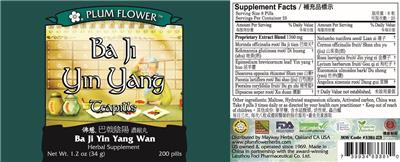
What is this page for?
First and foremost: checking Ba Ji Yin Yang Teapills against your medications. The heart of this page is the interaction checker and the full interaction report — how this product’s ingredients may interact with prescription and over-the-counter medicines you may be taking.
Around that, we add a pharmacist’s high-level view of the product as a whole — what’s inside, the evidence for its stated use, how transparent the label is, and what safety data exists — so you can see the full picture in one place. It’s educational information from our licensed clinical databases and the clinical staff at HelloPharmacist — not medical advice — and we don’t sell or endorse products. Our editorial policy
Ba Ji Yin Yang Teapills is a dietary supplement by Plum Flower with 13 active ingredients. Its ingredients are commonly taken for menopause symptoms, menstrual cramps and irregular periods, premenstrual syndrome (pms).Based on those ingredients, 1,138 medications have a known interaction with it, the most serious rated major. The ingredients most likely to interact are Lycium barbarum Fruit Extract, Epimedium brevicornum Leaf Extract, Paeonia lactiflora Root Extract. Use the checker below to test your specific medication, or read the full HelloPharmacist Interaction Report.
Check Your Meds Against Ba Ji Yin Yang Teapills by Plum Flower
Ask about any prescription or over-the-counter medication and we check it for interactions with Ba Ji Yin Yang Teapills by Plum Flower — and tell you which ingredient is responsible.
AI summaries are generated from our interaction database for education only — always confirm with your pharmacist. How we use AI
Ask the Pharmacist
A licensed pharmacist will answer your question by email — free, usually within 24 hours.
Got it — thank you!
A licensed pharmacist will answer within 24 hours. Keep an eye on your email (worth checking spam, just in case).
HelloPharmacist Scorecard of Ba Ji Yin Yang Teapills by Plum Flower
Our pharmacy team’s full take, with four database checks built into the cards below — a summary of what is known, not a grade of the product itself.
What’s inside
Low disclosure
Ba Ji Yin Yang Teapills contains 13 ingredients total, including a proprietary extract blend broken down into its components. The active herbal extracts are Angelica sinensis root (Dong Quai), Rehmannia glutinosa root, Dioscorea opposita rhizome, Eucommia ulmoides bark, Paeonia lactiflora root (Peony), Lycium barbarum fruit (Goji), Morinda officinalis root (Ba Ji Tian), Nelumbo nucifera seed (Lotus), Cornus officinalis fruit, Psoralea corylifolia fruit, Epimedium brevicornum leaf (Horny Goat Weed), and Rosa laevigata fruit.
The inactive ingredients are maltose, hydrated magnesium silicate, activated carbon, and china wax.
Does it work?
Moderate evidence
The evidence supporting these ingredients for their traditional uses is limited. Rehmannia carries a rating of Possibly Effective for chronic kidney disease — that's the strongest claim in this product.
Morinda officinalis (Ba Ji Tian) is rated Possibly Effective for depression. For all other conditions these ingredients are traditionally used for — anemia, osteoporosis, heart disease, migraines, eczema, sexual function, insomnia, and obesity — the data we hold shows Insufficient Reliable Evidence To Rate.
This doesn't mean they don't work; it means the evidence isn't established yet in our resources.
How safe is it?
Well-documented data
Most of these ingredients are generally well tolerated when used short-term, though Peony and Horny Goat Weed carry limited high-quality human safety data. Peony can cause gastrointestinal upset (abdominal distension, diarrhea, nausea, anorexia) in some people, with diarrhea reported in 5% of patients in one trial.
Horny Goat Weed may cause dizziness, dry mouth, nosebleed, thirst, or vomiting; a rare case of respiratory arrest has been reported. Angelica sinensis can trigger sun sensitivity and allergic reactions (one case of asthma and rhinitis occurred with occupational exposure).
Goji has caused rare allergic reactions including facial swelling and anaphylaxis, and a single case of liver injury has been reported. Lotus root can cause hives or contact dermatitis.
For pregnancy, the safety data advises against Angelica sinensis, Peony, Horny Goat Weed, and Goji (all rated Possibly Unsafe); there isn't enough data for Rehmannia, Morinda, and Lotus to determine safety either way — talk with your doctor or pharmacist for personalized advice. For breastfeeding, safety data is insufficient for all ingredients checked; avoid is advised for most, or use caution (Goji only).
Meds to double-check
Major interaction found
Before taking this product, check if you use warfarin or other blood thinners (anticoagulants) — Major-severity bleeding risk. Then check antidiabetes drugs, blood pressure medications, birth control, hormone therapy, antipsychotics (especially clozapine), seizure drugs (phenytoin), heart rhythm medications (flecainide), sedatives or barbiturates, and any drugs metabolized by liver enzymes CYP1A2, CYP2B6, CYP2C9, CYP2C19, CYP2D6, or CYP3A4 — all Moderate-severity concerns.
The bottom line
Scorecard at a glanceFormula with limited ingredient disclosure with some supporting evidence behind its ingredients' uses. Major medication interactions have been identified, and safety information is well characterized.
This is a traditional Chinese herbal blend with limited evidence for effectiveness in the conditions it addresses. If you take warfarin, any blood thinner, blood pressure medication, diabetes medication, hormone therapy, birth control, or certain psychiatric or seizure medications, check your specific drugs with the tool on this page before starting.
Talk with your pharmacist or doctor first — the interaction risks are real and potentially serious.
Educational only — not medical advice; always confirm with your pharmacist. Our editorial policy · How we use AI
Assessment coverage: 8 of 13 active ingredients matched to our full ingredient reviews (monographs). Based on the product label dated Aug 22, 2025.
This Scorecard evaluates available label information, ingredient evidence, and known medication-safety considerations. It does not independently verify product identity, purity, potency, contamination, or manufacturing quality. How these ratings are computed
General information
Key facts about Ba Ji Yin Yang Teapills, straight from the product label.
| Brand | Plum Flower |
|---|---|
| Barcode (UPC) | 739934833810 |
| Net contents | 200 Pill(s); 1.2 Ounce(s); 34 Gram(s) |
| Market status | On market |
| Date entered into DSLD | Aug 22, 2025 |
| DSLD ID | 336444 |
| Product type | Botanical |
| Supplement form | Tablet Or Pill |
| Dietary claims / uses | All Other |
| Intended target group(s) | Adult (18 - 50 Years) |
Everything in this section is reproduced from the manufacturer’s own product label — it’s the label speaking, not HelloPharmacist. We show it so you can see exactly what the maker states; we don’t verify or endorse those statements.
Supplement Facts
The label details for Ba Ji Yin Yang Teapills by Plum Flower, sourced from the NIH Dietary Supplement Label Database.
Supplement Facts
| Ingredient | Amount | % DV |
|---|---|---|
| Proprietary Extract Blend | 1360 mg | -- |
| Angelica sinensis Root Extract | 0 NP | -- |
| Dipsacus asper Root Extract | 0 NP | -- |
| Rehmannia glutinosa Root Extract | 0 NP | -- |
| Dioscorea opposita Rhizome Extract | 0 NP | -- |
| Eucommia ulmoides Bark Extract | 0 NP | -- |
| Paeonia lactiflora Root Extract | 0 NP | -- |
| Lycium barbarum Fruit Extract | 0 NP | -- |
| Morinda officinalis Root Extract | 0 NP | -- |
| Nelumbo nucifera seed extract | 0 NP | -- |
| Cornus officinalis Fruit Extract | 0 NP | -- |
| Psoralea corylifolia Fruit Extract | 0 NP | -- |
| Epimedium brevicornum Leaf Extract | 0 NP | -- |
| Rosa laevigata Fruit Extract | 0 NP | -- |
Other ingredients: Maltose, Magnesium Silicate, Hydrated, Carbon, Activated, China Wax
Tap any ingredient to jump to its full detail below.
These statements are the manufacturer’s wording, reproduced from the product label — the label is saying it, not HelloPharmacist. We don’t verify or endorse them.
Formula
Ba Ji Yin Yang Wan
FDA Statement of Identity
Herbal Supplement
Suggested/Recommended/Usage/Directions
Take 8 pills 3 times daily or as directed by your health care practitioner.
Precautions
Keep out of reach of children.
General Statements
US owned & operated since 1969. Made in China in partnership with the award winning Lanzhou Foci Pharmaceutical Co. Ltd.
Foci Pharmaceutical 1929 Foci Pharmaceutical
Seals/Symbols
Plum Flower Guarantee Sourced Sustainably FDA Registered cGMP Compliant Made at a cGMP Certified Facility Species Verified Lab Tested Quality Verified
Formulation
US owned & operated since 1969. Made in China in partnership with award-winning Lanzhou Foci Pharmaceutical Co. Ltd.
Is this label outdated? Report a formula or label change and our pharmacy team will review it.
Ba Ji Yin Yang Teapills by Plum Flower label
The label scan from the NIH Dietary Supplement Label Database. Tap to enlarge.
Label images are published by the NIH Dietary Supplement Label Database for the version of this product on file. Always read your actual product label.
View the full label (PDF)The Ingredients in Ba Ji Yin Yang Teapills by Plum Flower
These are the 13 active ingredients this product is made of. Select any to open its full monograph.
Serving size8 Pill(s) Dosage formTablet Or Pill Servings per container25 Amounts shown are per serving.
Most supplement products combine several ingredients, and a medication can interact with the product through any one of them. Each ingredient below shows whether it has known drug interactions.
Proprietary Extract Blend
- › Angelica sinensis Root Extract
- › Dipsacus asper Root Extract
- › Rehmannia glutinosa Root Extract
- › Dioscorea opposita Rhizome Extract
- › Eucommia ulmoides Bark Extract
- › Paeonia lactiflora Root Extract
- › Lycium barbarum Fruit Extract
- › Morinda officinalis Root Extract
- › Nelumbo nucifera seed extract
- › Cornus officinalis Fruit Extract
- › Psoralea corylifolia Fruit Extract
- › Epimedium brevicornum Leaf Extract
- › Rosa laevigata Fruit Extract
Other (inactive) ingredients: Maltose, Magnesium Silicate, Hydrated, Carbon, Activated, China Wax. These complete the product’s ingredient list but are not active constituents.
Ba Ji Yin Yang Teapills by Plum Flower Drug Interactions
HelloPharmacist Interaction Report
Ba Ji Yin Yang Teapills by Plum Flower contains several ingredients with documented drug interactions.
The most serious concern is with warfarin (Coumadin), a blood thinner: both Angelica sinensis (Dong Quai) and Lycium barbarum (Goji) carry Major-severity warnings that they can increase warfarin's effects and raise the risk of bleeding. Case reports document this happening within weeks of starting these herbs.
Read the full breakdown — every affected drug type, severity by severity
Moderate-severity interactions affect blood pressure medications — Rehmannia and Horny Goat Weed may lower blood pressure further. Several ingredients (Peony, Goji, Horny Goat Weed, and Lotus) potentially increase bleeding risk when combined with blood thinners or antiplatelet drugs beyond warfarin.
Goji also interacts with multiple drug-metabolizing enzymes (CYP2C9, CYP2D6, CYP2C19, CYP3A4) and may raise levels of drugs processed through those pathways, including one case report with the heart rhythm drug flecainide.
Other moderate-severity concerns include Rehmannia and Lotus with diabetes medications (risk of low blood sugar), Angelica sinensis and Peony with hormone therapy or birth control (potential interference), and Peony specifically with the antipsychotic clozapine and the seizure drug phenytoin. Altogether, these interactions span 1,124 individual medications.
We could not check several ingredients: Dipsacus asper, Dioscorea opposita, Eucommia ulmoides, Cornus officinalis, Psoralea corylifolia, and Rosa laevigata.
Please use the medication checker on this page to verify your specific drugs before starting this product.
Check your own medications below · Editorial policy · How we use AI
Want to check YOUR meds against Ba Ji Yin Yang Teapills?
Ask about interactions with your drugs in plain English — “Can I take it with lisinopril?” — and we find you the answer in seconds, ingredient by ingredient.
Go to the checkerIngredients driving the most interactions
Individual Drug Interactions
The ingredients in Ba Ji Yin Yang Teapills interact with 1,138 drugs. Click any drug to see the details.
7 of the 13 ingredients in Ba Ji Yin Yang Teapills interact with drugs. Each result below shows which ingredient is responsible. Lycium barbarum Fruit Extract Epimedium brevicornum Leaf Extract Paeonia lactiflora Root Extract Rehmannia glutinosa Root Extract Nelumbo nucifera seed extract Angelica sinensis Root Extract Morinda officinalis Root Extract
WarfarinWarfarin
How Warfarin interacts with Ba Ji Yin Yang Teapills — through 5 ingredients. Tap an ingredient for the detail:
Lycium Barbarum Fruit ExtractWarfarin (coumadin), Cytochrome P450 2c9 (cyp2c9) Substrates +2 Major
Interaction Summary
Goji can increase the effects of warfarin and possibly increase the risk of bleeding.
Read the full Lycium Barbarum Fruit Extract + Warfarin interactionAngelica Sinensis Root ExtractWarfarin (coumadin), Anticoagulant/antiplatelet Drugs Major
Interaction Summary
Dong quai may increase the risk of bleeding when used with warfarin.
Read the full Angelica Sinensis Root Extract + Warfarin interactionEpimedium Brevicornum Leaf ExtractCytochrome P450 3a4 (cyp3a4) Substrates, Anticoagulant/antiplatelet Drugs +1 Moderate
Interaction Summary
Theoretically, horny goat weed might increase the effects and side effects of CYP3A4 substrates.
Read the full Epimedium Brevicornum Leaf Extract + Warfarin interactionPaeonia Lactiflora Root ExtractCytochrome P450 3a4 (cyp3a4) Substrates, Anticoagulant/antiplatelet Drugs +1 Moderate
Interaction Summary
Theoretically, use of peony may increase the levels and clinical effects of drugs metabolized by CYP3A4.
Read the full Paeonia Lactiflora Root Extract + Warfarin interactionNelumbo Nucifera Seed ExtractAnticoagulant/antiplatelet Drugs Moderate
Interaction Summary
Theoretically, concurrent use of lotus with other antiplatelet drugs might reduce platelet aggregation and increase the risk of bleeding.
Read the full Nelumbo Nucifera Seed Extract + Warfarin interactionWarfarin SodiumCoumadin, Panwarfin, Sofarin
How Warfarin Sodium interacts with Ba Ji Yin Yang Teapills — through 5 ingredients. Tap an ingredient for the detail:
Lycium Barbarum Fruit ExtractWarfarin (coumadin), Cytochrome P450 2c9 (cyp2c9) Substrates +2 Major
Interaction Summary
Goji can increase the effects of warfarin and possibly increase the risk of bleeding.
Read the full Lycium Barbarum Fruit Extract + Warfarin Sodium interactionAngelica Sinensis Root ExtractWarfarin (coumadin), Anticoagulant/antiplatelet Drugs Major
Interaction Summary
Dong quai may increase the risk of bleeding when used with warfarin.
Read the full Angelica Sinensis Root Extract + Warfarin Sodium interactionPaeonia Lactiflora Root ExtractCytochrome P450 1a2 (cyp1a2) Substrates, Cytochrome P450 3a4 (cyp3a4) Substrates +1 Moderate
Interaction Summary
Theoretically, use of peony may increase the levels and clinical effects of drugs metabolized by CYP1A2.
Read the full Paeonia Lactiflora Root Extract + Warfarin Sodium interactionEpimedium Brevicornum Leaf ExtractCytochrome P450 1a2 (cyp1a2) Substrates, Anticoagulant/antiplatelet Drugs +1 Moderate
Interaction Summary
Theoretically, horny goat weed might increase the effects and side effects of CYP1A2 substrates.
Read the full Epimedium Brevicornum Leaf Extract + Warfarin Sodium interactionNelumbo Nucifera Seed ExtractAnticoagulant/antiplatelet Drugs Moderate
Interaction Summary
Theoretically, concurrent use of lotus with other antiplatelet drugs might reduce platelet aggregation and increase the risk of bleeding.
Read the full Nelumbo Nucifera Seed Extract + Warfarin Sodium interactionAdo-trastuzumab EmtansineKadcyla
How Ado-trastuzumab Emtansine interacts with Ba Ji Yin Yang Teapills — through 3 ingredients. Tap an ingredient for the detail:
Epimedium Brevicornum Leaf ExtractCytochrome P450 3a4 (cyp3a4) Substrates Moderate
Interaction Summary
Theoretically, horny goat weed might increase the effects and side effects of CYP3A4 substrates.
Read the full Epimedium Brevicornum Leaf Extract + Ado-trastuzumab Emtansine interactionPaeonia Lactiflora Root ExtractCytochrome P450 3a4 (cyp3a4) Substrates Moderate
Interaction Summary
Theoretically, use of peony may increase the levels and clinical effects of drugs metabolized by CYP3A4.
Read the full Paeonia Lactiflora Root Extract + Ado-trastuzumab Emtansine interactionLycium Barbarum Fruit ExtractCytochrome P450 3a4 (cyp3a4) Substrates Moderate
Interaction Summary
Theoretically, goji berry might inhibit CYP3A4 and reduce metabolism of CYP3A4 substrates.
Read the full Lycium Barbarum Fruit Extract + Ado-trastuzumab Emtansine interactionAbciximabReoPro
How Abciximab interacts with Ba Ji Yin Yang Teapills — through 4 ingredients. Tap an ingredient for the detail:
Angelica Sinensis Root ExtractAnticoagulant/antiplatelet Drugs Moderate
Interaction Summary
Theoretically, dong quai may increase the risk of bleeding when used with anticoagulant or antiplatelet drugs; however, research is conflicting.
Read the full Angelica Sinensis Root Extract + Abciximab interactionEpimedium Brevicornum Leaf ExtractAnticoagulant/antiplatelet Drugs Moderate
Interaction Summary
Theoretically, horny goat weed might increase the risk of bleeding.
Read the full Epimedium Brevicornum Leaf Extract + Abciximab interactionPaeonia Lactiflora Root ExtractAnticoagulant/antiplatelet Drugs Moderate
Interaction Summary
Theoretically, combining peony with anticoagulant or antiplatelet drugs might increase the risk of bleeding.
Read the full Paeonia Lactiflora Root Extract + Abciximab interactionNelumbo Nucifera Seed ExtractAnticoagulant/antiplatelet Drugs Moderate
Interaction Summary
Theoretically, concurrent use of lotus with other antiplatelet drugs might reduce platelet aggregation and increase the risk of bleeding.
Read the full Nelumbo Nucifera Seed Extract + Abciximab interactionAbemaciclibVerzenio
How Abemaciclib interacts with Ba Ji Yin Yang Teapills — through 3 ingredients. Tap an ingredient for the detail:
Paeonia Lactiflora Root ExtractCytochrome P450 3a4 (cyp3a4) Substrates Moderate
Interaction Summary
Theoretically, use of peony may increase the levels and clinical effects of drugs metabolized by CYP3A4.
Read the full Paeonia Lactiflora Root Extract + Abemaciclib interactionEpimedium Brevicornum Leaf ExtractCytochrome P450 3a4 (cyp3a4) Substrates Moderate
Interaction Summary
Theoretically, horny goat weed might increase the effects and side effects of CYP3A4 substrates.
Read the full Epimedium Brevicornum Leaf Extract + Abemaciclib interactionLycium Barbarum Fruit ExtractCytochrome P450 3a4 (cyp3a4) Substrates Moderate
Interaction Summary
Theoretically, goji berry might inhibit CYP3A4 and reduce metabolism of CYP3A4 substrates.
Read the full Lycium Barbarum Fruit Extract + Abemaciclib interactionAbiraterone
How Abiraterone interacts with Ba Ji Yin Yang Teapills — through 3 ingredients. Tap an ingredient for the detail:
Lycium Barbarum Fruit ExtractCytochrome P450 3a4 (cyp3a4) Substrates Moderate
Interaction Summary
Theoretically, goji berry might inhibit CYP3A4 and reduce metabolism of CYP3A4 substrates.
Read the full Lycium Barbarum Fruit Extract + Abiraterone interactionPaeonia Lactiflora Root ExtractCytochrome P450 3a4 (cyp3a4) Substrates Moderate
Interaction Summary
Theoretically, use of peony may increase the levels and clinical effects of drugs metabolized by CYP3A4.
Read the full Paeonia Lactiflora Root Extract + Abiraterone interactionEpimedium Brevicornum Leaf ExtractCytochrome P450 3a4 (cyp3a4) Substrates Moderate
Interaction Summary
Theoretically, horny goat weed might increase the effects and side effects of CYP3A4 substrates.
Read the full Epimedium Brevicornum Leaf Extract + Abiraterone interactionAbiraterone AcetateYonsa, Zytiga
How Abiraterone Acetate interacts with Ba Ji Yin Yang Teapills — through 3 ingredients. Tap an ingredient for the detail:
Epimedium Brevicornum Leaf ExtractCytochrome P450 3a4 (cyp3a4) Substrates Moderate
Interaction Summary
Theoretically, horny goat weed might increase the effects and side effects of CYP3A4 substrates.
Read the full Epimedium Brevicornum Leaf Extract + Abiraterone Acetate interactionLycium Barbarum Fruit ExtractCytochrome P450 3a4 (cyp3a4) Substrates Moderate
Interaction Summary
Theoretically, goji berry might inhibit CYP3A4 and reduce metabolism of CYP3A4 substrates.
Read the full Lycium Barbarum Fruit Extract + Abiraterone Acetate interactionPaeonia Lactiflora Root ExtractCytochrome P450 3a4 (cyp3a4) Substrates Moderate
Interaction Summary
Theoretically, use of peony may increase the levels and clinical effects of drugs metabolized by CYP3A4.
Read the full Paeonia Lactiflora Root Extract + Abiraterone Acetate interactionAbrocitinibCibinqo
How Abrocitinib interacts with Ba Ji Yin Yang Teapills — through 5 ingredients. Tap an ingredient for the detail:
Paeonia Lactiflora Root ExtractAnticoagulant/antiplatelet Drugs Moderate
Interaction Summary
Theoretically, combining peony with anticoagulant or antiplatelet drugs might increase the risk of bleeding.
Read the full Paeonia Lactiflora Root Extract + Abrocitinib interactionNelumbo Nucifera Seed ExtractAnticoagulant/antiplatelet Drugs Moderate
Interaction Summary
Theoretically, concurrent use of lotus with other antiplatelet drugs might reduce platelet aggregation and increase the risk of bleeding.
Read the full Nelumbo Nucifera Seed Extract + Abrocitinib interactionEpimedium Brevicornum Leaf ExtractAnticoagulant/antiplatelet Drugs Moderate
Interaction Summary
Theoretically, horny goat weed might increase the risk of bleeding.
Read the full Epimedium Brevicornum Leaf Extract + Abrocitinib interactionLycium Barbarum Fruit ExtractCytochrome P450 2c19 (cyp2c19) Substrates, Cytochrome P450 2c9 (cyp2c9) Substrates Moderate
Interaction Summary
Theoretically, goji berry might inhibit CYP2C19 and reduce metabolism of CYP2C19 substrates.
Read the full Lycium Barbarum Fruit Extract + Abrocitinib interactionAngelica Sinensis Root ExtractAnticoagulant/antiplatelet Drugs Moderate
Interaction Summary
Theoretically, dong quai may increase the risk of bleeding when used with anticoagulant or antiplatelet drugs; however, research is conflicting.
Read the full Angelica Sinensis Root Extract + Abrocitinib interactionAcalabrutinibCalquence
How Acalabrutinib interacts with Ba Ji Yin Yang Teapills — through 3 ingredients. Tap an ingredient for the detail:
Lycium Barbarum Fruit ExtractCytochrome P450 3a4 (cyp3a4) Substrates Moderate
Interaction Summary
Theoretically, goji berry might inhibit CYP3A4 and reduce metabolism of CYP3A4 substrates.
Read the full Lycium Barbarum Fruit Extract + Acalabrutinib interactionPaeonia Lactiflora Root ExtractCytochrome P450 3a4 (cyp3a4) Substrates Moderate
Interaction Summary
Theoretically, use of peony may increase the levels and clinical effects of drugs metabolized by CYP3A4.
Read the full Paeonia Lactiflora Root Extract + Acalabrutinib interactionEpimedium Brevicornum Leaf ExtractCytochrome P450 3a4 (cyp3a4) Substrates Moderate
Interaction Summary
Theoretically, horny goat weed might increase the effects and side effects of CYP3A4 substrates.
Read the full Epimedium Brevicornum Leaf Extract + Acalabrutinib interactionAcarboseGlucobay, Prandase, Precose
How Acarbose interacts with Ba Ji Yin Yang Teapills — through 4 ingredients. Tap an ingredient for the detail:
Morinda Officinalis Root ExtractAntidiabetes Drugs Moderate
Interaction Summary
Animal research shows that taking ba ji tian extracts might increase or decrease blood glucose levels.
Read the full Morinda Officinalis Root Extract + Acarbose interactionRehmannia Glutinosa Root ExtractAntidiabetes Drugs Moderate
Interaction Summary
Theoretically, rehmannia might increase the risk of hypoglycemia when taken with antidiabetes drugs.
Read the full Rehmannia Glutinosa Root Extract + Acarbose interactionNelumbo Nucifera Seed ExtractAntidiabetes Drugs Moderate
Interaction Summary
Theoretically, lotus might have additive effects with antidiabetes drugs and increase the risk of hypoglycemia.
Read the full Nelumbo Nucifera Seed Extract + Acarbose interactionLycium Barbarum Fruit ExtractAntidiabetes Drugs Minor
Interaction Summary
Theoretically, concomitant use of goji fruit polysaccharides or goji root bark with antidiabetes drugs might have additive effects.
Read the full Lycium Barbarum Fruit Extract + Acarbose interactionAcebutololRhotral, Sectral
How Acebutolol interacts with Ba Ji Yin Yang Teapills — through 3 ingredients. Tap an ingredient for the detail:
Epimedium Brevicornum Leaf ExtractAntihypertensive Drugs Moderate
Interaction Summary
Theoretically, horny goat weed might increase the risk of hypotension.
Read the full Epimedium Brevicornum Leaf Extract + Acebutolol interactionLycium Barbarum Fruit ExtractAntihypertensive Drugs Moderate
Interaction Summary
Theoretically, concomitant use of goji root bark, but not goji fruit, with antihypertensive drugs might have additive effects.
Read the full Lycium Barbarum Fruit Extract + Acebutolol interactionRehmannia Glutinosa Root ExtractAntihypertensive Drugs Moderate
Interaction Summary
Theoretically, rehmannia might increase the risk of hypotension when taken with antihypertensive drugs.
Read the full Rehmannia Glutinosa Root Extract + Acebutolol interactionAcenocoumarolSintrom
How Acenocoumarol interacts with Ba Ji Yin Yang Teapills — through 4 ingredients. Tap an ingredient for the detail:
Paeonia Lactiflora Root ExtractAnticoagulant/antiplatelet Drugs Moderate
Interaction Summary
Theoretically, combining peony with anticoagulant or antiplatelet drugs might increase the risk of bleeding.
Read the full Paeonia Lactiflora Root Extract + Acenocoumarol interactionNelumbo Nucifera Seed ExtractAnticoagulant/antiplatelet Drugs Moderate
Interaction Summary
Theoretically, concurrent use of lotus with other antiplatelet drugs might reduce platelet aggregation and increase the risk of bleeding.
Read the full Nelumbo Nucifera Seed Extract + Acenocoumarol interactionAngelica Sinensis Root ExtractAnticoagulant/antiplatelet Drugs Moderate
Interaction Summary
Theoretically, dong quai may increase the risk of bleeding when used with anticoagulant or antiplatelet drugs; however, research is conflicting.
Read the full Angelica Sinensis Root Extract + Acenocoumarol interactionEpimedium Brevicornum Leaf ExtractAnticoagulant/antiplatelet Drugs Moderate
Interaction Summary
Theoretically, horny goat weed might increase the risk of bleeding.
Read the full Epimedium Brevicornum Leaf Extract + Acenocoumarol interactionAcetaminophenChildren's Tylenol, Children's Tylenol Meltaways, Tylenol, Tylenol Ex Strength
How Acetaminophen interacts with Ba Ji Yin Yang Teapills — through 2 ingredients. Tap an ingredient for the detail:
Paeonia Lactiflora Root ExtractCytochrome P450 1a2 (cyp1a2) Substrates Moderate
Interaction Summary
Theoretically, use of peony may increase the levels and clinical effects of drugs metabolized by CYP1A2.
Read the full Paeonia Lactiflora Root Extract + Acetaminophen interactionEpimedium Brevicornum Leaf ExtractCytochrome P450 1a2 (cyp1a2) Substrates Moderate
Interaction Summary
Theoretically, horny goat weed might increase the effects and side effects of CYP1A2 substrates.
Read the full Epimedium Brevicornum Leaf Extract + Acetaminophen interactionAcetaminophen, AspirinGemnisyn
How Acetaminophen, Aspirin interacts with Ba Ji Yin Yang Teapills — through 4 ingredients. Tap an ingredient for the detail:
Epimedium Brevicornum Leaf ExtractCytochrome P450 1a2 (cyp1a2) Substrates, Anticoagulant/antiplatelet Drugs Moderate
Interaction Summary
Theoretically, horny goat weed might increase the effects and side effects of CYP1A2 substrates.
Read the full Epimedium Brevicornum Leaf Extract + Acetaminophen, Aspirin interactionPaeonia Lactiflora Root ExtractAnticoagulant/antiplatelet Drugs, Cytochrome P450 1a2 (cyp1a2) Substrates Moderate
Interaction Summary
Theoretically, combining peony with anticoagulant or antiplatelet drugs might increase the risk of bleeding.
Read the full Paeonia Lactiflora Root Extract + Acetaminophen, Aspirin interactionNelumbo Nucifera Seed ExtractAnticoagulant/antiplatelet Drugs Moderate
Interaction Summary
Theoretically, concurrent use of lotus with other antiplatelet drugs might reduce platelet aggregation and increase the risk of bleeding.
Read the full Nelumbo Nucifera Seed Extract + Acetaminophen, Aspirin interactionAngelica Sinensis Root ExtractAnticoagulant/antiplatelet Drugs Moderate
Interaction Summary
Theoretically, dong quai may increase the risk of bleeding when used with anticoagulant or antiplatelet drugs; however, research is conflicting.
Read the full Angelica Sinensis Root Extract + Acetaminophen, Aspirin interactionAcetaminophen, Aspirin, CaffeineExcedrin, Excedrin Extra Strength, Excedrin Migraine
How Acetaminophen, Aspirin, Caffeine interacts with Ba Ji Yin Yang Teapills — through 5 ingredients. Tap an ingredient for the detail:
Angelica Sinensis Root ExtractAnticoagulant/antiplatelet Drugs Moderate
Interaction Summary
Theoretically, dong quai may increase the risk of bleeding when used with anticoagulant or antiplatelet drugs; however, research is conflicting.
Read the full Angelica Sinensis Root Extract + Acetaminophen, Aspirin, Caffeine interactionEpimedium Brevicornum Leaf ExtractCytochrome P450 3a4 (cyp3a4) Substrates, Anticoagulant/antiplatelet Drugs +1 Moderate
Interaction Summary
Theoretically, horny goat weed might increase the effects and side effects of CYP3A4 substrates.
Read the full Epimedium Brevicornum Leaf Extract + Acetaminophen, Aspirin, Caffeine interactionLycium Barbarum Fruit ExtractCytochrome P450 3a4 (cyp3a4) Substrates Moderate
Interaction Summary
Theoretically, goji berry might inhibit CYP3A4 and reduce metabolism of CYP3A4 substrates.
Read the full Lycium Barbarum Fruit Extract + Acetaminophen, Aspirin, Caffeine interactionPaeonia Lactiflora Root ExtractCytochrome P450 1a2 (cyp1a2) Substrates, Cytochrome P450 3a4 (cyp3a4) Substrates +1 Moderate
Interaction Summary
Theoretically, use of peony may increase the levels and clinical effects of drugs metabolized by CYP1A2.
Read the full Paeonia Lactiflora Root Extract + Acetaminophen, Aspirin, Caffeine interactionNelumbo Nucifera Seed ExtractAnticoagulant/antiplatelet Drugs Moderate
Interaction Summary
Theoretically, concurrent use of lotus with other antiplatelet drugs might reduce platelet aggregation and increase the risk of bleeding.
Read the full Nelumbo Nucifera Seed Extract + Acetaminophen, Aspirin, Caffeine interactionAcetaminophen, Brompheniramine, PhenylpropanolamineDimetapp Cold and Flu
How Acetaminophen, Brompheniramine, Phenylpropanolamine interacts with Ba Ji Yin Yang Teapills — through 2 ingredients. Tap an ingredient for the detail:
Epimedium Brevicornum Leaf ExtractCytochrome P450 1a2 (cyp1a2) Substrates Moderate
Interaction Summary
Theoretically, horny goat weed might increase the effects and side effects of CYP1A2 substrates.
Read the full Epimedium Brevicornum Leaf Extract + Acetaminophen, Brompheniramine, Phenylpropanolamine interactionPaeonia Lactiflora Root ExtractCytochrome P450 1a2 (cyp1a2) Substrates Moderate
Interaction Summary
Theoretically, use of peony may increase the levels and clinical effects of drugs metabolized by CYP1A2.
Read the full Paeonia Lactiflora Root Extract + Acetaminophen, Brompheniramine, Phenylpropanolamine interactionAcetaminophen, ButalbitalAxocet, Bancap, Bucet, Butex Forte, Esgic CF, Orbivan CF +5 more
How Acetaminophen, Butalbital interacts with Ba Ji Yin Yang Teapills — through 2 ingredients. Tap an ingredient for the detail:
Paeonia Lactiflora Root ExtractCytochrome P450 1a2 (cyp1a2) Substrates Moderate
Interaction Summary
Theoretically, use of peony may increase the levels and clinical effects of drugs metabolized by CYP1A2.
Read the full Paeonia Lactiflora Root Extract + Acetaminophen, Butalbital interactionEpimedium Brevicornum Leaf ExtractCytochrome P450 1a2 (cyp1a2) Substrates Moderate
Interaction Summary
Theoretically, horny goat weed might increase the effects and side effects of CYP1A2 substrates.
Read the full Epimedium Brevicornum Leaf Extract + Acetaminophen, Butalbital interactionAcetaminophen, Butalbital, CaffeineEsgic, Esgic Plus, Fiogesic, Fioricet, Repan, Tecnal +1 more
How Acetaminophen, Butalbital, Caffeine interacts with Ba Ji Yin Yang Teapills — through 3 ingredients. Tap an ingredient for the detail:
Epimedium Brevicornum Leaf ExtractCytochrome P450 1a2 (cyp1a2) Substrates, Cytochrome P450 3a4 (cyp3a4) Substrates Moderate
Interaction Summary
Theoretically, horny goat weed might increase the effects and side effects of CYP1A2 substrates.
Read the full Epimedium Brevicornum Leaf Extract + Acetaminophen, Butalbital, Caffeine interactionPaeonia Lactiflora Root ExtractCytochrome P450 1a2 (cyp1a2) Substrates, Cytochrome P450 3a4 (cyp3a4) Substrates Moderate
Interaction Summary
Theoretically, use of peony may increase the levels and clinical effects of drugs metabolized by CYP1A2.
Read the full Paeonia Lactiflora Root Extract + Acetaminophen, Butalbital, Caffeine interactionLycium Barbarum Fruit ExtractCytochrome P450 3a4 (cyp3a4) Substrates Moderate
Interaction Summary
Theoretically, goji berry might inhibit CYP3A4 and reduce metabolism of CYP3A4 substrates.
Read the full Lycium Barbarum Fruit Extract + Acetaminophen, Butalbital, Caffeine interactionAcetaminophen, Butalbital, Caffeine, CodeineEsgic with Codeine, Fioricet w/ Codeine
How Acetaminophen, Butalbital, Caffeine, Codeine interacts with Ba Ji Yin Yang Teapills — through 3 ingredients. Tap an ingredient for the detail:
Lycium Barbarum Fruit ExtractCytochrome P450 3a4 (cyp3a4) Substrates, Cytochrome P450 2d6 (cyp2d6) Substrates Moderate
Interaction Summary
Theoretically, goji berry might inhibit CYP3A4 and reduce metabolism of CYP3A4 substrates.
Read the full Lycium Barbarum Fruit Extract + Acetaminophen, Butalbital, Caffeine, Codeine interactionPaeonia Lactiflora Root ExtractCytochrome P450 3a4 (cyp3a4) Substrates, Cytochrome P450 1a2 (cyp1a2) Substrates Moderate
Interaction Summary
Theoretically, use of peony may increase the levels and clinical effects of drugs metabolized by CYP3A4.
Read the full Paeonia Lactiflora Root Extract + Acetaminophen, Butalbital, Caffeine, Codeine interactionEpimedium Brevicornum Leaf ExtractCytochrome P450 1a2 (cyp1a2) Substrates, Cytochrome P450 3a4 (cyp3a4) Substrates Moderate
Interaction Summary
Theoretically, horny goat weed might increase the effects and side effects of CYP1A2 substrates.
Read the full Epimedium Brevicornum Leaf Extract + Acetaminophen, Butalbital, Caffeine, Codeine interactionAcetaminophen, Butalbital, CodeineBancap w/ Codeine
How Acetaminophen, Butalbital, Codeine interacts with Ba Ji Yin Yang Teapills — through 3 ingredients. Tap an ingredient for the detail:
Lycium Barbarum Fruit ExtractCytochrome P450 2d6 (cyp2d6) Substrates Moderate
Interaction Summary
Theoretically, goji berry might inhibit CYP2D6 and reduce metabolism of CYP2D6 substrates.
Read the full Lycium Barbarum Fruit Extract + Acetaminophen, Butalbital, Codeine interactionPaeonia Lactiflora Root ExtractCytochrome P450 1a2 (cyp1a2) Substrates Moderate
Interaction Summary
Theoretically, use of peony may increase the levels and clinical effects of drugs metabolized by CYP1A2.
Read the full Paeonia Lactiflora Root Extract + Acetaminophen, Butalbital, Codeine interactionEpimedium Brevicornum Leaf ExtractCytochrome P450 1a2 (cyp1a2) Substrates Moderate
Interaction Summary
Theoretically, horny goat weed might increase the effects and side effects of CYP1A2 substrates.
Read the full Epimedium Brevicornum Leaf Extract + Acetaminophen, Butalbital, Codeine interactionAcetaminophen, Butalbital, Codeine PhosphatePhrenilin #3
How Acetaminophen, Butalbital, Codeine Phosphate interacts with Ba Ji Yin Yang Teapills — through 3 ingredients. Tap an ingredient for the detail:
Epimedium Brevicornum Leaf ExtractCytochrome P450 1a2 (cyp1a2) Substrates Moderate
Interaction Summary
Theoretically, horny goat weed might increase the effects and side effects of CYP1A2 substrates.
Read the full Epimedium Brevicornum Leaf Extract + Acetaminophen, Butalbital, Codeine Phosphate interactionPaeonia Lactiflora Root ExtractCytochrome P450 1a2 (cyp1a2) Substrates Moderate
Interaction Summary
Theoretically, use of peony may increase the levels and clinical effects of drugs metabolized by CYP1A2.
Read the full Paeonia Lactiflora Root Extract + Acetaminophen, Butalbital, Codeine Phosphate interactionLycium Barbarum Fruit ExtractCytochrome P450 2d6 (cyp2d6) Substrates Moderate
Interaction Summary
Theoretically, goji berry might inhibit CYP2D6 and reduce metabolism of CYP2D6 substrates.
Read the full Lycium Barbarum Fruit Extract + Acetaminophen, Butalbital, Codeine Phosphate interactionAcetaminophen, Caffeine, Chlorpheniramine, Hydrocodone, PhenylephrineHycomine Compound
How Acetaminophen, Caffeine, Chlorpheniramine, Hydrocodone, Phenylephrine interacts with Ba Ji Yin Yang Teapills — through 3 ingredients. Tap an ingredient for the detail:
Lycium Barbarum Fruit ExtractCytochrome P450 2d6 (cyp2d6) Substrates, Cytochrome P450 3a4 (cyp3a4) Substrates Moderate
Interaction Summary
Theoretically, goji berry might inhibit CYP2D6 and reduce metabolism of CYP2D6 substrates.
Read the full Lycium Barbarum Fruit Extract + Acetaminophen, Caffeine, Chlorpheniramine, Hydrocodone, Phenylephrine interactionEpimedium Brevicornum Leaf ExtractCytochrome P450 3a4 (cyp3a4) Substrates, Cytochrome P450 1a2 (cyp1a2) Substrates Moderate
Interaction Summary
Theoretically, horny goat weed might increase the effects and side effects of CYP3A4 substrates.
Read the full Epimedium Brevicornum Leaf Extract + Acetaminophen, Caffeine, Chlorpheniramine, Hydrocodone, Phenylephrine interactionPaeonia Lactiflora Root ExtractCytochrome P450 1a2 (cyp1a2) Substrates, Cytochrome P450 3a4 (cyp3a4) Substrates Moderate
Interaction Summary
Theoretically, use of peony may increase the levels and clinical effects of drugs metabolized by CYP1A2.
Read the full Paeonia Lactiflora Root Extract + Acetaminophen, Caffeine, Chlorpheniramine, Hydrocodone, Phenylephrine interactionAcetaminophen, Caffeine, CodeineGesic C15, Gesic C30, Gesic C8, Lenoltec 1, Lenoltec 2, Lenoltec 3 +1 more
How Acetaminophen, Caffeine, Codeine interacts with Ba Ji Yin Yang Teapills — through 3 ingredients. Tap an ingredient for the detail:
Epimedium Brevicornum Leaf ExtractCytochrome P450 1a2 (cyp1a2) Substrates, Cytochrome P450 3a4 (cyp3a4) Substrates Moderate
Interaction Summary
Theoretically, horny goat weed might increase the effects and side effects of CYP1A2 substrates.
Read the full Epimedium Brevicornum Leaf Extract + Acetaminophen, Caffeine, Codeine interactionPaeonia Lactiflora Root ExtractCytochrome P450 1a2 (cyp1a2) Substrates, Cytochrome P450 3a4 (cyp3a4) Substrates Moderate
Interaction Summary
Theoretically, use of peony may increase the levels and clinical effects of drugs metabolized by CYP1A2.
Read the full Paeonia Lactiflora Root Extract + Acetaminophen, Caffeine, Codeine interactionLycium Barbarum Fruit ExtractCytochrome P450 2d6 (cyp2d6) Substrates, Cytochrome P450 3a4 (cyp3a4) Substrates Moderate
Interaction Summary
Theoretically, goji berry might inhibit CYP2D6 and reduce metabolism of CYP2D6 substrates.
Read the full Lycium Barbarum Fruit Extract + Acetaminophen, Caffeine, Codeine interactionAcetaminophen, Caffeine, Codeine, SalicylamideCodalan No.1, Codalan No.2, Codalan No.3
How Acetaminophen, Caffeine, Codeine, Salicylamide interacts with Ba Ji Yin Yang Teapills — through 3 ingredients. Tap an ingredient for the detail:
Lycium Barbarum Fruit ExtractCytochrome P450 3a4 (cyp3a4) Substrates, Cytochrome P450 2d6 (cyp2d6) Substrates Moderate
Interaction Summary
Theoretically, goji berry might inhibit CYP3A4 and reduce metabolism of CYP3A4 substrates.
Read the full Lycium Barbarum Fruit Extract + Acetaminophen, Caffeine, Codeine, Salicylamide interactionPaeonia Lactiflora Root ExtractCytochrome P450 3a4 (cyp3a4) Substrates, Cytochrome P450 1a2 (cyp1a2) Substrates Moderate
Interaction Summary
Theoretically, use of peony may increase the levels and clinical effects of drugs metabolized by CYP3A4.
Read the full Paeonia Lactiflora Root Extract + Acetaminophen, Caffeine, Codeine, Salicylamide interactionEpimedium Brevicornum Leaf ExtractCytochrome P450 1a2 (cyp1a2) Substrates, Cytochrome P450 3a4 (cyp3a4) Substrates Moderate
Interaction Summary
Theoretically, horny goat weed might increase the effects and side effects of CYP1A2 substrates.
Read the full Epimedium Brevicornum Leaf Extract + Acetaminophen, Caffeine, Codeine, Salicylamide interactionAcetaminophen, Caffeine, DihydrocodeineDHC Plus, Panlor DC, Panlor SS
How Acetaminophen, Caffeine, Dihydrocodeine interacts with Ba Ji Yin Yang Teapills — through 3 ingredients. Tap an ingredient for the detail:
Epimedium Brevicornum Leaf ExtractCytochrome P450 3a4 (cyp3a4) Substrates, Cytochrome P450 1a2 (cyp1a2) Substrates Moderate
Interaction Summary
Theoretically, horny goat weed might increase the effects and side effects of CYP3A4 substrates.
Read the full Epimedium Brevicornum Leaf Extract + Acetaminophen, Caffeine, Dihydrocodeine interactionLycium Barbarum Fruit ExtractCytochrome P450 2d6 (cyp2d6) Substrates, Cytochrome P450 3a4 (cyp3a4) Substrates Moderate
Interaction Summary
Theoretically, goji berry might inhibit CYP2D6 and reduce metabolism of CYP2D6 substrates.
Read the full Lycium Barbarum Fruit Extract + Acetaminophen, Caffeine, Dihydrocodeine interactionPaeonia Lactiflora Root ExtractCytochrome P450 1a2 (cyp1a2) Substrates, Cytochrome P450 3a4 (cyp3a4) Substrates Moderate
Interaction Summary
Theoretically, use of peony may increase the levels and clinical effects of drugs metabolized by CYP1A2.
Read the full Paeonia Lactiflora Root Extract + Acetaminophen, Caffeine, Dihydrocodeine interactionAcetaminophen, Caffeine, IsomethepteneMigralam
How Acetaminophen, Caffeine, Isometheptene interacts with Ba Ji Yin Yang Teapills — through 3 ingredients. Tap an ingredient for the detail:
Epimedium Brevicornum Leaf ExtractCytochrome P450 1a2 (cyp1a2) Substrates, Cytochrome P450 3a4 (cyp3a4) Substrates Moderate
Interaction Summary
Theoretically, horny goat weed might increase the effects and side effects of CYP1A2 substrates.
Read the full Epimedium Brevicornum Leaf Extract + Acetaminophen, Caffeine, Isometheptene interactionPaeonia Lactiflora Root ExtractCytochrome P450 1a2 (cyp1a2) Substrates, Cytochrome P450 3a4 (cyp3a4) Substrates Moderate
Interaction Summary
Theoretically, use of peony may increase the levels and clinical effects of drugs metabolized by CYP1A2.
Read the full Paeonia Lactiflora Root Extract + Acetaminophen, Caffeine, Isometheptene interactionLycium Barbarum Fruit ExtractCytochrome P450 3a4 (cyp3a4) Substrates Moderate
Interaction Summary
Theoretically, goji berry might inhibit CYP3A4 and reduce metabolism of CYP3A4 substrates.
Read the full Lycium Barbarum Fruit Extract + Acetaminophen, Caffeine, Isometheptene interactionAcetaminophen, Caffeine, PyrilamineMidol Max Strength Menstrual
How Acetaminophen, Caffeine, Pyrilamine interacts with Ba Ji Yin Yang Teapills — through 3 ingredients. Tap an ingredient for the detail:
Lycium Barbarum Fruit ExtractCytochrome P450 3a4 (cyp3a4) Substrates Moderate
Interaction Summary
Theoretically, goji berry might inhibit CYP3A4 and reduce metabolism of CYP3A4 substrates.
Read the full Lycium Barbarum Fruit Extract + Acetaminophen, Caffeine, Pyrilamine interactionPaeonia Lactiflora Root ExtractCytochrome P450 3a4 (cyp3a4) Substrates, Cytochrome P450 1a2 (cyp1a2) Substrates Moderate
Interaction Summary
Theoretically, use of peony may increase the levels and clinical effects of drugs metabolized by CYP3A4.
Read the full Paeonia Lactiflora Root Extract + Acetaminophen, Caffeine, Pyrilamine interactionEpimedium Brevicornum Leaf ExtractCytochrome P450 1a2 (cyp1a2) Substrates, Cytochrome P450 3a4 (cyp3a4) Substrates Moderate
Interaction Summary
Theoretically, horny goat weed might increase the effects and side effects of CYP1A2 substrates.
Read the full Epimedium Brevicornum Leaf Extract + Acetaminophen, Caffeine, Pyrilamine interactionAcetaminophen, Chlorpheniramine Maleate, Dextromethorphan HbrVicks Formula 44M Cough, Cold & Flu Relief
How Acetaminophen, Chlorpheniramine Maleate, Dextromethorphan Hbr interacts with Ba Ji Yin Yang Teapills — through 3 ingredients. Tap an ingredient for the detail:
Lycium Barbarum Fruit ExtractCytochrome P450 2d6 (cyp2d6) Substrates, Cytochrome P450 3a4 (cyp3a4) Substrates Moderate
Interaction Summary
Theoretically, goji berry might inhibit CYP2D6 and reduce metabolism of CYP2D6 substrates.
Read the full Lycium Barbarum Fruit Extract + Acetaminophen, Chlorpheniramine Maleate, Dextromethorphan Hbr interactionEpimedium Brevicornum Leaf ExtractCytochrome P450 3a4 (cyp3a4) Substrates, Cytochrome P450 1a2 (cyp1a2) Substrates Moderate
Interaction Summary
Theoretically, horny goat weed might increase the effects and side effects of CYP3A4 substrates.
Read the full Epimedium Brevicornum Leaf Extract + Acetaminophen, Chlorpheniramine Maleate, Dextromethorphan Hbr interactionPaeonia Lactiflora Root ExtractCytochrome P450 1a2 (cyp1a2) Substrates, Cytochrome P450 3a4 (cyp3a4) Substrates Moderate
Interaction Summary
Theoretically, use of peony may increase the levels and clinical effects of drugs metabolized by CYP1A2.
Read the full Paeonia Lactiflora Root Extract + Acetaminophen, Chlorpheniramine Maleate, Dextromethorphan Hbr interactionAcetaminophen, Chlorpheniramine, Codeine, PhenylephrineColrex
How Acetaminophen, Chlorpheniramine, Codeine, Phenylephrine interacts with Ba Ji Yin Yang Teapills — through 3 ingredients. Tap an ingredient for the detail:
Paeonia Lactiflora Root ExtractCytochrome P450 3a4 (cyp3a4) Substrates, Cytochrome P450 1a2 (cyp1a2) Substrates Moderate
Interaction Summary
Theoretically, use of peony may increase the levels and clinical effects of drugs metabolized by CYP3A4.
Read the full Paeonia Lactiflora Root Extract + Acetaminophen, Chlorpheniramine, Codeine, Phenylephrine interactionEpimedium Brevicornum Leaf ExtractCytochrome P450 1a2 (cyp1a2) Substrates, Cytochrome P450 3a4 (cyp3a4) Substrates Moderate
Interaction Summary
Theoretically, horny goat weed might increase the effects and side effects of CYP1A2 substrates.
Read the full Epimedium Brevicornum Leaf Extract + Acetaminophen, Chlorpheniramine, Codeine, Phenylephrine interactionLycium Barbarum Fruit ExtractCytochrome P450 2d6 (cyp2d6) Substrates, Cytochrome P450 3a4 (cyp3a4) Substrates Moderate
Interaction Summary
Theoretically, goji berry might inhibit CYP2D6 and reduce metabolism of CYP2D6 substrates.
Read the full Lycium Barbarum Fruit Extract + Acetaminophen, Chlorpheniramine, Codeine, Phenylephrine interactionAcetaminophen, Chlorpheniramine, DextromethorphanCoricidin II Extra Strength Cold and Flu
How Acetaminophen, Chlorpheniramine, Dextromethorphan interacts with Ba Ji Yin Yang Teapills — through 3 ingredients. Tap an ingredient for the detail:
Lycium Barbarum Fruit ExtractCytochrome P450 3a4 (cyp3a4) Substrates, Cytochrome P450 2d6 (cyp2d6) Substrates Moderate
Interaction Summary
Theoretically, goji berry might inhibit CYP3A4 and reduce metabolism of CYP3A4 substrates.
Read the full Lycium Barbarum Fruit Extract + Acetaminophen, Chlorpheniramine, Dextromethorphan interactionPaeonia Lactiflora Root ExtractCytochrome P450 1a2 (cyp1a2) Substrates, Cytochrome P450 3a4 (cyp3a4) Substrates Moderate
Interaction Summary
Theoretically, use of peony may increase the levels and clinical effects of drugs metabolized by CYP1A2.
Read the full Paeonia Lactiflora Root Extract + Acetaminophen, Chlorpheniramine, Dextromethorphan interactionEpimedium Brevicornum Leaf ExtractCytochrome P450 1a2 (cyp1a2) Substrates, Cytochrome P450 3a4 (cyp3a4) Substrates Moderate
Interaction Summary
Theoretically, horny goat weed might increase the effects and side effects of CYP1A2 substrates.
Read the full Epimedium Brevicornum Leaf Extract + Acetaminophen, Chlorpheniramine, Dextromethorphan interactionEach ingredient & the kinds of drugs it affects
For each ingredient in Ba Ji Yin Yang Teapills with known interactions, here are the types of medications they can affect. Open any type for the detail — or search your exact drug in the checker above.
Lycium barbarum Fruit Extract
Warfarin (Coumadin)
Goji can increase the effects of warfarin and possibly increase the risk of bleeding.
There are at least 5 case reports of increased international normalized ratio (INR) in patients stabilized on warfarin who began drinking goji juice, concentrated goji tea, or goji wine. Goji may inhibit the metabolism of warfarin by cytochrome P450 2C9 (CYP2C9).
Antihypertensive Drugs
Theoretically, concomitant use of goji root bark, but not goji fruit, with antihypertensive drugs might have additive effects.
Animal and in vitro research suggest that goji root bark has hypotensive effects. However, goji fruit juice does not appear to reduce systolic or diastolic blood pressure in humans.
Cytochrome P450 2C19 (Cyp2C19) Substrates
Theoretically, goji berry might inhibit CYP2C19 and reduce metabolism of CYP2C19 substrates.
In vitro research shows that goji berry tincture and juice inhibit CYP2C19 enzymes. Concomitant use with goji may decrease metabolism and increase levels of CYP2C19 substrates. However, this has not been reported in humans.
Cytochrome P450 2C9 (Cyp2C9) Substrates
Theoretically, goji berry might inhibit CYP2C9 and reduce metabolism of CYP2C9 substrates.
In vitro research shows that goji berry tincture and juice inhibit CYP2C9 enzymes. Additionally, multiple case reports suggest that goji berry concentrated tea and juice inhibit the metabolism of warfarin, a CYP2C9 substrate. Concomitant use with goji may decrease metabolism and increase levels of CYP2C9 substrates.
Cytochrome P450 2D6 (Cyp2D6) Substrates
Theoretically, goji berry might inhibit CYP2D6 and reduce metabolism of CYP2D6 substrates.
In vitro research shows that goji berry juice inhibits CYP2D6 enzymes. Concomitant use with goji may decrease metabolism and increase levels of CYP2D6 substrates. However, this has not been reported in humans.
Cytochrome P450 3A4 (Cyp3A4) Substrates
Theoretically, goji berry might inhibit CYP3A4 and reduce metabolism of CYP3A4 substrates.
In vitro research shows that goji berry juice inhibits CYP3A4 enzymes. Concomitant use with goji may decrease metabolism and increase levels of CYP3A4 substrates. However, this has not been reported in humans.
Flecainide (Tambocor)
Theoretically, goji berry might increase the levels and clinical effects of flecainide.
In one case report, a 75-year-old patient stable on flecainide and warfarin presented to the emergency room with fainting and pleomorphic arrhythmia caused by flecainide toxicity. Flecainide toxicity was attributed to drinking 1-2 glasses of concentrated goji tea daily for 2 weeks. Theoretically, goji may have inhibited the cytochrome P450 2D6 (CYP2D6) metabolism of flecainide.
Antidiabetes Drugs
Theoretically, concomitant use of goji fruit polysaccharides or goji root bark with antidiabetes drugs might have additive effects.
Animal and in vitro research show that goji root bark and fruit polysaccharides might have hypoglycemic effects. However, clinical research has only shown that taking goji fruit polysaccharides with or without antidiabetes drugs modestly reduces postprandial glucose when compared with control, with no reports of hypoglycemia.
Epimedium brevicornum Leaf Extract
Anticoagulant/Antiplatelet Drugs
Theoretically, horny goat weed might increase the risk of bleeding.
In vitro research and animal research shows that horny goat weed can inhibit platelet aggregation and thrombus formation. This effect has not been reported in humans.
Antihypertensive Drugs
Theoretically, horny goat weed might increase the risk of hypotension.
Laboratory research suggests that horny goat weed might have hypotensive effects. This effect has not been reported in humans.
Cytochrome P450 1A2 (Cyp1A2) Substrates
Theoretically, horny goat weed might increase the effects and side effects of CYP1A2 substrates.
In vitro, horny goat weed leaf extract inhibits CYP1A2. This effect has not been reported in humans.
Cytochrome P450 2B6 (Cyp2B6) Substrates
Theoretically, horny goat weed might increase the effects and side effects of CYP2B6 substrates.
In vitro, horny goat weed leaf extract inhibits CYP2B6. This effect has not been reported in humans.
Cytochrome P450 3A4 (Cyp3A4) Substrates
Theoretically, horny goat weed might increase the effects and side effects of CYP3A4 substrates.
In vitro, horny goat weed extract inhibits CYP3A4 and suppresses CYP3A4 mRNA expression. This effect has not been reported in humans.
Estrogens
Theoretically, concomitant use of horny goat weed with estrogens might increase their therapeutic and adverse effects.
In vitro evidence suggests that horny goat weed has estrogenic activity. In clinical research, horny goat weed has been shown to increase blood levels of estrogen in some females.
Paeonia lactiflora Root Extract
Anticoagulant/Antiplatelet Drugs
Theoretically, combining peony with anticoagulant or antiplatelet drugs might increase the risk of bleeding.
In vitro research suggests that peony might have antiplatelet, anticoagulant, and antithrombotic effects.
Clozapine (Clozaril)
Theoretically, peony might increase the levels and clinical effects of clozapine.
In vitro research shows that peony suppresses the metabolism of clozapine via weak-to-moderate inhibitory effects on cytochromes P450 (CYP) 1A2 and CYP3A4. This effect has not been reported in humans.
Contraceptive Drugs
Theoretically, peony might interfere with contraceptive drugs due to competition for estrogen receptors.
In vitro and animal research shows that peony extract has estrogenic activity. Concomitant use might also increase the risk for estrogen-related adverse effects.
Cytochrome P450 1A2 (Cyp1A2) Substrates
Theoretically, use of peony may increase the levels and clinical effects of drugs metabolized by CYP1A2.
In vitro research shows that peony suppresses the metabolism of clozapine via weak-to-moderate inhibitory effects on CYP1A2 and CYP3A4. This effect has not been reported in humans.
Cytochrome P450 3A4 (Cyp3A4) Substrates
Theoretically, use of peony may increase the levels and clinical effects of drugs metabolized by CYP3A4.
In vitro research shows that peony suppresses the metabolism of clozapine via weak-to-moderate inhibitory effects on CYP1A2 and CYP3A4. This effect has not been reported in humans.
Estrogens
Theoretically, concomitant use of large amounts of peony might interfere with hormone replacement therapy and/or increase the risk for estrogen-related adverse effects.
In vitro and animal research shows that peony extract has estrogenic activity. Theoretically, peony might compete for estrogen receptors and/or cause additive estrogenic effects.
Phenytoin (Dilantin)
Theoretically, peony might reduce the levels and clinical effects of phenytoin.
Animal research shows that taking peony root reduces levels of phenytoin. Some researchers suggest that peony root might affect cytochrome P450 (CYP) 2C9, which metabolizes phenytoin. However, preliminary research in humans shows that peony root does not alter levels of losartan (Cozaar), which is also metabolized by CYP2C9.
Rehmannia glutinosa Root Extract
Antidiabetes Drugs
Theoretically, rehmannia might increase the risk of hypoglycemia when taken with antidiabetes drugs.
Animal research shows that rehmannia may have hypoglycemic effects.
Antihypertensive Drugs
Theoretically, rehmannia might increase the risk of hypotension when taken with antihypertensive drugs.
Animal research shows that rehmannia may have hypotensive effects. Laboratory research shows that formulations of dried and processed rehmannia root inhibit angiotensin-converting enzyme (ACE).
Nelumbo nucifera seed extract
Anticoagulant/Antiplatelet Drugs
Theoretically, concurrent use of lotus with other antiplatelet drugs might reduce platelet aggregation and increase the risk of bleeding.
Neferine and isoliensinine, constituents of lotus, have been shown to inhibit platelet aggregation, in vitro. These constituents can inhibit the production of pro-aggregating factors like prostaglandins.
Antidiabetes Drugs
Theoretically, lotus might have additive effects with antidiabetes drugs and increase the risk of hypoglycemia.
Animal research shows that the ethanolic extract of lotus reduces blood glucose levels and potentiates the effects of injected insulin. Monitor blood glucose levels closely. Dose adjustments might be necessary.
Pentobarbital (Nembutal)
Theoretically, taking lotus concomitantly with pentobarbital might increase sedation.
Animal research shows that lotus extract increases pentobarbitone-induced sleeping time. It is not known if this occurs in humans or if this effect occurs with other barbiturates or sedatives.
Angelica sinensis Root Extract
Warfarin (Coumadin)
Dong quai may increase the risk of bleeding when used with warfarin.
Case reports suggest that concomitant use of dong quai with warfarin can increase the anticoagulant effects of warfarin and increase the risk of bleeding. In one case, after 4 weeks of taking dong quai 565 mg once or twice daily, the international normalized ratio (INR) increased to 4.9. The INR normalized 4 weeks after discontinuation of dong quai.
Anticoagulant/Antiplatelet Drugs
Theoretically, dong quai may increase the risk of bleeding when used with anticoagulant or antiplatelet drugs; however, research is conflicting.
Animal studies suggest that dong quai has antithrombin activity and inhibits platelet aggregation due to its coumarin components. Additionally, some case reports in humans suggest that dong quai can increase the anticoagulant effects of warfarin. However, clinical research in healthy adults shows that taking 1 gram of dong quai root daily for 3 weeks does not significantly inhibit platelet aggregation or cause bleeding. Until more is known, use dong quai with caution in patients taking antiplatelet/anticoagulant drugs.
Estrogens
Theoretically, dong quai may reduce the effects of estrogens.
Dong quai has estrogenic effects. Theoretically, concomitant use of large amounts of dong quai might interfere with hormone replacement therapy due to competition for estrogen receptors.
Morinda officinalis Root Extract
Antidiabetes Drugs
Animal research shows that taking ba ji tian extracts might increase or decrease blood glucose levels. Theoretically ba ji tian might have additive effects or attenuate the effects antidiabetes drugs. Monitor blood glucose levels closely; dose adjustments of antidiabetes drugs might be necessary. Some antidiabetes drugs include glimepiride (Amaryl), glyburide (DiaBeta, Glynase PresTab, Micronase), insulin, metformin (Glucophage), pioglitazone (Actos), rosiglitazone (Avandia), and others.
Brand information
Manufacturer and brand details for Ba Ji Yin Yang Teapills, from the product label.
Plum Flower
- Name
- Mayway Herbs
- City
- Oakland
- State
- CA
- Web Address
- plumflowerherbs.com
Ba Ji Yin Yang Teapills by Plum Flower: Common Questions
Does Ba Ji Yin Yang Teapills by Plum Flower interact with any medications?
How can one product interact with so many drugs?
Where does this information come from?
Can I take this if I'm pregnant?
Is it safe to breastfeed while taking this?
What's the most common side effect?
Does this product really work?
What is Dong Quai (Angelica sinensis) used for in this blend?
Why can't you check some of the ingredients for drug interactions?
Written and reviewed by the HelloPharmacist editorial staff. Our editorial policy
Not sure if Ba Ji Yin Yang Teapills is safe with your meds?
Our pharmacists answer your medication & supplement questions — free.
Label information is sourced from the NIH Dietary Supplement Label Database and reflects the product version on file; always read your actual product label. This page is for education only and is not a substitute for professional medical advice. Confirm with your pharmacist or doctor before combining supplements and medications.
The Full Monographs Behind Ba Ji Yin Yang Teapills’s Ingredients
Every ingredient we hold a full HelloPharmacist monograph for — uses, evidence, safety, and the complete interaction list.
Dong Quai
Interacts with 163 drugsDong Quai is a traditional Chinese herb often called "female ginseng" and is mostly used for menstrual and menopausal complaints. High-quality scientific evidence that it works for these use...
Read the full Dong Quai monograph → Herb & supplement monographRehmannia
Interacts with 258 drugsRehmannia is a root used for centuries in Traditional Chinese Medicine, often to 'tonify' the kidneys and support energy or blood health. Human evidence for most modern uses is limited, so i...
Read the full Rehmannia monograph → Herb & supplement monographPeony
Interacts with 813 drugsPeony root is a traditional Chinese medicine herb often used for menstrual problems, cramps, and inflammation, frequently as part of combination formulas. Human evidence for most uses is lim...
Read the full Peony monograph → Herb & supplement monographGoji
Interacts with 1,002 drugsGoji berries are a nutritious fruit rich in antioxidants, vitamins, and plant polysaccharides, and they are safe for most people as a food. While they are popular for eye health, immune supp...
Read the full Goji monograph → Herb & supplement monographBa Ji Tian
Interacts with 86 drugsBa Ji Tian is a root used in Traditional Chinese Medicine, mostly to 'tonify the kidneys' and support energy, sexual function, and bone health. Modern evidence in humans is very limited, and...
Read the full Ba Ji Tian monograph → Herb & supplement monographLotus
Interacts with 212 drugsLotus is an edible aquatic plant used in food and traditional medicine across Asia, with parts like the seeds, leaves, and flowers taken for digestion, calm, and overall wellness. Most healt...
Read the full Lotus monograph → Herb & supplement monographAmerican Dogwood
American Dogwood is a North American flowering tree whose bark was used in traditional folk medicine, especially as a substitute for quinine to treat fevers. There is very little modern huma...
Read the full American Dogwood monograph → Herb & supplement monographHorny Goat Weed
Interacts with 965 drugsHorny goat weed (Epimedium) is a traditional Chinese herb most often marketed for low libido and erectile problems, but solid human evidence for these uses is lacking. While short-term use s...
Read the full Horny Goat Weed monograph →Sources & How We Checked
Ba Ji Yin Yang Teapills's label data comes from the NIH Dietary Supplement Label Database; the ingredient interaction data is from the Natural Medicines database, reviewed by our pharmacists.
- NIH Dietary Supplement Label Database (DSLD) — The official product label on file for this supplement.
- Natural Medicines (Therapeutic Research Center) — Evidence-graded clinical reference behind the ingredient interaction data.
Content is written and reviewed by licensed HelloPharmacist pharmacists. See our data sources and editorial standards for how this information is built and checked.
The 70 references behind this product’s interaction data
Every citation that drives the interaction findings for this product’s ingredients, from the evidence-graded Natural Medicines (TRC Healthcare) database. Open an ingredient to browse its citations — links open the study on PubMed or the publisher’s site.
Dong Quai 19 references
- Hirata JD, Swiersz LM, Zell B, et al. Does dong quai have estrogenic effects in postmenopausal women? A double-blind, placebo-controlled trial. Fertil Steril 1997;68:981-6. PubMed
- Page RL II, Lawrence JD. Potentiation of warfarin by dong quai. Pharmacotherapy 1999;19:870-6. PubMed
- Heck AM, DeWitt BA, Lukes AL. Potential interactions between alternative therapies and warfarin. Am J Health Syst Pharm 2000;57:1221-7. DOI
- Eagon PK, Elm MS, Hunter DS, et al. Medicinal herbs: modulation of estrogen action. Era of Hope Mtg, Dept Defense; Breast Cancer Res Prog, Atlanta, GA 2000;Jun 8-11.
- Dr. Duke's Phytochemical and Ethnobotanical Databases. Available at: http://www.ars-grin.gov/duke/.
- Amato P, Christophe S, Mellon PL. Estrogenic activity of herbs commonly used as remedies for menopausal symptoms. Menopause 2002;9:145-50. PubMed
- Shi M, Chang L, He G. [Stimulating action of Carthamus tinctorius L., Angelica sinensis (Oliv.) Diels and Leonurus sibiricus L. on the uterus]. Zhongguo Zhong Yao Za Zhi 1995;20:173-5, 192.
- Hoult JR, Paya M. Pharmacological and biochemical actions of simple coumarins: natural products with therapeutic potential. Gen Pharmacol 1996;27:713-22.. PubMed
- Cheong JL, Bucknall R. Retinal vein thrombosis associated with a herbal phytoestrogen preparation in a susceptible patient. Postgrad Med J 2005;81:266-7.. PubMed
- Chang CJ, Chiu JH, Tseng LM, et al. Modulation of HER2 expression by ferulic acid on human breast cancer MCF7 cells. Eur J Clin Invest 2006;36:588-96. PubMed
- Chuang CH, Doyle P, Wang JD, et al. Herbal medicines used during the first trimester and major congenital malformations: an analysis of data from a pregnancy cohort study. Drug Saf 2006;29:537-48. PubMed
- Lau CBS, Ho TCY, Chan TWL, Kim SCF. Use of dong quai (Angelica sinensis) to treat peri- and postmenopausal symptoms in women with breast cancer: is it appropriate? Menopause 2005;12:734-40.
- Ellis GR, Stephens MR. Untitled (photograph and a brief case report). BMJ 1999;319:650.
- Nambiar, S., Schwartz, R. H., and Constantino, A. Hypertension in mother and baby linked to ingestion of Chinese herbal medicine. West J Med 1999;171(3):152.
- Lee, S. K., Cho, H. K., Cho, S. H., Kim, S. S., Nahm, D. H., and Park, H. S. Occupational asthma and rhinitis caused by multiple herbal agents in a pharmacist. Ann.Allergy Asthma Immunol. 2001;86(4):469-474. PubMed
- Xu, J. and Li, G. [Observation on short-term effects of Angelica injection on chronic obstructive pulmonary disease patients with pulmonary hypertension]. Zhongguo Zhong Xi Yi Jie He Za Zhi 2000;20(3):187-189.
- Scott, G. N. and Elmer, G. W. Update on natural product--drug interactions. Am J Health Syst.Pharm 2-15-2002;59(4):339-347. PubMed
- Circosta, C., Pasquale, R. D., Palumbo, D. R., Samperi, S., and Occhiuto, F. Estrogenic activity of standardized extract of Angelica sinensis. Phytother.Res. 2006;20(8):665-669.
- Fung FY, Wong WH, Ang SK, et al. A randomized, double-blind, placebo- controlled study on the anti-haemostatic effects of Curcuma longa, Angelica sinensis and Panax ginseng. Phytomedicine. 2017;32:88-96. PubMed
Rehmannia 3 references
- Zhang R, Zhou J, Jia Z, et al. Hypoglycemic effect of Rehmannia glutinosa oligosaccharide in hyperglycemic and alloxan-induced diabetic rats and its mechanism. J Ethnopharmacol 2004;90:39-43. PubMed
- Zhang RX, Li MX, Jia ZP. Rehmannia glutinosa: review of botany, chemistry and pharmacology. J Ethnopharmacol 2008;117(2):199-214. PubMed
- Chao CH, Hsu JL, Chen MF, et al. Anti-hypertensive effects of Radix Rehmanniae and its active ingredients. Nat Prod Res. 2020;34(11):1547-1552.
Peony 15 references
- Chen LC, Chou MH, Lin MF, Yang LL. Effects of Paeoniae Radix, a traditional Chinese medicine, on the pharmacokinetics of phenytoin. J Clin Pharm Ther 2001;26:271-8. PubMed
- Guo TL, Zhou XW. [Clinical observations on the treatment of the gestational hypertension syndrome with Angelica and Paeonia powder]. Zhong Xi Yi Jie He Za Zhi 1986;6:714-6, 707.
- Xie HJ, Yasar U, Sandberg M, Rane A. Paeoniae Radix, a traditional Chinese medicine, and CYP2C9 activity. J Clin Pharm Ther 2002;27:229-30. . PubMed
- Harada M, Suzuki M, Ozaki Y. Effect of Japanese Angelica root and peony root on uterine contraction in the rabbit in situ. J Pharmacobiodyn 1984;7:304-11. PubMed
- Anon. Monograph. Peony (Paeonia spp). Alt Med Rev 2001;6:495-9.
- Bruynzeel DP. Contact Dermatitis Due to Paeonia (Peony). Contact Dermatitis 1989; 20:152-3..
- Bian, X., Xu, Y., Zhu, L., Gao, P., Liu, X., Liu, S., Qian, M., Gai, M., Yang, J., and Wu, Y. Prevention of maternal-fetal blood group incompatibility with traditional Chinese herbal medicine. Chin Med J (Engl.) 1998;111(7):585-587.
- Wong, A. L. and Chan, T. Y. Interaction between warfarin and the herbal product quilinggao. Ann Pharmacother 2003;37(6):836-838.
- Cai Y, Yuan Q, Xu K, et al. Assessment of the therapeutic effect of total glycosides of peony for juvenile idiopathic arthritis: a systematic review and meta-analysis. Evid Based Complement Alternat Med 2016;2016:8292486.
- Koo YK, Kim JM, Koo JY, et al. Platelet anti-aggregatory and blood anti-coagulant effects of compounds isolated from Paeonia lactiflora and Paeonia suffruticosa. Pharmazie 2010;65(8):624-8.
- Wang W, Tian DD, Zheng B, et al. Peony-glycyrrhiza decoction, an herbal preparation, inhibits clozapine metabolism via cytochrome P450s, but not flavin-containing monooxygenase in in vitro models. Drug Metab Dispos 2015;43(7):1147-53. PubMed
- Zhou Y, Jin L, Kong F, et al. Clinical and immunological consequences of total glucosides of paeony treatment in Sjögren's syndrome: A randomized controlled pilot trial. Int Immunopharmacol. 2016 Oct;39:314-319. doi: 10.1016/j.intimp.2016.08.006. PubMed
- Zhu Q, Qi X, Wu Y, Wang K. Clinical study of total glucosides of paeony for the treatment of diabetic kidney disease in patients with diabetes mellitus. Int Urol Nephrol. 2016 Nov;48(11):1873-1880. doi: 10.1007/s11255-016-1345-5. PubMed
- Xu Y, Li X, Chen T, et al. Radix Paeoniae Alba increases serum estrogen level and up-regulates estrogen receptor expression in uterus and vagina of immature/ovariectomized mice. Phytother Res. 2019;33(1):117-29. [RETRACTED].
- Liu X, Li X, Li X, et al. The efficacy and safety of total glucosides of peony in the treatment of primary Sjögren's syndrome: a multi-center, randomized, double-blinded, placebo-controlled clinical trial. Clin Rheumatol. 2019;38(3):657-64. Erratum i
Goji 14 references
- Huang KC. The Pharmacology of Chinese Herbs. 2nd ed. Boca Raton, FL: CRC Press, LLC 1999.
- Lam AY, Elmer GW, Mohutsky MA. Possible interaction between warfarin and Lycium Barbarum. Ann Pharmacother 2001;35:1199-201.
- Leung H, Hung A, Hui AC, Chan TY. Warfarin overdose due to the possible effects of Lycium barbarum L. Food Chem Toxicol 2008;46:1860-2. PubMed
- Amagase H, Nance DM. A randomized, double-blind, placebo-controlled, clinical study of the general effects of a standardized Lycium barbarum (goji) juice, GoChi. J Altern Complement Med 2008;14:403-12.
- Rivera, C. A., Ferro, C. L., Bursua, A. J., and Gerber, B. S. Probable interaction between Lycium barbarum (goji) and warfarin. Pharmacotherapy 2012;32(3):e50-e53.
- Monzon, Ballarin S., Lopez-Matas, M. A., Saenz, Abad D., Perez-Cinto, N., and Carnes, J. Anaphylaxis associated with the ingestion of Goji berries (Lycium barbarum). J.Investig.Allergol.Clin.Immunol. 2011;21(7):567-570.
- Franco, M., Monmany, J., Domingo, P., and Turbau, M. [Autoimmune hepatitis triggered by consumption of Goji berries]. Med.Clin.(Barc.) 9-22-2012;139(7):320-321.
- Jiménez-Encarnación E, Ríos G, Muñoz-Mirabal A, Vilá LM. Euforia-induced acute hepatitis in a patient with scleroderma. BMJ Case Rep 2012;2012. PubMed
- Larramendi CH, García-Abujeta JL, Vicario S, García-Endrino A, López-Matas MA, García-Sedeño MD, et al. Goji berries (Lycium barbarum): Risk of allergic reactions in individuals with food allergy. J Investig Allergol Clin Immunol. 2012;22(5):345-50.
- Cai H, Liu F, Zuo P, Huang G, Song Z, Wang T, et al. Practical application of antidiabetic efficacy of Lycium barbarum polysaccharide in patients with type 2 diabetes. Med Chem. 2015;11(4):383-90.
- Potterat O. Goji (Lycium barbarum and L. chinense): Phytochemistry, pharmacology and safety in the perspective of traditional uses and recent popularity. Planta Med 2010;76(1):7-19.
- Guzmán CE, Guzmán-Moreno CG, Assad-Morell JL, Edgar Francisco Carrizales-Sepúlveda EF. Flecainide toxicity associated with the use of goji berries: a case report. Eur Heart J Case Rep. 2021;5(6):ytab204. PubMed
- Liu R, Tam TW, Mao J, et al. In vitro activity of Lycium barbarum (Goji) against major human phase I metabolism enzymes. Complement Integr Med. 2016;13(3):257-265.
- Zhang J, Tian L, Xie B. Bleeding due to a probable interaction between warfarin and Gouqizi (Lycium Barbarum L.). Toxicol Rep. 2015;2:1209-1212. PubMed
Ba Ji Tian 2 references
- Soon, Y. Y. and Tan, B. K. Evaluation of the hypoglycemic and anti-oxidant activities of Morinda officinalis in streptozotocin-induced diabetic rats. Singapore Med J 2002;43(2):077-085.
- Du Y, Zheng Q, Ou ZH, et al. Efficacy and safety of Morinda officinalis oligosaccharide capsules for depressive disorder: a systematic review and meta-analysis. Braz J Psychiatry 2021;43(3):306-313. PubMed
Lotus 5 references
- Yu, J. and Hu, W. S. [Effects of neferine on platelet aggregation in rabbits]. Yao Xue.Xue.Bao. 1997;32(1):1-4.
- Yang, J. and Zhou, K. NMR spectroscopic analysis of neferine and isoliensinine. Magn Reson.Chem 2004;42(11):994-997. PubMed
- Mukherjee, P. K., Saha, K., Balasubramanian, R., Pal, M., and Saha, B. P. Studies on psychopharmacological effects of Nelumbo nucifera Gaertn. rhizome extract. J Ethnopharmacol. 1996;54(2-3):63-67. PubMed
- Mukherjee, P. K., Saha, K., Pal, M., and Saha, B. P. Effect of Nelumbo nucifera rhizome extract on blood sugar level in rats. J Ethnopharmacol. 1997;58(3):207-213. PubMed
- Hiraguchi Y, Tokuda R, Gen M, et al. Identification of a novel food allergen in lotus root. Allergol Int. 2018;67(1):141-143. PubMed
American Dogwood 1 reference
- Dietary Supplements: What You Need to Know — NIH Office of Dietary Supplements Source
Horny Goat Weed 11 references
- Cirigliano MD, Szapary PO. Horny goat weed for erectile dysfunction. Alt Med Alert 2001;4:19-22.
- Partin JF, Pushkin YR. Tachyarrhythmia and hypomania with horny goat weed. Psychosomatics 2004;45:536-7. PubMed
- De Naeyer A, Pocock V, Milligan S, De Keukeleire D. Estrogenic activity of a polyphenolic extract of the leaves of Epimedium brevicornum. Fitoterapia 2005;76:35-40. PubMed
- Zhang CZ, Wang SX, Zhang Y, et al. In vitro estrogenic activities of Chinese medicinal plants traditionally used for the management of menopausal symptoms. J Ethnopharmacol 2005;98:295-300. PubMed
- Yap SP, Shen P, Li J, et al. Molecular and pharmacodynamic properties of estrogenic extracts from the traditional Chinese medicinal herb, Epimedium. J Ethnopharmacol 2007;113:218-24. PubMed
- Yan, F. F., Liu, Y., Liu, Y. F., and Zhao, Y. X. Herba Epimedii water extract elevates estrogen level and improves lipid metabolism in postmenopausal women. Phytother.Res. 2008;22(9):1224-1228. PubMed
- Ramanathan VS, Mitropoulos E, Shlopov B, et al. An Enzyte'ing' case of acute hepatitis. J Clin Gastroenterol 2011;45(9):834-5. PubMed
- Zhong Q, Shi Z, Zhang L, et al. The potential of Epimedium koreanum Nakai for herb-drug interaction. J Pharm Pharmacol 2017;69(10):1398-408. doi: 10.1111/jphp.12773.
- Irfan M, Kwon TH, Lee DH, et al. Antiplatelet and Antithrombotic Effects of Epimedium koreanum Nakai. Evid Based Complement Alternat Med. Apr 2021;2021:7071987. PubMed
- Tan K, Yang W, Pang L, Hou F. Differences in clinical characteristics among 726 patients with Chinese herbal medicine- or Western medicine-induced liver injury. Medicine (Baltimore) 2022;101(32):e29909. PubMed
- Li K, Yu XH, Maskey AR, et al. Cytochrome P450 3A4 suppression by epimedium and active compound kaempferol leads to synergistic anti-inflammatory effect with corticosteroid. Front Pharmacol 2023;13:1042756. PubMed
Parts of this content are provided by the Therapeutic Research Center, LLC.
DISCLAIMER: Currently this does not check for drug-drug interactions. This is not an all-inclusive comprehensive list of potential interactions and is for informational purposes only. Not all interactions are known or well-reported in the scientific literature, and new interactions are continually being reported. Input is needed from a qualified healthcare provider including a pharmacist before starting any therapy. Application of clinical judgment is necessary.
© 2021 Therapeutic Research Center, LLC