
Conquest HD Ingredients & Drug Interactions
by 1st Phorm
What is this page for?
First and foremost: checking Conquest HD against your medications. The heart of this page is the interaction checker and the full interaction report — how this product’s ingredients may interact with prescription and over-the-counter medicines you may be taking.
Around that, we add a pharmacist’s high-level view of the product as a whole — what’s inside, the evidence for its stated use, how transparent the label is, and what safety data exists — so you can see the full picture in one place. It’s educational information from our licensed clinical databases and the clinical staff at HelloPharmacist — not medical advice — and we don’t sell or endorse products. Our editorial policy
Conquest HD is a dietary supplement by 1st Phorm with 4 active ingredients. Its ingredients are commonly taken for pre- and post-workout support, muscle pumps and exercise performance, cognitive support and mood.Based on those ingredients, 543 medications have a known interaction with it, the most serious rated moderate. The ingredients most likely to interact are Fenugreek extract, Rosemary extract, Agmatine Sulfate. Use the checker below to test your specific medication, or read the full HelloPharmacist Interaction Report.
Check Your Meds Against Conquest HD by 1st Phorm
Ask about any prescription or over-the-counter medication and we check it for interactions with Conquest HD by 1st Phorm — and tell you which ingredient is responsible.
AI summaries are generated from our interaction database for education only — always confirm with your pharmacist. How we use AI
Ask the Pharmacist
A licensed pharmacist will answer your question by email — free, usually within 24 hours.
Got it — thank you!
A licensed pharmacist will answer within 24 hours. Keep an eye on your email (worth checking spam, just in case).
HelloPharmacist Scorecard of Conquest HD by 1st Phorm
Our pharmacy team’s full take, with four database checks built into the cards below — a summary of what is known, not a grade of the product itself.
What’s inside
Full disclosure
Conquest HD contains 4 active ingredients. Agmatine sulfate and fenugreek extract are included for their effects on sexual function and athletic performance.
Rosemary extract is added for cognitive support, and D-Aspartic Acid rounds out the formula — though we couldn't find interaction data on that one. The capsules also contain gelatin, silicon dioxide, and magnesium stearate as inactive binders and fillers.
Does it work?
Moderate evidence
Fenugreek extract is rated Possibly Effective for sexual dysfunction, sexual arousal, and dysmenorrhea (painful periods), and also for diabetes. Rosemary extract is rated Possibly Effective for memory.
The other ingredients' effectiveness ratings either fall short of that standard or weren't established in the research we hold — D-Aspartic Acid data isn't on file for us, and agmatine's effectiveness in these areas carries Insufficient Reliable Evidence ratings across the board.
How safe is it?
Well-documented data
Agmatine sulfate is generally well tolerated in the short term, though long-term human safety data is limited. The most common side effects reported are diarrhea, indigestion (dyspepsia), and nausea — a small number of trial participants experienced mild-to-moderate diarrhea and nausea within a few days of starting, which resolved when they stopped.
Fenugreek is generally well tolerated in food amounts, though supplement doses may cause abdominal pain, bloating, diarrhea, indigestion, gas, and nausea. Rare but serious allergic reactions including swelling, breathing trouble, and shock have been reported.
Rosemary in normal culinary amounts is considered safe, but concentrated extracts require caution; topical use can rarely cause allergic reactions or rashes in sensitive people. There isn't enough safety data on any of these ingredients during pregnancy — the facts advise against medicinal use of agmatine and fenugreek in pregnancy, and rosemary medicinal doses should be avoided.
Breastfeeding safety for agmatine isn't well studied and should be avoided; fenugreek is sometimes used to boost milk supply but evidence is limited, so discuss it with your provider first. No breastfeeding data is on file for rosemary.
Meds to double-check
Moderate interaction found
Before taking Conquest HD, double-check with your pharmacist if you take blood thinners or antiplatelet drugs (Moderate concern), diabetes medications (Moderate), blood pressure drugs like metoprolol (Moderate), theophylline for breathing problems (Moderate), warfarin (Moderate), clopidogrel (Moderate), phenytoin for seizures (Moderate), sildenafil for erectile dysfunction (Moderate), aspirin or salicylate drugs (Moderate), or any medications broken down by liver enzymes called CYP1A2 substrates (Minor). If you're unsure whether any of your medications fall into these categories, ask your pharmacist to run them through the checker on this page.
The bottom line
Scorecard at a glanceFully disclosed formula with some supporting evidence for its stated purpose. Moderate medication interactions have been identified, and safety information is well characterized.
If you're taking blood thinners, diabetes medications, blood pressure drugs, or theophylline, you need to check this product with your pharmacist or pharmacist before starting. Fenugreek and rosemary carry the most interaction concerns.
This product is generally well tolerated, but gastrointestinal side effects are the most common. Pregnant or breastfeeding?
Talk to your doctor or pharmacist first.
Educational only — not medical advice; always confirm with your pharmacist. Our editorial policy · How we use AI
Assessment coverage: 3 of 4 active ingredients matched to our full ingredient reviews (monographs). Based on the product label dated Mar 25, 2021.
This Scorecard evaluates available label information, ingredient evidence, and known medication-safety considerations. It does not independently verify product identity, purity, potency, contamination, or manufacturing quality. How these ratings are computed
General information
Key facts about Conquest HD, straight from the product label.
| Brand | 1st Phorm |
|---|---|
| Net contents | 120 Capsule(s) |
| Market status | On market |
| Date entered into DSLD | Mar 25, 2021 |
| DSLD ID | 242739 |
| Product type | Other Combinations |
| Supplement form | Capsule |
| Dietary claims / uses | Structure/Function |
| Intended target group(s) | Adult (18 - 50 Years) |
Everything in this section is reproduced from the manufacturer’s own product label — it’s the label speaking, not HelloPharmacist. We show it so you can see exactly what the maker states; we don’t verify or endorse those statements.
Supplement Facts
The label details for Conquest HD by 1st Phorm, sourced from the NIH Dietary Supplement Label Database.
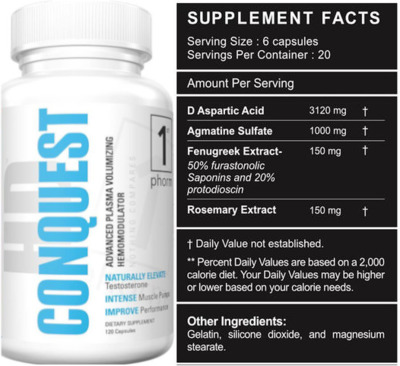
Supplement Facts
| Ingredient | Amount | % DV |
|---|---|---|
| D-Aspartic Acid | 3120 mg | -- |
| Agmatine Sulfate | 1000 mg | -- |
| Rosemary extract | 150 mg | -- |
| Fenugreek extract | 150 mg | -- |
Other ingredients: Gelatin, Silicon Dioxide, Magnesium Stearate
Tap any ingredient to jump to its full detail below.
These statements are the manufacturer’s wording, reproduced from the product label — the label is saying it, not HelloPharmacist. We don’t verify or endorse them.
Formulation
Advanced plasma volumizing hemomodulator Naturally elevate testosterone Intense muscle pumps Improve performance
General Statements
Nothing compares
FDA Statement of Identity
Dietary Supplement
Is this label outdated? Report a formula or label change and our pharmacy team will review it.
Conquest HD by 1st Phorm label
The label scan from the NIH Dietary Supplement Label Database. Tap to enlarge.
Label images are published by the NIH Dietary Supplement Label Database for the version of this product on file. Always read your actual product label.
View the full label (PDF)The Ingredients in Conquest HD by 1st Phorm
These are the 4 active ingredients this product is made of. Select any to open its full monograph.
Serving size6 Capsule(s) Dosage formCapsule Servings per container20 Amounts shown are per serving.
Most supplement products combine several ingredients, and a medication can interact with the product through any one of them. Each ingredient below shows whether it has known drug interactions.
D-Aspartic Acid
Agmatine Sulfate
Interacts with258 drugs
Agmatine is a compound your body makes from the amino acid arginine, and it is sold mainly as a workout and 'pump' supplement. Human evidence for most...
Agmatine Sulfate monograph & interactionsRosemary extract
Interacts with372 drugs
Rosemary is a fragrant Mediterranean herb that is safe and flavorful in normal food amounts. Some early research suggests possible benefits for memory...
Rosemary extract monograph & interactionsFenugreek extract
Interacts with389 drugs
Fenugreek is a common kitchen spice that is also taken as a supplement, mainly for blood sugar, cholesterol, and to support breast milk production. So...
Fenugreek extract monograph & interactionsOther (inactive) ingredients: Gelatin, Silicon Dioxide, Magnesium Stearate. These complete the product’s ingredient list but are not active constituents.
Conquest HD by 1st Phorm Drug Interactions
HelloPharmacist Interaction Report
Conquest HD by 1st Phorm contains four ingredients, and three of them interact with medications.
The most serious interaction is with blood thinners (anticoagulants) and antiplatelet drugs — both rosemary extract and fenugreek extract can theoretically increase bleeding risk when combined with these medications. Severity is Moderate for both.
Read the full breakdown — every affected drug type, severity by severity
Agmatine sulfate and rosemary also interact with blood sugar medications (antidiabetes drugs) at Moderate severity — there's a theoretical risk of low blood sugar (hypoglycemia). Agmatine may lower blood pressure when combined with blood pressure medications, and fenugreek carries similar concerns with certain blood pressure drugs like metoprolol.
Fenugreek also has documented interactions with theophylline (used for breathing problems), warfarin (a blood thinner), the heart medication clopidogrel, the seizure drug phenytoin, and sildenafil for erectile dysfunction — all Moderate severity. Rosemary may interact with aspirin and related salicylate drugs at Moderate severity, and with certain liver enzymes (CYP1A2 substrates) at Minor severity.
We could not check D-Aspartic Acid because we hold no data for it. Altogether, these interactions span 540 individual medications.
Before you start, use the search tool below to check your exact medications against this product.
Check your own medications below · Editorial policy · How we use AI
Want to check YOUR meds against Conquest HD?
Ask about interactions with your drugs in plain English — “Can I take it with lisinopril?” — and we find you the answer in seconds, ingredient by ingredient.
Go to the checkerIngredients driving the most interactions
Individual Drug Interactions
The ingredients in Conquest HD interact with 543 drugs. Click any drug to see the details.
3 of the 4 ingredients in Conquest HD interact with drugs. Each result below shows which ingredient is responsible. Fenugreek extract Rosemary extract Agmatine Sulfate
AbciximabReoPro
How Abciximab interacts with Conquest HD — through 2 ingredients. Tap an ingredient for the detail:
Fenugreek ExtractAnticoagulant/antiplatelet Drugs Moderate
Interaction Summary
Theoretically, fenugreek might have additive effects when used with anticoagulant or antiplatelet drugs.
Read the full Fenugreek Extract + Abciximab interactionRosemary ExtractAnticoagulant/antiplatelet Drugs Moderate
Interaction Summary
Theoretically, rosemary may increase the risk of bleeding if used with anticoagulant or antiplatelet drugs.
Read the full Rosemary Extract + Abciximab interactionAbrocitinibCibinqo
How Abrocitinib interacts with Conquest HD — through 2 ingredients. Tap an ingredient for the detail:
Rosemary ExtractAnticoagulant/antiplatelet Drugs Moderate
Interaction Summary
Theoretically, rosemary may increase the risk of bleeding if used with anticoagulant or antiplatelet drugs.
Read the full Rosemary Extract + Abrocitinib interactionFenugreek ExtractAnticoagulant/antiplatelet Drugs Moderate
Interaction Summary
Theoretically, fenugreek might have additive effects when used with anticoagulant or antiplatelet drugs.
Read the full Fenugreek Extract + Abrocitinib interactionAcarboseGlucobay, Prandase, Precose
How Acarbose interacts with Conquest HD — through 3 ingredients. Tap an ingredient for the detail:
Fenugreek ExtractAntidiabetes Drugs Moderate
Interaction Summary
Theoretically, fenugreek seed might have additive hypoglycemic effects when used with antidiabetes drugs.
Read the full Fenugreek Extract + Acarbose interactionAgmatine SulfateAntidiabetes Drugs Moderate
Interaction Summary
Theoretically, agmatine might increase the risk of hypoglycemia when taken with antidiabetes drugs.
Read the full Agmatine Sulfate + Acarbose interactionRosemary ExtractAntidiabetes Drugs Moderate
Interaction Summary
Theoretically, taking rosemary with antidiabetes drugs might increase the risk of hypoglycemia.
Read the full Rosemary Extract + Acarbose interactionAcebutololRhotral, Sectral
How Acebutolol interacts with Conquest HD — through 2 ingredients. Tap an ingredient for the detail:
Agmatine SulfateAntihypertensive Drugs Moderate
Interaction Summary
Theoretically, agmatine might increase the risk of hypotension when taken with antihypertensive drugs.
Read the full Agmatine Sulfate + Acebutolol interactionFenugreek ExtractAntihypertensive Drugs Minor
Interaction Summary
Fenugreek may also have an additive effect on blood pressure-lowering medications.
Read the full Fenugreek Extract + Acebutolol interactionAcenocoumarolSintrom
How Acenocoumarol interacts with Conquest HD — through 2 ingredients. Tap an ingredient for the detail:
Fenugreek ExtractAnticoagulant/antiplatelet Drugs Moderate
Interaction Summary
Theoretically, fenugreek might have additive effects when used with anticoagulant or antiplatelet drugs.
Read the full Fenugreek Extract + Acenocoumarol interactionRosemary ExtractAnticoagulant/antiplatelet Drugs Moderate
Interaction Summary
Theoretically, rosemary may increase the risk of bleeding if used with anticoagulant or antiplatelet drugs.
Read the full Rosemary Extract + Acenocoumarol interactionAcetaminophen, AspirinGemnisyn
How Acetaminophen, Aspirin interacts with Conquest HD — through 2 ingredients. Tap an ingredient for the detail:
Rosemary ExtractCytochrome P450 1a2 (cyp1a2) Substrates, Anticoagulant/antiplatelet Drugs +1 Moderate
Interaction Summary
Theoretically, rosemary might decrease the levels and clinical effects of CYP1A2 substrates.
Read the full Rosemary Extract + Acetaminophen, Aspirin interactionFenugreek ExtractAnticoagulant/antiplatelet Drugs Moderate
Interaction Summary
Theoretically, fenugreek might have additive effects when used with anticoagulant or antiplatelet drugs.
Read the full Fenugreek Extract + Acetaminophen, Aspirin interactionAcetaminophen, Aspirin, CaffeineExcedrin, Excedrin Extra Strength, Excedrin Migraine
How Acetaminophen, Aspirin, Caffeine interacts with Conquest HD — through 2 ingredients. Tap an ingredient for the detail:
Rosemary ExtractAspirin, Cytochrome P450 1a2 (cyp1a2) Substrates +1 Moderate
Interaction Summary
Theoretically, rosemary might have additive effects with salicylate-containing drugs such as aspirin.
Read the full Rosemary Extract + Acetaminophen, Aspirin, Caffeine interactionFenugreek ExtractAnticoagulant/antiplatelet Drugs Moderate
Interaction Summary
Theoretically, fenugreek might have additive effects when used with anticoagulant or antiplatelet drugs.
Read the full Fenugreek Extract + Acetaminophen, Aspirin, Caffeine interactionAcetaminophen, IbuprofenCombogesic
How Acetaminophen, Ibuprofen interacts with Conquest HD — through 2 ingredients. Tap an ingredient for the detail:
Rosemary ExtractCytochrome P450 1a2 (cyp1a2) Substrates, Anticoagulant/antiplatelet Drugs Moderate
Interaction Summary
Theoretically, rosemary might decrease the levels and clinical effects of CYP1A2 substrates.
Read the full Rosemary Extract + Acetaminophen, Ibuprofen interactionFenugreek ExtractAnticoagulant/antiplatelet Drugs Moderate
Interaction Summary
Theoretically, fenugreek might have additive effects when used with anticoagulant or antiplatelet drugs.
Read the full Fenugreek Extract + Acetaminophen, Ibuprofen interactionAcetazolamideAk-Zol, Diamox
How Acetazolamide interacts with Conquest HD — through 2 ingredients. Tap an ingredient for the detail:
Agmatine SulfateAntihypertensive Drugs Moderate
Interaction Summary
Theoretically, agmatine might increase the risk of hypotension when taken with antihypertensive drugs.
Read the full Agmatine Sulfate + Acetazolamide interactionFenugreek ExtractAntihypertensive Drugs Minor
Interaction Summary
Fenugreek may also have an additive effect on blood pressure-lowering medications.
Read the full Fenugreek Extract + Acetazolamide interactionAcetohexamideDymelor
How Acetohexamide interacts with Conquest HD — through 3 ingredients. Tap an ingredient for the detail:
Rosemary ExtractAntidiabetes Drugs Moderate
Interaction Summary
Theoretically, taking rosemary with antidiabetes drugs might increase the risk of hypoglycemia.
Read the full Rosemary Extract + Acetohexamide interactionFenugreek ExtractAntidiabetes Drugs Moderate
Interaction Summary
Theoretically, fenugreek seed might have additive hypoglycemic effects when used with antidiabetes drugs.
Read the full Fenugreek Extract + Acetohexamide interactionAgmatine SulfateAntidiabetes Drugs Moderate
Interaction Summary
Theoretically, agmatine might increase the risk of hypoglycemia when taken with antidiabetes drugs.
Read the full Agmatine Sulfate + Acetohexamide interactionAcetylsalicylic AcidEntrophen
How Acetylsalicylic Acid interacts with Conquest HD — through 2 ingredients. Tap an ingredient for the detail:
Rosemary ExtractAspirin, Anticoagulant/antiplatelet Drugs Moderate
Interaction Summary
Theoretically, rosemary might have additive effects with salicylate-containing drugs such as aspirin.
Read the full Rosemary Extract + Acetylsalicylic Acid interactionFenugreek ExtractAnticoagulant/antiplatelet Drugs Moderate
Interaction Summary
Theoretically, fenugreek might have additive effects when used with anticoagulant or antiplatelet drugs.
Read the full Fenugreek Extract + Acetylsalicylic Acid interactionAlbiglutideTanzeum
How Albiglutide interacts with Conquest HD — through 3 ingredients. Tap an ingredient for the detail:
Rosemary ExtractAntidiabetes Drugs Moderate
Interaction Summary
Theoretically, taking rosemary with antidiabetes drugs might increase the risk of hypoglycemia.
Read the full Rosemary Extract + Albiglutide interactionAgmatine SulfateAntidiabetes Drugs Moderate
Interaction Summary
Theoretically, agmatine might increase the risk of hypoglycemia when taken with antidiabetes drugs.
Read the full Agmatine Sulfate + Albiglutide interactionFenugreek ExtractAntidiabetes Drugs Moderate
Interaction Summary
Theoretically, fenugreek seed might have additive hypoglycemic effects when used with antidiabetes drugs.
Read the full Fenugreek Extract + Albiglutide interactionAliskirenTekturna
How Aliskiren interacts with Conquest HD — through 2 ingredients. Tap an ingredient for the detail:
Agmatine SulfateAntihypertensive Drugs Moderate
Interaction Summary
Theoretically, agmatine might increase the risk of hypotension when taken with antihypertensive drugs.
Read the full Agmatine Sulfate + Aliskiren interactionFenugreek ExtractAntihypertensive Drugs Minor
Interaction Summary
Fenugreek may also have an additive effect on blood pressure-lowering medications.
Read the full Fenugreek Extract + Aliskiren interactionAlogliptinNesina
How Alogliptin interacts with Conquest HD — through 3 ingredients. Tap an ingredient for the detail:
Agmatine SulfateAntidiabetes Drugs Moderate
Interaction Summary
Theoretically, agmatine might increase the risk of hypoglycemia when taken with antidiabetes drugs.
Read the full Agmatine Sulfate + Alogliptin interactionFenugreek ExtractAntidiabetes Drugs Moderate
Interaction Summary
Theoretically, fenugreek seed might have additive hypoglycemic effects when used with antidiabetes drugs.
Read the full Fenugreek Extract + Alogliptin interactionRosemary ExtractAntidiabetes Drugs Moderate
Interaction Summary
Theoretically, taking rosemary with antidiabetes drugs might increase the risk of hypoglycemia.
Read the full Rosemary Extract + Alogliptin interactionAlogliptin, MetforminKazano
How Alogliptin, Metformin interacts with Conquest HD — through 3 ingredients. Tap an ingredient for the detail:
Rosemary ExtractAntidiabetes Drugs Moderate
Interaction Summary
Theoretically, taking rosemary with antidiabetes drugs might increase the risk of hypoglycemia.
Read the full Rosemary Extract + Alogliptin, Metformin interactionFenugreek ExtractAntidiabetes Drugs Moderate
Interaction Summary
Theoretically, fenugreek seed might have additive hypoglycemic effects when used with antidiabetes drugs.
Read the full Fenugreek Extract + Alogliptin, Metformin interactionAgmatine SulfateAntidiabetes Drugs Moderate
Interaction Summary
Theoretically, agmatine might increase the risk of hypoglycemia when taken with antidiabetes drugs.
Read the full Agmatine Sulfate + Alogliptin, Metformin interactionAlogliptin, PioglitazoneOseni
How Alogliptin, Pioglitazone interacts with Conquest HD — through 3 ingredients. Tap an ingredient for the detail:
Agmatine SulfateAntidiabetes Drugs Moderate
Interaction Summary
Theoretically, agmatine might increase the risk of hypoglycemia when taken with antidiabetes drugs.
Read the full Agmatine Sulfate + Alogliptin, Pioglitazone interactionFenugreek ExtractAntidiabetes Drugs Moderate
Interaction Summary
Theoretically, fenugreek seed might have additive hypoglycemic effects when used with antidiabetes drugs.
Read the full Fenugreek Extract + Alogliptin, Pioglitazone interactionRosemary ExtractAntidiabetes Drugs Moderate
Interaction Summary
Theoretically, taking rosemary with antidiabetes drugs might increase the risk of hypoglycemia.
Read the full Rosemary Extract + Alogliptin, Pioglitazone interactionAlteplase, TpaActilyse, Activase
How Alteplase, Tpa interacts with Conquest HD — through 2 ingredients. Tap an ingredient for the detail:
Rosemary ExtractAnticoagulant/antiplatelet Drugs Moderate
Interaction Summary
Theoretically, rosemary may increase the risk of bleeding if used with anticoagulant or antiplatelet drugs.
Read the full Rosemary Extract + Alteplase, Tpa interactionFenugreek ExtractAnticoagulant/antiplatelet Drugs Moderate
Interaction Summary
Theoretically, fenugreek might have additive effects when used with anticoagulant or antiplatelet drugs.
Read the full Fenugreek Extract + Alteplase, Tpa interactionAluminum Hydroxide, Aspirin, Codeine Phosphate, Magnesium HydroxideAscriptin Codeine #2
How Aluminum Hydroxide, Aspirin, Codeine Phosphate, Magnesium Hydroxide interacts with Conquest HD — through 2 ingredients. Tap an ingredient for the detail:
Fenugreek ExtractAnticoagulant/antiplatelet Drugs Moderate
Interaction Summary
Theoretically, fenugreek might have additive effects when used with anticoagulant or antiplatelet drugs.
Read the full Fenugreek Extract + Aluminum Hydroxide, Aspirin, Codeine Phosphate, Magnesium Hydroxide interactionRosemary ExtractAspirin, Anticoagulant/antiplatelet Drugs Moderate
Interaction Summary
Theoretically, rosemary might have additive effects with salicylate-containing drugs such as aspirin.
Read the full Rosemary Extract + Aluminum Hydroxide, Aspirin, Codeine Phosphate, Magnesium Hydroxide interactionAluminum Hydroxide, Aspirin, Magnesium HydroxideAscriptin
How Aluminum Hydroxide, Aspirin, Magnesium Hydroxide interacts with Conquest HD — through 2 ingredients. Tap an ingredient for the detail:
Rosemary ExtractAnticoagulant/antiplatelet Drugs, Aspirin Moderate
Interaction Summary
Theoretically, rosemary may increase the risk of bleeding if used with anticoagulant or antiplatelet drugs.
Read the full Rosemary Extract + Aluminum Hydroxide, Aspirin, Magnesium Hydroxide interactionFenugreek ExtractAnticoagulant/antiplatelet Drugs Moderate
Interaction Summary
Theoretically, fenugreek might have additive effects when used with anticoagulant or antiplatelet drugs.
Read the full Fenugreek Extract + Aluminum Hydroxide, Aspirin, Magnesium Hydroxide interactionAmbrisentanLetairis, Volibris
How Ambrisentan interacts with Conquest HD — through 2 ingredients. Tap an ingredient for the detail:
Agmatine SulfateAntihypertensive Drugs Moderate
Interaction Summary
Theoretically, agmatine might increase the risk of hypotension when taken with antihypertensive drugs.
Read the full Agmatine Sulfate + Ambrisentan interactionFenugreek ExtractAntihypertensive Drugs Minor
Interaction Summary
Fenugreek may also have an additive effect on blood pressure-lowering medications.
Read the full Fenugreek Extract + Ambrisentan interactionAmilorideAmilamont, Midamor
How Amiloride interacts with Conquest HD — through 2 ingredients. Tap an ingredient for the detail:
Agmatine SulfateAntihypertensive Drugs Moderate
Interaction Summary
Theoretically, agmatine might increase the risk of hypotension when taken with antihypertensive drugs.
Read the full Agmatine Sulfate + Amiloride interactionFenugreek ExtractAntihypertensive Drugs Minor
Interaction Summary
Fenugreek may also have an additive effect on blood pressure-lowering medications.
Read the full Fenugreek Extract + Amiloride interactionAmiloride, HydrochlorothiazideAmil-Co, Amilzide, Moduret 25, Moduretic
How Amiloride, Hydrochlorothiazide interacts with Conquest HD — through 2 ingredients. Tap an ingredient for the detail:
Agmatine SulfateAntihypertensive Drugs Moderate
Interaction Summary
Theoretically, agmatine might increase the risk of hypotension when taken with antihypertensive drugs.
Read the full Agmatine Sulfate + Amiloride, Hydrochlorothiazide interactionFenugreek ExtractAntihypertensive Drugs Minor
Interaction Summary
Fenugreek may also have an additive effect on blood pressure-lowering medications.
Read the full Fenugreek Extract + Amiloride, Hydrochlorothiazide interactionAmlodipineNorliqva
How Amlodipine interacts with Conquest HD — through 2 ingredients. Tap an ingredient for the detail:
Agmatine SulfateAntihypertensive Drugs Moderate
Interaction Summary
Theoretically, agmatine might increase the risk of hypotension when taken with antihypertensive drugs.
Read the full Agmatine Sulfate + Amlodipine interactionFenugreek ExtractAntihypertensive Drugs Minor
Interaction Summary
Fenugreek may also have an additive effect on blood pressure-lowering medications.
Read the full Fenugreek Extract + Amlodipine interactionAmlodipine BenzoateKaterzia
How Amlodipine Benzoate interacts with Conquest HD — through 2 ingredients. Tap an ingredient for the detail:
Agmatine SulfateAntihypertensive Drugs Moderate
Interaction Summary
Theoretically, agmatine might increase the risk of hypotension when taken with antihypertensive drugs.
Read the full Agmatine Sulfate + Amlodipine Benzoate interactionFenugreek ExtractAntihypertensive Drugs Minor
Interaction Summary
Fenugreek may also have an additive effect on blood pressure-lowering medications.
Read the full Fenugreek Extract + Amlodipine Benzoate interactionAmlodipine BesilateIstin
How Amlodipine Besilate interacts with Conquest HD — through 2 ingredients. Tap an ingredient for the detail:
Agmatine SulfateAntihypertensive Drugs Moderate
Interaction Summary
Theoretically, agmatine might increase the risk of hypotension when taken with antihypertensive drugs.
Read the full Agmatine Sulfate + Amlodipine Besilate interactionFenugreek ExtractAntihypertensive Drugs Minor
Interaction Summary
Fenugreek may also have an additive effect on blood pressure-lowering medications.
Read the full Fenugreek Extract + Amlodipine Besilate interactionAmlodipine BesylateNorvasc
How Amlodipine Besylate interacts with Conquest HD — through 2 ingredients. Tap an ingredient for the detail:
Agmatine SulfateAntihypertensive Drugs Moderate
Interaction Summary
Theoretically, agmatine might increase the risk of hypotension when taken with antihypertensive drugs.
Read the full Agmatine Sulfate + Amlodipine Besylate interactionFenugreek ExtractAntihypertensive Drugs Minor
Interaction Summary
Fenugreek may also have an additive effect on blood pressure-lowering medications.
Read the full Fenugreek Extract + Amlodipine Besylate interactionAmlodipine Besylate, BenazeprilLotrel
How Amlodipine Besylate, Benazepril interacts with Conquest HD — through 2 ingredients. Tap an ingredient for the detail:
Agmatine SulfateAntihypertensive Drugs Moderate
Interaction Summary
Theoretically, agmatine might increase the risk of hypotension when taken with antihypertensive drugs.
Read the full Agmatine Sulfate + Amlodipine Besylate, Benazepril interactionFenugreek ExtractAntihypertensive Drugs Minor
Interaction Summary
Fenugreek may also have an additive effect on blood pressure-lowering medications.
Read the full Fenugreek Extract + Amlodipine Besylate, Benazepril interactionAmlodipine, CelecoxibConsensi
How Amlodipine, Celecoxib interacts with Conquest HD — through 2 ingredients. Tap an ingredient for the detail:
Agmatine SulfateAntihypertensive Drugs Moderate
Interaction Summary
Theoretically, agmatine might increase the risk of hypotension when taken with antihypertensive drugs.
Read the full Agmatine Sulfate + Amlodipine, Celecoxib interactionFenugreek ExtractAntihypertensive Drugs Minor
Interaction Summary
Fenugreek may also have an additive effect on blood pressure-lowering medications.
Read the full Fenugreek Extract + Amlodipine, Celecoxib interactionAmmonium ChlorideAmmonium Chloride
How Ammonium Chloride interacts with Conquest HD — through 2 ingredients. Tap an ingredient for the detail:
Agmatine SulfateAntihypertensive Drugs Moderate
Interaction Summary
Theoretically, agmatine might increase the risk of hypotension when taken with antihypertensive drugs.
Read the full Agmatine Sulfate + Ammonium Chloride interactionFenugreek ExtractAntihypertensive Drugs Minor
Interaction Summary
Fenugreek may also have an additive effect on blood pressure-lowering medications.
Read the full Fenugreek Extract + Ammonium Chloride interactionAnacaulase-bcdbNexoBrid
How Anacaulase-bcdb interacts with Conquest HD — through 2 ingredients. Tap an ingredient for the detail:
Fenugreek ExtractAnticoagulant/antiplatelet Drugs Moderate
Interaction Summary
Theoretically, fenugreek might have additive effects when used with anticoagulant or antiplatelet drugs.
Read the full Fenugreek Extract + Anacaulase-bcdb interactionRosemary ExtractAnticoagulant/antiplatelet Drugs Moderate
Interaction Summary
Theoretically, rosemary may increase the risk of bleeding if used with anticoagulant or antiplatelet drugs.
Read the full Rosemary Extract + Anacaulase-bcdb interactionEach ingredient & the kinds of drugs it affects
For each ingredient in Conquest HD with known interactions, here are the types of medications they can affect. Open any type for the detail — or search your exact drug in the checker above.
Fenugreek extract
Anticoagulant/Antiplatelet Drugs
Theoretically, fenugreek might have additive effects when used with anticoagulant or antiplatelet drugs.
Some of the constituents in fenugreek have antiplatelet effects in animal and in vitro research. However, common fenugreek products might not contain sufficient concentrations of these constituents for clinical effects. A clinical study in patients with coronary artery disease or diabetes shows that taking fenugreek seed powder 2.5 grams twice daily for 3 months does not affect platelet aggregation, fibrinolytic activity, or fibrinogen levels .
Antidiabetes Drugs
Theoretically, fenugreek seed might have additive hypoglycemic effects when used with antidiabetes drugs.
Clinical research shows that fenugreek seed can reduce fasting blood glucose and 2-hour postprandial glucose levels in adults with type 2 diabetes.
Clopidogrel (Plavix)
Theoretically, fenugreek seed might alter the clinical effects of clopidogrel by inhibiting its conversion to the active form.
Animal research shows that fenugreek seed 200 mg/kg daily for 14 days increases the maximum serum concentration of clopidogrel by 21%. It is unclear how this affects the pharmacokinetics of the active metabolite of clopidogrel; however, this study found that concomitant use of fenugreek seed and clopidogrel prolonged bleeding time by an additional 11%.
Metoprolol (Toprol)
Theoretically, fenugreek seed might have additive hypotensive effects when used with metoprolol.
Animal research shows that fenugreek seed 300 mg/kg daily for 2 weeks decreases systolic and diastolic blood pressure by 9% and 11%, respectively, when administered alone, and by 15% and 22%, respectively, when given with metoprolol 10 mg/kg.
Phenytoin (Dilantin)
Theoretically, fenugreek might decrease plasma levels of phenytoin.
Animal research shows that taking fenugreek seeds for 1 week decreases maximum concentrations and the area under the curve of a single dose of phenytoin by 44% and 72%, respectively. This seems to be related to increased clearance. So far, this interaction has not been reported in humans.
Sildenafil (Viagra)
Theoretically, concurrent use of sildenafil and fenugreek might reduce levels and therapeutic effects of sildenafil.
Animal research shows that taking fenugreek seeds for 1 week reduces maximum concentrations and the area under the curve of a single dose of sildenafil by 27% and 48%, respectively. So far, this interaction has not been reported in humans.
Theophylline
Theoretically, fenugreek may reduce the levels and clinical effects of theophylline.
Animal research shows that fenugreek 50 grams daily for 7 days reduces the maximum serum concentration (Cmax) of theophylline by 28% and the area under the plasma drug concentration-time curve (AUC) by 22%.
Warfarin (Coumadin)
Theoretically, fenugreek might have additive effects with warfarin and increase the international normalized ratio (INR).
Some fenugreek constituents have antiplatelet effects, although these might not be present in concentrations that are clinically significant. In one case report, a patient taking warfarin experienced an increased INR when starting to take fenugreek in combination with boldo.
Antihypertensive Drugs
Fenugreek may also have an additive effect on blood pressure-lowering medications. Studies on animals have shown that fenugreek seed can decrease both systolic and diastolic blood pressure by up to 22% when combined with metoprolol. Therefore, it is essential to monitor your blood pressure regularly if you are taking fenugreek and metoprolol together or any other antihypertensive drugs.
Rosemary extract
Anticoagulant/Antiplatelet Drugs
Theoretically, rosemary may increase the risk of bleeding if used with anticoagulant or antiplatelet drugs.
In vitro and animal research suggests that rosemary inhibits platelet aggregation.
Antidiabetes Drugs
Theoretically, taking rosemary with antidiabetes drugs might increase the risk of hypoglycemia.
Animal research shows that rosemary extract can decrease blood glucose levels in diabetic models. However, research in humans is conflicting. Although rosemary powder decreased blood glucose levels in healthy adults, no change in blood glucose levels was seen in adults with type 2 diabetes, most of whom were taking antidiabetes drugs.
Aspirin
Theoretically, rosemary might have additive effects with salicylate-containing drugs such as aspirin.
Rosemary is reported to contain salicylates.
Choline Magnesium Trisalicylate (Trilisate)
Theoretically, rosemary might have additive effects with salicylate-containing drugs such as choline magnesium trisalicylate.
Rosemary is reported to contain salicylate.
Salsalate (Disalcid)
Theoretically, rosemary might have additive effects with salicylate-containing drugs such as salsalate.
Rosemary is reported to contain salicylate.
Cytochrome P450 1A2 (Cyp1A2) Substrates
Theoretically, rosemary might decrease the levels and clinical effects of CYP1A2 substrates.
In vitro research shows that rosemary induces CYP1A2 enzymes. This effect has not been reported in humans.
Agmatine Sulfate
Antidiabetes Drugs
Theoretically, agmatine might increase the risk of hypoglycemia when taken with antidiabetes drugs.
Animal and in vitro research suggest that agmatine has mild hypoglycemic effects.
Antihypertensive Drugs
Theoretically, agmatine might increase the risk of hypotension when taken with antihypertensive drugs.
Animal research suggests that agmatine can modestly decrease heart rate and blood pressure.
Brand information
Manufacturer and brand details for Conquest HD, from the product label.
1st Phorm
- Name
- 1st Phorm
Conquest HD by 1st Phorm: Common Questions
Does Conquest HD by 1st Phorm interact with any medications?
How can one product interact with so many drugs?
Where does this information come from?
What does each ingredient in Conquest HD do?
Is Conquest HD safe to take while pregnant?
Can I take Conquest HD if I'm breastfeeding?
What side effects might I experience?
Does Conquest HD really work for sexual performance?
Can I take this if I'm on diabetes medication?
Written and reviewed by the HelloPharmacist editorial staff. Our editorial policy
Not sure if Conquest HD is safe with your meds?
Our pharmacists answer your medication & supplement questions — free.
Label information is sourced from the NIH Dietary Supplement Label Database and reflects the product version on file; always read your actual product label. This page is for education only and is not a substitute for professional medical advice. Confirm with your pharmacist or doctor before combining supplements and medications.
The Full Monographs Behind Conquest HD’s Ingredients
Every ingredient we hold a full HelloPharmacist monograph for — uses, evidence, safety, and the complete interaction list.
Agmatine
Interacts with 258 drugsAgmatine is a compound your body makes from the amino acid arginine, and it is sold mainly as a workout and 'pump' supplement. Human evidence for most of its claimed benefits is limited and...
Read the full Agmatine monograph → Herb & supplement monographRosemary
Interacts with 372 drugsRosemary is a fragrant Mediterranean herb that is safe and flavorful in normal food amounts. Some early research suggests possible benefits for memory, mood, and hair growth, but the evidenc...
Read the full Rosemary monograph → Herb & supplement monographFenugreek
Interacts with 389 drugsFenugreek is a common kitchen spice that is also taken as a supplement, mainly for blood sugar, cholesterol, and to support breast milk production. Some early research is encouraging for blo...
Read the full Fenugreek monograph →Sources & How We Checked
Conquest HD's label data comes from the NIH Dietary Supplement Label Database; the ingredient interaction data is from the Natural Medicines database, reviewed by our pharmacists.
- NIH Dietary Supplement Label Database (DSLD) — The official product label on file for this supplement.
- Natural Medicines (Therapeutic Research Center) — Evidence-graded clinical reference behind the ingredient interaction data.
Content is written and reviewed by licensed HelloPharmacist pharmacists. See our data sources and editorial standards for how this information is built and checked.
The 53 references behind this product’s interaction data
Every citation that drives the interaction findings for this product’s ingredients, from the evidence-graded Natural Medicines (TRC Healthcare) database. Open an ingredient to browse its citations — links open the study on PubMed or the publisher’s site.
Agmatine 3 references
- Piletz JE, Aricioglu F, Cheng JT, et al. Agmatine: clinical applications after 100 years in translation. Drug Discov Today 2013;18(17-18):880-93. PubMed
- Keynan O, Mirovsky Y, Dekel S, Gilad VH, Gilad GM. Safety and efficacy of dietary agmatine sulfate in lumbar disc-associated radiculopathy. An open-label, dose-escalating study followed by a randomized, double-blind, placebo-controlled trial. Pain Med 201 PubMed
- Shopsin B. The clinical antidepressant effect of exogenous agmatine is not reversed by parachlorophenylalanine: a pilot study. Acta Neuropsychiatr 2013;25(2):113-8. PubMed
Rosemary 20 references
- Newall CA, Anderson LA, Philpson JD. Herbal Medicine: A Guide for Healthcare Professionals. London, UK: The Pharmaceutical Press, 1996.
- Foster S, Tyler VE. Tyler's Honest Herbal: A Sensible Guide to the Use of Herbs and Related Remedies. 3rd ed., Binghamton, NY: Haworth Herbal Press, 1993.
- The Review of Natural Products by Facts and Comparisons. St. Louis, MO: Wolters Kluwer Co., 1999.
- McGuffin M, Hobbs C, Upton R, Goldberg A, eds. American Herbal Products Association's Botanical Safety Handbook. Boca Raton, FL: CRC Press, LLC 1997.
- Gruenwald J, Brendler T, Jaenicke C. PDR for Herbal Medicines. 1st ed. Montvale, NJ: Medical Economics Company, Inc., 1998.
- Cartier LC, Lehrer A, Malo JL. Occupational asthma caused by aromatic herbs. Allergy 1996;51:647-9. DOI
- Burkhard PR, Burkhardt K, Haenggeli CA, Landis T. Plant-induced seizures: reappearance of an old problem. J Neurol 1999;246:667-70. PubMed
- Swain AR, Dutton SP, Truswell AS. Salicylates in foods. J Am Diet.Assoc 1985;85(8):950-60. DOI
- Zhu BT, Loder DP, Cai MX, et al. Dietary administration of an extract from rosemary leaves enhances the liver microsomal metabolism of endogenous estrogens and decreases their uterotropic action in CD-1 mice. Carcinogenesis 1998;19(10):1821-7. PubMed
- Debersac P, Heydel JM, Amiot MJ, et al. Induction of cytochrome P450 and/or detoxication enzymes by various extracts of rosemary: description of specific patterns. Food Chem Toxicol 2001;39(9):907-18. PubMed
- Debersac P, Vernevaut MF, Amiot MJ, et al. Effects of a water-soluble extract of rosemary and its purified component rosmarinic acid on xenobiotic-metabolizing enzymes in rat liver. Food Chem Toxicol 2001;39(2):109-17. PubMed
- Lee JJ, Jin YR, Lee JH, et al. Antiplatelet activity of carnosic acid, a phenolic diterpene from Rosmarinus officinalis. Planta Med 2007;73(2):121-7.
- Yamamoto J, Yamada K, Naemura A, et al. Testing various herbs for antithrombotic effect. Nutrition 2005;21(5):580-7. PubMed
- Naemura A, Ura M, Yamashita T, et al. Long-term intake of rosemary and common thyme herbs inhibits experimental thrombosis without prolongation of bleeding time. Thromb Res 2008;122(4):517-22. PubMed
- Lee JJ, Jin YR, Lim Y, et al. Antiplatelet activity of carnosol is mediated by the inhibition of TXA2 receptor and cytosolic calcium mobilization. Vascul Pharmacol 2006;45:148-53. PubMed
- Bakirel, T., Bakirel, U., Keles, O. U., Ulgen, S. G., and Yardibi, H. In vivo assessment of antidiabetic and antioxidant activities of rosemary (Rosmarinus officinalis) in alloxan-diabetic rabbits. J Ethnopharmacol 2-28-2008;116(1):64-73. PubMed
- Erenmemisoglu, A., Saraymen, R., and Ustun, S. Effect of a Rosmarinus officinalis leave extract on plasma glucose levels in normoglycaemic and diabetic mice. Pharmazie 1997;52(8):645-646.
- Valones MAA, Silva ICG, Gueiros LAM, Leão JC, Caldas AF Jr, Carvalho AAT. Clinical assessment of rosemary-based toothpaste (Rosmarinus officinalis Linn.): A randomized controlled double-blind study. Braz Dent J. 2019;30(2):146-151. PubMed
- Quirarte-Báez SM, Zamora-Perez AL, Reyes-Estrada CA, et al. A shortened treatment with rosemary tea (rosmarinus officinalis) instead of glucose in patients with diabetes mellitus type 2 (TSD). J Popul Ther Clin Pharmacol. 2019;26(4):e18-e28.
- Al Jamal A. Effect of rosemary (Rosmarinus officinalis) on lipid profiles and blood glucose in human diabetic patients (type-2). African J. Biochem. Res. 2014;8(8):147-50. DOI
Fenugreek 30 references
- Madar Z, Thorne R. Dietary fiber. Prog Food Nutr Sci 1987;11:153-74.
- Sharma RD, Raghuram TC, Rao NS. Effect of fenugreek seeds on blood glucose and serum lipids in type I diabetes. Eur J Clin Nutr 1990;44:301-6.
- Patil SP, Niphadkar PV, Bapat MM. Allergy to fenugreek (Trigonella foenum graecum). Ann Allergy Asthma Immunol 1997;78:297-300. PubMed
- Lambert J, Cormier J. Potential interaction between warfarin and boldo-fenugreek. Pharmacotherapy 2001;21:509-12. PubMed
- Bordia A, Verma SK, Srivastava KC. Effect of ginger (Zingiber officinale Rosc.) and fenugreek (Trigonella foenumgraecum L.) on blood lipids, blood sugar and platelet aggregation in patients with coronary artery disease. Prostaglandins Leukot Essent Fatty PubMed
- Yalcin SS, Tekinalp G, Ozalp I. Peculiar odor of traditional food and maple syrup urine disease. Pediatr Int 1999;41:108-9. PubMed
- Sewell AC, Mosandl A, Bohles H. False diagnosis of maple syrup urine disease owing to ingestion of herbal tea. N Engl J Med 1999;341:769.. PubMed
- Abdo MS, al-Kafawi AA. Experimental studies on the effect of Trigonella foenum-graecum (abstract). Planta Med 1969;17:14-8.
- Gupta A, Gupta R, Lal B. Effect of Trigonella foenum-graecum (fenugreek) seeds on glycaemic control and insulin resistance in type 2 diabetes mellitus: a double blind placebo controlled study. J Assoc Physicians India 2001;49:1057-61.
- Gabay MP. Galactogogues: medications that induce lactation. J Hum Lact 2002;18:274-9. PubMed
- Chevassus H, Gaillard JB, Farret A, et al. A fenugreek seed extract selectively reduces spontaneous fat intake in overweight subjects. Eur J Clin Pharmacol 2010;66(5):449-55. PubMed
- Turkyilmaz C, Onal E, Hirfanoglu IM, et al. The effect of galactagogue herbal tea on breast milk production and short-term catch-up of birth weight in the first week of life. J Altern Complement Med 2011;17(2):139-42. PubMed
- Swafford S, Berens P. Effect of fenugreek on breast milk volume. Abstract presented at: 5th International Meeting of the Academy of Breastfeeding Medicine; September 11-13,2000, Tucson, Arizona.
- Abdel-Barry, J. A., Abdel-Hassan, I. A., Jawad, A. M., and al Hakiem, M. H. Hypoglycaemic effect of aqueous extract of the leaves of Trigonella foenum-graecum in healthy volunteers. East Mediterr.Health J 2000;6(1):83-88. DOI
- Parvizpur, A., Ahmadiani, A., and Kamalinejad, M. Probable role of spinal purinoceptors in the analgesic effect of Trigonella foenum (TFG) leaves extract. J Ethnopharmacol 3-8-2006;104(1-2):108-112. PubMed
- Mora, A., Herrrera, A., Lopez, C., Dahbi, G., Mamani, R., Pita, J. M., Alonso, M. P., Llovo, J., Bernardez, M. I., Blanco, J. E., Blanco, M., and Blanco, J. Characteristics of the Shiga-toxin-producing enteroaggregative Escherichia coli O104:H4 German ou
- Blanco, J. [Stx2a-producing enteroaggregative Escherichia coli O104:H4-ST678. Microbiological diagnostic already, for this and other STEC/VTEC serotypes!]. Enferm.Infecc.Microbiol.Clin. 2012;30(2):84-89.
- Beutin, L. and Martin, A. Outbreak of Shiga toxin-producing Escherichia coli (STEC) O104:H4 infection in Germany causes a paradigm shift with regard to human pathogenicity of STEC strains. J Food Prot. 2012;75(2):408-418. PubMed
- King LA, Nogareda F, Weill FX, Mariani-Kurkdjian P, Loukiadis E, Gault G, Jourdan-DaSilva N, Bingen E, Macé M, Thevenot D, Ong N, Castor C, Noël H, Van Cauteren D, Charron M, Vaillant V, Aldabe B, Goulet V, Delmas G, Couturier E, Le Strat Y, Combe C, Delm
- Reeder C, Legrand A, O'Connor-Von SK. The Effect of Fenugreek on Milk Production and Prolactin Levels in Mothers of Preterm Infants. Clinical Lactation 2013;4(4):159-165. DOI
- Al-Jenoobi FI, Ahad A, Mahrous GM, Al-Mohizea AM, AlKharfy KM, Al-Suwayeh SA. Effects of fenugreek, garden cress, and black seed on theophylline pharmacokinetics in beagle dogs. Pharm Biol 2015;53(2):296-300. PubMed
- Rao A, Steels E, Inder WJ, Abraham S, Vitetta L. Testofen, a specialised Trigonella foenum-graecum seed extract reduces age-related symptoms of androgen decrease, increases testosterone levels and improves sexual function in healthy aging males in a doubl
- Steels E, Rao A, Vitetta L. Physiological aspects of male libido enhanced by standardized Trigonella foenum-graecum extract and mineral formulation. Phytother Res. 2011 Sep;25(9):1294-300.
- Gong J, Fang K, Dong H, Wang D, Hu M, Lu F. Effect of fenugreek on hyperglycaemia and hyperlipidemia in diabetes and prediabetes: A meta-analysis. J Ethnopharmacol. 2016 Dec 24;194:260-268. PubMed
- Ouzir M, El Bairi K, Amzazi S. Toxicological properties of fenugreek (Trigonella foenum graecum). Food Chem Toxicol. 2016 Oct;96:145-54. PubMed
- Khodamoradi K, Khosropanah MH, Ayati Z, et al. The Effects of Fenugreek on Cardiometabolic Risk Factors in Adults: A Systematic Review and Meta-analysis. Complement Ther Med. 2020;52:102416. PubMed
- Alkharfy K, Jan B, Alotaibi K, et al. Clopidogrel-herb Interactions: A Pharmacokinetic and Pharmacodynamic Assessment in a Rat Model. Curr Drug Metab 2021;22(12):969-977. PubMed
- Bin Jardan YA, Ahad A, Raish M, Alam MA, Al-Mohizea AM, Al-Jenoobi FI. Effects of garden cress, fenugreek and black seed on the pharmacodynamics of metoprolol: an herb-drug interaction study in rats with hypertension. Pharm Biol 2021;59(1):1088-1097. PubMed
- Al-Mohizea AM, Ahad A, El-Maghraby GM, et al. Effects of Nigella sativa, Lepidium sativum and Trigonella foenum-graecum on sildenafil disposition in beagle dogs. Eur J Drug Metab Pharmacokinet. 2015;40(2):219-24. PubMed
- Alkharfy KM, Al-Jenoobi FI, Al-Mohizea AM, et al. Effects of Lepidium sativum, Nigella sativa and Trigonella foenum-graceum on phenytoin pharmacokinetics in beagle dogs. Phytother Res. 2013;27(12):1800-4.
Parts of this content are provided by the Therapeutic Research Center, LLC.
DISCLAIMER: Currently this does not check for drug-drug interactions. This is not an all-inclusive comprehensive list of potential interactions and is for informational purposes only. Not all interactions are known or well-reported in the scientific literature, and new interactions are continually being reported. Input is needed from a qualified healthcare provider including a pharmacist before starting any therapy. Application of clinical judgment is necessary.
© 2021 Therapeutic Research Center, LLC