
David Winston's Pancreaid Ingredients & Drug Interactions
What is this page for?
First and foremost: checking David Winston's Pancreaid against your medications. The heart of this page is the interaction checker and the full interaction report — how this product’s ingredients may interact with prescription and over-the-counter medicines you may be taking.
Around that, we add a pharmacist’s high-level view of the product as a whole — what’s inside, the evidence for its stated use, how transparent the label is, and what safety data exists — so you can see the full picture in one place. It’s educational information from our licensed clinical databases and the clinical staff at HelloPharmacist — not medical advice — and we don’t sell or endorse products. Our editorial policy
David Winston's Pancreaid is a dietary supplement by Herbalist & Alchemist with 7 active ingredients. Its ingredients are commonly taken for loss of appetite, indigestion and bloating, digestive bitter tonic.Based on those ingredients, 1,240 medications have a known interaction with it, the most serious rated moderate. The ingredients most likely to interact are Gymnema herb extract, Yellow Root root extract, Kudzu root extract. Use the checker below to test your specific medication, or read the full HelloPharmacist Interaction Report.
Check Your Meds Against David Winston's Pancreaid by Herbalist & Alchemist
Ask about any prescription or over-the-counter medication and we check it for interactions with David Winston's Pancreaid by Herbalist & Alchemist — and tell you which ingredient is responsible.
AI summaries are generated from our interaction database for education only — always confirm with your pharmacist. How we use AI
Ask the Pharmacist
A licensed pharmacist will answer your question by email — free, usually within 24 hours.
Got it — thank you!
A licensed pharmacist will answer within 24 hours. Keep an eye on your email (worth checking spam, just in case).
HelloPharmacist Scorecard of David Winston's Pancreaid by Herbalist & Alchemist
Our pharmacy team’s full take, with four database checks built into the cards below — a summary of what is known, not a grade of the product itself.
What’s inside
Low disclosure
Pancreaid contains seven active herbal extracts in a proprietary blend: gentian root, bitter melon fruit, gymnema herb, cinnamon bark, fenugreek seed, kudzu root, and yellow root (goldthread). The product also contains three inactive ingredients—ethyl alcohol, distilled water, and vegetable glycerin—as the liquid base.
Does it work?
Moderate evidence
The evidence for each ingredient in this product is limited. Gentian, bitter melon, gymnema, cinnamon, and kudzu all show insufficient reliable evidence to rate them for the digestive and metabolic uses they're traditionally marketed for—like supporting blood sugar, digestive function, or appetite.
Fenugreek does have some support: the data shows it's possibly effective for sexual dysfunction and dysmenorrhea, and it's possibly effective for diabetes. However, for the pancreatic and digestive support this blend aims at, the science doesn't yet establish clear benefits.
The yellow root extract (goldthread) has no effectiveness ratings in our data.
How safe is it?
Well-documented data
Gentian, bitter melon, gymnema, and cinnamon all carry cautions about gastrointestinal upset—nausea, vomiting, diarrhea, and bloating are the most common side effects reported in studies and case reports, usually when these herbs are used in supplement amounts. Bitter melon and gymnema in particular have rare reports of serious liver effects and kidney injury with long-term use at high doses.
Fenugreek can trigger severe allergic reactions including breathing problems and anaphylaxis in susceptible people, and it may cause an unusual body odor. Cinnamon contains coumarin, which at very high supplement doses over time may stress the liver.
Kudzu is generally tolerated short-term, though long-term safety isn't well studied. Yellow root (goldthread) has limited human safety data.
Meds to double-check
Moderate interaction found
Before taking this product, check with your pharmacist or doctor if you take any antidiabetes drugs (insulin, metformin, sulfonylureas, etc.)—bitter melon, gymnema, cinnamon, fenugreek, and kudzu may enhance their blood-sugar-lowering effect. Also double-check: blood pressure medications (gentian may lower pressure further); blood thinners or antiplatelet drugs like warfarin, aspirin, or clopidogrel (fenugreek and kudzu may increase bleeding risk); cancer drugs such as pazopanib or tamoxifen; cholesterol medications like lovastatin; immunosuppressants like cyclosporine; seizure drugs like phenytoin; beta-blockers like metoprolol; and any drug metabolized by your liver (gymnema and goldthread may alter levels).
If you take theophylline (asthma), fenugreek may reduce its effectiveness.
The bottom line
Scorecard at a glanceFormula with limited ingredient disclosure with some supporting evidence for its stated purpose. Moderate medication interactions have been identified, and safety information is well characterized.
This blend pairs several digestive bitters and blood-sugar–supportive herbs, but the evidence for its specific uses isn't yet strong. If you're on diabetes medication, blood thinners, blood pressure drugs, or any liver-metabolized medication, talk to your pharmacist or doctor before you start—several ingredients here interact with common prescriptions.
Stomach upset is the most likely side effect; serious liver or kidney effects are rare but have been reported with long-term use.
Educational only — not medical advice; always confirm with your pharmacist. Our editorial policy · How we use AI
Assessment coverage: 7 of 7 active ingredients matched to our full ingredient reviews (monographs). Based on the product label dated Nov 21, 2019.
This Scorecard evaluates available label information, ingredient evidence, and known medication-safety considerations. It does not independently verify product identity, purity, potency, contamination, or manufacturing quality. How these ratings are computed
General information
Key facts about David Winston's Pancreaid, straight from the product label.
| Brand | Herbalist & Alchemist |
|---|---|
| Barcode (UPC) | 667056111120 |
| Net contents | 2 fl. Oz.; 60 mL |
| Market status | On market |
| Date entered into DSLD | Nov 21, 2019 |
| DSLD ID | 208712 |
| Product type | Botanical |
| Supplement form | Liquid |
| Dietary claims / uses | All Other, Structure/Function |
| Intended target group(s) | Adult (18 - 50 Years), Kosher |
Everything in this section is reproduced from the manufacturer’s own product label — it’s the label speaking, not HelloPharmacist. We show it so you can see exactly what the maker states; we don’t verify or endorse those statements.
Supplement Facts
The label details for David Winston's Pancreaid by Herbalist & Alchemist, sourced from the NIH Dietary Supplement Label Database.
Supplement Facts
| Ingredient | Amount | % DV |
|---|---|---|
| Proprietary Blend | 2 mL | -- |
| Gentian root extract | 0 NP | -- |
| Bitter Melon fruit extract | 0 NP | -- |
| Gymnema herb extract | 0 NP | -- |
| Cinnamon bark extract | 0 NP | -- |
| Fenugreek seed extract | 0 NP | -- |
| Kudzu root extract | 0 NP | -- |
| Yellow Root root extract | 0 NP | -- |
Other ingredients: Ethyl Alcohol, distilled Water, Vegetable Glycerin
Tap any ingredient to jump to its full detail below.
These statements are the manufacturer’s wording, reproduced from the product label — the label is saying it, not HelloPharmacist. We don’t verify or endorse them.
General Statements
Supports pancreatic function
FDA Statement of Identity
Herbal Supplement
Suggested/Recommended/Usage/Directions
Suggested use: 30-40 drops (1.5-2 mL) in juice or water. Take 3 times per day. Shake well before using.
Precautions
Contraindications: If you have insulin-dependent diabetes, use only under the direction of a qualified expert.
Keep out of children's reach
FDA Disclaimer Statement
This statement has not been evaluated by the FDA. This product is not intended to diagnose, treat, cure or prevent any disease.
Seals/Symbols
OK
Formula
OK
Is this label outdated? Report a formula or label change and our pharmacy team will review it.
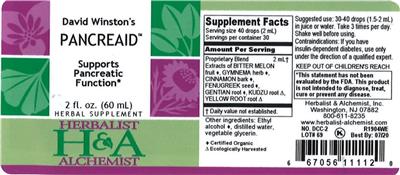
David Winston's Pancreaid by Herbalist & Alchemist label
The label scan from the NIH Dietary Supplement Label Database. Tap to enlarge.
Label images are published by the NIH Dietary Supplement Label Database for the version of this product on file. Always read your actual product label.
View the full label (PDF)The Ingredients in David Winston's Pancreaid by Herbalist & Alchemist
These are the 7 active ingredients this product is made of. Select any to open its full monograph.
Serving size1.5 mL Dosage formLiquid Servings per container30 Amounts shown are per serving.
Most supplement products combine several ingredients, and a medication can interact with the product through any one of them. Each ingredient below shows whether it has known drug interactions.
Proprietary Blend
Other (inactive) ingredients: Ethyl Alcohol, Distilled Water, Vegetable Glycerin. These complete the product’s ingredient list but are not active constituents.
David Winston's Pancreaid by Herbalist & Alchemist Drug Interactions
HelloPharmacist Interaction Report
David Winston's Pancreaid by Herbalist & Alchemist contains seven herbal extracts, and several of them interact with medications.
Altogether, these interactions span 1,240 individual medications.
Read the full breakdown — every affected drug type, severity by severity
The most serious concern is with antidiabetes drugs (medications that lower blood sugar). Five of the seven active ingredients—bitter melon, gymnema, cinnamon, fenugreek, and kudzu—may lower blood glucose levels and could add to the effects of your diabetes medication, raising the risk of low blood sugar (hypoglycemia).
If you take any diabetes drug, you'll want to check your specific medication below and monitor your blood sugar closely while using this product.
Other significant interactions to be aware of: fenugreek and kudzu may increase bleeding risk if you take blood thinners or antiplatelet drugs (like warfarin or aspirin). Gentian may lower your blood pressure further if you're on blood pressure medication.
Kudzu may increase caffeine levels and could interfere with certain cancer drugs like tamoxifen. Gymnema may affect how your liver processes drugs metabolized by specific liver enzymes (CYP1A2, CYP2C9, CYP3A4), and the yellow root extract (goldthread) may increase levels of drugs broken down by the CYP3A4 enzyme, including some cholesterol and immunosuppressant medications.
Bitter melon carries an additional Moderate-severity concern: it may raise levels of the cancer drug pazopanib, potentially increasing side effects. Cinnamon and kudzu also interact with hepatotoxic drugs—medications that can stress the liver—and may cause additive liver harm at supplement doses.
Run your exact medications through the checker on this page before you start.
Check your own medications below · Editorial policy · How we use AI
Want to check YOUR meds against David Winston's Pancreaid?
Ask about interactions with your drugs in plain English — “Can I take it with lisinopril?” — and we find you the answer in seconds, ingredient by ingredient.
Go to the checkerIngredients driving the most interactions
Individual Drug Interactions
The ingredients in David Winston's Pancreaid interact with 1,240 drugs. Click any drug to see the details.
7 of the 7 ingredients in David Winston's Pancreaid interact with drugs. Each result below shows which ingredient is responsible. Gymnema herb extract Yellow Root root extract Kudzu root extract Cinnamon bark extract Fenugreek seed extract Bitter Melon fruit extract Gentian root extract
6-mercaptopurinePurinethol
How 6-mercaptopurine interacts with David Winston's Pancreaid — through 2 ingredients. Tap an ingredient for the detail:
Cinnamon Bark ExtractHepatotoxic Drugs Moderate
Interaction Summary
Theoretically, large doses of cassia cinnamon might cause additive effects when used with hepatotoxic drugs.
Read the full Cinnamon Bark Extract + 6-mercaptopurine interactionKudzu Root ExtractHepatotoxic Drugs Moderate
Interaction Summary
Theoretically, concomitant use might have additive hepatotoxic effects.
Read the full Kudzu Root Extract + 6-mercaptopurine interactionAdo-trastuzumab EmtansineKadcyla
How Ado-trastuzumab Emtansine interacts with David Winston's Pancreaid — through 2 ingredients. Tap an ingredient for the detail:
Yellow Root Root ExtractCytochrome P450 3a4 (cyp3a4) Substrates Moderate
Interaction Summary
There's very preliminary evidence that berberine, a constituent of goldthread, might inhibit cytochrome P450 3A4 (CYP3A4) enzyme.
Read the full Yellow Root Root Extract + Ado-trastuzumab Emtansine interactionGymnema Herb ExtractCytochrome P450 3a4 (cyp3a4) Substrates Minor
Interaction Summary
Theoretically, gymnema might increase levels of drugs metabolized by CYP3A4.
Read the full Gymnema Herb Extract + Ado-trastuzumab Emtansine interactionAbacavir Sulfate, Dolutegravir, LamivudineTriumeq
How Abacavir Sulfate, Dolutegravir, Lamivudine interacts with David Winston's Pancreaid — through 2 ingredients. Tap an ingredient for the detail:
Kudzu Root ExtractHepatotoxic Drugs Moderate
Interaction Summary
Theoretically, concomitant use might have additive hepatotoxic effects.
Read the full Kudzu Root Extract + Abacavir Sulfate, Dolutegravir, Lamivudine interactionCinnamon Bark ExtractHepatotoxic Drugs Moderate
Interaction Summary
Theoretically, large doses of cassia cinnamon might cause additive effects when used with hepatotoxic drugs.
Read the full Cinnamon Bark Extract + Abacavir Sulfate, Dolutegravir, Lamivudine interactionAbacavir, LamivudineEpzicom
How Abacavir, Lamivudine interacts with David Winston's Pancreaid — through 2 ingredients. Tap an ingredient for the detail:
Cinnamon Bark ExtractHepatotoxic Drugs Moderate
Interaction Summary
Theoretically, large doses of cassia cinnamon might cause additive effects when used with hepatotoxic drugs.
Read the full Cinnamon Bark Extract + Abacavir, Lamivudine interactionKudzu Root ExtractHepatotoxic Drugs Moderate
Interaction Summary
Theoretically, concomitant use might have additive hepatotoxic effects.
Read the full Kudzu Root Extract + Abacavir, Lamivudine interactionAbciximabReoPro
How Abciximab interacts with David Winston's Pancreaid — through 2 ingredients. Tap an ingredient for the detail:
Fenugreek Seed ExtractAnticoagulant/antiplatelet Drugs Moderate
Interaction Summary
Theoretically, fenugreek might have additive effects when used with anticoagulant or antiplatelet drugs.
Read the full Fenugreek Seed Extract + Abciximab interactionKudzu Root ExtractAnticoagulant/antiplatelet Drugs Moderate
Interaction Summary
Theoretically, kudzu may increase the risk of bleeding if used with antiplatelet or anticoagulant drugs.
Read the full Kudzu Root Extract + Abciximab interactionAbemaciclibVerzenio
How Abemaciclib interacts with David Winston's Pancreaid — through 2 ingredients. Tap an ingredient for the detail:
Yellow Root Root ExtractCytochrome P450 3a4 (cyp3a4) Substrates Moderate
Interaction Summary
There's very preliminary evidence that berberine, a constituent of goldthread, might inhibit cytochrome P450 3A4 (CYP3A4) enzyme.
Read the full Yellow Root Root Extract + Abemaciclib interactionGymnema Herb ExtractCytochrome P450 3a4 (cyp3a4) Substrates Minor
Interaction Summary
Theoretically, gymnema might increase levels of drugs metabolized by CYP3A4.
Read the full Gymnema Herb Extract + Abemaciclib interactionAbiraterone
How Abiraterone interacts with David Winston's Pancreaid — through 4 ingredients. Tap an ingredient for the detail:
Yellow Root Root ExtractCytochrome P450 3a4 (cyp3a4) Substrates Moderate
Interaction Summary
There's very preliminary evidence that berberine, a constituent of goldthread, might inhibit cytochrome P450 3A4 (CYP3A4) enzyme.
Read the full Yellow Root Root Extract + Abiraterone interactionKudzu Root ExtractHepatotoxic Drugs Moderate
Interaction Summary
Theoretically, concomitant use might have additive hepatotoxic effects.
Read the full Kudzu Root Extract + Abiraterone interactionCinnamon Bark ExtractHepatotoxic Drugs Moderate
Interaction Summary
Theoretically, large doses of cassia cinnamon might cause additive effects when used with hepatotoxic drugs.
Read the full Cinnamon Bark Extract + Abiraterone interactionGymnema Herb ExtractCytochrome P450 3a4 (cyp3a4) Substrates Minor
Interaction Summary
Theoretically, gymnema might increase levels of drugs metabolized by CYP3A4.
Read the full Gymnema Herb Extract + Abiraterone interactionAbiraterone AcetateYonsa, Zytiga
How Abiraterone Acetate interacts with David Winston's Pancreaid — through 4 ingredients. Tap an ingredient for the detail:
Cinnamon Bark ExtractHepatotoxic Drugs Moderate
Interaction Summary
Theoretically, large doses of cassia cinnamon might cause additive effects when used with hepatotoxic drugs.
Read the full Cinnamon Bark Extract + Abiraterone Acetate interactionKudzu Root ExtractHepatotoxic Drugs Moderate
Interaction Summary
Theoretically, concomitant use might have additive hepatotoxic effects.
Read the full Kudzu Root Extract + Abiraterone Acetate interactionYellow Root Root ExtractCytochrome P450 3a4 (cyp3a4) Substrates Moderate
Interaction Summary
There's very preliminary evidence that berberine, a constituent of goldthread, might inhibit cytochrome P450 3A4 (CYP3A4) enzyme.
Read the full Yellow Root Root Extract + Abiraterone Acetate interactionGymnema Herb ExtractCytochrome P450 3a4 (cyp3a4) Substrates Minor
Interaction Summary
Theoretically, gymnema might increase levels of drugs metabolized by CYP3A4.
Read the full Gymnema Herb Extract + Abiraterone Acetate interactionAbrocitinibCibinqo
How Abrocitinib interacts with David Winston's Pancreaid — through 3 ingredients. Tap an ingredient for the detail:
Fenugreek Seed ExtractAnticoagulant/antiplatelet Drugs Moderate
Interaction Summary
Theoretically, fenugreek might have additive effects when used with anticoagulant or antiplatelet drugs.
Read the full Fenugreek Seed Extract + Abrocitinib interactionGymnema Herb ExtractCytochrome P450 2c9 (cyp2c9) Substrates Moderate
Interaction Summary
Theoretically, gymnema might increase or decrease levels of drugs metabolized by CYP2C9.
Read the full Gymnema Herb Extract + Abrocitinib interactionKudzu Root ExtractAnticoagulant/antiplatelet Drugs Moderate
Interaction Summary
Theoretically, kudzu may increase the risk of bleeding if used with antiplatelet or anticoagulant drugs.
Read the full Kudzu Root Extract + Abrocitinib interactionAcalabrutinibCalquence
How Acalabrutinib interacts with David Winston's Pancreaid — through 3 ingredients. Tap an ingredient for the detail:
Bitter Melon Fruit ExtractP-glycoprotein Substrates Moderate
Interaction Summary
Theoretically, bitter melon might increase levels of P-glycoprotein substrates.
Read the full Bitter Melon Fruit Extract + Acalabrutinib interactionYellow Root Root ExtractCytochrome P450 3a4 (cyp3a4) Substrates Moderate
Interaction Summary
There's very preliminary evidence that berberine, a constituent of goldthread, might inhibit cytochrome P450 3A4 (CYP3A4) enzyme.
Read the full Yellow Root Root Extract + Acalabrutinib interactionGymnema Herb ExtractCytochrome P450 3a4 (cyp3a4) Substrates Minor
Interaction Summary
Theoretically, gymnema might increase levels of drugs metabolized by CYP3A4.
Read the full Gymnema Herb Extract + Acalabrutinib interactionAcarboseGlucobay, Prandase, Precose
How Acarbose interacts with David Winston's Pancreaid — through 5 ingredients. Tap an ingredient for the detail:
Fenugreek Seed ExtractAntidiabetes Drugs Moderate
Interaction Summary
Theoretically, fenugreek seed might have additive hypoglycemic effects when used with antidiabetes drugs.
Read the full Fenugreek Seed Extract + Acarbose interactionKudzu Root ExtractHepatotoxic Drugs, Antidiabetes Drugs Moderate
Interaction Summary
Theoretically, concomitant use might have additive hepatotoxic effects.
Read the full Kudzu Root Extract + Acarbose interactionGymnema Herb ExtractAntidiabetes Drugs Moderate
Interaction Summary
Theoretically, taking gymnema with antidiabetes drugs might increase the risk of hypoglycemia.
Read the full Gymnema Herb Extract + Acarbose interactionCinnamon Bark ExtractAntidiabetes Drugs, Hepatotoxic Drugs Moderate
Interaction Summary
Theoretically, cassia cinnamon may have additive effects with antidiabetes drugs.
Read the full Cinnamon Bark Extract + Acarbose interactionBitter Melon Fruit ExtractAntidiabetes Drugs Moderate
Interaction Summary
Taking bitter melon with antidiabetes drugs might increase the risk of hypoglycemia.
Read the full Bitter Melon Fruit Extract + Acarbose interactionAcebutololRhotral, Sectral
How Acebutolol interacts with David Winston's Pancreaid — through 4 ingredients. Tap an ingredient for the detail:
Cinnamon Bark ExtractHepatotoxic Drugs Moderate
Interaction Summary
Theoretically, large doses of cassia cinnamon might cause additive effects when used with hepatotoxic drugs.
Read the full Cinnamon Bark Extract + Acebutolol interactionKudzu Root ExtractHepatotoxic Drugs Moderate
Interaction Summary
Theoretically, concomitant use might have additive hepatotoxic effects.
Read the full Kudzu Root Extract + Acebutolol interactionGentian Root ExtractAntihypertensive Drugs Moderate
Interaction Summary
Theoretically, taking gentian with antihypertensive drugs might increase the risk of hypotension.
Read the full Gentian Root Extract + Acebutolol interactionFenugreek Seed ExtractAntihypertensive Drugs Minor
Interaction Summary
Fenugreek may also have an additive effect on blood pressure-lowering medications.
Read the full Fenugreek Seed Extract + Acebutolol interactionAcenocoumarolSintrom
How Acenocoumarol interacts with David Winston's Pancreaid — through 2 ingredients. Tap an ingredient for the detail:
Fenugreek Seed ExtractAnticoagulant/antiplatelet Drugs Moderate
Interaction Summary
Theoretically, fenugreek might have additive effects when used with anticoagulant or antiplatelet drugs.
Read the full Fenugreek Seed Extract + Acenocoumarol interactionKudzu Root ExtractAnticoagulant/antiplatelet Drugs Moderate
Interaction Summary
Theoretically, kudzu may increase the risk of bleeding if used with antiplatelet or anticoagulant drugs.
Read the full Kudzu Root Extract + Acenocoumarol interactionAcetaminophenChildren's Tylenol, Children's Tylenol Meltaways, Tylenol, Tylenol Ex Strength
How Acetaminophen interacts with David Winston's Pancreaid — through 3 ingredients. Tap an ingredient for the detail:
Cinnamon Bark ExtractHepatotoxic Drugs Moderate
Interaction Summary
Theoretically, large doses of cassia cinnamon might cause additive effects when used with hepatotoxic drugs.
Read the full Cinnamon Bark Extract + Acetaminophen interactionGymnema Herb ExtractCytochrome P450 1a2 (cyp1a2) Substrates Moderate
Interaction Summary
Theoretically, gymnema might increase levels of drugs metabolized by CYP1A2.
Read the full Gymnema Herb Extract + Acetaminophen interactionKudzu Root ExtractHepatotoxic Drugs Moderate
Interaction Summary
Theoretically, concomitant use might have additive hepatotoxic effects.
Read the full Kudzu Root Extract + Acetaminophen interactionAcetaminophen, AspirinGemnisyn
How Acetaminophen, Aspirin interacts with David Winston's Pancreaid — through 4 ingredients. Tap an ingredient for the detail:
Kudzu Root ExtractHepatotoxic Drugs, Anticoagulant/antiplatelet Drugs Moderate
Interaction Summary
Theoretically, concomitant use might have additive hepatotoxic effects.
Read the full Kudzu Root Extract + Acetaminophen, Aspirin interactionFenugreek Seed ExtractAnticoagulant/antiplatelet Drugs Moderate
Interaction Summary
Theoretically, fenugreek might have additive effects when used with anticoagulant or antiplatelet drugs.
Read the full Fenugreek Seed Extract + Acetaminophen, Aspirin interactionGymnema Herb ExtractCytochrome P450 1a2 (cyp1a2) Substrates Moderate
Interaction Summary
Theoretically, gymnema might increase levels of drugs metabolized by CYP1A2.
Read the full Gymnema Herb Extract + Acetaminophen, Aspirin interactionCinnamon Bark ExtractHepatotoxic Drugs Moderate
Interaction Summary
Theoretically, large doses of cassia cinnamon might cause additive effects when used with hepatotoxic drugs.
Read the full Cinnamon Bark Extract + Acetaminophen, Aspirin interactionAcetaminophen, Aspirin, CaffeineExcedrin, Excedrin Extra Strength, Excedrin Migraine
How Acetaminophen, Aspirin, Caffeine interacts with David Winston's Pancreaid — through 5 ingredients. Tap an ingredient for the detail:
Cinnamon Bark ExtractHepatotoxic Drugs Moderate
Interaction Summary
Theoretically, large doses of cassia cinnamon might cause additive effects when used with hepatotoxic drugs.
Read the full Cinnamon Bark Extract + Acetaminophen, Aspirin, Caffeine interactionGymnema Herb ExtractCytochrome P450 1a2 (cyp1a2) Substrates, Cytochrome P450 3a4 (cyp3a4) Substrates Moderate
Interaction Summary
Theoretically, gymnema might increase levels of drugs metabolized by CYP1A2.
Read the full Gymnema Herb Extract + Acetaminophen, Aspirin, Caffeine interactionKudzu Root ExtractAnticoagulant/antiplatelet Drugs, Caffeine +1 Moderate
Interaction Summary
Theoretically, kudzu may increase the risk of bleeding if used with antiplatelet or anticoagulant drugs.
Read the full Kudzu Root Extract + Acetaminophen, Aspirin, Caffeine interactionFenugreek Seed ExtractAnticoagulant/antiplatelet Drugs Moderate
Interaction Summary
Theoretically, fenugreek might have additive effects when used with anticoagulant or antiplatelet drugs.
Read the full Fenugreek Seed Extract + Acetaminophen, Aspirin, Caffeine interactionYellow Root Root ExtractCytochrome P450 3a4 (cyp3a4) Substrates Moderate
Interaction Summary
There's very preliminary evidence that berberine, a constituent of goldthread, might inhibit cytochrome P450 3A4 (CYP3A4) enzyme.
Read the full Yellow Root Root Extract + Acetaminophen, Aspirin, Caffeine interactionAcetaminophen, Brompheniramine, PhenylpropanolamineDimetapp Cold and Flu
How Acetaminophen, Brompheniramine, Phenylpropanolamine interacts with David Winston's Pancreaid — through 3 ingredients. Tap an ingredient for the detail:
Kudzu Root ExtractHepatotoxic Drugs Moderate
Interaction Summary
Theoretically, concomitant use might have additive hepatotoxic effects.
Read the full Kudzu Root Extract + Acetaminophen, Brompheniramine, Phenylpropanolamine interactionGymnema Herb ExtractCytochrome P450 1a2 (cyp1a2) Substrates Moderate
Interaction Summary
Theoretically, gymnema might increase levels of drugs metabolized by CYP1A2.
Read the full Gymnema Herb Extract + Acetaminophen, Brompheniramine, Phenylpropanolamine interactionCinnamon Bark ExtractHepatotoxic Drugs Moderate
Interaction Summary
Theoretically, large doses of cassia cinnamon might cause additive effects when used with hepatotoxic drugs.
Read the full Cinnamon Bark Extract + Acetaminophen, Brompheniramine, Phenylpropanolamine interactionAcetaminophen, ButalbitalAxocet, Bancap, Bucet, Butex Forte, Esgic CF, Orbivan CF +5 more
How Acetaminophen, Butalbital interacts with David Winston's Pancreaid — through 3 ingredients. Tap an ingredient for the detail:
Cinnamon Bark ExtractHepatotoxic Drugs Moderate
Interaction Summary
Theoretically, large doses of cassia cinnamon might cause additive effects when used with hepatotoxic drugs.
Read the full Cinnamon Bark Extract + Acetaminophen, Butalbital interactionGymnema Herb ExtractCytochrome P450 1a2 (cyp1a2) Substrates Moderate
Interaction Summary
Theoretically, gymnema might increase levels of drugs metabolized by CYP1A2.
Read the full Gymnema Herb Extract + Acetaminophen, Butalbital interactionKudzu Root ExtractHepatotoxic Drugs Moderate
Interaction Summary
Theoretically, concomitant use might have additive hepatotoxic effects.
Read the full Kudzu Root Extract + Acetaminophen, Butalbital interactionAcetaminophen, Butalbital, CaffeineEsgic, Esgic Plus, Fiogesic, Fioricet, Repan, Tecnal +1 more
How Acetaminophen, Butalbital, Caffeine interacts with David Winston's Pancreaid — through 4 ingredients. Tap an ingredient for the detail:
Kudzu Root ExtractHepatotoxic Drugs, Caffeine Moderate
Interaction Summary
Theoretically, concomitant use might have additive hepatotoxic effects.
Read the full Kudzu Root Extract + Acetaminophen, Butalbital, Caffeine interactionYellow Root Root ExtractCytochrome P450 3a4 (cyp3a4) Substrates Moderate
Interaction Summary
There's very preliminary evidence that berberine, a constituent of goldthread, might inhibit cytochrome P450 3A4 (CYP3A4) enzyme.
Read the full Yellow Root Root Extract + Acetaminophen, Butalbital, Caffeine interactionGymnema Herb ExtractCytochrome P450 1a2 (cyp1a2) Substrates, Cytochrome P450 3a4 (cyp3a4) Substrates Moderate
Interaction Summary
Theoretically, gymnema might increase levels of drugs metabolized by CYP1A2.
Read the full Gymnema Herb Extract + Acetaminophen, Butalbital, Caffeine interactionCinnamon Bark ExtractHepatotoxic Drugs Moderate
Interaction Summary
Theoretically, large doses of cassia cinnamon might cause additive effects when used with hepatotoxic drugs.
Read the full Cinnamon Bark Extract + Acetaminophen, Butalbital, Caffeine interactionAcetaminophen, Butalbital, Caffeine, CodeineEsgic with Codeine, Fioricet w/ Codeine
How Acetaminophen, Butalbital, Caffeine, Codeine interacts with David Winston's Pancreaid — through 4 ingredients. Tap an ingredient for the detail:
Gymnema Herb ExtractCytochrome P450 3a4 (cyp3a4) Substrates, Cytochrome P450 1a2 (cyp1a2) Substrates Moderate
Interaction Summary
Theoretically, gymnema might increase levels of drugs metabolized by CYP3A4.
Read the full Gymnema Herb Extract + Acetaminophen, Butalbital, Caffeine, Codeine interactionCinnamon Bark ExtractHepatotoxic Drugs Moderate
Interaction Summary
Theoretically, large doses of cassia cinnamon might cause additive effects when used with hepatotoxic drugs.
Read the full Cinnamon Bark Extract + Acetaminophen, Butalbital, Caffeine, Codeine interactionKudzu Root ExtractCaffeine, Hepatotoxic Drugs Moderate
Interaction Summary
Theoretically, taking kudzu with caffeine might increase levels of caffeine.
Read the full Kudzu Root Extract + Acetaminophen, Butalbital, Caffeine, Codeine interactionYellow Root Root ExtractCytochrome P450 3a4 (cyp3a4) Substrates Moderate
Interaction Summary
There's very preliminary evidence that berberine, a constituent of goldthread, might inhibit cytochrome P450 3A4 (CYP3A4) enzyme.
Read the full Yellow Root Root Extract + Acetaminophen, Butalbital, Caffeine, Codeine interactionAcetaminophen, Butalbital, CodeineBancap w/ Codeine
How Acetaminophen, Butalbital, Codeine interacts with David Winston's Pancreaid — through 3 ingredients. Tap an ingredient for the detail:
Kudzu Root ExtractHepatotoxic Drugs Moderate
Interaction Summary
Theoretically, concomitant use might have additive hepatotoxic effects.
Read the full Kudzu Root Extract + Acetaminophen, Butalbital, Codeine interactionCinnamon Bark ExtractHepatotoxic Drugs Moderate
Interaction Summary
Theoretically, large doses of cassia cinnamon might cause additive effects when used with hepatotoxic drugs.
Read the full Cinnamon Bark Extract + Acetaminophen, Butalbital, Codeine interactionGymnema Herb ExtractCytochrome P450 1a2 (cyp1a2) Substrates Moderate
Interaction Summary
Theoretically, gymnema might increase levels of drugs metabolized by CYP1A2.
Read the full Gymnema Herb Extract + Acetaminophen, Butalbital, Codeine interactionAcetaminophen, Butalbital, Codeine PhosphatePhrenilin #3
How Acetaminophen, Butalbital, Codeine Phosphate interacts with David Winston's Pancreaid — through 3 ingredients. Tap an ingredient for the detail:
Gymnema Herb ExtractCytochrome P450 1a2 (cyp1a2) Substrates Moderate
Interaction Summary
Theoretically, gymnema might increase levels of drugs metabolized by CYP1A2.
Read the full Gymnema Herb Extract + Acetaminophen, Butalbital, Codeine Phosphate interactionCinnamon Bark ExtractHepatotoxic Drugs Moderate
Interaction Summary
Theoretically, large doses of cassia cinnamon might cause additive effects when used with hepatotoxic drugs.
Read the full Cinnamon Bark Extract + Acetaminophen, Butalbital, Codeine Phosphate interactionKudzu Root ExtractHepatotoxic Drugs Moderate
Interaction Summary
Theoretically, concomitant use might have additive hepatotoxic effects.
Read the full Kudzu Root Extract + Acetaminophen, Butalbital, Codeine Phosphate interactionAcetaminophen, Caffeine, Chlorpheniramine, Hydrocodone, PhenylephrineHycomine Compound
How Acetaminophen, Caffeine, Chlorpheniramine, Hydrocodone, Phenylephrine interacts with David Winston's Pancreaid — through 4 ingredients. Tap an ingredient for the detail:
Kudzu Root ExtractHepatotoxic Drugs, Caffeine Moderate
Interaction Summary
Theoretically, concomitant use might have additive hepatotoxic effects.
Read the full Kudzu Root Extract + Acetaminophen, Caffeine, Chlorpheniramine, Hydrocodone, Phenylephrine interactionYellow Root Root ExtractCytochrome P450 3a4 (cyp3a4) Substrates Moderate
Interaction Summary
There's very preliminary evidence that berberine, a constituent of goldthread, might inhibit cytochrome P450 3A4 (CYP3A4) enzyme.
Read the full Yellow Root Root Extract + Acetaminophen, Caffeine, Chlorpheniramine, Hydrocodone, Phenylephrine interactionCinnamon Bark ExtractHepatotoxic Drugs Moderate
Interaction Summary
Theoretically, large doses of cassia cinnamon might cause additive effects when used with hepatotoxic drugs.
Read the full Cinnamon Bark Extract + Acetaminophen, Caffeine, Chlorpheniramine, Hydrocodone, Phenylephrine interactionGymnema Herb ExtractCytochrome P450 3a4 (cyp3a4) Substrates, Cytochrome P450 1a2 (cyp1a2) Substrates Moderate
Interaction Summary
Theoretically, gymnema might increase levels of drugs metabolized by CYP3A4.
Read the full Gymnema Herb Extract + Acetaminophen, Caffeine, Chlorpheniramine, Hydrocodone, Phenylephrine interactionAcetaminophen, Caffeine, CodeineGesic C15, Gesic C30, Gesic C8, Lenoltec 1, Lenoltec 2, Lenoltec 3 +1 more
How Acetaminophen, Caffeine, Codeine interacts with David Winston's Pancreaid — through 4 ingredients. Tap an ingredient for the detail:
Gymnema Herb ExtractCytochrome P450 1a2 (cyp1a2) Substrates, Cytochrome P450 3a4 (cyp3a4) Substrates Moderate
Interaction Summary
Theoretically, gymnema might increase levels of drugs metabolized by CYP1A2.
Read the full Gymnema Herb Extract + Acetaminophen, Caffeine, Codeine interactionKudzu Root ExtractCaffeine, Hepatotoxic Drugs Moderate
Interaction Summary
Theoretically, taking kudzu with caffeine might increase levels of caffeine.
Read the full Kudzu Root Extract + Acetaminophen, Caffeine, Codeine interactionCinnamon Bark ExtractHepatotoxic Drugs Moderate
Interaction Summary
Theoretically, large doses of cassia cinnamon might cause additive effects when used with hepatotoxic drugs.
Read the full Cinnamon Bark Extract + Acetaminophen, Caffeine, Codeine interactionYellow Root Root ExtractCytochrome P450 3a4 (cyp3a4) Substrates Moderate
Interaction Summary
There's very preliminary evidence that berberine, a constituent of goldthread, might inhibit cytochrome P450 3A4 (CYP3A4) enzyme.
Read the full Yellow Root Root Extract + Acetaminophen, Caffeine, Codeine interactionAcetaminophen, Caffeine, Codeine, SalicylamideCodalan No.1, Codalan No.2, Codalan No.3
How Acetaminophen, Caffeine, Codeine, Salicylamide interacts with David Winston's Pancreaid — through 4 ingredients. Tap an ingredient for the detail:
Kudzu Root ExtractHepatotoxic Drugs, Caffeine Moderate
Interaction Summary
Theoretically, concomitant use might have additive hepatotoxic effects.
Read the full Kudzu Root Extract + Acetaminophen, Caffeine, Codeine, Salicylamide interactionYellow Root Root ExtractCytochrome P450 3a4 (cyp3a4) Substrates Moderate
Interaction Summary
There's very preliminary evidence that berberine, a constituent of goldthread, might inhibit cytochrome P450 3A4 (CYP3A4) enzyme.
Read the full Yellow Root Root Extract + Acetaminophen, Caffeine, Codeine, Salicylamide interactionGymnema Herb ExtractCytochrome P450 3a4 (cyp3a4) Substrates, Cytochrome P450 1a2 (cyp1a2) Substrates Moderate
Interaction Summary
Theoretically, gymnema might increase levels of drugs metabolized by CYP3A4.
Read the full Gymnema Herb Extract + Acetaminophen, Caffeine, Codeine, Salicylamide interactionCinnamon Bark ExtractHepatotoxic Drugs Moderate
Interaction Summary
Theoretically, large doses of cassia cinnamon might cause additive effects when used with hepatotoxic drugs.
Read the full Cinnamon Bark Extract + Acetaminophen, Caffeine, Codeine, Salicylamide interactionAcetaminophen, Caffeine, DihydrocodeineDHC Plus, Panlor DC, Panlor SS
How Acetaminophen, Caffeine, Dihydrocodeine interacts with David Winston's Pancreaid — through 4 ingredients. Tap an ingredient for the detail:
Cinnamon Bark ExtractHepatotoxic Drugs Moderate
Interaction Summary
Theoretically, large doses of cassia cinnamon might cause additive effects when used with hepatotoxic drugs.
Read the full Cinnamon Bark Extract + Acetaminophen, Caffeine, Dihydrocodeine interactionKudzu Root ExtractCaffeine, Hepatotoxic Drugs Moderate
Interaction Summary
Theoretically, taking kudzu with caffeine might increase levels of caffeine.
Read the full Kudzu Root Extract + Acetaminophen, Caffeine, Dihydrocodeine interactionGymnema Herb ExtractCytochrome P450 3a4 (cyp3a4) Substrates, Cytochrome P450 1a2 (cyp1a2) Substrates Moderate
Interaction Summary
Theoretically, gymnema might increase levels of drugs metabolized by CYP3A4.
Read the full Gymnema Herb Extract + Acetaminophen, Caffeine, Dihydrocodeine interactionYellow Root Root ExtractCytochrome P450 3a4 (cyp3a4) Substrates Moderate
Interaction Summary
There's very preliminary evidence that berberine, a constituent of goldthread, might inhibit cytochrome P450 3A4 (CYP3A4) enzyme.
Read the full Yellow Root Root Extract + Acetaminophen, Caffeine, Dihydrocodeine interactionAcetaminophen, Caffeine, IsomethepteneMigralam
How Acetaminophen, Caffeine, Isometheptene interacts with David Winston's Pancreaid — through 4 ingredients. Tap an ingredient for the detail:
Kudzu Root ExtractHepatotoxic Drugs, Caffeine Moderate
Interaction Summary
Theoretically, concomitant use might have additive hepatotoxic effects.
Read the full Kudzu Root Extract + Acetaminophen, Caffeine, Isometheptene interactionYellow Root Root ExtractCytochrome P450 3a4 (cyp3a4) Substrates Moderate
Interaction Summary
There's very preliminary evidence that berberine, a constituent of goldthread, might inhibit cytochrome P450 3A4 (CYP3A4) enzyme.
Read the full Yellow Root Root Extract + Acetaminophen, Caffeine, Isometheptene interactionGymnema Herb ExtractCytochrome P450 1a2 (cyp1a2) Substrates, Cytochrome P450 3a4 (cyp3a4) Substrates Moderate
Interaction Summary
Theoretically, gymnema might increase levels of drugs metabolized by CYP1A2.
Read the full Gymnema Herb Extract + Acetaminophen, Caffeine, Isometheptene interactionCinnamon Bark ExtractHepatotoxic Drugs Moderate
Interaction Summary
Theoretically, large doses of cassia cinnamon might cause additive effects when used with hepatotoxic drugs.
Read the full Cinnamon Bark Extract + Acetaminophen, Caffeine, Isometheptene interactionAcetaminophen, Caffeine, PyrilamineMidol Max Strength Menstrual
How Acetaminophen, Caffeine, Pyrilamine interacts with David Winston's Pancreaid — through 4 ingredients. Tap an ingredient for the detail:
Gymnema Herb ExtractCytochrome P450 3a4 (cyp3a4) Substrates, Cytochrome P450 1a2 (cyp1a2) Substrates Moderate
Interaction Summary
Theoretically, gymnema might increase levels of drugs metabolized by CYP3A4.
Read the full Gymnema Herb Extract + Acetaminophen, Caffeine, Pyrilamine interactionKudzu Root ExtractCaffeine, Hepatotoxic Drugs Moderate
Interaction Summary
Theoretically, taking kudzu with caffeine might increase levels of caffeine.
Read the full Kudzu Root Extract + Acetaminophen, Caffeine, Pyrilamine interactionCinnamon Bark ExtractHepatotoxic Drugs Moderate
Interaction Summary
Theoretically, large doses of cassia cinnamon might cause additive effects when used with hepatotoxic drugs.
Read the full Cinnamon Bark Extract + Acetaminophen, Caffeine, Pyrilamine interactionYellow Root Root ExtractCytochrome P450 3a4 (cyp3a4) Substrates Moderate
Interaction Summary
There's very preliminary evidence that berberine, a constituent of goldthread, might inhibit cytochrome P450 3A4 (CYP3A4) enzyme.
Read the full Yellow Root Root Extract + Acetaminophen, Caffeine, Pyrilamine interactionAcetaminophen, Chlorpheniramine Maleate, Dextromethorphan HbrVicks Formula 44M Cough, Cold & Flu Relief
How Acetaminophen, Chlorpheniramine Maleate, Dextromethorphan Hbr interacts with David Winston's Pancreaid — through 4 ingredients. Tap an ingredient for the detail:
Yellow Root Root ExtractCytochrome P450 3a4 (cyp3a4) Substrates Moderate
Interaction Summary
There's very preliminary evidence that berberine, a constituent of goldthread, might inhibit cytochrome P450 3A4 (CYP3A4) enzyme.
Read the full Yellow Root Root Extract + Acetaminophen, Chlorpheniramine Maleate, Dextromethorphan Hbr interactionKudzu Root ExtractHepatotoxic Drugs Moderate
Interaction Summary
Theoretically, concomitant use might have additive hepatotoxic effects.
Read the full Kudzu Root Extract + Acetaminophen, Chlorpheniramine Maleate, Dextromethorphan Hbr interactionCinnamon Bark ExtractHepatotoxic Drugs Moderate
Interaction Summary
Theoretically, large doses of cassia cinnamon might cause additive effects when used with hepatotoxic drugs.
Read the full Cinnamon Bark Extract + Acetaminophen, Chlorpheniramine Maleate, Dextromethorphan Hbr interactionGymnema Herb ExtractCytochrome P450 3a4 (cyp3a4) Substrates, Cytochrome P450 1a2 (cyp1a2) Substrates Moderate
Interaction Summary
Theoretically, gymnema might increase levels of drugs metabolized by CYP3A4.
Read the full Gymnema Herb Extract + Acetaminophen, Chlorpheniramine Maleate, Dextromethorphan Hbr interactionAcetaminophen, Chlorpheniramine, Codeine, PhenylephrineColrex
How Acetaminophen, Chlorpheniramine, Codeine, Phenylephrine interacts with David Winston's Pancreaid — through 4 ingredients. Tap an ingredient for the detail:
Cinnamon Bark ExtractHepatotoxic Drugs Moderate
Interaction Summary
Theoretically, large doses of cassia cinnamon might cause additive effects when used with hepatotoxic drugs.
Read the full Cinnamon Bark Extract + Acetaminophen, Chlorpheniramine, Codeine, Phenylephrine interactionGymnema Herb ExtractCytochrome P450 3a4 (cyp3a4) Substrates, Cytochrome P450 1a2 (cyp1a2) Substrates Moderate
Interaction Summary
Theoretically, gymnema might increase levels of drugs metabolized by CYP3A4.
Read the full Gymnema Herb Extract + Acetaminophen, Chlorpheniramine, Codeine, Phenylephrine interactionKudzu Root ExtractHepatotoxic Drugs Moderate
Interaction Summary
Theoretically, concomitant use might have additive hepatotoxic effects.
Read the full Kudzu Root Extract + Acetaminophen, Chlorpheniramine, Codeine, Phenylephrine interactionYellow Root Root ExtractCytochrome P450 3a4 (cyp3a4) Substrates Moderate
Interaction Summary
There's very preliminary evidence that berberine, a constituent of goldthread, might inhibit cytochrome P450 3A4 (CYP3A4) enzyme.
Read the full Yellow Root Root Extract + Acetaminophen, Chlorpheniramine, Codeine, Phenylephrine interactionEach ingredient & the kinds of drugs it affects
For each ingredient in David Winston's Pancreaid with known interactions, here are the types of medications they can affect. Open any type for the detail — or search your exact drug in the checker above.
Gymnema herb extract
Antidiabetes Drugs
Theoretically, taking gymnema with antidiabetes drugs might increase the risk of hypoglycemia.
Gymnema reduces blood glucose levels in some human and animal research. In human studies, it has been shown to enhance the blood glucose lowering effects of hypoglycemic drugs. However, other research in adults with prediabetes or metabolic syndrome suggests that gymnema does not reduce fasting levels of blood glucose. Until more is known, monitor blood glucose levels closely.
Cytochrome P450 1A2 (Cyp1A2) Substrates
Theoretically, gymnema might increase levels of drugs metabolized by CYP1A2.
Animal and in vitro research shows that gymnema can inhibit the CYP1A2 enzyme. In one animal study, oral administration of gymnema for 7 days increased the plasma concentrations of phenacetin, a CYP1A2 substrate, by about 1.4-fold and reduced the clearance of phenacetin by about 29%.
Cytochrome P450 2C9 (Cyp2C9) Substrates
Theoretically, gymnema might increase or decrease levels of drugs metabolized by CYP2C9.
Animal research shows that gymnema can induce the CYP2C9 enzyme. In one animal study, gymnema caused a 2.4-fold increase in the clearance of tolbutamide, a CYP2C9 substrate, in rats. In vitro research also shows that gymnema can inhibit CYP2C9.
Phenacetin
Theoretically, taking gymnema with phenacetin might increase the levels of phenacetin.
Animal research shows that gymnema, administered orally for 7 days, decreases the clearance of phenacetin in a dose-dependent manner by about 21% to 29% and increases plasma levels about 1.3- to 1.4-fold when compared to control.
Tolbutamide (Orinase)
Theoretically, taking gymnema with tolbutamide might the decrease levels of tolbutamide.
Animal research shows that gymnema, administered orally for 7 days, increases the clearance of tolbutamide by 2.4-fold when compared to control.
Cytochrome P450 3A4 (Cyp3A4) Substrates
Theoretically, gymnema might increase levels of drugs metabolized by CYP3A4.
One in vitro study using rat liver microsomes shows that gymnema can modestly inhibit the CYP3A4 enzyme. However, other in vitro research using human liver microsomes shows that gymnema does not affect CYP3A4 activity. Animal research also shows that gymnema does not alter the function of CYP3A4. In one study in rats, oral administration of gymnema for 7 days did not alter the clearance of amlodipine, a CYP3A4 substrate.
Yellow Root root extract
Cyclosporine (Neoral, Sandimmune)
Berberine, a constituent of goldthread, can reduce metabolism of cyclosporine and increase serum levels. It might inhibit cytochrome P450 3A4 (CYP3A4), which metabolizes cyclosporine.
Cytochrome P450 3A4 (Cyp3A4) Substrates
There's very preliminary evidence that berberine, a constituent of goldthread, might inhibit cytochrome P450 3A4 (CYP3A4) enzyme. So far, this interaction has not been reported in humans. However, watch for an increase in the levels of drugs metabolized by CYP3A4 in patients taking goldthread. Some drugs metabolized by CYP3A4 include lovastatin (Mevacor), clarithromycin (Biaxin), indinavir (Crixivan), sildenafil (Viagra), triazolam (Halcion), and numerous others. Use goldthread cautiously or avoid in patients taking these drugs.
Kudzu root extract
Anticoagulant/Antiplatelet Drugs
Theoretically, kudzu may increase the risk of bleeding if used with antiplatelet or anticoagulant drugs.
Kudzu isoflavones are reported to have antiplatelet activity.
Caffeine
Theoretically, taking kudzu with caffeine might increase levels of caffeine.
In healthy males injected with the kudzu constituent puerarin, caffeine clearance and metabolism is inhibited. This effect has been attributed to inhibition of cytochrome P450 1A2 (CYP1A2) enzyme, which is involved in caffeine metabolism. It is unclear if taking kudzu orally would have this same effect.
Estrogens
Theoretically, kudzu might alter the effects of estrogen therapy.
Some research suggests that kudzu has estrogenic effects. This may enhance or inhibit the effects of estrogen therapy.
Hepatotoxic Drugs
Theoretically, concomitant use might have additive hepatotoxic effects.
There is some concern that kudzu can adversely affect the liver.
Methotrexate (Trexall, Others)
Theoretically, taking kudzu with methotrexate might increase the risk of methotrexate toxicity.
Preclinical research suggests that kudzu extract greatly reduces the elimination and increases the toxicity of methotrexate. Kudzu might inhibit organic anion transporters (OATs) that are responsible for hepatobiliary and renal excretion of anions, similar to the interaction between methotrexate and non-steroidal anti-inflammatory drugs (NSAIDs).
Tamoxifen (Nolvadex)
Theoretically, kudzu might interfere with tamoxifen activity.
Some research suggests that kudzu may have estrogenic effects.
Antidiabetes Drugs
Theoretically, taking kudzu with antidiabetes drugs might increase the risk of hypoglycemia.
Kudzu might lower blood glucose levels and have additive effects in patients treated with antidiabetic agents. The dose of diabetes medications might need to be adjusted.
Cinnamon bark extract
Antidiabetes Drugs
Theoretically, cassia cinnamon may have additive effects with antidiabetes drugs.
Cassia cinnamon may lower blood glucose levels, and have additive effects in patients treated with antidiabetic agents. Dose adjustments to diabetes medications might be necessary.
Hepatotoxic Drugs
Theoretically, large doses of cassia cinnamon might cause additive effects when used with hepatotoxic drugs.
There is some concern that ingesting large amounts of cassia cinnamon for an extended duration might cause hepatotoxicity in some people. Cassia cinnamon contains coumarin, which can cause hepatotoxicity in animal models. In humans, very high doses of coumarin from 50-7000 mg/day can result in hepatotoxicity that resolves when coumarin use is discontinued. Lower amounts might also cause liver problems in sensitive people, such as those with liver disease or those taking potentially hepatotoxic agents.
Fenugreek seed extract
Anticoagulant/Antiplatelet Drugs
Theoretically, fenugreek might have additive effects when used with anticoagulant or antiplatelet drugs.
Some of the constituents in fenugreek have antiplatelet effects in animal and in vitro research. However, common fenugreek products might not contain sufficient concentrations of these constituents for clinical effects. A clinical study in patients with coronary artery disease or diabetes shows that taking fenugreek seed powder 2.5 grams twice daily for 3 months does not affect platelet aggregation, fibrinolytic activity, or fibrinogen levels .
Antidiabetes Drugs
Theoretically, fenugreek seed might have additive hypoglycemic effects when used with antidiabetes drugs.
Clinical research shows that fenugreek seed can reduce fasting blood glucose and 2-hour postprandial glucose levels in adults with type 2 diabetes.
Clopidogrel (Plavix)
Theoretically, fenugreek seed might alter the clinical effects of clopidogrel by inhibiting its conversion to the active form.
Animal research shows that fenugreek seed 200 mg/kg daily for 14 days increases the maximum serum concentration of clopidogrel by 21%. It is unclear how this affects the pharmacokinetics of the active metabolite of clopidogrel; however, this study found that concomitant use of fenugreek seed and clopidogrel prolonged bleeding time by an additional 11%.
Metoprolol (Toprol)
Theoretically, fenugreek seed might have additive hypotensive effects when used with metoprolol.
Animal research shows that fenugreek seed 300 mg/kg daily for 2 weeks decreases systolic and diastolic blood pressure by 9% and 11%, respectively, when administered alone, and by 15% and 22%, respectively, when given with metoprolol 10 mg/kg.
Phenytoin (Dilantin)
Theoretically, fenugreek might decrease plasma levels of phenytoin.
Animal research shows that taking fenugreek seeds for 1 week decreases maximum concentrations and the area under the curve of a single dose of phenytoin by 44% and 72%, respectively. This seems to be related to increased clearance. So far, this interaction has not been reported in humans.
Sildenafil (Viagra)
Theoretically, concurrent use of sildenafil and fenugreek might reduce levels and therapeutic effects of sildenafil.
Animal research shows that taking fenugreek seeds for 1 week reduces maximum concentrations and the area under the curve of a single dose of sildenafil by 27% and 48%, respectively. So far, this interaction has not been reported in humans.
Theophylline
Theoretically, fenugreek may reduce the levels and clinical effects of theophylline.
Animal research shows that fenugreek 50 grams daily for 7 days reduces the maximum serum concentration (Cmax) of theophylline by 28% and the area under the plasma drug concentration-time curve (AUC) by 22%.
Warfarin (Coumadin)
Theoretically, fenugreek might have additive effects with warfarin and increase the international normalized ratio (INR).
Some fenugreek constituents have antiplatelet effects, although these might not be present in concentrations that are clinically significant. In one case report, a patient taking warfarin experienced an increased INR when starting to take fenugreek in combination with boldo.
Antihypertensive Drugs
Fenugreek may also have an additive effect on blood pressure-lowering medications. Studies on animals have shown that fenugreek seed can decrease both systolic and diastolic blood pressure by up to 22% when combined with metoprolol. Therefore, it is essential to monitor your blood pressure regularly if you are taking fenugreek and metoprolol together or any other antihypertensive drugs.
Bitter Melon fruit extract
Antidiabetes Drugs
Taking bitter melon with antidiabetes drugs might increase the risk of hypoglycemia.
Bitter melon can lower blood glucose levels and might have additive effects when used with antidiabetes drugs. This might increase the risk of hypoglycemia in some patients. Monitor blood glucose levels closely.
P-Glycoprotein Substrates
Theoretically, bitter melon might increase levels of P-glycoprotein substrates.
Bitter melon might inhibit the p-glycoprotein (P-gp) intestinal pump and increase intracellular levels of P-gp substrates. In vitro research in intestinal cells shows that 1-monopalmitin, a constituent of bitter melon, increases levels of daunomycin, a P-gp substrate. Additionally, drinking bitter melon juice has been associated with a case of acute pancreatitis in a patient who had been taking pazopanib, a P-gp substrate, for 8 years. Researchers theorize that inhibition of P-gp led to increased levels of pazopanib, resulting in pazopanib-induced pancreatitis.
Pazopanib (Votrient)
Theoretically, bitter melon might increase levels of pazopanib, potentially increasing the risk of adverse effects.
In one case, a 65-year-old patient taking pazopanib for 8 years for renal cell carcinoma experienced signs and symptoms consistent with acute pancreatitis 4 days after drinking bitter melon juice at a dose of 100-150 mL daily. The patient's symptoms, amylase levels, and lipase levels improved upon discontinuation of bitter melon and pazopanib. Pazopanib treatment was re-initiated with no further evidence of pancreatitis. Researchers theorize that inhibition of P-glycoprotein by bitter melon led to increased levels of pazopanib, a P-glycoprotein substrate, resulting in pazopanib-induced pancreatitis.
Gentian root extract
Antihypertensive Drugs
Theoretically, taking gentian with antihypertensive drugs might increase the risk of hypotension.
In vitro research shows that gentian can cause vasodilation and lower blood pressure.
Brand information
Manufacturer and brand details for David Winston's Pancreaid, from the product label.
Herbalist & Alchemist
See all Herbalist & Alchemist products- Name
- Herbalist & Alchemist, Inc.
- City
- Washington
- State
- NJ
- ZipCode
- 07882
- Phone Number
- 800-611-8235
- Web Address
- www.herbalist-alchemist.com
David Winston's Pancreaid by Herbalist & Alchemist: Common Questions
Does David Winston's Pancreaid by Herbalist & Alchemist interact with any medications?
How can one product interact with so many drugs?
Where does this information come from?
Can I take Pancreaid if I'm pregnant or breastfeeding?
What are the main side effects of this product?
Does this product actually work for pancreatic health or digestion?
Why does this product interact with so many medications?
Is it safe to use with my blood thinner?
Written and reviewed by the HelloPharmacist editorial staff. Our editorial policy
Not sure if David Winston's Pancreaid is safe with your meds?
Our pharmacists answer your medication & supplement questions — free.
Label information is sourced from the NIH Dietary Supplement Label Database and reflects the product version on file; always read your actual product label. This page is for education only and is not a substitute for professional medical advice. Confirm with your pharmacist or doctor before combining supplements and medications.
The Full Monographs Behind David Winston's Pancreaid’s Ingredients
Every ingredient we hold a full HelloPharmacist monograph for — uses, evidence, safety, and the complete interaction list.
Gentian
Interacts with 172 drugsGentian is a very bitter root traditionally used to stimulate appetite and ease mild digestive complaints, often as part of "bitters" before meals. The evidence is mostly traditional and pre...
Read the full Gentian monograph → Herb & supplement monographBitter Melon
Interacts with 283 drugsBitter melon is a tropical fruit eaten as food and used in traditional medicine, most often for blood sugar control. While some small studies hint it may modestly lower blood sugar, the evid...
Read the full Bitter Melon monograph → Herb & supplement monographGymnema
Interacts with 853 drugsGymnema is an Ayurvedic herb best known for possibly helping lower blood sugar and reducing the taste of sweetness on the tongue. Some early human studies are encouraging for blood sugar sup...
Read the full Gymnema monograph → Herb & supplement monographCassia Cinnamon
Interacts with 444 drugsCassia cinnamon is the common, inexpensive cinnamon used in cooking, and it is also taken as a supplement, most often for blood sugar support. The evidence for its health benefits is mixed a...
Read the full Cassia Cinnamon monograph → Herb & supplement monographFenugreek
Interacts with 389 drugsFenugreek is a common kitchen spice that is also taken as a supplement, mainly for blood sugar, cholesterol, and to support breast milk production. Some early research is encouraging for blo...
Read the full Fenugreek monograph → Herb & supplement monographKudzu
Interacts with 586 drugsKudzu is a fast-growing vine whose root has long been used in traditional Chinese medicine and is now studied mostly for reducing alcohol intake. Early research is promising for cutting back...
Read the full Kudzu monograph → Herb & supplement monographGoldthread
Interacts with 645 drugsGoldthread is a traditional Chinese and East Asian herb whose root is rich in berberine, a compound being studied for blood sugar, cholesterol, and antimicrobial effects. Strong human eviden...
Read the full Goldthread monograph →Sources & How We Checked
David Winston's Pancreaid's label data comes from the NIH Dietary Supplement Label Database; the ingredient interaction data is from the Natural Medicines database, reviewed by our pharmacists.
- NIH Dietary Supplement Label Database (DSLD) — The official product label on file for this supplement.
- Natural Medicines (Therapeutic Research Center) — Evidence-graded clinical reference behind the ingredient interaction data.
Content is written and reviewed by licensed HelloPharmacist pharmacists. See our data sources and editorial standards for how this information is built and checked.
The 109 references behind this product’s interaction data
Every citation that drives the interaction findings for this product’s ingredients, from the evidence-graded Natural Medicines (TRC Healthcare) database. Open an ingredient to browse its citations — links open the study on PubMed or the publisher’s site.
Gentian 5 references
- Neubauer N, Marz RW. Placebo-controlled, randomized, double-blind, clincal trial with Sinupret sugar coated tablets on the basis of a therapy with antibiotics and decongestant nasal drops in acute sinusitis. Phytomedicine 1994;1:177-81.
- Marz RW, Ismail C, Popp MA. Action profile and efficacy of a herbal combination preparation for the treatment of sinusitis. Wien Med Wochenschr 1999;149:202-8.
- Uncini Manganelli RE, Chericoni S, Baragatti B. Ethnopharmacobotany in Tuscany: plants used as antihypertensives. Fitoterapia 2000;71:S95-100. PubMed
- Baragatti B, Calderone V, Testai L, et al. Vasodilator activity of crude methanolic extract of Gentiana kokiana Perr. et Song. (Gentianaceae). J Ethnopharmacol 2002;79:369-72. PubMed
- Sanatani M, Younus J, Stitt L, et al. Tolerability of the combination of ginger (Zingiber officinalis), gentian (Gentiana lutea) and turmeric (Curcuma longa) in patients with cancer-associated anorexia. J Complement Integr Med. 2015;12(1):57-60.
Bitter Melon 18 references
- Leatherdale B, Panesar RK, Singh G, et al. Improvement in glucose tolerance due to Momordica charantia. Br Med J (Clin Res Ed) 1981;282:1823-4.
- Welihinda J, et al. Effect of Momordica charantia on the glucose tolerance in maturity onset diabetes. J Ethnopharmacol 1986;17:277-82. PubMed
- Srivastava Y, Venkatakrishna-Bhatt H, Verma Y, et al. Antidiabetic and adaptogenic properties of Momordica charantia extract: An experimental and clinical evaluation. Phytother Res 1993;7:285-9.
- Baldwa VS, Bhandari CM, Pangaria A, Goyal RK. Clinical trial in patients with diabetes mellitus of an insulin-like compound obtained from plant sources. Ups J Med Sci 1977;82:39-41. PubMed
- Aslam M, Stockley IH. Interaction between curry ingredient (karela) and drug (chlorpropamide). Lancet 1979:1:607. PubMed
- Ahmad N, Hassan MR, Halder H, Bennoor KS. Effect of Momordica charantia (Karolla) extracts on fasting and postprandial serum glucose levels in NIDDM patients (abstract). Bangladesh Med Res Counc Bull 1999;25:11-3.
- Basch E, Gabardi S, Ulbricht C. Bitter melon (Momordica charantia): a review of efficacy and safety. Am J Health Syst Pharm 2003;60:356-9. PubMed
- Yin RV, Lee NC, Hirpara H, Phung OJ. T. The effect of bitter melon (Mormordica charantia) in patients with diabetes mellitus: s systematic review and meta-analysis. Nutr Diabetes. 2014;4:e145.
- Rahman IU, Khan RU, Rahman KU, Bashir M. Lower hypoglycemic but higher antiatherogenic effects of bitter melon than glibenclamide in type 2 diabetic patients. Nutr J. 2015;14:13. PubMed
- Alam MA, Uddin R, Subhan N, Rahman MM, Jain P, Reza HM. Beneficial role of bitter melon supplementation in obesity and related complications in metabolic syndrome. J Lipids. 2015;2015:496169. PubMed
- Konishi T, Satsu H, Hatsugai Y, et al. Inhibitory effect of a bitter melon extract on the P-glycoprotein activity in intestinal Caco-2 cells. Br J Pharmacol. 2004;143(3):379-87. PubMed
- Peter EL, Kasali FM, Deyno S, et al. Momordica charantia L. lowers elevated glycaemia in type 2 diabetes mellitus patients: Systematic review and meta-analysis. J Ethnopharmacol. 2019;231:311-24. doi: 10.1016/j.jep.2018.10.033. PubMed
- Cortez-Navarrete M, Martínez-Abundis E, Pérez-Rubio KG, González-Ortiz M, Méndez-Del Villar M. Momordica charantia administration improves insulin secretion in type 2 diabetes mellitus. J Med Food. 2018;21(7):672-7. doi: 10.108
- Kim SK, Jung J, Jung JH, et al. Hypoglycemic efficacy and safety of Momordica charantia (bitter melon) in patients with type 2 diabetes mellitus. Complement Ther Med. 2020 Aug;52:102524. doi: 10.1016/j.ctim.2020.102524. PubMed
- Unsal O, Sütcüoglu O, Yazici O. Dangerous interaction of bitter melon (Momordica charantia) with pazopanib: a case of acute pancreatitis. J Oncol Pharm Pract 2022;28(2):486-8.
- Bae W, Kim S, Choi J, et al. Acute interstitial nephritis associated with ingesting a Momordica charantia extract: a case report. Medicine (Baltimore) 2021;100(27):e26606. PubMed
- Chattopadhyay K, Wang H, Kaur J, et al. Effectiveness and Safety of Ayurvedic Medicines in Type 2 Diabetes Mellitus Management: A Systematic Review and Meta-Analysis. Front Pharmacol. 2022;13:821810. Published 2022 Jun 8. PubMed
- Kim B, Lee HS, Kim HJ, et al. Momordica charantia (bitter melon) efficacy and safety on glucose metabolism in Korean prediabetes participants: a 12-week, randomized clinical study. Food Sci Biotechnol 2022;32(5):697-704. PubMed
Gymnema 12 references
- Shanmugasundaram ER, Rajeswari G, Baskaran K, et al. Use of Gymnema sylvestre leaf extract in the control of blood glucose in insulin-dependent diabetes mellitus. J Ethnopharmacol 1990;30:281-94. PubMed
- Baskaran K, Kizar Ahamath B, Radha Shanmugasundaram K, Shanmugasundaram ER. Antidiabetic effect of leaf extract from Gymnema sylvestre in non-insulin-dependent diabetes mellitus patients. J Ethnopharmacol 1990;30:295-300.
- Kamble B, Gupta A, Moothedath I, Khatal L, Janrao S, Jadhav A, et al. Effects of Gymnema sylvestre extract on the pharmacokinetics and pharmacodynamics of glimepiride in streptozotocin induced diabetic rats. Chem Biol Interact. 2016;245:30-8. PubMed
- Tiwari P, Mishra BN, Sangwan NS. Phytochemical and pharmacological properties of Gymnema sylvestre: an important medicinal plant. Biomed Res Int. 2014; 2014:830285.
- Fabio GD, Romanucci V, De Marco A, Zarrelli A. Triterpenoids from Gymnema sylvestre and their pharmacological activities. Molecules. 2014;19(8):10956-81. PubMed
- Shiyovich A, Sztarkier I, Nesher L. Toxic hepatitis induced by Gymnema sylvestre, a natural remedy for type 2 diabetes mellitus. Am J Med Sci. 2010;340(6):514-7. PubMed
- Zuniga LY, Gonzalez-Ortiz M, Martinez-Abundis E. Effect of gymnema sylvestre administration on metabolic syndrome, insulin sensitivity, and insulin secretion. J Med Food. 2017 Aug;20(8):750-54.
- Rammohan B, Samit K, Chinmoy D, et al. Human cytochrome P450 enzyme modulation by gymnema sylvestre: a predictive safety evaluation by LC-MS/MS. Pharmacogn Mag. 2016 Jul;12(Suppl 4):S389-S394.
- Vaghela M, Sahu N, Kharkar P, Pandita N. In vivo pharmacokinetic interaction by ethanolic extract of gymnema sylvestre with CYP2C9 (tolbutamide), CYP3A4 (amlodipine) and CYP1A2 (phenacetin) in rats. Chem Biol Interact. 2017 Dec 25;278:141-151. PubMed
- Vaghela M, Iyer K, Pandita N. In vitro inhibitory effect of gymnema sylvestre extracts and total gymnemic acids fraction on select cytochrome P450 activities in rat liver microsomes. Eur J Drug Metab Pharmacokinet. 2017 Oct 10. PubMed
- Gaytán Martínez LA, Sánchez-Ruiz LA, Zuñiga LY, González-Ortiz M, Martínez-Abundis E. Effect of Gymnema sylvestre administration on glycemic control, insulin secretion, and insulin sensitivity in patients with impaired glucose tolerance. J Med Food. 2021;
- Philips CA, Theruvath AH, Ravindran R. Toxic hepatitis-associated aplastic anaemia after dual homeopathic remedies and Gymnema sylvestre use. BMJ Case Rep 2022;15(3):e247867. PubMed
Cassia Cinnamon 20 references
- Electronic Code of Federal Regulations. Title 21. Part 182 -- Substances Generally Recognized As Safe. Available at: https://www.accessdata.fda.gov/scripts/cdrh/cfdocs/cfcfr/CFRSearch.cfm?CFRPart=182
- Khan A, Safdar M, Ali Khan M, et al. Cinnamon improves glucose and lipids of people with type 2 diabetes. Diabetes Care 2003;26:3215-8. PubMed
- De Benito V, Alzaga R. Occupational allergic contact dermatitis from cassia (Chinese cinnamon) as a flavouring agent in coffee. Contact Dermatitis 1999;40:165. PubMed
- Drake TE, Maibach HI. Allergic contact dermatitis and stomatitis caused by a cinnamic aldehyde-flavored toothpaste. Arch Dermatol 1976;112:202-3.
- Press release. Cinnamon capsules to reduce blood sugar are medicinal products! Efficacy has not been scientifically proven - some products contain high levels of coumarin. Federal Institute of Risk Assessment (BfM), Germany, November 11, 2006. Available a
- Felter SP, Vassallo JD, Carlton BD, Daston GP. A safety assessment of coumarin taking into account species-specificity of toxicokinetics. Food Chem Toxicol 2006;44:462-75. PubMed
- Crawford P. Effectiveness of cinnamon for lowering hemoglobin A1C in patients with type 2 diabetes: a randomized, controlled trial. J Am Board Fam Med 2009;22:507-12. PubMed
- Akilen, R., Tsiami, A., Devendra, D., and Robinson, N. Glycated haemoglobin and blood pressure-lowering effect of cinnamon in multi-ethnic Type 2 diabetic patients in the UK: a randomized, placebo-controlled, double-blind clinical trial. Diabet.Med. 2010; PubMed
- Lu T, Sheng H Wu J Cheng Y Zhu J Chen Y. Cinnamon extract improves fasting blood glucose and glycosylated hemoglobin level in Chinese patients with type 2 diabetes. Nutr Res. 2012;32(6):408-412. PubMed
- Choi, J., Lee, K. T., Ka, H., Jung, W. T., Jung, H. J., and Park, H. J. Constituents of the essential oil of the Cinnamomum cassia stem bark and the biological properties. Arch Pharm Res 2001;24(5):418-423.
- Altschuler JA, Casella SJ, MacKenzie TA, Curtis KM. The effect of cinnamon on A1C among adolescents with type 1 diabetes. Diabetes Care 2007;30(4):813-6. PubMed
- Stoecker BR, Zhan Z, Luo R, et al. Cinnamon extract lowers blood glucose in hyperglycemic subjects. FASEB J. 2010;22:722.1 (Abstract only). DOI
- Admani S, Hill H, Jacob SE. Cinnamon Sugar Scrub Dermatitis: "Natural" Is Not Always Best. Pediatr Dermatol. 2017;34(1):e42-e43. PubMed
- Isaac-Renton M, Li MK, Parsons LM. Cinnamon spice and everything not nice: many features of intraoral allergy to cinnamic aldehyde. Dermatitis. 2015;26(3):116-21. PubMed
- Vandersall A, Katta R. Eyelid dermatitis as a manifestation of systemic contact dermatitis to cinnamon. Dermatitis. 2015 Jul-Aug;26(4):189. PubMed
- Wickenberg J, Lindstedt S, Nilsson J, Hlebowicz J. Cassia cinnamon does not change the insulin sensitivity or the liver enzymes in subjects with impaired glucose tolerance. Nutr J 2014 Sep 24;13:96. PubMed
- Brancheau D, Patel B, Zughaib M. Do cinnamon supplements cause acute hepatitis? Am J Case Rep 2015;16:250-4. PubMed
- Shekarchizadeh-Esfahani P, Heydarpour F, Izadi F, Jalili C. The effect of cinnamon supplementation on liver enzymes in adults: A systematic review and meta-analysis of randomized controlled trials. Complement Ther Med 2021;58:102699. PubMed
- Bernaola J, Valverde-Monge M, Otal-Buesa M, Cullen D, Heras-Mendaza F. Cinnamon allergic contact cheilitis. Contact Dermatitis 2023;88(5):418-419. PubMed
- Patel K, Howard M, Tate B. Cheilitis caused by allergic contact dermatitis to cinnamon in chai tea: A case report. Contact Dermatitis 2023;88(3):239-240. PubMed
Fenugreek 30 references
- Madar Z, Thorne R. Dietary fiber. Prog Food Nutr Sci 1987;11:153-74.
- Sharma RD, Raghuram TC, Rao NS. Effect of fenugreek seeds on blood glucose and serum lipids in type I diabetes. Eur J Clin Nutr 1990;44:301-6.
- Patil SP, Niphadkar PV, Bapat MM. Allergy to fenugreek (Trigonella foenum graecum). Ann Allergy Asthma Immunol 1997;78:297-300. PubMed
- Lambert J, Cormier J. Potential interaction between warfarin and boldo-fenugreek. Pharmacotherapy 2001;21:509-12. PubMed
- Bordia A, Verma SK, Srivastava KC. Effect of ginger (Zingiber officinale Rosc.) and fenugreek (Trigonella foenumgraecum L.) on blood lipids, blood sugar and platelet aggregation in patients with coronary artery disease. Prostaglandins Leukot Essent Fatty PubMed
- Yalcin SS, Tekinalp G, Ozalp I. Peculiar odor of traditional food and maple syrup urine disease. Pediatr Int 1999;41:108-9. PubMed
- Sewell AC, Mosandl A, Bohles H. False diagnosis of maple syrup urine disease owing to ingestion of herbal tea. N Engl J Med 1999;341:769.. PubMed
- Abdo MS, al-Kafawi AA. Experimental studies on the effect of Trigonella foenum-graecum (abstract). Planta Med 1969;17:14-8.
- Gupta A, Gupta R, Lal B. Effect of Trigonella foenum-graecum (fenugreek) seeds on glycaemic control and insulin resistance in type 2 diabetes mellitus: a double blind placebo controlled study. J Assoc Physicians India 2001;49:1057-61.
- Gabay MP. Galactogogues: medications that induce lactation. J Hum Lact 2002;18:274-9. PubMed
- Chevassus H, Gaillard JB, Farret A, et al. A fenugreek seed extract selectively reduces spontaneous fat intake in overweight subjects. Eur J Clin Pharmacol 2010;66(5):449-55. PubMed
- Turkyilmaz C, Onal E, Hirfanoglu IM, et al. The effect of galactagogue herbal tea on breast milk production and short-term catch-up of birth weight in the first week of life. J Altern Complement Med 2011;17(2):139-42. PubMed
- Swafford S, Berens P. Effect of fenugreek on breast milk volume. Abstract presented at: 5th International Meeting of the Academy of Breastfeeding Medicine; September 11-13,2000, Tucson, Arizona.
- Abdel-Barry, J. A., Abdel-Hassan, I. A., Jawad, A. M., and al Hakiem, M. H. Hypoglycaemic effect of aqueous extract of the leaves of Trigonella foenum-graecum in healthy volunteers. East Mediterr.Health J 2000;6(1):83-88. DOI
- Parvizpur, A., Ahmadiani, A., and Kamalinejad, M. Probable role of spinal purinoceptors in the analgesic effect of Trigonella foenum (TFG) leaves extract. J Ethnopharmacol 3-8-2006;104(1-2):108-112. PubMed
- Mora, A., Herrrera, A., Lopez, C., Dahbi, G., Mamani, R., Pita, J. M., Alonso, M. P., Llovo, J., Bernardez, M. I., Blanco, J. E., Blanco, M., and Blanco, J. Characteristics of the Shiga-toxin-producing enteroaggregative Escherichia coli O104:H4 German ou
- Blanco, J. [Stx2a-producing enteroaggregative Escherichia coli O104:H4-ST678. Microbiological diagnostic already, for this and other STEC/VTEC serotypes!]. Enferm.Infecc.Microbiol.Clin. 2012;30(2):84-89.
- Beutin, L. and Martin, A. Outbreak of Shiga toxin-producing Escherichia coli (STEC) O104:H4 infection in Germany causes a paradigm shift with regard to human pathogenicity of STEC strains. J Food Prot. 2012;75(2):408-418. PubMed
- King LA, Nogareda F, Weill FX, Mariani-Kurkdjian P, Loukiadis E, Gault G, Jourdan-DaSilva N, Bingen E, Macé M, Thevenot D, Ong N, Castor C, Noël H, Van Cauteren D, Charron M, Vaillant V, Aldabe B, Goulet V, Delmas G, Couturier E, Le Strat Y, Combe C, Delm
- Reeder C, Legrand A, O'Connor-Von SK. The Effect of Fenugreek on Milk Production and Prolactin Levels in Mothers of Preterm Infants. Clinical Lactation 2013;4(4):159-165. DOI
- Al-Jenoobi FI, Ahad A, Mahrous GM, Al-Mohizea AM, AlKharfy KM, Al-Suwayeh SA. Effects of fenugreek, garden cress, and black seed on theophylline pharmacokinetics in beagle dogs. Pharm Biol 2015;53(2):296-300. PubMed
- Rao A, Steels E, Inder WJ, Abraham S, Vitetta L. Testofen, a specialised Trigonella foenum-graecum seed extract reduces age-related symptoms of androgen decrease, increases testosterone levels and improves sexual function in healthy aging males in a doubl
- Steels E, Rao A, Vitetta L. Physiological aspects of male libido enhanced by standardized Trigonella foenum-graecum extract and mineral formulation. Phytother Res. 2011 Sep;25(9):1294-300.
- Gong J, Fang K, Dong H, Wang D, Hu M, Lu F. Effect of fenugreek on hyperglycaemia and hyperlipidemia in diabetes and prediabetes: A meta-analysis. J Ethnopharmacol. 2016 Dec 24;194:260-268. PubMed
- Ouzir M, El Bairi K, Amzazi S. Toxicological properties of fenugreek (Trigonella foenum graecum). Food Chem Toxicol. 2016 Oct;96:145-54. PubMed
- Khodamoradi K, Khosropanah MH, Ayati Z, et al. The Effects of Fenugreek on Cardiometabolic Risk Factors in Adults: A Systematic Review and Meta-analysis. Complement Ther Med. 2020;52:102416. PubMed
- Alkharfy K, Jan B, Alotaibi K, et al. Clopidogrel-herb Interactions: A Pharmacokinetic and Pharmacodynamic Assessment in a Rat Model. Curr Drug Metab 2021;22(12):969-977. PubMed
- Bin Jardan YA, Ahad A, Raish M, Alam MA, Al-Mohizea AM, Al-Jenoobi FI. Effects of garden cress, fenugreek and black seed on the pharmacodynamics of metoprolol: an herb-drug interaction study in rats with hypertension. Pharm Biol 2021;59(1):1088-1097. PubMed
- Al-Mohizea AM, Ahad A, El-Maghraby GM, et al. Effects of Nigella sativa, Lepidium sativum and Trigonella foenum-graecum on sildenafil disposition in beagle dogs. Eur J Drug Metab Pharmacokinet. 2015;40(2):219-24. PubMed
- Alkharfy KM, Al-Jenoobi FI, Al-Mohizea AM, et al. Effects of Lepidium sativum, Nigella sativa and Trigonella foenum-graceum on phenytoin pharmacokinetics in beagle dogs. Phytother Res. 2013;27(12):1800-4.
Kudzu 21 references
- Woo J, Lau E, Ho SC, et al. Comparison of Pueraria lobata with hormone replacement therapy in treating the adverse health consequences of menopause. Menopause 2003;10:352-61. PubMed
- Akita H, Sowa J, Makiura M, et al. Maculopapular drug eruption due to the Japanese herbal medicine Kakkonto (kudzu or arrowroot decoction). Contact Dermatitis 2003;48:348-9. PubMed
- Luo ZR, Zheng B. [Effect of Puerarin on platelet activating factors CD63 and CD62P, plasminogen activator inhibitor and C-reactive protein in patients with unstable angia pectoris]. Zhongguo Zhong Xi Yi Jie He Za Zhi 2001;21:31-3 .
- Lee KT, Sohn IC, Kim DH, et al. Hypoglycemic and hypolipidemic effects of tectorigenin and kaikasaponin III in the streptozotocin-lnduced diabetic rat and their antioxidant activity in vitro. Arch Pharm Res 2000;23:461-6.
- Yu Z, Zhang G, Zhao H. [Effects of Puerariae isoflavone on blood viscosity, thrombosis and platelet function]. Zhong Yao Cai 1997;20:468-9.
- Hsu FL, Liu IM, Kuo DH, et al. Antihyperglycemic effect of puerarin in streptozotocin-induced diabetic rats. J Nat Prod 2003;66:788-92. PubMed
- Chiang HM, Fang SH, Wen KC, et al. Life-threatening interaction between the root extract of Pueraria lobata and methotrexate in rats. Toxicol Appl Pharmacol 2005;209:263-8.
- Zheng, J., Chen, B., Jiang, B., Zeng, L., Tang, Z. R., Fan, L., and Zhou, H. H. The effects of puerarin on CYP2D6 and CYP1A2 activities in vivo. Arch Pharm Res 2010;33(2):243-246. PubMed
- Hsu, H. H., Chang, C. K., Su, H. C., Liu, I. M., and Cheng, J. T. Stimulatory effect of puerarin on alpha1A-adrenoceptor to increase glucose uptake into cultured C2C12 cells of mice. Planta Med 2002;68(11):999-1003.
- Zheng, G., Zhang, X., Zheng, J., Meng, Q., and Zheng, D. [Estrogen-like effects of puerarin and total isoflavones from Pueraria lobata]. Zhong.Yao Cai. 2002;25(8):566-568.
- Qi, B. L. and Qi, B. M. [Effect of the purariae-isofiavones on estrogen level in normal and ovariectomized rats]. Zhongguo Zhong.Yao Za Zhi. 2002;27(11):850-852.
- Akita, H., Sowa, J., Makiura, M., Akamatsu, H., and Matsunaga, K. Maculopapular drug eruption due to the Japanese herbal medicine Kakkonto (kudzu or arrowroot decoction). Contact Dermatitis 2003;48(6):348-349. PubMed
- Manonai, J., Chittacharoen, A., Theppisai, U., and Theppisai, H. Effect of Pueraria mirifica on vaginal health. Menopause. 2007;14(5):919-924. PubMed
- Chandeying, V. and Sangthawan, M. Efficacy comparison of Pueraria mirifica (PM) against conjugated equine estrogen (CEE) with/without medroxyprogesterone acetate (MPA) in the treatment of climacteric symptoms in perimenopausal women: phase III study. J M
- Virojchaiwong, P., Suvithayasiri, V., and Itharat, A. Comparison of Pueraria mirifica 25 and 50 mg for menopausal symptoms. Arch.Gynecol.Obstet. 2011;284(2):411-419. PubMed
- Hou, Q., Ao, X., Li, G., and Zhang, Y. [Puerarin combined with avandia for diabetic nephropathy]. Zhong.Nan.Da.Xue Xue Bao Yi Xue Ban. 2012;37(1):73-77.
- Kim HJ, Kim H, Ahn JH, Suk JH. Liver injury induced by herbal extracts containing mistletoe and kudzu. J Altern Complement Med 2015;21(3):180-5. PubMed
- Santosh N, Mohan K, Royana S, Yamini TB. Hepatotoxicity of tubers of Indian Kudzu (Pueraria tuberosa) in rats. Food Chem Toxicol. 2010 Apr;48(4):1066-71. PubMed
- Teschke R, Zhang L, Long H, Schwarzenboeck A, Schmidt-Taenzer W, Genthner A, Wolff A, Frenzel C, Schulze J, Eickhoff A. Traditional Chinese Medicine and herbal hepatotoxicity: a tabular compilation of reported cases. Ann Hepatol. 2015 Jan-Feb;14(1):7-19. DOI
- Wang D, Qiu L, Wu X, Wei H, Xu F. Evaluation of kudzu root extract-induced hepatotoxicity. J Ethnopharmacol. 2015 Dec 24;176:321-6. PubMed
- Warinsiriruk P, Tantitham C, Cherdshewasart W, Shobeiri SA, Manonai J. Effects of Pueraria mirifica on vaginal artery vascularization in postmenopausal women with genitourinary syndrome of menopause. Maturitas 2022;160:4-10. PubMed
Goldthread 3 references
- Chan E. Displacement of bilirubin from albumin by berberine. Biol Neonate 1993;63:201-8. PubMed
- Wu X, Li Q, Xin H, Yu A, Zhong M. Effects of berberine on the blood concentration of cyclosporin A in renal transplanted recipients: clinical and pharmacokinetic study. Eur J Clin Pharmacol 2005;61:567-72. PubMed
- Chuang CH, Doyle P, Wang JD, et al. Herbal medicines used during the first trimester and major congenital malformations: an analysis of data from a pregnancy cohort study. Drug Saf 2006;29:537-48. PubMed
Parts of this content are provided by the Therapeutic Research Center, LLC.
DISCLAIMER: Currently this does not check for drug-drug interactions. This is not an all-inclusive comprehensive list of potential interactions and is for informational purposes only. Not all interactions are known or well-reported in the scientific literature, and new interactions are continually being reported. Input is needed from a qualified healthcare provider including a pharmacist before starting any therapy. Application of clinical judgment is necessary.
© 2021 Therapeutic Research Center, LLC