
GF-9 Ingredients & Drug Interactions
What is this page for?
First and foremost: checking GF-9 against your medications. The heart of this page is the interaction checker and the full interaction report — how this product’s ingredients may interact with prescription and over-the-counter medicines you may be taking.
Around that, we add a pharmacist’s high-level view of the product as a whole — what’s inside, the evidence for its stated use, how transparent the label is, and what safety data exists — so you can see the full picture in one place. It’s educational information from our licensed clinical databases and the clinical staff at HelloPharmacist — not medical advice — and we don’t sell or endorse products. Our editorial policy
GF-9 is a dietary supplement by Novex Biotech with 6 active ingredients. Its ingredients are commonly taken for muscle recovery and sports performance, gut health and 'leaky gut', recovery from severe illness or injury.Based on those ingredients, 1,127 medications have a known interaction with it, the most serious rated moderate. The ingredients most likely to interact are Schizonepeta, Powder, L-Arginine Hydrochloride, L-Cysteine. Use the checker below to test your specific medication, or read the full HelloPharmacist Interaction Report.
Check Your Meds Against GF-9 by Novex Biotech
Ask about any prescription or over-the-counter medication and we check it for interactions with GF-9 by Novex Biotech — and tell you which ingredient is responsible.
AI summaries are generated from our interaction database for education only — always confirm with your pharmacist. How we use AI
Ask the Pharmacist
A licensed pharmacist will answer your question by email — free, usually within 24 hours.
Got it — thank you!
A licensed pharmacist will answer within 24 hours. Keep an eye on your email (worth checking spam, just in case).
HelloPharmacist Scorecard of GF-9 by Novex Biotech
Our pharmacy team’s full take, with four database checks built into the cards below — a summary of what is known, not a grade of the product itself.
What’s inside
Low disclosure
GF-9 contains six active ingredients: L-glutamine, L-lysine hydrochloride, L-cysteine, L-arginine hydrochloride, schizonepeta powder, and oxo-proline. These are amino acids and herbal components that the product markets for athletic recovery and performance.
The capsule also contains inactive ingredients—gelatin (the capsule shell), magnesium stearate, stearic acid, rice flour, microcrystalline cellulose, titanium dioxide, and silicon dioxide—which are fillers and binders.
Does it work?
Strong evidence
The evidence we hold is sparse and mixed. L-glutamine shows it is effective for sickle cell disease, and possibly effective for HIV/AIDS-related wasting and postoperative recovery.
L-lysine is possibly effective for cold sores. For the other ingredients—L-cysteine, L-arginine, oxo-proline, and schizonepeta—the data we have rates them as having insufficient reliable evidence or does not rate them for any condition.
The product as a whole has not been evaluated in our data for athletic performance or muscle recovery.
How safe is it?
Well-documented data
L-glutamine is likely safe in pregnancy and lactation, but it's generally well tolerated in healthy adults; people with kidney or liver disease need medical supervision. Reported side effects include belching, bloating, constipation, diarrhea, flatulence, nausea, vomiting, headache, and gastrointestinal pain.
L-lysine is generally well tolerated at typical doses; pregnancy supplement safety is not well studied, and breastfeeding safety is unknown—check with your doctor. L-cysteine is likely safe in pregnancy and lactation but is generally well tolerated only in food amounts; high-dose supplement safety is not well studied.
L-arginine is often well tolerated short-term but can lower blood pressure and is not safe for everyone; it should be used only under medical supervision. Side effects can include abdominal pain, bloating, nausea, diarrhea, headache, and flushing.
Schizonepeta should be avoided in pregnancy and while breastfeeding. It's generally used in small amounts in traditional formulas, but high-quality human safety data are limited.
A combination product containing schizonepeta has been associated with nausea, vomiting, dizziness, headache, and dyspepsia, though it's unclear whether schizonepeta alone caused these.
Meds to double-check
Moderate interaction found
Before taking GF-9, double-check these medication types with your pharmacist: blood pressure medications (especially ACE inhibitors and ARBs), blood thinners and antiplatelet drugs, drugs that affect potassium levels, diabetes medications, liver-metabolized medications including some antidepressants and pain relievers, and anticonvulsants. If you take any of these, do not start without talking to your pharmacist first.
The bottom line
Scorecard at a glanceFormula with limited ingredient disclosure with strong clinical evidence behind its ingredients' uses. Moderate medication interactions have been identified, and safety information is well characterized.
GF-9 is a multi-ingredient supplement with significant medication interactions, especially if you take blood pressure or heart medications, blood thinners, diabetes drugs, liver-metabolized medications, or anticonvulsants. The evidence for its marketed uses is limited or absent in the data we hold.
Talk to your pharmacist or doctor before starting this product if you're on any prescription medications, and definitely check your exact medications with the tool on this page.
Educational only — not medical advice; always confirm with your pharmacist. Our editorial policy · How we use AI
Assessment coverage: 5 of 6 active ingredients matched to our full ingredient reviews (monographs). Based on the product label dated May 23, 2024.
This Scorecard evaluates available label information, ingredient evidence, and known medication-safety considerations. It does not independently verify product identity, purity, potency, contamination, or manufacturing quality. How these ratings are computed
General information
Key facts about GF-9, straight from the product label.
| Brand | Novex Biotech |
|---|---|
| Barcode (UPC) | 856528001711 |
| Net contents | 120 Capsule(s) |
| Market status | On market |
| Date entered into DSLD | May 23, 2024 |
| DSLD ID | 308346 |
| Product type | Other Combinations |
| Supplement form | Capsule |
| Dietary claims / uses | All Other, Structure/Function |
| Intended target group(s) | Adult (18 - 50 Years) |
Everything in this section is reproduced from the manufacturer’s own product label — it’s the label speaking, not HelloPharmacist. We show it so you can see exactly what the maker states; we don’t verify or endorse those statements.
Supplement Facts
The label details for GF-9 by Novex Biotech, sourced from the NIH Dietary Supplement Label Database.
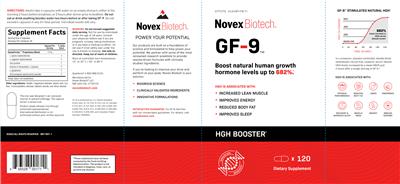
Supplement Facts
| Ingredient | Amount | % DV |
|---|---|---|
| L-Glutamine | 0 NP | -- |
| L-Lysine Hydrochloride | 0 NP | -- |
| L-Cysteine | 0 NP | -- |
| L-Arginine Hydrochloride | 0 NP | -- |
| GenysFactor Proprietary Blend | 2.9 Gram(s) | -- |
| Oxo-Proline | 0 NP | -- |
| Schizonepeta, Powder | 0 NP | -- |
Other ingredients: Gelatin, Magnesium Stearate, Stearic Acid, Rice Flour, Microcrystalline Cellulose, Titanium Dioxide, Silicon Dioxide
Tap any ingredient to jump to its full detail below.
These statements are the manufacturer’s wording, reproduced from the product label — the label is saying it, not HelloPharmacist. We don’t verify or endorse them.
Suggested/Recommended/Usage/Directions
Directions: Adults take 4 capsules with water on an empty stomach, either in the morning 2 hours before breakfast, or 2 hours after dinner prior to bedtime. Do not eat or drink anything besides water two hours before or after taking GF-9. Do not exceed capsules in any 24-hour period. Individual results will vary.
Storage
This box was designed in an oversized manner to prevent pilferage.
Store at controlled room temperature: 15 degrees to 30 degrees C / 59 degrees to 86 degrees F
Precautions
Do not eat or drink anything besides water two hours before or after taking GF-9. Do not exceed capsules in any 24-hour period. Individual results will vary. Product resale allowed only through authorized representatives. International distribution is not authorized without prior written approval. Warning: Do not exceed suggested daily serving. Do not use if inner safety seal under the cap is broken or missing. Use only as directed.
Consult your physician before use if you are pregnant, nursing, taking medication, or if you have a medical condition.
Not for use in individuals under the age of 18 years. Keep out of reach of children.
Brand IP Statement(s)
Copyright 2022 All Rights Reserved
GF-9 is protected by U.S. Patent Numbers 8,551,542; 8,715,752; 8,722,114; 8,734,864; 8,747,921; 8,747,922; 8,765,195; 8,808,763; 8,808,764; 8,815,311; 9,066,953; 9,198,889; 9,238,023; 9,339,490; and Canadian Patent Number 2840809.
General Statements
Questions? 1-800-898-5153
Power your potential
Our products are built on a foundation of science and formulated to help power your potential. We partner with some of the most renowned research scientists to provide results-driven formulas with clinically studied ingredients. If you're looking to improve your drive and perform at your peak. Novex Biotech is your solution. Rigorous science Clinically validated ingredients Innovative formulations
The capsule shown is actual size.
FDA Disclaimer Statement
These statements have not been evaluated by the Food and Drug Administration. This product is not intended to diagnose, treat, cure, or prevent any disease.
Formulation
Satisfaction guarantee: Try GF-9 risk-free with our money-back guarantee. For details, visit novexbiotech.com. Boosts natural human growth hormone levels up to 682%. HGH is associated with: Increased lean muscle Improved energy Reduced body fat Improved sleep HGH Booster Innovation Research
GF-9 stimulated natural high 682% increase in HGH serum (blood) levels In a crossover, placebo-controlled-double blind, randomized clinical trial, subject's serum (blood) HGH levels increased by a mean 682% just 2 hours after a single serving of GF-9. HGH is associated with: Physical performance Recovery & improved sleep Reduced body fat Muscle mass Libido Energy Endurance Immune support
FDA Statement of Identity
Dietary Supplement
Is this label outdated? Report a formula or label change and our pharmacy team will review it.
GF-9 by Novex Biotech label
The label scan from the NIH Dietary Supplement Label Database. Tap to enlarge.
Label images are published by the NIH Dietary Supplement Label Database for the version of this product on file. Always read your actual product label.
View the full label (PDF)The Ingredients in GF-9 by Novex Biotech
These are the 6 active ingredients this product is made of. Select any to open its full monograph.
Serving size4 Capsule(s) Dosage formCapsule Servings per container30 Amounts shown are per serving.
Most supplement products combine several ingredients, and a medication can interact with the product through any one of them. Each ingredient below shows whether it has known drug interactions.
GenysFactor Proprietary Blend
- › L-Glutamine
- › L-Lysine Hydrochloride
- › L-Cysteine
- › L-Arginine Hydrochloride
- › Oxo-Proline
- › Schizonepeta, Powder
Other (inactive) ingredients: Gelatin, Magnesium Stearate, Stearic Acid, Rice Flour, Microcrystalline Cellulose, Titanium Dioxide, Silicon Dioxide. These complete the product’s ingredient list but are not active constituents.
GF-9 by Novex Biotech Drug Interactions
HelloPharmacist Interaction Report
GF-9 by Novex Biotech contains six ingredients, and several of them interact with medications.
The most serious concern is L-arginine, which carries Moderate-severity interactions with blood pressure and heart medications. L-arginine can lower blood pressure on its own, so combining it with antihypertensive drugs—including ACE inhibitors, ARBs, and others—raises the risk of dangerously low blood pressure (hypotension).
It may also increase potassium levels when taken with potassium-sparing diuretics or certain blood pressure medications, and it can increase bleeding risk with blood thinners (anticoagulants) and antiplatelet drugs.
Read the full breakdown — every affected drug type, severity by severity
Schizonepeta powder also carries Moderate interactions with several drug groups. It can affect how your body processes certain medications through the liver's cytochrome P450 system—specifically, it may increase the effects of some drugs metabolized by CYP2D6, CYP1A2, and CYP2E1 (including some antidepressants, pain medications, and other common drugs), while potentially decreasing the effects of drugs processed by CYP3A4 (a large group that includes statins, allergy medications, and others).
L-glutamine theoretically may reduce the effectiveness of anticonvulsant medications, though this hasn't been reported in humans. L-cysteine may increase the blood-sugar-lowering effect of diabetes medications, raising low blood sugar (hypoglycemia) risk.
L-lysine carries a Minor interaction with a specific class of gut-motility drugs (5-HT4 agonists).
We could not check oxo-proline, as we hold no data for it. Altogether, these interactions span 1,115 individual medications.
Use the medication checker below to see whether any of your drugs are affected.
Check your own medications below · Editorial policy · How we use AI
Want to check YOUR meds against GF-9?
Ask about interactions with your drugs in plain English — “Can I take it with lisinopril?” — and we find you the answer in seconds, ingredient by ingredient.
Go to the checkerIngredients driving the most interactions
Individual Drug Interactions
The ingredients in GF-9 interact with 1,127 drugs. Click any drug to see the details.
5 of the 6 ingredients in GF-9 interact with drugs. Each result below shows which ingredient is responsible. Schizonepeta, Powder L-Arginine Hydrochloride L-Cysteine L-Glutamine L-Lysine Hydrochloride
Ado-trastuzumab EmtansineKadcyla
How Ado-trastuzumab Emtansine interacts with GF-9 — through 1 ingredient. Tap an ingredient for the detail:
Schizonepeta, PowderCytochrome P450 3a4 (cyp3a4) Substrates Moderate
Interaction Summary
Animal research suggests that schizonepetin, a monoterpene constituent of schizonepeta, induces cytochrome P450 (CYP) 3A4.
Read the full Schizonepeta, Powder + Ado-trastuzumab Emtansine interactionAbciximabReoPro
How Abciximab interacts with GF-9 — through 1 ingredient. Tap an ingredient for the detail:
L-arginine HydrochlorideAnticoagulant/antiplatelet Drugs Moderate
Interaction Summary
Theoretically, concomitant use of L-arginine with anticoagulant and antiplatelet drugs might have additive effects and increase the risk of bleeding.
Read the full L-arginine Hydrochloride + Abciximab interactionAbemaciclibVerzenio
How Abemaciclib interacts with GF-9 — through 1 ingredient. Tap an ingredient for the detail:
Schizonepeta, PowderCytochrome P450 3a4 (cyp3a4) Substrates Moderate
Interaction Summary
Animal research suggests that schizonepetin, a monoterpene constituent of schizonepeta, induces cytochrome P450 (CYP) 3A4.
Read the full Schizonepeta, Powder + Abemaciclib interactionAbiraterone
How Abiraterone interacts with GF-9 — through 1 ingredient. Tap an ingredient for the detail:
Schizonepeta, PowderCytochrome P450 3a4 (cyp3a4) Substrates Moderate
Interaction Summary
Animal research suggests that schizonepetin, a monoterpene constituent of schizonepeta, induces cytochrome P450 (CYP) 3A4.
Read the full Schizonepeta, Powder + Abiraterone interactionAbiraterone AcetateYonsa, Zytiga
How Abiraterone Acetate interacts with GF-9 — through 1 ingredient. Tap an ingredient for the detail:
Schizonepeta, PowderCytochrome P450 3a4 (cyp3a4) Substrates Moderate
Interaction Summary
Animal research suggests that schizonepetin, a monoterpene constituent of schizonepeta, induces cytochrome P450 (CYP) 3A4.
Read the full Schizonepeta, Powder + Abiraterone Acetate interactionAbrocitinibCibinqo
How Abrocitinib interacts with GF-9 — through 1 ingredient. Tap an ingredient for the detail:
L-arginine HydrochlorideAnticoagulant/antiplatelet Drugs Moderate
Interaction Summary
Theoretically, concomitant use of L-arginine with anticoagulant and antiplatelet drugs might have additive effects and increase the risk of bleeding.
Read the full L-arginine Hydrochloride + Abrocitinib interactionAcalabrutinibCalquence
How Acalabrutinib interacts with GF-9 — through 1 ingredient. Tap an ingredient for the detail:
Schizonepeta, PowderCytochrome P450 3a4 (cyp3a4) Substrates Moderate
Interaction Summary
Animal research suggests that schizonepetin, a monoterpene constituent of schizonepeta, induces cytochrome P450 (CYP) 3A4.
Read the full Schizonepeta, Powder + Acalabrutinib interactionAcarboseGlucobay, Prandase, Precose
How Acarbose interacts with GF-9 — through 2 ingredients. Tap an ingredient for the detail:
L-cysteineAntidiabetes Drugs Moderate
Interaction Summary
Theoretically, taking L-cysteine supplements with antidiabetes drugs might increase the risk of hypoglycemia.
Read the full L-cysteine + Acarbose interactionL-arginine HydrochlorideAntidiabetes Drugs Moderate
Interaction Summary
Theoretically, concomitant use of L-arginine might have additive effects with antidiabetes drugs.
Read the full L-arginine Hydrochloride + Acarbose interactionAcebutololRhotral, Sectral
How Acebutolol interacts with GF-9 — through 1 ingredient. Tap an ingredient for the detail:
L-arginine HydrochlorideAntihypertensive Drugs Moderate
Interaction Summary
Theoretically, concomitant use of L-arginine and antihypertensive drugs may increase the risk of hypotension.
Read the full L-arginine Hydrochloride + Acebutolol interactionAcenocoumarolSintrom
How Acenocoumarol interacts with GF-9 — through 1 ingredient. Tap an ingredient for the detail:
L-arginine HydrochlorideAnticoagulant/antiplatelet Drugs Moderate
Interaction Summary
Theoretically, concomitant use of L-arginine with anticoagulant and antiplatelet drugs might have additive effects and increase the risk of bleeding.
Read the full L-arginine Hydrochloride + Acenocoumarol interactionAcetaminophenChildren's Tylenol, Children's Tylenol Meltaways, Tylenol, Tylenol Ex Strength
How Acetaminophen interacts with GF-9 — through 1 ingredient. Tap an ingredient for the detail:
Schizonepeta, PowderCytochrome P450 2e1 (cyp2e1) Substrates, Cytochrome P450 1a2 (cyp1a2) Substrates Moderate
Interaction Summary
Animal research suggests that schizonepetin, a monoterpene constituent of schizonepeta, inhibits cytochrome P450 (CYP) 2E1.
Read the full Schizonepeta, Powder + Acetaminophen interactionAcetaminophen, AspirinGemnisyn
How Acetaminophen, Aspirin interacts with GF-9 — through 2 ingredients. Tap an ingredient for the detail:
Schizonepeta, PowderCytochrome P450 1a2 (cyp1a2) Substrates, Cytochrome P450 2e1 (cyp2e1) Substrates Moderate
Interaction Summary
Animal research suggests that schizonepetin, a monoterpene constituent of schizonepeta, inhibits cytochrome P450 (CYP) 1A2.
Read the full Schizonepeta, Powder + Acetaminophen, Aspirin interactionL-arginine HydrochlorideAnticoagulant/antiplatelet Drugs Moderate
Interaction Summary
Theoretically, concomitant use of L-arginine with anticoagulant and antiplatelet drugs might have additive effects and increase the risk of bleeding.
Read the full L-arginine Hydrochloride + Acetaminophen, Aspirin interactionAcetaminophen, Aspirin, CaffeineExcedrin, Excedrin Extra Strength, Excedrin Migraine
How Acetaminophen, Aspirin, Caffeine interacts with GF-9 — through 2 ingredients. Tap an ingredient for the detail:
Schizonepeta, PowderCytochrome P450 1a2 (cyp1a2) Substrates, Cytochrome P450 2e1 (cyp2e1) Substrates +1 Moderate
Interaction Summary
Animal research suggests that schizonepetin, a monoterpene constituent of schizonepeta, inhibits cytochrome P450 (CYP) 1A2.
Read the full Schizonepeta, Powder + Acetaminophen, Aspirin, Caffeine interactionL-arginine HydrochlorideAnticoagulant/antiplatelet Drugs Moderate
Interaction Summary
Theoretically, concomitant use of L-arginine with anticoagulant and antiplatelet drugs might have additive effects and increase the risk of bleeding.
Read the full L-arginine Hydrochloride + Acetaminophen, Aspirin, Caffeine interactionAcetaminophen, Brompheniramine, PhenylpropanolamineDimetapp Cold and Flu
How Acetaminophen, Brompheniramine, Phenylpropanolamine interacts with GF-9 — through 1 ingredient. Tap an ingredient for the detail:
Schizonepeta, PowderCytochrome P450 2e1 (cyp2e1) Substrates, Cytochrome P450 1a2 (cyp1a2) Substrates Moderate
Interaction Summary
Animal research suggests that schizonepetin, a monoterpene constituent of schizonepeta, inhibits cytochrome P450 (CYP) 2E1.
Read the full Schizonepeta, Powder + Acetaminophen, Brompheniramine, Phenylpropanolamine interactionAcetaminophen, ButalbitalAxocet, Bancap, Bucet, Butex Forte, Esgic CF, Orbivan CF +5 more
How Acetaminophen, Butalbital interacts with GF-9 — through 1 ingredient. Tap an ingredient for the detail:
Schizonepeta, PowderCytochrome P450 1a2 (cyp1a2) Substrates, Cytochrome P450 2e1 (cyp2e1) Substrates Moderate
Interaction Summary
Animal research suggests that schizonepetin, a monoterpene constituent of schizonepeta, inhibits cytochrome P450 (CYP) 1A2.
Read the full Schizonepeta, Powder + Acetaminophen, Butalbital interactionAcetaminophen, Butalbital, CaffeineEsgic, Esgic Plus, Fiogesic, Fioricet, Repan, Tecnal +1 more
How Acetaminophen, Butalbital, Caffeine interacts with GF-9 — through 1 ingredient. Tap an ingredient for the detail:
Schizonepeta, PowderCytochrome P450 2e1 (cyp2e1) Substrates, Cytochrome P450 1a2 (cyp1a2) Substrates +1 Moderate
Interaction Summary
Animal research suggests that schizonepetin, a monoterpene constituent of schizonepeta, inhibits cytochrome P450 (CYP) 2E1.
Read the full Schizonepeta, Powder + Acetaminophen, Butalbital, Caffeine interactionAcetaminophen, Butalbital, Caffeine, CodeineEsgic with Codeine, Fioricet w/ Codeine
How Acetaminophen, Butalbital, Caffeine, Codeine interacts with GF-9 — through 1 ingredient. Tap an ingredient for the detail:
Schizonepeta, PowderCytochrome P450 3a4 (cyp3a4) Substrates, Cytochrome P450 2e1 (cyp2e1) Substrates +2 Moderate
Interaction Summary
Animal research suggests that schizonepetin, a monoterpene constituent of schizonepeta, induces cytochrome P450 (CYP) 3A4.
Read the full Schizonepeta, Powder + Acetaminophen, Butalbital, Caffeine, Codeine interactionAcetaminophen, Butalbital, CodeineBancap w/ Codeine
How Acetaminophen, Butalbital, Codeine interacts with GF-9 — through 1 ingredient. Tap an ingredient for the detail:
Schizonepeta, PowderCytochrome P450 2d6 (cyp2d6) Substrates, Cytochrome P450 2e1 (cyp2e1) Substrates +1 Moderate
Interaction Summary
Animal research suggests that schizonepetin, a monoterpene constituent of schizonepeta, inhibits cytochrome P450 (CYP) 2D6.
Read the full Schizonepeta, Powder + Acetaminophen, Butalbital, Codeine interactionAcetaminophen, Butalbital, Codeine PhosphatePhrenilin #3
How Acetaminophen, Butalbital, Codeine Phosphate interacts with GF-9 — through 1 ingredient. Tap an ingredient for the detail:
Schizonepeta, PowderCytochrome P450 1a2 (cyp1a2) Substrates, Cytochrome P450 2d6 (cyp2d6) Substrates +1 Moderate
Interaction Summary
Animal research suggests that schizonepetin, a monoterpene constituent of schizonepeta, inhibits cytochrome P450 (CYP) 1A2.
Read the full Schizonepeta, Powder + Acetaminophen, Butalbital, Codeine Phosphate interactionAcetaminophen, Caffeine, Chlorpheniramine, Hydrocodone, PhenylephrineHycomine Compound
How Acetaminophen, Caffeine, Chlorpheniramine, Hydrocodone, Phenylephrine interacts with GF-9 — through 1 ingredient. Tap an ingredient for the detail:
Schizonepeta, PowderCytochrome P450 1a2 (cyp1a2) Substrates, Cytochrome P450 3a4 (cyp3a4) Substrates +2 Moderate
Interaction Summary
Animal research suggests that schizonepetin, a monoterpene constituent of schizonepeta, inhibits cytochrome P450 (CYP) 1A2.
Read the full Schizonepeta, Powder + Acetaminophen, Caffeine, Chlorpheniramine, Hydrocodone, Phenylephrine interactionAcetaminophen, Caffeine, CodeineGesic C15, Gesic C30, Gesic C8, Lenoltec 1, Lenoltec 2, Lenoltec 3 +1 more
How Acetaminophen, Caffeine, Codeine interacts with GF-9 — through 1 ingredient. Tap an ingredient for the detail:
Schizonepeta, PowderCytochrome P450 2e1 (cyp2e1) Substrates, Cytochrome P450 1a2 (cyp1a2) Substrates +2 Moderate
Interaction Summary
Animal research suggests that schizonepetin, a monoterpene constituent of schizonepeta, inhibits cytochrome P450 (CYP) 2E1.
Read the full Schizonepeta, Powder + Acetaminophen, Caffeine, Codeine interactionAcetaminophen, Caffeine, Codeine, SalicylamideCodalan No.1, Codalan No.2, Codalan No.3
How Acetaminophen, Caffeine, Codeine, Salicylamide interacts with GF-9 — through 1 ingredient. Tap an ingredient for the detail:
Schizonepeta, PowderCytochrome P450 3a4 (cyp3a4) Substrates, Cytochrome P450 2e1 (cyp2e1) Substrates +2 Moderate
Interaction Summary
Animal research suggests that schizonepetin, a monoterpene constituent of schizonepeta, induces cytochrome P450 (CYP) 3A4.
Read the full Schizonepeta, Powder + Acetaminophen, Caffeine, Codeine, Salicylamide interactionAcetaminophen, Caffeine, DihydrocodeineDHC Plus, Panlor DC, Panlor SS
How Acetaminophen, Caffeine, Dihydrocodeine interacts with GF-9 — through 1 ingredient. Tap an ingredient for the detail:
Schizonepeta, PowderCytochrome P450 1a2 (cyp1a2) Substrates, Cytochrome P450 3a4 (cyp3a4) Substrates +2 Moderate
Interaction Summary
Animal research suggests that schizonepetin, a monoterpene constituent of schizonepeta, inhibits cytochrome P450 (CYP) 1A2.
Read the full Schizonepeta, Powder + Acetaminophen, Caffeine, Dihydrocodeine interactionAcetaminophen, Caffeine, IsomethepteneMigralam
How Acetaminophen, Caffeine, Isometheptene interacts with GF-9 — through 1 ingredient. Tap an ingredient for the detail:
Schizonepeta, PowderCytochrome P450 3a4 (cyp3a4) Substrates, Cytochrome P450 1a2 (cyp1a2) Substrates +1 Moderate
Interaction Summary
Animal research suggests that schizonepetin, a monoterpene constituent of schizonepeta, induces cytochrome P450 (CYP) 3A4.
Read the full Schizonepeta, Powder + Acetaminophen, Caffeine, Isometheptene interactionAcetaminophen, Caffeine, PyrilamineMidol Max Strength Menstrual
How Acetaminophen, Caffeine, Pyrilamine interacts with GF-9 — through 1 ingredient. Tap an ingredient for the detail:
Schizonepeta, PowderCytochrome P450 2e1 (cyp2e1) Substrates, Cytochrome P450 3a4 (cyp3a4) Substrates +1 Moderate
Interaction Summary
Animal research suggests that schizonepetin, a monoterpene constituent of schizonepeta, inhibits cytochrome P450 (CYP) 2E1.
Read the full Schizonepeta, Powder + Acetaminophen, Caffeine, Pyrilamine interactionAcetaminophen, Chlorpheniramine Maleate, Dextromethorphan HbrVicks Formula 44M Cough, Cold & Flu Relief
How Acetaminophen, Chlorpheniramine Maleate, Dextromethorphan Hbr interacts with GF-9 — through 1 ingredient. Tap an ingredient for the detail:
Schizonepeta, PowderCytochrome P450 1a2 (cyp1a2) Substrates, Cytochrome P450 2d6 (cyp2d6) Substrates +2 Moderate
Interaction Summary
Animal research suggests that schizonepetin, a monoterpene constituent of schizonepeta, inhibits cytochrome P450 (CYP) 1A2.
Read the full Schizonepeta, Powder + Acetaminophen, Chlorpheniramine Maleate, Dextromethorphan Hbr interactionAcetaminophen, Chlorpheniramine, Codeine, PhenylephrineColrex
How Acetaminophen, Chlorpheniramine, Codeine, Phenylephrine interacts with GF-9 — through 1 ingredient. Tap an ingredient for the detail:
Schizonepeta, PowderCytochrome P450 1a2 (cyp1a2) Substrates, Cytochrome P450 2e1 (cyp2e1) Substrates +2 Moderate
Interaction Summary
Animal research suggests that schizonepetin, a monoterpene constituent of schizonepeta, inhibits cytochrome P450 (CYP) 1A2.
Read the full Schizonepeta, Powder + Acetaminophen, Chlorpheniramine, Codeine, Phenylephrine interactionAcetaminophen, Chlorpheniramine, DextromethorphanCoricidin II Extra Strength Cold and Flu
How Acetaminophen, Chlorpheniramine, Dextromethorphan interacts with GF-9 — through 1 ingredient. Tap an ingredient for the detail:
Schizonepeta, PowderCytochrome P450 2d6 (cyp2d6) Substrates, Cytochrome P450 1a2 (cyp1a2) Substrates +2 Moderate
Interaction Summary
Animal research suggests that schizonepetin, a monoterpene constituent of schizonepeta, inhibits cytochrome P450 (CYP) 2D6.
Read the full Schizonepeta, Powder + Acetaminophen, Chlorpheniramine, Dextromethorphan interactionAcetaminophen, Chlorpheniramine, Dextromethorphan HydrobromideCoricidin HBP Maximum Strength Flu
How Acetaminophen, Chlorpheniramine, Dextromethorphan Hydrobromide interacts with GF-9 — through 1 ingredient. Tap an ingredient for the detail:
Schizonepeta, PowderCytochrome P450 3a4 (cyp3a4) Substrates, Cytochrome P450 1a2 (cyp1a2) Substrates +2 Moderate
Interaction Summary
Animal research suggests that schizonepetin, a monoterpene constituent of schizonepeta, induces cytochrome P450 (CYP) 3A4.
Read the full Schizonepeta, Powder + Acetaminophen, Chlorpheniramine, Dextromethorphan Hydrobromide interactionAcetaminophen, Chlorpheniramine, Dextromethorphan, PhenylpropanolamineMulti Symptom Cold Relief
How Acetaminophen, Chlorpheniramine, Dextromethorphan, Phenylpropanolamine interacts with GF-9 — through 1 ingredient. Tap an ingredient for the detail:
Schizonepeta, PowderCytochrome P450 1a2 (cyp1a2) Substrates, Cytochrome P450 2d6 (cyp2d6) Substrates +2 Moderate
Interaction Summary
Animal research suggests that schizonepetin, a monoterpene constituent of schizonepeta, inhibits cytochrome P450 (CYP) 1A2.
Read the full Schizonepeta, Powder + Acetaminophen, Chlorpheniramine, Dextromethorphan, Phenylpropanolamine interactionEach ingredient & the kinds of drugs it affects
For each ingredient in GF-9 with known interactions, here are the types of medications they can affect. Open any type for the detail — or search your exact drug in the checker above.
Schizonepeta, Powder
Cytochrome P450 1A2 (Cyp1A2) Substrates
Animal research suggests that schizonepetin, a monoterpene constituent of schizonepeta, inhibits cytochrome P450 (CYP) 1A2. Theoretically, schizonepeta might increase the effects and side effects of CYP1A2 substrates.
Some substrates of CYP1A2 include clozapine (Clozaril), cyclobenzaprine (Flexeril), fluvoxamine (Luvox), haloperidol (Haldol), imipramine (Tofranil), mexiletine (Mexitil), olanzapine (Zyprexa), pentazocine (Talwin), propranolol (Inderal), tacrine (Cognex), theophylline, zileuton (Zyflo), zolmitriptan (Zomig), and others.
Cytochrome P450 2D6 (Cyp2D6) Substrates
Animal research suggests that schizonepetin, a monoterpene constituent of schizonepeta, inhibits cytochrome P450 (CYP) 2D6. Theoretically, schizonepeta might increase the effects and side effects of CYP2D6 substrates.
Some substrates of CYP2D6 include amitriptyline (Elavil), codeine, desipramine (Norpramin), flecainide (Tambocor), haloperidol (Haldol), imipramine (Tofranil), metoprolol (Lopressor, Toprol XL), ondansetron (Zofran), paroxetine (Paxil), risperidone (Risperdal), tramadol (Ultram), venlafaxine (Effexor), and others.
Cytochrome P450 2E1 (Cyp2E1) Substrates
Animal research suggests that schizonepetin, a monoterpene constituent of schizonepeta, inhibits cytochrome P450 (CYP) 2E1. Theoretically, schizonepeta might increase the effects and side effects of CYP2E1 substrates.
Some substrates of CYP2E1 include acetaminophen, chlorzoxazone (Parafon Forte), ethanol, theophylline, and anesthetics such as enflurane (Ethrane), halothane (Fluothane), isoflurane (Forane), and methoxyflurane (Penthrane).
Cytochrome P450 3A4 (Cyp3A4) Substrates
Animal research suggests that schizonepetin, a monoterpene constituent of schizonepeta, induces cytochrome P450 (CYP) 3A4. Theoretically, schizonepeta might decrease the effects of CYP3A4 substrates.
Some substrates of CYP3A4 include lovastatin (Mevacor), ketoconazole (Nizoral), itraconazole (Sporanox), fexofenadine (Allegra), triazolam (Halcion), and numerous others.
L-Arginine Hydrochloride
Ace Inhibitors (Aceis)
Theoretically, concomitant use of L-arginine and ACE inhibitors may increase the risk for hypotension and hyperkalemia.
Combining L-arginine with some antihypertensive drugs, especially ACE inhibitors, seems to have additive vasodilating and blood pressure-lowering effects. Furthermore, ACE inhibitors can increase potassium levels. Use of L-arginine has been associated with hyperkalemia in some patients. Theoretically, concomitant use of ACE inhibitors with L-arginine may increases the risk of hyperkalemia.
Angiotensin Receptor Blockers (Arbs)
Theoretically, concomitant use of L-arginine and ARBs may increase the risk of hypotension and hyperkalemia.
L-arginine increases nitric oxide, which causes vasodilation. Combining L-arginine with ARBs seems to increase L-arginine-induced vasodilation. Furthermore, ARBs can increase potassium levels. Use of L-arginine has been associated with hyperkalemia in some patients. Theoretically, concomitant use of ARBs with L-arginine may increases the risk of hyperkalemia.
Anticoagulant/Antiplatelet Drugs
Theoretically, concomitant use of L-arginine with anticoagulant and antiplatelet drugs might have additive effects and increase the risk of bleeding.
Preliminary research suggests that L-arginine infusions reduce platelet aggregation in humans. The clinical significance of this effect is unclear.
Antidiabetes Drugs
Theoretically, concomitant use of L-arginine might have additive effects with antidiabetes drugs.
Preliminary clinical research shows that L-arginine decreases blood glucose levels in patients with type 2 diabetes.
Antihypertensive Drugs
Theoretically, concomitant use of L-arginine and antihypertensive drugs may increase the risk of hypotension.
L-arginine increases nitric oxide, which causes vasodilation. Clinical evidence shows that L-arginine can reduce blood pressure in some individuals with hypertension. Furthermore, combining L-arginine with some antihypertensive drugs seems to have additive vasodilating and blood pressure-lowering effects.
Isoproterenol (Isuprel)
Theoretically, concurrent use of isoproterenol and L-arginine might result in additive effects and hypotension.
Preliminary clinical evidence suggests that L-arginine enhances isoproterenol-induced vasodilation in patients with essential hypertension or a family history of essential hypertension.
Potassium-Sparing Diuretics
Theoretically concomitant use of potassium-sparing diuretics with L-arginine may increases the risk of hyperkalemia.
Potassium-sparing diuretics can increase potassium levels. Use of L-arginine has been associated with hyperkalemia in some patients.
Sildenafil (Viagra)
Theoretically, concurrent use of sildenafil and L-arginine might increase the risk for hypotension.
In vivo, concurrent use of L-arginine and sildenafil has resulted in increased vasodilation. Theoretically, concurrent use might have additive vasodilatory and hypotensive effects. However, in studies evaluating the combined use of L-arginine and sildenafil for erectile dysfunction, hypotension was not reported.
Testosterone
Theoretically, concomitant use of L-arginine and testosterone might have additive effects.
In clinical research, L-arginine increases the level of testosterone in male patients with erectile dysfunction. The clinical significance of this finding is unclear.
L-Cysteine
Antidiabetes Drugs
Theoretically, taking L-cysteine supplements with antidiabetes drugs might increase the risk of hypoglycemia.
Animal research suggests that L-cysteine can have hypoglycemic effects.
L-Glutamine
Anticonvulsants
Theoretically, glutamine might antagonize the effects of anticonvulsant medications.
Glutamine is metabolized to the excitatory neurotransmitter glutamate. Glutamate might have antagonistic effects with anticonvulsant drugs. However, this interaction has not yet been reported in humans.
L-Lysine Hydrochloride
5-Ht4 Agonists
Theoretically, lysine may reduce the effects of 5-HT4 agonists.
Animal research suggests that L-lysine is a partial serotonin receptor 4 (5-HT4) antagonist and inhibits diarrhea induced by the 5-HT4 agonist, 5-hydroxytryptophane.
Brand information
Manufacturer and brand details for GF-9, from the product label.
Novex Biotech
See all Novex Biotech products- Name
- Novex Biotech, LLC
- City
- Salt Lake City
- State
- UT
- ZipCode
- 84116
- Phone Number
- 1-800-898-5153
- Web Address
- www.NovexBiotech.com
GF-9 by Novex Biotech: Common Questions
Does GF-9 by Novex Biotech interact with any medications?
How can one product interact with so many drugs?
Where does this information come from?
Is GF-9 safe to take if I'm pregnant?
Can I take GF-9 while breastfeeding?
What are the most common side effects of GF-9?
Does GF-9 actually work for muscle growth or athletic performance?
Is GF-9 safe for someone with diabetes?
What is oxo-proline in this product?
Written and reviewed by the HelloPharmacist editorial staff. Our editorial policy
Not sure if GF-9 is safe with your meds?
Our pharmacists answer your medication & supplement questions — free.
Label information is sourced from the NIH Dietary Supplement Label Database and reflects the product version on file; always read your actual product label. This page is for education only and is not a substitute for professional medical advice. Confirm with your pharmacist or doctor before combining supplements and medications.
The Full Monographs Behind GF-9’s Ingredients
Every ingredient we hold a full HelloPharmacist monograph for — uses, evidence, safety, and the complete interaction list.
Glutamine
Interacts with 50 drugsGlutamine is the most abundant amino acid in the body and is usually made in your muscles. A prescription form is FDA-approved to help reduce sickle cell disease complications, but for most...
Read the full Glutamine monograph → Herb & supplement monographLysine
Interacts with 1 drugLysine is an essential amino acid your body cannot make on its own, so it must come from food or supplements. People most often take extra lysine to try to prevent or shorten cold sores, but...
Read the full Lysine monograph → Herb & supplement monographL-cysteine
Interacts with 86 drugsL-cysteine is a sulfur-containing amino acid your body uses to make proteins and the antioxidant glutathione. Most people get enough from food, and supplements are usually well tolerated, bu...
Read the full L-cysteine monograph → Herb & supplement monographL-arginine
Interacts with 403 drugsL-arginine is an amino acid that the body uses to make nitric oxide, a substance that helps blood vessels relax and widen. It is popularly used for blood pressure, erectile dysfunction, and...
Read the full L-arginine monograph → Herb & supplement monographSchizonepeta
Interacts with 797 drugsSchizonepeta is a mint-family herb long used in traditional Chinese medicine, usually as part of combination formulas for colds, fevers, and itchy skin conditions. Modern human evidence is v...
Read the full Schizonepeta monograph →Sources & How We Checked
GF-9's label data comes from the NIH Dietary Supplement Label Database; the ingredient interaction data is from the Natural Medicines database, reviewed by our pharmacists.
- NIH Dietary Supplement Label Database (DSLD) — The official product label on file for this supplement.
- Natural Medicines (Therapeutic Research Center) — Evidence-graded clinical reference behind the ingredient interaction data.
Content is written and reviewed by licensed HelloPharmacist pharmacists. See our data sources and editorial standards for how this information is built and checked.
The 90 references behind this product’s interaction data
Every citation that drives the interaction findings for this product’s ingredients, from the evidence-graded Natural Medicines (TRC Healthcare) database. Open an ingredient to browse its citations — links open the study on PubMed or the publisher’s site.
Glutamine 11 references
- Miller AL. Therapeutic considerations of L-glutamine: a review of the literature. Altern Med Rev 1999;4:239-48..
- Bozzetti F, Biganzoli L, Gavazzi C, et al. Glutamine supplementation in cancer patients receiving chemotherapy: a double-blind randomized study. Nutrition 1997;13:748-51.. PubMed
- Mebane AH. L-Glutamine and mania. Am J Psychiatry 984;141:1302-3.
- Meldrum BS. Glutamate as a neurotransmitter in the brain: review of physiology and pathology. J Nutr 2000;130:1007S-15S.. PubMed
- Garlick PJ. Assessment of the safety of glutamine and other amino acids. J Nutr 2001;131:2556S-61S.. PubMed
- Chapman AG. Glutamate and epilepsy. J Nutr 2000;130:1043S-5S.. PubMed
- Ziegler TR. Glutamine supplementation in cancer patients receiving bone marrow transplantation and high dose chemotherapy. J Nutr 2001;131:2578S-84S.. PubMed
- Laviano A, Molfino A, Lacaria MT, Canelli A, De Leo S, Preziosa I, Rossi Fanelli F. Glutamine supplementation favors weight loss in nondieting obese female patients. A pilot study. Eur J Clin Nutr. 2014 Nov;68(11):1264-6. PubMed
- Endari (l-glutamine) [package insert]. Torrance, CA: Emmaus Medical,Inc; 2017.
- Niihara Y, Miller ST, Kanter J, et al. A Phase 3 Trial of l-Glutamine in Sickle Cell Disease. N Engl J Med 2018;379(3):226-35. doi: 10.1056/NEJMoa1715971.
- Ogden HB, Child RB, Fallowfield JL, et al. Gastrointestinal Tolerance of Low, Medium and High Dose Acute Oral l-Glutamine Supplementation in Healthy Adults: A Pilot Study. Nutrients. 2020;12(10):2953. PubMed
Lysine 7 references
- Thein DJ, Hurt WC. Lysine as a prophylactic agent in the treatment of recurrent herpes simplex labialis. Oral Surg Oral Med Oral Pathol 1984;58:659-66. PubMed
- McCune MA, Perry HO, Muller SA, O'Fallon WM. Treatment of recurrent herpes simplex infections with L-lysine monohydrochloride. Cutis 1984;34:366-73.
- DiGiovanna JJ, Blank H. Failure of lysine in frequently recurrent herpes simplex infection. Treatment and prophylaxis. Arch Dermatol 1984;120:48-51. DOI
- Milman N, Scheibel J, Jessen O. Lysine prophylaxis in recurrent herpes simplex labialis: a double-blind, controlled crossover study. Acta Derm Venereol 1980;60:85-7.
- Griffith RS, Walsh DE, Myrmel KH, et al. Success of L-lysine therapy in frequently recurrent herpes simplex infection. Treatment and prophylaxis. Dermatologica 1987;175:183-90. DOI
- Lo JC, Chertow GM, Rennke H, Seifter JL. Fanconi's syndrome and tubulointerstitial nephritis in association with L-lysine ingestion. Am J Kidney Dis 1996;28:614-7. PubMed
- Smriga M, Torii K. L-Lysine acts like a partial serotonin receptor 4 antagonist and inhibits serotonin-mediated intestinal pathologies and anxiety in rats. Proc Natl Acad Sci U S A. 2003 Dec 23;100(26):15370-5.
L-cysteine 2 references
- Dowlati Y, Maheux M, Meyer JH. The effect of oral L-cysteine on breast milk and plasma cysteine concentrations. Neuropsychiatr Dis Treat 2020;16:3163-3172.
- Lee S, Han KH, Nakamura Y, et al. Dietary L-cysteine improves the antioxidative potential and lipid metabolism in rats fed a normal diet. Biosci Biotechnol Biochem 2013;77(7):1430-4.
L-arginine 66 references
- Sapienza MA, Kharitonov SA, Horvath I, et al. Effect of inhaled L-arginine on exhaled nitric oxide in normal and asthmatic subjects. Thorax 1998;53:172-5.
- Clarkson P, Adams MR, Powe AJ, et al. Oral L-arginine improves endothelium-dependent dilation in hypercholesterolemic young adults. J Clin Invest 1996;97:1989-94. PubMed
- Tenenbaum A, Fisman EZ, Motro M. L-arginine: Rediscovery in progress. Cardiology 1998;90:153-9.
- Brittenden J, Park KGM, Heys SD, et al. L-Arginine stimulates host defenses in patients with breast cancer. Surgery 1994;115:205-12.
- Korting GE, Smith SD, Wheeler MA, et al. A randomized double-blind trial of oral L-arginine for treatment of interstitial cystitis. J Urol 1999;161:558-65. DOI
- Rector TS, Bank AJ, Mullen KA, et al. Randomized, double-blind, placebo-controlled study of supplemental oral L-arginine in patients with heart failure. Circulation 1996;93:2135-41.
- Siani A, Pagano E, Iacone R, et al. Blood pressure and metabolic changes during dietary L-arginine supplementation in humans. Am J Hypertens 2000;13:547-51. PubMed
- Cheng JW, Balwin SN. L-arginine in the management of cardiovascular diseases. Ann Pharmacother 2001;35:755-64. PubMed
- Wallace AW, Tom WL. Interaction of L-arginine and phosphodiesterase inhibitors in vasodilation of the porcine internal mammary artery. Anesth Analg 2000;90:840-6. DOI
- Huynh NT, Tayek JA. Oral arginine reduces systemic blood pressure in type 2 diabetes: its potential role in nitric oxide generation. J Am Coll Nutr 2002;21:422-7.. PubMed
- Staff AC, Berge L, Haugen G, et al. Dietary supplementation with L-arginine or placebo in women with pre-eclampsia. Acta Obstet Gynecol Scand 2004;83:103-7.
- Resnick DJ, Softness B, Murphy AR, et al. Case report of an anaphylactoid reaction to arginine. Ann Allergy Asthma Immunol 2002;88:67-8. PubMed
- Anon. Arginine hydrochloride injection (marketed as R-Gene 10). FDA Drug Safety Newsletter 2009;2(2):16-18. Available at: www.fda.gov/Drugs/DrugSafety/DrugSafetyNewsletter/default.htm.
- Higashi Y, Oshima T, Sasaki S, et. al. Angiotensin-converting enzyme inhibition, but not calcium antagonism, improves a response of the renal vasculature to L-arginine in patients with essential hypertension. Hypertension. 1998 Jul;32(1):16-24.
- Facchinetti, F., Longo, M., Piccinini, F., Neri, I., and Volpe, A. L-arginine infusion reduces blood pressure in preeclamptic women through nitric oxide release. J Soc Gynecol.Investig. 1999;6(4):202-207. DOI
- de Gouw, H. W., Verbruggen, M. B., Twiss, I. M., and Sterk, P. J. Effect of oral L-arginine on airway hyperresponsiveness to histamine in asthma. Thorax 1999;54(11):1033-1035. PubMed
- Komers, R., Komersova, K., Kazdova, L., Ruzickova, J., and Pelikanova, T. Effect of ACE inhibition and angiotensin AT1 receptor blockade on renal and blood pressure response to L-arginine in humans. J Hypertens. 2000;18(1):51-59. PubMed
- Cartledge, J. J., Davies, A. M., and Eardley, I. A randomized double-blind placebo-controlled crossover trial of the efficacy of L-arginine in the treatment of interstitial cystitis. BJU.Int. 2000;85(4):421-426.
- Sozykin, A. V., Noeva, E. A., Balakhonova, T. V., Pogorelova, O. A., and Men'shikov, M. I. [Effect of L-arginine on platelet aggregation, endothelial function adn exercise tolerance in patients with stable angina pectoris]. Ter.Arkh. 2000;72(8):24-27.
- Nagaya, N., Uematsu, M., Oya, H., Sato, N., Sakamaki, F., Kyotani, S., Ueno, K., Nakanishi, N., Yamagishi, M., and Miyatake, K. Short-term oral administration of L-arginine improves hemodynamics and exercise capacity in patients with precapillary pulmona
- Stokes, G. S., Barin, E. S., Gilfillan, K. L., and Kaesemeyer, W. H. Interactions of L-arginine, isosorbide mononitrate, and angiotensin II inhibitors on arterial pulse wave. Am J Hypertens. 2003;16(9 Pt 1):719-724.
- Park, K. G., Heys, S. D., Blessing, K., Kelly, P., McNurlan, M. A., Eremin, O., and Garlick, P. J. Stimulation of human breast cancers by dietary L-arginine. Clin.Sci.(Lond) 1992;82(4):413-417.
- Palloshi, A., Fragasso, G., Piatti, P., Monti, L. D., Setola, E., Valsecchi, G., Galluccio, E., Chierchia, S. L., and Margonato, A. Effect of oral L-arginine on blood pressure and symptoms and endothelial function in patients with systemic hypertension,
- Schlaich, M. P., Ahlers, B. A., Parnell, M. M., and Kaye, D. M. beta-Adrenoceptor-mediated, nitric-oxide-dependent vasodilatation is abnormal in early hypertension: restoration by L-arginine. J Hypertens. 2004;22(10):1917-1925. PubMed
- Neri, I., Blasi, I., and Facchinetti, F. Effects of acute L-arginine infusion on non-stress test in hypertensive pregnant women. J Matern.Fetal Neonatal Med. 2004;16(1):23-26. PubMed
- Rytlewski, K., Olszanecki, R., Korbut, R., and Zdebski, Z. Effects of prolonged oral supplementation with l-arginine on blood pressure and nitric oxide synthesis in preeclampsia. Eur.J Clin.Invest 2005;35(1):32-37.
- Mansoor, J. K., Morrissey, B. M., Walby, W. F., Yoneda, K. Y., Juarez, M., Kajekar, R., Severinghaus, J. W., Eldridge, M. W., and Schelegle, E. S. L-arginine supplementation enhances exhaled NO, breath condensate VEGF, and headache at 4,342 m. High Alt.M
- Neri, I., Jasonni, V. M., Gori, G. F., Blasi, I., and Facchinetti, F. Effect of L-arginine on blood pressure in pregnancy-induced hypertension: a randomized placebo-controlled trial. J Matern.Fetal Neonatal Med. 2006;19(5):277-281.
- Lucotti, P., Setola, E., Monti, L. D., Galluccio, E., Costa, S., Sandoli, E. P., Fermo, I., Rabaiotti, G., Gatti, R., and Piatti, P. Beneficial effects of a long-term oral L-arginine treatment added to a hypocaloric diet and exercise training program in
- Savoye, G., Jemaa, Y., Mosni, G., Savoye-Collet, C., Morcamp, P., Dechelotte, P., Bouin, M., Denis, P., and Ducrotte, P. Effects of intragastric L-arginine administration on proximal stomach tone under basal conditions and after an intragastric diet. Dig PubMed
- Facchinetti, F., Saade, G. R., Neri, I., Pizzi, C., Longo, M., and Volpe, A. L-arginine supplementation in patients with gestational hypertension: a pilot study. Hypertens.Pregnancy. 2007;26(1):121-130. PubMed
- Jovanovic, A., Gerrard, J., and Taylor, R. The second-meal phenomenon in type 2 diabetes. Diabetes Care 2009;32(7):1199-1201. PubMed
- Fontanive P, Saponati G, Iurato A, et al. Effects of L-arginine on the Minnesota Living with Heart Failure Questionnaire quality-of-life score in patients with chronic systolic heart failure. Med.Sci.Monit. 2009;15:CR606-11.
- Doutreleau, S., Rouyer, O., Di, Marco P., Lonsdorfer, E., Richard, R., Piquard, F., and Geny, B. L-arginine supplementation improves exercise capacity after a heart transplant. Am J Clin.Nutr. 2010;91(5):1261-1267. PubMed
- Ast, J., Jablecka, A., Bogdanski, P., Smolarek, I., Krauss, H., and Chmara, E. Evaluation of the antihypertensive effect of L-arginine supplementation in patients with mild hypertension assessed with ambulatory blood pressure monitoring. Med.Sci.Monit. 2
- Saleh, A. I., Abdel Maksoud, S. M., El-Maraghy, S. A., and Gad, M. Z. Protective effect of L-arginine in experimentally induced myocardial ischemia: comparison with aspirin. J Cardiovasc.Pharmacol.Ther 2011;16(1):53-62. PubMed
- Dong, J. Y., Qin, L. Q., Zhang, Z., Zhao, Y., Wang, J., Arigoni, F., and Zhang, W. Effect of oral L-arginine supplementation on blood pressure: a meta-analysis of randomized, double-blind, placebo-controlled trials. Am.Heart J 2011;162(6):959-965. PubMed
- Hertz, P. and Richardson, J. A. Arginine-induced hyperkalemia in renal failure patients. Arch.Intern.Med. 1972;130(5):778-780. DOI
- Bushinsky, D. A. and Gennari, F. J. Life-threatening hyperkalemia induced by arginine. Ann.Intern.Med. 1978;89(5 Pt 1):632-634. PubMed
- Adams, M. R., Forsyth, C. J., Jessup, W., Robinson, J., and Celermajer, D. S. Oral L-arginine inhibits platelet aggregation but does not enhance endothelium-dependent dilation in healthy young men. J Am Coll.Cardiol 1995;26(4):1054-1061. PubMed
- Dell'Omo, G., Catapano, G., Ebel, M., Gazzano, A., Ducci, M., Del, Chicca M., Clerico, A., and Pedrinelli, R. [Pressor, renal and endocrine effects of systemic infusion of L-arginine in hypertensive patients]. Ann.Ital Med.Int. 1995;10(2):107-112.
- Higashi, Y., Oshima, T., Ozono, R., Watanabe, M., Matsuura, H., and Kajiyama, G. Effects of L-arginine infusion on renal hemodynamics in patients with mild essential hypertension. Hypertension 1995;25(4 Pt 2):898-902.
- Bode-Boger, S. M., Boger, R. H., Creutzig, A., Tsikas, D., Gutzki, F. M., Alexander, K., and Frolich, J. C. L-arginine infusion decreases peripheral arterial resistance and inhibits platelet aggregation in healthy subjects. Clin.Sci.(Lond) 1994;87(3):303
- Marfella, R., Acampora, R., Verrazzo, G., Ziccardi, P., De, Rosa N., Giunta, R., and Giugliano, D. Metformin improves hemodynamic and rheological responses to L-arginine in NIDDM patients. Diabetes Care 1996;19(9):934-939. PubMed
- Giugliano, D., Marfella, R., Verrazzo, G., Acampora, R., Coppola, L., Cozzolino, D., and D'Onofrio, F. The vascular effects of L-Arginine in humans. The role of endogenous insulin. J Clin.Invest 2-1-1997;99(3):433-438. PubMed
- Khan, F., Litchfield, S. J., McLaren, M., Veale, D. J., Littleford, R. C., and Belch, J. J. Oral L-arginine supplementation and cutaneous vascular responses in patients with primary Raynaud's phenomenon. Arthritis Rheum. 1997;40(2):352-357.
- Wolf, A., Zalpour, C., Theilmeier, G., Wang, B. Y., Ma, A., Anderson, B., Tsao, P. S., and Cooke, J. P. Dietary L-arginine supplementation normalizes platelet aggregation in hypercholesterolemic humans. J Am Coll.Cardiol 3-1-1997;29(3):479-485. PubMed
- Schellong, S. M., Boger, R. H., Burchert, W., Bode-Boger, S. M., Galland, A., Frolich, J. C., Hundeshagen, H., and Alexander, K. Dose-related effect of intravenous L-arginine on muscular blood flow of the calf in patients with peripheral vascular disease
- Marietta, M., Facchinetti, F., Neri, I., Piccinini, F., Volpe, A., and Torelli, G. L-arginine infusion decreases platelet aggregation through an intraplatelet nitric oxide release. Thromb.Res 10-15-1997;88(2):229-235. PubMed
- Bauer JD, Isenring E, Waterhouse M. The effectiveness of a specialised oral nutrition supplement on outcomes in patients with chronic wounds: a pragmatic randomised study. J Hum Nutr Diet. 2013 Oct;26(5):452-8. PubMed
- Vadillo-Ortega F, Perichart-Perera O, Espino S, et al. Effect of supplementation during pregnancy with L-arginine and antioxidant vitamins in medical food on pre-eclampsia in high risk population: randomised controlled trial. BMJ. 2011 May 19;342:d2901. PubMed
- Camarena Pulido EE, García Benavides L, Panduro Barón JG, et al. Efficacy of L-arginine for preventing preeclampsia in high-risk pregnancies: A double-blind, randomized, clinical trial. Hypertens Pregnancy. 2016;35(2):217-25. PubMed
- Yokota T, Hamauchi S, Yoshida Y, et al. A phase II study of HMB/Arg/Gln against oral mucositis induced by chemoradiotherapy for patients with head and neck cancer. Support Care Cancer. 2018;26(9):3241-3248. PubMed
- Binet Q, Dufour I, Agneessens E, et al. The second case of a young man with L-arginine-induced acute pancreatitis. Clin J Gastroenterol. 2018;11(5):424-427. PubMed
- El Taieb M, Hegazy E, Ibrahim A. Daily oral l-arginine plus tadalafil in diabetic patients with erectile dysfunction: A double-blinded, randomized, controlled clinical trial. J Sex Med. 2019;16(9):1390-1397.
- Gallo L, Pecoraro S, Sarnacchiaro P, Silvani M, Antonini G. The daily therapy with L-arginine 2,500 mg and tadalafil 5 mg in combination and in monotherapy for the treatment of erectile dysfunction: A prospective, randomized multicentre study. Sex Med. 20 PubMed
- de la Parra PR, González-Cruz MÁ, Ferreiro-Marin A, Casaubón-Garcín PR. L-arginine-induced esophagitis, report of six cases. Bol Med Hosp Infant Mex. 2020;77(1):38-41. PubMed
- El-Wakeel LM, Fouad FA, Saleem MD, Saber-Khalaf M. Efficacy and tolerability of sildenafil/l-arginine combination relative to sildenafil alone in patients with organic erectile dysfunction. Andrology. 2020;8(1):143-147.
- Abu El-Hamd M, Hegazy EM. Comparison of the clinical efficacy of daily use of L-arginine, tadalafil and combined L-arginine with tadalafil in the treatment of elderly patients with erectile dysfunction. Andrologia. 2020;52(7):e13640. PubMed
- Liao SY, Showalter MR, Linderholm AL, et al. l-Arginine supplementation in severe asthma. JCI Insight. 2020;5(13):e137777. PubMed
- Yousefi Rad E, Nazarian B, Saboori S, Falahi E, Hekmatdoost A. Effects of l-arginine supplementation on glycemic profile: Evidence from a systematic review and meta-analysis of clinical trials. J Integr Med. 2020;18(4):284-291. PubMed
- Xu Z, Liu C, Liu S, Zhou Z. Comparison of efficacy and safety of daily oral L-arginine and PDE5Is alone or combination in treating erectile dysfunction: A systematic review and meta-analysis of randomised controlled trials. Andrologia. 2021:e14007. PubMed
- Goto E. Effects of prenatal oral L-arginine on birth outcomes: a meta-analysis. Sci Rep 2021;11(1):22748. PubMed
- Monari F, Menichini D, Pignatti L, Basile L, Facchinetti F, Neri I. Effect of L-arginine supplementation in pregnant women with chronic hypertension and previous placenta vascular disorders receiving Aspirin prophylaxis: a randomized control trial. Minerv PubMed
- Li H, Liu Q, Zou Z, et al. L-arginine supplementation to mitigate cardiovascular effects of walking outside in the context of traffic-related air pollution in participants with elevated blood pressure: A randomized, double-blind, placebo-controlled trial. PubMed
- Shiraseb F, Asbaghi O, Bagheri R, Wong A, Figueroa A, Mirzaei K. The Effect of L-arginine Supplementation On Blood Pressure in Adults: A Systematic Review and Dose-response Meta-analysis of Randomized Clinical Trials. Adv Nutr 2021. PubMed
Schizonepeta 4 references
- Fung D, Lau CB. Schizonepeta tenuifolia: chemistry, pharmacology, and clinical applications. J Clin Pharmacol 2002;42:30-6. PubMed
- Zhou S, Koh HL, Gao Y, et al. Herbal bioactivation: the good, the bad and the ugly. Life Sci 2004;74:935-68. PubMed
- Fung AY, Look PC, Chong LY, et al. A controlled trial of traditional Chinese herbal medicine in Chinese patients with recalcitrant atopic dermatitis. Int J Dermatol 1999;38:387-92 . PubMed
- Bao B, Geng T, Cao Y, et al. Effects of schizonepetin on activity of mRNA expression of cytochrome P450 enzymes in rats. Int J Mol Sci. 2012;13(12):17006-18.
Parts of this content are provided by the Therapeutic Research Center, LLC.
DISCLAIMER: Currently this does not check for drug-drug interactions. This is not an all-inclusive comprehensive list of potential interactions and is for informational purposes only. Not all interactions are known or well-reported in the scientific literature, and new interactions are continually being reported. Input is needed from a qualified healthcare provider including a pharmacist before starting any therapy. Application of clinical judgment is necessary.
© 2021 Therapeutic Research Center, LLC