
Gut-Lung Therapy Ingredients & Drug Interactions
What is this page for?
First and foremost: checking Gut-Lung Therapy against your medications. The heart of this page is the interaction checker and the full interaction report — how this product’s ingredients may interact with prescription and over-the-counter medicines you may be taking.
Around that, we add a pharmacist’s high-level view of the product as a whole — what’s inside, the evidence for its stated use, how transparent the label is, and what safety data exists — so you can see the full picture in one place. It’s educational information from our licensed clinical databases and the clinical staff at HelloPharmacist — not medical advice — and we don’t sell or endorse products. Our editorial policy
Gut-Lung Therapy is a dietary supplement by For The Biome with 8 active ingredients. Its ingredients are commonly taken for digestive health and regularity, infant colic and gut support, diarrhea (including antibiotic-related).Based on those ingredients, 1,267 medications have a known interaction with it, the most serious rated major. The ingredients most likely to interact are Moringa, Aloe, Chaga. Use the checker below to test your specific medication, or read the full HelloPharmacist Interaction Report.
Check Your Meds Against Gut-Lung Therapy by For The Biome
Ask about any prescription or over-the-counter medication and we check it for interactions with Gut-Lung Therapy by For The Biome — and tell you which ingredient is responsible.
AI summaries are generated from our interaction database for education only — always confirm with your pharmacist. How we use AI
Ask the Pharmacist
A licensed pharmacist will answer your question by email — free, usually within 24 hours.
Got it — thank you!
A licensed pharmacist will answer within 24 hours. Keep an eye on your email (worth checking spam, just in case).
HelloPharmacist Scorecard of Gut-Lung Therapy by For The Biome
Our pharmacy team’s full take, with four database checks built into the cards below — a summary of what is known, not a grade of the product itself.
What’s inside
Low disclosure
Gut-Lung Therapy contains 8 active ingredients: two live probiotic strains (Lactobacillus rhamnosus GG and Bifidobacterium breve BR-3), Amla (also called Indian gooseberry), Moringa leaf, Chaga mushroom extract, sprouted Flax, Aloe, and Lactobacillus plantarum DR-7. The product also lists inactive ingredients including Pullulan (a capsule binder), yeast, molasses, and enzymes (bromelain and papain).
Does it work?
Not established
Evidence for most of these ingredients is limited. Bifidobacterium breve has insufficient evidence for allergic rhinitis, antibiotic-related diarrhea, and atopic disease, though it's rated possibly ineffective for age-related cognitive decline and sepsis.
Amla is possibly effective for acid reflux (GERD) and possibly effective for high cholesterol and cholesterol buildup — but has insufficient evidence for male pattern baldness. Moringa, Chaga, and sprouted Flax all lack established evidence for their advertised uses in our data.
Aloe is possibly effective for acne, skin conditions like psoriasis, burns, diabetes, and constipation. Overall, this product's gut-lung benefits are not documented in the effectiveness ratings we hold.
How safe is it?
Well-documented data
Bifidobacterium breve is generally well tolerated in healthy people, but caution is needed if you're very ill or immunocompromised — rare cases of Bifidobacterium bacteremia have been reported in critically ill infants and adults. Bloating and flatulence can occur with probiotics.
Amla is generally well tolerated as a food but has limited safety data as a supplement; avoid it in doses beyond food amounts. Moringa leaf seems well tolerated, though transient diarrhea has been reported; root and bark should be avoided due to lack of safety data.
Chaga is generally used in foods and teas but has limited human safety data; cases of kidney failure have been linked to excessive consumption due to high oxalate content. Aloe gel is generally well tolerated topically, but oral aloe latex carries more risk — it can cause abdominal pain, cramps, and diarrhea, and long-term use may lead to potassium loss and muscle weakness.
Meds to double-check
Major interaction found
Before taking this product, double-check the following medication types with your doctor or pharmacist: heart medications like digoxin (Major severity), blood thinners and antiplatelet drugs, diabetes medications, thyroid medication (levothyroxine), drugs affected by liver enzyme CYP3A4, and water pills (diuretics). If you take antibiotics, separate them from this product by several hours.
No interactions are documented for the Lactobacillus rhamnosus GG, sprouted Flax, or the proprietary blend components we could not check.
The bottom line
Scorecard at a glanceFormula with limited ingredient disclosure with no established evidence rating for its marketed use. Major medication interactions have been identified, and safety information is well characterized.
This product combines probiotics and plant ingredients with modest to unclear evidence for gut or lung health. Several components — especially Amla, Chaga, Aloe, and Moringa — interact with common medications (blood thinners, diabetes drugs, heart drugs, thyroid medication, and others), so this isn't appropriate if you take prescription drugs without a careful medication check first.
If you're very ill, immunocompromised, pregnant, or breastfeeding, talk with your doctor or pharmacist before starting it.
Educational only — not medical advice; always confirm with your pharmacist. Our editorial policy · How we use AI
Assessment coverage: 5 of 8 active ingredients matched to our full ingredient reviews (monographs). Based on the product label dated Aug 22, 2024.
This Scorecard evaluates available label information, ingredient evidence, and known medication-safety considerations. It does not independently verify product identity, purity, potency, contamination, or manufacturing quality. How these ratings are computed
General information
Key facts about Gut-Lung Therapy, straight from the product label.
| Brand | For The Biome |
|---|---|
| Barcode (UPC) | 850006546466 |
| Net contents | 30 Vegan Capsule(s) |
| Market status | On market |
| Date entered into DSLD | Aug 22, 2024 |
| DSLD ID | 317919 |
| Product type | Other Combinations |
| Supplement form | Capsule |
| Dietary claims / uses | All Other, Structure/Function |
| Intended target group(s) | Vegan, Vegetarian, Adult (18 - 50 Years), Dairy Free |
Everything in this section is reproduced from the manufacturer’s own product label — it’s the label speaking, not HelloPharmacist. We show it so you can see exactly what the maker states; we don’t verify or endorse those statements.
Supplement Facts
The label details for Gut-Lung Therapy by For The Biome, sourced from the NIH Dietary Supplement Label Database.
Supplement Facts
| Ingredient | Amount | % DV |
|---|---|---|
| Lactobacillus rhamnosus GG | 0 NP | -- |
| Bifidobacterium breve BR-3 | 0 NP | -- |
| Amla | 0 NP | -- |
| Moringa | 0 NP | -- |
| Chaga | 0 NP | -- |
| Proprietary Nutrient Blend | 500 mg | -- |
| sprouted Flax | 0 NP | -- |
| Aloe | 0 NP | -- |
| Lactobacillus plantarum DR-7 | 100 mg | -- |
Other ingredients: Pullulan, Saccharomyces cerevisiae, Molasses, Bromelain, Papain
Tap any ingredient to jump to its full detail below.
These statements are the manufacturer’s wording, reproduced from the product label — the label is saying it, not HelloPharmacist. We don’t verify or endorse them.
Formulation
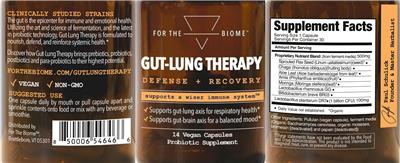
Clinically studied strains The gut is the epicenter for immune and emotional health. Utilizing the art and science of fermentation, and the latest in probiotic technology, Gut-Lung Therapy is formulated to nourish, defend, and reinforce systemic health. Discover how Gut-Lung Therapy brings prebiotics, probiotics, postbiotics and para-probiotics to their highest potential.
Vegan
Non-GMO
Defense + recovery Supports a wiser immune system Supports gut-lung axis for respiratory health Supports gut-brain axis for a balanced mood
Suggested/Recommended/Usage/Directions
Suggested Use One capsule daily by mouth or pull capsule apart and sprinkle contents onto food or mix with any beverage or smoothie.
FDA Statement of Identity
Probiotic Supplement
FDA Disclaimer Statement
These statements have not been evaluated by the Food and Drug Administration. This product is not intended to diagnose, treat, cure, or prevent any disease.
General Statements
Paul Schulick Founder & Master Herbalist
Is this label outdated? Report a formula or label change and our pharmacy team will review it.
Gut-Lung Therapy by For The Biome label
The label scan from the NIH Dietary Supplement Label Database. Tap to enlarge.
Label images are published by the NIH Dietary Supplement Label Database for the version of this product on file. Always read your actual product label.
View the full label (PDF)The Ingredients in Gut-Lung Therapy by For The Biome
These are the 8 active ingredients this product is made of. Select any to open its full monograph.
Serving size1 Capsule(s) Dosage formCapsule Servings per container30 Amounts shown are per serving.
Most supplement products combine several ingredients, and a medication can interact with the product through any one of them. Each ingredient below shows whether it has known drug interactions.
Proprietary Nutrient Blend
- › Lactobacillus rhamnosus GG
- › Bifidobacterium breve BR-3
- › Amla
- › Moringa
- › Chaga
- › Sprouted Flax
- › Aloe
Lactobacillus plantarum DR-7
Other (inactive) ingredients: Pullulan, Saccharomyces cerevisiae, Molasses, Bromelain, Papain. These complete the product’s ingredient list but are not active constituents.
Gut-Lung Therapy by For The Biome Drug Interactions
HelloPharmacist Interaction Report
Gut-Lung Therapy by For The Biome contains several ingredients with documented interactions: Bifidobacterium breve, Amla, Moringa, Chaga, and Aloe.
The most serious interaction is with Aloe and digoxin (a heart medication) — overuse of aloe latex can increase toxicity risk due to potassium loss. Altogether, these interactions span 1,267 individual medications.
Read the full breakdown — every affected drug type, severity by severity
Amla and Chaga both interact with blood thinners and diabetes medications. Amla also affects aspirin and clopidogrel specifically, increasing bleeding risk through its effects on platelet function.
Moringa interacts with a broad range of drugs including thyroid medication (levothyroxine), certain HIV drugs, and diabetes medications — the nature of the effect varies by drug type. Aloe adds further concerns: it can worsen bleeding risk with anticoagulants, increase low blood sugar (hypoglycemia) risk with diabetes drugs, and compound potassium loss if you take water pills (diuretics).
Bifidobacterium breve may lose effectiveness if taken at the same time as antibiotics.
We could not check interaction data for Lactobacillus rhamnosus GG, sprouted Flax, or the components within the proprietary nutrient blend. Before you start this product, check your exact medications using the search tool on this page.
Check your own medications below · Editorial policy · How we use AI
Want to check YOUR meds against Gut-Lung Therapy?
Ask about interactions with your drugs in plain English — “Can I take it with lisinopril?” — and we find you the answer in seconds, ingredient by ingredient.
Go to the checkerIngredients driving the most interactions
Individual Drug Interactions
The ingredients in Gut-Lung Therapy interact with 1,267 drugs. Click any drug to see the details.
5 of the 8 ingredients in Gut-Lung Therapy interact with drugs. Each result below shows which ingredient is responsible. Moringa Aloe Chaga Amla Bifidobacterium breve BR-3
DigoxinDigitek, Lanoxicaps, Lanoxin
How Digoxin interacts with Gut-Lung Therapy — through 2 ingredients. Tap an ingredient for the detail:
AloeDigoxin (lanoxin) Major
Interaction Summary
Theoretically, aloe latex might increase the risk of adverse effects when taken with cardiac glycosides.
Read the full Aloe + Digoxin interactionMoringaP-glycoprotein Substrates Moderate
Interaction Summary
Theoretically, moringa leaf extract might increase the levels and clinical effects of P-glycoprotein substrates.
Read the full Moringa + Digoxin interaction6-mercaptopurinePurinethol
How 6-mercaptopurine interacts with Gut-Lung Therapy — through 1 ingredient. Tap an ingredient for the detail:
ChagaImmunosuppressants Moderate
Interaction Summary
Theoretically, chaga might interfere with immunosuppressive therapy.
Read the full Chaga + 6-mercaptopurine interactionAdo-trastuzumab EmtansineKadcyla
How Ado-trastuzumab Emtansine interacts with Gut-Lung Therapy — through 1 ingredient. Tap an ingredient for the detail:
MoringaCytochrome P450 3a4 (cyp3a4) Substrates Moderate
Interaction Summary
Theoretically, moringa might increase or decrease levels of CYP3A4 substrates.
Read the full Moringa + Ado-trastuzumab Emtansine interactionAbciximabReoPro
How Abciximab interacts with Gut-Lung Therapy — through 3 ingredients. Tap an ingredient for the detail:
ChagaAnticoagulant/antiplatelet Drugs Moderate
Interaction Summary
Theoretically, chaga may increase the risk of bleeding if used with anticoagulant or antiplatelet drugs.
Read the full Chaga + Abciximab interactionAmlaAnticoagulant/antiplatelet Drugs Moderate
Interaction Summary
Theoretically, Indian gooseberry may increase the risk of bleeding if used with anticoagulant or antiplatelet drugs; however, research is conflicting.
Read the full Amla + Abciximab interactionAloeAnticoagulant/antiplatelet Drugs Moderate
Interaction Summary
Theoretically, aloe gel might increase the risk of bleeding when taken with anticoagulant or antiplatelet drugs.
Read the full Aloe + Abciximab interactionAbemaciclibVerzenio
How Abemaciclib interacts with Gut-Lung Therapy — through 1 ingredient. Tap an ingredient for the detail:
MoringaCytochrome P450 3a4 (cyp3a4) Substrates Moderate
Interaction Summary
Theoretically, moringa might increase or decrease levels of CYP3A4 substrates.
Read the full Moringa + Abemaciclib interactionAbiraterone
How Abiraterone interacts with Gut-Lung Therapy — through 1 ingredient. Tap an ingredient for the detail:
MoringaCytochrome P450 3a4 (cyp3a4) Substrates Moderate
Interaction Summary
Theoretically, moringa might increase or decrease levels of CYP3A4 substrates.
Read the full Moringa + Abiraterone interactionAbiraterone AcetateYonsa, Zytiga
How Abiraterone Acetate interacts with Gut-Lung Therapy — through 1 ingredient. Tap an ingredient for the detail:
MoringaCytochrome P450 3a4 (cyp3a4) Substrates Moderate
Interaction Summary
Theoretically, moringa might increase or decrease levels of CYP3A4 substrates.
Read the full Moringa + Abiraterone Acetate interactionAbrocitinibCibinqo
How Abrocitinib interacts with Gut-Lung Therapy — through 3 ingredients. Tap an ingredient for the detail:
ChagaAnticoagulant/antiplatelet Drugs, Immunosuppressants Moderate
Interaction Summary
Theoretically, chaga may increase the risk of bleeding if used with anticoagulant or antiplatelet drugs.
Read the full Chaga + Abrocitinib interactionAmlaAnticoagulant/antiplatelet Drugs Moderate
Interaction Summary
Theoretically, Indian gooseberry may increase the risk of bleeding if used with anticoagulant or antiplatelet drugs; however, research is conflicting.
Read the full Amla + Abrocitinib interactionAloeAnticoagulant/antiplatelet Drugs Moderate
Interaction Summary
Theoretically, aloe gel might increase the risk of bleeding when taken with anticoagulant or antiplatelet drugs.
Read the full Aloe + Abrocitinib interactionAcalabrutinibCalquence
How Acalabrutinib interacts with Gut-Lung Therapy — through 1 ingredient. Tap an ingredient for the detail:
MoringaP-glycoprotein Substrates, Cytochrome P450 3a4 (cyp3a4) Substrates Moderate
Interaction Summary
Theoretically, moringa leaf extract might increase the levels and clinical effects of P-glycoprotein substrates.
Read the full Moringa + Acalabrutinib interactionAcarboseGlucobay, Prandase, Precose
How Acarbose interacts with Gut-Lung Therapy — through 4 ingredients. Tap an ingredient for the detail:
AloeAntidiabetes Drugs Moderate
Interaction Summary
Aloe might increase the risk of hypoglycemia when taken with antidiabetes drugs.
Read the full Aloe + Acarbose interactionAmlaAntidiabetes Drugs Moderate
Interaction Summary
Taking Indian gooseberry with antidiabetes drugs might increase the risk of hypoglycemia.
Read the full Amla + Acarbose interactionChagaAntidiabetes Drugs Moderate
Interaction Summary
Theoretically, taking chaga with antidiabetes drugs might increase the risk of hypoglycemia.
Read the full Chaga + Acarbose interactionMoringaAntidiabetes Drugs Minor
Interaction Summary
Theoretically, moringa might have additive effects when used with antidiabetes drugs; however, research is conflicting.
Read the full Moringa + Acarbose interactionAcenocoumarolSintrom
How Acenocoumarol interacts with Gut-Lung Therapy — through 3 ingredients. Tap an ingredient for the detail:
ChagaAnticoagulant/antiplatelet Drugs Moderate
Interaction Summary
Theoretically, chaga may increase the risk of bleeding if used with anticoagulant or antiplatelet drugs.
Read the full Chaga + Acenocoumarol interactionAloeAnticoagulant/antiplatelet Drugs Moderate
Interaction Summary
Theoretically, aloe gel might increase the risk of bleeding when taken with anticoagulant or antiplatelet drugs.
Read the full Aloe + Acenocoumarol interactionAmlaAnticoagulant/antiplatelet Drugs Moderate
Interaction Summary
Theoretically, Indian gooseberry may increase the risk of bleeding if used with anticoagulant or antiplatelet drugs; however, research is conflicting.
Read the full Amla + Acenocoumarol interactionAcetaminophen, AspirinGemnisyn
How Acetaminophen, Aspirin interacts with Gut-Lung Therapy — through 4 ingredients. Tap an ingredient for the detail:
AloeCytochrome P450 1a2 (cyp1a2) Substrates, Anticoagulant/antiplatelet Drugs Moderate
Interaction Summary
Theoretically, aloe might decrease the levels and clinical effects of CYP1A2 substrates.
Read the full Aloe + Acetaminophen, Aspirin interactionAmlaAspirin, Anticoagulant/antiplatelet Drugs Moderate
Interaction Summary
Theoretically, Indian gooseberry may increase the risk of bleeding if used with aspirin; however, research is conflicting.
Read the full Amla + Acetaminophen, Aspirin interactionChagaAnticoagulant/antiplatelet Drugs Moderate
Interaction Summary
Theoretically, chaga may increase the risk of bleeding if used with anticoagulant or antiplatelet drugs.
Read the full Chaga + Acetaminophen, Aspirin interactionMoringaCytochrome P450 1a2 (cyp1a2) Substrates Minor
Interaction Summary
Theoretically, moringa might decrease the levels and clinical effects of CYP1A2 substrates.
Read the full Moringa + Acetaminophen, Aspirin interactionAcetaminophen, Aspirin, CaffeineExcedrin, Excedrin Extra Strength, Excedrin Migraine
How Acetaminophen, Aspirin, Caffeine interacts with Gut-Lung Therapy — through 4 ingredients. Tap an ingredient for the detail:
ChagaAnticoagulant/antiplatelet Drugs Moderate
Interaction Summary
Theoretically, chaga may increase the risk of bleeding if used with anticoagulant or antiplatelet drugs.
Read the full Chaga + Acetaminophen, Aspirin, Caffeine interactionAmlaAspirin, Anticoagulant/antiplatelet Drugs Moderate
Interaction Summary
Theoretically, Indian gooseberry may increase the risk of bleeding if used with aspirin; however, research is conflicting.
Read the full Amla + Acetaminophen, Aspirin, Caffeine interactionMoringaCytochrome P450 3a4 (cyp3a4) Substrates, Cytochrome P450 1a2 (cyp1a2) Substrates Moderate
Interaction Summary
Theoretically, moringa might increase or decrease levels of CYP3A4 substrates.
Read the full Moringa + Acetaminophen, Aspirin, Caffeine interactionAloeCytochrome P450 1a2 (cyp1a2) Substrates, Anticoagulant/antiplatelet Drugs Moderate
Interaction Summary
Theoretically, aloe might decrease the levels and clinical effects of CYP1A2 substrates.
Read the full Aloe + Acetaminophen, Aspirin, Caffeine interactionAcetaminophen, Butalbital, CaffeineEsgic, Esgic Plus, Fiogesic, Fioricet, Repan, Tecnal +1 more
How Acetaminophen, Butalbital, Caffeine interacts with Gut-Lung Therapy — through 2 ingredients. Tap an ingredient for the detail:
MoringaCytochrome P450 1a2 (cyp1a2) Substrates, Cytochrome P450 3a4 (cyp3a4) Substrates Moderate
Interaction Summary
Theoretically, moringa might decrease the levels and clinical effects of CYP1A2 substrates.
Read the full Moringa + Acetaminophen, Butalbital, Caffeine interactionAloeCytochrome P450 1a2 (cyp1a2) Substrates Minor
Interaction Summary
Theoretically, aloe might decrease the levels and clinical effects of CYP1A2 substrates.
Read the full Aloe + Acetaminophen, Butalbital, Caffeine interactionAcetaminophen, Butalbital, Caffeine, CodeineEsgic with Codeine, Fioricet w/ Codeine
How Acetaminophen, Butalbital, Caffeine, Codeine interacts with Gut-Lung Therapy — through 2 ingredients. Tap an ingredient for the detail:
MoringaCytochrome P450 1a2 (cyp1a2) Substrates, Cytochrome P450 3a4 (cyp3a4) Substrates Moderate
Interaction Summary
Theoretically, moringa might decrease the levels and clinical effects of CYP1A2 substrates.
Read the full Moringa + Acetaminophen, Butalbital, Caffeine, Codeine interactionAloeCytochrome P450 1a2 (cyp1a2) Substrates Minor
Interaction Summary
Theoretically, aloe might decrease the levels and clinical effects of CYP1A2 substrates.
Read the full Aloe + Acetaminophen, Butalbital, Caffeine, Codeine interactionAcetaminophen, Caffeine, Chlorpheniramine, Hydrocodone, PhenylephrineHycomine Compound
How Acetaminophen, Caffeine, Chlorpheniramine, Hydrocodone, Phenylephrine interacts with Gut-Lung Therapy — through 2 ingredients. Tap an ingredient for the detail:
MoringaCytochrome P450 3a4 (cyp3a4) Substrates, Cytochrome P450 1a2 (cyp1a2) Substrates Moderate
Interaction Summary
Theoretically, moringa might increase or decrease levels of CYP3A4 substrates.
Read the full Moringa + Acetaminophen, Caffeine, Chlorpheniramine, Hydrocodone, Phenylephrine interactionAloeCytochrome P450 1a2 (cyp1a2) Substrates Minor
Interaction Summary
Theoretically, aloe might decrease the levels and clinical effects of CYP1A2 substrates.
Read the full Aloe + Acetaminophen, Caffeine, Chlorpheniramine, Hydrocodone, Phenylephrine interactionAcetaminophen, Caffeine, CodeineGesic C15, Gesic C30, Gesic C8, Lenoltec 1, Lenoltec 2, Lenoltec 3 +1 more
How Acetaminophen, Caffeine, Codeine interacts with Gut-Lung Therapy — through 2 ingredients. Tap an ingredient for the detail:
MoringaCytochrome P450 1a2 (cyp1a2) Substrates, Cytochrome P450 3a4 (cyp3a4) Substrates Moderate
Interaction Summary
Theoretically, moringa might decrease the levels and clinical effects of CYP1A2 substrates.
Read the full Moringa + Acetaminophen, Caffeine, Codeine interactionAloeCytochrome P450 1a2 (cyp1a2) Substrates Minor
Interaction Summary
Theoretically, aloe might decrease the levels and clinical effects of CYP1A2 substrates.
Read the full Aloe + Acetaminophen, Caffeine, Codeine interactionAcetaminophen, Caffeine, Codeine, SalicylamideCodalan No.1, Codalan No.2, Codalan No.3
How Acetaminophen, Caffeine, Codeine, Salicylamide interacts with Gut-Lung Therapy — through 2 ingredients. Tap an ingredient for the detail:
MoringaCytochrome P450 3a4 (cyp3a4) Substrates, Cytochrome P450 1a2 (cyp1a2) Substrates Moderate
Interaction Summary
Theoretically, moringa might increase or decrease levels of CYP3A4 substrates.
Read the full Moringa + Acetaminophen, Caffeine, Codeine, Salicylamide interactionAloeCytochrome P450 1a2 (cyp1a2) Substrates Minor
Interaction Summary
Theoretically, aloe might decrease the levels and clinical effects of CYP1A2 substrates.
Read the full Aloe + Acetaminophen, Caffeine, Codeine, Salicylamide interactionAcetaminophen, Caffeine, DihydrocodeineDHC Plus, Panlor DC, Panlor SS
How Acetaminophen, Caffeine, Dihydrocodeine interacts with Gut-Lung Therapy — through 2 ingredients. Tap an ingredient for the detail:
MoringaCytochrome P450 3a4 (cyp3a4) Substrates, Cytochrome P450 1a2 (cyp1a2) Substrates Moderate
Interaction Summary
Theoretically, moringa might increase or decrease levels of CYP3A4 substrates.
Read the full Moringa + Acetaminophen, Caffeine, Dihydrocodeine interactionAloeCytochrome P450 1a2 (cyp1a2) Substrates Minor
Interaction Summary
Theoretically, aloe might decrease the levels and clinical effects of CYP1A2 substrates.
Read the full Aloe + Acetaminophen, Caffeine, Dihydrocodeine interactionAcetaminophen, Caffeine, IsomethepteneMigralam
How Acetaminophen, Caffeine, Isometheptene interacts with Gut-Lung Therapy — through 2 ingredients. Tap an ingredient for the detail:
MoringaCytochrome P450 1a2 (cyp1a2) Substrates, Cytochrome P450 3a4 (cyp3a4) Substrates Moderate
Interaction Summary
Theoretically, moringa might decrease the levels and clinical effects of CYP1A2 substrates.
Read the full Moringa + Acetaminophen, Caffeine, Isometheptene interactionAloeCytochrome P450 1a2 (cyp1a2) Substrates Minor
Interaction Summary
Theoretically, aloe might decrease the levels and clinical effects of CYP1A2 substrates.
Read the full Aloe + Acetaminophen, Caffeine, Isometheptene interactionAcetaminophen, Caffeine, PyrilamineMidol Max Strength Menstrual
How Acetaminophen, Caffeine, Pyrilamine interacts with Gut-Lung Therapy — through 2 ingredients. Tap an ingredient for the detail:
MoringaCytochrome P450 3a4 (cyp3a4) Substrates, Cytochrome P450 1a2 (cyp1a2) Substrates Moderate
Interaction Summary
Theoretically, moringa might increase or decrease levels of CYP3A4 substrates.
Read the full Moringa + Acetaminophen, Caffeine, Pyrilamine interactionAloeCytochrome P450 1a2 (cyp1a2) Substrates, Diuretic Drugs Moderate
Interaction Summary
Theoretically, aloe might decrease the levels and clinical effects of CYP1A2 substrates.
Read the full Aloe + Acetaminophen, Caffeine, Pyrilamine interactionAcetaminophen, Chlorpheniramine Maleate, Dextromethorphan HbrVicks Formula 44M Cough, Cold & Flu Relief
How Acetaminophen, Chlorpheniramine Maleate, Dextromethorphan Hbr interacts with Gut-Lung Therapy — through 2 ingredients. Tap an ingredient for the detail:
MoringaCytochrome P450 1a2 (cyp1a2) Substrates, Cytochrome P450 3a4 (cyp3a4) Substrates Moderate
Interaction Summary
Theoretically, moringa might decrease the levels and clinical effects of CYP1A2 substrates.
Read the full Moringa + Acetaminophen, Chlorpheniramine Maleate, Dextromethorphan Hbr interactionAloeCytochrome P450 1a2 (cyp1a2) Substrates Minor
Interaction Summary
Theoretically, aloe might decrease the levels and clinical effects of CYP1A2 substrates.
Read the full Aloe + Acetaminophen, Chlorpheniramine Maleate, Dextromethorphan Hbr interactionAcetaminophen, Chlorpheniramine, Codeine, PhenylephrineColrex
How Acetaminophen, Chlorpheniramine, Codeine, Phenylephrine interacts with Gut-Lung Therapy — through 2 ingredients. Tap an ingredient for the detail:
MoringaCytochrome P450 3a4 (cyp3a4) Substrates, Cytochrome P450 1a2 (cyp1a2) Substrates Moderate
Interaction Summary
Theoretically, moringa might increase or decrease levels of CYP3A4 substrates.
Read the full Moringa + Acetaminophen, Chlorpheniramine, Codeine, Phenylephrine interactionAloeCytochrome P450 1a2 (cyp1a2) Substrates Minor
Interaction Summary
Theoretically, aloe might decrease the levels and clinical effects of CYP1A2 substrates.
Read the full Aloe + Acetaminophen, Chlorpheniramine, Codeine, Phenylephrine interactionAcetaminophen, Chlorpheniramine, DextromethorphanCoricidin II Extra Strength Cold and Flu
How Acetaminophen, Chlorpheniramine, Dextromethorphan interacts with Gut-Lung Therapy — through 2 ingredients. Tap an ingredient for the detail:
MoringaCytochrome P450 1a2 (cyp1a2) Substrates, Cytochrome P450 3a4 (cyp3a4) Substrates Moderate
Interaction Summary
Theoretically, moringa might decrease the levels and clinical effects of CYP1A2 substrates.
Read the full Moringa + Acetaminophen, Chlorpheniramine, Dextromethorphan interactionAloeCytochrome P450 1a2 (cyp1a2) Substrates Minor
Interaction Summary
Theoretically, aloe might decrease the levels and clinical effects of CYP1A2 substrates.
Read the full Aloe + Acetaminophen, Chlorpheniramine, Dextromethorphan interactionAcetaminophen, Chlorpheniramine, Dextromethorphan HydrobromideCoricidin HBP Maximum Strength Flu
How Acetaminophen, Chlorpheniramine, Dextromethorphan Hydrobromide interacts with Gut-Lung Therapy — through 2 ingredients. Tap an ingredient for the detail:
MoringaCytochrome P450 3a4 (cyp3a4) Substrates, Cytochrome P450 1a2 (cyp1a2) Substrates Moderate
Interaction Summary
Theoretically, moringa might increase or decrease levels of CYP3A4 substrates.
Read the full Moringa + Acetaminophen, Chlorpheniramine, Dextromethorphan Hydrobromide interactionAloeCytochrome P450 1a2 (cyp1a2) Substrates Minor
Interaction Summary
Theoretically, aloe might decrease the levels and clinical effects of CYP1A2 substrates.
Read the full Aloe + Acetaminophen, Chlorpheniramine, Dextromethorphan Hydrobromide interactionAcetaminophen, Chlorpheniramine, Dextromethorphan, PhenylpropanolamineMulti Symptom Cold Relief
How Acetaminophen, Chlorpheniramine, Dextromethorphan, Phenylpropanolamine interacts with Gut-Lung Therapy — through 2 ingredients. Tap an ingredient for the detail:
MoringaCytochrome P450 1a2 (cyp1a2) Substrates, Cytochrome P450 3a4 (cyp3a4) Substrates Moderate
Interaction Summary
Theoretically, moringa might decrease the levels and clinical effects of CYP1A2 substrates.
Read the full Moringa + Acetaminophen, Chlorpheniramine, Dextromethorphan, Phenylpropanolamine interactionAloeCytochrome P450 1a2 (cyp1a2) Substrates Minor
Interaction Summary
Theoretically, aloe might decrease the levels and clinical effects of CYP1A2 substrates.
Read the full Aloe + Acetaminophen, Chlorpheniramine, Dextromethorphan, Phenylpropanolamine interactionAcetaminophen, Chlorpheniramine, Dextromethorphan, PseudoephedrineChildren's Tylenol Cold Plus Cough, Tylenol Cold Ex Strength
How Acetaminophen, Chlorpheniramine, Dextromethorphan, Pseudoephedrine interacts with Gut-Lung Therapy — through 2 ingredients. Tap an ingredient for the detail:
MoringaCytochrome P450 3a4 (cyp3a4) Substrates, Cytochrome P450 1a2 (cyp1a2) Substrates Moderate
Interaction Summary
Theoretically, moringa might increase or decrease levels of CYP3A4 substrates.
Read the full Moringa + Acetaminophen, Chlorpheniramine, Dextromethorphan, Pseudoephedrine interactionAloeCytochrome P450 1a2 (cyp1a2) Substrates Minor
Interaction Summary
Theoretically, aloe might decrease the levels and clinical effects of CYP1A2 substrates.
Read the full Aloe + Acetaminophen, Chlorpheniramine, Dextromethorphan, Pseudoephedrine interactionAcetaminophen, Chlorpheniramine, Guaifenesin, Phenylephrine, SalicylamideRhinogesic GG
How Acetaminophen, Chlorpheniramine, Guaifenesin, Phenylephrine, Salicylamide interacts with Gut-Lung Therapy — through 2 ingredients. Tap an ingredient for the detail:
MoringaCytochrome P450 1a2 (cyp1a2) Substrates, Cytochrome P450 3a4 (cyp3a4) Substrates Moderate
Interaction Summary
Theoretically, moringa might decrease the levels and clinical effects of CYP1A2 substrates.
Read the full Moringa + Acetaminophen, Chlorpheniramine, Guaifenesin, Phenylephrine, Salicylamide interactionAloeCytochrome P450 1a2 (cyp1a2) Substrates Minor
Interaction Summary
Theoretically, aloe might decrease the levels and clinical effects of CYP1A2 substrates.
Read the full Aloe + Acetaminophen, Chlorpheniramine, Guaifenesin, Phenylephrine, Salicylamide interactionAcetaminophen, Chlorpheniramine, PhenylephrineAlka-Seltzer PLUS, Histex SR, Protid
How Acetaminophen, Chlorpheniramine, Phenylephrine interacts with Gut-Lung Therapy — through 2 ingredients. Tap an ingredient for the detail:
MoringaCytochrome P450 1a2 (cyp1a2) Substrates, Cytochrome P450 3a4 (cyp3a4) Substrates Moderate
Interaction Summary
Theoretically, moringa might decrease the levels and clinical effects of CYP1A2 substrates.
Read the full Moringa + Acetaminophen, Chlorpheniramine, Phenylephrine interactionAloeCytochrome P450 1a2 (cyp1a2) Substrates Minor
Interaction Summary
Theoretically, aloe might decrease the levels and clinical effects of CYP1A2 substrates.
Read the full Aloe + Acetaminophen, Chlorpheniramine, Phenylephrine interactionAcetaminophen, Chlorpheniramine, Phenylephrine, SalicylamideRhinogesic, Rhinogesic JR
How Acetaminophen, Chlorpheniramine, Phenylephrine, Salicylamide interacts with Gut-Lung Therapy — through 2 ingredients. Tap an ingredient for the detail:
MoringaCytochrome P450 1a2 (cyp1a2) Substrates, Cytochrome P450 3a4 (cyp3a4) Substrates Moderate
Interaction Summary
Theoretically, moringa might decrease the levels and clinical effects of CYP1A2 substrates.
Read the full Moringa + Acetaminophen, Chlorpheniramine, Phenylephrine, Salicylamide interactionAloeCytochrome P450 1a2 (cyp1a2) Substrates Minor
Interaction Summary
Theoretically, aloe might decrease the levels and clinical effects of CYP1A2 substrates.
Read the full Aloe + Acetaminophen, Chlorpheniramine, Phenylephrine, Salicylamide interactionEach ingredient & the kinds of drugs it affects
For each ingredient in Gut-Lung Therapy with known interactions, here are the types of medications they can affect. Open any type for the detail — or search your exact drug in the checker above.
Moringa
Cytochrome P450 3A4 (Cyp3A4) Substrates
Theoretically, moringa might increase or decrease levels of CYP3A4 substrates.
Some in vitro research suggests that moringa inhibits cytochrome P450 3A4 (CYP3A4). However, other in vitro research suggests that moringa extract induces CYP3A4 enzymes. A pharmacokinetic study in patients with HIV shows no change in the pharmacokinetics of nevirapine, which is partially metabolized by CYP3A4, when administered concomitantly with moringa leaf powder 1.85 grams daily for 14 days.
Levothyroxine (Synthroid, Others)
Theoretically, moringa leaf can antagonize the effects of levothyroxine.
Animal research suggests that moringa aqueous leaf extract might reduce serum triiodothyronine (T3) concentrations by inhibiting the peripheral conversion of thyroxine (T4) to T3.
P-Glycoprotein Substrates
Theoretically, moringa leaf extract might increase the levels and clinical effects of P-glycoprotein substrates.
In vitro research shows that moringa leaf extract inhibits renal P-glycoprotein transport activity. So far, this reaction has not been reported in humans.
Antidiabetes Drugs
Theoretically, moringa might have additive effects when used with antidiabetes drugs; however, research is conflicting.
Animal research shows that moringa can lower blood glucose levels. However, research in humans has not shown consistent blood glucose lowering effects.
Cytochrome P450 1A2 (Cyp1A2) Substrates
Theoretically, moringa might decrease the levels and clinical effects of CYP1A2 substrates.
In vitro research shows that moringa extract induces CYP1A2 enzymes.
Nevirapine (Viramune)
Moringa leaf is unlikely to have a clinically significant interaction with nevirapine.
Nevirapine is partially metabolized by cytochrome P450 3A4 (CYP3A4). In vitro evidence suggests that moringa inhibits CYP3A4. However, a pharmacokinetic study in patients with HIV shows no change in nevirapine pharmacokinetics when administered concomitantly with moringa leaf powder 1.85 grams daily for 14 days.
Aloe
Digoxin (Lanoxin)
Theoretically, aloe latex might increase the risk of adverse effects when taken with cardiac glycosides.
Overuse of aloe latex can increase the risk of adverse effects from cardiac glycoside drugs, such as digoxin, due to potassium depletion. Overuse of aloe, along with cardiac glycoside drugs, can increase the risk of toxicity.
Anticoagulant/Antiplatelet Drugs
Theoretically, aloe gel might increase the risk of bleeding when taken with anticoagulant or antiplatelet drugs.
In vitro research shows that aloe gel can inhibit platelet aggregation. This inhibition was greater than that seen with celecoxib, but less than that seen with aspirin.
Antidiabetes Drugs
Aloe might increase the risk of hypoglycemia when taken with antidiabetes drugs.
Preliminary clinical research suggests aloe gel might lower blood glucose levels and have additive effects when used with antidiabetes drugs. Monitor blood glucose levels closely.
Diuretic Drugs
Theoretically, aloe latex might increase the risk of hypokalemia when taken with diuretic drugs.
Overuse of aloe latex might compound diuretic-induced potassium loss, increasing the risk of hypokalemia.
Stimulant Laxatives
Theoretically, aloe latex might increase the risk for fluid and electrolyte loss when taken with stimulant laxatives.
Due to cathartic laxative effects of aloe latex, concomitant use with other stimulant laxatives might compound fluid and electrolyte loss.
Warfarin (Coumadin)
Theoretically, aloe latex might increase the risk of bleeding when taken with warfarin.
Aloe latex has stimulant laxative effects. In some people aloe latex can cause diarrhea. Diarrhea can increase the effects of warfarin, increase international normalized ratio (INR), and increase the risk of bleeding. Advise patients who take warfarin not to take excessive amounts of aloe vera.
Cytochrome P450 1A2 (Cyp1A2) Substrates
Theoretically, aloe might decrease the levels and clinical effects of CYP1A2 substrates.
In vitro research shows that aloe extract induces CYP1A2 enzymes.
Chaga
Anticoagulant/Antiplatelet Drugs
Theoretically, chaga may increase the risk of bleeding if used with anticoagulant or antiplatelet drugs.
In vitro and animal research suggests that chaga extract can inhibit platelet aggregation. This effect has not been reported in humans.
Antidiabetes Drugs
Theoretically, taking chaga with antidiabetes drugs might increase the risk of hypoglycemia.
Animal research suggests that chaga might decrease blood glucose levels and increase insulin levels. This has not been reported in humans.
Immunosuppressants
Theoretically, chaga might interfere with immunosuppressive therapy.
In vitro research suggests that certain constituents of chaga stimulate immune function. This has not been reported in humans.
Amla
Anticoagulant/Antiplatelet Drugs
Theoretically, Indian gooseberry may increase the risk of bleeding if used with anticoagulant or antiplatelet drugs; however, research is conflicting.
Clinical research shows that taking Indian gooseberry 500 mg as a single dose or twice daily for 10 days reduces platelet aggregation by about 24% to 36%, increases bleeding time by about 3.8-5.9 seconds, and increases clotting time by about 9.8-12.7 seconds when compared to baseline. However, taking Indian gooseberry 500 mg along with clopidogrel 75 mg or ecosprin 75 mg, as a single dose or for 10 days, does not significantly reduce platelet aggregation or increase bleeding time or clotting time when compared with clopidogrel 75 mg or ecosprin 75 mg alone. Until more is known, use caution when taking Indian gooseberry in combination with anticoagulant/antiplatelet drugs.
Antidiabetes Drugs
Taking Indian gooseberry with antidiabetes drugs might increase the risk of hypoglycemia.
Clinical research shows that taking Indian gooseberry fruit or fruit extract alone or in conjunction with antidiabetes medications can lower blood glucose levels. Dose adjustments to diabetes medications might be necessary.
Aspirin
Theoretically, Indian gooseberry may increase the risk of bleeding if used with aspirin; however, research is conflicting.
Clinical research shows that taking Indian gooseberry 500 mg as a single dose or twice daily for 10 days reduces platelet aggregation by about 24% to 36%, increases bleeding time by about 3.8-5.9 seconds, and increases clotting time by about 9.8-12.7 seconds when compared to baseline. However, taking a single dose of Indian gooseberry 500 mg along with ecosprin 75 mg, or taking a combination of Indian gooseberry 500 mg twice daily plus ecosprin 75 mg once daily for 10 days, does not significantly reduce platelet aggregation or increase bleeding time or clotting time when compared with ecosprin 75 mg alone.
Clopidogrel (Plavix)
Theoretically, Indian gooseberry may increase the risk of bleeding if used with clopidogrel; however, research is conflicting.
Clinical research shows that taking Indian gooseberry 500 mg as a single dose or twice daily for 10 days reduces platelet aggregation by about 24% to 36%, increases bleeding time by about 3.8-5.9 seconds, and increases clotting time by about 9.8-12.7 seconds when compared to baseline. However, taking a single dose of Indian gooseberry 500 mg along with clopidogrel 75 mg, or taking a combination of Indian gooseberry 500 mg twice daily plus clopidogrel 75 mg once daily for 10 days, does not significantly reduce platelet aggregation or increase bleeding time or clotting time when compared with clopidogrel 75 mg alone.
Bifidobacterium breve BR-3
Antibiotic Drugs
Theoretically, taking Bifidobacterium breve with antibiotic drugs might decrease the effectiveness of B. breve.
Since B. breve preparations usually contain live and active organisms, simultaneously taking antibiotics might kill a significant number of the organisms. Tell patients to separate administration of antibiotics and B. breve preparations by at least 2 hours.
Brand information
Manufacturer and brand details for Gut-Lung Therapy, from the product label.
For The Biome
See all For The Biome products- Name
- For The Biome
- City
- Brattleboro
- State
- VT
- ZipCode
- 05301
- Web Address
- ForTheBiome.com/GutLungTherapy
Gut-Lung Therapy by For The Biome: Common Questions
Does Gut-Lung Therapy by For The Biome interact with any medications?
How can one product interact with so many drugs?
Where does this information come from?
Can I take this while I'm on blood thinners like warfarin?
Can I take this if I'm on diabetes medication?
Is it safe to take this while breastfeeding?
Will this help my gut health or lung issues?
Can I take this with antibiotics?
What's the most common side effect I should expect?
Written and reviewed by the HelloPharmacist editorial staff. Our editorial policy
Not sure if Gut-Lung Therapy is safe with your meds?
Our pharmacists answer your medication & supplement questions — free.
Label information is sourced from the NIH Dietary Supplement Label Database and reflects the product version on file; always read your actual product label. This page is for education only and is not a substitute for professional medical advice. Confirm with your pharmacist or doctor before combining supplements and medications.
The Full Monographs Behind Gut-Lung Therapy’s Ingredients
Every ingredient we hold a full HelloPharmacist monograph for — uses, evidence, safety, and the complete interaction list.
Bifidobacterium Breve
Interacts with 182 drugsBifidobacterium breve is a 'friendly' gut bacterium taken as a probiotic, most often to support digestion and balance the gut microbiome. Some studies suggest possible benefits for certain d...
Read the full Bifidobacterium Breve monograph → Herb & supplement monographIndian Gooseberry
Interacts with 208 drugsIndian gooseberry (amla) is a vitamin C-rich fruit used in Ayurvedic medicine for many purposes, from antioxidant support to cholesterol and digestion. Early research is promising for some u...
Read the full Indian Gooseberry monograph → Herb & supplement monographMoringa
Interacts with 870 drugsMoringa is a nutrient-rich plant whose leaves are widely used as a food and supplement, especially in parts of the world where malnutrition is common. Early research hints at possible benefi...
Read the full Moringa monograph → Herb & supplement monographChaga
Interacts with 327 drugsChaga is a fungus that grows mostly on birch trees and is used as a tea or supplement, mainly for immune and antioxidant support. Human evidence for its benefits is very limited, and it may...
Read the full Chaga monograph → Herb & supplement monographAloe
Interacts with 461 drugsAloe vera gel is widely used on the skin for minor burns and irritation, and some research suggests it may help. Aloe latex (the yellow part) is a strong laxative that can cause cramping and...
Read the full Aloe monograph →Sources & How We Checked
Gut-Lung Therapy's label data comes from the NIH Dietary Supplement Label Database; the ingredient interaction data is from the Natural Medicines database, reviewed by our pharmacists.
- NIH Dietary Supplement Label Database (DSLD) — The official product label on file for this supplement.
- Natural Medicines (Therapeutic Research Center) — Evidence-graded clinical reference behind the ingredient interaction data.
Content is written and reviewed by licensed HelloPharmacist pharmacists. See our data sources and editorial standards for how this information is built and checked.
The 88 references behind this product’s interaction data
Every citation that drives the interaction findings for this product’s ingredients, from the evidence-graded Natural Medicines (TRC Healthcare) database. Open an ingredient to browse its citations — links open the study on PubMed or the publisher’s site.
Bifidobacterium Breve 9 references
- Pierce A. The American Pharmaceutical Association Practical Guide to Natural Medicines. New York: The Stonesong Press, 1999:19.
- Xiao JZ, Takahashi S, Odamaki T, et al. Antibiotic susceptibility of bifidobacterial strains distributed in the Japanese market. Biosci Biotechnol Biochem. 2010;74(2):336-42. PubMed
- Pruccoli G, Silvestro E, Pace Napoleone C, Aidala E, Garazzino S, Scolfaro C. Are probiotics safe? Bifidobacterium bacteremia in a child with severe heart failure. Infez Med. 2019;27(2):175-178.
- Ohishi A, Takahashi S, Ito Y, et al. Bifidobacterium septicemia associated with postoperative probiotic therapy in a neonate with omphalocele. J Pediatr. 2010;156(4):679-81. PubMed
- Sakurai Y, Watanabe T, Miura Y, et al. Clinical and bacteriologic characteristics of six cases of Bifidobacterium breve bacteremia due to probiotic administration in the neonatal intensive care unit. Pediatr Infect Dis J 2022;41(1):62-65. PubMed
- Esaiassen E, Hjerde E, Cavanagh JP, Simonsen GS, Klingenberg C; Norwegian Study Group on Invasive Bifidobacterial Infections. Bifidobacterium bacteremia: Clinical characteristics and a genomic approach to assess pathogenicity. J Clin Microbiol. 2017;55(7) PubMed
- Wakabayashi Y, Nakayama S, Yamamoto A, et al. First case of necrotizing fasciitis and bacteremia caused by Bifidobacteriumbreve. Anaerobe 2022;76:102613.
- Takeda Y, Ota K, Kondo A, et al. A case of necrotizing fasciitis caused by Bifidobacterium breve. IDCases 2022;31:e01667. PubMed
- Suwantarat N, Romagnoli M, Wakefield T, Carroll KC. Ventriculoperitoneal shunt infection caused by Bifidobacterium breve. Anaerobe 2014;28:1-3. PubMed
See these in context on the Bifidobacterium Breve monograph →
Indian Gooseberry 6 references
- Sabu, M. C. and Kuttan, R. Anti-diabetic activity of medicinal plants and its relationship with their antioxidant property. J Ethnopharmacol. 2002;81(2):155-160. PubMed
- Fatima N, Pingali U, Muralidhar N. Study of pharmacodynamic interaction of Phyllanthus emblica extract with clopidogrel and ecosprin in patients with type II diabetes mellitus. Phytomedicine. 2014;21(5):579-85. PubMed
- Shanmugarajan D, Girish C, Harivenkatesh N, Chanaveerappa B, Prasanna Lakshmi NC. Antihypertensive and pleiotropic effects of Phyllanthus emblica extract as an add-on therapy in patients with essential hypertension-A randomized double-blind placebo-contro
- Akhtar MS, Ramzan A, Ali A, Ahmad M. Effect of amla fruit (Emblica officinalis Gaertn.) on blood glucose and lipid profile of normal subjects and type 2 diabetic patients. Int J Food Sci Nutr. 2011;62(6):609-16.
- Usharani P, Fatima N, Muralidhar N. Effects of Phyllanthus emblica extract on endothelial dysfunction and biomarkers of oxidative stress in patients with type 2 diabetes mellitus: a randomized, double-blind, controlled study. Diabetes Metab Syndr Obes. 20 PubMed
- Majeed M, Mundkur L, Paulose S, Nagabhushanam K. Novel Emblica officinalis extract containing ß-glucogallin vs. metformin: a randomized, open-label, comparative efficacy study in newly diagnosed type 2 diabetes mellitus patients with dyslipidemia. Food Fu
Moringa 23 references
- Kar A, Choudhary BK, Bandyopadhyay NG. Comparative evaluation of hypoglycaemic activity of some Indian medicinal plants in alloxan diabetic rats. J Ethnopharmacol 2003;84:105-8. PubMed
- Tahiliani P, Kar A. Role of Moringa oleifera leaf extract in the regulation of thyroid hormone status in adult male and female rats. Pharmacol Res 2000;41:319-23. PubMed
- Jaiswal D, Kumar Rai P, Kumar A, et al. Effect of Moringa oleifera Lam. leaves aqueous extract therapy on hyperglycemic rats. J Ethnopharmcol 2009;123:392-6. PubMed
- Bour S, Visentin V, Prevot D, et al. Effects of oral administration of benzylamine on glucose tolerance and lipid metabolism in rats. J Physiol Biochem 2005;61:371-9. PubMed
- Iffiu-Soltesz Z, Wanecq E, Lomba A, et al. Chronic benzylamine administration in the drinking water improves glucose tolerance, reduces body weight gain and circulating cholesterol in high-fat diet-fed mice. Pharmacol Res 2010;61:355-63. PubMed
- Monera TG, Wolfe AR, Maponga CC, et al. Moringa oleifera leaf extracts inhibit 6beta-hydroxylation of testosterone by CYP3A4. J Infect Dev Ctries 2008;2:379-83.
- Estrella M, Mantaring J, David G, Taup M. A double blind, randomised controlled trial on the use of malunggay (Moringa oleifera) for augmentation of the volume of breastmilk among non-nursing mothers of preterm infants. Philipp J Pediatr 2000;49:3-6.
- Morton, J. F. The Horseradish Tree, Moringa Pterygosperma (Moringaceae) - a boon to arid lands? Economic Botany 1991;45:318-333. DOI
- Espinosa-Kuo CL. A Randomized Controlled Trial on the Use of Malunggay (Moringa oleifera) for Augmentation of the Volume of Breastmilk Among Mothers of Term Infants. Filipino Family Physician. 2005;43(1):26-33.
- King JS, Raguindin PFN, Dans LF. Moringa oleifera (Malunggay) as a Galactagogue for Breastfeeding Mothers: A Systematic Review and Meta-Analysis of Randomized Controlled Trials. Philipp J Pediatr 2013;61(2):34-42.
- Singh D, Choudhury S, Singh TU, Garg SK. Pharmacodynamics of uterotonic effect of Moringa oleifera flowers extract. J Vet Pharmcol Toxicol 2008;7(1-2):12-15.
- William F, Lakshminarayanan S, Chegu H. Effect of some Indian vegetables on the glucose and insulin response in diabetic subjects. International Journal of Food Sciences and Nutrition 1993;44(3): 191-195. DOI: 10.3109/09637489309017439 DOI
- Monera-Penduka TG, Maponga CC, Wolfe AR, Wiesner L, Morse GD, Nhachi CF. Effect of Moringa oleifera Lam. leaf powder on the pharmacokinetics of nevirapine in HIV-infected adults: a one sequence cross-over study. AIDS Res Ther. 2017;14:12. doi: 10.1186/s1 PubMed
- Witharana EWRA, Wijetunga WMGASTB, Wijesinghe SKJ. Stevens - Johnson syndrome (SJS) following murunga leaf (Moringa oleifera) consumption. Ceylon Med J 2018;63(4):188-9.
- Nur R, Demak IPK, Radhiah S, Rusydi M, Mantao E, Larasati RD. The effect of moringa leaf extracton increasing hemoglobin and bodyweight in post-disaster pregnant women. Enferm Clin. 2020;30 Suppl 4:79-82. DOI
- Taweerutchana R, Lumlerdkij N, Vannasaeng S, Akarasereenont P, Sriwijitkamol A. Effect of Moringa oleifera Leaf Capsules on Glycemic Control in Therapy-Naïve Type 2 Diabetes Patients: A Randomized Placebo Controlled Study. Evid Based Complement Alternat M
- Sumiaty, Tahir A, Burhanuddin B, Nurhaedar J, Veni H. The effect of moringa leaves on pregnancy on growth and morbidity of 6-11 month. Enferm Clin. 2020;30 Suppl 4:104-108. DOI
- Ulmy MN, Tahir A, Arsunan AA, Burhanuddin B, Veni H. Effect of moringa leaves during pregnancy on growth and morbidity in 0-5 months. Enferm Clin. 2020;30 Suppl 4:61-65. DOI
- Amaeze O, Marques ES, Wei W, et al. Evaluation of Nigerian Medicinal Plants Extract on Human P-glycoprotein and Cytochrome P450 Enzyme Induction: Implications for Herb-drug Interaction. Curr Drug Metab. 2021;22(14):1103-1113. PubMed
- Ebhohon E, Miller D. Moringa Oleifera leaf extract induced pulmonary embolism-a case report. Int J Emerg Med 2022;15(1):16. PubMed
- Basri H, Hadju V, Zulkifli A, Syam A, Indriasari R. Effect of Moringa oleifera supplementation during pregnancy on the prevention of stunted growth in children between the ages of 36 to 42 months. J Public Health Res 2021;10(2):2207.
- Haron MH, Dale O, Martin K, et al. Evaluation of the Herb-Drug Interaction Potential of Commonly Used Botanicals on the US Market with Regard to PXR- and AhR-Mediated Influences on CYP3A4 and CYP1A2. J Diet Suppl 2022. PubMed
- Amsler E, Mahevas T, Soria A, Barbaud A. Fixed food eruption to Moringa oleifera. Contact Dermatitis 2023;89(4):301-302.
Chaga 9 references
- Sun JE, Ao ZH, Lu ZM, et al. Antihyperglycemic and antilipidperoxidative effects of dry matter of culture broth of Inonotus obliquus in submerged culture on normal and alloxan-diabetes mice. J Ethnopharmacol 2008;118(1):7-13. PubMed
- Hyun KW, Jeong SC, Lee DH, et al. Isolation and characterization of a novel platelet aggregation inhibitory peptide from the medicinal mushroom, Inonotus obliquus. Peptides 2006;27(6):1173-8. PubMed
- Kim YO, Han SB, Lee HW, et al. Immuno-stimulating effect of the endo-polysaccharide produced by submerged culture of Inonotus obliquus. Life Sci 2005;77(19):2438-56. PubMed
- Kikuchi Y, Seta K, Ogawa Y, et al. Chaga mushroom-induced oxalate nephropathy. Clin Nephrol 2014;81(6):440-4. PubMed
- Lee S, Lee HY, Park Y, et al. Development of end stage renal disease after long-term ingestion of chaga mushroom: case report and review of literature. J Korean Med Sci. 2020;35(19):e122.
- Kwon O, Kim Y, Paek JH, et al. Chaga mushroom-induced oxalate nephropathy that clinically manifested as nephrotic syndrome: A case report. Medicine (Baltimore) 2022;101(10):e28997. PubMed
- Su L, Xin C, Yang J, et al. A polysaccharide from Inonotus obliquus ameliorates intestinal barrier dysfunction in mice with type 2 diabetes mellitus. Int J Biol Macromol 2022;214:312-323. PubMed
- Chen S, Ma Y, Li H, et al. Anti-diabetic e?ects of Inonotus obliquus extract in high fat diet combined streptozotocin-induced type 2 diabetic mice. Nutr Hosp 2022;39(6):1256-1263. PubMed
- Ye X, Wu K, Xu L, et al. Methanol extract of Inonotus obliquus improves type 2 diabetes mellitus through modifying intestinal flora. Front Endocrinol (Lausanne) 2023;13:1103972. PubMed
Aloe 41 references
- Newall CA, Anderson LA, Philpson JD. Herbal Medicine: A Guide for Healthcare Professionals. London, UK: The Pharmaceutical Press, 1996.
- Wichtl MW. Herbal Drugs and Phytopharmaceuticals. Ed. N.M. Bisset. Stuttgart: Medpharm GmbH Scientific Publishers, 1994.
- Brinker F. Herb Contraindications and Drug Interactions. 2nd ed. Sandy, OR: Eclectic Medical Publications, 1998.
- Nusko G, Schneider B, Schneider I, et al. Anthranoid laxative use is not a risk factor for colorectal neoplasia: results of a prospective case control study. Gut 2000;46:651-5. PubMed
- Luyckx VA, Ballantine R, Claeys M, et al. Herbal remedy-associated acute renal failure secondary to Cape aloes. Am J Kidney Dis 2002;39:E13. PubMed
- Rajasekaran S, Sivagnanam K, Ravi K, Subramanian S. Hypoglycemic effect of Aloe vera gel on streptozotocin-induced diabetes in experimental rats. J Med Food 2004;7:61-6.
- Williams MS, Burk M, Loprinzi CL, et al. Phase III double-blind evaluation of an aloe vera gel as a prophylactic agent for radiation-induced skin toxicity. Int J Radiat Oncol Biol Phys 1996;36:345-9. PubMed
- Vogler BK, Ernst E. Aloe vera: a systematic review of its clinical effectiveness. Br J Gen Pract 1999;49:823-8.
- Bottenberg MM, Wall GC, Harvey RL, Habib S. Oral aloe vera-induced hepatitis. Ann Pharmacother 2007;41:1740-3. PubMed
- Rabe C, Musch A, Schirmacher P, et al. Acute hepatitis induced by an Aloe vera preparation: a case report. World J Gastroenterol 2005;11:303-4. PubMed
- Kanat O, Ozet A, Ataergin S. Aloe vera-induced acute toxic hepatitis in a healthy young man. Eur J Int Med 2006;17:589. PubMed
- Mueller SO, Stopper H. Characterization of the genotoxicity of anthraquinones in mammalian cells. Biochim Biophys Acta 1999;1428:406-14. PubMed
- Schorkhuber M, Richter M, Dutter A, et al. Effect of anthraquinone laxatives on the proliferation and urokinase secretion of normal, premalignant and malignant colonic epithelial cells. Eur J Cancer 1998;34:1091-8. PubMed
- Yang HN, Kim DJ, Kim YM, et al. Aloe-induced toxic hepatitis. J Korean Med Sci 2010;25:492-5. PubMed
- Choonhakarn C, Busaracome P, Sripanidkulchai B, et al. A prospective, randomized clinical trial comparing topical aloe vera with 0.1% triamcinolone acetonide in mild to moderate plaque psoriasis. J.Eur.Acad.Dermatol.Venereol. 2010;24:168-72. PubMed
- Ishii Y, Tanizawa H, Takino Y. Studies of aloe. IV. Mechanism of cathartic effect. (3). Biol Pharm Bull. 1994;17:495-7. PubMed
- Ishii Y, Tanizawa H, Takino Y. Studies of aloe. V. Mechanism of cathartic effect. (4). Biol Pharm Bull. 1994;17:651-3. PubMed
- Nelemans FA. Clinical and toxicological aspects of anthraquinone laxatives. Pharmacology. 1976;14 Suppl 1:73-7. PubMed
- Paulsen E, Korsholm L, Brandrup F. A double-blind, placebo-controlled study of a commercial Aloe vera gel in the treatment of slight to moderate psoriasis vulgaris. J Eur Acad Dermatol Venereol. 2005;19:326-31.
- Huseini HF, Kianbakht S, Hajiaghaee R, et al. Anti-hyperglycemic and anti-hypercholesterolemic effects of Aloe vera leaf gel in hyperlipidemic type 2 diabetic patients: a randomized double-blind placebo-controlled clinical trial. Planta Med. 2012;78:311-6
- Ferreira, M., Teixeira, M., Silva, E., and Selores, M. Allergic contact dermatitis to Aloe vera. Contact Dermatitis 2007;57(4):278-279.
- Choonhakarn, C., Busaracome, P., Sripanidkulchai, B., and Sarakarn, P. The efficacy of aloe vera gel in the treatment of oral lichen planus: a randomized controlled trial. Br J Dermatol 2008;158(3):573-577. PubMed
- Baretta, Z., Ghiotto, C., Marino, D., and Jirillo, A. Aloe-induced hypokalemia in a patient with breast cancer during chemotherapy. Ann.Oncol. 2009;20(8):1445-1446. PubMed
- Hunter, D. and Frumkin, A. Adverse reactions to vitamin E and aloe vera preparations after dermabrasion and chemical peel. Cutis 1991;47(3):193-196.
- Alvarez-Perea, A., Garcia, A. P., Hernandez, A. L., de, Barrio M., and Baeza, M. L. Urticaria due to aloe vera: a new sensitizer? Ann.Allergy Asthma Immunol. 2010;105(5):404-405. PubMed
- Hogan, D. J. Widespread dermatitis after topical treatment of chronic leg ulcers and stasis dermatitis. CMAJ. 2-15-1988;138(4):336-338.
- Savchak VI. Acute bullous allergic dermatitis due to local application of aloe leaves. Vestnik Dermatologii i Venerologii 1977;12:44-45.
- Nakamura, T. and Kotajima, S. Contact dermatitis from aloe arborescens. Contact Dermatitis 1984;11(1):51. PubMed
- Shoji, A. Contact dermatitis to Aloe arborescens. Contact Dermatitis 1982;8(3):164-167. PubMed
- Morrow, D. M., Rapaport, M. J., and Strick, R. A. Hypersensitivity to aloe. Arch Dermatol. 1980;116(9):1064-1065. DOI
- Cosmetic Ingredient Review Expert Panel. Final report on the safety assessment of AloeAndongensis Extract, Aloe Andongensis Leaf Juice,aloe Arborescens Leaf Extract, Aloe Arborescens Leaf Juice, Aloe Arborescens Leaf Protoplasts, Aloe Barbadensis Flower E
- Bhalang K, Thunyakitpisal P, Rungsirisatean N. Acemannan, a polysaccharide extracted from Aloe vera, is effective in the treatment of oral aphthous ulceration. J Altern Complement Med 2013;19(5):429-34.
- Hajheydari Z, Saeedi M, Morteza-Semnani K, Soltani A. Effect of Aloe vera topical gel combined with tretinoin in treatment of mild and moderate acne vulgaris: a randomized, double-blind, prospective trial. J Dermatolog Treat 2014;25(2):123-9.
- Jiménez-Encarnación E, Ríos G, Muñoz-Mirabal A, Vilá LM. Euforia-induced acute hepatitis in a patient with scleroderma. BMJ Case Rep 2012;2012. PubMed
- Lee J, Lee MS, Nam KW. Acute toxic hepatitis caused by an aloe vera preparation in a young patient: a case report with a literature review. Korean J Gastroenterol 2014;64(1):54-8. PubMed
- Guo X, Mei N. Aloe Vera - A Review of Toxicity and Adverse Clinical Effects. J Environ Sci Health C Environ Carcinog Ecotoxicol Rev 2016;34(2):77-96.
- Hoogenboom TCH, Patel N, Cook NA, Williams R, Taylor-Robinson SD, Lim AKP. The effect of Aloe vera juice on liver enzymes and hepatic structure in a healthy population. Integr Med (Encinitas) 2020;19(3):30-4.
- Mushtaq S, Mushtaq Z, Sarfraz J, et al. Comparison of effect of aloe vera gel with aspirin and celecoxib on platelet aggregation. Professional Med J. 2020; 27(5):973-978. DOI
- Haron MH, Dale O, Martin K, et al. Evaluation of the Herb-Drug Interaction Potential of Commonly Used Botanicals on the US Market with Regard to PXR- and AhR-Mediated Influences on CYP3A4 and CYP1A2. J Diet Suppl 2022. PubMed
- Sabbaghzadegan S, Soltani MH, Kamalinejad M, Bahrami M, Kabir A, Dadmehr M. The effect of a standardized capsule of Aloe vera gel on the quality of life in patients with systolic heart failure: A randomized double-blind placebo-controlled clinical trial.
- Lewis ED, Crowley DC, Guthrie N, Evans M. Healthy adults supplemented with a nutraceutical formulation containing Aloe vera gel, rosemary and Poria cocos enhances the effect of influenza vaccination in a randomized, triple-blind, placebo-controlled trial. PubMed
Parts of this content are provided by the Therapeutic Research Center, LLC.
DISCLAIMER: Currently this does not check for drug-drug interactions. This is not an all-inclusive comprehensive list of potential interactions and is for informational purposes only. Not all interactions are known or well-reported in the scientific literature, and new interactions are continually being reported. Input is needed from a qualified healthcare provider including a pharmacist before starting any therapy. Application of clinical judgment is necessary.
© 2021 Therapeutic Research Center, LLC