
Mushrooms + Herbs Liver Defense Ingredients & Drug Interactions
by Gaia Herbs
What is this page for?
First and foremost: checking Mushrooms + Herbs Liver Defense against your medications. The heart of this page is the interaction checker and the full interaction report — how this product’s ingredients may interact with prescription and over-the-counter medicines you may be taking.
Around that, we add a pharmacist’s high-level view of the product as a whole — what’s inside, the evidence for its stated use, how transparent the label is, and what safety data exists — so you can see the full picture in one place. It’s educational information from our licensed clinical databases and the clinical staff at HelloPharmacist — not medical advice — and we don’t sell or endorse products. Our editorial policy
Mushrooms + Herbs Liver Defense is a dietary supplement by Gaia Herbs with 4 active ingredients. Its ingredients are commonly taken for immune support, blood sugar support in diabetes, high blood pressure.Based on those ingredients, 1,348 medications have a known interaction with it, the most serious rated moderate. The ingredients most likely to interact are Chinese Skullcap, Schisandra, Mushroom Synergy Blend. Use the checker below to test your specific medication, or read the full HelloPharmacist Interaction Report.
Check Your Meds Against Mushrooms + Herbs Liver Defense by Gaia Herbs
Ask about any prescription or over-the-counter medication and we check it for interactions with Mushrooms + Herbs Liver Defense by Gaia Herbs — and tell you which ingredient is responsible.
AI summaries are generated from our interaction database for education only — always confirm with your pharmacist. How we use AI
Ask the Pharmacist
A licensed pharmacist will answer your question by email — free, usually within 24 hours.
Got it — thank you!
A licensed pharmacist will answer within 24 hours. Keep an eye on your email (worth checking spam, just in case).
HelloPharmacist Scorecard of Mushrooms + Herbs Liver Defense by Gaia Herbs
Four independent checks of what is known — a summary of the available information, not a grade of the product itself.
By FDA rules, dietary supplements can’t claim to treat, cure, or prevent disease — so labels speak in careful marketing language. We discern each product’s intended use from its name, label claims, and label statements, then grade the clinical evidence for that use. How these ratings are computed
The stated purpose hasn't been mapped to our evidence data yet.
Why this rating?
- We haven't mapped this product's purpose to our evidence data yet — it'll be graded on the next content refresh.
Most active ingredients don't disclose an individual amount — you can't tell how much of each you're getting.
Why this rating?
- The label discloses an exact amount for 0 of its 6 active ingredients.
- “Mushroom Synergy Blend” is a proprietary blend — the label gives one combined amount (250 mg) without saying how much of each component you get.
- “Herbal Synergy Blend” is a proprietary blend — the label gives one combined amount (175 mg) without saying how much of each component you get.
The most serious documented interaction for these ingredients is Moderate. Check your medications for a personalized result.
Why this rating?
- 5 of the 5 matched ingredients can interact with medications — Schisandra, Maitake Mushroom, Baikal Skullcap, Reishi Mushroom, Astragalus.
- The most serious interaction on file is rated Moderate.
- Some involve high-stakes drug classes: anticoagulant / antiplatelet drugs; immunosuppressants / transplant drugs; diabetes medications; lithium.
- For scale: 1,349 individual medications appear in the full list. A big number alone doesn't make a product dangerous — what matters is whether YOUR medication is on it, so run yours through the interaction checker on this page.
Adverse-effect, pregnancy, and general safety data are on file for most of these ingredients.
Why this rating?
- We hold adverse-effect (side-effect) data for 5 of the 5 matched ingredients.
- Pregnancy & breastfeeding safety ratings cover 5 of 5.
- General safety write-ups exist for 5 of 5.
- Remember: this measures how much safety information exists. Thin data is not the same as being safe.
HelloPharmacist summaryFormula with limited ingredient disclosure with no assessable stated purpose. Moderate medication interactions have been identified, and safety information is well characterized.
Assessment coverage: 5 of 6 active ingredients matched to our full ingredient reviews (monographs). Based on the product label dated Dec 22, 2017.
This Scorecard evaluates available label information, ingredient evidence, and known medication-safety considerations. It does not independently verify product identity, purity, potency, contamination, or manufacturing quality. How these ratings are computed
General information
Key facts about Mushrooms + Herbs Liver Defense, straight from the product label.
| Brand | Gaia Herbs |
|---|---|
| Barcode (UPC) | 751063150149 |
| Net contents | 60 Vegan Capsule(s) |
| Market status | Off market |
| Date entered into DSLD | Dec 22, 2017 |
| DSLD ID | 80113 |
| Product type | Other Combinations |
| Supplement form | Capsule |
| Dietary claims / uses | All Other, Structure/Function |
| Intended target group(s) | Vegan, Vegetarian, Adult (18 - 50 Years), Organic, Gluten Free |
Everything in this section is reproduced from the manufacturer’s own product label — it’s the label speaking, not HelloPharmacist. We show it so you can see exactly what the maker states; we don’t verify or endorse those statements.
Supplement Facts
The label details for Mushrooms + Herbs Liver Defense by Gaia Herbs, sourced from the NIH Dietary Supplement Label Database.
Supplement Facts
| Ingredient | Amount | % DV |
|---|---|---|
| Schisandra | 0 NP | -- |
| Mushroom Synergy Blend | 250 mg | -- |
| Reishi fruiting body extract | 0 NP | -- |
| Herbal Synergy Blend | 175 mg | -- |
| Maitake fruiting body extract | 0 NP | -- |
| Astragalus root extract | 0 NP | -- |
| Turkey Tails fruiting body extract | 0 NP | -- |
| Chinese Skullcap | 0 NP | -- |
Other ingredients: Vegan Capsule
Tap any ingredient to jump to its full detail below.
These statements are the manufacturer’s wording, reproduced from the product label — the label is saying it, not HelloPharmacist. We don’t verify or endorse them.
General
[001] 0117 #324 370406-CAL
General Statements
The Gaia difference
Mycelium In nature, plants and fungi work together to thrive. Our pure & potent combinations of mushrooms+herbs harness this ancient wisdom through lab-validated science.
Daily liver & immune support
The liver is an integral part of the immune system, in addition to controlling many natural detoxification channels in the body.
Liver Defense is formulated to promote immune support and liver defense.
Purity-tested
We validate the purity, potency and identity of each Mushroom and Herb, and we share the results online to ensure the safety and efficacy of our products. Enter the ID # below at GaiaHerbs.com.
Gaia Herbs makes conscious choices to keep our planet healthy. This carton is made from 100% recycled paperboard, including at least 35% post-consumer material. Our amber glass bottles contain at least 30% recycled content.
Formulation
We use fruiting bodies, with no fillers, in potent extract form.
Made with organic mushrooms+herbs
Certified Organic by QAI
Vegan
Gluten-free No GMOs
FDA Statement of Identity
Dietary Supplement
Suggested/Recommended/Usage/Directions
Suggested Use Adults take 1 capsule 2 times daily. Best results obtained with long-term use.
Use only as directed on label.
Precautions
Not to be used during pregnancy or lactation. If you have a medical condition or take medications, please consult with your doctor before use.
Keep away from children.
Safety-sealed for your protection.
Warning: This product contains a chemical known to the State of California to cause birth defects or other reproductive harm.
Storage
Keep bottle capped at all times and store in a cool, dry place.
FDA Disclaimer Statement
These statements have not been evaluated by the Food and Drug Administration. This product is not intended to diagnose, treat, cure, or prevent any disease.
Formula
Liver Defense helps maintain liver function, which nourishes the immune system, with the mushrooms reishi, turkey tail and maitake. Chinese skullcap, astragalus and schisandra help support a healthy inflammatory response in the liver.
Brand IP Statement(s)
meetyourherbs
Is this label outdated? Report a formula or label change and our pharmacy team will review it.
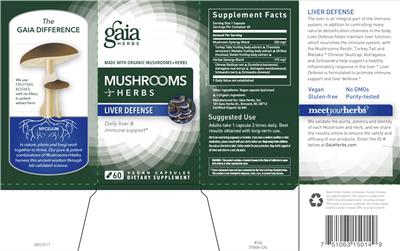
Mushrooms + Herbs Liver Defense by Gaia Herbs label
The label scan from the NIH Dietary Supplement Label Database. Tap to enlarge.
Label images are published by the NIH Dietary Supplement Label Database for the version of this product on file. Always read your actual product label.
View the full label (PDF)The Ingredients in Mushrooms + Herbs Liver Defense by Gaia Herbs
These are the 4 active ingredients this product is made of. Select any to open its full monograph.
Serving size1 Capsule(s) Dosage formCapsule Servings per container60 Amounts shown are per serving.
Most supplement products combine several ingredients, and a medication can interact with the product through any one of them. Each ingredient below shows whether it has known drug interactions.
Mushroom Synergy Blend
Interacts with260 drugs
Maitake is an edible mushroom long used as food and in traditional Japanese medicine, and it is being studied for possible immune, blood sugar, and bl...
Mushroom Synergy Blend monograph & interactions- › Reishi fruiting body extract
- › Maitake fruiting body extract
- › Turkey Tails fruiting body extract
Herbal Synergy Blend
Other (inactive) ingredients: Vegan Capsule. These complete the product’s ingredient list but are not active constituents.
Mushrooms + Herbs Liver Defense by Gaia Herbs Drug Interactions
Mushrooms + Herbs Liver Defense contains 4 ingredients, and 4 of them have known drug interactions. Altogether they interact with 1,348 medications. Here’s the picture, then you can look up your own drug.
Want to check YOUR meds against Mushrooms + Herbs Liver Defense?
Ask about interactions with your drugs in plain English — “Can I take it with lisinopril?” — and we find you the answer in seconds, ingredient by ingredient.
Go to the checkerIngredients driving the most interactions
Individual Drug Interactions
The ingredients in Mushrooms + Herbs Liver Defense interact with 1,348 drugs. Click any drug to see the details.
4 of the 4 ingredients in Mushrooms + Herbs Liver Defense interact with drugs. Each result below shows which ingredient is responsible. Chinese Skullcap Schisandra Mushroom Synergy Blend Astragalus root extract
6-mercaptopurinePurinethol
How 6-mercaptopurine interacts with Mushrooms + Herbs Liver Defense — through 1 ingredient. Tap an ingredient for the detail:
Astragalus Root ExtractImmunosuppressants Moderate
Interaction Summary
Theoretically, astragalus might interfere with immunosuppressive therapy.
Read the full Astragalus Root Extract + 6-mercaptopurine interactionAdo-trastuzumab EmtansineKadcyla
How Ado-trastuzumab Emtansine interacts with Mushrooms + Herbs Liver Defense — through 1 ingredient. Tap an ingredient for the detail:
SchisandraCytochrome P450 3a4 (cyp3a4) Substrates Moderate
Interaction Summary
Schisandra can increase the levels and clinical effects of drugs metabolized by CYP3A4.
Read the full Schisandra + Ado-trastuzumab Emtansine interactionAbciximabReoPro
How Abciximab interacts with Mushrooms + Herbs Liver Defense — through 2 ingredients. Tap an ingredient for the detail:
Reishi Fruiting Body ExtractAnticoagulant/antiplatelet Drugs Moderate
Interaction Summary
Theoretically, high doses of reishi mushroom might increase the risk of bleeding.
Read the full Reishi Fruiting Body Extract + Abciximab interactionChinese SkullcapAnticoagulant/antiplatelet Drugs Moderate
Interaction Summary
Theoretically, Baikal skullcap might increase the risk of bleeding when used concomitantly with anticoagulant and antiplatelet drugs.
Read the full Chinese Skullcap + Abciximab interactionAbemaciclibVerzenio
How Abemaciclib interacts with Mushrooms + Herbs Liver Defense — through 1 ingredient. Tap an ingredient for the detail:
SchisandraCytochrome P450 3a4 (cyp3a4) Substrates Moderate
Interaction Summary
Schisandra can increase the levels and clinical effects of drugs metabolized by CYP3A4.
Read the full Schisandra + Abemaciclib interactionAbiraterone
How Abiraterone interacts with Mushrooms + Herbs Liver Defense — through 1 ingredient. Tap an ingredient for the detail:
SchisandraCytochrome P450 3a4 (cyp3a4) Substrates Moderate
Interaction Summary
Schisandra can increase the levels and clinical effects of drugs metabolized by CYP3A4.
Read the full Schisandra + Abiraterone interactionAbiraterone AcetateYonsa, Zytiga
How Abiraterone Acetate interacts with Mushrooms + Herbs Liver Defense — through 1 ingredient. Tap an ingredient for the detail:
SchisandraCytochrome P450 3a4 (cyp3a4) Substrates Moderate
Interaction Summary
Schisandra can increase the levels and clinical effects of drugs metabolized by CYP3A4.
Read the full Schisandra + Abiraterone Acetate interactionAbrocitinibCibinqo
How Abrocitinib interacts with Mushrooms + Herbs Liver Defense — through 4 ingredients. Tap an ingredient for the detail:
Chinese SkullcapCytochrome P450 2c19 (cyp2c19) Substrates, Anticoagulant/antiplatelet Drugs Moderate
Interaction Summary
Theoretically, Baikal skullcap might increase levels of drugs metabolized by CYP2C19 enzymes.
Read the full Chinese Skullcap + Abrocitinib interactionReishi Fruiting Body ExtractAnticoagulant/antiplatelet Drugs Moderate
Interaction Summary
Theoretically, high doses of reishi mushroom might increase the risk of bleeding.
Read the full Reishi Fruiting Body Extract + Abrocitinib interactionSchisandraCytochrome P450 2c19 (cyp2c19) Substrates, Cytochrome P450 2c9 (cyp2c9) Substrates Moderate
Interaction Summary
Theoretically, schisandra might increase the levels and clinical effects of CYP2C19 substrates.
Read the full Schisandra + Abrocitinib interactionAstragalus Root ExtractImmunosuppressants Moderate
Interaction Summary
Theoretically, astragalus might interfere with immunosuppressive therapy.
Read the full Astragalus Root Extract + Abrocitinib interactionAcalabrutinibCalquence
How Acalabrutinib interacts with Mushrooms + Herbs Liver Defense — through 2 ingredients. Tap an ingredient for the detail:
SchisandraCytochrome P450 3a4 (cyp3a4) Substrates, P-glycoprotein Substrates Moderate
Interaction Summary
Schisandra can increase the levels and clinical effects of drugs metabolized by CYP3A4.
Read the full Schisandra + Acalabrutinib interactionChinese SkullcapP-glycoprotein Substrates Minor
Interaction Summary
Theoretically, Baikal skullcap might increase levels of drugs transported by P-glycoprotein.
Read the full Chinese Skullcap + Acalabrutinib interactionAcarboseGlucobay, Prandase, Precose
How Acarbose interacts with Mushrooms + Herbs Liver Defense — through 4 ingredients. Tap an ingredient for the detail:
Astragalus Root ExtractAntidiabetes Drugs Moderate
Interaction Summary
Theoretically, taking astragalus with antidiabetes drugs might increase the risk of hypoglycemia.
Read the full Astragalus Root Extract + Acarbose interactionChinese SkullcapAntidiabetes Drugs Moderate
Interaction Summary
Theoretically, concomitant use of Baikal skullcap with antidiabetes drugs might enhance blood glucose lowering effects.
Read the full Chinese Skullcap + Acarbose interactionMaitake Fruiting Body ExtractAntidiabetes Drugs Moderate
Interaction Summary
Theoretically, combining maitake mushroom with antidiabetes drugs might increase the risk of hypoglycemia.
Read the full Maitake Fruiting Body Extract + Acarbose interactionReishi Fruiting Body ExtractAntidiabetes Drugs Moderate
Interaction Summary
Theoretically, reishi mushroom might have additive effects with antidiabetes drugs.
Read the full Reishi Fruiting Body Extract + Acarbose interactionAcebutololRhotral, Sectral
How Acebutolol interacts with Mushrooms + Herbs Liver Defense — through 3 ingredients. Tap an ingredient for the detail:
Maitake Fruiting Body ExtractAntihypertensive Drugs Moderate
Interaction Summary
Theoretically, combining maitake mushroom with antihypertensive drugs might increase the risk of hypotension.
Read the full Maitake Fruiting Body Extract + Acebutolol interactionReishi Fruiting Body ExtractAntihypertensive Drugs Moderate
Interaction Summary
Theoretically, concurrent use of reishi mushroom with antihypertensive drugs might increase the risk of hypotension.
Read the full Reishi Fruiting Body Extract + Acebutolol interactionChinese SkullcapAntihypertensive Drugs Moderate
Interaction Summary
Theoretically, concomitant use of Baikal skullcap with antihypertensive drugs might have additive effects and increase the risk of hypotension.
Read the full Chinese Skullcap + Acebutolol interactionAcenocoumarolSintrom
How Acenocoumarol interacts with Mushrooms + Herbs Liver Defense — through 2 ingredients. Tap an ingredient for the detail:
Reishi Fruiting Body ExtractAnticoagulant/antiplatelet Drugs Moderate
Interaction Summary
Theoretically, high doses of reishi mushroom might increase the risk of bleeding.
Read the full Reishi Fruiting Body Extract + Acenocoumarol interactionChinese SkullcapAnticoagulant/antiplatelet Drugs Moderate
Interaction Summary
Theoretically, Baikal skullcap might increase the risk of bleeding when used concomitantly with anticoagulant and antiplatelet drugs.
Read the full Chinese Skullcap + Acenocoumarol interactionAcetaminophenChildren's Tylenol, Children's Tylenol Meltaways, Tylenol, Tylenol Ex Strength
How Acetaminophen interacts with Mushrooms + Herbs Liver Defense — through 1 ingredient. Tap an ingredient for the detail:
Chinese SkullcapCytochrome P450 1a2 (cyp1a2) Substrates Moderate
Interaction Summary
Theoretically, Baikal skullcap may increase levels of drugs metabolized by CYP1A2 enzymes.
Read the full Chinese Skullcap + Acetaminophen interactionAcetaminophen, AspirinGemnisyn
How Acetaminophen, Aspirin interacts with Mushrooms + Herbs Liver Defense — through 2 ingredients. Tap an ingredient for the detail:
Chinese SkullcapCytochrome P450 1a2 (cyp1a2) Substrates, Anticoagulant/antiplatelet Drugs Moderate
Interaction Summary
Theoretically, Baikal skullcap may increase levels of drugs metabolized by CYP1A2 enzymes.
Read the full Chinese Skullcap + Acetaminophen, Aspirin interactionReishi Fruiting Body ExtractAnticoagulant/antiplatelet Drugs Moderate
Interaction Summary
Theoretically, high doses of reishi mushroom might increase the risk of bleeding.
Read the full Reishi Fruiting Body Extract + Acetaminophen, Aspirin interactionAcetaminophen, Aspirin, CaffeineExcedrin, Excedrin Extra Strength, Excedrin Migraine
How Acetaminophen, Aspirin, Caffeine interacts with Mushrooms + Herbs Liver Defense — through 3 ingredients. Tap an ingredient for the detail:
Reishi Fruiting Body ExtractAnticoagulant/antiplatelet Drugs Moderate
Interaction Summary
Theoretically, high doses of reishi mushroom might increase the risk of bleeding.
Read the full Reishi Fruiting Body Extract + Acetaminophen, Aspirin, Caffeine interactionChinese SkullcapCytochrome P450 1a2 (cyp1a2) Substrates, Anticoagulant/antiplatelet Drugs Moderate
Interaction Summary
Theoretically, Baikal skullcap may increase levels of drugs metabolized by CYP1A2 enzymes.
Read the full Chinese Skullcap + Acetaminophen, Aspirin, Caffeine interactionSchisandraCytochrome P450 3a4 (cyp3a4) Substrates Moderate
Interaction Summary
Schisandra can increase the levels and clinical effects of drugs metabolized by CYP3A4.
Read the full Schisandra + Acetaminophen, Aspirin, Caffeine interactionAcetaminophen, Brompheniramine, PhenylpropanolamineDimetapp Cold and Flu
How Acetaminophen, Brompheniramine, Phenylpropanolamine interacts with Mushrooms + Herbs Liver Defense — through 1 ingredient. Tap an ingredient for the detail:
Chinese SkullcapCytochrome P450 1a2 (cyp1a2) Substrates Moderate
Interaction Summary
Theoretically, Baikal skullcap may increase levels of drugs metabolized by CYP1A2 enzymes.
Read the full Chinese Skullcap + Acetaminophen, Brompheniramine, Phenylpropanolamine interactionAcetaminophen, ButalbitalAxocet, Bancap, Bucet, Butex Forte, Esgic CF, Orbivan CF +5 more
How Acetaminophen, Butalbital interacts with Mushrooms + Herbs Liver Defense — through 1 ingredient. Tap an ingredient for the detail:
Chinese SkullcapCytochrome P450 1a2 (cyp1a2) Substrates Moderate
Interaction Summary
Theoretically, Baikal skullcap may increase levels of drugs metabolized by CYP1A2 enzymes.
Read the full Chinese Skullcap + Acetaminophen, Butalbital interactionAcetaminophen, Butalbital, CaffeineEsgic, Esgic Plus, Fiogesic, Fioricet, Repan, Tecnal +1 more
How Acetaminophen, Butalbital, Caffeine interacts with Mushrooms + Herbs Liver Defense — through 2 ingredients. Tap an ingredient for the detail:
Chinese SkullcapCytochrome P450 1a2 (cyp1a2) Substrates Moderate
Interaction Summary
Theoretically, Baikal skullcap may increase levels of drugs metabolized by CYP1A2 enzymes.
Read the full Chinese Skullcap + Acetaminophen, Butalbital, Caffeine interactionSchisandraCytochrome P450 3a4 (cyp3a4) Substrates Moderate
Interaction Summary
Schisandra can increase the levels and clinical effects of drugs metabolized by CYP3A4.
Read the full Schisandra + Acetaminophen, Butalbital, Caffeine interactionAcetaminophen, Butalbital, Caffeine, CodeineEsgic with Codeine, Fioricet w/ Codeine
How Acetaminophen, Butalbital, Caffeine, Codeine interacts with Mushrooms + Herbs Liver Defense — through 2 ingredients. Tap an ingredient for the detail:
SchisandraCytochrome P450 3a4 (cyp3a4) Substrates Moderate
Interaction Summary
Schisandra can increase the levels and clinical effects of drugs metabolized by CYP3A4.
Read the full Schisandra + Acetaminophen, Butalbital, Caffeine, Codeine interactionChinese SkullcapCytochrome P450 1a2 (cyp1a2) Substrates, Cns Depressants Moderate
Interaction Summary
Theoretically, Baikal skullcap may increase levels of drugs metabolized by CYP1A2 enzymes.
Read the full Chinese Skullcap + Acetaminophen, Butalbital, Caffeine, Codeine interactionAcetaminophen, Butalbital, CodeineBancap w/ Codeine
How Acetaminophen, Butalbital, Codeine interacts with Mushrooms + Herbs Liver Defense — through 1 ingredient. Tap an ingredient for the detail:
Chinese SkullcapCytochrome P450 1a2 (cyp1a2) Substrates, Cns Depressants Moderate
Interaction Summary
Theoretically, Baikal skullcap may increase levels of drugs metabolized by CYP1A2 enzymes.
Read the full Chinese Skullcap + Acetaminophen, Butalbital, Codeine interactionAcetaminophen, Butalbital, Codeine PhosphatePhrenilin #3
How Acetaminophen, Butalbital, Codeine Phosphate interacts with Mushrooms + Herbs Liver Defense — through 1 ingredient. Tap an ingredient for the detail:
Chinese SkullcapCytochrome P450 1a2 (cyp1a2) Substrates, Cns Depressants Moderate
Interaction Summary
Theoretically, Baikal skullcap may increase levels of drugs metabolized by CYP1A2 enzymes.
Read the full Chinese Skullcap + Acetaminophen, Butalbital, Codeine Phosphate interactionAcetaminophen, Caffeine, Chlorpheniramine, Hydrocodone, PhenylephrineHycomine Compound
How Acetaminophen, Caffeine, Chlorpheniramine, Hydrocodone, Phenylephrine interacts with Mushrooms + Herbs Liver Defense — through 2 ingredients. Tap an ingredient for the detail:
Chinese SkullcapCytochrome P450 1a2 (cyp1a2) Substrates, Cns Depressants Moderate
Interaction Summary
Theoretically, Baikal skullcap may increase levels of drugs metabolized by CYP1A2 enzymes.
Read the full Chinese Skullcap + Acetaminophen, Caffeine, Chlorpheniramine, Hydrocodone, Phenylephrine interactionSchisandraCytochrome P450 3a4 (cyp3a4) Substrates Moderate
Interaction Summary
Schisandra can increase the levels and clinical effects of drugs metabolized by CYP3A4.
Read the full Schisandra + Acetaminophen, Caffeine, Chlorpheniramine, Hydrocodone, Phenylephrine interactionAcetaminophen, Caffeine, CodeineGesic C15, Gesic C30, Gesic C8, Lenoltec 1, Lenoltec 2, Lenoltec 3 +1 more
How Acetaminophen, Caffeine, Codeine interacts with Mushrooms + Herbs Liver Defense — through 2 ingredients. Tap an ingredient for the detail:
SchisandraCytochrome P450 3a4 (cyp3a4) Substrates Moderate
Interaction Summary
Schisandra can increase the levels and clinical effects of drugs metabolized by CYP3A4.
Read the full Schisandra + Acetaminophen, Caffeine, Codeine interactionChinese SkullcapCytochrome P450 1a2 (cyp1a2) Substrates, Cns Depressants Moderate
Interaction Summary
Theoretically, Baikal skullcap may increase levels of drugs metabolized by CYP1A2 enzymes.
Read the full Chinese Skullcap + Acetaminophen, Caffeine, Codeine interactionAcetaminophen, Caffeine, Codeine, SalicylamideCodalan No.1, Codalan No.2, Codalan No.3
How Acetaminophen, Caffeine, Codeine, Salicylamide interacts with Mushrooms + Herbs Liver Defense — through 2 ingredients. Tap an ingredient for the detail:
SchisandraCytochrome P450 3a4 (cyp3a4) Substrates Moderate
Interaction Summary
Schisandra can increase the levels and clinical effects of drugs metabolized by CYP3A4.
Read the full Schisandra + Acetaminophen, Caffeine, Codeine, Salicylamide interactionChinese SkullcapCns Depressants, Cytochrome P450 1a2 (cyp1a2) Substrates Moderate
Interaction Summary
Theoretically, Baikal skullcap might cause additive therapeutic and adverse effects when used concomitantly with drugs with sedative properties.
Read the full Chinese Skullcap + Acetaminophen, Caffeine, Codeine, Salicylamide interactionAcetaminophen, Caffeine, DihydrocodeineDHC Plus, Panlor DC, Panlor SS
How Acetaminophen, Caffeine, Dihydrocodeine interacts with Mushrooms + Herbs Liver Defense — through 2 ingredients. Tap an ingredient for the detail:
Chinese SkullcapCytochrome P450 1a2 (cyp1a2) Substrates, Cns Depressants Moderate
Interaction Summary
Theoretically, Baikal skullcap may increase levels of drugs metabolized by CYP1A2 enzymes.
Read the full Chinese Skullcap + Acetaminophen, Caffeine, Dihydrocodeine interactionSchisandraCytochrome P450 3a4 (cyp3a4) Substrates Moderate
Interaction Summary
Schisandra can increase the levels and clinical effects of drugs metabolized by CYP3A4.
Read the full Schisandra + Acetaminophen, Caffeine, Dihydrocodeine interactionAcetaminophen, Caffeine, IsomethepteneMigralam
How Acetaminophen, Caffeine, Isometheptene interacts with Mushrooms + Herbs Liver Defense — through 2 ingredients. Tap an ingredient for the detail:
SchisandraCytochrome P450 3a4 (cyp3a4) Substrates Moderate
Interaction Summary
Schisandra can increase the levels and clinical effects of drugs metabolized by CYP3A4.
Read the full Schisandra + Acetaminophen, Caffeine, Isometheptene interactionChinese SkullcapCytochrome P450 1a2 (cyp1a2) Substrates Moderate
Interaction Summary
Theoretically, Baikal skullcap may increase levels of drugs metabolized by CYP1A2 enzymes.
Read the full Chinese Skullcap + Acetaminophen, Caffeine, Isometheptene interactionAcetaminophen, Caffeine, PyrilamineMidol Max Strength Menstrual
How Acetaminophen, Caffeine, Pyrilamine interacts with Mushrooms + Herbs Liver Defense — through 2 ingredients. Tap an ingredient for the detail:
Chinese SkullcapCytochrome P450 1a2 (cyp1a2) Substrates Moderate
Interaction Summary
Theoretically, Baikal skullcap may increase levels of drugs metabolized by CYP1A2 enzymes.
Read the full Chinese Skullcap + Acetaminophen, Caffeine, Pyrilamine interactionSchisandraCytochrome P450 3a4 (cyp3a4) Substrates Moderate
Interaction Summary
Schisandra can increase the levels and clinical effects of drugs metabolized by CYP3A4.
Read the full Schisandra + Acetaminophen, Caffeine, Pyrilamine interactionAcetaminophen, Chlorpheniramine Maleate, Dextromethorphan HbrVicks Formula 44M Cough, Cold & Flu Relief
How Acetaminophen, Chlorpheniramine Maleate, Dextromethorphan Hbr interacts with Mushrooms + Herbs Liver Defense — through 2 ingredients. Tap an ingredient for the detail:
Chinese SkullcapCytochrome P450 1a2 (cyp1a2) Substrates Moderate
Interaction Summary
Theoretically, Baikal skullcap may increase levels of drugs metabolized by CYP1A2 enzymes.
Read the full Chinese Skullcap + Acetaminophen, Chlorpheniramine Maleate, Dextromethorphan Hbr interactionSchisandraCytochrome P450 3a4 (cyp3a4) Substrates Moderate
Interaction Summary
Schisandra can increase the levels and clinical effects of drugs metabolized by CYP3A4.
Read the full Schisandra + Acetaminophen, Chlorpheniramine Maleate, Dextromethorphan Hbr interactionAcetaminophen, Chlorpheniramine, Codeine, PhenylephrineColrex
How Acetaminophen, Chlorpheniramine, Codeine, Phenylephrine interacts with Mushrooms + Herbs Liver Defense — through 2 ingredients. Tap an ingredient for the detail:
Chinese SkullcapCytochrome P450 1a2 (cyp1a2) Substrates, Cns Depressants Moderate
Interaction Summary
Theoretically, Baikal skullcap may increase levels of drugs metabolized by CYP1A2 enzymes.
Read the full Chinese Skullcap + Acetaminophen, Chlorpheniramine, Codeine, Phenylephrine interactionSchisandraCytochrome P450 3a4 (cyp3a4) Substrates Moderate
Interaction Summary
Schisandra can increase the levels and clinical effects of drugs metabolized by CYP3A4.
Read the full Schisandra + Acetaminophen, Chlorpheniramine, Codeine, Phenylephrine interactionAcetaminophen, Chlorpheniramine, DextromethorphanCoricidin II Extra Strength Cold and Flu
How Acetaminophen, Chlorpheniramine, Dextromethorphan interacts with Mushrooms + Herbs Liver Defense — through 2 ingredients. Tap an ingredient for the detail:
SchisandraCytochrome P450 3a4 (cyp3a4) Substrates Moderate
Interaction Summary
Schisandra can increase the levels and clinical effects of drugs metabolized by CYP3A4.
Read the full Schisandra + Acetaminophen, Chlorpheniramine, Dextromethorphan interactionChinese SkullcapCytochrome P450 1a2 (cyp1a2) Substrates Moderate
Interaction Summary
Theoretically, Baikal skullcap may increase levels of drugs metabolized by CYP1A2 enzymes.
Read the full Chinese Skullcap + Acetaminophen, Chlorpheniramine, Dextromethorphan interactionAcetaminophen, Chlorpheniramine, Dextromethorphan HydrobromideCoricidin HBP Maximum Strength Flu
How Acetaminophen, Chlorpheniramine, Dextromethorphan Hydrobromide interacts with Mushrooms + Herbs Liver Defense — through 2 ingredients. Tap an ingredient for the detail:
Chinese SkullcapCytochrome P450 1a2 (cyp1a2) Substrates Moderate
Interaction Summary
Theoretically, Baikal skullcap may increase levels of drugs metabolized by CYP1A2 enzymes.
Read the full Chinese Skullcap + Acetaminophen, Chlorpheniramine, Dextromethorphan Hydrobromide interactionSchisandraCytochrome P450 3a4 (cyp3a4) Substrates Moderate
Interaction Summary
Schisandra can increase the levels and clinical effects of drugs metabolized by CYP3A4.
Read the full Schisandra + Acetaminophen, Chlorpheniramine, Dextromethorphan Hydrobromide interactionEach ingredient & the kinds of drugs it affects
For each ingredient in Mushrooms + Herbs Liver Defense with known interactions, here are the types of medications they can affect. Open any type for the detail — or search your exact drug in the checker above.
Chinese Skullcap
Anticoagulant/Antiplatelet Drugs
Theoretically, Baikal skullcap might increase the risk of bleeding when used concomitantly with anticoagulant and antiplatelet drugs.
Preliminary clinical research suggests that taking capsules containing a combination of astragalus, goldthread, and Baikal skullcap daily for 4 weeks inhibits platelet aggregation; the effect seems to be similar to that of aspirin 50 mg daily. It is unclear if this effect is due to Baikal skullcap, other ingredients, or the combination.
Antidiabetes Drugs
Theoretically, concomitant use of Baikal skullcap with antidiabetes drugs might enhance blood glucose lowering effects.
Baicalein, a constituent of Baikal skullcap, has alpha-glucosidase inhibitory activity in vitro. Animal research also suggests that Baikal skullcap enhances the antidiabetic effects of metformin. However, in a small human study, taking Baikal skullcap extract did not enhance the antidiabetic effects of metformin, although it did modestly lower glucose levels during an oral glucose tolerance test (OGTT). Until more is known, use cautiously.
Antihypertensive Drugs
Theoretically, concomitant use of Baikal skullcap with antihypertensive drugs might have additive effects and increase the risk of hypotension.
Animal research suggests that baicalein, a constituent of Baikal skullcap, might lower blood pressure.
Antithyroid Drugs
Theoretically, concomitant use of Baikal skullcap and antithyroid drugs may result in additive activity and increase the risk of hypothyroidism.
In an animal hyperthyroid model, Baikal skullcap improved levels of triiodothyronine (T3), thyroxine (T4), and thyroid stimulating hormone (TSH). The clinical significance of this effect is unclear.
Cytochrome P450 1A2 (Cyp1A2) Substrates
Theoretically, Baikal skullcap may increase levels of drugs metabolized by CYP1A2 enzymes.
In vitro evidence suggests that constituents of Baikal skullcap inhibit the activity of CYP1A2. This effect has not been reported in humans.
Cytochrome P450 2C19 (Cyp2C19) Substrates
Theoretically, Baikal skullcap might increase levels of drugs metabolized by CYP2C19 enzymes.
In vitro evidence suggest that wogonin, a constituent of Baikal skullcap, modestly inhibits the activity of CYP2C19 enzymes. This effect has not been reported in humans.
Estrogens
Theoretically, concomitant use of large amounts of Baikal skullcap might interfere with hormone replacement therapy, due to competition for estrogen receptors.
In vitro evidence suggests that Baikal skullcap has estrogenic activity.
Lithium
Theoretically, Baikal skullcap might reduce lithium excretion and increase serum levels of lithium.
Baikal skullcap is thought to have diuretic properties, which may reduce lithium excretion. The dose of lithium might need to be decreased.
Alcohol (Ethanol)
Theoretically, Baikal skullcap might potentiate the sedative effects of alcohol.
In vitro and animal research suggests that Baikal skullcap binds to GABA-A receptors and causes sedation. Theoretically, Baikal skullcap might potentiate the sedative effects of alcohol. Preliminary clinical research has not identified clinically relevant sedation after use of Baikal skullcap; however, a thorough evaluation of safety outcomes has not been conducted.
Cns Depressants
Theoretically, Baikal skullcap might cause additive therapeutic and adverse effects when used concomitantly with drugs with sedative properties.
In vitro and animal research suggests that Baikal skullcap binds to GABA-A receptors and causes sedation. Theoretically, Baikal skullcap might cause additive therapeutic and adverse effects when used concomitantly with drugs with sedative properties. Preliminary clinical research has not identified clinically relevant sedation after use of Baikal skullcap; however, a thorough evaluation of safety outcomes has not been conducted.
Organic Anion-Transporting Polypeptide Substrates (Oatp)
Theoretically, Baikal skullcap might alter the levels and clinical effects of OATP substrates.
Some pharmacokinetic research shows that baicalin, a constituent of Baikal skullcap, can decrease plasma levels of rosuvastatin. The mechanism is thought to involve stimulation of the activity of the organic anion-transporting polypeptide 1B1 (OATP1B1), which transports rosuvastatin into the liver. This decreases plasma levels of the drug, but increases levels at the site of action in the liver. The degree to which rosuvastatin levels are affected depends on the OATP1B1 haplotype of the individual. Baikal skullcap might also affect other OATP1B1 substrates.
P-Glycoprotein Substrates
Theoretically, Baikal skullcap might increase levels of drugs transported by P-glycoprotein.
In vitro and animal research suggests that baicalein, oroxylin A, and wogonin, constituents of Baikal skullcap, can inhibit P-glycoprotein. This effect has not been reported in humans.
Schisandra
Cyclophosphamide
Theoretically, schisandra might increase the levels and clinical effects of cyclophosphamide.
In vitro research shows that schisandra increases the concentration of cyclophosphamide, likely through inhibition of cytochrome P450 3A4. After multiple doses of the schisandra constituents schisandrin A and schisantherin A, the maximum concentration of cyclophosphamide was increased by 7% and 75%, respectively, while the overall exposure to cyclophosphamide was increased by 29% and 301%, respectively.
Cyclosporine (Neoral, Sandimmune)
Schisandra can increase the levels and clinical effects of cyclosporine.
A small observational study in children with aplastic anemia found that taking schisandra with cyclosporine increased cyclosporine trough levels by 93% without increasing the risk of adverse events. However, the dose of cyclosporine was reduced in 9% of children to maintain appropriate cyclosporine blood concentrations.
Cytochrome P450 2C19 (Cyp2C19) Substrates
Theoretically, schisandra might increase the levels and clinical effects of CYP2C19 substrates.
In vitro research shows that schisandra inhibits CYP2C19, and animal research shows that schisandra increases the concentration of voriconazole, a CYP2C19 substrate. Theoretically, schisandra may also inhibit the metabolism of other CYP2C19 substrates. This effect has not been reported in humans.
Cytochrome P450 2C9 (Cyp2C9) Substrates
Theoretically, schisandra might decrease the levels and clinical effects of CYP2C9 substrates.
In vitro and animal research suggests that schisandra induces CYP2C9 enzymes. This effect has not been reported in humans.
Cytochrome P450 3A4 (Cyp3A4) Substrates
Schisandra can increase the levels and clinical effects of drugs metabolized by CYP3A4.
Most clinical and laboratory research shows that schisandra, administered either as a single dose or up to twice daily for 14 days, inhibits CYP3A4 and increases the concentration of CYP3A4 substrates such as cyclophosphamide, midazolam, tacrolimus, and talinolol. Although one in vitro and animal study shows that schisandra may induce CYP3A4 metabolism, this effect appears to be overpowered by schisandra's CYP3A4 inhibitory activity and has not been reported in humans.
Midazolam (Versed)
Schisandra can increase the levels and clinical effects of midazolam.
A small pharmacokinetic study in healthy adults shows that taking schisandra extract (Hezheng Pharmaceutical Co.) containing deoxyschizandrin 33.75 mg twice daily for 8 days and a single dose of midazolam 15 mg on day 8 increases the overall exposure to midazolam by about 119%, increases the peak plasma level of midazolam by 86%, and decreases midazolam clearance by about 52%. This effect has been attributed to inhibition of CYP3A4 by schisandra.
P-Glycoprotein Substrates
Schisandra might increase the levels and clinical effects of P-glycoprotein substrates.
In vitro research shows that schisandra extracts and constituents such as schisandrin B inhibit P-glycoprotein mediated efflux in intestinal cells and in P-glycoprotein over-expressing cell lines. Additionally, a small clinical study shows that schisandra increases the peak concentration and overall exposure to talinolol, a P-glycoprotein probe substrate. Theoretically, schisandra might inhibit the efflux of other P-glycoprotein substrates.
Sirolimus (Rapamune)
Schisandra can increase the levels and clinical effects of sirolimus.
A small pharmacokinetic study in healthy volunteers shows that taking 3 capsules of schisandra (Hezheng Pharmaceutical Company) containing a total of 33.75 mg deoxyschizandrin twice daily for 13 days and then taking a single dose of sirolimus 2 mg increases the overall exposure and peak level of sirolimus by two-fold. This effect is thought to be due to inhibition of cytochrome P450 3A4 by schisandra, as well as possible inhibition of the P-glycoprotein drug transporter.
Tacrolimus (Prograf)
Schisandra can increase the levels and clinical effects of tacrolimus.
Clinical research in healthy children and adults, transplant patients, and patients with nephrotic syndrome and various rheumatic immunologic disorders shows that taking schisandra with tacrolimus increases tacrolimus peak levels by 183% to 268%, prolongs or delays time to peak tacrolimus concentrations, increases overall exposure to tacrolimus by 126% to 343%, and decreases tacrolimus clearance by 19% to 73%. This effect is thought to be due to inhibition of P-glycoprotein drug transporter and CYP3A4 and CYP3A5 by schisandra. Some clinical and observational studies suggest that schisandra increases tacrolimus levels similarly in both expressors and non-expressors of CYP3A5, while other studies suggest it does so to a greater degree in CYP3A5 expressors than non-expressors. Animal research suggests that the greatest increase in tacrolimus levels occurs when schisandra is taken either concomitantly or up to 2 hours before tacrolimus, and clinical and observational research in humans suggests that schisandra may increase whole blood levels of tacrolimus and decrease clearance of tacrolimus in a dose-dependent manner.
Talinolol
Schisandra can increase the levels and clinical effects of talinolol.
A small pharmacokinetic study in healthy volunteers shows that taking schisandra extract 300 mg twice daily for 14 days with a single dose of talinolol 100 mg on day 14 increases the peak talinolol level by 51% and the overall exposure to talinolol by 47%. This effect is thought to be due to the possible inhibition of cytochrome P450 3A4 and P-glycoprotein by schisandra.
tly.
Voriconazole (Vfend)
Theoretically, schisandra might increase the levels and clinical effects of voriconazole.
Animal research shows that oral schisandra given daily for 1 or 14 days increases levels of intravenously administered voriconazole, a cytochrome P450 (CYP) 2C19 substrate. This effect is thought to be due to inhibition of CYP2C19 by schisandra. However, this interaction has not been reported in humans.
Warfarin (Coumadin)
Theoretically, schisandra might decrease the levels and clinical effects of warfarin.
Animal research suggests that oral schisandra extract, given daily for 6 days, reduces levels of intravenously administered warfarin. This effect might be due to the induction of cytochrome P450 (CYP) 2C9 metabolism by schisandra. However, this interaction has not been reported in humans.
Mushroom Synergy Blend
Antidiabetes Drugs
Theoretically, combining maitake mushroom with antidiabetes drugs might increase the risk of hypoglycemia.
Clinical research shows that taking maitake mushroom polysaccharide (MMP) can lower blood glucose levels in patients with types 2 diabetes.
Antihypertensive Drugs
Theoretically, combining maitake mushroom with antihypertensive drugs might increase the risk of hypotension.
Animal research shows that maitake mushroom can lower blood pressure.
Warfarin (Coumadin)
There is limited evidence that maitake mushroom may increase the anticoagulant effects of warfarin.
In a case report, a patient previously stabilized on warfarin developed an elevated international normalized ratio (INR) of 5.1 after taking maitake mushroom (Grifron-Pro Maitake D-Fraction) 1 drop/kg daily in three divided doses for one week. The elevated INR resolved after holding warfarin for two days, then reducing the dose by 11%. It is thought that the beta-glucan constituent of maitake mushroom might cause warfarin dissociation from proteins, resulting in increased free warfarin levels and increased warfarin effects.
Astragalus root extract
Antidiabetes Drugs
Theoretically, taking astragalus with antidiabetes drugs might increase the risk of hypoglycemia.
Clinical research in humans shows that astragalus might have hypoglycemic effects. Theoretically, taking astragalus, especially in combination with other hypoglycemic agents, might increase the risk of hypoglycemia.
Cyclophosphamide
Theoretically, astragalus might interfere with cyclophosphamide therapy.
Evidence regarding the effect of astragalus on immunosuppression caused by cyclophosphamide is conflicting. Some animal research suggests that astragalus reverses cyclophosphamide-induced immunosuppression. However, other animal research shows no effect.
Immunosuppressants
Theoretically, astragalus might interfere with immunosuppressive therapy.
Astragalus seems to stimulate immune function. Theoretically, taking astragalus might decrease the effects of immunosuppressive therapy.
Lithium
Theoretically, astragalus might increase levels and adverse effects of lithium.
Animal research suggests that astragalus has diuretic properties. Theoretically, due to this diuretic effect, astragalus might reduce excretion and increase levels of lithium.
Brand information
Manufacturer and brand details for Mushrooms + Herbs Liver Defense, from the product label.
Gaia Herbs
See all Gaia Herbs products- Name
- Gaia Herbs, Inc.
- Street Address
- 101 Gaia Herbs Dr.
- City
- Brevard
- State
- NC
- ZipCode
- 28712
- Web Address
- GaiaHerbs.com
Mushrooms + Herbs Liver Defense by Gaia Herbs: Common Questions
Does Mushrooms + Herbs Liver Defense by Gaia Herbs interact with any medications?
How can one product interact with so many drugs?
Where does this information come from?
Written and reviewed by the HelloPharmacist editorial staff. Our editorial policy
Not sure if Mushrooms + Herbs Liver Defense is safe with your meds?
Our pharmacists answer your medication & supplement questions — free.
Label information is sourced from the NIH Dietary Supplement Label Database and reflects the product version on file; always read your actual product label. This page is for education only and is not a substitute for professional medical advice. Confirm with your pharmacist or doctor before combining supplements and medications.
The Full Monographs Behind Mushrooms + Herbs Liver Defense’s Ingredients
Every ingredient we hold a full HelloPharmacist monograph for — uses, evidence, safety, and the complete interaction list.
Maitake Mushroom
Interacts with 260 drugsMaitake is an edible mushroom long used as food and in traditional Japanese medicine, and it is being studied for possible immune, blood sugar, and blood pressure effects. The human evidence...
Read the full Maitake Mushroom monograph → Herb & supplement monographReishi Mushroom
Interacts with 375 drugsReishi is a traditional Asian mushroom widely used to support the immune system and overall wellness. Human evidence for most of its claimed benefits is limited or low-quality, so it should...
Read the full Reishi Mushroom monograph → Herb & supplement monographSchisandra
Interacts with 803 drugsSchisandra is a traditional Chinese medicine berry used as an adaptogen for stress, fatigue, and liver support. Human evidence is limited and most claims are not well proven, but it appears...
Read the full Schisandra monograph → Herb & supplement monographAstragalus
Interacts with 208 drugsAstragalus is a root used for centuries in traditional Chinese medicine, mainly to support the immune system and help the body cope with stress. While early studies are interesting, strong h...
Read the full Astragalus monograph → Herb & supplement monographBaikal Skullcap
Interacts with 946 drugsBaikal skullcap is a traditional Chinese herb (Huang Qin) used for inflammation, allergies, and infections, with active compounds like baicalin and baicalein studied mostly in the lab. Human...
Read the full Baikal Skullcap monograph →Sources & How We Checked
Mushrooms + Herbs Liver Defense's label data comes from the NIH Dietary Supplement Label Database; the ingredient interaction data is from the Natural Medicines database, reviewed by our pharmacists.
- NIH Dietary Supplement Label Database (DSLD) — The official product label on file for this supplement.
- Natural Medicines (Therapeutic Research Center) — Evidence-graded clinical reference behind the ingredient interaction data.
Content is written and reviewed by licensed HelloPharmacist pharmacists. See our data sources and editorial standards for how this information is built and checked.
The 98 references behind this product’s interaction data
Every citation that drives the interaction findings for this product’s ingredients, from the evidence-graded Natural Medicines (TRC Healthcare) database. Open an ingredient to browse its citations — links open the study on PubMed or the publisher’s site.
Schisandra 26 references
- Leung AY, Foster S. Encyclopedia of Common Natural Ingredients Used in Food, Drugs and Cosmetics. 2nd ed. New York, NY: John Wiley & Sons, 1996.
- Iwata H, Tezuka Y, Kadota S, et al. Identification and characterization of potent CYP3A4 inhibitors in Schisandra fruit extract. Drug Metab Dispos 2004;32:1351-8. PubMed
- Mu Y, Zhang J, Zhang S, et al. Traditional Chinese medicines Wu Wei Zi (Schisandra chinensis Baill) and Gan Cao (Glycyrrhiza uralensis Fisch) activate pregnane X receptor and increase warfarin clearance in rats. J Pharmacol Exp Ther 2006;316:1369-77. PubMed
- Xin HW, Wu XC, Li Q, et al. Effects of Schisandra sphenanthera extract on the pharmacokinetics of tacrolimus in healthy volunteers. Br J Clin Pharmacol 2007;64:469-75.
- Qin XL, Bi HC, Wang XD, et al. Mechanistic understanding of the different effects of Wuhzi Tablet (Schisandra sphenanthera extract) on the absorption and first-pass intestinal and hepatic metabolism of tacrolimus (FK506). Int J Pharm 2010;389:114-21.
- Makino, T., Mizuno, F., and Mizukami, H. Does a kampo medicine containing schisandra fruit affect pharmacokinetics of nifedipine like grapefruit juice? Biol.Pharm.Bull. 2006;29(10):2065-2069. PubMed
- Fan L, Mao XQ, Tao GY, Wang G, Jiang F, Chen Y, Li Q, Zhang W, Lei HP, Hu DL, Huang YF, Wang D, Zhou HH. Effect of Schisandra chinensis extract and Ginkgo biloba extract on the pharmacokinetics of talinolol in healthy volunteers. Xenobiotica. 2009 Mar;39(
- Jiang W, Wang X, Xu X, Kong L. Effect of Schisandra sphenanthera extract on the concentration of tacrolimus in the blood of liver transplant patients. Int J Clin Pharmacol Ther. 2010 Mar;48(3):224-9. PubMed
- Xin HW, Wu XC, Li Q, Yu AR, Xiong L. Effects of Schisandra sphenanthera extract on the pharmacokinetics of midazolam in healthy volunteers. Br J Clin Pharmacol. 2009 May;67(5):541-6.
- Li J, Chen S, Qin X, et at. Wuzhi Tablet (<i>Schisandra sphenanthera</i> Extract) is a Promising Tacrolimus-Sparing Agent for Renal Transplant Recipients Who are CYP3A5 Expressers: a Two-Phase Prospective Study. Drug Metab Dispos. 2017;45(11):1114-1119.
- Qin XL, Li JL, Wang SH, Chen X, Huang M, Bi HC. Co-administration of Wuzhi tablet (Schisandra sphenanthera extract) alters tacrolimus pharmacokinetics in a dose- and time-dependent manner in rats. J Ethnopharmacol. 2020;263:113233. PubMed
- Yuan F, Liang X, Chen X, Qin X, Tan C, Wang L. CYP2C19 is involved in the effect of Wuzhi tablet (Schisandra sphenanthera extract) and its constituents on the pharmacokinetics of intravenous voriconazole. Pharmazie. 2020;75(11):559-564. DOI
- Zhang Z, Lu X, Dong L, Ma J, Fan X. Clinical observation on the effect of Wuzhi soft capsule on FK506 concentration in membranous nephropathy patients. Medicine (Baltimore). 2019;98(48):e18150. PubMed
- Yoo HH, Lee M, Lee MW, Lim SY, Shin J, Kim DH. Effects of Schisandra lignans on P-glycoprotein-mediated drug efflux in human intestinal Caco-2. Planta Med. 2007;73(5):444-50.
- Qiangrong P, Wang T, Lu Q, Hu X. Schisandrin B--a novel inhibitor of P-glycoprotein. Biochem Biophys Res Commun. 2005;335(2):406-11. PubMed
- Chen L, Ji N, Zhang M, Chen W. The influence of Wuzhi capsule on the pharmacokinetics of cyclophosphamide. Recent Pat Anticancer Drug Discov 2021. PubMed
- Cheng X, Ma J, Xu X, Zhang L, Wang X, Wu R. Effect of Wuzhi capsules on cyclosporine A concentration in children with aplastic anemia immunotherapy: a single-center observational study. Expert Rev Clin Pharmacol 2022:1-5. PubMed
- Cheng F, Li Q, Wang J, Zeng F, Zhang Y. Effects and safety evaluation of Wuzhi capsules combined with tacrolimus for the treatment of kidney transplantation recipients. J Clin Pharm Ther 2021;46(6):1636-49. PubMed
- Teng F, Wang W, Zhang W, et al. Effect of hepar-protecting Wuzhi capsule on pharmacokinetics and dose-effect character of tacrolimus in healthy volunteers. Biopharm Drug Dispos 2022.
- Kou K, Sun X, Li M, et al. Beneficial effects of Wuzhi capsule on tacrolimus blood concentrations in liver transplant patients with different donor-recipient CYP3A5 genotypes. J Clin Pharm Ther 2022;47(2):200-10. PubMed
- Peng Y, Jiang F, Zhou R, et al. Clinical evaluation of the efficacy and safety of co-administration of Wuzhi capsule and tacrolimus in adult Chinese patients with myasthenia gravis. Neuropsychiatr Dis Treat 2021;17:2281-9. PubMed
- Chen P, Dai R, She Y, et al. Prediction of tacrolimus and Wuzhi tablet pharmacokinetic interaction magnitude in renal transplant recipients. Clin Transplant 2022;36(12):e14807. PubMed
- Qu J, Bian R, Liu B, et al. The pharmacokinetic study of tacrolimus and Wuzhi capsule in Chinese liver transplant patients. Front Pharmacol 2022;13:956166. PubMed
- Zhou Y, Huang X, Liu L, et al. Effect of Wuzhi preparations on tacrolimus in CYP3A5 expressers during the early period after transplantation: A real-life experience from heart transplant recipients. Transpl Immunol 2023;76:101748. PubMed
- Huang Q, Lin X, Wang Y, et al. Tacrolimus pharmacokinetics in pediatric nephrotic syndrome: A combination of population pharmacokinetic modelling and machine learning approaches to improve individual prediction. Front Pharmacol 2022;13:942129. PubMed
- Wang CB, Zhang YJ, Zhao MM, Zhao LM. Population pharmacokinetic analyses of tacrolimus in non-transplant patients: a systematic review. Eur J Clin Pharmacol 2023;79(7):897-913. PubMed
Maitake Mushroom 8 references
- Kabir Y, Kimura S. Dietary mushrooms reduce blood pressure in spontaneously hypertensive rats (SHR). J Nutr Sci Vitaminol (Tokyo) 1989;35:91-4. PubMed
- Kabir Y, Yamaguchi M, Kimura S. Effect of shiitake (Lentinus edodes) and maitake (Grifola frondosa) mushrooms on blood pressure and plasma lipids of spontaneously hypertensive rats. J Nutr Sci Vitaminol (Tokyo) 1987;33:341-6. PubMed
- Konno S, Tortorelis DG, Fullerton SA, et al. A possible hypoglycaemic effect of maitake mushroom on Type 2 diabetic patients. Diabet Med 2001;18:1010. PubMed
- Chen JT, Tominaga K, Sato Y, et al. Maitake mushroom (Grifola frondosa) extract induces ovulation in patients with polycystic ovary syndrome: a possible monotherapy and a combination therapy after failure with first-line clomiphene citrate. J Altern Compl
- Hanselin MR, Vande Griend JP, Linnebur SA. INR elevation with maitake extract in combination with warfarin. Ann Pharmacother 2010;44:223-4. PubMed
- Talpur, N. A., Echard, B. W., Fan, A. Y., Jaffari, O., Bagchi, D., and Preuss, H. G. Antihypertensive and metabolic effects of whole Maitake mushroom powder and its fractions in two rat strains. Mol.Cell Biochem. 2002;237(1-2):129-136. PubMed
- Deng, G., Lin, H., Seidman, A., Fornier, M., D'Andrea, G., Wesa, K., Yeung, S., Cunningham-Rundles, S., Vickers, A. J., and Cassileth, B. A phase I/II trial of a polysaccharide extract from Grifola frondosa (Maitake mushroom) in breast cancer patients: i
- Wesa KM, Cunningham-Rundles S, Klimek VM, et al. Maitake mushroom extract in myelodysplastic syndromes (MDS): a phase II study. Cancer Immunol Immunother 2015;64(2):237-47. PubMed
Reishi Mushroom 17 references
- McGuffin M, Hobbs C, Upton R, Goldberg A, eds. American Herbal Products Association's Botanical Safety Handbook. Boca Raton, FL: CRC Press, LLC 1997.
- Tao J, Feng KY. Experimental and clinical studies on inhibitory effect of ganoderma lucidum on platelet aggregation. J Tongji Med Univ 1990;10:240-3. PubMed
- Singh AB, Gupta SK, Pereira BM, Prakash D. Sensitization to Ganoderma lucidum in patients with respiratory allergy in India. Clin Exp Allergy 1995;25:440-7.
- Lee SY, Rhee HM. Cardiovascular effects of mycelium extract of Ganoderma lucidum: inhibition of sympathetic outflow as a mechanism of its hypotensive action. Chem Pharm Bull (Tokyo) 1990;38:1359-64. PubMed
- Kwok Y, Ng KFJ, Li, CCF, et al. A prospective, randomized, double-blind, placebo-controlled study of the platelet and global hemostatic effects of Ganoderma lucidum (Ling-Zhi) in healthy volunteers. Anesth Analg 2005;101:423-6. PubMed
- Wanmuang, H., Leopairut, J., Kositchaiwat, C., Wananukul, W., and Bunyaratvej, S. Fatal fulminant hepatitis associated with Ganoderma lucidum (Lingzhi) mushroom powder. J Med Assoc Thai. 2007;90(1):179-181.
- Seto, S. W., Lam, T. Y., Tam, H. L., Au, A. L., Chan, S. W., Wu, J. H., Yu, P. H., Leung, G. P., Ngai, S. M., Yeung, J. H., Leung, P. S., Lee, S. M., and Kwan, Y. W. Novel hypoglycemic effects of Ganoderma lucidum water-extract in obese/diabetic (+db/+db
- Chu, T. T., Benzie, I. F., Lam, C. W., Fok, B. S., Lee, K. K., and Tomlinson, B. Study of potential cardioprotective effects of Ganoderma lucidum (Lingzhi): results of a controlled human intervention trial. Br.J.Nutr. 2012;107(7):1017-1027.
- Jin, X., Ruiz, Beguerie J., Sze, D. M., and Chan, G. C. Ganoderma lucidum (Reishi mushroom) for cancer treatment. Cochrane.Database.Syst.Rev. 2012;6:CD007731.
- Kabir, Y., Kimura, S., and Tamura, T. Dietary effect of Ganoderma lucidum mushroom on blood pressure and lipid levels in spontaneously hypertensive rats (SHR). J Nutr Sci Vitaminol.(Tokyo) 1988;34(4):433-438. PubMed
- Kanmatsuse, K., Kajiwara, N., Hayashi, K., Shimogaichi, S., Fukinbara, I., Ishikawa, H., and Tamura, T. [Studies on Ganoderma lucidum. I. Efficacy against hypertension and side effects]. Yakugaku Zasshi 1985;105(10):942-947. PubMed
- Gao, Y., Lan, J., Dai, X., Ye, J., and Zhou, S. A Phase I/II Study of Ling Zhi Mushroom Ganoderma lucidum(W.Curt: Fr.) Lloyd (Aphyllophoromycetideae) Extract in Patients with Type II Diabetes Mellitus. International Journal of Medicinal Mushrooms 2004;6. DOI
- Jin H, Zhang G, Cao X, and et al. Treatment of hypertension by linzhi combined with hypotensor and its effects on arterial, arteriolar and capillary pressure and microcirculation. In: Niimi H, Xiu RJ, Sawada T, and et al. Microcirculatory Approach to Asi
- Klupp NL, Chang D, Hawke F, Kiat H, Cao H, Grant SJ, Bensoussan A. Ganoderma lucidum mushroom for the treatment of cardiovascular risk factors. Cochrane Database Syst Rev. 2015 Feb 17;2:CD007259. PubMed
- Zhao H, Zhang Q, Zhao L, Huang X, Wang J, Kang X. Spore Powder of Ganoderma lucidum Improves Cancer-Related Fatigue in Breast Cancer Patients Undergoing Endocrine Therapy: A Pilot Clinical Trial. Evid Based Complement Alternat Med. 2012;2012:809614.
- Pazzi F, Adsuar JC, Domínguez-Muñoz FJ, García-Gordillo MA, Gusi N, Collado-Mateo D. Ganoderma lucidum effects on mood and health-related quality of life in women with fibromyalgia. Healthcare (Basel) 2020;8(4):520. PubMed
- Kogure T, Koiwai A, Fukushi D, et al. Hypereosinophilia with hepatic nodule formation caused by Ganoderma lucidum. Intern Med 2021;60(24):3897-3903.
Astragalus 13 references
- Upton R, ed. Astragalus Root: Analytical, quality control, and therapeutic monograph. Santa Cruz, CA: American Herbal Pharmacopoeia. 1999:1-25.
- Khoo KS, Ang PT. Extract of astragalus membranaceus and ligustrum lucidum does not prevent cyclophosphamide-induced myelosuppression. Singapore Med J 1995;36:387-90.
- Chu DT, Wong WL, Mavligit GM. Immunotherapy with Chinese medicinal herbs. II. Reversal of cyclophosphamide-induced immune suppression by administration of fractionated Astragalus membranaceus in vivo. J Clin Lab Immunol 1988;25:125-9.
- Sun Y, Hersh EM, Lee SL, et al. Preliminary observations on the effects of the Chinese medicinal herbs Astragalus membranaceus and Ligustrum lucidum on lymphocyte blastogenic responses. J Biol Response Mod 1983;2:227-37..
- Ma J, Peng A, Lin S. Mechanisms of the therapeutic effect of astragalus membranaceus on sodium and water retention in experimental heart failure. Chin Med J (Engl) 1998;111:17-23.
- Matkovic Z, Zivkovic V, Korica M, et al. Efficacy and safety of Astragalus membranaceus in the treatment of patients with seasonal allergic rhinitis. Phytother Res 2010;24:175-81.
- Zhang, J. G., Yang, N., He, H., Wei, G. H., Gao, D. S., Wang, X. L., Wang, X. Z., and Song, G. Y. [Effect of Astragalus injection on plasma levels of apoptosis-related factors in aged patients with chronic heart failure.]. Chin J Integr.Med 2005;11(3):18 PubMed
- Chen, H. W., Lin, I. H., Chen, Y. J., Chang, K. H., Wu, M. H., Su, W. H., Huang, G. C., and Lai, Y. L. A novel infusible botanically-derived drug, PG2, for cancer-related fatigue: a phase II double-blind, randomized placebo-controlled study. Clin Invest PubMed
- Tian H, Lu J, He H, et al.The effect of Astragalus as an adjuvant treatment in type 2 diabetes mellitus: A (preliminary) meta-analysis. J Ethnopharmacol. 2016;191:206-215. doi: 10.1016/j.jep.2016.05.062. PubMed
- Hong KF, Liu PY, Zhang W, Gui DK, Xu YH. The Efficacy and Safety of Astragalus as an Adjuvant Treatment for Type 2 Diabetes Mellitus: A Systematic Review and Meta-Analysis. J Integr Complement Med 2023. PubMed
- Chan KW, Kwong ASK, Tsui PN, et al. Add-on astragalus in type 2 diabetes and chronic kidney disease: A multi-center, assessor-blind, randomized controlled trial. Phytomedicine 2024;130:155457. PubMed
- Han X, Yu T, Chen X, Du Z, Yu M, Xiong J. Effect of Astragalus membranaceus on left ventricular remodeling in HFrEF: a systematic review and meta-analysis. Front Pharmacol 2024;15:1345797. PubMed
- Jing P, Hongzheng H, Zhenqi WU, Meijuan Z, Zuojing LI, Gang C. Long-term efficacy and safety of Huangqi ()-based Traditional Chinese Medicine in diabetic peripheral neuropathy: a Meta-analysis of randomized controlled trials. J Tradit Chin Med 2024;44(2):
Baikal Skullcap 34 references
- Huang KC. The pharmacology of Chinese herbs. 2nd ed. New York, NY: CRC Press LLC. 1999;385-6, 400-1.
- Hui KM, Wang XH, Xue H. Interaction of flavones from the roots of Scutellaria baicalensis with the benzodiazepine site. Planta Med 2000;66:91-3.
- Liao JF, Wang HH, Chen MC, et al. Benzodiazepine binding site-interactive flavones from Scutellaria baicalensis root. Planta Med 1998;64:571-2.
- Nishioka T, Kawabata J, Aoyama Y. Baicalein, an alpha-glucosidase inhibitor from Scutellaria baicalensis. J Nat Prod 1998;61:1413-5.
- Zhang CZ, Wang SX, Zhang Y, et al. In vitro estrogenic activities of Chinese medicinal plants traditionally used for the management of menopausal symptoms. J Ethnopharmacol 2005;98:295-300. PubMed
- Fan L, Zhang W, Guo D, et al. The effect of herbal medicine baicalin on pharmacokinetics of rosuvastatin, substrate of organic anion-transporting polypeptide 1B1. Clin Pharmacol Ther 2007;83:471-6. PubMed
- Chen C, Mireles RJ, Campbell SD, et al. Differential interaction of 3-hydroxy-3-methylglutaryl-CoA reductase inhibitors with ABCB1, ABCC2, and OATP1B1. Drug Metab Dispos 2005;33:537-46. PubMed
- Pasanen MK, Fredrikson H, Neuvonen PJ, Niemi M. Different effects of SLCO1B1 polymorphism on the pharmacokinetics of atorvastatin and rosuvastatin. Clin Pharmacol Ther 2007;82:726-33. PubMed
- Konig J, Seithel A, Gradhand U, Fromm MF. Pharmacogenomics of human OATP transporters. Naunyn-Schmiedeberg Arch Pharmacol 2006;372:432-43. PubMed
- Chalasani N, Vuppalanchi R, Navarro V, et al. Acute liver injury due to flavocoxid (Limbrel), a medical food for osteoarthritis: a case series. Ann Intern Med 2012;156:857-60. PubMed
- Reichenbach S, Juni P. Medical food and food supplements: not always as safe as generally assumed. Ann Intern Med 2012;156:894-5. PubMed
- Huang, W. M., Yan, J., and Xu, J. [Clinical and experimental study on inhibitory effect of sanhuang mixture on platelet aggregation]. Zhongguo Zhong.Xi.Yi.Jie.He.Za Zhi. 1995;15(8):465-467.
- Kim, B. R., Kim, D. H., Park, R., Kwon, K. B., Ryu, D. G., Kim, Y. C., Kim, N. Y., Jeong, S., Kang, B. K., and Kim, K. S. Effect of an extract of the root of Scutellaria baicalensis and its flavonoids on aflatoxin B1 oxidizing cytochrome P450 enzymes. Pl PubMed
- Lee, Y., Yeo, H., Liu, S. H., Jiang, Z., Savizky, R. M., Austin, D. J., and Cheng, Y. C. Increased anti-P-glycoprotein activity of baicalein by alkylation on the A ring. J Med Chem 10-21-2004;47(22):5555-5566. PubMed
- Huang, Y., Tsang, S. Y., Yao, X., and Chen, Z. Y. Biological properties of baicalein in cardiovascular system. Curr Drug Targets.Cardiovasc.Haematol.Disord 2005;5(2):177-184. PubMed
- Lee, E., Enomoto, R., Suzuki, C., Ohno, M., Ohashi, T., Miyauchi, A., Tanimoto, E., Maeda, K., Hirano, H., Yokoi, T., and Sugahara, C. Wogonin, a plant flavone, potentiates etoposide-induced apoptosis in cancer cells. Ann N Y Acad Sci 2007;1095:521-526. PubMed
- Waisundara, V. Y., Hsu, A., Huang, D., and Tan, B. K. Scutellaria baicalensis enhances the anti-diabetic activity of metformin in streptozotocin-induced diabetic Wistar rats. Am J Chin Med 2008;36(3):517-540.
- Go, W. J., Ryu, J. H., Qiang, F., and Han, H. K. Evaluation of the flavonoid oroxylin A as an inhibitor of P-glycoprotein-mediated cellular efflux. J Nat Prod 2009;72(9):1616-1619. PubMed
- Linnebur, S. A., Rapacchietta, O. C., and Vejar, M. Hepatotoxicity associated with chinese skullcap contained in Move Free Advanced dietary supplement: two case reports and review of the literature. Pharmacotherapy 2010;30(7):750, 258e-750, 262e. PubMed
- Enomoto, R., Koshiba, C., Suzuki, C., and Lee, E. Wogonin potentiates the antitumor action of etoposide and ameliorates its adverse effects. Cancer Chemother.Pharmacol 2011;67(5):1063-1072. PubMed
- Chang, H. H., Yi, P. L., Cheng, C. H., Lu, C. Y., Hsiao, Y. T., Tsai, Y. F., Li, C. L., and Chang, F. C. Biphasic effects of baicalin, an active constituent of Scutellaria baicalensis Georgi, in the spontaneous sleep-wake regulation. J Ethnopharmacol. 5- PubMed
- Li, T., Li, N., Guo, Q., Ji, H., Zhao, D., Xie, S., Li, X., Qiu, Z., Han, D., Chen, X., and You, Q. Inhibitory effects of wogonin on catalytic activity of cytochrome P450 enzyme in human liver microsomes. Eur J Drug Metab Pharmacokinet. 6-29-2011; PubMed
- Lin H, Zhou J, Lin K, et al. Efficacy of Scutellaria baicalensis for the treatment of hand, foot, and mouth disease associated with encephalitis in patients infected with EV71: a multicenter, retrospective analysis. Biomed Res Int 2016;2016:5697571.
- Papafragkakis C, Ona MA, Reddy M, Anand S. Acute hepatitis after ingestion of a preparation of Chinese skullcap and black catechu for joint pain. Case Reports Heptal 2016;2016:4356749. PubMed
- Kim M, Lee BC. Therapeutic effect of Scutellaria baicalensis on L-thyroxine-induced hyperthyroidism rats. Evid Based Complement Alternat Med. 2019;2019:3239649.
- Braude MR, Bassily R. Drug-induced liver injury secondary to Scutellaria baicalensis (Chinese skullcap). Intern Med J. 2019;49(4):544-546. PubMed
- Shin NR, Gu N, Choi HS, Kim H. Combined effects of Scutellaria baicalensis with metformin on glucose tolerance of patients with type 2 diabetes via gut microbiota modulation. Am J Physiol Endocrinol Metab. 2020;318(1):E52-E61.
- Li WJ, Bao J, Zheng DC, et al. Treatments of Peyronie's disease with Scutellaria baicalensis and surgery according to the disease course: a single-center retrospective study of 261 patients. Ann Palliat Med. 2021 Mar;10(3):2979-2989. PubMed
- Adam T, Bursztejn AC, Schmutz JL. Facial eczema from a sunscreen: Scutellaria baicalensis, a novel allergen beginning to attract attention. Contact Dermatitis. 2020 Apr;82(4):253-254.
- Luna-Bastante L, Gatica-Ortega ME, Pastor-Nieto MA, et al. Allergic contact dermatitis to Tinosorb S, Scutellaria baicalensis, and other emerging allergens in cosmetics. Contact Dermatitis. 2020 May;82(5):307-309.
- US Food and Drug Administration (FDA). FDA Alerts Consumers About Potentially Life-Threatening Health Problems Linked to Limbrel. December 19, 2017. Available at: https://www.fda.gov/food/alerts-advisories-safety-information/fda-alerts-consumers-about-pot
- Li L, Gao H, Lou K, et al. Safety, tolerability, and pharmacokinetics of oral baicalein tablets in healthy Chinese subjects: A single-center, randomized, double-blind, placebo-controlled multiple-ascending-dose study. Clin Transl Sci 2021;14(5):2017-2024. PubMed
- Badaoui A. Allergic contact dermatitis to resveratrol and Scutellaria baicalensis root extract in a cosmetic product. Contact Dermatitis 2022.
- Nogami T, Arai M. Incidence of Herb-induced Liver Injury Caused by Kampo Formulae Containing Scutellariae Radix. Tokai J Exp Clin Med 2022;47(3):94-98.
Parts of this content are provided by the Therapeutic Research Center, LLC.
DISCLAIMER: Currently this does not check for drug-drug interactions. This is not an all-inclusive comprehensive list of potential interactions and is for informational purposes only. Not all interactions are known or well-reported in the scientific literature, and new interactions are continually being reported. Input is needed from a qualified healthcare provider including a pharmacist before starting any therapy. Application of clinical judgment is necessary.
© 2021 Therapeutic Research Center, LLC