
Probiotic Defense Ingredients & Drug Interactions
by NOW
What is this page for?
First and foremost: checking Probiotic Defense against your medications. The heart of this page is the interaction checker and the full interaction report — how this product’s ingredients may interact with prescription and over-the-counter medicines you may be taking.
Around that, we add a pharmacist’s high-level view of the product as a whole — what’s inside, the evidence for its stated use, how transparent the label is, and what safety data exists — so you can see the full picture in one place. It’s educational information from our licensed clinical databases and the clinical staff at HelloPharmacist — not medical advice — and we don’t sell or endorse products. Our editorial policy
Probiotic Defense is a dietary supplement by NOW with 1 active ingredient. Its ingredients are commonly taken for digestive health and balance, diarrhea (including antibiotic-related), vaginal yeast and bacterial infections.Based on those ingredients, 1,392 medications have a known interaction with it, the most serious rated major. The ingredients most likely to interact are Probiotic Defense Blend. Use the checker below to test your specific medication, or read the full HelloPharmacist Interaction Report.
Check Your Meds Against Probiotic Defense by NOW
Ask about any prescription or over-the-counter medication and we check it for interactions with Probiotic Defense by NOW — and tell you which ingredient is responsible.
AI summaries are generated from our interaction database for education only — always confirm with your pharmacist. How we use AI
Ask the Pharmacist
A licensed pharmacist will answer your question by email — free, usually within 24 hours.
Got it — thank you!
A licensed pharmacist will answer within 24 hours. Keep an eye on your email (worth checking spam, just in case).
HelloPharmacist Scorecard of Probiotic Defense by NOW
Our pharmacy team’s full take, with four database checks built into the cards below — a summary of what is known, not a grade of the product itself.
What’s inside
Low disclosure
Probiotic Defense contains 19 ingredients, with 10 active probiotic bacterial and yeast strains and botanical extracts. The live bacteria include Bifidobacterium animalis, Bifidobacterium longum, Lactobacillus casei, Lactobacillus rhamnosus, Lactobacillus salivarius, Lactobacillus plantarum, Lactobacillus bulgaricus, Lactobacillus paracasei, Lactobacillus acidophilus, and Lactobacillus brevis.
You'll also find Saccharomyces boulardii, a beneficial yeast. The botanical actives are alfalfa, oat grass, wheat grass, barley, and kelp.
The remaining ingredients are inactive—fillers and binders like hypromellose, stearic acid, inulin (a prebiotic fiber), chicory, and silica.
Does it work?
Moderate evidence
The evidence for most of these ingredients is limited. Lactobacillus acidophilus shows "Possibly Effective" for irritable bowel syndrome (IBS), Helicobacter pylori infection, antibiotic-associated diarrhea, and bacterial vaginosis.
Saccharomyces boulardii is "Possibly Effective" for rotavirus diarrhea, travelers' diarrhea, antibiotic-associated diarrhea, necrotizing enterocolitis, Clostridioides difficile infection, and Helicobacter pylori. Oat grass and barley are both "Likely Effective" for high cholesterol and heart disease risk.
For most other claimed uses—like age-related cognitive decline, hay fever, asthma, anxiety, and diabetes—the evidence is insufficient to rate, meaning we don't have enough reliable data to know if these ingredients help.
How safe is it?
Well-documented data
The probiotic strains in this formula are generally well tolerated in healthy people, though you should use caution if you're seriously ill or have a weakened immune system. In rare cases, Bifidobacterium longum and Lactobacillus acidophilus have caused blood infections (bacteremia) in critically ill patients, particularly preterm infants.
Saccharomyces boulardii, though rare, has also caused fungal blood infections in hospitalized patients. Common side effects are mild and gastrointestinal—abdominal discomfort, bloating, flatulence, and diarrhea occur rarely with the bacterial strains and sometimes with the botanical ingredients.
Alfalfa carries a risk of lupus-like syndrome with long-term use and has estrogen-like activity; the safety data advises against it in supplement amounts during pregnancy. Limited safety data exist for alfalfa while breastfeeding.
Wheat grass and barley supplements have not been well studied in pregnancy or breastfeeding, so these are best avoided in those settings. Oat grass and barley as foods are considered safe in pregnancy and breastfeeding, but concentrated supplements are less studied.
Meds to double-check
Major interaction found
Check with your pharmacist before using this product if you take warfarin or other blood thinners (Major interaction). At Moderate severity, you'll want to verify: antibiotic drugs, antidiabetes drugs, insulin, birth control pills, estrogen or hormone therapy, immunosuppressant medications, photosensitizing drugs, and triclabendazole.
Antifungal drugs show a Minor interaction. If you take any of these, use the medication checker below or call us before starting.
The bottom line
Scorecard at a glanceFormula with limited ingredient disclosure with some supporting evidence for its stated purpose. Major medication interactions have been identified, and safety information is well characterized.
This is a multi-strain probiotic blend with some botanical support for digestive and general wellness. It may be worth considering if you have IBS, take antibiotics, or want extra digestive support—but it's not appropriate if you take warfarin, are critically ill, or have a severely compromised immune system.
Talk to your pharmacist if you take any blood thinners, diabetes medications, antibiotics, birth control, hormone therapy, or immunosuppressants before you start.
Educational only — not medical advice; always confirm with your pharmacist. Our editorial policy · How we use AI
Assessment coverage: 10 of 19 active ingredients matched to our full ingredient reviews (monographs). Based on the product label dated Oct 24, 2024.
This Scorecard evaluates available label information, ingredient evidence, and known medication-safety considerations. It does not independently verify product identity, purity, potency, contamination, or manufacturing quality. How these ratings are computed
General information
Key facts about Probiotic Defense, straight from the product label.
| Brand | NOW |
|---|---|
| Barcode (UPC) | 733739029188 |
| Net contents | 90 Capsule(s) |
| Market status | On market |
| Date entered into DSLD | Oct 24, 2024 |
| DSLD ID | 313986 |
| Product type | Other Combinations |
| Supplement form | Capsule |
| Dietary claims / uses | Nutrient, All Other, Structure/Function |
| Intended target group(s) | Vegetarian, Adult (18 - 50 Years), Kosher |
Everything in this section is reproduced from the manufacturer’s own product label — it’s the label speaking, not HelloPharmacist. We show it so you can see exactly what the maker states; we don’t verify or endorse those statements.
Supplement Facts
The label details for Probiotic Defense by NOW, sourced from the NIH Dietary Supplement Label Database.
Supplement Facts
| Ingredient | Amount | % DV |
|---|---|---|
| Bifidobacterium animalis lactis BL-04 | 0 NP | -- |
| Lactobacillus casei LC-11 | 0 NP | -- |
| Lactobacillus rhamnosus LR-32 | 0 NP | -- |
| Bifidobacterium longum BL-5 | 0 NP | -- |
| Lactobacillus salivarius LS-33 | 0 NP | -- |
| Lactobacillus plantarum LP-115 | 0 NP | -- |
| Lactobacillus bulgaricus LB-87 | 0 NP | -- |
| Lactobacillus paracasei Lpc-37 | 0 NP | -- |
| Lactobacillus acidophilus LA-14 | 0 NP | -- |
| Saccharomyces boulardii | 0 NP | -- |
| Bifidobacterium breve BB-3 | 0 NP | -- |
| Alfalfa | 0 NP | -- |
| Oat Grass | 0 NP | -- |
| Lactobacillus brevis LBR-35 | 0 NP | -- |
| Kelp | 0 NP | -- |
| Wheat Grass | 0 NP | -- |
| Bifidobacterium | 0 NP | -- |
| Barley | 0 NP | -- |
| Freeze-dried Probiotic Strains | 0 NP | -- |
| Fermented Greens | 0 NP | -- |
| Super Green Foods | 0 NP | -- |
| Probiotic Defense Blend | 485 mg | -- |
| Alfalfa Juice Concentrate | 0 NP | -- |
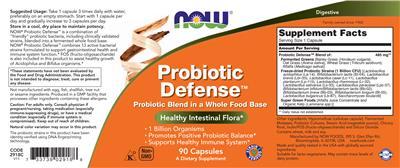
Other ingredients: Hypromellose, fermented Molasses, Probiotic Cultures, Stearic Acid, Chicory, Inulin, FOS, Silicon Dioxide
Tap any ingredient to jump to its full detail below.
These statements are the manufacturer’s wording, reproduced from the product label — the label is saying it, not HelloPharmacist. We don’t verify or endorse them.
Suggested/Recommended/Usage/Directions
Suggested Usage: Take 1 capsule 3 times daily with water, preferably on an empty stomach. Start with 1 capsule per day and gradually increase to 3 capsules per day.
Storage
Store in a cool, dry place to maintain potency.
Formula
NOW Probiotic Defense is a combination of "friendly" probiotic bacteria, including clinically validated strains, blended into a fermented whole food base. NOW Probiotic Defense combines 13 active bacterial strains formulated to support gastrointestinal health and immune system function. FOS (fructo-oligosaccharide) is also included in this product to assist healthy growth of Acidophilus and Bifidus organisms.
Probiotic blend in a whole food base 1 Billion organisms Healthy intestinal flora
Triangle K D (Kosher Dairy)
FDA Disclaimer Statement
These statements have not been evaluated by the Food and Drug Administration. This product is not intended to diagnose, treat, cure or prevent any disease.
Formulation
Not manufactured with egg, fish, shellfish, tree nut or sesame ingredients.
Natural color variation may occur in this product. The probiotic strains in this product have been identity-verified using DNA-fingerprinting technology.
Promotes positive probiotic balance Supports healthy immune system
Non-GMO
Suitable for lacto-vegetarians.
Made and quality tested in the USA with globally sourced ingredients.
Precautions
Not manufactured with egg, fish, shellfish, tree nut or sesame ingredients. Produced in a GMP facility that processes other ingredients containing these allergens.
Caution: For adults only.
Consult physician if pregnant/nursing, taking medication (especially immune-suppressing drugs), or have a medical condition (especially if immune system is compromised).
Keep out of reach of children.
Contains wheat, milk and soy.
May contain trace levels of dairy protein.
FDA Statement of Identity
A Dietary Supplement
General Statements
Digestive Family owned since 1968.
Seals/Symbols
GMP Quality Assured
Triangle K D (Kosher Dairy)
Strain Verified
Is this label outdated? Report a formula or label change and our pharmacy team will review it.
Probiotic Defense by NOW label
The label scan from the NIH Dietary Supplement Label Database. Tap to enlarge.
Label images are published by the NIH Dietary Supplement Label Database for the version of this product on file. Always read your actual product label.
View the full label (PDF)The Ingredients in Probiotic Defense by NOW
This is the 1 active ingredient this product is made of. Select it to open its full monograph.
Serving size1 Capsule(s) Dosage formCapsule Servings per container90 Amounts shown are per serving.
Probiotic Defense Blend
Interacts with182 drugs
Lactobacillus acidophilus is a 'friendly' bacterium used as a probiotic to support gut and vaginal health. It is generally well tolerated in healthy p...
Probiotic Defense Blend monograph & interactions- › Freeze-dried Probiotic Strains
- › Fermented Greens
- › Super Green Foods
Other (inactive) ingredients: Hypromellose, Fermented Molasses, Probiotic Cultures, Stearic Acid, Chicory, Inulin, FOS, Silicon Dioxide. These complete the product’s ingredient list but are not active constituents.
Probiotic Defense by NOW Drug Interactions
HelloPharmacist Interaction Report
Probiotic Defense by NOW contains several ingredients with documented interactions with medications.
The most serious is alfalfa (present as both alfalfa and alfalfa juice concentrate), which carries a Major interaction with warfarin (a blood thinner). Alfalfa is high in vitamin K, which can reduce warfarin's ability to prevent clots.
If you take warfarin, you'll need to check with your doctor or pharmacist before starting this product.
Read the full breakdown — every affected drug type, severity by severity
Alfalfa also interacts at Moderate severity with photosensitizing drugs (medications that increase sun sensitivity), contraceptive pills, hormone therapy (estrogens), immunosuppressants, and antidiabetes drugs—including insulin. With diabetes or blood sugar medications, there's a theoretical risk of low blood sugar.
The live probiotic bacteria in this formula—Bifidobacterium longum, Lactobacillus acidophilus, Bifidobacterium breve, and Saccharomyces boulardii—each interact at Moderate severity with antibiotic drugs; antibiotics can kill the beneficial organisms and reduce the supplement's effect. Saccharomyces boulardii also carries a Minor interaction with antifungal medications.
Oat grass (another ingredient) shows Moderate interactions with antidiabetes drugs and insulin for the same low blood sugar concern.
Barley has a Moderate interaction with triclabendazole, an antiparasitic medication. Wheat grass was checked and no interactions are documented in our data, though it's not extensively studied in humans.
Altogether, these interactions span 757 individual medications. Use the medication checker on this page to search your exact prescriptions and over-the-counter drugs before you start.
Check your own medications below · Editorial policy · How we use AI
Want to check YOUR meds against Probiotic Defense?
Ask about interactions with your drugs in plain English — “Can I take it with lisinopril?” — and we find you the answer in seconds, ingredient by ingredient.
Go to the checkerIngredients driving the most interactions
Individual Drug Interactions
The ingredients in Probiotic Defense interact with 1,392 drugs. Click any drug to see the details.
1 of the 1 ingredient in Probiotic Defense interact with drugs. Each result below shows which ingredient is responsible. Probiotic Defense Blend
WarfarinWarfarin
How Warfarin interacts with Probiotic Defense — through 2 ingredients. Tap an ingredient for the detail:
Alfalfa Juice ConcentrateWarfarin (coumadin) Major
Interaction Summary
Theoretically, alfalfa might reduce the anticoagulant activity of warfarin.
Read the full Alfalfa Juice Concentrate + Warfarin interactionKelpAnticoagulant/antiplatelet Drugs, Cytochrome P450 2c8 (cyp2c8) Substrates +2 Minor
Interaction Summary
Theoretically, taking Fucus vesiculosus with antiplatelet or anticoagulant drugs might increase the risk of bruising and bleeding.
Read the full Kelp + Warfarin interactionWarfarin SodiumCoumadin, Panwarfin, Sofarin
How Warfarin Sodium interacts with Probiotic Defense — through 2 ingredients. Tap an ingredient for the detail:
Alfalfa Juice ConcentrateWarfarin (coumadin) Major
Interaction Summary
Theoretically, alfalfa might reduce the anticoagulant activity of warfarin.
Read the full Alfalfa Juice Concentrate + Warfarin Sodium interactionKelpCytochrome P450 3a4 (cyp3a4) Substrates, Anticoagulant/antiplatelet Drugs +2 Minor
Interaction Summary
Theoretically, concomitant use of Fucus vesiculosus with CYP3A4 substrates might increase the risk for adverse effects.
Read the full Kelp + Warfarin Sodium interaction6-mercaptopurinePurinethol
How 6-mercaptopurine interacts with Probiotic Defense — through 1 ingredient. Tap an ingredient for the detail:
Alfalfa Juice ConcentrateImmunosuppressants Moderate
Interaction Summary
Theoretically, alfalfa might decrease the efficacy of immunosuppressive therapy.
Read the full Alfalfa Juice Concentrate + 6-mercaptopurine interactionAbrocitinibCibinqo
How Abrocitinib interacts with Probiotic Defense — through 2 ingredients. Tap an ingredient for the detail:
Alfalfa Juice ConcentrateImmunosuppressants Moderate
Interaction Summary
Theoretically, alfalfa might decrease the efficacy of immunosuppressive therapy.
Read the full Alfalfa Juice Concentrate + Abrocitinib interactionKelpCytochrome P450 2c9 (cyp2c9) Substrates, Anticoagulant/antiplatelet Drugs Minor
Interaction Summary
Theoretically, concomitant use of Fucus vesiculosus with CYP2C9 substrates might increase the risk for adverse effects.
Read the full Kelp + Abrocitinib interactionAcarboseGlucobay, Prandase, Precose
How Acarbose interacts with Probiotic Defense — through 2 ingredients. Tap an ingredient for the detail:
Alfalfa Juice ConcentrateAntidiabetes Drugs Moderate
Interaction Summary
Theoretically, alfalfa might increase the risk of hypoglycemia when taken with antidiabetes drugs.
Read the full Alfalfa Juice Concentrate + Acarbose interactionOat GrassAntidiabetes Drugs Moderate
Interaction Summary
Theoretically, oats may have additive effects with antidiabetic agents and might increase the risk of hypoglycemia.
Read the full Oat Grass + Acarbose interactionAcepromazineAtravet
How Acepromazine interacts with Probiotic Defense — through 1 ingredient. Tap an ingredient for the detail:
Alfalfa Juice ConcentratePhotosensitizing Drugs Moderate
Interaction Summary
Theoretically, concomitant use of alfalfa with photosensitizing drugs might have additive effects.
Read the full Alfalfa Juice Concentrate + Acepromazine interactionAcetaminophen, Brompheniramine, PhenylpropanolamineDimetapp Cold and Flu
How Acetaminophen, Brompheniramine, Phenylpropanolamine interacts with Probiotic Defense — through 1 ingredient. Tap an ingredient for the detail:
Alfalfa Juice ConcentratePhotosensitizing Drugs Moderate
Interaction Summary
Theoretically, concomitant use of alfalfa with photosensitizing drugs might have additive effects.
Read the full Alfalfa Juice Concentrate + Acetaminophen, Brompheniramine, Phenylpropanolamine interactionAcetaminophen, Caffeine, Chlorpheniramine, Hydrocodone, PhenylephrineHycomine Compound
How Acetaminophen, Caffeine, Chlorpheniramine, Hydrocodone, Phenylephrine interacts with Probiotic Defense — through 2 ingredients. Tap an ingredient for the detail:
Alfalfa Juice ConcentratePhotosensitizing Drugs Moderate
Interaction Summary
Theoretically, concomitant use of alfalfa with photosensitizing drugs might have additive effects.
Read the full Alfalfa Juice Concentrate + Acetaminophen, Caffeine, Chlorpheniramine, Hydrocodone, Phenylephrine interactionKelpCytochrome P450 2d6 (cyp2d6) Substrates, Cytochrome P450 3a4 (cyp3a4) Substrates Minor
Interaction Summary
Theoretically, concomitant use of Fucus vesiculosus with CYP2D6 substrates might alter the effects of these substrates.
Read the full Kelp + Acetaminophen, Caffeine, Chlorpheniramine, Hydrocodone, Phenylephrine interactionAcetaminophen, Chlorpheniramine Maleate, Dextromethorphan HbrVicks Formula 44M Cough, Cold & Flu Relief
How Acetaminophen, Chlorpheniramine Maleate, Dextromethorphan Hbr interacts with Probiotic Defense — through 2 ingredients. Tap an ingredient for the detail:
Alfalfa Juice ConcentratePhotosensitizing Drugs Moderate
Interaction Summary
Theoretically, concomitant use of alfalfa with photosensitizing drugs might have additive effects.
Read the full Alfalfa Juice Concentrate + Acetaminophen, Chlorpheniramine Maleate, Dextromethorphan Hbr interactionKelpCytochrome P450 2d6 (cyp2d6) Substrates, Cytochrome P450 3a4 (cyp3a4) Substrates Minor
Interaction Summary
Theoretically, concomitant use of Fucus vesiculosus with CYP2D6 substrates might alter the effects of these substrates.
Read the full Kelp + Acetaminophen, Chlorpheniramine Maleate, Dextromethorphan Hbr interactionAcetaminophen, Chlorpheniramine, Codeine, PhenylephrineColrex
How Acetaminophen, Chlorpheniramine, Codeine, Phenylephrine interacts with Probiotic Defense — through 2 ingredients. Tap an ingredient for the detail:
Alfalfa Juice ConcentratePhotosensitizing Drugs Moderate
Interaction Summary
Theoretically, concomitant use of alfalfa with photosensitizing drugs might have additive effects.
Read the full Alfalfa Juice Concentrate + Acetaminophen, Chlorpheniramine, Codeine, Phenylephrine interactionKelpCytochrome P450 3a4 (cyp3a4) Substrates, Cytochrome P450 2d6 (cyp2d6) Substrates Minor
Interaction Summary
Theoretically, concomitant use of Fucus vesiculosus with CYP3A4 substrates might increase the risk for adverse effects.
Read the full Kelp + Acetaminophen, Chlorpheniramine, Codeine, Phenylephrine interactionAcetaminophen, Chlorpheniramine, DextromethorphanCoricidin II Extra Strength Cold and Flu
How Acetaminophen, Chlorpheniramine, Dextromethorphan interacts with Probiotic Defense — through 2 ingredients. Tap an ingredient for the detail:
Alfalfa Juice ConcentratePhotosensitizing Drugs Moderate
Interaction Summary
Theoretically, concomitant use of alfalfa with photosensitizing drugs might have additive effects.
Read the full Alfalfa Juice Concentrate + Acetaminophen, Chlorpheniramine, Dextromethorphan interactionKelpCytochrome P450 3a4 (cyp3a4) Substrates, Cytochrome P450 2d6 (cyp2d6) Substrates Minor
Interaction Summary
Theoretically, concomitant use of Fucus vesiculosus with CYP3A4 substrates might increase the risk for adverse effects.
Read the full Kelp + Acetaminophen, Chlorpheniramine, Dextromethorphan interactionAcetaminophen, Chlorpheniramine, Dextromethorphan HydrobromideCoricidin HBP Maximum Strength Flu
How Acetaminophen, Chlorpheniramine, Dextromethorphan Hydrobromide interacts with Probiotic Defense — through 2 ingredients. Tap an ingredient for the detail:
Alfalfa Juice ConcentratePhotosensitizing Drugs Moderate
Interaction Summary
Theoretically, concomitant use of alfalfa with photosensitizing drugs might have additive effects.
Read the full Alfalfa Juice Concentrate + Acetaminophen, Chlorpheniramine, Dextromethorphan Hydrobromide interactionKelpCytochrome P450 3a4 (cyp3a4) Substrates, Cytochrome P450 2d6 (cyp2d6) Substrates Minor
Interaction Summary
Theoretically, concomitant use of Fucus vesiculosus with CYP3A4 substrates might increase the risk for adverse effects.
Read the full Kelp + Acetaminophen, Chlorpheniramine, Dextromethorphan Hydrobromide interactionAcetaminophen, Chlorpheniramine, Dextromethorphan, PhenylpropanolamineMulti Symptom Cold Relief
How Acetaminophen, Chlorpheniramine, Dextromethorphan, Phenylpropanolamine interacts with Probiotic Defense — through 2 ingredients. Tap an ingredient for the detail:
Alfalfa Juice ConcentratePhotosensitizing Drugs Moderate
Interaction Summary
Theoretically, concomitant use of alfalfa with photosensitizing drugs might have additive effects.
Read the full Alfalfa Juice Concentrate + Acetaminophen, Chlorpheniramine, Dextromethorphan, Phenylpropanolamine interactionKelpCytochrome P450 2d6 (cyp2d6) Substrates, Cytochrome P450 3a4 (cyp3a4) Substrates Minor
Interaction Summary
Theoretically, concomitant use of Fucus vesiculosus with CYP2D6 substrates might alter the effects of these substrates.
Read the full Kelp + Acetaminophen, Chlorpheniramine, Dextromethorphan, Phenylpropanolamine interactionAcetaminophen, Chlorpheniramine, Dextromethorphan, PseudoephedrineChildren's Tylenol Cold Plus Cough, Tylenol Cold Ex Strength
How Acetaminophen, Chlorpheniramine, Dextromethorphan, Pseudoephedrine interacts with Probiotic Defense — through 2 ingredients. Tap an ingredient for the detail:
Alfalfa Juice ConcentratePhotosensitizing Drugs Moderate
Interaction Summary
Theoretically, concomitant use of alfalfa with photosensitizing drugs might have additive effects.
Read the full Alfalfa Juice Concentrate + Acetaminophen, Chlorpheniramine, Dextromethorphan, Pseudoephedrine interactionKelpCytochrome P450 3a4 (cyp3a4) Substrates, Cytochrome P450 2d6 (cyp2d6) Substrates Minor
Interaction Summary
Theoretically, concomitant use of Fucus vesiculosus with CYP3A4 substrates might increase the risk for adverse effects.
Read the full Kelp + Acetaminophen, Chlorpheniramine, Dextromethorphan, Pseudoephedrine interactionAcetaminophen, Chlorpheniramine, Guaifenesin, Phenylephrine, SalicylamideRhinogesic GG
How Acetaminophen, Chlorpheniramine, Guaifenesin, Phenylephrine, Salicylamide interacts with Probiotic Defense — through 2 ingredients. Tap an ingredient for the detail:
Alfalfa Juice ConcentratePhotosensitizing Drugs Moderate
Interaction Summary
Theoretically, concomitant use of alfalfa with photosensitizing drugs might have additive effects.
Read the full Alfalfa Juice Concentrate + Acetaminophen, Chlorpheniramine, Guaifenesin, Phenylephrine, Salicylamide interactionKelpCytochrome P450 3a4 (cyp3a4) Substrates Minor
Interaction Summary
Theoretically, concomitant use of Fucus vesiculosus with CYP3A4 substrates might increase the risk for adverse effects.
Read the full Kelp + Acetaminophen, Chlorpheniramine, Guaifenesin, Phenylephrine, Salicylamide interactionAcetaminophen, Chlorpheniramine, PhenylephrineAlka-Seltzer PLUS, Histex SR, Protid
How Acetaminophen, Chlorpheniramine, Phenylephrine interacts with Probiotic Defense — through 2 ingredients. Tap an ingredient for the detail:
Alfalfa Juice ConcentratePhotosensitizing Drugs Moderate
Interaction Summary
Theoretically, concomitant use of alfalfa with photosensitizing drugs might have additive effects.
Read the full Alfalfa Juice Concentrate + Acetaminophen, Chlorpheniramine, Phenylephrine interactionKelpCytochrome P450 3a4 (cyp3a4) Substrates Minor
Interaction Summary
Theoretically, concomitant use of Fucus vesiculosus with CYP3A4 substrates might increase the risk for adverse effects.
Read the full Kelp + Acetaminophen, Chlorpheniramine, Phenylephrine interactionAcetaminophen, Chlorpheniramine, Phenylephrine, SalicylamideRhinogesic, Rhinogesic JR
How Acetaminophen, Chlorpheniramine, Phenylephrine, Salicylamide interacts with Probiotic Defense — through 2 ingredients. Tap an ingredient for the detail:
Alfalfa Juice ConcentratePhotosensitizing Drugs Moderate
Interaction Summary
Theoretically, concomitant use of alfalfa with photosensitizing drugs might have additive effects.
Read the full Alfalfa Juice Concentrate + Acetaminophen, Chlorpheniramine, Phenylephrine, Salicylamide interactionKelpCytochrome P450 3a4 (cyp3a4) Substrates Minor
Interaction Summary
Theoretically, concomitant use of Fucus vesiculosus with CYP3A4 substrates might increase the risk for adverse effects.
Read the full Kelp + Acetaminophen, Chlorpheniramine, Phenylephrine, Salicylamide interactionAcetaminophen, Chlorpheniramine, PhenylpropanolamineAlumadrine, Conex, Sinadrin Max Strength, Sinulin
How Acetaminophen, Chlorpheniramine, Phenylpropanolamine interacts with Probiotic Defense — through 2 ingredients. Tap an ingredient for the detail:
Alfalfa Juice ConcentratePhotosensitizing Drugs Moderate
Interaction Summary
Theoretically, concomitant use of alfalfa with photosensitizing drugs might have additive effects.
Read the full Alfalfa Juice Concentrate + Acetaminophen, Chlorpheniramine, Phenylpropanolamine interactionKelpCytochrome P450 3a4 (cyp3a4) Substrates Minor
Interaction Summary
Theoretically, concomitant use of Fucus vesiculosus with CYP3A4 substrates might increase the risk for adverse effects.
Read the full Kelp + Acetaminophen, Chlorpheniramine, Phenylpropanolamine interactionAcetaminophen, Chlorpheniramine, Phenylpropanolamine, OpiumHista-Derfule
How Acetaminophen, Chlorpheniramine, Phenylpropanolamine, Opium interacts with Probiotic Defense — through 2 ingredients. Tap an ingredient for the detail:
Alfalfa Juice ConcentratePhotosensitizing Drugs Moderate
Interaction Summary
Theoretically, concomitant use of alfalfa with photosensitizing drugs might have additive effects.
Read the full Alfalfa Juice Concentrate + Acetaminophen, Chlorpheniramine, Phenylpropanolamine, Opium interactionKelpCytochrome P450 3a4 (cyp3a4) Substrates Minor
Interaction Summary
Theoretically, concomitant use of Fucus vesiculosus with CYP3A4 substrates might increase the risk for adverse effects.
Read the full Kelp + Acetaminophen, Chlorpheniramine, Phenylpropanolamine, Opium interactionAcetaminophen, Chlorpheniramine, Phenylpropanolamine, PhenyltoloxamineNorel Plus
How Acetaminophen, Chlorpheniramine, Phenylpropanolamine, Phenyltoloxamine interacts with Probiotic Defense — through 2 ingredients. Tap an ingredient for the detail:
Alfalfa Juice ConcentratePhotosensitizing Drugs Moderate
Interaction Summary
Theoretically, concomitant use of alfalfa with photosensitizing drugs might have additive effects.
Read the full Alfalfa Juice Concentrate + Acetaminophen, Chlorpheniramine, Phenylpropanolamine, Phenyltoloxamine interactionKelpCytochrome P450 3a4 (cyp3a4) Substrates Minor
Interaction Summary
Theoretically, concomitant use of Fucus vesiculosus with CYP3A4 substrates might increase the risk for adverse effects.
Read the full Kelp + Acetaminophen, Chlorpheniramine, Phenylpropanolamine, Phenyltoloxamine interactionAcetaminophen, Chlorpheniramine, PseudoephedrineAlka-Seltzer PLUS Liquid Gels, Children's Tylenol Cold, Codimal, Comtrex, Extra Strength Tylenol Allergy Sinus, Lorsin +3 more
How Acetaminophen, Chlorpheniramine, Pseudoephedrine interacts with Probiotic Defense — through 2 ingredients. Tap an ingredient for the detail:
Alfalfa Juice ConcentratePhotosensitizing Drugs Moderate
Interaction Summary
Theoretically, concomitant use of alfalfa with photosensitizing drugs might have additive effects.
Read the full Alfalfa Juice Concentrate + Acetaminophen, Chlorpheniramine, Pseudoephedrine interactionKelpCytochrome P450 3a4 (cyp3a4) Substrates Minor
Interaction Summary
Theoretically, concomitant use of Fucus vesiculosus with CYP3A4 substrates might increase the risk for adverse effects.
Read the full Kelp + Acetaminophen, Chlorpheniramine, Pseudoephedrine interactionAcetaminophen, Dexbrompheniramine, PseudoephedrineSinadrin Plus
How Acetaminophen, Dexbrompheniramine, Pseudoephedrine interacts with Probiotic Defense — through 1 ingredient. Tap an ingredient for the detail:
Alfalfa Juice ConcentratePhotosensitizing Drugs Moderate
Interaction Summary
Theoretically, concomitant use of alfalfa with photosensitizing drugs might have additive effects.
Read the full Alfalfa Juice Concentrate + Acetaminophen, Dexbrompheniramine, Pseudoephedrine interactionAcetaminophen, DiphenhydramineTylenol PM, Tylenol PM Ex Strength
How Acetaminophen, Diphenhydramine interacts with Probiotic Defense — through 1 ingredient. Tap an ingredient for the detail:
Alfalfa Juice ConcentratePhotosensitizing Drugs Moderate
Interaction Summary
Theoretically, concomitant use of alfalfa with photosensitizing drugs might have additive effects.
Read the full Alfalfa Juice Concentrate + Acetaminophen, Diphenhydramine interactionAcetaminophen, Diphenhydramine, PseudoephedrineChildren's Tylenol Allergy, Cold Control, Contac Night Allergy Relief
How Acetaminophen, Diphenhydramine, Pseudoephedrine interacts with Probiotic Defense — through 1 ingredient. Tap an ingredient for the detail:
Alfalfa Juice ConcentratePhotosensitizing Drugs Moderate
Interaction Summary
Theoretically, concomitant use of alfalfa with photosensitizing drugs might have additive effects.
Read the full Alfalfa Juice Concentrate + Acetaminophen, Diphenhydramine, Pseudoephedrine interactionAcetaminophen, IbuprofenCombogesic
How Acetaminophen, Ibuprofen interacts with Probiotic Defense — through 2 ingredients. Tap an ingredient for the detail:
Alfalfa Juice ConcentratePhotosensitizing Drugs Moderate
Interaction Summary
Theoretically, concomitant use of alfalfa with photosensitizing drugs might have additive effects.
Read the full Alfalfa Juice Concentrate + Acetaminophen, Ibuprofen interactionKelpCytochrome P450 2c9 (cyp2c9) Substrates, Anticoagulant/antiplatelet Drugs Minor
Interaction Summary
Theoretically, concomitant use of Fucus vesiculosus with CYP2C9 substrates might increase the risk for adverse effects.
Read the full Kelp + Acetaminophen, Ibuprofen interactionAcetaminophen, Phenylephrine, ChlorpheniramineSuper Cold Tabs
How Acetaminophen, Phenylephrine, Chlorpheniramine interacts with Probiotic Defense — through 2 ingredients. Tap an ingredient for the detail:
Alfalfa Juice ConcentratePhotosensitizing Drugs Moderate
Interaction Summary
Theoretically, concomitant use of alfalfa with photosensitizing drugs might have additive effects.
Read the full Alfalfa Juice Concentrate + Acetaminophen, Phenylephrine, Chlorpheniramine interactionKelpCytochrome P450 3a4 (cyp3a4) Substrates Minor
Interaction Summary
Theoretically, concomitant use of Fucus vesiculosus with CYP3A4 substrates might increase the risk for adverse effects.
Read the full Kelp + Acetaminophen, Phenylephrine, Chlorpheniramine interactionAcetazolamideAk-Zol, Diamox
How Acetazolamide interacts with Probiotic Defense — through 1 ingredient. Tap an ingredient for the detail:
Alfalfa Juice ConcentratePhotosensitizing Drugs Moderate
Interaction Summary
Theoretically, concomitant use of alfalfa with photosensitizing drugs might have additive effects.
Read the full Alfalfa Juice Concentrate + Acetazolamide interactionAcetohexamideDymelor
How Acetohexamide interacts with Probiotic Defense — through 2 ingredients. Tap an ingredient for the detail:
Alfalfa Juice ConcentratePhotosensitizing Drugs, Antidiabetes Drugs Moderate
Interaction Summary
Theoretically, concomitant use of alfalfa with photosensitizing drugs might have additive effects.
Read the full Alfalfa Juice Concentrate + Acetohexamide interactionOat GrassAntidiabetes Drugs Moderate
Interaction Summary
Theoretically, oats may have additive effects with antidiabetic agents and might increase the risk of hypoglycemia.
Read the full Oat Grass + Acetohexamide interactionAcitretinSoriatane
How Acitretin interacts with Probiotic Defense — through 1 ingredient. Tap an ingredient for the detail:
Alfalfa Juice ConcentratePhotosensitizing Drugs Moderate
Interaction Summary
Theoretically, concomitant use of alfalfa with photosensitizing drugs might have additive effects.
Read the full Alfalfa Juice Concentrate + Acitretin interactionAdalimumabHumira
How Adalimumab interacts with Probiotic Defense — through 1 ingredient. Tap an ingredient for the detail:
Alfalfa Juice ConcentrateImmunosuppressants Moderate
Interaction Summary
Theoretically, alfalfa might decrease the efficacy of immunosuppressive therapy.
Read the full Alfalfa Juice Concentrate + Adalimumab interactionEach ingredient & the kinds of drugs it affects
For each ingredient in Probiotic Defense with known interactions, here are the types of medications it can affect. Open any type for the detail — or search your exact drug in the checker above.
Probiotic Defense Blend
Antibiotic Drugs
Theoretically, taking Lactobacillus acidophilus with antibiotic drugs might decrease the effectiveness of L. acidophilus.
L. acidophilus preparations usually contain live and active organisms. Therefore, simultaneously taking antibiotics might kill a significant number of the organisms. Tell patients to separate administration of antibiotics and L. acidophilus preparations by at least two hours.
Brand information
Manufacturer and brand details for Probiotic Defense, from the product label.
NOW
See all NOW products- Name
- NOW FOODS
- Street Address
- 395 S. Glen Ellyn Rd.
- City
- Bloomingdale
- State
- IL
- ZipCode
- 60108
- Web Address
- nowfoods.com
Probiotic Defense by NOW: Common Questions
Does Probiotic Defense by NOW interact with any medications?
How can one product interact with so many drugs?
Where does this information come from?
Can I take this while I'm on antibiotics?
Is this safe if I'm pregnant?
What does Saccharomyces boulardii do?
Will this help my cholesterol or heart health?
Are there any common side effects from the probiotics?
Does this product contain any allergens?
Written and reviewed by the HelloPharmacist editorial staff. Our editorial policy
Not sure if Probiotic Defense is safe with your meds?
Our pharmacists answer your medication & supplement questions — free.
Label information is sourced from the NIH Dietary Supplement Label Database and reflects the product version on file; always read your actual product label. This page is for education only and is not a substitute for professional medical advice. Confirm with your pharmacist or doctor before combining supplements and medications.
The Full Monographs Behind Probiotic Defense’s Ingredients
Every ingredient we hold a full HelloPharmacist monograph for — uses, evidence, safety, and the complete interaction list.
Sources & How We Checked
Probiotic Defense's label data comes from the NIH Dietary Supplement Label Database; the ingredient interaction data is from the Natural Medicines database, reviewed by our pharmacists.
- NIH Dietary Supplement Label Database (DSLD) — The official product label on file for this supplement.
- Natural Medicines (Therapeutic Research Center) — Evidence-graded clinical reference behind the ingredient interaction data.
Content is written and reviewed by licensed HelloPharmacist pharmacists. See our data sources and editorial standards for how this information is built and checked.
The 146 references behind this product’s interaction data
Every citation that drives the interaction findings for this product’s ingredients, from the evidence-graded Natural Medicines (TRC Healthcare) database. Open an ingredient to browse its citations — links open the study on PubMed or the publisher’s site.
Bifidobacterium Longum 21 references
- Ha GY, Yang CH, Kim H, Chong Y. Case of sepsis caused by Bifidobacterium longum. J Clin Microbiol 1999;37:1227-8.
- Pierce A. The American Pharmaceutical Association Practical Guide to Natural Medicines. New York: The Stonesong Press, 1999:19.
- Xiao JZ, Takahashi S, Odamaki T, et al. Antibiotic susceptibility of bifidobacterial strains distributed in the Japanese market. Biosci Biotechnol Biochem. 2010;74(2):336-42. PubMed
- Rautava S, Kainonen E, Salminen S, Isolauri E. Maternal probiotic supplementation during pregnancy and breast-feeding reduces the risk of eczema in the infant. J Allergy Clin Immunol. 2012;130(6):1355-60. PubMed
- Pruccoli G, Silvestro E, Pace Napoleone C, Aidala E, Garazzino S, Scolfaro C. Are probiotics safe? Bifidobacterium bacteremia in a child with severe heart failure. Infez Med. 2019;27(2):175-178.
- Pellonperä O, Vahlberg T, Mokkala K, et al. Weight gain and body composition during pregnancy: a randomised pilot trial with probiotics and/or fish oil. Br J Nutr. 2020 Nov 4:1-11. PubMed
- Pellonperä O, Mokkala K, Houttu N, et al. Efficacy of fish oil and/or probiotic intervention on the incidence of gestational diabetes mellitus in an at-risk group of overweight and obese women: A randomized, placebo-controlled, double-blind clinical trial PubMed
- Shahriari A, Karimi E, Shahriari M, Aslani N, Khooshideh M, Arab A. The effect of probiotic supplementation on the risk of gestational diabetes mellitus among high-risk pregnant women: A parallel double-blind, randomized, placebo-controlled clinical trial PubMed
- Esaiassen E, Hjerde E, Cavanagh JP, Simonsen GS, Klingenberg C; Norwegian Study Group on Invasive Bifidobacterial Infections. Bifidobacterium bacteremia: Clinical characteristics and a genomic approach to assess pathogenicity. J Clin Microbiol. 2017;55(7) PubMed
- Enomoto T, Sowa M, Nishimori K, et al. Effects of bifidobacterial supplementation to pregnant women and infants in the prevention of allergy development in infants and on fecal microbiota. Allergol Int 2014;63(4):575-85. PubMed
- US Food and Drug Administration (FDA). Dear Healthcare Provider Letter: Warning Regarding Use of Probiotics in Preterm Infants. September 2023. Available at: https://www.fda.gov/media/172606/download?attachment. Accessed November 1, 2023.
- Pillai A, Tan J, Paquette V, Panczuk J. Does probiotic bacteremia in premature infants impact clinically relevant outcomes? A case report and updated review of literature. Clin Nutr ESPEN. 2020;39:255-259. PubMed
- Sabaté JM, Iglicki F. Effect of Bifidobacterium longum 35624 on disease severity and quality of life in patients with irritable bowel syndrome. World J Gastroenterol 2022;28(7):732-744.
- Malaguarnera M, Greco F, Barone G, Gargante MP, Malaguarnera M, Toscano MA. Bifidobacterium longum with fructo-oligosaccharide (FOS) treatment in minimal hepatic encephalopathy: a randomized, double-blind, placebo-controlled study. Dig Dis Sci 2007;52(11) PubMed
- Zbinden A, Zbinden R, Berger C, Arlettaz R. Case series of Bifidobacterium longum bacteremia in three preterm infants on probiotic therapy. Neonatology 2015;107(1):56-9.
- Tamaki H, Nakase H, Inoue S, et al. Efficacy of probiotic treatment with Bifidobacterium longum 536 for induction of remission in active ulcerative colitis: A randomized, double-blinded, placebo-controlled multicenter trial. Dig Endosc 2016;28(1):67-74.
- Bertelli C, Pillonel T, Torregrossa A, et al. Bifidobacterium longum bacteremia in preterm infants receiving probiotics. Clin Infect Dis 2015;60(6):924-7. PubMed
- Esaiassen E, Cavanagh P, Hjerde E, Simonsen GS, Støen R, Klingenberg C. Bifidobacterium longum subspecies infantis bacteremia in 3 extremely preterm infants receiving probiotics. Emerg Infect Dis 2016;22(9):1664-6.
- Tena D, Losa C, Medina MJ, Sáez-Nieto JA. Peritonitis caused by Bifidobacterium longum: case report and literature review. Anaerobe 2014;27:27-30. PubMed
- Sangkanjanavanich S, Pradubpongsa P, Mitthamsiri W, Sangasapaviliya A, Boonpiyathad T. Bifidobacterium infantis 35624 efficacy in patients with uncontrolled asthma: A randomized placebo-controlled trial. Ann Allergy Asthma Immunol 2022;129(6):790-792. PubMed
- Wilson HL, Ong CW. Bifidobacterium longum vertebrodiscitis in a patient with cirrhosis and prostate cancer. Anaerobe 2017;47:47-50. PubMed
See these in context on the Bifidobacterium Longum monograph →
Lactobacillus Acidophilus 15 references
- Pierce A. The American Pharmaceutical Association Practical Guide to Natural Medicines. New York: The Stonesong Press, 1999:19.
- Begtrup LM, de Muckadell OB, Kjeldsen J, Christensen RD, Jarbøl DE. Long-term treatment with probiotics in primary care patients with irritable bowel syndrome--a randomised, double-blind, placebo controlled trial. Scand J Gastroenterol 2013;48(10):1127-35 PubMed
- Chatterjee S, Kar P, Das T, Ray S, Gangulyt S, Rajendiran C, Mitra M. Randomised placebo-controlled double blind multicentric trial on efficacy and safety of Lactobacillus acidophilus LA-5 and Bifidobacterium BB-12 for prevention of antibiotic-associated
- Shavakhi A, Tabesh E, Yaghoutkar A, Hashemi H, Tabesh F, Khodadoostan M,Minakari M, Shavakhi S, Gholamrezaei A. The effects of multistrain probiotic compound on bismuth-containing quadruple therapy for Helicobacter pylori infection: a randomized placebo-c
- Karamali M, Dadkhah F, Sadrkhanlou M, et al. Effects of probiotic supplementation on glycaemic control and lipid profiles in gestational diabetes: a randomized, double-blind, placebo-controlled trial. Diabetes Metab 2016;42(4):234-41. PubMed
- Badehnoosh B, Karamali M, Zarrati M, et al. The effects of probiotic supplementation on biomarkers of inflammation, oxidative stress and pregnancy outcomes in gestational diabetes. J Matern Fetal Neonatal Med. 2018 May;31(9):1128-1136.
- Kumar S, Kumar R, Rohilla L, Jacob N, Yadav J, Sachdeva N. A high potency multi-strain probiotic improves glycemic control in children with new-onset type 1 diabetes mellitus: A randomized, double-blind, and placebo-controlled pilot study. Pediatr Diabete
- Shahriari A, Karimi E, Shahriari M, Aslani N, Khooshideh M, Arab A. The effect of probiotic supplementation on the risk of gestational diabetes mellitus among high-risk pregnant women: A parallel double-blind, randomized, placebo-controlled clinical trial PubMed
- Xiao SD, Zhang DZ, Lu H, et al. Multicenter, randomized, controlled trial of heat-killed Lactobacillus acidophilus LB in patients with chronic diarrhea. Adv Ther. 2003;20(5):253-60.
- Rossi F, Amadoro C, Gasperi M, Colavita G. Lactobacilli infection case reports in the last three years and safety implications. Nutrients. 2022;14(6):1178. PubMed
- Ozer M, Goksu SY, Shahverdiani A, Mustafa M. Lactobacillus acidophilus-induced endocarditis and associated splenic abscess. Case Rep Infect Dis 2020;2020:1382709.
- Sadrin S, Sennoune S, Gout B, et al. A 2-strain mixture of Lactobacillus acidophilus in the treatment of irritable bowel syndrome: A placebo-controlled randomized clinical trial. Dig Liver Dis 2020;52(5):534-540. PubMed
- Stoffer JN, Slingsby TJ, Giuliari GP. Lactobacillus acidophilus endophthalmitis after intravitreal bevacizumab injection requiring intraocular lens explantation. Can J Ophthalmol 2022;57(1):e21-e22. PubMed
- Cukovic-Cavka S, Likic R, Francetic I, Rustemovic N, Opacic M, Vucelic B. Lactobacillus acidophilus as a cause of liver abscess in a NOD2/CARD15-positive patient with Crohn's disease. Digestion 2006;73(2-3):107-10.
- Hui J, Ren Y, Wang Y, Han Q. Lactobacillus acidophilus endophthalmitis postcataract operation: A case report with a literature review. Ocul Immunol Inflamm 2023.
See these in context on the Lactobacillus Acidophilus monograph →
Saccharomyces Boulardii 26 references
- Niault M, Thomas F, Prost J, et al. Fungemia due to Saccharomyces species in a patient treated with enteral Saccharomyces boulardii. Clin Infect Dis 1999;28:930.
- Pletinex M, Legein J, Vandenplas Y. Fungemia with Saccharomyces boulardii in a 1-year-old girl with protracted diarrhea. J Pediatr Gastroenterol Nutr 1995;21:113-5. DOI
- Fredenucci I, Chomarat M, Boucaud C, et al. Saccharomyces boulardii fungemia in a patient receiving ultra-levure therapy. Clin Infect Dis 1998;27:222-3.
- Elmer GW, McFarland LV, Surawicz CM, et al. Behaviour of Saccharomyces boulardii in recurrent Clostridium difficile disease patients. Aliment Pharmacol Ther 1999;13:1663-8.
- Lewis SJ, Freedman AR. Review article: the use of biotherapeutic agents in the prevention and treatment of gastrointestinal disease. Aliment Pharmacol Ther 1998;12:807-22. PubMed
- Cesaro S, Chinello P, Rossi L, Zanesco L. Saccharomyces cerevisiae fungemia in a neutropenic patient treated with Saccharomyces boulardii. Support Care Cancer 2000;8:504-5. PubMed
- Hennequin C, Thierry A, Richard GF, et al. Microsatellite typing as a new tool for identification of Saccharomyces cerevisiae strains. J Clin Microbiol 2001;39:551-9.
- Plein K, Hotz J. Therapeutic effects of Saccharomyces boulardii on mild residual symptoms in a stable phase of Crohn's disease with special respect to chronic diarrhea - a pilot study. Z Gastroenterol 1993;31:129-34.
- Borriello SP, Hammes WP, Holzapfel W, et al. Safety of probiotics that contain lactobacilli or bifidobacteria. Clin Infect Dis 2003;36:775-80. PubMed
- Marteau P, Seksik P. Tolerance of probiotics and prebiotics. J Clin Gastroenterol 2004;38:S67-9. PubMed
- Munoz P, Bouza E, Cuenca-Estrella M, et al. Saccharomyces cerevisiae fungemia: an emerging infectious disease. Clin Infect Dis 2005;40:1625-34. PubMed
- Lherm, T., Monet, C., Nougiere, B., Soulier, M., Larbi, D., Le Gall, C., Caen, D., and Malbrunot, C. Seven cases of fungemia with Saccharomyces boulardii in critically ill patients. Intensive Care Med 2002;28(6):797-801. PubMed
- Riquelme, A. J., Calvo, M. A., Guzman, A. M., Depix, M. S., Garcia, P., Perez, C., Arrese, M., and Labarca, J. A. Saccharomyces cerevisiae fungemia after Saccharomyces boulardii treatment in immunocompromised patients. J Clin.Gastroenterol. 2003;36(1):41- PubMed
- Cherifi, S., Robberecht, J., and Miendje, Y. Saccharomyces cerevisiae fungemia in an elderly patient with Clostridium difficile colitis. Acta Clin Belg. 2004;59(4):223-224. PubMed
- Ellouze O, Berthoud V, Mervant M, Parthiot JP, Girard C. Septic shock due to Sacccaromyces boulardii. Med Mal Infect. 2016;46(2):104-105.
- Appel-da-Silva MC, Narvaez GA, Perez LRR, Drehmer L, Lewgoy J. Saccharomyces cerevisiae var. boulardii fungemia following probiotic treatment. Med Mycol Case Rep. 2017;18:15-7. PubMed
- Atici S, Soysal A, Karadeniz Cerit K, et al. Catheter-related Saccharomyces cerevisiae Fungemia Following Saccharomyces boulardii Probiotic Treatment: In a child in intensive care unit and review of the literature. Med Mycol Case Rep. 2017;15:33-35. PubMed
- Martin IW, Tonner R, Trivedi J, et al. Saccharomyces boulardii probiotic-associated fungemia: questioning the safety of this preventive probiotic's use. Diagn Microbiol Infect Dis. 2017;87(3):286-8. PubMed
- Romanio MR, Coraine LA, Maielo VP, Abramczyc ML, Souza RL, Oliveira NF. Saccharomyces cerevisiae fungemia in a pediatric patient after treatment with probiotics. Rev Paul Pediatr 2017;35(3):361-4.
- Roy U, Jessani LG, Rudramurthy SM, et al. Seven cases of Saccharomyces fungaemia related to use of probiotics. Mycoses 2017;60(6):375-380.
- Romanio MR, Coraine LA, Maielo VP, Abramczyc ML, Souza RL, Oliveira NF. Saccharomyces cerevisiae fungemia in a pediatric patient after treatment with probiotics. Rev Paul Pediatr. 2017 Jul-Sep;35(3):361-364. doi: 10.1590/1984-0462/;2017;35;3;00014.
- Flatley EA, Wilde AM, Nailor MD. Saccharomyces boulardii for the prevention of hospital onset Clostridium difficile infection. J Gastrointestin Liver Dis. 2015;24(1):21-4. PubMed
- Ventoulis I, Sarmourli T, Amoiridou P, et al. Bloodstream infection by Saccharomyces cerevisiae in two COVID-19 patients after receiving supplementation of Saccharomyces in the ICU. J Fungi (Basel). 2020;6(3):98. PubMed
- Wombwell E, Bransteitter B, Gillen LR. Incidence of Saccharomyces cerevisiae fungemia in hospitalised patients administered Saccharomyces boulardii probiotic. Mycoses 2021;64(12):1521-1526.
- Rannikko J, Holmberg V, Karppelin M, et al. Fungemia and Other Fungal Infections Associated with Use of Saccharomyces boulardii Probiotic Supplements. Emerg Infect Dis 2021;27(8):2090-6.
- Awoyemi A, Mayerhofer C, Felix AS, et al. Rifaximin or Saccharomyces boulardii in heart failure with reduced ejection fraction: Results from the randomized GutHeart trial. EBioMedicine 2021;70:103511. PubMed
See these in context on the Saccharomyces Boulardii monograph →
Bifidobacterium Breve 9 references
- Pierce A. The American Pharmaceutical Association Practical Guide to Natural Medicines. New York: The Stonesong Press, 1999:19.
- Xiao JZ, Takahashi S, Odamaki T, et al. Antibiotic susceptibility of bifidobacterial strains distributed in the Japanese market. Biosci Biotechnol Biochem. 2010;74(2):336-42. PubMed
- Pruccoli G, Silvestro E, Pace Napoleone C, Aidala E, Garazzino S, Scolfaro C. Are probiotics safe? Bifidobacterium bacteremia in a child with severe heart failure. Infez Med. 2019;27(2):175-178.
- Ohishi A, Takahashi S, Ito Y, et al. Bifidobacterium septicemia associated with postoperative probiotic therapy in a neonate with omphalocele. J Pediatr. 2010;156(4):679-81. PubMed
- Sakurai Y, Watanabe T, Miura Y, et al. Clinical and bacteriologic characteristics of six cases of Bifidobacterium breve bacteremia due to probiotic administration in the neonatal intensive care unit. Pediatr Infect Dis J 2022;41(1):62-65. PubMed
- Esaiassen E, Hjerde E, Cavanagh JP, Simonsen GS, Klingenberg C; Norwegian Study Group on Invasive Bifidobacterial Infections. Bifidobacterium bacteremia: Clinical characteristics and a genomic approach to assess pathogenicity. J Clin Microbiol. 2017;55(7) PubMed
- Wakabayashi Y, Nakayama S, Yamamoto A, et al. First case of necrotizing fasciitis and bacteremia caused by Bifidobacteriumbreve. Anaerobe 2022;76:102613.
- Takeda Y, Ota K, Kondo A, et al. A case of necrotizing fasciitis caused by Bifidobacterium breve. IDCases 2022;31:e01667. PubMed
- Suwantarat N, Romagnoli M, Wakefield T, Carroll KC. Ventriculoperitoneal shunt infection caused by Bifidobacterium breve. Anaerobe 2014;28:1-3. PubMed
See these in context on the Bifidobacterium Breve monograph →
Alfalfa 32 references
- Newall CA, Anderson LA, Philpson JD. Herbal Medicine: A Guide for Healthcare Professionals. London, UK: The Pharmaceutical Press, 1996.
- The Review of Natural Products by Facts and Comparisons. St. Louis, MO: Wolters Kluwer Co., 1999.
- Leung AY, Foster S. Encyclopedia of Common Natural Ingredients Used in Food, Drugs and Cosmetics. 2nd ed. New York, NY: John Wiley & Sons, 1996.
- Kurzer MS, Xu X. Dietary phytoestrogens. Annu Rev Nutr 1997;17:353-81. PubMed
- Farber JM, Carter AO, Varughese PV, et al. Listeriosis traced to the consumption of alfalfa tablets and soft cheese [Letter to the Editor]. N Engl J Med 1990;322:338. PubMed
- Molgaard J, von Schenck H, Olsson AG. Alfalfa seeds lower low density lipoprotein cholesterol and apolipoprotein B concentrations in patients with type II hyperlipoproteinemia. Atherosclerosis 1987;65:173-9. PubMed
- Light TD, Light JA. Acute renal transplant rejection possibly related to herbal medications. Am J Transplant 2003;3:1608-9. PubMed
- Prete PE. The mechanism of action of L-canavanine in inducing autoimmune phenomena. Arthritis Rheum 1985;28:1198-200. PubMed
- Alcocer-Varela J, Iglesias A, Llorente L, Alarcon-Segovia D. Effects of L-canavanine on T cells may explain the induction of systemic lupus erythematosus by alfalfa. Arthritis Rheum 1985;28:52-7. PubMed
- Roberts JL, Hayashi JA. Exacerbation of SLE associated with alfalfa ingestion. N Engl J Med 1983;308:1361. DOI
- Feingold, R. M. Should we fear "health foods"? Arch Intern Med 7-12-1999;159(13):1502. PubMed
- Taormina, P. J., Beuchat, L. R., and Slutsker, L. Infections associated with eating seed sprouts: an international concern. Emerg.Infect.Dis 1999;5(5):626-634. PubMed
- Backer, H. D., Mohle-Boetani, J. C., Werner, S. B., Abbott, S. L., Farrar, J., and Vugia, D. J. High incidence of extra-intestinal infections in a Salmonella Havana outbreak associated with alfalfa sprouts. Public Health Rep. 2000;115(4):339-345. PubMed
- Mohle-Boetani J, Werner B, Polumbo M, and et al. From the Centers for Disease Control and Prevention. Alfalfa sprouts-- Arizona, California, Colorado, and New Mexico, February-April, 2001. JAMA 2-6-2002;287(5):581-582.
- Howard, M. B. and Hutcheson, S. W. Growth dynamics of Salmonella enterica strains on alfalfa sprouts and in waste seed irrigation water. Appl.Environ.Microbiol. 2003;69(1):548-553.
- Winthrop, K. L., Palumbo, M. S., Farrar, J. A., Mohle-Boetani, J. C., Abbott, S., Beatty, M. E., Inami, G., and Werner, S. B. Alfalfa sprouts and Salmonella Kottbus infection: a multistate outbreak following inadequate seed disinfection with heat and chl
- Strapp, C. M., Shearer, A. E., and Joerger, R. D. Survey of retail alfalfa sprouts and mushrooms for the presence of Escherichia coil O157:H7, Salmonella, and Listeria with BAX, and evaluation of this polymerase chain reaction-based system with experimen
- Akaogi, J., Barker, T., Kuroda, Y., Nacionales, D. C., Yamasaki, Y., Stevens, B. R., Reeves, W. H., and Satoh, M. Role of non-protein amino acid L-canavanine in autoimmunity. Autoimmun.Rev 2006;5(6):429-435. PubMed
- Burden and causes of foodborne disease in Australia: Annual report of the OzFoodNet network, 2005. Commun.Dis Intell. 2006;30(3):278-300.
- Shemesh, M., Lindner, H. R., and Ayalon, N. Affinity of rabbit uterine oestradiol receptor for phyto-oestrogens and its use in a competitive protein-binding radioassay for plasma coumestrol. J Reprod.Fertil. 1972;29(1):1-9. PubMed
- Elakovich, S. D. and Hampton, J. M. Analysis of coumestrol, a phytoestrogen, in alfalfa tablets sold for human consumption. J Agric.Food Chem. 1984;32(1):173-175. PubMed
- Malinow, M. R., Bardana, E. J., Jr., Pirofsky, B., Craig, S., and McLaughlin, P. Systemic lupus erythematosus-like syndrome in monkeys fed alfalfa sprouts: role of a nonprotein amino acid. Science 4-23-1982;216(4544):415-417. PubMed
- Malinow, M. R., McLaughlin, P., and Stafford, C. Alfalfa seeds: effects on cholesterol metabolism. Experientia 5-15-1980;36(5):562-564. PubMed
- Farnsworth, N. R. Alfalfa pills and autoimmune diseases. Am J Clin Nutr. 1995;62(5):1026-1028. DOI
- Herbert, V. and Kasdan, T. S. Alfalfa, vitamin E, and autoimmune disorders. Am J Clin Nutr 1994;60(4):639-640.
- Mahon, B. E., Ponka, A., Hall, W. N., Komatsu, K., Dietrich, S. E., Siitonen, A., Cage, G., Hayes, P. S., Lambert-Fair, M. A., Bean, N. H., Griffin, P. M., and Slutsker, L. An international outbreak of Salmonella infections caused by alfalfa sprouts grow
- Gray, A. M. and Flatt, P. R. Pancreatic and extra-pancreatic effects of the traditional anti- diabetic plant, Medicago sativa (lucerne). Br J Nutr. 1997;78(2):325-334.
- Van Beneden, C. A., Keene, W. E., Strang, R. A., Werker, D. H., King, A. S., Mahon, B., Hedberg, K., Bell, A., Kelly, M. T., Balan, V. K., Mac Kenzie, W. R., and Fleming, D. Multinational outbreak of Salmonella enterica serotype Newport infections due to
- Rubenstein AH, Levin NW, and Elliott GA. Manganese-induced hypoglycemia. Lancet 1962;1348-1351.
- Kaufman W. Alfalfa seed dermatitis. JAMA 1954;155(12):1058-1059. PubMed
- Ponka A, Andersson Y, Siitonen A, and et al. Salmonella in alfalfa sprouts. Lancet 1995;345:462-463. PubMed
- Puschner B, Chen X, Read D, Affolter VK. Alfalfa hay induced primary photosensitization in horses. Vet J. 2016 May;211:32-8. PubMed
Oats 13 references
- Cooper SG, Tracey EJ. Small-bowel obstruction caused by oat-bran bezoar. N Engl J Med 1989;320:1148-9. DOI
- Pick ME, Hawrysh ZJ, Gee MI, et al. Oat bran concentrate bread products improve long-term control of diabetes: a pilot study. J Am Diet Assoc 1996;96:1254-61. PubMed
- Braaten JT, Scott FW, Wood PJ, et al. High beta-glucan oat bran and oat gum reduce postprandial blood glucose and insulin in subjects with and without type 2 diabetes. Diabet Med 1994;11:312-8.
- Rosario PG, Gerst PH, Prakash K, Albu E. Dentureless distention: oat bran bezoars cause obstruction. J Am Geriatr Soc 1990;38:608. PubMed
- Food and Drug Administration. Food labeling: health claims: oats and coronary heart disease. Fed Regist 1996;61:296-313.
- Foulke J. FDA Allows Whole Oat Foods To Make Health Claim on Reducing the Risk of Heart Disease. FDA Talk Paper. 1997. Available at: http://www.fda.gov/bbs/topics/ANSWERS/ANS00782.html.
- Chandalia M, Garg A, Lutjohann D, et al. Beneficial effects of high dietary fiber intake in patients with type 2 diabetes mellitus. N Engl J Med 2000;342:1392-8. PubMed
- Lembo A, Camilleri M. Chronic constipation. N Engl J Med 2003;349:1360-8. . PubMed
- De Paz Arranz S, Perez Montero A, Remon LZ, Molero MI. Allergic contact urticaria to oatmeal. Allergy 2002;57:1215. . PubMed
- Delgado G, Kleber ME, Krämer BK, et al. Dietary intervention with oatmeal in patients with uncontrolled type 2 diabetes mellitus - A crossover study. Exp Clin Endocrinol Diabetes. 2019;127(9):623-629. PubMed
- Sobhan M, Hojati M, Vafaie SY, Ahmadimoghaddam D, Mohammadi Y, Mehrpooya M. The efficacy of colloidal oatmeal cream 1% as add-on therapy in the management of chronic irritant hand eczema: A double-blind study. Clin Cosmet Investig Dermatol. 2020;13:241-25
- Hou Q, Li Y, Li L, Cheng G, Sun X, Li S, Tian H. The metabolic effects of oats intake in patients with type 2 diabetes: A systematic review and meta-analysis. Nutrients. 2015;7(12):10369-87. PubMed
- González-Afonso M, Cañas JA, Sastre B, et al. A Case of Anaphylaxis After Ingestion of Oats: Research Into New Allergens. J Investig Allergol Clin Immunol 2022;32(6):506-508. PubMed
Fucus Vesiculosus 15 references
- Goodman GA, Rall TW, Nies AS, Taylor P. The Pharmacological Basis of Therapeutics, 9th ed.
- Food and Nutrition Board, Institute of Medicine. Dietary Reference Intakes for Vitamin A, Vitamin K, Arsenic, Boron, Chromium, Copper, Iodine, Iron, Manganese, Molybdenum, Nickel, Silicon, Vanadium, and Zinc. Washington, DC: National Academy Press, 2002.
- Phaneuf D, Cote I, Dumas P, et al. Evaluation of the contamination of marine algae (Seaweed) from the St. Lawrence River and likely to be consumed by humans. Environ Res 1999;80:S175-S182. PubMed
- Durig J, Bruhn T, Zurborn KH, et al. Anticoagulant fucoidan fractions from Fucus vesiculosus induce platelet activation in vitro. Thromb Res 1997;85:479-91. PubMed
- Conz PA, La Greca G, Benedetti P, et al. Fucus vesiculosus: a nephrotoxic alga? Nephrol Dial Transplant 1998;13:526-7.
- Ohye H, Fukata S, Kanoh M, et al. Thyrotoxicosis caused by weight-reducing herbal medicines. Arch Intern Med 2005;165:831-4. PubMed
- Okamura K, Inoue K, Omae T. A case of Hashimoto's thyroiditis with thyroid immunological abnormality manifested after habitual ingestion of seaweed. Acta Endocrinol (Copenh) 1978;88:703-12. PubMed
- Agarwal SC, Crook JR, Pepper CB. Herbal remedies -- how safe are they? A case report of polymorphic ventricular tachycardia/ventricular fibrillation induced by herbal medication used for obesity. Int J Cardiol 2006;106:260-1. PubMed
- Sterling JB, Heymann WR. Potassium iodide in dermatology: a 19th century drug for the 21st century-uses, pharmacology, adverse effects, and contraindications. J Am Acad Dermatol 2000;43:691-7. PubMed
- Catania, M. A., Oteri, A., Caiello, P., Russo, A., Salvo, F., Giustini, E. S., Caputi, A. P., and Polimeni, G. Hemorrhagic cystitis induced by an herbal mixture. South.Med.J. 2010;103(1):90-92. PubMed
- Cumashi, A., Ushakova, N. A., Preobrazhenskaya, M. E., D'Incecco, A., Piccoli, A., Totani, L., Tinari, N., Morozevich, G. E., Berman, A. E., Bilan, M. I., Usov, A. I., Ustyuzhanina, N. E., Grachev, A. A., Sanderson, C. J., Kelly, M., Rabinovich, G. A., I
- Irhimeh, M. R., Fitton, J. H., and Lowenthal, R. M. Pilot clinical study to evaluate the anticoagulant activity of fucoidan. Blood Coagul.Fibrinolysis 2009;20(7):607-610. PubMed
- Arbaizar, B. and Llorca, J. [Fucus vesiculosus induced hyperthyroidism in a patient undergoing concomitant treatment with lithium]. Actas Esp.Psiquiatr. 2011;39(6):401-403.
- Church FC, Meade JB, Treanor RE, and et al. Antithrombin activity of fucoidan. The interaction of fucoidan with heparin cofactor II, antithrombin III, and thrombin. J Biol Chem 2-25-1989;264(6):3618-3623. DOI
- Mathew L, Burney M, Gaikwad A, et al. Preclinical evaluation of safety of fucoidan extracts from Undaria pinnatifida and Fucus vesiculosus for use in cancer treatment. Integr Cancer Ther 2017;16(4):572-84.
Barley 15 references
- Brinker F. Herb Contraindications and Drug Interactions. 2nd ed. Sandy, OR: Eclectic Medical Publications, 1998.
- Fernandez-Anaya S, Crespo JF, Rodriguez JR, et al. Beer anaphylaxis. J Allergy Clin Immunol 1999;103:959-60.
- Lembo A, Camilleri M. Chronic constipation. N Engl J Med 2003;349:1360-8. . PubMed
- Ferre, I., Giraldez, F. J., Alvarez-Bujidos, M. L., and Mantecon, A. R. Influence of barley supplement on plasma concentration of triclabendazole metabolites in sheep. Vet.Rec. 11-22-1997;141(21):549-551. PubMed
- Curioni, A., Santucci, B., Cristaudo, A., Canistraci, C., Pietravalle, M., Simonato, B., and Giannattasio, M. Urticaria from beer: an immediate hypersensitivity reaction due to a 10- kDa protein derived from barley. Clin Exp Allergy 1999;29(3):407-413. PubMed
- Fernandez-Anaya, S., Crespo, J. F., Rodriguez, J. R., Daroca, P., Carmona, E., Herraez, L., and Lopez-Rubio, A. Beer anaphylaxis. J Allergy Clin Immunol. 1999;103(5 Pt 1):959-960.
- Cronin, E. Contact dermatitis from barley dust. Contact Dermatitis 1979;5(3):196. PubMed
- Block, G., Tse, K. S., Kijek, K., Chan, H., and Chan-Yeung, M. Baker's asthma. Studies of the cross-antigenicity between different cereal grains. Clin Allergy 1984;14(2):177-185.
- van Ketel, W. G. Immediate type allergy to malt in beer. Contact Dermatitis 1980;6(4):297-298. PubMed
- Ellis, H. J., Doyle, A. P., Day, P., Wieser, H., and Ciclitira, P. J. Demonstration of the presence of coeliac-activating gliadin-like epitopes in malted barley. Int Arch Allergy Immunol. 1994;104(3):308-310. PubMed
- Vidal, C. and Gonzalez-Quintela, A. Food-induced and occupational asthma due to barley flour. Ann Allergy Asthma Immunol. 1995;75(2):121-124.
- Gutgesell, C. and Fuchs, T. Contact urticaria from beer. Contact Dermatitis 1995;33(6):436-437. PubMed
- Baker, P. G. and Read, A. E. Oats and barley toxicity in coeliac patients. Postgrad.Med J 1976;52(607):264-268. PubMed
- Nakase, M., Usui, Y., Alvarez-Nakase, A. M., Adachi, T., Urisu, A., Nakamura, R., Aoki, N., Kitajima, K., and Matsuda, T. Cereal allergens: rice-seed allergens with structural similarity to wheat and barley allergens. Allergy 1998;53(46 Suppl):55-57. PubMed
- Pereira, F., Rafael, M., and Lacerda, M. H. Contact dermatitis from barley. Contact Dermatitis 1998;39(5):261-262. PubMed
Parts of this content are provided by the Therapeutic Research Center, LLC.
DISCLAIMER: Currently this does not check for drug-drug interactions. This is not an all-inclusive comprehensive list of potential interactions and is for informational purposes only. Not all interactions are known or well-reported in the scientific literature, and new interactions are continually being reported. Input is needed from a qualified healthcare provider including a pharmacist before starting any therapy. Application of clinical judgment is necessary.
© 2021 Therapeutic Research Center, LLC