
Shatavari Root Extract 500 mg Ingredients & Drug Interactions
by Swanson
What is this page for?
First and foremost: checking Shatavari Root Extract 500 mg against your medications. The heart of this page is the interaction checker and the full interaction report — how this product’s ingredients may interact with prescription and over-the-counter medicines you may be taking.
Around that, we add a pharmacist’s high-level view of the product as a whole — what’s inside, the evidence for its stated use, how transparent the label is, and what safety data exists — so you can see the full picture in one place. It’s educational information from our licensed clinical databases and the clinical staff at HelloPharmacist — not medical advice — and we don’t sell or endorse products. Our editorial policy
Shatavari Root Extract 500 mg is a dietary supplement by Swanson with 1 active ingredient. Its ingredients are commonly taken for women's reproductive health, promoting breast milk supply, digestive complaints.Based on those ingredients, 76 medications have a known interaction with it, the most serious rated moderate. The ingredients most likely to interact are Shatavari Root Extract. Use the checker below to test your specific medication, or read the full HelloPharmacist Interaction Report.
Check Your Meds Against Shatavari Root Extract 500 mg by Swanson
Ask about any prescription or over-the-counter medication and we check it for interactions with Shatavari Root Extract 500 mg by Swanson — and tell you which ingredient is responsible.
AI summaries are generated from our interaction database for education only — always confirm with your pharmacist. How we use AI
Ask the Pharmacist
A licensed pharmacist will answer your question by email — free, usually within 24 hours.
Got it — thank you!
A licensed pharmacist will answer within 24 hours. Keep an eye on your email (worth checking spam, just in case).
HelloPharmacist Scorecard of Shatavari Root Extract 500 mg by Swanson
Our pharmacy team’s full take, with four database checks built into the cards below — a summary of what is known, not a grade of the product itself.
What’s inside
Full disclosure
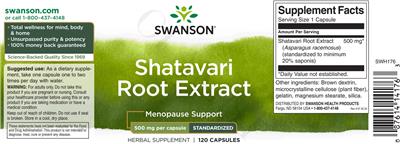
This product contains one active ingredient: shatavari root extract at 500 mg per capsule. Shatavari (Asparagus racemosus) is a plant root used traditionally in Ayurvedic practice.
The capsule itself is made from inactive ingredients — gelatin, microcrystalline cellulose, brown dextrin, magnesium stearate, and silica — which are fillers and binders to hold the supplement together.
Does it work?
Not established
The evidence isn't established in the data we hold for any of shatavari root's traditional uses. It's been studied for tuberculosis, lactation support, muscle strength, sexual desire, and bronchitis, but the data on file show insufficient reliable evidence to rate its effectiveness for any of them.
If you're considering this for a specific health goal, your pharmacist can point you toward what the current research actually shows.
How safe is it?
Some data gaps
Shatavari root is generally well tolerated in traditional use, but high-quality safety studies are limited. Safety during pregnancy is not well established, so the data advise against use in pregnancy unless a doctor specifically advises otherwise.
It's traditionally used to support milk supply, but reliable safety data are lacking — if you're breastfeeding and interested in this supplement, use it only under professional guidance.
Meds to double-check
Moderate interaction found
Check with your pharmacist before starting if you take diuretic drugs (water pills) or lithium. Both have documented moderate-severity interactions with shatavari root that could affect how your medications work.
The bottom line
Scorecard at a glanceFully disclosed formula with no established evidence rating for its marketed use. Moderate medication interactions have been identified, and some safety-information gaps remain.
Shatavari root extract is an Ayurvedic plant supplement with limited modern research backing its uses. If you take diuretics or lithium, you'll want to check with your pharmacist or doctor first.
Pregnant people should avoid it unless advised by their doctor; breastfeeding parents considering it should get professional guidance.
Educational only — not medical advice; always confirm with your pharmacist. Our editorial policy · How we use AI
Assessment coverage: 1 of 1 active ingredient matched to our full ingredient reviews (monographs). Based on the product label dated Jun 20, 2024.
This Scorecard evaluates available label information, ingredient evidence, and known medication-safety considerations. It does not independently verify product identity, purity, potency, contamination, or manufacturing quality. How these ratings are computed
General information
Key facts about Shatavari Root Extract 500 mg, straight from the product label.
| Brand | Swanson |
|---|---|
| Barcode (UPC) | 087614141763 |
| Net contents | 120 Capsule(s) |
| Market status | On market |
| Date entered into DSLD | Jun 20, 2024 |
| DSLD ID | 308748 |
| Product type | Botanical |
| Supplement form | Capsule |
| Dietary claims / uses | All Other, Structure/Function |
| Intended target group(s) | Women (not pregnant or lactating), Adult Female (18 - 50 Years), Menopause, Seniors/Mature (>50 Years) - Women ONLY |
Everything in this section is reproduced from the manufacturer’s own product label — it’s the label speaking, not HelloPharmacist. We show it so you can see exactly what the maker states; we don’t verify or endorse those statements.
Supplement Facts
The label details for Shatavari Root Extract 500 mg by Swanson, sourced from the NIH Dietary Supplement Label Database.
Supplement Facts
| Ingredient | Amount | % DV |
|---|---|---|
| Shatavari Root Extract | 500 mg | -- |
Other ingredients: Brown Dextrin, Microcrystalline Cellulose, Gelatin, Magnesium Stearate, Silica
Tap any ingredient to jump to its full detail below.
These statements are the manufacturer’s wording, reproduced from the product label — the label is saying it, not HelloPharmacist. We don’t verify or endorse them.
Formulation
Total wellness for mind, body & home Unsurpassed purity & potency
Menopause support Standardized
General Statements
100% money back guaranteed Science-Backed Quality Since 1969
Suggested/Recommended/Usage/Directions
Suggested Use: As a dietary supplement, take one capsule one to two times per day with water.
Precautions
Warning: For adults only. Keep out of reach of children.
Do not take this product if you are pregnant or nursing. Consult your healthcare provider before using this or any product if you are taking medication or have a medical condition.
Do not use if seal is broken.
Storage
Store in a cool, dry place.
FDA Disclaimer Statement
These statements have not been evaluated by the Food and Drug Administration. This product is not intended to diagnose, treat, cure or prevent any disease.
Formula
Shatavari Root Extract 500 mg per capsule
FDA Statement of Identity
Herbal Supplement
Is this label outdated? Report a formula or label change and our pharmacy team will review it.
Shatavari Root Extract 500 mg by Swanson label
The label scan from the NIH Dietary Supplement Label Database. Tap to enlarge.
Label images are published by the NIH Dietary Supplement Label Database for the version of this product on file. Always read your actual product label.
View the full label (PDF)The Ingredients in Shatavari Root Extract 500 mg by Swanson
This is the 1 active ingredient this product is made of. Select it to open its full monograph.
Serving size1 Capsule(s) Dosage formCapsule Servings per container120 Amounts shown are per serving.
Shatavari Root Extract
Interacts with76 drugs
Asparagus racemosus, often called shatavari, is an Ayurvedic herb traditionally used to support women's health, digestion, and overall vitality. Human...
Shatavari Root Extract monograph & interactionsOther (inactive) ingredients: Brown Dextrin, Microcrystalline Cellulose, Gelatin, Magnesium Stearate, Silica. These complete the product’s ingredient list but are not active constituents.
Shatavari Root Extract 500 mg by Swanson Drug Interactions
HelloPharmacist Interaction Report
Shatavari Root Extract by Swanson has documented interactions with two medication types.
The main concern is with diuretic drugs (water pills like furosemide or hydrochlorothiazide): theoretically, shatavari root might increase water loss and electrolyte depletion when used together. Animal studies show the root has diuretic properties at high doses, though this hasn't been reported in people.
Read the full breakdown — every affected drug type, severity by severity
The second documented interaction is with lithium. Animal research suggests shatavari root might reduce how your body clears lithium, potentially raising levels in your blood.
If you take lithium, your doctor may need to adjust your dose.
Additionally, we should note that we've only checked the one active ingredient here. Altogether, these interactions span 76 individual medications.
If you take a diuretic, lithium, or any other prescription medication, run it through the checker below before you start this supplement.
Check your own medications below · Editorial policy · How we use AI
Want to check YOUR meds against Shatavari Root Extract 500 mg?
Ask about interactions with your drugs in plain English — “Can I take it with lisinopril?” — and we find you the answer in seconds, ingredient by ingredient.
Go to the checkerIngredients driving the most interactions
Individual Drug Interactions
The ingredients in Shatavari Root Extract 500 mg interact with 76 drugs. Click any drug to see the details.
1 of the 1 ingredient in Shatavari Root Extract 500 mg interact with drugs. Each result below shows which ingredient is responsible. Shatavari Root Extract
Acetaminophen, Caffeine, PyrilamineMidol Max Strength Menstrual
How Acetaminophen, Caffeine, Pyrilamine interacts with Shatavari Root Extract 500 mg — through 1 ingredient. Tap an ingredient for the detail:
Shatavari Root ExtractDiuretic Drugs Moderate
Interaction Summary
Theoretically, asparagus racemosus root might increase diuresis and electrolyte loss when used with diuretic drugs.
Read the full Shatavari Root Extract + Acetaminophen, Caffeine, Pyrilamine interactionAcetaminophen, Pamabrom, PyrilamineMidol Max Strength PMS, Pamprin, Pamprin ES
How Acetaminophen, Pamabrom, Pyrilamine interacts with Shatavari Root Extract 500 mg — through 1 ingredient. Tap an ingredient for the detail:
Shatavari Root ExtractDiuretic Drugs Moderate
Interaction Summary
Theoretically, asparagus racemosus root might increase diuresis and electrolyte loss when used with diuretic drugs.
Read the full Shatavari Root Extract + Acetaminophen, Pamabrom, Pyrilamine interactionAcetazolamideAk-Zol, Diamox
How Acetazolamide interacts with Shatavari Root Extract 500 mg — through 1 ingredient. Tap an ingredient for the detail:
Shatavari Root ExtractDiuretic Drugs Moderate
Interaction Summary
Theoretically, asparagus racemosus root might increase diuresis and electrolyte loss when used with diuretic drugs.
Read the full Shatavari Root Extract + Acetazolamide interactionAmiloride, HydrochlorothiazideAmil-Co, Amilzide, Moduret 25, Moduretic
How Amiloride, Hydrochlorothiazide interacts with Shatavari Root Extract 500 mg — through 1 ingredient. Tap an ingredient for the detail:
Shatavari Root ExtractDiuretic Drugs Moderate
Interaction Summary
Theoretically, asparagus racemosus root might increase diuresis and electrolyte loss when used with diuretic drugs.
Read the full Shatavari Root Extract + Amiloride, Hydrochlorothiazide interactionAmmonium ChlorideAmmonium Chloride
How Ammonium Chloride interacts with Shatavari Root Extract 500 mg — through 1 ingredient. Tap an ingredient for the detail:
Shatavari Root ExtractDiuretic Drugs Moderate
Interaction Summary
Theoretically, asparagus racemosus root might increase diuresis and electrolyte loss when used with diuretic drugs.
Read the full Shatavari Root Extract + Ammonium Chloride interactionAtenolol, ChlortalidoneAtenixCo, Tenoret 50, Totaretic
How Atenolol, Chlortalidone interacts with Shatavari Root Extract 500 mg — through 1 ingredient. Tap an ingredient for the detail:
Shatavari Root ExtractDiuretic Drugs Moderate
Interaction Summary
Theoretically, asparagus racemosus root might increase diuresis and electrolyte loss when used with diuretic drugs.
Read the full Shatavari Root Extract + Atenolol, Chlortalidone interactionAtenolol, ChlorthalidoneTenoretic
How Atenolol, Chlorthalidone interacts with Shatavari Root Extract 500 mg — through 1 ingredient. Tap an ingredient for the detail:
Shatavari Root ExtractDiuretic Drugs Moderate
Interaction Summary
Theoretically, asparagus racemosus root might increase diuresis and electrolyte loss when used with diuretic drugs.
Read the full Shatavari Root Extract + Atenolol, Chlorthalidone interactionAzilsartan, ChlorthalidoneEdarbyclor
How Azilsartan, Chlorthalidone interacts with Shatavari Root Extract 500 mg — through 1 ingredient. Tap an ingredient for the detail:
Shatavari Root ExtractDiuretic Drugs Moderate
Interaction Summary
Theoretically, asparagus racemosus root might increase diuresis and electrolyte loss when used with diuretic drugs.
Read the full Shatavari Root Extract + Azilsartan, Chlorthalidone interactionBenazepril, HydrochlorothiazideLotensin HCT
How Benazepril, Hydrochlorothiazide interacts with Shatavari Root Extract 500 mg — through 1 ingredient. Tap an ingredient for the detail:
Shatavari Root ExtractDiuretic Drugs Moderate
Interaction Summary
Theoretically, asparagus racemosus root might increase diuresis and electrolyte loss when used with diuretic drugs.
Read the full Shatavari Root Extract + Benazepril, Hydrochlorothiazide interactionBendroflumethiazideAprinox, Naturetin, Neo-NaClex
How Bendroflumethiazide interacts with Shatavari Root Extract 500 mg — through 1 ingredient. Tap an ingredient for the detail:
Shatavari Root ExtractDiuretic Drugs Moderate
Interaction Summary
Theoretically, asparagus racemosus root might increase diuresis and electrolyte loss when used with diuretic drugs.
Read the full Shatavari Root Extract + Bendroflumethiazide interactionBendroflumethiazide, NadololCorzide
How Bendroflumethiazide, Nadolol interacts with Shatavari Root Extract 500 mg — through 1 ingredient. Tap an ingredient for the detail:
Shatavari Root ExtractDiuretic Drugs Moderate
Interaction Summary
Theoretically, asparagus racemosus root might increase diuresis and electrolyte loss when used with diuretic drugs.
Read the full Shatavari Root Extract + Bendroflumethiazide, Nadolol interactionBendroflumethiazide, PotassiumCentyl K, Neo-NaClex-K
How Bendroflumethiazide, Potassium interacts with Shatavari Root Extract 500 mg — through 1 ingredient. Tap an ingredient for the detail:
Shatavari Root ExtractDiuretic Drugs Moderate
Interaction Summary
Theoretically, asparagus racemosus root might increase diuresis and electrolyte loss when used with diuretic drugs.
Read the full Shatavari Root Extract + Bendroflumethiazide, Potassium interactionBendroflumethiazide, Rauwolfia SerpentinaRauzide
How Bendroflumethiazide, Rauwolfia Serpentina interacts with Shatavari Root Extract 500 mg — through 1 ingredient. Tap an ingredient for the detail:
Shatavari Root ExtractDiuretic Drugs Moderate
Interaction Summary
Theoretically, asparagus racemosus root might increase diuresis and electrolyte loss when used with diuretic drugs.
Read the full Shatavari Root Extract + Bendroflumethiazide, Rauwolfia Serpentina interactionBenzthiazideExna
How Benzthiazide interacts with Shatavari Root Extract 500 mg — through 1 ingredient. Tap an ingredient for the detail:
Shatavari Root ExtractDiuretic Drugs Moderate
Interaction Summary
Theoretically, asparagus racemosus root might increase diuresis and electrolyte loss when used with diuretic drugs.
Read the full Shatavari Root Extract + Benzthiazide interactionBisoprolol, HydrochlorothiazideZiac
How Bisoprolol, Hydrochlorothiazide interacts with Shatavari Root Extract 500 mg — through 1 ingredient. Tap an ingredient for the detail:
Shatavari Root ExtractDiuretic Drugs Moderate
Interaction Summary
Theoretically, asparagus racemosus root might increase diuresis and electrolyte loss when used with diuretic drugs.
Read the full Shatavari Root Extract + Bisoprolol, Hydrochlorothiazide interactionBumetanideBurinex
How Bumetanide interacts with Shatavari Root Extract 500 mg — through 1 ingredient. Tap an ingredient for the detail:
Shatavari Root ExtractDiuretic Drugs Moderate
Interaction Summary
Theoretically, asparagus racemosus root might increase diuresis and electrolyte loss when used with diuretic drugs.
Read the full Shatavari Root Extract + Bumetanide interactionBumetanide, PotassiumBurinex K
How Bumetanide, Potassium interacts with Shatavari Root Extract 500 mg — through 1 ingredient. Tap an ingredient for the detail:
Shatavari Root ExtractDiuretic Drugs Moderate
Interaction Summary
Theoretically, asparagus racemosus root might increase diuresis and electrolyte loss when used with diuretic drugs.
Read the full Shatavari Root Extract + Bumetanide, Potassium interactionCaffeine, Potassium Salicylate, SalicylamideTrim-Elim
How Caffeine, Potassium Salicylate, Salicylamide interacts with Shatavari Root Extract 500 mg — through 1 ingredient. Tap an ingredient for the detail:
Shatavari Root ExtractDiuretic Drugs Moderate
Interaction Summary
Theoretically, asparagus racemosus root might increase diuresis and electrolyte loss when used with diuretic drugs.
Read the full Shatavari Root Extract + Caffeine, Potassium Salicylate, Salicylamide interactionCandesartan Cilexetil, HydrochlorothiazideAtacand HCT
How Candesartan Cilexetil, Hydrochlorothiazide interacts with Shatavari Root Extract 500 mg — through 1 ingredient. Tap an ingredient for the detail:
Shatavari Root ExtractDiuretic Drugs Moderate
Interaction Summary
Theoretically, asparagus racemosus root might increase diuresis and electrolyte loss when used with diuretic drugs.
Read the full Shatavari Root Extract + Candesartan Cilexetil, Hydrochlorothiazide interactionCaptopril, HydrochlorothiazideAcezide, Capozide
How Captopril, Hydrochlorothiazide interacts with Shatavari Root Extract 500 mg — through 1 ingredient. Tap an ingredient for the detail:
Shatavari Root ExtractDiuretic Drugs Moderate
Interaction Summary
Theoretically, asparagus racemosus root might increase diuresis and electrolyte loss when used with diuretic drugs.
Read the full Shatavari Root Extract + Captopril, Hydrochlorothiazide interactionChlorothiazideDiuril
How Chlorothiazide interacts with Shatavari Root Extract 500 mg — through 1 ingredient. Tap an ingredient for the detail:
Shatavari Root ExtractDiuretic Drugs Moderate
Interaction Summary
Theoretically, asparagus racemosus root might increase diuresis and electrolyte loss when used with diuretic drugs.
Read the full Shatavari Root Extract + Chlorothiazide interactionChlorothiazide, MethyldopaAldochlor, Aldoclor 150, Aldoclor 250
How Chlorothiazide, Methyldopa interacts with Shatavari Root Extract 500 mg — through 1 ingredient. Tap an ingredient for the detail:
Shatavari Root ExtractDiuretic Drugs Moderate
Interaction Summary
Theoretically, asparagus racemosus root might increase diuresis and electrolyte loss when used with diuretic drugs.
Read the full Shatavari Root Extract + Chlorothiazide, Methyldopa interactionChlorothiazide, ReserpineDiupres
How Chlorothiazide, Reserpine interacts with Shatavari Root Extract 500 mg — through 1 ingredient. Tap an ingredient for the detail:
Shatavari Root ExtractDiuretic Drugs Moderate
Interaction Summary
Theoretically, asparagus racemosus root might increase diuresis and electrolyte loss when used with diuretic drugs.
Read the full Shatavari Root Extract + Chlorothiazide, Reserpine interactionChlorthalidoneHygroton, Thalitone
How Chlorthalidone interacts with Shatavari Root Extract 500 mg — through 1 ingredient. Tap an ingredient for the detail:
Shatavari Root ExtractDiuretic Drugs Moderate
Interaction Summary
Theoretically, asparagus racemosus root might increase diuresis and electrolyte loss when used with diuretic drugs.
Read the full Shatavari Root Extract + Chlorthalidone interactionChlorthalidone, ClonidineClorpres, Combipres
How Chlorthalidone, Clonidine interacts with Shatavari Root Extract 500 mg — through 1 ingredient. Tap an ingredient for the detail:
Shatavari Root ExtractDiuretic Drugs Moderate
Interaction Summary
Theoretically, asparagus racemosus root might increase diuresis and electrolyte loss when used with diuretic drugs.
Read the full Shatavari Root Extract + Chlorthalidone, Clonidine interactionCryptenamine, MethyclothiazideDiutensen
How Cryptenamine, Methyclothiazide interacts with Shatavari Root Extract 500 mg — through 1 ingredient. Tap an ingredient for the detail:
Shatavari Root ExtractDiuretic Drugs Moderate
Interaction Summary
Theoretically, asparagus racemosus root might increase diuresis and electrolyte loss when used with diuretic drugs.
Read the full Shatavari Root Extract + Cryptenamine, Methyclothiazide interactionCyclothiazideAnhydron, Fluidil
How Cyclothiazide interacts with Shatavari Root Extract 500 mg — through 1 ingredient. Tap an ingredient for the detail:
Shatavari Root ExtractDiuretic Drugs Moderate
Interaction Summary
Theoretically, asparagus racemosus root might increase diuresis and electrolyte loss when used with diuretic drugs.
Read the full Shatavari Root Extract + Cyclothiazide interactionDeserpidine, HydrochlorothiazideOreticyl, Oreticyl Forte
How Deserpidine, Hydrochlorothiazide interacts with Shatavari Root Extract 500 mg — through 1 ingredient. Tap an ingredient for the detail:
Shatavari Root ExtractDiuretic Drugs Moderate
Interaction Summary
Theoretically, asparagus racemosus root might increase diuresis and electrolyte loss when used with diuretic drugs.
Read the full Shatavari Root Extract + Deserpidine, Hydrochlorothiazide interactionDeserpidine, MethyclothiazideEnduronyl, Enduronyl Forte
How Deserpidine, Methyclothiazide interacts with Shatavari Root Extract 500 mg — through 1 ingredient. Tap an ingredient for the detail:
Shatavari Root ExtractDiuretic Drugs Moderate
Interaction Summary
Theoretically, asparagus racemosus root might increase diuresis and electrolyte loss when used with diuretic drugs.
Read the full Shatavari Root Extract + Deserpidine, Methyclothiazide interactionEnalapril Maleate, HydrochlorothiazideVaseretic
How Enalapril Maleate, Hydrochlorothiazide interacts with Shatavari Root Extract 500 mg — through 1 ingredient. Tap an ingredient for the detail:
Shatavari Root ExtractDiuretic Drugs Moderate
Interaction Summary
Theoretically, asparagus racemosus root might increase diuresis and electrolyte loss when used with diuretic drugs.
Read the full Shatavari Root Extract + Enalapril Maleate, Hydrochlorothiazide interactionEach ingredient & the kinds of drugs it affects
For each ingredient in Shatavari Root Extract 500 mg with known interactions, here are the types of medications it can affect. Open any type for the detail — or search your exact drug in the checker above.
Shatavari Root Extract
Diuretic Drugs
Theoretically, asparagus racemosus root might increase diuresis and electrolyte loss when used with diuretic drugs.
Animal studies show that asparagus racemosus root has diuretic effects when used in high doses. This effect has not been reported in humans.
Lithium
Theoretically, Asparagus racemosus root could reduce excretion and increase levels of lithium.
Animal research suggests that Asparagus racemosus root has diuretic properties when used in high doses. Therefore, it might reduce excretion and increase levels of lithium. The dose of lithium might need to be decreased.
Brand information
Manufacturer and brand details for Shatavari Root Extract 500 mg, from the product label.
Swanson
See all Swanson products- Name
- Swanson Health Products
- City
- Fargo
- State
- ND
- ZipCode
- 58104
- Phone Number
- 1-800-437-4148
- Web Address
- swanson.com
Shatavari Root Extract 500 mg by Swanson: Common Questions
Does Shatavari Root Extract 500 mg by Swanson interact with any medications?
How can one product interact with so many drugs?
Where does this information come from?
Can I take this while I'm pregnant?
Is shatavari safe for breastfeeding?
What is shatavari root extract actually used for?
Are there any side effects I should know about?
I take a water pill for blood pressure — is it okay to use this?
Written and reviewed by the HelloPharmacist editorial staff. Our editorial policy
Not sure if Shatavari Root Extract 500 mg is safe with your meds?
Our pharmacists answer your medication & supplement questions — free.
Label information is sourced from the NIH Dietary Supplement Label Database and reflects the product version on file; always read your actual product label. This page is for education only and is not a substitute for professional medical advice. Confirm with your pharmacist or doctor before combining supplements and medications.
The Full Monographs Behind Shatavari Root Extract 500 mg’s Ingredients
Every ingredient we hold a full HelloPharmacist monograph for — uses, evidence, safety, and the complete interaction list.
Sources & How We Checked
Shatavari Root Extract 500 mg's label data comes from the NIH Dietary Supplement Label Database; the ingredient interaction data is from the Natural Medicines database, reviewed by our pharmacists.
- NIH Dietary Supplement Label Database (DSLD) — The official product label on file for this supplement.
- Natural Medicines (Therapeutic Research Center) — Evidence-graded clinical reference behind the ingredient interaction data.
Content is written and reviewed by licensed HelloPharmacist pharmacists. See our data sources and editorial standards for how this information is built and checked.
The 1 references behind this product’s interaction data
Every citation that drives the interaction findings for this product’s ingredients, from the evidence-graded Natural Medicines (TRC Healthcare) database. Open an ingredient to browse its citations — links open the study on PubMed or the publisher’s site.
Asparagus Racemosus 1 reference
- Satish Kumar MC, Udupa AL, Sammodavardhana K, Rathnakar UP, Shvetha U, Kodancha GP. Acute toxicity and diuretic studies of the roots of Asparagus racemosus Willd in rats. West Indian Med J. 2010;59(1):3-6.
Parts of this content are provided by the Therapeutic Research Center, LLC.
DISCLAIMER: Currently this does not check for drug-drug interactions. This is not an all-inclusive comprehensive list of potential interactions and is for informational purposes only. Not all interactions are known or well-reported in the scientific literature, and new interactions are continually being reported. Input is needed from a qualified healthcare provider including a pharmacist before starting any therapy. Application of clinical judgment is necessary.
© 2021 Therapeutic Research Center, LLC