
Ashwagandha Rasayana 9a Ingredients & Drug Interactions
What is this page for?
First and foremost: checking Ashwagandha Rasayana 9a against your medications. The heart of this page is the interaction checker and the full interaction report — how this product’s ingredients may interact with prescription and over-the-counter medicines you may be taking.
Around that, we add a pharmacist’s high-level view of the product as a whole — what’s inside, the evidence for its stated use, how transparent the label is, and what safety data exists — so you can see the full picture in one place. It’s educational information from our licensed clinical databases and the clinical staff at HelloPharmacist — not medical advice — and we don’t sell or endorse products. Our editorial policy
Ashwagandha Rasayana 9a is a dietary supplement by Ayurvedic Rasayanas with 52 active ingredients. Its ingredients are commonly taken for antioxidant support, cholesterol and heart health, immune support.Based on those ingredients, 1,718 medications have a known interaction with it, the most serious rated major. The ingredients most likely to interact are Ashwagandha root extract, Sage leaf extract, Golden Root extract. Use the checker below to test your specific medication, or read the full HelloPharmacist Interaction Report.
Check Your Meds Against Ashwagandha Rasayana 9a by Ayurvedic Rasayanas
Ask about any prescription or over-the-counter medication and we check it for interactions with Ashwagandha Rasayana 9a by Ayurvedic Rasayanas — and tell you which ingredient is responsible.
AI summaries are generated from our interaction database for education only — always confirm with your pharmacist. How we use AI
Ask the Pharmacist
A licensed pharmacist will answer your question by email — free, usually within 24 hours.
Got it — thank you!
A licensed pharmacist will answer within 24 hours. Keep an eye on your email (worth checking spam, just in case).
HelloPharmacist Scorecard of Ashwagandha Rasayana 9a by Ayurvedic Rasayanas
Our pharmacy team’s full take, with four database checks built into the cards below — a summary of what is known, not a grade of the product itself.
What’s inside
Low disclosure
This blend contains 50 active ingredients, many traditional Ayurvedic herbs and spices. The main ones include ginger root and essential oil, turmeric root powder and essential oil, parsley leaf powder and essential oil, hawthorn berry, fenugreek seed, cinnamon bark (powder and essential oil), clove bud, sage leaf (powder and extract), licorice root extract, honey, amalaki (Indian gooseberry) fruit extract, shatavari (asparagus racemosus) root extract, tamarind fruit concentrate, bee pollen, brown rice syrup, and cinnamon essential oil.
There are also inactive ingredients listed as a proprietary blend of standardized extracts and pure essential oils.
Does it work?
Not established
The evidence for what this blend actually does is thin. Honey rates as possibly effective for cold sores, cough, oral mucositis (mouth sores from cancer treatment), burns, and dry eye.
Ginger is possibly effective for pregnancy-related nausea, period pain, and osteoarthritis—but possibly ineffective for exercise soreness and chemotherapy nausea. Turmeric is possibly effective for depression, high cholesterol, hay fever, and indigestion.
Sage is possibly effective for menopausal symptoms, high cholesterol, and brain function. Fenugreek is possibly effective for sexual dysfunction, sexual arousal, period pain, and diabetes.
For most of the other ingredients—parsley, clove, cinnamon, hawthorn, bee pollen, amalaki, and shatavari—the evidence we hold isn't established enough to rate. Brown rice syrup has no reliable evidence for dementia, diabetes, obesity, or psoriasis.
How safe is it?
Well-documented data
Most of these ingredients are generally well tolerated at food amounts. Honey, brown rice, and ginger are likely safe in pregnancy.
Cinnamon bark powder and clove are also likely safe. However, parsley and sage are rated likely unsafe in pregnancy due to uterine stimulation, and licorice is unsafe in pregnancy because of links to fetal harm.
Fenugreek is likely unsafe in pregnancy. Hawthorn has no pregnancy/breastfeeding data, so the facts advise against it.
Bee pollen is possibly unsafe in pregnancy and unsafe for breastfeeding. For breastfeeding, ginger and honey are likely safe, cinnamon is likely safe, and parsley leaf extract has no safety data on file.
Sage is possibly unsafe while breastfeeding, and licorice and bee pollen have no safety data or advise against use. Most ingredients can cause mild digestive upset—nausea, stomach pain, diarrhea, bloating—at higher doses.
Parsley, clove, and licorice carry rare but serious risks at very high doses (organ damage, severe allergies, seizures). Hawthorn rarely causes multiorgan reactions.
Anyone with allergies to ragweed, pollen, or bee products should be cautious with bee pollen and hawthorn.
Meds to double-check
Major interaction found
Major interactions: do not combine with nitrates or sildenafil (from hawthorn). Moderate concerns: blood-thinning drugs (anticoagulants, antiplatelets, warfarin, aspirin, clopidogrel), diabetes medications, heart and blood pressure drugs (beta-blockers, calcium channel blockers, digoxin, losartan, metoprolol), medications for seizures (phenytoin), sedatives and CNS depressants, estrogen therapy, and anything metabolized by liver enzymes CYP1A2, CYP2B6, CYP2C9, CYP2C19, CYP2D6, CYP3A4, P-glycoprotein, or OATP transporters.
Minor interactions with ibuprofen and aspirin. If you take any of these, check your exact drugs below before starting.
The bottom line
Scorecard at a glanceFormula with limited ingredient disclosure with no established evidence rating for its marketed use. Major medication interactions have been identified, and safety information is well characterized.
This is a complex blend with real interaction potential—especially if you take blood thinners, diabetes medications, heart drugs, or anything metabolized by the liver. The evidence that it actually works for its intended purpose is modest at best.
If you're pregnant, breastfeeding, or taking prescription medications, talk with your pharmacist or doctor before adding this to your routine.
Educational only — not medical advice; always confirm with your pharmacist. Our editorial policy · How we use AI
Assessment coverage: 46 of 50 active ingredients matched to our full ingredient reviews (monographs). Based on the product label dated Mar 25, 2021.
This Scorecard evaluates available label information, ingredient evidence, and known medication-safety considerations. It does not independently verify product identity, purity, potency, contamination, or manufacturing quality. How these ratings are computed
General information
Key facts about Ashwagandha Rasayana 9a, straight from the product label.
| Brand | Ayurvedic Rasayanas |
|---|---|
| Net contents | 10.7 Ounce(s); 300 Gram(s) |
| Market status | On market |
| Date entered into DSLD | Mar 25, 2021 |
| DSLD ID | 246320 |
| Product type | Other Combinations |
| Supplement form | Other (e.g. Tea Bag) |
| Dietary claims / uses | All Other, Structure/Function |
| Intended target group(s) | Adult (18 - 50 Years), Gluten Free |
Everything in this section is reproduced from the manufacturer’s own product label — it’s the label speaking, not HelloPharmacist. We show it so you can see exactly what the maker states; we don’t verify or endorse those statements.
Supplement Facts
The label details for Ashwagandha Rasayana 9a by Ayurvedic Rasayanas, sourced from the NIH Dietary Supplement Label Database.
Supplement Facts
Tap any ingredient to jump to its full detail below.
These statements are the manufacturer’s wording, reproduced from the product label — the label is saying it, not HelloPharmacist. We don’t verify or endorse them.
Formulation
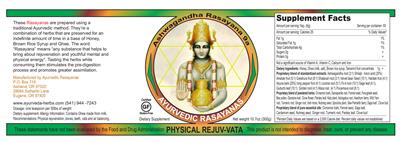
These Rasayanas are prepared using a traditional Ayurvedic method.
Tasting the herbs while consuming them stimulates the pre-digestion process and promotes greater assimilation.
Recommendations: Physical rejuvenation, bones, teeth, vata and air balancing.
GF Certified Gluten-free
Physical Rejuv-Vata
Formula
They’re a combination of herbs that are preserved for an indefinite amount of time in a base of honey, brown rice syrup and ghee. The word “Rasayana” means “any substance that helps to bring about rejuvenation and youthful mental and physical energy”.
Suggested/Recommended/Usage/Directions
Dosage: one teaspoon per 50lbs of weight
FDA Statement of Identity
Dietary Supplement
Precautions
Allergy Information: Contains ghee made from milk.
FDA Disclaimer Statement
These statements have not been evaluated by the Food and Drug Administration. This product is not intended to diagnose, treat, cure, or prevent any disease.
Seals/Symbols
GF Certified Gluten-free
General Statements
Not a significant source of vitamin A, vitamin C, calcium and iron
Is this label outdated? Report a formula or label change and our pharmacy team will review it.
Ashwagandha Rasayana 9a by Ayurvedic Rasayanas label
The label scan from the NIH Dietary Supplement Label Database. Tap to enlarge.
Label images are published by the NIH Dietary Supplement Label Database for the version of this product on file. Always read your actual product label.
View the full label (PDF)The Ingredients in Ashwagandha Rasayana 9a by Ayurvedic Rasayanas
These are the 52 active ingredients this product is made of. Select any to open its full monograph.
Serving size1 Teaspoon(s) Dosage formOther (e.g. Tea Bag) Servings per container50 Amounts shown are per serving.
Most supplement products combine several ingredients, and a medication can interact with the product through any one of them. Each ingredient below shows whether it has known drug interactions.
Sugar
Protein
Fat
Proprietary Blend of Standardized Extracts
- › Amalaki fruit extract
- › Shatavari root extract
- › Sage leaf extract
- › Licorice root extract
- › Fo-ti root extract
- › Gokshura fruit extract
- › Ashwagandha root extract
- › Shilajit extract
- › Velvet Bean seed extract
- › Haritaki fruit extract
- › Arjuna bark extract
- › Long Pepper fruit extract
- › Guduchi leaf extract
- › Golden Root extract
- › Maca root extract
- › Punarnava root extract
Proprietary Blend of Pure Essential Oils
Dietary Ingredients
- › Brown Rice syrup
- › Honey
- › Tamarind fruit concentrate
- › Ghee
Proprietary Blend of Powdered Herbs
- › Parsley leaf powder
- › Irish Moss powder
- › Fenugreek seed powder
- › Ginger root powder
- › Clove bud powder
- › Turmeric root powder
- › Hawthorn berry powder
- › Cinnamon bark powder
- › Bee Pollen powder
- › Sage leaf powder
- › Sarsaparilla root powder
- › Fennel seed powder
- › Damiana leaf powder
- › Clove flower powder
- › Kelp plant powder
- › Astragalus root powder
- › Wild Yam root powder
- › Nutmeg seed powder
- › Spirulina plant powder
- › Saw Palmetto berry powder
Ashwagandha Rasayana 9a by Ayurvedic Rasayanas Drug Interactions
HelloPharmacist Interaction Report
Ashwagandha Rasayana 9a by Ayurvedic Rasayanas is a 50-ingredient blend with multiple interactions to watch for.
The most serious concerns come from hawthorn berry, which has Major-severity interactions with nitrates (used for chest pain) and phosphodiesterase-5 inhibitors like sildenafil—both can cause dangerous drops in blood pressure when combined.
Read the full breakdown — every affected drug type, severity by severity
Several ingredients carry Moderate-severity interactions with blood-thinning drugs (anticoagulants and antiplatelets): parsley, honey, fenugreek, ginger, clove, turmeric, hawthorn, amalaki, and parsley essential oil all may increase bleeding risk. Parsley and parsley essential oil also theoretically affect blood sugar control with diabetes medications, as do fenugreek, ginger, clove, cinnamon, and tamarind.
Ginger, clove, turmeric, and sage (both powder and extract) interact with multiple liver enzymes (CYP450 systems), potentially raising levels of dozens of common drugs. Turmeric, licorice, and sage may interfere with heart and blood pressure medications; turmeric and licorice also interact with blood thinners and digoxin.
Fenugreek may reduce theophylline effectiveness.
We could not check fat, Irish moss powder, and ghee—we hold no data for these. Altogether, these interactions span 1,693 individual medications.
Before you start this product, run your exact medications through the checker below.
Check your own medications below · Editorial policy · How we use AI
Want to check YOUR meds against Ashwagandha Rasayana 9a?
Ask about interactions with your drugs in plain English — “Can I take it with lisinopril?” — and we find you the answer in seconds, ingredient by ingredient.
Go to the checkerIngredients driving the most interactions
Individual Drug Interactions
The ingredients in Ashwagandha Rasayana 9a interact with 1,718 drugs. Click any drug to see the details.
35 of the 52 ingredients in Ashwagandha Rasayana 9a interact with drugs. Each result below shows which ingredient is responsible. Ashwagandha root extract Sage leaf extract Golden Root extract Fo-ti root extract Turmeric root essential oil Licorice root extract Ginger root essential oil Clove bud essential oil Arjuna bark extract Long Pepper fruit extract Kelp plant powder Fennel seed essential oil Honey Guduchi leaf extract Nutmeg seed powder Nutmeg seed essential oil Parsley leaf essential oil Cinnamon bark powder Fenugreek seed powder Spirulina plant powder Gokshura fruit extract Cinnamon bark essential oil Amalaki fruit extract Astragalus root powder Velvet Bean seed extract Hawthorn berry powder Saw Palmetto berry powder Tamarind fruit concentrate Shilajit extract Damiana leaf powder Shatavari root extract Wild Yam root powder Irish Moss powder Bee Pollen powder Sarsaparilla root powder
AmphetamineAdensys XR-ODT, Adzenys ER, Dyanavel XR, Mydayis
How Amphetamine interacts with Ashwagandha Rasayana 9a — through 7 ingredients. Tap an ingredient for the detail:
Velvet Bean Seed ExtractMonoamine Oxidase Inhibitors (maois) Major
Interaction Summary
Theoretically, concomitant use of cowhage and non-selective MAOIs might increase the risk of hypertensive crisis.
Read the full Velvet Bean Seed Extract + Amphetamine interactionGuduchi Leaf ExtractCytochrome P450 2d6 (cyp2d6) Substrates Moderate
Interaction Summary
Theoretically, Tinospora cordifolia might increase levels of drugs metabolized by CYP2D6.
Read the full Guduchi Leaf Extract + Amphetamine interactionArjuna Bark ExtractCytochrome P450 2d6 (cyp2d6) Substrates Moderate
Interaction Summary
Theoretically, use of Terminalia arjuna may increase the levels and clinical effects of CYP2D6 substrates.
Read the full Arjuna Bark Extract + Amphetamine interactionClove Bud Essential OilCytochrome P450 2d6 (cyp2d6) Substrates Moderate
Interaction Summary
Theoretically, concomitant use of clove may increase levels of drugs metabolized by CYP2D6.
Read the full Clove Bud Essential Oil + Amphetamine interactionFo-ti Root ExtractCytochrome P450 2d6 (cyp2d6) Substrates Moderate
Interaction Summary
Theoretically, fo-ti may increase the levels and clinical effects of drugs metabolized by CYP2D6.
Read the full Fo-ti Root Extract + Amphetamine interactionSage Leaf Essential OilCytochrome P450 2d6 (cyp2d6) Substrates Moderate
Interaction Summary
Theoretically, sage might increase the levels and clinical effects of drugs metabolized by CYP2D6.
Read the full Sage Leaf Essential Oil + Amphetamine interactionKelp Plant PowderCytochrome P450 2d6 (cyp2d6) Substrates Minor
Interaction Summary
Theoretically, concomitant use of Fucus vesiculosus with CYP2D6 substrates might alter the effects of these substrates.
Read the full Kelp Plant Powder + Amphetamine interactionAvanafilStendra
How Avanafil interacts with Ashwagandha Rasayana 9a — through 14 ingredients. Tap an ingredient for the detail:
Hawthorn Berry PowderPhosphodiesterase-5 Inhibitors Major
Interaction Summary
Theoretically, concomitant use might result in additive vasodilation and hypotension.
Read the full Hawthorn Berry Powder + Avanafil interactionTurmeric Root Essential OilCytochrome P450 3a4 (cyp3a4) Substrates Moderate
Interaction Summary
Turmeric might increase or decrease levels of drugs metabolized by CYP3A4.
Read the full Turmeric Root Essential Oil + Avanafil interactionFennel Seed Essential OilCytochrome P450 3a4 (cyp3a4) Substrates Moderate
Interaction Summary
Theoretically, fennel might increase levels of drugs metabolized by CYP3A4.
Read the full Fennel Seed Essential Oil + Avanafil interactionLong Pepper Fruit ExtractCytochrome P450 3a4 (cyp3a4) Substrates Moderate
Interaction Summary
Theoretically, Indian long pepper might increase the effects and adverse effects of CYP3A4 substrates.
Read the full Long Pepper Fruit Extract + Avanafil interactionClove Bud Essential OilCytochrome P450 3a4 (cyp3a4) Substrates Moderate
Interaction Summary
Theoretically, concomitant use of clove may increase levels of drugs metabolized by CYP3A4.
Read the full Clove Bud Essential Oil + Avanafil interactionSage Leaf Essential OilCytochrome P450 3a4 (cyp3a4) Substrates Moderate
Interaction Summary
Theoretically, sage might increase the levels and clinical effects of drugs metabolized by CYP3A4.
Read the full Sage Leaf Essential Oil + Avanafil interactionFo-ti Root ExtractCytochrome P450 3a4 (cyp3a4) Substrates Moderate
Interaction Summary
Theoretically, fo-ti might increase the levels and clinical effects of drugs metabolized by CYP3A4.
Read the full Fo-ti Root Extract + Avanafil interactionGinger Root Essential OilCytochrome P450 3a4 (cyp3a4) Substrates Moderate
Interaction Summary
Ginger might increase or decrease the levels of CYP3A4 substrates.
Read the full Ginger Root Essential Oil + Avanafil interactionArjuna Bark ExtractCytochrome P450 3a4 (cyp3a4) Substrates Moderate
Interaction Summary
Theoretically, use of Terminalia arjuna may increase the levels and clinical effects of CYP3A4 substrates.
Read the full Arjuna Bark Extract + Avanafil interactionLicorice Root ExtractCytochrome P450 3a4 (cyp3a4) Substrates Moderate
Interaction Summary
Theoretically, licorice might increase or decrease levels of drugs metabolized by CYP3A4.
Read the full Licorice Root Extract + Avanafil interactionHoneyCytochrome P450 3a4 (cyp3a4) Substrates Minor
Interaction Summary
Theoretically, honey might decrease levels of drugs metabolized by CYP3A4, but research is conflicting.
Read the full Honey + Avanafil interactionKelp Plant PowderCytochrome P450 3a4 (cyp3a4) Substrates Minor
Interaction Summary
Theoretically, concomitant use of Fucus vesiculosus with CYP3A4 substrates might increase the risk for adverse effects.
Read the full Kelp Plant Powder + Avanafil interactionAshwagandha Root ExtractCytochrome P450 3a4 (cyp3a4) Substrates Minor
Interaction Summary
Theoretically, ashwagandha might decrease the levels and clinical effects of CYP3A4 substrates.
Read the full Ashwagandha Root Extract + Avanafil interactionGolden Root ExtractCytochrome P450 3a4 (cyp3a4) Substrates Minor
Interaction Summary
Theoretically, rhodiola might increase levels of drugs metabolized by CYP3A4.
Read the full Golden Root Extract + Avanafil interactionBenserazide, LevodopaMadopar, Prolopa
How Benserazide, Levodopa interacts with Ashwagandha Rasayana 9a — through 1 ingredient. Tap an ingredient for the detail:
Velvet Bean Seed ExtractLevodopa Major
Interaction Summary
Concomitant use can increase the risk of levodopa-related adverse effects.
Read the full Velvet Bean Seed Extract + Benserazide, Levodopa interactionCarbidopa, LevodopaDhivy, Rytary, Sinemet, Sinemet CR
How Carbidopa, Levodopa interacts with Ashwagandha Rasayana 9a — through 1 ingredient. Tap an ingredient for the detail:
Velvet Bean Seed ExtractLevodopa Major
Interaction Summary
Concomitant use can increase the risk of levodopa-related adverse effects.
Read the full Velvet Bean Seed Extract + Carbidopa, Levodopa interactionCarbidopa, Levodopa, EntacaponeStalevo
How Carbidopa, Levodopa, Entacapone interacts with Ashwagandha Rasayana 9a — through 1 ingredient. Tap an ingredient for the detail:
Velvet Bean Seed ExtractLevodopa Major
Interaction Summary
Concomitant use can increase the risk of levodopa-related adverse effects.
Read the full Velvet Bean Seed Extract + Carbidopa, Levodopa, Entacapone interactionChlorothiazide, MethyldopaAldochlor, Aldoclor 150, Aldoclor 250
How Chlorothiazide, Methyldopa interacts with Ashwagandha Rasayana 9a — through 13 ingredients. Tap an ingredient for the detail:
Velvet Bean Seed ExtractMethyldopa (aldomet) Major
Interaction Summary
Theoretically, concomitant use of cowhage and methyldopa might increase the risk of hypotension.
Read the full Velvet Bean Seed Extract + Chlorothiazide, Methyldopa interactionGokshura Fruit ExtractAntihypertensive Drugs Moderate
Interaction Summary
Theoretically, taking tribulus with antihypertensive drugs might increase the risk of hypotension.
Read the full Gokshura Fruit Extract + Chlorothiazide, Methyldopa interactionFo-ti Root ExtractHepatotoxic Drugs, Diuretic Drugs Moderate
Interaction Summary
Theoretically, fo-ti might increase the risk of liver damage when taken with hepatotoxic drugs.
Read the full Fo-ti Root Extract + Chlorothiazide, Methyldopa interactionTurmeric Root Essential OilHepatotoxic Drugs Moderate
Interaction Summary
Theoretically, turmeric might increase the risk of liver damage when taken with hepatotoxic drugs.
Read the full Turmeric Root Essential Oil + Chlorothiazide, Methyldopa interactionCinnamon Bark Essential OilAntihypertensive Drugs Moderate
Interaction Summary
Theoretically, Ceylon cinnamon might have additive effects with antihypertensive drugs and increase the risk of hypotension.
Read the full Cinnamon Bark Essential Oil + Chlorothiazide, Methyldopa interactionSage Leaf Essential OilAntihypertensive Drugs Moderate
Interaction Summary
Theoretically, sage might increase or decrease the effects of antihypertensive drugs.
Read the full Sage Leaf Essential Oil + Chlorothiazide, Methyldopa interactionAshwagandha Root ExtractAntihypertensive Drugs, Hepatotoxic Drugs Moderate
Interaction Summary
Theoretically, taking ashwagandha with antihypertensive drugs might increase the risk of hypotension.
Read the full Ashwagandha Root Extract + Chlorothiazide, Methyldopa interactionLicorice Root ExtractDiuretic Drugs, Antihypertensive Drugs Moderate
Interaction Summary
Theoretically, concomitant use of licorice with diuretic drugs might increase the risk of hypokalemia.
Read the full Licorice Root Extract + Chlorothiazide, Methyldopa interactionGolden Root ExtractAntihypertensive Drugs Moderate
Interaction Summary
Theoretically, taking rhodiola with antihypertensive drugs might increase the risk of hypotension.
Read the full Golden Root Extract + Chlorothiazide, Methyldopa interactionCinnamon Bark PowderHepatotoxic Drugs Moderate
Interaction Summary
Theoretically, large doses of cassia cinnamon might cause additive effects when used with hepatotoxic drugs.
Read the full Cinnamon Bark Powder + Chlorothiazide, Methyldopa interactionShatavari Root ExtractDiuretic Drugs Moderate
Interaction Summary
Theoretically, asparagus racemosus root might increase diuresis and electrolyte loss when used with diuretic drugs.
Read the full Shatavari Root Extract + Chlorothiazide, Methyldopa interactionParsley Leaf Essential OilDiuretic Drugs Moderate
Interaction Summary
Theoretically, parsley might enhance or interfere with the effects of diuretic drugs.
Read the full Parsley Leaf Essential Oil + Chlorothiazide, Methyldopa interactionFenugreek Seed PowderAntihypertensive Drugs Minor
Interaction Summary
Fenugreek may also have an additive effect on blood pressure-lowering medications.
Read the full Fenugreek Seed Powder + Chlorothiazide, Methyldopa interactionFinasteride, TadalafilEntadfi
How Finasteride, Tadalafil interacts with Ashwagandha Rasayana 9a — through 14 ingredients. Tap an ingredient for the detail:
Hawthorn Berry PowderPhosphodiesterase-5 Inhibitors Major
Interaction Summary
Theoretically, concomitant use might result in additive vasodilation and hypotension.
Read the full Hawthorn Berry Powder + Finasteride, Tadalafil interactionFo-ti Root ExtractCytochrome P450 3a4 (cyp3a4) Substrates Moderate
Interaction Summary
Theoretically, fo-ti might increase the levels and clinical effects of drugs metabolized by CYP3A4.
Read the full Fo-ti Root Extract + Finasteride, Tadalafil interactionLicorice Root ExtractCytochrome P450 3a4 (cyp3a4) Substrates Moderate
Interaction Summary
Theoretically, licorice might increase or decrease levels of drugs metabolized by CYP3A4.
Read the full Licorice Root Extract + Finasteride, Tadalafil interactionArjuna Bark ExtractCytochrome P450 3a4 (cyp3a4) Substrates Moderate
Interaction Summary
Theoretically, use of Terminalia arjuna may increase the levels and clinical effects of CYP3A4 substrates.
Read the full Arjuna Bark Extract + Finasteride, Tadalafil interactionGinger Root Essential OilCytochrome P450 3a4 (cyp3a4) Substrates Moderate
Interaction Summary
Ginger might increase or decrease the levels of CYP3A4 substrates.
Read the full Ginger Root Essential Oil + Finasteride, Tadalafil interactionFennel Seed Essential OilCytochrome P450 3a4 (cyp3a4) Substrates Moderate
Interaction Summary
Theoretically, fennel might increase levels of drugs metabolized by CYP3A4.
Read the full Fennel Seed Essential Oil + Finasteride, Tadalafil interactionLong Pepper Fruit ExtractCytochrome P450 3a4 (cyp3a4) Substrates Moderate
Interaction Summary
Theoretically, Indian long pepper might increase the effects and adverse effects of CYP3A4 substrates.
Read the full Long Pepper Fruit Extract + Finasteride, Tadalafil interactionClove Bud Essential OilCytochrome P450 3a4 (cyp3a4) Substrates Moderate
Interaction Summary
Theoretically, concomitant use of clove may increase levels of drugs metabolized by CYP3A4.
Read the full Clove Bud Essential Oil + Finasteride, Tadalafil interactionSage Leaf Essential OilCytochrome P450 3a4 (cyp3a4) Substrates Moderate
Interaction Summary
Theoretically, sage might increase the levels and clinical effects of drugs metabolized by CYP3A4.
Read the full Sage Leaf Essential Oil + Finasteride, Tadalafil interactionTurmeric Root Essential OilCytochrome P450 3a4 (cyp3a4) Substrates Moderate
Interaction Summary
Turmeric might increase or decrease levels of drugs metabolized by CYP3A4.
Read the full Turmeric Root Essential Oil + Finasteride, Tadalafil interactionGolden Root ExtractCytochrome P450 3a4 (cyp3a4) Substrates Minor
Interaction Summary
Theoretically, rhodiola might increase levels of drugs metabolized by CYP3A4.
Read the full Golden Root Extract + Finasteride, Tadalafil interactionAshwagandha Root ExtractCytochrome P450 3a4 (cyp3a4) Substrates Minor
Interaction Summary
Theoretically, ashwagandha might decrease the levels and clinical effects of CYP3A4 substrates.
Read the full Ashwagandha Root Extract + Finasteride, Tadalafil interactionKelp Plant PowderCytochrome P450 3a4 (cyp3a4) Substrates Minor
Interaction Summary
Theoretically, concomitant use of Fucus vesiculosus with CYP3A4 substrates might increase the risk for adverse effects.
Read the full Kelp Plant Powder + Finasteride, Tadalafil interactionHoneyCytochrome P450 3a4 (cyp3a4) Substrates Minor
Interaction Summary
Theoretically, honey might decrease levels of drugs metabolized by CYP3A4, but research is conflicting.
Read the full Honey + Finasteride, Tadalafil interactionGlyceryl TrinitrateNitronal
How Glyceryl Trinitrate interacts with Ashwagandha Rasayana 9a — through 1 ingredient. Tap an ingredient for the detail:
Hawthorn Berry PowderNitrates Major
Interaction Summary
Theoretically, concomitant use might cause additive coronary vasodilatory effects.
Read the full Hawthorn Berry Powder + Glyceryl Trinitrate interactionHydrochlorothiazide, MethyldopaAldoril 15, Aldoril 25, Aldoril D30, Methazide
How Hydrochlorothiazide, Methyldopa interacts with Ashwagandha Rasayana 9a — through 13 ingredients. Tap an ingredient for the detail:
Velvet Bean Seed ExtractMethyldopa (aldomet) Major
Interaction Summary
Theoretically, concomitant use of cowhage and methyldopa might increase the risk of hypotension.
Read the full Velvet Bean Seed Extract + Hydrochlorothiazide, Methyldopa interactionCinnamon Bark Essential OilAntihypertensive Drugs Moderate
Interaction Summary
Theoretically, Ceylon cinnamon might have additive effects with antihypertensive drugs and increase the risk of hypotension.
Read the full Cinnamon Bark Essential Oil + Hydrochlorothiazide, Methyldopa interactionFo-ti Root ExtractHepatotoxic Drugs, Diuretic Drugs Moderate
Interaction Summary
Theoretically, fo-ti might increase the risk of liver damage when taken with hepatotoxic drugs.
Read the full Fo-ti Root Extract + Hydrochlorothiazide, Methyldopa interactionGokshura Fruit ExtractAntihypertensive Drugs Moderate
Interaction Summary
Theoretically, taking tribulus with antihypertensive drugs might increase the risk of hypotension.
Read the full Gokshura Fruit Extract + Hydrochlorothiazide, Methyldopa interactionTurmeric Root Essential OilHepatotoxic Drugs Moderate
Interaction Summary
Theoretically, turmeric might increase the risk of liver damage when taken with hepatotoxic drugs.
Read the full Turmeric Root Essential Oil + Hydrochlorothiazide, Methyldopa interactionSage Leaf Essential OilAntihypertensive Drugs Moderate
Interaction Summary
Theoretically, sage might increase or decrease the effects of antihypertensive drugs.
Read the full Sage Leaf Essential Oil + Hydrochlorothiazide, Methyldopa interactionLicorice Root ExtractDiuretic Drugs, Antihypertensive Drugs Moderate
Interaction Summary
Theoretically, concomitant use of licorice with diuretic drugs might increase the risk of hypokalemia.
Read the full Licorice Root Extract + Hydrochlorothiazide, Methyldopa interactionGolden Root ExtractAntihypertensive Drugs Moderate
Interaction Summary
Theoretically, taking rhodiola with antihypertensive drugs might increase the risk of hypotension.
Read the full Golden Root Extract + Hydrochlorothiazide, Methyldopa interactionAshwagandha Root ExtractHepatotoxic Drugs, Antihypertensive Drugs Moderate
Interaction Summary
Theoretically, taking ashwagandha with hepatotoxic drugs might increase the risk of liver damage.
Read the full Ashwagandha Root Extract + Hydrochlorothiazide, Methyldopa interactionCinnamon Bark PowderHepatotoxic Drugs Moderate
Interaction Summary
Theoretically, large doses of cassia cinnamon might cause additive effects when used with hepatotoxic drugs.
Read the full Cinnamon Bark Powder + Hydrochlorothiazide, Methyldopa interactionShatavari Root ExtractDiuretic Drugs Moderate
Interaction Summary
Theoretically, asparagus racemosus root might increase diuresis and electrolyte loss when used with diuretic drugs.
Read the full Shatavari Root Extract + Hydrochlorothiazide, Methyldopa interactionParsley Leaf Essential OilDiuretic Drugs Moderate
Interaction Summary
Theoretically, parsley might enhance or interfere with the effects of diuretic drugs.
Read the full Parsley Leaf Essential Oil + Hydrochlorothiazide, Methyldopa interactionFenugreek Seed PowderAntihypertensive Drugs Minor
Interaction Summary
Fenugreek may also have an additive effect on blood pressure-lowering medications.
Read the full Fenugreek Seed Powder + Hydrochlorothiazide, Methyldopa interactionIsocarboxazidMarplan
How Isocarboxazid interacts with Ashwagandha Rasayana 9a — through 3 ingredients. Tap an ingredient for the detail:
Velvet Bean Seed ExtractMonoamine Oxidase Inhibitors (maois) Major
Interaction Summary
Theoretically, concomitant use of cowhage and non-selective MAOIs might increase the risk of hypertensive crisis.
Read the full Velvet Bean Seed Extract + Isocarboxazid interactionAshwagandha Root ExtractSerotonergic Drugs Minor
Interaction Summary
Some animal studies have reported that ashwagandha can enhance serotonergic transmission by altering certain serotonin (5-HT) receptors.
Read the full Ashwagandha Root Extract + Isocarboxazid interactionGolden Root ExtractAntidepressant Drugs Minor
Interaction Summary
Theoretically, rhodiola might increase the risk of adverse effects when taken with antidepressants.
Read the full Golden Root Extract + Isocarboxazid interactionIsosorbide DinitrateAngitak, Cedocard Retard, Isoket, Isoket Retard, Isordil
How Isosorbide Dinitrate interacts with Ashwagandha Rasayana 9a — through 1 ingredient. Tap an ingredient for the detail:
Hawthorn Berry PowderNitrates Major
Interaction Summary
Theoretically, concomitant use might cause additive coronary vasodilatory effects.
Read the full Hawthorn Berry Powder + Isosorbide Dinitrate interactionIsosorbide Dinitrate, HydralazineBiDil
How Isosorbide Dinitrate, Hydralazine interacts with Ashwagandha Rasayana 9a — through 8 ingredients. Tap an ingredient for the detail:
Hawthorn Berry PowderNitrates Major
Interaction Summary
Theoretically, concomitant use might cause additive coronary vasodilatory effects.
Read the full Hawthorn Berry Powder + Isosorbide Dinitrate, Hydralazine interactionSage Leaf Essential OilAntihypertensive Drugs Moderate
Interaction Summary
Theoretically, sage might increase or decrease the effects of antihypertensive drugs.
Read the full Sage Leaf Essential Oil + Isosorbide Dinitrate, Hydralazine interactionGokshura Fruit ExtractAntihypertensive Drugs Moderate
Interaction Summary
Theoretically, taking tribulus with antihypertensive drugs might increase the risk of hypotension.
Read the full Gokshura Fruit Extract + Isosorbide Dinitrate, Hydralazine interactionCinnamon Bark Essential OilAntihypertensive Drugs Moderate
Interaction Summary
Theoretically, Ceylon cinnamon might have additive effects with antihypertensive drugs and increase the risk of hypotension.
Read the full Cinnamon Bark Essential Oil + Isosorbide Dinitrate, Hydralazine interactionLicorice Root ExtractAntihypertensive Drugs Moderate
Interaction Summary
Theoretically, licorice might reduce the effects of antihypertensive drugs.
Read the full Licorice Root Extract + Isosorbide Dinitrate, Hydralazine interactionGolden Root ExtractAntihypertensive Drugs Moderate
Interaction Summary
Theoretically, taking rhodiola with antihypertensive drugs might increase the risk of hypotension.
Read the full Golden Root Extract + Isosorbide Dinitrate, Hydralazine interactionAshwagandha Root ExtractAntihypertensive Drugs Moderate
Interaction Summary
Theoretically, taking ashwagandha with antihypertensive drugs might increase the risk of hypotension.
Read the full Ashwagandha Root Extract + Isosorbide Dinitrate, Hydralazine interactionFenugreek Seed PowderAntihypertensive Drugs Minor
Interaction Summary
Fenugreek may also have an additive effect on blood pressure-lowering medications.
Read the full Fenugreek Seed Powder + Isosorbide Dinitrate, Hydralazine interactionIsosorbide MononitrateAngeze, Angeze SR, Chemydur 60XL, Dynamin, Elantan, Elantan LA +13 more
How Isosorbide Mononitrate interacts with Ashwagandha Rasayana 9a — through 1 ingredient. Tap an ingredient for the detail:
Hawthorn Berry PowderNitrates Major
Interaction Summary
Theoretically, concomitant use might cause additive coronary vasodilatory effects.
Read the full Hawthorn Berry Powder + Isosorbide Mononitrate interactionLevodopaInbrija, Larodopa
How Levodopa interacts with Ashwagandha Rasayana 9a — through 1 ingredient. Tap an ingredient for the detail:
Velvet Bean Seed ExtractLevodopa Major
Interaction Summary
Concomitant use can increase the risk of levodopa-related adverse effects.
Read the full Velvet Bean Seed Extract + Levodopa interactionLevodopa, CarbidopaDuodopa
How Levodopa, Carbidopa interacts with Ashwagandha Rasayana 9a — through 1 ingredient. Tap an ingredient for the detail:
Velvet Bean Seed ExtractLevodopa Major
Interaction Summary
Concomitant use can increase the risk of levodopa-related adverse effects.
Read the full Velvet Bean Seed Extract + Levodopa, Carbidopa interactionMacitentan, TadalafilOpsynvi
How Macitentan, Tadalafil interacts with Ashwagandha Rasayana 9a — through 19 ingredients. Tap an ingredient for the detail:
Hawthorn Berry PowderPhosphodiesterase-5 Inhibitors Major
Interaction Summary
Theoretically, concomitant use might result in additive vasodilation and hypotension.
Read the full Hawthorn Berry Powder + Macitentan, Tadalafil interactionAshwagandha Root ExtractAntihypertensive Drugs, Hepatotoxic Drugs +1 Moderate
Interaction Summary
Theoretically, taking ashwagandha with antihypertensive drugs might increase the risk of hypotension.
Read the full Ashwagandha Root Extract + Macitentan, Tadalafil interactionCinnamon Bark PowderHepatotoxic Drugs Moderate
Interaction Summary
Theoretically, large doses of cassia cinnamon might cause additive effects when used with hepatotoxic drugs.
Read the full Cinnamon Bark Powder + Macitentan, Tadalafil interactionGolden Root ExtractCytochrome P450 3a4 (cyp3a4) Substrates, Antihypertensive Drugs +1 Moderate
Interaction Summary
Theoretically, rhodiola might increase levels of drugs metabolized by CYP3A4.
Read the full Golden Root Extract + Macitentan, Tadalafil interactionArjuna Bark ExtractCytochrome P450 2c9 (cyp2c9) Substrates, Cytochrome P450 3a4 (cyp3a4) Substrates Moderate
Interaction Summary
Theoretically, use of Terminalia arjuna may increase the levels and clinical effects of CYP2C9 substrates.
Read the full Arjuna Bark Extract + Macitentan, Tadalafil interactionGuduchi Leaf ExtractCytochrome P450 2c9 (cyp2c9) Substrates Moderate
Interaction Summary
Theoretically, Tinospora cordifolia might increase levels of drugs metabolized by CYP2C9.
Read the full Guduchi Leaf Extract + Macitentan, Tadalafil interactionLicorice Root ExtractAntihypertensive Drugs, Cytochrome P450 2c9 (cyp2c9) Substrates +1 Moderate
Interaction Summary
Theoretically, licorice might reduce the effects of antihypertensive drugs.
Read the full Licorice Root Extract + Macitentan, Tadalafil interactionFo-ti Root ExtractHepatotoxic Drugs, Cytochrome P450 2c9 (cyp2c9) Substrates +1 Moderate
Interaction Summary
Theoretically, fo-ti might increase the risk of liver damage when taken with hepatotoxic drugs.
Read the full Fo-ti Root Extract + Macitentan, Tadalafil interactionGinger Root Essential OilCytochrome P450 3a4 (cyp3a4) Substrates, Cytochrome P450 2c9 (cyp2c9) Substrates Moderate
Interaction Summary
Ginger might increase or decrease the levels of CYP3A4 substrates.
Read the full Ginger Root Essential Oil + Macitentan, Tadalafil interactionSage Leaf Essential OilAntihypertensive Drugs, Cytochrome P450 2c9 (cyp2c9) Substrates +1 Moderate
Interaction Summary
Theoretically, sage might increase or decrease the effects of antihypertensive drugs.
Read the full Sage Leaf Essential Oil + Macitentan, Tadalafil interactionLong Pepper Fruit ExtractCytochrome P450 3a4 (cyp3a4) Substrates Moderate
Interaction Summary
Theoretically, Indian long pepper might increase the effects and adverse effects of CYP3A4 substrates.
Read the full Long Pepper Fruit Extract + Macitentan, Tadalafil interactionTurmeric Root Essential OilHepatotoxic Drugs, Cytochrome P450 3a4 (cyp3a4) Substrates Moderate
Interaction Summary
Theoretically, turmeric might increase the risk of liver damage when taken with hepatotoxic drugs.
Read the full Turmeric Root Essential Oil + Macitentan, Tadalafil interactionGokshura Fruit ExtractAntihypertensive Drugs Moderate
Interaction Summary
Theoretically, taking tribulus with antihypertensive drugs might increase the risk of hypotension.
Read the full Gokshura Fruit Extract + Macitentan, Tadalafil interactionClove Bud Essential OilCytochrome P450 3a4 (cyp3a4) Substrates, Cytochrome P450 2c9 (cyp2c9) Substrates Moderate
Interaction Summary
Theoretically, concomitant use of clove may increase levels of drugs metabolized by CYP3A4.
Read the full Clove Bud Essential Oil + Macitentan, Tadalafil interactionCinnamon Bark Essential OilAntihypertensive Drugs Moderate
Interaction Summary
Theoretically, Ceylon cinnamon might have additive effects with antihypertensive drugs and increase the risk of hypotension.
Read the full Cinnamon Bark Essential Oil + Macitentan, Tadalafil interactionFennel Seed Essential OilCytochrome P450 3a4 (cyp3a4) Substrates Moderate
Interaction Summary
Theoretically, fennel might increase levels of drugs metabolized by CYP3A4.
Read the full Fennel Seed Essential Oil + Macitentan, Tadalafil interactionFenugreek Seed PowderAntihypertensive Drugs Minor
Interaction Summary
Fenugreek may also have an additive effect on blood pressure-lowering medications.
Read the full Fenugreek Seed Powder + Macitentan, Tadalafil interactionHoneyCytochrome P450 3a4 (cyp3a4) Substrates Minor
Interaction Summary
Theoretically, honey might decrease levels of drugs metabolized by CYP3A4, but research is conflicting.
Read the full Honey + Macitentan, Tadalafil interactionKelp Plant PowderCytochrome P450 2c9 (cyp2c9) Substrates, Cytochrome P450 3a4 (cyp3a4) Substrates Minor
Interaction Summary
Theoretically, concomitant use of Fucus vesiculosus with CYP2C9 substrates might increase the risk for adverse effects.
Read the full Kelp Plant Powder + Macitentan, Tadalafil interactionMethyldopaAldomet, Methyldopa
How Methyldopa interacts with Ashwagandha Rasayana 9a — through 11 ingredients. Tap an ingredient for the detail:
Velvet Bean Seed ExtractMethyldopa (aldomet) Major
Interaction Summary
Theoretically, concomitant use of cowhage and methyldopa might increase the risk of hypotension.
Read the full Velvet Bean Seed Extract + Methyldopa interactionAshwagandha Root ExtractAntihypertensive Drugs, Hepatotoxic Drugs Moderate
Interaction Summary
Theoretically, taking ashwagandha with antihypertensive drugs might increase the risk of hypotension.
Read the full Ashwagandha Root Extract + Methyldopa interactionLicorice Root ExtractAntihypertensive Drugs Moderate
Interaction Summary
Theoretically, licorice might reduce the effects of antihypertensive drugs.
Read the full Licorice Root Extract + Methyldopa interactionCinnamon Bark PowderHepatotoxic Drugs Moderate
Interaction Summary
Theoretically, large doses of cassia cinnamon might cause additive effects when used with hepatotoxic drugs.
Read the full Cinnamon Bark Powder + Methyldopa interactionGolden Root ExtractAntihypertensive Drugs Moderate
Interaction Summary
Theoretically, taking rhodiola with antihypertensive drugs might increase the risk of hypotension.
Read the full Golden Root Extract + Methyldopa interactionSage Leaf Essential OilAntihypertensive Drugs Moderate
Interaction Summary
Theoretically, sage might increase or decrease the effects of antihypertensive drugs.
Read the full Sage Leaf Essential Oil + Methyldopa interactionCinnamon Bark Essential OilAntihypertensive Drugs Moderate
Interaction Summary
Theoretically, Ceylon cinnamon might have additive effects with antihypertensive drugs and increase the risk of hypotension.
Read the full Cinnamon Bark Essential Oil + Methyldopa interactionTurmeric Root Essential OilHepatotoxic Drugs Moderate
Interaction Summary
Theoretically, turmeric might increase the risk of liver damage when taken with hepatotoxic drugs.
Read the full Turmeric Root Essential Oil + Methyldopa interactionGokshura Fruit ExtractAntihypertensive Drugs Moderate
Interaction Summary
Theoretically, taking tribulus with antihypertensive drugs might increase the risk of hypotension.
Read the full Gokshura Fruit Extract + Methyldopa interactionFo-ti Root ExtractHepatotoxic Drugs Moderate
Interaction Summary
Theoretically, fo-ti might increase the risk of liver damage when taken with hepatotoxic drugs.
Read the full Fo-ti Root Extract + Methyldopa interactionFenugreek Seed PowderAntihypertensive Drugs Minor
Interaction Summary
Fenugreek may also have an additive effect on blood pressure-lowering medications.
Read the full Fenugreek Seed Powder + Methyldopa interactionMoclobemideManerix, Moclobemide
How Moclobemide interacts with Ashwagandha Rasayana 9a — through 6 ingredients. Tap an ingredient for the detail:
Velvet Bean Seed ExtractMonoamine Oxidase Inhibitors (maois) Major
Interaction Summary
Theoretically, concomitant use of cowhage and non-selective MAOIs might increase the risk of hypertensive crisis.
Read the full Velvet Bean Seed Extract + Moclobemide interactionGuduchi Leaf ExtractCytochrome P450 2c19 (cyp2c19) Substrates Moderate
Interaction Summary
Theoretically, Tinospora cordifolia might increase levels of drugs metabolized by CYP2C19.
Read the full Guduchi Leaf Extract + Moclobemide interactionLicorice Root ExtractCytochrome P450 2c19 (cyp2c19) Substrates Moderate
Interaction Summary
Theoretically, licorice might increase levels of drugs metabolized by CYP2C19.
Read the full Licorice Root Extract + Moclobemide interactionSage Leaf Essential OilCytochrome P450 2c19 (cyp2c19) Substrates Moderate
Interaction Summary
Theoretically, sage might increase the levels and clinical effects of drugs metabolized by CYP2C19.
Read the full Sage Leaf Essential Oil + Moclobemide interactionFo-ti Root ExtractCytochrome P450 2c19 (cyp2c19) Substrates Moderate
Interaction Summary
Theoretically, fo-ti may increase the levels and clinical effects of drugs metabolized by CYP2C19.
Read the full Fo-ti Root Extract + Moclobemide interactionGolden Root ExtractAntidepressant Drugs Minor
Interaction Summary
Theoretically, rhodiola might increase the risk of adverse effects when taken with antidepressants.
Read the full Golden Root Extract + Moclobemide interactionNicorandilAprior, Dancor, Ikorel, Sigmart, Zynicor
How Nicorandil interacts with Ashwagandha Rasayana 9a — through 1 ingredient. Tap an ingredient for the detail:
Hawthorn Berry PowderNitrates Major
Interaction Summary
Theoretically, concomitant use might cause additive coronary vasodilatory effects.
Read the full Hawthorn Berry Powder + Nicorandil interactionNitroglycerinGonitro, Nitro Time, Nitro-Bid, Nitrocine Timecaps, Nitrogard, Nitrogard SR +7 more
How Nitroglycerin interacts with Ashwagandha Rasayana 9a — through 1 ingredient. Tap an ingredient for the detail:
Hawthorn Berry PowderNitrates Major
Interaction Summary
Theoretically, concomitant use might cause additive coronary vasodilatory effects.
Read the full Hawthorn Berry Powder + Nitroglycerin interactionOzanimod HydrochlorideZeposia
How Ozanimod Hydrochloride interacts with Ashwagandha Rasayana 9a — through 12 ingredients. Tap an ingredient for the detail:
Velvet Bean Seed ExtractMonoamine Oxidase Inhibitors (maois) Major
Interaction Summary
Theoretically, concomitant use of cowhage and non-selective MAOIs might increase the risk of hypertensive crisis.
Read the full Velvet Bean Seed Extract + Ozanimod Hydrochloride interactionFo-ti Root ExtractHepatotoxic Drugs, Cytochrome P450 2c8 (cyp2c8) Substrates Moderate
Interaction Summary
Theoretically, fo-ti might increase the risk of liver damage when taken with hepatotoxic drugs.
Read the full Fo-ti Root Extract + Ozanimod Hydrochloride interactionTurmeric Root Essential OilHepatotoxic Drugs Moderate
Interaction Summary
Theoretically, turmeric might increase the risk of liver damage when taken with hepatotoxic drugs.
Read the full Turmeric Root Essential Oil + Ozanimod Hydrochloride interactionCinnamon Bark PowderHepatotoxic Drugs Moderate
Interaction Summary
Theoretically, large doses of cassia cinnamon might cause additive effects when used with hepatotoxic drugs.
Read the full Cinnamon Bark Powder + Ozanimod Hydrochloride interactionAstragalus Root PowderImmunosuppressants Moderate
Interaction Summary
Theoretically, astragalus might interfere with immunosuppressive therapy.
Read the full Astragalus Root Powder + Ozanimod Hydrochloride interactionAshwagandha Root ExtractHepatotoxic Drugs, Immunosuppressants Moderate
Interaction Summary
Theoretically, taking ashwagandha with hepatotoxic drugs might increase the risk of liver damage.
Read the full Ashwagandha Root Extract + Ozanimod Hydrochloride interactionNutmeg Seed Essential OilImmunosuppressants Moderate
Interaction Summary
Animal research suggests that mace lignans can suppress immune function.
Read the full Nutmeg Seed Essential Oil + Ozanimod Hydrochloride interactionGuduchi Leaf ExtractImmunosuppressants Moderate
Interaction Summary
Theoretically, Tinospora cordifolia might reduce the effectiveness of immunosuppressants.
Read the full Guduchi Leaf Extract + Ozanimod Hydrochloride interactionSpirulina Plant PowderImmunosuppressants Moderate
Interaction Summary
Theoretically, concurrent use of blue-green algae might interfere with immunosuppressive therapy.
Read the full Spirulina Plant Powder + Ozanimod Hydrochloride interactionGolden Root ExtractImmunosuppressants Moderate
Interaction Summary
Theoretically, rhodiola use might interfere with immunosuppressive therapy.
Read the full Golden Root Extract + Ozanimod Hydrochloride interactionLicorice Root ExtractCytochrome P450 2c8 (cyp2c8) Substrates Moderate
Interaction Summary
Theoretically, licorice might increase levels of drugs metabolized by CYP2C8.
Read the full Licorice Root Extract + Ozanimod Hydrochloride interactionKelp Plant PowderCytochrome P450 2c8 (cyp2c8) Substrates Minor
Interaction Summary
Theoretically, concomitant use of Fucus vesiculosus with CYP2C8 substrates might increase the risk for adverse effects.
Read the full Kelp Plant Powder + Ozanimod Hydrochloride interactionPentaerythritol TetranitratePeritrate, Peritrate SA
How Pentaerythritol Tetranitrate interacts with Ashwagandha Rasayana 9a — through 1 ingredient. Tap an ingredient for the detail:
Hawthorn Berry PowderNitrates Major
Interaction Summary
Theoretically, concomitant use might cause additive coronary vasodilatory effects.
Read the full Hawthorn Berry Powder + Pentaerythritol Tetranitrate interactionPhenelzine SulfateNardil
How Phenelzine Sulfate interacts with Ashwagandha Rasayana 9a — through 6 ingredients. Tap an ingredient for the detail:
Velvet Bean Seed ExtractMonoamine Oxidase Inhibitors (maois) Major
Interaction Summary
Theoretically, concomitant use of cowhage and non-selective MAOIs might increase the risk of hypertensive crisis.
Read the full Velvet Bean Seed Extract + Phenelzine Sulfate interactionSage Leaf Essential OilCns Depressants Moderate
Interaction Summary
Theoretically, taking sage might increase the sedative and adverse effects of CNS depressants.
Read the full Sage Leaf Essential Oil + Phenelzine Sulfate interactionAshwagandha Root ExtractCns Depressants, Serotonergic Drugs Moderate
Interaction Summary
Theoretically, taking ashwagandha might increase the sedative effects of CNS depressants.
Read the full Ashwagandha Root Extract + Phenelzine Sulfate interactionNutmeg Seed PowderCns Depressants Moderate
Interaction Summary
Theoretically, nutmeg might increase the risk of additive sedation when taken with CNS depressants.
Read the full Nutmeg Seed Powder + Phenelzine Sulfate interactionNutmeg Seed Essential OilCns Depressants Moderate
Interaction Summary
Several volatile oils in mace, such as methyleugenol, isoeugenol, safrole, myristicin, 1,8-cineole, and geranyl acetate, seem to have sedative effects.
Read the full Nutmeg Seed Essential Oil + Phenelzine Sulfate interactionGolden Root ExtractCns Depressants, Antidepressant Drugs Minor
Interaction Summary
Theoretically, rhodiola might increase the risk of adverse effects when taken with CNS depressants.
Read the full Golden Root Extract + Phenelzine Sulfate interactionRasagilineAzilect
How Rasagiline interacts with Ashwagandha Rasayana 9a — through 12 ingredients. Tap an ingredient for the detail:
Velvet Bean Seed ExtractMonoamine Oxidase Inhibitors (maois) Major
Interaction Summary
Theoretically, concomitant use of cowhage and non-selective MAOIs might increase the risk of hypertensive crisis.
Read the full Velvet Bean Seed Extract + Rasagiline interactionParsley Leaf Essential OilCytochrome P450 1a2 (cyp1a2) Substrates Moderate
Interaction Summary
Theoretically, parsley might increase serum levels of CYP1A2 substrates.
Read the full Parsley Leaf Essential Oil + Rasagiline interactionNutmeg Seed PowderCytochrome P450 1a2 (cyp1a2) Substrates Moderate
Interaction Summary
Theoretically, nutmeg might decrease levels of drugs metabolized by CYP1A2.
Read the full Nutmeg Seed Powder + Rasagiline interactionNutmeg Seed Essential OilCytochrome P450 1a2 (cyp1a2) Substrates Moderate
Interaction Summary
Animal research suggests that intraperitoneal injections of myristicin, a constituent of mace, can induce cytochrome P450 1A2 (CYP1A2) enzyme system.
Read the full Nutmeg Seed Essential Oil + Rasagiline interactionGuduchi Leaf ExtractCytochrome P450 1a2 (cyp1a2) Substrates Moderate
Interaction Summary
Theoretically, Tinospora cordifolia might increase levels of drugs metabolized by CYP1A2.
Read the full Guduchi Leaf Extract + Rasagiline interactionClove Bud Essential OilCytochrome P450 1a2 (cyp1a2) Substrates Moderate
Interaction Summary
Theoretically, concomitant use of clove may increase levels of drugs metabolized by CYP1A2.
Read the full Clove Bud Essential Oil + Rasagiline interactionFo-ti Root ExtractCytochrome P450 1a2 (cyp1a2) Substrates Moderate
Interaction Summary
Theoretically, fo-ti might increase or decrease the levels and clinical effects of drugs metabolized by CYP1A2.
Read the full Fo-ti Root Extract + Rasagiline interactionAshwagandha Root ExtractSerotonergic Drugs, Cytochrome P450 1a2 (cyp1a2) Substrates Minor
Interaction Summary
Some animal studies have reported that ashwagandha can enhance serotonergic transmission by altering certain serotonin (5-HT) receptors.
Read the full Ashwagandha Root Extract + Rasagiline interactionGinger Root Essential OilCytochrome P450 1a2 (cyp1a2) Substrates Minor
Interaction Summary
Theoretically, ginger might increase the levels of CYP1A2 substrates.
Read the full Ginger Root Essential Oil + Rasagiline interactionGolden Root ExtractCytochrome P450 1a2 (cyp1a2) Substrates Minor
Interaction Summary
Theoretically, rhodiola might increase levels of drugs metabolized by CYP1A2.
Read the full Golden Root Extract + Rasagiline interactionLicorice Root ExtractCytochrome P450 1a2 (cyp1a2) Substrates Minor
Interaction Summary
Theoretically, licorice might decrease the levels and clinical effects of CYP1A2 substrates.
Read the full Licorice Root Extract + Rasagiline interactionTurmeric Root Essential OilCytochrome P450 1a2 (cyp1a2) Substrates Minor
Interaction Summary
Theoretically, turmeric might increase levels of drugs metabolized by CYP1A2.
Read the full Turmeric Root Essential Oil + Rasagiline interactionSafinamide MesylateXadago
How Safinamide Mesylate interacts with Ashwagandha Rasayana 9a — through 2 ingredients. Tap an ingredient for the detail:
Velvet Bean Seed ExtractMonoamine Oxidase Inhibitors (maois) Major
Interaction Summary
Theoretically, concomitant use of cowhage and non-selective MAOIs might increase the risk of hypertensive crisis.
Read the full Velvet Bean Seed Extract + Safinamide Mesylate interactionAshwagandha Root ExtractSerotonergic Drugs Minor
Interaction Summary
Some animal studies have reported that ashwagandha can enhance serotonergic transmission by altering certain serotonin (5-HT) receptors.
Read the full Ashwagandha Root Extract + Safinamide Mesylate interactionSelegilineCarbex, Eldepryl, Emsam, Zelapar
How Selegiline interacts with Ashwagandha Rasayana 9a — through 3 ingredients. Tap an ingredient for the detail:
Velvet Bean Seed ExtractMonoamine Oxidase Inhibitors (maois) Major
Interaction Summary
Theoretically, concomitant use of cowhage and non-selective MAOIs might increase the risk of hypertensive crisis.
Read the full Velvet Bean Seed Extract + Selegiline interactionAshwagandha Root ExtractSerotonergic Drugs Minor
Interaction Summary
Some animal studies have reported that ashwagandha can enhance serotonergic transmission by altering certain serotonin (5-HT) receptors.
Read the full Ashwagandha Root Extract + Selegiline interactionGolden Root ExtractAntidepressant Drugs Minor
Interaction Summary
Theoretically, rhodiola might increase the risk of adverse effects when taken with antidepressants.
Read the full Golden Root Extract + Selegiline interactionSildenafilRevatio
How Sildenafil interacts with Ashwagandha Rasayana 9a — through 16 ingredients. Tap an ingredient for the detail:
Hawthorn Berry PowderPhosphodiesterase-5 Inhibitors Major
Interaction Summary
Theoretically, concomitant use might result in additive vasodilation and hypotension.
Read the full Hawthorn Berry Powder + Sildenafil interactionTurmeric Root Essential OilCytochrome P450 3a4 (cyp3a4) Substrates Moderate
Interaction Summary
Turmeric might increase or decrease levels of drugs metabolized by CYP3A4.
Read the full Turmeric Root Essential Oil + Sildenafil interactionLong Pepper Fruit ExtractCytochrome P450 3a4 (cyp3a4) Substrates Moderate
Interaction Summary
Theoretically, Indian long pepper might increase the effects and adverse effects of CYP3A4 substrates.
Read the full Long Pepper Fruit Extract + Sildenafil interactionFennel Seed Essential OilCytochrome P450 3a4 (cyp3a4) Substrates Moderate
Interaction Summary
Theoretically, fennel might increase levels of drugs metabolized by CYP3A4.
Read the full Fennel Seed Essential Oil + Sildenafil interactionSage Leaf Essential OilCytochrome P450 3a4 (cyp3a4) Substrates, Cytochrome P450 2c9 (cyp2c9) Substrates Moderate
Interaction Summary
Theoretically, sage might increase the levels and clinical effects of drugs metabolized by CYP3A4.
Read the full Sage Leaf Essential Oil + Sildenafil interactionFenugreek Seed PowderSildenafil (viagra) Moderate
Interaction Summary
Theoretically, concurrent use of sildenafil and fenugreek might reduce levels and therapeutic effects of sildenafil.
Read the full Fenugreek Seed Powder + Sildenafil interactionClove Bud Essential OilCytochrome P450 2c9 (cyp2c9) Substrates, Cytochrome P450 3a4 (cyp3a4) Substrates Moderate
Interaction Summary
Theoretically, concomitant use of clove may increase levels of drugs metabolized by CYP2C9.
Read the full Clove Bud Essential Oil + Sildenafil interactionFo-ti Root ExtractCytochrome P450 2c9 (cyp2c9) Substrates, Cytochrome P450 3a4 (cyp3a4) Substrates Moderate
Interaction Summary
Theoretically, fo-ti may increase the levels and clinical effects of drugs metabolized by CYP2C9.
Read the full Fo-ti Root Extract + Sildenafil interactionArjuna Bark ExtractCytochrome P450 2c9 (cyp2c9) Substrates, Cytochrome P450 3a4 (cyp3a4) Substrates Moderate
Interaction Summary
Theoretically, use of Terminalia arjuna may increase the levels and clinical effects of CYP2C9 substrates.
Read the full Arjuna Bark Extract + Sildenafil interactionGolden Root ExtractCytochrome P450 2c9 (cyp2c9) Substrates, Cytochrome P450 3a4 (cyp3a4) Substrates Moderate
Interaction Summary
Theoretically, rhodiola might increase levels of drugs metabolized by CYP2C9.
Read the full Golden Root Extract + Sildenafil interactionLicorice Root ExtractCytochrome P450 2c9 (cyp2c9) Substrates, Cytochrome P450 3a4 (cyp3a4) Substrates Moderate
Interaction Summary
Theoretically, licorice might increase or decrease levels of drugs metabolized by CYP2C9.
Read the full Licorice Root Extract + Sildenafil interactionGuduchi Leaf ExtractCytochrome P450 2c9 (cyp2c9) Substrates Moderate
Interaction Summary
Theoretically, Tinospora cordifolia might increase levels of drugs metabolized by CYP2C9.
Read the full Guduchi Leaf Extract + Sildenafil interactionGinger Root Essential OilCytochrome P450 3a4 (cyp3a4) Substrates, Cytochrome P450 2c9 (cyp2c9) Substrates Moderate
Interaction Summary
Ginger might increase or decrease the levels of CYP3A4 substrates.
Read the full Ginger Root Essential Oil + Sildenafil interactionHoneyCytochrome P450 3a4 (cyp3a4) Substrates Minor
Interaction Summary
Theoretically, honey might decrease levels of drugs metabolized by CYP3A4, but research is conflicting.
Read the full Honey + Sildenafil interactionKelp Plant PowderCytochrome P450 3a4 (cyp3a4) Substrates, Cytochrome P450 2c9 (cyp2c9) Substrates Minor
Interaction Summary
Theoretically, concomitant use of Fucus vesiculosus with CYP3A4 substrates might increase the risk for adverse effects.
Read the full Kelp Plant Powder + Sildenafil interactionAshwagandha Root ExtractCytochrome P450 3a4 (cyp3a4) Substrates Minor
Interaction Summary
Theoretically, ashwagandha might decrease the levels and clinical effects of CYP3A4 substrates.
Read the full Ashwagandha Root Extract + Sildenafil interactionSildenafil CitrateViagra
How Sildenafil Citrate interacts with Ashwagandha Rasayana 9a — through 16 ingredients. Tap an ingredient for the detail:
Hawthorn Berry PowderPhosphodiesterase-5 Inhibitors Major
Interaction Summary
Theoretically, concomitant use might result in additive vasodilation and hypotension.
Read the full Hawthorn Berry Powder + Sildenafil Citrate interactionGinger Root Essential OilCytochrome P450 2c9 (cyp2c9) Substrates, Cytochrome P450 3a4 (cyp3a4) Substrates Moderate
Interaction Summary
Theoretically, ginger might increase the levels of CYP2C9 substrates.
Read the full Ginger Root Essential Oil + Sildenafil Citrate interactionGolden Root ExtractCytochrome P450 2c9 (cyp2c9) Substrates, Cytochrome P450 3a4 (cyp3a4) Substrates Moderate
Interaction Summary
Theoretically, rhodiola might increase levels of drugs metabolized by CYP2C9.
Read the full Golden Root Extract + Sildenafil Citrate interactionArjuna Bark ExtractCytochrome P450 2c9 (cyp2c9) Substrates, Cytochrome P450 3a4 (cyp3a4) Substrates Moderate
Interaction Summary
Theoretically, use of Terminalia arjuna may increase the levels and clinical effects of CYP2C9 substrates.
Read the full Arjuna Bark Extract + Sildenafil Citrate interactionFo-ti Root ExtractCytochrome P450 3a4 (cyp3a4) Substrates, Cytochrome P450 2c9 (cyp2c9) Substrates Moderate
Interaction Summary
Theoretically, fo-ti might increase the levels and clinical effects of drugs metabolized by CYP3A4.
Read the full Fo-ti Root Extract + Sildenafil Citrate interactionGuduchi Leaf ExtractCytochrome P450 2c9 (cyp2c9) Substrates Moderate
Interaction Summary
Theoretically, Tinospora cordifolia might increase levels of drugs metabolized by CYP2C9.
Read the full Guduchi Leaf Extract + Sildenafil Citrate interactionLicorice Root ExtractCytochrome P450 2c9 (cyp2c9) Substrates, Cytochrome P450 3a4 (cyp3a4) Substrates Moderate
Interaction Summary
Theoretically, licorice might increase or decrease levels of drugs metabolized by CYP2C9.
Read the full Licorice Root Extract + Sildenafil Citrate interactionSage Leaf Essential OilCytochrome P450 2c9 (cyp2c9) Substrates, Cytochrome P450 3a4 (cyp3a4) Substrates Moderate
Interaction Summary
Theoretically, sage might increase the levels and clinical effects of drugs metabolized by CYP2C9.
Read the full Sage Leaf Essential Oil + Sildenafil Citrate interactionTurmeric Root Essential OilCytochrome P450 3a4 (cyp3a4) Substrates Moderate
Interaction Summary
Turmeric might increase or decrease levels of drugs metabolized by CYP3A4.
Read the full Turmeric Root Essential Oil + Sildenafil Citrate interactionFennel Seed Essential OilCytochrome P450 3a4 (cyp3a4) Substrates Moderate
Interaction Summary
Theoretically, fennel might increase levels of drugs metabolized by CYP3A4.
Read the full Fennel Seed Essential Oil + Sildenafil Citrate interactionLong Pepper Fruit ExtractCytochrome P450 3a4 (cyp3a4) Substrates Moderate
Interaction Summary
Theoretically, Indian long pepper might increase the effects and adverse effects of CYP3A4 substrates.
Read the full Long Pepper Fruit Extract + Sildenafil Citrate interactionClove Bud Essential OilCytochrome P450 2c9 (cyp2c9) Substrates, Cytochrome P450 3a4 (cyp3a4) Substrates Moderate
Interaction Summary
Theoretically, concomitant use of clove may increase levels of drugs metabolized by CYP2C9.
Read the full Clove Bud Essential Oil + Sildenafil Citrate interactionFenugreek Seed PowderSildenafil (viagra) Moderate
Interaction Summary
Theoretically, concurrent use of sildenafil and fenugreek might reduce levels and therapeutic effects of sildenafil.
Read the full Fenugreek Seed Powder + Sildenafil Citrate interactionAshwagandha Root ExtractCytochrome P450 3a4 (cyp3a4) Substrates Minor
Interaction Summary
Theoretically, ashwagandha might decrease the levels and clinical effects of CYP3A4 substrates.
Read the full Ashwagandha Root Extract + Sildenafil Citrate interactionHoneyCytochrome P450 3a4 (cyp3a4) Substrates Minor
Interaction Summary
Theoretically, honey might decrease levels of drugs metabolized by CYP3A4, but research is conflicting.
Read the full Honey + Sildenafil Citrate interactionKelp Plant PowderCytochrome P450 2c9 (cyp2c9) Substrates, Cytochrome P450 3a4 (cyp3a4) Substrates Minor
Interaction Summary
Theoretically, concomitant use of Fucus vesiculosus with CYP2C9 substrates might increase the risk for adverse effects.
Read the full Kelp Plant Powder + Sildenafil Citrate interactionTadalafilCialis, Tadliq
How Tadalafil interacts with Ashwagandha Rasayana 9a — through 14 ingredients. Tap an ingredient for the detail:
Hawthorn Berry PowderPhosphodiesterase-5 Inhibitors Major
Interaction Summary
Theoretically, concomitant use might result in additive vasodilation and hypotension.
Read the full Hawthorn Berry Powder + Tadalafil interactionTurmeric Root Essential OilCytochrome P450 3a4 (cyp3a4) Substrates Moderate
Interaction Summary
Turmeric might increase or decrease levels of drugs metabolized by CYP3A4.
Read the full Turmeric Root Essential Oil + Tadalafil interactionSage Leaf Essential OilCytochrome P450 3a4 (cyp3a4) Substrates Moderate
Interaction Summary
Theoretically, sage might increase the levels and clinical effects of drugs metabolized by CYP3A4.
Read the full Sage Leaf Essential Oil + Tadalafil interactionLong Pepper Fruit ExtractCytochrome P450 3a4 (cyp3a4) Substrates Moderate
Interaction Summary
Theoretically, Indian long pepper might increase the effects and adverse effects of CYP3A4 substrates.
Read the full Long Pepper Fruit Extract + Tadalafil interactionFennel Seed Essential OilCytochrome P450 3a4 (cyp3a4) Substrates Moderate
Interaction Summary
Theoretically, fennel might increase levels of drugs metabolized by CYP3A4.
Read the full Fennel Seed Essential Oil + Tadalafil interactionClove Bud Essential OilCytochrome P450 3a4 (cyp3a4) Substrates Moderate
Interaction Summary
Theoretically, concomitant use of clove may increase levels of drugs metabolized by CYP3A4.
Read the full Clove Bud Essential Oil + Tadalafil interactionFo-ti Root ExtractCytochrome P450 3a4 (cyp3a4) Substrates Moderate
Interaction Summary
Theoretically, fo-ti might increase the levels and clinical effects of drugs metabolized by CYP3A4.
Read the full Fo-ti Root Extract + Tadalafil interactionLicorice Root ExtractCytochrome P450 3a4 (cyp3a4) Substrates Moderate
Interaction Summary
Theoretically, licorice might increase or decrease levels of drugs metabolized by CYP3A4.
Read the full Licorice Root Extract + Tadalafil interactionArjuna Bark ExtractCytochrome P450 3a4 (cyp3a4) Substrates Moderate
Interaction Summary
Theoretically, use of Terminalia arjuna may increase the levels and clinical effects of CYP3A4 substrates.
Read the full Arjuna Bark Extract + Tadalafil interactionGinger Root Essential OilCytochrome P450 3a4 (cyp3a4) Substrates Moderate
Interaction Summary
Ginger might increase or decrease the levels of CYP3A4 substrates.
Read the full Ginger Root Essential Oil + Tadalafil interactionKelp Plant PowderCytochrome P450 3a4 (cyp3a4) Substrates Minor
Interaction Summary
Theoretically, concomitant use of Fucus vesiculosus with CYP3A4 substrates might increase the risk for adverse effects.
Read the full Kelp Plant Powder + Tadalafil interactionHoneyCytochrome P450 3a4 (cyp3a4) Substrates Minor
Interaction Summary
Theoretically, honey might decrease levels of drugs metabolized by CYP3A4, but research is conflicting.
Read the full Honey + Tadalafil interactionAshwagandha Root ExtractCytochrome P450 3a4 (cyp3a4) Substrates Minor
Interaction Summary
Theoretically, ashwagandha might decrease the levels and clinical effects of CYP3A4 substrates.
Read the full Ashwagandha Root Extract + Tadalafil interactionGolden Root ExtractCytochrome P450 3a4 (cyp3a4) Substrates Minor
Interaction Summary
Theoretically, rhodiola might increase levels of drugs metabolized by CYP3A4.
Read the full Golden Root Extract + Tadalafil interactionTranylcypromineParnate
How Tranylcypromine interacts with Ashwagandha Rasayana 9a — through 3 ingredients. Tap an ingredient for the detail:
Velvet Bean Seed ExtractMonoamine Oxidase Inhibitors (maois) Major
Interaction Summary
Theoretically, concomitant use of cowhage and non-selective MAOIs might increase the risk of hypertensive crisis.
Read the full Velvet Bean Seed Extract + Tranylcypromine interactionAshwagandha Root ExtractSerotonergic Drugs Minor
Interaction Summary
Some animal studies have reported that ashwagandha can enhance serotonergic transmission by altering certain serotonin (5-HT) receptors.
Read the full Ashwagandha Root Extract + Tranylcypromine interactionGolden Root ExtractAntidepressant Drugs Minor
Interaction Summary
Theoretically, rhodiola might increase the risk of adverse effects when taken with antidepressants.
Read the full Golden Root Extract + Tranylcypromine interactionEach ingredient & the kinds of drugs it affects
For each ingredient in Ashwagandha Rasayana 9a with known interactions, here are the types of medications they can affect. Open any type for the detail — or search your exact drug in the checker above.
Ashwagandha root extract
Antidiabetes Drugs
Theoretically, taking ashwagandha with antidiabetes drugs might increase the risk of hypoglycemia.
There is preliminary clinical evidence suggesting that ashwagandha might lower blood glucose levels. Theoretically, ashwagandha might have additive effects when used with antidiabetes drugs and increase the risk of hypoglycemia.
Antihypertensive Drugs
Theoretically, taking ashwagandha with antihypertensive drugs might increase the risk of hypotension.
Animal research suggests that ashwagandha might lower systolic and diastolic blood pressure. Theoretically, ashwagandha might have additive effects when used with antihypertensive drugs and increase the risk of hypotension.
Benzodiazepines
Theoretically, taking ashwagandha might increase the sedative effects of benzodiazepines.
There is preliminary evidence that ashwagandha might have an additive effect with diazepam (Valium) and clonazepam (Klonopin). This may also occur with other benzodiazepines.
Cns Depressants
Theoretically, taking ashwagandha might increase the sedative effects of CNS depressants.
Ashwagandha seems to have sedative effects. Theoretically, this may potentiate the effects of barbiturates, other sedatives, and anxiolytics.
Hepatotoxic Drugs
Theoretically, taking ashwagandha with hepatotoxic drugs might increase the risk of liver damage.
Ashwagandha has been linked to cases of acute hepatitis, liver failure, hepatic encephalopathy, autoimmune hepatitis, the need for liver transplantation, and death due to liver failure.
Immunosuppressants
Theoretically, taking ashwagandha might decrease the effects of immunosuppressants.
Ashwagandha has demonstrated immunostimulant effects in humans. Animal research has shown that ashwagandha can attenuate the immunosuppression caused by cyclophosphamide.
Thyroid Hormone
Ashwagandha might increase the effects and adverse effects of thyroid hormone.
Concomitant use of ashwagandha with thyroid hormones may cause additive therapeutic and adverse effects. Preliminary clinical research and animal studies suggest that ashwagandha boosts thyroid hormone synthesis and secretion. In one clinical study, ashwagandha increased triiodothyronine (T3) and thyroxine (T4) levels by 41.5% and 19.6%, respectively, and reduced serum TSH levels by 17.4% from baseline in adults with subclinical hypothyroidism.
Cytochrome P450 1A2 (Cyp1A2) Substrates
Theoretically, ashwagandha might decrease the levels and clinical effects of CYP1A2 substrates.
In vitro research shows that ashwagandha extract induces CYP1A2 enzymes.
Cytochrome P450 3A4 (Cyp3A4) Substrates
Theoretically, ashwagandha might decrease the levels and clinical effects of CYP3A4 substrates.
In vitro research shows that ashwagandha extract induces CYP3A4 enzymes.
Serotonergic Drugs
Some animal studies have reported that ashwagandha can enhance serotonergic transmission by altering certain serotonin (5-HT) receptors. However, there is no evidence to suggest that ashwagandha increases the risk of serotonin-related effects, and there have been no published case reports of serotonin syndrome when combined with other serotonergic drugs. Nevertheless, due to the lack of extensive studies on the matter and the fact that ashwagandha appears to affect serotonergic pathways, it would be prudent to exercise caution when combining it with drugs that affect serotonin. [References: - Effects of Withania somnifera (Ashwaga ndha) on Stress and the Stress-Related Neuropsychiatric Disorders Anxiety, Depression, and Insomnia. Curr Neuropharmacol. 2021 Sep 14; 19: 1468–1495. - A Prospective, Randomized Double-Blind, Placebo-Controlled Study of Safety and Efficacy of a High-Concentration Full-Spectrum Extract of Ashwagandha Root in Reducing Stress and Anxiety in Adults. https://www.ncbi.nlm.nih.gov/pmc/articles/PMC3573577/]
Sage leaf extract
Anticholinergic Drugs
Theoretically, sage might decrease the clinical effects of anticholinergic drugs.
In vitro evidence suggests that common sage (Salvia officinalis) and Spanish sage (Salvia lavandulaefolia) can inhibit acetylcholinesterase and might increase acetylcholine levels.
Anticonvulsants
Theoretically, sage might interfere with the clinical effects of anticonvulsant drugs.
Some species of sage can cause convulsions when consumed in large quantities.
Antidiabetes Drugs
Theoretically, taking sage with antidiabetes drugs might increase the risk of hypoglycemia.
In patients with polycystic ovary syndrome (PCOS) or inadequately controlled type 2 diabetes, common sage (Salvia officinalis) has demonstrated hypoglycemic activity. However, other clinical research in patients with inadequately controlled type 2 diabetes shows that common sage extract does not lower fasting blood glucose levels.
Antihypertensive Drugs
Theoretically, sage might increase or decrease the effects of antihypertensive drugs.
Animal research suggests that common sage (Salvia officinalis) can cause prolonged blood pressure reduction. However, clinical research suggests that Spanish sage (Salvia lavandulaefolia) can increase blood pressure in some people with hypertension. Until more is known, use with caution.
Benzodiazepines
Theoretically, taking sage might increase the sedative and adverse effects of benzodiazepines.
In vitro evidence suggests that certain components of common sage (Salvia officinalis) can bind to benzodiazepine receptors. This effect has not been reported in humans.
Cholinergic Drugs
Theoretically, sage might have additive effects when used with cholinergic drugs.
In vitro evidence suggests that common sage (Salvia officinalis) and Spanish sage (Salvia lavandulaefolia) can inhibit acetylcholinesterase and might increase acetylcholine levels.
Cns Depressants
Theoretically, taking sage might increase the sedative and adverse effects of CNS depressants.
Some constituents of sage have CNS depressant activity.
Cytochrome P450 2C19 (Cyp2C19) Substrates
Theoretically, sage might increase the levels and clinical effects of drugs metabolized by CYP2C19.
In vitro evidence suggests that aqueous extracts of sage can inhibit CYP2C19. So far, this interaction has not been reported in humans.
Cytochrome P450 2C9 (Cyp2C9) Substrates
Theoretically, sage might increase the levels and clinical effects of drugs metabolized by CYP2C9.
In vitro evidence suggests that aqueous extracts of sage can inhibit CYP2C9. So far, this interaction has not been reported in humans.
Cytochrome P450 2D6 (Cyp2D6) Substrates
Theoretically, sage might increase the levels and clinical effects of drugs metabolized by CYP2D6.
In vitro evidence suggests that aqueous extracts of sage can inhibit CYP2D6. So far, this interaction has not been reported in humans.
Cytochrome P450 2E1 (Cyp2E1) Substrates
Theoretically, sage might decrease the levels and clinical effects of drugs metabolized by CYP2E1.
Animal research suggests that drinking common sage (Salvia officinalis) tea increases the expression of CYP2E1. So far, this interaction has not been reported in humans.
Cytochrome P450 3A4 (Cyp3A4) Substrates
Theoretically, sage might increase the levels and clinical effects of drugs metabolized by CYP3A4.
In vitro evidence suggests that aqueous extracts of sage can inhibit CYP3A4. So far, this interaction has not been reported in humans.
Estrogens
Theoretically, sage might interfere with hormone therapy.
In vitro evidence suggests that geraniol, a constituent of Spanish sage (Salvia lavandulaefolia), exerts estrogenic activity. The clinical significance of this effect is unclear.
P-Glycoprotein Substrates
Theoretically, sage might increase levels of drugs transported by P-glycoprotein.
In vitro research suggests that common sage (Salvia officinalis) can inhibit the multi-drug transporter protein, P-glycoprotein. This effect has not been reported in humans.
Golden Root extract
Antidiabetes Drugs
Theoretically, taking rhodiola with antidiabetes drugs might increase the risk of hypoglycemia.
In vitro and animal research shows that rhodiola extract can decrease blood glucose due to alpha-glucosidase activity.
Antihypertensive Drugs
Theoretically, taking rhodiola with antihypertensive drugs might increase the risk of hypotension.
In vitro and animal research shows that rhodiola extract inhibits angiotensin-converting enzyme (ACE) and might lower blood pressure.
Cytochrome P450 2C9 (Cyp2C9) Substrates
Theoretically, rhodiola might increase levels of drugs metabolized by CYP2C9.
In vitro research shows that rhodiola inhibits CYP2C9. This effect is highly variable and appears to be dependent on the rhodiola product studied. Also, a clinical study in healthy young males found that taking rhodiola extract 290 mg daily for 14 days reduces the metabolism of losartan, a CYP2C9 substrate, by 21% after 4 hours.
Immunosuppressants
Theoretically, rhodiola use might interfere with immunosuppressive therapy.
In vitro and animal research show that rhodiola has immunostimulatory effects.
Losartan (Cozaar)
Rhodiola might increase the levels and adverse effects of losartan.
A clinical study in healthy young males found that taking rhodiola extract 290 mg daily for 14 days reduces the metabolism of losartan, a CYP2C9 substrate, by 21% after 4 hours.
P-Glycoprotein Substrates
Theoretically, rhodiola might increase levels of P-glycoprotein substrates.
In vitro research shows that rhodiola inhibits P-glycoprotein. Theoretically, using rhodiola with P-glycoprotein substrates might increase drug levels and potentially increase the risk of adverse effects.
Antidepressant Drugs
Theoretically, rhodiola might increase the risk of adverse effects when taken with antidepressants.
A review of adverse event reports in Poland identified cases of tachyarrhythmias, myalgia, arthralgia, gum pain, restless leg syndrome, swallowing disorders, and changes in consciousness when rhodiola was taken in combination with paroxetine, escitalopram, fluoxetine, sertraline, trazodone, and/or duloxetine.
Cns Depressants
Theoretically, rhodiola might increase the risk of adverse effects when taken with CNS depressants.
A review of adverse event reports in Poland identified cases of excessive sedation, myoclonus, hypotension, and hallucinations when rhodiola was taken with haloperidol, diazepam, or alprazolam.
Cytochrome P450 1A2 (Cyp1A2) Substrates
Theoretically, rhodiola might increase levels of drugs metabolized by CYP1A2.
In vitro research shows that rhodiola inhibits CYP1A2. This effect is highly variable and appears to be dependent on the rhodiola product studied. However, a clinical study in healthy young males found that taking rhodiola extract 290 mg daily for 14 days does not inhibit the metabolism of caffeine, a CYP1A2 substrate.
Cytochrome P450 3A4 (Cyp3A4) Substrates
Theoretically, rhodiola might increase levels of drugs metabolized by CYP3A4.
In vitro research shows that rhodiola inhibits CYP3A4. This effect is highly variable and appears to be dependent on the rhodiola product studied. However, a clinical study in healthy young males found that taking rhodiola extract 290 mg daily for 14 days does not inhibit the metabolism of midazolam, a CYP3A4 substrate.
Fo-ti root extract
Anticoagulant/Antiplatelet Drugs
Fo-ti has been linked to cases of acute liver failure which can decrease clotting factor production and increase the effects of anticoagulants. In one case, a patient who had been stable on warfarin presented with acute hepatitis and an INR elevated to 14.98. The patient had been taking fo-ti for 90 days prior to admission. Discontinuation of warfarin and fo-ti lead to a decrease in the INR and full recovery. Theoretically, concomitant use of fo-ti with anticoagulant or antiplatelet drugs may increase the risk of bleeding in some patients. Until more is known, monitor patients taking fo-ti and drugs that affect bleeding.
Some of these drugs include aspirin, clopidogrel (Plavix), dalteparin (Fragmin), dipyridamole (Persantine), enoxaparin (Lovenox), heparin, ticlopidine (Ticlid), warfarin (Coumadin), and others.
Antidiabetes Drugs
Theoretically, fo-ti might increase the risk of hypoglycemia when taken with antidiabetes drugs.
Fo-ti reportedly has hypoglycemic effects.
Contraceptive Drugs
Theoretically, taking large amounts of fo-ti might interfere with contraceptive drugs due to competition for estrogen receptors.
In vitro research suggests that fo-ti extract has estrogenic activity.
Cytochrome P450 1A2 (Cyp1A2) Substrates
Theoretically, fo-ti might increase or decrease the levels and clinical effects of drugs metabolized by CYP1A2.
In vitro research suggests that fo-ti might inhibit CYP1A2. Additionally, in vitro research suggests that the degree of CYP1A2 inhibition depends on the type of fo-ti extract (i.e., the raw plant leads to greater inhibition than extensively processed extracts). However, in an animal study, an aqueous extract of fo-ti inhibited CYP1A2 while an alcoholic extract of fo-ti induced CYP1A2. Induction or inhibition of CYP1A2 by fo-ti has not been reported in humans.
Cytochrome P450 2B6 (Cyp2B6) Substrates
Theoretically, fo-ti might increase the levels and clinical effects of drugs metabolized by CYP2B6.
Animal research suggests that fo-ti might inhibit CYP2B6. One in vitro study suggests that the degree of CYP2B6 inhibition may depend on the type of fo-ti extract (i.e., the raw plant leads to greater inhibition than extensively processed extracts). However, this interaction has not been reported in humans.
Cytochrome P450 2C19 (Cyp2C19) Substrates
Theoretically, fo-ti may increase the levels and clinical effects of drugs metabolized by CYP2C19.
Animal and in vitro research suggests that fo-ti may inhibit CYP2C19. An in vitro study suggests that the degree of CYP2C19 inhibition may depend on the type of fo-ti extract (i.e., the raw plant leads to greater inhibition than extensively processed extracts). However, this interaction has not been reported in humans.
Cytochrome P450 2C8 (Cyp2C8) Substrates
Theoretically, fo-ti might increase the levels and clinical effects of drugs metabolized by CYP2C8.
In vitro research suggests that fo-ti might inhibit CYP2C8. However, this interaction has not been reported in humans.
Cytochrome P450 2C9 (Cyp2C9) Substrates
Theoretically, fo-ti may increase the levels and clinical effects of drugs metabolized by CYP2C9.
Animal and in vitro research suggests that fo-ti may inhibit CYP2C9. However, this interaction has not been reported in humans.
Cytochrome P450 2D6 (Cyp2D6) Substrates
Theoretically, fo-ti may increase the levels and clinical effects of drugs metabolized by CYP2D6.
Animal research suggests that fo-ti might inhibit CYP2D6. Additionally, an in vitro study suggests that the degree of CYP2D6 inhibition may depend on the type of fo-ti extract (i.e., the raw plant leads to greater inhibition than extensively processed extracts). However, this interaction has not been reported in humans.
Cytochrome P450 3A4 (Cyp3A4) Substrates
Theoretically, fo-ti might increase the levels and clinical effects of drugs metabolized by CYP3A4.
In vitro research suggests that fo-ti might inhibit CYP3A4. One in vitro study suggests that the degree of CYP3A4 inhibition may depend on the type of fo-ti extract (i.e., the raw plant leads to greater inhibition than extensively processed extracts). However, this evidence conflicts with animal research suggesting that fo-ti does not inhibit CYP3A4. This interaction has not been reported in humans.
Digoxin (Lanoxin)
Theoretically, fo-ti, particularly raw fo-ti root, might increase the risk of hypokalemia and cardiotoxicity when taken with digoxin.
Raw fo-ti root contains anthraquinone derivatives, which might have stimulant laxative effects. In vitro research shows that fermented and processed fo-ti root have reduced laxative effects compared with raw fo-ti root.
Diuretic Drugs
Theoretically, fo-ti, particularly raw fo-ti root, might increase the risk of hypokalemia when taken with diuretic drugs.
Raw fo-ti root contains anthraquinone derivatives, which might have stimulant laxative effects and compound diuretic-induced potassium loss. In vitro research shows that fermented and processed fo-ti root have reduced laxative effects compared with raw fo-ti root.
Estrogens
Theoretically, taking large amounts of fo-ti might interfere with hormone replacement therapy through competition for estrogen receptors.
In vitro research suggests that fo-ti extract has estrogenic activity.
Hepatotoxic Drugs
Theoretically, fo-ti might increase the risk of liver damage when taken with hepatotoxic drugs.
Fo-ti has been linked to liver damage in many reports.
Stimulant Laxatives
Theoretically, fo-ti, particularly raw fo-ti root, might increase the risk of fluid and electrolyte depletion when taken with stimulant laxatives.
Raw fo-ti root contains anthraquinone derivatives, which might have stimulant laxative effects. However, in vitro research shows that fermented and processed fo-ti root have reduced laxative effects compared with raw fo-ti root.
Sulindac (Clinoril)
Theoretically, fo-ti might increase or decrease the levels and clinical effects of sulindac.
Animal research suggests that the type of fo-ti extract might affect the levels of sulindac differently; the raw plant may increase levels, but processed parts may decrease levels. Induction or inhibition of CYP1A2 by fo-ti has not been reported in humans.
Warfarin (Coumadin)
Theoretically, fo-ti might increase the effects and adverse effects of warfarin.
Fo-ti may have stimulant laxative effects and cause diarrhea, especially when the raw or unprocessed fo-ti root is used. Diarrhea can increase the effects of warfarin, increase international normalized ratio (INR), and increase the risk of bleeding. Also, fo-ti has been linked to cases of acute liver failure which can decrease clotting factor production and increase the effects of warfarin. In one case, a patient who had been stable on warfarin presented with acute hepatitis and an INR elevated to 14.98. The patient had been taking fo-ti for 90 days prior to admission. Discontinuation of warfarin and fo-ti lead to a decrease in the INR and full recovery.
Turmeric root essential oil
Alkylating Agents
Turmeric has antioxidant effects. Theoretically, this may reduce the activity of chemotherapy drugs that generate free radicals. However, research is conflicting.
In vitro research suggests that curcumin, a constituent of turmeric, inhibits mechlorethamine-induced apoptosis of breast cancer cells by up to 70%. Also, animal research shows that curcumin inhibits cyclophosphamide-induced tumor regression. However, some in vitro research shows that curcumin does not affect the apoptosis capacity of etoposide. Also, other laboratory research suggests that curcumin might augment the cytotoxic effects of alkylating agents. Reasons for the discrepancies may relate to the dose of curcumin and the specific chemotherapeutic agent. Lower doses of curcumin might have antioxidant effects while higher doses might have pro-oxidant effects. More evidence is needed to determine what effect, if any, turmeric might have on alkylating agents.
Amlodipine (Norvasc)
Taking turmeric with amlodipine may increase levels of amlodipine.
Animal research shows that giving amlodipine 1 mg/kg as a single dose following the use of turmeric extract 200 mg/kg daily for 2 weeks increases the maximum concentration and area under the curve by 53% and 56%, respectively, when compared with amlodipine alone. Additional animal research shows that taking amlodipine 1 mg/kg with a curcumin 2 mg/kg pretreatment for 10 days increases the maximum concentration and area under the curve by about 2-fold when compared with amlodipine alone.
Anticoagulant/Antiplatelet Drugs
Turmeric may have antiplatelet effects and may increase the risk of bleeding if used with anticoagulant or antiplatelet drugs. However, research is conflicting.
Curcumin, a constituent of turmeric, has demonstrated antiplatelet effects in vitro. Furthermore, two case reports have found that taking turmeric along with warfarin or fluindione was associated with an increased international normalized ratio (INR). However, one clinical study in healthy volunteers shows that taking curcumin 500 mg daily for 3 weeks, alone or with aspirin 100 mg, does not increase antiplatelet effects or bleeding risk. It is possible that the dose of turmeric used in this study was too low to produce a notable effect.
Antidiabetes Drugs
Theoretically, taking turmeric with antidiabetes drugs might increase the risk of hypoglycemia.
Animal research and case reports suggest that curcumin, a turmeric constituent, can reduce blood glucose levels in patients with diabetes. Furthermore, clinical research in adults with type 2 diabetes shows that taking curcumin 475 mg daily for 10 days prior to taking glyburide 5 mg decreased postprandial glucose levels for up to 24 hours when compared with glyburide alone, despite the lack of a significant pharmacokinetic interaction. Other clinical studies in patients with diabetes show that taking curcumin daily can reduce blood glucose levels when compared with placebo.
Antitumor Antibiotics
Turmeric has antioxidant effects. Theoretically, this may reduce the activity of chemotherapy drugs that generate free radicals. However, research is conflicting.
In vitro and animal research shows that curcumin, a constituent of turmeric, inhibits doxorubicin-induced apoptosis of breast cancer cells by up to 65%. However, curcumin does not seem to affect the apoptosis capacity of daunorubicin. In fact, some research shows that curcumin might augment the cytotoxic effects of antitumor antibiotics, increasing their effectiveness. Reasons for the discrepancies may relate to the dose of curcumin and the chemotherapeutic agent. Lower doses of curcumin might have antioxidant effects while higher doses might have pro-oxidant effects. More evidence is needed to determine what effects, if any, antioxidants such as turmeric have on antitumor antibiotics.
Cytochrome P450 3A4 (Cyp3A4) Substrates
Turmeric might increase or decrease levels of drugs metabolized by CYP3A4.
In vitro and animal research show that turmeric and its constituents curcumin and curcuminoids inhibit CYP3A4. Also, 8 case reports from the World Health Organization (WHO) adverse drug reaction database describe increased toxicity in patients taking turmeric and cancer medications that are CYP3A4 substrates, including everolimus, ruxolitinib, ibrutinib, and palbociclib, and bortezomib. In another case report, a transplant patient presented with acute nephrotoxicity and elevated tacrolimus levels after consuming turmeric powder at a dose of 15 or more spoonfuls daily for ten days prior. It was thought that turmeric increased levels of tacrolimus due to CYP3A4 inhibition.
Conversely, other in vitro research suggests that turmeric induces CYP3A4 activity, leading to reduced levels of CYP3A4 substrates. An animal model suggests that induction of CYP3A4 occurs after daily curcumin use for 1 week. However, the induction of CYP3A4 by turmeric has not been reported in humans.
Hepatotoxic Drugs
Theoretically, turmeric might increase the risk of liver damage when taken with hepatotoxic drugs.
There is concern that turmeric might cause hepatotoxicity, especially when highly bioavailable formulations are used in high doses.
Methotrexate (Trexall, Others)
Theoretically, turmeric might have additive effects when used with hepatotoxic drugs such as methotrexate.
In one case report, a 39-year-old female taking methotrexate, turmeric, and linseed oil developed hepatotoxicity.
Organic Anion-Transporting Polypeptide Substrates (Oatp)
Theoretically, turmeric might increase blood levels of OATP4C1 substrates.
In vitro research shows that the turmeric constituent curcumin competitively inhibits OATP4C1 transport. This transporter is expressed in the kidney and facilitates the renal excretion of certain drugs. Theoretically, taking turmeric might decrease renal excretion of OATP substrates.
Sulfasalazine (Azulfidine)
Turmeric might increase the effects and adverse effects of sulfasalazine.
Clinical research shows that taking the turmeric constituent, curcumin, can increase blood levels of sulfasalazine by 3.2-fold.
Tacrolimus (Prograf)
Turmeric might increase the effects and adverse effects of tacrolimus.
In one case report, a transplant patient presented with acute nephrotoxicity and elevated tacrolimus levels of 29 ng/mL. The patient previously had tacrolimus levels within the therapeutic range at 9.7 ng/mL. Ten days prior to presenting at the emergency room the patient started consumption of turmeric powder at a dose of 15 or more spoonfuls daily. It was thought that turmeric increased levels of tacrolimus due to cytochrome P450 3A4 (CYP3A4) inhibition. In vitro and animal research show that turmeric and its constituent curcumin inhibit CYP3A4.
Talinolol
Turmeric may reduce the absorption of talinolol in some situations.
Clinical research shows that taking curcumin for 6 days decreases the bioavailability of talinolol when taken together on the seventh day. The clinical significance of this effect is unclear.
Tamoxifen (Nolvadex)
Theoretically, turmeric might reduce the levels and clinical effects of tamoxifen.
In a small clinical trial in patients with breast cancer taking tamoxifen 20-30 mg daily, adding curcumin 1200 mg plus piperine 10 mg three times daily reduces the 24-hour area under the curve of tamoxifen and the active metabolite endoxifen by 12.8% and 12.4%, respectively, as well as the maximum concentrations of tamoxifen, when compared with tamoxifen alone. However, in the absence of piperine, the area under the curve for endoxifen and the maximum concentration of tamoxifen were not significantly reduced. Effects were most pronounced in patients who were extensive cytochrome P450 (CYP) 2D6 metabolizers.
Topoisomerase I Inhibitors
Turmeric has antioxidant effects. There is some concern that this may reduce the activity of chemotherapy drugs that generate free radicals. However, research is conflicting.
In vitro research shows that curcumin, a constituent of turmeric, inhibits camptothecin-induced apoptosis of breast cancer cells by up to 71%. However, other in vitro research shows that curcumin augments the cytotoxic effects of camptothecin. Reasons for the discrepancies may relate to the dose of curcumin and the chemotherapeutic agents. Lower doses of curcumin might have antioxidant effects while higher doses might have pro-oxidant effects. More evidence is needed to determine what effect, if any, turmeric might have.
Tramadol (Ultram)
Theoretically, turmeric might increase or decrease levels of tramadol.
Animal research suggests that a single dose of curcumin, a constituent of turmeric, may increase tramadol's maximum concentration (Cmax) by inhibiting metabolism, while continued daily use for 7 days may reduce the area under the curve (AUC) due to the induction of drug-metabolizing enzymes such as cytochrome P450 3A4 (CYP3A4). However, this interaction has not been reported in humans.
Warfarin (Coumadin)
Turmeric might increase the risk of bleeding with warfarin.
One case of increased international normalized ratio (INR) has been reported for a patient taking warfarin who began taking turmeric. Prior to taking turmeric, the patient had stable INR measurements. Within a few weeks of starting turmeric supplementation, the patient's INR increased to 10. Additionally, curcumin, the active constituent in turmeric, has demonstrated antiplatelet effects in vitro, which may produce additive effects when taken with warfarin.
Cytochrome P450 1A2 (Cyp1A2) Substrates
Theoretically, turmeric might increase levels of drugs metabolized by CYP1A2. However, research is conflicting.
In vitro and animal research show that the turmeric constituent, curcumin, inhibits CYP1A2. However, other in vitro research suggests that curcumin does not significantly affect CYP1A2.
Docetaxel (Taxotere)
Theoretically, turmeric might increase blood levels of oral docetaxel.
Animal research suggests that the turmeric constituent, curcumin, enhances the oral bioavailability of docetaxel. However, the significance of this interaction is unclear, as this drug is typically administered intravenously in clinical settings.
Estrogens
Theoretically, large amounts of turmeric might interfere with hormone replacement therapy through competition for estrogen receptors.
In vitro research shows that curcumin, a constituent of turmeric, displaces the binding of estrogen to its receptors.
Glyburide (Diabeta, Others)
Theoretically, taking turmeric and glyburide in combination might increase the risk of hypoglycemia.
Clinical research shows that taking curcumin 475 mg daily for 10 days prior to taking glyburide 5 mg increases blood levels of glyburide by 12% at 2 hours after the dose in patients with type 2 diabetes. While maximal blood concentrations of glyburide were not affected, turmeric modestly decreased postprandial glucose levels for up to 24 hours when compared to glyburide alone, possibly due to the hypoglycemic effect of turmeric demonstrated in animal research.
Losartan (Cozaar)
Theoretically, turmeric might increase the effects of losartan.
Research in hypertensive rats shows that taking turmeric can increase the hypotensive effects of losartan.
Norfloxacin (Noroxin)
Theoretically, turmeric might increase the effects and adverse effects of norfloxacin.
Animal research shows that taking curcumin, a turmeric constituent, can increase blood levels of orally administered norfloxacin.
P-Glycoprotein Substrates
Theoretically, turmeric might increase the absorption of P-glycoprotein substrates.
In vitro and animal research shows that curcuminoids and other constituents found in turmeric can inhibit P-glycoprotein expression and activity.
Paclitaxel (Abraxane, Onxol)
Theoretically, turmeric might alter blood levels of paclitaxel, although any effect may not be clinically relevant.
Clinical research in adults with breast cancer receiving intravenous paclitaxel suggests that taking turmeric may modestly alter paclitaxel pharmacokinetics. Patients received paclitaxel on day 1, followed by either no treatment or turmeric 2 grams daily from days 2-22. Pharmacokinetic modeling suggests that turmeric reduces the maximum concentration and area under the curve of paclitaxel by 12.1% and 7.7%, respectively. However, these changes are not likely to be considered clinically relevant. Conversely, animal research suggests that curcumin, a constituent of turmeric, enhances the oral bioavailability of paclitaxel. However, the significance of this interaction is unclear, as this drug is typically administered intravenously in clinical settings.
Licorice root extract
Antihypertensive Drugs
Theoretically, licorice might reduce the effects of antihypertensive drugs.
In human research, licorice increases blood pressure in a dose-dependent manner.
Cisplatin (Platinol-Aq)
Theoretically, licorice might reduce the effects of cisplatin.
In animal research, licorice diminished the therapeutic efficacy of cisplatin.
Corticosteroids
Theoretically, concomitant use of licorice and corticosteroids might increase the side effects of corticosteroids.
Case reports suggest that concomitant use of licorice and oral corticosteroids, such as hydrocortisone, can potentiate the duration of activity and increase blood levels of corticosteroids. Additionally, in one case report, a patient with neurogenic orthostatic hypertension stabilized on fludrocortisone 0.1 mg twice daily developed pseudohyperaldosteronism after recent consumption of large amounts of black licorice.
Cytochrome P450 2B6 (Cyp2B6) Substrates
Theoretically, licorice might increase levels of drugs metabolized by CYP2B6.
In vitro research shows that licorice extract and glabridin, a licorice constituent, inhibit CYP2B6 isoenzymes. Licorice extract from the species G. uralensis seems to inhibit CYP2B6 isoenzymes to a greater degree than G. glabra extract in vitro. Theoretically, these species of licorice might increase levels of drugs metabolized by CYP2B6; however, these interactions have not yet been reported in humans.
Cytochrome P450 2C19 (Cyp2C19) Substrates
Theoretically, licorice might increase levels of drugs metabolized by CYP2C19.
In vitro, licorice extracts from the species G. glabra and G. uralensis inhibit CYP2C19 isoenzymes in vitro. Theoretically, these species of licorice might increase levels of drugs metabolized by CYP2C19; however, this interaction has not yet been reported in humans.
Cytochrome P450 2C8 (Cyp2C8) Substrates
Theoretically, licorice might increase levels of drugs metabolized by CYP2C8.
In vitro, licorice extract from the species G. glabra and G. uralensis inhibits CYP2C8 isoenzymes. Theoretically, these species of licorice might increase levels of drugs metabolized by CYP2C8; however, this interaction has not yet been reported in humans.
Cytochrome P450 2C9 (Cyp2C9) Substrates
Theoretically, licorice might increase or decrease levels of drugs metabolized by CYP2C9.
There is conflicting evidence about the effect of licorice on CYP2C9 enzyme activity. In vitro research shows that extracts from the licorice species G. glabra and G. uralensis moderately inhibit CYP2C9 isoenzymes. However, evidence from an animal model shows that licorice extract from the species G. uralensis can induce hepatic CYP2C9 activity. Until more is known, licorice should be used cautiously in people taking CYP2C9 substrates.
Cytochrome P450 3A4 (Cyp3A4) Substrates
Theoretically, licorice might increase or decrease levels of drugs metabolized by CYP3A4.
Pharmacokinetic research shows that the licorice constituent glycyrrhizin, taken in a dosage of 150 mg orally twice daily for 14 days, modestly decreases the area under the concentration-time curve of midazolam by about 20%. Midazolam is a substrate of CYP3A4, suggesting that glycyrrhizin modestly induces CYP3A4 activity. Animal research also shows that licorice extract from the species G. uralensis induces CYP3A4 activity. However, licorice extract from G. glabra species appear to inhibit CYP3A4-induced metabolism of testosterone in vitro. It is thought that the G. glabra inhibits CYP3A4 due to its constituent glabridin, which is a moderate CYP3A4 inhibitor in vitro and not present in other licorice species. Until more is known, licorice should be used cautiously in people taking CYP3A4 substrates.
Digoxin (Lanoxin)
Theoretically, concomitant use of licorice with digoxin might increase the risk of cardiac toxicity.
Overuse or misuse of licorice with cardiac glycoside therapy might increase the risk of cardiac toxicity due to potassium loss.
Diuretic Drugs
Theoretically, concomitant use of licorice with diuretic drugs might increase the risk of hypokalemia.
Overuse of licorice might compound diuretic-induced potassium loss. In one case report, a 72-year-old male with a past medical history of hypertension, type 2 diabetes, hyperlipidemia, arrhythmia, stroke, and hepatic dysfunction was hospitalized with severe hypokalemia and uncontrolled hypertension due to pseudohyperaldosteronism. This was thought to be provoked by concomitant daily consumption of a product containing 225 mg of glycyrrhizin, a constituent of licorice, and hydrochlorothiazide 12.5 mg for 1 month.
Estrogens
Theoretically, licorice might increase or decrease the effects of estrogen therapy.
Theoretically, licorice might interfere with estrogen therapy due to estrogenic and anti-estrogenic effects.
Loop Diuretics
Theoretically, loop diuretics might increase the mineralocorticoid effects of licorice.
Theoretically, loop diuretics might enhance the mineralocorticoid effects of licorice by inhibiting the enzyme that converts cortisol to cortisone; however, bumetanide (Bumex) does not appear to have this effect.
Midazolam (Versed)
Theoretically, licorice might decrease levels of midazolam.
In humans, the licorice constituent glycyrrhizin appears to moderately induce the metabolism of midazolam. This is likely due to induction of cytochrome P450 3A4 by licorice. Until more is known, licorice should be used cautiously in people taking midazolam.
P-Glycoprotein Substrates
Theoretically, licorice might decrease the absorption of P-glycoprotein substrates.
In vitro research shows that licorice can increase P-glycoprotein activity.
Paclitaxel (Abraxane, Onxol)
Theoretically, licorice might decrease plasma levels and clinical effects of paclitaxel.
Multiple doses of licorice taken concomitantly with paclitaxel might reduce the effectiveness of paclitaxel. Animal research shows that licorice 3 grams/kg given orally for 14 days before intravenous administration of paclitaxel decreases the exposure to paclitaxel and increases its clearance. Theoretically, this occurs because licorice induces cytochrome P450 3A4 enzymes, which metabolize paclitaxel. Notably, a single dose of licorice did not affect exposure or clearance of paclitaxel.
Warfarin (Coumadin)
Theoretically, licorice might decrease plasma levels and clinical effects of warfarin.
Licorice seems to increase metabolism and decrease levels of warfarin in animal models. This is likely due to induction of cytochrome P450 2C9 (CYP2C9) metabolism by licorice. Advise patients taking warfarin to avoid taking licorice.
Cytochrome P450 1A2 (Cyp1A2) Substrates
Theoretically, licorice might decrease the levels and clinical effects of CYP1A2 substrates.
In vitro research shows that licorice induces CYP1A2 enzymes.
Methotrexate (Trexall, Others)
Theoretically, licorice might increase levels of methotrexate.
Animal research suggests that intravenous administration of glycyrrhizin, a licorice constituent, and high-dose methotrexate may delay methotrexate excretion and increase systemic exposure, leading to transient elevations in liver enzymes and total bilirubin. This interaction has not yet been reported in humans.
Ginger root essential oil
Anticoagulant/Antiplatelet Drugs
Ginger may have antiplatelet effects and may increase the risk of bleeding if used with anticoagulant or antiplatelet drugs. However, research is conflicting.
Laboratory research suggests that ginger inhibits thromboxane synthetase and decreases platelet aggregation. However, this has not been demonstrated unequivocally in humans, with mixed results from clinical trials. Theoretically, excessive amounts of ginger might increase the risk of bleeding when used with anticoagulant/antiplatelet drugs.
Antidiabetes Drugs
Theoretically, taking ginger with antidiabetes drugs might increase the risk of hypoglycemia.
Animal and human research suggests that ginger might increase insulin levels and/or decrease blood glucose levels.
Cytochrome P450 3A4 (Cyp3A4) Substrates
Ginger might increase or decrease the levels of CYP3A4 substrates.
In vitro research and some case reports suggest that ginger inhibits CYP3A4 activity. Three case reports from the World Health Organization (WHO) adverse drug reaction database describe increased toxicity in patients taking ginger and cancer medications that are CYP3A4 substrates (imatinib, dabrafenib, and crizotinib). However, the causality of this interaction is unclear due to the presence of multiple interacting drugs and routes of administration.
Conversely, other in vitro research suggests that ginger induces CYP3A4 activity, leading to reduced levels of CYP3A4 substrates. However, this interaction has not been reported in humans.
Losartan (Cozaar)
Theoretically, ginger might increase levels of losartan and the risk of hypotension.
In animal research, ginger increased the levels and hypotensive effects of a single dose of losartan. It is not clear if ginger alters the concentration or effects of losartan when taken continuously. Additionally, this interaction has not been shown in humans.
Nifedipine (Procardia)
Ginger may have antiplatelet effects and increase the risk of bleeding if used with nifedipine.
Clinical research shows that combined treatment with ginger 1 gram plus nifedipine 10 mg significantly inhibits platelet aggregation when compared to nifedipine or ginger alone.
P-Glycoprotein Substrates
Ginger might increase the absorption and blood levels of P-glycoprotein (P-gp) substrates.
In vitro research and case reports suggest that ginger inhibits drug efflux by P-gp, potentially increasing absorption and serum levels of P-gp substrates. Two case reports from the World Health Organization (WHO) adverse drug reaction database describe increased toxicity in patients taking ginger and cancer medications that are P-gp substrates (trametinib, crizotinib). However, the causality of this interaction is unclear due to the presence of multiple interacting drugs and routes of administration.
Phenprocoumon (Marcoumar, Others)
Ginger might increase the risk of bleeding with phenprocoumon.
Phenprocoumon, a warfarin-related anticoagulant, might increase the international normalized ratio (INR) when taken with ginger. There is one case report of a 76-year-old woman with a stable INR on phenprocoumon that increased to greater than 10 when she began consuming dried ginger and ginger tea.
Warfarin (Coumadin)
Ginger might increase the risk of bleeding with warfarin.
Laboratory research suggests that ginger might inhibit thromboxane synthetase and decrease platelet aggregation. In one case report, ginger increased the INR when taken with phenprocoumon, which has similar pharmacological effects as warfarin. In another case report, ginger increased the INR when taken with a combination of warfarin, hydrochlorothiazide, and acetaminophen. A longitudinal analysis suggests that taking ginger increases the risk of bleeding in patients taking warfarin for at least 4 months. However, research in healthy people suggests that ginger has no effect on INR, or the pharmacokinetics or pharmacodynamics of warfarin. Until more is known, monitor INRs closely in patients taking large amounts of ginger.
Calcium Channel Blockers
Theoretically, taking ginger with calcium channel blockers might increase the risk of hypotension.
Some animal and in vitro research suggests that ginger has hypotensive and calcium channel-blocking effects. Another animal study shows that concomitant administration of ginger and the calcium channel blocker amlodipine leads to greater reductions in blood pressure when compared with amlodipine alone.
Cyclosporine (Neoral, Sandimmune)
Theoretically, when taken prior to cyclosporine, ginger might decrease cyclosporine levels.
In an animal model, ginger juice taken 2 hours prior to cyclosporine administration reduced the maximum concentration and area under the curve of cyclosporine by 51% and 40%, respectively. This effect was not observed when ginger juice and cyclosporine were administered at the same time.
Cytochrome P450 1A2 (Cyp1A2) Substrates
Theoretically, ginger might increase the levels of CYP1A2 substrates.
In vitro research shows that ginger inhibits CYP1A2 activity. However, this interaction has not been reported in humans.
Cytochrome P450 2B6 (Cyp2B6) Substrates
Theoretically, ginger might increase the levels of CYP2B6 substrates.
In vitro research shows that ginger inhibits CYP2B6 activity. However, this interaction has not been reported in humans.
Cytochrome P450 2C9 (Cyp2C9) Substrates
Theoretically, ginger might increase the levels of CYP2C9 substrates.
In vitro research shows that ginger inhibits CYP2C9 activity. However, this interaction has not been reported in humans.
Metronidazole (Flagyl)
Theoretically, ginger might increase levels of metronidazole.
In an animal model, ginger increased the absorption and plasma half-life of metronidazole. In addition, the elimination rate and clearance of metronidazole was significantly reduced.
Clove bud essential oil
Antidiabetes Drugs
Theoretically, concomitant use of clove extracts with antidiabetes drugs might increase the risk of hypoglycemia.
Clinical and laboratory research suggest that polyphenol extracts from clove flower buds might lower blood glucose levels. Dosing adjustments for insulin or oral hypoglycemic agents may be necessary when taken with clove. Monitor blood glucose levels closely.
Cytochrome P450 1A2 (Cyp1A2) Substrates
Theoretically, concomitant use of clove may increase levels of drugs metabolized by CYP1A2.
In vitro research shows that eugenol, the principal constituent of clove, can inhibit CYP1A2 in a dose-dependent manner,. This effect has not been reported in humans.
Cytochrome P450 2C9 (Cyp2C9) Substrates
Theoretically, concomitant use of clove may increase levels of drugs metabolized by CYP2C9.
In vitro research shows that eugenol, the principal constituent of clove, inhibits CYP2C9 in a dose-dependent manner. This effect has not been reported in humans.
Cytochrome P450 2D6 (Cyp2D6) Substrates
Theoretically, concomitant use of clove may increase levels of drugs metabolized by CYP2D6.
In vitro research shows that eugenol, the principal constituent of clove, can inhibit CYP2D6 in a dose-dependent manner. This effect has not been reported in humans.
Cytochrome P450 3A4 (Cyp3A4) Substrates
Theoretically, concomitant use of clove may increase levels of drugs metabolized by CYP3A4.
In vitro research shows that eugenol, the principal constituent of clove, can inhibit CYP3A4 in a dose-dependent manner. This effect has not been reported in humans.
Anticoagulant/Antiplatelet Drugs
Theoretically, clove oil may increase the risk of bleeding if used with anticoagulant or antiplatelet drugs.
Laboratory research suggests that eugenol, a constituent of clove, has antiplatelet activity. This interaction has not been reported in humans.
Ibuprofen (Advil, Others)
Theoretically, topical application of clove oil with ibuprofen might increase the absorption and side effects of topical ibuprofen.
Laboratory research shows that topical application of clove oil increases the absorption of topical ibuprofen. This interaction has not been reported in humans.
Arjuna bark extract
Anticoagulant/Antiplatelet Drugs
Theoretically, concomitant use of Terminalia arjuna with anticoagulant or antiplatelet drugs may increase the risk of bleeding in some patients.
In vitro, Terminalia arjuna bark extract inhibits platelet aggregation, decreases platelet activation, and shows antithrombotic properties.
Antidiabetes Drugs
Theoretically, concomitant use of Terminalia bellirica or Terminalia chebula with antidiabetes drugs could affect blood sugar control and increase the risk of hypoglycemia.
Animal and in vitro research shows that Terminalia bellirica and Terminalia chebula fruit and seed extract have hypoglycemic effects.
Chlorzoxazone (Parafon Forte, Paraflex)
Theoretically, use of Terminalia chebula may increase the risk of adverse effects from chlorzoxazone.
Animal research shows that enteral administration of Terminalia chebula for 15 days prior to administration of chlorzoxazone increases blood levels of chlorzoxazone and decreases chlorzoxazone clearance. It is speculated that Terminalia chebula reduces the metabolism of chlorzoxazone by inhibiting cytochrome P450 2E1.
Cytochrome P450 2C9 (Cyp2C9) Substrates
Theoretically, use of Terminalia arjuna may increase the levels and clinical effects of CYP2C9 substrates.
In vitro research shows that Terminalia arjuna extract inhibits CYP2C9 enzymes and reduces CYP2C9 substrate metabolism.
Cytochrome P450 2D6 (Cyp2D6) Substrates
Theoretically, use of Terminalia arjuna may increase the levels and clinical effects of CYP2D6 substrates.
In vitro research shows that Terminalia arjuna extract inhibits CYP2D6 enzymes and reduces CYP2D6 substrate metabolism.
Cytochrome P450 3A4 (Cyp3A4) Substrates
Theoretically, use of Terminalia arjuna may increase the levels and clinical effects of CYP3A4 substrates.
In vitro research shows that Terminalia arjuna extract inhibits CYP3A4 enzymes and reduces CYP3A4 substrate metabolism.
Omeprazole (Prilosec)
Theoretically, use of Terminalia chebula may increase the risk of adverse effects from omeprazole.
Animal research shows that enteral administration of Terminalia chebula for 15 days prior to administration of omeprazole increases blood levels of omeprazole and decreases omeprazole clearance. It is speculated that Terminalia chebula reduces the metabolism of omeprazole by inhibiting cytochrome P450 2C19.
Long Pepper fruit extract
Anticoagulant/Antiplatelet Drugs
Theoretically, Indian long pepper might increase the risk of bleeding when taken with anticoagulant/antiplatelet drugs.
In vitro research shows that Indian long pepper extract inhibits platelet aggregation.
Antidiabetes Drugs
Theoretically, Indian long pepper might increase the risk of hypoglycemia when taken with antidiabetes drugs.
Animal research shows that piperine, a constituent of Indian long pepper, can reduce blood glucose levels. Monitor blood glucose levels closely. Dose adjustments might be necessary.
Cyclosporine (Neoral, Sandimmune)
Theoretically, Indian long pepper might increase the effects and adverse effects of cyclosporine.
In vitro research shows that piperine, a constituent of Indian long pepper, increases the bioavailability of cyclosporine.
Cytochrome P450 3A4 (Cyp3A4) Substrates
Theoretically, Indian long pepper might increase the effects and adverse effects of CYP3A4 substrates.
In vitro research shows that piperine, a constituent of Indian long pepper, inhibits CYP3A4.
Nevirapine (Viramune)
Theoretically, Indian long pepper might increase blood levels of nevirapine.
A small pharmacokinetic study shows that piperine, a constituent of Indian long pepper, increases the plasma concentration and systemic exposure of nevirapine. However, no adverse effects were associated with the elevated plasma levels of nevirapine.
P-Glycoprotein Substrates
Theoretically, Indian long pepper might increase levels of P-glycoprotein substrates.
In vitro research shows that piperine, a constituent of Indian long pepper, can inhibit P-glycoprotein.
Pentobarbital (Nembutal)
Theoretically, Indian long pepper might increase the sedative effects of pentobarbital.
Animal research shows that piperine, a constituent of Indian long pepper, can increase pentobarbitone-induced sleeping time.
Phenytoin (Dilantin)
Theoretically, Indian long pepper might increase blood levels of phenytoin.
A small pharmacokinetic study shows that piperine, a constituent of Indian long pepper, increases phenytoin serum levels and slows its elimination.
Propranolol (Inderal)
Theoretically, Indian long pepper might increase blood levels of propranolol.
A small pharmacokinetic study shows that piperine, a constituent of Indian long pepper, accelerates absorption and increases serum concentrations of propranolol.
Rifampin (Rifadin)
Theoretically, Indian long pepper might increase blood levels of rifampin.
Piperine, a constituent of Indian long pepper, seems to increase absorption and serum levels of rifampin.
Theophylline
Indian long pepper might increase blood levels of theophylline.
A small pharmacokinetic study shows that piperine, a constituent of Indian long pepper, increases serum concentrations and slows elimination of theophylline.
Amoxicillin (Amoxil, Trimox)
Theoretically, Indian long pepper might increase the effects and adverse effects of amoxicillin.
Evidence from animal research shows that piperine, a constituent of Indian long pepper, increases the plasma levels of amoxicillin when taken concomitantly.
Carbamazepine (Tegretol)
Theoretically, Indian long pepper might increase blood levels of carbamazepine.
A small pharmacokinetic study in patients taking carbamazepine 300 mg or 500 mg twice daily shows that a single 20 mg dose of purified piperine, which is a constituent of Indian long pepper, increases carbamazepine levels. Piperine may increase absorption by increasing blood flow to the GI tract, increasing the surface area of the small intestine, or by cytochrome P450 3A4 (CYP3A4) inhibition in the gut wall. Absorption was significantly increased by 7-10 mcg/mL/hour. The time to eliminate carbamazepine was also increased by 4-8 hours. Although carbamazepine levels were increased, this did not appear to increase side effects.
Cefotaxime (Claforan)
Theoretically, Indian long pepper might increase the effects and adverse effects of cefotaxime.
Animal research shows that piperine, a constituent of Indian long pepper, increases the plasma levels of cefotaxime when taken concomitantly.
Kelp plant powder
Amiodarone (Cordarone)
Theoretically, combining Fucus vesiculosus with amiodarone might cause excessively high iodine levels.
Fucus vesiculosus contains high concentrations of iodine. Amiodarone contains 37.3% iodine and can increase iodine levels. Concomitant use might increase the risk of having excessive iodine levels and adversely affecting thyroid function. Monitor thyroid function.
Antithyroid Drugs
Due to its iodine content, Fucus vesiculosus might alter the effects of antithyroid drugs.
Fucus vesiculosus contains high concentrations of iodine. Iodine in high doses has been reported to cause both hyperthyroidism and hypothyroidism, depending on the individual's past medical history. Taking Fucus vesiculosus while using antithyroid drugs could alter the effects of the antithyroid drugs.
Lithium
Concomitant use of Fucus vesiculosus and lithium has resulted in hyperthyroidism.
There is a case of hyperthyroidism occurring in a patient taking Fucus vesiculosus and lithium. Monitor thyroid hormones closely in patients taking lithium and Fucus vesiculosus concomitantly.
Thyroid Hormone
Due to its iodine content, Fucus vesiculosus might alter the effects of thyroid hormone.
Fucus vesiculosus contains high concentrations of iodine. Iodine in high doses has been reported to cause both hyperthyroidism and hypothyroidism, depending on the individual's past medical history. Taking Fucus vesiculosus while using thyroid hormone could alter the effects of thyroid hormone.
Anticoagulant/Antiplatelet Drugs
Theoretically, taking Fucus vesiculosus with antiplatelet or anticoagulant drugs might increase the risk of bruising and bleeding.
In vitro evidence suggests that a constituent of Fucus vesiculosus, known as fucoidan, has anticoagulant effects. However, in clinical research, fucoidan does not seem to have significant anticoagulant activity when taken orally, possibly due to poor absorption.
Cytochrome P450 2C8 (Cyp2C8) Substrates
Theoretically, concomitant use of Fucus vesiculosus with CYP2C8 substrates might increase the risk for adverse effects.
In vitro research shows that fucoidan, a constituent of Fucus vesiculosus, inhibits CYP2C8. This interaction has not been reported in humans.
Cytochrome P450 2C9 (Cyp2C9) Substrates
Theoretically, concomitant use of Fucus vesiculosus with CYP2C9 substrates might increase the risk for adverse effects.
In vitro research shows that fucoidan, a constituent of Fucus vesiculosus, inhibits CYP2C9. This interaction has not been reported in humans.
Cytochrome P450 2D6 (Cyp2D6) Substrates
Theoretically, concomitant use of Fucus vesiculosus with CYP2D6 substrates might alter the effects of these substrates.
In vitro research shows that fucoidan, a constituent of Fucus vesiculosus, both inhibits and induces CYP2D6. This interaction has not been reported in humans.
Cytochrome P450 3A4 (Cyp3A4) Substrates
Theoretically, concomitant use of Fucus vesiculosus with CYP3A4 substrates might increase the risk for adverse effects.
In vitro research shows that fucoidan, a constituent of Fucus vesiculosus, inhibits CYP3A4. This interaction has not been reported in humans.
Fennel seed essential oil
Anticoagulant/Antiplatelet Drugs
Theoretically, fennel might increase the risk of bleeding when used with antiplatelet or anticoagulant drugs.
Animal research suggests that fennel oil has antithrombotic and antiplatelet effects.
Ciprofloxacin (Cipro)
Theoretically, fennel might decrease the levels and clinical effects of ciprofloxacin.
Animal research shows that fennel reduces ciprofloxacin bioavailability by nearly 50%, possibly due to the metal cations such as calcium, iron, and magnesium contained in fennel. This study also found that fennel increased tissue distribution and slowed elimination of ciprofloxacin.
Contraceptive Drugs
Theoretically, taking large amounts of fennel might decrease the effects of contraceptive drugs due to competition for estrogen receptors.
Some constituents of fennel have estrogenic activity.
Cytochrome P450 3A4 (Cyp3A4) Substrates
Theoretically, fennel might increase levels of drugs metabolized by CYP3A4.
In vitro research suggests that fennel inhibits CYP3A4 enzyme activity. This effect has not been reported in humans.
Estrogens
Theoretically, taking large amounts of fennel might interfere with hormone replacement therapy due to competition for estrogen receptors.
Some constituents of fennel have estrogenic activity.
Tamoxifen (Nolvadex)
Theoretically, taking large amounts of fennel might decrease the antiestrogenic effect of tamoxifen.
Some constituents of fennel have estrogenic activity, which may interfere with the antiestrogenic activity of tamoxifen.
Honey
Phenytoin (Dilantin)
Theoretically, honey might increase levels of phenytoin.
In an animal model, the rate and extent of absorption of phenytoin was increased by honey. This effect has not been reported in humans.
Anticoagulant/Antiplatelet Drugs
Theoretically, honey may increase the risk of bleeding when used with anticoagulant or antiplatelet drugs.
In vitro, honey inhibits platelet aggregation and increases the time to clotting. Furthermore, animal research suggests that feeding mice large doses of honey for 12 days increases bleeding time when compared with no intervention. However, these effects have not been reported in humans.
Cytochrome P450 3A4 (Cyp3A4) Substrates
Theoretically, honey might decrease levels of drugs metabolized by CYP3A4, but research is conflicting.
Some clinical research shows that honey induces CYP3A4. However, other clinical studies found no effect on CYP3A4 activity. Different honey preparations may have different effects on CYP3A4.
Guduchi leaf extract
Antidiabetes Drugs
Theoretically, Tinospora cordifolia might increase the risk of hypoglycemia when taken with antidiabetes drugs.
Clinical research in adults with type 2 diabetes shows that Tinospora cordifolia can reduce fasting blood glucose and glycated hemoglobin. Additionally, animal research shows that Tinospora cordifolia has hypoglycemic effects.
Cytochrome P450 1A2 (Cyp1A2) Substrates
Theoretically, Tinospora cordifolia might increase levels of drugs metabolized by CYP1A2.
In vitro research shows that Tinospora cordifolia extract inhibits CYP1A2 at high concentrations. However, this interaction has not been reported in humans.
Cytochrome P450 2C19 (Cyp2C19) Substrates
Theoretically, Tinospora cordifolia might increase levels of drugs metabolized by CYP2C19.
In vitro research shows that Tinospora cordifolia extract inhibits CYP2C19 at high concentrations. However, this interaction has not been reported in humans.
Cytochrome P450 2C9 (Cyp2C9) Substrates
Theoretically, Tinospora cordifolia might increase levels of drugs metabolized by CYP2C9.
In vitro research shows that Tinospora cordifolia extract inhibits CYP2C9. Animal research shows that Tinospora cordifolia extract 400 mg/kg twice daily for 14 days reduces the clearance and increases plasma levels of glyburide, a CYP2C9 substrate. However, this interaction has not been reported in humans.
Cytochrome P450 2D6 (Cyp2D6) Substrates
Theoretically, Tinospora cordifolia might increase levels of drugs metabolized by CYP2D6.
In vitro research shows that Tinospora cordifolia extract inhibits CYP2D6 at high concentrations. However, this interaction has not been reported in humans.
Immunosuppressants
Theoretically, Tinospora cordifolia might reduce the effectiveness of immunosuppressants.
In vitro and animal research shows that Tinospora cordifolia has immunostimulant effects.
Nutmeg seed powder
Anticholinergic Drugs
Theoretically, concomitant use of nutmeg and anticholinergic drugs might decrease the effectiveness of either agent.
Animal research suggests that nutmeg extract can inhibit acetylcholinesterase and might increase acetylcholine levels.
Cholinergic Drugs
Theoretically, concomitant use of nutmeg with other cholinergic drugs might have additive effects and increase the risk of cholinergic side effects.
Animal research suggests that nutmeg extract can inhibit acetylcholinesterase and might increase acetylcholine levels.
Cns Depressants
Theoretically, nutmeg might increase the risk of additive sedation when taken with CNS depressants.
Animal studies suggest that nutmeg extracts and several volatile oils in nutmeg, such as methyleugenol, isoeugenol, safrole, myristicin, trimyristin, 1,8-cineole, and geranyl acetate, have sedative effects. One animal study shows that petroleum ether extracts of nutmeg can potentiate the effects of pentobarbital or phenobarbital. However, evidence from other animal research suggests that the nutmeg constituent myristicin can actually reduce sleeping time in rats pretreated with phenobarbital.
Cytochrome P450 1A2 (Cyp1A2) Substrates
Theoretically, nutmeg might decrease levels of drugs metabolized by CYP1A2.
Animal research suggests that intraperitoneal injections of myristicin, a constituent of nutmeg, can induce CYP1A2.
Phenobarbital (Luminal)
Theoretically, nutmeg might increase or decrease the effects and adverse effects of phenobarbital.
Some animal research suggests that myristicin, a constituent of nutmeg, can reduce sleeping time in rats pretreated with phenobarbital. However, other animal research suggests that petroleum ether extract of nutmeg can potentiate the effects of phenobarbital.
Nutmeg seed essential oil
Cns Depressants
Several volatile oils in mace, such as methyleugenol, isoeugenol, safrole, myristicin, 1,8-cineole, and geranyl acetate, seem to have sedative effects. Evidence from animal research suggests that methyleugenol can induce anesthesia for a similar duration as pentobarbital. Due to the sedative effects of certain mace constituents, taking medicinal amounts of mace in combination with other CNS depressants may have additive effects. However, evidence from other animal research suggests that myristicin can reduce sleeping time in rats pretreated with phenobarbital. Until more is known, use medicinal amounts of mace cautiously in combination with CNS depressants. Some CNS depressants include clonazepam (Klonopin), lorazepam (Ativan), phenobarbital (Donnatal), zolpidem (Ambien), and others.
Cytochrome P450 1A2 (Cyp1A2) Substrates
Animal research suggests that intraperitoneal injections of myristicin, a constituent of mace, can induce cytochrome P450 1A2 (CYP1A2) enzyme system. Theoretically, concomitant use of mace with drugs metabolized by CYP1A2 may increase the clearance of these drugs and reduce their effects. Some substrates of CYP1A2 include clozapine (Clozaril), cyclobenzaprine (Flexeril), fluvoxamine (Luvox), haloperidol (Haldol), imipramine (Tofranil), mexiletine (Mexitil), olanzapine (Zyprexa), pentazocine (Talwin), propranolol (Inderal), tacrine (Cognex), theophylline, zileuton (Zyflo), zolmitriptan (Zomig), and others.
Immunosuppressants
Animal research suggests that mace lignans can suppress immune function. Theoretically, concomitant use might enhance the effects of immunosuppressant drugs. Immunosuppressant drugs include azathioprine (Imuran), basiliximab (Simulect), cyclosporine (Neoral, Sandimmune), daclizumab (Zenapax), muromonab-CD3 (OKT3, Orthoclone OKT3), mycophenolate (CellCept), tacrolimus (FK506, Prograf), sirolimus (Rapamune), prednisone (Deltasone, Orasone), and other corticosteroids (glucocorticoids).
Phenobarbital (Luminal)
Evidence from animal research suggests that myristicin, a constituent of mace, can reduce sleeping time in rats pretreated with phenobarbital. Theoretically, concomitant use may decrease the therapeutic effects of phenobarbital.
Parsley leaf essential oil
Anticoagulant/Antiplatelet Drugs
Theoretically, parsley might increase the risk of bleeding when taken with anticoagulant or antiplatelet drugs.
Animal research suggests that parsley has antiplatelet effects.
Antidiabetes Drugs
Theoretically, parsley might increase the risk of hypoglycemia when taken with antidiabetes drugs.
Animal research suggests that parsley might decrease blood glucose. Monitor blood glucose levels closely. Dose adjustments might be necessary.
Cytochrome P450 1A2 (Cyp1A2) Substrates
Theoretically, parsley might increase serum levels of CYP1A2 substrates.
Laboratory research suggests that parsley can inhibit CYP1A2.
Diuretic Drugs
Theoretically, parsley might enhance or interfere with the effects of diuretic drugs.
Animal research suggests that parsley seed extract increases urine elimination. Parsley leaf and root might also interfere with diuretic therapy due their purported aquaretic effects.
Pentobarbital (Nembutal)
Theoretically, parsley might increase the duration of pentobarbital effects.
Animal research suggests that parsley juice prolongs the action of pentobarbital, perhaps by decreasing cytochrome P450 levels. It is not known if this occurs in humans or if this applies to other barbiturates or sedatives.
Sirolimus (Rapamune)
Theoretically, large quantities of parsley might increase sirolimus levels.
In one case report, an adult female with a history of kidney transplant presented with elevated blood sirolimus levels, approximately 4-7 times greater than previous measures, after daily consumption of a juice containing approximately 30 grams of parsley for 7 days. Sirolimus levels returned to normal a week after the parsley juice was discontinued.
Warfarin (Coumadin)
Theoretically, large amounts of parsley leaf and root might decrease the effects of warfarin.
Parlsey contains vitamin K.
Aspirin
Theoretically, aspirin might increase the severity of allergic reactions to parsley.
In one case, severe urticaria and swelling were reported after taking aspirin with parsley in an individual with a known mild parsley allergy.
Cinnamon bark powder
Antidiabetes Drugs
Theoretically, cassia cinnamon may have additive effects with antidiabetes drugs.
Cassia cinnamon may lower blood glucose levels, and have additive effects in patients treated with antidiabetic agents. Dose adjustments to diabetes medications might be necessary.
Hepatotoxic Drugs
Theoretically, large doses of cassia cinnamon might cause additive effects when used with hepatotoxic drugs.
There is some concern that ingesting large amounts of cassia cinnamon for an extended duration might cause hepatotoxicity in some people. Cassia cinnamon contains coumarin, which can cause hepatotoxicity in animal models. In humans, very high doses of coumarin from 50-7000 mg/day can result in hepatotoxicity that resolves when coumarin use is discontinued. Lower amounts might also cause liver problems in sensitive people, such as those with liver disease or those taking potentially hepatotoxic agents.
Fenugreek seed powder
Anticoagulant/Antiplatelet Drugs
Theoretically, fenugreek might have additive effects when used with anticoagulant or antiplatelet drugs.
Some of the constituents in fenugreek have antiplatelet effects in animal and in vitro research. However, common fenugreek products might not contain sufficient concentrations of these constituents for clinical effects. A clinical study in patients with coronary artery disease or diabetes shows that taking fenugreek seed powder 2.5 grams twice daily for 3 months does not affect platelet aggregation, fibrinolytic activity, or fibrinogen levels .
Antidiabetes Drugs
Theoretically, fenugreek seed might have additive hypoglycemic effects when used with antidiabetes drugs.
Clinical research shows that fenugreek seed can reduce fasting blood glucose and 2-hour postprandial glucose levels in adults with type 2 diabetes.
Clopidogrel (Plavix)
Theoretically, fenugreek seed might alter the clinical effects of clopidogrel by inhibiting its conversion to the active form.
Animal research shows that fenugreek seed 200 mg/kg daily for 14 days increases the maximum serum concentration of clopidogrel by 21%. It is unclear how this affects the pharmacokinetics of the active metabolite of clopidogrel; however, this study found that concomitant use of fenugreek seed and clopidogrel prolonged bleeding time by an additional 11%.
Metoprolol (Toprol)
Theoretically, fenugreek seed might have additive hypotensive effects when used with metoprolol.
Animal research shows that fenugreek seed 300 mg/kg daily for 2 weeks decreases systolic and diastolic blood pressure by 9% and 11%, respectively, when administered alone, and by 15% and 22%, respectively, when given with metoprolol 10 mg/kg.
Phenytoin (Dilantin)
Theoretically, fenugreek might decrease plasma levels of phenytoin.
Animal research shows that taking fenugreek seeds for 1 week decreases maximum concentrations and the area under the curve of a single dose of phenytoin by 44% and 72%, respectively. This seems to be related to increased clearance. So far, this interaction has not been reported in humans.
Sildenafil (Viagra)
Theoretically, concurrent use of sildenafil and fenugreek might reduce levels and therapeutic effects of sildenafil.
Animal research shows that taking fenugreek seeds for 1 week reduces maximum concentrations and the area under the curve of a single dose of sildenafil by 27% and 48%, respectively. So far, this interaction has not been reported in humans.
Theophylline
Theoretically, fenugreek may reduce the levels and clinical effects of theophylline.
Animal research shows that fenugreek 50 grams daily for 7 days reduces the maximum serum concentration (Cmax) of theophylline by 28% and the area under the plasma drug concentration-time curve (AUC) by 22%.
Warfarin (Coumadin)
Theoretically, fenugreek might have additive effects with warfarin and increase the international normalized ratio (INR).
Some fenugreek constituents have antiplatelet effects, although these might not be present in concentrations that are clinically significant. In one case report, a patient taking warfarin experienced an increased INR when starting to take fenugreek in combination with boldo.
Antihypertensive Drugs
Fenugreek may also have an additive effect on blood pressure-lowering medications. Studies on animals have shown that fenugreek seed can decrease both systolic and diastolic blood pressure by up to 22% when combined with metoprolol. Therefore, it is essential to monitor your blood pressure regularly if you are taking fenugreek and metoprolol together or any other antihypertensive drugs.
Spirulina plant powder
Anticoagulant/Antiplatelet Drugs
Theoretically, spirulina blue-green algae might increase the risk of bleeding if used with other anticoagulant or antiplatelet drugs. However, this is unlikely.
Spirulina blue-green algae have shown antiplatelet and anticoagulant effects in vitro. However, one preliminary study in 24 patients receiving spirulina blue-green algae 2.3 grams daily for 2 weeks showed no effect on platelet activation or measures of clotting time.
Antidiabetes Drugs
Theoretically, taking blue-green algae with antidiabetes drugs might increase the risk of hypoglycemia.
Human research shows that spirulina blue-green algae can have hypoglycemic effects in patients with diabetes, at least some of whom were using antidiabetes drugs. However, blue-green algae does not seem to improve glycated hemoglobin (HbA1c) levels in patients with diabetes. A meta-analysis of animal studies also suggests that spirulina blue-green algae have hypoglycemic effects.
Immunosuppressants
Theoretically, concurrent use of blue-green algae might interfere with immunosuppressive therapy.
Blue-green algae have been shown to stimulate the immune system.
Gokshura fruit extract
Antidiabetes Drugs
Taking tribulus with antidiabetes drugs might increase the risk of hypoglycemia.
Clinical research shows that Tribulus can lower blood glucose levels in adults with type 2 diabetes who are taking antidiabetes medications.
Antihypertensive Drugs
Theoretically, taking tribulus with antihypertensive drugs might increase the risk of hypotension.
Animal research shows that tribulus can lower blood pressure by inhibiting angiotensin-converting enzyme (ACE). Tribulus has also demonstrated hypotensive effects in pre-hypertensive adults.
Lithium
Theoretically, tribulus might increase the levels and clinical effects of lithium.
Tribulus is thought to have diuretic properties. Due to these potential diuretic effects, tribulus might reduce excretion and increase levels of lithium. The dose of lithium might need to be decreased.
Cinnamon bark essential oil
Antidiabetes Drugs
Theoretically, Ceylon cinnamon may have additive effects with antidiabetes drugs.
Ceylon cinnamon may lower blood glucose levels. Dose adjustments might be necessary.
Antihypertensive Drugs
Theoretically, Ceylon cinnamon might have additive effects with antihypertensive drugs and increase the risk of hypotension.
Animal research shows that Ceylon cinnamon extract has vasorelaxant properties and reduces blood pressure in rat models of hypertension, possibly via inhibition of calcium influx through L-type voltage-sensitive channels.
Amalaki fruit extract
Anticoagulant/Antiplatelet Drugs
Theoretically, Indian gooseberry may increase the risk of bleeding if used with anticoagulant or antiplatelet drugs; however, research is conflicting.
Clinical research shows that taking Indian gooseberry 500 mg as a single dose or twice daily for 10 days reduces platelet aggregation by about 24% to 36%, increases bleeding time by about 3.8-5.9 seconds, and increases clotting time by about 9.8-12.7 seconds when compared to baseline. However, taking Indian gooseberry 500 mg along with clopidogrel 75 mg or ecosprin 75 mg, as a single dose or for 10 days, does not significantly reduce platelet aggregation or increase bleeding time or clotting time when compared with clopidogrel 75 mg or ecosprin 75 mg alone. Until more is known, use caution when taking Indian gooseberry in combination with anticoagulant/antiplatelet drugs.
Antidiabetes Drugs
Taking Indian gooseberry with antidiabetes drugs might increase the risk of hypoglycemia.
Clinical research shows that taking Indian gooseberry fruit or fruit extract alone or in conjunction with antidiabetes medications can lower blood glucose levels. Dose adjustments to diabetes medications might be necessary.
Aspirin
Theoretically, Indian gooseberry may increase the risk of bleeding if used with aspirin; however, research is conflicting.
Clinical research shows that taking Indian gooseberry 500 mg as a single dose or twice daily for 10 days reduces platelet aggregation by about 24% to 36%, increases bleeding time by about 3.8-5.9 seconds, and increases clotting time by about 9.8-12.7 seconds when compared to baseline. However, taking a single dose of Indian gooseberry 500 mg along with ecosprin 75 mg, or taking a combination of Indian gooseberry 500 mg twice daily plus ecosprin 75 mg once daily for 10 days, does not significantly reduce platelet aggregation or increase bleeding time or clotting time when compared with ecosprin 75 mg alone.
Clopidogrel (Plavix)
Theoretically, Indian gooseberry may increase the risk of bleeding if used with clopidogrel; however, research is conflicting.
Clinical research shows that taking Indian gooseberry 500 mg as a single dose or twice daily for 10 days reduces platelet aggregation by about 24% to 36%, increases bleeding time by about 3.8-5.9 seconds, and increases clotting time by about 9.8-12.7 seconds when compared to baseline. However, taking a single dose of Indian gooseberry 500 mg along with clopidogrel 75 mg, or taking a combination of Indian gooseberry 500 mg twice daily plus clopidogrel 75 mg once daily for 10 days, does not significantly reduce platelet aggregation or increase bleeding time or clotting time when compared with clopidogrel 75 mg alone.
Astragalus root powder
Antidiabetes Drugs
Theoretically, taking astragalus with antidiabetes drugs might increase the risk of hypoglycemia.
Clinical research in humans shows that astragalus might have hypoglycemic effects. Theoretically, taking astragalus, especially in combination with other hypoglycemic agents, might increase the risk of hypoglycemia.
Cyclophosphamide
Theoretically, astragalus might interfere with cyclophosphamide therapy.
Evidence regarding the effect of astragalus on immunosuppression caused by cyclophosphamide is conflicting. Some animal research suggests that astragalus reverses cyclophosphamide-induced immunosuppression. However, other animal research shows no effect.
Immunosuppressants
Theoretically, astragalus might interfere with immunosuppressive therapy.
Astragalus seems to stimulate immune function. Theoretically, taking astragalus might decrease the effects of immunosuppressive therapy.
Lithium
Theoretically, astragalus might increase levels and adverse effects of lithium.
Animal research suggests that astragalus has diuretic properties. Theoretically, due to this diuretic effect, astragalus might reduce excretion and increase levels of lithium.
Velvet Bean seed extract
Levodopa
Concomitant use can increase the risk of levodopa-related adverse effects.
Cowhage contains levodopa. Some cowhage products have been standardized to contain 75-400 mg of levodopa per dose.
Methyldopa (Aldomet)
Theoretically, concomitant use of cowhage and methyldopa might increase the risk of hypotension.
Cowhage contains levodopa. Use of levodopa with methyldopa might cause additive hypotension. In addition, methyldopa may inhibit peripheral decarboxylation of levodopa and increase levodopa levels in the central nervous system; avoid using.
Monoamine Oxidase Inhibitors (Maois)
Theoretically, concomitant use of cowhage and non-selective MAOIs might increase the risk of hypertensive crisis.
Cowhage contains levodopa. Use of levodopa with non-selective MAOIs might cause hypertensive crisis. However, this interaction has not been reported with MAO-B selective inhibitors such as selegiline.
Anesthesia
Theoretically, concomitant use of cowhage and anesthesia might increase the risk of arrhythmias.
Cowhage contains levodopa. Use of levodopa with cyclopropane or halogenated hydrocarbon anesthesia has led to arrhythmias. Other anesthetics have not been implicated. Use other anesthetics in patients taking cowhage or tell patients to stop taking cowhage at least 2 weeks before surgery.
Antidiabetes Drugs
Theoretically, concomitant use of cowhage and antidiabetes drugs might increase the risk of hypoglycemia.
Animal research shows that cowhage might have hypoglycemic effects.
Antipsychotic Drugs
Theoretically, use of cowhage might decrease the clinical effects of antipsychotic drugs.
Cowhage contains levodopa. Use of levodopa might counteract the antidopaminergic effects of antipsychotic medications.
Guanethidine (Ismelin)
Theoretically, concomitant use of cowhage and guanethidine might increase the risk of hypotension.
Cowhage contains levodopa. Use of levodopa with guanethidine might cause additive hypotension; avoid using.
Tricyclic Antidepressants (Tcas)
Theoretically, use of TCAs might reduce the levels and clinical effects of cowhage.
Cowhage contains levodopa. Use of TCAs might reduce the absorption of levodopa. Some case reports describe patients that developed hypertension and dyskinesia when taking both levodopa and TCAs.
Hawthorn berry powder
Nitrates
Theoretically, concomitant use might cause additive coronary vasodilatory effects.
Some evidence shows that hawthorn might lower blood pressure due to vasodilatory effects.
Phosphodiesterase-5 Inhibitors
Theoretically, concomitant use might result in additive vasodilation and hypotension.
Hawthorn might inhibit PDE-5 and cause vasodilation.
Anticoagulant/Antiplatelet Drugs
Theoretically, hawthorn may increase the risk of bleeding if used with anticoagulant or antiplatelet drugs.
In vitro and animal research shows that hawthorn can inhibit platelet aggregation. However, its effect in humans is unclear. One observational study shows that patients taking hawthorn shortly before undergoing coronary artery bypass graft (CABG) surgery or valve replacement surgery have a 10% incidence of postoperative bleeding, compared with 1% in those who never consumed hawthorn extract. However, clinical research shows that taking a specific preparation of dried hawthorn leaves and flowers (Crataesor, Soria Natural Lab) 800 mg three times daily for 15 days does not affect platelet aggregation or levels of thromboxane B2, the metabolite of thromboxane A2, in healthy humans.
Beta-Blockers
Theoretically, concomitant use might cause additive effects on blood pressure and heart rate.
Some evidence shows that hawthorn might lower blood pressure and heart rate.
Calcium Channel Blockers
Theoretically, concomitant use might cause additive coronary vasodilation and hypotensive effects.
Some evidence shows that hawthorn might lower blood pressure due to vasodilatory effects.
Digoxin (Lanoxin)
Theoretically, hawthorn might potentiate the effects and adverse effects of digoxin.
Hawthorn appears to improve cardiac output; however, hawthorn does not appear to affect digoxin pharmacokinetics. Case reports suggest that at least one species of hawthorn root extract (Crataegus mexicana) may produce adverse effects similar to digoxin and can cross-react with digoxin assays, leading to falsely elevated plasma digoxin levels.
Saw Palmetto berry powder
Anticoagulant/Antiplatelet Drugs
Saw palmetto might increase the risk of bleeding with anticoagulant or antiplatelet drugs.
Saw palmetto is reported to prolong bleeding time. Theoretically, it might increase the risk of bleeding when used concomitantly with anticoagulant or antiplatelet drugs.
Contraceptive Drugs
Saw palmetto might reduce the effectiveness of contraceptive drugs.
Saw palmetto might have antiestrogenic effects. Theoretically, it might interfere with contraceptive drugs taken concomitantly.
Estrogens
Saw palmetto might reduce the effectiveness of estrogens.
Saw palmetto might have antiestrogenic effects. Theoretically, it might interfere with estrogens taken concomitantly.
Tamarind fruit concentrate
Antidiabetes Drugs
Theoretically, tamarind seed extract might have additive effects when used with antidiabetes drugs.
Animal research suggests that an extract of tamarind seed can reduce fasting blood glucose levels. Monitor blood glucose levels closely. Dose adjustments might be necessary.
Aspirin
Theoretically, tamarind fruit extract might increase the effects and side effects of aspirin.
Taking tamarind fruit extract as a component of millet porridge concurrently with aspirin seems to increase aspirin absorption and blood levels.
Ibuprofen (Advil, Others)
Theoretically, tamarind fruit extract might increase the effects and side effects of ibuprofen.
Taking tamarind fruit extract as a component of millet porridge concurrently with ibuprofen seems to increase ibuprofen absorption and blood levels.
Shilajit extract
Antidiabetes Drugs
Taking shilajit with antidiabetes drugs might increase the risk of hypoglycemia.
Most human and animal research shows that shilajit can decrease fasting plasma glucose levels. In an animal model, shilajit 100 mg per kg daily enhanced the glucose-lowering ability of both glibenclamide and metformin when given in combination over a 4 week period. Monitor blood glucose levels closely. Dose adjustments might be necessary.
Damiana leaf powder
Antidiabetes Drugs
Theoretically, taking damiana with antidiabetes drugs might increase the risk of hypoglycemia.
Animal research shows that taking damiana lowers blood glucose level.
Shatavari root extract
Diuretic Drugs
Theoretically, asparagus racemosus root might increase diuresis and electrolyte loss when used with diuretic drugs.
Animal studies show that asparagus racemosus root has diuretic effects when used in high doses. This effect has not been reported in humans.
Lithium
Theoretically, Asparagus racemosus root could reduce excretion and increase levels of lithium.
Animal research suggests that Asparagus racemosus root has diuretic properties when used in high doses. Therefore, it might reduce excretion and increase levels of lithium. The dose of lithium might need to be decreased.
Wild Yam root powder
Estrogens
Theoretically, wild yam might increase or decrease the effects of estrogen.
Wild yam root shows estrogenic and anti-estrogenic effects in vitro. Theoretically, wild yam might interfere with hormone therapy.
Irish Moss powder
Amiodarone (Cordarone)
Theoretically, combining sea moss with amiodarone might cause excessively high iodine levels.
Amiodarone contains 37.3% iodine and can increase iodine levels. Concomitant use with sea moss, which contains approximately 4-7 mcg of iodine per gram, might increase the risk of adverse effects from iodine, including altered thyroid function.
Antithyroid Drugs
Due to its iodine content, sea moss might alter the effects of antithyroid drugs.
Sea moss contains approximately 4-7 mcg of iodine per gram. Iodine in high doses has been reported to cause both hyperthyroidism and hypothyroidism, depending on the individual's past medical history. Taking sea moss could theoretically alter the effects of antithyroid drugs.
Thyroid Hormone
Due to its iodine content, sea moss might alter the effects of thyroid hormone.
Sea moss contains approximately 4-7 mcg of iodine per gram. Iodine in high doses has been reported to cause both hyperthyroidism and hypothyroidism, depending on the individual's past medical history. Taking sea moss could theoretically alter the effects of thyroid hormone.
Bee Pollen powder
Warfarin (Coumadin)
There is some concern that bee pollen might interact with warfarin and increase the risk of bleeding.
In one case report, a patient on warfarin had a stable international normalized ratio (INR) of 1.9-3.3 for 9 months. The patient's INR was found to be 7.1 after starting bee pollen granules one teaspoon twice daily for approximately one month. The patient's warfarin dose was decreased by approximately 11% in order to return the INR to the therapeutic range while continuing the bee pollen supplement.
Sarsaparilla root powder
Digoxin (Lanoxin)
Theoretically, concomitant use of sarsaparilla with digoxin might increase the risk of cardiac toxicity.
Sarsaparilla is thought to have diuretic properties, which could potentially cause potassium loss. Overuse or misuse of sarsaparilla with cardiac glycoside therapy might increase the risk of cardiac toxicity due to potassium loss.
Lithium
Theoretically, sarsaparilla might increase the effects and adverse effects of lithium.
Sarsaparilla is thought to have diuretic properties. Due to these effects, sarsaparilla might reduce excretion and increase levels of lithium. The dose of lithium might need to be decreased.
Brand information
Manufacturer and brand details for Ashwagandha Rasayana 9a, from the product label.
Ayurvedic Rasayanas
See all Ayurvedic Rasayanas products- Name
- Ayurvedic Rasayanas
- Street Address
- P.O. Box 719
- City
- Ashland
- State
- OR
- ZipCode
- 97520
- Phone Number
- 541-944-7243
- Web Address
- www.ayurveda-herbs.com
Ashwagandha Rasayana 9a by Ayurvedic Rasayanas: Common Questions
Does Ashwagandha Rasayana 9a by Ayurvedic Rasayanas interact with any medications?
How can one product interact with so many drugs?
Where does this information come from?
Is this safe to take while pregnant?
Is this safe while breastfeeding?
Can this help with blood sugar?
What are the most common side effects?
Does this product have any fillers?
Is honey in this product safe for babies?
Written and reviewed by the HelloPharmacist editorial staff. Our editorial policy
Not sure if Ashwagandha Rasayana 9a is safe with your meds?
Our pharmacists answer your medication & supplement questions — free.
Label information is sourced from the NIH Dietary Supplement Label Database and reflects the product version on file; always read your actual product label. This page is for education only and is not a substitute for professional medical advice. Confirm with your pharmacist or doctor before combining supplements and medications.
The Full Monographs Behind Ashwagandha Rasayana 9a’s Ingredients
Every ingredient we hold a full HelloPharmacist monograph for — uses, evidence, safety, and the complete interaction list.
Indian Gooseberry
Interacts with 208 drugsIndian gooseberry (amla) is a vitamin C-rich fruit used in Ayurvedic medicine for many purposes, from antioxidant support to cholesterol and digestion. Early research is promising for some u...
Read the full Indian Gooseberry monograph → Herb & supplement monographAsparagus Racemosus
Interacts with 76 drugsAsparagus racemosus, often called shatavari, is an Ayurvedic herb traditionally used to support women's health, digestion, and overall vitality. Human evidence for most of these uses is limi...
Read the full Asparagus Racemosus monograph → Herb & supplement monographSage
Interacts with 1,296 drugsSage is a common kitchen herb that is generally safe in food amounts and is traditionally used for sore throats, digestion, sweating, and memory. Some early research is encouraging for sore...
Read the full Sage monograph → Herb & supplement monographLicorice
Interacts with 1,040 drugsLicorice root is a traditional remedy used for sore throats, coughs, and digestive complaints, but solid human evidence is limited for most uses. Regular licorice contains glycyrrhizin, whic...
Read the full Licorice monograph → Herb & supplement monographFo-ti
Interacts with 1,257 drugsFo-ti (He Shou Wu) is a root used in traditional Chinese medicine, often promoted for healthy aging and hair. High-quality human evidence for these benefits is limited, and processed Fo-ti h...
Read the full Fo-ti monograph → Herb & supplement monographTribulus
Interacts with 259 drugsTribulus is a plant supplement most often marketed to boost libido, testosterone, and athletic performance, but the human evidence behind these claims is weak and inconsistent. It is general...
Read the full Tribulus monograph → Herb & supplement monographAshwagandha
Interacts with 1,372 drugsAshwagandha is an Ayurvedic herb most often taken to help with stress, anxiety, and sleep, and some small studies suggest it may help, though the evidence is still limited. It is generally w...
Read the full Ashwagandha monograph → Herb & supplement monographShilajit
Interacts with 86 drugsShilajit is a sticky, tar-like substance found in rocks of mountain ranges like the Himalayas, used in traditional Ayurvedic medicine for energy and vitality. Human evidence is limited and m...
Read the full Shilajit monograph → Herb & supplement monographCowhage
Interacts with 193 drugsCowhage (Mucuna pruriens) is a tropical legume best known as a natural source of L-dopa, the compound the body turns into dopamine. It is most studied for Parkinson's disease symptoms and ma...
Read the full Cowhage monograph → Herb & supplement monographTerminalia
Interacts with 933 drugsTerminalia is a group of traditional Ayurvedic tree species (most notably Terminalia arjuna) used for heart, digestive, and general wellness purposes. Some small studies suggest possible ben...
Read the full Terminalia monograph → Herb & supplement monographIndian Long Pepper
Interacts with 896 drugsIndian long pepper (pippali) is a spice long used in Ayurvedic medicine and is best known for its piperine content, which may increase how well the body absorbs certain other substances. Mod...
Read the full Indian Long Pepper monograph → Herb & supplement monographTinospora Cordifolia
Interacts with 612 drugsTinospora cordifolia, known as Guduchi or Giloy in Ayurvedic medicine, is a climbing plant traditionally used to support immunity and treat fevers. Early laboratory and small human studies s...
Read the full Tinospora Cordifolia monograph → Herb & supplement monographRhodiola
Interacts with 1,271 drugsRhodiola is an herb traditionally used to fight fatigue and help the body cope with stress. Some small studies suggest it may modestly reduce fatigue and improve mood, but the evidence is li...
Read the full Rhodiola monograph → Herb & supplement monographMaca
Maca is a nutrient-rich Andean root often used for energy, libido, and menopause symptoms. Early studies suggest it may modestly help sexual desire and some menopause symptoms, but the evide...
Read the full Maca monograph → Herb & supplement monographGinger
Interacts with 1,007 drugsGinger is a widely used culinary spice with a long history in traditional medicine, and it has the strongest evidence for helping with nausea and vomiting, including from motion sickness, pr...
Read the full Ginger monograph → Herb & supplement monographCeylon Cinnamon
Interacts with 258 drugsCeylon cinnamon is the so-called 'true' cinnamon, valued as a spice and used in traditional medicine for blood sugar, cholesterol, and digestion. Evidence for most health benefits is limited...
Read the full Ceylon Cinnamon monograph → Herb & supplement monographParsley
Interacts with 443 drugsParsley is a popular culinary herb that is safe to eat in normal food amounts and is a good source of vitamins K and C. It is traditionally used as a diuretic and for digestion, but solid hu...
Read the full Parsley monograph → Herb & supplement monographTurmeric
Interacts with 1,133 drugsTurmeric is a popular spice whose main active compounds, curcuminoids, are studied mostly for inflammation and joint pain. Some research is promising, but quality is mixed and curcumin is po...
Read the full Turmeric monograph → Herb & supplement monographFennel
Interacts with 740 drugsFennel is a Mediterranean herb widely used as a food and spice, and traditionally taken for digestive complaints, colic, and menstrual cramps. Some small studies suggest possible benefit for...
Read the full Fennel monograph → Herb & supplement monographCardamom
Cardamom is a popular cooking spice that has long been used in traditional medicine for digestion and fresh breath. As a food, it is generally safe for most people, but high-dose supplements...
Read the full Cardamom monograph → Herb & supplement monographMace
Interacts with 500 drugsMace is the lacy red covering of the nutmeg seed and comes from the same tree as nutmeg. It is mostly used as a cooking spice and in traditional medicine for digestion, but there is little s...
Read the full Mace monograph → Herb & supplement monographClove
Interacts with 977 drugsClove is a common cooking spice that is also used in traditional medicine, especially as a topical numbing agent for tooth pain thanks to its main compound, eugenol. Food amounts are general...
Read the full Clove monograph → Herb & supplement monographBrown Rice
Brown rice is a whole grain that keeps its fiber-rich bran and nutrient-packed germ, making it more nutritious than white rice. As part of a balanced diet, it may support heart health, diges...
Read the full Brown Rice monograph → Herb & supplement monographHoney
Interacts with 736 drugsHoney is a natural food with some real, modest evidence for easing coughs and helping certain wounds, especially when special medical-grade or Manuka honey is used. It is generally safe for...
Read the full Honey monograph → Herb & supplement monographTamarind
Interacts with 130 drugsTamarind is a tangy tropical fruit widely used in cooking and traditional medicine, mainly for digestion and as a mild laxative. While it is a nutritious food, strong human evidence for most...
Read the full Tamarind monograph → Herb & supplement monographSea Moss
Interacts with 22 drugsSea moss is a type of red seaweed that is naturally rich in iodine and several minerals, and it is popular as a 'whole-food' supplement. Strong human evidence for most of its health claims i...
Read the full Sea Moss monograph → Herb & supplement monographFenugreek
Interacts with 389 drugsFenugreek is a common kitchen spice that is also taken as a supplement, mainly for blood sugar, cholesterol, and to support breast milk production. Some early research is encouraging for blo...
Read the full Fenugreek monograph → Herb & supplement monographHawthorn
Interacts with 191 drugsHawthorn is a plant traditionally used for heart-related complaints, and some studies suggest it may modestly help symptoms of mild heart failure when added to standard care. However, the ev...
Read the full Hawthorn monograph → Herb & supplement monographCassia Cinnamon
Interacts with 442 drugsCassia cinnamon is the common, inexpensive cinnamon used in cooking, and it is also taken as a supplement, most often for blood sugar support. The evidence for its health benefits is mixed a...
Read the full Cassia Cinnamon monograph → Herb & supplement monographBee Pollen
Interacts with 2 drugsBee pollen is a nutrient-rich product collected by bees and marketed as a 'superfood' for energy and immune support, but solid human evidence for most of these claims is lacking. It can caus...
Read the full Bee Pollen monograph → Herb & supplement monographSarsaparilla
Interacts with 2 drugsSarsaparilla is a traditional root used in teas, tonics, and old-fashioned root beer flavoring. Modern evidence for its health claims is very limited and comes mostly from lab studies, so it...
Read the full Sarsaparilla monograph → Herb & supplement monographDamiana
Interacts with 86 drugsDamiana is a traditional herb most famous as an aphrodisiac and mild mood-lifter, but solid human evidence for any of its uses is very limited. It is generally well tolerated in the small am...
Read the full Damiana monograph → Herb & supplement monographFucus Vesiculosus
Interacts with 891 drugsFucus vesiculosus (bladderwrack) is a brown seaweed rich in iodine that has been used traditionally for thyroid concerns, weight, and skin. There is little solid human evidence to support mo...
Read the full Fucus Vesiculosus monograph → Herb & supplement monographAstragalus
Interacts with 208 drugsAstragalus is a root used for centuries in traditional Chinese medicine, mainly to support the immune system and help the body cope with stress. While early studies are interesting, strong h...
Read the full Astragalus monograph → Herb & supplement monographWild Yam
Interacts with 41 drugsWild yam is a root traditionally used for menopausal symptoms, cramps, and as a so-called 'natural' hormone supplement, but solid human evidence for these uses is lacking. Despite popular cl...
Read the full Wild Yam monograph → Herb & supplement monographNutmeg
Interacts with 528 drugsNutmeg is a popular cooking spice that has long been used in traditional medicine for digestion and other complaints, but there is little solid human research to support its medicinal use. I...
Read the full Nutmeg monograph → Herb & supplement monographBlue-green Algae
Interacts with 327 drugsBlue-green algae are nutrient-rich aquatic microorganisms (such as spirulina and Klamath Lake algae) taken as a supplement for energy, nutrition, and general wellness. Evidence for most heal...
Read the full Blue-green Algae monograph → Herb & supplement monographSaw Palmetto
Interacts with 174 drugsSaw palmetto is a plant extract most often used for urinary symptoms linked to an enlarged prostate (BPH). The best research suggests it works no better than a placebo for most men, though i...
Read the full Saw Palmetto monograph →Sources & How We Checked
Ashwagandha Rasayana 9a's label data comes from the NIH Dietary Supplement Label Database; the ingredient interaction data is from the Natural Medicines database, reviewed by our pharmacists.
- NIH Dietary Supplement Label Database (DSLD) — The official product label on file for this supplement.
- Natural Medicines (Therapeutic Research Center) — Evidence-graded clinical reference behind the ingredient interaction data.
Content is written and reviewed by licensed HelloPharmacist pharmacists. See our data sources and editorial standards for how this information is built and checked.
The 789 references behind this product’s interaction data
Every citation that drives the interaction findings for this product’s ingredients, from the evidence-graded Natural Medicines (TRC Healthcare) database. Open an ingredient to browse its citations — links open the study on PubMed or the publisher’s site.
Brown Rice 1 reference
- FDA, Center for Food Safety and Applied Nutrition, Office of Premarket Approval, EAFUS: A food additive database. Website: vm.cfsan.fda.gov/~dms/eafus.html (Accessed 23 February 2006).
Parsley 21 references
- Newall CA, Anderson LA, Philpson JD. Herbal Medicine: A Guide for Healthcare Professionals. London, UK: The Pharmaceutical Press, 1996.
- Leung AY, Foster S. Encyclopedia of Common Natural Ingredients Used in Food, Drugs and Cosmetics. 2nd ed. New York, NY: John Wiley & Sons, 1996.
- McGuffin M, Hobbs C, Upton R, Goldberg A, eds. American Herbal Products Association's Botanical Safety Handbook. Boca Raton, FL: CRC Press, LLC 1997.
- Brinker F. Herb Contraindications and Drug Interactions. 2nd ed. Sandy, OR: Eclectic Medical Publications, 1998.
- Robbers JE, Tyler VE. Tyler's Herbs of Choice: The Therapeutic Use of Phytomedicinals. New York, NY: The Haworth Herbal Press, 1999.
- Foster S, Tyler VE. Tyler's Honest Herbal, 4th ed., Binghamton, NY: Haworth Herbal Press, 1999. DOI
- Eberhard P, Gall HM, Muller I, Moller R. Dramatic augmentation of a food allergy by acetylsalicylic acid. J Allergy Clin Immunol 2000;105:844 PubMed
- Tunali T, Yarat A, Yanardag R, et al. Effect of parsley (Petroselinum crispum) on the skin of STZ induced diabetic rats. Phytother Res 1999;13:138-41.. DOI
- Chuang CH, Doyle P, Wang JD, et al. Herbal medicines used during the first trimester and major congenital malformations: an analysis of data from a pregnancy cohort study. Drug Saf 2006;29:537-48. PubMed
- Ciganda C, and Laborde A. Herbal infusions used for induced abortion. J Toxicol.Clin Toxicol. 2003;41:235-239. PubMed
- Jakovljevic, V., Raskovic, A., Popovic, M., and Sabo, J. The effect of celery and parsley juices on pharmacodynamic activity of drugs involving cytochrome P450 in their metabolism. Eur.J Drug Metab Pharmacokinet. 2002;27(3):153-156. PubMed
- Kreydiyyeh, S. I. and Usta, J. Diuretic effect and mechanism of action of parsley. J Ethnopharmacol 2002;79(3):353-357. PubMed
- Yanardag, R., Bolkent, S., Tabakoglu-Oguz, A., and Ozsoy-Sacan, O. Effects of Petroselinum crispum extract on pancreatic B cells and blood glucose of streptozotocin-induced diabetic rats. Biol Pharm Bull. 2003;26(8):1206-1210. PubMed
- Bolkent, S., Yanardag, R., Ozsoy-Sacan, O., and Karabulut-Bulan, O. Effects of parsley (Petroselinum crispum) on the liver of diabetic rats: a morphological and biochemical study. Phytother.Res 2004;18(12):996-999.
- Ozsoy-Sacan, O., Yanardag, R., Orak, H., Ozgey, Y., Yarat, A., and Tunali, T. Effects of parsley (Petroselinum crispum) extract versus glibornuride on the liver of streptozotocin-induced diabetic rats. J Ethnopharmacol 3-8-2006;104(1-2):175-181. PubMed
- Peterson, S., Lampe, J. W., Bammler, T. K., Gross-Steinmeyer, K., and Eaton, D. L. Apiaceous vegetable constituents inhibit human cytochrome P-450 1A2 (hCYP1A2) activity and hCYP1A2-mediated mutagenicity of aflatoxin B1. Food Chem.Toxicol. 2006;44(9):147 PubMed
- Gadi, D., Bnouham, M., Aziz, M., Ziyyat, A., Legssyer, A., Legrand, C., Lafeve, F. F., and Mekhfi, H. Parsley extract inhibits in vitro and ex vivo platelet aggregation and prolongs bleeding time in rats. J Ethnopharmacol 8-17-2009;125(1):170-174. PubMed
- Arslan S, Ucar R, Caliskaner AZ. A Cases of Near-fatal Anaphylaxis: Parsley "Over-use" as an Herbal Remedy. Med Arch. 2014;68(6):426-7.
- Foti C, Cassano N, Mistrello G, Amato S, Romita P, Vena GA. Contact urticaria to raw arugula and parsley. Ann Allergy Asthma Immunol. 2011 May;106(5):447-8. PubMed
- Farzaei MH, Abbasabadi Z, Ardekani MR, Rahimi R, Farzaei F. Parsley: a review of ethnopharmacology, phytochemistry and biological activities. J Tradit Chin Med. 2013;33(6):815-26. PubMed
- Kurtaran M, Koc NS, Aksun MS, Yildirim T, Yilmaz SR, Erdem Y. Petroselinum crispum, a commonly consumed food, affects sirolimus level in a renal transplant recipient: a case report. Ther Adv Drug Saf 2021;12:20420986211009358.
Sea Moss 3 references
- Darias-Rosales J, Rubio C, Gutiérrez ÁJ, Paz S, Hardisson A. Risk assessment of iodine intake from the consumption of red seaweeds (Palmaria palmata and Chondrus crispus). Environ Sci Pollut Res Int 2020;27(36):45737-45741. PubMed
- U.S. Department of Agriculture (USDA). Agricultural Research Service. FoodData Central. Seaweed, irishmoss, raw. April 2019. Available at: https://fdc.nal.usda.gov/fdc-app.html#/food-details/168456/nutrients. Accessed Aug. 30, 2022.
- Palmieri B, Vadalà M, Laurino C. Clinical effects of overwintered-stressed Chondrus Crispus and non-overwintered-stressed Chondrus crispus dietary supplementations. Asian J Med Sci. 2018; 9(6): 7-13. DOI
Honey 40 references
- The Review of Natural Products by Facts and Comparisons. St. Louis, MO: Wolters Kluwer Co., 1999.
- Leung AY, Foster S. Encyclopedia of Common Natural Ingredients Used in Food, Drugs and Cosmetics. 2nd ed. New York, NY: John Wiley & Sons, 1996.
- Bose B. Honey or sugar in treatment of infected wounds? Lancet 1982;1:963. PubMed
- Ozhan H, Akdemir R, Yazici M, et al. Cardiac emergencies caused by honey ingestion: a single centre experience. Emerg Med J 2004;21:742-4. PubMed
- Centers for Disease Control. Botulism in the Unites Sates, 1899-1996. Handbook for epidemiologists, clinicians, and laboratory workers, 1998. Available online: http://www.cdc.gov/ncidod/dbmd/diseaseinfo/botulism.PDF.
- Simon A, Traynor K, Santos K, et al. Medical honey for wound care - still the 'latest resort'? Evid Based Complement Alternat Med 2009;6:165-73. PubMed
- Gethin G, Cowman S. Case series of use of Manuka honey in leg ulceration. Int Wound J 2005;2:10-15. PubMed
- Ingle R, Levin J, Polinder K. Wound healing with honey - a randomised controlled trial. S Afr Med J 2006;96:831-5.
- Johnson DW, van Eps C, Mudge DW, et al. Randomized, controlled trial of topical exit-site application of honey (Medihoney) versus mupirocin for the prevention of catheter-associated infections in hemodialysis patients. J Am Soc Nephrol 2005;16:1456-62. PubMed
- Sukriti and Garg, S. K. Influence of honey on the pharmacokinetics of phenytoin in rabbits. Ind J Pharmacol 2002;34(147).
- Jung, A. and Ottosson, J. [Infantile botulism caused by honey]. Ugeskr Laeger 2001;163(2):169.
- Gunduz, A., Turedi, S., Uzun, H., and Topbas, M. Mad honey poisoning. Am J Emerg.Med 2006;24(5):595-598.
- van der Vorst, M. M., Jamal, W., Rotimi, V. O., and Moosa, A. Infant botulism due to consumption of contaminated commercially prepared honey. First report from the Arabian Gulf States. Med Princ.Pract. 2006;15(6):456-458. PubMed
- Tushar, T., Vinod, T., Rajan, S., Shashindran, C., and Adithan, C. Effect of honey on CYP3A4, CYP2D6 and CYP2C19 enzyme activity in healthy human volunteers. Basic Clin Pharmacol Toxicol 2007;100(4):269-272. PubMed
- Nilforoushzadeh, M. A., Jaffary, F., Moradi, S., Derakhshan, R., and Haftbaradaran, E. Effect of topical honey application along with intralesional injection of glucantime in the treatment of cutaneous leishmaniasis. BMC Complement Altern Med 2007;7:13. PubMed
- Koca, I. and Koca, A. F. Poisoning by mad honey: a brief review. Food Chem Toxicol 2007;45(8):1315-1318. PubMed
- Akinci, S., Arslan, U., Karakurt, K., and Cengel, A. An unusual presentation of mad honey poisoning: acute myocardial infarction. Int J Cardiol 2008;129(2):e56-e58. PubMed
- Yildirim, N., Aydin, M., Cam, F., and Celik, O. Clinical presentation of non-ST-segment elevation myocardial infarction in the course of intoxication with mad honey. Am J Emerg Med 2008;26(1):108.e-2. PubMed
- Shrestha, P., Vaidya, R., and Sherpa, K. Mad honey poisoning: a rare case report of seven cases. Nepal Med Coll J 2009;11(3):212-213.
- Fetzner, L., Burhenne, J., Weiss, J., Völker, M., Unger, M., Mikus, G., and Haefeli, W. E. Daily honey consumption does not change CYP3A activity in humans. J Clin Pharmacol 2011;51(8):1223-1232. PubMed
- Thamboo, A., Thamboo, A., Philpott, C., Javer, A., and Clark, A. Single-blind study of manuka honey in allergic fungal rhinosinusitis. J Otolaryngol Head Neck Surg 2011;40(3):238-243.
- Ahmed, A., Khan, R. A., Azim, M. K., Saeed, S. A., Mesaik, M. A., Ahmed, S., and Imran, I. Effect of natural honey on human platelets and blood coagulation proteins. Pak.J Pharm Sci 2011;24(3):389-397.
- Yarlioglues, M., Akpek, M., Ardic, I., Elcik, D., Sahin, O., and Kaya, M. G. Mad-honey sexual activity and acute inferior myocardial infarctions in a married couple. Tex.Heart Inst.J 2011;38(5):577-580.
- Biberoglu, S., Biberoglu, K., and Komsuoglu, B. Mad honey. JAMA 4-1-1988;259(13):1943.
- Biberoglu, K., Biberoglu, S., and Komsuoglu, B. Transient Wolff-Parkinson-White syndrome during honey intoxication. Isr.J.Med.Sci. 1988;24(4-5):253-254.
- Gössinger, H., Hruby, K., Pohl, A., Davogg, S., Sutterlütti, G., and Mathis, G. [Poisoning with andromedotoxin-containing honey]. Dtsch Med Wochenschr 1983;108(41):1555-1558.
- Fenicia, L., Ferrini, A. M., Aureli, P., and Pocecco, M. A case of infant botulism associated with honey feeding in Italy. Eur J Epidemiol 1993;9(6):671-673. PubMed
- Sutlupinar, N., Mat, A., and Satganoglu, Y. Poisoning by toxic honey in Turkey. Arch.Toxicol. 1993;67(2):148-150. PubMed
- von Malottki, K. and Wiechmann, H. W. [Acute life-threatening bradycardia: food poisoning by Turkish wild honey]. Dtsch.Med.Wochenschr. 7-26-1996;121(30):936-938.
- Abdulla CO, Ayubi A, Zulfiquer F, Santhanam G, Ahmed MA, Deeb J. Infant botulism following honey ingestion. BMJ Case Rep. 2012 Sep 7;2012.
- Johnson DW, Badve SV, Pascoe EM, Beller E, Cass A, Clark C, de Zoysa J, Isbel NM, McTaggart S, Morrish AT, Playford EG, Scaria A, Snelling P, Vergara LA, Hawley CM; HONEYPOT Study Collaborative Group. Antibacterial honey for the prevention of peritoneal-d
- Matos D, Serrano P, Menezes Brandão F. A case of allergic contact dermatitis caused by propolis-enriched honey. Contact Dermatitis. 2015 Jan;72(1):59-60. PubMed
- Oduwole O, Meremikwu MM, Oyo-Ita A, Udoh EE. Honey for acute cough in children. Cochrane Database Syst Rev. 2014 Dec 23;12:CD007094. PubMed
- Vezir E, Kaya A, Toyran M, Azkur D, Dibek Misirlioglu E, Kocabas CN. Anaphylaxis/angioedema caused by honey ingestion. Allergy Asthma Proc. 2014 Jan-Feb;35(1):71-4. PubMed
- Wang YT, Qi Y, Tang FY, et al. The effect of cupping therapy for low back pain: A meta-analysis based on existing randomized controlled trials. J Back Musculoskelet Rehabil. 2017;30(6):1187-1195. PubMed
- Oduwole O, Udoh EE, Oyo-Ita A, Meremikwu MM. Honey for acute cough in children. Cochrane Database Syst Rev. 2018;4:CD007094. PubMed
- Wong D, Albietz JM, Tran H, et al. Treatment of contact lens related dry eye with antibacterial honey. Cont Lens Anterior Eye. 2017;40(6):389-393. PubMed
- Martina SJ, Ramar LAP, Silaban MRI, Luthfi M, Govindan PAP. Antiplatelet Effectivity between Aspirin with Honey on Cardiovascular Disease Based on Bleeding Time Taken on Mice. Open Access Maced J Med Sci. 2019 Oct 14;7(20):3416-3420. PubMed
- Jhawar N, Gonzalez-Estrada A. Honey-induced anaphylaxis in an adult. QJM 2022;115(5):325-326. PubMed
- Di Costanzo M, De Paulis N, Peveri S, Montagni M, Berni Canani R, Biasucci G. Anaphylaxis caused by artisanal honey in a child: a case report. J Med Case Rep 2021;15(1):235. PubMed
Fenugreek 30 references
- Madar Z, Thorne R. Dietary fiber. Prog Food Nutr Sci 1987;11:153-74.
- Sharma RD, Raghuram TC, Rao NS. Effect of fenugreek seeds on blood glucose and serum lipids in type I diabetes. Eur J Clin Nutr 1990;44:301-6.
- Patil SP, Niphadkar PV, Bapat MM. Allergy to fenugreek (Trigonella foenum graecum). Ann Allergy Asthma Immunol 1997;78:297-300. PubMed
- Lambert J, Cormier J. Potential interaction between warfarin and boldo-fenugreek. Pharmacotherapy 2001;21:509-12. PubMed
- Bordia A, Verma SK, Srivastava KC. Effect of ginger (Zingiber officinale Rosc.) and fenugreek (Trigonella foenumgraecum L.) on blood lipids, blood sugar and platelet aggregation in patients with coronary artery disease. Prostaglandins Leukot Essent Fatty PubMed
- Yalcin SS, Tekinalp G, Ozalp I. Peculiar odor of traditional food and maple syrup urine disease. Pediatr Int 1999;41:108-9. PubMed
- Sewell AC, Mosandl A, Bohles H. False diagnosis of maple syrup urine disease owing to ingestion of herbal tea. N Engl J Med 1999;341:769.. PubMed
- Abdo MS, al-Kafawi AA. Experimental studies on the effect of Trigonella foenum-graecum (abstract). Planta Med 1969;17:14-8.
- Gupta A, Gupta R, Lal B. Effect of Trigonella foenum-graecum (fenugreek) seeds on glycaemic control and insulin resistance in type 2 diabetes mellitus: a double blind placebo controlled study. J Assoc Physicians India 2001;49:1057-61.
- Gabay MP. Galactogogues: medications that induce lactation. J Hum Lact 2002;18:274-9. PubMed
- Chevassus H, Gaillard JB, Farret A, et al. A fenugreek seed extract selectively reduces spontaneous fat intake in overweight subjects. Eur J Clin Pharmacol 2010;66(5):449-55. PubMed
- Turkyilmaz C, Onal E, Hirfanoglu IM, et al. The effect of galactagogue herbal tea on breast milk production and short-term catch-up of birth weight in the first week of life. J Altern Complement Med 2011;17(2):139-42. PubMed
- Swafford S, Berens P. Effect of fenugreek on breast milk volume. Abstract presented at: 5th International Meeting of the Academy of Breastfeeding Medicine; September 11-13,2000, Tucson, Arizona.
- Abdel-Barry, J. A., Abdel-Hassan, I. A., Jawad, A. M., and al Hakiem, M. H. Hypoglycaemic effect of aqueous extract of the leaves of Trigonella foenum-graecum in healthy volunteers. East Mediterr.Health J 2000;6(1):83-88. DOI
- Parvizpur, A., Ahmadiani, A., and Kamalinejad, M. Probable role of spinal purinoceptors in the analgesic effect of Trigonella foenum (TFG) leaves extract. J Ethnopharmacol 3-8-2006;104(1-2):108-112. PubMed
- Mora, A., Herrrera, A., Lopez, C., Dahbi, G., Mamani, R., Pita, J. M., Alonso, M. P., Llovo, J., Bernardez, M. I., Blanco, J. E., Blanco, M., and Blanco, J. Characteristics of the Shiga-toxin-producing enteroaggregative Escherichia coli O104:H4 German ou
- Blanco, J. [Stx2a-producing enteroaggregative Escherichia coli O104:H4-ST678. Microbiological diagnostic already, for this and other STEC/VTEC serotypes!]. Enferm.Infecc.Microbiol.Clin. 2012;30(2):84-89.
- Beutin, L. and Martin, A. Outbreak of Shiga toxin-producing Escherichia coli (STEC) O104:H4 infection in Germany causes a paradigm shift with regard to human pathogenicity of STEC strains. J Food Prot. 2012;75(2):408-418. PubMed
- King LA, Nogareda F, Weill FX, Mariani-Kurkdjian P, Loukiadis E, Gault G, Jourdan-DaSilva N, Bingen E, Macé M, Thevenot D, Ong N, Castor C, Noël H, Van Cauteren D, Charron M, Vaillant V, Aldabe B, Goulet V, Delmas G, Couturier E, Le Strat Y, Combe C, Delm
- Reeder C, Legrand A, O'Connor-Von SK. The Effect of Fenugreek on Milk Production and Prolactin Levels in Mothers of Preterm Infants. Clinical Lactation 2013;4(4):159-165. DOI
- Al-Jenoobi FI, Ahad A, Mahrous GM, Al-Mohizea AM, AlKharfy KM, Al-Suwayeh SA. Effects of fenugreek, garden cress, and black seed on theophylline pharmacokinetics in beagle dogs. Pharm Biol 2015;53(2):296-300. PubMed
- Rao A, Steels E, Inder WJ, Abraham S, Vitetta L. Testofen, a specialised Trigonella foenum-graecum seed extract reduces age-related symptoms of androgen decrease, increases testosterone levels and improves sexual function in healthy aging males in a doubl
- Steels E, Rao A, Vitetta L. Physiological aspects of male libido enhanced by standardized Trigonella foenum-graecum extract and mineral formulation. Phytother Res. 2011 Sep;25(9):1294-300.
- Gong J, Fang K, Dong H, Wang D, Hu M, Lu F. Effect of fenugreek on hyperglycaemia and hyperlipidemia in diabetes and prediabetes: A meta-analysis. J Ethnopharmacol. 2016 Dec 24;194:260-268. PubMed
- Ouzir M, El Bairi K, Amzazi S. Toxicological properties of fenugreek (Trigonella foenum graecum). Food Chem Toxicol. 2016 Oct;96:145-54. PubMed
- Khodamoradi K, Khosropanah MH, Ayati Z, et al. The Effects of Fenugreek on Cardiometabolic Risk Factors in Adults: A Systematic Review and Meta-analysis. Complement Ther Med. 2020;52:102416. PubMed
- Alkharfy K, Jan B, Alotaibi K, et al. Clopidogrel-herb Interactions: A Pharmacokinetic and Pharmacodynamic Assessment in a Rat Model. Curr Drug Metab 2021;22(12):969-977. PubMed
- Bin Jardan YA, Ahad A, Raish M, Alam MA, Al-Mohizea AM, Al-Jenoobi FI. Effects of garden cress, fenugreek and black seed on the pharmacodynamics of metoprolol: an herb-drug interaction study in rats with hypertension. Pharm Biol 2021;59(1):1088-1097. PubMed
- Al-Mohizea AM, Ahad A, El-Maghraby GM, et al. Effects of Nigella sativa, Lepidium sativum and Trigonella foenum-graecum on sildenafil disposition in beagle dogs. Eur J Drug Metab Pharmacokinet. 2015;40(2):219-24. PubMed
- Alkharfy KM, Al-Jenoobi FI, Al-Mohizea AM, et al. Effects of Lepidium sativum, Nigella sativa and Trigonella foenum-graceum on phenytoin pharmacokinetics in beagle dogs. Phytother Res. 2013;27(12):1800-4.
Ginger 64 references
- Fischer-Rasmussen W, Kjaer SK, Dahl C, Asping U. Ginger treatment of hyperemesis gravidarum. Eur J Obstet Gynecol Reprod Biol 1991;38:19-24. PubMed
- Jewell D, Young G. Interventions for nausea and vomiting in early pregnancy. Cochrane Database Syst Rev 2000;(2):CD000145. PubMed
- Vutyavanich T, Kraisarin T, Ruangsri R. Ginger for nausea and vomiting in pregnancy: randomized, double-masked, placebo-controlled trial. Obstet Gynecol 2001;97:577-82. DOI
- Backon J. Ginger in preventing nausea and vomiting of pregnancy; a caveat due to its thromboxane synthetase activity and effect on testosterone binding. Eur J Obstet Gynecol Reprod Biol 1991;42:163-4. PubMed
- Srivastava KC. Effect of onion and ginger consumption on platelet thromboxane production in humans. Prostaglandins Leukot Essent Fatty Acids 1989;35:183-5. PubMed
- Stewart JJ, Wood MJ, Wood CD, Mims ME. Effects of ginger on motion sickness susceptibility and gastric function. Pharmacology 1991;42:111-20. PubMed
- Smith C, Crowther C, Willson K, et al. A randomized controlled trial of ginger to treat nausea and vomiting in pregnancy. Obstet Gynecol 2004;103:639-45. PubMed
- Portnoi G, Chng LA, Karimi-Tabesh L, et al. Prospective comparative study of the safety and effectiveness of ginger for the treatment of nausea and vomiting in pregnancy. Am J Obstet Gynecol 2003;189:1374-7.. PubMed
- Wigler I, Grotto I, Caspi D, Yaron M. The effects of Zintona EC (a ginger extract) on symptomatic gonarthritis. Osteoarthritis Cartilage 2003;11:783-9. PubMed
- Ghayur MN, Gilani AH. Ginger lowers blood pressure through blockade of voltage-dependent calcium channels. J Cardiovasc Pharmacol 2005;45:74-80. PubMed
- Thomson M, Al-Qattan KK, Al-Sawan SM, et al. The use of ginger (Zingiber officinale Rosc.) as a potential anti-inflammatory and antithrombotic agent. Prostaglandins Leukot Essent Fatty Acids 2002;67:475-8. PubMed
- Kanerva L, Estlander T, Jolanki R. Occupational allergic contact dermatitis from spices. Contact Dermatitis 1996;35:157-62. PubMed
- Akhani SP, Vishwakarma SL, Goyal RK. Anti-diabetic activity of Zingiber officinale in streptozotocin-induced type I diabetic rats. J Pharm Pharmacol 2004;56:101-5.
- Kruth P, Brosi E, Fux R, et al. Ginger-associated overanticoagulation by phenprocoumon. Ann Pharmacother 2004;38:257-60. PubMed
- Jiang X, Williams KM, Liauw WS, et al. Effect of ginkgo and ginger on the pharmacokinetics and pharmacodynamics of warfarin in healthy subjects. Br J Clin Pharmacol 2005;59:425-32. PubMed
- Borrelli F, Capasso R, Aviello G, et al. Effectiveness and safety of ginger in the treatment of pregnancy-induced nausea and vomiting. Obstet Gynecol 2005;105:849-56. PubMed
- Smith C, Crowther C, Wilson K et al. A randomized controlled trial of ginger to treat nausea and vomiting in pregnancy. Obstet Gynecol 2004;103:639-45. PubMed
- Jiang X, Blair EY, McLachlan AJ. Investigation of the effects of herbal medicines on warfarin response in healthy subjects: a population pharmacokinetic-pharmacodynamic modeling approach. J Clin Pharmacol 2006;46:1370-8. PubMed
- Chittumma P, Kaewkiattikun K, Wiriyasiriwach B. Comparison of the effectiveness of ginger and vitamin B6 for treatment of nausea and vomiting in early pregnancy: a randomized double-blind controlled trial. J Med Assoc Thai 2007;90:15-20.
- Ozgoli G, Goli M, Moattar F. Comparison of effects of ginger, mefenamic acid, and ibuprofen on pain in women with primary dysmenorrhea. J Altern Complement Med 2009;15:129-32. PubMed
- Black CD, Herring MP, Hurley DJ, O'Connor PJ. Ginger (Zingiber officinale) reduces muscle pain caused by eccentric exercise. J Pain 2010;11:894-903. PubMed
- Heitmann K, Nordeng H, Holst L. Safety of ginger use in pregnancy: results from a large population-based cohort study. Eur J Clin Pharmacol 2012 Jun 17. PubMed
- Ryan JL, Heckler CE, Roscoe JA, et al. Ginger (Zingiber officinale) reduces acute chemotherapy-induced nausea: a URCC CCOP study of 576 patients. Support Care Cancer. 2012;20:1479-89. PubMed
- Backon J. Ginger as an antiemetic: possible side effects due to its thromboxane synthetase activity. Anaesthesia. 1991;46(8):705-6.. PubMed
- Abebe W. Herbal medication: potential for adverse interactions with analgesic drugs. J Clin Pharm Ther. 2002;27:391-401. PubMed
- Argento A, Tiraferri E, Marzaloni M. [Oral anticoagulants and medicinal plants. An emerging interaction]. Ann Ital Med Int. 2000;15:139-43.
- Young HY, Liao JC, Chang YS, et al. Synergistic effect of ginger and nifedipine on human platelet aggregation: a study in hypertensive patients and normal volunteers. Am J Chin Med. 2006;34:545-51. PubMed
- Greenway FL, Liu Z, Martin CK, et al. Safety and efficacy of NT, an herbal supplement, in treating human obesity. Int J Obes (Lond). 2006;30:1737-41. PubMed
- Shalansky S, Lynd L, Richardson K, et al. Risk of warfarin-related bleeding events and supratherapeutic international normalized ratios associated with complementary and alternative medicine: a longitudinal analysis. Pharmacotherapy. 2007;27:1237-47. PubMed
- Lesho EP, Saullo L, Udvari-Nagy S. A 76-year-old woman with erratic anticoagulation. Cleve Clin J Med. 2004;71:651-6. PubMed
- Okonta JM, Uboh M, Obonga WO. Herb-Drug Interaction: A Case Study of Effect of Ginger on the Pharmacokinetic of Metronidazole in Rabbit. Indian Journal of Pharmaceutical Sciences (India) 2008;70(230):232. PubMed
- Chiang HM, Chao PD, Hsiu SL, et al. Ginger significantly decreased the oral bioavailability of cyclosporine in rats. Am J Chin Med. 2006;34:845-55. PubMed
- Bhandari U, Kanojia R, Pillai KK. Effect of ethanolic extract of Zingiber officinale on dyslipidaemia in diabetic rats. J Ethnopharmacol. 2005;97:227-30. PubMed
- Ojewole JA. Analgesic, antiinflammatory and hypoglycaemic effects of ethanol extract of Zingiber officinale (Roscoe) rhizomes (Zingiberaceae) in mice and rats. Phytother Res. 2006;20:764-72.
- Al-Amin ZM, Thomson M, Al-Qattan KK, et al. Anti-diabetic and hypolipidaemic properties of ginger (Zingiber officinale) in streptozotocin-induced diabetic rats. Br J Nutr. 2006;96:660-6.
- Islam MS, Choi H. Comparative effects of dietary ginger (Zingiber officinale) and garlic (Allium sativum) investigated in a type 2 diabetes model of rats. J Med Food. 2008;11:152-9.
- Cady RK, Goldstein J, Nett R, et al. A double-blind placebo-controlled pilot study of sublingual feverfew and ginger (LipiGesic M) in the treatment of migraine. Headache 2011;51:1078-86.
- Futrell, J. M. and Rietschel, R. L. Spice allergy evaluated by results of patch tests. Cutis 1993;52(5):288-290.
- Sripramote, M. and Lekhyananda, N. A randomized comparison of ginger and vitamin B6 in the treatment of nausea and vomiting of pregnancy. J Med Assoc.Thai. 2003;86(9):846-853.
- Lohsiriwat, S., Rukkiat, M., Chaikomin, R., and Leelakusolvong, S. Effect of ginger on lower esophageal sphincter pressure. J.Med.Assoc.Thai. 2010;93(3):366-372.
- Liu, P. H. and Ho, H. L. Ginger and drug bezoar induced small bowel obstruction. J R.Coll.Surg.Edinb. 1983;28(6):397-398.
- Maghbooli M, Golipour F, Moghimi Esfandabadi A, Yousefi M. Comparison between the efficacy of ginger and sumatriptan in the ablative treatment of the common migraine. Phytother Res 2014;28(3):412-5. PubMed
- Mahluji S, Attari VE, Mobasseri M, Payahoo L, Ostadrahimi A, Golzari SE. Effects of ginger (Zingiber officinale) on plasma glucose level, HbA1c and insulin sensitivity in type 2 diabetic patients. Int J Food Sci Nutr 2013;64(6):682-6.
- Mozaffari-Khosravi H, Talaei B, Jalali BA, Najarzadeh A, Mozayan MR. The effect of ginger powder supplementation on insulin resistance and glycemic indices in patients with type 2 diabetes: a randomized, double-blind, placebo-controlled trial. Complement PubMed
- Paramdeep G. Efficacy and tolerability of ginger (Zingiber officinale) in patients of osteoarthritis of knee. Indian J Physiol Pharmacol 2013;57(2):177-83.
- Rahnama P, Montazeri A, Huseini HF, Kianbakht S, Naseri M. Effect of Zingiber officinale R. rhizomes (ginger) on pain relief in primary dysmenorrhea: a placebo randomized trial. BMC Complement Altern Med 2012;12:92. PubMed
- Viljoen E, Visser J, Koen N, Musekiwa A. A systematic review and meta-analysis of the effect and safety of ginger in the treatment of pregnancy-associated nausea and vomiting. Nutr J 2014;13:20. PubMed
- Bartels EM, Folmer VN, Bliddal H, et al. Efficacy and safety of ginger in osteoarthritis patients: a meta-analysis of randomized placebo-controlled trials. Osteoarthritis Cartilage. 2015;23(1):13-21. PubMed
- Choi JS, Han JY, Ahn HK, et al. Assessment of fetal and neonatal outcomes in the offspring of women who had been treated with dried ginger (Zingiberis rhizoma siccus) for a variety of illnesses during pregnancy. J Obstet Gynaecol. 2015;35(2):125-30.
- Marx W, McKavanagh D, McCarthy AL, Bird R, Ried K, Chan A, Isenring L. The effect of ginger (Zingiber officinale) on platelet aggregation: A systematic literature review. PLoS One. 2015;10(10):e0141119. PubMed
- Crichton M, Marshall S, Marx W, McCarthy AL, Isenring E. Efficacy of ginger (Zingiber officinale) in ameliorating chemotherapy-induced nausea and vomiting and chemotherapy-related outcomes: A systematic review update and meta-analysis. J Acad Nutr Diet. 2 PubMed
- Martins LB, Rodrigues AMDS, Monteze NM, et al. Double-blind placebo-controlled randomized clinical trial of ginger (Zingiber officinale Rosc.) in the prophylactic treatment of migraine. Cephalalgia. 2020;40(1):88-95.
- Martins LB, Rodrigues AMDS, Rodrigues DF, Dos Santos LC, Teixeira AL, Ferreira AVM. Double-blind placebo-controlled randomized clinical trial of ginger (Zingiber officinale Rosc.) addition in migraine acute treatment. Cephalalgia. 2019;39(1):68-76.
- Ahad A, Raish M, Bin Jardan YA, Alam MA, Al-Mohizea AM, Al-Jenoobi FI. Effect of Hibiscus sabdariffa and Zingiber officinale on the antihypertensive activity and pharmacokinetic of losartan in hypertensive rats. Xenobiotica. 2020:1-11.
- Okuhira H, Nakatani Y, Furukawa F, Kanazawa N. Anaphylaxis to ginger induced by herbal medicine. Allergol Int. 2020;69(1):159-160. PubMed
- Yamprasert R, Chanvimalueng W, Mukkasombut N, Itharat A. Ginger extract versus Loratadine in the treatment of allergic rhinitis: a randomized controlled trial. BMC Complement Med Ther. 2020;20(1):116. PubMed
- Ebrahimzadeh A, Ebrahimzadeh A, Mirghazanfari SM, Hazrati E, Hadi S, Milajerdi A. The effect of ginger supplementation on metabolic profiles in patients with type 2 diabetes mellitus: a systematic review and meta-analysis of randomized controlled trials. PubMed
- Alam MA, Bin Jardan YA, Alzenaidy B, et al. Effect of Hibiscus sabdariffa and Zingiber officinale on pharmacokinetics and pharmacodynamics of amlodipine. J Pharm Pharmacol 2021;73(9):1151-60.
- Akbarzadeh E, Heydari M, Atarzadeh F, Jaladat AM. Chronic dysuria following ginger (Zingiber officinale) use: a case report. Galen Med J 2018;7:e1086. DOI
- Haron MH, Dale O, Martin K, et al. Evaluation of the Herb-Drug Interaction Potential of Commonly Used Botanicals on the US Market with Regard to PXR- and AhR-Mediated Influences on CYP3A4 and CYP1A2. J Diet Suppl 2022. PubMed
- Rostamkhani H, Veisi P, Niknafs B, Jafarabadi MA, Ghoreishi Z. The effect of zingiber officinale on prooxidant-antioxidant balance and glycemic control in diabetic patients with ESRD undergoing hemodialysis: a double-blind randomized control trial. BMC Co PubMed
- Husain I, Dale OR, Idrisi M, et al. Evaluation of the Herb-Drug Interaction (HDI) Potential of Zingiber officinale and Its Major Phytoconstituents. J Agric Food Chem. 2023;71(19):7521-7534.
- Committee on Practice Bulletins-Obstetrics. ACOG Practice Bulletin No. 189: Nausea And Vomiting Of Pregnancy. Obstet Gynecol. 2018;131(1):e15-e30. PubMed
- Pochet S, Lechon AS, Lescrainier C, et al. Herb-anticancer drug interactions in real life based on VigiBase, the WHO global database. Sci Rep 2022;12(1):14178. PubMed
Clove 26 references
- The Review of Natural Products by Facts and Comparisons. St. Louis, MO: Wolters Kluwer Co., 1999.
- Electronic Code of Federal Regulations. Title 21. Part 182 -- Substances Generally Recognized As Safe. Available at: https://www.accessdata.fda.gov/scripts/cdrh/cfdocs/cfcfr/CFRSearch.cfm?CFRPart=182
- Kanerva L, Estlander T, Jolanki R. Occupational allergic contact dermatitis from spices. Contact Dermatitis 1996;35:157-62. PubMed
- Chen SJ, Wang MH, Chen IJ. Antiplatelet and calcium inhibitory properties of eugenol and sodium eugenol acetate. Gen Pharmacol 1996;27:629-33. PubMed
- Malson JL, Lee EM, Murty R, et al. Clove cigarette smoking: biochemical, physiological, and subjective effects. Pharmacol Biochem Behav 2003;74:739-45. PubMed
- Kirsch CM, Yenokida GG, Jensen WA, et al. Non-cardiogenic pulmonary oedema due to the intravenous administration of clove oil. Thorax 1990;45:235-6. PubMed
- Pallares, D. E. Link between clove cigarettes and urticaria? Postgrad.Med 10-1-1999;106(4):153. PubMed
- Barnard, D. R. Repellency of essential oils to mosquitoes (Diptera: Culicidae). J Med Entomol. 1999;36(5):625-629. PubMed
- Sanchez-Perez, J. and Garcia-Diez, A. Occupational allergic contact dermatitis from eugenol, oil of cinnamon and oil of cloves in a physiotherapist. Contact Dermatitis 1999;41(6):346-347. PubMed
- Andersen, K. E., Johansen, J. D., Bruze, M., Frosch, P. J., Goossens, A., Lepoittevin, J. P., Rastogi, S., White, I., and Menne, T. The time-dose-response relationship for elicitation of contact dermatitis in isoeugenol allergic individuals. Toxicol.Appl PubMed
- Alqareer, A., Alyahya, A., and Andersson, L. The effect of clove and benzocaine versus placebo as topical anesthetics. J Dent 2006;34(10):747-750. PubMed
- Lane, B. W., Ellenhorn, M. J., Hulbert, T. V., and McCarron, M. Clove oil ingestion in an infant. Hum.Exp Toxicol. 1991;10(4):291-294. PubMed
- Quirce, S., Fernandez-Nieto, M., del, Pozo, V, Sastre, B., and Sastre, J. Occupational asthma and rhinitis caused by eugenol in a hairdresser. Allergy 2008;63(1):137-138. PubMed
- Srivastava, K. C. and Malhotra, N. Acetyl eugenol, a component of oil of cloves (Syzygium aromaticum L.) inhibits aggregation and alters arachidonic acid metabolism in human blood platelets. Prostaglandins Leukot.Essent.Fatty Acids 1991;42(1):73-81. PubMed
- Dyrbye, B. A., Dubois, L., Vink, R., and Horn, J. A patient with clove oil intoxication. Anaesth.Intensive Care 2012;40(2):365-366.
- Guidotti, T. L., Laing, L., and Prakash, U. B. Clove cigarettes. The basis for concern regarding health effects. West J Med 1989;151(2):220-228.
- Anonymous. Evaluation of the health hazard of clove cigarettes. Council on Scientific Affairs. JAMA 12-23-1988;260(24):3641-3644. DOI
- Romaguera, C., Alomar, A., Camarasa, J. M., Garcia, Bravo B., Garcia, Perez A., Grimalt, F., Guerra, P., Lopez, Gorretcher B., Pascual, A. M., Miranda, A., and . Contact dermatitis in children. Contact Dermatitis 1985;12(5):283-284. PubMed
- Hackett, P. H., Rodriguez, G., and Roach, R. C. Clove cigarettes and high-altitude pulmonary edema. JAMA 6-28-1985;253(24):3551-3552. DOI
- Isaacs, G. Permanent local anaesthesia and anhidrosis after clove oil spillage. Lancet 4-16-1983;1(8329):882. PubMed
- Saeed, S. A. and Gilani, A. H. Antithrombotic activity of clove oil. J Pak Med Assoc 1994;44(5):112-115.
- Hartnoll, G., Moore, D., and Douek, D. Near fatal ingestion of oil of cloves. Arch.Dis Child 1993;69(3):392-393. PubMed
- Srivastava, K. C. Antiplatelet principles from a food spice clove (Syzygium aromaticum L) [corrected]. Prostaglandins Leukot.Essent.Fatty Acids 1993;48(5):363-372.
- Jiang Q, Wu Y, Zhang H, et al. Development of essential oils as skin permeation enhancers: penetration enhancement effect and mechanism of action. Pharmaceutical Biol. 2017;55(1):1592-1600. PubMed
- Mohan R, Jose S, Mulakkal J, Karpinsky-Semper D, Swick AG, Krishnakumar IM. Water-soluble polyphenol-rich clove extract lowers pre- and post-prandial blood glucose levels in healthy and prediabetic volunteers: an open label pilot study. BMC Complement Alt PubMed
- Alharbi NFM, Ahad A, Bin Jardan YA, Al-Jenoobi FI. Effect of eugenol on cytochrome P450 1A2, 2C9, 2D6, and 3A4 activity in human liver microsomes. Saudi Pharm J 2024;32(7):102118. PubMed
Turmeric 102 references
- McGuffin M, Hobbs C, Upton R, Goldberg A, eds. American Herbal Products Association's Botanical Safety Handbook. Boca Raton, FL: CRC Press, LLC 1997.
- Sharma RA, McLelland HR, Hill KA, et al. Pharmacodynamic and pharmacokinetic study of oral Curcuma extract in patients with colorectal cancer. Clin Cancer Res 2001;7:1894-900..
- Shah BH, Nawaz Z, Pertani SA. Inhibitory effect of curcumin, a food spice from turmeric, on platelet-activating factor- and arachidonic acid-mediated platelet aggregation through inhibition of thromboxane formation and Ca2+ signaling. Biochem Pharmacol 1 PubMed
- Hata M, Sasaki E, Ota M, et al . Allergic contact dermatitis from curcumin (turmeric). Contact Dermatitis 1997;36:107-8. PubMed
- Kuttan R, Sudheeran PC, Josph CD. Turmeric and curcumin as topical agents in cancer therapy. Tumori 1987;73:29-31.. PubMed
- Thapliyal R, Deshpande SS, Maru GB. Mechanism(s) of turmeric-mediated protective effects against benzo(a)pyrene-derived DNA adducts. Cancer Lett 2002;175:79-88. PubMed
- Lee SW, Nah SS, Byon JS, et al. Transient complete atrioventricular block associated with curcumin intake. Int J Cardiol 2011;150:e50-2. PubMed
- Kuptniratsaikul V, Thanakhumtorn S, Chinswangwatanakul P, et al. Efficacy and safety of Curcuma domestica extracts in patients with knee osteoarthritis. J Altern Complement Med 2009;15:891-7.
- Carroll RE, Benya RV, Turgeon DK, et al. Phase IIa clinical trial of curcumin for the prevention of colorectal neoplasia. Cancer Prev Res (Phila) 2011;4:354-64. PubMed
- Junyaprasert, V. B., Soonthornchareonnon, N., Thongpraditchote, S., Murakami, T., and Takano, M. Inhibitory effect of Thai plant extracts on P-glycoprotein mediated efflux. Phytother.Res 2006;20(1):79-81. PubMed
- Ampasavate, C., Sotanaphun, U., Phattanawasin, P., and Piyapolrungroj, N. Effects of Curcuma spp. on P-glycoprotein function. Phytomedicine. 2010;17(7):506-512. PubMed
- Hou, X. L., Takahashi, K., Tanaka, K., Tougou, K., Qiu, F., Komatsu, K., Takahashi, K., and Azuma, J. Curcuma drugs and curcumin regulate the expression and function of P-gp in Caco-2 cells in completely opposite ways. Int.J Pharm 6-24-2008;358(1-2):224-2 PubMed
- Choi, B. H., Kim, C. G., Lim, Y., Shin, S. Y., and Lee, Y. H. Curcumin down-regulates the multidrug-resistance mdr1b gene by inhibiting the PI3K/Akt/NF kappa B pathway. Cancer Lett. 1-18-2008;259(1):111-118.
- Zhang, W., Tan, T. M., and Lim, L. Y. Impact of curcumin-induced changes in P-glycoprotein and CYP3A expression on the pharmacokinetics of peroral celiprolol and midazolam in rats. Drug Metab Dispos. 2007;35(1):110-115. PubMed
- Limtrakul, P., Chearwae, W., Shukla, S., Phisalphong, C., and Ambudkar, S. V. Modulation of function of three ABC drug transporters, P-glycoprotein (ABCB1), mitoxantrone resistance protein (ABCG2) and multidrug resistance protein 1 (ABCC1) by tetrahydrocu
- Holland, M. L., Panetta, J. A., Hoskins, J. M., Bebawy, M., Roufogalis, B. D., Allen, J. D., and Arnold, J. C. The effects of cannabinoids on P-glycoprotein transport and expression in multidrug resistant cells. Biochem.Pharmacol 4-14-2006;71(8):1146-1154 PubMed
- Tang, X. Q., Bi, H., Feng, J. Q., and Cao, J. G. Effect of curcumin on multidrug resistance in resistant human gastric carcinoma cell line SGC7901/VCR. Acta Pharmacol Sin. 2005;26(8):1009-1016. PubMed
- Nabekura, T., Kamiyama, S., and Kitagawa, S. Effects of dietary chemopreventive phytochemicals on P-glycoprotein function. Biochem.Biophys.Res Commun. 2-18-2005;327(3):866-870. PubMed
- Romiti, N., Tongiani, R., Cervelli, F., and Chieli, E. Effects of curcumin on P-glycoprotein in primary cultures of rat hepatocytes. Life Sci. 1998;62(25):2349-2358. PubMed
- Yue, G. G., Cheng, S. W., Yu, H., Xu, Z. S., Lee, J. K., Hon, P. M., Lee, M. Y., Kennelly, E. J., Deng, G., Yeung, S. K., Cassileth, B. R., Fung, K. P., Leung, P. C., and Lau, C. B. The role of turmerones on curcumin transportation and P-glycoprotein acti
- Shenouda, N. S., Zhou, C., Browning, J. D., Ansell, P. J., Sakla, M. S., Lubahn, D. B., and MacDonald, R. S. Phytoestrogens in common herbs regulate prostate cancer cell growth in vitro. Nutr.Cancer 2004;49(2):200-208. PubMed
- Appiah-Opong, R., Commandeur, J. N., Vugt-Lussenburg, B., and Vermeulen, N. P. Inhibition of human recombinant cytochrome P450s by curcumin and curcumin decomposition products. Toxicology 6-3-2007;235(1-2):83-91. PubMed
- Hou, X. L., Takahashi, K., Kinoshita, N., Qiu, F., Tanaka, K., Komatsu, K., Takahashi, K., and Azuma, J. Possible inhibitory mechanism of Curcuma drugs on CYP3A4 in 1alpha,25 dihydroxyvitamin D3 treated Caco-2 cells. Int.J Pharm 6-7-2007;337(1-2):169-177.
- Valentine, S. P., Le Nedelec, M. J., Menzies, A. R., Scandlyn, M. J., Goodin, M. G., and Rosengren, R. J. Curcumin modulates drug metabolizing enzymes in the female Swiss Webster mouse. Life Sci. 4-11-2006;78(20):2391-2398. PubMed
- Price, R. J., Scott, M. P., Giddings, A. M., Walters, D. G., Stierum, R. H., Meredith, C., and Lake, B. G. Effect of butylated hydroxytoluene, curcumin, propyl gallate and thiabendazole on cytochrome P450 forms in cultured human hepatocytes. Xenobiotica 2 PubMed
- Ganta, S., Devalapally, H., and Amiji, M. Curcumin enhances oral bioavailability and anti-tumor therapeutic efficacy of paclitaxel upon administration in nanoemulsion formulation. J Pharm Sci 2010;99(11):4630-4641. PubMed
- Lamb, S. R. and Wilkinson, S. M. Contact allergy to tetrahydrocurcumin. Contact Dermatitis 2003;48(4):227. PubMed
- Joshi, J., Ghaisas, S., Vaidya, A., Vaidya, R., Kamat, D. V., Bhagwat, A. N., and Bhide, S. Early human safety study of turmeric oil (Curcuma longa oil) administered orally in healthy volunteers. J Assoc.Physicians India 2003;51:1055-1060.
- Mahesh, T., Balasubashini, M. S., and Menon, V. P. Effect of photo-irradiated curcumin treatment against oxidative stress in streptozotocin-induced diabetic rats. J Med.Food 2005;8(2):251-255. PubMed
- Thompson, D. A. and Tan, B. B. Tetrahydracurcumin-related allergic contact dermatitis. Contact Dermatitis 2006;55(4):254-255. PubMed
- Patumraj, S., Wongeakin, N., Sridulyakul, P., Jariyapongskul, A., Futrakul, N., and Bunnag, S. Combined effects of curcumin and vitamin C to protect endothelial dysfunction in the iris tissue of STZ-induced diabetic rats. Clin Hemorheol.Microcirc. 2006;3
- Liddle, M., Hull, C., Liu, C., and Powell, D. Contact urticaria from curcumin. Dermatitis 2006;17(4):196-197. PubMed
- Juan, H., Terhaag, B., Cong, Z., Bi-Kui, Z., Rong-Hua, Z., Feng, W., Fen-Li, S., Juan, S., Jing, T., and Wen-Xing, P. Unexpected effect of concomitantly administered curcumin on the pharmacokinetics of talinolol in healthy Chinese volunteers. Eur.J Clin PubMed
- Murugan, P. and Pari, L. Influence of tetrahydrocurcumin on erythrocyte membrane bound enzymes and antioxidant status in experimental type 2 diabetic rats. J Ethnopharmacol. 9-25-2007;113(3):479-486. PubMed
- Seo, K. I., Choi, M. S., Jung, U. J., Kim, H. J., Yeo, J., Jeon, S. M., and Lee, M. K. Effect of curcumin supplementation on blood glucose, plasma insulin, and glucose homeostasis related enzyme activities in diabetic db/db mice. Mol.Nutr.Food Res 2008;5
- Weisberg, S. P., Leibel, R., and Tortoriello, D. V. Dietary curcumin significantly improves obesity-associated inflammation and diabetes in mouse models of diabesity. Endocrinology 2008;149(7):3549-3558. PubMed
- Jain, S. K., Rains, J., Croad, J., Larson, B., and Jones, K. Curcumin supplementation lowers TNF-alpha, IL-6, IL-8, and MCP-1 secretion in high glucose-treated cultured monocytes and blood levels of TNF-alpha, IL-6, MCP-1, glucose, and glycosylated hemog
- Yu, Y., Hu, S. K., and Yan, H. [The study of insulin resistance and leptin resistance on the model of simplicity obesity rats by curcumin]. Zhonghua Yu Fang Yi.Xue.Za Zhi. 2008;42(11):818-822.
- Pavithra, B. H., Prakash, N., and Jayakumar, K. Modification of pharmacokinetics of norfloxacin following oral administration of curcumin in rabbits. J Vet.Sci. 2009;10(4):293-297. PubMed
- Yan, Y. D., Kim, D. H., Sung, J. H., Yong, C. S., and Choi, H. G. Enhanced oral bioavailability of docetaxel in rats by four consecutive days of pre-treatment with curcumin. Int J Pharm 10-31-2010;399(1-2):116-120. PubMed
- Epelbaum, R., Schaffer, M., Vizel, B., Badmaev, V., and Bar-Sela, G. Curcumin and gemcitabine in patients with advanced pancreatic cancer. Nutr Cancer 2010;62(8):1137-1141. PubMed
- Madkor, H. R., Mansour, S. W., and Ramadan, G. Modulatory effects of garlic, ginger, turmeric and their mixture on hyperglycaemia, dyslipidaemia and oxidative stress in streptozotocin-nicotinamide diabetic rats. Br J Nutr 2011;105(8):1210-1217. PubMed
- Pungcharoenkul, K. and Thongnopnua, P. Effect of different curcuminoid supplement dosages on total in vivo antioxidant capacity and cholesterol levels of healthy human subjects. Phytother Res 2011;25(11):1721-1726.
- Kusuhara, H., Furuie, H., Inano, A., Sunagawa, A., Yamada, S., Wu, C., Fukizawa, S., Morimoto, N., Ieiri, I., Morishita, M., Sumita, K., Mayahara, H., Fujita, T., Maeda, K., and Sugiyama, Y. Pharmacokinetic interaction study of sulphasalazine in healthy
- Mohammadi, A., Sahebkar, A., Iranshahi, M., Amini, M., Khojasteh, R., Ghayour-Mobarhan, M., and Ferns, G. A. Effects of supplementation with curcuminoids on dyslipidemia in obese patients: a randomized crossover trial. Phytother Res 2013;27(3):374-379. PubMed
- Chuengsamarn, S., Rattanamongkolgul, S., Luechapudiporn, R., Phisalaphong, C., and Jirawatnotai, S. Curcumin extract for prevention of type 2 diabetes. Diabetes Care 2012;35(11):2121-2127. PubMed
- Goh, C. L. and Ng, S. K. Allergic contact dermatitis to Curcuma longa (turmeric). Contact Dermatitis 1987;17(3):186. PubMed
- Srivastava, R., Puri, V., Srimal, R. C., and Dhawan, B. N. Effect of curcumin on platelet aggregation and vascular prostacyclin synthesis. Arzneimittelforschung. 1986;36(4):715-717.
- Srinivasan, M. Effect of curcumin on blood sugar as seen in a diabetic subject. Indian J Med Sci 1972;26(4):269-270.
- Srivastava, K. C., Bordia, A., and Verma, S. K. Curcumin, a major component of food spice turmeric (Curcuma longa) inhibits aggregation and alters eicosanoid metabolism in human blood platelets. Prostaglandins Leukot.Essent.Fatty Acids 1995;52(4):223-227 PubMed
- Oetari, S., Sudibyo, M., Commandeur, J. N., Samhoedi, R., and Vermeulen, N. P. Effects of curcumin on cytochrome P450 and glutathione S-transferase activities in rat liver. Biochem Pharmacol 1-12-1996;51(1):39-45. PubMed
- Kiec-Swierczynska, M. and Krecisz, B. Occupational allergic contact dermatitis due to curcumin food colour in a pasta factory worker. Contact Dermatitis 1998;39(1):30-31. PubMed
- Van Dau N, Ngoc Ham N, Huy Khac D, and et al. The effects of a traditional drug, tumeric (Curcuma longa), and placebo on the healing of duodenal ulcer. Phytomed 1998;5(1):29-34.
- Daveluy A, Géniaux H, Thibaud L, Mallaret M, Miremont-Salamé G, Haramburu F. Probable interaction between an oral vitamin K antagonist and turmeric (Curcuma longa). Therapie. 2014 Nov-Dec;69(6):519-20. PubMed
- Kuptniratsaikul V, Dajpratham P, Taechaarpornkul W, Buntragulpoontawee M, Lukkanapichonchut P, Chootip C, Saengsuwan J, Tantayakom K, Laongpech S. Efficacy and safety of Curcuma domestica extracts compared with ibuprofen in patients with knee osteoarthrit
- Madhu K, Chanda K, Saji MJ. Safety and efficacy of Curcuma longa extract in the treatment of painful knee osteoarthritis: a randomized placebo-controlled trial. Inflammopharmacology 2013;21(2):129-36. PubMed
- Mali AM, Behal R, Gilda SS. Comparative evaluation of 0.1% turmeric mouthwash with 0.2% chlorhexidine gluconate in prevention of plaque and gingivitis: A clinical and microbiological study. J Indian Soc Periodontol 2012;16(3):386-91. PubMed
- Sanmukhani J, Satodia V, Trivedi J, Patel T, Tiwari D, Panchal B, Goel A, Tripathi CB. Efficacy and safety of curcumin in major depressive disorder: a randomized controlled trial. Phytother Res 2014;28(4):579-85. PubMed
- Nayeri A, Wu S, Adams E, et al. Acute Calcineurin Inhibitor Nephrotoxicity Secondary to Turmeric Intake: A Case Report. Transplant Proc. 2017;49(1):198-200. PubMed
- Mitchell TM. Correspondence re: Somasundaram et al., Dietary curcumin inhibits chemotherapy-induced apoptosis in models of human breast cancer. Cancer Res. 2003;63(16):5165-6; author reply 5166-7.
- Somasundaram S, Edmund NA, Moore DT, Small GW, Shi YY, Orlowski RZ. Dietary curcumin inhibits chemotherapy-induced apoptosis in models of human breast cancer. Cancer Res. 2002;62(13):3868-75.
- Haroyan A, Mukuchyan V, Mkrtchyan N, et al. Efficacy and safety of curcumin and its combination with boswellic acid in osteoarthritis: a comparative, randomized, double-blind, placebo-controlled study. BMC Complement Altern Med. 2018;18(1):7. PubMed
- Al-Karawi D, Al Mamoori DA, Tayyar Y. The role of curcumin administration in patients with major depressive disorder: Mini meta-analysis of clinical trials. Phytother Res. 2016;30(2):175-83. PubMed
- Neerati P, Devde R, Gangi AK. Evaluation of the effect of curcumin capsules on glyburide therapy in patients with type-2 diabetes mellitus. Phytother Res. 2014;28(12):1796-800. PubMed
- Simental-Mendía LE, Pirro M, Gotto AM Jr, et al. Lipid-modifying activity of curcuminoids: A systematic review and meta-analysis of randomized controlled trials. Crit Rev Food Sci Nutr. 2017:1-10. PubMed
- Fung FY, Wong WH, Ang SK, et al. A randomized, double-blind, placebo- controlled study on the anti-haemostatic effects of Curcuma longa, Angelica sinensis and Panax ginseng. Phytomedicine. 2017;32:88-96. PubMed
- Small GW, Siddarth P, Li Z, et al. Memory and brain amyloid and tau effects of a bioavailable form of curcumin in non-demented adults: A double-blind, placebo-controlled 18-month trial. Am J Geriatr Psychiatry. 2018;26(3):266-277.
- Cruz-Correa M, Hylind LM, Marrero JH, et al. Efficacy and safety of curcumin in treatment of intestinal adenomas in patients with familial adenomatous polyposis. Gastroenterology. 2018 May 23. Pii:S0016-5085(18)34564-5. [Epub ahead of print] PubMed
- Rahmani S, Asgary S, Askari G, et al. Treatment of non-alcoholic fatty liver disease with curcumin: a randomized placebo-controlled trial. Phytother Res. 2016 Sep;30(9):1540-8. PubMed
- Lopez-Villafuerte L, CLores KH. Contact dermatitis caused by turmeric in a massage oil. Contact Dermatitis. 2016 Jul;75(1):52-3. PubMed
- Lukefahr AL, McEvoy S, Alfafara C, Funk JL. Drug-induced autoimmune hepatitis associated with turmeric dietary supplement use. BMJ Case Rep. 2018. pii: bcr-2018-224611. PubMed
- Medsafe Safety Communication- Turmeric/Curcumin Interaction with Warfarin. April 30, 2018. Accessed at: https://medsafe.govt.nz/safety/EWS/2018/Turmeric.asp.
- Imam Z, Khasawneh M, Jomaa D, Iftikhar H, Sayedahmad Z. Drug induced liver injury attributed to a curcumin supplement. Case Rep Gastrointest Med 2019 Oct 20;2019:6029403. doi: 10.1155/2019/6029403. PubMed
- Chand S, Hair C, Beswick L. A rare case of turmeric-induced hepatotoxicity. Intern Med J. 2020;50(2):258-259. PubMed
- Jiang N, Zhang M, Meng X, Sun B. Effects of Curcumin on the Pharmacokinetics of Amlodipine in Rats and Its Potential Mechanism. Pharm Biol. 2020;58(1):465-468. PubMed
- Lee BS, Bhatia T, Chaya CT, Wen R, Taira MT, Lim BS. Autoimmune Hepatitis Associated With Turmeric Consumption. ACG Case Rep J. 2020;7(3):e00320. PubMed
- Lombardi N, Crescioli G, Maggini V, et al. Acute liver injury following turmeric use in Tuscany: an analysis of the Italian Phytovigilance database and systematic review of case reports. Br J Clin Pharmacol. 2020. PubMed
- Suhail FK, Masood U, Sharma A, John S, Dhamoon A. Turmeric supplement induced hepatotoxicity: a rare complication of a poorly regulated substance. Clin Toxicol (Phila). 2020;58(3):216-217. PubMed
- Nakagawa Y, Mukai S, Yamada S, et al. The efficacy and safety of highly-bioavailable curcumin for treating knee osteoarthritis: a 6-month open-labeled prospective study. Clin Med Insights Arthritis Musculoskelet Disord. 2020;13:1179544120948471. PubMed
- Shafabakhsh R, Asemi Z, Reiner Z, Soleimani A, Aghadavod E, Bahmani F. The effects of nano-curcumin on metabolic status in patients with diabetes on hemodialysis, a randomized, double blind, placebo-controlled trial. Iran J Kidney Dis. 2020;14(4):290-9.
- Allegri P, Rosa R, Masala A, et al. Clinical effectiveness of a new oral curcumin formulation in acute non-infectious uveitic macular edema: a 12-month observational study. Eur Rev Med Pharmacol Sci 2022;26(1):46-53.
- Tsai IC, Hsu CW, Chang CH, Tseng PT, Chang KV. The effect of curcumin differs on individual cognitive domains across different patient populations: A systematic review and meta-analysis. Pharmaceuticals (Basel) 2021;14(12):1235. PubMed
- Alam MA, Bin Jardan YA, Raish M, Al-Mohizea AM, Ahad A, Al-Jenoobi FI. Herb-drug interaction: Pharmacokinetics and pharmacodynamics of anti-hypertensive drug amlodipine besylate in presence of lepidium sativum and curcuma longa. Xenobiotica 2022;1-9.
- Sohal A, Alhankawi D, Sandhu S, Chintanaboina J. Turmeric-induced hepatotoxicity: Report of 2 cases. Int Med Case Rep J 2021;14:849-852. PubMed
- Hussaarts KGAM, Hurkmans DP, Oomen-de Hoop E, et al. Impact of curcumin (with or without piperine) on the pharmacokinetics of tamoxifen. Cancers (Basel). 2019;11(3):403. PubMed
- Kalluru H, Mallayasamy SR, Kondaveeti SS, Chandrasekhar V, Kalachaveedu M. Effect of turmeric supplementation on the pharmacokinetics of paclitaxel in breast cancer patients: A study with population pharmacokinetics approach. Phytother Res 2022;36(4):1761 PubMed
- 109288 Halegoua-DeMarzio D, Navarro V, Ahmad J, et al. Liver injury associated with turmeric-A growing problem: Ten cases from the drug-induced liver injury network [DILIN]. Am J Med. 2022:S0002-9343(22)00740-9. PubMed
- Arzallus T, Izagirre A, Castiella A, Torrente S, Garmendia M, Zapata EM. Drug induced autoimmune hepatitis after turmeric intake. Gastroenterol Hepatol 2023. PubMed
- Gilad O, Rosner G, Ivancovsky-Wajcman D, et al. Efficacy of wholistic turmeric supplement on adenomatous polyps in patients with familial adenomatous polyposis-A randomized, double-blinded, placebo-controlled study. Genes (Basel) 2022;13(12):2182. PubMed
- Ahad A, Raish M, Abdelrahman IA, et al. Changes in pharmacokinetics and pharmacodynamics of losartan in experimental diseased rats treated with Curcuma longa and Lepidium sativum. Pharmaceuticals (Basel) 2022;16(1):33. PubMed
- Haron MH, Dale O, Martin K, et al. Evaluation of the Herb-Drug Interaction Potential of Commonly Used Botanicals on the US Market with Regard to PXR- and AhR-Mediated Influences on CYP3A4 and CYP1A2. J Diet Suppl 2022. PubMed
- Pochet S, Lechon AS, Lescrainier C, et al. Herb-anticancer drug interactions in real life based on VigiBase, the WHO global database. Sci Rep 2022;12(1):14178. PubMed
- Kou H, Huang L, Jin M, He Q, Zhang R, Ma J. Effect of curcumin on rheumatoid arthritis: a systematic review and meta-analysis. Front Immunol 2023;14:1121655. PubMed
- Qiu L, Gao C, Wang H, et al. Effects of dietary polyphenol curcumin supplementation on metabolic, inflammatory, and oxidative stress indices in patients with metabolic syndrome: a systematic review and meta-analysis of randomized controlled trials. Front PubMed
- Sato T, Yagi A, Yamauchi M, et al. The use of an antioxidant enables accurate evaluation of the interaction of curcumin on organic anion-transporting polypeptides 4C1 by preventing auto-oxidation. Int J Mol Sci 2024;25(2):991. PubMed
- Washington O, Robinson E, Simh D, et al. Oxalate nephropathy and chronic turmeric supplementation: a case report. J Bras Nefrol 2024;46(1):99-106. PubMed
- Munshi R, Karande-Patil S, Kumbhar D, Deshmukh A, Hingorani L. A randomized, controlled, comparative, proof-of-concept study to evaluate the efficacy and safety of Nisha-Amalaki capsules in prediabetic patients for preventing progression to diabetes. J Ay PubMed
- Sharifi Razavi A, Mohajerani F, Niksolat F, Karimi N. Efficacy of topical curcumin on mild to moderate carpal tunnel syndrome: a randomized double-blind, placebo-controlled clinical trial. Pain Med 2024;25(5):327-333. PubMed
- Yaikwawong M, Jansarikit L, Jirawatnotai S, Chuengsamarn S. Curcumin Reduces Depression in Obese Patients with Type 2 Diabetes: A Randomized Controlled Trial. Nutrients 2024;16(15):2414. PubMed
- Tehrani SD, Hosseini A, Shahzamani M, et al. Evaluation of the effectiveness of curcumin and piperine co-supplementation on inflammatory factors, cardiac biomarkers, atrial fibrillation, and clinical outcomes after coronary artery bypass graft surgery. Cl PubMed
- Yaikwawong M, Jansarikit L, Jirawatnotai S, Chuengsamarn S. The Effect of Curcumin on Reducing Atherogenic Risks in Obese Patients with Type 2 Diabetes: A Randomized Controlled Trial. Nutrients 2024;16(15):2441. PubMed
- Dibaei M, Hosseini A, Lavasani H, Kiani-Dehkordi B, Rouini M. Assessment of metabolic interaction between curcumin and tramadol using the isolated perfused rat liver. Heliyon 2024;10(15):e35070. PubMed
Hawthorn 25 references
- Tauchert M. Efficacy and safety of crataegus extract WS 1442 in comparison with placebo in patients with chronic stable New York Heart Association class-III heart failure. Am Heart J 2002;143:910-5. PubMed
- Pittler MH, Schmidt K, Ernst E. Hawthorn extract for treating chronic heart failure: meta-analysis of randomized trials. Am J Med 2003;114:665-74.. PubMed
- Chang Q, Zuo Z, Harrison F, Chow MS. Hawthorn. J Clin Pharmacol 2002;42:605-12.
- Holubarsch CJ, Colucci WS, Meinertz T, et al. The efficacy and safety of Crataegus extract WS 1442 in patients with heart failure: the SPICE trial. Eur J Heart Fail 2008;10:1255-63. PubMed
- Pittler MH, Guo R, and Ernst E. Hawthorn extract for treating chronic heart failure. Cochrane.Database.Syst Rev 2008:CD005312. PubMed
- Zick SM, Vautaw BM, Gillespie B, Aaronson KD. Hawthorn Extract Randomized Blinded Chronic Heart Failure (HERB CHF) trial. Eur J Heart Fail. 2009;11:990-99. PubMed
- Werner NS, Duschek S, and Schandry R. D-camphor-crataegus berry extract combination increases blood pressure and cognitive functioning in the elderly - a randomized, placebo controlled double blind study. Phytomedicine. 2009;16:1077-82. PubMed
- Dalli E, Colomer E, Tormos MC, et al. Crataegus laevigata decreases neutrophil elastase and has hypolipidemic effect: a randomized, double-blind, placebo-controlled trial. Phytomedicine. 6-15-2011;18:769-75. PubMed
- Maek-a-nantawat W, Phonrat B, Dhitavat J, et al. Safety and efficacy of CKBM-A01, a Chinese herbal medicine, among asymptomatic HIV patients. Southeast Asian J Trop.Med Public Health 2009;40:494-501.
- Asher GN, Viera AJ, Weaver MA, et al. Effect of hawthorn standardized extract on flow mediated dilation in prehypertensive and mildly hypertensive adults: a randomized, controlled cross-over trial. BMC.Complement Altern.Med 2012;12:26. PubMed
- Walker AF, Marakis G, Simpson E, et al. Hypotensive effects of hawthorn for patients with diabetes taking prescription drugs: a randomised controlled trial. Br J Gen.Pract 2006;56:437-43.
- Daniele C, Mazzanti G, Pittler MH, et al. Adverse-event profile of Crataegus spp.: a systematic review. Drug Saf 2006;29:523-35. PubMed
- Tankanow R, Tamer HR, Streetman DS, et al. Interaction study between digoxin and a preparation of hawthorn (Crataegus oxyacantha). J.Clin.Pharmacol. 2003;43:637-42. DOI
- Tauchert, M., Gildor, A., and Lipinski, J. [High-dose Crataegus extract WS 1442 in the treatment of NYHA stage II heart failure]. Herz 1999;24(6):465-474.
- Horoz, M., Gok, E., Genctoy, G., Ozcan, T., Olmaz, R., Akca, M., Kiykim, A., and Gurses, I. Crataegus orientalis associated multiorgan hypersensitivity reaction and acute renal failure. Intern.Med 2008;47(23):2039-2042. PubMed
- Dalli, E., Valles, J., Cosin-Sales, J., Santos, M. T., Moscardo, A., Milara, J., and Sotillo, J. F. Effects of hawthorn (Crataegus laevigata) on platelet aggregation in healthy volunteers. Thromb.Res 2011;128(4):398-400. PubMed
- Rogov VD. [Toxiderma due to the fruits of the hawthorn]. Vestn Dermatol Venerol 1984;7(7):46-47.
- Loew D, Albrecht M, and Podzuweit H. Efficacy and tolerability of a Hawthorn preparation in patients with heart failure Stage I and II according to NYHA - a surveillance study. Phytomedicine 1996;3(Suppl 1):92.
- Rababa'h AM, Altarabsheh SE, Haddad O, Deo SV, Obeidat Y, Al-Azzam S. Hawthorn Herb Increases the Risk of Bleeding after Cardiac Surgery: An Evidence-Based Approach. Heart Surg Forum 2016;19(4):E175-9. PubMed
- Shatoor AS, Soliman H, Al-Hashem F, Gamal BE, Othman A, El-Menshaw N. Effect of hawthorn (Crataegus aronia syn. Azarolus (L)) on platelet function in albino wistar rats. Thromb Res 2012;130(1):75-80. PubMed
- Vibes J, Lasserre B, Gleye J, Declume C. Inhibition of thromboxane A2 biosynthesis in vitro by the main components of Crataegus oxyacantha (hawthorn) flower heads. Prostaglandins Leukot Essent Fatty Acids 1994;50(4):173-5. PubMed
- Rogers KL, Grice ID, Griffiths LR. Inhibition of platelet aggregation and 5-HT release by extracts of Australian plants used traditionally as headache treatments. Eur J Pharm Sci 2000;9(4):355-63. PubMed
- Zhou CC, Huang XX, Gao PY, et al. Two new compounds from Crataegus pinnatifida and their antithrombotic activities. J Asian Nat Prod Res 2014;16(2):169-74.
- Palmer KG, Lebin JA, Cronin MT, Mazor SS, Burns RA. Crataegus mexicana (Tejocote) Exposure Associated with Cardiotoxicity and a Falsely Elevated Digoxin Level. J Med Toxicol. 2019;15(4):295-298. PubMed
- Espinosa J, Bassett R, Lucerna A, Finn D. Hawthorne root (Crataegus mexicana) toxicity. Am J Emerg Med. 2024;78:242.e5-242.e6. PubMed
Cassia Cinnamon 20 references
- Electronic Code of Federal Regulations. Title 21. Part 182 -- Substances Generally Recognized As Safe. Available at: https://www.accessdata.fda.gov/scripts/cdrh/cfdocs/cfcfr/CFRSearch.cfm?CFRPart=182
- Khan A, Safdar M, Ali Khan M, et al. Cinnamon improves glucose and lipids of people with type 2 diabetes. Diabetes Care 2003;26:3215-8. PubMed
- De Benito V, Alzaga R. Occupational allergic contact dermatitis from cassia (Chinese cinnamon) as a flavouring agent in coffee. Contact Dermatitis 1999;40:165. PubMed
- Drake TE, Maibach HI. Allergic contact dermatitis and stomatitis caused by a cinnamic aldehyde-flavored toothpaste. Arch Dermatol 1976;112:202-3.
- Press release. Cinnamon capsules to reduce blood sugar are medicinal products! Efficacy has not been scientifically proven - some products contain high levels of coumarin. Federal Institute of Risk Assessment (BfM), Germany, November 11, 2006. Available a
- Felter SP, Vassallo JD, Carlton BD, Daston GP. A safety assessment of coumarin taking into account species-specificity of toxicokinetics. Food Chem Toxicol 2006;44:462-75. PubMed
- Crawford P. Effectiveness of cinnamon for lowering hemoglobin A1C in patients with type 2 diabetes: a randomized, controlled trial. J Am Board Fam Med 2009;22:507-12. PubMed
- Akilen, R., Tsiami, A., Devendra, D., and Robinson, N. Glycated haemoglobin and blood pressure-lowering effect of cinnamon in multi-ethnic Type 2 diabetic patients in the UK: a randomized, placebo-controlled, double-blind clinical trial. Diabet.Med. 2010; PubMed
- Lu T, Sheng H Wu J Cheng Y Zhu J Chen Y. Cinnamon extract improves fasting blood glucose and glycosylated hemoglobin level in Chinese patients with type 2 diabetes. Nutr Res. 2012;32(6):408-412. PubMed
- Choi, J., Lee, K. T., Ka, H., Jung, W. T., Jung, H. J., and Park, H. J. Constituents of the essential oil of the Cinnamomum cassia stem bark and the biological properties. Arch Pharm Res 2001;24(5):418-423.
- Altschuler JA, Casella SJ, MacKenzie TA, Curtis KM. The effect of cinnamon on A1C among adolescents with type 1 diabetes. Diabetes Care 2007;30(4):813-6. PubMed
- Stoecker BR, Zhan Z, Luo R, et al. Cinnamon extract lowers blood glucose in hyperglycemic subjects. FASEB J. 2010;22:722.1 (Abstract only). DOI
- Admani S, Hill H, Jacob SE. Cinnamon Sugar Scrub Dermatitis: "Natural" Is Not Always Best. Pediatr Dermatol. 2017;34(1):e42-e43. PubMed
- Isaac-Renton M, Li MK, Parsons LM. Cinnamon spice and everything not nice: many features of intraoral allergy to cinnamic aldehyde. Dermatitis. 2015;26(3):116-21. PubMed
- Vandersall A, Katta R. Eyelid dermatitis as a manifestation of systemic contact dermatitis to cinnamon. Dermatitis. 2015 Jul-Aug;26(4):189. PubMed
- Wickenberg J, Lindstedt S, Nilsson J, Hlebowicz J. Cassia cinnamon does not change the insulin sensitivity or the liver enzymes in subjects with impaired glucose tolerance. Nutr J 2014 Sep 24;13:96. PubMed
- Brancheau D, Patel B, Zughaib M. Do cinnamon supplements cause acute hepatitis? Am J Case Rep 2015;16:250-4. PubMed
- Shekarchizadeh-Esfahani P, Heydarpour F, Izadi F, Jalili C. The effect of cinnamon supplementation on liver enzymes in adults: A systematic review and meta-analysis of randomized controlled trials. Complement Ther Med 2021;58:102699. PubMed
- Bernaola J, Valverde-Monge M, Otal-Buesa M, Cullen D, Heras-Mendaza F. Cinnamon allergic contact cheilitis. Contact Dermatitis 2023;88(5):418-419. PubMed
- Patel K, Howard M, Tate B. Cheilitis caused by allergic contact dermatitis to cinnamon in chai tea: A case report. Contact Dermatitis 2023;88(3):239-240. PubMed
Bee Pollen 15 references
- Foster S, Tyler VE. Tyler's Honest Herbal: A Sensible Guide to the Use of Herbs and Related Remedies. 3rd ed., Binghamton, NY: Haworth Herbal Press, 1993.
- The Review of Natural Products by Facts and Comparisons. St. Louis, MO: Wolters Kluwer Co., 1999.
- Leung AY, Foster S. Encyclopedia of Common Natural Ingredients Used in Food, Drugs and Cosmetics. 2nd ed. New York, NY: John Wiley & Sons, 1996.
- Shad JA, Chinn CG, Brann OS. Acute hepatitis after ingestion of herbs. South Med J 1999;92:1095-7. PubMed
- Puente S, Iniguez A, Subirats M, et al. [Eosinophilic gastroenteritis caused by bee pollen sensitization]. Med Clin (Barc) 1997;108:698-700.
- Winther K, Hedman C. Assessment of the Effects of the Herbal Remedy Femal on the Symptoms of Premenstrual Syndrome: A Randomized, Double-Blind, Placebo-Controlled Study. Curr Ther Res Clin Exp 2002;63:344-53. DOI
- Cohen SH, Yunginger JW, Rosenberg N, Fink JN. Acute allergic reaction after composite pollen ingestion. J Allergy Clin Immunol 1979;64:270-4. PubMed
- Hurren KM, Lewis CL. Probable interaction between warfarin and bee pollen. Am J Health Syst Pharm 2010;67:2034-7. PubMed
- Akiyasu T, Paudyal B, Paudyal P, et al. A case report of acute renal failure associated with bee pollen contained in nutritional supplements. Ther Apher Dial 2010;14:93-7. PubMed
- Greenberger, P. A. and Flais, M. J. Bee pollen-induced anaphylactic reaction in an unknowingly sensitized subject. Ann.Allergy Asthma Immunol 2001;86(2):239-242. PubMed
- Lin FL, Vaughan TR, Vandewalker ML, et al. Hypereosinophilia, neurologic, and gastrointestinal symptoms after bee-pollen ingestion. J Allergy Clin Immunol 1989;83(4):793-796. PubMed
- Mansfield LE, Goldstein GB. Anaphylactic reaction after ingestion of local bee pollen. Ann Allergy 1981;47(3):154-156.
- Choi JH, Jang YS, Oh JW, Kim CH, Hyun IG. Bee pollen-induced anaphylaxis: a case report and literature review. Allergy Asthma Immunol Res 2015 Sep;7(5):513-7. PubMed
- Nonotte-Varly C. Allergenicity of Artemisia contained in bee pollen is proportional to its mass. Eur Ann Allergy Clin Immunol 2015;47(6):218-24.
- Leang ZX, Thalayasingam M, O'Sullivan M. A paediatric case of exercise-augmented anaphylaxis following bee pollen ingestion in Western Australia. Asia Pac Allergy. 2022 Jul 12;12(3):e23. PubMed
Sage 27 references
- Brinker F. Herb Contraindications and Drug Interactions. 2nd ed. Sandy, OR: Eclectic Medical Publications, 1998.
- Todorov S, Philianos S, Petkov V, et al. Experimental pharmacological study of three species from genus Salvia. Acta Physiol Pharmacol (Bulg) 1984;10:13-20.
- Perry NS, Bollen C, Perry EK, Ballard C. Salvia for dementia therapy: review of pharmacological activity and pilot tolerability clinical trial. Pharmacol Biochem Behav 2003;75:651-9.. PubMed
- Saller R, Buechi S, Meyrat R, Schmidhauser C. Combined herbal preparation for topical treatment of Herpes labialis. Forsch Komplementarmed Klass Naturheilkd 2001;8:373-82. PubMed
- Akhondzadeh S, Noroozian M, Mohammadi M, et al. Salvia officinalis extract in the treatment of patients with mild to moderate Alzheimer's disease: a double blind, randomized and placebo-controlled trial. J Clin Pharm Ther 2003;28:53-9.
- Perry NB, Anderson RE, Brennan NJ, et al. Essential oils from dalmatian sage (Salvia officinalis l.): variations among individuals, plant parts, seasons, and sites. J Agric Food Chem 1999;47:2048-54..
- Foster BC, Vandenhoek S, Hana J, et al. In vitro inhibition of human cytochrome P450-mediated metabolism of marker substrates by natural products. Phytomedicine 2003;10:334-42.. PubMed
- Burkhard PR, Burkhardt K, Haenggeli CA, Landis T. Plant-induced seizures: reappearance of an old problem. J Neurol 1999;246:667-70. PubMed
- Bommer S, Klein P, Suter A. First time proof of sage's tolerability and efficacy in menopausal women with hot flushes. Adv Ther 2011;28:490-500. PubMed
- Hellum BH, Nilsen OG. The in vitro inhibitory potential of trade herbal products on human CYP2D6-mediated metabolism and the influence of ethanol. Basic Clin Pharmacol Toxicol. 2007 Nov;101:350-8.
- Orhan, I., Kartal, M., Kan, Y., and Sener, B. Activity of essential oils and individual components against acetyl- and butyrylcholinesterase. Z.Naturforsch.C. 2008;63(7-8):547-553.
- Perry, N. S., Houghton, P. J., Theobald, A., Jenner, P., and Perry, E. K. In-vitro inhibition of human erythrocyte acetylcholinesterase by salvia lavandulaefolia essential oil and constituent terpenes. J Pharm Pharmacol 2000;52(7):895-902.
- Perry, N. S., Houghton, P. J., Sampson, J., Theobald, A. E., Hart, S., Lis-Balchin, M., Hoult, J. R., Evans, P., Jenner, P., Milligan, S., and Perry, E. K. In-vitro activity of S. lavandulaefolia (Spanish sage) relevant to treatment of Alzheimer's diseas
- Futrell, J. M. and Rietschel, R. L. Spice allergy evaluated by results of patch tests. Cutis 1993;52(5):288-290.
- Kavvadias, D., Monschein, V., Sand, P., Riederer, P., and Schreier, P. Constituents of sage (Salvia officinalis) with in vitro affinity to human brain benzodiazepine receptor. Planta Med. 2003;69(2):113-117.
- Savelev, S. U., Okello, E. J., and Perry, E. K. Butyryl- and acetyl-cholinesterase inhibitory activities in essential oils of Salvia species and their constituents. Phytother Res 2004;18(4):315-324.
- Kennedy, D. O., Pace, S., Haskell, C., Okello, E. J., Milne, A., and Scholey, A. B. Effects of cholinesterase inhibiting sage (Salvia officinalis) on mood, anxiety and performance on a psychological stressor battery. Neuropsychopharmacology 2006;31(4):84 PubMed
- Hubbert, M., Sievers, H., Lehnfeld, R., and Kehrl, W. Efficacy and tolerability of a spray with Salvia officinalis in the treatment of acute pharyngitis - a randomised, double-blind, placebo-controlled study with adaptive design and interim analysis. Eur
- Lima, C. F., Fernandes-Ferreira, M., and Pereira-Wilson, C. Drinking of Salvia officinalis tea increases CCl(4)-induced hepatotoxicity in mice. Food Chem.Toxicol. 2007;45(3):456-464.
- Hellum, B. H. and Nilsen, O. G. In vitro inhibition of CYP3A4 metabolism and P-glycoprotein-mediated transport by trade herbal products. Basic Clin Pharmacol Toxicol. 2008;102(5):466-475.
- Mayer, E., Gescheidt-Shoshany, H., and Weltfriend, S. Allergic contact dermatitis caused by Salvia officinalis extract. Contact Dermatitis 2011;64(4):237-238. PubMed
- Halicioglu, O., Astarcioglu, G., Yaprak, I., and Aydinlioglu, H. Toxicity of Salvia officinalis in a newborn and a child: an alarming report. Pediatr.Neurol. 2011;45(4):259-260. PubMed
- Sertoli, A., Fabbri, P., Campolmi, P., and Panconesi, E. Allergic contact dermatitis to Salvia Officinalis, Inula Viscosa and Conyza Bonariensis. Contact Dermatitis 1978;4(5):314-315.
- Vandecasteele K, Ost P, Oosterlinck W, et al. Evaluation of the efficacy and safety of Salvia officinalis in controlling hot flashes in prostate cancer patients treated with androgen deprivation. Phytother Res. 2012;26(2):208-13.
- Kianbakht S, Dabaghian FH. Improved glycemic control and lipid profile in hyperlipidemic type 2 diabetic patients consuming Salvia officinalis L. leaf extract: a randomized placebo. Controlled clinical trial. Complement Ther Med. 2013;21(5):441-6. PubMed
- Amini L, Mojab F, Jahanfar S, Sepidarkish M, Raoofi Z, Maleki-Hajiagha A. Efficacy of Salvia officinalis extract on the prevention of insulin resistance in euglycemic patients with polycystic ovary syndrome: A double-blinded placebo-controlled clinical tr
- Behradmanesh S, Derees F, Rafieian-Kopaei M. Effect of Salvia officinalis on diabetic patients. J Renal Inj Prev. 2013;2(2):51-4.
Tamarind 3 references
- Garba M, Yakasai IA, Bakare MT, Munir HY. Effect of Tamarindus indica. L on the bioavailability of ibuprofen in healthy human volunteers. Eur J Drug Metab Pharmacokinet 2003;28:179-84.
- Mustapha A, Yakasai IA, Abdu Aguye I. Effect of Tamarindus indica L. on the bioavailability of aspirin in healthy human volunteers. Eur J Drug Metab Pharmacokinet 1996;21:223-6.
- Maiti, R., Jana, D., Das, U. K., and Ghosh, D. Antidiabetic effect of aqueous extract of seed of Tamarindus indica in streptozotocin-induced diabetic rats. J Ethnopharmacol. 2004;92(1):85-91. PubMed
Indian Gooseberry 6 references
- Sabu, M. C. and Kuttan, R. Anti-diabetic activity of medicinal plants and its relationship with their antioxidant property. J Ethnopharmacol. 2002;81(2):155-160. PubMed
- Fatima N, Pingali U, Muralidhar N. Study of pharmacodynamic interaction of Phyllanthus emblica extract with clopidogrel and ecosprin in patients with type II diabetes mellitus. Phytomedicine. 2014;21(5):579-85. PubMed
- Shanmugarajan D, Girish C, Harivenkatesh N, Chanaveerappa B, Prasanna Lakshmi NC. Antihypertensive and pleiotropic effects of Phyllanthus emblica extract as an add-on therapy in patients with essential hypertension-A randomized double-blind placebo-contro
- Akhtar MS, Ramzan A, Ali A, Ahmad M. Effect of amla fruit (Emblica officinalis Gaertn.) on blood glucose and lipid profile of normal subjects and type 2 diabetic patients. Int J Food Sci Nutr. 2011;62(6):609-16.
- Usharani P, Fatima N, Muralidhar N. Effects of Phyllanthus emblica extract on endothelial dysfunction and biomarkers of oxidative stress in patients with type 2 diabetes mellitus: a randomized, double-blind, controlled study. Diabetes Metab Syndr Obes. 20 PubMed
- Majeed M, Mundkur L, Paulose S, Nagabhushanam K. Novel Emblica officinalis extract containing ß-glucogallin vs. metformin: a randomized, open-label, comparative efficacy study in newly diagnosed type 2 diabetes mellitus patients with dyslipidemia. Food Fu
Asparagus Racemosus 1 reference
- Satish Kumar MC, Udupa AL, Sammodavardhana K, Rathnakar UP, Shvetha U, Kodancha GP. Acute toxicity and diuretic studies of the roots of Asparagus racemosus Willd in rats. West Indian Med J. 2010;59(1):3-6.
Licorice 92 references
- Farese RV Jr, Biglieri EG, Shackleton CH, et al. Licorice-induced hypermineralocorticoidism. N Engl J Med 1991;325:1223-7. PubMed
- Sigurjonsdottir HA, Ragnarsson J, Franzson L, Sigurdsson G. Is blood pressure commonly raised by moderate consumption of liquorice? J Hum Hypertens 1995;9:345-8.
- Armanini D, Lewicka S, Pratesi C, et al. Further studies on the mechanism of the mineralocorticoid action of licorice in humans. J Endocrinol Invest 1996;19:624-9. PubMed
- Zhang YD, Lorenzo B, Reidenberg MM. Inhibition of 11 beta hydroxysteroid dehydrogenase obtained from guinea pig kidney by furosemide, naringenin and some other compounds. J Steroid Biochem Mol Biol 1994;49:81-5.
- Strandberg TE, Jarvenpaa AL, Vanhanen H, McKeigue PM. Birth outcome in relation to licorice consumption during pregnancy. Am J Epidemiol 2001;153:1085-8. PubMed
- Sigurjonsdottir HA, Franzson L, Manhem K, et al. Liquorice-induced rise in blood pressure: a linear dose-response relationship. J Hum Hypertens 2001;15:549-52. PubMed
- Amato P, Christophe S, Mellon PL. Estrogenic activity of herbs commonly used as remedies for menopausal symptoms. Menopause 2002;9:145-50. PubMed
- Kent UM, Aviram M, Rosenblat M, Hollenberg PF. The licorice root derived isoflavan glabridin inhibits the activities of human cytochrome P450S 3A4, 2B6, and 2C9. Drug Metab Dispos 2002;30:709-15.. PubMed
- Yoshida S, Takayama Y. Licorice-induced hypokalemia as a treatable cause of dropped head syndrome. Clin Neurol Neurosurg 2003;105:286-7.. PubMed
- Strandberg TE, Andersson S, Jarvenpaa AL, et al. Preterm birth and licorice consumption during pregnancy. Am J Epidemiol 2002;156:803-5.. PubMed
- Hussain RM. The sweet cake that reaches parts other cakes can't! Postgrad Med J 2003;79:115-6.. PubMed
- Morris DJ, Davis E, Latif SA. Licorice, tobacco chewing, and hypertension. N Engl J Med 1990;322:849-50. PubMed
- Quinkler M, Stewart PM. Hypertension and the cortisol-cortisone shuttle. J Clin Endocrinol Metab 2003;88:2384-92. PubMed
- Westman EC, Guthrie GP. Licorice, tobacco chewing, and hypertension. N Engl J Med 1990;322:850. PubMed
- Mu Y, Zhang J, Zhang S, et al. Traditional Chinese medicines Wu Wei Zi (Schisandra chinensis Baill) and Gan Cao (Glycyrrhiza uralensis Fisch) activate pregnane X receptor and increase warfarin clearance in rats. J Pharmacol Exp Ther 2006;316:1369-77. PubMed
- Yasue H, Itoh T, Mizuno Y, Harada E. Severe hypokalemia, rhabdomyolysis, muscle paralysis, and respiratory impairment in a hypertensive patient taking herbal medicines containing licorice. Intern Med 2007;46:575-8. PubMed
- Brayley J, Jones J. Life-threatening hypokalemia associated with excessive licorice ingestion (letter). Am J Psychiatry 1994;151:617-8. PubMed
- de Klerk GJ, Nieuwenhuis G, Beutler JJ. Hypokalaemia and hypertension associated with use of liquorice flavoured chewing gum. BMJ 1997;314:731-2.
- Dellow EL, Unwin RJ, Honour JW. Pontefract cakes can be bad for you: refractory hypertension and liquorice excess. Nephol Dial Transplant 1999;14:218-20. PubMed
- Elinav E, Chajek-Shaul T. Licorice consumption causing severe hypokalemic paralysis. Mayo Clin Proc 2003;78:767-8. PubMed
- Eriksson JW, Carlberg B, Hillom V. Life-threatening ventricular tachycardia due to liquorice-induced hypokalemia. J Intern Med 1999;245:307-10.
- Janse A, van Iersel M, Hoefnagels WH, Olde Rikker MG. The old lady who liked liquorice: hypertension due to chronic intoxication in a memory-impaired patient. Neth J Med 2005;63:149-50.
- Lin SH, Yang SS, Chau T, Halperin ML. An unusual cause of hypokalemic paralysis: chronic licorice ingestion. Am J Med Sci 2003;325:153-6. PubMed
- van den Bosch AE, van der Klooster JM, Zuidgeest DM, et al. Severe hypokalemic paralysis and rhabdomyolysis due to ingestion of liquorice. Neth J Med 2005;63:146-8.
- van Uum SH. Liquorice and hypertension. Neth J Med 2005;63:119-20.
- Russo S, Mastropasqua M, Mosetti MA, et al. Low doses of liquorice can induce hypertension encephalopathy. Am J Nephrol 2000;20:145-8. PubMed
- Stormer FC, Reistad R, Alexander J. Glycyrrhizic acid in liquorice - evaluation of health hazard. Food Chem Toxicol 1993;31:303-12. PubMed
- Sontia B, Mooney J, Gaudet L, Touyz RM. Pseudohyperaldosteronism, liquorice, and hypertension. J Clin Hypertens (Greenwich) 2008;10:153-7. PubMed
- Francini-Pesenti F, Puato M, Piccoli A, Brocadello F. Liquorice-induced hypokalaemia and water retention in the absence of hypertension. Phytother Res 2008;22:563-5. PubMed
- Lapi F, Gallo E, Bernasconi S, et al. Myopathies associated with red yeast rice and liquorice: spontaneous reports from the Italian Surveillance System of Natural Health Products. Br J Clin Pharmacol 2008;66:572-4. PubMed
- Chen MF, Shimada F, Kato H, Yano S, Kanaoka M. Effect of glycyrrhizin on the pharmacokinetics of prednisolone following low dosage of prednisolone hemisuccinate. Endocrinol Jpn 1990;37:331-41. PubMed
- Teelucksingh S, Mackie AD, Burt D, McIntyre MA, Brett L, Edwards CR. Potentiation of hydrocortisone activity in skin by glycyrrhetinic acid. Lancet 1990;335(8697):1060-3. PubMed
- Heidemann HT, Kreuzfelder E. Hypokalemic rhabdomyolysis with myoglobinuria due to licorice ingestion and diuretic treatment. Klin Wochenschr 1983;61:303-5. PubMed
- Hukkanen J, Ukkola O, Savolainen MJ. Effects of low-dose liquorice alone or in combination with hydrochlorothiazide on the plasma potassium in healthy volunteers. Blood Press 2009;18:192-5. PubMed
- Bisogni V, Rossi GP, Calò LA. Apparent mineralcorticoid excess syndrome, an often forgotten or unrecognized cause of hypokalemia and hypertension: case report and appraisal of the pathophysiology. Blood Press. 2014 Jun;23(3):189-92. PubMed
- Dehours E, Vallé B, Rougé-Bugat ME, Florent B, Bounes V, Franchitto N. Suspected hypokalaemia following liquorice ingestion on board ship. J Telemed Telecare. 2013 Jun;19(4):227-8. PubMed
- Kormann R, Languille E, Amiot HM, Hertig A. Dying for a cup of tea. BMJ Case Rep. 2012 Oct 19;2012. PubMed
- Panduranga P, Al-Rawahi N. Licorice-induced severe hypokalemia with recurrent torsade de pointes. Ann Noninvasive Electrocardiol. 2013 Nov;18(6):593-6. PubMed
- Räikkönen K, Seckl JR, Heinonen K, Pyhälä R, Feldt K, Jones A, Pesonen AK, Phillips DI, Lahti J, Järvenpää AL, Eriksson JG, Matthews KA, Strandberg TE, Kajantie E. Maternal prenatal licorice consumption alters hypothalamic-pituitary-adrenocortical axis fu
- Robles BJ, Sandoval AR, Dardon JD, Blas CA. Lethal liquorice lollies (liquorice abuse causing pseudohyperaldosteronism). BMJ Case Rep. 2013 Sep 19;2013. PubMed
- Chamberlain, J. J. and Abolnik, I. Z. Pulmonary edema following a licorice binge. West J Med 1997;167(3):184-185.
- Barrella, M., Lauria, G., Quatrale, R., and Paolino, E. Hypokaliemic rhabdomyolysis associated with liquorice ingestion: report of an atypical case. Ital.J Neurol.Sci 1997;18(4):217-220. PubMed
- Fugh-Berman, A. Herb-drug interactions. Lancet 2000;355(9198):134-138. PubMed
- Hasegawa, J., Suyama, Y., Kinugawa, T., Morisawa, T., and Kishimoto, Y. Echocardiographic findings of the heart resembling dilated cardiomyopathy during hypokalemic myopathy due to licorice-induced pseudoaldosteronism. Cardiovasc.Drugs Ther 1998;12(6):59 PubMed
- van Rossum, T. G., Vulto, A. G., Hop, W. C., Brouwer, J. T., Niesters, H. G., and Schalm, S. W. Intravenous glycyrrhizin for the treatment of chronic hepatitis C: a double-blind, randomized, placebo-controlled phase I/II trial. J Gastroenterol Hepatol 199 PubMed
- Lozano, P., Flores, D., Martinez, S., Artigues, I., Rimbau, E. M., and Gomez, F. Upper limb ischemia induced by chronic licorice ingestion. J Cardiovasc.Surg (Torino) 2000;41(4):631-632.
- Brouwers, A. J. and van der, Meulen J. ['Licorice hypertension' also caused by licorice tea]. Ned.Tijdschr Geneeskd. 4-14-2001;145(15):744-747.
- van Rossum, T. G., Vulto, A. G., Hop, W. C., and Schalm, S. W. Glycyrrhizin-induced reduction of ALT in European patients with chronic hepatitis C. Am J Gastroenterol 2001;96(8):2432-2437. PubMed
- Sigurjonsdottir, H. A., Manhem, K., Axelson, M., and Wallerstedt, S. Subjects with essential hypertension are more sensitive to the inhibition of 11 beta-HSD by liquorice. J Hum Hypertens 2003;17(2):125-131.
- Shintani, S., Murase, H., Tsukagoshi, H., and Shiigai, T. Glycyrrhizin (licorice)-induced hypokalemic myopathy. Report of 2 cases and review of the literature. Eur Neurol 1992;32(1):44-51. PubMed
- Chen, M. F., Shimada, F., Kato, H., Yano, S., and Kanaoka, M. Effect of oral administration of glycyrrhizin on the pharmacokinetics of prednisolone. Endocrinol Jpn 1991;38(2):167-174. PubMed
- Lee, C. K., Park, K. K., Lim, S. S., Park, J. H., and Chung, W. Y. Effects of the licorice extract against tumor growth and cisplatin-induced toxicity in a mouse xenograft model of colon cancer. Biol Pharm Bull 2007;30(11):2191-2195. PubMed
- Isaia, G. C., Pellissetto, C., Ravazzoli, M., and Tamone, C. Acute adrenal crisis and hypercalcemia in a patient assuming high liquorice doses. Minerva Med 2008;99(1):91-94.
- Bocker, D. and Breithardt, G. [Induction of arrhythmia by licorice abuse]. Z Kardiol 1991;80(6):389-391.
- Tacconi, P., Paribello, A., Cannas, A., and Marrosu, M. G. Carpal tunnel syndrome triggered by excessive licorice consumption. J Peripher.Nerv.Syst. 2009;14(1):64-65. PubMed
- Tu, J. H., He, Y. J., Chen, Y., Fan, L., Zhang, W., Tan, Z. R., Huang, Y. F., Guo, D., Hu, D. L., Wang, D., and Hong-Hao Zhou. Effect of glycyrrhizin on the activity of CYP3A enzyme in humans. Eur J Clin Pharmacol 2010;66(8):805-810. PubMed
- Goultschin, J., Palmon, S., Shapira, L., Brayer, L., and Gedalia, I. Effect of glycyrrhizin-containing toothpaste on dental plaque reduction and gingival health in humans. A pilot study. J Clin Periodontol 1991;18(3):210-212. PubMed
- Scali, M., Pratesi, C., Zennaro, M. C., Zampollo, V., and Armanini, D. Pseudohyperaldosteronism from liquorice-containing laxatives. J Endocrinol Invest 1990;13(10):847-848. PubMed
- Chatterjee, N., Domoto-Reilly, K., Fecci, P. E., Schwamm, L. H., and Singhal, A. B. Licorice-associated reversible cerebral vasoconstriction with PRES. Neurology 2010;75(21):1939-1941. PubMed
- Imtiaz, K. E. Sweet root, bitter pill: liquorice-induced hyperaldosteronism. QJM 2011;104(12):1093-1095. PubMed
- van Beers, E. J., Stam, J., and van den Bergh, W. M. Licorice consumption as a cause of posterior reversible encephalopathy syndrome: a case report. Crit Care 2011;15(1):R64. PubMed
- MacKenzie, M. A., Hoefnagels, W. H., Jansen, R. W., Benraad, T. J., and Kloppenborg, P. W. The influence of glycyrrhetinic acid on plasma cortisol and cortisone in healthy young volunteers. J Clin Endocrinol Metab 1990;70(6):1637-1643. PubMed
- Bardhan, K. D., Cumberland, D. C., Dixon, R. A., and Holdsworth, C. D. Clinical trial of deglycyrrhizinised liquorice in gastric ulcer. Gut 1978;19(9):779-782. PubMed
- Koster, M. and David, G. K. Reversible severe hypertension due to licorice ingestion. N Engl J Med 1968;278(25):1381-1383. PubMed
- Corse, F. M., Galgani, S., Gasparini, C., Giacanelli, M., and Piazza, G. Acute hypokalemic myopathy due to chronic licorice ingestion: report of a case. Ital J Neurol Sci 1983;4(4):493-497. PubMed
- Berlango Jimenez A., Jimenez Murillo L., Montero Perez F. J., Munoz Avila J. A., Torres Murillo J., and Calderon de la Barca Gazquez J. M. [Acute rhabdomyolysis and tetraparesis secondary to hypokalemia due to ingested licorice]. An Med Interna 1995;12(1)
- Bernardi, M., D'Intino, P. E., Trevisani, F., Cantelli-Forti, G., Raggi, M. A., Turchetto, E., and Gasbarrini, G. Effects of prolonged ingestion of graded doses of licorice by healthy volunteers. Life Sci 1994;55(11):863-872. PubMed
- van der Zwan A. Hypertension encephalopathy after liquorice ingestion. Clin Neurol Neurosurg 1993;95(1):35-37. PubMed
- Werner, S., Brismar, K., and Olsson, S. Hyperprolactinaemia and liquorice. Lancet 2-10-1979;1(8111):319.
- Nishioka, K. and Seguchi, T. Contact allergy due to oil-soluble licorice extracts in cosmetic products. Contact Dermatitis 1999;40(1):56. PubMed
- Yoshino T, Yanagawa T, Watanabe K. Risk factors for pseudoaldosteronism with rhabdomyolysis caused by consumption of drugs containing licorice and differences between incidence of these conditions in Japan and other countries: case report and literature r
- Li G, Simmler C, Chen L, et al. Cytochrome P450 inhibition by three licorice species and fourteen licorice constituents. Eur J Pharm Sci. 2017;109:182-190. PubMed
- Li J, Fan X, Wang Q. Hypertensive crisis with 2 target organ impairment induced by glycyrrhizin: a case report. Medicine (Baltimore) 2018;97(11):e0073. PubMed
- Foster CA, Church KS, Poddar M, Van Uum SH, Spaic T. Licorice-induced hypertension: a case of pseudohyperaldosteronism due to jelly bean ingestion. Postgrad Med 2017;129(3):329-31. PubMed
- Gallacher SD, Tsokolas G, Dimitropoulos I. Liquorice-induced apparent mineralocorticoid excess presenting in the emergency department. Clin Med (Lond) 2017;17(1):43-5. PubMed
- Dai DW, Singh I, Hershman JM. Lozenge-induced hypermineralcorticoid state--a unique case of licorice lozenges resulting in hypertension and hypokalemia. J Clin Hypertens (Greenwich) 2016;18(2):159-60.
- O'Connell K, Kinsella J, McMahon C, Holian J, O'Riordan S. Posterior reversible encephalopathy syndrome (PRES) associated with liquorice consumption. Ir J Med Sci 2016;185(4):945-7. PubMed
- Hataya Y, Oba A, Yamashita T, Komatsu Y. Hyponatremia in an elderly patient due to isolated hypoaldosteronism occurring after licorice withdrawal. Intern Med 2017;56(2):175-9. PubMed
- Ha Y, Wang T, Li J, et al. Herb-Drug Interaction Potential of Licorice Extract and Paclitaxel: A Pharmacokinetic Study in Rats. Eur J Drug Metab Pharmacokinet. 2020;45(2):257-264. PubMed
- Edelman ER, Butala NM, Avery LL, Lundquist AL, Dighe AS. Case 30-2020: A 54-Year-Old Man with Sudden Cardiac Arrest. N Engl J Med. 2020;383(13):1263-1275. PubMed
- Wang H, Dong L, Qu F, et al. Effects of glycyrrhizin on the pharmacokinetics of nobiletin in rats and its potential mechanism. Pharm Biol. 2020 Dec;58(1):352-356. PubMed
- Attou R, Redant S, Honore PM, Preseau T, Hantson P, De Bels D. Liquorice intoxication can lead to cardiac arrest! Case Rep Emerg Med. 2020;2020:3727682. PubMed
- Benge E, Shah P, Yamaguchi L, Josef V. Trick or Treat? Licorice-Induced Hypokalemia: A Case Report. Cureus 2020;12(11):e11656. PubMed
- Abe K, Higurashi T, Takahashi M, et al. Concomitant Use of High-dose Methotrexate and Glycyrrhizin Affects Pharmacokinetics of Methotrexate, Resulting in Hepatic Toxicity. In Vivo 2021;35(4):2163-2169. PubMed
- Awad N, Makar G, Burroughs V, Ravi P, Burroughs SR. Licorice-induced apparent mineralocorticoid excess causing persistent hypertension and hypokalemia. Acta Endocrinol (Buchar) 2020;16(4):508-510. PubMed
- Patel P, Aknouk M, Dawson A, et al. How Much Is Too Much? Exploring Pseudohyperaldosteronism in Glycyrrhizic Acid Toxicity From Chronic Licorice Root Consumption. Cureus 2021;13(7):e16454. PubMed
- Fan ZJ, Liu JM, Li XX, et al. Glycyrrhizin-Induced Pseudohyperaldosteronism: A Case Report. Chin J Integr Med 2022. PubMed
- Gatica-Ortega ME, Pastor-Nieto MA. Allergic contact dermatitis to Glycyrrhiza inflata root extract in an anti-acne cosmetic product. Contact Dermatitis 2021;85(4):454-455.
- Wang JB, Huang A, Wang Y, et al. Corticosteroid plus glycyrrhizin therapy for chronic drug- or herb-induced liver injury achieves biochemical and histological improvements: a randomised open-label trial. Aliment Pharmacol Ther 2022;55(10):1297-1310. PubMed
- Puaratanaarunkon T, Washrawirul C, Chuenboonngarm N, Noppakun N, Asawanonda P, Kumtornrut C. Efficacy and safety of a facial serum containing snail secretion filtrate, Calendula officinalis, and Glycyrrhiza glaba root extract in the treatment of maskne: A
- Haron MH, Dale O, Martin K, et al. Evaluation of the Herb-Drug Interaction Potential of Commonly Used Botanicals on the US Market with Regard to PXR- and AhR-Mediated Influences on CYP3A4 and CYP1A2. J Diet Suppl 2022. PubMed
- Han EJ, Park JS. Lethal Arrhythmia Induced by Licorice. J Korean Med Sci 2023;38(12):e107. PubMed
Ceylon Cinnamon 22 references
- Newall CA, Anderson LA, Philpson JD. Herbal Medicine: A Guide for Healthcare Professionals. London, UK: The Pharmaceutical Press, 1996.
- McGuffin M, Hobbs C, Upton R, Goldberg A, eds. American Herbal Products Association's Botanical Safety Handbook. Boca Raton, FL: CRC Press, LLC 1997.
- Choi HK, Jung GW, Moon KH, et al. Clinical study of SS-Cream in patients with lifelong premature ejaculation. Urology 2000;55:257-61. PubMed
- Electronic Code of Federal Regulations. Title 21. Part 182 -- Substances Generally Recognized As Safe. Available at: https://www.accessdata.fda.gov/scripts/cdrh/cfdocs/cfcfr/CFRSearch.cfm?CFRPart=182
- Anderson RA, Broadhurst CL, Polansky MM, et al. Isolation and Characterization of Polyphenol Type-A Polymers from Cinnamon with Insulin-like Biological Activity. J Agric Food Chem 2004;52:65-70. PubMed
- Jarvill-Taylor KJ, Anderson RA, Graves DJ. A hydroxychalcone derived from cinnamon functions as a mimetic for insulin in 3T3-L1 adipocytes. J Am Coll Nutr 2001;20:327-36. PubMed
- Onderoglu S, Sozer S, Erbil KM, et al. The evaluation of long-term effcts of cinnamon bark and olive leaf on toxicity induced by streptozotocin administration to rats. J Pharm Pharmacol 1999;51:1305-12.
- Kanerva L, Estlander T, Jolanki R. Occupational allergic contact dermatitis from spices. Contact Dermatitis 1996;35:157-62. PubMed
- Ranasinghe P, Jayawardena R, Galappaththy P, et al. Response to Akilen et al. Efficacy and safety of 'true' cinnamon (Cinnamomum zeylanicum) as a pharmaceutical agent in diabetes: a systematic review and meta-analysis. Diabet Med 2013 Apr;30(4):506-7.
- Oliveira JdA, da Silva IC, Trindade LA, et al. Safety and tolerability of essential oil from Cinnamomum zeylanicum blume leaves with action on oral candidosis and its effect on the physical properties of the acylic resin. Evid Based Complement Alternat Me
- Ranasinghe P, Pigera S, Premakumara GA, et al. Medicinal properties of 'true' cinnamon (Cinnamomum zeylanicum): a systematic review. BMC Complement Altern Med 2013;13:275. PubMed
- Ranasinghe P, Galappaththy P. Health benefits of Ceylon cinnamon (Cinnamomum zeylanicum): a summary of the current evidence. Ceylon Med J 2016;61(1):1-5. PubMed
- Nyadjeu P, Dongmo A, Nguelefack TB, Kamanyi A. Antihypertensive and vasorelaxant effects of Cinnamomum zeylanicum stem bark aqueous extracts. J Complement Integr Med 2011;8.
- Wansi SL, Nyadjeu P, Ngamga D, et al. Blood pressure lowering effect of the ethanol extract from the stembark of Cinnamomum zeylanicum (lauraceae) in rats. Pharmacol online 2007;3:166-76.
- Admani S, Hill H, Jacob SE. Cinnamon Sugar Scrub Dermatitis: "Natural" Is Not Always Best. Pediatr Dermatol. 2017;34(1):e42-e43. PubMed
- Isaac-Renton M, Li MK, Parsons LM. Cinnamon spice and everything not nice: many features of intraoral allergy to cinnamic aldehyde. Dermatitis. 2015;26(3):116-21. PubMed
- Vandersall A, Katta R. Eyelid dermatitis as a manifestation of systemic contact dermatitis to cinnamon. Dermatitis. 2015 Jul-Aug;26(4):189. PubMed
- Brancheau D, Patel B, Zughaib M. Do cinnamon supplements cause acute hepatitis? Am J Case Rep 2015;16:250-4. PubMed
- Ranasinghe P, Jayawardena R, Pigera S, et al. Evaluation of pharmacodynamic properties and safety of Cinnamomum zeylanicum (Ceylon cinnamon) in healthy adults: a phase I clinical trial. BMC Complement Altern Med 2017;17(1):550. PubMed
- Zareie A, Sahebkar A, Khorvash F, Bagherniya M, Hasanzadeh A, Askari G. Effect of cinnamon on migraine attacks and inflammatory markers: A randomized double-blind placebo-controlled trial. Phytother Res 2020;34(11):2945-52. PubMed
- Zobeiri M, Parvizi F, Shahpiri Z, et al. Evaluation of the effectiveness of cinnamon oil soft capsule in patients with functional dyspepsia: A randomized double-blind placebo-controlled clinical trial. Evid Based Complement Alternat Med 2021;2021:6634115. PubMed
- Chase C, Doyle A, John SS, Laurent T, Griffith S. Post-operative haemorrhage secondary to cinnamon use. A case report. Int J Surg Case Rep 2022;95:107179. PubMed
Fo-ti 28 references
- Foster S, Tyler VE. Tyler's Honest Herbal: A Sensible Guide to the Use of Herbs and Related Remedies. 3rd ed., Binghamton, NY: Haworth Herbal Press, 1993.
- McGuffin M, Hobbs C, Upton R, Goldberg A, eds. American Herbal Products Association's Botanical Safety Handbook. Boca Raton, FL: CRC Press, LLC 1997.
- Brinker F. Herb Contraindications and Drug Interactions. 2nd ed. Sandy, OR: Eclectic Medical Publications, 1998.
- Covington TR, et al. Handbook of Nonprescription Drugs. 11th ed. Washington, DC: American Pharmaceutical Association, 1996.
- Park GJ, Mann SP, Ngu MC. Acute hepatitis induced by Shou-Wu-Pian, a herbal product derived from Polygonum multiflorum. J Gastroenterol Hepatol 2001;16:115-7.
- But PP, Tomlinson B, Lee KL. Hepatitis related to the Chinese medicine Shou-wu-pian manufactured from Polygonum multiflorum. Vet Hum Toxicol 1996;38:280-2.
- Oerter Klein KO, Janfaza M, Wong JA, Chang RJ. Estrogen bioactivity in Fo-Ti and other herbs used for their estrogen-like effects as determined by a recombinant cell bioassay. J Clin Endocrinol Metab 2003;88:4077-9.. PubMed
- Unger M, Frank A. Simultaneous determination of the inhibitory potency of herbal extracts on the activity of six major cytochrome P450 enzymes using liquid chromatography/mass spectrometry and automated online extraction. Rapid Commun Mass Spectrom 2004;1 PubMed
- UK Medicines and Healthcare Products Regulatory Agency. Polygonum multiflorum and liver reactions. April 2006. Available at: www.mhra.gov.uk/home/idcplg?IdcService= SS_GET_PAGE&useSecondary=true&ssDocName= CON2023590&ssTargetNodeId= 833 (Accessed 10 May 2
- Panis B, Wong DR, Hooymans PM, De Smet PA, Rosias PP. Recurrent toxic hepatitis in a Caucasian girl related to the use of Shou-Wu-Pian, a Chinese herbal preparation. J Pediatr Gastroenterol Nutr 2005;41:256-8. PubMed
- Mazzanti G, Battinelli L, Daniele C, et al. New case of acute hepatitis following the consumption of Shou Wu Pian, a Chinese herbal product derived from Polygonum multiflorum. Ann Intern Med 2004;140:E589-90.
- Cardenas A, Restrepo JC, Sierra F, Correa G. Acute hepatitis due to shen-min: a herbal product derived from Polygonum multiflorum. J Clin Gastroenterol 2006;40:629-32. PubMed
- Zhang CZ, Wang SX, Zhang Y, et al. In vitro estrogenic activities of Chinese medicinal plants traditionally used for the management of menopausal symptoms. J Ethnopharmacol 2005;98:295-300. PubMed
- Laird AR, Ramchandani N, deGoma EM, et al. Acute hepatitis associated with the use of an herbal supplement (Polygonum multiflorum) mimicking iron-overload syndrome. J Clin Gastroenterol 2008;42:861-2. PubMed
- Jung KA, Min HJ, Yoo SS, et al. Drug-Induced Liver Injury: Twenty Five Cases of Acute Hepatitis Following Ingestion of Polygonum multiflorum Thunb. Gut Liver 2011;5(4):493-9. PubMed
- Kang, S. C., Lee, C. M., Choi, H., Lee, J. H., Oh, J. S., Kwak, J. H., and Zee, O. P. Evaluation of oriental medicinal herbs for estrogenic and antiproliferative activities. Phytother Res 2006;20(11):1017-1019. PubMed
- Yuen, M. F., Tam, S., Fung, J., Wong, D. K., Wong, B. C., and Lai, C. L. Traditional Chinese medicine causing hepatotoxicity in patients with chronic hepatitis B infection: a 1-year prospective study. Aliment.Pharmacol.Ther 10-15-2006;24(8):1179-1186. PubMed
- Zhang, L., Yang, X., Sun, Z., and Qu, Y. [Retrospective study of adverse events of Polygonum multiflorum and risk control]. Zhongguo Zhong.Yao Za Zhi. 2009;34(13):1724-1729.
- Bae, S. H., Kim, D. H., Bae, Y. S., Lee, K. J., Kim, D. W., Yoon, J. B., Hong, J. H., and Kim, S. H. [Toxic hepatitis associated with Polygoni multiflori]. Korean J.Hepatol. 2010;16(2):182-186. PubMed
- Furukawa, M., Kasajima, S., Nakamura, Y., Shouzushima, M., Nagatani, N., Takinishi, A., Taguchi, A., Fujita, M., Niimi, A., Misaka, R., and Nagahara, H. Toxic hepatitis induced by show-wu-pian, a Chinese herbal preparation. Intern.Med. 2010;49(15):1537-1 PubMed
- McGuffin, M., Hobbs, C., Upton, R., and Goldberg, A. American Herbal Products Association's Botanical Safety Handbook. Boca Raton, FL: CRC Press, LLC;1997.
- Dong H, Slain D, Cheng J, Ma W, Liang W. Eighteen cases of liver injury following ingestion of Polygonum multiflorum. Complement Ther Med 2014;22(1):70-4. PubMed
- Lei X, Chen J, Ren J, et al. Liver damage associated with Polygonum multiflorum Thunb.: a systematic review of case reports and case series. Evid Based Complement Alternat Med 2015;2015:459749.
- Ma KF, Zhang XG, Jia HY. CYP1A2 polymorphism in Chinese patients with acute liver injury induced by Polygonum multiflorum. Genet Mol Res 2014;13(3):5637-43. PubMed
- Zhang Y, Ding T, Diao T, Deng M, Chen S. Effects of Polygonum multiflorum on the activity of cytochrome P450 isoforms in rats. Pharmazie 2015;70(1):47-54. DOI
- Yu J, Xie J, Mao XJ, et al. Comparison of laxative and antioxidant activities of raw, processed and fermented Polygoni multiflori radix. Chin J Nat Med 2012;10(1):63-7. DOI
- Shao YL, Ma CM, Wu JM, Guo FC, Zhang SC. Concurrent severe hepatotoxicity and agranulocytosis induced by Polygonum multiflorum: A case report. World J Clin Cases 2022;10(27):9921-9928.
- Xing Y, Yu Q, Zhou L, et al. Cytochrome P450-mediated herb-drug interaction (HDI) of Polygonum multiflorum Thunb. based on pharmacokinetic studies and in vitro inhibition assays. Phytomedicine 2023;112:154710. PubMed
Tribulus 10 references
- Sharifi AM, Darabi R, Akbarloo N. Study of antihypertensive mechanism of Tribulus terrestris in 2K1C hypertensive rats: role of tissue ACE activity. Life Sci 2003;73:2963-71. PubMed
- Walker D, Bird A, Flora T, O'Sullivan B. Some effects of feeding Tribulus terrestris, Ipomoea lonchophylla and the seed of Abelmoschus ficulneus on fetal development and the outcome of pregnancy in sheep. Reprod Fertil Dev 1992;4:135-44. PubMed
- Al-Ali M, Wahbi S, Twaij H, Al-Badr A. Tribulus terrestris: preliminary study of its diuretic and contractile effects and comparison with Zea mays. J Ethnopharmacol 2003;85:257-60. PubMed
- Tabakova, P., Dimitrov, M., Ognyanov, K., and et al. Clinical study of Tribestan in females with endocrine sterility. Documentation for Registration (unpublished) 1999.
- Akhtari E, Raisi F, Keshavarz M, et al. Tribulus terrestris for treatment of sexual dysfunction in women: randomized double-blind placebo-controlled study. Daru 2014;22:40. PubMed
- Ryan M, Lazar I, Nadasdy GM, et al. Acute kidney injury and hyperbilirubinemia in a young male after ingestion of Tribulus terrestris. Clin Nephrol 2015;83(3):177-83. PubMed
- Postigo S, Lima SM, Yamada SS, et al. Assessment of the effects of Tribulus terrestris on sexual function of menopausal women. Rev Bras Ginecol Obstet 2016;38(3):140-6. PubMed
- Talasaz AH, Abbasi MR, Abkhiz S, Dashti-Khavidaki S. Tribulus terrestris-induced severe nephrotoxicity in a young healthy male. Nephrol Dial Tranplant 2010;25(11):3792-3. PubMed
- Samani NB, Jokar A, Soveid M, Heydari M, Mosavat SH. Efficacy of the hydroalcoholic extract of Tribulus terrestris on the serum glucose and lipid profile of women with diabetes mellitus: a double-blind randomized placebo-controlled clinical trial. J Evid
- Siddiqui MA, Itrat M, Mobeen A, Khan MI. Efficacy of khar-i-khasak (Tribulus terrestris Linn.) in prehypertension: a randomized, double-blind, placebo-controlled trial. J Complement Integr Med. 2021.
Ashwagandha 32 references
- McGuffin M, Hobbs C, Upton R, Goldberg A, eds. American Herbal Products Association's Botanical Safety Handbook. Boca Raton, FL: CRC Press, LLC 1997.
- Upton R, ed. Ashwagandha Root (Withania somnifera): Analytical, quality control, and therapuetic monograph. Santa Cruz, CA: American Herbal Pharmacopoeia 2000:1-25.
- Davis L, Kuttan G. Effect of Withania somnifera on cyclophosphamide-induced urotoxicity. Cancer Lett 2000;148:9-17. PubMed
- Davis L, Kuttan G. Suppressive effect of cyclophosphamide-induced toxicity by Withania somnifera extract in mice. J Ethnopharmacol 1998;62:209-14. PubMed
- Mishra LC, Singh BB, Dagenais S. Scientific basis for the therapeutic use of Withania somnifera (ashwagandha): a review. Altern Med Rev 2000;5:334-46. DOI
- Andallu B, Radhika B. Hypoglycemic, diuretic and hypocholesterolemic effect of winter cherry (Withania somnifera, Dunal) root. Indian J Exp Biol 2000;38:607-9.
- Kulkarni RR, Patki PS, Jog VP, et al. Treatment of osteoarthritis with a herbomineral formulation: a double-blind, placebo-controlled, cross-over study. J Ethnopharmacol 1991;33:91-5. PubMed
- Ahumada F, Aspee F, Wikman G, Hancke J. Withania somnifera exract. Its effects on arterial blood pressure in anaesthetized dogs. Phytother Res 1991;5:111-14.
- Panda S, Kar A. Withania somnifera and Bauhinia purpurea in the regulation of circulating thyroid hormone concentrations in female mice. J Ethnopharmacol 1999;67:233-39. PubMed
- Panda S, Kar A. Changes in thyroid hormone concentrations after administration of ashwagandha root extract to adult male mice. J Pharm Pharmacol 1998;50:1065-68. PubMed
- Sehgal, V. N., Verma, P., and Bhattacharya, S. N. Fixed-drug eruption caused by ashwagandha (Withania somnifera): a widely used Ayurvedic drug. Skinmed. 2012;10(1):48-49.
- Agnihotri AP, Sontakke SD, Thawani VR, Saoji A, Goswami VS. Effects of Withania somnifera in patients of schizophrenia: a randomized, double blind, placebo controlled pilot trial study. Indian J Pharmacol. 2013;45(4):417-8. PubMed
- Biswal BM, Sulaiman SA, Ismail HC, Zakaria H, Musa KI. Effect of Withania somnifera (Ashwagandha) on the development of chemotherapy-induced fatigue and quality of life in breast cancer patients. Integr Cancer Ther. 2013;12(4):312-22.
- Sharma AK, Basu I, Singh S. Efficacy and safety of Ashwagandha root extract in subclinical hypothyroid patients: a double-blind, randomized placebo-controlled trial. J Altern Complement Med. 2018 Mar;24(3):243-248. PubMed
- Durg S, Bavage S, Shivaram SB. Withania somnifera (Indian ginseng) in diabetes mellitus: A systematic review and meta-analysis of scientific evidence from experimental research to clinical application. Phytother Res. 2020;34(5):1041-1059.
- Björnsson HK, Björnsson ES, Avula B, et al. Ashwagandha-induced liver injury: A case series from Iceland and the US Drug-Induced Liver Injury Network. Liver Int. 2020;40(4):825-829. PubMed
- Tharakan A, Shukla H, Benny IR, Tharakan M, George L, Koshy S. Immunomodulatory Effect of Withania somnifera (Ashwagandha) Extract-A Randomized, Double-Blind, Placebo Controlled Trial with an Open Label Extension on Healthy Participants. J Clin Med 2021;1 PubMed
- Ireland PJ, Hardy T, Burt AD, Donnelly MC. Drug-induced hepatocellular injury due to herbal supplement ashwagandha. J R Coll Physicians Edinb. 2021;51(4):363-365. PubMed
- Kamal HI, Patel K, Brdak A, Heffernan J, Ahmad N. Ashwagandha as a unique cause of thyrotoxicosis presenting with supraventricular tachycardia. Cureus. 2022 Mar 25;14(3):e23494. PubMed
- Suryawanshi G, Abdallah M, Thomson M, Desai N, Chauhan A, Lim N. Ashwagandha-Associated Acute Liver Failure Requiring Liver Transplantation. Am J Ther 2023;30(1):e80-e83. PubMed
- Pusec CM, Wolsky R, Llerena C, Sura P. A Case of Supplement-Induced Hepatitis. Cureus 2022;14(10):e30433. PubMed
- Ajgaonkar A, Jain M, Debnath K. Efficacy and Safety of Ashwagandha (Withania somnifera) Root Extract for Improvement of Sexual Health in Healthy Women: A Prospective, Randomized, Placebo-Controlled Study. Cureus 2022;14(10):e30787. PubMed
- Haron MH, Dale O, Martin K, et al. Evaluation of the Herb-Drug Interaction Potential of Commonly Used Botanicals on the US Market with Regard to PXR- and AhR-Mediated Influences on CYP3A4 and CYP1A2. J Diet Suppl 2022. PubMed
- Lubarska M, Halasinski P, Hryhorowicz S, et al. Liver Dangers of Herbal Products: A Case Report of Ashwagandha-Induced Liver Injury. Int J Environ Res Public Health 2023;20(5):3921. PubMed
- Tóth M, Benedek AE, Longerich T, Seitz HK. Ashwagandha-induced acute liver injury: A case report. Clin Case Rep 2023;11(3):e7078.
- Bokan G, Glamocanin T, Mavija Z, et al. Herb-Induced Liver Injury by Ayurvedic Ashwagandha as Assessed for Causality by the Updated RUCAM: An Emerging Cause. Pharmaceuticals (Basel) 2023;16(8):1129. PubMed
- Patel PA, Sanborn E, Then R, Williams DM. Recurrent Reversible Cerebral Vasoconstriction Syndrome: A Report of Two Cases. Cureus 2023;15(8):e42992. PubMed
- Majeed M, Nagabhushanam K, Murali A, Vishwanathan DT, Mamidala RV, Mundkur L. A Standardized Withania somniferra (Linn.) Root Extract with Piperine Alleviates the Symptoms of Anxiety and Depression by Increasing Serotonin Levels: A Double-Blind, Randomize
- Philips CA, Valsan A, Theruvath AH, et al. Ashwagandha-induced liver injury-A case series from India and literature review. Hepatol Commun 2023;7(10):e0270. PubMed
- Hayashi M, Hamada H, Azuma SI, Hayashi K. Painless Thyroiditis by Withania somnifera (Ashwagandha). Cureus 2024;16(3):e55352. PubMed
- Vazirani S, Kothari A, Fujimoto J, Gomez M. Supplements Are Not a Synonym for Safe: Suspected Liver Injury From Ashwagandha. Fed Pract 2023;40(9):315-319. PubMed
- Patel M, Newell R, Hillier M, Ramalingam R. Herbal remedies as a potential cause of hypoadrenalism. Br J Hosp Med (Lond) 2024;85(6):1-4. PubMed
Shilajit 8 references
- Sadeghi SMH, Hosseini Khameneh SM, Khodadoost M, et al. Efficacy of momiai in tibia fracture repair: A randomized double-blinded placebo-controlled clinical trial. J Altern Complement Med 2020;26(6):521-528.
- Losa F, Deidda M, Firinu D, Martino MLD, Barca MP, Giacco SD. Exercise-induced anaphylaxis with an Ayurvedic drug as cofactor: A case report. World J Clin Cases 2019;7(5):623-627. PubMed
- Biswas TK, Pandit S, Mondal S, et al. Clinical evaluation of spermatogenic activity of processed Shilajit in oligospermia. Andrologia 2010;42(1):48-56. PubMed
- Stavropoulos K, Sotiriadis A, Patoulias D, et al. Pseudohyperaldosteronism due to mumijo consumption during pregnancy: a licorice-like syndrome. Gynecol Endocrinol 2018;34(12):1019-1021. PubMed
- Ghezelbash B, Shahrokhi N, Khaksari M, Ghaderi-Pakdel F, Asadikaram G. Hepatoprotective effects of shilajit on high fat-diet induced non-alcoholic fatty liver disease (NAFLD) in rats. Horm Mol Biol Clin Investig 2020;41(1):/j/hmbci. PubMed
- Ghezelbash B, Shahrokhi N, Khaksari M, Asadikaram G, Shahrokhi M, Shirazpour S. Protective roles of shilajit in modulating resistin, adiponectin, and cytokines in rats with non-alcoholic fatty liver disease. Chin J Integr Med 2022;28(6):531-537. PubMed
- Jafari M, Forootanfar H, Ameri A, et al. Antioxidant, cytotoxic and hyperalgesia-suppressing activity of a native Shilajit obtained from Bahr Aseman mountains. Pak J Pharm Sci 2019;32(5):2167-2173. DOI
- Trivedi NA, Mazumdar B, Bhatt JD, Hemavathi KG. Effect of shilajit on blood glucose and lipid profile in alloxan-induced diabetic rats. Ind. J. Pharmacol. 2004; 36(6):373-376.
Cowhage 12 references
- McEvoy GK, ed. AHFS Drug Information. Bethesda, MD: American Society of Health-System Pharmacists, 1998.
- Gruenwald J, Brendler T, Jaenicke C. PDR for Herbal Medicines. 1st ed. Montvale, NJ: Medical Economics Company, Inc., 1998.
- Anon. Epidemiological notes and reports: Mucuna pruriens-associated pruritus--New Jersey. MMWR Morb Mortal Wkly Rep 1985;34:732-3.
- HP-200 in Parkinson's Disease study group. An alternative medicine treatment for Parkinson's disease: Results of a multicenter clinical trial. J Alt Comp Med 1995;1:249-55. DOI
- Infante ME, Perez AM, Simao MR, et al. Outbreak of acute toxic psychosis attributed to Mucuna pruriens. Lancet 1990;336:1129. PubMed
- Vaidya AB, Rajagopalan TG, Mankodi NA, et al. Treatment of Parkinson's disease with the cowhage plant-Mucuna pruriens Bak. Neurol India 1978;26:171-6.
- Vadivel V, Janardhanan K. Nutritional and anti-nutritional composition of velvet bean: an under-utilized food legume in south India. Int J Food Sci Nutr 2000;51:279-87. PubMed
- Akhtar MS, Qureshi AQ, Iqbal J. Antidiabetic evaluation of Mucuna pruriens, Linn seeds. J Pak Med Assoc 1990;40:147-50.
- Prakash, D., Niranjan, A., and Tewari, S. K. Some nutritional properties of the seeds of three Mucuna species. Int.J.Food Sci.Nutr. 2001;52(1):79-82.
- Vadivel, V. and Janardhanan, K. Nutritional and antinutritional characteristics of seven South Indian wild legumes. Plant Foods Hum.Nutr 2005;60(2):69-75. PubMed
- Creapure (Creatine Monohydrate). Toxicological Datasheet. Degussa BioActives. Available at: https://www.fda.gov/ohrms/DOCKETS/.../95s-0316-rpt0154-54-Ref-50-vol112.pdf.
- Pulikkalpura H, Kurup R, Mathew PJ, Baby S. Levodopa in Mucuna pruriens and its degradation. Sci Rep 2015;5:11078. PubMed
Terminalia 9 references
- Sabu, M. C. and Kuttan, R. Anti-diabetic activity of medicinal plants and its relationship with their antioxidant property. J Ethnopharmacol. 2002;81(2):155-160. PubMed
- Rao, N. K. and Nammi, S. Antidiabetic and renoprotective effects of the chloroform extract of Terminalia chebula Retz. seeds in streptozotocin-induced diabetic rats. BMC.Complement Altern.Med 2006;6:17. PubMed
- Murali, Y. K., Anand, P., Tandon, V., Singh, R., Chandra, R., and Murthy, P. S. Long-term effects of Terminalia chebula Retz. on hyperglycemia and associated hyperlipidemia, tissue glycogen content and in vitro release of insulin in streptozotocin induced
- Senthilkumar, G. P. and Subramanian, S. Evaluation of antioxidant potential of Terminalia chebula fruits studies in streptozotocin-induced diabetic rats. Pharmaceutical Biology (Netherlands) 2007;45:511-518.
- Malik N, Dhawan V, Bahl A, Kaul D. Inihbitory effects of Terminalia arjuna on platelet activation in vitro in healthy subjects and patients with coronary artery disease. Platelets. 2009;20(3):183-1190.
- Varghese A, Savai J, Pandita N, Gaud RS. In vitro modulatory effects of Terminalia arjuna, arjunic acid, arjunetin, and arjungenin on CYP3A4, CYP2D6, and CYP2C9 enzyme activity in human liver microsomes. Toxicology Reports. 2015(2):806-16. PubMed
- Wu G, Dong Z, Dong J, et al. Effects of mongolian medicine Terminalia chebula Retz. on 6 CYP450 enzymes in rats. Int J Clin Exp Pathol 2020;13(12):3128-3138.
- Das A, Naveen J, Sreerama YN, Gnanesh Kumar BS, Baskaran V. Low-glycemic foods with wheat, barley and herbs (Terminalia chebula, Terminalia bellerica and Emblica officinalis) inhibit a-amylase, a-glucosidase and DPP-IV activity in high fat and low dose st
- Eltimamy M, Elshamarka M, Aboelsaad M, Sayed M, Moawad H. Effects of alcoholic extract of Terminalia Chebula dried fruit on blood biochemical profile in diabetic rats. J Diabetes Metab Disord 2022;21(1):159-170. PubMed
Indian Long Pepper 12 references
- Bano G, Amla V, Raina RK, et al. The effect of piperine on pharmacokinetics of phenytoin in healthy volunteers. Planta Med 1987;53:568-9. PubMed
- Bano G, et al. Effect of piperine on bioavailability and pharmacokinetics of propranolol and theophylline in healthy volunteers. Eur J Clin Pharmacol 1991;41;615-7. PubMed
- Bhardwaj RK, Glaeser H, Becquemont L, et al. Piperine, a major constituent of black pepper, inhibits human P-glycoprotein and CYP3A4. J Pharmacol Exp Ther 2002;302:645-50. PubMed
- Pattanaik S, Hota D, Prabhakar S, et al. Pharmacokinetic interaction of a single dose of piperine with steady-state carbamazepine in epilepsy patients. Phytother Res 2009;23:1281-6.
- Kasibhatta, R. and Naidu, M. U. Influence of piperine on the pharmacokinetics of nevirapine under fasting conditions: a randomised, crossover, placebo-controlled study. Drugs R.D. 2007;8(6):383-391. PubMed
- Mujumdar, A. M., Dhuley, J. N., Deshmukh, V. K., Raman, P. H., Thorat, S. L., and Naik, S. R. Effect of piperine on pentobarbitone induced hypnosis in rats. Indian J Exp.Biol. 1990;28(5):486-487.
- Panda, S. and Kar, A. Piperine lowers the serum concentrations of thyroid hormones, glucose and hepatic 5'D activity in adult male mice. Horm.Metab Res. 2003;35(9):523-526. PubMed
- Hiwale, A. R., Dhuley, J. N., and Naik, S. R. Effect of co-administration of piperine on pharmacokinetics of beta-lactam antibiotics in rats. Indian J Exp.Biol. 2002;40(3):277-281.
- Han, Y., Chin Tan, T. M., and Lim, L. Y. In vitro and in vivo evaluation of the effects of piperine on P-gp function and expression. Toxicol.Appl.Pharmacol. 8-1-2008;230(3):283-289. PubMed
- Sharma, P., Varma, M. V., Chawla, H. P., and Panchagnula, R. In situ and in vivo efficacy of peroral absorption enhancers in rats and correlation to in vitro mechanistic studies. Farmaco 2005;60(11-12):874-883. PubMed
- Zutshi, R. K., Singh, R., Zutshi, U., Johri, R. K., and Atal, C. K. Influence of piperine on rifampicin blood levels in patients of pulmonary tuberculosis. J Assoc.Physicians India 1985;33(3):223-224.
- Yadav V, Krishnan A, Vohora D. A systematic review on Piper longum L.: Bridging traditional knowledge and pharmacological evidence for future translational research. J Ethnopharmacol. 2020;247:112255. PubMed
Tinospora Cordifolia 16 references
- Stanely Mainzen Prince P, Menon VP. Hypoglycaemic and hypolipidaemic action of alcohol extract of Tinospora cordifolia roots in chemical induced diabetes in rats. Phytother Res 2003;17:410-3.
- Grover JK, Vats V, Rathi SS. Anti-hyperglycemic effect of Eugenia jambolana and Tinospora cordifolia in experimental diabetes and their effects on key metabolic enzymes involved in carbohydrate metabolism. J Ethnopharmacol 2000;73:461-70. PubMed
- Manjrekar PN, Jolly CI, Narayanan S. Comparative studies of the immunomodulatory activity of Tinospora cordifolia and Tinospora sinensis. Fitoterapia 2000;71:254-7. PubMed
- Prince PS, Menon VP. Antioxidant activity of Tinospora cordifolia roots in experimental diabetes. J Ethnopharmacol 1999;65:277-81. PubMed
- Stanely Mainzen Prince P, Menon VP, Gunasekaran G. Hypolipidaemic action of Tinospora cordifolia roots in alloxan diabetic rats. J Ethnopharmacol 1999;64:53-7. PubMed
- Badar VA, Thawani VR, Wakode PT, et al. Efficacy of Tinospora cordifolia in allergic rhinitis. J Ethnopharmacol 2005;96:445-9. PubMed
- Kapil A, Sharma S. Immunopotentiating compounds from Tinospora cordifolia. J Ethnopharmacol 1997;58:89-95. PubMed
- Nair PK, Rodriguez S, Ramachandran R, et al. Immune stimulating properties of a novel polysaccharide from the medicinal plant Tinospora cordifolia. Int Immunopharmacol 2004;4:1645-59. PubMed
- Castillo AL, Osi MO, Ramos JD, De Francia JL, Dujunco MU, Quilala PF. Efficacy and safety of Tinospora cordifolia lotion in Sarcoptes scabiei var hominis-infected pediatric patients: A single blind, randomized controlled trial. J Pharmacol Pharmacother. 2 PubMed
- Sahu R, Ahmed T, Sangana R, Punde R, Subudhi BB. Effect of Tinospora cordifolia aqua-alcoholic extract on pharmacokinetic of glibenclamide in rat: an herb-drug interaction study. J Pharm Biomed Anal. 2018;151:310-6. doi: 10.1016/j.jpba.2018.01.010. PubMed
- Patial V, Katoch S, Chhimwal J, Singh PP, Suresh PS, Padwad Y. Tinospora cordifolia activates PPAR? pathway and mitigates glomerular and tubular cell injury in diabetic kidney disease. Phytomedicine 2021;91:153663. PubMed
- Kulkarni AV, Hanchanale P, Prakash V, et al. Tinospora Cordifolia (Giloy)-Induced Liver Injury During the COVID-19 Pandemic-Multicenter Nationwide Study From India. Hepatol Commun 2022;6(6):1289-1300. PubMed
- Nagral A, Adhyaru K, Rudra OS, Gharat A, Bhandare S. Herbal Immune Booster-Induced Liver Injury in the COVID-19 Pandemic - A Case Series. J Clin Exp Hepatol. 2021;11(6):732-738. PubMed
- Chattopadhyay K, Wang H, Kaur J, et al. Effectiveness and Safety of Ayurvedic Medicines in Type 2 Diabetes Mellitus Management: A Systematic Review and Meta-Analysis. Front Pharmacol. 2022;13:821810. Published 2022 Jun 8. PubMed
- Nnamani I, Tolu-Akinnawo O, Dufera RR, Akintunde A, Maliakkal B. Tinospora cordifolia (Guduchi/Giloy)-Induced Liver Injury: A Case Review. Cureus 2023;15(5):e39793. PubMed
- May K, Jeitler M, Murthy V, Stapelfeldt E, Kessler CS. A Case Report of Acute Hepatitis Involving the Medicinal Herb Tinospora cordifolia Along with Other Variables. J Integr Complement Med 2023;29(5):327-333.
See these in context on the Tinospora Cordifolia monograph →
Rhodiola 13 references
- Kim SH, Hyun SH, Choung SY. Antioxidative effects of Cinnamomi cassiae and Rhodiola rosea extracts in liver of diabetic mice. Biofactors 2006;26:209-19.
- Kwon YI, Jang HD, Shetty K. Evaluation of Rhodiola crenulata and Rhodiola rosea for management of type II diabetes and hypertension. Asia Pac J Clin Nutr 2006;15:425-32.
- Bystritsky A, Kerwin L, Feusner JD. A pilot study of Rhodiola rosea (Rhodax) for generalized anxiety disorder (GAD). J Altern Complement Med 2008;14:175-80.
- Shevtsov VA, Zholus BI, Shervarly VI, et al. A randomized trial of two different doses of a SHR-5 Rhodiola rosea extract versus placebo and control of capacity for mental work. Phytomedicine 2003;10:95-105. PubMed
- Apostolidis E, Kwon YI, Shetty K. Potential of cranberry-based herbal synergies for diabetes and hypertension management. Asia Pac J Clin Nutr 2006;15:433-41.
- Hellum BH, Tosse A, Hoybakk K, et al. Potent in vitro inhibition of CYP3A4 and P-glycoprotein by Rhodiola rosea. Planta Med 2010;76:331-8.
- Skopriska-Rozewska E, Wojcik R, Siwicki AK, et al. The effect of Rhodiola quadrifida extracts on cellular immunity in mice and rats. Pol J Vet Sci 2008;11:105-11.
- Mishra KP, Chanda S, Shukla K, Ganju L. Adjuvant effect of aqueous extract of Rhodiola imbricate rhizome on the immune responses to tetanus toxoid and ovalbumin in rats. Immunopharmacol Immunotoxicol 2010;32:141-6.
- Li HX, Sze SC, Tong Y, Ng TB. Production of Th1- and Th2-dependent cytokines induced by the Chinese medicine herb, Rhodiola algida, on human peripheral blood monocytes. J Ethnopharmacol 2009;123:257-66. PubMed
- Mishra KP, Ganju L, Chanda S, et al. Aqueous extract of Rhodiola imbricate rhizome stimulates Toll-like receptor 4, granzyme-B and Th1 cytokines in vitro. Immunobiology 2009;214:27-31.
- Thu OK, Nilsen OG, Hellum B. In vitro inhibition of cytochrome P-450 activities and quantification of constituents in a selection of commercial Rhodiola rosea products. Pharm Bio. 2016 Dec;54(12):3249-3256.
- Thu OK, Spigset O, Nilsen OG, Hellum B. Effect of commercial Rhodiola rosea on CYP enzyme activity in humans. Eur J Clin Pharmacol. 2016 Mar;72(3):295-300. PubMed
- Woron J, Siwek M. Unwanted effects of psychotropic drug interactions with medicinal products and diet supplements containing plant extracts. Psychiatr Pol 2018;52(6):983-96. PubMed
Maca 1 reference
- Valerio, L. G., Jr. and Gonzales, G. F. Toxicological aspects of the South American herbs cat's claw (Uncaria tomentosa) and Maca (Lepidium meyenii) : a critical synopsis. Toxicol.Rev 2005;24(1):11-35. PubMed
Sarsaparilla 3 references
- Blumenthal M, ed. The Complete German Commission E Monographs: Therapeutic Guide to Herbal Medicines. Trans. S. Klein. Boston, MA: American Botanical Council, 1998.
- Leung AY, Foster S. Encyclopedia of Common Natural Ingredients Used in Food, Drugs and Cosmetics. 2nd ed. New York, NY: John Wiley & Sons, 1996.
- Vandenplas O, Depelchin S, Toussaint G, et al. Occupational asthma caused by sarsaparilla root dust. J Allergy Clin Immunol 1996;97:1416-8. PubMed
Fennel 17 references
- Leung AY, Foster S. Encyclopedia of Common Natural Ingredients Used in Food, Drugs and Cosmetics. 2nd ed. New York, NY: John Wiley & Sons, 1996.
- Brinker F. Herb Contraindications and Drug Interactions. 2nd ed. Sandy, OR: Eclectic Medical Publications, 1998.
- Zhu M, Wong PY, Li RC. Effect of oral administration of fennel (Foeniculum vulgare) on ciprofloxacin absorption and disposition in the rat. J Pharm Pharmacol 1999;51:1391-6.
- Gral N, Beani JC, Bonnot D, et al. [Plasma levels of psoralens after celery ingestion]. Ann Dermatol Venereol 1993;120:599-603.
- Burkhard PR, Burkhardt K, Haenggeli CA, Landis T. Plant-induced seizures: reappearance of an old problem. J Neurol 1999;246:667-70. PubMed
- Rosti L, Nardini A, Bettinelli ME, Rosti D. Toxic effects of a herbal tea mixture in two newborns. Acta Paediatrica 1994;83:683. PubMed
- Cuzzolin L, Zaffani S, and Benoni G. Safety implications regarding use of phytomedicines. Eur.J Clin Pharmacol. 2006;62:37-42. PubMed
- Tognolini, M., Ballabeni, V., Bertoni, S., Bruni, R., Impicciatore, M., and Barocelli, E. Protective effect of Foeniculum vulgare essential oil and anethole in an experimental model of thrombosis. Pharmacol.Res 2007;56(3):254-260. PubMed
- Subehan, Usia, T., Iwata, H., Kadota, S., and Tezuka, Y. Mechanism-based inhibition of CYP3A4 and CYP2D6 by Indonesian medicinal plants. J Ethnopharmacol. 5-24-2006;105(3):449-455. PubMed
- Tognolini, M., Barocelli, E., Ballabeni, V., Bruni, R., Bianchi, A., Chiavarini, M., and Impicciatore, M. Comparative screening of plant essential oils: phenylpropanoid moiety as basic core for antiplatelet activity. Life Sci. 2-23-2006;78(13):1419-1432. PubMed
- Subehan, Zaidi, S. F., Kadota, S., and Tezuka, Y. Inhibition on human liver cytochrome P450 3A4 by constituents of fennel (Foeniculum vulgare): identification and characterization of a mechanism-based inactivator. J Agric.Food Chem. 12-12-2007;55(25):101 PubMed
- LEVY, S. B. Bronchial asthma due to ingestion of fennel and fennel seed. Ann.Allergy 1948;6(4):415.
- Ottolenghi, A., De Chiara, A., Arrigoni, S., Terracciano, L., and De Amici, M. [Diagnosis of food allergy caused by fruit and vegetables in children with atopic dermatitis]. Pediatr Med Chir 1995;17(6):525-530.
- Trabace L, Tucci P, Ciuffreda L, et al. "Natural" relief of pregnancy-related symptoms and neonatal outcomes: above all do no harm. J Ethnopharmacol. 2015;174:396-402. PubMed
- Denaxa D, Arkwright PD. Fennel as a cause of immediate hypersensitivity to toothpaste. Ann Allergy Asthma Immunol. 2020;125(1):99-100. PubMed
- Lee HW, Ang L, Lee MS, Alimoradi Z, Kim E. Fennel for reducing pain in primary dysmenorrhea: a systematic review and meta-analysis of randomized controlled trials. Nutrients 2020;12(11):3438. PubMed
- Mathew T, John SK, Javali M, Vasireddy M, Nadig R, Sarma GRK. Substance use related cluster headache: A case series. Headache 2022;62(7):908-910. PubMed
Damiana 2 references
- Newall CA, Anderson LA, Philpson JD. Herbal Medicine: A Guide for Healthcare Professionals. London, UK: The Pharmaceutical Press, 1996.
- Alarcon-Aquilar FJ, Roman-Ramos R, Perez-Gutierrez S, et al. Study of the anti-hyperglycemic effect of plants used as antidiabetics. J Ethnopharmacol 1998;61:101-10. PubMed
Fucus Vesiculosus 15 references
- Goodman GA, Rall TW, Nies AS, Taylor P. The Pharmacological Basis of Therapeutics, 9th ed.
- Food and Nutrition Board, Institute of Medicine. Dietary Reference Intakes for Vitamin A, Vitamin K, Arsenic, Boron, Chromium, Copper, Iodine, Iron, Manganese, Molybdenum, Nickel, Silicon, Vanadium, and Zinc. Washington, DC: National Academy Press, 2002.
- Phaneuf D, Cote I, Dumas P, et al. Evaluation of the contamination of marine algae (Seaweed) from the St. Lawrence River and likely to be consumed by humans. Environ Res 1999;80:S175-S182. PubMed
- Durig J, Bruhn T, Zurborn KH, et al. Anticoagulant fucoidan fractions from Fucus vesiculosus induce platelet activation in vitro. Thromb Res 1997;85:479-91. PubMed
- Conz PA, La Greca G, Benedetti P, et al. Fucus vesiculosus: a nephrotoxic alga? Nephrol Dial Transplant 1998;13:526-7.
- Ohye H, Fukata S, Kanoh M, et al. Thyrotoxicosis caused by weight-reducing herbal medicines. Arch Intern Med 2005;165:831-4. PubMed
- Okamura K, Inoue K, Omae T. A case of Hashimoto's thyroiditis with thyroid immunological abnormality manifested after habitual ingestion of seaweed. Acta Endocrinol (Copenh) 1978;88:703-12. PubMed
- Agarwal SC, Crook JR, Pepper CB. Herbal remedies -- how safe are they? A case report of polymorphic ventricular tachycardia/ventricular fibrillation induced by herbal medication used for obesity. Int J Cardiol 2006;106:260-1. PubMed
- Sterling JB, Heymann WR. Potassium iodide in dermatology: a 19th century drug for the 21st century-uses, pharmacology, adverse effects, and contraindications. J Am Acad Dermatol 2000;43:691-7. PubMed
- Catania, M. A., Oteri, A., Caiello, P., Russo, A., Salvo, F., Giustini, E. S., Caputi, A. P., and Polimeni, G. Hemorrhagic cystitis induced by an herbal mixture. South.Med.J. 2010;103(1):90-92. PubMed
- Cumashi, A., Ushakova, N. A., Preobrazhenskaya, M. E., D'Incecco, A., Piccoli, A., Totani, L., Tinari, N., Morozevich, G. E., Berman, A. E., Bilan, M. I., Usov, A. I., Ustyuzhanina, N. E., Grachev, A. A., Sanderson, C. J., Kelly, M., Rabinovich, G. A., I
- Irhimeh, M. R., Fitton, J. H., and Lowenthal, R. M. Pilot clinical study to evaluate the anticoagulant activity of fucoidan. Blood Coagul.Fibrinolysis 2009;20(7):607-610. PubMed
- Arbaizar, B. and Llorca, J. [Fucus vesiculosus induced hyperthyroidism in a patient undergoing concomitant treatment with lithium]. Actas Esp.Psiquiatr. 2011;39(6):401-403.
- Church FC, Meade JB, Treanor RE, and et al. Antithrombin activity of fucoidan. The interaction of fucoidan with heparin cofactor II, antithrombin III, and thrombin. J Biol Chem 2-25-1989;264(6):3618-3623. DOI
- Mathew L, Burney M, Gaikwad A, et al. Preclinical evaluation of safety of fucoidan extracts from Undaria pinnatifida and Fucus vesiculosus for use in cancer treatment. Integr Cancer Ther 2017;16(4):572-84.
Astragalus 13 references
- Upton R, ed. Astragalus Root: Analytical, quality control, and therapeutic monograph. Santa Cruz, CA: American Herbal Pharmacopoeia. 1999:1-25.
- Khoo KS, Ang PT. Extract of astragalus membranaceus and ligustrum lucidum does not prevent cyclophosphamide-induced myelosuppression. Singapore Med J 1995;36:387-90.
- Chu DT, Wong WL, Mavligit GM. Immunotherapy with Chinese medicinal herbs. II. Reversal of cyclophosphamide-induced immune suppression by administration of fractionated Astragalus membranaceus in vivo. J Clin Lab Immunol 1988;25:125-9.
- Sun Y, Hersh EM, Lee SL, et al. Preliminary observations on the effects of the Chinese medicinal herbs Astragalus membranaceus and Ligustrum lucidum on lymphocyte blastogenic responses. J Biol Response Mod 1983;2:227-37..
- Ma J, Peng A, Lin S. Mechanisms of the therapeutic effect of astragalus membranaceus on sodium and water retention in experimental heart failure. Chin Med J (Engl) 1998;111:17-23.
- Matkovic Z, Zivkovic V, Korica M, et al. Efficacy and safety of Astragalus membranaceus in the treatment of patients with seasonal allergic rhinitis. Phytother Res 2010;24:175-81.
- Zhang, J. G., Yang, N., He, H., Wei, G. H., Gao, D. S., Wang, X. L., Wang, X. Z., and Song, G. Y. [Effect of Astragalus injection on plasma levels of apoptosis-related factors in aged patients with chronic heart failure.]. Chin J Integr.Med 2005;11(3):18 PubMed
- Chen, H. W., Lin, I. H., Chen, Y. J., Chang, K. H., Wu, M. H., Su, W. H., Huang, G. C., and Lai, Y. L. A novel infusible botanically-derived drug, PG2, for cancer-related fatigue: a phase II double-blind, randomized placebo-controlled study. Clin Invest PubMed
- Tian H, Lu J, He H, et al.The effect of Astragalus as an adjuvant treatment in type 2 diabetes mellitus: A (preliminary) meta-analysis. J Ethnopharmacol. 2016;191:206-215. doi: 10.1016/j.jep.2016.05.062. PubMed
- Hong KF, Liu PY, Zhang W, Gui DK, Xu YH. The Efficacy and Safety of Astragalus as an Adjuvant Treatment for Type 2 Diabetes Mellitus: A Systematic Review and Meta-Analysis. J Integr Complement Med 2023. PubMed
- Chan KW, Kwong ASK, Tsui PN, et al. Add-on astragalus in type 2 diabetes and chronic kidney disease: A multi-center, assessor-blind, randomized controlled trial. Phytomedicine 2024;130:155457. PubMed
- Han X, Yu T, Chen X, Du Z, Yu M, Xiong J. Effect of Astragalus membranaceus on left ventricular remodeling in HFrEF: a systematic review and meta-analysis. Front Pharmacol 2024;15:1345797. PubMed
- Jing P, Hongzheng H, Zhenqi WU, Meijuan Z, Zuojing LI, Gang C. Long-term efficacy and safety of Huangqi ()-based Traditional Chinese Medicine in diabetic peripheral neuropathy: a Meta-analysis of randomized controlled trials. J Tradit Chin Med 2024;44(2):
Wild Yam 7 references
- McGuffin M, Hobbs C, Upton R, Goldberg A, eds. American Herbal Products Association's Botanical Safety Handbook. Boca Raton, FL: CRC Press, LLC 1997.
- Eagon PK, Elm MS, Hunter DS, et al. Medicinal herbs: modulation of estrogen action. Era of Hope Mtg, Dept Defense; Breast Cancer Res Prog, Atlanta, GA 2000;Jun 8-11.
- Cheong JL, Bucknall R. Retinal vein thrombosis associated with a herbal phytoestrogen preparation in a susceptible patient. Postgrad Med J 2005;81:266-7.. PubMed
- Rosenberg Zand, R. S., Jenkins, D. J., and Diamandis, E. P. Effects of natural products and nutraceuticals on steroid hormone-regulated gene expression. Clin Chim.Acta 2001;312(1-2):213-219. PubMed
- Araghiniknam M, Chung S, Nelson-White T, and et al. Antioxidant activity of Dioscorea and dehydroepiandrosterone (DHEA) in older humans. Life Sciences 1996;59:L147-L157.
- Zeng M, Zhang L, Li M, et al. Estrogenic effects of the extracts from the Chinese Yam (Dioscorea opposite Thunb.) and its effective compounds in vitro and in vivo. Molecules. 2018 Jan 23;23(2). Pii: E11. PubMed
- Lu J, Wong RN, Zhang L, et al. Comparative analysis of proteins with stimulating activity on ovarian estradiol biosynthesis from four different Dioscorea species in vitro using both phenotypic and target-based approaches: implication for treating menopaus
Nutmeg 29 references
- McGuffin M, Hobbs C, Upton R, Goldberg A, eds. American Herbal Products Association's Botanical Safety Handbook. Boca Raton, FL: CRC Press, LLC 1997.
- Sangalli BC, Chiang W. Toxicology of nutmeg abuse. Clin Toxicol 2000;38:671-8. PubMed
- Hallstrom H, Thuvander A. Toxicological evaluation of myristicin. Nat Toxins 1997;5:186-92. DOI
- Jeong HG, Yun CH. Induction of rat hepatic cytochrome P450 enzymes by myristicin. Biochem Biophys Res Commun 1995;217:966-71. PubMed
- Dinakar HS. Acute psychosis associated with nutmeg toxicity. Med Times 1977;105:63-4.
- McKenna A, Nordt SP, Ryan J. Acute nutmeg poisoning. Eur J Emerg Med 2004;11:240-1. PubMed
- Panayotopoulos DJ, Chisholm DD. Hallucinogenic effect of nutmeg. Br Med J 1970;1:754. PubMed
- Demetriades AK, Wallman PD, McGuiness A, Gavalas MC. Low cost, high risk: accidental nutmeg intoxication. Emerg Med J 2005;22:223-5. PubMed
- Forrester MB. Nutmeg intoxication in Texas, 1998-2004. Hum Exp Toxicol 2005;24:563-6. PubMed
- Stein U, Greyer H, Hentschel H. Nutmeg (myristicin) poisoning-report on a fatal case and a series of cases recorded by a poison information centre. Forensic Sci Int 2001;118:87-90. PubMed
- Venables GS, Evered D, Hall R. Letter: Nutmeg poisoning. Br Med J 1976;1:96. PubMed
- Shah AM, Calello DP, Quintero-Solivan J, Osterhoudt KC. The not-so-nice spice: a teenage girl with palpitations and dry mouth. Pediatr Emerg Care 2011;27:1205-7. PubMed
- Carstairs SD, Cantrell FL. The spice of life: an analysis of nutmeg exposures in California. Clin Toxicol (Phila) 2011;49:177-80. PubMed
- Williams EY, West F. The use of nutmeg as a psychotropic drug. Report of two cases. J Natl Med Assoc 1968;60:289-90.
- Abernethy MK, Becker LB. Acute nutmeg intoxication. Am J Emerg Med 1992;10:429-30. PubMed
- Sell AB, Carlini EA. Anesthetic action of methyleugenol and other eugenol derivatives. Pharmacology. 1976;14(4):367-77. PubMed
- Fundarò A, Cassone MC. [Action of essential oils of chamomile, cinnamon, absinthium, mace and origanum on operant conditioning behavior of the rat]. Boll Soc Ital Biol Sper. 1980;56(22):2375-80.
- Grover JK, Khandkar S, Vats V, Dhunnoo Y, Das D. Pharmacological studies on Myristica fragrans--antidiarrheal, hypnotic, analgesic and hemodynamic (blood pressure) parameters. Methods Find Exp Clin Pharmacol. 2002;24(10):675-80. PubMed
- Sherry CJ, Ray LE, Herron RE. The pharmacological effects of the ligroin extract of nutmeg (Myristica fragrans). J Ethnopharmacol. 1982;6(1):61-6.
- Mukherjee PK, Kumar V, Houghton PJ. Screening of Indian medicinal plants for acetylcholinesterase inhibitory activity. Phytother Res. 2007;21(12):1142-5. PubMed
- Van Gils C, Cox PA. Ethnobotany of nutmeg in the Spice Islands. J Ethnopharmacol. 1994;42(2):117-24. PubMed
- Barceloux DG. Nutmeg (Myristica fragrans Houtt.). Dis Mon. 2009;55(6):373-9. PubMed
- Futrell JM, Rietschel RL. Spice allergy evaluated by results of patch tests. Cutis. 1993;52(5):288-90.
- van den Akker TW, Roesyanto-Mahadi ID, van Toorenenbergen AW, van Joost T. Contact allergy to spices. Contact Dermatitis. 1990;22(5):267-72. PubMed
- Beattie RT. Nutmeg as a psychoactive agent. Br J Addict Alcohol Other Drugs. 1968;63(1):105-9. PubMed
- Beckerman B, Persaud H. Nutmeg overdose: Spice not so nice. Complement Ther Med. 2019;46:44-46. PubMed
- Reynoard J, Torrents R, Domange B, Glaizal M, de Haro L, Simon N. Nutmeg poisoning: Ten years (2008-2018) of experience from the Marseille Poison Control Center. Presse Med. 2019;48(9):994-996. PubMed
- Atherton RR. The 'Nutmeg Challenge': a dangerous social media trend. Arch Dis Child. 2020:archdischild-2020-319407. PubMed
- Medagoda K. A family with nutmeg poisoning due to a home-made 'Covid treatment syrup'. Natl Med J India 2022;35(3):187. PubMed
Blue-green Algae 22 references
- Jensen GS, Ginsberg DJ, Huerta P, et al. Consumption of Aphanizomenon flos-aquae has rapid effects on the circulation and function of immune cells in humans. A novel approach to nutritional mobilization of the immune system. JANA 2000;2:50-6.
- Iwasa M, Yamamoto M, Tanaka Y, et al. Spirulina-associated hepatotoxicity. Am J Gastroenterol 2002;97:3212-13. PubMed
- Hayashi O, Katoh T, Okuwaki Y. Enhancement of antibody production in mice by dietary Spirulina platensis. J Nutr Sci Vitaminol (Tokyo) 1994;40:431-41.. PubMed
- Vitale S, Miller NR, Mejico LJ, et al. A randomized, placebo-controlled, crossover clinical trial of super blue-green algae in patients with essential blepharospasm or Meige syndrome. Am J Ophthalmol 2004;138:18-32. PubMed
- Mani UV, Desai S, Iyer U. Studies on the long-term effect of spirulina supplementation on serum lipid profile and glycated proteins in NIDDM patients. J Nutraceut 2000;2(3):25-32. DOI
- Chiu HF, Yang SP, Kuo YL, et al. Mechanisms involved in the antiplatelet effect of C-phycocyanin. Br J Nutr 2006;95:435-40. PubMed
- Hsiao G, Chou PH, Shen MY, et al. C-phycocyanin, a very potent and novel platelet aggregation inhibitor from Spirulina platensis. J Agric Food Chem 2005;53:7734-40.
- Katz M, Levine AA, Kol-Degani H, Kav-Venaki L. A compound herbal preparation (CHP) in the treatment of children with ADHD: a randomized controlled trial. J Atten Disord 2010;14:281-91. PubMed
- Madhyastha, H. K., Radha, K. S., Sugiki, M., Omura, S., and Maruyama, M. Purification of c-phycocyanin from Spirulina fusiformis and its effect on the induction of urokinase-type plasminogen activator from calf pulmonary endothelial cells. Phytomedicine PubMed
- Mazokopakis, E. E., Karefilakis, C. M., Tsartsalis, A. N., Milkas, A. N., and Ganotakis, E. S. Acute rhabdomyolysis caused by Spirulina (Arthrospira platensis). Phytomedicine. 2008;15(6-7):525-527. PubMed
- Halidou, Doudou M., Degbey, H., Daouda, H., Leveque, A., Donnen, P., Hennart, P., and Dramaix-Wilmet, M. [The effect of spiruline during nutritional rehabilitation: systematic review]. Rev.Epidemiol.Sante Publique 2008;56(6):425-431.
- Konno, T., Umeda, Y., Umeda, M., Kawachi, I., Oyake, M., and Fujita, N. [A case of inflammatory myopathy with widely skin rash following use of supplements containing Spirulina]. Rinsho Shinkeigaku 2011;51(5):330-333. PubMed
- Le TM, Knulst AC, Röckmann H. Anaphylaxis to Spirulina confirmed by skin prick test with ingredients of Spirulina tablets. Food Chem Toxicol 2014;74:309-10. PubMed
- Rzymski P, Niedzielski P, Kaczmarek N, Jurczak T, Klimaszyk P. The multidisciplinary approach to safety and toxicity assessment of microalgae-based food supplements following clinical cases of poisoning. Harmful Algae 2015;46:34-42. DOI
- Petrus M, Culerrier R, Campistron M, et al. First case report of anaphylaxis to spirulin: identification of phycocyanin as responsible allergen. Allergy 2010;65(7):924-5. PubMed
- Marles RJ, Barrett ML, Barnes J, et al. United States Pharmacopeia safety evaluation of spirulina. Crit Rev Food Sci Nutr 2011;51(7):593-604. PubMed
- Majdoub H, Ben Mansour M, Chaubet F, et al. Anticoagulant activity of a sulfated polysaccharide from the green alga Arthrospira platensis. Biochim Biophys Acta 2009;1790(10):1377-81. PubMed
- Cha BG, Kwak HW, Park AR, et al. Structural characteristics and biological performance of silk fibroin nanofiber containing microalgae spirulina extract. Biopolymers 2014;101(4):307-18. PubMed
- Jensen GS, Drapeau C, Lenninger M, Benson KF. Clinical safety of a high dose of phycocyanin-enriched aqueous extract from Arthrospira (Spirulina) platensis: results from a randomized, double-Blind, placebo-controlled study with a focus on anticoagulant ac
- Hamedifard Z, Milajerdi A, Reiner Z, Taghizadeh M, Kolahdooz F, Asemi Z. The effects of spirulina on glycemic control and serum lipoproteins in patients with metabolic syndrome and related disorders: A systematic review and meta-analysis of randomized con
- Moradi S, Zobeiri M, Feizi A, Clark CCT, Entezari MH. The effects of spirulina (Arthrospira platensis) supplementation on anthropometric indices, blood pressure, sleep quality, mental health, fatigue status and quality of life in patients with ulcerative
- Ghanbari F, Amerizadeh A, Behshood P, Moradi S, Asgary S. Effect of microalgae arthrospira on biomarkers of glycemic control and glucose metabolism: a systematic Review and meta-analysis. Curr Probl Cardiol 2022;47(10):100942. PubMed
Saw Palmetto 22 references
- Wilt TJ, Ishani A, Stark G, et al. Saw palmetto extracts for treatment of benign prostatic hyperplasia: a systematic review. JAMA 1998;280:1604-9. PubMed
- Carraro JC, Raynaud JP, Koch G, et al. Comparison of phytotherapy (Permixon) with finasteride in the treatment of benign prostate hyperplasia: a randomized international study of 1,098 patients. Prostate 1996;29:231-40. DOI
- Di Silverio F, D'Eramo G, Lubrano C, et al. Evidence that Serenoa repens extract displays an antiestrogenic activity in prostatic tissue of benign prostatic hypertrophy patients. Eur Urol 1992;21:309-14. PubMed
- Stepanov VN, Siniakova LA, Sarrazin B, Raynaud JP. Efficacy and tolerability of the lipidosterolic extract of Serenoa repens (Permixon) in benign prostatic hyperplasia: a double-blind comparison of two dosage regimens. Adv Ther 1999;16:231-41.
- Cheema P, El-Mefty O, Jazieh AR. Intraoperative haemorrhage associated with the use of extract of Saw Palmetto herb: a case report and review of literature. J Intern Med 2001;250:167-9. PubMed
- Jibrin I, Erinle A, Saidi A, Aliyu ZY. Saw palmetto-induced pancreatitis. South Med J 2006;99:611-2. PubMed
- Prager N, Bickett K, French N, Marcovici G. A randomized, double-blind, placebo-controlled trial to determine the effectiveness of botanically derived inhibitors of 5-alpha-reductase in the treatment of androgenetic alopecia. J Altern Complement Med 2002
- Avins AL, Bent S, Staccone S, et al. A detailed safety assessment of a saw palmetto extract. Complement Ther Med 2008;16:147-54. PubMed
- Morgia, G., Mucciardi, G., Gali, A., Madonia, M., Marchese, F., Di, Benedetto A., Romano, G., Bonvissuto, G., Castelli, T., Macchione, L., and Magno, C. Treatment of chronic prostatitis/chronic pelvic pain syndrome category IIIA with Serenoa repens plus
- Aliaev, IuG, Vinarov, A. Z., Lokshin, K. L., and Spivak, L. G. [Efficiency and safety of prostamol-Uno in patients with chronic abacterial prostatitis]. Urologiia. 2006;(1):47-50.
- Agbabiaka, T. B., Pittler, M. H., Wider, B., and Ernst, E. Serenoa repens (saw palmetto): a systematic review of adverse events. Drug Saf 2009;32(8):637-647. PubMed
- Wargo, K. A., Allman, E., and Ibrahim, F. A possible case of saw palmetto-induced pancreatitis. South.Med.J. 2010;103(7):683-685. PubMed
- Lapi, F., Gallo, E., Giocaliere, E., Vietri, M., Baronti, R., Pieraccini, G., Tafi, A., Menniti-Ippolito, F., Mugelli, A., Firenzuoli, F., and Vannacci, A. Acute liver damage due to Serenoa repens: a case report. Br.J.Clin.Pharmacol. 2010;69(5):558-560.
- Mantovani, F. Serenoa repens in benign prostatic hypertrophy: analysis of 2 Italian studies. Minerva Urol.Nefrol. 2010;62(4):335-340.
- Hanaka, M., Yoshii, C., Yatera, K., Ito, C., Chojin, Y., Nagata, S., Yamasaki, K., Nishida, C., Kawanami, T., Kawanami, Y., Ishimoto, H., and Mukae, H. [A case of rhabdomyolysis caused by saw palmetto of healthy foods]. J.UOEH. 6-1-2012;34(2):193-199. PubMed
- Miroddi, M., Carni, A., Mannucci, C., Moleti, M., Navarra, M., and Calapai, G. Hot flashes in a young girl: a wake-up call concerning Serenoa repens use in children. Pediatrics 2012;130(5):e1374-e1376.
- Braeckman J. The extract of Serenoa repens in the treatment of benign prostatic hyperplasia: a multicenter open study. Current Therapeutic Research 1994;55(7):776-785. DOI
- Jipescu D, Patel A, Bohra H, Pientka A. Rare case of saw palmetto induced heart block. JACC 2017;69(11) supplement:2310.
- Morabito P, Miroddi M, Giovinazzo S, Spina E, Calapai G. Serenoa repens as an endocrine disruptor in a 10-year-Old young girl: a new case report. Pharmacology. 2015;96(1-2):41-3. doi: 10.1159/000431327.
- Gammoudi R, Ameur K, Ouni B, et al. Fixed drug eruption to Serenoa repens: first case report and consideration of the use of herbal medicine. Dermatol Ther 2020 Aug 29:e14247.
- Paulis G, Paulis A, Perletti G. Serenoa repens and its effects on male sexual function. A systematic review and meta-analysis of clinical trials. Arch Ital Urol Androl 2021;93(4):475-480. PubMed
- Venkateswaran S, Declet-Bauzo R, Shodeinde M, Gilford P. Postoperative Retroperitoneal Hematoma: A Case of Saw Palmetto and the Importance of Primary Care Intervention. HCA Healthc J Med 2020;1(5):279-282. PubMed
Cardamom 2 references
- Mobacken, H. and Fregert, S. Allergic contact dermatitis from cardamom. Contact Dermatitis 1975;1(3):175-176. PubMed
- Aghasi M, Koohdani F, Qorbani M, et al. Beneficial effects of green cardamom on serum SIRT1, glycemic indices and triglyceride levels in patients with type 2 diabetes mellitus: a randomized double-blind placebo controlled clinical trial. J Sci Food Agri PubMed
Mace 18 references
- McGuffin M, Hobbs C, Upton R, Goldberg A, eds. American Herbal Products Association's Botanical Safety Handbook. Boca Raton, FL: CRC Press, LLC 1997.
- Sangalli BC, Chiang W. Toxicology of nutmeg abuse. Clin Toxicol 2000;38:671-8. PubMed
- Hallstrom H, Thuvander A. Toxicological evaluation of myristicin. Nat Toxins 1997;5:186-92. DOI
- Jeong HG, Yun CH. Induction of rat hepatic cytochrome P450 enzymes by myristicin. Biochem Biophys Res Commun 1995;217:966-71. PubMed
- McKenna A, Nordt SP, Ryan J. Acute nutmeg poisoning. Eur J Emerg Med 2004;11:240-1. PubMed
- Panayotopoulos DJ, Chisholm DD. Hallucinogenic effect of nutmeg. Br Med J 1970;1:754. PubMed
- Stein U, Greyer H, Hentschel H. Nutmeg (myristicin) poisoning-report on a fatal case and a series of cases recorded by a poison information centre. Forensic Sci Int 2001;118:87-90. PubMed
- Venables GS, Evered D, Hall R. Letter: Nutmeg poisoning. Br Med J 1976;1:96. PubMed
- Carstairs SD, Cantrell FL. The spice of life: an analysis of nutmeg exposures in California. Clin Toxicol (Phila) 2011;49:177-80. PubMed
- Abernethy MK, Becker LB. Acute nutmeg intoxication. Am J Emerg Med 1992;10:429-30. PubMed
- Checker R, Chatterjee S, Sharma D, et al. Immunomodulatory and radioprotective effects of lignans derived from fresh nutmeg mace (Myristica fragrans) in mammalian splenocytes. Int Immunopharmacol. 2008;8(5):661-669. PubMed
- Sell AB, Carlini EA. Anesthetic action of methyleugenol and other eugenol derivatives. Pharmacology. 1976;14(4):367-77. PubMed
- Fundarò A, Cassone MC. [Action of essential oils of chamomile, cinnamon, absinthium, mace and origanum on operant conditioning behavior of the rat]. Boll Soc Ital Biol Sper. 1980;56(22):2375-80.
- Grover JK, Khandkar S, Vats V, Dhunnoo Y, Das D. Pharmacological studies on Myristica fragrans--antidiarrheal, hypnotic, analgesic and hemodynamic (blood pressure) parameters. Methods Find Exp Clin Pharmacol. 2002;24(10):675-80. PubMed
- Barceloux DG. Nutmeg (Myristica fragrans Houtt.). Dis Mon. 2009;55(6):373-9. PubMed
- Dooms-Goossens, A., Dubelloy, R., and Degreef, H. Contact and systemic contact-type dermatitis to spices. Dermatol Clin 1990;8(1):89-93. DOI
- Anjum A, Sultana A. A randomized comparative study of herbal decoction of Cassia fistula Linn pod's pericarp and Myristica fragrans Houtt arils vs. mefenamic acid in spasmodic dysmenorrhoea. J Complement Integr Med. 2018;16(2):/j/jcim.2019.16.issue-2/jcim
- Najeeya AGF, Sultana A. Efficacy of mace (Arils of Myristica fragrans Houtt) plus PFMT on symptoms in mixed urinary incontinence: a randomized placebo-controlled trial. Integr Med Res. 2018;7(4):307-315.
Parts of this content are provided by the Therapeutic Research Center, LLC.
DISCLAIMER: Currently this does not check for drug-drug interactions. This is not an all-inclusive comprehensive list of potential interactions and is for informational purposes only. Not all interactions are known or well-reported in the scientific literature, and new interactions are continually being reported. Input is needed from a qualified healthcare provider including a pharmacist before starting any therapy. Application of clinical judgment is necessary.
© 2021 Therapeutic Research Center, LLC