
Visibili-T Ingredients & Drug Interactions
What is this page for?
First and foremost: checking Visibili-T against your medications. The heart of this page is the interaction checker and the full interaction report — how this product’s ingredients may interact with prescription and over-the-counter medicines you may be taking.
Around that, we add a pharmacist’s high-level view of the product as a whole — what’s inside, the evidence for its stated use, how transparent the label is, and what safety data exists — so you can see the full picture in one place. It’s educational information from our licensed clinical databases and the clinical staff at HelloPharmacist — not medical advice — and we don’t sell or endorse products. Our editorial policy
Visibili-T is a dietary supplement by LifeSeasons Therapeutics with 9 active ingredients. Its ingredients are commonly taken for eye and vision health, skin health and acne, immune support.Based on those ingredients, 1,429 medications have a known interaction with it, the most serious rated major. The ingredients most likely to interact are Ginkgo Leaf Extract, Grape Seed Extract, Vitamin A. Use the checker below to test your specific medication, or read the full HelloPharmacist Interaction Report.
Check Your Meds Against Visibili-T by LifeSeasons Therapeutics
Ask about any prescription or over-the-counter medication and we check it for interactions with Visibili-T by LifeSeasons Therapeutics — and tell you which ingredient is responsible.
AI summaries are generated from our interaction database for education only — always confirm with your pharmacist. How we use AI
Ask the Pharmacist
A licensed pharmacist will answer your question by email — free, usually within 24 hours.
Got it — thank you!
A licensed pharmacist will answer within 24 hours. Keep an eye on your email (worth checking spam, just in case).
HelloPharmacist Scorecard of Visibili-T by LifeSeasons Therapeutics
Our pharmacy team’s full take, with four database checks built into the cards below — a summary of what is known, not a grade of the product itself.
What’s inside
Full disclosure
Visibili-T contains 10 active ingredients chosen to support eye and skin health. Vitamin A, lycopene, lutein, zeaxanthin, and carrot all supply compounds your body uses for vision and skin integrity.
Chromium plays a role in how your body handles blood sugar. Grape seed extract, ginkgo leaf extract, and a proprietary blend called MirtoSelect contribute flavonoids and polyphenols — plant compounds with antioxidant properties — along with separate measures of anthocyanins, flavone glycosides, terpene lactones, and total polyphenols.
The capsule also contains inactive ingredients including rice bran, hypromellose (a capsule component), and silica.
Does it work?
Moderate evidence
Vitamin A is effective for vitamin A deficiency and has possibly effective evidence for oral leukoplakia, aging skin, measles, ulcerative colitis, and bronchopulmonary dysplasia. Lycopene is possibly effective for prostate cancer but possibly ineffective for bladder cancer and diabetes.
Lutein is possibly effective for age-related macular degeneration and cataracts. Zeaxanthin is possibly effective for age-related macular degeneration.
Chromium is likely effective for chromium deficiency and possibly effective for diabetes. Carrot is possibly effective for vitamin A deficiency.
For the remaining ingredients — grape seed extract, ginkgo leaf extract, anthocyanins, flavone glycosides, terpene lactones, and total polyphenols — the evidence isn't established in the data we hold.
How safe is it?
Well-documented data
Vitamin A is generally well tolerated at recommended amounts, but high doses are toxic because it builds up in your body; the tolerable upper limit for adults is 10,000 IU daily. Pregnancy safety is mixed — normal and recommended amounts are appropriate, but high doses (especially as retinol) can cause birth defects and should be avoided.
Lycopene supplements are generally well tolerated at typical doses but are not well studied in pregnancy or breastfeeding; food sources are fine. Lutein from food and typical supplement doses is generally safe and is likely safe in pregnancy and lactation.
Zeaxanthin is generally well tolerated at typical supplement amounts and is likely safe in pregnancy and lactation, though supplement safety during breastfeeding is not well studied. Chromium is usually well tolerated at typical supplement doses; gastrointestinal irritation, headaches, insomnia, and mood changes have been reported.
In pregnancy and breastfeeding, only small dietary amounts or those in prenatal vitamins are considered acceptable — extra supplement doses should be avoided unless a doctor advises otherwise. Carrot as food is safe for most people; concentrated supplements are less studied, and high-dose supplements, seed oil, or extracts should be avoided in pregnancy and breastfeeding.
Some people are allergic to carrot.
Meds to double-check
Major interaction found
Check with your pharmacist before using this product if you take retinoids (Major interaction with vitamin A), blood thinners or antiplatelet drugs (vitamin A and lycopene), tetracycline antibiotics (vitamin A), thyroid hormone like levothyroxine (chromium), diabetes medications or insulin (chromium and zeaxanthin), NSAIDs or aspirin (chromium), or hepatotoxic drugs (vitamin A). No interactions are documented for the remaining ingredients we were able to check.
The bottom line
Scorecard at a glanceFully disclosed formula with some supporting evidence for its stated purpose. Major medication interactions have been identified, and safety information is well characterized.
Visibili-T is designed for eye health and contains vitamins and plant compounds with evidence for macular degeneration and other conditions. If you take retinoids, blood thinners, thyroid hormone, diabetes or insulin medications, or tetracycline antibiotics, check your exact medications with the tool below before starting this supplement.
Talk to your pharmacist or doctor if you're pregnant, breastfeeding, or unsure whether it's right for you.
Educational only — not medical advice; always confirm with your pharmacist. Our editorial policy · How we use AI
Assessment coverage: 6 of 10 active ingredients matched to our full ingredient reviews (monographs). Based on the product label dated Jul 25, 2024.
This Scorecard evaluates available label information, ingredient evidence, and known medication-safety considerations. It does not independently verify product identity, purity, potency, contamination, or manufacturing quality. How these ratings are computed
General information
Key facts about Visibili-T, straight from the product label.
| Brand | LifeSeasons Therapeutics |
|---|---|
| Barcode (UPC) | 853760002063 |
| Net contents | 60 Veg Capsule(s) |
| Market status | On market |
| Date entered into DSLD | Jul 25, 2024 |
| DSLD ID | 310535 |
| Product type | Other Combinations |
| Supplement form | Capsule |
| Dietary claims / uses | All Other, Structure/Function |
| Intended target group(s) | Vegan, Vegetarian, Adult (18 - 50 Years), Gluten Free, Dairy Free |
Everything in this section is reproduced from the manufacturer’s own product label — it’s the label speaking, not HelloPharmacist. We show it so you can see exactly what the maker states; we don’t verify or endorse those statements.
Supplement Facts
The label details for Visibili-T by LifeSeasons Therapeutics, sourced from the NIH Dietary Supplement Label Database.
Supplement Facts
| Ingredient | Amount | % DV |
|---|---|---|
| Vitamin A | 1500 mcg RAE | 167% |
| Grape Seed Extract | 100 mg | -- |
| Ginkgo Leaf Extract | 120 mg | -- |
| Lycopene | 2 mg | -- |
| Lutein | 20 mg | -- |
| Zeaxanthin | 3 mg | -- |
| Anthocyanins | 18 mg | -- |
| Chromium | 400 mcg | 1143% |
| Carrot | 150 mg | -- |
| Flavone Glycosides | 28 mg | -- |
| Terpene Lactones | 7 mg | -- |
| Total Polyphenols | 95 mg | -- |
| MirtoSelect | 50 mg | -- |
Other ingredients: Rice Bran, Hypromellose, Silica
Tap any ingredient to jump to its full detail below.
These statements are the manufacturer’s wording, reproduced from the product label — the label is saying it, not HelloPharmacist. We don’t verify or endorse them.
Suggested/Recommended/Usage/Directions
Directions: Take 2 capsules daily with food.
Precautions
Caution: For adults. Keep out of reach of children.
Use only as directed. Tamper evident. Do not use if printed safety seal under cap is broken or missing.
If pregnant, nursing, taking medication, or under medical supervision for any condition, consult a healthcare professional before use.
Storage
Store in a cool, dry place.
Formulation
Vegan
Gluten-free. No artificial colors, flavors, preservatives, yeast, eggs, fish, shellfish, peanuts, tree nuts, wheat, milk, or magnesium stearate.
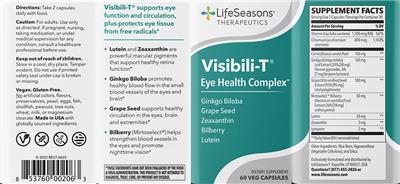
Made in USA with globally sourced ingredients. Visibili-T supports eye function and circulation, plus protects eye tissue from free radicals
Eye health complex
FDA Disclaimer Statement
These statements have not been evaluated by the Food and Drug Administration. This product is not intended to diagnose, treat, cure, or prevent any disease.
Formula
Ginkgo Biloba Grape Seed Zeaxanthin Bilberry Lutein
Lutein and Zeaxanthin are powerful macular pigments that support healthy retina function Ginkgo Biloba promotes healthy blood flow in the small blood vessels of the eyes and brain Grape Seed supports healthy circulation in the eyes, brain and extremities Bilberry (Mirtoselect) helps strengthen blood vessels in the eyes and promote nighttime vision.
FDA Statement of Identity
Dietary Supplement
General Statements
Questions? (877) 455-2826
Is this label outdated? Report a formula or label change and our pharmacy team will review it.
Visibili-T by LifeSeasons Therapeutics label
The label scan from the NIH Dietary Supplement Label Database. Tap to enlarge.
Label images are published by the NIH Dietary Supplement Label Database for the version of this product on file. Always read your actual product label.
View the full label (PDF)The Ingredients in Visibili-T by LifeSeasons Therapeutics
These are the 9 active ingredients this product is made of. Select any to open its full monograph.
Serving size2 Capsule(s) Dosage formCapsule Servings per container30 Amounts shown are per serving.
Most supplement products combine several ingredients, and a medication can interact with the product through any one of them. Each ingredient below shows whether it has known drug interactions.
Vitamin A
Interacts with387 drugs
Vitamin A is an essential nutrient important for vision, skin, immune function, and growth. Most people get enough from a balanced diet, and supplemen...
Vitamin A monograph & interactionsGrape Seed Extract
Interacts with910 drugs
Grapes and grape products like grape seed extract contain antioxidant compounds such as resveratrol and proanthocyanidins that may support heart and b...
Grape Seed Extract monograph & interactions- › Total Polyphenols
Ginkgo Leaf Extract
Interacts with1,266 drugs
Ginkgo is one of the world's most popular herbal supplements, mostly taken to support memory and circulation. The evidence for these uses is mixed and...
Ginkgo Leaf Extract monograph & interactions- › Flavone Glycosides
- › Terpene Lactones
Lycopene
Interacts with122 drugs
Lycopene is a red plant pigment and antioxidant found mainly in tomatoes and other red fruits. Eating lycopene-rich foods is linked with possible hear...
Lycopene monograph & interactionsLutein
No knowninteractions
Lutein is a plant-based antioxidant pigment that concentrates in the eye, and the best evidence suggests it (often combined with zeaxanthin) may help...
Lutein monograph & interactionsZeaxanthin
Interacts with86 drugs
Zeaxanthin is a carotenoid pigment that, along with lutein, concentrates in the macula of the eye and may help support long-term eye health. The stron...
Zeaxanthin monograph & interactionsChromium
Interacts with178 drugs
Chromium is an essential trace mineral involved in how the body handles sugar and fat. Some studies suggest it may modestly help blood sugar control i...
Chromium monograph & interactionsCarrot
No knowninteractions
Carrot is a common food vegetable that is a rich source of beta-carotene (which the body turns into vitamin A) and other nutrients. Eating carrots is...
Carrot monograph & interactionsMirtoSelect
Interacts with275 drugs
Bilberry is a blueberry-like fruit rich in antioxidant plant compounds called anthocyanins, and it has a long history of traditional use for eye healt...
MirtoSelect monograph & interactions- › Anthocyanins
Other (inactive) ingredients: Rice Bran, Hypromellose, Silica. These complete the product’s ingredient list but are not active constituents.
Visibili-T by LifeSeasons Therapeutics Drug Interactions
HelloPharmacist Interaction Report
Visibili-T by LifeSeasons Therapeutics contains several ingredients with documented drug interactions.
The most serious is vitamin A with retinoids (prescription vitamin A derivatives) — taking them together can cause dangerously high vitamin A levels and toxic effects. This is a Major severity interaction.
Read the full breakdown — every affected drug type, severity by severity
Vitamin A also interacts at Moderate severity with blood thinners like warfarin (increased bleeding risk), tetracycline antibiotics (increased risk of a type of brain swelling called pseudotumor cerebri), and hepatotoxic drugs (drugs that can damage the liver, especially at high vitamin A doses). Lycopene, another ingredient here, may theoretically increase bleeding risk with blood thinners and antiplatelet drugs (Moderate).
Chromium interacts with diabetes medications and insulin (Moderate risk of low blood sugar), thyroid hormone replacement like levothyroxine (decreased absorption), and NSAIDs and aspirin at Minor severity (increased chromium levels). Zeaxanthin may have additive effects with diabetes medications (Moderate), theoretically increasing low blood sugar risk.
We could not check three other ingredients — anthocyanins, flavone glycosides, and terpene lactones — because we hold no interaction data for them. Lutein and carrot showed no interactions in our data.
Altogether, these interactions span 582 individual medications. Use the medication checker on this page to see if any of your exact drugs are affected.
Check your own medications below · Editorial policy · How we use AI
Want to check YOUR meds against Visibili-T?
Ask about interactions with your drugs in plain English — “Can I take it with lisinopril?” — and we find you the answer in seconds, ingredient by ingredient.
Go to the checkerIngredients driving the most interactions
Individual Drug Interactions
The ingredients in Visibili-T interact with 1,429 drugs. Click any drug to see the details.
7 of the 9 ingredients in Visibili-T interact with drugs. Each result below shows which ingredient is responsible. Ginkgo Leaf Extract Grape Seed Extract Vitamin A MirtoSelect Chromium Lycopene Zeaxanthin
AcitretinSoriatane
How Acitretin interacts with Visibili-T — through 1 ingredient. Tap an ingredient for the detail:
Vitamin ARetinoids Major
Interaction Summary
Concomitant use of retinoids with vitamin A supplements might produce supratherapeutic vitamin A levels.
Read the full Vitamin A + Acitretin interactionAlitretinoinPanretin
How Alitretinoin interacts with Visibili-T — through 1 ingredient. Tap an ingredient for the detail:
Vitamin ARetinoids Major
Interaction Summary
Concomitant use of retinoids with vitamin A supplements might produce supratherapeutic vitamin A levels.
Read the full Vitamin A + Alitretinoin interactionBexaroteneTargretin
How Bexarotene interacts with Visibili-T — through 3 ingredients. Tap an ingredient for the detail:
Vitamin ARetinoids Major
Interaction Summary
Concomitant use of retinoids with vitamin A supplements might produce supratherapeutic vitamin A levels.
Read the full Vitamin A + Bexarotene interactionGrape Seed ExtractCytochrome P450 3a4 (cyp3a4) Substrates Moderate
Interaction Summary
It is unclear if grape seed extract inhibits or induces CYP3A4; research is conflicting.
Read the full Grape Seed Extract + Bexarotene interactionGinkgo Leaf ExtractCytochrome P450 3a4 (cyp3a4) Substrates Moderate
Interaction Summary
Theoretically, ginkgo might decrease levels of drugs metabolized by CYP3A4.
Read the full Ginkgo Leaf Extract + Bexarotene interactionHalobetasol Propionate,tazaroteneDuobrii
How Halobetasol Propionate,tazarotene interacts with Visibili-T — through 1 ingredient. Tap an ingredient for the detail:
Vitamin ARetinoids Major
Interaction Summary
Concomitant use of retinoids with vitamin A supplements might produce supratherapeutic vitamin A levels.
Read the full Vitamin A + Halobetasol Propionate,tazarotene interactionIsotretinoinAbsorica, Accutane, Amnesteem, Claravis, Roaccutane, Sotret
How Isotretinoin interacts with Visibili-T — through 1 ingredient. Tap an ingredient for the detail:
Vitamin ARetinoids Major
Interaction Summary
Concomitant use of retinoids with vitamin A supplements might produce supratherapeutic vitamin A levels.
Read the full Vitamin A + Isotretinoin interactionTalinololTalinolol
How Talinolol interacts with Visibili-T — through 1 ingredient. Tap an ingredient for the detail:
Ginkgo Leaf ExtractTalinolol Major
Interaction Summary
Taking ginkgo with talinolol seems to increase blood levels of talinolol.
Read the full Ginkgo Leaf Extract + Talinolol interactionTazaroteneArazlo, Avage, Fabior, Tazorotene, Zorac
How Tazarotene interacts with Visibili-T — through 1 ingredient. Tap an ingredient for the detail:
Vitamin ARetinoids Major
Interaction Summary
Concomitant use of retinoids with vitamin A supplements might produce supratherapeutic vitamin A levels.
Read the full Vitamin A + Tazarotene interactionTretinoinAltreno, Renova, Retin-A, Vesanoid
How Tretinoin interacts with Visibili-T — through 1 ingredient. Tap an ingredient for the detail:
Vitamin ARetinoids Major
Interaction Summary
Concomitant use of retinoids with vitamin A supplements might produce supratherapeutic vitamin A levels.
Read the full Vitamin A + Tretinoin interactionTretinoin, Benzoyl PeroxideTwyneo
How Tretinoin, Benzoyl Peroxide interacts with Visibili-T — through 1 ingredient. Tap an ingredient for the detail:
Vitamin ARetinoids Major
Interaction Summary
Concomitant use of retinoids with vitamin A supplements might produce supratherapeutic vitamin A levels.
Read the full Vitamin A + Tretinoin, Benzoyl Peroxide interactionEtretinateTegison
How Etretinate interacts with Visibili-T — through 1 ingredient. Tap an ingredient for the detail:
Vitamin ARetinoids Major
Interaction Summary
Concomitant use of retinoids with vitamin A supplements might produce supratherapeutic vitamin A levels.
Read the full Vitamin A + Etretinate interaction6-mercaptopurinePurinethol
How 6-mercaptopurine interacts with Visibili-T — through 1 ingredient. Tap an ingredient for the detail:
Vitamin AHepatotoxic Drugs Moderate
Interaction Summary
Theoretically, taking high doses of vitamin A in combination with other potentially hepatotoxic drugs might increase the risk of liver disease.
Read the full Vitamin A + 6-mercaptopurine interactionAdo-trastuzumab EmtansineKadcyla
How Ado-trastuzumab Emtansine interacts with Visibili-T — through 2 ingredients. Tap an ingredient for the detail:
Grape Seed ExtractCytochrome P450 3a4 (cyp3a4) Substrates Moderate
Interaction Summary
It is unclear if grape seed extract inhibits or induces CYP3A4; research is conflicting.
Read the full Grape Seed Extract + Ado-trastuzumab Emtansine interactionGinkgo Leaf ExtractCytochrome P450 3a4 (cyp3a4) Substrates Moderate
Interaction Summary
Theoretically, ginkgo might decrease levels of drugs metabolized by CYP3A4.
Read the full Ginkgo Leaf Extract + Ado-trastuzumab Emtansine interactionAbacavir Sulfate, Dolutegravir, LamivudineTriumeq
How Abacavir Sulfate, Dolutegravir, Lamivudine interacts with Visibili-T — through 1 ingredient. Tap an ingredient for the detail:
Vitamin AHepatotoxic Drugs Moderate
Interaction Summary
Theoretically, taking high doses of vitamin A in combination with other potentially hepatotoxic drugs might increase the risk of liver disease.
Read the full Vitamin A + Abacavir Sulfate, Dolutegravir, Lamivudine interactionAbacavir, LamivudineEpzicom
How Abacavir, Lamivudine interacts with Visibili-T — through 1 ingredient. Tap an ingredient for the detail:
Vitamin AHepatotoxic Drugs Moderate
Interaction Summary
Theoretically, taking high doses of vitamin A in combination with other potentially hepatotoxic drugs might increase the risk of liver disease.
Read the full Vitamin A + Abacavir, Lamivudine interactionAbciximabReoPro
How Abciximab interacts with Visibili-T — through 4 ingredients. Tap an ingredient for the detail:
Grape Seed ExtractAnticoagulant/antiplatelet Drugs Moderate
Interaction Summary
Theoretically, grape extracts may have antiplatelet effects and may increase the risk of bleeding if used with anticoagulant or antiplatelet drugs.
Read the full Grape Seed Extract + Abciximab interactionLycopeneAnticoagulant/antiplatelet Drugs Moderate
Interaction Summary
Theoretically, taking lycopene with anticoagulant or antiplatelet drugs might increase the risk of bleeding.
Read the full Lycopene + Abciximab interactionMirtoselectAnticoagulant/antiplatelet Drugs Moderate
Interaction Summary
Theoretically, bilberry fruit extract might increase the risk of bleeding when taken with anticoagulant or antiplatelet drugs.
Read the full Mirtoselect + Abciximab interactionGinkgo Leaf ExtractAnticoagulant/antiplatelet Drugs Moderate
Interaction Summary
Ginkgo has been shown to increase the risk of bleeding in some people when taken with warfarin.
Read the full Ginkgo Leaf Extract + Abciximab interactionAbemaciclibVerzenio
How Abemaciclib interacts with Visibili-T — through 2 ingredients. Tap an ingredient for the detail:
Grape Seed ExtractCytochrome P450 3a4 (cyp3a4) Substrates Moderate
Interaction Summary
It is unclear if grape seed extract inhibits or induces CYP3A4; research is conflicting.
Read the full Grape Seed Extract + Abemaciclib interactionGinkgo Leaf ExtractCytochrome P450 3a4 (cyp3a4) Substrates Moderate
Interaction Summary
Theoretically, ginkgo might decrease levels of drugs metabolized by CYP3A4.
Read the full Ginkgo Leaf Extract + Abemaciclib interactionAbiraterone
How Abiraterone interacts with Visibili-T — through 3 ingredients. Tap an ingredient for the detail:
Ginkgo Leaf ExtractCytochrome P450 3a4 (cyp3a4) Substrates Moderate
Interaction Summary
Theoretically, ginkgo might decrease levels of drugs metabolized by CYP3A4.
Read the full Ginkgo Leaf Extract + Abiraterone interactionGrape Seed ExtractCytochrome P450 3a4 (cyp3a4) Substrates Moderate
Interaction Summary
It is unclear if grape seed extract inhibits or induces CYP3A4; research is conflicting.
Read the full Grape Seed Extract + Abiraterone interactionVitamin AHepatotoxic Drugs Moderate
Interaction Summary
Theoretically, taking high doses of vitamin A in combination with other potentially hepatotoxic drugs might increase the risk of liver disease.
Read the full Vitamin A + Abiraterone interactionAbiraterone AcetateYonsa, Zytiga
How Abiraterone Acetate interacts with Visibili-T — through 3 ingredients. Tap an ingredient for the detail:
Vitamin AHepatotoxic Drugs Moderate
Interaction Summary
Theoretically, taking high doses of vitamin A in combination with other potentially hepatotoxic drugs might increase the risk of liver disease.
Read the full Vitamin A + Abiraterone Acetate interactionGrape Seed ExtractCytochrome P450 3a4 (cyp3a4) Substrates Moderate
Interaction Summary
It is unclear if grape seed extract inhibits or induces CYP3A4; research is conflicting.
Read the full Grape Seed Extract + Abiraterone Acetate interactionGinkgo Leaf ExtractCytochrome P450 3a4 (cyp3a4) Substrates Moderate
Interaction Summary
Theoretically, ginkgo might decrease levels of drugs metabolized by CYP3A4.
Read the full Ginkgo Leaf Extract + Abiraterone Acetate interactionAbrocitinibCibinqo
How Abrocitinib interacts with Visibili-T — through 4 ingredients. Tap an ingredient for the detail:
Ginkgo Leaf ExtractCytochrome P450 2c9 (cyp2c9) Substrates, Cytochrome P450 2c19 (cyp2c19) Substrates +1 Moderate
Interaction Summary
Theoretically, ginkgo might increase levels of drugs metabolized by CYP2C9.
Read the full Ginkgo Leaf Extract + Abrocitinib interactionMirtoselectAnticoagulant/antiplatelet Drugs Moderate
Interaction Summary
Theoretically, bilberry fruit extract might increase the risk of bleeding when taken with anticoagulant or antiplatelet drugs.
Read the full Mirtoselect + Abrocitinib interactionGrape Seed ExtractAnticoagulant/antiplatelet Drugs, Cytochrome P450 2c9 (cyp2c9) Substrates Moderate
Interaction Summary
Theoretically, grape extracts may have antiplatelet effects and may increase the risk of bleeding if used with anticoagulant or antiplatelet drugs.
Read the full Grape Seed Extract + Abrocitinib interactionLycopeneAnticoagulant/antiplatelet Drugs Moderate
Interaction Summary
Theoretically, taking lycopene with anticoagulant or antiplatelet drugs might increase the risk of bleeding.
Read the full Lycopene + Abrocitinib interactionAcalabrutinibCalquence
How Acalabrutinib interacts with Visibili-T — through 2 ingredients. Tap an ingredient for the detail:
Ginkgo Leaf ExtractP-glycoprotein Substrates, Cytochrome P450 3a4 (cyp3a4) Substrates Moderate
Interaction Summary
Theoretically, taking ginkgo with P-glycoprotein substrates might increase the levels and adverse effects of these substrates.
Read the full Ginkgo Leaf Extract + Acalabrutinib interactionGrape Seed ExtractCytochrome P450 3a4 (cyp3a4) Substrates Moderate
Interaction Summary
It is unclear if grape seed extract inhibits or induces CYP3A4; research is conflicting.
Read the full Grape Seed Extract + Acalabrutinib interactionAcarboseGlucobay, Prandase, Precose
How Acarbose interacts with Visibili-T — through 5 ingredients. Tap an ingredient for the detail:
ChromiumAntidiabetes Drugs Moderate
Interaction Summary
Theoretically, chromium may have additive effects with antidiabetic agents and increase the risk of hypoglycemia.
Read the full Chromium + Acarbose interactionVitamin AHepatotoxic Drugs Moderate
Interaction Summary
Theoretically, taking high doses of vitamin A in combination with other potentially hepatotoxic drugs might increase the risk of liver disease.
Read the full Vitamin A + Acarbose interactionZeaxanthinAntidiabetes Drugs Moderate
Interaction Summary
Theoretically, taking zeaxanthin with antidiabetes drugs might increase the risk of hypoglycemia.
Read the full Zeaxanthin + Acarbose interactionGinkgo Leaf ExtractAntidiabetes Drugs Moderate
Interaction Summary
Theoretically, taking ginkgo with antidiabetes drugs might alter the response to antidiabetes drugs.
Read the full Ginkgo Leaf Extract + Acarbose interactionMirtoselectAntidiabetes Drugs Moderate
Interaction Summary
Theoretically, bilberry leaf or fruit extract may increase the risk of hypoglycemia when taken with antidiabetes drugs.
Read the full Mirtoselect + Acarbose interactionAcebutololRhotral, Sectral
How Acebutolol interacts with Visibili-T — through 1 ingredient. Tap an ingredient for the detail:
Vitamin AHepatotoxic Drugs Moderate
Interaction Summary
Theoretically, taking high doses of vitamin A in combination with other potentially hepatotoxic drugs might increase the risk of liver disease.
Read the full Vitamin A + Acebutolol interactionAcenocoumarolSintrom
How Acenocoumarol interacts with Visibili-T — through 4 ingredients. Tap an ingredient for the detail:
LycopeneAnticoagulant/antiplatelet Drugs Moderate
Interaction Summary
Theoretically, taking lycopene with anticoagulant or antiplatelet drugs might increase the risk of bleeding.
Read the full Lycopene + Acenocoumarol interactionGrape Seed ExtractAnticoagulant/antiplatelet Drugs Moderate
Interaction Summary
Theoretically, grape extracts may have antiplatelet effects and may increase the risk of bleeding if used with anticoagulant or antiplatelet drugs.
Read the full Grape Seed Extract + Acenocoumarol interactionMirtoselectAnticoagulant/antiplatelet Drugs Moderate
Interaction Summary
Theoretically, bilberry fruit extract might increase the risk of bleeding when taken with anticoagulant or antiplatelet drugs.
Read the full Mirtoselect + Acenocoumarol interactionGinkgo Leaf ExtractAnticoagulant/antiplatelet Drugs Moderate
Interaction Summary
Ginkgo has been shown to increase the risk of bleeding in some people when taken with warfarin.
Read the full Ginkgo Leaf Extract + Acenocoumarol interactionAcetaminophenChildren's Tylenol, Children's Tylenol Meltaways, Tylenol, Tylenol Ex Strength
How Acetaminophen interacts with Visibili-T — through 4 ingredients. Tap an ingredient for the detail:
Grape Seed ExtractCytochrome P450 1a2 (cyp1a2) Substrates, Cytochrome P450 2e1 (cyp2e1) Substrates Moderate
Interaction Summary
Theoretically, grape juice might reduce the levels of CYP1A2 substrates.
Read the full Grape Seed Extract + Acetaminophen interactionVitamin AHepatotoxic Drugs Moderate
Interaction Summary
Theoretically, taking high doses of vitamin A in combination with other potentially hepatotoxic drugs might increase the risk of liver disease.
Read the full Vitamin A + Acetaminophen interactionMirtoselectCytochrome P450 2e1 (cyp2e1) Substrates Moderate
Interaction Summary
Theoretically, bilberry fruit extract might decrease levels of drugs metabolized by CYP2E1.
Read the full Mirtoselect + Acetaminophen interactionGinkgo Leaf ExtractCytochrome P450 1a2 (cyp1a2) Substrates Moderate
Interaction Summary
Theoretically, ginkgo might increase levels of drugs metabolized by CYP1A2.
Read the full Ginkgo Leaf Extract + Acetaminophen interactionAcetaminophen, AspirinGemnisyn
How Acetaminophen, Aspirin interacts with Visibili-T — through 6 ingredients. Tap an ingredient for the detail:
Ginkgo Leaf ExtractCytochrome P450 1a2 (cyp1a2) Substrates, Anticoagulant/antiplatelet Drugs Moderate
Interaction Summary
Theoretically, ginkgo might increase levels of drugs metabolized by CYP1A2.
Read the full Ginkgo Leaf Extract + Acetaminophen, Aspirin interactionMirtoselectCytochrome P450 2e1 (cyp2e1) Substrates, Anticoagulant/antiplatelet Drugs Moderate
Interaction Summary
Theoretically, bilberry fruit extract might decrease levels of drugs metabolized by CYP2E1.
Read the full Mirtoselect + Acetaminophen, Aspirin interactionGrape Seed ExtractCytochrome P450 1a2 (cyp1a2) Substrates, Cytochrome P450 2e1 (cyp2e1) Substrates +1 Moderate
Interaction Summary
Theoretically, grape juice might reduce the levels of CYP1A2 substrates.
Read the full Grape Seed Extract + Acetaminophen, Aspirin interactionVitamin AHepatotoxic Drugs Moderate
Interaction Summary
Theoretically, taking high doses of vitamin A in combination with other potentially hepatotoxic drugs might increase the risk of liver disease.
Read the full Vitamin A + Acetaminophen, Aspirin interactionLycopeneAnticoagulant/antiplatelet Drugs Moderate
Interaction Summary
Theoretically, taking lycopene with anticoagulant or antiplatelet drugs might increase the risk of bleeding.
Read the full Lycopene + Acetaminophen, Aspirin interactionChromiumAspirin, Nonsteroidal Anti-inflammatory Drugs (nsaids) Minor
Interaction Summary
Theoretically, aspirin might increase chromium absorption.
Read the full Chromium + Acetaminophen, Aspirin interactionAcetaminophen, Aspirin, CaffeineExcedrin, Excedrin Extra Strength, Excedrin Migraine
How Acetaminophen, Aspirin, Caffeine interacts with Visibili-T — through 6 ingredients. Tap an ingredient for the detail:
Grape Seed ExtractCytochrome P450 2e1 (cyp2e1) Substrates, Anticoagulant/antiplatelet Drugs +2 Moderate
Interaction Summary
Theoretically, grape seed extract might increase the levels of CYP2E1 substrates.
Read the full Grape Seed Extract + Acetaminophen, Aspirin, Caffeine interactionLycopeneAnticoagulant/antiplatelet Drugs Moderate
Interaction Summary
Theoretically, taking lycopene with anticoagulant or antiplatelet drugs might increase the risk of bleeding.
Read the full Lycopene + Acetaminophen, Aspirin, Caffeine interactionVitamin AHepatotoxic Drugs Moderate
Interaction Summary
Theoretically, taking high doses of vitamin A in combination with other potentially hepatotoxic drugs might increase the risk of liver disease.
Read the full Vitamin A + Acetaminophen, Aspirin, Caffeine interactionMirtoselectAnticoagulant/antiplatelet Drugs, Cytochrome P450 2e1 (cyp2e1) Substrates Moderate
Interaction Summary
Theoretically, bilberry fruit extract might increase the risk of bleeding when taken with anticoagulant or antiplatelet drugs.
Read the full Mirtoselect + Acetaminophen, Aspirin, Caffeine interactionGinkgo Leaf ExtractCytochrome P450 1a2 (cyp1a2) Substrates, Cytochrome P450 3a4 (cyp3a4) Substrates +1 Moderate
Interaction Summary
Theoretically, ginkgo might increase levels of drugs metabolized by CYP1A2.
Read the full Ginkgo Leaf Extract + Acetaminophen, Aspirin, Caffeine interactionChromiumNonsteroidal Anti-inflammatory Drugs (nsaids), Aspirin Minor
Interaction Summary
NSAIDs might increase chromium levels in the body.
Read the full Chromium + Acetaminophen, Aspirin, Caffeine interactionAcetaminophen, Brompheniramine, PhenylpropanolamineDimetapp Cold and Flu
How Acetaminophen, Brompheniramine, Phenylpropanolamine interacts with Visibili-T — through 4 ingredients. Tap an ingredient for the detail:
Grape Seed ExtractCytochrome P450 1a2 (cyp1a2) Substrates, Cytochrome P450 2e1 (cyp2e1) Substrates Moderate
Interaction Summary
Theoretically, grape juice might reduce the levels of CYP1A2 substrates.
Read the full Grape Seed Extract + Acetaminophen, Brompheniramine, Phenylpropanolamine interactionVitamin AHepatotoxic Drugs Moderate
Interaction Summary
Theoretically, taking high doses of vitamin A in combination with other potentially hepatotoxic drugs might increase the risk of liver disease.
Read the full Vitamin A + Acetaminophen, Brompheniramine, Phenylpropanolamine interactionGinkgo Leaf ExtractCytochrome P450 1a2 (cyp1a2) Substrates, Seizure Threshold Lowering Drugs Moderate
Interaction Summary
Theoretically, ginkgo might increase levels of drugs metabolized by CYP1A2.
Read the full Ginkgo Leaf Extract + Acetaminophen, Brompheniramine, Phenylpropanolamine interactionMirtoselectCytochrome P450 2e1 (cyp2e1) Substrates Moderate
Interaction Summary
Theoretically, bilberry fruit extract might decrease levels of drugs metabolized by CYP2E1.
Read the full Mirtoselect + Acetaminophen, Brompheniramine, Phenylpropanolamine interactionAcetaminophen, ButalbitalAxocet, Bancap, Bucet, Butex Forte, Esgic CF, Orbivan CF +5 more
How Acetaminophen, Butalbital interacts with Visibili-T — through 4 ingredients. Tap an ingredient for the detail:
MirtoselectCytochrome P450 2e1 (cyp2e1) Substrates Moderate
Interaction Summary
Theoretically, bilberry fruit extract might decrease levels of drugs metabolized by CYP2E1.
Read the full Mirtoselect + Acetaminophen, Butalbital interactionGinkgo Leaf ExtractCytochrome P450 1a2 (cyp1a2) Substrates Moderate
Interaction Summary
Theoretically, ginkgo might increase levels of drugs metabolized by CYP1A2.
Read the full Ginkgo Leaf Extract + Acetaminophen, Butalbital interactionGrape Seed ExtractCytochrome P450 1a2 (cyp1a2) Substrates, Cytochrome P450 2e1 (cyp2e1) Substrates Moderate
Interaction Summary
Theoretically, grape juice might reduce the levels of CYP1A2 substrates.
Read the full Grape Seed Extract + Acetaminophen, Butalbital interactionVitamin AHepatotoxic Drugs Moderate
Interaction Summary
Theoretically, taking high doses of vitamin A in combination with other potentially hepatotoxic drugs might increase the risk of liver disease.
Read the full Vitamin A + Acetaminophen, Butalbital interactionAcetaminophen, Butalbital, CaffeineEsgic, Esgic Plus, Fiogesic, Fioricet, Repan, Tecnal +1 more
How Acetaminophen, Butalbital, Caffeine interacts with Visibili-T — through 4 ingredients. Tap an ingredient for the detail:
Grape Seed ExtractCytochrome P450 2e1 (cyp2e1) Substrates, Cytochrome P450 1a2 (cyp1a2) Substrates +1 Moderate
Interaction Summary
Theoretically, grape seed extract might increase the levels of CYP2E1 substrates.
Read the full Grape Seed Extract + Acetaminophen, Butalbital, Caffeine interactionVitamin AHepatotoxic Drugs Moderate
Interaction Summary
Theoretically, taking high doses of vitamin A in combination with other potentially hepatotoxic drugs might increase the risk of liver disease.
Read the full Vitamin A + Acetaminophen, Butalbital, Caffeine interactionGinkgo Leaf ExtractCytochrome P450 1a2 (cyp1a2) Substrates, Cytochrome P450 3a4 (cyp3a4) Substrates Moderate
Interaction Summary
Theoretically, ginkgo might increase levels of drugs metabolized by CYP1A2.
Read the full Ginkgo Leaf Extract + Acetaminophen, Butalbital, Caffeine interactionMirtoselectCytochrome P450 2e1 (cyp2e1) Substrates Moderate
Interaction Summary
Theoretically, bilberry fruit extract might decrease levels of drugs metabolized by CYP2E1.
Read the full Mirtoselect + Acetaminophen, Butalbital, Caffeine interactionAcetaminophen, Butalbital, Caffeine, CodeineEsgic with Codeine, Fioricet w/ Codeine
How Acetaminophen, Butalbital, Caffeine, Codeine interacts with Visibili-T — through 4 ingredients. Tap an ingredient for the detail:
Grape Seed ExtractCytochrome P450 3a4 (cyp3a4) Substrates, Cytochrome P450 1a2 (cyp1a2) Substrates +2 Moderate
Interaction Summary
It is unclear if grape seed extract inhibits or induces CYP3A4; research is conflicting.
Read the full Grape Seed Extract + Acetaminophen, Butalbital, Caffeine, Codeine interactionVitamin AHepatotoxic Drugs Moderate
Interaction Summary
Theoretically, taking high doses of vitamin A in combination with other potentially hepatotoxic drugs might increase the risk of liver disease.
Read the full Vitamin A + Acetaminophen, Butalbital, Caffeine, Codeine interactionMirtoselectCytochrome P450 2e1 (cyp2e1) Substrates Moderate
Interaction Summary
Theoretically, bilberry fruit extract might decrease levels of drugs metabolized by CYP2E1.
Read the full Mirtoselect + Acetaminophen, Butalbital, Caffeine, Codeine interactionGinkgo Leaf ExtractSeizure Threshold Lowering Drugs, Cytochrome P450 1a2 (cyp1a2) Substrates +1 Moderate
Interaction Summary
Theoretically, taking ginkgo with drugs that lower the seizure threshold might increase the risk for convulsions.
Read the full Ginkgo Leaf Extract + Acetaminophen, Butalbital, Caffeine, Codeine interactionEach ingredient & the kinds of drugs it affects
For each ingredient in Visibili-T with known interactions, here are the types of medications they can affect. Open any type for the detail — or search your exact drug in the checker above.
Ginkgo Leaf Extract
Talinolol
Taking ginkgo with talinolol seems to increase blood levels of talinolol.
There is some evidence that using ginkgo leaf extract 120 mg orally three times daily for 14 days can increase levels of talinolol by 36% in healthy male individuals. However, single doses of ginkgo do not seem to affect talinolol pharmacokinetics.
Alprazolam (Xanax)
Theoretically, ginkgo might decrease the levels and clinical effects of alprazolam.
In clinical research, ginkgo extract (Ginkgold) 120 mg twice daily seems to decrease alprazolam levels by about 17%. However, ginkgo does not appear to decrease the elimination half-life of alprazolam. This suggests that ginkgo is more likely to decrease absorption of alprazolam rather than induce hepatic metabolism of alprazolam.
Anticoagulant/Antiplatelet Drugs
Ginkgo has been shown to increase the risk of bleeding in some people when taken with warfarin. Theoretically, ginkgo might increase the risk of bleeding if used with other anticoagulant or antiplatelet drugs.
Several pharmacodynamic studies suggest that ginkgo inhibits platelet aggregation. It is thought that the ginkgo constituent, ginkgolide B, displaces platelet-activating factor (PAF) from its binding sites, decreasing blood coagulation. Several case reports have documented serious bleeding events in patients taking ginkgo. However, population and clinical studies have produced mixed results. Some evidence shows that short-term use of ginkgo leaf does not significantly reduce platelet aggregation and blood clotting. A study in healthy males who took a specific ginkgo leaf extract (EGb 761) 160 mg twice daily for 7 days found no change in prothrombin time. An analysis of a large medical record database suggests that ginkgo increases the risk of a bleeding adverse event by 38% when taken concurrently with warfarin. It has been suggested that ginkgo has to be taken for at least 2-3 weeks to have a significant effect on platelet aggregation. However, a meta-analysis of 18 studies using standardized ginkgo extracts, 80-480 mg daily for up to 32 weeks, did not find a significant effect on platelet aggregation, fibrinogen concentration, or PT/aPTT. In addition, a single dose of ginkgo plus clopidogrel or ticlopidine does not seem to significantly increase bleeding time or platelet aggregation. Also, taking ginkgo leaf extract daily for 8 days in conjunction with rivaroxaban does not affect anti-factor Xa activity; however, this study did not evaluate bleeding time.
Anticonvulsants
Theoretically, ginkgo might reduce the effectiveness of anticonvulsants.
Ginkgo seeds contain ginkgotoxin. Large amounts of ginkgotoxin can cause neurotoxicity and seizure. Ginkgotoxin is present in much larger amounts in ginkgo seeds than leaves. Ginkgo leaf extract contains trace amounts of ginkgotoxin. The amount of ginkgotoxin in ginkgo leaf and leaf extract seems unlikely to cause toxicity. However, there are anecdotal reports of seizure occurring after use of ginkgo leaf both in patients without a history of seizure disorder and in those with previously well-controlled epilepsy.
Antidiabetes Drugs
Theoretically, taking ginkgo with antidiabetes drugs might alter the response to antidiabetes drugs.
Ginkgo leaf extract seems to alter insulin secretion and metabolism, and might affect blood glucose levels in people with type 2 diabetes. The effect of ginkgo seems to differ depending on the insulin and treatment status of the patient. In diet-controlled diabetes patients with hyperinsulinemia, taking ginkgo does not seem to significantly affect insulin or blood glucose levels. In patients with hyperinsulinemia who are treated with oral hypoglycemic agents, taking ginkgo seems to decrease insulin levels and increase blood glucose following an oral glucose tolerance test. Researchers speculate that this could be due to ginkgo-enhanced hepatic metabolism of insulin. In patients with pancreatic exhaustion, taking ginkgo seems to stimulate pancreatic beta-cells, resulting in increased insulin and C-peptide levels, but with no significant change in blood glucose levels in response to an oral glucose tolerance test.
Atorvastatin (Lipitor)
Theoretically, ginkgo might decrease the levels and clinical effects of atorvastatin.
In humans, intake of ginkgo extract appears to increase atorvastatin clearance, reducing the area under the curve of atorvastatin by 10% to 14% and the maximum concentration by 29%. However, this interaction does not appear to affect cholesterol synthesis and absorption. Further, a model in rats with hyperlipidemia suggests that administering ginkgo extract does not impact blood levels of atorvastatin and leads to lower total cholesterol, low-density lipoprotein cholesterol, and triglycerides when compared with rats given atorvastatin alone.
Cytochrome P450 1A2 (Cyp1A2) Substrates
Theoretically, ginkgo might increase levels of drugs metabolized by CYP1A2.
Laboratory research suggests that ginkgo leaf extract can mildly inhibit CYP1A2 enzymes. However, clinical research suggests ginkgo might not affect CYP1A2. Until more is known, use ginkgo cautiously in patients taking drugs metabolized by these enzymes.
Cytochrome P450 2C19 (Cyp2C19) Substrates
Theoretically, ginkgo might decrease levels of drugs metabolized by CYP2C19.
Some clinical research shows that a specific ginkgo leaf extract (Remembrance, Herbs Product LTD) 140 mg twice daily can induce CYP2C19 enzymes and potentially decrease levels of drugs metabolized by these enzymes. However, other clinical research shows that taking ginkgo 120 mg twice daily for 12 days has no effect on levels of drugs metabolized by CYP2C19.
Cytochrome P450 2C9 (Cyp2C9) Substrates
Theoretically, ginkgo might increase levels of drugs metabolized by CYP2C9.
In vitro, a specific standardized extract of ginkgo leaf (EGb 761) inhibits CYP2C9 activity . The terpenoid (ginkgolides) and flavonoid (quercetin, kaempferol, etc.) constituents seem to be responsible for this effect. Most ginkgo extracts contain some amount of these constituents. Therefore, other ginkgo leaf extracts might also inhibit the CYP2C9 enzyme. However, clinical research suggests that ginkgo might not have a significant effect on CYP2C9 in humans. Ginkgo does not seem to significantly affect the pharmacokinetics of CYP2C9 substrates diclofenac or tolbutamide.
Cytochrome P450 3A4 (Cyp3A4) Substrates
Theoretically, ginkgo might decrease levels of drugs metabolized by CYP3A4.
There is conflicting evidence about whether ginkgo induces or inhibits CYP3A4. Ginkgo does not appear to affect hepatic CYP3A4. However, it is not known if ginkgo affects intestinal CYP3A4. Preliminary clinical research suggests that taking ginkgo does not significantly affect levels of donepezil, lopinavir, or ritonavir, which are all CYP3A4 substrates. Other clinical research also suggests ginkgo does not significantly affect CYP3A4 activity. However, there are two case reports of decreased efavirenz concentrations and increased viral load in patients taking ginkgo. It is suspected that terpenoids from the ginkgo extract reduced drug levels by inducing cytochrome P450 3A4 (CYP3A4).
Efavirenz (Sustiva)
Theoretically, ginkgo might decrease the levels and clinical effects of efavirenz.
There are two case reports of decreased efavirenz concentrations and increased viral load in patients taking ginkgo. In one case, an HIV-positive male experienced over a 50% decrease in efavirenz levels over the course of 14 months while taking ginkgo extract. HIV-1 RNA copies also increased substantially, from less than 50 to more than 1500. It is suspected that terpenoids from the ginkgo extract reduced drug levels by inducing cytochrome P450 3A4 (CYP3A4). In another case report, a patient stable on antiviral therapy including efavirenz for 10 years, had an increase in viral load from <50 copies/mL to 1350 copies/mL after 2 months of taking a combination of supplements including ginkgo. After stopping ginkgo, the viral load was again controlled with the same antiviral therapy regimen.
Ibuprofen (Advil, Others)
Theoretically, ginkgo might increase the risk of bleeding when used with ibuprofen.
Ginkgo might have antiplatelet effects and has been associated with several case reports of spontaneous bleeding. In one case, a 71-year-old male had taken a specific ginkgo extract (Gingium, Biocur) 40 mg twice daily for 2.5 years. About 4 weeks after starting ibuprofen 600 mg daily he experienced a fatal intracerebral hemorrhage. However, the antiplatelet effects of ginkgo have been questioned. A meta-analysis and other studies have not found a significant antiplatelet effect with standardized ginkgo extracts, 80 mg to 480 mg taken daily for up to 32 weeks.
P-Glycoprotein Substrates
Theoretically, taking ginkgo with P-glycoprotein substrates might increase the levels and adverse effects of these substrates.
A small clinical study in healthy volunteers shows that using ginkgo leaf extract 120 mg orally three times daily for 14 days can increase levels of the P-glycoprotein substrate, talinolol, by 36% in healthy male individuals. However, single doses of ginkgo do not have the same effect.
Risperidone (Risperdal)
Theoretically, taking ginkgo with risperidone might increase the levels and adverse effects of risperidone.
A single case of priapism has been reported for a 26-year-old male with schizophrenia who used risperidone 3 mg daily along with ginkgo extract 160 mg daily. Risperidone is metabolized by cytochrome P450 (CYP) 2D6 and CYP3A4. CYP3A4 activity might be affected by ginkgo. Theoretically, ginkgo may inhibit the metabolism of risperidone and increase the risk of adverse effects.
Rosiglitazone (Avandia)
Theoretically, ginkgo might decrease the levels and clinical effects of rosiglitazone.
Animal research shows that ginkgo leaf extract orally 100 or 200 mg/kg daily for 10 days alters the pharmacodynamics of rosiglitazone in a dose-dependent manner. The 100 mg/kg and 200 mg/kg doses reduce the area under the concentration time curve (AUC) of rosiglitazone by 39% and 52%, respectively, and the half-life by 28% and 39%, respectively. It is hypothesized that these changes may be due to induction of cytochrome P450 2C8 by ginkgo.
Seizure Threshold Lowering Drugs
Theoretically, taking ginkgo with drugs that lower the seizure threshold might increase the risk for convulsions.
Ginkgo seeds contain ginkgotoxin. Large amounts of ginkgotoxin can cause neurotoxicity and seizure. Ginkgotoxin is present in much larger amounts in ginkgo seeds than leaves. Ginkgo leaf extract contains trace amounts of ginkgotoxin. The amount of ginkgotoxin in ginkgo leaf and leaf extract seems unlikely to cause toxicity. However, there are anecdotal reports of seizure occurring after use of ginkgo leaf both in patients without a history of seizure disorder and in those with previously well-controlled epilepsy.
Simvastatin (Zocor)
Theoretically, ginkgo might decrease the levels and clinical effects of simvastatin.
Clinical research shows that taking ginkgo extract can reduce the area under the curve and maximum concentration of simvastatin by 32% to 39%. However, ginkgo extract does not seem to affect the cholesterol-lowering ability of simvastatin.
Sofosbuvir (Sovaldi)
Theoretically, ginkgo might increase the levels and clinical effects of sofosbuvir.
Animal research in rats shows that giving a ginkgo extract 25 mg/kg orally daily for 14 days increases the area under the concentration time curve (AUC) after a single sofosbuvir dose of 40 mg/kg by 11%, increases the half-life by 60%, and increases the plasma concentration at 4 hours by 38%. This interaction appears to be related to the inhibition of intestinal P-glycoprotein by ginkgo.
Tacrolimus (Prograf)
Theoretically, ginkgo might increase the blood levels of tacrolimus.
In vitro evidence suggests that certain biflavonoids in ginkgo leaves (i.e. amentoflavone, ginkgetin, bilobetin) may inhibit the metabolism of tacrolimus by up to 50%. This interaction appears to be time-dependent and due to inhibition of cytochrome P450 (CYP) 3A4 by these bioflavonoids. In rats given tacrolimus 1 mg/kg orally, amentoflavone was shown to increase the area under the concentration time curve (AUC) of tacrolimus by 3.8-fold.
Trazodone (Desyrel)
Theoretically, ginkgo might increase the levels and clinical effects of trazodone.
In a case report, an Alzheimer patient taking trazodone 20 mg twice daily and ginkgo leaf extract 80 mg twice daily for four doses became comatose. The coma was reversed by administration of flumazenil (Romazicon). Coma might have been induced by excessive GABA-ergic activity. Ginkgo flavonoids are thought to have GABA-ergic activity and act directly on benzodiazepine receptors. Ginkgo might also increase metabolism of trazodone to active GABA-ergic metabolites, possibly by inducing cytochrome P450 3A4 (CYP3A4) metabolism.
Warfarin (Coumadin)
Ginkgo has been shown to increase the risk of bleeding in some people when taken with warfarin.
Several pharmacodynamic studies suggest that ginkgo inhibits platelet aggregation. It is thought that the ginkgo constituent, ginkgolide B, displaces platelet-activating factor (PAF) from its binding sites, decreasing blood coagulation. Several case reports have documented serious bleeding events in patients taking ginkgo. Information from a medical database suggests that when taken concurrently with warfarin, ginkgo increases the risk of a bleeding adverse event by 38%. There is also some evidence that ginkgo leaf extract can inhibit cytochrome P450 2C9, an enzyme that metabolizes warfarin. This could result in increased warfarin levels. However, population and clinical research has produced mixed results. Clinical research in healthy people suggests that ginkgo has no effect on INR, or the pharmacokinetics or pharmacodynamics of warfarin. A meta-analysis of 18 studies using standardized ginkgo extracts, 80 mg to 480 mg daily for up to 32 weeks, did not find a significant effect on platelet aggregation, fibrinogen concentration, or PT/aPTT. There is also some preliminary clinical research that suggests ginkgo might not significantly increase the effects of warfarin in patients that have a stable INR.
Nifedipine (Procardia)
Theoretically, taking ginkgo with oral, but not intravenous, nifedipine might increase levels and adverse effects of nifedipine.
Animal research and some clinical evidence suggests that taking ginkgo leaf extract orally in combination with oral nifedipine might increase nifedipine levels and cause increased side effects, such as headaches, dizziness, and hot flushes. However, taking ginkgo orally does not seem to affect the pharmacokinetics of intravenous nifedipine.
Omeprazole (Prilosec)
Theoretically, taking ginkgo with omeprazole might decrease the levels and clinical effects of omeprazole.
Clinical research shows that a specific ginkgo leaf extract (Remembrance, Herbs Product LTD) 140 mg twice daily can induce cytochrome P450 (CYP) 2C19 enzymes and decrease levels of omeprazole by about 27% to 42%.
Grape Seed Extract
Anticoagulant/Antiplatelet Drugs
Theoretically, grape extracts may have antiplatelet effects and may increase the risk of bleeding if used with anticoagulant or antiplatelet drugs.
In vitro evidence suggests that grape extracts might decrease platelet aggregation.
Cyclosporine (Neoral, Sandimmune)
Ingesting grape juice with cyclosporine can reduce cyclosporine absorption.
A small pharmacokinetic study in healthy young adults shows that intake of purple grape juice 200 mL along with cyclosporine can decrease the absorption of cyclosporine by up to 30% when compared with water. Separate doses of grape juice and cyclosporine by at least 2 hours to avoid this interaction.
Cytochrome P450 1A2 (Cyp1A2) Substrates
Theoretically, grape juice might reduce the levels of CYP1A2 substrates.
A small pharmacokinetic study in healthy adults shows that ingestion of 200 mL of grape juice decreases phenacetin plasma levels. This is thought to be due to induction of CYP1A2.
Cytochrome P450 2D6 (Cyp2D6) Substrates
Theoretically, grape seed extract may increase the levels of CYP2D6 substrates.
In vitro evidence suggests that grape seed extract might inhibit CYP2D6 enzymes. However, this interaction has not been reported in humans.
Cytochrome P450 2E1 (Cyp2E1) Substrates
Theoretically, grape seed extract might increase the levels of CYP2E1 substrates.
In vitro and animal research suggests that grape seed proanthocyanidin extract inhibits CYP2E1 enzymes. However, this interaction has not been reported in humans.
Cytochrome P450 3A4 (Cyp3A4) Substrates
It is unclear if grape seed extract inhibits or induces CYP3A4; research is conflicting.
In vitro evidence suggests that grape seed extract might inhibit CYP3A4 enzymes. However, evidence from animal research shows that grape seed extract may induce CYP3A4 in the liver. So far, these interactions have not been reported in humans.
Midazolam (Versed)
Theoretically, long-term intake of grape seed extract might decrease the effects of midazolam.
Animal research shows that subchronic ingestions of grape seed extract can increase the elimination of intravenous midazolam by increasing hepatic CYP3A4 activity. Single doses of grape seed extract do not appear to affect midazolam elimination.
Phenacetin
Grape juice might decrease phenacetin absorption.
A small pharmacokinetic study in healthy adults shows that ingestion of 200 mL of grape juice decreases phenacetin plasma levels. This is thought to be due to induction of cytochrome P450 1A2 (CYP1A2).
Cytochrome P450 2C9 (Cyp2C9) Substrates
It is unclear if grape juice or grape seed extract inhibits CYP2C9; research is conflicting.
In vitro evidence shows that grape seed extract or grape juice might inhibit CYP2C9 enzymes. However, a small pharmacokinetic study in healthy adults shows that drinking 8 ounces of grape juice once does not affect the clearance of flurbiprofen, a probe-drug for CYP2C9 metabolism. The effects of continued grape juice consumption are unclear.
Vitamin A
Retinoids
Concomitant use of retinoids with vitamin A supplements might produce supratherapeutic vitamin A levels.
Retinoids, which are vitamin A derivatives, could have additive toxic effects when taken with vitamin A supplements.
Hepatotoxic Drugs
Theoretically, taking high doses of vitamin A in combination with other potentially hepatotoxic drugs might increase the risk of liver disease.
The tolerable upper intake level (UL) is the highest level of intake that is likely to pose no risk of adverse effects. Doses of vitamin A above the UL can cause hepatotoxicity, ranging from elevated liver enzymes to liver failure.
Tetracycline Antibiotics
Theoretically, taking tetracycline antibiotics with high doses of vitamin A can increase the risk of pseudotumor cerebri.
Benign intracranial hypertension (pseudotumor cerebri) can occur with tetracyclines and with acute or chronic vitamin A toxicity. Case reports suggest that taking tetracyclines and vitamin A concurrently can increase the risk of this condition. Avoid high doses of vitamin A in people taking tetracyclines chronically.
Warfarin (Coumadin)
Theoretically, high doses of vitamin A could increase the risk of bleeding with warfarin.
Vitamin A toxicity is associated with hemorrhage and hypoprothrombinemia, possibly due to vitamin K antagonism. Advise patients taking warfarin to avoid doses of vitamin A above the tolerable upper intake level of 10,000 IU/day for adults.
MirtoSelect
Anticoagulant/Antiplatelet Drugs
Theoretically, bilberry fruit extract might increase the risk of bleeding when taken with anticoagulant or antiplatelet drugs.
In vitro, animal, and clinical research suggest that anthocyanidin extracts from bilberry can inhibit platelet aggregation.
Antidiabetes Drugs
Theoretically, bilberry leaf or fruit extract may increase the risk of hypoglycemia when taken with antidiabetes drugs.
Animal research suggests that bilberry leaf extract might have blood glucose-lowering activity. Also, one small clinical trial in patients with type 2 diabetes shows that taking bilberry fruit extract 470 mg as a single dose prior to an oral glucose tolerance test lowers plasma glucose levels when compared with placebo.
Cytochrome P450 2E1 (Cyp2E1) Substrates
Theoretically, bilberry fruit extract might decrease levels of drugs metabolized by CYP2E1.
Animal research shows that exposure to small concentrations of bilberry extract in drinking water for around one month increased CYP2E1 activity by 31%. However, exposure over a 2-month period did not increase CYP2E1 activity. This effect has not been reported in humans.
Erlotinib (Tarceva)
Theoretically, bilberry fruit extract might reduce the efficacy of erlotinib.
In vitro research suggests that bilberry fruit extract and its constituents, delphinidin and delphinidin-3-O-glucoside, inhibit the activity of erlotinib. This interaction has not been reported in humans.
Chromium
Antidiabetes Drugs
Theoretically, chromium may have additive effects with antidiabetic agents and increase the risk of hypoglycemia.
Some research shows that taking chromium might lower blood glucose levels, especially in patients with poorly controlled type 2 diabetes.
Insulin
Theoretically, concomitant use of chromium and insulin might increase the risk of hypoglycemia.
In clinical research, chromium has been shown to increase insulin sensitivity,
Levothyroxine (Synthroid, Others)
Chromium might bind levothyroxine in the intestinal tract and decrease levothyroxine absorption.
Clinical research in healthy volunteers shows that taking chromium picolinate 1000 mcg with levothyroxine 1 mg decreases serum levels of levothyroxine by 17% when compared to taking levothyroxine alone. Advise patients to take levothyroxine at least 30 minutes before or 3-4 hours after taking chromium.
Aspirin
Theoretically, aspirin might increase chromium absorption.
Animal research suggests that aspirin may increase chromium absorption and chromium levels in the blood.
Nonsteroidal Anti-Inflammatory Drugs (Nsaids)
NSAIDs might increase chromium levels in the body.
Drugs that are prostaglandin inhibitors, such as NSAIDs, seem to increase chromium absorption and retention.
Lycopene
Anticoagulant/Antiplatelet Drugs
Theoretically, taking lycopene with anticoagulant or antiplatelet drugs might increase the risk of bleeding.
In vitro research shows that lycopene has antiplatelet effects.
Zeaxanthin
Antidiabetes Drugs
Theoretically, taking zeaxanthin with antidiabetes drugs might increase the risk of hypoglycemia.
In an animal diabetic model, zeaxanthin has hypoglycemic effects. However, population research has found that increasing intake of dietary zeaxanthin plus lutein does not decrease the risk of developing type 2 diabetes.
Brand information
Manufacturer and brand details for Visibili-T, from the product label.
LifeSeasons Therapeutics
See all LifeSeasons Therapeutics products- Name
- LifeSeasons
- City
- Kaysville
- State
- UT
- ZipCode
- 84037
- Phone Number
- (877) 455-2826
- Web Address
- www.lifeseasons.com
Visibili-T by LifeSeasons Therapeutics: Common Questions
Does Visibili-T by LifeSeasons Therapeutics interact with any medications?
How can one product interact with so many drugs?
Where does this information come from?
Can I take this if I'm pregnant?
Can I take this while breastfeeding?
What is lutein used for?
Will this help my dry eyes or blurred vision?
Is it safe to take this long-term?
What are the side effects?
Written and reviewed by the HelloPharmacist editorial staff. Our editorial policy
Not sure if Visibili-T is safe with your meds?
Our pharmacists answer your medication & supplement questions — free.
Label information is sourced from the NIH Dietary Supplement Label Database and reflects the product version on file; always read your actual product label. This page is for education only and is not a substitute for professional medical advice. Confirm with your pharmacist or doctor before combining supplements and medications.
The Full Monographs Behind Visibili-T’s Ingredients
Every ingredient we hold a full HelloPharmacist monograph for — uses, evidence, safety, and the complete interaction list.
Vitamin A
Interacts with 387 drugsVitamin A is an essential nutrient important for vision, skin, immune function, and growth. Most people get enough from a balanced diet, and supplements are mainly useful for correcting a tr...
Read the full Vitamin A monograph → Herb & supplement monographGrape
Interacts with 910 drugsGrapes and grape products like grape seed extract contain antioxidant compounds such as resveratrol and proanthocyanidins that may support heart and blood vessel health. While the food is he...
Read the full Grape monograph → Herb & supplement monographGinkgo
Interacts with 1,266 drugsGinkgo is one of the world's most popular herbal supplements, mostly taken to support memory and circulation. The evidence for these uses is mixed and generally weak, and it is not proven to...
Read the full Ginkgo monograph → Herb & supplement monographLycopene
Interacts with 122 drugsLycopene is a red plant pigment and antioxidant found mainly in tomatoes and other red fruits. Eating lycopene-rich foods is linked with possible heart and prostate benefits, but evidence fr...
Read the full Lycopene monograph → Herb & supplement monographLutein
Lutein is a plant-based antioxidant pigment that concentrates in the eye, and the best evidence suggests it (often combined with zeaxanthin) may help slow progression of age-related macular...
Read the full Lutein monograph → Herb & supplement monographZeaxanthin
Interacts with 86 drugsZeaxanthin is a carotenoid pigment that, along with lutein, concentrates in the macula of the eye and may help support long-term eye health. The strongest evidence relates to slowing progres...
Read the full Zeaxanthin monograph → Herb & supplement monographChromium
Interacts with 178 drugsChromium is an essential trace mineral involved in how the body handles sugar and fat. Some studies suggest it may modestly help blood sugar control in certain people with type 2 diabetes, b...
Read the full Chromium monograph → Herb & supplement monographCarrot
Carrot is a common food vegetable that is a rich source of beta-carotene (which the body turns into vitamin A) and other nutrients. Eating carrots is safe and nutritious for most people, but...
Read the full Carrot monograph → Herb & supplement monographBilberry
Interacts with 275 drugsBilberry is a blueberry-like fruit rich in antioxidant plant compounds called anthocyanins, and it has a long history of traditional use for eye health, circulation, and mild diarrhea. While...
Read the full Bilberry monograph →Sources & How We Checked
Visibili-T's label data comes from the NIH Dietary Supplement Label Database; the ingredient interaction data is from the Natural Medicines database, reviewed by our pharmacists.
- NIH Dietary Supplement Label Database (DSLD) — The official product label on file for this supplement.
- Natural Medicines (Therapeutic Research Center) — Evidence-graded clinical reference behind the ingredient interaction data.
Content is written and reviewed by licensed HelloPharmacist pharmacists. See our data sources and editorial standards for how this information is built and checked.
The 259 references behind this product’s interaction data
Every citation that drives the interaction findings for this product’s ingredients, from the evidence-graded Natural Medicines (TRC Healthcare) database. Open an ingredient to browse its citations — links open the study on PubMed or the publisher’s site.
Vitamin A 31 references
- McEvoy GK, ed. AHFS Drug Information. Bethesda, MD: American Society of Health-System Pharmacists, 1998.
- Griffiths JK. The vitamin A paradox. J Pediatr 2000;137:604-7.. PubMed
- Hardman JG, Limbird LL, Molinoff PB, eds. Goodman and Gillman's The Pharmacological Basis of Therapeutics, 9th ed. New York, NY: McGraw-Hill, 1996.
- Hansten PD, Horn JR. Drug Interactions Analysis and Management. Vancouver, WA: Applied Therapeutics Inc., 1997 and updates.
- FDA Talk Paper. Vitamin A and birth defects (T95-56). Food and Drug Administration, U.S. Department of Health and Human Services, Rockville, MD. October 6, 1995.
- Russell RM. The vitamin A spectrum: from deficiency to toxicity. Am J Clin Nutr 2000;71:878-84. PubMed
- Food and Nutrition Board, Institute of Medicine. Dietary Reference Intakes for Vitamin A, Vitamin K, Arsenic, Boron, Chromium, Copper, Iodine, Iron, Manganese, Molybdenum, Nickel, Silicon, Vanadium, and Zinc. Washington, DC: National Academy Press, 2002.
- Feskanich D, Singh V, Willett WC, Colditz GA. Vitamin A intake and hip fractures among postmenopausal women. JAMA 2002;287:47-54. PubMed
- Melhus H, Michaelsson K, Kindmark A, et al. Excessive dietary intake of vitamin A is associated with reduced bone mineral density and increased risk for hip fracture. Ann Intern Med 1998;129:770-8. PubMed
- Michaelsson K, Lithell H, Vessby B, Melhus H. Serum retinol levels and the risk of fracture. N Engl J Med 2003;348:287-94.. PubMed
- Botterweck AA, van den Brandt PA, Goldbohm RA. Vitamins, carotenoids, dietary fiber, and the risk of gastric carcinoma: results from a prospective study after 6.3 years of follow-up. Cancer 2000;88:737-48.. DOI
- Meyskens FL Jr, Graham V, Chvapil M, et al. A phase I trial of beta-all-trans-retinoic acid delivered via a collagen sponge and a cervical cap for mild or moderate intraepithelial cervical neoplasia. J Natl Cancer Inst 1983;71:921-5..
- Hathcock JN, Hattan DG, Jenkins MY, et al. Evaluation of vitamin A toxicity. Am J Clin Nutr 1990;52:183-202.. PubMed
- Walters BN, Gubbay SS. Tetracycline and benign intracranial hypertension: report of five cases. Br Med J 1981;282:19-20.. PubMed
- Pearson MG, Littlewood SM, Bowden AN. Tetracycline and benign intracranial hypertension (letter). Br Med J 1981;282:568-9.. PubMed
- Azais-Braesco V, Pascal G. Vitamin A in pregnancy: requirements and safety limits. Am J Clin Nutr 2000;71:1325S-33S. PubMed
- Smedts HP, de Vries JH, Rakhshandehroo M, et al. High maternal vitamin E intake by diet or supplements is associated with congenital heart defects in the offspring. BJOG 2009;116:416-23. PubMed
- Grotto, I., Mimouni, M., Gdalevich, M., and Mimouni, D. Vitamin A supplementation and childhood morbidity from diarrhea and respiratory infections: a meta-analysis. J Pediatr 2003;142(3):297-304. PubMed
- Mahalanabis, D., Lahiri, M., Paul, D., Gupta, S., Gupta, A., Wahed, M. A., and Khaled, M. A. Randomized, double-blind, placebo-controlled clinical trial of the efficacy of treatment with zinc or vitamin A in infants and young children with severe acute l
- Long, K. Z., Montoya, Y., Hertzmark, E., Santos, J. I., and Rosado, J. L. A double-blind, randomized, clinical trial of the effect of vitamin A and zinc supplementation on diarrheal disease and respiratory tract infections in children in Mexico City, Mex
- Fritz, H., Kennedy, D., Fergusson, D., Fernandes, R., Doucette, S., Cooley, K., Seely, A., Sagar, S., Wong, R., and Seely, D. Vitamin A and retinoid derivatives for lung cancer: a systematic review and meta analysis. PLoS.One. 2011;6(6):e21107. PubMed
- Mayo-Wilson, E., Imdad, A., Herzer, K., Yakoob, M. Y., and Bhutta, Z. A. Vitamin A supplements for preventing mortality, illness, and blindness in children aged under 5: systematic review and meta-analysis. BMJ 2011;343:d5094. PubMed
- Mazumder S, Taneja S, Bhatia K, Yoshida S, Kaur J, Dube B, Toteja GS, Bahl R, Fontaine O, Martines J, Bhandari N; Neovita India Study Group. Efficacy of early neonatal supplementation with vitamin A to reduce mortality in infancy in Haryana, India (Neovit
- Baineni R, Gulati R, Delhi CK. Vitamin A toxicity presenting as bone pain. Arch Dis Child. 2017;102(6):556-8. PubMed
- Darlow BA, Graham PJ, Rojas-Reyes MX. Vitamin A supplementation to prevent mortality and short- and long-term morbidity in very low birth weight infants. Cochrane Database Syst Rev. 2016;(8):CD000501. PubMed
- Haider BA, Sharma R, Bhutta ZA. Neonatal vitamin A supplementation for the prevention of mortality and morbidity in term neonates in low and middle income countries. Cochrane Database Syst Rev. 2017;2:CD006980. PubMed
- Mohammad YM, Raslan IR, Al-Hussain FA. Idiopathic Intracranial Hypertension Induced by Topical Application of Vitamin A. J Neuroophthalmol. 2016;36(4):412-3. PubMed
- Masnadi Shirazi K, Nikniaz Z, Masnadi Shirazi A, Rohani M. Vitamin A supplementation decreases disease activity index in patients with ulcerative colitis: A randomized controlled clinical trial. Complement Ther Med. 2018 Dec;41:215-219. PubMed
- Ding Y, Hu P, Yang Y, et al. Impact of maternal daily oral low-dose vitamin A supplementation on the mother-infant pair: a randomised placebo-controlled trial in China. Nutrients 2021;13(7):2370. PubMed
- Knapik JJ, Hoedebecke SS. Vitamin A and bone fractures: systematic review and meta-analysis. J Spec Oper Med 2021;21(2):100-7. PubMed
- Imdad A, Mayo-Wilson E, Haykal MR, et al. Vitamin A supplementation for preventing morbidity and mortality in children from six months to five years of age. Cochrane Database Syst Rev 2022;3(3):CD008524. PubMed
Grape 34 references
- Kiesewetter H, Koscielny J, Kalus U, et al. Efficacy of orally administered extract of red vine leaf AS 195 (folia vitis viniferae) in chronic venous insufficiency (stages I-II). A randomized, double-blind, placebo-controlled trial. Arzneimittelforschung
- Xiao Dong S, Zhi Ping Z, Zhong Xiao W, et al. Possible enhancement of the first-pass metabolism of phenacetin by ingestion of grape juice in Chinese subjects. Br J Clin Pharmacol 1999;48:638-40. PubMed
- Vaswani SK, Hamilton RG, Carey RN, et al. Anaphylaxis recurrent urticaria and angioedema from grape hypersensitivity. J Allergy Clin Immunol 1998;101:S31.
- Chevallier A. The Encyclopedia of Medicinal Plants. London, UK: Dorling Kindersley, Ltd., 1996.
- Bernstein DI, Bernstein CK, Deng C, et al. Evaluation of the clinical efficacy and safety of grapeseed extract in the treatment of fall seasonal allergic rhinitis: a pilot study. Ann Allergy Asthma Immunol 2002;88:272-8.. PubMed
- Greenblatt DJ, von Moltke LL, Perloff ES, et al. Interaction of flurbiprofen with cranberry juice, grape juice, tea, and fluconazole: in vitro and clinical studies. Clin Pharmacol Ther 2006;79:125-33. PubMed
- Ward NC, Hodgson JM, Croft KD, et al. The combination of vitamin C and grape-seed polyphenols increases blood pressure: a randomized, double-blind, placebo-controlled trial. J Hypertens 2005;23:427-34.. PubMed
- Ray, S. D., Parikh, H., Hickey, E., Bagchi, M., and Bagchi, D. Differential effects of IH636 grape seed proanthocyanidin extract and a DNA repair modulator 4-aminobenzamide on liver microsomal cytochrome 4502E1-dependent aniline hydroxylation. Mol Cell B PubMed
- O'Byrne, D. J., Devaraj, S., Grundy, S. M., and Jialal, I. Comparison of the antioxidant effects of Concord grape juice flavonoids alpha-tocopherol on markers of oxidative stress in healthy adults. Am J Clin.Nutr. 2002;76(6):1367-1374.
- Schaefer, E., Peil, H., Ambrosetti, L., and Petrini, O. Oedema protective properties of the red vine leaf extract AS 195 (Folia vitis viniferae) in the treatment of chronic venous insufficiency. A 6-week observational clinical trial. Arzneimittelforschun PubMed
- Nishikawa, M., Ariyoshi, N., Kotani, A., Ishii, I., Nakamura, H., Nakasa, H., Ida, M., Nakamura, H., Kimura, N., Kimura, M., Hasegawa, A., Kusu, F., Ohmori, S., Nakazawa, K., and Kitada, M. Effects of continuous ingestion of green tea or grape seed extra
- de Lange, D. W., Scholman, W. L., Kraaijenhagen, R. J., Akkerman, J. W., and van de Wiel, A. Alcohol and polyphenolic grape extract inhibit platelet adhesion in flowing blood. Eur.J Clin.Invest 2004;34(12):818-824. PubMed
- Samet, J. M. and Coultas, D. B. Reduced forced vital capacity in California grape workers. What does it mean? Am Rev.Respir.Dis 1992;145(2 Pt 1):255-256. PubMed
- Gamsky, T. E., McCurdy, S. A., Samuels, S. J., and Schenker, M. B. Reduced FVC among California grape workers. Am Rev.Respir.Dis 1992;145(2 Pt 1):257-262. PubMed
- de Lange, D. W., Verhoef, S., Gorter, G., Kraaijenhagen, R. J., van de Wiel, A., and Akkerman, J. W. Polyphenolic grape extract inhibits platelet activation through PECAM-1: an explanation for the French paradox. Alcohol Clin.Exp.Res 2007;31(8):1308-1314 PubMed
- Etheridge, A. S., Black, S. R., Patel, P. R., So, J., and Mathews, J. M. An in vitro evaluation of cytochrome P450 inhibition and P-glycoprotein interaction with goldenseal, Ginkgo biloba, grape seed, milk thistle, and ginseng extracts and their constitu
- Krikorian, R., Nash, T. A., Shidler, M. D., Shukitt-Hale, B., and Joseph, J. A. Concord grape juice supplementation improves memory function in older adults with mild cognitive impairment. Br J Nutr. 2010;103(5):730-734. PubMed
- Ingersoll, G. L., Wasilewski, A., Haller, M., Pandya, K., Bennett, J., He, H., Hoffmire, C., and Berry, C. Effect of concord grape juice on chemotherapy-induced nausea and vomiting: results of a pilot study. Oncol.Nurs.Forum 2010;37(2):213-221. PubMed
- Oliveira-Freitas, V. L., Dalla, Costa T., Manfro, R. C., Cruz, L. B., and Schwartsmann, G. Influence of purple grape juice in cyclosporine bioavailability. J Ren Nutr. 2010;20(5):309-313. PubMed
- Hollis, J. H., Houchins, J. A., Blumberg, J. B., and Mattes, R. D. Effects of concord grape juice on appetite, diet, body weight, lipid profile, and antioxidant status of adults. J Am Coll.Nutr. 2009;28(5):574-582. PubMed
- Dohadwala, M. M., Hamburg, N. M., Holbrook, M., Kim, B. H., Duess, M. A., Levit, A., Titas, M., Chung, W. B., Vincent, F. B., Caiano, T. L., Frame, A. A., Keaney, J. F., Jr., and Vita, J. A. Effects of Concord grape juice on ambulatory blood pressure in
- Rabe, E., Stucker, M., Esperester, A., Schafer, E., and Ottillinger, B. Efficacy and tolerability of a red-vine-leaf extract in patients suffering from chronic venous insufficiency--results of a double-blind placebo-controlled study. Eur.J Vasc.Endovasc. PubMed
- Trotta, M., Cesaretti, M., Conzi, R., Derchi, L. E., and Borgonovo, G. Elderly male with mesogastric pain. Small bowel obstruction caused by an intact fresh grape. Ann.Emerg.Med 2011;58(4):e1-e2. PubMed
- McCurdy, S. A., Wiggins, P., Schenker, M. B., Munn, S., Shaieb, A. M., Weinbaum, Z., Goldsmith, D., McGillis, S. T., Berman, B., and Samuels, S. Assessing dermatitis in epidemiologic studies: occupational skin disease among California grape and tomato ha
- Winter, C. K. and Kurtz, P. H. Factors influencing grape worker susceptibility to skin rashes. Bull.Environ.Contam Toxicol. 1985;35(3):418-426. PubMed
- Yamasaki, R., Dekio, S., and Jidoi, J. Contact dermatitis from grape bud. Contact Dermatitis 1985;12(4):226-227. PubMed
- Cox, J. and Grigg, M. Small bowel obstruction by an intact grape. J Am Geriatr.Soc 1986;34(7):550. PubMed
- Faircloth, D. E. and Robison, W. J. Obstruction of the sigmoid colon by grape seeds. JAMA 11-27-1981;246(21):2430. PubMed
- Marguerie, C. and Drouet, M. [Occupational eosinophilic lung in a grape grower: role of sulfites]. Allerg.Immunol.(Paris) 1995;27(5):163-167.
- Brito, FF., Martinez, A., Palacios, R., Mur, P., Gomez, E., Galindo, P. A., Borja, J., and Martinez, J. Rhinoconjunctivitis and asthma caused by vine pollen: a case report. J Allergy Clin Immunol 1999;103(2 Pt 1):262-266. PubMed
- Ras RT, Zock PL, Zebregs YE, et al. Effect of polyphenol-rich grape seed extract on ambulatory blood pressure in subjects with pre- and stage I hypertension. Br J Nutr 2013;110(12):2234-41. PubMed
- Berry AC, Nakshabendi R, Abidali H, et al. Adverse effects of grape seed extract supplement: A clinical case and long-term follow-up. J Diet Suppl. 2016;13(2):232-5. PubMed
- Martínez-Maqueda D, Zapatera B, Gallego-Narbón A, Vaquero MP, Saura-Calixto F, Pérez-Jiménez J. A 6-week supplementation with grape pomace to subjects at cardiometabolic risk ameliorates insulin sensitivity, without affecting other metabolic syndrome mark
- Moon SW, Shin YU, Cho H, Bae SH, Kim HK; and for the Mogen Study Group. Effect of grape seed proanthocyanidin extract on hard exudates in patients with non-proliferative diabetic retinopathy. Medicine (Baltimore) 2019;98(21):e15515. PubMed
Ginkgo 97 references
- Davydov L, Stirling AL. Stevens-Johnson syndrome with Ginkgo biloba. J Herb Pharmacother 2001;1:65-9. DOI
- Benjamin J, Muir T, Briggs K, Pentland B. A case of cerebral haemorrhage-can Ginkgo biloba be implicated? Postgrad Med J 2001;77:112-3.
- Matthews, MK. Association of Ginkgo biloba with intracerebral hemorrhage. Neurology 1998;50:1934.
- Rowin J, Lewis SL. Spontaneous bilateral subdural hemotomas with chronic Ginkgo biloba ingestion. Neurology 1996;46:1775-6.
- Rosenblatt M, Mindel T. Spontaneous hyphema associated with ingestion of Ginkgo biloba extract. N Engl J Med 1997;336:1108.
- Fessenden JM, Wittenborn W, Clarke L. Gingko biloba: a case report of herbal medicine and bleeding postoperatively from a laparoscopic cholecystectomy. Am Surg 2001;67:33-5. DOI
- Gurley BJ, Gardner SF, Hubbard MA. Clinical assessment of potential cytochrome P450-mediated herb-drug interactions. AAPS Ann Mtg & Expo Indianapolis, IN: 2000; Oct 29 - Nov 2:presentation #3460.
- Cohen AJ, Bartlik B. Ginkgo biloba for antidepressant-induced sexual dysfunction. J Sex Marital Ther 1998;24:139-43. PubMed
- Kudolo GB. The effect of 3-month ingestion of Ginkgo biloba extract on pancreatic beta-cell function in response to glucose loading in normal glucose tolerant individuals. J Clin Pharmacol 2000;40:647-54.
- Heck AM, DeWitt BA, Lukes AL. Potential interactions between alternative therapies and warfarin. Am J Health Syst Pharm 2000;57:1221-7. DOI
- Cesarani A, Meloni F, Alpini D, et al. Ginkgo biloba (EGb 761) in the treatment of equilibrium disorders. Adv Ther 1998;15:291-304.
- Galluzzi S, Zanetti O, Binetti G, et al. Coma in a patient with Alzheimer's disease taking low dose trazodone and Ginkgo biloba. J Neurol Neurosurg Psychiatry 2000;68:679-80. DOI
- Budzinski JW, Foster BC, Vandenhoek S, Arnason JT. An in vitro evaluation of human cytochrome P450 3A4 inhibition by selected commercial herbal extracts and tinctures. Phytomedicine 2000;7:273-82. PubMed
- Gregory PJ. Seizure associated with Ginkgo biloba? Ann Intern Med 2001;134:344.
- Granger AS. Ginkgo biloba precipitating epileptic seizures. Age Ageing 2001;30:523-5. PubMed
- Kajiyama Y, Fujii K, Takeuchi H, Manabe Y. Ginkgo seed poisoning. Pediatrics 2002;109:325-7. PubMed
- Miwa H, Iijima M, Tanaka S, Mizuno Y. Generalized convulsions after consuming a large amount of gingko nuts. Epilepsia 2001;42:280-1. DOI
- Burschka MA, Hassan HA, Reineke T, et al. Effect of treatment with Ginkgo biloba extract EGb 761 (oral) on unilateral idiopathic sudden hearing loss in a prospective randomized double-blind study of 106 outpatients. Eur Arch Otorhinolaryngol 2001;258:213- PubMed
- Miller LG, Freeman B. Possible subdural hematoma associated with Ginkgo biloba. J Herb Pharmacother 2002;2:57-63.
- Kudolo GB, Dorsey S, Blodgett J. Effect of the ingestion of Ginkgo biloba extract on platelet aggregation and urinary prostanoid excretion in healthy and Type 2 diabetic subjects. Thromb Res 2002;108:151-60.. PubMed
- Fong KC, Kinnear PE. Retrobulbar haemorrhage associated with chronic Ginkgo biloba ingestion. Postgrad Med J 2003;79:531-2..
- Gurley BJ, Gardner SF, Hubbard MA, et al. Cytochrome P450 phenotypic ratios for predicting herb-drug interactions in humans. Clin Pharmacol Ther 2002;72:276-87.. PubMed
- Kang BJ, Lee SJ, Kim MD, Cho MJ. A placebo-controlled, double-blind trial of Ginkgo biloba for antidepressant-induced sexual dysfunction. Hum Psychopharmacol 2002;17:279-84.
- Yale SH, Glurich I. Analysis of the inhibitory potential of Ginkgo biloba, Echinacea purpurea, and Serenoa repens on the metabolic activity of cytochrome P450 3A4, 2D6, and 2C9. J Altern Complement Med 2005;11:433-9.
- Yasui-Furukori N, Furukori H, Kaneda A, et al. The effects of Ginkgo biloba extracts on the pharmacokinetics and pharmacodynamics of donepezil. J Clin Pharmacol 2004;44:538-42.
- Markowitz JS, Donovan JL, Lindsay DeVane C, et al. Multiple-dose administration of Ginkgo biloba did not affect cytochrome P-450 2D6 or 3A4 activity in normal volunteers. J Clin Psychopharmacol 2003;23:576-81. PubMed
- Arenz A, Kelin M, Flehe K, et al. Occurrence of neurotoxic 4'-O-methylpyridoxine in ginkgo biloba leaves, ginkgo medications and Japanese ginkgo food. Planta Med 1996;62:548-51.
- Engelsen J, Nielsen JD, Winther K. Effect of coenzyme Q10 and Ginkgo biloba on warfarin dosage in stable, long-term warfarin treated outpatients. A randomised, double blind, placebo-crossover trial. Thromb Haemost 2002;87:1075-6. DOI
- Gaudineau C, Beckerman R, Welbourn S, Auclair K. Inhibition of human P450 enzymes by multiple constituents of the Ginkgo biloba extract. Biochem Biophys Res Comm 2004;318:1072–8. PubMed
- Kohler S, Funk P, Kieser M. Influence of a 7-day treatment with Ginkgo biloba special extract EGb 761 on bleeding time and coagulation: a randomized, placebo-controlled, double-blind study in healthy volunteers. Blood Coagul Fibrinolysis 2004;15:303–9. PubMed
- Jiang X, Williams KM, Liauw WS, et al. Effect of ginkgo and ginger on the pharmacokinetics and pharmacodynamics of warfarin in healthy subjects. Br J Clin Pharmacol 2005;59:425-32. PubMed
- Destro MW, Speranzini MB, Cavalheiro Filho C, et al. Bilateral haematoma after rhytidoplasty and blepharoplasty following chronic use of Ginkgo biloba. Br J Plast Surg 2005;58:100-1. PubMed
- Yin OQ, Tomlinson B, Waye MM, et al. Pharmacogenetics and herb-drug interactions: experience with Ginkgo biloba and omeprazole. Pharmacogenetics 2004;14:841-50. PubMed
- Bent S, Goldberg H, Padula A, Avins AL. Spontaneous bleeding associated with Ginkgo biloba: a case report and systematic review of the literature. J Gen Intern Med 2005;20;657-61. DOI
- Meisel C, Johne A, Roots I. Fatal intracerebral mass bleeding associated with Ginkgo biloba and ibuprofen. Atherosclerosis 2003;167:367. PubMed
- Bebbington A, Kulkarni R, Roberts P. Ginkgo biloba: Persistent bleeding after total hip arthroplasty caused by herbal self-medication. J Arthroplasty 2005;20:125-6. .
- Kupiec T, Raj V. Fatal seizures due to potential herb-drug interactions with Ginkgo biloba. J Anal Toxicol 2005:755-8. PubMed
- Hauser D, Gayowski T, Singh N. Bleeding complications precipitated by unrecognized Gingko biloba use after liver transplantation. Transpl Int 2002;15:377-9. DOI
- Mohutsky MA, Anderson GD, Miller JW, Elmer GW. Ginkgo biloba: evaluation of CYP2C9 drug interactions in vitro and in vivo. Am J Ther 2006;13:24-31. PubMed
- Kudolo GB. The effect of 3-month ingestion of Ginkgo biloba extract (EGb 761) on pancreatic beta-cell function in response to glucose loading in individuals with non-insulin-dependent diabetes mellitus. J Clin Pharmacol 2001;41:600-11.
- Pennisi RS. Acute generalised exanthematous pustulosis induced by the herbal remedy Ginkgo biloba. Med J Aust 2006;184:583-4. PubMed
- Yagmur E, Piatkowski A, Groger A, et al. Bleeding complication under Gingko biloba medication. Am J Hematol 2005;79:343-4. PubMed
- Vale S. Subarachnoid haemorrhage associated with Ginkgo biloba. Lancet 1998;352:36. PubMed
- Aruna D, Naidu MU. Pharmacodynamic interaction studies of Ginkgo biloba with cilostazol and clopidogrel in healthy human subjects. Br J Clin Pharmacol 2007;63:333-8.
- Dugoua JJ, Mills E, Perri D, Koren G. Safety and efficacy of ginkgo (Ginkgo biloba) during pregnancy and lactation. Can J Clin Pharmacol 2006;13:e277-84.
- Jiang X, Blair EY, McLachlan AJ. Investigation of the effects of herbal medicines on warfarin response in healthy subjects: a population pharmacokinetic-pharmacodynamic modeling approach. J Clin Pharmacol 2006;46:1370-8. PubMed
- Woelk H, Arnoldt KH, Kieser M, Hoerr R. Ginkgo biloba special extract EGb 761 in generalized anxiety disorder and adjustment disorder with anxious mood: a randomized, double-blind, placebo-controlled trial. J Psychiatr Res 2007;41:472-80. PubMed
- DeKosky ST, Williamson JD, Fitzpatrick AL, et al. Ginkgo biloba for prevention of dementia. JAMA 2008;300:2253-62.
- Dodge HH, Zitzelberger T, Oken BS, et al. A randomized placebo-controlled trial of ginkgo biloba for the prevention of cognitive decline. Neurology 2008;70(19 Pt 2):1809-17. PubMed
- Wiegman DJ, Brinkman K, Franssen EJ. Interaction of Ginkgo biloba with efavirenz. AIDS 2009;23:1184-5. PubMed
- Kim BH, Kim KP, Lim KS, et al. Influence of Ginkgo biloba extract on the pharmacodynamic effects and pharmacokinetic properties of ticlopidine: An open-label, randomized, two-period, two-treatment, two-sequence, single-dose crossover study in healthy Kor
- Salehi B, Imani R, Mohammadi MR, et al. Ginkgo biloba for attention-deficit/hyperactivity disorder in children and adolescents: a double blind, randomized controlled trial. Prog Neuropsychopharmacol Biol Psychiatry 2010;34:76-80. PubMed
- Kellermann AJ, Kloft C. Is there a risk of bleeding associated with standardized ginkgo biloba extract therapy? A systematic review and meta-analysis. Pharmacotherapy 2011;31:490-502.
- Kuller LH, Ives DG, Fitzpatrick AL, et al. Does Ginkgo biloba reduce the risk of cardiovascular events? Circ Cardiovasc Qual Outcomes 2010;3:41-7.
- Naccarato M, Yoong D, Gough K. A potential drug-herbal interaction between Ginkgo biloba and efavirenz. J Int Assoc Physicians AIDS Care (Chic). 2012;11(2):98-100. doi: 10.1177/1545109711435364. Epub 2012 Feb 9.
- Engelsen, J., Nielsen, J. D., and Hansen, K. F. [Effect of Coenzyme Q10 and Ginkgo biloba on warfarin dosage in patients on long-term warfarin treatment. A randomized, double-blind, placebo-controlled cross-over trial]. Ugeskr.Laeger 4-28-2003;165(18):18
- Parsad, D., Pandhi, R., and Juneja, A. Effectiveness of oral Ginkgo biloba in treating limited, slowly spreading vitiligo. Clin Exp.Dermatol. 2003;28(3):285-287.
- Bal Dit, Sollier C., Caplain, H., and Drouet, L. No alteration in platelet function or coagulation induced by EGb761 in a controlled study. Clin Lab Haematol. 2003;25(4):251-253. PubMed
- Yoshioka, M., Ohnishi, N., Koishi, T., Obata, Y., Nakagawa, M., Matsumoto, T., Tagagi, K., Takara, K., Ohkuni, T., Yokoyama, T., and Kuroda, K. Studies on interactions between functional foods or dietary supplements and medicines. IV. Effects of ginkgo b
- Yoshioka, M., Ohnishi, N., Sone, N., Egami, S., Takara, K., Yokoyama, T., and Kuroda, K. Studies on interactions between functional foods or dietary supplements and medicines. III. Effects of ginkgo biloba leaf extract on the pharmacokinetics of nifedipi
- Lovera, J., Bagert, B., Smoot, K., Morris, C. D., Frank, R., Bogardus, K., Wild, K., Oken, B., Whitham, R., and Bourdette, D. Ginkgo biloba for the improvement of cognitive performance in multiple sclerosis: a randomized, placebo-controlled trial. Mult.S PubMed
- Lin, Y. Y., Chu, S. J., and Tsai, S. H. Association between priapism and concurrent use of risperidone and Ginkgo biloba. Mayo Clin Proc 2007;82(10):1289-1290.
- Robertson, S. M., Davey, R. T., Voell, J., Formentini, E., Alfaro, R. M., and Penzak, S. R. Effect of Ginkgo biloba extract on lopinavir, midazolam and fexofenadine pharmacokinetics in healthy subjects. Curr Med Res Opin 2008;24(2):591-599. PubMed
- Penzak, S. R., Busse, K. H., Robertson, S. M., Formentini, E., Alfaro, R. M., and Davey, R. T., Jr. Limitations of using a single postdose midazolam concentration to predict CYP3A-mediated drug interactions. J Clin Pharmacol 2008;48(6):671-680. PubMed
- May, B. H., Yang, A. W., Zhang, A. L., Owens, M. D., Bennett, L., Head, R., Cobiac, L., Li, C. G., Hugel, H., Story, D. F., and Xue, C. C. Chinese herbal medicine for Mild Cognitive Impairment and Age Associated Memory Impairment: a review of randomised
- Choi, W. S., Choi, C. J., Kim, K. S., Lee, J. H., Song, C. H., Chung, J. H., Ock, S. M., Lee, J. B., and Kim, C. M. To compare the efficacy and safety of nifedipine sustained release with Ginkgo biloba extract to treat patients with primary Raynaud's phe
- Lei, H. P., Wang, G., Wang, L. S., Ou-yang, D. S., Chen, H., Li, Q., Zhang, W., Tan, Z. R., Fan, L., He, Y. J., and Zhou, H. H. Lack of effect of Ginkgo biloba on voriconazole pharmacokinetics in Chinese volunteers identified as CYP2C19 poor and extensiv
- Russo, V., Stella, A., Appezzati, L., Barone, A., Stagni, E., Roszkowska, A., and Delle, Noci N. Clinical efficacy of a Ginkgo biloba extract in the topical treatment of allergic conjunctivitis. Eur J Ophthalmol. 2009;19(3):331-336. PubMed
- Fan, L., Tao, G. Y., Wang, G., Chen, Y., Zhang, W., He, Y. J., Li, Q., Lei, H. P., Jiang, F., Hu, D. L., Huang, Y. F., and Zhou, H. H. Effects of Ginkgo biloba extract ingestion on the pharmacokinetics of talinolol in healthy Chinese volunteers. Ann Phar PubMed
- Ozgoli, G., Selselei, E. A., Mojab, F., and Majd, H. A. A randomized, placebo-controlled trial of Ginkgo biloba L. in treatment of premenstrual syndrome. J Altern.Complement Med 2009;15(8):845-851.
- Singh, V., Singh, S. P., and Chan, K. Review and meta-analysis of usage of ginkgo as an adjunct therapy in chronic schizophrenia. Int J Neuropsychopharmacol. 2010;13(2):257-271.
- Kim, T. E., Kim, B. H., Kim, J., Kim, K. P., Yi, S., Shin, H. S., Lee, Y. O., Lee, K. H., Shin, S. G., Jang, I. J., and Yu, K. S. Comparison of the pharmacokinetics of ticlopidine between administration of a combined fixed-dose tablet formulation of ticl
- Nicolai, S. P., Gerardu, V. C., Kruidenier, L. M., Prins, M. H., and Teijink, J. A. From the Cochrane library: Ginkgo biloba for intermittent claudication. Vasa 2010;39(2):153-158. PubMed
- Patel, N. Herbal remedies. Br.Dent.J 8-28-2010;209(4):153.
- Pedroso, J. L., Henriques Aquino, C. C., Escorcio Bezerra, M. L., Baiense, R. F., Suarez, M. M., Dutra, L. A., Braga-Neto, P., and Povoas Barsottini, O. G. Ginkgo biloba and cerebral bleeding: a case report and critical review. Neurologist. 2011;17(2):89 PubMed
- Russo, V., Rago, A., Russo, G. M., Calabro, R., and Nigro, G. Ginkgo biloba: an ancient tree with new arrhythmic side effects. J Postgrad.Med 2011;57(3):221.
- Zhou, Y. and Zeng, R. [Effects of Ginkgo biloba extract on anticoagulation and blood drug level of warfarin in healthy wolunteers]. Zhongguo Zhong Yao Za Zhi 2011;36(16):2290-2293. DOI
- Skogh, M. Extracts of Ginkgo biloba and bleeding or haemorrhage. Lancet 10-3-1998;352(9134):1145-1146. PubMed
- Fessenden JM, Wittenborn W, and Clarke L. Ginkgo biloba: a case report of herbal medicine and bleeding postoperatively from a laparoscopic cholecystectomy. Am Surg 2001;67(1):33-35.
- Burkard G. [The efficacy and safety of ginkgo biloba extract in dementia]. Fortschr Med [Supp] 1991;109(107):6-8.
- Dai LL, Fan L, Wu HZ, Tan ZR, Chen Y, Peng XD, Shen MX, Yang GP, Zhou HH. Assessment of a pharmacokinetic and pharmacodynamic interaction between simvastatin and Ginkgo biloba extracts in healthy subjects. Xenobiotica 2013;43(10):862-7.
- Guo CX, Pei Q, Yin JY, Peng XD, Zhou BT, Zhao YC, Wu LX, Meng XG, Wang G, Li Q, Ouyang DS, Liu ZQ, Zhang W, Zhou HH. Effects of Ginkgo biloba extracts on pharmacokinetics and efficacy of atorvastatin based on plasma indices. Xenobiotica 2012;42(8):784-90.
- Stoddard GJ, Archer M, Shane-McWhorter L, Bray BE, Redd DF, Proulx J, Zeng-Treitler Q. Ginkgo and Warfarin Interaction in a Large Veterans Administration Population. AMIA Annu Symp Proc. 2015 Nov 5;2015:1174-83.
- Jalloh MA, Gregory PJ, Hein D, et al. Dietary supplement interactions with antiretrovirals: a systematic review. Int J STD AIDS. 2017 Jan;28(1):4-15. PubMed
- Carlile PV. Unexplained alveolar hemorrhage associated with ginkgo and ginseng use. J Bronchology Interv Pulmonol. 2015;22(2):170-2. doi: 10.1097/LBR.0000000000000150. PubMed
- Han EJ, Park HL, Kim SH. Allergic Reaction to Ginkgo Nut on FDG PET/CT. Clin Nucl Med. 2016 Sep;41(9):716-7. doi: 10.1097/RLU.0000000000001276. PubMed
- Rho SS, Woo YS, Bahk WM. Ginkgo biloba induced mood dysregulation: a case report. BMC Complement Altern Med. 2018 Jan 15;18(1):14. PubMed
- Aziz TA, Hussain SA, Mahwi TO, Ahmed ZA, Rahman HS, Rasedee A. The efficacy and safety of Ginkgo biloba extract as an adjuvant in type 2 diabetes mellitus patients ineffectively managed with metformin: a double-blind, randomized, placebo-controlled trial.
- World Health Organization. WHO pharmaceuticals newsletter: 2020, No. 3. Available at: https://www.who.int/medicines/publications/WHO_Pharmaceuticals_Newslet3_20.pdf?ua=1. Accessed June 23, 2021.
- Health Canada. Ginkgo biloba-containing products and the risk of cardiac arrhythmias. Health Product InfoWatch. February 2021. Available at: https://www.canada.ca/en/health-canada/services/drugs-health-products/medeffect-canada/health-product-infowatch/fe
- Wasef AK, Wahdan SA, Saeed NM, El-Demerdash E. Effects of aged garlic and ginkgo biloba extracts on the pharmacokinetics of sofosbuvir in rats. Biopharm Drug Dispos. 2022;43(4):152-62. PubMed
- Xing X, Kong M, Hou Q, Li J, Qian W, Chen X, Li H, Yang C. Effects of ginkgo leaf tablet on the pharmacokinetics of rosiglitazone in rats and its potential mechanism. Pharm Biol. 2022;60(1):1190-7. PubMed
- Hoerr R, Zimmermann A, Seitz F, Dienel A. Single and repeated doses of EGb 761® do not affect pharmacokinetics or pharmacodynamics of rivaroxaban in healthy subjects. Front Pharmacol. 2022 Apr 20;13:868843. PubMed
- Bai J, Zhang C. Metabolic interaction between biflavonoids in Ginkgo biloba leaves and tacrolimus. Biopharm Drug Dispos 2023;44(2):157-164.
- Wang Q, Liu Z, Wang R, et al. Effect of Ginkgo biloba extract on pharmacology and pharmacokinetics of atorvastatin in rats with hyperlipidaemia. Food Funct 2023;14(7):3051-3066.
- Burnett CL, Bergfeld WF, Belsito DV, et al. Safety Assessment of Ginkgo biloba-Derived Ingredients as Used in Cosmetics. Int J Toxicol. 2023 Nov 6:10915818231210792.
- Yao Y, Zhao J, Li C, et al. Ginkgo biloba extract safety: Insights from a real-world pharmacovigilance study of FDA adverse event reporting system (FAERS) events. J Ethnopharmacol 2025;337(Pt 3):119010. PubMed
Lycopene 10 references
- Sharma, J. B., Kumar, A., Kumar, A., Malhotra, M., Arora, R., Prasad, S., and Batra, S. Effect of lycopene on pre-eclampsia and intra-uterine growth retardation in primigravidas. Int J Gynaecol.Obstet. 2003;81(3):257-262. PubMed
- Hsiao, G., Wang, Y., Tzu, N. H., Fong, T. H., Shen, M. Y., Lin, K. H., Chou, D. S., and Sheu, J. R. Inhibitory effects of lycopene on in vitro platelet activation and in vivo prevention of thrombus formation. J Lab Clin Med 2005;146(4):216-226. PubMed
- Clark, P. E., Hall, M. C., Borden, L. S., Jr., Miller, A. A., Hu, J. J., Lee, W. R., Stindt, D., D'Agostino, R., Jr., Lovato, J., Harmon, M., and Torti, F. M. Phase I-II prospective dose-escalating trial of lycopene in patients with biochemical relapse o
- O'Kennedy, N., Crosbie, L., Whelan, S., Luther, V., Horgan, G., Broom, J. I., Webb, D. J., and Duttaroy, A. K. Effects of tomato extract on platelet function: a double-blinded crossover study in healthy humans. Am.J.Clin.Nutr. 2006;84(3):561-569. PubMed
- Jatoi, A., Burch, P., Hillman, D., Vanyo, J. M., Dakhil, S., Nikcevich, D., Rowland, K., Morton, R., Flynn, P. J., Young, C., and Tan, W. A tomato-based, lycopene-containing intervention for androgen-independent prostate cancer: results of a Phase II stu
- Schwenke, C., Ubrig, B., Thurmann, P., Eggersmann, C., and Roth, S. Lycopene for advanced hormone refractory prostate cancer: a prospective, open phase II pilot study. J.Urol. 2009;181(3):1098-1103. PubMed
- Banerjee, S., Jeyaseelan, S., and Guleria, R. Trial of lycopene to prevent pre-eclampsia in healthy primigravidas: results show some adverse effects. J.Obstet.Gynaecol.Res. 2009;35(3):477-482. PubMed
- Haseen, F., Cantwell, M. M., O'Sullivan, J. M., and Murray, L. J. Is there a benefit from lycopene supplementation in men with prostate cancer? A systematic review. Prostate Cancer Prostatic.Dis. 2009;12(4):325-332. PubMed
- Ilic, D., Forbes, K. M., and Hassed, C. Lycopene for the prevention of prostate cancer. Cochrane.Database.Syst.Rev. 2011;(11):CD008007. PubMed
- Sawardekar SB, Patel TC, Uchil D. Comparative evaluation of antiplatelet effect of lycopene with aspirin and the effect of their combination on platelet aggregation: an in vitro study. Indian J Pharmacol 2016;48:26-31. PubMed
Lutein 2 references
- Brown L, Rimm EB, Seddon JM, et al. A prospective study of carotenoid intake and risk of cataract extraction in US men. Am J Clin Nutr 1999;70:517-24. PubMed
- Chasan-Taber L, Willett WC, Seddon JM, et al. A prospective study of carotenoid and vitamin A intakes and risk of cataract extraction in US women. Am J Clin Nutr 1999;70:509-16. PubMed
Zeaxanthin 4 references
- Montonen J, Knekt P, Jarvinen R, Reunanen A. Dietary antioxidant intake and risk of type 2 diabetes. Diabetes Care 2004;27:362-6. PubMed
- Leermakers ET, Darweesh SK, Baena CP, et al. The effects of lutein on cardiometabolic health across the life course: a systematic review and meta-analysis. Am J Clin Nutr 2016;103(2):481-94. PubMed
- Kou L, Du M, Zhang C, Dai Z, Li X, Zhang B. The Hypoglycemic, Hypolipidemic, and Anti-Diabetic Nephritic Activities of Zeaxanthin in Diet-Streptozotocin-Induced Diabetic Sprague Dawley Rats. Appl Biochem Biotechnol 2017;182(3):944-955. PubMed
- Xu X, Zhao X, Berde Y, Low YL, Kuchan MJ. Milk and Plasma Lutein and Zeaxanthin Concentrations in Chinese Breast-Feeding Mother-Infant Dyads With Healthy Maternal Fruit and Vegetable Intake. J Am Coll Nutr 2019;38(2):179-184. PubMed
Chromium 53 references
- Cerulli J, Grabe DW, Gauthier I, et al. Chromium picolinate toxicity. Ann Pharmacother 1998;32:428-31. PubMed
- Urberg M, Zemel MB. Evidence for synergism between chromium and nicotinic acid in the control of glucose tolerance in elderly humans. Metabolism 1987;36:896-9. PubMed
- Mohamedshah FY, Moser-Veillon PB, Yamini S, et al. Distribution of a stable isotope of chromium (53Cr) in serum, urine, and breast milk in lactating women. Am J Clin Nutr 1998;67:1250-5. PubMed
- Wasser WG, Feldman NS, D'Agati VD. Chronic renal failure after ingestion of over-the-counter chromium picolinate. [letter]. Ann Intern Med 1997;126:410. PubMed
- Mertz W. Interaction of chromium with insulin: a progress report. Nutr Rev 1998;56:174-7. PubMed
- Anderson RA. Chromium, glucose intolerance and diabetes. J Am Coll Nutr 1998;17:548-55. PubMed
- McLeod MN, Gaynes BN, Golden RN. Chromium potentiation of antidepressant pharmacotherapy for dysthymic disorder in 5 patients. J Clin Psych 1999;60:237-40. PubMed
- Fowler JF Jr. Systemic contact dermatitis caused by oral chromium picolinate. Cutis 2000;65:116. DOI
- Trent LK, Thieding-Cancel D. Effects of chromium picolinate on body composition. J Sports Med Phys Fitness 1995;35:273-80.
- Food and Nutrition Board, Institute of Medicine. Dietary Reference Intakes for Vitamin A, Vitamin K, Arsenic, Boron, Chromium, Copper, Iodine, Iron, Manganese, Molybdenum, Nickel, Silicon, Vanadium, and Zinc. Washington, DC: National Academy Press, 2002.
- Rabinovitz H, Friedensohn A, Leibovitz A, et al. Effect of chromium supplementation on blood glucose and lipid levels in type 2 diabetes mellitus elderly patients. Int J Vitam Nutr Res 2004;74:178-82. PubMed
- Lanca S, Alves A, Vieira AI, et al. Chromium-induced toxic hepatitis. Eur J Intern Med 2002;13:518-20. PubMed
- Kockler DR, McCarthy MW, Lawson CL. Seizure activity and unresponsiveness after hydroxycut ingestion. Pharmacotherapy 2001;21:647-51.. PubMed
- Davidson JR, Abraham K, Connor KM, McLeod MN. Effectiveness of chromium in atypical depression: a placebo-controlled trial. Biol Psychiatry 2003;53:261-4.. PubMed
- Food Standards Agency. Medicines and Healthcare products Regulatory Agency (MHRA). Expert Group on Vitamins and Minerals. Available at: http://cot.food.gov.uk/sites/default/files/vitmin2003.pdf.
- Mouser JF, Hak EB, Helms RA, et al. Chromium and zinc concentrations in pediatric patients receiving long-term parenteral nutrition. Am J Health Syst Pharm 1999;56:1950-6. PubMed
- Stevens T, Qadri A, Zein NN. Two patients with acute liver injury associated with use of the herbal weight-loss supplement hydroxycut. Ann Intern Med 2005;142:477-8. PubMed
- Wani S, Weskamp C, Marple J, Spry L. Acute tubular necrosis associated with chromium picolinate-containing dietary supplement. Ann Pharmacother 2006;40:563-6. PubMed
- Kleefstra N, Houweling ST, Jansman FG, et al. Chromium treatment has no effect in patients with poorly controlled, insulin-treated type 2 diabetes in an obese Western population: a randomized, double-blind, placebo-controlled trial. Diabetes Care 2006;29: PubMed
- Martin J, Wang ZQ, Zhang XH, et al. Chromium picolinate supplementation attenuates body weight gain and increases insulin sensitivity in subjects with type 2 diabetes. Diabetes Care 2006;29:1826-32. PubMed
- Singer GM, Geohas J. The effect of chromium picolinate and biotin supplementation on glycemic control in poorly controlled patients with type 2 diabetes mellitus: a placebo-controlled, double-blinded, randomized trial. Diabetes Technol Ther 2006;8:636-43. PubMed
- John-Kalarickal J, Pearlman G, Carlson HE. New medications which decrease levothyroxine absorption. Thyroid 2007;17:763-5. PubMed
- Yazaki Y, Faridi Z, Ma Y, et al. A pilot study of chromium picolinate for weight loss. J Altern Complement Med 2010;16:291-9. PubMed
- Davis ML, Seaborn CD, and Stoecker BJ. Effects of over-the-counter drugs on chromium retention and urinary excretion in rats. Nutrition Research 1995;15(2):201-210.
- Young P, Turiansky G, Bonner M, and et al. Acute generalized exanthematous pustulosis induced by chromium picolinate. J.Am Acad.Dermatol. 1999;41(5 Pt 2):820-823. PubMed
- Gibb, H. J., Lees, P. S., Pinsky, P. F., and Rooney, B. C. Lung cancer among workers in chromium chemical production. Am J Ind.Med 2000;38(2):115-126. DOI
- Gibb, H. J., Lees, P. S., Pinsky, P. F., and Rooney, B. C. Clinical findings of irritation among chromium chemical production workers. Am J Ind.Med 2000;38(2):127-131. PubMed
- Pittler, M. H. and Ernst, E. Dietary supplements for body-weight reduction: a systematic review. Am.J.Clin Nutr. 2004;79(4):529-536. PubMed
- Pei, D., Hsieh, C. H., Hung, Y. J., Li, J. C., Lee, C. H., and Kuo, S. W. The influence of chromium chloride-containing milk to glycemic control of patients with type 2 diabetes mellitus: a randomized, double-blind, placebo-controlled trial. Metabolism 2 PubMed
- Hisatomi, K., Ishii, H., Hashiguchi, K., Seki, M., Ide, M., Sugiyama, K., Ishimoto, H., Nakayama, S., Mukae, H., and Kohno, S. Interstitial pneumonia caused by inhalation of fumes of nickel and chrome. Respirology. 2006;11(6):814-817. PubMed
- Kleefstra, N., Houweling, S. T., Bakker, S. J., Verhoeven, S., Gans, R. O., Meyboom-de Jong, B., and Bilo, H. J. Chromium treatment has no effect in patients with type 2 diabetes in a Western population: a randomized, double-blind, placebo-controlled tri DOI
- Parsons, A., Ingram, J., Inglis, J., Aveyard, P., Johnstone, E., Brown, K., Franklin, M., and Bermudez, I. A proof of concept randomised placebo controlled factorial trial to examine the efficacy of St John's wort for smoking cessation and chromium to pr
- Bagdon RE and Hazen RE. Skin permeation and cutaneous hypersensitivity as a basis for making risk assessments of chromium as a soil contaminant. Environ.Health Perspect. 1991;92:111-119. PubMed
- Bharmal, S. V., Moyes, V., Ahmed, S., and Grossman, A. Hypoglycaemia: possible mediation by chromium salt medication. Hormones.(Athens.) 2010;9(2):181-183. PubMed
- Krol, E., Krejpcio, Z., Byks, H., Bogdanski, P., and Pupek-Musialik, D. Effects of chromium brewer's yeast supplementation on body mass, blood carbohydrates, and lipids and minerals in type 2 diabetic patients. Biol.Trace Elem.Res. 2011;143(2):726-737.
- Unisa, S., Jagannath, P., Dhir, V., Khandelwal, C., Sarangi, L., and Roy, T. K. Population-based study to estimate prevalence and determine risk factors of gallbladder diseases in the rural Gangetic basin of North India. HPB (Oxford) 2011;13(2):117-125. PubMed
- Noda, S., Asano, Y., and Sato, S. Lichen planus in a patient with long-term exposure to chrome. Eur.J.Dermatol. 2011;21(3):417-418. PubMed
- Xiang, J., Sun, Z., and Huan, J. N. Intensive chromic acid burns and acute chromium poisoning with acute renal failure. Chin Med.J.(Engl.) 7-5-2011;124(13):2071-2073.
- Chhabra, D., Oda, K., Jagannath, P., Utsunomiya, H., Takekoshi, S., and Nimura, Y. Chronic heavy metal exposure and gallbladder cancer risk in India, a comparative study with Japan. Asian Pac.J.Cancer Prev. 2012;13(1):187-190. PubMed
- Huszonek, J. Over-the-counter chromium picolinate. Am J Psychiatry 1993;150(10):1560-1561. PubMed
- Bunner S and McGinnis R. Chromium-induced hypoglycemia. Psychosomatics 1998;39(3):298-299. PubMed
- Martin, W. R. and Fuller, R. E. Suspected chromium picolinate-induced rhabdomyolysis. Pharmacotherapy 1998;18(4):860-862. DOI
- Proctor, D. M., Fredrick, M. M., Scott, P. K., Paustenbach, D. J., and Finley, B. L. The prevalence of chromium allergy in the United States and its implications for setting soil cleanup: a cost-effectiveness case study. Regul.Toxicol Pharmacol 1998;28(1 PubMed
- De Marchi S, Cecchin E, De Marchi SU. Systemic allergic dermatitis resulting from oral administration of chromium with a food supplement. Contact Dermatitis 2014;70(2):123-5. PubMed
- Hedberg YS, Gumulka M, Lind ML, Matura M, Lidén C. Severe occupational chromium allergy despite cement legislation. Contact Dermatitis. 2014;70(5):321-3. PubMed
- Thyssen JP, Jellesen MS, Møller P, Menné T, Johansen JD. Allergic chromium dermatitis from wearing 'chromium-free' footwear. Contact Dermatitis 2014;70(3):185-7. PubMed
- Liu Y, Cotillard A, Vatier C, et al. A Dietary Supplement Containing Cinnamon, Chromium and Carnosine Decreases Fasting Plasma Glucose and Increases Lean Mass in Overweight or Obese Pre-Diabetic Subjects: A Randomized, Placebo-Controlled Trial. PLoS One.
- Jamilian M, Asemi Z. Chromium Supplementation and the Effects on Metabolic Status in Women with Polycystic Ovary Syndrome: A Randomized, Double-Blind, Placebo-Controlled Trial. Ann Nutr Metab. 2015;67(1):42-8. PubMed
- Guimarães MM, Carvalho AC, Silva MS. Effect of chromium supplementation on the glucose homeostasis and anthropometry of type 2 diabetic patients: Double blind, randomized clinical trial: Chromium, glucose homeostasis and anthropometry. J Trace Elem Med Bi PubMed
- Paiva AN, Lima JG, Medeiros AC, et al. Beneficial effects of oral chromium picolinate supplementation on glycemic control in patients with type 2 diabetes: A randomized clinical study. J Trace Elem Med Biol. 2015;32:66-72. PubMed
- Yin RV, Phung OJ. Effect of chromium supplementation on glycated hemoglobin and fasting plasma glucose in patients with diabetes mellitus. Nutr J. 2015;14:14. PubMed
- Jamilian M, Zadeh Modarres S, Amiri Siavashani M, et al. The influences of chromium supplementation on glycemic control, markers of cardio-metabolic risk, and oxidative stress in infertile polycystic ovary syndrome women candidate for in vitro fertilizati
- Alinaghi F, Thyssen JP, Zachariae C, Johansen JD. No immediate effect of regulatory reduction of chromium in leather among adult patients with chromium allergy. Contact Dermatitis 2021;85(5):514-522. PubMed
Carrot 14 references
- Electronic Code of Federal Regulations. Title 21. Part 182 -- Substances Generally Recognized As Safe. Available at: https://www.accessdata.fda.gov/scripts/cdrh/cfdocs/cfcfr/CFRSearch.cfm?CFRPart=182
- Wetzel WE, Lehn W, Grieb A. [Carotene jaundice in infants with "sugar nursing bottle syndrome"]. Monatsschr Kinderheilkd 1989;137(10):659-61.
- el-Arab AE, Khalil F, Hussein L. Vitamin A deficiency among preschool children in a rural area of Egypt: the results of dietary assessment and biochemical assay. Int J Food Sci Nutr 2002;53(6):465-74. PubMed
- Helbling A. [Food allergy]. Ther Umsch 1994;51(1):31-7.
- Kaplan R. Carrot addiction. Aust N Z J Psychiatry 1996;30(5):698-700.
- Ncube, T. N., Greiner, T., Malaba, L. C., and Gebre-Medhin, M. Supplementing lactating women with puréed papaya and grated carrots improved vitamin A status in a placebo-controlled trial. J Nutr 2001;131(5):1497-1502. PubMed
- Mullins M, Froelke BR, Rivera MR. Effect of delayed activated charcoal on acetaminophen concentration after simulated overdose of oxycodone and acetaminophen. Clin Toxicol (Phila) 2009;47(2):112-5. PubMed
- Kawai M, Tamagawa-Mineoka R, Hagura A, Masuda K, Katoh N. Allergic contact dermatitis due to carrots. J Dermatol 2014;41(8):753-4. PubMed
- Xu X, Cheng Y, Li S, et al. Dietary carrot consumption and the risk of prostate cancer. Eur J Nutr 2014;53(8):1615-23. PubMed
- Donaldson MS, Speight N, Loomis S. Fibromyalgia syndrome improved using a mostly raw vegetarian diet: an observational study. BMC Complement Altern Med. 2001;1:7. PubMed
- Chen H, Shao F, Zhang F, Miao Q. Association between dietary carrot intake and breast cancer: A meta-analysis. Medicine (Baltimore). 2018;97(37):e12164. PubMed
- Bosanac SS, Clark AK, Sivamani RK. Phytophotodermatitis related to carrot extract-containing sunscreen. Dermatol Online J. 2018;24(1). pii: 13030/qt2nv2d1n0. DOI
- Deding U, Baatrup G, Christensen LP, Kobaek-Larsen M. Carrot Intake and Risk of Colorectal Cancer: A Prospective Cohort Study of 57,053 Danes. Nutrients 2020;12(2):332. PubMed
- Sánchez-Guerrero IM, Nieto A, Meseguer J, et al. Occupational Rhinoconjunctivitis Induced by Unusual Allergens of Carrot. J Investig Allergol Clin Immunol 2020;30(3):204-206. PubMed
Bilberry 14 references
- Cignarella A, Nastasi M, Cavalli E, Puglisi L. Novel lipid-lowering properties of Vaccinium myrtillus L. leaves, a traditional antidiabetic treatment, in several models of rat dyslipidaemia: a comparison with ciprofibrate. Thromb Res 1996;84:311-22. PubMed
- Morazzoni P, Magistretti MJ. Activity of Myrtocyan, an anthosyanoside complex from Vaccinium myrtillus (VMA), on platelet aggregation and adhesiveness. Fitoterapia 1990;61:13-21.
- Erlund, I., Koli, R., Alfthan, G., Marniemi, J., Puukka, P., Mustonen, P., Mattila, P., and Jula, A. Favorable effects of berry consumption on platelet function, blood pressure, and HDL cholesterol. Am J Clin Nutr 2008;87(2):323-331. PubMed
- Hawrelak, J. A. and Myers, S. P. Effects of two natural medicine formulations on irritable bowel syndrome symptoms: a pilot study. J Altern Complement Med 2010;16(10):1065-1071. PubMed
- Morazzoni P and Magistretti MJ. Effects of Vaccinium myrtillus anthocyanosides on prostacyclin-like activity in rat arterial issue. Fitoterapia 1986;57:11-14.
- Pulliero G, Montin S, Bettini V, and et al. Ex vivo study of the inhibitory effects of Vaccinium myrtillus anthocyanosides on human platelet aggregation. Fitoterapia 1989;60:69-75.
- Bottecchia D. Preliminary report on the inhibitory effect of vaccinium myrtillus anthocyanosides on platelet aggregation and clot retraction. Fitoterapia 1987;48:3-8.
- Fdez, M., Zaragoza, F., and Alvarez, P. In vitro platelet aggregation effects of anthocyanosides of vaccinium myrtilus L. Anales de la Real Academia de Farmacia 1983;49:79-90.
- Biedermann L, Mwinyi J, Scharl M, Frei P, Zeitz J, Kullak-Ublick GA, et al. Bilberry ingestion improves disease activity in mild to moderate ulcerative colitis-an open pilot study. 2013 May;7(4):271-9. PubMed
- Hoggard N, Cruickshank M, Moar KM, Bestwick C, Holst J, Russell W, et al. A single supplement of a standardized bilberry (Vaccinium myrtillus L.) extract (36% wet weight anthocyanins) modifies glycaemic response in individuals with type 2 diabetes control
- Aichinger G, Pahlke G, Nagel LJ, Berger W, Marko D. Bilberry extract, its major phenolic compounds, and soy isoflavone genistein antagonize the cytostatic drug erlotinib in human epithelial cells. Food Funct 2016;7(8):3628-36.
- Prokop J, Lněničková K, Cibicek N, et al. Effect of bilberry extract (Vaccinium myrtillus L.) on drug-metabolizing enzymes in rats. Food Chem Toxicol 2019;129:382-90. PubMed
- Chan SW, Chu TTW, Choi SW, Benzie IFF, Tomlinson B. Impact of short-term bilberry supplementation on glycemic control, cardiovascular disease risk factors, and antioxidant status in Chinese patients with type 2 diabetes. Phytother Res 2021. Online ahead o PubMed
- Bøhn SK, Myhrstad MCW, Thoresen M, et al. Bilberry/red grape juice decreases plasma biomarkers of inflammation and tissue damage in aged men with subjective memory impairment -a randomized clinical trial. BMC Nutr 2021;7(1):75. PubMed
Parts of this content are provided by the Therapeutic Research Center, LLC.
DISCLAIMER: Currently this does not check for drug-drug interactions. This is not an all-inclusive comprehensive list of potential interactions and is for informational purposes only. Not all interactions are known or well-reported in the scientific literature, and new interactions are continually being reported. Input is needed from a qualified healthcare provider including a pharmacist before starting any therapy. Application of clinical judgment is necessary.
© 2021 Therapeutic Research Center, LLC