
Vision Ingredients & Drug Interactions
What is this page for?
First and foremost: checking Vision against your medications. The heart of this page is the interaction checker and the full interaction report — how this product’s ingredients may interact with prescription and over-the-counter medicines you may be taking.
Around that, we add a pharmacist’s high-level view of the product as a whole — what’s inside, the evidence for its stated use, how transparent the label is, and what safety data exists — so you can see the full picture in one place. It’s educational information from our licensed clinical databases and the clinical staff at HelloPharmacist — not medical advice — and we don’t sell or endorse products. Our editorial policy
Vision is a dietary supplement by Performance Lab with 7 active ingredients. Its ingredients are commonly taken for eye health, age-related macular degeneration, cataract prevention.Based on those ingredients, 1,137 medications have a known interaction with it, the most serious rated moderate. The ingredients most likely to interact are Astaxanthin, Saffron, Bilberry Fruit Extract. Use the checker below to test your specific medication, or read the full HelloPharmacist Interaction Report.
Check Your Meds Against Vision by Performance Lab
Ask about any prescription or over-the-counter medication and we check it for interactions with Vision by Performance Lab — and tell you which ingredient is responsible.
AI summaries are generated from our interaction database for education only — always confirm with your pharmacist. How we use AI
Ask the Pharmacist
A licensed pharmacist will answer your question by email — free, usually within 24 hours.
Got it — thank you!
A licensed pharmacist will answer within 24 hours. Keep an eye on your email (worth checking spam, just in case).
HelloPharmacist Scorecard of Vision by Performance Lab
Our pharmacy team’s full take, with four database checks built into the cards below — a summary of what is known, not a grade of the product itself.
What’s inside
Full disclosure
Performance Lab Vision contains seven active ingredients. Lutein and zeaxanthin are carotenoids (plant pigments) that concentrate in your eye's macula and help protect it from age-related wear.
Astaxanthin is another carotenoid with antioxidant properties. Bilberry fruit extract, black currant (freeze-dried and as an extract), and saffron are botanical ingredients traditionally linked to eye and cognitive health.
The product also contains two inactive ingredients — pullulan and Nu-Flow — which are used as capsule material and flow agents.
Does it work?
Moderate evidence
Lutein and zeaxanthin both have possibly effective evidence for age-related macular degeneration (AMD) and cataracts. For the other ingredients in this product, the evidence we hold isn't yet established: astaxanthin, bilberry fruit extract, black currant, and saffron all show insufficient reliable evidence for their listed uses in our data.
Saffron does show possibly effective evidence for Alzheimer disease and chemotherapy-induced peripheral neuropathy, but those aren't vision-focused claims. The bottom line is that lutein and zeaxanthin have the strongest evidence for supporting eye health in aging.
How safe is it?
Well-documented data
Lutein is generally well tolerated; doses up to 20 mg daily haven't caused adverse effects in trials. Astaxanthin, bilberry, and saffron are also generally well tolerated in studies, though long-term safety data for astaxanthin are limited.
The most common side effects are mild: astaxanthin may cause abdominal pain, diarrhea, or red-colored stools; bilberry may cause dark-colored stools, flatulence, or mild gastrointestinal discomfort; saffron may cause nausea, gastrointestinal complaints, or sedation. A small number of trial participants taking saffron reported anxiety or agitation.
Black currant concentrate is less studied than the whole berry, though in one trial a few participants on black currant seed oil reported mild diarrhea early in treatment. For pregnancy, lutein is rated likely safe.
Zeaxanthin is also likely safe, but supplement safety in pregnancy isn't well studied, so check with your doctor. Astaxanthin should be avoided in pregnancy due to insufficient safety data.
Black currant, bilberry, and saffron all lack adequate pregnancy safety data — saffron in particular is rated likely unsafe because it may stimulate the uterus. For breastfeeding, astaxanthin and saffron should be avoided; lutein, zeaxanthin, black currant, and bilberry all lack sufficient data.
Talk with your pharmacist or doctor if you're pregnant or nursing.
Meds to double-check
Moderate interaction found
Before starting Vision, double-check if you're on CNS depressants (sedating drugs), blood thinners or antiplatelet drugs (like warfarin or aspirin), antidiabetes medications, antihypertensive drugs (blood pressure medications), certain cancer drugs like erlotinib, or caffeine supplements — all have Moderate-severity interactions documented with one or more ingredients here. Use the medication checker on this page to verify your specific prescriptions.
The bottom line
Scorecard at a glanceFully disclosed formula with some supporting evidence for its stated purpose. Moderate medication interactions have been identified, and safety information is well characterized.
Vision is a multi-ingredient eye-support formula with the strongest evidence behind lutein and zeaxanthin for age-related eye health. If you take blood thinners, antidiabetes drugs, or sedating medications, you'll need to check your specific drugs with the tool below — the product has several Moderate-severity interactions.
Pregnant or breastfeeding? Talk with your pharmacist first, especially about the saffron content.
Educational only — not medical advice; always confirm with your pharmacist. Our editorial policy · How we use AI
Assessment coverage: 7 of 7 active ingredients matched to our full ingredient reviews (monographs). Based on the product label dated Jun 25, 2025.
This Scorecard evaluates available label information, ingredient evidence, and known medication-safety considerations. It does not independently verify product identity, purity, potency, contamination, or manufacturing quality. How these ratings are computed
General information
Key facts about Vision, straight from the product label.
| Brand | Performance Lab |
|---|---|
| Barcode (UPC) | 617401625062 |
| Net contents | 30 Capsule(s) |
| Market status | On market |
| Date entered into DSLD | Jun 25, 2025 |
| DSLD ID | 331706 |
| Product type | Other Combinations |
| Supplement form | Capsule |
| Dietary claims / uses | All Other, Structure/Function |
| Intended target group(s) | Vegan, Vegetarian, Adult (18 - 50 Years), Women (not pregnant or lactating), Gluten Free, Dairy Free |
Everything in this section is reproduced from the manufacturer’s own product label — it’s the label speaking, not HelloPharmacist. We show it so you can see exactly what the maker states; we don’t verify or endorse those statements.
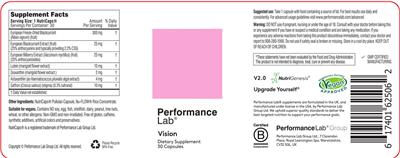
Supplement Facts
The label details for Vision by Performance Lab, sourced from the NIH Dietary Supplement Label Database.
Supplement Facts
| Ingredient | Amount | % DV |
|---|---|---|
| Lutein | 10 mg | -- |
| Astaxanthin | 4 mg | -- |
| Zeaxanthin | 2 mg | -- |
| Black Currant, Freeze-Dried | 300 mg | -- |
| Black Currant Fruit Extract | 25 mg | -- |
| Bilberry Fruit Extract | 25 mg | -- |
| Saffron | 10 mg | -- |
Other ingredients: Pullulan, Nu-Flow
Tap any ingredient to jump to its full detail below.
These statements are the manufacturer’s wording, reproduced from the product label — the label is saying it, not HelloPharmacist. We don’t verify or endorse them.
Formulation
Suitable for vegans.
Contains no soy, egg, fish, shellfish, dairy, peanuts, tree nuts, wheat, or other allergens. Non-GMO and non-irradiated. Free of gluten, caffeine, synthetic additives, artificial colors and preservatives. BPA free
GMP Certified Manufacturing
Vegan Approved Vegetarian Society
Performance Lab supplements are formulated in the UK, and manufactured under license in the USA, by Performance Lab Group Ltd. We uphold superior quality standards to deliver the best targeted nutrition to support your performance goals.
Brand IP Statement(s)
NutriCaps are registered trademarks of Performance Lab Group Ltd. Copyright Performance Lab Ltd. All rights reserved.
Performance Lab Upgrade Yourself
General Statements
Please recycle
For advanced usage guidelines visit www.performancelab.com/advanced
FDA Statement of Identity
Dietary Supplement
Suggested/Recommended/Usage/Directions
Suggested use: Take 1 capsule a day with food containing source of fat.
Precautions
Warning: Do not use if pregnant, nursing or under the age of 18. Consult with your doctor before taking this or any supplement if you have or suspect a medical condition and are taking any medication.
Warning: Do not use if pregnant, nursing or under the age of 18. Keep out of reach of children.
If you experience any adverse reactions from taking this product discontinue immediately, contact your doctor and report to 908-280-1066. Do not use if safety seal is broken or missing.
Storage
Store in a cool dry place.
FDA Disclaimer Statement
These statements have not been evaluated by the Food and Drug Administration. This product is not intended to diagnose, treat, cure or prevent any disease.
Formula
NutriGenesis
Seals/Symbols
Vegan Approved Vegetarian Society
Certified B Corporation
Is this label outdated? Report a formula or label change and our pharmacy team will review it.
Vision by Performance Lab label
The label scan from the NIH Dietary Supplement Label Database. Tap to enlarge.
Label images are published by the NIH Dietary Supplement Label Database for the version of this product on file. Always read your actual product label.
View the full label (PDF)The Ingredients in Vision by Performance Lab
These are the 7 active ingredients this product is made of. Select any to open its full monograph.
Serving size1 NutriCap(s) Dosage formCapsule Servings per container30 Amounts shown are per serving.
Most supplement products combine several ingredients, and a medication can interact with the product through any one of them. Each ingredient below shows whether it has known drug interactions.
Lutein
No knowninteractions
Lutein is a plant-based antioxidant pigment that concentrates in the eye, and the best evidence suggests it (often combined with zeaxanthin) may help...
Lutein monograph & interactionsAstaxanthin
Interacts with671 drugs
Astaxanthin is a reddish carotenoid pigment with strong antioxidant activity in the lab, and it is widely promoted for skin, eye, heart, and exercise...
Astaxanthin monograph & interactionsZeaxanthin
Interacts with86 drugs
Zeaxanthin is a carotenoid pigment that, along with lutein, concentrates in the macula of the eye and may help support long-term eye health. The stron...
Zeaxanthin monograph & interactionsBlack Currant, Freeze-Dried
Interacts with140 drugs
Black currant is a nutritious berry that is rich in vitamin C and antioxidants, and its seed oil contains the omega-6 fatty acid GLA. While it is enjo...
Black Currant, Freeze-Dried monograph & interactionsBlack Currant Fruit Extract
Interacts with140 drugs
Black currant is a nutritious berry that is rich in vitamin C and antioxidants, and its seed oil contains the omega-6 fatty acid GLA. While it is enjo...
Black Currant Fruit Extract monograph & interactionsBilberry Fruit Extract
Interacts with275 drugs
Bilberry is a blueberry-like fruit rich in antioxidant plant compounds called anthocyanins, and it has a long history of traditional use for eye healt...
Bilberry Fruit Extract monograph & interactionsSaffron
Interacts with521 drugs
Saffron is a costly spice that has shown promise in early studies for mild-to-moderate depression and some mood and PMS symptoms, but most research us...
Saffron monograph & interactionsOther (inactive) ingredients: Pullulan, Nu-Flow. These complete the product’s ingredient list but are not active constituents.
Vision by Performance Lab Drug Interactions
HelloPharmacist Interaction Report
Performance Lab Vision contains seven active ingredients, and several of them interact with medications.
The most serious interaction involves saffron with CNS depressants (drugs that make you drowsy or sedated) — this is a Moderate severity interaction, and saffron can add to their sedative effects.
Read the full breakdown — every affected drug type, severity by severity
Beyond that, you'll want to check if you're on blood thinners or antiplatelet drugs (like warfarin or aspirin). Both black currant (freeze-dried and extract) and bilberry fruit extract may theoretically increase bleeding risk with these medications — both are Moderate severity.
Bilberry also interacts with antidiabetes drugs and may add to their blood-sugar-lowering effect, raising the risk of low blood sugar (hypoglycemia). Astaxanthin and zeaxanthin may slow how your liver processes certain medications; astaxanthin affects drugs metabolized by CYP3A4 and CYP2B6 enzymes, while zeaxanthin may lower blood sugar when combined with antidiabetes drugs — both Moderate severity interactions.
Saffron itself also theoretically increases the risk of low blood sugar with antidiabetes drugs, lowers blood pressure when combined with antihypertensive drugs, and may slow caffeine metabolism. Bilberry adds another Moderate interaction with erlotinib (Tarceva), a cancer drug, by potentially reducing its effectiveness.
Lutein has no known interactions documented in our data.
Altogether, these interactions span 1,125 individual medications. Please use the medication checker below to see if any of your specific drugs are affected before you start.
Check your own medications below · Editorial policy · How we use AI
Want to check YOUR meds against Vision?
Ask about interactions with your drugs in plain English — “Can I take it with lisinopril?” — and we find you the answer in seconds, ingredient by ingredient.
Go to the checkerIngredients driving the most interactions
Individual Drug Interactions
The ingredients in Vision interact with 1,137 drugs. Click any drug to see the details.
5 of the 7 ingredients in Vision interact with drugs. Each result below shows which ingredient is responsible. Astaxanthin Saffron Bilberry Fruit Extract Black Currant, Freeze-Dried Zeaxanthin
Aluminum Hydroxide, Aspirin, Magnesium HydroxideAscriptin
How Aluminum Hydroxide, Aspirin, Magnesium Hydroxide interacts with Vision — through 2 ingredients. Tap an ingredient for the detail:
Black Currant Fruit ExtractAnticoagulant/antiplatelet Drugs Moderate
Interaction Summary
Theoretically, black currant seed oil might increase the risk of bleeding if used in combination with anticoagulant or antiplatelet drugs.
Read the full Black Currant Fruit Extract + Aluminum Hydroxide, Aspirin, Magnesium Hydroxide interactionBilberry Fruit ExtractAnticoagulant/antiplatelet Drugs Moderate
Interaction Summary
Theoretically, bilberry fruit extract might increase the risk of bleeding when taken with anticoagulant or antiplatelet drugs.
Read the full Bilberry Fruit Extract + Aluminum Hydroxide, Aspirin, Magnesium Hydroxide interactionAmbrisentanLetairis, Volibris
How Ambrisentan interacts with Vision — through 2 ingredients. Tap an ingredient for the detail:
AstaxanthinCytochrome P450 3a4 (cyp3a4) Substrates Moderate
Interaction Summary
Theoretically, astaxanthin may decrease levels of drugs metabolized by CYP3A4.
Read the full Astaxanthin + Ambrisentan interactionSaffronAntihypertensive Drugs Moderate
Interaction Summary
Theoretically, concomitant use of saffron with antihypertensive drugs might have additive effects.
Read the full Saffron + Ambrisentan interactionAmilorideAmilamont, Midamor
How Amiloride interacts with Vision — through 1 ingredient. Tap an ingredient for the detail:
SaffronAntihypertensive Drugs Moderate
Interaction Summary
Theoretically, concomitant use of saffron with antihypertensive drugs might have additive effects.
Read the full Saffron + Amiloride interactionAmiloride, HydrochlorothiazideAmil-Co, Amilzide, Moduret 25, Moduretic
How Amiloride, Hydrochlorothiazide interacts with Vision — through 1 ingredient. Tap an ingredient for the detail:
SaffronAntihypertensive Drugs Moderate
Interaction Summary
Theoretically, concomitant use of saffron with antihypertensive drugs might have additive effects.
Read the full Saffron + Amiloride, Hydrochlorothiazide interactionAminoglutethimideCytadren
How Aminoglutethimide interacts with Vision — through 1 ingredient. Tap an ingredient for the detail:
SaffronCns Depressants Moderate
Interaction Summary
Theoretically, concomitant use of saffron and CNS depressants might have additive sedative effects.
Read the full Saffron + Aminoglutethimide interactionAminophylline, Amobarbital, EphedrineAmesec
How Aminophylline, Amobarbital, Ephedrine interacts with Vision — through 1 ingredient. Tap an ingredient for the detail:
SaffronCns Depressants Moderate
Interaction Summary
Theoretically, concomitant use of saffron and CNS depressants might have additive sedative effects.
Read the full Saffron + Aminophylline, Amobarbital, Ephedrine interactionAmiodaroneCordarone, Pacerone
How Amiodarone interacts with Vision — through 1 ingredient. Tap an ingredient for the detail:
AstaxanthinCytochrome P450 3a4 (cyp3a4) Substrates Moderate
Interaction Summary
Theoretically, astaxanthin may decrease levels of drugs metabolized by CYP3A4.
Read the full Astaxanthin + Amiodarone interactionAmitriptylineElavil
How Amitriptyline interacts with Vision — through 2 ingredients. Tap an ingredient for the detail:
AstaxanthinCytochrome P450 3a4 (cyp3a4) Substrates Moderate
Interaction Summary
Theoretically, astaxanthin may decrease levels of drugs metabolized by CYP3A4.
Read the full Astaxanthin + Amitriptyline interactionSaffronCns Depressants Moderate
Interaction Summary
Theoretically, concomitant use of saffron and CNS depressants might have additive sedative effects.
Read the full Saffron + Amitriptyline interactionAmitriptyline, ChlordiazepoxideLimbitrol DS
How Amitriptyline, Chlordiazepoxide interacts with Vision — through 2 ingredients. Tap an ingredient for the detail:
SaffronCns Depressants Moderate
Interaction Summary
Theoretically, concomitant use of saffron and CNS depressants might have additive sedative effects.
Read the full Saffron + Amitriptyline, Chlordiazepoxide interactionAstaxanthinCytochrome P450 3a4 (cyp3a4) Substrates Moderate
Interaction Summary
Theoretically, astaxanthin may decrease levels of drugs metabolized by CYP3A4.
Read the full Astaxanthin + Amitriptyline, Chlordiazepoxide interactionAmitriptyline, PerphenazineEtrafon, Etrafon-A, Etrafon-Forte, Triavil
How Amitriptyline, Perphenazine interacts with Vision — through 3 ingredients. Tap an ingredient for the detail:
SaffronCns Depressants Moderate
Interaction Summary
Theoretically, concomitant use of saffron and CNS depressants might have additive sedative effects.
Read the full Saffron + Amitriptyline, Perphenazine interactionAstaxanthinCytochrome P450 3a4 (cyp3a4) Substrates Moderate
Interaction Summary
Theoretically, astaxanthin may decrease levels of drugs metabolized by CYP3A4.
Read the full Astaxanthin + Amitriptyline, Perphenazine interactionBlack Currant Fruit ExtractPhenothiazines Moderate
Interaction Summary
Theoretically, black currant seed oil might increase the risk of seizure in patients receiving phenothiazines.
Read the full Black Currant Fruit Extract + Amitriptyline, Perphenazine interactionAmlodipineNorliqva
How Amlodipine interacts with Vision — through 2 ingredients. Tap an ingredient for the detail:
SaffronAntihypertensive Drugs Moderate
Interaction Summary
Theoretically, concomitant use of saffron with antihypertensive drugs might have additive effects.
Read the full Saffron + Amlodipine interactionAstaxanthinCytochrome P450 3a4 (cyp3a4) Substrates Moderate
Interaction Summary
Theoretically, astaxanthin may decrease levels of drugs metabolized by CYP3A4.
Read the full Astaxanthin + Amlodipine interactionAmlodipine BenzoateKaterzia
How Amlodipine Benzoate interacts with Vision — through 2 ingredients. Tap an ingredient for the detail:
AstaxanthinCytochrome P450 3a4 (cyp3a4) Substrates Moderate
Interaction Summary
Theoretically, astaxanthin may decrease levels of drugs metabolized by CYP3A4.
Read the full Astaxanthin + Amlodipine Benzoate interactionSaffronAntihypertensive Drugs Moderate
Interaction Summary
Theoretically, concomitant use of saffron with antihypertensive drugs might have additive effects.
Read the full Saffron + Amlodipine Benzoate interactionAmlodipine BesilateIstin
How Amlodipine Besilate interacts with Vision — through 2 ingredients. Tap an ingredient for the detail:
AstaxanthinCytochrome P450 3a4 (cyp3a4) Substrates Moderate
Interaction Summary
Theoretically, astaxanthin may decrease levels of drugs metabolized by CYP3A4.
Read the full Astaxanthin + Amlodipine Besilate interactionSaffronAntihypertensive Drugs Moderate
Interaction Summary
Theoretically, concomitant use of saffron with antihypertensive drugs might have additive effects.
Read the full Saffron + Amlodipine Besilate interactionAmlodipine BesylateNorvasc
How Amlodipine Besylate interacts with Vision — through 2 ingredients. Tap an ingredient for the detail:
SaffronAntihypertensive Drugs Moderate
Interaction Summary
Theoretically, concomitant use of saffron with antihypertensive drugs might have additive effects.
Read the full Saffron + Amlodipine Besylate interactionAstaxanthinCytochrome P450 3a4 (cyp3a4) Substrates Moderate
Interaction Summary
Theoretically, astaxanthin may decrease levels of drugs metabolized by CYP3A4.
Read the full Astaxanthin + Amlodipine Besylate interactionAmlodipine Besylate, BenazeprilLotrel
How Amlodipine Besylate, Benazepril interacts with Vision — through 2 ingredients. Tap an ingredient for the detail:
AstaxanthinCytochrome P450 3a4 (cyp3a4) Substrates Moderate
Interaction Summary
Theoretically, astaxanthin may decrease levels of drugs metabolized by CYP3A4.
Read the full Astaxanthin + Amlodipine Besylate, Benazepril interactionSaffronAntihypertensive Drugs Moderate
Interaction Summary
Theoretically, concomitant use of saffron with antihypertensive drugs might have additive effects.
Read the full Saffron + Amlodipine Besylate, Benazepril interactionAmlodipine, CelecoxibConsensi
How Amlodipine, Celecoxib interacts with Vision — through 2 ingredients. Tap an ingredient for the detail:
SaffronAntihypertensive Drugs Moderate
Interaction Summary
Theoretically, concomitant use of saffron with antihypertensive drugs might have additive effects.
Read the full Saffron + Amlodipine, Celecoxib interactionAstaxanthinCytochrome P450 3a4 (cyp3a4) Substrates Moderate
Interaction Summary
Theoretically, astaxanthin may decrease levels of drugs metabolized by CYP3A4.
Read the full Astaxanthin + Amlodipine, Celecoxib interactionAmmonium ChlorideAmmonium Chloride
How Ammonium Chloride interacts with Vision — through 1 ingredient. Tap an ingredient for the detail:
SaffronAntihypertensive Drugs Moderate
Interaction Summary
Theoretically, concomitant use of saffron with antihypertensive drugs might have additive effects.
Read the full Saffron + Ammonium Chloride interactionAmobarbitalAmytal
How Amobarbital interacts with Vision — through 1 ingredient. Tap an ingredient for the detail:
SaffronCns Depressants Moderate
Interaction Summary
Theoretically, concomitant use of saffron and CNS depressants might have additive sedative effects.
Read the full Saffron + Amobarbital interactionAmobarbital, Ephedrine SulfateEphedrine & Amytal
How Amobarbital, Ephedrine Sulfate interacts with Vision — through 1 ingredient. Tap an ingredient for the detail:
SaffronCns Depressants Moderate
Interaction Summary
Theoretically, concomitant use of saffron and CNS depressants might have additive sedative effects.
Read the full Saffron + Amobarbital, Ephedrine Sulfate interactionAmobarbital, SecobarbitalTuinal
How Amobarbital, Secobarbital interacts with Vision — through 2 ingredients. Tap an ingredient for the detail:
SaffronCns Depressants Moderate
Interaction Summary
Theoretically, concomitant use of saffron and CNS depressants might have additive sedative effects.
Read the full Saffron + Amobarbital, Secobarbital interactionAstaxanthinCytochrome P450 2b6 (cyp2b6) Substrates Moderate
Interaction Summary
Theoretically, astaxanthin may decrease levels of drugs metabolized by CYP2B6.
Read the full Astaxanthin + Amobarbital, Secobarbital interactionAmoxicillin, Omeprazole Magnesium, RifabutinTalicia
How Amoxicillin, Omeprazole Magnesium, Rifabutin interacts with Vision — through 1 ingredient. Tap an ingredient for the detail:
AstaxanthinCytochrome P450 3a4 (cyp3a4) Substrates Moderate
Interaction Summary
Theoretically, astaxanthin may decrease levels of drugs metabolized by CYP3A4.
Read the full Astaxanthin + Amoxicillin, Omeprazole Magnesium, Rifabutin interactionAmprenavirAgenerase
How Amprenavir interacts with Vision — through 1 ingredient. Tap an ingredient for the detail:
AstaxanthinCytochrome P450 3a4 (cyp3a4) Substrates Moderate
Interaction Summary
Theoretically, astaxanthin may decrease levels of drugs metabolized by CYP3A4.
Read the full Astaxanthin + Amprenavir interactionAnacaulase-bcdbNexoBrid
How Anacaulase-bcdb interacts with Vision — through 2 ingredients. Tap an ingredient for the detail:
Black Currant Fruit ExtractAnticoagulant/antiplatelet Drugs Moderate
Interaction Summary
Theoretically, black currant seed oil might increase the risk of bleeding if used in combination with anticoagulant or antiplatelet drugs.
Read the full Black Currant Fruit Extract + Anacaulase-bcdb interactionBilberry Fruit ExtractAnticoagulant/antiplatelet Drugs Moderate
Interaction Summary
Theoretically, bilberry fruit extract might increase the risk of bleeding when taken with anticoagulant or antiplatelet drugs.
Read the full Bilberry Fruit Extract + Anacaulase-bcdb interactionAnagrelideAgrylin
How Anagrelide interacts with Vision — through 2 ingredients. Tap an ingredient for the detail:
Bilberry Fruit ExtractAnticoagulant/antiplatelet Drugs Moderate
Interaction Summary
Theoretically, bilberry fruit extract might increase the risk of bleeding when taken with anticoagulant or antiplatelet drugs.
Read the full Bilberry Fruit Extract + Anagrelide interactionBlack Currant Fruit ExtractAnticoagulant/antiplatelet Drugs Moderate
Interaction Summary
Theoretically, black currant seed oil might increase the risk of bleeding if used in combination with anticoagulant or antiplatelet drugs.
Read the full Black Currant Fruit Extract + Anagrelide interactionAnisindioneMiradon
How Anisindione interacts with Vision — through 2 ingredients. Tap an ingredient for the detail:
Black Currant Fruit ExtractAnticoagulant/antiplatelet Drugs Moderate
Interaction Summary
Theoretically, black currant seed oil might increase the risk of bleeding if used in combination with anticoagulant or antiplatelet drugs.
Read the full Black Currant Fruit Extract + Anisindione interactionBilberry Fruit ExtractAnticoagulant/antiplatelet Drugs Moderate
Interaction Summary
Theoretically, bilberry fruit extract might increase the risk of bleeding when taken with anticoagulant or antiplatelet drugs.
Read the full Bilberry Fruit Extract + Anisindione interactionAntidiabetes, Dipeptidyl Peptidase-4 (dpp-iv) InhibitorGlyxambi
How Antidiabetes, Dipeptidyl Peptidase-4 (dpp-iv) Inhibitor interacts with Vision — through 3 ingredients. Tap an ingredient for the detail:
ZeaxanthinAntidiabetes Drugs Moderate
Interaction Summary
Theoretically, taking zeaxanthin with antidiabetes drugs might increase the risk of hypoglycemia.
Read the full Zeaxanthin + Antidiabetes, Dipeptidyl Peptidase-4 (dpp-iv) Inhibitor interactionSaffronAntidiabetes Drugs Moderate
Interaction Summary
Theoretically, concomitant use of saffron with antidiabetes drugs might increase the risk of hypoglycemia.
Read the full Saffron + Antidiabetes, Dipeptidyl Peptidase-4 (dpp-iv) Inhibitor interactionBilberry Fruit ExtractAntidiabetes Drugs Moderate
Interaction Summary
Theoretically, bilberry leaf or fruit extract may increase the risk of hypoglycemia when taken with antidiabetes drugs.
Read the full Bilberry Fruit Extract + Antidiabetes, Dipeptidyl Peptidase-4 (dpp-iv) Inhibitor interactionAntithrombin IiiThrombate III
How Antithrombin Iii interacts with Vision — through 2 ingredients. Tap an ingredient for the detail:
Bilberry Fruit ExtractAnticoagulant/antiplatelet Drugs Moderate
Interaction Summary
Theoretically, bilberry fruit extract might increase the risk of bleeding when taken with anticoagulant or antiplatelet drugs.
Read the full Bilberry Fruit Extract + Antithrombin Iii interactionBlack Currant Fruit ExtractAnticoagulant/antiplatelet Drugs Moderate
Interaction Summary
Theoretically, black currant seed oil might increase the risk of bleeding if used in combination with anticoagulant or antiplatelet drugs.
Read the full Black Currant Fruit Extract + Antithrombin Iii interactionApalutamideErleada
How Apalutamide interacts with Vision — through 1 ingredient. Tap an ingredient for the detail:
AstaxanthinCytochrome P450 3a4 (cyp3a4) Substrates Moderate
Interaction Summary
Theoretically, astaxanthin may decrease levels of drugs metabolized by CYP3A4.
Read the full Astaxanthin + Apalutamide interactionApixabanEliquis
How Apixaban interacts with Vision — through 3 ingredients. Tap an ingredient for the detail:
AstaxanthinCytochrome P450 3a4 (cyp3a4) Substrates Moderate
Interaction Summary
Theoretically, astaxanthin may decrease levels of drugs metabolized by CYP3A4.
Read the full Astaxanthin + Apixaban interactionBilberry Fruit ExtractAnticoagulant/antiplatelet Drugs Moderate
Interaction Summary
Theoretically, bilberry fruit extract might increase the risk of bleeding when taken with anticoagulant or antiplatelet drugs.
Read the full Bilberry Fruit Extract + Apixaban interactionBlack Currant Fruit ExtractAnticoagulant/antiplatelet Drugs Moderate
Interaction Summary
Theoretically, black currant seed oil might increase the risk of bleeding if used in combination with anticoagulant or antiplatelet drugs.
Read the full Black Currant Fruit Extract + Apixaban interactionApremilastOtezla
How Apremilast interacts with Vision — through 1 ingredient. Tap an ingredient for the detail:
AstaxanthinCytochrome P450 3a4 (cyp3a4) Substrates Moderate
Interaction Summary
Theoretically, astaxanthin may decrease levels of drugs metabolized by CYP3A4.
Read the full Astaxanthin + Apremilast interactionEach ingredient & the kinds of drugs it affects
For each ingredient in Vision with known interactions, here are the types of medications they can affect. Open any type for the detail — or search your exact drug in the checker above.
Astaxanthin
Cytochrome P450 2B6 (Cyp2B6) Substrates
Theoretically, astaxanthin may decrease levels of drugs metabolized by CYP2B6.
In vitro research shows that astaxanthin induces cytochrome CYP2B6 enzyme activity in human hepatocytes. This effect has not been reported in humans.
Cytochrome P450 3A4 (Cyp3A4) Substrates
Theoretically, astaxanthin may decrease levels of drugs metabolized by CYP3A4.
In vitro research shows that astaxanthin induces CYP3A4 enzyme activity in human hepatocytes. This effect has not been reported in humans.
Saffron
Antidiabetes Drugs
Theoretically, concomitant use of saffron with antidiabetes drugs might increase the risk of hypoglycemia.
Some clinical research shows that taking saffron extract reduces fasting levels of glucose when used in addition to hypoglycemic agents. However, saffron powder itself has not been shown to reduce fasting glucose levels.
Antihypertensive Drugs
Theoretically, concomitant use of saffron with antihypertensive drugs might have additive effects.
Animal and human research suggests that saffron extract can decrease blood pressure.
Caffeine
Theoretically, saffron might inhibit the metabolism of caffeine.
A small clinical study suggests that taking saffron powder 300 mg in 150 mL water daily for 5 days and then taking caffeine 200 mg seems to reduce caffeine metabolite levels in the saliva and urine in males, but not females. Theoretically, this may be due to the inhibition of cytochrome P450 1A2 by saffron.
Cns Depressants
Theoretically, concomitant use of saffron and CNS depressants might have additive sedative effects.
Clinical research shows that taking saffron extract 60 mg orally daily for 26 weeks can cause drowsiness and sedation. Animal research suggests that adding saffron to hexobarbital further increases sleeping and slows motor activity.
Bilberry Fruit Extract
Anticoagulant/Antiplatelet Drugs
Theoretically, bilberry fruit extract might increase the risk of bleeding when taken with anticoagulant or antiplatelet drugs.
In vitro, animal, and clinical research suggest that anthocyanidin extracts from bilberry can inhibit platelet aggregation.
Antidiabetes Drugs
Theoretically, bilberry leaf or fruit extract may increase the risk of hypoglycemia when taken with antidiabetes drugs.
Animal research suggests that bilberry leaf extract might have blood glucose-lowering activity. Also, one small clinical trial in patients with type 2 diabetes shows that taking bilberry fruit extract 470 mg as a single dose prior to an oral glucose tolerance test lowers plasma glucose levels when compared with placebo.
Cytochrome P450 2E1 (Cyp2E1) Substrates
Theoretically, bilberry fruit extract might decrease levels of drugs metabolized by CYP2E1.
Animal research shows that exposure to small concentrations of bilberry extract in drinking water for around one month increased CYP2E1 activity by 31%. However, exposure over a 2-month period did not increase CYP2E1 activity. This effect has not been reported in humans.
Erlotinib (Tarceva)
Theoretically, bilberry fruit extract might reduce the efficacy of erlotinib.
In vitro research suggests that bilberry fruit extract and its constituents, delphinidin and delphinidin-3-O-glucoside, inhibit the activity of erlotinib. This interaction has not been reported in humans.
Black Currant, Freeze-Dried
Anticoagulant/Antiplatelet Drugs
Theoretically, black currant seed oil might increase the risk of bleeding if used in combination with anticoagulant or antiplatelet drugs.
Gamma-linolenic acid (GLA), a constituent of black currant seed oil, appears to have antiplatelet effects.
Phenothiazines
Theoretically, black currant seed oil might increase the risk of seizure in patients receiving phenothiazines.
Black currant seed oil contains gamma-linolenic acid (GLA). There is some concern that taking supplements containing GLA might cause seizures, or lower the seizure threshold, when taken with phenothiazines, although there is no evidence that black currant seed oil causes seizures. In one report, three patients with schizophrenia who had received phenothiazines developed EEG changes suggestive of temporal lobe epilepsy after starting treatment with GLA, although none experienced an actual seizure. In another report, two patients with schizophrenia who were stabilized on phenothiazines developed seizures when evening primrose 4 grams daily, which contains GLA, was added. One of these patients had a prior history of seizures.
Zeaxanthin
Antidiabetes Drugs
Theoretically, taking zeaxanthin with antidiabetes drugs might increase the risk of hypoglycemia.
In an animal diabetic model, zeaxanthin has hypoglycemic effects. However, population research has found that increasing intake of dietary zeaxanthin plus lutein does not decrease the risk of developing type 2 diabetes.
Brand information
Manufacturer and brand details for Vision, from the product label.
Performance Lab
See all Performance Lab products- Name
- Performance Lab Group Ltd.
- Street Address
- 7 Clarendon Place
- City
- Royal Leamington Spa
- State
- Warwickshire
- ZipCode
- CV32 5QL
- Phone Number
- 908-280-1066
Vision by Performance Lab: Common Questions
Does Vision by Performance Lab interact with any medications?
How can one product interact with so many drugs?
Where does this information come from?
Will this help my aging eyes or AMD?
Is saffron safe to take while I'm pregnant?
What are the side effects I should watch for?
Can I take this if I'm on blood thinners?
Does this product have any fillers?
What does each ingredient do in this formula?
Written and reviewed by the HelloPharmacist editorial staff. Our editorial policy
Not sure if Vision is safe with your meds?
Our pharmacists answer your medication & supplement questions — free.
Label information is sourced from the NIH Dietary Supplement Label Database and reflects the product version on file; always read your actual product label. This page is for education only and is not a substitute for professional medical advice. Confirm with your pharmacist or doctor before combining supplements and medications.
The Full Monographs Behind Vision’s Ingredients
Every ingredient we hold a full HelloPharmacist monograph for — uses, evidence, safety, and the complete interaction list.
Lutein
Lutein is a plant-based antioxidant pigment that concentrates in the eye, and the best evidence suggests it (often combined with zeaxanthin) may help slow progression of age-related macular...
Read the full Lutein monograph → Herb & supplement monographAstaxanthin
Interacts with 671 drugsAstaxanthin is a reddish carotenoid pigment with strong antioxidant activity in the lab, and it is widely promoted for skin, eye, heart, and exercise benefits. Early human studies are promis...
Read the full Astaxanthin monograph → Herb & supplement monographZeaxanthin
Interacts with 86 drugsZeaxanthin is a carotenoid pigment that, along with lutein, concentrates in the macula of the eye and may help support long-term eye health. The strongest evidence relates to slowing progres...
Read the full Zeaxanthin monograph → Herb & supplement monographBlack Currant
Interacts with 140 drugsBlack currant is a nutritious berry that is rich in vitamin C and antioxidants, and its seed oil contains the omega-6 fatty acid GLA. While it is enjoyed safely as a food and is popular as a...
Read the full Black Currant monograph → Herb & supplement monographBilberry
Interacts with 275 drugsBilberry is a blueberry-like fruit rich in antioxidant plant compounds called anthocyanins, and it has a long history of traditional use for eye health, circulation, and mild diarrhea. While...
Read the full Bilberry monograph → Herb & supplement monographSaffron
Interacts with 521 drugsSaffron is a costly spice that has shown promise in early studies for mild-to-moderate depression and some mood and PMS symptoms, but most research uses small trials, so results are not defi...
Read the full Saffron monograph →Sources & How We Checked
Vision's label data comes from the NIH Dietary Supplement Label Database; the ingredient interaction data is from the Natural Medicines database, reviewed by our pharmacists.
- NIH Dietary Supplement Label Database (DSLD) — The official product label on file for this supplement.
- Natural Medicines (Therapeutic Research Center) — Evidence-graded clinical reference behind the ingredient interaction data.
Content is written and reviewed by licensed HelloPharmacist pharmacists. See our data sources and editorial standards for how this information is built and checked.
The 51 references behind this product’s interaction data
Every citation that drives the interaction findings for this product’s ingredients, from the evidence-graded Natural Medicines (TRC Healthcare) database. Open an ingredient to browse its citations — links open the study on PubMed or the publisher’s site.
Lutein 2 references
- Brown L, Rimm EB, Seddon JM, et al. A prospective study of carotenoid intake and risk of cataract extraction in US men. Am J Clin Nutr 1999;70:517-24. PubMed
- Chasan-Taber L, Willett WC, Seddon JM, et al. A prospective study of carotenoid and vitamin A intakes and risk of cataract extraction in US women. Am J Clin Nutr 1999;70:509-16. PubMed
Astaxanthin 3 references
- Kupcinskas L, Lafolie P, Lignell A, et al. Efficacy of the natural antioxidant astaxanthin in the treatment of functional dyspepsia in patients with or without Helicobacter pylori infection: A prospective, randomized, double blind, and placebo-controlled
- Kistler, A., Liechti, H., Pichard, L., Wolz, E., Oesterhelt, G., Hayes, A., and Maurel, P. Metabolism and CYP-inducer properties of astaxanthin in man and primary human hepatocytes. Arch.Toxicol. 2002;75(11-12):665-675. PubMed
- Choi HD, Youn YK, Shin WG. Positive effects of astaxanthin on lipid profiles and oxidative stress in overweight subjects. Plant Foods Hum Nutr. 2011;66:363-369. PubMed
Zeaxanthin 4 references
- Montonen J, Knekt P, Jarvinen R, Reunanen A. Dietary antioxidant intake and risk of type 2 diabetes. Diabetes Care 2004;27:362-6. PubMed
- Leermakers ET, Darweesh SK, Baena CP, et al. The effects of lutein on cardiometabolic health across the life course: a systematic review and meta-analysis. Am J Clin Nutr 2016;103(2):481-94. PubMed
- Kou L, Du M, Zhang C, Dai Z, Li X, Zhang B. The Hypoglycemic, Hypolipidemic, and Anti-Diabetic Nephritic Activities of Zeaxanthin in Diet-Streptozotocin-Induced Diabetic Sprague Dawley Rats. Appl Biochem Biotechnol 2017;182(3):944-955. PubMed
- Xu X, Zhao X, Berde Y, Low YL, Kuchan MJ. Milk and Plasma Lutein and Zeaxanthin Concentrations in Chinese Breast-Feeding Mother-Infant Dyads With Healthy Maternal Fruit and Vegetable Intake. J Am Coll Nutr 2019;38(2):179-184. PubMed
Black Currant 6 references
- Guivernau M, Meza N, Barja P, Roman O. Clinical and experimental study on the long-term effect of dietary gamma-linolenic acid on plasma lipids, platelet aggregation, thromboxane formation, and prostacyclin production. Prostaglandins Leukot Essent Fatty A PubMed
- Fa-lin Z, Zhen-yu W, Yan H, et al. Efficacy of blackcurrant oil soft capsule, a Chinese herbal drug, in hyperlipidemia treatment. Phytother Res 2010;24 Suppl 2:S209-13. PubMed
- Holman CP and Bell AF. A trial of evening primrose oil in the treatment of chronic schizophrenia. J Orhtomolecular Psych 1983;12:302-304.
- Vaddadi KS. The use of gamma-linolenic acid and linoleic acid to differentiate between temporal lobe epilepsy and schizophrenia. Prostaglandins Med 1981;6(4):375-379. PubMed
- Norred, C. L. and Brinker, F. Potential coagulation effects of preoperative complementary and alternative medicines. Alt Ther 2001;7(6):58-67.
- Puri BK. The safety of evening primrose oil in epilepsy. Prostaglandins Leukotrienes Essential Fatty Acids 2007;77:101-3. PubMed
Bilberry 14 references
- Cignarella A, Nastasi M, Cavalli E, Puglisi L. Novel lipid-lowering properties of Vaccinium myrtillus L. leaves, a traditional antidiabetic treatment, in several models of rat dyslipidaemia: a comparison with ciprofibrate. Thromb Res 1996;84:311-22. PubMed
- Morazzoni P, Magistretti MJ. Activity of Myrtocyan, an anthosyanoside complex from Vaccinium myrtillus (VMA), on platelet aggregation and adhesiveness. Fitoterapia 1990;61:13-21.
- Erlund, I., Koli, R., Alfthan, G., Marniemi, J., Puukka, P., Mustonen, P., Mattila, P., and Jula, A. Favorable effects of berry consumption on platelet function, blood pressure, and HDL cholesterol. Am J Clin Nutr 2008;87(2):323-331. PubMed
- Hawrelak, J. A. and Myers, S. P. Effects of two natural medicine formulations on irritable bowel syndrome symptoms: a pilot study. J Altern Complement Med 2010;16(10):1065-1071. PubMed
- Morazzoni P and Magistretti MJ. Effects of Vaccinium myrtillus anthocyanosides on prostacyclin-like activity in rat arterial issue. Fitoterapia 1986;57:11-14.
- Pulliero G, Montin S, Bettini V, and et al. Ex vivo study of the inhibitory effects of Vaccinium myrtillus anthocyanosides on human platelet aggregation. Fitoterapia 1989;60:69-75.
- Bottecchia D. Preliminary report on the inhibitory effect of vaccinium myrtillus anthocyanosides on platelet aggregation and clot retraction. Fitoterapia 1987;48:3-8.
- Fdez, M., Zaragoza, F., and Alvarez, P. In vitro platelet aggregation effects of anthocyanosides of vaccinium myrtilus L. Anales de la Real Academia de Farmacia 1983;49:79-90.
- Biedermann L, Mwinyi J, Scharl M, Frei P, Zeitz J, Kullak-Ublick GA, et al. Bilberry ingestion improves disease activity in mild to moderate ulcerative colitis-an open pilot study. 2013 May;7(4):271-9. PubMed
- Hoggard N, Cruickshank M, Moar KM, Bestwick C, Holst J, Russell W, et al. A single supplement of a standardized bilberry (Vaccinium myrtillus L.) extract (36% wet weight anthocyanins) modifies glycaemic response in individuals with type 2 diabetes control
- Aichinger G, Pahlke G, Nagel LJ, Berger W, Marko D. Bilberry extract, its major phenolic compounds, and soy isoflavone genistein antagonize the cytostatic drug erlotinib in human epithelial cells. Food Funct 2016;7(8):3628-36.
- Prokop J, Lněničková K, Cibicek N, et al. Effect of bilberry extract (Vaccinium myrtillus L.) on drug-metabolizing enzymes in rats. Food Chem Toxicol 2019;129:382-90. PubMed
- Chan SW, Chu TTW, Choi SW, Benzie IFF, Tomlinson B. Impact of short-term bilberry supplementation on glycemic control, cardiovascular disease risk factors, and antioxidant status in Chinese patients with type 2 diabetes. Phytother Res 2021. Online ahead o PubMed
- Bøhn SK, Myhrstad MCW, Thoresen M, et al. Bilberry/red grape juice decreases plasma biomarkers of inflammation and tissue damage in aged men with subjective memory impairment -a randomized clinical trial. BMC Nutr 2021;7(1):75. PubMed
Saffron 22 references
- Blumenthal M, ed. The Complete German Commission E Monographs: Therapeutic Guide to Herbal Medicines. Trans. S. Klein. Boston, MA: American Botanical Council, 1998.
- Leung AY, Foster S. Encyclopedia of Common Natural Ingredients Used in Food, Drugs and Cosmetics. 2nd ed. New York, NY: John Wiley & Sons, 1996.
- Gruenwald J, Brendler T, Jaenicke C. PDR for Herbal Medicines. 1st ed. Montvale, NJ: Medical Economics Company, Inc., 1998.
- Feo F, Martinez J, Martinez A, et al. Occupational allergy in saffron workers. Allergy 1997;52:633-41. PubMed
- Wuthrich B, Schmid-Grendelmeyer P, Lundberg M. Anaphylaxis to saffron. Allergy 1997;52:476-7. PubMed
- Akhondzadeh S, Tahmacebi-Pour N, Noorbala AA, et al. Crocus sativus L. in the treatment of mild to moderate depression: a double-blind, randomized and placebo-controlled trial. Phytother Res 2005;19:148-51.
- Safarinejad MR, Shafiei N, Safarinejad S. A prospective double-blind randomized placebo-controlled study of the effect of saffron (Crocus sativus Linn.) on semen parameters and seminal plasma antioxidant capacity in infertile men with idiopathic oligoasth
- Fatehi, M., Rashidabady, T., and Fatehi-Hassanabad, Z. Effects of Crocus sativus petals' extract on rat blood pressure and on responses induced by electrical field stimulation in the rat isolated vas deferens and guinea-pig ileum. J Ethnopharmacol. 2003; PubMed
- Modaghegh, M. H., Shahabian, M., Esmaeili, H. A., Rajbai, O., and Hosseinzadeh, H. Safety evaluation of saffron (Crocus sativus) tablets in healthy volunteers. Phytomedicine. 2008;15(12):1032-1037. PubMed
- Imenshahidi, M., Hosseinzadeh, H., and Javadpour, Y. Hypotensive effect of aqueous saffron extract (Crocus sativus L.) and its constituents, safranal and crocin, in normotensive and hypertensive rats. Phytother.Res 12-9-2009;
- Zhang, Y., Shoyama, Y., Sugiura, M., and Saito, H. Effects of Crocus sativus L. on the ethanol-induced impairment of passive avoidance performances in mice. Biol.Pharm Bull. 1994;17(2):217-221. PubMed
- Wuthrich, B., Schmid-Grendelmeyer, P., and Lundberg, M. Anaphylaxis to saffron. Allergy 1997;52(4):476-477. PubMed
- Akhondzadeh S, Sabet MS, Harirchian MH, Togha M, Cheraghmakani H, Razeghi S, Hejazi SSh, Yousefi MH, Alimardani R, Jamshidi A, Zare F, Moradi A. Saffron in the treatment of patients with mild to moderate Alzheimer's disease: a 16-week, randomized and plac
- Kashani L, Eslatmanesh S, Saedi N, Niroomand N, Ebrahimi M, Hosseinian M, Foroughifar T, Salimi S, Akhondzadeh S. Comparison of Saffron versus Fluoxetine in Treatment of Mild to Moderate Postpartum Depression: A Double-Blind, Randomized Clinical Trial. Ph PubMed
- Kianbakht S, Ghazavi A. Immunomodulatory effects of saffron: a randomized double-blind placebo-controlled clinical trial. Phytother Res. 2011 Dec;25(12):1801-5. PubMed
- Mazidi M, Shemshian M, Mousavi SH, Norouzy A, Kermani T, Moghiman T, Sadeghi A, Mokhber N, Ghayour-Mobarhan M, Ferns GA. A double-blind, randomized and placebo-controlled trial of Saffron (Crocus sativus L.) in the treatment of anxiety and depression. J C
- Safarinejad MR, Shafiei N, Safarinejad S. An open label, randomized, fixed-dose, crossover study comparing efficacy and safety of sildenafil citrate and saffron (Crocus sativus Linn.) for treating erectile dysfunction in men naïve to treatment. Int J Impo PubMed
- Talaei A, Hassanpour Moghadam M, Sajadi Tabassi SA, Mohajeri SA. Crocin, the main active saffron constituent, as an adjunctive treatment in major depressive disorder: a randomized, double-blind, placebo-controlled, pilot clinical trial. J Affect Disord. 2 PubMed
- Azimi P, Ghiasvand R Feizi A, Hariri M, Abbasi B. Effects of cinnamon, cardamom, saffron, and ginger consumption on markers of glycemic control, lipid profile, oxidative stress, and inflammation in type 2 diabetes. Rev Diabet Stud. 2014 Fall-Winter;11(3-4
- Begas E, Bounitsi M, Kilindris T, et al. Effects of short-term saffron (Crocus sativus L.) intake on the in vivo activities of xenobiotic metabolizing enzymes in healthy volunteers. Food Chem Toxicol. 2019;130:32-43. PubMed
- Moravej Aleali A, Amani R, Shahbazian H, Namjooyan F, Latifi SM, Cheraghian B. The effect of hydroalcoholic Saffron (Crocus sativus L.) extract on fasting plasma glucose, HbA1c, lipid profile, liver, and renal function tests in patients with type 2 diabet
- Abbaszadeh-Mashkani S, Hoque SS, Banafshe HR, Ghaderi A. The effect of crocin (the main active saffron constituent) on the cognitive functions, craving, and withdrawal syndrome in opioid patients under methadone maintenance treatment. Phytother Res. 2021; PubMed
Parts of this content are provided by the Therapeutic Research Center, LLC.
DISCLAIMER: Currently this does not check for drug-drug interactions. This is not an all-inclusive comprehensive list of potential interactions and is for informational purposes only. Not all interactions are known or well-reported in the scientific literature, and new interactions are continually being reported. Input is needed from a qualified healthcare provider including a pharmacist before starting any therapy. Application of clinical judgment is necessary.
© 2021 Therapeutic Research Center, LLC