
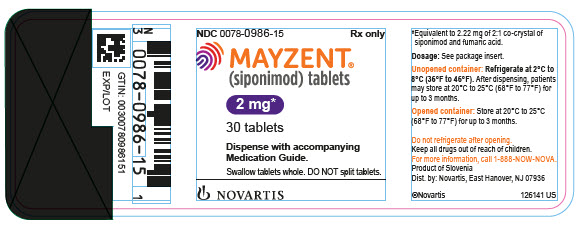
MAYZENT siponimod 2 mg Tablet, Film Coated, 15-count
🆔 Identity & classification
Where does this data come from?
🏷️ RxNorm drug class
This medicine belongs to the Sphingosine 1-phosphate Receptor Modulator class.
Where does this data come from?
🏭 Manufacturer & labeler
Where does this data come from?
🩺 Clinical
Siponimod is used to prevent episodes of symptoms and slow the worsening of disability in adults with relapsing-remitting forms (course of disease where symptoms flare up from time to time) of multiple sclerosis (MS; a disease in which the nerves do not function properly and people may experience weakness, numbness, loss of muscle coordination, and problems with vision, speech, and bladder control), including clinically isolated syndrome (CIS; first nerve symptom episode that lasts at least 24 hours), relapsing-remitting disease (course of disease where symptoms flare up from time to time), or...
Read the full MedlinePlus article ↗- Mayzent doesn't cure MS, but it's designed to help control it. It's approved for relapsing forms of MS — including relapsing-remitting MS, active secondary progressive MS, and a fi...
- What exactly is Mayzent treating — does it cure my MS?
- Mayzent temporarily slows your heart rate when you first start it — that's just how the medicine works. Starting at a low dose and stepping up gradually over several days gives you...
- Why do I have to start with a gradual dose increase instead of just taking the regular dose?
Patient education
Supplement & herbal interactions
Some supplements/herbs that may interact with Siponimod — tap one for details:
Where does this data come from?
Ask a licensed pharmacist directly — free, answered by our team.
💊 What it looks like
Where does this data come from?
🧪 Inactive Ingredients / Excipients
Inactive ingredients, also called excipients, are components of the drug product other than the active ingredient. They may include fillers, dyes, coatings, preservatives, flavors, or other formulation ingredients.
💡 Tap an ingredient (hover on desktop) to see what it is and why it’s used.
-
UNII OP1R32D61U
Microcrystalline cellulose is a purified form of cellulose, a natural fiber from plant sources. It acts as a binder and filler in tablets and capsules, helping hold ingredients together and give the medicine its shape and size.
-
UNII 2S7830E561
Crospovidone is a synthetic polymer derived from povidone. It acts as a disintegrant, helping the tablet or capsule break apart quickly in the stomach so the active ingredient can be absorbed.
-
UNII 1K09F3G675
Ferric oxide red is an inorganic iron compound used as a colorant in medicines. It gives tablets, capsules, or other dosage forms a red or reddish tint for identification and appearance.
-
UNII EX438O2MRT
Ferric oxide yellow is a naturally occurring iron compound used as a colorant in medications. It gives tablets, capsules, and other forms a yellow or golden hue for identification and appearance.
-
UNII R8WTH25YS2
Glyceryl dibehenate is a wax-like substance made from behenate fatty acids and glycerol. It functions as a binder and release-control agent in tablets and capsules, helping hold ingredients together and regulate how quickly the medicine dissolves and releases in your body.
-
UNII EWQ57Q8I5X
Lactose monohydrate is a natural sugar derived from milk. It serves as a filler and binder in tablets and capsules, helping create the proper size, texture, and consistency of the medicine.
-
UNII 1DI56QDM62
A natural fatty substance from soybeans that helps mix oil and water-based ingredients together. It acts as an emulsifier and lubricant in medicines to improve texture and help the product break down properly in your body.
-
UNII 532B59J990
Polyvinyl alcohol is a synthetic polymer made from plant-derived materials. It's used as a binder to hold ingredients together, a film-former in coatings, and a thickener in liquid formulations.
-
UNII ETJ7Z6XBU4
Silicon dioxide is a naturally occurring mineral used as a glidant and anti-caking agent. It helps powder ingredients flow smoothly and prevents clumping during manufacturing and storage.
-
UNII 7SEV7J4R1U
A powder made from a naturally occurring mineral. In medicines, talc works as a glidant and anti-caking agent, helping tablets and capsules flow smoothly during manufacturing and preventing clumping.
-
UNII 15FIX9V2JP
Titanium dioxide is a bright white mineral powder commonly used as a colorant and opacifying agent. It makes pills and tablets white or lighter in color and helps make coatings non-transparent.
-
UNII TTV12P4NEE
Xanthan gum is a thickening and stabilizing ingredient made from fermented corn or other sugars. It's added to medicines to improve texture, prevent separation of liquids and solids, and help the product stay consistent.
12 inactive ingredients listed in the exact product block matched to this NDC.
Where does this data come from?
ingredient classCode="IACT" elements from the exact product block matched by this NDC. Label-section narrative from DailyMed / the openFDA label index is shown separately when available.Inactive ingredient FAQ
Are inactive ingredients the same for every manufacturer?
Why might an inactive ingredient be missing?
Can inactive ingredients matter?
💲 Pricing
A drug doesn't have one price. Each row is a different public payment system, and none is what you'd pay at the counter — that depends on your insurance. The ⓘ on each row explains what it measures.
| Price system | Per each | Per package |
|---|---|---|
| Retail pharmacies payNADAC · weekly | Not in the retail survey — common for institutional, discontinued, or low-volume packs. | |
| Medicaid paysCMS SDUD · 12 mo | No recent Medicaid claims on file for this NDC — rare and low-volume NDCs are suppressed in the public data. | |
| Medicare drug plans payPart D · quarterly | No Part D plan price is available for this NDC in our data. | |
Where does this data come from?
🔁 Therapeutic equivalents
| Product | Labeler | Pack | NADAC/unit | TE | Status | Price vs. this |
|---|---|---|---|---|---|---|
| Mayzent 2 mgthis 00078-0986-94 | Novartis | 15 tablets | — | — | FDA listed | — |
Where does this data come from?
⏳ Availability & generic status
The FDA lists approved generic versions of this medicine, but that does not always mean a pharmacy can get one today. Patent rules, launch agreements, supply and pricing can affect when generics actually arrive.
Why the date isn’t exact: Generic timing can change because patents may be challenged, settled, licensed, added, removed, or worked around with a narrower label — and FDA approval does not always mean a pharmacy can get the generic today.
🛈 What do these terms mean?
- Patent
- Legal protection listed in the Orange Book that may delay generic approval or launch. Issued by the U.S. Patent & Trademark Office.
- Substance patent
- Covers the active drug molecule itself — the hardest to design around. A generic generally can’t launch until it expires.
- Formulation (product) patent
- Covers a specific formulation or dosage form. A generic can sometimes work around it with a different formulation.
- Method-of-use patent
- A patent covering one specific approved use of the drug — not necessarily the whole molecule. A generic can sometimes launch with a “skinny label” that carves out the protected use and keeps the others.
- Skinny label
- A generic label that omits a still-patented use when the FDA allows it — letting a generic reach the market for the unprotected uses.
- Exclusivity
- FDA-granted marketing protection, separate from patents — e.g. 5-yr new chemical entity, 7-yr orphan drug, or a +6-month pediatric extension.
- Paragraph IV
- A generic applicant’s formal challenge to a listed patent. It can potentially lead to earlier generic entry, but often involves litigation or a settlement.
- RLD / RS
- Reference Listed Drug — the brand product the FDA uses as the reference for generic applications. Reference Standard — the product the FDA expects generics to compare against in bioequivalence testing.
- TE / AB rating
- FDA therapeutic-equivalence rating. An AB rating generally means the FDA considers a generic therapeutically equivalent to — and substitutable for — the brand.
- LOE (loss of exclusivity)
- The latest patent or exclusivity currently listed — the loss-of-exclusivity / latest-listed-protection date shown on this page. Paragraph-IV challenges and settlements can move the real date earlier; FDA approval and a manufacturer’s decision to market can move it later.
Built from the FDA Orange Book. The bars above are scaled to each protection’s expiry; the red LOE marker is the last one to lapse.
| Patent | Type | Use code | Expires |
|---|---|---|---|
| US 8492441 ↗ | Method of use | U-2511 | Nov 30, 2030 |
| US 8492441 ↗ | Method of use | U-2511 | Nov 30, 2030 |
| US 12533340 ↗ | Method of use | U-4407 | Apr 23, 2036 |
| US 12533340 ↗ | Method of use | U-4407 | Apr 23, 2036 |
| US 12533340 ↗ | Method of use | U-4407 | Apr 23, 2036 |
| US 8492441 ↗ | Method of use | U-2511 | Nov 30, 2030 |
| US 11944602 ↗ | Method of use | U-3889 | Apr 23, 2036 |
| US 11944602 ↗ | Method of use | U-3889 | Apr 23, 2036 |
| US 11944602 ↗ | Method of use | U-3889 | Apr 23, 2036 |
| US 7939519 ↗ | Drug substance | — | Aug 27, 2028 |
| US 7939519 ↗ | Drug substance | — | Aug 27, 2028 |
| US 12071402 ↗ | Drug product | — | Jan 5, 2032 |
| US 12071402 ↗ | Drug product | — | Jan 5, 2032 |
| US 7939519 ↗ | Drug substance | — | Aug 27, 2028 |
| US 12071402 ↗ | Drug product | — | Jan 5, 2032 |
Is there a generic version of MAYZENT 2 MG TABLET?
The FDA approved a generic — why can’t I get it at my pharmacy yet?
Why do different websites show different generic release dates?
What does “FDA listed” mean?
What does a patent or protection date mean here?
What does “current Orange Book estimate” mean?
Can a generic come out before the last patent expires?
Can a generic come out after the listed dates?
What is the difference between patents and exclusivity?
Why are there multiple patent dates?
Where does this data come from?
💊 Medicaid utilization by pack size
📊 Medicare Part D spend CMS · PART D · 2026 (Q1)
📦 Packaging — all sizes for this product
| Package NDC | Description | Marketing start | Status |
|---|---|---|---|
| 00078-0986-15 | 30 TABLET, FILM COATED in 1 BOTTLE (0078-0986-15) | 2019-03-26 | Active |
| 00078-0986-45 | 15 TABLET, FILM COATED in 1 BOTTLE (0078-0986-45) | 2022-03-01 | Active |
| 00078-0986-93 | 30 TABLET, FILM COATED in 1 BOTTLE (0078-0986-93) | 2019-03-26 | Active |
| 00078-0986-94 You're viewing this | 15 TABLET, FILM COATED in 1 BOTTLE (0078-0986-94) | 2022-03-01 | Active |
This pack shows little to no recent Medicaid volume — the 30 tablets pack carries most fills. See all packs ↓
Pack size FAQ
What quantity is in NDC 00078-0986-94?
What is the difference between NDC 00078-0986-94 and NDC 00078-0986-45?
What NDC number is used to bill for this package of MAYZENT siponimod 2 mg Tablet, Film Coated?
🧭 About this NDC listing & data coverage
What data is (and isn’t) available for this NDC — tap to expand
| NDC identity (package / product / labeler codes) | ✓ Available |
| Labeler | ✓ Available |
| Product & package description | ✓ Available |
| Marketing category & status | ✓ Available |
| Active ingredient / dosage form / route | ✓ Available |
| FDA label (SPL via DailyMed) | ✓ Available |
| Package photos | ✓ Available |
| Inactive ingredients (structured) | ✓ Available |
| NADAC pharmacy acquisition price (CMS) | — Not published for this NDC CMS publishes NADAC only for NDCs reported in its retail-pharmacy survey. |
| Orange Book / therapeutic-equivalence data | ✓ Available |
| HCPCS J-code billing crosswalk | — Not published for this NDC Most self-administered / retail products have no J-code — that is normal. |
| Medicaid utilization (CMS SDUD) | — Not published for this NDC CMS reports utilization only for NDCs with Medicaid claims above its privacy threshold. |
Questions about this listing
Why is there no price listed?
Is the NDC printed on the package the same as the 11-digit billing NDC?
What do the three segments of this NDC mean?
Is this package still being marketed?
Does this product come in other package sizes?
Who lists this product with the FDA?
Do I need a prescription for this product?
Where does this data come from?
📄 Full prescribing information FDA SPL
🎯 Indications and Usage ▾
1 INDICATIONS AND USAGE MAYZENT is indicated for the treatment of relapsing forms of multiple sclerosis (MS), to include clinically isolated syndrome, relapsing-remitting disease, and active secondary progressive disease, in adults. MAYZENT is a sphingosine 1-phosphate (S1P) receptor modulator indicated for the treatment of relapsing forms of multiple sclerosis (MS), to include clinically isolated syndrome, relapsing-remitting disease, and active secondary progressive disease, in adults.
⏱️ Dosage and Administration ▾
2 DOSAGE AND ADMINISTRATION Assessments are required prior to initiating MAYZENT. ( 2.1 ) Titration is required for treatment initiation. ( 2.2 , 2.3 ) The recommended maintenance dosage is 2 mg.
( 2.2 ) The recommended maintenance dosage in patients with a CYP2C9*1/*3 or *2/*3 genotype is 1 mg. ( 2.3 ) Administer tablets whole; do not split, crush, or chew. ( 2.2 , 2.3 ) First-dose monitoring is recommended for patients with sinus bradycardia, first- or second-degree [Mobitz type I] atrioventricular (AV) block, or a history of myocardial infarction or heart failure.
( 2.4 )
2.1Assessments Prior to First Dose of MAYZENT Before initiation of treatment with MAYZENT, assess the following: CYP2C9 Genotype Determination Test patients for CYP2C9 variants to determine CYP2C9 genotype [see Dosage and Administration (2.2, 2.3), Contraindications (4) and Use in Specific Populations (8.6)] . An FDA-cleared or -approved test for the detection of CYP2C9 variants to direct the use of siponimod is not currently available. Cardiac Evaluation Obtain an electrocardiogram (ECG) to determine whether preexisting conduction abnormalities are present.
In patients with certain preexisting conditions, advice from a cardiologist and first-dose monitoring is recommended [see Dosage and Administration (2.4) and Warnings and Precautions (5.4)] . Determine whether patients are taking drugs that could slow heart rate or atrioventricular (AV) conduction [see Drug Interactions (7.2, 7.3)] . Complete Blood Count Review results of a recent complete blood count (CBC) [see Warnings and Precautions (5.1)] .
Liver Function Tests Obtain recent (i.e., within last 6 months) transaminase and bilirubin levels [see Warnings and Precautions (5.6)] . Ophthalmic Evaluation Obtain a baseline evaluation of the fundus, including the macula, near the start of the treatment with MAYZENT [see Warnings and Precautions (5.3)] . Skin Examination Obtain a baseline skin examination prior to or shortly after initiation of MAYZENT.
If a suspicious skin lesion is observed, it should be promptly evaluated [see Warnings and Precautions (5.7)] . Current or Prior Medications If patients are taking anti-neoplastic, immunosuppressive, or immune-modulating therapies, or if there is a history of prior use of these drugs, consider possible unintended additive immunosuppressive effects before initiating treatment with MAYZENT [see Warnings and Precautions (5.1) and Drug Interactions (7.1)] . Vaccinations Test patients for antibodies to varicella zoster virus (VZV) before initiating MAYZENT; VZV vaccination of antibody-negative patients is recommended prior to commencing treatment with MAYZENT [see Warnings and Precautions (5.1)] .
2.2Recommended Dosage in Patients With CYP2C9 Genotypes *1/*1, *1/*2, or *2/*2 Maintenance Dosage After treatment titration ( see Treatment Initiation ), the recommended maintenance dosage of MAYZENT is 2 mg taken orally once daily starting on Day 6. Dosage adjustment is required in patients with a CYP2C9*1/*3 or *2/*3 genotype [see Dosage and Administration (2.3)] . Administer tablets whole; do not split, crush, or chew MAYZENT tablets.
Treatment Initiation Initiate MAYZENT with a 5-day titration, as shown in Table 1 [see Warnings and Precautions (5.4)] . A 12-tablet starter pack should be used for patients who will be titrated to the 2-mg maintenance dosage [see How Supplied/Storage and Handling (16.1, 16.2)] . Table 1 Dose Titration Regimen to Reach MAYZENT 2 mg Maintenance Dosage Titration Titration dose Titration regimen Day 1 0.25 mg 1 x 0.25 mg Day 2 0.25 mg 1 x 0.25 mg Day 3 0.50 mg 2 x 0.25 mg Day 4 0.75 mg 3 x 0.25 mg Day 5 1.25 mg 5 x 0.25 mg If one titration dose is missed for more than 24 hours, treatment needs to be reinitiated with Day 1 of the titration regimen.
2.3Recommended Dosage in Patients With CYP2C9 Genotypes *1/*3 or *2/*3 Maintenance Dosage In patients with a CYP2C9*1/*3 or *2/*3 genotype, after treatment titration ( see Treatment Initiation…
💊 Dosage Forms and Strengths ▾
3 DOSAGE FORMS AND STRENGTHS 0.25 mg tablet: Pale red, unscored, round biconvex film-coated tablet with beveled edges, debossed with on one side and ‘T’ on other side. 1 mg tablet: Violet white, unscored, round biconvex film-coated tablet with beveled edges, debossed with on one side and ‘L’ on other side. 2 mg tablet: Pale yellow, unscored, round biconvex film-coated tablet with beveled edges, debossed with on one side and ‘II’ on other side.
Tablets: 0.25 mg, 1 mg, and 2 mg Novartis logo
⛔ Contraindications ▾
4 CONTRAINDICATIONS MAYZENT is contraindicated in patients who have: A CYP2C9*3/*3 genotype [see Use in Specific Populations (8.6) and Clinical Pharmacology (12.5)] In the last 6 months experienced myocardial infarction, unstable angina, stroke, TIA, decompensated heart failure requiring hospitalization, or Class III or IV heart failure Presence of Mobitz type II second-degree, third-degree AV block, or sick sinus syndrome, unless patient has a functioning pacemaker [see Warnings and Precautions (5.4)] Known hypersensitivity to siponimod, or to any of the inactive ingredients in MAYZENT.
Observed reactions include angioedema [see Warnings and Precautions (5.8)] . Patients with a CYP2C9*3/*3 genotype. ( 4 ) In the last 6 months, experienced myocardial infarction, unstable angina, stroke, TIA, decompensated heart failure requiring hospitalization, or Class III/IV heart failure.
( 4 ) Presence of Mobitz type II second-degree, third-degree AV block, or sick sinus syndrome, unless patient has a functioning pacemaker. ( 4 ) Known hypersensitivity to siponimod, or to any of the inactive ingredients in MAYZENT. ( 4 , 5.8 )
⚠️ Warnings and Cautions ▾
5 WARNINGS AND PRECAUTIONS Infections: MAYZENT may increase the risk. Obtain a complete blood count (CBC) before initiating treatment. Monitor for infection during treatment.
Do not start in patients with active infection. ( 5.1 ) Progressive Multifocal Leukoencephalopathy (PML): Withhold MAYZENT at the first sign or symptom of PML. ( 5.2 ) Macular Edema: Increases the risk of macular edema.
Obtain a baseline evaluation of the fundus, including the macula, near the start of treatment with MAYZENT. Conduct an evaluation of the fundus, including the macula, periodically while on therapy and any time there is a change in vision. Consider discontinuing MAYZENT if macular edema develops.
Diabetes mellitus and uveitis increase the risk. ( 5.3 ) Bradyarrhythmia and Atrioventricular Conduction Delays: MAYZENT may result in a transient decrease in heart rate; titration is required for treatment initiation. Consider resting heart rate with concomitant beta-blocker use; obtain cardiologist consultation before concomitant use with other drugs that decrease heart rate.
( 5.4 , 7.2 , 7.3 ) Respiratory Effects: May cause a decline in pulmonary function. Assess pulmonary function (e.g., spirometry) if clinically indicated. ( 5.5 ) Liver Injury: Obtain liver enzyme results before initiation.
Closely monitor patients with severe hepatic impairment. Discontinue if significant liver injury occurs. ( 5.6 ) Cutaneous Malignancies: Skin examination prior to or shortly after the start of treatment and periodically thereafter is recommended.
Suspicious skin lesions should be evaluated. ( 5.7 ) Increased Blood Pressure: Monitor blood pressure during treatment. ( 5.9 ) Fetal Risk: Women of childbearing potential should use effective contraception during and for 10 days after stopping MAYZENT.
( 5.10 )
5.1Infections Risk of Infections MAYZENT causes a dose-dependent reduction in peripheral lymphocyte count to 20% to 30% of baseline values because of reversible sequestration of lymphocytes in lymphoid tissues. MAYZENT may therefore increase the risk of infections, some serious in nature [see Clinical Pharmacology (12.2)] . Life-threatening and rare fatal infections have occurred in association with MAYZENT.
In Study 1 [see Clinical Studies (14)] , the overall rate of infections was comparable between the MAYZENT-treated patients and those on placebo (49.0% vs. 49.1%, respectively). However, herpes zoster, herpes infection, bronchitis, sinusitis, upper respiratory infection, and fungal skin infection were more common in MAYZENT-treated patients.
In Study 1, serious infections occurred at a rate of 2.9% in MAYZENT-treated patients compared to 2.5% of patients receiving placebo. Before initiating treatment with MAYZENT, results from a recent CBC (i.e., within 6 months or after discontinuation of prior therapy) should be reviewed. Initiation of treatment with MAYZENT should be delayed in patients with severe active infection until resolution.
Because residual pharmacodynamic effects, such as lowering effects on peripheral lymphocyte count, may persist for up to 3 to 4 weeks after discontinuation of MAYZENT, vigilance for infection should be continued throughout this period [see Warnings and Precautions (5.14)] . Effective diagnostic and therapeutic strategies should be employed in patients with symptoms of infection while on therapy. Suspension of treatment with MAYZENT should be considered if a patient develops a serious infection.
Cryptococcal Infections Cases of fatal cryptococcal meningitis (CM) and disseminated cryptococcal infections have been reported with another sphingosine 1-phosphate (S1P) receptor modulator. Rare cases of CM have also occurred with MAYZENT. Physicians should be vigilant for clinical symptoms or signs of CM.
Patients with symptoms or signs consistent with a cryptococcal infection should undergo prompt diagnostic evaluation and treatment. MAYZENT treatment should be suspended until a cryptococcal infection has been excluded. If CM…
🤒 Adverse Reactions ▾
6 ADVERSE REACTIONS The following serious adverse reactions are described elsewhere in the labeling: Infections [see Warnings and Precautions (5.1)] Progressive Multifocal Leukoencephalopathy [see Warnings and Precautions (5.2)] Macular Edema [see Warnings and Precautions (5.3)] Bradyarrhythmia and Atrioventricular Conduction Delays [see Warnings and Precautions (5.4)] Respiratory Effects [see Warnings and Precautions (5.5)] Liver Injury [see Warnings and Precautions (5.6)] Cutaneous Malignancies [see Warnings and Precautions (5.7)] Hypersensitivity [see Warnings and Precautions (5.8)] Increased Blood Pressure [see Warnings and Precautions (5.9)] Fetal Risk [see Warnings and Precautions (5.10)] Posterior Reversible Encephalopathy Syndrome [see Warnings and Precautions (5.11)] Unintended Additive Immunosuppressive Effects From Prior Treatment With Immunosuppressive or Immune-Modulating Therapies [see Warnings and Precautions (5.12)] Severe Increase in Disability After Stopping MAYZENT [see Warnings and Precautions (5.13)] Immune System Effects After Stopping MAYZENT [see Warnings and Precautions (5.14)] Most common adverse reactions (incidence greater than 10%) are headache, hypertension, and transaminase increases.
( 6.1 ) To report SUSPECTED ADVERSE REACTIONS, contact Novartis Pharmaceuticals Corporation at 1-888-669-6682 or FDA at 1-800-FDA-1088 or www.fda.gov/medwatch .
6.1Clinical Trials Experience Because clinical trials are conducted under widely varying conditions, adverse reaction rates observed in the clinical trials of a drug cannot be directly compared to rates in the clinical trials of another drug and may not reflect the rates observed in practice. A total of 1737 MS patients have received MAYZENT at doses of at least 2 mg daily. These patients were included in Study 1 [see Clinical Studies (14)] and in a Phase 2 placebo-controlled study in patients with MS.
In Study 1, 67% of MAYZENT-treated patients completed the double-blind part of the study, compared to 59.0% of patients receiving placebo. Adverse events led to discontinuation of treatment in 8.5% of MAYZENT-treated patients, compared to 5.1% of patients receiving placebo. The most common adverse reactions (incidence at least 10%) in MAYZENT-treated patients in Study 1 were headache, hypertension, and transaminase increases.
Table 3 lists adverse reactions that occurred in at least 5% of MAYZENT-treated patients and at a rate at least 1% higher than in patients receiving placebo. Table 3 Adverse Reactions Reported in Study 1 (Occurring in at Least 5% of MAYZENT-Treated Patients and at a Rate at Least 1% Higher Than in Patients Receiving Placebo) Terms were combined as follows: a headache, tension headache, sinus headache, cervicogenic headache, drug withdrawal headache, and procedural headache. b hypertension, blood pressure increased, blood pressure systolic increased, essential hypertension, blood pressure diastolic increased. c alanine aminotransferase increased, gamma-glutamyltransferase increased, hepatic enzyme increased, aspartate aminotransferase increased, blood alkaline phosphatase increased, liver function test increased, hepatic function abnormal, liver function test abnormal, transaminases increased. d edema peripheral, joint swelling, fluid retention, swelling face. e bradycardia, sinus bradycardia, heart rate decreased. f pain in extremity and limb discomfort.
Adverse reaction MAYZENT 2 mg (N = 1099) % Placebo (N = 546) % Headache a 15 14 Hypertension b 13 9 Transaminase increased c 11 3 Falls 11 10 Edema peripheral d 8 4 Nausea 7 4 Dizziness 7 5 Diarrhea 6 4 Bradycardia e 6 3 Pain in extremity f 6 4 The following adverse reactions have occurred in less than 5% of MAYZENT-treated patients but at a rate at least 1% higher than in patients receiving placebo: herpes zoster, lymphopenia, seizure, tremor, macular edema, AV block (1 st and 2 nd degree), asthenia, and pulmonary function test decreased [see Warnings and Precautions (5.1, 5.3, 5.4, 5.5…
🔄 Drug Interactions ▾
7 DRUG INTERACTIONS Vaccination: Avoid live-attenuated vaccines during and for up to 4 weeks after treatment with MAYZENT. ( 7.4 ) CYP2C9 and Dual CYP2C9/3A4 Inhibitors: Strong CYP2C9 inhibitors increase siponimod exposure; concomitant use with MAYZENT is not recommended. Monitor for adverse reactions during concomitant use of MAYZENT with moderate CYP2C9 inhibitors or moderate CYP2C9/CYP3A4 dual inhibitors.
( 7.5 ) CYP2C9 and CYP3A4 Inducers: Dual moderate CYP2C9/strong CYP3A4 inducers decrease siponimod exposure; concomitant use with MAYZENT is not recommended. Monitor for loss of efficacy with concomitant use of MAYZENT and moderate or strong CYP3A4 inducers in patients with CYP2C9*1/*3 or *2/*3 genotypes. ( 7.6 )
7.1Anti-Neoplastic, Immune-Modulating, or Immunosuppressive Therapies MAYZENT has not been studied in combination with anti-neoplastic, immune-modulating, or immunosuppressive therapies. Caution should be used during concomitant administration because of the risk of additive immune effects during such therapy and in the weeks following administration [see Warnings and Precautions (5.1)] . When switching from drugs with prolonged immune effects, the half-life and mode of action of these drugs must be considered in order to avoid unintended additive immunosuppressive effects [see Warnings and Precautions (5.12)] .
Because of the characteristics and duration of alemtuzumab immune suppressive effects, initiating treatment with MAYZENT after alemtuzumab is not recommended. MAYZENT can generally be started immediately after discontinuation of beta interferon or glatiramer acetate.
7.2Anti-Arrhythmic Drugs, QT Prolonging Drugs, Drugs That May Decrease Heart Rate MAYZENT has not been studied in patients taking QT prolonging drugs. Class Ia (e.g., quinidine, procainamide) and Class III (e.g., amiodarone, sotalol) antiarrhythmic drugs have been associated with cases of Torsades de Pointes in patients with bradycardia. If treatment with MAYZENT is considered, advice from a cardiologist should be sought.
Because of the potential additive effects on heart rate, treatment with MAYZENT should generally not be initiated in patients who are concurrently treated with QT prolonging drugs with known arrhythmogenic properties, heart-rate lowering calcium channel blockers (e.g., verapamil, diltiazem), or other drugs that may decrease heart rate (e.g., ivabradine, digoxin) [see Warnings and Precautions (5.4) and Drug Interactions (7.3)] . If treatment with MAYZENT is considered, advice from a cardiologist should be sought regarding the switch to non-heart-rate lowering drugs or appropriate monitoring for treatment initiation.
7.3Beta-Blockers Caution should be applied when MAYZENT is initiated in patients receiving treatment with a beta-blocker because of the additive effects on lowering heart rate; temporary interruption of the beta-blocker treatment may be needed prior to initiation of MAYZENT [see Warnings and Precautions (5.4)] . Beta-blocker treatment can be initiated in patients receiving stable doses of MAYZENT [see Clinical Pharmacology (12.2)] .
7.4Vaccination During and for up to one month after discontinuation of treatment with MAYZENT, vaccinations may be less effective [see Warnings and Precautions (5.1)] . The use of live-attenuated vaccines may carry the risk of infection and should therefore be avoided during MAYZENT treatment and for up to 4 weeks after discontinuation of treatment with MAYZENT [see Warnings and Precautions (5.1)] .
7.5CYP2C9 and Dual CYP2C9/CYP3A4 Inhibitors Concomitant use of MAYZENT and drugs that cause strong CYP2C9 inhibition is not recommended because a clinically relevant increase in exposure to siponimod is anticipated. Monitor for adverse reactions during concomitant use of MAYZENT with moderate CYP2C9 inhibitors or moderate CYP2C9/CYP3A4 dual inhibitors [see Clinical Pharmacology (12.3)] .
7.6CYP2C9 and CYP3A4 Inducers Because of an expected significant reduction in siponimod exposure, c…
👥 Use in Specific Populations ▾
8 USE IN SPECIFIC POPULATIONS
8.1Pregnancy Risk Summary There are no adequate data on the developmental risk associated with the use of MAYZENT in pregnant women. Based on animal data and its mechanism of action, MAYZENT can cause fetal harm when administered to a pregnant woman ( see Data ). Reproductive and developmental studies in pregnant rats and rabbits have demonstrated MAYZENT-induced embryotoxicity and fetotoxicity in rats and rabbits and teratogenicity in rats.
Increased incidences of post-implantation loss and fetal abnormalities (external, urogenital, and skeletal) in rat and of embryo-fetal deaths, abortions, and fetal variations (skeletal and visceral) in rabbit were observed following prenatal exposure to siponimod starting at a dose 2 times the exposure in humans at the highest recommended dose of 2 mg/day. In the US general population, the estimated background risk of major birth defects and miscarriage in clinically recognized pregnancies is 2% to 4% and 15% to 20%, respectively.
The background risk of major birth defects and miscarriage for the indicated population is unknown. There is a pregnancy safety study that monitors pregnancy and infant outcomes following exposure to MAYZENT. If MAYZENT is administered during pregnancy or within 10 days before the last menstrual period (LMP), pregnant women or healthcare providers should report the pregnancy to Novartis by emailing [email protected], calling 1-888-669-6682, or visiting the website at https://www.novartis.com/report .
Data Animal Data When siponimod (0, 1, 5, or 40 mg/kg) was orally administered to pregnant rats during the period of organogenesis, post-implantation loss and fetal malformations (visceral and skeletal) were increased at the lowest dose tested, the only dose with fetuses available for evaluation. A no-effect dose for adverse effects on embryo-fetal development in rats was not identified. Plasma exposure AUC at the lowest dose tested was approximately 18 times that in humans at the recommended human dose (RHD) of 2 mg/day.
When siponimod (0, 0.1, 1, or 5 mg/kg) was orally administered to pregnant rabbits during the period of organogenesis, embryolethality and increased incidences of fetal skeletal variations were observed at all but the lowest dose tested. Plasma exposure (AUC) at the no-effect dose (0.1 mg/kg) for adverse effects on embryo-fetal development in rabbits is less than that in humans at the RHD. When siponimod (0, 0.05, 0.15, or 0.5 mg/kg) was orally administered to female rats throughout pregnancy and lactation, increased mortality, decreased body weight, and delayed sexual maturation were observed in the offspring at all but the lowest dose tested.
An increase in malformations was observed at all doses. A no-effect dose for adverse effects on pre- and postnatal development in rats was not identified. The lowest dose tested (0.05 mg/kg) is less than the RHD, on a mg/m 2 basis.
8.2Lactation Risk Summary There are no data on the presence of siponimod in human milk, the effects of MAYZENT on the breastfed infant, or the effects of the drug on milk production. A study in lactating rats has shown excretion of siponimod and/or its metabolites in milk. The developmental and health benefits of breastfeeding should be considered along with the mother’s clinical need for MAYZENT and any potential adverse effects on the breastfed infant from MAYZENT or from the underlying maternal condition.
8.3Females and Males of Reproductive Potential Contraception Females Before initiation of MAYZENT treatment, women of childbearing potential should be counseled on the potential for a serious risk to the fetus and the need for effective contraception during treatment with MAYZENT [see Use in Specific Populations (8.1)] . Since it takes approximately 10 days to eliminate the compound from the body after stopping treatment, the potential risk to the fetus may persist and women should use effective contraception during this perio…
🤰 Pregnancy ▾
8.1Pregnancy Risk Summary There are no adequate data on the developmental risk associated with the use of MAYZENT in pregnant women. Based on animal data and its mechanism of action, MAYZENT can cause fetal harm when administered to a pregnant woman ( see Data ). Reproductive and developmental studies in pregnant rats and rabbits have demonstrated MAYZENT-induced embryotoxicity and fetotoxicity in rats and rabbits and teratogenicity in rats.
Increased incidences of post-implantation loss and fetal abnormalities (external, urogenital, and skeletal) in rat and of embryo-fetal deaths, abortions, and fetal variations (skeletal and visceral) in rabbit were observed following prenatal exposure to siponimod starting at a dose 2 times the exposure in humans at the highest recommended dose of 2 mg/day. In the US general population, the estimated background risk of major birth defects and miscarriage in clinically recognized pregnancies is 2% to 4% and 15% to 20%, respectively.
The background risk of major birth defects and miscarriage for the indicated population is unknown. There is a pregnancy safety study that monitors pregnancy and infant outcomes following exposure to MAYZENT. If MAYZENT is administered during pregnancy or within 10 days before the last menstrual period (LMP), pregnant women or healthcare providers should report the pregnancy to Novartis by emailing [email protected], calling 1-888-669-6682, or visiting the website at https://www.novartis.com/report .
Data Animal Data When siponimod (0, 1, 5, or 40 mg/kg) was orally administered to pregnant rats during the period of organogenesis, post-implantation loss and fetal malformations (visceral and skeletal) were increased at the lowest dose tested, the only dose with fetuses available for evaluation. A no-effect dose for adverse effects on embryo-fetal development in rats was not identified. Plasma exposure AUC at the lowest dose tested was approximately 18 times that in humans at the recommended human dose (RHD) of 2 mg/day.
When siponimod (0, 0.1, 1, or 5 mg/kg) was orally administered to pregnant rabbits during the period of organogenesis, embryolethality and increased incidences of fetal skeletal variations were observed at all but the lowest dose tested. Plasma exposure (AUC) at the no-effect dose (0.1 mg/kg) for adverse effects on embryo-fetal development in rabbits is less than that in humans at the RHD. When siponimod (0, 0.05, 0.15, or 0.5 mg/kg) was orally administered to female rats throughout pregnancy and lactation, increased mortality, decreased body weight, and delayed sexual maturation were observed in the offspring at all but the lowest dose tested.
An increase in malformations was observed at all doses. A no-effect dose for adverse effects on pre- and postnatal development in rats was not identified. The lowest dose tested (0.05 mg/kg) is less than the RHD, on a mg/m 2 basis.
🧒 Pediatric Use ▾
8.4Pediatric Use Safety and effectiveness in pediatric patients have not been established. Juvenile Animal Toxicity Data Oral administration of siponimod (0, 5, 15, or 50 mg/kg/day) to young rats from postnatal Day 25 to Day 70 resulted in mortality, lung histopathology (alveolar/interstitial edema, fibrin, interstitial mixed cell infiltration) and decrease in body weight gain at the mid and high doses. Neurobehavioral impairment (decreased acoustic startle response) was observed at the high dose but was reversible by the end of the recovery period.
Decrease in immune function (T-cell dependent antibody response) was observed at all doses and had not fully recovered by 4 weeks after the end of dosing. A no-effect dose for adverse effects in juvenile animals was not identified.
🧓 Geriatric Use ▾
8.5Geriatric Use Clinical studies of MAYZENT did not include sufficient numbers of subjects aged 65 and over to determine whether they respond differently from younger subjects. Other reported clinical experience has not identified differences in responses between the elderly and younger patients. In general, dose selection for an elderly patient should be cautious, reflecting the greater frequency of decreased hepatic, renal, or cardiac function, and of concomitant disease or other drug therapy.
🆘 Overdosage ▾
10 OVERDOSAGE In patients with overdosage of MAYZENT, it is important to observe for signs and symptoms of bradycardia, which may include overnight monitoring. Regular measurements of pulse rate and blood pressure are required, and ECGs should be performed [see Warnings and Precautions (5.4, 5.9) and Clinical Pharmacology (12.2)] . There is no specific antidote to siponimod available.
Neither dialysis nor plasma exchange would result in meaningful removal of siponimod from the body. The decrease in heart rate induced by MAYZENT can be reversed by atropine or isoprenaline.
🧬 Clinical Pharmacology ▾
12 CLINICAL PHARMACOLOGY
12.1Mechanism of Action Siponimod is an S1P receptor modulator. Siponimod binds with high affinity to S1P receptors 1 and 5. Siponimod blocks the capacity of lymphocytes to egress from lymph nodes, reducing the number of lymphocytes in peripheral blood. The mechanism by which siponimod exerts therapeutic effects in multiple sclerosis is unknown, but may involve reduction of lymphocyte migration into the central nervous system.
12.2Pharmacodynamics Immune System MAYZENT induces a dose-dependent reduction of the peripheral blood lymphocyte count within 6 hours of the first dose, caused by the reversible sequestration of lymphocytes in lymphoid tissues. With continued daily dosing, the lymphocyte count continues to decrease, reaching a nadir median (90% CI) lymphocyte count of approximately 0.560 (0.271 to 1.08) cells/nL in a typical CYP2C9*1/*1 or *1/*2, non-Japanese patient, corresponding to 20% to 30% of baseline. Low lymphocyte counts are maintained with chronic daily dosing [see Warnings and Precautions (5.1)] .
Lymphocyte counts returned to the normal range in 90% of patients within 10 days of stopping therapy. After stopping MAYZENT treatment, residual lowering effects on peripheral lymphocyte count may persist for up to 3 to 4 weeks after the last dose [see Warnings and Precautions (5.1)] . Heart Rate and Rhythm MAYZENT causes a transient reduction in heart rate and atrioventricular conduction upon treatment initiation [see Warnings and Precautions (5.4)] .
The maximum decline in heart rate is seen in the first 6 hours post dose. Autonomic responses of the heart, including diurnal variation of heart rate and response to exercise, are not affected by siponimod treatment. A transient, dose-dependent decrease in heart rate was observed during the initial dosing phase of MAYZENT, which plateaued at doses greater than or equal to 5 mg, and bradyarrhythmic events (AV blocks and sinus pauses) were detected at a higher incidence under MAYZENT treatment, compared to placebo.
No second-degree AV blocks of Mobitz type II or higher degree were observed. Most AV blocks and sinus pauses occurred above the recommended dose of 2 mg, with notably higher incidence under non-titrated conditions compared to dose titration conditions [see Dosage and Administration (2.2, 2.3)] . The decrease in heart rate induced by MAYZENT can be reversed by atropine or isoprenaline.
Beta-Blockers The negative chronotropic effect of coadministration of siponimod and propranolol was evaluated in a dedicated pharmacodynamics (PD)/safety study. The addition of propranolol on top of siponimod at steady-state had less pronounced negative chronotropic effects (less than additive effect) than the addition of siponimod to propranolol at steady state (additive HR effect) [see Drug Interactions (7.3)] . Cardiac Electrophysiology In a thorough QT study with doses of 2 mg (recommended dose) and 10 mg (five times the recommended dose) siponimod at steady-state, siponimod treatment resulted in a prolongation of QTc, with the maximum mean (upper bound of the two-sided 90% CI) of 7.8 (9.93) ms at 2 mg dose and 7.2 (9.72) ms at 10 mg dose.
There was an absence of dose- and exposure-response relationship for QTc effects with the 5-fold dose and exposures achieved by the supratherapeutic dose. No subject had absolute QTcF greater than 480 ms or ΔQTcF greater than 60 ms for siponimod treatment. Pulmonary Function Dose-dependent reductions in absolute forced expiratory volume over 1 second were observed in MAYZENT-treated patients and were greater than in patients taking placebo [see Warnings and Precautions (5.5)] .
12.3Pharmacokinetics Siponimod concentration increases in an apparent dose-proportional manner after multiple once-daily doses of siponimod 0.3 mg to 20 mg. Steady-state plasma concentrations are reached after approximately 6 days of once-daily dosing, and steady-state levels are approximately 2- to 3-fold greater than the initial dose. An…
🧬 Mechanism of Action ▾
12.1Mechanism of Action Siponimod is an S1P receptor modulator. Siponimod binds with high affinity to S1P receptors 1 and 5. Siponimod blocks the capacity of lymphocytes to egress from lymph nodes, reducing the number of lymphocytes in peripheral blood. The mechanism by which siponimod exerts therapeutic effects in multiple sclerosis is unknown, but may involve reduction of lymphocyte migration into the central nervous system.
📦 How Supplied / Storage and Handling ▾
16 HOW SUPPLIED/STORAGE AND HANDLING
16.1How Supplied MAYZENT film-coated tablets are supplied as follows: 0.25 mg tablet: Pale red, unscored, round biconvex film-coated tablet with beveled edges, debossed with on one side and ‘T’ on other side. Starter Pack for 1-mg maintenance dosage – blister card of seven 0.25 mg tablets in a calendarized blister wallet...............NDC 0078-0979-89 Starter Pack for 2-mg maintenance dosage – blister card of twelve 0.25 mg tablets in a calendarized blister wallet...............NDC 0078-0979-12 Bottle of 28 tablets........................................................................................................................NDC 0078-0979-50 1 mg tablet: Violet white, unscored, round biconvex film-coated tablet with beveled edges, debossed with on one side and ‘L’ on other side.
Bottle of 30 tablets.........................................................................................................................NDC 0078-1014-15 2 mg tablet: Pale yellow, unscored, round biconvex film-coated tablet with beveled edges, debossed with on one side and ‘II’ on other side. Bottle of 30 tablets.........................................................................................................................NDC 0078-0986-15 Bottle of 15 tablets.........................................................................................................................NDC 0078-0986-45
16.2Storage and Handling Unopened Containers Store MAYZENT 0.25 mg, 1 mg, and 2 mg film-coated tablets in a refrigerator between 2°C to 8°C (36°F to 46°F). After dispensed by pharmacy to patient, MAYZENT 0.25 mg, 1 mg, and 2 mg film-coated tablets may be stored at 20°C to 25°C (68°F to 77°F) [see USP Controlled Room Temperature] for up to 3 months. Opened Containers Bottles MAYZENT 0.25 mg, 1 mg, and 2 mg film-coated tablets may be stored at 20°C to 25°C (68°F to 77°F) [see USP Controlled Room Temperature] for up to 3 months.
Do not refrigerate after opening. Starter Pack/Blister Card MAYZENT 0.25 mg film-coated tablets may be stored at 20°C to 25°C (68°F to 77°F) [see USP Controlled Room Temperature] for up to 3 months. Do not refrigerate after opening.
Store in original calendarized blister wallet container.
16.1How Supplied MAYZENT film-coated tablets are supplied as follows: 0.25 mg tablet: Pale red, unscored, round biconvex film-coated tablet with beveled edges, debossed with on one side and ‘T’ on other side. Starter Pack for 1-mg maintenance dosage – blister card of seven 0.25 mg tablets in a calendarized blister wallet...............NDC 0078-0979-89 Starter Pack for 2-mg maintenance dosage – blister card of twelve 0.25 mg tablets in a calendarized blister wallet...............NDC 0078-0979-12 Bottle of 28 tablets........................................................................................................................NDC 0078-0979-50 1 mg tablet: Violet white, unscored, round biconvex film-coated tablet with beveled edges, debossed with on one side and ‘L’ on other side.
Bottle of 30 tablets.........................................................................................................................NDC 0078-1014-15 2 mg tablet: Pale yellow, unscored, round biconvex film-coated tablet with beveled edges, debossed with on one side and ‘II’ on other side. Bottle of 30 tablets.........................................................................................................................NDC 0078-0986-15 Bottle of 15 tablets.........................................................................................................................NDC 0078-0986-45
16.2Storage and Handling Unopened Containers Store MAYZENT 0.25 mg, 1 mg, and 2 mg film-coated tablets in a refrigerator between 2°C to 8°C (36°F to 46°F). After dispensed by pharmacy to patient, MAYZENT 0.25 mg, 1 mg, and 2 mg film-coated tablets may be stored at 20°C to 25°C (68°F to 77°F) [see USP Controlled…
📋 Description ▾
11 DESCRIPTION MAYZENT tablets contains siponimod, an S1P receptor modulator, as 2:1 co-crystal of siponimod and fumaric acid and has the following chemical name: 1-[[4-[(1 E )-1-[[[4-Cyclohexyl-3-(trifluoromethyl)phenyl]methoxy]imino]ethyl]-2-ethylphenyl]methyl]-3-azetidinecarboxylic acid (2 E )-2-butenedioate (2:1). Its molecular formula is C 4 H 4 O 4 •2C 29 H 35 F 3 N 2 O 3 , and its molecular weight is 1149.29 g/mol. Its structure is shown below: It is a white to almost white powder.
MAYZENT is provided as 0.25 mg, 1 mg, and 2 mg film-coated tablets for oral use. Each tablet contains 0.25 mg, 1 mg, or 2 mg siponimod, equivalent to 0.28 mg, 1.11 mg, or 2.22 mg as 2:1 co-crystal of siponimod and fumaric acid, respectively. MAYZENT tablets contain the following inactive ingredients: colloidal silicon dioxide, crospovidone, glyceryl dibehenate, lactose monohydrate, microcrystalline cellulose, with a film coating containing iron oxides (black and red iron oxides for the 0.25 mg and 1 mg strengths and red and yellow iron oxides for the 2 mg strength), lecithin (soy), polyvinyl alcohol, talc, titanium dioxide, and xanthan gum. siponimod structural formula
💬 Information for Patients ▾
17 PATIENT COUNSELING INFORMATION Advise the patient to read the FDA-approved patient labeling (Medication Guide). Administration Tell patients not to discontinue MAYZENT without first discussing this with the prescribing physician. Advise patients to contact their physician if they accidentally take more MAYZENT than prescribed.
Instruct patients to administer tablets whole; do not split, crush, or chew MAYZENT tablets. Risk of Infections Inform patients that they may have an increased risk of infections, some of which could be life-threatening, when taking MAYZENT, and that they should contact their physician if they develop symptoms of infection [see Warnings and Precautions (5.1)] . Advise patients that the use of some vaccines containing live virus (live-attenuated vaccines) should be avoided during treatment with MAYZENT and MAYZENT should be paused 1 week prior and until 4 weeks after a planned vaccination.
Recommend that patients postpone treatment with MAYZENT for at least 1 month after VZV vaccination. Inform patients that prior or concomitant use of drugs that suppress the immune system may increase the risk of infection. Progressive Multifocal Leukoencephalopathy Inform patients that cases of progressive multifocal leukoencephalopathy (PML) have occurred in patients who received MAYZENT.
Inform the patient that PML is characterized by a progression of deficits and usually leads to death or severe disability over weeks or months. Instruct the patient of the importance of contacting their doctor if they develop any symptoms suggestive of PML. Inform the patient that typical symptoms associated with PML are diverse, progress over days to weeks, and include progressive weakness on one side of the body or clumsiness of limbs, disturbance of vision, and changes in thinking, memory, and orientation leading to confusion and personality changes [see Warnings and Precautions (5.2)] .
Macular Edema Advise patients that MAYZENT may cause macular edema, and that they should obtain an eye exam near the start of treatment with MAYZENT, have their eyes monitored periodically by an eye care professional while receiving therapy, and contact their healthcare provider if they experience any changes in their vision while taking MAYZENT [see Warnings and Precautions (5.3)] . Inform patients with diabetes mellitus or a history of uveitis that their risk of macular edema is increased. Cardiac Effects Advise patients that initiation of MAYZENT treatment results in transient decrease in heart rate [see Warnings and Precautions (5.4)] .
Inform patients that to reduce this effect, dosage titration is required. Advise patients that dosage titration is also required if a dose is missed for more than 24 hours during the titration or if 4 or more consecutive daily maintenance doses are missed [see Dosage and Administration (2.2, 2.3, 2.5) and Warnings and Precautions (5.4)] . Inform certain patients with certain preexisting cardiac conditions that they will need to be observed in the doctor's office or other facility for at least 6 hours after the first dose and after reinitiation if treatment is interrupted or discontinued for certain periods [see Dosage and Administration (2.4)] .
Respiratory Effects Advise patients that they should contact their physician if they experience new onset or worsening of dyspnea [see Warnings and Precautions (5.5)] . Liver Injury Inform patients that MAYZENT may increase liver enzymes. Advise patients that they should contact their physician if they experience any unexplained nausea, vomiting, abdominal pain, fatigue, anorexia, or jaundice and/or dark urine during treatment [see Warnings and Precautions (5.6)] .
Cutaneous Malignancies Inform patients that the risk of BCC and SCC is increased with the use of MAYZENT and that cases of melanoma have been reported. Advise patients that any suspicious skin lesions should be promptly evaluated. Advise patients to limit exposure to sunlight and ultraviolet light by wearin…
💬 Medication Guide ▾
This Medication Guide has been approved by the U.S. Food and Drug Administration. Revised: 6/2026 MEDICATION GUIDE MAYZENT (Māʹzĕnt) (siponimod) tablets, for oral use What is the most important information I should know about MAYZENT?
MAYZENT may cause serious side effects, including: 1. Infections. MAYZENT can increase your risk of serious infections that can be life-threatening and cause death.
MAYZENT lowers the number of white blood cells (lymphocytes) in your blood. This will usually go back to normal within 3 to 4 weeks of stopping treatment. Your healthcare provider should review a recent blood test of your white blood cells before you start taking MAYZENT.
Call your healthcare provider right away if you have any of these symptoms of an infection during treatment with MAYZENT and for 3 to 4 weeks after your last dose of MAYZENT: fever tiredness body aches chills nausea vomiting headache with fever, neck stiffness, sensitivity to light, nausea, confusion (these may be symptoms of meningitis, an infection of the lining around your brain and spine or encephalitis, an infection of the brain) 2. Progressive multifocal leukoencephalopathy (PML). MAYZENT can increase your risk for PML, which is a rare brain infection that usually leads to death or severe disability.
If PML happens, it usually happens in people with weakened immune systems, but has happened in people who do not have weakened immune systems. Symptoms of PML get worse over days to weeks. Call your healthcare provider right away if you have any new or worsening neurologic symptoms that have lasted several days, including: weakness on 1 side of your body loss of coordination in your arms and legs decreased strength problems with balance changes in your vision changes in your thinking or memory confusion changes in your personality 3.
A problem with your vision called macular edema. Macular edema can cause some of the same vision symptoms as a multiple sclerosis (MS) attack (optic neuritis). You may not notice any symptoms with macular edema.
If macular edema happens, it usually starts in the first 1 to 4 months after you start taking MAYZENT but can happen at any time. Your healthcare provider should test your vision around the time you start taking MAYZENT, periodically while taking MAYZENT, and any time you notice vision changes during treatment with MAYZENT. Your risk of macular edema is higher if you have diabetes or have had an inflammation of your eye called uveitis.
Call your healthcare provider right away if you have any of the following symptoms: blurriness or shadows in the center of your vision a blind spot in the center of your vision sensitivity to light unusually colored (tinted) vision 4. Slow heart rate (bradycardia or bradyarrhythmia) when you start taking MAYZENT. MAYZENT can cause your heart rate to slow down, especially after you take your first dose.
You should have a test called an electrocardiogram (ECG) to check the electrical activity of your heart before you take your first dose of MAYZENT. During the initial titration period (4 days for the 1 mg daily dose or 5 days for the 2 mg daily dose), if you miss 1 or more doses of MAYZENT, you need to restart the titration. Call your healthcare provider if you miss a dose of MAYZENT.
See “How should I take MAYZENT?” See "What are the possible side effects of MAYZENT?" for more information about side effects. What is MAYZENT? MAYZENT is a prescription medicine that is used to treat relapsing forms of MS, to include clinically isolated syndrome, relapsing-remitting disease, and active secondary progressive disease, in adults.
It is not known if MAYZENT is safe and effective in children. Who should not take MAYZENT? Do not take MAYZENT if you: have a CYP2C9*3/*3 genotype.
Before starting treatment with MAYZENT, your CYP2C9 genotype should be determined by your healthcare provider. Ask your healthcare provider if you are not sure. have had a heart attack, chest pain called unstable angina, stroke or m…