
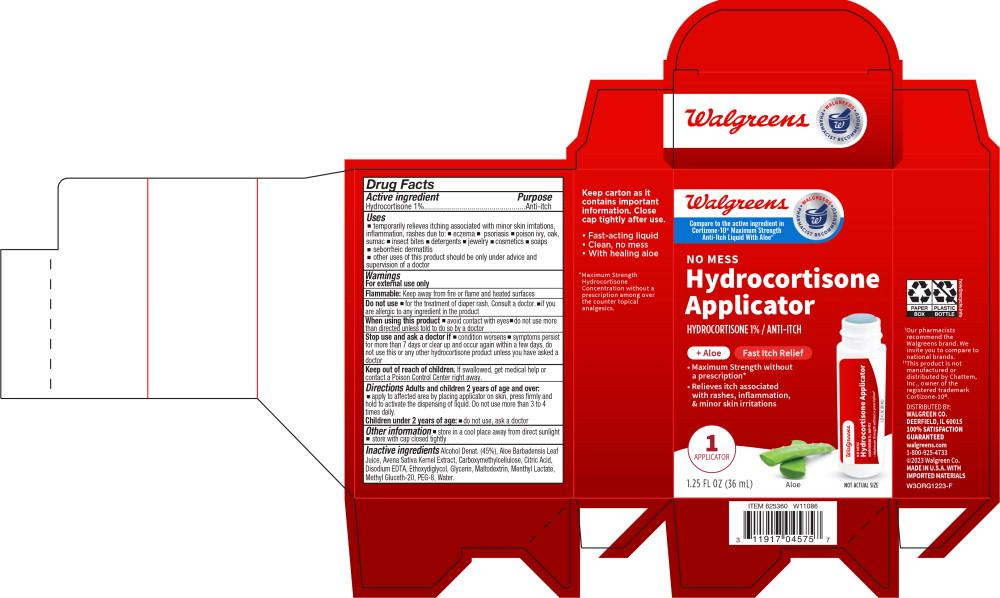
No Mess Hydrocortisone Applicator 10 mg/mL Liquid — NDC 0363-0358-12 (Billing 00363-0358-12)
This is a package of No Mess Hydrocortisone Applicator 10 mg/mL Liquid from Walgreen Co., marketed since Feb 2024 and currently FDA-listed. It is this product's only package size.
NDC database record
One package, one record: these facts belong to NDC 0363-0358-12 alone.
- Record
- FDA NDC Directory package listing · Human OTC drug
- Code segments
- 0363 labeler · 0358 product · 12 package
- Package marketed since
- Feb 16, 2024
- Sample package
- No — commercial package
- Listing certified through
- Dec 31, 2026
- Barcode (UPC-A, from the NDC)
- 3 0363035812 2
- FDA record last changed
- Jul 24, 2026
Identity & classification
Regulatory identifiers FDA, NLM and CMS codes for this package
- RxCUI (RxNorm): 310869
Where does this data come from?
- FDA openFDA NDC Directory · synced Oct 8, 2026
- FDA label on DailyMed · label index refreshed Oct 6, 2026
- RxNorm (NLM RxNav) · catalog refreshed Oct 1, 2026
- Medi-Span GPI (licensed)
- First Databank (licensed) · refreshed Oct 8, 2026
RxNorm drug class
This medicine belongs to the Corticosteroid class.
Where does this data come from?
- RxClass (NLM) · catalog refreshed Oct 1, 2026
Clinical
- It depends on the product. Tablets and oral granules are used for adrenal insufficiency, among other conditions. Injections are used for severe allergic states and skin diseases. R...
- Don't stop it suddenly if you take it for adrenal insufficiency. Stopping abruptly can cause adrenal crisis, which can be fatal. Talk to your prescriber before making any changes.
- Common ones are fluid retention, higher blood pressure, changes in blood sugar, mood changes, bigger appetite and weight gain. Call your doctor for signs of infection, vision chang...
- Grapefruit juice and some antifungals and antibiotics can raise hydrocortisone levels. Some seizure medicines and rifampicin can lower them. Tell me about any diabetes medicines, w...
Patient education
Supplement & herbal interactions
Some supplements/herbs that may interact with Hydrocortisone — tap one for details:
Hydrocortisone may be associated with lower levels of 8 nutrients — worth a chat with your pharmacist, not a cause for alarm.
Where does this data come from?
- MedlinePlus (NLM) · refreshed Oct 1, 2026
- FDA label on DailyMed · label index refreshed Oct 6, 2026
Ask a licensed pharmacist directly — free, answered by our team.
Pricing
A drug doesn't have one price. Each row is a different public payment system, and none is what you'd pay at the counter — that depends on your insurance. The ⓘ on each row explains what it measures.
| Price system | Per mL | Per package |
|---|---|---|
| Retail pharmacies payNADAC · weekly | Not in the retail survey — common for institutional, discontinued, or low-volume packs. | |
| Medicaid paysCMS SDUD · 12 mo | No recent Medicaid claims on file for this NDC — rare and low-volume NDCs are suppressed in the public data. | |
| Medicare drug plans payPart D · quarterly | No Part D plan price is available for this NDC in our data. | |
Where does this data come from?
- CMS NADAC weekly file
- CMS ASP pricing files · refreshed Sep 20, 2026
- CMS Medicaid State Drug Utilization Data · refreshed Oct 8, 2026
- CMS Part D plan pricing files · refreshed Sep 24, 2026
- VA National Acquisition Center price file
Packaging — all sizes for this product
| Package NDC | Description | Marketing start | Marketing end | Status |
|---|---|---|---|---|
| 00363-0358-12 You're viewing this Main listing | 1 BOTTLE, WITH APPLICATOR in 1 CARTON / 36 mL in 1 BOTTLE, WITH APPLICATOR | 2024-02-16 | — | Active |
Therapeutic equivalents
| Product | Labeler | Pack | NADAC/unit | TE | Status | Price vs. this |
|---|---|---|---|---|---|---|
| No Mess Hydrocortisone Applicator 10 mg/mLthis 00363-0358-12 | Walgreen | 1 bottle | — | — | FDA listed | — |
| Walgreens Scalp Itch Relief 1 g/100mL 00363-1414-02 | Walgreens | 1 bottle | — | — | FDA listed | — |
| Walgreens Scalp Relief External analgesic 10 mg/mL 00363-9068-01 | Walgreen | 1 bottle | — | — | FDA listed | — |
| Maximum Strength Scalp Itch Relief Anti-itch 10 mg/mL 11822-2215-01 | Rite | 1 bottle | — | — | FDA listed | — |
| Cortizone 10 Easy Relief 10 mg/mL 41167-0032-00 | Chattem, | 1 bottle | — | — | FDA listed | — |
| CVS Health Maximum Strength Scalp Relief Anti-itch 10 mg/mL 51316-0068-01 | CVS | 1 bottle | — | — | FDA listed | — |
| Scalpicin Anti-Itch Maximum Strength 1 g/100mL 63824-0851-15 | Reckitt | 1 bottle | — | — | FDA listed | — |
| Viaderma Calm Anti-Itch 10 mg/mL 71262-0019-15 | VIADERMA | 1 bottle | — | — | FDA listed | — |
| CVS No Mess Cortisone 10 mg/mL 66902-0754-12 | Natural | 1 bottle | — | — | FDA listed | — |
| CVS Cortisone Liquid 10 mg/mL 51316-0754-12 | CVS | 1 bottle | — | — | FDA listed | — |
Where does this data come from?
- FDA openFDA NDC Directory · synced Oct 8, 2026
- FDA Orange Book · refreshed Oct 3, 2026
- CMS NADAC weekly file
Availability & generic status
FDA-approved generic versions are listed, and recent pricing/market data suggests they may be available — see Therapeutic equivalents.
Where does this data come from?
- FDA Orange Book · refreshed Oct 3, 2026
Inactive Ingredients / Excipients
Inactive ingredients, also called excipients, are components of the drug product other than the active ingredient. They may include fillers, dyes, coatings, preservatives, flavors, or other formulation ingredients.
🧪 Avoiding an ingredient? See Hydrocortisone inactive ingredients by manufacturer: every current product's list side by side, so you can ask your pharmacy for the version that does not list it.
💡 Tap an ingredient (hover on desktop) to see what it is and why it’s used.
-
UNII 3K9958V90M
A liquid solvent derived from fermentation or chemical synthesis. In medicines, alcohol dissolves active ingredients, helps preserve the product, and improves how the body absorbs certain drugs.
-
UNII ZY81Z83H0X
Aloe vera leaf is a plant extract derived from the aloe plant. It is used in medicines as a natural moisturizer and skin-soothing agent in topical formulations.
-
UNII K679OBS311
Carboxymethylcellulose sodium is a plant-derived thickening agent made from cellulose. In medicines, it acts as a binder to hold ingredients together, a disintegrant to help the tablet break apart, or a thickener in liquids.
-
UNII 2968PHW8QP
A weak organic acid derived from citrus fruits or made through fermentation. It works as a buffer to control pH, a preservative to extend shelf life, and a flavoring agent in medications.
-
UNII A1A1I8X02B
A clear liquid solvent derived from ethylene glycol. It helps dissolve active ingredients and improve how the medicine flows and mixes in liquid formulations.
-
UNII 7FLD91C86K
Edetate disodium is a chemical compound that binds and removes certain metal ions. In medicines, it acts as a preservative and stabilizer by preventing metals like calcium from interfering with the product's shelf life and consistency.
-
UNII PDC6A3C0OX
Glycerin is a clear, thick liquid derived from plant oils or fats. It acts as a humectant to retain moisture, a sweetener, and a solvent in medications.
-
UNII 7CVR7L4A2D
A starch-derived carbohydrate produced by breaking down corn, potato, or tapioca starch. It functions as a filler and binder to give the medicine bulk and texture, and sometimes as a mild sweetener or texture enhancer in powders and tablets.
-
UNII 2BF9E65L7I
A chemical compound combining menthol with lactic acid. It's used in medicines as a flavoring agent and to provide a cooling or soothing sensation on the skin or mouth.
-
UNII J3QD0LD11P
A synthetic compound made by combining glucose with methyl alcohol and polyethylene glycol. It acts as an emulsifier and solvent to help blend water and oil-based ingredients and improve how the medicine dissolves or spreads.
-
UNII Z6J799EAJK
Oat is a cereal grain used in medicines as a filler and binder. It helps give the medication its shape and structure while adding bulk to the formulation.
-
UNII B697894SGQ
Polyethylene glycol 400 is a clear, thick liquid made from petroleum-derived polymers. It acts as a solvent and humectant in medicines, helping dissolve active ingredients and retain moisture in the formulation.
-
UNII 059QF0KO0R
Water is a liquid solvent that dissolves and mixes ingredients together in liquid medicines, syrups, and injections. It helps distribute the active drug evenly throughout the product.
13 inactive ingredients listed in the exact product block matched to this NDC.
Label-section wording can be broader than the structured product block and may mention additional formulation ingredients.
Where does this data come from?
ingredient classCode="IACT" elements from the exact product block matched by this NDC. Label-section narrative from DailyMed / the openFDA label index is shown separately when available.- FDA label on DailyMed · label index refreshed Oct 6, 2026
- FDA openFDA NDC Directory · synced Oct 8, 2026
Inactive ingredient FAQ
Are inactive ingredients the same for every manufacturer?
Why might an inactive ingredient be missing?
Can inactive ingredients matter?
Manufacturer & labeler
More NDCs from Walgreen Co. labeler code 00363
- Walgreens 40 Invisible Facial Sunscreen Broad Spectrum SPF 40 Avobenzone, Homosalate, Octisalate, Octocrylene 80 mg/mL; 30 mg/mL; 50 mg/mL; 40 mg/mL Gel NDC 0363-0349-09
- Itch Relief Gel Diphenhydramine HCl 2 mg/100mL Gel NDC 0363-0353-04
- Walgreen Itch Relief Gel Diphenhydramine Hydrochloride 20 mg/mL Gel NDC 0363-0354-04
- Overnight Cold Therapy Pain Relief Menthol, unspecified form 36 mg/mL Gel NDC 0363-0355-03
- Cold Therapy Pain Relief Menthol, unspecified form 36 mg/mL Gel NDC 0363-0356-03
- Walgreens Eczema Relief HYDROCORTISONE ACETATE 10 mg/g Cream NDC 0363-0357-02
- Esomeprazole Magnesium 20 mg Tablet, Delayed Release NDC 0363-0361-42
- Hydrocortisone Cool Relief gel with Aloe 1 g/100g Gel NDC 0363-0363-01
- Walgreens Broad Spectrum SPF 40 Radiant Facial Sunscreen AVOBENZONE, OCTISALATE, OCTOCRYLENE 30 mg/mL; 50 mg/mL; 100 mg/mL Cream NDC 0363-0364-17
- Walgreens Broad Spectrum SPF 50 Body Oil Sunscreen Avobenzone, Homosalate, Octisalate, Octocrylene 30 mg/mL; 150 mg/mL; 50 mg/mL; 100 mg/mL Spray NDC 0363-0366-21
- Sleep Aid Nighttime Diphenhydramine HCl 25 mg Tablet, Film Coated NDC 0363-0367-08
- All Day Pain Relief Naproxen Sodium 220 mg Tablet, Film Coated NDC 0363-0368-61
Where does this data come from?
- FDA openFDA NDC Directory · synced Oct 8, 2026
- Drugs@FDA
FDA label — Drug Facts FDA SPL
🎯 Indications and Usage ▾
Uses temporarily relieves itching associated with minor skin irritations, inflammation, rashes due to: eczema psoriasis poison ivy, oak, sumac insect bites detergents jewelry cosmetics soaps seborrheic dermatitis other uses of this product should be only under advice and supervision of a doctor
⏱️ Dosage and Administration ▾
Directions Adults and children 2 years of age and over: apply to affected area by placing applicator on skin, press firmly and hold to activate the dispensing of liquid. Do not use more than 3 to 4 times daily. Children under 2 years of age: do not use, ask a doctor
⚠️ Warnings ▾
Warnings For external use only Flammable: Keep away from fire or flame and heated surfaces Do not use for the treatment of diaper rash. Consult a doctor. if you are allergic to any ingredient in the product When using this product avoid contact with eyes do not use more than directed unless told to do so by a doctor Stop use and ask a doctor if condition worsens symptoms persist for more than 7 days or clear up and occur again within a few days, do not use this or any other hydrocortisone product unless you have asked a doctor Keep out of reach of children.
If swallowed, get medical help or contact a Poison Control Center right away.
🧪 Active Ingredient ▾
Active ingredient Hydrocortisone 1%
🧪 Inactive Ingredients ▾
Inactive ingredients Alcohol Denat. (45%), Aloe Barbadensis Leaf Juice, Avena Sativa Kernel Extract, Carboxymethylcellulose, Citric Acid, Disodium EDTA, Ethoxydiglycol, Glycerin, Maltodextrin, Menthyl Lactate, Methyl Gluceth-20, PEG-8, Water.
🎯 Purpose ▾
Purpose Anti-itch
📄 Do Not Use ▾
Do not use for the treatment of diaper rash. Consult a doctor. if you are allergic to any ingredient in the product
📄 When Using This Product ▾
When using this product avoid contact with eyes do not use more than directed unless told to do so by a doctor
📄 Stop Use and Ask a Doctor If ▾
Stop use and ask a doctor if condition worsens symptoms persist for more than 7 days or clear up and occur again within a few days, do not use this or any other hydrocortisone product unless you have asked a doctor
📄 Keep Out of Reach of Children ▾
Keep out of reach of children. If swallowed, get medical help or contact a Poison Control Center right away.
📄 Other Information ▾
Other information store in a cool place away from direct sunlight store with cap closed tightly
📄 Package Label / Principal Display Panel ▾
Principal Display Panel – 36 mL Carton Label Walgreens WALGREENS • PHARMACIST RECOMMENDED Compare to the active ingredient in Cortizone-10 ® Maximum Strength Anti-Itch Liquid With Aloe†† NO MESS Hydrocortisone Applicator HYDROCORTISONE 1% / ANTI-ITCH + Aloe Fast Itch Relief Maximum Strength without a prescription* Relieves itch associated with rashes, inflammation, & minor skin irritations 1 APPLICATOR
1.25 FL OZ (36 mL) Aloe NOT ACTUAL SIZE Figure
Medicare Part D spend CMS · PART D · 2026 (Q1)
About this NDC listing & data coverage
What data is (and isn’t) available for this NDC — tap to expand
| NDC identity (package / product / labeler codes) | ✓ Available |
| Labeler | ✓ Available |
| Product & package description | ✓ Available |
| Marketing category & status | ✓ Available |
| Active ingredient / dosage form / route | ✓ Available |
| FDA label (SPL via DailyMed) | ✓ Available |
| Package photos | ✓ Available |
| Inactive ingredients (structured) | ✓ Available |
| NADAC pharmacy acquisition price (CMS) | — Not published for this NDC CMS publishes NADAC only for NDCs reported in its retail-pharmacy survey. |
| Orange Book / therapeutic-equivalence data | — Not published for this NDC Applies only to products approved under an NDA/ANDA; many listings are out of scope. |
| HCPCS J-code billing crosswalk | — Not published for this NDC Most self-administered / retail products have no J-code — that is normal. |
| Medicaid utilization (CMS SDUD) | — Not published for this NDC CMS reports utilization only for NDCs with Medicaid claims above its privacy threshold. |