
Ceftriaxone 1 g Injection, Powder, For Solution, 25 vials — NDC 25021-106-67 (Billing 25021-0106-67)
This is a package of 25 vials of Ceftriaxone 1 g Injection, Powder, For Solution from Sagent Pharmaceuticals, no longer marketed, no longer in the FDA NDC Directory; retail pharmacies pay about $1.83 per vial (NADAC).
NDC database record
One package, one record: these facts belong to NDC 25021-106-67 alone.
- Record
- FDA NDC Directory package listing · Human prescription drug
- Code segments
- 25021 labeler · 106 product · 67 package
- Listing certified through
- Dec 31, 2026
- Billing quantity
- 25 EA per package
- Barcode (UPC-A, from the NDC)
- 3 2502110667 9
- FDA record last changed
- Jul 17, 2026
Identity & classification
Regulatory identifiers FDA, NLM and CMS codes for this package
Drug-database identifiers Medi-Span GPI and First Databank GCN / HICL / AHFS classification
- GSN (GCN sequence number): 009162
- GCN: 39962
- GPI-14 (Medi-Span): 02300090102115
- HICL (First Databank): 003996
- AHFS class code: 08:12.06.12
Where does this data come from?
- FDA openFDA NDC Directory · synced Oct 8, 2026
- FDA label on DailyMed · label index refreshed Oct 8, 2026
- RxNorm (NLM RxNav) · catalog refreshed Oct 8, 2026
- Medi-Span GPI (licensed)
- First Databank (licensed) · refreshed Oct 8, 2026
Clinical
Ceftriaxone injection is used to treat certain infections caused by bacteria. Ceftriaxone injection is also given before certain types of surgery to prevent infections that may develop after an operation. Ceftriaxone injection is in a class of medications called cephalosporin antibiotics. It works by killing bacteria. Antibiotics such as ceftriaxone injection will not work for colds, flu, or other viral infections.Using antibiotics when they are not needed increases your risk of getting an infection later that resists antibiotic treatment.
Read the full MedlinePlus article ↗- It is an antibiotic for bacterial infections such as pneumonia, urinary tract infections, skin, bone and joint infections, gonorrhea and meningitis. It is also sometimes given befo...
- A healthcare professional gives it either through an IV over about 30 minutes or as an injection into a large muscle. How often and how long depends on your infection, so follow yo...
- Most people tolerate it well. You may notice pain, firmness or tenderness where it was given, vein irritation, or diarrhea. Call your doctor if diarrhea is severe or lingers.
- Tell your care team first. Some people allergic to penicillin can also react to ceftriaxone, so it must be used with caution. If you have a reaction such as trouble breathing or sw...
Patient education
Supplement & herbal interactions
Some supplements/herbs that may interact with Ceftriaxone — tap one for details:
Ceftriaxone may be associated with lower levels of 7 nutrients — worth a chat with your pharmacist, not a cause for alarm.
Where does this data come from?
- MedlinePlus (NLM) · refreshed Oct 8, 2026
- FDA label on DailyMed · label index refreshed Oct 8, 2026
Ask a licensed pharmacist directly — free, answered by our team.
Pricing
A drug doesn't have one price. Each row is a different public payment system, and none is what you'd pay at the counter — that depends on your insurance. The ⓘ on each row explains what it measures.
| Price system | Per ea | Per package |
|---|---|---|
| Retail pharmacies payNADAC · weekly | $1.827 | $45.68 / 25 injection |
| Medicaid paysCMS SDUD · 12 mo | No recent Medicaid claims on file for this NDC — rare and low-volume NDCs are suppressed in the public data. | |
| Medicare drug plans payPart D · quarterly | No Part D plan price is available for this NDC in our data. | |
| Medicare Part B allowsASP · J0696 | $0.404 / J0696 unit | — |
Where does this data come from?
- CMS NADAC weekly file · file of Nov 23, 2022
- CMS ASP pricing files · refreshed Sep 20, 2026
- CMS Medicaid State Drug Utilization Data · refreshed Oct 9, 2026
- CMS Part D plan pricing files · refreshed Sep 24, 2026
- VA National Acquisition Center price file
Billing & reimbursement
Where does this data come from?
- CMS ASP NDC-HCPCS crosswalk · refreshed Sep 22, 2026
- DMEPDAC NDC-HCPCS crosswalk
- openFDA NSDE billing units · refreshed Oct 7, 2026
Packaging — all sizes for this product
| Package NDC | Description | Per unit | Per pack | Marketing start | Marketing end | Status |
|---|---|---|---|---|---|---|
| 25021-0106-10 25021-106-10 Main listing | 25 VIAL in 1 CARTON / 1 INJECTION, POWDER, FOR SOLUTION in 1 VIAL | $1.44 / ea | $36.09 | 2009-11-05 | — | Active |
| 25021-0106-67 You're viewing this | 25 VIAL in 1 CARTON / 1 INJECTION, POWDER, FOR SOLUTION in 1 VIAL | $1.83 / ea | $45.67 | 2015-07-01 | — | Discontinued by firm |
Per ea, this pack runs about 27% above the cheapest pack (NDC 25021-0106-10, $1.44 vs $1.83 NADAC).
This pack accounts for about 45% of this product's recent Medicaid fills; most go to a different pack size. See all packs ↓
Pack size FAQ
What quantity is in this package?
How does this package differ from NDC 25021-0106-10?
What NDC number is used to bill for this package of Ceftriaxone 1 g Injection, Powder, For Solution?
Prices are the latest CMS NADAC pharmacy acquisition cost per NDC; per-pack figures are per-unit × pack quantity, shown only when the pack is denominated in the same measure NADAC prices.
Therapeutic equivalents
| Product | Labeler | Pack | NADAC/unit | TE | Status | Price vs. this |
|---|---|---|---|---|---|---|
| Ceftriaxone Sodium 1 g 00409-7332-01 | Hospira, | 10 vials | $1.173 | AP | Availability likely | save 36% |
| Ceftriaxone 1 g 00143-9857-25 | Hikma | 25 vials | $1.443 | AP | Availability likely | save 21% |
| Ceftriaxone 1 g 44567-0701-25 | WG | 25 vials | $1.443 | AP | Availability likely | save 21% |
| Ceftriaxone 1 g 63323-0346-10 | Fresenius | 25 vials | $1.443 | AP | Availability likely | save 21% |
| Ceftriaxone 1 g 72572-0061-25 | Civica, | 25 vials | $1.443 | AP | Availability likely | save 21% |
| ceftriaxone 1 gthis 25021-0106-67 | Sagent | 25 vials | $1.827 | AP | Discontinued | — |
| Ceftriaxone Sodium 1 g 00781-3208-85 | Sandoz | 1 vial | $3.450 | AP | Availability likely | +89% |
| Ceftriaxone Sodium 1 g 60505-6148-00 | Apotex | 1 vial | $3.450 | AP | Availability likely | +89% |
| Ceftriaxone And Dextrose 1 g/50mL 00264-3153-11 | B. | 50 ml | — | AP | FDA listed | — |
| Ceftriaxone 1 g/50mL 00338-5002-41 | Baxter | 50 ml | — | — | FDA listed | — |
| Ceftriaxone Sodium 1 g 00409-7333-04 | Hospira, | 10 vials | — | — | FDA listed | — |
| Ceftriaxone Sodium 1 g 67184-1007-01 | Qilu | 10 vials | — | AP | FDA listed | — |
| Ceftriaxone Sodium 1 g 70518-2499-00 | REMEDYREPACK | 10 vials | — | AP | FDA listed | — |
| Ceftriaxone Sodium 1 g 71205-0545-01 | Proficient | 1 vial | — | AP | FDA listed | — |
| Ceftriaxone Sodium 1 g 85766-0069-01 | Sportpharm | 1 vial | — | AP | FDA listed | — |
Where does this data come from?
- FDA openFDA NDC Directory · synced Oct 8, 2026
- FDA Orange Book · refreshed Oct 9, 2026
- CMS NADAC weekly file · file of Nov 23, 2022
Availability & generic status
This product is an FDA-approved generic. Other versions of the same drug are listed under Therapeutic equivalents, least expensive first.
Where does this data come from?
- FDA Orange Book · refreshed Oct 9, 2026
Inactive Ingredients / Excipients
Inactive ingredients, also called excipients, are components of the drug product other than the active ingredient. They may include fillers, dyes, coatings, preservatives, flavors, or other formulation ingredients.
🧪 Avoiding an ingredient? See Ceftriaxone Injection inactive ingredients by manufacturer: every current product's list side by side, so you can ask your pharmacy for the version that does not list it.
Where does this data come from?
IACT rows and label-wide narrative are kept separate; availability and product-level specificity depend on the submitted label.- FDA label on DailyMed · label index refreshed Oct 8, 2026
- FDA openFDA NDC Directory · synced Oct 8, 2026
Inactive ingredient FAQ
Are inactive ingredients the same for every manufacturer?
Why might an inactive ingredient be missing?
Can inactive ingredients matter?
Manufacturer & labeler
More NDCs from Sagent Pharmaceuticals labeler code 25021
- Dorzolamide Hydrochloride 20 mg/mL Solution/ Drops NDC 25021-006-10
- Timolol Maleate 2.5 mg/mL Solution, Gel Forming / Drops NDC 25021-008-05
- Timolol Maleate 5 mg/mL Solution, Gel Forming / Drops NDC 25021-009-05
- Dexamethasone Sodium Phosphate 4 mg/mL Injection, Solution NDC 25021-052-01
- Dexamethasone Sodium Phosphate 10 mg/mL Injection, Solution NDC 25021-053-01
- Triamcinolone Acetonide 40 mg/mL Injection, Suspension NDC 25021-054-01
- ceftriaxone 2 g Injection, Powder, For Solution NDC 25021-107-20
- Cefoxitin 1 g Injection, Powder, For Solution NDC 25021-109-10
- Cefoxitin 2 g Injection, Powder, For Solution NDC 25021-110-20
- Cefoxitin 10 g Injection, Powder, For Solution NDC 25021-111-99
- Ciprofloxacin 2 mg/mL Injection, Solution NDC 25021-114-66
- Clindamycin 150 mg/mL Injection, Solution NDC 25021-115-02
Where does this data come from?
- FDA openFDA NDC Directory · synced Oct 8, 2026
- Drugs@FDA
Full prescribing information FDA SPL
🎯 Indications and Usage ▾
INDICATIONS AND USAGE Before instituting treatment with Ceftriaxone for Injection, USP, appropriate specimens should be obtained for isolation of the causative organism and for determination of its susceptibility to the drug. Therapy may be instituted prior to obtaining results of susceptibility testing. To reduce the development of drug-resistant bacteria and maintain the effectiveness of Ceftriaxone for Injection, USP and other antibacterial drugs, Ceftriaxone for Injection, USP should be used only to treat or prevent infections that are proven or strongly suspected to be caused by susceptible bacteria.
When culture and susceptibility information are available, they should be considered in selecting or modifying antibacterial therapy. In the absence of such data, local epidemiology and susceptibility patterns may contribute to the empiric selection of therapy. Ceftriaxone for Injection, USP is indicated for the treatment of the following infections when caused by susceptible organisms: LOWER RESPIRATORY TRACT INFECTIONS caused by Streptococcus pneumoniae, Staphylococcus aureus, Haemophilus influenzae, Haemophilus parainfluenzae, Klebsiella pneumoniae, Escherichia coli, Enterobacter aerogenes, Proteus mirabilis or Serratia marcescens.
ACUTE BACTERIAL OTITIS MEDIA caused by Streptococcus pneumoniae, Haemophilus influenzae (including beta-lactamase producing strains) or Moraxella catarrhalis (including beta-lactamase producing strains). NOTE: In one study lower clinical cure rates were observed with a single dose of Ceftriaxone for Injection, USP compared to 10 days of oral therapy. In a second study comparable cure rates were observed between single dose Ceftriaxone for Injection, USP and the comparator.
The potentially lower clinical cure rate of Ceftriaxone for Injection, USP should be balanced against the potential advantages of parenteral therapy (see CLINICAL STUDIES ). SKIN AND SKIN STRUCTURE INFECTIONS caused by Staphylococcus aureus, Staphylococcus epidermidis, Streptococcus pyogenes, Viridans group streptococci, Escherichia coli, Enterobacter cloacae, Klebsiella oxytoca, Klebsiella pneumoniae, Proteus mirabilis, Morganella morganii, * Pseudomonas aeruginosa, Serratia marcescens, Acinetobacter calcoaceticus, Bacteroides fragilis * or Peptostreptococcus species.
URINARY TRACT INFECTIONS (complicated and uncomplicated) caused by Escherichia coli, Proteus mirabilis, Proteus vulgaris, Morganella morganii or Klebsiella pneumoniae . UNCOMPLICATED GONORRHEA (cervical/urethral and rectal) caused by Neisseria gonorrhoeae, including both penicillinase- and nonpenicillinase-producing strains, and pharyngeal gonorrhea caused by nonpenicillinase-producing strains of Neisseria gonorrhoeae. PELVIC INFLAMMATORY DISEASE caused by Neisseria gonorrhoeae.
Ceftriaxone for Injection, USP, like other cephalosporins, has no activity against Chlamydia trachomatis. Therefore, when cephalosporins are used in the treatment of patients with pelvic inflammatory disease and Chlamydia trachomatis is one of the suspected pathogens, appropriate antichlamydial coverage should be added. BACTERIAL SEPTICEMIA caused by Staphylococcus aureus, Streptococcus pneumoniae, Escherichia coli, Haemophilus influenzae or Klebsiella pneumoniae.
BONE AND JOINT INFECTIONS caused by Staphylococcus aureus, Streptococcus pneumoniae, Escherichia coli, Proteus mirabilis, Klebsiella pneumoniae or Enterobacter species. INTRA-ABDOMINAL INFECTIONS caused by Escherichia coli, Klebsiella pneumoniae, Bacteroides fragilis, Clostridium species (Note: most strains of Clostridium difficile are resistant) or Peptostreptococcus species. MENINGITIS caused by Haemophilus influenzae, Neisseria meningitidis or Streptococcus pneumoniae .
Ceftriaxone for Injection, USP has also been used successfully in a limited number of cases of meningitis and shunt infection caused by Staphylococcus epidermidis* and Escherichia coli*. *Efficacy for this organism in this organ system was studied in fewer th… [Excerpted — this section continues on DailyMed.]
⏱️ Dosage and Administration ▾
DOSAGE AND ADMINISTRATION Ceftriaxone may be administered intravenously or intramuscularly. Do not use diluents containing calcium, such as Ringer's solution or Hartmann's solution, to reconstitute ceftriaxone vials or to further dilute a reconstituted vial for IV administration because a precipitate can form. Precipitation of ceftriaxone-calcium can also occur when ceftriaxone is mixed with calcium-containing solutions in the same IV administration line.
Ceftriaxone must not be administered simultaneously with calcium-containing IV solutions, including continuous calcium-containing infusions such as parenteral nutrition via a Y-site. However, in patients other than neonates, ceftriaxone and calcium-containing solutions may be administered sequentially of one another if the infusion lines are thoroughly flushed between infusions with a compatible fluid (see WARNINGS ). There have been no reports of an interaction between ceftriaxone and oral calcium-containing products or interaction between intramuscular ceftriaxone and calcium-containing products (IV or oral).
NEONATES: Hyperbilirubinemic neonates, especially prematures, should not be treated with ceftriaxone. Ceftriaxone is contraindicated in premature neonates (see CONTRAINDICATIONS ). Ceftriaxone is contraindicated in neonates (≤ 28 days) if they require (or are expected to require) treatment with calcium-containing IV solutions, including continuous calcium-containing infusions such as parenteral nutrition because of the risk of precipitation of ceftriaxone-calcium (see CONTRAINDICATIONS ).
Intravenous doses should be given over 60 minutes in neonates to reduce the risk of bilirubin encephalopathy. PEDIATRIC PATIENTS: For the treatment of skin and skin structure infections, the recommended total daily dose is 50 to 75 mg/kg given once a day (or in equally divided doses twice a day). The total daily dose should not exceed 2 grams.
For the treatment of acute bacterial otitis media, a single intramuscular dose of 50 mg/kg (not to exceed 1 gram) is recommended (see INDICATIONS AND USAGE ). For the treatment of serious miscellaneous infections other than meningitis, the recommended total daily dose is 50 to 75 mg/kg, given in divided doses every 12 hours. The total daily dose should not exceed 2 grams.
In the treatment of meningitis, it is recommended that the initial therapeutic dose be 100 mg/kg (not to exceed 4 grams). Thereafter, a total daily dose of 100 mg/kg/day (not to exceed 4 grams daily) is recommended. The daily dose may be administered once a day (or in equally divided doses every 12 hours).
The usual duration of therapy is 7 to 14 days. ADULTS: The usual adult daily dose is 1 to 2 grams given once a day (or in equally divided doses twice a day) depending on the type and severity of infection. The total daily dose should not exceed 4 grams.
If Chlamydia trachomatis is a suspected pathogen, appropriate antichlamydial coverage should be added, because ceftriaxone sodium has no activity against this organism. For the treatment of uncomplicated gonococcal infections, a single intramuscular dose of 250 mg is recommended. For preoperative use (surgical prophylaxis), a single dose of 1 gram administered intravenously 1/2 to 2 hours before surgery is recommended.
Generally, ceftriaxone therapy should be continued for at least 2 days after the signs and symptoms of infection have disappeared. The usual duration of therapy is 4 to 14 days; in complicated infections, longer therapy may be required. When treating infections caused by Streptococcus pyogenes , therapy should be continued for at least 10 days.
No dosage adjustment is necessary for patients with impairment of renal or hepatic function (see PRECAUTIONS ). The dosages recommended for adults require no modification in elderly patients, up to 2 g per day, provided there is no severe renal and hepatic impairment (see PRECAUTIONS ). DIRECTIONS FOR USE: Intramuscular Administration: Reconstitute ceftriaxone powder with… [Excerpted — this section continues on DailyMed.]
⛔ Contraindications ▾
CONTRAINDICATIONS Hypersensitivity Ceftriaxone is contraindicated in patients with known hypersensitivity to ceftriaxone, any of its excipients or to any other cephalosporin. Patients with previous hypersensitivity reactions to penicillin and other beta lactam antibacterial agents may be at greater risk of hypersensitivity to ceftriaxone (see WARNINGS – Hypersensitivity ). Neonates Premature neonates : Ceftriaxone is contraindicated in premature neonates up to a postmenstrual age of 41 weeks (gestational age + chronological age).
Hyperbilirubinemic neonates : Hyperbilirubinemic neonates should not be treated with ceftriaxone. Ceftriaxone can displace bilirubin from its binding to serum albumin, leading to a risk of bilirubin encephalopathy in these patients. Neonates Requiring Calcium Containing IV Solutions Ceftriaxone is contraindicated in neonates (≤ 28 days) if they require (or are expected to require) treatment with calcium-containing IV solutions, including continuous calcium-containing infusions such as parenteral nutrition because of the risk of precipitation of ceftriaxone-calcium (see CLINICAL PHARMACOLOGY , WARNINGS and DOSAGE AND ADMINISTRATION ).
Cases of fatal outcomes in which a crystalline material was observed in the lungs and kidneys at autopsy have been reported in neonates receiving ceftriaxone and calcium-containing fluids. In some of these cases, the same intravenous infusion line was used for both ceftriaxone and calcium-containing fluids and in some a precipitate was observed in the intravenous infusion line. There have been no similar reports in patients other than neonates.
Lidocaine Intravenous administration of ceftriaxone solutions containing lidocaine is contraindicated. When lidocaine solution is used as a solvent with ceftriaxone for intramuscular injection, exclude all contraindications to lidocaine. Refer to the prescribing information of lidocaine.
⚠️ Warnings ▾
WARNINGS Hypersensitivity Reactions Before therapy with ceftriaxone is instituted, careful inquiry should be made to determine whether the patient has had previous hypersensitivity reactions to cephalosporins, penicillins and other beta-lactam agents or other drugs. This product should be given cautiously to penicillin and other beta-lactam agent-sensitive patients. Antibacterial drugs should be administered with caution to any patient who has demonstrated some form of allergy, particularly to drugs.
Serious acute hypersensitivity reactions may require the use of subcutaneous epinephrine and other emergency measures. As with all beta-lactam antibacterial agents, serious and occasionally fatal hypersensitivity reactions (i.e., anaphylaxis) have been reported. In case of severe hypersensitivity reactions, treatment with ceftriaxone must be discontinued immediately and adequate emergency measures must be initiated.
Interaction with Calcium-Containing Products Do not use diluents containing calcium, such as Ringer's solution or Hartmann's solution, to reconstitute ceftriaxone vials or to further dilute a reconstituted vial for IV administration because a precipitate can form. Precipitation of ceftriaxone-calcium can also occur when ceftriaxone is mixed with calcium-containing solutions in the same IV administration line. Ceftriaxone must not be administered simultaneously with calcium-containing IV solutions, including continuous calcium-containing infusions such as parenteral nutrition via a Y-site.
However, in patients other than neonates, ceftriaxone and calcium-containing solutions may be administered sequentially of one another if the infusion lines are thoroughly flushed between infusions with a compatible fluid. In vitro studies using adult and neonatal plasma from umbilical cord blood demonstrated that neonates have an increased risk of precipitation of ceftriaxone-calcium (see CLINICAL PHARMACOLOGY , CONTRAINDICATIONS and DOSAGE AND ADMINISTRATION ). Neurological Adverse Reactions Serious neurological adverse reactions have been reported during postmarketing surveillance with ceftriaxone use.
These reactions include encephalopathy (disturbance of consciousness including somnolence, lethargy, and confusion), seizures, myoclonus, and non-convulsive status epilepticus (see ADVERSE REACTIONS ). Some cases occurred in patients with severe renal impairment who did not receive appropriate dosage adjustment. However, in other cases, neurological adverse reactions occurred in patients receiving an appropriate dosage adjustment.
The neurological adverse reactions were reversible and resolved after discontinuation. If neurological adverse reactions associated with Ceftriaxone for Injection therapy occur, discontinue Ceftriaxone for Injection and institute appropriate supportive measures. Make appropriate dosage adjustments in patients with severe renal impairment (see DOSAGE AND ADMINISTRATION ).
Clostridium difficile -Associated Diarrhea Clostridium difficile associated diarrhea (CDAD) has been reported with use of nearly all antibacterial agents, including ceftriaxone, and may range in severity from mild diarrhea to fatal colitis. Treatment with antibacterial agents alters the normal flora of the colon leading to overgrowth of C. difficile. C. difficile produces toxins A and B which contribute to the development of CDAD.
Hypertoxin producing strains of C. difficile cause increased morbidity and mortality, as these infections can be refractory to antimicrobial therapy and may require colectomy. CDAD must be considered in all patients who present with diarrhea following antibiotic use. Careful medical history is necessary since CDAD has been reported to occur over two months after the administration of antibacterial agents.
If CDAD is suspected or confirmed, ongoing antibiotic use not directed against C. difficile may need to be discontinued. Appropriate fluid and electrolyte management, protein supplementation, antibiotic treatment… [Excerpted — this section continues on DailyMed.]
🤒 Adverse Reactions ▾
ADVERSE REACTIONS Ceftriaxone is generally well tolerated. In clinical trials, the following adverse reactions, which were considered to be related to ceftriaxone therapy or of uncertain etiology, were observed: LOCAL REACTIONS — pain, induration and tenderness was 1% overall. Phlebitis was reported in <1% after IV administration.
The incidence of warmth, tightness or induration was 17% (3/17) after IM administration of 350 mg/mL and 5% (1/20) after IM administration of 250 mg/mL. GENERAL DISORDERS AND ADMINISTRATION SITE CONDITIONS —injection site pain (0.6%). HYPERSENSITIVITY — rash (1.7%).
Less frequently reported (<1%) were pruritus, fever or chills. INFECTIONS AND INFESTATIONS —genital fungal infection (0.1%). HEMATOLOGIC — eosinophilia (6%), thrombocytosis (5.1%) and leukopenia (2.1%).
Less frequently reported (<1%) were anemia, hemolytic anemia, neutropenia, lymphopenia, thrombocytopenia and prolongation of the prothrombin time. BLOOD AND LYMPHATIC DISORDERS —granulocytopenia (0.9%), coagulopathy (0.4%). GASTROINTESTINAL — diarrhea/loose stools (2.7%).
Less frequently reported (<1%) were nausea or vomiting, and dysgeusia. The onset of pseudomembranous colitis symptoms may occur during or after antibacterial treatment (see WARNINGS ). HEPATIC — elevations of aspartate aminotransferase (AST) (3.1%) or alanine aminotransferase (ALT) (3.3%).
Less frequently reported (<1%) were elevations of alkaline phosphatase and bilirubin. RENAL — elevations of the BUN (1.2%). Less frequently reported (<1%) were elevations of creatinine and the presence of casts in the urine.
CENTRAL NERVOUS SYSTEM — headache or dizziness were reported occasionally (<1%). GENITOURINARY — moniliasis or vaginitis were reported occasionally (<1%). MISCELLANEOUS — diaphoresis and flushing were reported occasionally (<1%).
INVESTIGATIONS —blood creatinine increased (0.6%). Other rarely observed adverse reactions (<0.1%) include abdominal pain, agranulocytosis, allergic pneumonitis, anaphylaxis, basophilia, biliary lithiasis, bronchospasm, colitis, dyspepsia, epistaxis, flatulence, gallbladder sludge, glycosuria, hematuria, jaundice, leukocytosis, lymphocytosis, monocytosis, nephrolithiasis, palpitations, a decrease in the prothrombin time, renal precipitations, seizures, and serum sickness. Postmarketing Experience: In addition to the adverse reactions reported during clinical trials, the following adverse experiences have been reported during clinical practice in patients treated with ceftriaxone.
Data are generally insufficient to allow an estimate of incidence or to establish causation. A small number of cases of fatal outcomes in which a crystalline material was observed in the lungs and kidneys at autopsy have been reported in neonates receiving ceftriaxone and calcium-containing fluids. In some of these cases, the same intravenous infusion line was used for both ceftriaxone and calcium-containing fluids and in some a precipitate was observed in the intravenous infusion line.
At least one fatality has been reported in a neonate in whom ceftriaxone and calcium-containing fluids were administered at different time points via different intravenous lines; no crystalline material was observed at autopsy in this neonate. There have been no similar reports in patients other than neonates. GASTROINTESTINAL – pancreatitis, stomatitis and glossitis.
GENITOURINARY – oliguria, ureteric obstruction, post-renal acute renal failure. DERMATOLOGIC – exanthema, allergic dermatitis, urticaria, edema; acute generalized exanthematous pustulosis (AGEP) and isolated cases of severe cutaneous adverse reactions (erythema multiforme, Stevens-Johnson syndrome or Lyell's syndrome/toxic epidermal necrolysis) have been reported. HEMATOLOGICAL CHANGES: Isolated cases of agranulocytosis (< 500/mm 3 ) have been reported, most of them after 10 days of treatment and following total doses of 20 g or more.
NEUROLOGIC: Encephalopathy, seizures, myoclonus, and non-convulsive status epilepticu… [Excerpted — this section continues on DailyMed.]
🤰 Pregnancy ▾
Pregnancy: Teratogenic Effects: Pregnancy Category B. Reproductive studies have been performed in mice and rats at doses up to 20 times the usual human dose and have no evidence of embryotoxicity, fetotoxicity or teratogenicity. In primates, no embryotoxicity or teratogenicity was demonstrated at a dose approximately 3 times the human dose.
There are, however, no adequate and well-controlled studies in pregnant women. Because animal reproductive studies are not always predictive of human response, this drug should be used during pregnancy only if clearly needed.
🧒 Pediatric Use ▾
Pediatric Use: Safety and effectiveness of ceftriaxone in neonates, infants and pediatric patients have been established for the dosages described in the DOSAGE AND ADMINISTRATION section. In vitro studies have shown that ceftriaxone, like some other cephalosporins, can displace bilirubin from serum albumin. Ceftriaxone should not be administered to hyperbilirubinemic neonates, especially prematures (see CONTRAINDICATIONS ).
🧓 Geriatric Use ▾
Geriatric Use: Of the total number of subjects in clinical studies of ceftriaxone, 32% were 60 and over. No overall differences in safety or effectiveness were observed between these subjects and younger subjects, and other reported clinical experience has not identified differences in responses between the elderly and younger patients, but greater sensitivity of some older individuals cannot be ruled out. The pharmacokinetics of ceftriaxone were only minimally altered in geriatric patients compared to healthy adult subjects and dosage adjustments are not necessary for geriatric patients with ceftriaxone dosages up to 2 grams per day provided there is no severe renal and hepatic impairment (see CLINICAL PHARMACOLOGY ).
🆘 Overdosage ▾
OVERDOSAGE Ceftriaxone overdosage has been reported in patients with severe renal impairment. Reactions have included neurological outcomes, including encephalopathy, seizures, myoclonus, and non-convulsive status epilepticus. In the event of overdosage, discontinue Ceftriaxone for Injection therapy and provide general supportive treatment (see DOSAGE AND ADMINISTRATION and WARNINGS AND PRECAUTIONS ).
In the case of overdosage, drug concentration would not be reduced by hemodialysis or peritoneal dialysis. There is no specific antidote. Treatment of overdosage should be symptomatic.
🧬 Clinical Pharmacology ▾
CLINICAL PHARMACOLOGY Average plasma concentrations of ceftriaxone following a single 30-minute intravenous (IV) infusion of a 0.5, 1 or 2 g dose and intramuscular (IM) administration of a single 0.5 (250 mg/mL or 350 mg/mL concentrations) or 1 g dose in healthy subjects are presented in Table 1 . TABLE 1. Ceftriaxone Plasma Concentrations After Single Dose Administration * IV doses were infused at a constant rate over 30 minutes.
ND = Not determined. Dose/Route Average Plasma Concentrations (mcg/mL) 0.5 hr 1 hr 2 hr 4 hr 6 hr 8 hr 12 hr 16 hr 24 hr 0.5 g IV * 82 59 48 37 29 23 15 10 5 0.5 g IM 250 mg/mL 22 33 38 35 30 26 16 ND 5 0.5 g IM 350 mg/mL 20 32 38 34 31 24 16 ND 5 1 g IV * 151 111 88 67 53 43 28 18 9 1 g IM 40 68 76 68 56 44 29 ND ND 2 g IV * 257 192 154 117 89 74 46 31 15 Ceftriaxone was completely absorbed following IM administration with mean maximum plasma concentrations occurring between 2 and 3 hours post-dose. Multiple IV or IM doses ranging from 0.5 to 2 g at 12- to 24-hour intervals resulted in 15% to 36% accumulation of ceftriaxone above single dose values.
Ceftriaxone concentrations in urine are shown in Table 2 . TABLE 2. Urinary Concentrations of Ceftriaxone After Single Dose Administration ND = Not determined.
Dose/Route Average Urinary Concentrations (mcg/mL) 0 to 2 hr 2 to 4 hr 4 to 8 hr 8 to 12 hr 12 to 24 hr 24 to 48 hr 0.5 g IV 526 366 142 87 70 15 0.5 g IM 115 425 308 127 96 28 1 g IV 995 855 293 147 132 32 1 g IM 504 628 418 237 ND ND 2 g IV 2692 1976 757 274 198 40 Thirty-three percent to 67% of a ceftriaxone dose was excreted in the urine as unchanged drug and the remainder was secreted in the bile and ultimately found in the feces as microbiologically inactive compounds. After a 1 g IV dose, average concentrations of ceftriaxone, determined from 1 to 3 hours after dosing, were 581 mcg/mL in the gallbladder bile, 788 mcg/mL in the common duct bile, 898 mcg/mL in the cystic duct bile, 78.2 mcg/g in the gallbladder wall and 62.1 mcg/mL in the concurrent plasma.
Over a 0.15 to 3 g dose range in healthy adult subjects, the values of elimination half-life ranged from 5.8 to 8.7 hours; apparent volume of distribution from 5.78 to
13.5L; plasma clearance from 0.58 to
1.45L/hour; and renal clearance from 0.32 to
0.73L/hour. Ceftriaxone is reversibly bound to human plasma proteins, and the binding decreased from a value of 95% bound at plasma concentrations of < 25 mcg/mL to a value of 85% bound at 300 mcg/mL. Ceftriaxone crosses the blood placenta barrier.
The average values of maximum plasma concentration, elimination half-life, plasma clearance and volume of distribution after a 50 mg/kg IV dose and after a 75 mg/kg IV dose in pediatric patients suffering from bacterial meningitis are shown in Table 3 . Ceftriaxone penetrated the inflamed meninges of infants and pediatric patients; CSF concentrations after a 50 mg/kg IV dose and after a 75 mg/kg IV dose are also shown in Table 3 . TABLE 3.
Average Pharmacokinetic Parameters of Ceftriaxone in Pediatric Patients With Meningitis 50 mg/kg IV 75 mg/kg IV Maximum Plasma Concentrations (mcg/mL) 216 275 Elimination Half-life (hr) 4.6
4.3Plasma Clearance (mL/hr/kg) 49 60 Volume of Distribution (mL/kg) 338 373 CSF Concentration – inflamed meninges (mcg/mL) Range (mcg/mL) Time after dose (hr) 5.6 6.4 1.3 to 18.5 1.3 to 44 3.7 (± 1.6) 3.3 (± 1.4) Compared to that in healthy adult subjects, the pharmacokinetics of ceftriaxone were only minimally altered in elderly subjects and in patients with renal impairment or hepatic dysfunction ( Table 4 ); therefore, dosage adjustments are not necessary for these patients with ceftriaxone dosages up to 2 g per day.
Ceftriaxone was not removed to any significant extent from the plasma by hemodialysis; in six of 26 dialysis patients, the elimination rate of ceftriaxone was markedly reduced. TABLE 4. Average Pharmacokinetic Parameters of Ceftriaxone in Humans *Creatinine clearance.
Subject Group Elimination Half-Life (hr)… [Excerpted — this section continues on DailyMed.]
🧬 Mechanism of Action ▾
Mechanism of Action Ceftriaxone is a bactericidal agent that acts by inhibition of bacterial cell wall synthesis. Ceftriaxone has activity in the presence of some beta-lactamases, both penicillinases and cephalosporinases, of Gram-negative and Gram-positive bacteria.
📦 How Supplied / Storage and Handling ▾
HOW SUPPLIED Ceftriaxone for Injection, USP is supplied as a sterile crystalline powder in glass vials as follows: NDC Ceftriaxone for Injection, USP Package Factor 25021-105-10 500 mg equivalent of ceftriaxone 25 vials per carton in a Single-Dose Vial 25021-106-10 1 g equivalent of ceftriaxone 25 vials per carton in a Single-Dose Vial 25021-107-20 2 g equivalent of ceftriaxone 25 vials per carton in a Single-Dose Vial Ceftriaxone for Injection, USP is also supplied as a sterile crystalline powder in a Pharmacy Bulk Package as follows: NDC Ceftriaxone for Injection, USP Package Factor 25021-108-99 10 g equivalent of ceftriaxone 1 bottle per carton in a Pharmacy Bulk Package – NOT FOR DIRECT INFUSION Storage Conditions Store at 20° to 25°C (68° to 77°F). [See USP Controlled Room Temperature.] Protect from light.
Sterile, Nonpyrogenic, Preservative-free. The container closure is not made with natural rubber latex.
📦 Storage and Handling ▾
Storage Conditions Store at 20° to 25°C (68° to 77°F). [See USP Controlled Room Temperature.] Protect from light. Sterile, Nonpyrogenic, Preservative-free. The container closure is not made with natural rubber latex.
📋 Description ▾
DESCRIPTION Ceftriaxone for Injection, USP is a sterile, semisynthetic, broad-spectrum cephalosporin antibiotic for intravenous or intramuscular administration. Ceftriaxone sodium is (6 R ,7 R )-7-[2-(2-Amino-4-thiazolyl)glyoxylamido]-8-oxo-3-[[(1,2,5,6-tetrahydro-2-methyl-5,6-dioxo- as -triazin-3-yl)thio]methyl]-5-thia-1-azabicyclo[4.2.0]oct-2-ene-2-carboxylic acid, 7 2 -( Z )-( O -methyloxime), disodium salt, sesquaterhydrate. The chemical formula of ceftriaxone sodium is C 18 H 16 N 8 Na 2 O 7 S 3 •3.5H 2 O.
It has a calculated molecular weight of 661.60 and the following structural formula: Ceftriaxone for Injection, USP is a white to yellowish-orange crystalline powder which is readily soluble in water, sparingly soluble in methanol and very slightly soluble in ethanol. The pH of a 1% aqueous solution is approximately 6.7. The color of Ceftriaxone for Injection, USP solutions ranges from light yellow to amber, depending on the length of storage, concentration and diluent used.
Ceftriaxone for Injection, USP contains approximately 83 mg (3.6 mEq) of sodium per gram of ceftriaxone activity. Structural Formula
💬 Information for Patients ▾
Information for Patients: Advise patients that neurological adverse reactions could occur with Ceftriaxone for Injection use. Instruct patients or their caregivers to inform their healthcare provider at once of any neurological signs and symptoms, including encephalopathy (disturbance of consciousness including somnolence, lethargy, and confusion), seizures, myoclonus, and nonconvulsive status epilepticus, for immediate treatment, or discontinuation of Ceftriaxone for Injection (see WARNINGS AND PRECAUTIONS ). Patients should be counseled that antibacterial drugs including ceftriaxone should only be used to treat bacterial infections.
They do not treat viral infections (e.g., common cold). When ceftriaxone is prescribed to treat a bacterial infection, patients should be told that although it is common to feel better early in the course of therapy, the medication should be taken exactly as directed. Skipping doses or not completing the full course of therapy may (1) decrease the effectiveness of the immediate treatment and (2) increase the likelihood that bacteria will develop resistance and will not be treatable by ceftriaxone or other antibacterial drugs in the future.
Diarrhea is a common problem caused by antibiotics which usually ends when the antibiotic is discontinued. Sometimes after starting treatment with antibiotics, patients can develop watery and bloody stools (with or without stomach cramps and fever) even as late as two or more months after having taken the last dose of the antibiotic. If this occurs, patients should contact their physician as soon as possible.
⚠️ Precautions ▾
PRECAUTIONS Development of Drug-resistant Bacteria Prescribing ceftriaxone in the absence of a proven or strongly suspected bacterial infection or a prophylactic indication is unlikely to provide benefit to the patient and increases the risk of the development of drug-resistant bacteria. Prolonged use of ceftriaxone may result in overgrowth of nonsusceptible organisms. Careful observation of the patient is essential.
If superinfection occurs during therapy, appropriate measures should be taken. Patients with Renal or Hepatic Impairment Ceftriaxone is excreted via both biliary and renal excretion (see CLINICAL PHARMACOLOGY ). Therefore, patients with renal failure normally require no adjustment in dosage when usual doses of ceftriaxone are administered.
Dosage adjustments should not be necessary in patients with hepatic dysfunction; however, in patients with both hepatic dysfunction and significant renal disease, caution should be exercised and the ceftriaxone dosage should not exceed 2 g daily. Ceftriaxone is not removed by peritoneal- or hemodialysis. In patients undergoing dialysis no additional supplementary dosing is required following the dialysis.
In patients with both severe renal and hepatic dysfunction, close clinical monitoring for safety and efficacy is advised. Effect on Prothrombin Time Alterations in prothrombin times have occurred in patients treated with ceftriaxone. Monitor prothrombin time during ceftriaxone treatment in patients with impaired vitamin K synthesis or low vitamin K stores (e.g., chronic hepatic disease and malnutrition).
Vitamin K administration (10 mg weekly) may be necessary if the prothrombin time is prolonged before or during therapy. Concomitant use of ceftriaxone with Vitamin K antagonists may increase the risk of bleeding. Coagulation parameters should be monitored frequently, and the dose of the anticoagulant adjusted accordingly, both during and after treatment with ceftriaxone (see ADVERSE REACTIONS ).
Gallbladder Pseudolithiasis Ceftriaxone-calcium precipitates in the gallbladder have been observed in patients receiving ceftriaxone. These precipitates appear on sonography as an echo without acoustical shadowing suggesting sludge or as an echo with acoustical shadowing which may be misinterpreted as gallstones. The probability of such precipitates appears to be greatest in pediatric patients.
Patients may be asymptomatic or may develop symptoms of gallbladder disease. The condition appears to be reversible upon discontinuation of ceftriaxone sodium and institution of conservative management. Discontinue ceftriaxone sodium in patients who develop signs and symptoms suggestive of gallbladder disease and/or the sonographic findings described above.
Urolithiasis and Post-Renal Acute Renal Failure Ceftriaxone-calcium precipitates in the urinary tract have been observed in patients receiving ceftriaxone and may be detected as sonographic abnormalities. The probability of such precipitates appears to be greatest in pediatric patients. Patients may be asymptomatic or may develop symptoms of urolithiasis, and ureteral obstruction and post-renal acute renal failure.
The condition appears to be reversible upon discontinuation of ceftriaxone sodium and institution of appropriate management. Ensure adequate hydration in patients receiving ceftriaxone. Discontinue ceftriaxone in patients who develop signs and symptoms suggestive of urolithiasis, oliguria or renal failure and/or the sonographic findings described above.
Pancreatitis Cases of pancreatitis, possibly secondary to biliary obstruction, have been reported in patients treated with ceftriaxone. Most patients presented with risk factors for biliary stasis and biliary sludge (preceding major therapy, severe illness, total parenteral nutrition). A cofactor role of ceftriaxone-related biliary precipitation cannot be ruled out.
Information for Patients: Advise patients that neurological adverse reactions could occur with Ceftriaxone for Injectio… [Excerpted — this section continues on DailyMed.]
🍼 Nursing Mothers ▾
Nursing Mothers: Low concentrations of ceftriaxone are excreted in human milk. Caution should be exercised when ceftriaxone is administered to a nursing woman.
🔬 Clinical Studies ▾
CLINICAL STUDIES Clinical Trials in Pediatric Patients With Acute Bacterial Otitis Media: In two adequate and well-controlled U.S. clinical trials a single IM dose of ceftriaxone was compared with a 10 day course of oral antibiotic in pediatric patients between the ages of 3 months and 6 years. The clinical cure rates and statistical outcome appear in the table below: TABLE 5. Clinical Efficacy in Pediatric Patients with Acute Bacterial Otitis Media Clinical Efficacy in Evaluable Population Study Day Ceftriaxone Single Dose Comparator – 10 Days of Oral Therapy 95% Confidence Interval Statistical Outcome Study 1 – U.S. amoxicillin/clavulanate Ceftriaxone is lower than control at study day 14 and 28.
14 74% (220/296) 82% (247/302) (-14.4%, -0.5%) 28 58% (167/288) 67% (200/297) (-17.5%, -1.2%) Study 2 – U.S. 1 TMP-SMZ Ceftriaxone is equivalent to control at study day 14 and 28. 14 54% (113/210) 60% (124/206) (-16.4%, 3.6%) 28 35% (73/206) 45% (93/205) (-19.9%, 0.0%) An open-label bacteriologic study of ceftriaxone without a comparator enrolled 108 pediatric patients, 79 of whom had positive baseline cultures for one or more of the common pathogens.
The results of this study are tabulated as follows: Week 2 and 4 Bacteriologic Eradication Rates in the Per Protocol Analysis in the Roche Bacteriologic Study by pathogen: TABLE 6. Bacteriologic Eradication Rates by Pathogen Organism Study Day 13 – 15 Study Day 30 + 2 No. Analyzed No.
Erad. (%) No. Analyzed No.
Erad. (%) Streptococcus pneumoniae 38 32 (84) 35 25 (71) Haemophilus influenzae 33 28 (85) 31 22 (71) Moraxella catarrhalis 15 12 (80) 15 9 (60)
📄 Carcinogenesis, Mutagenesis, Impairment of Fertility ▾
Carcinogenesis, Mutagenesis, Impairment of Fertility: Carcinogenesis: Considering the maximum duration of treatment and the class of the compound, carcinogenicity studies with ceftriaxone in animals have not been performed. The maximum duration of animal toxicity studies was 6 months. Mutagenesis: Genetic toxicology tests included the Ames test, a micronucleus test and a test for chromosomal aberrations in human lymphocytes cultured in vitro with ceftriaxone.
Ceftriaxone showed no potential for mutagenic activity in these studies. Impairment of Fertility: Ceftriaxone produced no impairment of fertility when given intravenously to rats at daily doses up to 586 mg/kg/day, approximately 20 times the recommended clinical dose of 2 g/day. Pregnancy: Teratogenic Effects: Pregnancy Category B.
Reproductive studies have been performed in mice and rats at doses up to 20 times the usual human dose and have no evidence of embryotoxicity, fetotoxicity or teratogenicity. In primates, no embryotoxicity or teratogenicity was demonstrated at a dose approximately 3 times the human dose. There are, however, no adequate and well-controlled studies in pregnant women.
Because animal reproductive studies are not always predictive of human response, this drug should be used during pregnancy only if clearly needed. Nonteratogenic Effects: In rats, in the Segment I (fertility and general reproduction) and Segment III (perinatal and postnatal) studies with intravenously administered ceftriaxone, no adverse effects were noted on various reproductive parameters during gestation and lactation, including postnatal growth, functional behavior and reproductive ability of the offspring, at doses of 586 mg/kg/day or less.
Nursing Mothers: Low concentrations of ceftriaxone are excreted in human milk. Caution should be exercised when ceftriaxone is administered to a nursing woman. Pediatric Use: Safety and effectiveness of ceftriaxone in neonates, infants and pediatric patients have been established for the dosages described in the DOSAGE AND ADMINISTRATION section.
In vitro studies have shown that ceftriaxone, like some other cephalosporins, can displace bilirubin from serum albumin. Ceftriaxone should not be administered to hyperbilirubinemic neonates, especially prematures (see CONTRAINDICATIONS ). Geriatric Use: Of the total number of subjects in clinical studies of ceftriaxone, 32% were 60 and over.
No overall differences in safety or effectiveness were observed between these subjects and younger subjects, and other reported clinical experience has not identified differences in responses between the elderly and younger patients, but greater sensitivity of some older individuals cannot be ruled out. The pharmacokinetics of ceftriaxone were only minimally altered in geriatric patients compared to healthy adult subjects and dosage adjustments are not necessary for geriatric patients with ceftriaxone dosages up to 2 grams per day provided there is no severe renal and hepatic impairment (see CLINICAL PHARMACOLOGY ).
Influence on Diagnostic Tests: In patients treated with ceftriaxone the Coombs' test may become positive. Ceftriaxone, like other antibacterial drugs, may result in positive test results for galactosemia. Nonenzymatic methods for the glucose determination in urine may give false-positive results.
For this reason, urine-glucose determination during therapy with ceftriaxone should be done enzymatically. The presence of ceftriaxone may falsely lower estimated blood glucose values obtained with some blood glucose monitoring systems. Please refer to instructions for use for each system.
Alternative testing methods should be used if necessary.
📚 References ▾
REFERENCES Barnett ED, Teele DW, Klein JO, et al. Comparison of Ceftriaxone and Trimethoprim-Sulfamethoxazole for Acute Otitis Media. Pediatrics. Vol. 99, No. 1, January 1997. Brands listed are the trademarks of their respective owners. SAGENT ® Mfd. for SAGENT Pharmaceuticals Schaumburg, IL 60195 (USA) Made in Italy ©2022 Sagent Pharmaceuticals, Inc. Revised: January 2022 SAGENT Pharmaceuticals ®
📄 Package Label / Principal Display Panel ▾
PACKAGE LABEL – PRINCIPAL DISPLAY PANEL – Vial Label NDC 25021-105-10 Rx only Ceftriaxone for Injection, USP 500 mg per vial For Intravenous or Intramuscular Use Single-Dose Vial PACKAGE LABEL – PRINCIPAL DISPLAY PANEL – Vial Label
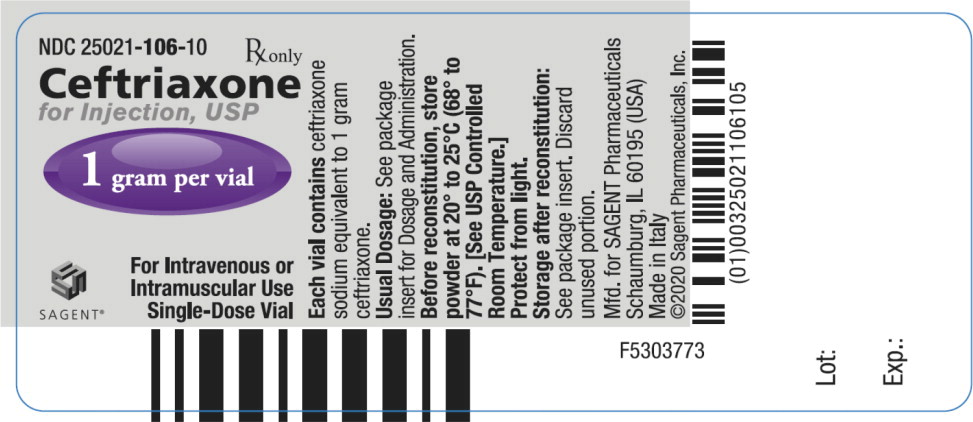
PACKAGE LABEL – PRINCIPAL DISPLAY PANEL – Vial Label NDC 25021-106-10 Rx only Ceftriaxone for Injection, USP 1 gram per vial For Intravenous or Intramuscular Use Single-Dose Vial PACKAGE LABEL – PRINCIPAL DISPLAY PANEL – Vial Label
PACKAGE LABEL – PRINCIPAL DISPLAY PANEL – Vial Label NDC 25021-107-20 Rx only Ceftriaxone for Injection, USP 2 grams per vial For Intravenous or Intramuscular Use Single-Dose Vial PACKAGE LABEL – PRINCIPAL DISPLAY PANEL – Vial Label
Medicaid utilization by pack size
Medicare Part D spend CMS · PART D · 2026 (Q1)
About this NDC listing & data coverage
What data is (and isn’t) available for this NDC — tap to expand
| NDC identity (package / product / labeler codes) | ✓ Available |
| Labeler | ✓ Available |
| Product & package description | ✓ Available |
| Marketing category & status | ✓ Available |
| Active ingredient / dosage form / route | ✓ Available |
| FDA label (SPL via DailyMed) | ✓ Available |
| Package photos | ✓ Available |
| Inactive ingredients (structured) | — Not published for this NDC The labeler did not submit a structured excipient list, or no SPL is available. |
| NADAC pharmacy acquisition price (CMS) | ✓ Available |
| Orange Book / therapeutic-equivalence data | ✓ Available |
| HCPCS J-code billing crosswalk | ✓ Available |
| Medicaid utilization (CMS SDUD) | — Not published for this NDC CMS reports utilization only for NDCs with Medicaid claims above its privacy threshold. |