
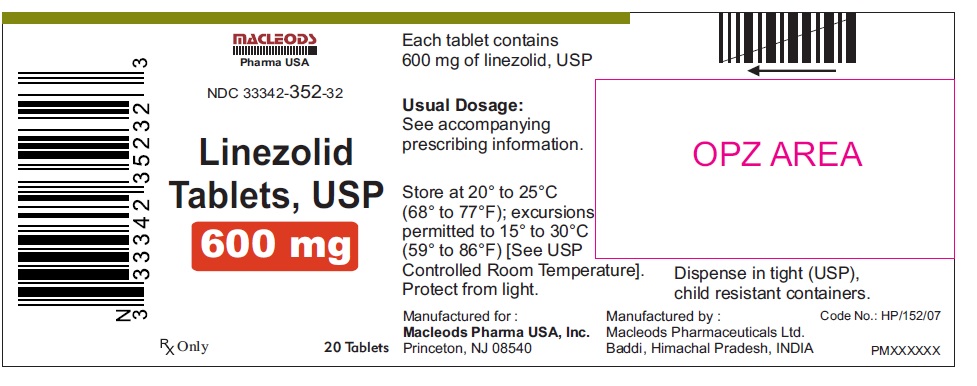
Linezolid 600 mg Tablet, Coated, 100-count — NDC 33342-352-11 (Billing 33342-0352-11)
This is a package of 100 tablets of Linezolid 600 mg Tablet, Coated from Macleods Pharmaceuticals Limited, marketed since Oct 2024 and currently FDA-listed.
NDC database record
One package, one record: these facts belong to NDC 33342-352-11 alone.
- Record
- FDA NDC Directory package listing · Human prescription drug
- Code segments
- 33342 labeler · 352 product · 11 package
- Package marketed since
- Oct 10, 2024
- Sample package
- No — commercial package
- Listing certified through
- Dec 31, 2027
- Barcode (UPC)
- 0333342352118, 0333342352323
- FDA record last changed
- Aug 13, 2026
Identity & classification
Regulatory identifiers FDA, NLM and CMS codes for this package
- RxCUI (RxNorm): 311347
Where does this data come from?
- FDA openFDA NDC Directory · synced Oct 8, 2026
- FDA label on DailyMed · label index refreshed Oct 6, 2026
- RxNorm (NLM RxNav) · catalog refreshed Oct 1, 2026
- Medi-Span GPI (licensed)
- First Databank (licensed) · refreshed Oct 8, 2026
RxNorm drug class
This medicine belongs to the Oxazolidinone Antibacterial class.
Where does this data come from?
- RxClass (NLM) · catalog refreshed Oct 1, 2026
Clinical
- It treats certain bacterial infections caused by Gram-positive bacteria. These include hospital- and community-acquired pneumonia, skin infections, and vancomycin-resistant Enteroc...
- Take it exactly as prescribed, usually every 8 or 12 hours, by mouth or through a vein. You can take it with or without food. Finish the full course your prescriber gave you.
- Diarrhea, nausea, vomiting and headache are the most common. Dizziness, rash and taste changes also happen. Call your doctor if they are severe or don’t go away.
- Call for blurred vision or color changes, numbness or tingling, severe diarrhea, repeated vomiting, seizures, or unusual bleeding. Also call for high fever, stiff muscles, agitatio...
Patient education
Supplement & herbal interactions
Some supplements/herbs that may interact with Linezolid — tap one for details:
Linezolid may be associated with lower levels of 7 nutrients — worth a chat with your pharmacist, not a cause for alarm.
Where does this data come from?
- MedlinePlus (NLM) · refreshed Oct 1, 2026
- FDA label on DailyMed · label index refreshed Oct 6, 2026
Ask a licensed pharmacist directly — free, answered by our team.
Pricing
A drug doesn't have one price. Each row is a different public payment system, and none is what you'd pay at the counter — that depends on your insurance. The ⓘ on each row explains what it measures.
| Price system | Per each | Per package |
|---|---|---|
| Retail pharmacies payNADAC · weekly | Not in the retail survey — common for institutional, discontinued, or low-volume packs. | |
| Medicaid paysCMS SDUD · 12 mo | No recent Medicaid claims on file for this NDC — rare and low-volume NDCs are suppressed in the public data. | |
| Medicare drug plans payPart D · Q2 2026 | $2.58 | $258.31 / 100 tablets |
Where does this data come from?
- CMS NADAC weekly file
- CMS ASP pricing files · refreshed Sep 20, 2026
- CMS Medicaid State Drug Utilization Data · refreshed Oct 8, 2026
- CMS Part D plan pricing files · refreshed Sep 24, 2026
- VA National Acquisition Center price file
Packaging — all sizes for this product
| Package NDC | Description | Marketing start | Marketing end | Status |
|---|---|---|---|---|
| 33342-0352-11 You're viewing this | 100 TABLET, COATED in 1 BOTTLE | 2024-10-10 | — | Active |
| 33342-0352-31 33342-352-31 | 5 BLISTER PACK in 1 CARTON / 10 TABLET, COATED in 1 BLISTER PACK | 2024-10-10 | — | Active |
| 33342-0352-32 33342-352-32 | 20 TABLET, COATED in 1 BOTTLE | 2024-10-10 | — | Active |
| 33342-0352-06 33342-352-06 Main listing | 3 BLISTER PACK in 1 CARTON / 10 TABLET, COATED in 1 BLISTER PACK | 2026-07-22 | — | Active |
Pack size FAQ
What quantity is in this package?
How does this package differ from NDC 33342-0352-32?
What NDC number is used to bill for this package of Linezolid 600 mg Tablet, Coated?
Therapeutic equivalents
| Product | Labeler | Pack | NADAC/unit | TE | Status | Price vs. this |
|---|---|---|---|---|---|---|
| Linezolid 600 mg 00904-6553-04 | Major | 1 tablet | $1.441 | AB | Availability likely | — |
| Linezolid 600 mg 60687-0309-21 | American | 1 tablet | $1.441 | AB | Availability likely | — |
| linezolid 600 mg 62135-0442-20 | Chartwell | 20 tablets | $1.441 | AB | Availability likely | — |
| Linezolid 600 mg 64980-0561-02 | Rising | 20 tablets | $1.441 | AB | Availability likely | — |
| Linezolid 600 mg 59762-1307-01 | Mylan | 20 tablets | $1.495 | — | Discontinued | — |
| Linezolid 600 mg 62332-0183-20 | Alembic | 20 tablets | $2.084 | AB | FDA listed | — |
| Zyvox 600 mg 00009-5138-02 | Pharmacia | 20 tablets | — | — | FDA listed | — |
| Linezolid 600 mg 31722-0749-01 | Camber | 100 tablets | — | AB | FDA listed | — |
| Linezolid 600 mgthis 33342-0352-11 | Macleods | 100 tablets | — | AB | FDA listed | — |
| Linezolid 600 mg 46708-0183-20 | Alembic | 20 tablets | — | AB | FDA listed | — |
| Linezolid 600 mg 63629-8576-01 | Bryant | 20 tablets | — | AB | FDA listed | — |
| Linezolid 600 mg 67046-1576-03 | Coupler | 30 tablets | — | AB | FDA listed | — |
| Linezolid 600 mg 67877-0419-01 | Ascend | 100 tablets | — | AB | FDA listed | — |
| Linezolid 600 mg 70518-4034-00 | REMEDYREPACK | 20 tablets | — | AB | FDA listed | — |
| Linezolid 600 mg 71335-2565-01 | Bryant | 20 tablets | — | AB | FDA listed | — |
| Linezolid 600 mg 85766-0075-20 | Sportpharm | 20 tablets | — | AB | FDA listed | — |
| Linezolid 600 mg 43386-0022-02 | Lupin | 20 tablets | — | AB | FDA listed | — |
| Linezolid 600 mg 85766-0231-01 | Sportpharm | 100 tablets | — | AB | FDA listed | — |
| Linezolid 600 mg 50090-8044-00 | A-S | 20 tablets | — | AB | FDA listed | — |
Where does this data come from?
- FDA openFDA NDC Directory · synced Oct 8, 2026
- FDA Orange Book · refreshed Oct 3, 2026
- CMS NADAC weekly file
Availability & generic status
This product is an FDA-approved generic. Other versions of the same drug are listed under Therapeutic equivalents, least expensive first.
Where does this data come from?
- FDA Orange Book · refreshed Oct 3, 2026
Inactive Ingredients / Excipients
Inactive ingredients, also called excipients, are components of the drug product other than the active ingredient. They may include fillers, dyes, coatings, preservatives, flavors, or other formulation ingredients.
🧪 Avoiding an ingredient? See Linezolid inactive ingredients by manufacturer: every current product's list side by side, so you can ask your pharmacy for the version that does not list it.
Where does this data come from?
IACT rows and label-wide narrative are kept separate; availability and product-level specificity depend on the submitted label.- FDA label on DailyMed · label index refreshed Oct 6, 2026
- FDA openFDA NDC Directory · synced Oct 8, 2026
Inactive ingredient FAQ
Are inactive ingredients the same for every manufacturer?
Why might an inactive ingredient be missing?
Can inactive ingredients matter?
Manufacturer & labeler
More NDCs from Macleods Pharmaceuticals Limited labeler code 33342
- doxycycline 40 mg Capsule NDC 33342-346-07
- Fenofibrate 54 mg Tablet NDC 33342-347-10
- Fenofibrate 160 mg Tablet NDC 33342-348-10
- Dimethyl Fumarate 120 mg Capsule, Delayed Release NDC 33342-349-09
- Dimethyl Fumarate 240 mg Capsule, Delayed Release NDC 33342-350-09
- Dimethyl Fumarate Kit NDC 33342-351-93
- Milnacipran Hydrochloride 12.5 mg Tablet NDC 33342-369-09
- Milnacipran Hydrochloride 25 mg Tablet NDC 33342-370-09
- Milnacipran Hydrochloride 50 mg Tablet NDC 33342-371-09
- Milnacipran Hydrochloride 100 mg Tablet NDC 33342-372-09
- Ezetimibe 10 mg Tablet NDC 33342-373-07
- Hydralazine Hydrochloride 10 mg Tablet NDC 33342-374-11
Where does this data come from?
- FDA openFDA NDC Directory · synced Oct 8, 2026
- Drugs@FDA
Full prescribing information FDA SPL
🎯 Indications and Usage ▾
1 INDICATIONS AND USAGE Linezolid tablets are an oxazolidinone-class antibacterial indicated in adults and children for the treatment of the following infections caused by susceptible Gram-positive bacteria: Nosocomial pneumonia ( 1.1 ); Community-acquired pneumonia ( 1.2 ); Complicated skin and skin structure infections, including diabetic foot infections, without concomitant osteomyelitis ( 1.3 ); Uncomplicated skin and skin structure infections ( 1.4 ); Vancomycin-resistant Enterococcus faecium infections. ( 1.5 ) Limitations of Use ( 1.6 ): Linezolid tablets are not indicated for the treatment of Gram-negative infections.
The safety and efficacy of linezolid tablets formulations given for longer than 28 days have not been evaluated in controlled clinical trials. To reduce the development of drug-resistant bacteria and maintain the effectiveness of linezolid tablets formulations and other antibacterial drugs, linezolid tablets should be used only to treat or prevent infections that are proven or strongly suspected to be caused by bacteria. ( 1.7 )
1.1Nosocomial Pneumonia Linezolid tablets are indicated for the treatment of nosocomial pneumonia caused by Staphylococcus aureus (methicillin-susceptible and -resistant isolates) or Streptococcus pneumoniae [see Clinical Studies ( 14 )].
1.2Community-acquired Pneumonia Linezolid tablets are indicated for the treatment of community-acquired pneumonia caused by Streptococcus pneumoniae , including cases with concurrent bacteremia, or Staphylococcus aureus (methicillin-susceptible isolates only) [see Clinical Studies ( 14 ) ].
1.3Complicated Skin and Skin Structure Infections Linezolid tablets are indicated for the treatment of complicated skin and skin structure infections, including diabetic foot infections, without concomitant osteomyelitis, caused by Staphylococcus aureus (methicillin-susceptible and -resistant isolates), Streptococcus pyogenes , or Streptococcus agalactiae . Linezolid tablet has not been studied in the treatment of decubitus ulcers [see Clinical Studies ( 14 )].
1.4Uncomplicated Skin and Skin Structure Infections Linezolid tablets are indicated for the treatment of uncomplicated skin and skin structure infections caused by Staphylococcus aureus (methicillin-susceptible isolates only) or Streptococcus pyogenes [see Clinical Studies ( 14 )].
1.5Vancomycin-resistant Enterococcus faecium Infections Linezolid tablets are indicated for the treatment of vancomycin-resistant Enterococcus faecium infections, including cases with concurrent bacteremia [see Clinical Studies ( 14 )].
1.6Limitations of Use • Linezolid tablets are not indicated for the treatment of Gram-negative infections. It is critical that specific Gram-negative therapy be initiated immediately if a concomitant Gram-negative pathogen is documented or suspected [see Warnings and Precautions ( 5.4 )]. • The safety and efficacy of linezolid tablets formulations given for longer than 28 days have not been evaluated in controlled clinical trials [see Clinical Studies ( 14 )].
1.7Usage To reduce the development of drug-resistant bacteria and maintain the effectiveness of linezolid tablets and other antibacterial drugs, linezolid tablets should be used only to treat or prevent infections that are proven or strongly suspected to be caused by susceptible bacteria. When culture and susceptibility information are available, they should be considered in selecting or modifying antibacterial therapy. In the absence of such data, local epidemiology and susceptibility patterns may contribute to the empiric selection of therapy.
⏱️ Dosage and Administration ▾
2 DOSAGE AND ADMINISTRATION Dosage, Route, and Frequency of Administration Infection Pediatric Patients (Birth through 11 years of Age) Adults and Adolescents (12 years and Older) Duration (days) Nosocomial pneumonia 10 mg/kg oral every 8 hours 600 mg oral every 12 hours 10 to 14 Community-acquired pneumonia, including concurrent bacteremia Complicated skin and skin structure infections Vancomycin-resistant Enterococcus faecium infections, including concurrent bacteremia 10 mg/kg oral every 8 hours 600 mg oral every 12 hours 14 to 28 Uncomplicated skin and skin structure infections less than 5 yrs: 10 mg/kg oral every 8 hours 5-11 yrs: 10 mg/kg oral every 12 hours Adults: 400 mg oral every 12 hours Adolescents: 600 mg oral every 12 hours 10 to 14
2.1General Dosage and Administration The recommended dosage for linezolid tablets formulations for the treatment of infections is described in Table 1. Table 1. Dosage Guidelines for Linezolid Tablets Infection * Dosage, Route and Frequency of Administration Recommended Duration of Treatment (consecutive days) Pediatric Patients † (Birth through 11 Years of Age) Adults and Adolescents (12 Years and Older) Nosocomial pneumonia 10 mg/kg oral ‡ every 8 hours 600 mg oral ‡ every 12 hours 10 to 14 Community-acquired pneumonia, including concurrent bacteremia Complicated skin and skin structure infections Vancomycin-resistant Enterococcus faecium infections , including concurrent bacteremia 10 mg/kg oral ‡ every 8 hours 600 mg oral ‡ every 12 hours 14 to 28 Uncomplicated skin and skin structure infections less than 5 yrs: 10 mg/kg oral‡ every 8 hours 5-11 yrs: 10 mg/kg oral‡ every 12 hours Adults: 400 mg oral‡ every 12 hours Adolescents: 600 mg oral‡ every 12 hours 10 to 14 * Due to the designated pathogens [see Indications and Usage ( 1 )] † Neonates less than 7 days: Most pre-term neonates less than 7 days of age (gestational age less than 34 weeks) have lower systemic linezolid clearance values and larger AUC values than many full-term neonates and older infants.
These neonates should be initiated with a dosing regimen of 10 mg/kg every 12 hours. Consideration may be given to the use of 10 mg/kg every 8 hours regimen in neonates with a sub-optimal clinical response. All neonatal patients should receive 10 mg/kg every 8 hours by 7 days of life [see Use in Specific Populations ( 8.4 ) and Clinical Pharmacology ( 12.3 )]. ‡ Oral dosing using linezolid tablets [see How Supplied/Storage and Handling ( 16 )].
No dose adjustment is necessary when switching from intravenous to oral administration.
💊 Dosage Forms and Strengths ▾
3 DOSAGE FORMS AND STRENGTHS Linezolid Tablets ,USP 600 mg: White to off-white, capsule shaped, biconvex, film coated tablets debossed “F32” on one side and plain on other side. Linezolid Tablets, USP: 600 mg. ( 3 )
⛔ Contraindications ▾
4 CONTRAINDICATIONS Known hypersensitivity to linezolid or any of the other product components. ( 4.1 ) Patients taking any monoamine oxidase inhibitors (MAOI) or within two weeks of taking an MAOI. ( 4.2 )
4.1Hypersensitivity Linezolid tablets formulations are contraindicated for use in patients who have known hypersensitivity to linezolid or any of the other product components.
4.2Monoamine Oxidase Inhibitors Linezolid should not be used in patients taking any medicinal product which inhibits monoamine oxidases A or B (e.g., phenelzine, isocarboxazid) or within two weeks of taking any such medicinal product.
⚠️ Warnings and Cautions ▾
5 WARNINGS AND PRECAUTIONS • Myelosuppression: Monitor complete blood counts weekly. Thrombocytopenia has been reported more often in patients with severe renal and in patients with moderate to severe hepatic impairment. Consider discontinuation in patients who develop or have worsening myelosuppression.
( 5.1 ) • Peripheral and Optic Neuropathy: Reported primarily in patients treated for longer than 28 days. If patients experience symptoms of visual impairment, prompt ophthalmic evaluation is recommended. ( 5.2 ) • Serotonin Syndrome: Monitor patients taking linezolid tablets concomitantly with serotonergic agents for signs of serotonin syndrome.
If signs or symptoms of serotonin syndrome occur, consider discontinuing linezolid tablets and/or concomitant serotonergic agents. ( 5.3 ) • A mortality imbalance was seen in an investigational study in linezolid-treated patients with catheter-related bloodstream infections. ( 5.4 ) • Clostridioides difficile -Associated Diarrhea: Evaluate if diarrhea occurs.
( 5.5 ) • Potential interactions producing elevation of blood pressure: monitor blood pressure. ( 5.6 ) • Rhabdomyolysis: If signs or symptoms of rhabdomyolysis are observed, discontinue linezolid tablets and initiate appropriate therapy. ( 5.9 ) • Hypoglycemia: Postmarketing cases of symptomatic hypoglycemia have been reported in patients with diabetes mellitus receiving insulin or oral hypoglycemic agents.
( 5.10 ) •Hyponatremia and/or Syndrome of Inappropriate Antidiuretic Hormone Secretion (SIADH): Monitor serum sodium levels regularly in patients at risk of hyponatremia and/or SIADH. ( 5.11 )
5.1Myelosuppression Myelosuppression (including anemia, leukopenia, pancytopenia, and thrombocytopenia) has been reported in patients receiving linezolid. In cases where the outcome is known, when linezolid was discontinued, the affected hematologic parameters have risen toward pretreatment levels. Thrombocytopenia has been reported more often in patients with severe renal impairment, whether or not on dialysis, and in patients with moderate to severe hepatic impairment.
Complete blood counts should be monitored weekly in patients who receive linezolid, particularly in those who receive linezolid for longer than two weeks, those with pre-existing myelosuppression, those with severe renal impairment or moderate to severe hepatic impairment, those receiving concomitant drugs that produce bone marrow suppression, or those with a chronic infection who have received previous or concomitant antibacterial drug therapy. Discontinuation of therapy with linezolid should be considered in patients who develop or have worsening myelosuppression [see Adverse Reactions (6.2)].
5.2Peripheral and Optic Neuropathy Peripheral and optic neuropathies have been reported in patients treated with linezolid tablets, primarily in those patients treated for longer than the maximum recommended duration of 28 days. In cases of optic neuropathy that progressed to loss of vision, patients were treated for extended periods beyond the maximum recommended duration. Visual blurring has been reported in some patients treated with linezolid tablets for less than 28 days.
Peripheral and optic neuropathy has also been reported in children. If patients experience symptoms of visual impairment, such as changes in visual acuity, changes in color vision, blurred vision, or visual field defect, prompt ophthalmic evaluation is recommended. Visual function should be monitored in all patients taking linezolid tablets for extended periods (≥ 3 months) and in all patients reporting new visual symptoms regardless of length of therapy with linezolid tablets.
If peripheral or optic neuropathy occurs, the continued use of linezolid tablets in these patients should be weighed against the potential risks.
5.3Serotonin Syndrome Spontaneous reports of serotonin syndrome including fatal cases associated with the concomitant use of linezolid tablets and serotonergic agents have been reporte… [Excerpted — this section continues on DailyMed.]
🤒 Adverse Reactions ▾
6 ADVERSE REACTIONS The following clinically significant adverse reactions are described elsewhere in the labeling: • Myelosuppression [see Warnings and Precautions ( 5.1 )] • Peripheral and Optic Neuropathy [see Warnings and Precautions ( 5.2 )] • Serotonin Syndrome [see Warnings and Precautions ( 5.3 )] • Clostridioides difficile - Associated Diarrhea [see Warnings and Precautions ( 5.5 )] • Lactic Acidosis [see Warnings and Precautions ( 5.7 )] • Convulsions [see Warnings and Precautions ( 5.8 )] • Rhabdomyolysis [see Warnings and Precautions ( 5.9 )] • Hypoglycemia [see Warnings and Precautions ( 5.10 )] • Hyponatremia and/or Syndrome of Inappropriate Antidiuretic Hormone Secretion (SIADH) [ see Warnings and Precautions ( 5.11 )] Most common adverse reactions (>5% of adult and/or pediatric patients treated with linezolid tablets) include diarrhea, vomiting, headache, nausea, and anemia.
( 6 ) To report SUSPECTED ADVERSE REACTIONS, contact Macleods Pharma USA, Inc. at 1-888-943-3210 or 1-855-926-3384 or FDA at 1-800-FDA-1088 or www.fda.gov/medwatch .
6.1Clinical Trials Experience Because clinical trials are conducted under widely varying conditions, adverse reaction rates observed in the clinical trials of a drug cannot be directly compared to rates in the clinical trials of another drug and may not reflect the rates observed in practice. Adults The safety of linezolid tablets formulations was evaluated in 2,046 adult patients enrolled in seven Phase 3 comparator-controlled clinical trials, who were treated for up to 28 days. Of the patients treated for uncomplicated skin and skin structure infections (uSSSIs), 25.4% of linezolid tablets-treated and 19.6% of comparator-treated patients experienced at least one drug-related adverse event.
For all other indications, 20.4% of linezolid tablets-treated and 14.3% of comparator-treated patients experienced at least one drug-related adverse event. Table 2 shows the incidence of all-causality, treatment-emergent adverse reactions reported in at least 1% of adult patients in these trials by dose of linezolid tablets. Table 2.
Incidence (%) of Treatment–Emergent Adverse Reactions Occurring in >1% of Adult Patients Treated with Linezolid Tablets in Comparator-Controlled Clinical Trials ADVERSE REACTIONS Uncomplicated Skin and Skin Structure Infections All Other Indications Linezolid Tablets 400 mg by mouth every 12 hours (n=548) Clarithromycin 250 mg by mouth every 12 hours (n=537) Linezolid Tablets 600 mg every 12 hours (n=1498) All Other Comparators* (n=1464) Headache 8.8 8.4 5.7
4.4Diarrhea 8.2 6.1 8.3
6.4Nausea 5.1 4.5 6.6
4.6Vomiting 2.0 1.5 4.3
2.3Dizziness 2.6 3.0 1.8
1.5Rash 1.1 1.1 2.3
2.6Anemia 0.4 0 2.1
1.4Taste alteration 1.8 2.0 1.0
0.3Vaginal moniliasis 1.8 1.3 1.1
0.5Oral moniliasis 0.5 0 1.7
1.0Abnormal liver function tests 0.4 0.2 1.6
0.8Fungal infection 1.5 0.2 0.3
0.2Tongue discoloration 1.3 0 0.3 0 Localized abdominal pain 1.3 0.6 1.2
0.8Generalized abdominal pain 0.9 0.4 1.2 1.0 * Comparators included cefpodoxime proxetil 200 mg by mouth every 12 hours; ceftriaxone 1 g intravenously every 12 hours; dicloxacillin 500 mg by mouth every 6 hours; oxacillin 2 g intravenously every 6 hours; vancomycin 1 g intravenously every 12 hours. Of the patients treated for uSSSIs, 3.5% of linezolid tablets-treated and 2.4% of comparator-treated patients discontinued treatment due to drug-related adverse events. For all other indications, discontinuations due to drug-related adverse events occurred in 2.1% of linezolid tablets-treated and 1.7% of comparator-treated patients.
The most common reported drug-related adverse events leading to discontinuation of treatment were nausea, headache, diarrhea, and vomiting. Pediatric Patients The safety of linezolid tablets formulations was evaluated in 215 pediatricpatients ranging in age from birth through 11 years, and in 248 pediatric patients aged 5 through 17 years (146 of these 248 were age 5 through 11 and 102 were age 12… [Excerpted — this section continues on DailyMed.]
🔄 Drug Interactions ▾
7 DRUG INTERACTIONS Monoamine oxidase inhibitors and potential for interaction with adrenergic and serotonergic agents. ( 4.2 , 5.3 , 5.6 , 7 , 12.3 )
7.1Monoamine Oxidase Inhibitors Linezolid is a reversible, nonselective inhibitor of monoamine oxidase [see Contraindications ( 4.2 ) and Clinical Pharmacology ( 12.3 )].
7.2Adrenergic and Serotonergic Agents Linezolid has the potential for interaction with adrenergic and serotonergic agents [see Warnings and Precautions ( 5.3 , 5.6 ) and Clinical Pharmacology ( 12.3 )].
👥 Use in Specific Populations ▾
8 USE IN SPECIFIC POPULATIONS
8.1Pregnancy Risk Summary Available data from published and postmarketing case reports with linezolid use in pregnant women have not identified a drug-associated risk of major birth defects, miscarriage, or adverse maternal or fetal outcomes. When administered during organogenesis, linezolid did not cause malformations in mice, rats, or rabbits at maternal exposure levels approximately 6.5 times (mice), equivalent to (rats), or 0.06 times (rabbits) the clinical therapeutic exposure, based on AUCs. However, embryo-fetal lethality was observed in mice at 6.5 times the estimated human exposure.
When female rats were dosed during organogenesis through lactation, postnatal survival of pups was decreased at doses approximately equivalent to the estimated human exposure based on AUCs (see Data). The background risk of major birth defects and miscarriage for the indicated populations is unknown. All pregnancies have a background risk of birth defect, loss, or other adverse outcomes.
In the U.S. general population, the estimated background risk of major birth defects and miscarriage in clinically recognized pregnancies is 2-4% and 15-20%, respectively. Data Animal Data In mice, embryo-fetal toxicities were observed only at doses that caused maternal toxicity (clinical signs and reduced body weight gain). An oral dose of 450 mg/kg/day given from Gestation Day (GD) 6-16 (6.5 times the estimated human exposure based on AUCs) correlated with increased postimplantational embryo death, including total litter loss, decreased fetal body weights, and an increased incidence of costal cartilage fusion.
Neither maternal nor embryo-fetal toxicities were observed at doses up to 150 mg/kg/day. Fetal malformations were not observed. In rats, fetal toxicity was observed at 15 and 50 mg/kg/day administered orally from GD 6-17 (exposures 0.22 times to approximately equivalent to the estimated human exposure, respectively, based on AUCs).
The effects consisted of decreased fetal body weights and reduced ossification of sternebrae, a finding often seen in association with decreased fetal body weights. Fetal malformations were not observed. Maternal toxicity, in the form of reduced body weight gain, was seen at 50 mg/kg/day.
In rabbits, reduced fetal body weight occurred only in the presence of maternal toxicity (clinical signs, reduced body weight gain and food consumption) when administered at an oral dose of 15 mg/kg/day given from GD 6-20 (0.06 times the estimated human exposure based on AUCs). Fetal malformations were not observed. When female rats were treated with 50 mg/kg/day (approximately equivalent to the estimated human exposure based on AUCs) of linezolid during pregnancy and lactation (GD 6 through Lactation Day 20), survival of pups was decreased on postnatal days 1 to 4.
Male and female pups permitted to mature to reproductive age, when mated, showed an increase in preimplantation loss.
8.2Lactation Risk Summary Linezolid is present in breast milk. Based on data from available published case reports, the daily dose of linezolid that the infant would receive from breastmilk would be approximately 6% to 9% of the recommended therapeutic infant dose (10 mg/kg every 8 hours). There is no information on the effects of linezolid on the breastfed infant; however, diarrhea and vomiting were the most common adverse reactions reported in clinical trials in infants receiving linezolid therapeutically [see Adverse Reactions ( 6.1 )] and (see Clinical Considerations).
There is no information on the effects of linezolid on milk production. The developmental and health benefits of breastfeeding should be considered along with the mother’s clinical need for linezolid and any potential adverse effects on the breastfed child from linezolid or from the underlying maternal condition. Clinical Considerations Advise lactating women to monitor a breastfed infant for diarrhea and vomiting.
8.3Females and Males of Reproductive Potent… [Excerpted — this section continues on DailyMed.]
🤰 Pregnancy ▾
8.1Pregnancy Risk Summary Available data from published and postmarketing case reports with linezolid use in pregnant women have not identified a drug-associated risk of major birth defects, miscarriage, or adverse maternal or fetal outcomes. When administered during organogenesis, linezolid did not cause malformations in mice, rats, or rabbits at maternal exposure levels approximately 6.5 times (mice), equivalent to (rats), or 0.06 times (rabbits) the clinical therapeutic exposure, based on AUCs. However, embryo-fetal lethality was observed in mice at 6.5 times the estimated human exposure.
When female rats were dosed during organogenesis through lactation, postnatal survival of pups was decreased at doses approximately equivalent to the estimated human exposure based on AUCs (see Data). The background risk of major birth defects and miscarriage for the indicated populations is unknown. All pregnancies have a background risk of birth defect, loss, or other adverse outcomes.
In the U.S. general population, the estimated background risk of major birth defects and miscarriage in clinically recognized pregnancies is 2-4% and 15-20%, respectively. Data Animal Data In mice, embryo-fetal toxicities were observed only at doses that caused maternal toxicity (clinical signs and reduced body weight gain). An oral dose of 450 mg/kg/day given from Gestation Day (GD) 6-16 (6.5 times the estimated human exposure based on AUCs) correlated with increased postimplantational embryo death, including total litter loss, decreased fetal body weights, and an increased incidence of costal cartilage fusion.
Neither maternal nor embryo-fetal toxicities were observed at doses up to 150 mg/kg/day. Fetal malformations were not observed. In rats, fetal toxicity was observed at 15 and 50 mg/kg/day administered orally from GD 6-17 (exposures 0.22 times to approximately equivalent to the estimated human exposure, respectively, based on AUCs).
The effects consisted of decreased fetal body weights and reduced ossification of sternebrae, a finding often seen in association with decreased fetal body weights. Fetal malformations were not observed. Maternal toxicity, in the form of reduced body weight gain, was seen at 50 mg/kg/day.
In rabbits, reduced fetal body weight occurred only in the presence of maternal toxicity (clinical signs, reduced body weight gain and food consumption) when administered at an oral dose of 15 mg/kg/day given from GD 6-20 (0.06 times the estimated human exposure based on AUCs). Fetal malformations were not observed. When female rats were treated with 50 mg/kg/day (approximately equivalent to the estimated human exposure based on AUCs) of linezolid during pregnancy and lactation (GD 6 through Lactation Day 20), survival of pups was decreased on postnatal days 1 to 4.
Male and female pups permitted to mature to reproductive age, when mated, showed an increase in preimplantation loss.
🧒 Pediatric Use ▾
8.4Pediatric Use The safety and effectiveness of linezolid tablets for the treatment of pediatric patients with the following infections are supported by evidence from adequate and well-controlled studies in adults, pharmacokinetic data in pediatric patients, and additional data from a comparator-controlled study of Gram-positive infections in pediatric patients ranging in age from birth through 11 years [see Indications and Usage ( 1 ), Clinical Pharmacology ( 12.3 ) and Clinical Studies ( 14 )]: • nosocomial pneumonia • complicated skin and skin structure infections • community-acquired pneumonia (also supported by evidence from an uncontrolled study in patients ranging in age from 8 months through 12 years) • vancomycin-resistant Enterococcus faecium infections The safety and effectiveness of linezolid tablets for the treatment of pediatric patients with the following infection have been established in a comparator-controlled study in pediatric patients ranging in age from 5 through 17 years [see Clinical Studies ( 14 )]: • uncomplicated skin and skin structure infections caused by Staphylococcus aureus (methicillin-susceptible strains only) or Streptococcus pyogenes Pharmacokinetic information generated in pediatric patients with ventriculoperitoneal shunts showed variable cerebrospinal fluid (CSF) linezolid concentrations following single and multiple dosing of linezolid; therapeutic concentrations were not consistently achieved or maintained in the CSF.
Therefore, the use of linezolid for the empiric treatment of pediatric patients with central nervous system infections is not recommended. The pharmacokinetics of linezolid have been evaluated in pediatric patients from birth to 17 years of age. In general, weight-based clearance of linezolid gradually decreases with increasing age of pediatric patients.
However, in preterm (gestational age < 34 weeks) neonates < 7 days of age, linezolid clearance is often lower than in full-term neonates < 7 days of age. Consequently, preterm neonates < 7 days of age may need an alternative linezolid dosing regimen of 10 mg/kg every 12 hours [see Dosage and Administration ( 2.1 ) and Clinical Pharmacology ( 12.3 )]. In limited clinical experience, 5 out of 6 (83%) pediatric patients with infections due to Gram-positive pathogens with minimum inhibitory concentrations (MICs) of 4 mcg/mL treated with linezolid tablets had clinical cures.
However, pediatric patients exhibit wider variability in linezolid clearance and systemic exposure (AUC) compared with adults. In pediatric patients with a sub-optimal clinical response, particularly those with pathogens with MIC of 4 mcg/mL, lower systemic exposure, site and severity of infection, and the underlying medical condition should be considered when assessing clinical response [see Clinical Pharmacology ( 12.3 ) and Dosage and Administration ( 2 )].
🧓 Geriatric Use ▾
8.5Geriatric Use Of the 2,046 patients treated with linezolid tablets in Phase 3 comparator-controlled clinical trials, 589 (29%) were 65 years or older and 253 (12%) were 75 years or older. No overall differences in safety or effectiveness were observed between these patients and younger patients, and other reported clinical experience has not identified differences in responses between the elderly and younger patients, but greater sensitivity of some older individuals cannot be ruled out.
🆘 Overdosage ▾
10 OVERDOSAGE In the event of overdosage, supportive care is advised, with maintenance of glomerular filtration. Hemodialysis may facilitate more rapid elimination of linezolid. In a Phase 1 clinical trial, approximately 30% of a dose of linezolid was removed during a 3-hour hemodialysis session beginning 3 hours after the dose of linezolid was administered.
Data are not available for removal of linezolid with peritoneal dialysis or hemoperfusion. Clinical signs of acute toxicity in animals were decreased activity and ataxia in rats and vomiting and tremors in dogs treated with 3,000 mg/kg/day and 2,000 mg/kg/day, respectively.
🧬 Clinical Pharmacology ▾
12 CLINICAL PHARMACOLOGY
12.1Mechanism of Action Linezolid tablets are an antibacterial drug [see Microbiology ( 12.4 )].
12.2Pharmacodynamics In a randomized, positive- and placebo-controlled crossover thorough QT study, 40 healthy subjects were administered a single linezolid tablets 600 mg dose via a 1 hour IV infusion, a single linezolid tablets 1,200 mg dose via a 1 hour IV infusion, placebo, and a single oral dose of positive control. At both the 600 mg and 1,200 mg linezolid tablets doses, no significant effect on QTc interval was detected at peak plasma concentration or at any other time.
12.3Pharmacokinetics The mean pharmacokinetic parameters of linezolid in adults after single and multiple oral and intravenous doses are summarized in Table 8. Plasma concentrations of linezolid at steady-state after oral doses of 600 mg given every 12 hours are shown in Figure 1. Table 8.
Mean (Standard Deviation) Pharmacokinetic Parameters of Linezolid in Adults Dose of Linezolid C max mcg/mL C min mcg/mL T max hrs AUC* mcg•h/mL t 1/2 hrs CL mL/min 400 mg tablet single dose † 8.10 (1.83) --- 1.52 (1.01) 55.10 (25.00) 5.20 (1.50) 146 (67) every 12 hours 11.00 (4.37) 3.08 (2.25) 1.12 (0.47) 73.40 (33.50) 4.69 (1.70) 110 (49) 600 mg tablet single dose 12.70 (3.96) --- 1.28 (0.66) 91.40 (39.30) 4.26 (1.65) 127 (48) every 12 hours 21.20 (5.78) 6.15 (2.94) 1.03 (0.62) 138.00 (42.10) 5.40 (2.06) 80 (29) * AUC for single dose = AUC 0-∞ ; for multiple dose = AUC 0-τ † Data dose-normalized from 375 mg C max = Maximum plasma concentration; C min = Minimum plasma concentration; T max = Time to C max ; AUC = Area under concentration-time curve; t 1/2 = Elimination half-life; CL = Systemic clearance Figure 1.
Plasma Concentrations of Linezolid in Adults at Steady-State Following Oral Dosing Every 12 Hours (Mean ± Standard Deviation, n=16) Absorption Linezolid is extensively absorbed after oral dosing. Maximum plasma concentrations are reached approximately 1 to 2 hours after dosing, and the absolute bioavailability is approximately 100%. Therefore, linezolid may be given orally or intravenously without dose adjustment.
Linezolid may be administered without regard to the timing of meals. The time to reach the maximum concentration is delayed from 1.5 hours to 2.2 hours and C max is decreased by about 17% when high fat food is given with linezolid. However, the total exposure measured as AUC 0-∞ is similar under both conditions.
Distribution Animal and human pharmacokinetic studies have demonstrated that linezolid readily distributes to well-perfused tissues. The plasma protein binding of linezolid is approximately 31% and is concentration-independent. The volume of distribution of linezolid at steady-state averaged 40 to 50 liters in healthy adult volunteers.
Linezolid concentrations have been determined in various fluids from a limited number of subjects in Phase 1 volunteer studies following multiple dosing of linezolid. The ratio of linezolid in saliva relative to plasma was 1.2 to 1 and the ratio of linezolid in sweat relative to plasma was 0.55 to 1. Metabolism Linezolid is primarily metabolized by oxidation of the morpholine ring, which results in two inactive ring-opened carboxylic acid metabolites: the aminoethoxyacetic acid metabolite (A), and the hydroxyethyl glycine metabolite (B).
Formation of metabolite A is presumed to be formed via an enzymatic pathway whereas metabolite B is mediated by a non-enzymatic chemical oxidation mechanism in vitro . In vitro studies have demonstrated that linezolid is minimally metabolized and may be mediated by human cytochrome P450. However, the metabolic pathway of linezolid is not fully understood.
Excretion Nonrenal clearance accounts for approximately 65% of the total clearance of linezolid. Under steady-state conditions, approximately 30% of the dose appears in the urine as linezolid, 40% as metabolite B, and 10% as metabolite A. The mean renal clearance of linezolid is 40 mL/min which suggests n… [Excerpted — this section continues on DailyMed.]
🧬 Mechanism of Action ▾
12.1Mechanism of Action Linezolid tablets are an antibacterial drug [see Microbiology ( 12.4 )].
📦 How Supplied / Storage and Handling ▾
16 HOW SUPPLIED/STORAGE AND HANDLING
16.2Tablets Linezolid tablets, USP 600 mg- White to off-white, capsule-shaped, biconvex, film-coated tablets debossed “F32” on one side and plain on other side. 100 tablets in HDPE bottle NDC 33342-352-11 20 tablets in HDPE bottle NDC 33342-352-32 Cartons of 50 (5 X 10) Unit-dose Tablets NDC 33342-352-31 Blister of 10 (1 x 10) Unit Dose NDC 33342-352-66 Carton of 30 (3 x 10) Unit-dose Tablets NDC 33342-352-06
16.4Storage and Handling Store at 20° to 25°C (68° to 77°F); excursions permitted to 15° to 30°C (59° to 86°F) [see USP Controlled Room Temperature]. Protect from light. Keep bottles tightly closed to protect from moisture.
📋 Description ▾
11 DESCRIPTION Linezolid Tablets, USP contain linezolid, which is a synthetic antibacterial agent of the oxazolidinone class. The chemical name for linezolid is (S)-N-[[3-[3-Fluoro-4-(4-morpholinyl)phenyl]-2-oxo-5-oxazolidinyl] methyl]-acetamide. The empirical formula is C 16 H 20 FN 3 O 4 .
Its molecular weight is 337.35, and its chemical structure is represented below: Linezolid Tablets, USP for oral administration contains 600 mg linezolid as a film-coated compressed tablet. Inactive ingredients are corn starch, microcrystalline cellulose, silicon dioxide, hydroxypropylcellulose, sodium starch glycolate, magnesium stearate. The coating material contains hypromellose, polyethylene glycol and titanium dioxide.
The sodium (Na+) content is 2.52 mg per 600 mg tablet (0.1 mEq/tablet). FDA approved dissolution test specifications differ from USP. 777
💬 Information for Patients ▾
17 PATIENT COUNSELING INFORMATION Important Administration Instructions Advise patients that linezolid tablets may be taken with or without food. Peripheral and Optic Neuropathy Advise patients to inform their physician if they experience changes in vision while taking linezolid tablets [see Warnings and Precautions ( 5.2 )]. Serotonin Syndrome Advise patients to inform their physician if taking serotonergic agents, including serotonin reuptake inhibitors or other antidepressants and opioids.
Advise patients of the increased risk of serotonin syndrome when linezolid tablets are used concomitantly with serotonergic agents [see Warnings and Precautions ( 5.3 )]. Potential Interactions Producing Elevation of Blood Pressure • Advise patients to inform their physician if they have a history of hypertension. • Advise patients to avoid large quantities of foods or beverages with high tyramine content while taking linezolid tablets. Foods high in tyramine content include those that may have undergone protein changes by aging, fermentation, pickling, or smoking to improve flavor, such as aged cheeses, fermented or air-dried meats, sauerkraut, soy sauce, tap beers, and red wines.
The tyramine content of any protein-rich food may be increased if stored for long periods or improperly refrigerated. • Advise patients to inform their physician if taking medications containing pseudoephedrine HCl or phenylpropanolamine HCl, such as cold remedies and decongestants [see Warnings and Precautions ( 5.6 )]. Lactic Acidosis Advise patients to inform their physician if they experience repeated episodes of nausea or vomiting while receiving linezolid tablets [see Warnings and Precautions ( 5.7 )]. Convulsions Advise patients to inform their physician if they have a history of seizures or convulsions [see Warnings and Precautions ( 5.8 )].
Rhabdomyolysis Advise patients to inform their physician if they experience signs and symptoms of rhabdomyolysis including muscle pain, tenderness or weakness and dark urine [see Warnings and Precautions ( 5.9 )]. Hypoglycemia Advise patients to inform their physician if they have diabetes mellitus. Hypoglycemic reactions, such as diaphoresis and tremulousness, along with low blood glucose measurements may occur when treated with linezolid.
If such reactions occur, patients should contact a physician or other health professional for proper treatment [see Warnings and Precautions ( 5.10 )]. Hyponatremia and/or SIADH Advise patients at risk for hyponatremia to inform their physician if they experience signs and symptoms of hyponatremia and/or SIADH, including confusion, somnolence, generalized weakness, and respiratory distress [see Warnings and Precautions ( 5.11 )]. Antibacterial Resistance Patients should be counseled that antibacterial drugs including linezolid tablets should only be used to treat bacterial infections.
They do not treat viral infections (e.g., the common cold). When linezolid tablets are prescribed to treat a bacterial infection, patients should be told that although it is common to feel better early in the course of therapy, the medication should be taken exactly as directed. Skipping doses or not completing the full course of therapy may (1) decrease the effectiveness of the immediate treatment and (2) increase the likelihood that bacteria will develop resistance and will not be treatable by linezolid tablets or other antibacterial drugs in the future.
Diarrhea Diarrhea is a common problem caused by antibacterial drugs, which usually ends when the antibacterial drug is discontinued. Sometimes after starting treatment with antibacterial drugs, patients can develop watery and bloody stools (with or without stomach cramps and fever) even as late as two or more months after having taken the last dose of the antibacterial drug. If this occurs, patients should contact their physician as soon as possible [see Warnings and Precautions ( 5.5 )].
Infertility Advise male patients that linezolid tablets may… [Excerpted — this section continues on DailyMed.]
🧬 Pharmacokinetics ▾
12.3Pharmacokinetics The mean pharmacokinetic parameters of linezolid in adults after single and multiple oral and intravenous doses are summarized in Table 8. Plasma concentrations of linezolid at steady-state after oral doses of 600 mg given every 12 hours are shown in Figure 1. Table 8.
Mean (Standard Deviation) Pharmacokinetic Parameters of Linezolid in Adults Dose of Linezolid C max mcg/mL C min mcg/mL T max hrs AUC* mcg•h/mL t 1/2 hrs CL mL/min 400 mg tablet single dose † 8.10 (1.83) --- 1.52 (1.01) 55.10 (25.00) 5.20 (1.50) 146 (67) every 12 hours 11.00 (4.37) 3.08 (2.25) 1.12 (0.47) 73.40 (33.50) 4.69 (1.70) 110 (49) 600 mg tablet single dose 12.70 (3.96) --- 1.28 (0.66) 91.40 (39.30) 4.26 (1.65) 127 (48) every 12 hours 21.20 (5.78) 6.15 (2.94) 1.03 (0.62) 138.00 (42.10) 5.40 (2.06) 80 (29) * AUC for single dose = AUC 0-∞ ; for multiple dose = AUC 0-τ † Data dose-normalized from 375 mg C max = Maximum plasma concentration; C min = Minimum plasma concentration; T max = Time to C max ; AUC = Area under concentration-time curve; t 1/2 = Elimination half-life; CL = Systemic clearance Figure 1.
Plasma Concentrations of Linezolid in Adults at Steady-State Following Oral Dosing Every 12 Hours (Mean ± Standard Deviation, n=16) Absorption Linezolid is extensively absorbed after oral dosing. Maximum plasma concentrations are reached approximately 1 to 2 hours after dosing, and the absolute bioavailability is approximately 100%. Therefore, linezolid may be given orally or intravenously without dose adjustment.
Linezolid may be administered without regard to the timing of meals. The time to reach the maximum concentration is delayed from 1.5 hours to 2.2 hours and C max is decreased by about 17% when high fat food is given with linezolid. However, the total exposure measured as AUC 0-∞ is similar under both conditions.
Distribution Animal and human pharmacokinetic studies have demonstrated that linezolid readily distributes to well-perfused tissues. The plasma protein binding of linezolid is approximately 31% and is concentration-independent. The volume of distribution of linezolid at steady-state averaged 40 to 50 liters in healthy adult volunteers.
Linezolid concentrations have been determined in various fluids from a limited number of subjects in Phase 1 volunteer studies following multiple dosing of linezolid. The ratio of linezolid in saliva relative to plasma was 1.2 to 1 and the ratio of linezolid in sweat relative to plasma was 0.55 to 1. Metabolism Linezolid is primarily metabolized by oxidation of the morpholine ring, which results in two inactive ring-opened carboxylic acid metabolites: the aminoethoxyacetic acid metabolite (A), and the hydroxyethyl glycine metabolite (B).
Formation of metabolite A is presumed to be formed via an enzymatic pathway whereas metabolite B is mediated by a non-enzymatic chemical oxidation mechanism in vitro . In vitro studies have demonstrated that linezolid is minimally metabolized and may be mediated by human cytochrome P450. However, the metabolic pathway of linezolid is not fully understood.
Excretion Nonrenal clearance accounts for approximately 65% of the total clearance of linezolid. Under steady-state conditions, approximately 30% of the dose appears in the urine as linezolid, 40% as metabolite B, and 10% as metabolite A. The mean renal clearance of linezolid is 40 mL/min which suggests net tubular reabsorption.
Virtually no linezolid appears in the feces, while approximately 6% of the dose appears in the feces as metabolite B, and 3% as metabolite A. A small degree of nonlinearity in clearance was observed with increasing doses of linezolid, which appears to be due to lower renal and nonrenal clearance of linezolid at higher concentrations. However, the difference in clearance was small and was not reflected in the apparent elimination half-life.
Specific Populations Geriatric Patients The pharmacokinetics of linezolid are not significantly altered in elderly patients (65 years or… [Excerpted — this section continues on DailyMed.]
🧬 Pharmacodynamics ▾
12.2Pharmacodynamics In a randomized, positive- and placebo-controlled crossover thorough QT study, 40 healthy subjects were administered a single linezolid tablets 600 mg dose via a 1 hour IV infusion, a single linezolid tablets 1,200 mg dose via a 1 hour IV infusion, placebo, and a single oral dose of positive control. At both the 600 mg and 1,200 mg linezolid tablets doses, no significant effect on QTc interval was detected at peak plasma concentration or at any other time.
🔬 Clinical Studies ▾
14 CLINICAL STUDIES
14.1Adults Nosocomial Pneumonia Adult patients with clinically and radiologically documented nosocomial pneumonia were enrolled in a randomized, multi-center, double-blind trial. Patients were treated for 7 to 21 days. One group received ZYVOX I.V.
Injection 600 mg every 12 hours, and the other group received vancomycin 1 g every 12 hours intravenously. Both groups received concomitant aztreonam (1 to 2 g every 8 hours intravenously), which could be continued if clinically indicated. There were 203 linezolid-treated and 193 vancomycin-treated patients enrolled in the study.
One hundred twenty-two (60%) linezolid-treated patients and 103 (53%) vancomycin-treated patients were clinically evaluable. The cure rates in clinically evaluable patients were 57% for linezolid-treated patients and 60% for vancomycin-treated patients. The cure rates in clinically evaluable patients with ventilator-associated pneumonia were 47% for linezolid-treated patients and 40% for vancomycin-treated patients.
A modified intent-to-treat (MITT) analysis of 94 linezolid-treated patients and 83 vancomycin-treated patients included subjects who had a pathogen isolated before treatment. The cure rates in the MITT analysis were 57% in linezolid-treated patients and 46% in vancomycin-treated patients. The cure rates by pathogen for microbiologically evaluable patients are presented in Table 12.
Table 12. Cure Rates at the Test-of-Cure Visit for Microbiologically Evaluable Adult Patients with Nosocomial Pneumonia Pathogen Cured Linezolid Tablets n/N (%) Vancomycin n/N (%) Staphylococcus aureus 23/38 (61) 14/23 (61) Methicillin-resistant S. aureus 13/22 (59) 7/10 (70) Streptococcus pneumoniae 9/9 (100) 9/10 (90) Complicated Skin and Skin Structure Infections Adult patients with clinically documented complicated skin and skin structure infections were enrolled in a randomized, multi-center, double-blind, double-dummy trial comparing study medications administered intravenously followed by medications given orally for a total of 10 to 21 days of treatment.
One group of patients received ZYVOX I.V. Injection 600 mg every 12 hours followed by linezolid tablets 600 mg every 12 hours; the other group received oxacillin 2 g every 6 hours intravenously followed by dicloxacillin 500 mg every 6 hours orally. Patients could receive concomitant aztreonam if clinically indicated.
There were 400 linezolid-treated and 419 oxacillin-treated patients enrolled in the study. Two hundred forty-five (61%) linezolid-treated patients and 242 (58%) oxacillin-treated patients were clinically evaluable. The cure rates in clinically evaluable patients were 90% in linezolid-treated patients and 85% in oxacillin-treated patients.
A modified intent-to-treat (MITT) analysis of 316 linezolid-treated patients and 313 oxacillin-treated patients included subjects who met all criteria for study entry. The cure rates in the MITT analysis were 86% in linezolid-treated patients and 82% in oxacillin-treated patients. The cure rates by pathogen for microbiologically evaluable patients are presented in Table 13.
Table 13. Cure Rates at the Test-of-Cure Visit for Microbiologically Evaluable Adult Patients with Complicated Skin and Skin Structure Infections Pathogen Cured Linezolid Tablets n/N (%) Oxacillin/Dicloxacillin n/N (%) Staphylococcus aureus 73/83 (88) 72/84 (86) Methicillin-resistant S. aureus 2/3 (67) 0/0 (-) Streptococcus agalactiae 6/6 (100) 3/6 (50) Streptococcus pyogenes 18/26 (69) 21/28 (75) A separate study provided additional experience with the use of linezolid in the treatment of methicillin-resistant Staphylococcus aureus (MRSA) infections.
This was a randomized, open-label trial in hospitalized adult patients with documented or suspected MRSA infection. One group of patients received ZYVOX I.V. Injection 600 mg every 12 hours followed by linezolid tablets 600 mg every 12 hours.
The other group of patients received vancomycin 1 g every 12 hours intravenously. Bo… [Excerpted — this section continues on DailyMed.]
🔒 Drug Abuse and Dependence ▾
9 DRUG ABUSE AND DEPENDENCE
🧪 Nonclinical Toxicology ▾
13 NONCLINICAL TOXICOLOGY
13.1Carcinogenesis, Mutagenesis, Impairment of Fertility Lifetime studies in animals have not been conducted to evaluate the carcinogenic potential of linezolid. Neither mutagenic nor clastogenic potential was found in a battery of tests including: assays for mutagenicity (Ames bacterial reversion and CHO cell mutation), an in vitro unscheduled DNA synthesis (UDS) assay, an in vitro chromosome aberration assay in human lymphocytes, and an in vivo mouse micronucleus assay. Linezolid did not affect the fertility or reproductive performance of adult female rats given oral doses of up to 100 mg/kg/day for 14 days prior to mating through Gestation Day 7.
It reversibly decreased fertility and reproductive performance in adult male rats when given at doses ≥ 50 mg/kg/day, with exposures approximately equal to or greater than the expected human exposure level (exposure comparisons are based on AUCs). The reversible fertility effects were mediated through altered spermatogenesis. Affected spermatids contained abnormally formed and oriented mitochondria and were non-viable.
Epithelial cell hypertrophy and hyperplasia in the epididymis was observed in conjunction with decreased fertility. Similar epididymal changes were not seen in dogs. In sexually mature male rats exposed to drug as juveniles, mildly decreased fertility was observed following treatment with linezolid through most of their period of sexual development (50 mg/kg/day from days 7 to 36 of age, and 100 mg/kg/day from days 37 to 55 of age), with exposures up to 1.7 times greater than mean AUCs observed in pediatric patients aged 3 months to 11 years.
Decreased fertility was not observed with shorter treatment periods, corresponding to exposure in utero through the early neonatal period (gestation day 6 through postnatal day 5), neonatal exposure (postnatal days 5 to 21), or to juvenile exposure (postnatal days 22 to 35). Reversible reductions in sperm motility and altered sperm morphology were observed in rats treated from postnatal day 22 to 35.
13.2Animal Toxicology and/or Pharmacology Target organs of linezolid toxicity were similar in juvenile and adult rats and dogs. Dose- and time-dependent myelosuppression, as evidenced by bone marrow hypocellularity/decreased hematopoiesis, decreased extramedullary hematopoiesis in spleen and liver, and decreased levels of circulating erythrocytes, leukocytes, and platelets have been seen in animal studies. Lymphoid depletion occurred in thymus, lymph nodes, and spleen.
Generally, the lymphoid findings were associated with anorexia, weight loss, and suppression of body weight gain, which may have contributed to the observed effects. In rats administered linezolid orally for 6 months, non-reversible, minimal to mild axonal degeneration of sciatic nerves was observed at 80 mg/kg/day; minimal degeneration of the sciatic nerve was also observed in 1 male at this dose level at a 3-month interim necropsy. Sensitive morphologic evaluation of perfusion-fixed tissues was conducted to investigate evidence of optic nerve degeneration.
Minimal to moderate optic nerve degeneration was evident in 2 male rats after 6 months of dosing, but the direct relationship to drug was equivocal because of the acute nature of the finding and its asymmetrical distribution. The nerve degeneration observed was microscopically comparable to spontaneous unilateral optic nerve degeneration reported in aging rats and may be an exacerbation of common background change. These effects were observed at exposure levels that are comparable to those observed in some human subjects.
The hematopoietic and lymphoid effects were reversible, although in some studies, reversal was incomplete within the duration of the recovery period.
📄 Carcinogenesis, Mutagenesis, Impairment of Fertility ▾
13.1Carcinogenesis, Mutagenesis, Impairment of Fertility Lifetime studies in animals have not been conducted to evaluate the carcinogenic potential of linezolid. Neither mutagenic nor clastogenic potential was found in a battery of tests including: assays for mutagenicity (Ames bacterial reversion and CHO cell mutation), an in vitro unscheduled DNA synthesis (UDS) assay, an in vitro chromosome aberration assay in human lymphocytes, and an in vivo mouse micronucleus assay. Linezolid did not affect the fertility or reproductive performance of adult female rats given oral doses of up to 100 mg/kg/day for 14 days prior to mating through Gestation Day 7.
It reversibly decreased fertility and reproductive performance in adult male rats when given at doses ≥ 50 mg/kg/day, with exposures approximately equal to or greater than the expected human exposure level (exposure comparisons are based on AUCs). The reversible fertility effects were mediated through altered spermatogenesis. Affected spermatids contained abnormally formed and oriented mitochondria and were non-viable.
Epithelial cell hypertrophy and hyperplasia in the epididymis was observed in conjunction with decreased fertility. Similar epididymal changes were not seen in dogs. In sexually mature male rats exposed to drug as juveniles, mildly decreased fertility was observed following treatment with linezolid through most of their period of sexual development (50 mg/kg/day from days 7 to 36 of age, and 100 mg/kg/day from days 37 to 55 of age), with exposures up to 1.7 times greater than mean AUCs observed in pediatric patients aged 3 months to 11 years.
Decreased fertility was not observed with shorter treatment periods, corresponding to exposure in utero through the early neonatal period (gestation day 6 through postnatal day 5), neonatal exposure (postnatal days 5 to 21), or to juvenile exposure (postnatal days 22 to 35). Reversible reductions in sperm motility and altered sperm morphology were observed in rats treated from postnatal day 22 to 35.
📄 Recent Major Changes ▾
Warnings and Precautions, Serotonin Syndrome ( 5.3 ) 6/2026
📄 Package Label / Principal Display Panel ▾
PACKAGE LABEL.PRINCIPAL DISPLAY PANEL Linezolid Tablets, 600 mg NDC: 33342-352-32 Pack Count: 20s Bottle Linezolid Tablets, 600 mg NDC: 33342-352-11 Pack Count: 100s Bottle Linezolid Tablets, 600 mg NDC: 33342-352-31 Pack Count: 50s Carton 444 888 666
Medicare Part D spend CMS · PART D · 2026 (Q1)
About this NDC listing & data coverage
What data is (and isn’t) available for this NDC — tap to expand
| NDC identity (package / product / labeler codes) | ✓ Available |
| Labeler | ✓ Available |
| Product & package description | ✓ Available |
| Marketing category & status | ✓ Available |
| Active ingredient / dosage form / route | ✓ Available |
| FDA label (SPL via DailyMed) | ✓ Available |
| Package photos | ✓ Available |
| Inactive ingredients (structured) | — Not published for this NDC The labeler did not submit a structured excipient list, or no SPL is available. |
| NADAC pharmacy acquisition price (CMS) | — Not published for this NDC CMS publishes NADAC only for NDCs reported in its retail-pharmacy survey. |
| Orange Book / therapeutic-equivalence data | ✓ Available |
| HCPCS J-code billing crosswalk | — Not published for this NDC Most self-administered / retail products have no J-code — that is normal. |
| Medicaid utilization (CMS SDUD) | — Not published for this NDC CMS reports utilization only for NDCs with Medicaid claims above its privacy threshold. |