Therapeutic class — broad (HIC1)Skin/Subcutaneous Tissue
HIC2 codeL5
Therapeutic class — intermediate (HIC2)Keratolytics/Keratoplastics
HIC3 codeL5A
Therapeutic class — specific (HIC3)Keratolytics
AHFS code24:36.12.00
AHFS classOsmotic Diuretics (24:36)
FDB label nameUREA 40% CREAM
FDB brand nameUrea
Legend statusF — Federal legend — prescription drug or device
Why two NDCs?
The FDA registers this code as 44523-617-03 — a 5-3-2 layout, and that's what's printed on the package and shown on DailyMed. For insurance claims, every NDC is standardized to a uniform 11-digit 5-4-2 format by adding a zero to the product segment → 44523-0617-03. Same drug, same package — only the format differs.
Where does this data come from?
Identifiers from the FDA openFDA NDC Directory and Structured Product Labeling; RxCUI from RxNorm (NLM); GPI from Medi-Span; GCN / HIC / AHFS / legend from First Databank.
🏷️RxNorm drug class
This medicine belongs to the Helicobacter pylori Diagnostic class.
Pharmacologic classHelicobacter pylori Diagnostic
Drug family (ATC)Solutions producing osmotic diuresis, Carbamide products, Other diagnostic agents
Where does this data come from?
Therapeutic classes from RxNorm RxClass (U.S. National Library of Medicine) — Established Pharmacologic Class (FDA), ATC drug family (WHO) and mechanism of action, matched by this product’s RxCUI.
The labeler markets the product; the application holder owns the FDA approval. They’re often the same company but can differ (e.g. a repackager or an authorized generic). A mailing address / phone appears here when the manufacturer includes it in the product’s FDA label (not all do).
Where does this data come from?
Labeler, application holder and registered establishment from the FDA openFDA NDC Directory and Drugs@FDA; address/contact from the product’s FDA label.
🩺 Clinical
Label name UREA 40% CREAMIngredient Urea
📗 Our plain-language guide HelloPharmacist
Urea works by breaking down the bonds that hold tough, dead skin cells together, which lets that outer layer loosen and shed more normally. The end result is softer, smoother skin...
What exactly does urea cream do for my skin?
For most urea creams — including brands like Evara, Dermacure, and Uracin 20% — you'd apply it to the affected area twice a day and rub it in fully until it's absorbed. If you're u...
How often should I apply urea cream, and do I need to rub it all the way in?
An association is not a deficiency. Educational only — don't start or stop anything without professional guidance.
Where does this data come from?
Plain-language summary from MedlinePlus (U.S. National Library of Medicine); supplement & herbal interactions and nutrient depletion data from the Natural Medicines database; our full guide is HelloPharmacist editorial content.
💬 Questions about UREA?
Ask a licensed pharmacist directly — free, answered by our team.
One label can cover several strengths, so colors may be combined — always confirm a loose pill against the dispensed prescription label or a pharmacist.
Where does this data come from?
Physical description (imprint, shape, color, scoring, coating) from this product’s FDA Structured Product Labeling (SPL), mirrored from DailyMed / openFDA.
🧪 Inactive Ingredients / Excipients
Inactive ingredients, also called excipients, are components of the drug product
other than the active ingredient. They may include fillers, dyes, coatings, preservatives, flavors,
or other formulation ingredients.
Loading inactive ingredients from the official FDA label in the background. No external source is being called by this page request.
Where does this data come from?
Source: official FDA Structured Product Labeling (SPL) via DailyMed and the openFDA label index. Structured IACT rows and label-wide narrative are kept separate; availability and product-level specificity depend on the submitted label.
Inactive ingredient FAQ
Are inactive ingredients the same for every manufacturer?
No. Inactive ingredients can differ by manufacturer, dosage form, strength, and package / product version.
Why might an inactive ingredient be missing?
Some SPLs do not provide a complete structured inactive-ingredient list, and older or unusual labels may only include the information in narrative text.
Can inactive ingredients matter?
Yes. They can matter for allergies, intolerances, dyes, gluten / lactose concerns, preservatives, and formulation differences — but confirm with a pharmacist or the manufacturer when it’s clinically important.
💲 Pricing
A drug doesn't have one price. Each row is a different public payment system, and none is what you'd pay at the counter — that depends on your insurance. The ⓘ on each row explains what it measures.
Price system
Per g
Per package
Retail pharmacies payNADAC · weekly
Not in the retail survey — common for institutional, discontinued, or low-volume packs.
Medicaid paysCMS SDUD · 12 mo
$0.9556
$81.23 / 85 g
Medicare drug plans payPart D · quarterly
No Part D plan price is available for this NDC in our data.
Where does this data come from?
NADAC (National Average Drug Acquisition Cost) is the CMS weekly pharmacy-acquisition-cost survey — what pharmacies pay. ASP (Average Sales Price) is the CMS Medicare Part B drug-payment file, published quarterly. Medicaid pays is computed by us from CMS State Drug Utilization Data (total reimbursed ÷ units, trailing 12 months) — gross of rebates and inclusive of dispensing fees, so it reflects what Medicaid paid, not an acquisition cost. Medicare drug plans pay is the median negotiated point-of-sale unit cost across plans listing this NDC in the CMS quarterly Prescription Drug Plan pricing files, before rebates. The VA pays is the federal contract price (FSS, and the statutory Big 4 ceiling where listed) from the VA National Acquisition Center pharmaceutical price file. All are free public government data; each measures a different payer, so the figures are not directly comparable.
About this product: other versions of the same ingredient, strength and form are listed above, least expensive first, with FDA equivalence ratings where available.
Where does this data come from?
Equivalents are other NDCs of the same ingredient, form and route from the openFDA NDC Directory, ranked least-expensive-first by NADAC. Therapeutic-equivalence (AB) ratings come from the FDA Orange Book; biologics use the FDA Purple Book for biosimilar & interchangeable status.
⏳ Availability & generic status
🏛️
2018
On the market since
Mar 2018
📍
2026
Currently FDA-listed
8 years listed
🔒
·
No generic listed yet
brand only
ℹ️No FDA-approved generic found
We did not find an FDA-approved generic match for this exact strength, form and route.
Where does this data come from?
Patents and exclusivity from the FDA Orange Book (small-molecule drugs), refreshed from public FDA data. Generic launch timing is an estimate, not a guarantee.
🗺️ Medicaid utilization & spend
📍 This exact package only: Medicaid data is reported per full 11-digit NDC — labeler, product and pack size — so every number here is for 44523-0617-03, not the drug overall. Other pack sizes report separately.
💊 Pharmacy benefit only: These are Medicaid outpatient pharmacy claims, billed by NDC. They exclude the medical benefit — clinic- or hospital-administered drugs billed under HCPCS J-codes — so drugs used mostly that way (e.g. Avastin, Lucentis, Keytruda) can look low or missing here. That’s expected, not an error.
📅 Q1 2025 – Q1 2026 · 5 quarters of data
ⓘ The newest quarter is usually incomplete when first published; states restate recent quarters in later CMS releases, so the latest figures typically revise upward. State coverage-policy changes can also shift quarter-to-quarter totals.
Prescriptions last 4 qtrs
1.2K
Units reimbursed last 4 qtrs
110.4K
Gross reimbursed last 4 qtrs
$105.5K
Avg / prescription
$87.89
Avg / unit
$0.9556
Latest quarter Q1 2026
435Rx
Fee-for-service vs managed care ⓘ
54% FFS46% MCO
Fee-for-service · 647 Rx Managed care · 553 Rx
State Medicaid map
Units reimbursed · per 100k residents
9.2859
gray = no data reported ⓘ
Colors are per 100,000 residents, so big states don’t automatically dominate. Tap or hover a state for its actual totals.
Tap or hover a state
…for its Medicaid breakdown
Prescriptions—
Units—
Reimbursed—
🏆 Top states by units · per 100k residents
1Wisconsin859 /100k
2D.C.501 /100k
3Louisiana406 /100k
4Minnesota151 /100k
5South Dakota129 /100k
6Tennessee124 /100k
7North Carolina98.1 /100k
8Mississippi95.4 /100k
National units — by quarter
💵 About the dollar figures: “reimbursed” is what Medicaid paid pharmacies before confidential manufacturer rebates, so the program’s real net cost is lower than these numbers. Fee-for-service and managed-care claims are combined unless split above. Source: CMS State Drug Utilization Data; per-100k rates use 2023 Census population estimates.
💊 Medicaid utilization by pack size
Medicaid (SDUD) totals over the four most recent reported quarters for every package size of this drug — handy when a specific package (e.g. a starter/titration pack) carries little or no Medicaid volume on its own.
Drug total (last 4 qtrs): 2,195 Rx · 238,794 units · $189,168 gross reimbursed
Tap a pack size to open its page. Source: CMS State Drug Utilization Data, last 4 quarters.
📊 Medicare Part D spend CMS · PART D · 2026 (Q1)
Medicare Part D (outpatient prescription) spending for Urea — the program that covers self-administered drugs. 1 manufacturer.
⚠️ Drug-level data: CMS publishes Part D spending by drug, not by NDC — these figures combine every manufacturer, strength and package size sold under the name Urea. That’s a different level of aggregation than the Medicaid card above, which is specific to this exact 11-digit NDC (pack size included), so the two aren’t directly comparable.
Period
Total Part D spend
$1.1K
Claims incl. refills
98
Beneficiaries
88
Spend / beneficiary
$12.87
Spend / claim
$11.56
Trend by period
💵 About the dollar figures: spending is what Part D plans paid before confidential manufacturer rebates, so the program’s real net cost is lower. A blank patient count means fewer than 11 people — CMS hides counts that small to protect privacy. Source: CMS Medicare Quarterly Part D Spending by Drug (data.cms.gov), updated quarterly.
In Medicaid, this is the most-dispensed pack of this product — about 55% of fills over the last four reported quarters. See all packs ↓
Pack size FAQ
What quantity is in NDC 44523-0617-03?
NDC 44523-0617-03 contains 85 g — 85 g in 1 bottle, plastic.
What is the difference between NDC 44523-0617-03 and NDC 44523-0617-01?
Both are UREA 400 mg/g Cream — the drug itself is identical. NDC 44523-0617-03 is the 85 g package, while NDC 44523-0617-01 is the 1 bottle package.
What NDC number is used to bill for this package of UREA 400 mg/g Cream?
Bill NDC 44523-0617-03 — the 11-digit billing format is 44523061703. Pharmacy and medical claims use the 11-digit form; the FDA label may print a shorter form of the same code.
🧭 About this NDC listing & data coverage
Finished prescription productMarketed without an FDA application
Listed without an FDA application
This product's marketing category indicates it is marketed without an approved FDA application (no NDA, ANDA, or BLA on file). Having an NDC does not by itself establish FDA approval — the NDC Directory is a listing system, not an approval decision. Approval-linked data such as Orange Book therapeutic-equivalence ratings therefore does not apply.
What data is (and isn’t) available for this NDC — tap to expand
NDC identity (package / product / labeler codes)
✓ Available
Labeler
✓ Available
Product & package description
✓ Available
Marketing category & status
✓ Available
Active ingredient / dosage form / route
✓ Available
FDA label (SPL via DailyMed)
✓ Available
Package photos
✓ Available
Inactive ingredients (structured)
— Not published for this NDCThe labeler did not submit a structured excipient list, or no SPL is available.
NADAC pharmacy acquisition price (CMS)
— Not published for this NDCCMS publishes NADAC only for NDCs reported in its retail-pharmacy survey.
Orange Book / therapeutic-equivalence data
— Not published for this NDCApplies only to products approved under an NDA/ANDA; many listings are out of scope.
HCPCS J-code billing crosswalk
— Not published for this NDCMost self-administered / retail products have no J-code — that is normal.
Medicaid utilization (CMS SDUD)
✓ Available
“Not published” reflects what the public FDA / CMS / NLM sources provide for this exact package code — it is a property of the data feeds, not a judgment about the product.
Questions about this listing
Is this NDC FDA-approved?
An NDC listing does not by itself establish FDA approval — the NDC Directory records that a product is listed with FDA, not that it was reviewed and approved. This listing's marketing category is "Unapproved Drug Other". Products approved under an application carry an NDA, ANDA, or BLA number.
Why is there no price listed?
The pricing shown on our NDC pages comes from CMS NADAC, a voluntary survey of retail community pharmacy invoices. CMS does not publish a NADAC for every NDC — packages outside the retail survey (institutional and hospital products, bulk packages, discontinued items, and many OTC items) may never receive one. A missing price reflects the survey's scope, not this product's actual cost, and does not mean the product is free or unavailable.
Is the NDC printed on the package the same as the 11-digit billing NDC?
Yes, they identify this exact package in different formats. The FDA registers it as 44523-617-03, which is what is printed on the packaging and shown on DailyMed. Insurance claims use a fixed 11-digit 5-4-2 format, so the short segment is padded with a leading zero: 44523-0617-03, written without dashes as 44523061703. The Identity section at the top of this page lists every form of this code.
What do the three segments of this NDC mean?
In 44523-0617-03, the first segment (44523) is the labeler code FDA assigned to BioComp Pharma, Inc.; the middle segment (0617) identifies this specific product — its ingredient, strength, and dosage form; and the last segment (03) identifies this exact package size and type. Together they name one specific package of one specific product.
Is this package still being marketed?
Yes, per the latest FDA NDC Directory data on this page: this package is listed as actively marketed, with no marketing end date reported by BioComp Pharma, Inc.. Listing status can change — the directory data on this page refreshes weekly.
Does this product come in other package sizes?
Yes — the FDA directory lists 2 other package presentations of this same product, including 1 bottle (44523-0617-01), 198.4 g (44523-0617-07). Each has its own NDC and its own page — see the package list near the top of this page.
Who lists this product with the FDA?
BioComp Pharma, Inc. is the labeler of record for this NDC — the company under whose FDA-assigned code the package is listed. The labeler may be the manufacturer itself or a distributor marketing the product under its own code.
Do I need a prescription for this product?
This NDC is listed with FDA as a prescription product, so it is dispensed under a prescriber's order. Your pharmacist can tell you whether any over-the-counter forms of the same medication exist.
This page identifies an FDA-listed package (the NDC) and reports public regulatory and pricing data about the listing. It is reference information, not a medical recommendation — talk to your pharmacist or prescriber about your own medication.
Where does this data come from?
Listing facts (marketing category, packager status, marketing dates) from the FDA openFDA NDC Directory; label availability from DailyMed; pricing coverage from CMS NADAC; equivalence scope from the FDA Orange Book.
📄 Full prescribing information FDA SPL
The complete FDA label for this product — the official prescribing information, verbatim, section by section. Jump with a chip, search within the label, or expand everything.
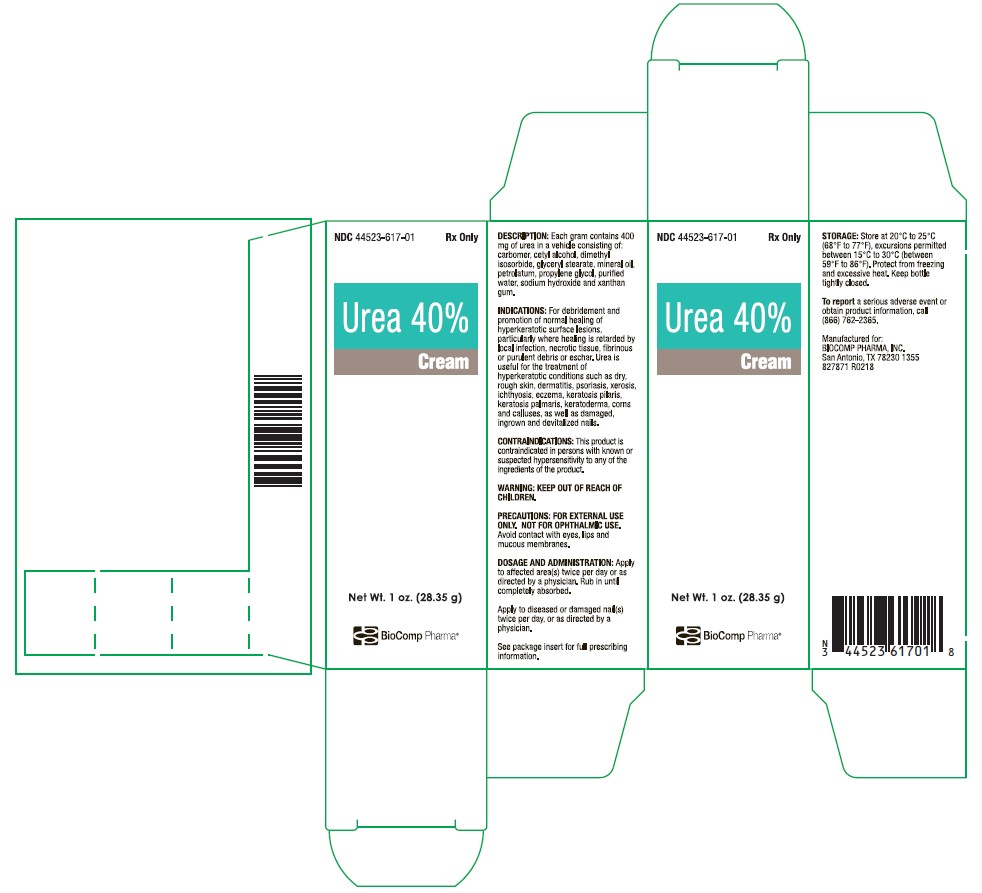
INDICATIONS: For debridement and promotion of normal healing of hyperkeratotic surface lesions, particularly where healing is retarded by local infection, necrotic tissue, fibrinous or purulent debris or eschar. Urea is useful for the treatment of hyperkeratotic conditions such as dry, rough skin, dermatitis, psoriasis, xerosis, ichthyosis, eczema, keratosis pilaris, keratosis palmaris, keratoderma, corns and calluses, as well as damaged, ingrown and devitalized nails.
⏱️Dosage and Administration36 words▾
DOSAGE AND ADMINISTRATION: Apply to affected area(s) twice per day or as directed by a physician. Rub in until completely absorbed. Apply to diseased or damaged nail(s) twice per day, or as directed by a physician.
⛔Contraindications20 words▾
CONTRAINDICATIONS: This product is contraindicated in persons with known or suspected hypersensitivity to any of the ingredients of the product.
⚠️Warnings7 words▾
WARNING: KEEP OUT OF REACH OF CHILDREN.
🤒Adverse Reactions20 words▾
ADVERSE REACTIONS: Transient stinging, burning, itching or irritation may occur and normally disappear upon discontinuing the use of this product.
🧬Clinical Pharmacology44 words▾
CLINICAL PHARMACOLOGY: Urea gently dissolves the intercellular matrix which results in loosening the horny layer of skin and shedding scaly skin at regular intervals, thereby softening hyperkeratotic areas of the skin. Pharmacokinetics: The mechanism of action of topically applied urea is not yet known.
📦How Supplied / Storage and Handling36 words▾
HOW SUPPLIED: 1 oz. (28.35 g) bottles, NDC 44523-617-01 3 oz. (85 g) bottles, NDC 44523-617-03 7 oz. (198.4 g) bottles, NDC 44523-617-07 To report a serious adverse event or obtain product information, call 1-866-762-2365. Image
📦Storage and Handling57 words▾
STORAGE: Store at 20°C to 25°C (68°F to 77°F), excursions permitted between 15°C to 30°C (between 59°F to 86°F). Brief exposure to temperatures up to 40°C (104°F) may be tolerated provided the mean kinetic temperature does not exceed 25°C (77°F); however, such exposure should be minimized. NOTICE: Protect from freezing and excessive heat. Keep bottle tightly closed.
📋Description45 words▾
DESCRIPTION: Each gram contains 400 mg of urea in a vehicle consisting of: carbomer, cetyl alcohol, dimethyl isosorbide, glyceryl stearate, mineral oil, petrolatum, propylene glycol, purified water, sodium hydroxide and xanthan gum. Urea is a diamide of carbonic acid with the following chemical structure: structure.jpg
No label section mentions that — try another word, or open the full label on DailyMed below.
Glossary — plain-language definitions of medical terms used in this label:
contraindicated: Should not be used in that situation, because the risk is considered too high.
adverse event: Any unwanted medical problem that happens during treatment, whether or not the medicine actually caused it.
Adverse Reactions: Unwanted or harmful effects that people experienced while taking a medicine, listed on its official label.
Clinical Pharmacology: The label section explaining how a medicine works in the body and how the body processes it.
Contraindications: A list of situations or health conditions in which a medicine should not be used because the chance of harm is too high.
dermatitis: Inflammation of the skin, causing redness, itching, and sometimes swelling or blisters.
Dosage and Administration: The label section explaining how much of a medicine to use and how to take or give it.
hypersensitivity: An overreaction of the body's defense system to a substance, causing symptoms such as rash, swelling, or trouble breathing.
Mechanism of Action: How a medicine produces its effect in the body, described at the level of cells or body chemistry.
NDC: A unique number that identifies a specific medicine, its maker, strength, and package size.
Pharmacokinetics: The study of how the body takes in a medicine, spreads it around, breaks it down, and removes it over time.
serious adverse event: A harmful event during treatment that is life-threatening, requires hospital care, or causes lasting harm.
Source: FDA Structured Product Labeling, mirrored from DailyMed / openFDA.
Prefer the government’s original formatting? View this label on DailyMed ↗
For educational and professional reference only — not medical advice. Pricing reflects published
NADAC and CMS ASP (free public data) and may differ from your acquisition cost; always verify before billing or dispensing.