
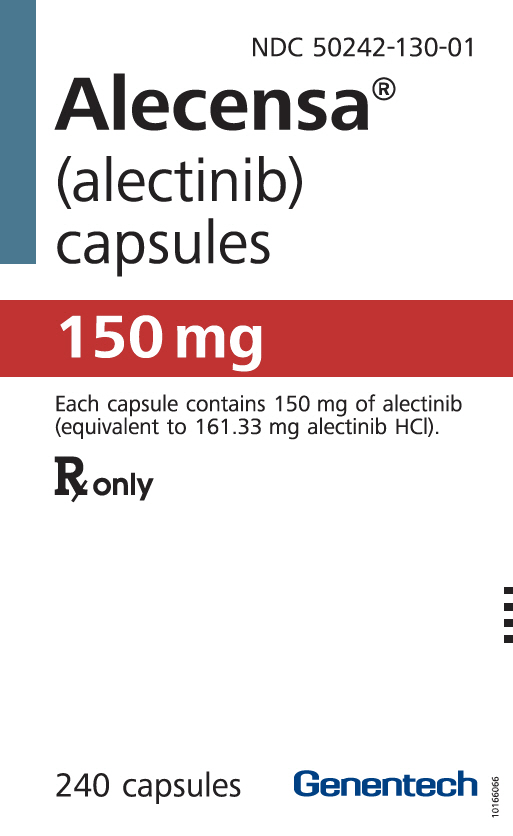
Alecensa Alectinib Hydrochloride 150 mg Capsule, 240-count — NDC 50242-130-01 (Billing 50242-0130-01)
This is a package of 240 capsules of Alecensa Alectinib Hydrochloride 150 mg Capsule from Genentech, Inc., marketed since Dec 2015 and currently FDA-listed. It is the main listing for this product, which comes in 2 package sizes.
NDC database record
One package, one record: these facts belong to NDC 50242-130-01 alone.
- Record
- FDA NDC Directory package listing · Human prescription drug
- Code segments
- 50242 labeler · 130 product · 01 package
- Package marketed since
- Dec 11, 2015
- Sample package
- No — commercial package
- Listing certified through
- Dec 31, 2027
- Billing quantity
- 240 EA per package
- Barcode (UPC-A, from the NDC)
- 3 5024213001 1
- Medicaid fills, this package
- 1,897 prescriptions in the last four reported quarters
- FDA record last changed
- Sep 10, 2026
Identity & classification
Regulatory identifiers FDA, NLM and CMS codes for this package
Drug-database identifiers Medi-Span GPI and First Databank GCN / HICL / AHFS classification
- GSN (GCN sequence number): 075271
- GCN: 40299
- HICL (First Databank): 042895
- AHFS class code: 10:00.00.00
- RxCUI (RxNorm): 1727479
Where does this data come from?
- FDA openFDA NDC Directory · synced Oct 8, 2026
- FDA label on DailyMed · label index refreshed Oct 8, 2026
- RxNorm (NLM RxNav) · catalog refreshed Oct 8, 2026
- Medi-Span GPI (licensed)
- First Databank (licensed) · refreshed Oct 8, 2026
RxNorm drug class
This medicine belongs to the Kinase Inhibitor class.
Where does this data come from?
- RxClass (NLM) · catalog refreshed Oct 8, 2026
Clinical
Alectinib is used to treat a certain type of non-small-cell lung cancer (NSCLC) that has spread to other parts of the body. Alectinib is in a class of medications called kinase inhibitors. It works by blocking the action of an abnormal protein that signals cancer cells to multiply. This helps slow or stop the spread of cancer cells.
Read the full MedlinePlus article ↗- It treats ALK-positive non-small cell lung cancer. Alecensa is used after surgery to remove the tumor in certain cases, and to treat lung cancer that has spread. A test must first...
- Take Alecensa capsules by mouth twice a day with food. Swallow them whole without opening them. If you miss a dose or vomit, just take the next dose at your regular time.
- Common ones are constipation, tiredness, muscle pain, swelling, rash and cough. Liver test changes are also common, so you will have regular blood tests. Tell me or your doctor if...
- Call for new breathing trouble, cough or fever, unexplained muscle pain or weakness, yellow skin or eyes, a very slow heartbeat or fainting, or severe belly pain. These can be sign...
Patient education
Supplement & herbal interactions
Some supplements/herbs that may interact with Alectinib Hydrochloride — tap one for details:
Where does this data come from?
- MedlinePlus (NLM) · refreshed Oct 8, 2026
- FDA label on DailyMed · label index refreshed Oct 8, 2026
Ask a licensed pharmacist directly — free, answered by our team.
Pricing
A drug doesn't have one price. Each row is a different public payment system, and none is what you'd pay at the counter — that depends on your insurance. The ⓘ on each row explains what it measures.
| Price system | Per each | Per package |
|---|---|---|
| Retail pharmacies payNADAC · weekly | Not in the retail survey — common for institutional, discontinued, or low-volume packs. | |
| Medicaid paysCMS SDUD · 12 mo | $81.11 | $19,466.35 / 240 capsules |
| Medicare drug plans payPart D · Q2 2026 | $81.82 | $19,636.25 / 240 capsules |
Where does this data come from?
- CMS NADAC weekly file
- CMS ASP pricing files · refreshed Sep 20, 2026
- CMS Medicaid State Drug Utilization Data · through Q1 2026
- CMS Part D plan pricing files · refreshed Sep 24, 2026
- VA National Acquisition Center price file
Packaging — all sizes for this product
| Package NDC | Description | Marketing start | Marketing end | Status |
|---|---|---|---|---|
| 50242-0130-01 You're viewing this Main listing | 1 BOTTLE, PLASTIC in 1 CARTON / 240 CAPSULE in 1 BOTTLE, PLASTIC | 2015-12-11 | — | Active |
| 50242-0130-86 50242-130-86 | 1 BOTTLE, PLASTIC in 1 CARTON / 240 CAPSULE in 1 BOTTLE, PLASTIC Sample | 2017-10-10 | — | Active |
In Medicaid, this is the most-dispensed pack of this product — about 100% of fills over the last four reported quarters. See all packs ↓
Pack size FAQ
What quantity is in this package?
How does this package differ from NDC 50242-0130-86?
What NDC number is used to bill for this package of Alecensa Alectinib Hydrochloride 150 mg Capsule?
Therapeutic equivalents
| Product | Labeler | Pack | NADAC/unit | TE | Status | Price vs. this |
|---|---|---|---|---|---|---|
| Alecensa 150 mgthis 50242-0130-01 | Genentech, | 240 capsules | — | — | FDA listed | — |
Where does this data come from?
- FDA openFDA NDC Directory · synced Oct 8, 2026
- FDA Orange Book · refreshed Oct 9, 2026
- CMS NADAC weekly file
Availability & generic status
We did not find an FDA-approved generic match for this exact strength, form and route. Patent/protection dates below may affect future generic timing.
Why the date isn’t exact: Generic timing can change because patents may be challenged, settled, licensed, added, removed, or worked around with a narrower label — and FDA approval does not always mean a pharmacy can get the generic today.
🛈 What do these terms mean?
- Patent
- Legal protection listed in the Orange Book that may delay generic approval or launch. Issued by the U.S. Patent & Trademark Office.
- Substance patent
- Covers the active drug molecule itself — the hardest to design around. A generic generally can’t launch until it expires.
- Formulation (product) patent
- Covers a specific formulation or dosage form. A generic can sometimes work around it with a different formulation.
- Method-of-use patent
- A patent covering one specific approved use of the drug — not necessarily the whole molecule. A generic can sometimes launch with a “skinny label” that carves out the protected use and keeps the others.
- Skinny label
- A generic label that omits a still-patented use when the FDA allows it — letting a generic reach the market for the unprotected uses.
- Exclusivity
- FDA-granted marketing protection, separate from patents — e.g. 5-yr new chemical entity, 7-yr orphan drug, or a +6-month pediatric extension.
- Paragraph IV
- A generic applicant’s formal challenge to a listed patent. It can potentially lead to earlier generic entry, but often involves litigation or a settlement.
- RLD / RS
- Reference Listed Drug — the brand product the FDA uses as the reference for generic applications. Reference Standard — the product the FDA expects generics to compare against in bioequivalence testing.
- TE / AB rating
- FDA therapeutic-equivalence rating. An AB rating generally means the FDA considers a generic therapeutically equivalent to — and substitutable for — the brand.
- LOE (loss of exclusivity)
- The latest patent or exclusivity currently listed — the loss-of-exclusivity / latest-listed-protection date shown on this page. Paragraph-IV challenges and settlements can move the real date earlier; FDA approval and a manufacturer’s decision to market can move it later.
Built from the FDA Orange Book. The bars above are scaled to each protection’s expiry; the red LOE marker is the last one to lapse.
| Patent | Type | Use code | Expires |
|---|---|---|---|
| US 10350214 ↗ | Drug product | — | Apr 24, 2035 |
| US 11433076 ↗ | Drug product | — | Apr 24, 2035 |
| US 9126931 ↗ | Drug substance | — | May 29, 2031 |
| US 9440922 ↗ | Drug product | — | Jun 9, 2030 |
| US 9365514 ↗ | Drug product | — | Mar 4, 2032 |
| Code | What it grants | Expires |
|---|---|---|
| I-947 | New indication (3-year) | Apr 18, 2027 |
| ODE-477 | Orphan Drug Exclusivity (7-year) | Apr 18, 2031 |
Is there a generic version of ALECENSA 150 MG CAPSULE?
The FDA approved a generic — why can’t I get it at my pharmacy yet?
Why do different websites show different generic release dates?
What does “FDA listed” mean?
What does a patent or protection date mean here?
What does “current Orange Book estimate” mean?
Can a generic come out before the last patent expires?
Can a generic come out after the listed dates?
What is the difference between patents and exclusivity?
Why are there multiple patent dates?
Where does this data come from?
- FDA Orange Book · refreshed Oct 9, 2026
What it looks like
Where does this data come from?
- FDA label on DailyMed · label index refreshed Oct 8, 2026
Inactive Ingredients / Excipients
Inactive ingredients, also called excipients, are components of the drug product other than the active ingredient. They may include fillers, dyes, coatings, preservatives, flavors, or other formulation ingredients.
🧪 Avoiding an ingredient? See Alectinib inactive ingredients by manufacturer: every current product's list side by side, so you can ask your pharmacy for the version that does not list it.
💡 Tap an ingredient (hover on desktop) to see what it is and why it’s used.
-
UNII UTY7PDF93L
A plant-derived thickening agent made from cellulose. It acts as a binder to hold tablet ingredients together and as a disintegrant to help the tablet break apart in your stomach so the medicine can be absorbed.
-
UNII R12CBM0EIZ
A natural wax derived from a Brazilian palm tree, used as a coating and polish on tablets and capsules. It creates a smooth, shiny finish that protects the medicine and improves appearance.
-
UNII 5C69YCD2YJ
Carrageenan is a natural thickener and stabilizer extracted from red seaweed. It's used in medicines to create gel-like textures, improve consistency, and help keep ingredients from separating during storage.
-
UNII L06K8R7DQK
A synthetic blue dye approved by the FDA for use in medications and foods. It serves as a colorant to make pills and liquids visually distinct and easier to identify.
-
UNII 1K09F3G675
Ferric oxide red is an inorganic iron compound used as a colorant in medicines. It gives tablets, capsules, or other dosage forms a red or reddish tint for identification and appearance.
-
UNII EX438O2MRT
Ferric oxide yellow is a naturally occurring iron compound used as a colorant in medications. It gives tablets, capsules, and other forms a yellow or golden hue for identification and appearance.
-
UNII 4PC054V79P
A fatty acid derived from glycerin and oleic acid (a natural oil component). It acts as an emulsifier to help mix oil and water-based ingredients, and serves as a lubricant and surfactant in the formulation.
-
UNII RFW2ET671P
Hydroxypropyl cellulose is a plant-derived thickening agent made from cellulose. It acts as a binder to hold tablet ingredients together and as a film-former to coat tablets or control how fast the medicine releases.
-
UNII 3NXW29V3WO
Hypromellose is a plant-based thickener made from cellulose. It's used in medicines as a binder to hold ingredients together, a coating for tablets, and a thickener for liquids.
-
UNII EWQ57Q8I5X
Lactose monohydrate is a natural sugar derived from milk. It serves as a filler and binder in tablets and capsules, helping create the proper size, texture, and consistency of the medicine.
-
UNII 70097M6I30
Magnesium stearate is a salt made from magnesium and stearic acid, a fatty substance. It's used in tablets and capsules as a lubricant and glidant to help ingredients flow smoothly during manufacturing and prevent sticking.
-
UNII 660YQ98I10
Potassium chloride is a mineral salt used in medicines as a buffer and to help maintain the proper pH balance and stability of the formulation during storage and use.
-
UNII 46N107B71O
Shellac is a natural resin secreted by the lac beetle. It's used as a coating on tablets and capsules to control how quickly the medicine dissolves and to improve appearance and stability.
-
UNII 368GB5141J
A detergent and foaming agent derived from coconut or palm oil. In medications, it helps break down and mix oil and water-based ingredients, aids in tablet disintegration, and improves how the drug dissolves and spreads in the mouth or digestive system.
-
UNII O8232NY3SJ
A plant-based carbohydrate derived from corn kernels. It acts as a filler to add bulk, a binder to hold ingredients together, and a disintegrant to help the tablet break apart in your stomach for absorption.
-
UNII 15FIX9V2JP
Titanium dioxide is a bright white mineral powder commonly used as a colorant and opacifying agent. It makes pills and tablets white or lighter in color and helps make coatings non-transparent.
16 inactive ingredients listed in the exact product block matched to this NDC.
Where does this data come from?
ingredient classCode="IACT" elements from the exact product block matched by this NDC. Label-section narrative from DailyMed / the openFDA label index is shown separately when available.- FDA label on DailyMed · label index refreshed Oct 8, 2026
- FDA openFDA NDC Directory · synced Oct 8, 2026
Inactive ingredient FAQ
Are inactive ingredients the same for every manufacturer?
Why might an inactive ingredient be missing?
Can inactive ingredients matter?
Manufacturer & labeler
More NDCs from Genentech, Inc. labeler code 50242
- Piasky Crovalimab 340 mg/2mL Injection, Solution NDC 50242-115-01
- TNKase tenecteplase Kit NDC 50242-120-47
- Esbriet Pirfenidone 267 mg Tablet, Coated NDC 50242-122-06
- Esbriet Pirfenidone 801 mg Tablet, Coated NDC 50242-123-01
- Columvi Glofitamab 2.5 mg/2.5mL Solution, Concentrate NDC 50242-125-01
- Columvi Glofitamab 10 mg/10mL Concentrate NDC 50242-127-01
- Herceptin Trastuzumab 150 mg/7.4mL Injection, Powder, Lyophilized, For Solution NDC 50242-132-01
- ACTEMRA tocilizumab 80 mg/4mL Injection, Solution, Concentrate NDC 50242-135-01
- ACTEMRA tocilizumab 200 mg/10mL Injection, Solution, Concentrate NDC 50242-136-01
- ACTEMRA tocilizumab 400 mg/20mL Injection, Solution, Concentrate NDC 50242-137-01
- Actemra tocilizumab 162 mg/.9mL Injection, Solution NDC 50242-138-01
- Tocilizumab 50 g/L Liquid NDC 50242-139-04
Where does this data come from?
- FDA openFDA NDC Directory · synced Oct 8, 2026
- Drugs@FDA
Full prescribing information FDA SPL
🎯 Indications and Usage ▾
1 INDICATIONS AND USAGE ALECENSA is a kinase inhibitor indicated for: adjuvant treatment in adult patients following tumor resection of anaplastic lymphoma kinase (ALK)-positive non-small cell lung cancer (NSCLC) (tumors ≥ 4 cm or node positive) as detected by an FDA-approved test. ( 1.1 ) treatment of adult patients with ALK-positive metastatic NSCLC as detected by an FDA-approved test. ( 1.2 )
1.1Adjuvant Treatment of Resected ALK-Positive Non-Small Cell Lung Cancer (NSCLC) ALECENSA is indicated as adjuvant treatment in adult patients following tumor resection of anaplastic lymphoma kinase (ALK)-positive non-small cell lung cancer (NSCLC) (tumors ≥ 4 cm or node positive), as detected by an FDA-approved test [see Dosage & Administration (2.1) ].
1.2Treatment of Metastatic ALK-Positive NSCLC ALECENSA is indicated for the treatment of adult patients with ALK-positive metastatic NSCLC as detected by an FDA-approved test [see Dosage & Administration (2.1) ] .
⏱️ Dosage and Administration ▾
2 DOSAGE AND ADMINISTRATION 600 mg orally twice daily. Administer ALECENSA with food. ( 2.2 )
2.1Patient Selection Select patients with resectable tumors for the adjuvant treatment of NSCLC with ALECENSA based on the presence of ALK positivity in tumor tissue [see Indications and Usage (1.1) and Clinical Studies (14.1) ]. Select patients for the treatment of metastatic NSCLC with ALECENSA based on the presence of ALK positivity in tumor tissue or plasma specimens [see Indications and Usage (1.2) and Clinical Studies (14.2) ] . If ALK rearrangements are not detected in a plasma specimen, test tumor tissue if feasible.
Information on FDA-approved tests for the detection of ALK rearrangements in NSCLC is available at http://www.fda.gov/CompanionDiagnostics.
2.2Dosing and Administration The recommended dosage information for ALECENSA is provided in Table 1 . Table 1: ALECENSA Recommended Dosage and Duration of Treatment Indication Recommended Dosage of ALECENSA Duration Adjuvant treatment of resected NSCLC 600 mg orally twice daily with food [see Clinical Pharmacology (12.3) ] For a total of 2 years or until disease recurrence or unacceptable toxicity Metastatic NSCLC Until disease progression or unacceptable toxicity Swallow capsules whole, do not open or dissolve the contents of the capsule.
If a dose of ALECENSA is missed or vomiting occurs after taking a dose of ALECENSA, take the next dose at the scheduled time.
2.3Recommended Dosage for Hepatic Impairment The recommended dose of ALECENSA in patients with severe hepatic impairment (Child-Pugh C) is 450 mg orally twice daily [see Use in Specific Populations (8.7) and Clinical Pharmacology (12.3) ].
2.4Dose Modifications for Adverse Reactions The dose reduction schedule for ALECENSA is provided in Table 2 . Table 2: ALECENSA Dose Reduction Schedule Dose Reduction Schedule Dose Level Starting dose 600 mg taken orally twice daily First dose reduction 450 mg taken orally twice daily Second dose reduction 300 mg taken orally twice daily Discontinue if patients are unable to tolerate the 300 mg twice daily dose. Recommendations for dose modifications of ALECENSA in case of adverse reactions are provided in Table 3 .
Table 3: ALECENSA Dose Modifications for Adverse Reactions Criteria ALT = alanine transaminase; AST = aspartate transaminase; ULN = upper limit of normal; ILD = interstitial lung disease; CPK = blood creatine phosphokinase ALECENSA Dose Modification ALT or AST elevation of greater than 5 times upper limit of normal (ULN) with total bilirubin less than or equal to 2 times ULN Temporarily withhold until recovery to baseline or to less than or equal to 3 times ULN, then resume at reduced dose as per Table 2 . ALT or AST elevation greater than 3 times ULN with total bilirubin elevation greater than 2 times ULN in the absence of cholestasis or hemolysis Permanently discontinue ALECENSA.
Total bilirubin elevation of greater than 3 times ULN Temporarily withhold until recovery to baseline or to less than or equal to 1.5 times ULN, then resume at reduced dose as per Table 2 . Any grade treatment-related interstitial lung disease (ILD)/pneumonitis Permanently discontinue ALECENSA. Grade 3 renal impairment Temporarily withhold until serum creatinine recovers to less than or equal to 1.5 times ULN, then resume at reduced dose.
Grade 4 renal impairment Permanently discontinue ALECENSA. Symptomatic bradycardia Withhold ALECENSA until recovery to asymptomatic bradycardia or to a heart rate of 60 bpm or above. If contributing concomitant medication is identified and discontinued, or its dose is adjusted, resume ALECENSA at previous dose upon recovery to asymptomatic bradycardia or to a heart rate of 60 bpm or above.
If no contributing concomitant medication is identified, or if contributing concomitant medications are not discontinued or dose modified, resume ALECENSA at reduced dose (see Table 2 ) upon recovery to asymptomatic bradycardia or to a heart rate of 60 bpm or above. Bra… [Excerpted — this section continues on DailyMed.]
💊 Dosage Forms and Strengths ▾
3 DOSAGE FORMS AND STRENGTHS 150 mg hard capsules, white, with "ALE" printed in black ink on the cap and "150 mg" printed in black ink on the body. Capsules: 150 mg ( 3 )
⛔ Contraindications ▾
4 CONTRAINDICATIONS None. None. ( 4 )
⚠️ Warnings and Cautions ▾
5 WARNINGS AND PRECAUTIONS Hepatotoxicity: Monitor liver laboratory tests every 2 weeks during the first 3 months of treatment, then once a month and as clinically indicated, with more frequent testing in patients who develop transaminase and bilirubin elevations. In case of severe ALT, AST, or bilirubin elevations, withhold, then reduce dose, or permanently discontinue ALECENSA. ( 2.4 , 5.1 ) Interstitial Lung Disease (ILD)/Pneumonitis: Immediately withhold ALECENSA in patients diagnosed with ILD/pneumonitis and permanently discontinue if no other potential causes of ILD/pneumonitis have been identified.
( 2.4 , 5.2 ) Renal Impairment: Withhold ALECENSA for severe renal impairment, then resume ALECENSA at reduced dose upon recovery or permanently discontinue. ( 2.4 , 5.3 ) Bradycardia: Monitor heart rate and blood pressure regularly. If symptomatic, withhold ALECENSA then reduce dose, or permanently discontinue.
( 2.4 , 5.4 ) Severe Myalgia and Creatine Phosphokinase (CPK) Elevation: Assess CPK every 2 weeks during the first month of treatment and in patients reporting unexplained muscle pain, tenderness, or weakness. In case of severe CPK elevations, withhold, then resume or reduce dose. ( 2.4 , 5.5 ) Hemolytic Anemia: If hemolytic anemia is suspected, withhold ALECENSA.
If hemolytic anemia is confirmed, consider resuming at a reduced dose upon resolution or permanently discontinue. ( 5.6 ) Severe Hypertriglyceridemia Leading to Pancreatitis: Monitor serum triglycerides before initiation and periodically during treatment. In patients with hypertriglyceridemia, monitor for signs and symptoms of acute pancreatitis.
Withhold or permanently discontinue ALECENSA based on severity. ( 2.4 , 5.7 ) Embryo-Fetal Toxicity: ALECENSA can cause fetal harm. Advise females of reproductive potential of the potential risk to a fetus and to use effective contraception.
( 5.8 , 8.1 , 8.3 )
5.1Hepatotoxicity Severe hepatotoxicity, including drug-induced liver injury, occurred in patients treated with ALECENSA. In the pooled safety population [see Adverse Reactions (6.1) ] of patients who received ALECENSA, hepatotoxicity occurred in 41% of patients and the incidence of Grade ≥ 3 hepatotoxicity was 8%. In the ALINA study, hepatotoxicity occurred in 61% of patients treated with ALECENSA and the incidence of Grade ≥ 3 hepatotoxicity was 4.7%.
The majority (72% of 136 patients) of elevated transaminases occurred during the first 3 months of treatment. Treatment discontinuation due to hepatotoxicity occurred in 3.6% of patients who received ALECENSA in the pooled safety population and 1.6% of patients treated in the ALINA study. In the pooled safety population, concurrent elevations in ALT or AST greater than or equal to 3 times the ULN and total bilirubin greater than or equal to 2 times the ULN, with normal alkaline phosphatase, occurred in less than 1% of patients treated with ALECENSA.
Three patients with Grades 3–4 AST/ALT elevations had drug-induced liver injury (documented by liver biopsy in two cases). Monitor liver function tests including ALT, AST, and total bilirubin every 2 weeks during the first 3 months of treatment, then once a month and as clinically indicated, with more frequent testing in patients who develop transaminase and bilirubin elevations. Based on the severity of the adverse drug reaction, withhold ALECENSA and resume at a reduced dose or permanently discontinue ALECENSA as described in Table 3 [see Dosage and Administration (2.4) ].
5.2Interstitial Lung Disease (ILD)/Pneumonitis ILD/pneumonitis occurred in patients treated with ALECENSA. In the pooled safety population [see Adverse Reactions (6.1) ] , ILD/pneumonitis occurred in 1.3% of patients treated with ALECENSA with 0.4% of patients experiencing Grade 3 ILD/pneumonitis. Five patients (0.9%) in the pooled safety population discontinued ALECENSA due to ILD/pneumonitis.
The median time-to-onset of Grade 3 or higher ILD/pneumonitis was 2.1 months (range: 0.6 months to… [Excerpted — this section continues on DailyMed.]
🤒 Adverse Reactions ▾
6 ADVERSE REACTIONS The following adverse reactions are discussed in greater detail in other sections of the label: Hepatotoxicity [see Warnings and Precautions (5.1) ] Interstitial Lung Disease (ILD)/Pneumonitis [see Warnings and Precautions (5.2) ] Renal Impairment [see Warnings and Precautions (5.3) ] Bradycardia [see Warnings and Precautions (5.4) ] Severe Myalgia and Creatine Phosphokinase (CPK) Elevation [see Warnings and Precautions (5.5) ] Hemolytic Anemia [see Warnings and Precautions (5.6) ] Hypertriglyceridemia Leading to Pancreatitis [see Warnings and Precautions (5.7) ] Embryo-Fetal Toxicity [see Warnings and Precautions (5.8) ] The most common adverse reactions (incidence ≥20%) were hepatotoxicity, constipation, fatigue, myalgia, edema, rash and cough.
( 6.1 ) To report SUSPECTED ADVERSE REACTIONS, contact Genentech at 1-888-835-2555 or FDA at 1-800-FDA-1088 or www.fda.gov/medwatch .
6.1Clinical Trials Experience Because clinical trials are conducted under widely varying conditions, adverse reaction rates observed in the clinical trials of a drug cannot be directly compared to rates in the clinical trials of another drug and may not reflect the rates observed in practice. The pooled safety population described in the WARNINGS AND PRECAUTIONS reflects exposure to ALECENSA as a single agent at 600 mg orally twice daily in 533 patients in Studies NP28761, NP28673, ALEX and ALINA [see Clinical Studies (14) ].
Among 533 patients who received ALECENSA, 75% were exposed for 6 months or longer and 64% were exposed for greater than one year. In this pooled safety population, the most common (≥ 20%) adverse reactions were hepatotoxicity (41%), constipation (39%), fatigue (36%), myalgia (31%), edema (29%), rash (23%) and cough (21%). The most common (≥ 2%) Grade 3 or 4 laboratory abnormalities were increased CPK (6%), decreased hemoglobin (4.4%), increased ALT (4.2%), increased bilirubin (4.0%) and increased AST (3.4%).
Adjuvant Treatment of Resected ALK-Positive NSCLC The safety of ALECENSA was evaluated in ALINA, a multi-center, open-label, randomized trial for the adjuvant treatment of patients with resected ALK-positive NSCLC [ see Clinical Studies (14.1) ]. At the time of DFS analysis, the median duration of exposure was 23.9 months for ALECENSA and 2.1 months for platinum-based chemotherapy. Serious adverse reactions occurred in 13% of patients treated with ALECENSA; the most frequent serious adverse reactions (≥ 1%) were pneumonia (3.9%), appendicitis (3.1%), and acute myocardial infarction (1.6%).
Permanent discontinuation of ALECENSA due to an adverse event occurred in 5% of patients; the most frequent adverse reactions (≥ 1%) that led to treatment discontinuation were pneumonitis and hepatotoxicity. Dosage interruptions of ALECENSA due to an adverse reaction occurred in 27% of patients. Adverse reactions which required dosage interruption in ≥ 2% of patients included hepatotoxicity, increased blood CPK, COVID-19, myalgia, abdominal pain, and pneumonia.
Dose reductions of ALECENSA due to an adverse reaction occurred in 26% of patients. Adverse reactions which required dose reductions in ≥ 2% of patients included hepatotoxicity, increased blood CPK, rash, bradycardia and myalgia. Table 4 and 5 summarize the common adverse reactions and laboratory abnormalities observed in ALINA.
Table 4: Adverse Reactions (≥ 10%) in Patients Treated with ALECENSA in ALINA Adverse Reaction ALECENSA N=128 Chemotherapy N=120 All Grades (%) Grades 3-4 (%) All Grades (%) Grades 3-4 (%) Based on NCI CTCAE v5.0 Hepatobiliary System Disorders Hepatotoxicity Includes increased alanine aminotransferase, increased aspartate aminotransferase, increased bile acids, increased conjugated bilirubin, increased blood bilirubin, increased unconjugated blood bilirubin, increased gamma-glutamyltransferase, hepatotoxicity, hyperbilirubinemia, increased liver function test, ocular icterus and increased transaminases.
61
4.7All events are Grade 3. 13 0 G… [Excerpted — this section continues on DailyMed.]
👥 Use in Specific Populations ▾
8 USE IN SPECIFIC POPULATIONS Lactation: Do not breastfeed. ( 8.2 )
8.1Pregnancy Risk Summary Based on findings from animal studies and its mechanism of action, ALECENSA can cause fetal harm when administered to a pregnant woman [see Clinical Pharmacology (12.1) ] . There are no available data on ALECENSA use in pregnant women. Administration of alectinib to pregnant rats and rabbits by oral gavage during the period of organogenesis resulted in embryo-fetal toxicity and abortion at maternally toxic doses with exposures approximately 2.7-fold those observed in humans treated with alectinib at 600 mg twice daily (see Data ) .
Advise pregnant women of the potential risk to a fetus. In the U.S. general population, the estimated background risk of major birth defects and miscarriage in clinically recognized pregnancies is 2% to 4% and 15% to 20%, respectively. Data Animal Data In a preliminary rabbit embryo-fetal study, administration of alectinib by oral gavage during the period of organogenesis resulted in abortion or complete embryo-fetal mortality at a maternally toxic dose of 27 mg/kg/day (approximately 2.9-fold the estimated area under the curve (AUC 0-24h,ss ) in humans treated with alectinib 600 mg twice daily) in three of six pregnant rabbits.
The remaining three pregnant rabbits in this group had few live fetuses, decreased fetal and placental weights, and retroesophageal subclavian artery. In a rat preliminary embryo-fetal development study, administration of alectinib during organogenesis resulted in complete litter loss in all pregnant rats at 27 mg/kg/day (approximately 4.5-fold the estimated AUC 0-24h,ss in humans treated with alectinib 600 mg twice daily). Doses greater than or equal to 9 mg/kg/day (approximately 2.7-fold the estimated human AUC 0-24h,ss in humans treated with alectinib 600 mg twice daily), resulted in maternal toxicity as well as developmental toxicities including decreased fetal weight, dilated ureter, thymic cord, small ventricle and thin ventricle wall, and reduced number of sacral and caudal vertebrae.
8.2Lactation Risk Summary There are no data on the presence of alectinib or its metabolites in human milk, the effects of alectinib on the breastfed child, or its effects on milk production. Because of the potential for serious adverse reactions in breastfed children from alectinib, advise a lactating woman not to breastfeed during treatment with ALECENSA and for 1 week after the last dose.
8.3Females and Males of Reproductive Potential ALECENSA can cause fetal harm when administered to a pregnant woman [see Use in Specific Populations (8.1) ] . Pregnancy Testing Verify pregnancy status in females of reproductive potential prior to initiating ALECENSA [see Use in Specific Populations (8.1) ]. Contraception Females Advise females of reproductive potential to use effective contraception during treatment with ALECENSA and for 5 weeks after the last dose [see Use in Specific Populations (8.1) ] .
Males Based on genotoxicity findings, advise males with female partners of reproductive potential to use effective contraception during treatment with ALECENSA and for 3 months following the last dose [see Nonclinical Toxicology (13.1) ].
8.4Pediatric Use The safety and effectiveness of ALECENSA in pediatric patients have not been established. Animal Data Juvenile animal studies have not been conducted using alectinib. In general toxicology studies, treatment of rats with doses of alectinib resulting in exposures greater than or equal to approximately 4.5-fold those in humans treated with alectinib at 600 mg twice daily resulted in changes in the growing teeth and bones.
Findings in teeth included discoloration and changes in tooth size along with histopathological disarrangement of the ameloblast and odontoblast layers. There were also decreases in the trabecular bone and increased osteoclast activity in the femur and sternum.
8.5Geriatric Use Nineteen percent of the 533 patients studied in NP28761, NP… [Excerpted — this section continues on DailyMed.]
🤰 Pregnancy ▾
8.1Pregnancy Risk Summary Based on findings from animal studies and its mechanism of action, ALECENSA can cause fetal harm when administered to a pregnant woman [see Clinical Pharmacology (12.1) ] . There are no available data on ALECENSA use in pregnant women. Administration of alectinib to pregnant rats and rabbits by oral gavage during the period of organogenesis resulted in embryo-fetal toxicity and abortion at maternally toxic doses with exposures approximately 2.7-fold those observed in humans treated with alectinib at 600 mg twice daily (see Data ) .
Advise pregnant women of the potential risk to a fetus. In the U.S. general population, the estimated background risk of major birth defects and miscarriage in clinically recognized pregnancies is 2% to 4% and 15% to 20%, respectively. Data Animal Data In a preliminary rabbit embryo-fetal study, administration of alectinib by oral gavage during the period of organogenesis resulted in abortion or complete embryo-fetal mortality at a maternally toxic dose of 27 mg/kg/day (approximately 2.9-fold the estimated area under the curve (AUC 0-24h,ss ) in humans treated with alectinib 600 mg twice daily) in three of six pregnant rabbits.
The remaining three pregnant rabbits in this group had few live fetuses, decreased fetal and placental weights, and retroesophageal subclavian artery. In a rat preliminary embryo-fetal development study, administration of alectinib during organogenesis resulted in complete litter loss in all pregnant rats at 27 mg/kg/day (approximately 4.5-fold the estimated AUC 0-24h,ss in humans treated with alectinib 600 mg twice daily). Doses greater than or equal to 9 mg/kg/day (approximately 2.7-fold the estimated human AUC 0-24h,ss in humans treated with alectinib 600 mg twice daily), resulted in maternal toxicity as well as developmental toxicities including decreased fetal weight, dilated ureter, thymic cord, small ventricle and thin ventricle wall, and reduced number of sacral and caudal vertebrae.
🧒 Pediatric Use ▾
8.4Pediatric Use The safety and effectiveness of ALECENSA in pediatric patients have not been established. Animal Data Juvenile animal studies have not been conducted using alectinib. In general toxicology studies, treatment of rats with doses of alectinib resulting in exposures greater than or equal to approximately 4.5-fold those in humans treated with alectinib at 600 mg twice daily resulted in changes in the growing teeth and bones.
Findings in teeth included discoloration and changes in tooth size along with histopathological disarrangement of the ameloblast and odontoblast layers. There were also decreases in the trabecular bone and increased osteoclast activity in the femur and sternum.
🧓 Geriatric Use ▾
8.5Geriatric Use Nineteen percent of the 533 patients studied in NP28761, NP28673, ALEX and ALINA were 65 years of age and older (3.2% were 75 years of age and older). No overall differences in effectiveness were observed based on age. Exploratory analysis suggests a higher incidence of serious adverse events (38% vs 25%), more frequent adverse events leading to treatment discontinuations (18% vs 6%) and dose modifications (48% vs 35%) in patients 65 years or older as compared to those younger than 65 years.
🆘 Overdosage ▾
10 OVERDOSAGE No experience with overdose is available. There is no specific antidote for overdose with ALECENSA. Alectinib and its major active metabolite M4 are > 99% bound to plasma proteins; therefore, hemodialysis is likely to be ineffective in the treatment of overdose.
🧬 Clinical Pharmacology ▾
12 CLINICAL PHARMACOLOGY
12.1Mechanism of Action Alectinib is a tyrosine kinase inhibitor that targets ALK and RET. In nonclinical studies, alectinib inhibited ALK phosphorylation and ALK-mediated activation of the downstream signaling proteins STAT3 and AKT, and decreased tumor cell viability in multiple cell lines harboring ALK fusions, amplifications, or activating mutations. The major active metabolite of alectinib, M4, showed similar in vitro potency and activity.
Alectinib and M4 demonstrated in vitro and in vivo activity against multiple mutant forms of the ALK enzyme, including some mutations identified in NSCLC tumors in patients who have progressed on crizotinib. In mouse models implanted with tumors carrying ALK fusions, administration of alectinib resulted in antitumor activity and prolonged survival, including in mouse models implanted intracranially with ALK-driven tumor cell lines.
12.2Pharmacodynamics Cardiac Electrophysiology The ability of alectinib to prolong the QT interval was assessed in 221 patients administered ALECENSA 600 mg twice daily in clinical studies. ALECENSA did not prolong the QTc (QT corrected for heart rate) interval to any clinically relevant extent. One patient had a maximum post-baseline QTcF value of greater than 500 msec, and one patient had a maximum QTcF change from baseline of greater than 60 msec.
12.3Pharmacokinetics The pharmacokinetics of alectinib and its major active metabolite M4 have been characterized in patients with ALK-positive NSCLC and healthy subjects. In patients with ALK-positive NSCLC, the geometric mean (coefficient of variation %) steady-state maximal concentration (C max,ss ) for alectinib was 665 ng/mL (44%) and for M4 was 246 ng/mL (45%) with peak to trough concentration ratio of 1.2. The geometric mean steady-state area under the curve from 0 to 12 hours (AUC 0-12h,ss ) for alectinib was 7,430 ng*h/mL (46%) and for M4 was 2,810 ng*h/mL (46%).
Alectinib exposure is dose proportional across the dose range of 460 mg to 900 mg (i.e., 0.75 to 1.5 times the approved recommended dosage) under fed conditions. Alectinib and M4 reached steady-state concentrations by day 7. The geometric mean accumulation was approximately 6-fold for both alectinib and M4.
Absorption Alectinib reached maximal concentrations at 4 hours following administration of ALECENSA 600 mg twice daily under fed conditions in patients with ALK-positive NSCLC. The absolute bioavailability of alectinib was 37% (90% CI: 34%, 40%) under fed conditions. A high-fat, high-calorie meal increased the combined exposure (AUC 0-inf ) of alectinib plus M4 by 3.1-fold (90% CI: 2.7, 3.6) following oral administration of a single 600 mg dose of ALECENSA.
Distribution The apparent volume of distribution is 4,016 L for alectinib and 10,093 L for M4. Alectinib and M4 are bound to human plasma proteins greater than 99%, independent of drug concentration. Alectinib concentrations in the cerebrospinal fluid in patients with ALK-positive NSCLC approximate estimated alectinib free concentrations in the plasma.
In vitro studies suggest that alectinib is not a substrate of P-glycoprotein (P-gp), but M4 is a substrate of P-gp. Alectinib and M4 are not substrates of breast cancer resistance protein (BCRP), organic anion-transporting polypeptide (OATP) 1B1, or OATP1B3. Elimination The apparent clearance (CL/F) is
81.9L/hour for alectinib and 217 L/hour for M4. The geometric mean elimination half-life is 33 hours for alectinib and 31 hours for M4 in patients with ALK-positive NSCLC. Metabolism Alectinib is metabolized by CYP3A4 to its major active metabolite M4.
The geometric mean metabolite/parent exposure ratio at steady-state is 0.40. M4 is subsequently metabolized by CYP3A4. Alectinib and M4 were the main circulating moieties in plasma, constituting 76% of the total radioactivity.
Excretion Ninety-eight percent of the radioactivity was excreted in feces following oral administration of a single radiolabeled dose of alect… [Excerpted — this section continues on DailyMed.]
🧬 Mechanism of Action ▾
12.1Mechanism of Action Alectinib is a tyrosine kinase inhibitor that targets ALK and RET. In nonclinical studies, alectinib inhibited ALK phosphorylation and ALK-mediated activation of the downstream signaling proteins STAT3 and AKT, and decreased tumor cell viability in multiple cell lines harboring ALK fusions, amplifications, or activating mutations. The major active metabolite of alectinib, M4, showed similar in vitro potency and activity.
Alectinib and M4 demonstrated in vitro and in vivo activity against multiple mutant forms of the ALK enzyme, including some mutations identified in NSCLC tumors in patients who have progressed on crizotinib. In mouse models implanted with tumors carrying ALK fusions, administration of alectinib resulted in antitumor activity and prolonged survival, including in mouse models implanted intracranially with ALK-driven tumor cell lines.
📦 How Supplied / Storage and Handling ▾
16 HOW SUPPLIED/STORAGE AND HANDLING Hard capsules, white 150 mg capsules with "ALE" printed in black ink on the cap and "150 mg" printed in black ink on the body, available in: 240 capsules per bottle: NDC 50242-130-01 Storage and stability: Do not store above 30°C (86°F). Store in the original container to protect from light and moisture.
📦 Storage and Handling ▾
Storage and stability: Do not store above 30°C (86°F). Store in the original container to protect from light and moisture.
📋 Description ▾
11 DESCRIPTION ALECENSA (alectinib) is a kinase inhibitor for oral administration. The molecular formula for alectinib is C 30 H 34 N 4 O 2 ∙ HCl. The molecular weight is 482.62 g/mol (free base form) and 519.08 g/mol (hydrochloride salt).
Alectinib is described chemically as 9-ethyl-6, 6-dimethyl-8-[4-(morpholin-4-yl)piperidin-1-yl]-11-oxo-6, 11-dihydro-5 H -benzo[ b ]carbazole-3-carbonitrile hydrochloride. The chemical structure of alectinib is shown below: Alectinib HCl is a white to yellow white powder or powder with lumps with a pKa of 7.05 (base). ALECENSA is supplied as hard capsules containing 150 mg of alectinib (equivalent to 161.33 mg alectinib HCl) and the following inactive ingredients: carboxymethylcellulose calcium, hydroxypropylcellulose, lactose monohydrate, magnesium stearate and sodium lauryl sulfate.
The capsule shell contains carnauba wax, carrageenan, corn starch, hypromellose, potassium chloride and titanium dioxide (E171). The printing ink contains carnauba wax, FD&C Blue No. 2 aluminum lake (E132), glyceryl monooleate, red iron oxide (E172), white shellac and yellow iron oxide (E172).
Chemical Structure
💬 Information for Patients ▾
17 PATIENT COUNSELING INFORMATION Advise the patient to read the FDA-approved patient labeling (Patient Information). Inform patients of the following: Hepatotoxicity Inform patients of the signs and symptoms of bilirubin and hepatic transaminase elevations. Advise patients to contact their healthcare provider immediately for signs or symptoms of bilirubin and hepatic transaminase elevations [see Warnings and Precautions (5.1) ].
Interstitial Lung Disease (ILD)/Pneumonitis Inform patients of the risks of severe ILD/pneumonitis. Advise patients to contact their healthcare provider immediately to report new or worsening respiratory symptoms [see Warnings and Precautions (5.2) ]. Renal Impairment Inform patients of the risk of severe and potentially fatal renal impairment.
Advise patients to contact their healthcare provider immediately for change in urine color, reduced urine output, or new or worsening swelling in the legs and feet [see Warnings and Precautions (5.3) ] . Bradycardia Inform patients that symptoms of bradycardia including dizziness, lightheadedness, and syncope can occur while taking ALECENSA. Advise patients to contact their healthcare provider immediately to report these symptoms and to inform their healthcare provider about the use of any heart or blood pressure medications [see Warnings and Precautions (5.4) ] .
Severe Myalgia/CPK Elevation Inform patients of signs and symptoms of myalgia, including unexplained and/or persistent muscle pain, tenderness, or weakness. Advise patients to contact their healthcare provider immediately to report new or worsening symptoms of muscle pain or weakness [see Warnings and Precautions (5.5) ] . Hemolytic Anemia Advise patients to contact their healthcare provider immediately if they develop any signs or symptoms of hemolytic anemia [see Warnings and Precautions (5.6) ].
Severe Hypertriglyceridemia Leading to Pancreatitis Inform patients that ALECENSA can cause an increase in serum triglyceride levels, which can lead to pancreatitis. Advise patients that their treatment may be temporarily stopped based on their test results. Advise patients to contact their healthcare provider immediately if they develop signs and symptoms of pancreatitis, such as abdominal pain accompanied by nausea, vomiting, and/or fever [see Warnings and Precautions (5.7) ].
Photosensitivity Inform patients of the signs and symptoms of photosensitivity. Advise patients to avoid prolonged sun exposure while taking ALECENSA and for at least 7 days after study drug discontinuation and to use proper protection from the sun. Advise patients to use a broad spectrum ultraviolet A (UVA)/ultraviolet B (UVB) sunscreen and lip balm (SPF ≥ 50) to help protect against potential sunburn [see Adverse Reactions (6.1) ] .
Embryo-Fetal Toxicity ALECENSA can cause fetal harm if taken during pregnancy. Advise a pregnant woman and females of reproductive potential of the potential risk to a fetus [see Warnings and Precautions (5.6) and Use in Specific Populations (8.1 , 8.3) ] . Advise females of reproductive potential to use effective contraception during treatment with ALECENSA and for 5 weeks after the last dose of ALECENSA.
Advise patients to inform their healthcare provider of a known or suspected pregnancy [see Warnings and Precautions (5.6) and Use in Specific Populations (8.1 , 8.3) ] . Advise male patients with female partners of reproductive potential to use effective contraception during treatment with ALECENSA and for 3 months after the last dose [see Use in Specific Populations (8.3) and Nonclinical Toxicology (13.1) ]. Lactation Advise women not to breastfeed during treatment with ALECENSA and for 1 week after the last dose [see Use in Specific Populations (8.2) ].
Administration Instruct patients to take ALECENSA twice a day. Advise patients to take ALECENSA with food and to swallow ALECENSA capsules whole [see Dosage and Administration (2.2) ]. Missed Dose Advise patients that if a dose of ALECENSA is missed… [Excerpted — this section continues on DailyMed.]
🧬 Pharmacokinetics ▾
12.3Pharmacokinetics The pharmacokinetics of alectinib and its major active metabolite M4 have been characterized in patients with ALK-positive NSCLC and healthy subjects. In patients with ALK-positive NSCLC, the geometric mean (coefficient of variation %) steady-state maximal concentration (C max,ss ) for alectinib was 665 ng/mL (44%) and for M4 was 246 ng/mL (45%) with peak to trough concentration ratio of 1.2. The geometric mean steady-state area under the curve from 0 to 12 hours (AUC 0-12h,ss ) for alectinib was 7,430 ng*h/mL (46%) and for M4 was 2,810 ng*h/mL (46%).
Alectinib exposure is dose proportional across the dose range of 460 mg to 900 mg (i.e., 0.75 to 1.5 times the approved recommended dosage) under fed conditions. Alectinib and M4 reached steady-state concentrations by day 7. The geometric mean accumulation was approximately 6-fold for both alectinib and M4.
Absorption Alectinib reached maximal concentrations at 4 hours following administration of ALECENSA 600 mg twice daily under fed conditions in patients with ALK-positive NSCLC. The absolute bioavailability of alectinib was 37% (90% CI: 34%, 40%) under fed conditions. A high-fat, high-calorie meal increased the combined exposure (AUC 0-inf ) of alectinib plus M4 by 3.1-fold (90% CI: 2.7, 3.6) following oral administration of a single 600 mg dose of ALECENSA.
Distribution The apparent volume of distribution is 4,016 L for alectinib and 10,093 L for M4. Alectinib and M4 are bound to human plasma proteins greater than 99%, independent of drug concentration. Alectinib concentrations in the cerebrospinal fluid in patients with ALK-positive NSCLC approximate estimated alectinib free concentrations in the plasma.
In vitro studies suggest that alectinib is not a substrate of P-glycoprotein (P-gp), but M4 is a substrate of P-gp. Alectinib and M4 are not substrates of breast cancer resistance protein (BCRP), organic anion-transporting polypeptide (OATP) 1B1, or OATP1B3. Elimination The apparent clearance (CL/F) is
81.9L/hour for alectinib and 217 L/hour for M4. The geometric mean elimination half-life is 33 hours for alectinib and 31 hours for M4 in patients with ALK-positive NSCLC. Metabolism Alectinib is metabolized by CYP3A4 to its major active metabolite M4.
The geometric mean metabolite/parent exposure ratio at steady-state is 0.40. M4 is subsequently metabolized by CYP3A4. Alectinib and M4 were the main circulating moieties in plasma, constituting 76% of the total radioactivity.
Excretion Ninety-eight percent of the radioactivity was excreted in feces following oral administration of a single radiolabeled dose of alectinib under fed conditions. Eighty-four percent of the dose was excreted in the feces as unchanged alectinib, and 6% of the dose was excreted as M4. Excretion of radioactivity in urine was less than 0.5% of administered radiolabeled dose of alectinib.
Specific Populations Age (21 to 83 years), body weight (38 to 128 kg), mild hepatic impairment (total bilirubin ≤ ULN and AST > ULN or total bilirubin 1 to ≤ 1.5 × ULN and AST any value), mild to moderate renal impairment (creatinine clearance 30 to 89 mL/min), race (White, Asian, and Other), and sex had no clinically meaningful effect on the systemic exposure of alectinib and M4. The pharmacokinetics of alectinib have not been studied in patients with severe renal impairment (creatinine clearance < 30 mL/min), or end-stage renal disease.
Hepatic Impairment: Following administration of a single oral dose of 300 mg ALECENSA, the geometric mean ratio [90% confidence interval] for the combined AUC inf of alectinib and M4 in subjects with moderate hepatic impairment (Child-Pugh B) was 1.36 [0.947, 1.96] and in subjects with severe hepatic impairment (Child-Pugh C) was 1.76 [0.984, 3.15] as compared to that in subjects with normal hepatic function. The combined C max of alectinib and M4 was comparable among the three groups. No dose adjustment is recommended for patients with mild or moderate hepatic imp… [Excerpted — this section continues on DailyMed.]
🧬 Pharmacodynamics ▾
12.2Pharmacodynamics Cardiac Electrophysiology The ability of alectinib to prolong the QT interval was assessed in 221 patients administered ALECENSA 600 mg twice daily in clinical studies. ALECENSA did not prolong the QTc (QT corrected for heart rate) interval to any clinically relevant extent. One patient had a maximum post-baseline QTcF value of greater than 500 msec, and one patient had a maximum QTcF change from baseline of greater than 60 msec.
🔬 Clinical Studies ▾
14 CLINICAL STUDIES
14.1Adjuvant Treatment of Resected ALK-Positive NSCLC The efficacy of ALECENSA for the adjuvant treatment of patients with ALK-positive NSCLC following complete tumor resection was evaluated in a global, randomized open-label clinical trial (ALINA: NCT03456076). Eligible patients were required to have resectable ALK-positive NSCLC, Stage IB (tumors ≥ 4 cm) – IIIA per the Union for International Cancer Control/American Joint Committee on Cancer (UICC/AJCC) Staging System, 7 th Edition. ALK rearrangements were identified by a locally performed FDA-approved ALK test or by a centrally performed VENTANA ALK (D5F3) CDx assay.
Randomization was stratified by race (Asian vs. other races) and stage of disease (IB vs. II vs. IIIA).
Patients were randomized (1:1) to receive ALECENSA 600 mg orally twice daily or platinum-based chemotherapy following tumor resection. Treatment with ALECENSA continued for a total of 2 years, or until disease recurrence or unacceptable toxicity. Platinum-based chemotherapy was administered intravenously for 4 cycles, with each cycle lasting 21 days, according to one of the following regimens: Cisplatin 75 mg/m 2 on Day 1 plus vinorelbine 25 mg/m 2 on Days 1 and 8 Cisplatin 75 mg/m 2 on Day 1 plus gemcitabine 1250 mg/m 2 on Days 1 and 8 Cisplatin 75 mg/m 2 on Day 1 plus pemetrexed 500 mg/m 2 on Day 1 In the event of intolerance to a cisplatin-based regimen, carboplatin was administered instead of cisplatin in the above combinations at a dose of AUC 5 mg/mL/min or 6 mg/mL/min.
The major efficacy outcome measures were disease-free survival (DFS) in patients with stage II-IIIA NSCLC and DFS in patients with stage IB-IIIA NSCLC (intent-to-treat [ITT] population) as assessed by investigator. DFS was defined as the time from date of randomization to the date of occurrence of any of the following: first documented recurrence of disease, new primary NSCLC, or death due to any cause, whichever occurred first. An additional efficacy outcome measure was overall survival (OS) in the ITT population.
A total of 257 patients were randomized to ALECENSA (N=130) or to chemotherapy (N=127). The median age was 56 years (range: 26 to 87), 24% were ≥ 65 years old; 52% were female; 56% were Asian, 42% were White, 0.4% were Black or African American, 2.3% were race unknown; 0.4% were Hispanic or Latino; 60% were never smokers; 53% had an ECOG PS of 0; 10% of patients had Stage IB, 35% had Stage II and 55% had Stage IIIA disease. ALINA demonstrated a statistically significant improvement in DFS for patients treated with ALECENSA compared to patients treated with chemotherapy.
OS data were not mature at the time of DFS analysis with 2.3% of deaths reported in the ITT population. The efficacy results from ALINA are summarized in Table 10 and Figure 1 . Table 10: Investigator-Assessed DFS Results in ALINA Efficacy Parameter Stage II-IIIA Population ITT Population ALECENSA N=116 Chemotherapy N=115 ALECENSA N=130 Chemotherapy N=127 DFS = Disease-Free Survival; ITT = Intent-to-Treat; CI = Confidence Interval; NR = Not Reached; NE = Not Estimable.
DFS events (%) 14 (12) 45 (39) 15 (12) 50 (39) Disease recurrence (%) 14 (12) 44 (38) 15 (12) 49 (38) Death 0 1 (0.9) 0 1 (0.8) Median DFS, months (95% CI) Kaplan-Meier method. NR (NE, NE) 44.4 (27.8, NE) NR (NE, NE) 41.3 (28.5, NE) Hazard Ratio (95% CI) Stratified Cox model, stratified by race (Asian vs. other races) in Stage II-IIIA and stratified by race (Asian vs. other races) and tumor stage (Stage IB vs. II vs.
IIIA) in ITT. 0.24 (0.13, 0.45) 0.24 (0.13, 0.43) p-value Stratified log-rank test stratified by race (Asian vs. other races) in Stage II-IIIA and stratified by race (Asian vs. other races) and tumor stage (Stage IB vs. II vs.
IIIA) in ITT. <0.0001 <0.0001 Figure 1: Kaplan-Meier Curves of Investigator-Assessed DFS (ITT Population) in ALINA In an exploratory analysis of site(s) of relapse, the proportion of patients with brain involvement at the time of disease re… [Excerpted — this section continues on DailyMed.]
🧪 Nonclinical Toxicology ▾
13 NONCLINICAL TOXICOLOGY
13.1Carcinogenesis, Mutagenesis, Impairment of Fertility Carcinogenicity studies with alectinib have not been conducted. Alectinib was not mutagenic in vitro in the bacterial reverse mutation (Ames) assay, but was positive with an increased number of micronuclei in a rat bone marrow micronucleus test. The mechanism of micronucleus induction was abnormal chromosome segregation (aneugenicity) and not a clastogenic effect on chromosomes.
No studies in animals have been performed to evaluate the effect of alectinib on fertility. No adverse effects on male and female reproductive organs were observed in general toxicology studies conducted in rats and monkeys.
📄 Carcinogenesis, Mutagenesis, Impairment of Fertility ▾
13.1Carcinogenesis, Mutagenesis, Impairment of Fertility Carcinogenicity studies with alectinib have not been conducted. Alectinib was not mutagenic in vitro in the bacterial reverse mutation (Ames) assay, but was positive with an increased number of micronuclei in a rat bone marrow micronucleus test. The mechanism of micronucleus induction was abnormal chromosome segregation (aneugenicity) and not a clastogenic effect on chromosomes.
No studies in animals have been performed to evaluate the effect of alectinib on fertility. No adverse effects on male and female reproductive organs were observed in general toxicology studies conducted in rats and monkeys.
📄 Patient Package Insert ▾
This Patient Information has been approved by the U.S. Food and Drug Administration. Revised: 08/2026 PATIENT INFORMATION ALECENSA ® (a-le-sen-sah) (alectinib) capsules What is the most important information I should know about ALECENSA?
ALECENSA may cause serious side effects, including: Liver problems (hepatotoxicity). Liver problems are common with ALECENSA and can be severe. Tell your healthcare provider right away if you get any of the following signs and symptoms of liver problems: feeling tired feeling less hungry than usual yellowing of your skin or the whites of your eyes dark urine itchy skin nausea or vomiting pain on the right side of your stomach area bleeding or bruising more easily than normal Lung problems.
ALECENSA may cause severe or life-threatening swelling (inflammation) of the lungs during treatment. Symptoms may be similar to those symptoms from lung cancer. Tell your healthcare provider right away if you get any new or worsening symptoms of lung problems, including: trouble breathing shortness of breath cough fever Kidney problems.
ALECENSA may cause severe kidney problems that can lead to death. Tell your healthcare provider right away if you get a change in the amount or color of your urine, or if you get new or worsening swelling in your legs or feet. Slow heartbeat (bradycardia).
ALECENSA may cause very slow heartbeats that can be severe and life-threatening. Your healthcare provider will check your heart rate and blood pressure during treatment with ALECENSA. Tell your healthcare provider right away if you feel dizzy, lightheaded, or faint during treatment with ALECENSA.
Tell your healthcare provider if you take any heart or blood pressure medicines. Severe muscle pain, tenderness, and weakness (myalgia). Muscle problems are common with ALECENSA and can be severe.
Treatment with ALECENSA can increase the level of an enzyme called creatine phosphokinase (CPK), which can be a sign of muscle damage. Tell your healthcare provider right away if you get new or worsening signs and symptoms of muscle problems, including: unexplained muscle pain or muscle pain that does not go away tenderness weakness Breakdown of healthy red blood cells earlier than normal (hemolytic anemia). Hemolytic anemia can happen in some people who take ALECENSA and may cause you to not have enough healthy red blood cells.
Tell your healthcare provider right away if you develop: yellow skin (jaundice) weakness or dizziness shortness of breath Severe increase of fat levels in the blood (hypertriglyceridemia). ALECENSA can cause severe increase of levels of fats in the blood called triglycerides, the most common type of fat in the blood, which can lead to life-threatening inflammation of the pancreas (pancreatitis). Tell your healthcare provider right away if you develop any of the following signs and symptoms of pancreatitis: upper stomach area (abdomen) pain nausea vomiting bloating fever Your healthcare provider will do blood tests before you start and during treatment with ALECENSA to check for side effects.
Your healthcare provider may change your dose, temporarily stop, or permanently stop treatment with ALECENSA if you have side effects. See " What are the possible side effects of ALECENSA? " for more information about side effects. What is ALECENSA?
ALECENSA is a prescription medicine used to treat adults with non-small cell lung cancer (NSCLC) that is caused by an abnormal anaplastic lymphoma kinase (ALK) gene: to help prevent your lung cancer from coming back after your tumor has been removed by surgery (adjuvant), or as treatment when your lung cancer has spread to other parts of your body (metastatic). Your healthcare provider will perform a test to make sure that ALECENSA is right for you. It is not known if ALECENSA is safe and effective in children.
Before you take ALECENSA, tell your healthcare provider about all of your medical conditions, including if you: have liver problems have lung or breathing problems, other th… [Excerpted — this section continues on DailyMed.]
📄 Recent Major Changes ▾
Dosage and Administration ( 2.4 ) 08/2026 Warnings and Precautions ( 5.7 ) 08/2026
📄 Package Label / Principal Display Panel ▾
PRINCIPAL DISPLAY PANEL - 150 mg Capsule Bottle Carton NDC 50242-130-01 Alecensa ® (alectinib) capsules 150 mg Each capsule contains 150 mg of alectinib (equivalent to 161.33 mg alectinib HCl). Rx only 240 capsules Genentech 11008914 PRINCIPAL DISPLAY PANEL - 150 mg Capsule Bottle Carton
Medicaid utilization & spend
Medicaid utilization by pack size
Medicare Part D spend CMS · PART D · 2026 (Q1)
About this NDC listing & data coverage
What data is (and isn’t) available for this NDC — tap to expand
| NDC identity (package / product / labeler codes) | ✓ Available |
| Labeler | ✓ Available |
| Product & package description | ✓ Available |
| Marketing category & status | ✓ Available |
| Active ingredient / dosage form / route | ✓ Available |
| FDA label (SPL via DailyMed) | ✓ Available |
| Package photos | ✓ Available |
| Inactive ingredients (structured) | ✓ Available |
| NADAC pharmacy acquisition price (CMS) | — Not published for this NDC CMS publishes NADAC only for NDCs reported in its retail-pharmacy survey. |
| Orange Book / therapeutic-equivalence data | ✓ Available |
| HCPCS J-code billing crosswalk | — Not published for this NDC Most self-administered / retail products have no J-code — that is normal. |
| Medicaid utilization (CMS SDUD) | ✓ Available |