
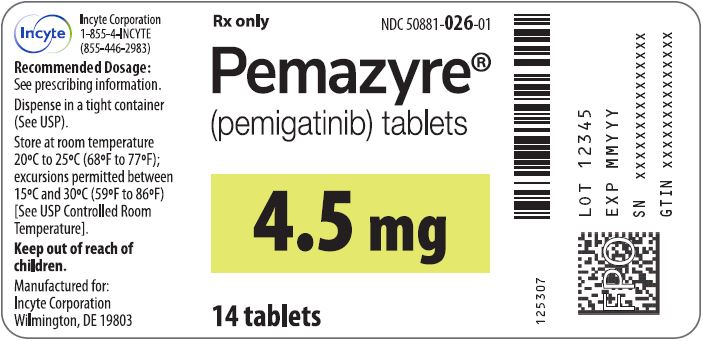
PEMAZYRE pemigatinib 4.5 mg Tablet, 14-count
🆔 Identity & classification
Where does this data come from?
🏷️ RxNorm drug class
This medicine belongs to the Kinase Inhibitor class.
Where does this data come from?
🏭 Manufacturer & labeler
Where does this data come from?
🩺 Clinical
- Pemazyre targets a specific protein called FGFR that is abnormally overactive in your particular cancer due to a genetic change. Think of that protein as a stuck 'on' switch tellin...
- What exactly is Pemazyre treating — what does it actually do to my cancer?
- You take Pemazyre as a tablet by mouth once a day. The good news is you can take it with or without food — a big meal won't affect how it works. Try to take it at the same time eve...
- How do I take this medicine — does it matter when or what I eat?
Patient education
Supplement & herbal interactions
Some supplements/herbs that may interact with Pemigatinib — tap one for details:
Where does this data come from?
Ask a licensed pharmacist directly — free, answered by our team.
💊 What it looks like
Where does this data come from?
🧪 Inactive Ingredients / Excipients
Inactive ingredients, also called excipients, are components of the drug product other than the active ingredient. They may include fillers, dyes, coatings, preservatives, flavors, or other formulation ingredients.
💡 Tap an ingredient (hover on desktop) to see what it is and why it’s used.
-
UNII OP1R32D61U
Microcrystalline cellulose is a purified form of cellulose, a natural fiber from plant sources. It acts as a binder and filler in tablets and capsules, helping hold ingredients together and give the medicine its shape and size.
-
UNII 70097M6I30
Magnesium stearate is a salt made from magnesium and stearic acid, a fatty substance. It's used in tablets and capsules as a lubricant and glidant to help ingredients flow smoothly during manufacturing and prevent sticking.
-
UNII 5856J3G2A2
A starch-based powder made from potatoes and processed with sodium. It acts as a disintegrant, helping the tablet or capsule break apart quickly in the stomach so the medicine can be absorbed.
3 inactive ingredients listed in the exact product block matched to this NDC.
Where does this data come from?
ingredient classCode="IACT" elements from the exact product block matched by this NDC. Label-section narrative from DailyMed / the openFDA label index is shown separately when available.Inactive ingredient FAQ
Are inactive ingredients the same for every manufacturer?
Why might an inactive ingredient be missing?
Can inactive ingredients matter?
💲 Pricing
A drug doesn't have one price. Each row is a different public payment system, and none is what you'd pay at the counter — that depends on your insurance. The ⓘ on each row explains what it measures.
| Price system | Per each | Per package |
|---|---|---|
| Retail pharmacies payNADAC · weekly | Not in the retail survey — common for institutional, discontinued, or low-volume packs. | |
| Medicaid paysCMS SDUD · 12 mo | No recent Medicaid claims on file for this NDC — rare and low-volume NDCs are suppressed in the public data. | |
| Medicare drug plans payPart D · Q2 2026 | $1,512.23 | $21,171.28 / 14 tablets |
Where does this data come from?
🔁 Therapeutic equivalents
| Product | Labeler | Pack | NADAC/unit | TE | Status | Price vs. this |
|---|---|---|---|---|---|---|
| Pemazyre 4.5 mgthis 50881-0026-01 | Incyte | 14 tablets | — | — | FDA listed | — |
Where does this data come from?
⏳ Availability & generic status
We did not find an FDA-approved generic match for this exact strength, form and route. Patent/protection dates below may affect future generic timing.
Why the date isn’t exact: Generic timing can change because patents may be challenged, settled, licensed, added, removed, or worked around with a narrower label — and FDA approval does not always mean a pharmacy can get the generic today.
🛈 What do these terms mean?
- Patent
- Legal protection listed in the Orange Book that may delay generic approval or launch. Issued by the U.S. Patent & Trademark Office.
- Substance patent
- Covers the active drug molecule itself — the hardest to design around. A generic generally can’t launch until it expires.
- Formulation (product) patent
- Covers a specific formulation or dosage form. A generic can sometimes work around it with a different formulation.
- Method-of-use patent
- A patent covering one specific approved use of the drug — not necessarily the whole molecule. A generic can sometimes launch with a “skinny label” that carves out the protected use and keeps the others.
- Skinny label
- A generic label that omits a still-patented use when the FDA allows it — letting a generic reach the market for the unprotected uses.
- Exclusivity
- FDA-granted marketing protection, separate from patents — e.g. 5-yr new chemical entity, 7-yr orphan drug, or a +6-month pediatric extension.
- Paragraph IV
- A generic applicant’s formal challenge to a listed patent. It can potentially lead to earlier generic entry, but often involves litigation or a settlement.
- RLD / RS
- Reference Listed Drug — the brand product the FDA uses as the reference for generic applications. Reference Standard — the product the FDA expects generics to compare against in bioequivalence testing.
- TE / AB rating
- FDA therapeutic-equivalence rating. An AB rating generally means the FDA considers a generic therapeutically equivalent to — and substitutable for — the brand.
- LOE (loss of exclusivity)
- The latest patent or exclusivity currently listed — the loss-of-exclusivity / latest-listed-protection date shown on this page. Paragraph-IV challenges and settlements can move the real date earlier; FDA approval and a manufacturer’s decision to market can move it later.
Built from the FDA Orange Book. The bars above are scaled to each protection’s expiry; the red LOE marker is the last one to lapse.
| Patent | Type | Use code | Expires |
|---|---|---|---|
| US 10131667 ↗ | Method of use | U-2809 | Apr 17, 2034 |
| US 10131667 ↗ | Method of use | U-2809 | Apr 17, 2034 |
| US 10131667 ↗ | Method of use | U-2809 | Apr 17, 2034 |
| US 11466004 ↗ | Method of use | U-3464 | May 3, 2039 |
| US 11466004 ↗ | Method of use | U-3464 | May 3, 2039 |
| US 11466004 ↗ | Method of use | U-3464 | May 3, 2039 |
| US 11466004 ↗ | Method of use | U-3465 | May 3, 2039 |
| US 11466004 ↗ | Method of use | U-3465 | May 3, 2039 |
| US 11466004 ↗ | Method of use | U-3465 | May 3, 2039 |
| US 11466004 ↗ | Method of use | U-3466 | May 3, 2039 |
| US 11466004 ↗ | Method of use | U-3466 | May 3, 2039 |
| US 11466004 ↗ | Method of use | U-3466 | May 3, 2039 |
| US 11628162 ↗ | Method of use | U-3568 | Aug 30, 2040 |
| US 11628162 ↗ | Method of use | U-3568 | Aug 30, 2040 |
| US 11628162 ↗ | Method of use | U-3569 | Aug 30, 2040 |
| US 11628162 ↗ | Method of use | U-3569 | Aug 30, 2040 |
| US 11628162 ↗ | Method of use | U-3569 | Aug 30, 2040 |
| US 11628162 ↗ | Method of use | U-3568 | Aug 30, 2040 |
| US 11628162 ↗ | Method of use | U-3570 | Aug 30, 2040 |
| US 11628162 ↗ | Method of use | U-3570 | Aug 30, 2040 |
| US 11628162 ↗ | Method of use | U-3570 | Aug 30, 2040 |
| US 11628162 ↗ | Method of use | U-3571 | Aug 30, 2040 |
| US 11628162 ↗ | Method of use | U-3571 | Aug 30, 2040 |
| US 11628162 ↗ | Method of use | U-3571 | Aug 30, 2040 |
| US 12552792 ↗ | Drug substance | — | Oct 3, 2040 |
| US 12552792 ↗ | Drug substance | — | Oct 3, 2040 |
| US 12552792 ↗ | Drug substance | — | Oct 3, 2040 |
| US 9611267 ↗ | Drug substance | — | Jan 30, 2035 |
| US 9611267 ↗ | Drug substance | — | Jan 30, 2035 |
| US 9611267 ↗ | Drug substance | — | Jan 30, 2035 |
| Code | What it grants | Expires |
|---|---|---|
| ODE-292 | Orphan Drug Exclusivity (7-year) | Apr 17, 2027 |
| ODE-404 | Orphan Drug Exclusivity (7-year) | Aug 26, 2029 |
| ODE-292 | Orphan Drug Exclusivity (7-year) | Apr 17, 2027 |
| ODE-404 | Orphan Drug Exclusivity (7-year) | Aug 26, 2029 |
| ODE-292 | Orphan Drug Exclusivity (7-year) | Apr 17, 2027 |
| ODE-404 | Orphan Drug Exclusivity (7-year) | Aug 26, 2029 |
Is there a generic version of PEMAZYRE 4.5 MG TABLET?
The FDA approved a generic — why can’t I get it at my pharmacy yet?
Why do different websites show different generic release dates?
What does “FDA listed” mean?
What does a patent or protection date mean here?
What does “current Orange Book estimate” mean?
Can a generic come out before the last patent expires?
Can a generic come out after the listed dates?
What is the difference between patents and exclusivity?
Why are there multiple patent dates?
Where does this data come from?
📊 Medicare Part D spend CMS · PART D · 2026 (Q1)
📦 Packaging — all sizes for this product
| Package NDC | Description | Marketing start | Status |
|---|---|---|---|
| 50881-0026-01 You're viewing this | 14 TABLET in 1 BOTTLE, PLASTIC (50881-026-01) | 2020-04-17 | Active |
🧭 About this NDC listing & data coverage
What data is (and isn’t) available for this NDC — tap to expand
| NDC identity (package / product / labeler codes) | ✓ Available |
| Labeler | ✓ Available |
| Product & package description | ✓ Available |
| Marketing category & status | ✓ Available |
| Active ingredient / dosage form / route | ✓ Available |
| FDA label (SPL via DailyMed) | ✓ Available |
| Package photos | ✓ Available |
| Inactive ingredients (structured) | ✓ Available |
| NADAC pharmacy acquisition price (CMS) | — Not published for this NDC CMS publishes NADAC only for NDCs reported in its retail-pharmacy survey. |
| Orange Book / therapeutic-equivalence data | ✓ Available |
| HCPCS J-code billing crosswalk | — Not published for this NDC Most self-administered / retail products have no J-code — that is normal. |
| Medicaid utilization (CMS SDUD) | — Not published for this NDC CMS reports utilization only for NDCs with Medicaid claims above its privacy threshold. |
Questions about this listing
Why is there no price listed?
Is the NDC printed on the package the same as the 11-digit billing NDC?
What do the three segments of this NDC mean?
Is this package still being marketed?
Who lists this product with the FDA?
Do I need a prescription for this product?
Where does this data come from?
📄 Full prescribing information FDA SPL
🎯 Indications and Usage ▾
1 INDICATIONS AND USAGE PEMAZYRE is a kinase inhibitor indicated: for the treatment of adults with previously treated, unresectable locally advanced or metastatic cholangiocarcinoma with a fibroblast growth factor receptor 2 (FGFR2) fusion or other rearrangement as detected by an FDA-approved test. ( 1 , 2.1 ) This indication is approved under accelerated approval based on overall response rate and duration of response. Continued approval for this indication may be contingent upon verification and description of clinical benefit in a confirmatory trial(s).
( 1 , 2.1 ) For the treatment of adults with relapsed or refractory myeloid/lymphoid neoplasms (MLNs) with FGFR1 rearrangement. ( 1 , 2.1 )
1.1Cholangiocarcinoma PEMAZYRE is indicated for the treatment of adults with previously treated, unresectable locally advanced or metastatic cholangiocarcinoma with a fibroblast growth factor receptor 2 (FGFR2) fusion or other rearrangement as detected by an FDA-approved test [see Dosage and Administration ( 2.1 )] . This indication is approved under accelerated approval based on overall response rate and duration of response [see Clinical Studies ( 14.1 )]. Continued approval for this indication may be contingent upon verification and description of clinical benefit in a confirmatory trial(s).
1.2Myeloid/Lymphoid Neoplasms with FGFR1 Rearrangement PEMAZYRE is indicated for the treatment of adults with relapsed or refractory myeloid/lymphoid neoplasms (MLNs) with fibroblast growth factor receptor 1 (FGFR1) rearrangement.
⏱️ Dosage and Administration ▾
2 DOSAGE AND ADMINISTRATION Cholangiocarcinoma: Confirm the presence of an FGFR2 fusion or rearrangement prior to initiation of treatment with PEMAZYRE. ( 2.1 ) Recommended dosage is 13.5 mg orally once daily for 14 consecutive days followed by 7 days off therapy in 21-day cycles. Continue treatment until disease progression or unacceptable toxicity occurs.
( 2.2 ) Myeloid/lymphoid neoplasms with FGFR1 rearrangement: Recommended dosage is 13.5 mg orally once daily. Continue treatment until disease progression or unacceptable toxicity. ( 2.2 ) All patients treated with PEMAZYRE: Swallow tablet whole, with or without food.
( 2.2 ) Severe Renal Impairment: the recommended dosage of PEMAZYRE is 9 mg with the schedule (intermittent or continuous) designated for the indication. ( 2.5 , 8.6 , 12.3 ) Severe Hepatic Impairment: the recommended dosage of PEMAZYRE is 9 mg with the schedule (intermittent or continuous) designated for the indication. ( 2.6 , 8.7 , 12.3 )
2.1Patient Selection Select patients for the treatment of locally advanced or metastatic cholangiocarcinoma with PEMAZYRE based on the presence of an FGFR2 fusion or rearrangement as detected by an FDA-approved test [see Clinical Studies ( 14.1 )]. Information on FDA-approved test(s) for the detection of an FGFR2 fusion or rearrangement in cholangiocarcinoma is available at http://www.fda.gov/CompanionDiagnostics . Select patients for the treatment of relapsed or refractory myeloid/lymphoid neoplasms with FGFR1 rearrangement with PEMAZYRE based on the presence of an FGFR1 rearrangement [see Clinical Studies ( 14.2 )] .
An FDA-approved test for detection of FGFR1 rearrangement in patients with relapsed or refractory myeloid/lymphoid neoplasm for selecting patients for treatment with PEMAZYRE is not available.
2.2Recommended Dosage Take PEMAZYRE with or without food at approximately the same time every day [see Clinical Pharmacology ( 12.3 )] . Swallow tablets whole. Do not crush, chew, split, or dissolve tablets.
If the patient misses a dose of PEMAZYRE by 4 or more hours or if vomiting occurs, resume dosing with the next scheduled dose. Cholangiocarcinoma The recommended dosage of PEMAZYRE is 13.5 mg orally once daily for 14 consecutive days followed by 7 days off therapy, in 21-day cycles. Continue treatment until disease progression or unacceptable toxicity occurs.
Myeloid/Lymphoid Neoplasms with FGFR1 Rearrangement The recommended dosage of PEMAZYRE is 13.5 mg orally once daily on a continuous basis. Continue treatment until disease progression or unacceptable toxicity occurs.
2.3Dosage Modification for Adverse Reactions The recommended dose reductions for adverse reactions are provided in Table 1. Table 1: Recommended Dose Reductions for PEMAZYRE for Adverse Reactions Dose Reduction Recommended Dosage Cholangiocarcinoma with FGFR2 Fusion or Rearrangement MLNs with FGFR1 Rearrangement First 9 mg once daily for first 14 days of each 21-day cycle 9 mg once daily Second 4.5 mg once daily for first 14 days of each 21-day cycle 4.5 mg once daily Third Discontinue 4.5 mg once daily for first 14 days of each 21-day cycle Permanently discontinue PEMAZYRE if unable to tolerate 4.5 mg once daily for 14 days of each 21-day cycle.
The recommended dosage modifications for adverse reactions are provided in Table 2. Table 2: Recommended Dosage Modifications for PEMAZYRE Adverse Reactions Adverse Reaction Severity Severity as defined by National Cancer Institute Common Terminology Criteria for Adverse Events (NCI CTCAE) version 4.03. PEMAZYRE Dosage Modification Retinal Pigment Epithelial Detachment (RPED) [see Warnings and Precautions ( 5.1 )] RPED If asymptomatic and stable on serial examination, continue PEMAZYRE.
If symptomatic or worsening on serial examination, withhold PEMAZYRE. If asymptomatic and improved on subsequent examination, resume PEMAZYRE at a lower dose If symptoms persist or examination does not improve, consider permanent discontinuation of PEMAZYRE, based on cl…
💊 Dosage Forms and Strengths ▾
3 DOSAGE FORMS AND STRENGTHS Tablets: 4.5 mg: round, white to off-white tablet debossed on one side with "I" and "4.5" on the other side. 9 mg: oval, white to off-white tablet debossed on one side with "I" and "9" on the other side. 13.5 mg: round, white to off-white tablet debossed on one side with "I" and "13.5" on the other side. Tablets: 4.5 mg, 9 mg, and 13.5 mg. ( 3 )
⛔ Contraindications ▾
4 CONTRAINDICATIONS None. None. ( 4 )
⚠️ Warnings and Cautions ▾
5 WARNINGS AND PRECAUTIONS Ocular Toxicity : PEMAZYRE can cause retinal pigment epithelial detachment. Perform ophthalmological examination including optical coherence tomography (OCT) prior to initiation of therapy, every 2 months for the first 6 months of treatment and every 3 months thereafter, and urgently at any time for visual symptoms. ( 2.3 , 5.1 ) Hyperphosphatemia and Soft Tissue Mineralization : PEMAZYRE can cause hyperphosphatemia leading to soft tissue mineralization, cutaneous calcification, calcinosis, and non-uremic calciphylaxis.
Monitor for hyperphosphatemia and withhold, reduce the dose, or permanently discontinue based on duration and severity of hyperphosphatemia. ( 2.3 , 5.2 ) Embryo-Fetal Toxicity : Can cause fetal harm. Advise patients of reproductive potential of the potential risk to the fetus and use effective contraception.
( 5.3 , 8.1 , 8.3 )
5.1Ocular Toxicity Retinal Pigment Epithelial Detachment (RPED) PEMAZYRE can cause RPED, which may cause symptoms such as blurred vision, visual floaters, or photopsia. Clinical trials of PEMAZYRE did not conduct routine monitoring including optical coherence tomography (OCT) to detect asymptomatic RPED; therefore, the incidence of asymptomatic RPED with PEMAZYRE is unknown. Among 635 patients who received a starting dose of PEMAZYRE 13.5 mg across clinical trials, RPED occurred in 11% of patients, including Grade 3-4 RPED in 1.3%.
The median time to first onset of RPED was 56 days. RPED led to dose interruption of PEMAZYRE in 3.1% of patients, and dose reduction and permanent discontinuation in 1.3% and in 0.2% of patients, respectively. RPED resolved or improved to Grade 1 levels in 76% of patients who required dosage modification of PEMAZYRE for RPED.
Perform a comprehensive ophthalmological examination including OCT prior to initiation of PEMAZYRE and every 2 months for the first 6 months and every 3 months thereafter during treatment. For onset of visual symptoms, refer patients for ophthalmologic evaluation urgently, with follow-up every 3 weeks until resolution or discontinuation of PEMAZYRE. Modify the dose or permanently discontinue PEMAZYRE as recommended [see Dosage and Administration ( 2.3 )] .
Dry Eye Among 635 patients who received a starting dose of PEMAZYRE 13.5 mg across clinical trials, dry eye occurred in 31% of patients, including Grade 3-4 in 1.6% of patients. Treat patients with ocular demulcents as needed.
5.2Hyperphosphatemia and Soft Tissue Mineralization PEMAZYRE can cause hyperphosphatemia leading to soft tissue mineralization, cutaneous calcification, calcinosis, and non-uremic calciphylaxis. Increases in phosphate levels are a pharmacodynamic effect of PEMAZYRE [see Clinical Pharmacology ( 12.2 )] . Among 635 patients who received a starting dose of PEMAZYRE 13.5 mg across clinical trials, hyperphosphatemia was reported in 93% of patients based on laboratory values above the upper limit of normal.
The median time to onset of hyperphosphatemia was 8 days (range 1-169). Phosphate lowering therapy was required in 33% of patients receiving PEMAZYRE. Monitor for hyperphosphatemia and initiate a low phosphate diet when serum phosphate level is > 5.5 mg/dL.
For serum phosphate levels > 7 mg/dL, initiate phosphate lowering therapy and withhold, reduce the dose, or permanently discontinue PEMAZYRE based on duration and severity of hyperphosphatemia [see Dosage and Administration ( 2.3 )].
5.3Embryo-Fetal Toxicity Based on findings in an animal study and its mechanism of action, PEMAZYRE can cause fetal harm when administered to a pregnant woman. Oral administration of pemigatinib to pregnant rats during the period of organogenesis caused fetal malformations, fetal growth retardation, and embryo-fetal death at maternal exposures lower than the human exposure based on area under the curve (AUC) at the clinical dose of 13.5 mg. Advise pregnant women of the potential risk to the fetus.
Advise female patients of reproductive potential to use…
🤒 Adverse Reactions ▾
6 ADVERSE REACTIONS The following adverse reactions are discussed elsewhere in the labeling: Ocular Toxicity [see Warnings and Precautions ( 5.1 )] Hyperphosphatemia and Soft Tissue Mineralization [see Warnings and Precautions ( 5.2 )] Cholangiocarcinoma: The most common adverse reactions (incidence ≥ 20%) are hyperphosphatemia, alopecia, diarrhea, nail toxicity, fatigue, dysgeusia, nausea, constipation, stomatitis, dry eye, dry mouth, decreased appetite, vomiting, arthralgia, abdominal pain, hypophosphatemia, back pain, and dry skin.
( 6.1 ) Myeloid/lymphoid neoplasms with FGFR1 rearrangement: The most common (≥ 20%) adverse reactions are hyperphosphatemia, nail toxicity, alopecia, stomatitis, diarrhea, dry eye, fatigue, rash, abdominal pain, anemia, constipation, dry mouth, epistaxis, serous retinal detachment, extremity pain, decreased appetite, dry skin, dyspepsia, back pain, nausea, blurred vision, peripheral edema, and dizziness. ( 6.1 ) To report SUSPECTED ADVERSE REACTIONS, contact Incyte Corporation at 1-855-463-3463 or FDA at 1-800-FDA-1088 or www.fda.gov/medwatch .
6.1Clinical Trials Experience Because clinical trials are conducted under widely varying conditions, adverse reaction rates observed in the clinical trials of a drug cannot be directly compared to rates in the clinical trials of another drug and may not reflect the rates observed in practice. The pooled safety population described in the WARNINGS AND PRECAUTIONS section reflects exposure to PEMAZYRE at a starting dose of 13.5 mg orally once daily (intermittent or continuous administration) in 635 patients with advanced malignancies.
Among the 635 patients, 31% were exposed for 6 months or longer and 11% were exposed greater than one year, including patients with previously treated, advanced, or metastatic cholangiocarcinoma in FIGHT-202 and patients with MLNs with FGFR1 rearrangement in FIGHT-203. Cholangiocarcinoma FIGHT-202 The safety of PEMAZYRE was evaluated in FIGHT-202, which included 146 patients with previously treated, locally advanced or metastatic cholangiocarcinoma [see Clinical Studies ( 14.1 )]. Patients were treated orally with PEMAZYRE 13.5 mg once daily for 14 days on followed by 7 days off therapy until disease progression or unacceptable toxicity.
The median duration of treatment was 181 days (range: 7 to 730 days). The median age of PEMAZYRE-treated patients was 59 years (range 26-78), 58% were females, and 71% were White. Serious adverse reactions occurred in 45% of patients receiving PEMAZYRE.
Serious adverse reactions in ≥ 2% of patients who received PEMAZYRE included abdominal pain, pyrexia, cholangitis, pleural effusion, acute kidney injury, cholangitis infective, failure to thrive, hypercalcemia, hyponatremia, small intestinal obstruction, and urinary tract infection. Fatal adverse reactions occurred in 4.1% of patients, including failure to thrive, bile duct obstruction, cholangitis, sepsis, and pleural effusion. Permanent discontinuation due to an adverse reaction occurred in 9% of patients who received PEMAZYRE.
Adverse reactions requiring permanent discontinuation in ≥ 1% of patients included intestinal obstruction and acute kidney injury. Dosage interruptions due to an adverse reaction occurred in 43% of patients who received PEMAZYRE. Adverse reactions requiring dosage interruption in ≥ 1% of patients included stomatitis, palmar-plantar erythrodysesthesia syndrome, arthralgia, fatigue, abdominal pain, AST increased, asthenia, pyrexia, ALT increased, cholangitis, small intestinal obstruction, alkaline phosphatase increased, diarrhea, hyperbilirubinemia, electrocardiogram QT prolonged, decreased appetite, dehydration, hypercalcemia, hyperphosphatemia, hypophosphatemia, back pain, pain in extremity, syncope, acute kidney injury, onychomadesis, and hypotension.
Dose reductions due to an adverse reaction occurred in 14% of patients who received PEMAZYRE. Adverse reactions requiring dosage reductions in ≥ 1% of patients who rece…
🔄 Drug Interactions ▾
7 DRUG INTERACTIONS Strong and Moderate CYP3A Inducers: Avoid concomitant use of PEMAZYRE. ( 7.1 ) Strong and Moderate CYP3A Inhibitors: Avoid concomitant use. If concomitant use cannot be avoided, reduce PEMAZYRE dosage. ( 2.4 , 7.1 )
7.1Effect of Other Drugs on PEMAZYRE Strong and Moderate CYP3A Inducers Concomitant use of PEMAZYRE with a strong or moderate CYP3A inducer decreases pemigatinib plasma concentrations [ see Clinical Pharmacology ( 12.3 )], which may reduce the efficacy of PEMAZYRE. Avoid concomitant use of strong and moderate CYP3A inducers with PEMAZYRE. Strong and Moderate CYP3A Inhibitors Concomitant use of a strong or moderate CYP3A inhibitor with PEMAZYRE increases pemigatinib plasma concentrations [see Clinical Pharmacology ( 12.3 )], which may increase the incidence and severity of adverse reactions.
Avoid concomitant use of strong and moderate CYP3A inhibitors with PEMAZYRE. Reduce PEMAZYRE dosage if concomitant use of strong and moderate CYP3A inhibitors cannot be avoided [see Dosage and Administration ( 2.4 )] .
👥 Use in Specific Populations ▾
8 USE IN SPECIFIC POPULATIONS Lactation: Advise not to breastfeed. ( 8.2 )
8.1Pregnancy Risk Summary Based on findings in an animal study and its mechanism of action, PEMAZYRE can cause fetal harm or loss of pregnancy when administered to a pregnant woman [see Clinical Pharmacology ( 12.1 )] . There are no available data on the use of PEMAZYRE in pregnant women. Oral administration of pemigatinib to pregnant rats during the period of organogenesis at maternal plasma exposures below the human exposure at the clinical dose of 13.5 mg resulted in fetal malformations, fetal growth retardation, and embryo-fetal death (see Data) .
Advise pregnant women of the potential risk to a fetus. In the U.S. general population, the estimated background risk of major birth defects and miscarriage in clinically recognized pregnancies is 2% to 4% and 15% to 20%, respectively. Data Animal Data Once daily oral administration of pemigatinib to pregnant rats during the period of organogenesis resulted in 100% embryofetal mortality due to post-implantation loss at doses ≥ 0.3 mg/kg (approximately 0.6 times the human exposure based on AUC at the clinical dose of 13.5 mg).
Fetal survival was unaffected at 0.1 mg/kg per day; however, once daily oral administration of pemigatinib at the 0.1 mg/kg dose level (approximately 0.2 times the human exposure based on AUC at the clinical dose of 13.5 mg) resulted in reduced mean fetal body weight and an increase in fetal skeletal and visceral malformations, major blood vessel variations, and reduced ossification.
8.2Lactation Risk Summary There are no data on the presence of pemigatinib or its metabolites in human milk or their effects on either the breastfed child or on milk production. Because of the potential for serious adverse reactions in breastfed children from PEMAZYRE, advise women not to breastfeed during treatment and for 1 week after the last dose.
8.3Females and Males of Reproductive Potential PEMAZYRE can cause fetal harm when administered to pregnant women [see Use in Specific Populations ( 8.1 )] . Pregnancy Testing Verify pregnancy status of females of reproductive potential prior to initiating PEMAZYRE [see Use in Specific Populations ( 8.1 )] . Contraception Females Advise females of reproductive potential to use effective contraception during treatment with PEMAZYRE and for 1 week after the last dose.
Males Advise males with female partners of reproductive potential to use effective contraception during treatment with PEMAZYRE and for 1 week after the last dose.
8.4Pediatric Use The safety and effectiveness of PEMAZYRE have not been established in pediatric patients. Animal Toxicity Data In 4- or 13-week repeat-dose toxicology studies in rats and non-human primates, animals displayed toxicities in bone and teeth at pemigatinib exposures lower than the human exposure at the clinical dose of 13.5 mg. Physeal and cartilage dysplasia were present in multiple bones in both species, and tooth (incisor) abnormalities (complete loss of ameloblasts with associated secondary changes) occurred in rats.
Six weeks after cessation of dosing, these findings did not show complete evidence of recovery, and additional tooth-related findings (mal-aligned, whitened, broken, and trimmed/thinned incisors) developed in the 13-week study.
8.5Geriatric Use In FIGHT-202 in patients with cholangiocarcinoma, 32% of patients were 65 years and older, and 8% of patients were 75 years and older. In FIGHT-203 in patients with MLN with FGFR1 rearrangement, 44% of patients were 65 years and older, and 2.9% of patients were 75 years and older. No overall differences in safety or effectiveness were observed between these patients and younger patients.
8.6Renal Impairment Reduce the recommended dosage of PEMAZYRE for patients with severe renal impairment (eGFR 15 to 29 mL/min/1.73 m 2 , estimated by MDRD equation) [see Dosage and Administration ( 2.5 ) and Clinical Pharmacology ( 12.3 )] . No dosage adjustment is recommended…
🤰 Pregnancy ▾
8.1Pregnancy Risk Summary Based on findings in an animal study and its mechanism of action, PEMAZYRE can cause fetal harm or loss of pregnancy when administered to a pregnant woman [see Clinical Pharmacology ( 12.1 )] . There are no available data on the use of PEMAZYRE in pregnant women. Oral administration of pemigatinib to pregnant rats during the period of organogenesis at maternal plasma exposures below the human exposure at the clinical dose of 13.5 mg resulted in fetal malformations, fetal growth retardation, and embryo-fetal death (see Data) .
Advise pregnant women of the potential risk to a fetus. In the U.S. general population, the estimated background risk of major birth defects and miscarriage in clinically recognized pregnancies is 2% to 4% and 15% to 20%, respectively. Data Animal Data Once daily oral administration of pemigatinib to pregnant rats during the period of organogenesis resulted in 100% embryofetal mortality due to post-implantation loss at doses ≥ 0.3 mg/kg (approximately 0.6 times the human exposure based on AUC at the clinical dose of 13.5 mg).
Fetal survival was unaffected at 0.1 mg/kg per day; however, once daily oral administration of pemigatinib at the 0.1 mg/kg dose level (approximately 0.2 times the human exposure based on AUC at the clinical dose of 13.5 mg) resulted in reduced mean fetal body weight and an increase in fetal skeletal and visceral malformations, major blood vessel variations, and reduced ossification.
🧒 Pediatric Use ▾
8.4Pediatric Use The safety and effectiveness of PEMAZYRE have not been established in pediatric patients. Animal Toxicity Data In 4- or 13-week repeat-dose toxicology studies in rats and non-human primates, animals displayed toxicities in bone and teeth at pemigatinib exposures lower than the human exposure at the clinical dose of 13.5 mg. Physeal and cartilage dysplasia were present in multiple bones in both species, and tooth (incisor) abnormalities (complete loss of ameloblasts with associated secondary changes) occurred in rats.
Six weeks after cessation of dosing, these findings did not show complete evidence of recovery, and additional tooth-related findings (mal-aligned, whitened, broken, and trimmed/thinned incisors) developed in the 13-week study.
🧓 Geriatric Use ▾
8.5Geriatric Use In FIGHT-202 in patients with cholangiocarcinoma, 32% of patients were 65 years and older, and 8% of patients were 75 years and older. In FIGHT-203 in patients with MLN with FGFR1 rearrangement, 44% of patients were 65 years and older, and 2.9% of patients were 75 years and older. No overall differences in safety or effectiveness were observed between these patients and younger patients.
🧬 Clinical Pharmacology ▾
12 CLINICAL PHARMACOLOGY
12.1Mechanism of Action Pemigatinib is a small molecule kinase inhibitor that targets FGFR1, 2 and 3 with IC 50 values of less than 2 nM. Pemigatinib also inhibited FGFR4 in vitro at a concentration approximately 100 times higher than those that inhibit FGFR1, 2, and 3. Pemigatinib inhibited FGFR1-3 phosphorylation and signaling and decreased cell viability in cancer cell lines with activating FGFR amplifications and fusions that resulted in constitutive activation of FGFR signaling.
Constitutive FGFR signaling can support the proliferation and survival of malignant cells. Pemigatinib exhibited anti-tumor activity in mouse xenograft models of human tumors with FGFR1, FGFR2, or FGFR3 alterations resulting in constitutive FGFR activation including a patient-derived xenograft model of cholangiocarcinoma that expressed an oncogenic FGFR2-Transformer-2 beta homolog (TRA2b) fusion protein and the KG1 leukemia model that carries a translocation of FGFR1 (FGFR1OP2-FGFR1).
12.2Pharmacodynamics Serum Phosphate Pemigatinib increased serum phosphate levels as a consequence of FGFR inhibition. Serum phosphate increased with increasing exposure across the dose range of 1 to 20 mg once daily (0.07 to 1.5 times the recommended dose), with increased risk of hyperphosphatemia with higher pemigatinib exposure. Cardiac Electrophysiology At a dose 1.5 times the maximum recommended dose, PEMAZYRE does not result in a large mean increase (i.e. > 20 ms) of the QTc interval.
12.3Pharmacokinetics The geometric mean (CV%) steady-state pemigatinib AUC 0-24h was 2620 nM·h (54%) and C max was 236 nM (56%) for 13.5 mg orally once daily. Steady state pemigatinib concentrations increased proportionally over the dose range of 1 to 20 mg (0.07 to 1.5 times the recommended dose). Steady-state was achieved within 4 days and pemigatinib accumulated with a median accumulation ratio of 1.63 (range 0.63 to 3.28) following repeated once daily dosing.
Absorption The median time to achieve peak pemigatinib plasma concentration (T max ) was 1.13 (0.50‑6.00) hours. Effect of Food Administration of PEMAZYRE with a high-fat and high-calorie meal (approximately 1000 calories with 150 calories from protein, 250 calories from carbohydrate, and 500‑600 calories from fat) had no clinically significant effect on pemigatinib pharmacokinetics. Distribution The estimated apparent volume of distribution was 235 L (60.8%) following a 13.5 mg oral dose.
Protein binding of pemigatinib was 90.6% and was independent of concentration in vitro. Elimination The geometric mean (%CV) elimination half-life (t ½ ) of pemigatinib was 15.4 (51.6%) hours and the geometric mean apparent clearance (CL/F) was
10.6L/h (54%). Metabolism Pemigatinib is predominantly metabolized by CYP3A4 in vitro. The major drug-related moiety in plasma was unchanged pemigatinib.
Excretion Following a single oral 11 mg dose of radiolabeled pemigatinib, 82.4% of the dose was recovered in feces (1.4% as unchanged) and 12.6% in urine (1% as unchanged). Specific Populations No clinically significant differences in the systemic exposure of pemigatinib were observed based on age (21 ‑ 79 years), sex, race/ethnicity (White 68.2%, Asian 16%, Black 6.3%, Hispanic 6%, other 3.5%) or body weight (39.8 ‑ 156 kg). Patients with Renal Impairment No clinically significant differences in the systemic exposure of pemigatinib were observed in mild to moderate renal impairment (eGFR 30 to 89 mL/min, MDRD) or end-stage renal disease (eGFR <15 mL/min/1.73 m 2 ) on intermittent hemodialysis.
Compared to subjects with normal renal function, the geometric mean pemigatinib AUC 0–inf increased by 59% in patients with severe renal impairment (eGFR 15 to 29 mL/min/1.73 m 2 ). Patients with Hepatic Impairment No clinically significant differences in the systemic exposure of pemigatinib were observed in mild (total bilirubin > upper limit of normal [ULN] to 1.5 × ULN or AST > ULN) to moderate (total bilirubin >1.5–3 × ULN…
🧬 Mechanism of Action ▾
12.1Mechanism of Action Pemigatinib is a small molecule kinase inhibitor that targets FGFR1, 2 and 3 with IC 50 values of less than 2 nM. Pemigatinib also inhibited FGFR4 in vitro at a concentration approximately 100 times higher than those that inhibit FGFR1, 2, and 3. Pemigatinib inhibited FGFR1-3 phosphorylation and signaling and decreased cell viability in cancer cell lines with activating FGFR amplifications and fusions that resulted in constitutive activation of FGFR signaling.
Constitutive FGFR signaling can support the proliferation and survival of malignant cells. Pemigatinib exhibited anti-tumor activity in mouse xenograft models of human tumors with FGFR1, FGFR2, or FGFR3 alterations resulting in constitutive FGFR activation including a patient-derived xenograft model of cholangiocarcinoma that expressed an oncogenic FGFR2-Transformer-2 beta homolog (TRA2b) fusion protein and the KG1 leukemia model that carries a translocation of FGFR1 (FGFR1OP2-FGFR1).
📦 How Supplied / Storage and Handling ▾
16 HOW SUPPLIED/STORAGE AND HANDLING PEMAZYRE tablets are available as follows: 4.5 mg: Round, white to off-white debossed on one side with “I” and “4.5” on the other side in bottles of 14 with child-resistant closure, NDC 50881-026-01 9 mg: Oval, white to off-white debossed on one side with “I” and “9” on the other side in bottles of 14 with child-resistant closure, NDC 50881-027-01 13.5 mg: Round, white to off-white debossed on one side with “I” and “13.5” on the other side in bottles of 14 with child-resistant closure, NDC 50881-028-01 Store PEMAZYRE tablets at room temperature 20°C to 25°C (68°F to 77°F); excursions permitted to 15°C to 30°C (59°F to 86°F).
📋 Description ▾
11 DESCRIPTION Pemigatinib is a kinase inhibitor with the chemical name 3-(2,6-difluoro-3,5-dimethoxyphenyl)-1-ethyl-8-(morpholin-4-ylmethyl)-1,3,4,7-tetrahydro-2 H -pyrrolo[3',2':5,6]pyrido[4,3- d ]pyrimidin-2-one. Pemigatinib has a molecular formula of C 24 H 27 F 2 N 5 O 4 and molecular mass of 487.5 g/mole. Pemigatinib has the following chemical structure: Pemigatinib is a white to off-white solid that is not hygroscopic.
The solubility of pemigatinib is pH dependent with decreasing solubility observed with increasing pH. PEMAZYRE tablets are uncoated and for oral administration. Tablets are available containing 4.5 mg, 9 mg, or 13.5 mg of pemigatinib active ingredient.
The inactive ingredients include magnesium stearate, microcrystalline cellulose, and sodium starch glycolate. Chemical Structure
💬 Information for Patients ▾
17 PATIENT COUNSELING INFORMATION Advise the patient to read the FDA-approved patient labeling (Patient Information). Ocular Toxicity Advise patients that PEMAZYRE may cause ocular toxicity including RPED and to immediately inform their healthcare provider if they experience any visual changes. Also advise patients that they should use artificial tear or substitutes, hydrating or lubricating eye gels in order to prevent or treat dry eyes [see Warnings and Precautions ( 5.1 )] .
Hyperphosphatemia and Soft Tissue Mineralization Inform patients that they may experience increase in phosphate levels and of the need to monitor serum phosphate levels. Advise patients to immediately inform their healthcare provider of any symptoms related to acute change in phosphate levels such as muscle cramps, numbness, or tingling around the mouth [see Warnings and Precautions ( 5.2 )] . Nail Disorders Advise patients that PEMAZYRE may cause nail disorders [see Adverse Reactions ( 6.1 )] .
Embryo-Fetal Toxicity Advise females to inform their healthcare provider if they are pregnant or become pregnant. Inform female patients of the risk to a fetus and potential loss of pregnancy [see Warnings and Precautions ( 5.3 ) and Use in Specific Populations ( 8.1 )] . Advise females of reproductive potential to use effective contraception during treatment with PEMAZYRE and for 1 week after the last dose [ see Use in Specific Populations ( 8.3 )] .
Advise males with female partners of reproductive potential or who are pregnant to use effective contraception during treatment and for 1 week after receiving the last dose of PEMAZYRE [see Use in Specific Populations ( 8.3 )] . Lactation Advise patients not to breastfeed during treatment with PEMAZYRE and for 1 week after the last dose [see Use in Specific Populations ( 8.2 )] . Administration Instruct patients do not crush, chew, split or dissolve tablets.
Instruct patients if they miss a dose by 4 or more hours or if they vomit after taking a dose, resume dosing with the next scheduled dose. Extra tablets should not be taken to make up for the missed dose [see Dosage and Administration ( 2.2 )]. Drug Interactions Advise patients to inform their healthcare providers of all concomitant medications, herbal and dietary supplements.
Advise patients to avoid grapefruit products during treatment with PEMAZYRE [see Drug Interactions ( 7.1 )] . Manufactured for: Incyte Corporation Wilmington, DE 19803 PEMAZYRE is a registered trademark of Incyte. U.S.
Patent Nos. 9,611,267, 10,131,667, 11,466,004, and 11,628,162 © 2020-2023 Incyte Corporation. All rights reserved.