
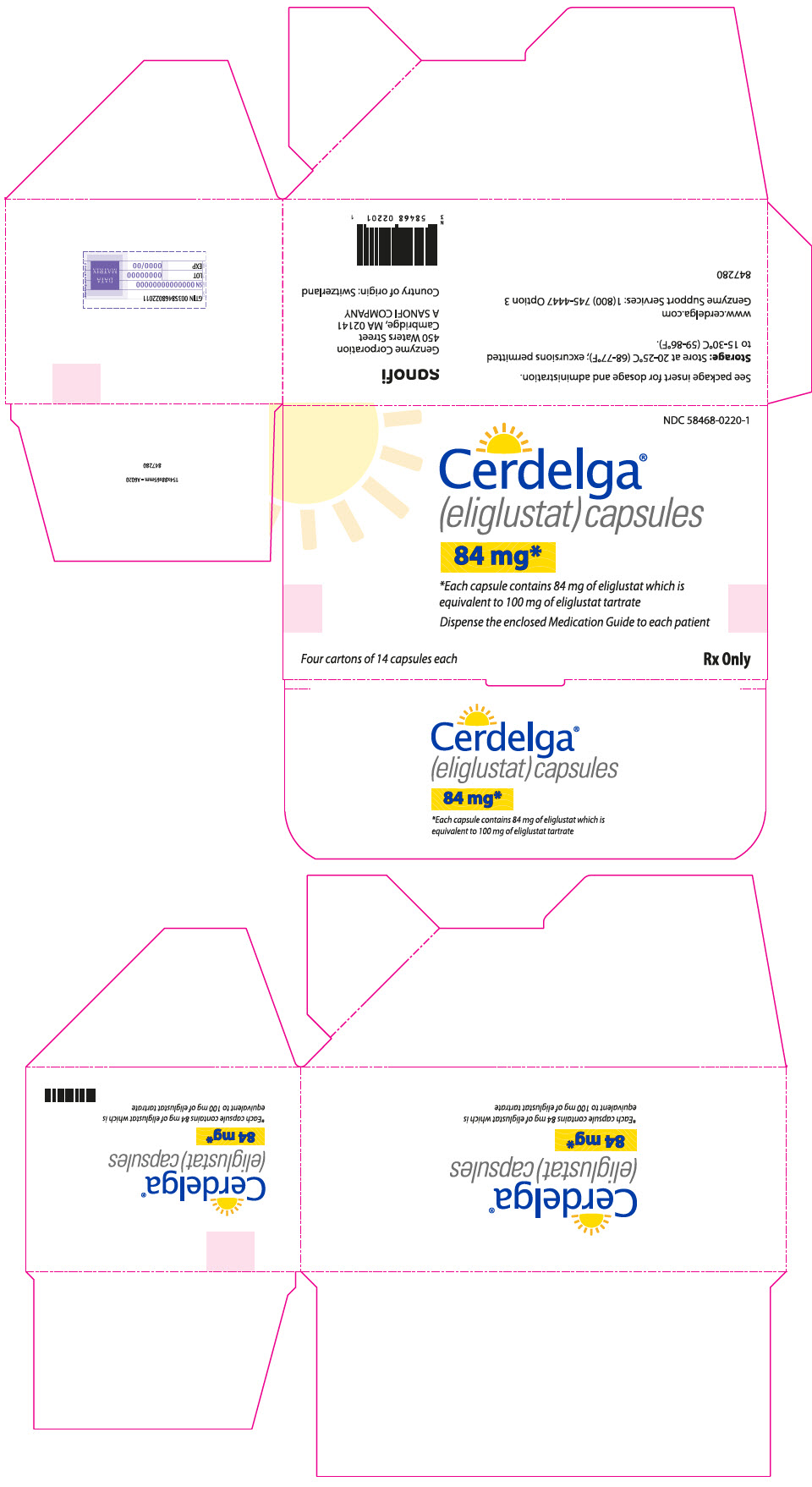
Cerdelga eliglustat 84 mg Capsule, 14-count — NDC 58468-0220-2 (Billing 58468-0220-02)
This is a package of 14 capsules of Cerdelga eliglustat 84 mg Capsule from Genzyme Corporation, marketed since Sep 2014 and currently FDA-listed.
NDC database record
One package, one record: these facts belong to NDC 58468-0220-2 alone.
- Record
- FDA NDC Directory package listing · Human prescription drug
- Code segments
- 58468 labeler · 0220 product · 2 package
- Package marketed since
- Sep 3, 2014
- Sample package
- No — commercial package
- Listing certified through
- Dec 31, 2026
- Billing quantity
- 14 EA per package
- Barcode (UPC-A, from the NDC)
- 3 5846802202 8
- FDA record last changed
- Jul 24, 2026
Identity & classification
Regulatory identifiers FDA, NLM and CMS codes for this package
Drug-database identifiers Medi-Span GPI and First Databank GCN / HICL / AHFS classification
- GSN (GCN sequence number): 072709
- GCN: 36988
- GPI-14 (Medi-Span): 82700040600120
- HICL (First Databank): 041346
- AHFS class code: 44:04.00.00
- RxCUI (RxNorm): 1547225
Where does this data come from?
- FDA openFDA NDC Directory · synced Oct 8, 2026
- FDA label on DailyMed · label index refreshed Oct 8, 2026
- RxNorm (NLM RxNav) · catalog refreshed Oct 1, 2026
- Medi-Span GPI (licensed)
- First Databank (licensed) · refreshed Oct 8, 2026
RxNorm drug class
This medicine belongs to the Glucosylceramide Synthase Inhibitor class.
Where does this data come from?
- RxClass (NLM) · catalog refreshed Oct 1, 2026
Clinical
- Eliglustat, sold as Cerdelga, treats Gaucher disease type 1 in adults. It lowers production of the fatty substance that builds up in your organs with this condition. You need a CYP...
- Swallow them whole, preferably with water. Don't crush, open or dissolve them. You can take them with or without food. If you miss a dose, just take the next one at the usual time...
- No, avoid grapefruit and grapefruit juice. They can raise the amount of eliglustat in your body, which may increase the risk of heart rhythm problems.
- The most common are fatigue, headache, nausea, diarrhea, back pain, pain in your arms or legs and upper belly pain. Call your doctor if you notice a pounding, fast or irregular hea...
Patient education
Supplement & herbal interactions
Some supplements/herbs that may interact with Eliglustat — tap one for details:
Where does this data come from?
- MedlinePlus (NLM) · refreshed Oct 8, 2026
- FDA label on DailyMed · label index refreshed Oct 8, 2026
Ask a licensed pharmacist directly — free, answered by our team.
Pricing
A drug doesn't have one price. Each row is a different public payment system, and none is what you'd pay at the counter — that depends on your insurance. The ⓘ on each row explains what it measures.
| Price system | Per each | Per package |
|---|---|---|
| Retail pharmacies payNADAC · weekly | Not in the retail survey — common for institutional, discontinued, or low-volume packs. | |
| Medicaid paysCMS SDUD · 12 mo | No recent Medicaid claims on file for this NDC — rare and low-volume NDCs are suppressed in the public data. | |
| Medicare drug plans payPart D · Q2 2026 | $618.40 | $8,657.57 / 14 capsules |
Where does this data come from?
- CMS NADAC weekly file
- CMS ASP pricing files · refreshed Sep 20, 2026
- CMS Medicaid State Drug Utilization Data · refreshed Oct 8, 2026
- CMS Part D plan pricing files · refreshed Sep 24, 2026
- VA National Acquisition Center price file
Packaging — all sizes for this product
| Package NDC | Description | Marketing start | Marketing end | Status |
|---|---|---|---|---|
| 58468-0220-01 58468-0220-1 Main listing | 4 BLISTER PACK in 1 CARTON / 14 CAPSULE in 1 BLISTER PACK | 2014-09-03 | — | Active |
| 58468-0220-02 You're viewing this | 1 BLISTER PACK in 1 CARTON / 14 CAPSULE in 1 BLISTER PACK | 2014-09-03 | — | Active |
This pack shows little to no recent Medicaid volume — a different pack size carries most fills. See all packs ↓
Pack size FAQ
What quantity is in this package?
How does this package differ from NDC 58468-0220-01?
What NDC number is used to bill for this package of Cerdelga eliglustat 84 mg Capsule?
Therapeutic equivalents
| Product | Labeler | Pack | NADAC/unit | TE | Status | Price vs. this |
|---|---|---|---|---|---|---|
| Cerdelga 84 mgthis 58468-0220-02 | Genzyme | 14 capsules | — | AB | FDA listed | — |
Where does this data come from?
- FDA openFDA NDC Directory · synced Oct 8, 2026
- FDA Orange Book · refreshed Oct 3, 2026
- CMS NADAC weekly file
Availability & generic status
The FDA lists approved generic versions of this medicine, but that does not always mean a pharmacy can get one today. Patent rules, launch agreements, supply and pricing can affect when generics actually arrive.
Why the date isn’t exact: Generic timing can change because patents may be challenged, settled, licensed, added, removed, or worked around with a narrower label — and FDA approval does not always mean a pharmacy can get the generic today.
🛈 What do these terms mean?
- Patent
- Legal protection listed in the Orange Book that may delay generic approval or launch. Issued by the U.S. Patent & Trademark Office.
- Substance patent
- Covers the active drug molecule itself — the hardest to design around. A generic generally can’t launch until it expires.
- Formulation (product) patent
- Covers a specific formulation or dosage form. A generic can sometimes work around it with a different formulation.
- Method-of-use patent
- A patent covering one specific approved use of the drug — not necessarily the whole molecule. A generic can sometimes launch with a “skinny label” that carves out the protected use and keeps the others.
- Skinny label
- A generic label that omits a still-patented use when the FDA allows it — letting a generic reach the market for the unprotected uses.
- Exclusivity
- FDA-granted marketing protection, separate from patents — e.g. 5-yr new chemical entity, 7-yr orphan drug, or a +6-month pediatric extension.
- Paragraph IV
- A generic applicant’s formal challenge to a listed patent. It can potentially lead to earlier generic entry, but often involves litigation or a settlement.
- RLD / RS
- Reference Listed Drug — the brand product the FDA uses as the reference for generic applications. Reference Standard — the product the FDA expects generics to compare against in bioequivalence testing.
- TE / AB rating
- FDA therapeutic-equivalence rating. An AB rating generally means the FDA considers a generic therapeutically equivalent to — and substitutable for — the brand.
- LOE (loss of exclusivity)
- The latest patent or exclusivity currently listed — the loss-of-exclusivity / latest-listed-protection date shown on this page. Paragraph-IV challenges and settlements can move the real date earlier; FDA approval and a manufacturer’s decision to market can move it later.
Built from the FDA Orange Book. The bars above are scaled to each protection’s expiry; the red LOE marker is the last one to lapse.
| Patent | Type | Use code | Expires |
|---|---|---|---|
| US 12465586 ↗ | Method of use | U-3042 | Jun 5, 2032 |
| US 12465586 ↗ | Method of use | U-3043 | Jun 5, 2032 |
| US 10888547 ↗ | Method of use | U-3042 | Jan 31, 2031 |
| US 10888547 ↗ | Method of use | U-3043 | Jan 31, 2031 |
| US 10888544 ↗ | Method of use | U-3041 | Dec 13, 2038 |
| US 10888544 ↗ | Method of use | U-3040 | Dec 13, 2038 |
| US 7196205 ↗ | Drug substance | — | Jun 26, 2026 |
| US 11458119 ↗ | Drug substance | — | Nov 24, 2030 |
Is there a generic version of CERDELGA 84 MG CAPSULE?
The FDA approved a generic — why can’t I get it at my pharmacy yet?
Why do different websites show different generic release dates?
What does “FDA listed” mean?
What does a patent or protection date mean here?
What does “current Orange Book estimate” mean?
Can a generic come out before the last patent expires?
Can a generic come out after the listed dates?
What is the difference between patents and exclusivity?
Why are there multiple patent dates?
Where does this data come from?
- FDA Orange Book · refreshed Oct 3, 2026
What it looks like
Where does this data come from?
- FDA label on DailyMed · label index refreshed Oct 8, 2026
Inactive Ingredients / Excipients
Inactive ingredients, also called excipients, are components of the drug product other than the active ingredient. They may include fillers, dyes, coatings, preservatives, flavors, or other formulation ingredients.
🧪 Avoiding an ingredient? See Eliglustat inactive ingredients by manufacturer: every current product's list side by side, so you can ask your pharmacy for the version that does not list it.
💡 Tap an ingredient (hover on desktop) to see what it is and why it’s used.
-
UNII L06K8R7DQK
A synthetic blue dye approved by the FDA for use in medications and foods. It serves as a colorant to make pills and liquids visually distinct and easier to identify.
-
UNII EX438O2MRT
Ferric oxide yellow is a naturally occurring iron compound used as a colorant in medications. It gives tablets, capsules, and other forms a yellow or golden hue for identification and appearance.
-
UNII 2G86QN327L
Gelatin is a protein derived from animal collagen, commonly used in medicines as a gelling agent and capsule material. It helps create soft or hard capsule shells that hold and release medication, and can also thicken liquid formulations.
-
UNII R8WTH25YS2
Glyceryl dibehenate is a wax-like substance made from behenate fatty acids and glycerol. It functions as a binder and release-control agent in tablets and capsules, helping hold ingredients together and regulate how quickly the medicine dissolves and releases in your body.
-
UNII 3NXW29V3WO
Hypromellose is a plant-based thickener made from cellulose. It's used in medicines as a binder to hold ingredients together, a coating for tablets, and a thickener for liquids.
-
UNII EWQ57Q8I5X
Lactose monohydrate is a natural sugar derived from milk. It serves as a filler and binder in tablets and capsules, helping create the proper size, texture, and consistency of the medicine.
-
UNII V8A1AW0880
Mica is a naturally occurring mineral that's ground into fine powder. It's used in medicines as a colorant and anti-caking agent to improve appearance and prevent clumping in tablets or powders.
-
UNII OP1R32D61U
Microcrystalline cellulose is a purified form of cellulose, a natural fiber from plant sources. It acts as a binder and filler in tablets and capsules, helping hold ingredients together and give the medicine its shape and size.
-
UNII 15FIX9V2JP
Titanium dioxide is a bright white mineral powder commonly used as a colorant and opacifying agent. It makes pills and tablets white or lighter in color and helps make coatings non-transparent.
9 inactive ingredients listed in the exact product block matched to this NDC.
Where does this data come from?
ingredient classCode="IACT" elements from the exact product block matched by this NDC. Label-section narrative from DailyMed / the openFDA label index is shown separately when available.- FDA label on DailyMed · label index refreshed Oct 8, 2026
- FDA openFDA NDC Directory · synced Oct 8, 2026
Inactive ingredient FAQ
Are inactive ingredients the same for every manufacturer?
Why might an inactive ingredient be missing?
Can inactive ingredients matter?
Manufacturer & labeler
More NDCs from Genzyme Corporation labeler code 58468
- Renvela SEVELAMER CARBONATE 800 mg Powder, For Suspension NDC 58468-0132-2
- Renvela SEVELAMER CARBONATE 800 mg Tablet, Film Coated NDC 58468-0133-1
- Lumizyme ALGLUCOSIDASE ALFA 5 mg/mL Injection, Powder, For Solution NDC 58468-0160-1
- LEMTRADA ALEMTUZUMAB 12 mg/1.2mL Injection, Solution, Concentrate NDC 58468-0200-1
- Aubagio teriflunomide 14 mg Tablet, Film Coated NDC 58468-0210-1
- Aubagio teriflunomide 7 mg Tablet, Film Coated NDC 58468-0211-2
- Cablivi caplacizumab Kit NDC 58468-0225-1
- Wayrilz rilzabrutinib 400 mg Tablet, Film Coated NDC 58468-0251-5
- Qfitlia fitusiran 20 mg/.2mL Injection, Solution NDC 58468-0347-1
- Qfitlia fitusiran 50 mg/.5mL Injection, Solution NDC 58468-0348-1
- Campath ALEMTUZUMAB 30 mg/mL Injection NDC 58468-0357-1
- Nexviazyme avalglucosidase alfa-ngpt 100 mg/10mL Injection, Powder, Lyophilized, For Solution NDC 58468-0426-1
Where does this data come from?
- FDA openFDA NDC Directory · synced Oct 8, 2026
- Drugs@FDA
Full prescribing information FDA SPL
🎯 Indications and Usage ▾
1 INDICATIONS AND USAGE CERDELGA is indicated for the long-term treatment of adult patients with Gaucher disease type 1 (GD1) who are CYP2D6 extensive metabolizers (EMs), intermediate metabolizers (IMs), or poor metabolizers (PMs) as detected by an FDA-cleared test [see Dosage and Administration (2.1) ] . CERDELGA is a glucosylceramide synthase inhibitor indicated for the long-term treatment of adult patients with Gaucher disease type 1 who are CYP2D6 extensive metabolizers (EMs), intermediate metabolizers (IMs), or poor metabolizers (PMs) as detected by an FDA-cleared test.
( 1 ) Limitations of Use : CYP2D6 ultra-rapid metabolizers may not achieve adequate concentrations of CERDELGA to achieve a therapeutic effect. ( 1 ) A specific dosage cannot be recommended for CYP2D6 indeterminate metabolizers. ( 1 ) Limitations of Use : Patients who are CYP2D6 ultra-rapid metabolizers (URMs) may not achieve adequate concentrations of CERDELGA to achieve a therapeutic effect [see Clinical Studies (14) ] .
A specific dosage cannot be recommended for those patients whose CYP2D6 genotype cannot be determined (indeterminate metabolizers) [see Clinical Studies (14) ] .
⏱️ Dosage and Administration ▾
2 DOSAGE AND ADMINISTRATION Patient Selection ( 2.1 ) : Select patients using an FDA-cleared test for determining CYP2D6 genotype. Recommended Dosage Based on CYP2D6 Metabolizer Status ( 2.2 ) : EMs and IMs: 84 mg orally twice daily. PMs: 84 mg orally once daily.
See the Full Prescribing Information for dosing recommendations in patients receiving CYP2D6 and/or CYP3A inhibitors, or with renal or hepatic impairment. ( 2.2 , 4 , 7.1 , 8.6 , 8.7 ) Administration ( 2.4 ) : Swallow capsules whole, do not crush, dissolve or open capsules. ( 2.4 ) Avoid eating grapefruit or drinking grapefruit juice.
( 2.4 )
2.1Patient Selection Select patients with Gaucher disease type 1 based on their CYP2D6 metabolizer status. It is recommended patient genotypes be established using an FDA-cleared test for determining CYP2D6 genotype [see Indications and Usage (1) ] .
2.2Recommended Adult Dosage The recommended dosage of CERDELGA in adults is based on the patient's CYP2D6 metabolizer status. Table 1: Recommended Dosage Regimen by CYP2D6 Metabolizer Status CYP2D6 Metabolizer Status CERDELGA Dosage EMs 84 mg twice daily IMs PMs 84 mg once daily
2.3Dosage Adjustment in EMs and IMs With or Without Hepatic Impairment and Concomitant Use of CYP2D6 or CYP3A Inhibitors Reduce dosage frequency of CERDELGA 84 mg to once daily in CYP2D6 EMs and IMs with or without hepatic impairment taking CYP2D6 or CYP3A inhibitors, as shown in Table 2 [see Warnings and Precautions (5.1) , Drug Interactions (7.1) , Use in Specific Populations (8.7) ] . Table 2: Recommended Dosage of CERDELGA 84 mg Once Daily based on CYP2D6 Metabolizer, Hepatic Impairment Status, and Concomitant CYP Inhibitors CYP2D6 Metabolizer Status Hepatic Impairment Status Concomitant CYP Inhibitor EMs Without Hepatic Impairment Taking a strong or moderate CYP2D6 inhibitor Taking a strong or moderate CYP3A inhibitor Mild (Child-Pugh Class A) Hepatic Impairment Taking a weak CYP2D6 inhibitor Taking a strong, moderate, or weak CYP3A inhibitor IMs Without Hepatic Impairment Taking a strong or moderate CYP2D6 inhibitor
2.4Important Administration Instructions Swallow capsules whole, preferably with water, and do not crush, dissolve, or open the capsules. CERDELGA can be taken with or without food. Avoid the consumption of grapefruit or grapefruit juice (strong CYP3A inhibitors) with CERDELGA [see Drug Interactions (7.1) ] .
If a dose of CERDELGA is missed, take the prescribed dose at the next scheduled time; do not double the next dose. For patients currently treated with imiglucerase, velaglucerase alfa, or taliglucerase alfa, CERDELGA may be administered 24 hours after the last dose of the previous enzyme replacement therapy (ERT).
💊 Dosage Forms and Strengths ▾
3 DOSAGE FORMS AND STRENGTHS Capsules: 84 mg of eliglustat is in a capsule with a pearl blue-green opaque cap and pearl white opaque body imprinted with "GZ02" in black. Capsules: 84 mg eliglustat
⛔ Contraindications ▾
4 CONTRAINDICATIONS CERDELGA is contraindicated in the following patients based on CYP2D6 metabolizer status due to the risk of cardiac arrhythmias from prolongation of the PR, QTc, and/or QRS cardiac intervals. EMs Taking a strong or moderate CYP2D6 inhibitor concomitantly with a strong or moderate CYP3A inhibitor. ( 4 , 5.1 , 7.1 , 12.3 ) Moderate or severe hepatic impairment.
( 4 , 5.1 , 8.7 , 12.3 ) Mild hepatic impairment taking a strong or moderate CYP2D6 inhibitor. ( 4 , 5.1 , 8.7 , 12.3 ) IMs Taking a strong or moderate CYP2D6 inhibitor concomitantly with a strong or moderate CYP3A inhibitor. ( 4 , 5.1 , 7.1 , 12.3 ) Taking a strong CYP3A inhibitor.
( 4 , 5.1 , 7.1 , 12.3 ) Any degree of hepatic impairment. ( 4 , 5.1 , 8.7 , 12.3 ) PMs Taking a strong CYP3A inhibitor ( 4 , 5.1 , 7.1 , 12.3 ) Any degree of hepatic impairment ( 4 , 5.1 , 8.7 , 12.3 ) EMs Taking a strong or moderate CYP2D6 inhibitor concomitantly with a strong or moderate CYP3A inhibitor [see Drug Interactions (7.1) ] Moderate or severe hepatic impairment [see Use in Specific Populations (8.7) ] Mild hepatic impairment and taking a strong or moderate CYP2D6 inhibitor [see Use in Specific Populations (8.7) ] IMs Taking a strong or moderate CYP2D6 inhibitor concomitantly with a strong or moderate CYP3A inhibitor [see Drug Interactions (7.1) ] Taking a strong CYP3A inhibitor [see Drug Interactions (7.1) ] Any degree of hepatic impairment [see Use in Specific Populations (8.7) ] PMs Taking a strong CYP3A inhibitor [see Drug Interactions (7.1) ] Any degree of hepatic impairment [see Use in Specific Populations (8.7) ]
⚠️ Warnings and Cautions ▾
5 WARNINGS AND PRECAUTIONS ECG Changes and Potential for Cardiac Arrhythmias : Not recommended in patients with pre-existing cardiac disease, long QT syndrome, and concomitant use of Class IA and Class III antiarrhythmics. ( 5.1 )
5.1ECG Changes and Potential for Cardiac Arrhythmias CERDELGA is predicted to cause increases in ECG intervals (PR, QTc, and QRS) at substantially elevated eliglustat plasma concentrations and may increase the risk of cardiac arrhythmias. Use of CERDELGA is contraindicated, to be avoided, or requires dosage adjustment in patients taking CYP2D6 or CYP3A inhibitors, depending on CYP2D6 metabolizer status, type of inhibitor, or degree of hepatic impairment [see Dosage and Administration (2.3) , Contraindications (4) , Drug Interactions (7.1) ] .
Use of CERDELGA in patients with pre-existing cardiac conditions has not been studied during clinical trials. Avoid use of CERDELGA in patients with: pre-existing cardiac disease (congestive heart failure, recent acute myocardial infarction, bradycardia, heart block, ventricular arrhythmia) long QT syndrome in combination with Class IA (e.g., quinidine, procainamide) or Class III (e.g., amiodarone, sotalol) antiarrhythmic medications [see Clinical Pharmacology (12.2) ]
🤒 Adverse Reactions ▾
6 ADVERSE REACTIONS Most common adverse reactions (≥10%) are: fatigue, headache, nausea, diarrhea, back pain, pain in extremities, and upper abdominal pain. ( 6.1 ) To report SUSPECTED ADVERSE REACTIONS, contact Genzyme Corporation at 1-800-745-4447 or FDA at 1-800-FDA-1088 or www.fda.gov/medwatch.
6.1Clinical Trials Experience Because clinical trials are conducted under widely varying conditions, adverse reaction rates observed in the clinical trials of a drug cannot be directly compared to rates in the clinical trials of another drug and may not reflect the rates observed in practice. The most common adverse reactions to CERDELGA (occurring in ≥10% of the 126 GD1 patients treated with CERDELGA across Trials 1 and 2) were fatigue, headache, nausea, diarrhea, back pain, pain in extremities, and upper abdominal pain.
The adverse reaction profile of CERDELGA is based on two controlled studies, Trials 1 and 2 [see Clinical Studies (14.1 , 14.2) ] . Table 3 presents the profile from the 9-month double-blind, randomized, placebo-controlled trial of 40 treatment-naive patients (Trial 1). Patients were between the ages of 16 and 63 on the date of the first dose of study drug, and included 20 males and 20 females.
Table 3: Adverse Reactions Occurring in ≥10% of Treatment-Naive GD1 Patients and More Frequently than Placebo (Trial 1) CERDELGA (N=20) Placebo (N=20) Adverse Reaction Patients n (%) Patients n (%) Arthralgia 9 (45) 2 (10) Headache 8 (40) 6 (30) Migraine 2 (10) 0 (0) Flatulence 2 (10) 1 (5) Nausea 2 (10) 1 (5) Oropharyngeal pain 2 (10) 1 (5) Table 4 presents the profile from the 12-month open-label, randomized, imiglucerase-controlled trial of 159 treated patients switching from enzyme replacement therapy (ERT) (Trial 2).
Patients were between the ages of 18 and 69 on the date of the first dose of CERDELGA, and included 87 females and 72 males. Table 4: Adverse Reactions Occurring in ≥5% of GD1 Patients Switching from Enzyme Replacement Therapy to CERDELGA and More Frequently than Imiglucerase (Trial 2) Trial 2 was not designed to support comparative claims for CERDELGA for the adverse reactions reported in this table. CERDELGA (N=106) Imiglucerase (N=53) Adverse Reaction Patients n (%) Patients n (%) Fatigue 15 (14) 1 (2) Headache 14 (13) 1 (2) Nausea 13 (12) 0 (0) Diarrhea 13 (12) 2 (4) Back pain 13 (12) 3 (6) Pain in extremity 12 (11) 1 (2) Upper abdominal pain 11 (10) 0 (0) Dizziness 9 (8) 0 (0) Asthenia 9 (8) 0 (0) Cough 7 (7) 2 (4) Dyspepsia 7 (7) 1 (2) Gastroesophageal reflux disease 7 (7) 0 (0) Constipation 5 (5) 0 (0) Palpitations 5 (5) 0 (0) Rash 5 (5) 0 (0) In a separate uncontrolled study, with up to 4 years of treatment in 26 naive GD1 patients, the types and incidences of adverse reactions were similar to Trials 1 and 2.
🔄 Drug Interactions ▾
7 DRUG INTERACTIONS See Full Prescribing Information for a list of clinically significant drug interactions. ( 7.1 , 7.2 )
7.1Effect of Other Drugs on CERDELGA Coadministration of CERDELGA with: CYP2D6 or CYP3A inhibitors may increase eliglustat concentrations which may increase the risk of cardiac arrhythmias from prolongation of the PR, QTc, and/or QRS cardiac interval [see Warnings and Precautions (5.1) , Clinical Pharmacology (12.3) ] . strong CYP3A inducers decrease eliglustat concentrations which may reduce CERDELGA efficacy [see Clinical Pharmacology (12.3) ] . See Table 5 for prevention and management of interactions with drugs affecting CERDELGA.
Use of CERDELGA is contraindicated, to be avoided, or may require dosage adjustment depending on the concomitant drug and CYP2D6 metabolizer status [see Dosage and Administration (2.2 , 2.3) , Contraindications (4) , Drug Interactions (7.1) ] . Table 5: Prevention and Management Strategies of Drug Interactions Affecting CERDELGA Based on CYP2D6 Metabolizer Status and Concomitant Interacting Drug Concomitant Drug(s) CYP2D6 Metabolizer Status EMs IMs PMs CYP2D6 Inhibitor Strong Reduce frequency of CERDELGA 84 mg to once daily Continue CERDELGA 84 mg once daily No effect of CYP2D6 inhibitor due to little or no CYP2D6 activity in CYP2D6 PMs.
Moderate Weak Continue CERDELGA 84 mg twice daily CYP3A Inhibitor Strong Reduce frequency of CERDELGA 84 mg to once daily Contraindicated Moderate Avoid coadministration Weak Continue CERDELGA 84 mg twice daily Avoid coadministration CYP2D6 Inhibitor Concomitantly with a strong CYP3A Inhibitor Strong Contraindicated Moderate CYP2D6 Inhibitor Concomitantly with a moderate CYP3A Inhibitor Strong Contraindicated Avoid coadministration Moderate CYP3A Inducer Strong Avoid coadministration
7.2Effect of CERDELGA on Other Drugs See Table 6 for clinically relevant interactions affecting P-gp or CYP2D6 substrates when coadministered with CERDELGA. Table 6: Prevention and Management Strategies of Drug Interactions Affecting Other Drugs Substrates for P-gp or CYP2D6 Clinical Impact Coadministration of CERDELGA may increase concentrations of drugs that are substrates for P-gp or CYP2D6 [see Clinical Pharmacology (12.3) ] and may increase the risk of toxicity of these drugs. Prevention or Management Digoxin Monitor serum digoxin concentrations before initiating CERDELGA.
Reduce digoxin dose by 30% and continue monitoring. Other P-gp substrates or CYP2D6 substrates Monitor therapeutic drug concentrations, as indicated, or consider reducing the dosage of the concomitant drug and titrate to clinical effect.
👥 Use in Specific Populations ▾
8 USE IN SPECIFIC POPULATIONS
8.1Pregnancy Risk Summary Available data on CERDELGA use in pregnant women includes 20 pregnancies that occurred during the clinical development program and a small number of post-marketing case reports. These data are not sufficient to assess drug-associated risks major birth defects, miscarriage, or adverse maternal or fetal outcomes. In animal reproduction studies in pregnant rats administered oral eliglustat during organogenesis, a spectrum of various developmental abnormalities were observed at doses 6 times the recommended human dose.
No adverse developmental outcomes were observed with oral administration of eliglustat to pregnant rabbits at dose levels 10 times the recommended human dose [see Data ] . The estimated background risk of major birth defects and miscarriage in the indicated population is unknown. All pregnancies have a background risk of birth defect, loss or other adverse outcomes.
In the U.S. general population, the estimated background risk of major birth defects and miscarriage in clinically recognized pregnancies is 2% to 4% and 15% to 20%, respectively. Clinical Considerations Disease-associated maternal and/or embryo/fetal risk Women with Gaucher disease type 1 have an increased risk of spontaneous abortion, especially if disease symptoms are not treated and controlled pre-conception and during a pregnancy. Pregnancy may exacerbate existing Gaucher disease type 1 symptoms or result in new disease manifestations.
Gaucher disease type 1 manifestations may lead to adverse pregnancy outcomes including, hepatosplenomegaly which can interfere with the normal growth of a pregnancy and thrombocytopenia which can lead to increased bleeding and possible hemorrhage. Data Animal data Reproduction studies have been performed in pregnant rats at oral doses up to 120 mg/kg/day (about 6 times the recommended human dose based on body surface area) and in pregnant rabbits at oral doses up to 100 mg/kg/day (about 10 times the recommended human dose based on body surface area) following administration of eliglustat during the period of organogenesis (gestation days 6 to 17 in the rat and 6 to 18 in the rabbit).
In rats, at 120 mg/kg/day (about 6 times the recommended human dose based on body surface area), eliglustat increased the number of late resorptions, dead fetuses and post implantation loss, reduced fetal body weight, and caused fetal cerebral variations (dilated cerebral ventricles), fetal skeletal variations (poor bone ossification) and fetal skeletal malformations (abnormal number of ribs or lumbar vertebra). Eliglustat-related effects on fetal rats were observed in association with signs of maternal toxicity. Eliglustat did not cause fetal harm in rabbits at oral doses up to 100 mg/kg/day (about 10 times the recommended human dose based on body surface area).
Mild maternal toxicity was observed at the 100 mg/kg/day dose. In a pre and postnatal development study in rats (dosed daily from gestation day 6 to postpartum day 21), eliglustat did not show any significant adverse effects on pre and postnatal development at doses up to 100 mg/kg/day (about 5 times the recommended human dose based on body surface area).
8.2Lactation Risk Summary There are no human data available on the presence of eliglustat in human milk, the effects on the breastfed infant, or the effects on milk production. Eliglustat and its metabolites were present in the milk of lactating rats [see Data ] . When a drug is present in animal milk, it is likely that the drug will be present in human milk.
The developmental and health benefits of breastfeeding should be considered along with the mother's clinical need for CERDELGA and any potential adverse effects on the breastfed child from CERDELGA or from the underlying maternal condition. Data In a milk excretion study in the rat, a single oral dose of 30 mg/kg [ 14 C]-labeled eliglustat was administered to lactating female rats at day 11 postpartum. Approximately… [Excerpted — this section continues on DailyMed.]
🤰 Pregnancy ▾
8.1Pregnancy Risk Summary Available data on CERDELGA use in pregnant women includes 20 pregnancies that occurred during the clinical development program and a small number of post-marketing case reports. These data are not sufficient to assess drug-associated risks major birth defects, miscarriage, or adverse maternal or fetal outcomes. In animal reproduction studies in pregnant rats administered oral eliglustat during organogenesis, a spectrum of various developmental abnormalities were observed at doses 6 times the recommended human dose.
No adverse developmental outcomes were observed with oral administration of eliglustat to pregnant rabbits at dose levels 10 times the recommended human dose [see Data ] . The estimated background risk of major birth defects and miscarriage in the indicated population is unknown. All pregnancies have a background risk of birth defect, loss or other adverse outcomes.
In the U.S. general population, the estimated background risk of major birth defects and miscarriage in clinically recognized pregnancies is 2% to 4% and 15% to 20%, respectively. Clinical Considerations Disease-associated maternal and/or embryo/fetal risk Women with Gaucher disease type 1 have an increased risk of spontaneous abortion, especially if disease symptoms are not treated and controlled pre-conception and during a pregnancy. Pregnancy may exacerbate existing Gaucher disease type 1 symptoms or result in new disease manifestations.
Gaucher disease type 1 manifestations may lead to adverse pregnancy outcomes including, hepatosplenomegaly which can interfere with the normal growth of a pregnancy and thrombocytopenia which can lead to increased bleeding and possible hemorrhage. Data Animal data Reproduction studies have been performed in pregnant rats at oral doses up to 120 mg/kg/day (about 6 times the recommended human dose based on body surface area) and in pregnant rabbits at oral doses up to 100 mg/kg/day (about 10 times the recommended human dose based on body surface area) following administration of eliglustat during the period of organogenesis (gestation days 6 to 17 in the rat and 6 to 18 in the rabbit).
In rats, at 120 mg/kg/day (about 6 times the recommended human dose based on body surface area), eliglustat increased the number of late resorptions, dead fetuses and post implantation loss, reduced fetal body weight, and caused fetal cerebral variations (dilated cerebral ventricles), fetal skeletal variations (poor bone ossification) and fetal skeletal malformations (abnormal number of ribs or lumbar vertebra). Eliglustat-related effects on fetal rats were observed in association with signs of maternal toxicity. Eliglustat did not cause fetal harm in rabbits at oral doses up to 100 mg/kg/day (about 10 times the recommended human dose based on body surface area).
Mild maternal toxicity was observed at the 100 mg/kg/day dose. In a pre and postnatal development study in rats (dosed daily from gestation day 6 to postpartum day 21), eliglustat did not show any significant adverse effects on pre and postnatal development at doses up to 100 mg/kg/day (about 5 times the recommended human dose based on body surface area).
🧒 Pediatric Use ▾
8.4Pediatric Use Safety and effectiveness in pediatric patients have not been established.
🧓 Geriatric Use ▾
8.5Geriatric Use Clinical studies of CERDELGA did not include sufficient numbers of subjects aged 65 and over to determine whether they respond differently from younger subjects. Clinical experience has not identified differences in responses between the elderly and younger patients.
🆘 Overdosage ▾
10 OVERDOSAGE The highest eliglustat plasma concentration experienced to date occurred in a single-dose, dose escalation study in healthy subjects, in a subject taking a dose equivalent to approximately 21 times the recommended dose for GD1 patients. At the time of the highest plasma concentration (59-fold higher than normal therapeutic conditions), the subject experienced dizziness marked by disequilibrium, hypotension, bradycardia, nausea, and vomiting. In the event of acute overdose, the patient should be carefully observed and given symptomatic and supportive treatment.
Hemodialysis is unlikely to be beneficial given that eliglustat has a large volume of distribution [see Clinical Pharmacology (12.3) ] .
🧬 Clinical Pharmacology ▾
12 CLINICAL PHARMACOLOGY
12.1Mechanism of Action Gaucher disease is caused by a deficiency of the lysosomal enzyme acid β-glucosidase. Acid β-glucosidase catalyzes the conversion of the sphingolipid glucocerebroside into glucose and ceramide. The enzymatic deficiency causes an accumulation of glucosylceramide (GL-1) primarily in the lysosomal compartment of macrophages, giving rise to foam cells or "Gaucher cells." The clinical features of this lysosomal storage disorder (LSD) are reflective of the accumulation of Gaucher cells in the reticuloendothelial system (liver, spleen, bone marrow, and other organs).
The accumulation of Gaucher cells in the liver, spleen, and bone marrow leads to organomegaly and skeletal disease. Presence of Gaucher cells in the bone marrow and spleen leads to clinically significant anemia and thrombocytopenia. CERDELGA is a specific inhibitor of glucosylceramide synthase (IC 50 =10 ng/mL) and acts as a substrate reduction therapy for GD1 by reducing the production of GL-1.
By reducing GL-1 production, CERDELGA alleviates the accumulation of GL-1 in the target organs.
12.2Pharmacodynamics Effects on spleen and liver volume, hemoglobin, and platelets increased with increasing steady-state average trough concentrations of eliglustat ranging up to 14 ng/mL in treatment naive patients in Trial 1. In patients previously treated with enzyme-replacement therapy in Trial 2 [see Clinical Studies (14.2) ] , no clinically relevant exposure-response relationship was observed. Cardiac Electrophysiology Concentration-related increases were observed for the placebo-corrected change from baseline in the PR, QRS, and QTc intervals.
At the mean peak concentration of 237 ng/mL at a dose of 800 mg eliglustat tartrate (8 times the recommended dose), CERDELGA did not prolong the QT/QTc interval to any clinically relevant extent. However, pharmacokinetic/pharmacodynamic modeling predicts mean (upper bound of the 95% one-sided confidence interval) increases in the PR, QRS, and QTcF intervals of 22 (26), 7 (10), and 13 (19) msec, respectively, at eliglustat plasma concentration of 500 ng/mL [see Warnings and Precautions (5.1) ] .
12.3Pharmacokinetics Absorption The oral bioavailability of eliglustat was less than 5% in CYP2D6 EMs following a single 84 mg dose of CERDELGA. In CYP2D6 EMs, the eliglustat pharmacokinetics is time-dependent and the systemic exposure increases in a more than dose-proportional manner over the dose range of 42 to 294 mg (0.5 to 3.5 times the recommended dosage). In addition, after multiple oral doses of 84 mg twice daily in EMs, eliglustat systemic exposure (AUC 0–12 ) increased up to about 2-fold at steady state compared to after the first dose (AUC 0–∞ ).
The pharmacokinetics of eliglustat in CYP2D6 PMs is expected to be linear and time-independent. Compared to EMs, the systemic exposure following 84 mg twice daily at steady state is 7-fold to 9-fold higher in PMs. Dosing of CERDELGA 84 mg once daily has not been studied in PMs.
The predicted C max and AUC 0–24hr in PMs using a physiologically based pharmacokinetic (PBPK) model with 84 mg once daily were 75 ng/mL and 956 hr∙ng/mL, respectively. Table 7 describes the pharmacokinetic parameters for eliglustat in healthy subjects following multiple doses of 84 mg CERDELGA twice daily. Table 7: Pharmacokinetic Parameters for Eliglustat following Multiple Doses of 84 mg CERDELGA Twice Daily Parameter CYP2D6 Metabolizer Status EMs (n=96) IMs (n=1) PMs 84 mg twice daily is not the recommended dosage in PMs [see Dosage and Administration (2.2) ] .
(n=9) C max (ng/mL) Range of the mean (CV%) values from multiple studies. 12.1 (42%) to 25.0 (141%) 44.6 113 (32%) to 137 (40%) AUC tau (ng∙hr/mL) 76.3 (37%) to 143 (160%) 306 922 (33%) to 1057 (38%) Median T max (hr) [min to max] Range of the median time to reach maximum plasma concentration (T max ) from multiple studies. 1.5 [0.5 to 3.0] to 2 [1.5 to 2.1] 2 3 [2 to 4] Administration of CERDELGA with a high… [Excerpted — this section continues on DailyMed.]
🧬 Mechanism of Action ▾
12.1Mechanism of Action Gaucher disease is caused by a deficiency of the lysosomal enzyme acid β-glucosidase. Acid β-glucosidase catalyzes the conversion of the sphingolipid glucocerebroside into glucose and ceramide. The enzymatic deficiency causes an accumulation of glucosylceramide (GL-1) primarily in the lysosomal compartment of macrophages, giving rise to foam cells or "Gaucher cells." The clinical features of this lysosomal storage disorder (LSD) are reflective of the accumulation of Gaucher cells in the reticuloendothelial system (liver, spleen, bone marrow, and other organs).
The accumulation of Gaucher cells in the liver, spleen, and bone marrow leads to organomegaly and skeletal disease. Presence of Gaucher cells in the bone marrow and spleen leads to clinically significant anemia and thrombocytopenia. CERDELGA is a specific inhibitor of glucosylceramide synthase (IC 50 =10 ng/mL) and acts as a substrate reduction therapy for GD1 by reducing the production of GL-1.
By reducing GL-1 production, CERDELGA alleviates the accumulation of GL-1 in the target organs.
📦 How Supplied / Storage and Handling ▾
16 HOW SUPPLIED/STORAGE AND HANDLING CERDELGA is supplied as 84 mg eliglustat in a capsule with a pearl blue-green opaque cap and pearl white opaque body imprinted with "GZ02" in black. CERDELGA 84 mg capsules are supplied as: NDC 58468-0220-1 – Carton containing 4 packs of capsules (56 capsules total). Each pack is composed of 1 blister card of 14 capsules and a cardboard wallet.
NDC 58468-0220-2 – Carton containing 1 pack of capsules (14 capsules total). Each pack is comprised of 1 blister card of 14 capsules and a cardboard wallet. Store at 68°F–77°F (20°C–25°C) with excursions permitted between 59°F and 86°F (15°C to 30°C) [see USP Controlled Room Temperature].
📦 Storage and Handling ▾
Store at 68°F–77°F (20°C–25°C) with excursions permitted between 59°F and 86°F (15°C to 30°C) [see USP Controlled Room Temperature].
📋 Description ▾
11 DESCRIPTION CERDELGA (eliglustat) capsules contain eliglustat tartrate, which is a small molecule inhibitor of glucosylceramide synthase that resembles the ceramide substrate for the enzyme, with the chemical name N-((1 R ,2 R )-1-(2,3-dihydrobenzo[b][1,4]dioxin-6-yl)-1-hydroxy-3-(pyrrolidin-1-yl)propan-2-yl)octanamide (2 R ,3 R )-2,3-dihydroxysuccinate. Its molecular weight is 479.59, and the empirical formula is C 23 H 36 N 2 O 4 +½(C 4 H 6 O 6 ) with the following chemical structure: Each capsule of CERDELGA for oral use contains 84 mg of eliglustat (equivalent to 100 mg of eliglustat tartrate).
The inactive ingredients are candurin silver fine, FD&C blue 2, gelatin, glyceryl behenate, hypromellose, lactose monohydrate, microcrystalline cellulose, and yellow iron oxide. Chemical Structure
💬 Information for Patients ▾
17 PATIENT COUNSELING INFORMATION Advise the patient to read the FDA-approved patient labeling (Medication Guide). Drug Interactions Advise patients to discuss all the medications they are taking, including any herbal supplements or vitamins with their healthcare provider [see Contraindications (4) , Warnings and Precautions (5) , Drug Interactions (7) ] . ECG Changes and Potential for Cardiac Arrhythmias Advise patients to inform their healthcare provider of the following: history of congestive heart failure; recent acute myocardial infarction; bradycardia; heart block; ventricular arrhythmia; and long QT syndrome [see Warnings and Precautions (5.1) ] .
Advise patients to inform their healthcare provider if they develop new symptoms such as palpitations, fainting, and dizziness. Administration Instructions [See Dosage and Administration (2.4) .] Advise patients: Swallow capsules whole, preferably with water, and do not crush, dissolve, or open the capsules. CERDELGA can be taken with or without food.
If a dose of CERDELGA is missed, take the prescribed dose at the next scheduled time; do not double the next dose. Avoid consumption of grapefruit or its juice. For patients currently treated with imiglucerase, velaglucerase alfa, or taliglucerase alfa, CERDELGA may be administered 24 hours after the last dose of the previous enzyme replacement therapy (ERT).
💬 Medication Guide ▾
MEDICATION GUIDE CERDELGA ® (sir-DEL-guh) (eliglustat) capsules This Medication Guide has been approved by the U.S. Food and Drug Administration. Issued: January 2024 What is the most important information I should know about CERDELGA?
CERDELGA can affect the way other medicines work and other medicines can affect how CERDELGA works. Using CERDELGA with other medicines or herbal supplements may cause an increased risk of side effects. Especially tell your doctor if you take: St.
John's Wort (Hypericum perforatum) Medicine for: Fungal infections Tuberculosis Seizures Heart conditions or high blood pressure Depression or other mental health problems If you take any medicines for the conditions listed above, your doctor may need to prescribe a different medicine, change your dose of other medicines, or change your dose of CERDELGA. Tell your doctor about any new medicines before you start taking them. What is CERDELGA?
CERDELGA is a prescription medicine used for the long-term treatment of Gaucher disease type 1 (GD1) in adults. CERDELGA is not used in certain people with Gaucher disease type 1. Your doctor will perform a test to make sure that CERDELGA is right for you.
It is not known if CERDELGA is safe and effective in children. What should I tell my doctor before taking CERDELGA? Before taking CERDELGA, tell your doctor about all of your medical conditions, including if you: have heart problems, including a condition called long QT syndrome have a history of a heart attack have kidney or liver problems are pregnant or planning to become pregnant.
It is not known if CERDELGA will harm your unborn baby. are breastfeeding or planning to breastfeed. It is not known if CERDELGA passes into your breast milk. You and your doctor will decide if you should take CERDELGA or breastfeed.
You should not do both. Tell your doctor about all of the medicines you take, including prescription and over-the-counter medicines, vitamins, and herbal supplements. See " What is the most important information I should know about CERDELGA? " How should I take CERDELGA?
Take CERDELGA exactly as your doctor tells you to take it. Your doctor may change your dose if needed. Take CERDELGA capsules whole, preferably with water.
Do not open, crush, or dissolve capsules before swallowing. CERDELGA can be taken with or without food. If you miss a dose of CERDELGA, take the next dose at the usual time.
Do not take two doses of CERDELGA at the same time. If you take too much CERDELGA, call your doctor or go to the nearest hospital emergency room right away. What should I avoid while taking CERDELGA?
Avoid eating or drinking grapefruit products while taking CERDELGA. Grapefruit products can increase the amount of CERDELGA in your body. What are the possible side effects of CERDELGA?
See " What is the most important information I should know about CERDELGA? " CERDELGA, used with certain other medicines, may cause changes in the electrical activity of your heart (ECG changes) and irregular heart beat (arrhythmias). Tell your doctor if you have new symptoms such as palpitations, fainting, or dizziness. The most common side effects of CERDELGA include: tiredness, headache, nausea, diarrhea, and pain in the arms, legs, back, or stomach (abdomen).
Tell your doctor if you have any side effect that bothers you or that does not go away. These are not all the possible side effects of CERDELGA. Call your doctor for medical advice about side effects.
You may report side effects to FDA at 1-800-FDA-1088. How should I store CERDELGA? Store CERDELGA at room temperature between 68°F-77 °F (20°C-25 °C).
Keep CERDELGA and all medicines out of reach of children. General information about the safe and effective use of CERDELGA. Medicines are sometimes prescribed for purposes other than those listed in a Medication Guide.
Do not use CERDELGA for a condition for which it was not prescribed. Do not give CERDELGA to other people, even if they have the same symptoms you have. It may harm… [Excerpted — this section continues on DailyMed.]
🧬 Pharmacokinetics ▾
12.3Pharmacokinetics Absorption The oral bioavailability of eliglustat was less than 5% in CYP2D6 EMs following a single 84 mg dose of CERDELGA. In CYP2D6 EMs, the eliglustat pharmacokinetics is time-dependent and the systemic exposure increases in a more than dose-proportional manner over the dose range of 42 to 294 mg (0.5 to 3.5 times the recommended dosage). In addition, after multiple oral doses of 84 mg twice daily in EMs, eliglustat systemic exposure (AUC 0–12 ) increased up to about 2-fold at steady state compared to after the first dose (AUC 0–∞ ).
The pharmacokinetics of eliglustat in CYP2D6 PMs is expected to be linear and time-independent. Compared to EMs, the systemic exposure following 84 mg twice daily at steady state is 7-fold to 9-fold higher in PMs. Dosing of CERDELGA 84 mg once daily has not been studied in PMs.
The predicted C max and AUC 0–24hr in PMs using a physiologically based pharmacokinetic (PBPK) model with 84 mg once daily were 75 ng/mL and 956 hr∙ng/mL, respectively. Table 7 describes the pharmacokinetic parameters for eliglustat in healthy subjects following multiple doses of 84 mg CERDELGA twice daily. Table 7: Pharmacokinetic Parameters for Eliglustat following Multiple Doses of 84 mg CERDELGA Twice Daily Parameter CYP2D6 Metabolizer Status EMs (n=96) IMs (n=1) PMs 84 mg twice daily is not the recommended dosage in PMs [see Dosage and Administration (2.2) ] .
(n=9) C max (ng/mL) Range of the mean (CV%) values from multiple studies. 12.1 (42%) to 25.0 (141%) 44.6 113 (32%) to 137 (40%) AUC tau (ng∙hr/mL) 76.3 (37%) to 143 (160%) 306 922 (33%) to 1057 (38%) Median T max (hr) [min to max] Range of the median time to reach maximum plasma concentration (T max ) from multiple studies. 1.5 [0.5 to 3.0] to 2 [1.5 to 2.1] 2 3 [2 to 4] Administration of CERDELGA with a high fat meal (approximately 1000 calories with 50% calories from fat) resulted in a 15% decrease in C max (not clinically significant) but no change in AUC.
Distribution Following intravenous administration, the volume of distribution of eliglustat was 835 L in EMs. Plasma protein binding of eliglustat ranges from 76% to 83%. Elimination Eliglustat terminal elimination half-life was approximately 6.5 hours in CYP2D6 EMs, and 8.9 hours in PMs.
Following intravenous administration of 42 mg (0.5 times the recommended oral dose) in healthy subjects, the mean (range) of eliglustat total body clearance was 88 L/h (80 to 105 L/h) in EMs. Metabolism CERDELGA is primarily metabolized by CYP2D6 and to a lesser extent by CYP3A4. Excretion After oral administration of radiolabeled eliglustat, the majority of the administered dose is excreted in urine (42%) and feces (51%), mainly as metabolites.
Specific Populations No clinically significant differences in the pharmacokinetics of eliglustat were observed based on age (18 to 71 years), sex, race (mostly were Caucasian, including those of Ashkenazi Jewish descent; however, it included the following populations: African American, American Indians, Hispanics, and Asians), or body weight (41 to 136 kg). Patients with renal impairment Eliglustat pharmacokinetics was similar in CYP2D6 EMs with severe renal impairment and healthy CYP2D6 EMs. Eliglustat pharmacokinetics in EMs with ESRD and in IMs or PMs with any degree of renal impairment is unknown [see Use in Specific Populations (8.6) ] .
Patients with hepatic impairment Table 8 describes the effect of mild and moderate hepatic impairment on the pharmacokinetics of eliglustat in CYP2D6 EMs compared to EMs with normal hepatic function following a single 84 mg dose. The effect of hepatic impairment is highly variable with the coefficients of variation (CVs%) of 135% and 110% for C max and 171% and 121% for AUC in CYP2D6 EMs with mild and moderate hepatic impairment, respectively. Table 8: Effect of Hepatic Impairment on Eliglustat Pharmacokinetics following a Single Dose of 84 mg CERDELGA in CYP2D6 EMs Mild Hepatic Impairment (n=6) Moderate Hepatic Impairm… [Excerpted — this section continues on DailyMed.]
🧬 Pharmacodynamics ▾
12.2Pharmacodynamics Effects on spleen and liver volume, hemoglobin, and platelets increased with increasing steady-state average trough concentrations of eliglustat ranging up to 14 ng/mL in treatment naive patients in Trial 1. In patients previously treated with enzyme-replacement therapy in Trial 2 [see Clinical Studies (14.2) ] , no clinically relevant exposure-response relationship was observed. Cardiac Electrophysiology Concentration-related increases were observed for the placebo-corrected change from baseline in the PR, QRS, and QTc intervals.
At the mean peak concentration of 237 ng/mL at a dose of 800 mg eliglustat tartrate (8 times the recommended dose), CERDELGA did not prolong the QT/QTc interval to any clinically relevant extent. However, pharmacokinetic/pharmacodynamic modeling predicts mean (upper bound of the 95% one-sided confidence interval) increases in the PR, QRS, and QTcF intervals of 22 (26), 7 (10), and 13 (19) msec, respectively, at eliglustat plasma concentration of 500 ng/mL [see Warnings and Precautions (5.1) ] .
🔬 Clinical Studies ▾
14 CLINICAL STUDIES
14.1CERDELGA in Treatment-Naive GD1 Patients – Trial 1 Trial 1 ( NCT00891202 ) was a randomized, double-blind, placebo-controlled, multicenter clinical study evaluating the efficacy and safety of CERDELGA in 40 treatment- naive GD1 patients 16 years of age or older (median age 30.4 years) with pre-existing splenomegaly and hematological abnormalities. Patients were required to have received no treatment with substrate reduction therapy within 6 months or ERT within 9 months prior to randomization; all but 5 patients in the study had no prior therapy.
Patients were stratified according to baseline spleen volume (≤20 or >20 multiples of normal [MN]) and randomized in a 1:1 ratio to receive CERDELGA or placebo for the duration of the 9-month blinded primary analysis period. The CERDELGA treatment group was comprised of IM (5%), EM (90%) and URM (5%) patients. Patients randomized to CERDELGA treatment received a starting dose of 42 mg twice daily, with a dose increase to 84 mg twice daily possible at Week 4 based on the plasma trough concentration at Week 2.
The majority of patients (17 [85%]) received a dose escalation to 84 mg twice daily at Week 4, and 3 (15%) continued to receive 42 mg twice daily for the duration of the 9-month blinded primary analysis period. The primary endpoint was the percentage change in spleen volume (in MN) from baseline to 9 months as compared to placebo. Secondary endpoints were absolute change in hemoglobin level, percentage change in liver volume (in MN), and percentage change in platelet count from baseline to 9 months compared to placebo.
At baseline, mean spleen volumes were 12.5 and
13.9 MN in the placebo and CERDELGA groups, respectively, and mean liver volumes were
1.4MN for both groups. Mean hemoglobin levels were 12.8 and 12.1 g/dL, and platelet counts were 78.5 and 75.1 × 10 9 /L, respectively. During the 9-month primary analysis period, CERDELGA demonstrated statistically significant improvements in all primary and secondary endpoints compared to placebo, as shown in Table 10.
Table 10: Change from Baseline to Month 9 in Treatment-Naive Patients with GD1 Receiving Treatment with CERDELGA in Trial 1 Placebo (n=20) CERDELGA (n=20) Difference (CERDELGA – Placebo) [95% CI] p value Estimates and p-value are based on ANCOVA model that includes treatment group, baseline spleen severity group (≤20 MN, >20 MN) and baseline parameter value. MN = Multiples of Normal, CI = confidence interval, NA = Not applicable Percentage Change in Spleen Volume MN (%) 2.3 -27.8 -30.0 [-36.8, -23.2] <0.0001 Absolute Change in Spleen Volume (MN) 0.3 -3.7 -4.1 [-5.3, -2.9] NA Absolute Change in Hemoglobin Level (g/dL) -0.5 0.7 1.2 [0.6, 1.9] 0.0006 Percentage Change in Liver Volume MN (%) 1.4 -5.2 -6.6 [-11.4, -1.9] 0.0072 Absolute Change in Liver Volume (MN) 0.0 -0.1 -0.1 [-0.2, 0.0] NA Percentage Change in Platelet Count (%) -9.1 32.0 41.1 [24.0, 58.2] <0.0001 Absolute Change in Platelet Count (× 10 9 /L) -7.2 24.1 31.3 [18.8, 43.8] NA In the open-label extension phase of Trial 1 in naive GD1 patients, 38 of 40 patients who continued treatment with CERDELGA for 2 years demonstrated the following changes in clinical parameters from baseline to 2 years: mean (SD) percent change in spleen volume (MN) -51.1% (10.7); mean (SD) percent change in liver volume (MN) -16.1% (11.3); mean (SD) absolute change in hemoglobin level (g/dL) 1.3 (1.2), and mean (SD) percent change in platelet count (mm 3 ) 65.3% (40.9).
In a separate uncontrolled study ( NCT00358150 ) of treatment-naive GD1 patients, improvements in spleen and liver volume, hemoglobin level, and platelet count continued through the 4-year treatment period.
14.2Patients Switching from Enzyme Replacement Therapy to CERDELGA – Trial 2 Trial 2 (NCT00943111) was a randomized, open-label, active-controlled, non- inferiority, multicenter clinical study evaluating the efficacy and safety of CERDELGA compared with imiglucerase in 159 treated GD1 patien… [Excerpted — this section continues on DailyMed.]
🧪 Nonclinical Toxicology ▾
13 NONCLINICAL TOXICOLOGY
13.1Carcinogenesis, Mutagenesis, Impairment of Fertility Carcinogenesis Carcinogenic potential of CERDELGA was assessed in 2-year carcinogenicity studies in rats and mice. In Sprague-Dawley rats, eliglustat was administered by oral gavage at doses up to 75 mg/kg/day in males (about 3.6 times the recommended human daily dose of 84 mg twice daily, based on body surface area) and 50 mg/kg/day in females (about 2.4 times the recommended human daily dose based on body surface area). In CD-1 mice, eliglustat was administered to males and females at up to 75 mg/kg/day (about 1.8 times the recommended human daily dose based on body surface area) via dietary admixture.
Eliglustat did not produce any treatment-related neoplasms in rats or mice. Mutagenesis Eliglustat was negative in the Ames test, chromosome aberration test in human peripheral blood lymphocytes, mouse lymphoma gene mutation assay and in vivo oral mouse micronucleus test. Impairment of Fertility In a fertility and early embryonic development study in rats, eliglustat increased pre-implantation loss at 30 (about 1.5 times the recommended human oral dose based on body surface area) and 100 mg/kg/day (about 5 times the recommended human oral dose based on body surface area).
In mature male rats, eliglustat showed reversible adverse effects on sperm morphology, testes (germ cell necrosis), and sloughed cells in the epididymis at 200 mg/kg/day (about 10 times the recommended human oral dose based on body surface area). Similar effects on sperm were not seen in mature cynomolgus monkeys at 72 mg/kg/day (about 7 times the recommended human oral dose based on body surface area).
📄 Carcinogenesis, Mutagenesis, Impairment of Fertility ▾
13.1Carcinogenesis, Mutagenesis, Impairment of Fertility Carcinogenesis Carcinogenic potential of CERDELGA was assessed in 2-year carcinogenicity studies in rats and mice. In Sprague-Dawley rats, eliglustat was administered by oral gavage at doses up to 75 mg/kg/day in males (about 3.6 times the recommended human daily dose of 84 mg twice daily, based on body surface area) and 50 mg/kg/day in females (about 2.4 times the recommended human daily dose based on body surface area). In CD-1 mice, eliglustat was administered to males and females at up to 75 mg/kg/day (about 1.8 times the recommended human daily dose based on body surface area) via dietary admixture.
Eliglustat did not produce any treatment-related neoplasms in rats or mice. Mutagenesis Eliglustat was negative in the Ames test, chromosome aberration test in human peripheral blood lymphocytes, mouse lymphoma gene mutation assay and in vivo oral mouse micronucleus test. Impairment of Fertility In a fertility and early embryonic development study in rats, eliglustat increased pre-implantation loss at 30 (about 1.5 times the recommended human oral dose based on body surface area) and 100 mg/kg/day (about 5 times the recommended human oral dose based on body surface area).
In mature male rats, eliglustat showed reversible adverse effects on sperm morphology, testes (germ cell necrosis), and sloughed cells in the epididymis at 200 mg/kg/day (about 10 times the recommended human oral dose based on body surface area). Similar effects on sperm were not seen in mature cynomolgus monkeys at 72 mg/kg/day (about 7 times the recommended human oral dose based on body surface area).
📄 Package Label / Principal Display Panel ▾
PRINCIPAL DISPLAY PANEL - 4 Blister Pack Carton NDC 58468-0220-1 Cerdelga ® (eliglustat) capsules 84 mg* *Each capsule contains 84 mg of eliglustat which is equivalent to 100 mg of eliglustat tartrate Dispense the enclosed Medication Guide to each patient Four cartons of 14 capsules each Rx Only PRINCIPAL DISPLAY PANEL - 4 Blister Pack Carton
Medicaid utilization by pack size
Medicare Part D spend CMS · PART D · 2026 (Q1)
Reported adverse events (FAERS)
Top reported reactions
Age at onset
Reporter sex
Serious outcomes
Where does this data come from?
About this NDC listing & data coverage
What data is (and isn’t) available for this NDC — tap to expand
| NDC identity (package / product / labeler codes) | ✓ Available |
| Labeler | ✓ Available |
| Product & package description | ✓ Available |
| Marketing category & status | ✓ Available |
| Active ingredient / dosage form / route | ✓ Available |
| FDA label (SPL via DailyMed) | ✓ Available |
| Package photos | ✓ Available |
| Inactive ingredients (structured) | ✓ Available |
| NADAC pharmacy acquisition price (CMS) | — Not published for this NDC CMS publishes NADAC only for NDCs reported in its retail-pharmacy survey. |
| Orange Book / therapeutic-equivalence data | ✓ Available |
| HCPCS J-code billing crosswalk | — Not published for this NDC Most self-administered / retail products have no J-code — that is normal. |
| Medicaid utilization (CMS SDUD) | — Not published for this NDC CMS reports utilization only for NDCs with Medicaid claims above its privacy threshold. |