
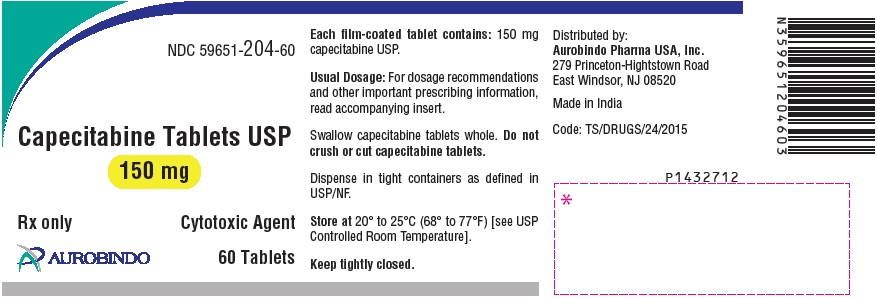
Capecitabine 150 mg Tablet, 60-count — NDC 59651-204-60 (Billing 59651-0204-60)
This is a package of 60 tablets of Capecitabine 150 mg Tablet from Aurobindo Pharma Limited, marketed since Apr 2018 and currently FDA-listed; retail pharmacies pay about $0.3615 per tablet (NADAC). It is the main listing for this product, which comes in 2 package sizes.
NDC database record
One package, one record: these facts belong to NDC 59651-204-60 alone.
- Record
- FDA NDC Directory package listing · Human prescription drug
- Code segments
- 59651 labeler · 204 product · 60 package
- Package marketed since
- Apr 17, 2018
- Sample package
- No — commercial package
- Listing certified through
- Dec 31, 2027
- Billing quantity
- 60 EA per package
- Barcode (UPC-A, from the NDC)
- 3 5965120460 3
- Medicaid fills, this package
- 57 prescriptions in the last four reported quarters
- FDA record last changed
- Aug 6, 2026
Identity & classification
Regulatory identifiers FDA, NLM and CMS codes for this package
Drug-database identifiers Medi-Span GPI and First Databank GCN / HICL / AHFS classification
- GSN (GCN sequence number): 039780
- GCN: 31611
- HICL (First Databank): 018385
- AHFS class code: 10:00.00.00
- RxCUI (RxNorm): 200327
Where does this data come from?
- FDA openFDA NDC Directory · synced Oct 1, 2026
- FDA label on DailyMed · label index refreshed Oct 5, 2026
- RxNorm (NLM RxNav) · catalog refreshed Oct 1, 2026
- Medi-Span GPI (licensed)
- First Databank (licensed) · refreshed Oct 1, 2026
RxNorm drug class
This medicine belongs to the Nucleoside Metabolic Inhibitor class.
Where does this data come from?
- RxClass (NLM) · catalog refreshed Oct 1, 2026
Clinical
Capecitabine is used to treat certain types of breast cancer, colon or rectal cancer (cancer that begins in the large intestine), pancreatic cancer, and stomach or esophageal (tube that connects the throat with the stomach) cancers. Capecitabine is in a class of medications called antimetabolites. It works by stopping or slowing the growth of cancer cells.
Read the full MedlinePlus article ↗- Capecitabine is used for several types of cancer — most commonly colorectal (colon and rectal) cancer, advanced or metastatic breast cancer, and, depending on the product, cancers...
- What kinds of cancer does capecitabine treat?
- Yes — this one really matters. You should take capecitabine within 30 minutes after eating a meal, and swallow the tablets whole with water. Taking it on an empty stomach significa...
- The most common side effects are hand-and-foot syndrome (redness, soreness, or peeling on your palms and soles), diarrhea, nausea, fatigue, and mouth sores. Many of these can be ma...
Patient education
Supplement & herbal interactions
Some supplements/herbs that may interact with Capecitabine — tap one for details:
Capecitabine may be associated with lower levels of 1 nutrient — worth a chat with your pharmacist, not a cause for alarm.
Where does this data come from?
- MedlinePlus (NLM) · refreshed Oct 1, 2026
- FDA label on DailyMed · label index refreshed Oct 5, 2026
Ask a licensed pharmacist directly — free, answered by our team.
Pricing
A drug doesn't have one price. Each row is a different public payment system, and none is what you'd pay at the counter — that depends on your insurance. The ⓘ on each row explains what it measures.
| Price system | Per ea | Per package |
|---|---|---|
| Retail pharmacies payNADAC · weekly | $0.362 | $21.69 / 60 tablets |
| Medicaid paysCMS SDUD · 12 mo | $0.4951 | $29.71 / 60 tablets |
| Medicare drug plans payPart D · quarterly | No Part D plan price is available for this NDC in our data. | |
| Medicare Part B allowsASP · NONE | No ASP payment limit on file for NONE this quarter. | |
Where does this data come from?
- CMS NADAC weekly file · file of Sep 30, 2026
- CMS ASP pricing files · refreshed Sep 20, 2026
- CMS Medicaid State Drug Utilization Data · through Q1 2026
- CMS Part D plan pricing files · refreshed Sep 24, 2026
- VA National Acquisition Center price file
Billing & reimbursement
Where does this data come from?
- CMS ASP NDC-HCPCS crosswalk · refreshed Sep 22, 2026
- DMEPDAC NDC-HCPCS crosswalk
- openFDA NSDE billing units · refreshed Sep 7, 2026
Packaging — all sizes for this product
| Package NDC | Description | Per unit | Per pack | Marketing start | Marketing end | Status |
|---|---|---|---|---|---|---|
| 59651-0204-10 59651-204-10 | 1 BLISTER PACK in 1 CARTON / 10 TABLET in 1 BLISTER PACK | — | — | 2018-04-17 | — | Active |
| 59651-0204-60 You're viewing this Main listing | 60 TABLET in 1 BOTTLE | $0.3615 / ea | $21.69 | 2018-04-17 | — | Active |
Pack size FAQ
What quantity is in this package?
How does this package differ from NDC 59651-0204-10?
What NDC number is used to bill for this package of Capecitabine 150 mg Tablet?
Prices are the latest CMS NADAC pharmacy acquisition cost per NDC; per-pack figures are per-unit × pack quantity, shown only when the pack is denominated in the same measure NADAC prices.
Therapeutic equivalents
| Product | Labeler | Pack | NADAC/unit | TE | Status | Price vs. this |
|---|---|---|---|---|---|---|
| Capecitabine 150 mg 00093-7473-06 | Teva | 60 tablets | $0.362 | AB | Availability likely | — |
| Capecitabine 150 mg 16729-0072-12 | Accord | 60 tablets | $0.362 | AB | Availability likely | — |
| capecitabine 150 mg 31722-0774-60 | Camber | 60 tablets | $0.362 | AB | Availability likely | — |
| Capecitabine 150 mgthis 59651-0204-60 | Aurobindo | 60 tablets | $0.362 | AB | Availability likely | — |
| Capecitabine 150 mg 68001-0487-06 | BluePoint | 60 tablets | $0.362 | AB | Availability likely | — |
| Capecitabine 150 mg 68001-0643-06 | BluePoint | 60 tablets | $0.362 | AB | Availability likely | — |
| Capecitabine 150 mg 69097-0949-03 | Cipla | 60 tablets | $0.362 | AB | Availability likely | — |
| Capecitabine 150 mg 70756-0815-60 | Lifestar | 60 tablets | $0.362 | AB | Availability likely | — |
| Capecitabine 150 mg 72205-0006-60 | Novadoz | 60 tablets | $0.362 | AB | Availability likely | — |
| Capecitabine 150 mg 82249-0207-60 | CivicaScript | 60 tablets | $0.362 | AB | Availability likely | — |
| Capecitabine 150 mg 51407-0639-60 | Golden | 60 tablets | — | AB | FDA listed | — |
| capecitabine 150 mg 55111-0496-05 | Dr. | 500 tablets | — | AB | FDA listed | — |
| Capecitabine 150 mg 62756-0238-18 | Sun | 1000 tablets | — | — | FDA listed | — |
| Capecitabine 150 mg 67877-0458-12 | Ascend | 120 tablets | — | AB | FDA listed | — |
| Capecitabine 150mg 150 mg 72485-0204-60 | Armas | 60 tablets | — | AB | FDA listed | — |
| Capecitabine 150 mg 82511-0001-15 | Teyro | 60 tablets | — | BX | FDA listed | — |
Where does this data come from?
- FDA openFDA NDC Directory · synced Oct 1, 2026
- FDA Orange Book · refreshed Oct 3, 2026
- CMS NADAC weekly file · file of Sep 30, 2026
Availability & generic status
This product is an FDA-approved generic. Other versions of the same drug are listed under Therapeutic equivalents, least expensive first.
Where does this data come from?
- FDA Orange Book · refreshed Oct 3, 2026
What it looks like
Where does this data come from?
- FDA label on DailyMed · label index refreshed Oct 5, 2026
Inactive Ingredients / Excipients
Inactive ingredients, also called excipients, are components of the drug product other than the active ingredient. They may include fillers, dyes, coatings, preservatives, flavors, or other formulation ingredients.
💡 Tap an ingredient (hover on desktop) to see what it is and why it’s used.
-
UNII 3SY5LH9PMK
Anhydrous lactose is a milk sugar with no water content. It acts as a filler and binder in tablets and capsules, adding bulk and helping ingredients stick together.
-
UNII M28OL1HH48
Croscarmellose sodium is a plant-based substance derived from cellulose. It acts as a disintegrant, helping tablets and capsules break down quickly in the digestive system so the medicine can be absorbed.
-
UNII 1K09F3G675
Ferric oxide red is an inorganic iron compound used as a colorant in medicines. It gives tablets, capsules, or other dosage forms a red or reddish tint for identification and appearance.
-
UNII EX438O2MRT
Ferric oxide yellow is a naturally occurring iron compound used as a colorant in medications. It gives tablets, capsules, and other forms a yellow or golden hue for identification and appearance.
-
UNII R75537T0T4
Hypromellose 2910 is a plant-derived thickening agent made from cellulose. It serves as a binder that holds tablet ingredients together, a film-coating for pills, and a viscosity controller in liquids.
-
UNII 70097M6I30
Magnesium stearate is a salt made from magnesium and stearic acid, a fatty substance. It's used in tablets and capsules as a lubricant and glidant to help ingredients flow smoothly during manufacturing and prevent sticking.
-
UNII OP1R32D61U
Microcrystalline cellulose is a purified form of cellulose, a natural fiber from plant sources. It acts as a binder and filler in tablets and capsules, helping hold ingredients together and give the medicine its shape and size.
-
UNII 7SEV7J4R1U
A powder made from a naturally occurring mineral. In medicines, talc works as a glidant and anti-caking agent, helping tablets and capsules flow smoothly during manufacturing and preventing clumping.
-
UNII 15FIX9V2JP
Titanium dioxide is a bright white mineral powder commonly used as a colorant and opacifying agent. It makes pills and tablets white or lighter in color and helps make coatings non-transparent.
9 inactive ingredients listed in the exact product block matched to this NDC.
Where does this data come from?
ingredient classCode="IACT" elements from the exact product block matched by this NDC. Label-section narrative from DailyMed / the openFDA label index is shown separately when available.- FDA label on DailyMed · label index refreshed Oct 5, 2026
- FDA openFDA NDC Directory · synced Oct 1, 2026
Inactive ingredient FAQ
Are inactive ingredients the same for every manufacturer?
Why might an inactive ingredient be missing?
Can inactive ingredients matter?
Manufacturer & labeler
More NDCs from Aurobindo Pharma Limited labeler code 59651
- Pomalidomide 3 mg Capsule NDC 59651-196-01
- Pomalidomide 4 mg Capsule NDC 59651-197-01
- Pirfenidone 50 kg/50kg Powder NDC 59651-199-37
- Fenofibrate 67 mg Capsule NDC 59651-201-01
- Fenofibrate 134 mg Capsule NDC 59651-202-01
- Fenofibrate 200 mg Capsule NDC 59651-203-01
- Capecitabine 500 mg Tablet NDC 59651-205-08
- Nitrofurantoin 25 mg/5mL Suspension NDC 59651-206-23
- Azelastine Hydrochloride 137 ug Spray, Metered NDC 59651-214-30
- Fenofibric Acid 45 mg Capsule, Delayed Release NDC 59651-216-90
- Fenofibric Acid 135 mg Capsule, Delayed Release NDC 59651-217-90
- Roflumilast 50 kg/50kg Powder NDC 59651-222-37
Where does this data come from?
- FDA openFDA NDC Directory · synced Oct 1, 2026
- Drugs@FDA
Full prescribing information FDA SPL
🚨 Boxed Warning ▾
WARNING: SERIOUS ADVERSE REACTIONS OR DEATH IN PATIENTS WITH COMPLETE DPD DEFICIENCY and INCREASED RISK OF BLEEDING WITH CONCOMITANT USE OF VITAMIN K ANTAGONISTS Increased risk of serious adverse reactions or death in patients with complete DPD deficiency Test patients for genetic variants of DPYD prior to initiating capecitabine tablets unless immediate treatment is necessary. Avoid use of capecitabine tablets in patients with certain homozygous or compound heterozygous DPYD variants that result in complete DPD deficiency [see Warnings and Precautions (5.1) ] .
Increased risk of bleeding with concomitant use of Vitamin K antagonists Altered coagulation parameters and/or bleeding, including death, have been reported in patients taking capecitabine tablets concomitantly with oral vitamin K antagonists, such as warfarin [see Warnings and Precautions (5.2) , Drug Interactions (7.2) ] . Clinically significant increases in prothrombin time (PT) and international normalized ratio (INR) have been reported in patients who were on stable doses of a vitamin K antagonist at the time capecitabine tablets was introduced.
These events occurred in patients with and without liver metastases. Monitor INR more frequently and adjust the dose of the vitamin K antagonist as appropriate [see Drug Interactions (7.2) ]. WARNING: SERIOUS ADVERSE REACTIONS OR DEATH IN PATIENTS WITH COMPLETE DPD DEFICIENCY and BLEEDING WITH CONCOMITANT USE OF VITAMIN K ANTAGONISTS See full prescribing information for complete boxed warning .
Serious adverse reactions or death may occur in patients with complete DPD deficiency. Test patients for genetic variants of DPYD prior to initiating capecitabine tablets unless immediate treatment is necessary. Avoid use of capecitabine tablets in patients with certain homozygous or compound heterozygous DPYD variants that result in complete DPD deficiency.
(5.1) Altered coagulation parameters and/or bleeding, including death, have been reported in patients taking capecitabine tablets concomitantly with oral vitamin K antagonists. (5.2, 7.2 ) Monitor international normalized ratio (INR) more frequently and adjust the dose of the vitamin K antagonist as appropriate. (7.2)
🎯 Indications and Usage ▾
1 INDICATIONS AND USAGE Capecitabine tablets are a nucleoside metabolic inhibitor indicated for: Colorectal Cancer adjuvant treatment of patients with Stage III colon cancer as a single agent or as a component of a combination chemotherapy regimen. ( 1.1 ) perioperative treatment of adults with locally advanced rectal cancer as a component of chemoradiotherapy. ( 1.1 ) treatment of patients with unresectable or metastatic colorectal cancer as a single agent or as a component of a combination chemotherapy regimen.
( 1.1 ) Breast Cancer treatment of patients with advanced or metastatic breast cancer as a single agent if an anthracycline- or taxane-containing chemotherapy is not indicated. ( 1.2 ) treatment of patients with advanced or metastatic breast cancer in combination with docetaxel after disease progression on prior anthracycline-containing chemotherapy. ( 1.2 ) Gastric, Esophageal, or Gastroesophageal Junction Cancer treatment of adults with unresectable or metastatic gastric, esophageal, or gastroesophageal junction cancer as a component of a combination chemotherapy regimen.
( 1.3 ) treatment of adults with HER2-overexpressing metastatic gastric or gastroesophageal junction adenocarcinoma who have not received prior treatment for metastatic disease as a component of a combination regimen. ( 1.3 ) Pancreatic Cancer adjuvant treatment of adults with pancreatic adenocarcinoma as a component of a combination chemotherapy regimen. ( 1.4 )
1.1Colorectal Cancer Capecitabine tablets are indicated for the: adjuvant treatment of patients with Stage III colon cancer as a single agent or as a component of a combination chemotherapy regimen. perioperative treatment of adults with locally advanced rectal cancer as a component of chemoradiotherapy. treatment of patients with unresectable or metastatic colorectal cancer as a single agent or as a component of a combination chemotherapy regimen.
1.2Breast Cancer Capecitabine tablets are indicated for the: treatment of patients with advanced or metastatic breast cancer as a single agent if an anthracycline- or taxane-containing chemotherapy is not indicated. treatment of patients with advanced or metastatic breast cancer in combination with docetaxel after disease progression on prior anthracycline-containing chemotherapy.
1.3Gastric, Esophageal, or Gastroesophageal Junction Cancer Capecitabine tablets are indicated for the: treatment of adults with unresectable or metastatic gastric, esophageal, or gastroesophageal junction cancer as a component of a combination chemotherapy regimen. treatment of adults with HER2-overexpressing metastatic gastric or gastroesophageal junction adenocarcinoma who have not received prior treatment for metastatic disease as a component of a combination regimen.
1.4Pancreatic Cancer Capecitabine tablets are indicated for the adjuvant treatment of adults with pancreatic adenocarcinoma as a component of a combination chemotherapy regimen.
⏱️ Dosage and Administration ▾
2 DOSAGE AND ADMINISTRATION Adjuvant Treatment of Colon Cancer Single agent: 1,250 mg/m 2 twice daily orally for the first 14 days of each 21-day cycle for a maximum of 8 cycles. ( 2.1 ) In combination with Oxaliplatin-Containing Regimens: 1,000 mg/m 2 orally twice daily for the first 14 days of each 21-day cycle for a maximum of 8 cycles in combination with oxaliplatin 130 mg/m 2 administered intravenously on day 1 of each cycle. (2.2) Perioperative Treatment of Rectal Cancer With Concomitant Radiation Therapy: 825 mg/m 2 orally twice daily (2.2) Without Radiation Therapy: 1,250 mg/m 2 orally twice daily (2.2) Unresectable or Metastatic Colorectal Cancer: Single agent: 1,250 mg/m 2 twice daily orally for the first 14 days of each 21-day cycle until disease progression or unacceptable toxicity.
(2.2) In Combination with Oxaliplatin: 1,000 mg/m 2 orally twice daily for the first 14 days of each 21-day cycle until disease progression or unacceptable toxicity in combination with oxaliplatin 130 mg/m 2 administered intravenously on day 1 of each cycle. (2.2) Advanced or Metastatic Breast Cancer: Single agent: 1,000 mg/m 2 or 1,250 mg/m 2 twice daily orally for the first 14 days of each 21-day cycle until disease progression or unacceptable toxicity. (2.3) In combination with docetaxel: 1,000 mg/m 2 or 1,250 mg/m 2 orally twice daily for the first 14 days of a 21-day cycle, until disease progression or unacceptable toxicity in combination with docetaxel at 75 mg/m 2 administered intravenously on day 1 of each cycle (2.3) Unresectable or Metastatic Gastric, Esophageal, or Gastroesophageal Junction Cancer 625 mg/m 2 orally twice daily on days 1 to 21 of each 21-day cycle for a maximum of 8 cycles in combination with platinum-containing chemotherapy.
(2.4) OR 850 mg/m 2 or 1,000 mg/m 2 orally twice daily for the first 14 days of each 21-day cycle until disease progression or unacceptable toxicity in combination with oxaliplatin 130 mg/m 2 administered intravenously on day 1 of each cycle. (2.4) HER2-overexpressing metastatic adenocarcinoma of the gastroesophageal junction or stomach 1,000 mg/m 2 orally twice daily for the first 14 days of each 21-day cycle until disease progression or unacceptable toxicity in combination with cisplatin and trastuzumab. (2.4) Pancreatic cancer 830 mg/m 2 orally twice daily for the first 21 days of each 28-day cycle for maximum of 6 cycles in combination with gemcitabine 1,000 mg/m 2 administered intravenously on days 1, 8, and 15 of each cycle.
(2.5) Refer to Sections 2.5 and 2.6 for information related to dosage modifications for adverse reactions and renal impairment ( 2.5 and 2.6 ).
2.1Evaluation and Testing of DPD Deficiency Before Initiating Capecitabine Tablets Prior to initiating capecitabine tablets, test patients for genetic variants of the DPYD gene unless immediate treatment is necessary. An FDA-authorized test for the detection of the DPYD gene to identify patients at risk of serious adverse reactions with capecitabine tablets is not currently available. Currently available tests used to identify DPYD variants may vary in accuracy and design (e.g., which DPYD variant(s) they identify).
Avoid use of capecitabine tablets in patients known to have certain homozygous or compound heterozygous DPYD variants that result in complete DPD deficiency. No capecitabine tablets dose has been proven safe for patients with complete DPD deficiency. For patients with partial DPD deficiency, individualize the dosage and modify based on tolerability and intent of treatment [see Warnings and Precautions (5.1) ] .
2.2Recommended Dosage for Colorectal Cancer Adjuvant Treatment of Colon Cancer Single Agent The recommended dosage of capecitabine tablets are 1,250 mg/m 2 orally twice daily for the first 14 days of each 21-day cycle for a maximum of 8 cycles. In Combination with Oxaliplatin-Containing Regimens The recommended dosage of capecitabine tablets are 1,000 mg/m 2 orally twice daily for the first 14 days o… [Excerpted — this section continues on DailyMed.]
💊 Dosage Forms and Strengths ▾
3 DOSAGE FORMS AND STRENGTHS Tablets, film-coated: 150 mg: Light-peach colored biconvex, oblong shaped film coated tablets, debossed with 150 on the one side and plain on the other side. 500 mg: Peach colored biconvex, oblong shaped film coated tablets, debossed with 500 on the one side and plain on the other side. Tablets: 150 mg and 500 mg ( 3 )
⛔ Contraindications ▾
4 CONTRAINDICATIONS Capecitabine is contraindicated in patients with history of severe hypersensitivity reaction to fluorouracil or capecitabine [see Adverse Reactions (6.1) ] . History of severe hypersensitivity reactions to fluorouracil or capecitabine
⚠️ Warnings and Cautions ▾
5 WARNINGS AND PRECAUTIONS Cardiotoxicity : May be more common in patients with a prior history of coronary artery disease. Withhold capecitabine for cardiotoxicity as appropriate. The safety of resumption of capecitabine in patients with cardiotoxicity that has resolved has not been established.
( 2.5 , 5.3 ) Diarrhea : Withhold capecitabine and then resume at same or reduced dose, or permanently discontinue, based on severity and occurrence. ( 2.5 , 5.4 ) Dehydration : Optimize hydration before starting capecitabine. Monitor hydration status and kidney function at baseline and as clinically indicated.
Withhold capecitabine and then resume at same or reduced dose or permanently discontinue, based on severity and occurrence. ( 2.5 , 5.5 ) Renal Toxicity : Monitor renal function at baseline and as clinically indicated. Optimize hydration before starting capecitabine.
Withhold capecitabine and then resume at same or reduced dose, or permanently discontinue, based on severity and occurrence. ( 2.5 , 5.6 ) Serious Skin Toxicities : Monitor for new or worsening serious skin reactions. Permanently discontinue capecitabine in patients who experience a severe cutaneous adverse reaction.
( 5.7 ) Palmar-Plantar Erythrodysesthesia Syndrome : Withhold capecitabine then resume at same or reduced dose, or permanently discontinue, based on severity and occurrence. ( 2.5 , 5.8 ) Myelosuppression : Monitor complete blood count at baseline and before each cycle. Capecitabine is not recommended in patients with baseline neutrophil counts <1.5 x 10 9 /L or platelet counts <100 x 10 9 /L.
For grade 3 or 4 myelosuppression, withhold capecitabine and then resume at same or reduced dose, or permanently discontinue, based on occurrence. ( 2.5 , 5.9 ) Hyperbilirubinemia : Patients with Grade 3 to 4 hyperbilirubinemia may resume treatment once the event is Grade 2 or less ( < 3 x ULN), using the percent of current dose as shown in column 3 of Table 1 ( 2.5, 5.10 ) E mbryo-Fetal Toxicity : Can cause fetal harm. Advise patients of the potential risk to a fetus and to use effective contraception.
( 5.11 , 8.1 , 8.3 )
5.1Serious Adverse Reactions or Death from Dihydropyrimidine Dehydrogenase (DPD) Deficiency Patients with certain homozygous or compound heterozygous variants in the DPYD gene known to result in complete or near complete absence of DPD activity (complete DPD deficiency) are at increased risk for acute early-onset toxicity and serious, including fatal, adverse reactions due to capecitabine (e.g., mucositis, diarrhea, neutropenia, and neurotoxicity). Patients with partial DPD activity (partial DPD deficiency) may also have increased risk of serious, or fatal, adverse reactions.
Prior to initiating capecitabine tablets, test patients for genetic variants of the DPYD gene unless immediate treatment is necessary [see Clinical Pharmacology (12.5) ] . Serious adverse reactions may still occur even if no DPYD variants are identified. Avoid use of capecitabine tablets in patients with certain homozygous or compound heterozygous DPYD variants that result in complete DPD deficiency.
Withhold or permanently discontinue capecitabine based on clinical assessment of the onset, duration, and severity of adverse reactions in patients with evidence of acute early-onset or unusually severe reactions. No capecitabine dose has been proven safe for patients with complete DPD deficiency. For patients with partial DPD deficiency, individualize the dosage and modify based on tolerability and intent of treatment.
An FDA-authorized test for the detection of genetic variants of the DPYD gene to identify patients at risk of serious adverse reactions with capecitabine tablets treatment is not currently available. Currently available tests used to identify DPYD variants may vary in accuracy and design (e.g., which DPYD variant(s) they identify).
5.2Increased Risk of Bleeding With Concomitant Use of Vitamin K Antagonists Altered coagulation parameters and/or bleeding, incl… [Excerpted — this section continues on DailyMed.]
🤒 Adverse Reactions ▾
6 ADVERSE REACTIONS The following clinically significant adverse reactions are described elsewhere in the labeling: Cardiotoxicity [see Warnings and Precautions (5.3) ] Diarrhea [see Warnings and Precautions (5.4) ] Dehydration [see Warnings and Precautions (5.5) ] Renal Toxicity [see Warnings and Precautions (5.6) ] Serious Skin Toxicities [see Warnings and Precautions (5.7) ] Palmar-Plantar Erythrodysesthesia Syndrome [see Warnings and Precautions (5.8) ] Myelosuppression [see Warnings and Precautions (5.9) ] Hyperbilirubinemia [see Warnings and Precautions (5.10) ] Most common adverse reactions in patients who received capecitabine as a single agent for the adjuvant treatment for colon cancer ( > 30%) were palmar-plantar erythrodysesthesia syndrome, diarrhea, and nausea.
( 6.1 ) Most common adverse reactions ( > 30%) in patients with metastatic colorectal cancer who received capecitabine as a single agent were anemia, diarrhea, palmar-plantar erythrodysesthesia syndrome, hyperbilirubinemia, nausea, fatigue, and abdominal pain. ( 6.1 ) Most common adverse reactions ( > 30%) in patients with metastatic breast cancer who received capecitabine with docetaxel were diarrhea, stomatitis, palmar-plantar erythrodysesthesia syndrome, nausea, alopecia, vomiting, edema, and abdominal pain. ( 6.1 ) Most common adverse reactions ( > 30%) in patients with metastatic breast cancer who received capecitabine as a single agent were lymphopenia, anemia, diarrhea, hand-and-foot syndrome, nausea, fatigue, vomiting, and dermatitis.
( 6.1 ) To report SUSPECTED ADVERSE REACTIONS, contact Aurobindo Pharma USA, Inc. at 1-866-850-2876 or FDA at 1-800-FDA-1088 or www.fda.gov/medwatch.
6.1Clinical Trials Experience Because clinical trials are conducted under widely varying conditions, adverse reaction rates observed in the clinical trials of a drug cannot be directly compared to rates in the clinical trials of another drug and may not reflect the rates observed in practice. Adjuvant Treatment of Colon Cancer Single Agent The safety of capecitabine as a single agent was evaluated in patients with Stage III colon cancer in X-ACT [see Clinical Studies (14.1) ] . Patients received capecitabine 1,250 mg/m 2 orally twice daily for the first 14 days of a 21-day cycle (N=995) or leucovorin 20 mg/m 2 intravenously followed by fluorouracil 425 mg/m 2 as an intravenous bolus on days 1 to 5 of each 28-day cycle (N=974).
Among patients who received capecitabine, the median duration of treatment was 5.4 months. Deaths due to all causes occurred in 0.8% of patients who received capecitabine on study or within 28 days of receiving study drug. Permanent discontinuation due to an adverse reaction occurred in 11% of patients who received capecitabine.
Most common adverse reactions (>30%) were palmar-plantar erythrodysesthesia syndrome, diarrhea, and nausea. Tables 2 and 3 summarize the adverse reactions and laboratory abnormalities in X-ACT. Table 2 Adverse Reactions (≥10%) in Patients Who Received Capecitabine for Adjuvant Treatment of Colon Cancer in X-ACT Adverse Reaction Capecitabine (N=995) Fluorouracil + Leucovorin (N=974) All Grades (%) Grade 3 or 4 (%) All Grades (%) Grade 3 or 4 (%) Skin and Subcutaneous Tissue Palmar-plantar erythrodysesthesia syndrome 60 17 9 <1 Gastrointestinal Diarrhea 47 12 65 14 Nausea 34 2 47 2 Stomatitis 22 2 60 14 Vomiting 15 2 21 2 Abdominal pain 14 3 16 2 General Fatigue 16 <1 16 1 Asthenia 10 <1 10 1 Lethargy 10 <1 9 <1 Clinically relevant adverse reactions in <10% of patients are presented below: Eye: conjunctivitis Gastrointestinal: constipation, upper abdominal pain, dyspepsia General: pyrexia Metabolism and Nutrition: anorexia Nervous System: dizziness, dysgeusia, headache Skin & Subcutaneous Tissue: rash, alopecia, erythema Table 3 Grade 3 or 4 Laboratory Abnormalities (>1%) in Patients Who Received Capecitabine as a Single Agent for Adjuvant Treatment of Colon Cancer in X-ACT Laboratory Abnormality Capecitabine (N=995) Fluorour… [Excerpted — this section continues on DailyMed.]
🔄 Drug Interactions ▾
7 DRUG INTERACTIONS Allopurinol: Avoid concomitant use of allopurinol with capecitabine. ( 7.1 ) Leucovorin: Closely monitor for toxicities when capecitabine is coadministered with leucovorin. ( 7.1 ) CYP2C9 substrates: Closely monitor for adverse reactions when CYP2C9 substrates are coadministered with capecitabine.
( 7.2 ) Vitamin K antagonists: Monitor INR more frequently and dose adjust oral vitamin K antagonist as appropriate Phenytoin : Closely monitor phenytoin levels in patients taking capecitabine concomitantly with phenytoin and adjust the phenytoin dose as appropriate. ( 7.2 ) Nephrotoxic drugs: Closely monitor for signs of renal toxicity when capecitabine is used concomitantly with nephrotoxic drugs. ( 7.3 )
7.1Effect of Other Drugs on Capecitabine Allopurinol Concomitant use with allopurinol may decrease concentration of capecitabine’s active metabolites [see Clinical Pharmacology (12.3) ] , which may decrease efficacy. Avoid concomitant use of allopurinol with capecitabine. Leucovorin The concentration of fluorouracil is increased and its toxicity may be enhanced by leucovorin, folic acid, or folate analog products.
Deaths from severe enterocolitis, diarrhea, and dehydration have been reported in elderly patients receiving weekly leucovorin and fluorouracil. Instruct patients not to take products containing folic acid or folate analog products unless directed to do so by their healthcare provider.
7.2Effect of Capecitabine on Other Drugs CYP2C9 Substrates Capecitabine increased exposure of CYP2C9 substrates [see Clinical Pharmacology (12.3) ] , which may increase the risk of adverse reactions related to these substrates. Closely monitor for adverse reactions of CYP2C9 substrates where minimal concentration changes may lead to serious adverse reactions when used concomitantly with capecitabine (e.g., anticoagulants, antidiabetic drugs). Vitamin K Antagonists Capecitabine increases exposure of vitamin K antagonist [see Clinical Pharmacology (12.3) ], which m ay alter coagulation parameters and/or bleeding and could result in death [see Warning and Precautions (5.1) ] .
These events may occur within days of treatment initiation and up to 1 month after discontinuation of capecitabine. Monitor INR more frequently and refer to the prescribing information of oral vitamin K antagonist for dosage adjustment, as appropriate, when capecitabine is used concomitantly with vitamin K antagonist. Phenytoin Capecitabine may increases exposure of phenytoin, which may increase the risk of adverse reactions related to phenytoin.
Closely monitor phenytoin levels and refer to the prescribing information of phenytoin for dosage adjustment, as appropriate, when capecitabine is used concomitantly with phenytoin.
7.3Nephrotoxic Drugs Due of the additive pharmacologic effect, concomitant use of capecitabine with other drugs known to cause renal toxicity may increase the risk of renal toxicity [see Warnings and Precautions (5.6) ]. Closely monitor for signs of renal toxicity when capecitabine is used concomitantly with nephrotoxic drugs (e.g. platinum salts, irinotecan, methotrexate, intravenous bisphosphonates).
👥 Use in Specific Populations ▾
8 USE IN SPECIFIC POPULATIONS Lactation: Advise not to breastfeed. ( 8.2 ) Hepatic Impairment: Monitor patients with hepatic impairment more frequently for adverse reactions. ( 8.7 )
8.1Pregnancy Risk Summary Based on findings in animal reproduction studies and its mechanism of action [see Clinical Pharmacology (12.1) ] , capecitabine can cause fetal harm when administered to a pregnant woman. Available human data with capecitabine use in pregnant women is not sufficient to inform the drug-associated risk. In animal reproduction studies, administration of capecitabine to pregnant animals during the period of organogenesis caused embryolethality and teratogenicity in mice and embryolethality in monkeys at 0.2 and 0.6 times the exposure (AUC) in patients receiving the recommended dose of 1,250 mg/m 2 twice daily, respectively (see Data) .
Advise pregnant women of the potential risk to a fetus. The estimated background risk of major birth defects and miscarriage for the indicated population is unknown. All pregnancies have a background risk of birth defect, loss, or other adverse outcomes.
In the U.S. general population, the estimated background risk of major birth defects and miscarriage in clinically recognized pregnancies is 2% to 4% and 15% to 20%, respectively. Data Animal Data Oral administration of capecitabine to pregnant mice during the period of organogenesis at a dose of 198 mg/kg/day caused malformations and embryo lethality. In separate pharmacokinetic studies, this dose in mice produced 5’-DFUR AUC values that were approximately 0.2 times the AUC values in patients administered the recommended daily dose.
Malformations in mice included cleft palate, anophthalmia, microphthalmia, oligodactyly, polydactyly, syndactyly, kinky tail and dilation of cerebral ventricles. Oral administration of capecitabine to pregnant monkeys during the period of organogenesis at a dose of 90 mg/kg/day, caused fetal lethality. This dose produced 5’-DFUR AUC values that were approximately 0.6 times the AUC values in patients administered the recommended daily dose.
8.2Lactation Risk Summary There is no information regarding the presence of capecitabine or its metabolites in human milk, or on its effects on milk production or the breastfed child. Capecitabine metabolites were present in the milk of lactating mice (see Data) . Because of the potential for serious adverse reactions in a breastfed child, advise women not to breastfeed during treatment with capecitabine and for 1 week after the last dose.
Data Lactating mice given a single oral dose of capecitabine excreted significant amounts of capecitabine metabolites into the milk.
8.3Females and Males of Reproductive Potential Capecitabine can cause fetal harm when administered to a pregnant woman [see Use in Specific Populations (8.1) ] . Pregnancy Testing Verify pregnancy status in females of reproductive potential prior to initiating capecitabine. Contraception Females Advise females of reproductive potential to use effective contraception during treatment with capecitabine and for 6 months after the last dose.
Males Based on genotoxicity findings, advise males with female partners of reproductive potential to use effective contraception during treatment with capecitabine and for 3 months after the last dose [see Nonclinical Toxicology (13.1) ]. Infertility Based on animal studies, capecitabine may impair fertility in females and males of reproductive potential [see Nonclinical Toxicology (13.1) ] .
8.4Pediatric Use The safety and effectiveness of capecitabine in pediatric patients have not been established. Safety and effectiveness were assessed, but not established in two single arm studies in 56 pediatric patients aged 3 months to <17 years with newly diagnosed gliomas. In both trials, pediatric patients received an investigational pediatric formulation of capecitabine concomitantly with and following completion of radiation therapy (total dose of 5580 cGy in 180 cGy fractions).
T… [Excerpted — this section continues on DailyMed.]
🤰 Pregnancy ▾
8.1Pregnancy Risk Summary Based on findings in animal reproduction studies and its mechanism of action [see Clinical Pharmacology (12.1) ] , capecitabine can cause fetal harm when administered to a pregnant woman. Available human data with capecitabine use in pregnant women is not sufficient to inform the drug-associated risk. In animal reproduction studies, administration of capecitabine to pregnant animals during the period of organogenesis caused embryolethality and teratogenicity in mice and embryolethality in monkeys at 0.2 and 0.6 times the exposure (AUC) in patients receiving the recommended dose of 1,250 mg/m 2 twice daily, respectively (see Data) .
Advise pregnant women of the potential risk to a fetus. The estimated background risk of major birth defects and miscarriage for the indicated population is unknown. All pregnancies have a background risk of birth defect, loss, or other adverse outcomes.
In the U.S. general population, the estimated background risk of major birth defects and miscarriage in clinically recognized pregnancies is 2% to 4% and 15% to 20%, respectively. Data Animal Data Oral administration of capecitabine to pregnant mice during the period of organogenesis at a dose of 198 mg/kg/day caused malformations and embryo lethality. In separate pharmacokinetic studies, this dose in mice produced 5’-DFUR AUC values that were approximately 0.2 times the AUC values in patients administered the recommended daily dose.
Malformations in mice included cleft palate, anophthalmia, microphthalmia, oligodactyly, polydactyly, syndactyly, kinky tail and dilation of cerebral ventricles. Oral administration of capecitabine to pregnant monkeys during the period of organogenesis at a dose of 90 mg/kg/day, caused fetal lethality. This dose produced 5’-DFUR AUC values that were approximately 0.6 times the AUC values in patients administered the recommended daily dose.
🧒 Pediatric Use ▾
8.4Pediatric Use The safety and effectiveness of capecitabine in pediatric patients have not been established. Safety and effectiveness were assessed, but not established in two single arm studies in 56 pediatric patients aged 3 months to <17 years with newly diagnosed gliomas. In both trials, pediatric patients received an investigational pediatric formulation of capecitabine concomitantly with and following completion of radiation therapy (total dose of 5580 cGy in 180 cGy fractions).
The relative bioavailability of the investigational formulation to capecitabine was similar. The adverse reaction profile was consistent with that of adults, with the exception of laboratory abnormalities which occurred more commonly in pediatric patients. The most frequently reported laboratory abnormalities (per-patient incidence ≥ 40%) were increased ALT (75%), lymphocytopenia (73%), hypokalemia (68%), thrombocytopenia (57%), hypoalbuminemia (55%), neutropenia (50%), low hematocrit (50%), hypocalcemia (48%), hypophosphatemia (45%) and hyponatremia (45%).
🧓 Geriatric Use ▾
8.5Geriatric Use Of 7938 patients with colorectal cancer who were treated with capecitabine, 33% were older than 65 years. Of the 4536 patients with metastatic breast cancer who were treated with capecitabine, 18% were older than 65 years. Of 1951 patients with gastric, esophageal, or gastrointestinal junction cancer who were treated with capecitabine, 26% were older than 65 years.
Of 364 patients with pancreatic cancer who received adjuvant treatment with capecitabine, 47% were 65 years or older. No overall differences in efficacy were observed comparing older versus younger patients with colorectal cancer, gastric, esophageal or gastrointestinal junction cancer, or pancreatic cancer using the approved recommended dosages and treatment regimens. Older patients experience increased gastrointestinal toxicity due to capecitabine compared to younger patients.
Deaths from severe enterocolitis, diarrhea, and dehydration have been reported in elderly patients receiving weekly leucovorin and fluorouracil [see Drug Interactions (7.1) ].
🆘 Overdosage ▾
10 OVERDOSAGE Administer uridine triacetate within 96 hours for management of capecitabine overdose. Although no clinical experience using dialysis as a treatment for capecitabine overdose has been reported, dialysis may be of benefit in reducing circulating concentrations of 5’-DFUR, a low– molecular-weight metabolite of the parent compound.
🧬 Clinical Pharmacology ▾
12 CLINICAL PHARMACOLOGY
12.1Mechanism of Action Capecitabine is metabolized to fluorouracil in vivo . Both normal and tumor cells metabolize fluorouracil to 5-fluoro-2’-deoxyuridine monophosphate (FdUMP) and 5-fluorouridine triphosphate (FUTP). These metabolites cause cell injury by two different mechanisms.
First, FdUMP and the folate cofactor, N 5-10 -methylenetetrahydrofolate, bind to thymidylate synthase (TS) to form a covalently bound ternary complex. This binding inhibits the formation of thymidylate from 2’-deoxyuridylate. Thymidylate is the necessary precursor of thymidine triphosphate, which is essential for the synthesis of DNA, so that a deficiency of this compound can inhibit cell division.
Second, nuclear transcriptional enzymes can mistakenly incorporate FUTP in place of uridine triphosphate (UTP) during the synthesis of RNA. This metabolic error can interfere with RNA processing and protein synthesis.
12.2Pharmacodynamics Population-based exposure-effect analyses demonstrated a positive association between AUC of fluorouracil and grade 3 to 4 hyperbilirubinemia.
12.3Pharmacokinetics The AUC of capecitabine and its metabolite 5’-DFCR increases proportionally over a dosage range of 500 mg/m 2 /day to 3,500 mg/m 2 /day (0.2 to 1.4 times the approved recommended dosage). The AUC of capecitabine’s metabolites 5’-DFUR and fluorouracil increased greater than proportional to the dose. The interpatient variability in the C max and AUC of fluorouracil was greater than 85%.
Absorption Following oral administration of capecitabine 1,255 mg/m 2 orally twice daily (the recommended dosage when used as single agent), the median T max of capecitabine and its metabolite fluorouracil was approximately 1.5 hours and 2 hours, respectively. Effect of Food Following administration of a meal (breakfast medium-rich in fat and carbohydrates), the mean C max and AUC 0-INF of capecitabine was decreased by 60% and 34%, respectively. The mean C max and AUC 0-INF of fluorouracil were also decreased by 37 % and 12%, respectively.
The T max of both capecitabine and fluorouracil was delayed by 1.5 hours. Distribution Plasma protein binding of capecitabine and its metabolites is less than 60% and is not concentration-dependent. Capecitabine was primarily bound to human albumin (approximately 35%).
Following oral administration of capecitabine 7 days before surgery in patients with colorectal cancer, the median ratio of concentration for the active metabolite fluorouracil in colorectal tumors to adjacent tissues was 2.9 (range: 0.9 to 8.0). Elimination The elimination half-lives of capecitabine and fluorouracil were approximately 0.75 hour. Metabolism Capecitabine undergoes metabolism by carboxylesterase and is hydrolyzed to 5’-DFCR.
5’- DFCR is subsequently converted to 5’-DFUR by cytidine deaminase. 5’-DFUR is then hydrolized by thymidine phosphorylase (dThdPase) enzymes to the active metabolite fluorouracil. Fluorouracil is subsequently metabolized by dihydropyrimidine dehydrogenase to 5-fluoro-5, 6- dihydro-fluorouracil (FUH 2 ).
The pyrimidine ring of FUH 2 is cleaved by dihydropyrimidinase to yield 5-fluoro-ureido-propionic acid (FUPA). Finally, FUPA is cleaved by β-ureido-propionase to α-fluoro-β-alanine (FBAL). Excretion Following administration of radiolabeled capecitabine, 96% of the administered capecitabine dose was recovered in urine (3% unchanged and 57% as metabolite FBAL) and 2.6% in feces.
Specific Populations Following therapeutic doses of capecitabine, no clinically meaningful difference in the pharmacokinetics of 5’-DFUR, fluorouracil or FBAL were observed based on sex (202 females and 303 males) and race (455 White, 22 Black, and 28 Other). No clinically meaningful difference on the pharmacokinetics of 5’-DFUR and fluorouracil were observed based on age (range: 27 to 86 years); however, the AUC of FBAL increased by 15% following a 20% increase in age. Racial or Ethnic Groups Following administration of capecitabine 825 mg/… [Excerpted — this section continues on DailyMed.]
🧬 Mechanism of Action ▾
12.1Mechanism of Action Capecitabine is metabolized to fluorouracil in vivo . Both normal and tumor cells metabolize fluorouracil to 5-fluoro-2’-deoxyuridine monophosphate (FdUMP) and 5-fluorouridine triphosphate (FUTP). These metabolites cause cell injury by two different mechanisms.
First, FdUMP and the folate cofactor, N 5-10 -methylenetetrahydrofolate, bind to thymidylate synthase (TS) to form a covalently bound ternary complex. This binding inhibits the formation of thymidylate from 2’-deoxyuridylate. Thymidylate is the necessary precursor of thymidine triphosphate, which is essential for the synthesis of DNA, so that a deficiency of this compound can inhibit cell division.
Second, nuclear transcriptional enzymes can mistakenly incorporate FUTP in place of uridine triphosphate (UTP) during the synthesis of RNA. This metabolic error can interfere with RNA processing and protein synthesis.
📦 How Supplied / Storage and Handling ▾
16 HOW SUPPLIED/STORAGE AND HANDLING Capecitabine Tablets, USP 150 mg are light peach colored biconvex, oblong shaped film-coated tablets, debossed with 150 on one side and plain on the other side and are supplied as follows Bottles of 60 NDC 59651-204-60 Carton of 10 (1 X 10) unit-dose Tablets NDC 59651-204-10 Capecitabine Tablets, USP 500 mg are peach colored biconvex, oblong shaped film-coated tablets, debossed with 500 on one side and plain on the other side and are supplied as follows Bottles of 120 NDC 59651-205-08 Carton of 10 (1 X 10) unit-dose Tablets NDC 59651-205-10 Storage and Handling Store at 20° to 25°C (68° to 77°F) [see USP Controlled Room Temperature].
KEEP TIGHTLY CLOSED. Capecitabine is a cytotoxic drug. Follow applicable special handling and disposal procedures.
1
📋 Description ▾
11 DESCRIPTION Capecitabine is a nucleoside metabolic inhibitor. The chemical name is 5’-deoxy-5-fluoro-N- [(pentyloxy) carbonyl]-cytidine and has a molecular formula of C 15 H 22 FN 3 O 6 and a molecular weight of 359.35. Capecitabine has the following structural formula: Capecitabine, USP is a white to off-white crystalline powder with an aqueous solubility of 26 mg/mL at 20 o C.
Capecitabine tablets, USP are supplied as biconvex, oblong shaped film-coated tablets for oral use. Each light peach colored tablet contains 150 mg capecitabine, USP and each peach colored tablet contains 500 mg capecitabine, USP. The inactive ingredients in capecitabine tablets, USP include: anhydrous lactose, croscarmellose sodium, ferric oxide red, ferric oxide yellow, hypromellose, magnesium stearate, microcrystalline cellulose, talc and titanium dioxide.
Chemical Structure
💬 Information for Patients ▾
17 PATIENT COUNSELING INFORMATION Advise the patient to read the FDA-approved patient labeling (Patient Information). Serious Adverse Reactions or Death from Dihydropyrimidine Dehydrogenase (DPD) Deficiency Prior to initiating capecitabine tablets treatment, inform patients of the potential for serious or fatal adverse reactions due to DPD deficiency and testing for genetic variants of DPYD . Advise patients to immediately contact their healthcare provider if symptoms of severe mucositis, diarrhea, neutropenia, and neurotoxicity occur [see Warnings and Precautions (5.1) and Clinical Pharmacology (12.5 ) ].
Increased Risk of Bleeding with Concomitant Use of Vitamin K Antagonists Advise patients on vitamin K antagonists, such as warfarin, that they are at an increased risk of severe bleeding while taking capecitabine. Advise these patients that INR should be monitored more frequently, and dosage modifications of the vitamin K antagonist may be required, while taking and after discontinuation of capecitabine. Advise these patients to immediately contact their healthcare provider if signs or symptoms of bleeding occur [see Warnings and Precautions (5.2) ].
Cardiotoxicity Advise patients of the risk of cardiotoxicity and to immediately contact their healthcare provider for new onset of chest pain, shortness of breath, dizziness, or lightheadedness [see Warnings and Precautions (5.3) ] . Diarrhea Inform patients experiencing grade 2 diarrhea (an increase of 4 to 6 stools/day or nocturnal stools) or greater or experiencing severe bloody diarrhea with severe abdominal pain and fever to stop taking capecitabine. Advise patients on the use of antidiarrheal treatments (e.g., loperamide) to manage diarrhea [see Warnings and Precautions (5.4) ] .
Dehydration Instruct patients experiencing grade 2 or higher dehydration to stop taking capecitabine immediately and to contact their healthcare provider. Advise patients to not restart capecitabine until rehydrated and any precipitating causes have been corrected or controlled [see Warnings and Precautions (5.5) ] . Renal Toxicity Instruct patients experiencing decreased urinary output or other signs and symptoms of renal toxicity to immediately contact their healthcare provider [see Warnings and Precautions (5.6) ] .
Serious Skin Toxicities Instruct patients skin rash, blistering, or peeling to immediately contact their healthcare provider [see Warnings and Precautions (5.7) ] . Palmar-Plantar Erythrodysesthesia Syndrome Instruct patients experiencing grade 2 palmar-plantar erythrodysesthesia syndrome or greater to stop taking capecitabine immediately and to contact their healthcare provider. Inform patients that initiation of symptomatic treatment is recommended and hand-and-foot syndrome can lead to loss of fingerprints which could impact personal identification [see Warnings and Precautions (5.8) ] .
Myelosuppression Inform patients who develop a fever of 100.5°F or greater or other evidence of potential infection to immediately contact their healthcare provider [see Warnings and Precautions (5.9) ] . Hyperbilirubinemia Inform patients who develop jaundice or icterus to immediately contact their healthcare provider [see Warnings and Precautions (5.10) ] . Embryo-Fetal Toxicity Advise pregnant women and females of reproductive potential of the potential risk to a fetus.
Advise females of reproductive potential to inform their healthcare provider of a known or suspected pregnancy [see Warnings and Precautions (5.11) , Use in Specific Populations (8.1) ] . Advise females of reproductive potential to use effective contraception during treatment with capecitabine and for 6 months after the last dose [see Use in Specific Populations (8.3) ] . Advise males with female partners of reproductive potential to use effective contraception during treatment with capecitabine and for 3 months after the last dose [see Use in Specific Populations (8.3) ] .
Lactation Advise females not to breastfeed during trea… [Excerpted — this section continues on DailyMed.]
🍼 Nursing Mothers ▾
8.3Females and Males of Reproductive Potential Capecitabine can cause fetal harm when administered to a pregnant woman [see Use in Specific Populations (8.1) ] . Pregnancy Testing Verify pregnancy status in females of reproductive potential prior to initiating capecitabine. Contraception Females Advise females of reproductive potential to use effective contraception during treatment with capecitabine and for 6 months after the last dose.
Males Based on genotoxicity findings, advise males with female partners of reproductive potential to use effective contraception during treatment with capecitabine and for 3 months after the last dose [see Nonclinical Toxicology (13.1) ]. Infertility Based on animal studies, capecitabine may impair fertility in females and males of reproductive potential [see Nonclinical Toxicology (13.1) ] .
🧬 Pharmacokinetics ▾
12.3Pharmacokinetics The AUC of capecitabine and its metabolite 5’-DFCR increases proportionally over a dosage range of 500 mg/m 2 /day to 3,500 mg/m 2 /day (0.2 to 1.4 times the approved recommended dosage). The AUC of capecitabine’s metabolites 5’-DFUR and fluorouracil increased greater than proportional to the dose. The interpatient variability in the C max and AUC of fluorouracil was greater than 85%.
Absorption Following oral administration of capecitabine 1,255 mg/m 2 orally twice daily (the recommended dosage when used as single agent), the median T max of capecitabine and its metabolite fluorouracil was approximately 1.5 hours and 2 hours, respectively. Effect of Food Following administration of a meal (breakfast medium-rich in fat and carbohydrates), the mean C max and AUC 0-INF of capecitabine was decreased by 60% and 34%, respectively. The mean C max and AUC 0-INF of fluorouracil were also decreased by 37 % and 12%, respectively.
The T max of both capecitabine and fluorouracil was delayed by 1.5 hours. Distribution Plasma protein binding of capecitabine and its metabolites is less than 60% and is not concentration-dependent. Capecitabine was primarily bound to human albumin (approximately 35%).
Following oral administration of capecitabine 7 days before surgery in patients with colorectal cancer, the median ratio of concentration for the active metabolite fluorouracil in colorectal tumors to adjacent tissues was 2.9 (range: 0.9 to 8.0). Elimination The elimination half-lives of capecitabine and fluorouracil were approximately 0.75 hour. Metabolism Capecitabine undergoes metabolism by carboxylesterase and is hydrolyzed to 5’-DFCR.
5’- DFCR is subsequently converted to 5’-DFUR by cytidine deaminase. 5’-DFUR is then hydrolized by thymidine phosphorylase (dThdPase) enzymes to the active metabolite fluorouracil. Fluorouracil is subsequently metabolized by dihydropyrimidine dehydrogenase to 5-fluoro-5, 6- dihydro-fluorouracil (FUH 2 ).
The pyrimidine ring of FUH 2 is cleaved by dihydropyrimidinase to yield 5-fluoro-ureido-propionic acid (FUPA). Finally, FUPA is cleaved by β-ureido-propionase to α-fluoro-β-alanine (FBAL). Excretion Following administration of radiolabeled capecitabine, 96% of the administered capecitabine dose was recovered in urine (3% unchanged and 57% as metabolite FBAL) and 2.6% in feces.
Specific Populations Following therapeutic doses of capecitabine, no clinically meaningful difference in the pharmacokinetics of 5’-DFUR, fluorouracil or FBAL were observed based on sex (202 females and 303 males) and race (455 White, 22 Black, and 28 Other). No clinically meaningful difference on the pharmacokinetics of 5’-DFUR and fluorouracil were observed based on age (range: 27 to 86 years); however, the AUC of FBAL increased by 15% following a 20% increase in age. Racial or Ethnic Groups Following administration of capecitabine 825 mg/m 2 orally twice daily for 14 days (0.66 times the recommended dosage), the C max and AUC of capecitabine decreased by 36% and 24%, respectively in Japanese patients (n=18) compared to White patients (n=22).
The C max and AUC of FBAL decreased by approximately 25% and 34%, respectively in Japanese patients compared to White patients; however, the clinical significance of these differences is unknown. No clinically significant differences in the pharmacokinetics of 5’-DFCR, 5’-DFUR or fluorouracil were observed. Patients with Renal Impairment Table 8 Effect of Renal Impairment on the Pharmacokinetics of Capecitabine, 5’-DFUR, and FBAL Renal Impairment a Changes in AUC b Capecitabine 5’-DFUR c FBAL c 5-FU CLcr 30 to 50 mL/min Increased by 25% Increased by 42% Increased by 85% No relevant change CLcr <30 mL/min Increased by 25% Increased by 71% Increased by 258% Increased by 24% a Compared to patients with CLcr >80 mL/min b Following administration of capecitabine 1,250 mg/m 2 orally twice daily; day 1 observations c Capecitabine metabolite CLcr= Creatine Clearance, AUC= Area under t… [Excerpted — this section continues on DailyMed.]
🧬 Pharmacodynamics ▾
12.2Pharmacodynamics Population-based exposure-effect analyses demonstrated a positive association between AUC of fluorouracil and grade 3 to 4 hyperbilirubinemia.
🔬 Clinical Studies ▾
14 CLINICAL STUDIES
14.1Colorectal Cancer Adjuvant Treatment of Colon Cancer Single Agent The efficacy of capecitabine was evaluated in X-ACT (NCT00009737), a multicenter, randomized, controlled clinical trial. Eligible patients were between 18 and 75 years of age with histologically-confirmed Dukes’ Stage C colon cancer with at least one positive lymph node and to have undergone (within 8 weeks prior to randomization) complete resection of the primary tumor without macroscopic or microscopic evidence of remaining tumor. Patients were also required to have no prior cytotoxic chemotherapy or immunotherapy (except steroids) and have an ECOG performance status of 0 or 1 (KPS > 70%), ANC > 1.5x10 9 /L, platelets > 100x10 9 /L, serum creatinine <
1.5 ULN, total bilirubin <
1.5 ULN, AST/ALT <
2.5ULN and CEA within normal limits at time of randomization. Patients (n=1987) were randomized to capecitabine 1,250 mg/m 2 orally twice daily for the first 14 days of a 21-day cycle for a total of 8 cycles or fluorouracil 425 mg/m 2 and leucovorin 20 mg/m 2 intravenously on days 1 to 5 of each 28-day cycle for a total of 6 cycles. The capecitabine dose was reduced in patients with baseline CLcr of 30 to 50 mL/min.
The major efficacy outcome measure was disease-free survival (DFS). The baseline demographics are shown in Table 9. The baseline characteristics were well- balanced between arms.
Table 9 Baseline Demographics in X-ACT Capecitabine (N=1004) Fluorouracil + Leucovorin (N=983) Age (median, years) 62 63 Range (25 to 80) (22 to 82) Sex Male, % 54 54 Female, % 46 46 ECOG Performance Status 0, % 85 85 1, % 15 15 Staging – Primary Tumor PT1, % 1
0.6PT2, % 9 9 PT3, % 76 76 PT4, % 14 0 Other, % 0.1 14 Staging – Lymph Node pN1, % 69 71 pN2, % 30 29 Other, % 0.4
0.1Efficacy results are summarized in Table 10 and Figures 1 and 2. The median follow-up at the time of the analysis was 6.9 years. Because the upper 2-sided 95% confidence limit of hazard ratio for DFS was less than 1.20, capecitabine was non-inferior to fluorouracil + leucovorin.
The choice of the non-inferiority margin of 1.20 corresponds to the retention of approximately 75% of the fluorouracil + leucovorin effect on DFS. The hazard ratio for capecitabine compared to fluorouracil + leucovorin with respect to overall survival was 0.86 (95% CI 0.74, 1.01). The 5- year overall survival rates were 71% for capecitabine and 68% for fluorouracil + leucovorin.
Table 10 Efficacy Results in X-ACTa (All Randomized Population) Efficacy Parameters Capecitabine (N=1004) Fluorouracil + Leucovorin (N=983) 5-year Disease-free Survival Rate b 59% 55% Hazard Ratio 0.88 (95% CI) (0.77, 1.01) p -value c p = 0.068 a Approximately 93.4% had 5-year DFS information b Based on Kaplan-Meier estimates c Wald chi-square test Figure 1 Kaplan-Meier Estimates of Disease-Free Survival in X-ACT (All Randomized Population) Figure 2 Kaplan-Meier Estimates of Overall Survival in X-ACT (All Randomized Population) In Combination with Oxaliplatin-Containing Regimens The efficacy of capecitabine in combination with oxaliplatin for the adjuvant treatment of patients with Stage III colon cancer as a component of a combination chemotherapy regimen was derived from studies in the published literature, including NO16968 [NCT00069121], a multicenter, open-label, randomized trial, where the major efficacy outcome measure was disease free survival.
Perioperative Treatment of Rectal Cancer The efficacy of capecitabine for the perioperative treatment of adults with locally advanced rectal cancer as a component of chemoradiotherapy was derived from studies in the published literature, including Rektum-III [NCT01500993], a randomized, open-label, multicenter, non- inferiority trial, where the major efficacy outcome measure was overall survival. Metastatic Colorectal Cancer The efficacy of capecitabine as a single agent was evaluated in two open-label, multicenter, randomized, controlled clinical trials (Study SO14695 and Study SO14… [Excerpted — this section continues on DailyMed.]
🧪 Nonclinical Toxicology ▾
13 NONCLINICAL TOXICOLOGY
13.1Carcinogenesis, Mutagenesis, Impairment of Fertility Adequate studies investigating the carcinogenic potential of capecitabine have not been conducted. Capecitabine was not mutagenic in vitro to bacteria (Ames test) or mammalian cells (Chinese hamster V79/HPRT gene mutation assay). Capecitabine was clastogenic in vitro to human peripheral blood lymphocytes but not clastogenic in vivo to mouse bone marrow (micronucleus test).
Fluorouracil causes mutations in bacteria and yeast. Fluorouracil also causes chromosomal abnormalities in the mouse micronucleus test in vivo . In studies of fertility and general reproductive performance in female mice, oral capecitabine doses of 760 mg/kg/day (about 2,300 mg/m 2 /day) disturbed estrus and consequently caused a decrease in fertility.
In mice that became pregnant, no fetuses survived this dose. The disturbance in estrus was reversible. In males, this dose caused degenerative changes in the testes, including decreases in the number of spermatocytes and spermatids.
In separate pharmacokinetic studies, this dose in mice produced 5’-DFUR AUC values about 0.7 times the corresponding values in patients administered the recommended daily dose.
📄 Carcinogenesis, Mutagenesis, Impairment of Fertility ▾
13.1Carcinogenesis, Mutagenesis, Impairment of Fertility Adequate studies investigating the carcinogenic potential of capecitabine have not been conducted. Capecitabine was not mutagenic in vitro to bacteria (Ames test) or mammalian cells (Chinese hamster V79/HPRT gene mutation assay). Capecitabine was clastogenic in vitro to human peripheral blood lymphocytes but not clastogenic in vivo to mouse bone marrow (micronucleus test).
Fluorouracil causes mutations in bacteria and yeast. Fluorouracil also causes chromosomal abnormalities in the mouse micronucleus test in vivo . In studies of fertility and general reproductive performance in female mice, oral capecitabine doses of 760 mg/kg/day (about 2,300 mg/m 2 /day) disturbed estrus and consequently caused a decrease in fertility.
In mice that became pregnant, no fetuses survived this dose. The disturbance in estrus was reversible. In males, this dose caused degenerative changes in the testes, including decreases in the number of spermatocytes and spermatids.
In separate pharmacokinetic studies, this dose in mice produced 5’-DFUR AUC values about 0.7 times the corresponding values in patients administered the recommended daily dose.
📚 References ▾
15 REFERENCES 1. “OSHA Hazardous Drugs.”OSHA.http://www.osha.gov/SLTC/hazardousdrugs/index.html.
📄 Patient Package Insert ▾
Patient Information Capecitabine Tablets, USP (kap'' e sye' ta been) What is the most important information I should know about capecitabine tablets? Capecitabine tablets can cause serious side effects, including: Serious side effects or death in people with dihydropyrimidine dehydrogenase (DPD) enzyme deficiency. People with certain changes in a gene called “ DPYD ” may have a deficiency of the DPD enzyme.
People who do not have any DPD enzyme are at increased risk of sudden side effects that come on early during treatment with capecitabine tablets and can be serious, and sometimes lead to death. People who have some DPD enzyme may have an increased risk of serious side effects or death with capecitabine tablets treatment. Your healthcare provider will test you for “ DPYD ” before starting treatment with capecitabine tablets, unless you need treatment right away.
Call your healthcare provider right away if you develop any of the following symptoms and they are severe, including: sores of the mouth, tongue, throat and esophagus trouble walking, or problems with balance or coordination diarrhea changes in mood or mental status fever, chills, cough or any other signs of infection problems with thinking, concentrating, memory, or sleep Increased risk of bleeding when taking capecitabine tablets with blood thinner medicines, such as warfarin . Taking capecitabine tablets with these medicines can cause changes in how fast your blood clots and can cause bleeding that can lead to death .
This can happen as soon as a few days after you start taking capecitabine tablets, or later during treatment, and possibly within 1 month after you stop taking capecitabine tablets. This can happen in people whose cancer has spread to the liver (liver metastasis) and in people whose cancer has not spread to the liver. Before taking capecitabine tablets, tell your healthcare provider if you are taking warfarin or another blood thinner medicine.
If you take warfarin or another blood thinner that is like warfarin during treatment with capecitabine tablets, your healthcare provider should do blood tests more often, to check how fast your blood clots during and after you stop treatment with capecitabine tablets. Your healthcare provider may change your dose of the blood thinner medicine if needed. Tell your healthcare provider right away if you develop any signs or symptoms of bleeding.
See “What are the possible side effects of capecitabine tablets?” for more information about side effects. What are capecitabine tablets? ○ Capecitabine tablets are a prescription medicine used to treat: A kind of cancer called colon or rectal (colorectal) cancer. Capecitabine tablets may be used: alone or in combination with other chemotherapy medicines in people with colon cancer that has spread to lymph nodes in the area close to the colon (Stage III colon cancer), to help prevent your cancer from coming back after you have had surgery. adults with rectal cancer, around the time of your surgery, as a part of chemotherapy and radiation (chemoradiation) treatment when your rectal cancer has spread to nearby tissues (locally advanced). alone or in combination with other chemotherapy medicines, when your colorectal cancer cannot be removed by surgery or has spread to other areas of your body (metastatic).
A kind of cancer called breast cancer. Capecitabine tablets may be used in people with breast cancer that is advanced or has spread to other parts of the body (metastatic): alone if you are not able to receive an anthracycline medicine or taxane-containing chemotherapy. in combination with docetaxel when you have received anthracycline containing chemotherapy and it is no longer working. Kinds of cancer called stomach (gastric), esophageal, or gastroesophageal junction (GEJ) cancer.
Capecitabine tablets may be used in adults: in combination with other chemotherapy medicines when your cancer of the stomach, esophagus, or GEJ cannot be removed by surgery or has spread to oth… [Excerpted — this section continues on DailyMed.]
📄 Recent Major Changes ▾
Boxed Warning (10/2025) Dosage and Administration (2.1) (10/2025) Warnings and Precautions (5.1) (10/2025)
📄 Package Label / Principal Display Panel ▾
PACKAGE LABEL.PRINCIPAL DISPLAY PANEL - 150 mg (60 Tablets Bottle) NDC 59651-204-60 Capecitabine Tablets USP 150 mg Rx only Cytotoxic Agent AUROBINDO 60 Tablets PACKAGE LABEL.PRINCIPAL DISPLAY PANEL - 150 mg (60 Tablets Bottle)
PACKAGE LABEL-PRINCIPAL DISPLAY PANEL - 150 mg Blister Carton (1 x 10 Unit-dose) NDC 59651-204-10 Capecitabine Tablets USP 150 mg Rx only Cytotoxic Agent AUROBINDO 10 (1 x 10) unit-dose Tablets PACKAGE LABEL-PRINCIPAL DISPLAY PANEL - 150 mg Blister Carton (1 x 10 Unit-dose)
PACKAGE LABEL-PRINCIPAL DISPLAY PANEL - 500 mg (120 Tablets Bottle) NDC 59651-205-08 Capecitabine Tablets USP 500 mg Rx only Cytotoxic Agent AUROBINDO 120 Tablets PACKAGE LABEL-PRINCIPAL DISPLAY PANEL - 500 mg (120 Tablets Bottle)
PACKAGE LABEL-PRINCIPAL DISPLAY PANEL - 500 mg Blister Carton (1 x 10 Unit-dose) NDC 59651-205-10 Capecitabine Tablets USP 5 00 mg Rx only Cytotoxic Agent AUROBINDO 10 (1 x 10) unit-dose Tablets PACKAGE LABEL-PRINCIPAL DISPLAY PANEL - 500 mg Blister Carton (1 x 10 Unit-dose)