
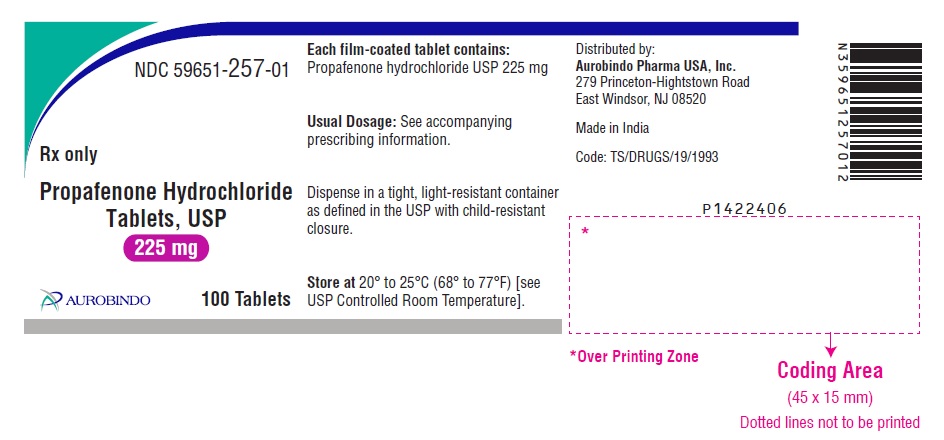
Propafenone Hydrochloride 225 mg Tablet, Film Coated, 100-count — NDC 59651-257-01 (Billing 59651-0257-01)
This is a package of 100 tablets of Propafenone Hydrochloride 225 mg Tablet, Film Coated from Aurobindo Pharma Limited, marketed since Oct 2019 and currently FDA-listed; retail pharmacies pay about $0.2066 per tablet (NADAC). It is the main listing for this product, which comes in 2 package sizes.
NDC database record
One package, one record: these facts belong to NDC 59651-257-01 alone.
- Record
- FDA NDC Directory package listing · Human prescription drug
- Code segments
- 59651 labeler · 257 product · 01 package
- Package marketed since
- Oct 25, 2019
- Sample package
- No — commercial package
- Listing certified through
- Dec 31, 2026
- Billing quantity
- 100 EA per package
- Barcode (UPC-A, from the NDC)
- 3 5965125701 2
- Medicaid fills, this package
- 512 prescriptions in the last four reported quarters
- FDA record last changed
- Jul 24, 2026
Other active recalls for Propafenone Hydrochloride (different manufacturers) — 4 · tap to view
Identity & classification
Regulatory identifiers FDA, NLM and CMS codes for this package
Drug-database identifiers Medi-Span GPI and First Databank GCN / HICL / AHFS classification
- GSN (GCN sequence number): 019751
- GCN: 12433
- GPI-14 (Medi-Span): 35300050000325
- HICL (First Databank): 004833
- AHFS class code: 24:04.04.12
- RxCUI (RxNorm): 861424
Where does this data come from?
- FDA openFDA NDC Directory · synced Oct 8, 2026
- FDA label on DailyMed · label index refreshed Oct 6, 2026
- RxNorm (NLM RxNav) · catalog refreshed Oct 1, 2026
- Medi-Span GPI (licensed)
- First Databank (licensed) · refreshed Oct 8, 2026
RxNorm drug class
This medicine belongs to the Antiarrhythmic class.
Where does this data come from?
- RxClass (NLM) · catalog refreshed Oct 1, 2026
Clinical
Propafenone is used to treat arrhythmia (irregular heartbeat) and to maintain a normal heart rate. Propafenone is in a class of medications called antiarrhythmics. It works by acting on the heart muscle to improve the heart's rhythm.
Read the full MedlinePlus article ↗- Propafenone helps keep your heart rhythm steady. The extended-release capsules are used to prolong the time before symptomatic atrial fibrillation returns. The tablets are also use...
- Take it by mouth exactly as prescribed. Tablets are usually taken about every 8 hours, and the extended-release capsules about every 12 hours with or without food. Do not crush the...
- Dizziness, palpitations, nausea, taste changes, tiredness, and constipation are common. Call right away for fainting, a new racing or irregular heartbeat, swelling, trouble breathi...
- What side effects should I expect, and when should I call?
Patient education
Supplement & herbal interactions
Where does this data come from?
- MedlinePlus (NLM) · refreshed Oct 1, 2026
- FDA label on DailyMed · label index refreshed Oct 6, 2026
Ask a licensed pharmacist directly — free, answered by our team.
Pricing
A drug doesn't have one price. Each row is a different public payment system, and none is what you'd pay at the counter — that depends on your insurance. The ⓘ on each row explains what it measures.
| Price system | Per ea | Per package |
|---|---|---|
| Retail pharmacies payNADAC · weekly | $0.207 | $20.66 / 100 tablets |
| Medicaid paysCMS SDUD · 12 mo | $0.2990 | $29.90 / 100 tablets |
| Medicare drug plans payPart D · Q2 2026 | $0.3453 | $34.53 / 100 tablets |
Where does this data come from?
- CMS NADAC weekly file · file of Oct 7, 2026
- CMS ASP pricing files · refreshed Sep 20, 2026
- CMS Medicaid State Drug Utilization Data · through Q4 2025
- CMS Part D plan pricing files · refreshed Sep 24, 2026
- VA National Acquisition Center price file
Packaging — all sizes for this product
| Package NDC | Description | Per unit | Per pack | Marketing start | Marketing end | Status |
|---|---|---|---|---|---|---|
| 59651-0257-01 You're viewing this Main listing | 100 TABLET, FILM COATED in 1 BOTTLE | $0.2066 / ea | $20.66 | 2019-10-25 | — | Active |
| 59651-0257-33 59651-257-33 | 300 TABLET, FILM COATED in 1 BOTTLE | — | — | 2019-10-25 | — | Active |
You're viewing the smallest of 2 pack sizes for this product.
In Medicaid, this is the most-dispensed pack of this product — about 100% of fills over the last four reported quarters. See all packs ↓
Pack size FAQ
What quantity is in this package?
How does this package differ from NDC 59651-0257-33?
What NDC number is used to bill for this package of Propafenone Hydrochloride 225 mg Tablet, Film Coated?
Prices are the latest CMS NADAC pharmacy acquisition cost per NDC; per-pack figures are per-unit × pack quantity, shown only when the pack is denominated in the same measure NADAC prices.
Therapeutic equivalents
| Product | Labeler | Pack | NADAC/unit | TE | Status | Price vs. this |
|---|---|---|---|---|---|---|
| Propafenone Hydrochloride 225 mgthis 59651-0257-01 | Aurobindo | 100 tablets | $0.207 | AB | Availability likely | — |
| Propafenone Hydrochloride 225 mg 62559-0231-01 | ANI | 100 tablets | $0.207 | AB | Availability likely | — |
| Propafenone Hydrochloride 225 mg 64380-0164-01 | Strides | 300 tablets | $0.207 | AB | Availability likely | — |
| Propafenone Hydrochloride 225 mg 64380-0268-01 | Strides | 300 tablets | $0.207 | AB | Availability likely | — |
| Propafenone Hydrochloride 225 mg 50090-4227-00 | A-S | 60 tablets | — | AB | FDA listed | — |
| Propafenone Hydrochloride 225 mg 51407-0016-01 | Golden | 100 tablets | — | AB | FDA listed | — |
| Propafenone Hydrochloride 225 mg 63629-1988-01 | Bryant | 100 tablets | — | AB | FDA listed | — |
| Propafenone Hydrochloride 225 mg 72162-1752-01 | Bryant | 100 tablets | — | AB | FDA listed | — |
| Propafenone Hydrochloride 225 mg 72162-2617-01 | Bryant | 100 tablets | — | AB | FDA listed | — |
Where does this data come from?
- FDA openFDA NDC Directory · synced Oct 8, 2026
- FDA Orange Book · refreshed Oct 3, 2026
- CMS NADAC weekly file · file of Oct 7, 2026
Availability & generic status
This product is an FDA-approved generic. Other versions of the same drug are listed under Therapeutic equivalents, least expensive first.
Where does this data come from?
- FDA Orange Book · refreshed Oct 3, 2026
What it looks like
Where does this data come from?
- FDA label on DailyMed · label index refreshed Oct 6, 2026
Inactive Ingredients / Excipients
Inactive ingredients, also called excipients, are components of the drug product other than the active ingredient. They may include fillers, dyes, coatings, preservatives, flavors, or other formulation ingredients.
🧪 Avoiding an ingredient? See Propafenone inactive ingredients by manufacturer: every current product's list side by side, so you can ask your pharmacy for the version that does not list it.
💡 Tap an ingredient (hover on desktop) to see what it is and why it’s used.
-
UNII 70097M6I30
Magnesium stearate is a salt made from magnesium and stearic acid, a fatty substance. It's used in tablets and capsules as a lubricant and glidant to help ingredients flow smoothly during manufacturing and prevent sticking.
-
UNII 7T9FYH5QMK
A plant-derived powder that serves as a binder and filler in tablets and capsules. It helps hold ingredients together, adds bulk, and aids in smooth tablet disintegration when swallowed.
-
UNII G2M7P15E5P
Polyethylene glycol 3350 is a synthetic polymer used as a solvent, humectant, and thickening agent in medicines. It helps dissolve other ingredients, retain moisture in the product, and achieve the desired consistency.
-
UNII 532B59J990
Polyvinyl alcohol is a synthetic polymer made from plant-derived materials. It's used as a binder to hold ingredients together, a film-former in coatings, and a thickener in liquid formulations.
-
UNII U725QWY32X
Povidone K30 is a synthetic polymer made from petroleum. It acts as a binder to hold tablet ingredients together and as a disintegrant to help the tablet break apart in the stomach so the medicine can be absorbed.
-
UNII 5856J3G2A2
A starch-based powder made from potatoes and processed with sodium. It acts as a disintegrant, helping the tablet or capsule break apart quickly in the stomach so the medicine can be absorbed.
-
UNII O8232NY3SJ
A plant-based carbohydrate derived from corn kernels. It acts as a filler to add bulk, a binder to hold ingredients together, and a disintegrant to help the tablet break apart in your stomach for absorption.
-
UNII 7SEV7J4R1U
A powder made from a naturally occurring mineral. In medicines, talc works as a glidant and anti-caking agent, helping tablets and capsules flow smoothly during manufacturing and preventing clumping.
-
UNII 15FIX9V2JP
Titanium dioxide is a bright white mineral powder commonly used as a colorant and opacifying agent. It makes pills and tablets white or lighter in color and helps make coatings non-transparent.
9 inactive ingredients listed in the exact product block matched to this NDC.
Where does this data come from?
ingredient classCode="IACT" elements from the exact product block matched by this NDC. Label-section narrative from DailyMed / the openFDA label index is shown separately when available.- FDA label on DailyMed · label index refreshed Oct 6, 2026
- FDA openFDA NDC Directory · synced Oct 8, 2026
Inactive ingredient FAQ
Are inactive ingredients the same for every manufacturer?
Why might an inactive ingredient be missing?
Can inactive ingredients matter?
Manufacturer & labeler
More NDCs from Aurobindo Pharma Limited labeler code 59651
- Midodrine Hydrochloride 10 mg Tablet NDC 59651-248-01
- Desmopressin Acetate .1 mg Tablet NDC 59651-249-01
- Desmopressin Acetate .2 mg Tablet NDC 59651-250-01
- Nadolol 40 mg Tablet NDC 59651-251-01
- Nadolol 80 mg Tablet NDC 59651-252-01
- Propafenone Hydrochloride 150 mg Tablet, Film Coated NDC 59651-256-01
- Propafenone Hydrochloride 300 mg Tablet, Film Coated NDC 59651-258-01
- Clozapine 12.5 mg Tablet, Orally Disintegrating NDC 59651-260-01
- Clozapine 25 mg Tablet, Orally Disintegrating NDC 59651-261-01
- Clozapine 100 mg Tablet, Orally Disintegrating NDC 59651-262-01
- Clozapine 150 mg Tablet, Orally Disintegrating NDC 59651-263-01
- Clozapine 200 mg Tablet, Orally Disintegrating NDC 59651-264-01
Where does this data come from?
- FDA openFDA NDC Directory · synced Oct 8, 2026
- Drugs@FDA
Full prescribing information FDA SPL
🚨 Boxed Warning ▾
WARNING: MORTALITY In the National Heart, Lung, and Blood Institute’s Cardiac Arrhythmia Suppression Trial (CAST), a long-term, multicenter, randomized, double-blind trial in subjects with asymptomatic non-life-threatening ventricular arrhythmias who had a myocardial infarction more than 6 days but less than 2 years previously, an increased rate of death or reversed cardiac arrest rate (7.7%; 56/730) was seen in subjects treated with encainide or flecainide (Class IC antiarrhythmics) compared with that seen in subjects assigned to placebo (3.0%; 22/725).
The average duration of treatment with encainide or flecainide in this trial was 10 months. The applicability of the CAST results to other populations (e.g., those without recent myocardial infarction) or other antiarrhythmic drugs is uncertain, but at present, it is prudent to consider any IC antiarrhythmic to have a significant proarrhythmic risk in patients with structural heart disease. Given the lack of any evidence that these drugs improve survival, antiarrhythmic agents should generally be avoided in patients with non-life-threatening ventricular arrhythmias, even if the patients are experiencing unpleasant, but not life-threatening, symptoms or signs.
WARNING: MORTALITY See full prescribing information for complete boxed warning. An increased rate of death or reversed cardiac arrest rate was seen in subjects treated with encainide or flecainide (Class IC antiarrhythmics) compared with that seen in subjects assigned to placebo. At present, it is prudent to consider any IC antiarrhythmic to have a significant risk of provoking proarrhythmic events in patients with structural heart disease.
Given the lack of any evidence that these drugs improve survival, antiarrhythmic agents should generally be avoided in patients with non-life-threatening ventricular arrhythmias, even if the patients are experiencing unpleasant, but not life-threatening, symptoms or signs.
🎯 Indications and Usage ▾
1 INDICATIONS AND USAGE Propafenone hydrochloride tablets are indicated to: prolong the time to recurrence of paroxysmal atrial fibrillation/flutter (PAF) associated with disabling symptoms in patients without structural heart disease. prolong the time to recurrence of paroxysmal supraventricular tachycardia (PSVT) associated with disabling symptoms in patients without structural heart disease. treat documented ventricular arrhythmias, such as sustained ventricular tachycardia that, in the judgment of the physician, are life-threatening.
Initiate treatment in the hospital. Usage Considerations: The use of propafenone hydrochloride tablets in patients with permanent atrial fibrillation (AF) or in patients exclusively with atrial flutter or PSVT has not been evaluated. Do not use propafenone hydrochloride tablets to control ventricular rate during AF.
Some patients with atrial flutter treated with propafenone have developed 1:1 conduction, producing an increase in ventricular rate. Concomitant treatment with drugs that increase the functional atrioventricular (AV) nodal refractory period is recommended. The use of propafenone hydrochloride tablets in patients with chronic atrial fibrillation has not been evaluated.
Because of the proarrhythmic effects of propafenone hydrochloride tablets, its use with lesser ventricular arrhythmias is not recommended, even if patients are symptomatic, and any use of the drug should be reserved for patients in whom, in the opinion of the physician, the potential benefits outweigh the risks. The effect of propafenone on mortality has not been determined [see Boxed Warning ] . Propafenone hydrochloride is an antiarrhythmic indicated to: prolong the time to recurrence of symptomatic atrial fibrillation (AF) in patients with episodic (most likely paroxysmal or persistent) AF who do not have structural heart disease.
(1) prolong the time to recurrence of paroxysmal supraventricular tachycardia (PSVT) associated with disabling symptoms in patients who do not have structural heart disease. (1) treat documented life-threatening ventricular arrhythmias. (1) Usage Considerations: Use in patients with permanent atrial fibrillation or with atrial flutter or PSVT has not been evaluated.
Do not use to control ventricular rate during atrial fibrillation. (1) In patients with atrial fibrillation and atrial flutter, use propafenone hydrochloride tablets with drugs that increase the atrioventricular nodal refractory period. (1) Because of proarrhythmic effects, use with lesser ventricular arrhythmias is not recommended, even if patients are symptomatic.
(1) The effect of propafenone on mortality has not been determined. (1)
⏱️ Dosage and Administration ▾
2 DOSAGE AND ADMINISTRATION The dose of propafenone hydrochloride tablets must be individually titrated on the basis of response and tolerance. Initiate therapy with propafenone hydrochloride tablets 150 mg given every 8 hours (450 mg per day). Dosage may be increased at a minimum of 3- to 4- day intervals to 225 mg every 8 hours (675 mg per day).
If additional therapeutic effect is needed, the dose of propafenone hydrochloride tablets may be increased to 300 mg every 8 hours (900 mg per day). The usefulness and safety of dosages exceeding 900 mg per day have not been established. In patients with hepatic impairment or those with significant widening of the QRS complex or second- or third-degree AV block, consider reducing the dose.
As with other antiarrhythmic agents, in the elderly or in ventricular arrhythmia patients with marked previous myocardial damage, the dose of propafenone hydrochloride tablets should be increased more gradually during the initial phase of treatment. The combination of cytochrome P450 3A4 (CYP3A4) inhibition and either cytochrome P450 2D6 (CYP2D6) deficiency or CYP2D6 inhibition with the simultaneous administration of propafenone may significantly increase the concentration of propafenone and thereby increase the risk of proarrhythmia and other adverse events.
Therefore, avoid simultaneous use of propafenone hydrochloride tablets with both a CYP2D6 inhibitor and a CYP3A4 inhibitor [see Warnings and Precautions (5.4) , Drug Interactions (7.1) ] . Initiate therapy with 150 mg given every 8 hours. (2) As needed, uptitrate in 3 to 4 days to 225 to 300 mg every 8 hours.
(2) Consider reducing the dose in patients with hepatic impairment, significant widening of the QRS complex, or second- or third-degree AV block. (2)
💊 Dosage Forms and Strengths ▾
3 DOSAGE FORMS AND STRENGTHS 150 mg, 225 mg and 300 mg white to off-white, round, biconvex, film-coated tablets with a break line on one side. Tablets: 150 mg, 225 mg and 300 mg. (3)
⛔ Contraindications ▾
4 CONTRAINDICATIONS Propafenone hydrochloride tablets are contraindicated in the following circumstances: Heart failure Cardiogenic shock Sinoatrial, atrioventricular, and intraventricular disorders of impulse generation or conduction (e.g., sick sinus node syndrome, AV block) in the absence of an artificial pacemaker Known Brugada Syndrome Bradycardia Marked hypotension Bronchospastic disorders or severe obstructive pulmonary disease Marked electrolyte imbalance Heart failure (4) Cardiogenic shock (4) Sinoatrial, atrioventricular, and intraventricular disorders of impulse generation or conduction in the absence of pacemaker (4) Known Brugada Syndrome (4) Bradycardia (4) Marked hypotension (4) Bronchospastic disorders and severe obstructive pulmonary disease (4) Marked electrolyte imbalance (4)
⚠️ Warnings and Cautions ▾
5 WARNINGS AND PRECAUTIONS May cause new or worsened arrhythmias. Evaluate patients via ECG prior to and during therapy. (5.1) Propafenone hydrochloride may unmask Brugada or Brugada-like Syndrome.
(4 , 5.2) Avoid use with other drugs that prolong the QT interval. (5.3) Avoid simultaneous use of propafenone with both a cytochrome P450 2D6 (CYP2D6) inhibitor and a 3A4 inhibitor (CYP3A4). (5.4) May provoke overt heart failure.
(5.5) May cause dose-related first-degree AV block or other conduction disturbances. Only use in patients with conduction disorders who have pacemakers. (5.6) May affect artificial pacemakers.
Monitor pacemaker function. (5.7) Agranulocytosis: Patients should report signs of infection. (5.8) May exacerbate myasthenia gravis.
(5.11)
5.1Proarrhythmic Effects Propafenone has caused new or worsened arrhythmias. Such proarrhythmic effects include sudden death and life-threatening ventricular arrhythmias such as ventricular fibrillation, ventricular tachycardia, asystole, and torsade de pointes. It may also worsen premature ventricular contractions or supraventricular arrhythmias, and it may prolong the QT interval.
It is therefore essential that each patient given propafenone hydrochloride be evaluated electrocardiographically prior to and during therapy to determine whether the response to propafenone hydrochloride supports continued treatment. Because propafenone prolongs the QRS interval in the electrocardiogram, changes in the QT interval are difficult to interpret [see Clinical Pharmacology (12.2) ]. In a U.S. uncontrolled, open-label, multicenter trial in subjects with symptomatic supraventricular tachycardia (SVT), 1.9% (9/474) of these subjects experienced ventricular tachycardia (VT) or ventricular fibrillation (VF) during the trial.
However, in 4 of the 9 subjects, the ventricular tachycardia was of atrial origin. Six of the 9 subjects that developed ventricular arrhythmias did so within 14 days of onset of therapy. About 2.3% (11/474) of all subjects had a recurrence of SVT during the trial which could have been a change in the subjects’ arrhythmia behavior or could represent a proarrhythmic event.
Case reports in patients treated with propafenone for atrial fibrillation/flutter have included increased premature ventricular contractions (PVCs), VT, VF, torsade de pointes, asystole, and death. Overall in clinical trials with propafenone hydrochloride (which included subjects treated for ventricular arrhythmias, atrial fibrillation/flutter, and PSVT), 4.7% of all subjects had new or worsened ventricular arrhythmia possibly representing a proarrhythmic event (0.7% was an increase in PVCs; 4.0% a worsening or new appearance of VT or VF).
Of the subjects who had worsening of VT (4%), 92% had a history of VT and/or VT/VF, 71% had coronary artery disease, and 68% had a prior myocardial infarction. The incidence of proarrhythmia in subjects with less serious or benign arrhythmias, which include subjects with an increase in frequency of PVCs, was 1.6%. Although most proarrhythmic events occurred during the first week of therapy, late events also were seen and the CAST trial [see Boxed Warning: Mortality ] suggests that an increased risk of proarrythmia is present throughout treatment.
In a trial of sustained-release propafenone, there were too few deaths to assess the long-term risk to patients. There were 5 deaths; 3 in the pooled group for sustained-release propafenone (0.8%), and 2 in the placebo group (1.6%). In the overall database of 8 trials of sustained-release propafenone and immediate-release propafenone hydrochloride, the mortality rate was 2.5% per year on propafenone and 4.0% per year on placebo.
Concurrent use of propafenone with other antiarrhythmic agents has not been well studied.
5.2Unmasking Brugada Syndrome Brugada Syndrome may be unmasked after exposure to propafenone hydrochloride. Perform an ECG after initiation of propafenone hydrochloride, and discontinue the drug if changes are sug… [Excerpted — this section continues on DailyMed.]
🤒 Adverse Reactions ▾
6 ADVERSE REACTIONS The most commonly reported adverse events with propafenone (greater than 5%) included: unusual taste, nausea and/or vomiting, dizziness, constipation, headache, fatigue, first-degree AV block, and intraventricular conduction delay. (6.1) To report SUSPECTED ADVERSE REACTIONS, contact Aurobindo Pharma USA, Inc. at 1-866-850-2876 or FDA at 1-800-FDA-1088 or www.fda.gov/medwatch.
6.1Clinical Trials Experience Because clinical trials are conducted under widely varying conditions, adverse reaction rates observed in the clinical trials of a drug cannot be directly compared with rates in the clinical trials of another drug and may not reflect the rates observed in practice. Adverse reactions associated with propafenone hydrochloride occur most frequently in the gastrointestinal, cardiovascular, and central nervous systems. About 20% of subjects treated with propafenone hydrochloride have discontinued treatment because of adverse reactions.
Adverse reactions reported for greater than 1.5% of 474 subjects with SVT who received propafenone hydrochloride in U.S. clinical trials are presented in Table 1 by incidence and percent discontinuation, reported to the nearest percent. Table 1. Adverse Reactions Reported for >1.5% of Subjects with Supraventricular Tachycardia Adverse Reaction Incidence (n = 480) % of Subjects Who Discontinued Unusual taste 14% 1.3% Nausea and/or vomiting 11% 2.9% Dizziness 9% 1.7% Constipation 8% 0.2% Headache 6% 0.8% Fatigue 6% 1.5% Blurred Vision 3% 0.6% Weakness 3% 1.3% Dyspnea 2% 1.0% Wide complex tachycardia 2% 1.9% CHF 2% 0.6% Bradycardia 2% 0.2% Palpitations 2% 0.2% Tremor 2% 0.4% Anorexia 2% 0.2% Diarrhea 2% 0.4% Ataxia 2% 0.0% In controlled trials in subjects with ventricular arrhythmia, the most common reactions reported for propafenone hydrochloride and more frequent than on placebo were unusual taste, dizziness, first-degree AV block, intraventricular conduction delay, nausea and/or vomiting, and constipation.
Headache was relatively common also, but was not increased compared with placebo. Other reactions reported more frequently than on placebo or comparator and not already reported elsewhere included anxiety, angina, second-degree AV block, bundle branch block, loss of balance, congestive heart failure, and dyspepsia. Adverse reactions reported for greater than or equal to 1% of 2,127 subjects with ventricular arrhythmia who received propafenone in U.S. clinical trials were evaluated by daily dose.
The most common adverse reactions appeared dose-related (but note that most subjects spent more time at the larger doses), especially dizziness, nausea and/or vomiting, unusual taste, constipation, and blurred vision. Some less common reactions may also have been dose-related such as first-degree AV block, congestive heart failure, dyspepsia, and weakness. Other adverse reactions included rash, syncope, chest pain, abdominal pain, ataxia, and hypotension.
In addition, the following adverse reactions were reported less frequently than 1% either in clinical trials or in marketing experience. Causality and relationship to propafenone therapy cannot necessarily be judged from these events. Cardiovascular System Atrial flutter, AV dissociation, cardiac arrest, flushing, hot flashes, sick sinus syndrome, sinus pause or arrest, supraventricular tachycardia.
Nervous System Abnormal dreams, abnormal speech, abnormal vision, confusion, depression, memory loss, numbness, paresthesias, psychosis/mania, seizures (0.3%), tinnitus, unusual smell sensation, vertigo. Gastrointestinal Cholestasis, elevated liver enzymes (alkaline phosphatase, serum transaminases), gastroenteritis, hepatitis. Hematologic Agranulocytosis, anemia, bruising, granulocytopenia, leukopenia, purpura, thrombocytopenia.
Other Alopecia, eye irritation, impotence, increased glucose, positive ANA (0.7%), muscle cramps, muscle weakness, nephrotic syndrome, pain, pruritus.
6.2Postmarketing Experience The following adverse reactions… [Excerpted — this section continues on DailyMed.]
🔄 Drug Interactions ▾
7 DRUG INTERACTIONS Inhibitors of CYP2D6, 1A2, and 3A4 increase propafenone exposure. (7.1) Propafenone may increase digoxin or warfarin levels. (7.2 , 7.3) Orlistat may reduce propafenone exposure. Taper orlistat withdrawal. (7.4) Lidocaine may increase central nervous system side effects. (7.6)
7.1CYP2D6 and CYP3A4 Inhibitors Drugs that inhibit CYP2D6 (such as desipramine, paroxetine, ritonavir, sertraline) and CYP3A4 (such as ketoconazole, ritonavir, saquinavir, erythromycin, grapefruit juice) can be expected to cause increased plasma levels of propafenone. The combination of CYP3A4 inhibition and either CYP2D6 deficiency or CYP2D6 inhibition with administration of propafenone may increase the risk of adverse reactions, including proarrhythmia. Therefore, simultaneous use of propafenone hydrochloride with both a CYP2D6 inhibitor and a CYP3A4 inhibitor should be avoided [see Warnings and Precautions (5.4) , Dosage and Administration (2) ].
Amiodarone Concomitant administration of propafenone and amiodarone can affect conduction and repolarization and is not recommended. Cimetidine Concomitant administration of propafenone immediate-release tablets and cimetidine in 12 healthy subjects resulted in a 20% increase in steady-state plasma concentrations of propafenone. Fluoxetine Concomitant administration of propafenone and fluoxetine in extensive metabolizers increased the S-propafenone C max and AUC by 39% and 50%, respectively, and the R-propafenone C max and AUC by 71% and 50%, respectively.
Quinidine Small doses of quinidine completely inhibit the CYP2D6 hydroxylation metabolic pathway, making all patients, in effect, slow metabolizers [see Clinical Pharmacology (12.3) ] . Concomitant administration of quinidine (50 mg 3 times daily) with 150 mg immediate-release propafenone 3 times daily decreased the clearance of propafenone by 60% in extensive metabolizers, making them slow metabolizers. Steady-state plasma concentrations more than doubled for propafenone and decreased 50% for 5-OH-propafenone.
A 100 mg dose of quinidine tripled steady-state concentrations of propafenone. Avoid concomitant use of propafenone and quinidine. Rifampin Concomitant administration of rifampin and propafenone in extensive metabolizers decreased the plasma concentrations of propafenone by 67% with a corresponding decrease of 5-OH-propafenone by 65%.
The concentrations of norpropafenone increased by 30%. In slow metabolizers, there was a 50% decrease in propafenone plasma concentrations and an increase in the AUC and C max of norpropafenone by 74% and 20%, respectively. Urinary excretion of propafenone and its metabolites decreased significantly.
Similar results were noted in elderly patients: Both the AUC and C max of propafenone decreased by 84%, with a corresponding decrease in AUC and C max of 5-OH‑propafenone by 69% and 57%, respectively.
7.2Digoxin Concomitant use of propafenone and digoxin increased steady-state serum digoxin exposure (AUC) in patients by 60% to 270% and decreased the clearance of digoxin by 31% to 67%. Monitor plasma digoxin levels of patients receiving propafenone and adjust digoxin dosage as needed.
7.3Warfarin The concomitant administration of propafenone and warfarin increased warfarin plasma concentrations at steady state by 39% in healthy volunteers and prolonged the prothrombin time (PT) in patients taking warfarin. Adjust the warfarin dose as needed by monitoring INR (international normalized ratio).
7.4Orlistat Orlistat may limit the fraction of propafenone available for absorption. In postmarketing reports, abrupt cessation of orlistat in patients stabilized on propafenone has resulted in severe adverse events including convulsions, atrioventricular block, and acute circulatory failure.
7.5Beta-Antagonists Concomitant use of propafenone and propranolol in healthy subjects increased propranolol plasma concentrations at steady state by 113%. In 4 patients, administration of metoprolol with propafenone increas… [Excerpted — this section continues on DailyMed.]
👥 Use in Specific Populations ▾
8 USE IN SPECIFIC POPULATIONS
8.1Pregnancy Risk Summary There are no studies of propafenone hydrochloride in pregnant women. Available data from published case reports and several decades of postmarketing experience with use of propafenone hydrochloride in pregnancy have not identified any drug-associated risks of miscarriage, birth defects, or adverse maternal or fetal outcomes. Untreated arrhythmias during pregnancy may pose a risk to the pregnant woman and fetus (see Clinical Considerations).
Propafenone and its metabolite, 5-OH-propafenone, cross the placenta in humans. In animal studies, propafenone was not teratogenic. At maternally toxic doses (ranging from 2 to 6 times the maximum recommended human dose [MRHD]), there was evidence of adverse developmental outcomes when administered to pregnant rabbits and rats during organogenesis or when administered to pregnant rats during mid-gestation through weaning of their offspring (see Data) .
The estimated background risks of major birth defects and miscarriage for the indicated populations are unknown. All pregnancies have a background risk of birth defect, loss, or other adverse outcomes. In the U.S. general population, the estimated background risk of major birth defects and miscarriage in clinically recognized pregnancies is 2% to 4% and 15% to 20%, respectively.
Clinical Considerations Disease-associated maternal and/or embryo/fetal risk: The incidence of VT is increased and may be more symptomatic during pregnancy. Ventricular arrhythmias most often occur in pregnant women with underlying cardiomyopathy, congenital heart disease, valvular heart disease, or mitral valve prolapse. Breakthrough arrhythmias may also occur during pregnancy, as therapeutic treatment levels may be difficult to maintain due to the increased volume of distribution and increased drug metabolism inherent in the pregnant state.
Fetal/Neonatal Adverse Reactions: Propafenone and its metabolite have been shown to cross the placenta. Adverse reactions such as fetal/neonatal arrhythmias have been associated with the use of other antiarrhythmic agents by pregnant women. Fetal/neonatal monitoring for signs and symptoms of arrhythmia is recommended during and after treatment of pregnant women with propafenone.
Labor or Delivery: Risk of arrhythmias may increase during labor and delivery. Patients treated with propafenone hydrochloride should be monitored continuously for arrhythmias during labor and delivery [see Warnings and Precautions (5.1) ] . Data Propafenone has been shown to cause embryo-fetal mortality in rabbits and rats when given orally during organogenesis at maternally toxic doses of 150 mg/kg/day (rabbit: maternal mortality, decreased body weight gain and food consumption at approximately 3 times the MRHD on a mg/m 2 basis) and 600 mg/kg/day (rat: maternal decreased body weight gain and food consumption at approximately 6 times the MRHD on a mg/m 2 basis).
In addition, a maternally toxic dose of 600 mg/kg/day (approximately 6 times the MRHD on a mg/m 2 basis) also caused decreased fetal weights in rats. Increased placental weights and delayed ossification occurred in rabbits at a dose of 30 mg/kg/day (less than the MRHD on a mg/m 2 basis) in the absence of maternal toxicity. No adverse developmental outcomes in the absence of maternal toxicity were seen following oral doses of 15 mg/kg/day to rabbits or up to 270 mg/kg/day to rats administered during organogenesis (equivalent to 0.3 times or approximately 3 times the MRHD on a mg/m 2 basis, respectively).
In an oral study, female rats received propafenone up to 500 mg/kg/day from mid-gestation through weaning. At 90 mg/kg/day (equivalent to the MRHD on a mg/m 2 basis), there were no adverse developmental outcomes in the absence of maternal toxicity. However, doses ≥180 mg/kg/day (2 or more times the MRHD on a mg/m 2 basis) produced increases in maternal deaths and resulted in reductions in neonatal survival, body weight gain, and delayed dev… [Excerpted — this section continues on DailyMed.]
🤰 Pregnancy ▾
8.1Pregnancy Risk Summary There are no studies of propafenone hydrochloride in pregnant women. Available data from published case reports and several decades of postmarketing experience with use of propafenone hydrochloride in pregnancy have not identified any drug-associated risks of miscarriage, birth defects, or adverse maternal or fetal outcomes. Untreated arrhythmias during pregnancy may pose a risk to the pregnant woman and fetus (see Clinical Considerations).
Propafenone and its metabolite, 5-OH-propafenone, cross the placenta in humans. In animal studies, propafenone was not teratogenic. At maternally toxic doses (ranging from 2 to 6 times the maximum recommended human dose [MRHD]), there was evidence of adverse developmental outcomes when administered to pregnant rabbits and rats during organogenesis or when administered to pregnant rats during mid-gestation through weaning of their offspring (see Data) .
The estimated background risks of major birth defects and miscarriage for the indicated populations are unknown. All pregnancies have a background risk of birth defect, loss, or other adverse outcomes. In the U.S. general population, the estimated background risk of major birth defects and miscarriage in clinically recognized pregnancies is 2% to 4% and 15% to 20%, respectively.
Clinical Considerations Disease-associated maternal and/or embryo/fetal risk: The incidence of VT is increased and may be more symptomatic during pregnancy. Ventricular arrhythmias most often occur in pregnant women with underlying cardiomyopathy, congenital heart disease, valvular heart disease, or mitral valve prolapse. Breakthrough arrhythmias may also occur during pregnancy, as therapeutic treatment levels may be difficult to maintain due to the increased volume of distribution and increased drug metabolism inherent in the pregnant state.
Fetal/Neonatal Adverse Reactions: Propafenone and its metabolite have been shown to cross the placenta. Adverse reactions such as fetal/neonatal arrhythmias have been associated with the use of other antiarrhythmic agents by pregnant women. Fetal/neonatal monitoring for signs and symptoms of arrhythmia is recommended during and after treatment of pregnant women with propafenone.
Labor or Delivery: Risk of arrhythmias may increase during labor and delivery. Patients treated with propafenone hydrochloride should be monitored continuously for arrhythmias during labor and delivery [see Warnings and Precautions (5.1) ] . Data Propafenone has been shown to cause embryo-fetal mortality in rabbits and rats when given orally during organogenesis at maternally toxic doses of 150 mg/kg/day (rabbit: maternal mortality, decreased body weight gain and food consumption at approximately 3 times the MRHD on a mg/m 2 basis) and 600 mg/kg/day (rat: maternal decreased body weight gain and food consumption at approximately 6 times the MRHD on a mg/m 2 basis).
In addition, a maternally toxic dose of 600 mg/kg/day (approximately 6 times the MRHD on a mg/m 2 basis) also caused decreased fetal weights in rats. Increased placental weights and delayed ossification occurred in rabbits at a dose of 30 mg/kg/day (less than the MRHD on a mg/m 2 basis) in the absence of maternal toxicity. No adverse developmental outcomes in the absence of maternal toxicity were seen following oral doses of 15 mg/kg/day to rabbits or up to 270 mg/kg/day to rats administered during organogenesis (equivalent to 0.3 times or approximately 3 times the MRHD on a mg/m 2 basis, respectively).
In an oral study, female rats received propafenone up to 500 mg/kg/day from mid-gestation through weaning. At 90 mg/kg/day (equivalent to the MRHD on a mg/m 2 basis), there were no adverse developmental outcomes in the absence of maternal toxicity. However, doses ≥180 mg/kg/day (2 or more times the MRHD on a mg/m 2 basis) produced increases in maternal deaths and resulted in reductions in neonatal survival, body weight gain, and delayed development in the presence of ma… [Excerpted — this section continues on DailyMed.]
🧒 Pediatric Use ▾
8.4Pediatric Use The safety and effectiveness of propafenone in pediatric patients have not been established.
🧓 Geriatric Use ▾
8.5Geriatric Use Clinical trials of propafenone hydrochloride did not include sufficient numbers of subjects aged 65 and older to determine whether they respond differently from younger subjects. Other reported clinical experience has not identified differences in responses between the elderly and younger subjects. In general, dose selection for an elderly patient should be cautious, usually starting at the low end of the dosing range, reflecting the greater frequency of decreased hepatic, renal, or cardiac function, and of concomitant disease or other drug therapy.
🆘 Overdosage ▾
10 OVERDOSAGE The symptoms of overdosage may include hypotension, somnolence, bradycardia, intra-atrial and intraventricular conduction disturbances, and rarely, convulsions and high-grade ventricular arrhythmias. Defibrillation, as well as infusion of dopamine and isoproterenol, has been effective in controlling abnormal rhythm and blood pressure. Convulsions have been alleviated with intravenous diazepam.
General supportive measures such as mechanical respiratory assistance and external cardiac massage may be necessary. The hemodialysis of propafenone in patients with an overdose is expected to be of limited value in the removal of propafenone as a result of both its high protein binding (greater than 95%) and large volume of distribution.
🧬 Clinical Pharmacology ▾
12 CLINICAL PHARMACOLOGY
12.1Mechanism of Action Propafenone is a Class 1C antiarrhythmic drug with local anesthetic effects and a direct stabilizing action on myocardial membranes. The electrophysiological effect of propafenone manifests itself in a reduction of upstroke velocity (Phase 0) of the monophasic action potential. In Purkinje fibers, and, to a lesser extent, myocardial fibers, propafenone reduces the fast inward current carried by sodium ions.
Diastolic excitability threshold is increased and effective refractory period prolonged. Propafenone reduces spontaneous automaticity and depresses triggered activity. Studies in anesthetized dogs and isolated organ preparations show that propafenone has beta-sympatholytic activity at about 1/50 the potency of propranolol.
Clinical studies employing isoproterenol challenge and exercise testing after single doses of propafenone indicate a beta-adrenergic blocking potency (per mg) about 1/40 that of propranolol in man. In clinical trials, resting heart rate decreases of about 8% were noted at the higher end of the therapeutic plasma concentration range. At very high concentrations in vitro , propafenone can inhibit the slow inward current carried by calcium, but this calcium antagonist effect probably does not contribute to antiarrhythmic efficacy.
Moreover, propafenone inhibits a variety of cardiac potassium currents in in vitro studies (i.e., the transient outward, the delayed rectifier, and the inward rectifier current). Propafenone has local anesthetic activity approximately equal to procaine. Compared with propafenone, the main metabolite, 5-hydroxypropafenone, has similar sodium and calcium channel activity, but about 10 times less beta-blocking activity.
(N-depropylpropafenone has weaker sodium channel activity but equivalent affinity for beta-receptors.)
12.2Pharmacodynamics Cardiac Electrophysiology Electrophysiology trials in subjects with ventricular tachycardia have shown that propafenone prolongs atrioventricular conduction while having little or no effect on sinus node function. Both atrioventricular nodal conduction time (AH interval) and His-Purkinje conduction time (HV interval) are prolonged. Propafenone has little or no effect on the atrial functional refractory period, but AV nodal functional and effective refractory periods are prolonged.
In patients with Wolff-Parkinson-White syndrome, propafenone hydrochloride reduces conduction and increases the effective refractory period of the accessory pathway in both directions. Electrocardiograms: Propafenone prolongs the PR and QRS intervals. Prolongation of the QRS interval makes it difficult to interpret the effect of propafenone on the QT interval.
Table 2. Mean Changes in Electrocardiogram Intervals a a Change and percent change based on mean baseline values for each treatment group. Interval Total Daily Dose (mg) 337.5 mg 450 mg 675 mg 900 mg msec % msec % msec % msec % RR -14.5 -1.8 30.6 3.8 31.5 3.9 41.7
5.1PR 3.6 2.1 19.1 11.6 28.9 17.8 35.6
21.9QRS 5.6 6.4 5.5 6.1 7.7 8.4 15.6
17.3QTc 2.7 0.7 -7.5 -1.8 5.0 1.2 14.7
3.7In any individual patient, the above ECG changes cannot be readily used to predict either efficacy or plasma concentration. Propafenone hydrochloride causes a dose-related and concentration-related decrease in the rate of single and multiple PVCs and can suppress recurrence of ventricular tachycardia. Based on the percent of patients attaining substantial (80% to 90%) suppression of ventricular ectopic activity, it appears that trough plasma levels of 0.2 to 1.5 mcg/mL can provide good suppression, with higher concentrations giving a greater rate of good response.
When 600 mg/day propafenone was administered to subjects with paroxysmal atrial tachyarrhythmias, mean heart rate during arrhythmia decreased 14 beats per min and 37 beats per min for subjects with PAF and subjects with PSVT, respectively. Hemodynamics Trials in humans have shown that propafenone hydrochloride exerts a negati… [Excerpted — this section continues on DailyMed.]
🧬 Mechanism of Action ▾
12.1Mechanism of Action Propafenone is a Class 1C antiarrhythmic drug with local anesthetic effects and a direct stabilizing action on myocardial membranes. The electrophysiological effect of propafenone manifests itself in a reduction of upstroke velocity (Phase 0) of the monophasic action potential. In Purkinje fibers, and, to a lesser extent, myocardial fibers, propafenone reduces the fast inward current carried by sodium ions.
Diastolic excitability threshold is increased and effective refractory period prolonged. Propafenone reduces spontaneous automaticity and depresses triggered activity. Studies in anesthetized dogs and isolated organ preparations show that propafenone has beta-sympatholytic activity at about 1/50 the potency of propranolol.
Clinical studies employing isoproterenol challenge and exercise testing after single doses of propafenone indicate a beta-adrenergic blocking potency (per mg) about 1/40 that of propranolol in man. In clinical trials, resting heart rate decreases of about 8% were noted at the higher end of the therapeutic plasma concentration range. At very high concentrations in vitro , propafenone can inhibit the slow inward current carried by calcium, but this calcium antagonist effect probably does not contribute to antiarrhythmic efficacy.
Moreover, propafenone inhibits a variety of cardiac potassium currents in in vitro studies (i.e., the transient outward, the delayed rectifier, and the inward rectifier current). Propafenone has local anesthetic activity approximately equal to procaine. Compared with propafenone, the main metabolite, 5-hydroxypropafenone, has similar sodium and calcium channel activity, but about 10 times less beta-blocking activity.
(N-depropylpropafenone has weaker sodium channel activity but equivalent affinity for beta-receptors.)
📦 How Supplied / Storage and Handling ▾
16 HOW SUPPLIED/STORAGE AND HANDLING Propafenone Hydrochloride Tablets, USP 150 mg is available for oral administration as white to off-white color, round shaped, biconvex, film-coated tablet debossed with “PR” above the break line, “OT” below the break line on one side and “150” on other side. Bottles of 100 NDC 59651-256-01 Bottles of 300 NDC 59651-256-33 Propafenone Hydrochloride Tablets, USP 225 mg is available for oral administration as white to off-white color, round shaped, biconvex, film-coated tablet debossed with “PR” above the break line, “OT” below the break line on one side and “225” on other side.
Bottles of 100 NDC 59651-257-01 Bottles of 300 NDC 59651-257-33 Propafenone Hydrochloride Tablets, USP 300 mg is available for oral administration as white to off-white color, round shaped, biconvex, film-coated tablet debossed with “PR” above the break line, “OT” below the break line on one side and “300” on other side. Bottles of 100 NDC 59651-258-01 Storage Store at 20° to 25°C (68° to 77°F) [see USP Controlled Room Temperature]. Dispense in a tight, light-resistant container.
📋 Description ▾
11 DESCRIPTION Propafenone hydrochloride is an antiarrhythmic drug supplied in film-coated tablets of 150 mg, 225 mg and 300 mg for oral administration. Propafenone has some structural similarities to beta-blocking agents. Chemically, propafenone hydrochloride is 2’-[2-hydroxy-3-(propylamino)-propoxy]-3-phenylpropiophenone hydrochloride, with a molecular weight of 377.92.
The molecular formula is C 21 H 27 NO 3 •HCl. The structural formula of propafenone hydrochloride is given below: Propafenone hydrochloride occurs as white crystalline powder. It is soluble in methanol and in hot water; slightly soluble in alcohol and in chloroform; very slightly soluble in acetone; insoluble in diethyl ether and in toluene.
The following inactive ingredients are contained in the tablet: corn starch, magnesium stearate, microcrystalline cellulose, polyethylene glycol, polyvinyl alcohol, povidone, sodium starch glycolate, talc and titanium dioxide. Chemical Structure
💬 Information for Patients ▾
17 PATIENT COUNSELING INFORMATION Advise the patient to read the FDA-approved patient labeling (Patient Information). Instruct patients to notify their healthcare providers of any change in over-the-counter, prescription, and supplement use. Instruct patients to report symptoms that may be associated with altered electrolyte balance, such as excessive or prolonged diarrhea, sweating, vomiting, or loss of appetite or thirst.
Instruct patients not to double the next dose if a dose is missed. The next dose should be taken at the usual time. Distributed by: Aurobindo Pharma USA, Inc.
279 Princeton-Hightstown Road East Windsor, NJ 08520 Manufactured by: Aurobindo Pharma Limited Hyderabad-500 032, India Revised: 12/2021
🍼 Nursing Mothers ▾
8.3Females and Males of Reproductive Potential Infertility Males: Based on human and animal studies, propafenone hydrochloride may transiently impair spermatogenesis in males. Evaluation of the effects on spermatogenesis was performed in 11 healthy males given oral propafenone 300 mg b.i.d. for 4 days, which was then increased to 300 mg t.i.d. for an additional 4 days. Study findings included a 28% reduction in semen sample volume on Treatment Day 8 and a 27% reduction in sperm count 64 days after treatment (both values remained within the laboratories normal reference range).
These effects were not seen in followup visits up to 120 days after treatment. Reversible decreases in spermatogenesis have been demonstrated in monkeys, dogs, and rabbits after lethal or near-lethal intravenous doses of propafenone [see Nonclinical Toxicology (13.1) ].
🧬 Pharmacokinetics ▾
12.3Pharmacokinetics Absorption/Bioavailability Propafenone hydrochloride is nearly completely absorbed after oral administration with peak plasma levels occurring approximately 3.5 hours after administration in most individuals. Propafenone exhibits extensive saturable presystemic biotransformation (first-pass effect) resulting in a dose-dependent and dosage-form-dependent absolute bioavailability; e.g., a 150 mg tablet had absolute bioavailability of 3.4%, while a 300 mg tablet had absolute bioavailability of 10.6%.
A 300 mg solution which was rapidly absorbed had absolute bioavailability of 21.4%. At still larger doses, above those recommended, bioavailability increases still further. Propafenone hydrochloride follows a nonlinear pharmacokinetic disposition presumably because of saturation of first-pass hepatic metabolism as the liver is exposed to higher concentrations of propafenone and shows a very high degree of inter-individual variability.
For example, for an increase in daily dose from 300 to 900 mg/day there is a 10-fold increase in steady-state plasma concentration. The top 25% of subjects given 337.5 mg/day, however, had a mean concentration of propafenone larger than the bottom 25%, and about equal to the second 25%, of subjects given a dose of 900 mg. Although food increased peak blood level and bioavailability in a single-dose trial, during multiple-dose administration of propafenone to healthy volunteers, food did not change bioavailability significantly.
Distribution Following intravenous administration of propafenone, plasma levels decline in a bi-phasic manner consistent with a 2-compartment pharmacokinetic model. The average distribution half-life corresponding to the first phase was about 5 minutes. The volume of the central compartment was about 88 liters (1.1 L/kg) and the total volume of distribution about 252 liters.
In serum, propafenone is greater than 95% bound to proteins within the concentration range of 0.5 to 2 mcg/mL. Metabolism There are 2 genetically determined patterns of propafenone metabolism. In over 90% of patients, the drug is rapidly and extensively metabolized with an elimination half-life from 2 to 10 hours.
These patients metabolize propafenone into 2 active metabolites: 5-hydroxypropafenone, which is formed by CYP2D6, and N-depropylpropafenone (norpropafenone), which is formed by both CYP3A4 and CYP1A2. In less than 10% of patients, metabolism of propafenone is slower because the 5-hydroxy metabolite is not formed or is minimally formed. In these patients, the estimated propafenone elimination half-life ranges from 10 to 32 hours.
Decreased ability to form the 5-hydroxy metabolite of propafenone is associated with a diminished ability to metabolize debrisoquine and a variety of other drugs, such as encainide, metoprolol, and dextromethorphan, whose metabolism is mediated by the CYP2D6 isozyme. In these patients, the N-depropylpropafenone metabolite occurs in quantities comparable to the levels occurring in extensive metabolizers. There are significant differences in plasma concentrations of propafenone in slow and extensive metabolizers, the former achieving concentrations 1.5 to 2.0 times those of the extensive metabolizers at daily doses of 675 to 900 mg/day.
At low doses the differences are greater, with slow metabolizers attaining concentrations more than 5 times that of extensive metabolizers. Because the difference decreases at high doses and is mitigated by the lack of the active 5-hydroxy metabolite in the slow metabolizers, and because steady-state conditions are achieved after 4 to 5 days of dosing in all patients, the recommended dosing regimen is the same for all patients. The greater variability in blood levels requires that the drug be titrated carefully in patients with close attention paid to clinical and ECG evidence of toxicity [see Dosage and Administration (2) ] .
Stereochemistry: Propafenone hydrochloride is a racemic mixture. The R- and S-enantiomers of prop… [Excerpted — this section continues on DailyMed.]
🧬 Pharmacodynamics ▾
12.2Pharmacodynamics Cardiac Electrophysiology Electrophysiology trials in subjects with ventricular tachycardia have shown that propafenone prolongs atrioventricular conduction while having little or no effect on sinus node function. Both atrioventricular nodal conduction time (AH interval) and His-Purkinje conduction time (HV interval) are prolonged. Propafenone has little or no effect on the atrial functional refractory period, but AV nodal functional and effective refractory periods are prolonged.
In patients with Wolff-Parkinson-White syndrome, propafenone hydrochloride reduces conduction and increases the effective refractory period of the accessory pathway in both directions. Electrocardiograms: Propafenone prolongs the PR and QRS intervals. Prolongation of the QRS interval makes it difficult to interpret the effect of propafenone on the QT interval.
Table 2. Mean Changes in Electrocardiogram Intervals a a Change and percent change based on mean baseline values for each treatment group. Interval Total Daily Dose (mg) 337.5 mg 450 mg 675 mg 900 mg msec % msec % msec % msec % RR -14.5 -1.8 30.6 3.8 31.5 3.9 41.7
5.1PR 3.6 2.1 19.1 11.6 28.9 17.8 35.6
21.9QRS 5.6 6.4 5.5 6.1 7.7 8.4 15.6
17.3QTc 2.7 0.7 -7.5 -1.8 5.0 1.2 14.7
3.7In any individual patient, the above ECG changes cannot be readily used to predict either efficacy or plasma concentration. Propafenone hydrochloride causes a dose-related and concentration-related decrease in the rate of single and multiple PVCs and can suppress recurrence of ventricular tachycardia. Based on the percent of patients attaining substantial (80% to 90%) suppression of ventricular ectopic activity, it appears that trough plasma levels of 0.2 to 1.5 mcg/mL can provide good suppression, with higher concentrations giving a greater rate of good response.
When 600 mg/day propafenone was administered to subjects with paroxysmal atrial tachyarrhythmias, mean heart rate during arrhythmia decreased 14 beats per min and 37 beats per min for subjects with PAF and subjects with PSVT, respectively. Hemodynamics Trials in humans have shown that propafenone hydrochloride exerts a negative inotropic effect on the myocardium. Cardiac catheterization trials in subjects with moderately impaired ventricular function (mean CI =
2.61L/min/m 2 ) utilizing intravenous propafenone infusions (loading dose of 2 mg/kg over 10 min followed by 2 mg/min for 30 min) that gave mean plasma concentrations of 3.0 mcg/mL (a dose that produces plasma levels of propafenone greater than recommended oral dosing) showed significant increases in pulmonary capillary wedge pressure, systemic and pulmonary vascular resistances, and depression of cardiac output and cardiac index.
🔬 Clinical Studies ▾
14 CLINICAL STUDIES In 2 randomized, crossover, placebo-controlled, double-blind trials of 60 to 90 days’ duration in subjects with PAF or PSVT, propafenone reduced the rate of both arrhythmias, as shown in Table 3. Table 3. Reduction of Arrhythmias in Subjects with Paroxysmal Atrial Fibrillation/ Flutter or Paroxysmal Supraventricular Tachycardia Trial 1 Trial 2 Propafenone Placebo Propafenone Placebo PAF n = 30 n = 30 n = 9 n = 9 Percent attack free 53% 13% 67% 22% Median time to first recurrence >98 days 8 days 62 days 5 days PSVT n = 45 n = 45 n = 15 n = 15 Percent attack free 47% 16% 38% 7% Median time to first recurrence >98 days 12 days 31 days 8 days The patient population in the above trials was 50% male with a mean age of 57.3 years.
Fifty percent of the subjects had a diagnosis of PAF and 50% had PSVT. Eighty percent of the subjects received 600 mg per day propafenone. No subject died in the above 2 trials.
In U.S. long-term safety trials, 474 subjects (mean age: 57.4 ± 14.5 years) with supraventricular arrhythmias [195 with PAF, 274 with PSVT, and 5 with both PAF and PSVT] were treated up to 5 years (mean: 14.4 months) with propafenone. Fourteen of the subjects died. When this mortality rate was compared with the rate in a similar patient population (n = 194 subjects; mean age: 43.0 ± 16.8 years) studied in an arrhythmia clinic, there was no age-adjusted difference in mortality.
This comparison was not, however, a randomized trial and the 95% confidence interval around the comparison was large, such that neither a significant adverse or favorable effect could be ruled out.
🧪 Nonclinical Toxicology ▾
13 NONCLINICAL TOXICOLOGY
13.1Carcinogenesis, Mutagenesis, Impairment of Fertility Lifetime maximally tolerated oral dose studies in mice (up to 360 mg/kg/day, approximately twice the MRHD on a mg/m 2 basis) and rats (up to 270 mg/kg/day, approximately 3 times the MRHD on a mg/m 2 basis) provided no evidence of a carcinogenic potential for propafenone. Propafenone was not mutagenic in the Ames (salmonella) test and the in vivo mouse dominant lethal test. Propafenone was not clastogenic in the human lymphocyte chromosome aberration assay in vitro , the rat and Chinese hamster micronucleus tests, and other in vivo tests for chromosomal aberrations in rat bone marrow and Chinese hamster bone marrow and spermatogonia.
Propafenone, administered intravenously, has been shown to decrease spermatogenesis at lethal doses in rabbits (≥3.5 mg/kg/day) or at near-lethal dose levels in monkeys and dogs (≤5 mg/kg/day); doses were less than the MRHD on a mg/m 2 basis. These effects were reversible and did not impair fertility in rabbits at an intravenous dose of 3.5 mg/kg/day (a spermatogenesis-impairing dose). Effects on spermatogenesis were not found when propafenone was administered to rats either orally or intravenously up to 360 mg/kg/day or 6 mg/kg/day, respectively, or in dogs at oral doses up to 240 mg/kg/day (up to approximately 4 or 9 times the MRHD on a mg/m 2 basis in rats and dogs, respectively).
Treatment of male rabbits for 10 weeks prior to mating at an oral dose of 120 mg/kg/day (approximately 2 times the MRHD on a mg/m 2 basis) did not result in evidence of impaired fertility. Nor was there evidence of impaired fertility when propafenone was administered orally to male and female rats at dose levels up to 270 mg/kg/day (approximately 3 times the MRHD on a mg/m 2 basis) for 10 weeks (males) or 2 weeks (females) prior to mating through mating.
13.2Animal Toxicology and/or Pharmacology Renal changes have been observed in the rat following 6 months of oral administration of propafenone hydrochloride at doses of 180 and 360 mg/kg/day (about 2 and 4 times, respectively, the MRHD on a mg/m 2 basis). Both inflammatory and non-inflammatory changes in the renal tubules, with accompanying interstitial nephritis, were observed. These changes were reversible, as they were not found in rats allowed to recover for 6 weeks.
Fatty degenerative changes of the liver were found in rats following longer durations of administration of propafenone hydrochloride at a dose of 270 mg/kg/day (about 3 times the MRHD on a mg/m 2 basis). There were no renal or hepatic changes at 90 mg/kg/day (equivalent to the MRHD on a mg/m 2 basis).
📄 Carcinogenesis, Mutagenesis, Impairment of Fertility ▾
13.1Carcinogenesis, Mutagenesis, Impairment of Fertility Lifetime maximally tolerated oral dose studies in mice (up to 360 mg/kg/day, approximately twice the MRHD on a mg/m 2 basis) and rats (up to 270 mg/kg/day, approximately 3 times the MRHD on a mg/m 2 basis) provided no evidence of a carcinogenic potential for propafenone. Propafenone was not mutagenic in the Ames (salmonella) test and the in vivo mouse dominant lethal test. Propafenone was not clastogenic in the human lymphocyte chromosome aberration assay in vitro , the rat and Chinese hamster micronucleus tests, and other in vivo tests for chromosomal aberrations in rat bone marrow and Chinese hamster bone marrow and spermatogonia.
Propafenone, administered intravenously, has been shown to decrease spermatogenesis at lethal doses in rabbits (≥3.5 mg/kg/day) or at near-lethal dose levels in monkeys and dogs (≤5 mg/kg/day); doses were less than the MRHD on a mg/m 2 basis. These effects were reversible and did not impair fertility in rabbits at an intravenous dose of 3.5 mg/kg/day (a spermatogenesis-impairing dose). Effects on spermatogenesis were not found when propafenone was administered to rats either orally or intravenously up to 360 mg/kg/day or 6 mg/kg/day, respectively, or in dogs at oral doses up to 240 mg/kg/day (up to approximately 4 or 9 times the MRHD on a mg/m 2 basis in rats and dogs, respectively).
Treatment of male rabbits for 10 weeks prior to mating at an oral dose of 120 mg/kg/day (approximately 2 times the MRHD on a mg/m 2 basis) did not result in evidence of impaired fertility. Nor was there evidence of impaired fertility when propafenone was administered orally to male and female rats at dose levels up to 270 mg/kg/day (approximately 3 times the MRHD on a mg/m 2 basis) for 10 weeks (males) or 2 weeks (females) prior to mating through mating.
📄 Patient Package Insert ▾
PATIENT INFORMATION Propafenone Hydrochloride Tablets, USP (proe'' pa fee none hye'' droe klor' ide) What are propafenone hydrochloride tablets? Propafenone hydrochloride tablet is a prescription medicine that is used: in certain people who have ventricular heart rhythm disorders to increase the amount of time between having symptoms of heart rhythm disorders called atrial fibrillation (AF) or paroxysmal supraventricular tachycardia (PSVT) It is not known if propafenone hydrochloride tablets are safe and effective in children.
Who should not take propafenone hydrochloride tablets? Do not take propafenone hydrochloride tablets if you have: heart failure (weak heart) had a recent heart attack a heart rate that is too slow, and you do not have a pacemaker a heart condition called Brugada Syndrome very low blood pressure certain breathing problems that make you short of breath or wheeze certain abnormal body salt (electrolyte) levels in your blood Talk to your doctor before taking propafenone hydrochloride tablets if you think you have any of the conditions listed above.
What should I tell my doctor before taking propafenone hydrochloride tablets? Before you take propafenone hydrochloride tablets, tell your doctor if you: have liver or kidney problems have breathing problems have symptoms including diarrhea, sweating, vomiting, or loss of appetite or thirst that are severe. These symptoms may be a sign of abnormal electrolyte levels in your blood. have myasthenia gravis have lupus erythematosus have been told you have or had an abnormal blood test called Antinuclear Antibody Test or ANA Test have any other medical conditions are pregnant or plan to become pregnant are breastfeeding or plan to breastfeed.
Propafenone hydrochloride can pass into your milk. You and your doctor should discuss the best way to feed your baby during this time. Tell your doctor about all the medicines you take , including prescription and over-the-counter medicines, vitamins, and herbal supplements.
Propafenone hydrochloride tablets and certain other medicines can affect (interact with) each other and cause serious side effects. You can ask your pharmacist for a list of medicines that interact with propafenone hydrochloride tablets. Know the medicines you take.
Keep a list of them to show your doctor and pharmacist when you get a new medicine. How should I take propafenone hydrochloride tablets? Take propafenone hydrochloride tablets exactly as prescribed.
Your doctor will tell you how many tablets to take and how often to take them. To help reduce the chance of certain side effects, your doctor may start you with a low dose of propafenone hydrochloride tablets, and then slowly increase the dose. You should not drink grapefruit juice during treatment with propafenone hydrochloride tablets.
If you miss a dose of propafenone hydrochloride tablets, take your next dose at the usual time. Do not take 2 doses at the same time. If you take too much propafenone hydrochloride, call your doctor or go to the nearest hospital emergency room right away.
Call your doctor if your heart problems get worse. What are possible side effects of propafenone hydrochloride tablets? Propafenone hydrochloride tablets can cause serious side effects including: New or worsened abnormal heart beats that can cause sudden death or be life-threatening.
Your doctor may do an electrocardiogram (ECG or EKG) before and during treatment to check your heart for these problems. New or worsened heart failure. Tell your doctor about any changes in your heart symptoms, including: any new or increased swelling in your arms or legs trouble breathing sudden weight gain Effects on pacemaker function.
Propafenone hydrochloride tablets may affect how an implanted pacemaker or defibrillator works. Your doctor should check how your pacemaker or defibrillator is working during and after treatment with propafenone hydrochloride tablets. They may need to be re-programmed.
Very low white blood cell levels in… [Excerpted — this section continues on DailyMed.]
📄 Package Label / Principal Display Panel ▾
PACKAGE LABEL PRINCIPAL DISPLAY PANEL - 150 mg (100 Tablets Bottle) NDC 59651-256-01 Rx Only Propafenone Hydrochloride Tablets, USP 150 mg AUROBINDO 100 Tablets Propafenone Hydrochloride Tablets, USP 150 mg
PACKAGE LABEL PRINCIPAL DISPLAY PANEL - 225 mg (100 Tablets Bottle) NDC 59651-257-01 Rx Only Propafenone Hydrochloride Tablets, USP 225 mg AUROBINDO 100 Tablets Propafenone Hydrochloride Tablets, USP 225 mg
PACKAGE LABEL PRINCIPAL DISPLAY PANEL - 300 mg (100 Tablets Bottle) NDC 59651-258-01 Rx Only Propafenone Hydrochloride Tablets, USP 300 mg AUROBINDO 100 Tablets Propafenone Hydrochloride Tablets, USP 300 mg