
Riluzole 50 mg Tablet, Film Coated, 60-count — NDC 62756-538-86 (Billing 62756-0538-86)
This is a package of 60 tablets of Riluzole 50 mg Tablet, Film Coated from Sun Pharmaceutical Industries, Inc., marketed since Jun 2013 and currently FDA-listed; retail pharmacies pay about $0.2765 per tablet (NADAC). It is the main listing for this product, which comes in 4 package sizes.
NDC database record
One package, one record: these facts belong to NDC 62756-538-86 alone.
- Record
- FDA NDC Directory package listing · Human prescription drug
- Code segments
- 62756 labeler · 538 product · 86 package
- Package marketed since
- Jun 18, 2013
- Sample package
- No — commercial package
- Listing certified through
- Dec 31, 2026
- Billing quantity
- 60 EA per package
- Barcode (UPC)
- 0362756538832
- FDA record last changed
- Jul 24, 2026
Identity & classification
Regulatory identifiers FDA, NLM and CMS codes for this package
Drug-database identifiers Medi-Span GPI and First Databank GCN / HICL / AHFS classification
- GSN (GCN sequence number): 024508
- GCN: 12120
- GPI-14 (Medi-Span): 74503070000320
- HICL (First Databank): 010247
- AHFS class code: 28:44.00.00
- RxCUI (RxNorm): 199206
Where does this data come from?
- FDA openFDA NDC Directory · synced Oct 8, 2026
- FDA label on DailyMed · label index refreshed Oct 8, 2026
- RxNorm (NLM RxNav) · catalog refreshed Oct 1, 2026
- Medi-Span GPI (licensed)
- First Databank (licensed) · refreshed Oct 8, 2026
RxNorm drug class
This medicine belongs to the Benzothiazole class.
Where does this data come from?
- RxClass (NLM) · catalog refreshed Oct 1, 2026
Clinical
- Riluzole treats amyotrophic lateral sclerosis (ALS). It comes as tablets and as an oral liquid called Tiglutik. Doctors don’t know exactly how it works in ALS.
- Take it twice a day, about 12 hours apart, at least 1 hour before or 2 hours after a meal. If you use Tiglutik, shake the bottle gently for 30 seconds first. It can be taken by mou...
- Riluzole can raise liver enzymes and, rarely, cause serious liver injury. Your doctor will check them before you start, monthly for the first 3 months, and periodically after that.
- Why do I need blood tests while on riluzole?
Patient education
Supplement & herbal interactions
Some supplements/herbs that may interact with Riluzole — tap one for details:
Where does this data come from?
- MedlinePlus (NLM) · refreshed Oct 8, 2026
- FDA label on DailyMed · label index refreshed Oct 8, 2026
Ask a licensed pharmacist directly — free, answered by our team.
Pricing
A drug doesn't have one price. Each row is a different public payment system, and none is what you'd pay at the counter — that depends on your insurance. The ⓘ on each row explains what it measures.
| Price system | Per ea | Per package |
|---|---|---|
| Retail pharmacies payNADAC · weekly | $0.277 | $16.59 / 60 tablets |
| Medicaid paysCMS SDUD · 12 mo | No recent Medicaid claims on file for this NDC — rare and low-volume NDCs are suppressed in the public data. | |
| Medicare drug plans payPart D · Q2 2026 | $0.9007 | $54.04 / 60 tablets |
Where does this data come from?
- CMS NADAC weekly file · file of Feb 18, 2026
- CMS ASP pricing files · refreshed Sep 20, 2026
- CMS Medicaid State Drug Utilization Data · refreshed Oct 8, 2026
- CMS Part D plan pricing files · refreshed Sep 24, 2026
- VA National Acquisition Center price file
Packaging — all sizes for this product
| Package NDC | Description | Per unit | Per pack | Marketing start | Marketing end | Status |
|---|---|---|---|---|---|---|
| 62756-0538-18 62756-538-18 | 1000 TABLET, FILM COATED in 1 BOTTLE | — | — | 2013-06-18 | — | Active |
| 62756-0538-83 62756-538-83 | 30 TABLET, FILM COATED in 1 BOTTLE | — | — | 2013-06-18 | — | Active |
| 62756-0538-86 You're viewing this Main listing | 60 TABLET, FILM COATED in 1 BOTTLE | $0.2765 / ea | $16.59 | 2013-06-18 | — | Active |
| 62756-0538-88 62756-538-88 | 100 TABLET, FILM COATED in 1 BOTTLE | — | — | 2013-06-18 | — | Active |
You're viewing one of 4 pack sizes for this product.
Pack size FAQ
What quantity is in this package?
How does this package differ from NDC 62756-0538-83?
What NDC number is used to bill for this package of Riluzole 50 mg Tablet, Film Coated?
Prices are the latest CMS NADAC pharmacy acquisition cost per NDC; per-pack figures are per-unit × pack quantity, shown only when the pack is denominated in the same measure NADAC prices.
Therapeutic equivalents
| Product | Labeler | Pack | NADAC/unit | TE | Status | Price vs. this |
|---|---|---|---|---|---|---|
| Riluzole 50 mgthis 62756-0538-86 | Sun | 60 tablets | $0.277 | — | FDA listed | — |
| Riluzole 50 mg 69076-0200-60 | Florida | 60 tablets | $0.293 | AB | Availability likely | +6% |
| Riluzole 50 mg 42291-0775-60 | AvKARE | 60 tablets | — | AB | FDA listed | — |
| Riluzole 50 mg 67877-0286-05 | Ascend | 500 tablets | — | AB | FDA listed | — |
| riluzole 50 mg 68462-0381-10 | Glenmark | 1000 tablets | — | AB | FDA listed | — |
Where does this data come from?
- FDA openFDA NDC Directory · synced Oct 8, 2026
- FDA Orange Book · refreshed Oct 3, 2026
- CMS NADAC weekly file · file of Feb 18, 2026
Availability & generic status
This product is an FDA-approved generic. Other versions of the same drug are listed under Therapeutic equivalents, least expensive first.
Where does this data come from?
- FDA Orange Book · refreshed Oct 3, 2026
What it looks like
Where does this data come from?
- FDA label on DailyMed · label index refreshed Oct 8, 2026
Inactive Ingredients / Excipients
Inactive ingredients, also called excipients, are components of the drug product other than the active ingredient. They may include fillers, dyes, coatings, preservatives, flavors, or other formulation ingredients.
🧪 Avoiding an ingredient? See Riluzole inactive ingredients by manufacturer: every current product's list side by side, so you can ask your pharmacy for the version that does not list it.
💡 Tap an ingredient (hover on desktop) to see what it is and why it’s used.
-
UNII L11K75P92J
A mineral salt made from calcium and phosphate. It acts as a filler and binder in tablets to add bulk and help hold the medicine together in solid form.
-
UNII M28OL1HH48
Croscarmellose sodium is a plant-based substance derived from cellulose. It acts as a disintegrant, helping tablets and capsules break down quickly in the digestive system so the medicine can be absorbed.
-
UNII 3NXW29V3WO
Hypromellose is a plant-based thickener made from cellulose. It's used in medicines as a binder to hold ingredients together, a coating for tablets, and a thickener for liquids.
-
UNII 70097M6I30
Magnesium stearate is a salt made from magnesium and stearic acid, a fatty substance. It's used in tablets and capsules as a lubricant and glidant to help ingredients flow smoothly during manufacturing and prevent sticking.
-
UNII OP1R32D61U
Microcrystalline cellulose is a purified form of cellulose, a natural fiber from plant sources. It acts as a binder and filler in tablets and capsules, helping hold ingredients together and give the medicine its shape and size.
-
UNII 3WJQ0SDW1A
Polyethylene glycol is a synthetic liquid or solid polymer used in medicines as a solvent, lubricant, and humectant. It helps dissolve active ingredients, reduces friction during manufacturing, and retains moisture in the final product.
-
UNII U725QWY32X
Povidone K30 is a synthetic polymer made from petroleum. It acts as a binder to hold tablet ingredients together and as a disintegrant to help the tablet break apart in the stomach so the medicine can be absorbed.
-
UNII ETJ7Z6XBU4
Silicon dioxide is a naturally occurring mineral used as a glidant and anti-caking agent. It helps powder ingredients flow smoothly and prevents clumping during manufacturing and storage.
-
UNII 7SEV7J4R1U
A powder made from a naturally occurring mineral. In medicines, talc works as a glidant and anti-caking agent, helping tablets and capsules flow smoothly during manufacturing and preventing clumping.
-
UNII 15FIX9V2JP
Titanium dioxide is a bright white mineral powder commonly used as a colorant and opacifying agent. It makes pills and tablets white or lighter in color and helps make coatings non-transparent.
10 inactive ingredients listed in the exact product block matched to this NDC.
Where does this data come from?
ingredient classCode="IACT" elements from the exact product block matched by this NDC. Label-section narrative from DailyMed / the openFDA label index is shown separately when available.- FDA label on DailyMed · label index refreshed Oct 8, 2026
- FDA openFDA NDC Directory · synced Oct 8, 2026
Inactive ingredient FAQ
Are inactive ingredients the same for every manufacturer?
Why might an inactive ingredient be missing?
Can inactive ingredients matter?
Manufacturer & labeler
More NDCs from Sun Pharmaceutical Industries, Inc. labeler code 62756
- Carbidopa and Levodopa 10 mg; 100 mg Tablet NDC 62756-517-08
- Carbidopa and Levodopa 25 mg; 100 mg Tablet NDC 62756-518-08
- sumatriptan succinate 25 mg Tablet, Film Coated NDC 62756-520-01
- sumatriptan succinate 50 mg Tablet, Film Coated NDC 62756-521-01
- sumatriptan succinate 100 mg Tablet, Film Coated NDC 62756-522-01
- Desmopressin Acetate 4 ug/mL Injection, Solution NDC 62756-529-26
- deferasirox 125 mg Tablet, For Suspension NDC 62756-568-83
- deferasirox 250 mg Tablet, For Suspension NDC 62756-569-83
- deferasirox 500 mg Tablet, For Suspension NDC 62756-570-83
- liothyronine sodium 5 ug Tablet NDC 62756-589-01
- liothyronine sodium 25 ug Tablet NDC 62756-590-01
- liothyronine sodium 50 ug Tablet NDC 62756-591-01
Where does this data come from?
- FDA openFDA NDC Directory · synced Oct 8, 2026
- Drugs@FDA
Full prescribing information FDA SPL
🎯 Indications and Usage ▾
1 INDICATIONS AND USAGE Riluzole tablets, USP are indicated for the treatment of amyotrophic lateral sclerosis (ALS). Riluzole is indicated for the treatment of amyotrophic lateral sclerosis (ALS) (1)
⏱️ Dosage and Administration ▾
2 DOSAGE AND ADMINISTRATION The recommended dosage for riluzole is 50 mg taken orally twice daily. Riluzole should be taken at least 1 hour before or 2 hours after a meal [ see Clinical Pharmacology (12.3)] . Measure serum aminotransferases before and during treatment with riluzole [ see Warnings and Precautions (5.1) ].
Recommended dosage: 50 mg twice daily, taken at least 1 hour before or 2 hours after a meal (2) Measure serum aminotransferases before and during treatment ( 2 , 5.1 )
💊 Dosage Forms and Strengths ▾
3 DOSAGE FORMS AND STRENGTHS Tablets: 50 mg white to off white colored, round-shaped, biconvex film-coated tablets and debossed with “538” on one side and plain on other side. Tablets: 50 mg (3)
⛔ Contraindications ▾
4 CONTRAINDICATIONS Riluzole tablets are contraindicated in patients with a history of severe hypersensitivity reactions to riluzole or to any of its components (anaphylaxis has occurred) [ see Adverse Reactions (6.1) ] . Patients with a history of severe hypersensitivity reactions to riluzole or to any of its components (4)
⚠️ Warnings and Cautions ▾
5 WARNINGS AND PRECAUTIONS Hepatic injury: Use of riluzole is not recommended in patients with baseline elevations of serum aminotransferases greater than 5 times upper limit of normal; discontinue riluzole if there is evidence of liver dysfunction (5.1) Neutropenia: Advise patients to report any febrile illness (5.2) Interstitial lung disease: Discontinue riluzole if interstitial lung disease develops (5.3)
5.1Hepatic Injury Cases of drug-induced liver injury, some of which were fatal, have been reported in patients taking riluzole. Asymptomatic elevations of hepatic transaminases have also been reported, and in some patients have recurred upon rechallenge with riluzole. In clinical studies, the incidence of elevations in hepatic transaminase was greater in riluzole-treated patients than placebo-treated patients.
The incidence of elevations of ALT above 5 times the upper limit of normal (ULN) was 2% in riluzole-treated patients. Maximum increases in ALT occurred within 3 months after starting riluzole. About 50% and 8% of riluzole-treated patients in pooled Studies 1 and 2, had at least one elevated ALT level above ULN and above 3 times ULN, respectively [ see Clinical Studies (14) ].
Monitor patients for signs and symptoms of hepatic injury, every month for the first 3 months of treatment, and periodically thereafter. The use of riluzole is not recommended if patients develop hepatic transaminases levels greater than 5 times the ULN. Discontinue riluzole if there is evidence of liver dysfunction (e.g., elevated bilirubin).
5.2Neutropenia Cases of severe neutropenia (absolute neutrophil count less than 500 per mm 3 ) within the first 2 months of riluzole treatment have been reported. Advise patients to report febrile illnesses.
5.3Interstitial Lung Disease Interstitial lung disease, including hypersensitivity pneumonitis, has occurred in patients taking riluzole. Discontinue riluzole immediately if interstitial lung disease develops.
🤒 Adverse Reactions ▾
6 ADVERSE REACTIONS The following adverse reactions are described below and elsewhere in the labeling: Hepatic Injury [ see Warnings and Precautions (5.1) ] Neutropenia [ see Warnings and Precautions (5.2) ] Interstitial lung disease [ see Warnings and Precautions (5.3) ] Most common adverse reactions (incidence greater than or equal to 5% and greater than placebo) were asthenia, nausea, dizziness, decreased lung function, and abdominal pain ( 6.1 ) To report SUSPECTED ADVERSE REACTIONS, contact Sun Pharmaceutical Industries, Inc. at 1-800-818-4555 or FDA at 1-800-FDA-1088 or www.fda.gov/medwatch.
6.1Clinical Trials Experience Because clinical trials are conducted under widely varying conditions, adverse reaction rates observed in the clinical trials of a drug cannot be directly compared to rates in the clinical trials of another drug and may not reflect the rates observed in practice. Adverse Reactions in Controlled Clinical Trials In the placebo-controlled clinical trials in patients with ALS (Study 1 and 2), a total of 313 patients received riluzole 50 mg twice daily [ see Clinical Studies (14) ] . The most common adverse reactions in the riluzole group (in at least 5% of patients and more frequently than in the placebo group) were asthenia, nausea, dizziness, decreased lung function, and abdominal pain.
The most common adverse reactions leading to discontinuation in the riluzole group were nausea, abdominal pain, constipation, and elevated ALT. There was no difference in rates of adverse reactions leading to discontinuation in females and males. However, the incidence of dizziness was higher in females (11%) than in males (4%).
The adverse reaction profile was similar in older and younger patients. There were insufficient data to determine if there were differences in the adverse reaction profile in different races. Table 1 lists adverse reactions that occurred in at least 2% of riluzole-treated patients (50 mg twice daily) in pooled Study 1 and 2, and at a higher rate than placebo.
Table 1. Adverse Reactions in Pooled Placebo-Controlled Trials (Studies 1 and 2) in Patients with ALS Riluzole Tablets 50 mg twice daily (N=313) Placebo (N=320) Asthenia 19% 12% Nausea 16% 11% Decreased lung function 10% 9% Hypertension 5% 4% Abdominal pain 5% 4% Vomiting 4% 2% Arthralgia 4% 3% Dizziness 4% 3% Dry mouth 4% 3% Insomnia 4% 3% Pruritus 4% 3% Tachycardia 3% 1% Flatulence 3% 2% Increased cough 3% 2% Peripheral edema 3% 2% Urinary Tract Infection 3% 2% Circumoral paresthesia 2% 0% Somnolence 2% 1% Vertigo 2% 1% Eczema 2% 1%
6.2Postmarketing Experience The following adverse reactions have been identified during postapproval use of riluzole. Because these reactions are reported voluntarily from a population of uncertain size, it is not always possible to reliably estimate their frequency or establish a causal relationship to drug exposure. Acute hepatitis and icteric toxic hepatitis [ see Warnings and Precautions (5.1) ] Renal tubular impairment Pancreatitis
🔄 Drug Interactions ▾
7 DRUG INTERACTIONS Strong to moderate CYP1A2 inhibitors: Coadministration may increase riluzole-associated adverse reactions (7.1) Strong to moderate CYP1A2 inducers: Coadministration may result in decreased efficacy (7.2) Hepatotoxic drugs: Riluzole-treated patients that take other hepatotoxic drugs may be at increased risk for hepatotoxicity (7.3)
7.1Agents that may Increase Riluzole Blood Concentrations CYP1A2 inhibitors Coadministration of riluzole (a CYP1A substrate) with CYP1A2 inhibitors was not evaluated in a clinical trial; however, in vitro findings suggest an increase in riluzole exposure is likely. The concomitant use of strong or moderate CYP1A2 inhibitors (e.g., ciprofloxacin, enoxacin, fluvoxamine, methoxsalen, mexiletine, oral contraceptives, thiabendazole, vemurafenib, zileuton) with riluzole may increase the risk of riluzole-associated adverse reactions [ see Clinical Pharmacology (12.3) ] .
7.2Agents that may Decrease Riluzole Plasma Concentrations CYP1A2 inducers Coadministration of riluzole (a CYP1A substrate) with CYP1A2 inducers was not evaluated in a clinical trial; however, in vitro findings suggest a decrease in riluzole exposure is likely. Lower exposures may result in decreased efficacy [ see Clinical Pharmacology (12.3) ] .
7.3Hepatotoxic Drugs Clinical trials in ALS patients excluded patients on concomitant medications which were potentially hepatotoxic (e.g., allopurinol, methyldopa, sulfasalazine). Riluzole-treated patients who take other hepatotoxic drugs may be at an increased risk for hepatotoxicity [ see Warnings and Precautions (5.1) ] .
👥 Use in Specific Populations ▾
8 USE IN SPECIFIC POPULATIONS Pregnancy: Based on animal data, may cause fetal harm (8.1)
8.1Pregnancy Risk Summary There are no studies of riluzole in pregnant women, and case reports have been inadequate to inform the drug-associated risk. The background risk for major birth defects and miscarriage in patients with amyotrophic lateral sclerosis is unknown. In the U.S. general population, the background risk of major birth defects and miscarriage in clinically recognized pregnancies is 2 to 4% and 15 to 20%, respectively.
In studies in which riluzole was administered orally to pregnant animals, developmental toxicity (decreased embryofetal/offspring viability, growth, and functional development) was observed at clinically relevant doses [see Data] . Based on these results, women should be advised of a possible risk to the fetus associated with use of riluzole during pregnancy. Data Animal Data Oral administration of riluzole (3, 9, or 27 mg/kg/day) to pregnant rats during the period of organogenesis resulted in decreases in fetal growth (body weight and length) at the high dose.
The mid dose, a no-effect dose for embryofetal developmental toxicity, is approximately equal to the recommended human daily dose (RHDD, 100 mg) on a mg/m 2 basis. When riluzole was administered orally (3, 10, or 60 mg/kg/day) to pregnant rabbits during the period of organogenesis, embryofetal mortality was increased at the high dose and fetal body weight was decreased and morphological variations increased at all but the lowest dose tested. The no-effect dose (3 mg/kg/day) for embryofetal developmental toxicity is less than the RHDD on a mg/m 2 basis.
Maternal toxicity was observed at the highest dose tested in rat and rabbit. When riluzole was orally administered (3, 8, or 15 mg/kg/day) to male and female rats prior to and during mating and to female rats throughout gestation and lactation, increased embryofetal mortality and decreased postnatal offspring viability, growth, and functional development were observed at the high dose. The mid dose, a no-effect dose for pre-and postnatal developmental toxicity, is approximately equal to the RHDD on a mg/m 2 basis.
8.2Lactation Risk Summary It is not known if riluzole is excreted in human milk. Riluzole or its metabolites have been detected in milk of lactating rats. Women should be advised that many drugs are excreted in human milk and that the potential for serious adverse reactions in nursing infants from riluzole is unknown.
8.3Females and Males of Reproductive Potential In rats, oral administration of riluzole resulted in decreased fertility indices and increases in embryolethality [ see Nonclinical Toxicology (13.1)] .
8.4Pediatric Use Safety and effectiveness of riluzole in pediatric patients have not been established.
8.5Geriatric Use In clinical studies of riluzole, 30% of patients were 65 years and over. No overall differences in safety or effectiveness were observed between these subjects and younger subjects, and other reported clinical experience has not identified differences in responses between the elderly and younger patients, but greater sensitivity of some older individuals cannot be ruled out.
8.6Hepatic Impairment Patients with mild [Child-Pugh's (CP) score A] or moderate (CP score B) hepatic impairment had increases in AUC compared to patients with normal hepatic function. Thus, patients with mild or moderate hepatic impairment may be at increased risk of adverse reactions. The impact of severe hepatic impairment on riluzole exposure is unknown.
Use of riluzole is not recommended in patients with baseline elevation of elevations of serum aminotransferases greater than 5 times upper limit of normal or evidence of liver dysfunction (e.g., elevated bilirubin) [ Clinical Pharmacology (12.3) ] .
8.7Japanese Patients Japanese patients are more likely to have higher riluzole concentrations. Consequently, the risk of adverse reactions may be greater in Japanese patients [ see Clinica… [Excerpted — this section continues on DailyMed.]
🤰 Pregnancy ▾
8.1Pregnancy Risk Summary There are no studies of riluzole in pregnant women, and case reports have been inadequate to inform the drug-associated risk. The background risk for major birth defects and miscarriage in patients with amyotrophic lateral sclerosis is unknown. In the U.S. general population, the background risk of major birth defects and miscarriage in clinically recognized pregnancies is 2 to 4% and 15 to 20%, respectively.
In studies in which riluzole was administered orally to pregnant animals, developmental toxicity (decreased embryofetal/offspring viability, growth, and functional development) was observed at clinically relevant doses [see Data] . Based on these results, women should be advised of a possible risk to the fetus associated with use of riluzole during pregnancy. Data Animal Data Oral administration of riluzole (3, 9, or 27 mg/kg/day) to pregnant rats during the period of organogenesis resulted in decreases in fetal growth (body weight and length) at the high dose.
The mid dose, a no-effect dose for embryofetal developmental toxicity, is approximately equal to the recommended human daily dose (RHDD, 100 mg) on a mg/m 2 basis. When riluzole was administered orally (3, 10, or 60 mg/kg/day) to pregnant rabbits during the period of organogenesis, embryofetal mortality was increased at the high dose and fetal body weight was decreased and morphological variations increased at all but the lowest dose tested. The no-effect dose (3 mg/kg/day) for embryofetal developmental toxicity is less than the RHDD on a mg/m 2 basis.
Maternal toxicity was observed at the highest dose tested in rat and rabbit. When riluzole was orally administered (3, 8, or 15 mg/kg/day) to male and female rats prior to and during mating and to female rats throughout gestation and lactation, increased embryofetal mortality and decreased postnatal offspring viability, growth, and functional development were observed at the high dose. The mid dose, a no-effect dose for pre-and postnatal developmental toxicity, is approximately equal to the RHDD on a mg/m 2 basis.
🧒 Pediatric Use ▾
8.4Pediatric Use Safety and effectiveness of riluzole in pediatric patients have not been established.
🧓 Geriatric Use ▾
8.5Geriatric Use In clinical studies of riluzole, 30% of patients were 65 years and over. No overall differences in safety or effectiveness were observed between these subjects and younger subjects, and other reported clinical experience has not identified differences in responses between the elderly and younger patients, but greater sensitivity of some older individuals cannot be ruled out.
🆘 Overdosage ▾
10 OVERDOSAGE Reported symptoms of overdose following ingestion of riluzole ranging from 1.5 to 3 grams (30 to 60 times the recommended dose) included acute toxic encephalopathy, coma, drowsiness, memory loss, and methemoglobinemia. No specific antidote for the treatment of riluzole overdose is available. For current information on the management of poisoning or overdosage, contact the National Poison Control Center at 1-800-222-1222 or www.poison.org.
🧬 Clinical Pharmacology ▾
12 CLINICAL PHARMACOLOGY
12.1Mechanism of Action The mechanism by which riluzole exerts its therapeutic effects in patients with ALS is unknown.
12.2Pharmacodynamics The clinical pharmacodynamics of riluzole has not been determined in humans.
12.3Pharmacokinetics Table 2 displays the pharmacokinetic parameters of riluzole. Table 2. Pharmacokinetic Parameters of Riluzole Absorption Bioavailability (oral) Approximately 60% Dose Proportionality Linear over a dose range of 25 mg to 100 mg every 12 hours (1/2 to 2 times the recommended dosage) Food effect AUC ↓ 20% and C max ↓ 45% (high fat meal) Distribution Plasma Protein Binding 96% (Mainly to albumin and lipoproteins) Elimination Elimination half-life 12 hours (CV=35%) The high interindividual variability in the clearance of riluzole is potentially attributable to variability of CYP1A2.
The clinical implications are not known. Accumulation Approximately 2-fold Metabolism Fraction metabolized (% dose) At least 88% Primary metabolic pathway(s) [ in vitro ] Oxidation: CYP1A2 Direct and sequential glucoronidation: UGT-HP4 Active Metabolites Some metabolites appear pharmacologically active in vitro , but the clinical implications are not known. Excretion Primary elimination pathways (% dose) Feces: 5% Urine: 90% (2% unchanged riluzole) Specific Populations Hepatic Impairment Compared with healthy volunteers, the AUC of riluzole was approximately 1.7-fold greater in patients with mild chronic hepatic impairment (CP score A) and approximately 3-fold greater in patients with moderate chronic hepatic impairment (CP score B).
The pharmacokinetics of riluzole have not been studied in patients with severe hepatic impairment (CP score C) [ see Use in Specific Populations (8.6) ] . Race The clearance of riluzole was 50% lower in male Japanese subjects than in Caucasian subjects, after normalizing for body weight [ see Use in Specific Populations (8.7) ] . Gender The mean AUC of riluzole was approximately 45% higher in female patients than male patients.
Smokers The clearance of riluzole in tobacco smokers was 20% greater than in nonsmokers. Geriatric Patients and Patients with Moderate to Severe Renal Impairment Age 65 years or older, and moderate to severe renal impairment do not have a meaningful effect on the pharmacokinetics of riluzole. The pharmacokinetics of riluzole in patients undergoing hemodialysis are unknown.
Drug Interaction Studies Drugs Highly Bound To Plasma Proteins Riluzole and warfarin are highly bound to plasma proteins. In vitro , riluzole did not show any displacement of warfarin from plasma proteins. Riluzole binding to plasma proteins was unaffected by warfarin, digoxin, imipramine and quinine at high therapeutic concentrations in vitro .
🧬 Mechanism of Action ▾
12.1Mechanism of Action The mechanism by which riluzole exerts its therapeutic effects in patients with ALS is unknown.
📦 How Supplied / Storage and Handling ▾
16 HOW SUPPLIED/STORAGE AND HANDLING Riluzole tablets, USP 50 mg are white to off white colored, round-shaped, biconvex film-coated tablets and debossed with “538” on one side and plain on other side. They are supplied as follows: Bottles of 30's with child-resistant closure.......................NDC 62756-538-83 Bottles of 60's with child-resistant closure.......................NDC 62756-538-86 Bottles of 100's withchild-resistant closure.....................NDC 62756-538-88 Bottles of 1000's ..................................................................NDC 62756-538-18 Store at 20° to 25°C (68° to 77°F); excursions permitted between 15° and 30°C (59° and 86°F) [see USP Controlled Room Temperature] and protect from bright light.
Keep out of the reach of children.
📋 Description ▾
11 DESCRIPTION Riluzole is a member of the benzothiazole class. The chemical designation for riluzole is 2-amino-6-(trifluoromethoxy) benzothiazole. Its molecular formula is C 8 H 5 F 3 N 2 OS, and its molecular weight is 234.2. The chemical structure is: Riluzole is a white to slightly yellow powder that is very soluble in dimethylformamide, dimethylsulfoxide, and methanol; freely soluble in dichloromethane; sparingly soluble in
0.1 N HCl; and very slightly soluble in water and in
0.1N NaOH. Each film-coated tablet for oral use contains 50 mg of riluzole, USP and the following inactive ingredients: anhydrous dibasic calcium phosphate, colloidal silicon dioxide, croscarmellose sodium, hypromellose, magnesium stearate, microcrystalline cellulose, polyethylene glycol 400, povidone, talc and titanium dioxide. structure
💬 Information for Patients ▾
17 PATIENT COUNSELING INFORMATION Advise patients to inform their healthcare provider if they experience: Yellowing of the whites of the eyes [ see Warnings and Precautions (5.1) ] Fever [ see Warnings and Precautions (5.2) ] Respiratory symptoms—for example, dry cough and difficult or labored breathing [ see Warnings and Precautions (5.3)] Distributed by: Sun Pharmaceutical Industries, Inc. Cranbury, NJ 08512 Manufactured by: Sun Pharmaceutical Industries Ltd. Halol-Baroda Highway, Halol-389 350, Gujarat, India.
PJPI0248C ISS. 05/2020
🍼 Nursing Mothers ▾
8.3Females and Males of Reproductive Potential In rats, oral administration of riluzole resulted in decreased fertility indices and increases in embryolethality [ see Nonclinical Toxicology (13.1)] .
🧬 Pharmacokinetics ▾
12.3Pharmacokinetics Table 2 displays the pharmacokinetic parameters of riluzole. Table 2. Pharmacokinetic Parameters of Riluzole Absorption Bioavailability (oral) Approximately 60% Dose Proportionality Linear over a dose range of 25 mg to 100 mg every 12 hours (1/2 to 2 times the recommended dosage) Food effect AUC ↓ 20% and C max ↓ 45% (high fat meal) Distribution Plasma Protein Binding 96% (Mainly to albumin and lipoproteins) Elimination Elimination half-life 12 hours (CV=35%) The high interindividual variability in the clearance of riluzole is potentially attributable to variability of CYP1A2.
The clinical implications are not known. Accumulation Approximately 2-fold Metabolism Fraction metabolized (% dose) At least 88% Primary metabolic pathway(s) [ in vitro ] Oxidation: CYP1A2 Direct and sequential glucoronidation: UGT-HP4 Active Metabolites Some metabolites appear pharmacologically active in vitro , but the clinical implications are not known. Excretion Primary elimination pathways (% dose) Feces: 5% Urine: 90% (2% unchanged riluzole) Specific Populations Hepatic Impairment Compared with healthy volunteers, the AUC of riluzole was approximately 1.7-fold greater in patients with mild chronic hepatic impairment (CP score A) and approximately 3-fold greater in patients with moderate chronic hepatic impairment (CP score B).
The pharmacokinetics of riluzole have not been studied in patients with severe hepatic impairment (CP score C) [ see Use in Specific Populations (8.6) ] . Race The clearance of riluzole was 50% lower in male Japanese subjects than in Caucasian subjects, after normalizing for body weight [ see Use in Specific Populations (8.7) ] . Gender The mean AUC of riluzole was approximately 45% higher in female patients than male patients.
Smokers The clearance of riluzole in tobacco smokers was 20% greater than in nonsmokers. Geriatric Patients and Patients with Moderate to Severe Renal Impairment Age 65 years or older, and moderate to severe renal impairment do not have a meaningful effect on the pharmacokinetics of riluzole. The pharmacokinetics of riluzole in patients undergoing hemodialysis are unknown.
Drug Interaction Studies Drugs Highly Bound To Plasma Proteins Riluzole and warfarin are highly bound to plasma proteins. In vitro , riluzole did not show any displacement of warfarin from plasma proteins. Riluzole binding to plasma proteins was unaffected by warfarin, digoxin, imipramine and quinine at high therapeutic concentrations in vitro .
🧬 Pharmacodynamics ▾
12.2Pharmacodynamics The clinical pharmacodynamics of riluzole has not been determined in humans.
🔬 Clinical Studies ▾
14 CLINICAL STUDIES The efficacy of riluzole was demonstrated in two studies (Study 1 and 2) that evaluated riluzole 50 mg twice daily in patients with amyotrophic lateral sclerosis (ALS). Both studies included patients with either familial or sporadic ALS, a disease duration of less than 5 years, and a baseline forced vital capacity greater than or equal to 60% of normal. Study 1 was a randomized, double-blind, placebo-controlled clinical study that enrolled 155 patients with ALS.
Patients were randomized to receive riluzole 50 mg twice daily (n=77) or placebo (n=78) and were followed for at least 13 months (up to a maximum duration of 18 months). The clinical outcome measure was time to tracheostomy or death. The time to tracheostomy or death was longer for patients receiving riluzole compared to placebo.
There was an early increase in survival in patients receiving riluzole compared to placebo. Figure 1 displays the survival curves for time to death or tracheostomy. The vertical axis represents the proportion of individuals alive without tracheostomy at various times following treatment initiation (horizontal axis).
Although these survival curves were not statistically significantly different when evaluated by the analysis specified in the study protocol (Logrank test p=0.12), the difference was found to be significant by another appropriate analysis (Wilcoxon test p=0.05). As seen in Figure 1, the study showed an early increase in survival in patients given riluzole. Among the patients in whom the endpoint of tracheostomy or death was reached during the study, the difference in median survival between the riluzole 50 mg twice daily and placebo groups was approximately 90 days.
Figure 1. Time to Tracheostomy or Death in ALS Patients in Study 1 (Kaplan-Meir Curves) Study 2 was a randomized, double-blind, placebo-controlled clinical study that enrolled 959 patients with ALS. Patients were randomized to riluzole 50 mg twice daily (n=236) or placebo (n=242) and were followed for at least 12 months (up to a maximum duration of 18 months).
The clinical outcome measure was time to tracheostomy or death. The time to tracheostomy or death was longer for patients receiving riluzole compared to placebo. Figure 2 displays the survival curves for time to death or tracheostomy for patients randomized to either riluzole 100 mg per day or placebo.
Although these survival curves were not statistically significantly different when evaluated by the analysis specified in the study protocol (Logrank test p=0.076), the difference was found to be significant by another appropriate analysis (Wilcoxon test p=0.05). Not displayed in Figure 2 are the results of riluzole 50 mg per day (one-half of the recommended daily dose), which could not be statistically distinguished from placebo, or the results of riluzole 200 mg per day (two times the recommended daily dose), which were not distinguishable from the 100 mg per day results.
Among the patients in whom the endpoint of tracheostomy or death was reached during the study, the difference in median survival between riluzole and placebo was approximately 60 days. Although riluzole improved survival in both studies, measures of muscle strength and neurological function did not show a benefit. Figure 2.
Time to Tracheostomy or Death in ALS Patients in Study 2 (Kaplan-Meir Curves) spl-riluzole-figure1 spl-riluzole-figure2
🧪 Nonclinical Toxicology ▾
13 NONCLINICAL TOXICOLOGY
13.1Carcinogenesis, Mutagenesis, Impairment of Fertility Carcinogenesis Riluzole was not carcinogenic in mice or rats when administered for 2 years at daily oral doses up to 20 and 10 mg/kg/day, respectively, which are approximately equal to the recommended human daily dose (RHDD, 100 mg) on a mg/m 2 basis. Mutagenesis Riluzole was negative in in vitro (bacterial reverse mutation (Ames), mouse lymphoma tk , chromosomal aberration assay in human lymphocytes), and in vivo (rat cytogenetic and mouse micronucleus) assays.
N-hydroxyriluzole, the major active metabolite of riluzole, was positive for clastogenicity in the in vitro mouse lymphoma tk assay and in the in vitro micronucleus assay using the same mouse lymphoma cell line. N-hydroxyriluzole was negative in the HPRT gene mutation assay, the Ames assay (with and without rat or hamster S9), the in vitro chromosomal aberration assay in human lymphocytes, and the in vivo mouse micronucleus assay. Impairment of Fertility When riluzole (3, 8, or 15 mg/kg) was administered orally to male and female rats prior to and during mating and continuing in females throughout gestation and lactation, fertility indices were decreased and embryolethality was increased at the high dose.
This dose was also associated with maternal toxicity. The mid dose, a no-effect dose for effects on fertility and early embryonic development, is approximately equal to the RHDD on a mg/m 2 basis.
📄 Carcinogenesis, Mutagenesis, Impairment of Fertility ▾
13.1Carcinogenesis, Mutagenesis, Impairment of Fertility Carcinogenesis Riluzole was not carcinogenic in mice or rats when administered for 2 years at daily oral doses up to 20 and 10 mg/kg/day, respectively, which are approximately equal to the recommended human daily dose (RHDD, 100 mg) on a mg/m 2 basis. Mutagenesis Riluzole was negative in in vitro (bacterial reverse mutation (Ames), mouse lymphoma tk , chromosomal aberration assay in human lymphocytes), and in vivo (rat cytogenetic and mouse micronucleus) assays.
N-hydroxyriluzole, the major active metabolite of riluzole, was positive for clastogenicity in the in vitro mouse lymphoma tk assay and in the in vitro micronucleus assay using the same mouse lymphoma cell line. N-hydroxyriluzole was negative in the HPRT gene mutation assay, the Ames assay (with and without rat or hamster S9), the in vitro chromosomal aberration assay in human lymphocytes, and the in vivo mouse micronucleus assay. Impairment of Fertility When riluzole (3, 8, or 15 mg/kg) was administered orally to male and female rats prior to and during mating and continuing in females throughout gestation and lactation, fertility indices were decreased and embryolethality was increased at the high dose.
This dose was also associated with maternal toxicity. The mid dose, a no-effect dose for effects on fertility and early embryonic development, is approximately equal to the RHDD on a mg/m 2 basis.
📄 Package Label / Principal Display Panel ▾
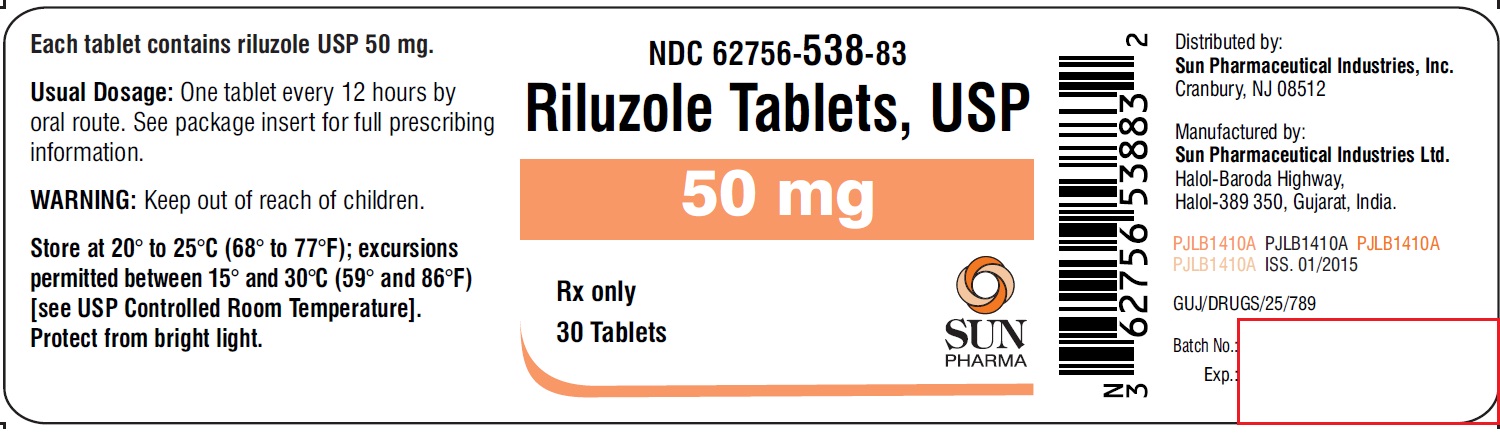
PACKAGE LABEL.PRINCIPAL DISPLAY PANEL NDC 62756-538-83 Riluzole Tablets, USP 50 mg Rx only 30 TABLETS SUN PHARMA label