
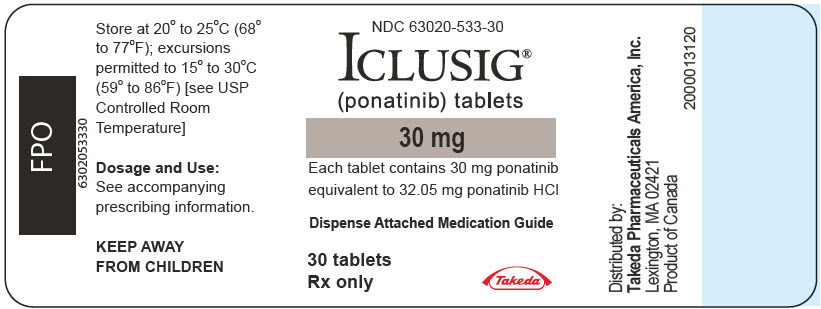
Iclusig ponatinib hydrochloride 30 mg Tablet, Film Coated, 30-count
🆔 Identity & classification
Where does this data come from?
🏷️ RxNorm drug class
This medicine belongs to the Kinase Inhibitor class.
Where does this data come from?
🏭 Manufacturer & labeler
Where does this data come from?
🩺 Clinical
- Iclusig (ponatinib) is used to treat two specific blood cancers: a type of leukemia called chronic myeloid leukemia (CML) and a type called Philadelphia chromosome-positive acute l...
- What exactly is Iclusig used for — do I have the right drug?
- Good news — you can take Iclusig with or without food, whichever is easier for your routine. Studies showed that a meal doesn't meaningfully change how much of the drug gets into y...
- Can I take Iclusig with food, and are there any foods I need to avoid?
Patient education
Supplement & herbal interactions
Where does this data come from?
Ask a licensed pharmacist directly — free, answered by our team.
💊 What it looks like
Where does this data come from?
🧪 Inactive Ingredients / Excipients
Inactive ingredients, also called excipients, are components of the drug product other than the active ingredient. They may include fillers, dyes, coatings, preservatives, flavors, or other formulation ingredients.
💡 Tap an ingredient (hover on desktop) to see what it is and why it’s used.
-
UNII EWQ57Q8I5X
Lactose monohydrate is a natural sugar derived from milk. It serves as a filler and binder in tablets and capsules, helping create the proper size, texture, and consistency of the medicine.
-
UNII 70097M6I30
Magnesium stearate is a salt made from magnesium and stearic acid, a fatty substance. It's used in tablets and capsules as a lubricant and glidant to help ingredients flow smoothly during manufacturing and prevent sticking.
-
UNII OP1R32D61U
Microcrystalline cellulose is a purified form of cellulose, a natural fiber from plant sources. It acts as a binder and filler in tablets and capsules, helping hold ingredients together and give the medicine its shape and size.
-
UNII 3WJQ0SDW1A
Polyethylene glycol is a synthetic liquid or solid polymer used in medicines as a solvent, lubricant, and humectant. It helps dissolve active ingredients, reduces friction during manufacturing, and retains moisture in the final product.
-
UNII 532B59J990
Polyvinyl alcohol is a synthetic polymer made from plant-derived materials. It's used as a binder to hold ingredients together, a film-former in coatings, and a thickener in liquid formulations.
-
UNII ETJ7Z6XBU4
Silicon dioxide is a naturally occurring mineral used as a glidant and anti-caking agent. It helps powder ingredients flow smoothly and prevents clumping during manufacturing and storage.
-
UNII 27NA468985
A starch derivative made from potatoes that helps tablets and capsules break down quickly in the stomach. It absorbs water and swells, causing the medication to disintegrate so it can be absorbed properly.
-
UNII 7SEV7J4R1U
A powder made from a naturally occurring mineral. In medicines, talc works as a glidant and anti-caking agent, helping tablets and capsules flow smoothly during manufacturing and preventing clumping.
-
UNII 15FIX9V2JP
Titanium dioxide is a bright white mineral powder commonly used as a colorant and opacifying agent. It makes pills and tablets white or lighter in color and helps make coatings non-transparent.
9 inactive ingredients listed in the exact product block matched to this NDC.
Where does this data come from?
ingredient classCode="IACT" elements from the exact product block matched by this NDC. Label-section narrative from DailyMed / the openFDA label index is shown separately when available.Inactive ingredient FAQ
Are inactive ingredients the same for every manufacturer?
Why might an inactive ingredient be missing?
Can inactive ingredients matter?
💲 Pricing
A drug doesn't have one price. Each row is a different public payment system, and none is what you'd pay at the counter — that depends on your insurance. The ⓘ on each row explains what it measures.
| Price system | Per each | Per package |
|---|---|---|
| Retail pharmacies payNADAC · weekly | Not in the retail survey — common for institutional, discontinued, or low-volume packs. | |
| Medicaid paysCMS SDUD · 12 mo | $756.35 | $22,690.53 / 30 tablets |
| Medicare drug plans payPart D · Q2 2026 | $795.78 | $23,873.43 / 30 tablets |
Where does this data come from?
🔁 Therapeutic equivalents
| Product | Labeler | Pack | NADAC/unit | TE | Status | Price vs. this |
|---|---|---|---|---|---|---|
| Iclusig 30 mgthis 63020-0533-30 | Takeda | 30 tablets | — | — | FDA listed | — |
Where does this data come from?
⏳ Availability & generic status
We did not find an FDA-approved generic match for this exact strength, form and route. Patent/protection dates below may affect future generic timing.
Why the date isn’t exact: Generic timing can change because patents may be challenged, settled, licensed, added, removed, or worked around with a narrower label — and FDA approval does not always mean a pharmacy can get the generic today.
🛈 What do these terms mean?
- Patent
- Legal protection listed in the Orange Book that may delay generic approval or launch. Issued by the U.S. Patent & Trademark Office.
- Substance patent
- Covers the active drug molecule itself — the hardest to design around. A generic generally can’t launch until it expires.
- Formulation (product) patent
- Covers a specific formulation or dosage form. A generic can sometimes work around it with a different formulation.
- Method-of-use patent
- A patent covering one specific approved use of the drug — not necessarily the whole molecule. A generic can sometimes launch with a “skinny label” that carves out the protected use and keeps the others.
- Skinny label
- A generic label that omits a still-patented use when the FDA allows it — letting a generic reach the market for the unprotected uses.
- Exclusivity
- FDA-granted marketing protection, separate from patents — e.g. 5-yr new chemical entity, 7-yr orphan drug, or a +6-month pediatric extension.
- Paragraph IV
- A generic applicant’s formal challenge to a listed patent. It can potentially lead to earlier generic entry, but often involves litigation or a settlement.
- RLD / RS
- Reference Listed Drug — the brand product the FDA uses as the reference for generic applications. Reference Standard — the product the FDA expects generics to compare against in bioequivalence testing.
- TE / AB rating
- FDA therapeutic-equivalence rating. An AB rating generally means the FDA considers a generic therapeutically equivalent to — and substitutable for — the brand.
- LOE (loss of exclusivity)
- The latest patent or exclusivity currently listed — the loss-of-exclusivity / latest-listed-protection date shown on this page. Paragraph-IV challenges and settlements can move the real date earlier; FDA approval and a manufacturer’s decision to market can move it later.
Built from the FDA Orange Book. The bars above are scaled to each protection’s expiry; the red LOE marker is the last one to lapse.
| Patent | Type | Use code | Expires |
|---|---|---|---|
| US 9029533 ↗ | Method of use | U-1283 | Dec 22, 2026 |
| US 9029533 ↗ | Method of use | U-1700 | Dec 22, 2026 |
| US 9029533 ↗ | Method of use | U-1701 | Dec 22, 2026 |
| US 9029533 ↗ | Method of use | U-836 | Dec 22, 2026 |
| US 9493470 ↗ | Drug substance | U-1700 | Dec 12, 2033 |
| US 9493470 ↗ | Drug substance | U-1948 | Dec 12, 2033 |
| US 9029533 ↗ | Method of use | U-1701 | Dec 22, 2026 |
| US 9029533 ↗ | Method of use | U-1700 | Dec 22, 2026 |
| US 9029533 ↗ | Method of use | U-836 | Dec 22, 2026 |
| US 9493470 ↗ | Drug substance | U-1700 | Dec 12, 2033 |
| US 9493470 ↗ | Drug substance | U-1700 | Dec 12, 2033 |
| US 9029533 ↗ | Method of use | U-836 | Dec 22, 2026 |
| US 9493470 ↗ | Drug substance | U-1948 | Dec 12, 2033 |
| US 9493470 ↗ | Drug substance | U-1948 | Dec 12, 2033 |
| US 9029533 ↗ | Method of use | U-1701 | Dec 22, 2026 |
| US 9029533 ↗ | Method of use | U-1699 | Dec 22, 2026 |
| US 9029533 ↗ | Method of use | U-1283 | Dec 22, 2026 |
| US 9029533 ↗ | Method of use | U-1700 | Dec 22, 2026 |
| US 9029533 ↗ | Method of use | U-1283 | Dec 22, 2026 |
| US 9029533 ↗ | Method of use | U-1699 | Dec 22, 2026 |
| US 9029533 ↗ | Method of use | U-1699 | Dec 22, 2026 |
| US 9029533 ↗ | Method of use | U-1701 | Dec 22, 2026 |
| US 9029533 ↗ | Method of use | U-1700 | Dec 22, 2026 |
| US 9029533 ↗ | Method of use | U-836 | Dec 22, 2026 |
| US 9029533 ↗ | Method of use | U-1283 | Dec 22, 2026 |
| US 9029533 ↗ | Method of use | U-1699 | Dec 22, 2026 |
| US 9493470 ↗ | Drug substance | U-1948 | Dec 12, 2033 |
| US 9493470 ↗ | Drug substance | U-1700 | Dec 12, 2033 |
| US 11384086 ↗ | Drug substance | U-1700 | Dec 12, 2033 |
| US 11384086 ↗ | Drug substance | U-1948 | Dec 12, 2033 |
| US 11384086 ↗ | Drug substance | U-1948 | Dec 12, 2033 |
| US 11384086 ↗ | Drug substance | U-1948 | Dec 12, 2033 |
| US 11384086 ↗ | Drug substance | U-1948 | Dec 12, 2033 |
| US 11384086 ↗ | Drug substance | U-1701 | Dec 12, 2033 |
| US 11384086 ↗ | Drug substance | U-1701 | Dec 12, 2033 |
| US 11384086 ↗ | Drug substance | U-1701 | Dec 12, 2033 |
| US 11384086 ↗ | Drug substance | U-1701 | Dec 12, 2033 |
| US 11384086 ↗ | Drug substance | U-1700 | Dec 12, 2033 |
| US 11384086 ↗ | Drug substance | U-1700 | Dec 12, 2033 |
| US 11384086 ↗ | Drug substance | U-1700 | Dec 12, 2033 |
| US 11192897 ↗ | Drug substance | U-1700 | Dec 12, 2033 |
| US 11192897 ↗ | Drug substance | U-1700 | Dec 12, 2033 |
| US 11192897 ↗ | Drug substance | U-1700 | Dec 12, 2033 |
| US 11192897 ↗ | Drug substance | U-1700 | Dec 12, 2033 |
| US 11192897 ↗ | Drug substance | U-1701 | Dec 12, 2033 |
| US 11192897 ↗ | Drug substance | U-1701 | Dec 12, 2033 |
| US 11192897 ↗ | Drug substance | U-1701 | Dec 12, 2033 |
| US 11192897 ↗ | Drug substance | U-1701 | Dec 12, 2033 |
| US 11192897 ↗ | Drug substance | U-1948 | Dec 12, 2033 |
| US 11192897 ↗ | Drug substance | U-1948 | Dec 12, 2033 |
| US 11192897 ↗ | Drug substance | U-1948 | Dec 12, 2033 |
| US 11192897 ↗ | Drug substance | U-1948 | Dec 12, 2033 |
| US 11192895 ↗ | Method of use | U-1700 | Dec 12, 2033 |
| US 11192895 ↗ | Method of use | U-1700 | Dec 12, 2033 |
| US 11192895 ↗ | Method of use | U-1700 | Dec 12, 2033 |
| US 11192895 ↗ | Method of use | U-1700 | Dec 12, 2033 |
| US 11192895 ↗ | Method of use | U-1701 | Dec 12, 2033 |
| US 11192895 ↗ | Method of use | U-1701 | Dec 12, 2033 |
| US 11192895 ↗ | Method of use | U-1701 | Dec 12, 2033 |
| US 11192895 ↗ | Method of use | U-1701 | Dec 12, 2033 |
| US 11192895 ↗ | Method of use | U-1948 | Dec 12, 2033 |
| US 11192895 ↗ | Method of use | U-1948 | Dec 12, 2033 |
| US 11192895 ↗ | Method of use | U-1948 | Dec 12, 2033 |
| US 11192895 ↗ | Method of use | U-1948 | Dec 12, 2033 |
| US 8114874 ↗ | Drug substance | — | Jan 24, 2027 |
| US 8114874 ↗ | Drug substance | — | Jan 24, 2027 |
| US 8114874 ↗ | Drug substance | — | Jan 24, 2027 |
| US 8114874 ↗ | Drug substance | — | Jan 24, 2027 |
| Code | What it grants | Expires |
|---|---|---|
| I-934 | New indication (3-year) | Mar 19, 2027 |
| ODE-472 | Orphan Drug Exclusivity (7-year) | Mar 19, 2031 |
| I-934 | New indication (3-year) | Mar 19, 2027 |
| ODE-472 | Orphan Drug Exclusivity (7-year) | Mar 19, 2031 |
| I-934 | New indication (3-year) | Mar 19, 2027 |
| ODE-472 | Orphan Drug Exclusivity (7-year) | Mar 19, 2031 |
| I-934 | New indication (3-year) | Mar 19, 2027 |
| ODE-472 | Orphan Drug Exclusivity (7-year) | Mar 19, 2031 |
Is there a generic version of ICLUSIG 30 MG TABLET?
The FDA approved a generic — why can’t I get it at my pharmacy yet?
Why do different websites show different generic release dates?
What does “FDA listed” mean?
What does a patent or protection date mean here?
What does “current Orange Book estimate” mean?
Can a generic come out before the last patent expires?
Can a generic come out after the listed dates?
What is the difference between patents and exclusivity?
Why are there multiple patent dates?
Where does this data come from?
🗺️ Medicaid utilization & spend
📊 Medicare Part D spend CMS · PART D · 2026 (Q1)
🔬 Reported adverse events (FAERS)
Top reported reactions
Age at onset
Reporter sex
Serious outcomes
Where does this data come from?
📦 Packaging — all sizes for this product
| Package NDC | Description | Marketing start | Status |
|---|---|---|---|
| 63020-0533-30 You're viewing this | 30 TABLET, FILM COATED in 1 BOTTLE (63020-533-30) | 2015-04-22 | Active |
🧭 About this NDC listing & data coverage
What data is (and isn’t) available for this NDC — tap to expand
| NDC identity (package / product / labeler codes) | ✓ Available |
| Labeler | ✓ Available |
| Product & package description | ✓ Available |
| Marketing category & status | ✓ Available |
| Active ingredient / dosage form / route | ✓ Available |
| FDA label (SPL via DailyMed) | ✓ Available |
| Package photos | ✓ Available |
| Inactive ingredients (structured) | ✓ Available |
| NADAC pharmacy acquisition price (CMS) | — Not published for this NDC CMS publishes NADAC only for NDCs reported in its retail-pharmacy survey. |
| Orange Book / therapeutic-equivalence data | ✓ Available |
| HCPCS J-code billing crosswalk | — Not published for this NDC Most self-administered / retail products have no J-code — that is normal. |
| Medicaid utilization (CMS SDUD) | ✓ Available |
Questions about this listing
Why is there no price listed?
Is the NDC printed on the package the same as the 11-digit billing NDC?
What do the three segments of this NDC mean?
Is this package still being marketed?
Who lists this product with the FDA?
Do I need a prescription for this product?
Where does this data come from?
📄 Full prescribing information FDA SPL
🚨 Boxed Warning ▾
WARNING: ARTERIAL OCCLUSIVE EVENTS, VENOUS THROMBOEMBOLIC EVENTS, HEART FAILURE, and HEPATOTOXICITY WARNING: ARTERIAL OCCLUSIVE EVENTS, VENOUS THROMBOEMBOLIC EVENTS, HEART FAILURE, and HEPATOTOXICITY See full prescribing information for complete boxed warning. Arterial occlusive events (AOEs), including fatalities, have occurred in ICLUSIG-treated patients. AOEs included fatal myocardial infarction, stroke, stenosis of large arterial vessels of the brain, severe peripheral vascular disease, and the need for urgent revascularization procedures.
Patients with and without cardiovascular risk factors, including patients age 50 years or younger, experienced these events. Monitor for evidence of AOEs. Interrupt or discontinue ICLUSIG based on severity.
Consider benefit-risk to guide a decision to restart ICLUSIG. ( 2.2 , 5.1 ) Venous thromboembolic events (VTEs) have occurred in ICLUSIG-treated patients. Monitor for evidence of VTEs.
Interrupt or discontinue ICLUSIG based on severity. ( 2.2 , 5.2 ) Heart failure, including fatalities, occurred in ICLUSIG-treated patients. Monitor for heart failure and manage patients as clinically indicated.
Interrupt or discontinue ICLUSIG for new or worsening heart failure. ( 2.2 , 5.3 ) Hepatotoxicity, liver failure and death have occurred in ICLUSIG-treated patients. Monitor liver function tests.
Interrupt or discontinue ICLUSIG based on severity. ( 2.2 , 5.4 ) Arterial Occlusive Events: Arterial occlusive events (AOEs), including fatalities, have occurred in ICLUSIG-treated patients. AOEs included fatal myocardial infarction, stroke, stenosis of large arterial vessels of the brain, severe peripheral vascular disease, and the need for urgent revascularization procedures.
Patients with and without cardiovascular risk factors, including patients age 50 years or younger, experienced these events. Monitor for evidence of AOEs. Interrupt or discontinue ICLUSIG based on severity.
Consider benefit-risk to guide a decision to restart ICLUSIG [see Dosage and Administration (2.2) , Warnings and Precautions (5.1) ] . Venous Thromboembolic Events: Venous thromboembolic events (VTEs) have occurred in ICLUSIG-treated patients. Monitor for evidence of VTEs.
Interrupt or discontinue ICLUSIG based on severity [see Dosage and Administration (2.2) , Warnings and Precautions (5.2) ] . Heart Failure: Heart failure, including fatalities, occurred in ICLUSIG-treated patients. Monitor for heart failure and manage patients as clinically indicated.
Interrupt or discontinue ICLUSIG for new or worsening heart failure [see Dosage and Administration (2.2) , Warnings and Precautions (5.3) ] . Hepatotoxicity: Hepatotoxicity, liver failure and death have occurred in ICLUSIG-treated patients. Monitor liver function tests.
Interrupt or discontinue ICLUSIG based on severity [see Dosage and Administration (2.2) , Warnings and Precautions (5.4) ] .
🎯 Indications and Usage ▾
1 INDICATIONS AND USAGE ICLUSIG ® is indicated for the treatment of adult patients with: Philadelphia Chromosome-Positive Acute Lymphoblastic Leukemia (Ph+ ALL) Newly diagnosed Ph+ ALL in combination with chemotherapy. This indication is approved under accelerated approval based on minimal residual disease (MRD)-negative complete remission (CR) at the end of induction [see Clinical Studies (14) ] . Continued approval for this indication may be contingent upon verification of clinical benefit in a confirmatory trial(s).
As monotherapy in Ph+ ALL for whom no other kinase inhibitors are indicated or T315I-positive Ph+ ALL. Chronic Myeloid Leukemia (CML) Chronic phase (CP) CML with resistance or intolerance to at least two prior kinase inhibitors. Accelerated phase (AP) or blast phase (BP) CML for whom no other kinase inhibitors are indicated.
T315I-positive CML (chronic phase, accelerated phase, or blast phase). ICLUSIG is a kinase inhibitor indicated for the treatment of adult patients with: Philadelphia Chromosome-Positive Acute Lymphoblastic Leukemia (Ph+ ALL) Newly diagnosed Ph+ ALL, in combination with chemotherapy. This indication is approved under accelerated approval based on minimal residual disease (MRD)-negative complete remission (CR) at the end of induction.
Continued approval for this indication may be contingent upon verification of clinical benefit in a confirmatory trial(s). ( 1 ) As monotherapy in Ph+ ALL for whom no other kinase inhibitors are indicated or T315I-positive Ph+ ALL. ( 1 ) Chronic Myeloid Leukemia (CML) Chronic phase (CP) CML with resistance or intolerance to at least two prior kinase inhibitors.
( 1 ) Accelerated phase (AP) or blast phase (BP) CML for whom no other kinase inhibitors are indicated. ( 1 ) T315I-positive CML (chronic phase, accelerated phase, or blast phase). ( 1 ) Limitations of Use : ICLUSIG is not indicated and is not recommended for the treatment of patients with newly diagnosed CP-CML.
( 5.7 ) Limitations of Use : ICLUSIG is not indicated and is not recommended for the treatment of patients with newly diagnosed CP-CML [see Warnings and Precautions (5.7) ] .
⏱️ Dosage and Administration ▾
2 DOSAGE AND ADMINISTRATION Recommended Dosage in Newly Diagnosed Ph+ ALL : Starting dose is 30 mg orally once daily in combination with chemotherapy, with a reduction to 15 mg once daily upon achievement of MRD-negative (≤0.01% BCR::ABL1/ABL1) CR at the end of induction. ( 2.1 ) Recommended Dosage in Monotherapy for Ph+ ALL for Whom No Other Kinase Inhibitors are Indicated or T315I-positive Ph+ ALL : Starting dose is 45 mg orally once daily. ( 2.1 ) Recommended Dosage in CP-CML : Starting dose is 45 mg orally once daily with a reduction to 15 mg once daily upon achievement of ≤1% BCR::ABL1 IS .
( 2.1 ) Recommended Dosage in AP-CML and BP-CML : Starting dose is 45 mg orally once daily. ( 2.1 ) Hepatic Impairment : See the Full Prescribing Information for dosage modifications for hepatic impairment. ( 2.4 ) ICLUSIG may be taken with or without food.
( 2.1 )
2.1Recommended Dosage Newly Diagnosed Ph+ ALL The recommended starting dosage of ICLUSIG in combination with chemotherapy is 30 mg orally once daily with a reduction to 15 mg orally once daily upon achievement of MRD-negative (≤0.01% BCR::ABL1/ABL1) CR at the end of induction. Continue ICLUSIG in combination with chemotherapy for up to 20 cycles until loss of response or unacceptable toxicity [see Clinical Studies (14) ] . For a description of dosing of agents administered in combination with ICLUSIG, [see Clinical Studies (14) ] .
Monotherapy for Ph+ ALL for Whom No Other Kinase Inhibitors Are Indicated or T315I-positive Ph+ ALL The optimal dose of ICLUSIG has not been identified. The recommended starting dosage of ICLUSIG is 45 mg orally once daily. Continue ICLUSIG until loss of response or unacceptable toxicity.
Consider discontinuing ICLUSIG if response has not occurred by 3 months. CP-CML The recommended starting dosage of ICLUSIG is 45 mg orally once daily with a reduction to 15 mg orally once daily upon achievement of ≤1% BCR::ABL1 IS . Patients with loss of response can re-escalate the dose of ICLUSIG to a previously tolerated dosage of 30 mg or 45 mg orally once daily.
Continue ICLUSIG until loss of response at the re-escalated dose or unacceptable toxicity. Consider discontinuing ICLUSIG if hematologic response has not occurred by 3 months. AP-CML and BP-CML The optimal dose of ICLUSIG has not been identified.
The recommended starting dosage of ICLUSIG is 45 mg orally once daily. Consider reducing the dose of ICLUSIG for patients with accelerated phase (AP) CML who have achieved a major cytogenetic response. Continue ICLUSIG until loss of response or unacceptable toxicity.
Consider discontinuing ICLUSIG if response has not occurred by 3 months. Administration Advise patients of the following: ICLUSIG may be taken with or without food. Swallow tablets whole.
Do not crush, break, cut or chew tablets. If a dose is missed, take the next dose at the regularly scheduled time the next day.
2.2Dosage Modifications for Adverse Reactions Recommended dosage modifications of ICLUSIG for adverse reactions are provided in Table 1 and recommended dose reductions of ICLUSIG for adverse reactions are presented in Table 2. Table 1: Recommended Dosage Modifications for ICLUSIG for Adverse Reactions Adverse Reaction Severity ICLUSIG Dosage Modifications Based on CTCAE v5.0: Grade 1 mild, Grade 2 moderate, Grade 3 severe, Grade 4 life-threatening ULN = Upper Limit of Normal for the lab; AOE = Arterial Occlusive Event; VTE = Venous Thromboembolic Event; ANC = absolute neutrophil count AOE: cardiovascular or cerebrovascular [see Warnings and Precautions (5.1) ] Grade 1 Interrupt ICLUSIG until resolved, then resume at same dose.
Grade 2 Interrupt ICLUSIG until Grade 0 or 1, then resume at next lower dose. Discontinue ICLUSIG if recurrence. Grade 3 or 4 Discontinue ICLUSIG.
AOE: peripheral vascular and other or VTE [see Warnings and Precautions (5.1 , 5.2) ] Grade 1 Interrupt ICLUSIG until resolved, then resume at same dose. Grade 2 Interrupt ICLUSIG until Grade 0 or 1, then resume at s…
💊 Dosage Forms and Strengths ▾
3 DOSAGE FORMS AND STRENGTHS Tablets, film-coated: 10 mg of ponatinib: Oval, white to off-white, biconvex, debossed "NZ" on one side and plain on the other side 15 mg of ponatinib: Round, white, biconvex, debossed "A5" on one side and plain on the other side 30 mg of ponatinib: Round, white, biconvex, debossed "C7" on one side and plain on the other side 45 mg of ponatinib: Round, white, biconvex, debossed "AP4" on one side and plain on the other side Tablets : 10 mg, 15 mg, 30 mg, and 45 mg. ( 3 )
⛔ Contraindications ▾
4 CONTRAINDICATIONS None. None. ( 4 )
⚠️ Warnings and Cautions ▾
5 WARNINGS AND PRECAUTIONS Hypertension : Monitor blood pressure and manage hypertension as clinically indicated. Interrupt, dose reduce or stop ICLUSIG if hypertension is not medically controlled. ( 2.2 , 5.5 ) Pancreatitis : Monitor serum lipase.
Interrupt, then resume at the same or reduced dose or discontinue ICLUSIG based on severity. Evaluate for pancreatitis when lipase elevation is accompanied by abdominal symptoms. ( 2.2 , 5.6 ) Neuropathy : Monitor for symptoms of peripheral and cranial neuropathy.
Interrupt, then resume at the same or reduced dose or discontinue ICLUSIG based on recurrence/severity. ( 2.2 , 5.8 ) Ocular Toxicity : Conduct comprehensive eye exams at baseline and periodically during treatment. ( 5.9 ) Hemorrhage : Monitor for hemorrhage and manage patients as clinically indicated.
Interrupt, then resume at the same or reduced dose or discontinue ICLUSIG based on recurrence/severity. ( 2.2 , 5.10 ) Fluid Retention : Monitor for fluid retention and manage patients as clinically indicated. Interrupt, then resume at the same or reduced dose or discontinue ICLUSIG based on recurrence/severity.
( 2.2 , 5.11 ) Cardiac Arrhythmias : Monitor for signs or symptoms of arrhythmias and manage patients as clinically indicated. Interrupt, then resume at the same or reduced dose or discontinue ICLUSIG based on recurrence/severity. ( 5.12 ) Myelosuppression : Obtain complete blood counts every 2 weeks for the first 3 months and then monthly or as clinically indicated.
If ANC less than 1 × 10 9 /L or platelets less than 50 × 10 9 /L, interrupt ICLUSIG until ANC at least 1.5 × 10 9 /L and platelets at least 75 × 10 9 /L, then resume at same or reduced dose. ( 2.2 , 5.13 ) Tumor Lysis Syndrome : Ensure adequate hydration and correct elevated uric acid levels prior to initiating ICLUSIG. ( 5.14 ) Reversible Posterior Leukoencephalopathy Syndrome (RPLS) : Interrupt ICLUSIG until resolution.
The safety of resumption of ICLUSIG in patients upon resolution of RPLS is unknown. ( 5.15 ) Impaired Wound Healing and Gastrointestinal Perforation : Withhold ICLUSIG for at least 1 week prior to elective surgery. Do not administer for at least 2 weeks following major surgery and until adequate wound healing.
The safety of resumption of ICLUSIG after resolution of wound healing complications has not been established. ( 5.16 ) Embryo-Fetal Toxicity : Can cause fetal harm. Advise females of reproductive potential of the potential risk to a fetus and to use effective contraception.
( 5.17 , 8.1 , 8.3 )
5.1Arterial Occlusive Events Arterial occlusive events (AOEs), including fatalities, occurred in patients who received ICLUSIG [see Adverse Reactions (6.1) ] . In PhALLCON, 6% of 163 patients experienced AOEs, of which 3.1%, 1.8%, and 1.2% experienced cardiovascular, cerebrovascular, and peripheral vascular AOEs, respectively. The median time to onset of the first AOE was 11.3 months (range: 8 days to 2.8 years).
Grade 3 or 4 AOEs occurred in 3.7% of patients; the most frequent Grade 3 or 4 AOEs were myocardial infarction (1.2%), peripheral arterial occlusive disease (1.2%), angina pectoris and cerebrovascular accident (0.6% each). Fatal AOE of sudden death occurred in 1 patient (0.6%). AOEs were more frequent with increasing age [see Use in Specific Populations (8.5) ] .
In PhALLCON, patients with uncontrolled hypertension, hypertriglyceridemia, or diabetes were excluded. Patients with clinically significant, uncontrolled, or active cardiovascular disease, including any history of myocardial infarction, peripheral vascular infarction, revascularization procedure, venous thromboembolism, clinically significant atrial/ventricular tachyarrhythmias, unstable angina, or congestive heart failure within the 6 months prior to the first dose of ICLUSIG, were also excluded. In OPTIC, of the 94 patients who received a starting dose of 45 mg (45 mg → 15 mg), 18% experienced AOEs, of which 11%, 4.3%, and 3.2% experienced cardiovascular, cerebrovascula…
🤒 Adverse Reactions ▾
6 ADVERSE REACTIONS The following clinically significant adverse reactions are described elsewhere in the labeling: Arterial Occlusive Events [see Warnings and Precautions (5.1) ] Venous Thromboembolic Events [see Warnings and Precautions (5.2) ] Heart Failure [see Warnings and Precautions (5.3) ] Hepatotoxicity [see Warnings and Precautions (5.4) ] Hypertension [see Warnings and Precautions (5.5) ] Pancreatitis [see Warnings and Precautions (5.6) ] Neuropathy [see Warnings and Precautions (5.8) ] Ocular Toxicity [see Warnings and Precautions (5.9) ] Hemorrhage [see Warnings and Precautions (5.10) ] Fluid Retention [see Warnings and Precautions (5.11) ] Cardiac Arrhythmias [see Warnings and Precautions (5.12) ] Myelosuppression [see Warnings and Precautions (5.13) ] Tumor Lysis Syndrome [see Warnings and Precautions (5.14) ] Reversible Posterior Leukoencephalopathy Syndrome [see Warnings and Precautions (5.15) ] Impaired Wound Healing and Gastrointestinal Perforation [see Warnings and Precautions (5.16) ] Most common adverse reactions (occurring in >20% of patients) are: ICLUSIG as a single agent: rash and related conditions, arthralgia, abdominal pain, fatigue, headache, constipation, hypertension, dry skin, hepatotoxicity, fluid retention and edema, pyrexia, pancreatitis/lipase elevation, nausea, hemorrhage, anemia, AOEs, and cardiac arrhythmias.
The most common Grade 3 or 4 laboratory abnormalities (>20%) are platelet count decreased, neutrophil cell count decreased, and white blood cell decreased. ( 6.1 ) ICLUSIG in combination with chemotherapy: hepatotoxicity, arthralgia, rash and related conditions, headache, pyrexia, abdominal pain, constipation, fatigue, nausea, oral mucositis, hypertension, pancreatitis/lipase elevation, neuropathy peripheral, hemorrhage, febrile neutropenia, fluid retention and edema, vomiting, paresthesia, and cardiac arrhythmias. The most common Grade 3 or 4 laboratory abnormalities (>20%) are decreased white blood cell count, decreased neutrophil cell count, decreased platelet count, decreased lymphocyte cell count, decreased hemoglobin, increased lipase, and increased alanine aminotransferase.
( 6.1 ) To report SUSPECTED ADVERSE REACTIONS, contact Takeda Pharmaceuticals at 1-844-817-6468 or FDA at 1-800-FDA-1088 or www.fda.gov/medwatch.
6.1Clinical Trials Experience Because clinical trials are conducted under widely varying conditions, adverse reaction rates observed in the clinical trials of a drug cannot be directly compared with rates in the clinical trials of another drug and may not reflect the rates observed in clinical practice. The most common adverse reactions identified in the Highlights of the Prescribing Information are based on two safety populations. The first is from a pooled safety population of 543 patients with CML or resistant or intolerant Ph+ ALL (OPTIC and PACE studies) who received ICLUSIG as a single agent at a starting dose of 45 mg orally once daily.
In this pooled safety population, the most common (>20%) adverse reactions were rash and related conditions, arthralgia, abdominal pain, fatigue, headache, constipation, hypertension, dry skin, hepatotoxicity, fluid retention and edema, pyrexia, pancreatitis/lipase elevation, nausea, hemorrhage, anemia, AOEs and cardiac arrhythmias. The most common Grade 3 or 4 laboratory abnormalities (>20%) were platelet count decreased, neutrophil cell count decreased, and white blood cell decreased. The second safety population is from 163 patients with newly diagnosed Ph+ ALL (PhALLCON study) who received ICLUSIG in combination with chemotherapy at a starting dose of 30 mg orally once daily.
The most common adverse reactions (>20%) included hepatotoxicity, arthralgia, rash and related conditions, headache, pyrexia, abdominal pain, constipation, fatigue, nausea, oral mucositis, hypertension, pancreatitis/lipase elevation, neuropathy peripheral, hemorrhage, febrile neutropenia, fluid retention and edema, vomiting, paresthesia, and cardi…
🔄 Drug Interactions ▾
7 DRUG INTERACTIONS Strong CYP3A Inhibitors : Avoid coadministration or reduce ICLUSIG dose if coadministration cannot be avoided. ( 2.3 , 7.1 ) Strong CYP3A Inducers : Avoid coadministration. ( 7.1 )
7.1Effects of Other Drugs on ICLUSIG Strong CYP3A Inhibitors Coadministration of ICLUSIG with a strong CYP3A inhibitor increases ponatinib plasma concentrations [see Clinical Pharmacology (12.3) ] , which may increase the risk of ICLUSIG adverse reactions. Avoid coadministration of ICLUSIG with strong CYP3A inhibitors. If coadministration of ICLUSIG with strong CYP3A inhibitors cannot be avoided, reduce the ICLUSIG dosage [see Dosage and Administration (2.3) ] .
Strong CYP3A Inducers Coadministration of ICLUSIG with a strong CYP3A inducer decreases ponatinib plasma concentrations [see Clinical Pharmacology (12.3) ] . Avoid coadministration of ICLUSIG with strong CYP3A inducers unless the benefit outweighs the risk of decreased ponatinib exposure. Monitor patients for reduced efficacy.
Selection of concomitant medication with no or minimal CYP3A induction potential is recommended.
👥 Use in Specific Populations ▾
8 USE IN SPECIFIC POPULATIONS Lactation : Advise not to breastfeed. ( 8.2 )
8.1Pregnancy Risk Summary Based on findings in animals and its mechanism of action [see Clinical Pharmacology (12.1) ] , ICLUSIG can cause fetal harm when administered to a pregnant woman. There are no available data on ICLUSIG use in pregnant women. In animal reproduction studies, oral administration of ponatinib to pregnant rats during organogenesis caused adverse developmental effects at doses lower than human exposures at the maximum recommended human dose of 45 mg/day (see Data ) .
Advise pregnant women of the potential risk to a fetus. In the U.S. general population, the estimated background risk of major birth defects and miscarriage in clinically recognized pregnancies is 2% to 4% and 15% to 20%, respectively. Data Animal Data Ponatinib was studied for effects on embryo-fetal development in pregnant rats given oral doses of 0.3 mg/kg/day, 1 mg/kg/day, and 3 mg/kg/day during organogenesis (25 rats per group).
At the maternally toxic dose of 3 mg/kg/day (equivalent to the AUC in patients receiving the maximum recommended dose of 45 mg/day), ponatinib caused embryo-fetal toxicity as shown by increased resorptions, reduced body weight, external alterations, multiple soft tissue and skeletal alterations, and reduced ossification. Embryo-fetal toxicities also were observed at 1 mg/kg/day (approximately 24% the AUC in patients receiving the maximum recommended dose of 45 mg/day) and involved multiple fetal soft tissue and skeletal alterations, including reduced ossification.
8.2Lactation Risk Summary There are no data on the presence of ponatinib in human milk, the effects on the breastfed child, or on milk production. Because of the potential for serious adverse reactions in the breastfed child, advise women not to breastfeed during treatment with ICLUSIG and for 1 week after the last dose.
8.3Females and Males of Reproductive Potential ICLUSIG can cause fetal harm when administered to pregnant women [see Use in Specific Populations (8.1) ] . Pregnancy Testing Verify the pregnancy status of females of reproductive potential prior to initiating ICLUSIG. Contraception Females Advise females of reproductive potential to use effective contraception during treatment with ICLUSIG and for 3 weeks after the last dose.
Infertility Females Based on animal data, ponatinib may impair fertility in females of reproductive potential [see Nonclinical Toxicology (13.1) ] . It is not known whether these effects on fertility are reversible.
8.4Pediatric Use Safety and effectiveness of ICLUSIG have not been established in pediatric patients. Juvenile Animal Toxicity Data A juvenile toxicity study in 15 day old rats was conducted with daily oral gavage administration of ponatinib at 0.75 mg/kg/day, 1.5 mg/kg/day, or 3 mg/kg/day for 21 days. There were no adverse effects of ponatinib on juvenile rat developmental parameters (vaginal opening, preputial separation or bone measurements) observed in this study.
Once daily oral administration of 3 mg/kg/day ponatinib to juvenile rats beginning on Day 15 postpartum (pp) resulted in mortality related to inflammatory effects after 6 to 7 days following initiation of treatment. The dose of 3 mg/kg/day is approximately 0.32 times the maximum recommended human dose of 45 mg/day on a mg/m 2 basis for a child.
8.5Geriatric Use Of the 163 patients with Ph+ALL who received ICLUSIG in PhALLCON, 21% were 65 years and older and 7% were 75 years and older. Overall, no differences in efficacy of ICLUSIG were observed between patients 65 years of age or older compared to younger patients. AOEs occurred in 21% (7/34) of patients 65 years and older and 2.3% (3/129) of patients less than 65 years of age.
Of the 94 patients with CP-CML who received ICLUSIG at a starting dose of 45 mg in OPTIC, 17% were 65 years and older and 2.1% were 75 years and older. Patients aged 65 years and older had a lower ≤1% BCR::ABL1 IS rate at 12 months (27%) th…
🤰 Pregnancy ▾
8.1Pregnancy Risk Summary Based on findings in animals and its mechanism of action [see Clinical Pharmacology (12.1) ] , ICLUSIG can cause fetal harm when administered to a pregnant woman. There are no available data on ICLUSIG use in pregnant women. In animal reproduction studies, oral administration of ponatinib to pregnant rats during organogenesis caused adverse developmental effects at doses lower than human exposures at the maximum recommended human dose of 45 mg/day (see Data ) .
Advise pregnant women of the potential risk to a fetus. In the U.S. general population, the estimated background risk of major birth defects and miscarriage in clinically recognized pregnancies is 2% to 4% and 15% to 20%, respectively. Data Animal Data Ponatinib was studied for effects on embryo-fetal development in pregnant rats given oral doses of 0.3 mg/kg/day, 1 mg/kg/day, and 3 mg/kg/day during organogenesis (25 rats per group).
At the maternally toxic dose of 3 mg/kg/day (equivalent to the AUC in patients receiving the maximum recommended dose of 45 mg/day), ponatinib caused embryo-fetal toxicity as shown by increased resorptions, reduced body weight, external alterations, multiple soft tissue and skeletal alterations, and reduced ossification. Embryo-fetal toxicities also were observed at 1 mg/kg/day (approximately 24% the AUC in patients receiving the maximum recommended dose of 45 mg/day) and involved multiple fetal soft tissue and skeletal alterations, including reduced ossification.
🧒 Pediatric Use ▾
8.4Pediatric Use Safety and effectiveness of ICLUSIG have not been established in pediatric patients. Juvenile Animal Toxicity Data A juvenile toxicity study in 15 day old rats was conducted with daily oral gavage administration of ponatinib at 0.75 mg/kg/day, 1.5 mg/kg/day, or 3 mg/kg/day for 21 days. There were no adverse effects of ponatinib on juvenile rat developmental parameters (vaginal opening, preputial separation or bone measurements) observed in this study.
Once daily oral administration of 3 mg/kg/day ponatinib to juvenile rats beginning on Day 15 postpartum (pp) resulted in mortality related to inflammatory effects after 6 to 7 days following initiation of treatment. The dose of 3 mg/kg/day is approximately 0.32 times the maximum recommended human dose of 45 mg/day on a mg/m 2 basis for a child.
🧓 Geriatric Use ▾
8.5Geriatric Use Of the 163 patients with Ph+ALL who received ICLUSIG in PhALLCON, 21% were 65 years and older and 7% were 75 years and older. Overall, no differences in efficacy of ICLUSIG were observed between patients 65 years of age or older compared to younger patients. AOEs occurred in 21% (7/34) of patients 65 years and older and 2.3% (3/129) of patients less than 65 years of age.
Of the 94 patients with CP-CML who received ICLUSIG at a starting dose of 45 mg in OPTIC, 17% were 65 years and older and 2.1% were 75 years and older. Patients aged 65 years and older had a lower ≤1% BCR::ABL1 IS rate at 12 months (27%) than patients less than 65 years of age (47%). By 60 months, patients aged 65 years and older had a ≤1% BCR::ABL1 IS rate of 40% and patients less than 65 years of age had a rate of 64%.
AOEs occurred in 38% (6/16) of patients 65 years and older and 14% (11/78) of patients less than 65 years of age [see Warnings and Precautions (5.1) ] . Of the 449 patients who received ICLUSIG in PACE, 35% were 65 years and older and 8% were 75 years and older. In patients with CP-CML, patients aged 65 years and older had a lower major cytogenetic response rate (40%) as compared with patients less than 65 years of age (65%).
In patients with AP-CML, BP-CML, and Ph+ ALL, patients aged 65 years and older had a similar hematologic response rate (45%) as compared with patients less than 65 years of age (44%). AOEs occurred in 35% (54/155) of patients 65 years and older and in 21% (61/294) of patients less than 65 years of age [see Warnings and Precautions (5.1) ] . Patients aged 65 years or older are more likely to experience adverse reactions including vascular occlusion, decreased platelet count, peripheral edema, increased lipase, dyspnea, asthenia, muscle spasms, and decreased appetite.
In general, dose selection for an elderly patient should be cautious, reflecting the greater frequency of decreased hepatic, renal, or cardiac function, and of concomitant disease or other drug therapy.
🆘 Overdosage ▾
10 OVERDOSAGE Overdoses with ICLUSIG were reported in clinical trials. One patient was estimated to have been administered 540 mg via nasogastric tube. Two hours after the overdosage, the patient had an uncorrected QT interval of 520 ms.
Subsequent ECGs showed normal sinus rhythm with uncorrected QT intervals of 480 ms and 400 ms. The patient died 9 days after the overdosage from pneumonia and sepsis. Another patient self-administered 165 mg on Cycle 1 Day 2.
The patient experienced fatigue and non-cardiac chest pain on Day 3. Multiple doses of 90 mg per day for 12 days in a patient resulted in pneumonia, systemic inflammatory response, atrial fibrillation, and a moderate pericardial effusion. In the event of an overdosage, stop ICLUSIG, observe the patient and provide supportive treatment as appropriate.
🧬 Clinical Pharmacology ▾
12 CLINICAL PHARMACOLOGY
12.1Mechanism of Action Ponatinib is a kinase inhibitor. Ponatinib inhibited the in vitro tyrosine kinase activity of ABL and T315I mutant ABL with IC 50 concentrations of 0.4 nM and 2.0 nM, respectively. Ponatinib inhibited the in vitro activity of additional kinases with IC 50 concentrations between 0.1 nM and 20 nM, including members of the VEGFR, PDGFR, FGFR, EPH receptors and SRC families of kinases, and KIT, RET, TIE2, and FLT3.
Ponatinib inhibited the in vitro viability of cells expressing native or mutant BCR::ABL, including T315I. In mice, treatment with ponatinib reduced the size of tumors expressing native or T315I mutant BCR::ABL when compared to controls.
12.2Pharmacodynamics In PACE, the dose intensity-safety relationship indicated that there are significant increases in Grade ≥3 adverse reactions (hypertension, thrombocytopenia, pancreatitis, neutropenia, rash, ALT increase, AST increase, lipase increase, myelosuppression) over the dose range of 15 mg to 45 mg. In addition to dose, increased age and history of ischemia, hypertension, diabetes, or hypercholesterolemia were also contributory factors to a higher incidence of AOEs. In OPTIC, an exposure-response relationship between ponatinib exposure and molecular response rate at 12 months was observed.
A relationship between higher ponatinib exposures and higher incidence of adverse reactions, including thrombocytopenia (Grade ≥3) and AOEs, was observed. In vitro, there was no significant inhibition of platelet aggregation with ponatinib at concentrations seen clinically and up to 0.7 mcg/mL (1.23 μM). Cardiac Electrophysiology The QT interval prolongation potential of ICLUSIG was assessed in 39 patients with cancer who received ICLUSIG 30 mg, 45 mg, or 60 mg (0.67 to 1.33 times the approved maximum recommended starting dose) orally once daily.
No large mean increase (i.e., >20 msec) in QTc interval was detected.
12.3Pharmacokinetics Ponatinib administered to patients with cancer exhibited approximately dose proportional increases in both steady-state C max and AUC over the dose range of 2 mg to 60 mg (0.04 to 1.33 times the approved maximum recommended starting dose). The mean (CV%) C max and AUC( 0-24 ) of ICLUSIG 45 mg orally once daily at presumed steady-state in patients with advanced hematologic malignancies were 73 ng/mL (74%) and 1253 ng∙hr/mL (73%), respectively. The mean (CV%) C max and AUC( 0-24 ) of ICLUSIG 30 mg orally once daily at presumed steady-state in patients with advanced hematologic malignancies were 65 ng/mL (28%) and 1080 ng∙hr/mL (29%), respectively.
Exposure increased by approximately 90% (median) [range: 20% to 440%] between the first dose and presumed steady-state. Absorption The absolute bioavailability of ponatinib is unknown. Peak concentrations of ponatinib are observed within 6 hours after ICLUSIG oral administration.
Effect of Food Following ingestion of either a high-fat (approximately 900 to 1000 calories with approximately 150, 250, and 500 to 600 calories derived from protein, carbohydrate, and fat, respectively) or low-fat meal (approximately 547 calories with approximately 56, 428 and 63 calories derived from protein, carbohydrate, and fat, respectively) by 22 healthy volunteers, plasma ponatinib exposures (AUC and C max ) were not different when compared to fasting conditions. Distribution Ponatinib is greater than 99% bound to plasma proteins in vitro.
There was no plasma protein binding displacement of ponatinib (145 nM) in vitro by other highly protein bound medications (ibuprofen, nifedipine, propranolol, salicylic acid, and warfarin). The mean (CV%) apparent steady-state volume of distribution is 1,223 liters (102%) following oral administration of ICLUSIG 45 mg orally once daily for 28 days in patients with cancer. Elimination The mean (range) terminal elimination half-life of ponatinib was approximately 24 (12 to 66) hours following ICLUSIG 45 mg orally once daily for 28 days in patients…
🧬 Mechanism of Action ▾
12.1Mechanism of Action Ponatinib is a kinase inhibitor. Ponatinib inhibited the in vitro tyrosine kinase activity of ABL and T315I mutant ABL with IC 50 concentrations of 0.4 nM and 2.0 nM, respectively. Ponatinib inhibited the in vitro activity of additional kinases with IC 50 concentrations between 0.1 nM and 20 nM, including members of the VEGFR, PDGFR, FGFR, EPH receptors and SRC families of kinases, and KIT, RET, TIE2, and FLT3.
Ponatinib inhibited the in vitro viability of cells expressing native or mutant BCR::ABL, including T315I. In mice, treatment with ponatinib reduced the size of tumors expressing native or T315I mutant BCR::ABL when compared to controls.
📦 How Supplied / Storage and Handling ▾
16 HOW SUPPLIED/STORAGE AND HANDLING ICLUSIG tablets are available in the following configurations. Strength NDC Number Description Presentation 10 mg 63020-536-30 oval, white to off-white, biconvex film-coated tablets with debossed "NZ" on one side and plain on the other side 30 tablets in a wide-mouth white high density polyethylene (HDPE) bottle with a desiccant canister and induction sealed child resistant closure. 15 mg 63020-535-30 round, white, biconvex film-coated tablets with debossed "A5" on one side and plain on the other side 30 tablets in a wide-mouth white high density polyethylene (HDPE) bottle with a desiccant canister and induction sealed child resistant closure.
63020-535-60 60 tablets in a wide-mouth white high density polyethylene (HDPE) bottle with a desiccant canister and induction sealed child resistant closure. 30 mg 63020-533-30 round, white, biconvex film-coated tablets with debossed "C7" on one side and plain on the other side 30 tablets in a wide-mouth white high density polyethylene (HDPE) bottle with a desiccant canister and induction sealed child resistant closure. 45 mg 63020-534-30 round, white, biconvex film-coated tablets with debossed "AP4" on one side and plain on the other side 30 tablets in a wide-mouth white high density polyethylene (HDPE) bottle with a desiccant canister and induction sealed child resistant closure.
Store ICLUSIG tablets at 20°C to 25°C (68°F to 77°F); excursions permitted to 15°C to 30°C (59°F to 86°F) [see USP Controlled Room Temperature].
📦 Storage and Handling ▾
Store ICLUSIG tablets at 20°C to 25°C (68°F to 77°F); excursions permitted to 15°C to 30°C (59°F to 86°F) [see USP Controlled Room Temperature].
📋 Description ▾
11 DESCRIPTION Ponatinib is a kinase inhibitor. The chemical name for ponatinib hydrochloride is 3-(imidazo[1,2-b]pyridazin-3-ylethynyl)-4-methyl-N-{4-[(4-methylpiperazin-1-yl)methyl]-3-(trifluoromethyl)phenyl}benzamide hydrochloride. The molecular formula is C 29 H 28 ClF 3 N 6 O which corresponds to a formula weight of 569.02 g/mol.
Its structure is shown below: Ponatinib HCl is an off-white to yellow powder with pKa of 2.77 and 7.8. The solubility of ponatinib in pH 1.7, 2.7, and 7.5 buffers is 7790 mcg/mL, 3.44 mcg/mL, and 0.16 mcg/mL, respectively, indicating a decrease in solubility with increasing pH. Each tablet for oral administration contains 10 mg, 15 mg, 30 mg or 45 mg of ponatinib equivalent to 10.68 mg, 16.03 mg, 32.05 mg, and 48.08 mg of ponatinib hydrochloride with the following inactive ingredients: lactose monohydrate, microcrystalline cellulose, sodium starch glycolate (type B), colloidal silicon dioxide, magnesium stearate and a tablet coating.
The tablet coating consists of talc, polyethylene glycol, polyvinyl alcohol, and titanium dioxide. Chemical Structure
💬 Information for Patients ▾
17 PATIENT COUNSELING INFORMATION Advise the patient to read the FDA-approved patient labeling (Medication Guide). Arterial Occlusive Events and Venous Thromboembolic Events Inform patients that serious arterial thromboses (including arterial stenosis sometimes requiring revascularization) and VTEs have occurred. Advise patients to immediately contact their healthcare provider with any symptoms suggestive of a blood clot such as chest pain, shortness of breath, weakness on one side of the body, speech problems, leg pain, or leg swelling [see Warnings and Precautions (5.1 , 5.2) ] .
Heart Failure and Cardiac Arrhythmias Inform patients of the possibility of heart failure, and abnormally slow or fast heart rates. Advise patients to contact their healthcare provider if they experience symptoms such as shortness of breath, chest pain, palpitations, dizziness, or fainting [see Warnings and Precautions (5.3 , 5.12) ] . Hepatotoxicity Inform patients of the possibility of developing liver function abnormalities and serious hepatotoxicity.
Advise patients to immediately contact their healthcare provider if signs of liver failure occur, including jaundice, anorexia, bleeding or bruising [see Warnings and Precautions (5.4) ] . Hypertension Inform patients of the possibility of new or worsening of existing hypertension. Advise patients to contact their healthcare provider for elevated blood pressure or if symptoms of hypertension occur including confusion, headache, dizziness, chest pain, or shortness of breath [see Warnings and Precautions (5.5) ] .
Pancreatitis Inform patients of the possibility of developing pancreatitis that may be accompanied by nausea, vomiting, abdominal pain, or abdominal discomfort, and to promptly report these symptoms [see Warnings and Precautions (5.6) ] . Neuropathy Inform patients of the possibility of developing peripheral or cranial neuropathy while being treated with ICLUSIG. Advise patients to report symptoms of neuropathy, such as hypoesthesia, hyperesthesia, paresthesia, discomfort, a burning sensation, neuropathic pain, or weakness [see Warnings and Precautions (5.8) ] .
Ocular Toxicity Inform patients of the possibility of ocular toxicity while being treated with ICLUSIG. Advise patients to report symptoms of ocular toxicity, such as blurred vision, dry eye, or eye pain [see Warnings and Precautions (5.9) ] . Hemorrhage Inform patients of the possibility of serious bleeding and to immediately contact their healthcare provider with any signs or symptoms suggestive of hemorrhage such as unusual bleeding or easy bruising [see Warnings and Precautions (5.10) ] .
Fluid Retention Inform patients of the possibility of developing fluid retention and to contact their healthcare provider for symptoms such as leg swelling, abdominal swelling, weight gain, or shortness of breath [see Warnings and Precautions (5.11) ] . Myelosuppression Inform patients of the possibility of developing low blood cell counts; inform patients to report immediately should fever develop, particularly in association with any suggestion of infection [see Warnings and Precautions (5.13) ] . Tumor Lysis Syndrome Inform patients of the possibility of developing TLS and to immediately contact their healthcare provider for any signs or symptoms associated with TLS [see Warnings and Precautions (5.14) ] .
Advise patients to be adequately hydrated when taking ICLUSIG to reduce the risk of TLS. Reversible Posterior Leukoencephalopathy Syndrome (RPLS – also known as Posterior Reversible Encephalopathy Syndrome) Inform patients of the possibility of developing Reversible Posterior Leukoencephalopathy Syndrome while being treated with ICLUSIG. Advise patients to report symptoms such as seizure, headache, decreased alertness, altered mental functioning, vision loss, and other visual and neurological disturbances [see Warnings and Precautions (5.15) ] .
Impaired Wound Healing and Gastrointestinal Perforation Inform patients that impaired wound heal…
💬 Medication Guide ▾
This Medication Guide has been approved by the U.S. Food and Drug Administration. Revised: 10/2025 MEDICATION GUIDE ICLUSIG ® (eye-CLUE-sig) (ponatinib) tablets What is the most important information I should know about ICLUSIG?
ICLUSIG can cause serious side effects, including: Blood clots or blockage in your blood vessels (arteries and veins). Blood clots or blockage in your blood vessels may lead to heart attack, stroke, or death. A blood clot or blockage in your blood vessels can prevent proper blood flow to your heart, brain, bowels (intestines), legs, eyes, and other parts of your body.
You may need emergency surgery or treatment in a hospital. Get medical help right away if you get any of the following symptoms: chest pain or pressure pain in your arms, legs, back, neck or jaw shortness of breath numbness or weakness on one side of your body leg swelling trouble talking headache dizziness severe stomach area pain decreased vision or loss of vision Blood clots or blockage in your blood vessels can happen in people with or without risk factors for heart and blood vessel disease, including people 50 years of age or younger.
The most common risk factors for these problems are a history of high blood pressure (hypertension), high cholesterol, and heart disease. Blood clots or blockages in your blood vessels happen more often in people as they get older, and in people with a history of decreased blood flow, high blood pressure, diabetes, or high cholesterol. Heart problems.
ICLUSIG can cause heart problems, including heart failure which can be serious and may lead to death. Heart failure means your heart does not pump blood well enough. ICLUSIG can also cause irregular, slow, or fast heartbeats and heart attack.
Your healthcare provider will check you for heart problems during your treatment with ICLUSIG. Get medical help right away if you get any of the following symptoms: shortness of breath, chest pain, fast or irregular heartbeats, dizziness, or feel faint. Liver problems.
ICLUSIG can cause liver problems, including liver failure, which can be severe and may lead to death. Your healthcare provider will do blood tests before and during your treatment with ICLUSIG to check for liver problems. Get medical help right away if you get any of these symptoms of liver problems during treatment: yellowing of your skin or the white part of your eyes dark "tea-colored" urine sleepiness loss of appetite bleeding or bruising See " What are the possible side effects of ICLUSIG? " for information about side effects.
What is ICLUSIG? ICLUSIG is a prescription medicine used to treat adults who have: Philadelphia Chromosome-Positive Acute Lymphoblastic Leukemia (Ph+ ALL) in combination with chemotherapy in newly diagnosed Ph+ ALL alone in adults with Ph+ ALL who cannot receive any other kinase inhibitor medicines or who have a specific type of abnormal gene (T315I-positive) Ph+ ALL Chronic Myeloid Leukemia (CML) chronic phase CML who did not tolerate or no longer benefit from treatment with at least 2 prior kinase inhibitor medicines accelerated phase or blast phase CML who cannot receive any other kinase inhibitor medicines a specific type of abnormal gene (T315I-positive) chronic phase, accelerated phase, or blast phase CML ICLUSIG is not for use to treat people with newly diagnosed chronic phase CML.
It is not known if ICLUSIG is safe and effective in children. Before you take ICLUSIG, tell your healthcare provider about all of your medical conditions, including if you: have a history of blood clots in your blood vessels (arteries or veins) have heart problems, including heart failure, irregular heartbeats, and QT prolongation have diabetes have a history of high cholesterol have liver problems have had inflammation of your pancreas (pancreatitis) have high blood pressure have bleeding problems plan to have surgery or have had a recent surgery.
You should stop taking ICLUSIG at least 1 week before planned surgery. See " What are the poss…