
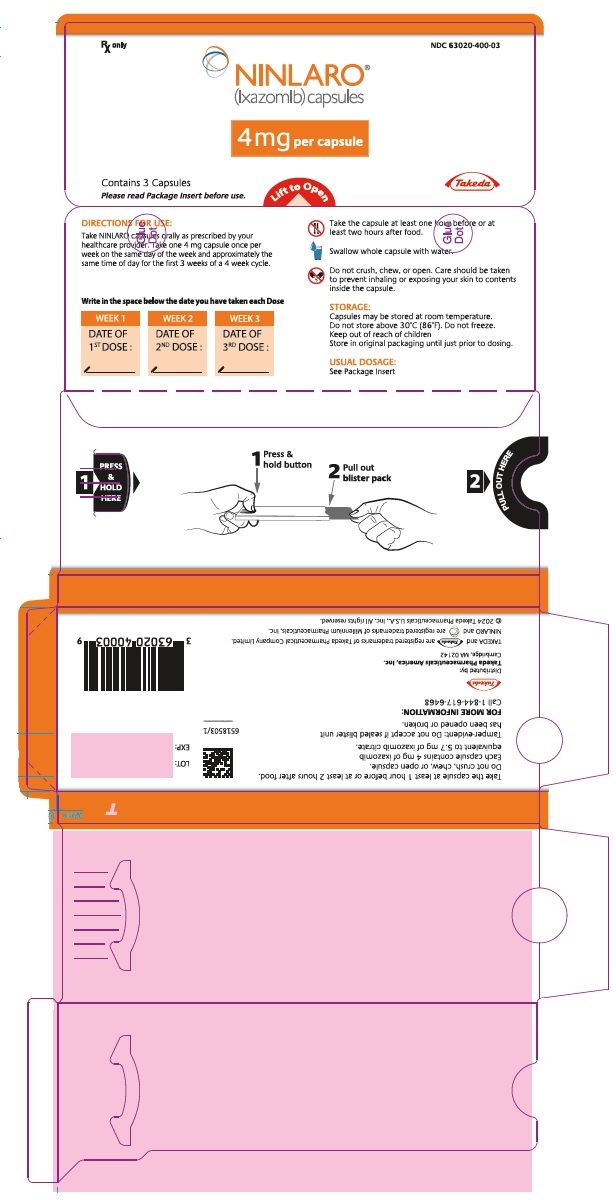
NINLARO ixazomib 4 mg Capsule, 3-count
🆔 Identity & classification
Where does this data come from?
🏷️ RxNorm drug class
This medicine belongs to the Proteasome Inhibitor class.
Where does this data come from?
🏭 Manufacturer & labeler
Where does this data come from?
🩺 Clinical
- Ninlaro contains ixazomib, a medicine that targets and disrupts a protein-recycling system inside myeloma cells that they depend on to survive. When those systems get blocked, the...
- What exactly is Ninlaro and why did my doctor prescribe it?
- You take one capsule by mouth once a week — on the same day each week — for three weeks in a row, then you get a week off before starting the next cycle. The most important thing t...
- How and when do I take my Ninlaro capsule?
Patient education
Supplement & herbal interactions
Some supplements/herbs that may interact with Ixazomib Citrate — tap one for details:
Where does this data come from?
Ask a licensed pharmacist directly — free, answered by our team.
💊 What it looks like
Where does this data come from?
🧪 Inactive Ingredients / Excipients
Inactive ingredients, also called excipients, are components of the drug product other than the active ingredient. They may include fillers, dyes, coatings, preservatives, flavors, or other formulation ingredients.
💡 Tap an ingredient (hover on desktop) to see what it is and why it’s used.
-
UNII 70097M6I30
Magnesium stearate is a salt made from magnesium and stearic acid, a fatty substance. It's used in tablets and capsules as a lubricant and glidant to help ingredients flow smoothly during manufacturing and prevent sticking.
-
UNII OP1R32D61U
Microcrystalline cellulose is a purified form of cellulose, a natural fiber from plant sources. It acts as a binder and filler in tablets and capsules, helping hold ingredients together and give the medicine its shape and size.
-
UNII 7SEV7J4R1U
A powder made from a naturally occurring mineral. In medicines, talc works as a glidant and anti-caking agent, helping tablets and capsules flow smoothly during manufacturing and preventing clumping.
3 inactive ingredients listed in the exact product block matched to this NDC.
Where does this data come from?
ingredient classCode="IACT" elements from the exact product block matched by this NDC. Label-section narrative from DailyMed / the openFDA label index is shown separately when available.Inactive ingredient FAQ
Are inactive ingredients the same for every manufacturer?
Why might an inactive ingredient be missing?
Can inactive ingredients matter?
💲 Pricing
A drug doesn't have one price. Each row is a different public payment system, and none is what you'd pay at the counter — that depends on your insurance. The ⓘ on each row explains what it measures.
| Price system | Per each | Per package |
|---|---|---|
| Retail pharmacies payNADAC · weekly | Not in the retail survey — common for institutional, discontinued, or low-volume packs. | |
| Medicaid paysCMS SDUD · 12 mo | $4,498.95 | $13,496.85 / 3 capsule |
| Medicare drug plans payPart D · Q2 2026 | $4,501.41 | $13,504.24 / 3 capsule |
Where does this data come from?
🔁 Therapeutic equivalents
| Product | Labeler | Pack | NADAC/unit | TE | Status | Price vs. this |
|---|---|---|---|---|---|---|
| Ninlaro 4 mgthis 63020-0400-02 | Takeda | 3 capsules | — | — | FDA listed | — |
Where does this data come from?
⏳ Availability & generic status
We did not find an FDA-approved generic match for this exact strength, form and route. Patent/protection dates below may affect future generic timing.
Why the date isn’t exact: Generic timing can change because patents may be challenged, settled, licensed, added, removed, or worked around with a narrower label — and FDA approval does not always mean a pharmacy can get the generic today.
🛈 What do these terms mean?
- Patent
- Legal protection listed in the Orange Book that may delay generic approval or launch. Issued by the U.S. Patent & Trademark Office.
- Substance patent
- Covers the active drug molecule itself — the hardest to design around. A generic generally can’t launch until it expires.
- Formulation (product) patent
- Covers a specific formulation or dosage form. A generic can sometimes work around it with a different formulation.
- Method-of-use patent
- A patent covering one specific approved use of the drug — not necessarily the whole molecule. A generic can sometimes launch with a “skinny label” that carves out the protected use and keeps the others.
- Skinny label
- A generic label that omits a still-patented use when the FDA allows it — letting a generic reach the market for the unprotected uses.
- Exclusivity
- FDA-granted marketing protection, separate from patents — e.g. 5-yr new chemical entity, 7-yr orphan drug, or a +6-month pediatric extension.
- Paragraph IV
- A generic applicant’s formal challenge to a listed patent. It can potentially lead to earlier generic entry, but often involves litigation or a settlement.
- RLD / RS
- Reference Listed Drug — the brand product the FDA uses as the reference for generic applications. Reference Standard — the product the FDA expects generics to compare against in bioequivalence testing.
- TE / AB rating
- FDA therapeutic-equivalence rating. An AB rating generally means the FDA considers a generic therapeutically equivalent to — and substitutable for — the brand.
- LOE (loss of exclusivity)
- The latest patent or exclusivity currently listed — the loss-of-exclusivity / latest-listed-protection date shown on this page. Paragraph-IV challenges and settlements can move the real date earlier; FDA approval and a manufacturer’s decision to market can move it later.
Built from the FDA Orange Book. The bars above are scaled to each protection’s expiry; the red LOE marker is the last one to lapse.
| Patent | Type | Use code | Expires |
|---|---|---|---|
| US 8871745 ↗ | Method of use | U-2434 | Aug 6, 2027 |
| US 9175017 ↗ | Method of use | U-2434 | Jun 16, 2029 |
| US 8003819 ↗ | Drug substance | U-2434 | Aug 6, 2027 |
| US 7442830 ↗ | Drug substance | U-2434 | Nov 20, 2029 |
| US 8530694 ↗ | Drug substance | U-2434 | Aug 6, 2027 |
| US 8871745 ↗ | Method of use | U-2434 | Aug 6, 2027 |
| US 9175017 ↗ | Method of use | U-2434 | Jun 16, 2029 |
| US 8003819 ↗ | Drug substance | U-2434 | Aug 6, 2027 |
| US 7442830 ↗ | Drug substance | U-2434 | Nov 20, 2029 |
| US 7442830 ↗ | Drug substance | U-2434 | Nov 20, 2029 |
| US 8003819 ↗ | Drug substance | U-2434 | Aug 6, 2027 |
| US 8530694 ↗ | Drug substance | U-2434 | Aug 6, 2027 |
| US 9175017 ↗ | Method of use | U-2434 | Jun 16, 2029 |
| US 8530694 ↗ | Drug substance | U-2434 | Aug 6, 2027 |
| US 8871745 ↗ | Method of use | U-2434 | Aug 6, 2027 |
| US 8859504 ↗ | Drug substance | — | Jun 16, 2029 |
| US 8859504 ↗ | Drug substance | — | Jun 16, 2029 |
| US 8859504 ↗ | Drug substance | — | Jun 16, 2029 |
| US 7687662 ↗ | Drug substance | — | Aug 6, 2027 |
| US 7687662 ↗ | Drug substance | — | Aug 6, 2027 |
| US 7687662 ↗ | Drug substance | — | Aug 6, 2027 |
Is there a generic version of NINLARO 4 MG CAPSULE?
The FDA approved a generic — why can’t I get it at my pharmacy yet?
Why do different websites show different generic release dates?
What does “FDA listed” mean?
What does a patent or protection date mean here?
What does “current Orange Book estimate” mean?
Can a generic come out before the last patent expires?
Can a generic come out after the listed dates?
What is the difference between patents and exclusivity?
Why are there multiple patent dates?
Where does this data come from?
🗺️ Medicaid utilization & spend
💊 Medicaid utilization by pack size
📊 Medicare Part D spend CMS · PART D · 2026 (Q1)
🔬 Reported adverse events (FAERS)
Top reported reactions
Reporter sex
Serious outcomes
Where does this data come from?
📦 Packaging — all sizes for this product
| Package NDC | Description | Marketing start | Status |
|---|---|---|---|
| 63020-0400-02 You're viewing this | 3 BLISTER PACK in 1 CARTON (63020-400-02) / 1 CAPSULE in 1 BLISTER PACK (63020-400-01) | 2015-11-20 | Active |
| 63020-0400-01 | 1 CAPSULE in 1 BLISTER PACK (63020-400-01) | 2015-11-20 | Active |
Pack size FAQ
What quantity is in NDC 63020-0400-02?
What is the difference between NDC 63020-0400-02 and NDC 63020-0400-01?
What NDC number is used to bill for this package of NINLARO ixazomib 4 mg Capsule?
🧭 About this NDC listing & data coverage
What data is (and isn’t) available for this NDC — tap to expand
| NDC identity (package / product / labeler codes) | ✓ Available |
| Labeler | ✓ Available |
| Product & package description | ✓ Available |
| Marketing category & status | ✓ Available |
| Active ingredient / dosage form / route | ✓ Available |
| FDA label (SPL via DailyMed) | ✓ Available |
| Package photos | ✓ Available |
| Inactive ingredients (structured) | ✓ Available |
| NADAC pharmacy acquisition price (CMS) | — Not published for this NDC CMS publishes NADAC only for NDCs reported in its retail-pharmacy survey. |
| Orange Book / therapeutic-equivalence data | ✓ Available |
| HCPCS J-code billing crosswalk | — Not published for this NDC Most self-administered / retail products have no J-code — that is normal. |
| Medicaid utilization (CMS SDUD) | ✓ Available |
Questions about this listing
Why is there no price listed?
Is the NDC printed on the package the same as the 11-digit billing NDC?
What do the three segments of this NDC mean?
Is this package still being marketed?
Does this product come in other package sizes?
Who lists this product with the FDA?
Do I need a prescription for this product?
Where does this data come from?
📄 Full prescribing information FDA SPL
🎯 Indications and Usage ▾
1 INDICATIONS AND USAGE NINLARO ® is indicated in combination with lenalidomide and dexamethasone for the treatment of patients with multiple myeloma who have received at least one prior therapy. NINLARO is a proteasome inhibitor indicated in combination with lenalidomide and dexamethasone for the treatment of patients with multiple myeloma who have received at least one prior therapy. ( 1 ) Limitations of Use : NINLARO is not recommended for use in the maintenance setting or in newly diagnosed multiple myeloma in combination with lenalidomide and dexamethasone outside of controlled clinical trials.
( 1 ) Limitations of Use : NINLARO is not recommended for use in the maintenance setting or in newly diagnosed multiple myeloma in combination with lenalidomide and dexamethasone outside of controlled clinical trials [see Warnings and Precautions (5.9) and Clinical Studies (14.2 , 14.3) ] .
⏱️ Dosage and Administration ▾
2 DOSAGE AND ADMINISTRATION Recommended starting dose of 4 mg taken orally on Days 1, 8, and 15 of a 28-day cycle. ( 2.1 ) Dose should be taken at least one hour before or at least two hours after food. ( 2.1 )
2.1Dosing and Administration Guidelines NINLARO in combination with lenalidomide and dexamethasone The recommended starting dose of NINLARO is 4 mg administered orally once a week on Days 1, 8, and 15 of a 28-day treatment cycle. The recommended starting dose of lenalidomide is 25 mg administered daily on Days 1 through 21 of a 28-day treatment cycle. The recommended starting dose of dexamethasone is 40 mg administered on Days 1, 8, 15, and 22 of a 28-day treatment cycle.
Table 1: Dosing Schedule for NINLARO taken with Lenalidomide and Dexamethasone ✔ Take medicine 28-Day Cycle (a 4-week cycle) - Week 1 Week 2 Week 3 Week 4 - Day 1 Days 2-7 Day 8 Days 9-14 Day 15 Days 16-21 Day 22 Days 23-28 NINLARO ✔ - ✔ - ✔ - - - Lenalidomide ✔ ✔ Daily ✔ ✔ Daily ✔ ✔ Daily - - Dexamethasone ✔ - ✔ - ✔ - ✔ - For additional information regarding lenalidomide and dexamethasone, refer to their prescribing information. NINLARO should be taken once a week on the same day and at approximately the same time for the first three weeks of a four week cycle.
The importance of carefully following all dosage instructions should be discussed with patients starting treatment. Instruct patients to take the recommended dosage as directed, because overdosage has led to deaths [see Overdosage (10) ] . NINLARO should be taken at least one hour before or at least two hours after food [see Clinical Pharmacology (12.3) ] .
The whole capsule should be swallowed with water. The capsule should not be crushed, chewed or opened [see How Supplied/Storage and Handling (16) ] . If a NINLARO dose is delayed or missed, the dose should be taken only if the next scheduled dose is ≥72 hours away.
A missed dose should not be taken within 72 hours of the next scheduled dose. A double dose should not be taken to make up for the missed dose. If vomiting occurs after taking a dose, the patient should not repeat the dose.
The patient should resume dosing at the time of the next scheduled dose. Prior to initiating a new cycle of therapy: Absolute neutrophil count should be at least 1,000/mm 3 Platelet count should be at least 75,000/mm 3 Non-hematologic toxicities should, at the healthcare provider's discretion, generally be recovered to patient's baseline condition or Grade 1 or lower Treatment should be continued until disease progression or unacceptable toxicity. Concomitant Medications Consider antiviral prophylaxis in patients being treated with NINLARO to decrease the risk of herpes zoster reactivation [see Adverse Reactions (6.1) ] .
2.2Dosage Modification Guidelines The NINLARO dose reduction steps are presented in Table 2 and the dosage modification guidelines are provided in Table 3. Table 2: NINLARO Dose Reductions due to Adverse Reactions Recommended starting dose Recommended starting dose of 3 mg in patients with moderate or severe hepatic impairment, severe renal impairment or end-stage renal disease requiring dialysis [see Dosage and Administration (2.3 , 2.4) ] . First reduction to Second reduction to Discontinue 4 mg 3 mg 2.3 mg An alternating dose modification approach is recommended for NINLARO and lenalidomide for thrombocytopenia, neutropenia, and rash as described in Table 3.
Refer to the lenalidomide prescribing information if dose reduction is needed for lenalidomide. Table 3: Dosage Modifications Guidelines for NINLARO in Combination with Lenalidomide and Dexamethasone Hematological Toxicities Recommended Actions Thrombocytopenia (Platelet Count) Platelet count less than 30,000/mm 3 Withhold NINLARO and lenalidomide until platelet count is at least 30,000/mm 3 . Following recovery, resume lenalidomide at the next lower dose according to its prescribing information and resume NINLARO at its most recent dose.
If platelet count falls to less than 30,000/mm…
💊 Dosage Forms and Strengths ▾
3 DOSAGE FORMS AND STRENGTHS NINLARO is available in the following capsules: 4 mg ixazomib: Light orange gelatin capsule imprinted with "Takeda" on the cap and "4 mg" on the body in black ink. 3 mg ixazomib: Light grey gelatin capsule imprinted with "Takeda" on the cap and "3 mg" on the body in black ink. 2.3 mg ixazomib: Light pink gelatin capsule imprinted with "Takeda" on the cap and "2.3 mg" on the body in black ink.
Capsules: 4 mg, 3 mg, and 2.3 mg ( 3 )
⛔ Contraindications ▾
4 CONTRAINDICATIONS None. None. ( 4 )
⚠️ Warnings and Cautions ▾
5 WARNINGS AND PRECAUTIONS Thrombocytopenia : Monitor platelet counts at least monthly during treatment and adjust dosing, as needed. ( 2.2 , 5.1 ) Gastrointestinal Toxicities : Adjust dosing for severe diarrhea, constipation, nausea, and vomiting, as needed. ( 2.2 , 5.2 ) Peripheral Neuropathy : Monitor patients for symptoms of peripheral neuropathy and adjust dosing, as needed.
( 2.2 , 5.3 ) Peripheral Edema : Monitor for fluid retention. Investigate for underlying causes, when appropriate. Adjust dosing, as needed.
( 2.2 , 5.4 ) Cutaneous Reactions : Monitor patients for rash and adjust dosing, as needed. ( 2.2 , 5.5 ) Thrombotic Microangiopathy : Monitor for signs and symptoms. Discontinue NINLARO if suspected.
( 5.6 ) Hepatotoxicity : Monitor hepatic enzymes during treatment. ( 5.7 ) Embryo-Fetal Toxicity : NINLARO can cause fetal harm. Advise patients of the potential risk to a fetus and to use effective non-hormonal contraception.
( 5.8 , 8.1 , 8.3 ) Increased Mortality in Patients Treated with NINLARO in the Maintenance Setting : Treatment of patients with NINLARO for multiple myeloma in the maintenance setting is not recommended outside of controlled trials. ( 5.9 )
5.1Thrombocytopenia Thrombocytopenia has been reported with NINLARO with platelet nadirs typically occurring between Days 14-21 of each 28-day cycle and recovery to baseline by the start of the next cycle [see Adverse Reactions (6.1) ] . Grade 3 thrombocytopenia was reported in 17% of patients in the NINLARO regimen and Grade 4 thrombocytopenia was reported in 13% in the NINLARO regimen. The rate of platelet transfusions was 10% in the NINLARO regimen and 7% in the placebo regimen.
Monitor platelet counts at least monthly during treatment with NINLARO. Consider more frequent monitoring during the first three cycles. Manage thrombocytopenia with dose modifications [see Dosage and Administration (2.2) ] and platelet transfusions as per standard medical guidelines.
5.2Gastrointestinal Toxicities Diarrhea, constipation, nausea, and vomiting have been reported with NINLARO, occasionally requiring use of antidiarrheal and antiemetic medications, and supportive care. Diarrhea was reported in 52% of patients in the NINLARO regimen and 43% in the placebo regimen, constipation in 35% and 28%, respectively, nausea in 32% and 23%, respectively, and vomiting in 26% and 13%, respectively. Diarrhea resulted in discontinuation of one or more of the three drugs in 3% of patients in the NINLARO regimen and 2% of patients in the placebo regimen [see Adverse Reactions (6.1) ] .
Adjust dosing for Grade 3 or 4 symptoms [see Dosage and Administration (2.2) ] .
5.3Peripheral Neuropathy The majority of peripheral neuropathy adverse reactions were Grade 1 (18% in the NINLARO regimen and 16% in the placebo regimen) and Grade 2 (11% in the NINLARO regimen and 6% in the placebo regimen) [see Adverse Reactions (6.1) ] . Grade 3 adverse reactions of peripheral neuropathy were reported at 2% in both regimens. The most commonly reported reaction was peripheral sensory neuropathy (24% and 17% in the NINLARO and placebo regimen, respectively).
Peripheral motor neuropathy was not commonly reported in either regimen (<1%). Peripheral neuropathy resulted in discontinuation of one or more of the three drugs in 4% of patients in the NINLARO regimen and <1% of patients in the placebo regimen. Patients should be monitored for symptoms of neuropathy.
Patients experiencing new or worsening peripheral neuropathy may require dose modification [see Dosage and Administration (2.2) ] .
5.4Peripheral Edema Peripheral edema was reported in 27% and 21% of patients in the NINLARO and placebo regimens, respectively. The majority of peripheral edema adverse reactions were Grade 1 (17% in the NINLARO regimen and 14% in the placebo regimen) and Grade 2 (7% in the NINLARO regimen and 6% in the placebo regimen). Grade 3 peripheral edema was reported in 2% and 1% of patients in the NINLARO and placebo regimens,…
🤒 Adverse Reactions ▾
6 ADVERSE REACTIONS The following adverse reactions are described in detail in other sections of the prescribing information: Thrombocytopenia [see Warnings and Precautions (5.1) ] Gastrointestinal Toxicities [see Warnings and Precautions (5.2) ] Peripheral Neuropathy [see Warnings and Precautions (5.3) ] Peripheral Edema [see Warnings and Precautions (5.4) ] Cutaneous Reactions [see Warnings and Precautions (5.5) ] Thrombotic Microangiopathy [see Warnings and Precautions (5.6) ] Hepatotoxicity [see Warnings and Precautions (5.7) ] The most common adverse reactions (≥20%) are thrombocytopenia, neutropenia, diarrhea, constipation, peripheral neuropathy, nausea, peripheral edema, rash, vomiting, and bronchitis.
( 6.1 ) To report SUSPECTED ADVERSE REACTIONS, contact Takeda Pharmaceuticals at 1-844-617-6468 or FDA at 1-800-FDA-1088 or www.fda.gov/medwatch .
6.1Clinical Trials Experience Because clinical trials are conducted under widely varying conditions, adverse reaction rates observed in the clinical trials of a drug cannot be directly compared to rates in the clinical trials of another drug and may not reflect the rates observed in practice. The safety population from the randomized, double-blind, placebo-controlled clinical study included 720 patients with relapsed and/or refractory multiple myeloma, who received NINLARO in combination with lenalidomide and dexamethasone (NINLARO regimen; N=361) or placebo in combination with lenalidomide and dexamethasone (placebo regimen; N=359).
The most frequently reported adverse reactions (≥20% with a difference of ≥5% compared to placebo) in the NINLARO regimen were thrombocytopenia, neutropenia, diarrhea, constipation, peripheral neuropathy, nausea, peripheral edema, rash, vomiting, and bronchitis. Serious adverse reactions reported in ≥2% of patients in the NINLARO regimen included diarrhea (3%), thrombocytopenia (2%) and bronchitis (2%). One or more of the three drugs was permanently discontinued in 4% of patients reporting peripheral neuropathy, 3% of patients reporting diarrhea and 2% of patients reporting thrombocytopenia.
Permanent discontinuation of NINLARO due to an adverse reaction occurred in 10% of patients. Table 4 summarizes the non-hematologic adverse reactions occurring in at least 5% of patients with at least a 5% difference between the NINLARO regimen and the placebo regimen. Table 4: Non-Hematologic Adverse Reactions Occurring in ≥5% of Patients with a ≥5% Difference Between the NINLARO Regimen and the Placebo Regimen (All Grades, Grade 3 and Grade 4) System Organ Class / Preferred Term NINLARO + Lenalidomide and Dexamethasone N=361 Placebo + Lenalidomide and Dexamethasone N=359 % % All Grades Grade 3 Grade 4 All Grades Grade 3 Grade 4 Note: Adverse reactions included as preferred terms are based on MedDRA version 23.0.
Gastrointestinal disorders Diarrhea 52 10 0 43 3 0 Constipation 35 <1 0 28 <1 0 Nausea 32 2 0 23 0 0 Vomiting 26 1 0 13 <1 0 Nervous system disorders Peripheral neuropathies Represents a pooling of preferred terms 32 2 0 24 2 0 Musculoskeletal and connective tissue disorders Back pain At the time of the final analysis, these adverse reactions no longer met the criterion for a ≥5% difference between the NINLARO regimen and the placebo regimen. 27 <1 0 24 3 0 Infections and infestations Upper respiratory tract infection 27 1 0 23 1 0 Bronchitis 22 2 0 17 2 <1 Skin and subcutaneous tissue disorders Rash 27 3 0 16 2 0 General disorders and administration site conditions Edema peripheral 27 2 0 21 1 0 Table 5 represents pooled information from adverse event and laboratory data.
Table 5: Thrombocytopenia and Neutropenia - NINLARO + Lenalidomide and Dexamethasone N=361 Placebo + Lenalidomide and Dexamethasone N=359 % % - Any Grade Grade 3-4 Any Grade Grade 3-4 Thrombocytopenia 85 30 67 14 Neutropenia 74 34 70 37 Herpes Zoster Herpes zoster was reported in 6% of patients in the NINLARO regimen and 3% of patients in the placebo regimen. Antiviral prophylaxis…
🔄 Drug Interactions ▾
7 DRUG INTERACTIONS Strong CYP3A inducers : Avoid concomitant use with NINLARO. ( 7.1 , 12.3 )
7.1Strong CYP3A Inducers Avoid concomitant administration of NINLARO with strong CYP3A inducers (such as rifampin, phenytoin, carbamazepine, and St. John's Wort) [see Clinical Pharmacology (12.3) ] .
👥 Use in Specific Populations ▾
8 USE IN SPECIFIC POPULATIONS Hepatic Impairment : Reduce the NINLARO starting dose to 3 mg in patients with moderate or severe hepatic impairment. ( 2.3 , 8.6 ) Renal Impairment : Reduce the NINLARO starting dose to 3 mg in patients with severe renal impairment or end-stage renal disease requiring dialysis. ( 2.4 , 8.7 ) Lactation : Advise not to breastfeed. ( 8.2 )
8.1Pregnancy Risk Summary Based on its mechanism of action [see Clinical Pharmacology (12.1) ] and data from animal reproduction studies, NINLARO can cause fetal harm when administered to a pregnant woman. There are no available data on NINLARO use in pregnant women to evaluate drug-associated risk. Ixazomib caused embryo-fetal toxicity in pregnant rats and rabbits at doses resulting in exposures that were slightly higher than those observed in patients receiving the recommended dose (see Data ) .
Advise pregnant women of the potential risk to a fetus. In the U.S. general population, the estimated background risk of major birth defects and miscarriage in clinically recognized pregnancies is 2 to 4% and 15 to 20%, respectively. Data Animal Data In an embryo-fetal development study in pregnant rabbits there were increases in fetal skeletal variations/abnormalities (fused caudal vertebrae, number of lumbar vertebrae, and full supernumerary ribs) at doses that were also maternally toxic (≥0.3 mg/kg).
Exposures in the rabbit at 0.3 mg/kg were 1.9 times the clinical time averaged exposures at the recommended dose of 4 mg. In a rat dose range-finding embryo-fetal development study, at doses that were maternally toxic, there were decreases in fetal weights, a trend towards decreased fetal viability, and increased post-implantation losses at 0.6 mg/kg. Exposures in rats at the dose of 0.6 mg/kg was 2.5 times the clinical time averaged exposures at the recommended dose of 4 mg.
8.2Lactation Risk Summary There are no data on the presence of ixazomib or its metabolites in human milk, the effects of the drug on the breast fed infant, or the effects of the drug on milk production. Because of the potential for serious adverse reactions from NINLARO in a breastfed infant, advise women not to breastfeed during treatment with NINLARO and for 90 days after the last dose.
8.3Females and Males of Reproductive Potential NINLARO can cause fetal harm when administered to pregnant women [see Use in Specific Populations (8.1) ] . Pregnancy Testing Verify pregnancy status in females of reproductive potential prior to initiating NINLARO. Contraception Females Advise females of reproductive potential to use effective non-hormonal contraception during treatment with NINLARO and for 90 days after the last dose.
Dexamethasone is known to be a weak to moderate inducer of CYP3A4 as well as other enzymes and transporters. Because NINLARO is administered with dexamethasone, the risk for reduced efficacy of contraceptives needs to be considered [see Drug Interactions (7.1) ] . Males Advise males with female partners of reproductive potential to use effective contraception during treatment with NINLARO and for 90 days after the last dose.
8.4Pediatric Use Safety and effectiveness of NINLARO have not been established in pediatric patients.
8.5Geriatric Use Of the total number of subjects in clinical studies of NINLARO, 55% were 65 and over, while 17% were 75 and over. No overall differences in safety or effectiveness were observed between these subjects and younger subjects, and other reported clinical experience has not identified differences in responses between the elderly and younger patients, but greater sensitivity of some older individuals cannot be ruled out.
8.6Hepatic Impairment In patients with moderate or severe hepatic impairment, the mean AUC increased by 20% when compared to patients with normal hepatic function. Reduce the starting dose of NINLARO in patients with moderate or severe hepatic impairment [see Dosage and Administration (2.3) , Clinical Pharmacology (12.3) ] .
8.7 Rena…
🤰 Pregnancy ▾
8.1Pregnancy Risk Summary Based on its mechanism of action [see Clinical Pharmacology (12.1) ] and data from animal reproduction studies, NINLARO can cause fetal harm when administered to a pregnant woman. There are no available data on NINLARO use in pregnant women to evaluate drug-associated risk. Ixazomib caused embryo-fetal toxicity in pregnant rats and rabbits at doses resulting in exposures that were slightly higher than those observed in patients receiving the recommended dose (see Data ) .
Advise pregnant women of the potential risk to a fetus. In the U.S. general population, the estimated background risk of major birth defects and miscarriage in clinically recognized pregnancies is 2 to 4% and 15 to 20%, respectively. Data Animal Data In an embryo-fetal development study in pregnant rabbits there were increases in fetal skeletal variations/abnormalities (fused caudal vertebrae, number of lumbar vertebrae, and full supernumerary ribs) at doses that were also maternally toxic (≥0.3 mg/kg).
Exposures in the rabbit at 0.3 mg/kg were 1.9 times the clinical time averaged exposures at the recommended dose of 4 mg. In a rat dose range-finding embryo-fetal development study, at doses that were maternally toxic, there were decreases in fetal weights, a trend towards decreased fetal viability, and increased post-implantation losses at 0.6 mg/kg. Exposures in rats at the dose of 0.6 mg/kg was 2.5 times the clinical time averaged exposures at the recommended dose of 4 mg.
🧒 Pediatric Use ▾
8.4Pediatric Use Safety and effectiveness of NINLARO have not been established in pediatric patients.
🧓 Geriatric Use ▾
8.5Geriatric Use Of the total number of subjects in clinical studies of NINLARO, 55% were 65 and over, while 17% were 75 and over. No overall differences in safety or effectiveness were observed between these subjects and younger subjects, and other reported clinical experience has not identified differences in responses between the elderly and younger patients, but greater sensitivity of some older individuals cannot be ruled out.
🆘 Overdosage ▾
10 OVERDOSAGE Overdosage, including fatal overdosage, has been reported in patients taking NINLARO. Manifestations of overdosage include adverse reactions reported at the recommended dosage [see Dosage and Administration (2.1) , Adverse Reactions (6.1) ] . Serious adverse reactions reported with overdosage include severe nausea, vomiting, diarrhea, aspiration pneumonia, multiple organ failure and death.
In the event of an overdosage, monitor for adverse reactions and provide appropriate supportive care. NINLARO is not dialyzable.
🧬 Clinical Pharmacology ▾
12 CLINICAL PHARMACOLOGY
12.1Mechanism of Action Ixazomib is a reversible proteasome inhibitor. Ixazomib preferentially binds and inhibits the chymotrypsin-like activity of the beta 5 subunit of the 20S proteasome. Ixazomib induced apoptosis of multiple myeloma cell lines in vitro.
Ixazomib demonstrated in vitro cytotoxicity against myeloma cells from patients who had relapsed after multiple prior therapies, including bortezomib, lenalidomide, and dexamethasone. The combination of ixazomib and lenalidomide demonstrated synergistic cytotoxic effects in multiple myeloma cell lines. In vivo, ixazomib demonstrated antitumor activity in a mouse multiple myeloma tumor xenograft model.
12.2Pharmacodynamics Cardiac Electrophysiology NINLARO did not prolong the QTc interval at clinically relevant exposures based on pharmacokinetic-pharmacodynamic analysis of data from 245 patients.
12.3Pharmacokinetics Absorption After oral administration, the median time to achieve peak ixazomib plasma concentrations was one hour. The mean absolute oral bioavailability was 58%, based on population PK analysis. Ixazomib AUC increases in a dose proportional manner over a dose range of 0.2 to 10.6 mg.
A food effect study conducted in patients with a single 4 mg dose of ixazomib showed that a high-fat meal decreased ixazomib AUC by 28% and C max by 69% [see Dosage and Administration (2.1) ] . Distribution Ixazomib is 99% bound to plasma proteins and distributes into red blood cells with a blood-to-plasma ratio of 10. The steady-state volume of distribution is 543 L.
Elimination Based on a population PK analysis, systemic clearance was approximately
1.9L/hr with inter-individual variability of 44%. The terminal half-life (t 1/2 ) of ixazomib was 9.5 days. Following weekly oral dosing, the accumulation ratio was determined to be 2-fold.
Metabolism After oral administration of a radiolabeled dose, ixazomib represented 70% of total drug-related material in plasma. Metabolism by multiple CYP enzymes and non-CYP proteins is expected to be the major clearance mechanism for ixazomib. At clinically relevant ixazomib concentrations, in vitro studies using human cDNA-expressed cytochrome P450 isozymes showed that no specific CYP isozyme predominantly contributes to ixazomib metabolism.
At higher than clinical concentrations, ixazomib was metabolized by multiple CYP isoforms with estimated relative contributions of 3A4 (42%), 1A2 (26%), 2B6 (16%), 2C8 (6%), 2D6 (5%), 2C19 (5%) and 2C9 (<1%). Excretion After administration of a single oral dose of 14 C-ixazomib to 5 patients with advanced cancer, 62% of the administered radioactivity was excreted in urine and 22% in the feces. Unchanged ixazomib accounted for <3.5% of the administered dose recovered in urine.
Specific Populations There was no clinically meaningful effect of age (range 23-91 years), sex, body surface area (range 1.2-2.7 m 2 ), or race on the clearance of ixazomib based on population PK analysis. Patients with Hepatic Impairment The PK of ixazomib was similar in patients with normal hepatic function and in patients with mild hepatic impairment (total bilirubin ≤ ULN and AST >ULN or total bilirubin >1-1.5 × ULN and any AST) based on population PK analysis. The PK of ixazomib was characterized in patients with normal hepatic function at 4 mg (N=12), moderate hepatic impairment at 2.3 mg (total bilirubin >1.5-3 × ULN, N=13) or severe hepatic impairment at 1.5 mg (total bilirubin >3 × ULN, N=18).
Dose-normalized mean AUC was 20% higher in patients with moderate or severe hepatic impairment as compared to patients with normal hepatic function [see Dosage and Administration (2.3) ] . Patients with Renal Impairment The PK of ixazomib was similar in patients with normal renal function and in patients with mild or moderate renal impairment (creatinine clearance ≥30 mL/min) based on population PK analysis. The PK of ixazomib was characterized at a dose of 3 mg in patients with normal renal function (creatinin…
🧬 Mechanism of Action ▾
12.1Mechanism of Action Ixazomib is a reversible proteasome inhibitor. Ixazomib preferentially binds and inhibits the chymotrypsin-like activity of the beta 5 subunit of the 20S proteasome. Ixazomib induced apoptosis of multiple myeloma cell lines in vitro.
Ixazomib demonstrated in vitro cytotoxicity against myeloma cells from patients who had relapsed after multiple prior therapies, including bortezomib, lenalidomide, and dexamethasone. The combination of ixazomib and lenalidomide demonstrated synergistic cytotoxic effects in multiple myeloma cell lines. In vivo, ixazomib demonstrated antitumor activity in a mouse multiple myeloma tumor xenograft model.
📦 How Supplied / Storage and Handling ▾
16 HOW SUPPLIED/STORAGE AND HANDLING How Supplied NINLARO is supplied as follows: Strength per Capsule Capsule Description Outer Carton 3 Count Blister Pack 1 Count Blister Pack NDC 4 mg Light orange, size 3, imprinted with "Takeda" on the cap and "4 mg" on the body in black ink. Three 4 mg capsules in a carton Each blister pack has three 4 mg capsules Each blister pack has one 4 mg capsule Outer carton NDC 63020-400-02 3 Count Blister Pack NDC 63020-400-03 1 Count Blister pack NDC 63020-400-01 3 mg Light grey, size 4, imprinted with "Takeda" on the cap and "3 mg" on the body in black ink.
Three 3 mg capsules in a carton Each blister pack has three 3 mg capsules Each blister pack has one 3 mg capsule Outer carton NDC 63020-390-02 3 Count Blister Pack NDC 63020-390-03 1 Count Blister pack NDC 63020-390-01 2.3 mg Light pink, size 4, imprinted with "Takeda" on the cap and "2.3 mg" on the body in black ink. Three 2.3 mg capsules in a carton Each blister pack has three 2.3 mg capsules Each blister pack has one 2.3 mg capsule Outer carton NDC 63020-230-02 3 Count Blister Pack NDC 63020-230-03 1 Count Blister pack NDC 63020-230-01 Capsules are individually packaged in a PVC-Aluminum/Aluminum blister.
Storage Store NINLARO at room temperature. Do not store above 30°C (86°F). Do not freeze.
Store capsules in original packaging until immediately prior to use. Handling and Disposal NINLARO is a hazardous drug. Follow applicable special handling and disposal procedures 1 .
Do not open or crush capsules. Avoid direct contact with the capsule contents. In case of capsule breakage, avoid direct contact of capsule contents with the skin or eyes.
If contact occurs with the skin, wash thoroughly with soap and water. If contact occurs with the eyes, flush thoroughly with water. Any unused medicinal product or waste material should be disposed in accordance with local requirements.
📦 Storage and Handling ▾
Storage Store NINLARO at room temperature. Do not store above 30°C (86°F). Do not freeze. Store capsules in original packaging until immediately prior to use.
Handling and Disposal NINLARO is a hazardous drug. Follow applicable special handling and disposal procedures 1 . Do not open or crush capsules.
Avoid direct contact with the capsule contents. In case of capsule breakage, avoid direct contact of capsule contents with the skin or eyes. If contact occurs with the skin, wash thoroughly with soap and water.
If contact occurs with the eyes, flush thoroughly with water. Any unused medicinal product or waste material should be disposed in accordance with local requirements.
📋 Description ▾
11 DESCRIPTION Ixazomib is a proteasome inhibitor. Ixazomib citrate, a prodrug, rapidly hydrolyzes under physiological conditions to its biologically active form, ixazomib. The chemical name of ixazomib citrate is 1,3,2-dioxaborolane-4,4-diacetic acid, 2-[(1 R )-1-[[2-[(2,5-dichlorobenzoyl)amino]acetyl]amino]-3-methylbutyl]-5-oxo- and the structural formula is: The molecular formula for ixazomib citrate is C 20 H 23 BCl 2 N 2 O 9 and its molecular weight is 517.12.
Ixazomib citrate has one chiral center and is the R-stereoisomer. The solubility of ixazomib citrate in 0.1N HCl (pH 1.2) at 37°C is 0.61 mg/mL (reported as ixazomib). The solubility increases as the pH increases.
NINLARO (ixazomib) capsules for oral use contain 4, 3 or 2.3 mg of ixazomib equivalent to 5.7, 4.3 or 3.3 mg of ixazomib citrate, respectively. Inactive ingredients include microcrystalline cellulose, magnesium stearate, and talc. Capsule shells contain gelatin and titanium dioxide.
The 4 mg capsule shell contains red and yellow iron oxide, the 3 mg capsule shell contains black iron oxide and the 2.3 mg capsule shell contains red iron oxide. The printing ink contains shellac, propylene glycol, potassium hydroxide, and black iron oxide. Chemical Structure
💬 Information for Patients ▾
17 PATIENT COUNSELING INFORMATION Advise the patient to read the FDA-approved patient labeling (Patient Information). Dosing Instructions Instruct patients to take NINLARO exactly as prescribed. Advise patients to take NINLARO once a week on the same day and at approximately the same time for the first three weeks of a four week cycle.
The importance of carefully following all dosage instructions should be discussed with patients starting treatment. Advise patients to take the recommended dosage as directed, because overdosage has led to deaths [see Overdosage (10) ] . Advise patients to take NINLARO at least one hour before or at least two hours after food.
Advise patients that NINLARO and dexamethasone should not be taken at the same time, because dexamethasone should be taken with food and NINLARO should not be taken with food. Advise patients to swallow the capsule whole with water. The capsule should not be crushed, chewed or opened.
Advise patients that direct contact with the capsule contents should be avoided. In case of capsule breakage, avoid direct contact of capsule contents with the skin or eyes. If contact occurs with the skin, wash thoroughly with soap and water.
If contact occurs with the eyes, flush thoroughly with water. If a patient misses a dose, advise them to take the missed dose as long as the next scheduled dose is ≥72 hours away. Advise patients not to take a missed dose if it is within 72 hours of their next scheduled dose.
If a patient vomits after taking a dose, advise them not to repeat the dose but resume dosing at the time of the next scheduled dose. Advise patients to store capsules in original packaging, and not to remove the capsule from the packaging until just prior to taking NINLARO. [see Dosage and Administration (2.1) ]. Thrombocytopenia Advise patients that they may experience low platelet counts (thrombocytopenia).
Signs of thrombocytopenia may include bleeding and easy bruising. [see Warnings and Precautions (5.1) ] . Gastrointestinal Toxicities Advise patients they may experience diarrhea, constipation, nausea and vomiting and to contact their healthcare providers if these adverse reactions persist. [see Warnings and Precautions (5.2) ] . Peripheral Neuropathy Advise patients to contact their healthcare providers if they experience new or worsening symptoms of peripheral neuropathy such as tingling, numbness, pain, a burning feeling in the feet or hands, or weakness in the arms or legs. [see Warnings and Precautions (5.3) ] .
Peripheral Edema Advise patients to contact their healthcare providers if they experience unusual swelling of their extremities or weight gain due to swelling [see Warnings and Precautions (5.4) ] . Cutaneous Reactions Advise patients to contact their healthcare providers immediately if they experience new or worsening rash [see Warnings and Precautions (5.5) ] . Thrombotic Microangiopathy Advise patients to seek immediate medical attention if any signs or symptoms of thrombotic microangiopathy occur [see Warnings and Precautions (5.6) ] .
Hepatotoxicity Advise patients to contact their healthcare providers if they experience jaundice or right upper quadrant abdominal pain [see Warnings and Precautions (5.7) ] . Other Adverse Reactions Advise patients to contact their healthcare providers if they experience signs and symptoms of acute febrile neutrophilic dermatosis (Sweet's syndrome), Stevens-Johnson syndrome, transverse myelitis, posterior reversible encephalopathy syndrome, tumor lysis syndrome, herpes zoster, cataracts, dry eyes, blurred vision, conjunctivitis and thrombotic thrombocytopenic purpura [see Adverse Reactions (6.1) ] .
Embryo-Fetal Toxicity Advise pregnant women and females of reproductive potential of the potential risk to a fetus. Advise females of reproductive potential to inform their healthcare provider of a known or suspected pregnancy [see Warnings and Precautions (5.8) and Use in Specific Populations (8.1) ] . Advise females of reproducti…