
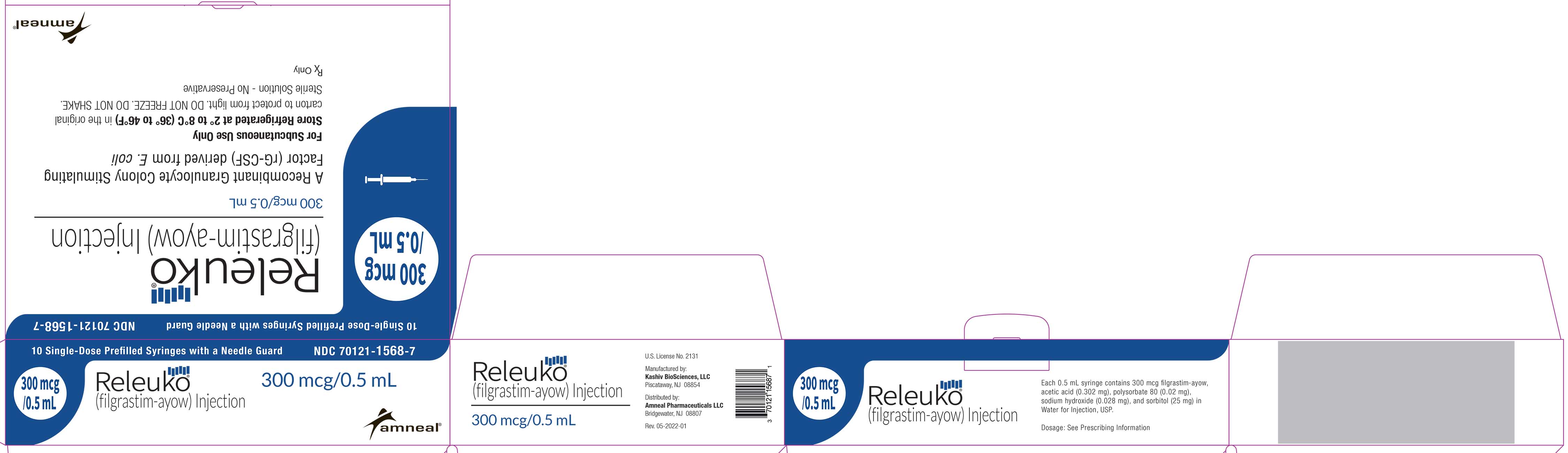
RELEUKO Filgrastim 300 ug/.5mL Injection, Solution, 10 syringes — NDC 70121-1568-7 (Billing 70121-1568-07)
This is a package of 10 syringes of RELEUKO Filgrastim 300 ug/.5mL Injection, Solution from Amneal Pharmaceuticals LLC, marketed since Feb 2022 and currently FDA-listed.
NDC database record
One package, one record: these facts belong to NDC 70121-1568-7 alone.
- Record
- FDA NDC Directory package listing · Human prescription drug
- Code segments
- 70121 labeler · 1568 product · 7 package
- Package marketed since
- Feb 25, 2022
- Sample package
- No — commercial package
- Listing certified through
- Dec 31, 2026
- Barcode (UPC)
- 0370121156970, 0370121156819, 0370121157014, 0370121156871 +2 more
- Medicaid fills, this package
- 51 prescriptions in the last four reported quarters
- FDA record last changed
- Jul 24, 2026
Other active recalls for Filgrastim (different manufacturers) — 2 · tap to view
Identity & classification
Regulatory identifiers FDA, NLM and CMS codes for this package
Drug-database identifiers Medi-Span GPI and First Databank GCN / HICL / AHFS classification
- GSN (GCN sequence number): 083115
- GCN: 51988
- GPI-14 (Medi-Span): 8240152015E520
- HICL (First Databank): 047848
- AHFS class code: 20:16.00.00
- RxCUI (RxNorm): 2595944
Where does this data come from?
- FDA openFDA NDC Directory · synced Oct 1, 2026
- FDA label on DailyMed · label index refreshed Oct 6, 2026
- RxNorm (NLM RxNav) · catalog refreshed Oct 1, 2026
- Medi-Span GPI (licensed)
- First Databank (licensed) · refreshed Oct 1, 2026
RxNorm drug class
This medicine belongs to the Leukocyte Growth Factor class.
Where does this data come from?
- RxClass (NLM) · catalog refreshed Oct 1, 2026
Clinical
- It raises your neutrophils, the white blood cells that fight infection. It is used for people on chemotherapy, those with AML, bone marrow transplant patients, stem cell collection...
- It is injected under the skin or given into a vein, depending on your condition. Some people or caregivers are trained to give injections at home. If you miss a dose, call your hea...
- Common ones include bone pain, fever, rash, cough, headache and nosebleeds. Tell your care team about any that bother you.
- Call for left upper belly or shoulder pain, trouble breathing, signs of allergic reaction, blood in your urine, swelling, or unexplained fever with belly or back pain. These can be...
Patient education
Supplement & herbal interactions
Some supplements/herbs that may interact with Filgrastim — tap one for details:
Where does this data come from?
- MedlinePlus (NLM) · refreshed Oct 1, 2026
- FDA label on DailyMed · label index refreshed Oct 6, 2026
Ask a licensed pharmacist directly — free, answered by our team.
Pricing
A drug doesn't have one price. Each row is a different public payment system, and none is what you'd pay at the counter — that depends on your insurance. The ⓘ on each row explains what it measures.
| Price system | Per mL | Per package |
|---|---|---|
| Retail pharmacies payNADAC · weekly | Not in the retail survey — common for institutional, discontinued, or low-volume packs. | |
| Medicaid paysCMS SDUD · 12 mo | $234.92 | $1,174.62 / 5 ml |
| Medicare drug plans payPart D · Q2 2026 | $304.31 | $1,521.56 / 5 ml |
| Medicare Part B allowsASP · Q5125 | $0.311 / Q5125 unit | — |
Where does this data come from?
- CMS NADAC weekly file
- CMS ASP pricing files · refreshed Sep 20, 2026
- CMS Medicaid State Drug Utilization Data · through Q1 2026
- CMS Part D plan pricing files · refreshed Sep 24, 2026
- VA National Acquisition Center price file
Billing & reimbursement
Where does this data come from?
- CMS ASP NDC-HCPCS crosswalk · refreshed Sep 22, 2026
- DMEPDAC NDC-HCPCS crosswalk
- openFDA NSDE billing units · refreshed Sep 7, 2026
Packaging — all sizes for this product
| Package NDC | Description | Marketing start | Marketing end | Status |
|---|---|---|---|---|
| 70121-1568-01 70121-1568-1 Main listing | 1 SYRINGE in 1 BOX / .5 mL in 1 SYRINGE | 2022-02-25 | — | Active |
| 70121-1568-07 You're viewing this | 10 SYRINGE in 1 BOX / .5 mL in 1 SYRINGE | 2022-02-25 | — | Active |
This pack accounts for about 5.1% of this product's recent Medicaid fills; most go to a different pack size. See all packs ↓
Pack size FAQ
What quantity is in this package?
How does this package differ from NDC 70121-1568-01?
What NDC number is used to bill for this package of RELEUKO Filgrastim 300 ug/.5mL Injection, Solution?
Therapeutic equivalents
| Product | Labeler | Pack | NADAC/unit | TE | Status | Price vs. this |
|---|---|---|---|---|---|---|
| Releuko 300 ug/.5mLthis 70121-1568-07 | Amneal | 10 syringes | — | — | FDA listed | — |
| Neupogen 300 ug/.5mL 55513-0924-10 | Amgen, | 10 syringes | — | — | FDA listed | — |
Where does this data come from?
- FDA openFDA NDC Directory · synced Oct 1, 2026
- FDA Purple Book · refreshed Oct 5, 2026
- CMS NADAC weekly file
Availability & biosimilar status
4 biosimilars are FDA-licensed for this reference biologic — see the list below. (Biologics have no small-molecule generics.)
Why the date isn’t exact: Biosimilar timing can change because patents may be challenged, settled, licensed, added or removed, and litigation can move the real date earlier or later.
🛈 What do these terms mean?
- Biologic patent
- A patent the reference product’s maker has publicly listed. A biosimilar generally can’t launch until these expire — unless they’re invalidated or resolved in a settlement.
- Reference-product exclusivity
- A flat 12 years of FDA market protection from the biologic’s first licensure (the BPCIA). No biosimilar can be licensed before it ends, regardless of patents.
- Interchangeable exclusivity
- The first interchangeable biosimilar can earn a period as the only interchangeable version (pharmacists can substitute it without the prescriber).
- Earliest biosimilar (LOE)
- The latest of all the dates above — the soonest a biosimilar can realistically reach the market. Litigation and settlements can move it earlier.
Biologics have no small-molecule “generics” — competition comes from FDA-licensed biosimilars, tracked in the FDA Purple Book.
| Code | What it grants | Expires |
|---|---|---|
| RefProduct | Reference-product exclusivity (12-year, BPCIA) — no biosimilar can be licensed before this date | Feb 25, 2034 |
Is there a biosimilar for RELEUKO 300 MCG/0.5 ML SYRINGE?
Why do different websites show different biosimilar dates?
Can a biosimilar launch before the last patent expires?
What does “current Purple Book estimate” mean?
What does “FDA listed” mean?
What does a patent or protection date mean here?
Where does this data come from?
- FDA Purple Book · refreshed Oct 5, 2026
Inactive Ingredients / Excipients
Inactive ingredients, also called excipients, are components of the drug product other than the active ingredient. They may include fillers, dyes, coatings, preservatives, flavors, or other formulation ingredients.
🧪 Avoiding an ingredient? See Filgrastim Injection inactive ingredients by manufacturer: every current product's list side by side, so you can ask your pharmacy for the version that does not list it.
Where does this data come from?
IACT rows and label-wide narrative are kept separate; availability and product-level specificity depend on the submitted label.- FDA label on DailyMed · label index refreshed Oct 6, 2026
- FDA openFDA NDC Directory · synced Oct 1, 2026
Inactive ingredient FAQ
Are inactive ingredients the same for every manufacturer?
Why might an inactive ingredient be missing?
Can inactive ingredients matter?
Manufacturer & labeler
More NDCs from Amneal Pharmaceuticals LLC labeler code 70121
- Neostigmine methylsulfate .5 mg/mL Injection NDC 70121-1478-7
- Neostigmine methylsulfate 1 mg/mL Injection NDC 70121-1479-7
- medroxyprogesterone acetate 150 mg/mL Injection, Suspension NDC 70121-1480-1
- carmustine Kit NDC 70121-1482-2
- Arsenic Trioxide 1 mg/mL Injection, Solution NDC 70121-1483-7
- Methylprednisolone acetate 80 mg/mL Injection, Suspension NDC 70121-1552-1
- RELEUKO Filgrastim 300 ug/mL Injection, Solution NDC 70121-1569-7
- RELEUKO Filgrastim 480 ug/.8mL Injection, Solution NDC 70121-1570-1
- RELEUKO Filgrastim 480 ug/1.6mL Injection, Solution NDC 70121-1571-7
- Levoleucovorin Calcium 10 mg/mL Injection, Solution NDC 70121-1572-1
- Methylprednisolone acetate 40 mg/mL Injection, Suspension NDC 70121-1573-1
- Methylprednisolone acetate 80 mg/mL Injection, Suspension NDC 70121-1574-1
Where does this data come from?
- FDA openFDA NDC Directory · synced Oct 1, 2026
- Drugs@FDA
Full prescribing information FDA SPL
🎯 Indications and Usage ▾
1 INDICATIONS AND USAGE RELEUKO is a leukocyte growth factor indicated to: Decrease the incidence of infection‚ as manifested by febrile neutropenia‚ in patients with nonmyeloid malignancies receiving myelosuppressive anti- cancer drugs associated with a significant incidence of severe neutropenia with fever. ( 1.1 ) Reduce the time to neutrophil recovery and the duration of fever, following induction or consolidation chemotherapy treatment of patients with acute myeloid leukemia (AML). ( 1.2 ) Reduce the duration of neutropenia and neutropenia-related clinical sequelae‚ e.g.‚ febrile neutropenia, in patients with nonmyeloid malignancies undergoing myeloablative chemotherapy followed by bone marrow transplantation (BMT).
( 1.3 ) Mobilize autologous hematopoietic progenitor cells into the peripheral blood for collection by leukapheresis ( 1.4 ) Reduce the incidence and duration of sequelae of severe neutropenia (e.g., fever‚ infections‚ oropharyngeal ulcers) in symptomatic patients with congenital neutropenia‚ cyclic neutropenia‚ or idiopathic neutropenia. ( 1.5 ) Increase survival in patients acutely exposed to myelosuppressive doses of radiation (Hematopoietic Syndrome of Acute Radiation Syndrome) ( 1.6 )
1.1Patients with Cancer Receiving Myelosuppressive Chemotherapy RELEUKO is indicated to decrease the incidence of infection‚ as manifested by febrile neutropenia‚ in patients with nonmyeloid malignancies receiving myelosuppressive anti-cancer drugs associated with a significant incidence of severe neutropenia with fever [see Clinical Studies ( 14.1 )].
1.2Patients with Acute Myeloid Leukemia Receiving Induction or Consolidation Chemotherapy RELEUKO is indicated for reducing the time to neutrophil recovery and the duration of fever, following induction or consolidation chemotherapy treatment of patients with acute myeloid leukemia (AML) [see Clinical Studies ( 14.2 )].
1.3Patients with Cancer Undergoing Bone Marrow Transplantation RELEUKO is indicated to reduce the duration of neutropenia and neutropenia-related clinical sequelae‚ e.g.‚ febrile neutropenia, in patients with nonmyeloid malignancies undergoing myeloablative chemotherapy followed by bone marrow transplantation [see Clinical Studies ( 14.3 )].
1.4Patients Undergoing Autologous Peripheral Blood Progenitor Cell Collection and Therapy RELEUKO is indicated for the mobilization of autologous hematopoietic progenitor cells into the peripheral blood for collection by leukapheresis [see Clinical Studies (14.4) ] .
1.5Patients with Severe Chronic Neutropenia RELEUKO is indicated for chronic administration to reduce the incidence and duration of sequelae of neutropenia (e.g.‚ fever‚ infections‚ oropharyngeal ulcers) in symptomatic patients with congenital neutropenia‚ cyclic neutropenia‚ or idiopathic neutropenia [see Clinical Studies (14.5) ].
1.6Patients Acutely Exposed to Myelosuppressive Doses of Radiation (Hematopoietic Syndrome of Acute Radiation Syndrome) RELEUKO is indicated to increase survival in patients acutely exposed to myelosuppressive doses of radiation [see Clinical Studies (14.6) ] .
⏱️ Dosage and Administration ▾
2 DOSAGE AND ADMINISTRATION Patients with cancer receiving myelosuppressive chemotherapy or induction and/or consolidation chemotherapy for AML. Recommended starting dose is 5 mcg/kg/day subcutaneous injection, short intravenous infusion (15 to 30 minutes), or continuous intravenous infusion. See Full Prescribing Information for recommended dosage adjustments and timing of administration ( 2.1 ) Patients with cancer undergoing bone marrow transplantation 10 mcg/kg/day given as an intravenous infusion no longer than 24 hours.
See Full Prescribing Information for recommended dosage adjustments and timing of administration. ( 2.2 ) Patients undergoing autologous peripheral blood progenitor cell collection and therapy 10 mcg/kg/day subcutaneous injection ( 2.3 ) Administer for at least 4 days before first leukapheresis procedure and continue until last leukapheresis ( 2.3 ) Patients with congenital neutropenia Recommended starting dose is 6 mcg/kg subcutaneous injection twice daily ( 2.4 ) Patients with cyclic or idiopathic neutropenia Recommended starting dose is 5 mcg/kg subcutaneous injection daily ( 2.4 ) Patients acutely exposed to myelosuppressive doses of radiation 10 mcg/kg/day subcutaneous injection ( 2.5 ) Direct administration of less than 0.3 mL (180 mcg) using RELEUKO prefilled syringe is not recommended due to potential for dosing errors.
( 2.6 )
2.1Dosage in Patients with Cancer Receiving Myelosuppressive Chemotherapy or Induction and/or Consolidation Chemotherapy for AML The recommended starting dosage of RELEUKO is 5 mcg/kg/day‚ administered as a single daily injection by subcutaneous injection‚ by short intravenous infusion (15 to 30 minutes)‚ or by continuous intravenous infusion. Obtain a complete blood count (CBC) and platelet count before instituting RELEUKO therapy and monitor twice weekly during therapy. Consider dose escalation in increments of 5 mcg/kg for each chemotherapy cycle‚ according to the duration and severity of the absolute neutrophil count (ANC) nadir.
Recommend stopping RELEUKO if the ANC increases beyond 10‚000/mm 3 [see Warnings and Precautions ( 5.10 )]. Administer RELEUKO at least 24 hours after cytotoxic chemotherapy. Do not administer RELEUKO within the 24- hour period prior to chemotherapy [see Warnings and Precautions ( 5.13 )].
A transient increase in neutrophil count is typically seen 1 to 2 days after initiation of RELEUKO therapy. Therefore, to ensure a sustained therapeutic response administer RELEUKO daily for up to 2 weeks or until the ANC has reached 10‚000/mm 3 following the expected chemotherapy-induced neutrophil nadir. The duration of RELEUKO therapy needed to attenuate chemotherapy-induced neutropenia may be dependent on the myelosuppressive potential of the chemotherapy regimen employed.
2.2Dosage in Patients with Cancer Undergoing Bone Marrow Transplantation The recommended dosage of RELEUKO following bone marrow transplantation (BMT) is 10 mcg/kg/day given as an intravenous infusion no longer than 24 hours. Administer the first dose of RELEUKO at least 24 hours after cytotoxic chemotherapy and at least 24 hours after bone marrow infusion. Monitor CBCs and platelet counts frequently following marrow transplantation.
During the period of neutrophil recovery‚ titrate the daily dosage of RELEUKO against the neutrophil response (see Table 1). Table 1. Recommended Dosage Adjustments During Neutrophil Recovery in Patients with Cancer Following BMT Absolute Neutrophil Count RELEUKO Dosage Adjustment When ANC greater than 1,000/mm 3 for 3 consecutive days Reduce to 5 mcg/kg/day a Then, if ANC remains greater than 1,000/mm 3 for 3 more consecutive days Discontinue RELEUKO Then, if ANC decreases to less than 1,000/mm 3 Resume at 5 mcg/kg/day a If ANC decreases to less than 1,000/mm 3 at any time during the 5 mcg/kg/day administration‚ increase RELEUKO to 10 mcg/kg/day‚ and then follow the above steps.
2.3Dosage in Patients Undergoing Autologous Peripheral Blood Progenitor Cell… [Excerpted — this section continues on DailyMed.]
💊 Dosage Forms and Strengths ▾
3 DOSAGE FORMS AND STRENGTHS RELEUKO is a clear, colorless, preservative-free solution available as: Vial: Injection: 300 mcg/mL in a single-dose vial Injection: 480 mcg/1.6 mL (300 mcg/mL) in a single-dose vial Prefilled Syringe: Injection: 300 mcg/0.5 mL in a single-dose prefilled syringe Injection: 480 mcg/0.8 mL in a single-dose prefilled syringe Vial Injection: 300 mcg/mL in a single-dose vial ( 3 ) Injection: 480 mcg/1.6 mL (300 mcg/mL) in a single-dose vial ( 3 ) Prefilled Syringe Injection: 300 mcg/0.5 mL in a single-dose prefilled syringe ( 3 ) Injection: 480 mcg/0.8 mL in a single-dose prefilled syringe ( 3 )
⛔ Contraindications ▾
4 CONTRAINDICATIONS RELEUKO is contraindicated in patients with a history of serious allergic reactions to human granulocyte colony-stimulating factors such as filgrastim products or pegfilgrastim products [see Warnings and Precautions ( 5.3 )]. Patients with a history of serious allergic reactions to human granulocyte colony-stimulating factors such as filgrastim products or pegfilgrastim products. ( 4 )
⚠️ Warnings and Cautions ▾
5 WARNINGS AND PRECAUTIONS Fatal splenic rupture: Evaluate patients who report left upper abdominal or shoulder pain for an enlarged spleen or splenic rupture. ( 5.1 ) Acute respiratory distress syndrome (ARDS): Evaluate patients who develop fever and lung infiltrates or respiratory distress for ARDS. Discontinue RELEUKO in patients with ARDS.
( 5.2 ) Serious allergic reactions, including anaphylaxis: Permanently discontinue RELEUKO in patients with serious allergic reactions. ( 5.3 ) Fatal sickle cell crises: Discontinue RELEUKO if sickle cell crisis occurs. ( 5.4 ) Glomerulonephritis: Evaluate and consider dose-reduction or interruption of RELEUKO if causality is likely.
( 5.5 ) Myelodysplastic Syndrome (MDS) and Acute Myeloid Leukemia (AML): Monitor patients with breast and lung cancer using RELEUKO in conjunction with chemotherapy and/or radiotherapy for signs and symptoms of MDS/AML. ( 5.8 ) Thrombocytopenia: Monitor platelet counts. ( 5.9 ) Aortitis: Aortitis has been reported in patients receiving filgrastim products.
Discontinue RELEUKO if aortitis is suspected. ( 5.15 )
5.1Splenic Rupture Splenic rupture, including fatal cases, has been reported following the administration of filgrastim products. Evaluate patients who report left upper abdominal or shoulder pain for an enlarged spleen or splenic rupture.
5.2Acute Respiratory Distress Syndrome Acute respiratory distress syndrome (ARDS) has been reported in patients receiving filgrastim products. Evaluate patients who develop fever and lung infiltrates or respiratory distress for ARDS. Discontinue RELEUKO in patients with ARDS.
5.3Serious Allergic Reactions Serious allergic reactions, including anaphylaxis, have been reported in patients receiving filgrastim products. The majority of reported events occurred upon initial exposure. Provide symptomatic treatment for allergic reactions.
Allergic reactions, including anaphylaxis, in patients receiving filgrastim products can recur within days after the discontinuation of initial anti-allergic treatment. Permanently discontinue RELEUKO in patients with serious allergic reactions. RELEUKO is contraindicated in patients with a history of serious allergic reactions to human granulocyte colony-stimulating factors such as filgrastim products or pegfilgrastim products.
5.4Sickle Cell Disorders Severe and sometimes fatal sickle cell crises can occur in patients with sickle cell disorders receiving filgrastim products. Discontinue RELEUKO if sickle cell crisis occurs.
5.5Glomerulonephritis Glomerulonephritis has occurred in patients receiving filgrastim products. The diagnoses were based upon azotemia, hematuria (microscopic and macroscopic), proteinuria, and renal biopsy. Generally, events of glomerulonephritis resolved after dose-reduction or discontinuation of filgrastim products. If glomerulonephritis is suspected, evaluate for cause. If causality is likely, consider dose-reduction or interruption of RELEUKO.
5.6Alveolar Hemorrhage and Hemoptysis Alveolar hemorrhage manifesting as pulmonary infiltrates and hemoptysis requiring hospitalization have been reported in healthy donors treated with filgrastim products undergoing peripheral blood progenitor cell (PBPC) collection mobilization. Hemoptysis resolved with discontinuation of filgrastim products. The use of RELEUKO for PBPC mobilization in healthy donors is not an approved indication.
5.7Capillary Leak Syndrome Capillary leak syndrome (CLS) has been reported after G-CSF administration, including filgrastim products, and is characterized by hypotension, hypoalbuminemia, edema and hemoconcentration. Episodes vary in frequency, severity and may be life-threatening if treatment is delayed. Patients who develop symptoms of capillary leak syndrome should be closely monitored and receive standard symptomatic treatment, which may include a need for intensive care.
5.8Myelodysplastic Syndrome (MDS) and Acute Myeloid Leukemia (AML) Patients with Severe Chronic Neutropenia Conf… [Excerpted — this section continues on DailyMed.]
🤒 Adverse Reactions ▾
6 ADVERSE REACTIONS The following serious adverse reactions are discussed in greater detail in other sections of the labeling: Splenic Rupture [see Warnings and Precautions ( 5.1 )] Acute Respiratory Distress Syndrome [see Warnings and Precautions ( 5.2 )] Serious Allergic Reactions [see Warnings and Precautions ( 5.3 )] Sickle Cell Disorders [see Warnings and Precautions ( 5.4 )] Glomerulonephritis [see Warnings and Precautions ( 5.5 )] Alveolar Hemorrhage and Hemoptysis [see Warnings and Precautious ( 5.6 )] Capillary Leak Syndrome [see Warnings and Precautions ( 5.7 )] Myelodysplastic Syndrome [see Warnings and Precautions ( 5.8 )] Acute Myeloid Leukemia [see Warnings and Precautions ( 5.8 )] Thrombocytopenia [see Warnings and Precautions ( 5.9 )] Leukocytosis [see Warnings and Precautions ( 5.10 )] Cutaneous Vasculitis [see Warnings and Precautions ( 5.11 )] Aortitis [see Warnings and Precautions ( 5.15 )] Most common adverse reactions in patients: ( 6.1 ) With nonmyeloid malignancies receiving myelosuppressive anti-cancer drugs (≥ 5% difference in incidence compared to placebo) are pyrexia, pain, rash, cough, and dyspnea.
With AML (≥ 2% difference in incidence) are pain, epistaxis and rash. With nonmyeloid malignancies undergoing myeloablative chemotherapy followed by BMT (≥ 5% difference in incidence) is rash. Undergoing peripheral blood progenitor cell mobilization and collection (≥ 5% incidence) are bone pain, pyrexia and headache.
With severe chronic neutropenia (SCN) (≥ 5% difference in incidence) are pain, anemia, epistaxis, diarrhea, hypoesthesia and alopecia. To report SUSPECTED ADVERSE REACTIONS, contact Amneal Pharmaceuticals LLC at 1-877-835 5472, option 3 or FDA at 1-800-FDA-1088 or www.fda.gov/medwatch. * Biosimilar means that the biological product is approved based on data demonstrating that it is highly similar to an FDA-approved biological product, known as a reference product, and that there are no clinically meaningful differences between the biosimilar product and the reference product.
Biosimilarity of RELEUKO ® has been demonstrated for the condition(s) of use (e.g., indication(s), dosing regimen(s)), strength(s), dosage form(s), and route(s) of administration described in its Full Prescribing Information.
6.1Clinical Trials Experience Because clinical trials are conducted under widely varying conditions, adverse reaction rates observed in the clinical trials of a drug cannot be directly compared with rates in the clinical trials of another drug and may not reflect the rates observed in clinical practice. Adverse Reactions in Patients with Cancer Receiving Myelosuppressive Chemotherapy The following adverse reaction data in Table 2 are from three randomized, placebo-controlled studies in patients with: small cell lung cancer receiving standard dose chemotherapy with cyclophosphamide‚ doxorubicin‚ and etoposide (Study 1) small cell lung cancer receiving ifosfamide, doxorubicin‚ and etoposide (Study 2), and non-Hodgkin’s lymphoma (NHL) receiving doxorubicin, cyclophosphamide, vindesine, bleomycin, methylprednisolone, and methotrexate (“ACVBP”) or mitoxantrone, ifosfamide, mitoguazone, teniposide, methotrexate, folinic acid, methylprednisolone, and methotrexate (“VIM3”) (Study 3).
A total of 451 patients were randomized to receive subcutaneous filgrastim 230 mcg/m 2 (Study 1), 240 mcg/m 2 (Study 2) or 4 or 5 mcg/kg/day (Study 3) (n = 294) or placebo (n = 157). The patients in these studies were median age 61 (range 29 to 78) years and 64% were male. The ethnicity was 95% Caucasian, 4% African American, and 1% Asian.
Table 2. Adverse Reactions in Patients with Cancer Receiving Myelosuppressive Chemotherapy (With ≥ 5% Higher Incidence in Filgrastim Compared to Placebo) System Organ Class Preferred Term Filgrastim (N = 294) Placebo (N = 157) Blood and lymphatic system disorders Thrombocytopenia 38% 29% Gastrointestinal disorders Nausea 43% 32% General disorders and administration site conditions Pyrexia 4… [Excerpted — this section continues on DailyMed.]
👥 Use in Specific Populations ▾
USE IN SPECIFIC POPULATIONS
8.1Pregnancy Risk Summary Available data from published studies, including several observational studies of pregnancy outcomes in women exposed to filgrastim products and those who were unexposed, have not established an association with filgrastim product use during pregnancy and major birth defects, miscarriage, or adverse maternal or fetal outcomes ( see Data ). Reports in the scientific literature have described transplacental passage of filgrastim in pregnant women when administered ≤ 30 hours prior to preterm delivery (≤ 30 weeks gestation).
In animal reproduction studies, effects of filgrastim on prenatal development have been studied in rats and rabbits. No malformations were observed in either species. No maternal or fetal effects were observed in pregnant rats at doses up to 58 times the human doses.
Filgrastim has been shown to have adverse effects in pregnant rabbits at doses 2 to 10 times higher than the human doses (see Data). The estimated background risk of major birth defects and miscarriage for the indicated population is unknown. All pregnancies have a background risk of birth defect, loss, or other adverse outcomes.
In the U.S. general population, the estimated background risks of major birth defects and miscarriage in clinically recognized pregnancies is 2 to 4% and 15 to 20%, respectively. Data Human Data Several observational studies based on the Severe Chronic Neutropenia International Registry (SCNIR) described pregnancy outcomes in women with severe chronic neutropenia (SCN) who were exposed to filgrastim products during pregnancy and women with SCN who were unexposed. No major differences were seen between treated and untreated women with respect to pregnancy outcome (including miscarriage and preterm labor), newborn complications (including birth weight), and infections.
Methodological limitations of these studies include small sample size and lack of generalizability due to the underlying maternal condition. Animal Data Effects of filgrastim on prenatal development have been studied in rats and rabbits. No malformations were observed in either species.
Filgrastim has been shown to have adverse effects in pregnant rabbits at doses 2 to 10 times higher than the human doses. In pregnant rabbits showing signs of maternal toxicity, reduced embryo-fetal survival (at 20 and 80 mcg/kg/day) and increased abortions (at 80 mcg/kg/day) were observed. In pregnant rats, no maternal or fetal effects were observed at doses up to 575 mcg/kg/day, which is approximately 58 times higher than the human dose of 10 mcg/kg/day.
Offspring of rats administered filgrastim during the peri-natal and lactation periods exhibited a delay in external differentiation and growth retardation (≥ 20 mcg/kg/day) and slightly reduced survival rate (100 mcg/kg/day).
8.2Lactation Risk Summary There is published literature documenting transfer of filgrastim into human milk. There are a few case reports describing the use of filgrastim in breastfeeding mothers with no adverse effects noted in the infants. There are no data on the effects of filgrastim products on milk production.
Other filgrastim products are secreted poorly into breast milk, and filgrastim products are not absorbed orally by neonates. The developmental and health benefits of breastfeeding should be considered along with the mother’s clinical need for RELEUKO and any potential adverse effects on the breastfed child from RELEUKO or from the underlying maternal condition.
8.4Pediatric Use RELEUKO prefilled syringe with BD UltraSafe Plus™ Passive Needle Guard may not accurately measure volumes less than 0.3 mL due to the needle spring mechanism design. Therefore, the direct administration of a volume less than 0.3 mL using RELEUKO prefilled syringe is not recommended due to the potential for dosing errors. For direct administration of doses less than 0.3 mL (180 mcg) use RELEUKO single-dose vial.
In patients with cancer receiving myelosuppressive… [Excerpted — this section continues on DailyMed.]
🤰 Pregnancy ▾
8.1Pregnancy Risk Summary Available data from published studies, including several observational studies of pregnancy outcomes in women exposed to filgrastim products and those who were unexposed, have not established an association with filgrastim product use during pregnancy and major birth defects, miscarriage, or adverse maternal or fetal outcomes ( see Data ). Reports in the scientific literature have described transplacental passage of filgrastim in pregnant women when administered ≤ 30 hours prior to preterm delivery (≤ 30 weeks gestation).
In animal reproduction studies, effects of filgrastim on prenatal development have been studied in rats and rabbits. No malformations were observed in either species. No maternal or fetal effects were observed in pregnant rats at doses up to 58 times the human doses.
Filgrastim has been shown to have adverse effects in pregnant rabbits at doses 2 to 10 times higher than the human doses (see Data). The estimated background risk of major birth defects and miscarriage for the indicated population is unknown. All pregnancies have a background risk of birth defect, loss, or other adverse outcomes.
In the U.S. general population, the estimated background risks of major birth defects and miscarriage in clinically recognized pregnancies is 2 to 4% and 15 to 20%, respectively. Data Human Data Several observational studies based on the Severe Chronic Neutropenia International Registry (SCNIR) described pregnancy outcomes in women with severe chronic neutropenia (SCN) who were exposed to filgrastim products during pregnancy and women with SCN who were unexposed. No major differences were seen between treated and untreated women with respect to pregnancy outcome (including miscarriage and preterm labor), newborn complications (including birth weight), and infections.
Methodological limitations of these studies include small sample size and lack of generalizability due to the underlying maternal condition. Animal Data Effects of filgrastim on prenatal development have been studied in rats and rabbits. No malformations were observed in either species.
Filgrastim has been shown to have adverse effects in pregnant rabbits at doses 2 to 10 times higher than the human doses. In pregnant rabbits showing signs of maternal toxicity, reduced embryo-fetal survival (at 20 and 80 mcg/kg/day) and increased abortions (at 80 mcg/kg/day) were observed. In pregnant rats, no maternal or fetal effects were observed at doses up to 575 mcg/kg/day, which is approximately 58 times higher than the human dose of 10 mcg/kg/day.
Offspring of rats administered filgrastim during the peri-natal and lactation periods exhibited a delay in external differentiation and growth retardation (≥ 20 mcg/kg/day) and slightly reduced survival rate (100 mcg/kg/day).
🧒 Pediatric Use ▾
8.4Pediatric Use RELEUKO prefilled syringe with BD UltraSafe Plus™ Passive Needle Guard may not accurately measure volumes less than 0.3 mL due to the needle spring mechanism design. Therefore, the direct administration of a volume less than 0.3 mL using RELEUKO prefilled syringe is not recommended due to the potential for dosing errors. For direct administration of doses less than 0.3 mL (180 mcg) use RELEUKO single-dose vial.
In patients with cancer receiving myelosuppressive chemotherapy‚ 15 pediatric patients median age 2.6 (range 1.2 to 9.4) years with neuroblastoma were treated with myelosuppressive chemotherapy (cyclophosphamide‚ cisplatin‚ doxorubicin‚ and etoposide) followed by subcutaneous filgrastim at doses of 5, 10, or 15 mcg/kg/day for 10 days (n = 5/dose) (Study 8). The pharmacokinetics of filgrastim in pediatric patients after chemotherapy are similar to those in adults receiving the same weight-normalized doses, suggesting no age-related differences in the pharmacokinetics of filgrastim.
In this population‚ filgrastim was well tolerated. There was one report of palpable splenomegaly and one report of hepatosplenomegaly associated with filgrastim therapy; however‚ the only consistently reported adverse event was musculoskeletal pain‚ which is no different from the experience in the adult population. The safety and effectiveness of RELEUKO have been established in pediatric patients with SCN [see Clinical Studies ( 14.5 )].
In a phase 3 study (Study 7) to assess the safety and efficacy of filgrastim in the treatment of SCN, 123 patients with a median age of 12 years (range 7 months to 76 years) were studied. Of the 123 patients, 12 were infants (7 months to 2 years of age), 49 were children (2 to 12 years of age), and 9 were adolescents (12 to 16 years of age). Additional information is available from a SCN postmarketing surveillance study, which includes long-term follow-up of patients in the clinical studies and information from additional patients who entered directly into the postmarketing surveillance study.
Of the 731 patients in the surveillance study, 429 were pediatric patients < 18 years of age (range 0.9 to 17) [see Indications and Usage ( 1.5 ), Dosage and Administration ( 2.6 ) and Clinical Studies ( 14.5 )]. Long-term follow-up data from the postmarketing surveillance study suggest that height and weight are not adversely affected in patients who received up to 5 years of filgrastim treatment. Limited data from patients who were followed in the phase 3 study for 1.5 years did not suggest alterations in sexual maturation or endocrine function.
Pediatric patients with congenital types of neutropenia (Kostmann’s syndrome, congenital agranulocytosis, or Schwachman-Diamond syndrome) have developed cytogenetic abnormalities and have undergone transformation to MDS and AML while receiving chronic filgrastim treatment. The relationship of these events to filgrastim product administration is unknown [see Warnings and Precautions ( 5.8 ) and Adverse Reactions ( 6 )]. The use of RELEUKO to increase survival in pediatric patients acutely exposed to myelosuppressive doses of radiation is based on studies of filgrastim conducted in animals and clinical data supporting the use of filgrastim in other approved indications [see Dosage and Administration ( 2.1 to 2.4 ) and Clinical Studies ( 14.6 )] .
🧓 Geriatric Use ▾
8.5Geriatric Use Among 855 subjects enrolled in 3 randomized, placebo-controlled trials of filgrastim-treated patients receiving myelosuppressive chemotherapy, there were 232 subjects age 65 or older, and 22 subjects age 75 or older. No overall differences in safety or effectiveness were observed between these subjects and younger subjects. Clinical studies of filgrastim in other approved indications (i.e., BMT recipients, PBPC mobilization, and SCN) did not include sufficient numbers of subjects aged 65 and older to determine whether elderly subjects respond differently from younger subjects.
🆘 Overdosage ▾
10 OVERDOSAGE The maximum tolerated dose of filgrastim products has not been determined. In filgrastim clinical trials of patients with cancer receiving myelosuppressive chemotherapy‚ WBC counts > 100‚000/mm 3 have been reported in less than 5% of patients‚ but were not associated with any reported adverse clinical effects. Patients in the BMT studies received up to 138 mcg/kg/day without toxic effects‚ although there was a flattening of the dose response curve above daily doses of greater than 10 mcg/kg/day.
🧬 Clinical Pharmacology ▾
12 CLINICAL PHARMACOLOGY
12.1Mechanism of Action Colony-stimulating factors are glycoproteins which act on hematopoietic cells by binding to specific cell surface receptors and stimulating proliferation‚ differentiation commitment‚ and some end-cell functional activation. Endogenous G-CSF is a lineage-specific colony-stimulating factor that is produced by monocytes‚ fibroblasts, and endothelial cells. G-CSF regulates the production of neutrophils within the bone marrow and affects neutrophil progenitor proliferation‚ differentiation, and selected end-cell functions (including enhanced phagocytic ability‚ priming of the cellular metabolism associated with respiratory burst‚ antibody-dependent killing, and the increased expression of some cell surface antigens).
G-CSF is not species-specific and has been shown to have minimal direct in vivo or in vitro effects on the production or activity of hematopoietic cell types other than the neutrophil lineage.
12.2Pharmacodynamics In phase 1 studies involving 96 patients with various nonmyeloid malignancies‚ filgrastim administration resulted in a dose-dependent increase in circulating neutrophil counts over the dose range of 1 to 70 mcg/kg/day. This increase in neutrophil counts was observed whether filgrastim was administered intravenous (1 to 70 mcg/kg twice daily)‚ subcutaneous (1 to 3 mcg/kg once daily), or by continuous subcutaneous infusion (3 to 11 mcg/kg/day). With discontinuation of filgrastim therapy‚ neutrophil counts returned to baseline in most cases within 4 days.
Isolated neutrophils displayed normal phagocytic (measured by zymosan-stimulated chemoluminescence) and chemotactic (measured by migration under agarose using N-formyl-methionyl-leucyl-phenylalanine [fMLP] as the chemotaxin) activity in vitro. The absolute monocyte count was reported to increase in a dose-dependent manner in most patients receiving filgrastim; however‚ the percentage of monocytes in the differential count remained within the normal range. Absolute counts of both eosinophils and basophils did not change and were within the normal range following administration of filgrastim.
Increases in lymphocyte counts following filgrastim administration have been reported in some normal subjects and patients with cancer. White blood cell (WBC) differentials obtained during clinical trials have demonstrated a shift towards earlier granulocyte progenitor cells (left shift)‚ including the appearance of promyelocytes and myeloblasts‚ usually during neutrophil recovery following the chemotherapy-induced nadir. In addition‚ Dohle bodies‚ increased granulocyte granulation‚ and hypersegmented neutrophils have been observed.
Such changes were transient and were not associated with clinical sequelae, nor were they necessarily associated with infection.
12.3Pharmacokinetics Filgrastim products exhibit nonlinear pharmacokinetics. Clearance is dependent on filgrastim product concentration and neutrophil count: G-CSF receptor-mediated clearance is saturated by high concentration of filgrastim products and is diminished by neutropenia. In addition, filgrastim products are cleared by the kidney.
Subcutaneous administration of 3.45 mcg/kg and 11.5 mcg/kg of filgrastim resulted in maximum serum concentrations of 4 and 49 ng/mL‚ respectively‚ within 2 to 8 hours. After intravenous administration, the volume of distribution averaged 150 mL/kg and the elimination half-life was approximately 3.5 hours in both normal subjects and subjects with cancer. Clearance rates of filgrastim were approximately 0.5 to 0.7 mL/minute/kg.
Single parenteral doses or daily intravenous doses‚ over a 14-day period‚ resulted in comparable half-lives. The half-lives were similar for intravenous administration (231 minutes‚ following doses of 34.5 mcg/kg) and for subcutaneous administration (210 minutes‚ following filgrastim dosages of 3.45 mcg/kg). Continuous 24-hour intravenous infusions of 20 mcg/kg over an 11 to 20-day period produced steady-state… [Excerpted — this section continues on DailyMed.]
🧬 Mechanism of Action ▾
12.1Mechanism of Action Colony-stimulating factors are glycoproteins which act on hematopoietic cells by binding to specific cell surface receptors and stimulating proliferation‚ differentiation commitment‚ and some end-cell functional activation. Endogenous G-CSF is a lineage-specific colony-stimulating factor that is produced by monocytes‚ fibroblasts, and endothelial cells. G-CSF regulates the production of neutrophils within the bone marrow and affects neutrophil progenitor proliferation‚ differentiation, and selected end-cell functions (including enhanced phagocytic ability‚ priming of the cellular metabolism associated with respiratory burst‚ antibody-dependent killing, and the increased expression of some cell surface antigens).
G-CSF is not species-specific and has been shown to have minimal direct in vivo or in vitro effects on the production or activity of hematopoietic cell types other than the neutrophil lineage.
📦 How Supplied / Storage and Handling ▾
16 HOW SUPPLIED/STORAGE AND HANDLING RELEUKO (filgrastim-ayow) injection is a clear, colorless, preservative-free solution supplied as: Vials Single-dose vials containing 300 mcg/mL of filgrastim-ayow. Dispensing packs of 10 vials (NDC 70121-1569-7). Single-dose vials containing 480 mcg/1.6 mL (300 mcg/mL) of filgrastim-ayow.
Dispensing packs of 10 vials (NDC 70121-1571-7). Prefilled Syringes Single-dose, prefilled syringe with 27 gauge, 1/2 inch needle with an UltraSafe Plus TM Needle Guard, containing 300 mcg/0.5 mL of filgrastim-ayow. Carton of one single-dose prefilled syringe (NDC 70121-1568-1) Pack of 10 prefilled syringes (NDC 70121-1568-7).
Single-dose, prefilled syringe with 27 gauge, 1/2 inch needle with an UltraSafe Plus TM Needle Guard, containing 480 mcg/0.8 mL of filgrastim-ayow. Carton of one single-dose prefilled syringe (NDC 70121-1570-1) Pack of 10 prefilled syringes (NDC 70121-1570-7). Store RELEUKO refrigerated at 2°C to 8°C (36°F to 46°F) in the original pack to protect from light.
Do not leave RELEUKO in direct sunlight. DO NOT freeze RELEUKO. Avoid shaking.
Transport via a pneumatic tube has not been studied.
📋 Description ▾
11 DESCRIPTION Filgrastim-ayow, a leukocyte growth factor, is a 175 amino acid human granulocyte colony-stimulating factor (G-CSF) manufactured by recombinant DNA technology. Filgrastim-ayow is produced by Escherichia coli ( E coli ) bacteria into which has been inserted the human granulocyte colony-stimulating factor gene. Filgrastim-ayow has a molecular weight of 18‚800 daltons.
The protein has an amino acid sequence that is identical to the natural sequence predicted from human DNA sequence analysis‚ except for the addition of an N-terminal methionine necessary for expression in E coli . Because filgrastim-ayow is produced in E coli ‚ the product is non-glycosylated and thus differs from G-CSF isolated from a human cell. Kanamycin, 50 mcg/mL is final concentration, is used during the fermentation step of the manufacturing process.
Kanamycin is not detectable in the final product. RELEUKO (filgrastim-ayow) injection is a sterile‚ clear‚ colorless‚ preservative-free liquid containing filgrastim-ayow at a specific activity of 1.0 ± 0.6 x 10 8 U/mg (as measured by a cell mitogenesis assay). The product is available in single-dose vials for subcutaneous or intravenous use and prefilled syringes for subcutaneous use.
The single-dose vials contain either 300 mcg/mL or 480 mcg/1.6 mL of filgrastim-ayow. The single-dose prefilled syringes contain either 300 mcg/0.5 mL or 480 mcg/0.8 mL of filgrastim-ayow. The RELEUKO drug product has a pH of 4.0.
See table below for product composition of each single-dose vial or prefilled syringe. 300 mcg/mL Vial 480 mcg/1.6 mL Vial 300 mcg/0.5 mL Syringe 480 mcg / 0.8 mL Syringe Filgrastim-ayow 300 mcg 480 mcg 300 mcg 480 mcg Acetic acid 0.604 mg 0.966 mg 0.302 mg 0.483 mg Polysorbate 80 0.04 mg 0.064 mg 0.02 mg 0.032 mg Sodium hydroxide 0.056 mg 0.090 mg 0.028 mg 0.045 mg Sorbitol 50 mg 80 mg 25 mg 40 mg Water for Injection, USP q.s. ad quantity sufficient to make. 1 mL 1.6 mL 0.5 mL 0.8 mL
💬 Information for Patients ▾
17 PATIENT COUNSELING INFORMATION Advise the patient to read the FDA-approved patient labeling (Patient Information and Instructions for Use). Review the steps for direct patient administration with patients and caregivers. Training by the healthcare provider should aim to ensure that patients and caregivers can successfully perform all of the steps in the Instructions for Use of RELEUKO vial and prefilled syringe, including showing the patient or caregiver how to measure the required dose, particularly if a patient is on a dose other than the entire prefilled syringe.
If a patient or caregiver is not able to demonstrate that they can measure the dose and administer the product successfully, you should consider whether the patient is an appropriate candidate for self-administration of RELEUKO or whether the patient would benefit from a different RELEUKO presentation. Advise patients of the following risks and potential risks with RELEUKO: Rupture or enlargement of the spleen may occur. Symptoms include left upper quadrant abdominal pain or left shoulder pain.
Advise patients to report pain in these areas to their physician immediately [see Warnings and Precautions ( 5.1 )]. Dyspnea, with or without fever, progressing to Acute Respiratory Distress Syndrome, may occur. Advise patients to report dyspnea to their physician immediately [see Warnings and Precautions ( 5.2 )].
Serious allergic reactions may occur, which may be signaled by rash, facial edema, wheezing, dyspnea, hypotension, or tachycardia. Advise patients to seek immediate medical attention if signs or symptoms of hypersensitivity reaction occur [see Warnings and Precautions ( 5.3 )]. In patients with sickle cell disease, sickle cell crisis and death have occurred.
Discuss potential risks and benefits for patients with sickle cell disease prior to the administration of human granulocyte colony-stimulating factors [see Warnings and Precautions ( 5.4 )]. Glomerulonephritis may occur. Symptoms include swelling of the face or ankles, dark colored urine or blood in the urine, or a decrease in urine production.
Advise patients to report signs or symptoms of glomerulonephritis to their physician immediately [see Warnings and Precautions ( 5.5 )]. There may be an increased risk of Myelodysplastic Syndrome and/or Acute Myeloid Leukemia in patients with congenital neutropenia who receive filgrastim products and in patients with breast and lung cancer who receive filgrastim products in conjunction with chemotherapy and/or radiation therapy. Symptoms of MDS and AML may include tiredness, fever, and easy bruising or bleeding.
Advise patients to report to their physician signs and symptoms of MDS/AML [see Warnings and Precautions ( 5.8 ) ]. Cutaneous vasculitis may occur, which may be signaled by purpura or erythema. Advise patients to report signs or symptoms of vasculitis to their physician immediately [see Warnings and Precautions ( 5.11 )].
Aortitis may occur. Symptoms may include fever, abdominal pain, malaise, back pain, and increased inflammatory markers. Advise patients to report signs and symptoms of aortitis to their physician immediately [see Warnings and Precautions ( 5.15 )].
Advise patients acutely exposed to myelosuppressive doses of radiation (Hematopoietic Syndrome of Acute Radiation Syndrome) that efficacy studies of filgrastim products for this indication could not be conducted in humans for ethical and feasibility reasons and that, therefore, approval of this use was based on efficacy studies conducted in animals [see Clinical Studies ( 14.6 )] . Instruct patients who self-administer RELEUKO using the prefilled syringe or single-dose vial of the: Importance of following the applicable Instructions for Use.
Dangers of reusing needles, syringes, or unused portions of single-dose vials. Importance of following local requirements for proper disposal of used syringes, needles, and unused vials. Importance of informing the healthcare provider if difficulty occurs when… [Excerpted — this section continues on DailyMed.]
🧬 Pharmacokinetics ▾
12.3Pharmacokinetics Filgrastim products exhibit nonlinear pharmacokinetics. Clearance is dependent on filgrastim product concentration and neutrophil count: G-CSF receptor-mediated clearance is saturated by high concentration of filgrastim products and is diminished by neutropenia. In addition, filgrastim products are cleared by the kidney.
Subcutaneous administration of 3.45 mcg/kg and 11.5 mcg/kg of filgrastim resulted in maximum serum concentrations of 4 and 49 ng/mL‚ respectively‚ within 2 to 8 hours. After intravenous administration, the volume of distribution averaged 150 mL/kg and the elimination half-life was approximately 3.5 hours in both normal subjects and subjects with cancer. Clearance rates of filgrastim were approximately 0.5 to 0.7 mL/minute/kg.
Single parenteral doses or daily intravenous doses‚ over a 14-day period‚ resulted in comparable half-lives. The half-lives were similar for intravenous administration (231 minutes‚ following doses of 34.5 mcg/kg) and for subcutaneous administration (210 minutes‚ following filgrastim dosages of 3.45 mcg/kg). Continuous 24-hour intravenous infusions of 20 mcg/kg over an 11 to 20-day period produced steady-state serum concentrations of filgrastim with no evidence of drug accumulation over the time period investigated.
The absolute bioavailability of filgrastim after subcutaneous administration is 60% to 70%. Specific Populations Patients Acutely Exposed to Myelosuppressive Doses of Radiation The pharmacokinetics of filgrastim products are not available in patients acutely exposed to myelosuppressive doses of radiation. Based on limited pharmacokinetics data in irradiated non-human primates, the area under the time-concentration curve (AUC), reflecting the exposure to filgrastim in non-human primates at 10 mcg/kg dose of filgrastim, appears to be similar to that in humans at 5 mcg/kg.
Simulations conducted using the population pharmacokinetic model indicates that the exposures to filgrastim at a filgrastim dose of 10 mcg/kg in patients acutely exposed to myelosuppressive doses of radiation are expected to exceed the exposures at a dose of 10 mcg/kg in irradiated non-human primates. Pediatric Patients The pharmacokinetics of filgrastim in pediatric patients after chemotherapy are similar to those in adult patients receiving the same weight-normalized doses, suggesting no age-related differences in the pharmacokinetics of filgrastim products [see Use in Specific Populations ( 8.4 )].
Renal Impairment In a study with healthy volunteers, subjects with moderate renal impairment, and subjects with end-stage renal disease (n = 4 per group), higher serum concentrations were observed in subjects with end-stage renal disease. However, dose adjustment in patients with renal impairment is not necessary. Hepatic Impairment Pharmacokinetics and pharmacodynamics of filgrastim are similar between subjects with hepatic impairment and healthy subjects (n = 12/group).
The study included 10 subjects with mild hepatic impairment (Child-Pugh Class A) and 2 subjects with moderate hepatic impairment (Child-Pugh Class B). Therefore, RELEUKO dose adjustment for patients with hepatic impairment is not necessary.
🧬 Pharmacodynamics ▾
12.2Pharmacodynamics In phase 1 studies involving 96 patients with various nonmyeloid malignancies‚ filgrastim administration resulted in a dose-dependent increase in circulating neutrophil counts over the dose range of 1 to 70 mcg/kg/day. This increase in neutrophil counts was observed whether filgrastim was administered intravenous (1 to 70 mcg/kg twice daily)‚ subcutaneous (1 to 3 mcg/kg once daily), or by continuous subcutaneous infusion (3 to 11 mcg/kg/day). With discontinuation of filgrastim therapy‚ neutrophil counts returned to baseline in most cases within 4 days.
Isolated neutrophils displayed normal phagocytic (measured by zymosan-stimulated chemoluminescence) and chemotactic (measured by migration under agarose using N-formyl-methionyl-leucyl-phenylalanine [fMLP] as the chemotaxin) activity in vitro. The absolute monocyte count was reported to increase in a dose-dependent manner in most patients receiving filgrastim; however‚ the percentage of monocytes in the differential count remained within the normal range. Absolute counts of both eosinophils and basophils did not change and were within the normal range following administration of filgrastim.
Increases in lymphocyte counts following filgrastim administration have been reported in some normal subjects and patients with cancer. White blood cell (WBC) differentials obtained during clinical trials have demonstrated a shift towards earlier granulocyte progenitor cells (left shift)‚ including the appearance of promyelocytes and myeloblasts‚ usually during neutrophil recovery following the chemotherapy-induced nadir. In addition‚ Dohle bodies‚ increased granulocyte granulation‚ and hypersegmented neutrophils have been observed.
Such changes were transient and were not associated with clinical sequelae, nor were they necessarily associated with infection.
🔬 Clinical Studies ▾
14 CLINICAL STUDIES
14.1Patients with Cancer Receiving Myelosuppressive Chemotherapy The safety and efficacy of filgrastim to decrease the incidence of infection‚ as manifested by febrile neutropenia‚ in patients with nonmyeloid malignancies receiving myelosuppressive anti-cancer drugs were established in a randomized‚ double-blind‚ placebo-controlled trial conducted in patients with small cell lung cancer (Study 1). In Study 1, patients received up to 6 cycles of intravenous chemotherapy including intravenous cyclophosphamide and doxorubicin on day 1; and etoposide on days 1, 2, and 3 of 21 day cycles.
Patients were randomized to receive filgrastim (n = 99) at a dose of 230 mcg/m 2 (4 to 8 mcg/kg/day) or placebo (n = 111). Study drug was administered subcutaneously daily beginning on day 4, for a maximum of 14 days. A total of 210 patients were evaluable for efficacy and 207 were evaluable for safety.
The demographic and disease characteristics were balanced between arms with a median age of 62 (range 31 to 80) years; 64% males; 89% Caucasian; 72% extensive disease and 28% limited disease. The main efficacy endpoint was the incidence of febrile neutropenia. Febrile neutropenia was defined as an ANC < 1,000/mm 3 and temperature > 38.2°C.
Treatment with filgrastim resulted in a clinically and statistically significant reduction in the incidence of infection‚ as manifested by febrile neutropenia, 40% for filgrastim-treated patients and 76% for placebo-treated patients (p < 0.001). There were also statistically significant reductions in the incidence and overall duration of infection manifested by febrile neutropenia; the incidence, severity and duration of severe neutropenia (ANC < 500/mm 3 ); the incidence and overall duration of hospital admissions; and the number of reported days of antibiotic use.
14.2Patients with Acute Myeloid Leukemia Receiving Induction or Consolidation Chemotherapy The safety and efficacy of filgrastim to reduce the time to neutrophil recovery and the duration of fever, following induction or consolidation chemotherapy treatment of patients with acute myeloid leukemia (AML) was established in a randomized, double-blind‚ placebo-controlled‚ multi-center trial in patients with newly diagnosed, de novo AML (Study 4). In Study 4 the initial induction therapy consisted of intravenous daunorubicin days 1, 2, and 3; cytosine arabinoside days 1 to 7; and etoposide days 1 to 5.
Patients were randomized to receive subcutaneous filgrastim (n = 259) at a dose of 5 mcg/kg/day or placebo (n = 262) from 24 hours after the last dose of chemotherapy until neutrophil recovery (ANC ≥ 1,000/mm 3 for 3 consecutive days or ≥ 10,000/mm 3 for 1 day) or for a maximum of 35 days. The demographic and disease characteristics were balanced between arms with a median age of 54 (range 16 to 89) years; 54% males; initial white blood cell count (65% - <25,000 /mm 3 and 27% > 100,000/mm 3 ); 29% unfavorable cytogenetics.
The main efficacy endpoint was median duration of severe neutropenia defined as neutrophil count < 500/mm 3 . Treatment with filgrastim resulted in a clinically and statistically significant reduction in median number of days of severe neutropenia, filgrastim-treated patients 14 days, placebo-treated patients 19 days (p = 0.0001: difference of 5 days (95% CI: -6.0, -4.0)). There was a reduction in the median duration of intravenous antibiotic use, filgrastim- treated patients: 15 days versus placebo-treated patients: 18.5 days; a reduction in the median duration of hospitalization, filgrastim-treated patients: 20 days versus placebo-treated patients: 25 days.
There were no statistically significant differences between the filgrastim and the placebo groups in complete remission rate (69% - filgrastim, 68% - placebo), median time to progression of all randomized patients (165 days - filgrastim, 186 days - placebo), or median overall survival (380 days – filgrastim, 425 days – placebo).
14.3Patients with Cancer Undergoi… [Excerpted — this section continues on DailyMed.]
🧪 Nonclinical Toxicology ▾
13 NONCLINICAL TOXICOLOGY
13.1Carcinogenesis, Mutagenesis, Impairment of Fertility The carcinogenic potential of filgrastim products has not been studied. Filgrastim failed to induce bacterial gene mutations in either the presence or absence of a drug metabolizing enzyme system. Filgrastim had no observed effect on the fertility of male or female rats at doses up to 500 mcg/kg.
13.2Animal Toxicology and Pharmacology Filgrastim was administered to monkeys‚ dogs‚ hamsters‚ rats‚ and mice as part of a nonclinical toxicology program, which included studies up to 1-year duration. In the repeated-dose studies‚ changes observed were attributable to the expected pharmacological actions of filgrastim (i.e.‚ dose-dependent increases in white blood cell counts‚ increased circulating segmented neutrophils‚ and increased myeloid:erythroid ratio in bone marrow). Histopathologic examination of the liver and spleen revealed evidence of ongoing extramedullary granulopoiesis, and dose-related increases in spleen weight were seen in all species.
These changes all reversed after discontinuation of treatment.
📄 Carcinogenesis, Mutagenesis, Impairment of Fertility ▾
13.1Carcinogenesis, Mutagenesis, Impairment of Fertility The carcinogenic potential of filgrastim products has not been studied. Filgrastim failed to induce bacterial gene mutations in either the presence or absence of a drug metabolizing enzyme system. Filgrastim had no observed effect on the fertility of male or female rats at doses up to 500 mcg/kg.
📄 Patient Package Insert ▾
PATIENT INFORMATION RELEUKO ® (reh-loo-koe) (filgrastim-ayow) injection What is RELEUKO? RELEUKO is a man-made form of granulocyte colony-stimulating factor (G-CSF). G-CSF is a substance produced by the body.
It stimulates the growth of neutrophils, a type of white blood cell important in the body’s fight against infection. Acute Radiation Syndrome: The effectiveness of filgrastim for this use was only studied in animals, because it could not be studied in people. Do not take RELEUKO if you have had a serious allergic reaction to human G-CSFs such as filgrastim products or pegfilgrastim products.
Before you take RELEUKO, tell your healthcare provider about all of your medical conditions, including if you: have a sickle cell disorder. have kidney problems. are receiving radiation therapy. are pregnant or plan to become pregnant. It is not known if RELEUKO will harm your unborn baby. are breastfeeding or plan to breastfeed. It is not known if RELEUKO passes into your breast milk.
Tell your healthcare provider about all the medicines you take, including prescription and over-the-counter medicines, vitamins, and herbal supplements. How will I receive RELEUKO? RELEUKO injections can be given by a healthcare provider by intravenous (IV) infusion or under your skin (subcutaneous injection).
Your healthcare provider may decide subcutaneous injections can be given at home by you or your caregiver. If RELEUKO is given at home, see the detailed “Instructions for Use” that comes with your RELEUKO for information on how to prepare and inject a dose of RELEUKO. You and your caregiver should be shown how to prepare and inject RELEUKO before you use it, by your healthcare provider.
Your healthcare provider will tell you how much RELEUKO to inject and when to inject it. Do not change your dose or stop RELEUKO unless your healthcare provider tells you to. You should not inject a dose of RELEUKO less than 0.3 mL (180 mcg) from a RELEUKO prefilled syringe.
A dose less than 0.3 mL cannot be accurately measured using the RELEUKO prefilled syringe. If you are receiving RELEUKO because you are also receiving chemotherapy, your dose of RELEUKO should be injected at least 24 hours before or 24 hours after your dose of chemotherapy. Your healthcare provider will do blood tests to monitor your white blood cell count, and if necessary, adjust your RELEUKO dose.
If you are receiving RELEUKO because you have been suddenly (acutely) exposed to an amount of radiation that can affect your bone marrow (Acute Radiation Syndrome), you will need to have blood tests about every 3 days during treatment with RELEUKO to check your white blood cell count. If you miss a dose of RELEUKO, talk to your healthcare provider about when you should give your next dose. What are the possible side effects of RELEUKO?
RELEUKO may cause serious side effects, including: Spleen rupture . Your spleen may become enlarged and can rupture. A ruptured spleen can cause death.
Call your healthcare provider right away if you have pain in the left upper stomach (abdomen) area or your left shoulder. A serious lung problem called acute respiratory distress syndrome (ARDS). Call your healthcare provider or get emergency medical help right away if you have shortness of breath with or without a fever, trouble breathing, or a fast rate of breathing.
Serious allergic reactions. RELEUKO can cause serious allergic reactions. These reactions can cause a rash over your whole body, shortness of breath, wheezing, dizziness, swelling around your mouth or eyes, fast heart rate, and sweating.
If you have any of these symptoms, stop using RELEUKO and call your healthcare provider or get emergency medical help right away. Sickle cell crises. You may have a serious sickle cell crisis, which could lead to death, if you have a sickle cell disorder and receive RELEUKO.
Call your healthcare provider right away if you have symptoms of sickle cell crisis such as pain or difficulty breathing. Kidney injury (glomerulon… [Excerpted — this section continues on DailyMed.]
📖 Instructions for Use ▾
Instructions for Use (PFS) RELEUKO ® (reh-loo-koe) (filgrastim-ayow) Injection Single-Dose Prefilled Syringe Guide to Parts Important: The needle is covered by the gray needle cap before use. Important Read the Patient Information for important information you need to know about RELEUKO before using these Instructions for Use. Before you use a RELEUKO prefilled syringe, read this important information.
Storing your prefilled syringe Store the prefilled syringe in the refrigerator between 36˚F to 46˚F (2˚C to 8˚C). Do not freeze. Keep the prefilled syringe in the original pack to protect from light or physical damage.
Take the prefilled syringe out of the refrigerator 30 minutes before use and allow it to reach room temperature before preparing an injection. Throw away (dispose of) any prefilled syringe that has been left at room temperature for longer than 24 hours. After you inject your dose, throw away (dispose of) any unused RELEUKO left in the prefilled syringe.
Do not save unused RELEUKO in the prefilled syringe for later use. Keep the RELEUKO prefilled syringe out of the reach of children. Using your prefilled syringe It is important that you do not try to give the injection unless you or your caregiver has received training from your healthcare provider.
Make sure the name RELEUKO appears on the pack and prefilled syringe label. Do not use a prefilled syringe after the expiration date on the label. Do not shake the prefilled syringe.
Do not remove the gray needle cap from the prefilled syringe until you are ready to inject. Do not use the prefilled syringe if the pack is open or damaged. Do not use a prefilled syringe if it has been dropped on a hard surface.
The prefilled syringe may be broken even if you cannot see the break. Use a new prefilled syringe. Call your healthcare provider if you have any questions.
Step 1: Prepare A Remove the prefilled syringe pack from the refrigerator. Put the original pack with any unused prefilled syringes back in the refrigerator. Remove the syringe tray from the pack.
On a clean, well-lit surface, place the syringe tray at room temperature for 30 minutes before you give an injection. Do not use the prefilled syringe if the pack is damaged. Do not try to warm the prefilled syringe by using a heat source such as hot water or microwave.
Do not leave the prefilled syringe in direct sunlight. Do not shake the prefilled syringe. Open the tray by peeling away the cover.
Grab the clear safety guard to remove the prefilled syringe from the tray. For safety reasons: Do not grab the plunger rod. Do not grab the gray needle cap.
B Inspect the medicine and prefilled syringe. Turn the prefilled syringe so you can see the medicine window and markings. Make sure the medicine in the prefilled syringe is clear and colorless.
Do not use the prefilled syringe if: The medicine is cloudy or discolored or contains flakes or particles. Any part appears cracked or broken. The prefilled syringe has been dropped.
The gray needle cap is missing or not securely attached. The expiration date printed on the label has passed. In all cases, use a new prefilled syringe and call your healthcare provider.
C Gather all materials needed for your injection. Wash your hands thoroughly with soap and water. On a clean, well-lit work surface, place the: Prefilled syringe Alcohol wipe Cotton ball or gauze pad Adhesive bandage Sharps disposal container Step 2: Get ready D Prepare and clean your injection site.
You can use: Thigh Stomach area (abdomen), except for a 2 -inch area right around your navel (belly button) Upper outer area of your buttocks (only if someone else is giving you the injection) Outer area of upper arm (only if someone else is giving you the injection) Clean your injection site with an alcohol wipe. Let your skin dry. Do not touch this area again before injecting.
If you want to use the same injection site, make sure it is not the same spot on the injection site area you used for a previous injection. Do n… [Excerpted — this section continues on DailyMed.]
📄 Recent Major Changes ▾
Indications and Usage ( 1.4 , 1.6 ) 04/2025 Dosage and Administration ( 2.3 , 2.5 ) 04/2025 Warnings and Precautions ( 5.10 , 5.12 ) 04/2025
📄 Package Label / Principal Display Panel ▾
PRINCIPAL DISPLAY PANEL 300 mcg carton of 10 300mcg single pfs ifc 300 mcg PFS lidding 300 mcg PFS label
PRINCIPAL DISPLAY PANEL 480 mcg carton of 10 480 mcg carton of 1 480 mcg PFS lidding 480 mcg PFS label
PRINCIPAL DISPLAY PANEL 300mcg vial carton of 10 300mcg vial label
PRINCIPAL DISPLAY PANEL 480 mcg vial carton of ten
PRINCIPAL DISPLAY PANEL 480 mcg vial label
Medicaid utilization & spend
Medicaid utilization by pack size
Medicare Part D spend CMS · PART D · 2026 (Q1)
Reported adverse events (FAERS)
Top reported reactions
Age at onset
Reporter sex
Serious outcomes
Where does this data come from?
About this NDC listing & data coverage
What data is (and isn’t) available for this NDC — tap to expand
| NDC identity (package / product / labeler codes) | ✓ Available |
| Labeler | ✓ Available |
| Product & package description | ✓ Available |
| Marketing category & status | ✓ Available |
| Active ingredient / dosage form / route | ✓ Available |
| FDA label (SPL via DailyMed) | ✓ Available |
| Package photos | ✓ Available |
| Inactive ingredients (structured) | — Not published for this NDC The labeler did not submit a structured excipient list, or no SPL is available. |
| NADAC pharmacy acquisition price (CMS) | — Not published for this NDC CMS publishes NADAC only for NDCs reported in its retail-pharmacy survey. |
| Orange Book / therapeutic-equivalence data | ✓ Available |
| HCPCS J-code billing crosswalk | ✓ Available |
| Medicaid utilization (CMS SDUD) | ✓ Available |