
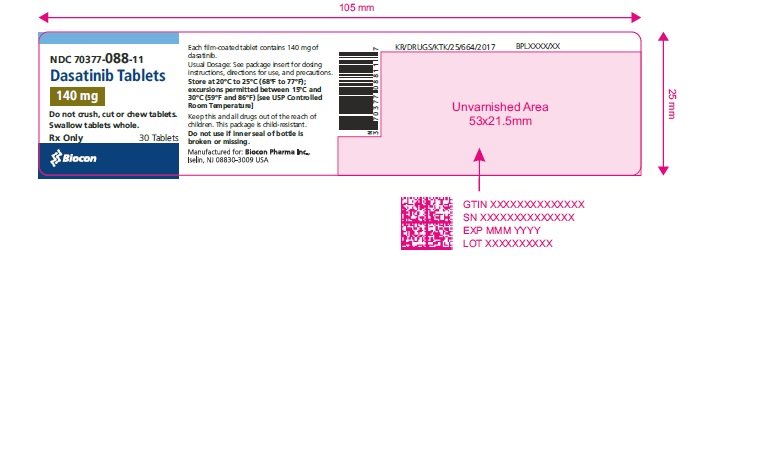
Dasatinib 140 mg Tablet, Film Coated, 30-count — NDC 70377-088-11 (Billing 70377-0088-11)
This is a package of 30 tablets of Dasatinib 140 mg Tablet, Film Coated from Biocon Pharma Inc., marketed since Mar 2025 and currently FDA-listed. It is this product's only package size.
NDC database record
One package, one record: these facts belong to NDC 70377-088-11 alone.
- Record
- FDA NDC Directory package listing · Human prescription drug
- Code segments
- 70377 labeler · 088 product · 11 package
- Package marketed since
- Mar 3, 2025
- Sample package
- No — commercial package
- Listing certified through
- Dec 31, 2026
- Billing quantity
- 30 EA per package
- Barcode (UPC-A, from the NDC)
- 3 7037708811 7
- FDA record last changed
- Jul 24, 2026
Identity & classification
Regulatory identifiers FDA, NLM and CMS codes for this package
Drug-database identifiers Medi-Span GPI and First Databank GCN / HICL / AHFS classification
- GSN (GCN sequence number): 066969
- GCN: 29406
- GPI-14 (Medi-Span): 21531820000380
- HICL (First Databank): 033855
- AHFS class code: 10:00.00.00
- RxCUI (RxNorm): 643105
Where does this data come from?
- FDA openFDA NDC Directory · synced Oct 1, 2026
- FDA label on DailyMed · label index refreshed Oct 6, 2026
- RxNorm (NLM RxNav) · catalog refreshed Oct 1, 2026
- Medi-Span GPI (licensed)
- First Databank (licensed) · refreshed Oct 1, 2026
RxNorm drug class
This medicine belongs to the Kinase Inhibitor class.
Where does this data come from?
- RxClass (NLM) · catalog refreshed Oct 1, 2026
Clinical
Dasatinib is used to treat a certain type of chronic myeloid leukemia (CML; a type of cancer of the white blood cells) as a first treatment and in adults who can no longer benefit from other leukemia medications including imatinib (Gleevec®) or in those who cannot take these medications because of side effects. Dasatinib is also used to treat a certain type of chronic CML in children 1 year of age or older. Dasatinib is also used to treat a certain type of acute lymphoblastic leukemia (ALL; a type of cancer of the white blood cells) in adults who can no longer benefit from other leukemia medi...
Read the full MedlinePlus article ↗- It treats certain leukemias that carry the Philadelphia chromosome. These are Ph+ chronic myeloid leukemia (CML) and Ph+ acute lymphoblastic leukemia (ALL). The exact approval depe...
- Take it by mouth once a day, with or without food. Swallow the tablet whole. Do not crush, cut or chew it. Follow your prescriber’s directions for your dose.
- Expect possible low blood counts, fluid retention, diarrhea, headache, rash, fatigue, nausea and shortness of breath. Call your doctor for bleeding, fever, swelling or trouble brea...
- Usually not. H2 blockers and proton pump inhibitors can lower dasatinib levels, so they should not be used with it. If you need an antacid, take it at least 2 hours before or after...
Patient education
Supplement & herbal interactions
Some supplements/herbs that may interact with Dasatinib — tap one for details:
Where does this data come from?
- MedlinePlus (NLM) · refreshed Oct 1, 2026
- FDA label on DailyMed · label index refreshed Oct 6, 2026
Ask a licensed pharmacist directly — free, answered by our team.
Pricing
A drug doesn't have one price. Each row is a different public payment system, and none is what you'd pay at the counter — that depends on your insurance. The ⓘ on each row explains what it measures.
| Price system | Per each | Per package |
|---|---|---|
| Retail pharmacies payNADAC · weekly | Not in the retail survey — common for institutional, discontinued, or low-volume packs. | |
| Medicaid paysCMS SDUD · 12 mo | No recent Medicaid claims on file for this NDC — rare and low-volume NDCs are suppressed in the public data. | |
| Medicare drug plans payPart D · Q2 2026 | $87.46 | $2,623.69 / 30 tablets |
Where does this data come from?
- CMS NADAC weekly file
- CMS ASP pricing files · refreshed Sep 20, 2026
- CMS Medicaid State Drug Utilization Data · refreshed Oct 6, 2026
- CMS Part D plan pricing files · refreshed Sep 24, 2026
- VA National Acquisition Center price file
Packaging — all sizes for this product
| Package NDC | Description | Marketing start | Marketing end | Status |
|---|---|---|---|---|
| 70377-0088-11 You're viewing this Main listing | 30 TABLET, FILM COATED in 1 BOTTLE | 2025-03-03 | — | Active |
Therapeutic equivalents
| Product | Labeler | Pack | NADAC/unit | TE | Status | Price vs. this |
|---|---|---|---|---|---|---|
| Sprycel 140 mg 00003-0857-22 | E.R. | 30 tablets | — | AB | FDA listed | — |
| Dasatinib 140 mg 00480-3524-56 | Teva | 30 tablets | — | AB | FDA listed | — |
| Dasatinib 140 mg 43598-0604-30 | Dr.Reddys | 30 tablets | — | AB | FDA listed | — |
| Dasatinib 140 mg 46708-0689-30 | Alembic | 30 tablets | — | AB | FDA listed | — |
| Dasatinib 140 mg 59651-0547-15 | Aurobindo | 15 tablets | — | AB | FDA listed | — |
| Dasatinib 140 mg 60505-3817-03 | Apotex | 30 tablets | — | AB | FDA listed | — |
| Dasatinib 140 mg 62332-0689-30 | Alembic | 30 tablets | — | AB | FDA listed | — |
| Dasatinib 140 mg 66993-0238-30 | Prasco | 30 tablets | — | AB | FDA listed | — |
| Dasatinib 140 mg 68001-0665-04 | BluePoint | 30 tablets | — | AB | FDA listed | — |
| Dasatinib 140 mgthis 70377-0088-11 | Biocon | 30 tablets | — | AB | FDA listed | — |
| Phyrago 140 mg 70709-0156-14 | Cycle | 30 tablets | — | — | FDA listed | — |
| dasatinib 140 mg 70710-1746-03 | Zydus | 30 tablets | — | AB | FDA listed | — |
| Dasatinib 140 mg 70748-0213-06 | Lupin | 30 tablets | — | AB | FDA listed | — |
| dasatinib 140 mg 70771-1906-03 | Zydus | 30 tablets | — | AB | FDA listed | — |
| Dasatinib 140 mg 72603-0927-01 | NorthStar | 30 tablets | — | AB | FDA listed | — |
| Dasatinib 140 mg 73190-0051-30 | AvKARE | 30 tablets | — | AB | FDA listed | — |
| Dasatinib 140 mg 72205-0324-30 | Novadoz | 30 tablets | — | — | FDA listed | — |
Where does this data come from?
- FDA openFDA NDC Directory · synced Oct 1, 2026
- FDA Orange Book · refreshed Oct 3, 2026
- CMS NADAC weekly file
Availability & generic status
This product is an FDA-approved generic. Other versions of the same drug are listed under Therapeutic equivalents, least expensive first.
Where does this data come from?
- FDA Orange Book · refreshed Oct 3, 2026
What it looks like
Where does this data come from?
- FDA label on DailyMed · label index refreshed Oct 6, 2026
Inactive Ingredients / Excipients
Inactive ingredients, also called excipients, are components of the drug product other than the active ingredient. They may include fillers, dyes, coatings, preservatives, flavors, or other formulation ingredients.
🧪 Avoiding an ingredient? See Dasatinib inactive ingredients by manufacturer: every current product's list side by side, so you can ask your pharmacy for the version that does not list it.
💡 Tap an ingredient (hover on desktop) to see what it is and why it’s used.
-
UNII 3SY5LH9PMK
Anhydrous lactose is a milk sugar with no water content. It acts as a filler and binder in tablets and capsules, adding bulk and helping ingredients stick together.
-
UNII M28OL1HH48
Croscarmellose sodium is a plant-based substance derived from cellulose. It acts as a disintegrant, helping tablets and capsules break down quickly in the digestive system so the medicine can be absorbed.
-
UNII U72Q2I8C85
A mixture of fats derived from coconut oil that acts as an emulsifier and solubilizer. It helps blend oil and water-based ingredients together and improves how the body absorbs certain drugs.
-
UNII RFW2ET671P
Hydroxypropyl cellulose is a plant-derived thickening agent made from cellulose. It acts as a binder to hold tablet ingredients together and as a film-former to coat tablets or control how fast the medicine releases.
-
UNII EWQ57Q8I5X
Lactose monohydrate is a natural sugar derived from milk. It serves as a filler and binder in tablets and capsules, helping create the proper size, texture, and consistency of the medicine.
-
UNII 70097M6I30
Magnesium stearate is a salt made from magnesium and stearic acid, a fatty substance. It's used in tablets and capsules as a lubricant and glidant to help ingredients flow smoothly during manufacturing and prevent sticking.
-
UNII 7T9FYH5QMK
A plant-derived powder that serves as a binder and filler in tablets and capsules. It helps hold ingredients together, adds bulk, and aids in smooth tablet disintegration when swallowed.
-
UNII 532B59J990
Polyvinyl alcohol is a synthetic polymer made from plant-derived materials. It's used as a binder to hold ingredients together, a film-former in coatings, and a thickener in liquid formulations.
-
UNII 368GB5141J
A detergent and foaming agent derived from coconut or palm oil. In medications, it helps break down and mix oil and water-based ingredients, aids in tablet disintegration, and improves how the drug dissolves and spreads in the mouth or digestive system.
-
UNII 7SEV7J4R1U
A powder made from a naturally occurring mineral. In medicines, talc works as a glidant and anti-caking agent, helping tablets and capsules flow smoothly during manufacturing and preventing clumping.
-
UNII 15FIX9V2JP
Titanium dioxide is a bright white mineral powder commonly used as a colorant and opacifying agent. It makes pills and tablets white or lighter in color and helps make coatings non-transparent.
11 inactive ingredients listed in the exact product block matched to this NDC.
Where does this data come from?
ingredient classCode="IACT" elements from the exact product block matched by this NDC. Label-section narrative from DailyMed / the openFDA label index is shown separately when available.- FDA label on DailyMed · label index refreshed Oct 6, 2026
- FDA openFDA NDC Directory · synced Oct 1, 2026
Inactive ingredient FAQ
Are inactive ingredients the same for every manufacturer?
Why might an inactive ingredient be missing?
Can inactive ingredients matter?
Manufacturer & labeler
More NDCs from Biocon Pharma Inc. labeler code 70377
- Atorvastatin Calcium 80 mg Tablet, Film Coated NDC 70377-080-11
- Dasatinib 20 mg Tablet, Film Coated NDC 70377-083-11
- Dasatinib 50 mg Tablet, Film Coated NDC 70377-084-11
- Dasatinib 70 mg Tablet, Film Coated NDC 70377-085-11
- Dasatinib 80 mg Tablet, Film Coated NDC 70377-086-11
- Dasatinib 100 mg Tablet, Film Coated NDC 70377-087-11
- Everolimus 2 mg Tablet, For Suspension NDC 70377-090-11
- Everolimus 3 mg Tablet, For Suspension NDC 70377-091-11
- Everolimus 5 mg Tablet, For Suspension NDC 70377-092-11
- Daptomycin 500 mg/10mL Injection, Powder, Lyophilized, For Solution NDC 70377-093-91
- Liraglutide 6 mg/mL Injection NDC 70377-094-52
- Liraglutide 6 mg/mL Injection, Solution NDC 70377-095-52
Where does this data come from?
- FDA openFDA NDC Directory · synced Oct 1, 2026
- Drugs@FDA
Full prescribing information FDA SPL
🎯 Indications and Usage ▾
1 INDICATIONS AND USAGE Dasatinib tablets are indicated for the treatment of adult patients with newly diagnosed Philadelphia chromosome-positive (Ph+) chronic myeloid leukemia (CML) in chronic phase. chronic, accelerated, or myeloid or lymphoid blast phase Ph+ CML with resistance or intolerance to prior therapy including imatinib. Philadelphia chromosome-positive acute lymphoblastic leukemia (Ph+ ALL) with resistance or intolerance to prior therapy. Dasatinib tablets are indicated for the treatment of pediatric patients 1 year of age and older with Ph+ CML in chronic phase. newly diagnosed Ph+ ALL in combination with chemotherapy.
Dasatinib tablets are a kinase inhibitor indicated for the treatment of newly diagnosed adults with Philadelphia chromosome-positive (Ph+) chronic myeloid leukemia (CML) in chronic phase. ( 1 , 14 ) adults with chronic, accelerated, or myeloid or lymphoid blast phase Ph+ CML with resistance or intolerance to prior therapy including imatinib. ( 1 , 14 ) adults with Philadelphia chromosome-positive acute lymphoblastic leukemia (Ph+ ALL) with resistance or intolerance to prior therapy.
( 1 , 14 ) pediatric patients 1 year of age and older with Ph+ CML in chronic phase. ( 1 , 14 ) pediatric patients 1 year of age and older with newly diagnosed Ph+ ALL in combination with chemotherapy. ( 1 , 14 )
⏱️ Dosage and Administration ▾
2 DOSAGE AND ADMINISTRATION Chronic phase CML in adults: 100 mg once daily. ( 2 ) Accelerated phase CML, myeloid or lymphoid blast phase CML, or Ph+ ALL in adults: 140 mg once daily. ( 2 ) Chronic phase CML and ALL in pediatrics: starting dose based on body weight. ( 2 ) Administer orally, with or without a meal. Do not crush, cut, or chew tablets. ( 2 )
2.1Dosage of Dasatinib Tablets in Adult Patients The recommended starting dosage of dasatinib tablets for chronic phase CML in adults is 100 mg administered orally once daily. The recommended starting dosage of dasatinib tablets for accelerated phase CML, myeloid or lymphoid blast phase CML, or Ph+ ALL in adults is 140 mg administered orally once daily. Tablets should not be crushed, cut, or chewed; they should be swallowed whole.
Dasatinib tablets can be taken with or without a meal, either in the morning or in the evening.
2.2Dosage of Dasatinib Tablets in Pediatric Patients with CML or Ph+ ALL The recommended starting dosage for pediatrics is based on body weight as shown in Table 1. The recommended dose should be administered orally once daily with or without food. Recalculate the dose every 3 months based on changes in body weight, or more often if necessary.
Do not crush, cut or chew tablets. Swallow tablets whole. There are additional administration considerations for pediatric patients who have difficulty swallowing tablets whole [see Use in Specific Populations (8.4) and Clinical Pharmacology (12.3)].
Table 1: Dosage of Dasatinib Tablets for Pediatric Patients a Body Weight (kg) b Daily Dose (mg) 10 to less than 20 40 mg 20 to less than 30 60 mg 30 to less than 45 70 mg at least 45 100 mg a For pediatric patients with Ph+ ALL, begin dasatinib tablets therapy on or before day 15 of induction chemotherapy, when diagnosis is confirmed and continue for 2 years. b Tablet dosing is not recommended for patients weighing less than 10 kg. Refer to Section 2.4 for recommendations on dose escalation in adults with CML and Ph+ ALL, and pediatric patients with CML.
2.3Dose Modification Strong CYP3A4 Inducers Avoid the use of concomitant strong CYP3A4 inducers and St. John’s wort. If patients must be coadministered a strong CYP3A4 inducer, consider a dasatinib tablets dose increase.
If the dose of dasatinib tablets is increased, monitor the patient carefully for toxicity [ see Drug Interactions (7.1) ] . Strong CYP3A4 Inhibitors Avoid the use of concomitant strong CYP3A4 inhibitors and grapefruit juice. Recommend selecting an alternate concomitant medication with no or minimal enzyme inhibition potential, if possible.
If dasatinib tablets must be administered with a strong CYP3A4 inhibitor, consider a dose decrease to: 40 mg daily for patients taking dasatinib tablets 140 mg daily. 20 mg daily for patients taking dasatinib tablets 100 mg daily. 20 mg daily for patients taking dasatinib tablets 70 mg daily.
For patients taking dasatinib tablets 60 mg or 40 mg daily, consider interrupting dasatinib tablets until the inhibitor is discontinued. Allow a washout period of approximately 1 week after the inhibitor is stopped before reinitiating dasatinib tablets. These reduced doses of dasatinib tablets are predicted to adjust the area under the curve (AUC) to the range observed without CYP3A4 inhibitors; however, clinical data are not available with these dose adjustments in patients receiving strong CYP3A4 inhibitors.
If dasatinib tablets are not tolerated after dose reduction, either discontinue the strong CYP3A4 inhibitor or interrupt dasatinib tablets until the inhibitor is discontinued. Allow a washout period of approximately 1 week after the inhibitor is stopped before the dasatinib tablets dose is increased [ see Drug Interactions (7.1) ] .
2.4Dose Escalation in Adults with CML and Ph+ ALL, and Pediatric Patients with CML For adult patients with CML and Ph+ ALL, consider dose escalation to 140 mg once daily (chronic phase CML) or 180 mg once daily (advanced phase CML and Ph+ AL… [Excerpted — this section continues on DailyMed.]
💊 Dosage Forms and Strengths ▾
3 DOSAGE FORMS AND STRENGTHS Dasatinib tablets are available as 20-mg, 50-mg, 70-mg, 80-mg, 100-mg, and 140-mg white to off-white, biconvex, film-coated tablets. Tablets: 20 mg, 50 mg, 70 mg, 80 mg, 100 mg, and 140 mg. ( 3 )
⛔ Contraindications ▾
4 CONTRAINDICATIONS None. None. (4)
⚠️ Warnings and Cautions ▾
5 WARNINGS AND PRECAUTIONS Myelosuppression and Bleeding Events: Severe thrombocytopenia, neutropenia, and anemia may occur. Use caution if used concomitantly with medications that inhibit platelet function or anticoagulants. Monitor complete blood counts regularly.
Transfuse and interrupt dasatinib tablets when indicated. ( 2.5 , 5.1 , 5.2 ) Fluid Retention: Fluid retention, sometimes severe, including pleural effusions. Manage with supportive care measures and/or dose modification.
( 2.5 , 5.3 ) Cardiovascular Toxicity: Monitor patients for signs or symptoms and treat appropriately. ( 5.4 ) Pulmonary Arterial Hypertension (PAH): Dasatinib tablets may increase the risk of developing PAH which may be reversible on discontinuation. Consider baseline risk and evaluate patients for signs and symptoms of PAH during treatment.
Stop dasatinib tablets if PAH is confirmed. ( 5.5 ) QT Prolongation: Use dasatinib tablets with caution in patients who have or may develop prolongation of the QT interval. ( 5.6 ) Severe Dermatologic Reactions: Individual cases of severe mucocutaneous dermatologic reactions have been reported.
( 5.7 ) Tumor Lysis Syndrome: Tumor lysis syndrome has been reported. Maintain adequate hydration and correct uric acid levels prior to initiating therapy with dasatinib tablets. ( 5.8 ) Embryo-Fetal Toxicity: Can cause fetal harm.
Advise patients of reproductive potential of potential risk to fetus and to use effective contraception. ( 5.9 , 8.1 , 8.3 ) Effects on Growth and Development in Pediatric Patients: epiphyses delayed fusion, osteopenia, growth retardation, and gynecomastia have been reported. Monitor bone growth and development in pediatric patients.
( 5.10 ) Hepatotoxicity: Assess liver function before initiation of treatment and monthly thereafter or as clinically indicated. Monitor liver function when combined with chemotherapy known to be associated with liver dysfunction. ( 5.11 )
5.1Myelosuppression Treatment with dasatinib is associated with severe (NCI CTCAE Grade 3 or 4) thrombocytopenia, neutropenia, and anemia, which occur earlier and more frequently in patients with advanced phase CML or Ph+ ALL than in patients with chronic phase CML [ see Adverse Reactions (6.1) ] . In patients with chronic phase CML, perform complete blood counts (CBCs) every 2 weeks for 12 weeks, then every 3 months thereafter, or as clinically indicated. In patients with advanced phase CML or Ph+ ALL, perform CBCs weekly for the first 2 months and then monthly thereafter, or as clinically indicated.
In pediatric patients with Ph+ ALL treated with dasatinib in combination with chemotherapy, perform CBCs prior to the start of each block of chemotherapy and as clinically indicated. During the consolidation blocks of chemotherapy, perform CBCs every 2 days until recovery. Myelosuppression is generally reversible and usually managed by withholding dasatinib temporarily and/or dose reduction [ see Dosage and Administration (2.5) ] .
5.2Bleeding-Related Events Dasatinib can cause serious and fatal bleeding. In all CML or Ph+ ALL clinical studies, Grade ≥3 central nervous system (CNS) hemorrhages, including fatalities, occurred in <1% of patients receiving dasatinib. The incidence of Grade 3/4 hemorrhage occurred in 5.8% of adult patients and generally required treatment interruptions and transfusions.
The incidence of Grade 5 hemorrhage occurred in 0.4% of adult patients. The most frequent site of hemorrhage was gastrointestinal [ see Adverse Reactions (6.1) ] . Most bleeding events in clinical studies were associated with severe thrombocytopenia.
In addition to causing thrombocytopenia in human subjects, dasatinib caused platelet dysfunction in vitro . Concomitant medications that inhibit platelet function or anticoagulants may increase the risk of hemorrhage.
5.3Fluid Retention Dasatinib may cause fluid retention [ see Adverse Reactions (6.1) ] . After 5 years of follow-up in the adult randomized newly diagnosed chronic phase… [Excerpted — this section continues on DailyMed.]
🤒 Adverse Reactions ▾
6 ADVERSE REACTIONS The following clinically significant adverse reactions are discussed in greater detail in other sections of the labeling: • Myelosuppression [see Dosage and Administration (2.5) and Warnings and Precautions (5.1) ] . • Bleeding-related events [see Warnings and Precautions (5.2) ] . • Fluid retention [see Warnings and Precautions (5.3) ] . • Cardiovascular toxicity [see Warnings and Precautions (5.4) ] . • Pulmonary arterial hypertension [see Warnings and Precautions (5.5) ] . • QT prolongation [see Warnings and Precautions (5.6) ] . • Severe dermatologic reactions [see Warnings and Precautions (5.7) ] . • Tumor lysis syndrome [see Warnings and Precautions (5.8) ] . • Effects on growth and development in pediatric patients [see Warnings and Precautions (5.10) ] . • Hepatotoxicity [see Warnings and Precautions (5.11) ] .
Most common adverse reactions (≥15%) in patients receiving dasatinib tablets as single-agent therapy included myelosuppression, fluid retention events, diarrhea, headache, skin rash, hemorrhage, dyspnea, fatigue, nausea, and musculoskeletal pain. ( 6 ) Most common adverse reactions (≥30%) in pediatric patients receiving dasatinib tablets in combination with chemotherapy included mucositis, febrile neutropenia, pyrexia, diarrhea, nausea, vomiting, musculoskeletal pain, abdominal pain, cough, headache, rash, fatigue, constipation, arrhythmia, hypertension, edema, infections (bacterial, viral and fungal), hypotension, decreased appetite, hypersensitivity, dyspnea, epistaxis, peripheral neuropathy, and altered state of consciousness.
( 6 ) To report SUSPECTED ADVERSE REACTIONS, contact Biocon Pharma Inc., at 1-866-924-6266 or FDA at 1-800-FDA-1088 or www.fda.gov/medwatch.
6.1Clinical Trials Experience Because clinical trials are conducted under widely varying conditions, adverse reaction rates observed in the clinical trials of a drug cannot be directly compared to rates in the clinical trials of another drug and may not reflect the rates observed in practice. The data described below reflect exposure to dasatinib administered as single-agent therapy at all doses tested in clinical studies (n=2809), including 324 adult patients with newly diagnosed chronic phase CML, 2388 adult patients with imatinib-resistant or -intolerant chronic or advanced phase CML or Ph+ ALL, and 97 pediatric patients with chronic phase CML.
The median duration of therapy in a total of 2712 adult patients was 19.2 months (range 0 to 93.2 months). In a randomized trial in patients with newly diagnosed chronic phase CML, the median duration of therapy was approximately 60 months. The median duration of therapy in 1618 adult patients with chronic phase CML was 29 months (range 0 to 92.9 months).
The median duration of therapy in 1094 adult patients with advanced phase CML or Ph+ ALL was 6.2 months (range 0 to 93.2 months). In two non-randomized trials in 97 pediatric patients with chronic phase CML (51 patients newly diagnosed and 46 patients resistant or intolerant to previous treatment with imatinib), the median duration of therapy was 51.1 months (range 1.9 to 99.6 months). In the overall population of 2712 adult patients, 88% of patients experienced adverse reactions at some time and 19% experienced adverse reactions leading to treatment discontinuation.
In the randomized trial in adult patients with newly diagnosed chronic phase CML, drug was discontinued for adverse reactions in 16% of patients with a minimum of 60 months of follow-up. After a minimum of 60 months of follow-up, the cumulative discontinuation rate was 39%. Among the 1618 patients with chronic phase CML, drug-related adverse reactions leading to discontinuation were reported in 329 (20.3%) patients; among the 1094 patients with advanced phase CML or Ph+ ALL, drug-related adverse reactions leading to discontinuation were reported in 191 (17.5%) patients.
Among the 97 pediatric subjects, drug-related adverse reactions leading to discontinuation were report… [Excerpted — this section continues on DailyMed.]
🔄 Drug Interactions ▾
7 DRUG INTERACTIONS Strong CYP3A4 Inhibitors: Dose reduction may be necessary. ( 2.3 , 7.1 ) Strong CYP3A4 Inducers: Dose increase may be necessary. ( 2.3 , 7.1 ) Antacids: Avoid simultaneous administration. ( 7.1 ) H 2 Antagonists and Proton Pump Inhibitors: Avoid coadministration. ( 7.1 )
7.1Effect of Other Drugs on Dasatinib Strong CYP3A4 Inhibitors The coadministration with strong CYP3A inhibitors may increase dasatinib concentrations [ see Clinical Pharmacology (12.3) ] . Increased dasatinib concentrations may increase the risk of toxicity. Avoid concomitant use of strong CYP3A4 inhibitors.
If concomitant administration of a strong CYP3A4 inhibitor cannot be avoided, consider a dasatinib dose reduction [ see Dosage and Administration (2.5) ] . Strong CYP3A4 Inducers The coadministration of dasatinib with strong CYP3A inducers may decrease dasatinib concentrations [ see Clinical Pharmacology (12.3) ] . Decreased dasatinib concentrations may reduce efficacy.
Consider alternative drugs with less enzyme induction potential. If concomitant administration of a strong CYP3A4 inducer cannot be avoided, consider a dasatinib dose increase. Gastric Acid Reducing Agents The coadministration of dasatinib with a gastric acid reducing agent may decrease the concentrations of dasatinib.
Decreased dasatinib concentrations may reduce efficacy. Do not administer H 2 antagonists or proton pump inhibitors with dasatinib. Consider the use of antacids in place of H 2 antagonists or proton pump inhibitors.
Administer the antacid at least 2 hours prior to or 2 hours after the dose of dasatinib. Avoid simultaneous administration of dasatinib with antacids.
7.1Effect of Other Drugs on Dasatinib Strong CYP3A4 Inhibitors The coadministration with strong CYP3A inhibitors may increase dasatinib concentrations [ see Clinical Pharmacology (12.3) ] . Increased dasatinib concentrations may increase the risk of toxicity. Avoid concomitant use of strong CYP3A4 inhibitors.
If concomitant administration of a strong CYP3A4 inhibitor cannot be avoided, consider a dasatinib dose reduction [ see Dosage and Administration (2.5) ] . Strong CYP3A4 Inducers The coadministration of dasatinib with strong CYP3A inducers may decrease dasatinib concentrations [ see Clinical Pharmacology (12.3) ] . Decreased dasatinib concentrations may reduce efficacy.
Consider alternative drugs with less enzyme induction potential. If concomitant administration of a strong CYP3A4 inducer cannot be avoided, consider a dasatinib dose increase. Gastric Acid Reducing Agents The coadministration of dasatinib with a gastric acid reducing agent may decrease the concentrations of dasatinib.
Decreased dasatinib concentrations may reduce efficacy. Do not administer H 2 antagonists or proton pump inhibitors with dasatinib. Consider the use of antacids in place of H 2 antagonists or proton pump inhibitors.
Administer the antacid at least 2 hours prior to or 2 hours after the dose of dasatinib. Avoid simultaneous administration of dasatinib with antacids.
👥 Use in Specific Populations ▾
8 USE IN SPECIFIC POPULATIONS Lactation: Advise women not to breastfeed. ( 8.2 )
8.1Pregnancy Risk Summary Based on limited human data, dasatinib can cause fetal harm when administered to a pregnant woman. Adverse pharmacologic effects including hydrops fetalis, fetal leukopenia, and fetal thrombocytopenia have been reported with maternal exposure to dasatinib. Animal reproduction studies in rats have demonstrated extensive mortality during organogenesis, the fetal period, and in neonates.
Skeletal malformations were observed in a limited number of surviving rat and rabbit conceptuses. These findings occurred at dasatinib plasma concentrations below those in humans receiving therapeutic doses of dasatinib [see Data] . Advise a pregnant woman of the potential risk to a fetus.
The estimated background risk in the U.S. general population of major birth defects is 2% to 4% and of miscarriage is 15% to 20% of clinically recognized pregnancies. Clinical Considerations Fetal/Neonatal Adverse Reactions Transplacental transfer of dasatinib has been reported. Dasatinib has been measured in fetal plasma and amniotic fluid at concentrations comparable to those in maternal plasma.
Hydrops fetalis, fetal leukopenia, and fetal thrombocytopenia have been reported with maternal exposure to dasatinib. These adverse pharmacologic effects on the fetus are similar to adverse reactions observed in adult patients and may result in fetal harm or neonatal death [see Warnings and Precautions ( 5.1 , 5.3 )] . Data Human Data Based on human experience, dasatinib is suspected to cause congenital malformations, including neural tube defects, and harmful pharmacological effects on the fetus when administered during pregnancy.
Animal Data In nonclinical studies at plasma concentrations below those observed in humans receiving therapeutic doses of dasatinib, embryo-fetal toxicities were observed in rats and rabbits. Fetal death was observed in rats. In both rats and rabbits, the lowest doses of dasatinib tested (rat: 2.5 mg/kg/day [15 mg/m 2 /day] and rabbit: 0.5 mg/kg/day [6 mg/m 2 /day]) resulted in embryo-fetal toxicities.
These doses produced maternal AUCs of 105 ng•h/mL and 44 ng•h/mL (0.1-fold the human AUC) in rats and rabbits, respectively. Embryo-fetal toxicities included skeletal malformations at multiple sites (scapula, humerus, femur, radius, ribs, and clavicle), reduced ossification (sternum; thoracic, lumbar, and sacral vertebrae; forepaw phalanges; pelvis; and hyoid body), edema, and microhepatia. In a pre- and postnatal development study in rats, administration of dasatinib from gestation day (GD) 16 through lactation day (LD) 20, GD 21 through LD 20, or LD 4 through LD 20 resulted in extensive pup mortality at maternal exposures that were below the exposures in patients treated with dasatinib at the recommended labeling dose.
8.2Lactation Risk Summary No data are available regarding the presence of dasatinib in human milk, the effects of the drug on the breastfed child, or the effects of the drug on milk production. However, dasatinib is present in the milk of lactating rats. Because of the potential for serious adverse reactions in nursing children from dasatinib, breastfeeding is not recommended during treatment with dasatinib and for 2 weeks after the last dose.
8.3Females and Males of Reproductive Potential Dasatinib can cause fetal harm when administered to a pregnant woman [ see Use in Specific Populations (8.1) ] . Contraception Advise females of reproductive potential and males with female partners of reproductive potential to use effective contraception during treatment with dasatinib and for 30 days after the last dose. Infertility Based on animal data, dasatinib may result in damage to female and male reproductive tissues [ see Nonclinical Toxicology (13.1) ] .
8.4Pediatric Use Ph+ CML in Chronic Phase The safety and effectiveness of dasatinib monotherapy have been demonstrated in pediatric patients with newly diagnosed chronic… [Excerpted — this section continues on DailyMed.]
🤰 Pregnancy ▾
8.1Pregnancy Risk Summary Based on limited human data, dasatinib can cause fetal harm when administered to a pregnant woman. Adverse pharmacologic effects including hydrops fetalis, fetal leukopenia, and fetal thrombocytopenia have been reported with maternal exposure to dasatinib. Animal reproduction studies in rats have demonstrated extensive mortality during organogenesis, the fetal period, and in neonates.
Skeletal malformations were observed in a limited number of surviving rat and rabbit conceptuses. These findings occurred at dasatinib plasma concentrations below those in humans receiving therapeutic doses of dasatinib [see Data] . Advise a pregnant woman of the potential risk to a fetus.
The estimated background risk in the U.S. general population of major birth defects is 2% to 4% and of miscarriage is 15% to 20% of clinically recognized pregnancies. Clinical Considerations Fetal/Neonatal Adverse Reactions Transplacental transfer of dasatinib has been reported. Dasatinib has been measured in fetal plasma and amniotic fluid at concentrations comparable to those in maternal plasma.
Hydrops fetalis, fetal leukopenia, and fetal thrombocytopenia have been reported with maternal exposure to dasatinib. These adverse pharmacologic effects on the fetus are similar to adverse reactions observed in adult patients and may result in fetal harm or neonatal death [see Warnings and Precautions ( 5.1 , 5.3 )] . Data Human Data Based on human experience, dasatinib is suspected to cause congenital malformations, including neural tube defects, and harmful pharmacological effects on the fetus when administered during pregnancy.
Animal Data In nonclinical studies at plasma concentrations below those observed in humans receiving therapeutic doses of dasatinib, embryo-fetal toxicities were observed in rats and rabbits. Fetal death was observed in rats. In both rats and rabbits, the lowest doses of dasatinib tested (rat: 2.5 mg/kg/day [15 mg/m 2 /day] and rabbit: 0.5 mg/kg/day [6 mg/m 2 /day]) resulted in embryo-fetal toxicities.
These doses produced maternal AUCs of 105 ng•h/mL and 44 ng•h/mL (0.1-fold the human AUC) in rats and rabbits, respectively. Embryo-fetal toxicities included skeletal malformations at multiple sites (scapula, humerus, femur, radius, ribs, and clavicle), reduced ossification (sternum; thoracic, lumbar, and sacral vertebrae; forepaw phalanges; pelvis; and hyoid body), edema, and microhepatia. In a pre- and postnatal development study in rats, administration of dasatinib from gestation day (GD) 16 through lactation day (LD) 20, GD 21 through LD 20, or LD 4 through LD 20 resulted in extensive pup mortality at maternal exposures that were below the exposures in patients treated with dasatinib at the recommended labeling dose.
🧓 Geriatric Use ▾
8.5Geriatric Use Of the 2712 patients in clinical studies of dasatinib, 617 (23%) were 65 years of age and older, and 123 (5%) were 75 years of age and older. No differences in confirmed Complete Cytogenetic Response (cCCyR) and MMR were observed between older and younger patients. While the safety profile of dasatinib in the geriatric population was similar to that in the younger population, patients aged 65 years and older are more likely to experience the commonly reported adverse reactions of fatigue, pleural effusion, diarrhea, dyspnea, cough, lower gastrointestinal hemorrhage, and appetite disturbance, and more likely to experience the less frequently reported adverse reactions of abdominal distention, dizziness, pericardial effusion, congestive heart failure, hypertension, pulmonary edema, and weight decrease, and should be monitored closely.
🆘 Overdosage ▾
10 OVERDOSAGE Experience with overdose of dasatinib in clinical studies is limited to isolated cases. The highest overdosage of 280 mg per day for 1 week was reported in two patients and both developed severe myelosuppression and bleeding. Since dasatinib is associated with severe myelosuppression [see Warnings and Precautions (5.1) and Adverse Reactions (6.1) ] , monitor patients who ingest more than the recommended dosage closely for myelosuppression and give appropriate supportive treatment.
Acute overdose in animals was associated with cardiotoxicity. Evidence of cardiotoxicity included ventricular necrosis and valvular/ventricular/atrial hemorrhage at single doses ≥100 mg/kg (600 mg/m 2 ) in rodents. There was a tendency for increased systolic and diastolic blood pressure in monkeys at single doses ≥10 mg/kg (120 mg/m 2 ).
🧬 Clinical Pharmacology ▾
12 CLINICAL PHARMACOLOGY
12.1Mechanism of Action Dasatinib, at nanomolar concentrations, inhibits the following kinases: BCR-ABL, SRC family (SRC, LCK, YES, FYN), c-KIT, EPHA2, and PDGFRβ. Based on modeling studies, dasatinib is predicted to bind to multiple conformations of the ABL kinase. In vitro , dasatinib was active in leukemic cell lines representing variants of imatinib mesylate-sensitive and resistant disease.
Dasatinib inhibited the growth of chronic myeloid leukemia (CML) and acute lymphoblastic leukemia (ALL) cell lines overexpressing BCR-ABL. Under the conditions of the assays, dasatinib could overcome imatinib resistance resulting from BCR-ABL kinase domain mutations, activation of alternate signaling pathways involving the SRC family kinases (LYN, HCK), and multi-drug resistance gene overexpression.
12.2Pharmacodynamics Cardiac Electrophysiology Of 2440 patients treated with dasatinib at all doses tested in clinical trials, 16 patients (<1%) had QTc prolongation reported as an adverse reaction. Twenty-two patients (1%) experienced a QTcF > 500 ms. In 865 patients with leukemia treated with dasatinib 70 mg BID in five Phase 2 studies, the maximum mean changes in QTcF (90% upper bound CI) from baseline ranged from 7 ms to 13.4 ms.
An analysis of the data from five Phase 2 studies in patients (70 mg BID) and a Phase 1 study in healthy subjects (100 mg single dose) suggests that there is a maximum increase of 3 to 6 milliseconds in Fridericia corrected QTc interval from baseline for subjects receiving therapeutic doses of dasatinib, with associated upper 95% confidence intervals <10 msec.
12.3Pharmacokinetics The pharmacokinetics of dasatinib exhibits dose proportional increases in AUC and linear elimination characteristics over the dose range of 15 mg/day (0.15 times the lowest approved recommended dose) to 240 mg/day (1.7 times the highest approved recommended dose). At 100 mg QD, the maximum concentration at steady state (C max ) is 82.2 ng/mL (CV% 69%), area under the plasma drug concentration time curve (AUC) is 397 ng/mL*hr (CV% 55%). The clearance of dasatinib is found to be time-invariant.
When administered to adult healthy subjects as dispersed tablets in juice, the adjusted geometric mean ratio was 0.97 (90% CI: 0.85, 1.10) for Cmax and 0.84 (90% CI: 0.78, 0.91) for AUC as compared to intact tablets. Absorption The maximum plasma concentrations (Cmax) of dasatinib are observed between 0.5 hours and 6 hours (Tmax) following oral administration. Food Effect A high-fat meal increased the mean AUC of dasatinib following a single dose of 100 mg by 14%.
The total calorie content of the high-fat meal was 985 kcal. The calories derived from fat, carbohydrates, and protein were 52%, 34%, and 14% for the high-fat meal. Distribution The apparent volume of distribution is 2505 L (CV% 93%).
Binding of dasatinib to human plasma proteins in vitro was approximately 96% and of its active metabolite was 93%, with no concentration dependence over the range of 100 ng/mL to 500 ng/mL. Dasatinib is a P-gp substrate in vitro . Elimination The mean terminal half-life of dasatinib is 3 hours to 5 hours.
The mean apparent oral clearance is 363.8 L/hr (CV% 81.3%). Metabolism Dasatinib is metabolized in humans, primarily by CYP3A4. CYP3A4 is the primary enzyme responsible for the formation of the active metabolite.
Flavin-containing monooxygenase 3 (FMO- 3) and uridine diphosphate-glucuronosyltransferase (UGT) enzymes are also involved in the formation of dasatinib metabolites. The exposure of the active metabolite, which is equipotent to dasatinib, represents approximately 5% of the AUC of dasatinib. The active metabolite of dasatinib is unlikely to play a major role in the observed pharmacology of the drug.
Dasatinib also has several other inactive oxidative metabolites. Excretion Elimination is primarily via the feces. Following a single radiolabeled dose of oral dasatinib, 4% of the administered radioactivity was recovered i… [Excerpted — this section continues on DailyMed.]
🧬 Mechanism of Action ▾
12.1Mechanism of Action Dasatinib, at nanomolar concentrations, inhibits the following kinases: BCR-ABL, SRC family (SRC, LCK, YES, FYN), c-KIT, EPHA2, and PDGFRβ. Based on modeling studies, dasatinib is predicted to bind to multiple conformations of the ABL kinase. In vitro , dasatinib was active in leukemic cell lines representing variants of imatinib mesylate-sensitive and resistant disease.
Dasatinib inhibited the growth of chronic myeloid leukemia (CML) and acute lymphoblastic leukemia (ALL) cell lines overexpressing BCR-ABL. Under the conditions of the assays, dasatinib could overcome imatinib resistance resulting from BCR-ABL kinase domain mutations, activation of alternate signaling pathways involving the SRC family kinases (LYN, HCK), and multi-drug resistance gene overexpression.
📦 How Supplied / Storage and Handling ▾
16 HOW SUPPLIED/STORAGE AND HANDLING How Supplied Dasatinib tablets are available as described in Table 21. Table 21: Dasatinib Tablets Trade Presentations NDC Number Strength Description Tablets per Bottle 70377-083-11 20 mg White to off-white, biconvex, round, film-coated tablet with “D8” debossed on one side and plain on the other side and free from physical defects. 60 70377-084-11 50 mg White to off-white, biconvex, oval, film-coated tablet with “D6”debossed on one side and plain on the other side and free from physical defects.
60 70377-085-11 70 mg White to off-white, biconvex, round, film-coated tablet with “D4” debossed on one side and plain on the other side and free from physical defects. 60 70377-086-11 80 mg White to off-white, biconvex, triangle, film-coated tablet with “D3” debossed on one side and plain on the other side and free from physical defects. 30 70377-087-11 100 mg White to off-white, biconvex, oval, film-coated tablet with “D2” debossed on one side and plain on the other side and free from physical defects.
30 70377-088-11 140 mg White to off-white, biconvex, round, film-coated tablet with “D1” debossed on one side and plain on the other side and free from physical defects. 30 Storage Dasatinib tablets should be stored at 20°C to 25°C (68°F to 77°F); excursions permitted between 15°C and 30°C (59°F and 86°F) [see USP Controlled Room Temperature]. This package is child-resistant.
Handling and Disposal Dasatinib tablet is an antineoplastic product. Follow special handling and disposal procedures. 1 Personnel who are pregnant should avoid exposure to crushed or broken tablets.
Dasatinib tablets consist of a core tablet, surrounded by a film coating to prevent exposure of healthcare professionals to the active substance. The use of latex or nitrile gloves for appropriate disposal when handling tablets that are inadvertently crushed or broken is recommended, to minimize the risk of dermal exposure.
📋 Description ▾
11 DESCRIPTION Dasatinib tablets are a kinase inhibitor. The chemical name for dasatinib is N-(2-chloro-6-methylphenyl)-2-[[6-[4-(2-hydroxyethyl)-1-piperazinyl]-2-methyl-4-pyrimidinyl]amino]-5-thiazolecarboxamide, monohydrate. The molecular formula is C 22 H 26 ClN 7 O 2 S • H 2 O, which corresponds to a formula weight of 506.02 (monohydrate).
The anhydrous free base has a molecular weight of 488.01. Dasatinib has the following chemical structure: Dasatinib is a white to off-white powder. The drug substance is soluble in N,N-dimethylformamide and insoluble in acetonitrile.
Dasatinib tablets are white to off-white, biconvex, film-coated tablets containing dasatinib, administered orally, with the following inactive ingredients: anhydrous lactose, lactose monohydrate, microcrystalline cellulose, croscarmellose sodium, hydroxypropyl cellulose and magnesium stearate. The tablet coating consists of polyvinyl alcohol, glycerol esters of fatty acids, talc, sodium lauryl sulfate and titanium dioxide. dasatinib-struct.jpg
💬 Information for Patients ▾
17 PATIENT COUNSELING INFORMATION Advise the patient to read the FDA-approved patient labeling (Patient Information). Myelosuppression Inform patients of the possibility of developing low blood cell counts. Advise patients to immediately report fever particularly in association with any suggestion of infection [ see Warnings and Precautions (5.1) ] .
Bleeding Inform patients of the possibility of serious bleeding and to report immediately any signs or symptoms suggestive of hemorrhage (unusual bleeding or easy bruising) [ see Warnings and Precautions (5.2) ] . Fluid Retention Patients should be informed of the possibility of developing fluid retention (swelling, weight gain, dry cough, chest pain on respiration, or shortness of breath) and advised to seek medical attention promptly if those symptoms arise [ see Warnings and Precautions (5.3) ] . Cardiovascular Toxicity Inform patients of the possibility of developing cardiovascular toxicity, including cardiac ischemic events, cardiac-related fluid retention, conduction abnormalities, and TIAs.
Advise patients to seek immediate medical attention if symptoms suggestive of cardiovascular toxicity occur, such as chest pain, shortness of breath, palpitations, transient vision problems, or slurred speech [ see Warnings and Precautions (5.4) ] . Pulmonary Arterial Hypertension Inform patients of the possibility of developing pulmonary arterial hypertension (dyspnea, fatigue, hypoxia, and fluid retention) and advise them to seek medical attention promptly if those symptoms arise [ see Warnings and Precautions (5.5) ] .
Tumor Lysis Syndrome Inform patients to immediately report and seek medical attention for any symptoms such as nausea, vomiting, weakness, edema, shortness of breath, muscle cramps, and seizures, which may indicate tumor lysis syndrome [ see Warnings and Precautions (5.8) ] . Growth and Development in Pediatric Patients Inform pediatric patients and their caregivers of the possibility of developing bone growth abnormalities, bone pain, or gynecomastia and advise them to seek medical attention promptly if those symptoms arise [ see Warnings and Precautions (5.10) ].
Embryo-Fetal Toxicity Advise pregnant women of the potential risk to a fetus [see Warnings and Precautions (5.9) and Use in Specific Populations (8.1) ] . Advise females of reproductive potential and males with female partners of reproductive potential to use effective contraception during treatment with dasatinib tablets and for 30 days after the last dose. Advise females to contact their healthcare provider if they become pregnant, or if pregnancy is suspected, while taking dasatinib tablets [see Warnings and Precautions (5.9) and Use in Specific Populations ( 8.1 , 8.3 )] .
Lactation Advise women that breastfeeding is not recommended during treatment with dasatinib and for 2 weeks after the final dose [see Use in Specific Populations (8.2) ] . Gastrointestinal Complaints Inform patients that they may experience nausea, vomiting, or diarrhea with dasatinib. Advise patients to seek medical attention if these symptoms are bothersome or persistent.
Advise patients using antacids to avoid taking dasatinib tablets and antacids less than 2 hours apart [see Drug Interactions (7.1) ] . Pain Inform patients that they may experience headache or musculoskeletal pain with dasatinib tablets. Advise patients to seek medical attention if these symptoms are bothersome or persistent.
Fatigue Inform patients that they may experience fatigue with dasatinib tablets. Advise patients to seek medical attention if this symptom is bothersome or persistent. Rash Inform patients that they may experience skin rash with dasatinib tablets.
Advise patients to seek medical attention if this symptom is bothersome or persistent. Lactose Inform patients that dasatinib tablets contains 123 mg of lactose monohydrate and 12 mg anhydrous lactose in a 100-mg daily dose and 172 mg of lactose monohydrate and 16.8 mg anhydrous lactose in a 140-mg da… [Excerpted — this section continues on DailyMed.]
🧬 Pharmacokinetics ▾
12.3Pharmacokinetics The pharmacokinetics of dasatinib exhibits dose proportional increases in AUC and linear elimination characteristics over the dose range of 15 mg/day (0.15 times the lowest approved recommended dose) to 240 mg/day (1.7 times the highest approved recommended dose). At 100 mg QD, the maximum concentration at steady state (C max ) is 82.2 ng/mL (CV% 69%), area under the plasma drug concentration time curve (AUC) is 397 ng/mL*hr (CV% 55%). The clearance of dasatinib is found to be time-invariant.
When administered to adult healthy subjects as dispersed tablets in juice, the adjusted geometric mean ratio was 0.97 (90% CI: 0.85, 1.10) for Cmax and 0.84 (90% CI: 0.78, 0.91) for AUC as compared to intact tablets. Absorption The maximum plasma concentrations (Cmax) of dasatinib are observed between 0.5 hours and 6 hours (Tmax) following oral administration. Food Effect A high-fat meal increased the mean AUC of dasatinib following a single dose of 100 mg by 14%.
The total calorie content of the high-fat meal was 985 kcal. The calories derived from fat, carbohydrates, and protein were 52%, 34%, and 14% for the high-fat meal. Distribution The apparent volume of distribution is 2505 L (CV% 93%).
Binding of dasatinib to human plasma proteins in vitro was approximately 96% and of its active metabolite was 93%, with no concentration dependence over the range of 100 ng/mL to 500 ng/mL. Dasatinib is a P-gp substrate in vitro . Elimination The mean terminal half-life of dasatinib is 3 hours to 5 hours.
The mean apparent oral clearance is 363.8 L/hr (CV% 81.3%). Metabolism Dasatinib is metabolized in humans, primarily by CYP3A4. CYP3A4 is the primary enzyme responsible for the formation of the active metabolite.
Flavin-containing monooxygenase 3 (FMO- 3) and uridine diphosphate-glucuronosyltransferase (UGT) enzymes are also involved in the formation of dasatinib metabolites. The exposure of the active metabolite, which is equipotent to dasatinib, represents approximately 5% of the AUC of dasatinib. The active metabolite of dasatinib is unlikely to play a major role in the observed pharmacology of the drug.
Dasatinib also has several other inactive oxidative metabolites. Excretion Elimination is primarily via the feces. Following a single radiolabeled dose of oral dasatinib, 4% of the administered radioactivity was recovered in the urine and 85% in the feces within 10 days.
Unchanged dasatinib accounted for 0.1% of the administered dose in the urine and 19% of the administered dose in the feces with the remainder of the dose being metabolites. Specific Populations Age (15 to 86 years old), sex, and renal impairment (creatinine clearance 21.6 mL/min to 342.3 mL/min as estimated by Cockcroft Gault) have no clinically relevant effect on the pharmacokinetics of dasatinib. Pediatric Patients The pharmacokinetics of dasatinib were evaluated in 43 pediatric patients with leukemia or solid tumors at oral doses ranging from 60 mg/m 2 to 120 mg/m 2 once daily, taken with or without food.
The pharmacokinetics showed dose proportionality with a dose-related increase in exposure. The mean T max was observed between 0.5 hours and 6 hours and the mean half-life was 2 hours to 5 hours. The geometric mean (CV%) of body weight normalized clearance in these 43 pediatric patients is 5.98 (41.5%) L/h/kg.
In pediatric patients with a dosing regimen of 60 mg/m 2 , the model simulated geometric mean (CV%) steady-state plasma average concentrations of dasatinib were 14.7 (64.6%) ng/mL (for 2 to <6 years old), 16.3 (97.5%) ng/mL (for 6 to <12 years old), and 18.2 (67.7%) ng/mL (for 12 years and older) [see Dosage and Administration (2.2)] . Dasatinib clearance and volume of distribution change with body weight in pediatric patients. Dasatinib has not been studied in patients < 1 year old.
The bioavailability of dispersed tablets in pediatric patients was estimated to be 36% lower than that of intact tablets. Patients with Hepatic Impairment Compared… [Excerpted — this section continues on DailyMed.]
🧬 Pharmacodynamics ▾
12.2Pharmacodynamics Cardiac Electrophysiology Of 2440 patients treated with dasatinib at all doses tested in clinical trials, 16 patients (<1%) had QTc prolongation reported as an adverse reaction. Twenty-two patients (1%) experienced a QTcF > 500 ms. In 865 patients with leukemia treated with dasatinib 70 mg BID in five Phase 2 studies, the maximum mean changes in QTcF (90% upper bound CI) from baseline ranged from 7 ms to 13.4 ms.
An analysis of the data from five Phase 2 studies in patients (70 mg BID) and a Phase 1 study in healthy subjects (100 mg single dose) suggests that there is a maximum increase of 3 to 6 milliseconds in Fridericia corrected QTc interval from baseline for subjects receiving therapeutic doses of dasatinib, with associated upper 95% confidence intervals <10 msec.
🔬 Clinical Studies ▾
14 CLINICAL STUDIES
14.1Newly Diagnosed Chronic Phase CML in Adults DASISION (Dasatinib vs Imatinib Study in Treatment-Naive Chronic Myeloid Leukemia Patients) (NCT00481247) was an open-label, multicenter, international, randomized trial conducted in adult patients with newly diagnosed chronic phase CML. A total of 519 patients were randomized to receive either dasatinib 100 mg once daily or imatinib 400 mg once daily. Patients with a history of cardiac disease were included in this trial except those who had a myocardial infarction within 6 months, congestive heart failure within 3 months, significant arrhythmias, or QTc prolongation.
The primary endpoint was the rate of confirmed complete cytogenetic response (CCyR) within 12 months. Confirmed CCyR was defined as a CCyR noted on two consecutive occasions (at least 28 days apart). Median age was 46 years in the dasatinib group and 49 years in the imatinib groups, with 10% and 11% of patients ≥65 years of age, respectively.
There were slightly more male than female patients in both groups (59% vs 41%). Fifty-three percent of all patients were Caucasian and 39% were Asian. At baseline, the distribution of Hasford scores was similar in the dasatinib and imatinib treatment groups (low risk: 33% and 34%; intermediate risk: 48% and 47%; high risk: 19% and 19%, respectively).
With a minimum of 12 months follow-up, 85% of patients randomized to dasatinib and 81% of patients randomized to imatinib were still on study. With a minimum of 24 months follow-up, 77% of patients randomized to dasatinib and 75% of patients randomized to imatinib were still on study and with a minimum of 60 months follow-up, 61% and 62% of patients, respectively, were still on treatment at the time of study closure. Efficacy results are summarized in Table 16.
Table 16: Efficacy Results in a Randomized Newly Diagnosed Chronic Phase CML Trial Dasatinib (n=259) Imatinib (n=260) a Confirmed CCyR is defined as a CCyR noted on two consecutive occasions at least 28 days apart. b Major molecular response (at any time) was defined as BCR-ABL ratios ≤0.1% by RQ-PCR in peripheral blood samples standardized on the International scale. These are cumulative rates representing minimum follow up for the time frame specified. * Adjusted for Hasford score and indicated statistical significance at a pre-defined nominal level of significance.
CI = confidence interval. Confirmed CCyR a Within 12 months (95% CI) 76.8% (71.2–81.8) 66.2% (60.1–71.9) P-value 0.007* Major Molecular Response b 12 months (95% CI) 52.1% (45.9–58.3) 33.8% (28.1–39.9) P-value <0.0001 60 months (95% CI) 76.4% (70.8–81.5) 64.2% (58.1–70.1) The confirmed CCyR within 24, 36, and 60 months for dasatinib versus imatinib arms were 80% versus 74%, 83% versus 77%, and 83% versus 79%, respectively. The MMR at 24 and 36 months for dasatinib versus imatinib arms were 65% versus 50% and 69% versus 56%, respectively.
After 60 months follow-up, median time to confirmed CCyR was 3.1 months in 215 dasatinib responders and 5.8 months in 204 imatinib responders. Median time to MMR after 60 months follow-up was 9.3 months in 198 dasatinib responders and 15.0 months in 167 imatinib responders. At 60 months, 8 patients (3%) on the dasatinib arm progressed to either accelerated phase or blast crisis while 15 patients (6%) on the imatinib arm progressed to either accelerated phase or blast crisis.
The estimated 60-month survival rates for dasatinib- and imatinib-treated patients were 90.9% (CI: 86.6%–93.8%) and 89.6% (CI: 85.2%–92.8%), respectively. Based on data 5 years after the last patient was enrolled in the trial, 83% and 77% of patients were known to be alive in the dasatinib and imatinib treatment groups, respectively, 10% were known to have died in both treatment groups, and 7% and 13% had unknown survival status in the dasatinib and imatinib treatment groups, respectively. At 60 months follow-up in the dasatinib arm, the rate of MMR at any time in each risk group deter… [Excerpted — this section continues on DailyMed.]
🧪 Nonclinical Toxicology ▾
13 NONCLINICAL TOXICOLOGY
13.1Carcinogenesis, Mutagenesis, Impairment of Fertility In a 2-year carcinogenicity study, rats were administered oral doses of dasatinib at 0.3, 1, and 3 mg/kg/day. The highest dose resulted in a plasma drug exposure (AUC) level approximately 60% of the human exposure at 100 mg once daily. Dasatinib induced a statistically significant increase in the combined incidence of squamous cell carcinomas and papillomas in the uterus and cervix of high-dose females and prostate adenoma in low-dose males.
Dasatinib was clastogenic when tested in vitro in Chinese hamster ovary cells, with and without metabolic activation. Dasatinib was not mutagenic when tested in an in vitro bacterial cell assay (Ames test) and was not genotoxic in an in vivo rat micronucleus study. Dasatinib did not affect mating or fertility in male and female rats at plasma drug exposure (AUC) similar to the human exposure at 100 mg daily.
In repeat dose studies, administration of dasatinib resulted in reduced size and secretion of seminal vesicles, and immature prostate, seminal vesicle, and testis. The administration of dasatinib resulted in uterine inflammation and mineralization in monkeys, and cystic ovaries and ovarian hypertrophy in rodents.
📄 Carcinogenesis, Mutagenesis, Impairment of Fertility ▾
13.1Carcinogenesis, Mutagenesis, Impairment of Fertility In a 2-year carcinogenicity study, rats were administered oral doses of dasatinib at 0.3, 1, and 3 mg/kg/day. The highest dose resulted in a plasma drug exposure (AUC) level approximately 60% of the human exposure at 100 mg once daily. Dasatinib induced a statistically significant increase in the combined incidence of squamous cell carcinomas and papillomas in the uterus and cervix of high-dose females and prostate adenoma in low-dose males.
Dasatinib was clastogenic when tested in vitro in Chinese hamster ovary cells, with and without metabolic activation. Dasatinib was not mutagenic when tested in an in vitro bacterial cell assay (Ames test) and was not genotoxic in an in vivo rat micronucleus study. Dasatinib did not affect mating or fertility in male and female rats at plasma drug exposure (AUC) similar to the human exposure at 100 mg daily.
In repeat dose studies, administration of dasatinib resulted in reduced size and secretion of seminal vesicles, and immature prostate, seminal vesicle, and testis. The administration of dasatinib resulted in uterine inflammation and mineralization in monkeys, and cystic ovaries and ovarian hypertrophy in rodents.
📚 References ▾
15 REFERENCES 1. http://www.osha.gov/SLTC/hazardousdrugs/index.html
📄 Patient Package Insert ▾
PATIENT INFORMATION Dasatinib ("da sa' ti nib) Tablets What are Dasatinib Tablets? Dasatinib Tablets are a prescription medicine used to treat: adults with newly diagnosed Philadelphia chromosome-positive (Ph+) chronic myeloid leukemia (CML) in chronic phase. adults with Ph+ CML who no longer benefit from, or did not tolerate, other treatment, including imatinib. adults with Ph+ acute lymphoblastic leukemia (Ph+ ALL) who no longer benefit from, or did not tolerate, other treatment. children 1 year of age and older with Ph+ CML in chronic phase. children 1 year of age and older with newly diagnosed Ph+ ALL in combination with chemotherapy.
It is not known if Dasatinib Tablets are safe and effective in children under 1 year of age. Before taking Dasatinib Tablets, tell your healthcare provider about all of your medical conditions, including if you: have problems with your immune system have heart problems, including a condition called congenital long QT syndrome have low potassium or low magnesium levels in your blood have liver problems are lactose (milk sugar) intolerant are pregnant or plan to become pregnant. Dasatinib Tablets can harm your unborn baby.
Females who can become pregnant: ∘ You should not become pregnant during treatment with Dasatinib Tablets. ∘ You should use effective birth control (contraception) during treatment and for 30 days after your last dose of Dasatinib Tablets. ∘ Talk to your healthcare provider right away if you become pregnant or think you may be pregnant during treatment with Dasatinib Tablets. Males with female partners who can become pregnant: ∘ You should use effective birth control (contraception) during treatment and for 30 days after your last dose of Dasatinib Tablets. ∘ Your female partner should call her healthcare provider if she becomes pregnant or thinks she is pregnant during your treatment with Dasatinib Tablets. are breastfeeding or plan to breastfeed.
It is not known if Dasatinib passes into your breast milk. You should not breastfeed during treatment and for 2 weeks after your last dose of Dasatinib Tablets. Tell your healthcare provider about all the medicines you take, including prescription and over-the-counter medicines, vitamins, antacids, and herbal supplements.
If you take an antacid medicine, take it 2 hours before or 2 hours after your dose of Dasatinib Tablets. How should I take Dasatinib Tablets? Take Dasatinib Tablets exactly as your healthcare provider tells you to take it.
Your healthcare provider may change your dose of Dasatinib Tablets or temporarily stop treatment with Dasatinib Tablets. Do not change your dose or stop taking Dasatinib Tablets without first talking to your healthcare provider. Take Dasatinib Tablets 1 time a day.
Take Dasatinib Tablets with or without food, either in the morning or in the evening. Swallow Dasatinib Tablets whole. Do not crush, cut or chew the tablets. ∘ If your child cannot swallow tablets whole, talk with your healthcare provider.
You should not drink grapefruit juice during treatment with Dasatinib Tablets. If you miss a dose of Dasatinib Tablets, take your next scheduled dose at your regular time. Do not take two doses at the same time.
If you take too much Dasatinib Tablets, call your healthcare provider or go to the nearest hospital emergency room right away. What are the possible side effects of Dasatinib Tablets? Dasatinib Tablets may cause serious side effects, including: Low blood cell counts.
Low blood cell counts are common with Dasatinib Tablets and can be severe, including low red blood cell counts (anemia), low white blood cell counts (neutropenia), and low platelet counts (thrombocytopenia). Your healthcare provider will do blood tests to check your blood cell counts regularly during your treatment with Dasatinib Tablets. Call your healthcare provider right away if you have a fever or any signs of an infection during treatment with Dasatinib Tablets.
Bleeding problems. Bleeding problems are common with Dasatinib… [Excerpted — this section continues on DailyMed.]
📄 Package Label / Principal Display Panel ▾
PRINCIPAL DISPLAY PANEL
Dasatinib Tablets 20 mg Dasatinib tablets 20 mg NDC: 70377-083-11
Dasatinib tablets 50 mg Dasatinib tablets 50 mg NDC: 70377-084-11
Dasatinib tablets 70 mg Dasatinib tablets 70 mg NDC: 70377-085-11
Dasatinib tablets 80 mg Dasatinib tablets 80 mg NDC: 70377-086-11
DASATINIB Tablets 100 mg Dasatinib Tablets 100 mg NDC: 70377-087-11
DASATINIB Tablets 140 mg Dasatinib Tablets 140 mg NDC: 70377-088-11
Medicare Part D spend CMS · PART D · 2026 (Q1)
About this NDC listing & data coverage
What data is (and isn’t) available for this NDC — tap to expand
| NDC identity (package / product / labeler codes) | ✓ Available |
| Labeler | ✓ Available |
| Product & package description | ✓ Available |
| Marketing category & status | ✓ Available |
| Active ingredient / dosage form / route | ✓ Available |
| FDA label (SPL via DailyMed) | ✓ Available |
| Package photos | ✓ Available |
| Inactive ingredients (structured) | ✓ Available |
| NADAC pharmacy acquisition price (CMS) | — Not published for this NDC CMS publishes NADAC only for NDCs reported in its retail-pharmacy survey. |
| Orange Book / therapeutic-equivalence data | ✓ Available |
| HCPCS J-code billing crosswalk | — Not published for this NDC Most self-administered / retail products have no J-code — that is normal. |
| Medicaid utilization (CMS SDUD) | — Not published for this NDC CMS reports utilization only for NDCs with Medicaid claims above its privacy threshold. |