
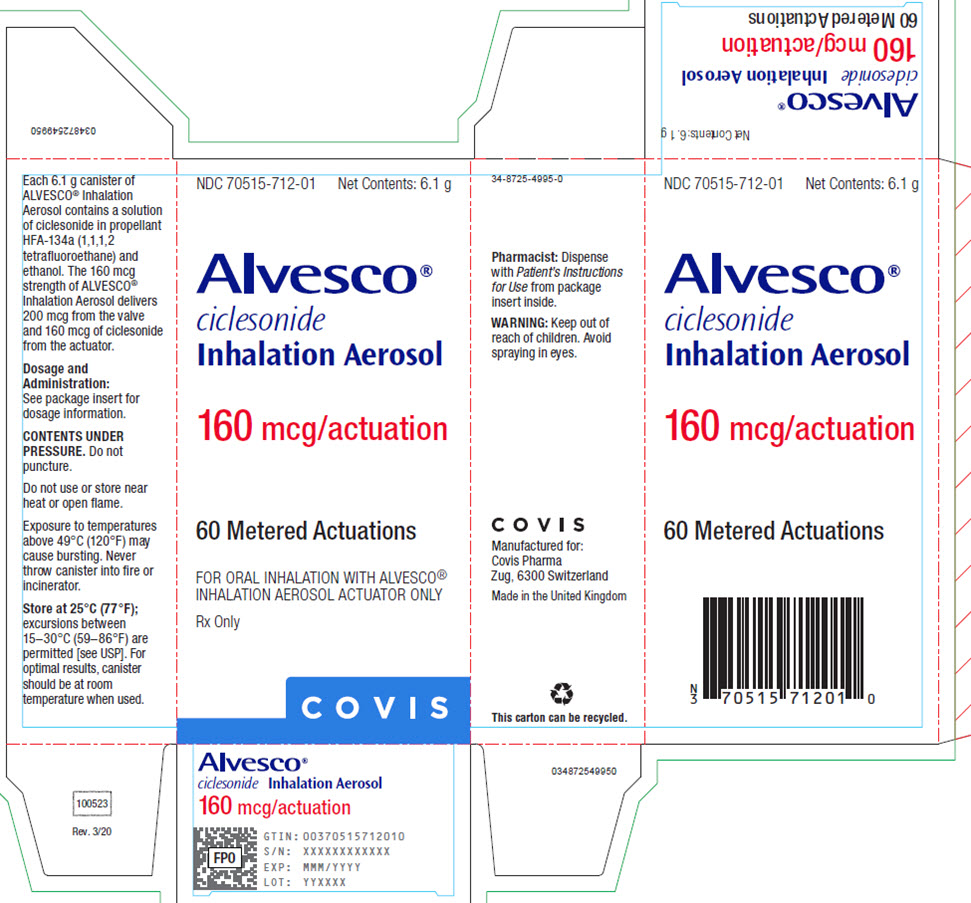
Alvesco ciclesonide 160 ug Aerosol, Metered — NDC 70515-712-05 (Billing 70515-0712-05)
This is a package of Alvesco ciclesonide 160 ug Aerosol, Metered from Covis Pharma US, Inc, marketed since Mar 2018 and currently FDA-listed.
NDC database record
One package, one record: these facts belong to NDC 70515-712-05 alone.
- Record
- FDA NDC Directory package listing · Human prescription drug
- Code segments
- 70515 labeler · 712 product · 05 package
- Package marketed since
- Apr 30, 2021
- Sample package
- No — commercial package
- Listing certified through
- Dec 31, 2026
- Barcode (UPC-A, from the NDC)
- 3 7051571205 8
- FDA record last changed
- Jul 24, 2026
Identity & classification
Regulatory identifiers FDA, NLM and CMS codes for this package
Drug-database identifiers Medi-Span GPI and First Databank GCN / HICL / AHFS classification
- GSN (GCN sequence number): 058672
- GCN: 24152
- GPI-14 (Medi-Span): 44400017003440
- HICL (First Databank): 032691
- AHFS class code: 48:10.08.00
- RxCUI (RxNorm): 799034
Where does this data come from?
- FDA openFDA NDC Directory · synced Oct 8, 2026
- FDA label on DailyMed · label index refreshed Oct 8, 2026
- RxNorm (NLM RxNav) · catalog refreshed Oct 1, 2026
- Medi-Span GPI (licensed)
- First Databank (licensed) · refreshed Oct 8, 2026
RxNorm drug class
This medicine belongs to the Corticosteroids class.
Where does this data come from?
- RxClass (NLM) · catalog refreshed Oct 1, 2026
Clinical
- It is a daily preventive medicine for asthma in people 12 and older. It calms airway inflammation over time. It is not a rescue inhaler, so keep your fast-acting inhaler with you.
- It does not work right away. Some people notice improvement sooner, but the full benefit can take four weeks or longer. Keep using it as prescribed even if you feel fine.
- Inhaled steroids can cause a yeast infection (thrush) in the mouth and throat. Rinsing with water and spitting it out after each use lowers that risk. Do not swallow the rinse wate...
- The most common are headache, stuffy nose, sore throat, sinus or upper respiratory infections, and joint or back pain. Call your doctor for white patches in your mouth, vision chan...
Patient education
Supplement & herbal interactions
Some supplements/herbs that may interact with Ciclesonide — tap one for details:
Where does this data come from?
- MedlinePlus (NLM) · refreshed Oct 8, 2026
- FDA label on DailyMed · label index refreshed Oct 8, 2026
Ask a licensed pharmacist directly — free, answered by our team.
Pricing
A drug doesn't have one price. Each row is a different public payment system, and none is what you'd pay at the counter — that depends on your insurance. The ⓘ on each row explains what it measures.
| Price system | Per each | Per package |
|---|---|---|
| Retail pharmacies payNADAC · weekly | Not in the retail survey — common for institutional, discontinued, or low-volume packs. | |
| Medicaid paysCMS SDUD · 12 mo | No recent Medicaid claims on file for this NDC — rare and low-volume NDCs are suppressed in the public data. | |
| Medicare drug plans payPart D · Q2 2026 | $43.02 | $2,581.33 / 60 aerosols |
Where does this data come from?
- CMS NADAC weekly file
- CMS ASP pricing files · refreshed Sep 20, 2026
- CMS Medicaid State Drug Utilization Data · refreshed Oct 8, 2026
- CMS Part D plan pricing files · refreshed Sep 24, 2026
- VA National Acquisition Center price file
Packaging — all sizes for this product
| Package NDC | Description | Per unit | Per pack | Marketing start | Marketing end | Status |
|---|---|---|---|---|---|---|
| 70515-0712-01 70515-712-01 Main listing | 1 INHALER in 1 CARTON / 60 AEROSOL, METERED in 1 INHALER | $42.97 / g | — | 2018-03-26 | — | Active |
| 70515-0712-02 70515-712-02 | 1 INHALER in 1 CARTON / 60 AEROSOL, METERED in 1 INHALER Sample | — | — | 2018-03-26 | — | Active |
| 70515-0712-03 70515-712-03 | 1 INHALER in 1 CARTON / 30 AEROSOL, METERED in 1 INHALER | — | — | 2021-04-30 | — | Active |
| 70515-0712-04 70515-712-04 | 1 INHALER in 1 CARTON / 30 AEROSOL, METERED in 1 INHALER | — | — | 2021-04-30 | — | Active |
| 70515-0712-05 You're viewing this | 1 INHALER in 1 CARTON / 60 AEROSOL, METERED in 1 INHALER | — | — | 2021-04-30 | — | Active |
This pack shows little to no recent Medicaid volume — a different pack size carries most fills. See all packs ↓
Pack size FAQ
What quantity is in this package?
What NDC number is used to bill for this package of Alvesco ciclesonide 160 ug Aerosol, Metered?
Prices are the latest CMS NADAC pharmacy acquisition cost per NDC; per-pack figures are per-unit × pack quantity, shown only when the pack is denominated in the same measure NADAC prices.
Therapeutic equivalents
| Product | Labeler | Pack | NADAC/unit | TE | Status | Price vs. this |
|---|---|---|---|---|---|---|
| Alvesco 160 ugthis 70515-0712-05 | Covis | 1 inhaler | — | — | FDA listed | — |
Where does this data come from?
- FDA openFDA NDC Directory · synced Oct 8, 2026
- FDA Orange Book · refreshed Oct 3, 2026
- CMS NADAC weekly file
Availability & generic status
We did not find an FDA-approved generic match for this exact strength, form and route. Patent/protection dates below may affect future generic timing.
Why the date isn’t exact: Generic timing can change because patents may be challenged, settled, licensed, added, removed, or worked around with a narrower label — and FDA approval does not always mean a pharmacy can get the generic today.
🛈 What do these terms mean?
- Patent
- Legal protection listed in the Orange Book that may delay generic approval or launch. Issued by the U.S. Patent & Trademark Office.
- Substance patent
- Covers the active drug molecule itself — the hardest to design around. A generic generally can’t launch until it expires.
- Formulation (product) patent
- Covers a specific formulation or dosage form. A generic can sometimes work around it with a different formulation.
- Method-of-use patent
- A patent covering one specific approved use of the drug — not necessarily the whole molecule. A generic can sometimes launch with a “skinny label” that carves out the protected use and keeps the others.
- Skinny label
- A generic label that omits a still-patented use when the FDA allows it — letting a generic reach the market for the unprotected uses.
- Exclusivity
- FDA-granted marketing protection, separate from patents — e.g. 5-yr new chemical entity, 7-yr orphan drug, or a +6-month pediatric extension.
- Paragraph IV
- A generic applicant’s formal challenge to a listed patent. It can potentially lead to earlier generic entry, but often involves litigation or a settlement.
- RLD / RS
- Reference Listed Drug — the brand product the FDA uses as the reference for generic applications. Reference Standard — the product the FDA expects generics to compare against in bioequivalence testing.
- TE / AB rating
- FDA therapeutic-equivalence rating. An AB rating generally means the FDA considers a generic therapeutically equivalent to — and substitutable for — the brand.
- LOE (loss of exclusivity)
- The latest patent or exclusivity currently listed — the loss-of-exclusivity / latest-listed-protection date shown on this page. Paragraph-IV challenges and settlements can move the real date earlier; FDA approval and a manufacturer’s decision to market can move it later.
Built from the FDA Orange Book. The bars above are scaled to each protection’s expiry; the red LOE marker is the last one to lapse.
| Patent | Type | Use code | Expires |
|---|---|---|---|
| US 8371292 ↗ | Method of use | U-1355 | Feb 1, 2028 |
| US 8371292 ↗ | Method of use | U-1355 | Feb 1, 2028 |
Is there a generic version of ALVESCO 160 MCG INHALER?
The FDA approved a generic — why can’t I get it at my pharmacy yet?
Why do different websites show different generic release dates?
What does “FDA listed” mean?
What does a patent or protection date mean here?
What does “current Orange Book estimate” mean?
Can a generic come out before the last patent expires?
Can a generic come out after the listed dates?
What is the difference between patents and exclusivity?
Why are there multiple patent dates?
Where does this data come from?
- FDA Orange Book · refreshed Oct 3, 2026
Inactive Ingredients / Excipients
Inactive ingredients, also called excipients, are components of the drug product other than the active ingredient. They may include fillers, dyes, coatings, preservatives, flavors, or other formulation ingredients.
🧪 Avoiding an ingredient? See Ciclesonide Oral Inhalation inactive ingredients by manufacturer: every current product's list side by side, so you can ask your pharmacy for the version that does not list it.
💡 Tap an ingredient (hover on desktop) to see what it is and why it’s used.
-
UNII 3K9958V90M
A liquid solvent derived from fermentation or chemical synthesis. In medicines, alcohol dissolves active ingredients, helps preserve the product, and improves how the body absorbs certain drugs.
-
UNII DH9E53K1Y8
A synthetic fluorinated hydrocarbon used primarily as a propellant or aerosol dispersant in pressurized inhaler formulations to help deliver medication to the lungs.
2 inactive ingredients listed in the exact product block matched to this NDC.
Where does this data come from?
ingredient classCode="IACT" elements from the exact product block matched by this NDC. Label-section narrative from DailyMed / the openFDA label index is shown separately when available.- FDA label on DailyMed · label index refreshed Oct 8, 2026
- FDA openFDA NDC Directory · synced Oct 8, 2026
Inactive ingredient FAQ
Are inactive ingredients the same for every manufacturer?
Why might an inactive ingredient be missing?
Can inactive ingredients matter?
Manufacturer & labeler
More NDCs from Covis Pharma US, Inc labeler code 70515
- Zanaflex tizanidine hydrochloride 4 mg Capsule NDC 70515-604-15
- Zanaflex tizanidine hydrochloride 6 mg Capsule NDC 70515-606-15
- Prilosec omeprazole magnesium 10 mg Granule, Delayed Release NDC 70515-610-01
- Prilosec omeprazole magnesium 2.5 mg Granule, Delayed Release NDC 70515-625-01
- Omnaris ciclesonide 50 ug Spray NDC 70515-701-01
- Alvesco ciclesonide 80 ug Aerosol, Metered NDC 70515-711-01
Where does this data come from?
- FDA openFDA NDC Directory · synced Oct 8, 2026
- Drugs@FDA
Full prescribing information FDA SPL
🎯 Indications and Usage ▾
1 INDICATIONS AND USAGE ALVESCO is indicated for the maintenance treatment of asthma as prophylactic therapy in adult and pediatric patients 12 years of age and older. Limitations of Use : ALVESCO is not indicated for the relief of acute bronchospasm. ALVESCO is not indicated for children under 12 years of age.
ALVESCO is an inhaled corticosteroid indicated for maintenance treatment of asthma as prophylactic therapy in adult and pediatric patients 12 years of age and older. ( 1 ) Limitations of Use : ALVESCO is not indicated for the relief of acute bronchospasm or in pediatric patients less than 12 years of age. ( 1 )
⏱️ Dosage and Administration ▾
2 DOSAGE AND ADMINISTRATION For oral inhalation only. ( 2 ) Prime ALVESCO before first use or when inhaler not used for more than 10 days. ( 2 ) 1 Prednisone should be reduced gradually, no faster than 2.5 mg/day on a weekly basis, beginning after at least 1 week of therapy with ALVESCO.
Patients should be carefully monitored for signs of asthma instability, including monitoring of serial objective measures of airflow, and for signs of adrenal insufficiency during steroid taper and following discontinuation of oral corticosteroid therapy [see Warnings and Precautions ( 5.1 )] . Previous Therapy Recommended Starting Dose Highest Recommended Dose Patients ≥ 12 years who received bronchodilators alone 80 mcg twice daily 160 mcg twice daily Patients ≥ 12 years who received inhaled corticosteroids 80 mcg twice daily 320 mcg twice daily Patients ≥ 12 years who received oral corticosteroids 1 320 mcg twice daily 320 mcg twice daily
2.1Administration Information Administer ALVESCO by the orally inhaled route. After administration, rinse the mouth with water and spit out without swallowing to help reduce the risk of oropharyngeal candidiasis [see Warnings and Precautions ( 5.1 )] . Priming Prime ALVESCO before using for the first time by actuating 3 times prior to using the first dose from a new canister or when the inhaler has not been used for more than 10 days.
2.2Recommended Dosage The recommended starting dosage and the highest recommended dosage of ALVESCO are listed in Table 1 Table 1: Recommended Dosages for Adults and Pediatric Patients 12 Years and Older 1 Prednisone should be reduced gradually, no faster than 2.5 mg/day on a weekly basis, beginning after at least 1 week of therapy with ALVESCO. Patients should be carefully monitored for signs of asthma instability, including monitoring of serial objective measures of airflow, and for signs of adrenal insufficiency during steroid taper and following discontinuation of oral corticosteroid therapy [see Warnings and Precautions ( 5.1 )] .
Previous Therapy Recommended Starting Dosage Highest Recommended Dosage Patients ≥ 12 years who received bronchodilators alone 80 mcg twice daily 160 mcg twice daily Patients ≥ 12 years who received inhaled corticosteroids 80 mcg twice daily 320 mcg twice daily Patients ≥ 12 years who received oral corticosteroids 1 320 mcg twice daily 320 mcg twice daily General Dosing Recommendations Individual patients will experience a variable time to onset and degree of symptom relief. Maximum benefit may not be achieved for four weeks or longer after initiation.
After asthma stability has been achieved, it is desirable to titrate to the lowest effective dosage to reduce the possibility of side effects. For patients who do not respond adequately to the starting dose after 4 weeks of therapy, higher doses may provide additional asthma control. Patients should not exceed the highest recommended dosage per day.
💊 Dosage Forms and Strengths ▾
3 DOSAGE FORMS AND STRENGTHS Inhalation aerosol: 80 mcg of ciclesonide per actuation, supplied with a brown plastic actuator with a red dust cap 160 mcg of ciclesonide per actuation, supplied with a red plastic actuator with a red dust cap Inhalation aerosol: 80 mcg per actuation or 160 mcg per actuation ( 3 )
⛔ Contraindications ▾
4 CONTRAINDICATIONS ALVESCO is contraindicated in: the primary treatment of status asthmaticus or other acute episodes of asthma where intensive measures are required. patients with known hypersensitivity to ciclesonide or any of the ingredients of ALVESCO. Rare cases of hypersensitivity reactions with manifestations such as angioedema, with swelling of the lips, tongue and pharynx, have been reported. Patients with status asthmaticus or other acute episodes of asthma where intensive measures are required.
( 4 ) Patients with a known hypersensitivity to ciclesonide or any of the ingredients of ALVESCO. ( 4 )
⚠️ Warnings and Cautions ▾
5 WARNINGS AND PRECAUTIONS Candida albicans infection of the mouth and pharynx. Monitor patients periodically for signs of adverse effects on the oral cavity. Advise patients to rinse mouth following inhalation.
( 5.1 ) Potential worsening of existing tuberculosis: fungal, bacterial, viral, or parasitic infection; or ocular herpes simplex. More serious or even fatal course of chickenpox or measles in susceptible patients. Use caution in patients with above because of the potential for worsening of these infections.
( 5.3 ) Risk of impaired adrenal function when transferring from oral steroids to inhaled corticosteroids. Taper patients slowly from systemic corticosteroids if transferring to ALVESCO. ( 5.4 ) Hypercorticism, suppression of hypothalamic-pituitary-adrenal (HPA) function with very high dosages or at the regular dosage in susceptible individuals.
If such changes occur, discontinue ALVESCO slowly ( 5.5 ) Suppression of growth in children. Monitor growth routinely in pediatric patients receiving ALVESCO. ( 5.7 ) Development of glaucoma, increased intraocular pressure and posterior subcapsular cataracts.
Monitor patients with a change in vision or with a history of increased intraocular pressure, glaucoma, and/or cataracts closely. ( 5.8 )
5.1Oropharyngeal Candidiasis In clinical trials, the development of localized infections of the mouth and pharynx with Candida albicans occurred in 32 of 3038 patients treated with ALVESCO. Of the 32 reported cases, 20 occurred in 1394 patients treated with a total daily dose of 320 mcg of ALVESCO or higher. Most cases of Candida infection were mild to moderate.
When such an infection occurs, treat it with appropriate local or systemic (i.e., oral antifungal) therapy and discontinue ALVESCO. Patients should rinse the mouth after inhalation of ALVESCO.
5.2Acute Asthma Episodes ALVESCO is not a bronchodilator and is not indicated for rapid relief of bronchospasm or other acute episodes of asthma. Patients should be instructed to contact their physician immediately if episodes of asthma not responsive to their usual doses of bronchodilators occur during the course of treatment with ALVESCO. During such episodes, patients may require therapy with oral corticosteroids.
5.3Immunosuppression and Risk of Infections Persons who are using drugs that suppress the immune system are more susceptible to infections than healthy individuals. Chickenpox and measles, for example, can have a more serious or even fatal course in susceptible children or adults using corticosteroids. In such children or adults who have not had these diseases or been properly immunized, particular care should be taken to avoid exposure.
How the dose, route, and duration of corticosteroid administration affect the risk of developing a disseminated infection is not known. The safety and effectiveness of ALVESCO have not been established in pediatric patients less than 12 years of age and ALVESCO is not indicated for use in this population. The contribution of the underlying disease and/or prior corticosteroid treatment to the risk is also not known.
If exposed to chickenpox, prophylaxis with varicella zoster immune globulin (VZIG) may be indicated. If exposed to measles, prophylaxis with pooled intramuscular immunoglobulin (IG) may be indicated. (See Prescribing Information for VZIG and IG.) If chickenpox develops, treatment with antiviral agents may be considered.
Inhaled corticosteroids should be used with caution, if at all, in patients with active or quiescent tuberculosis infection of the respiratory tract; untreated systemic fungal, bacterial, viral, or parasitic infections; or ocular herpes simplex.
5.4Transferring Patients from Systemic Corticosteroid Therapy HPA Suppression/Adrenal Insufficiency Particular care is needed for patients who are transferred from systemically active corticosteroids to ALVESCO because deaths due to adrenal insufficiency have occurred in asthmatic patients during and after transfer from… [Excerpted — this section continues on DailyMed.]
🤒 Adverse Reactions ▾
6 ADVERSE REACTIONS The following clinically significant adverse reactions are described elsewhere in the labeling: Oropharyngeal Candidiasis [see Warnings and Precautions ( 5.1 )] Immunosuppression and Risk of Infections [see Warnings and Precautions ( 5.3 )] Hypercorticism and Adrenal Suppression [see Warnings and Precautions ( 5.5 )] Reduction in Bone Mineral Density [see Warnings and Precautions ( 5.6 )] Growth Effects [see Warnings and Precautions ( 5.7 )] Glaucoma and Cataracts [see Warnings and Precautions ( 5.8 )] Most common adverse reactions (≥ 3%) are headache, nasopharyngitis, sinusitis, pharyngolaryngeal pain, upper respiratory infection, arthralgia, nasal congestion, pain in extremity and back pain.
( 6 ) Other adverse reactions have been reported. ( 6 ) To report SUSPECTED ADVERSE REACTIONS, contact Covis Pharma at 1-877-411-2510 or FDA at 1-800-FDA-1088 or www.fda.gov/medwatch.
6.1Clinical Trial Experience The safety data described below for adult and pediatric patients 12 years of age and older reflect exposure to ALVESCO in doses ranging from 80 mcg to 640 mcg twice daily in five double-blind placebo-controlled clinical trials. Studies with once daily dosing are omitted from the safety database because the doses studied once daily are lower than the highest recommended twice daily doses. The five studies were of 12 to 16 weeks treatment duration, one of which included a safety extension follow-up of one year.
In the 12 to 16 week treatment studies, 720 patients (298 males and 422 females) aged 12 years and older were exposed to ALVESCO. In the long-term safety trial, 197 patients (82 males and 115 females) with severe persistent asthma from one of the 12-week trials were re-randomized and treated for up to one year with ALVESCO 320 mcg twice daily. Because clinical trials are conducted under widely varying conditions, adverse reaction rates observed in the clinical trials of a drug cannot be directly compared to rates in the clinical trials of another drug and may not reflect the rates observed in practice.
Adults and Pediatric Patients 12 Years of Age and Older Four of the five trials included a total of 624 patients ages 12 years and older (359 females and 265 males) with asthma of varying severity who were treated with ALVESCO 80 mcg, 160 mcg, or 320 mcg twice daily for 12 to 16 weeks. These studies included patients previously using either controller therapy (predominantly inhaled corticosteroids) or reliever therapy (bronchodilator therapy alone). In these trials, the mean age was 39.1 years, and the majority of the patients (79.0%) were Caucasian.
In these trials, 52.3%, 59.8% and 54.1% of the patients in the ALVESCO 80 mcg, 160 mcg, and 320 mcg treatment groups, respectively, had at least one adverse event compared to 58.0% in the placebo group. Table 2 includes adverse reactions for the recommended doses of ALVESCO that occurred at an incidence of ≥ 3% in any of the ALVESCO groups and which were more frequent with ALVESCO compared to placebo. Table 2: Adverse Reactions with ≥ 3% Incidence Reported in Patients ≥ 12 Years of Age with ALVESCO in US Placebo-Controlled Clinical Trials in Patients Previously on Bronchodilators and/or Inhaled Corticosteroids Adverse Reaction Placebo (N=507) % ALVESCO 80 mcg BID (N=325) % 160 mcg BID (N=127) % 320 mcg BID (N=172) % Headache 7.3 4.9 11.0
8.7Nasopharyngitis 7.5 10.5 8.7
7.0Sinusitis 3.0 3.1 5.5
5.2Pharyngolaryngeal pain 4.3 4.3 2.4
4.7Upper respiratory Inf. 6.5 7.1 8.7
4.1Arthralgia 1.0 0.9 2.4
3.5Nasal congestion 1.6 1.8 5.5
2.9Pain in extremity 1.0 0.3 3.1
2.3Back pain 2.0 0.6 3.1
1.2The following adverse reactions occurred in these clinical trials using ALVESCO with an incidence of less than 1% and occurred at a greater incidence with ALVESCO than with placebo. Infections and Infestations : Oral candidiasis Respiratory Disorders : Cough Gastrointestinal Disorders : Dry mouth, nausea General Disorders and Administrative Site Conditions : Chest disco… [Excerpted — this section continues on DailyMed.]
🔄 Drug Interactions ▾
7 DRUG INTERACTIONS In clinical studies, concurrent administration of ciclesonide and other drugs commonly used in the treatment of asthma (albuterol, formoterol) had no effect on pharmacokinetics of des-ciclesonide [see Clinical Pharmacology ( 12.3 )] . In vitro studies and clinical pharmacology studies suggested that des-ciclesonide has no potential for metabolic drug interactions or protein binding-based drug interactions [see Clinical Pharmacology ( 12.3 )] . In a drug interaction study, co-administration of orally inhaled ciclesonide and oral ketoconazole, a potent inhibitor of cytochrome P450 3A4, increased the exposure (AUC) of des-ciclesonide by approximately 3.6-fold at steady state, while levels of ciclesonide remained unchanged.
👥 Use in Specific Populations ▾
8 USE IN SPECIFIC POPULATIONS
8.1Pregnancy Risk Summary There are no available data on ALVESCO use in pregnant women to assess a drug associated risk of major birth defects, miscarriage, or adverse maternal or fetal outcomes. There is low systemic exposure following ALVESCO oral inhalation administration at the recommended dose [see Clinical Pharmacology ( 12.3 )] . In animal reproduction studies, ciclesonide administered by the oral route to pregnant rats during the period of organogenesis did not cause any evidence of fetal harm at doses up to 15 times the maximum recommended human daily oral inhalation dose (MRHDOID) of 640 mcg/day.
Teratogenicity, characteristic of corticosteroids, decreased body weight and/or skeletal variations were observed in rabbit fetuses following administration of ciclesonide to pregnant rabbits by the subcutaneous route during the period of organogenesis at doses 0.15 times the MRHDOID and higher on a mcg/m 2 basis (see Data). No evidence of fetal harm was observed in rabbits at doses of 0.03 times the MRHDOID. All pregnancies have a background risk of birth defect, loss, or other adverse outcomes.
The estimated background risk of major birth defects and miscarriage for the indicated population is unknown. In the United States general population, the estimated background risk of major birth defects and miscarriage in clinically recognized pregnancies is 2% to 4% and 15% to 20%, respectively. Clinical Considerations Disease-Associated Maternal and/or Embryo/Fetal Risk In women with poorly or moderately controlled asthma, there is an increased risk of several perinatal outcomes such as pre‑eclampsia in the mother and prematurity, low birth weight, and small for gestational age in the neonate.
Pregnant women with asthma should be closely monitored and medication adjusted as necessary to maintain optimal asthma control. Data Animal Data In an embryo-fetal development study in pregnant rats dosed by the oral route during the period of organogenesis from gestation days 6 to 15, ciclesonide did not cause any evidence of fetal harm at doses up to approximately 15 times the MRHDOID in adults (on a mcg/m 2 basis with maternal oral dose up to 900 mcg/kg/day). Maternal toxicity, as evidenced by decreased body weight gain, was observed at approximately 15 times the MRHDOID in adults (on a mcg/m 2 basis at a maternal dose of 900 mcg/kg/day); however, no adverse effects were observed at doses 5 times the MRHDOID and lower (on a mcg/m 2 basis with maternal oral doses of 300 mcg/kg/day and lower).
In two embryo-fetal development studies in pregnant rabbits dosed by the subcutaneous route during the period of organogenesis from gestation days 6 to 18, ciclesonide caused acampsia (flexures of legs) in fetuses at doses 0.15 times the MRHDOID and higher (on a mcg/m 2 basis with maternal oral doses of 5 mcg/kg/day and higher), decreased body weight, cleft palate, enlarged fontanelle, parchment-like skin, and incomplete ossification of bones in fetuses at doses 0.76 times the MRHDOID (on a mcg/m 2 basis with a maternal subcutaneous dose of 25 mcg/kg/day), and embryo-fetal death at doses 3 times the MRHDOID and higher (on a mcg/m 2 basis with maternal subcutaneous doses of 100 mcg/kg/day and higher).
No evidence of fetal harm was observed at a dose 0.03 times the MRHDOID in adults (on a mcg/m 2 basis at a maternal subcutaneous dose of 1 mcg/kg/day). Maternal toxicity was observed at doses 3 times the MRHDOID in adults (on a mcg/m 2 basis with maternal subcutaneous doses of 100 mcg/kg/day and lower); however, no evidence of toxicity was observed at doses 0.76 times the MRHDOID and lower (on a mcg/m 2 basis with maternal subcutaneous doses of 25 mcg/kg/day and lower). In a prenatal and postnatal development study in pregnant rats dosed by the oral route from gestation day 6 to lactation day 20, ciclesonide produced no adverse developmental effects on offspring at doses up to approximately 15 times the MRHDOID (on a mcg/m… [Excerpted — this section continues on DailyMed.]
🤰 Pregnancy ▾
8.1Pregnancy Risk Summary There are no available data on ALVESCO use in pregnant women to assess a drug associated risk of major birth defects, miscarriage, or adverse maternal or fetal outcomes. There is low systemic exposure following ALVESCO oral inhalation administration at the recommended dose [see Clinical Pharmacology ( 12.3 )] . In animal reproduction studies, ciclesonide administered by the oral route to pregnant rats during the period of organogenesis did not cause any evidence of fetal harm at doses up to 15 times the maximum recommended human daily oral inhalation dose (MRHDOID) of 640 mcg/day.
Teratogenicity, characteristic of corticosteroids, decreased body weight and/or skeletal variations were observed in rabbit fetuses following administration of ciclesonide to pregnant rabbits by the subcutaneous route during the period of organogenesis at doses 0.15 times the MRHDOID and higher on a mcg/m 2 basis (see Data). No evidence of fetal harm was observed in rabbits at doses of 0.03 times the MRHDOID. All pregnancies have a background risk of birth defect, loss, or other adverse outcomes.
The estimated background risk of major birth defects and miscarriage for the indicated population is unknown. In the United States general population, the estimated background risk of major birth defects and miscarriage in clinically recognized pregnancies is 2% to 4% and 15% to 20%, respectively. Clinical Considerations Disease-Associated Maternal and/or Embryo/Fetal Risk In women with poorly or moderately controlled asthma, there is an increased risk of several perinatal outcomes such as pre‑eclampsia in the mother and prematurity, low birth weight, and small for gestational age in the neonate.
Pregnant women with asthma should be closely monitored and medication adjusted as necessary to maintain optimal asthma control. Data Animal Data In an embryo-fetal development study in pregnant rats dosed by the oral route during the period of organogenesis from gestation days 6 to 15, ciclesonide did not cause any evidence of fetal harm at doses up to approximately 15 times the MRHDOID in adults (on a mcg/m 2 basis with maternal oral dose up to 900 mcg/kg/day). Maternal toxicity, as evidenced by decreased body weight gain, was observed at approximately 15 times the MRHDOID in adults (on a mcg/m 2 basis at a maternal dose of 900 mcg/kg/day); however, no adverse effects were observed at doses 5 times the MRHDOID and lower (on a mcg/m 2 basis with maternal oral doses of 300 mcg/kg/day and lower).
In two embryo-fetal development studies in pregnant rabbits dosed by the subcutaneous route during the period of organogenesis from gestation days 6 to 18, ciclesonide caused acampsia (flexures of legs) in fetuses at doses 0.15 times the MRHDOID and higher (on a mcg/m 2 basis with maternal oral doses of 5 mcg/kg/day and higher), decreased body weight, cleft palate, enlarged fontanelle, parchment-like skin, and incomplete ossification of bones in fetuses at doses 0.76 times the MRHDOID (on a mcg/m 2 basis with a maternal subcutaneous dose of 25 mcg/kg/day), and embryo-fetal death at doses 3 times the MRHDOID and higher (on a mcg/m 2 basis with maternal subcutaneous doses of 100 mcg/kg/day and higher).
No evidence of fetal harm was observed at a dose 0.03 times the MRHDOID in adults (on a mcg/m 2 basis at a maternal subcutaneous dose of 1 mcg/kg/day). Maternal toxicity was observed at doses 3 times the MRHDOID in adults (on a mcg/m 2 basis with maternal subcutaneous doses of 100 mcg/kg/day and lower); however, no evidence of toxicity was observed at doses 0.76 times the MRHDOID and lower (on a mcg/m 2 basis with maternal subcutaneous doses of 25 mcg/kg/day and lower). In a prenatal and postnatal development study in pregnant rats dosed by the oral route from gestation day 6 to lactation day 20, ciclesonide produced no adverse developmental effects on offspring at doses up to approximately 15 times the MRHDOID (on a mcg/m 2 basis at maternal oral doses… [Excerpted — this section continues on DailyMed.]
🧒 Pediatric Use ▾
8.4Pediatric Use The safety and effectiveness of ALVESCO for the maintenance treatment of asthma as prophylactic therapy have been established in pediatric patients aged 12 years and older. Use of ALVESCO for this indication is supported by evidence from randomized, double-blind, placebo-controlled, parallel-group clinical trials in adult and pediatric patients 12 years of age and older with mild persistent to severe persistent asthma [see Clinical Studies ( 14 )] . The safety and effectiveness of ALVESCO have not been established in pediatric patients younger than 12 years of age.
Pediatric Patients 4 to 11 years of age Effectiveness was not demonstrated in two randomized, double-blind, placebo-controlled studies that were conducted to evaluate the efficacy of ALVESCO 40, 80, or 160 mcg administered once daily for 12 weeks in patients 4 to 11 years of age with asthma. These studies included 1018 patients previously using either controller therapy (predominately inhaled corticosteroids) or reliever therapy (bronchodilator therapy alone). The patients had a mean baseline percent predicted FEV 1 of 68%.
The primary efficacy endpoint was morning pre-dose FEV 1 . Other measures of efficacy included AM PEF, asthma symptoms, and rescue albuterol use. The studies showed inconsistent results and did not establish the efficacy of ALVESCO in patients 4 to 11 years of age.
Pediatric Patients 2 to 6 years of age Effectiveness was not demonstrated in one randomized, double-blind, placebo-controlled study that was conducted to evaluate the efficacy of ALVESCO 40, 80, and 160 mcg administered once daily for 24 weeks in 992 patients 2 to 6 years of age with persistent asthma. The primary efficacy endpoint was time to the first severe asthma exacerbation [defined as worsening of asthma which required treatment with systemic (including oral) steroids or any other asthma medication besides treatment medication and rescue medication] or lack of improvement, whichever occurred first.
No statistically significant differences were observed for the individual comparisons of ALVESCO 40, 80, and 160 mcg to placebo. Results from this study did not establish efficacy of ALVESCO in patients 2 to 6 years of age. Studies in children under 2 years of age have not been conducted given the lack of efficacy observed in patients 2 to 11 years of age.
Effect on Growth Controlled clinical studies have shown that orally inhaled corticosteroids may cause a reduction in growth velocity in pediatric patients. In these studies, the mean reduction in growth velocity was approximately one centimeter per year (range 0.3 to 1.8 cm per year) and appears to be related to dose and duration of exposure. This effect has been observed in the absence of laboratory evidence of hypothalamic-pituitary-adrenal (HPA) axis suppression, suggesting that growth velocity is a more sensitive indicator of systemic corticosteroid exposure in pediatric patients than some commonly used tests of HPA axis function.
The long-term effects of this reduction in growth velocity associated with orally inhaled corticosteroids, including the impact on final adult height, are unknown. The potential for "catch up" growth following discontinuation of treatment with orally inhaled corticosteroids has not been adequately studied. The growth of pediatric patients receiving orally inhaled corticosteroids, including ALVESCO, should be monitored routinely (e.g., via stadiometry).
A 52-week, multi-center, double-blind, randomized, placebo-controlled, parallel-group study was conducted to assess the effect of orally inhaled ciclesonide on growth rate in 609 pediatric patients with mild persistent asthma, aged 5 to 8.5 years. Treatment groups included orally inhaled ciclesonide 40 mcg or 160 mcg or placebo given once daily. Growth was measured by stadiometer height during the baseline, treatment and follow-up periods.
The primary comparison was the difference in growth rates between ciclesonide 40 mcg and 160 mcg a… [Excerpted — this section continues on DailyMed.]
🧓 Geriatric Use ▾
8.5Geriatric Use Clinical studies of ALVESCO did not include sufficient numbers of patients aged 65 years and older to determine whether they respond differently than younger patients. Other reported clinical experience has not identified differences in responses between the elderly and younger patients. In general, dose selection for an elderly patient should be cautious, usually starting at the low end of the dosing range reflecting the greater frequency of decreased hepatic, renal, or cardiac function and of concomitant disease or other drug therapy.
🆘 Overdosage ▾
10 OVERDOSAGE Chronic overdosage may result in signs/symptoms of hypercorticism [see Warnings and Precautions ( 5.5 )] .
🧬 Clinical Pharmacology ▾
12 CLINICAL PHARMACOLOGY
12.1Mechanism of Action Ciclesonide is a prodrug that is enzymatically hydrolyzed to a pharmacologically active metabolite, C21-desisobutyryl-ciclesonide (des-ciclesonide or RM1) following oral inhalation. Des-ciclesonide has anti-inflammatory activity with affinity for glucocorticoid receptors that is 120 times greater than the parent compound and 12 times greater than dexamethasone. The clinical significance of these findings is unknown.
The precise mechanisms of corticosteroid action in asthma are unknown. Inflammation is recognized as an important component in the pathogenesis of asthma. Corticosteroids have been shown to have a wide range of inhibitory activities against multiple cell types (e.g., mast cells, eosinophils, basophils, lymphocytes, macrophages, and neutrophils) and mediators (e.g., histamine, eicosanoids, leukotrienes, and cytokines) involved in the asthmatic response.
These anti-inflammatory actions of corticosteroids may contribute to their efficacy in asthma. Though effective for the treatment of asthma, corticosteroids do not affect asthma symptoms immediately. Individual patients will experience a variable time to onset and degree of symptom relief.
Maximum benefit may not be achieved for four weeks or longer after starting treatment. When corticosteroids are discontinued, asthma stability may persist for several days or longer.
12.2Pharmacodynamics The effect of ciclesonide by oral inhalation on the HPA axis was assessed in adults with mild asthma in a 29-day placebo-controlled study. Twenty-four-hour urinary-free cortisol was assessed in a total of 59 adults who were randomized to 320 mcg or 640 mcg ALVESCO, a comparator corticosteroid, or placebo twice daily. At the end of 29 days of treatment, the mean (SE) change from baseline in 24-hr urinary-free cortisol was -8.69 (5.6) mcg/day, -4.01 (5.03) mcg/day, and -8.84 (5.02) mcg/day for the placebo, ALVESCO 640 mcg/day, and ALVESCO 1280 mcg/day, respectively.
The difference from placebo for the change from baseline in 24-hr urinary-free cortisol was +4.7 mcg/day [95% CI: -10.58; 19.93] and -0.16 mcg/day [95% CI: -15.20; 14.89] for the 640 mcg/day or 1280 mcg/day treatments, respectively. The effects observed with the comparator corticosteroid validate the sensitivity of the study to assess the effect of ciclesonide on the HPA axis.
12.3Pharmacokinetics Absorption : Ciclesonide and des-ciclesonide have negligible oral bioavailability (both are less than 1%) due to low gastrointestinal absorption and high first-pass metabolism. Serum concentrations of ciclesonide and des-ciclesonide were measured and compared following oral inhalation of 1280 mcg ALVESCO and intravenous administration of 800 mcg ciclesonide. The absolute bioavailability of ciclesonide was 22% and the relative systemic exposure of des-ciclesonide was 63%.
The mean C max for des-ciclesonide was 1.02 ng/mL (range 0.6-1.5 ng/mL) in asthmatic patients following a single dose of 1280 mcg by oral inhalation. The mean C max (0.369 ng/mL) and AUC 0-∞ (2.18 ng·hr/mL) of des‑ciclesonide following multiple dose administration of ciclesonide 320 mcg once daily increased up to 26% compared to single dose administration. Distribution : Following intravenous administration of 800 mcg of ciclesonide, the volumes of distribution of ciclesonide and des-ciclesonide was approximately
2.9 L/kg and
12.1L/kg, respectively. The percentage of ciclesonide and des-ciclesonide bound to human plasma proteins averaged ≥ 99% each, with ≤ 1% of unbound drug detected in the systemic circulation. Des-ciclesonide is not significantly bound to human transcortin.
Elimination : Following intravenous administration of 800 mcg of ciclesonide, the clearances of ciclesonide and des-ciclesonide were high (approximately 152 L/L/hr and 228 L/L/hr, respectively). 14 C-labeled ciclesonide was predominantly excreted via the feces after intravenous administration (66%) indicating that excretion through bile i… [Excerpted — this section continues on DailyMed.]
🧬 Mechanism of Action ▾
12.1Mechanism of Action Ciclesonide is a prodrug that is enzymatically hydrolyzed to a pharmacologically active metabolite, C21-desisobutyryl-ciclesonide (des-ciclesonide or RM1) following oral inhalation. Des-ciclesonide has anti-inflammatory activity with affinity for glucocorticoid receptors that is 120 times greater than the parent compound and 12 times greater than dexamethasone. The clinical significance of these findings is unknown.
The precise mechanisms of corticosteroid action in asthma are unknown. Inflammation is recognized as an important component in the pathogenesis of asthma. Corticosteroids have been shown to have a wide range of inhibitory activities against multiple cell types (e.g., mast cells, eosinophils, basophils, lymphocytes, macrophages, and neutrophils) and mediators (e.g., histamine, eicosanoids, leukotrienes, and cytokines) involved in the asthmatic response.
These anti-inflammatory actions of corticosteroids may contribute to their efficacy in asthma. Though effective for the treatment of asthma, corticosteroids do not affect asthma symptoms immediately. Individual patients will experience a variable time to onset and degree of symptom relief.
Maximum benefit may not be achieved for four weeks or longer after starting treatment. When corticosteroids are discontinued, asthma stability may persist for several days or longer.
📦 How Supplied / Storage and Handling ▾
16 HOW SUPPLIED/STORAGE AND HANDLING ALVESCO is available in the following strengths and canister presentations. Micrograms per Actuation Number of Actuations per Canister Canister Weight Canister per Box NDC Number ALVESCO 80 mcg 60 6.1 g 1 70515-711-01 ALVESCO 160 mcg 60 6.1 g 1 70515-712-01 ALVESCO 80 mcg 30 4.7 g 1 70515-711-04 ALVESCO 160 mcg 30 4.7 g 1 70515-712-04 ALVESCO 80 mcg 60 6.1 g 1 70515-711-05 ALVESCO 160 mcg 60 6.1 g 1 70515-712-05 ALVESCO (ciclesonide) 80 mcg inhalation aerosol is supplied with a brown plastic actuator with a red dust cap.
Each actuation of the inhaler delivers 80 mcg of ciclesonide from the actuator and contains 60 actuations fill/canister. ALVESCO 160 (ciclesonide) mcg inhalation aerosol is supplied with a red plastic actuator with a red dust cap. Each actuation of the inhaler delivers 160 mcg of ciclesonide from the actuator and contains 60 actuations fill/canister.
ALVESCO canisters are for use with ALVESCO actuators only. The actuators are fitted with a dose indicator and should not be used with other medications. The correct amount of medication in each actuation cannot be assured from the canister labeled to contain 60 actuations when the dose indicator display window shows zero even though the canister is not completely empty.
The canister should be discarded when the dose indicator display window shows zero. Store at 25°C (77°F). Excursions between 15°C and 30°C (59°F and 86°F) are permitted (see USP).
For optimal results, the canister should be at room temperature when used. Contents under pressure. Do not puncture.
Do not use or store near heat or open flame. Exposure to temperatures above 49°C (120°F) may cause bursting. Never throw canister into fire or incinerator.
📋 Description ▾
11 DESCRIPTION The active component of ALVESCO 80 mcg, and ALVESCO 160 mcg is ciclesonide, a non-halogenated glucocorticoid having the chemical name pregna-1,4-diene-3,20-dione, 16,17-[[(R)-cyclohexylmethylene]bis(oxy)]-11-hydroxy-21-(2-methyl-1-oxopropoxy)-,(11β,16α). The empirical formula is C 32 H 44 O 7 and its molecular weight is 540.7. Its structural formula is as follows: Ciclesonide is a white to yellow-white powder.
It is soluble in dehydrated alcohol, acetone, dichloromethane, and chloroform. ALVESCO 80 mcg and ALVESCO 160 mcg are pressurized, metered-dose aerosol units fitted with a dose indicator. ALVESCO is intended for oral inhalation only.
Each unit contains a solution of ciclesonide in propellant HFA-134a (1,1,1,2 tetrafluoroethane) and ethanol. After priming, ALVESCO 80 mcg delivers 100 mcg from the valve and 80 mcg of ciclesonide from the actuator. ALVESCO 160 mcg delivers 200 mcg from the valve and 160 mcg of ciclesonide from the actuator.
This product delivers 50 microliters (59.3 milligrams) of solution as a fine particle mist from the valve with each actuation. The actual amount of drug delivered to the lung may depend on patient factors, such as the coordination between the actuation of the device and inspiration through the delivery system. ALVESCO should be “primed” by actuating 3 times prior to using the first dose from a new canister or when the inhaler has not been used for more than 10 days.
Avoid spraying in the eyes or face while priming ALVESCO. Structural Formula
💬 Information for Patients ▾
17 PATIENT COUNSELING INFORMATION Advise the patient to read the FDA-approved patient labeling (Patient Information and Instructions for Use) Oropharyngeal Candidiasis Patients should be advised that localized infections with Candida albicans occurred in the mouth and pharynx in some patients. If oropharyngeal candidiasis develops, it should be treated with appropriate local or systemic (i.e., oral) antifungal therapy while still continuing with ALVESCO therapy, but at times therapy with the ALVESCO inhaler may need to be temporarily interrupted under close medical supervision.
Rinsing the mouth after inhalation is advised [see Warnings and Precautions ( 5.1 )] . Acute Asthma Episodes Patients should be advised that ALVESCO is not a bronchodilator and is not intended for use as rescue medication for acute asthma exacerbations. Acute asthma symptoms should be treated with an inhaled, short-acting beta 2 -agonist such as albuterol.
The patient should be instructed to contact their physician immediately if there is deterioration of their asthma [see Warnings and Precautions ( 5.2 )] . Immunosuppression and Risk of Infections Patients who are on immunosuppressant doses of corticosteroids should be warned to avoid exposure to chickenpox or measles and, if exposed, to consult their physician without delay. Patients should be informed of potential worsening of existing tuberculosis, fungal, bacterial, viral, or parasitic infections, or ocular herpes simplex [see Warnings and Precautions ( 5.3 )] .
Hypercorticism and Adrenal Suppression Patients should be advised that ALVESCO may cause systemic corticosteroid effects of hypercorticism and adrenal suppression. Additionally, patients should be instructed that deaths due to adrenal insufficiency have occurred during and after transfer from systemic corticosteroids. Patients should taper slowly from systemic corticosteroids if transferring to ALVESCO [see Warnings and Precautions ( 5.5 )] .
Reduction in Bone Mineral Density Patients who are at an increased risk for decreased BMD should be advised that the use of corticosteroids may pose an additional risk and should be monitored and where appropriate, be treated for this condition [see Warnings and Precautions ( 5.6 )] . Effect on Growth Patients should be informed that orally inhaled corticosteroids, including ALVESCO, may cause a reduction in growth velocity when administered to pediatric patients. Physicians should closely follow the growth of pediatric patients taking corticosteroids by any route [see Warnings and Precautions ( 5.7 )] .
Use Daily for Best Effect Patients should be advised to use ALVESCO at regular intervals, since its effectiveness depends on regular use. Maximum benefit may not be achieved for four weeks or longer after starting treatment. The patient should not increase the prescribed dosage but should contact their physician if symptoms do not improve or if the condition worsens.
Patients should be instructed not to stop ALVESCO use abruptly. Patients should contact their physician immediately if use of ALVESCO is discontinued. How to Use ALVESCO Patients should use ALVESCO only with the actuator supplied with the product.
When the dose indicator display window shows a red zone, approximately 20 inhalations are left, and a refill is required. Discard the inhaler when the indicator shows zero. Manufactured for: Covis Pharma Zug, 6300 Switzerland Made in United Kingdom
🧬 Pharmacokinetics ▾
12.3Pharmacokinetics Absorption : Ciclesonide and des-ciclesonide have negligible oral bioavailability (both are less than 1%) due to low gastrointestinal absorption and high first-pass metabolism. Serum concentrations of ciclesonide and des-ciclesonide were measured and compared following oral inhalation of 1280 mcg ALVESCO and intravenous administration of 800 mcg ciclesonide. The absolute bioavailability of ciclesonide was 22% and the relative systemic exposure of des-ciclesonide was 63%.
The mean C max for des-ciclesonide was 1.02 ng/mL (range 0.6-1.5 ng/mL) in asthmatic patients following a single dose of 1280 mcg by oral inhalation. The mean C max (0.369 ng/mL) and AUC 0-∞ (2.18 ng·hr/mL) of des‑ciclesonide following multiple dose administration of ciclesonide 320 mcg once daily increased up to 26% compared to single dose administration. Distribution : Following intravenous administration of 800 mcg of ciclesonide, the volumes of distribution of ciclesonide and des-ciclesonide was approximately
2.9 L/kg and
12.1L/kg, respectively. The percentage of ciclesonide and des-ciclesonide bound to human plasma proteins averaged ≥ 99% each, with ≤ 1% of unbound drug detected in the systemic circulation. Des-ciclesonide is not significantly bound to human transcortin.
Elimination : Following intravenous administration of 800 mcg of ciclesonide, the clearances of ciclesonide and des-ciclesonide were high (approximately 152 L/L/hr and 228 L/L/hr, respectively). 14 C-labeled ciclesonide was predominantly excreted via the feces after intravenous administration (66%) indicating that excretion through bile is the major route of elimination. Approximately 20% or less of des-ciclesonide was excreted in the urine.
The mean half-life of ciclesonide and des-ciclesonide was 0.71 hours and 6 to 7 hours, respectively. T max of des-ciclesonide occurs at 1.04 hours following inhalation of ciclesonide. Metabolism : Ciclesonide is hydrolyzed to a biologically active metabolite, des-ciclesonide, by esterases.
Des-ciclesonide undergoes further metabolism in the liver to additional metabolites mainly by the cytochrome P450 (CYP) 3A4 isozyme and to a lesser extent by CYP 2D6. The full range of potentially active metabolites of ciclesonide has not been characterized. After intravenous administration of 14 C-ciclesonide, 19.3% of the resulting radioactivity in the plasma is accounted for by ciclesonide or des-ciclesonide; the remainder may be a result of other, as yet, unidentified multiple metabolites.
Specific Populations : Population pharmacokinetic analysis showed that characteristics of des-ciclesonide after oral inhalation of ciclesonide were not appreciably influenced by a variety of subject characteristics such as body weight, age, race, and gender. Patients with Renal Impairment : Studies in renally-impaired patients were not conducted since renal excretion of des-ciclesonide is a minor route of elimination (≤ 20%). Patients with Hepatic Impairment : Compared to healthy subjects, the systemic exposure of des-ciclesonide (C max and AUC) in patients with moderate to severe liver impairment increased in the range of 1.4 to 2.7 fold after 1280 mcg ex-actuator ciclesonide by oral inhalation.
Dose adjustment in patients with liver impairment is not necessary. Drug Interaction Studies : In a drug interaction study, co-administration of orally inhaled ciclesonide and oral ketoconazole, a potent inhibitor of cytochrome P450 3A4, increased the exposure (AUC) of ciclesonide active metabolite, des-ciclesonide, by approximately 3.6-fold at steady state, while levels of ciclesonide remained unchanged [see Drug Interactions ( 7 )] . In another single-dose drug interaction study, co-administration of orally inhaled ciclesonide and oral erythromycin, an inhibitor of cytochrome P450 3A4, had no effect on the pharmacokinetics of either ciclesonide and the active metabolite, des-ciclesonide, or erythromycin.
Based on in vitro studies in human liver microsomes, des… [Excerpted — this section continues on DailyMed.]
🧬 Pharmacodynamics ▾
12.2Pharmacodynamics The effect of ciclesonide by oral inhalation on the HPA axis was assessed in adults with mild asthma in a 29-day placebo-controlled study. Twenty-four-hour urinary-free cortisol was assessed in a total of 59 adults who were randomized to 320 mcg or 640 mcg ALVESCO, a comparator corticosteroid, or placebo twice daily. At the end of 29 days of treatment, the mean (SE) change from baseline in 24-hr urinary-free cortisol was -8.69 (5.6) mcg/day, -4.01 (5.03) mcg/day, and -8.84 (5.02) mcg/day for the placebo, ALVESCO 640 mcg/day, and ALVESCO 1280 mcg/day, respectively.
The difference from placebo for the change from baseline in 24-hr urinary-free cortisol was +4.7 mcg/day [95% CI: -10.58; 19.93] and -0.16 mcg/day [95% CI: -15.20; 14.89] for the 640 mcg/day or 1280 mcg/day treatments, respectively. The effects observed with the comparator corticosteroid validate the sensitivity of the study to assess the effect of ciclesonide on the HPA axis.
🔬 Clinical Studies ▾
14 CLINICAL STUDIES
14.1Asthma Adults and Pediatric Patients 12 Years of Age and Older The efficacy of ALVESCO was evaluated in six randomized, double-blind, placebo-controlled, parallel-group clinical trials in adult and pediatric patients 12 years of age and older with mild persistent to severe persistent asthma. The six trials included two trials in which patients were treated with ALVESCO administered once daily for 12 weeks, two trials in which patients were treated with ALVESCO twice daily for 12 weeks, and two trials in which patients were treated with ALVESCO using once daily and twice daily dosing regimens for 12 or 16 weeks.
These trials included a total of 2843 patients (1167 males and 1676 females) of whom 296 were pediatric patients 12 to 17 years of age. The primary efficacy endpoint in four of the six trials was the mean change from baseline in pre-dose FEV 1 at endpoint (last observation). FEV 1 was measured prior to the morning dose of study medication (at the end of the 24-hour dosing interval for once daily administration, and at the end of the 12-hour dosing interval for twice daily administration).
In one of the six trials, the primary endpoint was the change from baseline in the average of the pre-dose FEV 1 at Weeks 12 and 16, and in another trial, reduction of oral corticosteroid use was the primary efficacy endpoint. Additional efficacy variables were asthma symptoms, use of albuterol for rescue, AM PEF, nighttime awakenings, and withdrawal due to asthma worsening. The two once daily dosing trials were identically designed and were conducted to evaluate the efficacy of ALVESCO 80, 160, and 320 mcg given once daily in the morning for 12 weeks in patients with mild to moderate asthma maintained on inhaled bronchodilators and/or corticosteroids.
The results of these trials, along with other trials that explored twice daily dosing, indicate that once daily dosing is not the optimum dosing regimen for ALVESCO. Four trials were designed to evaluate the efficacy of ALVESCO administered twice daily in patients with asthma who were previously maintained on bronchodilators alone, patients who were previously maintained on inhaled corticosteroids, and patients who were previously maintained on oral corticosteroids. Patients Previously Maintained on Bronchodilators Alone The efficacy of ALVESCO was studied in a randomized, double-blind, placebo-controlled trial in 691 patients with mild-to-moderate persistent asthma (mean baseline percent predicted FEV 1 of 72%) previously using reliever therapy (bronchodilator therapy alone).
In this trial, patients were treated with ALVESCO 160 mcg once daily in the morning for 16 weeks, ALVESCO 80 mcg twice daily for 16 weeks, or ALVESCO 80 mcg twice daily for 4 weeks followed by ALVESCO 160 mcg once daily in the morning for 12 weeks or placebo for 16 weeks. Compared to placebo, all ALVESCO doses showed statistically significant improvement at Week 16 in AM pre-dose FEV 1 . However, the increase in AM pre-dose FEV 1 in the patients treated with ALVESCO 80 mcg twice daily was significantly greater than that observed in patients treated with ALVESCO 160 mcg administered once daily.
Compared to placebo, increases in AM pre-dose FEV 1 were
0.12L or 5.0% for ALVESCO 160 mcg once daily,
0.24L or 10.4% for ALVESCO 80 mcg twice daily,
0.13L or 5.0% for ALVESCO 80 mcg twice daily for 4 weeks followed by ALVESCO 160 mcg once daily. Other measures of asthma control, AM PEF, and need for rescue albuterol also improved in all the ALVESCO treatment groups compared to placebo but the improvement was greatest with the ALVESCO 80 mcg twice daily treatment arm. Discontinuations from the study for lack of efficacy were lower in the ALVESCO treatment groups compared to placebo.
Fewer patients receiving ALVESCO experienced asthma worsening than did patients receiving placebo. The AM pre-dose FEV 1 results are shown in Figure 1 below. Patients Previously Maintained on Inhaled Corticosteroids The… [Excerpted — this section continues on DailyMed.]
🧪 Nonclinical Toxicology ▾
13 NONCLINICAL TOXICOLOGY
13.1Carcinogenesis, Mutagenesis, Impairment of Fertility Two-year carcinogenicity studies in B6C3F1 mice and Wistar rats were conducted to assess the carcinogenic potential of ciclesonide. Ciclesonide demonstrated no tumorigenic potential in a study with mice that received oral doses up to 900 mcg/kg/day (approximately 7 times the MRHDOID in adults and pediatric patients ≥ 12 years of age on a mcg/m 2 basis) and a study with rats that received inhalation doses up to 193 mcg/kg/day (approximately 3 times the MRHDOID in adults and pediatric patients ≥ 12 years of age on a mcg/m 2 basis).
Ciclesonide was not mutagenic in an Ames test or in the Chinese hamster lung V79 cell/hypoxanthine-guanine phosphoribosyl transferase (HGPRT) forward mutation assay and was not clastogenic in a human lymphocyte chromosomal aberration assay or in an in vitro micronucleus test. However, ciclesonide was clastogenic in an in vivo mouse micronucleus test. The concurrent reference corticosteroid (dexamethasone) in this study showed similar findings.
Fertility and reproductive performance were unaffected in male and female rats dosed by the oral route up to 900 mcg/kg/day (approximately 15 times the MRHDOID in adults based on mcg/m 2 ).
📄 Carcinogenesis, Mutagenesis, Impairment of Fertility ▾
13.1Carcinogenesis, Mutagenesis, Impairment of Fertility Two-year carcinogenicity studies in B6C3F1 mice and Wistar rats were conducted to assess the carcinogenic potential of ciclesonide. Ciclesonide demonstrated no tumorigenic potential in a study with mice that received oral doses up to 900 mcg/kg/day (approximately 7 times the MRHDOID in adults and pediatric patients ≥ 12 years of age on a mcg/m 2 basis) and a study with rats that received inhalation doses up to 193 mcg/kg/day (approximately 3 times the MRHDOID in adults and pediatric patients ≥ 12 years of age on a mcg/m 2 basis).
Ciclesonide was not mutagenic in an Ames test or in the Chinese hamster lung V79 cell/hypoxanthine-guanine phosphoribosyl transferase (HGPRT) forward mutation assay and was not clastogenic in a human lymphocyte chromosomal aberration assay or in an in vitro micronucleus test. However, ciclesonide was clastogenic in an in vivo mouse micronucleus test. The concurrent reference corticosteroid (dexamethasone) in this study showed similar findings.
Fertility and reproductive performance were unaffected in male and female rats dosed by the oral route up to 900 mcg/kg/day (approximately 15 times the MRHDOID in adults based on mcg/m 2 ).
📄 Patient Package Insert ▾
Patient Information ALVESCO ® [ael-‘ves-ko℧] (ciclesonide) Note: For Oral Inhalation Only Do not use your ALVESCO near heat or an open flame. Read this Patient Information leaflet before you start using ALVESCO and each time you get a refill. There may be new information.
This information does not take the place of talking with your healthcare provider about your medical condition or your treatment. If you have any questions about ALVESCO, ask your healthcare provider or pharmacist. What is ALVESCO?
ALVESCO is a prescription medicine used for the control and prevention of asthma in adults and children 12 years of age and older. ALVESCO contains ciclesonide, which is a man-made (synthetic) corticosteroid. Corticosteroids are natural substances found in the body and reduce inflammation.
When you inhale ALVESCO it may help to control and prevent your symptoms of asthma by reducing your airway inflammation. ALVESCO is not for the relief of acute bronchospasm. ALVESCO is not a bronchodilator and does not treat sudden symptoms of an asthma attack such as wheezing, cough, shortness of breath, and chest pain or tightness.
Always have a fast-acting bronchodilator medicine (rescue inhaler) with you to treat sudden symptoms. It is not known if ALVESCO is safe and effective in children 11 years of age and younger. Who should not use ALVESCO?
Do not use ALVESCO: to treat status asthmaticus or other sudden symptoms of asthma. ALVESCO is not a rescue inhaler and should not be used to give you fast relief from your asthma attack. Always use a rescue inhaler such as albuterol, during a sudden asthma attack. if you are allergic to ciclesonide or any of the ingredients in ALVESCO.
See the end of this Patient Information leaflet for a complete list of ingredients in ALVESCO. What should I tell my healthcare provider before using ALVESCO? Before you use ALVESCO tell your healthcare provider if you: have or have had eye problems such as increased ocular pressure, glaucoma, or cataracts. have any infections including tuberculosis or ocular herpes simplex. have not had or been vaccinated for chicken pox or measles. are pregnant or plan to become pregnant.
It is not known if ALVESCO will harm your unborn baby. Talk to your healthcare provider if you are pregnant or plan to become pregnant. are breastfeeding or plan to breastfeed. It is not known if ALVESCO passes into your breast milk.
Talk to your healthcare provider about the best way to feed your baby if you are using ALVESCO. Tell your healthcare provider about all the medicines you take , including prescription and non-prescription medicines, vitamins and herbal supplements. Know the medicines you take.
Keep a list of them to show your healthcare provider and pharmacist when you get a new medicine. How should I use ALVESCO? Read the Instructions for Use at the end of this leaflet for specific information about the right way to use ALVESCO.
Use ALVESCO exactly as your healthcare provider tells you to use it. Do not take more of your medicine, or take it more often than your healthcare provider tells you. You must use ALVESCO regularly.
It may take 4 weeks or longer after you start using ALVESCO for your asthma symptoms to get better. Do not stop using ALVESCO even if you are feeling better, unless your healthcare provider tells you to. If your symptoms do not improve or get worse, call your healthcare provider.
Your healthcare provider may prescribe a rescue inhaler for emergency relief of sudden asthma attacks. Call your healthcare provider if you have: an asthma attack that does not respond to your rescue inhaler or you need more of your rescue inhaler than usual. If you use another inhaled medicine, ask your healthcare provider for instructions on how to use it while you use ALVESCO.
What are the possible side effects of ALVESCO? ALVESCO may cause serious side effects, including: Thrush (Candida), a fungal infection of your nose, mouth, or throat. Tell your healthcare provider if you have disco… [Excerpted — this section continues on DailyMed.]
📄 Package Label / Principal Display Panel ▾
PRINCIPAL DISPLAY PANEL - 80 mcg Carton NDC 70515-711-01 Net Contents: 6.1 g Alvesco ® ciclesonide Inhalation Aerosol 80 mcg/actuation 60 Metered Actuations FOR ORAL INHALATION WITH ALVESCO ® INHALATION AEROSOL ACTUATOR ONLY Rx Only COVIS Alvesco ® ciclesonide Inhalation Aerosol 80 mcg/actuation GTIN: 00370515711013 S/N: XXXXXXXXXXXXXX EXP: MM/YYYY LOT: YYXXXX Pharmacist: Dispense with Patient’s Instructions for Use from package insert inside. WARNING: Keep out of reach of children. Avoid spraying in eyes.
COVIS Manufactured for: Covis Pharma Zug, 6300 Switzerland Made in the United Kingdom Each 6.1 g canister of ALVESCO ® Inhalation Aerosol contains a solution of ciclesonide in propellant HFA-134a (1,1,1,2 tetrafluoroethane) and ethanol. The 80 mcg strength of ALVESCO ® Inhalation Aerosol delivers 100 mcg from the valve and 80 mcg of ciclesonide from the actuator. Dosage and Administration: See package insert for dosage information.
CONTENTS UNDER PRESSURE. Do not puncture. Do not use or store near heat or open flame.
Exposure to temperatures above 49°C (120°F) may cause bursting. Never throw canister into fire or incinerator. Store at 25°C (77°F); excursions between 15–30°C (59–86°F) are permitted [see USP].
For optimal results, canister should be at room temperature when used. Principal Display Panel - 80 mcg Carton
PRINCIPAL DISPLAY PANEL - 160 mcg Carton NDC 70515-712-01 Net Contents: 6.1 g Alvesco ® ciclesonide Inhalation Aerosol 160 mcg/actuation 60 Metered Actuations FOR ORAL INHALATION WITH ALVESCO ® INHALATION AEROSOL ACTUATOR ONLY Rx Only COVIS Alvesco ® ciclesonide Inhalation Aerosol 160 mcg/actuation GTIN: 00370515712010 S/N: XXXXXXXXXXXXXX EXP: MM/YYYY LOT: YYXXXX Pharmacist: Dispense with Patient’s Instructions for Use from package insert inside. WARNING: Keep out of reach of children. Avoid spraying in eyes.
COVIS Manufactured for: Covis Pharma Zug, 6300 Switzerland Made in the United Kingdom Each 6.1 g canister of ALVESCO ® Inhalation Aerosol contains a solution of ciclesonide in propellant HFA-134a (1,1,1,2 tetrafluoroethane) and ethanol. The 160 mcg strength of ALVESCO ® Inhalation Aerosol delivers 200 mcg from the valve and 160 mcg of ciclesonide from the actuator. Dosage and Administration: See package insert for dosage information.
CONTENTS UNDER PRESSURE. Do not puncture. Do not use or store near heat or open flame.
Exposure to temperatures above 49°C (120°F) may cause bursting. Never throw canister into fire or incinerator. Store at 25°C (77°F) ; excursions between 15–30°C (59–86°F) are permitted [see USP].
For optimal results, canister should be at room temperature when used. Principal Display Panel - 160 mcg Carton
Medicaid utilization by pack size
Medicare Part D spend CMS · PART D · 2026 (Q1)
Reported adverse events (FAERS)
Top reported reactions
Age at onset
Reporter sex
Serious outcomes
Where does this data come from?
About this NDC listing & data coverage
What data is (and isn’t) available for this NDC — tap to expand
| NDC identity (package / product / labeler codes) | ✓ Available |
| Labeler | ✓ Available |
| Product & package description | ✓ Available |
| Marketing category & status | ✓ Available |
| Active ingredient / dosage form / route | ✓ Available |
| FDA label (SPL via DailyMed) | ✓ Available |
| Package photos | ✓ Available |
| Inactive ingredients (structured) | ✓ Available |
| NADAC pharmacy acquisition price (CMS) | — Not published for this NDC CMS publishes NADAC only for NDCs reported in its retail-pharmacy survey. |
| Orange Book / therapeutic-equivalence data | ✓ Available |
| HCPCS J-code billing crosswalk | — Not published for this NDC Most self-administered / retail products have no J-code — that is normal. |
| Medicaid utilization (CMS SDUD) | — Not published for this NDC CMS reports utilization only for NDCs with Medicaid claims above its privacy threshold. |