
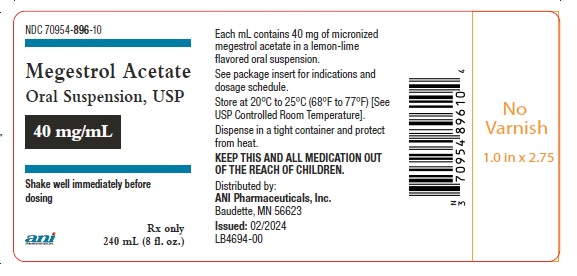
Megestrol Acetate 40 mg/mL Suspension, 480 mL
🆔 Identity & classification
Where does this data come from?
🏷️ RxNorm drug class
This medicine belongs to the Progestin class.
Where does this data come from?
🏭 Manufacturer & labeler
Where does this data come from?
🩺 Clinical
- It depends on the form you have. The liquid suspension is used specifically to treat serious appetite loss and weight loss in people with AIDS — your doctor would have prescribed i...
- What exactly is megestrol acetate used for?
- Yes — the 125 mg/mL suspension can be taken with or without food, so you don't need to worry about timing it around meals. Just make sure to shake the bottle well before each dose....
- Can I take the oral suspension with food?
Patient education
Supplement & herbal interactions
Some supplements/herbs that may interact with Megestrol Acetate — tap one for details:
Where does this data come from?
Ask a licensed pharmacist directly — free, answered by our team.
💊 What it looks like
Where does this data come from?
🧪 Inactive Ingredients / Excipients
Inactive ingredients, also called excipients, are components of the drug product other than the active ingredient. They may include fillers, dyes, coatings, preservatives, flavors, or other formulation ingredients.
Where does this data come from?
IACT rows and label-wide narrative are kept separate; availability and product-level specificity depend on the submitted label.Inactive ingredient FAQ
Are inactive ingredients the same for every manufacturer?
Why might an inactive ingredient be missing?
Can inactive ingredients matter?
💲 Pricing
A drug doesn't have one price. Each row is a different public payment system, and none is what you'd pay at the counter — that depends on your insurance. The ⓘ on each row explains what it measures.
| Price system | Per mL | Per package |
|---|---|---|
| Retail pharmacies payNADAC · weekly | $0.132 | $63.31 / 480 ml |
| Medicaid paysCMS SDUD · 12 mo | $0.1427 | $68.50 / 480 ml |
| Medicare drug plans payPart D · Q2 2026 | $0.1931 | $92.69 / 480 ml |
| Medicare Part B allowsASP · J8999 | No ASP payment limit on file for J8999 this quarter. | |
Where does this data come from?
🧾 Billing & reimbursement
Where does this data come from?
🔁 Therapeutic equivalents
| Product | Labeler | Pack | NADAC/unit | TE | Status | Price vs. this |
|---|---|---|---|---|---|---|
| Megestrol Acetate 40 mg/mLthis 70954-0896-20 | ANI | 480 ml | $0.132 | AB | Availability likely | — |
| Megestrol Acetate 40 mg/mL 64380-0160-01 | Strides | 240 ml | $0.135 | AB | Availability likely | +3% |
| Megestrol Acetate 40 mg/mL 00116-4011-08 | Xttrium | 237 ml | — | AB | FDA listed | — |
| Megestrol Acetate 400 mg/10mL 00121-0945-00 | PAI | 10 cups | — | AB | FDA listed | — |
| Megestrol Acetate 400 mg/10mL 00121-1038-00 | PAI | 10 cups | — | AB | FDA listed | — |
| Megestrol Acetate 400 mg/10mL 00904-7577-18 | Major | 10 cups | — | AB | FDA listed | — |
| Megestrol Acetate 40 mg/mL 17856-0060-03 | ATLANTIC | 72 cups | — | AB | FDA listed | — |
| Megestrol Acetate 40 mg/mL 51407-0910-24 | Golden | 240 ml | — | AB | FDA listed | — |
| Megestrol Acetate 40 mg/mL 60687-0916-08 | American | 10 cups | — | AB | FDA listed | — |
| Megestrol Acetate 40 mg/mL 68094-0063-61 | Precision | 10 cups | — | AB | FDA listed | — |
| Megestrol Acetate 40 mg/mL 68094-0174-62 | Precision | 10 cups | — | AB | FDA listed | — |
| Megestrol Acetate 40 mg/mL 68788-8714-02 | Preferred | 240 ml | — | AB | FDA listed | — |
| Megestrol Acetate 40 mg/mL 69339-0160-16 | Natco | 10 cups | — | AB | FDA listed | — |
| Megestrol Acetate 40 mg/mL 81033-0150-43 | Kesin | 30 cups | — | AB | FDA listed | — |
Where does this data come from?
⏳ Availability & generic status
This product is an FDA-approved generic. Other versions of the same drug are listed under Therapeutic equivalents, least expensive first.
Where does this data come from?
🗺️ Medicaid utilization & spend
💊 Medicaid utilization by pack size
📊 Medicare Part D spend CMS · PART D · 2026 (Q1)
🔬 Reported adverse events (FAERS)
Top reported reactions
Reporter sex
Serious outcomes
Where does this data come from?
📦 Packaging — all sizes for this product
| Package NDC | Description | Per unit | Per pack | Marketing start | Status |
|---|---|---|---|---|---|
| 70954-0896-10 | 240 mL in 1 BOTTLE (70954-896-10) | $0.1355 / mL | $32.52 | 2024-07-02 | Active |
| 70954-0896-20 You're viewing this | 480 mL in 1 BOTTLE (70954-896-20) | $0.1319 / mL | $63.32 | 2024-07-02 | Active |
You're viewing the largest of 2 pack sizes for this product.
This pack has the lowest per-mL cost of the 2 priced pack sizes ($0.1319 NADAC).
Pack size FAQ
What quantity is in NDC 70954-0896-20?
What is the difference between NDC 70954-0896-20 and NDC 70954-0896-10?
What NDC number is used to bill for this package of Megestrol Acetate 40 mg/mL Suspension?
Prices are the latest CMS NADAC pharmacy acquisition cost per NDC; per-pack figures are per-unit × pack quantity, shown only when the pack is denominated in the same measure NADAC prices.
📄 Full prescribing information FDA SPL
🎯 Indications and Usage ▾
INDICATIONS & USAGE Megestrol acetate oral suspension is indicated for the treatment of anorexia, cachexia, or an unexplained, significant weight loss in patients with a diagnosis of acquired immunodeficiency syndrome (AIDS).
⏱️ Dosage and Administration ▾
DOSAGE & ADMINISTRATION The recommended adult initial dosage of megestrol acetate oral suspension is 800 mg/day (20 mL/day). Shake container well before using. In clinical trials evaluating different dose schedules, daily doses of 400 and 800 mg/day were found to be clinically effective.
⛔ Contraindications ▾
CONTRAINDICATIONS History of hypersensitivity to megestrol acetate or any component of the formulation. Known or suspected pregnancy.
⚠️ Warnings ▾
WARNINGS Megestrol acetate may cause fetal harm when administered to a pregnant woman. For animal data on fetal effects, (see PRECAUTIONS: Carcinogenesis, Mutagenesis, and Impairment of Fertility: Impairment of Fertility ). There are no adequate and well-controlled studies in pregnant women.
If this drug is used during pregnancy, or if the patient becomes pregnant while taking (receiving) this drug, the patient should be apprised of the potential hazard to the fetus. Women of childbearing potential should be advised to avoid becoming pregnant. Megestrol acetate is not intended for prophylactic use to avoid weight loss.
(See also PRECAUTIONS: Carcinogenesis, Mutagenesis, and Impairment of Fertility .) The glucocorticoid activity of megestrol acetate oral suspension has not been fully evaluated. Clinical cases of new onset diabetes mellitus, exacerbation of preexisting diabetes mellitus, and overt Cushing’s Syndrome have been reported in association with the chronic use of megestrol acetate. In addition, clinical cases of adrenal insufficiency have been observed in patients receiving or being withdrawn from chronic megestrol acetate therapy in the stressed and non-stressed state.
Furthermore, adrenocorticotropin (ACTH) stimulation testing has revealed the frequent occurrence of asymptomatic pituitary-adrenal suppression in patients treated with chronic megestrol acetate therapy. Therefore, the possibility of adrenal insufficiency should be considered in any patient receiving or being withdrawn from chronic megestrol acetate therapy who presents with symptoms and/or signs suggestive of hypoadrenalism (e.g., hypotension, nausea, vomiting, dizziness, or weakness) in either the stressed or non-stressed state.
Laboratory evaluation for adrenal insufficiency and consideration of replacement or stress doses of a rapidly acting glucocorticoid are strongly recommended in such patients. Failure to recognize inhibition of the hypothalamic-pituitary-adrenal axis may result in death. Finally, in patients who are receiving or being withdrawn from chronic megestrol acetate therapy, consideration should be given to the use of empiric therapy with stress doses of a rapidly acting glucocorticoid in conditions of stress or serious intercurrent illness (e.g., surgery, infection).
🤒 Adverse Reactions ▾
ADVERSE REACTIONS Clinical Adverse Events Adverse events which occurred in at least 5% of patients in any arm of the two clinical efficacy trials and the open trial are listed below by treatment group. All patients listed had at least one post baseline visit during the 12 study weeks. These adverse events should be considered by the physician when prescribing megestrol acetate oral suspension.
ADVERSE EVENTS % of Patients Reporting Megestrol Acetate, mg/day No. of Patients Trial 1 (N=236) Trial 2 (N=87) Open Label Trial Placebo 0 N=34 100 N=68 400 N=69 800 N=65 Placebo 0 N=38 800 N=49 1200 N=176 Diarrhea 15 13 8 15 8 6 10 Impotence 3 4 6 14 0 4 7 Rash 9 9 4 12 3 2 6 Flatulence 9 0 1 9 3 10 6 Hypertension 0 0 0 8 0 0 4 Asthenia 3 2 3 6 8 4 5 Insomnia 0 3 4 6 0 0 1 Nausea 9 4 0 5 3 4 5 Anemia 6 3 3 5 0 0 0 Fever 3 6 4 5 3 2 1 Libido Decreased 3 4 0 5 0 2 1 Dyspepsia 0 0 3 3 5 4 2 Hyperglycemia 3 0 6 3 0 0 3 Headache 6 10 1 3 3 0 3 Pain 6 0 0 2 5 6 4 Vomiting 9 3 0 2 3 6 4 Pneumonia 6 2 0 2 3 0 1 Urinary Frequency 0 0 1 2 5 2 1 Adverse events which occurred in 1% to 3% of all patients enrolled in the two clinical efficacy trials with at least one follow-up visit during the first 12 weeks of the study are listed below by body system.
Adverse events occurring less than 1% are not included. There were no significant differences between incidence of these events in patients treated with megestrol acetate and patients treated with placebo. Body as a Whole Abdominal pain, chest pain, infection, moniliasis and sarcoma Cardiovascular System Cardiomyopathy and palpitation Digestive System Constipation, dry mouth, hepatomegaly, increased salivation and oral moniliasis Hemic and Lymphatic System Leukopenia Metabolic and Nutritional LDH increased, edema and peripheral edema Nervous System Paresthesia, confusion, convulsion, depression, neuropathy, hypesthesia and abnormal thinking Respiratory System Dyspnea, cough, pharyngitis and lung disorder Skin and Appendages Alopecia, herpes, pruritus, vesiculobullous rash, sweating and skin disorder Special Senses Amblyopia Urogenital System Albuminuria, urinary incontinence, urinary tract infection and gynecomastia Postmarketing Postmarketing reports associated with megestrol acetate oral suspension include thromboembolic phenomena including thrombophlebitis and pulmonary embolism, and glucose intolerance (see WARNINGS and PRECAUTIONS ).
To report SUSPECTED ADVERSE REACTIONS, contact ANI Pharmaceuticals, Inc. at 1-855-204-1431 or FDA at 1-800-FDA-1088 or www.fda.gov/medwatch.
🔄 Drug Interactions ▾
DRUG INTERACTIONS Pharmacokinetic studies show that there are no significant alterations in pharmacokinetic parameters of zidovudine or rifabutin to warrant dosage adjustment when megestrol acetate is administered with these drugs. The effects of zidovudine or rifabutin on the pharmacokinetics of megestrol acetate were not studied. Megestrol acetate may interact with warfarin and increase International Normalized Ratio (INR).
Closely monitor INR in patients taking megestrol acetate and warfarin. Animal Toxicology Long-term treatment with megestrol acetate may increase the risk of respiratory infections. A trend toward increased frequency of respiratory infections, decreased lymphocyte counts, and increased neutrophil counts was observed in a two-year chronic toxicity/carcinogenicity study of megestrol acetate conducted in rats.
🤰 Pregnancy ▾
PREGNANCY No adequate animal teratology information is available at clinically relevant doses. (See WARNINGS and PRECAUTIONS: Carcinogenesis, Mutagenesis, and Impairment of Fertility: Impairment of Fertility .)
🧒 Pediatric Use ▾
PEDIATRIC USE Safety and effectiveness in pediatric patients have not been established.
🧓 Geriatric Use ▾
GERIATRIC USE Clinical studies of megestrol acetate oral suspension in the treatment of anorexia, cachexia, or an unexplained, significant weight loss in patients with AIDS did not include sufficient numbers of patients aged 65 years and older to determine whether they respond differently than younger patients. Other reported clinical experience has not identified differences in responses between elderly and younger patients. In general, dose selection for an elderly patient should be cautious, usually starting at the low end of the dosing range, reflecting the greater frequency of decreased hepatic, renal, or cardiac function, and of concomitant disease or other drug therapy.
Megestrol acetate is known to be substantially excreted by the kidney, and the risk of toxic reactions to this drug may be greater in patients with impaired renal function. Because elderly patients are more likely to have decreased renal function, care should be taken in dose selection, and it may be useful to monitor renal function.
🆘 Overdosage ▾
OVERDOSAGE No serious unexpected side effects have resulted from studies involving megestrol acetate oral suspension administered in dosages as high as 1200 mg/day. In post-marketing experience, limited reports of overdose have been received. Signs and symptoms reported in the context of overdose included diarrhea, nausea, abdominal pain, shortness of breath, cough, unsteady gait, listlessness, and chest pain.
There is no specific antidote for overdose with megestrol acetate oral suspension. In case of overdose, appropriate supportive measures should be taken. Megestrol acetate has not been tested for dialyzability; however, due to its low solubility, it is postulated that dialysis would not be an effective means of treating overdose.
🧬 Clinical Pharmacology ▾
CLINICAL PHARMACOLOGY The precise mechanism by which megestrol acetate produces effects in anorexia and cachexia is unknown at the present time. There are several analytical methods used to estimate megestrol acetate plasma concentrations, including gas chromatography-mass fragmentography (GC-MF), high pressure liquid chromatography (HPLC) and radioimmunoassay (RIA). The GC-MF and HPLC methods are specific for megestrol acetate and yield equivalent concentrations.
The RIA method reacts to megestrol acetate metabolites and is, therefore, non-specific and indicates higher concentrations than the GC-MF and HPLC methods. Plasma concentrations are dependent, not only on the method used, but also on intestinal and hepatic inactivation of the drug, which may be affected by factors such as intestinal tract motility, intestinal bacteria, antibiotics administered, body weight, diet and liver function. The major route of drug elimination in humans is urine.
When radiolabeled megestrol acetate was administered to humans in doses of 4 to 90 mg, the urinary excretion within 10 days ranged from 56.5% to 78.4% (mean 66.4%) and fecal excretion ranged from 7.7% to 30.3% (mean 19.8%). The total recovered radioactivity varied between 83.1% and 94.7% (mean 86.2%). Megestrol acetate metabolites which were identified in urine constituted 5% to 8% of the dose administered.
Respiratory excretion as labeled carbon dioxide and fat storage may have accounted for at least part of the radioactivity not found in urine and feces. Plasma steady state pharmacokinetics of megestrol acetate were evaluated in 10 adult, cachectic male patients with acquired immunodeficiency syndrome (AIDS) and an involuntary weight loss greater than 10% of baseline. Patients received single oral doses of 800 mg/day of megestrol acetate oral suspension for 21 days.
Plasma concentration data obtained on day 21 were evaluated for up to 48 hours past the last dose. Mean (±1 SD) peak plasma concentration (C max ) of megestrol acetate was 753 (±539) ng/mL. Mean area under the concentration time-curve (AUC) was 10476 (±7788) ng x hr/mL.
Median T max value was five hours. Seven of 10 patients gained weight in three weeks. Additionally, 24 adult, asymptomatic HIV seropositive male subjects were dosed once daily with 750 mg of megestrol acetate oral suspension.
The treatment was administered for 14 days. Mean C max and AUC values were 490 (±238) ng/mL and 6779 (±3048) ng x hr/mL, respectively. The median T max value was three hours.
The mean C min value was 202 (±101) ng/mL. The mean percent of fluctuation value was 107 (±40). The effect of food on the bioavailability of megestrol acetate oral suspension has not been evaluated.
DESCRIPTION OF CLINICAL STUDIES The clinical efficacy of megestrol acetate oral suspension was assessed in two clinical trials. One was a multicenter, randomized, double-blind, placebo-controlled study comparing megestrol acetate (MA) at doses of 100 mg, 400 mg, and 800 mg per day versus placebo in AIDS patients with anorexia/cachexia and significant weight loss. Of the 270 patients entered on study, 195 met all inclusion/exclusion criteria, had at least two additional post baseline weight measurements over a 12-week period or had one post baseline weight measurement but dropped out for therapeutic failure.
The percent of patients gaining five or more pounds at maximum weight gain in 12 study weeks was statistically significantly greater for the 800 mg (64%) and 400 mg (57%) MA-treated groups than for the placebo group (24%). Mean weight increased from baseline to last evaluation in 12 study weeks in the 800 mg MA-treated group by 7.8 pounds, the 400 mg MA group by 4.2 pounds, the 100 mg MA group by 1.9 pounds and decreased in the placebo group by 1.6 pounds. Mean weight changes at 4, 8 and 12 weeks for patients evaluable for efficacy in the two clinical trials are shown graphically.
Changes in body composition during the 12 study weeks as measured by bioelectrical i…
📦 How Supplied / Storage and Handling ▾
HOW SUPPLIED Megestrol Acetate Oral Suspension USP, 40 mg/mL is available as a white suspension with a lemon-lime aroma containing 40 mg of micronized megestrol acetate per mL. NDC 70954-896-10 Bottles of 240 mL (8 fl. oz.) NDC 70954-896-20 Bottles of 480 mL (16 fl. oz.) STORAGE Store at 20ºC to 25ºC (68ºF to 77ºF) [see USP Controlled Room Temperature]. Dispense in a tight container and protect from heat.
Keep this and all drugs out of the reach of children. SPECIAL HANDLING Health Hazard Data There is no threshold limit value established by OSHA, NIOSH, or ACGIH. Exposure or "overdose" at levels approaching recommended dosing levels could result in side effects described above (see WARNINGS and ADVERSE REACTIONS ).
Women at risk of pregnancy should avoid such exposure. Distributed by: ANI Pharmaceuticals, Inc. Baudette, MN 56623 Issued: 02/2024 LB4696-00
📋 Description ▾
DESCRIPTION Megestrol Acetate Oral Suspension, USP contains megestrol acetate, a synthetic derivative of the steroid hormone, progesterone. Megestrol acetate is a white, crystalline solid chemically designated as 17-Hydroxy-6-methylpregna-4,6-diene-3,20-dione acetate. Solubility at 37°C in water is 2 mcg per mL, solubility in plasma is 24 mcg per mL.
Its molecular weight is 384.52. The chemical formula is C 24 H 32 O 4 and the structural formula is represented as follows: Megestrol acetate oral suspension is supplied as an oral suspension containing 40 mg of micronized megestrol acetate per mL. Megestrol acetate oral suspension contains the following inactive ingredients: citric acid, lemon-lime flavor (propylene glycol, ethyl alcohol, natural flavor), propylene glycol, purified water, sodium benzoate, sodium citrate, sucrose and xanthan gum.
Image 1
💬 Information for Patients ▾
INFORMATION FOR PATIENTS Patients using megestrol acetate should receive the following instructions: 1. This medication is to be used as directed by the physician. 2. Report any adverse reaction experiences while taking this medication. 3. Use contraception while taking this medication if you are a woman capable of becoming pregnant. 4. Notify your physician if you become pregnant while taking this medication.