
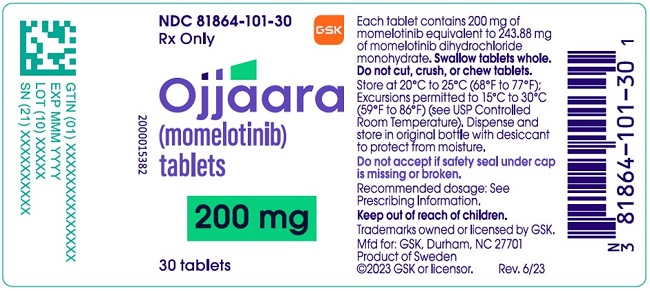
Ojjaara Momelotinib 200 mg Tablet, 30-count — NDC 81864-101-30 (Billing 81864-0101-30)
This is a package of 30 tablets of Ojjaara Momelotinib 200 mg Tablet from GlaxoSmithKline LLC, marketed since Sep 2023 and currently FDA-listed. It is this product's only package size.
NDC database record
One package, one record: these facts belong to NDC 81864-101-30 alone.
- Record
- FDA NDC Directory package listing · Human prescription drug
- Code segments
- 81864 labeler · 101 product · 30 package
- Package marketed since
- Sep 15, 2023
- Sample package
- No — commercial package
- Listing certified through
- Dec 31, 2027
- Billing quantity
- 30 EA per package
- Barcode (UPC)
- 0381864103305, 0381864102308, 0381864101301
- Medicaid fills, this package
- 116 prescriptions in the last four reported quarters
- FDA record last changed
- Aug 13, 2026
Identity & classification
Regulatory identifiers FDA, NLM and CMS codes for this package
Drug-database identifiers Medi-Span GPI and First Databank GCN / HICL / AHFS classification
- GSN (GCN sequence number): 085289
- GCN: 54738
- HICL (First Databank): 049208
- AHFS class code: 10:00.00.00
- RxCUI (RxNorm): 2665210
Where does this data come from?
- FDA openFDA NDC Directory · synced Oct 1, 2026
- FDA label on DailyMed · label index refreshed Oct 6, 2026
- RxNorm (NLM RxNav) · catalog refreshed Oct 1, 2026
- Medi-Span GPI (licensed)
- First Databank (licensed) · refreshed Oct 1, 2026
RxNorm drug class
This medicine belongs to the Janus-associated kinase (JAK) inhibitors class.
Where does this data come from?
- RxClass (NLM) · catalog refreshed Oct 1, 2026
Clinical
Patient education
Supplement & herbal interactions
Some supplements/herbs that may interact with Momelotinib — tap one for details:
Where does this data come from?
- MedlinePlus (NLM) · refreshed Oct 1, 2026
- FDA label on DailyMed · label index refreshed Oct 6, 2026
Ask a licensed pharmacist directly — free, answered by our team.
Pricing
A drug doesn't have one price. Each row is a different public payment system, and none is what you'd pay at the counter — that depends on your insurance. The ⓘ on each row explains what it measures.
| Price system | Per each | Per package |
|---|---|---|
| Retail pharmacies payNADAC · weekly | Not in the retail survey — common for institutional, discontinued, or low-volume packs. | |
| Medicaid paysCMS SDUD · 12 mo | $964.31 | $28,929.33 / 30 tablets |
| Medicare drug plans payPart D · Q2 2026 | $966.49 | $28,994.55 / 30 tablets |
Where does this data come from?
- CMS NADAC weekly file
- CMS ASP pricing files · refreshed Sep 20, 2026
- CMS Medicaid State Drug Utilization Data · through Q1 2026
- CMS Part D plan pricing files · refreshed Sep 24, 2026
- VA National Acquisition Center price file
Packaging — all sizes for this product
| Package NDC | Description | Marketing start | Marketing end | Status |
|---|---|---|---|---|
| 81864-0101-30 You're viewing this Main listing | 30 TABLET in 1 BOTTLE | 2023-09-15 | — | Active |
Therapeutic equivalents
| Product | Labeler | Pack | NADAC/unit | TE | Status | Price vs. this |
|---|---|---|---|---|---|---|
| Ojjaara 200 mgthis 81864-0101-30 | GlaxoSmithKline | 30 tablets | — | — | FDA listed | — |
Where does this data come from?
- FDA openFDA NDC Directory · synced Oct 1, 2026
- FDA Orange Book · refreshed Oct 3, 2026
- CMS NADAC weekly file
Availability & generic status
We did not find an FDA-approved generic match for this exact strength, form and route. Patent/protection dates below may affect future generic timing.
Why the date isn’t exact: Generic timing can change because patents may be challenged, settled, licensed, added, removed, or worked around with a narrower label — and FDA approval does not always mean a pharmacy can get the generic today.
🛈 What do these terms mean?
- Patent
- Legal protection listed in the Orange Book that may delay generic approval or launch. Issued by the U.S. Patent & Trademark Office.
- Substance patent
- Covers the active drug molecule itself — the hardest to design around. A generic generally can’t launch until it expires.
- Formulation (product) patent
- Covers a specific formulation or dosage form. A generic can sometimes work around it with a different formulation.
- Method-of-use patent
- A patent covering one specific approved use of the drug — not necessarily the whole molecule. A generic can sometimes launch with a “skinny label” that carves out the protected use and keeps the others.
- Skinny label
- A generic label that omits a still-patented use when the FDA allows it — letting a generic reach the market for the unprotected uses.
- Exclusivity
- FDA-granted marketing protection, separate from patents — e.g. 5-yr new chemical entity, 7-yr orphan drug, or a +6-month pediatric extension.
- Paragraph IV
- A generic applicant’s formal challenge to a listed patent. It can potentially lead to earlier generic entry, but often involves litigation or a settlement.
- RLD / RS
- Reference Listed Drug — the brand product the FDA uses as the reference for generic applications. Reference Standard — the product the FDA expects generics to compare against in bioequivalence testing.
- TE / AB rating
- FDA therapeutic-equivalence rating. An AB rating generally means the FDA considers a generic therapeutically equivalent to — and substitutable for — the brand.
- LOE (loss of exclusivity)
- The latest patent or exclusivity currently listed — the loss-of-exclusivity / latest-listed-protection date shown on this page. Paragraph-IV challenges and settlements can move the real date earlier; FDA approval and a manufacturer’s decision to market can move it later.
Built from the FDA Orange Book. The bars above are scaled to each protection’s expiry; the red LOE marker is the last one to lapse.
| Patent | Type | Use code | Expires |
|---|---|---|---|
| US 9809559 ↗ | Method of use | U-1201 | Jun 11, 2035 |
| US 9809559 ↗ | Method of use | U-1201 | Jun 11, 2035 |
| US 9809559 ↗ | Method of use | U-1201 | Jun 11, 2035 |
| US 8486941 ↗ | Drug substance | U-1201 | Jan 3, 2035 |
| US 8486941 ↗ | Drug substance | U-1201 | Jan 3, 2035 |
| US 8486941 ↗ | Drug substance | U-1201 | Jan 3, 2035 |
| US RE48285 ↗ | Drug substance | U-1201 | Jun 11, 2035 |
| US RE48285 ↗ | Drug substance | U-1201 | Jun 11, 2035 |
| US RE48285 ↗ | Drug substance | U-1201 | Jun 11, 2035 |
| US 12576089 ↗ | Method of use | U-4441 | Aug 21, 2039 |
| US 12576089 ↗ | Method of use | U-4441 | Aug 21, 2039 |
| US 12576089 ↗ | Method of use | U-4441 | Aug 21, 2039 |
| US 11963962 ↗ | Method of use | U-3928 | Dec 2, 2040 |
| US 11963962 ↗ | Method of use | U-3928 | Dec 2, 2040 |
| US 11963962 ↗ | Method of use | U-3928 | Dec 2, 2040 |
| Code | What it grants | Expires |
|---|---|---|
| NCE | New Chemical Entity (5-year) | Sep 15, 2028 |
| ODE-441 | Orphan Drug Exclusivity (7-year) | Sep 15, 2030 |
| NCE | New Chemical Entity (5-year) | Sep 15, 2028 |
| ODE-441 | Orphan Drug Exclusivity (7-year) | Sep 15, 2030 |
| NCE | New Chemical Entity (5-year) | Sep 15, 2028 |
| ODE-441 | Orphan Drug Exclusivity (7-year) | Sep 15, 2030 |
Is there a generic version of OJJAARA 200 MG TABLET?
The FDA approved a generic — why can’t I get it at my pharmacy yet?
Why do different websites show different generic release dates?
What does “FDA listed” mean?
What does a patent or protection date mean here?
What does “current Orange Book estimate” mean?
Can a generic come out before the last patent expires?
Can a generic come out after the listed dates?
What is the difference between patents and exclusivity?
Why are there multiple patent dates?
Where does this data come from?
- FDA Orange Book · refreshed Oct 3, 2026
What it looks like
Where does this data come from?
- FDA label on DailyMed · label index refreshed Oct 6, 2026
Inactive Ingredients / Excipients
Inactive ingredients, also called excipients, are components of the drug product other than the active ingredient. They may include fillers, dyes, coatings, preservatives, flavors, or other formulation ingredients.
💡 Tap an ingredient (hover on desktop) to see what it is and why it’s used.
-
UNII 1K09F3G675
Ferric oxide red is an inorganic iron compound used as a colorant in medicines. It gives tablets, capsules, or other dosage forms a red or reddish tint for identification and appearance.
-
UNII EX438O2MRT
Ferric oxide yellow is a naturally occurring iron compound used as a colorant in medications. It gives tablets, capsules, and other forms a yellow or golden hue for identification and appearance.
-
UNII EWQ57Q8I5X
Lactose monohydrate is a natural sugar derived from milk. It serves as a filler and binder in tablets and capsules, helping create the proper size, texture, and consistency of the medicine.
-
UNII 70097M6I30
Magnesium stearate is a salt made from magnesium and stearic acid, a fatty substance. It's used in tablets and capsules as a lubricant and glidant to help ingredients flow smoothly during manufacturing and prevent sticking.
-
UNII OP1R32D61U
Microcrystalline cellulose is a purified form of cellulose, a natural fiber from plant sources. It acts as a binder and filler in tablets and capsules, helping hold ingredients together and give the medicine its shape and size.
-
UNII 3WJQ0SDW1A
Polyethylene glycol is a synthetic liquid or solid polymer used in medicines as a solvent, lubricant, and humectant. It helps dissolve active ingredients, reduces friction during manufacturing, and retains moisture in the final product.
-
UNII 532B59J990
Polyvinyl alcohol is a synthetic polymer made from plant-derived materials. It's used as a binder to hold ingredients together, a film-former in coatings, and a thickener in liquid formulations.
-
UNII 8D4SNN7V92
Propyl gallate is a synthetic antioxidant derived from gallic acid. It prevents oils and fats in the medicine from oxidizing and spoiling, helping the product stay stable and effective during storage.
-
UNII ETJ7Z6XBU4
Silicon dioxide is a naturally occurring mineral used as a glidant and anti-caking agent. It helps powder ingredients flow smoothly and prevents clumping during manufacturing and storage.
-
UNII AG9B65PV6B
A starch derivative made from corn that helps tablets and capsules break apart quickly when swallowed. It acts as a disintegrant, allowing the medicine to dissolve and be absorbed in your stomach and intestines.
-
UNII 7SEV7J4R1U
A powder made from a naturally occurring mineral. In medicines, talc works as a glidant and anti-caking agent, helping tablets and capsules flow smoothly during manufacturing and preventing clumping.
-
UNII 15FIX9V2JP
Titanium dioxide is a bright white mineral powder commonly used as a colorant and opacifying agent. It makes pills and tablets white or lighter in color and helps make coatings non-transparent.
12 inactive ingredients listed in the exact product block matched to this NDC.
Where does this data come from?
ingredient classCode="IACT" elements from the exact product block matched by this NDC. Label-section narrative from DailyMed / the openFDA label index is shown separately when available.- FDA label on DailyMed · label index refreshed Oct 6, 2026
- FDA openFDA NDC Directory · synced Oct 1, 2026
Inactive ingredient FAQ
Are inactive ingredients the same for every manufacturer?
Why might an inactive ingredient be missing?
Can inactive ingredients matter?
Manufacturer & labeler
More NDCs from GlaxoSmithKline LLC labeler code 81864
Where does this data come from?
- FDA openFDA NDC Directory · synced Oct 1, 2026
- Drugs@FDA
Full prescribing information FDA SPL
🎯 Indications and Usage ▾
1 INDICATIONS AND USAGE OJJAARA is indicated for the treatment of intermediate or high‑risk myelofibrosis (MF), including primary MF or secondary MF [post‑polycythemia vera (PV) and post‑essential thrombocythemia (ET)], in adults with anemia. OJJAARA is a kinase inhibitor indicated for the treatment of intermediate or high‑risk myelofibrosis (MF), including primary MF or secondary MF [post‑polycythemia vera (PV) and post‑essential thrombocythemia (ET)], in adults with anemia. ( 1 )
⏱️ Dosage and Administration ▾
2 DOSAGE AND ADMINISTRATION • Recommended dosage: 200 mg orally once daily with or without food. ( 2.1 ) • Severe hepatic impairment (Child-Pugh Class C): Reduce the starting dose to 150 mg orally once daily. ( 2.3 )
2.1Recommended Dosage The recommended dosage of OJJAARA is 200 mg orally once daily. OJJAARA may be taken with or without food. Swallow OJJAARA tablets whole. Do not cut, crush, or chew tablets. If a dose of OJJAARA is missed, the next scheduled dose should be taken the following day.
2.2Laboratory Monitoring for Safety Obtain the following blood tests prior to starting treatment with OJJAARA, periodically during treatment, and as clinically indicated: • Complete blood count (CBC) with platelets [see Warnings and Precautions ( 5.2 )] • Hepatic panel [see Warnings and Precautions ( 5.3 )]
2.3Dosage Modification for Hepatic Impairment The recommended starting dosage in patients with severe hepatic impairment (Child‑Pugh Class C) is 150 mg orally once daily [see Use in Specific Populations ( 8.6 )] . No dose adjustment is recommended for patients with mild or moderate hepatic impairment.
2.4Dosage Modification for Adverse Reactions Manage hematologic and non‑hematologic adverse reactions as described in Table 1 . Table 1: Dose Modifications for OJJAARA-Related Adverse Reactions ALT = alanine transaminase; AST = aspartate transaminase; ULN = upper limit of normal. a Reinitiate or escalate treatment up to starting dosage as clinically appropriate. b May reinitiate treatment at 100 mg if previously dosed at 100 mg. c If baseline >2 × ULN. d If baseline >1.5 × ULN. e Graded using the National Cancer Institute Common Terminology Criteria for Adverse Events per (CTCAE).
Thrombocytopenia Dose Modification a Baseline Platelet Count Platelet Count ≥100 × 10 9 /L 20 × 10 9 /L to <50 × 10 9 /L Reduce daily dose by 50 mg from the last given dose. <20 × 10 9 /L Interrupt treatment until platelets recover to 50 × 10 9 /L. Restart OJJAARA at a daily dose of 50 mg below the last given dose. b ≥50 × 10 9 /L to <100 × 10 9 /L <20 × 10 9 /L Interrupt treatment until platelets recover to 50 × 10 9 /L. Restart OJJAARA at a daily dose of 50 mg below the last given dose. b <50 × 10 9 /L <20 × 10 9 /L Interrupt treatment until platelets recover to baseline.
Restart OJJAARA at a daily dose of 50 mg below the last given dose. b Neutropenia Dose Modification a Absolute neutrophil count (ANC) <0.5 × 10 9 /L Interrupt treatment until ANC ≥0.75 × 10 9 /L. Restart OJJAARA at a daily dose of 50 mg below the last given dose. b Hepatotoxicity (unless other apparent causes) Dose Modification a ALT and/or AST >5 × ULN (or >5 × baseline, if baseline is abnormal) and/or total bilirubin >2 × ULN (or >2 × baseline, if baseline is abnormal) Interrupt treatment until AST and ALT ≤2 × ULN or baseline c and total bilirubin ≤1.5 × ULN or baseline. d Restart OJJAARA at a daily dose of 50 mg below the last given dose. b If reoccurrence of ALT or AST elevations >5 × ULN, permanently discontinue OJJAARA.
Other Non ‑ Hematologic Dose Modification a Grade 3 or higher e Interrupt treatment until the toxicity resolves to Grade 1 or lower (or baseline). Restart OJJAARA at a daily dose of 50 mg below the last given dose. b Discontinue OJJAARA in patients unable to tolerate 100 mg once daily.
💊 Dosage Forms and Strengths ▾
3 DOSAGE FORMS AND STRENGTHS 100 mg round tablet – brown with an underlined “M” debossed on one side and “100” on the other side. 150 mg triangular tablet – brown with an underlined “M” debossed on one side and “150” on the other side. 200 mg capsule‑shaped tablet – brown with an underlined “M” debossed on one side and “200” on the other side. Tablets: 100 mg, 150 mg, 200 mg. ( 3 )
⛔ Contraindications ▾
4 CONTRAINDICATIONS None. None. ( 4 )
⚠️ Warnings and Cautions ▾
5 WARNINGS AND PRECAUTIONS • Risk of Infections: Do not initiate OJJAARA in patients with an active infection. Monitor for signs and symptoms of infection, including reactivation of hepatitis B, and initiate appropriate treatment promptly. ( 5.1 ) • Thrombocytopenia and Neutropenia: Manage by dose reduction or interruption.
( 5.2 ) • Hepatotoxicity: Obtain liver tests before initiation of and periodically throughout treatment with OJJAARA. ( 5.3 ) • Severe Cutaneous Adverse Reactions (SCARs): Monitor for signs and symptoms, and interrupt OJJAARA until etiology of reaction has been determined. ( 5.4 ) • Major Adverse Cardiovascular Events (MACE): Monitor for symptoms, evaluate and treat promptly.
( 5.5 ) • Thrombosis: Evaluate and treat symptoms of thrombosis promptly. ( 5.6 ) • Malignancies: Monitor for development of secondary malignancies, particularly in current or past smokers. ( 5.7 ) • Symptom Exacerbation Following Interruption or Discontinuation of Treatment: Manage with supportive care and consider restarting OJJAARA.
( 5.8 )
5.1Risk of Infections Serious (including fatal) infections (e.g., bacterial and viral, including COVID‑19) occurred in 13% of patients treated with OJJAARA. Infections regardless of grade occurred in 38% of patients treated with OJJAARA [see Adverse Reactions ( 6.1 )] . Delay starting therapy with OJJAARA until active infections have resolved.
Monitor patients receiving OJJAARA for signs and symptoms of infection and initiate appropriate treatment promptly. Hepatitis B Reactivation Hepatitis B viral load (HBV‑DNA titer) increases, with or without associated elevations in alanine transaminase (ALT) or aspartate transaminase (AST), have been reported in patients with chronic hepatitis B virus (HBV) infection taking Janus Kinase (JAK) inhibitors, including OJJAARA. The effect of OJJAARA on viral replication in patients with chronic HBV infection is unknown.
In patients with HBV infections, check hepatitis B serologies prior to starting OJJAARA. If HBsAg and/or anti‑HBc antibody is positive, consider consultation with a hepatologist regarding monitoring for reactivation versus prophylactic hepatitis B therapy. Patients with chronic HBV infection who receive OJJAARA should have their chronic HBV infection treated and monitored according to clinical HBV guidelines.
5.2Thrombocytopenia and Neutropenia OJJAARA can cause thrombocytopenia and neutropenia [see Adverse Reactions ( 6.1 )] . New or worsening thrombocytopenia, with platelet count less than 50 × 10 9 /L, was observed in 20% of patients treated with OJJAARA. Eight percent of patients treated with OJJAARA had baseline platelet counts less than 50 × 10 9 /L.
Severe neutropenia, absolute neutrophil count (ANC) less than 0.5 × 10 9 /L, was observed in 2% of patients treated with OJJAARA. Assess CBCs, including platelet and neutrophil counts, before initiating treatment and periodically during treatment as clinically indicated. Interrupt dosing or reduce the dose for thrombocytopenia or neutropenia [see Dosage and Administration ( 2.4 )] .
5.3Hepatotoxicity Two of the 993 patients with MF who received at least one dose of OJJAARA in clinical trials experienced reversible drug‑induced liver injury. Overall, new or worsening elevations of ALT and AST (all grades) occurred in 23% and 24%, respectively, of patients treated with OJJAARA; Grade 3 and 4 transaminase elevations occurred in 1% and 0.5% of patients, respectively. New or worsening elevations of total bilirubin occurred in 16% of patients treated with OJJAARA.
All total bilirubin elevations were Grades 1‑2. The median time to onset of any grade transaminase elevation was 2 months, with 75% of cases occurring within 4 months. Delay starting therapy in patients presenting with uncontrolled acute and chronic liver disease until apparent causes have been investigated and treated as clinically indicated.
When initiating OJJAARA, refer to dosing in patients with hepatic impairment [see Dosage and Ad… [Excerpted — this section continues on DailyMed.]
🤒 Adverse Reactions ▾
6 ADVERSE REACTIONS The following clinically significant adverse reactions are described elsewhere in the labeling: • Risk of Infections and Hepatitis B Reactivation [see Warnings and Precautions ( 5.1 )] • Thrombocytopenia and Neutropenia [see Warnings and Precautions ( 5.2 )] • Hepatotoxicity [see Warnings and Precautions ( 5.3 )] • Severe Cutaneous Adverse Reactions [see Warnings and Precautions ( 5.4 )] • Major Adverse Cardiovascular Events [see Warnings and Precautions ( 5.5 )] • Thrombosis [see Warnings and Precautions ( 5.6 )] • Malignancies [see Warnings and Precautions ( 5.7 )] • Symptom Exacerbation Following Interruption or Discontinuation of Treatment [see Warnings and Precautions ( 5.8 )] The most common adverse reactions (≥20% in either study) are thrombocytopenia, hemorrhage, bacterial infection, fatigue, dizziness, diarrhea, and nausea.
( 6.1 ) To report SUSPECTED ADVERSE REACTIONS, contact GlaxoSmithKline at 1-888-825-5249 or FDA at 1-800-FDA-1088 or www.fda.gov/medwatch .
6.1Clinical Trials Experience Because clinical trials are conducted under widely varying conditions, adverse reaction rates observed in the clinical trials of a drug cannot be directly compared with rates in the clinical trials of another drug and may not reflect the rates observed in practice. The safety of OJJAARA was evaluated in 215 patients in 2 clinical trials (MOMENTUM and SIMPLIFY‑1 anemic subgroup [hemoglobin (Hb) <10 g/dL]) [see Clinical Studies ( 14 )] . MOMENTUM Patients in the MOMENTUM trial had been previously treated with a JAK inhibitor and were randomly assigned 2:1 to receive double‑blind OJJAARA 200 mg orally once daily (n = 130) or danazol 300 mg orally twice daily (n = 65) for 24 weeks, after which they were eligible to receive open‑label OJJAARA in an extended treatment phase.
Among patients who received OJJAARA, 72% were exposed for 24 weeks or longer and 52% were exposed for 48 weeks or longer [see Clinical Studies ( 14 )] . Serious adverse reactions occurred in 35% of patients who received OJJAARA during the randomized treatment period of the MOMENTUM trial; the most common serious adverse reactions (≥2%) included bacterial infection (8%), viral infection (5%), hemorrhage (4%), acute kidney injury (3%), pneumonia (3%), pyrexia (3%), thrombosis (3%), syncope (2%), thrombocytopenia (2%), and renal and urinary tract infection (2%).
Fatal adverse reactions occurred in 12% of patients who received OJJAARA; the most common (≥2%) fatal adverse reaction was viral infection (5%). Permanent discontinuation of OJJAARA due to an adverse reaction occurred in 18% of patients during the randomized treatment period of the MOMENTUM trial. Adverse reactions that resulted in permanent discontinuation (≥2%) included viral infection (2%) and thrombocytopenia (2%).
Dosage reduction or treatment interruption due to an adverse reaction occurred in 34% of patients. Adverse reactions requiring dosage reduction and/or treatment interruption (≥2%) included thrombocytopenia (13%), bacterial infection (2%), diarrhea (2%), and neutropenia (2%). Among the 130 patients treated with OJJAARA during the randomized treatment period of MOMENTUM, the most common adverse reactions (≥20%) were thrombocytopenia, diarrhea, hemorrhage, and fatigue ( Table 2 ).
Table 2: Adverse Reactions Occurring in ≥5% of Patients Receiving OJJAARA during Randomized Treatment in MOMENTUM a Study was not designed to evaluate meaningful comparisons of the incidence of adverse reactions across treatment groups. b Adverse reactions graded using CTCAE v.5. c Grouped term includes other related terms. d Excludes opportunistic infections. Adverse Reaction OJJAARA n = 130 Danazol a n = 65 All Grades b % Grade ≥3 % All Grades % Grade ≥3 % Thrombocytopenia c 28 22 17 12 Diarrhea c 22 0 9 2 Hemorrhage c 22 2 18 8 Fatigue c 21 2 20 5 Nausea c 16 2 9 3 Bacterial infection c,d 15 8 18 8 Abdominal pain c 13 1 18 3 Viral infection c,d 12 5 3 0 Pruritus c 11 2 11 0 Elevated liver enzymes c 1… [Excerpted — this section continues on DailyMed.]
🔄 Drug Interactions ▾
7 DRUG INTERACTIONS • Organic Anion Transporting Polypeptide (OATP)1B1/B3 inhibitors: Monitor for adverse reactions. ( 7.1 ) • Breast Cancer Resistance Protein (BCRP) substrates: Reduce rosuvastatin (BCRP substrate) dosage. Follow approved product information recommendations for other BCRP substrates. ( 7.2 )
7.1Effect of Other Drugs on OJJAARA Organic Anion Transporting Polypeptide (OATP)1B1/B3 Inhibitors Momelotinib is an OATP1B1/B3 substrate. Concomitant use with an OATP1B1/B3 inhibitor increases momelotinib maximal concentrations (C max ) and area under the concentration‑time curve (AUC), which may increase the risk of adverse reactions with OJJAARA [see Clinical Pharmacology ( 12.3 )] . Monitor patients concomitantly receiving an OATP1B1/B3 inhibitor for adverse reactions and consider OJJAARA dose modifications [see Dosage and Administration ( 2.4 )] .
7.2Effect of OJJAARA on Other Drugs Breast Cancer Resistance Protein (BCRP) Substrates Momelotinib is a BCRP inhibitor. OJJAARA may increase exposure of BCRP substrates , which may increase the risk of BCRP substrate adverse reactions [see Clinical Pharmacology ( 12.3 )] . When administered concomitantly with OJJAARA, initiate rosuvastatin (BCRP substrate) at 5 mg and do not increase to more than 10 mg once daily.
Dose adjustment of other BCRP substrates may also be needed. Follow approved product information recommendations for other BCRP substrates.
👥 Use in Specific Populations ▾
8 USE IN SPECIFIC POPULATIONS • Pregnancy: May cause fetal harm. ( 8.1 ) • Lactation: Advise not to breastfeed. ( 8.2 )
8.1Pregnancy Risk Summary Available data on the use of OJJAARA in pregnant women are insufficient to determine whether there is a drug‑associated risk for major birth defects or miscarriage. Based on animal reproduction studies conducted in rats and rabbits, momelotinib may cause embryo‑fetal toxicity at exposures lower than the expected exposure in patients receiving 200 mg once daily (see Data) . OJJAARA should only be used during pregnancy if the expected benefits to the mother outweigh the potential risks to the fetus.
The background risk of major birth defects and miscarriage for the indicated population is unknown. All pregnancies have a background risk of birth defect, loss, or other adverse outcomes. In the U.S. general population, the estimated background risk of major birth defects and miscarriage in clinically recognized pregnancies is 2% to 4% and 15% to 20%, respectively.
Data Animal Data: In an embryofetal development study, pregnant rats received momelotinib 2, 6 or 12 mg/kg/day orally, during the period of organogenesis (Gestation Day 6 to 17). Embryo‑fetal toxicity (embryonic death, soft tissue anomalies, skeletal variations, and lower mean fetal body weights) was observed at 12 mg/kg (in the presence of maternal toxicity). Skeletal variations were observed (in the absence of maternal toxicity) at 6 mg/kg/day at exposures 3.5 times the exposure at the recommended human dose of 200 mg daily based on combined momelotinib and M21 (a major human metabolite) AUC.
No developmental toxicity was observed at 2 mg/kg/day at exposures equivalent to the recommended dose (based on combined momelotinib and M21 AUC). In an embryofetal developmental study, pregnant rabbits received momelotinib at 7.5, 30 or 60 mg/kg/day orally during the period of organogenesis (Gestation Day 7 to 20). Momelotinib was associated with maternal toxicity at 60 mg/kg/day, which resulted in reduced mean fetal weight, delayed bone ossification, and an abortion at less than the exposure at the recommended dose (based on combined momelotinib and M21 AUC).
No developmental toxicity was observed at lower doses tested in rabbits. In a pre- and post‑natal development study, pregnant rats received momelotinib 2, 6 or 12 mg/kg/day orally from organogenesis through lactation (Gestation Day 6 to lactation Day 20). Decreased pup body weights and embryo‑lethality were observed in the dams administered 6 and 12 mg/kg/day.
Pup survival was significantly reduced in the 12 mg/kg/day group from birth to Day 4 of lactation. Momelotinib exposure in dams at 12 mg/kg and 6 mg/kg were approximately 2 times the exposure at the recommended dose (based on combined momelotinib and M21 AUC). The exposure in dams at the No Observed Adverse Effect Level (NOAEL) dose of 2 mg/kg was less than the exposure at the recommended dose (based on combined momelotinib and M21 AUC).
8.2Lactation Risk Summary There are no data on the presence of momelotinib or its metabolites in human milk, the effects on the breastfed child, or the effects on milk production. It is not known whether OJJAARA is excreted in human milk. Momelotinib was present in rat pups following nursing from treated dams with adverse effects observed in the offspring.
When a drug is present in animal milk, it is likely that the drug will be present in human milk. Because of the potential for serious adverse reactions in a breastfed child, patients should not breastfeed during treatment with OJJAARA, and for at least 1 week after the last dose of OJJAARA. Data Animal Data: In a pre- and post‑natal development study, momelotinib was administered orally to rats during the lactation period; the drug was detected in plasma of nursing pups, which adversely affected pup survival.
8.3Females and Males of Reproductive Potential Contraception Advise females of reproductive potential who are not pregnant to use… [Excerpted — this section continues on DailyMed.]
🤰 Pregnancy ▾
8.1Pregnancy Risk Summary Available data on the use of OJJAARA in pregnant women are insufficient to determine whether there is a drug‑associated risk for major birth defects or miscarriage. Based on animal reproduction studies conducted in rats and rabbits, momelotinib may cause embryo‑fetal toxicity at exposures lower than the expected exposure in patients receiving 200 mg once daily (see Data) . OJJAARA should only be used during pregnancy if the expected benefits to the mother outweigh the potential risks to the fetus.
The background risk of major birth defects and miscarriage for the indicated population is unknown. All pregnancies have a background risk of birth defect, loss, or other adverse outcomes. In the U.S. general population, the estimated background risk of major birth defects and miscarriage in clinically recognized pregnancies is 2% to 4% and 15% to 20%, respectively.
Data Animal Data: In an embryofetal development study, pregnant rats received momelotinib 2, 6 or 12 mg/kg/day orally, during the period of organogenesis (Gestation Day 6 to 17). Embryo‑fetal toxicity (embryonic death, soft tissue anomalies, skeletal variations, and lower mean fetal body weights) was observed at 12 mg/kg (in the presence of maternal toxicity). Skeletal variations were observed (in the absence of maternal toxicity) at 6 mg/kg/day at exposures 3.5 times the exposure at the recommended human dose of 200 mg daily based on combined momelotinib and M21 (a major human metabolite) AUC.
No developmental toxicity was observed at 2 mg/kg/day at exposures equivalent to the recommended dose (based on combined momelotinib and M21 AUC). In an embryofetal developmental study, pregnant rabbits received momelotinib at 7.5, 30 or 60 mg/kg/day orally during the period of organogenesis (Gestation Day 7 to 20). Momelotinib was associated with maternal toxicity at 60 mg/kg/day, which resulted in reduced mean fetal weight, delayed bone ossification, and an abortion at less than the exposure at the recommended dose (based on combined momelotinib and M21 AUC).
No developmental toxicity was observed at lower doses tested in rabbits. In a pre- and post‑natal development study, pregnant rats received momelotinib 2, 6 or 12 mg/kg/day orally from organogenesis through lactation (Gestation Day 6 to lactation Day 20). Decreased pup body weights and embryo‑lethality were observed in the dams administered 6 and 12 mg/kg/day.
Pup survival was significantly reduced in the 12 mg/kg/day group from birth to Day 4 of lactation. Momelotinib exposure in dams at 12 mg/kg and 6 mg/kg were approximately 2 times the exposure at the recommended dose (based on combined momelotinib and M21 AUC). The exposure in dams at the No Observed Adverse Effect Level (NOAEL) dose of 2 mg/kg was less than the exposure at the recommended dose (based on combined momelotinib and M21 AUC).
🧒 Pediatric Use ▾
8.4Pediatric Use The safety and effectiveness of OJJAARA in pediatric patients have not been established.
🧓 Geriatric Use ▾
8.5Geriatric Use There were 275 patients aged 65 years and older in the clinical studies for MF [see Clinical Studies ( 14 )] . Of the total number of OJJAARA‑treated patients in these studies, 163/216 (75%) were aged 65 years and older, and 63/216 (29%) were aged 75 years and older. No overall differences in safety or effectiveness of OJJAARA have been observed between patients aged 65 years and older and younger adult patients.
🆘 Overdosage ▾
10 OVERDOSAGE There is no known antidote for overdose with OJJAARA. If overdose is suspected, the patient should be monitored for signs or symptoms of adverse reactions or effects, and appropriate supportive treatment should be instituted immediately. Further management should be as clinically indicated.
Hemodialysis is not expected to enhance the elimination of momelotinib. Consider contacting the Poison Help line (1‑800‑222‑1222) or a medical toxicologist for additional overdose management recommendations.
🧬 Clinical Pharmacology ▾
12 CLINICAL PHARMACOLOGY
12.1Mechanism of Action Momelotinib is an inhibitor of wild type Janus Kinase 1 and 2 (JAK1/JAK2) and mutant JAK2 V617F , which contribute to signaling of a number of cytokines and growth factors that are important for hematopoiesis and immune function. Momelotinib and its major human circulating metabolite, M21, have higher inhibitory activity for JAK2 compared to JAK3 and tyrosine kinase 2 (TYK2). Momelotinib and M21 additionally inhibit activin A receptor type 1 (ACVR1), also known as activin receptor like kinase 2 (ALK2), which produces subsequent inhibition of liver hepcidin expression and increased iron availability resulting in increased red blood cell production.
MF is a myeloproliferative neoplasm associated with constitutive activation and dysregulated JAK signaling that contributes to inflammation and hyperactivation of ACVR1. JAK signaling recruits and activates STAT (signal transducers and activation of transcription) proteins resulting in nuclear localization and subsequent regulation of gene transcription.
12.2Pharmacodynamics Momelotinib inhibited STAT3 phosphorylation in whole blood from patients with MF. Maximal inhibition of STAT3 phosphorylation occurred 2 hours after momelotinib dosing and inhibition persisted for at least 6 hours [see Clinical Pharmacology ( 12.1 )] . Iron availability and erythropoiesis was assessed by analysis of circulating hepcidin concentrations.
An acute and sustained reduction of circulating hepcidin was observed for the duration of the 24‑week administration of momelotinib to patients with MF [see Clinical Pharmacology ( 12.1 )] . Cardiac Electrophysiology Momelotinib did not prolong the QT interval to any clinically relevant extent at 4 times the highest recommended dosage of 200 mg.
12.3Pharmacokinetics Momelotinib pharmacokinetic parameters are presented as mean (%CV) and were derived in patients with MF unless otherwise specified. The momelotinib steady‑state C max is 479 ng/mL (61%) and AUC is 3,288 ng•h/mL (60%) at the maximum recommended dosage. Momelotinib exposure (i.e., C max and AUC) increases dose proportionally from 100 mg to 300 mg (0.5 to 1.5 times the maximum recommended dosage), but less than dose‑proportional at doses from 400 mg to 800 mg (2 to 4 times the maximum recommended dosage).
There is no clinically significant accumulation. Absorption Median time to momelotinib C max (T max ) at steady state is 2 hours (Q1: 1 hour; Q3: 3 hours) post dose. Effect of Food No clinically significant differences in momelotinib pharmacokinetics were observed following administration of either a high‑fat meal (800 kcal; 50% fat) or low‑fat meal (400 kcal; 20% fat) in healthy subjects.
Distribution Momelotinib steady state apparent volume of distribution is 984 L (118%). Momelotinib plasma protein binding is approximately 91% in healthy volunteers. Elimination The elimination half‑life of momelotinib and the M21 metabolite is 4 to 8 hours.
Momelotinib clearance is 103 L/h (87%). Metabolism: Momelotinib is metabolized by multiple cytochrome P450 (CYP) enzymes including CYP3A4 (36%), CYP2C8 (19%), CYP2C9 (17%), CYP2C19 (19%), and CYP1A2 (9%). M21 is an active human metabolite that has approximately 40% of the pharmacological activity of the parent.
M21 is formed by CYP followed by aldehyde oxidase metabolism of momelotinib. The mean M21 to momelotinib ratio for AUC ranged from 1.4 to 2.1. Excretion: Following a single oral dose of radiolabeled momelotinib, 69% (13% unchanged) of radioactivity was excreted in feces and 28% (<1% unchanged) in urine.
Approximately 12% of the administered dose was excreted in urine as M21. Specific Populations No clinically significant differences in momelotinib and M21 pharmacokinetics were observed based on age (range: 28 to 92 years), race (83% White, 6% Asian, 2% Black), sex (60% male), weight (range: 34 kg to 138 kg), renal impairment (eGFR: 16.4 mL/min/1.73 m 2 to above 120 mL/min/1.73 m 2 ), or mild or moderate hepa… [Excerpted — this section continues on DailyMed.]
🧬 Mechanism of Action ▾
12.1Mechanism of Action Momelotinib is an inhibitor of wild type Janus Kinase 1 and 2 (JAK1/JAK2) and mutant JAK2 V617F , which contribute to signaling of a number of cytokines and growth factors that are important for hematopoiesis and immune function. Momelotinib and its major human circulating metabolite, M21, have higher inhibitory activity for JAK2 compared to JAK3 and tyrosine kinase 2 (TYK2). Momelotinib and M21 additionally inhibit activin A receptor type 1 (ACVR1), also known as activin receptor like kinase 2 (ALK2), which produces subsequent inhibition of liver hepcidin expression and increased iron availability resulting in increased red blood cell production.
MF is a myeloproliferative neoplasm associated with constitutive activation and dysregulated JAK signaling that contributes to inflammation and hyperactivation of ACVR1. JAK signaling recruits and activates STAT (signal transducers and activation of transcription) proteins resulting in nuclear localization and subsequent regulation of gene transcription.
📦 How Supplied / Storage and Handling ▾
16 HOW SUPPLIED/STORAGE AND HANDLING OJJAARA (momelotinib) tablets are available as follows: Table 6: OJJAARA Presentations NDC Number Strength Description Tablets per Bottle NDC 81864-103-30 100 mg Round‑shaped brown film‑coated tablet with “ M ” on one side and “100” on the other side. 30 NDC 81864-102-30 150 mg Triangular‑shaped brown film‑coated tablet with “ M ” on one side and “150” on the other side. 30 NDC 81864-101-30 200 mg Capsule‑shaped brown film‑coated tablet with “ M ” on one side and “200” on the other side.
30 Store at 20°C to 25°C (68°F to 77°F); excursions permitted to 15°C to 30°C (59°F to 86°F) [see USP Controlled Room Temperature]. Dispense to patient in original bottle only. Store in original bottle to protect from moisture.
Replace cap securely each time after opening. Do not discard desiccant.
📋 Description ▾
11 DESCRIPTION OJJAARA contains momelotinib dihydrochloride monohydrate, which is a kinase inhibitor with the chemical name N‑(Cyanomethyl)-4-(2-{[4-(morpholin-4-yl)phenyl]amino}pyrimidin-4-yl)benzamide dihydrochloride monohydrate. It has a molecular formula of C 23 H 22 N 6 O 2 ● 2HCl ● H 2 O, molecular weight of 505.40 and the following structural formula: Momelotinib dihydrochloride monohydrate is a light yellow to brown to reddish-brown solid and is slightly soluble in water and insoluble in aqueous buffers across a pH range of 2.1 to 9.
Momelotinib free base has a molecular formula of C 23 H 22 N 6 O 2 and a molecular weight of 414.47. OJJAARA (momelotinib) tablets are for oral administration. Each tablet contains 100 mg, 150 mg, or 200 mg of momelotinib, which is equivalent to 121.94 mg, 182.91 mg, or 243.88 mg, respectively, of momelotinib dihydrochloride monohydrate as the active ingredient.
The core of each tablet contains the following inactive ingredients: lactose monohydrate, magnesium stearate, microcrystalline cellulose, propyl gallate, silicon dioxide, and sodium starch glycolate. The film coating of each tablet contains the following inactive ingredients: polyethylene glycol, polyvinyl alcohol, red iron oxide, talc, titanium dioxide, and yellow iron oxide. Momelotinib dihydrochloride monohydrate chemical structure
💬 Information for Patients ▾
17 PATIENT COUNSELING INFORMATION Advise the patient to read the FDA approved patient labeling (Patient Information). Infections Inform patients that OJJAARA can increase the risk of infections (including COVID‑19) and instruct them to promptly report to their healthcare provider any signs and symptoms of infection [see Warnings and Precautions ( 5.1 )] . Thrombocytopenia and Neutropenia Inform patients that OJJAARA can cause thrombocytopenia and neutropenia, and of the need to monitor CBC, including platelet and neutrophil counts, before and during treatment.
Advise patients to observe for and report any bleeding to their healthcare provider [see Warnings and Precautions ( 5.2 )] . Hepatotoxicity Inform patients that OJJAARA can cause hepatotoxicity, and of the need to monitor liver blood tests before and during treatment [see Warnings and Precautions ( 5.3 )]. Severe Cutaneous Adverse Reactions (SCARs) Inform patients that SCARs have been observed in some patients treated with OJJAARA and instruct them to promptly report any signs and symptoms of SCARs to their healthcare provider [see Warnings and Precautions ( 5.4 )].
Major Adverse Cardiovascular Events (MACE) Advise patients that events of MACE including myocardial infarction, stroke, and cardiovascular death have been reported in clinical studies with another JAK inhibitor used to treat rheumatoid arthritis, a condition for which OJJAARA is not indicated. Advise patients, especially current or past smokers and patients with other cardiovascular risk factors, to be alert for the development of signs and symptoms of cardiovascular events and to report them to their healthcare provider [see Warnings and Precautions ( 5.5 )] .
Thrombosis Advise patients that events of deep vein thrombosis (DVT) and pulmonary embolism (PE) have been reported in clinical studies with another JAK‑inhibitor used to treat rheumatoid arthritis, a condition for which OJJAARA is not indicated. Advise patients to tell their healthcare provider if they develop any signs or symptoms of a DVT or PE [see Warnings and Precautions ( 5.6 )] . Malignancies Advise patients, especially current or past smokers, that lymphoma and other malignancies (excluding non‑melanoma skin cancers (NMSC) have been reported in clinical studies with another JAK inhibitor used to treat rheumatoid arthritis, a condition for which OJJAARA is not indicated [see Warnings and Precautions ( 5.7 )] .
Symptom Exacerbation Following Interruption or Discontinuation of Treatment Inform patients that after discontinuation of OJJAARA, signs and symptoms from myeloproliferative neoplasms may return. Instruct patients not to interrupt or discontinue OJJAARA without consulting their healthcare provider [see Warnings and Precautions ( 5.8 )] . Pregnancy • Advise pregnant women and females of reproductive potential of the potential risk to a fetus.
Advise females to inform their prescriber of a known or suspected pregnancy [see Use in Specific Populations ( 8.1 )] . • Advise females of reproductive potential who are not pregnant to use highly effective contraception during therapy and for 1 week after the last dose of OJJAARA [see Use in Specific Populations ( 8.3 )] . Lactation Advise patients not to breastfeed during treatment with OJJAARA and for at least 1 week after the last dose of OJJAARA [see Use in Specific Populations ( 8.2 )] . Trademarks are owned by or licensed to the GSK group of companies.
GlaxoSmithKline Durham, NC 27701 ©2026 GSK group of companies or its licensor. OJJ:4PI
🧬 Pharmacokinetics ▾
12.3Pharmacokinetics Momelotinib pharmacokinetic parameters are presented as mean (%CV) and were derived in patients with MF unless otherwise specified. The momelotinib steady‑state C max is 479 ng/mL (61%) and AUC is 3,288 ng•h/mL (60%) at the maximum recommended dosage. Momelotinib exposure (i.e., C max and AUC) increases dose proportionally from 100 mg to 300 mg (0.5 to 1.5 times the maximum recommended dosage), but less than dose‑proportional at doses from 400 mg to 800 mg (2 to 4 times the maximum recommended dosage).
There is no clinically significant accumulation. Absorption Median time to momelotinib C max (T max ) at steady state is 2 hours (Q1: 1 hour; Q3: 3 hours) post dose. Effect of Food No clinically significant differences in momelotinib pharmacokinetics were observed following administration of either a high‑fat meal (800 kcal; 50% fat) or low‑fat meal (400 kcal; 20% fat) in healthy subjects.
Distribution Momelotinib steady state apparent volume of distribution is 984 L (118%). Momelotinib plasma protein binding is approximately 91% in healthy volunteers. Elimination The elimination half‑life of momelotinib and the M21 metabolite is 4 to 8 hours.
Momelotinib clearance is 103 L/h (87%). Metabolism: Momelotinib is metabolized by multiple cytochrome P450 (CYP) enzymes including CYP3A4 (36%), CYP2C8 (19%), CYP2C9 (17%), CYP2C19 (19%), and CYP1A2 (9%). M21 is an active human metabolite that has approximately 40% of the pharmacological activity of the parent.
M21 is formed by CYP followed by aldehyde oxidase metabolism of momelotinib. The mean M21 to momelotinib ratio for AUC ranged from 1.4 to 2.1. Excretion: Following a single oral dose of radiolabeled momelotinib, 69% (13% unchanged) of radioactivity was excreted in feces and 28% (<1% unchanged) in urine.
Approximately 12% of the administered dose was excreted in urine as M21. Specific Populations No clinically significant differences in momelotinib and M21 pharmacokinetics were observed based on age (range: 28 to 92 years), race (83% White, 6% Asian, 2% Black), sex (60% male), weight (range: 34 kg to 138 kg), renal impairment (eGFR: 16.4 mL/min/1.73 m 2 to above 120 mL/min/1.73 m 2 ), or mild or moderate hepatic impairment (Child‑Pugh A or B). The effect of end stage renal disease receiving dialysis on momelotinib pharmacokinetics is unknown.
Patients with Hepatic Impairment: Momelotinib C max increased by 13% and AUC increased by 97% in subjects with severe hepatic impairment (Child‑Pugh C). The M21 metabolite C max decreased by 76% and AUC decreased by 48% in subjects with severe hepatic impairment (Child‑Pugh C). Drug Interaction Studies Clinical Studies OATP1B1/1B3 Inhibitors: Momelotinib C max increased by 40% and AUC increased by 57% following concomitant use with a single dose of a OATP1B1/1B3 inhibitor (rifampin).
The M21 metabolite C max increased by 6% and AUC increased by 12%. BCRP Substrates: A BCRP substrate (rosuvastatin) C max increased by 220% and AUC increased by 170% following concomitant use of a single dose of rosuvastatin at 10 mg with multiple doses of momelotinib (200 mg once daily). Other Drugs: No clinically significant differences in momelotinib and M21 metabolite pharmacokinetics were observed when used concomitantly with a strong CYP3A4 inducer (tested with multiple‑dose rifampin), a strong CYP3A4 inhibitor (ritonavir), or an acid reducing agent (omeprazole, a proton pump inhibitor).
No clinically significant differences in the pharmacokinetics of a CYP3A4 substrate (midazolam) were observed when used concomitantly with momelotinib. In Vitro Studies Cytochrome P450 (CYP) Enzymes: Momelotinib is a weak, reversible, time‑independent inhibitor of CYP2B6 but does not inhibit CYP1A2, 2C8, 2C9, 2C19, 2D6, or 3A4/5. The M21 metabolite does not inhibit any of these CYP enzymes.
Momelotinib and M21 do not induce CYP3A4, CYP2C8, CYP2C9, or P‑glycoprotein (P‑gp). Uridine diphosphate ‑ glucuronosyltransferase (UGT): Momelotinib is an inhibitor of… [Excerpted — this section continues on DailyMed.]
🧬 Pharmacodynamics ▾
12.2Pharmacodynamics Momelotinib inhibited STAT3 phosphorylation in whole blood from patients with MF. Maximal inhibition of STAT3 phosphorylation occurred 2 hours after momelotinib dosing and inhibition persisted for at least 6 hours [see Clinical Pharmacology ( 12.1 )] . Iron availability and erythropoiesis was assessed by analysis of circulating hepcidin concentrations.
An acute and sustained reduction of circulating hepcidin was observed for the duration of the 24‑week administration of momelotinib to patients with MF [see Clinical Pharmacology ( 12.1 )] . Cardiac Electrophysiology Momelotinib did not prolong the QT interval to any clinically relevant extent at 4 times the highest recommended dosage of 200 mg.
🔬 Clinical Studies ▾
14 CLINICAL STUDIES The efficacy of OJJAARA in the treatment of adults with intermediate 1, intermediate 2, or high‑risk MF, including primary MF, post‑PV MF or post‑ET MF, as defined by the Dynamic International Prognostic Scoring System (DIPSS) or International Prognostic Scoring System (IPSS) for MF, was established in the MOMENTUM trial and in a subpopulation of adults with anemia in the SIMPLIFY‑1 trial. All patients received a starting dosage of OJJAARA 200 mg once daily. Eligible patients had baseline platelet count of ≥25 × 10 9 /L in MOMENTUM and ≥50 × 10 9 /L in SIMPLIFY‑1.
MOMENTUM MOMENTUM (NCT04173494) was a double‑blind, 2:1 randomized, active‑controlled trial in 195 symptomatic and anemic adults with MF who had previously received an approved JAK inhibitor therapy. Patients were treated with OJJAARA 200 mg once daily or danazol 300 mg twice daily for 24 weeks, then switched to open‑label treatment with OJJAARA. The median age was 71 years (range 38 to 86 years) with 79% of patients aged 65 years and older, and 63% of patients were male.
Overall, 81% of patients were White, 9% of patients were Asian, 2% of patients were Black, and 6% of patients were Hispanic or Latino. Sixty‑four percent of patients had primary MF, 19% had post‑PV MF, and 17% had post‑ET MF. Five percent of patients had intermediate‑1 risk, 57% had intermediate‑2 risk, and 35% had high‑risk disease.
Within the 8 weeks prior to treatment, 79% of patients had received red blood cell (RBC) transfusions (median of 4 RBC units; interquartile range: 1‑6). At baseline, 13% and 15% of patients were transfusion independent (defined as no red blood cell transfusions in the 12 weeks before the first dose and Hb ≥8 g/dL) in the OJJAARA and danazol groups, respectively. The baseline median Hb count was 8 g/dL and the median platelet count was 96 × 10 9 /L (range 24 × 10 9 /L to 733 × 10 9 /L).
The baseline median palpable spleen length was 11 cm below the left costal margin; the median central spleen volume measured by magnetic resonance imaging (MRI) or computed tomography (CT) was 2,105 cm 3 (range 609 cm 3 to 9,717 cm 3 ). Symptoms were measured using the Myelofibrosis Symptom Assessment Form (MFSAF v4.0) diary. The MFSAF v4.0 patient diary, completed throughout the randomized treatment period, captured the core symptoms of MF: fatigue (weariness and tiredness), night sweats (or feeling hot or flushed), itching, abdominal discomfort (feeling pressure or bloating), pain under ribs on left side, feeling of fullness after beginning to eat, and bone pain.
For each item, symptom scores, ranging from 0 (absent) to 10 (worst imaginable), were added to create a daily Total Symptom Score (maximum score of 70). At baseline, the mean MFSAF v4.0 Total Symptom Score was 28 in the OJJAARA group and 26 in the danazol group. The efficacy of OJJAARA in the treatment of patients with primary or secondary MF and anemia was established based on a significantly higher percentage of patients treated with OJJAARA compared to danazol achieving a MFSAF v4.0 Total Symptom Score reduction of 50% or more at Week 24 compared with their own baseline score ( Table 4 ).
Other endpoints included transfusion independence, spleen volume response, MFSAF v4.0 Total Symptom Score change from baseline, and percentage of patients with no transfusions. Table 4: Percent of Patients Achieving Symptom Reduction, Transfusion Independence, and Spleen Volume Reduction at Week 24 in MOMENTUM OJJAARA n = 130 Danazol n = 65 P ‑value a Analyses stratified by baseline MFSAF v4.0 Total Symptom Score (<22 vs. ≥22), baseline palpable spleen length below the left costal margin (<12 vs. ≥12 cm), and baseline red blood cell or whole blood units transfused in the 8‑week period before randomization (0, 1‑4, ≥5 units). b Non‑inferiority difference between OJJAARA response rate and 80% of danazol response rate. c Least squares means and difference are reported. d Eight subjects treated with OJJAARA and 3 subjects tr… [Excerpted — this section continues on DailyMed.]
🧪 Nonclinical Toxicology ▾
13 NONCLINICAL TOXICOLOGY
13.1Carcinogenesis, Mutagenesis, Impairment of Fertility The carcinogenicity potential of momelotinib was assessed in rasH2 transgenic mice and Sprague‑Dawley rats. There was no evidence of tumorigenicity in male or female mice that received momelotinib doses up to 100 mg/kg/day for 26 weeks. In a 2‑year oral carcinogenicity study in Sprague‑Dawley rats, momelotinib caused benign Leydig cell tumors at a dose of 15 mg/kg/day (17 times the maximum recommended dose based on combined momelotinib and M21 AUC).
The increase in Leydig cell adenomas was considered related to a rat‑specific phenomenon (i.e., prolactin‑dependent Leydig cell tumorigenesis). Momelotinib was not mutagenic in a bacterial reverse mutation assay, or clastogenic in an in vitro chromosomal aberration assay with human peripheral blood lymphocytes or in vivo in a rat bone marrow micronucleus assay. In fertility studies in rats, momelotinib was administered for at least 70 days (males) and 14 days (females) prior to cohabitation and up to the implantation day (gestation Day 7) at doses of 5, 25, and 68 mg/kg/day.
Momelotinib reduced sperm concentration and motility and reduced testes and seminal vesicle weights at 25 mg/kg/day or greater (approximately 13 times the recommended dose based on combined momelotinib and M21 AUC) leading to reduced fertility at 68 mg/kg/day. In females, momelotinib reduced ovarian function (reproductive cycles and ovulation) at 68 mg/kg/day and decreased the number of pregnant females and increased pre- and post‑implantation loss with most pregnant rats having total litter loss at 25 mg/kg/day or greater.
Exposures at the NOAEL in male and female rats at 5 mg/kg/day are approximately 3‑times the recommended dose (based on combined momelotinib and M21 AUC).
📄 Carcinogenesis, Mutagenesis, Impairment of Fertility ▾
13.1Carcinogenesis, Mutagenesis, Impairment of Fertility The carcinogenicity potential of momelotinib was assessed in rasH2 transgenic mice and Sprague‑Dawley rats. There was no evidence of tumorigenicity in male or female mice that received momelotinib doses up to 100 mg/kg/day for 26 weeks. In a 2‑year oral carcinogenicity study in Sprague‑Dawley rats, momelotinib caused benign Leydig cell tumors at a dose of 15 mg/kg/day (17 times the maximum recommended dose based on combined momelotinib and M21 AUC).
The increase in Leydig cell adenomas was considered related to a rat‑specific phenomenon (i.e., prolactin‑dependent Leydig cell tumorigenesis). Momelotinib was not mutagenic in a bacterial reverse mutation assay, or clastogenic in an in vitro chromosomal aberration assay with human peripheral blood lymphocytes or in vivo in a rat bone marrow micronucleus assay. In fertility studies in rats, momelotinib was administered for at least 70 days (males) and 14 days (females) prior to cohabitation and up to the implantation day (gestation Day 7) at doses of 5, 25, and 68 mg/kg/day.
Momelotinib reduced sperm concentration and motility and reduced testes and seminal vesicle weights at 25 mg/kg/day or greater (approximately 13 times the recommended dose based on combined momelotinib and M21 AUC) leading to reduced fertility at 68 mg/kg/day. In females, momelotinib reduced ovarian function (reproductive cycles and ovulation) at 68 mg/kg/day and decreased the number of pregnant females and increased pre- and post‑implantation loss with most pregnant rats having total litter loss at 25 mg/kg/day or greater.
Exposures at the NOAEL in male and female rats at 5 mg/kg/day are approximately 3‑times the recommended dose (based on combined momelotinib and M21 AUC).
📄 Patient Package Insert ▾
PATIENT INFORMATION OJJAARA (oh-JAR-uh) (momelotinib) tablets, for oral use What is OJJAARA? OJJAARA is a prescription medicine used to treat adults with certain types of myelofibrosis (MF) who have anemia. It is not known if OJJAARA is safe and effective in children.
Before taking OJJAARA, tell your healthcare provider about all of your medical conditions, including if you: • have an infection. See “What are the possible side effects of OJJAARA?” • have or have had hepatitis B • have or have had liver problems • have had a heart attack, or have or have had other heart problems, or stroke • have or have had a blood clot • smoke or were a smoker in the past • have or have had any other cancers • are pregnant or plan to become pregnant. OJJAARA may harm your unborn baby.
Females who are able to become pregnant: o Use highly effective birth control (contraception) during treatment and for at least 1 week after the last dose of OJJAARA. o Tell your healthcare provider right away if you think you are pregnant or become pregnant during treatment with OJJAARA. • are breastfeeding or plan to breastfeed. It is not known if OJJAARA passes into your breast milk. You should not breastfeed during treatment and for at least 1 week after the last dose of OJJAARA.
Talk to your healthcare provider about the best way to feed your baby during this time. Tell your healthcare provider about all the medicines you take , including prescription and over-the-counter medicines, vitamins, and herbal supplements. Taking OJJAARA with certain other medicines may affect the amount of OJJAARA or the other medicines in your blood and may increase your risk of side effects.
Know the medicines you take. Keep a list of the medicines you take to show your healthcare provider and pharmacist when you get a new medicine. How should I take OJJAARA? • Take OJJAARA exactly as your healthcare provider tells you to take it. • Do not change your dose or stop taking OJJAARA without first talking to your healthcare provider.
If you stop treatment with OJJAARA, symptoms of your condition may return. See “What are the possible side effects of OJJAARA?” • Take OJJAARA by mouth 1 time each day. • Take OJJAARA with or without food. • Swallow OJJAARA tablets whole. Do not cut, crush, or chew tablets. • If you miss a dose of OJJAARA, skip the missed dose and take your next dose the following day at your regularly scheduled time.
Do not take 2 doses at the same time to make up for the missed dose. • If you take too much OJJAARA, call your healthcare provider or Poison Help line at 1-800-222-1222, or go to the nearest emergency room right away and take your bottle of OJJAARA with you. What are the possible side effects of OJJAARA? OJJAARA may cause serious side effects, including: • Risk of Infections.
People who take OJJAARA may develop serious infections that can lead to death, such as bacterial and viral infections, including COVID‑19. If you have an active infection, your healthcare provider should not start treatment with OJJAARA until your infection is gone. If you have had hepatitis B for a long time (chronic), OJJAARA may cause your hepatitis B to become active again.
Your healthcare provider will monitor you and treat you for any infections that you get during treatment with OJJAARA. Tell your healthcare provider right away if you develop any of the following symptoms of infection: o fever o chills o cough o breathing problems o diarrhea o vomiting o pain or burning feeling when passing urine • Low platelet and white blood cell counts. OJJAARA may cause new or worsening low platelet and white blood cell counts.
Low platelet counts may increase your risk for bleeding and low white blood cell counts may increase your risk for infection. Tell your healthcare provider right away if you have any signs of bleeding during treatment with OJJAARA, including: o unusual bleeding o black or tarry stools o bruising • Liver problems. OJJAARA may cause new or worsening increased liver enz… [Excerpted — this section continues on DailyMed.]
📄 Recent Major Changes ▾
Warnings and Precautions, Symptom Exacerbation Following Interruption or Discontinuation of Treatment ( 5.8 ) 3/2026
📄 Package Label / Principal Display Panel ▾
PRINICPAL DISPLAY PANEL NDC 81864-103-30 Ojjaara (momelotinib)tablets 100 mg Rx Only GSK 30 Tablets Each tablet contains 100 mg of momelotinib equivalent to 121.94 mg of momelotinib dihydrochloride monohydrate. Swallow tablets whole. Do not cut, crush, or chew tablets.
Store at 20°C to 25°C (68°F to 77°F); Excursions permitted between 15°C to 30°C (59°F to 86°F) (see USP Controlled Room Temperature). Dispense and store in original bottle with desiccant to protect from moisture. Do not accept if safety seal under cap is missing or broken.
Recommended dosage: See Prescribing Information Keep out of reach of children. For current patient information visit epi-pla.org Trademarks owned or licensed by GSK. Mfd for: GSK Durham, NC 27701 Made in Sweden ©2026 GSK or licensor.
Rev. 6/26 2000019901 Ojjaarra 100 mg tablet 30 count label
PRINICPAL DISPLAY PANEL NDC 81864-102-30 Ojjaara (momelotinib)tablets 150 mg Rx Only GSK 30 Tablets Each tablet contains 150 mg of momelotinib equivalent to 182.91 mg of momelotinib dihydrochloride monohydrate. Swallow tablets whole. Do not cut, crush, or chew tablets.
Store at 20°C to 25°C (68°F to 77°F); Excursions permitted between 15°C to 30°C (59°F to 86°F) (see USP Controlled Room Temperature). Dispense and store in original bottle with desiccant to protect from moisture. Do not accept if safety seal under cap is missing or broken.
Recommended dosage: See Prescribing Information Keep out of reach of children. For current patient information visit epi-pla.org Trademarks owned or licensed by GSK. Mfd for: GSK Durham, NC 27701 Made in Sweden ©2026 GSK or licensor.
Rev. 6/26 2000019902 Ojjaara 150 mg tablet 30 count label
PRINICPAL DISPLAY PANEL NDC 81864-101-30 Ojjaara (momelotinib) t ablets 200 mg Rx Only GSK 30 Tablets Each tablet contains 200 mg of momelotinib is equivalent to 243.88 mg of momelotinib dihydrochloride monohydrate. Swallow tablets whole. Do not cut, crush, or chew tablets.
Store at 20°C to 25°C (68°F to 77°F); Excursions permitted between 15°C to 30°C (59°F to 86°F) (see USP Controlled Room Temperature). Dispense and store in original bottle with desiccant to protect from moisture. Do not accept if safety seal under cap is missing or broken.
Recommended dosage: See Prescribing Information Keep out of reach of children. For current patient information visit epi-pla.org Trademarks owned or licensed by GSK. Mfd for: GSK Durham, NC 27701 Made in Sweden ©2026 GSK or licensor.
Rev. 6/26 2000019903 Ojjaara 200 mg tablet 30 count label
Medicaid utilization & spend
Medicare Part D spend CMS · PART D · 2026 (Q1)
About this NDC listing & data coverage
What data is (and isn’t) available for this NDC — tap to expand
| NDC identity (package / product / labeler codes) | ✓ Available |
| Labeler | ✓ Available |
| Product & package description | ✓ Available |
| Marketing category & status | ✓ Available |
| Active ingredient / dosage form / route | ✓ Available |
| FDA label (SPL via DailyMed) | ✓ Available |
| Package photos | ✓ Available |
| Inactive ingredients (structured) | ✓ Available |
| NADAC pharmacy acquisition price (CMS) | — Not published for this NDC CMS publishes NADAC only for NDCs reported in its retail-pharmacy survey. |
| Orange Book / therapeutic-equivalence data | ✓ Available |
| HCPCS J-code billing crosswalk | — Not published for this NDC Most self-administered / retail products have no J-code — that is normal. |
| Medicaid utilization (CMS SDUD) | ✓ Available |