
HomeNDC LookupIngredientsLidocaine › 82517-0001-04
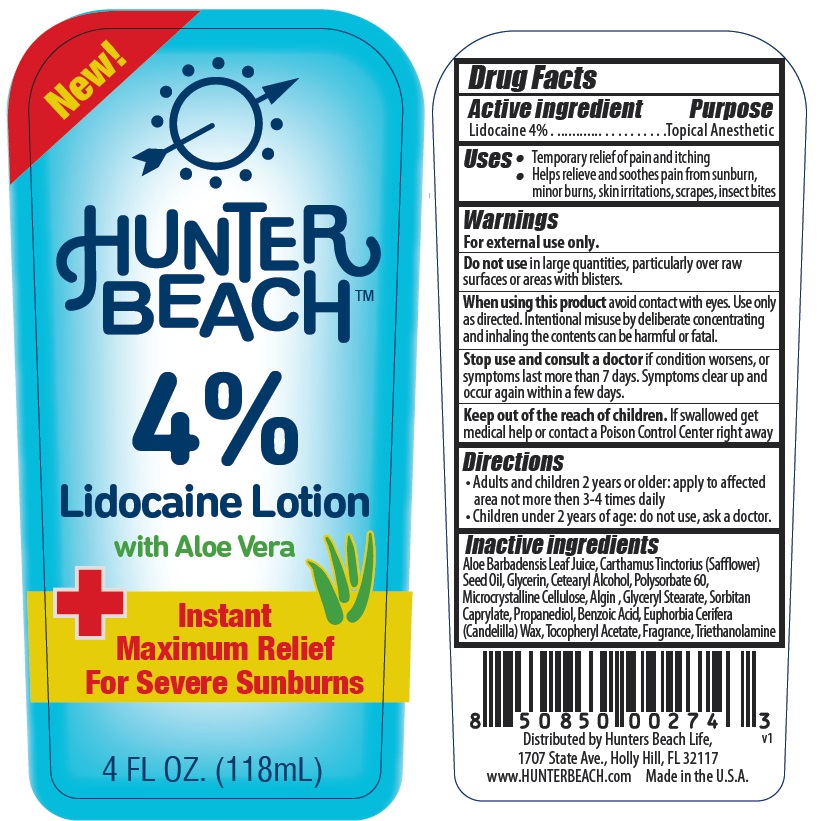
Hunter Beach 4% Lidocaine 4 g/100mL Lotion, 118 mL — NDC 82517-0001-04 package photo

Hunter Beach 4% Lidocaine 4 g/100mL Lotion, 118 mL

by HUNTERS BEACH LIFE · 118 mL in 1 BOTTLE (82517-001-04)
NDC 82517-0001-04
🏷️ FDA NDC (as labeled) 82517-001-04 billing pads the product segment with a zero
OTC On market Non-controlled
🗂️ Data synced Jul 24, 2026 · sources: openFDA · FDA label (DailyMed) · FDA Orange & Purple Book · First Databank · CMS NADAC, ASP, Medicare & Medicaid · RxNorm
📋 All sources & update times →
⚠️
Other active recalls for Lidocaine (different manufacturers) — 1 · tap to view
These affect other manufacturers’ products for the same ingredient — not necessarily the exact NDC on this page.
Class III · Apr 20, 2023 — Labeling: Typographical error on the upper left-hand side of the box and individual patch label that has the incorrect dosage form stating, each tablet contains instead of each adhesive patch contains. (Bryant Ranch Prepack, Inc.) · FDA recall D-0556-2023
Each entry is an official FDA enforcement report — look up any recall number in the FDA recall database ↗

🆔 Identity & classification

FDA NDC (as labeled) 82517-001-04
Product NDC 82517-001
11-digit billing NDC 82517000104
RxCUI 2599519
UNII 98PI200987
UPC 0850850002743
Application # M017
SPL Set ID 05a9605b-0d01-4333-8e54-7202e7c31c49
Established class (EPC) Amide Local Anesthetic; Antiarrhythmic
Physiologic effect Local Anesthesia
Chemical class Amides
DEA schedule Non-controlled
Marketing category OTC MONOGRAPH DRUG
Marketing status On market
FDA listing status Listed (active directory)
Marketing start 2022-01-01
Route TOPICAL
Dosage form LOTION
Substance LIDOCAINE
Why two NDCs? The FDA registers this code as 82517-001-04 — a 5-3-2 layout, and that's what's printed on the package and shown on DailyMed. For insurance claims, every NDC is standardized to a uniform 11-digit 5-4-2 format by adding a zero to the product segment → 82517-0001-04. Same drug, same package — only the format differs.
Where does this data come from?
Identifiers from the FDA openFDA NDC Directory and Structured Product Labeling; RxCUI from RxNorm (NLM); GPI from Medi-Span; GCN / HIC / AHFS / legend from First Databank.

🏷️ RxNorm drug class

This medicine belongs to the Antiarrhythmic class.

Pharmacologic class Antiarrhythmic, Amide Local Anesthetic
Drug family (ATC) Antiarrhythmics, class Ib, Local anesthetics, Anesthetics for topical use
Where does this data come from?
Therapeutic classes from RxNorm RxClass (U.S. National Library of Medicine) — Established Pharmacologic Class (FDA), ATC drug family (WHO) and mechanism of action, matched by this product’s RxCUI.

🏭 Manufacturer & labeler

LabelerHUNTERS BEACH LIFE
FDA applicationM017 (OTC MONOGRAPH DRUG)
Labeler code82517
First marketedJan 2022
Product typeHuman Otc Drug
Portfolio2 products on file
The labeler markets the product; the application holder owns the FDA approval. They’re often the same company but can differ (e.g. a repackager or an authorized generic). A mailing address / phone appears here when the manufacturer includes it in the product’s FDA label (not all do).
Where does this data come from?
Labeler, application holder and registered establishment from the FDA openFDA NDC Directory and Drugs@FDA; address/contact from the product’s FDA label.

🩺 Clinical

📗 Our plain-language guide HelloPharmacist
  • It's best to avoid using two lidocaine products at the same time unless your doctor says it's okay. When you use multiple products containing a local anesthetic, the total amount a...
  • Can I use a lidocaine patch and a lidocaine cream at the same time?
  • No — please don't do this. Heat significantly increases how much lidocaine is absorbed through your skin, which can push drug levels in your blood higher than they should be. Stick...
  • Can I put a heating pad on the area where I applied a lidocaine patch?
📖 Read our full Lidocaine guide →
Where does this data come from?
Plain-language summary from MedlinePlus (U.S. National Library of Medicine); supplement & herbal interactions and nutrient depletion data from the Natural Medicines database; our full guide is HelloPharmacist editorial content.

🧪 Inactive Ingredients / Excipients

Inactive ingredients, also called excipients, are components of the drug product other than the active ingredient. They may include fillers, dyes, coatings, preservatives, flavors, or other formulation ingredients.

💡 Tap an ingredient (hover on desktop) to see what it is and why it’s used.

  • UNII 9E8X80D2L0
    A synthetic form of vitamin E used as an antioxidant and preservative in medications. It helps prevent the active ingredients from degrading when exposed to oxygen or light.
  • UNII ZY81Z83H0X
    Aloe vera leaf is a plant extract derived from the aloe plant. It is used in medicines as a natural moisturizer and skin-soothing agent in topical formulations.
  • UNII 8SKN0B0MIM
    Benzoic acid is a naturally occurring organic acid used as a preservative in medicines and foods. It helps prevent bacterial and fungal growth to extend shelf life and maintain product stability.
  • UNII WL0328HX19
    A natural plant-based wax derived from candelilla shrub leaves. It acts as a coating agent, hardener, and texture modifier to control how quickly the medicine releases and to improve the tablet or capsule's appearance and stability.
  • UNII 2DMT128M1S
    A waxy solid derived from plant or animal sources. It acts as an emulsifier to blend oil and water components, and also thickens the medicine to give it the right texture and consistency.
  • UNII PDC6A3C0OX
    Glycerin is a clear, thick liquid derived from plant oils or fats. It acts as a humectant to retain moisture, a sweetener, and a solvent in medications.
  • UNII 230OU9XXE4
    A waxy substance made from glycerin and stearic acid that acts as an emulsifier to blend oily and watery ingredients together. It also helps thicken and stabilize the medicine's texture.
  • UNII OP1R32D61U
    Microcrystalline cellulose is a purified form of cellulose, a natural fiber from plant sources. It acts as a binder and filler in tablets and capsules, helping hold ingredients together and give the medicine its shape and size.
  • UNII CAL22UVI4M
    A synthetic emulsifier derived from sorbitol and fatty acids. It helps mix oil and water-based ingredients together and improves the texture and stability of the medicine.
  • UNII 5965N8W85T
    Propanediol is a clear liquid organic compound derived from vegetable sources or synthesized chemically. It acts as a humectant to retain moisture, a solvent to dissolve active ingredients, and a preservative booster in liquid medications and supplements.
  • UNII 65UEH262IS
    Safflower oil is a plant-based oil extracted from safflower seeds. It's used in medicines as a solvent and carrier to help dissolve or suspend active ingredients, and sometimes as an emollient to improve texture.
  • UNII C269C4G2ZQ
    Sodium alginate is a natural thickener and gelling agent derived from seaweed. In medicines, it acts as a binder to hold ingredients together, a thickener to adjust texture, and a disintegrant to help the tablet or capsule break apart for absorption.
  • UNII 1VTA8DCP5Q
    A synthetic fatty acid compound derived from sorbitol. It acts as an emulsifier in medicines, helping mix oil-based and water-based ingredients together and keeping them stable.
  • UNII 9O3K93S3TK
    Trolamine is an alkaline compound used as a pH buffer and emulsifier in medicines. It helps neutralize acids, stabilize formulations, and enable mixing of oil and water-based ingredients.

14 inactive ingredients listed in the exact product block matched to this NDC.

The official label also statesAloe Barbadensis Leaf Juice, Carthamus Tinctorius (Safflower) Seed Oil, Glycerin, Cetearyl Alcohol, Polysorbate 60, Microcrystalline Cellulose, Algin, Glyceryl Stearate, Sorbitan Caprylate, Propanediol, Benzoic Acid, Euphorbia Cerifera (Candelilla) Wax, Tocopheryl Acetate, Fragrance, Triethanolamine

Label-section wording can be broader than the structured product block and may mention additional formulation ingredients.

Where does this data come from?
Data sourced from official FDA Structured Product Labeling (SPL) via DailyMedingredient classCode="IACT" elements from the exact product block matched by this NDC. Label-section narrative from DailyMed / the openFDA label index is shown separately when available.

Inactive ingredient FAQ

Are inactive ingredients the same for every manufacturer?
No. Inactive ingredients can differ by manufacturer, dosage form, strength, and package / product version.
Why might an inactive ingredient be missing?
Some SPLs do not provide a complete structured inactive-ingredient list, and older or unusual labels may only include the information in narrative text.
Can inactive ingredients matter?
Yes. They can matter for allergies, intolerances, dyes, gluten / lactose concerns, preservatives, and formulation differences — but confirm with a pharmacist or the manufacturer when it’s clinically important.

💲 Pricing

A drug doesn't have one price. Each row is a different public payment system, and none is what you'd pay at the counter — that depends on your insurance. The ⓘ on each row explains what it measures.

Price systemPer gPer package
Retail pharmacies payNADAC · weekly Not in the retail survey — common for institutional, discontinued, or low-volume packs.
Medicaid paysCMS SDUD · 12 mo No recent Medicaid claims on file for this NDC — rare and low-volume NDCs are suppressed in the public data.
Medicare drug plans payPart D · quarterly No Part D plan price is available for this NDC in our data.
ℹ️
No price is published for this exact package yet. CMS surveys NADAC per package size, so a different pack of the same drug often has one.
Where does this data come from?
NADAC (National Average Drug Acquisition Cost) is the CMS weekly pharmacy-acquisition-cost survey — what pharmacies pay. ASP (Average Sales Price) is the CMS Medicare Part B drug-payment file, published quarterly. Medicaid pays is computed by us from CMS State Drug Utilization Data (total reimbursed ÷ units, trailing 12 months) — gross of rebates and inclusive of dispensing fees, so it reflects what Medicaid paid, not an acquisition cost. Medicare drug plans pay is the median negotiated point-of-sale unit cost across plans listing this NDC in the CMS quarterly Prescription Drug Plan pricing files, before rebates. The VA pays is the federal contract price (FSS, and the statutory Big 4 ceiling where listed) from the VA National Acquisition Center pharmaceutical price file. All are free public government data; each measures a different payer, so the figures are not directly comparable.

🔁 Therapeutic equivalents

ProductLabelerPackNADAC/unitTEStatusPrice vs. this
Hunter Beach 4% 4 g/100mLthis 82517-0001-04 HUNTERS 118 ml FDA listed
Hunter Beach 4% 4 g/100mL 82517-0002-04 HUNTERS 118 ml FDA listed
Pain free IV 4 g/100mL 54723-0008-01 Sambria 4 ml FDA listed
Lidocaine 4 g/100mL 71888-0102-02 Bellus 12 packets FDA listed
Painless Tattoo 2 4 g/100mL 54723-0016-01 Sambria 4 ml FDA listed
About this product: other versions of the same ingredient, strength and form are listed above, least expensive first, with FDA equivalence ratings where available.
Where does this data come from?
Equivalents are other NDCs of the same ingredient, form and route from the openFDA NDC Directory, ranked least-expensive-first by NADAC. Therapeutic-equivalence (AB) ratings come from the FDA Orange Book; biologics use the FDA Purple Book for biosimilar & interchangeable status.

Availability & generic status

🏛️
2022
On the market since
Jan 2022
📍
2026
Currently FDA-listed
4 years listed
🔓
·
Generic versions listed
see equivalents
Generic appears available

FDA-approved generic versions are listed, and recent pricing/market data suggests they may be available — see Therapeutic equivalents.

Where does this data come from?
Patents and exclusivity from the FDA Orange Book (small-molecule drugs), refreshed from public FDA data. Generic launch timing is an estimate, not a guarantee.

📊 Medicare Part D spend CMS · PART D · 2026 (Q1)

Medicare Part D (outpatient prescription) spending for Lidocaine (matched by generic name) — the program that covers self-administered drugs. 17 manufacturers.
⚠️ Drug-level data: CMS publishes Part D spending by drug, not by NDC — these figures combine every manufacturer, strength and package size sold under the name Lidocaine. CMS lists 8 products for this generic; we show the highest-spend one. That’s a different level of aggregation than the Medicaid card above, which is specific to this exact 11-digit NDC (pack size included), so the two aren’t directly comparable.
Period
Total Part D spend
$53.12M
Claims incl. refills
593.7K
Beneficiaries
367.9K
Spend / beneficiary
$144.39
Spend / claim
$89.46
Trend by period
💵 About the dollar figures: spending is what Part D plans paid before confidential manufacturer rebates, so the program’s real net cost is lower. A blank patient count means fewer than 11 people — CMS hides counts that small to protect privacy. Source: CMS Medicare Quarterly Part D Spending by Drug (data.cms.gov), updated quarterly.

🔬 Reported adverse events (FAERS)

Read carefully: FAERS reports are voluntary and unverified. Counts are not incidence, do not establish causation, are subject to reporting bias, and cannot be used to compare one drug to another. Shown for signal context only. Reports for Hunter Beach 4% (this brand).

Top reported reactions

Pain3,169
Fatigue3,039
Nausea3,029
Headache2,802
Dyspnoea2,167
Pneumonia2,002
Diarrhoea1,965

Reporter sex

48,649 reports

Serious outcomes

Death4,963
Reports over time (by year) — tap or hover for the count & year
2019 2021 2023 2026 5,398 2,246
Most recent year is provisional (FAERS lags ~3 months).
Where does this data come from?
Adverse-event reports from the FDA Adverse Event Reporting System (FAERS) via openFDA. FAERS reports are voluntary and unverified — counts are not incidence and don’t establish causation.

📦 Packaging — all sizes for this product

Package NDCDescription Marketing startStatus
82517-0001-04 You're viewing this 118 mL in 1 BOTTLE (82517-001-04) 2022-01-01 Active

🧭 About this NDC listing & data coverage

Over-the-counter (OTC) product
What data is (and isn’t) available for this NDC — tap to expand
NDC identity (package / product / labeler codes) ✓ Available
Labeler ✓ Available
Product & package description ✓ Available
Marketing category & status ✓ Available
Active ingredient / dosage form / route ✓ Available
FDA label (SPL via DailyMed) ✓ Available
Package photos ✓ Available
Inactive ingredients (structured) ✓ Available
NADAC pharmacy acquisition price (CMS) — Not published for this NDC CMS publishes NADAC only for NDCs reported in its retail-pharmacy survey.
Orange Book / therapeutic-equivalence data — Not published for this NDC Applies only to products approved under an NDA/ANDA; many listings are out of scope.
HCPCS J-code billing crosswalk — Not published for this NDC Most self-administered / retail products have no J-code — that is normal.
Medicaid utilization (CMS SDUD) — Not published for this NDC CMS reports utilization only for NDCs with Medicaid claims above its privacy threshold.
“Not published” reflects what the public FDA / CMS / NLM sources provide for this exact package code — it is a property of the data feeds, not a judgment about the product.

Questions about this listing

Is this NDC FDA-approved?
An NDC listing does not by itself establish FDA approval — the NDC Directory records that a product is listed with FDA, not that it was reviewed and approved. This listing's marketing category is "Otc Monograph Drug". Products approved under an application carry an NDA, ANDA, or BLA number.
Why is there no price listed?
The pricing shown on our NDC pages comes from CMS NADAC, a voluntary survey of retail community pharmacy invoices. CMS does not publish a NADAC for every NDC — packages outside the retail survey (institutional and hospital products, bulk packages, discontinued items, and many OTC items) may never receive one. A missing price reflects the survey's scope, not this product's actual cost, and does not mean the product is free or unavailable.
Is the NDC printed on the package the same as the 11-digit billing NDC?
Yes, they identify this exact package in different formats. The FDA registers it as 82517-001-04, which is what is printed on the packaging and shown on DailyMed. Insurance claims use a fixed 11-digit 5-4-2 format, so the short segment is padded with a leading zero: 82517-0001-04, written without dashes as 82517000104. The Identity section at the top of this page lists every form of this code.
What do the three segments of this NDC mean?
In 82517-0001-04, the first segment (82517) is the labeler code FDA assigned to HUNTERS BEACH LIFE; the middle segment (0001) identifies this specific product — its ingredient, strength, and dosage form; and the last segment (04) identifies this exact package size and type. Together they name one specific package of one specific product.
Is this package still being marketed?
Yes, per the latest FDA NDC Directory data on this page: this package is listed as actively marketed, with no marketing end date reported by HUNTERS BEACH LIFE. Listing status can change — the directory data on this page refreshes weekly.
Who lists this product with the FDA?
HUNTERS BEACH LIFE is the labeler of record for this NDC — the company under whose FDA-assigned code the package is listed. The labeler may be the manufacturer itself or a distributor marketing the product under its own code.
Do I need a prescription for this product?
This NDC is listed with FDA as an over-the-counter product, so it does not require a prescription. Follow the package directions, and ask your pharmacist if you are unsure whether it is right for you.
This page identifies an FDA-listed package (the NDC) and reports public regulatory and pricing data about the listing. It is reference information, not a medical recommendation — talk to your pharmacist or prescriber about your own medication.
Where does this data come from?
Listing facts (marketing category, packager status, marketing dates) from the FDA openFDA NDC Directory; label availability from DailyMed; pricing coverage from CMS NADAC; equivalence scope from the FDA Orange Book.

📄 FDA label — Drug Facts FDA SPL

The complete FDA label for this product — the official Drug Facts labeling, verbatim, section by section. Jump with a chip, search within the label, or expand everything.
🎯 Indications and Usage 23 words

Uses • Temporary relief of pain and itching • Helps relieve and soothes pain from sunburn, minor burns, skin irritations, scrapes, insect bites

⏱️ Dosage and Administration 32 words

Directions • Adults and children 2 years or older: apply to affected area not more than 3-4 times daily • Children under 2 years of age: do not use, ask a doctor.

⚠️ Warnings 92 words

Warnings For external use only. Do not use in large quantities, particularly over raw surfaces or areas with blisters. When using this product avoid contact with eyes.

Use only as directed. Intentional misuse by deliberate concentrating and inhaling the contents can be harmful or fatal. Stop use and consult a doctor if condition worsens, or symptoms last more than 7 days.

Symptoms clear up and occur again within a few days. Keep out of the reach of children . If swallowed get medical help or contact a Poison Control Center right away

🧪 Active Ingredient 4 words

Active ingredient Lidocaine 4%

🧪 Inactive Ingredients 34 words

Inactive ingredients Aloe Barbadensis Leaf Juice, Carthamus Tinctorius (Safflower) Seed Oil, Glycerin, Cetearyl Alcohol, Polysorbate 60, Microcrystalline Cellulose, Algin, Glyceryl Stearate, Sorbitan Caprylate, Propanediol, Benzoic Acid, Euphorbia Cerifera (Candelilla) Wax, Tocopheryl Acetate, Fragrance, Triethanolamine

🎯 Purpose 3 words

Purpose Topical Anesthetic

Source: FDA Structured Product Labeling, mirrored from DailyMed / openFDA. Prefer the government’s original formatting? View this label on DailyMed ↗
For educational and professional reference only — not medical advice. Pricing reflects published NADAC and CMS ASP (free public data) and may differ from your acquisition cost; always verify before billing or dispensing.