
Best Aminos Arctic Ice Ingredients & Drug Interactions
by BPI Sports
What is this page for?
First and foremost: checking Best Aminos Arctic Ice against your medications. The heart of this page is the interaction checker and the full interaction report — how this product’s ingredients may interact with prescription and over-the-counter medicines you may be taking.
Around that, we add a pharmacist’s high-level view of the product as a whole — what’s inside, the evidence for its stated use, how transparent the label is, and what safety data exists — so you can see the full picture in one place. It’s educational information from our licensed clinical databases and the clinical staff at HelloPharmacist — not medical advice — and we don’t sell or endorse products. Our editorial policy
Best Aminos Arctic Ice is a dietary supplement by BPI Sports with 10 active ingredients. Its ingredients are commonly taken for heart and cholesterol support, skin moisturizing, menstrual cramps.Based on those ingredients, 259 medications have a known interaction with it, the most serious rated moderate. The ingredients most likely to interact are Safflower Oil, Powder, Coconut Oil, Powder, Glutamine Support Matrix. Use the checker below to test your specific medication, or read the full HelloPharmacist Interaction Report.
Check Your Meds Against Best Aminos Arctic Ice by BPI Sports
Ask about any prescription or over-the-counter medication and we check it for interactions with Best Aminos Arctic Ice by BPI Sports — and tell you which ingredient is responsible.
AI summaries are generated from our interaction database for education only — always confirm with your pharmacist. How we use AI
Ask the Pharmacist
A licensed pharmacist will answer your question by email — free, usually within 24 hours.
Got it — thank you!
A licensed pharmacist will answer within 24 hours. Keep an eye on your email (worth checking spam, just in case).
HelloPharmacist Scorecard of Best Aminos Arctic Ice by BPI Sports
Our pharmacy team’s full take, with four database checks built into the cards below — a summary of what is known, not a grade of the product itself.
What’s inside
Low disclosure
Best Aminos Arctic Ice contains 10 active ingredients, the core of which is a branch-chain amino acid (BCAA) blend: L-Leucine, L-Isoleucine, and L-Valine. These are joined by L-Glutamine and L-Lysine, two other amino acids; a matrix of omega-6 fatty acids and CLA (conjugated linoleic acid); and powdered oils—safflower, avocado, and coconut—along with L-Glycyl and L-Alanyl.
The product also contains several inactive ingredients, including cellulose, gums, and maltodextrin, which serve as binders and fillers.
Does it work?
Moderate evidence
The evidence on this product's ingredients is limited. L-Glutamine is rated Effective for sickle cell disease and Possibly Effective for HIV/AIDS-related wasting, postoperative recovery, and critical illness from trauma.
L-Lysine is Possibly Effective for cold sores, but Insufficient Reliable Evidence exists to rate it for child growth, pressure ulcers, or diabetic foot ulcers. Safflower Oil, avocado, and coconut all have Insufficient Reliable Evidence for their listed conditions—including diabetes, cholesterol, and obesity.
The evidence we hold doesn't establish that this product works for muscle recovery, its apparent primary purpose.
How safe is it?
Well-documented data
L-Glutamine is generally well tolerated in healthy adults, though people with kidney or liver disease should use it only under medical supervision. Orally, it's been associated with belching, bloating, constipation, diarrhea, flatulence, gas pain, headache, and nausea; at high doses (10–30 grams daily), nausea, vomiting, constipation, and GI pain are more common.
Rare cases of dizziness and, in two patients with bipolar disorder, mania or hypomania have been reported. L-Lysine is generally well tolerated at typical doses but may cause stomach upset, abdominal pain, diarrhea, and dyspepsia at higher amounts; one case of kidney damage was reported.
Safflower Oil carries a serious rare risk: at least 7 case reports link over-use (usually for weight loss) to acute liver failure requiring transplant, though the exact dose or duration is unclear. Safflower may also cause liver damage.
Avocado is generally well tolerated when eaten as food; rare serious effects include allergic cross-sensitivity in latex-sensitive people and acute food protein-induced enterocolitis syndrome (a severe GI food reaction). Coconut can trigger allergic reactions ranging from hives to anaphylaxis in sensitive people.
L-Glutamine is rated Likely Safe in pregnancy and lactation; L-Lysine and avocado are not well studied in pregnancy or breastfeeding, so check with your doctor first. Safflower should be avoided in medicinal amounts during pregnancy (it may stimulate the uterus) and is not well studied while breastfeeding beyond food use.
Coconut is rated Likely Safe in pregnancy and lactation.
Meds to double-check
Moderate interaction found
Double-check this product if you take anticonvulsant (seizure) medications, blood thinners or warfarin, or diabetes drugs—all carry documented Moderate or Minor interactions. No other medication interactions are documented for the ingredients we could check.
The bottom line
Scorecard at a glanceFormula with limited ingredient disclosure with some supporting evidence for its stated purpose. Moderate medication interactions have been identified, and safety information is well characterized.
This product is a branched-chain amino acid supplement with several herbal oil additions. It may appeal to people looking for muscle-support amino acids, though the evidence for its primary purpose isn't established in our data.
If you take seizure medications, blood thinners (especially warfarin), or diabetes drugs, you must check your exact prescriptions with the tool on this page before starting. Talk to your pharmacist before using it, especially if you have liver or kidney disease or are pregnant or breastfeeding.
Educational only — not medical advice; always confirm with your pharmacist. Our editorial policy · How we use AI
Assessment coverage: 5 of 10 active ingredients matched to our full ingredient reviews (monographs). Based on the product label dated Apr 24, 2025.
This Scorecard evaluates available label information, ingredient evidence, and known medication-safety considerations. It does not independently verify product identity, purity, potency, contamination, or manufacturing quality. How these ratings are computed
General information
Key facts about Best Aminos Arctic Ice, straight from the product label.
| Brand | BPI Sports |
|---|---|
| Barcode (UPC) | 811213022815 |
| Net contents | 8.8 Ounce(s); 250 Gram(s) |
| Market status | On market |
| Date entered into DSLD | Apr 24, 2025 |
| DSLD ID | 326508 |
| Product type | Other Combinations |
| Supplement form | Powder |
| Dietary claims / uses | Nutrient, All Other, Structure/Function |
| Intended target group(s) | Adult (18 - 50 Years) |
Everything in this section is reproduced from the manufacturer’s own product label — it’s the label speaking, not HelloPharmacist. We show it so you can see exactly what the maker states; we don’t verify or endorse those statements.
Supplement Facts
The label details for Best Aminos Arctic Ice by BPI Sports, sourced from the NIH Dietary Supplement Label Database.
Supplement Facts
| Ingredient | Amount | % DV |
|---|---|---|
| Calories | 35 Calorie(s) | -- |
| Total Carbohydrates | 5 Gram(s) | 2% |
| L-Glutamine | 0 NP | -- |
| Calories from Fat | 9 Calorie(s) | -- |
| L-Leucine | 0 NP | -- |
| L-Isoleucine | 0 NP | -- |
| L-Valine | 0 NP | -- |
| Total Fat | 1 Gram(s) | 1% |
| L-Lysine | 0 NP | -- |
| Safflower Oil, Powder | 0 NP | -- |
| Avocado Oil, Powder | 0 NP | -- |
| Coconut Oil, Powder | 0 NP | -- |
| Omega 6 Fatty Acids & CLA Matrix | 1 Gram(s) | -- |
| Leucine Support Matrix | 2.5 Gram(s) | -- |
| L-Glycyl | 0 NP | -- |
| L-Alanyl | 0 NP | -- |
| Isoleucine Muscle Matrix | 1.25 Gram(s) | -- |
| Valine Recovery Matrix | 1.25 Gram(s) | -- |
| Glutamine Support Matrix | 1 Gram(s) | -- |
Other ingredients: Potassium Hydroxide, Stearic Acid, Carboxymethyl Cellulose Sodium, Crospovidone, natural Waxes, Carboxylic Acids, Polyethylene Glycol, Dicalcium Phosphate, Maltodextrin, Citric Acid, Natural & Artificial Flavors, Malic Acid, Silica, Cellulose Gum, Xanthan Gum, Carrageenan Gum, Sucralose, Acesulfame Potassium, Tree Nuts
Tap any ingredient to jump to its full detail below.
These statements are the manufacturer’s wording, reproduced from the product label — the label is saying it, not HelloPharmacist. We don’t verify or endorse them.
Suggested/Recommended/Usage/Directions
Suggested use: Use on training days only.
Take 1 serving (1 scoop) Mix in 8 oz of water Take it before, during, or after workout
Precautions
Do not exceed recommended dose. Discontinue use two weeks prior to surgery.
Warnings: Not intended for use by persons under 18. Keep this product and all supplements out of the reach of children.
Get the consent of a licensed physician before using this product, especially if you are taking medication, have a medical condition, you are pregnant, nursing or thinking about becoming pregnant.
Contain(s): Tree nuts (coconut). Produced in a facility that also processes, soy, fish, shellfish, milk, peanuts, tree nuts, wheat, and eggs.
To report an adverse event or for more information call: 954.926.0900
Storage
Store in a cool, dry place.
Formulation
No artificial colors
No artificial colors
When combined with a proper exercise and nutrition regimen.
Seals/Symbols
Made in the USA with domestic and international ingredients.
Quality Tested cGMP Quality Verified Good Manufacturing Practices
Made in the USA
FDA Disclaimer Statement
These statements have not been evaluated by the Food and Drug Administration. This product is not intended to diagnose, treat, cure, or prevent any disease.
General Statements
Follow us: Facebook /BPIOnline Instagram @ BPI_Sports
Formula
Branched-Chain Amino Acids (BCAAs) & Glutamine Arctic Ice Natural & artificial flavors
FDA Statement of Identity
Dietary Supplement
Is this label outdated? Report a formula or label change and our pharmacy team will review it.
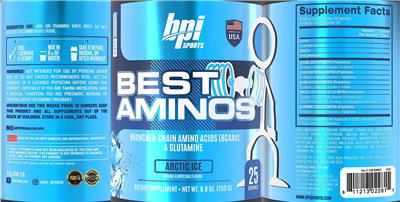
Best Aminos Arctic Ice by BPI Sports label
The label scan from the NIH Dietary Supplement Label Database. Tap to enlarge.
Label images are published by the NIH Dietary Supplement Label Database for the version of this product on file. Always read your actual product label.
View the full label (PDF)The Ingredients in Best Aminos Arctic Ice by BPI Sports
These are the 10 active ingredients this product is made of. Select any to open its full monograph.
Serving size10 Gram(s) Dosage formPowder Servings per container25 Amounts shown are per serving.
Most supplement products combine several ingredients, and a medication can interact with the product through any one of them. Each ingredient below shows whether it has known drug interactions.
Omega 6 Fatty Acids & CLA Matrix
Leucine Support Matrix
- › L-Leucine
- › L-Lysine
- › L-Glycyl
- › L-Alanyl
Isoleucine Muscle Matrix
- › L-Isoleucine
Valine Recovery Matrix
- › L-Valine
Glutamine Support Matrix
Interacts with50 drugs
Glutamine is the most abundant amino acid in the body and is usually made in your muscles. A prescription form is FDA-approved to help reduce sickle c...
Glutamine Support Matrix monograph & interactionsOther (inactive) ingredients: Potassium Hydroxide, Stearic Acid, Carboxymethyl Cellulose Sodium, Crospovidone, Natural Waxes, Carboxylic Acids, Polyethylene Glycol, Dicalcium Phosphate, Maltodextrin, Citric Acid, Natural & Artificial Flavors, Malic Acid, Silica, Cellulose Gum, Xanthan Gum, Carrageenan Gum, Sucralose, Acesulfame Potassium, Tree Nuts. These complete the product’s ingredient list but are not active constituents.
Best Aminos Arctic Ice by BPI Sports Drug Interactions
HelloPharmacist Interaction Report
Best Aminos Arctic Ice by BPI Sports contains several amino acids and oils, and we've found documented interactions with a range of medications.
The most serious interaction is with L-Glutamine and anticonvulsant medications (seizure drugs). Glutamine is broken down into glutamate, an excitatory brain chemical that theoretically could work against anticonvulsants, though this hasn't been reported in actual patients yet—it's a Moderate-severity theoretical concern.
Read the full breakdown — every affected drug type, severity by severity
Safflower Oil carries Moderate interactions with blood thinners (anticoagulants) and warfarin specifically; high doses may increase bleeding risk. It also has Moderate interactions with diabetes medications, since some research shows safflower can raise fasting blood sugar.
Avocado Oil has a documented Moderate interaction with warfarin, potentially reducing its blood-thinning effect. Coconut Oil carries a Minor interaction with diabetes drugs—theoretically increasing the risk of low blood sugar (hypoglycemia)—though the evidence is limited.
L-Lysine shows a Minor interaction with 5-HT4 agonists (a class of gut motility drugs), based on animal research suggesting lysine may block their effects. We could not check L-Leucine, L-Isoleucine, L-Valine, L-Glycyl, and L-Alanyl for interactions; data on those is not on file.
Altogether, these interactions span 258 individual medications. Run your exact prescriptions through the search tool on this page before you start.
Check your own medications below · Editorial policy · How we use AI
Want to check YOUR meds against Best Aminos Arctic Ice?
Ask about interactions with your drugs in plain English — “Can I take it with lisinopril?” — and we find you the answer in seconds, ingredient by ingredient.
Go to the checkerIngredients driving the most interactions
Individual Drug Interactions
The ingredients in Best Aminos Arctic Ice interact with 259 drugs. Click any drug to see the details.
5 of the 10 ingredients in Best Aminos Arctic Ice interact with drugs. Each result below shows which ingredient is responsible. Safflower Oil, Powder Coconut Oil, Powder Glutamine Support Matrix Avocado Oil, Powder L-Lysine
AbciximabReoPro
How Abciximab interacts with Best Aminos Arctic Ice — through 1 ingredient. Tap an ingredient for the detail:
Safflower Oil, PowderAnticoagulant/antiplatelet Drugs Moderate
Interaction Summary
High doses of safflower oil might increase the risk of bleeding when taken with anticoagulant or antiplatelet drugs.
Read the full Safflower Oil, Powder + Abciximab interactionAbrocitinibCibinqo
How Abrocitinib interacts with Best Aminos Arctic Ice — through 1 ingredient. Tap an ingredient for the detail:
Safflower Oil, PowderAnticoagulant/antiplatelet Drugs Moderate
Interaction Summary
High doses of safflower oil might increase the risk of bleeding when taken with anticoagulant or antiplatelet drugs.
Read the full Safflower Oil, Powder + Abrocitinib interactionAcarboseGlucobay, Prandase, Precose
How Acarbose interacts with Best Aminos Arctic Ice — through 2 ingredients. Tap an ingredient for the detail:
Safflower Oil, PowderAntidiabetes Drugs Moderate
Interaction Summary
Theoretically, safflower oil might alter the effects of antidiabetes drugs.
Read the full Safflower Oil, Powder + Acarbose interactionCoconut Oil, PowderAntidiabetes Drugs Minor
Interaction Summary
Theoretically, taking coconut with antidiabetes drugs might increase the risk of hypoglycemia.
Read the full Coconut Oil, Powder + Acarbose interactionAcenocoumarolSintrom
How Acenocoumarol interacts with Best Aminos Arctic Ice — through 1 ingredient. Tap an ingredient for the detail:
Safflower Oil, PowderAnticoagulant/antiplatelet Drugs Moderate
Interaction Summary
High doses of safflower oil might increase the risk of bleeding when taken with anticoagulant or antiplatelet drugs.
Read the full Safflower Oil, Powder + Acenocoumarol interactionAcetaminophen, AspirinGemnisyn
How Acetaminophen, Aspirin interacts with Best Aminos Arctic Ice — through 1 ingredient. Tap an ingredient for the detail:
Safflower Oil, PowderAnticoagulant/antiplatelet Drugs Moderate
Interaction Summary
High doses of safflower oil might increase the risk of bleeding when taken with anticoagulant or antiplatelet drugs.
Read the full Safflower Oil, Powder + Acetaminophen, Aspirin interactionAcetaminophen, Aspirin, CaffeineExcedrin, Excedrin Extra Strength, Excedrin Migraine
How Acetaminophen, Aspirin, Caffeine interacts with Best Aminos Arctic Ice — through 1 ingredient. Tap an ingredient for the detail:
Safflower Oil, PowderAnticoagulant/antiplatelet Drugs Moderate
Interaction Summary
High doses of safflower oil might increase the risk of bleeding when taken with anticoagulant or antiplatelet drugs.
Read the full Safflower Oil, Powder + Acetaminophen, Aspirin, Caffeine interactionAcetaminophen, IbuprofenCombogesic
How Acetaminophen, Ibuprofen interacts with Best Aminos Arctic Ice — through 1 ingredient. Tap an ingredient for the detail:
Safflower Oil, PowderAnticoagulant/antiplatelet Drugs Moderate
Interaction Summary
High doses of safflower oil might increase the risk of bleeding when taken with anticoagulant or antiplatelet drugs.
Read the full Safflower Oil, Powder + Acetaminophen, Ibuprofen interactionAcetazolamideAk-Zol, Diamox
How Acetazolamide interacts with Best Aminos Arctic Ice — through 1 ingredient. Tap an ingredient for the detail:
Glutamine Support MatrixAnticonvulsants Moderate
Interaction Summary
Theoretically, glutamine might antagonize the effects of anticonvulsant medications.
Read the full Glutamine Support Matrix + Acetazolamide interactionAcetohexamideDymelor
How Acetohexamide interacts with Best Aminos Arctic Ice — through 2 ingredients. Tap an ingredient for the detail:
Safflower Oil, PowderAntidiabetes Drugs Moderate
Interaction Summary
Theoretically, safflower oil might alter the effects of antidiabetes drugs.
Read the full Safflower Oil, Powder + Acetohexamide interactionCoconut Oil, PowderAntidiabetes Drugs Minor
Interaction Summary
Theoretically, taking coconut with antidiabetes drugs might increase the risk of hypoglycemia.
Read the full Coconut Oil, Powder + Acetohexamide interactionAcetylsalicylic AcidEntrophen
How Acetylsalicylic Acid interacts with Best Aminos Arctic Ice — through 1 ingredient. Tap an ingredient for the detail:
Safflower Oil, PowderAnticoagulant/antiplatelet Drugs Moderate
Interaction Summary
High doses of safflower oil might increase the risk of bleeding when taken with anticoagulant or antiplatelet drugs.
Read the full Safflower Oil, Powder + Acetylsalicylic Acid interactionAlbiglutideTanzeum
How Albiglutide interacts with Best Aminos Arctic Ice — through 2 ingredients. Tap an ingredient for the detail:
Safflower Oil, PowderAntidiabetes Drugs Moderate
Interaction Summary
Theoretically, safflower oil might alter the effects of antidiabetes drugs.
Read the full Safflower Oil, Powder + Albiglutide interactionCoconut Oil, PowderAntidiabetes Drugs Minor
Interaction Summary
Theoretically, taking coconut with antidiabetes drugs might increase the risk of hypoglycemia.
Read the full Coconut Oil, Powder + Albiglutide interactionAlogliptinNesina
How Alogliptin interacts with Best Aminos Arctic Ice — through 2 ingredients. Tap an ingredient for the detail:
Safflower Oil, PowderAntidiabetes Drugs Moderate
Interaction Summary
Theoretically, safflower oil might alter the effects of antidiabetes drugs.
Read the full Safflower Oil, Powder + Alogliptin interactionCoconut Oil, PowderAntidiabetes Drugs Minor
Interaction Summary
Theoretically, taking coconut with antidiabetes drugs might increase the risk of hypoglycemia.
Read the full Coconut Oil, Powder + Alogliptin interactionAlogliptin, MetforminKazano
How Alogliptin, Metformin interacts with Best Aminos Arctic Ice — through 2 ingredients. Tap an ingredient for the detail:
Safflower Oil, PowderAntidiabetes Drugs Moderate
Interaction Summary
Theoretically, safflower oil might alter the effects of antidiabetes drugs.
Read the full Safflower Oil, Powder + Alogliptin, Metformin interactionCoconut Oil, PowderAntidiabetes Drugs Minor
Interaction Summary
Theoretically, taking coconut with antidiabetes drugs might increase the risk of hypoglycemia.
Read the full Coconut Oil, Powder + Alogliptin, Metformin interactionAlogliptin, PioglitazoneOseni
How Alogliptin, Pioglitazone interacts with Best Aminos Arctic Ice — through 2 ingredients. Tap an ingredient for the detail:
Safflower Oil, PowderAntidiabetes Drugs Moderate
Interaction Summary
Theoretically, safflower oil might alter the effects of antidiabetes drugs.
Read the full Safflower Oil, Powder + Alogliptin, Pioglitazone interactionCoconut Oil, PowderAntidiabetes Drugs Minor
Interaction Summary
Theoretically, taking coconut with antidiabetes drugs might increase the risk of hypoglycemia.
Read the full Coconut Oil, Powder + Alogliptin, Pioglitazone interactionAlteplase, TpaActilyse, Activase
How Alteplase, Tpa interacts with Best Aminos Arctic Ice — through 1 ingredient. Tap an ingredient for the detail:
Safflower Oil, PowderAnticoagulant/antiplatelet Drugs Moderate
Interaction Summary
High doses of safflower oil might increase the risk of bleeding when taken with anticoagulant or antiplatelet drugs.
Read the full Safflower Oil, Powder + Alteplase, Tpa interactionAluminum Hydroxide, Aspirin, Codeine Phosphate, Magnesium HydroxideAscriptin Codeine #2
How Aluminum Hydroxide, Aspirin, Codeine Phosphate, Magnesium Hydroxide interacts with Best Aminos Arctic Ice — through 1 ingredient. Tap an ingredient for the detail:
Safflower Oil, PowderAnticoagulant/antiplatelet Drugs Moderate
Interaction Summary
High doses of safflower oil might increase the risk of bleeding when taken with anticoagulant or antiplatelet drugs.
Read the full Safflower Oil, Powder + Aluminum Hydroxide, Aspirin, Codeine Phosphate, Magnesium Hydroxide interactionAluminum Hydroxide, Aspirin, Magnesium HydroxideAscriptin
How Aluminum Hydroxide, Aspirin, Magnesium Hydroxide interacts with Best Aminos Arctic Ice — through 1 ingredient. Tap an ingredient for the detail:
Safflower Oil, PowderAnticoagulant/antiplatelet Drugs Moderate
Interaction Summary
High doses of safflower oil might increase the risk of bleeding when taken with anticoagulant or antiplatelet drugs.
Read the full Safflower Oil, Powder + Aluminum Hydroxide, Aspirin, Magnesium Hydroxide interactionAminophylline, Amobarbital, EphedrineAmesec
How Aminophylline, Amobarbital, Ephedrine interacts with Best Aminos Arctic Ice — through 1 ingredient. Tap an ingredient for the detail:
Glutamine Support MatrixAnticonvulsants Moderate
Interaction Summary
Theoretically, glutamine might antagonize the effects of anticonvulsant medications.
Read the full Glutamine Support Matrix + Aminophylline, Amobarbital, Ephedrine interactionAmobarbitalAmytal
How Amobarbital interacts with Best Aminos Arctic Ice — through 1 ingredient. Tap an ingredient for the detail:
Glutamine Support MatrixAnticonvulsants Moderate
Interaction Summary
Theoretically, glutamine might antagonize the effects of anticonvulsant medications.
Read the full Glutamine Support Matrix + Amobarbital interactionAmobarbital, Ephedrine SulfateEphedrine & Amytal
How Amobarbital, Ephedrine Sulfate interacts with Best Aminos Arctic Ice — through 1 ingredient. Tap an ingredient for the detail:
Glutamine Support MatrixAnticonvulsants Moderate
Interaction Summary
Theoretically, glutamine might antagonize the effects of anticonvulsant medications.
Read the full Glutamine Support Matrix + Amobarbital, Ephedrine Sulfate interactionAmobarbital, SecobarbitalTuinal
How Amobarbital, Secobarbital interacts with Best Aminos Arctic Ice — through 1 ingredient. Tap an ingredient for the detail:
Glutamine Support MatrixAnticonvulsants Moderate
Interaction Summary
Theoretically, glutamine might antagonize the effects of anticonvulsant medications.
Read the full Glutamine Support Matrix + Amobarbital, Secobarbital interactionAnacaulase-bcdbNexoBrid
How Anacaulase-bcdb interacts with Best Aminos Arctic Ice — through 1 ingredient. Tap an ingredient for the detail:
Safflower Oil, PowderAnticoagulant/antiplatelet Drugs Moderate
Interaction Summary
High doses of safflower oil might increase the risk of bleeding when taken with anticoagulant or antiplatelet drugs.
Read the full Safflower Oil, Powder + Anacaulase-bcdb interactionAnagrelideAgrylin
How Anagrelide interacts with Best Aminos Arctic Ice — through 1 ingredient. Tap an ingredient for the detail:
Safflower Oil, PowderAnticoagulant/antiplatelet Drugs Moderate
Interaction Summary
High doses of safflower oil might increase the risk of bleeding when taken with anticoagulant or antiplatelet drugs.
Read the full Safflower Oil, Powder + Anagrelide interactionAnisindioneMiradon
How Anisindione interacts with Best Aminos Arctic Ice — through 1 ingredient. Tap an ingredient for the detail:
Safflower Oil, PowderAnticoagulant/antiplatelet Drugs Moderate
Interaction Summary
High doses of safflower oil might increase the risk of bleeding when taken with anticoagulant or antiplatelet drugs.
Read the full Safflower Oil, Powder + Anisindione interactionAntidiabetes, Dipeptidyl Peptidase-4 (dpp-iv) InhibitorGlyxambi
How Antidiabetes, Dipeptidyl Peptidase-4 (dpp-iv) Inhibitor interacts with Best Aminos Arctic Ice — through 2 ingredients. Tap an ingredient for the detail:
Safflower Oil, PowderAntidiabetes Drugs Moderate
Interaction Summary
Theoretically, safflower oil might alter the effects of antidiabetes drugs.
Read the full Safflower Oil, Powder + Antidiabetes, Dipeptidyl Peptidase-4 (dpp-iv) Inhibitor interactionCoconut Oil, PowderAntidiabetes Drugs Minor
Interaction Summary
Theoretically, taking coconut with antidiabetes drugs might increase the risk of hypoglycemia.
Read the full Coconut Oil, Powder + Antidiabetes, Dipeptidyl Peptidase-4 (dpp-iv) Inhibitor interactionAntithrombin IiiThrombate III
How Antithrombin Iii interacts with Best Aminos Arctic Ice — through 1 ingredient. Tap an ingredient for the detail:
Safflower Oil, PowderAnticoagulant/antiplatelet Drugs Moderate
Interaction Summary
High doses of safflower oil might increase the risk of bleeding when taken with anticoagulant or antiplatelet drugs.
Read the full Safflower Oil, Powder + Antithrombin Iii interactionApixabanEliquis
How Apixaban interacts with Best Aminos Arctic Ice — through 1 ingredient. Tap an ingredient for the detail:
Safflower Oil, PowderAnticoagulant/antiplatelet Drugs Moderate
Interaction Summary
High doses of safflower oil might increase the risk of bleeding when taken with anticoagulant or antiplatelet drugs.
Read the full Safflower Oil, Powder + Apixaban interactionAprobarbital, Butabarbital, PhenobarbitalTriple Barbital
How Aprobarbital, Butabarbital, Phenobarbital interacts with Best Aminos Arctic Ice — through 1 ingredient. Tap an ingredient for the detail:
Glutamine Support MatrixAnticonvulsants Moderate
Interaction Summary
Theoretically, glutamine might antagonize the effects of anticonvulsant medications.
Read the full Glutamine Support Matrix + Aprobarbital, Butabarbital, Phenobarbital interactionArgatrobanArgatroban
How Argatroban interacts with Best Aminos Arctic Ice — through 1 ingredient. Tap an ingredient for the detail:
Safflower Oil, PowderAnticoagulant/antiplatelet Drugs Moderate
Interaction Summary
High doses of safflower oil might increase the risk of bleeding when taken with anticoagulant or antiplatelet drugs.
Read the full Safflower Oil, Powder + Argatroban interactionAspirinAngettes 75, ASA, Asaphen, Aspirin, Caprin, Cartia +8 more
How Aspirin interacts with Best Aminos Arctic Ice — through 1 ingredient. Tap an ingredient for the detail:
Safflower Oil, PowderAnticoagulant/antiplatelet Drugs Moderate
Interaction Summary
High doses of safflower oil might increase the risk of bleeding when taken with anticoagulant or antiplatelet drugs.
Read the full Safflower Oil, Powder + Aspirin interactionEach ingredient & the kinds of drugs it affects
For each ingredient in Best Aminos Arctic Ice with known interactions, here are the types of medications they can affect. Open any type for the detail — or search your exact drug in the checker above.
Safflower Oil, Powder
Anticoagulant/Antiplatelet Drugs
High doses of safflower oil might increase the risk of bleeding when taken with anticoagulant or antiplatelet drugs.
Small clinical studies show that taking safflower oil, approximately 55 grams daily for 2-3 weeks, decreases platelet aggregation. However, taking lower doses of safflower oil, such as 5 grams daily for 4 weeks, does not seem to affect platelet function. In one case report, a 74-year-old male stabilized on warfarin developed urinary tract bleeding and an elevated INR after taking a safflower extract 20 grams daily for 14 days.
Antidiabetes Drugs
Theoretically, safflower oil might alter the effects of antidiabetes drugs.
Some clinical research shows that taking safflower oil 10 grams daily for 3 weeks can increase fasting blood glucose in patients with type 2 diabetes. However, clinical research in patients with metabolic syndrome with or without impaired glucose tolerance shows that taking safflower oil 8 grams daily for 12 weeks reduces fasting glucose levels by around 8 mg/dL. Some clinical research also shows that taking safflower oil 8 grams daily for 16 weeks does not affect fasting glucose levels in patients with type 2 diabetes.
Warfarin
Theoretically, safflower oil might increase the risk of bleeding when taken with warfarin.
In one case report, a 74-year-old male stabilized on warfarin developed urinary tract bleeding and an elevated INR after taking a safflower extract 20 grams daily for 14 days.
Coconut Oil, Powder
Antidiabetes Drugs
Theoretically, taking coconut with antidiabetes drugs might increase the risk of hypoglycemia.
Animal research suggests that coconut milk might increase insulin levels and/or decrease blood glucose levels.
Glutamine Support Matrix
Anticonvulsants
Theoretically, glutamine might antagonize the effects of anticonvulsant medications.
Glutamine is metabolized to the excitatory neurotransmitter glutamate. Glutamate might have antagonistic effects with anticonvulsant drugs. However, this interaction has not yet been reported in humans.
Avocado Oil, Powder
Warfarin (Coumadin)
Avocado may antagonize the anticoagulant effects of warfarin.
Avocado may antagonize the anticoagulant effects of warfarin; however, there has been only one case report of this interaction.
L-Lysine
5-Ht4 Agonists
Theoretically, lysine may reduce the effects of 5-HT4 agonists.
Animal research suggests that L-lysine is a partial serotonin receptor 4 (5-HT4) antagonist and inhibits diarrhea induced by the 5-HT4 agonist, 5-hydroxytryptophane.
Brand information
Manufacturer and brand details for Best Aminos Arctic Ice, from the product label.
BPI Sports
See all BPI Sports products- Name
- BPI Sports
- Street Address
- 3149 SW 42nd St. Suite 200
- City
- Hollywood
- State
- FL
- ZipCode
- 33312
- Phone Number
- 954.926.0900
- Web Address
- www.bpisports.com
Best Aminos Arctic Ice by BPI Sports: Common Questions
Does Best Aminos Arctic Ice by BPI Sports interact with any medications?
How can one product interact with so many drugs?
Where does this information come from?
Is L-Glutamine safe for me if I have kidney disease?
What are the most common side effects of this product?
Can I take this while pregnant?
Will this help me build muscle?
Is there a risk of allergic reaction?
Can I take this if I'm breastfeeding?
Written and reviewed by the HelloPharmacist editorial staff. Our editorial policy
Not sure if Best Aminos Arctic Ice is safe with your meds?
Our pharmacists answer your medication & supplement questions — free.
Label information is sourced from the NIH Dietary Supplement Label Database and reflects the product version on file; always read your actual product label. This page is for education only and is not a substitute for professional medical advice. Confirm with your pharmacist or doctor before combining supplements and medications.
The Full Monographs Behind Best Aminos Arctic Ice’s Ingredients
Every ingredient we hold a full HelloPharmacist monograph for — uses, evidence, safety, and the complete interaction list.
Safflower
Interacts with 208 drugsSafflower is a thistle-like plant used mainly for its seed oil (a common cooking oil) and its colorful flowers. Safflower oil is a reasonable source of unsaturated fats, but strong proof tha...
Read the full Safflower monograph → Herb & supplement monographAvocado
Interacts with 2 drugsAvocado is a nutritious fruit rich in healthy monounsaturated fats, fiber, and potassium, and eating it as part of a balanced diet may support heart health. A specific extract called avocado...
Read the full Avocado monograph → Herb & supplement monographCoconut
Interacts with 86 drugsCoconut is a nutritious tropical food enjoyed as oil, water, milk, and flesh, and it is generally safe to eat in normal food amounts. While some uses (like skin moisturizing and hydration) h...
Read the full Coconut monograph → Herb & supplement monographLysine
Interacts with 1 drugLysine is an essential amino acid your body cannot make on its own, so it must come from food or supplements. People most often take extra lysine to try to prevent or shorten cold sores, but...
Read the full Lysine monograph → Herb & supplement monographGlutamine
Interacts with 50 drugsGlutamine is the most abundant amino acid in the body and is usually made in your muscles. A prescription form is FDA-approved to help reduce sickle cell disease complications, but for most...
Read the full Glutamine monograph →Sources & How We Checked
Best Aminos Arctic Ice's label data comes from the NIH Dietary Supplement Label Database; the ingredient interaction data is from the Natural Medicines database, reviewed by our pharmacists.
- NIH Dietary Supplement Label Database (DSLD) — The official product label on file for this supplement.
- Natural Medicines (Therapeutic Research Center) — Evidence-graded clinical reference behind the ingredient interaction data.
Content is written and reviewed by licensed HelloPharmacist pharmacists. See our data sources and editorial standards for how this information is built and checked.
The 52 references behind this product’s interaction data
Every citation that drives the interaction findings for this product’s ingredients, from the evidence-graded Natural Medicines (TRC Healthcare) database. Open an ingredient to browse its citations — links open the study on PubMed or the publisher’s site.
Glutamine 11 references
- Miller AL. Therapeutic considerations of L-glutamine: a review of the literature. Altern Med Rev 1999;4:239-48..
- Bozzetti F, Biganzoli L, Gavazzi C, et al. Glutamine supplementation in cancer patients receiving chemotherapy: a double-blind randomized study. Nutrition 1997;13:748-51.. PubMed
- Mebane AH. L-Glutamine and mania. Am J Psychiatry 984;141:1302-3.
- Meldrum BS. Glutamate as a neurotransmitter in the brain: review of physiology and pathology. J Nutr 2000;130:1007S-15S.. PubMed
- Garlick PJ. Assessment of the safety of glutamine and other amino acids. J Nutr 2001;131:2556S-61S.. PubMed
- Chapman AG. Glutamate and epilepsy. J Nutr 2000;130:1043S-5S.. PubMed
- Ziegler TR. Glutamine supplementation in cancer patients receiving bone marrow transplantation and high dose chemotherapy. J Nutr 2001;131:2578S-84S.. PubMed
- Laviano A, Molfino A, Lacaria MT, Canelli A, De Leo S, Preziosa I, Rossi Fanelli F. Glutamine supplementation favors weight loss in nondieting obese female patients. A pilot study. Eur J Clin Nutr. 2014 Nov;68(11):1264-6. PubMed
- Endari (l-glutamine) [package insert]. Torrance, CA: Emmaus Medical,Inc; 2017.
- Niihara Y, Miller ST, Kanter J, et al. A Phase 3 Trial of l-Glutamine in Sickle Cell Disease. N Engl J Med 2018;379(3):226-35. doi: 10.1056/NEJMoa1715971.
- Ogden HB, Child RB, Fallowfield JL, et al. Gastrointestinal Tolerance of Low, Medium and High Dose Acute Oral l-Glutamine Supplementation in Healthy Adults: A Pilot Study. Nutrients. 2020;12(10):2953. PubMed
Lysine 7 references
- Thein DJ, Hurt WC. Lysine as a prophylactic agent in the treatment of recurrent herpes simplex labialis. Oral Surg Oral Med Oral Pathol 1984;58:659-66. PubMed
- McCune MA, Perry HO, Muller SA, O'Fallon WM. Treatment of recurrent herpes simplex infections with L-lysine monohydrochloride. Cutis 1984;34:366-73.
- DiGiovanna JJ, Blank H. Failure of lysine in frequently recurrent herpes simplex infection. Treatment and prophylaxis. Arch Dermatol 1984;120:48-51. DOI
- Milman N, Scheibel J, Jessen O. Lysine prophylaxis in recurrent herpes simplex labialis: a double-blind, controlled crossover study. Acta Derm Venereol 1980;60:85-7.
- Griffith RS, Walsh DE, Myrmel KH, et al. Success of L-lysine therapy in frequently recurrent herpes simplex infection. Treatment and prophylaxis. Dermatologica 1987;175:183-90. DOI
- Lo JC, Chertow GM, Rennke H, Seifter JL. Fanconi's syndrome and tubulointerstitial nephritis in association with L-lysine ingestion. Am J Kidney Dis 1996;28:614-7. PubMed
- Smriga M, Torii K. L-Lysine acts like a partial serotonin receptor 4 antagonist and inhibits serotonin-mediated intestinal pathologies and anxiety in rats. Proc Natl Acad Sci U S A. 2003 Dec 23;100(26):15370-5.
Safflower 14 references
- The Review of Natural Products by Facts and Comparisons. St. Louis, MO: Wolters Kluwer Co., 1999.
- Leung AY, Foster S. Encyclopedia of Common Natural Ingredients Used in Food, Drugs and Cosmetics. 2nd ed. New York, NY: John Wiley & Sons, 1996.
- McGuffin M, Hobbs C, Upton R, Goldberg A, eds. American Herbal Products Association's Botanical Safety Handbook. Boca Raton, FL: CRC Press, LLC 1997.
- Borkman M, Chisholm DJ, Furler SM, et al. Effects of fish oil supplementation on glucose and lipid metabolism in NIDDM. Diabetes 1989;38:1314-9.. PubMed
- Amato, P. and Quercia, R. A. A historical perspective and review of the safety of lipid emulsion in pregnancy. Nutr Clin Pract. 1991;6(5):189-192. PubMed
- Demke, D. M., Peters, G. R., Linet, O. I., Metzler, C. M., and Klott, K. A. Effects of a fish oil concentrate in patients with hypercholesterolemia. Atherosclerosis 1988;70(1-2):73-80. PubMed
- Kaji, K., Yoshida, S., Nagata, N., Yamashita, T., Mizukoshi, E., Honda, M., Kojima, Y., and Kaneko, S. An open-label study of administration of EH0202, a health-food additive, to patients with chronic hepatitis C. J Gastroenterol. 2004;39(9):873-878. PubMed
- Kwon, J. S., Snook, J. T., Wardlaw, G. M., and Hwang, D. H. Effects of diets high in saturated fatty acids, canola oil, or safflower oil on platelet function, thromboxane B2 formation, and fatty acid composition of platelet phospholipids. Am.J.Clin.Nutr. PubMed
- Lloyd-Still, J. D., Simon, S. H., Wessel, H. U., and Gibson, L. E. Negative effects of oral fatty acid supplementation on sweat chloride in cystic fibrosis. Pediatrics 1979;64(1):50-52. DOI
- Challen, A. D., Branch, W. J., and Cummings, J. H. The effect of aspirin and linoleic acid on platelet aggregation, platelet fatty acid composition and haemostasis in man. Hum Nutr Clin Nutr 1983;37(3):197-208.
- Asp ML, Collene AL, Norris LE, Cole RM, Stout MB, Tang SY, Hsu JC, Belury MA. Time-dependent effects of safflower oil to improve glycemia, inflammation and blood lipids in obese, post-menopausal women with type 2 diabetes: a randomized, double-masked, cro
- Liu Y, Liu S, Shi Y, et al. Effects of safflower injection on the pharmacodynamics and pharmacokinetics of warfarin in rats. Xenobiotica. 2017 Oct 25:1-6. [Epub ahead of print] PubMed
- de Ataide EC, Reges Perales S, de Oliveira Peres MA, et al. Acute liver failure induced by Carthamus tinctorius oil: Case reports and literature review. Transplant Proc. 2018;50(2):476-477. PubMed
- Ruyvaran M, Zamani A, Mohamadian A, et al. Safflower (Carthamus tinctorius L.) oil could improve abdominal obesity, blood pressure, and insulin resistance in patients with metabolic syndrome: a randomized, double-blind, placebo-controlled clinical trial. PubMed
Avocado 10 references
- Blickstein D, Shaklai M, Inbal A. Warfarin antagonism by avocado. Lancet 1991;337:914-5. PubMed
- Blanco C, Diaz-Perales A, Collada C, et al. Class I chitinases as potential panallergens involved in the latex-fruit syndrome. J Allergy Clin Immunol 1999;103(3 Pt 1):507-13. PubMed
- Diaz-Perales A, Collada C, Blanco C, et al. Cross-reactions in the latex-fruit syndrome: A relevant role of chitinases but not of complex asparagine-linked glycans. J Allergy Clin Immunol 1999;104:681-7. PubMed
- Stucker M, Memmel U, Hoffmann M, et al. Vitamin B(12) cream containing avocado oil in the therapy of plaque psoriasis. Dermatology 2001;203:141-7.
- Ahlroth, M., Alenius, H., Turjanmaa, K., Makinen-Kiljunen, S., Reunala, T., and Palosuo, T. Cross-reacting allergens in natural rubber latex and avocado. J.Allergy Clin.Immunol. 1995;96(2):167-173. PubMed
- de Groot, A. C., van der Meeren, H. L., and Weyland, J. W. Contact allergy to avocado oil in a sunscreen. Contact Dermatitis 1987;16(2):108-109. PubMed
- Blanco, C., Carrillo, T., Castillo, R., Quiralte, J., and Cuevas, M. Avocado hypersensitivity. Allergy 1994;49(6):454-459. PubMed
- Crisi, G. and Belsito, D. V. Contact urticaria from latex in a patient with immediate hypersensitivity to banana, avocado and peach. Contact Dermatitis 1993;28(4):247-248.
- Cherian S, Neupert K, Varshney P. Avocado as an emerging trigger for food protein-induced enterocolitis syndrome. Ann Allergy Asthma Immunol. 2018;121(3):369-71. PubMed
- Lichtenstein AH, Kris-Etherton PM, Petersen KS, et al. Effect of Incorporating 1 Avocado Per Day Versus Habitual Diet on Visceral Adiposity: A Randomized Trial. J Am Heart Assoc 2022;11(14):e025657.
Coconut 10 references
- Teuber SS, Peterson WR. Systemic allergic reaction to coconut (Cocos nucifera) in 2 subjects with hypersensitivity to tree nut and demonstration of cross-reactivity to legumin-like seed storage proteins: new coconut and walnut food allergens. J Allergy Cl PubMed
- Rosado A, Fernandez-Rivas M, Gonzalez-Mancebo E, et al. Anaphylaxis to coconut. Allergy 2002;57(2):182-3. PubMed
- Karmakar PR, Das A, Chatterjee BP. Placebo-controlled immunotherapy with Cocos nucifera pollen extract. Int Arch Allergy Immunol 1994;103(2):194-201. PubMed
- Anagnostou K. Coconut Allergy Revisited. Children (Basel). 2017;4(10). pii: E85. PubMed
- Cifuentes L, Mistrello G, Amato S, et al. Identification of cross-reactivity between buckwheat and coconut. Ann Allergy Asthma Immunol. 2015;115(6):530-2. PubMed
- Michavila Gomez A, Amat Bou M, Gonzalez Cortés MV, Segura Navas L, Moreno Palanques MA, Bartolomé B. Coconut anaphylaxis: Case report and review. Allergol Immunopathol (Madr). 2015;43(2):219-20. PubMed
- 21CFR170.3. U.S. Food and Drug Administration Department of Health and Human Services. Updated April 1, 2017. https://www.accessdata.fda.gov/scripts/cdrh/cfdocs/cfcfr/CFRSearch.cfm?fr=170.3
- Alatawi KA, Alshubaily FA. Coconut products alleviate hyperglycaemic, hyperlipidimic and nephropathy indices in streptozotocin-induced diabetic wistar rats. Saudi J Biol Sci. 2021;28(8):4224-4231. PubMed
- Kruse L, Lor J, Yousif R, Pongracic JA, Fishbein AB. Coconut allergy: Characteristics of reactions and diagnostic predictors in a pediatric tertiary care center. Ann Allergy Asthma Immunol 2021;126(5):562-568.
- Pathmanandavel K, Kaur N, Joshi P, Ford LS. Anaphylaxis and allergy to coconut: An Australian pediatric case series. J Allergy Clin Immunol Pract 2020;8(10):3657-3659. PubMed
Parts of this content are provided by the Therapeutic Research Center, LLC.
DISCLAIMER: Currently this does not check for drug-drug interactions. This is not an all-inclusive comprehensive list of potential interactions and is for informational purposes only. Not all interactions are known or well-reported in the scientific literature, and new interactions are continually being reported. Input is needed from a qualified healthcare provider including a pharmacist before starting any therapy. Application of clinical judgment is necessary.
© 2021 Therapeutic Research Center, LLC