
Cell-Tox Ease Ingredients & Drug Interactions
What is this page for?
First and foremost: checking Cell-Tox Ease against your medications. The heart of this page is the interaction checker and the full interaction report — how this product’s ingredients may interact with prescription and over-the-counter medicines you may be taking.
Around that, we add a pharmacist’s high-level view of the product as a whole — what’s inside, the evidence for its stated use, how transparent the label is, and what safety data exists — so you can see the full picture in one place. It’s educational information from our licensed clinical databases and the clinical staff at HelloPharmacist — not medical advice — and we don’t sell or endorse products. Our editorial policy
Cell-Tox Ease is a dietary supplement by Earth Friend Herb Co. with 13 active ingredients. Its ingredients are commonly taken for kidney and bladder stones, urinary tract complaints, enlarged prostate symptoms.Based on those ingredients, 2,215 medications have a known interaction with it, the most serious rated moderate. The ingredients most likely to interact are Plantain, Sage, Chaparral. Use the checker below to test your specific medication, or read the full HelloPharmacist Interaction Report.
Check Your Meds Against Cell-Tox Ease by Earth Friend Herb Co.
Ask about any prescription or over-the-counter medication and we check it for interactions with Cell-Tox Ease by Earth Friend Herb Co. — and tell you which ingredient is responsible.
AI summaries are generated from our interaction database for education only — always confirm with your pharmacist. How we use AI
Ask the Pharmacist
A licensed pharmacist will answer your question by email — free, usually within 24 hours.
Got it — thank you!
A licensed pharmacist will answer within 24 hours. Keep an eye on your email (worth checking spam, just in case).
HelloPharmacist Scorecard of Cell-Tox Ease by Earth Friend Herb Co.
Our pharmacy team’s full take, with four database checks built into the cards below — a summary of what is known, not a grade of the product itself.
What’s inside
Low disclosure
Cell-Tox Ease is a liquid formula with 13 active ingredients: Hydrangea, Irish Moss, Juniper, Asafoetida, Lobelia, Sage, Black Walnut, Burdock, Iceland Moss, Coriolus, Chaparral, Condurango, and Plantain. The product also contains alcohol and glycerin as inactive ingredients.
These herbs have been used traditionally for various purposes — some for their diuretic properties, others for immune or digestive support — but the formula doesn't state a single target condition or explain each ingredient's intended role in Cell-Tox Ease.
Does it work?
Strong evidence
The effectiveness data we hold shows only "Insufficient Reliable Evidence" ratings for several of these ingredients. Juniper, for example, has insufficient evidence for GERD, rheumatoid arthritis, urinary tract infections, wound healing, kidney stones, and bronchitis.
Black Walnut is similarly unproven for heart disease and wound healing. Iceland Moss and Condurango have no effectiveness ratings in our data.
Sage shows "Possibly Effective" for menopausal symptoms and cognitive function, but "Possibly Ineffective" for postoperative pain. Lobelia is rated "Possibly Ineffective" for smoking cessation.
For most of what this product contains, the science to back up any health claim simply isn't established in the data we hold.
How safe is it?
Well-documented data
Several ingredients in this formula carry serious safety cautions. Chaparral is flagged as unsafe because of documented liver and kidney toxicity — it's linked to hepatitis, cirrhosis, and in some cases liver failure requiring transplant.
Lobelia can be toxic at higher doses, causing sweating, rapid heart rate, seizures, low blood pressure, and death. Hydrangea, Juniper, Asafoetida, and Lobelia all advise against use during pregnancy and breastfeeding due to insufficient safety data or toxicity concerns.
Sage is likely unsafe in pregnancy (due to thujone, a compound in the herb) but may be acceptable in food amounts; medicinal doses should be avoided while breastfeeding. Black Walnut leaf, bark, and hull contain tannins that can cause stomach upset and may carry a small cancer risk with long-term use.
Burdock is generally well tolerated as a food but carries rare risks of allergic reaction and contact dermatitis. Most ingredients show common mild adverse effects like nausea, diarrhea, or dizziness; Iceland Moss can be contaminated with lead if sourced poorly.
Meds to double-check
Moderate interaction found
Before taking Cell-Tox Ease, check with your pharmacist if you take: blood thinners or antiplatelet drugs (Moderate risk of bleeding from Asafoetida and Burdock); blood pressure medications (Moderate risk from Asafoetida and Sage — effects can be unpredictable); lithium (Moderate risk from Hydrangea, Juniper, and Lobelia — levels may rise); antidiabetes drugs (Moderate risk from Juniper of low blood sugar); CNS depressants like sedatives or sleeping pills (Moderate risk from Sage); drugs metabolized by the liver, including many antidepressants, heart medications, and antihistamines (Moderate risk from Sage — levels may rise); or any other medications if you have liver disease (Moderate risk from Chaparral). No interactions are documented for the ingredients we could check — Irish Moss, Coriolus, and Plantain — but that does not mean interactions don't exist.
The bottom line
Scorecard at a glanceFormula with limited ingredient disclosure with strong clinical evidence behind its ingredients' uses. Moderate medication interactions have been identified, and safety information is well characterized.
This is a complex herbal blend with limited evidence of effectiveness and several serious safety red flags — especially Chaparral. If you take any prescription medication, especially blood thinners, blood pressure drugs, antidiabetes medications, lithium, or anything metabolized by the liver, check your exact medications with the tool on this page before use.
Pregnant or breastfeeding? Talk to your pharmacist or doctor first.
This product is not for you if you have liver or kidney disease.
Educational only — not medical advice; always confirm with your pharmacist. Our editorial policy · How we use AI
Assessment coverage: 12 of 13 active ingredients matched to our full ingredient reviews (monographs). Based on the product label dated Dec 21, 2024.
This Scorecard evaluates available label information, ingredient evidence, and known medication-safety considerations. It does not independently verify product identity, purity, potency, contamination, or manufacturing quality. How these ratings are computed
General information
Key facts about Cell-Tox Ease, straight from the product label.
| Brand | Earth Friend Herb Co. |
|---|---|
| Net contents | 1 Fluid Ounce(s); 30 Milliliter(s) |
| Market status | On market |
| Date entered into DSLD | Dec 21, 2024 |
| DSLD ID | 323587 |
| Product type | Botanical |
| Supplement form | Liquid |
| Dietary claims / uses | All Other |
| Intended target group(s) | Adult (18 - 50 Years), Women (not pregnant or lactating) |
Everything in this section is reproduced from the manufacturer’s own product label — it’s the label speaking, not HelloPharmacist. We show it so you can see exactly what the maker states; we don’t verify or endorse those statements.
Supplement Facts
The label details for Cell-Tox Ease by Earth Friend Herb Co., sourced from the NIH Dietary Supplement Label Database.
Supplement Facts
| Ingredient | Amount | % DV |
|---|---|---|
| Hydrangea | 0 NP | -- |
| Irish Moss | 0 NP | -- |
| Juniper | 0 NP | -- |
| Asafoetida | 0 NP | -- |
| Lobelia | 0 NP | -- |
| Sage | 0 NP | -- |
| Black Walnut | 0 NP | -- |
| Burdock | 0 NP | -- |
| Iceland Moss | 0 NP | -- |
| Coriolus | 0 NP | -- |
| Chaparral | 0 NP | -- |
| Condurango | 0 NP | -- |
| Plantain | 0 NP | -- |
Other ingredients: Alcohol, Glycerin
Tap any ingredient to jump to its full detail below.
These statements are the manufacturer’s wording, reproduced from the product label — the label is saying it, not HelloPharmacist. We don’t verify or endorse them.
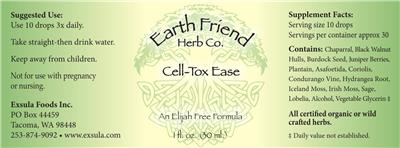
Suggested/Recommended/Usage/Directions
Suggested Use: Use 10 drops 3x daily. Take straight-then drink water.
Precautions
Keep away from children.
Not for use with pregnancy or nursing.
General Statements
An Elijah Free formula
Formulation
All certified organic or wild crafted herbs.
Is this label outdated? Report a formula or label change and our pharmacy team will review it.
Cell-Tox Ease by Earth Friend Herb Co. label
The label scan from the NIH Dietary Supplement Label Database. Tap to enlarge.
Label images are published by the NIH Dietary Supplement Label Database for the version of this product on file. Always read your actual product label.
View the full label (PDF)The Ingredients in Cell-Tox Ease by Earth Friend Herb Co.
These are the 13 active ingredients this product is made of. Select any to open its full monograph.
Serving size10 Drop(s) Dosage formLiquid Servings per container30 Amounts shown are per serving.
Most supplement products combine several ingredients, and a medication can interact with the product through any one of them. Each ingredient below shows whether it has known drug interactions.
Hydrangea
Interacts with1 drug
Hydrangea root has a long history in folk medicine, mainly for urinary and kidney stone complaints, but there is very little modern human research to...
Hydrangea monograph & interactionsIrish Moss
Interacts with22 drugs
Sea moss is a type of red seaweed that is naturally rich in iodine and several minerals, and it is popular as a 'whole-food' supplement. Strong human...
Irish Moss monograph & interactionsJuniper
Interacts with162 drugs
Juniper berry is a traditional herb best known for flavoring gin and for its folk use as a diuretic and digestive aid. Solid human evidence for its he...
Juniper monograph & interactionsAsafoetida
Interacts with289 drugs
Asafoetida is a strong-smelling plant resin used widely as a spice and in traditional medicine, mainly for digestive complaints. Solid human evidence...
Asafoetida monograph & interactionsLobelia
Interacts with1 drug
Lobelia is a traditional herb once used for breathing problems and to help people quit smoking, but reliable evidence supporting these uses is lacking...
Lobelia monograph & interactionsSage
Interacts with1,297 drugs
Sage is a common kitchen herb that is generally safe in food amounts and is traditionally used for sore throats, digestion, sweating, and memory. Some...
Sage monograph & interactionsBlack Walnut
No knowninteractions
Black walnut is a tree whose green hulls are traditionally used as a natural antiparasitic and digestive remedy, but solid human evidence for these us...
Black Walnut monograph & interactionsBurdock
Interacts with122 drugs
Burdock is a traditional herb most often used for skin problems and as a so-called 'blood purifier,' but high-quality human studies are lacking and mo...
Burdock monograph & interactionsIceland Moss
No knowninteractions
Iceland moss is a lichen traditionally used as a soothing remedy for dry cough and throat or mouth irritation, mainly because of its mucilage (gel-for...
Iceland Moss monograph & interactionsCoriolus
Chaparral
Interacts with372 drugs
Chaparral is a desert shrub long used in traditional medicine, but there is no reliable proof it treats any condition. It has been linked to serious a...
Chaparral monograph & interactionsCondurango
No knowninteractions
Condurango is the bark of a South American vine traditionally used as a bitter to stimulate appetite and ease digestive complaints. Modern scientific...
Condurango monograph & interactionsPlantain
Interacts with2,025 drugs
Black psyllium is a soluble-fiber supplement made from the seeds of a Plantago plant, used mostly to ease constipation and support digestive health. I...
Plantain monograph & interactionsOther (inactive) ingredients: Alcohol, Glycerin. These complete the product’s ingredient list but are not active constituents.
Cell-Tox Ease by Earth Friend Herb Co. Drug Interactions
HelloPharmacist Interaction Report
Cell-Tox Ease by Earth Friend Herb Co. contains several ingredients with documented interactions with medications.
The most serious concern is Chaparral, which has a Moderate interaction with drugs that stress the liver (hepatotoxic drugs) — chaparral itself carries significant liver and kidney toxicity risk, and combining it with other medications that affect the liver could amplify that damage.
Read the full breakdown — every affected drug type, severity by severity
Sage carries Moderate interactions with CNS depressants (which could increase sedation), antihypertensive drugs (which might have unpredictable effects on blood pressure), and several drug-metabolizing enzymes (CYP2D6, CYP2C19, CYP2C9, CYP3A4 substrates, and P-glycoprotein substrates) — in theory increasing levels of drugs broken down by these pathways. Asafoetida has Moderate interactions with blood pressure medications and blood thinners (anticoagulants and antiplatelet drugs), raising the risk of bleeding or dangerous drops in blood pressure.
Hydrangea, Juniper, and Lobelia each carry Moderate interactions with lithium due to their diuretic properties, which might reduce lithium excretion and raise its levels. Juniper also has a Moderate interaction with antidiabetes medications and a Minor interaction with diuretic drugs.
Burdock has a Moderate interaction with blood thinners, potentially increasing bleeding risk.
We could not check Irish Moss, Coriolus, or Plantain — interaction data for these ingredients are not held in our system. Black Walnut and Iceland Moss were checked and show no documented interactions in our data, though that's not a guarantee none exist.
Altogether, these interactions span 1,455 individual medications. Use the search tool on this page to check your exact prescriptions before starting.
Check your own medications below · Editorial policy · How we use AI
Want to check YOUR meds against Cell-Tox Ease?
Ask about interactions with your drugs in plain English — “Can I take it with lisinopril?” — and we find you the answer in seconds, ingredient by ingredient.
Go to the checkerIngredients driving the most interactions
Individual Drug Interactions
The ingredients in Cell-Tox Ease interact with 2,215 drugs. Click any drug to see the details.
9 of the 13 ingredients in Cell-Tox Ease interact with drugs. Each result below shows which ingredient is responsible. Plantain Sage Chaparral Asafoetida Juniper Burdock Irish Moss Hydrangea Lobelia
6-mercaptopurinePurinethol
How 6-mercaptopurine interacts with Cell-Tox Ease — through 2 ingredients. Tap an ingredient for the detail:
ChaparralHepatotoxic Drugs Moderate
Interaction Summary
Theoretically, chaparral might have additive adverse effects on the liver when used with hepatotoxic drugs.
Read the full Chaparral + 6-mercaptopurine interactionPlantainOral Drugs Minor
Interaction Summary
Theoretically, psyllium might increase, decrease, or have no effect on the absorption of oral drugs.
Read the full Plantain + 6-mercaptopurine interactionAdo-trastuzumab EmtansineKadcyla
How Ado-trastuzumab Emtansine interacts with Cell-Tox Ease — through 1 ingredient. Tap an ingredient for the detail:
SageCytochrome P450 3a4 (cyp3a4) Substrates Moderate
Interaction Summary
Theoretically, sage might increase the levels and clinical effects of drugs metabolized by CYP3A4.
Read the full Sage + Ado-trastuzumab Emtansine interactionAbacavir Sulfate, Dolutegravir, LamivudineTriumeq
How Abacavir Sulfate, Dolutegravir, Lamivudine interacts with Cell-Tox Ease — through 2 ingredients. Tap an ingredient for the detail:
ChaparralHepatotoxic Drugs Moderate
Interaction Summary
Theoretically, chaparral might have additive adverse effects on the liver when used with hepatotoxic drugs.
Read the full Chaparral + Abacavir Sulfate, Dolutegravir, Lamivudine interactionPlantainOral Drugs Minor
Interaction Summary
Theoretically, psyllium might increase, decrease, or have no effect on the absorption of oral drugs.
Read the full Plantain + Abacavir Sulfate, Dolutegravir, Lamivudine interactionAbacavir, LamivudineEpzicom
How Abacavir, Lamivudine interacts with Cell-Tox Ease — through 2 ingredients. Tap an ingredient for the detail:
ChaparralHepatotoxic Drugs Moderate
Interaction Summary
Theoretically, chaparral might have additive adverse effects on the liver when used with hepatotoxic drugs.
Read the full Chaparral + Abacavir, Lamivudine interactionPlantainOral Drugs Minor
Interaction Summary
Theoretically, psyllium might increase, decrease, or have no effect on the absorption of oral drugs.
Read the full Plantain + Abacavir, Lamivudine interactionAbciximabReoPro
How Abciximab interacts with Cell-Tox Ease — through 3 ingredients. Tap an ingredient for the detail:
AsafoetidaAnticoagulant/antiplatelet Drugs Moderate
Interaction Summary
Theoretically, asafoetida might increase the risk of bleeding when used concomitantly with anticoagulant/antiplatelet drugs.
Read the full Asafoetida + Abciximab interactionBurdockAnticoagulant/antiplatelet Drugs Moderate
Interaction Summary
Theoretically, taking burdock with anticoagulant or antiplatelet drugs might increase the risk of bleeding.
Read the full Burdock + Abciximab interactionPlantainOral Drugs Minor
Interaction Summary
Theoretically, psyllium might increase, decrease, or have no effect on the absorption of oral drugs.
Read the full Plantain + Abciximab interactionAbemaciclibVerzenio
How Abemaciclib interacts with Cell-Tox Ease — through 2 ingredients. Tap an ingredient for the detail:
SageCytochrome P450 3a4 (cyp3a4) Substrates Moderate
Interaction Summary
Theoretically, sage might increase the levels and clinical effects of drugs metabolized by CYP3A4.
Read the full Sage + Abemaciclib interactionPlantainOral Drugs Minor
Interaction Summary
Theoretically, psyllium might increase, decrease, or have no effect on the absorption of oral drugs.
Read the full Plantain + Abemaciclib interactionAbiraterone
How Abiraterone interacts with Cell-Tox Ease — through 3 ingredients. Tap an ingredient for the detail:
ChaparralHepatotoxic Drugs Moderate
Interaction Summary
Theoretically, chaparral might have additive adverse effects on the liver when used with hepatotoxic drugs.
Read the full Chaparral + Abiraterone interactionSageCytochrome P450 3a4 (cyp3a4) Substrates Moderate
Interaction Summary
Theoretically, sage might increase the levels and clinical effects of drugs metabolized by CYP3A4.
Read the full Sage + Abiraterone interactionPlantainOral Drugs Minor
Interaction Summary
Theoretically, psyllium might increase, decrease, or have no effect on the absorption of oral drugs.
Read the full Plantain + Abiraterone interactionAbiraterone AcetateYonsa, Zytiga
How Abiraterone Acetate interacts with Cell-Tox Ease — through 3 ingredients. Tap an ingredient for the detail:
ChaparralHepatotoxic Drugs Moderate
Interaction Summary
Theoretically, chaparral might have additive adverse effects on the liver when used with hepatotoxic drugs.
Read the full Chaparral + Abiraterone Acetate interactionSageCytochrome P450 3a4 (cyp3a4) Substrates Moderate
Interaction Summary
Theoretically, sage might increase the levels and clinical effects of drugs metabolized by CYP3A4.
Read the full Sage + Abiraterone Acetate interactionPlantainOral Drugs Minor
Interaction Summary
Theoretically, psyllium might increase, decrease, or have no effect on the absorption of oral drugs.
Read the full Plantain + Abiraterone Acetate interactionAbrocitinibCibinqo
How Abrocitinib interacts with Cell-Tox Ease — through 4 ingredients. Tap an ingredient for the detail:
SageCytochrome P450 2c9 (cyp2c9) Substrates, Cytochrome P450 2c19 (cyp2c19) Substrates Moderate
Interaction Summary
Theoretically, sage might increase the levels and clinical effects of drugs metabolized by CYP2C9.
Read the full Sage + Abrocitinib interactionBurdockAnticoagulant/antiplatelet Drugs Moderate
Interaction Summary
Theoretically, taking burdock with anticoagulant or antiplatelet drugs might increase the risk of bleeding.
Read the full Burdock + Abrocitinib interactionAsafoetidaAnticoagulant/antiplatelet Drugs Moderate
Interaction Summary
Theoretically, asafoetida might increase the risk of bleeding when used concomitantly with anticoagulant/antiplatelet drugs.
Read the full Asafoetida + Abrocitinib interactionPlantainOral Drugs Minor
Interaction Summary
Theoretically, psyllium might increase, decrease, or have no effect on the absorption of oral drugs.
Read the full Plantain + Abrocitinib interactionAcalabrutinibCalquence
How Acalabrutinib interacts with Cell-Tox Ease — through 2 ingredients. Tap an ingredient for the detail:
SageCytochrome P450 3a4 (cyp3a4) Substrates, P-glycoprotein Substrates Moderate
Interaction Summary
Theoretically, sage might increase the levels and clinical effects of drugs metabolized by CYP3A4.
Read the full Sage + Acalabrutinib interactionPlantainOral Drugs Minor
Interaction Summary
Theoretically, psyllium might increase, decrease, or have no effect on the absorption of oral drugs.
Read the full Plantain + Acalabrutinib interactionAcarboseGlucobay, Prandase, Precose
How Acarbose interacts with Cell-Tox Ease — through 4 ingredients. Tap an ingredient for the detail:
SageAntidiabetes Drugs Moderate
Interaction Summary
Theoretically, taking sage with antidiabetes drugs might increase the risk of hypoglycemia.
Read the full Sage + Acarbose interactionChaparralHepatotoxic Drugs Moderate
Interaction Summary
Theoretically, chaparral might have additive adverse effects on the liver when used with hepatotoxic drugs.
Read the full Chaparral + Acarbose interactionJuniperAntidiabetes Drugs Moderate
Interaction Summary
Theoretically, taking juniper berry with antidiabetes medications might cause additive hypoglycemia.
Read the full Juniper + Acarbose interactionPlantainOral Drugs Minor
Interaction Summary
Theoretically, psyllium might increase, decrease, or have no effect on the absorption of oral drugs.
Read the full Plantain + Acarbose interactionAcebutololRhotral, Sectral
How Acebutolol interacts with Cell-Tox Ease — through 4 ingredients. Tap an ingredient for the detail:
ChaparralHepatotoxic Drugs Moderate
Interaction Summary
Theoretically, chaparral might have additive adverse effects on the liver when used with hepatotoxic drugs.
Read the full Chaparral + Acebutolol interactionAsafoetidaAntihypertensive Drugs Moderate
Interaction Summary
Evidence from animal research suggests that asafoetida has hypotensive effects.
Read the full Asafoetida + Acebutolol interactionSageAntihypertensive Drugs Moderate
Interaction Summary
Theoretically, sage might increase or decrease the effects of antihypertensive drugs.
Read the full Sage + Acebutolol interactionPlantainOral Drugs Minor
Interaction Summary
Theoretically, psyllium might increase, decrease, or have no effect on the absorption of oral drugs.
Read the full Plantain + Acebutolol interactionAcenocoumarolSintrom
How Acenocoumarol interacts with Cell-Tox Ease — through 3 ingredients. Tap an ingredient for the detail:
BurdockAnticoagulant/antiplatelet Drugs Moderate
Interaction Summary
Theoretically, taking burdock with anticoagulant or antiplatelet drugs might increase the risk of bleeding.
Read the full Burdock + Acenocoumarol interactionAsafoetidaAnticoagulant/antiplatelet Drugs Moderate
Interaction Summary
Theoretically, asafoetida might increase the risk of bleeding when used concomitantly with anticoagulant/antiplatelet drugs.
Read the full Asafoetida + Acenocoumarol interactionPlantainOral Drugs Minor
Interaction Summary
Theoretically, psyllium might increase, decrease, or have no effect on the absorption of oral drugs.
Read the full Plantain + Acenocoumarol interactionAcepromazineAtravet
How Acepromazine interacts with Cell-Tox Ease — through 2 ingredients. Tap an ingredient for the detail:
SageAnticholinergic Drugs, Cns Depressants Moderate
Interaction Summary
Theoretically, sage might decrease the clinical effects of anticholinergic drugs.
Read the full Sage + Acepromazine interactionPlantainOral Drugs Minor
Interaction Summary
Theoretically, psyllium might increase, decrease, or have no effect on the absorption of oral drugs.
Read the full Plantain + Acepromazine interactionAcetaminophenChildren's Tylenol, Children's Tylenol Meltaways, Tylenol, Tylenol Ex Strength
How Acetaminophen interacts with Cell-Tox Ease — through 3 ingredients. Tap an ingredient for the detail:
ChaparralHepatotoxic Drugs Moderate
Interaction Summary
Theoretically, chaparral might have additive adverse effects on the liver when used with hepatotoxic drugs.
Read the full Chaparral + Acetaminophen interactionSageCytochrome P450 2e1 (cyp2e1) Substrates Moderate
Interaction Summary
Theoretically, sage might decrease the levels and clinical effects of drugs metabolized by CYP2E1.
Read the full Sage + Acetaminophen interactionPlantainOral Drugs Minor
Interaction Summary
Theoretically, psyllium might increase, decrease, or have no effect on the absorption of oral drugs.
Read the full Plantain + Acetaminophen interactionAcetaminophen, AspirinGemnisyn
How Acetaminophen, Aspirin interacts with Cell-Tox Ease — through 5 ingredients. Tap an ingredient for the detail:
ChaparralHepatotoxic Drugs Moderate
Interaction Summary
Theoretically, chaparral might have additive adverse effects on the liver when used with hepatotoxic drugs.
Read the full Chaparral + Acetaminophen, Aspirin interactionSageCytochrome P450 2e1 (cyp2e1) Substrates Moderate
Interaction Summary
Theoretically, sage might decrease the levels and clinical effects of drugs metabolized by CYP2E1.
Read the full Sage + Acetaminophen, Aspirin interactionAsafoetidaAnticoagulant/antiplatelet Drugs Moderate
Interaction Summary
Theoretically, asafoetida might increase the risk of bleeding when used concomitantly with anticoagulant/antiplatelet drugs.
Read the full Asafoetida + Acetaminophen, Aspirin interactionBurdockAnticoagulant/antiplatelet Drugs Moderate
Interaction Summary
Theoretically, taking burdock with anticoagulant or antiplatelet drugs might increase the risk of bleeding.
Read the full Burdock + Acetaminophen, Aspirin interactionPlantainOral Drugs Minor
Interaction Summary
Theoretically, psyllium might increase, decrease, or have no effect on the absorption of oral drugs.
Read the full Plantain + Acetaminophen, Aspirin interactionAcetaminophen, Aspirin, CaffeineExcedrin, Excedrin Extra Strength, Excedrin Migraine
How Acetaminophen, Aspirin, Caffeine interacts with Cell-Tox Ease — through 5 ingredients. Tap an ingredient for the detail:
SageCytochrome P450 3a4 (cyp3a4) Substrates, Cytochrome P450 2e1 (cyp2e1) Substrates Moderate
Interaction Summary
Theoretically, sage might increase the levels and clinical effects of drugs metabolized by CYP3A4.
Read the full Sage + Acetaminophen, Aspirin, Caffeine interactionChaparralHepatotoxic Drugs Moderate
Interaction Summary
Theoretically, chaparral might have additive adverse effects on the liver when used with hepatotoxic drugs.
Read the full Chaparral + Acetaminophen, Aspirin, Caffeine interactionBurdockAnticoagulant/antiplatelet Drugs Moderate
Interaction Summary
Theoretically, taking burdock with anticoagulant or antiplatelet drugs might increase the risk of bleeding.
Read the full Burdock + Acetaminophen, Aspirin, Caffeine interactionAsafoetidaAnticoagulant/antiplatelet Drugs Moderate
Interaction Summary
Theoretically, asafoetida might increase the risk of bleeding when used concomitantly with anticoagulant/antiplatelet drugs.
Read the full Asafoetida + Acetaminophen, Aspirin, Caffeine interactionPlantainOral Drugs Minor
Interaction Summary
Theoretically, psyllium might increase, decrease, or have no effect on the absorption of oral drugs.
Read the full Plantain + Acetaminophen, Aspirin, Caffeine interactionAcetaminophen, Brompheniramine, PhenylpropanolamineDimetapp Cold and Flu
How Acetaminophen, Brompheniramine, Phenylpropanolamine interacts with Cell-Tox Ease — through 3 ingredients. Tap an ingredient for the detail:
SageCytochrome P450 2e1 (cyp2e1) Substrates Moderate
Interaction Summary
Theoretically, sage might decrease the levels and clinical effects of drugs metabolized by CYP2E1.
Read the full Sage + Acetaminophen, Brompheniramine, Phenylpropanolamine interactionChaparralHepatotoxic Drugs Moderate
Interaction Summary
Theoretically, chaparral might have additive adverse effects on the liver when used with hepatotoxic drugs.
Read the full Chaparral + Acetaminophen, Brompheniramine, Phenylpropanolamine interactionPlantainOral Drugs Minor
Interaction Summary
Theoretically, psyllium might increase, decrease, or have no effect on the absorption of oral drugs.
Read the full Plantain + Acetaminophen, Brompheniramine, Phenylpropanolamine interactionAcetaminophen, ButalbitalAxocet, Bancap, Bucet, Butex Forte, Esgic CF, Orbivan CF +5 more
How Acetaminophen, Butalbital interacts with Cell-Tox Ease — through 3 ingredients. Tap an ingredient for the detail:
ChaparralHepatotoxic Drugs Moderate
Interaction Summary
Theoretically, chaparral might have additive adverse effects on the liver when used with hepatotoxic drugs.
Read the full Chaparral + Acetaminophen, Butalbital interactionSageCytochrome P450 2e1 (cyp2e1) Substrates Moderate
Interaction Summary
Theoretically, sage might decrease the levels and clinical effects of drugs metabolized by CYP2E1.
Read the full Sage + Acetaminophen, Butalbital interactionPlantainOral Drugs Minor
Interaction Summary
Theoretically, psyllium might increase, decrease, or have no effect on the absorption of oral drugs.
Read the full Plantain + Acetaminophen, Butalbital interactionAcetaminophen, Butalbital, CaffeineEsgic, Esgic Plus, Fiogesic, Fioricet, Repan, Tecnal +1 more
How Acetaminophen, Butalbital, Caffeine interacts with Cell-Tox Ease — through 3 ingredients. Tap an ingredient for the detail:
ChaparralHepatotoxic Drugs Moderate
Interaction Summary
Theoretically, chaparral might have additive adverse effects on the liver when used with hepatotoxic drugs.
Read the full Chaparral + Acetaminophen, Butalbital, Caffeine interactionSageCytochrome P450 2e1 (cyp2e1) Substrates, Cytochrome P450 3a4 (cyp3a4) Substrates Moderate
Interaction Summary
Theoretically, sage might decrease the levels and clinical effects of drugs metabolized by CYP2E1.
Read the full Sage + Acetaminophen, Butalbital, Caffeine interactionPlantainOral Drugs Minor
Interaction Summary
Theoretically, psyllium might increase, decrease, or have no effect on the absorption of oral drugs.
Read the full Plantain + Acetaminophen, Butalbital, Caffeine interactionAcetaminophen, Butalbital, Caffeine, CodeineEsgic with Codeine, Fioricet w/ Codeine
How Acetaminophen, Butalbital, Caffeine, Codeine interacts with Cell-Tox Ease — through 3 ingredients. Tap an ingredient for the detail:
SageCytochrome P450 3a4 (cyp3a4) Substrates, Cytochrome P450 2e1 (cyp2e1) Substrates +2 Moderate
Interaction Summary
Theoretically, sage might increase the levels and clinical effects of drugs metabolized by CYP3A4.
Read the full Sage + Acetaminophen, Butalbital, Caffeine, Codeine interactionChaparralHepatotoxic Drugs Moderate
Interaction Summary
Theoretically, chaparral might have additive adverse effects on the liver when used with hepatotoxic drugs.
Read the full Chaparral + Acetaminophen, Butalbital, Caffeine, Codeine interactionPlantainOral Drugs Minor
Interaction Summary
Theoretically, psyllium might increase, decrease, or have no effect on the absorption of oral drugs.
Read the full Plantain + Acetaminophen, Butalbital, Caffeine, Codeine interactionAcetaminophen, Butalbital, CodeineBancap w/ Codeine
How Acetaminophen, Butalbital, Codeine interacts with Cell-Tox Ease — through 3 ingredients. Tap an ingredient for the detail:
ChaparralHepatotoxic Drugs Moderate
Interaction Summary
Theoretically, chaparral might have additive adverse effects on the liver when used with hepatotoxic drugs.
Read the full Chaparral + Acetaminophen, Butalbital, Codeine interactionSageCytochrome P450 2e1 (cyp2e1) Substrates, Cns Depressants +1 Moderate
Interaction Summary
Theoretically, sage might decrease the levels and clinical effects of drugs metabolized by CYP2E1.
Read the full Sage + Acetaminophen, Butalbital, Codeine interactionPlantainOral Drugs Minor
Interaction Summary
Theoretically, psyllium might increase, decrease, or have no effect on the absorption of oral drugs.
Read the full Plantain + Acetaminophen, Butalbital, Codeine interactionAcetaminophen, Butalbital, Codeine PhosphatePhrenilin #3
How Acetaminophen, Butalbital, Codeine Phosphate interacts with Cell-Tox Ease — through 3 ingredients. Tap an ingredient for the detail:
SageCytochrome P450 2d6 (cyp2d6) Substrates, Cns Depressants +1 Moderate
Interaction Summary
Theoretically, sage might increase the levels and clinical effects of drugs metabolized by CYP2D6.
Read the full Sage + Acetaminophen, Butalbital, Codeine Phosphate interactionChaparralHepatotoxic Drugs Moderate
Interaction Summary
Theoretically, chaparral might have additive adverse effects on the liver when used with hepatotoxic drugs.
Read the full Chaparral + Acetaminophen, Butalbital, Codeine Phosphate interactionPlantainOral Drugs Minor
Interaction Summary
Theoretically, psyllium might increase, decrease, or have no effect on the absorption of oral drugs.
Read the full Plantain + Acetaminophen, Butalbital, Codeine Phosphate interactionAcetaminophen, Caffeine, Chlorpheniramine, Hydrocodone, PhenylephrineHycomine Compound
How Acetaminophen, Caffeine, Chlorpheniramine, Hydrocodone, Phenylephrine interacts with Cell-Tox Ease — through 3 ingredients. Tap an ingredient for the detail:
ChaparralHepatotoxic Drugs Moderate
Interaction Summary
Theoretically, chaparral might have additive adverse effects on the liver when used with hepatotoxic drugs.
Read the full Chaparral + Acetaminophen, Caffeine, Chlorpheniramine, Hydrocodone, Phenylephrine interactionSageCytochrome P450 2e1 (cyp2e1) Substrates, Anticholinergic Drugs +3 Moderate
Interaction Summary
Theoretically, sage might decrease the levels and clinical effects of drugs metabolized by CYP2E1.
Read the full Sage + Acetaminophen, Caffeine, Chlorpheniramine, Hydrocodone, Phenylephrine interactionPlantainOral Drugs Minor
Interaction Summary
Theoretically, psyllium might increase, decrease, or have no effect on the absorption of oral drugs.
Read the full Plantain + Acetaminophen, Caffeine, Chlorpheniramine, Hydrocodone, Phenylephrine interactionAcetaminophen, Caffeine, CodeineGesic C15, Gesic C30, Gesic C8, Lenoltec 1, Lenoltec 2, Lenoltec 3 +1 more
How Acetaminophen, Caffeine, Codeine interacts with Cell-Tox Ease — through 3 ingredients. Tap an ingredient for the detail:
SageCytochrome P450 3a4 (cyp3a4) Substrates, Cytochrome P450 2e1 (cyp2e1) Substrates +2 Moderate
Interaction Summary
Theoretically, sage might increase the levels and clinical effects of drugs metabolized by CYP3A4.
Read the full Sage + Acetaminophen, Caffeine, Codeine interactionChaparralHepatotoxic Drugs Moderate
Interaction Summary
Theoretically, chaparral might have additive adverse effects on the liver when used with hepatotoxic drugs.
Read the full Chaparral + Acetaminophen, Caffeine, Codeine interactionPlantainOral Drugs Minor
Interaction Summary
Theoretically, psyllium might increase, decrease, or have no effect on the absorption of oral drugs.
Read the full Plantain + Acetaminophen, Caffeine, Codeine interactionAcetaminophen, Caffeine, Codeine, SalicylamideCodalan No.1, Codalan No.2, Codalan No.3
How Acetaminophen, Caffeine, Codeine, Salicylamide interacts with Cell-Tox Ease — through 3 ingredients. Tap an ingredient for the detail:
SageCns Depressants, Cytochrome P450 2d6 (cyp2d6) Substrates +2 Moderate
Interaction Summary
Theoretically, taking sage might increase the sedative and adverse effects of CNS depressants.
Read the full Sage + Acetaminophen, Caffeine, Codeine, Salicylamide interactionChaparralHepatotoxic Drugs Moderate
Interaction Summary
Theoretically, chaparral might have additive adverse effects on the liver when used with hepatotoxic drugs.
Read the full Chaparral + Acetaminophen, Caffeine, Codeine, Salicylamide interactionPlantainOral Drugs Minor
Interaction Summary
Theoretically, psyllium might increase, decrease, or have no effect on the absorption of oral drugs.
Read the full Plantain + Acetaminophen, Caffeine, Codeine, Salicylamide interactionAcetaminophen, Caffeine, DihydrocodeineDHC Plus, Panlor DC, Panlor SS
How Acetaminophen, Caffeine, Dihydrocodeine interacts with Cell-Tox Ease — through 3 ingredients. Tap an ingredient for the detail:
SageCytochrome P450 2e1 (cyp2e1) Substrates, Cytochrome P450 3a4 (cyp3a4) Substrates +2 Moderate
Interaction Summary
Theoretically, sage might decrease the levels and clinical effects of drugs metabolized by CYP2E1.
Read the full Sage + Acetaminophen, Caffeine, Dihydrocodeine interactionChaparralHepatotoxic Drugs Moderate
Interaction Summary
Theoretically, chaparral might have additive adverse effects on the liver when used with hepatotoxic drugs.
Read the full Chaparral + Acetaminophen, Caffeine, Dihydrocodeine interactionPlantainOral Drugs Minor
Interaction Summary
Theoretically, psyllium might increase, decrease, or have no effect on the absorption of oral drugs.
Read the full Plantain + Acetaminophen, Caffeine, Dihydrocodeine interactionAcetaminophen, Caffeine, IsomethepteneMigralam
How Acetaminophen, Caffeine, Isometheptene interacts with Cell-Tox Ease — through 3 ingredients. Tap an ingredient for the detail:
SageCytochrome P450 3a4 (cyp3a4) Substrates, Cytochrome P450 2e1 (cyp2e1) Substrates Moderate
Interaction Summary
Theoretically, sage might increase the levels and clinical effects of drugs metabolized by CYP3A4.
Read the full Sage + Acetaminophen, Caffeine, Isometheptene interactionChaparralHepatotoxic Drugs Moderate
Interaction Summary
Theoretically, chaparral might have additive adverse effects on the liver when used with hepatotoxic drugs.
Read the full Chaparral + Acetaminophen, Caffeine, Isometheptene interactionPlantainOral Drugs Minor
Interaction Summary
Theoretically, psyllium might increase, decrease, or have no effect on the absorption of oral drugs.
Read the full Plantain + Acetaminophen, Caffeine, Isometheptene interactionAcetaminophen, Caffeine, PyrilamineMidol Max Strength Menstrual
How Acetaminophen, Caffeine, Pyrilamine interacts with Cell-Tox Ease — through 4 ingredients. Tap an ingredient for the detail:
ChaparralHepatotoxic Drugs Moderate
Interaction Summary
Theoretically, chaparral might have additive adverse effects on the liver when used with hepatotoxic drugs.
Read the full Chaparral + Acetaminophen, Caffeine, Pyrilamine interactionSageCytochrome P450 3a4 (cyp3a4) Substrates, Cytochrome P450 2e1 (cyp2e1) Substrates +1 Moderate
Interaction Summary
Theoretically, sage might increase the levels and clinical effects of drugs metabolized by CYP3A4.
Read the full Sage + Acetaminophen, Caffeine, Pyrilamine interactionJuniperDiuretic Drugs Minor
Interaction Summary
Theoretically, juniper berry might increase the risk of adverse effects from diuretic drugs.
Read the full Juniper + Acetaminophen, Caffeine, Pyrilamine interactionPlantainOral Drugs Minor
Interaction Summary
Theoretically, psyllium might increase, decrease, or have no effect on the absorption of oral drugs.
Read the full Plantain + Acetaminophen, Caffeine, Pyrilamine interactionAcetaminophen, Chlorpheniramine Maleate, Dextromethorphan HbrVicks Formula 44M Cough, Cold & Flu Relief
How Acetaminophen, Chlorpheniramine Maleate, Dextromethorphan Hbr interacts with Cell-Tox Ease — through 3 ingredients. Tap an ingredient for the detail:
SageAnticholinergic Drugs, Cytochrome P450 2e1 (cyp2e1) Substrates +2 Moderate
Interaction Summary
Theoretically, sage might decrease the clinical effects of anticholinergic drugs.
Read the full Sage + Acetaminophen, Chlorpheniramine Maleate, Dextromethorphan Hbr interactionChaparralHepatotoxic Drugs Moderate
Interaction Summary
Theoretically, chaparral might have additive adverse effects on the liver when used with hepatotoxic drugs.
Read the full Chaparral + Acetaminophen, Chlorpheniramine Maleate, Dextromethorphan Hbr interactionPlantainOral Drugs Minor
Interaction Summary
Theoretically, psyllium might increase, decrease, or have no effect on the absorption of oral drugs.
Read the full Plantain + Acetaminophen, Chlorpheniramine Maleate, Dextromethorphan Hbr interactionEach ingredient & the kinds of drugs it affects
For each ingredient in Cell-Tox Ease with known interactions, here are the types of medications they can affect. Open any type for the detail — or search your exact drug in the checker above.
Plantain
Carbamazepine (Tegretol)
Theoretically, black psyllium might reduce the effects of carbamazepine and increase the risk for convulsions.
Theoretically, black psyllium might reduce carbamazepine absorption. A preliminary study using blond psyllium reported decreased carbamazepine bioavailability due to binding of the drug to psyllium, as well as reduction of available fluid in the gut for dissolution of the drug. This interaction may also occur with black psyllium.
Lithium
Theoretically, taking black psyllium at the same time as lithium might reduce lithium absorption.
The fiber in black psyllium might reduce lithium absorption and plasma levels. Some case reports describe a reduction in plasma lithium levels with concomitant administration of blond psyllium. This was reversed when psyllium was stopped. This interaction may also occur with black psyllium.
Metformin (Glucophage)
Theoretically, black psyllium might increase the therapeutic and adverse effects of metformin.
Animal research shows that concurrent consumption of blond psyllium with metformin slows and increases the absorption of metformin. This interaction may also occur with black psyllium. To avoid changes in absorption, take psyllium 30-60 minutes after metformin.
Olanzapine (Zyprexa)
Theoretically, taking black psyllium at the same time as olanzapine might reduce olanzapine absorption.
The fiber in black psyllium might decrease the absorption of olanzapine. A single case report describes a reduction in the effectiveness of olanzapine when it was concomitantly administered with an unspecified type of psyllium 3 grams orally twice daily. This effect was reversed when psyllium was stopped.
Digoxin (Lanoxin)
Theoretically, taking black psyllium at the same time as digoxin might reduce digoxin absorption and decrease digoxin levels.
Psyllium might bind digoxin in the gut. However, some clinical evidence suggests that psyllium does not impact digoxin absorption.
Ethinyl Estradiol
Theoretically, taking black psyllium at the same time as ethinyl estradiol might alter levels of estradiol.
Concurrent use of blond psyllium with ethinyl estradiol results in a slight increase in the extent of ethinyl estradiol absorption and a slower rate of absorption. This is unlikely to be clinically significant.
Oral Drugs
Theoretically, psyllium might increase, decrease, or have no effect on the absorption of oral drugs.
Psyllium seems to have variable effects on drug absorption. To avoid changes in absorption, take psyllium 30-60 minutes after oral medications. Animal research shows that blond psyllium delays and increases the absorption of metformin and ethinyl estradiol. Case reports and animal research suggest that blond psyllium might reduce absorption of lithium, digoxin, olanzapine, and carbamazepine. Finally, some pharmacokinetic studies show that psyllium does not affect the absorption of levothyroxine or warfarin. Although many of these studies evaluated blond psyllium, the fiber content in black psyllium may have similar effects.
Sage
Anticholinergic Drugs
Theoretically, sage might decrease the clinical effects of anticholinergic drugs.
In vitro evidence suggests that common sage (Salvia officinalis) and Spanish sage (Salvia lavandulaefolia) can inhibit acetylcholinesterase and might increase acetylcholine levels.
Anticonvulsants
Theoretically, sage might interfere with the clinical effects of anticonvulsant drugs.
Some species of sage can cause convulsions when consumed in large quantities.
Antidiabetes Drugs
Theoretically, taking sage with antidiabetes drugs might increase the risk of hypoglycemia.
In patients with polycystic ovary syndrome (PCOS) or inadequately controlled type 2 diabetes, common sage (Salvia officinalis) has demonstrated hypoglycemic activity. However, other clinical research in patients with inadequately controlled type 2 diabetes shows that common sage extract does not lower fasting blood glucose levels.
Antihypertensive Drugs
Theoretically, sage might increase or decrease the effects of antihypertensive drugs.
Animal research suggests that common sage (Salvia officinalis) can cause prolonged blood pressure reduction. However, clinical research suggests that Spanish sage (Salvia lavandulaefolia) can increase blood pressure in some people with hypertension. Until more is known, use with caution.
Benzodiazepines
Theoretically, taking sage might increase the sedative and adverse effects of benzodiazepines.
In vitro evidence suggests that certain components of common sage (Salvia officinalis) can bind to benzodiazepine receptors. This effect has not been reported in humans.
Cholinergic Drugs
Theoretically, sage might have additive effects when used with cholinergic drugs.
In vitro evidence suggests that common sage (Salvia officinalis) and Spanish sage (Salvia lavandulaefolia) can inhibit acetylcholinesterase and might increase acetylcholine levels.
Cns Depressants
Theoretically, taking sage might increase the sedative and adverse effects of CNS depressants.
Some constituents of sage have CNS depressant activity.
Cytochrome P450 2C19 (Cyp2C19) Substrates
Theoretically, sage might increase the levels and clinical effects of drugs metabolized by CYP2C19.
In vitro evidence suggests that aqueous extracts of sage can inhibit CYP2C19. So far, this interaction has not been reported in humans.
Cytochrome P450 2C9 (Cyp2C9) Substrates
Theoretically, sage might increase the levels and clinical effects of drugs metabolized by CYP2C9.
In vitro evidence suggests that aqueous extracts of sage can inhibit CYP2C9. So far, this interaction has not been reported in humans.
Cytochrome P450 2D6 (Cyp2D6) Substrates
Theoretically, sage might increase the levels and clinical effects of drugs metabolized by CYP2D6.
In vitro evidence suggests that aqueous extracts of sage can inhibit CYP2D6. So far, this interaction has not been reported in humans.
Cytochrome P450 2E1 (Cyp2E1) Substrates
Theoretically, sage might decrease the levels and clinical effects of drugs metabolized by CYP2E1.
Animal research suggests that drinking common sage (Salvia officinalis) tea increases the expression of CYP2E1. So far, this interaction has not been reported in humans.
Cytochrome P450 3A4 (Cyp3A4) Substrates
Theoretically, sage might increase the levels and clinical effects of drugs metabolized by CYP3A4.
In vitro evidence suggests that aqueous extracts of sage can inhibit CYP3A4. So far, this interaction has not been reported in humans.
Estrogens
Theoretically, sage might interfere with hormone therapy.
In vitro evidence suggests that geraniol, a constituent of Spanish sage (Salvia lavandulaefolia), exerts estrogenic activity. The clinical significance of this effect is unclear.
P-Glycoprotein Substrates
Theoretically, sage might increase levels of drugs transported by P-glycoprotein.
In vitro research suggests that common sage (Salvia officinalis) can inhibit the multi-drug transporter protein, P-glycoprotein. This effect has not been reported in humans.
Chaparral
Hepatotoxic Drugs
Theoretically, chaparral might have additive adverse effects on the liver when used with hepatotoxic drugs.
Asafoetida
Anticoagulant/Antiplatelet Drugs
Theoretically, asafoetida might increase the risk of bleeding when used concomitantly with anticoagulant/antiplatelet drugs. Some anticoagulant/antiplatelet drugs include aspirin, clopidogrel (Plavix), diclofenac (Voltaren, Cataflam, others), ibuprofen (Advil, Motrin, others), naproxen (Anaprox, Naprosyn, others), dalteparin (Fragmin), enoxaparin (Lovenox), heparin, warfarin (Coumadin), and others.
Antihypertensive Drugs
Evidence from animal research suggests that asafoetida has hypotensive effects. Theoretically, concomitant use may increase therapeutic effects of antihypertensive therapy due to hypotensive activity of asafoetida. Some antihypertensive drugs include captopril (Capoten), enalapril (Vasotec), losartan (Cozaar), valsartan (Diovan), diltiazem (Cardizem), Amlodipine (Norvasc), hydrochlorothiazide (HydroDiuril), furosemide (Lasix), and many others.
Juniper
Antidiabetes Drugs
Theoretically, taking juniper berry with antidiabetes medications might cause additive hypoglycemia.
Animal research shows that juniper berry can lower blood glucose.
Diuretic Drugs
Theoretically, juniper berry might increase the risk of adverse effects from diuretic drugs.
Juniper berry is thought to have mild diuretic effects.
Lithium
Theoretically, juniper berry might reduce lithium excretion and increase serum levels of lithium.
Juniper berry is thought to have mild diuretic effects.
Burdock
Anticoagulant/Antiplatelet Drugs
Theoretically, taking burdock with anticoagulant or antiplatelet drugs might increase the risk of bleeding.
In vitro research shows that lignans from burdock reduce rabbit platelet aggregation by inhibiting platelet activating factor. This interaction has not been reported in humans.
Irish Moss
Amiodarone (Cordarone)
Theoretically, combining sea moss with amiodarone might cause excessively high iodine levels.
Amiodarone contains 37.3% iodine and can increase iodine levels. Concomitant use with sea moss, which contains approximately 4-7 mcg of iodine per gram, might increase the risk of adverse effects from iodine, including altered thyroid function.
Antithyroid Drugs
Due to its iodine content, sea moss might alter the effects of antithyroid drugs.
Sea moss contains approximately 4-7 mcg of iodine per gram. Iodine in high doses has been reported to cause both hyperthyroidism and hypothyroidism, depending on the individual's past medical history. Taking sea moss could theoretically alter the effects of antithyroid drugs.
Thyroid Hormone
Due to its iodine content, sea moss might alter the effects of thyroid hormone.
Sea moss contains approximately 4-7 mcg of iodine per gram. Iodine in high doses has been reported to cause both hyperthyroidism and hypothyroidism, depending on the individual's past medical history. Taking sea moss could theoretically alter the effects of thyroid hormone.
Hydrangea
Lithium
Hydrangea is thought to have diuretic properties. Theoretically, due to these potential diuretic effects, hydrangea might reduce excretion and increase levels of lithium. The dose of lithium might need to be decreased.
Lobelia
Lithium
Lobelia is thought to have diuretic properties. Theoretically, due to these potential diuretic effects, lobelia might reduce excretion and increase levels of lithium. The dose of lithium might need to be decreased.
Brand information
Manufacturer and brand details for Cell-Tox Ease, from the product label.
Earth Friend Herb Co.
See all Earth Friend Herb Co. products- Name
- Exsula Foods Inc.
- Street Address
- PO Box 44459
- City
- Tacoma
- State
- WA
- ZipCode
- 98448
- Phone Number
- 253-874-9092
- Web Address
- www.exsula.com
Cell-Tox Ease by Earth Friend Herb Co.: Common Questions
Does Cell-Tox Ease by Earth Friend Herb Co. interact with any medications?
How can one product interact with so many drugs?
Where does this information come from?
Can I take Cell-Tox Ease if I'm pregnant?
Is this safe while breastfeeding?
What are the main side effects I should watch for?
Does this product actually work? What is it supposed to do?
Why does this formula contain Chaparral if it's unsafe?
Are there fillers or other inactive ingredients I should know about?
Written and reviewed by the HelloPharmacist editorial staff. Our editorial policy
Not sure if Cell-Tox Ease is safe with your meds?
Our pharmacists answer your medication & supplement questions — free.
Label information is sourced from the NIH Dietary Supplement Label Database and reflects the product version on file; always read your actual product label. This page is for education only and is not a substitute for professional medical advice. Confirm with your pharmacist or doctor before combining supplements and medications.
The Full Monographs Behind Cell-Tox Ease’s Ingredients
Every ingredient we hold a full HelloPharmacist monograph for — uses, evidence, safety, and the complete interaction list.
Hydrangea
Interacts with 1 drugHydrangea root has a long history in folk medicine, mainly for urinary and kidney stone complaints, but there is very little modern human research to confirm it works for any condition. Beca...
Read the full Hydrangea monograph → Herb & supplement monographSea Moss
Interacts with 22 drugsSea moss is a type of red seaweed that is naturally rich in iodine and several minerals, and it is popular as a 'whole-food' supplement. Strong human evidence for most of its health claims i...
Read the full Sea Moss monograph → Herb & supplement monographJuniper
Interacts with 162 drugsJuniper berry is a traditional herb best known for flavoring gin and for its folk use as a diuretic and digestive aid. Solid human evidence for its health benefits is limited, and it can irr...
Read the full Juniper monograph → Herb & supplement monographAsafoetida
Interacts with 289 drugsAsafoetida is a strong-smelling plant resin used widely as a spice and in traditional medicine, mainly for digestive complaints. Solid human evidence for its medicinal benefits is limited, t...
Read the full Asafoetida monograph → Herb & supplement monographLobelia
Interacts with 1 drugLobelia is a traditional herb once used for breathing problems and to help people quit smoking, but reliable evidence supporting these uses is lacking. It can be toxic in higher amounts, cau...
Read the full Lobelia monograph → Herb & supplement monographSage
Interacts with 1,297 drugsSage is a common kitchen herb that is generally safe in food amounts and is traditionally used for sore throats, digestion, sweating, and memory. Some early research is encouraging for sore...
Read the full Sage monograph → Herb & supplement monographBlack Walnut
Black walnut is a tree whose green hulls are traditionally used as a natural antiparasitic and digestive remedy, but solid human evidence for these uses is lacking. It contains a compound ca...
Read the full Black Walnut monograph → Herb & supplement monographBurdock
Interacts with 122 drugsBurdock is a traditional herb most often used for skin problems and as a so-called 'blood purifier,' but high-quality human studies are lacking and most claims are not well proven. It is wid...
Read the full Burdock monograph → Herb & supplement monographIceland Moss
Iceland moss is a lichen traditionally used as a soothing remedy for dry cough and throat or mouth irritation, mainly because of its mucilage (gel-forming fibers). High-quality human studies...
Read the full Iceland Moss monograph → Herb & supplement monographChaparral
Interacts with 372 drugsChaparral is a desert shrub long used in traditional medicine, but there is no reliable proof it treats any condition. It has been linked to serious and sometimes irreversible liver and kidn...
Read the full Chaparral monograph → Herb & supplement monographCondurango
Condurango is the bark of a South American vine traditionally used as a bitter to stimulate appetite and ease digestive complaints. Modern scientific evidence supporting any of these uses is...
Read the full Condurango monograph → Herb & supplement monographBlack Psyllium
Interacts with 2,025 drugsBlack psyllium is a soluble-fiber supplement made from the seeds of a Plantago plant, used mostly to ease constipation and support digestive health. It is best known and most studied for rel...
Read the full Black Psyllium monograph →Sources & How We Checked
Cell-Tox Ease's label data comes from the NIH Dietary Supplement Label Database; the ingredient interaction data is from the Natural Medicines database, reviewed by our pharmacists.
- NIH Dietary Supplement Label Database (DSLD) — The official product label on file for this supplement.
- Natural Medicines (Therapeutic Research Center) — Evidence-graded clinical reference behind the ingredient interaction data.
Content is written and reviewed by licensed HelloPharmacist pharmacists. See our data sources and editorial standards for how this information is built and checked.
The 100 references behind this product’s interaction data
Every citation that drives the interaction findings for this product’s ingredients, from the evidence-graded Natural Medicines (TRC Healthcare) database. Open an ingredient to browse its citations — links open the study on PubMed or the publisher’s site.
Hydrangea 1 reference
- Newall CA, Anderson LA, Philpson JD. Herbal Medicine: A Guide for Healthcare Professionals. London, UK: The Pharmaceutical Press, 1996.
Sea Moss 3 references
- Darias-Rosales J, Rubio C, Gutiérrez ÁJ, Paz S, Hardisson A. Risk assessment of iodine intake from the consumption of red seaweeds (Palmaria palmata and Chondrus crispus). Environ Sci Pollut Res Int 2020;27(36):45737-45741. PubMed
- U.S. Department of Agriculture (USDA). Agricultural Research Service. FoodData Central. Seaweed, irishmoss, raw. April 2019. Available at: https://fdc.nal.usda.gov/fdc-app.html#/food-details/168456/nutrients. Accessed Aug. 30, 2022.
- Palmieri B, Vadalà M, Laurino C. Clinical effects of overwintered-stressed Chondrus Crispus and non-overwintered-stressed Chondrus crispus dietary supplementations. Asian J Med Sci. 2018; 9(6): 7-13. DOI
Juniper 7 references
- Newall CA, Anderson LA, Philpson JD. Herbal Medicine: A Guide for Healthcare Professionals. London, UK: The Pharmaceutical Press, 1996.
- The Review of Natural Products by Facts and Comparisons. St. Louis, MO: Wolters Kluwer Co., 1999.
- Brinker F. Herb Contraindications and Drug Interactions. 2nd ed. Sandy, OR: Eclectic Medical Publications, 1998.
- Robbers JE, Tyler VE. Tyler's Herbs of Choice: The Therapeutic Use of Phytomedicinals. New York, NY: The Haworth Herbal Press, 1999.
- Sanchez de Medina F, Gamez MJ, Jimenez I, et al. Hypoglycemic activity of juniper "berries." Planta Med 1994;60:197-200. PubMed
- Swanston-Flatt SK, Day C, Bailey CJ, Flatt PR. Traditional plant treatments for diabetes. Studies in normal and streptozotocin diabetic mice. Diabetologia 1990;33:462-4. PubMed
- Tammaro A, Adebanjo GAR, Chello C, et al. Bullous dermatitis caused by common juniper. Contact Dermatitis. 2020. PubMed
Asafoetida 4 references
- Newall CA, Anderson LA, Philpson JD. Herbal Medicine: A Guide for Healthcare Professionals. London, UK: The Pharmaceutical Press, 1996.
- Gruenwald J, Brendler T, Jaenicke C. PDR for Herbal Medicines. 1st ed. Montvale, NJ: Medical Economics Company, Inc., 1998.
- Fatehi, M., Farifteh, F., and Fatehi-Hassanabad, Z. Antispasmodic and hypotensive effects of Ferula asafoetida gum extract. J Ethnopharmacol 2004;91(2-3):321-324. PubMed
- Al-Qahtani S, Abusham S, Alhelali I. Severe methemoglobinemia secondary to Ferula asafoetida ingestion in an infant: a case report. Saudi J Med Med Sci 2020;8(1):56-9. PubMed
Lobelia 6 references
- Newall CA, Anderson LA, Philpson JD. Herbal Medicine: A Guide for Healthcare Professionals. London, UK: The Pharmaceutical Press, 1996.
- Leung AY, Foster S. Encyclopedia of Common Natural Ingredients Used in Food, Drugs and Cosmetics. 2nd ed. New York, NY: John Wiley & Sons, 1996.
- McGuffin M, Hobbs C, Upton R, Goldberg A, eds. American Herbal Products Association's Botanical Safety Handbook. Boca Raton, FL: CRC Press, LLC 1997.
- McChargue DE, Collins FL Jr, Cohen LM. Effect of non-nicotinic moist snuff replacement and lobeline on withdrawal symptoms during 48-h smokeless tobacco deprivation. Nicotine Tob Res 2002;4:195-200. PubMed
- Stead LF, Hughes JR. Lobeline for smoking cessation. Cochrane Database Syst Rev 2000;2:CD000124. PubMed
- Plakun, A. L., Ambrus, J., Bross, I., Graham, S., Levin, M. L., and Ross, C. A. Clinical factors in smoking withdrawal: preliminary report. Am J Public Health Nations.Health 1966;56(3):434-441. PubMed
Sage 27 references
- Brinker F. Herb Contraindications and Drug Interactions. 2nd ed. Sandy, OR: Eclectic Medical Publications, 1998.
- Todorov S, Philianos S, Petkov V, et al. Experimental pharmacological study of three species from genus Salvia. Acta Physiol Pharmacol (Bulg) 1984;10:13-20.
- Perry NS, Bollen C, Perry EK, Ballard C. Salvia for dementia therapy: review of pharmacological activity and pilot tolerability clinical trial. Pharmacol Biochem Behav 2003;75:651-9.. PubMed
- Saller R, Buechi S, Meyrat R, Schmidhauser C. Combined herbal preparation for topical treatment of Herpes labialis. Forsch Komplementarmed Klass Naturheilkd 2001;8:373-82. PubMed
- Akhondzadeh S, Noroozian M, Mohammadi M, et al. Salvia officinalis extract in the treatment of patients with mild to moderate Alzheimer's disease: a double blind, randomized and placebo-controlled trial. J Clin Pharm Ther 2003;28:53-9.
- Perry NB, Anderson RE, Brennan NJ, et al. Essential oils from dalmatian sage (Salvia officinalis l.): variations among individuals, plant parts, seasons, and sites. J Agric Food Chem 1999;47:2048-54..
- Foster BC, Vandenhoek S, Hana J, et al. In vitro inhibition of human cytochrome P450-mediated metabolism of marker substrates by natural products. Phytomedicine 2003;10:334-42.. PubMed
- Burkhard PR, Burkhardt K, Haenggeli CA, Landis T. Plant-induced seizures: reappearance of an old problem. J Neurol 1999;246:667-70. PubMed
- Bommer S, Klein P, Suter A. First time proof of sage's tolerability and efficacy in menopausal women with hot flushes. Adv Ther 2011;28:490-500. PubMed
- Hellum BH, Nilsen OG. The in vitro inhibitory potential of trade herbal products on human CYP2D6-mediated metabolism and the influence of ethanol. Basic Clin Pharmacol Toxicol. 2007 Nov;101:350-8.
- Orhan, I., Kartal, M., Kan, Y., and Sener, B. Activity of essential oils and individual components against acetyl- and butyrylcholinesterase. Z.Naturforsch.C. 2008;63(7-8):547-553.
- Perry, N. S., Houghton, P. J., Theobald, A., Jenner, P., and Perry, E. K. In-vitro inhibition of human erythrocyte acetylcholinesterase by salvia lavandulaefolia essential oil and constituent terpenes. J Pharm Pharmacol 2000;52(7):895-902.
- Perry, N. S., Houghton, P. J., Sampson, J., Theobald, A. E., Hart, S., Lis-Balchin, M., Hoult, J. R., Evans, P., Jenner, P., Milligan, S., and Perry, E. K. In-vitro activity of S. lavandulaefolia (Spanish sage) relevant to treatment of Alzheimer's diseas
- Futrell, J. M. and Rietschel, R. L. Spice allergy evaluated by results of patch tests. Cutis 1993;52(5):288-290.
- Kavvadias, D., Monschein, V., Sand, P., Riederer, P., and Schreier, P. Constituents of sage (Salvia officinalis) with in vitro affinity to human brain benzodiazepine receptor. Planta Med. 2003;69(2):113-117.
- Savelev, S. U., Okello, E. J., and Perry, E. K. Butyryl- and acetyl-cholinesterase inhibitory activities in essential oils of Salvia species and their constituents. Phytother Res 2004;18(4):315-324.
- Kennedy, D. O., Pace, S., Haskell, C., Okello, E. J., Milne, A., and Scholey, A. B. Effects of cholinesterase inhibiting sage (Salvia officinalis) on mood, anxiety and performance on a psychological stressor battery. Neuropsychopharmacology 2006;31(4):84 PubMed
- Hubbert, M., Sievers, H., Lehnfeld, R., and Kehrl, W. Efficacy and tolerability of a spray with Salvia officinalis in the treatment of acute pharyngitis - a randomised, double-blind, placebo-controlled study with adaptive design and interim analysis. Eur
- Lima, C. F., Fernandes-Ferreira, M., and Pereira-Wilson, C. Drinking of Salvia officinalis tea increases CCl(4)-induced hepatotoxicity in mice. Food Chem.Toxicol. 2007;45(3):456-464.
- Hellum, B. H. and Nilsen, O. G. In vitro inhibition of CYP3A4 metabolism and P-glycoprotein-mediated transport by trade herbal products. Basic Clin Pharmacol Toxicol. 2008;102(5):466-475.
- Mayer, E., Gescheidt-Shoshany, H., and Weltfriend, S. Allergic contact dermatitis caused by Salvia officinalis extract. Contact Dermatitis 2011;64(4):237-238. PubMed
- Halicioglu, O., Astarcioglu, G., Yaprak, I., and Aydinlioglu, H. Toxicity of Salvia officinalis in a newborn and a child: an alarming report. Pediatr.Neurol. 2011;45(4):259-260. PubMed
- Sertoli, A., Fabbri, P., Campolmi, P., and Panconesi, E. Allergic contact dermatitis to Salvia Officinalis, Inula Viscosa and Conyza Bonariensis. Contact Dermatitis 1978;4(5):314-315.
- Vandecasteele K, Ost P, Oosterlinck W, et al. Evaluation of the efficacy and safety of Salvia officinalis in controlling hot flashes in prostate cancer patients treated with androgen deprivation. Phytother Res. 2012;26(2):208-13.
- Kianbakht S, Dabaghian FH. Improved glycemic control and lipid profile in hyperlipidemic type 2 diabetic patients consuming Salvia officinalis L. leaf extract: a randomized placebo. Controlled clinical trial. Complement Ther Med. 2013;21(5):441-6. PubMed
- Amini L, Mojab F, Jahanfar S, Sepidarkish M, Raoofi Z, Maleki-Hajiagha A. Efficacy of Salvia officinalis extract on the prevention of insulin resistance in euglycemic patients with polycystic ovary syndrome: A double-blinded placebo-controlled clinical tr
- Behradmanesh S, Derees F, Rafieian-Kopaei M. Effect of Salvia officinalis on diabetic patients. J Renal Inj Prev. 2013;2(2):51-4.
Black Walnut 3 references
- Blumenthal M, ed. The Complete German Commission E Monographs: Therapeutic Guide to Herbal Medicines. Trans. S. Klein. Boston, MA: American Botanical Council, 1998.
- McGuffin M, Hobbs C, Upton R, Goldberg A, eds. American Herbal Products Association's Botanical Safety Handbook. Boca Raton, FL: CRC Press, LLC 1997.
- Food and Drug Administration. Food Allergen Labeling and Consumer Protection Act of 2004 (FALCPA); Public Law 108-282, Title II. Accessed on May 19, 2021. Available at: https://www.fda.gov/food/food-allergensgluten-free-guidance-documents-regulatory-infor
Burdock 11 references
- Iwakami S, Wu JB, Ebizuka Y, Sankawa U. Platelet activating factor (PAF) antagonists contained in medicinal plants: lignans and sesquiterpenes. Chem Pharm Bull (Tokyo) 1992;40:1196-8. PubMed
- Sasaki Y, Kimura Y, Tsunoda T, Tagami H. Anaphylaxis due to burdock. Int J Dermatol 2003;42:472-3. PubMed
- Rhoads PM, Tong TG, Banner W Jr, Anderson R. Anticholinergic poisonings associated with commercial burdock root tea. J Toxicol Clin Toxicol 1984-85;22:581-4. PubMed
- Rodriguez P, Blanco J, Juste S, et al. Allergic contact dermatitis due to burdock (Arctium lappa). Contact Dermatitis 1995;33:134-5.
- Kassler, W. J., Blanc, P., and Greenblatt, R. The use of medicinal herbs by human immunodeficiency virus-infected patients. Arch Intern Med 1991;151(11):2281-2288. DOI
- Chan, Y. S., Cheng, L. N., Wu, J. H., Chan, E., Kwan, Y. W., Lee, S. M., Leung, G. P., Yu, P. H., and Chan, S. W. A review of the pharmacological effects of Arctium lappa (burdock). Inflammopharmacology. 2011;19(5):245-254. PubMed
- Breed, F. B. and Kuwabara, T. Burdock ophthalmia. Arch Ophthalmol 1966;75(1):16-20.
- Bryson, P. D., Watanabe, A. S., Rumack, B. H., and Murphy, R. C. Burdock root tea poisoning. Case report involving a commercial preparation. JAMA 5-19-1978;239(20):2157. DOI
- <p>Fletcher GF<span>, </span>Cantwell JD. Burdock root tea poisoning. JAMA <span>1978 Oct 6;240(15):1586.</span></p> DOI
- Latif A, Fichadiya H, Abid F, Capo G. Herbal Teas and Thrombocytopenia: A Curious Case of Yellow Dock and Burdock-Induced Thrombocytopenia. Eur J Case Rep Intern Med 2022;9(3):003247. PubMed
- Niazi B, Ahmed K, Ahmed M, Ali S, Song K, Elias S. Drug-Induced Liver Injury from Herbal Liver Detoxification Tea. Case Rep Gastroenterol 2022;16(3):612-617. PubMed
Iceland Moss 3 references
- Tyler VE. Herbs of Choice. Binghamton, NY: Pharmaceutical Products Press, 1994.
- McGuffin M, Hobbs C, Upton R, Goldberg A, eds. American Herbal Products Association's Botanical Safety Handbook. Boca Raton, FL: CRC Press, LLC 1997.
- Gruenwald J, Brendler T, Jaenicke C. PDR for Herbal Medicines. 1st ed. Montvale, NJ: Medical Economics Company, Inc., 1998.
Chaparral 16 references
- Smith BC, Desmond PV. Acute hepatitis induced by ingestion of the herbal medication chaparral. Aust N Z J Med 1993;23:526.. PubMed
- Gordon DW, Rosenthal G, Hart J, et al. Chaparral ingestion: the broadening spectrum of liver injury caused by herbal medications. JAMA 1995;273:489-90.
- Batchelor WB, Heathcote J, Wanless IR. Chaparral-induced hepatic injury. Am J Gastroenterol 1995;90:831-3.
- Katz M, Saibil F. Herbal hepatitis: subacute hepatic necrosis secondary to chaparral leaf. J Clin Gastroenterol 1990;12:203-6.
- Klepser TB, Klepser ME. Unsafe and potentially safe herbal therapies. Am J Health Syst Pharm 1999;56:125-38. PubMed
- Sheikh NM, Philen RM, Love LA. Chaparral-associated hepatotoxicity. Arch Intern Med 1997;157:913-9. DOI
- Heron S, Yarnell E. The safety of low-dose Larrea tridentata (DC) Coville (creosote bush or chaparral): a retrospective clinical study. J Altern Complement Med 2001;7:175-85..
- Chaparral-induced toxic hepatitis-California and Texas, 1992. MMWR Morb Mortal Wkly Rep 1992;41:812-4.. DOI
- Estes JD, Stolpman D, Olyaei A, et al. High prevalence of potentially hepatotoxic herbal supplement use in patients with fulminant hepatic failure. Arch Surg 2003;138:852-8.. PubMed
- Lambert JD, Zhao D, Meyers RO, et al. Nordihydroguaiaretic acid: hepatotoxicity and detoxification in the mouse. Toxicon 2002;40:1701-8.. PubMed
- Shasky DR. Contact dermatitis from Larrea tridentata (creosote bush). J Am Acad Dermatol 1986;15:302.. PubMed
- Smith AY, Feddersen RM, Gardner KD Jr, Davis CJ Jr. Cystic renal cell carcinoma and acquired renal cystic disease associated with consumption of chaparral tea: a case report. J Urol 1994;152:2089-91.. PubMed
- Kauma, H., Koskela, R., Makisalo, H., Autio-Harmainen, H., Lehtola, J., and Hockerstedt, K. Toxic acute hepatitis and hepatic fibrosis after consumption of chaparral tablets. Scand.J Gastroenterol. 2004;39(11):1168-1171. PubMed
- Leonforte, J. F. Contact dermatitis from Larrea (creosote bush). J Am Acad.Dermatol. 1986;14(2 Pt 1):202-207. PubMed
- Alderman, S., Kailas, S., Goldfarb, S., Singaram, C., and Malone, D. G. Cholestatic hepatitis after ingestion of chaparral leaf: confirmation by endoscopic retrograde cholangiopancreatography and liver biopsy. J Clin.Gastroenterol. 1994;19(3):242-247.
- Clark, F. Chaparral-induced toxic hepatitis: California and Texas, 1992. MMWR Morb Mortal Wkly Rep. 1992;41:812-814. DOI
Condurango 1 reference
- Herbs at a Glance — NIH NCCIH Source
Black Psyllium 18 references
- McGuffin M, Hobbs C, Upton R, Goldberg A, eds. American Herbal Products Association's Botanical Safety Handbook. Boca Raton, FL: CRC Press, LLC 1997.
- Gruenwald J, Brendler T, Jaenicke C. PDR for Herbal Medicines. 1st ed. Montvale, NJ: Medical Economics Company, Inc., 1998.
- Covington TR, et al. Handbook of Nonprescription Drugs. 11th ed. Washington, DC: American Pharmaceutical Association, 1996.
- Etman M. Effect of a bulk forming laxative on the bioavailablility of carbamazepine in man. Drug Dev Ind Pharm 1995;21:1901-6.
- Perlman BB. Interaction between lithium salts and ispaghula husk. Lancet 1990;335:416.
- Vaswani SK, Hamilton RG, Valentine MD, Adkinson NF. Psyllium laxative-induced anaphylaxis, asthma, and rhinitis. Allergy 1996;51:266-8. PubMed
- Lantner RR, Espiritu BR, Zumerchik P, Tobin MC. Anaphylaxis following ingestion of a psyllium-containing cereal. JAMA 1990;264:2534-6. DOI
- Kaplan MJ. Anaphylactic reaction to "Heartwise." N Engl J Med 1990;323:1072-3. DOI
- Nordstrom M, Melander A, Robertsson E, Steen B. Influence of wheat bran and of a bulk-forming ispaghula cathartic on the bioavailability of digoxin in geriatric in-patients. Drug Nutr Interact 1987;5:67-9..
- Robinson DS, Benjamin DM, McCormack JJ. Interaction of warfarin and nonsystemic gastrointestinal drugs. Clin Pharmacol Ther 1971;12:491-5. PubMed
- Garcia JJ, Fernandez N, Diez MJ, et al. Influence of two dietary fibers in the oral bioavailability and other pharmacokinetic parameters of ethinyloestradiol. Contraception 2000;62:253-7. PubMed
- Fernandez N, Lopez C, Díez R, et al. Drug interactions with the dietary fiber Plantago ovata husk. Expert Opin Drug Metab Toxicol 2012;8(11):1377-86.
- Semen plantaginis in: WHO Monographs on Selected Medicinal Plants, volume 1. World Health Organization, Geneva, 1999. Available at http://apps.who.int/medicinedocs/en/d/Js2200e/. Accessed November 26, 1026.
- Code of Federal Regulations, Title 21 (21CFR 101.17). Food labeling warning, notice, and safe handling statements. Available at www.ecfr.gov/cgi-bin/text-idx?SID=20f647d3b74161501f46564b915b4048&mc=true&node=se21.2.101_117&rgn=div8. Accessed December 3, 2
- Code of Federal Regulations, Title 21 (21CFR 201.319). Specific labeling requirements - water-soluble gums, hydrophilic gums, and hydrophilic mucilloids. Available at www.accessdata.fda.gov/scripts/cdrh/cfdocs/cfcfr/CFRSearch.cfm?fr=201.319. Accessed Dece
- Diez R, Garcia JJ, Diez MJ, Sierra M, Sahagun AM, Fernandez N. Influence of Plantago ovata husk (dietary fiber) on the bioavailability and other pharmacokinetic parameters of metformin in diabetic rabbits. BMC Complement Altern Med. 2017 Jun 7;17(1):298. PubMed
- Chiu AC, Sherman SI. Effects of pharmacological fiber supplements on levothyroxine absorption. Thyroid. 1998;8(8):667-71. PubMed
- Merrick C, Madden CA, Capurso NA. A Case of Blunted Orally Disintegrating Olanzapine Effect Due to Coadministered Psyllium. J Clin Psychiatry 2021;82(2):20cr13633. PubMed
Parts of this content are provided by the Therapeutic Research Center, LLC.
DISCLAIMER: Currently this does not check for drug-drug interactions. This is not an all-inclusive comprehensive list of potential interactions and is for informational purposes only. Not all interactions are known or well-reported in the scientific literature, and new interactions are continually being reported. Input is needed from a qualified healthcare provider including a pharmacist before starting any therapy. Application of clinical judgment is necessary.
© 2021 Therapeutic Research Center, LLC