
Clean Air Teapills Ingredients & Drug Interactions
by Plum Flower
What is this page for?
First and foremost: checking Clean Air Teapills against your medications. The heart of this page is the interaction checker and the full interaction report — how this product’s ingredients may interact with prescription and over-the-counter medicines you may be taking.
Around that, we add a pharmacist’s high-level view of the product as a whole — what’s inside, the evidence for its stated use, how transparent the label is, and what safety data exists — so you can see the full picture in one place. It’s educational information from our licensed clinical databases and the clinical staff at HelloPharmacist — not medical advice — and we don’t sell or endorse products. Our editorial policy
Clean Air Teapills is a dietary supplement by Plum Flower with 9 active ingredients. Its ingredients are commonly taken for source of vitamin c, digestive support, aromatherapy and relaxation.Based on those ingredients, 1,472 medications have a known interaction with it, the most serious rated major. The ingredients most likely to interact are Zingiber officinale Rhizome Extract, Citrus aurantium Fruit Extract, Scutellaria baicalensis Root Extract. Use the checker below to test your specific medication, or read the full HelloPharmacist Interaction Report.
Check Your Meds Against Clean Air Teapills by Plum Flower
Ask about any prescription or over-the-counter medication and we check it for interactions with Clean Air Teapills by Plum Flower — and tell you which ingredient is responsible.
AI summaries are generated from our interaction database for education only — always confirm with your pharmacist. How we use AI
Ask the Pharmacist
A licensed pharmacist will answer your question by email — free, usually within 24 hours.
Got it — thank you!
A licensed pharmacist will answer within 24 hours. Keep an eye on your email (worth checking spam, just in case).
HelloPharmacist Scorecard of Clean Air Teapills by Plum Flower
Our pharmacy team’s full take, with four database checks built into the cards below — a summary of what is known, not a grade of the product itself.
What’s inside
Low disclosure
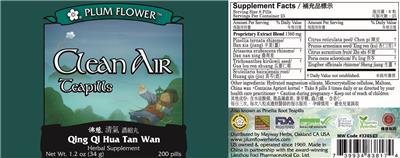
Clean Air Teapills contains nine active ingredients, most provided as extracts: tangerine peel, poria mushroom, Pinellia ternata, ginger, Chinese cucumber seed, Baikal skullcap, apricot seed, and bitter orange fruit, plus one ingredient (Arisaema erubescens) we could not verify. The first ingredient is listed as a proprietary blend, meaning its exact component amounts are not disclosed separately.
These are supported by inactive ingredients (magnesium silicate, microcrystalline cellulose, maltose, and China wax) that serve as binders and tablet fillers.
Does it work?
Not established
The evidence in our data does not establish that this product works for any particular condition. Individual ingredients have been rated as having insufficient reliable evidence for the conditions they are traditionally used for — including cancer, diabetes, dementia, insomnia, and various other conditions.
Ginger alone shows some positive evidence (possibly effective for pregnancy-related nausea, period pain, and osteoarthritis), but we have no evidence that the combination in Clean Air Teapills is effective for respiratory or air-quality-related purposes.
How safe is it?
Well-documented data
Ginger is generally well tolerated in typical food and supplement amounts; common mild side effects include abdominal discomfort, heartburn, diarrhea, and throat irritation, especially at higher doses. Bitter orange can raise blood pressure and heart rate, particularly when combined with caffeine or other stimulants, and may cause dizziness, difficulty concentrating, or syncope in rare cases.
Pinellia ternata is toxic if raw and can contain ephedrine alkaloids that may cause high blood pressure, rapid heart rate, heart attack, stroke, or seizures; only properly processed material should be used. Baikal skullcap is generally well tolerated orally but carries rare risk of liver damage and a specific combination product has been linked to lung inflammation.
Chinese cucumber can cause diarrhea and stomach discomfort, and the unprocessed root and its active component trichosanthin are toxic — do not use. Apricot seed as a supplement has not been studied; avoid apricot kernels entirely.
Poria mushroom is generally well tolerated but human safety data are limited, and allergic reactions (allergic rhinitis, asthma) have been reported rarely. We hold no safety data for Arisaema erubescens.
Meds to double-check
Major interaction found
Before taking this product, check with your pharmacist if you take monoamine oxidase inhibitors (MAOIs) for depression, midazolam or other sedatives, benzodiazepines (like lorazepam or alprazolam), blood thinners (warfarin, aspirin), heart medications (nifedipine, losartan), diabetes drugs, stimulants, antithyroid drugs, lithium, or any liver-metabolized prescription medication. No interactions are documented for apricot seed, and we could not check Arisaema erubescens.
The bottom line
Scorecard at a glanceFormula with limited ingredient disclosure with no established evidence rating for its marketed use. Major medication interactions have been identified, and safety information is well characterized.
This product should only be considered by someone not taking any prescription medications or over-the-counter drugs — the interaction profile is complex and broad. If you take any medication at all, including birth control, blood thinners, heart drugs, depression or anxiety medications, sedatives, or diabetes drugs, check each one against the tool on this page before using it.
Talk to your pharmacist or doctor; the safety and effectiveness for your situation require a personalized review.
Educational only — not medical advice; always confirm with your pharmacist. Our editorial policy · How we use AI
Assessment coverage: 8 of 9 active ingredients matched to our full ingredient reviews (monographs). Based on the product label dated Aug 22, 2025.
This Scorecard evaluates available label information, ingredient evidence, and known medication-safety considerations. It does not independently verify product identity, purity, potency, contamination, or manufacturing quality. How these ratings are computed
General information
Key facts about Clean Air Teapills, straight from the product label.
| Brand | Plum Flower |
|---|---|
| Barcode (UPC) | 739934838174 |
| Net contents | 200 Pill(s); 1.2 Ounce(s); 34 Gram(s) |
| Market status | On market |
| Date entered into DSLD | Aug 22, 2025 |
| DSLD ID | 336453 |
| Product type | Botanical |
| Supplement form | Tablet Or Pill |
| Dietary claims / uses | All Other |
| Intended target group(s) | Adult (18 - 50 Years) |
Everything in this section is reproduced from the manufacturer’s own product label — it’s the label speaking, not HelloPharmacist. We show it so you can see exactly what the maker states; we don’t verify or endorse those statements.
Supplement Facts
The label details for Clean Air Teapills by Plum Flower, sourced from the NIH Dietary Supplement Label Database.
Supplement Facts
| Ingredient | Amount | % DV |
|---|---|---|
| Proprietary Extract Blend | 1360 mg | -- |
| Citrus reticulata Peel Extract | 0 NP | -- |
| Poria cocos Sclerotium Extract | 0 NP | -- |
| Pinellia ternata Rhizome Extract | 0 NP | -- |
| Zingiber officinale Rhizome Extract | 0 NP | -- |
| Arisaema erubescens Rhizome Extract | 0 NP | -- |
| Trichosanthes kirilowii Seed Extract | 0 NP | -- |
| Scutellaria baicalensis Root Extract | 0 NP | -- |
| Prunus armeniaca Seed Extract | 0 NP | -- |
| Citrus aurantium Fruit Extract | 0 NP | -- |
Other ingredients: Magnesium Silicate, Hydrated, Microcrystalline Cellulose, Maltose, China Wax
Tap any ingredient to jump to its full detail below.
These statements are the manufacturer’s wording, reproduced from the product label — the label is saying it, not HelloPharmacist. We don’t verify or endorse them.
Formula
Qing Qi Hua Tan Wan
Also known as Pinellia Root Teapills
FDA Statement of Identity
Herbal Supplement
Suggested/Recommended/Usage/Directions
Take 8 pills 3 times daily or as directed by your health care practitioner
Precautions
Caution during pregnancy
Keep out of reach of children
Contains Apricot kernel
Seals/Symbols
Plum Flower Guarantee Sourced Sustainably FDA Registered cGMP Compliant Made at a cGMP Certified Facility Lab Tested Quality Verified Species Verified
General Statements
Foci Pharmaceutical 1929 Foci Pharmaceutical
Formulation
US owned & operated since 1969. Made in China in partnership with the award-winning Lanzhou Foci Pharmaceutical Co. Ltd.
Is this label outdated? Report a formula or label change and our pharmacy team will review it.
Clean Air Teapills by Plum Flower label
The label scan from the NIH Dietary Supplement Label Database. Tap to enlarge.
Label images are published by the NIH Dietary Supplement Label Database for the version of this product on file. Always read your actual product label.
View the full label (PDF)The Ingredients in Clean Air Teapills by Plum Flower
These are the 9 active ingredients this product is made of. Select any to open its full monograph.
Serving size8 Pill(s) Dosage formTablet Or Pill Servings per container25 Amounts shown are per serving.
Most supplement products combine several ingredients, and a medication can interact with the product through any one of them. Each ingredient below shows whether it has known drug interactions.
Proprietary Extract Blend
- › Citrus reticulata Peel Extract
- › Poria cocos Sclerotium Extract
- › Pinellia ternata Rhizome Extract
- › Zingiber officinale Rhizome Extract
- › Arisaema erubescens Rhizome Extract
- › Trichosanthes kirilowii Seed Extract
- › Scutellaria baicalensis Root Extract
- › Prunus armeniaca Seed Extract
- › Citrus aurantium Fruit Extract
Other (inactive) ingredients: Magnesium Silicate, Hydrated, Microcrystalline Cellulose, Maltose, China Wax. These complete the product’s ingredient list but are not active constituents.
Clean Air Teapills by Plum Flower Drug Interactions
HelloPharmacist Interaction Report
Clean Air Teapills by Plum Flower contains nine ingredients, several of which interact with medications.
The most serious concern is bitter orange (Citrus aurantium), which carries Major-severity interactions with monoamine oxidase inhibitors (MAOIs) — drugs used for depression — and with midazolam (Versed), a sedative. Bitter orange can intensify the stimulant effects of MAOIs dangerously, potentially causing a hypertensive crisis (sudden dangerous spike in blood pressure), and can raise midazolam levels, increasing sedation risk.
Read the full breakdown — every affected drug type, severity by severity
Bitter orange also has Moderate interactions with stimulant drugs, QT interval-prolonging drugs (certain heart rhythm medications), CYP3A4 substrates (a large group of common drugs), antidiabetes drugs, dextromethorphan (cough suppressant), and caffeine — all carrying risk of elevated blood pressure, heart rate changes, or reduced drug effectiveness. Ginger (Zingiber officinale) carries Moderate interactions with blood thinners and antiplatelet drugs (warfarin, aspirin-like drugs), antidiabetes drugs, nifedipine (a heart medication), losartan (blood pressure drug), and certain liver-metabolized drugs.
Pinellia ternata, poria mushroom, and Baikal skullcap (Scutellaria baicalensis) each carry Moderate interactions with CNS depressants (sedatives, sleeping pills) and other drug classes listed below.
Pinellia ternata specifically interacts with benzodiazepines (like lorazepam, alprazolam, diazepam) and barbiturates, all potentially causing excessive sedation. Poria mushroom interacts with anticholinergic and cholinergic drugs (used for various conditions including overactive bladder and Alzheimer's).
Baikal skullcap interacts with antihypertensive drugs (blood pressure medications), liver-metabolized drugs (CYP2C19 and CYP1A2 substrates), estrogens (including birth control), anticoagulants, antidiabetes drugs, lithium, and antithyroid drugs. Chinese cucumber (Trichosanthes kirilowii) carries a Moderate interaction with antidiabetes drugs.
We could not check Arisaema erubescens. Altogether, these interactions span 1,456 individual medications.
Before starting this product, use the medication checker below to search your exact prescriptions and over-the-counter drugs.
Check your own medications below · Editorial policy · How we use AI
Want to check YOUR meds against Clean Air Teapills?
Ask about interactions with your drugs in plain English — “Can I take it with lisinopril?” — and we find you the answer in seconds, ingredient by ingredient.
Go to the checkerIngredients driving the most interactions
Individual Drug Interactions
The ingredients in Clean Air Teapills interact with 1,472 drugs. Click any drug to see the details.
7 of the 9 ingredients in Clean Air Teapills interact with drugs. Each result below shows which ingredient is responsible. Zingiber officinale Rhizome Extract Citrus aurantium Fruit Extract Scutellaria baicalensis Root Extract Citrus reticulata Peel Extract Poria cocos Sclerotium Extract Pinellia ternata Rhizome Extract Trichosanthes kirilowii Seed Extract
AmphetamineAdensys XR-ODT, Adzenys ER, Dyanavel XR, Mydayis
How Amphetamine interacts with Clean Air Teapills — through 1 ingredient. Tap an ingredient for the detail:
Citrus Aurantium Fruit ExtractMonoamine Oxidase Inhibitors (maois), Stimulant Drugs +1 Major
Interaction Summary
Theoretically, taking MAOIs with synephrine-containing bitter orange preparations might increase the hypertensive effects of synephrine, potentially leading to hypertensive crisis.
Read the full Citrus Aurantium Fruit Extract + Amphetamine interactionIsocarboxazidMarplan
How Isocarboxazid interacts with Clean Air Teapills — through 1 ingredient. Tap an ingredient for the detail:
Citrus Aurantium Fruit ExtractMonoamine Oxidase Inhibitors (maois) Major
Interaction Summary
Theoretically, taking MAOIs with synephrine-containing bitter orange preparations might increase the hypertensive effects of synephrine, potentially leading to hypertensive crisis.
Read the full Citrus Aurantium Fruit Extract + Isocarboxazid interactionMidazolamNayzilam, Seizalam, Versed
How Midazolam interacts with Clean Air Teapills — through 6 ingredients. Tap an ingredient for the detail:
Citrus Aurantium Fruit ExtractCytochrome P450 3a4 (cyp3a4) Substrates, Midazolam (versed) Major
Interaction Summary
Bitter orange might increase levels of drugs metabolized by CYP3A4.
Read the full Citrus Aurantium Fruit Extract + Midazolam interactionPinellia Ternata Rhizome ExtractCns Depressants, Benzodiazepines Moderate
Interaction Summary
Evidence from animal research shows that a Pinellia ternata preparation decreases activity and increases sleeping time.
Read the full Pinellia Ternata Rhizome Extract + Midazolam interactionZingiber Officinale Rhizome ExtractCytochrome P450 3a4 (cyp3a4) Substrates Moderate
Interaction Summary
Ginger might increase or decrease the levels of CYP3A4 substrates.
Read the full Zingiber Officinale Rhizome Extract + Midazolam interactionPoria Cocos Sclerotium ExtractCns Depressants Moderate
Interaction Summary
Theoretically, taking poria mushroom extract may enhance the therapeutic and adverse effects of sedatives.
Read the full Poria Cocos Sclerotium Extract + Midazolam interactionCitrus Reticulata Peel ExtractCytochrome P450 3a4 (cyp3a4) Substrates, Midazolam (versed) Minor
Interaction Summary
In vitro, tangeretin, a constituent of tangerine, induces a 52% increase in the metabolism of midazolam by cytochrome P450 3A4 (CYP3A4).
Read the full Citrus Reticulata Peel Extract + Midazolam interactionScutellaria Baicalensis Root ExtractCns Depressants Minor
Interaction Summary
Theoretically, Baikal skullcap might cause additive therapeutic and adverse effects when used concomitantly with drugs with sedative properties.
Read the full Scutellaria Baicalensis Root Extract + Midazolam interactionMoclobemideManerix, Moclobemide
How Moclobemide interacts with Clean Air Teapills — through 2 ingredients. Tap an ingredient for the detail:
Citrus Aurantium Fruit ExtractMonoamine Oxidase Inhibitors (maois) Major
Interaction Summary
Theoretically, taking MAOIs with synephrine-containing bitter orange preparations might increase the hypertensive effects of synephrine, potentially leading to hypertensive crisis.
Read the full Citrus Aurantium Fruit Extract + Moclobemide interactionScutellaria Baicalensis Root ExtractCytochrome P450 2c19 (cyp2c19) Substrates Moderate
Interaction Summary
Theoretically, Baikal skullcap might increase levels of drugs metabolized by CYP2C19 enzymes.
Read the full Scutellaria Baicalensis Root Extract + Moclobemide interactionOzanimod HydrochlorideZeposia
How Ozanimod Hydrochloride interacts with Clean Air Teapills — through 1 ingredient. Tap an ingredient for the detail:
Citrus Aurantium Fruit ExtractMonoamine Oxidase Inhibitors (maois), Qt Interval-prolonging Drugs Major
Interaction Summary
Theoretically, taking MAOIs with synephrine-containing bitter orange preparations might increase the hypertensive effects of synephrine, potentially leading to hypertensive crisis.
Read the full Citrus Aurantium Fruit Extract + Ozanimod Hydrochloride interactionPhenelzine SulfateNardil
How Phenelzine Sulfate interacts with Clean Air Teapills — through 4 ingredients. Tap an ingredient for the detail:
Citrus Aurantium Fruit ExtractMonoamine Oxidase Inhibitors (maois) Major
Interaction Summary
Theoretically, taking MAOIs with synephrine-containing bitter orange preparations might increase the hypertensive effects of synephrine, potentially leading to hypertensive crisis.
Read the full Citrus Aurantium Fruit Extract + Phenelzine Sulfate interactionPoria Cocos Sclerotium ExtractCns Depressants Moderate
Interaction Summary
Theoretically, taking poria mushroom extract may enhance the therapeutic and adverse effects of sedatives.
Read the full Poria Cocos Sclerotium Extract + Phenelzine Sulfate interactionPinellia Ternata Rhizome ExtractCns Depressants Moderate
Interaction Summary
Evidence from animal research shows that a Pinellia ternata preparation decreases activity and increases sleeping time.
Read the full Pinellia Ternata Rhizome Extract + Phenelzine Sulfate interactionScutellaria Baicalensis Root ExtractCns Depressants Minor
Interaction Summary
Theoretically, Baikal skullcap might cause additive therapeutic and adverse effects when used concomitantly with drugs with sedative properties.
Read the full Scutellaria Baicalensis Root Extract + Phenelzine Sulfate interactionRasagilineAzilect
How Rasagiline interacts with Clean Air Teapills — through 3 ingredients. Tap an ingredient for the detail:
Citrus Aurantium Fruit ExtractMonoamine Oxidase Inhibitors (maois) Major
Interaction Summary
Theoretically, taking MAOIs with synephrine-containing bitter orange preparations might increase the hypertensive effects of synephrine, potentially leading to hypertensive crisis.
Read the full Citrus Aurantium Fruit Extract + Rasagiline interactionScutellaria Baicalensis Root ExtractCytochrome P450 1a2 (cyp1a2) Substrates Moderate
Interaction Summary
Theoretically, Baikal skullcap may increase levels of drugs metabolized by CYP1A2 enzymes.
Read the full Scutellaria Baicalensis Root Extract + Rasagiline interactionZingiber Officinale Rhizome ExtractCytochrome P450 1a2 (cyp1a2) Substrates Minor
Interaction Summary
Theoretically, ginger might increase the levels of CYP1A2 substrates.
Read the full Zingiber Officinale Rhizome Extract + Rasagiline interactionSafinamide MesylateXadago
How Safinamide Mesylate interacts with Clean Air Teapills — through 1 ingredient. Tap an ingredient for the detail:
Citrus Aurantium Fruit ExtractMonoamine Oxidase Inhibitors (maois) Major
Interaction Summary
Theoretically, taking MAOIs with synephrine-containing bitter orange preparations might increase the hypertensive effects of synephrine, potentially leading to hypertensive crisis.
Read the full Citrus Aurantium Fruit Extract + Safinamide Mesylate interactionSelegilineCarbex, Eldepryl, Emsam, Zelapar
How Selegiline interacts with Clean Air Teapills — through 1 ingredient. Tap an ingredient for the detail:
Citrus Aurantium Fruit ExtractMonoamine Oxidase Inhibitors (maois) Major
Interaction Summary
Theoretically, taking MAOIs with synephrine-containing bitter orange preparations might increase the hypertensive effects of synephrine, potentially leading to hypertensive crisis.
Read the full Citrus Aurantium Fruit Extract + Selegiline interactionTranylcypromineParnate
How Tranylcypromine interacts with Clean Air Teapills — through 1 ingredient. Tap an ingredient for the detail:
Citrus Aurantium Fruit ExtractMonoamine Oxidase Inhibitors (maois) Major
Interaction Summary
Theoretically, taking MAOIs with synephrine-containing bitter orange preparations might increase the hypertensive effects of synephrine, potentially leading to hypertensive crisis.
Read the full Citrus Aurantium Fruit Extract + Tranylcypromine interactionAdo-trastuzumab EmtansineKadcyla
How Ado-trastuzumab Emtansine interacts with Clean Air Teapills — through 3 ingredients. Tap an ingredient for the detail:
Zingiber Officinale Rhizome ExtractCytochrome P450 3a4 (cyp3a4) Substrates Moderate
Interaction Summary
Ginger might increase or decrease the levels of CYP3A4 substrates.
Read the full Zingiber Officinale Rhizome Extract + Ado-trastuzumab Emtansine interactionCitrus Aurantium Fruit ExtractCytochrome P450 3a4 (cyp3a4) Substrates Moderate
Interaction Summary
Bitter orange might increase levels of drugs metabolized by CYP3A4.
Read the full Citrus Aurantium Fruit Extract + Ado-trastuzumab Emtansine interactionCitrus Reticulata Peel ExtractCytochrome P450 3a4 (cyp3a4) Substrates Minor
Interaction Summary
In vitro, tangeretin, a constituent of tangerine, induces a 52% increase in the metabolism of midazolam by cytochrome P450 3A4 (CYP3A4).
Read the full Citrus Reticulata Peel Extract + Ado-trastuzumab Emtansine interactionAbciximabReoPro
How Abciximab interacts with Clean Air Teapills — through 2 ingredients. Tap an ingredient for the detail:
Zingiber Officinale Rhizome ExtractAnticoagulant/antiplatelet Drugs Moderate
Interaction Summary
Ginger may have antiplatelet effects and may increase the risk of bleeding if used with anticoagulant or antiplatelet drugs.
Read the full Zingiber Officinale Rhizome Extract + Abciximab interactionScutellaria Baicalensis Root ExtractAnticoagulant/antiplatelet Drugs Moderate
Interaction Summary
Theoretically, Baikal skullcap might increase the risk of bleeding when used concomitantly with anticoagulant and antiplatelet drugs.
Read the full Scutellaria Baicalensis Root Extract + Abciximab interactionAbemaciclibVerzenio
How Abemaciclib interacts with Clean Air Teapills — through 3 ingredients. Tap an ingredient for the detail:
Zingiber Officinale Rhizome ExtractCytochrome P450 3a4 (cyp3a4) Substrates Moderate
Interaction Summary
Ginger might increase or decrease the levels of CYP3A4 substrates.
Read the full Zingiber Officinale Rhizome Extract + Abemaciclib interactionCitrus Aurantium Fruit ExtractCytochrome P450 3a4 (cyp3a4) Substrates Moderate
Interaction Summary
Bitter orange might increase levels of drugs metabolized by CYP3A4.
Read the full Citrus Aurantium Fruit Extract + Abemaciclib interactionCitrus Reticulata Peel ExtractCytochrome P450 3a4 (cyp3a4) Substrates Minor
Interaction Summary
In vitro, tangeretin, a constituent of tangerine, induces a 52% increase in the metabolism of midazolam by cytochrome P450 3A4 (CYP3A4).
Read the full Citrus Reticulata Peel Extract + Abemaciclib interactionAbiraterone
How Abiraterone interacts with Clean Air Teapills — through 3 ingredients. Tap an ingredient for the detail:
Citrus Aurantium Fruit ExtractCytochrome P450 3a4 (cyp3a4) Substrates Moderate
Interaction Summary
Bitter orange might increase levels of drugs metabolized by CYP3A4.
Read the full Citrus Aurantium Fruit Extract + Abiraterone interactionZingiber Officinale Rhizome ExtractCytochrome P450 3a4 (cyp3a4) Substrates Moderate
Interaction Summary
Ginger might increase or decrease the levels of CYP3A4 substrates.
Read the full Zingiber Officinale Rhizome Extract + Abiraterone interactionCitrus Reticulata Peel ExtractCytochrome P450 3a4 (cyp3a4) Substrates Minor
Interaction Summary
In vitro, tangeretin, a constituent of tangerine, induces a 52% increase in the metabolism of midazolam by cytochrome P450 3A4 (CYP3A4).
Read the full Citrus Reticulata Peel Extract + Abiraterone interactionAbiraterone AcetateYonsa, Zytiga
How Abiraterone Acetate interacts with Clean Air Teapills — through 3 ingredients. Tap an ingredient for the detail:
Citrus Aurantium Fruit ExtractCytochrome P450 3a4 (cyp3a4) Substrates Moderate
Interaction Summary
Bitter orange might increase levels of drugs metabolized by CYP3A4.
Read the full Citrus Aurantium Fruit Extract + Abiraterone Acetate interactionZingiber Officinale Rhizome ExtractCytochrome P450 3a4 (cyp3a4) Substrates Moderate
Interaction Summary
Ginger might increase or decrease the levels of CYP3A4 substrates.
Read the full Zingiber Officinale Rhizome Extract + Abiraterone Acetate interactionCitrus Reticulata Peel ExtractCytochrome P450 3a4 (cyp3a4) Substrates Minor
Interaction Summary
In vitro, tangeretin, a constituent of tangerine, induces a 52% increase in the metabolism of midazolam by cytochrome P450 3A4 (CYP3A4).
Read the full Citrus Reticulata Peel Extract + Abiraterone Acetate interactionAbrocitinibCibinqo
How Abrocitinib interacts with Clean Air Teapills — through 2 ingredients. Tap an ingredient for the detail:
Zingiber Officinale Rhizome ExtractCytochrome P450 2c9 (cyp2c9) Substrates, Anticoagulant/antiplatelet Drugs Moderate
Interaction Summary
Theoretically, ginger might increase the levels of CYP2C9 substrates.
Read the full Zingiber Officinale Rhizome Extract + Abrocitinib interactionScutellaria Baicalensis Root ExtractAnticoagulant/antiplatelet Drugs, Cytochrome P450 2c19 (cyp2c19) Substrates Moderate
Interaction Summary
Theoretically, Baikal skullcap might increase the risk of bleeding when used concomitantly with anticoagulant and antiplatelet drugs.
Read the full Scutellaria Baicalensis Root Extract + Abrocitinib interactionAcalabrutinibCalquence
How Acalabrutinib interacts with Clean Air Teapills — through 4 ingredients. Tap an ingredient for the detail:
Zingiber Officinale Rhizome ExtractCytochrome P450 3a4 (cyp3a4) Substrates, P-glycoprotein Substrates Moderate
Interaction Summary
Ginger might increase or decrease the levels of CYP3A4 substrates.
Read the full Zingiber Officinale Rhizome Extract + Acalabrutinib interactionCitrus Aurantium Fruit ExtractCytochrome P450 3a4 (cyp3a4) Substrates Moderate
Interaction Summary
Bitter orange might increase levels of drugs metabolized by CYP3A4.
Read the full Citrus Aurantium Fruit Extract + Acalabrutinib interactionScutellaria Baicalensis Root ExtractP-glycoprotein Substrates Minor
Interaction Summary
Theoretically, Baikal skullcap might increase levels of drugs transported by P-glycoprotein.
Read the full Scutellaria Baicalensis Root Extract + Acalabrutinib interactionCitrus Reticulata Peel ExtractCytochrome P450 3a4 (cyp3a4) Substrates Minor
Interaction Summary
In vitro, tangeretin, a constituent of tangerine, induces a 52% increase in the metabolism of midazolam by cytochrome P450 3A4 (CYP3A4).
Read the full Citrus Reticulata Peel Extract + Acalabrutinib interactionAcarboseGlucobay, Prandase, Precose
How Acarbose interacts with Clean Air Teapills — through 4 ingredients. Tap an ingredient for the detail:
Citrus Aurantium Fruit ExtractAntidiabetes Drugs Moderate
Interaction Summary
Theoretically, bitter orange might increase the risk of hypoglycemia when taken with antidiabetes drugs.
Read the full Citrus Aurantium Fruit Extract + Acarbose interactionZingiber Officinale Rhizome ExtractAntidiabetes Drugs Moderate
Interaction Summary
Theoretically, taking ginger with antidiabetes drugs might increase the risk of hypoglycemia.
Read the full Zingiber Officinale Rhizome Extract + Acarbose interactionScutellaria Baicalensis Root ExtractAntidiabetes Drugs Moderate
Interaction Summary
Theoretically, concomitant use of Baikal skullcap with antidiabetes drugs might enhance blood glucose lowering effects.
Read the full Scutellaria Baicalensis Root Extract + Acarbose interactionTrichosanthes Kirilowii Seed ExtractAntidiabetes Drugs Moderate
Interaction Summary
Theoretically, concomitant use of Chinese cucumber with antidiabetic drugs may have additive effects and adverse effects.
Read the full Trichosanthes Kirilowii Seed Extract + Acarbose interactionAcebutololRhotral, Sectral
How Acebutolol interacts with Clean Air Teapills — through 1 ingredient. Tap an ingredient for the detail:
Scutellaria Baicalensis Root ExtractAntihypertensive Drugs Moderate
Interaction Summary
Theoretically, concomitant use of Baikal skullcap with antihypertensive drugs might have additive effects and increase the risk of hypotension.
Read the full Scutellaria Baicalensis Root Extract + Acebutolol interactionAcenocoumarolSintrom
How Acenocoumarol interacts with Clean Air Teapills — through 2 ingredients. Tap an ingredient for the detail:
Scutellaria Baicalensis Root ExtractAnticoagulant/antiplatelet Drugs Moderate
Interaction Summary
Theoretically, Baikal skullcap might increase the risk of bleeding when used concomitantly with anticoagulant and antiplatelet drugs.
Read the full Scutellaria Baicalensis Root Extract + Acenocoumarol interactionZingiber Officinale Rhizome ExtractAnticoagulant/antiplatelet Drugs Moderate
Interaction Summary
Ginger may have antiplatelet effects and may increase the risk of bleeding if used with anticoagulant or antiplatelet drugs.
Read the full Zingiber Officinale Rhizome Extract + Acenocoumarol interactionAcepromazineAtravet
How Acepromazine interacts with Clean Air Teapills — through 3 ingredients. Tap an ingredient for the detail:
Poria Cocos Sclerotium ExtractAnticholinergic Drugs, Cns Depressants Moderate
Interaction Summary
Theoretically, poria mushroom might decrease the clinical effects of anticholinergic drugs.
Read the full Poria Cocos Sclerotium Extract + Acepromazine interactionPinellia Ternata Rhizome ExtractCns Depressants Moderate
Interaction Summary
Evidence from animal research shows that a Pinellia ternata preparation decreases activity and increases sleeping time.
Read the full Pinellia Ternata Rhizome Extract + Acepromazine interactionScutellaria Baicalensis Root ExtractCns Depressants Minor
Interaction Summary
Theoretically, Baikal skullcap might cause additive therapeutic and adverse effects when used concomitantly with drugs with sedative properties.
Read the full Scutellaria Baicalensis Root Extract + Acepromazine interactionAcetaminophenChildren's Tylenol, Children's Tylenol Meltaways, Tylenol, Tylenol Ex Strength
How Acetaminophen interacts with Clean Air Teapills — through 2 ingredients. Tap an ingredient for the detail:
Scutellaria Baicalensis Root ExtractCytochrome P450 1a2 (cyp1a2) Substrates Moderate
Interaction Summary
Theoretically, Baikal skullcap may increase levels of drugs metabolized by CYP1A2 enzymes.
Read the full Scutellaria Baicalensis Root Extract + Acetaminophen interactionZingiber Officinale Rhizome ExtractCytochrome P450 1a2 (cyp1a2) Substrates Minor
Interaction Summary
Theoretically, ginger might increase the levels of CYP1A2 substrates.
Read the full Zingiber Officinale Rhizome Extract + Acetaminophen interactionAcetaminophen, AspirinGemnisyn
How Acetaminophen, Aspirin interacts with Clean Air Teapills — through 2 ingredients. Tap an ingredient for the detail:
Zingiber Officinale Rhizome ExtractAnticoagulant/antiplatelet Drugs, Cytochrome P450 1a2 (cyp1a2) Substrates Moderate
Interaction Summary
Ginger may have antiplatelet effects and may increase the risk of bleeding if used with anticoagulant or antiplatelet drugs.
Read the full Zingiber Officinale Rhizome Extract + Acetaminophen, Aspirin interactionScutellaria Baicalensis Root ExtractCytochrome P450 1a2 (cyp1a2) Substrates, Anticoagulant/antiplatelet Drugs Moderate
Interaction Summary
Theoretically, Baikal skullcap may increase levels of drugs metabolized by CYP1A2 enzymes.
Read the full Scutellaria Baicalensis Root Extract + Acetaminophen, Aspirin interactionAcetaminophen, Aspirin, CaffeineExcedrin, Excedrin Extra Strength, Excedrin Migraine
How Acetaminophen, Aspirin, Caffeine interacts with Clean Air Teapills — through 4 ingredients. Tap an ingredient for the detail:
Scutellaria Baicalensis Root ExtractAnticoagulant/antiplatelet Drugs, Cytochrome P450 1a2 (cyp1a2) Substrates Moderate
Interaction Summary
Theoretically, Baikal skullcap might increase the risk of bleeding when used concomitantly with anticoagulant and antiplatelet drugs.
Read the full Scutellaria Baicalensis Root Extract + Acetaminophen, Aspirin, Caffeine interactionZingiber Officinale Rhizome ExtractCytochrome P450 3a4 (cyp3a4) Substrates, Anticoagulant/antiplatelet Drugs +1 Moderate
Interaction Summary
Ginger might increase or decrease the levels of CYP3A4 substrates.
Read the full Zingiber Officinale Rhizome Extract + Acetaminophen, Aspirin, Caffeine interactionCitrus Aurantium Fruit ExtractCytochrome P450 3a4 (cyp3a4) Substrates, Stimulant Drugs +1 Moderate
Interaction Summary
Bitter orange might increase levels of drugs metabolized by CYP3A4.
Read the full Citrus Aurantium Fruit Extract + Acetaminophen, Aspirin, Caffeine interactionCitrus Reticulata Peel ExtractCytochrome P450 3a4 (cyp3a4) Substrates Minor
Interaction Summary
In vitro, tangeretin, a constituent of tangerine, induces a 52% increase in the metabolism of midazolam by cytochrome P450 3A4 (CYP3A4).
Read the full Citrus Reticulata Peel Extract + Acetaminophen, Aspirin, Caffeine interactionAcetaminophen, Brompheniramine, PhenylpropanolamineDimetapp Cold and Flu
How Acetaminophen, Brompheniramine, Phenylpropanolamine interacts with Clean Air Teapills — through 3 ingredients. Tap an ingredient for the detail:
Scutellaria Baicalensis Root ExtractCytochrome P450 1a2 (cyp1a2) Substrates Moderate
Interaction Summary
Theoretically, Baikal skullcap may increase levels of drugs metabolized by CYP1A2 enzymes.
Read the full Scutellaria Baicalensis Root Extract + Acetaminophen, Brompheniramine, Phenylpropanolamine interactionCitrus Aurantium Fruit ExtractStimulant Drugs Moderate
Interaction Summary
Theoretically, bitter orange might increase the risk of hypertension and adverse cardiovascular effects when taken with stimulant drugs.
Read the full Citrus Aurantium Fruit Extract + Acetaminophen, Brompheniramine, Phenylpropanolamine interactionZingiber Officinale Rhizome ExtractCytochrome P450 1a2 (cyp1a2) Substrates Minor
Interaction Summary
Theoretically, ginger might increase the levels of CYP1A2 substrates.
Read the full Zingiber Officinale Rhizome Extract + Acetaminophen, Brompheniramine, Phenylpropanolamine interactionAcetaminophen, ButalbitalAxocet, Bancap, Bucet, Butex Forte, Esgic CF, Orbivan CF +5 more
How Acetaminophen, Butalbital interacts with Clean Air Teapills — through 3 ingredients. Tap an ingredient for the detail:
Pinellia Ternata Rhizome ExtractBarbiturates Moderate
Interaction Summary
Evidence from animal research shows that a Pinellia ternata preparation decreases activity and increases sleeping time.
Read the full Pinellia Ternata Rhizome Extract + Acetaminophen, Butalbital interactionScutellaria Baicalensis Root ExtractCytochrome P450 1a2 (cyp1a2) Substrates Moderate
Interaction Summary
Theoretically, Baikal skullcap may increase levels of drugs metabolized by CYP1A2 enzymes.
Read the full Scutellaria Baicalensis Root Extract + Acetaminophen, Butalbital interactionZingiber Officinale Rhizome ExtractCytochrome P450 1a2 (cyp1a2) Substrates Minor
Interaction Summary
Theoretically, ginger might increase the levels of CYP1A2 substrates.
Read the full Zingiber Officinale Rhizome Extract + Acetaminophen, Butalbital interactionAcetaminophen, Butalbital, CaffeineEsgic, Esgic Plus, Fiogesic, Fioricet, Repan, Tecnal +1 more
How Acetaminophen, Butalbital, Caffeine interacts with Clean Air Teapills — through 5 ingredients. Tap an ingredient for the detail:
Scutellaria Baicalensis Root ExtractCytochrome P450 1a2 (cyp1a2) Substrates Moderate
Interaction Summary
Theoretically, Baikal skullcap may increase levels of drugs metabolized by CYP1A2 enzymes.
Read the full Scutellaria Baicalensis Root Extract + Acetaminophen, Butalbital, Caffeine interactionZingiber Officinale Rhizome ExtractCytochrome P450 1a2 (cyp1a2) Substrates, Cytochrome P450 3a4 (cyp3a4) Substrates Moderate
Interaction Summary
Theoretically, ginger might increase the levels of CYP1A2 substrates.
Read the full Zingiber Officinale Rhizome Extract + Acetaminophen, Butalbital, Caffeine interactionCitrus Aurantium Fruit ExtractStimulant Drugs, Caffeine +1 Moderate
Interaction Summary
Theoretically, bitter orange might increase the risk of hypertension and adverse cardiovascular effects when taken with stimulant drugs.
Read the full Citrus Aurantium Fruit Extract + Acetaminophen, Butalbital, Caffeine interactionPinellia Ternata Rhizome ExtractBarbiturates Moderate
Interaction Summary
Evidence from animal research shows that a Pinellia ternata preparation decreases activity and increases sleeping time.
Read the full Pinellia Ternata Rhizome Extract + Acetaminophen, Butalbital, Caffeine interactionCitrus Reticulata Peel ExtractCytochrome P450 3a4 (cyp3a4) Substrates Minor
Interaction Summary
In vitro, tangeretin, a constituent of tangerine, induces a 52% increase in the metabolism of midazolam by cytochrome P450 3A4 (CYP3A4).
Read the full Citrus Reticulata Peel Extract + Acetaminophen, Butalbital, Caffeine interactionAcetaminophen, Butalbital, Caffeine, CodeineEsgic with Codeine, Fioricet w/ Codeine
How Acetaminophen, Butalbital, Caffeine, Codeine interacts with Clean Air Teapills — through 6 ingredients. Tap an ingredient for the detail:
Pinellia Ternata Rhizome ExtractBarbiturates, Cns Depressants Moderate
Interaction Summary
Evidence from animal research shows that a Pinellia ternata preparation decreases activity and increases sleeping time.
Read the full Pinellia Ternata Rhizome Extract + Acetaminophen, Butalbital, Caffeine, Codeine interactionZingiber Officinale Rhizome ExtractCytochrome P450 3a4 (cyp3a4) Substrates, Cytochrome P450 1a2 (cyp1a2) Substrates Moderate
Interaction Summary
Ginger might increase or decrease the levels of CYP3A4 substrates.
Read the full Zingiber Officinale Rhizome Extract + Acetaminophen, Butalbital, Caffeine, Codeine interactionScutellaria Baicalensis Root ExtractCytochrome P450 1a2 (cyp1a2) Substrates, Cns Depressants Moderate
Interaction Summary
Theoretically, Baikal skullcap may increase levels of drugs metabolized by CYP1A2 enzymes.
Read the full Scutellaria Baicalensis Root Extract + Acetaminophen, Butalbital, Caffeine, Codeine interactionPoria Cocos Sclerotium ExtractCns Depressants Moderate
Interaction Summary
Theoretically, taking poria mushroom extract may enhance the therapeutic and adverse effects of sedatives.
Read the full Poria Cocos Sclerotium Extract + Acetaminophen, Butalbital, Caffeine, Codeine interactionCitrus Aurantium Fruit ExtractCytochrome P450 2d6 (cyp2d6) Substrates, Stimulant Drugs +2 Moderate
Interaction Summary
Theoretically, bitter orange might increase levels of drug metabolized by CYP2D6.
Read the full Citrus Aurantium Fruit Extract + Acetaminophen, Butalbital, Caffeine, Codeine interactionCitrus Reticulata Peel ExtractCytochrome P450 3a4 (cyp3a4) Substrates Minor
Interaction Summary
In vitro, tangeretin, a constituent of tangerine, induces a 52% increase in the metabolism of midazolam by cytochrome P450 3A4 (CYP3A4).
Read the full Citrus Reticulata Peel Extract + Acetaminophen, Butalbital, Caffeine, Codeine interactionAcetaminophen, Butalbital, CodeineBancap w/ Codeine
How Acetaminophen, Butalbital, Codeine interacts with Clean Air Teapills — through 5 ingredients. Tap an ingredient for the detail:
Pinellia Ternata Rhizome ExtractCns Depressants Moderate
Interaction Summary
Evidence from animal research shows that a Pinellia ternata preparation decreases activity and increases sleeping time.
Read the full Pinellia Ternata Rhizome Extract + Acetaminophen, Butalbital, Codeine interactionPoria Cocos Sclerotium ExtractCns Depressants Moderate
Interaction Summary
Theoretically, taking poria mushroom extract may enhance the therapeutic and adverse effects of sedatives.
Read the full Poria Cocos Sclerotium Extract + Acetaminophen, Butalbital, Codeine interactionScutellaria Baicalensis Root ExtractCns Depressants, Cytochrome P450 1a2 (cyp1a2) Substrates Moderate
Interaction Summary
Theoretically, Baikal skullcap might cause additive therapeutic and adverse effects when used concomitantly with drugs with sedative properties.
Read the full Scutellaria Baicalensis Root Extract + Acetaminophen, Butalbital, Codeine interactionCitrus Aurantium Fruit ExtractCytochrome P450 2d6 (cyp2d6) Substrates Minor
Interaction Summary
Theoretically, bitter orange might increase levels of drug metabolized by CYP2D6.
Read the full Citrus Aurantium Fruit Extract + Acetaminophen, Butalbital, Codeine interactionZingiber Officinale Rhizome ExtractCytochrome P450 1a2 (cyp1a2) Substrates Minor
Interaction Summary
Theoretically, ginger might increase the levels of CYP1A2 substrates.
Read the full Zingiber Officinale Rhizome Extract + Acetaminophen, Butalbital, Codeine interactionAcetaminophen, Butalbital, Codeine PhosphatePhrenilin #3
How Acetaminophen, Butalbital, Codeine Phosphate interacts with Clean Air Teapills — through 5 ingredients. Tap an ingredient for the detail:
Scutellaria Baicalensis Root ExtractCytochrome P450 1a2 (cyp1a2) Substrates, Cns Depressants Moderate
Interaction Summary
Theoretically, Baikal skullcap may increase levels of drugs metabolized by CYP1A2 enzymes.
Read the full Scutellaria Baicalensis Root Extract + Acetaminophen, Butalbital, Codeine Phosphate interactionPoria Cocos Sclerotium ExtractCns Depressants Moderate
Interaction Summary
Theoretically, taking poria mushroom extract may enhance the therapeutic and adverse effects of sedatives.
Read the full Poria Cocos Sclerotium Extract + Acetaminophen, Butalbital, Codeine Phosphate interactionPinellia Ternata Rhizome ExtractCns Depressants Moderate
Interaction Summary
Evidence from animal research shows that a Pinellia ternata preparation decreases activity and increases sleeping time.
Read the full Pinellia Ternata Rhizome Extract + Acetaminophen, Butalbital, Codeine Phosphate interactionCitrus Aurantium Fruit ExtractCytochrome P450 2d6 (cyp2d6) Substrates Minor
Interaction Summary
Theoretically, bitter orange might increase levels of drug metabolized by CYP2D6.
Read the full Citrus Aurantium Fruit Extract + Acetaminophen, Butalbital, Codeine Phosphate interactionZingiber Officinale Rhizome ExtractCytochrome P450 1a2 (cyp1a2) Substrates Minor
Interaction Summary
Theoretically, ginger might increase the levels of CYP1A2 substrates.
Read the full Zingiber Officinale Rhizome Extract + Acetaminophen, Butalbital, Codeine Phosphate interactionEach ingredient & the kinds of drugs it affects
For each ingredient in Clean Air Teapills with known interactions, here are the types of medications they can affect. Open any type for the detail — or search your exact drug in the checker above.
Zingiber officinale Rhizome Extract
Anticoagulant/Antiplatelet Drugs
Ginger may have antiplatelet effects and may increase the risk of bleeding if used with anticoagulant or antiplatelet drugs. However, research is conflicting.
Laboratory research suggests that ginger inhibits thromboxane synthetase and decreases platelet aggregation. However, this has not been demonstrated unequivocally in humans, with mixed results from clinical trials. Theoretically, excessive amounts of ginger might increase the risk of bleeding when used with anticoagulant/antiplatelet drugs.
Antidiabetes Drugs
Theoretically, taking ginger with antidiabetes drugs might increase the risk of hypoglycemia.
Animal and human research suggests that ginger might increase insulin levels and/or decrease blood glucose levels.
Cytochrome P450 3A4 (Cyp3A4) Substrates
Ginger might increase or decrease the levels of CYP3A4 substrates.
In vitro research and some case reports suggest that ginger inhibits CYP3A4 activity. Three case reports from the World Health Organization (WHO) adverse drug reaction database describe increased toxicity in patients taking ginger and cancer medications that are CYP3A4 substrates (imatinib, dabrafenib, and crizotinib). However, the causality of this interaction is unclear due to the presence of multiple interacting drugs and routes of administration.
Conversely, other in vitro research suggests that ginger induces CYP3A4 activity, leading to reduced levels of CYP3A4 substrates. However, this interaction has not been reported in humans.
Losartan (Cozaar)
Theoretically, ginger might increase levels of losartan and the risk of hypotension.
In animal research, ginger increased the levels and hypotensive effects of a single dose of losartan. It is not clear if ginger alters the concentration or effects of losartan when taken continuously. Additionally, this interaction has not been shown in humans.
Nifedipine (Procardia)
Ginger may have antiplatelet effects and increase the risk of bleeding if used with nifedipine.
Clinical research shows that combined treatment with ginger 1 gram plus nifedipine 10 mg significantly inhibits platelet aggregation when compared to nifedipine or ginger alone.
P-Glycoprotein Substrates
Ginger might increase the absorption and blood levels of P-glycoprotein (P-gp) substrates.
In vitro research and case reports suggest that ginger inhibits drug efflux by P-gp, potentially increasing absorption and serum levels of P-gp substrates. Two case reports from the World Health Organization (WHO) adverse drug reaction database describe increased toxicity in patients taking ginger and cancer medications that are P-gp substrates (trametinib, crizotinib). However, the causality of this interaction is unclear due to the presence of multiple interacting drugs and routes of administration.
Phenprocoumon (Marcoumar, Others)
Ginger might increase the risk of bleeding with phenprocoumon.
Phenprocoumon, a warfarin-related anticoagulant, might increase the international normalized ratio (INR) when taken with ginger. There is one case report of a 76-year-old woman with a stable INR on phenprocoumon that increased to greater than 10 when she began consuming dried ginger and ginger tea.
Warfarin (Coumadin)
Ginger might increase the risk of bleeding with warfarin.
Laboratory research suggests that ginger might inhibit thromboxane synthetase and decrease platelet aggregation. In one case report, ginger increased the INR when taken with phenprocoumon, which has similar pharmacological effects as warfarin. In another case report, ginger increased the INR when taken with a combination of warfarin, hydrochlorothiazide, and acetaminophen. A longitudinal analysis suggests that taking ginger increases the risk of bleeding in patients taking warfarin for at least 4 months. However, research in healthy people suggests that ginger has no effect on INR, or the pharmacokinetics or pharmacodynamics of warfarin. Until more is known, monitor INRs closely in patients taking large amounts of ginger.
Calcium Channel Blockers
Theoretically, taking ginger with calcium channel blockers might increase the risk of hypotension.
Some animal and in vitro research suggests that ginger has hypotensive and calcium channel-blocking effects. Another animal study shows that concomitant administration of ginger and the calcium channel blocker amlodipine leads to greater reductions in blood pressure when compared with amlodipine alone.
Cyclosporine (Neoral, Sandimmune)
Theoretically, when taken prior to cyclosporine, ginger might decrease cyclosporine levels.
In an animal model, ginger juice taken 2 hours prior to cyclosporine administration reduced the maximum concentration and area under the curve of cyclosporine by 51% and 40%, respectively. This effect was not observed when ginger juice and cyclosporine were administered at the same time.
Cytochrome P450 1A2 (Cyp1A2) Substrates
Theoretically, ginger might increase the levels of CYP1A2 substrates.
In vitro research shows that ginger inhibits CYP1A2 activity. However, this interaction has not been reported in humans.
Cytochrome P450 2B6 (Cyp2B6) Substrates
Theoretically, ginger might increase the levels of CYP2B6 substrates.
In vitro research shows that ginger inhibits CYP2B6 activity. However, this interaction has not been reported in humans.
Cytochrome P450 2C9 (Cyp2C9) Substrates
Theoretically, ginger might increase the levels of CYP2C9 substrates.
In vitro research shows that ginger inhibits CYP2C9 activity. However, this interaction has not been reported in humans.
Metronidazole (Flagyl)
Theoretically, ginger might increase levels of metronidazole.
In an animal model, ginger increased the absorption and plasma half-life of metronidazole. In addition, the elimination rate and clearance of metronidazole was significantly reduced.
Citrus aurantium Fruit Extract
Midazolam (Versed)
Bitter orange might increase blood levels of midazolam.
One small clinical study shows that bitter orange juice can increase midazolam levels, likely through inhibition of cytochrome P450 3A4 (CYP3A4). Theoretically, bitter orange might increase the risk of midazolam-related adverse effects.
Monoamine Oxidase Inhibitors (Maois)
Theoretically, taking MAOIs with synephrine-containing bitter orange preparations might increase the hypertensive effects of synephrine, potentially leading to hypertensive crisis.
Bitter orange contains tyramine, octopamine, and synephrine, which are MAO substrates.
Antidiabetes Drugs
Theoretically, bitter orange might increase the risk of hypoglycemia when taken with antidiabetes drugs.
Some clinical research shows that drinking a tea containing bitter orange and Indian snakeroot reduces fasting and postprandial glucose levels in patients with type 2 diabetes who are using antidiabetes drugs. However, it is unclear if these effects are due to bitter orange, Indian snakeroot, or the combination. An animal study also shows that p-synephrine in combination with gliclazide , a sulfonylurea, causes an additional 20% to 44% decrease in glucose levels when compared with gliclazide alone.
Caffeine
Bitter orange might increase blood pressure and heart rate when taken with caffeine.
Small clinical studies show that taking bitter orange in combination with caffeine can increase blood pressure and heart rate in otherwise healthy normotensive adults. Theoretically, this might increase the risk of serious cardiovascular adverse effects.
Colchicine
Bitter orange might affect colchicine levels.
Colchicine is a substrate of P-glycoprotein and cytochrome P450 3A4 (CYP3A4). Bitter orange has been reported to inhibit CYP3A4 and increase levels of CYP3A4 substrates. However, one small clinical study in healthy adults shows that drinking bitter orange juice 240 mL twice daily for 4 days and taking a single dose of colchicine 0.6 mg on the 4th day decreases colchicine peak serum levels by 24%, time to peak serum level by 1 hour, and overall exposure to colchicine by 20%. The clinical significance of this finding is unclear.
Cytochrome P450 3A4 (Cyp3A4) Substrates
Bitter orange might increase levels of drugs metabolized by CYP3A4.
Small clinical studies suggest that single or multiple doses of freshly squeezed bitter orange juice 200-240 mL can inhibit CYP3A4 metabolism of drugs, causing increased drug levels and potentially increasing the risk of adverse effects. However, the extent of the effect of bitter orange on CYP3A4-mediated drug interactions is unknown. Some evidence suggests that bitter orange selectively inhibits intestinal CYP3A4, but not hepatic CYP3A4. Its effect on P-glycoprotein, which strongly overlaps with CYP3A4 interactions, is unclear. One small clinical study shows that drinking 8 ounces of freshly squeezed bitter orange juice has no effect on cyclosporine, which seems to be more dependent on hepatic CYP3A4 and P-glycoprotein than intestinal CYP3A4.
Dextromethorphan (Robitussin Dm, Others)
Bitter orange might increase blood levels of dextromethorphan.
One small clinical study shows that bitter orange juice increases dextromethorphan levels, likely through cytochrome P450 3A4 (CYP3A4) inhibition. Theoretically, bitter orange might increase the risk for dextromethorphan-related adverse effects.
Felodipine (Plendil)
Bitter orange might increase blood levels of felodipine.
One small clinical study shows that bitter orange juice increases felodipine levels, likely through cytochrome P450 3A4 (CYP3A4) inhibition. Theoretically, bitter orange might increase the risk for felodipine-related adverse effects.
Indinavir (Crixivan)
Bitter orange might increase blood levels of indinavir.
One small clinical study shows that bitter orange juice slightly increases indinavir levels, but this effect is likely to be clinically insignificant. Bitter orange selectively inhibits intestinal cytochrome P450 3A4 (CYP3A4); however, the metabolism of indinavir seems to be more dependent on hepatic CYP3A4. The effect of bitter orange on other protease inhibitors has not been studied.
Qt Interval-Prolonging Drugs
Theoretically, bitter orange might have an additive effect when combined with drugs that prolong the QT interval, potentially increasing the risk of ventricular arrhythmias.
One case report suggests that taking bitter orange in combination with other stimulants such as caffeine might prolong the QT interval in some patients.
Sildenafil (Viagra)
Bitter orange juice might increase blood levels of sildenafil.
A small clinical study in healthy adult males shows that drinking freshly squeezed bitter orange juice 250 mL daily for 3 days and taking a single dose of sildenafil 50 mg on the 3rd day increases the peak plasma concentration of sildenafil by 18% and the overall exposure to sildenafil by 44%. Theoretically, this may be due to inhibition of cytochrome P450 3A4 by bitter orange.
Stimulant Drugs
Theoretically, bitter orange might increase the risk of hypertension and adverse cardiovascular effects when taken with stimulant drugs.
Bitter orange appears to have stimulant effects.
Cytochrome P450 2D6 (Cyp2D6) Substrates
Theoretically, bitter orange might increase levels of drug metabolized by CYP2D6.
In vitro research shows that octopamine, a constituent of bitter orange, weakly inhibits CYP2D6 enzymes. This effect has not been reported in humans.
Scutellaria baicalensis Root Extract
Anticoagulant/Antiplatelet Drugs
Theoretically, Baikal skullcap might increase the risk of bleeding when used concomitantly with anticoagulant and antiplatelet drugs.
Preliminary clinical research suggests that taking capsules containing a combination of astragalus, goldthread, and Baikal skullcap daily for 4 weeks inhibits platelet aggregation; the effect seems to be similar to that of aspirin 50 mg daily. It is unclear if this effect is due to Baikal skullcap, other ingredients, or the combination.
Antidiabetes Drugs
Theoretically, concomitant use of Baikal skullcap with antidiabetes drugs might enhance blood glucose lowering effects.
Baicalein, a constituent of Baikal skullcap, has alpha-glucosidase inhibitory activity in vitro. Animal research also suggests that Baikal skullcap enhances the antidiabetic effects of metformin. However, in a small human study, taking Baikal skullcap extract did not enhance the antidiabetic effects of metformin, although it did modestly lower glucose levels during an oral glucose tolerance test (OGTT). Until more is known, use cautiously.
Antihypertensive Drugs
Theoretically, concomitant use of Baikal skullcap with antihypertensive drugs might have additive effects and increase the risk of hypotension.
Animal research suggests that baicalein, a constituent of Baikal skullcap, might lower blood pressure.
Antithyroid Drugs
Theoretically, concomitant use of Baikal skullcap and antithyroid drugs may result in additive activity and increase the risk of hypothyroidism.
In an animal hyperthyroid model, Baikal skullcap improved levels of triiodothyronine (T3), thyroxine (T4), and thyroid stimulating hormone (TSH). The clinical significance of this effect is unclear.
Cytochrome P450 1A2 (Cyp1A2) Substrates
Theoretically, Baikal skullcap may increase levels of drugs metabolized by CYP1A2 enzymes.
In vitro evidence suggests that constituents of Baikal skullcap inhibit the activity of CYP1A2. This effect has not been reported in humans.
Cytochrome P450 2C19 (Cyp2C19) Substrates
Theoretically, Baikal skullcap might increase levels of drugs metabolized by CYP2C19 enzymes.
In vitro evidence suggest that wogonin, a constituent of Baikal skullcap, modestly inhibits the activity of CYP2C19 enzymes. This effect has not been reported in humans.
Estrogens
Theoretically, concomitant use of large amounts of Baikal skullcap might interfere with hormone replacement therapy, due to competition for estrogen receptors.
In vitro evidence suggests that Baikal skullcap has estrogenic activity.
Lithium
Theoretically, Baikal skullcap might reduce lithium excretion and increase serum levels of lithium.
Baikal skullcap is thought to have diuretic properties, which may reduce lithium excretion. The dose of lithium might need to be decreased.
Alcohol (Ethanol)
Theoretically, Baikal skullcap might potentiate the sedative effects of alcohol.
In vitro and animal research suggests that Baikal skullcap binds to GABA-A receptors and causes sedation. Theoretically, Baikal skullcap might potentiate the sedative effects of alcohol. Preliminary clinical research has not identified clinically relevant sedation after use of Baikal skullcap; however, a thorough evaluation of safety outcomes has not been conducted.
Cns Depressants
Theoretically, Baikal skullcap might cause additive therapeutic and adverse effects when used concomitantly with drugs with sedative properties.
In vitro and animal research suggests that Baikal skullcap binds to GABA-A receptors and causes sedation. Theoretically, Baikal skullcap might cause additive therapeutic and adverse effects when used concomitantly with drugs with sedative properties. Preliminary clinical research has not identified clinically relevant sedation after use of Baikal skullcap; however, a thorough evaluation of safety outcomes has not been conducted.
Organic Anion-Transporting Polypeptide Substrates (Oatp)
Theoretically, Baikal skullcap might alter the levels and clinical effects of OATP substrates.
Some pharmacokinetic research shows that baicalin, a constituent of Baikal skullcap, can decrease plasma levels of rosuvastatin. The mechanism is thought to involve stimulation of the activity of the organic anion-transporting polypeptide 1B1 (OATP1B1), which transports rosuvastatin into the liver. This decreases plasma levels of the drug, but increases levels at the site of action in the liver. The degree to which rosuvastatin levels are affected depends on the OATP1B1 haplotype of the individual. Baikal skullcap might also affect other OATP1B1 substrates.
P-Glycoprotein Substrates
Theoretically, Baikal skullcap might increase levels of drugs transported by P-glycoprotein.
In vitro and animal research suggests that baicalein, oroxylin A, and wogonin, constituents of Baikal skullcap, can inhibit P-glycoprotein. This effect has not been reported in humans.
Citrus reticulata Peel Extract
Cytochrome P450 3A4 (Cyp3A4) Substrates
In vitro, tangeretin, a constituent of tangerine, induces a 52% increase in the metabolism of midazolam by cytochrome P450 3A4 (CYP3A4). This suggests that tangeretin may stimulate CYP3A4 activity. However, in humans, drinking tangerine juice 200 mL slightly delayed the absorption, but did not affect the metabolism, of midazolam, a CYP3A4 substrate. Theoretically, tangerine juice might increase CYP3A4 activity and decrease levels of drugs metabolized by this enzyme. However, this effect is unlikely.
Some drugs metabolized by CYP3A4 include amitriptyline (Elavil), amiodarone (Cordarone), citalopram (Celexa), felodipine (Plendil), lansoprazole (Prevacid), ondansetron (Zofran), prednisone (Deltasone, Orasone), sertraline (Zoloft), sibutramine (Meridia), and many others.
Midazolam (Versed)
In vitro, tangeretin, a constituent of tangerine, appears to increase the metabolism of midazolam in human liver microsomes by up to 52%. However, in humans, drinking tangerine juice 200 mL slightly delayed the absorption, but did not affect the metabolism, of midazolam. Theoretically, tangerine juice might increase the metabolism and reduce the effects of midazolam. However, this effect is unlikely.
Poria cocos Sclerotium Extract
Anticholinergic Drugs
Theoretically, poria mushroom might decrease the clinical effects of anticholinergic drugs.
In animal research, poria mushroom essential oil reduces acetylcholinesterase activity. This interaction has not been shown in humans.
Cholinergic Drugs
Theoretically, poria mushroom might have additive effects when used with cholinergic drugs.
In animal research, poria mushroom essential oil reduces acetylcholinesterase activity. This interaction has not been shown in humans.
Cns Depressants
Theoretically, taking poria mushroom extract may enhance the therapeutic and adverse effects of sedatives.
Animal research shows that poria mushroom extract has sedative properties. This interaction has not been shown in humans.
Pinellia ternata Rhizome Extract
Barbiturates
Evidence from animal research shows that a Pinellia ternata preparation decreases activity and increases sleeping time. Theoretically, Pinellia ternata can potentiate the therapeutic effect of barbiturates. Some of these sedative medications include pentobarbital (Nembutal), phenobarbital (Luminal), secobarbital (Seconal), and others.
Benzodiazepines
Evidence from animal research shows that a Pinellia ternata preparation decreases activity and increases sleeping time. Theoretically, Pinellia ternata can potentiate the therapeutic effect of benzodiazepines. Some benzodiazepines include lorazepam (Ativan), alprazolam (Xanax), diazepam (Valium), midazolam (Versed), and others.
Cns Depressants
Evidence from animal research shows that a Pinellia ternata preparation decreases activity and increases sleeping time. Theoretically, Pinellia ternata can potentiate the therapeutic effect of CNS depressants. Some of these medications include antihistamines, barbiturates, benzodiazepines, tricyclic antidepressants, and others.
Trichosanthes kirilowii Seed Extract
Antidiabetes Drugs
Theoretically, concomitant use of Chinese cucumber with antidiabetic drugs may have additive effects and adverse effects. Monitor blood glucose levels closely, dose adjustment may be needed.
Brand information
Manufacturer and brand details for Clean Air Teapills, from the product label.
Plum Flower
- Name
- Mayway Herbs
- City
- Oakland
- State
- CA
- Web Address
- plumflowerherbs.com
Clean Air Teapills by Plum Flower: Common Questions
Does Clean Air Teapills by Plum Flower interact with any medications?
How can one product interact with so many drugs?
Where does this information come from?
Can I use this while I'm pregnant or breastfeeding?
What are the side effects of this product?
What is Pinellia ternata and why is it in here?
Is apricot seed safe in this product?
Does this product actually help with anything?
Can I take this with caffeine?
Written and reviewed by the HelloPharmacist editorial staff. Our editorial policy
Not sure if Clean Air Teapills is safe with your meds?
Our pharmacists answer your medication & supplement questions — free.
Label information is sourced from the NIH Dietary Supplement Label Database and reflects the product version on file; always read your actual product label. This page is for education only and is not a substitute for professional medical advice. Confirm with your pharmacist or doctor before combining supplements and medications.
The Full Monographs Behind Clean Air Teapills’s Ingredients
Every ingredient we hold a full HelloPharmacist monograph for — uses, evidence, safety, and the complete interaction list.
Tangerine
Interacts with 643 drugsTangerine is a sweet citrus fruit that is a good source of vitamin C and other nutrients, and is widely enjoyed as food. While the peel and essential oil are used in traditional medicine and...
Read the full Tangerine monograph → Herb & supplement monographPoria Mushroom
Interacts with 417 drugsPoria mushroom (Fu Ling) is a fungus long used in Traditional Chinese Medicine, mainly as a mild diuretic and digestive and calming aid. Modern scientific evidence in humans is very limited,...
Read the full Poria Mushroom monograph → Herb & supplement monographPinellia Ternata
Interacts with 256 drugsPinellia ternata is a tuber used in traditional Chinese medicine, most often for nausea, vomiting, and phlegmy coughs, and almost always as part of multi-herb formulas. The raw plant is toxi...
Read the full Pinellia Ternata monograph → Herb & supplement monographGinger
Interacts with 1,007 drugsGinger is a widely used culinary spice with a long history in traditional medicine, and it has the strongest evidence for helping with nausea and vomiting, including from motion sickness, pr...
Read the full Ginger monograph → Herb & supplement monographChinese Cucumber
Interacts with 86 drugsChinese cucumber (Trichosanthes kirilowii) is a plant used in traditional Chinese medicine, and a protein from its root called trichosanthin (Compound Q) has been studied as an injectable dr...
Read the full Chinese Cucumber monograph → Herb & supplement monographBaikal Skullcap
Interacts with 946 drugsBaikal skullcap is a traditional Chinese herb (Huang Qin) used for inflammation, allergies, and infections, with active compounds like baicalin and baicalein studied mostly in the lab. Human...
Read the full Baikal Skullcap monograph → Herb & supplement monographApricot
Apricot is a nutritious fruit that provides fiber, potassium, and vitamins A and C, and it is safe and healthy to eat as part of a normal diet. There is little strong evidence that apricot f...
Read the full Apricot monograph → Herb & supplement monographBitter Orange
Interacts with 957 drugsBitter orange is a citrus fruit whose extracts contain synephrine, a mild stimulant often added to weight-loss and energy supplements. Evidence that it works for weight loss or performance i...
Read the full Bitter Orange monograph →Sources & How We Checked
Clean Air Teapills's label data comes from the NIH Dietary Supplement Label Database; the ingredient interaction data is from the Natural Medicines database, reviewed by our pharmacists.
- NIH Dietary Supplement Label Database (DSLD) — The official product label on file for this supplement.
- Natural Medicines (Therapeutic Research Center) — Evidence-graded clinical reference behind the ingredient interaction data.
Content is written and reviewed by licensed HelloPharmacist pharmacists. See our data sources and editorial standards for how this information is built and checked.
The 160 references behind this product’s interaction data
Every citation that drives the interaction findings for this product’s ingredients, from the evidence-graded Natural Medicines (TRC Healthcare) database. Open an ingredient to browse its citations — links open the study on PubMed or the publisher’s site.
Tangerine 3 references
- Yuan, J. M., Wang, X. L., Xiang, Y. B., Gao, Y. T., Ross, R. K., and Yu, M. C. Preserved foods in relation to risk of nasopharyngeal carcinoma in Shanghai, China. Int J Cancer 2000;85(3):358-363. DOI
- Backman, J. T., Maenpaa, J., Belle, D. J., Wrighton, S. A., Kivisto, K. T., and Neuvonen, P. J. Lack of correlation between in vitro and in vivo studies on the effects of tangeretin and tangerine juice on midazolam hydroxylation. Clin Pharmacol Ther 2000; PubMed
- Vilaplana, J. and Romaguera, C. Contact dermatitis from the essential oil of tangerine in fragrance. Contact Dermatitis 2002;46(2):108. PubMed
Poria Mushroom 3 references
- McGuffin M, Hobbs C, Upton R, Goldberg A, eds. American Herbal Products Association's Botanical Safety Handbook. Boca Raton, FL: CRC Press, LLC 1997.
- Kim H, Park I, Park K, Park S, Kim YI, Park BG. The positive effects of Poria cocos extract on quality of sleep in insomnia rat models. Int J Environ Res Public Health 2022;19(11):6629. PubMed
- Lv Q, Di X, Bian B, Li K, Guo J. Neuroprotective effects of Poria cocos (Agaricomycetes) essential oil on Aß1-40-induced learning and memory deficit in rats. Int J Med Mushrooms 2022;24(10):73-82.
Pinellia Ternata 4 references
- Kim SH, Jeong H, Kim YK, et al. IgE-mediated occupational asthma induced by herbal medicine, Bahna (Pinellia ternata). Clin Exp Allergy 2000;31:779-81.
- FDA, HHS. Final rule declaring dietary supplements containing ephedrine alkaloids adulterated because they present an unreasonable risk. Fed Regist 2004;69:6787-6854.
- Lin S, Nie B, Yao G, Yang H, Ye R, Yuan Z. Pinellia ternata (Thunb.) makino preparation promotes sleep by increasing REM sleep. Nat Prod Res. 2019;33(22):3326-3329. PubMed
- Lin YH, Chen C, Zhao X, et al. Efficacy and Safety of Banxia Formulae for Insomnia: A Systematic Review and Meta-Analysis of High-Quality Randomized Controlled Trials. Evid Based Complement Alternat Med 2021;2021:8833168. PubMed
Ginger 64 references
- Fischer-Rasmussen W, Kjaer SK, Dahl C, Asping U. Ginger treatment of hyperemesis gravidarum. Eur J Obstet Gynecol Reprod Biol 1991;38:19-24. PubMed
- Jewell D, Young G. Interventions for nausea and vomiting in early pregnancy. Cochrane Database Syst Rev 2000;(2):CD000145. PubMed
- Vutyavanich T, Kraisarin T, Ruangsri R. Ginger for nausea and vomiting in pregnancy: randomized, double-masked, placebo-controlled trial. Obstet Gynecol 2001;97:577-82. DOI
- Backon J. Ginger in preventing nausea and vomiting of pregnancy; a caveat due to its thromboxane synthetase activity and effect on testosterone binding. Eur J Obstet Gynecol Reprod Biol 1991;42:163-4. PubMed
- Srivastava KC. Effect of onion and ginger consumption on platelet thromboxane production in humans. Prostaglandins Leukot Essent Fatty Acids 1989;35:183-5. PubMed
- Stewart JJ, Wood MJ, Wood CD, Mims ME. Effects of ginger on motion sickness susceptibility and gastric function. Pharmacology 1991;42:111-20. PubMed
- Smith C, Crowther C, Willson K, et al. A randomized controlled trial of ginger to treat nausea and vomiting in pregnancy. Obstet Gynecol 2004;103:639-45. PubMed
- Portnoi G, Chng LA, Karimi-Tabesh L, et al. Prospective comparative study of the safety and effectiveness of ginger for the treatment of nausea and vomiting in pregnancy. Am J Obstet Gynecol 2003;189:1374-7.. PubMed
- Wigler I, Grotto I, Caspi D, Yaron M. The effects of Zintona EC (a ginger extract) on symptomatic gonarthritis. Osteoarthritis Cartilage 2003;11:783-9. PubMed
- Ghayur MN, Gilani AH. Ginger lowers blood pressure through blockade of voltage-dependent calcium channels. J Cardiovasc Pharmacol 2005;45:74-80. PubMed
- Thomson M, Al-Qattan KK, Al-Sawan SM, et al. The use of ginger (Zingiber officinale Rosc.) as a potential anti-inflammatory and antithrombotic agent. Prostaglandins Leukot Essent Fatty Acids 2002;67:475-8. PubMed
- Kanerva L, Estlander T, Jolanki R. Occupational allergic contact dermatitis from spices. Contact Dermatitis 1996;35:157-62. PubMed
- Akhani SP, Vishwakarma SL, Goyal RK. Anti-diabetic activity of Zingiber officinale in streptozotocin-induced type I diabetic rats. J Pharm Pharmacol 2004;56:101-5.
- Kruth P, Brosi E, Fux R, et al. Ginger-associated overanticoagulation by phenprocoumon. Ann Pharmacother 2004;38:257-60. PubMed
- Jiang X, Williams KM, Liauw WS, et al. Effect of ginkgo and ginger on the pharmacokinetics and pharmacodynamics of warfarin in healthy subjects. Br J Clin Pharmacol 2005;59:425-32. PubMed
- Borrelli F, Capasso R, Aviello G, et al. Effectiveness and safety of ginger in the treatment of pregnancy-induced nausea and vomiting. Obstet Gynecol 2005;105:849-56. PubMed
- Smith C, Crowther C, Wilson K et al. A randomized controlled trial of ginger to treat nausea and vomiting in pregnancy. Obstet Gynecol 2004;103:639-45. PubMed
- Jiang X, Blair EY, McLachlan AJ. Investigation of the effects of herbal medicines on warfarin response in healthy subjects: a population pharmacokinetic-pharmacodynamic modeling approach. J Clin Pharmacol 2006;46:1370-8. PubMed
- Chittumma P, Kaewkiattikun K, Wiriyasiriwach B. Comparison of the effectiveness of ginger and vitamin B6 for treatment of nausea and vomiting in early pregnancy: a randomized double-blind controlled trial. J Med Assoc Thai 2007;90:15-20.
- Ozgoli G, Goli M, Moattar F. Comparison of effects of ginger, mefenamic acid, and ibuprofen on pain in women with primary dysmenorrhea. J Altern Complement Med 2009;15:129-32. PubMed
- Black CD, Herring MP, Hurley DJ, O'Connor PJ. Ginger (Zingiber officinale) reduces muscle pain caused by eccentric exercise. J Pain 2010;11:894-903. PubMed
- Heitmann K, Nordeng H, Holst L. Safety of ginger use in pregnancy: results from a large population-based cohort study. Eur J Clin Pharmacol 2012 Jun 17. PubMed
- Ryan JL, Heckler CE, Roscoe JA, et al. Ginger (Zingiber officinale) reduces acute chemotherapy-induced nausea: a URCC CCOP study of 576 patients. Support Care Cancer. 2012;20:1479-89. PubMed
- Backon J. Ginger as an antiemetic: possible side effects due to its thromboxane synthetase activity. Anaesthesia. 1991;46(8):705-6.. PubMed
- Abebe W. Herbal medication: potential for adverse interactions with analgesic drugs. J Clin Pharm Ther. 2002;27:391-401. PubMed
- Argento A, Tiraferri E, Marzaloni M. [Oral anticoagulants and medicinal plants. An emerging interaction]. Ann Ital Med Int. 2000;15:139-43.
- Young HY, Liao JC, Chang YS, et al. Synergistic effect of ginger and nifedipine on human platelet aggregation: a study in hypertensive patients and normal volunteers. Am J Chin Med. 2006;34:545-51. PubMed
- Greenway FL, Liu Z, Martin CK, et al. Safety and efficacy of NT, an herbal supplement, in treating human obesity. Int J Obes (Lond). 2006;30:1737-41. PubMed
- Shalansky S, Lynd L, Richardson K, et al. Risk of warfarin-related bleeding events and supratherapeutic international normalized ratios associated with complementary and alternative medicine: a longitudinal analysis. Pharmacotherapy. 2007;27:1237-47. PubMed
- Lesho EP, Saullo L, Udvari-Nagy S. A 76-year-old woman with erratic anticoagulation. Cleve Clin J Med. 2004;71:651-6. PubMed
- Okonta JM, Uboh M, Obonga WO. Herb-Drug Interaction: A Case Study of Effect of Ginger on the Pharmacokinetic of Metronidazole in Rabbit. Indian Journal of Pharmaceutical Sciences (India) 2008;70(230):232. PubMed
- Chiang HM, Chao PD, Hsiu SL, et al. Ginger significantly decreased the oral bioavailability of cyclosporine in rats. Am J Chin Med. 2006;34:845-55. PubMed
- Bhandari U, Kanojia R, Pillai KK. Effect of ethanolic extract of Zingiber officinale on dyslipidaemia in diabetic rats. J Ethnopharmacol. 2005;97:227-30. PubMed
- Ojewole JA. Analgesic, antiinflammatory and hypoglycaemic effects of ethanol extract of Zingiber officinale (Roscoe) rhizomes (Zingiberaceae) in mice and rats. Phytother Res. 2006;20:764-72.
- Al-Amin ZM, Thomson M, Al-Qattan KK, et al. Anti-diabetic and hypolipidaemic properties of ginger (Zingiber officinale) in streptozotocin-induced diabetic rats. Br J Nutr. 2006;96:660-6.
- Islam MS, Choi H. Comparative effects of dietary ginger (Zingiber officinale) and garlic (Allium sativum) investigated in a type 2 diabetes model of rats. J Med Food. 2008;11:152-9.
- Cady RK, Goldstein J, Nett R, et al. A double-blind placebo-controlled pilot study of sublingual feverfew and ginger (LipiGesic M) in the treatment of migraine. Headache 2011;51:1078-86.
- Futrell, J. M. and Rietschel, R. L. Spice allergy evaluated by results of patch tests. Cutis 1993;52(5):288-290.
- Sripramote, M. and Lekhyananda, N. A randomized comparison of ginger and vitamin B6 in the treatment of nausea and vomiting of pregnancy. J Med Assoc.Thai. 2003;86(9):846-853.
- Lohsiriwat, S., Rukkiat, M., Chaikomin, R., and Leelakusolvong, S. Effect of ginger on lower esophageal sphincter pressure. J.Med.Assoc.Thai. 2010;93(3):366-372.
- Liu, P. H. and Ho, H. L. Ginger and drug bezoar induced small bowel obstruction. J R.Coll.Surg.Edinb. 1983;28(6):397-398.
- Maghbooli M, Golipour F, Moghimi Esfandabadi A, Yousefi M. Comparison between the efficacy of ginger and sumatriptan in the ablative treatment of the common migraine. Phytother Res 2014;28(3):412-5. PubMed
- Mahluji S, Attari VE, Mobasseri M, Payahoo L, Ostadrahimi A, Golzari SE. Effects of ginger (Zingiber officinale) on plasma glucose level, HbA1c and insulin sensitivity in type 2 diabetic patients. Int J Food Sci Nutr 2013;64(6):682-6.
- Mozaffari-Khosravi H, Talaei B, Jalali BA, Najarzadeh A, Mozayan MR. The effect of ginger powder supplementation on insulin resistance and glycemic indices in patients with type 2 diabetes: a randomized, double-blind, placebo-controlled trial. Complement PubMed
- Paramdeep G. Efficacy and tolerability of ginger (Zingiber officinale) in patients of osteoarthritis of knee. Indian J Physiol Pharmacol 2013;57(2):177-83.
- Rahnama P, Montazeri A, Huseini HF, Kianbakht S, Naseri M. Effect of Zingiber officinale R. rhizomes (ginger) on pain relief in primary dysmenorrhea: a placebo randomized trial. BMC Complement Altern Med 2012;12:92. PubMed
- Viljoen E, Visser J, Koen N, Musekiwa A. A systematic review and meta-analysis of the effect and safety of ginger in the treatment of pregnancy-associated nausea and vomiting. Nutr J 2014;13:20. PubMed
- Bartels EM, Folmer VN, Bliddal H, et al. Efficacy and safety of ginger in osteoarthritis patients: a meta-analysis of randomized placebo-controlled trials. Osteoarthritis Cartilage. 2015;23(1):13-21. PubMed
- Choi JS, Han JY, Ahn HK, et al. Assessment of fetal and neonatal outcomes in the offspring of women who had been treated with dried ginger (Zingiberis rhizoma siccus) for a variety of illnesses during pregnancy. J Obstet Gynaecol. 2015;35(2):125-30.
- Marx W, McKavanagh D, McCarthy AL, Bird R, Ried K, Chan A, Isenring L. The effect of ginger (Zingiber officinale) on platelet aggregation: A systematic literature review. PLoS One. 2015;10(10):e0141119. PubMed
- Crichton M, Marshall S, Marx W, McCarthy AL, Isenring E. Efficacy of ginger (Zingiber officinale) in ameliorating chemotherapy-induced nausea and vomiting and chemotherapy-related outcomes: A systematic review update and meta-analysis. J Acad Nutr Diet. 2 PubMed
- Martins LB, Rodrigues AMDS, Monteze NM, et al. Double-blind placebo-controlled randomized clinical trial of ginger (Zingiber officinale Rosc.) in the prophylactic treatment of migraine. Cephalalgia. 2020;40(1):88-95.
- Martins LB, Rodrigues AMDS, Rodrigues DF, Dos Santos LC, Teixeira AL, Ferreira AVM. Double-blind placebo-controlled randomized clinical trial of ginger (Zingiber officinale Rosc.) addition in migraine acute treatment. Cephalalgia. 2019;39(1):68-76.
- Ahad A, Raish M, Bin Jardan YA, Alam MA, Al-Mohizea AM, Al-Jenoobi FI. Effect of Hibiscus sabdariffa and Zingiber officinale on the antihypertensive activity and pharmacokinetic of losartan in hypertensive rats. Xenobiotica. 2020:1-11.
- Okuhira H, Nakatani Y, Furukawa F, Kanazawa N. Anaphylaxis to ginger induced by herbal medicine. Allergol Int. 2020;69(1):159-160. PubMed
- Yamprasert R, Chanvimalueng W, Mukkasombut N, Itharat A. Ginger extract versus Loratadine in the treatment of allergic rhinitis: a randomized controlled trial. BMC Complement Med Ther. 2020;20(1):116. PubMed
- Ebrahimzadeh A, Ebrahimzadeh A, Mirghazanfari SM, Hazrati E, Hadi S, Milajerdi A. The effect of ginger supplementation on metabolic profiles in patients with type 2 diabetes mellitus: a systematic review and meta-analysis of randomized controlled trials. PubMed
- Alam MA, Bin Jardan YA, Alzenaidy B, et al. Effect of Hibiscus sabdariffa and Zingiber officinale on pharmacokinetics and pharmacodynamics of amlodipine. J Pharm Pharmacol 2021;73(9):1151-60.
- Akbarzadeh E, Heydari M, Atarzadeh F, Jaladat AM. Chronic dysuria following ginger (Zingiber officinale) use: a case report. Galen Med J 2018;7:e1086. DOI
- Haron MH, Dale O, Martin K, et al. Evaluation of the Herb-Drug Interaction Potential of Commonly Used Botanicals on the US Market with Regard to PXR- and AhR-Mediated Influences on CYP3A4 and CYP1A2. J Diet Suppl 2022. PubMed
- Rostamkhani H, Veisi P, Niknafs B, Jafarabadi MA, Ghoreishi Z. The effect of zingiber officinale on prooxidant-antioxidant balance and glycemic control in diabetic patients with ESRD undergoing hemodialysis: a double-blind randomized control trial. BMC Co PubMed
- Husain I, Dale OR, Idrisi M, et al. Evaluation of the Herb-Drug Interaction (HDI) Potential of Zingiber officinale and Its Major Phytoconstituents. J Agric Food Chem. 2023;71(19):7521-7534.
- Committee on Practice Bulletins-Obstetrics. ACOG Practice Bulletin No. 189: Nausea And Vomiting Of Pregnancy. Obstet Gynecol. 2018;131(1):e15-e30. PubMed
- Pochet S, Lechon AS, Lescrainier C, et al. Herb-anticancer drug interactions in real life based on VigiBase, the WHO global database. Sci Rep 2022;12(1):14178. PubMed
Chinese Cucumber 4 references
- The Review of Natural Products by Facts and Comparisons. St. Louis, MO: Wolters Kluwer Co., 1999.
- McGuffin M, Hobbs C, Upton R, Goldberg A, eds. American Herbal Products Association's Botanical Safety Handbook. Boca Raton, FL: CRC Press, LLC 1997.
- Hikino H, Yoshizawa M, Suzuki Y, et al. Isolation and hypoglycemic activity of trichosans A, B, C, D, and E: glycans of Trichosanthes kirilowii roots. Planta Med 1989;55:349-50.
- Jung YB, Roh KJ, Jung JA, et al. Effect of SKI 306X, a new herbal anti-arthritic agent, in patients with osteoarthritis of the knee: a double-blind placebo controlled study. Am J Chin Med. 2001;29(3-4):485-91. PubMed
Baikal Skullcap 34 references
- Huang KC. The pharmacology of Chinese herbs. 2nd ed. New York, NY: CRC Press LLC. 1999;385-6, 400-1.
- Hui KM, Wang XH, Xue H. Interaction of flavones from the roots of Scutellaria baicalensis with the benzodiazepine site. Planta Med 2000;66:91-3.
- Liao JF, Wang HH, Chen MC, et al. Benzodiazepine binding site-interactive flavones from Scutellaria baicalensis root. Planta Med 1998;64:571-2.
- Nishioka T, Kawabata J, Aoyama Y. Baicalein, an alpha-glucosidase inhibitor from Scutellaria baicalensis. J Nat Prod 1998;61:1413-5.
- Zhang CZ, Wang SX, Zhang Y, et al. In vitro estrogenic activities of Chinese medicinal plants traditionally used for the management of menopausal symptoms. J Ethnopharmacol 2005;98:295-300. PubMed
- Fan L, Zhang W, Guo D, et al. The effect of herbal medicine baicalin on pharmacokinetics of rosuvastatin, substrate of organic anion-transporting polypeptide 1B1. Clin Pharmacol Ther 2007;83:471-6. PubMed
- Chen C, Mireles RJ, Campbell SD, et al. Differential interaction of 3-hydroxy-3-methylglutaryl-CoA reductase inhibitors with ABCB1, ABCC2, and OATP1B1. Drug Metab Dispos 2005;33:537-46. PubMed
- Pasanen MK, Fredrikson H, Neuvonen PJ, Niemi M. Different effects of SLCO1B1 polymorphism on the pharmacokinetics of atorvastatin and rosuvastatin. Clin Pharmacol Ther 2007;82:726-33. PubMed
- Konig J, Seithel A, Gradhand U, Fromm MF. Pharmacogenomics of human OATP transporters. Naunyn-Schmiedeberg Arch Pharmacol 2006;372:432-43. PubMed
- Chalasani N, Vuppalanchi R, Navarro V, et al. Acute liver injury due to flavocoxid (Limbrel), a medical food for osteoarthritis: a case series. Ann Intern Med 2012;156:857-60. PubMed
- Reichenbach S, Juni P. Medical food and food supplements: not always as safe as generally assumed. Ann Intern Med 2012;156:894-5. PubMed
- Huang, W. M., Yan, J., and Xu, J. [Clinical and experimental study on inhibitory effect of sanhuang mixture on platelet aggregation]. Zhongguo Zhong.Xi.Yi.Jie.He.Za Zhi. 1995;15(8):465-467.
- Kim, B. R., Kim, D. H., Park, R., Kwon, K. B., Ryu, D. G., Kim, Y. C., Kim, N. Y., Jeong, S., Kang, B. K., and Kim, K. S. Effect of an extract of the root of Scutellaria baicalensis and its flavonoids on aflatoxin B1 oxidizing cytochrome P450 enzymes. Pl PubMed
- Lee, Y., Yeo, H., Liu, S. H., Jiang, Z., Savizky, R. M., Austin, D. J., and Cheng, Y. C. Increased anti-P-glycoprotein activity of baicalein by alkylation on the A ring. J Med Chem 10-21-2004;47(22):5555-5566. PubMed
- Huang, Y., Tsang, S. Y., Yao, X., and Chen, Z. Y. Biological properties of baicalein in cardiovascular system. Curr Drug Targets.Cardiovasc.Haematol.Disord 2005;5(2):177-184. PubMed
- Lee, E., Enomoto, R., Suzuki, C., Ohno, M., Ohashi, T., Miyauchi, A., Tanimoto, E., Maeda, K., Hirano, H., Yokoi, T., and Sugahara, C. Wogonin, a plant flavone, potentiates etoposide-induced apoptosis in cancer cells. Ann N Y Acad Sci 2007;1095:521-526. PubMed
- Waisundara, V. Y., Hsu, A., Huang, D., and Tan, B. K. Scutellaria baicalensis enhances the anti-diabetic activity of metformin in streptozotocin-induced diabetic Wistar rats. Am J Chin Med 2008;36(3):517-540.
- Go, W. J., Ryu, J. H., Qiang, F., and Han, H. K. Evaluation of the flavonoid oroxylin A as an inhibitor of P-glycoprotein-mediated cellular efflux. J Nat Prod 2009;72(9):1616-1619. PubMed
- Linnebur, S. A., Rapacchietta, O. C., and Vejar, M. Hepatotoxicity associated with chinese skullcap contained in Move Free Advanced dietary supplement: two case reports and review of the literature. Pharmacotherapy 2010;30(7):750, 258e-750, 262e. PubMed
- Enomoto, R., Koshiba, C., Suzuki, C., and Lee, E. Wogonin potentiates the antitumor action of etoposide and ameliorates its adverse effects. Cancer Chemother.Pharmacol 2011;67(5):1063-1072. PubMed
- Chang, H. H., Yi, P. L., Cheng, C. H., Lu, C. Y., Hsiao, Y. T., Tsai, Y. F., Li, C. L., and Chang, F. C. Biphasic effects of baicalin, an active constituent of Scutellaria baicalensis Georgi, in the spontaneous sleep-wake regulation. J Ethnopharmacol. 5- PubMed
- Li, T., Li, N., Guo, Q., Ji, H., Zhao, D., Xie, S., Li, X., Qiu, Z., Han, D., Chen, X., and You, Q. Inhibitory effects of wogonin on catalytic activity of cytochrome P450 enzyme in human liver microsomes. Eur J Drug Metab Pharmacokinet. 6-29-2011; PubMed
- Lin H, Zhou J, Lin K, et al. Efficacy of Scutellaria baicalensis for the treatment of hand, foot, and mouth disease associated with encephalitis in patients infected with EV71: a multicenter, retrospective analysis. Biomed Res Int 2016;2016:5697571.
- Papafragkakis C, Ona MA, Reddy M, Anand S. Acute hepatitis after ingestion of a preparation of Chinese skullcap and black catechu for joint pain. Case Reports Heptal 2016;2016:4356749. PubMed
- Kim M, Lee BC. Therapeutic effect of Scutellaria baicalensis on L-thyroxine-induced hyperthyroidism rats. Evid Based Complement Alternat Med. 2019;2019:3239649.
- Braude MR, Bassily R. Drug-induced liver injury secondary to Scutellaria baicalensis (Chinese skullcap). Intern Med J. 2019;49(4):544-546. PubMed
- Shin NR, Gu N, Choi HS, Kim H. Combined effects of Scutellaria baicalensis with metformin on glucose tolerance of patients with type 2 diabetes via gut microbiota modulation. Am J Physiol Endocrinol Metab. 2020;318(1):E52-E61.
- Li WJ, Bao J, Zheng DC, et al. Treatments of Peyronie's disease with Scutellaria baicalensis and surgery according to the disease course: a single-center retrospective study of 261 patients. Ann Palliat Med. 2021 Mar;10(3):2979-2989. PubMed
- Adam T, Bursztejn AC, Schmutz JL. Facial eczema from a sunscreen: Scutellaria baicalensis, a novel allergen beginning to attract attention. Contact Dermatitis. 2020 Apr;82(4):253-254.
- Luna-Bastante L, Gatica-Ortega ME, Pastor-Nieto MA, et al. Allergic contact dermatitis to Tinosorb S, Scutellaria baicalensis, and other emerging allergens in cosmetics. Contact Dermatitis. 2020 May;82(5):307-309.
- US Food and Drug Administration (FDA). FDA Alerts Consumers About Potentially Life-Threatening Health Problems Linked to Limbrel. December 19, 2017. Available at: https://www.fda.gov/food/alerts-advisories-safety-information/fda-alerts-consumers-about-pot
- Li L, Gao H, Lou K, et al. Safety, tolerability, and pharmacokinetics of oral baicalein tablets in healthy Chinese subjects: A single-center, randomized, double-blind, placebo-controlled multiple-ascending-dose study. Clin Transl Sci 2021;14(5):2017-2024. PubMed
- Badaoui A. Allergic contact dermatitis to resveratrol and Scutellaria baicalensis root extract in a cosmetic product. Contact Dermatitis 2022.
- Nogami T, Arai M. Incidence of Herb-induced Liver Injury Caused by Kampo Formulae Containing Scutellariae Radix. Tokai J Exp Clin Med 2022;47(3):94-98.
Apricot 1 reference
- Dietary Supplements - What You Need to Know — NIH Office of Dietary Supplements Source
Bitter Orange 47 references
- Penzak SR, Jann MW, Cold JA, et al. Seville (sour) orange juice: synephrine content and cardiovascular effects in normotensive adults. J Clin Pharmacol 2001;41:1059-63. PubMed
- Electronic Code of Federal Regulations. Title 21. Part 182 -- Substances Generally Recognized As Safe. Available at: https://www.accessdata.fda.gov/scripts/cdrh/cfdocs/cfcfr/CFRSearch.cfm?CFRPart=182
- Calapai G, Firenzuoli F, Saitta A, et al. Antiobesity and cardiovascular toxic effects of Citrus aurantium extracts in the rat: A preliminary report. Fitoterapia 1999;70:586-92. DOI
- Keogh AM, Baron DW. Sympathomimetic abuse and coronary artery spasm. Br Med J 1985;291:940.
- Malhotra S, Bailey DG, Paine MF, Watkins PB. Seville orange juice-felodipine interaction: comparison with dilute grapefruit juice and involvement of furocoumarins. Clin Pharmacol Ther 2001;69:14-23. PubMed
- Pellati F, Benvenuti S, Melegari M, Firenzuoli F. Determination of adrenergic agonists from extracts and herbal products of Citrus aurantium L. var. amara by LC. J Pharm Biomed Anal 2002;29:1113-9. . PubMed
- Colker CM, Kalman DS, Torina GC, et al. Effects of Citrus aurantium extract, caffeine, and St. John's wort on body fat loss, lipid levels, and mood states in overweight healthy adults. Curr Ther Res 1999;60:145-153. DOI
- Penzak SR, Acosta EP, Turner M, et al. Effect of Seville orange juice and grapefruit juice on indinavir pharmacokinetics. J Clin Pharmacol 2002;42:1165-70. PubMed
- Edwards DJ, Fitzsimmons ME, Schuetz EG, et al. 6',7'-Dihydroxybergamottin in grapefruit juice and Seville orange juice: effects on cyclosporine disposition, enterocyte CYP3A4, and P-glycoprotein. Clin Pharmacol Ther 1999;65:237-44. PubMed
- Di Marco MP, Edwards DJ, Wainer IW, Ducharme MP. The effect of grapefruit juice and seville orange juice on the pharmacokinetics of dextromethorphan: the role of gut CYP3A and P-glycoprotein. Life Sci 2002;71:1149-60. PubMed
- Visentin V, Morin N, Fontana E, et al. Dual action of octopamine on glucose transport into adipocytes: inhibition via beta3-adrenoceptor activation and stimulation via oxidation by amine oxidases. J Pharmacol Exp Ther 2001;299:96-104.
- Nykamp DL, Fackih MN, Compton AL. Possible association of acute lateral-wall myocardial infarction and bitter orange supplement. Ann Pharmacother 2004;38:812-6. PubMed
- Fugh-Berman A, Myers A. Citrus aurantium, an ingredient of dietary supplements marketed for weight loss: Current status of clinical and basic Research. Exp Biol Med 2004;229:698-704.
- Suzuki O, Matsumoto T, Oya M, Katsumata Y. Oxidation of synephrine by type A and type B monoamine oxidase. Experientia 1979;35:1283-4. PubMed
- Nasir JM, Durning SJ, Ferguson M, et al. Exercise-induced syncope associated with QT prolongation and ephedra-free Xenadrine. Mayo Clin Proc 2004;79:1059-62.. PubMed
- Firenzuoli F, Gori L, Galapai C. Adverse reaction to an adrenergic herbal extract (Citrus aurantium). Phytomedicine 2005;12:247-8. PubMed
- Bouchard NC, Howland MA, Greller HA, et al. Ischemic stroke associated with use of an ephedra-free dietary supplement containing synephrine. Mayo Clin Proc 2005;80:541-5. PubMed
- Haller CA, Benowitz NL, Jacob P 3rd. Hemodynamic effects of ephedra-free weight-loss supplements in humans. Am J Med 2005;118:998-1003.. PubMed
- Bui LT, Nguyen DT, Ambrose PJ. Blood pressure and heart rate effects following a single dose of bitter orange. Ann Pharmacother 2006;40:53-7. PubMed
- Min B, Cios D, Kluger J, White CM. Absence of QTc-interval-prolonging or hemodynamic effects of a single dose of bitter-orange extract in healthy subjects. Pharmacotherapy 2005;25:1719-24. PubMed
- Gange CA, Madias C, Felix-Getzik EM, et al. Variant angina associated with bitter orange in a dietary supplement. Mayo Clin Proc 2006;81:545-8. PubMed
- Jordan S, Murty M, Pilon K. Products containing bitter orange or synephrine: suspected cardiovascular adverse reactions. Canadian Adverse Reaction Newsletter 2004;14:3-4.
- Burke J, Seda G, Allen D, Knee TS. A case of severe exercise-induced rhabdomyolysis associated with a weight loss dietary supplement. Mil Med 2007;172:656-8. PubMed
- Gray, S. and Woolf, A. D. Citrus aurantium used for weight loss by an adolescent with anorexia nervosa. J Adolesc.Health 2005;37(5):414-415. PubMed
- Haller, C. A., Duan, M., Jacob, P., III, and Benowitz, N. Human pharmacology of a performance-enhancing dietary supplement under resting and exercise conditions. Br J Clin Pharmacol 2008;65(6):833-840. PubMed
- Thomas, J. E., Munir, J. A., McIntyre, P. Z., and Ferguson, M. A. STEMI in a 24-year-old man after use of a synephrine-containing dietary supplement: a case report and review of the literature. Tex.Heart Inst.J 2009;36(6):586-590.
- Campbell-Tofte, J. I., Molgaard, P., Josefsen, K., Abdallah, Z., Hansen, S. H., Cornett, C., Mu, H., Richter, E. A., Petersen, H. W., Norregaard, J. C., and Winther, K. Randomized and double-blinded pilot clinical study of the safety and anti-diabetic ef
- Seifert, J. G., Nelson, A., Devonish, J., Burke, E. R., and Stohs, S. J. Effect of acute administration of an herbal preparation on blood pressure and heart rate in humans. Int J Med Sci 2011;8(3):192-197. PubMed
- Stohs, S. J., Preuss, H. G., Keith, S. C., Keith, P. L., Miller, H., and Kaats, G. R. Effects of p-synephrine alone and in combination with selected bioflavonoids on resting metabolism, blood pressure, heart rate and self-reported mood changes. Int J Med
- Wason, S., DiGiacinto, J. L., and Davis, M. W. Effects of grapefruit and Seville orange juices on the pharmacokinetic properties of colchicine in healthy subjects. Clin Ther 2012;34(10):2161-2173. PubMed
- Kaats, G. R., Miller, H., Preuss, H. G., and Stohs, S. J. A 60day double-blind, placebo-controlled safety study involving Citrus aurantium (bitter orange) extract. Food Chem Toxicol. 2013;55:358-362.
- Calapai, G., Firenzuoli, F., Saitta, A., Squadrito, F. R., Arlotta, M., Costantino, G., and Inferrera, G. Antiobesity and cardiovascular toxic effects of Citrus aurantium extracts in the rat: a preliminary report. Fitoterapia 12-1-1999;70(6):586-592. DOI
- Colker, C., Kalman, D., and Torina, G. Effects of Citrus aurantium extract, caffeine, and St. John's Wort on body fat loss, lipid levels, and mood states in overweight healthy adults. Curr Ther Res 1999;60:145-153. DOI
- Shara M, Stohs SJ. Safety evaluation of Bitter orange extract (p-synephrine) in healthy volunteers. J.Amer.Coll.Nutr. 2011;30:358.
- Lynch B. Review of the safety of p-synephrine and caffeine. Intertek-Cantox Report, 2013;1-20.
- Smith TB, Staub BA, Natarajan GM, et al. Acute myocardial infarction associated with dietary supplements containing 1,3-dimethylamylamine and Citrus aurantium. Tex Heart Inst J 2014;41(1):70-2. PubMed
- Shara M, Stohs SJ, Mukattash TL. Cardiovascular safety of oral p-synephrine (bitter orange) in healthy subjects: a randomized placebo-controlled cross-over clinical trial. Phytother Res. 2016;30(5):842-7.
- Liu Y, Santillo MF. Cytochrome P450 2D6 and 3A4 enzyme inhibition by amine stimulants in dietary supplements. Drug Test Anal. 2016;8(3-4):307-10. PubMed
- Abdelkawy KS, Donia AM, Turner RB, Elbarbry F. Effects of Lemon and Seville Orange Juices on the Pharmacokinetic Properties of Sildenafil in Healthy Subjects. Drugs R D. 2016 Sep;16(3):271-278. PubMed
- Gutiérrez-Hellín J, Salinero JJ, Abían-Vicen J, Areces F, Lara B, Gallo C, et al. Acute consumption of p-synephrine does not enhance performance in sprint athletes.J. Appl Physiol Nutr Metab. 2016;41(1):63-9. doi: 10.1139/apnm-2015-0299.
- Jung YP, Earnest CP, Koozehchian M, et al. Effects of ingesting a pre-workout dietary supplement with and without synephrine for 8 weeks on training adaptations in resistance-trained males. J Int Soc Sports Nutr. 2017;3;14:1. doi: 10.1186/s12970-016-0158- PubMed
- Jung YP, Earnest CP, Koozehchian M, et al. Effects of acute ingestion of a pre-workout dietary supplement with and without synephrine on resting energy expenditure, cognitive function and exercise performance. J Int Soc Sports Nutr. 2017;14:3. doi: 10.118
- Vatsavai LK, Kilari EK. Interaction of p-synephrine on the pharmacodynamic and pharmacokinetics of gliclazide in animal models. J Ayurveda Integr Med 2017; S0975-9476(16)30487-9. doi: 10.1016/j.jaim.2017.04.010.
- Ratamess NA, Bush JA, Stohs SJ, et al. Acute cardiovascular effects of bitter orange extract (p-synephrine) consumed alone and in combination with caffeine in human subjects: A placebo-controlled, double-blind study. Phytother Res. 2018;32(1):94-102.
- Gutiérrez-Hellín J, Ruiz-Moreno C, Del Coso J. Acute p-synephrine ingestion increases whole-body fat oxidation during 1-h of cycling at Fatmax. Eur J Nutr. 2019 Nov 5. PubMed
- Karimzadeh Z, Azizzadeh Forouzi M, Tajadini H, Ahmadinejad M, Roy C, Dehghan M. Effects of lavender and Citrus aurantium on pain of conscious intensive care unit patients: a parallel randomized placebo-controlled trial. J Integr Med 2021:S2095-4964(21)000 PubMed
- Koncz D, Tóth B, Bahar MA, Roza O, Csupor D. The Safety and Efficacy of Citrus aurantium (Bitter Orange) Extracts and p-Synephrine: A Systematic Review and Meta-Analysis. Nutrients 2022;14(19):4019. PubMed
Parts of this content are provided by the Therapeutic Research Center, LLC.
DISCLAIMER: Currently this does not check for drug-drug interactions. This is not an all-inclusive comprehensive list of potential interactions and is for informational purposes only. Not all interactions are known or well-reported in the scientific literature, and new interactions are continually being reported. Input is needed from a qualified healthcare provider including a pharmacist before starting any therapy. Application of clinical judgment is necessary.
© 2021 Therapeutic Research Center, LLC