
Daily Regulator Ingredients & Drug Interactions
by Ron Teeguarden's Dragon Herbs
What is this page for?
First and foremost: checking Daily Regulator against your medications. The heart of this page is the interaction checker and the full interaction report — how this product’s ingredients may interact with prescription and over-the-counter medicines you may be taking.
Around that, we add a pharmacist’s high-level view of the product as a whole — what’s inside, the evidence for its stated use, how transparent the label is, and what safety data exists — so you can see the full picture in one place. It’s educational information from our licensed clinical databases and the clinical staff at HelloPharmacist — not medical advice — and we don’t sell or endorse products. Our editorial policy
Daily Regulator is a dietary supplement by Ron Teeguarden's Dragon Herbs with 6 active ingredients. Its ingredients are commonly taken for menstrual cramps and irregular periods, muscle cramps and spasms, anxiety and stress.Based on those ingredients, 1,571 medications have a known interaction with it, the most serious rated major. The ingredients most likely to interact are Bitter Orange, White Peony, Chinese Rhubarb. Use the checker below to test your specific medication, or read the full HelloPharmacist Interaction Report.
Check Your Meds Against Daily Regulator by Ron Teeguarden's Dragon Herbs
Ask about any prescription or over-the-counter medication and we check it for interactions with Daily Regulator by Ron Teeguarden's Dragon Herbs — and tell you which ingredient is responsible.
AI summaries are generated from our interaction database for education only — always confirm with your pharmacist. How we use AI
Ask the Pharmacist
A licensed pharmacist will answer your question by email — free, usually within 24 hours.
Got it — thank you!
A licensed pharmacist will answer within 24 hours. Keep an eye on your email (worth checking spam, just in case).
HelloPharmacist Scorecard of Daily Regulator by Ron Teeguarden's Dragon Herbs
Our pharmacy team’s full take, with four database checks built into the cards below — a summary of what is known, not a grade of the product itself.
What’s inside
Low disclosure
Daily Regulator contains six active ingredients. White peony, Chinese rhubarb, and magnolia are traditional herbal components; black sesame and bitter orange are plant-derived ingredients; and apricot rounds out the blend.
These are combined with inactive ingredients—pullulan (a capsule material), rice powder, bamboo extract, and a rice extract blend—that serve as fillers and binders.
Does it work?
Moderate evidence
The evidence for most uses in this product is not well established. White peony shows insufficient reliable evidence for aging skin, anal fissures, atherosclerosis, chronic fatigue, cirrhosis, and migraines.
Chinese rhubarb is possibly effective for pancreatitis and menopausal symptoms, but has insufficient evidence for appendicitis, nasopharyngeal cancer, fatty liver disease, and constipation. Magnolia is possibly effective for gingivitis but has insufficient evidence for hay fever, anxiety, and dental plaque.
Black sesame is possibly effective for high blood pressure but possibly ineffective for cough, with insufficient evidence for fatty liver disease, HIV-related wasting, Alzheimer disease, and anemia. Apricot and bitter orange have no effectiveness ratings in our data.
How safe is it?
Well-documented data
White peony is generally well tolerated for short-term use, though long-term safety data are limited. Most side effects are mild gastrointestinal—abdominal bloating, loss of appetite, diarrhea, discomfort, or nausea—though a small number of trial participants on higher doses reported diarrhea.
Avoid white peony during pregnancy and breastfeeding, as there isn't enough safety data. Chinese rhubarb is well tolerated in food amounts but can cause cramping and gastrointestinal upset as a laxative; chronic use risks potassium depletion, dehydration, and kidney damage.
Avoid medicinal rhubarb amounts in pregnancy and while breastfeeding. Magnolia seems well tolerated orally, though human safety data are limited; it is unsafe in pregnancy and should be avoided while breastfeeding.
Apricot fruit is likely safe during pregnancy and breastfeeding as food, but concentrated supplements have not been studied. Black sesame as food is generally safe, but it is a major allergen and concentrated supplement safety is not well established during pregnancy or breastfeeding.
Bitter orange may cause high blood pressure and rapid heartbeat, especially with caffeine or other stimulants, and serious cardiovascular events (heart attack, stroke, arrhythmia) are rare but reported. Avoid bitter orange supplement amounts in pregnancy; safety while breastfeeding is not established.
Meds to double-check
Major interaction found
Before taking Daily Regulator, check with your own doctor or pharmacist about: monoamine oxidase inhibitors (MAOIs)—an older class of antidepressants (major risk); sedatives like midazolam (major risk); blood pressure and blood sugar medications; blood thinners and antiplatelet drugs; central nervous system depressants; corticosteroids and diuretics; medications processed by your liver's CYP1A2, CYP3A4, and CYP2C9 systems; and stimulants, including caffeine.
The bottom line
Scorecard at a glanceFormula with limited ingredient disclosure with some supporting evidence behind its ingredients' uses. Major medication interactions have been identified, and safety information is well characterized.
Daily Regulator combines six ingredients with a wide range of traditional and modern uses, but for most of them the evidence of effectiveness is either not yet established or mixed. More importantly, the blend—especially bitter orange, white peony, black sesame, and Chinese rhubarb—carries documented interactions with over 1,500 individual medications, including serious risks with certain antidepressants and sedatives.
If you take any prescription or over-the-counter medications, or if you're pregnant or nursing, talk with your own doctor or pharmacist before starting this product.
Educational only — not medical advice; always confirm with your pharmacist. Our editorial policy · How we use AI
Assessment coverage: 6 of 6 active ingredients matched to our full ingredient reviews (monographs). Based on the product label dated Sep 25, 2024.
This Scorecard evaluates available label information, ingredient evidence, and known medication-safety considerations. It does not independently verify product identity, purity, potency, contamination, or manufacturing quality. How these ratings are computed
General information
Key facts about Daily Regulator, straight from the product label.
| Brand | Ron Teeguarden's Dragon Herbs |
|---|---|
| Barcode (UPC) | 679372002648 |
| Net contents | 100 Vegetarian Capsule(s) |
| Market status | On market |
| Date entered into DSLD | Sep 25, 2024 |
| DSLD ID | 316865 |
| Product type | Botanical |
| Supplement form | Capsule |
| Dietary claims / uses | All Other, Structure/Function |
| Intended target group(s) | Adult (18 - 50 Years) |
Everything in this section is reproduced from the manufacturer’s own product label — it’s the label speaking, not HelloPharmacist. We show it so you can see exactly what the maker states; we don’t verify or endorse those statements.
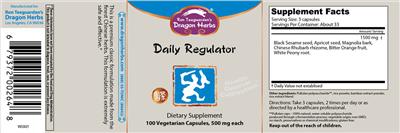
Supplement Facts
The label details for Daily Regulator by Ron Teeguarden's Dragon Herbs, sourced from the NIH Dietary Supplement Label Database.
Supplement Facts
| Ingredient | Amount | % DV |
|---|---|---|
| Blend | 1500 mg | -- |
| White Peony | 0 NP | -- |
| Chinese Rhubarb | 0 NP | -- |
| Magnolia | 0 NP | -- |
| Apricot | 0 NP | -- |
| Black Sesame | 0 NP | -- |
| Bitter Orange | 0 NP | -- |
Other ingredients: Pullulan Polysaccharide, Rice, Powder, Bamboo Extract, Powder, Rice extract Blend
Tap any ingredient to jump to its full detail below.
These statements are the manufacturer’s wording, reproduced from the product label — the label is saying it, not HelloPharmacist. We don’t verify or endorse them.
FDA Disclaimer Statement
These statements have not been evaluated by the Food and Drug Administration. This product is not intended to diagnose, treat, cure, or prevent any disease.
Formula
This is a premium classic formulation made from the finest Chinese herbs.
Pullulan caps - 100% natural, water-soluble polysaccharide produced through a fermentation process; vegetable origin; non-GMO; no starch, preservatives or chemical modifications; gluten free.
Formulation
This formulation is extremely safe and effective.
100 Vegetarian Capsules, 500 mg each
Pullulan caps - 100% natural, water-soluble polysaccharide produced through a fermentation process; vegetable origin; non-GMO; no starch, preservatives or chemical modifications; gluten free.
FDA Statement of Identity
Dietary Supplement
Suggested/Recommended/Usage/Directions
Directions: Take 3 capsules, 2 times per day or as directed by a healthcare professional.
Precautions
Keep out of the reach of children.
Brand IP Statement(s)
Ron Teeguarden's Dragon Herbs Health Deserves Cultivation
Is this label outdated? Report a formula or label change and our pharmacy team will review it.
Daily Regulator by Ron Teeguarden's Dragon Herbs label
The label scan from the NIH Dietary Supplement Label Database. Tap to enlarge.
Label images are published by the NIH Dietary Supplement Label Database for the version of this product on file. Always read your actual product label.
View the full label (PDF)The Ingredients in Daily Regulator by Ron Teeguarden's Dragon Herbs
These are the 6 active ingredients this product is made of. Select any to open its full monograph.
Serving size3 Capsule(s) Dosage formCapsule Servings per container33 Amounts shown are per serving.
Most supplement products combine several ingredients, and a medication can interact with the product through any one of them. Each ingredient below shows whether it has known drug interactions.
Blend
- › White Peony
- › Chinese Rhubarb
- › Magnolia
- › Apricot
- › Black Sesame
- › Bitter Orange
Other (inactive) ingredients: Pullulan Polysaccharide, Rice, Powder, Bamboo Extract, Powder, Rice extract Blend. These complete the product’s ingredient list but are not active constituents.
Daily Regulator by Ron Teeguarden's Dragon Herbs Drug Interactions
HelloPharmacist Interaction Report
Daily Regulator by Ron Teeguarden's Dragon Herbs contains six active ingredients, and through its white peony, Chinese rhubarb, magnolia, black sesame, and bitter orange content, it interacts with a substantial number of medications.
The most serious interaction is bitter orange with monoamine oxidase inhibitors (MAOIs) — a class of older antidepressants — which theoretically could trigger a dangerous spike in blood pressure (hypertensive crisis).
Read the full breakdown — every affected drug type, severity by severity
White peony and black sesame may slow how your liver clears certain drugs, potentially raising their levels and effects. White peony specifically affects drugs metabolized by CYP1A2 and CYP3A4 enzymes, and may also interfere with hormone-based therapies including birth control and estrogen replacement, as well as blood thinners.
Chinese rhubarb raises concerns with kidney- and liver-damaging drugs, potassium-depleting medications (diuretics and corticosteroids), blood thinners, and digoxin (a heart medication), chiefly because its laxative effect can cause electrolyte loss. Magnolia may add sedation when combined with central nervous system depressants, and may increase bleeding risk with anticoagulants and antiplatelet drugs.
Bitter orange poses major risks with MAOIs and with midazolam (a sedative), and moderate risks with blood pressure and blood sugar medications, stimulants, certain heart rhythm drugs, and the cough suppressant dextromethorphan—in part because it inhibits a key liver enzyme (CYP3A4) that breaks down many drugs. Black sesame may lower blood pressure and blood sugar, raising hypotension and low blood sugar risks if you're already on those medications.
Altogether, these interactions span 1,571 individual medications.
Apricot is the only ingredient we could check with no documented interactions. Before you start Daily Regulator, use the search tool on this page to check your exact medications, or run through them with your own doctor or pharmacist.
Check your own medications below · Editorial policy · How we use AI
Want to check YOUR meds against Daily Regulator?
Ask about interactions with your drugs in plain English — “Can I take it with lisinopril?” — and we find you the answer in seconds, ingredient by ingredient.
Go to the checkerIngredients driving the most interactions
Individual Drug Interactions
The ingredients in Daily Regulator interact with 1,571 drugs. Click any drug to see the details.
5 of the 6 ingredients in Daily Regulator interact with drugs. Each result below shows which ingredient is responsible. Bitter Orange White Peony Chinese Rhubarb Black Sesame Magnolia
AmphetamineAdensys XR-ODT, Adzenys ER, Dyanavel XR, Mydayis
How Amphetamine interacts with Daily Regulator — through 1 ingredient. Tap an ingredient for the detail:
Bitter OrangeCytochrome P450 2d6 (cyp2d6) Substrates, Stimulant Drugs +1 Major
Interaction Summary
Theoretically, bitter orange might increase levels of drug metabolized by CYP2D6.
Read the full Bitter Orange + Amphetamine interactionIsocarboxazidMarplan
How Isocarboxazid interacts with Daily Regulator — through 1 ingredient. Tap an ingredient for the detail:
Bitter OrangeMonoamine Oxidase Inhibitors (maois) Major
Interaction Summary
Theoretically, taking MAOIs with synephrine-containing bitter orange preparations might increase the hypertensive effects of synephrine, potentially leading to hypertensive crisis.
Read the full Bitter Orange + Isocarboxazid interactionMidazolamNayzilam, Seizalam, Versed
How Midazolam interacts with Daily Regulator — through 3 ingredients. Tap an ingredient for the detail:
Bitter OrangeCytochrome P450 3a4 (cyp3a4) Substrates, Midazolam (versed) Major
Interaction Summary
Bitter orange might increase levels of drugs metabolized by CYP3A4.
Read the full Bitter Orange + Midazolam interactionWhite PeonyCytochrome P450 3a4 (cyp3a4) Substrates Moderate
Interaction Summary
Theoretically, use of peony may increase the levels and clinical effects of drugs metabolized by CYP3A4.
Read the full White Peony + Midazolam interactionMagnoliaCns Depressants Moderate
Interaction Summary
Theoretically, concomitant use of large doses of magnolia bark and CNS depressants might have additive effects.
Read the full Magnolia + Midazolam interactionMoclobemideManerix, Moclobemide
How Moclobemide interacts with Daily Regulator — through 1 ingredient. Tap an ingredient for the detail:
Bitter OrangeMonoamine Oxidase Inhibitors (maois) Major
Interaction Summary
Theoretically, taking MAOIs with synephrine-containing bitter orange preparations might increase the hypertensive effects of synephrine, potentially leading to hypertensive crisis.
Read the full Bitter Orange + Moclobemide interactionOzanimod HydrochlorideZeposia
How Ozanimod Hydrochloride interacts with Daily Regulator — through 2 ingredients. Tap an ingredient for the detail:
Bitter OrangeQt Interval-prolonging Drugs, Monoamine Oxidase Inhibitors (maois) Major
Interaction Summary
Theoretically, bitter orange might have an additive effect when combined with drugs that prolong the QT interval, potentially increasing the risk of ventricular arrhythmias.
Read the full Bitter Orange + Ozanimod Hydrochloride interactionChinese RhubarbHepatotoxic Drugs Moderate
Interaction Summary
Theoretically, concomitant use of rhubarb with potentially hepatotoxic drugs might increase the risk of developing liver damage.
Read the full Chinese Rhubarb + Ozanimod Hydrochloride interactionPhenelzine SulfateNardil
How Phenelzine Sulfate interacts with Daily Regulator — through 2 ingredients. Tap an ingredient for the detail:
Bitter OrangeMonoamine Oxidase Inhibitors (maois) Major
Interaction Summary
Theoretically, taking MAOIs with synephrine-containing bitter orange preparations might increase the hypertensive effects of synephrine, potentially leading to hypertensive crisis.
Read the full Bitter Orange + Phenelzine Sulfate interactionMagnoliaCns Depressants Moderate
Interaction Summary
Theoretically, concomitant use of large doses of magnolia bark and CNS depressants might have additive effects.
Read the full Magnolia + Phenelzine Sulfate interactionRasagilineAzilect
How Rasagiline interacts with Daily Regulator — through 2 ingredients. Tap an ingredient for the detail:
Bitter OrangeMonoamine Oxidase Inhibitors (maois) Major
Interaction Summary
Theoretically, taking MAOIs with synephrine-containing bitter orange preparations might increase the hypertensive effects of synephrine, potentially leading to hypertensive crisis.
Read the full Bitter Orange + Rasagiline interactionWhite PeonyCytochrome P450 1a2 (cyp1a2) Substrates Moderate
Interaction Summary
Theoretically, use of peony may increase the levels and clinical effects of drugs metabolized by CYP1A2.
Read the full White Peony + Rasagiline interactionSafinamide MesylateXadago
How Safinamide Mesylate interacts with Daily Regulator — through 1 ingredient. Tap an ingredient for the detail:
Bitter OrangeMonoamine Oxidase Inhibitors (maois) Major
Interaction Summary
Theoretically, taking MAOIs with synephrine-containing bitter orange preparations might increase the hypertensive effects of synephrine, potentially leading to hypertensive crisis.
Read the full Bitter Orange + Safinamide Mesylate interactionSelegilineCarbex, Eldepryl, Emsam, Zelapar
How Selegiline interacts with Daily Regulator — through 1 ingredient. Tap an ingredient for the detail:
Bitter OrangeMonoamine Oxidase Inhibitors (maois) Major
Interaction Summary
Theoretically, taking MAOIs with synephrine-containing bitter orange preparations might increase the hypertensive effects of synephrine, potentially leading to hypertensive crisis.
Read the full Bitter Orange + Selegiline interactionTranylcypromineParnate
How Tranylcypromine interacts with Daily Regulator — through 1 ingredient. Tap an ingredient for the detail:
Bitter OrangeMonoamine Oxidase Inhibitors (maois) Major
Interaction Summary
Theoretically, taking MAOIs with synephrine-containing bitter orange preparations might increase the hypertensive effects of synephrine, potentially leading to hypertensive crisis.
Read the full Bitter Orange + Tranylcypromine interaction6-mercaptopurinePurinethol
How 6-mercaptopurine interacts with Daily Regulator — through 1 ingredient. Tap an ingredient for the detail:
Chinese RhubarbHepatotoxic Drugs Moderate
Interaction Summary
Theoretically, concomitant use of rhubarb with potentially hepatotoxic drugs might increase the risk of developing liver damage.
Read the full Chinese Rhubarb + 6-mercaptopurine interactionAdo-trastuzumab EmtansineKadcyla
How Ado-trastuzumab Emtansine interacts with Daily Regulator — through 2 ingredients. Tap an ingredient for the detail:
Bitter OrangeCytochrome P450 3a4 (cyp3a4) Substrates Moderate
Interaction Summary
Bitter orange might increase levels of drugs metabolized by CYP3A4.
Read the full Bitter Orange + Ado-trastuzumab Emtansine interactionWhite PeonyCytochrome P450 3a4 (cyp3a4) Substrates Moderate
Interaction Summary
Theoretically, use of peony may increase the levels and clinical effects of drugs metabolized by CYP3A4.
Read the full White Peony + Ado-trastuzumab Emtansine interactionAbacavir Sulfate, Dolutegravir, LamivudineTriumeq
How Abacavir Sulfate, Dolutegravir, Lamivudine interacts with Daily Regulator — through 1 ingredient. Tap an ingredient for the detail:
Chinese RhubarbHepatotoxic Drugs Moderate
Interaction Summary
Theoretically, concomitant use of rhubarb with potentially hepatotoxic drugs might increase the risk of developing liver damage.
Read the full Chinese Rhubarb + Abacavir Sulfate, Dolutegravir, Lamivudine interactionAbacavir, LamivudineEpzicom
How Abacavir, Lamivudine interacts with Daily Regulator — through 1 ingredient. Tap an ingredient for the detail:
Chinese RhubarbHepatotoxic Drugs Moderate
Interaction Summary
Theoretically, concomitant use of rhubarb with potentially hepatotoxic drugs might increase the risk of developing liver damage.
Read the full Chinese Rhubarb + Abacavir, Lamivudine interactionAbciximabReoPro
How Abciximab interacts with Daily Regulator — through 2 ingredients. Tap an ingredient for the detail:
MagnoliaAnticoagulant/antiplatelet Drugs Moderate
Interaction Summary
Theoretically, magnolia might have additive effects and increase the risk of bleeding when used with anticoagulant or antiplatelet drugs.
Read the full Magnolia + Abciximab interactionWhite PeonyAnticoagulant/antiplatelet Drugs Moderate
Interaction Summary
Theoretically, combining peony with anticoagulant or antiplatelet drugs might increase the risk of bleeding.
Read the full White Peony + Abciximab interactionAbemaciclibVerzenio
How Abemaciclib interacts with Daily Regulator — through 2 ingredients. Tap an ingredient for the detail:
White PeonyCytochrome P450 3a4 (cyp3a4) Substrates Moderate
Interaction Summary
Theoretically, use of peony may increase the levels and clinical effects of drugs metabolized by CYP3A4.
Read the full White Peony + Abemaciclib interactionBitter OrangeCytochrome P450 3a4 (cyp3a4) Substrates Moderate
Interaction Summary
Bitter orange might increase levels of drugs metabolized by CYP3A4.
Read the full Bitter Orange + Abemaciclib interactionAbiraterone
How Abiraterone interacts with Daily Regulator — through 3 ingredients. Tap an ingredient for the detail:
Chinese RhubarbHepatotoxic Drugs Moderate
Interaction Summary
Theoretically, concomitant use of rhubarb with potentially hepatotoxic drugs might increase the risk of developing liver damage.
Read the full Chinese Rhubarb + Abiraterone interactionWhite PeonyCytochrome P450 3a4 (cyp3a4) Substrates Moderate
Interaction Summary
Theoretically, use of peony may increase the levels and clinical effects of drugs metabolized by CYP3A4.
Read the full White Peony + Abiraterone interactionBitter OrangeCytochrome P450 3a4 (cyp3a4) Substrates Moderate
Interaction Summary
Bitter orange might increase levels of drugs metabolized by CYP3A4.
Read the full Bitter Orange + Abiraterone interactionAbiraterone AcetateYonsa, Zytiga
How Abiraterone Acetate interacts with Daily Regulator — through 3 ingredients. Tap an ingredient for the detail:
Chinese RhubarbHepatotoxic Drugs Moderate
Interaction Summary
Theoretically, concomitant use of rhubarb with potentially hepatotoxic drugs might increase the risk of developing liver damage.
Read the full Chinese Rhubarb + Abiraterone Acetate interactionBitter OrangeCytochrome P450 3a4 (cyp3a4) Substrates Moderate
Interaction Summary
Bitter orange might increase levels of drugs metabolized by CYP3A4.
Read the full Bitter Orange + Abiraterone Acetate interactionWhite PeonyCytochrome P450 3a4 (cyp3a4) Substrates Moderate
Interaction Summary
Theoretically, use of peony may increase the levels and clinical effects of drugs metabolized by CYP3A4.
Read the full White Peony + Abiraterone Acetate interactionAbrocitinibCibinqo
How Abrocitinib interacts with Daily Regulator — through 3 ingredients. Tap an ingredient for the detail:
White PeonyAnticoagulant/antiplatelet Drugs Moderate
Interaction Summary
Theoretically, combining peony with anticoagulant or antiplatelet drugs might increase the risk of bleeding.
Read the full White Peony + Abrocitinib interactionMagnoliaAnticoagulant/antiplatelet Drugs Moderate
Interaction Summary
Theoretically, magnolia might have additive effects and increase the risk of bleeding when used with anticoagulant or antiplatelet drugs.
Read the full Magnolia + Abrocitinib interactionBlack SesameCytochrome P450 2c9 (cyp2c9) Substrates Moderate
Interaction Summary
Theoretically, sesame might increase the levels and clinical effects of CYP2C9 substrates.
Read the full Black Sesame + Abrocitinib interactionAcalabrutinibCalquence
How Acalabrutinib interacts with Daily Regulator — through 3 ingredients. Tap an ingredient for the detail:
White PeonyCytochrome P450 3a4 (cyp3a4) Substrates Moderate
Interaction Summary
Theoretically, use of peony may increase the levels and clinical effects of drugs metabolized by CYP3A4.
Read the full White Peony + Acalabrutinib interactionBitter OrangeCytochrome P450 3a4 (cyp3a4) Substrates Moderate
Interaction Summary
Bitter orange might increase levels of drugs metabolized by CYP3A4.
Read the full Bitter Orange + Acalabrutinib interactionBlack SesameP-glycoprotein Substrates Minor
Interaction Summary
Theoretically, sesame might alter the transport of P-glycoprotein substrates.
Read the full Black Sesame + Acalabrutinib interactionAcarboseGlucobay, Prandase, Precose
How Acarbose interacts with Daily Regulator — through 3 ingredients. Tap an ingredient for the detail:
Chinese RhubarbHepatotoxic Drugs Moderate
Interaction Summary
Theoretically, concomitant use of rhubarb with potentially hepatotoxic drugs might increase the risk of developing liver damage.
Read the full Chinese Rhubarb + Acarbose interactionBitter OrangeAntidiabetes Drugs Moderate
Interaction Summary
Theoretically, bitter orange might increase the risk of hypoglycemia when taken with antidiabetes drugs.
Read the full Bitter Orange + Acarbose interactionBlack SesameAntidiabetes Drugs Moderate
Interaction Summary
Taking sesame oil with antidiabetes drugs might increase the risk of hypoglycemia.
Read the full Black Sesame + Acarbose interactionAcebutololRhotral, Sectral
How Acebutolol interacts with Daily Regulator — through 2 ingredients. Tap an ingredient for the detail:
Black SesameAntihypertensive Drugs Moderate
Interaction Summary
Taking sesame oil with antihypertensive drugs might increase the risk of hypotension.
Read the full Black Sesame + Acebutolol interactionChinese RhubarbHepatotoxic Drugs Moderate
Interaction Summary
Theoretically, concomitant use of rhubarb with potentially hepatotoxic drugs might increase the risk of developing liver damage.
Read the full Chinese Rhubarb + Acebutolol interactionAcenocoumarolSintrom
How Acenocoumarol interacts with Daily Regulator — through 2 ingredients. Tap an ingredient for the detail:
White PeonyAnticoagulant/antiplatelet Drugs Moderate
Interaction Summary
Theoretically, combining peony with anticoagulant or antiplatelet drugs might increase the risk of bleeding.
Read the full White Peony + Acenocoumarol interactionMagnoliaAnticoagulant/antiplatelet Drugs Moderate
Interaction Summary
Theoretically, magnolia might have additive effects and increase the risk of bleeding when used with anticoagulant or antiplatelet drugs.
Read the full Magnolia + Acenocoumarol interactionAcepromazineAtravet
How Acepromazine interacts with Daily Regulator — through 1 ingredient. Tap an ingredient for the detail:
MagnoliaCns Depressants Moderate
Interaction Summary
Theoretically, concomitant use of large doses of magnolia bark and CNS depressants might have additive effects.
Read the full Magnolia + Acepromazine interactionAcetaminophenChildren's Tylenol, Children's Tylenol Meltaways, Tylenol, Tylenol Ex Strength
How Acetaminophen interacts with Daily Regulator — through 2 ingredients. Tap an ingredient for the detail:
Chinese RhubarbNephrotoxic Drugs, Hepatotoxic Drugs Moderate
Interaction Summary
Theoretically, long-term use of anthraquinones from rhubarb might increase the risk of nephrotoxicity when used with nephrotoxic drugs.
Read the full Chinese Rhubarb + Acetaminophen interactionWhite PeonyCytochrome P450 1a2 (cyp1a2) Substrates Moderate
Interaction Summary
Theoretically, use of peony may increase the levels and clinical effects of drugs metabolized by CYP1A2.
Read the full White Peony + Acetaminophen interactionAcetaminophen, AspirinGemnisyn
How Acetaminophen, Aspirin interacts with Daily Regulator — through 3 ingredients. Tap an ingredient for the detail:
Chinese RhubarbHepatotoxic Drugs, Nephrotoxic Drugs Moderate
Interaction Summary
Theoretically, concomitant use of rhubarb with potentially hepatotoxic drugs might increase the risk of developing liver damage.
Read the full Chinese Rhubarb + Acetaminophen, Aspirin interactionWhite PeonyCytochrome P450 1a2 (cyp1a2) Substrates, Anticoagulant/antiplatelet Drugs Moderate
Interaction Summary
Theoretically, use of peony may increase the levels and clinical effects of drugs metabolized by CYP1A2.
Read the full White Peony + Acetaminophen, Aspirin interactionMagnoliaAnticoagulant/antiplatelet Drugs Moderate
Interaction Summary
Theoretically, magnolia might have additive effects and increase the risk of bleeding when used with anticoagulant or antiplatelet drugs.
Read the full Magnolia + Acetaminophen, Aspirin interactionAcetaminophen, Aspirin, CaffeineExcedrin, Excedrin Extra Strength, Excedrin Migraine
How Acetaminophen, Aspirin, Caffeine interacts with Daily Regulator — through 4 ingredients. Tap an ingredient for the detail:
MagnoliaAnticoagulant/antiplatelet Drugs Moderate
Interaction Summary
Theoretically, magnolia might have additive effects and increase the risk of bleeding when used with anticoagulant or antiplatelet drugs.
Read the full Magnolia + Acetaminophen, Aspirin, Caffeine interactionChinese RhubarbNephrotoxic Drugs, Hepatotoxic Drugs Moderate
Interaction Summary
Theoretically, long-term use of anthraquinones from rhubarb might increase the risk of nephrotoxicity when used with nephrotoxic drugs.
Read the full Chinese Rhubarb + Acetaminophen, Aspirin, Caffeine interactionWhite PeonyCytochrome P450 3a4 (cyp3a4) Substrates, Cytochrome P450 1a2 (cyp1a2) Substrates +1 Moderate
Interaction Summary
Theoretically, use of peony may increase the levels and clinical effects of drugs metabolized by CYP3A4.
Read the full White Peony + Acetaminophen, Aspirin, Caffeine interactionBitter OrangeCaffeine, Stimulant Drugs +1 Moderate
Interaction Summary
Bitter orange might increase blood pressure and heart rate when taken with caffeine.
Read the full Bitter Orange + Acetaminophen, Aspirin, Caffeine interactionAcetaminophen, Brompheniramine, PhenylpropanolamineDimetapp Cold and Flu
How Acetaminophen, Brompheniramine, Phenylpropanolamine interacts with Daily Regulator — through 3 ingredients. Tap an ingredient for the detail:
Chinese RhubarbHepatotoxic Drugs, Nephrotoxic Drugs Moderate
Interaction Summary
Theoretically, concomitant use of rhubarb with potentially hepatotoxic drugs might increase the risk of developing liver damage.
Read the full Chinese Rhubarb + Acetaminophen, Brompheniramine, Phenylpropanolamine interactionWhite PeonyCytochrome P450 1a2 (cyp1a2) Substrates Moderate
Interaction Summary
Theoretically, use of peony may increase the levels and clinical effects of drugs metabolized by CYP1A2.
Read the full White Peony + Acetaminophen, Brompheniramine, Phenylpropanolamine interactionBitter OrangeStimulant Drugs Moderate
Interaction Summary
Theoretically, bitter orange might increase the risk of hypertension and adverse cardiovascular effects when taken with stimulant drugs.
Read the full Bitter Orange + Acetaminophen, Brompheniramine, Phenylpropanolamine interactionAcetaminophen, ButalbitalAxocet, Bancap, Bucet, Butex Forte, Esgic CF, Orbivan CF +5 more
How Acetaminophen, Butalbital interacts with Daily Regulator — through 2 ingredients. Tap an ingredient for the detail:
Chinese RhubarbHepatotoxic Drugs, Nephrotoxic Drugs Moderate
Interaction Summary
Theoretically, concomitant use of rhubarb with potentially hepatotoxic drugs might increase the risk of developing liver damage.
Read the full Chinese Rhubarb + Acetaminophen, Butalbital interactionWhite PeonyCytochrome P450 1a2 (cyp1a2) Substrates Moderate
Interaction Summary
Theoretically, use of peony may increase the levels and clinical effects of drugs metabolized by CYP1A2.
Read the full White Peony + Acetaminophen, Butalbital interactionAcetaminophen, Butalbital, CaffeineEsgic, Esgic Plus, Fiogesic, Fioricet, Repan, Tecnal +1 more
How Acetaminophen, Butalbital, Caffeine interacts with Daily Regulator — through 3 ingredients. Tap an ingredient for the detail:
Chinese RhubarbNephrotoxic Drugs, Hepatotoxic Drugs Moderate
Interaction Summary
Theoretically, long-term use of anthraquinones from rhubarb might increase the risk of nephrotoxicity when used with nephrotoxic drugs.
Read the full Chinese Rhubarb + Acetaminophen, Butalbital, Caffeine interactionWhite PeonyCytochrome P450 3a4 (cyp3a4) Substrates, Cytochrome P450 1a2 (cyp1a2) Substrates Moderate
Interaction Summary
Theoretically, use of peony may increase the levels and clinical effects of drugs metabolized by CYP3A4.
Read the full White Peony + Acetaminophen, Butalbital, Caffeine interactionBitter OrangeStimulant Drugs, Caffeine +1 Moderate
Interaction Summary
Theoretically, bitter orange might increase the risk of hypertension and adverse cardiovascular effects when taken with stimulant drugs.
Read the full Bitter Orange + Acetaminophen, Butalbital, Caffeine interactionEach ingredient & the kinds of drugs it affects
For each ingredient in Daily Regulator with known interactions, here are the types of medications they can affect. Open any type for the detail — or search your exact drug in the checker above.
Bitter Orange
Midazolam (Versed)
Bitter orange might increase blood levels of midazolam.
One small clinical study shows that bitter orange juice can increase midazolam levels, likely through inhibition of cytochrome P450 3A4 (CYP3A4). Theoretically, bitter orange might increase the risk of midazolam-related adverse effects.
Monoamine Oxidase Inhibitors (Maois)
Theoretically, taking MAOIs with synephrine-containing bitter orange preparations might increase the hypertensive effects of synephrine, potentially leading to hypertensive crisis.
Bitter orange contains tyramine, octopamine, and synephrine, which are MAO substrates.
Antidiabetes Drugs
Theoretically, bitter orange might increase the risk of hypoglycemia when taken with antidiabetes drugs.
Some clinical research shows that drinking a tea containing bitter orange and Indian snakeroot reduces fasting and postprandial glucose levels in patients with type 2 diabetes who are using antidiabetes drugs. However, it is unclear if these effects are due to bitter orange, Indian snakeroot, or the combination. An animal study also shows that p-synephrine in combination with gliclazide , a sulfonylurea, causes an additional 20% to 44% decrease in glucose levels when compared with gliclazide alone.
Caffeine
Bitter orange might increase blood pressure and heart rate when taken with caffeine.
Small clinical studies show that taking bitter orange in combination with caffeine can increase blood pressure and heart rate in otherwise healthy normotensive adults. Theoretically, this might increase the risk of serious cardiovascular adverse effects.
Colchicine
Bitter orange might affect colchicine levels.
Colchicine is a substrate of P-glycoprotein and cytochrome P450 3A4 (CYP3A4). Bitter orange has been reported to inhibit CYP3A4 and increase levels of CYP3A4 substrates. However, one small clinical study in healthy adults shows that drinking bitter orange juice 240 mL twice daily for 4 days and taking a single dose of colchicine 0.6 mg on the 4th day decreases colchicine peak serum levels by 24%, time to peak serum level by 1 hour, and overall exposure to colchicine by 20%. The clinical significance of this finding is unclear.
Cytochrome P450 3A4 (Cyp3A4) Substrates
Bitter orange might increase levels of drugs metabolized by CYP3A4.
Small clinical studies suggest that single or multiple doses of freshly squeezed bitter orange juice 200-240 mL can inhibit CYP3A4 metabolism of drugs, causing increased drug levels and potentially increasing the risk of adverse effects. However, the extent of the effect of bitter orange on CYP3A4-mediated drug interactions is unknown. Some evidence suggests that bitter orange selectively inhibits intestinal CYP3A4, but not hepatic CYP3A4. Its effect on P-glycoprotein, which strongly overlaps with CYP3A4 interactions, is unclear. One small clinical study shows that drinking 8 ounces of freshly squeezed bitter orange juice has no effect on cyclosporine, which seems to be more dependent on hepatic CYP3A4 and P-glycoprotein than intestinal CYP3A4.
Dextromethorphan (Robitussin Dm, Others)
Bitter orange might increase blood levels of dextromethorphan.
One small clinical study shows that bitter orange juice increases dextromethorphan levels, likely through cytochrome P450 3A4 (CYP3A4) inhibition. Theoretically, bitter orange might increase the risk for dextromethorphan-related adverse effects.
Felodipine (Plendil)
Bitter orange might increase blood levels of felodipine.
One small clinical study shows that bitter orange juice increases felodipine levels, likely through cytochrome P450 3A4 (CYP3A4) inhibition. Theoretically, bitter orange might increase the risk for felodipine-related adverse effects.
Indinavir (Crixivan)
Bitter orange might increase blood levels of indinavir.
One small clinical study shows that bitter orange juice slightly increases indinavir levels, but this effect is likely to be clinically insignificant. Bitter orange selectively inhibits intestinal cytochrome P450 3A4 (CYP3A4); however, the metabolism of indinavir seems to be more dependent on hepatic CYP3A4. The effect of bitter orange on other protease inhibitors has not been studied.
Qt Interval-Prolonging Drugs
Theoretically, bitter orange might have an additive effect when combined with drugs that prolong the QT interval, potentially increasing the risk of ventricular arrhythmias.
One case report suggests that taking bitter orange in combination with other stimulants such as caffeine might prolong the QT interval in some patients.
Sildenafil (Viagra)
Bitter orange juice might increase blood levels of sildenafil.
A small clinical study in healthy adult males shows that drinking freshly squeezed bitter orange juice 250 mL daily for 3 days and taking a single dose of sildenafil 50 mg on the 3rd day increases the peak plasma concentration of sildenafil by 18% and the overall exposure to sildenafil by 44%. Theoretically, this may be due to inhibition of cytochrome P450 3A4 by bitter orange.
Stimulant Drugs
Theoretically, bitter orange might increase the risk of hypertension and adverse cardiovascular effects when taken with stimulant drugs.
Bitter orange appears to have stimulant effects.
Cytochrome P450 2D6 (Cyp2D6) Substrates
Theoretically, bitter orange might increase levels of drug metabolized by CYP2D6.
In vitro research shows that octopamine, a constituent of bitter orange, weakly inhibits CYP2D6 enzymes. This effect has not been reported in humans.
White Peony
Anticoagulant/Antiplatelet Drugs
Theoretically, combining peony with anticoagulant or antiplatelet drugs might increase the risk of bleeding.
In vitro research suggests that peony might have antiplatelet, anticoagulant, and antithrombotic effects.
Clozapine (Clozaril)
Theoretically, peony might increase the levels and clinical effects of clozapine.
In vitro research shows that peony suppresses the metabolism of clozapine via weak-to-moderate inhibitory effects on cytochromes P450 (CYP) 1A2 and CYP3A4. This effect has not been reported in humans.
Contraceptive Drugs
Theoretically, peony might interfere with contraceptive drugs due to competition for estrogen receptors.
In vitro and animal research shows that peony extract has estrogenic activity. Concomitant use might also increase the risk for estrogen-related adverse effects.
Cytochrome P450 1A2 (Cyp1A2) Substrates
Theoretically, use of peony may increase the levels and clinical effects of drugs metabolized by CYP1A2.
In vitro research shows that peony suppresses the metabolism of clozapine via weak-to-moderate inhibitory effects on CYP1A2 and CYP3A4. This effect has not been reported in humans.
Cytochrome P450 3A4 (Cyp3A4) Substrates
Theoretically, use of peony may increase the levels and clinical effects of drugs metabolized by CYP3A4.
In vitro research shows that peony suppresses the metabolism of clozapine via weak-to-moderate inhibitory effects on CYP1A2 and CYP3A4. This effect has not been reported in humans.
Estrogens
Theoretically, concomitant use of large amounts of peony might interfere with hormone replacement therapy and/or increase the risk for estrogen-related adverse effects.
In vitro and animal research shows that peony extract has estrogenic activity. Theoretically, peony might compete for estrogen receptors and/or cause additive estrogenic effects.
Phenytoin (Dilantin)
Theoretically, peony might reduce the levels and clinical effects of phenytoin.
Animal research shows that taking peony root reduces levels of phenytoin. Some researchers suggest that peony root might affect cytochrome P450 (CYP) 2C9, which metabolizes phenytoin. However, preliminary research in humans shows that peony root does not alter levels of losartan (Cozaar), which is also metabolized by CYP2C9.
Chinese Rhubarb
Corticosteroids
Theoretically, frequent and high doses of rhubarb might increase the risk of hypokalemia when taken with corticosteroids.
Rhubarb has stimulant laxative effects. Overuse of rhubarb might compound corticosteroid-induced potassium loss.
Cyclosporine (Neoral, Sandimmune)
Theoretically, taking rhubarb with cyclosporine might reduce cyclosporine levels.
Animal research shows that co-administration of rhubarb decoction 0.25 or 1 gram/kg with cyclosporine 2.5 mg/kg, decreases cyclosporine maximum plasma concentration and overall exposure levels when compared with taking cyclosporine alone. The authors theorize that rhubarb might reduce cyclosporine bioavailability by inducing of P-glycoprotein and/or cytochrome P450 3A4. However, since rhubarb was administered as a single oral dose and enzyme induction usually occurs after multiple doses, it is possible that cyclosporine absorption was actually reduced via rhubarb's stimulant laxative effects. Also, the composition of the rhubarb decoction was not described.
Digoxin (Lanoxin)
Theoretically, overuse of rhubarb might increase the risk of adverse effects when taken with digoxin.
Rhubarb has stimulant laxative effects. Overuse of rhubarb might cause potassium depletion, increasing the risk of digoxin toxicity.
Diuretic Drugs
Theoretically, frequent and high doses of rhubarb might increase the risk of hypokalemia.
Rhubarb has stimulant laxative effects. Overuse of rhubarb might cause potassium depletion and compound diuretic-induced potassium loss.
Hepatotoxic Drugs
Theoretically, concomitant use of rhubarb with potentially hepatotoxic drugs might increase the risk of developing liver damage.
Some animal research suggests that anthraquinones in rhubarb might have hepatotoxic effects. Also, rhubarb use has been linked to at least 24 cases of liver injury, although details on the dose of rhubarb and duration of use in these cases is unclear.
Nephrotoxic Drugs
Theoretically, long-term use of anthraquinones from rhubarb might increase the risk of nephrotoxicity when used with nephrotoxic drugs.
The anthraquinone constituents of rhubarb have been shown to induce nephrotoxicity in animal research. Additionally, in a case report, a 23-year old female presented with kidney failure after taking 6 tablets of a proprietary slimming agent (found to contain the anthraquinones emodin and aloe-emodin from rhubarb) daily for 6 weeks and then adding diclofenac 25 mg 4 times daily for 2 days. The authors postulate that the anthraquinone constituents of rhubarb contributed to the renal dysfunction, and the addition of diclofenac, a nephrotoxic drug, led to renal failure. Until more is known, advise patients to avoid taking rhubarb if they are taking other potentially nephrotoxic drugs.
Stimulant Laxatives
Theoretically, rhubarb might increase the risk for fluid and electrolyte loss when taken with other stimulant laxatives.
Rhubarb has stimulant laxative effects. Concomitant use with stimulant laxatives might compound fluid and electrolyte loss.
Warfarin (Coumadin)
Theoretically, excessive use of rhubarb might increase the risk of bleeding when taken with warfarin.
Rhubarb has stimulant laxative effects and can cause diarrhea. Diarrhea can increase the effects of warfarin, increase international normalized ratio (INR), and increase the risk of bleeding. Advise patients who take warfarin not to take excessive amounts of rhubarb.
Black Sesame
Antidiabetes Drugs
Taking sesame oil with antidiabetes drugs might increase the risk of hypoglycemia.
Clinical studies show that sesame oil can decrease plasma glucose and glycated hemoglobin (HbA1c) levels. Some clinical research in patients taking glibenclamide shows that using sesame oil or a blend of sesame oil and rice bran oil in place of other oil for cooking reduces plasma glucose more than glibenclamide alone. Monitor blood glucose levels closely. Dose adjustments might be necessary.
Antihypertensive Drugs
Taking sesame oil with antihypertensive drugs might increase the risk of hypotension.
Clinical research shows that replacing other cooking oil with sesame oil can lower systolic blood pressure (SBP) and diastolic blood pressure (DBP) in patients with or without hypertension. There is also some evidence that sesame oil has additive effects in patients also taking atenolol, nifedipine, and/or hydrochlorothiazide. In patients using nifedipine, using a blend of sesame oil and rice bran oil for cooking reduces both SBP and DBP more than nifedipine alone.
Cytochrome P450 2C9 (Cyp2C9) Substrates
Theoretically, sesame might increase the levels and clinical effects of CYP2C9 substrates.
In vitro, sesame inhibits CYP2C9. However, this interaction has not been reported in humans.
Tamoxifen (Nolvadex)
Theoretically, sesame might interfere with tamoxifen.
In animal research, sesame seed reduces the tumor-inhibitory effect of tamoxifen by reducing apoptosis and increasing proliferation. This interaction has not been reported in humans.
P-Glycoprotein Substrates
Theoretically, sesame might alter the transport of P-glycoprotein substrates.
In vitro research suggests that sesamin, a constituent of sesame, can inhibit the multi-drug transporter protein, P-glycoprotein. However, this interaction has not been reported in humans.
Magnolia
Anticoagulant/Antiplatelet Drugs
Theoretically, magnolia might have additive effects and increase the risk of bleeding when used with anticoagulant or antiplatelet drugs.
In vitro research shows that the chemicals magnolol and honokiol, isolated from magnolia bark, inhibit platelet aggregation that is experimentally induced by collagen and arachidonic acid. However, they do not inhibit platelet aggregation that is induced by adenosine diphosphate, platelet-activating factor, or thrombin. This interaction has not been reported in humans.
Cns Depressants
Theoretically, concomitant use of large doses of magnolia bark and CNS depressants might have additive effects.
In vitro and animal research shows that constituents extracted from magnolia bark, especially honokiol and magnolol, have sedative effects. These effects may be due to the inhibition of catecholamine release and modulation of gamma-aminobutyric acid-A (GABA-A) receptors.
Brand information
Manufacturer and brand details for Daily Regulator, from the product label.
Ron Teeguarden's Dragon Herbs
See all Ron Teeguarden's Dragon Herbs products- Name
- Ron Teeguarden's Dragon Herbs
- City
- Los Angeles
- State
- CA
- ZipCode
- 90036
- Phone Number
- (888) 558-6642
- Web Address
- www.dragonherbs.com
Daily Regulator by Ron Teeguarden's Dragon Herbs: Common Questions
Does Daily Regulator by Ron Teeguarden's Dragon Herbs interact with any medications?
How can one product interact with so many drugs?
Where does this information come from?
Can I take Daily Regulator if I'm pregnant or breastfeeding?
What side effects might I experience?
Does this product actually work for anything?
Why does bitter orange carry such serious interaction warnings?
Is this product safe to use long-term?
What is apricot doing in this blend?
Written and reviewed by the HelloPharmacist editorial staff. Our editorial policy
Not sure if Daily Regulator is safe with your meds?
Our pharmacists answer your medication & supplement questions — free.
Label information is sourced from the NIH Dietary Supplement Label Database and reflects the product version on file; always read your actual product label. This page is for education only and is not a substitute for professional medical advice. Confirm with your pharmacist or doctor before combining supplements and medications.
The Full Monographs Behind Daily Regulator’s Ingredients
Every ingredient we hold a full HelloPharmacist monograph for — uses, evidence, safety, and the complete interaction list.
Peony
Interacts with 813 drugsPeony root is a traditional Chinese medicine herb often used for menstrual problems, cramps, and inflammation, frequently as part of combination formulas. Human evidence for most uses is lim...
Read the full Peony monograph → Herb & supplement monographRhubarb
Interacts with 660 drugsRhubarb root has a long history of use as a laxative and in traditional Chinese medicine, and its edible stalks are a common food. Most medicinal claims are backed by limited or low-quality...
Read the full Rhubarb monograph → Herb & supplement monographMagnolia
Interacts with 351 drugsMagnolia bark and flower buds have a long history in traditional Chinese and Japanese medicine, often for stress, sleep, and digestion. Modern human research is still limited, so we can't be...
Read the full Magnolia monograph → Herb & supplement monographApricot
Apricot is a nutritious fruit that provides fiber, potassium, and vitamins A and C, and it is safe and healthy to eat as part of a normal diet. There is little strong evidence that apricot f...
Read the full Apricot monograph → Herb & supplement monographSesame
Interacts with 529 drugsSesame is a nutritious seed and oil widely used in cooking and traditional medicine, and it provides healthy fats, fiber, and antioxidant compounds called lignans. Some early research sugges...
Read the full Sesame monograph → Herb & supplement monographBitter Orange
Interacts with 959 drugsBitter orange is a citrus fruit whose extracts contain synephrine, a mild stimulant often added to weight-loss and energy supplements. Evidence that it works for weight loss or performance i...
Read the full Bitter Orange monograph →Sources & How We Checked
Daily Regulator's label data comes from the NIH Dietary Supplement Label Database; the ingredient interaction data is from the Natural Medicines database, reviewed by our pharmacists.
- NIH Dietary Supplement Label Database (DSLD) — The official product label on file for this supplement.
- Natural Medicines (Therapeutic Research Center) — Evidence-graded clinical reference behind the ingredient interaction data.
Content is written and reviewed by licensed HelloPharmacist pharmacists. See our data sources and editorial standards for how this information is built and checked.
The 145 references behind this product’s interaction data
Every citation that drives the interaction findings for this product’s ingredients, from the evidence-graded Natural Medicines (TRC Healthcare) database. Open an ingredient to browse its citations — links open the study on PubMed or the publisher’s site.
Peony 15 references
- Chen LC, Chou MH, Lin MF, Yang LL. Effects of Paeoniae Radix, a traditional Chinese medicine, on the pharmacokinetics of phenytoin. J Clin Pharm Ther 2001;26:271-8. PubMed
- Guo TL, Zhou XW. [Clinical observations on the treatment of the gestational hypertension syndrome with Angelica and Paeonia powder]. Zhong Xi Yi Jie He Za Zhi 1986;6:714-6, 707.
- Xie HJ, Yasar U, Sandberg M, Rane A. Paeoniae Radix, a traditional Chinese medicine, and CYP2C9 activity. J Clin Pharm Ther 2002;27:229-30. . PubMed
- Harada M, Suzuki M, Ozaki Y. Effect of Japanese Angelica root and peony root on uterine contraction in the rabbit in situ. J Pharmacobiodyn 1984;7:304-11. PubMed
- Anon. Monograph. Peony (Paeonia spp). Alt Med Rev 2001;6:495-9.
- Bruynzeel DP. Contact Dermatitis Due to Paeonia (Peony). Contact Dermatitis 1989; 20:152-3..
- Bian, X., Xu, Y., Zhu, L., Gao, P., Liu, X., Liu, S., Qian, M., Gai, M., Yang, J., and Wu, Y. Prevention of maternal-fetal blood group incompatibility with traditional Chinese herbal medicine. Chin Med J (Engl.) 1998;111(7):585-587.
- Wong, A. L. and Chan, T. Y. Interaction between warfarin and the herbal product quilinggao. Ann Pharmacother 2003;37(6):836-838.
- Cai Y, Yuan Q, Xu K, et al. Assessment of the therapeutic effect of total glycosides of peony for juvenile idiopathic arthritis: a systematic review and meta-analysis. Evid Based Complement Alternat Med 2016;2016:8292486.
- Koo YK, Kim JM, Koo JY, et al. Platelet anti-aggregatory and blood anti-coagulant effects of compounds isolated from Paeonia lactiflora and Paeonia suffruticosa. Pharmazie 2010;65(8):624-8.
- Wang W, Tian DD, Zheng B, et al. Peony-glycyrrhiza decoction, an herbal preparation, inhibits clozapine metabolism via cytochrome P450s, but not flavin-containing monooxygenase in in vitro models. Drug Metab Dispos 2015;43(7):1147-53. PubMed
- Zhou Y, Jin L, Kong F, et al. Clinical and immunological consequences of total glucosides of paeony treatment in Sjögren's syndrome: A randomized controlled pilot trial. Int Immunopharmacol. 2016 Oct;39:314-319. doi: 10.1016/j.intimp.2016.08.006. PubMed
- Zhu Q, Qi X, Wu Y, Wang K. Clinical study of total glucosides of paeony for the treatment of diabetic kidney disease in patients with diabetes mellitus. Int Urol Nephrol. 2016 Nov;48(11):1873-1880. doi: 10.1007/s11255-016-1345-5. PubMed
- Xu Y, Li X, Chen T, et al. Radix Paeoniae Alba increases serum estrogen level and up-regulates estrogen receptor expression in uterus and vagina of immature/ovariectomized mice. Phytother Res. 2019;33(1):117-29. [RETRACTED].
- Liu X, Li X, Li X, et al. The efficacy and safety of total glucosides of peony in the treatment of primary Sjögren's syndrome: a multi-center, randomized, double-blinded, placebo-controlled clinical trial. Clin Rheumatol. 2019;38(3):657-64. Erratum i
Rhubarb 20 references
- Blumenthal M, ed. The Complete German Commission E Monographs: Therapeutic Guide to Herbal Medicines. Trans. S. Klein. Boston, MA: American Botanical Council, 1998.
- McGuffin M, Hobbs C, Upton R, Goldberg A, eds. American Herbal Products Association's Botanical Safety Handbook. Boca Raton, FL: CRC Press, LLC 1997.
- Gruenwald J, Brendler T, Jaenicke C. PDR for Herbal Medicines. 1st ed. Montvale, NJ: Medical Economics Company, Inc., 1998.
- Brinker F. Herb Contraindications and Drug Interactions. 2nd ed. Sandy, OR: Eclectic Medical Publications, 1998.
- Nusko G, Schneider B, Schneider I, et al. Anthranoid laxative use is not a risk factor for colorectal neoplasia: results of a prospective case control study. Gut 2000;46:651-5. PubMed
- Kwan TH, Tong MK, Leung KT, et al. Acute renal failure associated with prolonged intake of slimming pills containing anthraquinones. Hong Kong Med J 2006;12:394-7.
- Fairbairn JW. The anthraquinone laxatives. Biological assay and its relation to chemical structure. Pharmacology 1976;14:48-61. PubMed
- Siegers, C. P., Hertzberg-Lottin, E., Otte, M., and Schneider, B. Anthranoid laxative abuse--a risk for colorectal cancer? Gut 1993;34(8):1099-1101. PubMed
- Fan, J. G. Evaluating the efficacy and safety of Danning Pian in the short-term treatment of patients with non-alcoholic fatty liver disease: a multicenter clinical trial. Hepatobiliary.Pancreat.Dis.Int 2004;3(3):375-380.
- Yan, M., Zhang, L. Y., Sun, L. X., Jiang, Z. Z., and Xiao, X. H. Nephrotoxicity study of total rhubarb anthraquinones on Sprague Dawley rats using DNA microarrays. J Ethnopharmacol. 4-15-2006; PubMed
- Zhang, J. H., Li, L. S., and Zhang, M. Clinical effects of rheum and captopril on preventing progression of chronic renal failure. Chin Med J (Engl.) 1990;103(10):788-793.
- Mitsuma, T., Yokozawa, T., Oura, H., and Terasawa, K. [Rhubarb therapy in patients with chronic renal failure (Part 2)]. Nippon Jinzo Gakkai Shi 1987;29(2):195-207.
- Wu, C. X. [A preliminary study on the effect of a single Rheum officinale in heavy doses in the treatment of acute icteric hepatitis]. Zhong.Xi.Yi.Jie.He.Za Zhi.(Chinese Journal of Modern Developments in Traditional Medicine) 1984;4(2):88-89.
- Jiao, D. H. [Clinical research on the hemostatic effect of rhubarb on peptic ulcer with acute bleeding]. Zhong.Xi.Yi.Jie.He.Za Zhi.(Chinese Journal of Modern Developments in Traditional Medicine) 1984;4(10):597-600, 579.
- Jiao, D. H., Ma, Y. H., Chen, S. J., Liu, C. T., Shu, H. N., and Chu, C. M. Resume of 400 cases of acute upper digestive tract bleeding treated by rhubarb alone. Pharmacology 1980;20 Suppl 1:128-130.
- Zhang, JH, Yao, XD, Song, Y, and et al. [Long-term treating effects of rhubarb and captopril in delaying the progression of renal failure]. Chinese Kidney Disease Journal 1993;9(4):197-201.
- Rehman H, Begum W, Anjum F, Tabasum H, Zahid S. Effect of rhubarb (Rheum emodi) in primary dysmenorrhoea: a single-blind randomized controlled trial. J Complement Integr Med. 2015 Mar;12(1):61-9.
- Yu CP, Lin HJ, Lin SP, Shia CS, Chang PH, Hou YC, Hsieh YW. Rhubarb decreased the systemic exposure of cyclosporine, a probe substrate of P-glycoprotein and CYP 3A. Xenobiotica. 2016 Aug;46(8):677-82. PubMed
- Byeon JH, Kil JH, Ahn YC, Son CG. Systematic review of published data on herb induced liver injury. J Ethnopharmacol 2019;233:190-6. PubMed
- Zhao D, Feng SX, Zhang HJ, et al. Pharmacokinetics, tissue distribution and excretion of five rhubarb anthraquinones in rats after oral administration of effective fraction of anthraquinones from rheum officinale. Xenobiotica. 2021;51(8):916-925. PubMed
Magnolia 9 references
- Kuribara H, Kishi E, Hattori N, et al. The anxiolytic effect of two oriental herbal drugs in Japan attributed to honokiol from magnolia bark. J Pharm Pharmacol 2000;52:1425-9. PubMed
- Tachikawa E, Takahashi M, Kashimoto T. Effects of extract and ingredients isolated from Magnolia obovata thunberg on catecholamine secretion from bovine adrenal chromaffin cells. Biochem Pharmacol 2000;60:433-40. PubMed
- Jung KY, Kim DS, Oh SR, et al. Magnone A and B, novel anti-PAF tetrahydrofuran lignans from the flower buds of Magnolia fargesii. J Nat Prod 1998;61:808-11.
- Garrison R, Chambliss WG. Effect of a proprietary Magnolia and Phellodendron extract on weight management: a pilot, double-blind, placebo-controlled clinical trial. Altern Ther Health Med 2006;12:50-4.
- Teng CM, Chen CC, Ko FN, et al. Two antiplatelet agents from Magnolia officinalis. Thromb Res 1988;50:757-65. PubMed
- Ghys K, De Palma A, Vandevenne A, Werbrouck J, Goossens A. Magnolia officinalis bark extract, a recently identified contact allergen in 'anti-ageing' cosmetics. Contact Dermatitis. 2015 Aug;73(2):130-2.
- Raison-Peyron N, Césaire A, Du-Thanh A, Dereure O. Allergic contact dermatitis caused by Magnolia officinalis bark extract in a facial anti-ageing cream. Contact Dermatitis. 2015 Jun;72(6):416-7.
- Nilausen TD, Johansen JD, Thyssen JP. Allergic contact dermatitis of the face caused by Magnolia officinalis bark extract. Contact Dermatitis. 2016;75(6):385-87.
- Amat-Samaranch V, López-Sánchez C, Tubau C, Puig L, Serra-Baldrich E. Vulvar allergic contact dermatitis caused by Magnolia officinalis bark extract. Contact Dermatitis 2022;87(1):96-97.
Apricot 1 reference
- Dietary Supplements - What You Need to Know — NIH Office of Dietary Supplements Source
Sesame 53 references
- von Moltke LL, Weemhoff JL, Bedir E, et al. Inhibition of human cytochromes P450 by components of Ginkgo biloba. J Pharm Pharmacol 2004;56:1039-44.
- Sankar, D., Sambandam, G., Ramakrishna, Rao M., and Pugalendi, K. V. Modulation of blood pressure, lipid profiles and redox status in hypertensive patients taking different edible oils. Clin Chim Acta 2005;355(1-2):97-104. PubMed
- Sankar, D., Rao, M. R., Sambandam, G., and Pugalendi, K. V. A pilot study of open label sesame oil in hypertensive diabetics. J Med Food 2006;9(3):408-412. PubMed
- Sankar, D., Rao, M. R., Sambandam, G., and Pugalendi, K. V. Effect of sesame oil on diuretics or Beta-blockers in the modulation of blood pressure, anthropometry, lipid profile, and redox status. Yale J Biol.Med. 2006;79(1):19-26.
- Sacco, S. M., Chen, J., Power, K. A., Ward, W. E., and Thompson, L. U. Lignan-rich sesame seed negates the tumor-inhibitory effect of tamoxifen but maintains bone health in a postmenopausal athymic mouse model with estrogen-responsive breast tumors. Menop PubMed
- Sacco, S. M., Power, K. A., Chen, J., Ward, W. E., and Thompson, L. U. Interaction of sesame seed and tamoxifen on tumor growth and bone health in athymic mice. Exp Biol Med (Maywood) 2007;232(6):754-761.
- Hsiao, E. S., Lin, L. J., Li, F. Y., Wang, M. M., Liao, M. Y., and Tzen, J. T. Gene families encoding isoforms of two major sesame seed storage proteins, 11S globulin and 2S albumin. J Agric Food Chem 2006;54(25):9544-9550. PubMed
- Ramesh, B., Saravanan, R., and Pugalendi, K. V. Influence of sesame oil on blood glucose, lipid peroxidation, and antioxidant status in streptozotocin diabetic rats. J Med Food 2005;8(3):377-381. PubMed
- Panizzolo, C., Tura, M., and Barbato, A. Anaphylaxis to sesame paste. Eur Ann Allergy Clin Immunol 2005;37(1):34-35.
- Leduc, V., Moneret-Vautrin, D. A., Tzen, J. T., Morisset, M., Guerin, L., and Kanny, G. Identification of oleosins as major allergens in sesame seed allergic patients. Allergy 2006;61(3):349-356. PubMed
- Agne, P. S., Bidat, E., Agne, P. S., Rance, F., and Paty, E. Sesame seed allergy in children. Eur Ann Allergy Clin Immunol 2004;36(8):300-305.
- Dalal, I., Binson, I., Levine, A., Somekh, E., Ballin, A., and Reifen, R. The pattern of sesame sensitivity among infants and children. Pediatr Allergy Immunol 2003;14(4):312-316. PubMed
- Moneret-Vautrin, D. A., Kanny, G., and Lagrange, A. [Occupational asthma caused by organic substances]. Rev Med Interne 1994;15 Suppl 2:216s-225s.
- Keskinen, H., Ostman, P., Vaheri, E., Tarvainen, K., Grenquist-Norden, B., Karppinen, O., and Nordman, H. A case of occupational asthma, rhinitis and urticaria due to sesame seed. Clin Exp Allergy 1991;21(5):623-624. PubMed
- Alday, E., Curiel, G., Lopez-Gil, M. J., Carreno, D., and Moneo, I. Occupational hypersensitivity to sesame seeds. Allergy 1996;51(1):69-70. DOI
- Kubo, Y., Nonaka, S., and Yoshida, H. Contact sensitivity to unsaponifiable substances in sesame oil. Contact Dermatitis 1986;15(4):215-217. PubMed
- Steurich, F. [Allergy to sesame seeds]. Pneumologie 1989;43(12):710-714.
- Morisset, M., Moneret-Vautrin, D. A., Kanny, G., Guenard, L., Beaudouin, E., Flabbee, J., and Hatahet, R. Thresholds of clinical reactivity to milk, egg, peanut and sesame in immunoglobulin E-dependent allergies: evaluation by double-blind or single-blind
- Tsai, H. J., Kumar, R., Pongracic, J., Liu, X., Story, R., Yu, Y., Caruso, D., Costello, J., Schroeder, A., Fang, Y., Demirtas, H., Meyer, K. E., O'Gorman, M. R., and Wang, X. Familial aggregation of food allergy and sensitization to food allergens: a fam
- James, C., Williams-Akita, A., Rao, Y. A., Chiarmonte, L. T., and Scheider, A. T. Sesame seed anaphylaxis. N Y State J Med 1991;91(10):457-458.
- Chiu, J. T. and Haydik, I. B. Sesame seed oil anaphylaxis. J Allergy Clin Immunol 1991;88(3 Pt 1):414-415. PubMed
- Asero, R., Mistrello, G., Roncarolo, D., Antoniotti, P. L., and Falagiani, P. A case of sesame seed-induced anaphylaxis. Allergy 1999;54(5):526-527.
- Pajno, G. B., Passalacqua, G., Magazzu, G., Barberio, G., Vita, D., and Canonica, G. W. Anaphylaxis to sesame. Allergy 2000;55(2):199-201. PubMed
- Neering, H., Vitanyi, B. E., Malten, K. E., van Ketel, W. G., and van Dijk, E. Allergens in sesame oil contact dermatitis. Acta Derm Venereol 1975;55(1):31-34. DOI
- Caminiti, L., Vita, D., Passalacqua, G., Arrigo, T., Barberi, S., Lombardo, F., and Pajno, G. B. Tahini, a little known sesame-containing food, as an unexpected cause of severe allergic reaction. J Investig Allergol Clin Immunol 2006;16(5):308-310.
- Phan, T. G., Strasser, S. I., Koorey, D., McCaughan, G. W., Rimmer, J., Dunckley, H., Goddard, L., and Adelstein, S. Passive transfer of nut allergy after liver transplantation. Arch Intern Med 2003;163(2):237-239. PubMed
- Oiso, N., Yamadori, Y., Higashimori, N., Kawara, S., and Kawada, A. Allergic contact dermatitis caused by sesame oil in a topical Chinese medicine, shi-un-ko. Contact Dermatitis 2008;58(2):109.
- VAN Dijk, E., Dijk, E., Neering, H., and Vitanyi, B. E. Contact hypersensitivity to sesame oil in patients with leg ulcers and eczema. Acta Derm Venereol 1973;53(2):133-135. DOI
- Beyer, K., Bardina, L., Grishina, G., and Sampson, H. A. Identification of sesame seed allergens by 2-dimensional proteomics and Edman sequencing: seed storage proteins as common food allergens. J Allergy Clin Immunol 2002;110(1):154-159. PubMed
- Koopman, M., Richter, C., Parren, R. J., and Janssen, M. Bodybuilding, sesame oil and vasculitis. Rheumatology (Oxford) 2005;44(9):1135. PubMed
- Kagi, M. K. and Wuthrich, B. Falafel burger anaphylaxis due to sesame seed allergy. Ann Allergy 1993;71(2):127-129.
- Hayakawa, R., Matsunaga, K., Suzuki, M., Hosokawa, K., Arima, Y., Shin, C. S., and Yoshida, M. Is sesamol present in sesame oil? Contact Dermatitis 1987;17(3):133-135.
- Malish, D., Glovsky, M. M., Hoffman, D. R., Ghekiere, L., and Hawkins, J. M. Anaphylaxis after sesame seed ingestion. J Allergy Clin Immunol 1981;67(1):35-38. PubMed
- Fremont, S., Zitouni, N., Kanny, G., Veneri, V., Metche, M., Moneret-Vautrin, D. A., and Nicolas, J. P. Allergenicity of some isoforms of white sesame proteins. Clin Exp Allergy 2002;32(8):1211-1215. PubMed
- Pastorello, E. A., Varin, E., Farioli, L., Pravettoni, V., Ortolani, C., Trambaioli, C., Fortunato, D., Giuffrida, M. G., Rivolta, F., Robino, A., Calamari, A. M., Lacava, L., and Conti, A. The major allergen of sesame seeds (Sesamum indicum) is a 2S albu
- Wolff, N., Cogan, U., Admon, A., Dalal, I., Katz, Y., Hodos, N., Karin, N., and Yannai, S. Allergy to sesame in humans is associated primarily with IgE antibody to a 14 kDa 2S albumin precursor. Food Chem Toxicol 2003;41(8):1165-1174. PubMed
- Wolff, N., Yannai, S., Karin, N., Levy, Y., Reifen, R., Dalal, I., and Cogan, U. Identification and characterization of linear B-cell epitopes of beta-globulin, a major allergen of sesame seeds. J Allergy Clin Immunol 2004;114(5):1151-1158.
- Navuluri, L., Parvataneni, S., Hassan, H., Birmingham, N. P., Kelly, C., and Gangur, V. Allergic and anaphylactic response to sesame seeds in mice: identification of Ses i 3 and basic subunit of 11s globulins as allergens. Int Arch Allergy Immunol 2006;14 PubMed
- Beyer, K., Grishina, G., Bardina, L., and Sampson, H. A. Identification of 2 new sesame seed allergens: Ses i 6 and Ses i 7. J Allergy Clin Immunol 2007;119(6):1554-1556. PubMed
- Moreno, F. J., Rubio, L. A., Olano, A., and Clemente, A. Uptake of 2S albumin allergens, Ber e 1 and Ses i 1, across human intestinal epithelial Caco-2 cell monolayers. J Agric Food Chem 2006;54(22):8631-8639. PubMed
- Moreno, F. J., Maldonado, B. M., Wellner, N., and Mills, E. N. Thermostability and in vitro digestibility of a purified major allergen 2S albumin (Ses i 1) from white sesame seeds (Sesamum indicum L.). Biochim Biophys Acta 2005;1752(2):142-153. PubMed
- Okura, T., Ibe, M., Umegaki, K., Shinozuka, K., and Yamada, S. Effects of dietary ingredients on function and expression of P-glycoprotein in human intestinal epithelial cells. Biol Pharm Bull 2010;33(2):255-259. PubMed
- Nabekura, T., Yamaki, T., Ueno, K., and Kitagawa, S. Inhibition of P-glycoprotein and multidrug resistance protein 1 by dietary phytochemicals. Cancer Chemother Pharmacol 2008;62(5):867-873. PubMed
- Devarajan S, Chatterjee B, Urata H, et al. A blend of sesame and rice bran oils lowers hyperglycemia and improves the lipids. Am J Med. 2016;129(7):731-9. PubMed
- Khosravi-Boroujeni H, Nikbakht E, Natanelov E, Khalesi S. Can sesame consumption improve blood pressure? A systematic review and meta-analysis of controlled trials. J Sci Food Agric. 2017;97(10):3087-3094. PubMed
- Devarajan S, Singh R, Chatterjee B, Zhang B, Ali A. A blend of sesame oil and rice bran oil lowers blood pressure and improves the lipid profile in mild-to-moderate hypertensive patients. J Clin Lipidol. 2016;10(2):339-49. PubMed
- Warren CM, Chadha AS, Sicherer SH. Prevalence and severity of sesame allergy in the United States. JAMA Netw Open. 2019;2(8):e199144. PubMed
- Sillcox C, Gabrielli S, Clarke AE, et al. Sesame-induced anaphylaxis in pediatric patients from the cross-Canada anaphylaxis registry. Ann Allergy Asthma Immunol 2022;129(3):342-346. PubMed
- Yargholi A, Najafi MH, Zareian MA, Hawkins J, Shirbeigi L, Ayati MH. The effects of sesame consumption on glycemic control in adults: A systematic review and meta-analysis of randomized clinical trial. Evid Based Complement Alternat Med 2021;2021:2873534. PubMed
- Sohouli MH, Haghshenas N, Hernández-Ruiz Á, Shidfar F. Consumption of sesame seeds and sesame products has favorable effects on blood glucose levels but not on insulin resistance: A systematic review and meta-analysis of controlled clinical trials. Phytot PubMed
- Atefi M, Entezari MH, Vahedi H, Hassanzadeh A. The effects of sesame oil on metabolic biomarkers: a systematic review and meta-analysis of clinical trials. J Diabetes Metab Disord 2022;21(1):1065-1080. PubMed
- Khani B, Bidgoli SR, Moattar F, Hassani H. Effect of sesame on sperm quality of infertile men. J Res Med Sci. 2013;18(3):184-7.
- Huang H, Zhou G, Pu R, Cui Y, Liao D. Clinical evidence of dietary supplementation with sesame on cardiovascular risk factors: An updated meta-analysis of randomized controlled trials. Crit Rev Food Sci Nutr. 2022;62(20):5592-5602. PubMed
Bitter Orange 47 references
- Penzak SR, Jann MW, Cold JA, et al. Seville (sour) orange juice: synephrine content and cardiovascular effects in normotensive adults. J Clin Pharmacol 2001;41:1059-63. PubMed
- Electronic Code of Federal Regulations. Title 21. Part 182 -- Substances Generally Recognized As Safe. Available at: https://www.accessdata.fda.gov/scripts/cdrh/cfdocs/cfcfr/CFRSearch.cfm?CFRPart=182
- Calapai G, Firenzuoli F, Saitta A, et al. Antiobesity and cardiovascular toxic effects of Citrus aurantium extracts in the rat: A preliminary report. Fitoterapia 1999;70:586-92. DOI
- Keogh AM, Baron DW. Sympathomimetic abuse and coronary artery spasm. Br Med J 1985;291:940.
- Malhotra S, Bailey DG, Paine MF, Watkins PB. Seville orange juice-felodipine interaction: comparison with dilute grapefruit juice and involvement of furocoumarins. Clin Pharmacol Ther 2001;69:14-23. PubMed
- Pellati F, Benvenuti S, Melegari M, Firenzuoli F. Determination of adrenergic agonists from extracts and herbal products of Citrus aurantium L. var. amara by LC. J Pharm Biomed Anal 2002;29:1113-9. . PubMed
- Colker CM, Kalman DS, Torina GC, et al. Effects of Citrus aurantium extract, caffeine, and St. John's wort on body fat loss, lipid levels, and mood states in overweight healthy adults. Curr Ther Res 1999;60:145-153. DOI
- Penzak SR, Acosta EP, Turner M, et al. Effect of Seville orange juice and grapefruit juice on indinavir pharmacokinetics. J Clin Pharmacol 2002;42:1165-70. PubMed
- Edwards DJ, Fitzsimmons ME, Schuetz EG, et al. 6',7'-Dihydroxybergamottin in grapefruit juice and Seville orange juice: effects on cyclosporine disposition, enterocyte CYP3A4, and P-glycoprotein. Clin Pharmacol Ther 1999;65:237-44. PubMed
- Di Marco MP, Edwards DJ, Wainer IW, Ducharme MP. The effect of grapefruit juice and seville orange juice on the pharmacokinetics of dextromethorphan: the role of gut CYP3A and P-glycoprotein. Life Sci 2002;71:1149-60. PubMed
- Visentin V, Morin N, Fontana E, et al. Dual action of octopamine on glucose transport into adipocytes: inhibition via beta3-adrenoceptor activation and stimulation via oxidation by amine oxidases. J Pharmacol Exp Ther 2001;299:96-104.
- Nykamp DL, Fackih MN, Compton AL. Possible association of acute lateral-wall myocardial infarction and bitter orange supplement. Ann Pharmacother 2004;38:812-6. PubMed
- Fugh-Berman A, Myers A. Citrus aurantium, an ingredient of dietary supplements marketed for weight loss: Current status of clinical and basic Research. Exp Biol Med 2004;229:698-704.
- Suzuki O, Matsumoto T, Oya M, Katsumata Y. Oxidation of synephrine by type A and type B monoamine oxidase. Experientia 1979;35:1283-4. PubMed
- Nasir JM, Durning SJ, Ferguson M, et al. Exercise-induced syncope associated with QT prolongation and ephedra-free Xenadrine. Mayo Clin Proc 2004;79:1059-62.. PubMed
- Firenzuoli F, Gori L, Galapai C. Adverse reaction to an adrenergic herbal extract (Citrus aurantium). Phytomedicine 2005;12:247-8. PubMed
- Bouchard NC, Howland MA, Greller HA, et al. Ischemic stroke associated with use of an ephedra-free dietary supplement containing synephrine. Mayo Clin Proc 2005;80:541-5. PubMed
- Haller CA, Benowitz NL, Jacob P 3rd. Hemodynamic effects of ephedra-free weight-loss supplements in humans. Am J Med 2005;118:998-1003.. PubMed
- Bui LT, Nguyen DT, Ambrose PJ. Blood pressure and heart rate effects following a single dose of bitter orange. Ann Pharmacother 2006;40:53-7. PubMed
- Min B, Cios D, Kluger J, White CM. Absence of QTc-interval-prolonging or hemodynamic effects of a single dose of bitter-orange extract in healthy subjects. Pharmacotherapy 2005;25:1719-24. PubMed
- Gange CA, Madias C, Felix-Getzik EM, et al. Variant angina associated with bitter orange in a dietary supplement. Mayo Clin Proc 2006;81:545-8. PubMed
- Jordan S, Murty M, Pilon K. Products containing bitter orange or synephrine: suspected cardiovascular adverse reactions. Canadian Adverse Reaction Newsletter 2004;14:3-4.
- Burke J, Seda G, Allen D, Knee TS. A case of severe exercise-induced rhabdomyolysis associated with a weight loss dietary supplement. Mil Med 2007;172:656-8. PubMed
- Gray, S. and Woolf, A. D. Citrus aurantium used for weight loss by an adolescent with anorexia nervosa. J Adolesc.Health 2005;37(5):414-415. PubMed
- Haller, C. A., Duan, M., Jacob, P., III, and Benowitz, N. Human pharmacology of a performance-enhancing dietary supplement under resting and exercise conditions. Br J Clin Pharmacol 2008;65(6):833-840. PubMed
- Thomas, J. E., Munir, J. A., McIntyre, P. Z., and Ferguson, M. A. STEMI in a 24-year-old man after use of a synephrine-containing dietary supplement: a case report and review of the literature. Tex.Heart Inst.J 2009;36(6):586-590.
- Campbell-Tofte, J. I., Molgaard, P., Josefsen, K., Abdallah, Z., Hansen, S. H., Cornett, C., Mu, H., Richter, E. A., Petersen, H. W., Norregaard, J. C., and Winther, K. Randomized and double-blinded pilot clinical study of the safety and anti-diabetic ef
- Seifert, J. G., Nelson, A., Devonish, J., Burke, E. R., and Stohs, S. J. Effect of acute administration of an herbal preparation on blood pressure and heart rate in humans. Int J Med Sci 2011;8(3):192-197. PubMed
- Stohs, S. J., Preuss, H. G., Keith, S. C., Keith, P. L., Miller, H., and Kaats, G. R. Effects of p-synephrine alone and in combination with selected bioflavonoids on resting metabolism, blood pressure, heart rate and self-reported mood changes. Int J Med
- Wason, S., DiGiacinto, J. L., and Davis, M. W. Effects of grapefruit and Seville orange juices on the pharmacokinetic properties of colchicine in healthy subjects. Clin Ther 2012;34(10):2161-2173. PubMed
- Kaats, G. R., Miller, H., Preuss, H. G., and Stohs, S. J. A 60day double-blind, placebo-controlled safety study involving Citrus aurantium (bitter orange) extract. Food Chem Toxicol. 2013;55:358-362.
- Calapai, G., Firenzuoli, F., Saitta, A., Squadrito, F. R., Arlotta, M., Costantino, G., and Inferrera, G. Antiobesity and cardiovascular toxic effects of Citrus aurantium extracts in the rat: a preliminary report. Fitoterapia 12-1-1999;70(6):586-592. DOI
- Colker, C., Kalman, D., and Torina, G. Effects of Citrus aurantium extract, caffeine, and St. John's Wort on body fat loss, lipid levels, and mood states in overweight healthy adults. Curr Ther Res 1999;60:145-153. DOI
- Shara M, Stohs SJ. Safety evaluation of Bitter orange extract (p-synephrine) in healthy volunteers. J.Amer.Coll.Nutr. 2011;30:358.
- Lynch B. Review of the safety of p-synephrine and caffeine. Intertek-Cantox Report, 2013;1-20.
- Smith TB, Staub BA, Natarajan GM, et al. Acute myocardial infarction associated with dietary supplements containing 1,3-dimethylamylamine and Citrus aurantium. Tex Heart Inst J 2014;41(1):70-2. PubMed
- Shara M, Stohs SJ, Mukattash TL. Cardiovascular safety of oral p-synephrine (bitter orange) in healthy subjects: a randomized placebo-controlled cross-over clinical trial. Phytother Res. 2016;30(5):842-7.
- Liu Y, Santillo MF. Cytochrome P450 2D6 and 3A4 enzyme inhibition by amine stimulants in dietary supplements. Drug Test Anal. 2016;8(3-4):307-10. PubMed
- Abdelkawy KS, Donia AM, Turner RB, Elbarbry F. Effects of Lemon and Seville Orange Juices on the Pharmacokinetic Properties of Sildenafil in Healthy Subjects. Drugs R D. 2016 Sep;16(3):271-278. PubMed
- Gutiérrez-Hellín J, Salinero JJ, Abían-Vicen J, Areces F, Lara B, Gallo C, et al. Acute consumption of p-synephrine does not enhance performance in sprint athletes.J. Appl Physiol Nutr Metab. 2016;41(1):63-9. doi: 10.1139/apnm-2015-0299.
- Jung YP, Earnest CP, Koozehchian M, et al. Effects of ingesting a pre-workout dietary supplement with and without synephrine for 8 weeks on training adaptations in resistance-trained males. J Int Soc Sports Nutr. 2017;3;14:1. doi: 10.1186/s12970-016-0158- PubMed
- Jung YP, Earnest CP, Koozehchian M, et al. Effects of acute ingestion of a pre-workout dietary supplement with and without synephrine on resting energy expenditure, cognitive function and exercise performance. J Int Soc Sports Nutr. 2017;14:3. doi: 10.118
- Vatsavai LK, Kilari EK. Interaction of p-synephrine on the pharmacodynamic and pharmacokinetics of gliclazide in animal models. J Ayurveda Integr Med 2017; S0975-9476(16)30487-9. doi: 10.1016/j.jaim.2017.04.010.
- Ratamess NA, Bush JA, Stohs SJ, et al. Acute cardiovascular effects of bitter orange extract (p-synephrine) consumed alone and in combination with caffeine in human subjects: A placebo-controlled, double-blind study. Phytother Res. 2018;32(1):94-102.
- Gutiérrez-Hellín J, Ruiz-Moreno C, Del Coso J. Acute p-synephrine ingestion increases whole-body fat oxidation during 1-h of cycling at Fatmax. Eur J Nutr. 2019 Nov 5. PubMed
- Karimzadeh Z, Azizzadeh Forouzi M, Tajadini H, Ahmadinejad M, Roy C, Dehghan M. Effects of lavender and Citrus aurantium on pain of conscious intensive care unit patients: a parallel randomized placebo-controlled trial. J Integr Med 2021:S2095-4964(21)000 PubMed
- Koncz D, Tóth B, Bahar MA, Roza O, Csupor D. The Safety and Efficacy of Citrus aurantium (Bitter Orange) Extracts and p-Synephrine: A Systematic Review and Meta-Analysis. Nutrients 2022;14(19):4019. PubMed
Parts of this content are provided by the Therapeutic Research Center, LLC.
DISCLAIMER: Currently this does not check for drug-drug interactions. This is not an all-inclusive comprehensive list of potential interactions and is for informational purposes only. Not all interactions are known or well-reported in the scientific literature, and new interactions are continually being reported. Input is needed from a qualified healthcare provider including a pharmacist before starting any therapy. Application of clinical judgment is necessary.
© 2021 Therapeutic Research Center, LLC