
Digestive Enzymes Complex Strawberry Flavor Ingredients & Drug Interactions
by TerraVita
What is this page for?
First and foremost: checking Digestive Enzymes Complex Strawberry Flavor against your medications. The heart of this page is the interaction checker and the full interaction report — how this product’s ingredients may interact with prescription and over-the-counter medicines you may be taking.
Around that, we add a pharmacist’s high-level view of the product as a whole — what’s inside, the evidence for its stated use, how transparent the label is, and what safety data exists — so you can see the full picture in one place. It’s educational information from our licensed clinical databases and the clinical staff at HelloPharmacist — not medical advice — and we don’t sell or endorse products. Our editorial policy
Digestive Enzymes Complex Strawberry Flavor is a dietary supplement by TerraVita with 4 active ingredients. Its ingredients are commonly taken for digestive upset and diarrhea, colds and respiratory infections, sore throat and mouth sores.Based on those ingredients, 1,505 medications have a known interaction with it, the most serious rated major. The ingredients most likely to interact are Goldenseal Glycerite Liquid Extract, Alfalfa Glycerite Liquid Extract, Boldo Glycerite Liquid Extract. Use the checker below to test your specific medication, or read the full HelloPharmacist Interaction Report.
Check Your Meds Against Digestive Enzymes Complex Strawberry Flavor by TerraVita
Ask about any prescription or over-the-counter medication and we check it for interactions with Digestive Enzymes Complex Strawberry Flavor by TerraVita — and tell you which ingredient is responsible.
AI summaries are generated from our interaction database for education only — always confirm with your pharmacist. How we use AI
Ask the Pharmacist
A licensed pharmacist will answer your question by email — free, usually within 24 hours.
Got it — thank you!
A licensed pharmacist will answer within 24 hours. Keep an eye on your email (worth checking spam, just in case).
HelloPharmacist Scorecard of Digestive Enzymes Complex Strawberry Flavor by TerraVita
Our pharmacy team’s full take, with four database checks built into the cards below — a summary of what is known, not a grade of the product itself.
What’s inside
Low disclosure
This liquid supplement contains 4 active ingredients: goldenseal glycerite liquid extract, boldo glycerite liquid extract, alfalfa glycerite liquid extract, and gentian glycerite liquid extract, plus glycerin and strawberry flavor as inactive ingredients. Goldenseal and gentian are traditional digestive bitters—herbs believed to support digestive function.
Boldo and alfalfa are also used in herbal medicine for digestive wellness, though the scientific evidence for any of these in a digestive formula is not well established in the data we hold.
Does it work?
Couldn't assess
The evidence backing these ingredients for digestive support isn't established in our data. Goldenseal has been studied for acne, hay fever, anorexia nervosa, and chronic fatigue, but the evidence is either insufficient to rate or the supplement is possibly ineffective (for urine drug tests).
Boldo, alfalfa, and gentian likewise show insufficient evidence for the conditions tested—gallbladder disease, kidney stones, joint pain, diabetes, high cholesterol, menopausal symptoms, wound healing, obesity, sinus inflammation, and gastritis. If you're taking this for digestive reasons, talk with your doctor or pharmacist about whether the evidence supports its use for your particular concern.
How safe is it?
Well-documented data
Goldenseal, boldo, alfalfa, and gentian are generally well tolerated in short-term use by healthy adults, though human safety data are limited. The most common side effects you might experience are gastrointestinal: abdominal pain, nausea, vomiting, diarrhea, constipation, flatulence, and bitter taste are possible with goldenseal or boldo.
Alfalfa may cause abdominal discomfort, diarrhea, and gas. Gentian can upset the stomach.
A rare but serious concern with boldo is liver damage—the ingredient ascaridole in boldo leaf is a known liver toxin, and elevated liver enzymes and jaundice have been reported. Do not use this product if you are pregnant: goldenseal and boldo may harm the fetus or trigger contractions, and alfalfa and gentian lack sufficient safety data.
Avoid while breastfeeding as well—berberine (in goldenseal) and boldo may pass to your infant, and safety data for alfalfa and gentian are insufficient.
Meds to double-check
Major interaction found
Before taking this product, double-check with your doctor or pharmacist if you take warfarin or other blood thinners (Major severity with alfalfa), blood pressure medications, sedatives or sleep aids, diabetes medications, medications that affect liver metabolism (CYP2D6, CYP2C9, CYP3A4 substrates), liver-damaging drugs, lithium, tacrolimus, photosensitizing drugs, birth control pills, hormone therapy, or immunosuppressants. Goldenseal's interaction data is most extensive; boldo and gentian add additional concerns with specific drug classes.
The bottom line
Scorecard at a glanceFormula with limited ingredient disclosure with no assessable stated purpose. Major medication interactions have been identified, and safety information is well characterized.
This is a multi-ingredient herbal liquid with limited evidence for digestive support and a notable interaction profile—especially the Major warfarin concern with alfalfa and Moderate risks across blood pressure, blood thinning, diabetes, and liver medications. If you take any prescription drugs, use the medication checker on this page to screen for interactions, then confirm the results with your own doctor or pharmacist before starting.
Pregnancy and breastfeeding are off-limits due to safety data gaps.
Educational only — not medical advice; always confirm with your pharmacist. Our editorial policy · How we use AI
Assessment coverage: 4 of 4 active ingredients matched to our full ingredient reviews (monographs). Based on the product label dated Mar 22, 2023.
This Scorecard evaluates available label information, ingredient evidence, and known medication-safety considerations. It does not independently verify product identity, purity, potency, contamination, or manufacturing quality. How these ratings are computed
General information
Key facts about Digestive Enzymes Complex Strawberry Flavor, straight from the product label.
Everything in this section is reproduced from the manufacturer’s own product label — it’s the label speaking, not HelloPharmacist. We show it so you can see exactly what the maker states; we don’t verify or endorse those statements.
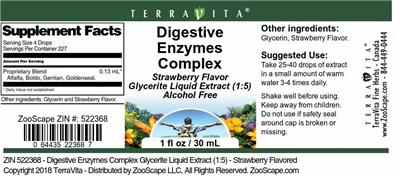
Supplement Facts
The label details for Digestive Enzymes Complex Strawberry Flavor by TerraVita, sourced from the NIH Dietary Supplement Label Database.
Supplement Facts
| Ingredient | Amount | % DV |
|---|---|---|
| Proprietary Blend | 0.13 mL | -- |
| Goldenseal Glycerite Liquid Extract | 0 NP | -- |
| Boldo Glycerite Liquid Extract | 0 NP | -- |
| Alfalfa Glycerite Liquid Extract | 0 NP | -- |
| Gentian Glycerite Liquid Extract | 0 NP | -- |
Other ingredients: Glycerin, Strawberry flavor
Tap any ingredient to jump to its full detail below.
These statements are the manufacturer’s wording, reproduced from the product label — the label is saying it, not HelloPharmacist. We don’t verify or endorse them.
Brand IP Statement(s)
Copyright 2018 TerraVita - Distributed by ZooScape LLC, All Rights Reserved.
Formula
Glycerite liquid extract (1:5)
Formulation
Alcohol free
Suggested/Recommended/Usage/Directions
Suggested Use: Take 25-40 drops of extract in a small amount of warm water 3-4 times daily. Shake well before using.
Precautions
Keep away from children.
Do not use if safety seal around cap is broken or missing.
Is this label outdated? Report a formula or label change and our pharmacy team will review it.
Digestive Enzymes Complex Strawberry Flavor by TerraVita label
The label scan from the NIH Dietary Supplement Label Database. Tap to enlarge.
Label images are published by the NIH Dietary Supplement Label Database for the version of this product on file. Always read your actual product label.
View the full label (PDF)The Ingredients in Digestive Enzymes Complex Strawberry Flavor by TerraVita
These are the 4 active ingredients this product is made of. Select any to open its full monograph.
Serving size25 Drop(s) Dosage formLiquid Servings per container227 Amounts shown are per serving.
Most supplement products combine several ingredients, and a medication can interact with the product through any one of them. Each ingredient below shows whether it has known drug interactions.
Other (inactive) ingredients: Glycerin, Strawberry flavor. These complete the product’s ingredient list but are not active constituents.
Digestive Enzymes Complex Strawberry Flavor by TerraVita Drug Interactions
HelloPharmacist Interaction Report
TerraVita's Digestive Enzymes Complex Strawberry Flavor contains four active ingredients, three of which carry documented interactions with medications: goldenseal, boldo, and alfalfa.
The most serious concern is alfalfa's interaction with warfarin (a blood thinner)—alfalfa is high in vitamin K, which can reduce warfarin's ability to prevent blood clots. This is rated Major severity.
Read the full breakdown — every affected drug type, severity by severity
Goldenseal interacts with several medication types at Moderate severity. It may increase the sedative effects of CNS depressants (sedatives and sleep aids), raise blood pressure medication levels and increase the risk of low blood pressure, and boost levels of drugs metabolized by your liver's CYP2D6, CYP2C9, and CYP3A4 enzymes—a large class that includes many common prescriptions.
It may also increase bleeding risk with blood thinners and raise the risk of low blood sugar with diabetes medications.
Boldo carries Moderate-severity interactions with blood thinners and warfarin specifically, with liver-damaging drugs, with lithium (a psychiatric medication), and with tacrolimus (an immunosuppressant used after transplant). Gentian may increase the risk of low blood pressure when combined with blood pressure medications, also at Moderate severity.
Although we could not check gentian fully for all interactions, the three checked ingredients affect a broad range of drug classes. Use the medication checker below to search your exact prescriptions before starting this product.
Check your own medications below · Editorial policy · How we use AI
Want to check YOUR meds against Digestive Enzymes Complex Strawberry Flavor?
Ask about interactions with your drugs in plain English — “Can I take it with lisinopril?” — and we find you the answer in seconds, ingredient by ingredient.
Go to the checkerIngredients driving the most interactions
Individual Drug Interactions
The ingredients in Digestive Enzymes Complex Strawberry Flavor interact with 1,505 drugs. Click any drug to see the details.
4 of the 4 ingredients in Digestive Enzymes Complex Strawberry Flavor interact with drugs. Each result below shows which ingredient is responsible. Goldenseal Glycerite Liquid Extract Alfalfa Glycerite Liquid Extract Boldo Glycerite Liquid Extract Gentian Glycerite Liquid Extract
WarfarinWarfarin
How Warfarin interacts with Digestive Enzymes Complex Strawberry Flavor — through 3 ingredients. Tap an ingredient for the detail:
Alfalfa Glycerite Liquid ExtractWarfarin (coumadin) Major
Interaction Summary
Theoretically, alfalfa might reduce the anticoagulant activity of warfarin.
Read the full Alfalfa Glycerite Liquid Extract + Warfarin interactionGoldenseal Glycerite Liquid ExtractCytochrome P450 2c9 (cyp2c9) Substrates, Cytochrome P450 3a4 (cyp3a4) Substrates +1 Moderate
Interaction Summary
Theoretically, goldenseal might increase serum levels of drugs metabolized by CYP2C9.
Read the full Goldenseal Glycerite Liquid Extract + Warfarin interactionBoldo Glycerite Liquid ExtractAnticoagulant/antiplatelet Drugs, Warfarin (coumadin) Moderate
Interaction Summary
Theoretically, taking boldo with anticoagulant/antiplatelet drugs might increase the risk of bleeding.
Read the full Boldo Glycerite Liquid Extract + Warfarin interactionWarfarin SodiumCoumadin, Panwarfin, Sofarin
How Warfarin Sodium interacts with Digestive Enzymes Complex Strawberry Flavor — through 3 ingredients. Tap an ingredient for the detail:
Alfalfa Glycerite Liquid ExtractWarfarin (coumadin) Major
Interaction Summary
Theoretically, alfalfa might reduce the anticoagulant activity of warfarin.
Read the full Alfalfa Glycerite Liquid Extract + Warfarin Sodium interactionBoldo Glycerite Liquid ExtractAnticoagulant/antiplatelet Drugs, Warfarin (coumadin) Moderate
Interaction Summary
Theoretically, taking boldo with anticoagulant/antiplatelet drugs might increase the risk of bleeding.
Read the full Boldo Glycerite Liquid Extract + Warfarin Sodium interactionGoldenseal Glycerite Liquid ExtractCytochrome P450 2c9 (cyp2c9) Substrates, Cytochrome P450 3a4 (cyp3a4) Substrates +1 Moderate
Interaction Summary
Theoretically, goldenseal might increase serum levels of drugs metabolized by CYP2C9.
Read the full Goldenseal Glycerite Liquid Extract + Warfarin Sodium interaction6-mercaptopurinePurinethol
How 6-mercaptopurine interacts with Digestive Enzymes Complex Strawberry Flavor — through 2 ingredients. Tap an ingredient for the detail:
Boldo Glycerite Liquid ExtractHepatotoxic Drugs Moderate
Interaction Summary
Theoretically, taking boldo with hepatotoxic drugs might increase the risk of hepatic injury and disease.
Read the full Boldo Glycerite Liquid Extract + 6-mercaptopurine interactionAlfalfa Glycerite Liquid ExtractImmunosuppressants Moderate
Interaction Summary
Theoretically, alfalfa might decrease the efficacy of immunosuppressive therapy.
Read the full Alfalfa Glycerite Liquid Extract + 6-mercaptopurine interactionAdo-trastuzumab EmtansineKadcyla
How Ado-trastuzumab Emtansine interacts with Digestive Enzymes Complex Strawberry Flavor — through 1 ingredient. Tap an ingredient for the detail:
Goldenseal Glycerite Liquid ExtractCytochrome P450 3a4 (cyp3a4) Substrates Moderate
Interaction Summary
Goldenseal might increase serum levels of drugs metabolized by CYP3A4.
Read the full Goldenseal Glycerite Liquid Extract + Ado-trastuzumab Emtansine interactionAbacavir Sulfate, Dolutegravir, LamivudineTriumeq
How Abacavir Sulfate, Dolutegravir, Lamivudine interacts with Digestive Enzymes Complex Strawberry Flavor — through 1 ingredient. Tap an ingredient for the detail:
Boldo Glycerite Liquid ExtractHepatotoxic Drugs Moderate
Interaction Summary
Theoretically, taking boldo with hepatotoxic drugs might increase the risk of hepatic injury and disease.
Read the full Boldo Glycerite Liquid Extract + Abacavir Sulfate, Dolutegravir, Lamivudine interactionAbacavir, LamivudineEpzicom
How Abacavir, Lamivudine interacts with Digestive Enzymes Complex Strawberry Flavor — through 1 ingredient. Tap an ingredient for the detail:
Boldo Glycerite Liquid ExtractHepatotoxic Drugs Moderate
Interaction Summary
Theoretically, taking boldo with hepatotoxic drugs might increase the risk of hepatic injury and disease.
Read the full Boldo Glycerite Liquid Extract + Abacavir, Lamivudine interactionAbciximabReoPro
How Abciximab interacts with Digestive Enzymes Complex Strawberry Flavor — through 2 ingredients. Tap an ingredient for the detail:
Boldo Glycerite Liquid ExtractAnticoagulant/antiplatelet Drugs Moderate
Interaction Summary
Theoretically, taking boldo with anticoagulant/antiplatelet drugs might increase the risk of bleeding.
Read the full Boldo Glycerite Liquid Extract + Abciximab interactionGoldenseal Glycerite Liquid ExtractAnticoagulant/antiplatelet Drugs Moderate
Interaction Summary
Theoretically, goldenseal might increase the risk of bleeding when used with anticoagulant or antiplatelet drugs.
Read the full Goldenseal Glycerite Liquid Extract + Abciximab interactionAbemaciclibVerzenio
How Abemaciclib interacts with Digestive Enzymes Complex Strawberry Flavor — through 1 ingredient. Tap an ingredient for the detail:
Goldenseal Glycerite Liquid ExtractCytochrome P450 3a4 (cyp3a4) Substrates Moderate
Interaction Summary
Goldenseal might increase serum levels of drugs metabolized by CYP3A4.
Read the full Goldenseal Glycerite Liquid Extract + Abemaciclib interactionAbiraterone
How Abiraterone interacts with Digestive Enzymes Complex Strawberry Flavor — through 2 ingredients. Tap an ingredient for the detail:
Boldo Glycerite Liquid ExtractHepatotoxic Drugs Moderate
Interaction Summary
Theoretically, taking boldo with hepatotoxic drugs might increase the risk of hepatic injury and disease.
Read the full Boldo Glycerite Liquid Extract + Abiraterone interactionGoldenseal Glycerite Liquid ExtractCytochrome P450 3a4 (cyp3a4) Substrates Moderate
Interaction Summary
Goldenseal might increase serum levels of drugs metabolized by CYP3A4.
Read the full Goldenseal Glycerite Liquid Extract + Abiraterone interactionAbiraterone AcetateYonsa, Zytiga
How Abiraterone Acetate interacts with Digestive Enzymes Complex Strawberry Flavor — through 2 ingredients. Tap an ingredient for the detail:
Goldenseal Glycerite Liquid ExtractCytochrome P450 3a4 (cyp3a4) Substrates Moderate
Interaction Summary
Goldenseal might increase serum levels of drugs metabolized by CYP3A4.
Read the full Goldenseal Glycerite Liquid Extract + Abiraterone Acetate interactionBoldo Glycerite Liquid ExtractHepatotoxic Drugs Moderate
Interaction Summary
Theoretically, taking boldo with hepatotoxic drugs might increase the risk of hepatic injury and disease.
Read the full Boldo Glycerite Liquid Extract + Abiraterone Acetate interactionAbrocitinibCibinqo
How Abrocitinib interacts with Digestive Enzymes Complex Strawberry Flavor — through 3 ingredients. Tap an ingredient for the detail:
Boldo Glycerite Liquid ExtractAnticoagulant/antiplatelet Drugs Moderate
Interaction Summary
Theoretically, taking boldo with anticoagulant/antiplatelet drugs might increase the risk of bleeding.
Read the full Boldo Glycerite Liquid Extract + Abrocitinib interactionGoldenseal Glycerite Liquid ExtractCytochrome P450 2c9 (cyp2c9) Substrates, Anticoagulant/antiplatelet Drugs Moderate
Interaction Summary
Theoretically, goldenseal might increase serum levels of drugs metabolized by CYP2C9.
Read the full Goldenseal Glycerite Liquid Extract + Abrocitinib interactionAlfalfa Glycerite Liquid ExtractImmunosuppressants Moderate
Interaction Summary
Theoretically, alfalfa might decrease the efficacy of immunosuppressive therapy.
Read the full Alfalfa Glycerite Liquid Extract + Abrocitinib interactionAcalabrutinibCalquence
How Acalabrutinib interacts with Digestive Enzymes Complex Strawberry Flavor — through 1 ingredient. Tap an ingredient for the detail:
Goldenseal Glycerite Liquid ExtractP-glycoprotein Substrates, Cytochrome P450 3a4 (cyp3a4) Substrates Moderate
Interaction Summary
Theoretically, goldenseal might increase or decrease serum levels of P-glycoprotein (P-gp) substrates.
Read the full Goldenseal Glycerite Liquid Extract + Acalabrutinib interactionAcarboseGlucobay, Prandase, Precose
How Acarbose interacts with Digestive Enzymes Complex Strawberry Flavor — through 3 ingredients. Tap an ingredient for the detail:
Goldenseal Glycerite Liquid ExtractAntidiabetes Drugs Moderate
Interaction Summary
Theoretically, goldenseal might increase the risk of hypoglycemia when used with antidiabetes drugs.
Read the full Goldenseal Glycerite Liquid Extract + Acarbose interactionAlfalfa Glycerite Liquid ExtractAntidiabetes Drugs Moderate
Interaction Summary
Theoretically, alfalfa might increase the risk of hypoglycemia when taken with antidiabetes drugs.
Read the full Alfalfa Glycerite Liquid Extract + Acarbose interactionBoldo Glycerite Liquid ExtractHepatotoxic Drugs Moderate
Interaction Summary
Theoretically, taking boldo with hepatotoxic drugs might increase the risk of hepatic injury and disease.
Read the full Boldo Glycerite Liquid Extract + Acarbose interactionAcebutololRhotral, Sectral
How Acebutolol interacts with Digestive Enzymes Complex Strawberry Flavor — through 3 ingredients. Tap an ingredient for the detail:
Boldo Glycerite Liquid ExtractHepatotoxic Drugs Moderate
Interaction Summary
Theoretically, taking boldo with hepatotoxic drugs might increase the risk of hepatic injury and disease.
Read the full Boldo Glycerite Liquid Extract + Acebutolol interactionGentian Glycerite Liquid ExtractAntihypertensive Drugs Moderate
Interaction Summary
Theoretically, taking gentian with antihypertensive drugs might increase the risk of hypotension.
Read the full Gentian Glycerite Liquid Extract + Acebutolol interactionGoldenseal Glycerite Liquid ExtractAntihypertensive Drugs Moderate
Interaction Summary
Theoretically, goldenseal might increase the risk of hypotension when taken with antihypertensive drugs.
Read the full Goldenseal Glycerite Liquid Extract + Acebutolol interactionAcenocoumarolSintrom
How Acenocoumarol interacts with Digestive Enzymes Complex Strawberry Flavor — through 2 ingredients. Tap an ingredient for the detail:
Boldo Glycerite Liquid ExtractAnticoagulant/antiplatelet Drugs Moderate
Interaction Summary
Theoretically, taking boldo with anticoagulant/antiplatelet drugs might increase the risk of bleeding.
Read the full Boldo Glycerite Liquid Extract + Acenocoumarol interactionGoldenseal Glycerite Liquid ExtractAnticoagulant/antiplatelet Drugs Moderate
Interaction Summary
Theoretically, goldenseal might increase the risk of bleeding when used with anticoagulant or antiplatelet drugs.
Read the full Goldenseal Glycerite Liquid Extract + Acenocoumarol interactionAcepromazineAtravet
How Acepromazine interacts with Digestive Enzymes Complex Strawberry Flavor — through 2 ingredients. Tap an ingredient for the detail:
Alfalfa Glycerite Liquid ExtractPhotosensitizing Drugs Moderate
Interaction Summary
Theoretically, concomitant use of alfalfa with photosensitizing drugs might have additive effects.
Read the full Alfalfa Glycerite Liquid Extract + Acepromazine interactionGoldenseal Glycerite Liquid ExtractCns Depressants Moderate
Interaction Summary
Theoretically, goldenseal might increase the sedative effects of CNS depressants.
Read the full Goldenseal Glycerite Liquid Extract + Acepromazine interactionAcetaminophenChildren's Tylenol, Children's Tylenol Meltaways, Tylenol, Tylenol Ex Strength
How Acetaminophen interacts with Digestive Enzymes Complex Strawberry Flavor — through 2 ingredients. Tap an ingredient for the detail:
Boldo Glycerite Liquid ExtractHepatotoxic Drugs Moderate
Interaction Summary
Theoretically, taking boldo with hepatotoxic drugs might increase the risk of hepatic injury and disease.
Read the full Boldo Glycerite Liquid Extract + Acetaminophen interactionGoldenseal Glycerite Liquid ExtractCytochrome P450 2e1 (cyp2e1) Substrates Moderate
Interaction Summary
Theoretically, goldenseal might increase serum levels of drugs metabolized by CYP2E1.
Read the full Goldenseal Glycerite Liquid Extract + Acetaminophen interactionAcetaminophen, AspirinGemnisyn
How Acetaminophen, Aspirin interacts with Digestive Enzymes Complex Strawberry Flavor — through 2 ingredients. Tap an ingredient for the detail:
Goldenseal Glycerite Liquid ExtractCytochrome P450 2e1 (cyp2e1) Substrates, Anticoagulant/antiplatelet Drugs Moderate
Interaction Summary
Theoretically, goldenseal might increase serum levels of drugs metabolized by CYP2E1.
Read the full Goldenseal Glycerite Liquid Extract + Acetaminophen, Aspirin interactionBoldo Glycerite Liquid ExtractHepatotoxic Drugs, Anticoagulant/antiplatelet Drugs Moderate
Interaction Summary
Theoretically, taking boldo with hepatotoxic drugs might increase the risk of hepatic injury and disease.
Read the full Boldo Glycerite Liquid Extract + Acetaminophen, Aspirin interactionAcetaminophen, Aspirin, CaffeineExcedrin, Excedrin Extra Strength, Excedrin Migraine
How Acetaminophen, Aspirin, Caffeine interacts with Digestive Enzymes Complex Strawberry Flavor — through 2 ingredients. Tap an ingredient for the detail:
Boldo Glycerite Liquid ExtractAnticoagulant/antiplatelet Drugs, Hepatotoxic Drugs Moderate
Interaction Summary
Theoretically, taking boldo with anticoagulant/antiplatelet drugs might increase the risk of bleeding.
Read the full Boldo Glycerite Liquid Extract + Acetaminophen, Aspirin, Caffeine interactionGoldenseal Glycerite Liquid ExtractCytochrome P450 2e1 (cyp2e1) Substrates, Anticoagulant/antiplatelet Drugs +1 Moderate
Interaction Summary
Theoretically, goldenseal might increase serum levels of drugs metabolized by CYP2E1.
Read the full Goldenseal Glycerite Liquid Extract + Acetaminophen, Aspirin, Caffeine interactionAcetaminophen, Brompheniramine, PhenylpropanolamineDimetapp Cold and Flu
How Acetaminophen, Brompheniramine, Phenylpropanolamine interacts with Digestive Enzymes Complex Strawberry Flavor — through 3 ingredients. Tap an ingredient for the detail:
Goldenseal Glycerite Liquid ExtractCytochrome P450 2e1 (cyp2e1) Substrates Moderate
Interaction Summary
Theoretically, goldenseal might increase serum levels of drugs metabolized by CYP2E1.
Read the full Goldenseal Glycerite Liquid Extract + Acetaminophen, Brompheniramine, Phenylpropanolamine interactionBoldo Glycerite Liquid ExtractHepatotoxic Drugs Moderate
Interaction Summary
Theoretically, taking boldo with hepatotoxic drugs might increase the risk of hepatic injury and disease.
Read the full Boldo Glycerite Liquid Extract + Acetaminophen, Brompheniramine, Phenylpropanolamine interactionAlfalfa Glycerite Liquid ExtractPhotosensitizing Drugs Moderate
Interaction Summary
Theoretically, concomitant use of alfalfa with photosensitizing drugs might have additive effects.
Read the full Alfalfa Glycerite Liquid Extract + Acetaminophen, Brompheniramine, Phenylpropanolamine interactionAcetaminophen, ButalbitalAxocet, Bancap, Bucet, Butex Forte, Esgic CF, Orbivan CF +5 more
How Acetaminophen, Butalbital interacts with Digestive Enzymes Complex Strawberry Flavor — through 2 ingredients. Tap an ingredient for the detail:
Boldo Glycerite Liquid ExtractHepatotoxic Drugs Moderate
Interaction Summary
Theoretically, taking boldo with hepatotoxic drugs might increase the risk of hepatic injury and disease.
Read the full Boldo Glycerite Liquid Extract + Acetaminophen, Butalbital interactionGoldenseal Glycerite Liquid ExtractCytochrome P450 2e1 (cyp2e1) Substrates Moderate
Interaction Summary
Theoretically, goldenseal might increase serum levels of drugs metabolized by CYP2E1.
Read the full Goldenseal Glycerite Liquid Extract + Acetaminophen, Butalbital interactionAcetaminophen, Butalbital, CaffeineEsgic, Esgic Plus, Fiogesic, Fioricet, Repan, Tecnal +1 more
How Acetaminophen, Butalbital, Caffeine interacts with Digestive Enzymes Complex Strawberry Flavor — through 2 ingredients. Tap an ingredient for the detail:
Goldenseal Glycerite Liquid ExtractCytochrome P450 2e1 (cyp2e1) Substrates, Cytochrome P450 3a4 (cyp3a4) Substrates Moderate
Interaction Summary
Theoretically, goldenseal might increase serum levels of drugs metabolized by CYP2E1.
Read the full Goldenseal Glycerite Liquid Extract + Acetaminophen, Butalbital, Caffeine interactionBoldo Glycerite Liquid ExtractHepatotoxic Drugs Moderate
Interaction Summary
Theoretically, taking boldo with hepatotoxic drugs might increase the risk of hepatic injury and disease.
Read the full Boldo Glycerite Liquid Extract + Acetaminophen, Butalbital, Caffeine interactionAcetaminophen, Butalbital, Caffeine, CodeineEsgic with Codeine, Fioricet w/ Codeine
How Acetaminophen, Butalbital, Caffeine, Codeine interacts with Digestive Enzymes Complex Strawberry Flavor — through 2 ingredients. Tap an ingredient for the detail:
Goldenseal Glycerite Liquid ExtractCytochrome P450 2e1 (cyp2e1) Substrates, Cns Depressants +2 Moderate
Interaction Summary
Theoretically, goldenseal might increase serum levels of drugs metabolized by CYP2E1.
Read the full Goldenseal Glycerite Liquid Extract + Acetaminophen, Butalbital, Caffeine, Codeine interactionBoldo Glycerite Liquid ExtractHepatotoxic Drugs Moderate
Interaction Summary
Theoretically, taking boldo with hepatotoxic drugs might increase the risk of hepatic injury and disease.
Read the full Boldo Glycerite Liquid Extract + Acetaminophen, Butalbital, Caffeine, Codeine interactionAcetaminophen, Butalbital, CodeineBancap w/ Codeine
How Acetaminophen, Butalbital, Codeine interacts with Digestive Enzymes Complex Strawberry Flavor — through 2 ingredients. Tap an ingredient for the detail:
Goldenseal Glycerite Liquid ExtractCytochrome P450 2d6 (cyp2d6) Substrates, Cytochrome P450 2e1 (cyp2e1) Substrates +1 Moderate
Interaction Summary
Goldenseal might increase serum levels of drugs metabolized by CYP2D6.
Read the full Goldenseal Glycerite Liquid Extract + Acetaminophen, Butalbital, Codeine interactionBoldo Glycerite Liquid ExtractHepatotoxic Drugs Moderate
Interaction Summary
Theoretically, taking boldo with hepatotoxic drugs might increase the risk of hepatic injury and disease.
Read the full Boldo Glycerite Liquid Extract + Acetaminophen, Butalbital, Codeine interactionAcetaminophen, Butalbital, Codeine PhosphatePhrenilin #3
How Acetaminophen, Butalbital, Codeine Phosphate interacts with Digestive Enzymes Complex Strawberry Flavor — through 2 ingredients. Tap an ingredient for the detail:
Goldenseal Glycerite Liquid ExtractCns Depressants, Cytochrome P450 2d6 (cyp2d6) Substrates +1 Moderate
Interaction Summary
Theoretically, goldenseal might increase the sedative effects of CNS depressants.
Read the full Goldenseal Glycerite Liquid Extract + Acetaminophen, Butalbital, Codeine Phosphate interactionBoldo Glycerite Liquid ExtractHepatotoxic Drugs Moderate
Interaction Summary
Theoretically, taking boldo with hepatotoxic drugs might increase the risk of hepatic injury and disease.
Read the full Boldo Glycerite Liquid Extract + Acetaminophen, Butalbital, Codeine Phosphate interactionAcetaminophen, Caffeine, Chlorpheniramine, Hydrocodone, PhenylephrineHycomine Compound
How Acetaminophen, Caffeine, Chlorpheniramine, Hydrocodone, Phenylephrine interacts with Digestive Enzymes Complex Strawberry Flavor — through 3 ingredients. Tap an ingredient for the detail:
Goldenseal Glycerite Liquid ExtractCytochrome P450 2d6 (cyp2d6) Substrates, Cns Depressants +2 Moderate
Interaction Summary
Goldenseal might increase serum levels of drugs metabolized by CYP2D6.
Read the full Goldenseal Glycerite Liquid Extract + Acetaminophen, Caffeine, Chlorpheniramine, Hydrocodone, Phenylephrine interactionBoldo Glycerite Liquid ExtractHepatotoxic Drugs Moderate
Interaction Summary
Theoretically, taking boldo with hepatotoxic drugs might increase the risk of hepatic injury and disease.
Read the full Boldo Glycerite Liquid Extract + Acetaminophen, Caffeine, Chlorpheniramine, Hydrocodone, Phenylephrine interactionAlfalfa Glycerite Liquid ExtractPhotosensitizing Drugs Moderate
Interaction Summary
Theoretically, concomitant use of alfalfa with photosensitizing drugs might have additive effects.
Read the full Alfalfa Glycerite Liquid Extract + Acetaminophen, Caffeine, Chlorpheniramine, Hydrocodone, Phenylephrine interactionAcetaminophen, Caffeine, CodeineGesic C15, Gesic C30, Gesic C8, Lenoltec 1, Lenoltec 2, Lenoltec 3 +1 more
How Acetaminophen, Caffeine, Codeine interacts with Digestive Enzymes Complex Strawberry Flavor — through 2 ingredients. Tap an ingredient for the detail:
Goldenseal Glycerite Liquid ExtractCytochrome P450 3a4 (cyp3a4) Substrates, Cytochrome P450 2d6 (cyp2d6) Substrates +2 Moderate
Interaction Summary
Goldenseal might increase serum levels of drugs metabolized by CYP3A4.
Read the full Goldenseal Glycerite Liquid Extract + Acetaminophen, Caffeine, Codeine interactionBoldo Glycerite Liquid ExtractHepatotoxic Drugs Moderate
Interaction Summary
Theoretically, taking boldo with hepatotoxic drugs might increase the risk of hepatic injury and disease.
Read the full Boldo Glycerite Liquid Extract + Acetaminophen, Caffeine, Codeine interactionAcetaminophen, Caffeine, Codeine, SalicylamideCodalan No.1, Codalan No.2, Codalan No.3
How Acetaminophen, Caffeine, Codeine, Salicylamide interacts with Digestive Enzymes Complex Strawberry Flavor — through 2 ingredients. Tap an ingredient for the detail:
Goldenseal Glycerite Liquid ExtractCns Depressants, Cytochrome P450 3a4 (cyp3a4) Substrates +2 Moderate
Interaction Summary
Theoretically, goldenseal might increase the sedative effects of CNS depressants.
Read the full Goldenseal Glycerite Liquid Extract + Acetaminophen, Caffeine, Codeine, Salicylamide interactionBoldo Glycerite Liquid ExtractHepatotoxic Drugs Moderate
Interaction Summary
Theoretically, taking boldo with hepatotoxic drugs might increase the risk of hepatic injury and disease.
Read the full Boldo Glycerite Liquid Extract + Acetaminophen, Caffeine, Codeine, Salicylamide interactionAcetaminophen, Caffeine, DihydrocodeineDHC Plus, Panlor DC, Panlor SS
How Acetaminophen, Caffeine, Dihydrocodeine interacts with Digestive Enzymes Complex Strawberry Flavor — through 2 ingredients. Tap an ingredient for the detail:
Goldenseal Glycerite Liquid ExtractCytochrome P450 2d6 (cyp2d6) Substrates, Cns Depressants +2 Moderate
Interaction Summary
Goldenseal might increase serum levels of drugs metabolized by CYP2D6.
Read the full Goldenseal Glycerite Liquid Extract + Acetaminophen, Caffeine, Dihydrocodeine interactionBoldo Glycerite Liquid ExtractHepatotoxic Drugs Moderate
Interaction Summary
Theoretically, taking boldo with hepatotoxic drugs might increase the risk of hepatic injury and disease.
Read the full Boldo Glycerite Liquid Extract + Acetaminophen, Caffeine, Dihydrocodeine interactionAcetaminophen, Caffeine, IsomethepteneMigralam
How Acetaminophen, Caffeine, Isometheptene interacts with Digestive Enzymes Complex Strawberry Flavor — through 2 ingredients. Tap an ingredient for the detail:
Goldenseal Glycerite Liquid ExtractCytochrome P450 3a4 (cyp3a4) Substrates, Cytochrome P450 2e1 (cyp2e1) Substrates Moderate
Interaction Summary
Goldenseal might increase serum levels of drugs metabolized by CYP3A4.
Read the full Goldenseal Glycerite Liquid Extract + Acetaminophen, Caffeine, Isometheptene interactionBoldo Glycerite Liquid ExtractHepatotoxic Drugs Moderate
Interaction Summary
Theoretically, taking boldo with hepatotoxic drugs might increase the risk of hepatic injury and disease.
Read the full Boldo Glycerite Liquid Extract + Acetaminophen, Caffeine, Isometheptene interactionEach ingredient & the kinds of drugs it affects
For each ingredient in Digestive Enzymes Complex Strawberry Flavor with known interactions, here are the types of medications they can affect. Open any type for the detail — or search your exact drug in the checker above.
Goldenseal Glycerite Liquid Extract
Anticoagulant/Antiplatelet Drugs
Theoretically, goldenseal might increase the risk of bleeding when used with anticoagulant or antiplatelet drugs.
Goldenseal contains berberine. In vitro and animal research shows that berberine can inhibit platelet aggregation. However, this effect has not been reported in humans.
Antidiabetes Drugs
Theoretically, goldenseal might increase the risk of hypoglycemia when used with antidiabetes drugs.
Goldenseal contains berberine. Clinical research shows that berberine can lower blood glucose levels. However, this effect has not been reported with goldenseal.
Antihypertensive Drugs
Theoretically, goldenseal might increase the risk of hypotension when taken with antihypertensive drugs.
Goldenseal contains berberine. Animal research shows that berberine can have hypotensive effects. Also, an analysis of clinical research shows that taking berberine in combination with amlodipine can lower systolic and diastolic blood pressure when compared with amlodipine alone. However, this effect has not been reported with goldenseal.
Cns Depressants
Theoretically, goldenseal might increase the sedative effects of CNS depressants.
Goldenseal contains berberine. Animal research shows that berberine can have sedative effects. However, this effect has not been reported in humans.
Cytochrome P450 2C9 (Cyp2C9) Substrates
Theoretically, goldenseal might increase serum levels of drugs metabolized by CYP2C9.
In vitro research shows that goldenseal root extract can modestly inhibit CYP2C9. This effect may be due to its alkaloid constituents, hydrastine and berberine. However, this effect has not been reported in humans.
Cytochrome P450 2D6 (Cyp2D6) Substrates
Goldenseal might increase serum levels of drugs metabolized by CYP2D6.
Clinical and in vitro research shows that goldenseal can significantly inhibit CYP2D6 enzymes, potentially increasing levels of drugs metabolized by CYP2D6.
Cytochrome P450 2E1 (Cyp2E1) Substrates
Theoretically, goldenseal might increase serum levels of drugs metabolized by CYP2E1.
In vitro research shows that goldenseal root extract can inhibit the activity of CYP2E1. However, this effect has not been reported in humans.
Cytochrome P450 3A4 (Cyp3A4) Substrates
Goldenseal might increase serum levels of drugs metabolized by CYP3A4.
Most clinical and in vitro research shows that goldenseal inhibits CYP3A4 enzyme activity and increases serum levels of CYP3A4 substrates, such as midazolam. However, in one small clinical study, goldenseal did not affect the levels of indinavir, a CYP3A4 substrate, in healthy volunteers. This is likely due to the fact that indinavir has a high oral bioavailability, making it an inadequate probe for CYP3A4 interactions and/or that it is primarily metabolized by hepatic CYP3A, while goldenseal has more potential to inhibit intestinal CYP3A enzyme activity. Both goldenseal extract and its isolated constituents berberine and hydrastine inhibit CYP3A, with hydrastine possibly having more inhibitory potential than berberine.
Dextromethorphan (Robitussin Dm, Others)
Theoretically, goldenseal might increase serum levels of dextromethorphan.
Goldenseal contains berberine. A small clinical study shows that berberine can inhibit cytochrome P450 2D6 (CYP2D6) activity and reduce the metabolism of dextromethorphan.
Digoxin (Lanoxin)
Goldenseal might increase serum levels of digoxin, although this effect is unlikely to be clinically significant.
Clinical research shows that goldenseal modestly increases digoxin peak levels by about 14% in healthy volunteers. However, goldenseal does not seem to affect other pharmacokinetic parameters such as area under the curve (AUC). This suggests that goldenseal does not cause a clinically significant interaction with digoxin. Digoxin is a P-glycoprotein substrate. Some evidence suggests that goldenseal constituents might affect P-glycoprotein; however, it is unclear whether these constituents inhibit or induce P-glycoprotein.
Losartan (Cozaar)
Theoretically, goldenseal might decrease the conversion of losartan to its active form.
Goldenseal contains berberine. A small clinical study shows that berberine inhibits cytochrome P450 2C9 (CYP2C9) activity and reduces the metabolism of losartan. However, this effect has not been reported with goldenseal.
Metformin (Glucophage)
Theoretically, goldenseal might reduce blood levels of metformin.
In vitro research shows that goldenseal extract decreases the bioavailability of metformin, likely by interfering with transport, intestinal permeability, or other processes involved in metformin absorption. It is unclear which, if any, of metformin's transporters are inhibited by goldenseal. Goldenseal does not appear to alter the clearance or half-life of metformin.
P-Glycoprotein Substrates
Theoretically, goldenseal might increase or decrease serum levels of P-glycoprotein (P-gp) substrates.
There is conflicting evidence about the effect of goldenseal on P-gp. In vitro research suggests that berberine, a constituent of goldenseal, modestly inhibits P-gp efflux. Other evidence suggests that berberine induces P-gp. In healthy volunteers, goldenseal modestly increases peak levels of the P-gp substrate digoxin by about 14%. However, it does not seem to affect other pharmacokinetic parameters such as area under the curve (AUC). This suggests that goldenseal is not a potent inhibitor of P-gp-mediated drug efflux. Until more is known, goldenseal should be used cautiously with P-gp substrates.
Pentobarbital (Nembutal)
Theoretically, goldenseal might increase the sedative effects of pentobarbital.
Animal research shows that berberine, a constituent of goldenseal, can prolong pentobarbital-induced sleeping time. However, this effect has not been reported with goldenseal.
Tacrolimus (Prograf)
Theoretically, goldenseal might increase serum levels of tacrolimus.
Goldenseal contains berberine. In a 16-year-old patient with idiopathic nephrotic syndrome who was being treated with tacrolimus 6.5 mg twice daily, intake of berberine 200 mg three times daily increased the blood concentration of tacrolimus from 8 to 22 ng/mL. Following a reduction of tacrolimus dosing to 3 mg daily, blood levels of tacrolimus decreased to 12 ng/mL.
Oseltamivir (Tamiflu)
Theoretically, goldenseal might reduce the therapeutic effects of oseltamivir by decreasing its conversion to its active form.
In vitro evidence suggests that goldenseal reduces the formation of the active compound from the prodrug oseltamivir. The mechanism of action and clinical relevance is unclear.
Alfalfa Glycerite Liquid Extract
Warfarin (Coumadin)
Theoretically, alfalfa might reduce the anticoagulant activity of warfarin.
Alfalfa contains a large amount of vitamin K. This could theoretically interfere with the activity of warfarin.
Antidiabetes Drugs
Theoretically, alfalfa might increase the risk of hypoglycemia when taken with antidiabetes drugs.
Animal research suggests that alfalfa decreases blood sugar in diabetic mice. Also, in one case report, a diabetic patient experienced hypoglycemia after consuming alfalfa extract. Monitor blood glucose levels closely. Dose adjustments might be necessary.
Contraceptive Drugs
Theoretically, alfalfa might interfere with the activity of contraceptive drugs.
Alfalfa contains coumestrol, a phytoestrogen, and isoflavonoids, which have estrogenic effects.
Estrogens
Theoretically, alfalfa might interfere with hormone therapy.
Alfalfa contains coumestrol, a phytoestrogen, and isoflavonoids, which have estrogenic effects.
Immunosuppressants
Theoretically, alfalfa might decrease the efficacy of immunosuppressive therapy.
In vitro research and human case reports suggest that alfalfa may have immunostimulant effects.
Photosensitizing Drugs
Theoretically, concomitant use of alfalfa with photosensitizing drugs might have additive effects.
Animal research suggests that excessive doses of alfalfa may increase photosensitivity, possibly due to its chlorophyll content. It is unclear if this effect would be clinically relevant in humans.
Boldo Glycerite Liquid Extract
Anticoagulant/Antiplatelet Drugs
Theoretically, taking boldo with anticoagulant/antiplatelet drugs might increase the risk of bleeding.
Animal and in vitro research shows that boldine, a constituent of boldo, has antiplatelet activity. In one case report, an adult taking a combination of boldo and fenugreek with warfarin experienced an increase in international normalized ratio (INR); however, it is unclear if this effect was due to boldo, fenugreek, the combination, or another factor.
Hepatotoxic Drugs
Theoretically, taking boldo with hepatotoxic drugs might increase the risk of hepatic injury and disease.
Boldo leaf contains ascaridole, a known liver toxin. Many cases of hepatotoxicity, including elevated liver transaminase levels and jaundice, have been reported in patients taking boldo.
Lithium
Theoretically, taking boldo with lithium might increase the levels and clinical effects of lithium.
Boldo is believed to have diuretic effects. Theoretically, these diuretic effects might reduce the excretion of lithium. The dose of lithium might need to be decreased.
Tacrolimus (Prograf)
Taking boldo with tacrolimus may decrease the levels and clinical effects of tacrolimus, potentially increasing the risk of transplant rejection.
In one case report, a patient with a long-term history of stable tacrolimus levels developed subtherapeutic levels after taking boldo 300 mg twice daily orally for several weeks. Tacrolimus levels returned to normal after discontinuing boldo. However, the mechanism of this interaction is unclear.
Warfarin (Coumadin)
A combination of boldo and fenugreek was thought to be associated with an increased international normalized ratio (INR) in a female on warfarin. It is not clear if boldo, fenugreek, or the combination played a role in this interaction. Therefore, boldo may have additive effects with warfarin.
Gentian Glycerite Liquid Extract
Antihypertensive Drugs
Theoretically, taking gentian with antihypertensive drugs might increase the risk of hypotension.
In vitro research shows that gentian can cause vasodilation and lower blood pressure.
Brand information
Manufacturer and brand details for Digestive Enzymes Complex Strawberry Flavor, from the product label.
TerraVita
See all TerraVita products- Name
- ZooScape LLC
- Phone Number
- 844-449-0444
- Web Address
- www.ZooScape.com
Digestive Enzymes Complex Strawberry Flavor by TerraVita: Common Questions
Does Digestive Enzymes Complex Strawberry Flavor by TerraVita interact with any medications?
How can one product interact with so many drugs?
Where does this information come from?
What's in this supplement and why?
Does this actually help with digestion?
What side effects might I notice?
Is it safe to take while pregnant or breastfeeding?
Why do I need to check my medications before taking this?
Can I take this with my blood pressure medication?
Written and reviewed by the HelloPharmacist editorial staff. Our editorial policy
Not sure if Digestive Enzymes Complex Strawberry Flavor is safe with your meds?
Our pharmacists answer your medication & supplement questions — free.
Label information is sourced from the NIH Dietary Supplement Label Database and reflects the product version on file; always read your actual product label. This page is for education only and is not a substitute for professional medical advice. Confirm with your pharmacist or doctor before combining supplements and medications.
The Full Monographs Behind Digestive Enzymes Complex Strawberry Flavor’s Ingredients
Every ingredient we hold a full HelloPharmacist monograph for — uses, evidence, safety, and the complete interaction list.
Goldenseal
Interacts with 1,238 drugsGoldenseal is a popular North American herb that contains berberine, a compound studied for antimicrobial effects. However, strong human evidence for its many traditional uses is largely lac...
Read the full Goldenseal monograph → Herb & supplement monographBoldo
Interacts with 484 drugsBoldo is a South American shrub whose leaves are traditionally used for digestive and gallbladder complaints, but good human evidence is very limited. The leaves and oil contain ascaridole,...
Read the full Boldo monograph → Herb & supplement monographAlfalfa
Interacts with 583 drugsAlfalfa is a nutrient-rich legume that people use for high cholesterol, menopause symptoms, and general wellness, but solid human evidence for most of these uses is limited. It is best avoid...
Read the full Alfalfa monograph → Herb & supplement monographGentian
Interacts with 172 drugsGentian is a very bitter root traditionally used to stimulate appetite and ease mild digestive complaints, often as part of "bitters" before meals. The evidence is mostly traditional and pre...
Read the full Gentian monograph →Sources & How We Checked
Digestive Enzymes Complex Strawberry Flavor's label data comes from the NIH Dietary Supplement Label Database; the ingredient interaction data is from the Natural Medicines database, reviewed by our pharmacists.
- NIH Dietary Supplement Label Database (DSLD) — The official product label on file for this supplement.
- Natural Medicines (Therapeutic Research Center) — Evidence-graded clinical reference behind the ingredient interaction data.
Content is written and reviewed by licensed HelloPharmacist pharmacists. See our data sources and editorial standards for how this information is built and checked.
The 81 references behind this product’s interaction data
Every citation that drives the interaction findings for this product’s ingredients, from the evidence-graded Natural Medicines (TRC Healthcare) database. Open an ingredient to browse its citations — links open the study on PubMed or the publisher’s site.
Goldenseal 34 references
- Chan E. Displacement of bilirubin from albumin by berberine. Biol Neonate 1993;63:201-8. PubMed
- Budzinski JW, Foster BC, Vandenhoek S, Arnason JT. An in vitro evaluation of human cytochrome P450 3A4 inhibition by selected commercial herbal extracts and tinctures. Phytomedicine 2000;7:273-82. PubMed
- Sandhu RS, Prescilla RP, Simonelli TM, Edwards DJ. Influence of goldenseal root on the pharmacokinetics of indinavir. J Clin Pharmacol 2003;43:1283-8.. PubMed
- Janbaz KH, Gilani AH. Studies on preventive and curative effects of berberine on chemical-induced hepatotoxicity in rodents. Fitoterapia 2000;71:25-33.. PubMed
- Gurley BJ, Gardner SF, Hubbard MA, et al. In vivo effects of goldenseal, kava kava, black cohosh, and valerian on human cytochrome P450 1A2, 2D6, 2E1, and 3A4/5 phenotypes. Clin Pharmacol Ther 2005;77:415-26. PubMed
- Gurley BJ, Swain A, Barone GW, et al. Effect of goldenseal (Hydrastis canadensis) and kava kava (Piper methysticum) supplementation on digoxin pharmacokinetics in humans. Drug Metab Dispos 2007;35:240-5. PubMed
- Gurley BJ, Swain A, Hubbard MA, et al. Clinical assessement of CYP2D6-mediated herb-drug interactions in humans: Effects of milk-thistle, black cohosh, goldenseal, kava kava, St. John's wort, and Echinacea. Mol Nutr Food Res 2008;52:755-63.
- Zhang Y, Li X, Zou D, et al. Treatment of type 2 diabetes and dyslipidemia with the natural plant alkaloid berberine. J Clin Endocrinol Metab 2008;93:2559-65. PubMed
- Chatterjee P, Franklin MR. Human cytochrome p450 inhibition and metabolic-intermediate complex formation by goldenseal extract and its methylenedioxyphenyl components. Drug Metab Dispos 2003;31:1391-7. PubMed
- Choudhry, V. P., Sabir, M., and Bhide, V. N. Berberine in giardiasis. Indian Pediatr. 1972;9(3):143-146.
- Shanbhag, S. M., Kulkarni, H. J., and Gaitonde, B. B. Pharmacological actions of berberine on the central nervous system. Jpn.J Pharmacol 1970;20(4):482-487. PubMed
- Wu, J. F. and Liu, T. P. [Effects of berberine on platelet aggregation and plasma levels of TXB2 and 6-keto-PGF1 alpha in rats with reversible middle cerebral artery occlusion]. Yao Xue.Xue.Bao. 1995;30(2):98-102.
- Peng, W. H., Hsieh, M. T., and Wu, C. R. Effect of long-term administration of berberine on scopolamine-induced amnesia in rats. Jpn J Pharmacol 1997;74(3):261-266. DOI
- Sharda DC. Berberine in the treatment of diarrhoea of infancy and childhood. J Indian M A 1970;54(1):22-24.
- Sabir M and Bhide NK. Study of some pharmacological actions of berberine. Ind J Physiol & Pharmac 1971;15(3):111-132.
- Tripathi YB and Shukla SD. Berberis artistata inhibits PAF induced aggregation of rabbit platelets. Phytotherapy Research 1996;10:628-630.
- Zhang, Y., Li, X., Zou, D., Liu, W., Yang, J., Zhu, N., Huo, L., Wang, M., Hong, J., Wu, P., Ren, G., and Ning, G. Treatment of type 2 diabetes and dyslipidemia with the natural plant alkaloid berberine. J Clin Endocrinol.Metab 2008;93(7):2559-2565. PubMed
- Yin, J., Xing, H., and Ye, J. Efficacy of berberine in patients with type 2 diabetes mellitus. Metabolism 2008;57(5):712-717. PubMed
- Zhang, H., Wei, J., Xue, R., Wu, J. D., Zhao, W., Wang, Z. Z., Wang, S. K., Zhou, Z. X., Song, D. Q., Wang, Y. M., Pan, H. N., Kong, W. J., and Jiang, J. D. Berberine lowers blood glucose in type 2 diabetes mellitus patients through increasing insulin re
- Guo, Y., Chen, Y., Tan, Z. R., Klaassen, C. D., and Zhou, H. H. Repeated administration of berberine inhibits cytochromes P450 in humans. Eur J Clin Pharmacol 2012;68(2):213-217. PubMed
- Wei, W., Zhao, H., Wang, A., Sui, M., Liang, K., Deng, H., Ma, Y., Zhang, Y., Zhang, H., and Guan, Y. A clinical study on the short-term effect of berberine in comparison to metformin on the metabolic characteristics of women with polycystic ovary syndro
- Meng, S., Wang, L. S., Huang, Z. Q., Zhou, Q., Sun, Y. G., Cao, J. T., Li, Y. G., and Wang, C. Q. Berberine ameliorates inflammation in patients with acute coronary syndrome following percutaneous coronary intervention. Clin Exp.Pharmacol Physiol 2012;39 PubMed
- Chun YT, Yip TT, Lau KL, and et al. A biochemical study on the hypotensive effect of berberine in rats. Gen Pharmac 1979;10:177-182. PubMed
- Sevior, D. K., Hokkanen, J., Tolonen, A., Abass, K., Tursas, L., Pelkonen, O., and Ahokas, J. T. Rapid screening of commercially available herbal products for the inhibition of major human hepatic cytochrome P450 enzymes using the N-in-one cocktail. Xeno PubMed
- Bhowmick, S. K., Hundley, O. T., and Rettig, K. R. Severe hypernatremia and hyperosmolality exacerbated by an herbal preparation in a patient with diabetic ketoacidosis. Clin Pediatr (Phila) 2007;46(9):831-834. PubMed
- Gurley BJ, et al. Supplementation with goldenseal (Hydrastis canadensis), but not kava kava (Piper methysticum), inhibits human CYP3A activitiy In Vivo. Clin Pharmacol Ther. 2008;83(1):61-69.
- Dong H, Zhao Y, Zhao L, Lu F. The effects of berberine on blood lipids: a systemic review and meta-analysis of randomized controlled trials. Planta Med 2013;79(6):437-46. PubMed
- Hou Q, Han W, Fu X. Pharmacokinetic interaction between tacrolimus and berberine in a child with idiopathic nephrotic syndrome. Eur J Clin Pharmacol 2013;69(10):1861-2. PubMed
- Lan J, Zhao Y, Dong F, et al. Meta-analysis of the effect and safety of berberine in the treatment of type 2 diabetes mellitus, hyperlipemia and hypertension. J Ethnopharmacol. 2015;161:69-81. PubMed
- Jalloh MA, Gregory PJ, Hein D, et al. Dietary supplement interactions with antiretrovirals: a systematic review. Int J STD AIDS. 2017 Jan;28(1):4-15. PubMed
- Yamaura K, Shimada M, Nakayama N, Ueno K. Protective effects of goldenseal (Hydrastis canadensis L.) on acetaminophen-induced hepatotoxicity through inhibition of CYP2E1 in rats. Pharmacognosy Res. 2011;3(4):250-5. PubMed
- Nguyen JT, Tian DD, Tanna RS, et al. Assessing transporter-mediated natural product-drug interactions via in vitro-in vivo extrapolation: clinical evaluation with a probe cocktail. Clin Pharmacol Ther 2021;109(5):1342-52.
- Liu R, Tam TW, Mao J, et al. The effect of natural health products and traditional medicines on the activity of human hepatic microsomal-mediated metabolism of oseltamivir. J Pharm Pharm Sci 2010;13(1):43-55. PubMed
- Nguyen JT, Tian DD, Tanna RS, et al. An Integrative Approach to Elucidate Mechanisms Underlying the Pharmacokinetic Goldenseal-Midazolam Interaction: Application of In Vitro Assays and Physiologically Based Pharmacokinetic Models to Understand Clinical Ob
Boldo 10 references
- Newall CA, Anderson LA, Philpson JD. Herbal Medicine: A Guide for Healthcare Professionals. London, UK: The Pharmaceutical Press, 1996.
- Lambert J, Cormier J. Potential interaction between warfarin and boldo-fenugreek. Pharmacotherapy 2001;21:509-12. PubMed
- Piscaglia F, Leoni S, Venturi A, et al. Caution in the use of boldo in herbal laxatives: a case of hepatotoxicity. Scand J Gastroenterol 2005;40:236-9. PubMed
- Agarwal SC, Crook JR, Pepper CB. Herbal remedies -- how safe are they? A case report of polymorphic ventricular tachycardia/ventricular fibrillation induced by herbal medication used for obesity. Int J Cardiol 2006;106:260-1. PubMed
- Teng, C. M., Hsueh, C. M., Chang, Y. L., Ko, F. N., Lee, S. S., and Liu, K. C. Antiplatelet effects of some aporphine and phenanthrene alkaloids in rabbits and man. J Pharm Pharmacol 1997;49(7):706-711. PubMed
- Carbajal R, Yisfalem A, Pradhan N, et al. Case report: Boldo (Peumus boldus) and tacrolimus interaction in a renal transplant patient. Transplant Proc 2014;46(7):2400-2. PubMed
- Almeida ER, Melo AM, Xavier H. Toxicological evaluation of the hydro-alcohol extract of the dry leaves of Peumus boldus and boldine in rats. Phytother Res 2000;14(2):99-102. DOI
- Ribeiro RJ, Silvestre C, Duarte C. Hidden risks of alternative medicines: a case of boldo-induced hepatotoxicity. J Diet Suppl 2017;14(2):186-90. PubMed
- Oliveira Sá A, Pimentel T, Oliveira N. Boldo-Induced Hepatotoxicity: A Case of Unexplained Jaundice. Eur J Case Rep Intern Med 2020;7(12):002116. PubMed
- Valdes R, Feuereisen A, Bellinghausen M. Allergic Contact Dermatitis to Boldo. Dermatitis 2021;32(2):e31-e32. PubMed
Alfalfa 32 references
- Newall CA, Anderson LA, Philpson JD. Herbal Medicine: A Guide for Healthcare Professionals. London, UK: The Pharmaceutical Press, 1996.
- The Review of Natural Products by Facts and Comparisons. St. Louis, MO: Wolters Kluwer Co., 1999.
- Leung AY, Foster S. Encyclopedia of Common Natural Ingredients Used in Food, Drugs and Cosmetics. 2nd ed. New York, NY: John Wiley & Sons, 1996.
- Kurzer MS, Xu X. Dietary phytoestrogens. Annu Rev Nutr 1997;17:353-81. PubMed
- Farber JM, Carter AO, Varughese PV, et al. Listeriosis traced to the consumption of alfalfa tablets and soft cheese [Letter to the Editor]. N Engl J Med 1990;322:338. PubMed
- Molgaard J, von Schenck H, Olsson AG. Alfalfa seeds lower low density lipoprotein cholesterol and apolipoprotein B concentrations in patients with type II hyperlipoproteinemia. Atherosclerosis 1987;65:173-9. PubMed
- Light TD, Light JA. Acute renal transplant rejection possibly related to herbal medications. Am J Transplant 2003;3:1608-9. PubMed
- Prete PE. The mechanism of action of L-canavanine in inducing autoimmune phenomena. Arthritis Rheum 1985;28:1198-200. PubMed
- Alcocer-Varela J, Iglesias A, Llorente L, Alarcon-Segovia D. Effects of L-canavanine on T cells may explain the induction of systemic lupus erythematosus by alfalfa. Arthritis Rheum 1985;28:52-7. PubMed
- Roberts JL, Hayashi JA. Exacerbation of SLE associated with alfalfa ingestion. N Engl J Med 1983;308:1361. DOI
- Feingold, R. M. Should we fear "health foods"? Arch Intern Med 7-12-1999;159(13):1502. PubMed
- Taormina, P. J., Beuchat, L. R., and Slutsker, L. Infections associated with eating seed sprouts: an international concern. Emerg.Infect.Dis 1999;5(5):626-634. PubMed
- Backer, H. D., Mohle-Boetani, J. C., Werner, S. B., Abbott, S. L., Farrar, J., and Vugia, D. J. High incidence of extra-intestinal infections in a Salmonella Havana outbreak associated with alfalfa sprouts. Public Health Rep. 2000;115(4):339-345. PubMed
- Mohle-Boetani J, Werner B, Polumbo M, and et al. From the Centers for Disease Control and Prevention. Alfalfa sprouts-- Arizona, California, Colorado, and New Mexico, February-April, 2001. JAMA 2-6-2002;287(5):581-582.
- Howard, M. B. and Hutcheson, S. W. Growth dynamics of Salmonella enterica strains on alfalfa sprouts and in waste seed irrigation water. Appl.Environ.Microbiol. 2003;69(1):548-553.
- Winthrop, K. L., Palumbo, M. S., Farrar, J. A., Mohle-Boetani, J. C., Abbott, S., Beatty, M. E., Inami, G., and Werner, S. B. Alfalfa sprouts and Salmonella Kottbus infection: a multistate outbreak following inadequate seed disinfection with heat and chl
- Strapp, C. M., Shearer, A. E., and Joerger, R. D. Survey of retail alfalfa sprouts and mushrooms for the presence of Escherichia coil O157:H7, Salmonella, and Listeria with BAX, and evaluation of this polymerase chain reaction-based system with experimen
- Akaogi, J., Barker, T., Kuroda, Y., Nacionales, D. C., Yamasaki, Y., Stevens, B. R., Reeves, W. H., and Satoh, M. Role of non-protein amino acid L-canavanine in autoimmunity. Autoimmun.Rev 2006;5(6):429-435. PubMed
- Burden and causes of foodborne disease in Australia: Annual report of the OzFoodNet network, 2005. Commun.Dis Intell. 2006;30(3):278-300.
- Shemesh, M., Lindner, H. R., and Ayalon, N. Affinity of rabbit uterine oestradiol receptor for phyto-oestrogens and its use in a competitive protein-binding radioassay for plasma coumestrol. J Reprod.Fertil. 1972;29(1):1-9. PubMed
- Elakovich, S. D. and Hampton, J. M. Analysis of coumestrol, a phytoestrogen, in alfalfa tablets sold for human consumption. J Agric.Food Chem. 1984;32(1):173-175. PubMed
- Malinow, M. R., Bardana, E. J., Jr., Pirofsky, B., Craig, S., and McLaughlin, P. Systemic lupus erythematosus-like syndrome in monkeys fed alfalfa sprouts: role of a nonprotein amino acid. Science 4-23-1982;216(4544):415-417. PubMed
- Malinow, M. R., McLaughlin, P., and Stafford, C. Alfalfa seeds: effects on cholesterol metabolism. Experientia 5-15-1980;36(5):562-564. PubMed
- Farnsworth, N. R. Alfalfa pills and autoimmune diseases. Am J Clin Nutr. 1995;62(5):1026-1028. DOI
- Herbert, V. and Kasdan, T. S. Alfalfa, vitamin E, and autoimmune disorders. Am J Clin Nutr 1994;60(4):639-640.
- Mahon, B. E., Ponka, A., Hall, W. N., Komatsu, K., Dietrich, S. E., Siitonen, A., Cage, G., Hayes, P. S., Lambert-Fair, M. A., Bean, N. H., Griffin, P. M., and Slutsker, L. An international outbreak of Salmonella infections caused by alfalfa sprouts grow
- Gray, A. M. and Flatt, P. R. Pancreatic and extra-pancreatic effects of the traditional anti- diabetic plant, Medicago sativa (lucerne). Br J Nutr. 1997;78(2):325-334.
- Van Beneden, C. A., Keene, W. E., Strang, R. A., Werker, D. H., King, A. S., Mahon, B., Hedberg, K., Bell, A., Kelly, M. T., Balan, V. K., Mac Kenzie, W. R., and Fleming, D. Multinational outbreak of Salmonella enterica serotype Newport infections due to
- Rubenstein AH, Levin NW, and Elliott GA. Manganese-induced hypoglycemia. Lancet 1962;1348-1351.
- Kaufman W. Alfalfa seed dermatitis. JAMA 1954;155(12):1058-1059. PubMed
- Ponka A, Andersson Y, Siitonen A, and et al. Salmonella in alfalfa sprouts. Lancet 1995;345:462-463. PubMed
- Puschner B, Chen X, Read D, Affolter VK. Alfalfa hay induced primary photosensitization in horses. Vet J. 2016 May;211:32-8. PubMed
Gentian 5 references
- Neubauer N, Marz RW. Placebo-controlled, randomized, double-blind, clincal trial with Sinupret sugar coated tablets on the basis of a therapy with antibiotics and decongestant nasal drops in acute sinusitis. Phytomedicine 1994;1:177-81.
- Marz RW, Ismail C, Popp MA. Action profile and efficacy of a herbal combination preparation for the treatment of sinusitis. Wien Med Wochenschr 1999;149:202-8.
- Uncini Manganelli RE, Chericoni S, Baragatti B. Ethnopharmacobotany in Tuscany: plants used as antihypertensives. Fitoterapia 2000;71:S95-100. PubMed
- Baragatti B, Calderone V, Testai L, et al. Vasodilator activity of crude methanolic extract of Gentiana kokiana Perr. et Song. (Gentianaceae). J Ethnopharmacol 2002;79:369-72. PubMed
- Sanatani M, Younus J, Stitt L, et al. Tolerability of the combination of ginger (Zingiber officinalis), gentian (Gentiana lutea) and turmeric (Curcuma longa) in patients with cancer-associated anorexia. J Complement Integr Med. 2015;12(1):57-60.
Parts of this content are provided by the Therapeutic Research Center, LLC.
DISCLAIMER: Currently this does not check for drug-drug interactions. This is not an all-inclusive comprehensive list of potential interactions and is for informational purposes only. Not all interactions are known or well-reported in the scientific literature, and new interactions are continually being reported. Input is needed from a qualified healthcare provider including a pharmacist before starting any therapy. Application of clinical judgment is necessary.
© 2021 Therapeutic Research Center, LLC