
Hormonal Balance Support Ingredients & Drug Interactions
by Perelel
What is this page for?
First and foremost: checking Hormonal Balance Support against your medications. The heart of this page is the interaction checker and the full interaction report — how this product’s ingredients may interact with prescription and over-the-counter medicines you may be taking.
Around that, we add a pharmacist’s high-level view of the product as a whole — what’s inside, the evidence for its stated use, how transparent the label is, and what safety data exists — so you can see the full picture in one place. It’s educational information from our licensed clinical databases and the clinical staff at HelloPharmacist — not medical advice — and we don’t sell or endorse products. Our editorial policy
Hormonal Balance Support is a dietary supplement by Perelel with 5 active ingredients. Its ingredients are commonly taken for polycystic ovary syndrome (pcos), anxiety and panic, depression and mood.Based on those ingredients, 1,245 medications have a known interaction with it, the most serious rated major. The ingredients most likely to interact are Berberine Hydrochloride, DIM, Alpha-Lipoic Acid. Use the checker below to test your specific medication, or read the full HelloPharmacist Interaction Report.
Check Your Meds Against Hormonal Balance Support by Perelel
Ask about any prescription or over-the-counter medication and we check it for interactions with Hormonal Balance Support by Perelel — and tell you which ingredient is responsible.
AI summaries are generated from our interaction database for education only — always confirm with your pharmacist. How we use AI
Ask the Pharmacist
A licensed pharmacist will answer your question by email — free, usually within 24 hours.
Got it — thank you!
A licensed pharmacist will answer within 24 hours. Keep an eye on your email (worth checking spam, just in case).
HelloPharmacist Scorecard of Hormonal Balance Support by Perelel
Our pharmacy team’s full take, with four database checks built into the cards below — a summary of what is known, not a grade of the product itself.
What’s inside
Low disclosure
Hormonal Balance Support contains five active ingredients. Alpha-lipoic acid is an antioxidant compound; myo-inositol and D-chiro-inositol are sugar-like substances that play a role in cell signaling; berberine hydrochloride is a plant alkaloid; and DIM is a compound derived from cruciferous vegetables like broccoli.
The product also includes two inactive ingredients — cellulose and L-leucine — which serve as a capsule binder and filler.
Does it work?
Moderate evidence
The evidence varies by ingredient and condition. Alpha-lipoic acid is possibly effective for diabetic nerve pain and high cholesterol, and possibly effective for weight management.
The two inositol ingredients (myo-inositol and D-chiro-inositol) are possibly effective for polycystic ovary syndrome (PCOS), metabolic syndrome, and preterm labor prevention, but possibly ineffective for anxiety, diabetic nerve pain, and depression. Berberine is possibly effective for high cholesterol, PCOS, high blood pressure, diabetes, and certain bacterial infections.
DIM, however, lacks reliable evidence — the data we hold shows insufficient information to rate its effectiveness for breast health, prostate health, cancer prevention, or related conditions.
How safe is it?
Well-documented data
Alpha-lipoic acid is generally well tolerated but can lower blood sugar and is best used with medical guidance. Common side effects when taken by mouth include headache, heartburn, nausea, and vomiting.
The data advises against using it during pregnancy or while breastfeeding due to insufficient safety information. Myo-inositol and D-chiro-inositol are generally well tolerated at common doses; mild digestive side effects like diarrhea, gas, and nausea are most common.
They've been studied in pregnancy under medical supervision, but safety isn't fully established, and there isn't enough information about breastfeeding use — talk with your doctor. Berberine is generally tolerated short-term but causes digestive side effects (abdominal pain, diarrhea, nausea, vomiting, constipation) and interacts with many medicines.
The safety data advises against berberine in pregnancy and while breastfeeding. DIM is generally well tolerated in short-term studies, though long-term safety isn't well established; common side effects include diarrhea, gas, headache, nausea, rash, and vomiting.
The data advises against DIM during pregnancy and breastfeeding due to insufficient safety information and possible hormonal effects.
Meds to double-check
Major interaction found
Check with your pharmacist before taking this product if you take cyclosporine (a Major interaction with berberine). You should also double-check if you're on blood thinners or antiplatelet drugs (Moderate risk from both alpha-lipoic acid and berberine), diabetes medications (Moderate risk from all three of the first, second, and fifth ingredients), blood pressure medications (Moderate risk from berberine), CNS depressants like sleep aids or anxiety medications (Moderate risk from berberine), or any drug metabolized by your liver's cytochrome P450 enzymes — a very broad category that includes many common medications (Moderate risk from berberine).
Additionally, estrogen-based medications including birth control may be affected by DIM (Moderate). No interactions are documented for the "Metabolic Balance Blend" itself, though it contains the individually listed active ingredients.
Use the medication checker on this page with your full list.
The bottom line
Scorecard at a glanceFormula with limited ingredient disclosure with some supporting evidence for its stated purpose. Major medication interactions have been identified, and safety information is well characterized.
This product combines ingredients studied for hormonal and metabolic support, particularly for PCOS and related conditions. However, it's not suitable if you take cyclosporine, blood thinners, diabetes medications, blood pressure drugs, or many other common prescription medications — and berberine's broad enzyme effects mean you should check every medication you're on.
Pregnancy and breastfeeding require a conversation with your doctor or pharmacist. Talk to us before starting, especially if you're on any prescriptions.
Educational only — not medical advice; always confirm with your pharmacist. Our editorial policy · How we use AI
Assessment coverage: 5 of 5 active ingredients matched to our full ingredient reviews (monographs). Based on the product label dated May 21, 2025.
This Scorecard evaluates available label information, ingredient evidence, and known medication-safety considerations. It does not independently verify product identity, purity, potency, contamination, or manufacturing quality. How these ratings are computed
General information
Key facts about Hormonal Balance Support, straight from the product label.
Everything in this section is reproduced from the manufacturer’s own product label — it’s the label speaking, not HelloPharmacist. We show it so you can see exactly what the maker states; we don’t verify or endorse those statements.
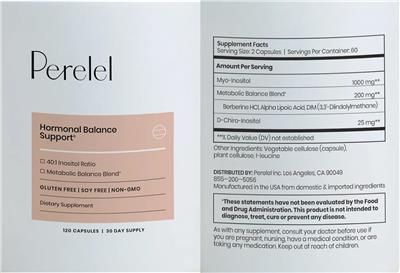
Supplement Facts
The label details for Hormonal Balance Support by Perelel, sourced from the NIH Dietary Supplement Label Database.
Supplement Facts
| Ingredient | Amount | % DV |
|---|---|---|
| Alpha-Lipoic Acid | 0 NP | -- |
| Myo-Inositol | 1000 mg | -- |
| Berberine Hydrochloride | 0 NP | -- |
| DIM | 0 NP | -- |
| D-Chiro-Inositol | 25 mg | -- |
| Metabolic Balance Blend | 200 mg | -- |
Other ingredients: Cellulose, L-Leucine
Tap any ingredient to jump to its full detail below.
These statements are the manufacturer’s wording, reproduced from the product label — the label is saying it, not HelloPharmacist. We don’t verify or endorse them.
Formula
40:1 Inositol Ratio Metabolic Balance Blend
Formulation
Gluten free Soy free Non-GMO
Manufactured in the USA from domestic & imported ingredients
FDA Statement of Identity
Dietary Supplement
General Statements
30 day supply
FDA Disclaimer Statement
These statements have not been evaluated by the Food and Drug Administration. This product is not intended to diagnose, treat, cure or prevent any disease.
Precautions
As with any supplement, consult your doctor before use if you are pregnant, nursing, have a medical condition, or are taking any medication.
Keep out of reach of children.
Is this label outdated? Report a formula or label change and our pharmacy team will review it.
Hormonal Balance Support by Perelel label
The label scan from the NIH Dietary Supplement Label Database. Tap to enlarge.
Label images are published by the NIH Dietary Supplement Label Database for the version of this product on file. Always read your actual product label.
View the full label (PDF)The Ingredients in Hormonal Balance Support by Perelel
These are the 5 active ingredients this product is made of. Select any to open its full monograph.
Serving size2 Capsule(s) Dosage formCapsule Servings per container60 Amounts shown are per serving.
Most supplement products combine several ingredients, and a medication can interact with the product through any one of them. Each ingredient below shows whether it has known drug interactions.
Myo-Inositol
Interacts with86 drugs
Inositol is a sugar alcohol made naturally in the body and found in many foods, and it is sold as a supplement (often myo-inositol) mainly for PCOS, m...
Myo-Inositol monograph & interactionsD-Chiro-Inositol
Interacts with86 drugs
Inositol is a sugar alcohol made naturally in the body and found in many foods, and it is sold as a supplement (often myo-inositol) mainly for PCOS, m...
D-Chiro-Inositol monograph & interactionsMetabolic Balance Blend
Other (inactive) ingredients: Cellulose, L-Leucine. These complete the product’s ingredient list but are not active constituents.
Hormonal Balance Support by Perelel Drug Interactions
HelloPharmacist Interaction Report
Perelel's Hormonal Balance Support contains five active ingredients, and several of them interact with medications.
The most serious concern is berberine hydrochloride, which can significantly increase blood levels of cyclosporine (an immunosuppressant drug), raising the risk of toxicity — this is a Major severity interaction. Berberine also interacts with a large number of other drug types at Moderate severity: it may increase bleeding risk with blood thinners (anticoagulants), lower blood pressure additively with blood pressure medications, increase sedation with CNS depressants (sleep aids, anxiety drugs, pain relievers), and boost levels of drugs broken down by your liver's cytochrome P450 enzymes (CYP3A4, CYP2D6, and CYP2C9 substrates — a very broad category that includes many common medications).
It may also increase the risk of low blood sugar (hypoglycemia) if combined with diabetes medications.
Read the full breakdown — every affected drug type, severity by severity
Alpha-lipoic acid carries Moderate interactions with blood thinners and certain chemotherapy drugs, plus a theoretical concern about reducing thyroid hormone effectiveness. The two inositol ingredients (myo-inositol and D-chiro-inositol) both interact Moderately with diabetes medications to increase hypoglycemia risk.
DIM (diindolylmethane) interacts Moderately with estrogen-based medications (including hormonal birth control), may increase sodium loss if you take certain diuretics, and carries a Minor interaction with some other liver-metabolized drugs.
Altogether, these interactions span 1,233 individual medications. Because berberine's enzyme-inhibiting effects are broad, you'll want to check every medication you take — not just the obvious ones — using the tool on this page before starting this product.
Check your own medications below · Editorial policy · How we use AI
Want to check YOUR meds against Hormonal Balance Support?
Ask about interactions with your drugs in plain English — “Can I take it with lisinopril?” — and we find you the answer in seconds, ingredient by ingredient.
Go to the checkerIngredients driving the most interactions
Individual Drug Interactions
The ingredients in Hormonal Balance Support interact with 1,245 drugs. Click any drug to see the details.
4 of the 5 ingredients in Hormonal Balance Support interact with drugs. Each result below shows which ingredient is responsible. Berberine Hydrochloride DIM Alpha-Lipoic Acid Myo-Inositol
CyclosporineCequa, Ciclosporine, Gengraf, Neoral, Sandimmune, Verkazia +1 more
How Cyclosporine interacts with Hormonal Balance Support — through 1 ingredient. Tap an ingredient for the detail:
Berberine HydrochlorideCytochrome P450 3a4 (cyp3a4) Substrates, Cyclosporine (neoral, Sandimmune) Major
Interaction Summary
Theoretically, berberine might increase serum levels of drugs metabolized by CYP3A4.
Read the full Berberine Hydrochloride + Cyclosporine interactionAdo-trastuzumab EmtansineKadcyla
How Ado-trastuzumab Emtansine interacts with Hormonal Balance Support — through 1 ingredient. Tap an ingredient for the detail:
Berberine HydrochlorideCytochrome P450 3a4 (cyp3a4) Substrates Moderate
Interaction Summary
Theoretically, berberine might increase serum levels of drugs metabolized by CYP3A4.
Read the full Berberine Hydrochloride + Ado-trastuzumab Emtansine interactionAbciximabReoPro
How Abciximab interacts with Hormonal Balance Support — through 2 ingredients. Tap an ingredient for the detail:
Berberine HydrochlorideAnticoagulant/antiplatelet Drugs Moderate
Interaction Summary
Theoretically, berberine might increase the risk of bleeding when used with anticoagulant or antiplatelet drugs.
Read the full Berberine Hydrochloride + Abciximab interactionAlpha-lipoic AcidAnticoagulant/antiplatelet Drugs Moderate
Interaction Summary
Theoretically, alpha-lipoic acid may have antiplatelet effects and may increase the risk of bleeding if used with anticoagulant or antiplatelet drugs.
Read the full Alpha-lipoic Acid + Abciximab interactionAbemaciclibVerzenio
How Abemaciclib interacts with Hormonal Balance Support — through 1 ingredient. Tap an ingredient for the detail:
Berberine HydrochlorideCytochrome P450 3a4 (cyp3a4) Substrates Moderate
Interaction Summary
Theoretically, berberine might increase serum levels of drugs metabolized by CYP3A4.
Read the full Berberine Hydrochloride + Abemaciclib interactionAbiraterone
How Abiraterone interacts with Hormonal Balance Support — through 1 ingredient. Tap an ingredient for the detail:
Berberine HydrochlorideCytochrome P450 3a4 (cyp3a4) Substrates Moderate
Interaction Summary
Theoretically, berberine might increase serum levels of drugs metabolized by CYP3A4.
Read the full Berberine Hydrochloride + Abiraterone interactionAbiraterone AcetateYonsa, Zytiga
How Abiraterone Acetate interacts with Hormonal Balance Support — through 1 ingredient. Tap an ingredient for the detail:
Berberine HydrochlorideCytochrome P450 3a4 (cyp3a4) Substrates Moderate
Interaction Summary
Theoretically, berberine might increase serum levels of drugs metabolized by CYP3A4.
Read the full Berberine Hydrochloride + Abiraterone Acetate interactionAbrocitinibCibinqo
How Abrocitinib interacts with Hormonal Balance Support — through 2 ingredients. Tap an ingredient for the detail:
Alpha-lipoic AcidAnticoagulant/antiplatelet Drugs Moderate
Interaction Summary
Theoretically, alpha-lipoic acid may have antiplatelet effects and may increase the risk of bleeding if used with anticoagulant or antiplatelet drugs.
Read the full Alpha-lipoic Acid + Abrocitinib interactionBerberine HydrochlorideAnticoagulant/antiplatelet Drugs, Cytochrome P450 2c9 (cyp2c9) Substrates Moderate
Interaction Summary
Theoretically, berberine might increase the risk of bleeding when used with anticoagulant or antiplatelet drugs.
Read the full Berberine Hydrochloride + Abrocitinib interactionAcalabrutinibCalquence
How Acalabrutinib interacts with Hormonal Balance Support — through 1 ingredient. Tap an ingredient for the detail:
Berberine HydrochlorideCytochrome P450 3a4 (cyp3a4) Substrates Moderate
Interaction Summary
Theoretically, berberine might increase serum levels of drugs metabolized by CYP3A4.
Read the full Berberine Hydrochloride + Acalabrutinib interactionAcarboseGlucobay, Prandase, Precose
How Acarbose interacts with Hormonal Balance Support — through 3 ingredients. Tap an ingredient for the detail:
D-chiro-inositolAntidiabetes Drugs Moderate
Interaction Summary
Theoretically, taking inositol with antidiabetes drugs might increase the risk of hypoglycemia.
Read the full D-chiro-inositol + Acarbose interactionBerberine HydrochlorideAntidiabetes Drugs Moderate
Interaction Summary
Theoretically, berberine may increase the risk of hypoglycemia when taken with antidiabetes drugs.
Read the full Berberine Hydrochloride + Acarbose interactionAlpha-lipoic AcidAntidiabetes Drugs Minor
Interaction Summary
Theoretically, taking alpha-lipoic acid with antidiabetes drugs might increase the risk of hypoglycemia.
Read the full Alpha-lipoic Acid + Acarbose interactionAcebutololRhotral, Sectral
How Acebutolol interacts with Hormonal Balance Support — through 1 ingredient. Tap an ingredient for the detail:
Berberine HydrochlorideAntihypertensive Drugs Moderate
Interaction Summary
Theoretically, berberine might have additive effects with antihypertensive drugs.
Read the full Berberine Hydrochloride + Acebutolol interactionAcenocoumarolSintrom
How Acenocoumarol interacts with Hormonal Balance Support — through 2 ingredients. Tap an ingredient for the detail:
Berberine HydrochlorideAnticoagulant/antiplatelet Drugs Moderate
Interaction Summary
Theoretically, berberine might increase the risk of bleeding when used with anticoagulant or antiplatelet drugs.
Read the full Berberine Hydrochloride + Acenocoumarol interactionAlpha-lipoic AcidAnticoagulant/antiplatelet Drugs Moderate
Interaction Summary
Theoretically, alpha-lipoic acid may have antiplatelet effects and may increase the risk of bleeding if used with anticoagulant or antiplatelet drugs.
Read the full Alpha-lipoic Acid + Acenocoumarol interactionAcepromazineAtravet
How Acepromazine interacts with Hormonal Balance Support — through 1 ingredient. Tap an ingredient for the detail:
Berberine HydrochlorideCns Depressants Moderate
Interaction Summary
Theoretically, berberine might increase the sedative effects of CNS depressants.
Read the full Berberine Hydrochloride + Acepromazine interactionAcetaminophen, AspirinGemnisyn
How Acetaminophen, Aspirin interacts with Hormonal Balance Support — through 3 ingredients. Tap an ingredient for the detail:
Alpha-lipoic AcidAnticoagulant/antiplatelet Drugs Moderate
Interaction Summary
Theoretically, alpha-lipoic acid may have antiplatelet effects and may increase the risk of bleeding if used with anticoagulant or antiplatelet drugs.
Read the full Alpha-lipoic Acid + Acetaminophen, Aspirin interactionBerberine HydrochlorideAnticoagulant/antiplatelet Drugs Moderate
Interaction Summary
Theoretically, berberine might increase the risk of bleeding when used with anticoagulant or antiplatelet drugs.
Read the full Berberine Hydrochloride + Acetaminophen, Aspirin interactionDimCytochrome P450 1a2 (cyp1a2) Substrates Minor
Interaction Summary
Theoretically, diindolylmethane might lower serum levels of CYP1A2 substrates.
Read the full Dim + Acetaminophen, Aspirin interactionAcetaminophen, Aspirin, CaffeineExcedrin, Excedrin Extra Strength, Excedrin Migraine
How Acetaminophen, Aspirin, Caffeine interacts with Hormonal Balance Support — through 3 ingredients. Tap an ingredient for the detail:
Berberine HydrochlorideAnticoagulant/antiplatelet Drugs, Cytochrome P450 3a4 (cyp3a4) Substrates Moderate
Interaction Summary
Theoretically, berberine might increase the risk of bleeding when used with anticoagulant or antiplatelet drugs.
Read the full Berberine Hydrochloride + Acetaminophen, Aspirin, Caffeine interactionAlpha-lipoic AcidAnticoagulant/antiplatelet Drugs Moderate
Interaction Summary
Theoretically, alpha-lipoic acid may have antiplatelet effects and may increase the risk of bleeding if used with anticoagulant or antiplatelet drugs.
Read the full Alpha-lipoic Acid + Acetaminophen, Aspirin, Caffeine interactionDimCytochrome P450 1a2 (cyp1a2) Substrates Minor
Interaction Summary
Theoretically, diindolylmethane might lower serum levels of CYP1A2 substrates.
Read the full Dim + Acetaminophen, Aspirin, Caffeine interactionAcetaminophen, Butalbital, CaffeineEsgic, Esgic Plus, Fiogesic, Fioricet, Repan, Tecnal +1 more
How Acetaminophen, Butalbital, Caffeine interacts with Hormonal Balance Support — through 2 ingredients. Tap an ingredient for the detail:
Berberine HydrochlorideCytochrome P450 3a4 (cyp3a4) Substrates Moderate
Interaction Summary
Theoretically, berberine might increase serum levels of drugs metabolized by CYP3A4.
Read the full Berberine Hydrochloride + Acetaminophen, Butalbital, Caffeine interactionDimCytochrome P450 1a2 (cyp1a2) Substrates Minor
Interaction Summary
Theoretically, diindolylmethane might lower serum levels of CYP1A2 substrates.
Read the full Dim + Acetaminophen, Butalbital, Caffeine interactionAcetaminophen, Butalbital, Caffeine, CodeineEsgic with Codeine, Fioricet w/ Codeine
How Acetaminophen, Butalbital, Caffeine, Codeine interacts with Hormonal Balance Support — through 2 ingredients. Tap an ingredient for the detail:
Berberine HydrochlorideCytochrome P450 3a4 (cyp3a4) Substrates, Cns Depressants +1 Moderate
Interaction Summary
Theoretically, berberine might increase serum levels of drugs metabolized by CYP3A4.
Read the full Berberine Hydrochloride + Acetaminophen, Butalbital, Caffeine, Codeine interactionDimCytochrome P450 1a2 (cyp1a2) Substrates Minor
Interaction Summary
Theoretically, diindolylmethane might lower serum levels of CYP1A2 substrates.
Read the full Dim + Acetaminophen, Butalbital, Caffeine, Codeine interactionAcetaminophen, Butalbital, CodeineBancap w/ Codeine
How Acetaminophen, Butalbital, Codeine interacts with Hormonal Balance Support — through 2 ingredients. Tap an ingredient for the detail:
Berberine HydrochlorideCns Depressants, Cytochrome P450 2d6 (cyp2d6) Substrates Moderate
Interaction Summary
Theoretically, berberine might increase the sedative effects of CNS depressants.
Read the full Berberine Hydrochloride + Acetaminophen, Butalbital, Codeine interactionDimCytochrome P450 1a2 (cyp1a2) Substrates Minor
Interaction Summary
Theoretically, diindolylmethane might lower serum levels of CYP1A2 substrates.
Read the full Dim + Acetaminophen, Butalbital, Codeine interactionAcetaminophen, Butalbital, Codeine PhosphatePhrenilin #3
How Acetaminophen, Butalbital, Codeine Phosphate interacts with Hormonal Balance Support — through 2 ingredients. Tap an ingredient for the detail:
Berberine HydrochlorideCns Depressants, Cytochrome P450 2d6 (cyp2d6) Substrates Moderate
Interaction Summary
Theoretically, berberine might increase the sedative effects of CNS depressants.
Read the full Berberine Hydrochloride + Acetaminophen, Butalbital, Codeine Phosphate interactionDimCytochrome P450 1a2 (cyp1a2) Substrates Minor
Interaction Summary
Theoretically, diindolylmethane might lower serum levels of CYP1A2 substrates.
Read the full Dim + Acetaminophen, Butalbital, Codeine Phosphate interactionAcetaminophen, Caffeine, Chlorpheniramine, Hydrocodone, PhenylephrineHycomine Compound
How Acetaminophen, Caffeine, Chlorpheniramine, Hydrocodone, Phenylephrine interacts with Hormonal Balance Support — through 2 ingredients. Tap an ingredient for the detail:
Berberine HydrochlorideCytochrome P450 2d6 (cyp2d6) Substrates, Cytochrome P450 3a4 (cyp3a4) Substrates +1 Moderate
Interaction Summary
Theoretically, berberine might increase serum levels of drugs metabolized by CYP2D6.
Read the full Berberine Hydrochloride + Acetaminophen, Caffeine, Chlorpheniramine, Hydrocodone, Phenylephrine interactionDimCytochrome P450 1a2 (cyp1a2) Substrates Minor
Interaction Summary
Theoretically, diindolylmethane might lower serum levels of CYP1A2 substrates.
Read the full Dim + Acetaminophen, Caffeine, Chlorpheniramine, Hydrocodone, Phenylephrine interactionAcetaminophen, Caffeine, CodeineGesic C15, Gesic C30, Gesic C8, Lenoltec 1, Lenoltec 2, Lenoltec 3 +1 more
How Acetaminophen, Caffeine, Codeine interacts with Hormonal Balance Support — through 2 ingredients. Tap an ingredient for the detail:
Berberine HydrochlorideCytochrome P450 3a4 (cyp3a4) Substrates, Cytochrome P450 2d6 (cyp2d6) Substrates +1 Moderate
Interaction Summary
Theoretically, berberine might increase serum levels of drugs metabolized by CYP3A4.
Read the full Berberine Hydrochloride + Acetaminophen, Caffeine, Codeine interactionDimCytochrome P450 1a2 (cyp1a2) Substrates Minor
Interaction Summary
Theoretically, diindolylmethane might lower serum levels of CYP1A2 substrates.
Read the full Dim + Acetaminophen, Caffeine, Codeine interactionAcetaminophen, Caffeine, Codeine, SalicylamideCodalan No.1, Codalan No.2, Codalan No.3
How Acetaminophen, Caffeine, Codeine, Salicylamide interacts with Hormonal Balance Support — through 2 ingredients. Tap an ingredient for the detail:
Berberine HydrochlorideCns Depressants, Cytochrome P450 3a4 (cyp3a4) Substrates +1 Moderate
Interaction Summary
Theoretically, berberine might increase the sedative effects of CNS depressants.
Read the full Berberine Hydrochloride + Acetaminophen, Caffeine, Codeine, Salicylamide interactionDimCytochrome P450 1a2 (cyp1a2) Substrates Minor
Interaction Summary
Theoretically, diindolylmethane might lower serum levels of CYP1A2 substrates.
Read the full Dim + Acetaminophen, Caffeine, Codeine, Salicylamide interactionAcetaminophen, Caffeine, DihydrocodeineDHC Plus, Panlor DC, Panlor SS
How Acetaminophen, Caffeine, Dihydrocodeine interacts with Hormonal Balance Support — through 2 ingredients. Tap an ingredient for the detail:
Berberine HydrochlorideCytochrome P450 3a4 (cyp3a4) Substrates, Cns Depressants +1 Moderate
Interaction Summary
Theoretically, berberine might increase serum levels of drugs metabolized by CYP3A4.
Read the full Berberine Hydrochloride + Acetaminophen, Caffeine, Dihydrocodeine interactionDimCytochrome P450 1a2 (cyp1a2) Substrates Minor
Interaction Summary
Theoretically, diindolylmethane might lower serum levels of CYP1A2 substrates.
Read the full Dim + Acetaminophen, Caffeine, Dihydrocodeine interactionAcetaminophen, Caffeine, IsomethepteneMigralam
How Acetaminophen, Caffeine, Isometheptene interacts with Hormonal Balance Support — through 2 ingredients. Tap an ingredient for the detail:
Berberine HydrochlorideCytochrome P450 3a4 (cyp3a4) Substrates Moderate
Interaction Summary
Theoretically, berberine might increase serum levels of drugs metabolized by CYP3A4.
Read the full Berberine Hydrochloride + Acetaminophen, Caffeine, Isometheptene interactionDimCytochrome P450 1a2 (cyp1a2) Substrates Minor
Interaction Summary
Theoretically, diindolylmethane might lower serum levels of CYP1A2 substrates.
Read the full Dim + Acetaminophen, Caffeine, Isometheptene interactionAcetaminophen, Caffeine, PyrilamineMidol Max Strength Menstrual
How Acetaminophen, Caffeine, Pyrilamine interacts with Hormonal Balance Support — through 2 ingredients. Tap an ingredient for the detail:
DimCytochrome P450 1a2 (cyp1a2) Substrates, Diuretic Drugs Moderate
Interaction Summary
Theoretically, diindolylmethane might lower serum levels of CYP1A2 substrates.
Read the full Dim + Acetaminophen, Caffeine, Pyrilamine interactionBerberine HydrochlorideCytochrome P450 3a4 (cyp3a4) Substrates Moderate
Interaction Summary
Theoretically, berberine might increase serum levels of drugs metabolized by CYP3A4.
Read the full Berberine Hydrochloride + Acetaminophen, Caffeine, Pyrilamine interactionAcetaminophen, Chlorpheniramine Maleate, Dextromethorphan HbrVicks Formula 44M Cough, Cold & Flu Relief
How Acetaminophen, Chlorpheniramine Maleate, Dextromethorphan Hbr interacts with Hormonal Balance Support — through 2 ingredients. Tap an ingredient for the detail:
Berberine HydrochlorideCytochrome P450 3a4 (cyp3a4) Substrates, Cytochrome P450 2d6 (cyp2d6) Substrates +1 Moderate
Interaction Summary
Theoretically, berberine might increase serum levels of drugs metabolized by CYP3A4.
Read the full Berberine Hydrochloride + Acetaminophen, Chlorpheniramine Maleate, Dextromethorphan Hbr interactionDimCytochrome P450 1a2 (cyp1a2) Substrates Minor
Interaction Summary
Theoretically, diindolylmethane might lower serum levels of CYP1A2 substrates.
Read the full Dim + Acetaminophen, Chlorpheniramine Maleate, Dextromethorphan Hbr interactionAcetaminophen, Chlorpheniramine, Codeine, PhenylephrineColrex
How Acetaminophen, Chlorpheniramine, Codeine, Phenylephrine interacts with Hormonal Balance Support — through 2 ingredients. Tap an ingredient for the detail:
Berberine HydrochlorideCytochrome P450 2d6 (cyp2d6) Substrates, Cytochrome P450 3a4 (cyp3a4) Substrates +1 Moderate
Interaction Summary
Theoretically, berberine might increase serum levels of drugs metabolized by CYP2D6.
Read the full Berberine Hydrochloride + Acetaminophen, Chlorpheniramine, Codeine, Phenylephrine interactionDimCytochrome P450 1a2 (cyp1a2) Substrates Minor
Interaction Summary
Theoretically, diindolylmethane might lower serum levels of CYP1A2 substrates.
Read the full Dim + Acetaminophen, Chlorpheniramine, Codeine, Phenylephrine interactionAcetaminophen, Chlorpheniramine, DextromethorphanCoricidin II Extra Strength Cold and Flu
How Acetaminophen, Chlorpheniramine, Dextromethorphan interacts with Hormonal Balance Support — through 2 ingredients. Tap an ingredient for the detail:
Berberine HydrochlorideCytochrome P450 2d6 (cyp2d6) Substrates, Dextromethorphan (robitussin Dm, Others) +1 Moderate
Interaction Summary
Theoretically, berberine might increase serum levels of drugs metabolized by CYP2D6.
Read the full Berberine Hydrochloride + Acetaminophen, Chlorpheniramine, Dextromethorphan interactionDimCytochrome P450 1a2 (cyp1a2) Substrates Minor
Interaction Summary
Theoretically, diindolylmethane might lower serum levels of CYP1A2 substrates.
Read the full Dim + Acetaminophen, Chlorpheniramine, Dextromethorphan interactionAcetaminophen, Chlorpheniramine, Dextromethorphan HydrobromideCoricidin HBP Maximum Strength Flu
How Acetaminophen, Chlorpheniramine, Dextromethorphan Hydrobromide interacts with Hormonal Balance Support — through 2 ingredients. Tap an ingredient for the detail:
Berberine HydrochlorideCytochrome P450 3a4 (cyp3a4) Substrates, Dextromethorphan (robitussin Dm, Others) +1 Moderate
Interaction Summary
Theoretically, berberine might increase serum levels of drugs metabolized by CYP3A4.
Read the full Berberine Hydrochloride + Acetaminophen, Chlorpheniramine, Dextromethorphan Hydrobromide interactionDimCytochrome P450 1a2 (cyp1a2) Substrates Minor
Interaction Summary
Theoretically, diindolylmethane might lower serum levels of CYP1A2 substrates.
Read the full Dim + Acetaminophen, Chlorpheniramine, Dextromethorphan Hydrobromide interactionAcetaminophen, Chlorpheniramine, Dextromethorphan, PhenylpropanolamineMulti Symptom Cold Relief
How Acetaminophen, Chlorpheniramine, Dextromethorphan, Phenylpropanolamine interacts with Hormonal Balance Support — through 2 ingredients. Tap an ingredient for the detail:
Berberine HydrochlorideDextromethorphan (robitussin Dm, Others), Cytochrome P450 3a4 (cyp3a4) Substrates +1 Moderate
Interaction Summary
Theoretically, berberine may increase serum levels of dextromethorphan.
Read the full Berberine Hydrochloride + Acetaminophen, Chlorpheniramine, Dextromethorphan, Phenylpropanolamine interactionDimCytochrome P450 1a2 (cyp1a2) Substrates Minor
Interaction Summary
Theoretically, diindolylmethane might lower serum levels of CYP1A2 substrates.
Read the full Dim + Acetaminophen, Chlorpheniramine, Dextromethorphan, Phenylpropanolamine interactionAcetaminophen, Chlorpheniramine, Dextromethorphan, PseudoephedrineChildren's Tylenol Cold Plus Cough, Tylenol Cold Ex Strength
How Acetaminophen, Chlorpheniramine, Dextromethorphan, Pseudoephedrine interacts with Hormonal Balance Support — through 2 ingredients. Tap an ingredient for the detail:
Berberine HydrochlorideCytochrome P450 2d6 (cyp2d6) Substrates, Dextromethorphan (robitussin Dm, Others) +1 Moderate
Interaction Summary
Theoretically, berberine might increase serum levels of drugs metabolized by CYP2D6.
Read the full Berberine Hydrochloride + Acetaminophen, Chlorpheniramine, Dextromethorphan, Pseudoephedrine interactionDimCytochrome P450 1a2 (cyp1a2) Substrates Minor
Interaction Summary
Theoretically, diindolylmethane might lower serum levels of CYP1A2 substrates.
Read the full Dim + Acetaminophen, Chlorpheniramine, Dextromethorphan, Pseudoephedrine interactionEach ingredient & the kinds of drugs it affects
For each ingredient in Hormonal Balance Support with known interactions, here are the types of medications they can affect. Open any type for the detail — or search your exact drug in the checker above.
Berberine Hydrochloride
Cyclosporine (Neoral, Sandimmune)
Berberine can increase serum levels of cyclosporine.
Berberine can reduce metabolism and increase serum levels of cyclosporine. Berberine might inhibit cytochrome P450 3A4 (CYP3A4), which metabolizes cyclosporine.
Anticoagulant/Antiplatelet Drugs
Theoretically, berberine might increase the risk of bleeding when used with anticoagulant or antiplatelet drugs.
In vitro and in vivo research suggest that berberine can inhibit platelet aggregation. Theoretically, berberine might have additive effects when used with anticoagulant and antiplatelet drugs and increase the risk of bleeding.
Antidiabetes Drugs
Theoretically, berberine may increase the risk of hypoglycemia when taken with antidiabetes drugs.
Clinical research shows that berberine may lower blood glucose levels. Theoretically, berberine might have additive effects with antidiabetes drugs and increase the risk of hypoglycemia.
Antihypertensive Drugs
Theoretically, berberine might have additive effects with antihypertensive drugs.
Animal research suggests that berberine can have hypotensive effects. Also, a clinical study suggests that taking berberine in combination with amlodipine can lower systolic and diastolic blood pressure when compared with amlodipine alone.
Cns Depressants
Theoretically, berberine might increase the sedative effects of CNS depressants.
Animal research suggests that berberine may have sedative effects. Theoretically, use of berberine along with CNS depressants might produce additive therapeutic and adverse effects.
Cytochrome P450 2C9 (Cyp2C9) Substrates
Theoretically, berberine might increase serum levels of drugs metabolized by CYP2C9.
Preliminary clinical research shows that berberine can inhibit CYP2C9. Theoretically, taking berberine with drugs metabolized by CYP2C9 might increase drug levels and increase the risk of adverse effects.
Cytochrome P450 2D6 (Cyp2D6) Substrates
Theoretically, berberine might increase serum levels of drugs metabolized by CYP2D6.
In vitro research and preliminary clinical evidence show that berberine can inhibit CYP2D6. Theoretically, use of berberine with drugs metabolized by CYP2D6 might increase drug levels and increase the risk of adverse effects.
Cytochrome P450 3A4 (Cyp3A4) Substrates
Theoretically, berberine might increase serum levels of drugs metabolized by CYP3A4.
In vitro research and preliminary clinical research show that berberine moderately inhibits CYP3A4. Theoretically, use of berberine with drugs metabolized by CYP3A4 might increase drug levels and increase the risk of adverse effects.
Dextromethorphan (Robitussin Dm, Others)
Theoretically, berberine may increase serum levels of dextromethorphan.
Preliminary clinical research shows that berberine can inhibit cytochrome P450 2D6 (CYP2D6) activity and reduce the metabolism of dextromethorphan. This may increase the effects and side effects of dextromethorphan.
Losartan (Cozaar)
Berberine might reduce the therapeutic effects of losartan by decreasing its conversion to its active form.
Preliminary clinical research suggests that berberine can inhibit cytochrome P450 2C9 (CYP2C9) activity and reduce metabolism of losartan.
Metformin (Glucophage)
Theoretically, berberine might increase the therapeutic and adverse effects of metformin.
In vitro and animal studies show that berberine can increase the systemic exposure and half-life of metformin, potentially increasing metformin's effects and side effects. This interaction seems to be most apparent when berberine is administered 2 hours prior to metformin. Taking berberine and metformin at the same time does not appear to increase systemic exposure to metformin.
Midazolam (Versed)
Berberine can reduce metabolism of midazolam, which might increase the risk of severe adverse effects.
Preliminary clinical research shows that berberine can inhibit cytochrome P450 3A4 (CYP3A4) activity and reduce metabolism of midazolam.
Pentobarbital (Nembutal)
Berberine might increase the sedative effect of pentobarbital.
Evidence from animal research shows that berberine can prolong pentobarbital-induced sleeping time. Theoretically, combining berberine and pentobarbital might increase the sedative effects of pentobarbital.
Tacrolimus (Prograf)
Berberine has been associated with increased blood levels of tacrolimus.
In a 16-year-old patient with idiopathic nephrotic syndrome who was being treated with tacrolimus 6.5 mg twice daily, intake of berberine 200 mg three times daily increased the blood concentration of tacrolimus from 8 to 22 ng/mL. Following a reduction of the tacrolimus dose to 3 mg daily, blood levels of tacrolimus decreased to 12 ng/mL.
Acetazolamide
Laboratory studies and initial clinical findings suggest that berberine has the potential to increase acetazolamide concentrations in the body. More research is needed to confirm this interaction.
DIM
Diuretic Drugs
Theoretically, diindolylmethane might increase the risk of hyponatremia if used with sodium-depleting diuretics.
Large doses of diindolylmethane (600 mg daily) have been associated with two cases of asymptomatic hyponatremia in clinical research.
Estrogens
Theoretically, diindolylmethane might increase or decrease the effects of estrogens.
Diindolylmethane might have mild estrogenic or antiestrogenic effects. Theoretically, large amounts of diindolylmethane might interfere with hormone replacement therapy.
Cytochrome P450 1A2 (Cyp1A2) Substrates
Theoretically, diindolylmethane might lower serum levels of CYP1A2 substrates.
In vitro evidence suggests that diindolylmethane can induce CYP1A2. Theoretically, it might increase metabolism of CYP1A2 substrates and lower serum concentrations. This interaction has not been reported in humans.
Alpha-Lipoic Acid
Alkylating Agents
Theoretically, the antioxidant effects of alpha-lipoic acid might alter the effectiveness of alkylating agents.
The use of antioxidants like alpha-lipoic acid during chemotherapy is controversial. There are concerns that antioxidants could reduce the activity of chemotherapy drugs that generate free radicals. However, some researchers theorize that antioxidants might make chemotherapy more effective by reducing oxidative stress that might interfere with apoptosis (cell death) of cancer cells. More evidence is needed to determine what effect, if any, antioxidants such as alpha-lipoic acid have on chemotherapy. Advise patients to consult their oncologist before using alpha-lipoic acid.
Anticoagulant/Antiplatelet Drugs
Theoretically, alpha-lipoic acid may have antiplatelet effects and may increase the risk of bleeding if used with anticoagulant or antiplatelet drugs.
In vitro, alpha-lipoic acid inhibits platelet aggregation.
Antitumor Antibiotics
Theoretically, the antioxidant effects of alpha-lipoic acid might alter the effectiveness of antitumor antibiotics.
The use of antioxidants like alpha-lipoic acid during chemotherapy is controversial. There are concerns that antioxidants could reduce the activity of antitumor antibiotic drugs, which work by generating free radicals. However, some researchers theorize that antioxidants might make chemotherapy more effective by reducing oxidative stress that might interfere with apoptosis (cell death) of cancer cells. More evidence is needed to determine what effect, if any, antioxidants such as alpha-lipoic acid have on chemotherapy involving antitumor antibiotics. Advise patients to consult their oncologist before using alpha-lipoic acid.
Thyroid Hormone
Theoretically, alpha-lipoic acid might decrease the effects of thyroid hormone drugs.
Animal research suggests that co-administration of thyroxine with alpha-lipoic acid reduces conversion into the active T3 form.
Antidiabetes Drugs
Theoretically, taking alpha-lipoic acid with antidiabetes drugs might increase the risk of hypoglycemia.
Although some small clinical studies have suggested that alpha-lipoic acid can lower blood glucose levels, larger clinical studies in patients with diabetes have shown no clinically meaningful effect. Additionally, co-administration of single doses of alpha-lipoic acid and glyburide or acarbose did not cause detectable drug interactions in healthy volunteers.
Myo-Inositol
Antidiabetes Drugs
Theoretically, taking inositol with antidiabetes drugs might increase the risk of hypoglycemia.
Clinical research shows that inositol lowers blood glucose levels and glycated hemoglobin (HbA1c) levels in patients with diabetes.
Brand information
Manufacturer and brand details for Hormonal Balance Support, from the product label.
Perelel
See all Perelel products- Name
- Perelel Inc.
- City
- Los Angeles
- State
- CA
- ZipCode
- 90049
- Phone Number
- 855-200-5056
Hormonal Balance Support by Perelel: Common Questions
Does Hormonal Balance Support by Perelel interact with any medications?
How can one product interact with so many drugs?
Where does this information come from?
Can I take this if I'm on birth control?
Is this safe during pregnancy?
Can I breastfeed while using this product?
What does berberine in this product do?
What are the most common side effects?
Is this product safe if I have diabetes?
Written and reviewed by the HelloPharmacist editorial staff. Our editorial policy
Not sure if Hormonal Balance Support is safe with your meds?
Our pharmacists answer your medication & supplement questions — free.
Label information is sourced from the NIH Dietary Supplement Label Database and reflects the product version on file; always read your actual product label. This page is for education only and is not a substitute for professional medical advice. Confirm with your pharmacist or doctor before combining supplements and medications.
The Full Monographs Behind Hormonal Balance Support’s Ingredients
Every ingredient we hold a full HelloPharmacist monograph for — uses, evidence, safety, and the complete interaction list.
Inositol
Interacts with 86 drugsInositol is a sugar alcohol made naturally in the body and found in many foods, and it is sold as a supplement (often myo-inositol) mainly for PCOS, mood, and metabolic concerns. The stronge...
Read the full Inositol monograph → Herb & supplement monographAlpha-lipoic Acid
Interacts with 263 drugsAlpha-lipoic acid (ALA) is an antioxidant made naturally by the body and found in small amounts in foods. It is most studied for diabetic nerve pain, where some evidence suggests it may help...
Read the full Alpha-lipoic Acid monograph → Herb & supplement monographBerberine
Interacts with 1,160 drugsBerberine is a yellow plant compound that has shown promise for lowering blood sugar and cholesterol in some studies, but the quality of research varies and it is not a replacement for presc...
Read the full Berberine monograph → Herb & supplement monographDiindolylmethane
Interacts with 269 drugsDiindolylmethane (DIM) is a compound made when your body digests cruciferous vegetables, and it is sold as a supplement mainly for hormone balance and cancer prevention. Although early lab s...
Read the full Diindolylmethane monograph →Sources & How We Checked
Hormonal Balance Support's label data comes from the NIH Dietary Supplement Label Database; the ingredient interaction data is from the Natural Medicines database, reviewed by our pharmacists.
- NIH Dietary Supplement Label Database (DSLD) — The official product label on file for this supplement.
- Natural Medicines (Therapeutic Research Center) — Evidence-graded clinical reference behind the ingredient interaction data.
Content is written and reviewed by licensed HelloPharmacist pharmacists. See our data sources and editorial standards for how this information is built and checked.
The 117 references behind this product’s interaction data
Every citation that drives the interaction findings for this product’s ingredients, from the evidence-graded Natural Medicines (TRC Healthcare) database. Open an ingredient to browse its citations — links open the study on PubMed or the publisher’s site.
Alpha-lipoic Acid 48 references
- Labriola D, Livingston R. Possible interactions between dietary antioxidants and chemotherapy. Oncology 1999;13:1003-8.
- Anon. Alpha-lipoic acid. Altern Med Rev 1998;3:308-10.
- Konrad T, Vicini P, Kusterer K, et al. Alpha-lipoic acid treatment decreases serum lactate and pyruvate concentrations and improves glucose effectiveness in lean and obese patients with Type 2 diabetes. Diabetes Care 1999;22:280-7. PubMed
- Ziegler D, Hanefeld M, Ruhnau KJ, et al. Treatment of symptomatic diabetic peripheral neuropathy with the antioxidant alpha-lipoic acid: A 3-week, multicentre randomized controlled trial (ALADIN Study). Diabetologia 1995;38:1425-33.
- Gleiter CH, Schreeb KH, Freudenthaler S, et al. Lack of interaction between thioctic acid, glibenclamide and acarbose. Br J Clin Pharmacol 1999;48:819-25. PubMed
- Jacob S, Henriksen EJ, Tritschler HJ, et al. Improvement of insulin-stimulated glucose-disposal in type 2 diabetes after repeated parenteral administration of thioctic acid. Exp Clin Endocrinol Diabet 1996;104:284-8. PubMed
- Jacob S, Henriksen EJ, Schiemann AL, et al. Enhancement of glucose disposal in patients with type 2 diabetes by alpha-lipoic acid. Arzneimittelforschung 1995;45:872-4.
- Jacob S, Ruus P, Hermann R, et al. Oral administration of RAC-alpha-lipoic acid modulates insulin sensitivity in patients with type-2 diabetes mellitus: a placebo-controlled, pilot trial. Free Rad Biol Med 1999;27:309-14.
- Segermann J, Hotze A, Ulrich H, Rao GS. Effect of alpha-lipoic acid on the peripheral conversion of thyroxine to triiodothyronine and on serum lipid-, protein- and glucose levels. Arzneimittelforschung 1991;41:1294-8.
- Beitner H. Randomized, placebo controlled, double-blind study on the clinical efficacy of a cream containing 5% alpha-lipoic acid related to photoaging of facial skin. Br J Dermatol 2003;149:841-9.
- Ziegler D, Nowak H, Kempler P, et al. Treatment of symptomatic diabetic polyneuropathy with the antioxidant alpha-lipoic acid: A meta-analysis. Diabet Med 2004;21:114-21.
- Prasad KN. Rationale for using high-dose multiple dietary antioxidants as an adjunct to radiation therapy and chemotherapy. J Nutr 2004;134:3182S-3S. PubMed
- Conklin KA. Cancer chemotherapy and antioxidants. J Nutr 2004;134:3201S-3204S. PubMed
- Vincent HK, Bourguignon CM, Vincent KR, Taylor AG. Effects of alpha-lipoic acid supplementation in peripheral arterial disease: a pilot study. J Alt Complement Med 2007;13:577-84. PubMed
- Furukawa N, Miyamura N, Nishida K, et al. Possible relevance of alpha lipoic acid contained in a health supplement in a case of insulin autoimmune syndrome. Diabetes Res Clin Pract 2007;75:366-7. PubMed
- Ziegler D., Ametov A., Barinov A., Dyck P. J., Gurieva I., Low P. A., Munzel U., Yakhno N., Raz I., Novosadova M., Maus J., Samigullin, R. Oral treatment with alpha-lipoic acid improves symptomatic diabetic polyneuropathy: the SYDNEY 2 trial. Diabetes Car
- Gu X. M., Zhang S. S., Wu J. C., Tang Z. Y., Lu Z. Q., Li H., Liu C., Chen L., Ning, G. [Efficacy and safety of high-dose a-lipoic acid in the treatment of diabetic polyneuropathy]. Zhonghua Yi Xue Za Zhi 2010;90(35):2473-2476.
- Porasuphatana S., Suddee S., Nartnampong A., Konsil J., Harnwong B., Santaweesuk A. Glycemic and oxidative status of patients with type 2 diabetes mellitus following oral administration of alpha-lipoic acid: a randomized double-blinded placebo-controlled
- Ansar H., Mazloom Z., Kazemi F., Hejazi N. Effect of alpha-lipoic acid on blood glucose, insulin resistance and glutathione peroxidase of type 2 diabetic patients. Saudi Med J 2011;32(6):584-588. DOI
- de Oliveira A. M., Rondó P. H., Luzia L. A., D'Abronzo F. H., Illison V. K. The effects of lipoic acid and a-tocopherol supplementation on the lipid profile and insulin sensitivity of patients with type 2 diabetes mellitus: a randomized, double-blind, pla
- Mazloom Z., Ansar H. The Effect of Alpha-Lipoic Acid on Blood Pressure in Type 2 Diabetics. Iranian Journal of Endocrinology and Metabolism 2009;11(3):245-250.
- Volchegorskii I. A., Rassokhina L. M., Koliadich M. I., Alekseev M. I. [Comparative study of alpha-lipoic acid and mexidol effects on affective status, cognitive functions and quality of life in diabetes mellitus patients]. Eksp Klin Farmakol 2011;74(11):
- Cavalcanti D. R., da Silveira F. R. Alpha lipoic acid in burning mouth syndrome--a randomized double-blind placebo-controlled trial. J Oral Pathol Med 2009;38(3):254-261. PubMed
- Koh E. H., Lee W. J., Lee S. A., Kim E. H., Cho E. H., Jeong E., Kim D. W., Kim M. S., Park J. Y., Park K. G., Lee H. J., Lee I. K., Lim S., Jang H. C., Lee K. H., Lee K. U. Effects of alpha-lipoic Acid on body weight in obese subjects. Am J Med 2011;124( PubMed
- Bergqvist-Karlsson, A., Thelin, I., and Bergendorff, O. Contact dermatitis to alpha-lipoic acid in an anti-wrinkle cream. Contact Dermatitis 2006;55(1):56-57.
- Tang, J., Wingerchuk, D. M., Crum, B. A., Rubin, D. I., and Demaerschalk, B. M. Alpha-lipoic acid may improve symptomatic diabetic polyneuropathy. Neurologist. 2007;13(3):164-167. PubMed
- Hegazy SK, Tolba OA, Mostafa TM, Eid MA, El-Afify DR. Alpha-lipoic acid improves subclinical left ventricular dysfunction in asymptomatic patients with type 1 diabetes. Rev Diabet Stud 2013;10(1):58-67. PubMed
- Huang Z, Wan X, Liu J, et al. Short-term continuous subcutaneous insulin infusion combined with insulin sensitizers rosiglitazone, metformin, or antioxidant a-lipoic acid in patients with newly diagnosed type 2 diabetes mellitus. Diabetes Technol Ther 201
- Sarezky D, Raquib AR, Dunaief JL, Kim BJ. Tolerability in the elderly population of high-dose alpha lipoic acid: a potential antioxidant therapy for the eye. Clin Ophthalmol. 2016 Sep 29;10:1899-1903. PubMed
- Boriani F, Granchi D, Roatti G, Merlini L, Sabattini T, Baldini N. Alpha-lipoic acid after median nerve decompression at the carpal tunnel: a randomized controlled trial. J Hand Surg Am. 2017 Apr;42(4):236-42. PubMed
- Karkabounas S, Papadopoulos N, Anastasiadou C, et al. Effects of a-lipoic Acid, carnosine, and thiamine supplementation in obese patients with type 2 diabetes mellitus: A randomized, double-blind study. J Med Food. 2018;21(12):1197-1203.
- Murray GL, Colombo J. (r)Alpha lipoic acid is a safe, effective pharmacologic therapy of chronic orthostatic hypotension associated with low sympathetic tone. Int J Angiol. 2019;28(3):188-193. PubMed
- Bobe G, Michels AJ, Zhang WJ, et al. A randomized controlled trial of long-term (R)-α-lipoic acid supplementation promotes weight loss in overweight or obese adults without altering baseline elevated plasma triglyceride concentrations. J Nutr. 2020:
- Passiatore M, Perna A, De-Vitis R, Taccardo G. The use of alfa-lipoic acid-R (ALA-R) in patients with mild-moderate carpal tunnel syndrome: A randomised controlled open label prospective study. Malays Orthop J. 2020;14(1):1-6. PubMed
- El-Nahas MR, Elkannishy G, Abdelhafez H, Elkhamisy ET, El-Sehrawy AA. Oral alpha lipoic acid treatment for symptomatic diabetic peripheral neuropathy: A randomized double-blinded placebo-controlled study. Endocr Metab Immune Disord Drug Targets. 2020. PubMed
- Kim BJ, Hunter A, Brucker AJ, et al. Orally administered alpha lipoic acid as a treatment for geographic atrophy: A randomized clinical trial. Ophthalmol Retina. 2020;4(9):889-898. PubMed
- Derosa G, D'Angelo A, Preti P, Maffioli P. Safety and efficacy of alpha lipoic acid during 4 years of observation: A retrospective, clinical trial in healthy subjects in primary prevention. Drug Des Devel Ther. 2020;14:5367-5374.
- Sun Y, Guan X, Wang H, et al. Randomized clinical trial of combined therapy with oral a-lipoic acid and NB-UVB for nonsegmental stable vitiligo. Dermatol Ther. 2021;34(1):e14610.
- Gilron I, Robb S, Tu D, et al. Double-blind, randomized, placebo-controlled crossover trial of alpha-lipoic acid for the treatment of fibromyalgia pain: the IMPALA trial. Pain. 2021;162(2):561-568. PubMed
- Gullo D, Evans JL, Sortino G, Goldfine ID, Vigneri R. Insulin autoimmune syndrome (Hirata Disease) in European Caucasians taking a-lipoic acid. Clin Endocrinol (Oxf). 2014;81(2):204-9.
- Yukina M, Nuralieva N, Solovyev M, Troshina E, Vasilyev E. Insulin autoimmune syndrome. Endocrinol Diabetes Metab Case Rep. 2020;2020:19-0159. PubMed
- Moffa S, Improta I, Rocchetti S, Mezza T, Giaccari A. Potential cause-effect relationship between insulin autoimmune syndrome and alpha lipoic acid: Two case reports. Nutrition. 2019;57:1-4. PubMed
- Izzo V, Greco C, Corradini D, et al. Insulin autoimmune syndrome in an Argentine woman taking a-lipoic acid: A case report and review of the literature. SAGE Open Med Case Rep. 2018;6:2050313X18819601.
- EFSA Panel on Nutrition, Novel Foods and Food Allergens (NDA), Turck D, et al. Scientific opinion on the relationship between intake of alpha-lipoic acid (thioctic acid) and the risk of insulin autoimmune syndrome. EFSA J 2021;19(6):e06577. PubMed
- Jibril AT, Jayedi A, Shab-Bidar S. Efficacy and safety of oral alpha-lipoic acid supplementation for type 2 diabetes management: a systematic review and dose-response meta-analysis of randomized trials. Endocr Connect 2022;11(10):e220322. PubMed
- Corazza M, Arlotti E, Schettini N, Pacetti L, Bianchi A, Borghi A. Allergic contact dermatitis due to a-lipoic acid in a topical over-the-counter product: A case report. Contact Dermatitis 2023.
- Velasco-Amador JP, Prados-Carmona Á, Navarro-Triviño FJ. Contact urticaria syndrome caused by alpha-lipoic acid in a master formula for vulvar lichen sclerosus. Contact Dermatitis 2023;89(2):136-137. PubMed
- Sehgal T, Ohri U, Mittal N, Attri P, Dishant F. A Case of Insulin Autoimmune Syndrome in an Indian Male Taking Alpha-Lipoic Acid. Cureus 2023;15(8):e43743. PubMed
Inositol 14 references
- Palatnik A, Frolov K, Fux M, Benjamin J. Double-blind, controlled, crossover trial of inositol versus fluvoxamine for the treatment of panic disorder. J Clin Psychopharmacol 2001;21:335-9.. PubMed
- Allan SJ, Kavanagh GM, Herd RM, Savin JA. The effect of inositol supplements on the psoriasis of patients taking lithium: a randomized, placebo-controlled trial. Br J Dermatol 2004;150:966-9. PubMed
- Machado-Vieira R, Viale CI, Kapczinski F. Mania associated with an energy drink: the possible role of caffeine, taurine, and inositol. Can J Psychiatry 2001;46:454-5. PubMed
- Kamenov Z, Kolarov G, Gateva A, Carlomagno G, Genazzani AD. Ovulation induction with myo-inositol alone and in combination with clomiphene citrate in polycystic ovarian syndrome patients with insulin resistance. Gynecol Endocrinol 2015;31(2):131-5. PubMed
- Matarrelli B, Vitacolonna E, D'Angelo M, et al. Effect of dietary myo-inositol supplementation in pregnancy on the incidence of maternal gestational diabetes mellitus and fetal outcomes: a randomized controlled trial. J Matern Fetal Neonatal Med 2013;26(1 PubMed
- Mukai T, Kishi T, Matsuda Y, Iwata N. A meta-analysis of inositol for depression and anxiety disorders. Hum Psychopharmacol 2014;29(1):55-63. PubMed
- Farren M, Daly N, McKeating A, Kinsley B, Turner MJ, Daly S. The Prevention of Gestational Diabetes Mellitus With Antenatal Oral Inositol Supplementation: A Randomized Controlled Trial. Diabetes Care. 2017;40(6):759-63. PubMed
- Zheng X, Liu Z, Zhang Y, et al. Relationship Between Myo-Inositol Supplementary and Gestational Diabetes Mellitus: A Meta-Analysis. Medicine (Baltimore). 2015;94(42):e1604. PubMed
- Crawford TJ, Crowther CA, Alsweiler J, Brown J. Antenatal dietary supplementation with myo-inositol in women during pregnancy for preventing gestational diabetes. Cochrane Database Syst Rev. 2015;(12):CD011507. PubMed
- Maurizi AR, Menduni M, Del Toro R, et al. A pilot study of D-chiro-inositol plus folic acid in overweight patients with type 1 diabetes. Acta Diabetol. 2017;54(4):361-65. PubMed
- Leppink EW, Redden SA, Grant JE. A double-blind, placebo-controlled study of inositol in trichotillomania. Int Clin Psychopharmacol. 2017;32(2):107-14. PubMed
- Lam S, Mandrekar SJ, Gesthalter Y. A Randomized Phase IIb Trial of myo-Inositol in Smokers with Bronchial Dysplasia. Cancer Prev Res (Phila). 2016;9(12):906-14.
- Wozniak J, Faraone SV, Chan J, et al. A randomized clinical trial of high eicosapentaenoic acid omega-3 fatty acids and inositol as monotherapy and in combination in the treatment of pediatric bipolar spectrum disorders: a pilot study. J Clin Psychiatry. PubMed
- Vitale SG, Corrado F, Caruso S, et al. Myo-inositol supplementation to prevent gestational diabetes in overweight non-obese women: bioelectrical impedance analysis, metabolic aspects, obstetric and neonatal outcomes - a randomized and open-label, placebo-
Berberine 41 references
- Chan E. Displacement of bilirubin from albumin by berberine. Biol Neonate 1993;63:201-8. PubMed
- Janbaz KH, Gilani AH. Studies on preventive and curative effects of berberine on chemical-induced hepatotoxicity in rodents. Fitoterapia 2000;71:25-33.. PubMed
- Wu X, Li Q, Xin H, Yu A, Zhong M. Effects of berberine on the blood concentration of cyclosporin A in renal transplanted recipients: clinical and pharmacokinetic study. Eur J Clin Pharmacol 2005;61:567-72. PubMed
- Zhang Y, Li X, Zou D, et al. Treatment of type 2 diabetes and dyslipidemia with the natural plant alkaloid berberine. J Clin Endocrinol Metab 2008;93:2559-65. PubMed
- Huang XS, Yang GF, Pan YC. Effect of berberin hydrochloride on blood concentration of cyclosporine A in cardiac transplanted patients. Zhongguo Zhong Xi Yi Jie He Za Zhi 2008;28:702-4.
- Budzinski JW, Foster BC, Vandenhoek S, Arnason JT. An in vitro evaluation of human cytochrome P450 3A4 inhibition by selected commercial herbal extracts and tinctures. Phytomedicine 2000;7:273-82. PubMed
- Chatterjee P, Franklin MR. Human cytochrome p450 inhibition and metabolic-intermediate complex formation by goldenseal extract and its methylenedioxyphenyl components. Drug Metab Dispos 2003;31:1391-7. PubMed
- Marin-Neto, J. A., Maciel, B. C., Secches, A. L., and Gallo, Junior L. Cardiovascular effects of berberine in patients with severe congestive heart failure. Clin.Cardiol. 1988;11(4):253-260. PubMed
- Choudhry, V. P., Sabir, M., and Bhide, V. N. Berberine in giardiasis. Indian Pediatr. 1972;9(3):143-146.
- Shanbhag, S. M., Kulkarni, H. J., and Gaitonde, B. B. Pharmacological actions of berberine on the central nervous system. Jpn.J Pharmacol 1970;20(4):482-487. PubMed
- Wu, J. F. and Liu, T. P. [Effects of berberine on platelet aggregation and plasma levels of TXB2 and 6-keto-PGF1 alpha in rats with reversible middle cerebral artery occlusion]. Yao Xue.Xue.Bao. 1995;30(2):98-102.
- Peng, W. H., Hsieh, M. T., and Wu, C. R. Effect of long-term administration of berberine on scopolamine-induced amnesia in rats. Jpn J Pharmacol 1997;74(3):261-266. DOI
- Sharda DC. Berberine in the treatment of diarrhoea of infancy and childhood. J Indian M A 1970;54(1):22-24.
- Sabir M and Bhide NK. Study of some pharmacological actions of berberine. Ind J Physiol & Pharmac 1971;15(3):111-132.
- Tripathi YB and Shukla SD. Berberis artistata inhibits PAF induced aggregation of rabbit platelets. Phytotherapy Research 1996;10:628-630.
- Seery TM and Bieter RN. A contribution to the pharmacology of berberine. J Pharmacol Exp Ther 1940;69:64-67. DOI
- Xin, H. W., Wu, X. C., Li, Q., Yu, A. R., Zhong, M. Y., and Liu, Y. Y. The effects of berberine on the pharmacokinetics of cyclosporin A in healthy volunteers. Methods Find.Exp.Clin Pharmacol 2006;28(1):25-29.
- Zhang, Y., Li, X., Zou, D., Liu, W., Yang, J., Zhu, N., Huo, L., Wang, M., Hong, J., Wu, P., Ren, G., and Ning, G. Treatment of type 2 diabetes and dyslipidemia with the natural plant alkaloid berberine. J Clin Endocrinol.Metab 2008;93(7):2559-2565. PubMed
- Yin, J., Xing, H., and Ye, J. Efficacy of berberine in patients with type 2 diabetes mellitus. Metabolism 2008;57(5):712-717. PubMed
- Zhang, H., Wei, J., Xue, R., Wu, J. D., Zhao, W., Wang, Z. Z., Wang, S. K., Zhou, Z. X., Song, D. Q., Wang, Y. M., Pan, H. N., Kong, W. J., and Jiang, J. D. Berberine lowers blood glucose in type 2 diabetes mellitus patients through increasing insulin re
- Guo, Y., Chen, Y., Tan, Z. R., Klaassen, C. D., and Zhou, H. H. Repeated administration of berberine inhibits cytochromes P450 in humans. Eur J Clin Pharmacol 2012;68(2):213-217. PubMed
- Wei, W., Zhao, H., Wang, A., Sui, M., Liang, K., Deng, H., Ma, Y., Zhang, Y., Zhang, H., and Guan, Y. A clinical study on the short-term effect of berberine in comparison to metformin on the metabolic characteristics of women with polycystic ovary syndro
- Marazzi, G., Cacciotti, L., Pelliccia, F., Iaia, L., Volterrani, M., Caminiti, G., Sposato, B., Massaro, R., Grieco, F., and Rosano, G. Long-term effects of nutraceuticals (berberine, red yeast rice, policosanol) in elderly hypercholesterolemic patients. PubMed
- Meng, S., Wang, L. S., Huang, Z. Q., Zhou, Q., Sun, Y. G., Cao, J. T., Li, Y. G., and Wang, C. Q. Berberine ameliorates inflammation in patients with acute coronary syndrome following percutaneous coronary intervention. Clin Exp.Pharmacol Physiol 2012;39 PubMed
- Hermann, R. and von, Richter O. Clinical evidence of herbal drugs as perpetrators of pharmacokinetic drug interactions. Planta Med 2012;78(13):1458-1477. PubMed
- Chun YT, Yip TT, Lau KL, and et al. A biochemical study on the hypotensive effect of berberine in rats. Gen Pharmac 1979;10:177-182. PubMed
- Saksena HC, Tomar VN, and Soangra MR. Efficacy of a new salt of Berberine Uni-Berberine in oriental sore. Current Medical Practice 1970;14:247-252.
- Abascal K, Yarnell E. Recent clinical advances with berberine. Altern Complement Ther 2010;16(5):281-7. DOI
- Dong H, Zhao Y, Zhao L, Lu F. The effects of berberine on blood lipids: a systemic review and meta-analysis of randomized controlled trials. Planta Med 2013;79(6):437-46. PubMed
- Hou Q, Han W, Fu X. Pharmacokinetic interaction between tacrolimus and berberine in a child with idiopathic nephrotic syndrome. Eur J Clin Pharmacol 2013;69(10):1861-2. PubMed
- Lan J, Zhao Y, Dong F, et al. Meta-analysis of the effect and safety of berberine in the treatment of type 2 diabetes mellitus, hyperlipemia and hypertension. J Ethnopharmacol. 2015;161:69-81. PubMed
- Li G, Zhao M, Qiu F, Sun Y, Zhao L. Pharmacokinetic interactions and tolerability of berberine chloride with simvastatin and fenofibrate: an open-label, randomized, parallel study in healthy Chinese subjects. Drug Des Devel Ther. 2018;13:129-139. PubMed
- Ju J, Li J, Lin Q, Xu H. Efficacy and safety of berberine for dyslipidaemias: A systematic review and meta-analysis of randomized clinical trials. Phytomedicine. 2018;50:25-34. PubMed
- Xu L, Zhang Y, Xue X, et al. A phase I trial of berberine in Chinese with ulcerative colitis. Cancer Prev Res (Phila). 2020;13(1):117-26. PubMed
- Lyu Y, Zhang Y, Yang M, et al. Pharmacokinetic interactions between metformin and berberine in rats: Role of oral administration sequences and microbiota. Life Sci. 2019;235:116818. PubMed
- Chen YX, Gao QY, Zou TH, et al. Berberine versus placebo for the prevention of recurrence of colorectal adenoma: a multicentre, double-blinded, randomised controlled study. Lancet Gastroenterol Hepatol. 2020;5(3):267-75. PubMed
- Zhang J, Wang Y, Jiang H, et al. Preventive effect of berberine on postoperative atrial fibrillation. Circ Arrhythm Electrophysiol 2022;15(10):e011160. PubMed
- Blais JE, Huang X, Zhao JV. Overall and Sex-Specific Effect of Berberine for the Treatment of Dyslipidemia in Adults: A Systematic Review and Meta-Analysis of Randomized Placebo-Controlled Trials. Drugs 2023;83(5):403-427. PubMed
- Panigrahi A, Mohanty S. Efficacy and safety of HIMABERB® Berberine on glycemic control in patients with prediabetes: double-blind, placebo-controlled, and randomized pilot trial. BMC Endocr Disord 2023;23(1):190. PubMed
- Nie Q, Li M, Huang C, et al. The clinical efficacy and safety of berberine in the treatment of non-alcoholic fatty liver disease: a meta-analysis and systematic review. J Transl Med 2024;22(1):225. PubMed
- Koperska A, Moszak M, Seraszek-Jaros A, Bogdanski P, Szulinska M. Does berberine impact anthropometric, hepatic, and metabolic parameters in patients with metabolic dysfunction-associated fatty liver disease? Randomized, double-blind placebo-controlled tr
Diindolylmethane 14 references
- Natl Inst Health, Natl Inst Environmental Health Sci. Indole-3-carbinol. Available at: http://ntp-server.niehs.nih.gov.
- Balk JL. Indole-3-carbinol for cancer prevention. Altern Med Alert 2000; 3:105-7.
- Riby JE, Chang GHF, Firestone GL, Bjeldanes LF. Ligand-independent activation of estrogen receptor function by 3,3'-diindolylmethane in human breast cancer cells. Biochem Pharmacol 2000;60:167-77. PubMed
- Lake BG, Tredger JM, Renwick AB, et al. 3'3-diindolylmethane induces CYP1A2 in cultured precision-cut human liver slices. Xenobiotica 1998;28:803-11. PubMed
- Dalessandri, K. M., Firestone, G. L., Fitch, M. D., Bradlow, H. L., and Bjeldanes, L. F. Pilot study: effect of 3,3'-diindolylmethane supplements on urinary hormone metabolites in postmenopausal women with a history of early-stage breast cancer. Nutr Canc PubMed
- Reed, G. A., Arneson, D. W., Putnam, W. C., Smith, H. J., Gray, J. C., Sullivan, D. K., Mayo, M. S., Crowell, J. A., and Hurwitz, A. Single-dose and multiple-dose administration of indole-3-carbinol to women: pharmacokinetics based on 3,3'-diindolylmetha
- Reed, G. A., Sunega, J. M., Sullivan, D. K., Gray, J. C., Mayo, M. S., Crowell, J. A., and Hurwitz, A. Single-dose pharmacokinetics and tolerability of absorption-enhanced 3,3'-diindolylmethane in healthy subjects. Cancer Epidemiol.Biomarkers Prev. 2008; PubMed
- Del Priore G., Gudipudi, D. K., Montemarano, N., Restivo, A. M., Malanowska-Stega, J., and Arslan, A. A. Oral diindolylmethane (DIM): pilot evaluation of a nonsurgical treatment for cervical dysplasia. Gynecol.Oncol. 2010;116(3):464-467. PubMed
- Heath, E. I., Heilbrun, L. K., Li, J., Vaishampayan, U., Harper, F., Pemberton, P., and Sarkar, F. H. A phase I dose-escalation study of oral BR-DIM (BioResponse 3,3'- Diindolylmethane) in castrate-resistant, non-metastatic prostate cancer. Am.J.Transl.R
- Jellinck, P. H., Forkert, P. G., Riddick, D. S., Okey, A. B., Michnovicz, J. J., and Bradlow, H. L. Ah receptor binding properties of indole carbinols and induction of hepatic estradiol hydroxylation. Biochem.Pharmacol. 3-9-1993;45(5):1129-1136. PubMed
- Bui PV, Moualla M, Upson DJ. A Possible Association of Diindolylmethane with Pulmonary Embolism and Deep Venous Thrombosis. Case Rep Med. 2016;2016:7527098. PubMed
- Castañon A, Tristram A, Mesher D, Powell N, Beer H, Ashman S, Rieck G, Fielder H, Fiander A, Sasieni P. Effect of diindolylmethane supplementation on low-grade cervical cytological abnormalities: double-blind, randomised, controlled trial. Br J Cancer. 20 PubMed
- Le TM, Sanders CJ, van de Corput L, van Erpecum KJ, Röckmann H. Drug rash with eosinophilia and systemic symptoms caused by the dietary supplement diindolylmethane. J Allergy Clin Immunol Pract. 2016 Jan-Feb;4(1):175-6. PubMed
- Pence ST, Mehta K, Crum-Bailey J. The Serious Side of Supplements: An Ischemic Stroke in a Healthy 38-year-old Female. Mil Med 2022. PubMed
Parts of this content are provided by the Therapeutic Research Center, LLC.
DISCLAIMER: Currently this does not check for drug-drug interactions. This is not an all-inclusive comprehensive list of potential interactions and is for informational purposes only. Not all interactions are known or well-reported in the scientific literature, and new interactions are continually being reported. Input is needed from a qualified healthcare provider including a pharmacist before starting any therapy. Application of clinical judgment is necessary.
© 2021 Therapeutic Research Center, LLC