
Jing Ingredients & Drug Interactions
by Ron Teeguarden's Dragon Herbs
What is this page for?
First and foremost: checking Jing against your medications. The heart of this page is the interaction checker and the full interaction report — how this product’s ingredients may interact with prescription and over-the-counter medicines you may be taking.
Around that, we add a pharmacist’s high-level view of the product as a whole — what’s inside, the evidence for its stated use, how transparent the label is, and what safety data exists — so you can see the full picture in one place. It’s educational information from our licensed clinical databases and the clinical staff at HelloPharmacist — not medical advice — and we don’t sell or endorse products. Our editorial policy
Jing is a dietary supplement by Ron Teeguarden's Dragon Herbs with 10 active ingredients. Its ingredients are commonly taken for immune support, colds and flu, upper respiratory infections.Based on those ingredients, 1,439 medications have a known interaction with it, the most serious rated moderate. The ingredients most likely to interact are Phellodendron bark extract, Dendrobium extract, Rehmannia Root Extract. Use the checker below to test your specific medication, or read the full HelloPharmacist Interaction Report.
Check Your Meds Against Jing by Ron Teeguarden's Dragon Herbs
Ask about any prescription or over-the-counter medication and we check it for interactions with Jing by Ron Teeguarden's Dragon Herbs — and tell you which ingredient is responsible.
AI summaries are generated from our interaction database for education only — always confirm with your pharmacist. How we use AI
Ask the Pharmacist
A licensed pharmacist will answer your question by email — free, usually within 24 hours.
Got it — thank you!
A licensed pharmacist will answer within 24 hours. Keep an eye on your email (worth checking spam, just in case).
HelloPharmacist Scorecard of Jing by Ron Teeguarden's Dragon Herbs
Our pharmacy team’s full take, with four database checks built into the cards below — a summary of what is known, not a grade of the product itself.
What’s inside
Low disclosure
Jing contains 10 ingredients, of which most are herbal extracts sourced from traditional Chinese medicine. The active ingredients are astragalus root extract, codonopsis root extract, rehmannia root extract (both processed and raw forms), eucommia bark extract, cornus fruit extract, phellodendron bark extract, Chinese asparagus root extract, ophiopogon tuber extract, and dendrobium extract.
There's also a proprietary extract blend listed as a separate ingredient. The product is filled out with inactive ingredients—pullulan polysaccharide (the capsule material), rice powder, bamboo extract powder, and rice extract blend—which serve as binders and fillers.
Does it work?
Moderate evidence
The evidence supporting Jing's ingredients is limited. Rehmannia root (in both its processed and raw forms) is rated possibly effective for chronic kidney disease; that's the strongest claim we can make from the data we hold.
For most of the other ingredients and traditional uses listed—astragalus for allergic rhinitis, asthma, anemia, and angina; codonopsis for asthma, cancer, respiratory infections, digestive upset, and cholesterol; rehmannia for diabetes, diabetic kidney damage, bone health, and atopic conditions; phellodendron for acne, prostate health, diabetes, weight, arthritis, and ulcers; dendrobium for any condition—the evidence is insufficient to establish whether they work. The product is marketed as a traditional tonic, but modern clinical support for its overall formula isn't established in the data available to us.
How safe is it?
Well-documented data
Astragalus and codonopsis are generally well tolerated in the short term in healthy adults, though human safety data are limited for both. Codonopsis at very high doses (30–60 grams) has been reported to cause chest pain, arrhythmia, and throat pain or voice loss; it can also trigger allergic reactions including anaphylaxis in sensitive individuals.
Astragalus has been associated with dizziness and, in one trial, with a type of chest pain called lacunar angina, though a causal link isn't certain. Rehmannia (both forms) and phellodendron are generally used in traditional medicine but with limited modern safety data.
Phellodendron-containing products have been linked to sexual dysfunction, shaking hands, numbness around the mouth, fatigue, headache, and heartburn in a combination product, though a causal relationship is unclear. Dendrobium has not been thoroughly evaluated for safety, and one adverse event report involved a combination product later found to contain amphetamine-like ingredients, making it unclear what dendrobium itself contributes.
We hold very limited or no human safety data for cornus fruit, eucommia bark, Chinese asparagus root, and ophiopogon tuber.
Meds to double-check
Moderate interaction found
Before you start Jing, check with your doctor or pharmacist about any medications you take in these categories: drugs that lower seizure threshold or anticonvulsants (due to dendrobium), any drug metabolized by the CYP3A4 liver enzyme (phellodendron), blood thinners (anticoagulants and antiplatelets, from phellodendron and codonopsis), blood pressure drugs (phellodendron, rehmannia, and dendrobium), diabetes medications (astragalus, codonopsis, rehmannia, and phellodendron), sleeping pills and other CNS depressants (phellodendron), lithium (astragalus), cyclophosphamide (astragalus), abiraterone (codonopsis), drugs metabolized by CYP2D6 or CYP2C9 (phellodendron), and metformin (phellodendron). The most serious risk is from phellodendron's effect on CYP3A4 drug metabolism.
The bottom line
Scorecard at a glanceFormula with limited ingredient disclosure with some supporting evidence behind its ingredients' uses. Moderate medication interactions have been identified, and safety information is well characterized.
Jing is a multi-ingredient herbal formula with significant documented interactions across a large range of medications—especially those metabolized by liver enzymes, blood thinners, blood pressure drugs, diabetes drugs, and seizure medications. The effectiveness evidence for its ingredients is sparse; only rehmannia for chronic kidney disease reaches a "possibly effective" rating.
If you take any prescription medications, especially for blood pressure, diabetes, seizures, blood clotting, or heart rhythm, run them through this page's medication checker before adding Jing. Discuss the results and whether this product makes sense for you with your own doctor or pharmacist.
Educational only — not medical advice; always confirm with your pharmacist. Our editorial policy · How we use AI
Assessment coverage: 7 of 10 active ingredients matched to our full ingredient reviews (monographs). Based on the product label dated Jul 25, 2024.
This Scorecard evaluates available label information, ingredient evidence, and known medication-safety considerations. It does not independently verify product identity, purity, potency, contamination, or manufacturing quality. How these ratings are computed
General information
Key facts about Jing, straight from the product label.
| Brand | Ron Teeguarden's Dragon Herbs |
|---|---|
| Barcode (UPC) | 679372001177 |
| Net contents | 100 Vegetarian Capsule(s) |
| Market status | On market |
| Date entered into DSLD | Jul 25, 2024 |
| DSLD ID | 316732 |
| Product type | Botanical |
| Supplement form | Capsule |
| Dietary claims / uses | All Other, Structure/Function |
| Intended target group(s) | Adult (18 - 50 Years) |
Everything in this section is reproduced from the manufacturer’s own product label — it’s the label speaking, not HelloPharmacist. We show it so you can see exactly what the maker states; we don’t verify or endorse those statements.
Supplement Facts
The label details for Jing by Ron Teeguarden's Dragon Herbs, sourced from the NIH Dietary Supplement Label Database.
Supplement Facts
| Ingredient | Amount | % DV |
|---|---|---|
| Astragalus root extract | 0 NP | -- |
| Codonopsis root extract | 0 NP | -- |
| Proprietary Extract Blend | 1500 mg | -- |
| Rehmannia Root Extract | 0 NP | -- |
| Eucommia bark extract | 0 NP | -- |
| Cornus Fruit Extract | 0 NP | -- |
| Rehmannia Root Extract, Raw | 0 NP | -- |
| Phellodendron bark extract | 0 NP | -- |
| Chinese Asparagus Root Extract | 0 NP | -- |
| Ophiopogon Tuber Extract | 0 NP | -- |
| Dendrobium extract | 0 NP | -- |
Other ingredients: Pullulan Polysaccharide, Rice, Powder, Bamboo Extract, Powder, Rice extract Blend
Tap any ingredient to jump to its full detail below.
These statements are the manufacturer’s wording, reproduced from the product label — the label is saying it, not HelloPharmacist. We don’t verify or endorse them.
FDA Disclaimer Statement
These statements have not been evaluated by the Food and Drug Administration. This product is not intended to diagnose, treat, cure or prevent any disease.
Formulation
Jing is a powerful primal essence formulation that tonifies both yin and yang jing. This formulation is both safe and effective.
Pullulan caps - 100% natural, water-soluble polysaccharide produced through a fermentation process; vegetable origin; non-GMO; no starch, preservatives or chemical modifications; gluten free.
Brand IP Statement(s)
Ron Teeguarden's Dragon Herbs Health Deserves Cultivation
FDA Statement of Identity
Dietary Supplement
Formula
Jing 500 mg each
Pullulan caps - 100% natural, water-soluble polysaccharide produced through a fermentation process; vegetable origin; non-GMO; no starch, preservatives or chemical modifications; gluten free.
Suggested/Recommended/Usage/Directions
Directions: Take 3 capsules, 2 times per day or as directed by a healthcare professional.
Precautions
Keep out of the reach of children.
Is this label outdated? Report a formula or label change and our pharmacy team will review it.
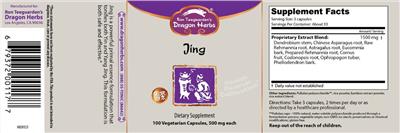
Jing by Ron Teeguarden's Dragon Herbs label
The label scan from the NIH Dietary Supplement Label Database. Tap to enlarge.
Label images are published by the NIH Dietary Supplement Label Database for the version of this product on file. Always read your actual product label.
View the full label (PDF)The Ingredients in Jing by Ron Teeguarden's Dragon Herbs
These are the 10 active ingredients this product is made of. Select any to open its full monograph.
Serving size3 Capsule(s) Dosage formCapsule Servings per container33 Amounts shown are per serving.
Most supplement products combine several ingredients, and a medication can interact with the product through any one of them. Each ingredient below shows whether it has known drug interactions.
Proprietary Extract Blend
- › Astragalus root extract
- › Codonopsis root extract
- › Rehmannia Root Extract
- › Eucommia bark extract
- › Cornus Fruit Extract
- › Rehmannia Root Extract, Raw
- › Phellodendron bark extract
- › Chinese Asparagus Root Extract
- › Ophiopogon Tuber Extract
- › Dendrobium extract
Other (inactive) ingredients: Pullulan Polysaccharide, Rice, Powder, Bamboo Extract, Powder, Rice extract Blend. These complete the product’s ingredient list but are not active constituents.
Jing by Ron Teeguarden's Dragon Herbs Drug Interactions
HelloPharmacist Interaction Report
Jing by Ron Teeguarden's Dragon Herbs interacts with medications through its astragalus root, codonopsis root, rehmannia root (in two forms), phellodendron bark, and dendrobium extracts.
The most serious documented interaction is a Major risk: phellodendron's berberine content may inhibit how your body breaks down certain drugs metabolized by the CYP3A4 enzyme pathway, potentially raising drug levels and side effects—affecting a broad range of medications including some statins, blood pressure drugs, and immunosuppressants.
Read the full breakdown — every affected drug type, severity by severity
Beyond that, there are Moderate interactions across several medication categories. Astragalus may interfere with immunosuppressants, increase lithium levels, potentially reverse cyclophosphamide's effects, and raise the risk of low blood sugar (hypoglycemia) with diabetes drugs.
Codonopsis may increase bleeding risk with blood thinners (anticoagulants/antiplatelets), reduce effectiveness of the cancer drug abiraterone, and raise hypoglycemia risk with diabetes drugs. Both forms of rehmannia may lower blood pressure beyond intended levels or increase hypoglycemia risk with diabetes drugs and blood pressure drugs, respectively.
Phellodendron carries additional Moderate risks: it may amplify sedation with sleeping pills or other central nervous system (CNS) depressants, add to blood pressure-lowering effects, inhibit the CYP2D6 and CYP2C9 drug-metabolizing pathways (raising levels of affected medications), increase bleeding risk with blood thinners, raise hypoglycemia risk, and increase metformin's effects and side effects. Dendrobium carries Moderate risks with seizure-threshold-lowering drugs and anticonvulsants, and a Minor risk of added blood pressure-lowering with antihypertensive drugs.
We could not check the interaction data for eucommia bark extract, Chinese asparagus root extract, and ophiopogon tuber extract—no monograph data are held for those. Altogether, these interactions span 1,440 individual medications.
Before starting Jing, use the search tool on this page to check your exact medications against these ingredient profiles, and discuss the results with your doctor or pharmacist.
Check your own medications below · Editorial policy · How we use AI
Want to check YOUR meds against Jing?
Ask about interactions with your drugs in plain English — “Can I take it with lisinopril?” — and we find you the answer in seconds, ingredient by ingredient.
Go to the checkerIngredients driving the most interactions
Individual Drug Interactions
The ingredients in Jing interact with 1,439 drugs. Click any drug to see the details.
5 of the 10 ingredients in Jing interact with drugs. Each result below shows which ingredient is responsible. Phellodendron bark extract Dendrobium extract Rehmannia Root Extract Codonopsis root extract Astragalus root extract
BexaroteneTargretin
How Bexarotene interacts with Jing — through 1 ingredient. Tap an ingredient for the detail:
Phellodendron Bark ExtractCytochrome P450 3a4 (cyp3a4) Substrates Moderate
Interaction Summary
Theoretically, phellodendron might increase serum levels of drugs metabolized by CYP3A4.
Read the full Phellodendron Bark Extract + Bexarotene interactionBictegravir, Emtricitabine, Tenofovir AlafenamideBiktarvy
How Bictegravir, Emtricitabine, Tenofovir Alafenamide interacts with Jing — through 1 ingredient. Tap an ingredient for the detail:
Phellodendron Bark ExtractCytochrome P450 3a4 (cyp3a4) Substrates Moderate
Interaction Summary
Theoretically, phellodendron might increase serum levels of drugs metabolized by CYP3A4.
Read the full Phellodendron Bark Extract + Bictegravir, Emtricitabine, Tenofovir Alafenamide interactionBimekizumab-bkzxBimzelx
How Bimekizumab-bkzx interacts with Jing — through 1 ingredient. Tap an ingredient for the detail:
Astragalus Root ExtractImmunosuppressants Moderate
Interaction Summary
Theoretically, astragalus might interfere with immunosuppressive therapy.
Read the full Astragalus Root Extract + Bimekizumab-bkzx interactionBismuth Subsalicylate, Metronidazole, TetracyclineHelidac
How Bismuth Subsalicylate, Metronidazole, Tetracycline interacts with Jing — through 1 ingredient. Tap an ingredient for the detail:
Dendrobium ExtractSeizure Threshold Lowering Drugs Moderate
Interaction Summary
The dendrobium constituent dendrobine is reported to have convulsant effects.
Read the full Dendrobium Extract + Bismuth Subsalicylate, Metronidazole, Tetracycline interactionBisoprololZebeta
How Bisoprolol interacts with Jing — through 3 ingredients. Tap an ingredient for the detail:
Rehmannia Root Extract, RawAntihypertensive Drugs Moderate
Interaction Summary
Theoretically, rehmannia might increase the risk of hypotension when taken with antihypertensive drugs.
Read the full Rehmannia Root Extract, Raw + Bisoprolol interactionDendrobium ExtractAntihypertensive Drugs, Seizure Threshold Lowering Drugs Moderate
Interaction Summary
The dendrobium constituent dendrobine is reported to have hypotensive effects.
Read the full Dendrobium Extract + Bisoprolol interactionPhellodendron Bark ExtractAntihypertensive Drugs, Cytochrome P450 2d6 (cyp2d6) Substrates Moderate
Interaction Summary
Theoretically, phellodendron might have additive effects with antihypertensive drugs.
Read the full Phellodendron Bark Extract + Bisoprolol interactionBisoprolol, HydrochlorothiazideZiac
How Bisoprolol, Hydrochlorothiazide interacts with Jing — through 3 ingredients. Tap an ingredient for the detail:
Phellodendron Bark ExtractAntihypertensive Drugs, Cytochrome P450 2d6 (cyp2d6) Substrates Moderate
Interaction Summary
Theoretically, phellodendron might have additive effects with antihypertensive drugs.
Read the full Phellodendron Bark Extract + Bisoprolol, Hydrochlorothiazide interactionDendrobium ExtractSeizure Threshold Lowering Drugs, Antihypertensive Drugs Moderate
Interaction Summary
The dendrobium constituent dendrobine is reported to have convulsant effects.
Read the full Dendrobium Extract + Bisoprolol, Hydrochlorothiazide interactionRehmannia Root Extract, RawAntihypertensive Drugs Moderate
Interaction Summary
Theoretically, rehmannia might increase the risk of hypotension when taken with antihypertensive drugs.
Read the full Rehmannia Root Extract, Raw + Bisoprolol, Hydrochlorothiazide interactionBivalirudinAngiomax, Angiomax Rtu, Angiox
How Bivalirudin interacts with Jing — through 2 ingredients. Tap an ingredient for the detail:
Phellodendron Bark ExtractAnticoagulant/antiplatelet Drugs Moderate
Interaction Summary
Theoretically, phellodendron might increase the risk of bleeding when used with anticoagulant or antiplatelet drugs.
Read the full Phellodendron Bark Extract + Bivalirudin interactionCodonopsis Root ExtractAnticoagulant/antiplatelet Drugs Moderate
Interaction Summary
Theoretically, codonopsis liquor might increase the risk of bleeding when used with antiplatelet or anticoagulant drugs.
Read the full Codonopsis Root Extract + Bivalirudin interactionBoceprevirVictrelis
How Boceprevir interacts with Jing — through 1 ingredient. Tap an ingredient for the detail:
Phellodendron Bark ExtractCytochrome P450 3a4 (cyp3a4) Substrates Moderate
Interaction Summary
Theoretically, phellodendron might increase serum levels of drugs metabolized by CYP3A4.
Read the full Phellodendron Bark Extract + Boceprevir interactionBosentanTracleer
How Bosentan interacts with Jing — through 3 ingredients. Tap an ingredient for the detail:
Phellodendron Bark ExtractCytochrome P450 3a4 (cyp3a4) Substrates, Antihypertensive Drugs +1 Moderate
Interaction Summary
Theoretically, phellodendron might increase serum levels of drugs metabolized by CYP3A4.
Read the full Phellodendron Bark Extract + Bosentan interactionRehmannia Root Extract, RawAntihypertensive Drugs Moderate
Interaction Summary
Theoretically, rehmannia might increase the risk of hypotension when taken with antihypertensive drugs.
Read the full Rehmannia Root Extract, Raw + Bosentan interactionDendrobium ExtractAntihypertensive Drugs Minor
Interaction Summary
The dendrobium constituent dendrobine is reported to have hypotensive effects.
Read the full Dendrobium Extract + Bosentan interactionBosutinibBosulif
How Bosutinib interacts with Jing — through 1 ingredient. Tap an ingredient for the detail:
Phellodendron Bark ExtractCytochrome P450 3a4 (cyp3a4) Substrates Moderate
Interaction Summary
Theoretically, phellodendron might increase serum levels of drugs metabolized by CYP3A4.
Read the full Phellodendron Bark Extract + Bosutinib interactionBrentuximab VedotinAdcetris
How Brentuximab Vedotin interacts with Jing — through 1 ingredient. Tap an ingredient for the detail:
Phellodendron Bark ExtractCytochrome P450 3a4 (cyp3a4) Substrates Moderate
Interaction Summary
Theoretically, phellodendron might increase serum levels of drugs metabolized by CYP3A4.
Read the full Phellodendron Bark Extract + Brentuximab Vedotin interactionBrexanoloneZulresso
How Brexanolone interacts with Jing — through 1 ingredient. Tap an ingredient for the detail:
Phellodendron Bark ExtractCns Depressants Moderate
Interaction Summary
Theoretically, phellodendron might increase the sedative effects of CNS depressants.
Read the full Phellodendron Bark Extract + Brexanolone interactionBrexpiprazoleRexulti
How Brexpiprazole interacts with Jing — through 2 ingredients. Tap an ingredient for the detail:
Phellodendron Bark ExtractCytochrome P450 3a4 (cyp3a4) Substrates, Cytochrome P450 2d6 (cyp2d6) Substrates Moderate
Interaction Summary
Theoretically, phellodendron might increase serum levels of drugs metabolized by CYP3A4.
Read the full Phellodendron Bark Extract + Brexpiprazole interactionDendrobium ExtractSeizure Threshold Lowering Drugs Moderate
Interaction Summary
The dendrobium constituent dendrobine is reported to have convulsant effects.
Read the full Dendrobium Extract + Brexpiprazole interactionBrigatinibAlunbrig
How Brigatinib interacts with Jing — through 1 ingredient. Tap an ingredient for the detail:
Phellodendron Bark ExtractCytochrome P450 3a4 (cyp3a4) Substrates Moderate
Interaction Summary
Theoretically, phellodendron might increase serum levels of drugs metabolized by CYP3A4.
Read the full Phellodendron Bark Extract + Brigatinib interactionBromazepamLectopam
How Bromazepam interacts with Jing — through 1 ingredient. Tap an ingredient for the detail:
Phellodendron Bark ExtractCns Depressants Moderate
Interaction Summary
Theoretically, phellodendron might increase the sedative effects of CNS depressants.
Read the full Phellodendron Bark Extract + Bromazepam interactionBromfenac SodiumBromsite, Prolensa
How Bromfenac Sodium interacts with Jing — through 2 ingredients. Tap an ingredient for the detail:
Phellodendron Bark ExtractAnticoagulant/antiplatelet Drugs Moderate
Interaction Summary
Theoretically, phellodendron might increase the risk of bleeding when used with anticoagulant or antiplatelet drugs.
Read the full Phellodendron Bark Extract + Bromfenac Sodium interactionCodonopsis Root ExtractAnticoagulant/antiplatelet Drugs Moderate
Interaction Summary
Theoretically, codonopsis liquor might increase the risk of bleeding when used with antiplatelet or anticoagulant drugs.
Read the full Codonopsis Root Extract + Bromfenac Sodium interactionBromocriptineParlodel
How Bromocriptine interacts with Jing — through 1 ingredient. Tap an ingredient for the detail:
Phellodendron Bark ExtractCytochrome P450 3a4 (cyp3a4) Substrates Moderate
Interaction Summary
Theoretically, phellodendron might increase serum levels of drugs metabolized by CYP3A4.
Read the full Phellodendron Bark Extract + Bromocriptine interactionBromodiphenhydramineAmbodryl
How Bromodiphenhydramine interacts with Jing — through 1 ingredient. Tap an ingredient for the detail:
Dendrobium ExtractSeizure Threshold Lowering Drugs Moderate
Interaction Summary
The dendrobium constituent dendrobine is reported to have convulsant effects.
Read the full Dendrobium Extract + Bromodiphenhydramine interactionBrompheniramineDimetane, Lodrane
How Brompheniramine interacts with Jing — through 1 ingredient. Tap an ingredient for the detail:
Dendrobium ExtractSeizure Threshold Lowering Drugs Moderate
Interaction Summary
The dendrobium constituent dendrobine is reported to have convulsant effects.
Read the full Dendrobium Extract + Brompheniramine interactionBrompheniramine, Dextromethorphan, PhenylephrineDimetapp DM
How Brompheniramine, Dextromethorphan, Phenylephrine interacts with Jing — through 2 ingredients. Tap an ingredient for the detail:
Dendrobium ExtractSeizure Threshold Lowering Drugs Moderate
Interaction Summary
The dendrobium constituent dendrobine is reported to have convulsant effects.
Read the full Dendrobium Extract + Brompheniramine, Dextromethorphan, Phenylephrine interactionPhellodendron Bark ExtractCytochrome P450 2d6 (cyp2d6) Substrates, Dextromethorphan (robitussin Dm, Others) Moderate
Interaction Summary
Theoretically, phellodendron might increase serum levels of drugs metabolized by CYP2D6.
Read the full Phellodendron Bark Extract + Brompheniramine, Dextromethorphan, Phenylephrine interactionBrompheniramine, Phenylephrine, PhenylpropanolamineDime Time, Normatane TD
How Brompheniramine, Phenylephrine, Phenylpropanolamine interacts with Jing — through 1 ingredient. Tap an ingredient for the detail:
Dendrobium ExtractSeizure Threshold Lowering Drugs Moderate
Interaction Summary
The dendrobium constituent dendrobine is reported to have convulsant effects.
Read the full Dendrobium Extract + Brompheniramine, Phenylephrine, Phenylpropanolamine interactionBrompheniramine, Phenylephrine, PhenyltoloxamineAtrohist Sprinkle
How Brompheniramine, Phenylephrine, Phenyltoloxamine interacts with Jing — through 1 ingredient. Tap an ingredient for the detail:
Dendrobium ExtractSeizure Threshold Lowering Drugs Moderate
Interaction Summary
The dendrobium constituent dendrobine is reported to have convulsant effects.
Read the full Dendrobium Extract + Brompheniramine, Phenylephrine, Phenyltoloxamine interactionBrompheniramine, PhenylpropanolamineDimetapp, E N T, Porcupine
How Brompheniramine, Phenylpropanolamine interacts with Jing — through 1 ingredient. Tap an ingredient for the detail:
Dendrobium ExtractSeizure Threshold Lowering Drugs Moderate
Interaction Summary
The dendrobium constituent dendrobine is reported to have convulsant effects.
Read the full Dendrobium Extract + Brompheniramine, Phenylpropanolamine interactionBrompheniramine, PseudoephedrineAllent, BPM PSEH 08, Bromfed, Bromfed PD, Bromfenex, Bromfenex PD +12 more
How Brompheniramine, Pseudoephedrine interacts with Jing — through 1 ingredient. Tap an ingredient for the detail:
Dendrobium ExtractSeizure Threshold Lowering Drugs Moderate
Interaction Summary
The dendrobium constituent dendrobine is reported to have convulsant effects.
Read the full Dendrobium Extract + Brompheniramine, Pseudoephedrine interactionBudenosidePulmicort Flexhaler, Pulmicort Turbuhaler
How Budenoside interacts with Jing — through 1 ingredient. Tap an ingredient for the detail:
Phellodendron Bark ExtractCytochrome P450 3a4 (cyp3a4) Substrates Moderate
Interaction Summary
Theoretically, phellodendron might increase serum levels of drugs metabolized by CYP3A4.
Read the full Phellodendron Bark Extract + Budenoside interactionBudesonideEntocort EC, Eohilia, Pulmicort, Tarpeyo, Uceris
How Budesonide interacts with Jing — through 1 ingredient. Tap an ingredient for the detail:
Phellodendron Bark ExtractCytochrome P450 3a4 (cyp3a4) Substrates Moderate
Interaction Summary
Theoretically, phellodendron might increase serum levels of drugs metabolized by CYP3A4.
Read the full Phellodendron Bark Extract + Budesonide interactionBudesonide, FormoterolSymbicort
How Budesonide, Formoterol interacts with Jing — through 1 ingredient. Tap an ingredient for the detail:
Phellodendron Bark ExtractCytochrome P450 2d6 (cyp2d6) Substrates, Cytochrome P450 2c9 (cyp2c9) Substrates Moderate
Interaction Summary
Theoretically, phellodendron might increase serum levels of drugs metabolized by CYP2D6.
Read the full Phellodendron Bark Extract + Budesonide, Formoterol interactionBumetanideBurinex
How Bumetanide interacts with Jing — through 3 ingredients. Tap an ingredient for the detail:
Rehmannia Root Extract, RawAntihypertensive Drugs Moderate
Interaction Summary
Theoretically, rehmannia might increase the risk of hypotension when taken with antihypertensive drugs.
Read the full Rehmannia Root Extract, Raw + Bumetanide interactionPhellodendron Bark ExtractAntihypertensive Drugs Moderate
Interaction Summary
Theoretically, phellodendron might have additive effects with antihypertensive drugs.
Read the full Phellodendron Bark Extract + Bumetanide interactionDendrobium ExtractAntihypertensive Drugs Minor
Interaction Summary
The dendrobium constituent dendrobine is reported to have hypotensive effects.
Read the full Dendrobium Extract + Bumetanide interactionBumetanide (iv)Bumex
How Bumetanide (iv) interacts with Jing — through 3 ingredients. Tap an ingredient for the detail:
Phellodendron Bark ExtractAntihypertensive Drugs Moderate
Interaction Summary
Theoretically, phellodendron might have additive effects with antihypertensive drugs.
Read the full Phellodendron Bark Extract + Bumetanide (iv) interactionRehmannia Root Extract, RawAntihypertensive Drugs Moderate
Interaction Summary
Theoretically, rehmannia might increase the risk of hypotension when taken with antihypertensive drugs.
Read the full Rehmannia Root Extract, Raw + Bumetanide (iv) interactionDendrobium ExtractAntihypertensive Drugs Minor
Interaction Summary
The dendrobium constituent dendrobine is reported to have hypotensive effects.
Read the full Dendrobium Extract + Bumetanide (iv) interactionBumetanide (oral)Bumex
How Bumetanide (oral) interacts with Jing — through 3 ingredients. Tap an ingredient for the detail:
Rehmannia Root Extract, RawAntihypertensive Drugs Moderate
Interaction Summary
Theoretically, rehmannia might increase the risk of hypotension when taken with antihypertensive drugs.
Read the full Rehmannia Root Extract, Raw + Bumetanide (oral) interactionPhellodendron Bark ExtractAntihypertensive Drugs Moderate
Interaction Summary
Theoretically, phellodendron might have additive effects with antihypertensive drugs.
Read the full Phellodendron Bark Extract + Bumetanide (oral) interactionDendrobium ExtractAntihypertensive Drugs Minor
Interaction Summary
The dendrobium constituent dendrobine is reported to have hypotensive effects.
Read the full Dendrobium Extract + Bumetanide (oral) interactionEach ingredient & the kinds of drugs it affects
For each ingredient in Jing with known interactions, here are the types of medications they can affect. Open any type for the detail — or search your exact drug in the checker above.
Phellodendron bark extract
Anticoagulant/Antiplatelet Drugs
Theoretically, phellodendron might increase the risk of bleeding when used with anticoagulant or antiplatelet drugs.
Phellodendron contains berberine. In vitro and in vivo research suggest that berberine can inhibit platelet aggregation. Theoretically, phellodendron might also inhibit platelet aggregation.
Antidiabetes Drugs
Theoretically, phellodendron may increase the risk of hypoglycemia when taken with antidiabetes drugs.
Phellodendron contains berberine. Clinical research shows that berberine may lower blood glucose levels. Theoretically, phellodendron might also lower blood glucose levels.
Antihypertensive Drugs
Theoretically, phellodendron might have additive effects with antihypertensive drugs.
Phellodendron contains berberine. Animal research suggests that berberine can have hypotensive effects. Also, a clinical study suggests that taking berberine in combination with amlodipine can lower systolic and diastolic blood pressure when compared with amlodipine alone. Theoretically, phellodendron might also reduce blood pressure.
Cns Depressants
Theoretically, phellodendron might increase the sedative effects of CNS depressants.
Phellodendron contains berberine. Animal research suggests that berberine may have sedative effects. Theoretically, phellodendron might also have CNS depressants effects.
Cyclosporine (Neoral, Sandimmune)
Theoretically, phellodendron might increase blood levels of cyclosporine.
Phellodendron contains berberine. Preliminary clinical research shows that berberine can reduce metabolism of cyclosporine and increase serum levels, likely through inhibition of cytochrome P450 3A4 (CYP3A4), which metabolizes cyclosporine. Theoretically, phellodendron might also reduce the metabolism of cyclosporine.
Cytochrome P450 2C9 (Cyp2C9) Substrates
Theoretically, phellodendron might increase serum levels of drugs metabolized by CYP2C9.
Phellodendron contains berberine. Preliminary clinical research shows that berberine can inhibit CYP2C9. Theoretically, phellodendron might also inhibit CYP2C9.
Cytochrome P450 2D6 (Cyp2D6) Substrates
Theoretically, phellodendron might increase serum levels of drugs metabolized by CYP2D6.
Phellodendron contains berberine. In vitro research and preliminary clinical evidence show that berberine can inhibit CYP2D6. Theoretically, phellodendron might also inhibit CYP2D6.
Cytochrome P450 3A4 (Cyp3A4) Substrates
Theoretically, phellodendron might increase serum levels of drugs metabolized by CYP3A4.
Phellodendron contains berberine. In vitro research and preliminary clinical research show that berberine moderately inhibits CYP3A4. Theoretically, phellodendron might also inhibit CYP3A4.
Dextromethorphan (Robitussin Dm, Others)
Theoretically, phellodendron may increase serum levels of dextromethorphan.
Phellodendron contains berberine. Preliminary clinical research shows that berberine can inhibit cytochrome P450 2D6 (CYP2D6) activity and reduce the metabolism of dextromethorphan. Theoretically, phellodendron may also inhibit the metabolism of dextromethorphan.
Losartan (Cozaar)
Theoretically, phellodendron might reduce the therapeutic effects of losartan by decreasing its conversion to its active form.
Phellodendron contains berberine. Preliminary clinical research suggests that berberine can inhibit cytochrome P450 2C9 (CYP2C9) activity and reduce metabolism of losartan. Theoretically, phellodendron might also inhibit the metabolism of losartan.
Metformin (Glucophage)
Theoretically, phellodendron might increase the therapeutic and adverse effects of metformin.
Phellodendron contains berberine. In vitro and animal studies show that berberine can increase the systemic exposure and half-life of metformin, potentially increasing metformin's effects and side effects. This interaction seems to be most apparent when berberine is administered 2 hours prior to metformin. Taking berberine and metformin at the same time does not appear to increase systemic exposure to metformin. It is unclear if phellodendron might have this same effect.
Midazolam (Versed)
Theoretically, phellodendron might reduce metabolism of midazolam, which might increase the risk of severe adverse effects.
Phellodendron contains berberine. Preliminary clinical research shows that berberine can inhibit cytochrome P450 3A4 (CYP3A4) activity and reduce metabolism of midazolam. Theoretically, phellodendron might also inhibit the metabolism of midazolam.
Pentobarbital (Nembutal)
Theoretically, phellodendron might increase the sedative effect of pentobarbital.
Phellodendron contains berberine. Animal research shows that berberine can prolong pentobarbital-induced sleeping time. Theoretically, phellodendron might increase the sedative effects of pentobarbital.
Tacrolimus (Prograf)
Theoretically, phellodendron might increase blood levels of tacrolimus.
Phellodendron contains berberine. In a 16-year-old patient with idiopathic nephrotic syndrome who was being treated with tacrolimus 6.5 mg twice daily, intake of berberine 200 mg three times daily increased the blood concentration of tacrolimus from 8 to 22 ng/mL. Following a reduction of the tacrolimus dose to 3 mg daily, blood levels of tacrolimus decreased to 12 ng/mL. It is unclear if phellodendron might have this same effect.
Dendrobium extract
Anticonvulsants
The dendrobium constituent dendrobine is reported to have convulsant effects. Theoretically, combining dendrobium with anticonvulsant drugs might decrease drug effectiveness and increase the risk of seizure. Some anticonvulsant drugs include phenobarbital, primidone (Mysoline), valproic acid (Depakene), gabapentin (Neurontin), carbamazepine (Tegretol), phenytoin (Dilantin), and others.
Seizure Threshold Lowering Drugs
The dendrobium constituent dendrobine is reported to have convulsant effects. Theoretically, combining dendrobium with pro-convulsant drugs might increase the risk of seizure. Some drugs that lower the seizure threshold include anesthetics (propofol, others), antiarrhythmics (mexiletine), antibiotics (amphotericin, penicillin, cephalosporins, imipenem), antidepressants (bupropion, others), antihistamines (cyproheptadine, others), immunosuppressants (cyclosporine), narcotics (fentanyl, others), stimulants (methylphenidate), theophylline, and others.
Antihypertensive Drugs
The dendrobium constituent dendrobine is reported to have hypotensive effects. Theoretically, combining dendrobium with antihypertensive drugs might increase the risk of hypotension; use with caution.
Rehmannia Root Extract
Antidiabetes Drugs
Theoretically, rehmannia might increase the risk of hypoglycemia when taken with antidiabetes drugs.
Animal research shows that rehmannia may have hypoglycemic effects.
Antihypertensive Drugs
Theoretically, rehmannia might increase the risk of hypotension when taken with antihypertensive drugs.
Animal research shows that rehmannia may have hypotensive effects. Laboratory research shows that formulations of dried and processed rehmannia root inhibit angiotensin-converting enzyme (ACE).
Codonopsis root extract
Abiraterone (Zytiga)
Theoretically, taking codonopsis root with abiraterone might reduce the levels and therapeutic effects of abiraterone.
Animal research in rats shows that intragastric administration of codonopsis root along with abiraterone every 2 days for 2 weeks seems to increase the clearance of abiraterone and reduce the overall exposure and time to maximum concentration. This interaction has not been reported in humans.
Anticoagulant/Antiplatelet Drugs
Theoretically, codonopsis liquor might increase the risk of bleeding when used with antiplatelet or anticoagulant drugs.
A small clinical study in adults with coronary heart disease shows that consuming Codonopsis pilosula liquor for 4 weeks inhibits platelet aggregation but does not affect tissue-type plasminogen activator (t-PA) or plasminogen activator inhibitor (PAI).
Antidiabetes Drugs
Theoretically, codonopsis might increase the risk of hypoglycemia when taken with antidiabetes drugs.
Laboratory and animal research suggest that codonopsis has antidiabetic effects.
Astragalus root extract
Antidiabetes Drugs
Theoretically, taking astragalus with antidiabetes drugs might increase the risk of hypoglycemia.
Clinical research in humans shows that astragalus might have hypoglycemic effects. Theoretically, taking astragalus, especially in combination with other hypoglycemic agents, might increase the risk of hypoglycemia.
Cyclophosphamide
Theoretically, astragalus might interfere with cyclophosphamide therapy.
Evidence regarding the effect of astragalus on immunosuppression caused by cyclophosphamide is conflicting. Some animal research suggests that astragalus reverses cyclophosphamide-induced immunosuppression. However, other animal research shows no effect.
Immunosuppressants
Theoretically, astragalus might interfere with immunosuppressive therapy.
Astragalus seems to stimulate immune function. Theoretically, taking astragalus might decrease the effects of immunosuppressive therapy.
Lithium
Theoretically, astragalus might increase levels and adverse effects of lithium.
Animal research suggests that astragalus has diuretic properties. Theoretically, due to this diuretic effect, astragalus might reduce excretion and increase levels of lithium.
Brand information
Manufacturer and brand details for Jing, from the product label.
Ron Teeguarden's Dragon Herbs
See all Ron Teeguarden's Dragon Herbs products- Name
- Ron Teeguarden's Dragon Herbs
- City
- Los Angeles
- State
- CA
- ZipCode
- 90036
- Phone Number
- (888) 558-6642
- Web Address
- www.dragonherbs.com
Jing by Ron Teeguarden's Dragon Herbs: Common Questions
Does Jing by Ron Teeguarden's Dragon Herbs interact with any medications?
How can one product interact with so many drugs?
Where does this information come from?
Can I take Jing while pregnant or breastfeeding?
What is Jing supposed to do?
Could Jing interact with my blood pressure medication?
Does Jing have side effects?
What if I'm taking diabetes medication?
Can Jing interact with blood thinners?
Written and reviewed by the HelloPharmacist editorial staff. Our editorial policy
Not sure if Jing is safe with your meds?
Our pharmacists answer your medication & supplement questions — free.
Label information is sourced from the NIH Dietary Supplement Label Database and reflects the product version on file; always read your actual product label. This page is for education only and is not a substitute for professional medical advice. Confirm with your pharmacist or doctor before combining supplements and medications.
The Full Monographs Behind Jing’s Ingredients
Every ingredient we hold a full HelloPharmacist monograph for — uses, evidence, safety, and the complete interaction list.
Astragalus
Interacts with 208 drugsAstragalus is a root used for centuries in traditional Chinese medicine, mainly to support the immune system and help the body cope with stress. While early studies are interesting, strong h...
Read the full Astragalus monograph → Herb & supplement monographCodonopsis
Interacts with 211 drugsCodonopsis (often called 'dang shen') is a root long used in Traditional Chinese Medicine as a gentle energy and digestive tonic, frequently as a milder substitute for ginseng. Human researc...
Read the full Codonopsis monograph → Herb & supplement monographRehmannia
Interacts with 258 drugsRehmannia is a root used for centuries in Traditional Chinese Medicine, often to 'tonify' the kidneys and support energy or blood health. Human evidence for most modern uses is limited, so i...
Read the full Rehmannia monograph → Herb & supplement monographAmerican Dogwood
American Dogwood is a North American flowering tree whose bark was used in traditional folk medicine, especially as a substitute for quinine to treat fevers. There is very little modern huma...
Read the full American Dogwood monograph → Herb & supplement monographPhellodendron
Interacts with 1,160 drugsPhellodendron is a traditional Chinese medicine bark (Huang Bai) that contains berberine and other plant compounds with antimicrobial and anti-inflammatory activity in lab studies. Human evi...
Read the full Phellodendron monograph → Herb & supplement monographDendrobium
Interacts with 609 drugsDendrobium is a group of orchids long used in traditional Chinese medicine, often to moisten the body and as a general tonic. Human evidence for its modern health claims is very limited, so...
Read the full Dendrobium monograph →Sources & How We Checked
Jing's label data comes from the NIH Dietary Supplement Label Database; the ingredient interaction data is from the Natural Medicines database, reviewed by our pharmacists.
- NIH Dietary Supplement Label Database (DSLD) — The official product label on file for this supplement.
- Natural Medicines (Therapeutic Research Center) — Evidence-graded clinical reference behind the ingredient interaction data.
Content is written and reviewed by licensed HelloPharmacist pharmacists. See our data sources and editorial standards for how this information is built and checked.
The 47 references behind this product’s interaction data
Every citation that drives the interaction findings for this product’s ingredients, from the evidence-graded Natural Medicines (TRC Healthcare) database. Open an ingredient to browse its citations — links open the study on PubMed or the publisher’s site.
Astragalus 13 references
- Upton R, ed. Astragalus Root: Analytical, quality control, and therapeutic monograph. Santa Cruz, CA: American Herbal Pharmacopoeia. 1999:1-25.
- Khoo KS, Ang PT. Extract of astragalus membranaceus and ligustrum lucidum does not prevent cyclophosphamide-induced myelosuppression. Singapore Med J 1995;36:387-90.
- Chu DT, Wong WL, Mavligit GM. Immunotherapy with Chinese medicinal herbs. II. Reversal of cyclophosphamide-induced immune suppression by administration of fractionated Astragalus membranaceus in vivo. J Clin Lab Immunol 1988;25:125-9.
- Sun Y, Hersh EM, Lee SL, et al. Preliminary observations on the effects of the Chinese medicinal herbs Astragalus membranaceus and Ligustrum lucidum on lymphocyte blastogenic responses. J Biol Response Mod 1983;2:227-37..
- Ma J, Peng A, Lin S. Mechanisms of the therapeutic effect of astragalus membranaceus on sodium and water retention in experimental heart failure. Chin Med J (Engl) 1998;111:17-23.
- Matkovic Z, Zivkovic V, Korica M, et al. Efficacy and safety of Astragalus membranaceus in the treatment of patients with seasonal allergic rhinitis. Phytother Res 2010;24:175-81.
- Zhang, J. G., Yang, N., He, H., Wei, G. H., Gao, D. S., Wang, X. L., Wang, X. Z., and Song, G. Y. [Effect of Astragalus injection on plasma levels of apoptosis-related factors in aged patients with chronic heart failure.]. Chin J Integr.Med 2005;11(3):18 PubMed
- Chen, H. W., Lin, I. H., Chen, Y. J., Chang, K. H., Wu, M. H., Su, W. H., Huang, G. C., and Lai, Y. L. A novel infusible botanically-derived drug, PG2, for cancer-related fatigue: a phase II double-blind, randomized placebo-controlled study. Clin Invest PubMed
- Tian H, Lu J, He H, et al.The effect of Astragalus as an adjuvant treatment in type 2 diabetes mellitus: A (preliminary) meta-analysis. J Ethnopharmacol. 2016;191:206-215. doi: 10.1016/j.jep.2016.05.062. PubMed
- Hong KF, Liu PY, Zhang W, Gui DK, Xu YH. The Efficacy and Safety of Astragalus as an Adjuvant Treatment for Type 2 Diabetes Mellitus: A Systematic Review and Meta-Analysis. J Integr Complement Med 2023. PubMed
- Chan KW, Kwong ASK, Tsui PN, et al. Add-on astragalus in type 2 diabetes and chronic kidney disease: A multi-center, assessor-blind, randomized controlled trial. Phytomedicine 2024;130:155457. PubMed
- Han X, Yu T, Chen X, Du Z, Yu M, Xiong J. Effect of Astragalus membranaceus on left ventricular remodeling in HFrEF: a systematic review and meta-analysis. Front Pharmacol 2024;15:1345797. PubMed
- Jing P, Hongzheng H, Zhenqi WU, Meijuan Z, Zuojing LI, Gang C. Long-term efficacy and safety of Huangqi ()-based Traditional Chinese Medicine in diabetic peripheral neuropathy: a Meta-analysis of randomized controlled trials. J Tradit Chin Med 2024;44(2):
Codonopsis 5 references
- McGuffin M, Hobbs C, Upton R, Goldberg A, eds. American Herbal Products Association's Botanical Safety Handbook. Boca Raton, FL: CRC Press, LLC 1997.
- Xu, X., Wang, S. R., and Lin, Q. [Clinical and experimental study on codonopsis pilosula oral liquor in treating coronary heart disease with blood stasis]. Zhongguo Zhong.Xi.Yi.Jie.He.Za Zhi. 1995;15(7):398-400.
- Hur GY, Choi GS, Park HJ, Ye YM, Park HS. Anaphylactic shock induced by Codonopsis lanceolata, traditional Chinese medicine in a patient with allergic rhinitis. Allergy. 2008;63(10):1406-7.
- Zhang ZB, Ip SP, Cho WCS, et al. Herb-drug interactions between androgenic Chinese herbal medicines and androgen receptor antagonist on tumor growth: Studies on two xenograft prostate cancer animal models. Phytother Res. 2021.
- Jia W, Bi Q, Jiang S, et al. Hypoglycemic activity of Codonopsis pilosula (Franch.) Nannf. in vitro and in vivo and its chemical composition identification by UPLC-Triple-TOF-MS/MS. Food Funct 2022;13(5):2456-2464.
Rehmannia 3 references
- Zhang R, Zhou J, Jia Z, et al. Hypoglycemic effect of Rehmannia glutinosa oligosaccharide in hyperglycemic and alloxan-induced diabetic rats and its mechanism. J Ethnopharmacol 2004;90:39-43. PubMed
- Zhang RX, Li MX, Jia ZP. Rehmannia glutinosa: review of botany, chemistry and pharmacology. J Ethnopharmacol 2008;117(2):199-214. PubMed
- Chao CH, Hsu JL, Chen MF, et al. Anti-hypertensive effects of Radix Rehmanniae and its active ingredients. Nat Prod Res. 2020;34(11):1547-1552.
American Dogwood 1 reference
- Dietary Supplements: What You Need to Know — NIH Office of Dietary Supplements Source
Phellodendron 22 references
- Chan E. Displacement of bilirubin from albumin by berberine. Biol Neonate 1993;63:201-8. PubMed
- Janbaz KH, Gilani AH. Studies on preventive and curative effects of berberine on chemical-induced hepatotoxicity in rodents. Fitoterapia 2000;71:25-33.. PubMed
- Wu X, Li Q, Xin H, Yu A, Zhong M. Effects of berberine on the blood concentration of cyclosporin A in renal transplanted recipients: clinical and pharmacokinetic study. Eur J Clin Pharmacol 2005;61:567-72. PubMed
- Garrison R, Chambliss WG. Effect of a proprietary Magnolia and Phellodendron extract on weight management: a pilot, double-blind, placebo-controlled clinical trial. Altern Ther Health Med 2006;12:50-4.
- Zhang Y, Li X, Zou D, et al. Treatment of type 2 diabetes and dyslipidemia with the natural plant alkaloid berberine. J Clin Endocrinol Metab 2008;93:2559-65. PubMed
- Budzinski JW, Foster BC, Vandenhoek S, Arnason JT. An in vitro evaluation of human cytochrome P450 3A4 inhibition by selected commercial herbal extracts and tinctures. Phytomedicine 2000;7:273-82. PubMed
- Chatterjee P, Franklin MR. Human cytochrome p450 inhibition and metabolic-intermediate complex formation by goldenseal extract and its methylenedioxyphenyl components. Drug Metab Dispos 2003;31:1391-7. PubMed
- Shanbhag, S. M., Kulkarni, H. J., and Gaitonde, B. B. Pharmacological actions of berberine on the central nervous system. Jpn.J Pharmacol 1970;20(4):482-487. PubMed
- Wu, J. F. and Liu, T. P. [Effects of berberine on platelet aggregation and plasma levels of TXB2 and 6-keto-PGF1 alpha in rats with reversible middle cerebral artery occlusion]. Yao Xue.Xue.Bao. 1995;30(2):98-102.
- Peng, W. H., Hsieh, M. T., and Wu, C. R. Effect of long-term administration of berberine on scopolamine-induced amnesia in rats. Jpn J Pharmacol 1997;74(3):261-266. DOI
- Sabir M and Bhide NK. Study of some pharmacological actions of berberine. Ind J Physiol & Pharmac 1971;15(3):111-132.
- Tripathi YB and Shukla SD. Berberis artistata inhibits PAF induced aggregation of rabbit platelets. Phytotherapy Research 1996;10:628-630.
- Yin, J., Xing, H., and Ye, J. Efficacy of berberine in patients with type 2 diabetes mellitus. Metabolism 2008;57(5):712-717. PubMed
- Zhang, H., Wei, J., Xue, R., Wu, J. D., Zhao, W., Wang, Z. Z., Wang, S. K., Zhou, Z. X., Song, D. Q., Wang, Y. M., Pan, H. N., Kong, W. J., and Jiang, J. D. Berberine lowers blood glucose in type 2 diabetes mellitus patients through increasing insulin re
- Guo, Y., Chen, Y., Tan, Z. R., Klaassen, C. D., and Zhou, H. H. Repeated administration of berberine inhibits cytochromes P450 in humans. Eur J Clin Pharmacol 2012;68(2):213-217. PubMed
- Wei, W., Zhao, H., Wang, A., Sui, M., Liang, K., Deng, H., Ma, Y., Zhang, Y., Zhang, H., and Guan, Y. A clinical study on the short-term effect of berberine in comparison to metformin on the metabolic characteristics of women with polycystic ovary syndro
- Hermann, R. and von, Richter O. Clinical evidence of herbal drugs as perpetrators of pharmacokinetic drug interactions. Planta Med 2012;78(13):1458-1477. PubMed
- Chun YT, Yip TT, Lau KL, and et al. A biochemical study on the hypotensive effect of berberine in rats. Gen Pharmac 1979;10:177-182. PubMed
- Hou Q, Han W, Fu X. Pharmacokinetic interaction between tacrolimus and berberine in a child with idiopathic nephrotic syndrome. Eur J Clin Pharmacol 2013;69(10):1861-2. PubMed
- Lan J, Zhao Y, Dong F, et al. Meta-analysis of the effect and safety of berberine in the treatment of type 2 diabetes mellitus, hyperlipemia and hypertension. J Ethnopharmacol. 2015;161:69-81. PubMed
- Kalman DS, Feldman S, Feldman R, et al. Effect of a proprietary magnolia and phellodendron extract on stress levels in healthy women: a pilot, double-blind, placebo-controlled clinical trial. Nutr J 2008;7:11.
- Lyu Y, Zhang Y, Yang M, et al. Pharmacokinetic interactions between metformin and berberine in rats: Role of oral administration sequences and microbiota. Life Sci. 2019;235:116818. PubMed
Dendrobium 3 references
- Dr. Duke's Phytochemical and Ethnobotanical Databases. Available at: http://www.ars-grin.gov/duke/.
- Kedia AW, Hofheins JE, Habowski SM, et al. Effects of a pre-workout supplement on lean mass, muscular performance, subjective workout experience and markers of safety. Int J Med Sci 2014;11(2):116-26.
- Warning Letter: Driven Sports, Inc 04/04/14. FDA Inspections, Compliance, Enforcement, and Criminal Investigations, April 4, 2014. https://www.fda.gov/inspections-compliance-enforcement-and-criminal-investigations/warning-letters/driven-sports-inc-0404201
Parts of this content are provided by the Therapeutic Research Center, LLC.
DISCLAIMER: Currently this does not check for drug-drug interactions. This is not an all-inclusive comprehensive list of potential interactions and is for informational purposes only. Not all interactions are known or well-reported in the scientific literature, and new interactions are continually being reported. Input is needed from a qualified healthcare provider including a pharmacist before starting any therapy. Application of clinical judgment is necessary.
© 2021 Therapeutic Research Center, LLC