
Joint Health Ingredients & Drug Interactions
by Nutrilite
What is this page for?
First and foremost: checking Joint Health against your medications. The heart of this page is the interaction checker and the full interaction report — how this product’s ingredients may interact with prescription and over-the-counter medicines you may be taking.
Around that, we add a pharmacist’s high-level view of the product as a whole — what’s inside, the evidence for its stated use, how transparent the label is, and what safety data exists — so you can see the full picture in one place. It’s educational information from our licensed clinical databases and the clinical staff at HelloPharmacist — not medical advice — and we don’t sell or endorse products. Our editorial policy
Joint Health is a dietary supplement by Nutrilite with 11 active ingredients. Its ingredients are commonly taken for replacing fluids and electrolytes, preventing dehydration during exercise or illness, treating low blood sodium (under medical care).Based on those ingredients, 1,391 medications have a known interaction with it, the most serious rated major. The ingredients most likely to interact are Citrus Bioflavonoids, 5-LOXIN, Vitamin C. Use the checker below to test your specific medication, or read the full HelloPharmacist Interaction Report.
Check Your Meds Against Joint Health by Nutrilite
Ask about any prescription or over-the-counter medication and we check it for interactions with Joint Health by Nutrilite — and tell you which ingredient is responsible.
AI summaries are generated from our interaction database for education only — always confirm with your pharmacist. How we use AI
Ask the Pharmacist
A licensed pharmacist will answer your question by email — free, usually within 24 hours.
Got it — thank you!
A licensed pharmacist will answer within 24 hours. Keep an eye on your email (worth checking spam, just in case).
HelloPharmacist Scorecard of Joint Health by Nutrilite
Our pharmacy team’s full take, with four database checks built into the cards below — a summary of what is known, not a grade of the product itself.
What’s inside
Partial disclosure
Joint Health contains 11 active ingredients. Sodium provides electrolyte support but comes with important cautions about total intake.
Vitamin C supports immune function and collagen formation. Boron Glycinate, Hyaluronic Acid, OptiMSM, Manganese Amino Acid Chelate, Chondroitin Sulfate, and Glucosamine Sulfate are all included to support joint structure and comfort.
Acerola concentrate adds additional vitamin C from a plant source, and 5-LOXIN and Citrus Bioflavonoids round out the formula. The product also contains inactive ingredients — microcrystalline cellulose, acacia, silicon dioxide, hydroxypropyl methylcellulose, sodium carboxymethylcellulose, magnesium stearate, and carnauba wax — which serve as binders, flow agents, and capsule materials.
Does it work?
Strong evidence
Glucosamine Sulfate is Likely Effective for osteoarthritis, making it the standout active ingredient for joint support in this formula. Chondroitin Sulfate and Boron are both Possibly Effective for osteoarthritis as well.
Vitamin C is Effective for vitamin C deficiency and Possibly Effective for exercise-related respiratory infections and other conditions, while Acerola is Possibly Effective for vitamin C deficiency. The evidence for Hyaluronic Acid is Possibly Effective for dry eye and venous leg ulcers, though we hold insufficient evidence for its use in aging skin.
Manganese is Effective for manganese deficiency. For several other uses — such as hyaluronic acid's effect on aging skin, manganese for osteoarthritis, and boron's effects on athletic performance — the evidence is insufficient or shows the ingredient may not work.
How safe is it?
Well-documented data
Sodium in this product is generally well tolerated at normal dietary amounts, but the facts caution that too much is linked to high blood pressure and heart strain — avoid sodium supplements or very high intake without medical advice. Vitamin C is generally safe at normal doses; side effects like stomach cramps, heartburn, and diarrhea are more likely above 2 grams daily.
Boron is generally safe below 20 mg daily but can cause skin problems and digestive upset at higher doses. Glucosamine and Chondroitin are generally well tolerated, though rare reports exist of liver problems, rash, water retention, and asthma exacerbation with their combinations.
Manganese is safe in normal amounts but high-dose supplements carry a rare risk of nerve damage resembling Parkinson's disease. Hyaluronic Acid appears well tolerated orally and topically.
Acerola is generally safe in food amounts, though a rare case of allergic reaction linked to latex cross-reactivity was reported, and very high doses may cause diarrhea or, rarely, bowel obstruction.
Meds to double-check
Major interaction found
Before taking Joint Health, double-check with your pharmacist if you take any of these: warfarin or other blood thinners (Major risk from glucosamine); blood pressure medications, lithium, corticosteroids, or other sodium-containing drugs (Moderate risk from sodium); estrogen-based birth control or hormone therapy, HIV drugs like indinavir or didanosine, or chemotherapy including alkylating agents and antitumor antibiotics (Moderate to Minor risk from vitamin C and acerola); antipsychotic drugs, quinolone or tetracycline antibiotics (Moderate risk from manganese); or antidiabetes drugs (Minor risk from glucosamine). No interactions are documented for OptiMSM, 5-LOXIN, or Citrus Bioflavonoids.
The bottom line
Scorecard at a glancePartially disclosed formula with clinical evidence supporting its stated purpose. Major medication interactions have been identified, and safety information is well characterized.
Joint Health may help with osteoarthritis, especially through its glucosamine and chondroitin content. However, if you take warfarin, blood pressure medications, lithium, or corticosteroids, talk to your pharmacist or doctor before starting — sodium and glucosamine both carry important cautions.
The same goes for anyone on estrogen-based birth control, HIV medications, or chemotherapy drugs. Check your full medication list with our tool before you begin.
Educational only — not medical advice; always confirm with your pharmacist. Our editorial policy · How we use AI
Assessment coverage: 10 of 11 active ingredients matched to our full ingredient reviews (monographs). Based on the product label dated May 21, 2025.
This Scorecard evaluates available label information, ingredient evidence, and known medication-safety considerations. It does not independently verify product identity, purity, potency, contamination, or manufacturing quality. How these ratings are computed
General information
Key facts about Joint Health, straight from the product label.
| Brand | Nutrilite |
|---|---|
| Barcode (UPC) | 104664 |
| Net contents | 120 Tablet(s) |
| Market status | On market |
| Date entered into DSLD | May 21, 2025 |
| DSLD ID | 328179 |
| Product type | Other Combinations |
| Supplement form | Tablet Or Pill |
| Dietary claims / uses | All Other, Structure/Function |
| Intended target group(s) | Adult (18 - 50 Years), Halal |
Everything in this section is reproduced from the manufacturer’s own product label — it’s the label speaking, not HelloPharmacist. We show it so you can see exactly what the maker states; we don’t verify or endorse those statements.
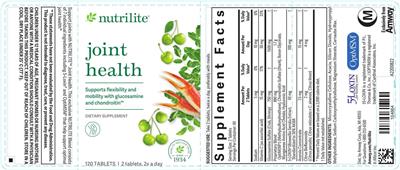
Supplement Facts
The label details for Joint Health by Nutrilite, sourced from the NIH Dietary Supplement Label Database.
Supplement Facts
| Ingredient | Amount | % DV |
|---|---|---|
| Sodium | 5 mg, 10 mg | -- |
| Proprietary Blend | 1.7 Gram(s), 890 mg | -- |
| Vitamin C | 15 mg, 30 mg | 17%, 33% |
| Boron Glycinate | 0 NP, 0 NP | -- |
| Hyaluronic Acid | 0 NP, 0 NP | -- |
| OptiMSM | 0 NP, 0 NP | -- |
| Manganese Amino Acid Chelate | 0 NP, 0 NP | -- |
| Chondroitin Sulfate | 0 NP, 0 NP | -- |
| Glucosamine Sulfate | 750 mg, 1500 mg | -- |
| Acerola concentrate | 7.5 mg, 15 mg | -- |
| 5-LOXIN | 50 mg, 100 mg | -- |
| Citrus Bioflavonoids | 2 mg, 4 mg | -- |
Other ingredients: Microcrystalline Cellulose, Acacia, Silicon Dioxide, Hydroxypropyl Methylcellulose, Sodium Carboxymethylcellulose, Magnesium Stearate, Carnauba Wax
Tap any ingredient to jump to its full detail below.
These statements are the manufacturer’s wording, reproduced from the product label — the label is saying it, not HelloPharmacist. We don’t verify or endorse them.
Formulation
Support joints with Nutrilite Joint health.
Formula
The exclusive Nutrilite blend consists of 7 ingredients including 5-Loxin and OptiMSM that help support optimal joint health.
Supports flexibility and mobility with glucosamine and chondroitin
5-Loxin for health joints OptiMSM
Crescent M (Halal)
FDA Disclaimer Statement
These statements have not been evaluated by the Food and Drug Administration. This product is not intended to diagnose, treat, cure, or prevent any disease.
Precautions
Children under 12 years of age, pregnant women or nursing mothers, or anyone with a medical condition should consult with a physician before taking this product. Keep out of reach of children.
Children under 12 years of age, pregnant women or nursing mothers, or anyone with a medical condition should consult with a physician before taking this product.
Storage
Store in a cool, dry place under 25 degrees C (77 degrees F).
FDA Statement of Identity
Dietary Supplement
Suggested/Recommended/Usage/Directions
2 tablets, 2x a day
Suggested use: Take 2 tablets, twice a day, preferably with meals.
Seals/Symbols
Quality you can trust Since 1934
Crescent M (Halal)
Brand IP Statement(s)
5-Loxin is a registered trademark of P.L. Thomas & Co., Inc. OptiMSM is a registered trademark of Cardianl Associates, Inc.
Copyright Alticor Inc.
General Statements
For Questions: 1-800-253-6500
Exclusively from Amway
Is this label outdated? Report a formula or label change and our pharmacy team will review it.
Joint Health by Nutrilite label
The label scan from the NIH Dietary Supplement Label Database. Tap to enlarge.
Label images are published by the NIH Dietary Supplement Label Database for the version of this product on file. Always read your actual product label.
View the full label (PDF)The Ingredients in Joint Health by Nutrilite
These are the 11 active ingredients this product is made of. Select any to open its full monograph.
Serving size2 Tablet(s) Dosage formTablet Or Pill Servings per container60 Amounts shown are per serving.
Most supplement products combine several ingredients, and a medication can interact with the product through any one of them. Each ingredient below shows whether it has known drug interactions.
Sodium
Interacts with205 drugs
Sodium is an essential mineral and electrolyte your body needs to balance fluids, support nerves, and help muscles work. Most people in modern diets g...
Sodium monograph & interactionsProprietary Blend
- › Boron Glycinate
- › Hyaluronic Acid
- › OptiMSM
- › Manganese Amino Acid Chelate
- › Chondroitin Sulfate
Vitamin C
Interacts with207 drugs
Vitamin C (ascorbic acid) is an essential nutrient your body needs but cannot make, so you must get it from food or supplements. It's important for im...
Vitamin C monograph & interactionsGlucosamine Sulfate
Interacts with170 drugs
Glucosamine is a natural compound found in cartilage and joint fluid, and it is one of the most popular supplements for osteoarthritis, especially of...
Glucosamine Sulfate monograph & interactionsAcerola concentrate
Interacts with128 drugs
Acerola is a small tropical fruit prized for its very high natural vitamin C content, and it is mostly used as a food-based source of vitamin C and an...
Acerola concentrate monograph & interactions5-LOXIN
Interacts with952 drugs
Boswellia serrata is a tree resin used in traditional medicine, mainly for joint pain and inflammation. Some studies suggest it may help with osteoart...
5-LOXIN monograph & interactionsCitrus Bioflavonoids
Interacts with1,169 drugs
Quercetin is a plant flavonoid with antioxidant and anti-inflammatory properties found in many common foods and sold as a supplement. While early rese...
Citrus Bioflavonoids monograph & interactionsOther (inactive) ingredients: Microcrystalline Cellulose, Acacia, Silicon Dioxide, Hydroxypropyl Methylcellulose, Sodium Carboxymethylcellulose, Magnesium Stearate, Carnauba Wax. These complete the product’s ingredient list but are not active constituents.
Joint Health by Nutrilite Drug Interactions
HelloPharmacist Interaction Report
Joint Health by Nutrilite contains several ingredients with documented medication interactions.
Sodium is the source of the most serious concerns: it can reduce the effectiveness of blood pressure medications (antihypertensives) and may increase the risk of dangerously high sodium levels (hypernatremia) if you're taking corticosteroids, the HIV medication didanosine, sodium phosphate bowel cleanser, tolvaptan for low sodium, or other sodium-containing drugs. Sodium also interacts with lithium, a mood stabilizer — high sodium intake lowers lithium levels and effectiveness, while low sodium can raise them to toxic levels.
Read the full breakdown — every affected drug type, severity by severity
Vitamin C in this product may interact with blood thinners like warfarin (reducing their effect at high doses), estrogen-based hormonal contraceptives and hormone replacement therapy (increasing estrogen levels), and several chemotherapy drugs including alkylating agents and antitumor antibiotics (theoretically reducing their anti-cancer activity). It can also increase aluminum absorption and modestly reduce levels of the HIV medication indinavir and the antipsychotic fluphenazine.
Glucosamine Sulfate carries a Major-severity interaction with warfarin — it may increase bleeding and bruising risk. Manganese may interact with antipsychotic drugs (raising toxicity risk) and with quinolone and tetracycline antibiotics (reducing their absorption).
Chondroitin in combination with glucosamine may also affect warfarin. Acerola, which contains vitamin C, shares similar interactions as vitamin C at Minor severity.
We could not check OptiMSM, 5-LOXIN, or Citrus Bioflavonoids — no interaction data is held for these ingredients. Altogether, these interactions span 578 individual medications.
Check your exact medications with the search tool on this page before starting.
Check your own medications below · Editorial policy · How we use AI
Want to check YOUR meds against Joint Health?
Ask about interactions with your drugs in plain English — “Can I take it with lisinopril?” — and we find you the answer in seconds, ingredient by ingredient.
Go to the checkerIngredients driving the most interactions
Individual Drug Interactions
The ingredients in Joint Health interact with 1,391 drugs. Click any drug to see the details.
8 of the 11 ingredients in Joint Health interact with drugs. Each result below shows which ingredient is responsible. Citrus Bioflavonoids 5-LOXIN Vitamin C Sodium Glucosamine Sulfate Acerola concentrate Manganese Amino Acid Chelate Chondroitin Sulfate
Acetaminophen, Chlorpheniramine, Dextromethorphan HydrobromideCoricidin HBP Maximum Strength Flu
How Acetaminophen, Chlorpheniramine, Dextromethorphan Hydrobromide interacts with Joint Health — through 4 ingredients. Tap an ingredient for the detail:
5-loxinCytochrome P450 3a4 (cyp3a4) Substrates, Cytochrome P450 1a2 (cyp1a2) Substrates +1 Moderate
Interaction Summary
Theoretically, Boswellia serrata might increase or decrease the levels and clinical effects of CYP3A4 substrates.
Read the full 5-loxin + Acetaminophen, Chlorpheniramine, Dextromethorphan Hydrobromide interactionCitrus BioflavonoidsCytochrome P450 2d6 (cyp2d6) Substrates, Cytochrome P450 3a4 (cyp3a4) Substrates Moderate
Interaction Summary
Theoretically, concomitant use might increase the levels and adverse effects of CYP2D6 substrates.
Read the full Citrus Bioflavonoids + Acetaminophen, Chlorpheniramine, Dextromethorphan Hydrobromide interactionGlucosamine SulfateAcetaminophen (tylenol, Others) Minor
Interaction Summary
Acetaminophen might interfere with the activity of glucosamine sulfate by interacting with the sulfate portion.
Read the full Glucosamine Sulfate + Acetaminophen, Chlorpheniramine, Dextromethorphan Hydrobromide interactionVitamin CAcetaminophen (tylenol, Others) Minor
Interaction Summary
High-dose vitamin C might slightly prolong the clearance of acetaminophen.
Read the full Vitamin C + Acetaminophen, Chlorpheniramine, Dextromethorphan Hydrobromide interactionAcetaminophen, Chlorpheniramine, Dextromethorphan, PhenylpropanolamineMulti Symptom Cold Relief
How Acetaminophen, Chlorpheniramine, Dextromethorphan, Phenylpropanolamine interacts with Joint Health — through 4 ingredients. Tap an ingredient for the detail:
Citrus BioflavonoidsCytochrome P450 2d6 (cyp2d6) Substrates, Cytochrome P450 3a4 (cyp3a4) Substrates Moderate
Interaction Summary
Theoretically, concomitant use might increase the levels and adverse effects of CYP2D6 substrates.
Read the full Citrus Bioflavonoids + Acetaminophen, Chlorpheniramine, Dextromethorphan, Phenylpropanolamine interaction5-loxinCytochrome P450 2d6 (cyp2d6) Substrates, Cytochrome P450 1a2 (cyp1a2) Substrates +1 Moderate
Interaction Summary
Theoretically, Boswellia serrata might increase the levels of CYP2D6 substrates.
Read the full 5-loxin + Acetaminophen, Chlorpheniramine, Dextromethorphan, Phenylpropanolamine interactionVitamin CAcetaminophen (tylenol, Others) Minor
Interaction Summary
High-dose vitamin C might slightly prolong the clearance of acetaminophen.
Read the full Vitamin C + Acetaminophen, Chlorpheniramine, Dextromethorphan, Phenylpropanolamine interactionGlucosamine SulfateAcetaminophen (tylenol, Others) Minor
Interaction Summary
Acetaminophen might interfere with the activity of glucosamine sulfate by interacting with the sulfate portion.
Read the full Glucosamine Sulfate + Acetaminophen, Chlorpheniramine, Dextromethorphan, Phenylpropanolamine interactionAcetaminophen, Chlorpheniramine, Dextromethorphan, PseudoephedrineChildren's Tylenol Cold Plus Cough, Tylenol Cold Ex Strength
How Acetaminophen, Chlorpheniramine, Dextromethorphan, Pseudoephedrine interacts with Joint Health — through 4 ingredients. Tap an ingredient for the detail:
5-loxinCytochrome P450 3a4 (cyp3a4) Substrates, Cytochrome P450 2d6 (cyp2d6) Substrates +1 Moderate
Interaction Summary
Theoretically, Boswellia serrata might increase or decrease the levels and clinical effects of CYP3A4 substrates.
Read the full 5-loxin + Acetaminophen, Chlorpheniramine, Dextromethorphan, Pseudoephedrine interactionCitrus BioflavonoidsCytochrome P450 3a4 (cyp3a4) Substrates, Cytochrome P450 2d6 (cyp2d6) Substrates Moderate
Interaction Summary
Theoretically, concomitant use might alter the effects and adverse effects of CYP3A4 substrates.
Read the full Citrus Bioflavonoids + Acetaminophen, Chlorpheniramine, Dextromethorphan, Pseudoephedrine interactionGlucosamine SulfateAcetaminophen (tylenol, Others) Minor
Interaction Summary
Acetaminophen might interfere with the activity of glucosamine sulfate by interacting with the sulfate portion.
Read the full Glucosamine Sulfate + Acetaminophen, Chlorpheniramine, Dextromethorphan, Pseudoephedrine interactionVitamin CAcetaminophen (tylenol, Others) Minor
Interaction Summary
High-dose vitamin C might slightly prolong the clearance of acetaminophen.
Read the full Vitamin C + Acetaminophen, Chlorpheniramine, Dextromethorphan, Pseudoephedrine interactionAcetaminophen, Chlorpheniramine, Guaifenesin, Phenylephrine, SalicylamideRhinogesic GG
How Acetaminophen, Chlorpheniramine, Guaifenesin, Phenylephrine, Salicylamide interacts with Joint Health — through 4 ingredients. Tap an ingredient for the detail:
5-loxinCytochrome P450 1a2 (cyp1a2) Substrates, Cytochrome P450 3a4 (cyp3a4) Substrates Moderate
Interaction Summary
Theoretically, Boswellia serrata might increase the levels of CYP1A2 substrates.
Read the full 5-loxin + Acetaminophen, Chlorpheniramine, Guaifenesin, Phenylephrine, Salicylamide interactionCitrus BioflavonoidsCytochrome P450 3a4 (cyp3a4) Substrates Moderate
Interaction Summary
Theoretically, concomitant use might alter the effects and adverse effects of CYP3A4 substrates.
Read the full Citrus Bioflavonoids + Acetaminophen, Chlorpheniramine, Guaifenesin, Phenylephrine, Salicylamide interactionVitamin CAcetaminophen (tylenol, Others) Minor
Interaction Summary
High-dose vitamin C might slightly prolong the clearance of acetaminophen.
Read the full Vitamin C + Acetaminophen, Chlorpheniramine, Guaifenesin, Phenylephrine, Salicylamide interactionGlucosamine SulfateAcetaminophen (tylenol, Others) Minor
Interaction Summary
Acetaminophen might interfere with the activity of glucosamine sulfate by interacting with the sulfate portion.
Read the full Glucosamine Sulfate + Acetaminophen, Chlorpheniramine, Guaifenesin, Phenylephrine, Salicylamide interactionAcetaminophen, Chlorpheniramine, PhenylephrineAlka-Seltzer PLUS, Histex SR, Protid
How Acetaminophen, Chlorpheniramine, Phenylephrine interacts with Joint Health — through 4 ingredients. Tap an ingredient for the detail:
Citrus BioflavonoidsCytochrome P450 3a4 (cyp3a4) Substrates Moderate
Interaction Summary
Theoretically, concomitant use might alter the effects and adverse effects of CYP3A4 substrates.
Read the full Citrus Bioflavonoids + Acetaminophen, Chlorpheniramine, Phenylephrine interaction5-loxinCytochrome P450 1a2 (cyp1a2) Substrates, Cytochrome P450 3a4 (cyp3a4) Substrates Moderate
Interaction Summary
Theoretically, Boswellia serrata might increase the levels of CYP1A2 substrates.
Read the full 5-loxin + Acetaminophen, Chlorpheniramine, Phenylephrine interactionGlucosamine SulfateAcetaminophen (tylenol, Others) Minor
Interaction Summary
Acetaminophen might interfere with the activity of glucosamine sulfate by interacting with the sulfate portion.
Read the full Glucosamine Sulfate + Acetaminophen, Chlorpheniramine, Phenylephrine interactionVitamin CAcetaminophen (tylenol, Others) Minor
Interaction Summary
High-dose vitamin C might slightly prolong the clearance of acetaminophen.
Read the full Vitamin C + Acetaminophen, Chlorpheniramine, Phenylephrine interactionAcetaminophen, Chlorpheniramine, Phenylephrine, SalicylamideRhinogesic, Rhinogesic JR
How Acetaminophen, Chlorpheniramine, Phenylephrine, Salicylamide interacts with Joint Health — through 4 ingredients. Tap an ingredient for the detail:
5-loxinCytochrome P450 1a2 (cyp1a2) Substrates, Cytochrome P450 3a4 (cyp3a4) Substrates Moderate
Interaction Summary
Theoretically, Boswellia serrata might increase the levels of CYP1A2 substrates.
Read the full 5-loxin + Acetaminophen, Chlorpheniramine, Phenylephrine, Salicylamide interactionCitrus BioflavonoidsCytochrome P450 3a4 (cyp3a4) Substrates Moderate
Interaction Summary
Theoretically, concomitant use might alter the effects and adverse effects of CYP3A4 substrates.
Read the full Citrus Bioflavonoids + Acetaminophen, Chlorpheniramine, Phenylephrine, Salicylamide interactionVitamin CAcetaminophen (tylenol, Others) Minor
Interaction Summary
High-dose vitamin C might slightly prolong the clearance of acetaminophen.
Read the full Vitamin C + Acetaminophen, Chlorpheniramine, Phenylephrine, Salicylamide interactionGlucosamine SulfateAcetaminophen (tylenol, Others) Minor
Interaction Summary
Acetaminophen might interfere with the activity of glucosamine sulfate by interacting with the sulfate portion.
Read the full Glucosamine Sulfate + Acetaminophen, Chlorpheniramine, Phenylephrine, Salicylamide interactionAcetaminophen, Chlorpheniramine, PhenylpropanolamineAlumadrine, Conex, Sinadrin Max Strength, Sinulin
How Acetaminophen, Chlorpheniramine, Phenylpropanolamine interacts with Joint Health — through 4 ingredients. Tap an ingredient for the detail:
5-loxinCytochrome P450 1a2 (cyp1a2) Substrates, Cytochrome P450 3a4 (cyp3a4) Substrates Moderate
Interaction Summary
Theoretically, Boswellia serrata might increase the levels of CYP1A2 substrates.
Read the full 5-loxin + Acetaminophen, Chlorpheniramine, Phenylpropanolamine interactionCitrus BioflavonoidsCytochrome P450 3a4 (cyp3a4) Substrates Moderate
Interaction Summary
Theoretically, concomitant use might alter the effects and adverse effects of CYP3A4 substrates.
Read the full Citrus Bioflavonoids + Acetaminophen, Chlorpheniramine, Phenylpropanolamine interactionGlucosamine SulfateAcetaminophen (tylenol, Others) Minor
Interaction Summary
Acetaminophen might interfere with the activity of glucosamine sulfate by interacting with the sulfate portion.
Read the full Glucosamine Sulfate + Acetaminophen, Chlorpheniramine, Phenylpropanolamine interactionVitamin CAcetaminophen (tylenol, Others) Minor
Interaction Summary
High-dose vitamin C might slightly prolong the clearance of acetaminophen.
Read the full Vitamin C + Acetaminophen, Chlorpheniramine, Phenylpropanolamine interactionAcetaminophen, Chlorpheniramine, Phenylpropanolamine, OpiumHista-Derfule
How Acetaminophen, Chlorpheniramine, Phenylpropanolamine, Opium interacts with Joint Health — through 4 ingredients. Tap an ingredient for the detail:
Citrus BioflavonoidsCytochrome P450 3a4 (cyp3a4) Substrates Moderate
Interaction Summary
Theoretically, concomitant use might alter the effects and adverse effects of CYP3A4 substrates.
Read the full Citrus Bioflavonoids + Acetaminophen, Chlorpheniramine, Phenylpropanolamine, Opium interaction5-loxinCytochrome P450 3a4 (cyp3a4) Substrates, Cytochrome P450 1a2 (cyp1a2) Substrates Moderate
Interaction Summary
Theoretically, Boswellia serrata might increase or decrease the levels and clinical effects of CYP3A4 substrates.
Read the full 5-loxin + Acetaminophen, Chlorpheniramine, Phenylpropanolamine, Opium interactionVitamin CAcetaminophen (tylenol, Others) Minor
Interaction Summary
High-dose vitamin C might slightly prolong the clearance of acetaminophen.
Read the full Vitamin C + Acetaminophen, Chlorpheniramine, Phenylpropanolamine, Opium interactionGlucosamine SulfateAcetaminophen (tylenol, Others) Minor
Interaction Summary
Acetaminophen might interfere with the activity of glucosamine sulfate by interacting with the sulfate portion.
Read the full Glucosamine Sulfate + Acetaminophen, Chlorpheniramine, Phenylpropanolamine, Opium interactionAcetaminophen, Chlorpheniramine, Phenylpropanolamine, PhenyltoloxamineNorel Plus
How Acetaminophen, Chlorpheniramine, Phenylpropanolamine, Phenyltoloxamine interacts with Joint Health — through 4 ingredients. Tap an ingredient for the detail:
5-loxinCytochrome P450 1a2 (cyp1a2) Substrates, Cytochrome P450 3a4 (cyp3a4) Substrates Moderate
Interaction Summary
Theoretically, Boswellia serrata might increase the levels of CYP1A2 substrates.
Read the full 5-loxin + Acetaminophen, Chlorpheniramine, Phenylpropanolamine, Phenyltoloxamine interactionCitrus BioflavonoidsCytochrome P450 3a4 (cyp3a4) Substrates Moderate
Interaction Summary
Theoretically, concomitant use might alter the effects and adverse effects of CYP3A4 substrates.
Read the full Citrus Bioflavonoids + Acetaminophen, Chlorpheniramine, Phenylpropanolamine, Phenyltoloxamine interactionGlucosamine SulfateAcetaminophen (tylenol, Others) Minor
Interaction Summary
Acetaminophen might interfere with the activity of glucosamine sulfate by interacting with the sulfate portion.
Read the full Glucosamine Sulfate + Acetaminophen, Chlorpheniramine, Phenylpropanolamine, Phenyltoloxamine interactionVitamin CAcetaminophen (tylenol, Others) Minor
Interaction Summary
High-dose vitamin C might slightly prolong the clearance of acetaminophen.
Read the full Vitamin C + Acetaminophen, Chlorpheniramine, Phenylpropanolamine, Phenyltoloxamine interactionAcetaminophen, Chlorpheniramine, PseudoephedrineAlka-Seltzer PLUS Liquid Gels, Children's Tylenol Cold, Codimal, Comtrex, Extra Strength Tylenol Allergy Sinus, Lorsin +3 more
How Acetaminophen, Chlorpheniramine, Pseudoephedrine interacts with Joint Health — through 4 ingredients. Tap an ingredient for the detail:
5-loxinCytochrome P450 3a4 (cyp3a4) Substrates, Cytochrome P450 1a2 (cyp1a2) Substrates Moderate
Interaction Summary
Theoretically, Boswellia serrata might increase or decrease the levels and clinical effects of CYP3A4 substrates.
Read the full 5-loxin + Acetaminophen, Chlorpheniramine, Pseudoephedrine interactionCitrus BioflavonoidsCytochrome P450 3a4 (cyp3a4) Substrates Moderate
Interaction Summary
Theoretically, concomitant use might alter the effects and adverse effects of CYP3A4 substrates.
Read the full Citrus Bioflavonoids + Acetaminophen, Chlorpheniramine, Pseudoephedrine interactionVitamin CAcetaminophen (tylenol, Others) Minor
Interaction Summary
High-dose vitamin C might slightly prolong the clearance of acetaminophen.
Read the full Vitamin C + Acetaminophen, Chlorpheniramine, Pseudoephedrine interactionGlucosamine SulfateAcetaminophen (tylenol, Others) Minor
Interaction Summary
Acetaminophen might interfere with the activity of glucosamine sulfate by interacting with the sulfate portion.
Read the full Glucosamine Sulfate + Acetaminophen, Chlorpheniramine, Pseudoephedrine interactionAcetaminophen, ChlorzoxazoneAcetazone Forte, Extra Strength Tylenol Aches & Strains, Parafon Forte
How Acetaminophen, Chlorzoxazone interacts with Joint Health — through 3 ingredients. Tap an ingredient for the detail:
5-loxinCytochrome P450 1a2 (cyp1a2) Substrates Moderate
Interaction Summary
Theoretically, Boswellia serrata might increase the levels of CYP1A2 substrates.
Read the full 5-loxin + Acetaminophen, Chlorzoxazone interactionGlucosamine SulfateAcetaminophen (tylenol, Others) Minor
Interaction Summary
Acetaminophen might interfere with the activity of glucosamine sulfate by interacting with the sulfate portion.
Read the full Glucosamine Sulfate + Acetaminophen, Chlorzoxazone interactionVitamin CAcetaminophen (tylenol, Others) Minor
Interaction Summary
High-dose vitamin C might slightly prolong the clearance of acetaminophen.
Read the full Vitamin C + Acetaminophen, Chlorzoxazone interactionAcetaminophen, Chlorzoxazone, CodeineAcetazone Forte C8, Parafon Forte C8
How Acetaminophen, Chlorzoxazone, Codeine interacts with Joint Health — through 4 ingredients. Tap an ingredient for the detail:
5-loxinCytochrome P450 1a2 (cyp1a2) Substrates, Cytochrome P450 2d6 (cyp2d6) Substrates Moderate
Interaction Summary
Theoretically, Boswellia serrata might increase the levels of CYP1A2 substrates.
Read the full 5-loxin + Acetaminophen, Chlorzoxazone, Codeine interactionCitrus BioflavonoidsCytochrome P450 2d6 (cyp2d6) Substrates Moderate
Interaction Summary
Theoretically, concomitant use might increase the levels and adverse effects of CYP2D6 substrates.
Read the full Citrus Bioflavonoids + Acetaminophen, Chlorzoxazone, Codeine interactionVitamin CAcetaminophen (tylenol, Others) Minor
Interaction Summary
High-dose vitamin C might slightly prolong the clearance of acetaminophen.
Read the full Vitamin C + Acetaminophen, Chlorzoxazone, Codeine interactionGlucosamine SulfateAcetaminophen (tylenol, Others) Minor
Interaction Summary
Acetaminophen might interfere with the activity of glucosamine sulfate by interacting with the sulfate portion.
Read the full Glucosamine Sulfate + Acetaminophen, Chlorzoxazone, Codeine interactionAcetaminophen, CodeineTylenol No.3, Tylenol w/ Codeine
How Acetaminophen, Codeine interacts with Joint Health — through 4 ingredients. Tap an ingredient for the detail:
5-loxinCytochrome P450 2d6 (cyp2d6) Substrates, Cytochrome P450 1a2 (cyp1a2) Substrates Moderate
Interaction Summary
Theoretically, Boswellia serrata might increase the levels of CYP2D6 substrates.
Read the full 5-loxin + Acetaminophen, Codeine interactionCitrus BioflavonoidsCytochrome P450 2d6 (cyp2d6) Substrates Moderate
Interaction Summary
Theoretically, concomitant use might increase the levels and adverse effects of CYP2D6 substrates.
Read the full Citrus Bioflavonoids + Acetaminophen, Codeine interactionGlucosamine SulfateAcetaminophen (tylenol, Others) Minor
Interaction Summary
Acetaminophen might interfere with the activity of glucosamine sulfate by interacting with the sulfate portion.
Read the full Glucosamine Sulfate + Acetaminophen, Codeine interactionVitamin CAcetaminophen (tylenol, Others) Minor
Interaction Summary
High-dose vitamin C might slightly prolong the clearance of acetaminophen.
Read the full Vitamin C + Acetaminophen, Codeine interactionAcetaminophen, Codeine, DoxylamineMersyndol
How Acetaminophen, Codeine, Doxylamine interacts with Joint Health — through 4 ingredients. Tap an ingredient for the detail:
Citrus BioflavonoidsCytochrome P450 2d6 (cyp2d6) Substrates Moderate
Interaction Summary
Theoretically, concomitant use might increase the levels and adverse effects of CYP2D6 substrates.
Read the full Citrus Bioflavonoids + Acetaminophen, Codeine, Doxylamine interaction5-loxinCytochrome P450 1a2 (cyp1a2) Substrates, Cytochrome P450 2d6 (cyp2d6) Substrates Moderate
Interaction Summary
Theoretically, Boswellia serrata might increase the levels of CYP1A2 substrates.
Read the full 5-loxin + Acetaminophen, Codeine, Doxylamine interactionVitamin CAcetaminophen (tylenol, Others) Minor
Interaction Summary
High-dose vitamin C might slightly prolong the clearance of acetaminophen.
Read the full Vitamin C + Acetaminophen, Codeine, Doxylamine interactionGlucosamine SulfateAcetaminophen (tylenol, Others) Minor
Interaction Summary
Acetaminophen might interfere with the activity of glucosamine sulfate by interacting with the sulfate portion.
Read the full Glucosamine Sulfate + Acetaminophen, Codeine, Doxylamine interactionAcetaminophen, Codeine, MethocarbamolAcetaminophen, Codeine, Methocarbamol, Robaxacet 8
How Acetaminophen, Codeine, Methocarbamol interacts with Joint Health — through 4 ingredients. Tap an ingredient for the detail:
5-loxinCytochrome P450 2d6 (cyp2d6) Substrates, Cytochrome P450 1a2 (cyp1a2) Substrates Moderate
Interaction Summary
Theoretically, Boswellia serrata might increase the levels of CYP2D6 substrates.
Read the full 5-loxin + Acetaminophen, Codeine, Methocarbamol interactionCitrus BioflavonoidsCytochrome P450 2d6 (cyp2d6) Substrates Moderate
Interaction Summary
Theoretically, concomitant use might increase the levels and adverse effects of CYP2D6 substrates.
Read the full Citrus Bioflavonoids + Acetaminophen, Codeine, Methocarbamol interactionGlucosamine SulfateAcetaminophen (tylenol, Others) Minor
Interaction Summary
Acetaminophen might interfere with the activity of glucosamine sulfate by interacting with the sulfate portion.
Read the full Glucosamine Sulfate + Acetaminophen, Codeine, Methocarbamol interactionVitamin CAcetaminophen (tylenol, Others) Minor
Interaction Summary
High-dose vitamin C might slightly prolong the clearance of acetaminophen.
Read the full Vitamin C + Acetaminophen, Codeine, Methocarbamol interactionAcetaminophen, Dexbrompheniramine, PseudoephedrineSinadrin Plus
How Acetaminophen, Dexbrompheniramine, Pseudoephedrine interacts with Joint Health — through 3 ingredients. Tap an ingredient for the detail:
5-loxinCytochrome P450 1a2 (cyp1a2) Substrates Moderate
Interaction Summary
Theoretically, Boswellia serrata might increase the levels of CYP1A2 substrates.
Read the full 5-loxin + Acetaminophen, Dexbrompheniramine, Pseudoephedrine interactionVitamin CAcetaminophen (tylenol, Others) Minor
Interaction Summary
High-dose vitamin C might slightly prolong the clearance of acetaminophen.
Read the full Vitamin C + Acetaminophen, Dexbrompheniramine, Pseudoephedrine interactionGlucosamine SulfateAcetaminophen (tylenol, Others) Minor
Interaction Summary
Acetaminophen might interfere with the activity of glucosamine sulfate by interacting with the sulfate portion.
Read the full Glucosamine Sulfate + Acetaminophen, Dexbrompheniramine, Pseudoephedrine interactionAcetaminophen, DextromethorphanTylenol Cough Ex Strength
How Acetaminophen, Dextromethorphan interacts with Joint Health — through 4 ingredients. Tap an ingredient for the detail:
5-loxinCytochrome P450 1a2 (cyp1a2) Substrates, Cytochrome P450 3a4 (cyp3a4) Substrates +1 Moderate
Interaction Summary
Theoretically, Boswellia serrata might increase the levels of CYP1A2 substrates.
Read the full 5-loxin + Acetaminophen, Dextromethorphan interactionCitrus BioflavonoidsCytochrome P450 2d6 (cyp2d6) Substrates, Cytochrome P450 3a4 (cyp3a4) Substrates Moderate
Interaction Summary
Theoretically, concomitant use might increase the levels and adverse effects of CYP2D6 substrates.
Read the full Citrus Bioflavonoids + Acetaminophen, Dextromethorphan interactionGlucosamine SulfateAcetaminophen (tylenol, Others) Minor
Interaction Summary
Acetaminophen might interfere with the activity of glucosamine sulfate by interacting with the sulfate portion.
Read the full Glucosamine Sulfate + Acetaminophen, Dextromethorphan interactionVitamin CAcetaminophen (tylenol, Others) Minor
Interaction Summary
High-dose vitamin C might slightly prolong the clearance of acetaminophen.
Read the full Vitamin C + Acetaminophen, Dextromethorphan interactionAcetaminophen, Dextromethorphan, Doxylamine, PseudoephedrineVicks NyQuil
How Acetaminophen, Dextromethorphan, Doxylamine, Pseudoephedrine interacts with Joint Health — through 4 ingredients. Tap an ingredient for the detail:
5-loxinCytochrome P450 2d6 (cyp2d6) Substrates, Cytochrome P450 1a2 (cyp1a2) Substrates +1 Moderate
Interaction Summary
Theoretically, Boswellia serrata might increase the levels of CYP2D6 substrates.
Read the full 5-loxin + Acetaminophen, Dextromethorphan, Doxylamine, Pseudoephedrine interactionCitrus BioflavonoidsCytochrome P450 3a4 (cyp3a4) Substrates, Cytochrome P450 2d6 (cyp2d6) Substrates Moderate
Interaction Summary
Theoretically, concomitant use might alter the effects and adverse effects of CYP3A4 substrates.
Read the full Citrus Bioflavonoids + Acetaminophen, Dextromethorphan, Doxylamine, Pseudoephedrine interactionGlucosamine SulfateAcetaminophen (tylenol, Others) Minor
Interaction Summary
Acetaminophen might interfere with the activity of glucosamine sulfate by interacting with the sulfate portion.
Read the full Glucosamine Sulfate + Acetaminophen, Dextromethorphan, Doxylamine, Pseudoephedrine interactionVitamin CAcetaminophen (tylenol, Others) Minor
Interaction Summary
High-dose vitamin C might slightly prolong the clearance of acetaminophen.
Read the full Vitamin C + Acetaminophen, Dextromethorphan, Doxylamine, Pseudoephedrine interactionAcetaminophen, Dextromethorphan, Guaifenesin, PhenylephrineConar-A
How Acetaminophen, Dextromethorphan, Guaifenesin, Phenylephrine interacts with Joint Health — through 4 ingredients. Tap an ingredient for the detail:
Citrus BioflavonoidsCytochrome P450 2d6 (cyp2d6) Substrates, Cytochrome P450 3a4 (cyp3a4) Substrates Moderate
Interaction Summary
Theoretically, concomitant use might increase the levels and adverse effects of CYP2D6 substrates.
Read the full Citrus Bioflavonoids + Acetaminophen, Dextromethorphan, Guaifenesin, Phenylephrine interaction5-loxinCytochrome P450 3a4 (cyp3a4) Substrates, Cytochrome P450 1a2 (cyp1a2) Substrates +1 Moderate
Interaction Summary
Theoretically, Boswellia serrata might increase or decrease the levels and clinical effects of CYP3A4 substrates.
Read the full 5-loxin + Acetaminophen, Dextromethorphan, Guaifenesin, Phenylephrine interactionVitamin CAcetaminophen (tylenol, Others) Minor
Interaction Summary
High-dose vitamin C might slightly prolong the clearance of acetaminophen.
Read the full Vitamin C + Acetaminophen, Dextromethorphan, Guaifenesin, Phenylephrine interactionGlucosamine SulfateAcetaminophen (tylenol, Others) Minor
Interaction Summary
Acetaminophen might interfere with the activity of glucosamine sulfate by interacting with the sulfate portion.
Read the full Glucosamine Sulfate + Acetaminophen, Dextromethorphan, Guaifenesin, Phenylephrine interactionAcetaminophen, Dextromethorphan, Guaifenesin, PhenylpropanolamineAnatuss
How Acetaminophen, Dextromethorphan, Guaifenesin, Phenylpropanolamine interacts with Joint Health — through 4 ingredients. Tap an ingredient for the detail:
5-loxinCytochrome P450 2d6 (cyp2d6) Substrates, Cytochrome P450 1a2 (cyp1a2) Substrates +1 Moderate
Interaction Summary
Theoretically, Boswellia serrata might increase the levels of CYP2D6 substrates.
Read the full 5-loxin + Acetaminophen, Dextromethorphan, Guaifenesin, Phenylpropanolamine interactionCitrus BioflavonoidsCytochrome P450 3a4 (cyp3a4) Substrates, Cytochrome P450 2d6 (cyp2d6) Substrates Moderate
Interaction Summary
Theoretically, concomitant use might alter the effects and adverse effects of CYP3A4 substrates.
Read the full Citrus Bioflavonoids + Acetaminophen, Dextromethorphan, Guaifenesin, Phenylpropanolamine interactionGlucosamine SulfateAcetaminophen (tylenol, Others) Minor
Interaction Summary
Acetaminophen might interfere with the activity of glucosamine sulfate by interacting with the sulfate portion.
Read the full Glucosamine Sulfate + Acetaminophen, Dextromethorphan, Guaifenesin, Phenylpropanolamine interactionVitamin CAcetaminophen (tylenol, Others) Minor
Interaction Summary
High-dose vitamin C might slightly prolong the clearance of acetaminophen.
Read the full Vitamin C + Acetaminophen, Dextromethorphan, Guaifenesin, Phenylpropanolamine interactionAcetaminophen, Dextromethorphan, Guaifenesin, PseudoephedrineRobitussin Cold, Severe Cold, Suphedrine Cold/Cough
How Acetaminophen, Dextromethorphan, Guaifenesin, Pseudoephedrine interacts with Joint Health — through 4 ingredients. Tap an ingredient for the detail:
5-loxinCytochrome P450 2d6 (cyp2d6) Substrates, Cytochrome P450 3a4 (cyp3a4) Substrates +1 Moderate
Interaction Summary
Theoretically, Boswellia serrata might increase the levels of CYP2D6 substrates.
Read the full 5-loxin + Acetaminophen, Dextromethorphan, Guaifenesin, Pseudoephedrine interactionCitrus BioflavonoidsCytochrome P450 2d6 (cyp2d6) Substrates, Cytochrome P450 3a4 (cyp3a4) Substrates Moderate
Interaction Summary
Theoretically, concomitant use might increase the levels and adverse effects of CYP2D6 substrates.
Read the full Citrus Bioflavonoids + Acetaminophen, Dextromethorphan, Guaifenesin, Pseudoephedrine interactionVitamin CAcetaminophen (tylenol, Others) Minor
Interaction Summary
High-dose vitamin C might slightly prolong the clearance of acetaminophen.
Read the full Vitamin C + Acetaminophen, Dextromethorphan, Guaifenesin, Pseudoephedrine interactionGlucosamine SulfateAcetaminophen (tylenol, Others) Minor
Interaction Summary
Acetaminophen might interfere with the activity of glucosamine sulfate by interacting with the sulfate portion.
Read the full Glucosamine Sulfate + Acetaminophen, Dextromethorphan, Guaifenesin, Pseudoephedrine interactionAcetaminophen, Dextromethorphan, Phenylpropanolamine, PyrilamineTheracaps
How Acetaminophen, Dextromethorphan, Phenylpropanolamine, Pyrilamine interacts with Joint Health — through 4 ingredients. Tap an ingredient for the detail:
Citrus BioflavonoidsCytochrome P450 2d6 (cyp2d6) Substrates, Cytochrome P450 3a4 (cyp3a4) Substrates Moderate
Interaction Summary
Theoretically, concomitant use might increase the levels and adverse effects of CYP2D6 substrates.
Read the full Citrus Bioflavonoids + Acetaminophen, Dextromethorphan, Phenylpropanolamine, Pyrilamine interaction5-loxinCytochrome P450 1a2 (cyp1a2) Substrates, Cytochrome P450 2d6 (cyp2d6) Substrates +1 Moderate
Interaction Summary
Theoretically, Boswellia serrata might increase the levels of CYP1A2 substrates.
Read the full 5-loxin + Acetaminophen, Dextromethorphan, Phenylpropanolamine, Pyrilamine interactionGlucosamine SulfateAcetaminophen (tylenol, Others) Minor
Interaction Summary
Acetaminophen might interfere with the activity of glucosamine sulfate by interacting with the sulfate portion.
Read the full Glucosamine Sulfate + Acetaminophen, Dextromethorphan, Phenylpropanolamine, Pyrilamine interactionVitamin CAcetaminophen (tylenol, Others) Minor
Interaction Summary
High-dose vitamin C might slightly prolong the clearance of acetaminophen.
Read the full Vitamin C + Acetaminophen, Dextromethorphan, Phenylpropanolamine, Pyrilamine interactionAcetaminophen, Dextromethorphan, PseudoephedrineAlka-Seltzer PLUS Flu Liquid Gels, Non Aspirin Cold Caps, Tylenol Cold, Tylenol Flu Daytime Ex Strength, Tylenol Flu Ex Strength
How Acetaminophen, Dextromethorphan, Pseudoephedrine interacts with Joint Health — through 4 ingredients. Tap an ingredient for the detail:
5-loxinCytochrome P450 3a4 (cyp3a4) Substrates, Cytochrome P450 2d6 (cyp2d6) Substrates +1 Moderate
Interaction Summary
Theoretically, Boswellia serrata might increase or decrease the levels and clinical effects of CYP3A4 substrates.
Read the full 5-loxin + Acetaminophen, Dextromethorphan, Pseudoephedrine interactionCitrus BioflavonoidsCytochrome P450 3a4 (cyp3a4) Substrates, Cytochrome P450 2d6 (cyp2d6) Substrates Moderate
Interaction Summary
Theoretically, concomitant use might alter the effects and adverse effects of CYP3A4 substrates.
Read the full Citrus Bioflavonoids + Acetaminophen, Dextromethorphan, Pseudoephedrine interactionVitamin CAcetaminophen (tylenol, Others) Minor
Interaction Summary
High-dose vitamin C might slightly prolong the clearance of acetaminophen.
Read the full Vitamin C + Acetaminophen, Dextromethorphan, Pseudoephedrine interactionGlucosamine SulfateAcetaminophen (tylenol, Others) Minor
Interaction Summary
Acetaminophen might interfere with the activity of glucosamine sulfate by interacting with the sulfate portion.
Read the full Glucosamine Sulfate + Acetaminophen, Dextromethorphan, Pseudoephedrine interactionAcetaminophen, Dichloralantipyrine, IsomethepteneAmidrine, Midchlor, Migquin, Migratine
How Acetaminophen, Dichloralantipyrine, Isometheptene interacts with Joint Health — through 3 ingredients. Tap an ingredient for the detail:
5-loxinCytochrome P450 1a2 (cyp1a2) Substrates Moderate
Interaction Summary
Theoretically, Boswellia serrata might increase the levels of CYP1A2 substrates.
Read the full 5-loxin + Acetaminophen, Dichloralantipyrine, Isometheptene interactionGlucosamine SulfateAcetaminophen (tylenol, Others) Minor
Interaction Summary
Acetaminophen might interfere with the activity of glucosamine sulfate by interacting with the sulfate portion.
Read the full Glucosamine Sulfate + Acetaminophen, Dichloralantipyrine, Isometheptene interactionVitamin CAcetaminophen (tylenol, Others) Minor
Interaction Summary
High-dose vitamin C might slightly prolong the clearance of acetaminophen.
Read the full Vitamin C + Acetaminophen, Dichloralantipyrine, Isometheptene interactionAcetaminophen, Dichloralphenazone, IsomethepteneMidrin
How Acetaminophen, Dichloralphenazone, Isometheptene interacts with Joint Health — through 3 ingredients. Tap an ingredient for the detail:
5-loxinCytochrome P450 1a2 (cyp1a2) Substrates Moderate
Interaction Summary
Theoretically, Boswellia serrata might increase the levels of CYP1A2 substrates.
Read the full 5-loxin + Acetaminophen, Dichloralphenazone, Isometheptene interactionVitamin CAcetaminophen (tylenol, Others) Minor
Interaction Summary
High-dose vitamin C might slightly prolong the clearance of acetaminophen.
Read the full Vitamin C + Acetaminophen, Dichloralphenazone, Isometheptene interactionGlucosamine SulfateAcetaminophen (tylenol, Others) Minor
Interaction Summary
Acetaminophen might interfere with the activity of glucosamine sulfate by interacting with the sulfate portion.
Read the full Glucosamine Sulfate + Acetaminophen, Dichloralphenazone, Isometheptene interactionAcetaminophen, Dichlorophenazone, IsometheptaneIsocom
How Acetaminophen, Dichlorophenazone, Isometheptane interacts with Joint Health — through 3 ingredients. Tap an ingredient for the detail:
5-loxinCytochrome P450 1a2 (cyp1a2) Substrates Moderate
Interaction Summary
Theoretically, Boswellia serrata might increase the levels of CYP1A2 substrates.
Read the full 5-loxin + Acetaminophen, Dichlorophenazone, Isometheptane interactionGlucosamine SulfateAcetaminophen (tylenol, Others) Minor
Interaction Summary
Acetaminophen might interfere with the activity of glucosamine sulfate by interacting with the sulfate portion.
Read the full Glucosamine Sulfate + Acetaminophen, Dichlorophenazone, Isometheptane interactionVitamin CAcetaminophen (tylenol, Others) Minor
Interaction Summary
High-dose vitamin C might slightly prolong the clearance of acetaminophen.
Read the full Vitamin C + Acetaminophen, Dichlorophenazone, Isometheptane interactionAcetaminophen, DiphenhydramineTylenol PM, Tylenol PM Ex Strength
How Acetaminophen, Diphenhydramine interacts with Joint Health — through 3 ingredients. Tap an ingredient for the detail:
5-loxinCytochrome P450 1a2 (cyp1a2) Substrates Moderate
Interaction Summary
Theoretically, Boswellia serrata might increase the levels of CYP1A2 substrates.
Read the full 5-loxin + Acetaminophen, Diphenhydramine interactionVitamin CAcetaminophen (tylenol, Others) Minor
Interaction Summary
High-dose vitamin C might slightly prolong the clearance of acetaminophen.
Read the full Vitamin C + Acetaminophen, Diphenhydramine interactionGlucosamine SulfateAcetaminophen (tylenol, Others) Minor
Interaction Summary
Acetaminophen might interfere with the activity of glucosamine sulfate by interacting with the sulfate portion.
Read the full Glucosamine Sulfate + Acetaminophen, Diphenhydramine interactionAcetaminophen, Diphenhydramine, PseudoephedrineChildren's Tylenol Allergy, Cold Control, Contac Night Allergy Relief
How Acetaminophen, Diphenhydramine, Pseudoephedrine interacts with Joint Health — through 3 ingredients. Tap an ingredient for the detail:
5-loxinCytochrome P450 1a2 (cyp1a2) Substrates Moderate
Interaction Summary
Theoretically, Boswellia serrata might increase the levels of CYP1A2 substrates.
Read the full 5-loxin + Acetaminophen, Diphenhydramine, Pseudoephedrine interactionGlucosamine SulfateAcetaminophen (tylenol, Others) Minor
Interaction Summary
Acetaminophen might interfere with the activity of glucosamine sulfate by interacting with the sulfate portion.
Read the full Glucosamine Sulfate + Acetaminophen, Diphenhydramine, Pseudoephedrine interactionVitamin CAcetaminophen (tylenol, Others) Minor
Interaction Summary
High-dose vitamin C might slightly prolong the clearance of acetaminophen.
Read the full Vitamin C + Acetaminophen, Diphenhydramine, Pseudoephedrine interactionAcetaminophen, Doxylamine, PseudoephedrineEx Strength Tylenol Sinus Nighttime
How Acetaminophen, Doxylamine, Pseudoephedrine interacts with Joint Health — through 3 ingredients. Tap an ingredient for the detail:
5-loxinCytochrome P450 1a2 (cyp1a2) Substrates Moderate
Interaction Summary
Theoretically, Boswellia serrata might increase the levels of CYP1A2 substrates.
Read the full 5-loxin + Acetaminophen, Doxylamine, Pseudoephedrine interactionVitamin CAcetaminophen (tylenol, Others) Minor
Interaction Summary
High-dose vitamin C might slightly prolong the clearance of acetaminophen.
Read the full Vitamin C + Acetaminophen, Doxylamine, Pseudoephedrine interactionGlucosamine SulfateAcetaminophen (tylenol, Others) Minor
Interaction Summary
Acetaminophen might interfere with the activity of glucosamine sulfate by interacting with the sulfate portion.
Read the full Glucosamine Sulfate + Acetaminophen, Doxylamine, Pseudoephedrine interactionAcetaminophen, HydrocodoneAnexsia, Anodynos DHC, Azdone, Co-Gesic, Doucet, Lorcet +9 more
How Acetaminophen, Hydrocodone interacts with Joint Health — through 4 ingredients. Tap an ingredient for the detail:
5-loxinCytochrome P450 1a2 (cyp1a2) Substrates, Cytochrome P450 2d6 (cyp2d6) Substrates +1 Moderate
Interaction Summary
Theoretically, Boswellia serrata might increase the levels of CYP1A2 substrates.
Read the full 5-loxin + Acetaminophen, Hydrocodone interactionCitrus BioflavonoidsCytochrome P450 2d6 (cyp2d6) Substrates, Cytochrome P450 3a4 (cyp3a4) Substrates Moderate
Interaction Summary
Theoretically, concomitant use might increase the levels and adverse effects of CYP2D6 substrates.
Read the full Citrus Bioflavonoids + Acetaminophen, Hydrocodone interactionGlucosamine SulfateAcetaminophen (tylenol, Others) Minor
Interaction Summary
Acetaminophen might interfere with the activity of glucosamine sulfate by interacting with the sulfate portion.
Read the full Glucosamine Sulfate + Acetaminophen, Hydrocodone interactionVitamin CAcetaminophen (tylenol, Others) Minor
Interaction Summary
High-dose vitamin C might slightly prolong the clearance of acetaminophen.
Read the full Vitamin C + Acetaminophen, Hydrocodone interactionEach ingredient & the kinds of drugs it affects
For each ingredient in Joint Health with known interactions, here are the types of medications they can affect. Open any type for the detail — or search your exact drug in the checker above.
Citrus Bioflavonoids
Antidiabetes Drugs
Theoretically, concomitant use of quercetin and antidiabetes drugs might increase the risk of hypoglycemia.
Clinical research suggests that a combination of quercetin, myricetin, and chlorogenic acid reduce levels of fasting glucose in patients with type 2 diabetes, including those already taking antidiabetes agents. The effect of quercetin alone is unknown.
Antihypertensive Drugs
Theoretically, taking quercetin with antihypertensive drugs might increase the risk of hypotension.
Quercetin can modestly decrease blood pressure in people with mild hypertension. Theoretically, it might have additive blood pressure lowering effects when used with antihypertensive drugs.
Cyclosporine (Neoral, Sandimmune)
Theoretically, concomitant use might increase the levels and adverse effects of cyclosporine.
A small study in healthy volunteers shows that pretreatment with quercetin increases plasma levels and prolongs the half-life of a single dose of cyclosporine, possibly due to inhibition of p-glycoprotein or cytochrome P450 3A4 (CYP3A4), which metabolizes cyclosporin.
Cytochrome P450 2C8 (Cyp2C8) Substrates
Theoretically, concomitant use might increase the levels and adverse effects of CYP2C8 substrates.
In vitro research shows that quercetin inhibits CYP2C8. Inhibition of paclitaxel (Taxol) metabolism via CYP2C8 has been reported in vitro. However, a small study in humans found no effect of quercetin on rosiglitazone (Avandia), which is also a CYP2C8 substrate.
Cytochrome P450 2C9 (Cyp2C9) Substrates
Theoretically, concomitant use might increase the levels and adverse effects of CYP2C9 substrates.
A small clinical study in healthy volunteers shows that taking quercetin 500 mg twice daily for 10 days prior to taking diclofenac, a CYP2C9 substrate, increases diclofenac plasma levels by 75% and prolongs the half-life by 32.5%. Animal research also shows that pretreatment with quercetin increases plasma levels and prolongs the half-life of losartan (Cozaar), a substrate of CYP2C9. Furthermore, laboratory research shows that quercetin inhibits CYP2C9.
Cytochrome P450 2D6 (Cyp2D6) Substrates
Theoretically, concomitant use might increase the levels and adverse effects of CYP2D6 substrates.
In vitro research show that quercetin inhibits CYP2D6. This effect has not been reported in humans.
Cytochrome P450 3A4 (Cyp3A4) Substrates
Theoretically, concomitant use might alter the effects and adverse effects of CYP3A4 substrates.
A small clinical study in healthy volunteers shows that pretreatment with quercetin increases plasma levels and prolongs the half-life of a single dose of cyclosporine (Neoral, Sandimmune), a substrate of CYP3A4. Animal research also shows that pretreatment with quercetin increases plasma levels and prolongs the half-life of losartan (Cozaar) and quetiapine (Seroquel), substrates of CYP3A4. Other laboratory research also shows that quercetin inhibits CYP3A4. However, one clinical study shows that quercetin can increase the metabolism of midazolam, a substrate of CYP3A4, and decrease serum concentrations of midazolam by about 24% in some healthy individuals, suggesting possible induction of CYP3A4.
Diclofenac (Voltaren, Others)
Theoretically, concomitant use might increase the levels and adverse effects of diclofenac.
A small clinical study in healthy volunteers shows that taking quercetin 500 mg twice daily for 10 days prior to taking diclofenac increases diclofenac plasma levels by 75% and prolongs the half-life by 32.5%. This is thought to be due to inhibition of CYP2C9 by quercetin.
Losartan (Cozaar)
Theoretically, concomitant use might increase the effects and adverse effects of losartan and decrease the effects of its active metabolite.
Animal research shows that pretreatment with quercetin increases plasma levels and prolongs the half-life of losartan (Cozaar) while decreasing plasma levels of losartan's active metabolite. This metabolite, which is around 10-fold more potent than losartan, is the result of cytochrome P450 (CYP) 2C9- and CYP3A4-mediated transformation of losartan. Additionally, in vitro research shows that quercetin may inhibit P-glycoprotein-mediated efflux of losartan from the intestines, resulting in increased absorption of losartan. These results suggest that concomitant use of quercetin and losartan might increase systemic exposure to losartan while also decreasing plasma concentrations of losartan's active and more potent metabolite.
Midazolam (Versed)
Theoretically, concomitant use might decrease the levels and effects of midazolam.
A small clinical study in healthy volunteers shows that quercetin can increase the metabolism of midazolam, with a decrease in AUC of about 24%.
Mitoxantrone
Theoretically, quercetin might increase the effects and adverse effects of mitoxantrone.
In vitro research shows that quercetin increases the intracellular accumulation and cytotoxicity of mitoxantrone, possibly through inhibition of breast cancer resistance protein (BCRP), of which mitoxantrone is a substrate. So far, this interaction has not been reported in humans.
Organic Anion Transporter 1 (Oat1) Substrates
Theoretically, concomitant use might increase the effects and adverse effects of OAT1 substrates.
In vitro research shows that quercetin is a strong non-competitive inhibitor of OAT1, with half-maximal inhibitory concentration (IC50) values less than 10 mcM. So far, this interaction has not been reported in humans.
Organic Anion Transporter 3 (Oat3) Substrates
Theoretically, concomitant use might increase the effects and adverse effects of OAT3 substrates.
In vitro research shows that quercetin is a strong non-competitive inhibitor of OAT3, with half-maximal inhibitory concentration (IC50) values as low as 0.75 mcM. So far, this interaction has not been reported in humans.
Organic Anion-Transporting Polypeptide Substrates (Oatp)
Theoretically, concomitant use might increase the effects and adverse effects of OATP substrates.
In vitro evidence shows that quercetin can inhibit organic anion-transporting peptide (OATP) 1B1-mediated uptake of estrone-3-sulfate and pravastatin. Furthermore, clinical research in healthy males shows that intake of quercetin along with pravastatin increases the AUC of pravastatin by 24%, prolongs its half-life by 14%, and decreases its apparent clearance by 18%, suggesting that quercetin modestly inhibits the uptake of pravastatin in hepatic cells.
P-Glycoprotein Substrates
Theoretically, concomitant use might alter the effects and adverse effects of P-glycoprotein substrates.
There is preliminary evidence that quercetin inhibits the gastrointestinal P-glycoprotein efflux pump, which might increase the bioavailability and serum levels of drugs transported by the pump. A small study in healthy volunteers reported that pretreatment with quercetin increased bioavailability and plasma levels after a single dose of cyclosporine (Neoral, Sandimmune). Also, two small studies have shown that quercetin might decrease the absorption of talinolol, a substrate transported by the gastrointestinal P-glycoprotein efflux pump. However, in another small study, several days of quercetin treatment did not significantly affect the pharmacokinetics of saquinavir (Invirase). The reason for these discrepancies is not entirely clear. Until more is known, use quercetin cautiously in combination with P-glycoprotein substrates.
Pravastatin (Pravachol)
Theoretically, concomitant use might increase the effects and adverse effects of pravastatin.
In vitro evidence shows that quercetin can inhibit OATP 1B1-mediated uptake of pravastatin. Also, preliminary clinical research in healthy males shows that intake of quercetin along with pravastatin increases the maximum concentration of pravastatin by 24%, prolongs its half-life by 14%, and decreases its apparent clearance by 18%, suggesting that quercetin modestly inhibits the uptake of pravastatin in hepatic cells.
Prazosin (Minipress)
Theoretically, quercetin might increase the effects and adverse effects of prazosin.
In vitro research shows that quercetin inhibits the transcellular efflux of prazosin, possibly through inhibition of breast cancer resistance protein (BCRP), of which prazosin is a substrate. BCRP is an ATP-binding cassette efflux transporter in the intestines, kidneys, and liver. So far, this interaction has not been reported in humans.
Quetiapine (Seroquel)
Theoretically, concomitant use might increase the effects and adverse effects of quetiapine.
Animal research shows that pretreatment with quercetin can increase plasma levels of quetiapine and prolong its clearance, possibly due to inhibition of cytochrome P450 3A4 (CYP3A4) by quercetin. Additionally, the brain-to-plasma ratio of quetiapine concentrations increased, possibly due to inhibition of P-glycoprotein at the blood-brain barrier. This interaction has not been reported in humans.
Quinolone Antibiotics
Theoretically, concomitant use might inhibit the effects of quinolone antibiotics.
In vitro, quercetin binds to the DNA gyrase site on bacteria, which may interfere with the activity of quinolone antibiotics.
Sulfasalazine (Azulfidine)
Theoretically, quercetin might increase the effects and adverse effects of sulfasalazine.
Animal research shows that quercetin increases the maximum serum concentration (Cmax) and area under the curve (AUC) of sulfasalazine, possibly through inhibition of breast cancer resistance protein (BCRP), of which sulfasalazine is a substrate. So far, this interaction has not been reported in humans.
Warfarin (Coumadin)
Theoretically, quercetin may increase the risk of bleeding if used with warfarin.
Animal and in vitro studies show that quercetin might increase serum levels of warfarin. Quercetin and warfarin have the same human serum albumin (HSA) binding site, and in vitro research shows that quercetin has stronger affinity for the HSA binding site and can theoretically displace warfarin, causing higher serum levels of warfarin. Animal research shows that taking quercetin for 2 weeks before initiating warfarin increases the maximum serum level of warfarin by 30%, the half-life by 10%, and the overall exposure by 63% when compared with control. Concomitant administration of quercetin and warfarin, without quercetin pre-treatment, also increased these measures, but to a lesser degree. Researchers theorize that inhibition of CYP3A4 by quercetin may explain these effects. So far, this interaction has not been reported in humans.
5-LOXIN
Cytochrome P450 1A2 (Cyp1A2) Substrates
Theoretically, Boswellia serrata might increase the levels of CYP1A2 substrates.
In vitro research shows that Boswellia serrata gum resin inhibits CYP1A2 enzymes.
Cytochrome P450 2C19 (Cyp2C19) Substrates
Theoretically, Boswellia serrata might increase the levels of CYP2C19 substrates.
In vitro research shows that Boswellia serrata gum resin inhibits CYP2C19 enzymes.
Cytochrome P450 2C9 (Cyp2C9) Substrates
Theoretically, Boswellia serrata might increase the levels of CYP2C9 substrates.
In vitro research shows that Boswellia serrata gum resin inhibits CYP2C9 enzymes.
Cytochrome P450 2D6 (Cyp2D6) Substrates
Theoretically, Boswellia serrata might increase the levels of CYP2D6 substrates.
In vitro research shows that Boswellia serrata gum resin inhibits CYP2D6 enzymes.
Cytochrome P450 3A4 (Cyp3A4) Substrates
Theoretically, Boswellia serrata might increase or decrease the levels and clinical effects of CYP3A4 substrates.
In vitro research shows that Boswellia serrata gum resin inhibits CYP3A4 enzymes. Other in vitro research shows that Boswellia serrata extract inhibits CYP3A4 enzymes at most concentrations, although it may modestly induce enzyme activity at low concentrations.
Immunosuppressants
Theoretically, Boswellia serrata might alter the effects of immunosuppressive drugs.
Some in vitro research suggests that Boswellia serrata extracts might inhibit mediators of autoimmune disorders such as leukotrienes and reduce production of antibodies and cell-mediated immunity. However, other in vitro research suggests that, when coupled with calcium ions, boswellic acids containing the keto group have immunostimulant properties within specific cell signaling pathways.
Vitamin C
Alkylating Agents
Theoretically, antioxidant effects of vitamin C might reduce the effectiveness of alkylating agents.
The use of antioxidants like vitamin C during chemotherapy is controversial. There is concern that antioxidants could reduce the activity of chemotherapy drugs that generate free radicals, such as cyclophosphamide, chlorambucil, carmustine, busulfan, and thiotepa. In contrast, some researchers theorize that antioxidants might make chemotherapy more effective by reducing oxidative stress that could interfere with apoptosis (cell death) of cancer cells. More evidence is needed to determine what effect, if any, antioxidants such as vitamin C have on chemotherapy.
Aluminum
Vitamin C can increase the amount of aluminum absorbed from aluminum compounds.
Research in animals and humans shows that vitamin C increases aluminum absorption, theoretically by chelating aluminum and keeping it in solution where it is available for absorption. In people with normal renal function, urinary excretion of aluminum will likely increase, making aluminum retention and toxicity unlikely. Patients with renal failure who take aluminum-containing compounds such as phosphate binders should avoid vitamin C supplements in doses above the recommended dietary allowances.
Antitumor Antibiotics
Theoretically, the antioxidant effects of vitamin C might reduce the effectiveness of antitumor antibiotics.
The use of antioxidants like vitamin C during chemotherapy is controversial. There is concern that antioxidants could reduce the activity of chemotherapy drugs which generate free radicals, such as doxorubicin. In contrast, some researchers theorize that antioxidants might make chemotherapy more effective by reducing oxidative stress that could interfere with apoptosis (cell death) of cancer cells. More evidence is needed to determine what effects, if any, antioxidants such as vitamin C have on chemotherapy.
Estrogens
Vitamin C might increase blood levels of estrogens.
Increases in plasma estrogen levels of up to 55% occur under some circumstances when vitamin C is taken concurrently with oral contraceptives or hormone replacement therapy, including topical products. It is suggested that vitamin C prevents oxidation of estrogen in the tissues, regenerates oxidized estrogen, and reduces sulfate conjugation of estrogen in the gut wall. When tissue levels of vitamin C are high, these processes are already maximized and supplemental vitamin C does not have any effect on estrogen levels. Increases in plasma estrogen levels may occur when patients who are deficient in vitamin C take supplements. Monitor these patients for estrogen-related side effects.
Fluphenazine (Prolixin)
Theoretically, vitamin C might decrease levels of fluphenazine.
In one patient there was a clinically significant decrease in fluphenazine levels when vitamin C (500 mg twice daily) was started. The mechanism is not known, and there is no further data to confirm this interaction.
Indinavir (Crixivan)
Vitamin C can modestly reduce indinavir levels.
One pharmacokinetic study shows that taking vitamin C 1 gram orally once daily along with indinavir 800 mg orally three times daily reduces the area under the concentration-time curve of indinavir by 14%. The mechanism of this interaction is unknown, but it is unlikely to be clinically significant in most patients. The effect of higher doses of vitamin C on indinavir levels is unknown.
Levothyroxine (Synthroid, Others)
Vitamin C can increase levothyroxine absorption.
Two clinical studies in adults with poorly controlled hypothyroidism show that swallowing levothyroxine with a glass of water containing vitamin C 500-1000 mg in solution reduces thyroid stimulating hormone (TSH) levels and increases thyroxine (T4) levels when compared with taking levothyroxine alone. This suggests that vitamin C increases the oral absorption of levothyroxine, possibly due to a reduction in pH.
Warfarin (Coumadin)
High-dose vitamin C might reduce the levels and effectiveness of warfarin.
Vitamin C in high doses may cause diarrhea and possibly reduce warfarin absorption. There are reports of two people who took up to 16 grams daily of vitamin C and had a reduction in prothrombin time. Lower doses of 5-10 grams daily can also reduce warfarin absorption. In many cases, this does not seem to be clinically significant. However, a case of warfarin resistance has been reported for a patient who took vitamin C 500 mg twice daily. Cessation of vitamin C supplementation resulted in a rapid increase in international normalized ratio (INR). Tell patients taking warfarin to avoid taking vitamin C in excessively high doses (greater than 10 grams daily). Lower doses may be safe, but the anticoagulation activity of warfarin should be monitored. Patients who are stabilized on warfarin while taking vitamin C should avoid adjusting vitamin C dosage to prevent the possibility of warfarin resistance.
Acetaminophen (Tylenol, Others)
High-dose vitamin C might slightly prolong the clearance of acetaminophen.
A small pharmacokinetic study in healthy volunteers shows that taking high-dose vitamin C (3 grams) 1.5 hours after taking acetaminophen 1 gram slightly increases the apparent half-life of acetaminophen from around 2.3 hours to 3.1 hours. Ascorbic acid competitively inhibits sulfate conjugation of acetaminophen. However, to compensate, elimination of acetaminophen glucuronide and unconjugated acetaminophen increases. This effect is not likely to be clinically significant.
Aspirin
Acidification of the urine by vitamin C might increase aspirin levels.
It has been suggested that acidification of the urine by vitamin C could increase reabsorption of salicylates by the renal tubules, and increase plasma salicylate levels. However, short-term use of up to 6 grams daily of vitamin C does not seem to affect urinary pH or salicylate excretion, suggesting this interaction is not clinically significant.
Choline Magnesium Trisalicylate (Trilisate)
Acidification of the urine by vitamin C might increase choline magnesium trisalicylate levels.
It has been suggested that acidification of the urine by vitamin C could increase reabsorption of salicylates by the renal tubules, and increase plasma salicylate levels. However, short-term use of up to 6 grams daily of vitamin C does not seem to affect urinary pH or salicylate excretion, suggesting this interaction probably is not clinically significant.
Niacin
Vitamin C might decrease the beneficial effects of niacin on high-density lipoprotein (HDL) cholesterol levels.
A combination of niacin and simvastatin (Zocor) effectively raises HDL cholesterol levels in patients with coronary disease and low HDL levels. Clinical research shows that taking a combination of antioxidants (vitamin C, vitamin E, beta-carotene, and selenium) along with niacin and simvastatin (Zocor) attenuates this rise in HDL, specifically the HDL-2 and apolipoprotein A1 fractions, by more than 50% in patients with coronary disease. It is not known whether this adverse effect is due to a single antioxidant such as vitamin C, or to the combination. It also is not known whether it will occur in other patient populations.
Salsalate (Disalcid)
Acidification of the urine by vitamin C might increase salsalate levels.
It has been suggested that acidification of the urine by vitamin C could increase reabsorption of salicylates by the renal tubules, and increase plasma salicylate levels. However, short-term use of up to 6 grams/day vitamin C does not seem to affect urinary pH or salicylate excretion, suggesting this interaction probably is not clinically significant.
Sodium
Antihypertensive Drugs
Theoretically, a high intake of dietary sodium might reduce the effectiveness of antihypertensive drugs.
High intake of dietary sodium can increase systolic and diastolic blood pressure. Also, high intake of sodium may necessitate increased use of antihypertensive medications to achieve blood pressure control in some patients, such as those with chronic kidney disease.
Corticosteroids
Concomitant use of mineralocorticoids and some glucocorticoids with sodium supplements might increase the risk of hypernatremia.
Mineralocorticoids and some glucocorticoids (corticosteroids) cause sodium retention. This effect is dose-related and depends on mineralocorticoid potency. It is most common with hydrocortisone, cortisone, and fludrocortisone, followed by prednisone and prednisolone.
Didanosine (Videx)
Concomitant use of didanosine with additional sodium from dietary or supplemental sources may increase the risk of hypernatremia.
Didanosine formulations contain a significant amount of sodium.
Lithium
Altering dietary intake of sodium might alter the levels and clinical effects of lithium.
High sodium intake can reduce plasma concentrations of lithium by increasing lithium excretion. Reducing sodium intake can significantly increase plasma concentrations of lithium and cause lithium toxicity in patients being treated with lithium carbonate. Stabilizing sodium intake is shown to reduce the percentage of patients with lithium level fluctuations above 0.8 mEq/L. Patients taking lithium should avoid significant alterations in their dietary intake of sodium.
Sodium Phosphates
Theoretically, concomitant use of sodium phosphate with sodium supplements might increase the risk of hypernatremia.
Use of high doses (> 45 mL in 24 hours) of sodium phosphate, such as those used for bowel cleansing before surgery, can lead to serious electrolyte disturbances, including hypernatremia. The risk of hypernatremia is highest in the elderly and people with other risk factors for electrolyte disturbances.
Sodium-Containing Drugs
Concomitant use of sodium-containing drugs with additional sodium from dietary or supplemental sources may increase the risk of hypernatremia and long-term sodium-related complications.
The Chronic Disease Risk Reduction (CDRR) intake level of 2.3 grams of sodium daily indicates the intake at which it is believed that chronic disease risk increases for the apparently healthy population. Some medications contain high quantities of sodium. When used in conjunction with sodium supplements or high-sodium diets, the CDRR may be exceeded. Additionally, concomitant use may increase the risk for hypernatremia; this risk is highest in the elderly and people with other risk factors for electrolyte disturbances.
Tolvaptan (Samsca)
Theoretically, concomitant use of tolvaptan with sodium might increase the risk of hypernatremia.
Tolvaptan is a vasopressin receptor 2 antagonist that is used to increase sodium levels in patients with hyponatremia. Patients taking tolvaptan should use caution with the use of sodium salts such as sodium chloride.
Glucosamine Sulfate
Warfarin (Coumadin)
Glucosamine might increase the anticoagulant effects of warfarin and increase the risk of bruising and bleeding.
In two individual case reports, glucosamine/chondroitin combinations were associated with a significant increase in international normalized ratio (INR) in patients previously stabilized on warfarin. In one case, the increase in INR occurred only after tripling the dose of a glucosamine/chondroitin supplement from 500 mg/400 mg daily to 1500/1200 mg daily. Additionally, 20 voluntary case reports to the U.S. Food & Drug Administration (FDA) have linked glucosamine plus chondroitin with increased INR, bruising, and bleeding in patients who were also taking warfarin. There have also been 20 additional case reports to the World Health Organization (WHO) that link glucosamine alone to increased INR in patients taking warfarin. The mechanism of this interaction is unclear. Glucosamine is a small component of heparin, but is not thought to have anticoagulant activity; however, animal research suggests that it might have antiplatelet activity.
Topoisomerase Ii Inhibitors
Theoretically glucosamine may induce resistance to topoisomerase II inhibitors.
In vitro research suggests that glucosamine might induce resistance to etoposide (VP16, VePesid) and doxorubicin (Adriamycin) by reducing inhibition of topoisomerase II, an enzyme required for DNA replication in tumor cells. This effect has not been reported in humans.
Acetaminophen (Tylenol, Others)
Acetaminophen might interfere with the activity of glucosamine sulfate by interacting with the sulfate portion.
Anecdotal reports suggest that adding glucosamine to an acetaminophen regimen might decrease pain control in patients with osteoarthritis. Some research suggests that the sulfate portion of glucosamine sulfate might contribute to its effect in osteoarthritis. Since acetaminophen metabolism requires sulfur and reduces serum sulfate concentrations, acetaminophen could theoretically interfere with the action of glucosamine sulfate. Conversely, the administration of sulfate could theoretically decrease the effectiveness of acetaminophen in sulfate-deficient people by increasing its clearance.
Antidiabetes Drugs
Despite initial concerns, it is unlikely that glucosamine will interfere with the effects of antidiabetes drugs.
In vitro and animal research has suggested that glucosamine might increase insulin resistance or decrease insulin production. This has raised concerns that taking glucosamine might worsen diabetes and decrease the effectiveness of diabetes drugs. However, clinical research suggests that glucosamine does not have adverse effects on blood glucose or glycated hemoglobin (HbA1C) in healthy, obese, or type 2 diabetes patients.
Acerola concentrate
Alkylating Agents
Theoretically, the antioxidant effects of acerola might reduce the effectiveness of alkylating agents.
Acerola contains vitamin C, an antioxidant. There is concern that antioxidants might reduce the activity of chemotherapy drugs that generate free radicals, such as alkylating agents. In contrast, other researchers theorize that antioxidants might make alkylating chemotherapy more effective by reducing oxidative stress that could interfere with apoptosis (cell death) of cancer cells. More evidence is needed to determine what effect, if any, antioxidants such as vitamin C have on chemotherapy.
Antitumor Antibiotics
Theoretically, the antioxidant effects of acerola might reduce the effectiveness of antitumor antibiotics.
Acerola contains vitamin C, an antioxidant. There is concern that antioxidants might reduce the activity of chemotherapy drugs that generate free radicals, such as antitumor antibiotics. In contrast, other researchers theorize that antioxidants might make antitumor antibiotic chemotherapy more effective by reducing oxidative stress that could interfere with apoptosis (cell death) of cancer cells. More evidence is needed to determine what effects, if any, antioxidants such as vitamin C have on antitumor antibiotic chemotherapy.
Aluminum
Theoretically, concomitant use of acerola with aluminum salts might increase the amount of aluminum absorbed.
Acerola contains vitamin C. It is thought that vitamin C chelates aluminum, keeping it in solution and available for absorption. In people with normal renal function, urinary excretion of aluminum likely increases, making aluminum retention and toxicity unlikely. However, patients with renal failure who take aluminum-containing compounds, such as phosphate binders, should avoid acerola in doses that provide more vitamin C than the recommended dietary allowances.
Aspirin
Theoretically, acerola might reduce the clearance of aspirin; however, its vitamin C content is likely too low to produce clinically significant effects.
Acerola contains vitamin C. It has been suggested that acidification of the urine by vitamin C can decrease the urinary excretion of salicylates, increasing plasma salicylate levels. However, short-term use of up to 6 grams daily of vitamin C does not seem to affect urinary pH or salicylate excretion. The vitamin C content of acerola is typically about 2000 mg per 100 grams. Thus, a clinically significant interaction between acerola and aspirin is unlikely.
Estrogens
Theoretically, concomitant use of acerola with estrogens might increase estrogenic effects.
Acerola contains vitamin C. Increases in plasma estrogen levels of up to 55% have occurred under some circumstances when vitamin C is taken concurrently with oral contraceptives or hormone replacement therapy, including topical products. It is suggested that vitamin C prevents oxidation of estrogen in the tissues, regenerates oxidized estrogen, and reduces sulfate conjugation of estrogen in the gut wall. When tissue levels of vitamin C are high, these processes are already maximized and supplemental vitamin C does not have any effect on estrogen levels. However, increases in plasma estrogen levels may occur when women who are deficient in vitamin C take supplements.
Warfarin (Coumadin)
Theoretically, acerola might reduce the effectiveness of warfarin; however, its vitamin C content is likely too low to produce clinically significant effects.
Acerola contains vitamin C. High doses of vitamin C may reduce the response to warfarin, possibly by causing diarrhea and reducing warfarin absorption. This occurred in two people who took up to 16 grams daily of vitamin C, and resulted in decreased prothrombin time. Lower doses of 5-10 grams daily of vitamin C can also reduce warfarin absorption, but this does not seem to be clinically significant. The vitamin C content of acerola is typically about 2000 mg per 100 grams. Thus, a clinically significant interaction between acerola and warfarin is unlikely.
Manganese Amino Acid Chelate
Antipsychotic Drugs
Theoretically, the risk for manganese toxicity might increase when taken with antipsychotic drugs.
Hallucinations and behavioral changes have been reported in a patient with liver disease who was taking haloperidol and manganese. Researchers speculate that taking manganese along with haloperidol, phenothiazine-derivatives, or other antipsychotic medications might increase the risk of manganese toxicity in some patients.
Quinolone Antibiotics
Theoretically, manganese might reduce the absorption of quinolone antibiotics.
Manganese is a multivalent cation. Interactions resulting in reduced quinolone absorption have been reported between quinolones and other multivalent cations, such as calcium and iron.
Tetracycline Antibiotics
Theoretically, manganese might reduce the absorption of tetracycline antibiotics.
Manganese is a multivalent cation. Interactions resulting in reduced tetracycline absorption have been reported between tetracyclines and other multivalent cations, such as calcium and iron.
Chondroitin Sulfate
Warfarin (Coumadin)
Taking chondroitin in combination with glucosamine might increase the anticoagulant effects of warfarin. However, the effect of chondroitin alone is unclear.
There have been multiple reports of increased international normalized ratio (INR) in patients taking warfarin with glucosamine, with or without chondroitin. The lack of reports with chondroitin alone seem to suggest that the interactions occurring in these reports may have been due to glucosamine. In two individual case reports, glucosamine/chondroitin combinations were associated with a significant increase in INR in patients previously stabilized on warfarin. Additionally, 20 voluntary case reports to the US Food & Drug Administration (FDA) have linked glucosamine plus chondroitin with increased INR, bruising, and bleeding in patients who were also taking warfarin. There have also been 20 additional case reports to the World Health Organization (WHO) that link glucosamine alone, without chondroitin, to increased INR in patients taking warfarin.
Brand information
Manufacturer and brand details for Joint Health, from the product label.
Nutrilite
See all Nutrilite products- Name
- Amway Corp.
- City
- Ada
- State
- MI
- ZipCode
- 49355
- Phone Number
- 1-800-253-6500
- Web Address
- Amway.com/Nutrilite
Joint Health by Nutrilite: Common Questions
Does Joint Health by Nutrilite interact with any medications?
How can one product interact with so many drugs?
Where does this information come from?
Is it safe to take Joint Health during pregnancy or while breastfeeding?
What are the most common side effects of this product?
Does Joint Health actually work for joint pain and osteoarthritis?
What is hyaluronic acid doing in a joint supplement?
Why is sodium in a joint health product?
Can I take this if I'm sensitive to shellfish?
Written and reviewed by the HelloPharmacist editorial staff. Our editorial policy
Not sure if Joint Health is safe with your meds?
Our pharmacists answer your medication & supplement questions — free.
Label information is sourced from the NIH Dietary Supplement Label Database and reflects the product version on file; always read your actual product label. This page is for education only and is not a substitute for professional medical advice. Confirm with your pharmacist or doctor before combining supplements and medications.
The Full Monographs Behind Joint Health’s Ingredients
Every ingredient we hold a full HelloPharmacist monograph for — uses, evidence, safety, and the complete interaction list.
Sodium
Interacts with 205 drugsSodium is an essential mineral and electrolyte your body needs to balance fluids, support nerves, and help muscles work. Most people in modern diets get more than enough—often too much—from...
Read the full Sodium monograph → Herb & supplement monographBoron
Boron is a trace mineral found in many plant foods and sold as a supplement, mainly promoted for bone, joint, and hormone health. The human evidence for most of these uses is limited or prel...
Read the full Boron monograph → Herb & supplement monographHyaluronic Acid
Hyaluronic acid is a natural substance in the body that helps hold water in the skin, joints, and eyes. Oral and topical products are popular for skin moisture and joint comfort, and the evi...
Read the full Hyaluronic Acid monograph → Herb & supplement monographManganese
Interacts with 83 drugsManganese is an essential trace mineral your body needs in small amounts for bone formation, metabolism, and antioxidant defense, and most people get enough from a normal diet. Supplements m...
Read the full Manganese monograph → Herb & supplement monographChondroitin Sulfate
Interacts with 2 drugsChondroitin sulfate is a naturally occurring building block of cartilage that is widely taken, often with glucosamine, for osteoarthritis joint pain. The evidence is mixed—some people report...
Read the full Chondroitin Sulfate monograph → Herb & supplement monographVitamin C
Interacts with 207 drugsVitamin C (ascorbic acid) is an essential nutrient your body needs but cannot make, so you must get it from food or supplements. It's important for immune function, collagen, and acts as an...
Read the full Vitamin C monograph → Herb & supplement monographGlucosamine
Interacts with 170 drugsGlucosamine is a natural compound found in cartilage and joint fluid, and it is one of the most popular supplements for osteoarthritis, especially of the knee. The evidence is mixed, with so...
Read the full Glucosamine monograph → Herb & supplement monographAcerola
Interacts with 128 drugsAcerola is a small tropical fruit prized for its very high natural vitamin C content, and it is mostly used as a food-based source of vitamin C and antioxidants. While vitamin C itself has w...
Read the full Acerola monograph → Herb & supplement monographBoswellia Serrata
Interacts with 952 drugsBoswellia serrata is a tree resin used in traditional medicine, mainly for joint pain and inflammation. Some studies suggest it may help with osteoarthritis symptoms, but the overall evidenc...
Read the full Boswellia Serrata monograph → Herb & supplement monographQuercetin
Interacts with 1,169 drugsQuercetin is a plant flavonoid with antioxidant and anti-inflammatory properties found in many common foods and sold as a supplement. While early research is interesting for allergies, blood...
Read the full Quercetin monograph →Sources & How We Checked
Joint Health's label data comes from the NIH Dietary Supplement Label Database; the ingredient interaction data is from the Natural Medicines database, reviewed by our pharmacists.
- NIH Dietary Supplement Label Database (DSLD) — The official product label on file for this supplement.
- Natural Medicines (Therapeutic Research Center) — Evidence-graded clinical reference behind the ingredient interaction data.
Content is written and reviewed by licensed HelloPharmacist pharmacists. See our data sources and editorial standards for how this information is built and checked.
The 262 references behind this product’s interaction data
Every citation that drives the interaction findings for this product’s ingredients, from the evidence-graded Natural Medicines (TRC Healthcare) database. Open an ingredient to browse its citations — links open the study on PubMed or the publisher’s site.
Sodium 38 references
- Garabedian-Ruffalo SM, Ruffalo RL. Drug and nutrient interactions. Am Fam Physician 1986;33:165-74.
- Food and Drug Administration Science Background: Safety of Sodium Phosphates Oral Solution. September 17, 2001. Available at: http://www.fda.gov/cder/drug/safety/sodiumphospate.htm
- Coton T, Mallaret C, Coilliot C, Carre D, Guisset M. Severe acute ulcerated gastritis induced by salt. Presse Med 2009;38(3):499-500. PubMed
- Frings-Meuthen P, Buehlmeier J, Baecker N, et al. High sodium chloride intake exacerbates immobilization-induced bone resorption and protein losses. J Appl Physiol 2011;111(2):537-542. PubMed
- Frings-Meuthen P, Baecker N, Heer M. Low-grade metabolic acidosis may be the cause of sodium chloride-induced exaggerated bone resorption. J Bone Miner Res 2008;23(4):517-524. PubMed
- Alam S, Johnson AG. A meta-analysis of randomised controlled trials (RCT) among healthy normotensive and essential hypertensive elderly patients to determine the effect of high salt (NaCl) diet of blood pressure. J Hum Hypertens 1999;13(6):367-74.
- Boudville N, Ward S, Benaroia M, House AA. Increased sodium intake correlates with greater use of antihypertensive agents by subjects with chronic kidney disease. Am J Hypertens 2005;18(10):1300-5. PubMed
- Bennett WM. Drug interactions and consequences of sodium restriction. Am J Clin Nutr 1997;65(2 Suppl):678S-681S. PubMed
- Okusa MD, Crystal LJ. Clinical manifestations and management of acute lithium intoxication. Am J Med 1994;97(4):383-9. PubMed
- Food and Nutrition Board, Institute of Medicine. Dietary reference intakes for water, potassium, sodium, chloride, and sulfate. Washington, DC: National Academy Press, 2005. Available at: http://www.nap.edu/openbook.php?record_id=10925. DOI
- D'Elia L, Rossi G, Ippolito R, Cappuccio FP, Strazzullo P. Habitual salt intake and risk of gastric cancer: a meta-analysis of prospective studies. Clin Nutr 2012;31(4):489-98. PubMed
- Goldsmith SR. Hyponatremia in heart failure: time for a trial. J Card Fail 2013;19(6):398-400. PubMed
- Willocks L, Brettle R, Keen J, Valentine C, Pinching AJ. Formulations of didanosine (ddI) and salt overload. Lancet 1992;339(8786):190.
- Chen L, Zhang Z, Chen W, Whelton PK, Appel LJ. Lower Sodium Intake and Risk of Headaches: Results From the Trial of Nonpharmacologic Interventions in the Elderly. Am J Public Health. 2016;106(7):1270-5. PubMed
- Cook NR, Appel LJ, Whelton PK. Lower levels of sodium intake and reduced cardiovascular risk. Circulation. 2014;129(9):981-9. PubMed
- Cook NR, Appel LJ, Whelton PK. Sodium Intake and All-Cause Mortality Over 20 Years in the Trials of Hypertension Prevention. J Am Coll Cardiol. 2016;68(15):1609-1617. PubMed
- Mente A, O'Donnell M, Rangarajan S, et al. Associations of urinary sodium excretion with cardiovascular events in individuals with and without hypertension: a pooled analysis of data from four studies. Lancet. 2016;388(10043):465-75. PubMed
- Moosavian SP, Haghighatdoost F, Surkan PJ, Azadbakht L. Salt and obesity: a systematic review and meta-analysis of observational studies. Int J Food Sci Nutr. 2017;68(3):265-277. PubMed
- O'Donnell M, Mente A, Rangarajan S, et al. Urinary sodium and potassium excretion, mortality, and cardiovascular events. N Engl J Med. 2014;371(7):612-23. DOI
- Poggio R, Gutierrez L, Matta MG, Elorriaga N, Irazola V, Rubinstein A. Daily sodium consumption and CVD mortality in the general population: systematic review and meta-analysis of prospective studies. Public Health Nutr. 2015;18(4):695-704. PubMed
- Stallings VA, Harrison M, Oria M; Committee to Review the Dietary Reference Intakes for Sodium and Potassium, Food and Nutrition Board, Health and Medicine Division, National Academies of Sciences, Engineering, and Medicine. Washington (DC): National Acad
- Mahtani KR, Heneghan C, Onakpoya I, et al. Reduced Salt Intake for Heart Failure: A Systematic Review. JAMA Intern Med. 2018 Dec 1;178(12):1693-1700. PubMed
- Yancy CW. Sodium Restriction in Heart Failure: Too Much Uncertainty-Do the Trials. JAMA Intern Med. 2018 Dec 1;178(12):1700-1701. PubMed
- He FJ, Campbell NRC, Ma Y, MacGregor GA, Cogswell ME, Cook NR. Errors in estimating usual sodium intake by the Kawasaki formula alter its relationship with mortality: implications for public health. Int J Epidemiol. 2018;47(6):1784-1795. PubMed
- Murthy K, Ondrey GJ, Malkani N, et al. THE EFFECTS OF HYPONATREMIA ON BONE DENSITY AND FRACTURES: A SYSTEMATIC REVIEW AND META-ANALYSIS. Endocr Pract. 2019;25(4):366-378. PubMed
- Messerli FH, Hofstetter L, Syrogiannouli L, et al. Sodium intake, life expectancy, and all-cause mortality. Eur Heart J 2021;42(21):2103-2112. PubMed
- Graudal NA, Hubeck-Graudal T, Jurgens G. Effects of low sodium diet versus high sodium diet on blood pressure, renin, aldosterone, catecholamines, cholesterol, and triglyceride. Cochrane Database Syst Rev 2020;12(12):CD004022. PubMed
- Giatti S, Santos RB, Aielo AN, et al. Association of sodium with obstructive sleep apnea. The ELSA-Brasil study. Ann Am Thorac Soc 2021;18(3):502-510. PubMed
- Nan X, Lu H, Wu J, et al. The interactive association between sodium intake, alcohol consumption and hypertension among elderly in northern China: a cross-sectional study. BMC Geriatr 2021;21(1):135. PubMed
- Kyozuka H, Fukusda T, Murata T, et al. Impact of preconception sodium intake on hypertensive disorders of pregnancy: The Japan Environment and Children's study. Pregnancy Hypertens 2021;23:66-72. PubMed
- Zhao L, Ogden CL, Yang Q, et al. Association of usual sodium intake with obesity among US children and adolescents, NHANES 2009-2016. Obesity (Silver Spring) 2021;29(3):587-594. PubMed
- Ma Y, He FJ, Sun Q, et al. 24-Hour urinary sodium and potassium excretion and cardiovascular risk. N Engl J Med 2022;386(3):252-263. PubMed
- Liu J, Yang X, Zhang P, et al. Association of urinary sodium excretion and left ventricular hypertrophy in people with type 2 diabetes mellitus: A cross-sectional study. Front Endocrinol (Lausanne) 2021;12:728493. PubMed
- Filippini T, Malavolti M, Whelton PK, Vinceti M. Sodium intake and risk of hypertension: A systematic review and dose-response meta-analysis of observational cohort studies. Curr Hypertens Rep 2022;24(5):133-144. PubMed
- Wang DD, Li Y, Nguyen XT, et al. Dietary sodium and potassium intake and risk of non-fatal cardiovascular diseases: The million veteran program. Nutrients 2022;14(5):1121. PubMed
- Kwak JH, Park CH, Eun CS, et al. The associations of dietary intake of high sodium and low zinc with gastric cancer mortality: A prospective cohort study in Korea. Nutr Cancer 2022;74(10):3501-3508. PubMed
- George S, Maiti R, Mishra BR, Jena M, Mohapatra D. Effect of regulated add-on sodium chloride intake on stabilization of serum lithium concentration in bipolar disorder: A randomized controlled trial. Bipolar Disord 2023;25(1):66-75. PubMed
- Zhou TL, Schütten MTJ, Kroon AA, et al. Urinary Sodium Excretion and Salt Intake Are Not Associated With Blood Pressure Variability in a White General Population. J Am Heart Assoc 2023;12(1):e026578. PubMed
Vitamin C 51 references
- McEvoy GK, ed. AHFS Drug Information. Bethesda, MD: American Society of Health-System Pharmacists, 1998.
- Back DJ, Breckenridge AM, MacIver M, et al. Interaction of ethinyloestradiol with ascorbic acid in man. Br Med J (Clin Res Ed) 1981;282:1516.
- Morris JC, Beeley L, Ballantine N. Interaction of ethinyloestradiol with ascorbic acid in man [letter]. Br Med J (Clin Res Ed) 1981;283:503.
- Labriola D, Livingston R. Possible interactions between dietary antioxidants and chemotherapy. Oncology 1999;13:1003-8.
- Dwyer JH, Merz NB, Shirocre AM, et al. Progression of early atherosclerosis and intake of vitamin C and vitamin E from supplements and food. The Los Angeles Atherosclerosis Study. 41st Annual Conference on Cardiovascular Disease Epidemiology and Prevent
- Levine M, Rumsey SC, Daruwala R, et al. Criteria and recommendations for vitamin C intake. JAMA 1999;281:1415-23. PubMed
- Hansten PD, Horn JR. Drug Interactions Analysis and Management. Vancouver, WA: Applied Therapeutics Inc., 1997 and updates.
- Segal S, Kaminski S. Drug-nutrient interactions. American Druggist 1996 Jul;42-8.
- Food and Nutrition Board, Institute of Medicine. Dietary Reference Intakes for Vitamin C, Vitamin E, Selenium, and Carotenoids. Washington, DC: National Academy Press, 2000. Available at: http://www.nap.edu/books/0309069351/html/.
- Houston JB, Levy G. Drug biotransformation interactions in man VI: Acetaminophen and ascorbic acid. J Pharm Sci 1976;65:1218-21. PubMed
- Brown BG, Zhao XQ, Chait A, et al. Simvastatin and niacin, antioxidant vitamins, or the combination for the prevention of coronary disease. N Engl J Med 2001;345:1583-93. DOI
- Rosenthal G. Interaction of ascorbic acid and warfarin. JAMA 1971;215:1671. DOI
- Hume R, Johnstone JM, Weyers E. Interaction of ascorbic acid and warfarin. JAMA 1972;219:1479. DOI
- Smith EC, Skalski RJ, Johnson GC, Rossi GV. Interaction of ascorbic acid and warfarin. JAMA 1972;221:1166. DOI
- Traxer O, Huet B, Poindexter J, et al. Effect of ascorbic acid consumption on urinary stone risk factors. J Urol 2003;170:397-401.. PubMed
- Domingo JL, Gomez M, Llobet JM, Richart C. Effect of ascorbic acid on gastrointestinal aluminum absorption (letter). Lancet 1991;338:1467.
- Domingo JL, Gomez M, Llobet JM, Corbella J. Influence of some dietary constituents on aluminum absorption and retention in rats. Kidney Int 1991;39:598-601. PubMed
- Partridge NA, Regnier FE, White JL, Hem SL. Influence of dietary constituents on intestinal absorption of aluminum. Kidney Int 1989;35:1413-7. PubMed
- Mc Leod DC, Nahata MC. Inefficacy of ascorbic acid as a urinary acidifier (letter). N Engl J Med 1977;296:1413. DOI
- Hansten PD, Hayton WL. Effect of antacid and ascorbic acid on serum salicylate concentration. J Clin Pharmacol 1980;20:326-31. PubMed
- Dysken MW, Cumming RJ, Channon RA, Davis JM. Drug interaction between ascorbic acid and fluphenazine. JAMA 1979;241:2008. DOI
- Vihtamaki T, Parantainen J, Koivisto AM, et al. Oral ascorbic acid increases plasma oestradiol during postmenopausal hormone replacement therapy. Maturitas 2002;42:129-35. PubMed
- Slain D, Amsden JR, Khakoo RA, et al. Effect of high-dose vitamin C on the steady-state pharmacokinetics of the protease inhibitor indinavir in healthy volunteers. Pharmacotherapy 2005;25:165-70. PubMed
- Cheung MC, Zhao XQ, Chait A, et al. Antioxidant supplements block the response of HDL to simvastatin-niacin therapy in patients with coronary artery disease and low HDL. Arterioscler Thromb Vasc Biol 2001;21:1320-6. PubMed
- Feetam CL, Leach RH, Meynell MJ. Lack of a clinically important interaction between warfarin and ascorbic acid. Toxicol Appl Pharmacol 1975;31:544-7. PubMed
- Weintraub M, Griner PF. Warfarin and ascorbic acid: lack of evidence for a drug interaction. Toxicol Appl Pharmacol 1974;28:53-6. PubMed
- Lee DH, Folsom AR, Harnack L, et al. Does supplemental vitamin C increase cardiovascular disease risk in women with diabetes? Am J Clin Nutr 2004;80:1194-200. PubMed
- Taylor EN, Stampfer MJ, Curhan GC. Dietary factors and the risk of incident kidney stones in men: new insights after 14 years of follow-up. J Am Soc Nephrol 2004;15:3225-32. PubMed
- Ward NC, Hodgson JM, Croft KD, et al. The combination of vitamin C and grape-seed polyphenols increases blood pressure: a randomized, double-blind, placebo-controlled trial. J Hypertens 2005;23:427-34.. PubMed
- Prasad KN. Rationale for using high-dose multiple dietary antioxidants as an adjunct to radiation therapy and chemotherapy. J Nutr 2004;134:3182S-3S. PubMed
- Conklin KA. Cancer chemotherapy and antioxidants. J Nutr 2004;134:3201S-3204S. PubMed
- Fairweather-Tait S, Hickson K, McGaw B, et al. Orange juice enhances aluminium absorption from antacid preparation. Eur J Clin Nutr. 1994;48(1):71-3.
- Gruenwald, J., Graubaum, H. J., Busch, R., and Bentley, C. Safety and tolerance of ester-C compared with regular ascorbic acid. Adv.Ther. 2006;23(1):171-178.
- Rahimi, R., Nikfar, S., Rezaie, A., and Abdollahi, M. A meta-analysis on the efficacy and safety of combined vitamin C and E supplementation in preeclamptic women. Hypertens.Pregnancy. 2009;28(4):417-434. PubMed
- Einerson, B., Nathorn, C., Kitiyakara, C., Sirada, M., and Thamlikitkul, V. The efficacy of ascorbic acid in suboptimal responsive anemic hemodialysis patients receiving erythropoietin: a meta-analysis. J Med.Assoc.Thai. 2011;94 Suppl 1:S134-S146.
- Li, G., Li, L., Yu, C., and Chen, L. Effect of vitamins C and E supplementation on Helicobacter pylori eradication: a meta-analysis. Br.J Nutr 2011;106(11):1632-1637.
- Chen X, Shen L, Gu X, et al. High-dose supplementation with vitamin C--induced pediatric urolithiasis: the first case report in a child and literature review. Urology. 2014;84(4):922-4. PubMed
- Sattar A, Willman JE, Kolluri R. Possible warfarin resistance due to interaction with ascorbic acid: case report and literature review. Am J Health Syst Pharm. 2013;70(9):782-6. PubMed
- Yaich S, Chaabouni Y, Charfeddine K, et al. Secondary oxalosis due to excess vitamin C intake: a cause of graft loss in a renal transplant recipient. Saudi J Kidney Dis Transpl. 2014;25(1):113-6. PubMed
- Jalloh MA, Gregory PJ, Hein D, et al. Dietary supplement interactions with antiretrovirals: a systematic review. Int J STD AIDS. 2017 Jan;28(1):4-15. PubMed
- Rumbold A, Ota E, Nagata C, Shahrook S, Crowther CA. Vitamin C supplementation in pregnancy. Cochrane Database Syst Rev. 2015;(9):CD004072. PubMed
- Seo MS, Kim JK, Shim JY. High-dose vitamin C promotes regression of multiple pulmonary metastases originating from hepatocellular carcinoma. Yonsei Med J. 2015;56(5):1449-52. PubMed
- Skelin M, Lucijanic T, Amidzic Klaric D, et al. Factors Affecting Gastrointestinal Absorption of Levothyroxine: A Review. Clin Ther. 2017 Feb;39(2):378-403. PubMed
- Jiang K, Tang K, Liu H, Xu H, Ye Z, Chen Z. Ascorbic acid supplements and kidney stones incidence among men and women: a systematic review and meta-analysis. Urol J. 2019;16(2):115-120.
- Thomas S, Patel D, Bittel B, et al. Effect of High-Dose Zinc and Ascorbic Acid Supplementation vs Usual Care on Symptom Length and Reduction Among Ambulatory Patients With SARS-CoV-2 Infection: The COVID A to Z Randomized Clinical Trial. JAMA Netw Open. 2 PubMed
- Giffen MA, McLemore JL. Hyperoxalosis Secondary to Intravenous Vitamin C Administration as a Non-Allopathic Treatment for Cancer. Acad Forensic Pathol 2019;9(1-2):118-126. PubMed
- Maike A, Sturgill D, Gallan A. Oxalate Nephropathy in a Renal Transplant Recipient After Receiving High Dose Ascorbic Acid. Am J Med Sci 2021. PubMed
- Shen ZY, Chen YR, Wang MC, Chang SS. High-dose vitamin C-induced acute oxalate nephropathy in a renal transplant recipient: a case report and literature review. Asian J Surg 2022. PubMed
- Yanase F, Spano S, Maeda A, et al. Mega-dose sodium ascorbate: a pilot, single-dose, physiological effect, double-blind, randomized, controlled trial. Crit Care 2023;27(1):371. PubMed
- Sharma Y, Sumanadasa S, Shahi R, et al. Efficacy and safety of vitamin C supplementation in the treatment of community-acquired pneumonia: a systematic review and meta-analysis with trial sequential analysis. Sci Rep 2024;14(1):11846. PubMed
- Pejcic AV, Petrovic NZ, Djordjic MD, Milosavljevic MN. Vitamin C Levels in Pregnant Women and the Efficacy of Vitamin C Supplements in Preventing Premature Rupture of Membranes: A Systematic Review and Meta-Analysis. Balkan Med J 2024;41(4):248-260. PubMed
Boron 6 references
- Ellenhorn MJ, et al. Ellenhorn's Medical Toxicology: Diagnoses and Treatment of Human Poisoning. 2nd ed. Baltimore, MD: Williams & Wilkins, 1997.
- Food and Nutrition Board, Institute of Medicine. Dietary Reference Intakes for Vitamin A, Vitamin K, Arsenic, Boron, Chromium, Copper, Iodine, Iron, Manganese, Molybdenum, Nickel, Silicon, Vanadium, and Zinc. Washington, DC: National Academy Press, 2002.
- Thai L, Hart LL. Boric acid vaginal suppositories. Ann Pharmacother 1993;27:1355-7.
- Acs N, Banhidy F, Puho E, Czeizel AE. Teratogenic effects of vaginal boric acid treatment during pregnancy. Int J Gynaecol Obstet 2006;93:55-6. PubMed
- Garabrant, D. H., Bernstein, L., Peters, J. M., and Smith, T. J. Respiratory and eye irritation from boron oxide and boric acid dusts. J Occup Med 1984;26(8):584-586. PubMed
- Hjelm C, Harari F, Vahter M. Pre- and postnatal environmental boron exposure and infant growth: results from a mother-child cohort in northern Argentina. Environ Res 2019;171:60-8. PubMed
Hyaluronic Acid 4 references
- Park Y, Song JS, Choi CY, Yoon KC, Lee HK, Kim HS. A randomized multicenter study comparing 0.1%, 0.15%, and 0.3% sodium hyaluronate with 0.05% cyclosporine in the treatment of dry eye. J Ocul Pharmacol Ther. 2017;33(2):66-72. PubMed
- U.S. Food and Drug Administration. Do Not Use Needle-Free Devices for Injection of Dermal Fillers - FDA Safety Communication. October 8, 2021. Available at: https://www.fda.gov/medical-devices/safety-communications/do-not-use-needle-free-devices-injection
- Disphanurat W, Srisantithum B. Efficacy and safety of 0.15% isobutylamido thiazolyl resorcinol combined with hyaluronic acid vs 0.15% isobutylamido thiazolyl resorcinol or hyaluronic acid alone in melasma treatment: A randomized evaluator-blind trial. J C PubMed
- Humbert P, Mikosinki J, Benchikhi H, Allaert FA. Efficacy and safety of a gauze pad containing hyaluronic acid in treatment of leg ulcers of venous or mixed origin: a double-blind, randomised, controlled trial. Int Wound J 2013;10(2):159-66. PubMed
Manganese 21 references
- Hansten PD, Horn JR. Hansten and Horn's Drug Interactions Analysis and Management. Vancouver, CAN:Appl Therapeut, 1999.
- Barrington WW, Angle CR, Willcockson NK, et al. Autonomic function in manganese alloy workers. Environ Res 1998;78:50-8. PubMed
- Hauser RA, Zesiewicz TA, Martinez C, et al. Blood manganese correlates with brain magnetic resonance imaging changes in patients with liver disease. Can J Neurol Sci 1996;23:95-8. PubMed
- Food and Nutrition Board, Institute of Medicine. Dietary Reference Intakes for Vitamin A, Vitamin K, Arsenic, Boron, Chromium, Copper, Iodine, Iron, Manganese, Molybdenum, Nickel, Silicon, Vanadium, and Zinc. Washington, DC: National Academy Press, 2002.
- Lee JW. Manganese intoxication. Arch Neurol 2000;57:597-9.. PubMed
- Powers KM, Smith-Weller T, Franklin GM, et al. Parkinson's disease risks associated with dietary iron, manganese, and other nutrient intakes. Neurology 2003;60:1761-6.. PubMed
- McMillan, D. E. A brief history of the neurobehavioral toxicity of manganese: some unanswered questions. Neurotoxicology 1999;20(2-3):499-507.
- Gerber, G. B., Leonard, A., and Hantson, P. Carcinogenicity, mutagenicity and teratogenicity of manganese compounds. Crit Rev Oncol Hematol. 2002;42(1):25-34. PubMed
- Jiang, Y. and Zheng, W. Cardiovascular toxicities upon manganese exposure. Cardiovasc.Toxicol 2005;5(4):345-354. PubMed
- Mehta, R. and Reilly, J. J. Manganese levels in a jaundiced long-term total parenteral nutrition patient: potentiation of haloperidol toxicity? Case report and literature review. JPEN J Parenter.Enteral Nutr 1990;14(4):428-430. PubMed
- Nemery, B. Metal toxicity and the respiratory tract. Eur Respir.J 1990;3(2):202-219. DOI
- Vanek VW, Borum P, Buchman A, et al. A.S.P.E.N. position paper: recommendations for changes in commercially available parenteral multivitamin and multi-trace element products. Nutr Clin Pract. 2012;27:440-491.doi: 10.1177/0884533612446706 PubMed
- Schuh MJ. Possible Parkinson's disease induced by chronic manganese supplement ingestion. Consult Pharm. 2016;31(12):698-703. doi: 10.4140/TCP.n.2016.698. PubMed
- Baker B, Ali A, Isenring L. Recommendations for manganese supplementation to adult patients receiving long-term home parenteral nutrition: an analysis of the supporting evidence. Nutr Clin Pract 2016;31(2):180-5. doi: 10.1177/0884533615591600. PubMed
- Ho CSH, Ho RCM, Quek AML. Chronic manganese toxicity associated with voltage-gated potassium channel complex antibodies in a relapsing neuropsychiatric disorder. Int J Environ Res Public Health 2018;15(4). pii: E783. doi: 10.3390/ijerph15040783. PubMed
- Yamamoto M, Sakurai K, Eguchi A, et al.; Japan Environment and Children's Study Group: Association between blood manganese level during pregnancy and birth size: the Japan environment and children's study (JECS). Environ Res 2019;172:117-26. PubMed
- Li D, Ge X, Liu Z, et al. Association between long-term occupational manganese exposure and bone quality among retired workers. Environ Sci Pollut Res Int 2020;27(1):482-9. PubMed
- Martin KV, Sucharew H, Dietrich KN, et al. Co-exposure to manganese and lead and pediatric neurocognition in East Liverpool, Ohio. Environ Res 2021;202:111644. PubMed
- Racette BA, Nelson G, Dlamini WW, et al. Depression and anxiety in a manganese-exposed community. Neurotoxicology 2021;85:222-33. PubMed
- Ruiz-Azcona L, Fernández-Olmo I, Expósito A, et al. Impact of environmental airborne manganese exposure on cognitive and motor functions in adults: a systematic review and meta-analysis. Int J Environ Res Public Health 2021;18(8):4075. PubMed
- Uyar E, Gurkas E, Aksu AU, et al. Can therapeutic plasma exchange be life-saving in life-threatening manganese intoxication?. Transfus Apher Sci 2022;61(4):103417. PubMed
Chondroitin Sulfate 22 references
- Food and Nutrition Board, Institute of Medicine. Dietary Reference Intakes for Vitamin A, Vitamin K, Arsenic, Boron, Chromium, Copper, Iodine, Iron, Manganese, Molybdenum, Nickel, Silicon, Vanadium, and Zinc. Washington, DC: National Academy Press, 2002.
- Tallia AF, Cardone DA. Asthma exacerbation associated with glucosamine-chondroitin supplement. J Am Board Fam Pract 2002;15:481-4..
- Danao-Camara T. Potential side effects of treatment with glucosamine and chondroitin. Arthritis Rheum 2000;43:2853. PubMed
- Rozenfeld V, Crain JL, Callahan AK. Possible augmentation of warfarin effect by glucosamine-chondroitin. Am J Health Syst Pharm 2004;61:306-307. PubMed
- Clegg DO, Reda DJ, Harris CL, et al. Glucosamine, chondroitin sulfate, and the two in combination for painful knee osteoarthritis. N Engl J Med 2006;354:795-808. DOI
- Knudsen J, Sokol GH. Potential glucosamine-warfarin interaction resulting in increased international normalized ratio: Case report and review of the literature and MedWatch database. Pharmacotherapy 2008;28:540-8. PubMed
- Yue QY, Strandell J, Myrberg O. Concomitant use of glucosamine potentiates the effect of warfarin. Jan 2006. Drug Safety 29(10):911-1010. DOI
- Nordling, J. and van, Ophoven A. Intravesical glycosaminoglycan replenishment with chondroitin sulphate in chronic forms of cystitis. A multi-national, multi-centre, prospective observational clinical trial. Arzneimittelforschung. 2008;58(7):328-335. PubMed
- Nickel, J. C., Egerdie, B., Downey, J., Singh, R., Skehan, A., Carr, L., and Irvine-Bird, K. A real-life multicentre clinical practice study to evaluate the efficacy and safety of intravesical chondroitin sulphate for the treatment of interstitial cystit
- Oliviero, U., Sorrentino, G. P., De Paola, P., Tranfaglia, E., D'Alessandro, A., Carifi, S., Porfido, F. A., Cerio, R., Grasso, A. M., Policicchio, D., and . Effects of the treatment with matrix on elderly people with chronic articular degeneration. Drug
- Crowley, D. C., Lau, F. C., Sharma, P., Evans, M., Guthrie, N., Bagchi, M., Bagchi, D., Dey, D. K., and Raychaudhuri, S. P. Safety and efficacy of undenatured type II collagen in the treatment of osteoarthritis of the knee: a clinical trial. Int.J.Med.Sc PubMed
- Nickel, J. C., Egerdie, R. B., Steinhoff, G., Palmer, B., and Hanno, P. A multicenter, randomized, double-blind, parallel group pilot evaluation of the efficacy and safety of intravesical sodium chondroitin sulfate versus vehicle control in patients with
- Sawitzke, A. D., Shi, H., Finco, M. F., Dunlop, D. D., Harris, C. L., Singer, N. G., Bradley, J. D., Silver, D., Jackson, C. G., Lane, N. E., Oddis, C. V., Wolfe, F., Lisse, J., Furst, D. E., Bingham, C. O., Reda, D. J., Moskowitz, R. W., Williams, H. J.
- Wildi, L. M., Raynauld, J. P., Martel-Pelletier, J., Beaulieu, A., Bessette, L., Morin, F., Abram, F., Dorais, M., and Pelletier, J. P. Chondroitin sulphate reduces both cartilage volume loss and bone marrow lesions in knee osteoarthritis patients starti
- Pavelka and et al. Double-blind, dose effect study of oral cs 4 & 6 1200mg, 800mg, 200mg against placebo in the treatment of femorotibial osteoarthritis. Wular Rheumatol Liter 1998;27(suppl 2):63.
- Cerda C, Bruguera M, Parés A. Hepatotoxicity associated with glucosamine and chondroitin sulfate in patients with chronic liver disease. World J Gastroenterol 2013;19(32):5381-4. PubMed
- von Felden J, Montani M, Kessebohm K, Stickel F. Drug-induced acute liver injury mimicking autoimmune hepatitis after intake of dietary supplements containing glucosamine and chondroitin sulfate. Int J Clin Pharmacol Ther 2013;51(3):219-23. PubMed
- Provenza JR, Shinjo SK, Silva JM, Peron CR, Rocha FA. Combined glucosamine and chondroitin sulfate, once or three times daily, provides clinically relevant analgesia in knee osteoarthritis. Clin Rheumatol 2015;34:1455-62. PubMed
- Ossendza RA, Grandval P, Chinoune F, Rocher F, Chapel F, Bernardini D. [Acute cholestatic hepatitis due to glucosamine forte]. Gastroenterol Clin Biol. 2007 Apr;31(4):449-50.
- Greenlee H, Crew KD, Shao T, Kranwinkel G, Kalinsky K, Maurer M, Brafman L, Insel B, Tsai WY, Hershman DL. Phase II study of glucosamine with chondroitin on aromatase inhibitor-associated joint symptoms in women with breast cancer. Support Care Cancer 201 PubMed
- Chu EC, Huang KHK, Cheung G, Ng G, Lin A. Delayed Skin Allergy to Glucosamine Chondroitin Supplement. Cureus 2023;15(3):e36310. PubMed
- Lila AM, Alekseeva LI, Baranov AA, et al. Chondroitin sulfate and glucosamine combination in patients with knee and hip osteoarthritis: A long-term observational study in Russia. World J Orthop 2023;14(6):443-457. PubMed
Glucosamine 58 references
- Adams ME. Hype about glucosamine. Lancet 1999;354:353-4. PubMed
- Balkan B, Dunning BE. Glucosamine inhibits glucokinase in vitro and produces a glucose-specific impairment of in vivo insulin secretion in rats. Diabetes 1994;43:1173-9. PubMed
- Giaccari A, Morviducci L, Zorretta D, et al. In vivo effects of glucosamine on insulin secretion and insulin sensitivity in the rat: possible relevance to the maladaptive responses to chronic hyperglycaemia. Diabetologia 1995;38:518-24. PubMed
- Holmang A, Nilsson C, Niklasson M, et al. Induction of insulin resistance by glucosamine reduces blood flow but not interstitial levels of either glucose or insulin. Diabetes 1999;48:106-11. PubMed
- Houpt JB, McMillan R, Wein C, Paget-Dellio SD. Effect of glucosamine hydrochloride in the treatment of pain of osteoarthritis of the knee. J Rheumatol 1999;26:2423-30.
- Barclay TS, Tsourounis C, McCart GM. Glucosamine. Ann Pharmacother 1998;32:574-9.
- Shankar RR, Zhu JS, Baron AD. Glucosamine infusion in rats mimics the beta-cell dysfunction of non-insulin-dependent diabetes mellitus. Metabolism 1998;47:573-7.
- Almada A, Harvey P, Platt K. Effects of chronic oral glucosamine sulfate on fasting insulin resistance index (FIRI) in non-diabetic individuals. FASEB J 2000;14:A750.
- Reginster JY, Deroisy R, Rovati LC, et al. Long-term effects of glucosamine sulfate on osteoarthritis progression: a randomised, placebo-controlled trial. Lancet 2001;357:251-6.
- Does glucosamine increase serum lipid levels and blood pressure? Pharmacist's Letter/Prescriber's Letter 2001;17(11):171115.
- Food and Nutrition Board, Institute of Medicine. Dietary Reference Intakes for Vitamin A, Vitamin K, Arsenic, Boron, Chromium, Copper, Iodine, Iron, Manganese, Molybdenum, Nickel, Silicon, Vanadium, and Zinc. Washington, DC: National Academy Press, 2002.
- Monauni T, Zenti MG, Cretti A, et al. Effects of glucosamine infusion on insulin secretion and insulin action in humans. Diabetes 2000;49:926-35. PubMed
- Pouwels MJ, Jacobs JR, Span PN, et al. Short-term glucosamine infusion does not affect insulin sensitivity in humans. J Clin Endocrinol Metab 2001;86:2099-103. DOI
- Yun J, Tomida A, Nagata K, Tsuruo T. Glucose-regulated stresses confer resistance to VP-16 in human cancer cells through a decreased expression of DNA topoisomerase II. Oncol Res 1995;7:583-90.
- Pavelka K, Gatterova J, Olejarova M, et al. Glucosamine sulfate use and delay of progression of knee osteoarthritis: A 3-year, randomized, placebo-controlled, double-blind study. Arch Intern Med 2002;162:2113-23. PubMed
- Tallia AF, Cardone DA. Asthma exacerbation associated with glucosamine-chondroitin supplement. J Am Board Fam Pract 2002;15:481-4..
- Scroggie DA, Albright A, Harris MD. The effect of glucosamine-chondroitin supplementation on glycosylated hemoglobin levels in patients with type 2 diabetes mellitus: a placebo-controlled, double-blinded, randomized clinical trial. Arch Intern Med 2003; PubMed
- Hoffer LJ, Kaplan LN, Hamadeh MJ, et al. Sulfate could mediate the therapeutic effect of glucosamine sulfate. Metabolism 2001;50:767-70.. PubMed
- Yu JG, Boies SM, Olefsky JM. The effect of oral glucosamine sulfate on insulin sensitivity in human subjects. Diabetes Care 2003;26:1941-2. PubMed
- Danao-Camara T. Potential side effects of treatment with glucosamine and chondroitin. Arthritis Rheum 2000;43:2853. PubMed
- Guillaume MP, Peretz A. Possible association between glucosamine treatment and renal toxicity: comment on the letter by Danao-Camara. Arthritis Rheum 2001;44:2943-4. PubMed
- Rozenfeld V, Crain JL, Callahan AK. Possible augmentation of warfarin effect by glucosamine-chondroitin. Am J Health Syst Pharm 2004;61:306-307. PubMed
- Tannis AJ, Barban J, Conquer JA. Effect of glucosamine supplementation on fasting and non-fasting plasma glucose and serum insulin concentrations in healthy individuals. Osteoarthritis Cartilage 2004;12:506-11. PubMed
- Bush TM, Rayburn KS, Holloway SW, et al. Adverse interactions between herbal and dietary substances and prescription medications: a clinical survey. Altern Ther Health Med 2007;13:30-5.
- Stumpf JL, Lin SW. Effect of glucosamine on glucose control. Ann Pharmacother 2006;40:694-8. PubMed
- Pham T, Cornea A, Blick KE, et al. Oral glucosamine in doses used to treat osteoarthritis worsens insulin resistance. Am J Med Sci 2007;333:333-9. PubMed
- Muniyappa R, Karne RJ, Hall G, et al. Oral glucosamine for 6 weeks at standard doses does not cause or worsen insulin resistance or endothelial dysfunction in lean or obese subjects. Diabetes 2006;55:3142-50. PubMed
- Knudsen J, Sokol GH. Potential glucosamine-warfarin interaction resulting in increased international normalized ratio: Case report and review of the literature and MedWatch database. Pharmacotherapy 2008;28:540-8. PubMed
- Yue QY, Strandell J, Myrberg O. Concomitant use of glucosamine potentiates the effect of warfarin. Jan 2006. Drug Safety 29(10):911-1010. DOI
- Rozendaal RM, Koes BW, van Osch GJVM, et al. Effect of glucosamine sulfate on hip osteoarthritis: A randomized trial. Ann Intern Med 2008;148:268-77. PubMed
- Baron AD, Zhu JS, Zhu JH, et al. Glucosamine induces insulin resistance in vivo by affecting GLUT 4 translocation in skeletal muscle. Implications for glucose toxicity. J Clin Invest 1995;96(6):2792-801. PubMed
- Nelson BA, Robinson KA, Buse MG. High glucose and glucosamine induce insulin resistance via different mechanisms in 3T3-L1 adipocytes. Diabetes 2000;49(6):981-91. PubMed
- Giordano N, Fioravanti A, Papakostas P, et al. The efficacy and tolerability of glucosamine sulfate in the treatment of knee osteoarthritis: a randomized, double-blind, placebo-controlled trial. Curr Ther Res Clin Exp 2009;70(3):185-196. PubMed
- Shaygannejad, V., Janghorbani, M., Savoj, M. R., and Ashtari, F. Effects of adjunct glucosamine sulfate on relapsing-remitting multiple sclerosis progression: preliminary findings of a randomized, placebo-controlled trial. Neurol Res 2010;32(9):981-985. PubMed
- Cahlin, B. J. and Dahlstrom, L. No effect of glucosamine sulfate on osteoarthritis in the temporomandibular joints--a randomized, controlled, short-term study. Oral Surg Oral Med Oral Pathol Oral Radiol Endod 2011;112(6):760-766. PubMed
- Cerda C, Bruguera M, Parés A. Hepatotoxicity associated with glucosamine and chondroitin sulfate in patients with chronic liver disease. World J Gastroenterol 2013;19(32):5381-4. PubMed
- Hochberg MC, Martel-Pelletier J, Monfort J, Möller I, Castillo JR, Arden N,Berenbaum F, Blanco FJ, Conaghan PG, Doménech G, Henrotin Y, Pap T, Richette P, Sawitzke A, du Souich P, Pelletier JP; on behalf of the MOVES Investigation Group. Combined chondroi
- von Felden J, Montani M, Kessebohm K, Stickel F. Drug-induced acute liver injury mimicking autoimmune hepatitis after intake of dietary supplements containing glucosamine and chondroitin sulfate. Int J Clin Pharmacol Ther 2013;51(3):219-23. PubMed
- Provenza JR, Shinjo SK, Silva JM, Peron CR, Rocha FA. Combined glucosamine and chondroitin sulfate, once or three times daily, provides clinically relevant analgesia in knee osteoarthritis. Clin Rheumatol 2015;34:1455-62. PubMed
- Ossendza RA, Grandval P, Chinoune F, Rocher F, Chapel F, Bernardini D. [Acute cholestatic hepatitis due to glucosamine forte]. Gastroenterol Clin Biol. 2007 Apr;31(4):449-50.
- Audimoolam VK, Bhandari S. Acute interstitial nephritis induced by glucosamine. Nephrol Dial Transplant 2006;21(7):2031. PubMed
- Greenlee H, Crew KD, Shao T, Kranwinkel G, Kalinsky K, Maurer M, Brafman L, Insel B, Tsai WY, Hershman DL. Phase II study of glucosamine with chondroitin on aromatase inhibitor-associated joint symptoms in women with breast cancer. Support Care Cancer 201 PubMed
- Wilkens, P., Scheel, I. B., Grundnes, O., Hellum, C., and Storheim, K. Effect of glucosamine on pain-related disability in patients with chronic low back pain and degenerative lumbar osteoarthritis: a randomized controlled trial. JAMA 2010;304(1):45-52. PubMed
- Simon RR, Marks V, Leeds AR, Anderson JW. A comprehensive review of oral glucosamine use and effects on glucose metabolism in normal and diabetic individuals. Diabetes Metab Res Rev 2011;27(1):14-27. PubMed
- Smidt D, Torpet LA, Nauntofte B, Heegaard KM, Pedersen AM. Associations between labial and whole salivary flow rates, systemic diseases and medications in a sample of older people. Community Dent Oral Epidemiol 2010;38(5):422-35. PubMed
- Wangroongsub Y, Tanavalee A, Wilairatana V, Ngarmukos S. Comparable clinical outcomes between glucosamine sulfate-potassium chloride and glucosamine sulfate sodium chloride in patients with mild and moderate knee osteoarthritis: a randomized, double-blind
- Chopra A, Saluja M, Tillu G, Venugopalan A, Sarmukaddam S, Raut AK, Bichile L, Narsimulu G, Handa R, Patwardhan B. A Randomized Controlled Exploratory Evaluation of Standardized Ayurvedic Formulations in Symptomatic Osteoarthritis Knees: A Government of I
- Swinburne LM. Glucosamine sulphate and osteoarthritis. Lancet 2001;357(9268):1617. PubMed
- Murphy RK, Ketzler L, Rice RD, Johnson SM, Doss MS, Jaccoma EH. Oral glucosamine supplements as a possible ocular hypertensive agent. JAMA Ophthalmol 2013;131(7):955-7. PubMed
- Kimball AB, Kaczvinsky JR, Li J, et al. Reduction in the appearance of facial hyperpigmentation after use of moisturizers with a combination of topical niacinamide and N-acetyl glucosamine: results of a randomized, double-blind, vehicle-controlled trial.
- Ma H, Li X, Sun D, et al. Association of habitual glucosamine use with risk of cardiovascular disease: prospective study in UK Biobank. BMJ. 2019 May 14;365:l1628. PubMed
- Hoban C, Byard R, Musgrave I. Hypersensitive adverse drug reactions to glucosamine and chondroitin preparations in Australia between 2000 and 2011. Postgrad Med J. 2019 Oct 9. pii: postgradmedj-2019-136957. PubMed
- Tenti S, Veronese N, Cheleschi S, et al. Prescription-grade crystalline glucosamine sulfate as an add-on therapy to conventional treatments in erosive osteoarthritis of the hand: results from a 6-month observational retrospective study. Aging Clin Exp Res PubMed
- Yu H, Wu J, Chen H, et al. Glucosamine use is associated with a higher risk of cardiovascular diseases in patients with osteoarthritis: results from a large study in 685,778 subjects. Nutrients 2022;14(18):3694. PubMed
- Chu EC, Huang KHK, Cheung G, Ng G, Lin A. Delayed Skin Allergy to Glucosamine Chondroitin Supplement. Cureus 2023;15(3):e36310. PubMed
- Lila AM, Alekseeva LI, Baranov AA, et al. Chondroitin sulfate and glucosamine combination in patients with knee and hip osteoarthritis: A long-term observational study in Russia. World J Orthop 2023;14(6):443-457. PubMed
- Lehrer S, Morello T, Karrasch C, Rheinstein PH, Danias J. Effect of Glucosamine on Intraocular Pressure and Risk of Developing Glaucoma. J Glaucoma 2023. PubMed
- Rabade A, Viswanatha GL, Nandakumar K, Kishore A. Evaluation of efficacy and safety of glucosamine sulfate, chondroitin sulfate, and their combination regimen in the management of knee osteoarthritis: a systematic review and meta-analysis. Inflammopharmac PubMed
Acerola 20 references
- Back DJ, Breckenridge AM, MacIver M, et al. Interaction of ethinyloestradiol with ascorbic acid in man. Br Med J (Clin Res Ed) 1981;282:1516.
- Morris JC, Beeley L, Ballantine N. Interaction of ethinyloestradiol with ascorbic acid in man [letter]. Br Med J (Clin Res Ed) 1981;283:503.
- Labriola D, Livingston R. Possible interactions between dietary antioxidants and chemotherapy. Oncology 1999;13:1003-8.
- Hansten PD, Horn JR. Drug Interactions Analysis and Management. Vancouver, WA: Applied Therapeutics Inc., 1997 and updates.
- Food and Nutrition Board, Institute of Medicine. Dietary Reference Intakes for Vitamin C, Vitamin E, Selenium, and Carotenoids. Washington, DC: National Academy Press, 2000. Available at: http://www.nap.edu/books/0309069351/html/.
- Rosenthal G. Interaction of ascorbic acid and warfarin. JAMA 1971;215:1671. DOI
- Hume R, Johnstone JM, Weyers E. Interaction of ascorbic acid and warfarin. JAMA 1972;219:1479. DOI
- Smith EC, Skalski RJ, Johnson GC, Rossi GV. Interaction of ascorbic acid and warfarin. JAMA 1972;221:1166. DOI
- Domingo JL, Gomez M, Llobet JM, Richart C. Effect of ascorbic acid on gastrointestinal aluminum absorption (letter). Lancet 1991;338:1467.
- Domingo JL, Gomez M, Llobet JM, Corbella J. Influence of some dietary constituents on aluminum absorption and retention in rats. Kidney Int 1991;39:598-601. PubMed
- Partridge NA, Regnier FE, White JL, Hem SL. Influence of dietary constituents on intestinal absorption of aluminum. Kidney Int 1989;35:1413-7. PubMed
- Mc Leod DC, Nahata MC. Inefficacy of ascorbic acid as a urinary acidifier (letter). N Engl J Med 1977;296:1413. DOI
- Hansten PD, Hayton WL. Effect of antacid and ascorbic acid on serum salicylate concentration. J Clin Pharmacol 1980;20:326-31. PubMed
- Vihtamaki T, Parantainen J, Koivisto AM, et al. Oral ascorbic acid increases plasma oestradiol during postmenopausal hormone replacement therapy. Maturitas 2002;42:129-35. PubMed
- Feetam CL, Leach RH, Meynell MJ. Lack of a clinically important interaction between warfarin and ascorbic acid. Toxicol Appl Pharmacol 1975;31:544-7. PubMed
- Weintraub M, Griner PF. Warfarin and ascorbic acid: lack of evidence for a drug interaction. Toxicol Appl Pharmacol 1974;28:53-6. PubMed
- Prasad KN. Rationale for using high-dose multiple dietary antioxidants as an adjunct to radiation therapy and chemotherapy. J Nutr 2004;134:3182S-3S. PubMed
- Conklin KA. Cancer chemotherapy and antioxidants. J Nutr 2004;134:3201S-3204S. PubMed
- Denadai R, Souza FM, Valle MR. Fecal impaction by rectal acerola bezoar. Indian J Pediatr 2013;80(5):432-3. PubMed
- Raulf-Heimsoth M, Stark R, Sander I, et al. Anaphylactic reaction to apple juice containing acerola: cross-reactivity to latex due to prohevein. J Allergy Clin Immunol 2002;109(4):715-6. PubMed
Boswellia Serrata 16 references
- Gupta I, Gupta V, Parihar A, et al. Effects of Boswellia serrata gum resin in patients with bronchial asthma: results of a double-blind, placebo-controlled, 6-week clinical study. Eur J Med Res 1998;3:511-4.
- Electronic Code of Federal Regulations. Title 21. Part 182 -- Substances Generally Recognized As Safe. Available at: https://www.accessdata.fda.gov/scripts/cdrh/cfdocs/cfcfr/CFRSearch.cfm?CFRPart=182
- Kimmatkar N, Thawani V, Hingorani L, et al. Efficacy and tolerability of Boswellia serrata extract in treatment of osteoarthritis of knee--a randomized double blind placebo controlled trial. Phytomedicine 2003;10:3-7. PubMed
- Liu JJ, Nilsson A, Oredsson S, et al. Boswellic acids trigger apoptosis via a pathway dependent on caspase-8 activation but independent on Fas/Fas ligand interaction in colon cancer HT-29 cells. Carcinogenesis 2002;23:2087-93. PubMed
- Wildfeuer A, Neu IS, Safayhi H, et al. Effects of boswellic acids extracted from a herbal medicine on the biosynthesis of leukotrienes and the course of experimental autoimmune encephalomyelitis. Arzneimittelforschung 1998;48:668-74.
- Gupta I, Parihar A, Malhotra P, et al. Effects of gum resin of Boswellia serrata in patients with chronic colitis. Planta Med 2001;67:391-5. PubMed
- Sengupta K, Alluri KV, Satish AR, et al. A double blind, randomized, placebo controlled study of the efficacy and safety of 5-Loxin. Arthritis Res Ther 2008;10:R85.
- Sengupta K, Krishnaraju AV, Vishal AA, et al. Comparative efficacy and tolerability of 5-Loxin and Aflapin against osteoarthritis of the knee: a double blind, randomized, placebo controlled clinical study. Int J Med Sci 2010;7:366-77.
- Ernst E. Frankincense: systematic review. BMJ 2008;337:a2813. PubMed
- Kirste S, Treier M, Wehrle SJ, et al. Boswellia serratea extract acts on cerebral edema in patients irradiated for brain tumors: a prospective, randomized, placebo-controlled, double-blind pilot trial. Cancer 2011;117:3788-95.
- Frank A, Unger M. Analysis of frankincense from various Boswellia species with inhibitory activity on human drug metabolising cytochrome P450 enzymes using liquid chromatography mass spectrometry after automated on-line extraction. J Chromatogr A 2006;111 PubMed
- Altmann A, Poeckel D, Fischer L, et al. Coupling of boswellic acid-incuded Ca2+ mobilisation and MAPK activation to lipid metabolism and peroxide formation in human leucocytes. Br J Pharmacol 2004;141:223-32.
- El Fortia, M., Badi, H., Elalem, Kh, Kadiki, O., and Topov, Y. Olibanum bezoar: complication of a traditional popular medicine. East Mediterr.Health J 2006;12(6):927-929.
- Meshkat S, Mahmoodi Baram S, Rajaei S, et al. Boswellia serrata extract shows cognitive benefits in a double-blind, randomized, placebo-controlled pilot clinical trial in individuals who suffered traumatic brain injury. Brain Inj 2022;36(4):553-559. PubMed
- Haron MH, Dale O, Martin K, et al. Evaluation of the Herb-Drug Interaction Potential of Commonly Used Botanicals on the US Market with Regard to PXR- and AhR-Mediated Influences on CYP3A4 and CYP1A2. J Diet Suppl 2022. PubMed
- Valente IVB, Garcia D, Abbott A, et al. The anti-proliferative effects of a frankincense extract in a window of opportunity phase ia clinical trial for patients with breast cancer. Breast Cancer Res Treat 2024;204(3):521-530. PubMed
Quercetin 26 references
- Shoskes DA, Zeitlin SI, Shahed A, Rajfer J. Quercetin in men with category III chronic prostatitis: A preliminary prospective, double-blind, placebo-controlled trial. Urol 1999;54:960-3. PubMed
- Starvic B. Quercetin in our diet: from potent mutagen to probable anticarcinogen. Clin Biochem 1994;27:245-8. PubMed
- Ferry DR, Smith A, Malkhandi J, et al. Phase I clinical trial of the flavonoid quercetin: Pharmacokinetics and evidence for in vivo tyrosine kinase inhibition. Clin Cancer Res 1996;2:659-67..
- Obach RS. Inhibition of human cytochrome P450 enzymes by constituents of St. John's wort, an herbal preparation used in the treatment of depression. J Pharmacol Exp Ther 2000;294:88-95. DOI
- Edwards RL, Lyon T, Litwin SE, et al. Quercetin reduces blood pressure in hypertensive subjects. J Nutr 2007;137:2405-11.
- Kim KA, Park PW, Kim HK, et al. Effect of quercetin on the pharmacokinetics of rosiglitazone, a CYP2C8 substrate, in healthy subjects. J Clin Pharmacol 2005;45:941-6. PubMed
- DiCenzo R, Frerichs V, Larppanichpoonphol P, et al. Effect of quercetin on the plasma and intracellular concentrations of saquinavir in healthy adults. Pharmacotherapy 2006;26:1255-61. PubMed
- Choi JS, Choi BC, Choi KE. Effect of quercetin on the pharmacokinetics of oral cyclosporine. Am J Health Syst Pharm 2004;61:2406-9. PubMed
- Choi JS, Jo BW, Kim YC. Enhanced paclitaxel bioavailability after oral administration of paclitaxel or prodrug to rats pretreated with quercetin. Eur J Pharm Biopharm 2004;57:313-8. PubMed
- Vaclavikova R, Horsky S, Simek P, Gut I. Paclitaxel metabolism in rat and human liver microsomes is inhibited by phenolic antioxidants. Naunyn Schmiedebergs Arch Pharmacol 2003;368:200-9. PubMed
- Di Bari L, Ripoli S, Pradhan S, Salvadori P. Interactions between quercetin and warfarin for albumin binding: A new eye on food/drug interference. Chirality 2010;22:593-6. PubMed
- Lamson, D. W. and Brignall, M. S. Antioxidants and cancer, part 3: quercetin. Altern.Med.Rev. 2000;5(3):196-208.
- Duan KM, Wang SY, Ouyang W, Mao YM, Yang LJ. Effect of quercetin on CYP3A activity in Chinese healthy participants. J Clin Pharmacol 2012;52(6):940-6. PubMed
- Wang SY, Duan KM, Li Y, et al. Effect of quercetin on P-glycoprotein transport ability in Chinese healthy subjects. Eur J Clin Nutr 2013;67(4):390-4. PubMed
- Nguyen MA, Staubach P, Wolffram S, Langguth P. Effect of single-dose and short-term administration of quercetin on the pharmacokinetics of talinolol in humans - Implications for the evaluation of transporter-mediated flavonoid-drug interactions. Eur J Pha PubMed
- Wu LX, Guo CX, Chen WQ, et al. Inhibition of the organic anion-transporting polypeptide 1B1 by quercetin: an in vitro and in vivo assessment. Br J Clin Pharmacol 2012;73(5):750-7.
- Ahrens MJ, Thompson DL. Effect of emulin on blood glucose in type 2 diabetics. J Med Food. 2013;16(3):211-5. PubMed
- Larson A, Witman MA, Guo Y, et al. Acute, quercetin-induced reductions in blood pressure in hypertensive individuals are not secondary to lower plasma angiotensin-converting enzyme activity or endothelin-1: nitric oxide. Nutr Res. 2012;32(8):557-64. PubMed
- Bedada SK, Neerati P. Evaluation of the effect of quercetin treatment on CYP2C9 enzyme activity of diclofenac in healthy human volunteers. Phytother Res. 2018 Feb;32(2):305-311. doi: 10.1002/ptr.5978. PubMed
- Zhao Q, Wei J, Zhang H. Effects of quercetin on the pharmacokinetics of losartan and its metabolite EXP3174 in rats. Xenobiotica 2019;49(5):563-8. PubMed
- Bhutani P, Rajanna PK, Paul AT. Impact of quercetin on pharmacokinetics of quetiapine: insights from in-vivo studies in wistar rats. Xenobiotica. 2020:1-7.
- Li C, Wang X, Bi Y, et al. Potent Inhibitors of Organic Anion Transporters 1 and 3 From Natural Compounds and Their Protective Effect on Aristolochic Acid Nephropathy. Toxicol Sci. 2020;175(2):279-291. PubMed
- Ni Y, Duan Z, Zhou D, et al. Identification of Structural Features for the Inhibition of OAT3-Mediated Uptake of Enalaprilat by Selected Drugs and Flavonoids. Front Pharmacol. 2020;11:802. PubMed
- Song YK, Yoon JH, Woo JK, et al. Quercetin is a flavonoid breast cancer resistance protein inhibitor with an impact on the oral pharmacokinetics of sulfasalazine in rats. Pharmaceutics 2020;12(5):397. PubMed
- Ahmad E, Jahangir M, Ismail MA, et al. Influence of quercetin pretreatment on pharmacokinetics of warfarin in rats. Curr Drug Saf 2022. PubMed
- Nambiar A, Kellogg D 3rd, Justice J, et al. Senolytics dasatinib and quercetin in idiopathic pulmonary fibrosis: results of a phase I, single-blind, single-center, randomized, placebo-controlled pilot trial on feasibility and tolerability. EBioMedicine 20 PubMed
Parts of this content are provided by the Therapeutic Research Center, LLC.
DISCLAIMER: Currently this does not check for drug-drug interactions. This is not an all-inclusive comprehensive list of potential interactions and is for informational purposes only. Not all interactions are known or well-reported in the scientific literature, and new interactions are continually being reported. Input is needed from a qualified healthcare provider including a pharmacist before starting any therapy. Application of clinical judgment is necessary.
© 2021 Therapeutic Research Center, LLC