
Papaya Seed Powder 500 mg Ingredients & Drug Interactions
What is this page for?
First and foremost: checking Papaya Seed Powder 500 mg against your medications. The heart of this page is the interaction checker and the full interaction report — how this product’s ingredients may interact with prescription and over-the-counter medicines you may be taking.
Around that, we add a pharmacist’s high-level view of the product as a whole — what’s inside, the evidence for its stated use, how transparent the label is, and what safety data exists — so you can see the full picture in one place. It’s educational information from our licensed clinical databases and the clinical staff at HelloPharmacist — not medical advice — and we don’t sell or endorse products. Our editorial policy
Papaya Seed Powder 500 mg is a dietary supplement by BulkSupplements.com with 1 active ingredient. Its ingredients are commonly taken for digestive upset and indigestion, constipation, wound and skin care (topical).Based on those ingredients, 92 medications have a known interaction with it, the most serious rated moderate. The ingredients most likely to interact are Papaya, Powder. Use the checker below to test your specific medication, or read the full HelloPharmacist Interaction Report.
Check Your Meds Against Papaya Seed Powder 500 mg by BulkSupplements.com
Ask about any prescription or over-the-counter medication and we check it for interactions with Papaya Seed Powder 500 mg by BulkSupplements.com — and tell you which ingredient is responsible.
AI summaries are generated from our interaction database for education only — always confirm with your pharmacist. How we use AI
Ask the Pharmacist
A licensed pharmacist will answer your question by email — free, usually within 24 hours.
Got it — thank you!
A licensed pharmacist will answer within 24 hours. Keep an eye on your email (worth checking spam, just in case).
HelloPharmacist Scorecard of Papaya Seed Powder 500 mg by BulkSupplements.com
Our pharmacy team’s full take, with four database checks built into the cards below — a summary of what is known, not a grade of the product itself.
What’s inside
Full disclosure
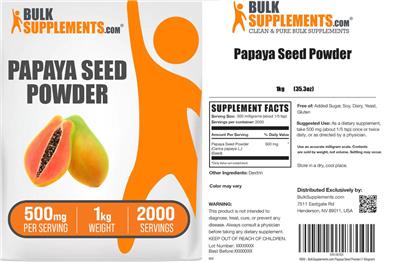
This product contains one active ingredient: papaya powder at 500 mg per serving. Papaya is a tropical fruit whose extract and components have been studied for various health claims.
The powder also includes dextrin as an inactive ingredient (a type of carbohydrate used as a filler and flow agent).
Does it work?
Couldn't assess
The evidence we hold doesn't establish that papaya powder works for the conditions it's marketed for. Our data lists insufficient reliable evidence to rate it for aging skin, hair loss (androgenic alopecia), diabetes, colorectal cancer, and gallbladder cancer.
That doesn't mean it doesn't work — it means the research isn't strong enough for us to say either way.
How safe is it?
Well-documented data
Ripe papaya fruit eaten as food is generally well tolerated, but this concentrated powder is less well studied. The data advises against unripe (green) papaya, papaya latex, and seeds, and cautions against large amounts during pregnancy.
When taken orally, papaya leaf extract and papaya fruit have been generally well tolerated in studies, though a small number of people reported nausea and vomiting from the leaf extract. Rare serious allergic reactions have been reported, and people allergic to latex have a higher risk of hypersensitivity reactions to papaya because of its papain content (an enzyme that can trigger cross-reactions in latex-sensitive individuals).
Meds to double-check
Moderate interaction found
Before you start, double-check if you take warfarin or other blood thinners (Moderate severity). Also screen any diabetes medications, amiodarone for heart rhythm, and levothyroxine for thyroid replacement (all Moderate severity) — all have documented interactions we need to review for your specific drugs.
The bottom line
Scorecard at a glanceFully disclosed formula with no assessable stated purpose. Moderate medication interactions have been identified, and safety information is well characterized.
If you take blood thinners, diabetes drugs, amiodarone, or thyroid replacement medication, check with your pharmacist before adding this product — the interaction risks are real. If you're pregnant, the safety data isn't clear enough for us to recommend it.
For anyone else with no medication concerns, moderate amounts of ripe papaya are generally safe, but concentrated supplements are less well studied than whole fruit.
Educational only — not medical advice; always confirm with your pharmacist. Our editorial policy · How we use AI
Assessment coverage: 1 of 1 active ingredient matched to our full ingredient reviews (monographs). Based on the product label dated Apr 24, 2025.
This Scorecard evaluates available label information, ingredient evidence, and known medication-safety considerations. It does not independently verify product identity, purity, potency, contamination, or manufacturing quality. How these ratings are computed
General information
Key facts about Papaya Seed Powder 500 mg, straight from the product label.
| Brand | BulkSupplements.com |
|---|---|
| Barcode (UPC) | X0014E3IIX |
| Net contents | 1 Kilogram(s); 35.3 Ounce(s) |
| Market status | On market |
| Date entered into DSLD | Apr 24, 2025 |
| DSLD ID | 330225 |
| Product type | Botanical |
| Supplement form | Powder |
| Dietary claims / uses | All Other, Structure/Function |
| Intended target group(s) | Adult (18 - 50 Years), Gluten Free, Dairy Free |
Everything in this section is reproduced from the manufacturer’s own product label — it’s the label speaking, not HelloPharmacist. We show it so you can see exactly what the maker states; we don’t verify or endorse those statements.
Supplement Facts
The label details for Papaya Seed Powder 500 mg by BulkSupplements.com, sourced from the NIH Dietary Supplement Label Database.
Tap any ingredient to jump to its full detail below.
These statements are the manufacturer’s wording, reproduced from the product label — the label is saying it, not HelloPharmacist. We don’t verify or endorse them.
Formula
Papaya Seed Powder 500 mg per serving
Brand IP Statement(s)
BulkSupplements.com Clean & Pure Bulk Supplements
Formulation
Color may vary
Free of: Added sugar, soy, dairy, yeast, gluten
FDA Disclaimer Statement
Warning: This product is not intended to diagnose, treat, cure, or prevent any disease.
Precautions
Always consult a physician before taking any dietary supplement.
Keep out of reach of children.
Suggested/Recommended/Usage/Directions
Suggested use: As a dietary supplement, take 500 mg (about 1/5 tsp) once or twice daily, or as directed by a physician.
Storage
Store in a dry, cool place. Contents are sold by weight, not volume. Settling may occur.
General Statements
Use an accurate milligram scale. New
Is this label outdated? Report a formula or label change and our pharmacy team will review it.
Papaya Seed Powder 500 mg by BulkSupplements.com label
The label scan from the NIH Dietary Supplement Label Database. Tap to enlarge.
Label images are published by the NIH Dietary Supplement Label Database for the version of this product on file. Always read your actual product label.
View the full label (PDF)The Ingredients in Papaya Seed Powder 500 mg by BulkSupplements.com
This is the 1 active ingredient this product is made of. Select it to open its full monograph.
Serving size500 mg Dosage formPowder Servings per container2000 Amounts shown are per serving.
Papaya, Powder
Interacts with92 drugs
Papaya is a tropical fruit that is nutritious and generally safe to eat as food, and it contains an enzyme called papain used as a digestive aid and m...
Papaya, Powder monograph & interactionsOther (inactive) ingredients: Dextrin. These complete the product’s ingredient list but are not active constituents.
Papaya Seed Powder 500 mg by BulkSupplements.com Drug Interactions
HelloPharmacist Interaction Report
Papaya Seed Powder by BulkSupplements.com interacts with a number of medications.
The most serious documented concern involves blood thinners like warfarin (Coumadin). Papaya extract may increase warfarin's effects and side effects — one case report found a patient's blood-thinner level become dangerously high after taking a papaya supplement containing papain.
Read the full breakdown — every affected drug type, severity by severity
You'll also want to check with us before using this product if you take diabetes medications. Fermented papaya has been shown to add to the effect of some antidiabetic drugs, which could lower your blood sugar more than intended.
Additionally, this product may theoretically raise levels of amiodarone (Cordarone), a heart rhythm medication, and could reduce how well levothyroxine (Synthroid) works for thyroid replacement — one case documented a patient who became hypothyroid (low thyroid hormone) after eating large amounts of papaya daily.
Altogether, these interactions span 91 individual medications. Run your exact prescriptions through the medication checker on this page before you start.
Check your own medications below · Editorial policy · How we use AI
Want to check YOUR meds against Papaya Seed Powder 500 mg?
Ask about interactions with your drugs in plain English — “Can I take it with lisinopril?” — and we find you the answer in seconds, ingredient by ingredient.
Go to the checkerIngredients driving the most interactions
Individual Drug Interactions
The ingredients in Papaya Seed Powder 500 mg interact with 92 drugs. Click any drug to see the details.
1 of the 1 ingredient in Papaya Seed Powder 500 mg interact with drugs. Each result below shows which ingredient is responsible. Papaya, Powder
AcarboseGlucobay, Prandase, Precose
How Acarbose interacts with Papaya Seed Powder 500 mg — through 1 ingredient. Tap an ingredient for the detail:
Papaya, PowderAntidiabetes Drugs Moderate
Interaction Summary
Concomitant use of antidiabetic drugs with fermented papaya can produce additive effects.
Read the full Papaya, Powder + Acarbose interactionAcetohexamideDymelor
How Acetohexamide interacts with Papaya Seed Powder 500 mg — through 1 ingredient. Tap an ingredient for the detail:
Papaya, PowderAntidiabetes Drugs Moderate
Interaction Summary
Concomitant use of antidiabetic drugs with fermented papaya can produce additive effects.
Read the full Papaya, Powder + Acetohexamide interactionAlbiglutideTanzeum
How Albiglutide interacts with Papaya Seed Powder 500 mg — through 1 ingredient. Tap an ingredient for the detail:
Papaya, PowderAntidiabetes Drugs Moderate
Interaction Summary
Concomitant use of antidiabetic drugs with fermented papaya can produce additive effects.
Read the full Papaya, Powder + Albiglutide interactionAlogliptinNesina
How Alogliptin interacts with Papaya Seed Powder 500 mg — through 1 ingredient. Tap an ingredient for the detail:
Papaya, PowderAntidiabetes Drugs Moderate
Interaction Summary
Concomitant use of antidiabetic drugs with fermented papaya can produce additive effects.
Read the full Papaya, Powder + Alogliptin interactionAlogliptin, MetforminKazano
How Alogliptin, Metformin interacts with Papaya Seed Powder 500 mg — through 1 ingredient. Tap an ingredient for the detail:
Papaya, PowderAntidiabetes Drugs Moderate
Interaction Summary
Concomitant use of antidiabetic drugs with fermented papaya can produce additive effects.
Read the full Papaya, Powder + Alogliptin, Metformin interactionAlogliptin, PioglitazoneOseni
How Alogliptin, Pioglitazone interacts with Papaya Seed Powder 500 mg — through 1 ingredient. Tap an ingredient for the detail:
Papaya, PowderAntidiabetes Drugs Moderate
Interaction Summary
Concomitant use of antidiabetic drugs with fermented papaya can produce additive effects.
Read the full Papaya, Powder + Alogliptin, Pioglitazone interactionAmiodaroneCordarone, Pacerone
How Amiodarone interacts with Papaya Seed Powder 500 mg — through 1 ingredient. Tap an ingredient for the detail:
Papaya, PowderAmiodarone (cordarone) Moderate
Interaction Summary
Theoretically, papaya extract may increase the levels and clinical effects of amiodarone.
Read the full Papaya, Powder + Amiodarone interactionAntidiabetes, Dipeptidyl Peptidase-4 (dpp-iv) InhibitorGlyxambi
How Antidiabetes, Dipeptidyl Peptidase-4 (dpp-iv) Inhibitor interacts with Papaya Seed Powder 500 mg — through 1 ingredient. Tap an ingredient for the detail:
Papaya, PowderAntidiabetes Drugs Moderate
Interaction Summary
Concomitant use of antidiabetic drugs with fermented papaya can produce additive effects.
Read the full Papaya, Powder + Antidiabetes, Dipeptidyl Peptidase-4 (dpp-iv) Inhibitor interactionCanagliflozinInvokana
How Canagliflozin interacts with Papaya Seed Powder 500 mg — through 1 ingredient. Tap an ingredient for the detail:
Papaya, PowderAntidiabetes Drugs Moderate
Interaction Summary
Concomitant use of antidiabetic drugs with fermented papaya can produce additive effects.
Read the full Papaya, Powder + Canagliflozin interactionCanagliflozin, MetforminInvokamet
How Canagliflozin, Metformin interacts with Papaya Seed Powder 500 mg — through 1 ingredient. Tap an ingredient for the detail:
Papaya, PowderAntidiabetes Drugs Moderate
Interaction Summary
Concomitant use of antidiabetic drugs with fermented papaya can produce additive effects.
Read the full Papaya, Powder + Canagliflozin, Metformin interactionCanagliflozin, Metformin HydrochlorideInvokamet XR
How Canagliflozin, Metformin Hydrochloride interacts with Papaya Seed Powder 500 mg — through 1 ingredient. Tap an ingredient for the detail:
Papaya, PowderAntidiabetes Drugs Moderate
Interaction Summary
Concomitant use of antidiabetic drugs with fermented papaya can produce additive effects.
Read the full Papaya, Powder + Canagliflozin, Metformin Hydrochloride interactionChlorpropamideChlorpropam, Diabinese
How Chlorpropamide interacts with Papaya Seed Powder 500 mg — through 1 ingredient. Tap an ingredient for the detail:
Papaya, PowderAntidiabetes Drugs Moderate
Interaction Summary
Concomitant use of antidiabetic drugs with fermented papaya can produce additive effects.
Read the full Papaya, Powder + Chlorpropamide interactionDapagliflozinFarxiga
How Dapagliflozin interacts with Papaya Seed Powder 500 mg — through 1 ingredient. Tap an ingredient for the detail:
Papaya, PowderAntidiabetes Drugs Moderate
Interaction Summary
Concomitant use of antidiabetic drugs with fermented papaya can produce additive effects.
Read the full Papaya, Powder + Dapagliflozin interactionDapagliflozin Propanediol, MetforminXigduo XR
How Dapagliflozin Propanediol, Metformin interacts with Papaya Seed Powder 500 mg — through 1 ingredient. Tap an ingredient for the detail:
Papaya, PowderAntidiabetes Drugs Moderate
Interaction Summary
Concomitant use of antidiabetic drugs with fermented papaya can produce additive effects.
Read the full Papaya, Powder + Dapagliflozin Propanediol, Metformin interactionDapagliflozin Propanediol, Saxagliptin HydrochlorideQtern
How Dapagliflozin Propanediol, Saxagliptin Hydrochloride interacts with Papaya Seed Powder 500 mg — through 1 ingredient. Tap an ingredient for the detail:
Papaya, PowderAntidiabetes Drugs Moderate
Interaction Summary
Concomitant use of antidiabetic drugs with fermented papaya can produce additive effects.
Read the full Papaya, Powder + Dapagliflozin Propanediol, Saxagliptin Hydrochloride interactionDapagliflozin, Metformin Hydrochloride, Saxagliptin HydrochlorideQternmet XR
How Dapagliflozin, Metformin Hydrochloride, Saxagliptin Hydrochloride interacts with Papaya Seed Powder 500 mg — through 1 ingredient. Tap an ingredient for the detail:
Papaya, PowderAntidiabetes Drugs Moderate
Interaction Summary
Concomitant use of antidiabetic drugs with fermented papaya can produce additive effects.
Read the full Papaya, Powder + Dapagliflozin, Metformin Hydrochloride, Saxagliptin Hydrochloride interactionDasiglucagon HydrochlorideZegalogue
How Dasiglucagon Hydrochloride interacts with Papaya Seed Powder 500 mg — through 1 ingredient. Tap an ingredient for the detail:
Papaya, PowderAntidiabetes Drugs Moderate
Interaction Summary
Concomitant use of antidiabetic drugs with fermented papaya can produce additive effects.
Read the full Papaya, Powder + Dasiglucagon Hydrochloride interactionDulaglutideTrulicity
How Dulaglutide interacts with Papaya Seed Powder 500 mg — through 1 ingredient. Tap an ingredient for the detail:
Papaya, PowderAntidiabetes Drugs Moderate
Interaction Summary
Concomitant use of antidiabetic drugs with fermented papaya can produce additive effects.
Read the full Papaya, Powder + Dulaglutide interactionEmpagliflozinJardiance
How Empagliflozin interacts with Papaya Seed Powder 500 mg — through 1 ingredient. Tap an ingredient for the detail:
Papaya, PowderAntidiabetes Drugs Moderate
Interaction Summary
Concomitant use of antidiabetic drugs with fermented papaya can produce additive effects.
Read the full Papaya, Powder + Empagliflozin interactionEmpagliflozin, Linagliptin, Metformin HydrochlorideTrijardy XR
How Empagliflozin, Linagliptin, Metformin Hydrochloride interacts with Papaya Seed Powder 500 mg — through 1 ingredient. Tap an ingredient for the detail:
Papaya, PowderAntidiabetes Drugs Moderate
Interaction Summary
Concomitant use of antidiabetic drugs with fermented papaya can produce additive effects.
Read the full Papaya, Powder + Empagliflozin, Linagliptin, Metformin Hydrochloride interactionEmpagliflozin, MetforminSynjardy
How Empagliflozin, Metformin interacts with Papaya Seed Powder 500 mg — through 1 ingredient. Tap an ingredient for the detail:
Papaya, PowderAntidiabetes Drugs Moderate
Interaction Summary
Concomitant use of antidiabetic drugs with fermented papaya can produce additive effects.
Read the full Papaya, Powder + Empagliflozin, Metformin interactionEmpagliflozin, Metformin HydrochlorideSynjardy XR
How Empagliflozin, Metformin Hydrochloride interacts with Papaya Seed Powder 500 mg — through 1 ingredient. Tap an ingredient for the detail:
Papaya, PowderAntidiabetes Drugs Moderate
Interaction Summary
Concomitant use of antidiabetic drugs with fermented papaya can produce additive effects.
Read the full Papaya, Powder + Empagliflozin, Metformin Hydrochloride interactionErtugliflozinSteglatro
How Ertugliflozin interacts with Papaya Seed Powder 500 mg — through 1 ingredient. Tap an ingredient for the detail:
Papaya, PowderAntidiabetes Drugs Moderate
Interaction Summary
Concomitant use of antidiabetic drugs with fermented papaya can produce additive effects.
Read the full Papaya, Powder + Ertugliflozin interactionErtugliflozin, Metformin HydrochlorideSegluromet
How Ertugliflozin, Metformin Hydrochloride interacts with Papaya Seed Powder 500 mg — through 1 ingredient. Tap an ingredient for the detail:
Papaya, PowderAntidiabetes Drugs Moderate
Interaction Summary
Concomitant use of antidiabetic drugs with fermented papaya can produce additive effects.
Read the full Papaya, Powder + Ertugliflozin, Metformin Hydrochloride interactionExenatideBydureon, Byetta
How Exenatide interacts with Papaya Seed Powder 500 mg — through 1 ingredient. Tap an ingredient for the detail:
Papaya, PowderAntidiabetes Drugs Moderate
Interaction Summary
Concomitant use of antidiabetic drugs with fermented papaya can produce additive effects.
Read the full Papaya, Powder + Exenatide interactionExenatide SyntheticBydureon BCISE
How Exenatide Synthetic interacts with Papaya Seed Powder 500 mg — through 1 ingredient. Tap an ingredient for the detail:
Papaya, PowderAntidiabetes Drugs Moderate
Interaction Summary
Concomitant use of antidiabetic drugs with fermented papaya can produce additive effects.
Read the full Papaya, Powder + Exenatide Synthetic interactionGliclazideDiamicron
How Gliclazide interacts with Papaya Seed Powder 500 mg — through 1 ingredient. Tap an ingredient for the detail:
Papaya, PowderAntidiabetes Drugs Moderate
Interaction Summary
Concomitant use of antidiabetic drugs with fermented papaya can produce additive effects.
Read the full Papaya, Powder + Gliclazide interactionGlimepirideAmaryl
How Glimepiride interacts with Papaya Seed Powder 500 mg — through 1 ingredient. Tap an ingredient for the detail:
Papaya, PowderAntidiabetes Drugs Moderate
Interaction Summary
Concomitant use of antidiabetic drugs with fermented papaya can produce additive effects.
Read the full Papaya, Powder + Glimepiride interactionGlipizideGlucotrol, Glucotrol XL
How Glipizide interacts with Papaya Seed Powder 500 mg — through 1 ingredient. Tap an ingredient for the detail:
Papaya, PowderAntidiabetes Drugs Moderate
Interaction Summary
Concomitant use of antidiabetic drugs with fermented papaya can produce additive effects.
Read the full Papaya, Powder + Glipizide interactionGlipizide, MetforminMetaglip
How Glipizide, Metformin interacts with Papaya Seed Powder 500 mg — through 1 ingredient. Tap an ingredient for the detail:
Papaya, PowderAntidiabetes Drugs Moderate
Interaction Summary
Concomitant use of antidiabetic drugs with fermented papaya can produce additive effects.
Read the full Papaya, Powder + Glipizide, Metformin interactionEach ingredient & the kinds of drugs it affects
For each ingredient in Papaya Seed Powder 500 mg with known interactions, here are the types of medications it can affect. Open any type for the detail — or search your exact drug in the checker above.
Papaya, Powder
Amiodarone (Cordarone)
Theoretically, papaya extract may increase the levels and clinical effects of amiodarone.
Animal research in rats shows that a single oral dose of papaya extract, as well as multiple doses of papaya extract daily over 14 days, prior to a single dose of amiodarone delays the time to maximum amiodarone concentration. However, only the 14-day papaya extract regimen increases systemic amiodarone exposure by 60% to 70%. This interaction has not been reported in humans.
Antidiabetes Drugs
Concomitant use of antidiabetic drugs with fermented papaya can produce additive effects. It is unclear if other forms of papaya have the same effect.
A small low-quality clinical study in patients with type 2 diabetes who are taking glibenclamide shows that taking a fermented papaya preparation 3 grams daily for 2 months decreases fasting and postprandial blood glucose levels when compared to baseline. Additionally, of the 25 patients in the study, 9 required a reduction in glibenclamide dose.
Levothyroxine (Synthroid, Others)
Theoretically, consuming large quantities of papaya fruit can reduce the clinical effects of levothyroxine.
In one case-report, a 37-year-old male with a history of thyroidectomy who was stabilized on levothyroxine for 5 years presented with hypothyroidism after consuming 5-6 papaya fruits daily for 14 days during vacation. In a controlled re-challenge test involving 5-6 papayas daily, the patient remained euthyroid for 7 days, but developed mild hypothyroidism after 14 days. Both times, thyroid levels normalized 40-45 days after discontinuing papaya.
Warfarin (Coumadin)
Theoretically, concomitant use of warfarin with papain-containing papaya extract might increase the effects and side effects of warfarin.
In one case report, a patient previously stable on warfarin was found to have an international normalization ratio (INR) of 7.4, which was attributed to ingestion of a supplement containing papain from papaya extract.
Brand information
Manufacturer and brand details for Papaya Seed Powder 500 mg, from the product label.
BulkSupplements.com
See all BulkSupplements.com products- Name
- BulkSupplements.com
- Street Address
- 7511 Eastgate Road
- City
- Henderson
- State
- NV
- ZipCode
- 89011
- Web Address
- BulkSupplements.com
Papaya Seed Powder 500 mg by BulkSupplements.com: Common Questions
Does Papaya Seed Powder 500 mg by BulkSupplements.com interact with any medications?
How can one product interact with so many drugs?
Where does this information come from?
Is this safe to take while I'm pregnant?
What causes the nausea I've heard about with papaya?
Is this powder actually effective for diabetes?
Why does the label warn against unripe papaya if I'm taking this powder?
Can I take this if I'm breastfeeding?
What's dextrin, the other ingredient?
Written and reviewed by the HelloPharmacist editorial staff. Our editorial policy
Not sure if Papaya Seed Powder 500 mg is safe with your meds?
Our pharmacists answer your medication & supplement questions — free.
Label information is sourced from the NIH Dietary Supplement Label Database and reflects the product version on file; always read your actual product label. This page is for education only and is not a substitute for professional medical advice. Confirm with your pharmacist or doctor before combining supplements and medications.
The Full Monographs Behind Papaya Seed Powder 500 mg’s Ingredients
Every ingredient we hold a full HelloPharmacist monograph for — uses, evidence, safety, and the complete interaction list.
Sources & How We Checked
Papaya Seed Powder 500 mg's label data comes from the NIH Dietary Supplement Label Database; the ingredient interaction data is from the Natural Medicines database, reviewed by our pharmacists.
- NIH Dietary Supplement Label Database (DSLD) — The official product label on file for this supplement.
- Natural Medicines (Therapeutic Research Center) — Evidence-graded clinical reference behind the ingredient interaction data.
Content is written and reviewed by licensed HelloPharmacist pharmacists. See our data sources and editorial standards for how this information is built and checked.
The 14 references behind this product’s interaction data
Every citation that drives the interaction findings for this product’s ingredients, from the evidence-graded Natural Medicines (TRC Healthcare) database. Open an ingredient to browse its citations — links open the study on PubMed or the publisher’s site.
Papaya 14 references
- The Review of Natural Products by Facts and Comparisons. St. Louis, MO: Wolters Kluwer Co., 1999.
- Leung AY, Foster S. Encyclopedia of Common Natural Ingredients Used in Food, Drugs and Cosmetics. 2nd ed. New York, NY: John Wiley & Sons, 1996.
- Shaw D, Leon C, Kolev S, Murray V. Traditional remedies and food supplements: a 5-year toxicological study (1991-1995). Drug Saf 1997;17:342-56.
- Mansfield LE, Ting S, Haverly RW, Yoo TJ. The incidence and clinical implications of hypersensitivity to papain in an allergic population, confirmed by blinded oral challenge. Ann Allergy 1985;55:541-3.
- Blanco C, Diaz-Perales A, Collada C, et al. Class I chitinases as potential panallergens involved in the latex-fruit syndrome. J Allergy Clin Immunol 1999;103(3 Pt 1):507-13. PubMed
- Diaz-Perales A, Collada C, Blanco C, et al. Cross-reactions in the latex-fruit syndrome: A relevant role of chitinases but not of complex asparagine-linked glycans. J Allergy Clin Immunol 1999;104:681-7. PubMed
- Castillo, R., Delgado, J., Quiralte, J., Blanco, C., and Carrillo, T. Food hypersensitivity among adult patients: epidemiological and clinical aspects. Allergol.Immunopathol.(Madr.) 1996;24(3):93-97.
- Oderinde, O., Noronha, C., Oremosu, A., Kusemiju, T., and Okanlawon, O. A. Abortifacient properties of aqueous extract of Carica papaya (Linn) seeds on female Sprague-Dawley rats. Niger.Postgrad.Med J 2002;9(2):95-98. DOI
- Danese, C., Esposito, D., D'Alfonso, V., Cirene, M., Ambrosino, M., and Colotto, M. Plasma glucose level decreases as collateral effect of fermented papaya preparation use. Clin Ter. 2006;157(3):195-198.
- Iliev, D. and Elsner, P. Generalized drug reaction due to papaya juice in throat lozenges. Dermatology 1997;194(4):364-366. PubMed
- Andersen HA, Bernatz PE, Grindlay JH. Perforation of the esophagus after use of a digestant agent: report of case and experimental study. Ann Otol Rhinol Laryngol 1959;68:890-6. PubMed
- Deiana L, Marini S, Mariotti S. Ingestion of large amounts of papaya fruit and impaired effectiveness of levothyroxine therapy. Endocr Pract 2012;18(1):98-100. PubMed
- Rodrigues M, Alves G, Francisco J, Fortuna A, Falcão A. Herb-drug pharmacokinetic interaction between Carica papaya extract and amiodarone in rats. J Pharm Pharm Sci 2014;17(3):302-15. PubMed
- Rajapakse S, de Silva NL, Weeratunga P, Rodrigo C, Sigera C, Fernando SD. Carica papaya extract in dengue: a systematic review and meta-analysis. BMC Complement Altern Med. 2019;19(1):265. PubMed
Parts of this content are provided by the Therapeutic Research Center, LLC.
DISCLAIMER: Currently this does not check for drug-drug interactions. This is not an all-inclusive comprehensive list of potential interactions and is for informational purposes only. Not all interactions are known or well-reported in the scientific literature, and new interactions are continually being reported. Input is needed from a qualified healthcare provider including a pharmacist before starting any therapy. Application of clinical judgment is necessary.
© 2021 Therapeutic Research Center, LLC