
Renew Hair, Skin & Nails Ingredients & Drug Interactions
by Purium
What is this page for?
First and foremost: checking Renew Hair, Skin & Nails against your medications. The heart of this page is the interaction checker and the full interaction report — how this product’s ingredients may interact with prescription and over-the-counter medicines you may be taking.
Around that, we add a pharmacist’s high-level view of the product as a whole — what’s inside, the evidence for its stated use, how transparent the label is, and what safety data exists — so you can see the full picture in one place. It’s educational information from our licensed clinical databases and the clinical staff at HelloPharmacist — not medical advice — and we don’t sell or endorse products. Our editorial policy
Renew Hair, Skin & Nails is a dietary supplement by Purium with 11 active ingredients. Its ingredients are commonly taken for nausea and vomiting, motion sickness, morning sickness in pregnancy.Based on those ingredients, 1,418 medications have a known interaction with it, the most serious rated moderate. The ingredients most likely to interact are Fo-Ti, Ginger, Grape Seed Extract. Use the checker below to test your specific medication, or read the full HelloPharmacist Interaction Report.
Check Your Meds Against Renew Hair, Skin & Nails by Purium
Ask about any prescription or over-the-counter medication and we check it for interactions with Renew Hair, Skin & Nails by Purium — and tell you which ingredient is responsible.
AI summaries are generated from our interaction database for education only — always confirm with your pharmacist. How we use AI
Ask the Pharmacist
A licensed pharmacist will answer your question by email — free, usually within 24 hours.
Got it — thank you!
A licensed pharmacist will answer within 24 hours. Keep an eye on your email (worth checking spam, just in case).
HelloPharmacist Scorecard of Renew Hair, Skin & Nails by Purium
Our pharmacy team’s full take, with four database checks built into the cards below — a summary of what is known, not a grade of the product itself.
What’s inside
Full disclosure
Renew Hair, Skin & Nails contains 11 active ingredients. Ginger, dandelion, and spirulina are herbal extracts; lutein is a carotenoid pigment from plants that supports eye health.
Grape seed extract, saw palmetto extract, fo-ti, horsetail, bamboo extract, and sea kelp round out the formula. The product also contains cellulose as an inactive binder.
Methylsulfonylmethane (MSM) is listed as an active ingredient, but we could not review its safety or interaction data.
Does it work?
Not established
The evidence for these ingredients varies widely. Ginger is possibly effective for pregnancy-related nausea and period pain (dysmenorrhea) and possibly effective for joint pain from osteoarthritis, though it appears ineffective for muscle soreness from exercise and chemotherapy nausea.
Lutein is possibly effective for age-related macular degeneration and cataracts—two common eye conditions—but shows no benefit for retinitis pigmentosa or other retinal problems in infants. Spirulina is possibly effective for high blood pressure but has insufficient evidence for acne, hay fever, or anemia.
Grape seed extract is possibly effective for chronic venous insufficiency (poor circulation in the legs) but ineffective for allergy symptoms and weight loss. Dandelion, fo-ti, horsetail, bamboo, and sea kelp all lack reliable evidence for their listed uses—the research simply isn't established enough to say whether they work.
How safe is it?
Well-documented data
Ginger is generally well tolerated at typical food and supplement doses for most healthy adults. Common mild side effects include stomach upset, heartburn, diarrhea, and a peppery taste in the mouth; doses above 5 grams daily increase these risks.
Ginger is likely safe in pregnancy for morning sickness at moderate amounts, but check with your doctor first. Lutein from food and standard supplement doses is generally safe; doses up to 20 mg daily have not caused adverse effects.
Dandelion is generally well tolerated as food but can cause stomach upset, diarrhea, and rarely anaphylaxis in people sensitive to ragweed and related plants (Asteraceae family). Spirulina may cause bloating, diarrhea, nausea, headache, and fatigue; quality varies and some products can contain toxins or heavy metals, which is a real safety concern.
Grape seed extract is generally well tolerated but can cause stomach upset, headache, diarrhea, and rarely anaphylaxis. Fo-ti has been linked to liver damage in hundreds of documented cases—it is not recommended for routine use.
Saw palmetto is generally well tolerated but may cause stomach upset, headache, or sexual side effects. Horsetail contains a compound (thiaminase) that can cause thiamine deficiency with long-term use and may cause stomach upset and nausea.
Bamboo shoots are safe when properly cooked but raw shoots contain cyanide; supplement safety is not well studied. Sea kelp contains high iodine and can cause or worsen thyroid problems, including goiter and hyperthyroidism.
Pregnancy and breastfeeding safety data is limited or absent for most ingredients—ginger and lutein are the exceptions with established safety ratings.
Meds to double-check
Moderate interaction found
If you take anticoagulants or antiplatelet drugs (blood thinners like warfarin, clopidogrel, or aspirin), check with your doctor or pharmacist before starting—ginger, dandelion, grape seed extract, spirulina, and saw palmetto may all increase bleeding risk. If you take diabetes medications, ask your pharmacist, as ginger, dandelion, spirulina, and horsetail may lower blood sugar further.
If you take thyroid hormone or antithyroid drugs, do not start this product without clearing it with your doctor or pharmacist—bamboo and sea kelp can interfere. If you take heart medications (especially amiodarone), potassium-sparing diuretics, HIV medications, lithium, or contraceptives or estrogens, run your exact medications through the checker on this page first.
The bottom line
Scorecard at a glanceFully disclosed formula with no established evidence rating for its marketed use. Moderate medication interactions have been identified, and safety information is well characterized.
This product combines vitamins, minerals, and herbal extracts marketed for hair, skin, and nail health, but the evidence for most ingredients is weak or missing. If you take blood thinners, diabetes drugs, thyroid medications, HIV antiretrovirals, or heart drugs, you should check with your own doctor or pharmacist before starting, as several ingredients carry documented interactions.
People sensitive to ragweed or related plants and those with thyroid disease should be especially cautious. The real standout concern is fo-ti, which has been linked to liver damage—ask your pharmacist or doctor whether this product is right for you.
Educational only — not medical advice; always confirm with your pharmacist. Our editorial policy · How we use AI
Assessment coverage: 10 of 11 active ingredients matched to our full ingredient reviews (monographs). Based on the product label dated Jul 25, 2024.
This Scorecard evaluates available label information, ingredient evidence, and known medication-safety considerations. It does not independently verify product identity, purity, potency, contamination, or manufacturing quality. How these ratings are computed
General information
Key facts about Renew Hair, Skin & Nails, straight from the product label.
| Brand | Purium |
|---|---|
| Barcode (UPC) | 764934030204 |
| Net contents | 180 Capsule(s) |
| Market status | On market |
| Date entered into DSLD | Jul 25, 2024 |
| DSLD ID | 313764 |
| Product type | Other Combinations |
| Supplement form | Capsule |
| Dietary claims / uses | Nutrient, All Other, Structure/Function |
| Intended target group(s) | Vegan, Vegetarian, Adult (18 - 50 Years), Gluten Free, Dairy Free |
Everything in this section is reproduced from the manufacturer’s own product label — it’s the label speaking, not HelloPharmacist. We show it so you can see exactly what the maker states; we don’t verify or endorse those statements.
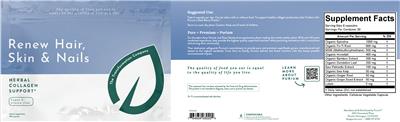
Supplement Facts
The label details for Renew Hair, Skin & Nails by Purium, sourced from the NIH Dietary Supplement Label Database.
Supplement Facts
| Ingredient | Amount | % DV |
|---|---|---|
| Ginger | 50 mg | -- |
| Dandelion | 200 mg | -- |
| Lutein | 5 mg | -- |
| Spirulina | 1000 mg | -- |
| Grape Seed Extract | 50 mg | -- |
| Methylsulfonylmethane | 500 mg | -- |
| Fo-Ti | 600 mg | -- |
| Saw Palmetto Extract | 100 mg | -- |
| Horsetail | 400 mg | -- |
| Bamboo Extract | 200 mg | -- |
| Sea Kelp | 50 mg | -- |
Other ingredients: Cellulose
Tap any ingredient to jump to its full detail below.
These statements are the manufacturer’s wording, reproduced from the product label — the label is saying it, not HelloPharmacist. We don’t verify or endorse them.
General Statements
The quality of food you eat is equal to the quality of life you live. The Transformation Company
Pure + Premium= Purium Co-founders Amy Venner and Dave Sandoval are passionate about making the world a better place. With over 60 years combined experience, they provide the world's finest superfood nutrition while practicing commerce with a conscious and serving their community. Their dedication safeguards Purium's commitment to provide pure and premium superfoods; grown, manufactured and tested to the highest standards. From farm to family, Purium continually strives to deliver the finest nutrition with the lowest possible environmental impact. The quality of food you eat is equal to the quality of life you live. Learn more about Purium
Compostable Materials meet ASTM D6400 standards. Committed to freeing our planet from plastic pollution!
Formula
Herbal collagen support
Formulation
Vegan & Gluten-free
Vegan & Gluten-free
FDA Statement of Identity
Dietary Supplement
Suggested/Recommended/Usage/Directions
Suggested Use: Take 6 capsules per day. Can be taken with or without food. To support healthy collagen production, best if taken with Purium's Dark Berry Protein.
Storage
Store in a cool, dry place.
Precautions
Caution: Keep out of reach of children.
Fo-Ti is contraindicated with diarrhea.
FDA Disclaimer Statement
This statement has not been evaluated by the Food and Drug Administration. This product is not intended to diagnose, treat, cure or prevent any disease.
Is this label outdated? Report a formula or label change and our pharmacy team will review it.
Renew Hair, Skin & Nails by Purium label
The label scan from the NIH Dietary Supplement Label Database. Tap to enlarge.
Label images are published by the NIH Dietary Supplement Label Database for the version of this product on file. Always read your actual product label.
View the full label (PDF)The Ingredients in Renew Hair, Skin & Nails by Purium
These are the 11 active ingredients this product is made of. Select any to open its full monograph.
Serving size6 Capsule(s) Dosage formCapsule Servings per container30 Amounts shown are per serving.
Most supplement products combine several ingredients, and a medication can interact with the product through any one of them. Each ingredient below shows whether it has known drug interactions.
Ginger
Interacts with1,008 drugs
Ginger is a widely used culinary spice with a long history in traditional medicine, and it has the strongest evidence for helping with nausea and vomi...
Ginger monograph & interactionsDandelion
Interacts with457 drugs
Dandelion is a common plant used in food and traditional medicine, often promoted as a natural 'water pill' and digestive aid. Human evidence for thes...
Dandelion monograph & interactionsLutein
No knowninteractions
Lutein is a plant-based antioxidant pigment that concentrates in the eye, and the best evidence suggests it (often combined with zeaxanthin) may help...
Lutein monograph & interactionsSpirulina
Interacts with327 drugs
Blue-green algae are nutrient-rich aquatic microorganisms (such as spirulina and Klamath Lake algae) taken as a supplement for energy, nutrition, and...
Spirulina monograph & interactionsGrape Seed Extract
Interacts with912 drugs
Grapes and grape products like grape seed extract contain antioxidant compounds such as resveratrol and proanthocyanidins that may support heart and b...
Grape Seed Extract monograph & interactionsMethylsulfonylmethane
Fo-Ti
Interacts with1,259 drugs
Fo-ti (He Shou Wu) is a root used in traditional Chinese medicine, often promoted for healthy aging and hair. High-quality human evidence for these be...
Fo-Ti monograph & interactionsSaw Palmetto Extract
Interacts with174 drugs
Saw palmetto is a plant extract most often used for urinary symptoms linked to an enlarged prostate (BPH). The best research suggests it works no bett...
Saw Palmetto Extract monograph & interactionsHorsetail
Interacts with188 drugs
Horsetail is a traditional herb most often used as a mild diuretic and for hair, nail, and bone support, but high-quality human evidence is limited. I...
Horsetail monograph & interactionsBamboo Extract
Interacts with5 drugs
Bamboo is a giant grass whose shoots are eaten as food and whose leaves and silica-rich extracts are sold as supplements, often for hair, skin, nail,...
Bamboo Extract monograph & interactionsSea Kelp
Interacts with893 drugs
Fucus vesiculosus (bladderwrack) is a brown seaweed rich in iodine that has been used traditionally for thyroid concerns, weight, and skin. There is l...
Sea Kelp monograph & interactionsOther (inactive) ingredients: Cellulose. These complete the product’s ingredient list but are not active constituents.
Renew Hair, Skin & Nails by Purium Drug Interactions
HelloPharmacist Interaction Report
Renew Hair, Skin & Nails by Purium contains several ingredients with documented interactions: ginger, dandelion, spirulina, grape seed extract, fo-ti, saw palmetto, horsetail, bamboo, and sea kelp.
The most serious interaction is fo-ti with blood thinners (anticoagulants)—fo-ti has been linked to acute liver failure, which can dramatically increase the effects of warfarin and other anticoagulants, raising bleeding risk significantly.
Read the full breakdown — every affected drug type, severity by severity
Ginger may increase bleeding risk with anticoagulants, antiplatelet drugs, and warfarin through antiplatelet effects, though research is mixed in humans. It may also increase the risk of low blood sugar (hypoglycemia) with diabetes medications and raise blood pressure medication levels.
Grape seed extract similarly may increase bleeding risk with blood thinners and has conflicting effects on how your body processes certain medications. Saw palmetto may increase bleeding risk and could reduce the effectiveness of hormonal contraceptives and estrogens.
Dandelion may increase bleeding risk with anticoagulants, raise potassium to unsafe levels with potassium-sparing water pills (diuretics), increase hypoglycemia risk with diabetes drugs, and affect how your body clears several drug types. Spirulina may increase bleeding risk with anticoagulants and lower blood sugar with diabetes medications.
Horsetail may lower blood sugar with diabetes drugs, increase potassium loss with diuretics, and reduce effectiveness of HIV medications. Bamboo and sea kelp both carry thyroid-related interactions—bamboo theoretically may enhance antithyroid drug effects, and sea kelp's high iodine content can interfere with thyroid medications, antithyroid drugs, and the heart medication amiodarone.
Altogether, these interactions span 1,418 individual medications. We could not check methylsulfonylmethane, as we hold no data for it.
Use the search tool on this page to check your exact medications before starting.
Check your own medications below · Editorial policy · How we use AI
Want to check YOUR meds against Renew Hair, Skin & Nails?
Ask about interactions with your drugs in plain English — “Can I take it with lisinopril?” — and we find you the answer in seconds, ingredient by ingredient.
Go to the checkerIngredients driving the most interactions
Individual Drug Interactions
The ingredients in Renew Hair, Skin & Nails interact with 1,418 drugs. Click any drug to see the details.
9 of the 11 ingredients in Renew Hair, Skin & Nails interact with drugs. Each result below shows which ingredient is responsible. Fo-Ti Ginger Grape Seed Extract Sea Kelp Dandelion Spirulina Horsetail Saw Palmetto Extract Bamboo Extract
6-mercaptopurinePurinethol
How 6-mercaptopurine interacts with Renew Hair, Skin & Nails — through 2 ingredients. Tap an ingredient for the detail:
SpirulinaImmunosuppressants Moderate
Interaction Summary
Theoretically, concurrent use of blue-green algae might interfere with immunosuppressive therapy.
Read the full Spirulina + 6-mercaptopurine interactionFo-tiHepatotoxic Drugs Moderate
Interaction Summary
Theoretically, fo-ti might increase the risk of liver damage when taken with hepatotoxic drugs.
Read the full Fo-ti + 6-mercaptopurine interactionAdo-trastuzumab EmtansineKadcyla
How Ado-trastuzumab Emtansine interacts with Renew Hair, Skin & Nails — through 4 ingredients. Tap an ingredient for the detail:
Grape Seed ExtractCytochrome P450 3a4 (cyp3a4) Substrates Moderate
Interaction Summary
It is unclear if grape seed extract inhibits or induces CYP3A4; research is conflicting.
Read the full Grape Seed Extract + Ado-trastuzumab Emtansine interactionGingerCytochrome P450 3a4 (cyp3a4) Substrates Moderate
Interaction Summary
Ginger might increase or decrease the levels of CYP3A4 substrates.
Read the full Ginger + Ado-trastuzumab Emtansine interactionFo-tiCytochrome P450 3a4 (cyp3a4) Substrates Moderate
Interaction Summary
Theoretically, fo-ti might increase the levels and clinical effects of drugs metabolized by CYP3A4.
Read the full Fo-ti + Ado-trastuzumab Emtansine interactionSea KelpCytochrome P450 3a4 (cyp3a4) Substrates Minor
Interaction Summary
Theoretically, concomitant use of Fucus vesiculosus with CYP3A4 substrates might increase the risk for adverse effects.
Read the full Sea Kelp + Ado-trastuzumab Emtansine interactionAbacavir Sulfate, Dolutegravir, LamivudineTriumeq
How Abacavir Sulfate, Dolutegravir, Lamivudine interacts with Renew Hair, Skin & Nails — through 2 ingredients. Tap an ingredient for the detail:
Fo-tiHepatotoxic Drugs Moderate
Interaction Summary
Theoretically, fo-ti might increase the risk of liver damage when taken with hepatotoxic drugs.
Read the full Fo-ti + Abacavir Sulfate, Dolutegravir, Lamivudine interactionHorsetailNucleoside Reverse Transcriptase Inhibitors (nrtis) Moderate
Interaction Summary
Theoretically, horsetail might decrease the levels and clinical effects of NRTIs.
Read the full Horsetail + Abacavir Sulfate, Dolutegravir, Lamivudine interactionAbacavir, LamivudineEpzicom
How Abacavir, Lamivudine interacts with Renew Hair, Skin & Nails — through 2 ingredients. Tap an ingredient for the detail:
HorsetailNucleoside Reverse Transcriptase Inhibitors (nrtis) Moderate
Interaction Summary
Theoretically, horsetail might decrease the levels and clinical effects of NRTIs.
Read the full Horsetail + Abacavir, Lamivudine interactionFo-tiHepatotoxic Drugs Moderate
Interaction Summary
Theoretically, fo-ti might increase the risk of liver damage when taken with hepatotoxic drugs.
Read the full Fo-ti + Abacavir, Lamivudine interactionAbciximabReoPro
How Abciximab interacts with Renew Hair, Skin & Nails — through 7 ingredients. Tap an ingredient for the detail:
SpirulinaAnticoagulant/antiplatelet Drugs Moderate
Interaction Summary
Theoretically, spirulina blue-green algae might increase the risk of bleeding if used with other anticoagulant or antiplatelet drugs.
Read the full Spirulina + Abciximab interactionGingerAnticoagulant/antiplatelet Drugs Moderate
Interaction Summary
Ginger may have antiplatelet effects and may increase the risk of bleeding if used with anticoagulant or antiplatelet drugs.
Read the full Ginger + Abciximab interactionFo-tiAnticoagulant/antiplatelet Drugs Moderate
Interaction Summary
Fo-ti has been linked to cases of acute liver failure which can decrease clotting factor production and increase the effects of anticoagulants.
Read the full Fo-ti + Abciximab interactionGrape Seed ExtractAnticoagulant/antiplatelet Drugs Moderate
Interaction Summary
Theoretically, grape extracts may have antiplatelet effects and may increase the risk of bleeding if used with anticoagulant or antiplatelet drugs.
Read the full Grape Seed Extract + Abciximab interactionSaw Palmetto ExtractAnticoagulant/antiplatelet Drugs Moderate
Interaction Summary
Saw palmetto might increase the risk of bleeding with anticoagulant or antiplatelet drugs.
Read the full Saw Palmetto Extract + Abciximab interactionDandelionAnticoagulant/antiplatelet Drugs Moderate
Interaction Summary
Theoretically, taking dandelion root along with anticoagulant or antiplatelet drugs might increase the risk of bruising and bleeding.
Read the full Dandelion + Abciximab interactionSea KelpAnticoagulant/antiplatelet Drugs Minor
Interaction Summary
Theoretically, taking Fucus vesiculosus with antiplatelet or anticoagulant drugs might increase the risk of bruising and bleeding.
Read the full Sea Kelp + Abciximab interactionAbemaciclibVerzenio
How Abemaciclib interacts with Renew Hair, Skin & Nails — through 4 ingredients. Tap an ingredient for the detail:
Grape Seed ExtractCytochrome P450 3a4 (cyp3a4) Substrates Moderate
Interaction Summary
It is unclear if grape seed extract inhibits or induces CYP3A4; research is conflicting.
Read the full Grape Seed Extract + Abemaciclib interactionFo-tiCytochrome P450 3a4 (cyp3a4) Substrates Moderate
Interaction Summary
Theoretically, fo-ti might increase the levels and clinical effects of drugs metabolized by CYP3A4.
Read the full Fo-ti + Abemaciclib interactionGingerCytochrome P450 3a4 (cyp3a4) Substrates Moderate
Interaction Summary
Ginger might increase or decrease the levels of CYP3A4 substrates.
Read the full Ginger + Abemaciclib interactionSea KelpCytochrome P450 3a4 (cyp3a4) Substrates Minor
Interaction Summary
Theoretically, concomitant use of Fucus vesiculosus with CYP3A4 substrates might increase the risk for adverse effects.
Read the full Sea Kelp + Abemaciclib interactionAbiraterone
How Abiraterone interacts with Renew Hair, Skin & Nails — through 4 ingredients. Tap an ingredient for the detail:
GingerCytochrome P450 3a4 (cyp3a4) Substrates Moderate
Interaction Summary
Ginger might increase or decrease the levels of CYP3A4 substrates.
Read the full Ginger + Abiraterone interactionGrape Seed ExtractCytochrome P450 3a4 (cyp3a4) Substrates Moderate
Interaction Summary
It is unclear if grape seed extract inhibits or induces CYP3A4; research is conflicting.
Read the full Grape Seed Extract + Abiraterone interactionFo-tiCytochrome P450 3a4 (cyp3a4) Substrates, Hepatotoxic Drugs Moderate
Interaction Summary
Theoretically, fo-ti might increase the levels and clinical effects of drugs metabolized by CYP3A4.
Read the full Fo-ti + Abiraterone interactionSea KelpCytochrome P450 3a4 (cyp3a4) Substrates Minor
Interaction Summary
Theoretically, concomitant use of Fucus vesiculosus with CYP3A4 substrates might increase the risk for adverse effects.
Read the full Sea Kelp + Abiraterone interactionAbiraterone AcetateYonsa, Zytiga
How Abiraterone Acetate interacts with Renew Hair, Skin & Nails — through 4 ingredients. Tap an ingredient for the detail:
Fo-tiHepatotoxic Drugs, Cytochrome P450 3a4 (cyp3a4) Substrates Moderate
Interaction Summary
Theoretically, fo-ti might increase the risk of liver damage when taken with hepatotoxic drugs.
Read the full Fo-ti + Abiraterone Acetate interactionGrape Seed ExtractCytochrome P450 3a4 (cyp3a4) Substrates Moderate
Interaction Summary
It is unclear if grape seed extract inhibits or induces CYP3A4; research is conflicting.
Read the full Grape Seed Extract + Abiraterone Acetate interactionGingerCytochrome P450 3a4 (cyp3a4) Substrates Moderate
Interaction Summary
Ginger might increase or decrease the levels of CYP3A4 substrates.
Read the full Ginger + Abiraterone Acetate interactionSea KelpCytochrome P450 3a4 (cyp3a4) Substrates Minor
Interaction Summary
Theoretically, concomitant use of Fucus vesiculosus with CYP3A4 substrates might increase the risk for adverse effects.
Read the full Sea Kelp + Abiraterone Acetate interactionAbrocitinibCibinqo
How Abrocitinib interacts with Renew Hair, Skin & Nails — through 7 ingredients. Tap an ingredient for the detail:
DandelionAnticoagulant/antiplatelet Drugs Moderate
Interaction Summary
Theoretically, taking dandelion root along with anticoagulant or antiplatelet drugs might increase the risk of bruising and bleeding.
Read the full Dandelion + Abrocitinib interactionFo-tiCytochrome P450 2c19 (cyp2c19) Substrates, Cytochrome P450 2c9 (cyp2c9) Substrates +1 Moderate
Interaction Summary
Theoretically, fo-ti may increase the levels and clinical effects of drugs metabolized by CYP2C19.
Read the full Fo-ti + Abrocitinib interactionGrape Seed ExtractCytochrome P450 2c9 (cyp2c9) Substrates, Anticoagulant/antiplatelet Drugs Moderate
Interaction Summary
It is unclear if grape juice or grape seed extract inhibits CYP2C9; research is conflicting.
Read the full Grape Seed Extract + Abrocitinib interactionSpirulinaAnticoagulant/antiplatelet Drugs, Immunosuppressants Moderate
Interaction Summary
Theoretically, spirulina blue-green algae might increase the risk of bleeding if used with other anticoagulant or antiplatelet drugs.
Read the full Spirulina + Abrocitinib interactionGingerAnticoagulant/antiplatelet Drugs, Cytochrome P450 2c9 (cyp2c9) Substrates Moderate
Interaction Summary
Ginger may have antiplatelet effects and may increase the risk of bleeding if used with anticoagulant or antiplatelet drugs.
Read the full Ginger + Abrocitinib interactionSaw Palmetto ExtractAnticoagulant/antiplatelet Drugs Moderate
Interaction Summary
Saw palmetto might increase the risk of bleeding with anticoagulant or antiplatelet drugs.
Read the full Saw Palmetto Extract + Abrocitinib interactionSea KelpCytochrome P450 2c9 (cyp2c9) Substrates, Anticoagulant/antiplatelet Drugs Minor
Interaction Summary
Theoretically, concomitant use of Fucus vesiculosus with CYP2C9 substrates might increase the risk for adverse effects.
Read the full Sea Kelp + Abrocitinib interactionAcalabrutinibCalquence
How Acalabrutinib interacts with Renew Hair, Skin & Nails — through 4 ingredients. Tap an ingredient for the detail:
GingerCytochrome P450 3a4 (cyp3a4) Substrates, P-glycoprotein Substrates Moderate
Interaction Summary
Ginger might increase or decrease the levels of CYP3A4 substrates.
Read the full Ginger + Acalabrutinib interactionFo-tiCytochrome P450 3a4 (cyp3a4) Substrates Moderate
Interaction Summary
Theoretically, fo-ti might increase the levels and clinical effects of drugs metabolized by CYP3A4.
Read the full Fo-ti + Acalabrutinib interactionGrape Seed ExtractCytochrome P450 3a4 (cyp3a4) Substrates Moderate
Interaction Summary
It is unclear if grape seed extract inhibits or induces CYP3A4; research is conflicting.
Read the full Grape Seed Extract + Acalabrutinib interactionSea KelpCytochrome P450 3a4 (cyp3a4) Substrates Minor
Interaction Summary
Theoretically, concomitant use of Fucus vesiculosus with CYP3A4 substrates might increase the risk for adverse effects.
Read the full Sea Kelp + Acalabrutinib interactionAcarboseGlucobay, Prandase, Precose
How Acarbose interacts with Renew Hair, Skin & Nails — through 5 ingredients. Tap an ingredient for the detail:
DandelionAntidiabetes Drugs Moderate
Interaction Summary
Theoretically, dandelion might increase the risk for hypoglycemia when used with antidiabetes drugs.
Read the full Dandelion + Acarbose interactionFo-tiHepatotoxic Drugs, Antidiabetes Drugs Moderate
Interaction Summary
Theoretically, fo-ti might increase the risk of liver damage when taken with hepatotoxic drugs.
Read the full Fo-ti + Acarbose interactionHorsetailAntidiabetes Drugs Moderate
Interaction Summary
Theoretically, taking horsetail with antidiabetes drugs might increase the risk of hypoglycemia.
Read the full Horsetail + Acarbose interactionGingerAntidiabetes Drugs Moderate
Interaction Summary
Theoretically, taking ginger with antidiabetes drugs might increase the risk of hypoglycemia.
Read the full Ginger + Acarbose interactionSpirulinaAntidiabetes Drugs Moderate
Interaction Summary
Theoretically, taking blue-green algae with antidiabetes drugs might increase the risk of hypoglycemia.
Read the full Spirulina + Acarbose interactionAcebutololRhotral, Sectral
How Acebutolol interacts with Renew Hair, Skin & Nails — through 1 ingredient. Tap an ingredient for the detail:
Fo-tiHepatotoxic Drugs Moderate
Interaction Summary
Theoretically, fo-ti might increase the risk of liver damage when taken with hepatotoxic drugs.
Read the full Fo-ti + Acebutolol interactionAcenocoumarolSintrom
How Acenocoumarol interacts with Renew Hair, Skin & Nails — through 7 ingredients. Tap an ingredient for the detail:
DandelionAnticoagulant/antiplatelet Drugs Moderate
Interaction Summary
Theoretically, taking dandelion root along with anticoagulant or antiplatelet drugs might increase the risk of bruising and bleeding.
Read the full Dandelion + Acenocoumarol interactionSaw Palmetto ExtractAnticoagulant/antiplatelet Drugs Moderate
Interaction Summary
Saw palmetto might increase the risk of bleeding with anticoagulant or antiplatelet drugs.
Read the full Saw Palmetto Extract + Acenocoumarol interactionGrape Seed ExtractAnticoagulant/antiplatelet Drugs Moderate
Interaction Summary
Theoretically, grape extracts may have antiplatelet effects and may increase the risk of bleeding if used with anticoagulant or antiplatelet drugs.
Read the full Grape Seed Extract + Acenocoumarol interactionSpirulinaAnticoagulant/antiplatelet Drugs Moderate
Interaction Summary
Theoretically, spirulina blue-green algae might increase the risk of bleeding if used with other anticoagulant or antiplatelet drugs.
Read the full Spirulina + Acenocoumarol interactionGingerAnticoagulant/antiplatelet Drugs Moderate
Interaction Summary
Ginger may have antiplatelet effects and may increase the risk of bleeding if used with anticoagulant or antiplatelet drugs.
Read the full Ginger + Acenocoumarol interactionFo-tiAnticoagulant/antiplatelet Drugs Moderate
Interaction Summary
Fo-ti has been linked to cases of acute liver failure which can decrease clotting factor production and increase the effects of anticoagulants.
Read the full Fo-ti + Acenocoumarol interactionSea KelpAnticoagulant/antiplatelet Drugs Minor
Interaction Summary
Theoretically, taking Fucus vesiculosus with antiplatelet or anticoagulant drugs might increase the risk of bruising and bleeding.
Read the full Sea Kelp + Acenocoumarol interactionAcetaminophenChildren's Tylenol, Children's Tylenol Meltaways, Tylenol, Tylenol Ex Strength
How Acetaminophen interacts with Renew Hair, Skin & Nails — through 4 ingredients. Tap an ingredient for the detail:
Fo-tiHepatotoxic Drugs, Cytochrome P450 1a2 (cyp1a2) Substrates Moderate
Interaction Summary
Theoretically, fo-ti might increase the risk of liver damage when taken with hepatotoxic drugs.
Read the full Fo-ti + Acetaminophen interactionDandelionGlucuronidated Drugs, Cytochrome P450 1a2 (cyp1a2) Substrates Moderate
Interaction Summary
Theoretically, dandelion might increase the clearance of drugs that are UDP-glucuronosyltransferase substrates.
Read the full Dandelion + Acetaminophen interactionGrape Seed ExtractCytochrome P450 2e1 (cyp2e1) Substrates, Cytochrome P450 1a2 (cyp1a2) Substrates Moderate
Interaction Summary
Theoretically, grape seed extract might increase the levels of CYP2E1 substrates.
Read the full Grape Seed Extract + Acetaminophen interactionGingerCytochrome P450 1a2 (cyp1a2) Substrates Minor
Interaction Summary
Theoretically, ginger might increase the levels of CYP1A2 substrates.
Read the full Ginger + Acetaminophen interactionAcetaminophen, AspirinGemnisyn
How Acetaminophen, Aspirin interacts with Renew Hair, Skin & Nails — through 7 ingredients. Tap an ingredient for the detail:
DandelionCytochrome P450 1a2 (cyp1a2) Substrates, Anticoagulant/antiplatelet Drugs +1 Moderate
Interaction Summary
Theoretically, dandelion might increase levels of drugs metabolized by CYP1A2.
Read the full Dandelion + Acetaminophen, Aspirin interactionGrape Seed ExtractCytochrome P450 1a2 (cyp1a2) Substrates, Anticoagulant/antiplatelet Drugs +1 Moderate
Interaction Summary
Theoretically, grape juice might reduce the levels of CYP1A2 substrates.
Read the full Grape Seed Extract + Acetaminophen, Aspirin interactionFo-tiCytochrome P450 1a2 (cyp1a2) Substrates, Hepatotoxic Drugs +1 Moderate
Interaction Summary
Theoretically, fo-ti might increase or decrease the levels and clinical effects of drugs metabolized by CYP1A2.
Read the full Fo-ti + Acetaminophen, Aspirin interactionSaw Palmetto ExtractAnticoagulant/antiplatelet Drugs Moderate
Interaction Summary
Saw palmetto might increase the risk of bleeding with anticoagulant or antiplatelet drugs.
Read the full Saw Palmetto Extract + Acetaminophen, Aspirin interactionGingerCytochrome P450 1a2 (cyp1a2) Substrates, Anticoagulant/antiplatelet Drugs Moderate
Interaction Summary
Theoretically, ginger might increase the levels of CYP1A2 substrates.
Read the full Ginger + Acetaminophen, Aspirin interactionSpirulinaAnticoagulant/antiplatelet Drugs Moderate
Interaction Summary
Theoretically, spirulina blue-green algae might increase the risk of bleeding if used with other anticoagulant or antiplatelet drugs.
Read the full Spirulina + Acetaminophen, Aspirin interactionSea KelpAnticoagulant/antiplatelet Drugs Minor
Interaction Summary
Theoretically, taking Fucus vesiculosus with antiplatelet or anticoagulant drugs might increase the risk of bruising and bleeding.
Read the full Sea Kelp + Acetaminophen, Aspirin interactionAcetaminophen, Aspirin, CaffeineExcedrin, Excedrin Extra Strength, Excedrin Migraine
How Acetaminophen, Aspirin, Caffeine interacts with Renew Hair, Skin & Nails — through 7 ingredients. Tap an ingredient for the detail:
DandelionGlucuronidated Drugs, Cytochrome P450 1a2 (cyp1a2) Substrates +1 Moderate
Interaction Summary
Theoretically, dandelion might increase the clearance of drugs that are UDP-glucuronosyltransferase substrates.
Read the full Dandelion + Acetaminophen, Aspirin, Caffeine interactionSaw Palmetto ExtractAnticoagulant/antiplatelet Drugs Moderate
Interaction Summary
Saw palmetto might increase the risk of bleeding with anticoagulant or antiplatelet drugs.
Read the full Saw Palmetto Extract + Acetaminophen, Aspirin, Caffeine interactionGrape Seed ExtractAnticoagulant/antiplatelet Drugs, Cytochrome P450 2e1 (cyp2e1) Substrates +2 Moderate
Interaction Summary
Theoretically, grape extracts may have antiplatelet effects and may increase the risk of bleeding if used with anticoagulant or antiplatelet drugs.
Read the full Grape Seed Extract + Acetaminophen, Aspirin, Caffeine interactionFo-tiHepatotoxic Drugs, Cytochrome P450 1a2 (cyp1a2) Substrates +2 Moderate
Interaction Summary
Theoretically, fo-ti might increase the risk of liver damage when taken with hepatotoxic drugs.
Read the full Fo-ti + Acetaminophen, Aspirin, Caffeine interactionSpirulinaAnticoagulant/antiplatelet Drugs Moderate
Interaction Summary
Theoretically, spirulina blue-green algae might increase the risk of bleeding if used with other anticoagulant or antiplatelet drugs.
Read the full Spirulina + Acetaminophen, Aspirin, Caffeine interactionGingerAnticoagulant/antiplatelet Drugs, Cytochrome P450 3a4 (cyp3a4) Substrates +1 Moderate
Interaction Summary
Ginger may have antiplatelet effects and may increase the risk of bleeding if used with anticoagulant or antiplatelet drugs.
Read the full Ginger + Acetaminophen, Aspirin, Caffeine interactionSea KelpAnticoagulant/antiplatelet Drugs, Cytochrome P450 3a4 (cyp3a4) Substrates Minor
Interaction Summary
Theoretically, taking Fucus vesiculosus with antiplatelet or anticoagulant drugs might increase the risk of bruising and bleeding.
Read the full Sea Kelp + Acetaminophen, Aspirin, Caffeine interactionAcetaminophen, Brompheniramine, PhenylpropanolamineDimetapp Cold and Flu
How Acetaminophen, Brompheniramine, Phenylpropanolamine interacts with Renew Hair, Skin & Nails — through 4 ingredients. Tap an ingredient for the detail:
DandelionCytochrome P450 1a2 (cyp1a2) Substrates, Glucuronidated Drugs Moderate
Interaction Summary
Theoretically, dandelion might increase levels of drugs metabolized by CYP1A2.
Read the full Dandelion + Acetaminophen, Brompheniramine, Phenylpropanolamine interactionGrape Seed ExtractCytochrome P450 2e1 (cyp2e1) Substrates, Cytochrome P450 1a2 (cyp1a2) Substrates Moderate
Interaction Summary
Theoretically, grape seed extract might increase the levels of CYP2E1 substrates.
Read the full Grape Seed Extract + Acetaminophen, Brompheniramine, Phenylpropanolamine interactionFo-tiCytochrome P450 1a2 (cyp1a2) Substrates, Hepatotoxic Drugs Moderate
Interaction Summary
Theoretically, fo-ti might increase or decrease the levels and clinical effects of drugs metabolized by CYP1A2.
Read the full Fo-ti + Acetaminophen, Brompheniramine, Phenylpropanolamine interactionGingerCytochrome P450 1a2 (cyp1a2) Substrates Minor
Interaction Summary
Theoretically, ginger might increase the levels of CYP1A2 substrates.
Read the full Ginger + Acetaminophen, Brompheniramine, Phenylpropanolamine interactionAcetaminophen, ButalbitalAxocet, Bancap, Bucet, Butex Forte, Esgic CF, Orbivan CF +5 more
How Acetaminophen, Butalbital interacts with Renew Hair, Skin & Nails — through 4 ingredients. Tap an ingredient for the detail:
Fo-tiHepatotoxic Drugs, Cytochrome P450 1a2 (cyp1a2) Substrates Moderate
Interaction Summary
Theoretically, fo-ti might increase the risk of liver damage when taken with hepatotoxic drugs.
Read the full Fo-ti + Acetaminophen, Butalbital interactionGrape Seed ExtractCytochrome P450 1a2 (cyp1a2) Substrates, Cytochrome P450 2e1 (cyp2e1) Substrates Moderate
Interaction Summary
Theoretically, grape juice might reduce the levels of CYP1A2 substrates.
Read the full Grape Seed Extract + Acetaminophen, Butalbital interactionDandelionCytochrome P450 1a2 (cyp1a2) Substrates, Glucuronidated Drugs Moderate
Interaction Summary
Theoretically, dandelion might increase levels of drugs metabolized by CYP1A2.
Read the full Dandelion + Acetaminophen, Butalbital interactionGingerCytochrome P450 1a2 (cyp1a2) Substrates Minor
Interaction Summary
Theoretically, ginger might increase the levels of CYP1A2 substrates.
Read the full Ginger + Acetaminophen, Butalbital interactionAcetaminophen, Butalbital, CaffeineEsgic, Esgic Plus, Fiogesic, Fioricet, Repan, Tecnal +1 more
How Acetaminophen, Butalbital, Caffeine interacts with Renew Hair, Skin & Nails — through 5 ingredients. Tap an ingredient for the detail:
DandelionGlucuronidated Drugs, Cytochrome P450 1a2 (cyp1a2) Substrates Moderate
Interaction Summary
Theoretically, dandelion might increase the clearance of drugs that are UDP-glucuronosyltransferase substrates.
Read the full Dandelion + Acetaminophen, Butalbital, Caffeine interactionGrape Seed ExtractCytochrome P450 2e1 (cyp2e1) Substrates, Cytochrome P450 3a4 (cyp3a4) Substrates +1 Moderate
Interaction Summary
Theoretically, grape seed extract might increase the levels of CYP2E1 substrates.
Read the full Grape Seed Extract + Acetaminophen, Butalbital, Caffeine interactionFo-tiCytochrome P450 1a2 (cyp1a2) Substrates, Hepatotoxic Drugs +1 Moderate
Interaction Summary
Theoretically, fo-ti might increase or decrease the levels and clinical effects of drugs metabolized by CYP1A2.
Read the full Fo-ti + Acetaminophen, Butalbital, Caffeine interactionGingerCytochrome P450 1a2 (cyp1a2) Substrates, Cytochrome P450 3a4 (cyp3a4) Substrates Moderate
Interaction Summary
Theoretically, ginger might increase the levels of CYP1A2 substrates.
Read the full Ginger + Acetaminophen, Butalbital, Caffeine interactionSea KelpCytochrome P450 3a4 (cyp3a4) Substrates Minor
Interaction Summary
Theoretically, concomitant use of Fucus vesiculosus with CYP3A4 substrates might increase the risk for adverse effects.
Read the full Sea Kelp + Acetaminophen, Butalbital, Caffeine interactionAcetaminophen, Butalbital, Caffeine, CodeineEsgic with Codeine, Fioricet w/ Codeine
How Acetaminophen, Butalbital, Caffeine, Codeine interacts with Renew Hair, Skin & Nails — through 5 ingredients. Tap an ingredient for the detail:
GingerCytochrome P450 3a4 (cyp3a4) Substrates, Cytochrome P450 1a2 (cyp1a2) Substrates Moderate
Interaction Summary
Ginger might increase or decrease the levels of CYP3A4 substrates.
Read the full Ginger + Acetaminophen, Butalbital, Caffeine, Codeine interactionGrape Seed ExtractCytochrome P450 1a2 (cyp1a2) Substrates, Cytochrome P450 2d6 (cyp2d6) Substrates +2 Moderate
Interaction Summary
Theoretically, grape juice might reduce the levels of CYP1A2 substrates.
Read the full Grape Seed Extract + Acetaminophen, Butalbital, Caffeine, Codeine interactionDandelionCytochrome P450 1a2 (cyp1a2) Substrates, Glucuronidated Drugs Moderate
Interaction Summary
Theoretically, dandelion might increase levels of drugs metabolized by CYP1A2.
Read the full Dandelion + Acetaminophen, Butalbital, Caffeine, Codeine interactionFo-tiCytochrome P450 3a4 (cyp3a4) Substrates, Cytochrome P450 2d6 (cyp2d6) Substrates +2 Moderate
Interaction Summary
Theoretically, fo-ti might increase the levels and clinical effects of drugs metabolized by CYP3A4.
Read the full Fo-ti + Acetaminophen, Butalbital, Caffeine, Codeine interactionSea KelpCytochrome P450 3a4 (cyp3a4) Substrates, Cytochrome P450 2d6 (cyp2d6) Substrates Minor
Interaction Summary
Theoretically, concomitant use of Fucus vesiculosus with CYP3A4 substrates might increase the risk for adverse effects.
Read the full Sea Kelp + Acetaminophen, Butalbital, Caffeine, Codeine interactionAcetaminophen, Butalbital, CodeineBancap w/ Codeine
How Acetaminophen, Butalbital, Codeine interacts with Renew Hair, Skin & Nails — through 5 ingredients. Tap an ingredient for the detail:
Fo-tiHepatotoxic Drugs, Cytochrome P450 2d6 (cyp2d6) Substrates +1 Moderate
Interaction Summary
Theoretically, fo-ti might increase the risk of liver damage when taken with hepatotoxic drugs.
Read the full Fo-ti + Acetaminophen, Butalbital, Codeine interactionGrape Seed ExtractCytochrome P450 2e1 (cyp2e1) Substrates, Cytochrome P450 1a2 (cyp1a2) Substrates +1 Moderate
Interaction Summary
Theoretically, grape seed extract might increase the levels of CYP2E1 substrates.
Read the full Grape Seed Extract + Acetaminophen, Butalbital, Codeine interactionDandelionCytochrome P450 1a2 (cyp1a2) Substrates, Glucuronidated Drugs Moderate
Interaction Summary
Theoretically, dandelion might increase levels of drugs metabolized by CYP1A2.
Read the full Dandelion + Acetaminophen, Butalbital, Codeine interactionGingerCytochrome P450 1a2 (cyp1a2) Substrates Minor
Interaction Summary
Theoretically, ginger might increase the levels of CYP1A2 substrates.
Read the full Ginger + Acetaminophen, Butalbital, Codeine interactionSea KelpCytochrome P450 2d6 (cyp2d6) Substrates Minor
Interaction Summary
Theoretically, concomitant use of Fucus vesiculosus with CYP2D6 substrates might alter the effects of these substrates.
Read the full Sea Kelp + Acetaminophen, Butalbital, Codeine interactionAcetaminophen, Butalbital, Codeine PhosphatePhrenilin #3
How Acetaminophen, Butalbital, Codeine Phosphate interacts with Renew Hair, Skin & Nails — through 5 ingredients. Tap an ingredient for the detail:
DandelionGlucuronidated Drugs, Cytochrome P450 1a2 (cyp1a2) Substrates Moderate
Interaction Summary
Theoretically, dandelion might increase the clearance of drugs that are UDP-glucuronosyltransferase substrates.
Read the full Dandelion + Acetaminophen, Butalbital, Codeine Phosphate interactionGrape Seed ExtractCytochrome P450 2e1 (cyp2e1) Substrates, Cytochrome P450 1a2 (cyp1a2) Substrates +1 Moderate
Interaction Summary
Theoretically, grape seed extract might increase the levels of CYP2E1 substrates.
Read the full Grape Seed Extract + Acetaminophen, Butalbital, Codeine Phosphate interactionFo-tiCytochrome P450 2d6 (cyp2d6) Substrates, Cytochrome P450 1a2 (cyp1a2) Substrates +1 Moderate
Interaction Summary
Theoretically, fo-ti may increase the levels and clinical effects of drugs metabolized by CYP2D6.
Read the full Fo-ti + Acetaminophen, Butalbital, Codeine Phosphate interactionSea KelpCytochrome P450 2d6 (cyp2d6) Substrates Minor
Interaction Summary
Theoretically, concomitant use of Fucus vesiculosus with CYP2D6 substrates might alter the effects of these substrates.
Read the full Sea Kelp + Acetaminophen, Butalbital, Codeine Phosphate interactionGingerCytochrome P450 1a2 (cyp1a2) Substrates Minor
Interaction Summary
Theoretically, ginger might increase the levels of CYP1A2 substrates.
Read the full Ginger + Acetaminophen, Butalbital, Codeine Phosphate interactionAcetaminophen, Caffeine, Chlorpheniramine, Hydrocodone, PhenylephrineHycomine Compound
How Acetaminophen, Caffeine, Chlorpheniramine, Hydrocodone, Phenylephrine interacts with Renew Hair, Skin & Nails — through 5 ingredients. Tap an ingredient for the detail:
GingerCytochrome P450 1a2 (cyp1a2) Substrates, Cytochrome P450 3a4 (cyp3a4) Substrates Moderate
Interaction Summary
Theoretically, ginger might increase the levels of CYP1A2 substrates.
Read the full Ginger + Acetaminophen, Caffeine, Chlorpheniramine, Hydrocodone, Phenylephrine interactionDandelionCytochrome P450 1a2 (cyp1a2) Substrates, Glucuronidated Drugs Moderate
Interaction Summary
Theoretically, dandelion might increase levels of drugs metabolized by CYP1A2.
Read the full Dandelion + Acetaminophen, Caffeine, Chlorpheniramine, Hydrocodone, Phenylephrine interactionGrape Seed ExtractCytochrome P450 1a2 (cyp1a2) Substrates, Cytochrome P450 2d6 (cyp2d6) Substrates +2 Moderate
Interaction Summary
Theoretically, grape juice might reduce the levels of CYP1A2 substrates.
Read the full Grape Seed Extract + Acetaminophen, Caffeine, Chlorpheniramine, Hydrocodone, Phenylephrine interactionFo-tiHepatotoxic Drugs, Cytochrome P450 3a4 (cyp3a4) Substrates +2 Moderate
Interaction Summary
Theoretically, fo-ti might increase the risk of liver damage when taken with hepatotoxic drugs.
Read the full Fo-ti + Acetaminophen, Caffeine, Chlorpheniramine, Hydrocodone, Phenylephrine interactionSea KelpCytochrome P450 2d6 (cyp2d6) Substrates, Cytochrome P450 3a4 (cyp3a4) Substrates Minor
Interaction Summary
Theoretically, concomitant use of Fucus vesiculosus with CYP2D6 substrates might alter the effects of these substrates.
Read the full Sea Kelp + Acetaminophen, Caffeine, Chlorpheniramine, Hydrocodone, Phenylephrine interactionAcetaminophen, Caffeine, CodeineGesic C15, Gesic C30, Gesic C8, Lenoltec 1, Lenoltec 2, Lenoltec 3 +1 more
How Acetaminophen, Caffeine, Codeine interacts with Renew Hair, Skin & Nails — through 5 ingredients. Tap an ingredient for the detail:
Fo-tiCytochrome P450 2d6 (cyp2d6) Substrates, Cytochrome P450 1a2 (cyp1a2) Substrates +2 Moderate
Interaction Summary
Theoretically, fo-ti may increase the levels and clinical effects of drugs metabolized by CYP2D6.
Read the full Fo-ti + Acetaminophen, Caffeine, Codeine interactionGrape Seed ExtractCytochrome P450 3a4 (cyp3a4) Substrates, Cytochrome P450 2e1 (cyp2e1) Substrates +2 Moderate
Interaction Summary
It is unclear if grape seed extract inhibits or induces CYP3A4; research is conflicting.
Read the full Grape Seed Extract + Acetaminophen, Caffeine, Codeine interactionDandelionCytochrome P450 1a2 (cyp1a2) Substrates, Glucuronidated Drugs Moderate
Interaction Summary
Theoretically, dandelion might increase levels of drugs metabolized by CYP1A2.
Read the full Dandelion + Acetaminophen, Caffeine, Codeine interactionGingerCytochrome P450 3a4 (cyp3a4) Substrates, Cytochrome P450 1a2 (cyp1a2) Substrates Moderate
Interaction Summary
Ginger might increase or decrease the levels of CYP3A4 substrates.
Read the full Ginger + Acetaminophen, Caffeine, Codeine interactionSea KelpCytochrome P450 3a4 (cyp3a4) Substrates, Cytochrome P450 2d6 (cyp2d6) Substrates Minor
Interaction Summary
Theoretically, concomitant use of Fucus vesiculosus with CYP3A4 substrates might increase the risk for adverse effects.
Read the full Sea Kelp + Acetaminophen, Caffeine, Codeine interactionAcetaminophen, Caffeine, Codeine, SalicylamideCodalan No.1, Codalan No.2, Codalan No.3
How Acetaminophen, Caffeine, Codeine, Salicylamide interacts with Renew Hair, Skin & Nails — through 5 ingredients. Tap an ingredient for the detail:
DandelionGlucuronidated Drugs, Cytochrome P450 1a2 (cyp1a2) Substrates Moderate
Interaction Summary
Theoretically, dandelion might increase the clearance of drugs that are UDP-glucuronosyltransferase substrates.
Read the full Dandelion + Acetaminophen, Caffeine, Codeine, Salicylamide interactionGrape Seed ExtractCytochrome P450 1a2 (cyp1a2) Substrates, Cytochrome P450 2d6 (cyp2d6) Substrates +2 Moderate
Interaction Summary
Theoretically, grape juice might reduce the levels of CYP1A2 substrates.
Read the full Grape Seed Extract + Acetaminophen, Caffeine, Codeine, Salicylamide interactionFo-tiCytochrome P450 3a4 (cyp3a4) Substrates, Cytochrome P450 2d6 (cyp2d6) Substrates +2 Moderate
Interaction Summary
Theoretically, fo-ti might increase the levels and clinical effects of drugs metabolized by CYP3A4.
Read the full Fo-ti + Acetaminophen, Caffeine, Codeine, Salicylamide interactionGingerCytochrome P450 1a2 (cyp1a2) Substrates, Cytochrome P450 3a4 (cyp3a4) Substrates Moderate
Interaction Summary
Theoretically, ginger might increase the levels of CYP1A2 substrates.
Read the full Ginger + Acetaminophen, Caffeine, Codeine, Salicylamide interactionSea KelpCytochrome P450 3a4 (cyp3a4) Substrates, Cytochrome P450 2d6 (cyp2d6) Substrates Minor
Interaction Summary
Theoretically, concomitant use of Fucus vesiculosus with CYP3A4 substrates might increase the risk for adverse effects.
Read the full Sea Kelp + Acetaminophen, Caffeine, Codeine, Salicylamide interactionAcetaminophen, Caffeine, DihydrocodeineDHC Plus, Panlor DC, Panlor SS
How Acetaminophen, Caffeine, Dihydrocodeine interacts with Renew Hair, Skin & Nails — through 5 ingredients. Tap an ingredient for the detail:
GingerCytochrome P450 3a4 (cyp3a4) Substrates, Cytochrome P450 1a2 (cyp1a2) Substrates Moderate
Interaction Summary
Ginger might increase or decrease the levels of CYP3A4 substrates.
Read the full Ginger + Acetaminophen, Caffeine, Dihydrocodeine interactionGrape Seed ExtractCytochrome P450 2e1 (cyp2e1) Substrates, Cytochrome P450 1a2 (cyp1a2) Substrates +2 Moderate
Interaction Summary
Theoretically, grape seed extract might increase the levels of CYP2E1 substrates.
Read the full Grape Seed Extract + Acetaminophen, Caffeine, Dihydrocodeine interactionDandelionCytochrome P450 1a2 (cyp1a2) Substrates, Glucuronidated Drugs Moderate
Interaction Summary
Theoretically, dandelion might increase levels of drugs metabolized by CYP1A2.
Read the full Dandelion + Acetaminophen, Caffeine, Dihydrocodeine interactionFo-tiHepatotoxic Drugs, Cytochrome P450 3a4 (cyp3a4) Substrates +2 Moderate
Interaction Summary
Theoretically, fo-ti might increase the risk of liver damage when taken with hepatotoxic drugs.
Read the full Fo-ti + Acetaminophen, Caffeine, Dihydrocodeine interactionSea KelpCytochrome P450 2d6 (cyp2d6) Substrates, Cytochrome P450 3a4 (cyp3a4) Substrates Minor
Interaction Summary
Theoretically, concomitant use of Fucus vesiculosus with CYP2D6 substrates might alter the effects of these substrates.
Read the full Sea Kelp + Acetaminophen, Caffeine, Dihydrocodeine interactionAcetaminophen, Caffeine, IsomethepteneMigralam
How Acetaminophen, Caffeine, Isometheptene interacts with Renew Hair, Skin & Nails — through 5 ingredients. Tap an ingredient for the detail:
Fo-tiCytochrome P450 1a2 (cyp1a2) Substrates, Hepatotoxic Drugs +1 Moderate
Interaction Summary
Theoretically, fo-ti might increase or decrease the levels and clinical effects of drugs metabolized by CYP1A2.
Read the full Fo-ti + Acetaminophen, Caffeine, Isometheptene interactionDandelionCytochrome P450 1a2 (cyp1a2) Substrates, Glucuronidated Drugs Moderate
Interaction Summary
Theoretically, dandelion might increase levels of drugs metabolized by CYP1A2.
Read the full Dandelion + Acetaminophen, Caffeine, Isometheptene interactionGrape Seed ExtractCytochrome P450 2e1 (cyp2e1) Substrates, Cytochrome P450 3a4 (cyp3a4) Substrates +1 Moderate
Interaction Summary
Theoretically, grape seed extract might increase the levels of CYP2E1 substrates.
Read the full Grape Seed Extract + Acetaminophen, Caffeine, Isometheptene interactionGingerCytochrome P450 1a2 (cyp1a2) Substrates, Cytochrome P450 3a4 (cyp3a4) Substrates Moderate
Interaction Summary
Theoretically, ginger might increase the levels of CYP1A2 substrates.
Read the full Ginger + Acetaminophen, Caffeine, Isometheptene interactionSea KelpCytochrome P450 3a4 (cyp3a4) Substrates Minor
Interaction Summary
Theoretically, concomitant use of Fucus vesiculosus with CYP3A4 substrates might increase the risk for adverse effects.
Read the full Sea Kelp + Acetaminophen, Caffeine, Isometheptene interactionAcetaminophen, Caffeine, PyrilamineMidol Max Strength Menstrual
How Acetaminophen, Caffeine, Pyrilamine interacts with Renew Hair, Skin & Nails — through 6 ingredients. Tap an ingredient for the detail:
DandelionGlucuronidated Drugs, Cytochrome P450 1a2 (cyp1a2) Substrates Moderate
Interaction Summary
Theoretically, dandelion might increase the clearance of drugs that are UDP-glucuronosyltransferase substrates.
Read the full Dandelion + Acetaminophen, Caffeine, Pyrilamine interactionGrape Seed ExtractCytochrome P450 1a2 (cyp1a2) Substrates, Cytochrome P450 3a4 (cyp3a4) Substrates +1 Moderate
Interaction Summary
Theoretically, grape juice might reduce the levels of CYP1A2 substrates.
Read the full Grape Seed Extract + Acetaminophen, Caffeine, Pyrilamine interactionFo-tiCytochrome P450 3a4 (cyp3a4) Substrates, Cytochrome P450 1a2 (cyp1a2) Substrates +2 Moderate
Interaction Summary
Theoretically, fo-ti might increase the levels and clinical effects of drugs metabolized by CYP3A4.
Read the full Fo-ti + Acetaminophen, Caffeine, Pyrilamine interactionGingerCytochrome P450 3a4 (cyp3a4) Substrates, Cytochrome P450 1a2 (cyp1a2) Substrates Moderate
Interaction Summary
Ginger might increase or decrease the levels of CYP3A4 substrates.
Read the full Ginger + Acetaminophen, Caffeine, Pyrilamine interactionHorsetailDiuretic Drugs Moderate
Interaction Summary
Theoretically, taking horsetail with diuretic drugs might increase potassium loss and the risk of hypokalemia.
Read the full Horsetail + Acetaminophen, Caffeine, Pyrilamine interactionSea KelpCytochrome P450 3a4 (cyp3a4) Substrates Minor
Interaction Summary
Theoretically, concomitant use of Fucus vesiculosus with CYP3A4 substrates might increase the risk for adverse effects.
Read the full Sea Kelp + Acetaminophen, Caffeine, Pyrilamine interactionAcetaminophen, Chlorpheniramine Maleate, Dextromethorphan HbrVicks Formula 44M Cough, Cold & Flu Relief
How Acetaminophen, Chlorpheniramine Maleate, Dextromethorphan Hbr interacts with Renew Hair, Skin & Nails — through 5 ingredients. Tap an ingredient for the detail:
GingerCytochrome P450 1a2 (cyp1a2) Substrates, Cytochrome P450 3a4 (cyp3a4) Substrates Moderate
Interaction Summary
Theoretically, ginger might increase the levels of CYP1A2 substrates.
Read the full Ginger + Acetaminophen, Chlorpheniramine Maleate, Dextromethorphan Hbr interactionGrape Seed ExtractCytochrome P450 2e1 (cyp2e1) Substrates, Cytochrome P450 1a2 (cyp1a2) Substrates +2 Moderate
Interaction Summary
Theoretically, grape seed extract might increase the levels of CYP2E1 substrates.
Read the full Grape Seed Extract + Acetaminophen, Chlorpheniramine Maleate, Dextromethorphan Hbr interactionDandelionCytochrome P450 1a2 (cyp1a2) Substrates, Glucuronidated Drugs Moderate
Interaction Summary
Theoretically, dandelion might increase levels of drugs metabolized by CYP1A2.
Read the full Dandelion + Acetaminophen, Chlorpheniramine Maleate, Dextromethorphan Hbr interactionFo-tiCytochrome P450 1a2 (cyp1a2) Substrates, Cytochrome P450 2d6 (cyp2d6) Substrates +2 Moderate
Interaction Summary
Theoretically, fo-ti might increase or decrease the levels and clinical effects of drugs metabolized by CYP1A2.
Read the full Fo-ti + Acetaminophen, Chlorpheniramine Maleate, Dextromethorphan Hbr interactionSea KelpCytochrome P450 3a4 (cyp3a4) Substrates, Cytochrome P450 2d6 (cyp2d6) Substrates Minor
Interaction Summary
Theoretically, concomitant use of Fucus vesiculosus with CYP3A4 substrates might increase the risk for adverse effects.
Read the full Sea Kelp + Acetaminophen, Chlorpheniramine Maleate, Dextromethorphan Hbr interactionAcetaminophen, Chlorpheniramine, Codeine, PhenylephrineColrex
How Acetaminophen, Chlorpheniramine, Codeine, Phenylephrine interacts with Renew Hair, Skin & Nails — through 5 ingredients. Tap an ingredient for the detail:
Fo-tiCytochrome P450 3a4 (cyp3a4) Substrates, Hepatotoxic Drugs +2 Moderate
Interaction Summary
Theoretically, fo-ti might increase the levels and clinical effects of drugs metabolized by CYP3A4.
Read the full Fo-ti + Acetaminophen, Chlorpheniramine, Codeine, Phenylephrine interactionDandelionGlucuronidated Drugs, Cytochrome P450 1a2 (cyp1a2) Substrates Moderate
Interaction Summary
Theoretically, dandelion might increase the clearance of drugs that are UDP-glucuronosyltransferase substrates.
Read the full Dandelion + Acetaminophen, Chlorpheniramine, Codeine, Phenylephrine interactionGingerCytochrome P450 1a2 (cyp1a2) Substrates, Cytochrome P450 3a4 (cyp3a4) Substrates Moderate
Interaction Summary
Theoretically, ginger might increase the levels of CYP1A2 substrates.
Read the full Ginger + Acetaminophen, Chlorpheniramine, Codeine, Phenylephrine interactionGrape Seed ExtractCytochrome P450 1a2 (cyp1a2) Substrates, Cytochrome P450 2d6 (cyp2d6) Substrates +2 Moderate
Interaction Summary
Theoretically, grape juice might reduce the levels of CYP1A2 substrates.
Read the full Grape Seed Extract + Acetaminophen, Chlorpheniramine, Codeine, Phenylephrine interactionSea KelpCytochrome P450 2d6 (cyp2d6) Substrates, Cytochrome P450 3a4 (cyp3a4) Substrates Minor
Interaction Summary
Theoretically, concomitant use of Fucus vesiculosus with CYP2D6 substrates might alter the effects of these substrates.
Read the full Sea Kelp + Acetaminophen, Chlorpheniramine, Codeine, Phenylephrine interactionEach ingredient & the kinds of drugs it affects
For each ingredient in Renew Hair, Skin & Nails with known interactions, here are the types of medications they can affect. Open any type for the detail — or search your exact drug in the checker above.
Fo-Ti
Anticoagulant/Antiplatelet Drugs
Fo-ti has been linked to cases of acute liver failure which can decrease clotting factor production and increase the effects of anticoagulants. In one case, a patient who had been stable on warfarin presented with acute hepatitis and an INR elevated to 14.98. The patient had been taking fo-ti for 90 days prior to admission. Discontinuation of warfarin and fo-ti lead to a decrease in the INR and full recovery. Theoretically, concomitant use of fo-ti with anticoagulant or antiplatelet drugs may increase the risk of bleeding in some patients. Until more is known, monitor patients taking fo-ti and drugs that affect bleeding.
Some of these drugs include aspirin, clopidogrel (Plavix), dalteparin (Fragmin), dipyridamole (Persantine), enoxaparin (Lovenox), heparin, ticlopidine (Ticlid), warfarin (Coumadin), and others.
Antidiabetes Drugs
Theoretically, fo-ti might increase the risk of hypoglycemia when taken with antidiabetes drugs.
Fo-ti reportedly has hypoglycemic effects.
Contraceptive Drugs
Theoretically, taking large amounts of fo-ti might interfere with contraceptive drugs due to competition for estrogen receptors.
In vitro research suggests that fo-ti extract has estrogenic activity.
Cytochrome P450 1A2 (Cyp1A2) Substrates
Theoretically, fo-ti might increase or decrease the levels and clinical effects of drugs metabolized by CYP1A2.
In vitro research suggests that fo-ti might inhibit CYP1A2. Additionally, in vitro research suggests that the degree of CYP1A2 inhibition depends on the type of fo-ti extract (i.e., the raw plant leads to greater inhibition than extensively processed extracts). However, in an animal study, an aqueous extract of fo-ti inhibited CYP1A2 while an alcoholic extract of fo-ti induced CYP1A2. Induction or inhibition of CYP1A2 by fo-ti has not been reported in humans.
Cytochrome P450 2B6 (Cyp2B6) Substrates
Theoretically, fo-ti might increase the levels and clinical effects of drugs metabolized by CYP2B6.
Animal research suggests that fo-ti might inhibit CYP2B6. One in vitro study suggests that the degree of CYP2B6 inhibition may depend on the type of fo-ti extract (i.e., the raw plant leads to greater inhibition than extensively processed extracts). However, this interaction has not been reported in humans.
Cytochrome P450 2C19 (Cyp2C19) Substrates
Theoretically, fo-ti may increase the levels and clinical effects of drugs metabolized by CYP2C19.
Animal and in vitro research suggests that fo-ti may inhibit CYP2C19. An in vitro study suggests that the degree of CYP2C19 inhibition may depend on the type of fo-ti extract (i.e., the raw plant leads to greater inhibition than extensively processed extracts). However, this interaction has not been reported in humans.
Cytochrome P450 2C8 (Cyp2C8) Substrates
Theoretically, fo-ti might increase the levels and clinical effects of drugs metabolized by CYP2C8.
In vitro research suggests that fo-ti might inhibit CYP2C8. However, this interaction has not been reported in humans.
Cytochrome P450 2C9 (Cyp2C9) Substrates
Theoretically, fo-ti may increase the levels and clinical effects of drugs metabolized by CYP2C9.
Animal and in vitro research suggests that fo-ti may inhibit CYP2C9. However, this interaction has not been reported in humans.
Cytochrome P450 2D6 (Cyp2D6) Substrates
Theoretically, fo-ti may increase the levels and clinical effects of drugs metabolized by CYP2D6.
Animal research suggests that fo-ti might inhibit CYP2D6. Additionally, an in vitro study suggests that the degree of CYP2D6 inhibition may depend on the type of fo-ti extract (i.e., the raw plant leads to greater inhibition than extensively processed extracts). However, this interaction has not been reported in humans.
Cytochrome P450 3A4 (Cyp3A4) Substrates
Theoretically, fo-ti might increase the levels and clinical effects of drugs metabolized by CYP3A4.
In vitro research suggests that fo-ti might inhibit CYP3A4. One in vitro study suggests that the degree of CYP3A4 inhibition may depend on the type of fo-ti extract (i.e., the raw plant leads to greater inhibition than extensively processed extracts). However, this evidence conflicts with animal research suggesting that fo-ti does not inhibit CYP3A4. This interaction has not been reported in humans.
Digoxin (Lanoxin)
Theoretically, fo-ti, particularly raw fo-ti root, might increase the risk of hypokalemia and cardiotoxicity when taken with digoxin.
Raw fo-ti root contains anthraquinone derivatives, which might have stimulant laxative effects. In vitro research shows that fermented and processed fo-ti root have reduced laxative effects compared with raw fo-ti root.
Diuretic Drugs
Theoretically, fo-ti, particularly raw fo-ti root, might increase the risk of hypokalemia when taken with diuretic drugs.
Raw fo-ti root contains anthraquinone derivatives, which might have stimulant laxative effects and compound diuretic-induced potassium loss. In vitro research shows that fermented and processed fo-ti root have reduced laxative effects compared with raw fo-ti root.
Estrogens
Theoretically, taking large amounts of fo-ti might interfere with hormone replacement therapy through competition for estrogen receptors.
In vitro research suggests that fo-ti extract has estrogenic activity.
Hepatotoxic Drugs
Theoretically, fo-ti might increase the risk of liver damage when taken with hepatotoxic drugs.
Fo-ti has been linked to liver damage in many reports.
Stimulant Laxatives
Theoretically, fo-ti, particularly raw fo-ti root, might increase the risk of fluid and electrolyte depletion when taken with stimulant laxatives.
Raw fo-ti root contains anthraquinone derivatives, which might have stimulant laxative effects. However, in vitro research shows that fermented and processed fo-ti root have reduced laxative effects compared with raw fo-ti root.
Sulindac (Clinoril)
Theoretically, fo-ti might increase or decrease the levels and clinical effects of sulindac.
Animal research suggests that the type of fo-ti extract might affect the levels of sulindac differently; the raw plant may increase levels, but processed parts may decrease levels. Induction or inhibition of CYP1A2 by fo-ti has not been reported in humans.
Warfarin (Coumadin)
Theoretically, fo-ti might increase the effects and adverse effects of warfarin.
Fo-ti may have stimulant laxative effects and cause diarrhea, especially when the raw or unprocessed fo-ti root is used. Diarrhea can increase the effects of warfarin, increase international normalized ratio (INR), and increase the risk of bleeding. Also, fo-ti has been linked to cases of acute liver failure which can decrease clotting factor production and increase the effects of warfarin. In one case, a patient who had been stable on warfarin presented with acute hepatitis and an INR elevated to 14.98. The patient had been taking fo-ti for 90 days prior to admission. Discontinuation of warfarin and fo-ti lead to a decrease in the INR and full recovery.
Ginger
Anticoagulant/Antiplatelet Drugs
Ginger may have antiplatelet effects and may increase the risk of bleeding if used with anticoagulant or antiplatelet drugs. However, research is conflicting.
Laboratory research suggests that ginger inhibits thromboxane synthetase and decreases platelet aggregation. However, this has not been demonstrated unequivocally in humans, with mixed results from clinical trials. Theoretically, excessive amounts of ginger might increase the risk of bleeding when used with anticoagulant/antiplatelet drugs.
Antidiabetes Drugs
Theoretically, taking ginger with antidiabetes drugs might increase the risk of hypoglycemia.
Animal and human research suggests that ginger might increase insulin levels and/or decrease blood glucose levels.
Cytochrome P450 3A4 (Cyp3A4) Substrates
Ginger might increase or decrease the levels of CYP3A4 substrates.
In vitro research and some case reports suggest that ginger inhibits CYP3A4 activity. Three case reports from the World Health Organization (WHO) adverse drug reaction database describe increased toxicity in patients taking ginger and cancer medications that are CYP3A4 substrates (imatinib, dabrafenib, and crizotinib). However, the causality of this interaction is unclear due to the presence of multiple interacting drugs and routes of administration.
Conversely, other in vitro research suggests that ginger induces CYP3A4 activity, leading to reduced levels of CYP3A4 substrates. However, this interaction has not been reported in humans.
Losartan (Cozaar)
Theoretically, ginger might increase levels of losartan and the risk of hypotension.
In animal research, ginger increased the levels and hypotensive effects of a single dose of losartan. It is not clear if ginger alters the concentration or effects of losartan when taken continuously. Additionally, this interaction has not been shown in humans.
Nifedipine (Procardia)
Ginger may have antiplatelet effects and increase the risk of bleeding if used with nifedipine.
Clinical research shows that combined treatment with ginger 1 gram plus nifedipine 10 mg significantly inhibits platelet aggregation when compared to nifedipine or ginger alone.
P-Glycoprotein Substrates
Ginger might increase the absorption and blood levels of P-glycoprotein (P-gp) substrates.
In vitro research and case reports suggest that ginger inhibits drug efflux by P-gp, potentially increasing absorption and serum levels of P-gp substrates. Two case reports from the World Health Organization (WHO) adverse drug reaction database describe increased toxicity in patients taking ginger and cancer medications that are P-gp substrates (trametinib, crizotinib). However, the causality of this interaction is unclear due to the presence of multiple interacting drugs and routes of administration.
Phenprocoumon (Marcoumar, Others)
Ginger might increase the risk of bleeding with phenprocoumon.
Phenprocoumon, a warfarin-related anticoagulant, might increase the international normalized ratio (INR) when taken with ginger. There is one case report of a 76-year-old woman with a stable INR on phenprocoumon that increased to greater than 10 when she began consuming dried ginger and ginger tea.
Warfarin (Coumadin)
Ginger might increase the risk of bleeding with warfarin.
Laboratory research suggests that ginger might inhibit thromboxane synthetase and decrease platelet aggregation. In one case report, ginger increased the INR when taken with phenprocoumon, which has similar pharmacological effects as warfarin. In another case report, ginger increased the INR when taken with a combination of warfarin, hydrochlorothiazide, and acetaminophen. A longitudinal analysis suggests that taking ginger increases the risk of bleeding in patients taking warfarin for at least 4 months. However, research in healthy people suggests that ginger has no effect on INR, or the pharmacokinetics or pharmacodynamics of warfarin. Until more is known, monitor INRs closely in patients taking large amounts of ginger.
Calcium Channel Blockers
Theoretically, taking ginger with calcium channel blockers might increase the risk of hypotension.
Some animal and in vitro research suggests that ginger has hypotensive and calcium channel-blocking effects. Another animal study shows that concomitant administration of ginger and the calcium channel blocker amlodipine leads to greater reductions in blood pressure when compared with amlodipine alone.
Cyclosporine (Neoral, Sandimmune)
Theoretically, when taken prior to cyclosporine, ginger might decrease cyclosporine levels.
In an animal model, ginger juice taken 2 hours prior to cyclosporine administration reduced the maximum concentration and area under the curve of cyclosporine by 51% and 40%, respectively. This effect was not observed when ginger juice and cyclosporine were administered at the same time.
Cytochrome P450 1A2 (Cyp1A2) Substrates
Theoretically, ginger might increase the levels of CYP1A2 substrates.
In vitro research shows that ginger inhibits CYP1A2 activity. However, this interaction has not been reported in humans.
Cytochrome P450 2B6 (Cyp2B6) Substrates
Theoretically, ginger might increase the levels of CYP2B6 substrates.
In vitro research shows that ginger inhibits CYP2B6 activity. However, this interaction has not been reported in humans.
Cytochrome P450 2C9 (Cyp2C9) Substrates
Theoretically, ginger might increase the levels of CYP2C9 substrates.
In vitro research shows that ginger inhibits CYP2C9 activity. However, this interaction has not been reported in humans.
Metronidazole (Flagyl)
Theoretically, ginger might increase levels of metronidazole.
In an animal model, ginger increased the absorption and plasma half-life of metronidazole. In addition, the elimination rate and clearance of metronidazole was significantly reduced.
Grape Seed Extract
Anticoagulant/Antiplatelet Drugs
Theoretically, grape extracts may have antiplatelet effects and may increase the risk of bleeding if used with anticoagulant or antiplatelet drugs.
In vitro evidence suggests that grape extracts might decrease platelet aggregation.
Cyclosporine (Neoral, Sandimmune)
Ingesting grape juice with cyclosporine can reduce cyclosporine absorption.
A small pharmacokinetic study in healthy young adults shows that intake of purple grape juice 200 mL along with cyclosporine can decrease the absorption of cyclosporine by up to 30% when compared with water. Separate doses of grape juice and cyclosporine by at least 2 hours to avoid this interaction.
Cytochrome P450 1A2 (Cyp1A2) Substrates
Theoretically, grape juice might reduce the levels of CYP1A2 substrates.
A small pharmacokinetic study in healthy adults shows that ingestion of 200 mL of grape juice decreases phenacetin plasma levels. This is thought to be due to induction of CYP1A2.
Cytochrome P450 2D6 (Cyp2D6) Substrates
Theoretically, grape seed extract may increase the levels of CYP2D6 substrates.
In vitro evidence suggests that grape seed extract might inhibit CYP2D6 enzymes. However, this interaction has not been reported in humans.
Cytochrome P450 2E1 (Cyp2E1) Substrates
Theoretically, grape seed extract might increase the levels of CYP2E1 substrates.
In vitro and animal research suggests that grape seed proanthocyanidin extract inhibits CYP2E1 enzymes. However, this interaction has not been reported in humans.
Cytochrome P450 3A4 (Cyp3A4) Substrates
It is unclear if grape seed extract inhibits or induces CYP3A4; research is conflicting.
In vitro evidence suggests that grape seed extract might inhibit CYP3A4 enzymes. However, evidence from animal research shows that grape seed extract may induce CYP3A4 in the liver. So far, these interactions have not been reported in humans.
Midazolam (Versed)
Theoretically, long-term intake of grape seed extract might decrease the effects of midazolam.
Animal research shows that subchronic ingestions of grape seed extract can increase the elimination of intravenous midazolam by increasing hepatic CYP3A4 activity. Single doses of grape seed extract do not appear to affect midazolam elimination.
Phenacetin
Grape juice might decrease phenacetin absorption.
A small pharmacokinetic study in healthy adults shows that ingestion of 200 mL of grape juice decreases phenacetin plasma levels. This is thought to be due to induction of cytochrome P450 1A2 (CYP1A2).
Cytochrome P450 2C9 (Cyp2C9) Substrates
It is unclear if grape juice or grape seed extract inhibits CYP2C9; research is conflicting.
In vitro evidence shows that grape seed extract or grape juice might inhibit CYP2C9 enzymes. However, a small pharmacokinetic study in healthy adults shows that drinking 8 ounces of grape juice once does not affect the clearance of flurbiprofen, a probe-drug for CYP2C9 metabolism. The effects of continued grape juice consumption are unclear.
Sea Kelp
Amiodarone (Cordarone)
Theoretically, combining Fucus vesiculosus with amiodarone might cause excessively high iodine levels.
Fucus vesiculosus contains high concentrations of iodine. Amiodarone contains 37.3% iodine and can increase iodine levels. Concomitant use might increase the risk of having excessive iodine levels and adversely affecting thyroid function. Monitor thyroid function.
Antithyroid Drugs
Due to its iodine content, Fucus vesiculosus might alter the effects of antithyroid drugs.
Fucus vesiculosus contains high concentrations of iodine. Iodine in high doses has been reported to cause both hyperthyroidism and hypothyroidism, depending on the individual's past medical history. Taking Fucus vesiculosus while using antithyroid drugs could alter the effects of the antithyroid drugs.
Lithium
Concomitant use of Fucus vesiculosus and lithium has resulted in hyperthyroidism.
There is a case of hyperthyroidism occurring in a patient taking Fucus vesiculosus and lithium. Monitor thyroid hormones closely in patients taking lithium and Fucus vesiculosus concomitantly.
Thyroid Hormone
Due to its iodine content, Fucus vesiculosus might alter the effects of thyroid hormone.
Fucus vesiculosus contains high concentrations of iodine. Iodine in high doses has been reported to cause both hyperthyroidism and hypothyroidism, depending on the individual's past medical history. Taking Fucus vesiculosus while using thyroid hormone could alter the effects of thyroid hormone.
Anticoagulant/Antiplatelet Drugs
Theoretically, taking Fucus vesiculosus with antiplatelet or anticoagulant drugs might increase the risk of bruising and bleeding.
In vitro evidence suggests that a constituent of Fucus vesiculosus, known as fucoidan, has anticoagulant effects. However, in clinical research, fucoidan does not seem to have significant anticoagulant activity when taken orally, possibly due to poor absorption.
Cytochrome P450 2C8 (Cyp2C8) Substrates
Theoretically, concomitant use of Fucus vesiculosus with CYP2C8 substrates might increase the risk for adverse effects.
In vitro research shows that fucoidan, a constituent of Fucus vesiculosus, inhibits CYP2C8. This interaction has not been reported in humans.
Cytochrome P450 2C9 (Cyp2C9) Substrates
Theoretically, concomitant use of Fucus vesiculosus with CYP2C9 substrates might increase the risk for adverse effects.
In vitro research shows that fucoidan, a constituent of Fucus vesiculosus, inhibits CYP2C9. This interaction has not been reported in humans.
Cytochrome P450 2D6 (Cyp2D6) Substrates
Theoretically, concomitant use of Fucus vesiculosus with CYP2D6 substrates might alter the effects of these substrates.
In vitro research shows that fucoidan, a constituent of Fucus vesiculosus, both inhibits and induces CYP2D6. This interaction has not been reported in humans.
Cytochrome P450 3A4 (Cyp3A4) Substrates
Theoretically, concomitant use of Fucus vesiculosus with CYP3A4 substrates might increase the risk for adverse effects.
In vitro research shows that fucoidan, a constituent of Fucus vesiculosus, inhibits CYP3A4. This interaction has not been reported in humans.
Dandelion
Anticoagulant/Antiplatelet Drugs
Theoretically, taking dandelion root along with anticoagulant or antiplatelet drugs might increase the risk of bruising and bleeding.
In vitro research suggests that dandelion root inhibits platelet aggregation.
Antidiabetes Drugs
Theoretically, dandelion might increase the risk for hypoglycemia when used with antidiabetes drugs.
Laboratory research suggests that dandelion extract may have moderate alpha-glucosidase inhibitor activity and might also increase insulin secretion. Also, in a case report, a 58-year-old woman with type 2 diabetes who was being treated with insulin developed hypoglycemia 2 weeks after beginning to eat salads containing dandelion.
Cytochrome P450 1A2 (Cyp1A2) Substrates
Theoretically, dandelion might increase levels of drugs metabolized by CYP1A2.
Laboratory research suggests that dandelion might inhibit CYP1A2. So far, this interaction has not been reported in humans. However, until more is known, watch for an increase in the levels of drugs metabolized by CYP1A2 in patients taking dandelion.
Glucuronidated Drugs
Theoretically, dandelion might increase the clearance of drugs that are UDP-glucuronosyltransferase substrates.
There is some preliminary evidence that dandelion might induce UDP-glucuronosyltransferase, a phase II enzyme.
Lithium
Theoretically, through diuretic effects, dandelion might reduce excretion and increase levels of lithium.
Animal research suggests that dandelion has diuretic properties. As diuretics can increase serum lithium levels, the dose of lithium might need to be decreased when taken with dandelion.
Potassium-Sparing Diuretics
Theoretically, dandelion might increase the risk of hyperkalemia when taken with potassium-sparing diuretics.
Dandelion contains significant amounts of potassium.
Quinolone Antibiotics
Theoretically, dandelion might lower fluoroquinolone levels.
Animal research shows that dandelion reduces absorption of ciprofloxacin and can lower levels by 73%. However, this effect has not been reported in humans.
Spirulina
Anticoagulant/Antiplatelet Drugs
Theoretically, spirulina blue-green algae might increase the risk of bleeding if used with other anticoagulant or antiplatelet drugs. However, this is unlikely.
Spirulina blue-green algae have shown antiplatelet and anticoagulant effects in vitro. However, one preliminary study in 24 patients receiving spirulina blue-green algae 2.3 grams daily for 2 weeks showed no effect on platelet activation or measures of clotting time.
Antidiabetes Drugs
Theoretically, taking blue-green algae with antidiabetes drugs might increase the risk of hypoglycemia.
Human research shows that spirulina blue-green algae can have hypoglycemic effects in patients with diabetes, at least some of whom were using antidiabetes drugs. However, blue-green algae does not seem to improve glycated hemoglobin (HbA1c) levels in patients with diabetes. A meta-analysis of animal studies also suggests that spirulina blue-green algae have hypoglycemic effects.
Immunosuppressants
Theoretically, concurrent use of blue-green algae might interfere with immunosuppressive therapy.
Blue-green algae have been shown to stimulate the immune system.
Horsetail
Antidiabetes Drugs
Theoretically, taking horsetail with antidiabetes drugs might increase the risk of hypoglycemia.
Equisetum myriochaetum has demonstrated hypoglycemic activity in clinical research. In an animal diabetic model, Equisetum giganteum had hypoglycemic effects. It is unclear whether other horsetail species have hypoglycemic effects.
Diuretic Drugs
Theoretically, taking horsetail with diuretic drugs might increase potassium loss and the risk of hypokalemia.
Laboratory research shows that various species of horsetail have diuretic properties. Due to its diuretic effects, there has been concern that taking horsetail along with potassium-depleting diuretics might increase the risk for hypokalemia. However, pharmacokinetic research in humans shows that taking horsetail 900 mg daily for 4 days does not affect urinary excretion of electrolytes, including potassium and sodium, despite having a diuretic effect similar to taking hydrochlorothiazide 25 mg daily. It is unclear if taking horsetail for a longer duration would affect electrolyte levels. Until more is known, use with caution.
Efavirenz (Sustiva)
Theoretically, horsetail might decrease the levels and clinical effects of efavirenz.
In two case reports, patients were found to have detectable viral loads when taking horsetail-containing supplements along with an antiretroviral regimen that included efavirenz. In one case, the antiretroviral regimen included zidovudine, lamivudine, and efavirenz; in the other case, the regimen consisted of emtricitabine, tenofovir disoproxil fumarate, and efavirenz. One month after discontinuing horsetail, the viral loads became undetectable in both cases. The exact mechanism of this interaction is unknown. It is also unclear if this interaction is specific to efavirenz or if it is related to various components of antiretroviral therapy.
Lithium
Theoretically, horsetail might increase the levels and adverse effects of lithium.
Animal research suggests that horsetail has diuretic properties. Theoretically, due to these potential diuretic effects, horsetail might reduce excretion and increase levels of lithium. The dose of lithium might need to be decreased.
Nucleoside Reverse Transcriptase Inhibitors (Nrtis)
Theoretically, horsetail might decrease the levels and clinical effects of NRTIs.
In two case reports, patients were found to have detectable viral loads when taking horsetail-containing supplements along with an antiretroviral therapy. In one case, the antiretroviral regimen included zidovudine, lamivudine, and efavirenz; in the other case, the regimen consisted of emtricitabine, tenofovir disoproxil fumarate, and efavirenz. One month after discontinuing the supplement, the viral loads became undetectable in both cases. The exact mechanism of these interactions is unknown. It is also unclear if these interactions are specific to NRTIs or if they are related to various components of antiretroviral therapy.
Saw Palmetto Extract
Anticoagulant/Antiplatelet Drugs
Saw palmetto might increase the risk of bleeding with anticoagulant or antiplatelet drugs.
Saw palmetto is reported to prolong bleeding time. Theoretically, it might increase the risk of bleeding when used concomitantly with anticoagulant or antiplatelet drugs.
Contraceptive Drugs
Saw palmetto might reduce the effectiveness of contraceptive drugs.
Saw palmetto might have antiestrogenic effects. Theoretically, it might interfere with contraceptive drugs taken concomitantly.
Estrogens
Saw palmetto might reduce the effectiveness of estrogens.
Saw palmetto might have antiestrogenic effects. Theoretically, it might interfere with estrogens taken concomitantly.
Bamboo Extract
Antithyroid Drugs
Theoretically, long-term bamboo use might increase the effects and adverse effects of antithyroid drugs, possibly leading to hypothyroidism.
Animal research suggests that long-term consumption of bamboo shoot can decrease thyroid peroxidase activity, as well as levels of thyroxine (T4) and triiodothyronine (T3). This effect has not yet been reported in humans.
Brand information
Manufacturer and brand details for Renew Hair, Skin & Nails, from the product label.
Purium
See all Purium products- Name
- Purium
- Street Address
- 2610 Homestead Pl.
- City
- Rancho Dominiguez
- State
- CA
- ZipCode
- 90220
- Phone Number
- 1.888.747.6733
- Web Address
- ishoppurium.com
Renew Hair, Skin & Nails by Purium: Common Questions
Does Renew Hair, Skin & Nails by Purium interact with any medications?
How can one product interact with so many drugs?
Where does this information come from?
Does this work for hair, skin, and nails?
Is it safe to take during pregnancy?
Can it cause stomach problems?
What about the fo-ti in this product?
Could this affect my thyroid?
What is lutein, and what does it do?
Written and reviewed by the HelloPharmacist editorial staff. Our editorial policy
Not sure if Renew Hair, Skin & Nails is safe with your meds?
Our pharmacists answer your medication & supplement questions — free.
Label information is sourced from the NIH Dietary Supplement Label Database and reflects the product version on file; always read your actual product label. This page is for education only and is not a substitute for professional medical advice. Confirm with your pharmacist or doctor before combining supplements and medications.
The Full Monographs Behind Renew Hair, Skin & Nails’s Ingredients
Every ingredient we hold a full HelloPharmacist monograph for — uses, evidence, safety, and the complete interaction list.
Ginger
Interacts with 1,008 drugsGinger is a widely used culinary spice with a long history in traditional medicine, and it has the strongest evidence for helping with nausea and vomiting, including from motion sickness, pr...
Read the full Ginger monograph → Herb & supplement monographDandelion
Interacts with 457 drugsDandelion is a common plant used in food and traditional medicine, often promoted as a natural 'water pill' and digestive aid. Human evidence for these uses is very limited, so its benefits...
Read the full Dandelion monograph → Herb & supplement monographLutein
Lutein is a plant-based antioxidant pigment that concentrates in the eye, and the best evidence suggests it (often combined with zeaxanthin) may help slow progression of age-related macular...
Read the full Lutein monograph → Herb & supplement monographBlue-green Algae
Interacts with 327 drugsBlue-green algae are nutrient-rich aquatic microorganisms (such as spirulina and Klamath Lake algae) taken as a supplement for energy, nutrition, and general wellness. Evidence for most heal...
Read the full Blue-green Algae monograph → Herb & supplement monographGrape
Interacts with 912 drugsGrapes and grape products like grape seed extract contain antioxidant compounds such as resveratrol and proanthocyanidins that may support heart and blood vessel health. While the food is he...
Read the full Grape monograph → Herb & supplement monographFo-ti
Interacts with 1,259 drugsFo-ti (He Shou Wu) is a root used in traditional Chinese medicine, often promoted for healthy aging and hair. High-quality human evidence for these benefits is limited, and processed Fo-ti h...
Read the full Fo-ti monograph → Herb & supplement monographSaw Palmetto
Interacts with 174 drugsSaw palmetto is a plant extract most often used for urinary symptoms linked to an enlarged prostate (BPH). The best research suggests it works no better than a placebo for most men, though i...
Read the full Saw Palmetto monograph → Herb & supplement monographHorsetail
Interacts with 188 drugsHorsetail is a traditional herb most often used as a mild diuretic and for hair, nail, and bone support, but high-quality human evidence is limited. It can cause thiamine (vitamin B1) loss w...
Read the full Horsetail monograph → Herb & supplement monographBamboo
Interacts with 5 drugsBamboo is a giant grass whose shoots are eaten as food and whose leaves and silica-rich extracts are sold as supplements, often for hair, skin, nail, and bone support. Solid human evidence f...
Read the full Bamboo monograph → Herb & supplement monographFucus Vesiculosus
Interacts with 893 drugsFucus vesiculosus (bladderwrack) is a brown seaweed rich in iodine that has been used traditionally for thyroid concerns, weight, and skin. There is little solid human evidence to support mo...
Read the full Fucus Vesiculosus monograph →Sources & How We Checked
Renew Hair, Skin & Nails's label data comes from the NIH Dietary Supplement Label Database; the ingredient interaction data is from the Natural Medicines database, reviewed by our pharmacists.
- NIH Dietary Supplement Label Database (DSLD) — The official product label on file for this supplement.
- Natural Medicines (Therapeutic Research Center) — Evidence-graded clinical reference behind the ingredient interaction data.
Content is written and reviewed by licensed HelloPharmacist pharmacists. See our data sources and editorial standards for how this information is built and checked.
The 232 references behind this product’s interaction data
Every citation that drives the interaction findings for this product’s ingredients, from the evidence-graded Natural Medicines (TRC Healthcare) database. Open an ingredient to browse its citations — links open the study on PubMed or the publisher’s site.
Ginger 64 references
- Fischer-Rasmussen W, Kjaer SK, Dahl C, Asping U. Ginger treatment of hyperemesis gravidarum. Eur J Obstet Gynecol Reprod Biol 1991;38:19-24. PubMed
- Jewell D, Young G. Interventions for nausea and vomiting in early pregnancy. Cochrane Database Syst Rev 2000;(2):CD000145. PubMed
- Vutyavanich T, Kraisarin T, Ruangsri R. Ginger for nausea and vomiting in pregnancy: randomized, double-masked, placebo-controlled trial. Obstet Gynecol 2001;97:577-82. DOI
- Backon J. Ginger in preventing nausea and vomiting of pregnancy; a caveat due to its thromboxane synthetase activity and effect on testosterone binding. Eur J Obstet Gynecol Reprod Biol 1991;42:163-4. PubMed
- Srivastava KC. Effect of onion and ginger consumption on platelet thromboxane production in humans. Prostaglandins Leukot Essent Fatty Acids 1989;35:183-5. PubMed
- Stewart JJ, Wood MJ, Wood CD, Mims ME. Effects of ginger on motion sickness susceptibility and gastric function. Pharmacology 1991;42:111-20. PubMed
- Smith C, Crowther C, Willson K, et al. A randomized controlled trial of ginger to treat nausea and vomiting in pregnancy. Obstet Gynecol 2004;103:639-45. PubMed
- Portnoi G, Chng LA, Karimi-Tabesh L, et al. Prospective comparative study of the safety and effectiveness of ginger for the treatment of nausea and vomiting in pregnancy. Am J Obstet Gynecol 2003;189:1374-7.. PubMed
- Wigler I, Grotto I, Caspi D, Yaron M. The effects of Zintona EC (a ginger extract) on symptomatic gonarthritis. Osteoarthritis Cartilage 2003;11:783-9. PubMed
- Ghayur MN, Gilani AH. Ginger lowers blood pressure through blockade of voltage-dependent calcium channels. J Cardiovasc Pharmacol 2005;45:74-80. PubMed
- Thomson M, Al-Qattan KK, Al-Sawan SM, et al. The use of ginger (Zingiber officinale Rosc.) as a potential anti-inflammatory and antithrombotic agent. Prostaglandins Leukot Essent Fatty Acids 2002;67:475-8. PubMed
- Kanerva L, Estlander T, Jolanki R. Occupational allergic contact dermatitis from spices. Contact Dermatitis 1996;35:157-62. PubMed
- Akhani SP, Vishwakarma SL, Goyal RK. Anti-diabetic activity of Zingiber officinale in streptozotocin-induced type I diabetic rats. J Pharm Pharmacol 2004;56:101-5.
- Kruth P, Brosi E, Fux R, et al. Ginger-associated overanticoagulation by phenprocoumon. Ann Pharmacother 2004;38:257-60. PubMed
- Jiang X, Williams KM, Liauw WS, et al. Effect of ginkgo and ginger on the pharmacokinetics and pharmacodynamics of warfarin in healthy subjects. Br J Clin Pharmacol 2005;59:425-32. PubMed
- Borrelli F, Capasso R, Aviello G, et al. Effectiveness and safety of ginger in the treatment of pregnancy-induced nausea and vomiting. Obstet Gynecol 2005;105:849-56. PubMed
- Smith C, Crowther C, Wilson K et al. A randomized controlled trial of ginger to treat nausea and vomiting in pregnancy. Obstet Gynecol 2004;103:639-45. PubMed
- Jiang X, Blair EY, McLachlan AJ. Investigation of the effects of herbal medicines on warfarin response in healthy subjects: a population pharmacokinetic-pharmacodynamic modeling approach. J Clin Pharmacol 2006;46:1370-8. PubMed
- Chittumma P, Kaewkiattikun K, Wiriyasiriwach B. Comparison of the effectiveness of ginger and vitamin B6 for treatment of nausea and vomiting in early pregnancy: a randomized double-blind controlled trial. J Med Assoc Thai 2007;90:15-20.
- Ozgoli G, Goli M, Moattar F. Comparison of effects of ginger, mefenamic acid, and ibuprofen on pain in women with primary dysmenorrhea. J Altern Complement Med 2009;15:129-32. PubMed
- Black CD, Herring MP, Hurley DJ, O'Connor PJ. Ginger (Zingiber officinale) reduces muscle pain caused by eccentric exercise. J Pain 2010;11:894-903. PubMed
- Heitmann K, Nordeng H, Holst L. Safety of ginger use in pregnancy: results from a large population-based cohort study. Eur J Clin Pharmacol 2012 Jun 17. PubMed
- Ryan JL, Heckler CE, Roscoe JA, et al. Ginger (Zingiber officinale) reduces acute chemotherapy-induced nausea: a URCC CCOP study of 576 patients. Support Care Cancer. 2012;20:1479-89. PubMed
- Backon J. Ginger as an antiemetic: possible side effects due to its thromboxane synthetase activity. Anaesthesia. 1991;46(8):705-6.. PubMed
- Abebe W. Herbal medication: potential for adverse interactions with analgesic drugs. J Clin Pharm Ther. 2002;27:391-401. PubMed
- Argento A, Tiraferri E, Marzaloni M. [Oral anticoagulants and medicinal plants. An emerging interaction]. Ann Ital Med Int. 2000;15:139-43.
- Young HY, Liao JC, Chang YS, et al. Synergistic effect of ginger and nifedipine on human platelet aggregation: a study in hypertensive patients and normal volunteers. Am J Chin Med. 2006;34:545-51. PubMed
- Greenway FL, Liu Z, Martin CK, et al. Safety and efficacy of NT, an herbal supplement, in treating human obesity. Int J Obes (Lond). 2006;30:1737-41. PubMed
- Shalansky S, Lynd L, Richardson K, et al. Risk of warfarin-related bleeding events and supratherapeutic international normalized ratios associated with complementary and alternative medicine: a longitudinal analysis. Pharmacotherapy. 2007;27:1237-47. PubMed
- Lesho EP, Saullo L, Udvari-Nagy S. A 76-year-old woman with erratic anticoagulation. Cleve Clin J Med. 2004;71:651-6. PubMed
- Okonta JM, Uboh M, Obonga WO. Herb-Drug Interaction: A Case Study of Effect of Ginger on the Pharmacokinetic of Metronidazole in Rabbit. Indian Journal of Pharmaceutical Sciences (India) 2008;70(230):232. PubMed
- Chiang HM, Chao PD, Hsiu SL, et al. Ginger significantly decreased the oral bioavailability of cyclosporine in rats. Am J Chin Med. 2006;34:845-55. PubMed
- Bhandari U, Kanojia R, Pillai KK. Effect of ethanolic extract of Zingiber officinale on dyslipidaemia in diabetic rats. J Ethnopharmacol. 2005;97:227-30. PubMed
- Ojewole JA. Analgesic, antiinflammatory and hypoglycaemic effects of ethanol extract of Zingiber officinale (Roscoe) rhizomes (Zingiberaceae) in mice and rats. Phytother Res. 2006;20:764-72.
- Al-Amin ZM, Thomson M, Al-Qattan KK, et al. Anti-diabetic and hypolipidaemic properties of ginger (Zingiber officinale) in streptozotocin-induced diabetic rats. Br J Nutr. 2006;96:660-6.
- Islam MS, Choi H. Comparative effects of dietary ginger (Zingiber officinale) and garlic (Allium sativum) investigated in a type 2 diabetes model of rats. J Med Food. 2008;11:152-9.
- Cady RK, Goldstein J, Nett R, et al. A double-blind placebo-controlled pilot study of sublingual feverfew and ginger (LipiGesic M) in the treatment of migraine. Headache 2011;51:1078-86.
- Futrell, J. M. and Rietschel, R. L. Spice allergy evaluated by results of patch tests. Cutis 1993;52(5):288-290.
- Sripramote, M. and Lekhyananda, N. A randomized comparison of ginger and vitamin B6 in the treatment of nausea and vomiting of pregnancy. J Med Assoc.Thai. 2003;86(9):846-853.
- Lohsiriwat, S., Rukkiat, M., Chaikomin, R., and Leelakusolvong, S. Effect of ginger on lower esophageal sphincter pressure. J.Med.Assoc.Thai. 2010;93(3):366-372.
- Liu, P. H. and Ho, H. L. Ginger and drug bezoar induced small bowel obstruction. J R.Coll.Surg.Edinb. 1983;28(6):397-398.
- Maghbooli M, Golipour F, Moghimi Esfandabadi A, Yousefi M. Comparison between the efficacy of ginger and sumatriptan in the ablative treatment of the common migraine. Phytother Res 2014;28(3):412-5. PubMed
- Mahluji S, Attari VE, Mobasseri M, Payahoo L, Ostadrahimi A, Golzari SE. Effects of ginger (Zingiber officinale) on plasma glucose level, HbA1c and insulin sensitivity in type 2 diabetic patients. Int J Food Sci Nutr 2013;64(6):682-6.
- Mozaffari-Khosravi H, Talaei B, Jalali BA, Najarzadeh A, Mozayan MR. The effect of ginger powder supplementation on insulin resistance and glycemic indices in patients with type 2 diabetes: a randomized, double-blind, placebo-controlled trial. Complement PubMed
- Paramdeep G. Efficacy and tolerability of ginger (Zingiber officinale) in patients of osteoarthritis of knee. Indian J Physiol Pharmacol 2013;57(2):177-83.
- Rahnama P, Montazeri A, Huseini HF, Kianbakht S, Naseri M. Effect of Zingiber officinale R. rhizomes (ginger) on pain relief in primary dysmenorrhea: a placebo randomized trial. BMC Complement Altern Med 2012;12:92. PubMed
- Viljoen E, Visser J, Koen N, Musekiwa A. A systematic review and meta-analysis of the effect and safety of ginger in the treatment of pregnancy-associated nausea and vomiting. Nutr J 2014;13:20. PubMed
- Bartels EM, Folmer VN, Bliddal H, et al. Efficacy and safety of ginger in osteoarthritis patients: a meta-analysis of randomized placebo-controlled trials. Osteoarthritis Cartilage. 2015;23(1):13-21. PubMed
- Choi JS, Han JY, Ahn HK, et al. Assessment of fetal and neonatal outcomes in the offspring of women who had been treated with dried ginger (Zingiberis rhizoma siccus) for a variety of illnesses during pregnancy. J Obstet Gynaecol. 2015;35(2):125-30.
- Marx W, McKavanagh D, McCarthy AL, Bird R, Ried K, Chan A, Isenring L. The effect of ginger (Zingiber officinale) on platelet aggregation: A systematic literature review. PLoS One. 2015;10(10):e0141119. PubMed
- Crichton M, Marshall S, Marx W, McCarthy AL, Isenring E. Efficacy of ginger (Zingiber officinale) in ameliorating chemotherapy-induced nausea and vomiting and chemotherapy-related outcomes: A systematic review update and meta-analysis. J Acad Nutr Diet. 2 PubMed
- Martins LB, Rodrigues AMDS, Monteze NM, et al. Double-blind placebo-controlled randomized clinical trial of ginger (Zingiber officinale Rosc.) in the prophylactic treatment of migraine. Cephalalgia. 2020;40(1):88-95.
- Martins LB, Rodrigues AMDS, Rodrigues DF, Dos Santos LC, Teixeira AL, Ferreira AVM. Double-blind placebo-controlled randomized clinical trial of ginger (Zingiber officinale Rosc.) addition in migraine acute treatment. Cephalalgia. 2019;39(1):68-76.
- Ahad A, Raish M, Bin Jardan YA, Alam MA, Al-Mohizea AM, Al-Jenoobi FI. Effect of Hibiscus sabdariffa and Zingiber officinale on the antihypertensive activity and pharmacokinetic of losartan in hypertensive rats. Xenobiotica. 2020:1-11.
- Okuhira H, Nakatani Y, Furukawa F, Kanazawa N. Anaphylaxis to ginger induced by herbal medicine. Allergol Int. 2020;69(1):159-160. PubMed
- Yamprasert R, Chanvimalueng W, Mukkasombut N, Itharat A. Ginger extract versus Loratadine in the treatment of allergic rhinitis: a randomized controlled trial. BMC Complement Med Ther. 2020;20(1):116. PubMed
- Ebrahimzadeh A, Ebrahimzadeh A, Mirghazanfari SM, Hazrati E, Hadi S, Milajerdi A. The effect of ginger supplementation on metabolic profiles in patients with type 2 diabetes mellitus: a systematic review and meta-analysis of randomized controlled trials. PubMed
- Alam MA, Bin Jardan YA, Alzenaidy B, et al. Effect of Hibiscus sabdariffa and Zingiber officinale on pharmacokinetics and pharmacodynamics of amlodipine. J Pharm Pharmacol 2021;73(9):1151-60.
- Akbarzadeh E, Heydari M, Atarzadeh F, Jaladat AM. Chronic dysuria following ginger (Zingiber officinale) use: a case report. Galen Med J 2018;7:e1086. DOI
- Haron MH, Dale O, Martin K, et al. Evaluation of the Herb-Drug Interaction Potential of Commonly Used Botanicals on the US Market with Regard to PXR- and AhR-Mediated Influences on CYP3A4 and CYP1A2. J Diet Suppl 2022. PubMed
- Rostamkhani H, Veisi P, Niknafs B, Jafarabadi MA, Ghoreishi Z. The effect of zingiber officinale on prooxidant-antioxidant balance and glycemic control in diabetic patients with ESRD undergoing hemodialysis: a double-blind randomized control trial. BMC Co PubMed
- Husain I, Dale OR, Idrisi M, et al. Evaluation of the Herb-Drug Interaction (HDI) Potential of Zingiber officinale and Its Major Phytoconstituents. J Agric Food Chem. 2023;71(19):7521-7534.
- Committee on Practice Bulletins-Obstetrics. ACOG Practice Bulletin No. 189: Nausea And Vomiting Of Pregnancy. Obstet Gynecol. 2018;131(1):e15-e30. PubMed
- Pochet S, Lechon AS, Lescrainier C, et al. Herb-anticancer drug interactions in real life based on VigiBase, the WHO global database. Sci Rep 2022;12(1):14178. PubMed
Dandelion 27 references
- Maliakal PP, Wanwimolruk S. Effect of herbal teas on hepatic drug metabolizing enzymes in rats. J Pharm Pharmacol 2001;53:1323-9. PubMed
- Williams CA, Goldstone F, Greenham J. Flavonoids, cinnamic acids and coumarins from the different tissues and medicinal preparations of Taraxacum officinale. Phytochemistry 1996;42:121-7. PubMed
- Hussain Z, Waheed A, Qureshi RA, et al. The effect of medicinal plants of Islamabad and Murree region of Pakistan on insulin secretion from INS-1 cells. Phytother Res 2004;18:73-7. PubMed
- Racz-Kotilla E, Racz G, Solomon A. The action of Taraxacum officinale extracts on the body weight and diuresis of laboratory animals. Planta Med 1974;26:212-7. PubMed
- Zhu M, Wong PY, Li RC. Effects of taraxacum mongolicum on the bioavailability and disposition of ciprofloxacin in rats. J Pharm Sci 1999;88:632-4. PubMed
- Jovanovic M, Mimica-Dukic N, Poljacki M, Boza P. Erythema multiforme due to contact with weeds: a recurrence after patch testing. Contact Dermatitis 2003;48:17-25. PubMed
- Chivato T, Juan F, Montoro A, Laguna R. Anaphylaxis induced by ingestion of a pollen compound. J Investig Allergol Clin Immunol 1996;6:208-9.
- Cohen SH, Yunginger JW, Rosenberg N, Fink JN. Acute allergic reaction after composite pollen ingestion. J Allergy Clin Immunol 1979;64:270-4. PubMed
- Lovell CR, Rowan M. Dandelion dermatitis. Contact Dermatitis 1991;25:185-8. PubMed
- Agarwal SC, Crook JR, Pepper CB. Herbal remedies -- how safe are they? A case report of polymorphic ventricular tachycardia/ventricular fibrillation induced by herbal medication used for obesity. Int J Cardiol 2006;106:260-1. PubMed
- Martín-Muñoz MF, Bartolome B, Caminoa M, et al. Bee pollen: a dangerous food for allergic children. Identification of responsible allergens. Allergol Immunopathol (Madr) 2010;38:263-5. PubMed
- Neef H, Cilli F, Declerck PJ, et al. Platelet anti-aggregating activity of Taraxacum officinale Weber. Phytotherapy Research 1996;10:s138-s140.
- Cuzzolin L, Zaffani S, and Benoni G. Safety implications regarding use of phytomedicines. Eur.J Clin Pharmacol. 2006;62:37-42. PubMed
- Posadzki, P., Watson, L. K., and Ernst, E. Adverse effects of herbal medicines: an overview of systematic reviews. Clin Med 2013;13(1):7-12. PubMed
- Wakelin, S. H., Marren, P., Young, E., and Shaw, S. Compositae sensitivity and chronic hand dermatitis in a seven-year-old boy. Br J Dermatol 1997;137(2):289-291. PubMed
- Ingber, A. Seasonal allergic contact dermatitis from Taraxacum officinale (dandelion) in an Israeli florist. Contact Dermatitis 2000;43(1):49.
- Rodriguez, B., Rodriguez, A., de Barrio, M., Tornero, P., and Baeza, M. L. Asthma induced by canary food mix. Allergy Asthma Proc. 2003;24(4):265-268.
- Syhaieva, I. A. [Efficiency of specific immunotherapy in treatment of patients with seasonal allergic rhinitis]. Lik.Sprava. 2006;(1-2):51-53.
- Catania, M. A., Oteri, A., Caiello, P., Russo, A., Salvo, F., Giustini, E. S., Caputi, A. P., and Polimeni, G. Hemorrhagic cystitis induced by an herbal mixture. South.Med.J. 2010;103(1):90-92. PubMed
- Goksu, E., Eken, C., Karadeniz, O., and Kucukyilmaz, O. First report of hypoglycemia secondary to dandelion (Taraxacum officinale) ingestion. Am J Emerg.Med 2010;28(1):111-112. PubMed
- Fernandez-Gonzalez, D., Gonzalez-Parrado, Z., Vega-Maray, A. M., Valencia-Barrera, R. M., Camazon-Izquierdo, B., De, Nuntiis P., and Mandrioli, P. Platanus pollen allergen, Pla a 1: quantification in the atmosphere and influence on a sensitizing populati
- Liang, K. L., Su, M. C., Shiao, J. Y., Wu, S. H., Li, Y. H., and Jiang, R. S. Role of pollen allergy in Taiwanese patients with allergic rhinitis. J Formos.Med Assoc. 2010;109(12):879-885. PubMed
- Yang, Y., Zhao, Y., Wang, C. S., Wang, X. D., and Zhang, L. [Prevalence of sensitization to aeroallergens in 10 030 patients with allergic rhinitis]. Zhonghua Er.Bi Yan.Hou Tou.Jing.Wai Ke Za Zhi 2011;46(11):914-920.
- Davies, M. G. and Kersey, P. J. Contact allergy to yarrow and dandelion. Contact Dermatitis 1986;14(4):256-257. PubMed
- Collins JM and Miller DR. Dandelion green bezoar following antrectomy and vagotomy - case report. J Kansas Med Soc 1966;67(6):303-304.
- Moriarty B, Pinney JH, Owen-Casey MP, Rustin MH, Deroide F, Laing C, Davenport A. Digital necrosis from dandelion tea. Br J Dermatol. 2013 Jul;169(1):227-30. PubMed
- Onal S, Timur S, Okutucu B, Zihnioglu F. Inhibition of alphaglucosidase by aqueous extracts of some potent antidiabetic medicinal herbs. Prep Biochem Biotechnol 2005;35:29-36.
Lutein 2 references
- Brown L, Rimm EB, Seddon JM, et al. A prospective study of carotenoid intake and risk of cataract extraction in US men. Am J Clin Nutr 1999;70:517-24. PubMed
- Chasan-Taber L, Willett WC, Seddon JM, et al. A prospective study of carotenoid and vitamin A intakes and risk of cataract extraction in US women. Am J Clin Nutr 1999;70:509-16. PubMed
Blue-green Algae 22 references
- Jensen GS, Ginsberg DJ, Huerta P, et al. Consumption of Aphanizomenon flos-aquae has rapid effects on the circulation and function of immune cells in humans. A novel approach to nutritional mobilization of the immune system. JANA 2000;2:50-6.
- Iwasa M, Yamamoto M, Tanaka Y, et al. Spirulina-associated hepatotoxicity. Am J Gastroenterol 2002;97:3212-13. PubMed
- Hayashi O, Katoh T, Okuwaki Y. Enhancement of antibody production in mice by dietary Spirulina platensis. J Nutr Sci Vitaminol (Tokyo) 1994;40:431-41.. PubMed
- Vitale S, Miller NR, Mejico LJ, et al. A randomized, placebo-controlled, crossover clinical trial of super blue-green algae in patients with essential blepharospasm or Meige syndrome. Am J Ophthalmol 2004;138:18-32. PubMed
- Mani UV, Desai S, Iyer U. Studies on the long-term effect of spirulina supplementation on serum lipid profile and glycated proteins in NIDDM patients. J Nutraceut 2000;2(3):25-32. DOI
- Chiu HF, Yang SP, Kuo YL, et al. Mechanisms involved in the antiplatelet effect of C-phycocyanin. Br J Nutr 2006;95:435-40. PubMed
- Hsiao G, Chou PH, Shen MY, et al. C-phycocyanin, a very potent and novel platelet aggregation inhibitor from Spirulina platensis. J Agric Food Chem 2005;53:7734-40.
- Katz M, Levine AA, Kol-Degani H, Kav-Venaki L. A compound herbal preparation (CHP) in the treatment of children with ADHD: a randomized controlled trial. J Atten Disord 2010;14:281-91. PubMed
- Madhyastha, H. K., Radha, K. S., Sugiki, M., Omura, S., and Maruyama, M. Purification of c-phycocyanin from Spirulina fusiformis and its effect on the induction of urokinase-type plasminogen activator from calf pulmonary endothelial cells. Phytomedicine PubMed
- Mazokopakis, E. E., Karefilakis, C. M., Tsartsalis, A. N., Milkas, A. N., and Ganotakis, E. S. Acute rhabdomyolysis caused by Spirulina (Arthrospira platensis). Phytomedicine. 2008;15(6-7):525-527. PubMed
- Halidou, Doudou M., Degbey, H., Daouda, H., Leveque, A., Donnen, P., Hennart, P., and Dramaix-Wilmet, M. [The effect of spiruline during nutritional rehabilitation: systematic review]. Rev.Epidemiol.Sante Publique 2008;56(6):425-431.
- Konno, T., Umeda, Y., Umeda, M., Kawachi, I., Oyake, M., and Fujita, N. [A case of inflammatory myopathy with widely skin rash following use of supplements containing Spirulina]. Rinsho Shinkeigaku 2011;51(5):330-333. PubMed
- Le TM, Knulst AC, Röckmann H. Anaphylaxis to Spirulina confirmed by skin prick test with ingredients of Spirulina tablets. Food Chem Toxicol 2014;74:309-10. PubMed
- Rzymski P, Niedzielski P, Kaczmarek N, Jurczak T, Klimaszyk P. The multidisciplinary approach to safety and toxicity assessment of microalgae-based food supplements following clinical cases of poisoning. Harmful Algae 2015;46:34-42. DOI
- Petrus M, Culerrier R, Campistron M, et al. First case report of anaphylaxis to spirulin: identification of phycocyanin as responsible allergen. Allergy 2010;65(7):924-5. PubMed
- Marles RJ, Barrett ML, Barnes J, et al. United States Pharmacopeia safety evaluation of spirulina. Crit Rev Food Sci Nutr 2011;51(7):593-604. PubMed
- Majdoub H, Ben Mansour M, Chaubet F, et al. Anticoagulant activity of a sulfated polysaccharide from the green alga Arthrospira platensis. Biochim Biophys Acta 2009;1790(10):1377-81. PubMed
- Cha BG, Kwak HW, Park AR, et al. Structural characteristics and biological performance of silk fibroin nanofiber containing microalgae spirulina extract. Biopolymers 2014;101(4):307-18. PubMed
- Jensen GS, Drapeau C, Lenninger M, Benson KF. Clinical safety of a high dose of phycocyanin-enriched aqueous extract from Arthrospira (Spirulina) platensis: results from a randomized, double-Blind, placebo-controlled study with a focus on anticoagulant ac
- Hamedifard Z, Milajerdi A, Reiner Z, Taghizadeh M, Kolahdooz F, Asemi Z. The effects of spirulina on glycemic control and serum lipoproteins in patients with metabolic syndrome and related disorders: A systematic review and meta-analysis of randomized con
- Moradi S, Zobeiri M, Feizi A, Clark CCT, Entezari MH. The effects of spirulina (Arthrospira platensis) supplementation on anthropometric indices, blood pressure, sleep quality, mental health, fatigue status and quality of life in patients with ulcerative
- Ghanbari F, Amerizadeh A, Behshood P, Moradi S, Asgary S. Effect of microalgae arthrospira on biomarkers of glycemic control and glucose metabolism: a systematic Review and meta-analysis. Curr Probl Cardiol 2022;47(10):100942. PubMed
Grape 34 references
- Kiesewetter H, Koscielny J, Kalus U, et al. Efficacy of orally administered extract of red vine leaf AS 195 (folia vitis viniferae) in chronic venous insufficiency (stages I-II). A randomized, double-blind, placebo-controlled trial. Arzneimittelforschung
- Xiao Dong S, Zhi Ping Z, Zhong Xiao W, et al. Possible enhancement of the first-pass metabolism of phenacetin by ingestion of grape juice in Chinese subjects. Br J Clin Pharmacol 1999;48:638-40. PubMed
- Vaswani SK, Hamilton RG, Carey RN, et al. Anaphylaxis recurrent urticaria and angioedema from grape hypersensitivity. J Allergy Clin Immunol 1998;101:S31.
- Chevallier A. The Encyclopedia of Medicinal Plants. London, UK: Dorling Kindersley, Ltd., 1996.
- Bernstein DI, Bernstein CK, Deng C, et al. Evaluation of the clinical efficacy and safety of grapeseed extract in the treatment of fall seasonal allergic rhinitis: a pilot study. Ann Allergy Asthma Immunol 2002;88:272-8.. PubMed
- Greenblatt DJ, von Moltke LL, Perloff ES, et al. Interaction of flurbiprofen with cranberry juice, grape juice, tea, and fluconazole: in vitro and clinical studies. Clin Pharmacol Ther 2006;79:125-33. PubMed
- Ward NC, Hodgson JM, Croft KD, et al. The combination of vitamin C and grape-seed polyphenols increases blood pressure: a randomized, double-blind, placebo-controlled trial. J Hypertens 2005;23:427-34.. PubMed
- Ray, S. D., Parikh, H., Hickey, E., Bagchi, M., and Bagchi, D. Differential effects of IH636 grape seed proanthocyanidin extract and a DNA repair modulator 4-aminobenzamide on liver microsomal cytochrome 4502E1-dependent aniline hydroxylation. Mol Cell B PubMed
- O'Byrne, D. J., Devaraj, S., Grundy, S. M., and Jialal, I. Comparison of the antioxidant effects of Concord grape juice flavonoids alpha-tocopherol on markers of oxidative stress in healthy adults. Am J Clin.Nutr. 2002;76(6):1367-1374.
- Schaefer, E., Peil, H., Ambrosetti, L., and Petrini, O. Oedema protective properties of the red vine leaf extract AS 195 (Folia vitis viniferae) in the treatment of chronic venous insufficiency. A 6-week observational clinical trial. Arzneimittelforschun PubMed
- Nishikawa, M., Ariyoshi, N., Kotani, A., Ishii, I., Nakamura, H., Nakasa, H., Ida, M., Nakamura, H., Kimura, N., Kimura, M., Hasegawa, A., Kusu, F., Ohmori, S., Nakazawa, K., and Kitada, M. Effects of continuous ingestion of green tea or grape seed extra
- de Lange, D. W., Scholman, W. L., Kraaijenhagen, R. J., Akkerman, J. W., and van de Wiel, A. Alcohol and polyphenolic grape extract inhibit platelet adhesion in flowing blood. Eur.J Clin.Invest 2004;34(12):818-824. PubMed
- Samet, J. M. and Coultas, D. B. Reduced forced vital capacity in California grape workers. What does it mean? Am Rev.Respir.Dis 1992;145(2 Pt 1):255-256. PubMed
- Gamsky, T. E., McCurdy, S. A., Samuels, S. J., and Schenker, M. B. Reduced FVC among California grape workers. Am Rev.Respir.Dis 1992;145(2 Pt 1):257-262. PubMed
- de Lange, D. W., Verhoef, S., Gorter, G., Kraaijenhagen, R. J., van de Wiel, A., and Akkerman, J. W. Polyphenolic grape extract inhibits platelet activation through PECAM-1: an explanation for the French paradox. Alcohol Clin.Exp.Res 2007;31(8):1308-1314 PubMed
- Etheridge, A. S., Black, S. R., Patel, P. R., So, J., and Mathews, J. M. An in vitro evaluation of cytochrome P450 inhibition and P-glycoprotein interaction with goldenseal, Ginkgo biloba, grape seed, milk thistle, and ginseng extracts and their constitu
- Krikorian, R., Nash, T. A., Shidler, M. D., Shukitt-Hale, B., and Joseph, J. A. Concord grape juice supplementation improves memory function in older adults with mild cognitive impairment. Br J Nutr. 2010;103(5):730-734. PubMed
- Ingersoll, G. L., Wasilewski, A., Haller, M., Pandya, K., Bennett, J., He, H., Hoffmire, C., and Berry, C. Effect of concord grape juice on chemotherapy-induced nausea and vomiting: results of a pilot study. Oncol.Nurs.Forum 2010;37(2):213-221. PubMed
- Oliveira-Freitas, V. L., Dalla, Costa T., Manfro, R. C., Cruz, L. B., and Schwartsmann, G. Influence of purple grape juice in cyclosporine bioavailability. J Ren Nutr. 2010;20(5):309-313. PubMed
- Hollis, J. H., Houchins, J. A., Blumberg, J. B., and Mattes, R. D. Effects of concord grape juice on appetite, diet, body weight, lipid profile, and antioxidant status of adults. J Am Coll.Nutr. 2009;28(5):574-582. PubMed
- Dohadwala, M. M., Hamburg, N. M., Holbrook, M., Kim, B. H., Duess, M. A., Levit, A., Titas, M., Chung, W. B., Vincent, F. B., Caiano, T. L., Frame, A. A., Keaney, J. F., Jr., and Vita, J. A. Effects of Concord grape juice on ambulatory blood pressure in
- Rabe, E., Stucker, M., Esperester, A., Schafer, E., and Ottillinger, B. Efficacy and tolerability of a red-vine-leaf extract in patients suffering from chronic venous insufficiency--results of a double-blind placebo-controlled study. Eur.J Vasc.Endovasc. PubMed
- Trotta, M., Cesaretti, M., Conzi, R., Derchi, L. E., and Borgonovo, G. Elderly male with mesogastric pain. Small bowel obstruction caused by an intact fresh grape. Ann.Emerg.Med 2011;58(4):e1-e2. PubMed
- McCurdy, S. A., Wiggins, P., Schenker, M. B., Munn, S., Shaieb, A. M., Weinbaum, Z., Goldsmith, D., McGillis, S. T., Berman, B., and Samuels, S. Assessing dermatitis in epidemiologic studies: occupational skin disease among California grape and tomato ha
- Winter, C. K. and Kurtz, P. H. Factors influencing grape worker susceptibility to skin rashes. Bull.Environ.Contam Toxicol. 1985;35(3):418-426. PubMed
- Yamasaki, R., Dekio, S., and Jidoi, J. Contact dermatitis from grape bud. Contact Dermatitis 1985;12(4):226-227. PubMed
- Cox, J. and Grigg, M. Small bowel obstruction by an intact grape. J Am Geriatr.Soc 1986;34(7):550. PubMed
- Faircloth, D. E. and Robison, W. J. Obstruction of the sigmoid colon by grape seeds. JAMA 11-27-1981;246(21):2430. PubMed
- Marguerie, C. and Drouet, M. [Occupational eosinophilic lung in a grape grower: role of sulfites]. Allerg.Immunol.(Paris) 1995;27(5):163-167.
- Brito, FF., Martinez, A., Palacios, R., Mur, P., Gomez, E., Galindo, P. A., Borja, J., and Martinez, J. Rhinoconjunctivitis and asthma caused by vine pollen: a case report. J Allergy Clin Immunol 1999;103(2 Pt 1):262-266. PubMed
- Ras RT, Zock PL, Zebregs YE, et al. Effect of polyphenol-rich grape seed extract on ambulatory blood pressure in subjects with pre- and stage I hypertension. Br J Nutr 2013;110(12):2234-41. PubMed
- Berry AC, Nakshabendi R, Abidali H, et al. Adverse effects of grape seed extract supplement: A clinical case and long-term follow-up. J Diet Suppl. 2016;13(2):232-5. PubMed
- Martínez-Maqueda D, Zapatera B, Gallego-Narbón A, Vaquero MP, Saura-Calixto F, Pérez-Jiménez J. A 6-week supplementation with grape pomace to subjects at cardiometabolic risk ameliorates insulin sensitivity, without affecting other metabolic syndrome mark
- Moon SW, Shin YU, Cho H, Bae SH, Kim HK; and for the Mogen Study Group. Effect of grape seed proanthocyanidin extract on hard exudates in patients with non-proliferative diabetic retinopathy. Medicine (Baltimore) 2019;98(21):e15515. PubMed
Fo-ti 28 references
- Foster S, Tyler VE. Tyler's Honest Herbal: A Sensible Guide to the Use of Herbs and Related Remedies. 3rd ed., Binghamton, NY: Haworth Herbal Press, 1993.
- McGuffin M, Hobbs C, Upton R, Goldberg A, eds. American Herbal Products Association's Botanical Safety Handbook. Boca Raton, FL: CRC Press, LLC 1997.
- Brinker F. Herb Contraindications and Drug Interactions. 2nd ed. Sandy, OR: Eclectic Medical Publications, 1998.
- Covington TR, et al. Handbook of Nonprescription Drugs. 11th ed. Washington, DC: American Pharmaceutical Association, 1996.
- Park GJ, Mann SP, Ngu MC. Acute hepatitis induced by Shou-Wu-Pian, a herbal product derived from Polygonum multiflorum. J Gastroenterol Hepatol 2001;16:115-7.
- But PP, Tomlinson B, Lee KL. Hepatitis related to the Chinese medicine Shou-wu-pian manufactured from Polygonum multiflorum. Vet Hum Toxicol 1996;38:280-2.
- Oerter Klein KO, Janfaza M, Wong JA, Chang RJ. Estrogen bioactivity in Fo-Ti and other herbs used for their estrogen-like effects as determined by a recombinant cell bioassay. J Clin Endocrinol Metab 2003;88:4077-9.. PubMed
- Unger M, Frank A. Simultaneous determination of the inhibitory potency of herbal extracts on the activity of six major cytochrome P450 enzymes using liquid chromatography/mass spectrometry and automated online extraction. Rapid Commun Mass Spectrom 2004;1 PubMed
- UK Medicines and Healthcare Products Regulatory Agency. Polygonum multiflorum and liver reactions. April 2006. Available at: www.mhra.gov.uk/home/idcplg?IdcService= SS_GET_PAGE&useSecondary=true&ssDocName= CON2023590&ssTargetNodeId= 833 (Accessed 10 May 2
- Panis B, Wong DR, Hooymans PM, De Smet PA, Rosias PP. Recurrent toxic hepatitis in a Caucasian girl related to the use of Shou-Wu-Pian, a Chinese herbal preparation. J Pediatr Gastroenterol Nutr 2005;41:256-8. PubMed
- Mazzanti G, Battinelli L, Daniele C, et al. New case of acute hepatitis following the consumption of Shou Wu Pian, a Chinese herbal product derived from Polygonum multiflorum. Ann Intern Med 2004;140:E589-90.
- Cardenas A, Restrepo JC, Sierra F, Correa G. Acute hepatitis due to shen-min: a herbal product derived from Polygonum multiflorum. J Clin Gastroenterol 2006;40:629-32. PubMed
- Zhang CZ, Wang SX, Zhang Y, et al. In vitro estrogenic activities of Chinese medicinal plants traditionally used for the management of menopausal symptoms. J Ethnopharmacol 2005;98:295-300. PubMed
- Laird AR, Ramchandani N, deGoma EM, et al. Acute hepatitis associated with the use of an herbal supplement (Polygonum multiflorum) mimicking iron-overload syndrome. J Clin Gastroenterol 2008;42:861-2. PubMed
- Jung KA, Min HJ, Yoo SS, et al. Drug-Induced Liver Injury: Twenty Five Cases of Acute Hepatitis Following Ingestion of Polygonum multiflorum Thunb. Gut Liver 2011;5(4):493-9. PubMed
- Kang, S. C., Lee, C. M., Choi, H., Lee, J. H., Oh, J. S., Kwak, J. H., and Zee, O. P. Evaluation of oriental medicinal herbs for estrogenic and antiproliferative activities. Phytother Res 2006;20(11):1017-1019. PubMed
- Yuen, M. F., Tam, S., Fung, J., Wong, D. K., Wong, B. C., and Lai, C. L. Traditional Chinese medicine causing hepatotoxicity in patients with chronic hepatitis B infection: a 1-year prospective study. Aliment.Pharmacol.Ther 10-15-2006;24(8):1179-1186. PubMed
- Zhang, L., Yang, X., Sun, Z., and Qu, Y. [Retrospective study of adverse events of Polygonum multiflorum and risk control]. Zhongguo Zhong.Yao Za Zhi. 2009;34(13):1724-1729.
- Bae, S. H., Kim, D. H., Bae, Y. S., Lee, K. J., Kim, D. W., Yoon, J. B., Hong, J. H., and Kim, S. H. [Toxic hepatitis associated with Polygoni multiflori]. Korean J.Hepatol. 2010;16(2):182-186. PubMed
- Furukawa, M., Kasajima, S., Nakamura, Y., Shouzushima, M., Nagatani, N., Takinishi, A., Taguchi, A., Fujita, M., Niimi, A., Misaka, R., and Nagahara, H. Toxic hepatitis induced by show-wu-pian, a Chinese herbal preparation. Intern.Med. 2010;49(15):1537-1 PubMed
- McGuffin, M., Hobbs, C., Upton, R., and Goldberg, A. American Herbal Products Association's Botanical Safety Handbook. Boca Raton, FL: CRC Press, LLC;1997.
- Dong H, Slain D, Cheng J, Ma W, Liang W. Eighteen cases of liver injury following ingestion of Polygonum multiflorum. Complement Ther Med 2014;22(1):70-4. PubMed
- Lei X, Chen J, Ren J, et al. Liver damage associated with Polygonum multiflorum Thunb.: a systematic review of case reports and case series. Evid Based Complement Alternat Med 2015;2015:459749.
- Ma KF, Zhang XG, Jia HY. CYP1A2 polymorphism in Chinese patients with acute liver injury induced by Polygonum multiflorum. Genet Mol Res 2014;13(3):5637-43. PubMed
- Zhang Y, Ding T, Diao T, Deng M, Chen S. Effects of Polygonum multiflorum on the activity of cytochrome P450 isoforms in rats. Pharmazie 2015;70(1):47-54. DOI
- Yu J, Xie J, Mao XJ, et al. Comparison of laxative and antioxidant activities of raw, processed and fermented Polygoni multiflori radix. Chin J Nat Med 2012;10(1):63-7. DOI
- Shao YL, Ma CM, Wu JM, Guo FC, Zhang SC. Concurrent severe hepatotoxicity and agranulocytosis induced by Polygonum multiflorum: A case report. World J Clin Cases 2022;10(27):9921-9928.
- Xing Y, Yu Q, Zhou L, et al. Cytochrome P450-mediated herb-drug interaction (HDI) of Polygonum multiflorum Thunb. based on pharmacokinetic studies and in vitro inhibition assays. Phytomedicine 2023;112:154710. PubMed
Saw Palmetto 22 references
- Wilt TJ, Ishani A, Stark G, et al. Saw palmetto extracts for treatment of benign prostatic hyperplasia: a systematic review. JAMA 1998;280:1604-9. PubMed
- Carraro JC, Raynaud JP, Koch G, et al. Comparison of phytotherapy (Permixon) with finasteride in the treatment of benign prostate hyperplasia: a randomized international study of 1,098 patients. Prostate 1996;29:231-40. DOI
- Di Silverio F, D'Eramo G, Lubrano C, et al. Evidence that Serenoa repens extract displays an antiestrogenic activity in prostatic tissue of benign prostatic hypertrophy patients. Eur Urol 1992;21:309-14. PubMed
- Stepanov VN, Siniakova LA, Sarrazin B, Raynaud JP. Efficacy and tolerability of the lipidosterolic extract of Serenoa repens (Permixon) in benign prostatic hyperplasia: a double-blind comparison of two dosage regimens. Adv Ther 1999;16:231-41.
- Cheema P, El-Mefty O, Jazieh AR. Intraoperative haemorrhage associated with the use of extract of Saw Palmetto herb: a case report and review of literature. J Intern Med 2001;250:167-9. PubMed
- Jibrin I, Erinle A, Saidi A, Aliyu ZY. Saw palmetto-induced pancreatitis. South Med J 2006;99:611-2. PubMed
- Prager N, Bickett K, French N, Marcovici G. A randomized, double-blind, placebo-controlled trial to determine the effectiveness of botanically derived inhibitors of 5-alpha-reductase in the treatment of androgenetic alopecia. J Altern Complement Med 2002
- Avins AL, Bent S, Staccone S, et al. A detailed safety assessment of a saw palmetto extract. Complement Ther Med 2008;16:147-54. PubMed
- Morgia, G., Mucciardi, G., Gali, A., Madonia, M., Marchese, F., Di, Benedetto A., Romano, G., Bonvissuto, G., Castelli, T., Macchione, L., and Magno, C. Treatment of chronic prostatitis/chronic pelvic pain syndrome category IIIA with Serenoa repens plus
- Aliaev, IuG, Vinarov, A. Z., Lokshin, K. L., and Spivak, L. G. [Efficiency and safety of prostamol-Uno in patients with chronic abacterial prostatitis]. Urologiia. 2006;(1):47-50.
- Agbabiaka, T. B., Pittler, M. H., Wider, B., and Ernst, E. Serenoa repens (saw palmetto): a systematic review of adverse events. Drug Saf 2009;32(8):637-647. PubMed
- Wargo, K. A., Allman, E., and Ibrahim, F. A possible case of saw palmetto-induced pancreatitis. South.Med.J. 2010;103(7):683-685. PubMed
- Lapi, F., Gallo, E., Giocaliere, E., Vietri, M., Baronti, R., Pieraccini, G., Tafi, A., Menniti-Ippolito, F., Mugelli, A., Firenzuoli, F., and Vannacci, A. Acute liver damage due to Serenoa repens: a case report. Br.J.Clin.Pharmacol. 2010;69(5):558-560.
- Mantovani, F. Serenoa repens in benign prostatic hypertrophy: analysis of 2 Italian studies. Minerva Urol.Nefrol. 2010;62(4):335-340.
- Hanaka, M., Yoshii, C., Yatera, K., Ito, C., Chojin, Y., Nagata, S., Yamasaki, K., Nishida, C., Kawanami, T., Kawanami, Y., Ishimoto, H., and Mukae, H. [A case of rhabdomyolysis caused by saw palmetto of healthy foods]. J.UOEH. 6-1-2012;34(2):193-199. PubMed
- Miroddi, M., Carni, A., Mannucci, C., Moleti, M., Navarra, M., and Calapai, G. Hot flashes in a young girl: a wake-up call concerning Serenoa repens use in children. Pediatrics 2012;130(5):e1374-e1376.
- Braeckman J. The extract of Serenoa repens in the treatment of benign prostatic hyperplasia: a multicenter open study. Current Therapeutic Research 1994;55(7):776-785. DOI
- Jipescu D, Patel A, Bohra H, Pientka A. Rare case of saw palmetto induced heart block. JACC 2017;69(11) supplement:2310.
- Morabito P, Miroddi M, Giovinazzo S, Spina E, Calapai G. Serenoa repens as an endocrine disruptor in a 10-year-Old young girl: a new case report. Pharmacology. 2015;96(1-2):41-3. doi: 10.1159/000431327.
- Gammoudi R, Ameur K, Ouni B, et al. Fixed drug eruption to Serenoa repens: first case report and consideration of the use of herbal medicine. Dermatol Ther 2020 Aug 29:e14247.
- Paulis G, Paulis A, Perletti G. Serenoa repens and its effects on male sexual function. A systematic review and meta-analysis of clinical trials. Arch Ital Urol Androl 2021;93(4):475-480. PubMed
- Venkateswaran S, Declet-Bauzo R, Shodeinde M, Gilford P. Postoperative Retroperitoneal Hematoma: A Case of Saw Palmetto and the Importance of Primary Care Intervention. HCA Healthc J Med 2020;1(5):279-282. PubMed
Horsetail 14 references
- Sudan BJ. Seborrhoeic dermatitis induced by nicotine of horsetails (Equisetum arvense L.). Contact Dermatitis 1985;13:201-2.
- Perez Gutierrez RM, Laguna GY, Walkowski A. Diuretic activity of Mexican equisetum. J Ethnopharmacol 1985;14:269-72. PubMed
- Lemus I, Garcia R, Erazo S, et al. Diuretic activity of an Equisetum bogotense tea (Platero herb): evaluation in healthy volunteers. J Ethnopharmacol 1996;54:55-8. PubMed
- Revilla MC, Andrade-Cetto A, Islas S, Wiedenfeld H. Hypoglycemic effect of Equisetum myriochaetum aerial parts on type 2 diabetic patients. J Ethnopharmacol 2002;81:117-20. PubMed
- Tiktinskii, O. L. and Bablumian, I. A. [Therapeutic action of Java tea and field horsetail in uric acid diathesis]. Urol.Nefrol.(Mosk) 1983;3(1):47-50.
- Henderson JA, Evans EV, and McIntosh RA. The antithiamine action of Equisetum. J Amer Vet Med Assoc 1952;120:375-378.
- Carneiro DM, Freire RC, Honório TC, Zoghaib I, Cardoso FF, Tresvenzol LM, de Paula JR, Sousa AL, Jardim PC, da Cunha LC. Randomized, Double-Blind Clinical Trial to Assess the Acute Diuretic Effect of Equisetum arvense (Field Horsetail) in Healthy Voluntee
- Klnçalp S, Ekiz F, Basar Ö, Coban S, Yüksel O. Equisetum arvense (Field Horsetail)-induced liver injury. Eur J Gastroenterol Hepatol. 2012 Feb;24(2):213-4. PubMed
- Ortega García JA, Angulo MG, Sobrino-Najul EJ, Soldin OP, Mira AP, Martínez-Salcedo E, Claudio L. Prenatal exposure of a girl with autism spectrum disorder to 'horsetail' (Equisetum arvense) herbal remedy and alcohol: a case report. J Med Case Rep. 2011 M PubMed
- Cordova E, Morganti L, Rodriguez C. Possible Drug-Herb Interaction between Herbal Supplement Containing Horsetail (Equisetum arvense) and Antiretroviral Drugs. J Int Assoc Provid AIDS Care. 2017;16(1):11-13.
- García Gavilán MD, Moreno García AM, Rosales Zabal JM, Navarro Jarabo JM, Sánchez Cantos A. Case of drug-induced acute pancreatitis produced by horsetail infusions. Rev Esp Enferm Dig. 2017 Apr;109(4):301-304. PubMed
- Vieira GT, de Oliveira TT, Carneiro MAA, et al. Antidiabetic effect of Equisetum giganteum L. extract on alloxan-diabetic rabbit. J Ethnopharmacol. 2020;260:112898. PubMed
- Health Canada. Organism-Equisetum arvense. Available at: http://webprod.hc-sc.gc.ca/nhpid-bdipsn/ingredReq.do?id=6117&lang=eng. Accessed 21-July 2021.
- Bates D, Duong TB, Kheyson S, Moore K. Hyponatremia Secondary to Decreased Oral Intake and SIADH and Possibly Exacerbated by Horsetail (Equisetum arvense). Can J Hosp Pharm 2021;74(4):386-389. PubMed
Bamboo 4 references
- Chandra AK, Ghosh D, Mukhopadhyay S, et al. Effect of bamboo shoot, Bambusa arundinacea (Retz.) Willd. on thyroid status under conditions of varying iodine intake in rats. Indian J Exp Biol 2004;42(8):781-786.
- Kitajima T. Contact allergy caused by bamboo shoots. Contact Dermatitis 1986;15(2):100-102. PubMed
- Sang-A-Gad P, Guharat S, Wananukul W. A mass cyanide poisoning from pickling bamboo shoots. Clin Toxicol (Phila). 2011 Nov;49(9):834-9. PubMed
- Satya S, Bal LM, Singhal P, Naik SN. Bamboo shoot processing: food quality and safety aspect (a review). Trends in Food Sci. Technol. 2010;21(4):181-9. DOI
Fucus Vesiculosus 15 references
- Goodman GA, Rall TW, Nies AS, Taylor P. The Pharmacological Basis of Therapeutics, 9th ed.
- Food and Nutrition Board, Institute of Medicine. Dietary Reference Intakes for Vitamin A, Vitamin K, Arsenic, Boron, Chromium, Copper, Iodine, Iron, Manganese, Molybdenum, Nickel, Silicon, Vanadium, and Zinc. Washington, DC: National Academy Press, 2002.
- Phaneuf D, Cote I, Dumas P, et al. Evaluation of the contamination of marine algae (Seaweed) from the St. Lawrence River and likely to be consumed by humans. Environ Res 1999;80:S175-S182. PubMed
- Durig J, Bruhn T, Zurborn KH, et al. Anticoagulant fucoidan fractions from Fucus vesiculosus induce platelet activation in vitro. Thromb Res 1997;85:479-91. PubMed
- Conz PA, La Greca G, Benedetti P, et al. Fucus vesiculosus: a nephrotoxic alga? Nephrol Dial Transplant 1998;13:526-7.
- Ohye H, Fukata S, Kanoh M, et al. Thyrotoxicosis caused by weight-reducing herbal medicines. Arch Intern Med 2005;165:831-4. PubMed
- Okamura K, Inoue K, Omae T. A case of Hashimoto's thyroiditis with thyroid immunological abnormality manifested after habitual ingestion of seaweed. Acta Endocrinol (Copenh) 1978;88:703-12. PubMed
- Agarwal SC, Crook JR, Pepper CB. Herbal remedies -- how safe are they? A case report of polymorphic ventricular tachycardia/ventricular fibrillation induced by herbal medication used for obesity. Int J Cardiol 2006;106:260-1. PubMed
- Sterling JB, Heymann WR. Potassium iodide in dermatology: a 19th century drug for the 21st century-uses, pharmacology, adverse effects, and contraindications. J Am Acad Dermatol 2000;43:691-7. PubMed
- Catania, M. A., Oteri, A., Caiello, P., Russo, A., Salvo, F., Giustini, E. S., Caputi, A. P., and Polimeni, G. Hemorrhagic cystitis induced by an herbal mixture. South.Med.J. 2010;103(1):90-92. PubMed
- Cumashi, A., Ushakova, N. A., Preobrazhenskaya, M. E., D'Incecco, A., Piccoli, A., Totani, L., Tinari, N., Morozevich, G. E., Berman, A. E., Bilan, M. I., Usov, A. I., Ustyuzhanina, N. E., Grachev, A. A., Sanderson, C. J., Kelly, M., Rabinovich, G. A., I
- Irhimeh, M. R., Fitton, J. H., and Lowenthal, R. M. Pilot clinical study to evaluate the anticoagulant activity of fucoidan. Blood Coagul.Fibrinolysis 2009;20(7):607-610. PubMed
- Arbaizar, B. and Llorca, J. [Fucus vesiculosus induced hyperthyroidism in a patient undergoing concomitant treatment with lithium]. Actas Esp.Psiquiatr. 2011;39(6):401-403.
- Church FC, Meade JB, Treanor RE, and et al. Antithrombin activity of fucoidan. The interaction of fucoidan with heparin cofactor II, antithrombin III, and thrombin. J Biol Chem 2-25-1989;264(6):3618-3623. DOI
- Mathew L, Burney M, Gaikwad A, et al. Preclinical evaluation of safety of fucoidan extracts from Undaria pinnatifida and Fucus vesiculosus for use in cancer treatment. Integr Cancer Ther 2017;16(4):572-84.
Parts of this content are provided by the Therapeutic Research Center, LLC.
DISCLAIMER: Currently this does not check for drug-drug interactions. This is not an all-inclusive comprehensive list of potential interactions and is for informational purposes only. Not all interactions are known or well-reported in the scientific literature, and new interactions are continually being reported. Input is needed from a qualified healthcare provider including a pharmacist before starting any therapy. Application of clinical judgment is necessary.
© 2021 Therapeutic Research Center, LLC