
Reumatol Ingredients & Drug Interactions
by Herbs SRA
What is this page for?
First and foremost: checking Reumatol against your medications. The heart of this page is the interaction checker and the full interaction report — how this product’s ingredients may interact with prescription and over-the-counter medicines you may be taking.
Around that, we add a pharmacist’s high-level view of the product as a whole — what’s inside, the evidence for its stated use, how transparent the label is, and what safety data exists — so you can see the full picture in one place. It’s educational information from our licensed clinical databases and the clinical staff at HelloPharmacist — not medical advice — and we don’t sell or endorse products. Our editorial policy
Reumatol is a dietary supplement by Herbs SRA with 7 active ingredients. Its ingredients are commonly taken for skin conditions like eczema, anemia related to kidney disease, allergy and inflammation support.Based on those ingredients, 1,137 medications have a known interaction with it, the most serious rated moderate. The ingredients most likely to interact are Cat's Claw Root Extract, Thunder God Vine Root Extract, Omega-3 Fatty Acids, Powder. Use the checker below to test your specific medication, or read the full HelloPharmacist Interaction Report.
Check Your Meds Against Reumatol by Herbs SRA
Ask about any prescription or over-the-counter medication and we check it for interactions with Reumatol by Herbs SRA — and tell you which ingredient is responsible.
AI summaries are generated from our interaction database for education only — always confirm with your pharmacist. How we use AI
Ask the Pharmacist
A licensed pharmacist will answer your question by email — free, usually within 24 hours.
Got it — thank you!
A licensed pharmacist will answer within 24 hours. Keep an eye on your email (worth checking spam, just in case).
HelloPharmacist Scorecard of Reumatol by Herbs SRA
Our pharmacy team’s full take, with four database checks built into the cards below — a summary of what is known, not a grade of the product itself.
What’s inside
Full disclosure
Reumatol contains seven active ingredients. L-histidine is an amino acid studied for various conditions including rheumatoid arthritis, though evidence remains limited.
Cayenne pepper (capsicum) is included for its warming properties and has the most research backing for nerve pain and certain types of headache. Cat's claw root extract and thunder god vine root extract are traditional herbal components; cat's claw is studied for immune support, while thunder god vine has been investigated for inflammatory conditions including rheumatoid arthritis.
The remaining three actives — DL-phenylalanine, omega-3 fatty acids, and white willow — round out the formula. The capsules also contain cellulose as an inactive ingredient.
Does it work?
Moderate evidence
Evidence for this product's ingredients is mixed. Cayenne pepper has the strongest data: it's likely effective for nerve pain after shingles and diabetic nerve damage, and possibly effective for certain headaches and back pain.
Thunder god vine shows possibly effective evidence for rheumatoid arthritis and several other inflammatory and immune conditions. L-histidine is possibly effective for cholera but has insufficient evidence for rheumatoid arthritis and other conditions listed.
For cat's claw, the evidence we hold doesn't establish effectiveness for the conditions listed — the data shows insufficient reliable evidence to rate. We hold no effectiveness data for DL-phenylalanine, omega-3 fatty acids, or white willow.
How safe is it?
Well-documented data
Cayenne pepper is generally well tolerated in food amounts or supplement doses up to 200 mg daily, though it commonly causes digestive upset — burning, bloating, gas, nausea, and diarrhea are typical. L-histidine is likely safe in food amounts and during pregnancy, but higher supplement doses haven't been well studied.
Cat's claw should be avoided during pregnancy (it has a history of use as an abortifacient) and while breastfeeding; short-term use in healthy adults is generally well tolerated, but long-term safety is unclear. Thunder god vine must be used only under professional guidance — it can be toxic if prepared or dosed incorrectly, and must be avoided in pregnancy and breastfeeding.
Rare serious effects reported with cat's claw include kidney injury and blood cell problems. Thunder god vine carries rare risks of bone marrow suppression, liver and kidney damage, and infertility in males.
Meds to double-check
Moderate interaction found
Before taking this product, check with your pharmacist if you use blood thinners or antiplatelet drugs (major bleeding risk from cayenne and cat's claw), blood pressure medications (cat's claw and thunder god vine may lower pressure), drugs metabolized by your liver including many statins and some cancer drugs (cat's claw and thunder god vine interfere with liver enzymes), diabetes medications (cayenne may increase low blood sugar risk), theophylline for asthma or COPD (cayenne may raise levels), paxlovid (cat's claw may reduce its effectiveness), or immune-suppressing drugs (cat's claw and thunder god vine may interfere). No interactions are documented for the other ingredients we could check.
The bottom line
Scorecard at a glanceFully disclosed formula with some supporting evidence for its stated purpose. Moderate medication interactions have been identified, and safety information is well characterized.
This product combines ingredients with traditional use in joint and inflammation support, though evidence is strongest for cayenne pepper's nerve pain relief. If you take blood thinners, blood pressure drugs, diabetes medications, or drugs processed by your liver, you need to check this product with your pharmacist first — the interactions are real.
Pregnant or breastfeeding women should avoid cat's claw and thunder god vine entirely. Talk to your pharmacist or doctor before starting, especially if you're on any prescription medications.
Educational only — not medical advice; always confirm with your pharmacist. Our editorial policy · How we use AI
Assessment coverage: 5 of 7 active ingredients matched to our full ingredient reviews (monographs). Based on the product label dated Nov 22, 2024.
This Scorecard evaluates available label information, ingredient evidence, and known medication-safety considerations. It does not independently verify product identity, purity, potency, contamination, or manufacturing quality. How these ratings are computed
General information
Key facts about Reumatol, straight from the product label.
Everything in this section is reproduced from the manufacturer’s own product label — it’s the label speaking, not HelloPharmacist. We show it so you can see exactly what the maker states; we don’t verify or endorse those statements.
Supplement Facts
The label details for Reumatol by Herbs SRA, sourced from the NIH Dietary Supplement Label Database.
Supplement Facts
| Ingredient | Amount | % DV |
|---|---|---|
| L-Histidine | 20 mg | -- |
| DL-Phenylalanine | 60 mg | -- |
| Cayenne Pepper | 20 mg | -- |
| Cat's Claw Root Extract | 80 mg | -- |
| Thunder God Vine Root Extract | 100 mg | -- |
| Omega-3 Fatty Acids, Powder | 80 mg | -- |
| White Willow | 40 mg | -- |
Other ingredients: Cellulose
Tap any ingredient to jump to its full detail below.
These statements are the manufacturer’s wording, reproduced from the product label — the label is saying it, not HelloPharmacist. We don’t verify or endorse them.
Suggested/Recommended/Usage/Directions
Suggested use: As a dietary supplement, take two (2) capsules twice daily. For best results, take capsules in the morning and afternoon with 8oz. of water.
Precautions
Caution: Do not exceed recommended dose. Do not use if safety seal is damaged or missing.
Pregnant or nursing mothers, children under the age of 18, and individuals with a known medical condition should consult a physician before using this or any dietary supplement.
Pregnant or nursing mothers, children under the age of 18, and individuals with a known medical condition should consult a physician before using this or any dietary supplement. Keep out of the reach of children.
Allergen warning: Fish.
Storage
Store in a cool, dry place.
General Statements
Follow us: Facebook Herbs SRA
FDA Disclaimer Statement
These statements have not been evaluated by the FDA (Food and Drug Administration). This product is not intended to diagnose, treat, cure, mitigate or prevent any disease or health condition.
Brand IP Statement(s)
Herbs SRA Let the herbs improve your health
FDA Statement of Identity
Dietary Supplement
Formulation
Provides joint & muscle comfort
Is this label outdated? Report a formula or label change and our pharmacy team will review it.
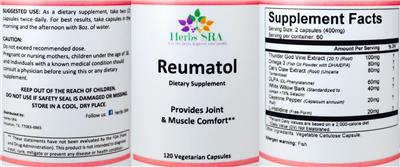
Reumatol by Herbs SRA label
The label scan from the NIH Dietary Supplement Label Database. Tap to enlarge.
Label images are published by the NIH Dietary Supplement Label Database for the version of this product on file. Always read your actual product label.
View the full label (PDF)The Ingredients in Reumatol by Herbs SRA
These are the 7 active ingredients this product is made of. Select any to open its full monograph.
Serving size2 Capsule(s) Dosage formCapsule Servings per container60 Amounts shown are per serving.
Most supplement products combine several ingredients, and a medication can interact with the product through any one of them. Each ingredient below shows whether it has known drug interactions.
L-Histidine
No knowninteractions
Histidine is an essential amino acid your body needs to build proteins and to make compounds like histamine and carnosine. Most people get enough from...
L-Histidine monograph & interactionsDL-Phenylalanine
Cayenne Pepper
Interacts with239 drugs
Capsicum (chili pepper) contains capsaicin, which is best known and best studied as a topical treatment for certain types of pain. Topical capsaicin p...
Cayenne Pepper monograph & interactionsCat's Claw Root Extract
Interacts with962 drugs
Cat's claw is a South American vine traditionally used for inflammation, joint pain, and immune support. Some small studies hint it may help with arth...
Cat's Claw Root Extract monograph & interactionsThunder God Vine Root Extract
Interacts with849 drugs
Thunder God Vine is a Chinese herb studied mainly for rheumatoid arthritis and other autoimmune conditions, with some promising but limited evidence....
Thunder God Vine Root Extract monograph & interactionsOmega-3 Fatty Acids, Powder
Interacts with375 drugs
DHA is an omega-3 fatty acid found in fatty fish and algae that is a building block for the brain, nervous system, and eyes. It is widely used and gen...
Omega-3 Fatty Acids, Powder monograph & interactionsWhite Willow
Other (inactive) ingredients: Cellulose. These complete the product’s ingredient list but are not active constituents.
Reumatol by Herbs SRA Drug Interactions
HelloPharmacist Interaction Report
Reumatol by Herbs SRA contains seven ingredients, and several of them interact with medications.
The most serious interaction involves cayenne pepper and blood thinners (anticoagulant or antiplatelet drugs) — cayenne may increase bleeding risk, and population research has linked it to increased bleeding in patients taking warfarin.
Read the full breakdown — every affected drug type, severity by severity
Cayenne pepper also interacts with antidiabetes drugs (risk of low blood sugar), theophylline (may raise its levels), aspirin (may reduce its effectiveness), and ACE inhibitors and ciprofloxacin (minor interactions with cough risk and antibiotic levels, respectively). Cat's claw root extract carries moderate interactions with blood pressure drugs, drugs metabolized by a liver enzyme called CYP3A4, blood thinners, immune-suppressing medications, calcium channel blockers, and the antiviral paxlovid — these can affect drug levels or blood pressure control.
Thunder god vine root extract also interacts with drugs processed through the liver (CYP1A2 and CYP3A4 pathways) and with immunosuppressants.
We could not check two other ingredients — DL-phenylalanine, omega-3 fatty acids, and white willow — as we hold no data for them. Altogether, these interactions span 1,121 individual medications.
Please check your exact prescriptions with the search tool on this page before starting.
Check your own medications below · Editorial policy · How we use AI
Want to check YOUR meds against Reumatol?
Ask about interactions with your drugs in plain English — “Can I take it with lisinopril?” — and we find you the answer in seconds, ingredient by ingredient.
Go to the checkerIngredients driving the most interactions
Individual Drug Interactions
The ingredients in Reumatol interact with 1,137 drugs. Click any drug to see the details.
4 of the 7 ingredients in Reumatol interact with drugs. Each result below shows which ingredient is responsible. Cat's Claw Root Extract Thunder God Vine Root Extract Omega-3 Fatty Acids, Powder Cayenne Pepper
6-mercaptopurinePurinethol
How 6-mercaptopurine interacts with Reumatol — through 2 ingredients. Tap an ingredient for the detail:
Thunder God Vine Root ExtractImmunosuppressants Moderate
Interaction Summary
Theoretically, thunder god vine might enhance the effects of immunosuppressant drugs.
Read the full Thunder God Vine Root Extract + 6-mercaptopurine interactionCat's Claw Root ExtractImmunosuppressants Moderate
Interaction Summary
Theoretically, cat's claw might interfere with immunosuppressive therapy.
Read the full Cat's Claw Root Extract + 6-mercaptopurine interactionAdo-trastuzumab EmtansineKadcyla
How Ado-trastuzumab Emtansine interacts with Reumatol — through 2 ingredients. Tap an ingredient for the detail:
Cat's Claw Root ExtractCytochrome P450 3a4 (cyp3a4) Substrates Moderate
Interaction Summary
Theoretically, cat's claw might increase or decrease the levels and effects of drugs metabolized by CYP3A4.
Read the full Cat's Claw Root Extract + Ado-trastuzumab Emtansine interactionThunder God Vine Root ExtractCytochrome P450 3a4 (cyp3a4) Substrates Moderate
Interaction Summary
Theoretically, thunder god vine might increase the levels and clinical effects of CYP3A4 substrates.
Read the full Thunder God Vine Root Extract + Ado-trastuzumab Emtansine interactionAbametapirXeglyze
How Abametapir interacts with Reumatol — through 1 ingredient. Tap an ingredient for the detail:
Thunder God Vine Root ExtractCytochrome P450 3a4 (cyp3a4) Inhibitors Moderate
Interaction Summary
Theoretically, CYP3A4 inhibitors might increase the levels and adverse effects of thunder god vine constituents.
Read the full Thunder God Vine Root Extract + Abametapir interactionAbciximabReoPro
How Abciximab interacts with Reumatol — through 3 ingredients. Tap an ingredient for the detail:
Omega-3 Fatty Acids, PowderAnticoagulant/antiplatelet Drugs Moderate
Interaction Summary
Theoretically, DHA may increase the risk of bleeding if used with anticoagulant or antiplatelet drugs.
Read the full Omega-3 Fatty Acids, Powder + Abciximab interactionCat's Claw Root ExtractAnticoagulant/antiplatelet Drugs Moderate
Interaction Summary
Theoretically, cat's claw may increase the risk of bleeding if used with anticoagulant or antiplatelet drugs.
Read the full Cat's Claw Root Extract + Abciximab interactionCayenne PepperAnticoagulant/antiplatelet Drugs Moderate
Interaction Summary
Theoretically, capsicum may increase the risk of bleeding if used with anticoagulant or antiplatelet drugs.
Read the full Cayenne Pepper + Abciximab interactionAbemaciclibVerzenio
How Abemaciclib interacts with Reumatol — through 2 ingredients. Tap an ingredient for the detail:
Thunder God Vine Root ExtractCytochrome P450 3a4 (cyp3a4) Substrates Moderate
Interaction Summary
Theoretically, thunder god vine might increase the levels and clinical effects of CYP3A4 substrates.
Read the full Thunder God Vine Root Extract + Abemaciclib interactionCat's Claw Root ExtractCytochrome P450 3a4 (cyp3a4) Substrates Moderate
Interaction Summary
Theoretically, cat's claw might increase or decrease the levels and effects of drugs metabolized by CYP3A4.
Read the full Cat's Claw Root Extract + Abemaciclib interactionAbiraterone
How Abiraterone interacts with Reumatol — through 2 ingredients. Tap an ingredient for the detail:
Thunder God Vine Root ExtractCytochrome P450 3a4 (cyp3a4) Inhibitors, Cytochrome P450 3a4 (cyp3a4) Substrates Moderate
Interaction Summary
Theoretically, CYP3A4 inhibitors might increase the levels and adverse effects of thunder god vine constituents.
Read the full Thunder God Vine Root Extract + Abiraterone interactionCat's Claw Root ExtractCytochrome P450 3a4 (cyp3a4) Substrates Moderate
Interaction Summary
Theoretically, cat's claw might increase or decrease the levels and effects of drugs metabolized by CYP3A4.
Read the full Cat's Claw Root Extract + Abiraterone interactionAbiraterone AcetateYonsa, Zytiga
How Abiraterone Acetate interacts with Reumatol — through 2 ingredients. Tap an ingredient for the detail:
Cat's Claw Root ExtractCytochrome P450 3a4 (cyp3a4) Substrates Moderate
Interaction Summary
Theoretically, cat's claw might increase or decrease the levels and effects of drugs metabolized by CYP3A4.
Read the full Cat's Claw Root Extract + Abiraterone Acetate interactionThunder God Vine Root ExtractCytochrome P450 3a4 (cyp3a4) Substrates Moderate
Interaction Summary
Theoretically, thunder god vine might increase the levels and clinical effects of CYP3A4 substrates.
Read the full Thunder God Vine Root Extract + Abiraterone Acetate interactionAbrocitinibCibinqo
How Abrocitinib interacts with Reumatol — through 4 ingredients. Tap an ingredient for the detail:
Thunder God Vine Root ExtractImmunosuppressants Moderate
Interaction Summary
Theoretically, thunder god vine might enhance the effects of immunosuppressant drugs.
Read the full Thunder God Vine Root Extract + Abrocitinib interactionCat's Claw Root ExtractAnticoagulant/antiplatelet Drugs, Immunosuppressants Moderate
Interaction Summary
Theoretically, cat's claw may increase the risk of bleeding if used with anticoagulant or antiplatelet drugs.
Read the full Cat's Claw Root Extract + Abrocitinib interactionOmega-3 Fatty Acids, PowderAnticoagulant/antiplatelet Drugs Moderate
Interaction Summary
Theoretically, DHA may increase the risk of bleeding if used with anticoagulant or antiplatelet drugs.
Read the full Omega-3 Fatty Acids, Powder + Abrocitinib interactionCayenne PepperAnticoagulant/antiplatelet Drugs Moderate
Interaction Summary
Theoretically, capsicum may increase the risk of bleeding if used with anticoagulant or antiplatelet drugs.
Read the full Cayenne Pepper + Abrocitinib interactionAcalabrutinibCalquence
How Acalabrutinib interacts with Reumatol — through 2 ingredients. Tap an ingredient for the detail:
Cat's Claw Root ExtractCytochrome P450 3a4 (cyp3a4) Substrates Moderate
Interaction Summary
Theoretically, cat's claw might increase or decrease the levels and effects of drugs metabolized by CYP3A4.
Read the full Cat's Claw Root Extract + Acalabrutinib interactionThunder God Vine Root ExtractCytochrome P450 3a4 (cyp3a4) Substrates Moderate
Interaction Summary
Theoretically, thunder god vine might increase the levels and clinical effects of CYP3A4 substrates.
Read the full Thunder God Vine Root Extract + Acalabrutinib interactionAcarboseGlucobay, Prandase, Precose
How Acarbose interacts with Reumatol — through 2 ingredients. Tap an ingredient for the detail:
Cayenne PepperAntidiabetes Drugs Moderate
Interaction Summary
Theoretically, taking capsicum with antidiabetes drugs might increase the risk of hypoglycemia.
Read the full Cayenne Pepper + Acarbose interactionOmega-3 Fatty Acids, PowderAntidiabetes Drugs Moderate
Interaction Summary
Theoretically, taking DHA with antidiabetes drugs might reduce the effects of these medications.
Read the full Omega-3 Fatty Acids, Powder + Acarbose interactionAcebutololRhotral, Sectral
How Acebutolol interacts with Reumatol — through 2 ingredients. Tap an ingredient for the detail:
Omega-3 Fatty Acids, PowderAntihypertensive Drugs Moderate
Interaction Summary
Theoretically, taking DHA with antihypertensive drugs might increase the risk of hypotension.
Read the full Omega-3 Fatty Acids, Powder + Acebutolol interactionCat's Claw Root ExtractAntihypertensive Drugs Moderate
Interaction Summary
Theoretically, taking cat's claw with antihypertensive drugs might increase the risk of hypotension.
Read the full Cat's Claw Root Extract + Acebutolol interactionAcenocoumarolSintrom
How Acenocoumarol interacts with Reumatol — through 3 ingredients. Tap an ingredient for the detail:
Cayenne PepperAnticoagulant/antiplatelet Drugs Moderate
Interaction Summary
Theoretically, capsicum may increase the risk of bleeding if used with anticoagulant or antiplatelet drugs.
Read the full Cayenne Pepper + Acenocoumarol interactionOmega-3 Fatty Acids, PowderAnticoagulant/antiplatelet Drugs Moderate
Interaction Summary
Theoretically, DHA may increase the risk of bleeding if used with anticoagulant or antiplatelet drugs.
Read the full Omega-3 Fatty Acids, Powder + Acenocoumarol interactionCat's Claw Root ExtractAnticoagulant/antiplatelet Drugs Moderate
Interaction Summary
Theoretically, cat's claw may increase the risk of bleeding if used with anticoagulant or antiplatelet drugs.
Read the full Cat's Claw Root Extract + Acenocoumarol interactionAcetaminophenChildren's Tylenol, Children's Tylenol Meltaways, Tylenol, Tylenol Ex Strength
How Acetaminophen interacts with Reumatol — through 1 ingredient. Tap an ingredient for the detail:
Thunder God Vine Root ExtractCytochrome P450 1a2 (cyp1a2) Substrates Moderate
Interaction Summary
Theoretically, thunder god vine might increase the levels and clinical effects of CYP1A2 substrates.
Read the full Thunder God Vine Root Extract + Acetaminophen interactionAcetaminophen, AspirinGemnisyn
How Acetaminophen, Aspirin interacts with Reumatol — through 4 ingredients. Tap an ingredient for the detail:
Cat's Claw Root ExtractAnticoagulant/antiplatelet Drugs Moderate
Interaction Summary
Theoretically, cat's claw may increase the risk of bleeding if used with anticoagulant or antiplatelet drugs.
Read the full Cat's Claw Root Extract + Acetaminophen, Aspirin interactionCayenne PepperAnticoagulant/antiplatelet Drugs, Aspirin Moderate
Interaction Summary
Theoretically, capsicum may increase the risk of bleeding if used with anticoagulant or antiplatelet drugs.
Read the full Cayenne Pepper + Acetaminophen, Aspirin interactionOmega-3 Fatty Acids, PowderAnticoagulant/antiplatelet Drugs Moderate
Interaction Summary
Theoretically, DHA may increase the risk of bleeding if used with anticoagulant or antiplatelet drugs.
Read the full Omega-3 Fatty Acids, Powder + Acetaminophen, Aspirin interactionThunder God Vine Root ExtractCytochrome P450 1a2 (cyp1a2) Substrates Moderate
Interaction Summary
Theoretically, thunder god vine might increase the levels and clinical effects of CYP1A2 substrates.
Read the full Thunder God Vine Root Extract + Acetaminophen, Aspirin interactionAcetaminophen, Aspirin, CaffeineExcedrin, Excedrin Extra Strength, Excedrin Migraine
How Acetaminophen, Aspirin, Caffeine interacts with Reumatol — through 4 ingredients. Tap an ingredient for the detail:
Cayenne PepperAspirin, Anticoagulant/antiplatelet Drugs Moderate
Interaction Summary
Theoretically, taking capsicum with aspirin might reduce the bioavailability of aspirin.
Read the full Cayenne Pepper + Acetaminophen, Aspirin, Caffeine interactionCat's Claw Root ExtractAnticoagulant/antiplatelet Drugs, Cytochrome P450 3a4 (cyp3a4) Substrates Moderate
Interaction Summary
Theoretically, cat's claw may increase the risk of bleeding if used with anticoagulant or antiplatelet drugs.
Read the full Cat's Claw Root Extract + Acetaminophen, Aspirin, Caffeine interactionThunder God Vine Root ExtractCytochrome P450 1a2 (cyp1a2) Substrates, Cytochrome P450 3a4 (cyp3a4) Substrates Moderate
Interaction Summary
Theoretically, thunder god vine might increase the levels and clinical effects of CYP1A2 substrates.
Read the full Thunder God Vine Root Extract + Acetaminophen, Aspirin, Caffeine interactionOmega-3 Fatty Acids, PowderAnticoagulant/antiplatelet Drugs Moderate
Interaction Summary
Theoretically, DHA may increase the risk of bleeding if used with anticoagulant or antiplatelet drugs.
Read the full Omega-3 Fatty Acids, Powder + Acetaminophen, Aspirin, Caffeine interactionAcetaminophen, Brompheniramine, PhenylpropanolamineDimetapp Cold and Flu
How Acetaminophen, Brompheniramine, Phenylpropanolamine interacts with Reumatol — through 1 ingredient. Tap an ingredient for the detail:
Thunder God Vine Root ExtractCytochrome P450 1a2 (cyp1a2) Substrates Moderate
Interaction Summary
Theoretically, thunder god vine might increase the levels and clinical effects of CYP1A2 substrates.
Read the full Thunder God Vine Root Extract + Acetaminophen, Brompheniramine, Phenylpropanolamine interactionAcetaminophen, ButalbitalAxocet, Bancap, Bucet, Butex Forte, Esgic CF, Orbivan CF +5 more
How Acetaminophen, Butalbital interacts with Reumatol — through 1 ingredient. Tap an ingredient for the detail:
Thunder God Vine Root ExtractCytochrome P450 1a2 (cyp1a2) Substrates Moderate
Interaction Summary
Theoretically, thunder god vine might increase the levels and clinical effects of CYP1A2 substrates.
Read the full Thunder God Vine Root Extract + Acetaminophen, Butalbital interactionAcetaminophen, Butalbital, CaffeineEsgic, Esgic Plus, Fiogesic, Fioricet, Repan, Tecnal +1 more
How Acetaminophen, Butalbital, Caffeine interacts with Reumatol — through 2 ingredients. Tap an ingredient for the detail:
Cat's Claw Root ExtractCytochrome P450 3a4 (cyp3a4) Substrates Moderate
Interaction Summary
Theoretically, cat's claw might increase or decrease the levels and effects of drugs metabolized by CYP3A4.
Read the full Cat's Claw Root Extract + Acetaminophen, Butalbital, Caffeine interactionThunder God Vine Root ExtractCytochrome P450 1a2 (cyp1a2) Substrates, Cytochrome P450 3a4 (cyp3a4) Substrates Moderate
Interaction Summary
Theoretically, thunder god vine might increase the levels and clinical effects of CYP1A2 substrates.
Read the full Thunder God Vine Root Extract + Acetaminophen, Butalbital, Caffeine interactionAcetaminophen, Butalbital, Caffeine, CodeineEsgic with Codeine, Fioricet w/ Codeine
How Acetaminophen, Butalbital, Caffeine, Codeine interacts with Reumatol — through 2 ingredients. Tap an ingredient for the detail:
Thunder God Vine Root ExtractCytochrome P450 3a4 (cyp3a4) Substrates, Cytochrome P450 1a2 (cyp1a2) Substrates Moderate
Interaction Summary
Theoretically, thunder god vine might increase the levels and clinical effects of CYP3A4 substrates.
Read the full Thunder God Vine Root Extract + Acetaminophen, Butalbital, Caffeine, Codeine interactionCat's Claw Root ExtractCytochrome P450 3a4 (cyp3a4) Substrates Moderate
Interaction Summary
Theoretically, cat's claw might increase or decrease the levels and effects of drugs metabolized by CYP3A4.
Read the full Cat's Claw Root Extract + Acetaminophen, Butalbital, Caffeine, Codeine interactionAcetaminophen, Butalbital, CodeineBancap w/ Codeine
How Acetaminophen, Butalbital, Codeine interacts with Reumatol — through 1 ingredient. Tap an ingredient for the detail:
Thunder God Vine Root ExtractCytochrome P450 1a2 (cyp1a2) Substrates Moderate
Interaction Summary
Theoretically, thunder god vine might increase the levels and clinical effects of CYP1A2 substrates.
Read the full Thunder God Vine Root Extract + Acetaminophen, Butalbital, Codeine interactionAcetaminophen, Butalbital, Codeine PhosphatePhrenilin #3
How Acetaminophen, Butalbital, Codeine Phosphate interacts with Reumatol — through 1 ingredient. Tap an ingredient for the detail:
Thunder God Vine Root ExtractCytochrome P450 1a2 (cyp1a2) Substrates Moderate
Interaction Summary
Theoretically, thunder god vine might increase the levels and clinical effects of CYP1A2 substrates.
Read the full Thunder God Vine Root Extract + Acetaminophen, Butalbital, Codeine Phosphate interactionAcetaminophen, Caffeine, Chlorpheniramine, Hydrocodone, PhenylephrineHycomine Compound
How Acetaminophen, Caffeine, Chlorpheniramine, Hydrocodone, Phenylephrine interacts with Reumatol — through 2 ingredients. Tap an ingredient for the detail:
Thunder God Vine Root ExtractCytochrome P450 1a2 (cyp1a2) Substrates, Cytochrome P450 3a4 (cyp3a4) Substrates Moderate
Interaction Summary
Theoretically, thunder god vine might increase the levels and clinical effects of CYP1A2 substrates.
Read the full Thunder God Vine Root Extract + Acetaminophen, Caffeine, Chlorpheniramine, Hydrocodone, Phenylephrine interactionCat's Claw Root ExtractCytochrome P450 3a4 (cyp3a4) Substrates Moderate
Interaction Summary
Theoretically, cat's claw might increase or decrease the levels and effects of drugs metabolized by CYP3A4.
Read the full Cat's Claw Root Extract + Acetaminophen, Caffeine, Chlorpheniramine, Hydrocodone, Phenylephrine interactionAcetaminophen, Caffeine, CodeineGesic C15, Gesic C30, Gesic C8, Lenoltec 1, Lenoltec 2, Lenoltec 3 +1 more
How Acetaminophen, Caffeine, Codeine interacts with Reumatol — through 2 ingredients. Tap an ingredient for the detail:
Cat's Claw Root ExtractCytochrome P450 3a4 (cyp3a4) Substrates Moderate
Interaction Summary
Theoretically, cat's claw might increase or decrease the levels and effects of drugs metabolized by CYP3A4.
Read the full Cat's Claw Root Extract + Acetaminophen, Caffeine, Codeine interactionThunder God Vine Root ExtractCytochrome P450 1a2 (cyp1a2) Substrates, Cytochrome P450 3a4 (cyp3a4) Substrates Moderate
Interaction Summary
Theoretically, thunder god vine might increase the levels and clinical effects of CYP1A2 substrates.
Read the full Thunder God Vine Root Extract + Acetaminophen, Caffeine, Codeine interactionAcetaminophen, Caffeine, Codeine, SalicylamideCodalan No.1, Codalan No.2, Codalan No.3
How Acetaminophen, Caffeine, Codeine, Salicylamide interacts with Reumatol — through 2 ingredients. Tap an ingredient for the detail:
Thunder God Vine Root ExtractCytochrome P450 3a4 (cyp3a4) Substrates, Cytochrome P450 1a2 (cyp1a2) Substrates Moderate
Interaction Summary
Theoretically, thunder god vine might increase the levels and clinical effects of CYP3A4 substrates.
Read the full Thunder God Vine Root Extract + Acetaminophen, Caffeine, Codeine, Salicylamide interactionCat's Claw Root ExtractCytochrome P450 3a4 (cyp3a4) Substrates Moderate
Interaction Summary
Theoretically, cat's claw might increase or decrease the levels and effects of drugs metabolized by CYP3A4.
Read the full Cat's Claw Root Extract + Acetaminophen, Caffeine, Codeine, Salicylamide interactionAcetaminophen, Caffeine, DihydrocodeineDHC Plus, Panlor DC, Panlor SS
How Acetaminophen, Caffeine, Dihydrocodeine interacts with Reumatol — through 2 ingredients. Tap an ingredient for the detail:
Thunder God Vine Root ExtractCytochrome P450 3a4 (cyp3a4) Substrates, Cytochrome P450 1a2 (cyp1a2) Substrates Moderate
Interaction Summary
Theoretically, thunder god vine might increase the levels and clinical effects of CYP3A4 substrates.
Read the full Thunder God Vine Root Extract + Acetaminophen, Caffeine, Dihydrocodeine interactionCat's Claw Root ExtractCytochrome P450 3a4 (cyp3a4) Substrates Moderate
Interaction Summary
Theoretically, cat's claw might increase or decrease the levels and effects of drugs metabolized by CYP3A4.
Read the full Cat's Claw Root Extract + Acetaminophen, Caffeine, Dihydrocodeine interactionAcetaminophen, Caffeine, IsomethepteneMigralam
How Acetaminophen, Caffeine, Isometheptene interacts with Reumatol — through 2 ingredients. Tap an ingredient for the detail:
Thunder God Vine Root ExtractCytochrome P450 3a4 (cyp3a4) Substrates, Cytochrome P450 1a2 (cyp1a2) Substrates Moderate
Interaction Summary
Theoretically, thunder god vine might increase the levels and clinical effects of CYP3A4 substrates.
Read the full Thunder God Vine Root Extract + Acetaminophen, Caffeine, Isometheptene interactionCat's Claw Root ExtractCytochrome P450 3a4 (cyp3a4) Substrates Moderate
Interaction Summary
Theoretically, cat's claw might increase or decrease the levels and effects of drugs metabolized by CYP3A4.
Read the full Cat's Claw Root Extract + Acetaminophen, Caffeine, Isometheptene interactionAcetaminophen, Caffeine, PyrilamineMidol Max Strength Menstrual
How Acetaminophen, Caffeine, Pyrilamine interacts with Reumatol — through 2 ingredients. Tap an ingredient for the detail:
Thunder God Vine Root ExtractCytochrome P450 1a2 (cyp1a2) Substrates, Cytochrome P450 3a4 (cyp3a4) Substrates Moderate
Interaction Summary
Theoretically, thunder god vine might increase the levels and clinical effects of CYP1A2 substrates.
Read the full Thunder God Vine Root Extract + Acetaminophen, Caffeine, Pyrilamine interactionCat's Claw Root ExtractCytochrome P450 3a4 (cyp3a4) Substrates Moderate
Interaction Summary
Theoretically, cat's claw might increase or decrease the levels and effects of drugs metabolized by CYP3A4.
Read the full Cat's Claw Root Extract + Acetaminophen, Caffeine, Pyrilamine interactionAcetaminophen, Chlorpheniramine Maleate, Dextromethorphan HbrVicks Formula 44M Cough, Cold & Flu Relief
How Acetaminophen, Chlorpheniramine Maleate, Dextromethorphan Hbr interacts with Reumatol — through 2 ingredients. Tap an ingredient for the detail:
Thunder God Vine Root ExtractCytochrome P450 3a4 (cyp3a4) Substrates, Cytochrome P450 1a2 (cyp1a2) Substrates Moderate
Interaction Summary
Theoretically, thunder god vine might increase the levels and clinical effects of CYP3A4 substrates.
Read the full Thunder God Vine Root Extract + Acetaminophen, Chlorpheniramine Maleate, Dextromethorphan Hbr interactionCat's Claw Root ExtractCytochrome P450 3a4 (cyp3a4) Substrates Moderate
Interaction Summary
Theoretically, cat's claw might increase or decrease the levels and effects of drugs metabolized by CYP3A4.
Read the full Cat's Claw Root Extract + Acetaminophen, Chlorpheniramine Maleate, Dextromethorphan Hbr interactionAcetaminophen, Chlorpheniramine, Codeine, PhenylephrineColrex
How Acetaminophen, Chlorpheniramine, Codeine, Phenylephrine interacts with Reumatol — through 2 ingredients. Tap an ingredient for the detail:
Thunder God Vine Root ExtractCytochrome P450 1a2 (cyp1a2) Substrates, Cytochrome P450 3a4 (cyp3a4) Substrates Moderate
Interaction Summary
Theoretically, thunder god vine might increase the levels and clinical effects of CYP1A2 substrates.
Read the full Thunder God Vine Root Extract + Acetaminophen, Chlorpheniramine, Codeine, Phenylephrine interactionCat's Claw Root ExtractCytochrome P450 3a4 (cyp3a4) Substrates Moderate
Interaction Summary
Theoretically, cat's claw might increase or decrease the levels and effects of drugs metabolized by CYP3A4.
Read the full Cat's Claw Root Extract + Acetaminophen, Chlorpheniramine, Codeine, Phenylephrine interactionAcetaminophen, Chlorpheniramine, DextromethorphanCoricidin II Extra Strength Cold and Flu
How Acetaminophen, Chlorpheniramine, Dextromethorphan interacts with Reumatol — through 2 ingredients. Tap an ingredient for the detail:
Thunder God Vine Root ExtractCytochrome P450 3a4 (cyp3a4) Substrates, Cytochrome P450 1a2 (cyp1a2) Substrates Moderate
Interaction Summary
Theoretically, thunder god vine might increase the levels and clinical effects of CYP3A4 substrates.
Read the full Thunder God Vine Root Extract + Acetaminophen, Chlorpheniramine, Dextromethorphan interactionCat's Claw Root ExtractCytochrome P450 3a4 (cyp3a4) Substrates Moderate
Interaction Summary
Theoretically, cat's claw might increase or decrease the levels and effects of drugs metabolized by CYP3A4.
Read the full Cat's Claw Root Extract + Acetaminophen, Chlorpheniramine, Dextromethorphan interactionEach ingredient & the kinds of drugs it affects
For each ingredient in Reumatol with known interactions, here are the types of medications they can affect. Open any type for the detail — or search your exact drug in the checker above.
Cat's Claw Root Extract
Anticoagulant/Antiplatelet Drugs
Theoretically, cat's claw may increase the risk of bleeding if used with anticoagulant or antiplatelet drugs.
Cat's claw contains rhynchophylline and isorhynchophylline. Animal research suggests that these alkaloids can inhibit platelet aggregation. This interaction has not been reported in humans.
Antihypertensive Drugs
Theoretically, taking cat's claw with antihypertensive drugs might increase the risk of hypotension.
Cat's claw contains rhynchophylline. In vitro and animal research suggests that rhynchophylline can lower blood pressure. This interaction has not been reported in humans.
Calcium Channel Blockers
Theoretically, taking cat's claw with calcium channel blockers might increase the risk of hypotension.
Cat's claw contains various alkaloids, including rhynchophylline, isorhynchophylline, corynoxeine, and isocorynoxiene. Animal research suggests that these alkaloids can lower blood pressure by acting as calcium channel blockers. This interaction has not been reported in humans.
Cytochrome P450 3A4 (Cyp3A4) Substrates
Theoretically, cat's claw might increase or decrease the levels and effects of drugs metabolized by CYP3A4.
Cat's claw may affect the clearance of drugs metabolized by CYP3A4. In vitro research shows that cat's claw can inhibit CYP3A4 enzymes. In one case report, a patient taking cat's claw (at an unspecified dose) experienced increased serum levels of atazanavir, ritonavir, and saquinavir, all of which are CYP3A4 substrates. Levels returned to normal 15 days after discontinuation of the cat's claw supplement, suggesting inhibition of CYP3A4 by cat's claw. In contrast, animal research suggests that rhynchophylline, an alkaloid contained in cat's claw, induces CYP3A expression and accelerates the metabolism of nirmatrelvir, the active component in the nirmatrelvir/ritonavir combination product.
Immunosuppressants
Theoretically, cat's claw might interfere with immunosuppressive therapy.
In human and laboratory research, cat's claw has been shown to have immunostimulating activity. It stimulates phagocytosis and increases respiratory cellular activity and the mobility of leukocytes. Theoretically, this could interfere with the activity of immunosuppressant medications.
Nirmatrelvir/Ritonavir (Paxlovid)
Theoretically, cat's claw may decrease the levels of nirmatrelvir.
Cat's claw contains rhynchophylline. Animal research suggests that this alkaloid induces CYP3A expression, thereby accelerating the metabolism of nirmatrelvir, the active component in the nirmatrelvir/ritonavir combination product. This interaction has not been reported in humans.
Thunder God Vine Root Extract
Cytochrome P450 1A2 (Cyp1A2) Substrates
Theoretically, thunder god vine might increase the levels and clinical effects of CYP1A2 substrates.
In vitro research shows that triptolide, a constituent of thunder god vine, inhibits CYP1A2 enzymes in human microsomes. This interaction has not been reported in humans.
Cytochrome P450 3A4 (Cyp3A4) Inhibitors
Theoretically, CYP3A4 inhibitors might increase the levels and adverse effects of thunder god vine constituents.
Inhibitors of CYP3A4 can increase the concentration of triptolide, a thunder god vine constituent, and its derivative (5R)-5-hydroxytriptolide. In vitro research shows that triptolide and (5R)-5-hydroxytriptolide are about 94% and 64% metabolized by CYP3A4, respectively.
Cytochrome P450 3A4 (Cyp3A4) Substrates
Theoretically, thunder god vine might increase the levels and clinical effects of CYP3A4 substrates.
In vitro research shows that triptolide, a constituent of thunder god vine, inhibits CYP3A4 enzymes in human microsomes. This interaction has not been reported in humans.
Immunosuppressants
Theoretically, thunder god vine might enhance the effects of immunosuppressant drugs.
Large doses of thunder god vine may suppress immune function.
Omega-3 Fatty Acids, Powder
Anticoagulant/Antiplatelet Drugs
Theoretically, DHA may increase the risk of bleeding if used with anticoagulant or antiplatelet drugs.
Although some clinical evidence suggests that DHA might reduce collagen-stimulated platelet aggregation and thromboxane release, most clinical evidence suggests that DHA alone does not affect blood clotting. However, theoretically, when given in combination with EPA as fish oil, concomitant use with anticoagulant or antiplatelet drugs (including aspirin) might increase risk of bleeding.
Antidiabetes Drugs
Theoretically, taking DHA with antidiabetes drugs might reduce the effects of these medications.
In people with type 2 diabetes, including those taking oral hypoglycemic medications, DHA seems to increase fasting blood glucose levels.
Antihypertensive Drugs
Theoretically, taking DHA with antihypertensive drugs might increase the risk of hypotension.
Fish oils containing DHA can lower blood pressure and might have additive effects in patients treated with antihypertensives; use with caution.
Cayenne Pepper
Anticoagulant/Antiplatelet Drugs
Theoretically, capsicum may increase the risk of bleeding if used with anticoagulant or antiplatelet drugs.
In vitro research shows that capsicum might increase the effects of antiplatelet drugs. Also, population research shows that capsicum is associated with an increased risk of self-reported bleeding in patients taking warfarin. However, clinical research shows that taking a single dose of capsaicin (Asian Herbex Ltd.), the active ingredient in capsicum, 400-800 mcg orally in combination with aspirin 500 mg does not decrease platelet aggregation when compared with taking aspirin 500 mg alone. Also, there was no notable effect on measures of platelet aggregation with capsaicin. It is unclear whether capsaicin must be used in more than a single dose to affect platelet aggregation.
Antidiabetes Drugs
Theoretically, taking capsicum with antidiabetes drugs might increase the risk of hypoglycemia.
Preliminary clinical research shows that consuming capsicum 5 grams along with a glucose drink attenuates the rise in plasma glucose after 30 minutes by 21%, decreases the 2-hour postprandial area under the curve of plasma glucose by 11%, and increases the 2-hour postprandial area under the curve of plasma insulin by 58% in healthy individuals when compared with placebo. Other clinical research shows that taking capsicum 5 mg daily for 28 days significantly reduces postprandial blood glucose and insulin levels, but not fasting blood glucose and insulin levels, in patients with gestational diabetes.
Aspirin
Theoretically, taking capsicum with aspirin might reduce the bioavailability of aspirin.
Animal research shows that acute or chronic intake of capsicum pepper reduces oral aspirin bioavailability. This has not been shown in humans.
Theophylline
Theoretically, taking capsicum with theophylline might increase the levels and adverse effects of theophylline.
In animal research, oral administration of capsicum reduced excretion of theophylline. However, capsicum does not seem to affect the pharmacokinetics of theophylline when administered intravenously.
Ace Inhibitors (Aceis)
Theoretically, using topical capsaicin may increase the risk of ACE inhibitor-induced cough.
There is one case report of a topically applied capsaicin cream contributing to the cough reflex in a patient using an ACEI. However, it is unclear if this interaction is clinically significant.
Ciprofloxacin (Cipro)
Theoretically, taking capsicum with ciprofloxacin might increase levels and adverse effects of ciprofloxacin.
Animal research shows that concomitant use of capsaicin, the active constituent of capsicum, and ciprofloxacin increases the bioavailability of ciprofloxacin by up to 70%.
Brand information
Manufacturer and brand details for Reumatol, from the product label.
Reumatol by Herbs SRA: Common Questions
Does Reumatol by Herbs SRA interact with any medications?
How can one product interact with so many drugs?
Where does this information come from?
Can I take this if I'm pregnant or breastfeeding?
Does cayenne pepper in this product actually work for pain?
What are the most common side effects?
Is this product safe long-term?
What is cat's claw and why is it in here?
Why do I need to check my blood pressure medications with this product?
Written and reviewed by the HelloPharmacist editorial staff. Our editorial policy
Not sure if Reumatol is safe with your meds?
Our pharmacists answer your medication & supplement questions — free.
Label information is sourced from the NIH Dietary Supplement Label Database and reflects the product version on file; always read your actual product label. This page is for education only and is not a substitute for professional medical advice. Confirm with your pharmacist or doctor before combining supplements and medications.
The Full Monographs Behind Reumatol’s Ingredients
Every ingredient we hold a full HelloPharmacist monograph for — uses, evidence, safety, and the complete interaction list.
Histidine
Histidine is an essential amino acid your body needs to build proteins and to make compounds like histamine and carnosine. Most people get enough from a normal diet, and good-quality researc...
Read the full Histidine monograph → Herb & supplement monographCapsicum
Interacts with 239 drugsCapsicum (chili pepper) contains capsaicin, which is best known and best studied as a topical treatment for certain types of pain. Topical capsaicin products are supported by reasonable evid...
Read the full Capsicum monograph → Herb & supplement monographCat's Claw
Interacts with 962 drugsCat's claw is a South American vine traditionally used for inflammation, joint pain, and immune support. Some small studies hint it may help with arthritis symptoms, but the overall evidence...
Read the full Cat's Claw monograph → Herb & supplement monographThunder God Vine
Interacts with 849 drugsThunder God Vine is a Chinese herb studied mainly for rheumatoid arthritis and other autoimmune conditions, with some promising but limited evidence. It can be toxic if prepared or dosed imp...
Read the full Thunder God Vine monograph → Herb & supplement monographDocosahexaenoic Acid (dha)
Interacts with 375 drugsDHA is an omega-3 fatty acid found in fatty fish and algae that is a building block for the brain, nervous system, and eyes. It is widely used and generally well tolerated, with the stronges...
Read the full Docosahexaenoic Acid (dha) monograph →Sources & How We Checked
Reumatol's label data comes from the NIH Dietary Supplement Label Database; the ingredient interaction data is from the Natural Medicines database, reviewed by our pharmacists.
- NIH Dietary Supplement Label Database (DSLD) — The official product label on file for this supplement.
- Natural Medicines (Therapeutic Research Center) — Evidence-graded clinical reference behind the ingredient interaction data.
Content is written and reviewed by licensed HelloPharmacist pharmacists. See our data sources and editorial standards for how this information is built and checked.
The 190 references behind this product’s interaction data
Every citation that drives the interaction findings for this product’s ingredients, from the evidence-graded Natural Medicines (TRC Healthcare) database. Open an ingredient to browse its citations — links open the study on PubMed or the publisher’s site.
Histidine 3 references
Capsicum 89 references
- Covington TR, et al. Handbook of Nonprescription Drugs. 11th ed. Washington, DC: American Pharmaceutical Association, 1996.
- Cooper RL, Cooper MM. Red pepper-induced dermatitis in breast-fed infants. Dermatol 1996;93:61-2. PubMed
- Millqvist E. Cough provocation with capsaicin is an objective way to test sensory hyperreactivity in patients with asthma-like symptoms. Allergy 2000;55:546-50. DOI
- Locock RA. Capsicum. Can Pharm J 1985;118:517-9.
- Mason L, Moore RA, Derry S, et al. Systematic review of topical capsaicin for the treatment of chronic pain. BMJ 2004;328:991. PubMed
- Schmulson MJ, Valdovinos MA, Milke P. Chili pepper and rectal hyperalgesia in irritable bowel syndrome. Am J Gastroenterol 2003;98:1214-5. PubMed
- Surh YJ, Lee SS. Capsaicin in hot chili pepper: carcinogen, co-carcinogen or anticarcinogen? Food Chem Toxicol 1996;34:313-6. PubMed
- Bouraoui A, Brazier JL, Zouaghi H, Rousseau M. Theophylline pharmacokinetics and metabolism in rabbits following single and repeated administration of Capsicum fruit. Eur J Drug Metab Pharmacokinet 1995;20:173-8.
- Hogaboam CM, Wallace JL. Inhibition of platelet aggregation by capsaicin. An effect unrelated to actions on sensory afferent neurons. Eur J Pharmacol 1991;202:129-31. PubMed
- Wang JP, Hsu MF, Teng CM. Antiplatelet effect of capsaicin. Thromb Res 1984;36:497-507. PubMed
- Williams SR, Clark RF, Dunford JV. Contact dermatitis associated with capsaicin: Hunan hand syndrome. Ann Emerg Med 1995;25:713-5. PubMed
- Zollman TM, Bragg RM, Harrison DA. Clinical effects of oleoresin capsicum (pepper spray) on the human cornea and conjunctiva. Ophthalmology 2000;107:2186-9. PubMed
- Bortolotti M, Coccia G, Grossi G, Miglioli M. The treatment of functional dyspepsia with red pepper. Aliment Pharmacol Ther 2002;16:1075-82. PubMed
- Hakas JF Jr. Topical capsaicin induces cough in patient receiving ACE inhibitor. Ann Allergy 1990;65:322-3.
- Rapoport AM, Bigal ME, Tepper SJ, Sheftell FD. Intranasal medications for the treatment of migraine and cluster headache. CNS Drugs 2004;18:671-85. PubMed
- Stjarne P, Rinder J, Heden-Blomquist E, et al. Capsaicin desensitization of the nasal mucosa reduces symptoms upon allergen challenge in patients with allergic rhinitis. Acta Otolaryngol 1998;118:235-9. PubMed
- Levy RL. Intranasal capsaicin for acute abortive treatment of migraine without aura. Headache 1995;35:277.
- Fusco BM, Marabini S, Maggi CA, et al. Preventative effect of repeated nasal applications of capsaicin in cluster headache. Pain 1994;59:321-5. PubMed
- Sicuteri F, Fusco BM, Marabini S, et al. Beneficial effect of capsaicin application to the nasal mucosa in cluster headache. Clin J Pain 1989;5:49-53. PubMed
- Marabini S, Ciabatti PG, Polli G, et al. Beneficial effects of intranasal applications of capsaicin in patients with vasomotor rhinitis. Eur Arch Otorhinolaryngol 1991;248:191-4. PubMed
- Frerick H, Keitel W, Kuhn U, et al. Topical treatment of chronic low back pain with a capsicum plaster. Pain 2003;106:59-64. PubMed
- Keitel W, Frerick H, Kuhn U, et al. Capsicum pain plaster in chronic non-specific low back pain. Arzneimittelforschung 2001;51:896-903. PubMed
- Shalansky S, Lynd L, Richardson K, et al. Risk of warfarin-related bleeding events and supratherapeutic international normalized ratios associated with complementary and alternative medicine: a longitudinal analysis. Pharmacotherapy. 2007;27:1237-47. PubMed
- Sumano-López H, Gutiérrez-Olvera L, Aguilera-Jiménez R, et al. Administration of ciprofloxacin and capsaicin in rats to achieve higher maximal serum concentrations. Arzneimittelforschung. 2007;57(5):286-90. PubMed
- Wanwimolruk S, Nyika S, Kepple M, et al. Effects of capsaicin on the pharmacokinetics of antipyrine, theophylline and quinine in rats. J Pharm Pharmacol. 1993;45(7):618-21. PubMed
- Cruz L, Castañeda-Hernández G, Navarrete A. Ingestion of chilli pepper (Capsicum annuum) reduces salicylate bioavailability after oral asprin administration in the rat. Can J Physiol Pharmacol.
- Rodriguez-Stanley, S., Collings, K. L., Robinson, M., Owen, W., and Miner, P. B., Jr. The effects of capsaicin on reflux, gastric emptying and dyspepsia. Aliment.Pharmacol.Ther. 2000;14(1):129-134. PubMed
- Brown, L., Takeuchi, D., and Challoner, K. Corneal abrasions associated with pepper spray exposure. Am.J.Emerg.Med. 2000;18(3):271-272. PubMed
- Vesaluoma, M., Muller, L., Gallar, J., Lambiase, A., Moilanen, J., Hack, T., Belmonte, C., and Tervo, T. Effects of oleoresin capsicum pepper spray on human corneal morphology and sensitivity. Invest Ophthalmol.Vis.Sci. 2000;41(8):2138-2147.
- Stam, C., Bonnet, M. S., and van Haselen, R. A. The efficacy and safety of a homeopathic gel in the treatment of acute low back pain: a multi-centre, randomised, double-blind comparative clinical trial. Br Homeopath J 2001;90(1):21-28. PubMed
- Olajos, E. J. and Salem, H. Riot control agents: pharmacology, toxicology, biochemistry and chemistry. J.Appl.Toxicol. 2001;21(5):355-391. PubMed
- Fett, D. D. Botanical briefs: Capsicum peppers. Cutis 2003;72(1):21-23.
- McCarthy, G. M. and McCarty, D. J. Effect of topical capsaicin in the therapy of painful osteoarthritis of the hands. J.Rheumatol. 1992;19(4):604-607.
- Chaiyata, P., Puttadechakum, S., and Komindr, S. Effect of chili pepper (Capsicum frutescens) ingestion on plasma glucose response and metabolic rate in Thai women. J.Med.Assoc.Thai. 2003;86(9):854-860.
- Petruzzi, M., Lauritano, D., De Benedittis, M., Baldoni, M., and Serpico, R. Systemic capsaicin for burning mouth syndrome: short-term results of a pilot study. J.Oral Pathol.Med. 2004;33(2):111-114. PubMed
- Misra, M. N., Pullani, A. J., and Mohamed, Z. U. Prevention of PONV by acustimulation with capsicum plaster is comparable to ondansetron after middle ear surgery: [La prevention des NVPO par acustimulation avec un emplatre de Capsicum est comparable a ce PubMed
- Milke, P., Diaz, A., Valdovinos, M. A., and Moran, S. Gastroesophageal reflux in healthy subjects induced by two different species of chilli (Capsicum annum). Dig.Dis. 2006;24(1-2):184-188.
- de Jong, N. W., van der Steen, J. J., Smeekens, C. C., Blacquiere, T., Mulder, P. G., van Wijk, R. G., and de Groot, H. Honeybee interference as a novel aid to reduce pollen exposure and nasal symptoms among greenhouse workers allergic to sweet bell pepp
- Final report on the safety assessment of capsicum annuum extract, capsicum annuum fruit extract, capsicum annuum resin, capsicum annuum fruit powder, capsicum frutescens fruit, capsicum frutescens fruit extract, capsicum frutescens resin, and capsaicin.
- Tandan, R., Lewis, G. A., Krusinski, P. B., Badger, G. B., and Fries, T. J. Topical capsaicin in painful diabetic neuropathy. Controlled study with long-term follow-up. Diabetes Care 1992;15(1):8-14. PubMed
- Gupta, P. J. Red hot chilli consumption is harmful in patients operated for anal fissure - a randomized, double-blind, controlled study. Dig.Surg. 2007;24(5):354-357. PubMed
- Patane, S., Marte, F., Di Bella, G., Cerrito, M., and Coglitore, S. Capsaicin, arterial hypertensive crisis and acute myocardial infarction associated with high levels of thyroid stimulating hormone. Int.J Cardiol. 5-1-2009;134(1):130-132. PubMed
- Gupta, P. J. Consumption of red-hot chili pepper increases symptoms in patients with acute anal fissures. A prospective, randomized, placebo-controlled, double blind, crossover trial. Arq Gastroenterol. 2008;45(2):124-127. PubMed
- Gupta, P. J. Consumption of red-hot chili pepper increases symptoms in patients with acute anal fissures. Ann.Ital.Chir 2008;79(5):347-351.
- Patane, S., Marte, F., La Rosa, F. C., and La, Rocca R. Capsaicin and arterial hypertensive crisis. Int J Cardiol. 10-8-2010;144(2):e26-e27. PubMed
- Chaiyasit, K., Khovidhunkit, W., and Wittayalertpanya, S. Pharmacokinetic and the effect of capsaicin in Capsicum frutescens on decreasing plasma glucose level. J Med.Assoc.Thai. 2009;92(1):108-113.
- Blanc, P., Liu, D., Juarez, C., and Boushey, H. A. Cough in hot pepper workers. Chest 1991;99(1):27-32. PubMed
- Akcay, A. B., Ozcan, T., Seyis, S., and Acele, A. Coronary vasospasm and acute myocardial infarction induced by a topical capsaicin patch. Turk.Kardiyol.Dern.Ars 2009;37(7):497-500.
- van Boxel, O. S., ter Linde, J. J., Siersema, P. D., and Smout, A. J. Role of chemical stimulation of the duodenum in dyspeptic symptom generation. Am J Gastroenterol. 2010;105(4):803-811. PubMed
- Niemcunowicz-Janica, A., Ptaszynska-Sarosiek, I., and Wardaszka, Z. [Sudden death caused by an oleoresin capsicum spray]. Arch.Med.Sadowej.Kryminol. 2009;59(3):252-254.
- Reuter, J., Merfort, I., and Schempp, C. M. Botanicals in dermatology: an evidence-based review. Am J Clin Dermatol 2010;11(4):247-267. PubMed
- McCormack, P. L. Capsaicin dermal patch: in non-diabetic peripheral neuropathic pain. Drugs 10-1-2010;70(14):1831-1842. PubMed
- Bortolotti, M. and Porta, S. Effect of red pepper on symptoms of irritable bowel syndrome: preliminary study. Dig.Dis.Sci 2011;56(11):3288-3295. PubMed
- Webster, L. R., Peppin, J. F., Murphy, F. T., Lu, B., Tobias, J. K., and Vanhove, G. F. Efficacy, safety, and tolerability of NGX-4010, capsaicin 8% patch, in an open-label study of patients with peripheral neuropathic pain. Diabetes Res Clin Pract. 2011 PubMed
- Gerber, S., Frueh, B. E., and Tappeiner, C. Conjunctival proliferation after a mild pepper spray injury in a young child. Cornea 2011;30(9):1042-1044. PubMed
- Lim, L. G., Tay, H., and Ho, K. Y. Curry induces acid reflux and symptoms in gastroesophageal reflux disease. Dig.Dis.Sci 2011;56(12):3546-3550. PubMed
- Ludy, M. J., Moore, G. E., and Mattes, R. D. The effects of capsaicin and capsiate on energy balance: critical review and meta-analyses of studies in humans. Chem Senses 2012;37(2):103-121. PubMed
- Sayin, M. R., Karabag, T., Dogan, S. M., Akpinar, I., and Aydin, M. A case of acute myocardial infarction due to the use of cayenne pepper pills. Wien.Klin.Wochenschr. 2012;124(7-8):285-287. PubMed
- Bley, K., Boorman, G., Mohammad, B., McKenzie, D., and Babbar, S. A comprehensive review of the carcinogenic and anticarcinogenic potential of capsaicin. Toxicol.Pathol. 2012;40(6):847-873. PubMed
- Derry, S. and Moore, R. A. Topical capsaicin (low concentration) for chronic neuropathic pain in adults. Cochrane.Database.Syst.Rev. 2012;9:CD010111. PubMed
- Tominack, R. L. and Spyker, D. A. Capsicum and capsaicin--a review: case report of the use of hot peppers in child abuse. J.Toxicol.Clin.Toxicol. 1987;25(7):591-601. PubMed
- Schuurs, A. H., Abraham-Inpijn, L., van Straalen, J. P., and Sastrowijoto, S. H. An unusual case of black teeth. Oral Surg.Oral Med.Oral Pathol. 1987;64(4):427-431. PubMed
- Kumar, N., Vij, J. C., Sarin, S. K., and Anand, B. S. Do chillies influence healing of duodenal ulcer? Br.Med.J.(Clin.Res.Ed) 6-16-1984;288(6433):1803-1804. PubMed
- Steffee, C. H., Lantz, P. E., Flannagan, L. M., Thompson, R. L., and Jason, D. R. Oleoresin capsicum (pepper) spray and "in-custody deaths". Am.J.Forensic Med.Pathol. 1995;16(3):185-192. PubMed
- Knight, T. E. and Hayashi, T. Solar (brachioradial) pruritus--response to capsaicin cream. Int.J.Dermatol. 1994;33(3):206-209. DOI
- Watson, W. A., Stremel, K. R., and Westdorp, E. J. Oleoresin capsicum (Cap-Stun) toxicity from aerosol exposure. Ann.Pharmacother. 1996;30(7-8):733-735. PubMed
- Busker, R. W. and van Helden, H. P. Toxicologic evaluation of pepper spray as a possible weapon for the Dutch police force: risk assessment and efficacy. Am.J.Forensic Med.Pathol. 1998;19(4):309-316. PubMed
- Sausenthaler, S., Koletzko, S., Schaaf, B., Lehmann, I., Borte, M., Herbarth, O., von Berg, A., Wichmann, H. E., and Heinrich, J. Maternal diet during pregnancy in relation to eczema and allergic sensitization in the offspring at 2 y of age. Am J Clin Nu PubMed
- Bleuel I, Zinkernagel M, Tschopp M, Tappeiner C. Association of bilateral acute anterior uveitis with a capsaicin patch. Ocul Immunol Inflamm 2013;21(5):394-5. PubMed
- Casanueva B, Rodero B, Quintial C, Llorca J, González-Gay MA. Short-term efficacy of topical capsaicin therapy in severely affected fibromyalgia patients. Rheumatol Int 2013;33(10):2665-70. PubMed
- Copeland S, Nugent K. Persistent respiratory symptoms following prolonged capsaicin exposure. Int J Occup Environ Med. 2013;4(4):211-5.
- García-Menaya JM, Cordobés -Durán C, Bobadilla-González P, et al. Anaphylactic reaction to bell pepper (Capsicum annuum) in a patient with a latex-fruit syndrome. Allergol Immunopathol (Madr). 2014;42(3):263-5. PubMed
- Kim DH, Yoon KB, Park S, et al. Comparison of NSAID patch given as monotherapy and NSAID patch in combination with transcutaneous electric nerve stimulation, a heating pad, or topical capsaicin in the treatment of patients with myofascial pain syndrome o
- Kulkantrakorn K, Lorsuwansiri C, Meesawatsom P. 0.025% capsaicin gel for the treatment of painful diabetic neuropathy: a randomized, double-blind, crossover, placebo-controlled trial. Pain Pract. 2013;13(6):497-503. PubMed
- Pabalan N, Jarjanazi H, Ozcelik H. The impact of capsaicin intake on risk of developing gastric cancers: a meta-analysis. J Gastrointest Cancer. 2014;45(3):334-41. PubMed
- Sandor B, Papp J, Mozsik G, et al. Orally given gastroprotective capsaicin does not modify aspirin-induced platelet aggregation in healthy male volunteers (human phase I examination). Acta Physiol Hung. 2014 Dec;101(4):429-37. PubMed
- Van Nooten F, Treur M, Pantiri K, Stoker M, Charokopou M. Capsaicin 8% patch versus oral neuropathic pain medications for the treatment of painful diabetic peripheral neuropathy: a systematic literature review and network meta-analysis. Clin Ther. 2017 Ap PubMed
- Simpson DM, Robinson-Papp J, Van J, et al. Capsaicin 8% patch in painful diabetic peripheral neuropathy: a randomized, double-blind, placebo-controlled study. J Pain. 2017 Jan;18(1):42-53. PubMed
- Campbell CM, Diamond E, Schmidt WK, et al. A randomized, double-blind, placebo-controlled trial of injected capsaicin for pain in Morton's neuroma. Pain. 2016 Jun;157(6):1297-304. PubMed
- Jorgensen MR, Pedersen AM. Analgesic effect of topical oral capsaicin gel in burning mouth syndrome. Acta Odontol Scand. 2017 Mar;75(2):130-6.
- Yuan LJ, Qin Y, Wang L, et al. Capsaicin-containing chili improved postprandial hyperglycemia, hyperinsulinemia, and fasting lipid disorders in women with gestational diabetes mellitus and lowered the incidence of large-for-gestational-age newborns. Clin PubMed
- Dean DJ, Sabagha N, Rose K, et al. A pilot trial of topical capsaicin cream for treatment of cannabinoid hyperemesis syndrome. Acad Emerg Med. 2020;27(11):1166-1172. PubMed
- Jang HH, Lee J, Lee SH, Lee YM. Effects of Capsicum annuum supplementation on the components of metabolic syndrome: a systematic review and meta-analysis. Sci Rep. 2020;10(1):20912. PubMed
- Joseph MSc A, John PhD F, Thomas MSc JV, Sivadasan SDP, Maliakel PhD B, Mohan PhD R, I M K. Influence of a novel food-grade formulation of red chili extract (Capsicum annum) on overweight subjects: Randomized, double-blinded, placebo-controlled study. J D
- Kocak AO, Dogruyol S, Akbas I, et al. Comparison of topical capsaicin and topical piroxicam in the treatment of acute trauma-induced pain: A randomized double-blind trial. Am J Emerg Med. 2020;38(9):1767-1771. PubMed
- Lassen CL, Meyer K, Bredthauer A, Klier TW. Facial and oral cross-contamination of a 3-year-old child with high concentration capsaicin: A case report. A A Pract. 2020;14(9):e01258. PubMed
- Predel HG, Ebel-Bitoun C, Peil B, Weiser TW, Lange R. Efficacy and safety of diclofenac?+?capsaicin gel in patients with acute back/neck pain: A multicenter randomized controlled study. Pain Ther. 2020;9(1):279-296. PubMed
- Umigai N, Kozai Y, Saito T, Takara T. Effects of paprika carotenoid supplementation on bone turnover in postmenopausal women: a randomized, double-blind, placebo-controlled, parallel-group comparison study. Food Nutr Res. 2020;64. PubMed
- Trin K, Perino J, Allouchery M, Géniaux H, Miremont G, Salvo F. Second-degree burn induced by high-concentration topical capsaicin with mobility sequelae: A case report. Pain Pract 2023;23(2):216-219. PubMed
Cat's Claw 16 references
- McGuffin M, Hobbs C, Upton R, Goldberg A, eds. American Herbal Products Association's Botanical Safety Handbook. Boca Raton, FL: CRC Press, LLC 1997.
- Budzinski JW, Foster BC, Vandenhoek S, Arnason JT. An in vitro evaluation of human cytochrome P450 3A4 inhibition by selected commercial herbal extracts and tinctures. Phytomedicine 2000;7:273-82. PubMed
- Sandoval M, Charbonnet RM, Okuhama NN, et al. Cat's claw inhibits TNFalpha production and scavenges free radicals: role in cytoprotection. Free Radic Biol Med 2000;29:71-78.
- Müller AC, Kanfer I. Potential pharmacokinetic interactions between antiretrovirals and medicinal plants used as complementary and African traditional medicines. Biopharm Drug Dispos. 2011;32(8):458-70. PubMed
- Sheng, Y., Bryngelsson, C., and Pero, R. W. Enhanced DNA repair, immune function and reduced toxicity of C-MED-100, a novel aqueous extract from Uncaria tomentosa. J Ethnopharmacol. 2000;69(2):115-126. PubMed
- Lamm, S., Sheng, Y., and Pero, R. W. Persistent response to pneumococcal vaccine in individuals supplemented with a novel water soluble extract of Uncaria tomentosa, C-Med-100. Phytomedicine 2001;8(4):267-274.
- Sheng, Y., Li, L., Holmgren, K., and Pero, R. W. DNA repair enhancement of aqueous extracts of Uncaria tomentosa in a human volunteer study. Phytomedicine 2001;8(4):275-282.
- Chen, C. X., Jin, R. M., Li, Y. K., Zhong, J., Yue, L., Chen, S. C., and Zhou, J. Y. Inhibitory effect of rhynchophylline on platelet aggregation and thrombosis. Zhongguo Yao Li Xue.Bao. 1992;13(2):126-130.
- Flythe, J. E., Rueda, J. F., Riscoe, M. K., and Watnick, S. Silicate nephrolithiasis after ingestion of supplements containing silica dioxide. Am.J.Kidney Dis. 2009;54(1):127-130. PubMed
- Zhou, J. and Zhou, S. Antihypertensive and neuroprotective activities of rhynchophylline: the role of rhynchophylline in neurotransmission and ion channel activity. J.Ethnopharmacol. 10-28-2010;132(1):15-27. PubMed
- Zhou, J. Y. and Zhou, S. W. Isorhynchophylline: A plant alkaloid with therapeutic potential for cardiovascular and central nervous system diseases. Fitoterapia 2012;83(4):617-626. PubMed
- Hemingway, S. R. and Phillipson, J. D. Proceedings: Alkaloids from S. American species of Uncaria (Rubiaceae). J.Pharm.Pharmacol. 1974;26 Suppl:113P.
- Hilepo, J. N., Bellucci, A. G., and Mossey, R. T. Acute renal failure caused by 'cat's claw' herbal remedy in a patient with systemic lupus erythematosus. Nephron 1997;77(3):361. PubMed
- De Paula LCL, Fonseca F, Perazzo F, et al. Uncaria tomentosa (cat's claw) improves quality of life in patients with advanced solid tumors. J Altern Complement Med. 2015;21(1):22-30.
- Portalatin G, Shettigar S, Carrion-Rodriguez A, et al. Ketogenic-Diet Shake Containing Uncaria tomentosa-Associated Acute Interstitial Nephritis. Case Rep Nephrol Dial 2022;12(3):219-225.
- Lei S, Guo A, Lu J, et al. Activation of PXR causes drug interactions with Paxlovid in transgenic mice. Acta Pharm Sin B 2023;13(11):4502-4510. PubMed
Thunder God Vine 33 references
- Tao XL, Sun Y, Dong Y, et al. A prospective, controlled, double-blind, cross-over study of tripterygium wilfodii hook F in treatment of rheumatoid arthritis. Chin Med J 1989;102:327-32.
- Takei A, Nagashima G, Suzuki R, et al. Meningoencephalocele associated with Tripterygium wilfordii treatment. Pediatr Neurosurg 1997;27:45-8. PubMed
- Zhen QS, Ye X, Wei ZJ. Recent progress in research on Tripterygium: a male antifertility plant. Contraception 1995;51:121-9.. PubMed
- Tao X, Younger J, Fan FZ, et al. Benefit of an extract of Tripterygium Wilfordii Hook F in patients with rheumatoid arthritis: a double-blind, placebo-controlled study. Arthritis Rheum 2002;46:1735-43..
- Tao X, Cush JJ, Garret M, Lipsky PE. A phase I study of ethyl acetate extract of the chinese antirheumatic herb Tripterygium wilfordii hook F in rheumatoid arthritis. J Rheumatol 2001;28:2160-7..
- Jiang L, Zhao N, Ni L. Retrospective study of adverse events in patients with rheumatoid arthritis treated with second-line drugs. Zhonghua Liu Xing Bing Xue Za Zhi 2002;23:213-7..
- Qian SZ, Hu YZ, Wang SM, et al. Effects of Tripterygium hypoglaucum (Levl.) Hutch on male fertility. Adv Contracept 1988;4:307-10..
- Li, L. F. Treatment of pyoderma gangrenosum with oral Tripterygium wilfordii multiglycoside. J Dermatol. 2000;27(7):478-481.
- Huang, H. H., Yen, D. H., Wu, M. L., Deng, J. F., Huang, C. I., and Lee, C. H. Acute Erycibe henryi Prain ("Ting Kung Teng") poisoning. Clin.Toxicol.(Phila) 2006;44(1):71-75. PubMed
- Tao, X., Sun, Y., and Zhang, N. [Treatment of rheumatoid arthritis with low doses of multi-glycosides of Tripterygium wilfordii]. Zhong.Xi.Yi.Jie.He.Za Zhi. 1990;10(5):289-2.
- Wang, B. X. and Yuan, Z. Z. [A tablet of Tripterygium wilfordii in treating lupus erythematosus]. Zhong.Xi.Yi.Jie.He.Za Zhi. 1989;9(7):407-8, 389.
- Jia, T. H., Sun, H. C., Wang, X. X., Xiu, H. M., Ding, W. D., Hao, X. D., Wu, L., Wang, G. X., and Lei, J. Z. Ultrastructural observation on macrophage-lymphocyte interactions in semen from Tripterygium wilfordii Hook.f. takers. Chin Med J (Engl.) 1994;1
- Wang Z, Yu C, Zhou LN, Chen X. Effects of Tripterygium wilfordii induction therapy to IgA nephropathy patients with heavy proteinuria. Biol Pharm Bull. 2017;40(11):1833-1838.
- Zhang Q, Chen X, Chen S, Liu Z, Wan R, Li J. Fatal honey poisoning caused by Tripterygium wilfordii Hook F in southwest China: A case series. Wilderness Environ Med. 2016;27(2):271-3.
- Liu S, Li X, Li H, Liang Q, Chen J, Chen J. Comparison of Tripterygium wilfordii multiglycosides and tacrolimus in the treatment of idiopathic membranous nephropathy: a prospective cohort study. BMC Nephrol. 2015;16:200. PubMed
- Lv QW, Zhang W, Shi Q, et al. Comparison of Tripterygium wilfordii Hook F with methotrexate in the treatment of active rheumatoid arthritis (TRIFRA): a randomised, controlled clinical trial. Ann Rheum Dis. 2015;74(6):1078-86.
- Wu C, Jin HZ, Shu D, et al. Efficacy and safety of Tripterygium wilfordii hook F versus acitretin in moderate to severe psoriasis vulgaris: a randomized clinical trial. Chin Med J (Engl). 2015;128(4):443-9. PubMed
- Chen Y, Gong Z, Chen X, et al. Tripterygium wilfordii Hook F (a traditional Chinese medicine) for primary nephrotic syndrome. Cochrane Database Syst Rev. 2013;(8):CD008568.
- Ge Y, Xie H, Li S, et al. Treatment of diabetic nephropathy with Tripterygium wilfordii Hook F extract: a prospective, randomized, controlled clinical trial. J Transl Med. 2013;11:134. PubMed
- Ren J, Wu X, Liao N, et al. Prevention of postoperative recurrence of Crohn's disease: Tripterygium wilfordii polyglycoside versus mesalazine. J Int Med Res. 2013;41(1):176-87.
- Chen YZ, Gao Q, Zhao XZ, et al. Meta-analysis of Tripterygium wilfordii Hook F in the immunosuppressive treatment of IgA nephropathy. Intern Med. 2010;49(19):2049-55. PubMed
- Sun J, Shen X, Dong J, et al. Tripterygium wilfordii Hook F as maintenance treatment for Crohn's disease. Am J Med Sci. 2015;350(5):345-51. PubMed
- Zhu W, Li Y, Gong J, et al. Tripterygium wilfordii Hook. f. versus azathioprine for prevention of postoperative recurrence in patients with Crohn's disease: a randomized clinical trial. Dig Liver Dis. 2015;47(1):14-9. PubMed
- Feng X, Fang SN, Liang N, Liu JP, Chen W. Nephrotoxicity of Tripterygium wilfordii Hook. f Preparations: A Systematic Review and Meta-Analysis. J Altern Complement Med. 2019;25(1):16-31.
- Song W, Liu M, Wu J, Zhai H, Chen Y, Peng Z. Preclinical Pharmacokinetics of Triptolide: A Potential Antitumor Drug. Curr Drug Metab. 2019;20(2):147-154. PubMed
- Xu Y, Zhang YF, Chen XY, Zhong DF. CYP3A4 inducer and inhibitor strongly affect the pharmacokinetics of triptolide and its derivative in rats. Acta Pharmacol Sin. 2018;39(8):1386-1392. PubMed
- Ru Y, Luo Y, Zhou Y, et al. Adverse events associated with treatment of Tripterygium wilfordii Hook F: a quantitative evidence synthesis. Front Pharmacol 2019;10:1250. PubMed
- Guo YL, Gao F, Dong TW, et al. Meta-Analysis of clinical efficacy and safety of Tripterygium wilfordii polyglycosides tablets in the treatment of chronic kidney disease. Evid Based Complement Alternat Med 2021;2021:6640594. PubMed
- Wang L, Gong L, Zhang X, et al. Tripterygium wilfordii Hook F. in the treatment of synovitis, acne, pustulosis, hyperostosis, and osteitis syndrome: a clinical trial. Clin Rheumatol. 2021;40(6):2427-2438. PubMed
- Zhang W, Liu X, Xia C, et al. Case report: A rare case of death due to end-stage renal disease caused by Tripterygium wilfordii-induced myelosuppression. Front Med (Lausanne) 2022;9:1036422. PubMed
- Luo Y, Hou X, Xi A, Luo M, Wang K, Xu Z. Tripterygium wilfordii Hook F combination therapy with methotrexate for rheumatoid arthritis: An updated meta-analysis. J Ethnopharmacol 2023;307:116211. PubMed
- Chen Y, Lu M, Feng Y, Gao Q. The effect and safety of low-dose Tripterygium wilfordii in patients with type 2 diabetic nephropathy: A meta-analysis. Medicine (Baltimore) 2022;101(52):e32504. PubMed
- Wang H, Liu H, Xue X, Wang Q, Yuan J. Efficacy and safety of Tripterygium wilfordii multiglucoside for idiopathic membranous nephropathy: a systematic review with bayesian meta-analysis. Front Pharmacol 2023;14:1183499. PubMed
Docosahexaenoic Acid (dha) 49 references
- Akedo I, Ishikawa H, Nakamura T, et al. Three cases with familial adenomatous polyposis diagnosed as having malignant lesions in the course of a long-term trial using docosahexanoic acid (DHA)-concentrated fish oil capsules (abstract). Jpn J Clin Oncol PubMed
- Prisco D, Paniccia R, Bandinelli B, et al. Effect of medium-term supplementation with a moderate dose of n-3 polyunsaturated fatty acids on blood pressure in mild hypertensive patients. Thromb Res 1998;1:105-12.
- Grimsgaard S, Bonaa KH, Hansen JB, Nordoy A. Highly purified eicosapentaenoic acid and docosahexaenoic acid in humans have similar triacylglycerol-lowering effects but divergent effects on serum fatty acids. Am J Clin Nutr 1997;66:649-59.
- Toft I, Bonaa KH, Ingebretsen OC, et al. Effects of n-3 polyunsaturated fatty acids on glucose homeostasis and blood pressure in essential hypertension. A randomized, controlled trial. Ann Intern Med 1995;123:911-8.
- Sacks FM, Hebert P, Appel LJ, et al. Short report: the effect of fish oil on blood pressure and high-density lipoprotein-cholesterol levels in phase I of the trials of hypertension prevention. J Hypertens 1994;12:209-13.
- Vandongen R, Mori TA, Burke V, et al. Effects on blood pressure of omega 3 fats in subjects at increased risk of cardiovascular disease. Hypertension 1993;22:371-9. PubMed
- FDA. Center for Food Safety and Applied Nutrition. Letter regarding dietary supplement health claim for omega-3 fatty acids and coronary heart disease. Available at: http://www.fda.gov/ohrms/dockets/dockets/95s0316/95s-0316-Rpt0272-38-Appendix-D-Reference
- Pedersen HS, Mulvad G, Seidelin KN, et al. N-3 fatty acids as a risk factor for haemorrhagic stroke. Lancet 1999;353:812-3. PubMed
- Ito Y, Suzuki K, Imai H, et al. Effects of polyunsaturated fatty acids on atrophic gastritis in a Japanese population. Cancer Lett 2001;163:171-8. PubMed
- Kris-Ehterton PM, Harris WS, Appel LJ, et al. Fish consumption, fish oil, omega-3 fatty acids, and cardiovascular disease. Circulation 2002;106:2747-57. PubMed
- Woodman RJ, Mori TA, Burke V, et al. Effects of purified eicosapentaenoic and docosahexaenoic acids on glycemic control, blood pressure, and serum lipids in type 2 diabetic patients with treated hypertension. Am J Clin Nutr 2002;76:1007-15.. PubMed
- Marangell LB, Martinez JM, Zboyan HA, et al. A double-blind, placebo-controlled study of the omega-3 fatty acid docosahexaenoic acid in the treatment of major depression. Am J Psychiatry 2003;160:996-8.. PubMed
- Leng GC, Smith FB, Fowkes FG, et al. Relationship between plasma essential fatty acids and smoking, serum lipids, blood pressure and haemostatic and rheological factors. Prostaglandins Leukot Essent Fatty Acids 1994;51:101-8. PubMed
- Nelson GJ, Schmidt PS, Bartolini GL, et al. The effect of dietary docosahexaenoic acid on platelet function, platelet fatty acid composition, and blood coagulation in humans. Lipids 1997;32:1129-36. PubMed
- Wheaton DH, Hoffman DR, Locke KG, et al. Biological safety assessment of docosahexaenoic acid supplementation in a randomized clinical trial for X-linked retinitis pigmentosa. Arch Ophthalmol 2003;121:1269-78. PubMed
- Malcolm CA, McCulloch DL, Montgomery C, et al. Maternal docosahexaenoic acid supplementation during pregnancy and visual evoked potential development in term infants: a double blind, prospective, randomised trial. Arch Dis Child Fetal Neonatal Ed 2003;88: DOI
- Sanjurjo P, Ruiz-Sanz JI, Jimeno P, et al. Supplementation with docosahexaenoic acid in the last trimester of pregnancy: maternal-fetal biochemical findings. J Perinat Med 2004;32:132-6.
- Montgomery C, Speake BK, Cameron A, et al. Maternal docosahexaenoic acid supplementation and fetal accretion. Br J Nutr 2003;90:135-45. DOI
- Lauritzen L, Hoppe C, Straarup EM, Michaelsen KF. Maternal fish oil supplementation in lactation and growth during the first 2.5 years of life. Pediatr Res 2005;58:235-42. PubMed
- Hawkes JS, Bryan DL, Makrides M, et al. A randomized trial of supplementation with docosahexaenoic acid-rich tuna oil and its effects on the human milk cytokines interleukin 1 beta, interleukin 6, and tumor necrosis factor alpha. Am J Clin Nutr 2002;75:75
- Uauy R, Hoffman DR, Mena P, et al. Term infant studies of DHA and ARA supplementation on neurodevelopment: Results of randomized controlled trials. J Pediatr 2003;143:S17-25. PubMed
- Decsi, T., Campoy, C., and Koletzko, B. Effect of N-3 polyunsaturated fatty acid supplementation in pregnancy: the Nuheal trial. Adv.Exp Med Biol 2005;569:109-113. PubMed
- Mori, T. A., Bao, D. Q., Burke, V., Puddey, I. B., and Beilin, L. J. Docosahexaenoic acid but not eicosapentaenoic acid lowers ambulatory blood pressure and heart rate in humans. Hypertension 1999;34(2):253-260. PubMed
- Otto, S. J., van Houwelingen, A. C., and Hornstra, G. The effect of supplementation with docosahexaenoic and arachidonic acid derived from single cell oils on plasma and erythrocyte fatty acids of pregnant women in the second trimester. Prostaglandins Le PubMed
- Helland, I. B., Saugstad, O. D., Smith, L., Saarem, K., Solvoll, K., Ganes, T., and Drevon, C. A. Similar effects on infants of n-3 and n-6 fatty acids supplementation to pregnant and lactating women. Pediatrics 2001;108(5):E82. PubMed
- Nestel, P., Shige, H., Pomeroy, S., Cehun, M., Abbey, M., and Raederstorff, D. The n-3 fatty acids eicosapentaenoic acid and docosahexaenoic acid increase systemic arterial compliance in humans. Am.J.Clin.Nutr. 2002;76(2):326-330. PubMed
- Woodman, R. J., Mori, T. A., Burke, V., Puddey, I. B., Barden, A., Watts, G. F., and Beilin, L. J. Effects of purified eicosapentaenoic acid and docosahexaenoic acid on platelet, fibrinolytic and vascular function in hypertensive type 2 diabetic patients PubMed
- Jensen, C. L., Voigt, R. G., Prager, T. C., Zou, Y. L., Fraley, J. K., Rozelle, J. C., Turcich, M. R., Llorente, A. M., Anderson, R. E., and Heird, W. C. Effects of maternal docosahexaenoic acid intake on visual function and neurodevelopment in breastfed
- Theobald, H. E., Goodall, A. H., Sattar, N., Talbot, D. C., Chowienczyk, P. J., and Sanders, T. A. Low-dose docosahexaenoic acid lowers diastolic blood pressure in middle-aged men and women. J Nutr 2007;137(4):973-978.
- Mischoulon D, Best-Popescu C, Laposata M, et al. A double-blind dose-finding pilot study of docosahexaenoic acid (DHA) for major depressive disorder. Eur Neuropsychopharmacol. 2008;18(9):639-645. PubMed
- Birch EE, Carlson SE, Hoffman DR, et al. The DIAMOND (DHA Intake And Measurement Of Neural Development) Study: a double-masked, randomized controlled clinical trial of the maturation of infant visual acuity as a function of the dietary level of docosahexa
- Carlson SE, Colombo J, Gajewski BJ, Gustafson KM, Mundy D, Yeast J, Georgieff MK, Markley LA, Kerling EH, Shaddy DJ. DHA supplementation and pregnancy outcomes. Am J Clin Nutr. 2013 Apr;97(4):808-15. PubMed
- Escamilla-Nuñez MC, Barraza-Villarreal A, Hernández-Cadena L, Navarro-Olivos E, Sly PD, Romieu I. Omega-3 fatty acid supplementation during pregnancy and respiratory symptoms in children. Chest. 2014 Aug;146(2):373-82. PubMed
- Fu YQ, Zheng JS, Yang B, Li D. Effect of individual omega-3 fatty acids on the risk of prostate cancer: a systematic review and dose-response meta-analysis of prospective cohort studies. J Epidemiol. 2015;25(4):261-74. PubMed
- Imhoff-Kunsch B, Stein AD, Villalpando S, Martorell R, Ramakrishnan U. Docosahexaenoic acid supplementation from mid-pregnancy to parturition influenced breast milk fatty acid concentrations at 1 month postpartum in Mexican women. J Nutr. 2011 Feb;141(2): PubMed
- Judge MP, Cong X, Harel O, Courville AB, Lammi-Keefe CJ. Maternal consumption of a DHA-containing functional food benefits infant sleep patterning: an early neurodevelopmental measure. Early Hum Dev. 2012 Jul;88(7):531-7. PubMed
- Mulder KA, King DJ, Innis SM. Omega-3 fatty acid deficiency in infants before birth identified using a randomized trial of maternal DHA supplementation in pregnancy. PLoS One. 2014 Jan 10;9(1):e83764. PubMed
- Richardson AJ, Burton JR, Sewell RP, Spreckelsen TF, Montgomery P. Docosahexaenoic acid for reading, cognition and behavior in children aged 7-9 years: a randomized, controlled trial (the DOLAB Study). PLoS One. 2012;7(9):e43909. PubMed
- Drugs in Pregnancy and Lactation 2012;25(4);3-4
- FDA announces qualified health claims for omega-3 fatty acids. Available at: https://www.fda.gov/Food/LabelingNutrition/ucm072756.htm. Accessed April 15 2019.
- Breastfeeding and the use of human milk. Section on Breastfeeding. Pediatrics. 2012;129(3):e827-41. PubMed
- Zhang Z, Fulgoni VL, Kris-Etherton PM, Mitmesser SH. Dietary Intakes of EPA and DHA Omega-3 Fatty Acids among US Childbearing-Age and Pregnant Women: An Analysis of NHANES 2001-2014. Nutrients. 2018;10(4). PubMed
- Montgomery P, Spreckelsen TF, Burton A, Burton JR, Richardson AJ. Docosahexaenoic acid for reading, working memory and behavior in UK children aged 7-9: A randomized controlled trial for replication (the DOLAB II study). PLoS One. 2018;13(2):e0192909. PubMed
- Marc I, Piedboeuf B, Lacaze-Masmonteil T, et al. Effect of maternal docosahexaenoic acid supplementation on bronchopulmonary dysplasia-free survival in breastfed preterm infants: A randomized clinical trial. JAMA. 2020;324(2):157-167. PubMed
- Fougère H, Bilodeau JF, Lavoie PM, et al. Docosahexaenoic acid-rich algae oil supplementation on breast milk fatty acid profile of mothers who delivered prematurely: a randomized clinical trial. Sci Rep 2021;11(1):21492. PubMed
- Garmendia ML, Casanello P, Flores M, Kusanovic JP, Uauy R. The effects of a combined intervention (docosahexaenoic acid supplementation and home-based dietary counseling) on metabolic control in obese and overweight pregnant women: the MIGHT study. Am J O PubMed
- Christifano DN, Gustafson KM, Carlson SE, et al. Maternal docosahexaenoic acid exposure needed to achieve maternal-newborn EQ. Nutrients 2022;14(16):3300. PubMed
- Vizzari G, Morniroli D, Alessandretti F, et al. Comparative analysis of docosahexaenoic acid (DHA) content in mother's milk of term and preterm mothers. Nutrients 2022;14(21):4595. PubMed
- Yang Y, Li G, Li F, et al. Impact of DHA from algal oil on the breast milk DHA levels of lactating women: A randomized controlled trial in China. Nutrients 2022;14(16):3410. PubMed
See these in context on the Docosahexaenoic Acid (dha) monograph →
Parts of this content are provided by the Therapeutic Research Center, LLC.
DISCLAIMER: Currently this does not check for drug-drug interactions. This is not an all-inclusive comprehensive list of potential interactions and is for informational purposes only. Not all interactions are known or well-reported in the scientific literature, and new interactions are continually being reported. Input is needed from a qualified healthcare provider including a pharmacist before starting any therapy. Application of clinical judgment is necessary.
© 2021 Therapeutic Research Center, LLC