
Women's Securi-T Ingredients & Drug Interactions
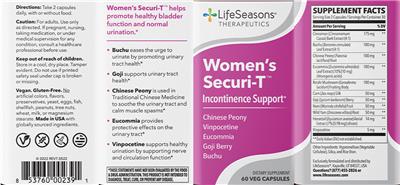
What is this page for?
First and foremost: checking Women's Securi-T against your medications. The heart of this page is the interaction checker and the full interaction report — how this product’s ingredients may interact with prescription and over-the-counter medicines you may be taking.
Around that, we add a pharmacist’s high-level view of the product as a whole — what’s inside, the evidence for its stated use, how transparent the label is, and what safety data exists — so you can see the full picture in one place. It’s educational information from our licensed clinical databases and the clinical staff at HelloPharmacist — not medical advice — and we don’t sell or endorse products. Our editorial policy
Women's Securi-T is a dietary supplement by LifeSeasons Therapeutics with 11 active ingredients. Its ingredients are commonly taken for general antioxidant support, eye health, immune support.Based on those ingredients, 1,275 medications have a known interaction with it, the most serious rated major. The ingredients most likely to interact are Goji, Chinese Peony, Noni. Use the checker below to test your specific medication, or read the full HelloPharmacist Interaction Report.
Check Your Meds Against Women's Securi-T by LifeSeasons Therapeutics
Ask about any prescription or over-the-counter medication and we check it for interactions with Women's Securi-T by LifeSeasons Therapeutics — and tell you which ingredient is responsible.
AI summaries are generated from our interaction database for education only — always confirm with your pharmacist. How we use AI
Ask the Pharmacist
A licensed pharmacist will answer your question by email — free, usually within 24 hours.
Got it — thank you!
A licensed pharmacist will answer within 24 hours. Keep an eye on your email (worth checking spam, just in case).
HelloPharmacist Scorecard of Women's Securi-T by LifeSeasons Therapeutics
Our pharmacy team’s full take, with four database checks built into the cards below — a summary of what is known, not a grade of the product itself.
What’s inside
Full disclosure
Women's Securi-T contains 11 active ingredients: Goji, Vinpocetine, Cinnamon Bark Extract, Wild Yam, Chinese Peony, Noni, Chlorogenic Acid, Buchu Leaf Extract, Silicon, Horsetail Aerial Extract, Eucommia Leaf Extract, and Reishi Mushroom. The product also includes inactive ingredients—hypromellose, silica, and rice bran—used as capsule material and binders.
Each of these active botanicals and compounds is included for its traditional or studied properties, though the evidence for what the product is designed to support varies widely across the ingredients.
Does it work?
Moderate evidence
The evidence for most ingredients in this product is limited. Vinpocetine is possibly effective for dementia based on available research.
Silicon is possibly effective for osteoporosis. For the others—Goji, Cinnamon Bark Extract, Wild Yam, Chinese Peony, Noni, Buchu, Horsetail, Eucommia, and Reishi—the data we hold shows insufficient reliable evidence to rate their effectiveness for their intended uses.
Many showed effectiveness ratings only for conditions unrelated to what a "women's security" product would address.
How safe is it?
Well-documented data
Most of these ingredients are generally well tolerated in short-term use, but long-term safety data are limited. Goji is safe as a food but concentrated supplements have less safety data; allergic reactions and a single case of liver inflammation have been reported.
Vinpocetine is generally well tolerated short-term, though dizziness, headache, anxiety, and sleep disturbances occur in some people. Cinnamon bark extract is safe in food amounts but high doses raise concern for liver damage due to coumarin content; one case of contact dermatitis and one hypoglycemic seizure have been reported.
Noni has been linked to rare but serious liver injury in previously healthy people, and its high potassium content is a concern. Wild Yam, Chinese Peony, and Buchu can cause gastrointestinal upset.
Reishi mushroom may cause dizziness, dry mouth, rash, and stomach upset, and respiratory allergy to reishi spores is possible. Silicon from food and most supplements is not associated with adverse effects.
Meds to double-check
Major interaction found
Before taking Women's Securi-T, double-check any blood thinners (warfarin and other anticoagulants or antiplatelets) due to Major and Moderate bleeding risks from Goji and other ingredients. Also verify any blood pressure medications, birth control pills or hormone therapy, diabetes drugs, seizure medications, potassium-sparing diuretics, ACE inhibitors, ARBs, and lithium, as Moderate interactions are documented across these categories.
The bottom line
Scorecard at a glanceFully disclosed formula with some supporting evidence behind its ingredients' uses. Major medication interactions have been identified, and safety information is well characterized.
Women's Securi-T is a multi-ingredient botanical supplement that carries interaction risks with several common medication classes—especially blood thinners, blood pressure drugs, birth control, and diabetes medications. If you take any prescription medication, run it through the checker on this page before starting.
Talk to your pharmacist or doctor if you're considering this product, especially if you're on warfarin or any cardiac, blood pressure, or hormone therapy.
Educational only — not medical advice; always confirm with your pharmacist. Our editorial policy · How we use AI
Assessment coverage: 9 of 11 active ingredients matched to our full ingredient reviews (monographs). Based on the product label dated Jul 25, 2024.
This Scorecard evaluates available label information, ingredient evidence, and known medication-safety considerations. It does not independently verify product identity, purity, potency, contamination, or manufacturing quality. How these ratings are computed
General information
Key facts about Women's Securi-T, straight from the product label.
| Brand | LifeSeasons Therapeutics |
|---|---|
| Barcode (UPC) | 853760002391 |
| Net contents | 60 Veg Capsule(s) |
| Market status | On market |
| Date entered into DSLD | Jul 25, 2024 |
| DSLD ID | 310536 |
| Product type | Other Combinations |
| Supplement form | Capsule |
| Dietary claims / uses | All Other, Structure/Function |
| Intended target group(s) | Vegan, Vegetarian, Adult Female (18 - 50 Years), Seniors/Mature (>50 Years) - Women ONLY, Gluten Free, Dairy Free |
Everything in this section is reproduced from the manufacturer’s own product label — it’s the label speaking, not HelloPharmacist. We show it so you can see exactly what the maker states; we don’t verify or endorse those statements.
Supplement Facts
The label details for Women's Securi-T by LifeSeasons Therapeutics, sourced from the NIH Dietary Supplement Label Database.
Supplement Facts
| Ingredient | Amount | % DV |
|---|---|---|
| Goji | 50 mg | -- |
| Vinpocetine | 5 mg | -- |
| Cinnamon Bark Extract | 175 mg | -- |
| Wild Yam | 50 mg | -- |
| Chinese Peony | 100 mg | -- |
| Noni | 50 mg | -- |
| Chlorogenic Acid | 10 mg | -- |
| Buchu Leaf Extract | 100 mg | -- |
| Silicon | 0.98 mg | -- |
| Horsetail Aerial Extract | 14 mg | -- |
| Eucommia Leaf Extract | 100 mg | -- |
| Reishi Mushroom | 100 mg | -- |
| Corn | 50 mg | -- |
Other ingredients: Hypromellose, Silica, Rice Bran
Tap any ingredient to jump to its full detail below.
These statements are the manufacturer’s wording, reproduced from the product label — the label is saying it, not HelloPharmacist. We don’t verify or endorse them.
Suggested/Recommended/Usage/Directions
Directions: Take 2 capsules daily, with or without food.
Precautions
Caution: For adults. Keep out of reach of children.
Use only as directed. Tamper evident. Do not use if printed safety seal under cap is broken or missing.
If pregnant, nursing, taking medication, or under medical supervision for any condition, consult a healthcare professional before use.
Storage
Store in a cool, dry place.
Formulation
Vegan.
Gluten-free. No artificial colors, flavors, preservatives, yeast, eggs, fish, shellfish, peanuts, tree nuts, wheat, milk, or magnesium stearate.
Made in USA with globally sourced ingredients.
Women's Securi-T helps promote healthy bladder function and normal urination.
Women's Securi-T helps promote healthy bladder function and normal urination.
Incontinence support
Brand IP Statement(s)
Copyright 2022
Formula
Buchu eases the urge to urinate by promoting urinary tract health Goji supports urinary tract health Chinese Peony is used in Traditional Chinese Medicine to soothe the urinary tract and calm muscle spasms Eucommia provides protective effects on the urinary tract Vinpocetine supports healthy urination by supporting nerve and circulation function
Buchu eases the urge to urinate by promoting urinary tract health Goji supports urinary tract health Chinese Peony is used in Traditional Chinese Medicine to soothe the urinary tract and calm muscle spasms Eucommia provides protective effects on the urinary tract Vinpocetine supports healthy urination by supporting nerve and circulation function
Chinese Peony Vinpocetine Eucommia Goji Berry Buchu
FDA Disclaimer Statement
These statements have not been evaluated by the Food & Drug Administration. This product is not intended to diagnose, treat, cure, or prevent any disease.
These statements have not been evaluated by the Food & Drug Administration. This product is not intended to diagnose, treat, cure, or prevent any disease.
FDA Statement of Identity
Dietary Supplement
Is this label outdated? Report a formula or label change and our pharmacy team will review it.
Women's Securi-T by LifeSeasons Therapeutics label
The label scan from the NIH Dietary Supplement Label Database. Tap to enlarge.
Label images are published by the NIH Dietary Supplement Label Database for the version of this product on file. Always read your actual product label.
View the full label (PDF)The Ingredients in Women's Securi-T by LifeSeasons Therapeutics
These are the 11 active ingredients this product is made of. Select any to open its full monograph.
Serving size2 Capsule(s) Dosage formCapsule Servings per container30 Amounts shown are per serving.
Most supplement products combine several ingredients, and a medication can interact with the product through any one of them. Each ingredient below shows whether it has known drug interactions.
Goji
Interacts with1,000 drugs
Goji berries are a nutritious fruit rich in antioxidants, vitamins, and plant polysaccharides, and they are safe for most people as a food. While they...
Goji monograph & interactionsVinpocetine
Interacts with208 drugs
Vinpocetine is a lab-made compound based on a chemical from the periwinkle plant, and it is marketed mainly for memory and brain health. The evidence...
Vinpocetine monograph & interactionsCinnamon Bark Extract
Interacts with442 drugs
Cassia cinnamon is the common, inexpensive cinnamon used in cooking, and it is also taken as a supplement, most often for blood sugar support. The evi...
Cinnamon Bark Extract monograph & interactionsWild Yam
Interacts with41 drugs
Wild yam is a root traditionally used for menopausal symptoms, cramps, and as a so-called 'natural' hormone supplement, but solid human evidence for t...
Wild Yam monograph & interactionsChinese Peony
Interacts with811 drugs
Peony root is a traditional Chinese medicine herb often used for menstrual problems, cramps, and inflammation, frequently as part of combination formu...
Chinese Peony monograph & interactionsNoni
Interacts with542 drugs
Noni is a tropical fruit used widely in folk medicine and sold mostly as a juice or supplement, but solid human evidence for its many claimed benefits...
Noni monograph & interactionsBuchu Leaf Extract
Interacts with481 drugs
Buchu is a fragrant South African shrub whose leaves are traditionally used for urinary and bladder complaints and as a diuretic. Solid human studies...
Buchu Leaf Extract monograph & interactionsHorsetail Aerial Extract
Interacts with188 drugs
Horsetail is a traditional herb most often used as a mild diuretic and for hair, nail, and bone support, but high-quality human evidence is limited. I...
Horsetail Aerial Extract monograph & interactions- › Silicon
Eucommia Leaf Extract
- › Chlorogenic Acid
Reishi Mushroom
Interacts with375 drugs
Reishi is a traditional Asian mushroom widely used to support the immune system and overall wellness. Human evidence for most of its claimed benefits...
Reishi Mushroom monograph & interactionsCorn
Other (inactive) ingredients: Hypromellose, Silica, Rice Bran. These complete the product’s ingredient list but are not active constituents.
Women's Securi-T by LifeSeasons Therapeutics Drug Interactions
HelloPharmacist Interaction Report
Women's Securi-T by LifeSeasons Therapeutics contains several active ingredients that interact with medications, and you'll want to check your exact prescriptions before starting it.
Read the full breakdown — every affected drug type, severity by severity
Goji, one of the main ingredients, poses the most serious risk: it can significantly increase the effects of warfarin (a blood thinner used to prevent clots), potentially raising your bleeding risk. This interaction has been documented in multiple case reports.
Goji may also slow how your liver processes several types of drugs that rely on liver enzymes (cytochrome P450 2C9, 2C19, 2D6, and 3A4 substrates), which could raise their levels in your bloodstream—though human cases haven't been reported yet.
Several other ingredients also interact with common medications. Wild Yam and Chinese Peony may interfere with estrogen-based therapies and birth control pills.
Noni can interact with blood pressure drugs (risking dangerously low pressure), blood thinners, seizure medications, and potassium-sparing diuretics or ACE inhibitors (raising potassium to unsafe levels). Buchu may increase bleeding risk with anticoagulants and can affect lithium levels.
Vinpocetine adds a modest bleeding risk with warfarin and other blood thinners. Reishi mushroom may lower blood pressure further if you're on blood pressure medication, increase bleeding risk at higher doses, and theoretically affect diabetes medications.
Cinnamon bark extract can lower blood sugar and may stress the liver at high doses. Altogether, these interactions span 1,246 individual medications.
We could not check Chlorogenic Acid or Corn for interactions. Use the medication checker on this page to search your specific drugs against this product before you start.
Check your own medications below · Editorial policy · How we use AI
Want to check YOUR meds against Women's Securi-T?
Ask about interactions with your drugs in plain English — “Can I take it with lisinopril?” — and we find you the answer in seconds, ingredient by ingredient.
Go to the checkerIngredients driving the most interactions
Individual Drug Interactions
The ingredients in Women's Securi-T interact with 1,275 drugs. Click any drug to see the details.
9 of the 11 ingredients in Women's Securi-T interact with drugs. Each result below shows which ingredient is responsible. Goji Chinese Peony Noni Buchu Leaf Extract Cinnamon Bark Extract Reishi Mushroom Vinpocetine Horsetail Aerial Extract Wild Yam
WarfarinWarfarin
How Warfarin interacts with Women's Securi-T — through 6 ingredients. Tap an ingredient for the detail:
GojiWarfarin (coumadin), Cytochrome P450 2c9 (cyp2c9) Substrates +2 Major
Interaction Summary
Goji can increase the effects of warfarin and possibly increase the risk of bleeding.
Read the full Goji + Warfarin interactionChinese PeonyAnticoagulant/antiplatelet Drugs, Cytochrome P450 3a4 (cyp3a4) Substrates +1 Moderate
Interaction Summary
Theoretically, combining peony with anticoagulant or antiplatelet drugs might increase the risk of bleeding.
Read the full Chinese Peony + Warfarin interactionVinpocetineCytochrome P450 2c9 (cyp2c9) Substrates, Anticoagulant/antiplatelet Drugs +1 Moderate
Interaction Summary
Theoretically, vinpocetine might increase levels of drugs metabolized by CYP2C9.
Read the full Vinpocetine + Warfarin interactionReishi MushroomAnticoagulant/antiplatelet Drugs Moderate
Interaction Summary
Theoretically, high doses of reishi mushroom might increase the risk of bleeding.
Read the full Reishi Mushroom + Warfarin interactionNoniWarfarin (coumadin) Moderate
Interaction Summary
Theoretically, taking noni juice concomitantly with warfarin might decrease the effectiveness of warfarin.
Read the full Noni + Warfarin interactionBuchu Leaf ExtractAnticoagulant/antiplatelet Drugs Moderate
Interaction Summary
Buchu may have antiplatelet effects.
Read the full Buchu Leaf Extract + Warfarin interactionWarfarin SodiumCoumadin, Panwarfin, Sofarin
How Warfarin Sodium interacts with Women's Securi-T — through 6 ingredients. Tap an ingredient for the detail:
GojiCytochrome P450 2c19 (cyp2c19) Substrates, Cytochrome P450 2c9 (cyp2c9) Substrates +2 Major
Interaction Summary
Theoretically, goji berry might inhibit CYP2C19 and reduce metabolism of CYP2C19 substrates.
Read the full Goji + Warfarin Sodium interactionBuchu Leaf ExtractAnticoagulant/antiplatelet Drugs Moderate
Interaction Summary
Buchu may have antiplatelet effects.
Read the full Buchu Leaf Extract + Warfarin Sodium interactionReishi MushroomAnticoagulant/antiplatelet Drugs Moderate
Interaction Summary
Theoretically, high doses of reishi mushroom might increase the risk of bleeding.
Read the full Reishi Mushroom + Warfarin Sodium interactionNoniWarfarin (coumadin) Moderate
Interaction Summary
Theoretically, taking noni juice concomitantly with warfarin might decrease the effectiveness of warfarin.
Read the full Noni + Warfarin Sodium interactionChinese PeonyCytochrome P450 1a2 (cyp1a2) Substrates, Anticoagulant/antiplatelet Drugs +1 Moderate
Interaction Summary
Theoretically, use of peony may increase the levels and clinical effects of drugs metabolized by CYP1A2.
Read the full Chinese Peony + Warfarin Sodium interactionVinpocetineCytochrome P450 2c9 (cyp2c9) Substrates, Anticoagulant/antiplatelet Drugs +1 Moderate
Interaction Summary
Theoretically, vinpocetine might increase levels of drugs metabolized by CYP2C9.
Read the full Vinpocetine + Warfarin Sodium interaction6-mercaptopurinePurinethol
How 6-mercaptopurine interacts with Women's Securi-T — through 3 ingredients. Tap an ingredient for the detail:
Cinnamon Bark ExtractHepatotoxic Drugs Moderate
Interaction Summary
Theoretically, large doses of cassia cinnamon might cause additive effects when used with hepatotoxic drugs.
Read the full Cinnamon Bark Extract + 6-mercaptopurine interactionNoniHepatotoxic Drugs Moderate
Interaction Summary
Theoretically, taking noni with hepatotoxic drugs might increase the risk of liver damage.
Read the full Noni + 6-mercaptopurine interactionBuchu Leaf ExtractHepatotoxic Drugs Moderate
Interaction Summary
Buchu contains pulegone, a known hepatotoxin.
Read the full Buchu Leaf Extract + 6-mercaptopurine interactionAdo-trastuzumab EmtansineKadcyla
How Ado-trastuzumab Emtansine interacts with Women's Securi-T — through 2 ingredients. Tap an ingredient for the detail:
Chinese PeonyCytochrome P450 3a4 (cyp3a4) Substrates Moderate
Interaction Summary
Theoretically, use of peony may increase the levels and clinical effects of drugs metabolized by CYP3A4.
Read the full Chinese Peony + Ado-trastuzumab Emtansine interactionGojiCytochrome P450 3a4 (cyp3a4) Substrates Moderate
Interaction Summary
Theoretically, goji berry might inhibit CYP3A4 and reduce metabolism of CYP3A4 substrates.
Read the full Goji + Ado-trastuzumab Emtansine interactionAbacavir Sulfate, Dolutegravir, LamivudineTriumeq
How Abacavir Sulfate, Dolutegravir, Lamivudine interacts with Women's Securi-T — through 4 ingredients. Tap an ingredient for the detail:
Buchu Leaf ExtractHepatotoxic Drugs Moderate
Interaction Summary
Buchu contains pulegone, a known hepatotoxin.
Read the full Buchu Leaf Extract + Abacavir Sulfate, Dolutegravir, Lamivudine interactionNoniHepatotoxic Drugs Moderate
Interaction Summary
Theoretically, taking noni with hepatotoxic drugs might increase the risk of liver damage.
Read the full Noni + Abacavir Sulfate, Dolutegravir, Lamivudine interactionHorsetail Aerial ExtractNucleoside Reverse Transcriptase Inhibitors (nrtis) Moderate
Interaction Summary
Theoretically, horsetail might decrease the levels and clinical effects of NRTIs.
Read the full Horsetail Aerial Extract + Abacavir Sulfate, Dolutegravir, Lamivudine interactionCinnamon Bark ExtractHepatotoxic Drugs Moderate
Interaction Summary
Theoretically, large doses of cassia cinnamon might cause additive effects when used with hepatotoxic drugs.
Read the full Cinnamon Bark Extract + Abacavir Sulfate, Dolutegravir, Lamivudine interactionAbacavir, LamivudineEpzicom
How Abacavir, Lamivudine interacts with Women's Securi-T — through 4 ingredients. Tap an ingredient for the detail:
Cinnamon Bark ExtractHepatotoxic Drugs Moderate
Interaction Summary
Theoretically, large doses of cassia cinnamon might cause additive effects when used with hepatotoxic drugs.
Read the full Cinnamon Bark Extract + Abacavir, Lamivudine interactionBuchu Leaf ExtractHepatotoxic Drugs Moderate
Interaction Summary
Buchu contains pulegone, a known hepatotoxin.
Read the full Buchu Leaf Extract + Abacavir, Lamivudine interactionHorsetail Aerial ExtractNucleoside Reverse Transcriptase Inhibitors (nrtis) Moderate
Interaction Summary
Theoretically, horsetail might decrease the levels and clinical effects of NRTIs.
Read the full Horsetail Aerial Extract + Abacavir, Lamivudine interactionNoniHepatotoxic Drugs Moderate
Interaction Summary
Theoretically, taking noni with hepatotoxic drugs might increase the risk of liver damage.
Read the full Noni + Abacavir, Lamivudine interactionAbciximabReoPro
How Abciximab interacts with Women's Securi-T — through 4 ingredients. Tap an ingredient for the detail:
Buchu Leaf ExtractAnticoagulant/antiplatelet Drugs Moderate
Interaction Summary
Buchu may have antiplatelet effects.
Read the full Buchu Leaf Extract + Abciximab interactionReishi MushroomAnticoagulant/antiplatelet Drugs Moderate
Interaction Summary
Theoretically, high doses of reishi mushroom might increase the risk of bleeding.
Read the full Reishi Mushroom + Abciximab interactionVinpocetineAnticoagulant/antiplatelet Drugs Moderate
Interaction Summary
Vinpocetine might increase the risk of bleeding when taken with anticoagulant or antiplatelet drugs.
Read the full Vinpocetine + Abciximab interactionChinese PeonyAnticoagulant/antiplatelet Drugs Moderate
Interaction Summary
Theoretically, combining peony with anticoagulant or antiplatelet drugs might increase the risk of bleeding.
Read the full Chinese Peony + Abciximab interactionAbemaciclibVerzenio
How Abemaciclib interacts with Women's Securi-T — through 2 ingredients. Tap an ingredient for the detail:
Chinese PeonyCytochrome P450 3a4 (cyp3a4) Substrates Moderate
Interaction Summary
Theoretically, use of peony may increase the levels and clinical effects of drugs metabolized by CYP3A4.
Read the full Chinese Peony + Abemaciclib interactionGojiCytochrome P450 3a4 (cyp3a4) Substrates Moderate
Interaction Summary
Theoretically, goji berry might inhibit CYP3A4 and reduce metabolism of CYP3A4 substrates.
Read the full Goji + Abemaciclib interactionAbiraterone
How Abiraterone interacts with Women's Securi-T — through 5 ingredients. Tap an ingredient for the detail:
Cinnamon Bark ExtractHepatotoxic Drugs Moderate
Interaction Summary
Theoretically, large doses of cassia cinnamon might cause additive effects when used with hepatotoxic drugs.
Read the full Cinnamon Bark Extract + Abiraterone interactionGojiCytochrome P450 3a4 (cyp3a4) Substrates Moderate
Interaction Summary
Theoretically, goji berry might inhibit CYP3A4 and reduce metabolism of CYP3A4 substrates.
Read the full Goji + Abiraterone interactionChinese PeonyCytochrome P450 3a4 (cyp3a4) Substrates Moderate
Interaction Summary
Theoretically, use of peony may increase the levels and clinical effects of drugs metabolized by CYP3A4.
Read the full Chinese Peony + Abiraterone interactionNoniHepatotoxic Drugs Moderate
Interaction Summary
Theoretically, taking noni with hepatotoxic drugs might increase the risk of liver damage.
Read the full Noni + Abiraterone interactionBuchu Leaf ExtractHepatotoxic Drugs Moderate
Interaction Summary
Buchu contains pulegone, a known hepatotoxin.
Read the full Buchu Leaf Extract + Abiraterone interactionAbiraterone AcetateYonsa, Zytiga
How Abiraterone Acetate interacts with Women's Securi-T — through 5 ingredients. Tap an ingredient for the detail:
Buchu Leaf ExtractHepatotoxic Drugs Moderate
Interaction Summary
Buchu contains pulegone, a known hepatotoxin.
Read the full Buchu Leaf Extract + Abiraterone Acetate interactionNoniHepatotoxic Drugs Moderate
Interaction Summary
Theoretically, taking noni with hepatotoxic drugs might increase the risk of liver damage.
Read the full Noni + Abiraterone Acetate interactionCinnamon Bark ExtractHepatotoxic Drugs Moderate
Interaction Summary
Theoretically, large doses of cassia cinnamon might cause additive effects when used with hepatotoxic drugs.
Read the full Cinnamon Bark Extract + Abiraterone Acetate interactionGojiCytochrome P450 3a4 (cyp3a4) Substrates Moderate
Interaction Summary
Theoretically, goji berry might inhibit CYP3A4 and reduce metabolism of CYP3A4 substrates.
Read the full Goji + Abiraterone Acetate interactionChinese PeonyCytochrome P450 3a4 (cyp3a4) Substrates Moderate
Interaction Summary
Theoretically, use of peony may increase the levels and clinical effects of drugs metabolized by CYP3A4.
Read the full Chinese Peony + Abiraterone Acetate interactionAbrocitinibCibinqo
How Abrocitinib interacts with Women's Securi-T — through 5 ingredients. Tap an ingredient for the detail:
Chinese PeonyAnticoagulant/antiplatelet Drugs Moderate
Interaction Summary
Theoretically, combining peony with anticoagulant or antiplatelet drugs might increase the risk of bleeding.
Read the full Chinese Peony + Abrocitinib interactionVinpocetineCytochrome P450 2c9 (cyp2c9) Substrates, Anticoagulant/antiplatelet Drugs Moderate
Interaction Summary
Theoretically, vinpocetine might increase levels of drugs metabolized by CYP2C9.
Read the full Vinpocetine + Abrocitinib interactionReishi MushroomAnticoagulant/antiplatelet Drugs Moderate
Interaction Summary
Theoretically, high doses of reishi mushroom might increase the risk of bleeding.
Read the full Reishi Mushroom + Abrocitinib interactionBuchu Leaf ExtractAnticoagulant/antiplatelet Drugs Moderate
Interaction Summary
Buchu may have antiplatelet effects.
Read the full Buchu Leaf Extract + Abrocitinib interactionGojiCytochrome P450 2c19 (cyp2c19) Substrates, Cytochrome P450 2c9 (cyp2c9) Substrates Moderate
Interaction Summary
Theoretically, goji berry might inhibit CYP2C19 and reduce metabolism of CYP2C19 substrates.
Read the full Goji + Abrocitinib interactionAcalabrutinibCalquence
How Acalabrutinib interacts with Women's Securi-T — through 2 ingredients. Tap an ingredient for the detail:
GojiCytochrome P450 3a4 (cyp3a4) Substrates Moderate
Interaction Summary
Theoretically, goji berry might inhibit CYP3A4 and reduce metabolism of CYP3A4 substrates.
Read the full Goji + Acalabrutinib interactionChinese PeonyCytochrome P450 3a4 (cyp3a4) Substrates Moderate
Interaction Summary
Theoretically, use of peony may increase the levels and clinical effects of drugs metabolized by CYP3A4.
Read the full Chinese Peony + Acalabrutinib interactionAcarboseGlucobay, Prandase, Precose
How Acarbose interacts with Women's Securi-T — through 6 ingredients. Tap an ingredient for the detail:
Buchu Leaf ExtractHepatotoxic Drugs Moderate
Interaction Summary
Buchu contains pulegone, a known hepatotoxin.
Read the full Buchu Leaf Extract + Acarbose interactionCinnamon Bark ExtractAntidiabetes Drugs, Hepatotoxic Drugs Moderate
Interaction Summary
Theoretically, cassia cinnamon may have additive effects with antidiabetes drugs.
Read the full Cinnamon Bark Extract + Acarbose interactionHorsetail Aerial ExtractAntidiabetes Drugs Moderate
Interaction Summary
Theoretically, taking horsetail with antidiabetes drugs might increase the risk of hypoglycemia.
Read the full Horsetail Aerial Extract + Acarbose interactionNoniHepatotoxic Drugs Moderate
Interaction Summary
Theoretically, taking noni with hepatotoxic drugs might increase the risk of liver damage.
Read the full Noni + Acarbose interactionReishi MushroomAntidiabetes Drugs Moderate
Interaction Summary
Theoretically, reishi mushroom might have additive effects with antidiabetes drugs.
Read the full Reishi Mushroom + Acarbose interactionGojiAntidiabetes Drugs Minor
Interaction Summary
Theoretically, concomitant use of goji fruit polysaccharides or goji root bark with antidiabetes drugs might have additive effects.
Read the full Goji + Acarbose interactionAcebutololRhotral, Sectral
How Acebutolol interacts with Women's Securi-T — through 5 ingredients. Tap an ingredient for the detail:
Cinnamon Bark ExtractHepatotoxic Drugs Moderate
Interaction Summary
Theoretically, large doses of cassia cinnamon might cause additive effects when used with hepatotoxic drugs.
Read the full Cinnamon Bark Extract + Acebutolol interactionNoniAntihypertensive Drugs, Hepatotoxic Drugs Moderate
Interaction Summary
Theoretically, noni may increase the risk of hypotension when used in combination with antihypertensive drugs.
Read the full Noni + Acebutolol interactionReishi MushroomAntihypertensive Drugs Moderate
Interaction Summary
Theoretically, concurrent use of reishi mushroom with antihypertensive drugs might increase the risk of hypotension.
Read the full Reishi Mushroom + Acebutolol interactionBuchu Leaf ExtractHepatotoxic Drugs Moderate
Interaction Summary
Buchu contains pulegone, a known hepatotoxin.
Read the full Buchu Leaf Extract + Acebutolol interactionGojiAntihypertensive Drugs Moderate
Interaction Summary
Theoretically, concomitant use of goji root bark, but not goji fruit, with antihypertensive drugs might have additive effects.
Read the full Goji + Acebutolol interactionAcenocoumarolSintrom
How Acenocoumarol interacts with Women's Securi-T — through 4 ingredients. Tap an ingredient for the detail:
Buchu Leaf ExtractAnticoagulant/antiplatelet Drugs Moderate
Interaction Summary
Buchu may have antiplatelet effects.
Read the full Buchu Leaf Extract + Acenocoumarol interactionReishi MushroomAnticoagulant/antiplatelet Drugs Moderate
Interaction Summary
Theoretically, high doses of reishi mushroom might increase the risk of bleeding.
Read the full Reishi Mushroom + Acenocoumarol interactionVinpocetineAnticoagulant/antiplatelet Drugs Moderate
Interaction Summary
Vinpocetine might increase the risk of bleeding when taken with anticoagulant or antiplatelet drugs.
Read the full Vinpocetine + Acenocoumarol interactionChinese PeonyAnticoagulant/antiplatelet Drugs Moderate
Interaction Summary
Theoretically, combining peony with anticoagulant or antiplatelet drugs might increase the risk of bleeding.
Read the full Chinese Peony + Acenocoumarol interactionAcetaminophenChildren's Tylenol, Children's Tylenol Meltaways, Tylenol, Tylenol Ex Strength
How Acetaminophen interacts with Women's Securi-T — through 4 ingredients. Tap an ingredient for the detail:
Chinese PeonyCytochrome P450 1a2 (cyp1a2) Substrates Moderate
Interaction Summary
Theoretically, use of peony may increase the levels and clinical effects of drugs metabolized by CYP1A2.
Read the full Chinese Peony + Acetaminophen interactionBuchu Leaf ExtractHepatotoxic Drugs Moderate
Interaction Summary
Buchu contains pulegone, a known hepatotoxin.
Read the full Buchu Leaf Extract + Acetaminophen interactionNoniHepatotoxic Drugs Moderate
Interaction Summary
Theoretically, taking noni with hepatotoxic drugs might increase the risk of liver damage.
Read the full Noni + Acetaminophen interactionCinnamon Bark ExtractHepatotoxic Drugs Moderate
Interaction Summary
Theoretically, large doses of cassia cinnamon might cause additive effects when used with hepatotoxic drugs.
Read the full Cinnamon Bark Extract + Acetaminophen interactionAcetaminophen, AspirinGemnisyn
How Acetaminophen, Aspirin interacts with Women's Securi-T — through 6 ingredients. Tap an ingredient for the detail:
Cinnamon Bark ExtractHepatotoxic Drugs Moderate
Interaction Summary
Theoretically, large doses of cassia cinnamon might cause additive effects when used with hepatotoxic drugs.
Read the full Cinnamon Bark Extract + Acetaminophen, Aspirin interactionNoniHepatotoxic Drugs Moderate
Interaction Summary
Theoretically, taking noni with hepatotoxic drugs might increase the risk of liver damage.
Read the full Noni + Acetaminophen, Aspirin interactionReishi MushroomAnticoagulant/antiplatelet Drugs Moderate
Interaction Summary
Theoretically, high doses of reishi mushroom might increase the risk of bleeding.
Read the full Reishi Mushroom + Acetaminophen, Aspirin interactionBuchu Leaf ExtractAnticoagulant/antiplatelet Drugs, Hepatotoxic Drugs Moderate
Interaction Summary
Buchu may have antiplatelet effects.
Read the full Buchu Leaf Extract + Acetaminophen, Aspirin interactionVinpocetineAnticoagulant/antiplatelet Drugs Moderate
Interaction Summary
Vinpocetine might increase the risk of bleeding when taken with anticoagulant or antiplatelet drugs.
Read the full Vinpocetine + Acetaminophen, Aspirin interactionChinese PeonyAnticoagulant/antiplatelet Drugs, Cytochrome P450 1a2 (cyp1a2) Substrates Moderate
Interaction Summary
Theoretically, combining peony with anticoagulant or antiplatelet drugs might increase the risk of bleeding.
Read the full Chinese Peony + Acetaminophen, Aspirin interactionAcetaminophen, Aspirin, CaffeineExcedrin, Excedrin Extra Strength, Excedrin Migraine
How Acetaminophen, Aspirin, Caffeine interacts with Women's Securi-T — through 7 ingredients. Tap an ingredient for the detail:
Chinese PeonyCytochrome P450 1a2 (cyp1a2) Substrates, Cytochrome P450 3a4 (cyp3a4) Substrates +1 Moderate
Interaction Summary
Theoretically, use of peony may increase the levels and clinical effects of drugs metabolized by CYP1A2.
Read the full Chinese Peony + Acetaminophen, Aspirin, Caffeine interactionVinpocetineAnticoagulant/antiplatelet Drugs Moderate
Interaction Summary
Vinpocetine might increase the risk of bleeding when taken with anticoagulant or antiplatelet drugs.
Read the full Vinpocetine + Acetaminophen, Aspirin, Caffeine interactionBuchu Leaf ExtractHepatotoxic Drugs, Anticoagulant/antiplatelet Drugs Moderate
Interaction Summary
Buchu contains pulegone, a known hepatotoxin.
Read the full Buchu Leaf Extract + Acetaminophen, Aspirin, Caffeine interactionGojiCytochrome P450 3a4 (cyp3a4) Substrates Moderate
Interaction Summary
Theoretically, goji berry might inhibit CYP3A4 and reduce metabolism of CYP3A4 substrates.
Read the full Goji + Acetaminophen, Aspirin, Caffeine interactionNoniHepatotoxic Drugs Moderate
Interaction Summary
Theoretically, taking noni with hepatotoxic drugs might increase the risk of liver damage.
Read the full Noni + Acetaminophen, Aspirin, Caffeine interactionCinnamon Bark ExtractHepatotoxic Drugs Moderate
Interaction Summary
Theoretically, large doses of cassia cinnamon might cause additive effects when used with hepatotoxic drugs.
Read the full Cinnamon Bark Extract + Acetaminophen, Aspirin, Caffeine interactionReishi MushroomAnticoagulant/antiplatelet Drugs Moderate
Interaction Summary
Theoretically, high doses of reishi mushroom might increase the risk of bleeding.
Read the full Reishi Mushroom + Acetaminophen, Aspirin, Caffeine interactionAcetaminophen, Brompheniramine, PhenylpropanolamineDimetapp Cold and Flu
How Acetaminophen, Brompheniramine, Phenylpropanolamine interacts with Women's Securi-T — through 4 ingredients. Tap an ingredient for the detail:
NoniHepatotoxic Drugs Moderate
Interaction Summary
Theoretically, taking noni with hepatotoxic drugs might increase the risk of liver damage.
Read the full Noni + Acetaminophen, Brompheniramine, Phenylpropanolamine interactionCinnamon Bark ExtractHepatotoxic Drugs Moderate
Interaction Summary
Theoretically, large doses of cassia cinnamon might cause additive effects when used with hepatotoxic drugs.
Read the full Cinnamon Bark Extract + Acetaminophen, Brompheniramine, Phenylpropanolamine interactionBuchu Leaf ExtractHepatotoxic Drugs Moderate
Interaction Summary
Buchu contains pulegone, a known hepatotoxin.
Read the full Buchu Leaf Extract + Acetaminophen, Brompheniramine, Phenylpropanolamine interactionChinese PeonyCytochrome P450 1a2 (cyp1a2) Substrates Moderate
Interaction Summary
Theoretically, use of peony may increase the levels and clinical effects of drugs metabolized by CYP1A2.
Read the full Chinese Peony + Acetaminophen, Brompheniramine, Phenylpropanolamine interactionAcetaminophen, ButalbitalAxocet, Bancap, Bucet, Butex Forte, Esgic CF, Orbivan CF +5 more
How Acetaminophen, Butalbital interacts with Women's Securi-T — through 4 ingredients. Tap an ingredient for the detail:
Chinese PeonyCytochrome P450 1a2 (cyp1a2) Substrates Moderate
Interaction Summary
Theoretically, use of peony may increase the levels and clinical effects of drugs metabolized by CYP1A2.
Read the full Chinese Peony + Acetaminophen, Butalbital interactionBuchu Leaf ExtractHepatotoxic Drugs Moderate
Interaction Summary
Buchu contains pulegone, a known hepatotoxin.
Read the full Buchu Leaf Extract + Acetaminophen, Butalbital interactionCinnamon Bark ExtractHepatotoxic Drugs Moderate
Interaction Summary
Theoretically, large doses of cassia cinnamon might cause additive effects when used with hepatotoxic drugs.
Read the full Cinnamon Bark Extract + Acetaminophen, Butalbital interactionNoniHepatotoxic Drugs Moderate
Interaction Summary
Theoretically, taking noni with hepatotoxic drugs might increase the risk of liver damage.
Read the full Noni + Acetaminophen, Butalbital interactionAcetaminophen, Butalbital, CaffeineEsgic, Esgic Plus, Fiogesic, Fioricet, Repan, Tecnal +1 more
How Acetaminophen, Butalbital, Caffeine interacts with Women's Securi-T — through 5 ingredients. Tap an ingredient for the detail:
NoniHepatotoxic Drugs Moderate
Interaction Summary
Theoretically, taking noni with hepatotoxic drugs might increase the risk of liver damage.
Read the full Noni + Acetaminophen, Butalbital, Caffeine interactionCinnamon Bark ExtractHepatotoxic Drugs Moderate
Interaction Summary
Theoretically, large doses of cassia cinnamon might cause additive effects when used with hepatotoxic drugs.
Read the full Cinnamon Bark Extract + Acetaminophen, Butalbital, Caffeine interactionBuchu Leaf ExtractHepatotoxic Drugs Moderate
Interaction Summary
Buchu contains pulegone, a known hepatotoxin.
Read the full Buchu Leaf Extract + Acetaminophen, Butalbital, Caffeine interactionChinese PeonyCytochrome P450 1a2 (cyp1a2) Substrates, Cytochrome P450 3a4 (cyp3a4) Substrates Moderate
Interaction Summary
Theoretically, use of peony may increase the levels and clinical effects of drugs metabolized by CYP1A2.
Read the full Chinese Peony + Acetaminophen, Butalbital, Caffeine interactionGojiCytochrome P450 3a4 (cyp3a4) Substrates Moderate
Interaction Summary
Theoretically, goji berry might inhibit CYP3A4 and reduce metabolism of CYP3A4 substrates.
Read the full Goji + Acetaminophen, Butalbital, Caffeine interactionAcetaminophen, Butalbital, Caffeine, CodeineEsgic with Codeine, Fioricet w/ Codeine
How Acetaminophen, Butalbital, Caffeine, Codeine interacts with Women's Securi-T — through 5 ingredients. Tap an ingredient for the detail:
GojiCytochrome P450 3a4 (cyp3a4) Substrates, Cytochrome P450 2d6 (cyp2d6) Substrates Moderate
Interaction Summary
Theoretically, goji berry might inhibit CYP3A4 and reduce metabolism of CYP3A4 substrates.
Read the full Goji + Acetaminophen, Butalbital, Caffeine, Codeine interactionCinnamon Bark ExtractHepatotoxic Drugs Moderate
Interaction Summary
Theoretically, large doses of cassia cinnamon might cause additive effects when used with hepatotoxic drugs.
Read the full Cinnamon Bark Extract + Acetaminophen, Butalbital, Caffeine, Codeine interactionNoniHepatotoxic Drugs Moderate
Interaction Summary
Theoretically, taking noni with hepatotoxic drugs might increase the risk of liver damage.
Read the full Noni + Acetaminophen, Butalbital, Caffeine, Codeine interactionChinese PeonyCytochrome P450 3a4 (cyp3a4) Substrates, Cytochrome P450 1a2 (cyp1a2) Substrates Moderate
Interaction Summary
Theoretically, use of peony may increase the levels and clinical effects of drugs metabolized by CYP3A4.
Read the full Chinese Peony + Acetaminophen, Butalbital, Caffeine, Codeine interactionBuchu Leaf ExtractHepatotoxic Drugs Moderate
Interaction Summary
Buchu contains pulegone, a known hepatotoxin.
Read the full Buchu Leaf Extract + Acetaminophen, Butalbital, Caffeine, Codeine interactionAcetaminophen, Butalbital, CodeineBancap w/ Codeine
How Acetaminophen, Butalbital, Codeine interacts with Women's Securi-T — through 5 ingredients. Tap an ingredient for the detail:
Chinese PeonyCytochrome P450 1a2 (cyp1a2) Substrates Moderate
Interaction Summary
Theoretically, use of peony may increase the levels and clinical effects of drugs metabolized by CYP1A2.
Read the full Chinese Peony + Acetaminophen, Butalbital, Codeine interactionBuchu Leaf ExtractHepatotoxic Drugs Moderate
Interaction Summary
Buchu contains pulegone, a known hepatotoxin.
Read the full Buchu Leaf Extract + Acetaminophen, Butalbital, Codeine interactionGojiCytochrome P450 2d6 (cyp2d6) Substrates Moderate
Interaction Summary
Theoretically, goji berry might inhibit CYP2D6 and reduce metabolism of CYP2D6 substrates.
Read the full Goji + Acetaminophen, Butalbital, Codeine interactionNoniHepatotoxic Drugs Moderate
Interaction Summary
Theoretically, taking noni with hepatotoxic drugs might increase the risk of liver damage.
Read the full Noni + Acetaminophen, Butalbital, Codeine interactionCinnamon Bark ExtractHepatotoxic Drugs Moderate
Interaction Summary
Theoretically, large doses of cassia cinnamon might cause additive effects when used with hepatotoxic drugs.
Read the full Cinnamon Bark Extract + Acetaminophen, Butalbital, Codeine interactionAcetaminophen, Butalbital, Codeine PhosphatePhrenilin #3
How Acetaminophen, Butalbital, Codeine Phosphate interacts with Women's Securi-T — through 5 ingredients. Tap an ingredient for the detail:
Cinnamon Bark ExtractHepatotoxic Drugs Moderate
Interaction Summary
Theoretically, large doses of cassia cinnamon might cause additive effects when used with hepatotoxic drugs.
Read the full Cinnamon Bark Extract + Acetaminophen, Butalbital, Codeine Phosphate interactionNoniHepatotoxic Drugs Moderate
Interaction Summary
Theoretically, taking noni with hepatotoxic drugs might increase the risk of liver damage.
Read the full Noni + Acetaminophen, Butalbital, Codeine Phosphate interactionBuchu Leaf ExtractHepatotoxic Drugs Moderate
Interaction Summary
Buchu contains pulegone, a known hepatotoxin.
Read the full Buchu Leaf Extract + Acetaminophen, Butalbital, Codeine Phosphate interactionChinese PeonyCytochrome P450 1a2 (cyp1a2) Substrates Moderate
Interaction Summary
Theoretically, use of peony may increase the levels and clinical effects of drugs metabolized by CYP1A2.
Read the full Chinese Peony + Acetaminophen, Butalbital, Codeine Phosphate interactionGojiCytochrome P450 2d6 (cyp2d6) Substrates Moderate
Interaction Summary
Theoretically, goji berry might inhibit CYP2D6 and reduce metabolism of CYP2D6 substrates.
Read the full Goji + Acetaminophen, Butalbital, Codeine Phosphate interactionAcetaminophen, Caffeine, Chlorpheniramine, Hydrocodone, PhenylephrineHycomine Compound
How Acetaminophen, Caffeine, Chlorpheniramine, Hydrocodone, Phenylephrine interacts with Women's Securi-T — through 5 ingredients. Tap an ingredient for the detail:
GojiCytochrome P450 2d6 (cyp2d6) Substrates, Cytochrome P450 3a4 (cyp3a4) Substrates Moderate
Interaction Summary
Theoretically, goji berry might inhibit CYP2D6 and reduce metabolism of CYP2D6 substrates.
Read the full Goji + Acetaminophen, Caffeine, Chlorpheniramine, Hydrocodone, Phenylephrine interactionNoniHepatotoxic Drugs Moderate
Interaction Summary
Theoretically, taking noni with hepatotoxic drugs might increase the risk of liver damage.
Read the full Noni + Acetaminophen, Caffeine, Chlorpheniramine, Hydrocodone, Phenylephrine interactionCinnamon Bark ExtractHepatotoxic Drugs Moderate
Interaction Summary
Theoretically, large doses of cassia cinnamon might cause additive effects when used with hepatotoxic drugs.
Read the full Cinnamon Bark Extract + Acetaminophen, Caffeine, Chlorpheniramine, Hydrocodone, Phenylephrine interactionChinese PeonyCytochrome P450 1a2 (cyp1a2) Substrates, Cytochrome P450 3a4 (cyp3a4) Substrates Moderate
Interaction Summary
Theoretically, use of peony may increase the levels and clinical effects of drugs metabolized by CYP1A2.
Read the full Chinese Peony + Acetaminophen, Caffeine, Chlorpheniramine, Hydrocodone, Phenylephrine interactionBuchu Leaf ExtractHepatotoxic Drugs Moderate
Interaction Summary
Buchu contains pulegone, a known hepatotoxin.
Read the full Buchu Leaf Extract + Acetaminophen, Caffeine, Chlorpheniramine, Hydrocodone, Phenylephrine interactionAcetaminophen, Caffeine, CodeineGesic C15, Gesic C30, Gesic C8, Lenoltec 1, Lenoltec 2, Lenoltec 3 +1 more
How Acetaminophen, Caffeine, Codeine interacts with Women's Securi-T — through 5 ingredients. Tap an ingredient for the detail:
Buchu Leaf ExtractHepatotoxic Drugs Moderate
Interaction Summary
Buchu contains pulegone, a known hepatotoxin.
Read the full Buchu Leaf Extract + Acetaminophen, Caffeine, Codeine interactionChinese PeonyCytochrome P450 1a2 (cyp1a2) Substrates, Cytochrome P450 3a4 (cyp3a4) Substrates Moderate
Interaction Summary
Theoretically, use of peony may increase the levels and clinical effects of drugs metabolized by CYP1A2.
Read the full Chinese Peony + Acetaminophen, Caffeine, Codeine interactionGojiCytochrome P450 3a4 (cyp3a4) Substrates, Cytochrome P450 2d6 (cyp2d6) Substrates Moderate
Interaction Summary
Theoretically, goji berry might inhibit CYP3A4 and reduce metabolism of CYP3A4 substrates.
Read the full Goji + Acetaminophen, Caffeine, Codeine interactionCinnamon Bark ExtractHepatotoxic Drugs Moderate
Interaction Summary
Theoretically, large doses of cassia cinnamon might cause additive effects when used with hepatotoxic drugs.
Read the full Cinnamon Bark Extract + Acetaminophen, Caffeine, Codeine interactionNoniHepatotoxic Drugs Moderate
Interaction Summary
Theoretically, taking noni with hepatotoxic drugs might increase the risk of liver damage.
Read the full Noni + Acetaminophen, Caffeine, Codeine interactionAcetaminophen, Caffeine, Codeine, SalicylamideCodalan No.1, Codalan No.2, Codalan No.3
How Acetaminophen, Caffeine, Codeine, Salicylamide interacts with Women's Securi-T — through 5 ingredients. Tap an ingredient for the detail:
NoniHepatotoxic Drugs Moderate
Interaction Summary
Theoretically, taking noni with hepatotoxic drugs might increase the risk of liver damage.
Read the full Noni + Acetaminophen, Caffeine, Codeine, Salicylamide interactionCinnamon Bark ExtractHepatotoxic Drugs Moderate
Interaction Summary
Theoretically, large doses of cassia cinnamon might cause additive effects when used with hepatotoxic drugs.
Read the full Cinnamon Bark Extract + Acetaminophen, Caffeine, Codeine, Salicylamide interactionChinese PeonyCytochrome P450 3a4 (cyp3a4) Substrates, Cytochrome P450 1a2 (cyp1a2) Substrates Moderate
Interaction Summary
Theoretically, use of peony may increase the levels and clinical effects of drugs metabolized by CYP3A4.
Read the full Chinese Peony + Acetaminophen, Caffeine, Codeine, Salicylamide interactionBuchu Leaf ExtractHepatotoxic Drugs Moderate
Interaction Summary
Buchu contains pulegone, a known hepatotoxin.
Read the full Buchu Leaf Extract + Acetaminophen, Caffeine, Codeine, Salicylamide interactionGojiCytochrome P450 2d6 (cyp2d6) Substrates, Cytochrome P450 3a4 (cyp3a4) Substrates Moderate
Interaction Summary
Theoretically, goji berry might inhibit CYP2D6 and reduce metabolism of CYP2D6 substrates.
Read the full Goji + Acetaminophen, Caffeine, Codeine, Salicylamide interactionAcetaminophen, Caffeine, DihydrocodeineDHC Plus, Panlor DC, Panlor SS
How Acetaminophen, Caffeine, Dihydrocodeine interacts with Women's Securi-T — through 5 ingredients. Tap an ingredient for the detail:
GojiCytochrome P450 2d6 (cyp2d6) Substrates, Cytochrome P450 3a4 (cyp3a4) Substrates Moderate
Interaction Summary
Theoretically, goji berry might inhibit CYP2D6 and reduce metabolism of CYP2D6 substrates.
Read the full Goji + Acetaminophen, Caffeine, Dihydrocodeine interactionCinnamon Bark ExtractHepatotoxic Drugs Moderate
Interaction Summary
Theoretically, large doses of cassia cinnamon might cause additive effects when used with hepatotoxic drugs.
Read the full Cinnamon Bark Extract + Acetaminophen, Caffeine, Dihydrocodeine interactionNoniHepatotoxic Drugs Moderate
Interaction Summary
Theoretically, taking noni with hepatotoxic drugs might increase the risk of liver damage.
Read the full Noni + Acetaminophen, Caffeine, Dihydrocodeine interactionChinese PeonyCytochrome P450 1a2 (cyp1a2) Substrates, Cytochrome P450 3a4 (cyp3a4) Substrates Moderate
Interaction Summary
Theoretically, use of peony may increase the levels and clinical effects of drugs metabolized by CYP1A2.
Read the full Chinese Peony + Acetaminophen, Caffeine, Dihydrocodeine interactionBuchu Leaf ExtractHepatotoxic Drugs Moderate
Interaction Summary
Buchu contains pulegone, a known hepatotoxin.
Read the full Buchu Leaf Extract + Acetaminophen, Caffeine, Dihydrocodeine interactionAcetaminophen, Caffeine, IsomethepteneMigralam
How Acetaminophen, Caffeine, Isometheptene interacts with Women's Securi-T — through 5 ingredients. Tap an ingredient for the detail:
Buchu Leaf ExtractHepatotoxic Drugs Moderate
Interaction Summary
Buchu contains pulegone, a known hepatotoxin.
Read the full Buchu Leaf Extract + Acetaminophen, Caffeine, Isometheptene interactionChinese PeonyCytochrome P450 1a2 (cyp1a2) Substrates, Cytochrome P450 3a4 (cyp3a4) Substrates Moderate
Interaction Summary
Theoretically, use of peony may increase the levels and clinical effects of drugs metabolized by CYP1A2.
Read the full Chinese Peony + Acetaminophen, Caffeine, Isometheptene interactionGojiCytochrome P450 3a4 (cyp3a4) Substrates Moderate
Interaction Summary
Theoretically, goji berry might inhibit CYP3A4 and reduce metabolism of CYP3A4 substrates.
Read the full Goji + Acetaminophen, Caffeine, Isometheptene interactionNoniHepatotoxic Drugs Moderate
Interaction Summary
Theoretically, taking noni with hepatotoxic drugs might increase the risk of liver damage.
Read the full Noni + Acetaminophen, Caffeine, Isometheptene interactionCinnamon Bark ExtractHepatotoxic Drugs Moderate
Interaction Summary
Theoretically, large doses of cassia cinnamon might cause additive effects when used with hepatotoxic drugs.
Read the full Cinnamon Bark Extract + Acetaminophen, Caffeine, Isometheptene interactionAcetaminophen, Caffeine, PyrilamineMidol Max Strength Menstrual
How Acetaminophen, Caffeine, Pyrilamine interacts with Women's Securi-T — through 6 ingredients. Tap an ingredient for the detail:
Cinnamon Bark ExtractHepatotoxic Drugs Moderate
Interaction Summary
Theoretically, large doses of cassia cinnamon might cause additive effects when used with hepatotoxic drugs.
Read the full Cinnamon Bark Extract + Acetaminophen, Caffeine, Pyrilamine interactionHorsetail Aerial ExtractDiuretic Drugs Moderate
Interaction Summary
Theoretically, taking horsetail with diuretic drugs might increase potassium loss and the risk of hypokalemia.
Read the full Horsetail Aerial Extract + Acetaminophen, Caffeine, Pyrilamine interactionNoniHepatotoxic Drugs Moderate
Interaction Summary
Theoretically, taking noni with hepatotoxic drugs might increase the risk of liver damage.
Read the full Noni + Acetaminophen, Caffeine, Pyrilamine interactionChinese PeonyCytochrome P450 3a4 (cyp3a4) Substrates, Cytochrome P450 1a2 (cyp1a2) Substrates Moderate
Interaction Summary
Theoretically, use of peony may increase the levels and clinical effects of drugs metabolized by CYP3A4.
Read the full Chinese Peony + Acetaminophen, Caffeine, Pyrilamine interactionBuchu Leaf ExtractHepatotoxic Drugs Moderate
Interaction Summary
Buchu contains pulegone, a known hepatotoxin.
Read the full Buchu Leaf Extract + Acetaminophen, Caffeine, Pyrilamine interactionGojiCytochrome P450 3a4 (cyp3a4) Substrates Moderate
Interaction Summary
Theoretically, goji berry might inhibit CYP3A4 and reduce metabolism of CYP3A4 substrates.
Read the full Goji + Acetaminophen, Caffeine, Pyrilamine interactionEach ingredient & the kinds of drugs it affects
For each ingredient in Women's Securi-T with known interactions, here are the types of medications they can affect. Open any type for the detail — or search your exact drug in the checker above.
Goji
Warfarin (Coumadin)
Goji can increase the effects of warfarin and possibly increase the risk of bleeding.
There are at least 5 case reports of increased international normalized ratio (INR) in patients stabilized on warfarin who began drinking goji juice, concentrated goji tea, or goji wine. Goji may inhibit the metabolism of warfarin by cytochrome P450 2C9 (CYP2C9).
Antihypertensive Drugs
Theoretically, concomitant use of goji root bark, but not goji fruit, with antihypertensive drugs might have additive effects.
Animal and in vitro research suggest that goji root bark has hypotensive effects. However, goji fruit juice does not appear to reduce systolic or diastolic blood pressure in humans.
Cytochrome P450 2C19 (Cyp2C19) Substrates
Theoretically, goji berry might inhibit CYP2C19 and reduce metabolism of CYP2C19 substrates.
In vitro research shows that goji berry tincture and juice inhibit CYP2C19 enzymes. Concomitant use with goji may decrease metabolism and increase levels of CYP2C19 substrates. However, this has not been reported in humans.
Cytochrome P450 2C9 (Cyp2C9) Substrates
Theoretically, goji berry might inhibit CYP2C9 and reduce metabolism of CYP2C9 substrates.
In vitro research shows that goji berry tincture and juice inhibit CYP2C9 enzymes. Additionally, multiple case reports suggest that goji berry concentrated tea and juice inhibit the metabolism of warfarin, a CYP2C9 substrate. Concomitant use with goji may decrease metabolism and increase levels of CYP2C9 substrates.
Cytochrome P450 2D6 (Cyp2D6) Substrates
Theoretically, goji berry might inhibit CYP2D6 and reduce metabolism of CYP2D6 substrates.
In vitro research shows that goji berry juice inhibits CYP2D6 enzymes. Concomitant use with goji may decrease metabolism and increase levels of CYP2D6 substrates. However, this has not been reported in humans.
Cytochrome P450 3A4 (Cyp3A4) Substrates
Theoretically, goji berry might inhibit CYP3A4 and reduce metabolism of CYP3A4 substrates.
In vitro research shows that goji berry juice inhibits CYP3A4 enzymes. Concomitant use with goji may decrease metabolism and increase levels of CYP3A4 substrates. However, this has not been reported in humans.
Flecainide (Tambocor)
Theoretically, goji berry might increase the levels and clinical effects of flecainide.
In one case report, a 75-year-old patient stable on flecainide and warfarin presented to the emergency room with fainting and pleomorphic arrhythmia caused by flecainide toxicity. Flecainide toxicity was attributed to drinking 1-2 glasses of concentrated goji tea daily for 2 weeks. Theoretically, goji may have inhibited the cytochrome P450 2D6 (CYP2D6) metabolism of flecainide.
Antidiabetes Drugs
Theoretically, concomitant use of goji fruit polysaccharides or goji root bark with antidiabetes drugs might have additive effects.
Animal and in vitro research show that goji root bark and fruit polysaccharides might have hypoglycemic effects. However, clinical research has only shown that taking goji fruit polysaccharides with or without antidiabetes drugs modestly reduces postprandial glucose when compared with control, with no reports of hypoglycemia.
Chinese Peony
Anticoagulant/Antiplatelet Drugs
Theoretically, combining peony with anticoagulant or antiplatelet drugs might increase the risk of bleeding.
In vitro research suggests that peony might have antiplatelet, anticoagulant, and antithrombotic effects.
Clozapine (Clozaril)
Theoretically, peony might increase the levels and clinical effects of clozapine.
In vitro research shows that peony suppresses the metabolism of clozapine via weak-to-moderate inhibitory effects on cytochromes P450 (CYP) 1A2 and CYP3A4. This effect has not been reported in humans.
Contraceptive Drugs
Theoretically, peony might interfere with contraceptive drugs due to competition for estrogen receptors.
In vitro and animal research shows that peony extract has estrogenic activity. Concomitant use might also increase the risk for estrogen-related adverse effects.
Cytochrome P450 1A2 (Cyp1A2) Substrates
Theoretically, use of peony may increase the levels and clinical effects of drugs metabolized by CYP1A2.
In vitro research shows that peony suppresses the metabolism of clozapine via weak-to-moderate inhibitory effects on CYP1A2 and CYP3A4. This effect has not been reported in humans.
Cytochrome P450 3A4 (Cyp3A4) Substrates
Theoretically, use of peony may increase the levels and clinical effects of drugs metabolized by CYP3A4.
In vitro research shows that peony suppresses the metabolism of clozapine via weak-to-moderate inhibitory effects on CYP1A2 and CYP3A4. This effect has not been reported in humans.
Estrogens
Theoretically, concomitant use of large amounts of peony might interfere with hormone replacement therapy and/or increase the risk for estrogen-related adverse effects.
In vitro and animal research shows that peony extract has estrogenic activity. Theoretically, peony might compete for estrogen receptors and/or cause additive estrogenic effects.
Phenytoin (Dilantin)
Theoretically, peony might reduce the levels and clinical effects of phenytoin.
Animal research shows that taking peony root reduces levels of phenytoin. Some researchers suggest that peony root might affect cytochrome P450 (CYP) 2C9, which metabolizes phenytoin. However, preliminary research in humans shows that peony root does not alter levels of losartan (Cozaar), which is also metabolized by CYP2C9.
Noni
Ace Inhibitors (Aceis)
Theoretically, combining noni and ACE inhibitors might increase the risk of hyperkalemia.
Noni juice contains significant amounts of potassium, about 6 mEq/100 mL juice. This may increase the risk for hyperkalemia when used in conjunction with ACE inhibitors, which can also increase potassium levels.
Angiotensin Receptor Blockers (Arbs)
Theoretically, combining noni and ARBs might increase the risk of hyperkalemia.
Noni juice contains significant amounts of potassium, about 6 mEq/100 mL juice. This may increase the risk for hyperkalemia when used in conjunction with ARBs, which can also increase potassium levels.
Antihypertensive Drugs
Theoretically, noni may increase the risk of hypotension when used in combination with antihypertensive drugs.
Preliminary clinical research suggests that drinking noni juice can reduce blood pressure in individuals with hypertension.
Hepatotoxic Drugs
Theoretically, taking noni with hepatotoxic drugs might increase the risk of liver damage.
There is concern that noni might cause hepatotoxicity in some patients. Advise patients against combining noni with potentially hepatotoxic drugs.
Phenytoin (Dilantin)
Theoretically, taking noni fruit juice concomitantly with phenytoin may lower phenytoin levels and increase the risk of seizures.
In one case report, an adult taking phenytoin for partial seizures experienced low serum phenytoin levels while taking noni juice 90-200 mL daily. Serum phenytoin levels increased after decreasing noni juice consumption; similarly, serum phenytoin levels decreased after increasing noni juice consumption. Some researchers believe noni juice may induce cytochrome P450 2C9 enzymes, which would decrease phenytoin levels, but this has not been well studied. Patients may need additional monitoring when starting or stopping noni juice supplementation.
Potassium-Sparing Diuretics
Theoretically, combing noni and a potassium-sparing diuretic might increase the risk of hyperkalemia.
Noni juice contains significant amounts of potassium, about 6 mEq/100 mL juice. This may increase the risk for hyperkalemia when used in conjunction with potassium-sparing diuretics, which can also increase potassium levels.
Warfarin (Coumadin)
Theoretically, taking noni juice concomitantly with warfarin might decrease the effectiveness of warfarin.
In one case, a 41-year-old patient stabilized on warfarin had a decreased international normalized ratio (INR) following consumption of a specific commercial noni juice product (Noni juice 4 Everything). While the patient was still taking noni juice, an increase in warfarin dose did not produce an increase in INR. However, it should be noted that this particular product contained extracts and derivatives from more than 115 components, many of which contained vitamin K. Furthermore, vitamin K was listed as a separate ingredient of the product, suggesting that the product was possibly fortified with vitamin K. It has not been verified that noni fruit alone contains a significant amount of vitamin K or interacts with warfarin.
Ranitidine (Zantac)
Taking noni fruit with ranitidine might increase the levels and clinical effects of ranitidine.
Clinical evidence shows that taking an aqueous extract of noni fruit 30 minutes prior to taking a single oral dose of ranitidine can increase the rate of absorption and plasma concentration of ranitidine.
Buchu Leaf Extract
Anticoagulant/Antiplatelet Drugs
Buchu may have antiplatelet effects. Theoretically, buchu may enhance the effects of anticoagulant or antiplatelet drugs and increase the risk of bleeding in some patients. Some anticoagulant or antiplatelet drugs include aspirin, clopidogrel (Plavix), dalteparin (Fragmin), enoxaparin (Lovenox), heparin, ticlopidine (Ticlid), warfarin (Coumadin), and others.
Hepatotoxic Drugs
Buchu contains pulegone, a known hepatotoxin. There is some concern that buchu may adversely affect the liver, especially when the leaf is used in large doses or the oil is ingested. Theoretically, concomitant use with hepatotoxic drugs might increase the risk of liver damage. Some of these drugs include acarbose (Precose, Prandase), amiodarone (Cordarone), atorvastatin (Lipitor), azathioprine (Imuran), carbamazepine (Tegretol), cerivastatin (Baycol), diclofenac (Voltaren), felbamate (Felbatol), fenofibrate (Tricor), fluvastatin (Lescol), gemfibrozil (Lopid), isoniazid, itraconazole, (Sporanox), ketoconazole (Nizoral), leflunomide (Arava), lovastatin (Mevacor), methotrexate (Rheumatrex), nevirapine (Viramune), niacin, nitrofurantoin (Macrodantin), pioglitazone (Actos), pravastatin (Pravachol), pyrazinamide, rifampin (Rifadin), ritonavir (Norvir), rosiglitazone (Avandia), simvastatin (Zocor), tacrine (Cognex), tamoxifen, terbinafine (Lamisil), valproic acid, and zileuton (Zyflo)
Lithium
Buchu is thought to have diuretic properties. Theoretically, buchu might reduce excretion and increase levels of lithium. The dose of lithium might need to be decreased.
Cinnamon Bark Extract
Antidiabetes Drugs
Theoretically, cassia cinnamon may have additive effects with antidiabetes drugs.
Cassia cinnamon may lower blood glucose levels, and have additive effects in patients treated with antidiabetic agents. Dose adjustments to diabetes medications might be necessary.
Hepatotoxic Drugs
Theoretically, large doses of cassia cinnamon might cause additive effects when used with hepatotoxic drugs.
There is some concern that ingesting large amounts of cassia cinnamon for an extended duration might cause hepatotoxicity in some people. Cassia cinnamon contains coumarin, which can cause hepatotoxicity in animal models. In humans, very high doses of coumarin from 50-7000 mg/day can result in hepatotoxicity that resolves when coumarin use is discontinued. Lower amounts might also cause liver problems in sensitive people, such as those with liver disease or those taking potentially hepatotoxic agents.
Reishi Mushroom
Anticoagulant/Antiplatelet Drugs
Theoretically, high doses of reishi mushroom might increase the risk of bleeding.
A dose of 1.5 grams daily of reishi mushroom does not seem to decrease platelet aggregation, but a higher dose of 3 grams daily does.
Antidiabetes Drugs
Theoretically, reishi mushroom might have additive effects with antidiabetes drugs.
Animal research suggests that reishi mushroom decreases blood sugar. However, in patients with type 2 diabetes, taking reishi mushroom does not reduce fasting glucose levels, and its effects on glycated hemoglobin are inconsistent.
Antihypertensive Drugs
Theoretically, concurrent use of reishi mushroom with antihypertensive drugs might increase the risk of hypotension.
Reishi mushroom has shown hypotensive activity in animal research. Clinical evidence suggests that reishi mushroom reduces blood pressure in some, but not all, patients with hypertension.
Vinpocetine
Anticoagulant/Antiplatelet Drugs
Vinpocetine might increase the risk of bleeding when taken with anticoagulant or antiplatelet drugs.
Clinical research shows that vinpocetine decreases red blood cell aggregation, as well as plasma and whole blood viscosity. This effect has been seen with intravenous vinpocetine 1 mg/kg and oral vinpocetine 30 mg daily. Vinpocetine also seems to have antiplatelet effects.
Cytochrome P450 2C9 (Cyp2C9) Substrates
Theoretically, vinpocetine might increase levels of drugs metabolized by CYP2C9.
In vitro research shows that vinpocetine weakly inhibits CYP2C9. However, this effect has not been reported in humans.
Warfarin (Coumadin)
Vinpocetine might modestly increase the risk of bleeding when taken with warfarin.
Clinical research shows that the combination of warfarin and vinpocetine leads to slight increases in prothrombin time and the area under the concentration curve for warfarin. However, these increases were small, and researchers suggest that this interaction is not likely to be clinically significant in most patients.
Horsetail Aerial Extract
Antidiabetes Drugs
Theoretically, taking horsetail with antidiabetes drugs might increase the risk of hypoglycemia.
Equisetum myriochaetum has demonstrated hypoglycemic activity in clinical research. In an animal diabetic model, Equisetum giganteum had hypoglycemic effects. It is unclear whether other horsetail species have hypoglycemic effects.
Diuretic Drugs
Theoretically, taking horsetail with diuretic drugs might increase potassium loss and the risk of hypokalemia.
Laboratory research shows that various species of horsetail have diuretic properties. Due to its diuretic effects, there has been concern that taking horsetail along with potassium-depleting diuretics might increase the risk for hypokalemia. However, pharmacokinetic research in humans shows that taking horsetail 900 mg daily for 4 days does not affect urinary excretion of electrolytes, including potassium and sodium, despite having a diuretic effect similar to taking hydrochlorothiazide 25 mg daily. It is unclear if taking horsetail for a longer duration would affect electrolyte levels. Until more is known, use with caution.
Efavirenz (Sustiva)
Theoretically, horsetail might decrease the levels and clinical effects of efavirenz.
In two case reports, patients were found to have detectable viral loads when taking horsetail-containing supplements along with an antiretroviral regimen that included efavirenz. In one case, the antiretroviral regimen included zidovudine, lamivudine, and efavirenz; in the other case, the regimen consisted of emtricitabine, tenofovir disoproxil fumarate, and efavirenz. One month after discontinuing horsetail, the viral loads became undetectable in both cases. The exact mechanism of this interaction is unknown. It is also unclear if this interaction is specific to efavirenz or if it is related to various components of antiretroviral therapy.
Lithium
Theoretically, horsetail might increase the levels and adverse effects of lithium.
Animal research suggests that horsetail has diuretic properties. Theoretically, due to these potential diuretic effects, horsetail might reduce excretion and increase levels of lithium. The dose of lithium might need to be decreased.
Nucleoside Reverse Transcriptase Inhibitors (Nrtis)
Theoretically, horsetail might decrease the levels and clinical effects of NRTIs.
In two case reports, patients were found to have detectable viral loads when taking horsetail-containing supplements along with an antiretroviral therapy. In one case, the antiretroviral regimen included zidovudine, lamivudine, and efavirenz; in the other case, the regimen consisted of emtricitabine, tenofovir disoproxil fumarate, and efavirenz. One month after discontinuing the supplement, the viral loads became undetectable in both cases. The exact mechanism of these interactions is unknown. It is also unclear if these interactions are specific to NRTIs or if they are related to various components of antiretroviral therapy.
Wild Yam
Estrogens
Theoretically, wild yam might increase or decrease the effects of estrogen.
Wild yam root shows estrogenic and anti-estrogenic effects in vitro. Theoretically, wild yam might interfere with hormone therapy.
Brand information
Manufacturer and brand details for Women's Securi-T, from the product label.
LifeSeasons Therapeutics
See all LifeSeasons Therapeutics products- Name
- LifeSeasons
- City
- Kaysville
- State
- UT
- ZipCode
- 84037
- Phone Number
- (877) 455-2826
- Web Address
- lifeseasons.com
Women's Securi-T by LifeSeasons Therapeutics: Common Questions
Does Women's Securi-T by LifeSeasons Therapeutics interact with any medications?
How can one product interact with so many drugs?
Where does this information come from?
Can I take Women's Securi-T if I'm pregnant or breastfeeding?
Does Vinpocetine in this product actually help with memory or brain health?
I've heard goji berries are a superfood—is the goji in this product safe?
What's the purpose of Silicon in this product?
Will this product lower my blood sugar if I have diabetes?
Are there any fillers or other inactive ingredients I should know about?
Written and reviewed by the HelloPharmacist editorial staff. Our editorial policy
Not sure if Women's Securi-T is safe with your meds?
Our pharmacists answer your medication & supplement questions — free.
Label information is sourced from the NIH Dietary Supplement Label Database and reflects the product version on file; always read your actual product label. This page is for education only and is not a substitute for professional medical advice. Confirm with your pharmacist or doctor before combining supplements and medications.
The Full Monographs Behind Women's Securi-T’s Ingredients
Every ingredient we hold a full HelloPharmacist monograph for — uses, evidence, safety, and the complete interaction list.
Goji
Interacts with 1,000 drugsGoji berries are a nutritious fruit rich in antioxidants, vitamins, and plant polysaccharides, and they are safe for most people as a food. While they are popular for eye health, immune supp...
Read the full Goji monograph → Herb & supplement monographVinpocetine
Interacts with 208 drugsVinpocetine is a lab-made compound based on a chemical from the periwinkle plant, and it is marketed mainly for memory and brain health. The evidence behind these uses is limited and not str...
Read the full Vinpocetine monograph → Herb & supplement monographCassia Cinnamon
Interacts with 442 drugsCassia cinnamon is the common, inexpensive cinnamon used in cooking, and it is also taken as a supplement, most often for blood sugar support. The evidence for its health benefits is mixed a...
Read the full Cassia Cinnamon monograph → Herb & supplement monographWild Yam
Interacts with 41 drugsWild yam is a root traditionally used for menopausal symptoms, cramps, and as a so-called 'natural' hormone supplement, but solid human evidence for these uses is lacking. Despite popular cl...
Read the full Wild Yam monograph → Herb & supplement monographPeony
Interacts with 811 drugsPeony root is a traditional Chinese medicine herb often used for menstrual problems, cramps, and inflammation, frequently as part of combination formulas. Human evidence for most uses is lim...
Read the full Peony monograph → Herb & supplement monographNoni
Interacts with 542 drugsNoni is a tropical fruit used widely in folk medicine and sold mostly as a juice or supplement, but solid human evidence for its many claimed benefits is limited. While moderate juice intake...
Read the full Noni monograph → Herb & supplement monographBuchu
Interacts with 481 drugsBuchu is a fragrant South African shrub whose leaves are traditionally used for urinary and bladder complaints and as a diuretic. Solid human studies are lacking, so its benefits are largely...
Read the full Buchu monograph → Herb & supplement monographHorsetail
Interacts with 188 drugsHorsetail is a traditional herb most often used as a mild diuretic and for hair, nail, and bone support, but high-quality human evidence is limited. It can cause thiamine (vitamin B1) loss w...
Read the full Horsetail monograph → Herb & supplement monographSilicon
Silicon is a trace mineral found in the body and in foods like oats, barley, and certain fruits and vegetables, and it is popular in supplements for hair, skin, nail, and bone health. Some s...
Read the full Silicon monograph → Herb & supplement monographReishi Mushroom
Interacts with 375 drugsReishi is a traditional Asian mushroom widely used to support the immune system and overall wellness. Human evidence for most of its claimed benefits is limited or low-quality, so it should...
Read the full Reishi Mushroom monograph →Sources & How We Checked
Women's Securi-T's label data comes from the NIH Dietary Supplement Label Database; the ingredient interaction data is from the Natural Medicines database, reviewed by our pharmacists.
- NIH Dietary Supplement Label Database (DSLD) — The official product label on file for this supplement.
- Natural Medicines (Therapeutic Research Center) — Evidence-graded clinical reference behind the ingredient interaction data.
Content is written and reviewed by licensed HelloPharmacist pharmacists. See our data sources and editorial standards for how this information is built and checked.
The 152 references behind this product’s interaction data
Every citation that drives the interaction findings for this product’s ingredients, from the evidence-graded Natural Medicines (TRC Healthcare) database. Open an ingredient to browse its citations — links open the study on PubMed or the publisher’s site.
Goji 14 references
- Huang KC. The Pharmacology of Chinese Herbs. 2nd ed. Boca Raton, FL: CRC Press, LLC 1999.
- Lam AY, Elmer GW, Mohutsky MA. Possible interaction between warfarin and Lycium Barbarum. Ann Pharmacother 2001;35:1199-201.
- Leung H, Hung A, Hui AC, Chan TY. Warfarin overdose due to the possible effects of Lycium barbarum L. Food Chem Toxicol 2008;46:1860-2. PubMed
- Amagase H, Nance DM. A randomized, double-blind, placebo-controlled, clinical study of the general effects of a standardized Lycium barbarum (goji) juice, GoChi. J Altern Complement Med 2008;14:403-12.
- Rivera, C. A., Ferro, C. L., Bursua, A. J., and Gerber, B. S. Probable interaction between Lycium barbarum (goji) and warfarin. Pharmacotherapy 2012;32(3):e50-e53.
- Monzon, Ballarin S., Lopez-Matas, M. A., Saenz, Abad D., Perez-Cinto, N., and Carnes, J. Anaphylaxis associated with the ingestion of Goji berries (Lycium barbarum). J.Investig.Allergol.Clin.Immunol. 2011;21(7):567-570.
- Franco, M., Monmany, J., Domingo, P., and Turbau, M. [Autoimmune hepatitis triggered by consumption of Goji berries]. Med.Clin.(Barc.) 9-22-2012;139(7):320-321.
- Jiménez-Encarnación E, Ríos G, Muñoz-Mirabal A, Vilá LM. Euforia-induced acute hepatitis in a patient with scleroderma. BMJ Case Rep 2012;2012. PubMed
- Larramendi CH, García-Abujeta JL, Vicario S, García-Endrino A, López-Matas MA, García-Sedeño MD, et al. Goji berries (Lycium barbarum): Risk of allergic reactions in individuals with food allergy. J Investig Allergol Clin Immunol. 2012;22(5):345-50.
- Cai H, Liu F, Zuo P, Huang G, Song Z, Wang T, et al. Practical application of antidiabetic efficacy of Lycium barbarum polysaccharide in patients with type 2 diabetes. Med Chem. 2015;11(4):383-90.
- Potterat O. Goji (Lycium barbarum and L. chinense): Phytochemistry, pharmacology and safety in the perspective of traditional uses and recent popularity. Planta Med 2010;76(1):7-19.
- Guzmán CE, Guzmán-Moreno CG, Assad-Morell JL, Edgar Francisco Carrizales-Sepúlveda EF. Flecainide toxicity associated with the use of goji berries: a case report. Eur Heart J Case Rep. 2021;5(6):ytab204. PubMed
- Liu R, Tam TW, Mao J, et al. In vitro activity of Lycium barbarum (Goji) against major human phase I metabolism enzymes. Complement Integr Med. 2016;13(3):257-265.
- Zhang J, Tian L, Xie B. Bleeding due to a probable interaction between warfarin and Gouqizi (Lycium Barbarum L.). Toxicol Rep. 2015;2:1209-1212. PubMed
Vinpocetine 27 references
- Hindmarch I, Fuchs HH, Erzigkeit H. Efficacy and tolerance of vinpocetine in ambulant patients suffering from mild to moderate organic psychosyndromes. Int Clin Psychopharmacol 1991;6:31-43. PubMed
- Balestreri R, Fontana L, Astengo F. A double-blind placebo controlled evaluation of the safety and efficacy of vinpocetine in the treatment of patients with chronic vascular senile cerebral dysfunction. J Am Geriatr Soc 1987;35:425-30. PubMed
- Akopov SE, Gabrielian ES. Effects of aspirin, dipyridamole, nifedipine and cavinton which act on platelet aggregation induced by different aggregating agents alone and in combination. Eur J Clin Pharmacol 1992;42:257-9. PubMed
- Kidd PM. A review of nutrients and botanicals in the integrative management of cognitive dysfunction. Altern Med Rev 1999;4:144-61..
- Wollschlaeger B. Efficacy of vinpocetine in the management of cognitive impairment and memory loss. JANA 2001;4:25-30.
- Hitzenberger G, Sommer W, Grandt R. Influence of vinpocetine on warfarin-induced inhibition of coagulation. Int J Clin Pharmacol Ther Toxicol 1990;28:323-8..
- Dekoninck, W. J., Jocquet, P., Jacquy, J., and Henriet, M. Comparative study of the clinical effects of vincamine + glycerol versus glycerol + placebo in the acute phase of stroke. Arzneimittelforschung. 1978;28(9):1654-1657.
- Fischhof, P. K., Moslinger-Gehmayr, R., Herrmann, W. M., Friedmann, A., and Russmann, D. L. Therapeutic efficacy of vincamine in dementia. Neuropsychobiology 1996;34(1):29-35. PubMed
- Feher, G., Koltai, K., Kesmarky, G., Horvath, B., Toth, K., Komoly, S., and Szapary, L. Effect of parenteral or oral vinpocetine on the hemorheological parameters of patients with chronic cerebrovascular diseases. Phytomedicine. 2009;16(2-3):111-117. PubMed
- Kuzuya, F. Effects of vinpocetine on platelet aggregability and erythrocyte deformability. Ther Hung. 1985;33(1):22-34.
- Kovacs, L. Cavinton in the treatment of acute stroke. Ther Hung. 1985;33(1):50-57.
- Osawa, M. and Maruyama, S. Effects of TCV-3B (vinpocetine) on blood viscosity in ischemic cerebrovascular diseases. Ther.Hung. 1985;33(1):7-12.
- Ebi, O. Open-labeled phase III clinical trials with vinpocetine in Japan. Ther.Hung. 1985;33(1):41-49.
- Richichi, I., Valsecchi, O., Falcone, C., Sofi, A., and Zanini, L. [A case of "torsade de pointe" during vincamine therapy]. Minerva Cardioangiol. 1978;26(3):197-200.
- Dany, F., Merle, L., Goudoud, J. C., Liozon, F., Blanc, P., Bouvot, J. C., Nicot, G., and Dangoumau, J. [Cardiac toxicity of vincamine: a seven cases report of ventricular arrhythmias by parenteral administration of vincamine (author's transl)]. Therapie
- Fenzl, E., Apecechea, M., Schaltenbr, R., and Fridel, R. Long term study concerning tolerance and efficacy of vinpocetine in elderly patients suffering from a mild to moderate organic psychosyndrome. Senile dementia: early detection 1986;580-585.
- Peruzza, M. and DeJacobis, M. A double-blind placebo controlled evaluation of the efficacy and safety of vinpocetine in the treatment of patients with chronic vascular or degenerative senile cerebral dysfunction. ADV THER 1986;3(4):201-209.
- Manconi, E., Binaghi, F., and Pitzus, F. A double-blind clinical trial of vinpocetine in the treatment of cerebral insufficiency of vascular and degenerative origin. CURR THER RES, CLIN EXP 1986;40(4):702-709.
- Blaha, L., Erzigkeit, H. L., Adamczyk, L. A., Freytag, L. S., and Schaltenbrand, R. Clinical evidence of the effectiveness of vinpocetine in the treatment of organic psychosyndrome. Human Psychopharmacology: Clinical & Experimental 1989;4(2):103-111. DOI
- Shimizu, Y., Saitoh, K., Nakayama, M., Suto, K., Daikohara, R., and Nemoto, T. Agranulocytosis induced by vinpocetine. Medicine On-line 2011;
- Kong L, Song C, Ye L, et al. The Effect of Vinpocetine on Human Cytochrome P450 Isoenzymes by Using a Cocktail Method. Evid Based Complement Alternat Med. 2016;2016:5017135. PubMed
- Vinpocetine in Dietary Supplements. FDA Food/Dietary Supplements/Products & Ingredients. Available at: http://www.fda.gov/Food/DietarySupplements/ProductsIngredients/ucm518478.htm. Accessed 6 September 2016.
- Statement on warning for women of childbearing age about possible safety risks of dietary supplements containing vinpocetine. FDA Food/Dietary Supplements/Products & Ingredients. Available at: https://www.fda.gov/news-events/press-announcements/statement-
- Zhang W, Huang Y, Li Y, et al. Efficacy and safety of vinpocetine as part of treatment for acute cerebral infarction: A randomized, open-label, controlled, multicenter CAVIN (Chinese Assessment for Vinpocetine in Neurology) trial. Clin Drug Investig 2016; PubMed
- National Toxicology Program. NTP technical report on the prenatal development toxicity studies of vinpocetine (CAS No. 42971-09-5) in Sprague Dawley Rats and New Zealand White Rabbits (Gavage Studies). Research Triangle Park, NC: National Toxicology Progr
- Gutiérrez-Farfán I, Reyes-Legorreta C, Solís-Olguín M, Alatorre-Miguel E, Verduzco-Mendoza A, Durand-Rivera A. Evaluation of vinpocetine as a therapy in patients with sensorineural hearing loss: a phase II, open-label, single-center study. J Pharmacol Sci PubMed
- Hu X, Guo K, Li J, et al. Postoperative ecchymoma of eyelid after botulinum toxin injection for hemifacial spasm: a case report. Front Neurol 2023;14:1171303. PubMed
Cassia Cinnamon 20 references
- Electronic Code of Federal Regulations. Title 21. Part 182 -- Substances Generally Recognized As Safe. Available at: https://www.accessdata.fda.gov/scripts/cdrh/cfdocs/cfcfr/CFRSearch.cfm?CFRPart=182
- Khan A, Safdar M, Ali Khan M, et al. Cinnamon improves glucose and lipids of people with type 2 diabetes. Diabetes Care 2003;26:3215-8. PubMed
- De Benito V, Alzaga R. Occupational allergic contact dermatitis from cassia (Chinese cinnamon) as a flavouring agent in coffee. Contact Dermatitis 1999;40:165. PubMed
- Drake TE, Maibach HI. Allergic contact dermatitis and stomatitis caused by a cinnamic aldehyde-flavored toothpaste. Arch Dermatol 1976;112:202-3.
- Press release. Cinnamon capsules to reduce blood sugar are medicinal products! Efficacy has not been scientifically proven - some products contain high levels of coumarin. Federal Institute of Risk Assessment (BfM), Germany, November 11, 2006. Available a
- Felter SP, Vassallo JD, Carlton BD, Daston GP. A safety assessment of coumarin taking into account species-specificity of toxicokinetics. Food Chem Toxicol 2006;44:462-75. PubMed
- Crawford P. Effectiveness of cinnamon for lowering hemoglobin A1C in patients with type 2 diabetes: a randomized, controlled trial. J Am Board Fam Med 2009;22:507-12. PubMed
- Akilen, R., Tsiami, A., Devendra, D., and Robinson, N. Glycated haemoglobin and blood pressure-lowering effect of cinnamon in multi-ethnic Type 2 diabetic patients in the UK: a randomized, placebo-controlled, double-blind clinical trial. Diabet.Med. 2010; PubMed
- Lu T, Sheng H Wu J Cheng Y Zhu J Chen Y. Cinnamon extract improves fasting blood glucose and glycosylated hemoglobin level in Chinese patients with type 2 diabetes. Nutr Res. 2012;32(6):408-412. PubMed
- Choi, J., Lee, K. T., Ka, H., Jung, W. T., Jung, H. J., and Park, H. J. Constituents of the essential oil of the Cinnamomum cassia stem bark and the biological properties. Arch Pharm Res 2001;24(5):418-423.
- Altschuler JA, Casella SJ, MacKenzie TA, Curtis KM. The effect of cinnamon on A1C among adolescents with type 1 diabetes. Diabetes Care 2007;30(4):813-6. PubMed
- Stoecker BR, Zhan Z, Luo R, et al. Cinnamon extract lowers blood glucose in hyperglycemic subjects. FASEB J. 2010;22:722.1 (Abstract only). DOI
- Admani S, Hill H, Jacob SE. Cinnamon Sugar Scrub Dermatitis: "Natural" Is Not Always Best. Pediatr Dermatol. 2017;34(1):e42-e43. PubMed
- Isaac-Renton M, Li MK, Parsons LM. Cinnamon spice and everything not nice: many features of intraoral allergy to cinnamic aldehyde. Dermatitis. 2015;26(3):116-21. PubMed
- Vandersall A, Katta R. Eyelid dermatitis as a manifestation of systemic contact dermatitis to cinnamon. Dermatitis. 2015 Jul-Aug;26(4):189. PubMed
- Wickenberg J, Lindstedt S, Nilsson J, Hlebowicz J. Cassia cinnamon does not change the insulin sensitivity or the liver enzymes in subjects with impaired glucose tolerance. Nutr J 2014 Sep 24;13:96. PubMed
- Brancheau D, Patel B, Zughaib M. Do cinnamon supplements cause acute hepatitis? Am J Case Rep 2015;16:250-4. PubMed
- Shekarchizadeh-Esfahani P, Heydarpour F, Izadi F, Jalili C. The effect of cinnamon supplementation on liver enzymes in adults: A systematic review and meta-analysis of randomized controlled trials. Complement Ther Med 2021;58:102699. PubMed
- Bernaola J, Valverde-Monge M, Otal-Buesa M, Cullen D, Heras-Mendaza F. Cinnamon allergic contact cheilitis. Contact Dermatitis 2023;88(5):418-419. PubMed
- Patel K, Howard M, Tate B. Cheilitis caused by allergic contact dermatitis to cinnamon in chai tea: A case report. Contact Dermatitis 2023;88(3):239-240. PubMed
Wild Yam 7 references
- McGuffin M, Hobbs C, Upton R, Goldberg A, eds. American Herbal Products Association's Botanical Safety Handbook. Boca Raton, FL: CRC Press, LLC 1997.
- Eagon PK, Elm MS, Hunter DS, et al. Medicinal herbs: modulation of estrogen action. Era of Hope Mtg, Dept Defense; Breast Cancer Res Prog, Atlanta, GA 2000;Jun 8-11.
- Cheong JL, Bucknall R. Retinal vein thrombosis associated with a herbal phytoestrogen preparation in a susceptible patient. Postgrad Med J 2005;81:266-7.. PubMed
- Rosenberg Zand, R. S., Jenkins, D. J., and Diamandis, E. P. Effects of natural products and nutraceuticals on steroid hormone-regulated gene expression. Clin Chim.Acta 2001;312(1-2):213-219. PubMed
- Araghiniknam M, Chung S, Nelson-White T, and et al. Antioxidant activity of Dioscorea and dehydroepiandrosterone (DHEA) in older humans. Life Sciences 1996;59:L147-L157.
- Zeng M, Zhang L, Li M, et al. Estrogenic effects of the extracts from the Chinese Yam (Dioscorea opposite Thunb.) and its effective compounds in vitro and in vivo. Molecules. 2018 Jan 23;23(2). Pii: E11. PubMed
- Lu J, Wong RN, Zhang L, et al. Comparative analysis of proteins with stimulating activity on ovarian estradiol biosynthesis from four different Dioscorea species in vitro using both phenotypic and target-based approaches: implication for treating menopaus
Peony 15 references
- Chen LC, Chou MH, Lin MF, Yang LL. Effects of Paeoniae Radix, a traditional Chinese medicine, on the pharmacokinetics of phenytoin. J Clin Pharm Ther 2001;26:271-8. PubMed
- Guo TL, Zhou XW. [Clinical observations on the treatment of the gestational hypertension syndrome with Angelica and Paeonia powder]. Zhong Xi Yi Jie He Za Zhi 1986;6:714-6, 707.
- Xie HJ, Yasar U, Sandberg M, Rane A. Paeoniae Radix, a traditional Chinese medicine, and CYP2C9 activity. J Clin Pharm Ther 2002;27:229-30. . PubMed
- Harada M, Suzuki M, Ozaki Y. Effect of Japanese Angelica root and peony root on uterine contraction in the rabbit in situ. J Pharmacobiodyn 1984;7:304-11. PubMed
- Anon. Monograph. Peony (Paeonia spp). Alt Med Rev 2001;6:495-9.
- Bruynzeel DP. Contact Dermatitis Due to Paeonia (Peony). Contact Dermatitis 1989; 20:152-3..
- Bian, X., Xu, Y., Zhu, L., Gao, P., Liu, X., Liu, S., Qian, M., Gai, M., Yang, J., and Wu, Y. Prevention of maternal-fetal blood group incompatibility with traditional Chinese herbal medicine. Chin Med J (Engl.) 1998;111(7):585-587.
- Wong, A. L. and Chan, T. Y. Interaction between warfarin and the herbal product quilinggao. Ann Pharmacother 2003;37(6):836-838.
- Cai Y, Yuan Q, Xu K, et al. Assessment of the therapeutic effect of total glycosides of peony for juvenile idiopathic arthritis: a systematic review and meta-analysis. Evid Based Complement Alternat Med 2016;2016:8292486.
- Koo YK, Kim JM, Koo JY, et al. Platelet anti-aggregatory and blood anti-coagulant effects of compounds isolated from Paeonia lactiflora and Paeonia suffruticosa. Pharmazie 2010;65(8):624-8.
- Wang W, Tian DD, Zheng B, et al. Peony-glycyrrhiza decoction, an herbal preparation, inhibits clozapine metabolism via cytochrome P450s, but not flavin-containing monooxygenase in in vitro models. Drug Metab Dispos 2015;43(7):1147-53. PubMed
- Zhou Y, Jin L, Kong F, et al. Clinical and immunological consequences of total glucosides of paeony treatment in Sjögren's syndrome: A randomized controlled pilot trial. Int Immunopharmacol. 2016 Oct;39:314-319. doi: 10.1016/j.intimp.2016.08.006. PubMed
- Zhu Q, Qi X, Wu Y, Wang K. Clinical study of total glucosides of paeony for the treatment of diabetic kidney disease in patients with diabetes mellitus. Int Urol Nephrol. 2016 Nov;48(11):1873-1880. doi: 10.1007/s11255-016-1345-5. PubMed
- Xu Y, Li X, Chen T, et al. Radix Paeoniae Alba increases serum estrogen level and up-regulates estrogen receptor expression in uterus and vagina of immature/ovariectomized mice. Phytother Res. 2019;33(1):117-29. [RETRACTED].
- Liu X, Li X, Li X, et al. The efficacy and safety of total glucosides of peony in the treatment of primary Sjögren's syndrome: a multi-center, randomized, double-blinded, placebo-controlled clinical trial. Clin Rheumatol. 2019;38(3):657-64. Erratum i
Noni 16 references
- Mueller BA, Scott MK, Sowinski KM, Prag KA. Noni juice (Morinda citrifolia): hidden potential for hyperkalemia? Am J Kidney Dis 2000;35:310-2. PubMed
- Millonig G, Stadlmann S, Vogel W. Herbal hepatotoxicity: acute hepatitis caused by a Noni preparation (Morinda citrifolia). Eur J Gastroenterol Hepatol 2005;17:445-7. PubMed
- Stadlbauer V, Fickert P, Lackner C, et al. Hepatotoxicity of NONI juice: report of two cases. World J Gastroenterol 2005;11:4758-60. PubMed
- Carr ME, Klotz J, Bergeron M. Coumadin resistance and the vitamin supplement "Noni". Am J Hematol 2004;77:103. PubMed
- Jensen CJ, Westendorf J, Wang MY, Wadsworth DP. Noni juice protects the liver. Eur J Gastroenterol Hepatol 2006;18:575-7. PubMed
- Yuce B, Gulberg V, Diebold J, Gerbes AL. Hepatitis induced by noni juice from morinda citrifolia: a rare cause of hepatotoxicity or the tip of the iceberg? Digestion 2006;73:167-70.
- Koch E, Biber A. Treatment of rats with the Pelargonium sidoides extract EPs 7630 has no effect on blood coagulation parameters or on the pharmacokinetics of warfarin. Phytomedicine 2007;14 Suppl 6:40-5. PubMed
- Yu EL, Sivagnanam M, Ellis L, Huang JS. Acute hepatotoxicity after ingestion of Morinda citrifolia (noni berry) juice in a 14-year-old boy. J Pediatr Gastroenterol Nutr 2011;52:222-4.
- Stadlbauer V, Weiss S, Payer F, Stauber RE. Herbal does not at all mean innocuous: the sixth case of hepatotoxicity associated with morinda citrifolia (noni). Am J Gastroenterol 2008;103:2406-7. PubMed
- López-Cepero Andrada JM, Lerma Castilla S, Fernández Olvera MD, Amaya Vidal A. [Hepatotoxicity caused by a noni (Morinda citrifolia) preparation]. [Article in Spanish] Rev Esp Enferm Dig 2007;99:179-81.
- Nima S, Kasiwong S, Ridtitid W, et al. Gastrokinetic activity of Morinda citrifolia aqueous fruit extract and its possible mechanism of action in human and rat models. J Ethnopharmacol. 2012;142(2):354-61. PubMed
- Issell, B. F., Gotay, C. C., Pagano, I., and Franke, A. A. Using quality of life measures in a Phase I clinical trial of noni in patients with advanced cancer to select a Phase II dose. J.Diet.Suppl 2009;6(4):347-359. PubMed
- Palu AK, Santiago RA West B Kaluhiokalani N Jensen J. The Effects of Morillda citrifolia L. Noni on High Blood Pressure: A Mechanistic Investigation and Case Study. ACS SYMPOSIUM SERIES 993 2008;
- Jiménez-Encarnación E, Ríos G, Muñoz-Mirabal A, Vilá LM. Euforia-induced acute hepatitis in a patient with scleroderma. BMJ Case Rep 2012;2012. PubMed
- Bussmann RW, Hennig L, Giannis A, Ortwein J, Kutchan TM, Feng X. Anthraquinone Content in Noni (Morinda citrifolia L.). Evid Based Complement Alternat Med. 2013;2013:208378.
- Yu-Chan Kang, Ming-Hong Chen, Shung-Lon Lai. Potentially Unsafe Herb-drug Interactions Between a Commercial Product of Noni Juice and Phenytoin- A Case Report. Acta Neurol Taiwan. 2015 Jun;24(2):43-6.
Buchu 3 references
- Newall CA, Anderson LA, Philpson JD. Herbal Medicine: A Guide for Healthcare Professionals. London, UK: The Pharmaceutical Press, 1996.
- Fetrow CW, Avila JR. Professional's Handbook of Complementary & Alternative Medicines. 1st ed. Springhouse, PA: Springhouse Corp., 1999.
- Moolla A, Viljoen AM. 'Buchu' - Agathosma betulina and Agathosma crenulata (Retaceae): a review. J Ethnopharmacol 2008;119(3):413-9.
Silicon 19 references
- Food and Nutrition Board, Institute of Medicine. Dietary Reference Intakes for Vitamin A, Vitamin K, Arsenic, Boron, Chromium, Copper, Iodine, Iron, Manganese, Molybdenum, Nickel, Silicon, Vanadium, and Zinc. Washington, DC: National Academy Press, 2002.
- Jugdaohsingh R, Anderson SH, Tucker KL, et al. Dietary silicon intake and absorption. Am J Clin Nutr 2002;75:887-93. PubMed
- Ichiyanagi O, Sasagawa I, Adachi Y, et al. Silica urolithiasis without magnesium trisilicate intake. Urol Int 1998;61:39-42. PubMed
- Levison DA, Crocker PR, Banim S, Wallace DM. Silica stones in the urinary bladder. Lancet 1982;1:704-5. PubMed
- Lee MH, Lee YH, Hsu TH, et al. Silica stone--development due to long time oral trisilicate intake. Scand J Urol Nephrol 1993;27:267-9. PubMed
- Cruz Guerra, N. A., Gomez Garcia, M. A., Lovaco, Castellano F., Saez Garrido, J. C., Garcia, Cuerpo E., and Escudero, Barrilero A. [Silica urolithiasis: report of a new case]. Actas Urol.Esp 2000;24(2):202-204.
- Merget, R., Bauer, T., Kupper, H. U., Philippou, S., Bauer, H. D., Breitstadt, R., and Bruening, T. Health hazards due to the inhalation of amorphous silica. Arch Toxicol. 2002;75(11-12):625-634. PubMed
- Khuder, S. A., Peshimam, A. Z., and Agraharam, S. Environmental risk factors for rheumatoid arthritis. Rev Environ Health 2002;17(4):307-315. PubMed
- McLaughlin, J. K., Chow, W. H., and Levy, L. S. Amorphous silica: a review of health effects from inhalation exposure with particular reference to cancer. J Toxicol.Environ Health 4-25-1997;50(6):553-566. DOI
- Pelucchi, C., Pira, E., Piolatto, G., Coggiola, M., Carta, P., and La, Vecchia C. Occupational silica exposure and lung cancer risk: a review of epidemiological studies 1996-2005. Ann.Oncol. 2006;17(7):1039-1050. PubMed
- Gillissen, A., Gessner, C., Hammerschmidt, S., Hoheisel, G., and Wirtz, H. [Health significance of inhaled particles]. Dtsch.Med Wochenschr. 3-24-2006;131(12):639-644.
- Hu, J. F., Qu, H., and Wang, J. Z. [Meta analysis for relationship between exposure of free silicon dioxide and lung tumor]. Zhonghua Lao.Dong.Wei Sheng Zhi.Ye.Bing.Za Zhi. 2006;24(7):415-417.
- Jugdaohsingh, R. Silicon and bone health. J Nutr Health Aging 2007;11(2):99-110.
- Lacasse, Y., Martin, S., Gagne, D., and Lakhal, L. Dose-response meta-analysis of silica and lung cancer. Cancer Causes Control 2009;20(6):925-933. PubMed
- McCormic, Z. D., Khuder, S. S., Aryal, B. K., Ames, A. L., and Khuder, S. A. Occupational silica exposure as a risk factor for scleroderma: a meta-analysis. Int Arch Occup.Environ Health 2010;83(7):763-769. PubMed
- Haddad, F. S. and Kouyoumdjian, A. Silica stones in humans. Urol.Int 1986;41(1):70-76. PubMed
- Tervaert, J. W., Stegeman, C. A., and Kallenberg, C. G. Silicon exposure and vasculitis. Curr Opin.Rheumatol 1998;10(1):12-17. PubMed
- Steenland, K. and Stayner, L. Silica, asbestos, man-made mineral fibers, and cancer. Cancer Causes Control 1997;8(3):491-503. PubMed
- Boqué N, Valls RM, Pedret A, Puiggrós F, Arola L, Solà R. Relative absorption of silicon from different formulations of dietary supplements: a pilot randomized, double-blind, crossover post-prandial study. Sci Rep 2021;11(1):16479. PubMed
Horsetail 14 references
- Sudan BJ. Seborrhoeic dermatitis induced by nicotine of horsetails (Equisetum arvense L.). Contact Dermatitis 1985;13:201-2.
- Perez Gutierrez RM, Laguna GY, Walkowski A. Diuretic activity of Mexican equisetum. J Ethnopharmacol 1985;14:269-72. PubMed
- Lemus I, Garcia R, Erazo S, et al. Diuretic activity of an Equisetum bogotense tea (Platero herb): evaluation in healthy volunteers. J Ethnopharmacol 1996;54:55-8. PubMed
- Revilla MC, Andrade-Cetto A, Islas S, Wiedenfeld H. Hypoglycemic effect of Equisetum myriochaetum aerial parts on type 2 diabetic patients. J Ethnopharmacol 2002;81:117-20. PubMed
- Tiktinskii, O. L. and Bablumian, I. A. [Therapeutic action of Java tea and field horsetail in uric acid diathesis]. Urol.Nefrol.(Mosk) 1983;3(1):47-50.
- Henderson JA, Evans EV, and McIntosh RA. The antithiamine action of Equisetum. J Amer Vet Med Assoc 1952;120:375-378.
- Carneiro DM, Freire RC, Honório TC, Zoghaib I, Cardoso FF, Tresvenzol LM, de Paula JR, Sousa AL, Jardim PC, da Cunha LC. Randomized, Double-Blind Clinical Trial to Assess the Acute Diuretic Effect of Equisetum arvense (Field Horsetail) in Healthy Voluntee
- Klnçalp S, Ekiz F, Basar Ö, Coban S, Yüksel O. Equisetum arvense (Field Horsetail)-induced liver injury. Eur J Gastroenterol Hepatol. 2012 Feb;24(2):213-4. PubMed
- Ortega García JA, Angulo MG, Sobrino-Najul EJ, Soldin OP, Mira AP, Martínez-Salcedo E, Claudio L. Prenatal exposure of a girl with autism spectrum disorder to 'horsetail' (Equisetum arvense) herbal remedy and alcohol: a case report. J Med Case Rep. 2011 M PubMed
- Cordova E, Morganti L, Rodriguez C. Possible Drug-Herb Interaction between Herbal Supplement Containing Horsetail (Equisetum arvense) and Antiretroviral Drugs. J Int Assoc Provid AIDS Care. 2017;16(1):11-13.
- García Gavilán MD, Moreno García AM, Rosales Zabal JM, Navarro Jarabo JM, Sánchez Cantos A. Case of drug-induced acute pancreatitis produced by horsetail infusions. Rev Esp Enferm Dig. 2017 Apr;109(4):301-304. PubMed
- Vieira GT, de Oliveira TT, Carneiro MAA, et al. Antidiabetic effect of Equisetum giganteum L. extract on alloxan-diabetic rabbit. J Ethnopharmacol. 2020;260:112898. PubMed
- Health Canada. Organism-Equisetum arvense. Available at: http://webprod.hc-sc.gc.ca/nhpid-bdipsn/ingredReq.do?id=6117&lang=eng. Accessed 21-July 2021.
- Bates D, Duong TB, Kheyson S, Moore K. Hyponatremia Secondary to Decreased Oral Intake and SIADH and Possibly Exacerbated by Horsetail (Equisetum arvense). Can J Hosp Pharm 2021;74(4):386-389. PubMed
Reishi Mushroom 17 references
- McGuffin M, Hobbs C, Upton R, Goldberg A, eds. American Herbal Products Association's Botanical Safety Handbook. Boca Raton, FL: CRC Press, LLC 1997.
- Tao J, Feng KY. Experimental and clinical studies on inhibitory effect of ganoderma lucidum on platelet aggregation. J Tongji Med Univ 1990;10:240-3. PubMed
- Singh AB, Gupta SK, Pereira BM, Prakash D. Sensitization to Ganoderma lucidum in patients with respiratory allergy in India. Clin Exp Allergy 1995;25:440-7.
- Lee SY, Rhee HM. Cardiovascular effects of mycelium extract of Ganoderma lucidum: inhibition of sympathetic outflow as a mechanism of its hypotensive action. Chem Pharm Bull (Tokyo) 1990;38:1359-64. PubMed
- Kwok Y, Ng KFJ, Li, CCF, et al. A prospective, randomized, double-blind, placebo-controlled study of the platelet and global hemostatic effects of Ganoderma lucidum (Ling-Zhi) in healthy volunteers. Anesth Analg 2005;101:423-6. PubMed
- Wanmuang, H., Leopairut, J., Kositchaiwat, C., Wananukul, W., and Bunyaratvej, S. Fatal fulminant hepatitis associated with Ganoderma lucidum (Lingzhi) mushroom powder. J Med Assoc Thai. 2007;90(1):179-181.
- Seto, S. W., Lam, T. Y., Tam, H. L., Au, A. L., Chan, S. W., Wu, J. H., Yu, P. H., Leung, G. P., Ngai, S. M., Yeung, J. H., Leung, P. S., Lee, S. M., and Kwan, Y. W. Novel hypoglycemic effects of Ganoderma lucidum water-extract in obese/diabetic (+db/+db
- Chu, T. T., Benzie, I. F., Lam, C. W., Fok, B. S., Lee, K. K., and Tomlinson, B. Study of potential cardioprotective effects of Ganoderma lucidum (Lingzhi): results of a controlled human intervention trial. Br.J.Nutr. 2012;107(7):1017-1027.
- Jin, X., Ruiz, Beguerie J., Sze, D. M., and Chan, G. C. Ganoderma lucidum (Reishi mushroom) for cancer treatment. Cochrane.Database.Syst.Rev. 2012;6:CD007731.
- Kabir, Y., Kimura, S., and Tamura, T. Dietary effect of Ganoderma lucidum mushroom on blood pressure and lipid levels in spontaneously hypertensive rats (SHR). J Nutr Sci Vitaminol.(Tokyo) 1988;34(4):433-438. PubMed
- Kanmatsuse, K., Kajiwara, N., Hayashi, K., Shimogaichi, S., Fukinbara, I., Ishikawa, H., and Tamura, T. [Studies on Ganoderma lucidum. I. Efficacy against hypertension and side effects]. Yakugaku Zasshi 1985;105(10):942-947. PubMed
- Gao, Y., Lan, J., Dai, X., Ye, J., and Zhou, S. A Phase I/II Study of Ling Zhi Mushroom Ganoderma lucidum(W.Curt: Fr.) Lloyd (Aphyllophoromycetideae) Extract in Patients with Type II Diabetes Mellitus. International Journal of Medicinal Mushrooms 2004;6. DOI
- Jin H, Zhang G, Cao X, and et al. Treatment of hypertension by linzhi combined with hypotensor and its effects on arterial, arteriolar and capillary pressure and microcirculation. In: Niimi H, Xiu RJ, Sawada T, and et al. Microcirculatory Approach to Asi
- Klupp NL, Chang D, Hawke F, Kiat H, Cao H, Grant SJ, Bensoussan A. Ganoderma lucidum mushroom for the treatment of cardiovascular risk factors. Cochrane Database Syst Rev. 2015 Feb 17;2:CD007259. PubMed
- Zhao H, Zhang Q, Zhao L, Huang X, Wang J, Kang X. Spore Powder of Ganoderma lucidum Improves Cancer-Related Fatigue in Breast Cancer Patients Undergoing Endocrine Therapy: A Pilot Clinical Trial. Evid Based Complement Alternat Med. 2012;2012:809614.
- Pazzi F, Adsuar JC, Domínguez-Muñoz FJ, García-Gordillo MA, Gusi N, Collado-Mateo D. Ganoderma lucidum effects on mood and health-related quality of life in women with fibromyalgia. Healthcare (Basel) 2020;8(4):520. PubMed
- Kogure T, Koiwai A, Fukushi D, et al. Hypereosinophilia with hepatic nodule formation caused by Ganoderma lucidum. Intern Med 2021;60(24):3897-3903.
Parts of this content are provided by the Therapeutic Research Center, LLC.
DISCLAIMER: Currently this does not check for drug-drug interactions. This is not an all-inclusive comprehensive list of potential interactions and is for informational purposes only. Not all interactions are known or well-reported in the scientific literature, and new interactions are continually being reported. Input is needed from a qualified healthcare provider including a pharmacist before starting any therapy. Application of clinical judgment is necessary.
© 2021 Therapeutic Research Center, LLC