
Ultimate Methylene Blue Capsules Ingredients & Drug Interactions
What is this page for?
First and foremost: checking Ultimate Methylene Blue Capsules against your medications. The heart of this page is the interaction checker and the full interaction report — how this product’s ingredients may interact with prescription and over-the-counter medicines you may be taking.
Around that, we add a pharmacist’s high-level view of the product as a whole — what’s inside, the evidence for its stated use, how transparent the label is, and what safety data exists — so you can see the full picture in one place. It’s educational information from our licensed clinical databases and the clinical staff at HelloPharmacist — not medical advice — and we don’t sell or endorse products. Our editorial policy
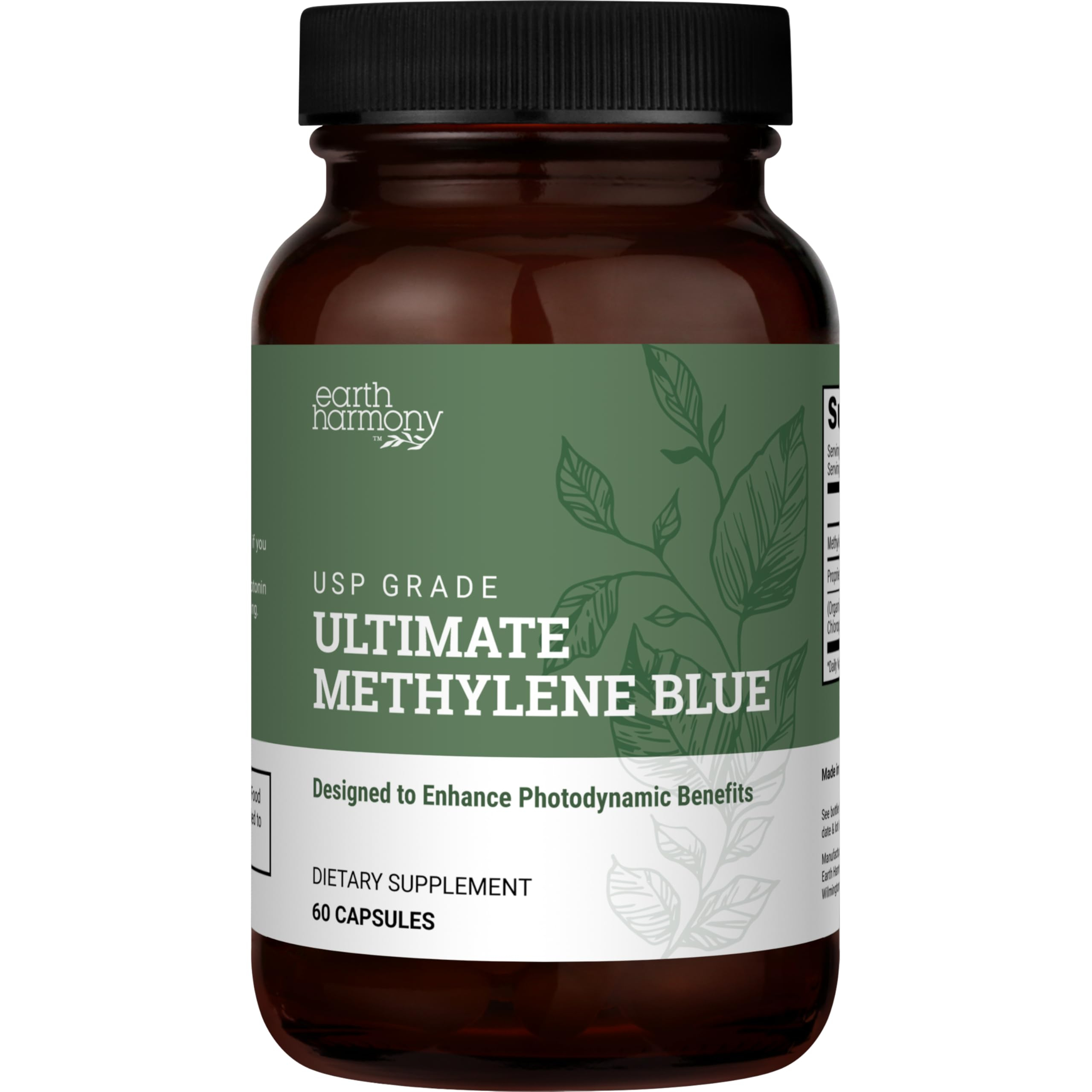
Ultimate Methylene Blue Capsules is a dietary supplement by Earth Harmony Naturals with 5 active ingredients. Its ingredients are commonly taken for common cold and immune support, antioxidant support, skin health and collagen formation.Based on those ingredients, 1,437 medications have a known interaction with it, the most serious rated major. The ingredients most likely to interact are Berberine, Chlorophyll, Sodium Copper Chlorophyllin. Use the checker below to test your specific medication, or read the full HelloPharmacist Interaction Report.
Check Your Meds Against Ultimate Methylene Blue Capsules by Earth Harmony Naturals
Ask about any prescription or over-the-counter medication and we check it for interactions with Ultimate Methylene Blue Capsules by Earth Harmony Naturals — and tell you which ingredient is responsible.
AI summaries are generated from our interaction database for education only — always confirm with your pharmacist. How we use AI
Ask the Pharmacist
A licensed pharmacist will answer your question by email — free, usually within 24 hours.
Got it — thank you!
A licensed pharmacist will answer within 24 hours. Keep an eye on your email (worth checking spam, just in case).
HelloPharmacist Scorecard of Ultimate Methylene Blue Capsules by Earth Harmony Naturals
Our pharmacy team’s full take, with four database checks built into the cards below — a summary of what is known, not a grade of the product itself.
What’s inside
Low disclosure
This product contains five active ingredients. Vitamin C supports immune function and is effective for vitamin C deficiency and possibly effective for several other conditions including cataracts and exercise-induced respiratory infections.
Chlorophyll and sodium copper chlorophyllin are plant-derived compounds with limited evidence of effectiveness for the conditions they're marketed for. Berberine is an alkaloid extract shown to be possibly effective for high cholesterol, PCOS, blood sugar control, and high blood pressure.
Methylene blue is a chemical compound historically used in medical settings; this supplement form contains it at unspecified doses. The product also contains vegetable capsule material, organic acacia gum powder, and trace minerals as inactive ingredients.
Does it work?
Couldn't assess
Vitamin C is effective for treating vitamin C deficiency and possibly effective for anemia of chronic disease, atrial fibrillation, cataracts, and exercise-induced respiratory infections. Berberine is possibly effective for high cholesterol, PCOS, Helicobacter pylori infection, high blood pressure, and diabetes.
Chlorophyll, sodium copper chlorophyllin, and methylene blue lack established effectiveness data in our records — chlorophyll and chlorophyllin carry ratings of insufficient reliable evidence for conditions like wound healing, herpes, and cancer, and no effectiveness ratings are documented for methylene blue as a supplement.
How safe is it?
Well-documented data
Vitamin C is generally well tolerated at normal doses, though very high doses can cause abdominal cramps, heartburn, osmotic diarrhea, nausea, headache, and vomiting; kidney stone risk is higher in those prone to them. Chlorophyll is generally well tolerated short-term but can cause photosensitization and rarely pseudoporphyria.
Berberine is generally tolerated short-term but commonly causes digestive side effects including abdominal pain, constipation, diarrhea, nausea, and vomiting; it may also cause dizziness, drowsiness, fatigue, and headache. Methylene blue in supplemental form has unclear safety because prescription-grade methylene blue's adverse-effect profile may not apply — oral use can cause blue or green urine, diarrhea, headache, and nausea.
During pregnancy, vitamin C in normal amounts is considered likely safe, but high-dose supplements should be avoided. Chlorophyll and sodium copper chlorophyllin should be avoided in pregnancy due to insufficient safety data.
Berberine is likely unsafe in pregnancy and has been linked to newborn harm. Methylene blue is likely unsafe in pregnancy unless a doctor decides it is necessary.
Regarding breastfeeding, chlorophyll, sodium copper chlorophyllin, and methylene blue all have insufficient or unknown safety data — discuss with your doctor or pharmacist before use. Berberine should be avoided while breastfeeding because it passes into breast milk.
Meds to double-check
Major interaction found
Before taking this product, double-check with your own doctor or pharmacist if you take cyclosporine (a Major interaction risk), or any of these Moderate-severity categories: estrogens or oral contraceptives, blood thinners or antiplatelet drugs, chemotherapy drugs, thyroid medication, antipsychotics, HIV medications, aluminum-containing antacids, photosensitizing drugs, methotrexate, sedatives or CNS depressants, blood pressure medications, drugs metabolized by CYP2D6, CYP2C9, or CYP3A4 enzymes (a very large group), diabetes medications, anticholinergic drugs, or serotonergic drugs like antidepressants.
The bottom line
Scorecard at a glanceFormula with limited ingredient disclosure with no assessable stated purpose. Major medication interactions have been identified, and safety information is well characterized.
This is a complex multi-ingredient product with real medication interaction risks, most notably berberine's Major interaction with cyclosporine and vitamin C's multiple Moderate interactions with common drugs including blood thinners and oral contraceptives. If you take any prescription medications, especially immunosuppressants, blood thinners, diabetes drugs, antidepressants, or blood pressure medications, you need to check your specific drugs against this product before taking it.
Talk with your doctor or pharmacist about whether it's appropriate for you and what doses would be safe.
Educational only — not medical advice; always confirm with your pharmacist. Our editorial policy · How we use AI
Assessment coverage: 5 of 5 active ingredients matched to our full ingredient reviews (monographs). Based on the product label dated Jul 17, 2026.
This Scorecard evaluates available label information, ingredient evidence, and known medication-safety considerations. It does not independently verify product identity, purity, potency, contamination, or manufacturing quality. How these ratings are computed
General information
Key facts about Ultimate Methylene Blue Capsules, straight from the product label.
| Brand | Earth Harmony Naturals |
|---|---|
| Barcode (UPC) | 850022113529 |
| Net contents | 60 Capsules |
| Market status | On market |
| Added to our catalog | Jul 17, 2026 |
| Product type | Dietary Supplement |
| Supplement form | Capsule |
| Dietary claims / uses | Designed to enhance photodynamic benefits |
Everything in this section is reproduced from the manufacturer’s own product label — it’s the label speaking, not HelloPharmacist. We show it so you can see exactly what the maker states; we don’t verify or endorse those statements.
Supplement Facts
The label details for Ultimate Methylene Blue Capsules by Earth Harmony Naturals, compiled by our pharmacy team from the manufacturer's label.
Supplement Facts
| Ingredient | Amount | % DV |
|---|---|---|
| Vitamin C | -- | -- |
| Chlorophyll | -- | -- |
| Sodium Copper Chlorophyllin | -- | -- |
| Berberine | -- | -- |
| Methylene Blue | 12 mg | -- |
Other ingredients: Vegetable capsule, organic Acacia gum powder, Trace Minerals
Tap any ingredient to jump to its full detail below.
These statements are the manufacturer’s wording, reproduced from the product label — the label is saying it, not HelloPharmacist. We don’t verify or endorse them.
Marketing
Designed to Enhance Photodynamic Benefits
USP Grade Ultimate Methylene Blue
Suggested Use
Take 1 capsule daily or as recommended by your healthcare provider.
Other
Statements regarding dietary supplements have not been evaluated by the FDA and are not intended to diagnose, treat, cure, or prevent any disease or health condition.
Is this label outdated? Report a formula or label change and our pharmacy team will review it.
Ultimate Methylene Blue Capsules by Earth Harmony Naturals label
The product's label imagery, on file with our pharmacy team. Tap to enlarge.
Label images reflect the product version on file with our pharmacy team. Always read your actual product label.
The Ingredients in Ultimate Methylene Blue Capsules by Earth Harmony Naturals
These are the 5 active ingredients this product is made of. Select any to open its full monograph.
Serving size1 Capsule Dosage formCapsule Servings per container60 Amounts shown are per serving.
Most supplement products combine several ingredients, and a medication can interact with the product through any one of them. Each ingredient below shows whether it has known drug interactions.
Vitamin C
Interacts with207 drugs
Vitamin C (ascorbic acid) is an essential nutrient your body needs but cannot make, so you must get it from food or supplements. It's important for im...
Vitamin C monograph & interactionsChlorophyll
Interacts with337 drugs
Chlorophyll is the green pigment found in plants and algae, and supplements often use a stable form called chlorophyllin. It is most studied for reduc...
Chlorophyll monograph & interactionsSodium Copper Chlorophyllin
Interacts with335 drugs
Chlorophyllin is a water-soluble, semi-synthetic form of chlorophyll most often used to help control body and fecal odor and to support wound healing....
Sodium Copper Chlorophyllin monograph & interactionsBerberine
Interacts with1,160 drugs
Berberine is a yellow plant compound that has shown promise for lowering blood sugar and cholesterol in some studies, but the quality of research vari...
Berberine monograph & interactionsMethylene Blue
Interacts with315 drugs
Methylene blue is a synthetic dye that is an FDA-approved prescription medicine for a rare blood disorder called methemoglobinemia, and it is also use...
Methylene Blue monograph & interactionsOther (inactive) ingredients: Vegetable capsule, Organic Acacia gum powder, Trace Minerals. These complete the product’s ingredient list but are not active constituents.
Ultimate Methylene Blue Capsules by Earth Harmony Naturals Drug Interactions
HelloPharmacist Interaction Report
Earth Harmony Methylene Blue Capsules contains five active ingredients, and through its vitamin C, chlorophyll, sodium copper chlorophyllin, berberine, and methylene blue content, this product interacts with a substantial number of medications.
The most serious interaction is berberine with cyclosporine (an immunosuppressant drug), which is a Major severity concern — berberine can increase cyclosporine levels in the blood by inhibiting how your body breaks it down, potentially causing toxicity.
Read the full breakdown — every affected drug type, severity by severity
Vitamin C carries Moderate interactions with estrogens (including oral contraceptives and hormone replacement therapy, where it may raise estrogen levels by up to 55%), blood thinners like warfarin, chemotherapy drugs including alkylating agents and antitumor antibiotics, levothyroxine (thyroid medication), fluphenazine (an antipsychotic), indinavir (an HIV medication), and aluminum-containing compounds. Chlorophyll and sodium copper chlorophyllin both interact with photosensitizing drugs (medications that increase sun sensitivity), theoretically adding to that risk.
Chlorophyll also interacts with methotrexate (a cancer and autoimmune drug), where it may delay clearance of the medication.
Berberine carries Moderate interactions with CNS depressants (sedatives, sleep aids, opioids), antihypertensive drugs (blood pressure medications), drugs metabolized by cytochrome P450 enzymes (CYP2D6, CYP2C9, and CYP3A4 substrates — a large category that includes many common medications), blood thinners and antiplatelet drugs, and diabetes medications. Methylene blue has Moderate interactions with anticholinergic drugs and serotonergic drugs (antidepressants and certain other psychiatric or pain medications), where it may trigger serotonin syndrome.
Altogether, these interactions span 1,438 individual medications. Before starting this product, use the medication checker on this page to look up your exact prescriptions and supplements, then discuss any matches with your doctor or pharmacist.
Check your own medications below · Editorial policy · How we use AI
Want to check YOUR meds against Ultimate Methylene Blue Capsules?
Ask about interactions with your drugs in plain English — “Can I take it with lisinopril?” — and we find you the answer in seconds, ingredient by ingredient.
Go to the checkerIngredients driving the most interactions
Individual Drug Interactions
The ingredients in Ultimate Methylene Blue Capsules interact with 1,437 drugs. Click any drug to see the details.
5 of the 5 ingredients in Ultimate Methylene Blue Capsules interact with drugs. Each result below shows which ingredient is responsible. Berberine Chlorophyll Sodium Copper Chlorophyllin Methylene Blue Vitamin C
CyclosporineCequa, Ciclosporine, Gengraf, Neoral, Sandimmune, Verkazia +1 more
How Cyclosporine interacts with Ultimate Methylene Blue Capsules — through 1 ingredient. Tap an ingredient for the detail:
BerberineCyclosporine (neoral, Sandimmune), Cytochrome P450 3a4 (cyp3a4) Substrates Major
Interaction Summary
Berberine can increase serum levels of cyclosporine.
Read the full Berberine + Cyclosporine interactionAdo-trastuzumab EmtansineKadcyla
How Ado-trastuzumab Emtansine interacts with Ultimate Methylene Blue Capsules — through 1 ingredient. Tap an ingredient for the detail:
BerberineCytochrome P450 3a4 (cyp3a4) Substrates Moderate
Interaction Summary
Theoretically, berberine might increase serum levels of drugs metabolized by CYP3A4.
Read the full Berberine + Ado-trastuzumab Emtansine interactionAbciximabReoPro
How Abciximab interacts with Ultimate Methylene Blue Capsules — through 1 ingredient. Tap an ingredient for the detail:
BerberineAnticoagulant/antiplatelet Drugs Moderate
Interaction Summary
Theoretically, berberine might increase the risk of bleeding when used with anticoagulant or antiplatelet drugs.
Read the full Berberine + Abciximab interactionAbemaciclibVerzenio
How Abemaciclib interacts with Ultimate Methylene Blue Capsules — through 1 ingredient. Tap an ingredient for the detail:
BerberineCytochrome P450 3a4 (cyp3a4) Substrates Moderate
Interaction Summary
Theoretically, berberine might increase serum levels of drugs metabolized by CYP3A4.
Read the full Berberine + Abemaciclib interactionAbiraterone
How Abiraterone interacts with Ultimate Methylene Blue Capsules — through 1 ingredient. Tap an ingredient for the detail:
BerberineCytochrome P450 3a4 (cyp3a4) Substrates Moderate
Interaction Summary
Theoretically, berberine might increase serum levels of drugs metabolized by CYP3A4.
Read the full Berberine + Abiraterone interactionAbiraterone AcetateYonsa, Zytiga
How Abiraterone Acetate interacts with Ultimate Methylene Blue Capsules — through 1 ingredient. Tap an ingredient for the detail:
BerberineCytochrome P450 3a4 (cyp3a4) Substrates Moderate
Interaction Summary
Theoretically, berberine might increase serum levels of drugs metabolized by CYP3A4.
Read the full Berberine + Abiraterone Acetate interactionAbrocitinibCibinqo
How Abrocitinib interacts with Ultimate Methylene Blue Capsules — through 1 ingredient. Tap an ingredient for the detail:
BerberineAnticoagulant/antiplatelet Drugs, Cytochrome P450 2c9 (cyp2c9) Substrates Moderate
Interaction Summary
Theoretically, berberine might increase the risk of bleeding when used with anticoagulant or antiplatelet drugs.
Read the full Berberine + Abrocitinib interactionAcalabrutinibCalquence
How Acalabrutinib interacts with Ultimate Methylene Blue Capsules — through 1 ingredient. Tap an ingredient for the detail:
BerberineCytochrome P450 3a4 (cyp3a4) Substrates Moderate
Interaction Summary
Theoretically, berberine might increase serum levels of drugs metabolized by CYP3A4.
Read the full Berberine + Acalabrutinib interactionAcarboseGlucobay, Prandase, Precose
How Acarbose interacts with Ultimate Methylene Blue Capsules — through 1 ingredient. Tap an ingredient for the detail:
BerberineAntidiabetes Drugs Moderate
Interaction Summary
Theoretically, berberine may increase the risk of hypoglycemia when taken with antidiabetes drugs.
Read the full Berberine + Acarbose interactionAcebutololRhotral, Sectral
How Acebutolol interacts with Ultimate Methylene Blue Capsules — through 1 ingredient. Tap an ingredient for the detail:
BerberineAntihypertensive Drugs Moderate
Interaction Summary
Theoretically, berberine might have additive effects with antihypertensive drugs.
Read the full Berberine + Acebutolol interactionAcenocoumarolSintrom
How Acenocoumarol interacts with Ultimate Methylene Blue Capsules — through 1 ingredient. Tap an ingredient for the detail:
BerberineAnticoagulant/antiplatelet Drugs Moderate
Interaction Summary
Theoretically, berberine might increase the risk of bleeding when used with anticoagulant or antiplatelet drugs.
Read the full Berberine + Acenocoumarol interactionAcepromazineAtravet
How Acepromazine interacts with Ultimate Methylene Blue Capsules — through 4 ingredients. Tap an ingredient for the detail:
ChlorophyllPhotosensitizing Drugs Moderate
Interaction Summary
Theoretically, concomitant use of chlorophyll with photosensitizing drugs may have additive effects.
Read the full Chlorophyll + Acepromazine interactionSodium Copper ChlorophyllinPhotosensitizing Drugs Moderate
Interaction Summary
Theoretically, concomitant use of chlorophyllin with photosensitizing drugs may have additive effects.
Read the full Sodium Copper Chlorophyllin + Acepromazine interactionMethylene BlueAnticholinergic Drugs Moderate
Interaction Summary
Concomitant use may increase anticholinergic effects and adverse effects.
Read the full Methylene Blue + Acepromazine interactionBerberineCns Depressants Moderate
Interaction Summary
Theoretically, berberine might increase the sedative effects of CNS depressants.
Read the full Berberine + Acepromazine interactionAcetaminophen, AspirinGemnisyn
How Acetaminophen, Aspirin interacts with Ultimate Methylene Blue Capsules — through 2 ingredients. Tap an ingredient for the detail:
BerberineAnticoagulant/antiplatelet Drugs Moderate
Interaction Summary
Theoretically, berberine might increase the risk of bleeding when used with anticoagulant or antiplatelet drugs.
Read the full Berberine + Acetaminophen, Aspirin interactionVitamin CAcetaminophen (tylenol, Others), Aspirin Minor
Interaction Summary
High-dose vitamin C might slightly prolong the clearance of acetaminophen.
Read the full Vitamin C + Acetaminophen, Aspirin interactionAcetaminophen, Aspirin, CaffeineExcedrin, Excedrin Extra Strength, Excedrin Migraine
How Acetaminophen, Aspirin, Caffeine interacts with Ultimate Methylene Blue Capsules — through 2 ingredients. Tap an ingredient for the detail:
BerberineAnticoagulant/antiplatelet Drugs, Cytochrome P450 3a4 (cyp3a4) Substrates Moderate
Interaction Summary
Theoretically, berberine might increase the risk of bleeding when used with anticoagulant or antiplatelet drugs.
Read the full Berberine + Acetaminophen, Aspirin, Caffeine interactionVitamin CAcetaminophen (tylenol, Others), Aspirin Minor
Interaction Summary
High-dose vitamin C might slightly prolong the clearance of acetaminophen.
Read the full Vitamin C + Acetaminophen, Aspirin, Caffeine interactionAcetaminophen, Brompheniramine, PhenylpropanolamineDimetapp Cold and Flu
How Acetaminophen, Brompheniramine, Phenylpropanolamine interacts with Ultimate Methylene Blue Capsules — through 3 ingredients. Tap an ingredient for the detail:
ChlorophyllPhotosensitizing Drugs Moderate
Interaction Summary
Theoretically, concomitant use of chlorophyll with photosensitizing drugs may have additive effects.
Read the full Chlorophyll + Acetaminophen, Brompheniramine, Phenylpropanolamine interactionSodium Copper ChlorophyllinPhotosensitizing Drugs Moderate
Interaction Summary
Theoretically, concomitant use of chlorophyllin with photosensitizing drugs may have additive effects.
Read the full Sodium Copper Chlorophyllin + Acetaminophen, Brompheniramine, Phenylpropanolamine interactionVitamin CAcetaminophen (tylenol, Others) Minor
Interaction Summary
High-dose vitamin C might slightly prolong the clearance of acetaminophen.
Read the full Vitamin C + Acetaminophen, Brompheniramine, Phenylpropanolamine interactionAcetaminophen, Butalbital, CaffeineEsgic, Esgic Plus, Fiogesic, Fioricet, Repan, Tecnal +1 more
How Acetaminophen, Butalbital, Caffeine interacts with Ultimate Methylene Blue Capsules — through 2 ingredients. Tap an ingredient for the detail:
BerberineCytochrome P450 3a4 (cyp3a4) Substrates Moderate
Interaction Summary
Theoretically, berberine might increase serum levels of drugs metabolized by CYP3A4.
Read the full Berberine + Acetaminophen, Butalbital, Caffeine interactionVitamin CAcetaminophen (tylenol, Others) Minor
Interaction Summary
High-dose vitamin C might slightly prolong the clearance of acetaminophen.
Read the full Vitamin C + Acetaminophen, Butalbital, Caffeine interactionAcetaminophen, Butalbital, Caffeine, CodeineEsgic with Codeine, Fioricet w/ Codeine
How Acetaminophen, Butalbital, Caffeine, Codeine interacts with Ultimate Methylene Blue Capsules — through 2 ingredients. Tap an ingredient for the detail:
BerberineCytochrome P450 3a4 (cyp3a4) Substrates, Cns Depressants +1 Moderate
Interaction Summary
Theoretically, berberine might increase serum levels of drugs metabolized by CYP3A4.
Read the full Berberine + Acetaminophen, Butalbital, Caffeine, Codeine interactionVitamin CAcetaminophen (tylenol, Others) Minor
Interaction Summary
High-dose vitamin C might slightly prolong the clearance of acetaminophen.
Read the full Vitamin C + Acetaminophen, Butalbital, Caffeine, Codeine interactionAcetaminophen, Butalbital, CodeineBancap w/ Codeine
How Acetaminophen, Butalbital, Codeine interacts with Ultimate Methylene Blue Capsules — through 2 ingredients. Tap an ingredient for the detail:
BerberineCytochrome P450 2d6 (cyp2d6) Substrates, Cns Depressants Moderate
Interaction Summary
Theoretically, berberine might increase serum levels of drugs metabolized by CYP2D6.
Read the full Berberine + Acetaminophen, Butalbital, Codeine interactionVitamin CAcetaminophen (tylenol, Others) Minor
Interaction Summary
High-dose vitamin C might slightly prolong the clearance of acetaminophen.
Read the full Vitamin C + Acetaminophen, Butalbital, Codeine interactionAcetaminophen, Butalbital, Codeine PhosphatePhrenilin #3
How Acetaminophen, Butalbital, Codeine Phosphate interacts with Ultimate Methylene Blue Capsules — through 2 ingredients. Tap an ingredient for the detail:
BerberineCns Depressants, Cytochrome P450 2d6 (cyp2d6) Substrates Moderate
Interaction Summary
Theoretically, berberine might increase the sedative effects of CNS depressants.
Read the full Berberine + Acetaminophen, Butalbital, Codeine Phosphate interactionVitamin CAcetaminophen (tylenol, Others) Minor
Interaction Summary
High-dose vitamin C might slightly prolong the clearance of acetaminophen.
Read the full Vitamin C + Acetaminophen, Butalbital, Codeine Phosphate interactionAcetaminophen, Caffeine, Chlorpheniramine, Hydrocodone, PhenylephrineHycomine Compound
How Acetaminophen, Caffeine, Chlorpheniramine, Hydrocodone, Phenylephrine interacts with Ultimate Methylene Blue Capsules — through 5 ingredients. Tap an ingredient for the detail:
BerberineCns Depressants, Cytochrome P450 3a4 (cyp3a4) Substrates +1 Moderate
Interaction Summary
Theoretically, berberine might increase the sedative effects of CNS depressants.
Read the full Berberine + Acetaminophen, Caffeine, Chlorpheniramine, Hydrocodone, Phenylephrine interactionSodium Copper ChlorophyllinPhotosensitizing Drugs Moderate
Interaction Summary
Theoretically, concomitant use of chlorophyllin with photosensitizing drugs may have additive effects.
Read the full Sodium Copper Chlorophyllin + Acetaminophen, Caffeine, Chlorpheniramine, Hydrocodone, Phenylephrine interactionMethylene BlueAnticholinergic Drugs Moderate
Interaction Summary
Concomitant use may increase anticholinergic effects and adverse effects.
Read the full Methylene Blue + Acetaminophen, Caffeine, Chlorpheniramine, Hydrocodone, Phenylephrine interactionChlorophyllPhotosensitizing Drugs Moderate
Interaction Summary
Theoretically, concomitant use of chlorophyll with photosensitizing drugs may have additive effects.
Read the full Chlorophyll + Acetaminophen, Caffeine, Chlorpheniramine, Hydrocodone, Phenylephrine interactionVitamin CAcetaminophen (tylenol, Others) Minor
Interaction Summary
High-dose vitamin C might slightly prolong the clearance of acetaminophen.
Read the full Vitamin C + Acetaminophen, Caffeine, Chlorpheniramine, Hydrocodone, Phenylephrine interactionAcetaminophen, Caffeine, CodeineGesic C15, Gesic C30, Gesic C8, Lenoltec 1, Lenoltec 2, Lenoltec 3 +1 more
How Acetaminophen, Caffeine, Codeine interacts with Ultimate Methylene Blue Capsules — through 2 ingredients. Tap an ingredient for the detail:
BerberineCns Depressants, Cytochrome P450 3a4 (cyp3a4) Substrates +1 Moderate
Interaction Summary
Theoretically, berberine might increase the sedative effects of CNS depressants.
Read the full Berberine + Acetaminophen, Caffeine, Codeine interactionVitamin CAcetaminophen (tylenol, Others) Minor
Interaction Summary
High-dose vitamin C might slightly prolong the clearance of acetaminophen.
Read the full Vitamin C + Acetaminophen, Caffeine, Codeine interactionAcetaminophen, Caffeine, Codeine, SalicylamideCodalan No.1, Codalan No.2, Codalan No.3
How Acetaminophen, Caffeine, Codeine, Salicylamide interacts with Ultimate Methylene Blue Capsules — through 2 ingredients. Tap an ingredient for the detail:
BerberineCytochrome P450 2d6 (cyp2d6) Substrates, Cytochrome P450 3a4 (cyp3a4) Substrates +1 Moderate
Interaction Summary
Theoretically, berberine might increase serum levels of drugs metabolized by CYP2D6.
Read the full Berberine + Acetaminophen, Caffeine, Codeine, Salicylamide interactionVitamin CAcetaminophen (tylenol, Others) Minor
Interaction Summary
High-dose vitamin C might slightly prolong the clearance of acetaminophen.
Read the full Vitamin C + Acetaminophen, Caffeine, Codeine, Salicylamide interactionAcetaminophen, Caffeine, DihydrocodeineDHC Plus, Panlor DC, Panlor SS
How Acetaminophen, Caffeine, Dihydrocodeine interacts with Ultimate Methylene Blue Capsules — through 2 ingredients. Tap an ingredient for the detail:
BerberineCns Depressants, Cytochrome P450 2d6 (cyp2d6) Substrates +1 Moderate
Interaction Summary
Theoretically, berberine might increase the sedative effects of CNS depressants.
Read the full Berberine + Acetaminophen, Caffeine, Dihydrocodeine interactionVitamin CAcetaminophen (tylenol, Others) Minor
Interaction Summary
High-dose vitamin C might slightly prolong the clearance of acetaminophen.
Read the full Vitamin C + Acetaminophen, Caffeine, Dihydrocodeine interactionAcetaminophen, Caffeine, IsomethepteneMigralam
How Acetaminophen, Caffeine, Isometheptene interacts with Ultimate Methylene Blue Capsules — through 2 ingredients. Tap an ingredient for the detail:
BerberineCytochrome P450 3a4 (cyp3a4) Substrates Moderate
Interaction Summary
Theoretically, berberine might increase serum levels of drugs metabolized by CYP3A4.
Read the full Berberine + Acetaminophen, Caffeine, Isometheptene interactionVitamin CAcetaminophen (tylenol, Others) Minor
Interaction Summary
High-dose vitamin C might slightly prolong the clearance of acetaminophen.
Read the full Vitamin C + Acetaminophen, Caffeine, Isometheptene interactionAcetaminophen, Caffeine, PyrilamineMidol Max Strength Menstrual
How Acetaminophen, Caffeine, Pyrilamine interacts with Ultimate Methylene Blue Capsules — through 3 ingredients. Tap an ingredient for the detail:
BerberineCytochrome P450 3a4 (cyp3a4) Substrates Moderate
Interaction Summary
Theoretically, berberine might increase serum levels of drugs metabolized by CYP3A4.
Read the full Berberine + Acetaminophen, Caffeine, Pyrilamine interactionMethylene BlueAnticholinergic Drugs Moderate
Interaction Summary
Concomitant use may increase anticholinergic effects and adverse effects.
Read the full Methylene Blue + Acetaminophen, Caffeine, Pyrilamine interactionVitamin CAcetaminophen (tylenol, Others) Minor
Interaction Summary
High-dose vitamin C might slightly prolong the clearance of acetaminophen.
Read the full Vitamin C + Acetaminophen, Caffeine, Pyrilamine interactionAcetaminophen, Chlorpheniramine Maleate, Dextromethorphan HbrVicks Formula 44M Cough, Cold & Flu Relief
How Acetaminophen, Chlorpheniramine Maleate, Dextromethorphan Hbr interacts with Ultimate Methylene Blue Capsules — through 5 ingredients. Tap an ingredient for the detail:
BerberineDextromethorphan (robitussin Dm, Others), Cytochrome P450 3a4 (cyp3a4) Substrates +1 Moderate
Interaction Summary
Theoretically, berberine may increase serum levels of dextromethorphan.
Read the full Berberine + Acetaminophen, Chlorpheniramine Maleate, Dextromethorphan Hbr interactionMethylene BlueAnticholinergic Drugs, Serotonergic Drugs Moderate
Interaction Summary
Concomitant use may increase anticholinergic effects and adverse effects.
Read the full Methylene Blue + Acetaminophen, Chlorpheniramine Maleate, Dextromethorphan Hbr interactionSodium Copper ChlorophyllinPhotosensitizing Drugs Moderate
Interaction Summary
Theoretically, concomitant use of chlorophyllin with photosensitizing drugs may have additive effects.
Read the full Sodium Copper Chlorophyllin + Acetaminophen, Chlorpheniramine Maleate, Dextromethorphan Hbr interactionChlorophyllPhotosensitizing Drugs Moderate
Interaction Summary
Theoretically, concomitant use of chlorophyll with photosensitizing drugs may have additive effects.
Read the full Chlorophyll + Acetaminophen, Chlorpheniramine Maleate, Dextromethorphan Hbr interactionVitamin CAcetaminophen (tylenol, Others) Minor
Interaction Summary
High-dose vitamin C might slightly prolong the clearance of acetaminophen.
Read the full Vitamin C + Acetaminophen, Chlorpheniramine Maleate, Dextromethorphan Hbr interactionAcetaminophen, Chlorpheniramine, Codeine, PhenylephrineColrex
How Acetaminophen, Chlorpheniramine, Codeine, Phenylephrine interacts with Ultimate Methylene Blue Capsules — through 5 ingredients. Tap an ingredient for the detail:
Methylene BlueAnticholinergic Drugs, Serotonergic Drugs Moderate
Interaction Summary
Concomitant use may increase anticholinergic effects and adverse effects.
Read the full Methylene Blue + Acetaminophen, Chlorpheniramine, Codeine, Phenylephrine interactionSodium Copper ChlorophyllinPhotosensitizing Drugs Moderate
Interaction Summary
Theoretically, concomitant use of chlorophyllin with photosensitizing drugs may have additive effects.
Read the full Sodium Copper Chlorophyllin + Acetaminophen, Chlorpheniramine, Codeine, Phenylephrine interactionBerberineCns Depressants, Cytochrome P450 2d6 (cyp2d6) Substrates +1 Moderate
Interaction Summary
Theoretically, berberine might increase the sedative effects of CNS depressants.
Read the full Berberine + Acetaminophen, Chlorpheniramine, Codeine, Phenylephrine interactionChlorophyllPhotosensitizing Drugs Moderate
Interaction Summary
Theoretically, concomitant use of chlorophyll with photosensitizing drugs may have additive effects.
Read the full Chlorophyll + Acetaminophen, Chlorpheniramine, Codeine, Phenylephrine interactionVitamin CAcetaminophen (tylenol, Others) Minor
Interaction Summary
High-dose vitamin C might slightly prolong the clearance of acetaminophen.
Read the full Vitamin C + Acetaminophen, Chlorpheniramine, Codeine, Phenylephrine interactionAcetaminophen, Chlorpheniramine, DextromethorphanCoricidin II Extra Strength Cold and Flu
How Acetaminophen, Chlorpheniramine, Dextromethorphan interacts with Ultimate Methylene Blue Capsules — through 5 ingredients. Tap an ingredient for the detail:
BerberineDextromethorphan (robitussin Dm, Others), Cytochrome P450 3a4 (cyp3a4) Substrates +1 Moderate
Interaction Summary
Theoretically, berberine may increase serum levels of dextromethorphan.
Read the full Berberine + Acetaminophen, Chlorpheniramine, Dextromethorphan interactionMethylene BlueAnticholinergic Drugs, Serotonergic Drugs Moderate
Interaction Summary
Concomitant use may increase anticholinergic effects and adverse effects.
Read the full Methylene Blue + Acetaminophen, Chlorpheniramine, Dextromethorphan interactionSodium Copper ChlorophyllinPhotosensitizing Drugs Moderate
Interaction Summary
Theoretically, concomitant use of chlorophyllin with photosensitizing drugs may have additive effects.
Read the full Sodium Copper Chlorophyllin + Acetaminophen, Chlorpheniramine, Dextromethorphan interactionChlorophyllPhotosensitizing Drugs Moderate
Interaction Summary
Theoretically, concomitant use of chlorophyll with photosensitizing drugs may have additive effects.
Read the full Chlorophyll + Acetaminophen, Chlorpheniramine, Dextromethorphan interactionVitamin CAcetaminophen (tylenol, Others) Minor
Interaction Summary
High-dose vitamin C might slightly prolong the clearance of acetaminophen.
Read the full Vitamin C + Acetaminophen, Chlorpheniramine, Dextromethorphan interactionAcetaminophen, Chlorpheniramine, Dextromethorphan HydrobromideCoricidin HBP Maximum Strength Flu
How Acetaminophen, Chlorpheniramine, Dextromethorphan Hydrobromide interacts with Ultimate Methylene Blue Capsules — through 5 ingredients. Tap an ingredient for the detail:
ChlorophyllPhotosensitizing Drugs Moderate
Interaction Summary
Theoretically, concomitant use of chlorophyll with photosensitizing drugs may have additive effects.
Read the full Chlorophyll + Acetaminophen, Chlorpheniramine, Dextromethorphan Hydrobromide interactionBerberineCytochrome P450 3a4 (cyp3a4) Substrates, Dextromethorphan (robitussin Dm, Others) +1 Moderate
Interaction Summary
Theoretically, berberine might increase serum levels of drugs metabolized by CYP3A4.
Read the full Berberine + Acetaminophen, Chlorpheniramine, Dextromethorphan Hydrobromide interactionMethylene BlueAnticholinergic Drugs, Serotonergic Drugs Moderate
Interaction Summary
Concomitant use may increase anticholinergic effects and adverse effects.
Read the full Methylene Blue + Acetaminophen, Chlorpheniramine, Dextromethorphan Hydrobromide interactionSodium Copper ChlorophyllinPhotosensitizing Drugs Moderate
Interaction Summary
Theoretically, concomitant use of chlorophyllin with photosensitizing drugs may have additive effects.
Read the full Sodium Copper Chlorophyllin + Acetaminophen, Chlorpheniramine, Dextromethorphan Hydrobromide interactionVitamin CAcetaminophen (tylenol, Others) Minor
Interaction Summary
High-dose vitamin C might slightly prolong the clearance of acetaminophen.
Read the full Vitamin C + Acetaminophen, Chlorpheniramine, Dextromethorphan Hydrobromide interactionAcetaminophen, Chlorpheniramine, Dextromethorphan, PhenylpropanolamineMulti Symptom Cold Relief
How Acetaminophen, Chlorpheniramine, Dextromethorphan, Phenylpropanolamine interacts with Ultimate Methylene Blue Capsules — through 5 ingredients. Tap an ingredient for the detail:
BerberineCytochrome P450 3a4 (cyp3a4) Substrates, Cytochrome P450 2d6 (cyp2d6) Substrates +1 Moderate
Interaction Summary
Theoretically, berberine might increase serum levels of drugs metabolized by CYP3A4.
Read the full Berberine + Acetaminophen, Chlorpheniramine, Dextromethorphan, Phenylpropanolamine interactionSodium Copper ChlorophyllinPhotosensitizing Drugs Moderate
Interaction Summary
Theoretically, concomitant use of chlorophyllin with photosensitizing drugs may have additive effects.
Read the full Sodium Copper Chlorophyllin + Acetaminophen, Chlorpheniramine, Dextromethorphan, Phenylpropanolamine interactionMethylene BlueSerotonergic Drugs, Anticholinergic Drugs Moderate
Interaction Summary
Combining serotonergic drugs with methylene blue can cause additive serotonergic effects, including serotonin syndrome.
Read the full Methylene Blue + Acetaminophen, Chlorpheniramine, Dextromethorphan, Phenylpropanolamine interactionChlorophyllPhotosensitizing Drugs Moderate
Interaction Summary
Theoretically, concomitant use of chlorophyll with photosensitizing drugs may have additive effects.
Read the full Chlorophyll + Acetaminophen, Chlorpheniramine, Dextromethorphan, Phenylpropanolamine interactionVitamin CAcetaminophen (tylenol, Others) Minor
Interaction Summary
High-dose vitamin C might slightly prolong the clearance of acetaminophen.
Read the full Vitamin C + Acetaminophen, Chlorpheniramine, Dextromethorphan, Phenylpropanolamine interactionEach ingredient & the kinds of drugs it affects
For each ingredient in Ultimate Methylene Blue Capsules with known interactions, here are the types of medications they can affect. Open any type for the detail — or search your exact drug in the checker above.
Berberine
Cyclosporine (Neoral, Sandimmune)
Berberine can increase serum levels of cyclosporine.
Berberine can reduce metabolism and increase serum levels of cyclosporine. Berberine might inhibit cytochrome P450 3A4 (CYP3A4), which metabolizes cyclosporine.
Anticoagulant/Antiplatelet Drugs
Theoretically, berberine might increase the risk of bleeding when used with anticoagulant or antiplatelet drugs.
In vitro and in vivo research suggest that berberine can inhibit platelet aggregation. Theoretically, berberine might have additive effects when used with anticoagulant and antiplatelet drugs and increase the risk of bleeding.
Antidiabetes Drugs
Theoretically, berberine may increase the risk of hypoglycemia when taken with antidiabetes drugs.
Clinical research shows that berberine may lower blood glucose levels. Theoretically, berberine might have additive effects with antidiabetes drugs and increase the risk of hypoglycemia.
Antihypertensive Drugs
Theoretically, berberine might have additive effects with antihypertensive drugs.
Animal research suggests that berberine can have hypotensive effects. Also, a clinical study suggests that taking berberine in combination with amlodipine can lower systolic and diastolic blood pressure when compared with amlodipine alone.
Cns Depressants
Theoretically, berberine might increase the sedative effects of CNS depressants.
Animal research suggests that berberine may have sedative effects. Theoretically, use of berberine along with CNS depressants might produce additive therapeutic and adverse effects.
Cytochrome P450 2C9 (Cyp2C9) Substrates
Theoretically, berberine might increase serum levels of drugs metabolized by CYP2C9.
Preliminary clinical research shows that berberine can inhibit CYP2C9. Theoretically, taking berberine with drugs metabolized by CYP2C9 might increase drug levels and increase the risk of adverse effects.
Cytochrome P450 2D6 (Cyp2D6) Substrates
Theoretically, berberine might increase serum levels of drugs metabolized by CYP2D6.
In vitro research and preliminary clinical evidence show that berberine can inhibit CYP2D6. Theoretically, use of berberine with drugs metabolized by CYP2D6 might increase drug levels and increase the risk of adverse effects.
Cytochrome P450 3A4 (Cyp3A4) Substrates
Theoretically, berberine might increase serum levels of drugs metabolized by CYP3A4.
In vitro research and preliminary clinical research show that berberine moderately inhibits CYP3A4. Theoretically, use of berberine with drugs metabolized by CYP3A4 might increase drug levels and increase the risk of adverse effects.
Dextromethorphan (Robitussin Dm, Others)
Theoretically, berberine may increase serum levels of dextromethorphan.
Preliminary clinical research shows that berberine can inhibit cytochrome P450 2D6 (CYP2D6) activity and reduce the metabolism of dextromethorphan. This may increase the effects and side effects of dextromethorphan.
Losartan (Cozaar)
Berberine might reduce the therapeutic effects of losartan by decreasing its conversion to its active form.
Preliminary clinical research suggests that berberine can inhibit cytochrome P450 2C9 (CYP2C9) activity and reduce metabolism of losartan.
Metformin (Glucophage)
Theoretically, berberine might increase the therapeutic and adverse effects of metformin.
In vitro and animal studies show that berberine can increase the systemic exposure and half-life of metformin, potentially increasing metformin's effects and side effects. This interaction seems to be most apparent when berberine is administered 2 hours prior to metformin. Taking berberine and metformin at the same time does not appear to increase systemic exposure to metformin.
Midazolam (Versed)
Berberine can reduce metabolism of midazolam, which might increase the risk of severe adverse effects.
Preliminary clinical research shows that berberine can inhibit cytochrome P450 3A4 (CYP3A4) activity and reduce metabolism of midazolam.
Pentobarbital (Nembutal)
Berberine might increase the sedative effect of pentobarbital.
Evidence from animal research shows that berberine can prolong pentobarbital-induced sleeping time. Theoretically, combining berberine and pentobarbital might increase the sedative effects of pentobarbital.
Tacrolimus (Prograf)
Berberine has been associated with increased blood levels of tacrolimus.
In a 16-year-old patient with idiopathic nephrotic syndrome who was being treated with tacrolimus 6.5 mg twice daily, intake of berberine 200 mg three times daily increased the blood concentration of tacrolimus from 8 to 22 ng/mL. Following a reduction of the tacrolimus dose to 3 mg daily, blood levels of tacrolimus decreased to 12 ng/mL.
Acetazolamide
Laboratory studies and initial clinical findings suggest that berberine has the potential to increase acetazolamide concentrations in the body. More research is needed to confirm this interaction.
Chlorophyll
Methotrexate (Trexall, Others)
Theoretically, chlorophyll may reduce the clearance of methotrexate.
In one case report, a 54-year-old male developed delayed clearance of intravenous high-dose methotrexate with concomitant use of chlorophyll. When chlorophyll was stopped 2 days prior to methotrexate treatment, methotrexate clearance was unaffected.
Photosensitizing Drugs
Theoretically, concomitant use of chlorophyll with photosensitizing drugs may have additive effects.
Chlorophyll has been reported to cause photosensitization. In two case reports, pseudoporphyria developed after oral intake of chlorophyll. Theoretically, concomitant use with other photosensitizing drugs may exacerbate this effect.
Sodium Copper Chlorophyllin
Photosensitizing Drugs
Theoretically, concomitant use of chlorophyllin with photosensitizing drugs may have additive effects.
Chlorophyllin is a semi-synthetic derivative of chlorophyll. Chlorophyll has been reported to cause photosensitization. Orally, chlorophyll has also been associated with the development of pseudoporphyria in multiple case reports.
Methylene Blue
Anticholinergic Drugs
Concomitant use may increase anticholinergic effects and adverse effects. In a case report, a critically-ill male in his mid-60s developed a toxicological process attributed to anticholinergic syndrome following treatment with methylene blue for vasoplegia. Symptoms included anhidrosis, fever, lactic acidosis, mucosal dryness, and pupil dilation. Potential exacerbating factors included renal failure and use of fentanyl intra-operatively.
Serotonergic Drugs
Combining serotonergic drugs with methylene blue can cause additive serotonergic effects, including serotonin syndrome. Methylene blue inhibits monoamine oxidase A. Intravenous or intrapulmonary use has resulted in serotonin syndrome, including reported fatalities, in patients taking some serotonergic drugs. This effect has not been reported with oral methylene blue. However, tell patients to avoid taking methylene blue with serotonergic drugs.
Vitamin C
Alkylating Agents
Theoretically, antioxidant effects of vitamin C might reduce the effectiveness of alkylating agents.
The use of antioxidants like vitamin C during chemotherapy is controversial. There is concern that antioxidants could reduce the activity of chemotherapy drugs that generate free radicals, such as cyclophosphamide, chlorambucil, carmustine, busulfan, and thiotepa. In contrast, some researchers theorize that antioxidants might make chemotherapy more effective by reducing oxidative stress that could interfere with apoptosis (cell death) of cancer cells. More evidence is needed to determine what effect, if any, antioxidants such as vitamin C have on chemotherapy.
Aluminum
Vitamin C can increase the amount of aluminum absorbed from aluminum compounds.
Research in animals and humans shows that vitamin C increases aluminum absorption, theoretically by chelating aluminum and keeping it in solution where it is available for absorption. In people with normal renal function, urinary excretion of aluminum will likely increase, making aluminum retention and toxicity unlikely. Patients with renal failure who take aluminum-containing compounds such as phosphate binders should avoid vitamin C supplements in doses above the recommended dietary allowances.
Antitumor Antibiotics
Theoretically, the antioxidant effects of vitamin C might reduce the effectiveness of antitumor antibiotics.
The use of antioxidants like vitamin C during chemotherapy is controversial. There is concern that antioxidants could reduce the activity of chemotherapy drugs which generate free radicals, such as doxorubicin. In contrast, some researchers theorize that antioxidants might make chemotherapy more effective by reducing oxidative stress that could interfere with apoptosis (cell death) of cancer cells. More evidence is needed to determine what effects, if any, antioxidants such as vitamin C have on chemotherapy.
Estrogens
Vitamin C might increase blood levels of estrogens.
Increases in plasma estrogen levels of up to 55% occur under some circumstances when vitamin C is taken concurrently with oral contraceptives or hormone replacement therapy, including topical products. It is suggested that vitamin C prevents oxidation of estrogen in the tissues, regenerates oxidized estrogen, and reduces sulfate conjugation of estrogen in the gut wall. When tissue levels of vitamin C are high, these processes are already maximized and supplemental vitamin C does not have any effect on estrogen levels. Increases in plasma estrogen levels may occur when patients who are deficient in vitamin C take supplements. Monitor these patients for estrogen-related side effects.
Fluphenazine (Prolixin)
Theoretically, vitamin C might decrease levels of fluphenazine.
In one patient there was a clinically significant decrease in fluphenazine levels when vitamin C (500 mg twice daily) was started. The mechanism is not known, and there is no further data to confirm this interaction.
Indinavir (Crixivan)
Vitamin C can modestly reduce indinavir levels.
One pharmacokinetic study shows that taking vitamin C 1 gram orally once daily along with indinavir 800 mg orally three times daily reduces the area under the concentration-time curve of indinavir by 14%. The mechanism of this interaction is unknown, but it is unlikely to be clinically significant in most patients. The effect of higher doses of vitamin C on indinavir levels is unknown.
Levothyroxine (Synthroid, Others)
Vitamin C can increase levothyroxine absorption.
Two clinical studies in adults with poorly controlled hypothyroidism show that swallowing levothyroxine with a glass of water containing vitamin C 500-1000 mg in solution reduces thyroid stimulating hormone (TSH) levels and increases thyroxine (T4) levels when compared with taking levothyroxine alone. This suggests that vitamin C increases the oral absorption of levothyroxine, possibly due to a reduction in pH.
Warfarin (Coumadin)
High-dose vitamin C might reduce the levels and effectiveness of warfarin.
Vitamin C in high doses may cause diarrhea and possibly reduce warfarin absorption. There are reports of two people who took up to 16 grams daily of vitamin C and had a reduction in prothrombin time. Lower doses of 5-10 grams daily can also reduce warfarin absorption. In many cases, this does not seem to be clinically significant. However, a case of warfarin resistance has been reported for a patient who took vitamin C 500 mg twice daily. Cessation of vitamin C supplementation resulted in a rapid increase in international normalized ratio (INR). Tell patients taking warfarin to avoid taking vitamin C in excessively high doses (greater than 10 grams daily). Lower doses may be safe, but the anticoagulation activity of warfarin should be monitored. Patients who are stabilized on warfarin while taking vitamin C should avoid adjusting vitamin C dosage to prevent the possibility of warfarin resistance.
Acetaminophen (Tylenol, Others)
High-dose vitamin C might slightly prolong the clearance of acetaminophen.
A small pharmacokinetic study in healthy volunteers shows that taking high-dose vitamin C (3 grams) 1.5 hours after taking acetaminophen 1 gram slightly increases the apparent half-life of acetaminophen from around 2.3 hours to 3.1 hours. Ascorbic acid competitively inhibits sulfate conjugation of acetaminophen. However, to compensate, elimination of acetaminophen glucuronide and unconjugated acetaminophen increases. This effect is not likely to be clinically significant.
Aspirin
Acidification of the urine by vitamin C might increase aspirin levels.
It has been suggested that acidification of the urine by vitamin C could increase reabsorption of salicylates by the renal tubules, and increase plasma salicylate levels. However, short-term use of up to 6 grams daily of vitamin C does not seem to affect urinary pH or salicylate excretion, suggesting this interaction is not clinically significant.
Choline Magnesium Trisalicylate (Trilisate)
Acidification of the urine by vitamin C might increase choline magnesium trisalicylate levels.
It has been suggested that acidification of the urine by vitamin C could increase reabsorption of salicylates by the renal tubules, and increase plasma salicylate levels. However, short-term use of up to 6 grams daily of vitamin C does not seem to affect urinary pH or salicylate excretion, suggesting this interaction probably is not clinically significant.
Niacin
Vitamin C might decrease the beneficial effects of niacin on high-density lipoprotein (HDL) cholesterol levels.
A combination of niacin and simvastatin (Zocor) effectively raises HDL cholesterol levels in patients with coronary disease and low HDL levels. Clinical research shows that taking a combination of antioxidants (vitamin C, vitamin E, beta-carotene, and selenium) along with niacin and simvastatin (Zocor) attenuates this rise in HDL, specifically the HDL-2 and apolipoprotein A1 fractions, by more than 50% in patients with coronary disease. It is not known whether this adverse effect is due to a single antioxidant such as vitamin C, or to the combination. It also is not known whether it will occur in other patient populations.
Salsalate (Disalcid)
Acidification of the urine by vitamin C might increase salsalate levels.
It has been suggested that acidification of the urine by vitamin C could increase reabsorption of salicylates by the renal tubules, and increase plasma salicylate levels. However, short-term use of up to 6 grams/day vitamin C does not seem to affect urinary pH or salicylate excretion, suggesting this interaction probably is not clinically significant.
Brand information
Manufacturer and brand details for Ultimate Methylene Blue Capsules, from the product label.
Earth Harmony Naturals
See all Earth Harmony Naturals productsUltimate Methylene Blue Capsules by Earth Harmony Naturals: Common Questions
Does Ultimate Methylene Blue Capsules by Earth Harmony Naturals interact with any medications?
How can one product interact with so many drugs?
Where does this information come from?
Is methylene blue safe to take as a supplement?
Can I take this if I'm pregnant?
Does berberine really work for blood sugar control?
What are the most common side effects?
Why does this product have so many medication interactions?
Can I take this with my antidepressant?
Written and reviewed by the HelloPharmacist editorial staff. Our editorial policy
Not sure if Ultimate Methylene Blue Capsules is safe with your meds?
Our pharmacists answer your medication & supplement questions — free.
Label information is sourced from the NIH Dietary Supplement Label Database and reflects the product version on file; always read your actual product label. This page is for education only and is not a substitute for professional medical advice. Confirm with your pharmacist or doctor before combining supplements and medications.
The Full Monographs Behind Ultimate Methylene Blue Capsules’s Ingredients
Every ingredient we hold a full HelloPharmacist monograph for — uses, evidence, safety, and the complete interaction list.
Vitamin C
Interacts with 207 drugsVitamin C (ascorbic acid) is an essential nutrient your body needs but cannot make, so you must get it from food or supplements. It's important for immune function, collagen, and acts as an...
Read the full Vitamin C monograph → Herb & supplement monographChlorophyll
Interacts with 337 drugsChlorophyll is the green pigment found in plants and algae, and supplements often use a stable form called chlorophyllin. It is most studied for reducing body and fecal odor and as a topical...
Read the full Chlorophyll monograph → Herb & supplement monographChlorophyllin
Interacts with 335 drugsChlorophyllin is a water-soluble, semi-synthetic form of chlorophyll most often used to help control body and fecal odor and to support wound healing. The best evidence is for its use as a d...
Read the full Chlorophyllin monograph → Herb & supplement monographBerberine
Interacts with 1,160 drugsBerberine is a yellow plant compound that has shown promise for lowering blood sugar and cholesterol in some studies, but the quality of research varies and it is not a replacement for presc...
Read the full Berberine monograph → Herb & supplement monographMethylene Blue
Interacts with 315 drugsMethylene blue is a synthetic dye that is an FDA-approved prescription medicine for a rare blood disorder called methemoglobinemia, and it is also used as a diagnostic dye. Its popular use a...
Read the full Methylene Blue monograph →Sources & How We Checked
Ultimate Methylene Blue Capsules's label data was compiled by the HelloPharmacist pharmacy team from the manufacturer's product label; the ingredient interaction data is from the Natural Medicines database, reviewed by our pharmacists.
- Natural Medicines (Therapeutic Research Center) — Evidence-graded clinical reference behind the ingredient interaction data.
Content is written and reviewed by licensed HelloPharmacist pharmacists. See our data sources and editorial standards for how this information is built and checked.
The 163 references behind this product’s interaction data
Every citation that drives the interaction findings for this product’s ingredients, from the evidence-graded Natural Medicines (TRC Healthcare) database. Open an ingredient to browse its citations — links open the study on PubMed or the publisher’s site.
Vitamin C 51 references
- McEvoy GK, ed. AHFS Drug Information. Bethesda, MD: American Society of Health-System Pharmacists, 1998.
- Back DJ, Breckenridge AM, MacIver M, et al. Interaction of ethinyloestradiol with ascorbic acid in man. Br Med J (Clin Res Ed) 1981;282:1516.
- Morris JC, Beeley L, Ballantine N. Interaction of ethinyloestradiol with ascorbic acid in man [letter]. Br Med J (Clin Res Ed) 1981;283:503.
- Labriola D, Livingston R. Possible interactions between dietary antioxidants and chemotherapy. Oncology 1999;13:1003-8.
- Dwyer JH, Merz NB, Shirocre AM, et al. Progression of early atherosclerosis and intake of vitamin C and vitamin E from supplements and food. The Los Angeles Atherosclerosis Study. 41st Annual Conference on Cardiovascular Disease Epidemiology and Prevent
- Levine M, Rumsey SC, Daruwala R, et al. Criteria and recommendations for vitamin C intake. JAMA 1999;281:1415-23. PubMed
- Hansten PD, Horn JR. Drug Interactions Analysis and Management. Vancouver, WA: Applied Therapeutics Inc., 1997 and updates.
- Segal S, Kaminski S. Drug-nutrient interactions. American Druggist 1996 Jul;42-8.
- Food and Nutrition Board, Institute of Medicine. Dietary Reference Intakes for Vitamin C, Vitamin E, Selenium, and Carotenoids. Washington, DC: National Academy Press, 2000. Available at: http://www.nap.edu/books/0309069351/html/.
- Houston JB, Levy G. Drug biotransformation interactions in man VI: Acetaminophen and ascorbic acid. J Pharm Sci 1976;65:1218-21. PubMed
- Brown BG, Zhao XQ, Chait A, et al. Simvastatin and niacin, antioxidant vitamins, or the combination for the prevention of coronary disease. N Engl J Med 2001;345:1583-93. DOI
- Rosenthal G. Interaction of ascorbic acid and warfarin. JAMA 1971;215:1671. DOI
- Hume R, Johnstone JM, Weyers E. Interaction of ascorbic acid and warfarin. JAMA 1972;219:1479. DOI
- Smith EC, Skalski RJ, Johnson GC, Rossi GV. Interaction of ascorbic acid and warfarin. JAMA 1972;221:1166. DOI
- Traxer O, Huet B, Poindexter J, et al. Effect of ascorbic acid consumption on urinary stone risk factors. J Urol 2003;170:397-401.. PubMed
- Domingo JL, Gomez M, Llobet JM, Richart C. Effect of ascorbic acid on gastrointestinal aluminum absorption (letter). Lancet 1991;338:1467.
- Domingo JL, Gomez M, Llobet JM, Corbella J. Influence of some dietary constituents on aluminum absorption and retention in rats. Kidney Int 1991;39:598-601. PubMed
- Partridge NA, Regnier FE, White JL, Hem SL. Influence of dietary constituents on intestinal absorption of aluminum. Kidney Int 1989;35:1413-7. PubMed
- Mc Leod DC, Nahata MC. Inefficacy of ascorbic acid as a urinary acidifier (letter). N Engl J Med 1977;296:1413. DOI
- Hansten PD, Hayton WL. Effect of antacid and ascorbic acid on serum salicylate concentration. J Clin Pharmacol 1980;20:326-31. PubMed
- Dysken MW, Cumming RJ, Channon RA, Davis JM. Drug interaction between ascorbic acid and fluphenazine. JAMA 1979;241:2008. DOI
- Vihtamaki T, Parantainen J, Koivisto AM, et al. Oral ascorbic acid increases plasma oestradiol during postmenopausal hormone replacement therapy. Maturitas 2002;42:129-35. PubMed
- Slain D, Amsden JR, Khakoo RA, et al. Effect of high-dose vitamin C on the steady-state pharmacokinetics of the protease inhibitor indinavir in healthy volunteers. Pharmacotherapy 2005;25:165-70. PubMed
- Cheung MC, Zhao XQ, Chait A, et al. Antioxidant supplements block the response of HDL to simvastatin-niacin therapy in patients with coronary artery disease and low HDL. Arterioscler Thromb Vasc Biol 2001;21:1320-6. PubMed
- Feetam CL, Leach RH, Meynell MJ. Lack of a clinically important interaction between warfarin and ascorbic acid. Toxicol Appl Pharmacol 1975;31:544-7. PubMed
- Weintraub M, Griner PF. Warfarin and ascorbic acid: lack of evidence for a drug interaction. Toxicol Appl Pharmacol 1974;28:53-6. PubMed
- Lee DH, Folsom AR, Harnack L, et al. Does supplemental vitamin C increase cardiovascular disease risk in women with diabetes? Am J Clin Nutr 2004;80:1194-200. PubMed
- Taylor EN, Stampfer MJ, Curhan GC. Dietary factors and the risk of incident kidney stones in men: new insights after 14 years of follow-up. J Am Soc Nephrol 2004;15:3225-32. PubMed
- Ward NC, Hodgson JM, Croft KD, et al. The combination of vitamin C and grape-seed polyphenols increases blood pressure: a randomized, double-blind, placebo-controlled trial. J Hypertens 2005;23:427-34.. PubMed
- Prasad KN. Rationale for using high-dose multiple dietary antioxidants as an adjunct to radiation therapy and chemotherapy. J Nutr 2004;134:3182S-3S. PubMed
- Conklin KA. Cancer chemotherapy and antioxidants. J Nutr 2004;134:3201S-3204S. PubMed
- Fairweather-Tait S, Hickson K, McGaw B, et al. Orange juice enhances aluminium absorption from antacid preparation. Eur J Clin Nutr. 1994;48(1):71-3.
- Gruenwald, J., Graubaum, H. J., Busch, R., and Bentley, C. Safety and tolerance of ester-C compared with regular ascorbic acid. Adv.Ther. 2006;23(1):171-178.
- Rahimi, R., Nikfar, S., Rezaie, A., and Abdollahi, M. A meta-analysis on the efficacy and safety of combined vitamin C and E supplementation in preeclamptic women. Hypertens.Pregnancy. 2009;28(4):417-434. PubMed
- Einerson, B., Nathorn, C., Kitiyakara, C., Sirada, M., and Thamlikitkul, V. The efficacy of ascorbic acid in suboptimal responsive anemic hemodialysis patients receiving erythropoietin: a meta-analysis. J Med.Assoc.Thai. 2011;94 Suppl 1:S134-S146.
- Li, G., Li, L., Yu, C., and Chen, L. Effect of vitamins C and E supplementation on Helicobacter pylori eradication: a meta-analysis. Br.J Nutr 2011;106(11):1632-1637.
- Chen X, Shen L, Gu X, et al. High-dose supplementation with vitamin C--induced pediatric urolithiasis: the first case report in a child and literature review. Urology. 2014;84(4):922-4. PubMed
- Sattar A, Willman JE, Kolluri R. Possible warfarin resistance due to interaction with ascorbic acid: case report and literature review. Am J Health Syst Pharm. 2013;70(9):782-6. PubMed
- Yaich S, Chaabouni Y, Charfeddine K, et al. Secondary oxalosis due to excess vitamin C intake: a cause of graft loss in a renal transplant recipient. Saudi J Kidney Dis Transpl. 2014;25(1):113-6. PubMed
- Jalloh MA, Gregory PJ, Hein D, et al. Dietary supplement interactions with antiretrovirals: a systematic review. Int J STD AIDS. 2017 Jan;28(1):4-15. PubMed
- Rumbold A, Ota E, Nagata C, Shahrook S, Crowther CA. Vitamin C supplementation in pregnancy. Cochrane Database Syst Rev. 2015;(9):CD004072. PubMed
- Seo MS, Kim JK, Shim JY. High-dose vitamin C promotes regression of multiple pulmonary metastases originating from hepatocellular carcinoma. Yonsei Med J. 2015;56(5):1449-52. PubMed
- Skelin M, Lucijanic T, Amidzic Klaric D, et al. Factors Affecting Gastrointestinal Absorption of Levothyroxine: A Review. Clin Ther. 2017 Feb;39(2):378-403. PubMed
- Jiang K, Tang K, Liu H, Xu H, Ye Z, Chen Z. Ascorbic acid supplements and kidney stones incidence among men and women: a systematic review and meta-analysis. Urol J. 2019;16(2):115-120.
- Thomas S, Patel D, Bittel B, et al. Effect of High-Dose Zinc and Ascorbic Acid Supplementation vs Usual Care on Symptom Length and Reduction Among Ambulatory Patients With SARS-CoV-2 Infection: The COVID A to Z Randomized Clinical Trial. JAMA Netw Open. 2 PubMed
- Giffen MA, McLemore JL. Hyperoxalosis Secondary to Intravenous Vitamin C Administration as a Non-Allopathic Treatment for Cancer. Acad Forensic Pathol 2019;9(1-2):118-126. PubMed
- Maike A, Sturgill D, Gallan A. Oxalate Nephropathy in a Renal Transplant Recipient After Receiving High Dose Ascorbic Acid. Am J Med Sci 2021. PubMed
- Shen ZY, Chen YR, Wang MC, Chang SS. High-dose vitamin C-induced acute oxalate nephropathy in a renal transplant recipient: a case report and literature review. Asian J Surg 2022. PubMed
- Yanase F, Spano S, Maeda A, et al. Mega-dose sodium ascorbate: a pilot, single-dose, physiological effect, double-blind, randomized, controlled trial. Crit Care 2023;27(1):371. PubMed
- Sharma Y, Sumanadasa S, Shahi R, et al. Efficacy and safety of vitamin C supplementation in the treatment of community-acquired pneumonia: a systematic review and meta-analysis with trial sequential analysis. Sci Rep 2024;14(1):11846. PubMed
- Pejcic AV, Petrovic NZ, Djordjic MD, Milosavljevic MN. Vitamin C Levels in Pregnant Women and the Efficacy of Vitamin C Supplements in Preventing Premature Rupture of Membranes: A Systematic Review and Meta-Analysis. Balkan Med J 2024;41(4):248-260. PubMed
Chlorophyll 5 references
- Mathews-Roth MM. Carotenoids in erythropoietic protoporphyria and other photosensitivity diseases. Ann N Y Acad Sci, 1993; 691:127-38. PubMed
- Belen'kii, G. B. and Krikun, B. L. [Treatment of herpes simplex and herpes zoster by chlorophyll preparations]. Sov.Med. 1971;34(1):151-152.
- Brooks SL, Sanders J, Seymour JF, Mellor JD. A case of delayed methotrexate clearance following administration of a complementary medication containing chlorophyll. J Oncol Pharm Pract. 2014 Jun;20(3):225-8. PubMed
- Rossi E, Borchard K, Cole JM. Pseudoporphyria following self-medication with chlorophyll. Australas J Dermatol. 2015 Feb;56(1):47-8. PubMed
- Zhao CY, Frew JW, Muhaidat J, et al. Chlorophyll-induced pseudoporphyria with ongoing photosensitivity after cessation - a case series of four patients. J Eur Acad Dermatol Venereol 2016;30(7):1239-42. PubMed
Chlorophyllin 6 references
- Nahata MC, Slencsak CA, Kamp J. Effect of chlorophyllin on urinary odor in incontinent geriatric patients. Drug Intell Clin Pharm 1983;17:732-4. PubMed
- Mathews-Roth MM. Carotenoids in erythropoietic protoporphyria and other photosensitivity diseases. Ann N Y Acad Sci, 1993; 691:127-38. PubMed
- Belen'kii, G. B. and Krikun, B. L. [Treatment of herpes simplex and herpes zoster by chlorophyll preparations]. Sov.Med. 1971;34(1):151-152.
- Rossi E, Borchard K, Cole JM. Pseudoporphyria following self-medication with chlorophyll. Australas J Dermatol. 2015 Feb;56(1):47-8. PubMed
- Zhao CY, Frew JW, Muhaidat J, et al. Chlorophyll-induced pseudoporphyria with ongoing photosensitivity after cessation - a case series of four patients. J Eur Acad Dermatol Venereol 2016;30(7):1239-42. PubMed
- Tomankova K, Kejlova K, Binder S, et al. In vitro cytotoxicity and phototoxicity study of cosmetics colorants. Toxicol In Vitro. 2011 Sep;25(6):1242-50. PubMed
Berberine 41 references
- Chan E. Displacement of bilirubin from albumin by berberine. Biol Neonate 1993;63:201-8. PubMed
- Janbaz KH, Gilani AH. Studies on preventive and curative effects of berberine on chemical-induced hepatotoxicity in rodents. Fitoterapia 2000;71:25-33.. PubMed
- Wu X, Li Q, Xin H, Yu A, Zhong M. Effects of berberine on the blood concentration of cyclosporin A in renal transplanted recipients: clinical and pharmacokinetic study. Eur J Clin Pharmacol 2005;61:567-72. PubMed
- Zhang Y, Li X, Zou D, et al. Treatment of type 2 diabetes and dyslipidemia with the natural plant alkaloid berberine. J Clin Endocrinol Metab 2008;93:2559-65. PubMed
- Huang XS, Yang GF, Pan YC. Effect of berberin hydrochloride on blood concentration of cyclosporine A in cardiac transplanted patients. Zhongguo Zhong Xi Yi Jie He Za Zhi 2008;28:702-4.
- Budzinski JW, Foster BC, Vandenhoek S, Arnason JT. An in vitro evaluation of human cytochrome P450 3A4 inhibition by selected commercial herbal extracts and tinctures. Phytomedicine 2000;7:273-82. PubMed
- Chatterjee P, Franklin MR. Human cytochrome p450 inhibition and metabolic-intermediate complex formation by goldenseal extract and its methylenedioxyphenyl components. Drug Metab Dispos 2003;31:1391-7. PubMed
- Marin-Neto, J. A., Maciel, B. C., Secches, A. L., and Gallo, Junior L. Cardiovascular effects of berberine in patients with severe congestive heart failure. Clin.Cardiol. 1988;11(4):253-260. PubMed
- Choudhry, V. P., Sabir, M., and Bhide, V. N. Berberine in giardiasis. Indian Pediatr. 1972;9(3):143-146.
- Shanbhag, S. M., Kulkarni, H. J., and Gaitonde, B. B. Pharmacological actions of berberine on the central nervous system. Jpn.J Pharmacol 1970;20(4):482-487. PubMed
- Wu, J. F. and Liu, T. P. [Effects of berberine on platelet aggregation and plasma levels of TXB2 and 6-keto-PGF1 alpha in rats with reversible middle cerebral artery occlusion]. Yao Xue.Xue.Bao. 1995;30(2):98-102.
- Peng, W. H., Hsieh, M. T., and Wu, C. R. Effect of long-term administration of berberine on scopolamine-induced amnesia in rats. Jpn J Pharmacol 1997;74(3):261-266. DOI
- Sharda DC. Berberine in the treatment of diarrhoea of infancy and childhood. J Indian M A 1970;54(1):22-24.
- Sabir M and Bhide NK. Study of some pharmacological actions of berberine. Ind J Physiol & Pharmac 1971;15(3):111-132.
- Tripathi YB and Shukla SD. Berberis artistata inhibits PAF induced aggregation of rabbit platelets. Phytotherapy Research 1996;10:628-630.
- Seery TM and Bieter RN. A contribution to the pharmacology of berberine. J Pharmacol Exp Ther 1940;69:64-67. DOI
- Xin, H. W., Wu, X. C., Li, Q., Yu, A. R., Zhong, M. Y., and Liu, Y. Y. The effects of berberine on the pharmacokinetics of cyclosporin A in healthy volunteers. Methods Find.Exp.Clin Pharmacol 2006;28(1):25-29.
- Zhang, Y., Li, X., Zou, D., Liu, W., Yang, J., Zhu, N., Huo, L., Wang, M., Hong, J., Wu, P., Ren, G., and Ning, G. Treatment of type 2 diabetes and dyslipidemia with the natural plant alkaloid berberine. J Clin Endocrinol.Metab 2008;93(7):2559-2565. PubMed
- Yin, J., Xing, H., and Ye, J. Efficacy of berberine in patients with type 2 diabetes mellitus. Metabolism 2008;57(5):712-717. PubMed
- Zhang, H., Wei, J., Xue, R., Wu, J. D., Zhao, W., Wang, Z. Z., Wang, S. K., Zhou, Z. X., Song, D. Q., Wang, Y. M., Pan, H. N., Kong, W. J., and Jiang, J. D. Berberine lowers blood glucose in type 2 diabetes mellitus patients through increasing insulin re
- Guo, Y., Chen, Y., Tan, Z. R., Klaassen, C. D., and Zhou, H. H. Repeated administration of berberine inhibits cytochromes P450 in humans. Eur J Clin Pharmacol 2012;68(2):213-217. PubMed
- Wei, W., Zhao, H., Wang, A., Sui, M., Liang, K., Deng, H., Ma, Y., Zhang, Y., Zhang, H., and Guan, Y. A clinical study on the short-term effect of berberine in comparison to metformin on the metabolic characteristics of women with polycystic ovary syndro
- Marazzi, G., Cacciotti, L., Pelliccia, F., Iaia, L., Volterrani, M., Caminiti, G., Sposato, B., Massaro, R., Grieco, F., and Rosano, G. Long-term effects of nutraceuticals (berberine, red yeast rice, policosanol) in elderly hypercholesterolemic patients. PubMed
- Meng, S., Wang, L. S., Huang, Z. Q., Zhou, Q., Sun, Y. G., Cao, J. T., Li, Y. G., and Wang, C. Q. Berberine ameliorates inflammation in patients with acute coronary syndrome following percutaneous coronary intervention. Clin Exp.Pharmacol Physiol 2012;39 PubMed
- Hermann, R. and von, Richter O. Clinical evidence of herbal drugs as perpetrators of pharmacokinetic drug interactions. Planta Med 2012;78(13):1458-1477. PubMed
- Chun YT, Yip TT, Lau KL, and et al. A biochemical study on the hypotensive effect of berberine in rats. Gen Pharmac 1979;10:177-182. PubMed
- Saksena HC, Tomar VN, and Soangra MR. Efficacy of a new salt of Berberine Uni-Berberine in oriental sore. Current Medical Practice 1970;14:247-252.
- Abascal K, Yarnell E. Recent clinical advances with berberine. Altern Complement Ther 2010;16(5):281-7. DOI
- Dong H, Zhao Y, Zhao L, Lu F. The effects of berberine on blood lipids: a systemic review and meta-analysis of randomized controlled trials. Planta Med 2013;79(6):437-46. PubMed
- Hou Q, Han W, Fu X. Pharmacokinetic interaction between tacrolimus and berberine in a child with idiopathic nephrotic syndrome. Eur J Clin Pharmacol 2013;69(10):1861-2. PubMed
- Lan J, Zhao Y, Dong F, et al. Meta-analysis of the effect and safety of berberine in the treatment of type 2 diabetes mellitus, hyperlipemia and hypertension. J Ethnopharmacol. 2015;161:69-81. PubMed
- Li G, Zhao M, Qiu F, Sun Y, Zhao L. Pharmacokinetic interactions and tolerability of berberine chloride with simvastatin and fenofibrate: an open-label, randomized, parallel study in healthy Chinese subjects. Drug Des Devel Ther. 2018;13:129-139. PubMed
- Ju J, Li J, Lin Q, Xu H. Efficacy and safety of berberine for dyslipidaemias: A systematic review and meta-analysis of randomized clinical trials. Phytomedicine. 2018;50:25-34. PubMed
- Xu L, Zhang Y, Xue X, et al. A phase I trial of berberine in Chinese with ulcerative colitis. Cancer Prev Res (Phila). 2020;13(1):117-26. PubMed
- Lyu Y, Zhang Y, Yang M, et al. Pharmacokinetic interactions between metformin and berberine in rats: Role of oral administration sequences and microbiota. Life Sci. 2019;235:116818. PubMed
- Chen YX, Gao QY, Zou TH, et al. Berberine versus placebo for the prevention of recurrence of colorectal adenoma: a multicentre, double-blinded, randomised controlled study. Lancet Gastroenterol Hepatol. 2020;5(3):267-75. PubMed
- Zhang J, Wang Y, Jiang H, et al. Preventive effect of berberine on postoperative atrial fibrillation. Circ Arrhythm Electrophysiol 2022;15(10):e011160. PubMed
- Blais JE, Huang X, Zhao JV. Overall and Sex-Specific Effect of Berberine for the Treatment of Dyslipidemia in Adults: A Systematic Review and Meta-Analysis of Randomized Placebo-Controlled Trials. Drugs 2023;83(5):403-427. PubMed
- Panigrahi A, Mohanty S. Efficacy and safety of HIMABERB® Berberine on glycemic control in patients with prediabetes: double-blind, placebo-controlled, and randomized pilot trial. BMC Endocr Disord 2023;23(1):190. PubMed
- Nie Q, Li M, Huang C, et al. The clinical efficacy and safety of berberine in the treatment of non-alcoholic fatty liver disease: a meta-analysis and systematic review. J Transl Med 2024;22(1):225. PubMed
- Koperska A, Moszak M, Seraszek-Jaros A, Bogdanski P, Szulinska M. Does berberine impact anthropometric, hepatic, and metabolic parameters in patients with metabolic dysfunction-associated fatty liver disease? Randomized, double-blind placebo-controlled tr
Methylene Blue 60 references
- Chebolu E, Gnirke M, St Francis H, Soghoian S, Su MK. Extravasation with methylthioninium chloride. Clin Toxicol (Phila) 2024;62(11):776-778. PubMed
- Walter-Sack I, Rengelshausen J, Oberwittler H, et al. High absolute bioavailability of methylene blue given as an aqueous oral formulation. Eur J Clin Pharmacol. 2009;65(2):179-89. PubMed
- Akazawa M, Wu YH, Liu WM. Allergy-like reactions to methylene blue following laparoscopic chromopertubation: A systematic review of the literature. Eur J Obstet Gynecol Reprod Biol 2019;238:58-62. PubMed
- Aldeghaither S, Deschênes PJF, Samoukovic G. Anticholinergic Toxidrome as a Possible Explanation for Methylene Blue Toxicity. Am J Case Rep 2023;24:e941453. PubMed
- Liao YP, Hung DZ, Yang DY. Hemolytic anemia after methylene blue therapy for aniline-induced methemoglobinemia. Vet Hum Toxicol 2002;44(1):19-21.
- Bilgin H, Ozcan B, Bilgin T. Methemoglobinemia induced by methylene blue pertubation during laparoscopy. Acta Anaesthesiol Scand 1998;42(5):594-5. PubMed
- Kirlangitis JJ, Middaugh RE, Zablocki A, Rodriquez F. False indication of arterial oxygen desaturation and methemoglobinemia following injection of methylene blue in urological surgery. Mil Med 1990;155(6):260-2. DOI
- Porat R, Gilbert S, Magilner D. Methylene blue-induced phototoxicity: an unrecognized complication. Pediatrics 1996;97(5):717-21. DOI
- Honoré PJ, Deianova N, Loret G, Hemelsoet D. An easily overlooked cause of toxic encephalopathy: methylene blue in a patient on an SSRI. Acta Neurol Belg 2018;118(1):121-122. PubMed
- McRobb CM, Holt DW. Methylene blue-induced methemoglobinemia during cardiopulmonary bypass? A case report and literature review. J Extra Corpor Technol 2008;40(3):206-14. DOI
- Donaldson CJ, Sequeira Campos M, El-Sayed M. Inadvertent foetal exposure to methylene blue in the first trimester. J Obstet Gynaecol 2020;40(4):573-574. PubMed
- Vanhinsbergh L, Uthaya S, Bain BJ. Methylene blue-induced Heinz body hemolytic anemia in a premature neonate. Am J Hematol 2018;93(5):716-717.
- Repici A, Di Stefano AF, Radicioni MM, Jas V, Moro L, Danese S. Methylene blue MMX tablets for chromoendoscopy. Safety tolerability and bioavailability in healthy volunteers. Contemp Clin Trials 2012;33(2):260-7. PubMed
- Lee DC, Valente JH. Methylene blue dye-induced knee effusion. Am J Emerg Med 1999;17(7):739-40. PubMed
- Albert M, Lessin MS, Gilchrist BF. Methylene blue: dangerous dye for neonates. J Pediatr Surg 2003;38(8):1244-5. PubMed
- Giladi AM, Kasten SJ. Anaphylactic-like reaction to methylene blue: case report and review of perioperative hypersensitivity reactions. Plast Reconstr Surg 2012;130(1):98e-105e. PubMed
- Bleicher RJ, Kloth DD, Robinson D, Axelrod P. Inflammatory cutaneous adverse effects of methylene blue dye injection for lymphatic mapping/sentinel lymphadenectomy. J Surg Oncol 2009;99(6):356-60. PubMed
- George M. Methylene-blue-induced hyperbilirubinemia and phototoxicity in a neonate. Clin Pediatr (Phila) 2000;39(11):659-61.
- Lam CW, Wong SY. A case of green urine due to a traditional Chinese medicine containing methylene blue. N Z Med J 2010;123(1312):71-6.
- Teknos D, Ramcharan A, Oluwole SF. Pulmonary edema associated with methylene blue dye administration during sentinel lymph node biopsy. J Natl Med Assoc 2008;100(12):1483-4. PubMed
- Huang WH, Li MJ. Postoperative Serotonin Syndrome Following Administration of Preoperative Intrapulmonary Methylene Blue and Intraoperative Granisetron: A Case Report. Am J Case Rep 2022;23:e936317. PubMed
- Basta MN. Postoperative Serotonin Syndrome Following Methylene Blue Administration for Vasoplegia After Cardiac Surgery: A Case Report and Review of the Literature. Semin Cardiothorac Vasc Anesth 2021;25(1):51-56. PubMed
- Gilbert B, Akamune IE. A Case of Serotonin Syndrome Caused by the Concomitant Utilization of Methylene Blue and Venlafaxine in an Oncological Patient. J Pharm Pract 2020;33(5):705-707. PubMed
- Hashmi AT, Gupta SS, Shankar S, Seneviratne C, Yoon TS, Kupfer Y. Life-Threatening Serotonin Syndrome Due to Methylene Blue-Citalopram Interaction. Am J Ther 2019;26(6):e740-e741. PubMed
- Pelletier JP, Transue S, Snyder EL. Pathogen inactivation techniques. Best Pract Res Clin Haematol. 2006;19(1):205-42. PubMed
- Francescangeli J, Vaida S, Bonavia AS. Perioperative Diagnosis and Treatment of Serotonin Syndrome Following Administration of Methylene Blue. Am J Case Rep 2016;17:347-51. PubMed
- Hencken L, To L, Ly N, Morgan JA. Serotonin Syndrome Following Methylene Blue Administration for Vasoplegic Syndrome. J Card Surg 2016;31(4):208-10. PubMed
- Wolvetang T, Janse R, Ter Horst M. Serotonin Syndrome After Methylene Blue Administration During Cardiac Surgery: A Case Report and Review. J Cardiothorac Vasc Anesth 2016;30(4):1042-5. PubMed
- Smith CJ, Wang D, Sgambelluri A, Kramer RS, Gagnon DJ. Serotonin syndrome following methylene blue administration during cardiothoracic surgery. J Pharm Pract 2015;28(2):207-11. PubMed
- Top WM, Gillman PK, de Langen CJ, Kooy A. Fatal methylene blue associated serotonin toxicity. Neth J Med 2014;72(3):179-81.
- McDonnell AM, Rybak I, Wadleigh M, Fisher DC. Suspected serotonin syndrome in a patient being treated with methylene blue for ifosfamide encephalopathy. J Oncol Pharm Pract 2012;18(4):436-9. PubMed
- Grubb KJ, Kennedy JL, Bergin JD, Groves DS, Kern JA. The role of methylene blue in serotonin syndrome following cardiac transplantation: a case report and review of the literature. J Thorac Cardiovasc Surg 2012;144(5):e113-6. PubMed
- Sanei ZS, Shahrahmani F, Khaleghi Manesh B, et al. Methylene blue for COVID-19 ARDS: insights from a randomized Clinical Trial. Naunyn Schmiedebergs Arch Pharmacol 2025;398(2):1915-1924. PubMed
- Hamidi-Alamdari D, Hafizi-Lotfabadi S, Bagheri-Moghaddam A, et al. METHYLENE BLUE FOR TREATMENT OF HOSPITALIZED COVID-19 PATIENTS: A RANDOMIZED, CONTROLLED, OPEN-LABEL CLINICAL TRIAL, PHASE 2. Rev Invest Clin 2021;73(3):190-198. PubMed
- Alamdari DH, Moghaddam AB, Amini S, et al. Application of methylene blue -vitamin C -N-acetyl cysteine for treatment of critically ill COVID-19 patients, report of a phase-I clinical trial. Eur J Pharmacol 2020;885:173494. PubMed
- Guo X, Ding W, Liu L, Yang S. Intradiscal Methylene Blue Injection for Discogenic Low Back Pain: A Meta-Analysis. Pain Pract 2019;19(1):118-129. PubMed
- Deng M, Huang H, Ma YG, Zhou Y, Chen Q, Xie P. Intradiskal Injection of Methylene Blue for Discogenic Back Pain: A Meta-Analysis of Randomized Controlled Trials. J Neurol Surg A Cent Eur Neurosurg 2021;82(2):161-165. PubMed
- Farrokhi MR, Lotfi M, Masoudi MS, Gholami M. Effects of methylene blue on postoperative low-back pain and functional outcomes after lumbar open discectomy: a triple-blind, randomized placebo-controlled trial. J Neurosurg Spine 2016;24(1):7-15. View abstra PubMed
- Wilcock GK, Gauthier S, Frisoni GB, et al. Potential of Low Dose Leuco-Methylthioninium Bis(Hydromethanesulphonate) (LMTM) Monotherapy for Treatment of Mild Alzheimer's Disease: Cohort Analysis as Modified Primary Outcome in a Phase III Clinical Trial. J PubMed
- Rodriguez P, Zhou W, Barrett DW, et al. Multimodal Randomized Functional MR Imaging of the Effects of Methylene Blue in the Human Brain. Radiology 2016;281(2):516-526. PubMed
- Rodriguez P, Singh AP, Malloy KE, et al. Methylene blue modulates functional connectivity in the human brain. Brain Imaging Behav 2017;11(3):640-648. PubMed
- Wischik CM, Staff RT, Wischik DJ, et al. Tau aggregation inhibitor therapy: an exploratory phase 2 study in mild or moderate Alzheimer's disease. J Alzheimers Dis 2015;44(2):705-20. PubMed
- Baddeley TC, McCaffrey J, Storey JM, et al. Complex disposition of methylthioninium redox forms determines efficacy in tau aggregation inhibitor therapy for Alzheimer's disease. J Pharmacol Exp Ther 2015;352(1):110-8. PubMed
- Alda M, McKinnon M, Blagdon R, et al. Methylene blue treatment for residual symptoms of bipolar disorder: randomised crossover study. Br J Psychiatry 2017;210(1):54-60. PubMed
- Zhang Z, Zhu Z, Liu H, Chen J, Jin C, Zhang X. A Prospective, Randomized, Controlled Trial of Methylene Blue Injection for Costal Cartilage Harvest Postoperative Analgesia. Aesthet Surg J 2025;45(2):NP65-NP70. PubMed
- Soliman M, Salah M, Fadel M, Nasr M, El-Azab H. Contrasting the efficacy of pulsed dye laser and photodynamic methylene blue nanoemulgel therapy in treating acne vulgaris. Arch Dermatol Res 2021;313(3):173-180. PubMed
- Alves RO, Urzedo LOR, de Toledo PTA. Antimicrobial Photodynamic Therapy in Onychomycosis Management: A Systematic Review of Clinical Trials. Photodiagnosis Photodyn Ther. 2025:104640. PubMed
- Naylor GJ, Martin B, Hopwood SE, Watson Y. A two-year double-blind crossover trial of the prophylactic effect of methylene blue in manic-depressive psychosis. Biol Psychiatry 1986;21(10):915-20.
- Telch MJ, Bruchey AK, Rosenfield D, et al. Effects of post-session administration of methylene blue on fear extinction and contextual memory in adults with claustrophobia. Am J Psychiatry 2014;171(10):1091-8. PubMed
- Jia W, Li Q, Ni J, Zhang Y, Wu L, Xu L. Efficacy and safety of methylene blue injection for intractable idiopathic pruritus ani: a single-arm metaanalysis and systematic review. Tech Coloproctol 2023;27(10):813-825. PubMed
- Xue H, Thaivalappil A, Cao K. The Potentials of Methylene Blue as an Anti-Aging Drug. Cells 2021;10(12):3379. PubMed
- Wickramasinghe D, Wickramasinghe N, Samarasekera N, Warusavitarne J. The effect of local infiltration of methylene blue on posthemorrhoidectomy pain: A systematic review and meta-analysis. Curr Probl Surg 2025;67:101752. PubMed
- Gureev AP, Sadovnikova IS, Popov VN. Molecular Mechanisms of the Neuroprotective Effect of Methylene Blue. Biochemistry (Mosc) 2022;87(9):940-956. PubMed
- Isaev NK, Genrikhs EE, Stelmashook EV. Methylene blue and its potential in the treatment of traumatic brain injury, brain ischemia, and Alzheimer's disease. Rev Neurosci 2024;35(5):585-595. PubMed
- Tariq B, Simon SR, Pilz W, Maxim A, Kremer B, Baijens LWJ. Evaluating the safety of oral methylene blue during swallowing assessment: a systematic review. Eur Arch Otorhinolaryngol 2021;278(9):3155-3169. PubMed
- US Food and Drug Administration (FDA). PROVAYBLUE® (methylene blue) Prescribing Information. January 2024. Available at: https://www.accessdata.fda.gov/drugsatfda_docs/label/2024/204630s021lbl.pdf. Accessed July 16, 2025
- Gauthier S, Feldman HH, Schneider LS, et al. Efficacy and safety of tau-aggregation inhibitor therapy in patients with mild or moderate Alzheimer's disease: a randomised, controlled, double-blind, parallel-arm, phase 3 trial. Lancet. 2016;388(10062):2873- PubMed
- Lu G, Nagbanshi M, Goldau N, et al. Efficacy and safety of methylene blue in the treatment of malaria: a systematic review. BMC Med. 2018;16(1):59. PubMed
- Pelgrims J, De Vos F, Van den Brande J, et al. Methylene blue in the treatment and prevention of ifosfamide-induced encephalopathy: report of 12 cases and a review of the literature. Br J Cancer. 2000;82(2):291-4. PubMed
- Khokhar RS, Aqil M, Al-Zahrani T, Gelidan A, Al Khayal K. Novel management of methylene blue extravasation: A case report and review of literature. Saudi J Anaesth. 2015;9(2):211-3. PubMed
Parts of this content are provided by the Therapeutic Research Center, LLC.
DISCLAIMER: Currently this does not check for drug-drug interactions. This is not an all-inclusive comprehensive list of potential interactions and is for informational purposes only. Not all interactions are known or well-reported in the scientific literature, and new interactions are continually being reported. Input is needed from a qualified healthcare provider including a pharmacist before starting any therapy. Application of clinical judgment is necessary.
© 2021 Therapeutic Research Center, LLC