
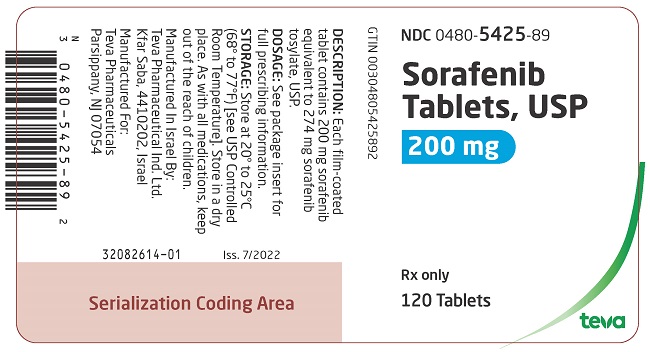
Sorafenib 200 mg Tablet, Film Coated, 120-count — NDC 0480-5425-89 (Billing 00480-5425-89)
This is a package of 120 tablets of Sorafenib 200 mg Tablet, Film Coated from Teva Pharmaceuticals, Inc., marketed since Jan 2023 and currently FDA-listed. It is this product's only package size.
NDC database record
One package, one record: these facts belong to NDC 0480-5425-89 alone.
- Record
- FDA NDC Directory package listing · Human prescription drug
- Code segments
- 0480 labeler · 5425 product · 89 package
- Package marketed since
- Jan 3, 2023
- Sample package
- No — commercial package
- Listing certified through
- Dec 31, 2027
- Billing quantity
- 120 EA per package
- Barcode (UPC)
- 0304805425892
- Medicaid fills, this package
- 11 prescriptions in the last four reported quarters
- FDA record last changed
- Sep 3, 2026
Identity & classification
Regulatory identifiers FDA, NLM and CMS codes for this package
Drug-database identifiers Medi-Span GPI and First Databank GCN / HICL / AHFS classification
- GSN (GCN sequence number): 060199
- GCN: 26263
- HICL (First Databank): 033400
- AHFS class code: 10:00.00.00
- RxCUI (RxNorm): 597747
Where does this data come from?
- FDA openFDA NDC Directory · synced Oct 1, 2026
- FDA label on DailyMed · label index refreshed Oct 5, 2026
- RxNorm (NLM RxNav) · catalog refreshed Oct 1, 2026
- Medi-Span GPI (licensed)
- First Databank (licensed) · refreshed Oct 1, 2026
RxNorm drug class
This medicine belongs to the Kinase Inhibitor class.
Where does this data come from?
- RxClass (NLM) · catalog refreshed Oct 1, 2026
Clinical
Sorafenib is used to treat advanced renal cell carcinoma (RCC; a type of cancer that begins in the kidneys). Sorafenib is also used to treat hepatocellular carcinoma (a type of liver cancer) that cannot be treated with surgery and a certain type of thyroid cancer that has spread to other parts of the body and cannot be treated with radioactive iodine. Sorafenib is in a class of medications called kinase inhibitors. It works by blocking the action of an abnormal protein that signals cancer cells to multiply. This helps stop the spread of cancer cells.
Read the full MedlinePlus article ↗- Sorafenib — sold as the brand Nexavar or as a generic — is approved for three specific cancers: liver cancer that can't be surgically removed (hepatocellular carcinoma), advanced k...
- What cancers does sorafenib actually treat?
- Yes — it really does. You should take sorafenib on an empty stomach, at least 1 hour before eating or 2 hours after a meal. A high-fat meal can reduce how much of the medicine your...
- Does it matter if I take sorafenib with food?
Patient education
Supplement & herbal interactions
Some supplements/herbs that may interact with Sorafenib — tap one for details:
Where does this data come from?
- MedlinePlus (NLM) · refreshed Oct 1, 2026
- FDA label on DailyMed · label index refreshed Oct 5, 2026
Ask a licensed pharmacist directly — free, answered by our team.
Pricing
A drug doesn't have one price. Each row is a different public payment system, and none is what you'd pay at the counter — that depends on your insurance. The ⓘ on each row explains what it measures.
| Price system | Per each | Per package |
|---|---|---|
| Retail pharmacies payNADAC · weekly | Not in the retail survey — common for institutional, discontinued, or low-volume packs. | |
| Medicaid paysCMS SDUD · 12 mo | $90.77 | $10,892.51 / 120 tablets |
| Medicare drug plans payPart D · Q2 2026 | $94.87 | $11,384.92 / 120 tablets |
Where does this data come from?
- CMS NADAC weekly file
- CMS ASP pricing files · refreshed Sep 20, 2026
- CMS Medicaid State Drug Utilization Data · through Q1 2026
- CMS Part D plan pricing files · refreshed Sep 24, 2026
- VA National Acquisition Center price file
Packaging — all sizes for this product
| Package NDC | Description | Marketing start | Marketing end | Status |
|---|---|---|---|---|
| 00480-5425-89 You're viewing this Main listing | 120 TABLET, FILM COATED in 1 BOTTLE | 2023-01-03 | — | Active |
Therapeutic equivalents
| Product | Labeler | Pack | NADAC/unit | TE | Status | Price vs. this |
|---|---|---|---|---|---|---|
| Sorafenib Tosylate 200 mg 00378-1201-78 | Mylan | 120 tablets | — | AB | FDA listed | — |
| Sorafenib 200 mgthis 00480-5425-89 | Teva | 120 tablets | — | AB | FDA listed | — |
| Sorafenib 200 mg 13668-0682-12 | Torrent | 120 tablets | — | AB | FDA listed | — |
| sorafenib 200 mg 24979-0715-04 | Upsher-Smith | 60 tablets | — | AB | FDA listed | — |
| sorafenib 200 mg 43598-0458-04 | Dr.Reddys | 120 tablets | — | AB | FDA listed | — |
| Nexavar 200 mg 50419-0488-58 | Bayer | 120 tablets | — | AB | FDA listed | — |
| Nexavar 200 mg 50419-0489-01 | Bayer | 120 tablets | — | AB | FDA listed | — |
| sorafenib 200 mg 51407-0760-12 | Golden | 120 tablets | — | AB | FDA listed | — |
| sorafenib 200 mg 51990-0201-06 | Yabao | 60 tablets | — | AB | FDA listed | — |
Where does this data come from?
- FDA openFDA NDC Directory · synced Oct 1, 2026
- FDA Orange Book · refreshed Oct 3, 2026
- CMS NADAC weekly file
Availability & generic status
This product is an FDA-approved generic. Other versions of the same drug are listed under Therapeutic equivalents, least expensive first.
Where does this data come from?
- FDA Orange Book · refreshed Oct 3, 2026
What it looks like
Where does this data come from?
- FDA label on DailyMed · label index refreshed Oct 5, 2026
Inactive Ingredients / Excipients
Inactive ingredients, also called excipients, are components of the drug product other than the active ingredient. They may include fillers, dyes, coatings, preservatives, flavors, or other formulation ingredients.
💡 Tap an ingredient (hover on desktop) to see what it is and why it’s used.
-
UNII R75537T0T4
Hypromellose 2910 is a plant-derived thickening agent made from cellulose. It serves as a binder that holds tablet ingredients together, a film-coating for pills, and a viscosity controller in liquids.
-
UNII PNR0YF693Y
A plant-based powder made from purified wood cellulose. It acts as a filler to add bulk, a binder to hold ingredients together, and a disintegrant to help the tablet break apart in the stomach.
2 inactive ingredients listed in the exact product block matched to this NDC.
Where does this data come from?
ingredient classCode="IACT" elements from the exact product block matched by this NDC. Label-section narrative from DailyMed / the openFDA label index is shown separately when available.- FDA label on DailyMed · label index refreshed Oct 5, 2026
- FDA openFDA NDC Directory · synced Oct 1, 2026
Inactive ingredient FAQ
Are inactive ingredients the same for every manufacturer?
Why might an inactive ingredient be missing?
Can inactive ingredients matter?
Manufacturer & labeler
More NDCs from Teva Pharmaceuticals, Inc. labeler code 00480
- Pemetrexed 25 mg/mL Solution, Concentrate NDC 0480-4515-01
- Pemetrexed 25 mg/mL Solution, Concentrate NDC 0480-4516-01
- Dasatinib 20 mg Tablet, Film Coated NDC 0480-5101-06
- Dasatinib 50 mg Tablet, Film Coated NDC 0480-5102-06
- Dasatinib 70 mg Tablet, Film Coated NDC 0480-5103-06
- Dasatinib 100 mg Tablet, Film Coated NDC 0480-5104-56
- Tolvaptan 15 mg Tablet NDC 0480-5480-77
- Tolvaptan 30 mg Tablet NDC 0480-5481-77
- Tolvaptan 45 mg Tablet NDC 0480-5482-77
- Tolvaptan 60 mg Tablet NDC 0480-5483-77
- Tolvaptan 90 mg Tablet NDC 0480-5484-77
- Cetrorelix Kit NDC 0480-5795-08
Where does this data come from?
- FDA openFDA NDC Directory · synced Oct 1, 2026
- Drugs@FDA
Full prescribing information FDA SPL
🎯 Indications and Usage ▾
1 INDICATIONS AND USAGE Sorafenib is a kinase inhibitor indicated for the treatment of Unresectable hepatocellular carcinoma ( 1.1 ) Advanced renal cell carcinoma ( 1.2 ) Locally recurrent or metastatic, progressive, differentiated thyroid carcinoma (DTC) refractory to radioactive iodine treatment ( 1.3 )
1.1Hepatocellular Carcinoma Sorafenib tablets are indicated for the treatment of patients with unresectable hepatocellular carcinoma (HCC).
1.2Renal Cell Carcinoma Sorafenib tablets are indicated for the treatment of patients with advanced renal cell carcinoma (RCC).
1.3Differentiated Thyroid Carcinoma Sorafenib tablets are indicated for the treatment of patients with locally recurrent or metastatic, progressive, differentiated thyroid carcinoma (DTC) that is refractory to radioactive iodine treatment.
⏱️ Dosage and Administration ▾
2 DOSAGE AND ADMINISTRATION The recommended dosage is 400 mg orally twice daily without food. ( 2.1 )
2.1Recommended Dosage The recommended dosage of sorafenib tablets is 400 mg orally twice daily without food (at least 1 hour before or 2 hours after a meal) until the patient is no longer clinically benefiting from therapy or until unacceptable toxicity.
2.2Dosage Modifications for Adverse Reactions Recommended Dosage Modifications The recommended dosage modifications for adverse reactions are provided in Tables 1, 2, and 3. Table 1: Recommended Dose Reductions for Adverse Reactions Dose Reduction Hepatocellular Carcinoma and Renal Cell Carcinoma Differentiated Thyroid Carcinoma First Dose Reduction 400 mg orally once daily 400 mg orally in the morning and 200 mg orally in the evening about 12 hours apart OR 200 mg orally in the morning and 400 mg orally in the evening about 12 hours apart Second Dose Reduction 200 mg orally once daily OR 400 every other day 200 mg orally twice daily Third Dose Reduction None 200 mg orally once daily Table 2: Recommended Dosage Modifications of Sorafenib Tablets for Adverse Reactions Adverse Reaction Severity 1 Sorafenib Tablets Dosage Modification Cardiovascular Events [see Warnings and Precautions ( 5.1 )] Cardiac Ischemia and/or Infarction Grade 2 and above Permanently discontinue.
Congestive Heart Failure Grade 3 Interrupt 2 until Grade 1 or less, resume at reduced dose by 1 dose level. 3 Grade 4 Permanently discontinue. Hemorrhage [see Warnings and Precautions ( 5.2 )] Grade 2 and above requiring medical intervention Permanently discontinue.
Hypertension [see Warnings and Precautions ( 5.3 )] Grade 2 (symptomatic/persistent) OR Grade 2 symptomatic increase by greater than 20 mm Hg (diastolic) or greater than 140/90 mm Hg if previously within normal limits OR Grade 3 Interrupt until symptoms resolve and diastolic blood pressure less than 90 mm Hg, then resume at reduced dose by 1 dose level. 3 If needed, reduce another dose level. 3 Grade 4 Permanently discontinue.
Gastrointestinal Perforation [see Warnings and Precautions ( 5.5 )] Any grade Permanently discontinue. QT Interval Prolongation [see Warnings and Precautions ( 5.9 )] Greater than 500 milliseconds OR Increase from baseline of 60 milliseconds or greater Interrupt and correct electrolyte abnormalities (magnesium, potassium, calcium). Use medical judgement before restarting.
Drug-Induced Liver Injury [see Warnings and Precautions ( 5.10 )] Grade 3 ALT or higher in the absence of another cause 4 OR AST/ALT greater than 3 × upper limit normal (ULN) with bilirubin greater than 2 × ULN in the absence of another cause 4 Permanently discontinue. Non-hematological toxicities [see Adverse Reactions ( 6.1 )] Grade 2 Continue treatment at reduced dose by 1 dose level. Grade 3 1 st occurrence Interrupt until Grade 2 or less, then resume at reduced dose by 1 dose level.
No improvement within 7 days OR 2 nd or 3 rd occurrence Interrupt until Grade 2 or less, then resume at reduced dose by 2 dose levels. 4 th occurrence Interrupt until Grade 2 or less, then resume at reduced dose by 2 dose levels for HCC and RCC or 3 dose levels for DTC. Grade 4 Permanently discontinue.
1 Adverse reactions graded according to National Cancer Institute Common Terminology Criteria for Adverse Events version 3.0 (NCI CTCAE v3.0). 2 If no recovery after 30 day interruption, discontinue treatment unless the patient is deriving clinical benefit. 3 If more than 2 dose reductions are required, permanently discontinue treatment.
4 In addition, any grade increased alkaline phosphatase in the absence of known bone pathology and Grade 2 or worse increased bilirubin; any 1 of the following: INR of 1.5 or greater, ascites and/or encephalopathy in the absence of underlying cirrhosis or other organ failure considered to be due to drug-induced liver injury. Table 3: Recommended Dosage Modifications for Dermatologic Toxicities Dermatologic Toxicity Grade Occurrence Sorafenib Ta… [Excerpted — this section continues on DailyMed.]
💊 Dosage Forms and Strengths ▾
3 DOSAGE FORMS AND STRENGTHS Tablets: 200 mg sorafenib, round, biconvex, pink film-coated tablets debossed with “TV” on one side and “S3” on the other side. Tablets: 200 mg ( 3 )
⛔ Contraindications ▾
4 CONTRAINDICATIONS Sorafenib tablets are contraindicated in patients with known severe hypersensitivity to sorafenib or any other component of sorafenib tablets. Sorafenib in combination with carboplatin and paclitaxel is contraindicated in patients with squamous cell lung cancer [see Warnings and Precautions ( 5.8 )] . Sorafenib tablets are contraindicated in patients with known severe hypersensitivity to sorafenib or any other component of sorafenib tablets.
( 4 ) Sorafenib in combination with carboplatin and paclitaxel is contraindicated in patients with squamous cell lung cancer. ( 4 )
⚠️ Warnings and Cautions ▾
5 WARNINGS AND PRECAUTIONS Cardiovascular Events : Consider temporary or permanent discontinuation of sorafenib. ( 2.2 , 5.1 ) Hemorrhage : Discontinue sorafenib if needed. ( 5.2 ) Hypertension : Monitor blood pressure weekly during the first 6 weeks and periodically thereafter.
Consider temporary or permanent discontinuation for severe or persistent hypertension despite antihypertensive therapy. ( 5.3 ) Dermatologic Toxicities : Interrupt and/or decrease dose. Discontinue for severe or persistent reactions, or if Stevens-Johnson syndrome and toxic epidermal necrolysis is suspected.
( 5.4 ) Gastrointestinal Perforation : Discontinue sorafenib. ( 5.5 ) Risk of Impaired Wound Healing : Withhold sorafenib for at least 10 days prior to elective surgery. Do not administer for at least 2 weeks following major surgery and until adequate wound healing.
The safety of resumption of sorafenib after resolution of wound healing complications has not been established. ( 5.7 ) QT Prolongation : Monitor electrocardiograms and electrolytes in patients at increased risk for ventricular arrhythmias. Correct electrolytes.
Interrupt if QTc greater than 500 msec or increases greater than 60 msec from baseline. ( 2.2 , 5.9 , 12.2 ) Drug-Induced Liver Injury : Monitor liver function tests regularly; discontinue for unexplained transaminase elevations. ( 5.10 ) Embryo-Fetal Toxicity : Sorafenib may cause fetal harm.
Advise patients of the potential risk to a fetus and to use effective contraception. ( 5.11 , 8.1 , 8.3 ) Impairment of Thyroid Stimulating Hormone Suppression (TSH) in DTC : Monitor TSH monthly and adjust thyroid replacement therapy in patients with thyroid cancer. ( 5.12 )
5.1Cardiovascular Events In the SHARP (HCC) study, the incidence of cardiac ischemia/infarction was 2.7% in sorafenib-treated patients compared with 1.3% in those receiving placebo; in the TARGET (RCC) study, the incidence of cardiac ischemia/infarction was higher in the sorafenib-treated group (2.9%) compared with patients receiving placebo (0.4%), and in the DECISION (DTC) study, the incidence of cardiac ischemia/infarction was 1.9% in the sorafenib-treated group compared with 0% in patients receiving placebo. Patients with unstable coronary artery disease or recent myocardial infarction were excluded from this study.
In multiple clinical trials, congestive heart failure has been reported in 1.9% of sorafenib-treated patients (N=2276) [see Adverse Reactions ( 6.2 )] . Consider temporary or permanent discontinuation of sorafenib in patients who develop cardiovascular events [see Dosage and Administration ( 2.2 )] .
5.2Hemorrhage An increased risk of bleeding may occur following sorafenib administration. In the SHARP (HCC) study, the rates of bleeding from esophageal varices (2.4% and 4%) and of bleeding with a fatal outcome from any site (2.4% and 4%) were similar in sorafenib-treated patients and those receiving placebo, respectively. In the TARGET (RCC) study, bleeding was reported in 15.3% of patients in the sorafenib-treated group and 8.2% of patients receiving placebo.
The incidence of Grade 3 and 4 bleeding was 2% and 0%, respectively, in sorafenib-treated patients, and 1.3% and 0.2%, respectively, in those receiving placebo. There was one fatal hemorrhage in each treatment group in the TARGET (RCC) study. In the DECISION (DTC) study, bleeding was reported in 17.4% of sorafenib-treated patients and 9.6% of those receiving placebo; however, the incidence of Grade 3 bleeding was similar (1% and 1.4%) in sorafenib-treated patients and in those receiving placebo.
If any bleeding necessitates medical intervention, consider permanent discontinuation of sorafenib [see Dosage and Administration ( 2.2 )] . Due to the potential risk of bleeding, treat tracheal, bronchial, and esophageal infiltration with local therapy prior to administering sorafenib in patients with DTC.
5.3Hypertension In the SHARP (HCC) study, hypertension was reported in 9.4% of sorafenib-treated p… [Excerpted — this section continues on DailyMed.]
🤒 Adverse Reactions ▾
6 ADVERSE REACTIONS The following clinically significant adverse reactions are discussed elsewhere in the labeling: Cardiovascular events [see Warnings and Precautions ( 5.1 )] Hemorrhage [see Warnings and Precautions ( 5.2 )] Hypertension [see Warnings and Precautions ( 5.3 )] Dermatologic toxicities [see Warnings and Precautions ( 5.4 )] Gastrointestinal perforation [see Warnings and Precautions ( 5.5 )] QT interval prolongation [see Warnings and Precautions ( 5.9 ) and Clinical Pharmacology ( 12.2) ] Drug-induced liver injury [see Warnings and Precautions ( 5.10 )] Impairment of TSH suppression in DTC [see Warnings and Precautions ( 5.12 )] The most common adverse reactions (≥20%) are diarrhea, fatigue, infection, alopecia, hand-foot skin reaction, rash, weight loss, decreased appetite, nausea, gastrointestinal and abdominal pains, hypertension, and hemorrhage.
( 6 ) To report SUSPECTED ADVERSE REACTIONS, contact Teva at 1-888-838-2872 or FDA at 1-800-FDA-1088 or www.fda.gov/medwatch .
6.1Clinical Trials Experience Because clinical trials are conducted under widely varying conditions, adverse reaction rates observed in the clinical trials of a drug cannot be directly compared to rates in the clinical trials of another drug and may not reflect the rates observed in practice. The data described reflect exposure to sorafenib in 955 patients who participated in placebo-controlled studies in hepatocellular carcinoma (N=297), advanced renal cell carcinoma (N=451), or differentiated thyroid carcinoma (N = 207).
The most common adverse reactions (≥20%), which were considered to be related to sorafenib, in patients with HCC, RCC or DTC are diarrhea, fatigue, infection, alopecia, hand-foot skin reaction, rash, weight loss, decreased appetite, nausea, gastrointestinal and abdominal pains, hypertension, and hemorrhage. Hepatocellular Carcinoma Table 4 shows the percentage of patients in the SHARP (HCC) study experiencing adverse reactions that were reported in at least 10% of patients and at a higher rate in the sorafenib-treated group than in those receiving placebo.
Table 4: Adverse Reactions Reported in at Least 10% of Patients and at a Higher Rate in Sorafenib Tablets Arm than the Placebo Arm - SHARP (HCC) Adverse Reaction 1 Sorafenib Tablets N=297 Placebo N=302 All Grades % Grade 3 % Grade 4 % All Grades % Grade 3 % Grade 4 % Any Adverse Reaction 98 39 6 96 24 8 Gastrointestinal Diarrhea 55 10 <1 25 2 0 Anorexia 29 3 0 18 3 <1 Nausea 24 1 0 20 3 0 Vomiting 15 2 0 11 2 0 Constipation 14 0 0 10 0 0 Constitutional symptoms Fatigue 46 9 1 45 12 2 Weight loss 30 2 0 10 1 0 Pain Pain, abdomen 31 9 0 26 5 1 Dermatology/skin Hand-foot skin reaction 21 8 0 3 <1 0 Rash/desquamation 19 1 0 14 0 0 Alopecia 14 0 0 2 0 0 Pruritus 14 <1 0 11 <1 0 Dry skin 10 0 0 6 0 0 Hepatobiliary/pancreas Liver dysfunction 11 2 1 8 2 1 1 Adverse reactions graded according to National Cancer Institute Common Terminology Criteria for Adverse Events version 3.0 (NCI CTCAE v3.0).
Hypertension was reported in 9% of patients treated with sorafenib and 4% of those receiving placebo. Grade 3 hypertension was reported in 4% of sorafenib-treated patients and 1% of those receiving placebo. Hemorrhage/bleeding was reported in 18% of those receiving sorafenib and 20% of patients receiving placebo.
The rates of Grade 3 and 4 bleeding were also higher in patients receiving placebo (Grade 3 - 3% sorafenib and 5% placebo and Grade 4 - 2% sorafenib and 4% placebo). Bleeding from esophageal varices was reported in 2.4% in sorafenib-treated patients and 4% of patients receiving placebo. Renal failure was reported in <1% of patients treated with sorafenib and 3% of patients receiving placebo.
Clinical pancreatitis was reported in 1 of 297 sorafenib-treated patients (Grade 2). The rate of adverse reactions (including those associated with progressive disease) resulting in permanent discontinuation was similar in both the sorafenib-treated patients and those receiving placebo (32%… [Excerpted — this section continues on DailyMed.]
🔄 Drug Interactions ▾
7 DRUG INTERACTIONS Strong CYP3A Inducers: Avoid strong CYP3A4 inducers. ( 7.1 )
7.1Effect of Other Drugs on Sorafenib Strong CYP3A4 Inducers The concomitant use of sorafenib with rifampin, a strong CYP3A4 inducer decreased the mean AUC of sorafenib, which may decrease the antitumor activity [see Clinical Pharmacology ( 12.3 )] . Avoid concomitant use of sorafenib with strong CYP3A4 inducers, when possible, because these drugs can decrease the systemic exposure to sorafenib. Neomycin The concomitant use of sorafenib with neomycin decreased the mean AUC of sorafenib, which may decrease the antitumor activity.
Avoid concomitant use of sorafenib with neomycin. The effects of other antibiotics on the pharmacokinetics of sorafenib have not been studied [see Clinical Pharmacology ( 12.3 )] .
7.2Concomitant Use of Warfarin The concomitant use of sorafenib and warfarin may increase the risk of bleeding or increased the INR. Monitor INR and for clinical bleeding episodes in patients taking warfarin while receiving sorafenib [see Warnings and Precautions ( 5.6 )] .
7.3Drugs That Prolong the QT Interval Sorafenib is associated with QTc interval prolongation. Avoid coadministration of sorafenib with medicinal products with a known potential to prolong QT/QTc interval [see Warnings and Precautions ( 5.9 ), Clinical Pharmacology ( 12.2 )] .
👥 Use in Specific Populations ▾
8 USE IN SPECIFIC POPULATIONS Lactation : Advise women not to breastfeed. ( 8.2 )
8.1Pregnancy Risk Summary Based on findings from animal studies and its mechanism of action [see Clinical Pharmacology ( 12.1 )] , sorafenib may cause fetal harm when administered to a pregnant woman. There are no available data in pregnant women to inform a drug-associated risk. In animal reproduction studies, oral administration of sorafenib to pregnant rats and rabbits during the period of organogenesis resulted in embryo-fetal toxicities at maternal exposures that were significantly lower than human exposures at the recommended dose of 400 mg twice daily (see Data) .
Advise pregnant women and females of reproductive potential of the potential risk to a fetus. The background risk of major birth defects and miscarriage for the indicated population is unknown. In the U.S. general population, the estimated background risk of major birth defects and miscarriage in clinically recognized pregnancies is 2% to 4% and 15% to 20%, respectively.
Data Animal Data In animal reproduction studies, sorafenib was teratogenic and induced embryo-fetal toxicity (including increased post-implantation loss, resorptions, skeletal retardations, and retarded fetal weight) when administered orally to pregnant rats and rabbits during the period of organogenesis. The effects occurred at doses considerably below the recommended human dose of 400 mg twice daily (approximately 500 mg/m 2 /day on a body surface area basis). Adverse intrauterine development effects were seen at doses >0.2 .mg/kg/day (1.2 mg/m 2 /day) in rats and ≥0.3 mg/kg/day (≥3.6 mg/m 2 /day) in rabbits.
These doses result in exposures (AUC) that are approximately 0.008 times the AUC in patients at the recommended dose.
8.2Lactation Risk Summary There are no data on the presence of sorafenib or its metabolites in human milk, or its effects on the breastfed child or on milk production. Sorafenib was present in milk of lactating rats (see Data) . Because of the potential for serious adverse reactions in a breastfed child from sorafenib, advise women not to breastfeed during treatment with sorafenib and for 2 weeks after the last dose.
Data Animal Data Following administration of radiolabeled sorafenib to lactating Wistar rats, approximately 27% of the radioactivity was secreted into milk. The milk to plasma AUC ratio was approximately 5:1.
8.3Females and Males of Reproductive Potential Sorafenib may cause fetal harm when administered to a pregnant woman [see Use in Specific Populations ( 8.1 )] . Pregnancy Testing Verify the pregnancy status of females of reproductive potential prior to the initiation of sorafenib. Contraception Females Advise females of reproductive potential to use effective contraception during treatment and for 6 months following the last dose of sorafenib.
Males Based on genotoxicity and findings in animal reproduction studies, advise males with female partners of reproductive potential and pregnant partners to use effective contraception during treatment with sorafenib and for 3 months following the last dose of sorafenib [see Use in Specific Populations ( 8.1 ), Nonclinical Toxicology ( 13.1 )] . Infertility Males Based on findings in animal studies, sorafenib may impair fertility in males of reproductive potential [see Nonclinical Toxicology ( 13.1 )] .
8.4Pediatric Use The safety and effectiveness of sorafenib have not been established in pediatric patients. Juvenile Animal Toxicity Data Repeat dosing of sorafenib to young and growing dogs resulted in irregular thickening of the femoral growth plate at daily sorafenib doses ≥600 mg/m 2 (approximately 0.3 times the AUC at the recommended human dose), hypocellularity of the bone marrow adjoining the growth plate at 200 mg/m 2 /day (approximately 0.1 times the AUC at the recommended human dose), and alterations of the dentin composition at 600 mg/m 2 /day.
Similar effects were not observed in adult dogs when dosed for 4 weeks or le… [Excerpted — this section continues on DailyMed.]
🤰 Pregnancy ▾
8.1Pregnancy Risk Summary Based on findings from animal studies and its mechanism of action [see Clinical Pharmacology ( 12.1 )] , sorafenib may cause fetal harm when administered to a pregnant woman. There are no available data in pregnant women to inform a drug-associated risk. In animal reproduction studies, oral administration of sorafenib to pregnant rats and rabbits during the period of organogenesis resulted in embryo-fetal toxicities at maternal exposures that were significantly lower than human exposures at the recommended dose of 400 mg twice daily (see Data) .
Advise pregnant women and females of reproductive potential of the potential risk to a fetus. The background risk of major birth defects and miscarriage for the indicated population is unknown. In the U.S. general population, the estimated background risk of major birth defects and miscarriage in clinically recognized pregnancies is 2% to 4% and 15% to 20%, respectively.
Data Animal Data In animal reproduction studies, sorafenib was teratogenic and induced embryo-fetal toxicity (including increased post-implantation loss, resorptions, skeletal retardations, and retarded fetal weight) when administered orally to pregnant rats and rabbits during the period of organogenesis. The effects occurred at doses considerably below the recommended human dose of 400 mg twice daily (approximately 500 mg/m 2 /day on a body surface area basis). Adverse intrauterine development effects were seen at doses >0.2 .mg/kg/day (1.2 mg/m 2 /day) in rats and ≥0.3 mg/kg/day (≥3.6 mg/m 2 /day) in rabbits.
These doses result in exposures (AUC) that are approximately 0.008 times the AUC in patients at the recommended dose.
🧒 Pediatric Use ▾
8.4Pediatric Use The safety and effectiveness of sorafenib have not been established in pediatric patients. Juvenile Animal Toxicity Data Repeat dosing of sorafenib to young and growing dogs resulted in irregular thickening of the femoral growth plate at daily sorafenib doses ≥600 mg/m 2 (approximately 0.3 times the AUC at the recommended human dose), hypocellularity of the bone marrow adjoining the growth plate at 200 mg/m 2 /day (approximately 0.1 times the AUC at the recommended human dose), and alterations of the dentin composition at 600 mg/m 2 /day.
Similar effects were not observed in adult dogs when dosed for 4 weeks or less.
🧓 Geriatric Use ▾
8.5Geriatric Use In total, 59% of HCC patients treated with sorafenib were age 65 years or older and 19% were 75 and older. In total, 32% of RCC patients treated with sorafenib were age 65 years or older and 4% were 75 and older. No differences in safety or efficacy were observed between older and younger patients, and other reported clinical experience has not identified differences in responses between the elderly and younger patients, but greater sensitivity of some older individuals cannot be ruled out.
🆘 Overdosage ▾
10 OVERDOSAGE The adverse reactions observed at a dose of 800 mg twice daily (2 times the recommended dose) were primarily diarrhea and dermatologic. No information is available on symptoms of acute overdose in animals because of the saturation of absorption in oral acute toxicity studies conducted in animals. In cases of suspected overdose, withhold sorafenib and institute supportive care.
🧬 Clinical Pharmacology ▾
12 CLINICAL PHARMACOLOGY
12.1Mechanism of Action Sorafenib is a kinase inhibitor that decreases tumor cell proliferation in vitro . Sorafenib was shown to inhibit multiple intracellular (c-CRAF, BRAF and mutant BRAF) and cell surface kinases (KIT, FLT- 3, RET, RET/PTC, VEGFR-1, VEGFR- 2, VEGFR- 3, and PDGFR-ß). Several of these kinases are thought to be involved in tumor cell signaling, angiogenesis and apoptosis.
Sorafenib inhibited tumor growth of HCC, RCC, and DTC human tumor xenografts in immunocompromised mice. Reductions in tumor angiogenesis were seen in models of HCC and RCC upon sorafenib treatment, and increases in tumor apoptosis were observed in models of HCC, RCC, and DTC.
12.2Pharmacodynamics Cardiac Electrophysiology The effect of sorafenib 400 mg twice daily on the QTc interval was evaluated in a multi-center, open-label, non-randomized trial in 53 patients with advanced cancer. No large changes in the mean QTc intervals (that is, >20 ms) from baseline were detected in the trial. After one 28-day treatment cycle, the largest mean QTc interval change of 8.5 ms (upper bound of two-sided 90% confidence interval, 13.3 ms) was observed at 6 hours post-dose on day 1 of cycle 2 [see Warnings and Precautions ( 5.9 ), Drug Interactions ( 7.3 )] .
12.3Pharmacokinetics Multiple doses of sorafenib for 7 days resulted in a 2.5- to 7-fold accumulation compared to a single dose. Steady-state plasma sorafenib concentrations were achieved within 7 days, with a peak-to-trough ratio of mean concentrations of less than 2. The steady-state concentrations of sorafenib following administration of sorafenib 400 mg twice daily were evaluated in DTC, RCC and HCC patients.
Patients with DTC have mean steady-state concentrations that are 1.8-fold higher than patients with HCC and 2.3-fold higher than those with RCC. The reason for increased sorafenib concentrations in DTC patients is unknown. Mean C max and AUC increased less than proportionally beyond oral doses of 400 mg administered twice daily.
Absorption After administration of sorafenib tablets, the mean relative bioavailability was 38% to 49% when compared to an oral solution. Following oral administration, sorafenib reached peak plasma levels in approximately 3 hours. Effects of Food With a moderate-fat meal (30% fat; 700 calories), bioavailability was similar to that in the fasted state.
With a high-fat meal (50% fat; 900 calories), bioavailability was reduced by 29% compared to that in the fasted state. Distribution In vitro binding of sorafenib to human plasma proteins was 99.5%. Elimination The mean elimination half-life of sorafenib was approximately 25 to 48 hours.
Metabolism Sorafenib undergoes oxidative metabolism by hepatic CYP3A4, as well as glucuronidation by UGT1A9. Excretion Sorafenib accounted for approximately 70% to 85% of the circulating analytes in plasma at steady-state. Eight metabolites of sorafenib have been identified, of which 5 have been detected in plasma.
The main circulating metabolite of sorafenib, the pyridine N-oxide that comprises approximately 9% to 16% of circulating analytes at steady-state, showed in vitro potency similar to that of sorafenib. Following oral administration of a 100 mg dose of a solution formulation of sorafenib, 96% of the dose was recovered within 14 days, with 77% of the dose excreted in feces and 19% of the dose excreted in urine as glucuronidated metabolites. Unchanged sorafenib, accounting for 51% of the dose, was found in feces but not in urine.
Specific Populations A study of the pharmacokinetics of sorafenib indicated that the mean AUC of sorafenib in Asians (N=78) was 30% lower than in Whites (N=40). Sex and age do not have a clinically meaningful effect on the pharmacokinetics of sorafenib. Patients with Renal Impairment Mild (CLcr 50 to 80 mL/min), moderate (CLcr 30 to <50 mL/min), and severe (CLcr <30 mL/min) renal impairment do not affect the pharmacokinetics of sorafenib [see Use in Specific Populations ( 8.6 )]… [Excerpted — this section continues on DailyMed.]
🧬 Mechanism of Action ▾
12.1Mechanism of Action Sorafenib is a kinase inhibitor that decreases tumor cell proliferation in vitro . Sorafenib was shown to inhibit multiple intracellular (c-CRAF, BRAF and mutant BRAF) and cell surface kinases (KIT, FLT- 3, RET, RET/PTC, VEGFR-1, VEGFR- 2, VEGFR- 3, and PDGFR-ß). Several of these kinases are thought to be involved in tumor cell signaling, angiogenesis and apoptosis.
Sorafenib inhibited tumor growth of HCC, RCC, and DTC human tumor xenografts in immunocompromised mice. Reductions in tumor angiogenesis were seen in models of HCC and RCC upon sorafenib treatment, and increases in tumor apoptosis were observed in models of HCC, RCC, and DTC.
📦 How Supplied / Storage and Handling ▾
16 HOW SUPPLIED/STORAGE AND HANDLING Sorafenib tablets, USP are supplied as round, biconvex, pink film-coated tablets, debossed with “TV” on one side and “S3” on the other side, each containing 200 mg of sorafenib equivalent to 274 mg of sorafenib tosylate, USP. Bottles of 120 tablets (NDC 0480-5425-89) Store at 20° to 25°C (68° to 77°F) [see USP Controlled Room Temperature]. Store in a dry place.
📋 Description ▾
11 DESCRIPTION Sorafenib, a kinase inhibitor, is the tosylate salt of sorafenib. Sorafenib tosylate, USP has the chemical name 4-(4-{3-[4-Chloro-3-(trifluoromethyl)phenyl]ureido}phenoxy)N2-methylpyridine-2-carboxamide 4-methylbenzene sulfonate. The molecular formula of sorafenib tosylate, USP is C 21 H 16 ClF 3 N 4 O 3 x C 7 H 8 O 3 S and the molecular weight of sorafenib tosylate, USP is 637.03 g/mole.
Its structural formula is: Sorafenib tosylate, USP is a white to yellowish or brownish solid. Sorafenib tosylate, USP is practically insoluble in aqueous media, slightly soluble in ethanol and soluble in PEG 400. Sorafenib tablets, USP for oral use is supplied as film-coated tablets containing 200 mg sorafenib equivalent to 274 mg sorafenib tosylate, USP and the following inactive ingredients: croscarmellose sodium, hypromellose 2910, iron oxide red, magnesium stearate, microcrystalline cellulose, polyethylene glycol 400, sodium lauryl sulfate, and titanium dioxide.
1
💬 Information for Patients ▾
17 PATIENT COUNSELING INFORMATION Advise the patient to read FDA-approved patient labeling (Patient Information). Cardiovascular Events Discuss with patients that cardiac ischemia and/or infarction and congestive heart failure, have been reported during sorafenib tablet treatment, and that they should immediately report any episodes of chest pain or other symptoms of cardiac ischemia or congestive heart failure [see Warnings and Precautions ( 5.1 )] . Bleeding Inform patients that sorafenib tablets can increase the risk of bleeding and that they should promptly report any episodes of bleeding [see Warnings and Precautions ( 5.2 )] .
Inform patients that bleeding or elevations in the International Normalized Ratio (INR) have been reported in some patients taking warfarin while on sorafenib tablets and that their INR should be monitored regularly [see Warnings and Precautions ( 5.6 )] . Hypertension Inform patients that hypertension can develop during sorafenib tablet treatment, especially during the first six weeks of therapy, and that blood pressure should be monitored regularly during treatment [see Warnings and Precautions ( 5.3 )] . Skin Reactions Advise patients of the possible occurrence of hand-foot skin reaction and rash during sorafenib tablet treatment and appropriate countermeasures [see Warnings and Precautions ( 5.4 )] .
Gastrointestinal Perforation Advise patients that cases of gastrointestinal perforation have been reported in patients taking sorafenib tablets [see Warnings and Precautions ( 5.5 )] . Risk of Impaired Wound Healing Advise patients that sorafenib tablets may impair wound healing. Advise patients to inform their healthcare provider of any planned surgical procedure [see Warnings and Precautions ( 5.7 )] .
QT Interval Prolongation Inform patients with a history of prolonged QT interval that sorafenib tablets can worsen the condition [see Warnings and Precautions ( 5.9 ) and Clinical Pharmacology ( 12.2 )] . Drug-Induced Liver Injury Inform patients that sorafenib tablets can cause hepatitis which may result in hepatic failure and death. Advise patients that liver function tests should be monitored regularly during treatment and to report signs and symptoms of hepatitis [see Warnings and Precautions ( 5.10 )] .
Embryo-Fetal Toxicity Advise females to inform their healthcare provider if they are pregnant or become pregnant. Inform female patients of the risk to a fetus and potential loss of pregnancy [see Use in Specific Populations ( 8.1 )] . Advise females of reproductive potential to use effective contraception during treatment with sorafenib tablets and for 6 months after the last dose.
Advise male patients with female partners of reproductive potential or who are pregnant to use effective contraception during treatment with sorafenib tablets and for 3 months after receiving the last dose of sorafenib tablets [see Warnings and Precautions ( 5.11 ), Use in Specific Populations ( 8.1 , 8.3 )] . Lactation Advise patients not to breastfeed while taking sorafenib tablets and for 2 weeks after receiving the last dose of sorafenib tablets [see Use in Specific Populations ( 8.2 )] . Missed Doses Instruct patients that if a dose of sorafenib tablets is missed, the next dose should be taken at the regularly scheduled time, and not double the dose.
Instruct patients to contact their healthcare provider immediately if they take too many sorafenib tablets. Manufactured In Israel By: Teva Pharmaceutical Ind. Ltd.
Kfar Saba, 4410202, Israel Manufactured For: Teva Pharmaceuticals Parsippany, NJ 07054 Iss. 7/2022
🧬 Pharmacokinetics ▾
12.3Pharmacokinetics Multiple doses of sorafenib for 7 days resulted in a 2.5- to 7-fold accumulation compared to a single dose. Steady-state plasma sorafenib concentrations were achieved within 7 days, with a peak-to-trough ratio of mean concentrations of less than 2. The steady-state concentrations of sorafenib following administration of sorafenib 400 mg twice daily were evaluated in DTC, RCC and HCC patients.
Patients with DTC have mean steady-state concentrations that are 1.8-fold higher than patients with HCC and 2.3-fold higher than those with RCC. The reason for increased sorafenib concentrations in DTC patients is unknown. Mean C max and AUC increased less than proportionally beyond oral doses of 400 mg administered twice daily.
Absorption After administration of sorafenib tablets, the mean relative bioavailability was 38% to 49% when compared to an oral solution. Following oral administration, sorafenib reached peak plasma levels in approximately 3 hours. Effects of Food With a moderate-fat meal (30% fat; 700 calories), bioavailability was similar to that in the fasted state.
With a high-fat meal (50% fat; 900 calories), bioavailability was reduced by 29% compared to that in the fasted state. Distribution In vitro binding of sorafenib to human plasma proteins was 99.5%. Elimination The mean elimination half-life of sorafenib was approximately 25 to 48 hours.
Metabolism Sorafenib undergoes oxidative metabolism by hepatic CYP3A4, as well as glucuronidation by UGT1A9. Excretion Sorafenib accounted for approximately 70% to 85% of the circulating analytes in plasma at steady-state. Eight metabolites of sorafenib have been identified, of which 5 have been detected in plasma.
The main circulating metabolite of sorafenib, the pyridine N-oxide that comprises approximately 9% to 16% of circulating analytes at steady-state, showed in vitro potency similar to that of sorafenib. Following oral administration of a 100 mg dose of a solution formulation of sorafenib, 96% of the dose was recovered within 14 days, with 77% of the dose excreted in feces and 19% of the dose excreted in urine as glucuronidated metabolites. Unchanged sorafenib, accounting for 51% of the dose, was found in feces but not in urine.
Specific Populations A study of the pharmacokinetics of sorafenib indicated that the mean AUC of sorafenib in Asians (N=78) was 30% lower than in Whites (N=40). Sex and age do not have a clinically meaningful effect on the pharmacokinetics of sorafenib. Patients with Renal Impairment Mild (CLcr 50 to 80 mL/min), moderate (CLcr 30 to <50 mL/min), and severe (CLcr <30 mL/min) renal impairment do not affect the pharmacokinetics of sorafenib [see Use in Specific Populations ( 8.6 )] .
Patients with Hepatic Impairment Mild (Child-Pugh A) and moderate (Child-Pugh B) hepatic impairment do not affect the pharmacokinetics of sorafenib [see Use in Specific Populations ( 8.7 )] . Drug Interactions Studies Effect of Strong CYP3A4 Inhibitors on Sorafenib: Ketoconazole, a strong inhibitor of CYP3A4 and P-glycoprotein, administered at a dose of 400 mg once daily for 7 days did not alter the mean AUC of a single oral dose of sorafenib 50 mg in healthy subjects. Effect of Strong CYP3A4 Inducers on Sorafenib: Concomitant use of sorafenib with rifampin administered at a dose of 600 mg once daily for 5 days with a single oral dose of sorafenib 400 mg in healthy volunteers resulted in a 37% decrease in the mean AUC of sorafenib.
Effect of Neomycin on Sorafenib: Neomycin administered as an oral dose of 1 g three times daily for 5 days decreased the mean AUC of sorafenib by 54% in healthy subjects administered a single oral dose of sorafenib 400 mg. Effect of Sorafenib on Other Drugs: Sorafenib 400 mg twice daily for 28 days did not increase the systemic exposure of concomitantly administered midazolam (CYP3A4 substrate), dextromethorphan (CYP2D6 substrate), and omeprazole (CYP2C19 substrate) [see Clinical Pharmacology ( 12.3 )] . Drugs that Increase G… [Excerpted — this section continues on DailyMed.]
🧬 Pharmacodynamics ▾
12.2Pharmacodynamics Cardiac Electrophysiology The effect of sorafenib 400 mg twice daily on the QTc interval was evaluated in a multi-center, open-label, non-randomized trial in 53 patients with advanced cancer. No large changes in the mean QTc intervals (that is, >20 ms) from baseline were detected in the trial. After one 28-day treatment cycle, the largest mean QTc interval change of 8.5 ms (upper bound of two-sided 90% confidence interval, 13.3 ms) was observed at 6 hours post-dose on day 1 of cycle 2 [see Warnings and Precautions ( 5.9 ), Drug Interactions ( 7.3 )] .
🔬 Clinical Studies ▾
14 CLINICAL STUDIES
14.1Hepatocellular Carcinoma The SHARP (HCC) study (NCT00105443) was an international, multicenter, randomized, double blind, placebo-controlled trial in patients with unresectable hepatocellular carcinoma. Overall survival was the primary endpoint. A total of 602 patients were randomized; 299 to sorafenib 400 mg twice daily and 303 to matching placebo.
All 602 randomized subjects were included in the ITT population for the efficacy analyses. Demographics and baseline disease characteristics were similar between the sorafenib and placebo arms with regard to age, gender, race, performance status, etiology (including hepatitis B, hepatitis C and alcoholic liver disease), TNM stage (stage I: <1% vs. <1%; stage II: 10.4% vs. 8.3%; stage III: 37.8% vs.
43.6%; stage IV: 50.8% vs. 46.9%), absence of both macroscopic vascular invasion and extrahepatic tumor spread (30.1% vs. 30.0%), and Barcelona Clinic Liver Cancer stage (stage B: 18.1% vs.
16.8%; stage C: 81.6% vs. 83.2%; stage D: <1% vs. 0%).
Liver impairment by Child-Pugh score was comparable between the sorafenib and placebo arms (Class A: 95% vs. 98%; B: 5% vs. 2%).
Only one patient with Child-Pugh class C was entered. Prior treatments included surgical resection procedures (19.1% vs. 20.5%), locoregional therapies (including radiofrequency ablation, percutaneous ethanol injection and transarterial chemoembolization; 38.8% vs.
40.6%), radiotherapy (4.3% vs. 5.0%) and systemic therapy (3.0% vs. 5.0%).
The trial was stopped for efficacy following a pre-specified second interim analysis for survival showing a statistically significant advantage for sorafenib over placebo for overall survival (HR: 0.69, p= 0.00058) (see Table 10 and Figure 1). This advantage was consistent across all subsets analyzed. Final analysis of time to tumor progression (TTP) based on data from an earlier time point (by independent radiologic review) also was significantly longer in the sorafenib arm (HR: 0.58, p=0.000007) (see Table 10).
Table 10: Efficacy Results from SHARP (HCC) Efficacy Parameter Sorafenib (N=299) Placebo (N=303) Overall Survival Number of Events 143 178 Median, months 10.7 7.9 (95% CI) (9.4, 13.3) (6.8, 9.1) Hazard Ratio 1 (95% CI) 0.69 (0.55, 0.87) P-value (log-rank test 2 ) 0.00058 Time to Progression 3 Number of Events 107 156 Median, months 5.5 2.8 (95% CI) (4.1, 6.9) (2.7, 3.9) Hazard Ratio 1 (95% CI) 0.58 (0.45, 0.74) P-value (log-rank test 2 ) 0.000007 CI=Confidence interval 1 Hazard ratio, sorafenib/placebo, stratified Cox model 2 Stratified log rank (for the interim analysis of survival, the stopping boundary one-sided alpha = 0.0077) 3 The time-to-progression (TTP) analysis, based on independent radiologic review, was based on data from an earlier time point than the survival analysis Figure 1: Kaplan-Meier Curve of Overall Survival in SHARP (HCC) (Intent-to-Treat Population) 2
14.2Renal Cell Carcinoma The safety and efficacy of sorafenib in the treatment of advanced renal cell carcinoma (RCC) were studied in the following two randomized controlled clinical trials. TARGET TARGET (NCT00073307) was an international, multicenter, randomized, double blind, placebo-controlled trial in patients with advanced renal cell carcinoma who had received one prior systemic therapy. Primary study endpoints included overall survival and progression-free survival (PFS).
Tumor response rate was a secondary endpoint. The PFS analysis included 769 patients, per protocol, stratified by MSKCC (Memorial Sloan Kettering Cancer Center) prognostic risk category (low or intermediate) and country and randomized to sorafenib 400 mg twice daily (N=384) or to placebo (N=385). Table 11 summarizes the demographic and disease characteristics of the study population analyzed.
Baseline demographics and disease characteristics were well balanced for both treatment groups. The median time from initial diagnosis of RCC to randomization was 1.6 and 1.9 years for the sorafenib and placebo arms, r… [Excerpted — this section continues on DailyMed.]
🧪 Nonclinical Toxicology ▾
13 NONCLINICAL TOXICOLOGY
13.1Carcinogenesis, Mutagenesis, Impairment of Fertility Carcinogenicity studies have not been performed with sorafenib. Sorafenib was clastogenic when tested in an in vitro mammalian cell assay (Chinese hamster ovary) in the presence of metabolic activation. Sorafenib was not mutagenic in the in vitro Ames bacterial cell assay or clastogenic in an in vivo mouse micronucleus assay.
One intermediate in the manufacturing process, which is also present in the final drug substance (<0.15%), was positive for mutagenesis in an in vitro bacterial cell assay (Ames test) when tested independently. No specific studies with sorafenib have been conducted in animals to evaluate the effect on fertility. However, results from the repeat-dose toxicity studies suggest there is a potential for sorafenib to impair reproductive function and fertility.
Multiple adverse effects were observed in male and female reproductive organs, with the rat being more susceptible than mice or dogs. Typical changes in rats consisted of testicular atrophy or degeneration, degeneration of epididymis, prostate, and seminal vesicles, central necrosis of the corpora lutea and arrested follicular development. Sorafenib-related effects on the reproductive organs of rats were manifested at daily oral doses ≥5 mg/kg (30 mg/m 2 ).
This dose results in an exposure (AUC) that is approximately 0.5 times the AUC in patients at the recommended human dose. Dogs showed tubular degeneration in the testes at 30 mg/kg/day (600 mg/m 2 /day). This dose results in an exposure that is approximately 0.3 times the AUC at the recommended human dose.
Oligospermia was observed in dogs at 60 mg/kg/day (1200 mg/m 2 /day) of sorafenib.
📄 Carcinogenesis, Mutagenesis, Impairment of Fertility ▾
13.1Carcinogenesis, Mutagenesis, Impairment of Fertility Carcinogenicity studies have not been performed with sorafenib. Sorafenib was clastogenic when tested in an in vitro mammalian cell assay (Chinese hamster ovary) in the presence of metabolic activation. Sorafenib was not mutagenic in the in vitro Ames bacterial cell assay or clastogenic in an in vivo mouse micronucleus assay.
One intermediate in the manufacturing process, which is also present in the final drug substance (<0.15%), was positive for mutagenesis in an in vitro bacterial cell assay (Ames test) when tested independently. No specific studies with sorafenib have been conducted in animals to evaluate the effect on fertility. However, results from the repeat-dose toxicity studies suggest there is a potential for sorafenib to impair reproductive function and fertility.
Multiple adverse effects were observed in male and female reproductive organs, with the rat being more susceptible than mice or dogs. Typical changes in rats consisted of testicular atrophy or degeneration, degeneration of epididymis, prostate, and seminal vesicles, central necrosis of the corpora lutea and arrested follicular development. Sorafenib-related effects on the reproductive organs of rats were manifested at daily oral doses ≥5 mg/kg (30 mg/m 2 ).
This dose results in an exposure (AUC) that is approximately 0.5 times the AUC in patients at the recommended human dose. Dogs showed tubular degeneration in the testes at 30 mg/kg/day (600 mg/m 2 /day). This dose results in an exposure that is approximately 0.3 times the AUC at the recommended human dose.
Oligospermia was observed in dogs at 60 mg/kg/day (1200 mg/m 2 /day) of sorafenib.
📄 Patient Package Insert ▾
PATIENT INFORMATION Sorafenib (soe raf′ e nib) Tablets for oral use What are sorafenib tablets? Sorafenib tablets are a prescription medicine used to treat: a type of liver cancer called hepatocellular carcinoma (HCC) that cannot be removed by surgery a type of kidney cancer called renal cell carcinoma (RCC) a type of thyroid cancer called differentiated thyroid carcinoma (DTC) that can no longer be treated with radioactive iodine and is progressing It is not known if sorafenib tablets are safe and effective in children.
Do not take sorafenib tablets if you: are allergic to sorafenib or any of the other ingredients in sorafenib tablets. See the end of this leaflet for a complete list of ingredients in sorafenib tablets. have squamous cell lung cancer and receive carboplatin and paclitaxel. Before taking sorafenib tablets, tell your healthcare provider about all of your medical conditions including if you: have heart problems including a condition called “congenital long QT syndrome” have chest pain have abnormal magnesium, potassium, or calcium blood levels have bleeding problems have high blood pressure plan to have surgery or have had a recent surgery.
You should stop taking sorafenib tablets at least 2 weeks before planned surgery. See “What are the possible side effects of sorafenib tablets?” are pregnant or plan to become pregnant. Sorafenib tablets may harm your unborn baby.
Tell your healthcare provider right away if you become pregnant during treatment with sorafenib tablets. For females who are able to become pregnant: Your healthcare should do a pregnancy test before you start treatment with sorafenib tablets. Use effective birth control (contraception) during your treatment with sorafenib tablets and for 6 months after the last dose of sorafenib tablets.
For males with female partners who are able to become pregnant: Use effective birth control (contraception) during your treatment with sorafenib tablets and for 3 months after the last dose of sorafenib tablets. are breastfeeding or plan to breastfeed. It is not known if sorafenib passes into your breast milk. Do not breastfeed during treatment with sorafenib tablets and for 2 weeks after receiving the last dose of sorafenib tablets.
Tell your healthcare provider about all the medicines you take, including prescription and over-the-counter medicines, vitamins, and herbal supplements. Especially tell your healthcare provider if you take the medicine warfarin. How should I take sorafenib tablets?
Take sorafenib tablets exactly as your healthcare provider tells you to take it. Take sorafenib tablets 2 times a day. Your healthcare provider may change your dose, temporarily stop treatment or completely stop treatment with sorafenib tablets if you have side effects.
Take sorafenib tablets without food (at least 1 hour before or 2 hours after a meal). If you miss a dose of sorafenib tablets, skip the missed dose, and take your next dose at your regular time. Do not double your dose of sorafenib tablets.
If you take too many sorafenib tablets call your doctor or go to the nearest hospital emergency room right away. What are the possible side effects of sorafenib tablets? Sorafenib tablets may cause serious side effects, including: decreased blood flow to the heart, heart attack and heart failure.
Get emergency help right away if you get symptoms such as chest pain, shortness of breath, racing heartbeat, swelling in lower legs, feet and abdomen, feel lightheaded or faint, tiredness, nausea, vomiting, or sweat a lot. increased risk of bleeding. Bleeding is a common side effect of sorafenib tablets that can be serious and can lead to death. Tell your healthcare provider right away if you have any signs of bleeding during treatment with sorafenib tablets: vomiting blood or if your vomit looks like coffee-grounds pink or brown urine red or black (looks like tar) stools coughing up blood or blood clots heavier than normal menstrual cycle unusual vaginal bleeding frequent nose ble… [Excerpted — this section continues on DailyMed.]
📄 Package Label / Principal Display Panel ▾
PACKAGE LABEL.PRINCIPAL DISPLAY PANEL NDC 0480-5425-89 Sorafenib Tablets, USP 200 mg Rx only 120 Tablets 1
Medicaid utilization & spend
Medicare Part D spend CMS · PART D · 2026 (Q1)
About this NDC listing & data coverage
What data is (and isn’t) available for this NDC — tap to expand
| NDC identity (package / product / labeler codes) | ✓ Available |
| Labeler | ✓ Available |
| Product & package description | ✓ Available |
| Marketing category & status | ✓ Available |
| Active ingredient / dosage form / route | ✓ Available |
| FDA label (SPL via DailyMed) | ✓ Available |
| Package photos | ✓ Available |
| Inactive ingredients (structured) | ✓ Available |
| NADAC pharmacy acquisition price (CMS) | — Not published for this NDC CMS publishes NADAC only for NDCs reported in its retail-pharmacy survey. |
| Orange Book / therapeutic-equivalence data | ✓ Available |
| HCPCS J-code billing crosswalk | — Not published for this NDC Most self-administered / retail products have no J-code — that is normal. |
| Medicaid utilization (CMS SDUD) | ✓ Available |