
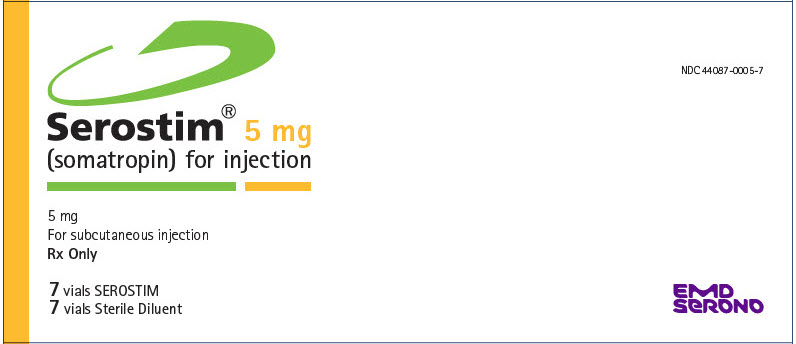
Serostim somatropin Kit — NDC 44087-0005-7 (Billing 44087-0005-07)
This is a package of Serostim somatropin Kit from EMD Serono, Inc., marketed since Aug 1996 and currently FDA-listed. It is this product's only package size.
NDC database record
One package, one record: these facts belong to NDC 44087-0005-7 alone.
- Record
- FDA NDC Directory package listing · Human prescription drug
- Code segments
- 44087 labeler · 0005 product · 7 package
- Package marketed since
- Aug 23, 1996
- Sample package
- No — commercial package
- Listing certified through
- Dec 31, 2027
- Barcode (UPC-A, from the NDC)
- 3 4408700057 8
- FDA record last changed
- Oct 8, 2026
Identity & classification
Regulatory identifiers FDA, NLM and CMS codes for this package
Drug-database identifiers Medi-Span GPI and First Databank GCN / HICL / AHFS classification
- GSN (GCN sequence number): 043027
- GCN: 25955
- HICL (First Databank): 002824
- AHFS class code: 68:28.00.00
Where does this data come from?
- FDA openFDA NDC Directory · synced Oct 8, 2026
- FDA label on DailyMed · label index refreshed Oct 8, 2026
- RxNorm (NLM RxNav) · catalog refreshed Oct 1, 2026
- Medi-Span GPI (licensed)
- First Databank (licensed) · refreshed Oct 8, 2026
Clinical
Somatropin injection is used to treat growth failure caused by growth hormone deficiency and certain other conditions to increase body weight and endurance in certain people with human immunodeficiency virus (HIV) infection to treat short bowel syndrome in adults who need special nutrition therapy Somatropin is a human growth hormone (hGH) analog. It works by replacing growth hormones that are normally produced in the body, which may result in increased growth, body weight, and improved absorption of nutrients and fluids from the intestines.
Read the full MedlinePlus article ↗- Somatropin is a lab-made version of the growth hormone your body normally produces in the pituitary gland. Your doctor has likely prescribed it because your body isn't making enoug...
- What exactly does somatropin do, and why has my doctor prescribed it?
- You'll give the injection just under the skin — in the abdomen, thigh, upper arm, or buttock. The most important thing is to rotate the spot every time you inject. Using the same s...
- How do I give myself (or my child) the injection, and does the site matter?
Patient education
Supplement & herbal interactions
Where does this data come from?
- MedlinePlus (NLM) · refreshed Oct 8, 2026
- FDA label on DailyMed · label index refreshed Oct 8, 2026
Ask a licensed pharmacist directly — free, answered by our team.
Pricing
A drug doesn't have one price. Each row is a different public payment system, and none is what you'd pay at the counter — that depends on your insurance. The ⓘ on each row explains what it measures.
| Price system | Per each | Per package |
|---|---|---|
| Retail pharmacies payNADAC · weekly | Not in the retail survey — common for institutional, discontinued, or low-volume packs. | |
| Medicaid paysCMS SDUD · 12 mo | No recent Medicaid claims on file for this NDC — rare and low-volume NDCs are suppressed in the public data. | |
| Medicare drug plans payPart D · Q2 2026 | $623.55 | — |
| Medicare Part B allowsASP · J2941 | No ASP payment limit on file for J2941 this quarter. | |
Where does this data come from?
- CMS NADAC weekly file
- CMS ASP pricing files · refreshed Sep 20, 2026
- CMS Medicaid State Drug Utilization Data · refreshed Oct 8, 2026
- CMS Part D plan pricing files · refreshed Sep 24, 2026
- VA National Acquisition Center price file
Billing & reimbursement
Where does this data come from?
- CMS ASP NDC-HCPCS crosswalk · refreshed Sep 22, 2026
- DMEPDAC NDC-HCPCS crosswalk
- openFDA NSDE billing units · refreshed Oct 7, 2026
Packaging — all sizes for this product
| Package NDC | Description | Marketing start | Marketing end | Status |
|---|---|---|---|---|
| 44087-0005-07 You're viewing this Main listing | 1 KIT in 1 CARTON * 1 mL in 1 VIAL * 1 mL in 1 VIAL | 1996-08-23 | — | Active |
Therapeutic equivalents
| Product | Labeler | Pack | NADAC/unit | TE | Status | Price vs. this |
|---|---|---|---|---|---|---|
| Omnitrope 5 mg/1.5mL 00781-3001-07 | Sandoz | 1 cartridge | $430.363 | — | Availability likely | — |
| Zomacton 55566-1901-01 | Ferring | 1 kit | $556.824 | — | Availability likely | — |
| Norditropin 5 mg/1.5mL 00169-7704-21 | Novo | 1 syringe | $570.774 | — | Availability likely | — |
| Omnitrope 10 mg/1.5mL 00781-3004-07 | Sandoz | 1 cartridge | $855.322 | — | FDA listed | — |
| Norditropin 10 mg/1.5mL 00169-7705-21 | Novo | 1 syringe | $1,136.460 | — | Availability likely | — |
| Norditropin 15 mg/1.5mL 00169-7708-21 | Novo | 1 syringe | $1,704.640 | — | Availability likely | — |
| Serostimthis 44087-0005-07 | EMD | 1 kit | — | — | FDA listed | — |
| Serostim 44087-0004-07 | EMD | 1 kit | — | — | FDA listed | — |
| Serostim 44087-0006-07 | EMD | 1 kit | — | — | FDA listed | — |
| Norditropin 30 mg/3mL 00169-7703-21 | Novo | 1 syringe | — | — | FDA listed | — |
Where does this data come from?
- FDA openFDA NDC Directory · synced Oct 8, 2026
- FDA Purple Book · refreshed Oct 5, 2026
- CMS NADAC weekly file
Availability & biosimilar status
Biologics have no small-molecule generics; biosimilar competition is tracked in the FDA Purple Book.
Where does this data come from?
- FDA Purple Book · refreshed Oct 5, 2026
Inactive Ingredients / Excipients
Inactive ingredients, also called excipients, are components of the drug product other than the active ingredient. They may include fillers, dyes, coatings, preservatives, flavors, or other formulation ingredients.
🧪 Avoiding an ingredient? See Somatropin inactive ingredients by manufacturer: every current product's list side by side, so you can ask your pharmacy for the version that does not list it.
Where does this data come from?
IACT rows and label-wide narrative are kept separate; availability and product-level specificity depend on the submitted label.- FDA label on DailyMed · label index refreshed Oct 8, 2026
- FDA openFDA NDC Directory · synced Oct 8, 2026
Inactive ingredient FAQ
Are inactive ingredients the same for every manufacturer?
Why might an inactive ingredient be missing?
Can inactive ingredients matter?
Manufacturer & labeler
More NDCs from EMD Serono, Inc. labeler code 44087
- Serostim somatropin Kit NDC 44087-0004-7
- Serostim somatropin Kit NDC 44087-0006-7
- REBIF INTERFERON BETA-1A 22 ug/.5mL Injection, Solution NDC 44087-0022-3
- REBIF interferon beta-1a 44 ug/.5mL Injection, Solution NDC 44087-0044-3
- Rebif Rebidose Interferon BETA-1A Kit NDC 44087-0188-1
- Gonal-f RFF Redi-ject FOLLITROPIN 300 [iU]/.5mL Injection, Solution NDC 44087-1115-1
- Gonal-f RFF Redi-ject FOLLITROPIN 450 [iU]/.75mL Injection, Solution NDC 44087-1116-1
Where does this data come from?
- FDA openFDA NDC Directory · synced Oct 8, 2026
- Drugs@FDA
Full prescribing information FDA SPL
🎯 Indications and Usage ▾
1 INDICATIONS AND USAGE SEROSTIM (somatropin) is indicated for the treatment of adults with HIV and wasting or cachexia to increase lean body mass and body weight, and improve physical endurance. Concomitant antiretroviral therapy is necessary. SEROSTIM is a human growth hormone (somatropin) indicated for the treatment of adults with HIV and wasting or cachexia to increase lean body mass and body weight, and improve physical endurance ( 1 )
⏱️ Dosage and Administration ▾
2 DOSAGE AND ADMINISTRATION SEROSTIM is administered by subcutaneous injection. SEROSTIM therapy should be carried out under the regular guidance of a physician who is experienced in the diagnosis and management of HIV infection. The recommended dosage of SEROSTIM is 0.1 mg/kg subcutaneously once daily (up to 6 mg) at bedtime ( 2.1 ) Injection sites, which may be located on thigh, upper arm, abdomen or buttock, should be rotated to avoid local irritation ( 2.2 )
2.1HIV-associated wasting or cachexia The usual starting dose of SEROSTIM is 0.1 mg/kg subcutaneously once daily (up to a total dose of 6 mg). SEROSTIM should be administered subcutaneously once daily at bedtime according to the following body weight-based dosage recommendations: Weight Range Dose >55kg (>121 lb) 6 mg Based on an approximate daily dosage of 0.1 mg/kg. subcutaneously once daily 45-55 kg (99-121 lb) 5 mg subcutaneously once daily 35-45 kg (75-99 lb) 4 mg subcutaneously once daily <35 kg (<75 lb) 0.1 mg/kg subcutaneously once daily Treatment with SEROSTIM 0.1 mg/kg every other day was associated with fewer side effects, and resulted in a similar improvement in work output, as compared with SEROSTIM 0.1 mg/kg daily.
Therefore, a starting dose of SEROSTIM 0.1 mg/kg every other day should be considered in patients at increased risk for adverse effects related to recombinant human growth hormone therapy (i.e., glucose intolerance). In general, dose reductions (i.e., reducing the total daily dose or the number of doses per week) should be considered for side effects potentially related to recombinant human growth hormone therapy. Most of the effect of SEROSTIM on work output and lean body mass was apparent after 12 weeks of treatment.
The effect was maintained during an additional 12 weeks of therapy. There are no safety or efficacy data available from controlled studies in which patients were treated with SEROSTIM continuously for more than 48 weeks. There are no safety or efficacy data available from trials in which patients with HIV-associated wasting or cachexia were treated intermittently with SEROSTIM.
2.2Preparation and Administration Reconstitute SEROSTIM 5 mg vial or 6 mg vial with 0.5 mL to 1 mL of diluent, Sterile Water for Injection. Use the reconstituted solution immediately and use only one dose per vial for one patient. Discard any unused portion.
Reconstitute SEROSTIM 4 mg vial with 0.5 mL to 1 mL of diluent, Bacteriostatic Water for Injection with 0.9% benzyl alcohol as a preservative. Do not use this diluent if the patient has a known hypersensitivity to benzyl alcohol [see Contraindications (4) ] or in pregnant or lactating women [see Use in Specific Populations (8.1 , 8.2) ], instead reconstitute with Sterile Water for Injection and use only one dose per vial . Aim the stream of diluent against the glass vial wall to prevent foaming.
Swirl the vial with a gentle rotary motion until contents are dissolved completely. Do not shake. Parenteral drug products should always be inspected visually for particulate matter and discoloration prior to administration, whenever solution and container permit.
SEROSTIM must not be injected if the solution is cloudy or contains particulate matter. Use the reconstituted solution only if it is clear or slightly opalescent. SEROSTIM 4 mg vial reconstituted with Bacteriostatic Water for Injection with 0.9% benzyl alcohol as preservative may be refrigerated at 2°C to 8°C (36°F to 46°F) for up to 14 days.
Administer SEROSTIM using a standard sterile, disposable syringe and needle. Injection sites, which may be located on the thigh, upper arm, abdomen or buttock, should be rotated to avoid local irritation.
💊 Dosage Forms and Strengths ▾
3 DOSAGE FORMS AND STRENGTHS For injection: 4 mg white to off-white lyophilized powder in a single-patient-use vial for reconstitution with co-packaged vial of Bacteriostatic Water for Injection (containing 0.9% benzyl alcohol as a preservative) For injection: 5 mg or 6 mg white to off-white lyophilized powder in a single-dose vial for reconstitution with co-packaged vial of Sterile Water for Injection For injection: 4 mg of somatropin as a lyophilized powder in a single-patient-use vial for reconstitution ( 3 ) For injection: 5 mg or 6 mg of somatropin in a lyophilized powder in a single-dose vial for reconstitution ( 3 )
⛔ Contraindications ▾
4 CONTRAINDICATIONS Acute Critical Illness Growth hormone therapy should not be initiated in patients with acute critical illness due to complications following open heart or abdominal surgery, multiple accidental trauma or acute respiratory failure [see Warnings and Precautions (5.1) ]. Active Malignancy In general, somatropin is contraindicated in the presence of active malignancy. Any preexisting malignancy should be inactive and its treatment complete prior to instituting therapy with somatropin.
Somatropin should be discontinued if there is evidence of recurrent activity [see Warnings and Precautions (5.3) ] . Hypersensitivity SEROSTIM is contraindicated in patients with a known hypersensitivity to somatropin or any of its excipients. Systemic hypersensitivity reactions have been reported with post-marketing use of somatropin products [see Warnings and Precautions (5.6) ].
Diabetic Retinopathy Somatropin is contraindicated in patients with active proliferative or severe non-proliferative diabetic retinopathy. Acute Critical Illness ( 4 ) Active Malignancy ( 4 ) Diabetic Retinopathy ( 4 ) Hypersensitivity to somatropin or excipients ( 4 )
⚠️ Warnings and Cautions ▾
5 WARNINGS AND PRECAUTIONS Acute Critical Illness: Increased mortality in patients with acute critical illness following open heart surgery, abdominal surgery or multiple accidental trauma, or those with acute respiratory failure has been reported after treatment with pharmacologic amounts of somatropin ( 5.1 ) Concomitant Antiretroviral Therapy: In vitro experimental systems have demonstrated the potential to potentiate HIV replication. No significant somatropin-associated increase in viral load was observed in clinical trials.
Patients with HIV should be maintained on antiretroviral therapy for the duration of SEROSTIM treatment ( 5.2 ) Neoplasms: Monitor all patients with a history of any neoplasm routinely while on somatropin therapy for progression, recurrences, or development of a tumor ( 5.3 ) Impaired Glucose Tolerance/Diabetes: May be unmasked. Periodically monitor glucose levels. Dose adjustment of concurrent antihyperglycemic drugs in diabetics may be required ( 5.4 ) Intracranial Hypertension: Exclude preexisting papilledema.
May develop and is usually reversible after discontinuation or dose reduction ( 5.5 ) Hypersensitivity: Serious hypersensitivity reactions may occur. In the event of an allergic reaction, seek prompt medical attention ( 5.6 ) Fluid Retention (edema, arthralgia)/Carpal Tunnel Syndrome: May occur frequently. Reduce dose as necessary ( 5.7 ) Pancreatitis: Consider pancreatitis in patients with persistent severe abdominal pain ( 5.9 )
5.1Acute Critical Illness Increased mortality in patients with acute critical illness due to complications following open heart surgery, abdominal surgery or multiple accidental trauma, or those with acute respiratory failure has been reported after treatment with pharmacologic amounts of somatropin. Two placebo-controlled clinical trials in non-growth hormone deficient adult patients (n=522) with these conditions revealed a significant increase in mortality (42% vs. 19%) among somatropin-treated patients (doses 5.3-8 mg/day) compared to those receiving placebo [see Contraindications (4) ] .
5.2Concomitant Antiretroviral Therapy In some experimental systems, somatropin has been shown to potentiate HIV replication in vitro at concentrations ranging from 50-250 ng/mL. There was no increase in virus production when the antiretroviral agents, zidovudine, didanosine or lamivudine were added to the culture medium. Additional in vitro studies have shown that somatropin does not interfere with the antiviral activity of zalcitabine or stavudine.
In the controlled clinical trials, no significant somatropin-associated increase in viral burden was observed. However, the protocol required all participants to be on concomitant antiretroviral therapy for the duration of the study. In view of the potential for acceleration of virus replication, it is recommended that patients with HIV be maintained on antiretroviral therapy for the duration of SEROSTIM treatment.
5.3Neoplasms Because malignancies are more common in HIV positive individuals, the risks and benefits of starting somatropin in patients with HIV should be carefully considered before initiating SEROSTIM treatment and patients should be monitored carefully for the development of neoplasms if treatment with somatropin is initiated. Monitor all patients with a history of any neoplasm routinely while on somatropin therapy for progression or recurrence of the tumor [see Contraindications (4) ]. Monitor patients on somatropin therapy carefully for increased growth, or potential malignant changes of preexisting nevi.
5.4Impaired Glucose Tolerance/Diabetes Hyperglycemia may occur in patients with HIV due to a variety of reasons. In wasting patients, treatment with SEROSTIM 0.1 mg/kg daily and 0.1 mg/kg every other day for 12 weeks was associated with approximately 10 mg/dL and 6 mg/dL increases in mean fasting blood glucose concentrations, respectively. The increases occurred early in treatment.
Patients with other risk factor… [Excerpted — this section continues on DailyMed.]
🤒 Adverse Reactions ▾
6 ADVERSE REACTIONS The following important adverse reactions are also described elsewhere in the labeling: Acute Critical Illness [see Warnings and Precautions (5.1) ] Neoplasms [see Warnings and Precautions (5.3) ] Impaired glucose tolerance and diabetes mellitus [see Warnings and Precautions (5.4) ] Intracranial hypertension [see Warnings and Precautions (5.5) ] Severe hypersensitivity [see Warnings and Precautions (5.6) ] Fluid retention/Carpal tunnel syndrome [see Warnings and Precautions (5.7) ] Lipoatrophy [see Warnings and Precautions (5.8) ] Pancreatitis [see Warnings and Precautions (5.9) ] Most common adverse reactions include (incidence >10%) tissue turgor (edema, myalgia, hypoesthesia) and musculoskeletal discomfort (arthralgia, pain in extremities) ( 6 ) To report SUSPECTED ADVERSE REACTIONS, contact EMD Serono at 1-800-283-8088 ext 5563 or FDA at 1-800-FDA-1088 or www.fda.gov/medwatch
6.1Clinical Trials Experience Because clinical trials are conducted under widely varying conditions, adverse reaction rates observed in the clinical trials of a drug cannot be directly compared to rates in the clinical trials of another drug and may not reflect the rates observed in clinical practice. Clinical trials in HIV-associated wasting or cachexia: In the 12-week, placebo-controlled Clinical Trial 2, 510 patients were treated with SEROSTIM. The most common adverse reactions judged to be associated with SEROSTIM were musculoskeletal discomfort and increased tissue turgor (swelling, particularly of the hands or feet), and were more frequently observed when SEROSTIM 0.1 mg/kg was administered on a daily basis [Table 1 and Warnings and Precautions (5)].
These symptoms often subsided with continued treatment or dose reduction. Approximately 23% of patients receiving SEROSTIM 0.1 mg/kg daily and 11% of patients receiving 0.1 mg/kg every other day required dose reductions. Discontinuations as a result of adverse reactions occurred in 10.3% of patients receiving SEROSTIM 0.1 mg/kg daily and 6.6% of patients receiving 0.1 mg/kg every other day.
The most common reasons for dose reduction and/or drug discontinuation were arthralgia, myalgia, edema, carpal tunnel syndrome, elevated glucose levels, and elevated triglyceride levels. Clinical adverse reactions which occurred during the first 12 weeks of study in at least 5% of the patients in either active treatment group and at an incidence greater than placebo are listed below, without regard to causality assessment. Table 1: Controlled Clinical Trial 2 Adverse Reactions Occurring in at least 5% of Patients in one of the Treatment Groups, and at an Incidence Greater than Placebo Placebo 0.1 mg/kg every other day SEROSTIM 0.1 mg/kg daily SEROSTIM Patients (n=247) Patients (n=257) Patients (n=253) Body System Preferred Term % % % Musculoskeletal System Disorders Arthralgia 11.3 24.5
36.4Myalgia 11.7 17.9
30.4Arthrosis 3.6 7.8
10.7Gastrointestinal System Disorders Nausea 4.9 5.4
9.1Body As A Whole - General Disorders Edema Peripheral 2.8 11.3
26.1Fatigue 4.5 3.5
5.1Endocrine Disorders Gynecomastia 0.4 3.5
5.5Central and Peripheral Nervous System Disorders Paresthesia 4.5 7.4
7.9Hypoesthesia 2.4 1.6
5.1Metabolic and Nutritional Disorders Edema Generalized 1.2 1.2
5.9Adverse reactions that occurred in 1% to less than 5% of trial participants receiving SEROSTIM during the first 12 weeks of Clinical Trial 2 thought to be related to SEROSTIM included dose dependent edema, periorbital edema, carpal tunnel syndrome, hyperglycemia and hypertriglyceridemia. During the 12-week, placebo-controlled portion of Clinical Trial 2, the incidence of hyperglycemia reported as an adverse reaction was 3.6% for the placebo group, 1.9% for the 0.1 mg/kg every other day group and 3.2% for the 0.1 mg/kg daily group.
One case of diabetes mellitus was noted in the 0.1 mg/kg daily group during the first 12-weeks of therapy. In addition, during the extension phase of Clinical Trial 2, two patients converted… [Excerpted — this section continues on DailyMed.]
🔄 Drug Interactions ▾
7 DRUG INTERACTIONS Formal drug interaction studies have not been conducted. No data are available on drug interactions between SEROSTIM and HIV protease inhibitors or the non-nucleoside reverse transcriptase inhibitors. Inhibition of 11β-Hydroxysteroid Dehydrogenase Type 1: May require the initiation of glucocorticoid replacement therapy.
Patients treated with glucocorticoid replacement for previously diagnosed hypoadrenalism may require an increase in their maintenance doses ( 7.1 ) Cytochrome P450-Metabolized Drugs: Monitor carefully if used with somatropin ( 7.2 ) Oral Estrogen: Larger doses of somatropin may be required in women ( 7.3 ) Insulin and/or Oral/Injectable Hypoglycemic Agents: May require adjustment ( 7.4 ) 7.1 11β-Hydroxysteroid Dehydrogenase Type 1 The microsomal enzyme 11β-hydroxysteroid dehydrogenase type 1 (11βHSD-1) is required for conversion of cortisone to its active metabolite, cortisol, in hepatic and adipose tissue.
Somatropin inhibits 11βHSD-1. Patients treated with glucocorticoid replacement for previously diagnosed hypoadrenalism may require an increase in their maintenance or stress doses following initiation of somatropin treatment; this may be especially true for patients treated with cortisone acetate and prednisone since conversion of these drugs to their biologically active metabolites is dependent on the activity of 11βHSD-1.
7.2Cytochrome P450-metabolized drugs Limited published data indicate that somatropin treatment increases cytochrome P450 (CYP450)-mediated antipyrine clearance in man. These data suggest that somatropin administration may alter the clearance of compounds metabolized by CYP450 liver enzymes (e.g., corticosteroids, sex steroids, anticonvulsants, cyclosporine). Therefore, careful monitoring is advised when somatropin is administered in combination with drugs metabolized by CYP450 liver enzymes.
However, formal drug interaction studies have not been conducted.
7.3Oral Estrogen Because oral estrogens may reduce the serum IGF-1 response to somatropin treatment, girls and women receiving oral estrogen replacement may require greater somatropin dosages [see Dosage and Administration (2) ] .
7.4Insulin and/or Other Oral/Injectable Hypoglycemic Agents Patients with diabetes mellitus who receive concomitant treatment with somatropin may require adjustment of their doses of insulin and/or other hypoglycemic agents [see Warnings and Precautions (5.4) ] .
👥 Use in Specific Populations ▾
8 USE IN SPECIFIC POPULATIONS
8.1Pregnancy Risk Summary Available data with somatropin use in pregnant women are insufficient to identify a drug-associated risk of major birth defects, miscarriage or other adverse maternal or fetal outcomes. In animal reproduction studies, no adverse developmental effects were observed when somatropin was administered subcutaneously to pregnant rats and rabbits during the period of organogenesis at doses up to 5 to 10 times the human dose, respectively (see Data ) . The estimated background risk of birth defects and miscarriage for the indicated population is unknown.
All pregnancies have a background risk of birth defect, loss, or other adverse outcomes. In the U.S. general population, the estimated background risk of major birth defects and miscarriage in clinically recognized pregnancies is 2% to 4% and 15% to 20%, respectively. Data Animal Data Reproductive and developmental toxicity studies were performed in rats and rabbits by the subcutaneous route of administration.
Somatropin doses of 0.033, 0.33 and 3.33 mg/kg (0.1, 1 and 10 IU/kg) were used in each of the studies. The highest doses were approximately 5 times and 10 times the maximum recommended human dose based on body surface area (BSA) in rats and rabbits, respectively. In an embryofetal development study in rats that included assessments of F1 growth and development, somatropin was administered to pregnant females during the period of organogenesis from day 6 to day 17 of gestation.
There were no compound-related embryotoxic or teratogenic effects on the fetuses or on F1 postnatal survival, development, or reproductive performance at up to 5-times the maximum human dose based on BSA. In an embryofetal development study in rabbits, there were no adverse effects on fetal development when somatropin was administered to pregnant females from day 6 to day 18 of gestation at up to approximately 10 times the maximum human dose by BSA. In a pre- and postnatal development study in rats, females were treated with somatropin from day 15 of gestation to day 21 of lactation.
There were no adverse effects on gestation, parturition or on the postnatal survival, development, and reproductive function of the F1 generation. A study performed with radioactive labelled 125 I recombinant human growth hormone in pregnant rats showed radioactivity in fetuses indicating transfer of somatropin from the mother to the fetus.
8.2Lactation Risk Summary There are no data on the presence of SEROSTIM in human milk, the effects on the breastfed infant, or the effects on milk production. Somatropin was detected in milk of lactating rats administered somatropin. When a drug is present in animal milk, it is likely that the drug will be present in human milk (see Data ).
The developmental and health benefits of breastfeeding should be considered along with the mother's clinical need for SEROSTIM and any potential adverse effects on the breast-fed infant from SEROSTIM or from the underlying maternal condition. Data Animal Data Radioactive labelled 125 I recombinant human growth hormoneadministered subcutaneously to lactating rats was observed in milk, confirming the presence of somatropin in milk of lactating animals.
8.4Pediatric Use Safety and effectiveness in pediatric patients with HIV have not been established. Available evidence suggests that somatropin clearance is similar in adults and children, but no pharmacokinetic studies have been conducted in children with HIV. In two small studies, 11 children with HIV-associated failure to thrive were treated subcutaneously with human growth hormone.
In one study, five children (age range, 6 to 17 years) were treated with 0.04 mg/kg/day for 26 weeks. In a second study, six children (age range, 8 to 14 years) were treated with 0.07 mg/kg/day for 4 weeks. Treatment appeared to be well tolerated in both studies.
The preliminary data collected on a limited number of patients with HIV-associated failure to thrive appear… [Excerpted — this section continues on DailyMed.]
🤰 Pregnancy ▾
8.1Pregnancy Risk Summary Available data with somatropin use in pregnant women are insufficient to identify a drug-associated risk of major birth defects, miscarriage or other adverse maternal or fetal outcomes. In animal reproduction studies, no adverse developmental effects were observed when somatropin was administered subcutaneously to pregnant rats and rabbits during the period of organogenesis at doses up to 5 to 10 times the human dose, respectively (see Data ) . The estimated background risk of birth defects and miscarriage for the indicated population is unknown.
All pregnancies have a background risk of birth defect, loss, or other adverse outcomes. In the U.S. general population, the estimated background risk of major birth defects and miscarriage in clinically recognized pregnancies is 2% to 4% and 15% to 20%, respectively. Data Animal Data Reproductive and developmental toxicity studies were performed in rats and rabbits by the subcutaneous route of administration.
Somatropin doses of 0.033, 0.33 and 3.33 mg/kg (0.1, 1 and 10 IU/kg) were used in each of the studies. The highest doses were approximately 5 times and 10 times the maximum recommended human dose based on body surface area (BSA) in rats and rabbits, respectively. In an embryofetal development study in rats that included assessments of F1 growth and development, somatropin was administered to pregnant females during the period of organogenesis from day 6 to day 17 of gestation.
There were no compound-related embryotoxic or teratogenic effects on the fetuses or on F1 postnatal survival, development, or reproductive performance at up to 5-times the maximum human dose based on BSA. In an embryofetal development study in rabbits, there were no adverse effects on fetal development when somatropin was administered to pregnant females from day 6 to day 18 of gestation at up to approximately 10 times the maximum human dose by BSA. In a pre- and postnatal development study in rats, females were treated with somatropin from day 15 of gestation to day 21 of lactation.
There were no adverse effects on gestation, parturition or on the postnatal survival, development, and reproductive function of the F1 generation. A study performed with radioactive labelled 125 I recombinant human growth hormone in pregnant rats showed radioactivity in fetuses indicating transfer of somatropin from the mother to the fetus.
🧒 Pediatric Use ▾
8.4Pediatric Use Safety and effectiveness in pediatric patients with HIV have not been established. Available evidence suggests that somatropin clearance is similar in adults and children, but no pharmacokinetic studies have been conducted in children with HIV. In two small studies, 11 children with HIV-associated failure to thrive were treated subcutaneously with human growth hormone.
In one study, five children (age range, 6 to 17 years) were treated with 0.04 mg/kg/day for 26 weeks. In a second study, six children (age range, 8 to 14 years) were treated with 0.07 mg/kg/day for 4 weeks. Treatment appeared to be well tolerated in both studies.
The preliminary data collected on a limited number of patients with HIV-associated failure to thrive appear to be consistent with safety observations in growth hormone-treated adults with HIV wasting. Benzyl alcohol, a component of this product, has been associated with serious adverse events and death, particularly in pediatric patients. The "gasping syndrome," (characterized by central nervous system depression, metabolic acidosis, gasping respirations, and high levels of benzyl alcohol and its metabolites found in the blood and urine) has been associated with benzyl alcohol dosages >99 mg/kg/day in neonates and low-birth weight neonates.
Additional symptoms may include gradual neurological deterioration, seizures, intracranial hemorrhage, hematologic abnormalities, skin breakdown, hepatic and renal failure, hypotension, bradycardia, and cardiovascular collapse. Practitioners administering this and other medications containing benzyl alcohol should consider the combined daily metabolic load of benzyl alcohol from all sources.
🧓 Geriatric Use ▾
8.5Geriatric Use Clinical studies with SEROSTIM did not include sufficient numbers of subjects aged 65 and over to determine whether they respond differently from younger subjects. Elderly patients may be more sensitive to the action of somatropin, and therefore, may be more prone to develop adverse reactions. A lower starting dose and smaller dose increments should be considered for older patients [see Dosage and Administration (2) ].
🆘 Overdosage ▾
10 OVERDOSAGE Short-Term Acute overdosage could lead initially to hypoglycemia and subsequently to hyperglycemia. Long-Term Long-term overdosage could result in signs and symptoms of acromegaly consistent with the known effects of excess growth hormone.
🧬 Clinical Pharmacology ▾
12 CLINICAL PHARMACOLOGY
12.1Mechanism of Action Somatropin is an anabolic and anticatabolic agent which exerts its influence by interacting with growth hormone receptors on a variety of cell types including myocytes, hepatocytes, adipocytes, lymphocytes, and hematopoietic cells. Some, but not all of its effects, are mediated by insulin-like growth factor-1 (IGF-1).
12.2Pharmacodynamics Effects on Protein, Lipid and Carbohydrate Metabolism A one-week study in 6 patients with HIV-associated wasting has shown that treatment with SEROSTIM 0.1 mg/kg/day improved nitrogen balance, increased protein-sparing lipid oxidation, and had little effect on overall carbohydrate metabolism. Decreases in trunk fat and total body fat, and increases in lean body mass were observed during two double-blind, placebo-controlled studies wherein SEROSTIM vs. placebo were administered daily for 12 weeks to patients with HIV Lipodystrophy [see Clinical Studies (14) ] .
Effects on Nitrogen and Mineral Retention In the one-week study in 6 patients with HIV-associated wasting, treatment with SEROSTIM resulted in the retention of phosphorous, potassium, nitrogen, and sodium. The ratio of retained potassium and nitrogen during SEROSTIM therapy was consistent with retention of these elements in lean tissue. Physical Performance Cycle ergometry work output and treadmill performance were examined in separate 12-week, placebo-controlled trials [see Clinical Studies (14) ].
In both studies, work output improved significantly in the group receiving SEROSTIM 0.1 mg/kg/day subcutaneously vs placebo. Isometric muscle performance, as measured by grip strength dynamometry, declined, probably as a result of a transient increase in tissue turgor known to occur with SEROSTIM therapy.
12.3Pharmacokinetics Absorption: The absolute bioavailability after subcutaneous administration was determined to be 70 to 90%. The mean half-life after subcutaneous administration is significantly longer than that seen after intravenous administration in normal male volunteers down-regulated with somatostatin (approximately 4.0 hrs. vs. 0.6 hrs.), indicating that the subcutaneous absorption of somatropin is a rate-limiting process.
Distribution: The steady-state volume of distribution (Mean ± SD) following intravenous administration of somatropin in normal male volunteers is 12.0 ±
1.08L. Metabolism: Although the liver plays a role in the metabolism of GH, GH is primarily cleaved in the kidney. GH undergoes glomerular filtration and, after cleavage within the renal cells, the peptides and amino acids are returned to the systemic circulation.
Elimination: The half-life in nine patients with HIV-associated wasting with an average weight of 56.7 ± 6.8 kg, given a fixed dose of 6.0 mg somatropin subcutaneously was 4.28 ± 2.15 hrs, similar to that observed in normal male volunteers. The renal clearance of r-hGH after subcutaneous administration in nine patients with HIV-associated wasting was 0.0015 ± 0.0037 L/h. No significant accumulation of r-hGH appears to occur after 6 weeks of daily dosing as indicated.
Specific Populations: Pediatric: Available evidence suggests that r-hGH clearances are similar in adults and children, but no pharmacokinetic studies have been conducted in children with HIV. Gender: Biomedical literature indicates that a gender-related difference in the mean clearance of r-hGH could exist (clearance of r-hGH in males > clearance of r-hGH in females). However, no gender-based analysis is available in healthy volunteers or patients infected with HIV.
Race: No studies have been conducted to determine the effect of race on the pharmacokinetics of SEROSTIM. Renal Impairment: Subjects with chronic renal failure tend to have decreased somatropin clearance compared to those with normal renal function. However, no studies have been conducted to determine the effect of renal impairment on the pharmacokinetics of SEROSTIM.
Hepatic Impairment: No studies have been conducted to dete… [Excerpted — this section continues on DailyMed.]
🧬 Mechanism of Action ▾
12.1Mechanism of Action Somatropin is an anabolic and anticatabolic agent which exerts its influence by interacting with growth hormone receptors on a variety of cell types including myocytes, hepatocytes, adipocytes, lymphocytes, and hematopoietic cells. Some, but not all of its effects, are mediated by insulin-like growth factor-1 (IGF-1).
📦 How Supplied / Storage and Handling ▾
16 HOW SUPPLIED/STORAGE AND HANDLING
16.1How Supplied SEROSTIM (somatropin) for injection is a sterile, white to off-white lyophilized powder for subcutaneous use after reconstitution. SEROSTIM is supplied as either 4 mg, 5 mg, or 6 mg per vial and is available in the following packaging configurations: NDC SEROSTIM Co-Packaged Diluent NDC 44087-0004-7 4 mg single-patient-use vials 7 vials Bacteriostatic Water for Injection, USP (0.9% benzyl alcohol as preservative) 3.5 mL multiple-dose vials 7 vials NDC 44087-0005-7 5 mg single-dose vials 7 vials Sterile Water for Injection, USP 1 mL single-dose vials 7 vials NDC 44087-0006-7 6 mg single-dose vials 7 vials Sterile Water for Injection, USP 1 mL single-dose vials 7 vials
16.2Storage and Handling Before reconstitution: Store cartons containing SEROSTIM vials and diluent vials at room temperature between 15°C to 30°C (59°F to 86°F). After reconstitution: Immediately use single-dose vials (SEROSTIM 5 mg or 6 mg) reconstituted with Sterile Water for Injection, USP. Discard any unused portion.
Single-patient use vials (SEROSTIM 4 mg) reconstituted with Bacteriostatic Water for Injection, USP (containing 0.9% benzyl alcohol as a preservative), store refrigerated between 2°C to 8° C (36°F to 46°F) for up to 14 days [see Dosage and Administration (2.2) ]. Do not freeze reconstituted SEROSTIM vials.
📦 Storage and Handling ▾
16.2Storage and Handling Before reconstitution: Store cartons containing SEROSTIM vials and diluent vials at room temperature between 15°C to 30°C (59°F to 86°F). After reconstitution: Immediately use single-dose vials (SEROSTIM 5 mg or 6 mg) reconstituted with Sterile Water for Injection, USP. Discard any unused portion.
Single-patient use vials (SEROSTIM 4 mg) reconstituted with Bacteriostatic Water for Injection, USP (containing 0.9% benzyl alcohol as a preservative), store refrigerated between 2°C to 8° C (36°F to 46°F) for up to 14 days [see Dosage and Administration (2.2) ]. Do not freeze reconstituted SEROSTIM vials.
📋 Description ▾
11 DESCRIPTION Somatropin is a human growth hormone (r-hGH) produced by recombinant DNA technology using a mammalian cell line (mouse C127). The protein is comprised of 191 amino acid residues and a molecular weight of 22,125 daltons. The amino acid sequence is identical to that of human growth hormone of pituitary origin.
SEROSTIM (somatropin) for injection is a sterile, white to off-white lyophilized powder for subcutaneous use after reconstitution with accompanying diluent. SEROSTIM is supplied as either 4 mg per vial, 5 mg per vial, or 6 mg per vial. Sodium hydroxide or phosphoric acid may have been added to adjust the pH.
Each vial contains the following: Vials 4 mg 5 mg 6 mg Component Somatropin 4 mg 5 mg 6 mg Sucrose 27.3 mg 34.2 mg 41 mg Phosphoric acid 0.9 mg 1.2 mg 1.4 mg SEROSTIM 4 mg single-patient-use vials are co-packaged with diluent vials of Bacteriostatic Water for Injection, USP (containing 0.9% benzyl alcohol as a preservative). After each vial is reconstituted with 0.5 mL to 1 mL, the pH is 7.4 to 8.5. SEROSTIM 5 mg single-dose vials are co-packaged with diluent vials of Sterile Water for Injection, USP.
After each vial is reconstituted with 0.5 mL to 1 mL, the pH is 6.5 to 8.5. SEROSTIM 6 mg single-dose vials are co-packaged with diluent vials of Sterile Water for Injection, USP. After each vial is reconstituted with 0.5 mL to 1 mL, the pH is 7.4 to 8.5.
💬 Information for Patients ▾
17 PATIENT COUNSELING INFORMATION Patients being treated with SEROSTIM should be informed of the potential benefits and risks associated with treatment. Patients should be instructed to contact their physician should they experience any side effects or discomfort during treatment with SEROSTIM. It is recommended that SEROSTIM be administered using sterile, disposable syringes and needles.
Patients should be thoroughly instructed in the importance of proper disposal and cautioned against any reuse of needles and syringes. An appropriate container for the disposal of used syringes and needles should be employed. Patients should be instructed to rotate injection sites to avoid localized tissue atrophy.
Never Share a SEROSTIM Pen or Needle Between Patients Counsel patients that they should never share SEROSTIM or SEROSTIM injection devices with another person, even if the needle or nozzle is changed. Sharing of SEROSTIM or SEROSTIM injection devices between patients may pose a risk of transmission of infection. Patients should be informed about the management of common side effects related to tissue turgor, glucose intolerance and musculoskeletal discomfort.
🧬 Pharmacokinetics ▾
12.3Pharmacokinetics Absorption: The absolute bioavailability after subcutaneous administration was determined to be 70 to 90%. The mean half-life after subcutaneous administration is significantly longer than that seen after intravenous administration in normal male volunteers down-regulated with somatostatin (approximately 4.0 hrs. vs. 0.6 hrs.), indicating that the subcutaneous absorption of somatropin is a rate-limiting process.
Distribution: The steady-state volume of distribution (Mean ± SD) following intravenous administration of somatropin in normal male volunteers is 12.0 ±
1.08L. Metabolism: Although the liver plays a role in the metabolism of GH, GH is primarily cleaved in the kidney. GH undergoes glomerular filtration and, after cleavage within the renal cells, the peptides and amino acids are returned to the systemic circulation.
Elimination: The half-life in nine patients with HIV-associated wasting with an average weight of 56.7 ± 6.8 kg, given a fixed dose of 6.0 mg somatropin subcutaneously was 4.28 ± 2.15 hrs, similar to that observed in normal male volunteers. The renal clearance of r-hGH after subcutaneous administration in nine patients with HIV-associated wasting was 0.0015 ± 0.0037 L/h. No significant accumulation of r-hGH appears to occur after 6 weeks of daily dosing as indicated.
Specific Populations: Pediatric: Available evidence suggests that r-hGH clearances are similar in adults and children, but no pharmacokinetic studies have been conducted in children with HIV. Gender: Biomedical literature indicates that a gender-related difference in the mean clearance of r-hGH could exist (clearance of r-hGH in males > clearance of r-hGH in females). However, no gender-based analysis is available in healthy volunteers or patients infected with HIV.
Race: No studies have been conducted to determine the effect of race on the pharmacokinetics of SEROSTIM. Renal Impairment: Subjects with chronic renal failure tend to have decreased somatropin clearance compared to those with normal renal function. However, no studies have been conducted to determine the effect of renal impairment on the pharmacokinetics of SEROSTIM.
Hepatic Impairment: No studies have been conducted to determine the effect of hepatic impairment on the pharmacokinetic of SEROSTIM.
🧬 Pharmacodynamics ▾
12.2Pharmacodynamics Effects on Protein, Lipid and Carbohydrate Metabolism A one-week study in 6 patients with HIV-associated wasting has shown that treatment with SEROSTIM 0.1 mg/kg/day improved nitrogen balance, increased protein-sparing lipid oxidation, and had little effect on overall carbohydrate metabolism. Decreases in trunk fat and total body fat, and increases in lean body mass were observed during two double-blind, placebo-controlled studies wherein SEROSTIM vs. placebo were administered daily for 12 weeks to patients with HIV Lipodystrophy [see Clinical Studies (14) ] .
Effects on Nitrogen and Mineral Retention In the one-week study in 6 patients with HIV-associated wasting, treatment with SEROSTIM resulted in the retention of phosphorous, potassium, nitrogen, and sodium. The ratio of retained potassium and nitrogen during SEROSTIM therapy was consistent with retention of these elements in lean tissue. Physical Performance Cycle ergometry work output and treadmill performance were examined in separate 12-week, placebo-controlled trials [see Clinical Studies (14) ].
In both studies, work output improved significantly in the group receiving SEROSTIM 0.1 mg/kg/day subcutaneously vs placebo. Isometric muscle performance, as measured by grip strength dynamometry, declined, probably as a result of a transient increase in tissue turgor known to occur with SEROSTIM therapy.
🔬 Clinical Studies ▾
14 CLINICAL STUDIES HIV-Associated Wasting or Cachexia The clinical efficacy of SEROSTIM in HIV-associated wasting or cachexia was assessed in two placebo-controlled trials. All study subjects received concomitant antiretroviral therapy. There was no increase in the incidence of Kaposi's sarcoma (KS), lymphoma, or in the progression of cutaneous Kaposi's sarcoma in clinical studies of SEROSTIM.
Patients with internal KS lesions were excluded from the studies. Potential effects on other malignancies are unknown. Clinical Trial 1: A 12-week, randomized, double-blind, placebo-controlled study followed by an open-label extension phase enrolled 178 patients with severe HIV-associated wasting taking nucleoside analogue therapy (pre-HAART era).
The primary endpoint was body weight. Body composition was assessed using dual energy X-ray absorptiometry (DXA) and physical function was assessed by treadmill exercise testing. Patients meeting the inclusion/exclusion criteria were treated with either placebo or SEROSTIM 0.1 mg/kg daily.
Ninety-six percent (96%) were male. The average baseline CD4 count/microliter was 85. The results from one hundred forty (140) evaluable patients were analyzed (those completing the 12-week course of treatment and who were at least 80% compliant with study drug).
After 12 weeks of therapy, the mean difference in weight increase between the SEROSTIM-treated group and the placebo-treated group was 1.6 kg (3.5 lb). Mean difference in lean body mass (LBM) change between the SEROSTIM-treated group and the placebo-treated group was 3.1 kg (6.8 lbs) as measured by DXA. Mean increase in weight and LBM, and mean decrease in body fat, were significantly greater in the SEROSTIM-treated group than in the placebo group (p=0.011, p<0.001, p<0.001, respectively) after 12 weeks of treatment (Figure 1).
There were no significant changes with continued treatment beyond 12 weeks suggesting that the original gains of weight and LBM were maintained (Figure 1). Treatment with SEROSTIM resulted in a significant increase in physical function as assessed by treadmill exercise testing. The median treadmill work output increased by 13% (p=0.039) at 12 weeks in the group receiving SEROSTIM (Figure 2).
There was no improvement in the placebo-treated group at 12 weeks. Changes in treadmill performance were significantly correlated with changes in LBM. Figure 1: Mean Changes in Body Composition Figure 2: Median Treadmill Work Output Figure 1 Figure 2 Clinical Trial 2: A 12-week, randomized, double-blind, placebo-controlled study enrolled 757 patients with HIV-associated wasting, or cachexia.
The primary efficacy endpoint was physical function as measured by cycle ergometry work output. Body composition was assessed using bioelectrical impedance spectroscopy (BIS) and also by dual energy X-ray absorptiometry (DXA) at a subset of centers. Patients meeting the inclusion/exclusion criteria were treated with either placebo, approximately 0.1 mg/kg every other day (qod) of SEROSTIM, or approximately 0.1 mg/kg daily at bedtime of SEROSTIM.
All results were analyzed in intent-to-treat populations (for cycle ergometry work output, n=670). Ninety-one percent (91%) were male and 88% were on HAART anti-retroviral therapy. The average baseline CD4 count/µL was 446.
Six hundred forty-six patients (646) completed the 12-week study and continued in the SEROSTIM treatment extension phase of the trial. Clinical Trial 2 results are summarized in Tables 4 and 5: Table 4: Mean (Median) of Cycle Work Output (kJ) Response after 12 weeks of Treatment ITT Population Placebo Half-Dose SEROSTIM approximately 0.1 mg/kg every other day Full-Dose SEROSTIM approximately 0.1 mg/kg daily Cycle work output (kJ) n=222 n=230 n=218 Baseline 25.92 (25.05) 27.79 (26.65) 27.57 (26.30) Change from baseline -0.05 (-0.25) 2.48 (2.30) 2.52 (2.40) Percent change from baseline 0.2% 8.9% 9.1% Difference from Placebo Mean (2-sided 95% C.I.) - 2.53 p<0.01 (0.81, 4.25) 2.57 (0.83, 4.31)… [Excerpted — this section continues on DailyMed.]
🧪 Nonclinical Toxicology ▾
13 NONCLINICAL TOXICOLOGY
13.1Carcinogenesis, Mutagenesis, Impairment of Fertility Long-term animal studies for carcinogenicity have not been performed with SEROSTIM. There is no evidence from animal studies to date of SEROSTIM-induced mutagenicity or clastogenicity. Somatropin was administered to male and female rats in a fertility and early embryonic development study.
There were no drug-related effects on male or female fertility up to the maximum 3.33 mg/kg dose (5-times the human dose based on BSA).
📄 Carcinogenesis, Mutagenesis, Impairment of Fertility ▾
13.1Carcinogenesis, Mutagenesis, Impairment of Fertility Long-term animal studies for carcinogenicity have not been performed with SEROSTIM. There is no evidence from animal studies to date of SEROSTIM-induced mutagenicity or clastogenicity. Somatropin was administered to male and female rats in a fertility and early embryonic development study.
There were no drug-related effects on male or female fertility up to the maximum 3.33 mg/kg dose (5-times the human dose based on BSA).
📄 Package Label / Principal Display Panel ▾
PRINCIPAL DISPLAY PANEL - 4 mg Kit Carton Serostim ® 4 mg (somatropin) for injection 4 mg For subcutaneous injection Rx Only 7 vials of SEROSTIM 7 vials of Bacteriostatic Water for Injection, USP (0.9 % Benzyl Alcohol) NDC 44087-0004-7 EMD Serono PRINCIPAL DISPLAY PANEL - 4 mg Kit Carton
PRINCIPAL DISPLAY PANEL - 5 mg Kit Carton Serostim ® 5 mg (somatropin) for injection 5 mg For subcutaneous injection Rx Only 7 vials SEROSTIM 7 vials Sterile Diluent NDC 44087-0005-7 EMD Serono PRINCIPAL DISPLAY PANEL - 5 mg Kit Carton
PRINCIPAL DISPLAY PANEL - 6 mg Kit Carton Serostim ® 6 mg (somatropin) for injection 6 mg For subcutaneous injection Rx Only 7 vials SEROSTIM 7 vials Sterile Diluent NDC 44087-0006-7 EMD Serono PRINCIPAL DISPLAY PANEL - 6 mg Kit Carton
Medicare Part D spend CMS · PART D · 2026 (Q1)
Reported adverse events (FAERS)
Top reported reactions
Age at onset
Reporter sex
Serious outcomes
Where does this data come from?
About this NDC listing & data coverage
Kit / multi-component package
This NDC identifies a kit — a package containing more than one component. Structured data (pricing, ingredients, equivalents) is often reported per component rather than for the kit NDC itself, which can make this page look thinner than the components' own pages.
What data is (and isn’t) available for this NDC — tap to expand
| NDC identity (package / product / labeler codes) | ✓ Available |
| Labeler | ✓ Available |
| Product & package description | ✓ Available |
| Marketing category & status | ✓ Available |
| Active ingredient / dosage form / route | ✓ Available |
| FDA label (SPL via DailyMed) | ✓ Available |
| Package photos | ✓ Available |
| Inactive ingredients (structured) | — Not published for this NDC The labeler did not submit a structured excipient list, or no SPL is available. |
| NADAC pharmacy acquisition price (CMS) | — Not published for this NDC CMS publishes NADAC only for NDCs reported in its retail-pharmacy survey. |
| Orange Book / therapeutic-equivalence data | — Not published for this NDC Applies only to products approved under an NDA/ANDA; many listings are out of scope. |
| HCPCS J-code billing crosswalk | ✓ Available |
| Medicaid utilization (CMS SDUD) | — Not published for this NDC CMS reports utilization only for NDCs with Medicaid claims above its privacy threshold. |